A steadfast love that endures forever (Psalm 107; Lent 4B)

“O give thanks to the Lord, for he is good; for his steadfast love endures forever” (Ps 107:1) is the opening sentence of the psalm that is proposed by the lectionary for this coming Sunday, the Fourth Sunday in Lent. The reference to “steadfast love” recurs in verses 8, 15, 21, and 31, as the psalmist recounts key moments in the long story of the people of Israel and invites those hearing their words, “let them thank the Lord for his steadfast love”, before the psalm concludes, “let those who are wise give heed to these things, and consider the steadfast love of the Lord” (v.43).
Elsewhere throughout the psalms there are many references to God’s steadfast love: an affirmation that “with the Lord there is steadfast love, and with him is great power to redeem” (Ps 130:7); a plea, “let your face shine upon your servant; save me in your steadfast love” (Ps 31:16); a note of praise that “steadfast love and faithfulness will meet; righteousness and peace will kiss each other” (Ps 85:10); and the recurring phrase, “his steadfast love endures forever”, throughout the song recalling the acts of God in Ps 136. (The phrase occurs in each of the 26 verses of this psalm, and then around 100 times in the other psalms.)

The English phrase “steadfast love” translates an important Hebrew word, חֶ֫סֶד (hesed). It signifies a love that is loyal, faithful, dependable, and on many occasions, unconditional. The word is applied both to human beings, as they exhibit “steadfast love” to one another, but also—and more often—to God, who shows “steadfast love” to the people of Israel, with whom God was bound in covenant. This is clear from the use of the word in the final verse of Micah’s prophetic words, affirming that God “will show faithfulness to Jacob and unswerving loyalty (hesed) to Abraham, as you have sworn to our ancestors from the days of old” (Mic 7:20).

Moses is reported as having told Israel that “the Lord your God is God, the faithful God who maintains covenant loyalty (hesed) with those who love him and keep his commandments, to a thousand generations” (Deut 7:9). God, speaking through the prophet Nathan, offers assurance that “I will not take my steadfast love (hesed) from him [David], as I took it from Saul, whom I put away from before you” (2 Sam 7:15).

The unnamed prophet (by tradition, Jeremiah) who laments the destruction of Jerusalem and the ravaging of her people includes at the heart of their extended poems the ringing affirmation that “the steadfast love (hesed) of the Lord never ceases, his mercies never come to an end” (Lam 3:22). And then Nehemiah, when he hears about the damage in the city to which the exiles are returning, prays to the Lord, “God of heaven, the great and awesome God who keeps covenant and steadfast love (hesed) with those who love him and keep his commandments” (Neh 1:5; also 9:32).

So the steadfast love of the Lord is celebrated in the foundational sagas of the Israelite people, where it is found in words attributed to key characters such as Jacob (Gen 32:9–10), Moses (Exod 15:13; Num 14:18–19), David (2 Sam 2:6; 15:19–20; 22:51; 1 Chron 16:34), Solomon (1 Ki 3:6; 8:23-24; 2 Chron 1:8; 6:14–15, 42), Ezra (Ezra 7:27–28; 9:9; Neh 9:32) and Nehemiah (Neh 1:5; 13:22).

The Chronicler reports that under David, a specific group was engaged in the Temple “to render thanks to the Lord, for his steadfast love endures forever” (1 Chron 16:41); this continues under Solomon (2 Chron 7:4-6) and is reinstated after the Exile under Nehemiah (Ezra 3:10-11). So there is recurrent noting of the song which is regularly offered to God, “O give thanks to the Lord, for he is good; for his steadfast love endures forever” (1 Chron 16:34; 2 Chron 5:13; 7:3; 20:21; Ezra 3:11; Jer 33:10-11; in Ps 136 and in a number of other psalms).

Furthermore, God is affirmed as being “merciful and gracious, slow to anger, and abounding in steadfast love and faithfulness, keeping steadfast love for the thousandth generation” in a number of books (Exod 34:6; 2 Chron 30:8–9; Neh 9:17, 32; Jonah 4:2; Joel 2:13; Ps 86:15; 103:8, 11; 111:4; 145:8–9).
The compilers of the Revised Common Lectionary have selected a psalm for each Sunday of the year, noting that this has normally been in order to provide a passage that complements the First Reading, which is most often a passage from Hebrew Scripture. In this instance, the portion of the psalm chosen (Ps 107:17-22) appears to match a story told in Numbers, when poisonous serpents are sent by God to punish the complaining Israelites (Num 21:4–9).

The psalm summarises the incident as a time when “some were sick through their sinful ways” (v.17) and “loathed any kind of food” (v.18); this only generally approximates the account of Numbers, in which the people complain that “there is no food and no water, and we detest this miserable food” (Num 21:5). There is no mention in the psalm of the “poisonous [or fiery] serpents” sent by God to punish the people (Num 21:6), simply that “they drew near to the gates of death” (v.18), presumably because they did not eat the “miserable food”, whereas in the narrative of Numbers “many Israelites died” from being bitten by the serpents (Num 21:6).

Certainly, in both the poetry of the psalm and the prose of the narrative account, the people seek relief from the Lord God. The psalmist reports that “they cried to the Lord in their trouble, and he saved them from their distress … he healed them, and delivered them from destruction” (v.19-20). The prayer has been effective, so the song continues with the refrain, “let them thank the Lord for his steadfast love, for his wonderful works to humankind” (v.21) and an encouragement to the people to offer sacrifices and joyful songs (v.21).

In Numbers, it is Moses who offers prayer (Num 21:7), but an additional element is included: the Lord instructs Moses to “make a poisonous [or fiery] serpent, and set it on a pole; and everyone who is bitten shall look at it and live” (Num 21:8). Moses does as instructed, and so “whenever a serpent bit someone, that person would look at the serpent of bronze and live” (Num 21:9). Simply looking at the bronze figure was sufficient to effect healing! (And the narrative gives no indication of the response of the people to such healing, in contrast to the extended joyful response of the psalmist.)

On the language for “poisonous [or fiery] serpent” used in the story told in Numbers, see

As we hear this psalm this coming Sunday, we would do well to recall the joyful response to the way that God has acted, with a steadfast love that endures forever, that the psalmist reports. May this be our experience and our practice as we encounter difficulties in our lives and, through faith and persistence, surmount them and thrive.

In praise of Torah (Psalm 19; Lent 3B)

The compilers of the Revised Common Lectionary have selected a psalm for each Sunday of the year, noting that this has normally been in order to provide a passage that complements the First Reading, which is most often a passage from Hebrew Scripture.

The psalm for this coming Sunday, Psalm 19, was obviously chosen as a companion reading alongside the Hebrew Scripture passage from Exodus 20, which recounts The Ten Words given to Israel, through Moses, when he met with the Lord on Mount Sinai (Exod 20:1–17). For that passage, see

Creation is the focus in the first six verses of the psalm, where the psalmist’s view is fixed on “the heavens”, which are “telling the glory of God” (v.1). In those heavens the Lord “has set a tent for the sun, which comes out like a bridegroom from his wedding canopy, and like a strong man runs its course with joy” (v.4–5)—clearly a description of the daily movement of the sun across the sky (from our perspective), from east to west, as verse 6 then elucidates.

However, at this point the focus changes to Torah. The psalmist expresses a consistently positive attitude towards Torah in verses 7–14. Those verses contain a ringing affirmation of the Torah as “perfect, reviving the soul … sure, making wise the simple … right, rejoicing the heart … clear enlightening the eyes … pure, enduring forever … true and righteous altogether … more to be desired than gold … sweeter also than honey” (Ps 19:7–14).

The terms used here in parallel to describe Torah (law, decrees, precepts, commandment, fear, ordinances) are found regularly in the narrative books to describe the collection of laws (Deut 8:11; 11:1; 1 Ki 2:3; 6:12; 8:58; 2 Ki 17:34–37; 1 Chron 22:13; 28:17; Neh 9:13; 10:29) as well as right throughout Psalm 119. See

Such affirmations of Torah sound out insistently throughout the majestically grand doublets of the longest psalm, Psalm 119. The 176 verses of this psalm, artistically arranged into acrostic stanzas of eight verses at a time, are bracketed by delight and confidence (“happy are those … who walk in the way of the Lord … I long for your salvation, O Lord, and your law is my delight”, vv.1, 174). This psalm indicates that the Law shapes the way that the covenant is kept; and the covenant gives expression to the steadfast love and grace of God.

*****

So much is Torah valued, that it apparently offers perfection: “the law of the Lord is perfect” (Ps 19:7), which we might compare with “I have seen a limit to all perfection, but your commandment is exceedingly broad” (Ps 119:96). In this regard, the psalmist’s appreciation for Torah as perfection seems to reflect the priestly desire for people to offer perfect sacrifices, without blemish (Lev 22:21), and Solomon’s desire to build the Temple as a perfect house for God (1 Ki 6:22).

Indeed, such a conception of perfect Torah also resembles the sage’s musings regarding Wisdom: “to fix one’s thought on her is perfect understanding” (Wisdom 6:15), and thoughts found in a prayer attributed to Solomon: “even one who is perfect among human beings will be regarded as nothing without the wisdom that comes from you” (Wisdom 9:6).

Much value is accorded to these words of Torah. As well as calling the law “perfect”, we hear that “the decrees of the Lord are sure” (Ps 19:7), a claim echoed in another psalm (Ps 93:5). The precepts of the Lord that are right (Ps 19:8; see also 119:75, 137, 172) means that one who is faithful and obedient will be led “in right paths” (Ps 23:3) as they pray “put a new and right spirit within me” (Ps 51:10). “The commandment of the Lord is clear” (Ps 19:8) is a claim that informs the later portrayal of those who trace the course of Wisdom “from the beginning of creation … [who] make knowledge of her clear” (Wisd Sol 6:22).

The psalmist extends the adoration of the Law, declaring that “the fear of the Lord is pure” (Ps 19:9), a claim extended in another statement found in wisdom texts, “the fear of the Lord is the beginning of wisdom” (Ps 111:10; Prov 1:7; 9:10; 15:33; Sir 1:18, 27; 19:20). A further elaboration, “the ordinances of the Lord are true and righteous altogether” (Ps 19:9), is the way that Ezra describes the laws given to Moses on Mount Sinai (Neh 9:13). They are righteous (Ps 119:7, 62, 106, 160, 164), good (119:39), the basis of hope (119:43) and comfort (119:52).

The closing affirmation in this shorter psalm, “more to be desired are they than gold, even much fine gold; sweeter also than honey, and drippings of the honeycomb” (Ps 19:10), is echoed in the longest psalms, “how sweet are your words to my taste, sweeter than honey to my mouth!” (Ps 119:103).

By contrast, when Job asks, “where shall wisdom be found? and where is the place of understanding?”, he proposes that “gold and glass cannot equal it, nor can it be exchanged for jewels of fine gold” (Job 28:12–19), and concludes, “the fear of the Lord, that is wisdom; and to depart from evil is understanding” (Job 28:28).

Wisdom, love, the fear of the Lord, enlightenment, and rejoicing—these are the fruits of Torah, as the psalmist sings. These are the benefits of the law which are to be valued even into our own times, as this Sunday we hear again the words of this ancient psalm and affirm its relevance and importance in the contemporary world.

Maintaining faith in God in difficult circumstances (Psalm 22; Lent 2B)

In the psalm that is set for the Second Sunday in Lent (a section of Psalm 22), the psalmist exults the worldwide dominion of the Lord God and sings that “to [the Lord], indeed, shall all who sleep in the earth bow down; before him shall bow all who go down to the dust, and I shall live for him” (Ps 22:29).

This psalm is best known for its opening line, “my God, my God, why have you forsaken me?” (Ps 22:1a), as this is the last word of Jesus as he dies on the cross, at least according to two evangelists (Mark 15:34; Matt 27:46). The psalm is one of the psalms of individual lament, as the psalmist reflects the wretched condition of a person who is suffering unjustly, as the psalmist cries, “why are you so far from helping me, from the words of my groaning? … I am a worm, and not a human … all who see me mock at me; they make mouths at me, they shake their heads …. I am poured out like water, and all my bones are out of joint; my heart is like wax; it is melted within my breast; my mouth is dried up like a potsherd, and my tongue sticks to my jaws; you lay me in the dust of death.” (Ps 22:1, 6, 14–15).

The other psalms usually considered to express individual lament reflect similar ideas: Ps 3 (“O Lord, how many are my foes! many are rising against me), Ps 6 (“be gracious to me, O Lord, for I am languishing”, Ps 13 (“how long will you hide your face from me?), Ps 25 (“I am lonely and afflicted; relieve the troubles of my heart, and bring me out of my distress”), Ps 31 (“my eye wastes away from grief, my soul and body also; for my life is spent with sorrow, and my years with sighing”), Ps 71 (“in your righteousness deliver me and rescue me; incline your ear to me and save me”), Ps 77 (“I think of God, and I moan; I meditate, and my spirit faints”), Ps 86 (“O God, the insolent rise up against me; a band of ruffians seeks my life, and they do not set you before them”), and Ps 142 (“with my voice I cry to the Lord; with my voice I make supplication to the Lord”).

However, the section of the psalm that is offered for this coming Sunday (Ps 22:23–31) comes from the second half of the psalm, where—as is typical of many psalms of lament—the mood turns from internal personal introspection, to an external offering of praise and adoration to God. In each psalm the undergirding assumption is that God does care, God will act, and the trials of the present will be swept away. They are psalms imbued both with the sober reality of the human condition, and an unswerving optimism that faith in God will ensure an ultimate condition of salvation, deliverance, redemption.

Although the psalms offered by the lectionary are chosen each Sunday to provide a companion piece to the Hebrew Scripture passage, this element of this psalm makes it a most fitting accompaniment to the Gospel passage offered this coming Sunday in Lent, as the path that Jesus walks towards the cross is in view during this season.

So the psalmist rejoices. God has dominion over the whole earth: “all the ends of the earth shall remember and turn to the Lord and all the families of the nations shall worship before him; for dominion belongs to the Lord and he rules over the nations” (vv.27–28). This affirmation reflects other parts of Hebrew Scripture where the global reach of God is asserted.

One psalmist calls the ends of the earth “the possession of the Lord” (Ps 2:8), for they “have seen the victory of our God” (Ps 98:3). Both the name and the praise of the Lord “reaches to the ends of the earth” (Ps 48:10), for when God acts to judge the nations, “the it will be known to the ends of the earth that God rules over Jacob” (Ps 59:13). One psalmist declares that God is “the hope of all the ends of the earth and of the farthest seas” (Ps 65:5) and another prays, “may God continue to bless us; let all the ends of the earth revere him” (Ps 67:7).

But in this psalm, the dominion of God reaches beyond this life, to humans who lie in the realm of those who have died. “To him shall all who sleep in the earth bow down; before him shall bow all who go down to the dust” (v.29). A number of other psalms indicate that “in the dust” is where the dead rest (Ps 7:5; 30:9; 90:3; 104:29; likewise Job 10:9; 17:16; 20:11; 21:23–26; 40:12–13).

In Daniel’s grand vision “at the time of the end” (11:40–12:13) he refers to “many of those who sleep in the dust of the earth shall awake, some to everlasting life, and some to shame and everlasting contempt” (12:2). This is a key Hebrew Scripture text which is used in discussions of the resurrection as reported in the New Testament. Clearly, those who “sleep in the dust” are dead.

In the archetypal story that opens Hebrew Scripture, “the dust of the ground” is identified as the source for God’s creation of humanity (Gen 2:7)—and as the place where people’s bodies go when they die. The man Adam is told, “you return to the ground, for out of it you were taken; you are dust, and to dust you shall return.”

God, indeed, “knows how we were made; he remembers that we are dust” (Ps 103:14), and in the end, “all go to one place; all are from the dust, and all turn to dust again” (Eccles 3:20). The Preacher wistfully observes that at the end, “when the years draw near … the silver cord is snapped, and the golden bowl is broken, and the pitcher is broken at the fountain, and the wheel broken at the cistern, and the dust returns to the earth as it was, and the breath returns to God who gave it”, before drawing his inevitable and well-known conclusion, “Vanity of vanities, says the Teacher; all is vanity” (Eccles 12:1, 6–7).

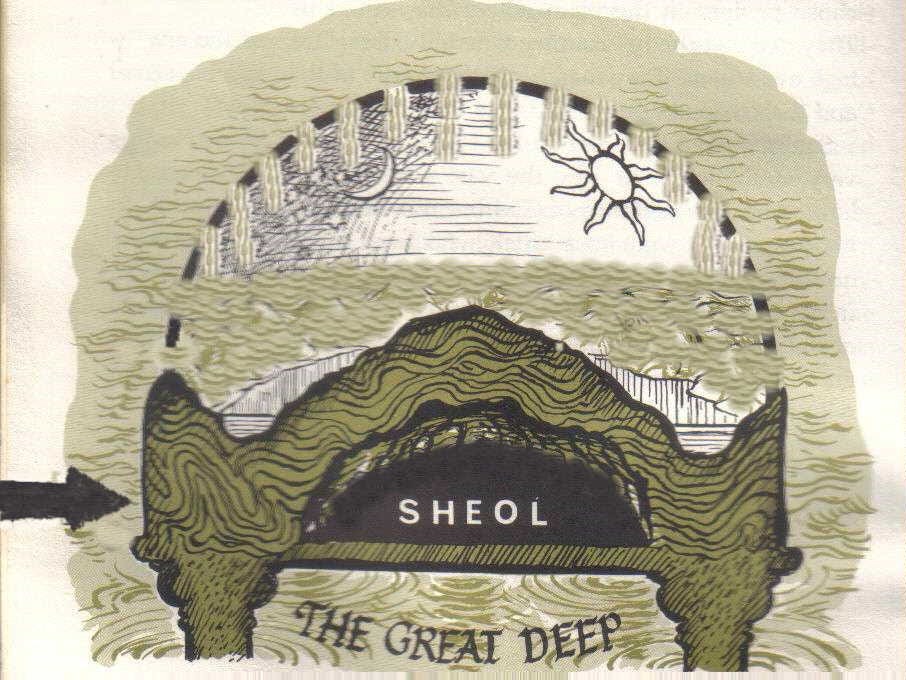
In other passages in the Hebrew Scriptures, those who are dead are located, not in the dust, but in Sheol, in The Pit. These terms each describe the state of the nephesh (the essence of being) of those whose bodies have died. In one psalm, the pit that is dug for “the wicked” describes this place as “the land of silence” (Ps 94:17), while the prophet Ezekiel imagines it as the place where the dead, the “people of long ago” lie “among primeval ruins” (Ezek 26:20).

In Psalm 88, when the psalmist laments “my soul is full of troubles”, they use these and other terms in poetic parallelism to describe their fate: “my life draws near to Sheol; I am counted among those who go down to the Pit; I am like those who have no help, like those forsaken among the dead, like the slain that lie in the grave, like those whom you remember no more, for they are cut off from your hand; you have put me in the depths of the Pit, in the regions dark and deep” (Ps 88:3–6).

In this state, people simply lie in darkness, not living, with no future in view, no hope in store. Job laments, “if I look for Sheol as my house, if I spread my couch in darkness, if I say to the Pit, ‘You are my father,’ and to the worm, ‘My mother,’ or ‘My sister,’ where then is my hope?” (Job 17:13-15). Job also equates entering the Pit with “traversing the River” (Job 33:18), in words that seem to reflect the River Hubur (in Sumerian cosmology) or the River Styx (in Greek cosmology), the place where the souls of the dead cross over into the netherworld.

Other words for Sheol in Hebrew Scripture include Abaddon, meaning ruin (Ps 88:11; Job 28:22; Prov 15:11) and Shakhat, meaning corruption (Isa 38:17; Ezek 28:8). These terms indicate the forlorn, lost, irretrievable nature of this state of being. This is the fate in store for all human beings, whether righteous or wicked; there is no sense of judgement or punishment associated with this state. It is simply a state of non-being.

And yet, even in this state—this state where “my mouth is dried up like a potsherd, and my tongue sticks to my jaws; you lay me in the dust of death” (Ps 22:15)—the psalmist finds hope. They are confident that the Lord God “raises up the needy out of distress” (Ps 107:41) and “lifts up the downtrodden” (Ps 147:5). In like manner, Hannah has sung that the Lord “raises the poor from the dust and lifts the needy from the ash heap” (1 Sam 2:8; also Ps 113:7).

And so the psalmist bursts into praise for what, they are confident, God will do. Calling for their listeners to “praise [the Lord] … glorify him … stand in awe of him” (Ps 22:23), they affirm that God “did not despise or abhor the affliction of the afflicted; he did not hide his face from me, but heard when I cried to him” (v.24) and rejoice that “the poor shall eat and be satisfied” (v.26).

The psalmist is certain not only that “the ends of the earth shall remember and turn to the Lord and all the families of the nations shall worship before him” (v.27), but also that “posterity will serve him; future generations will be told about the Lord, and proclaim his deliverance to a people yet unborn, saying that he has done it” (vv.30–31).

And so, they offer this resounding declaration of hope: “to him, indeed, shall all who sleep in the earth bow down; before him shall bow all who go down to the dust” (v.29). It is that hope which we hear, and affirm, when these closing verses of this psalm (vv.23–31) are read or sung during this coming Sunday’s worship.

The Way: a key motif in Hebrew Scripture (Psalm 25; Lent 1B)

“Good and upright is the Lord; therefore he instructs sinners in the way. He leads the humble in what is right, and teaches the humble his way. All the paths of the Lord are steadfast love and faithfulness, for those who keep his covenant and his decrees.” (Ps 25:8–10) So the psalmist sings, in the psalm that is set for the First Sunday in Lent.

Of course, this short phrase, “The Way”, has a significant place in Christian understanding. When he recounts a key incident in the second volume of his orderly account—namely, the conversion and call of Saul—Luke describes the followers of Jesus as being of “The Way” (9:2). This is a term which he likes; it recurs in four subsequent chapters of Luke’s narrative (18:25; 19:9,23; 22:4; 24:14,22).

Using this term to describe the followers of Jesus makes sense when we consider the thoroughly Jewish character of the early Jesus movement. Luke takes pains to document this thoroughly Jewish ethos, from the opening stories of pregnant women (Luke 1–2), told firmly in the style of Hebrew scripture narrative, through the various occasions where he notes that Jesus was in the synagogue on the sabbath (Luke 4:16; 6:6; 13:10), the many instances where he relates the story of Jesus to scripture passages (Luke 4:21; 7:27; 9:30; 12:52–53; 13:33–35; 19:37–38; 20:9–19; 21:20–24; 22:37) and the way that his second volume traces the way that the followers of Jesus take their message of good news “to the ends of the earth” (Acts 1:8, quoting Isa 42:6; 49:6).

I think that it is most likely that “The Way” as the name of the movement owes its origins to scriptural usage in association with God’s activity. “Lead me, O Lord, in your righteousness because of my enemies”, the psalmist prays; “make your way straight before me” (Ps 5:8). In a song praising God for delivering victory to the King, we read, “This God—his way is perfect; the promise of the Lord proves true; he is a shield for all who take refuge in him” (Ps 18:30). By extension, Luke sees that God is at work in the movement initiated by Jesus and his followers.

This scriptural usage is widespread. The Way figures in a number of psalms. “Good and upright is the Lord; therefore he instructs sinners in the way”, says the psalm proposed for this coming Sunday. “He leads the humble in what is right, and teaches the humble his way” (Ps 25:8–9). The psalmist goes on to explain, “all the paths of the Lord are steadfast love and faithfulness, for those who keep his covenant and his decrees” (Ps 25:8–10).

Other psalmists pray, “Teach me your way, O Lord, and lead me on a level path because of my enemies”(Ps 27:11), and sing, “Wait for the Lord, and keep to his way, and he will exalt you to inherit the land; you will look on the destruction of the wicked” (Ps 37:34). There are many other other psalms which invoke the image of the way of the Lord.

The term is also appropriated in the Dead Sea Scrolls as a means of defining the Qumran community (1QS 9.17-18,21; 10:21; CD 1:13; 2:6). This most likely reflects competing claims for being the authentic keepers of Torah amongst Jewish sects in the latter period of Second Temple Judaism. Members of the community who followed the instruction of The Teacher of Righteous believed that they were keeping faithfully to The Way of the Lord.

A particularly important passage to note is the declaration that opens the second main section of the book of Isaiah—the section which scholars call Deutero-Isaiah. In the opening verses of chapter 40, the prophet addresses the Israelites, in exile in Babylon. Life in the exile was not a happy time for many of the people of Israel. (Psalm 137 is the classic expression of this; note especially the anger expressed in verses 8–9.) The prophet offers them words of comfort and hope.

The people of Israel yearned to return home (Jer 29:10–14; 30:1–31:26). They looked back on the past with longing eyes. They remembered their years in the land which God had given to them. Now, they were living among Babylonians—foreigners, conquerors. Soon, the prophet declares, they would leave behind these memories, and grasp hold of the future that God has for them. In a later statement, he declares that God would “send to Babylon and break down all the bars” (Isa 43:14). God, the prophet declares, is doing a new thing! (43:19).

So in the opening chapter of this section of the book, the return from exile to the land of Israel is announced with a declaration of comfort. “Comfort, O comfort my people, says your God. Speak tenderly to Jerusalem, and cry to her that she has served her term, that her penalty is paid, that she has received from the Lord’s hand double for all her sins” (Isa 40:1–2).

Immediately after this, the prophet declares, “A voice cries out: ‘In the wilderness prepare the way of the Lord, make straight in the desert a highway for our God.’” (Isa 40:3). The way of the Lord, granted to the people who have been faithful throughout the decades in exile, is that they will return to their homeland. The Lord makes a way in the wilderness (43:19), just as in the past God had “dried up the sea, the waters of the great deep; who made the depths of the sea a way for the redeemed to cross over” (51:10)— and so, “the ransomed of the LORD shall return, and come to Zion with singing; everlasting joy shall be upon their heads; they shall obtain joy and gladness, and sorrow and sighing shall flee away” (51:11).

This is, indeed, a powerful promise declared by the prophet. The pathway of justice, the way of understanding (40:14) is not hidden (40:27); indeed, the one chosen to be the servant of the Lord will make known this way, by declaring justice, by persisting with his mission to declare this way, “until he has established justice in the earth” (42:1–4).

It is by speaking through this servant (48:15) that the Lord “teaches you for your own good … leads you in the way you should go” (48:17). The servant’s mission is “to raise up the tribes of Jacob and to restore the survivors of Israel”; as a result, God declares, “I will give you as a light to the nations, that my salvation may reach to the end of the earth” (49:6). This is the way of the Lord for those ancient Israelite people.

Indeed, through the person of the servant, all those who have “turned to [their] own way” will know that “the Lord has laid on him the iniquity of us all” (53:6); “the righteous one, my servant, shall make many righteous, and he shall bear their iniquities” (53:11).

This Way of the Lord, first declared in the late sixth century before the Common Era, is later proclaimed, in that same desert, by the wild desert prophet, John, as he invites people to “prepare the way of the Lord, make his paths straight” in anticipation of the imminent coming of the one chosen by God, Jesus of Nazareth (Mark 1:1–3; Matt 3:1–3; Luke 3:1–6). And the psalm we will hear this coming Sunday also offers a focus on this same Way: for God will teach “those who fear the Lord … the way that they should choose” (Ps 25:12).

Justice and joy: a sequence of Psalms for Christmas

There is a richness of scriptural resources for reflecting on our faith at Christmas. These resources come from the developing traditions of Christmas worship in the early centuries of Christianity. This post concerns especially the psalms that are proposed by the Revised Common Lectionary for our Christmas worship celebrations.

In the ancient Roman church, a Christmas Mass was originally celebrated as a vigil service at the manger of St Mary Major in Rome. It was a small service originating under Pope Sixtus III, and was known as The Angel’s Mass, as the story was told of the angels appearing to the shepherds in the fields (Luke 2:1–14).

In time, a large public service was added at the church of St Peter on the morning of Christmas Day, presided over by the Pope. This practice continues to this day. This service was known as The Shepherd’s Mass, for the story of the shepherds coming to visit the newborn child (Luke 2:8–20).

A third service, The Mass of the Divine Word, was added in the fifth century, originally to celebrate St Anastasia, whose body, it was said, rested in the palace church of the Byzantine Governor in Rome. The focus of this service shifted, over time, from a veneration of the saint’s remains, to a celebration of the Incarnation. The Gospel read at this service was John 1:1–14.

These three Gospel passages were retained in the Common Lectionary when it was created in 1983, drawing on the ancient Roman practices, and continued on in the Revised Common Lectionary of 1992. To the three Gospel passages were added nine additional readings—three psalms, three from the prophets, and three from the epistles. The three options are identified as Nativity of the Lord Proper I, Proper II, and Proper III.

Alongside the Gospel passage and the prophetic passage for each of the three traditional services for Christmas (Nativity of the Lord I, II, and III), there is a psalm offered for each service. We would do well to use them to guide our response at Christmas, as we hear the story and celebrate the birth of Jesus. The three psalms (Psalms 96, 97, and 98) come from a sequence of songs offering praise—a note that is entirely suitable for the Christmas season!

Collectively, these psalms call us to “sing a new song to the Lord” (Ps 96:1; 98:1), to rejoice (96:11–12; 97:8, 12; 98:8), and to celebrate that “the Lord, he is coming, coming to judge the earth … with righteousness and with truth” (96:13; 97:2; 98:9). Justice and joy mark each of these songs.

The first psalm of the three, Psalm 96, invites us to “worship the Lord in the splendour of holiness” (v.9), a message that I have seen painted in many church buildings, often over the front sanctuary area. The last verse reminds us also that God’s desire for the people of the earth is righteousness and truth; an ideal that we would do well to remember daily in our lives away from the sanctuary, enmeshed in our ordinary activities.

For the middle of the three traditional medieval services for Christmas (Nativity of the Lord II), Psalm 97 was sung. It sounds a tone of celebration in the first verse, but then paints what feels like a dark, menacing picture of God (vv.2–5). The clouds, fire, lightning, darkness, and seismic tremors in these verses are intended to convey the exalted majesty of God, “the Lord of all the earth” (v.5). This may be an alien set of images for us, perhaps. Yet Israel is called to respond with joy; this portrayal of the glory of God lifts the people out of their mundane lives and transports them to “high over all the earth” (v.9).

Light and joy are associated with God, because God strengthens those who are righteous and supports those who are “upright in heart” (v.11). This is the essence of who God is; God is characterised by righteousness and glory (v.6). We might think of Israel’s God as evoking fear and terror when divine judgement is made; this psalm, and many others, show a different picture. There is no sense of being cowed or ground down by a menacing God; rather, it is cause for celebration. The response which is sought is joy and gladness (v.8).

Psalm 98 was sung in the third of the three traditional medieval services for Christmas (The Mass of the Divine Word). It is offered today by the lectionary as part of the readings for Nativity III. That third service was a joyful celebration of the Incarnation, which is the climactic affirmation of the Gospel (John 1:14). So the recurrent songs of praise and joyful noise throughout verses 4–8 are most pertinent; this is a fine way to celebrate the good news of how God comes to us in Jesus, which is what we celebrate at Christmas.

The orchestra that is playing includes both instruments played by humans (lyre, voice, trumpets, horn) as well as the flooding seas and the surrounding hills; it is a full, cosmic celebration. The psalm is introduced with a common invocation, “sing to the Lord a new song” (Ps 96:1; also 33:3; 144:9; 149:1). It closes with a recurrent affirmation of God’s “judgement with righteousness” (Ps 96:13; also 50:6; 72:2; 96:13).

The linking of judgement and joy is striking, and may feel unusual for us; but see Heb 12:22–24, where the same link is made as the author of this letter exhorts their readers, “you have come to Mount Zion and to the city of the living God, the heavenly Jerusalem, and to innumerable angels in festal gathering, and to the assembly of the firstborn who are enrolled in heaven, and to God the judge of all, and to the spirits of the righteous made perfect, and to Jesus, the mediator of a new covenant, and to the sprinkled blood that speaks a better word than the blood of Abel”. Justice based on clear judgement and joy generated by celebratory gatherings belong together.

See

The Lord has done great things for us (Psalm 126; Advent 3B)

During this season of Advent, the lectionary offers a selection of biblical passages designed to help us in our preparations, building to the climactic moment of Christmas Day, when we remember that “the Word became flesh and lived among us, and we have seen his glory, the glory as of a father’s only son, full of grace and truth” (John 1:14).

These scripture passages include a sequence of psalms which orient us to the saving work of God, experienced by faithful people in Israel through the ages. In the psalms, faithful people over the ages have sung of their trust in God and their joy at what God has been doing. These psalms thus bring us to the point of anticipation that we can sense God’s work in the story of Jesus.

It is the seventh of the fifteen Songs of Ascent (Psalm 126) that is suggested by the lectionary for this coming Sunday, Advent 3. This short song celebrates that “when the Lord restored the fortunes of Zion, we were like those who dream”, rejoicing that “our mouth was filled with laughter, and our tongue with shouts of joy” (Ps 126:1–2), offering the prayer “restore our fortunes, O Lord, like the watercourses in the Negeb” (Ps 126:4).

*****

Each one of these 15 songs (Psalms 120—134) are identified as shir hammalowt, “a song of ascents”. They are so called because it is believed they were sung by faithful Israelites as they made their pilgrimage, ascending to Jerusalem, on one of the three annual festivals—the Feast of Unleavened Bread (Passover), the Feast of Weeks (Pentecost), and the Feast of Tabernacles (as listed in Deut 16:16).

The series begins, “in my distress I cry to the Lord” (Ps 120:1), moving on to “I lift up my eyes to the hills” (Ps 121:1). I like to imagine that this was being sung as the outline of the city built on and around Mount Zion appeared in the far distance. We can imagine the pilgrims drawing closer to the walls of the city as the psalmist sings, “I was glad when they said to me, ‘Let us go to the house of the Lord!’” (Ps 122:1), then sings of lifting up their eyes to “you who are enthroned in the heavens” (Ps 123:1).

Next, the pilgrims offer expressions of trust in God (Ps 124:8; 125:1–2), celebrating “when the Lord restored the fortunes of Zion” (Ps 126:1), and yearn that the Lord God might “restore our fortunes … like the watercourses in the Negeb” (Ps 126:4).

By this time, I imagine the pilgrims viewing both the city from outside its walls and the Temple on its highest point, singing “unless the Lord builds the house, those who build it labor in vain; unless the Lord guards the city, the guard keeps watch in vain” (Ps 127:1). This psalm then celebrates the gift of sons (Ps 127:4–5) and the following psalm celebrates “your wife [who] will be like a fruitful vine within your house; your children will be like olive shoots around your table”, concluding “thus shall the man be blessed who fears the Lord” (Ps 128:3–4).

I also like to imagine that, as the pilgrims were entering the city, the pilgrims sang to celebrate, “the Lord is righteous; he has cut the cords of the wicked” (Ps 129:4), followed by a heartfelt cry to God from “out of the depths” (Ps 130:1) and an affirmation that “with the Lord there is steadfast love, and with him is great power to redeem” (Ps 130:7).

Next, the psalmist simply observes, “I have calmed and quieted my soul” (Ps 131:2); and then, as the Temple is immediately before them, the pilgrims sing, “Let us go to his dwelling place, let us worship at his footstool” (Ps 132:7).

Then follows the two shortest of all the Songs of Ascent, to bring the series to a close. One song celebrates the unity of the people, with oil running down the head “like the dew of Hermon, which falls on the mountains of Zion” (Ps 133:3), and then in the final song the pilgrims are “stand[ing] by night in the house of the Lord”, concluding with the prayer, “may the Lord, maker of heaven and earth, bless you from Zion” (Ps 134:3). It is a beautiful blessing to conclude the whole sequence.

*****

The particular song offered for Advent 3 (Psalm 126) is filled with upbeat notes. There are dreams of good things to come (v.1), with laughter (v.1) and three rousing “shouts of joy” (vv.1, 5, 6). There are sheaves of wheat, signalling a bountiful harvest (v.6). There are fortunes restored, like running streams (v.4) and stories of “the great things” that have been experienced (v.3). These joyful notes sit well in the Advent season, when joyful anticipation of the coming good news of Christmas is building.

Of course, we need to take care that when we read and hear passages from Hebrew Scripture in a season that has strong Christian overtones, such as Advent, that we do not override the earlier meaning with a reading that relates everything to Jesus. So when we hear this psalm, we need to have in mind the hope and expectation of the pilgrims as they approach the city and anticipate bringing their offerings to the Temple.

As the three pilgrim festivals (Pesach, Shavuot, and Sukkoth) were originally agricultural festivals, the reference to “going out weeping, bearing the seed for sowing … [and] coming home with shouts of joy, carrying their sheaves” (v.6) resonates with these times, as does the briefer note about “sowing in tears … reaping with shouts of joy” (v.5).

We might also hear in this psalm something of the hope that the exiles had as they were returning home to the land of Israel. The reference to “restoring the fortunes of Israel” (v.1, and again in v.4) might hint at this. If so, then the “coming home” in v.6 might have the double sense of coming in from the fields after harvest, and coming back the land after five decades (or more) or exile. The joy of vv.2–3 and vv.5–6 might well represent how they feel as they come to do something that had high value and worth in ancient Israelite society.

For Christians, today, singing this psalm in the season of Advent, the notes of hope and anticipation, joy and celebration, resonate with our expectations as we prepare to celebrate to coming of Jesus during the season of Christmas. Let us, like those of old, fill our mouths with laughter, shout out loud for joy, and rejoice!

That his glory may dwell in our land (Psalm 85; Advent 2B)

As we move on in the very new year in the church’s calendar, this coming Sunday we celebrate the second Sunday in the season of Advent, and continue our preparations for Christmas—the coming of Jesus, Saviour, chosen one, and Lord (Luke 2:11). During Advent, the lectionary offers a selection of biblical passages designed to help us in our preparations, building to the climactic moment of Christmas Day, when we remember that “the Word became flesh and lived among us, and we have seen his glory, the glory as of a father’s only son, full of grace and truth” (John 1:14).

These scripture passages include a sequence of psalms which orient us to the saving work of God, experienced by faithful people in Israel through the ages. In the psalms, faithful people over the ages have sung of their trust in God and their joy at what God has been doing. These psalms thus bring us to the point of anticipation that we can sense God’s work in the story of Jesus.

Last Sunday, Advent 1, we heard the psalmist’s prayer, “restore us, O God; let your face shine, that we may be saved” (Ps 80:3, 7, 19). In my blog on this passage last week, I reflected on the terms restore, shine, and save. This coming Sunday, Advent 2, we will hear the psalmist sing that “steadfast love and faithfulness will meet; righteousness and peace will kiss each other; faithfulness will spring up from the ground, and righteousness will look down from the sky” (Ps 85:10–11).

“Surely his salvation is at hand for those who fear him, that his glory may dwell in our land” (Ps 85:9) is the key affirmation for this coming Sunday, Advent 2. As we have pondered the theme of salvation so recently, in this blog I turn my thoughts to the theme of glory.

In a story found in the narrative section of the final chapters of Exodus, Moses yearns to know that he has found favour with God: “if I have found favour in your sight”, he prays, “show me your ways, so that I may know you and find favour in your sight” (Exod 33:13). In response, God promises that “my presence will go with you, and I will give you rest” (33:14), but Moses presses his case: “show me your glory, I pray” (33:18). Not just the divine presence, but the glory of God is what Moses seeks.

Moses had experienced “the glory of the Lord” on the top of Mount Sinai, when “the appearance of the glory of the Lord was like a devouring fire on the top of the mountain in the sight of the people of Israel” (Exod 24:16–18). That glory had already been seen by the Israelites in the wilderness of Sin (Exod 16:10), and that glory subsequently filled the tabernacle when the people had finished constructing it (Exod 40:34–35).

The closing verse of the book of Exodus notes that “the cloud of the Lord was on the tabernacle by day, and fire was in the cloud by night, before the eyes of all the house of Israel at each stage of their journey” (Exod 40:38). A number of other references to this are made throughout the books of the Torah (Lev 9:6, 23; Num 14:10; 16:19, 42; 20:6; Deut 5:24). This appears to have continued on until the ark of God was captured by the Philistines, for at that moment “the glory has departed from Israel” (1 Sam 4:21–22).

Centuries later, at the time that Solomon prayed his lengthy prayer of dedication of the newly-built Temple in Jerusalem, “when the priests came out of the holy place, a cloud filled the house of the Lord, so that the priests could not stand to minister because of the cloud; for the glory of the Lord filled the house of the Lord” (1 Kings 8:10–11; 2 Chron 7:1–3).

The glory of the Lord was then closely associated with the Temple in ensuing centuries, as various psalms attest (Ps 24:3–10; 96:7–8). “O Lord, I love the house in which you dwell, and the place where your glory abides”, one psalmist sings (Ps 26:8); yet other psalms extend the location of God’s glory, exulting that it extends “over all the earth” (Ps 57:5, 11; 72:19; 102:15; 108:5) and even “above the heavens” (Ps 8:1; 19:1; 57:5, 11; 97:6; 108:5; 113:4; 148:13).

By the time of the prophet Isaiah, this wider scope of the glory of the Lord was sung by the seraphim in their song, “Holy, holy, holy is the Lord of hosts; the whole earth is full of his glory” (Isa 6:3), whilst a little later another voice sang that “the earth will be filled with the knowledge of the glory of the Lord, as the waters cover the sea” (Hab 2:14). During the Exile, another prophet, looking to the return of the people to the land of Israel, declared that “the glory of the Lord shall be revealed, and all people shall see it together” (Isa 40:5).

Another exilic prophet had a series of visions in which “the glory of the Lord” was seen (Ezek 1—39), culminating in a declaration by God that “I will display my glory among the nations; and all the nations shall see my judgment that I have executed, and my hand that I have laid on them” (Ezek 39:21), followed by a vision in which “the Lord entered the temple by the gate facing east”, and at that time “the spirit lifted me up, and brought me into the inner court; and the glory of the Lord filled the temple” (Ezek 44:4–5).

Later still, a prophetic voice during the time of return to the land declared to the people that “the Lord will arise upon you, and his glory will appear over you; nations shall come to your light, and kings to the brightness of your dawn” (Isa 60:2–3). And well after that, another prophet attributes to “one like a human being, coming with the clouds of heaven”, the gift of “dominion and glory and kingship, that all peoples, nations, and languages should serve him” (Dan 9:13–14).

Paul draws on the scriptural idea of the divine glory when he writes to the Romans that “we boast in our hope of sharing the glory of God” (Rom 5:2), and that it is through the work of the Spirit which gives hope to the whole creation that it will “obtain the freedom of the glory of the children of God” (Rom 8:21). He tells the Thessalonians that “God … calls you into his own kingdom and glory” (1 Thess 2:12) and speaks of the life of believers as being “sown in dishonour … raised in glory” (1 Cor 15:43).

So Paul advises the Corinthians, “whether you eat or drink, or whatever you do, do everything for the glory of God” (1 Cor 10:31), and later on tells them that “all of us, with unveiled faces, seeing the glory of the Lord as though reflected in a mirror, are being transformed into the same image from one degree of glory to another; for this comes from the Lord, the Spirit” (2 Cor 3:18).

And Paul celebrates that God “has shone in our hearts to give the light of the knowledge of the glory of God in the face of Jesus Christ” (2 Cor 4:6), rejoicing that Jesus “will transform the body of our humiliation that it may be conformed to the body of his glory, by the power that also enables him to make all things subject to himself” (Phil 3:21).

Later writers pick up on this motif of believers sharing in the glory of God. Writing in the name of Paul, one affirms that “God chose to make known how great among the Gentiles are the riches of the glory of this mystery, which is Christ in you, the hope of glory” (Col 1:27), while another declares that that God “called you through our proclamation of the good news, so that you may obtain the glory of our Lord Jesus Christ” (2 Thess 2:14). Another writer speaks of God “bringing many children to glory” through Jesus (Heb 2:10), yet another celebrates that God will “make you stand without blemish in the presence of his glory with rejoicing” (Jude 24).

This, of course, leads into the notion in later Christian theology that heaven can be described as the place of glory—the place where James and John wish to be seated alongside Jesus (Mark 10:37), the place where believers are raised (1 Cor 15:43), the place where faithful elders will “win the crown of glory that never fades away” (1 Pet 5:4), the place where the place where Jesus himself is ultimately “taken up in glory” (1 Tim 3:16).

And that glory was most clearly seen, one writer maintains, in Jesus, when “the Word became flesh and lived among us, and we have seen his glory” (John 1:14). For the author of John’s Gospel, the full manifestation of heaven (glory) was made on earth, in Jesus, who was God’s only son, “who is close to the Father’s heart, who has made him known” (John 1:18).

So the expectation of the psalmist, that the glory of the Lord will dwell in their land, is offered at this Advent time, as we Christians anticipate that God’s glory will again be shown to us in Jesus. It’s a motif that runs through scripture from Moses onwards and is shown forth in striking fashion in the life of Jesus.

Let your face shine (Psalm 80; Advent 1B)

As we start a new year in the church’s calendar, this coming Sunday we will enter into the season of Advent, and begin our preparations once more for Christmas—the coming of Jesus, Saviour, chosen one, and Lord (Luke 2:11). During Advent, the lectionary offers a selection of biblical passages designed to help us in our preparations, building to the climactic moment of Christmas Day, when we remember that “the Word became flesh and lived among us, and we have seen his glory, the glory as of a father’s only son, full of grace and truth” (John 1:14).

These scripture passages include a sequence of psalms which orient us to the saving work of God, experienced by faithful people in Israel through the ages. In the psalms, faithful people over the ages have sung of their trust in God and their joy at what God has been doing. These psalms thus bring us to the point of anticipation that we can sense God’s work in the story of Jesus.

For Advent 1, we hear the psalmist’s prayer, “restore us, O God; let your face shine, that we may be saved” (Ps 80:3, 7, 19). “Surely his salvation is at hand for those who fear him, that his glory may dwell in our land” (Ps 85:9) is the affirmation for Advent 2, while on Advent 3 we join with the psalmist to confirm, “the Lord has done great things for us, and we rejoiced” (Ps 126:3).

Then, on Advent 4, we sing joyfully with the psalmist, “I will sing of your steadfast love, O Lord, forever; with my mouth I will proclaim your faithfulness to all generations” (Ps 89:1), before a rich series of three joyous psalms are offered for our Christmas celebrations: “sing to the Lord a new song” (Ps 96:1), “light dawns for the righteous, and joy for the upright in heart” (Ps 97:11), and “make a joyful noise to the Lord, all the earth; break forth into joyous song and sing praises” (Ps 98:4).

*****

In the psalm offered for this Sunday, Psalm 80, the writer prays for God to act. However, this is not just a single-sentence prayer; rather, the writer pleads incessantly with God to restore Israel to her former glory. “Restore us” is a repeated request (80:3, 7, 19), along with calls to “give ear” (80:1), “stir up your might” (80:2), “turn again” (80:14), “come to save us” (80:2), and “give us life” (80:18).

This recurring refrain of petitions is accompanied by the request for God to “let your face shine” (80:3, 7, 19); the prayers accumulate in intensity, reflected in the wording that builds throughout the psalm: “restore us, O God” (80:3); “restore us, O God of hosts” (80:7); “turn again, O God of hosts” (80:14); “restore us, O Lord God of hosts” (80:19).

Restore us, O God

This prayer of the psalmist, “restore us, O God”, reflects the same prayer found in a number of psalms. In penitence, a psalm traditionally associated with the repentant David asks God to “restore to me the joy of your salvation, and sustain in me a willing spirit” (Ps 51:12). Another psalm, associated with David after defeat in battle (according to the title included in the Hebrew text) implores God, “you have rejected us, broken our defenses; you have been angry; now restore us!” (Ps 60:1).

A psalm “of the Korahites” pleads, “restore us again, O God of our salvation, and put away your indignation toward us” (Ps 85:4), while the seventh Song of Ascent celebrates “when the Lord restored the fortunes of Zion, we were like those who dream”, rejoicing that “our mouth was filled with laughter, and our tongue with shouts of joy” (Ps 126:1–2), offering the prayer “restore our fortunes, O Lord, like the watercourses in the Negeb” (Ps 126:4).

Prophets also sought God’s restoration. In the midst of his incessant despair, Jeremiah yet sees hope: “the days are surely coming, says the Lord, when I will restore the fortunes of my people, Israel and Judah, says the Lord, and I will bring them back to the land that I gave to their ancestors and they shall take possession of it” (30:3). It is in this context that Jeremiah indicates that the Lord “will make a new covenant with the house of Israel and the house of Judah … I will put my law within them, and I will write it on their hearts” (31:31, 33).

The final oracle in the book of Amos (9:11–15)—most likely a later exilic addition—envisages a restored and rebuilt Israel after their time of exile, in a land once again productive, and ends with a strong expression of confidence in the people: “I will plant them upon their land, and they shall never again be plucked up out of the land that I have given them, says the Lord” (9:15).

Restoration after exile is also foreseen towards the end of the book of Deuteronomy, when Israel is told that “the Lord your God will restore your fortunes and have compassion on you, gathering you again from all the peoples among whom the Lord your God has scattered you” (Deut 30:3).

In Second Isaiah, the servant is chosen “to raise up the tribes of Jacob and to restore the survivors of Israel” and God says, “I will give you as a light to the nations, that my salvation may reach to the end of the earth” (Isa 49:6). Likewise, Ezekiel’s final,sequence of visions includes God’s promise, “I will restore the fortunes of Jacob, and have mercy on the whole house of Israel” (Ezek 39:25). Other prophets similarly look to a time of restoration (Hos 6:11; Joel 3:1; Zeph 2:7; 3:20; Zech 9:12).

So in the book of Nehemiah, the Governor issues the instruction, “Restore to them, this very day, their fields, their vineyards, their olive orchards, and their houses, and the interest on money, grain, wine, and oil that you have been exacting from them”; and the response is, “We will restore everything and demand nothing more from them. We will do as you say” (Neh 5:11–12).

Let your face shine

Another request that the psalmist makes, for God to shine their face upon people (Ps 80:3), is a request that is found in other psalms. “There are many”, says the psalmist, “who say, ‘O that we might see some good! Let the light of your face shine on us, O Lord!’” (Ps 4:6). In Psalm 31, the psalmist sings, “Let your face shine upon your servant; save me in your steadfast love” (Ps 31:16).

In Psalm 67, the psalmist echoes more explicitly the Aaronic Blessing, praying, “May God be gracious to us and bless us and make his face to shine upon us—Selah—that your way may be known upon earth, your saving power among all nations” (Ps 67:1–3). This reflects the ancient priestly blessing recorded in Num 6:24–26: “The Lord bless you and keep you; the Lord make his face to shine upon you, and be gracious to you; the Lord lift up his countenance upon you, and give you peace.”

In this three-line prayer, the second line includes the phrase, “the LORD make his face to shine upon you”. The simple parallelism in this blessing indicates that for God to “make his face shine” (v.25) is equivalent to blessing (v.24) and lifting up his countenance (v.26). The second verb in each phrase is, likewise, in parallel: the psalmist asks God to keep (v.24), be gracious (v.25), and grant peace (v.26). These words offer a prayer seeking God’s gracious presence for the people of Israel.

The face of God was a matter of some significance in the ancestral story of Jacob, who becomes Israel. Estranged for decades from his twin, Esau, when they meet up again, Jacob has just spent the night wrestling with a man (Gen 32:22–32). Jacob’s hip is struck, and he walks with a limp; yet he describes the place where this happened as Peniel, “the face of God”, and characterises the encounter as a time when “I have seen God face to face, and yet my life is preserved” (32:30). To see God face-to-face was a rare and intense experience. Jacob was, indeed, blessed.

In the seventeenth section of the longest of all psalms, Psalm 119, a prayer asking for God to help the psalmist keep the Law culminates with the request for God’s face to shine: “Turn to me and be gracious to me, as is your custom toward those who love your name. Keep my steps steady according to your promise, and never let iniquity have dominion over me. Redeem me from human oppression, that I may keep your precepts. Make your face shine upon your servant, and teach me your statutes.” (Ps 119:132–135).

Come to save us

The plea of the psalmist for God to “save” them (v.2) is another persistent refrain throughout the psalms—both “save me” (Ps 6:4; 7:1; 22:21; 31:2, 16; 44:6; 54:1; 57:3; 59:2; 69:1; 71:2, 3; 109:26, 116:4; 119:94, 146; 142:6; 143:9) and “save us” (Ps 28:9; 31:2; 80:2; 106:47; 118:25).

The plea for saving is a request also found in prayers attributed to Samuel (1 Sam 7:8), David (2 Sam 22:2–4; 1 Chron 16:35), Hezekiah (2 Ki 19:18; Isa 37:20), Isaiah (Isa 25:9), and Jeremiah (Jer 17:14)—a prayer to which Jeremiah says that the Lord has said, “I will surely save you, and you shall not fall by the sword; but you shall have your life as a prize of war, because you have trusted in me” (Jer 39:18).

This request is grounded in the assurance that “God is my shield, who saves the upright in heart” (Ps 7:10); “the Lord is near to the brokenhearted, and saves the crushed in spirit” (Ps 34:18); God “fulfils the desire of all who fear him; he also hears their cry, and saves them” (Ps 145:19).

There are many indications in the narratives included in the Hebrew Scriptures that point to the saving purposes of God. The Chronicler reports that when David places the ark of God into the tent on Mount Zion, he instructs the Levites to sing, “save us, O God of our salvation, and gather and rescue us from among the nations” (1 Chron 16:35).

The prophet Isaiah affirms that “the Lord will save me” (Isa 38:20) and the prophet Habakkuk reflects that the Lord God “came forth to save your people, to save your anointed” (Hab 3:13). Later, when King Sennacherib of Assyria besieges Jerusalem and presses King Hezekiah of Judah to surrender, he addresses “all the people of Judah that were in Jerusalem”, ironically asking them, “Is not Hezekiah misleading you … when he tells you, ‘The Lord our God will save us?'” (2 Chron 32:9–11).

Subsequently, the prophet Jeremiah assures his fellow exiles that “the Lord of hosts, the God of Israel” promises, “I am going to fulfill my words against this city for evil and not for good … but I will save you on that day” (Jer 39:16–17). It is no wonder that God is addressed as Saviour by kings (David, 2 Sam 22:3) and prophets (Isa 43:3, 11; 45:15, 21; 49:26; 60:16; 63:8; Jer 14:8; Hos 13:4), in psalms (Ps 17:7; 106:21) and in later wisdom literature (Judith 9:11; Wisdom of Solomon 16:7; Sirach 51:1).

In the longest psalm, Psalm 119, as the psalmist cries out, “let your steadfast love come to me, O Lord”, they equate that love precisely with “your salvation according to your promise” (v.41). Unsurprisingly, the psalmist places their trust in Torah as the means for attaining that salvation: “my [whole being] languishes for your salvation, I hope in your word” (v.81).

Indeed, this waiting requires persistence; “my eyes fail from watching for your salvation, and for the fulfillment of your righteous promise” (v.123). By contrast, “salvation is far from the wicked, for they do not seek your statutes” (v.155). This salvation is intimately bound up with keeping Torah (vv.94, 146, 166, 174); “I do not forget [Torah]” is a persistent affirmation (vv.16, 61, 109, 141, 153, and in the final verse, 176).

Of course , God as Saviour is an important Hebraic way of understanding the divine, that then has implications and influence as the New Testament documents are written, centuries later. “Christ Jesus came into the world to save sinners” (1 Tim 1:15) is a classic Christian formulation, valued as central to Christian theology over the centuries.

In the Gospels, Jesus declares, “the Son of Man came to seek out and save the lost” (Luke 19:10). Paul identifies Jesus as Saviour (Phil 3:20), proclaims good news “through which also you are being saved” (1 Cor 15:2), and celebrates that “everyone who calls on the name of the Lord shall be saved” (Rom 10:13, quoting Joel 2:32). So the psalmist (in Psalm 80) is sounding a foundational claim, made throughout scripture: O God, “come and save us”.

From this repeated refrain in this psalm, we can appreciate that it is an appropriate word for us to hear and reflect on, as we start a new year in the church’s calendar, enter into the season of Advent, and begin our preparations once more for Christmas—when in the coming of Jesus, Saviour, chosen one, and Lord, we celebrate that the face of God has shone upon us, that God will restore us, that God has come to save us.