Give us a King, like other nations (1 Sam 8–10; Pentecost 3B)

1 Samuel 8:4–20 is the passage offered by the lectionary for this coming Sunday. It is the second in the sequence of Hebrew Scripture passages that we are reading through the first half of the long “season after Pentecost”, from May to August. The passage addresses an issue that was important in ancient Israel; that is important in modern-day Israel/Palestine; and that is important, also, in all nations around the world today.

This Sunday we will hear the beginning of a process—debate about having a king as a ruler—that culminates, at the end of August, with an account of Solomon, the wisest, most powerful, and perhaps most damaging king of all. That makes this ancient text potent in the contemporary situation, where Israel is engaged in a life- and-death struggle with Hamas, where megalomania amongst leaders in Russia, North Korea, China, and even the USA predominates, and where too many countries around the globe suffer under dictatorial, repressive regimes.

The passages selected today focus on the issue of power. Precisely: what kind of power in leadership is acceptable in Israel? should Israel be ruled by a king? For centuries, judges had led the people, determining what was right and what was wrong. The book of Judges tells of a string of such judges, men who worked hard to recall the people to their covenant with the Lord God: Othniel (Judg 3:9), Ehud (3:15), Shamgar (3:31), an unnamed prophet (6:8), Gideon (6:11–18), Tola (10:1), Jair (10:3), Jephthah (11:1; 12:7), Ibzan, Elon, and Abdon (12:8–15), and Samson (13:24–25; 16:28–31).

And, of course, it most famously tells of Deborah, “a prophetess, wife of Lappidoth, [who] was judging Israel; she used to sit under the palm of Deborah between Ramah and Bethel in the hill country of Ephraim; and the Israelites came up to her for judgment” (Judg 4:4–5).

However, the impact of the efforts of these various judges was merely transitory; the people returned again and again to their sinful, idolatrous ways. “The Israelites did what was evil in the sight of the Lord” (initially at 2:11, repeated at 3:7) is a recurring refrain throughout the book of Judges. It signals that the people reverted to their evil ways after Othniel (3:12), Shamgar (4:1), Deborah (6:1), Jair (9:6), and Abdon (13:1).

As a result, we are told that the people were “given into the hands” of their enemies on each of these occasions (3:8; 4:2; 6:1, 13; 10:7; 13:1). The horror perpetrated by Jephthah, offering his own daughter as a burnt offering (11:29–40), and the deceit and arrogance of Samson (16:1–31) exemplify this sinful streak.

In the final chapters of the book, details are given of the evil deeds of various people: the mother of Micah, who made an idol of cast metal (17:1–6); the men of Gibeah, who raped the Levite’s concubine (19:22–25); the Levite himself, who cut his concubine into twelve pieces (19:27–30); and then the attacks on the Bejaminites by the other tribes of Israel (20:1–48). The book draws to its end with the mournful conclusion, “in those days there was no king in Israel; all the people did what was right in their own eyes” (21:25).

So it is made clear in the narrative constructed in the book of Judges, that Israel’s downfall was that it was not ruled by a king, as other nations surrounding Israel were. A king could maintain justice and ensure equity within the society of Israel. And a king could marshal the forces needed to repel invaders and stand resolute against the sinful ways that would be imposed upon the nation by those who did not fear the Lord God.

So the elders of Israel press for change; we can understand why. However, the prophet who has been called by God, Samuel, is attuned to God’s voice on this matter, and so he rejects this request. But the people persist with their request—their demand, even. And so it is that God, in a striking reversal of opinion, decides to have a change of mind about kingship. God pushes Samuel to accept this change.

The lectionary this coming Sunday offers us excerpts from the lengthy section of 1 Samuel where this matter is considered (1 Sam 8—11). The matter is first raised in the request made of Samuel by the people: “appoint for us, then, a king to govern us, like other nations” (1 Sam 8:5). The revolution comes, chapters later, after various points of view have been canvassed.
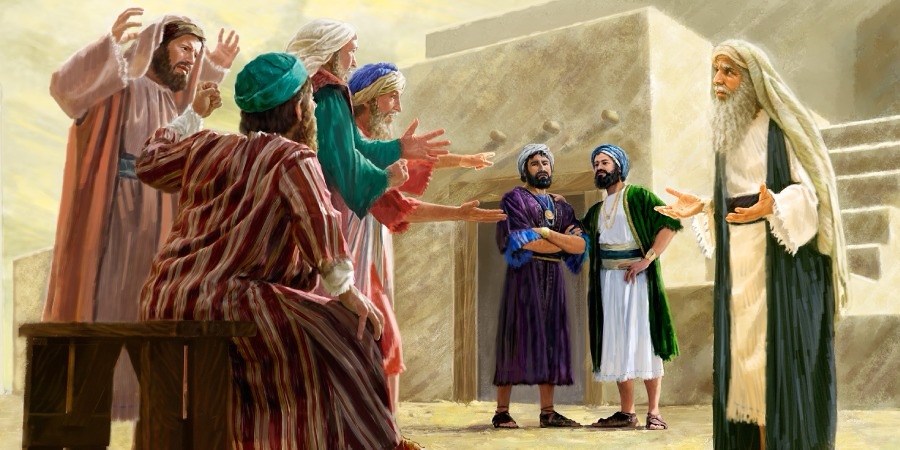
The lectionary selection for this Sunday offers us “A Dummies Guide to Kings in Israel”—that is, a series of “bites” [1 Samuel 8:4-11, (12-15), 16-20, (11:14-15)], some of which are optional (placed in parentheses). After the initial request, it includes the resistance of Samuel to this proposal (8:12–18) and the persistence of the people in pressing their request: “the people refused to listen to the voice of Samuel; they said “No! but we are determined to have a king over us” (8:19–20).

The full text of 1 Samuel provides reports of the back-and-forth that transpires, which the lectionary omits. It skips to a final optional reading of a further short section (11:14–15) which reports the outcome: “all the people went to Gilgal, and there they made Saul king before the Lord in Gilgal”.

The appointment of a king was obviously a matter of some controversy in ancient Israel; the compiler of the Deuteronomistic History (of which 1 Samuel is a part) devoted a significant amount of space to it, taking pains to include conflicting views about this matter. And, as we read these texts with the benefit of hindsight, we know that a king was ultimately appointed. This led to the later establishment of the Davidic dynasty, which became important in the claims later made about Jesus of Nazareth, recognised as Son of David.

So, of course, the person (or persons) chronicling the history of Israel in what scholars now call the Deuteronomistic history will tell the story with this outcome in view. The end result shapes how the story is told.

Writing in With Love to the World, Elizabeth Raine observes that “Israel looks for a leader to win battles and guarantee their security. It is a black-and-white understanding of the King; a figure military strength and political power. This is not the same as the way the prophet saw the role of King”. The people want power. The prophet warns of corruption. The people want victory. The prophet warns of failing to ensure justice.

And a clear thread in Hebrew Scripture would come to be that the king was called by God and anointed by God’s prophet to ensure that justice and righteousness were found in the land of Israel (Ps 72:1; 99:4; 1 Ki 3:28, 10:9; Isa 11:1–9; 32:1). That, at least, became the ideology for kingship in Israel; the reality, as we see in the stories selected for future weeks, was often different.

Elizabeth continues, “The story calls us to examine where we are placing our allegiances, and move to transformation, that process of repentance and renewal in which we turn back to God in every area. Whilst such self-examination is no doubt painful, it is also the only way to ensure we remain connected with God’s life-giving Spirit. As more and more people make the shift to a faithful allegiance that ensures that God’s Kingdom will be realised here on earth, we will hopefully see the reality of justice, peace, and love spreading in our world.”

To close, I offer two reflections on how this ancient story might speak to us today. The first perspective is that this story, about the desire for a powerful leader, and the dangers of pushing an agenda of power over all other matters, is a direct challenge to the way that the leaders of the modern state of Israel are conducting themselves in the long-enduring conflict with the Palestinians, who share an equally just claim to the land that was bequeathed to Jews in 1948. I have reflected at more length on this matter at

and my colleague Chris Budden has offered good insights into this conflict at

The second perspective is that this story is the first in a series of stories from ancient days which address a pressing contemporary issue: how to bring about effective change within the community of faith. It is something we all know about today, as society changes and the church occupies a different place in that society. How do we listen for God’s voice in this context? How do we advocate for effective change? I have written further on this dynamic at

and

With Love to the World is a daily Bible reading resource, written and produced within the Uniting Church in Australia, following the Revised Common Lectionary. It offers Sunday worshippers the opportunity to prepare for hearing passages of scripture in the week leading to that day of worship. It seeks to foster “an informed faith” amongst the people of God.

Going into the kingdom of God ahead of you (Matt 21; Pentecost 18A)

Two weeks ago, in following along with the excerpts from the Gospel of Matthew which the Revised Common Lectionary has been offering us this year, we heard a parable that threatened that God would torture a person until they forgave a person who owed them a modest debt (18:23–35). Where is the compassion in that? Is this really what we understand God to be like? Should this story really be in our scriptures?

Last week, we heard a parable in which people who laboured in a vineyard for quite different lengths of time were given the same pay at the end of the day (20:1–16). Where is the justice in that? The rationale for this is that “the last will be first, and the first will be last” (20:16)—a saying that Jesus utters on other occasions, as well. Is this really what we understand the kingdom will be like? Does this unjust story really deserve a place in our scriptures?

This week, we will be confronted with a parable in which two sons each say one thing, but do the opposite (21:28–30). Where is the honesty in that? Be a person of your word—do what you say, say what you mean to do! But there is even more, as Jesus continues on after having spoken this parable with words that are even more confronting: “the tax collectors and the prostitutes are going into the kingdom of God ahead of you” (21: 31). Is this really what we have to look forward to? It makes me want to cry out, “Hey! there’s a queue here—just wait your turn!”

Parables, according to Tim Mackie and Jon Collins of the Bible Project, were used by Jesus as “a means of indirect communication to critique and dismantle his listener’s views of the world to show them the true nature of God’s Kingdom.” See https://bibleproject.com/podcast/parables-subversive-critique/

And so that is the case in each of these parables. There’s a good amount of critiquing and dismantling going on; and a fair bit, also, of reconstructing a picture of what that kingdom might well be like. Whilst we might expect—indeed, we might yearn—to have stories which reinforce our view that God is loving, kind, and compassionate to all, the fact is that the parable of the unjust steward—and other sayings of Jesus—insist that God exercises vengeance in the course of ensuring justice.

We might well hope to have stories that communicate that God’s justice means equity and fairness for everyone; yet the parable of the labourers in the vineyard—and other sayings of Jesus—insist that God operates in ways that are counter-cultural and in opposition to the expected norms of fairness in society.

And certainly we might anticipate that Jesus will tell stories that assure us of the claim that a life of faithful obedience and careful adherence to stringent ethical standards will lead to our experiencing the welcoming arms of God, perhaps a prioritised means of entry into the loving embrace of God; yet the conclusion that Jesus offers to the parable of the two sons is completely different, with a shocking declaration that those entering the kingdom ahead of us will be precisely the people that we would expect to be debarred from entry!

What is going on? And in particular, why does Jesus assert that “the tax collectors and the prostitutes are going into the kingdom of God ahead of you” (21:31)?

*****

In the three Synoptic Gospels, Jesus is presented as one who “eats with tax collectors and sinners” (Mark 2:15–16; Matt 9:10–11; Luke 5:30–31). Jesus clearly declares, “I have come to call not the righteous but sinners” (Mark 2:17; Matt 9:13; Luke 5:32). Two of those Gospels also report that he was known as “a glutton and a drunkard, a friend of tax collectors and sinners” (Matt 11:19; Luke 7:34).

Indeed, Matthew, one of the twelve men initially called to be a disciple, was a tax collector (Matt 9:9; 10:3), although in Luke’s narrative he is named as Levi (Luke 5:27). This man, Levi, does not appear amongst the twelve named disciples (Luke 6:13–16; Acts 1:13), and the Matthew named in these Lukan lists is not identified as a tax collector.

In a striking parable reported only by Luke, a tax collector is presented favourably, in contrast to a Pharisee (Luke 18:9–14); that story resonates with the affirmation of tax collectors given at Matt 21:31–32. Soon after that parable is told, Luke reports an encounter that Jesus had with a rich chief tax collector named Zacchaeus (Luke 19:1–10). In this passage, the tax collector acts above and beyond the call,of duty, announcing that “half of my possessions, Lord, I will give to the poor; and if I have defrauded anyone of anything, I will pay back four times as much” (Luke 19:8).

By contrast, in a teaching passage found only in Matthew’s Gospel, tax collectors are linked with Gentiles in a declaration that a recalcitrant sinner who refuses to repent after being given multiple opportunities should be considered “as a Gentile and a tax collector” (Matt 18:17), clearly indicating that they are to be expelled from the community.

That statement appears to be in direct contradiction to the later declaration of the Matthean Jesus that we hear in this coming Sunday’s passage—a declaration that “the tax collectors and the prostitutes are going into the kingdom of God” ahead of the (presumably) faithful disciples, because “John came to you in the way of righteousness and you did not believe him, but the tax collectors and the prostitutes believed him; and even after you saw it, you did not change your minds and believe him” (Matt 21:31–32).

These words seem to correlate with the earlier aphorism of Jesus, “the last will be first, and the first will be last” (Matt 20:16), a saying that recurs in other contexts, when Jesus points to a child as a sign of the kingdom (Mark 9:35) and in response to a declaration of fidelity made by Peter (Mark 10:31; Matt 19:30). Indeed, this latter occurrence in Matthew’s Gospel not only concludes a sequence of incidents set in Judea (Matt 19:1–30), but also introduces the parable we heard last Sunday (20:1–16)—a parable which ends with the very same saying.

“The last will be first, and the first will be last” thus bookends that parable, indicating that it has a programmatic significance. And it is that claim from which Jesus then launches, in this coming Sunday’s reading, into the parable that drives home this upside-down character of the coming kingdom, noting that “the tax collectors and the prostitutes are going into the kingdom” ahead of the disciples, which he then drives home the point with intensity: “even after you saw it, you did not change your minds and believe him” (21:32).

That’s fair warning: Jesus is giving plenty of opportunity for his disciples to hear, understand, and respond to his message. And if we don’t, then he won’t pull any punches! Perhaps that’s actually the point of this parable. So it seems we are back to judgement—a motif that I have noted is intensified and amplified in Matthew’s account of Jesus, when compared with the Gospels of either Mark or Luke. See

Darkness, weeping, and gnashing of teeth: the scene of judgement (Matt 22; Pentecost 20A)

A final parable from the book of origins: on sheep and goats, on judgement and righteous-justice (Matt 25; Pentecost 26A)

We have been given fair warning!!

Hear a just cause, O God (Psalm 17; Pentecost 10A)

“Hear a just cause, O Lord; attend to my cry”, the psalmist cries (Ps 17:1). The expectation that God will act with justice is crystal clear in this psalm; the psalmist expects vindication from God (v.2), who will “show your steadfast love” (v.7), who will “rise up, confront [and] overthrow” the wicked (v.13). “As for me”, the psalmist concludes, “I shall behold your face in righteousness; when I awake I shall be satisfied, beholding your likeness” (v.15).

Other psalms make it clear that justice is integral to God’s being. “The word of the Lord is upright … he loves righteousness and justice” (Ps 33:4–5). “The Lord works vindication and justice for all who are oppressed” (Ps 103:6); “the Lord loves justice, he will not forsake his faithful ones” (Ps 37:28); “the Lord maintains the cause of the needy and executes justice for the poor” (Ps 140:12).

One psalmist provides a fulsome description of how this works in society, declaring that they place their trust in “the God of Jacob … who keeps faith forever, who executes justice for the oppressed, who gives food to the hungry … who sets the prisoners free [and] opens the eyes of the blind … [who] lifts up those who are bowed down … [who] watches over the strangers, upholds the orphan and the widow” (Ps 146:5–9). This resonates with other prophetic texts and with the mission that Jesus later undertook.

That God will act with justice is an expectation that is found again and again throughout the pages of Hebrew Scripture. The prophet Amos places justice and righteousness at the heart of God’s intentions for Israel, prioritising them over any ritual actions of worship (Amos 5:21–23). In like manner, the prophet Hosea declares that God “desires steadfast love and not sacrifice, the knowledge of God rather than burnt offerings” (Hos 6:6).

According to the narrative books recounting earlier stories, justice had been the key quality of the prophetic messages given to Israel over a number of centuries before these prophets. Moses and the elders he appointed had a responsibility to judge the people (Exod 18:13–27). This was continued by men and women designated as judges in the book of Judges.

Over time, the role of the prophet arose, as judges gave way to kings; the prophet was called to hold the king to account (for instance, Nathan at 2 Sam 12). This then expands so that the prophetic voice speaks truth to all the people, persistently calling out for justice. Amos sounds this central motif: “let justice roll down like waters, and righteousness like an ever-flowing stream” (Amos 5:24). Micah repeats and expands it in his powerful rhetorical question, “what does the Lord require of you but to do justice, and to love kindness, and to walk humbly with your God?” (Micah 6:8).

Praying that God’s ways of justice and righteousness may be evident in the king is a repeated motif in the psalms. “Give the king your justice, O God, and your righteousness to a king’s son; may he judge your people with righteousness and your poor with justice” (Ps 72:1–2). “Mighty King, lover of justice, you have established equity, you have executed justice and righteousness in Jacob” (Ps 99:4).

“Righteousness and justice are the foundation of your throne”, another psalmist sings (Ps 89:14); “happy are the people … who walk, O Lord, in the light of your countenance … who extol your righteousness” (Ps 86:15–16). Prayers for justice to be lived out in the society of the time are also found at Ps 10:17–18; 37:5–6; 106:3; and the whole of Psalm 112 offers a song in praise of “those who conduct their affairs with justice”, who exude the best of the character of God: “they are gracious, merciful, and righteous” (Ps 112:4).

The oracles placed at the start of the book of Isaiah sounds the importance of living with justice: “wash yourselves, make yourselves clean … cease to do good, learn to do good, seek justice, rescue the oppressed, defend the orphan, plead for the widow” (Isa 1:16–17). The powerful “song of the vineyard” (Isa 5:1–7) concludes with the wonderful Hebrew wordplay, which reinforces this theme: so, “he expected justice (mishpat) but saw bloodshed (mispach); righteousness (tsedakah) but heard a cry (seakah)” (5:7).

What follows is a searing prophetic denunciation of the ills of society: the excesses of a debaucherous elite, the oppressive state of the lowly (5:8–23). The prophet yearns for the coming of a royal child who will rule the nation “with justice and with righteousness from this time onward and forevermore” (Isa 9:6–7). A later prophet whose oracles are collected with those of Isaiah likewise looks for “my servant … my chosen … [who] will bring forth justice to the nations … he will faithfully bring forth justice … [he will] establish justice in the earth” (Isa 42:1–4). Again, the resonances with the later story of Jesus are evident to Christian readers.

A little later than Isaiah, the prophet Zephaniah declares that “the Lord is righteous, he does no wrong; every morning he renders his judgement, each dawn without fail” (Zeph 3:5). Prophets in exile repeat this vision. Jeremiah instructs the nation to “execute justice in the morning and deliver from the hand of the oppressor anyone who has been robbed” (Jer 21:12; 22:3; 33:15). Ezekiel advises that “if a man is righteous and does what is lawful and right … he shall surely live” (Ezek 18:5–9; 34:11–16). Zeph 3:5).

And in the last prophetic book (in the order familiar to Christians), the prophet Malachi asks, “where is the God of justice?”, and answers his own question with a description of “the messenger of the covenant” who will execute justice “like a refiner’s fore and like fuller’s soap … he will purify the descendants of Levi … until they present offerings to the Lord in righteousness” (Mal 2:17—3:4).

This prophetic cry continues into the New Testament, as justice is placed at the centre. Jesus calls for justice (Matt 23:23; Luke 11:42, 18:1–8)—at times, we find it rendered as “righteousness” in his sayings (Matt 5:1–12, 20; 6:33, 21:28–32). This, of course, is the way that it appears in the letters of Paul, where the righteousness of God is the action that we experience when God implements justice in our lives (Rom 3:21–26, 4:1–25; 2 Cor 5:16–21).

Both the manifesto for mission that Luke highlights at the start of the public activity of Jesus (Luke 4:18–21) and the climactic parable of the sheep and the goats that Matthew places at the end of the public teaching of Jesus (Matt 25:31–46) draw strongly from Old Testament insights. Both demonstrate the priority that Jesus gave to practical actions of support, care, and advocacy within ordinary life—precisely what justice is!

Jesus highlights the judgement executed by God (Matt 8:10–12; Luke 13:28–30) and told a number of parables of judgement—particularly those collected in Matthew’s Gospel (Matt 13:36–43, 47–50, 22:1–14, 24:44–25:46). These stories use the threat of divine judgement as a warning against sinful injustice and as a spur to righteous living. Underlying these warnings is the fundamental principle that God’s justice undergirds all (Matt 12:17–20; Luke 18:1–8).

“Hear a just cause, O Lord; attend to my cry”, the psalmist cries (Ps 17:1). The expectation that God will act with justice saturates the books of Hebrew Scriptures and flows on into the books of the New Covenant. Justice is at the heart of what we believe about God; justice is to mark the lives that we live by faith. May it be so.

Paul, the law of the Spirit, and life in the Spirit (Rom 8; Pentecost 7A)

Last week, we considered the section of Paul’s letter to the Romans which the lectionary offered: Paul grappling within “the sin that lives within me” (Rom 7:14–25a). In probing that state, Paul came to a rather pessimistic conclusion: “wretched man that I am! who will rescue me from this body of death?” (7:24), before immediately switching to a grateful “thanks be to God through Jesus Christ our Lord!” (7:25). See

This week, the lectionary continues the argument that Paul is developing, as he presses on to rejoice that “there is now no condemnation for those who are in Christ Jesus” (8:1). The passage proposed by the lectionary (8:1–11) marks a dramatic change in tone. Whilst he still recognises that “the mind that is set on the flesh is hostile to God; it does not submit to God’s law” (8:7), the primary focus that Paul now has is on the claim that “the law of the Spirit of life in Christ Jesus has set you free from the law of sin and of death” (8:2).

Paul considers the state of humanity: “to set the mind on the flesh is death … the mind that is set on the flesh is hostile to God; it does not submit to God’s law—indeed it cannot, and those who are in the flesh cannot please God” (Rom 8:6–8). He has already grappled with this in the previous chapter. Here, he presses on to celebrate that, as he tells the believers in Rome, “you are not in the flesh; you are in the Spirit, since the Spirit of God dwells in you” (8:9).

Because of what the Spirit effects in the lives of believers, Paul is embued with great hope—a quality that he expresses in other letters he wrote. He rejoices with the Thessalonians that they share with him in “hope in our Lord Jesus Christ” (1 Thess 1:3) and tells the Galatians that “through the Spirit, by faith, we eagerly waits for the hope of righteousness” (Gal 5:5).

He reminds the Corinthians that “faith, hope and love abide” (1 Cor 13:13), and then in a subsequent letter to believers in Corinth, he asserts that “he who rescued us from so deadly a peril will continue to secure us; on him we have set our hope that he will rescue us again” (2 Cor 1:10)

Paul has already reported to the Romans that “we boast in our hope of sharing the glory of God” (Rom 4:2) and that “we boast in our hope of sharing the glory of God” (5:2). He will go on to refer to “the law of the Spirit of life in Christ Jesus” (8:2), and explain how the work of the Spirit gives hope to the whole creation, currently “in bondage to decay”, which will “obtain the freedom of the glory of the children of God” (8:21). And so, Paul declares, it is “in hope that we were saved” (8:24).

Towards the end of the letter, Paul offers a blessing to the Romans: “may the God of hope fill you with all joy and peace in believing, so that you may abound in hope by the power of the Holy Spirit” (15:13). That the Spirit produces this hope is a fundamental dynamic in the process of “setting [believers] free from the law of sin and of death” (8:2).

The Spirit is rarely mentioned in the first seven chapters of this letter. Paul does note that it was “according to the spirit of holiness by resurrection from the dead” that Jesus was “declare to be Son of God with power” (1:4), and that it was “through the Holy Spirit that has been given to us” that “God’s love has been poured into our hearts” (5:5). And he notes that it was by being “discharged from the law” that believers entered into “the new life of the Spirit” (7:6).

But from 8:1 onwards, the Spirit becomes an active presence in what Paul writes about. The Greek word pneuma appears 33 times in the letter to the Romans; most of these are referring to the Holy Spirit. Strikingly, 19 of these occurrences are in chapter 8; a further eight instances then occur in chapters 9–15.

We might contrast this with the word that is often seen to be the key to this letter, dikaiosunē, which appears 57 times in Romans—including the programmatic key verse of 1:17, 13 times in ch.3, 11 times in ch.4, nine times in ch.5, and then nine more times in chs.9–11. Whilst righteousness is indeed an important word, the Spirit is also of crucial significance in Paul’s argument throughout Romans.

Rom 8:1–11 makes a strategic contribution to what Paul is explaining in this letter—that in the Gospel, “the righteousness of God is revealed through faith for faith” (1:17), that “the righteousness of God has been disclosed, and is attested by the law and the prophets, the righteousness of God through faith in [or of] Jesus Christ for all who believe” (3:21–22).

As he develops his argument, drawing on the story of Abraham (Gen 15), Paul affirms that this righteousness “will be reckoned to us who believe in him who raised Jesus our Lord from the dead, who was handed over to death for our trespasses and was raised for our justification” (4:24–25), concluding that “since we have been made righteous by faith, we have peace with God through our Lord Jesus Christ” (5:1), and asserting that “if Christ is in you … the Spirit is life because of righteousness” (8:10).

Incidentally, when we look at the statistics of word occurrences in the seven authentic letters of Paul, we see that “righteousness” occurs a total of 87 times (57 of them in Romans, 13 in Galatians), whilst “spirit” can be found 117 times: as well as the 33 times in Romans, there are 39 occurrences in 1 Corinthians and a further 15 occurrences in 2 Corinthians, and then 19 more appearances in Galatians. Spirit is a fundamental component in Paul’s theology.

Paul believes that it is by the Spirit that the gift of righteousness is enlivened and activated within the believer. He hammers this point with a series of clear affirmations in this week’s passage (8:1–11): “there is no condemnation” (v.1), “the law of the Spirit has set me free” (v.2), “God has done what the law, weakened by the flesh, could not do: by sending his own Son in the likeness of sinful flesh, and to deal with sin” (v.3), “the Spirit of God dwells in you” (v.9), “the Spirit is life” (v.10), and “he who raised Christ from the dead will give life to your mortal bodies also through his Spirit that dwells in you” (v.11).

Important for Paul is for the believer to know that “you are in the Spirit, since the Spirit of God dwells in you” (8:9) and that “his Spirit … dwells in you” (8:11). This is an idea that Paul also articulates in his first letter to a Corinth, when he poses the rhetorical question, “do you not know that you are God’s temple and that God’s Spirit dwells in you?” (1 Cor 3:16). The answer to this rhetorical question which is expected (but not stated) is, of course, “yes, we do know that God’s Spirit dwells in us”.

A similar rhetorical strategy can be seen as Paul draws this section (Rom 8:1–11) to a close. He poses a matched pair of conditional possibilities: “if Christ is in you” (v.10), “if the Spirit dwells in you” (v.11). The possibility, in each case, is crystal clear: since Christ is in you, “the Spirit is life because of righteousness” (v.10), and since the Spirit dwells in you, “he who raised Christ from the dead will give life to your mortal bodies also through his Spirit that dwells in you” (8:11).

For Paul, then, the role of the Spirit in enlivening and energising the believer is crucial. That is the important contribution that this passage makes to Pauline theology, and to our understanding of the Christian life.

See also

A prophet, a righteous person, and a little one (Matt 10; Pentecost 5A)

This Sunday, the lectionary offers a Gospel passage of just three succinct verses (Matt 10:40–42). In those verses, three key terms are used Jesus: prophet, righteous one, and little one. “Whoever welcomes you welcomes me, and whoever welcomes me welcomes the one who sent me,” Jesus asserts (Matt 10:42), before he proceed to extend this saying to include those who welcome a prophet, a righteous person, and “whoever gives even a cup of cold water to one of these little ones in the name of a disciple”. In each case, a reward is certain, says Jesus.

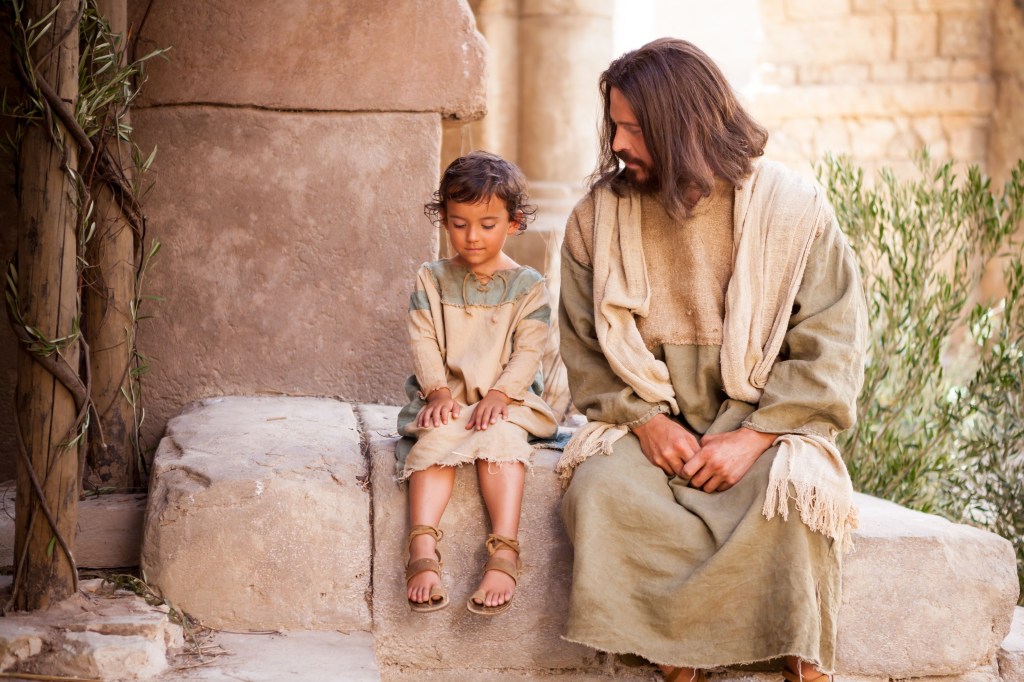
The last of these sayings, about “one of these little ones”, links these verses with the saying of Jesus he spoke after the disciples had been arguing about “who was the greatest”. This saying is reported in the triple tradition (Mark 9:33–37 and parallels in Matt 18 and Luke 9). In that scene, Jesus took a child in his arms and said, “whoever welcomes one such child in my name welcomes me, and whoever welcomes me welcomes not me but the one who sent me” (Mark 9:37; Matt 18:5; Luke 9:48).

Matthew here reports an expanded version of that saying, which is applied directly to the disciples. He begins by reversing Mark’s saying, taking the end of that version by referring initially to all the disciples: “whoever welcomes you”, before extending this to include “welcoming me” (10:40).

The disciples represent Jesus as “the one who sent me”, namely, God. This last phrase, found in the three Synoptic versions of this saying, is a favourite Johannine phrase for God (John 1:33; 6:44; 7:28; 8:26, 29; 9:4). The Johannine version of this saying is “whoever receives one whom I send receives me; and whoever receives me receives him who sent me” (John 13:20). That is very similar to the version that Matthew reports.

However, Matthew extends his version of Mark’s saying still further by adding “whoever welcomes a prophet”, then “whoever welcomes a righteous one” (10:41), before concluding with “whoever gives even a cup of cold water to one of these little ones in the name of a disciple” (10:52). The “little one” is presumably equivalent to “the child” which had begun Mark’s saying.

Jesus’ other saying about “the little ones” appears in all three Synoptic Gospels. The saying is highly likely to be authentic, if we adopt the classic form-critical criteria that were developed some decades ago. One marker of authenticity is for a saying to be hard, difficult, or unexpected. Jesus instructs his disciples, “if any of you put a stumbling block before one of these little ones who believe in me, it would be better for you if a great millstone were hung around your neck and you were thrown into the sea” (Mark 9:42; Luke 17:2; Matt 18:6).

This is a shocking, confronting instruction. It is undoubtedly a hard saying. In Mark 9, that shocking statement is extended regarding a hand or a foot or an eye causing a person to stumble; “it is better for you to enter life maimed … lame …[or] with one eye”, he advises (Mark 9:43-48). So Jesus is strenuously advocating for “the little ones”, and giving them a cup of water (Matt 10:42) is an essential act of discipleship.

*****

We have seen, then, that Matthew has inverted the order he received from Mark and extended the comparison he makes about welcoming a person who comes in his name. Adding the prophet to this saying (10:41) brings in another dimension to the story.

One line of interpretation that has been proposed intrigues me. Could these sayings reflect the on-the-ground nature of the earliest period of the movement that Jesus initiated? He had called disciples to follow him (4:18-22; 9:9), warned people of the difficulties that this would entail (8:18–22), selected an inner group to be designated as “emissaries—translating the Greek apostoloi (10:1–4), and commissioned them to proclaim the nearness of God’s presence in this world (10:5–15).

Jesus then warned these emissaries of the dangers that lay in store for them (10:16–25) and encourages them with the words, “do not fear those who kill the body but cannot kill the soul” (10:26–31), assuring them that “everyone who acknowledges me before others, I also will acknowledge before my Father in heaven” (10:32–33). The short lectionary passage brings the whole “mission discourse l (10:1–42) to a close. These words encapsulate the commission and the anticipated experience of the disciples.

How were the followers of Jesus to implement this? Gerd Theissen, a German New Testament scholar, has proposed that the message of Jesus was spread by itinerants within the early Jesus movement who travelled from village to village with their message. They were dependent on those who received them for hospitality and lodging, in literal obedience to what Jesus had told his disciples (Mark 6:10–11). They were living in complete obedience to “the Son of Man [who] has nowhere to lay his head” (Matt 8:20; Luke 9:58).

Evidence for such itinerant preachers can also be found in the Didache, which instructs: “Whosoever, therefore, comes and teaches you all these things that have been said before, receive him … Let every apostle that comes to you be received as the Lord. But he shall not remain except one day; but if there be need, also the next; but if he remain three days, he is a false prophet. And when the apostle goes away, let him take nothing but bread until he lodges; but if he ask money, he is a false prophet.” (Didache 11:1, 4–6).

The reference to prophets in Matthew’s account of the words of Jesus resonate with this portrayal of the early church. Receiving a prophet and welcoming them (providing them with hospitality—food, drink, and shelter) is affirmed, for the prophet comes as a representative of Jesus (10:41).

Throughout the story of Israel, the prophet has been the one who, literally, “speaks forth”; so the prophets sent by Jesus proclaim the message that “the kingdom of heaven has come near” (Matt 10:7). The prophets proclaiming this message, as prophets did in earlier times, accompany their message with acts that manifest the truth of what is proclaimed: “cure the sick, raise the dead, cleanse the lepers, cast out demons” (10:8).

*****

Matthew also adds a saying about receiving “a righteous one” 10:42). This is language which is very important to Matthew. The word dikaios, translated as righteous, refers to a person who adheres carefully to the prescriptions of Torah, who is faithfully trusting God, who follows the ways that God sets out, who contributes constructively to society so that it functions in a just and equitable way.

Torah and righteous-justice are linked in Jewish understanding. The psalmist, characteristically, places them in synonymous parallelism, when they sing, “your righteousness is an everlasting righteousness, and your law is the truth” (Ps 119:142). The prophet Habakkuk, lamenting the “destruction and violence” that surrounds him as the Babylonian army presses into Jerusalem, observes that “the law becomes slack and justice never prevails; the wicked surround the righteous—therefore judgment comes forth perverted” (Hab 1:4). The two go hand-in-hand.

Matthew reflects this close connection between Torah and righteous-justice, as he presents Jesus as being completely faithful to Torah. In reporting his baptism, only Matthew has Jesus declare to John, “it is proper for us in this way to fulfill all righteousness” (3:15). In beginning the Sermon on the Mount, Jesus declares blessed “those who hunger and thirst for righteousness” (5:6) and “those who are persecuted for righteousness’ sake” (5:10).

Jesus follows this by announcing his intention to intensify the demands of the Law (5:18) by demanding that his followers exhibit a righteous-justice that exceeds that demonstrated by the Pharisees (5:20). Only Matthew reports these words of Torah fidelity, and only Matthew has the various parables which affirm “the righteous” over against those who disobey the law (13:36–43; 13:47–49; 25:31–46).

Matthew presents Jesus as thoroughly Jewish, for he knows that God is righteous, as is declared in scripture (Deut 32:4; Ps 145:7; Job 34:17). The psalmists regularly thank God for God’s righteousness (Ps 5:8; 7:17; 9:8; 33:5; 35:24, 28; 36:6; 50:6; etc) and note the importance of humans living in that way for righteousness (Ps 18:20, 24; 85:10–13; 106:3, 31; 112:1–3, 9).

The book of Proverbs advises that the wisdom it offers is “for gaining instruction in wise dealing, righteousness, justice, and equity” (Prov 1:3) and the prophets consistently advocated for Israel to live in accordance with righteousness (Hos 10:12; Amos 5:24; Isa 1:22; 5:7; 28:17; 32:16–17; 54:14; Jer 22:3; Ezek 18:19–29; Dan 9:24; 12:3; Zeph 2:3; Mal 4:1–3; Hab 2:1–4).

So welcoming a righteous one is welcoming a person who follows, intensely and faithfully, the way that Jesus sets out, the way of God’s righteous law—just as welcoming a prophet is welcoming one who faithfully and persistently declares the message of that righteous law. That is the measure of faith that Matthew sets out in this saying. That is the intensity that the Jesus of Matthew presents.

We have obtained access to this grace (Romans 5, Pentecost 3A)

During Lent we heard a key passage from Romans, much of which is offered again as the Epistle reading for this coming Sunday. It is a passage replete with fundamental theological affirmations (Rom 5:1–11, Lent 3A; Rom 5:1–8, Pentecost 3A). In an earlier blog, we explored two of the key elements that Paul sets out in this passage: being made righteous by faith, a central affirmation for the apostle; and being at peace with God.

In this post, as we revisit this passage for the Third Sunday after Pentecost, we look at other theological aspects of Paul’s writing. Paul writes this letter to a group of faith communities which include both Jews and Gentiles; this is a fundamental commitment in his theology and practice (Rom 3:29; 4:11–12; 9:22–24; 11:11–14; 15:7–13) and the list of names in 16:3–16 indicate that people of both Jewish and Gentile origins were present. Nevertheless, the theological commitments that Paul articulates here have strong Jewish origins.

Access to God’s grace (v.2) is a fundamental element in Paul’s affirmation in Rom 5:1–11, as well as in his whole body of writings. (I am here canvassing just the seven letters generally accepted as authentic to Paul.) God’s grace is what gripped Paul, calling him to his work as apostle, preaching the Gospel, establishing new communities of faith, and nurturing them as new disciples.

It is through Jesus, says Paul, that “we have received grace and apostleship to bring about the obedience of faith among all the Gentiles for the sake of his name” (Rom 1:5; 1 Cor 3:10; 15:10; 2 Cor 1:12; Gal 1:15). That grace is evident in the lives of believers in Corinth (1 Cor 1:4) and Philippi (Phil 1:7); by contrast, the Galatians, in Paul’s eyes, “are so quickly deserting the one who called you in the grace of Christ and are turning to a different gospels (Gal 1:6).

Paul is drawing on his Jewish heritage and the understanding of God in Hebrew Scripture. God’s graciousness was repeatedly offered to the people of Israel (Exod 34:6; Num 6:25; 1 Sam 1:22; 2 Ki 13:23; 2 Chron 30:9; Ezra 7:9; 8:18, 22; Neh 2:8, 18; 9:17, 31).

Prophets declared that God yearned to be gracious (Isa 30:18–19; 63:7; Joel 2:13; Amos 5:15; Jonah 4:2; Zech 1:13), as do the psalmists (Ps 86:15; 103:8; 111:4; 116:5; 135:3; 145:8, 13;147:1). The prophets therefore implore the Lord to manifest that grace (Isa 33:2; Mal 1:9), as do the psalmists (Ps 4:1; 6:2; 9:13;25:16; 26:11; 27:7; 30:10; 31:9; 41:4, 10; 56:1; 67:1; 86:3, 16; 119:58, 132). Grace is a fundamental scriptural concept, integral to the nature of God.

*****

Sharing in the glory of God (v.2) follows; in this regard, Paul also draws from his Jewish heritage. The glory of God is present in the stories that recount the formation of Israel, through the years in the wilderness (Exod 16:6–10; Num 14:22), on Mount Sinai (Exod 24:16–17; Deut 5:22–24), in the Tabernacle (Exod 40:34–35; Lev 9:23; Num 14:10; 16:19, 42; 20:16), and in the temple (1 Ki 8:1–11; 2 Chron 7:1–4).

The psalmists reinforce the notion that the glory resides in the sanctuary (Ps 26:8; 63:2; 102:16; Hag 2:3) and in the land of Israel (Ps 85:9). In some psalms the realm of God’s glory is extended to be “over the waters” (Ps 29:1–4), “over all the earth” (Ps 57:5; 72:19; 97:6; 102:15; 108:5; also Isa 6:3; 24:15–16; 60:1–2; Hab 2:14) and even to “the heavens” (Ps 19:1; 113:4; 148:13; and Hab 3:3).

The concept of God’s glory plays an important role in Paul’s argument in Romans. “All have sinned and fallen short of the glory of God”, Paul brazenly declares (Rom 3:23); some who claim to know God “exchanged the glory of the immortal God for images resembling a mortal human being” (1:23), in contrast to “those who by patiently doing good seek for glory and honour”, to whom “glory and honour and peace” will be given (2:7, 10).

To Abraham, who “grew strong in his faith as he gave glory to God”, his faith would be “reckoned as righteousness” (4:20–22). In God’s time, “the freedom of the glory of the children of God” will given to the creation (8:21). Within the communities of faith in Rome, the imperative of “welcoming one another” is to be done “for the glory of God” (15:7). This glory is God’s gift to people of faith, and indeed to the whole creation.

*****

The next important theological claim, the connection of sufferings and endurance with hope (vv.3–5), is a link that is made elsewhere in Paul’s writings. Paul itemises the sufferings that he has experienced throughout his ministry (2 Cor 6:3–10; 11:24–29; see also 1 Cor 4:9–13; 15:30–32; 2 Cor 12:10; Phil 4:12; 1 Thess 2:2)—all of which fulfils the second element of the call which Luke claims that Paul received from God, “I myself will show him how much he must suffer for the sake of my name” (Acts 9:16).

The hope in God that Paul holds fast throughout those sufferings is also quite clearly expressed (Rom 8:22–25; and especially in 2 Cor 1:3–11). “Rejoice in hope, be patient in suffering”, he advises the Romans (12:12), and he informs them that “whatever was written in former days was written for our instruction, so that by steadfastness and by the encouragement of the scriptures we might have hope” (15:4).

Indeed, the long saga of Israel told in those writings is a story of hoping in the face of sufferings: hoping for the promise declared to Abraham, hoping for liberation whilst in the oppressive conditions of Egypt, hoping to reach the promised land throughout the years of wilderness wandering; and then, centuries later, hoping for release from the second captivity of Exile, and hoping for the restoration and rebuilding of city and land to last long into the future.

Just as story of Israel can be told in terms of hope, so faithful people through the ages sang of hoping in the steadfast love of the Lord (Ps 33:18; 147:11), in the ordinances of the Lord (Ps 119:43) and the word of the Lord (Ps 119:81, 114, 147; 130:5). The invocation to “hope in God” is a regular refrain in the psalms (Ps 42:5, 11; 43:5; 130:7; 131:3). “Happy are those whose help is the God of Jacob, whose hope is in the Lord their God”, says one psalmist (Ps 146:5); another sings “God of our salvation, you are the hope of all the ends of the earth and of the farthest seas” (Ps 65:5).

*****

After grace, glory, and hope, Paul next refers to the gift of the Holy Spirit (v.5), the means by which “God’s live has been poured into our hearts”. In his first letter to Corinth, the activity of the Spirit is a central focus (1 Cor 2:9–16; 3:16; 6:19;12:3–11) and is especially in view in the manifestation of spiritual gifts within the community (1 Cor 14:1–40).

To the Romans, Paul explains that it was “the spirit of holiness” who raised Jesus from death (Rom 1:4) and who now “dwells in you” (Rom 8:11), helping believers “in our weakness” and enabling them to “pray as we ought” (Rom 8:26). He exhorts them to “be ardent in spirit, serve the Lord” (Rom 12:11), to “abound in hope by the power of the Holy Spirit” (Rom 15:13), and “by the love of the Spirit, join me in earnest prayer to God on my behalf” (Rom 15:30).

The Spirit was active throughout Hebrew Scripture. Ezra recalls that “you gave your good spirit to instruct them, and did not withhold your manna from their mouths, and gave them water for their thirst” (Neh 9:20–22). It was the work of the Spirit to release the captives from Egypt, lead them through the challenges of the wilderness, and then bring them into the promised land..

The Spirit which had guided Moses and was then gifted to chosen elders (Num 11:16–25) was subsequently imparted to Joshua (Num 27:18; Deut 34:9) and then to a string of Judges: Othniel (Judg 3:10), Gideon (6:34), Jephthah (11:29), and Samson (13:24–25; 14:6,19; 15:14). Each of these men led their people through dangerous, challenging, and turbulent experiences, as they sought to impose Israelite domination on the peoples already living in Canaan.

And in Exile, as they reflected on the whole sweep of the story of Israel and placed it into a grand cosmic context, the priests gave the Spirit pride of place in their account of creation: “the earth was a formless void and darkness covered the face of the deep, while a wind [or a spirit] from God swept over the face of the waters” (Gen 1:2). The Spirit is present and active in the pages of Hebrew Scripture!

*****

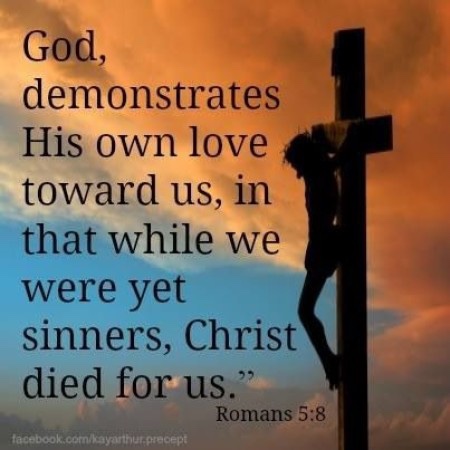
In the following verses, Paul offers a clear salvific interpretation of the death of Jesus when he declares that “Christ died for the ungodly” (v.6), that “while we were still sinners, Christ died for us” (v.8). This is another central element in the theological structure that Paul, throughout his letters, demonstrates. And it, to, can best be understood in the light of the development of thinking throughout the story of Israel.

What follows are two striking affirmations about Jesus. The first is that “we have been justified by his blood” (v.9). This appears to have been an early credal-like claim within the early Christian movement; it appears in various forms at Acts 20:28; Rom 3:25; Eph 1:7; 2:13; Col 1:20; Heb 9:14; 10:19; 12:24; 13:12, 20; 1 Pet 1:2, 19; 1 John 1:7; Rev 1:5; 5:9;12:11.

The claim made depends on ancient Hebraic understandings of life and the role that blood plays in that. “You shall not eat flesh with its life, that is, its blood”, Noah is commanded (Gen 9:4); “the life of the flesh is in the blood”, the Lord declares to Moses (Lev 17:11). This understanding undergirds the whole sacrificial system; when sacrifices are made, blood must be shed, for “I have given it to you for making atonement for your lives on the altar; for, as life, it is the blood that makes atonement” (Lev 17:11; also Deut 12:23). Thus, a much later priestly writer is able to claim, “under the law almost everything is purified with blood, and without the shedding of blood there is no forgiveness of sins” (Heb 9:22).

Paul then follows with the assertion that, through the shedding of this blood and the death which ensues, “we will be saved through him from the wrath of God” (v.9). This particular claim brings us to what is seen by many as the most difficult aspect of Christian belief; the heart of the doctrine of the Atonement is based on the premise of endemic human sinfulness which merits the unrelenting wrath of God as punishment. I’ve addressed the difficulties in this view of the human being at

Paul is well aware of the place that “the wrath of God” had in what the prophets spoke about (Isa 1:24; 13:9, 13; 51:17; 63:1–6; Jer 7:20; 18:3–7; 25:15; 32:30–41;42:18–19; 44:6; 50:25; Ezek 7:5–12; 8:18; 13:13–16; 20:8–32; 22:20–22; 36:18; 38:18–19; Dan 8:19; 11:36; Hos 5:10; Amos 1:11–12; Micah 5:10–15; Nah 1:6; Zeph 1:15–18; 2:1–3; Zech 7:12; 8:14). As Nahum succinctly declares,”a jealous and avenging God is the Lord, the Lord is avenging and wrathful” (Nah 1:2).

His argument in his letter to the Romans is premised on the need to find a way to deal with God’s wrath, which is “revealed from heaven against all ungodliness and wickedness” (Rom 1:18). On “the day of wrath … God’s righteous judgement will be revealed” (2:5), such that “for those who are self-seeking and who obey not the truth but wickedness, there will be wrath and fury” (2:8).

Paul asserts that it is not unjust for God to inflict wrath on us (3:5), and so the remedy that he proposes is that God “put forward [Jesus] as a sacrifice of atonement by his blood, effective through faith … to show his righteousness” (3:25). Jesus is the central means by which human sin is dealt with; this is a repeated motif in Paul’s letters, for in five of his seven letters he asserts that “Christ died for us” (Rom 5:6,8; 14:15; 1 Cor 8:11, 15:3; 2 Cor 5:14–15; Gal 2:21; and 1 Thess 5:10). This claim is reminiscent of Jesus’ saying that “the Son of Man came not to be served but to serve, and to give his life a ransom for many” (Mark 10:45).

Certainly, atoning for sin is a central ritual in the Torah (Exod 30:10 and the details set out in Lev 1, 4–5). Thus, “the blood of the covenant” sealed under Moses (Exod 24:8; Heb 9:20) is renewed through Jesus (Mark 14:24; Matt 26:28; Heb 7:22; 8:6–13; 9:15–17; 10:12–17;12:24). Paul is adopting, extending, and reinterpreting this language in the way that he explains the significance of the death of Jesus.

See more at

*****

Throughout the compressed argument of this very rich section, Paul uses multiple images to interpret the significance of the death of Jesus. The final image is reconciliation, drawn from interpersonal relationships: “having been reconciled, we will be saved by his life” (v.10), and that it is “through our Lord Jesus Christ [that] we have now received reconciliation” (v.11).

Reconciliation is to the fore in part of what we know as Paul’s second letter to the Corinthians. It was actually his fourth letter; 1 Cor 5:9 indicates a letter was sent prior to 1 Cor itself, while 2 Cor 2:3–4 and 7:8 indicate a further “painful letter” was sent in between the letters we know as 1 Cor and 2 Cor. He has obviously had a fractious relationship with the believers in Corinth; much of the first long section of this (fourth) letter to them is seeking to repair relationships.

In encouraging the believers in Corinth in the midst of their distress (2 Cor 1:6–7), Paul writes about being “treasure in clay jars” (4:7), not losing heart (4:16), and walking by faith, not sight (5:7). In this context, he sets out a detailed exposition of “the ministry of reconciliation” (5:11–21). What he offers the Corinthians is “the message of reconciliation” (5:19), that they should “be reconciled to God” (5:20), to “become the righteousness of God” (5:21).

This motif of reconciliation is taken up in later letters written by students of Paul. One, writing to “the saints and faithful brothers and sisters in Christ in Colossae”, declares that in Christ, “all the fullness of God was pleased to dwell”, and affirming that “through him God was pleased to reconcile to himself all things, whether on earth or in heaven, by making peace through the blood of his cross” (Col 1:19–20). The reconciliation effected by Jesus, in this view, had a cosmic scope and impact.

Another student, in creating a letter which most likely was originally a circular letter to a number of churches, took this motif as the key to understanding how Jews and Gentiles were both to be included within the people of God. (We know this letter, because of a textual variant in the opening verses, as Ephesians.)
Writing with Gentiles in mind, the author of this letter declares that “now in Christ Jesus you who once were far off have been brought near by the blood of Christ” (Eph 2:13). Accordingly, Christ “is our peace; in his flesh he has made both groups into one and has broken down the dividing wall, that is, the hostility between us” (2:14).

The writer declares that Jesus abolished the law (a statement that goes beyond what Paul ever wrote), “that he might create in himself one new humanity in place of the two, thus making peace, and might reconcile both groups to God in one body through the cross, thus putting to death that hostility through it” (2:15–16). Reconciliation, manifested in social relationships, is the central feature of the church. This is a clear and pertinent application of the view that Paul had expressed in Rom 5:10–11 and 2 Cor 5:11–21.

What a rich passage!

“Go nowhere among the Gentiles” (Matt 10:5): the mission of Jesus in the book of origins (Pentecost 3A)

Jesus had a mission to the Gentiles. The mission to the Gentiles was “the fundamental missionary dimension of Jesus’ earthly ministry”—so wrote the guru of modern missiological studies, David Bosch (Transforming Mission, p. 30). And thus, every theology of mission since that paradigm-shifting work of 1991 has echoed this claim as a given fact.

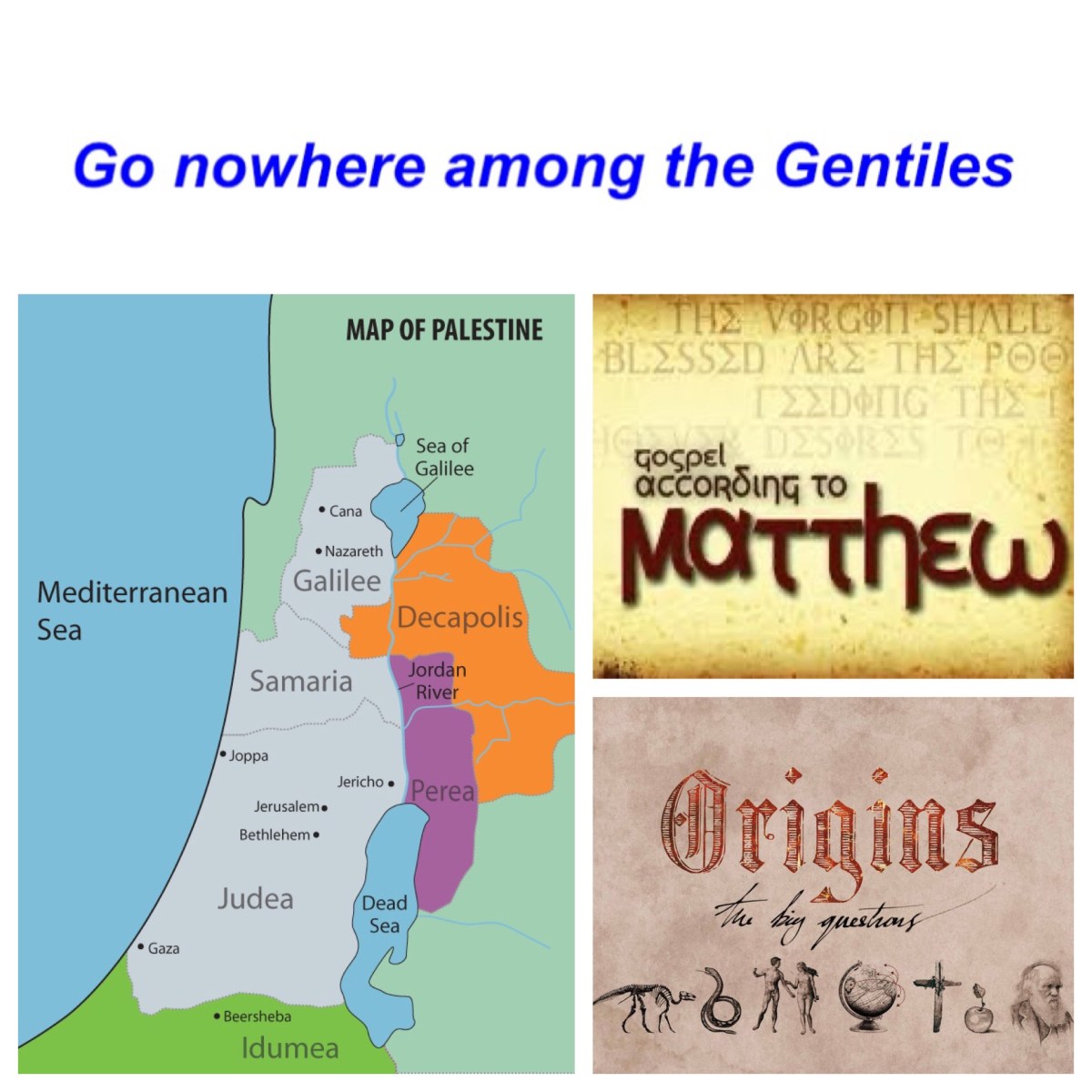
But when we turn to this week’s Gospel passage, we read that Jesus instructed his followers: “Go nowhere among the Gentiles, and enter no town of the Samaritans, but go rather to the lost sheep of the house of Israel” (Matt 10:5-6). What is going on?

This is a very distinctive claim to make. Other New Testament books have a different take—Jesus did engage with Gentiles, even with Samaritans, and did encourage a mission to the wider Gentile world. And plenty of New Testament texts can be pulled out to support this claim.

In Mark’s Gospel, in the story of the Gadarene demoniac (Mark 5:14–21), the healed man begs to be taken with Jesus. Jesus tells him to go home, and spread the story of the Lord’s mercy. This he does throughout the Decapolis—which was Gentile territory! The first evangelist, according to Mark, was a missionary to the Gentiles.

The Matthean Jesus, unlike the Lukan Jesus, never goes near Samaria (Luke 17:11–19), nor does he speak favourably about Samaritans, as he does in Luke (10:25–37), prefiguring the Lukan mission to Samaria (Acts 1:8; 8:4–25).

And in John’s Gospel, the first person who tells many others about Jesus is a woman whom Jesus meets when he is travelling through Samaria (John 4:5–26). After her discussion with Jesus, “the woman left her water jar and went back to the city, and said to the people, ‘Come and see a man who told me everything …he cannot be the Messiah, can he?’” (John 4:28–29). As a result of what she says, “many Samaritans in that city believed in him” (John 4:39); the first evangelist in John’s narrative is a Samaritan wo

Not in Matthew’s Gospel, however. Jesus does not go amongst Gentiles. Or Samaritans. Just as the disciples of Jesus are entirely drawn from Jewish people in Matthew’s Gospel, so also Matthew makes it very clear that Jesus’ mission is “only to the lost sheep of Israel”—that is, exclusively to the Jewish people.

My wife Elizabeth and I have had many conversations about this aspect of the Gospel according to Matthew. She has undertaken thorough research into the Jewish nature of this Gospel, and especially on how Jesus related to Gentiles. What follows is drawn from our conversations and particularly from the research of Elizabeth, as we have written this material together.

*****

The section of the book of origins that we are offered as the Gospel reading this coming Sunday (Matt 9:35–10:8) ought to be familiar. The first verse (9:35) is an almost-exact repeat of an earlier verse (4:23). The same three activities of Jesus are noted—teaching, proclaiming the good news, and curing disease. The earlier verse introduced the activity of Jesus in Galilee; this later version broadens the area where Jesus was active to “all the cities and villages”.

However, Jesus is still in Jewish territory; he had returned “to his home town” earlier (9:1) and emphasises that his followers are not to go into Gentile territory (10:5)—an instruction which he presumably maintains himself, for he tells them “go rather to the lost sheep of the house of Israel” (10:6) and later affirms that “I was sent only to the lost sheep of the house of Israel” (15:24).

This neat repetition of the whole verse that provides an inclusio—a literary device which bundles together all the material in between the two occurrences of the same sentence. The extended set of teachings that Jesus gave (5:—7:29), as well as the healings (8:1–17; 8:28–9:8; 9:18–34) are collated into a broader and comprehensive introduction to the mission of Jesus, which, as he indicates soon after, is to the Jews only (10:5).

Also included in this section is the call of Matthew (9:9), to match the earlier call of the first four disciples (4:18–22), and the warnings that Jesus issues about the difficulty of following him (8:18–21), which is followed by Jesus stilling the storm (8:22–27), which climaxes in the key question, posed by the disciples, “What sort of man is this, that even the winds and the sea obey him?” (8:27; the allusion is to a psalm praising the Lord that, amongst other things, “you silence the roaring of the seas, the roaring of their waves, the tumult of the peoples” (Ps 65:7).

Matthew finds a report of the mission of the twelve in one of his sources, the Gospel we attribute to Mark (Mark 6:8–11). The statement about going “only to the lost sheep of Israel” (10:5–6), in the mission directives to the twelve disciples, is clearly an addition to the original Markan passage. In this distinctive Matthean statement, Jesus directs that Gentile (and Samaritan) towns are to be avoided.

There is, as we have noted, a second statement to this effect in this Gospel, when Jesus encounters a Gentile woman on the northern borders of Galilee. This also is a clear redactional addition to an account already found in Mark (Mark 7:24–30). In Matthew’s version, he declares, “I was sent only to the lost sheep of the house of Israel” (Matt 15:24). There is nothing of this in Mark’s report of this encounter.

A third Matthean statement about mission, the “Great Commission” (28:16–20), is completely different, as the disciples are commanded to go out and actively “make disciples of all nations”. This command correlates with nothing at all in the body of the Gospel, during the earthly period of Jesus’ life. The mission to the Gentiles is an entirely post-resurrection phenomenon.

So the two major statements of mission to Israel in this Gospel, as well as other accounts of the activities and ministry of Jesus, contain a number of significant differences to that of Mark and Luke. The ministry of both Jesus and the disciples is geographically quite limited in Matthew’s account.

*****

Jesus rarely sets foot on any Gentile soil in this Gospel. In Matt 15:29–31, there is no tour through Sidon and the Decapolis as is reported in Mark (Mark 7:31–37), and no missionary activity undertaken by the demoniac after the demons have been exorcised from him (Mark 5:1–20; compare Matt 8:28–34).

The Matthean Jesus never goes near Samaria (contrast with Luke 17:11–19 and John 4:1– 42), nor does he speak favourably about Samaritans, as he does in Luke (Luke 10:25–37), prefiguring the Lukan mission to Samaria (Acts 1:8; 8:5-25). The activities of Jesus and the disciples are concentrated in the Galilean area, and on the Jewish people.

In Matthew‘s account, there are no Gentiles who are intentionally sought out by either Jesus or the disciples. Rather, there are just a select number of Gentiles who seek out Jesus. They come to him; he does not approach them or seek them out. (I am indebted to Elizabeth for this striking observation.) In two instances, it is their faith which includes them in the kingdom of God (the centurion in Capernaum, 8:10, 13; the Canaanite woman in Tyre and Sidon, 15:28).

Ultimately, Jesus says to the Jews, “the kingdom of God will be taken away from you and given to a people that produces the fruits of the kingdom” (21:43). He is not here saying that the kingdom will be opened to the Gentiles per se; his words are directed towards the chief priests and Pharisees (as 21:45 indicates).

It is those Jews who “produce the fruits of the kingdom” who will be given entry to the kingdom. Those who do “produce the fruits of the kingdom” include those normally considered as “unclean” by the Pharisees, and therefore outcasts or rejects from Judaism (9:10–13; 21:31, 32).

Jesus’ discourses and acts of healing, in general, involve only Jews. His contact with Gentiles, when it occurs in the Gospel, is always highly significant, and designed to illuminate some aspect of Jesus’ teaching or person regarding authority, inheritance of the kingdom, discipleship or messiahship.

It is noteworthy that those occasions when a person is asked whether they have faith before Jesus will heal them, are only when Gentiles are involved. Jesus readily heals Jewish people without requesting a prior faith statement (4:24; 8:3; 8:15; 12:13; 12:22; 14:36; 15:31; 21:14).

*****

More recent Matthean scholarship has recognised the Jewish character of this Gospel, and a consensus is emerging that this work was most likely written for a community that was still immersed within its Jewish tradition. It appears that members of this community had been ostracised and persecuted by other Jews (including their families) who did not believe Jesus to be the Messiah. They did not withdraw voluntarily from their local synagogues, but still operated as a group under Jewish authority (10:17; 23:34).

This community is still directly under Jewish law; the clear words of Jesus that are remembered and repeated are “the scribes and the Pharisees sit on Moses’ seat; therefore, do whatever they teach you and follow it” (23:1-3). That law is not to be abolished, but fulfilled (5:17); it remains “until all is accomplished” (5:18).

In the teachings of Jesus which are recalled in this community, their faithfulness in the midst of persecution is valued (5:10–12); they report that Jesus identifies this persecution as taking place “on my account” (5:11; see also 10:18, 39; 16:25; 19:29). Thus the difference between this community and many other Jews of the time was the belief that Jesus was the promised Messiah.

Judaism was in a state of flux in the middle to late decades of the first century. The pivotal moment looks, from the benefit of hindsight, to have been the a Jewish-Roman War of 66-74 CE, and particularly the destruction of the Jerusalem Temple which took place in 70 CE, in the middle of this war.

Things were different after the Temple was rendered unusable. That is often taken as a marker for understanding events in the period of the New Testament, certainly, it is a key marker for understanding the major shifts that took place within Judaism—with no Temple in place, the importance of synagogues as gathering places in towns and cities across Israel (and beyond) grew.

What little evidence we do have from this general period indicates that there were a number of sectarian groups within Judaism, which were contesting with each other for recognition and influence. During this period, the Pharisees were becoming increasingly important as an alternative to the Temple cult, and emerging as the dominant Jewish religious movement. Their power base was moved from Jerusalem and spread throughout the area. They were well-placed to take advantage, as it were, of the situation when the Temple no longer served as a focal point for Jews.

Nevertheless, many Jews, particularly in the Diaspora, were not yet “Pharisaic”—they did not see their faith in the same way as the Pharisees. There were many disputes amongst Jewish communities as to the correct way of seeing things, and some of these disputes were quite bitter.

Many groups claimed to be the ‘true Israel’ as distinct from other groups, who were false leaders and teachers, and who failed to follow the Law correctly. The Law became the most accessible means of revealing God’s will for Israel after the destruction of the Temple, and most of these groups focused on what they believed to be the true interpretation and application of it.

The synagogues were the places where the Law was studied and discussed, where it was preached and understood. The synagogue was where the scribes and Pharisees most naturally operated. The Pharisees thus grew in significance over time. They had established synagogues decades before Jesus was born. After 70 CE, synagogues became the key gathering place for Jews, both within Israel, and across the Dispersion.

*****

Matthew’s Gospel reflects one such debate, between the authorities in the synagogues and the followers of Jesus. Biblical scholars suggest that this Gospel should be read alongside of other literature from after the time of the destruction of the Temple—books such as 2 Baruch, 4 Ezra, and the Psalms of Solomon. This literature is trying to envisage what Judaism should be like in the aftermath of the destruction of the Temple. Understanding and living by the Law is central in each of these documents.

Thus, although Matthew’s Gospel has been seen to have played an important role in the formation of early Christian theology, a more natural interpretation is to locate this Gospel within the first century Jewish debates about how the Law is best to be understood and applied.

These debates took on even more intensity after 70 CE. The survival of Judaism without the Temple depended on the faithful practice of the Law: all of its commandments and instructions. The polemic in Jesus’ debates with the Pharisees, and the warnings that are uttered to Israel, show that Matthew still had hope that his ideas would become normative for all Jewish people.

If the author of this Gospel knew anything about what was happening elsewhere, he would have known about the gathering strength of the movement led by Saul of Tarsus, for whom strict obedience to Torah was of less importance than belief in Jesus as Messiah.

This arm of the movement was opening a door wide for Gentiles, who did not follow the Torah, to belong to such communities. This had been underway since the 50s. It had gained momentum by the late 60s and would become the dominant form of Christianity later in the second century.

It was perhaps with this awareness that Matthew’s Gospel was created—to insist on the centrality and priority of the traditional teaching of Jesus, the Torah-observant Jew, whom God had chosen as the anointed one. And the picture that he offers of Jesus is a resolutely Jewish one. Remembering that Jesus said “Go nowhere among the Gentiles” (10:5) makes perfect sense in this context.

(In fact, I think that this Gospel might more accurately reflect the activity of the historical Jesus during his earthly activities—he was a faithful Jew who observed Torah and advocated for his particular interpretation of how the commandments were to be kept. Staying away from Gentiles and Samaritans would be a perfectly respectable course of action for such a person.)

So, in reporting the words of Jesus about mission, and in insisting on the thoroughly Jewish nature of this movement, this really is “the book of origins”. This is how I translate the opening phrase (1:1). Usually this phrase is related to the story that follows, about the origins of Jesus (1:1–2:23). And that makes sense.

In a broader sense, however, the author of the book of origins is making a pitch about the true nature of the movement that was formed by Jesus.

Jesus instigated a prophetic movement to renew the people of Israel, to recall them to the prophetic heart of their traditions and restore the sense of righteous-justice that was fundamental to his understanding of Judaism. That is the real story of our origins, the author of this book is declaring.

******

This blog draws on material in MESSIAH, MOUNTAINS, AND MISSION: an exploration of the Gospel for Year A, by Elizabeth Raine and John Squires (self-published 2012)

See also

https://johntsquires.com/2019/11/28/leaving-luke-meeting-matthew/

https://johntsquires.com/2020/02/13/you-have-heard-it-said-but-i-say-to-you-matt-5/

https://johntsquires.com/2020/02/06/an-excess-of-righteous-justice-matt-5/

https://johntsquires.com/2020/01/30/blessed-are-you-the-beatitudes-of-matthew-5/

It was reckoned to him; it will be reckoned to us (Rom 4; Pentecost 2A)

This Sunday, we start into a series of readings offered by the lectionary from the longest and most theologically weighty letter written by Paul—that addressed “to all God’s beloved in Rome, who are called to be saints” (Rom 1:7). Although it has this specific, localised audience in view, the letter has become a declaration heard and taken up and studied carefully by Christians right around the world, across millennia of years.

A reading from Romans will be offered each week until the Sixteenth Sunday after Pentecost (this year, 2023, that falls on 17 September). So we will have many weeks to consider the theological exposition that Paul provides. This letter is generally regarded as the most explicit and detailed exposition of the theological commitments which had energised Saul of Tarsus to spend years of his life “to be a minister of Christ Jesus to the Gentiles in the priestly service of the gospel of God, so that the offering of the Gentiles may be acceptable, sanctified by the Holy Spirit” (Rom 15:16). For this enterprise, he is well-known as the “Apostle to the Gentiles”.

In the structuring of the lectionary, the sequence of excerpts from Romans should begin with a declaration of the central theme of the letter (1:16–17) and the rich passage that details how God death with human sinfulness through Jesus (3:21–28). These two short, but central, sections of the letter are offered on the Sunday known as Proper 4, the first Sunday after Pentecost.

However, because Easter was (relatively) later this year, Pentecost is also later, and so this reading is not offered by the lectionary this year. Proper 4 is to occur “on the Sunday in between May 29 and June 4 inclusive, if after Trinity Sunday”; as Trinity Sunday this year fell on 4 June, there is no Proper 4 in 2023.

So we begin with Proper 5, for “the Sunday between June 5 and June 11 inclusive”—this year, Sunday 11 June. Which means that we have missed the initial declaration of the Gospel which Paul proclaims in this long letter; the Gospel which is “the power of God for salvation to everyone who has faith, to the Jew first and also to the Greek”, the Gospel in which “the righteousness of God is revealed through faith for faith” (Rom 1:16–17).

This theological understanding is set forth, initially, through a quotation from a short book in Hebrew Scripture, that of the prophet Habakkuk. This prophet is a shadowy figure, known, really, for only one statement—just half of one verse. That is the short statement, “the righteous live by their faith [or faithfulness]” (2:4b), which stands as the text upon which Paul developed his important theological statement in Romans: “in it [the gospel] the righteousness of God is revealed through faith for faith; as it is written, ‘the one who is righteous will live by faith’” (Rom 1:17).

In the context of Habakkuk’s prophetic activity, the affirmation that “the righteous live by their faith [or faithfulness]” (2:4b) is the word that God gives to the prophet, responding to his complaints about what sufferings are taking place. Habakkuk’s complaints come because God is “rousing the Chaldeans, that fierce and impetuous nation, who march through the breadth of the earth to seize dwellings not their own” (1:6), and through their dreadful and fearsome activities, God is “destroying nations without mercy” (1:17).

You can read more of my take on the short book of Habakkuk at

The claim that God is using foreigners to deal with Israel is a striking theological development—one that is at odds with the traditions that emphasise Israel as a chosen nation, holy and set apart, dedicated to the Lord; the nation alone through whom the Lord God works. That this God will use foreigners is a theme found also in the later writings of Deutero-Isaiah (Isa 40–55), where Cyrus, the Persian ruler, is acclaimed as the one chosen by God, the Messiah, to allow the people of Judah to return to their land (Isa 44:24–45:13).

That God is at work amongst people who are not of Israel resonates, of course, with the activity that Paul and his fellow-workers had been undertaking amongst the Gentiles (those not of the people of Israel)—although Paul is not working in a context of oppression and threatening invasion. So this brief citation from Habakkuk is entirely apposite for Paul’s work and his writings. And as the later chapters of Roman clearly show, God has indeed been at work amongst the Gentiles in Rome.

On the overall theological argument developed in Romans, see

*****

So in the passage that the lectionary offers us for this Sunday (4:13–25), we have the second part of Paul’s discussion of the patriarch Abraham—“the father of all nations” (4:17, citing Gen 17:5) and the figure who stands as the archetype for the message of the Gospel, that “the one who is righteous will live by faith” (1:17, citing Hab 2:4).

In this discussion, Paul is insistent that Abraham stands as the example supreme for that Gospel, since “his faith was reckoned to him as righteousness” (4:3, quoting Gen 15:6, and repeating this at Rom 4:9 and 4:22–23). And more than this: what was done with Abraham “will [also] be reckoned to us who believe in him who raised Jesus our Lord from the dead” (4:24).

This second half of the discussion of Romans 4 comes after Paul has established the universal scope of God’s providential grace—for this is how God meets the universal spread of sinfulness amongst human beings. So Paul focusses on the faith that Abraham showed, and its importance for believers in Rome (and elsewhere). The thesis for this part of the argument is that the promise to Abraham (which he was given in Gen 12:1–3) was “not through the law but through the righteousness of faith” (4:13).

First, Paul indicates that the promise cannot be fulfilled only through “the adherents of the law”, for “the law brings wrath” (4:14–15; he expands on this in chapter 7). Then, he asserts that the promise must rest on faith, both to those who adhere to the law but also “to those who share the faith of Abraham” (4:16). Abraham is here described as “the father of all of us”, drawing on yet another scripture citation (Gen 17:5; Paul uses the same argument at Gal 3:15–18, and the phrase is also at play in the debate reported in John 8:41–59).

Then follows further explication of this scripture (Gen 17:5), particularly explaining how Abraham, “hoping against hope”, became “the father of many nations” (4:17b—21). Despite the barrenness of Sarah’s womb (4:19), Abraham “was fully convinced that God was able to do what he had promised” (4:21). To conclude this exegetical foray, Paul quotes, for the third time, the foundational text: “his faith ‘was reckoned to him as righteousness’” (4:22, quoting Gen 15:6).

Paul then explains that these words describe not only the situation of Abraham, long ago in the past, but also the immediate situation of those to whom he writes (4:23–24). This is a foundational aspect of Paul’s hermeneutic; he restates it at Rom 15:4, declaring that the scripture “written in former days was written for our instruction”. See

And so the argument draws to a close, moving back into the heart of Paul’s concern, to expound the Gospel concerning God “who raised Jesus Christ from the dead” (4:24–25). The final verse is most likely a traditional formulaic expression; we find a similar pattern at 1 Cor 15:3–4, a midrashic-style reflection on this pattern at 1 Cor 15:42–44, and a variant form at 2 Cor 5:14–15.

There is also an extended discussion later in the letter to the Romans using the pattern of “Christ, dead and raised”, as the model for believers: “we are buried with him by baptism into death, so that, just as Christ was raised from the dead by the glory of the Father, so we too might walk in newness of life” (Rom 6:4). Paul provides a fuller discussion of this paradigm at 6:3–11, and there is a similar discussion, albeit varied for the different context, at Col 3:11–15.

And so the extended argument set out in all of this chapter takes us from an initial question about Abraham, through an exploration of the story of Abraham and Sarah, to a conclusion about the life of those who place their trust in what God has done through Jesus Christ. That God “will justify [or, reckon as righteous] the circumcised on the ground of faith and the uncircumcised through that same faith” (3:30) is the foundation for then claiming that, in like manner, “it will be reckoned to us who believe in him who raised Jesus our Lord from the dead” (4:24). It is all about being reckoned as righteous on the basis of faith. Thanks be to God!

*****

On the diatribe style that Paul uses here and throughout much of the letter to the Romans, which is reflected in that pattern (“it was reckoned to him … it will be reckoned to us”), see

Righteous by faith and at peace with God (Rom 5; Lent 3A)

We are being offered a veritable feast by the lectionary during the season of Lent, through Hebrew Scripture passages which recall key moments in the story of Israel (Abraham, Moses, David, return after exile) as well as in Gospel narratives telling of the transformative encounters which Jesus had with a range of people (a Pharisee and a Samaritan woman, a man born blind and two sisters of a dead man).

Alongside this, the lectionary offers us a set of readings from Paul’s longest and most richly-developed theological letter, that which he wrote to “all God’s beloved in Rome, who are called to be saints” (Rom 1:7). After exploring the rationale for human sinfulness (Rom 5:12–19, Lent 1A), we have read of Paul’s use of Abraham as a model to explain how God “reckons us to be righteous” (Rom 4:1–5, 13–17, Lent 2A).

Today we are offered another passage replete with fundamental theological affirmations (Rom 5:1–11, Lent 3A) and in two more weeks we will hear yet another “purple passage” from Romans (Rom 8:6–11, Lent 5A). In the intervening week we are diverted in Ephesians, most likely because the passage illuminates the Gospel story of Jesus enabling the man born blind to see (John 9).

Whilst Romans 4 exhibits many signs of the diatribe style, as we have noted, Paul seems to set this to one side for a time. He will pick up the pattern of apostrophe (posing questions to a hypothetical listener) and speech-in-character (providing answers to those questions from an imaginary person) in the next chapter: “What then are we to say? Should we continue in sin in order that grace may abound? By no means! How can we who died to sin go on living in it?” (Rom 6:1–3).

He will extend that through the agonising of the following chapter: “What then should we say? That the law is sin? By no means! Yet, if it had not been for the law, I would not have known sin.” (Rom 7:7). He will pick this up again at the end of his lengthy argument begun in 5:1 when he exclaims: “What then are we to say about these things? If God is for us, who is against us? He who did not withhold his own Son, but gave him up for all of us, will he not with him also give us everything else? Who will bring any charge against God’s elect? It is God who justifies.” (Rom 8:31–34).

Paul uses these techniques because he is, in the depths of his being, what we would call a “pastoral practitioner”. He is a good theological thinker, but he is oriented at every point to the pastoral engagement that he has with people in the churches which (mostly) he has founded—the church in Rome being a key exception to this, since he writes to a community that he has not yet visited.

Paul tells the Thessalonians that he seeks to operate “like a father with his children” (1 Thess 2:11), “like a nurse tenderly caring for her own children” (1 Thess 2:7). He tells the Philippians “how I long for all of you with the compassion of Christ Jesus” (Phil 1:8), and the Corinthians that “I wrote you out of much distress and anguish of heart and with many tears, not to cause you pain, but to let you know the abundant love that I have for you” (2 Cor 2:4). And he assures the Romans that he prays that “by God’s will I may come to you with joy and be refreshed in your company” (Rom 15:32).

Amidst all the harsh rhetoric, direct intervention, and controlling instructions that pepper all the letters of Paul, this kind, compassionate, caring heart can be glimpsed. Paul does what he does for the sake of the people whom he serves. Rabbinic midrash and rhetorical diatribe a pre pressed into the service of compassionate care for his people.

The opening of Paul’s letter to the Romans,
from an early fourth century papyrus (p10)

*****

But for the passage from Romans which we are offered this coming Sunday (Rom 5:1–11), the style changes. Rather than the diatribe style of question—response, shaped by the Pharisaic midrashic pattern of exploring key scripture passages, Paul seems to switch, to become a doctrinal pedagogue much as we find in later patriotic, medieval, and reformed writers.

In just eleven verses, Paul identifies and names a sequence of ten key theological claims—perhaps the closest he ever gets to becoming what we know as a “systematic theologian”. Paul mentions, in turn, justification by faith, peace with God, access to God’s grace, the glory of God, the place of sufferings, endurance, and hope, the gift of the Holy Spirit, the function of the death of Christ and the process of being justified by his blood, salvation from God’s wrath, and finally, reconciliation with God. They are each worth pondering.

Being justified by faith—or, in another English translation, being made righteous by faith—is the first concept which has pride of place in this passage—and, indeed, forms the basis for the theological argument that is developed throughout this Gospel. Paul’s opening statement is that, in the Gospel, “the righteousness of God is revealed through faith for faith”, quoting a scripture passage to provide the basis for his assertion (Rom 1:17); that righteousness is explained at length through the ensuing chapters, canvassing a range of matters in the process.

Righteousness, of course, has its origins deep in the Hebrew Scriptures. Abram had been given promises by God but he expresses doubt that these promises would come to pass (15:2-3). God provides further reassurance; the multitude of stars in the sky is testimony to that (15:5). Abraham’s resulting affirmation of faith leads to the famous phrase, so central to Paul’s later argument about righteousness: “he believed the Lord; and the Lord reckoned it to him as righteousness” (15:6; see Rom 4:3,9,22).

The psalmists regularly thank God for God’s righteousness (Ps 5:8; 7:17; 9:8; 33:5; 35:24, 28; 36:6; 50:6; etc) and note the importance of humans living in that way for righteousness (Ps 18:20, 24; 85:10–13; 106:3, 31; 112:1–3, 9), whilst the book of Proverbs advises that the wisdom it offers is “for gaining instruction in wise dealing, righteousness, justice, and equity” (Prov 1:3) and the prophets consistently advocated for Israel to live in accordance with righteousness (Hos 10:12; Amos 5:24; Isa 1:22; 5:7; 28:17; 32:16–17; 54:14; Jer 22:3; Ezek 18:19–29; Dan 9:24; 12:3; Zeph 2:3; Mal 4:1–3; Hab 2:1–4).

So “being made righteous with God” (Rom 5:1) is both a central element of Paul’s theology, and a strong thread running from Hebrew scriptural texts into the life of the early church.

Peace with God is the second element in this section. Paul regularly commences his letters with the formulaic “grace and peace to you” (Rom 1:7; 1 Cor 1:3; 2 Cor 1:2; Gal 1:3; Phil 1:2; 1 Thess 1:1; Phlm 3), but the peace spoken of at 5:1 goes deeper than this formula. God is “the God of peace” (1 Thess 5:23) who offers peace “which surpasses all understanding” (Phil 4:7). “God is a God not of disorder but of peace” (1 Cor 14:33) so believers are urged to live in peace (2 Cor 13:11). The Galatians are told that of the fruits of the Spirit is peace (Gal 5:22); the Philippians are informed that “the peace of God, which surpasses all understanding, will guard your hearts and your minds in Christ Jesus” (Phil 4:7).

Such peace is grounded in the understanding of God expressed in Hebrew Scriptures. The Psalmist prays, “may the Lord bless his people with peace” (Ps 29:11), celebrates that God “will speak peace to his people, to his faithful, to those who turn to him in their hearts”, such that “steadfast love and faithfulness will meet; righteousness and peace will kiss each other” (Ps 84:8, 10), and gives thanks that God “grants peace within [Jerusalem’s] borders” (Ps 147:4).

The vision of peaceful co-existence amongst all creatures is declared. by various prophets (Isa 2:2–5; Mic 4:1–5; Isa 52:7; 57:19; 60:17; 65:25) and amongst the names of the one whom Isaiah foresees as the hope for Israel’s future is “Prince of Peace” (Isa 9:2). Both Ezekiel (Ezek 13:8–16) and Jeremiah (Jer 14:13–22) decry those who cry out “peace when there is no peace”. Ezekiel states that God promises, “I will make a covenant of peace with them; it shall be an everlasting covenant with them” (Ezek 37:26; also 34:25, and Zech 8:12).

*****

This being-made-righteous and the consequent gift of peace comes, according to Paul’s comments later in this passage, through the death of Jesus on the cross. He uses a number of phrases to describe this death, and its “benefits” for believers. In verse 6, he notes that “Christ died for the ungodly”, and in verse 8, “while we still were sinners, Christ died for us”.

“Christ died for us” is a common phrase in Paul’s letters—so much so that it is regarded as a formulaic statement (an early credal affirmation?) which appears in various forms (Rom 6:10; 8:34; 14:9; 1 Cor 8:11; 2 Cor 5:14–15; 1 Thess 5:9–10; see also Gal 1:4; 2:20; Rom 7:4; 1 Thess 4:14; and the later formula of 1 Tim 2:5–6). Specifically relating the death of Christ to dealing with sin is also addressed by Paul in some detail earlier in this letter (Rom 3:9–26; 5:15–21; 6:5–14) as well more briefly as in other letters (1 Cor 15:56–57; 2 Cor 5:21; Gal 3:22).

To explain how this death deals with our sins, Paul here specifies that “we have been made righteous by his blood” (Rom 5:9). This clearly relates to the practice of faithful Jews, who for centuries brought their sacrifice to the Temple, so that the priests could kill the animals brought as offerings to God. Shedding blood was integral to this process.

The Torah specifies that the priests should receive “a bull of the herd” as a sin offering, and “the bull shall be slaughtered before the Lord; the anointed priest shall take some of the blood of the bull and bring it into the tent of the meeting … and dip his finger in the blood and sprinkle some of the blood seven times before the Lord” (Lev 4:3–6). Some of the blood is also placed on the horns of the altar and the rest “he shall pour out at the base of the altar of burnt offering” (Lev 4:7).

Likewise, the priest was to “slaughter the guilt offering, and its blood shall be dashed against all sides of the altar” (Lev 7:2); to purify a leper, two lambs are offered, and the priest “shall slaughter the lamb … and take some of the blood of the guilt offering and put it on the lobe of the right ear of the one to be cleansed [the leper] and on the thumb of the right hand and on the big toe of the right foot” (Lev 14:13–14; so also 14:25).

So likewise for the bull on the Day of Atonement: “Aaron … shall slaughter bull as a sin offering for himself … and sprinkle the blood with his finger on the front of the mercy seat … seven times” (Lev 16:11, 14), and then do the same with “the goat of the sin offering” (Lev 16:15–19), before then releasing a live goat (the “scapegoat”) or “bear all their iniquities to a barren region, and the goat shall be set free in the wilderness” (Lev 16:22).

The significance of the shedding of blood is clearly and strikingly articulated in the Torah: “the life of the flesh is in the blood; and I have given it to you for making atonement for your lives on the altar; for, as life, it is the blood that makes atonement” (Lev 7:11). When the blood of the animal is shed, that life is given as an offering to effect atonement. So, too, when the blood of Jesus was shed, his life functioned as an atoning offering for human beings.

The slaughter of animals and the sprinkling of blood thus signifies the sacrificial offering of a gift to God, seeking cleansing or forgiveness. Applying this common practice to Jesus makes sense in the context of the time—but it is an image which is far more difficult for us to accept and appreciate in the modern world, where we might feel that we have moved beyond such “primitive practices”, as some callously call those ancient practices.

What we can take from this language, perhaps, is the observation that sacrifice for sin, seeking to remove the tarnish of that sinfulness and find restoration and wholeness, was a dynamic signalled elsewhere in Hebrew Scripture—most clearly in that famous fourth Servant Song in Second Isaiah, which refers to the servant as the one who “has borne our infirmities and carried our diseases … wounded for our transgressions, crushed for our iniquities; upon him was the punishment that made us whole, and by his bruises we are healed” (Isa 53:4–5). As “the Lord has laid on him the iniquity of us all”, so “it was the will of the Lord to crush him with pain [to] make his life an offering for sin” (Isa 53:6, 10).

That same dynamic is at work every year in Australia, as those military people who have died in battle over the past century are remembered each ANZAC Day for their sacrifice and thanked for what they have bequeathed to our society. It is the same dynamic of sacrifices offered by some to ensure the safety of the many.

So, Paul is able to affirm that when Jesus died, it was to assure us of forgiveness, to deal with our sinfulness, and to restore us to the original state of goodness (Gen 1:26–31) that was God’s gift and intention for humankind.

See more on this at

*****

This passage is so beloved within the church, and was so highly regarded by the creators of the lectionary, that it appears again, slightly reduced in length, in the readings for the Third Sunday after Pentecost, later in this year (5:1–8), as well as in an even shorter form in the readings for Trinity Sunday in Year C (5:1–5). So I am going to reserve my comments on the remainder of the elements I have identified in this passage until it returns, later this year, in the readings for the Third Sunday after Pentecost! I will leave you, simply, with Paul’s clear affirmation that, “since we are made righteous through faith, we have peace with God through our Lord Jesus Christ” (5:1).

See also

Reckoning what is right (Romans 4; Lent 2A) part two

In a previous post, I explored the first half of Romans 4, sections of which are offered by the lectionary as the Epistle reading for this coming Sunday, the Second Sunday in Lent (Rom 4:1–5, 13–17). See

There we noted that Paul quotes scripture texts, poses questions, and provides immediate answers to those questions, as he develops his argument. In this post, I will explore the origins of this style of developing an argument and continue on with an analysis of Paul’s argument in Romans 4.

What we see at work in the rhetorical style that Paul utilises in this letter is that he is not only functioning as a Pharisee, schooled in the methods of midrashic treatment of scriptural texts; but that, as a hellenised Jew (educated in Jerusalem, yes, but living in Tarsus in the diaspora, according to Acts 22:3), he utilises the rhetorical techniques of the diatribe. This was a way of speaking in public that had been created by Bion of Borysthenes in the 4th century BCE, and then developed and refined amongst Greek rhetoricians and utilised particularly by Cynic philosophers in the ensuing centuries.

We know that diatribes were well-known in Ancient Greece; the 4th century playwright Euripides commented that “the peculiarity of the diatribe as distinct from other forms of popular moralizing lies in the assumed presence of an opponent. He is not permitted to reply, but his position is indicated by statements or rhetorical questions put into his mouth by the speaker, and thus the introduction of an objection in the form of a question becomes one of the characteristic features of the diatribe.” It is clear that this is a development of the dialogue form, so its origin is usually traced to the dialogues of Plato.

The popularity of the long-used form of diatribe is well attested into the Common Era in the work entitled Diatribes (more commonly translated as Discourses), published in the early 2nd century CE by Arrian, reporting the diatribes of Epictetus, a first century slave who studied Stoic philosophy and, after he gained his freedom, taught in Rome until Domitian banished all philosophers from Rome in 93CE. (Epictetus moved to Nicopolis and established a school there where he continued to teach Stoic philosophy.)

This demonstrates the enduring character and the widespread know,edge of this particular form of rhetorical argumentation. That Paul was using it quite extensively and to good effect in his letter to Rome (and also at places in other letters he wrote, it must be said) cannot be gainsaid.

Biblical scholars have explored how Paul adapts and utilises the diatribe method. Stanley Stowers pioneered this analysis in his book A Rereading Romans: Justice, Jews, and Gentiles (Yale, 1997), and Douglas Campbell has developed this approach most extensively in The Deliverance of God: an Apocalyptic Rereading of Justification in Paul (Eerdmans, 2009).

Campbell offers a clear explanation of the style: “Ancient diatribe is essentially a distinctive mode of discourse built largely with apostrophe [addressing a fictitious person as if they were present] and speech-in-character (a figure of speech in which an absent or imaginary person is represented as speaking; the technical name for this is prosopopoeia].”

Campbell explains that “A constructed character is generally addressed by the discourse’s central protagonist—who is a broadly Socratic figure—by means of the literary technique of apostrophe, so much of the discourse unfolds through the use of second person singular grammar. And that interlocutor then responds, whether in brief or at length, through the literary technique of speech-in-character, so here the author puts words in this character’s mouth.”

Campbell concludes, “The result is a dramatic discourse mimicking the to and fro of debate and conversation, although slipping were necessary into more extended speeches by one or the other party.” (Campbell, The Deliverance of God, p.535)

We can see the resemblance of Paul’s style of argumentation in Romans, to this rhetorical strategy.

*****

In the second section of Romans 4, then, after having established the universal scope of God’s providential grace—for this is how God meets the universal spread of sinfulness amongst human beings—Paul focusses on the faith that Abraham showed, and it’s importance for believers in Rome( and elsewhere). The thesis for this part of the argument is immediately posed: the promise to Abraham (which he was given in Gen 12:1–3) was “not through the law but through the righteousness of faith” (4:13).

First, Paul indicates that the promise cannot be fulfilled only through “the adherents of the law”, for “the law brings wrath” (4:14–15; he expands on this in chapter 7). Then, he asserts that the promise must rest on faith, both to those who adhere to the law but also “to those who share the faith of Abraham” (4:16). Abraham is here described as “the father of all of us”, drawing on yet another scripture citation (Gen 17:5; Paul uses the same argument at Gal 3:15–18, and the phrase is also at play in the debate reported in John 8:41–59).

Then follows further explication of this scripture (Gen 17:5), particularly explaining how Abraham, “hoping against hope”, became “the father of many nations” (4:17b—21). Despite the barrenness of Sarah’s womb (4:19), Abraham “was fully convinced that God was able to do what he had promised” (4:21). To conclude this exegetical foray, Paul quotes, for the third time, the foundational text: “his faith ‘was reckoned to him as righteousness’” (4:22, quoting Gen 15:6).

Paul then explains that these words describe not only the situation of Abraham, long in the last, but also the situation of those to whom he writes (4:23–24). This is a foundational aspect of Paul’s hermeneutic; he restates it at Rom 15:4, declaring that the scripture “written in former days was written for our instruction”. See

And so the argument draws to a close, moving back into the heart of Paul’s concern, to expound the Gospel concerning God “who raised Jesus Christ from the dead” (4:24–25). The final verse is most likely a traditional formulaic expression; we find a similar pattern at 1 Cor 15:3–4, a midrashic-style reflection on this pattern at 1 Cor 15:42–44, a variant form at 2 Cor 5:14–15, and extended discussion using the pattern of Christ, dead and raised, as the model for believers, “buried with him by baptism into death, so that, just as Christ was raised from the dead by the glory of the Father, so we too might walk in newness of life” (Rom 6:4). Paul provides a fuller discussion of this paradigm at 6:3–11, and there is a similar discussion, albeit varied for the different context, at Col 3:11–15.

The extended argument of this chapter (represented, unfortunately, by truncated excerpts in the lectionary offering) takes us from an initial question about Abraham, through an exploration of the story of Abraham, and Sarah, to a conclusion about the life of those who place their trust in what God has done through Jesus Christ; namely, that God “will justify [or, reckon as righteous] the circumcised on the ground of faith and the uncircumcised through that same faith” (3:30), and so, in like manner, “it will be reckoned to us who believe in him who raised Jesus our Lord from the dead” (4:24). It is all about being reckoned as righteous on the basis of faith.

As Paul would say: Thanks be to God!