West Papua, 60 years on (remembering 1 December 1961)

The Indigenous people of West Papua have been struggling for independence from Indonesia since Indonesia’s invasion of the territory in 1962. Since that time, Indonesia’s occupation of West Papua has resulted in ongoing human rights abuses from Indonesian security forces, massive deforestation and destruction of the land for resource extraction, racial discrimination against Indigenous Papuans, mass displacement of Papuans from their Indigenous lands as refugees and internally displaced persons, and the systematic destruction of a Papuan identity.

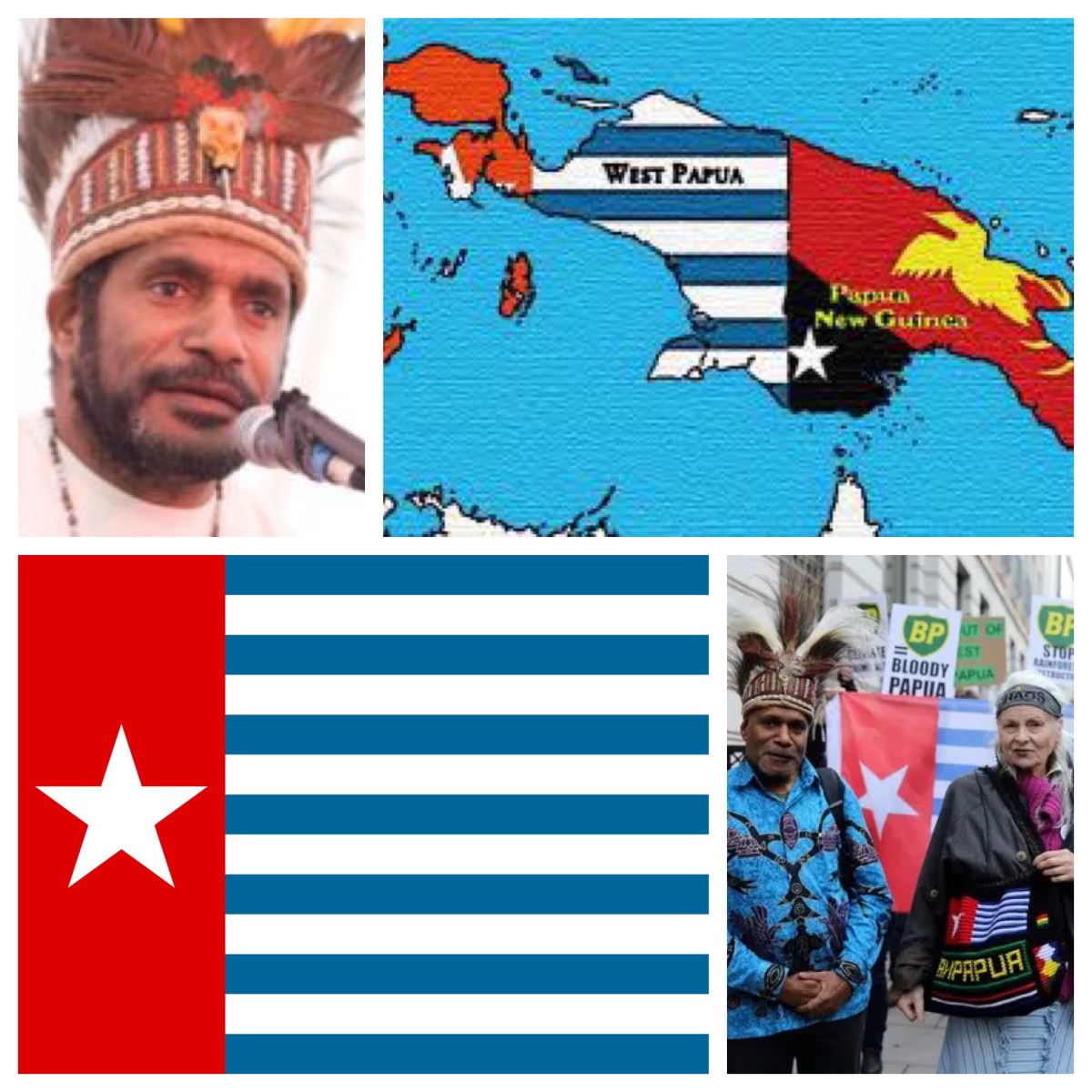
2021 is a significant year as it marks the 60th anniversary of the first raising of West Papua’s symbol of independence, the Morning Star Flag. Sixty years ago the Nieuw Guinea Raad (New Guinea Council) raised the Morning Star flag alongside the Dutch flag across West Papua for the first time, on 1 December 1961.

The event was a milestone in West Papua’s ongoing path to national self-determination, which had begun when the Netherlands registered West Papua with the United Nations as a Non-Self-Governing Territory in December 1950. The self-determination project was short-lived, however, with West Papua being invaded through Operation Trikora by Australian-backed Indonesian forces.

The Morning Star Flag continues to be a powerful unifying symbol for West Papua’s struggle for economic, social and political self-determination. Raising the flag in Indonesia carries a prison sentence of up to 15 years. West Papuans, as Melanesian people of the Pacific, continue to stand defiant against Indonesia’s fictitious claims to their land and identity.

(The flag is used by the Free Papua Organization and other independence supporters. It consists of a red vertical band along the hoist side, with a white five-pointed star in the center, and thirteen horizontal stripes, alternating blue and white, with seven blue stripes and six white ones. The seven blue stripes represents seven customary territories in the region.)

The Pacific Conference of Churches, with the Papua New Guinea Council of Churches, has strongly condemned the institutional racism against the indigenous npeople of West (Tanah) Papua and the increase of Indonesian militarisation in Papua that comes with this. PCC General Secretary, Rev. James Bhagwan and PNGCC General Secretary, Rev. Roger Joseph, have stated that the oppression of Papuan people underlines the need for an urgent investigation of ongoing abuse of

Human Rights, the Economic, Social and Cultural and Political rights of West Papuans, by the United Nations.

In 2019, the WCC Executive Committee released a statement of concern and solidarity for West Papua, a supporting the church leaders’ joint appeal for a comprehensive political dialogue, and calling on the Government of Indonesia to allow access to human rights organisations and journalists. The statement also invited all WCC member churches “to pray and act in support of the witness of the churches in West Papua – and that of PGI, PCC, and CCA – for justice and peace in the region.”

(The Uniting Church in Australia is a member of the Pacific Conference of Churches and the World Council of Churches.)

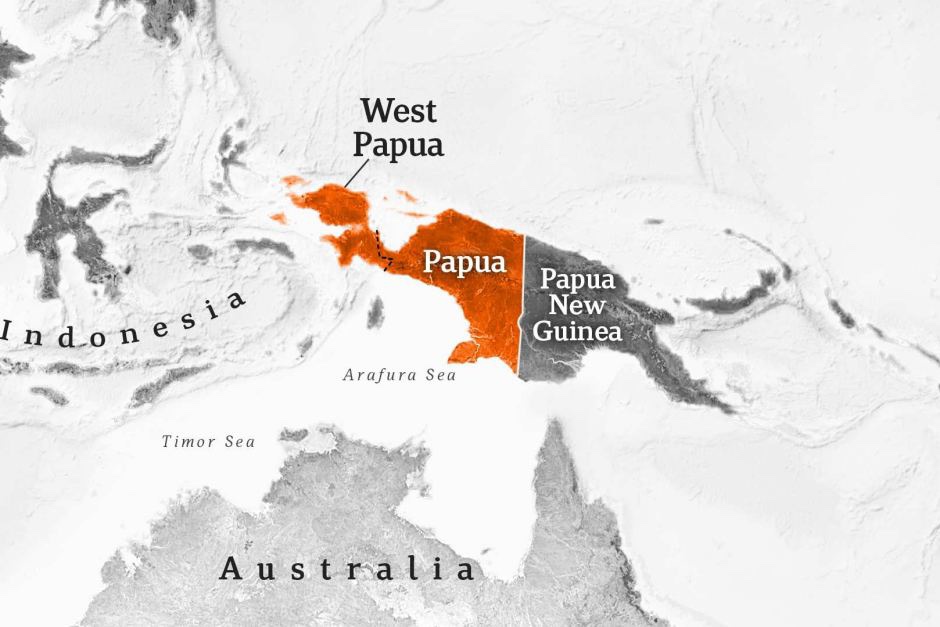
Map courtesy of the ABC

Sadly, the Australian Government has been notably silent on the issue of violence and human rights abuses in West Papua, being bound by the controversial 2006 Lombok Treaty to respect Indonesia’s “territorial integrity”.

The theme of this year’s flag raising is Youth Rize for Land Rights. In the words of West Papuan activist Cyndi Makabory: “What resonates for me with the theme is young people are the leaders of today not ‘tomorrow’, what I’m seeing in West Papua and outside of West Papua is that youths are mobilising and propelling movements”.

There are a number of West Papuans who are active in the Canberra City Congregation—they play together in worship, as some were members of the popular Black Brothers band (see https://asiapacificreport.nz/2016/09/20/west-papuas-black-brothers-message-to-png-musicians-stay-committed/). Elizabeth “discovered” them when she was ministering in the Canberra City Congregation in 2017. They include Benny Bettay and Willem Ayamiseba.

You can read the remarkable story of courage and tenacity of one of the West Papuan leaders, Benny Wenda, at https://www.freewestpapua.org/info/benny-wendas-story/

For people of faith in Australia, the continuing injustices seen in this near neighbour merit attention and prayer. We yearn for justice, we seek to see oppression end in West Papua.

*****

I have prepared this post in conjunction with Jack Johnson, regional organiser of the Free West Papua Youth—Australia Team, and a member of the St Columba’s Uniting Church, Braddon, in the ACT.

If the kingdom of God is ever going to happen on earth … (John 18; Christ the King Year B)

A dialogue sermon written by Elizabeth Raine and delivered online by Elizabeth Raine and John Squires at Tuggeranong Uniting Church and at Canberra Aboriginal Church on Sunday 21 November, the Festival of Christ the King.

*****

Today is known in the lectionary as Christ the King or Reign of Christ Sunday. It is a relative newcomer to the liturgical calendar, arriving only in the early twentieth century. Apparently this was because at that time, many Christians in Mexico were suffering religious persecution from their anti-religious government, and secularism was rapidly gaining the upper hand both there and in Europe.

In 1925, to counteract this, the Roman Catholic Church declared this day as a worldwide celebration of the kingship of Christ over every earthly power. Its timing at the conclusion of the Season after Pentecost was fixed both by Vatican II and the subsequent Protestant developments of the lectionary, including our own UC in Uniting in Worship.

With the rise of secular atheism, people are more likely nowadays to pledge allegiance to political and consumerist organisations than they do to kings or the politics of God as revealed in Scripture. These Scriptures make clear, as does the ministry of Jesus, that God’s politics are not identifiable with those of democracies or typical kings.

In this scene from John, we hear Pilate asking Jesus the question “So you are a king?” I wonder: what does this mean about Jesus? What sort of a king could he be?

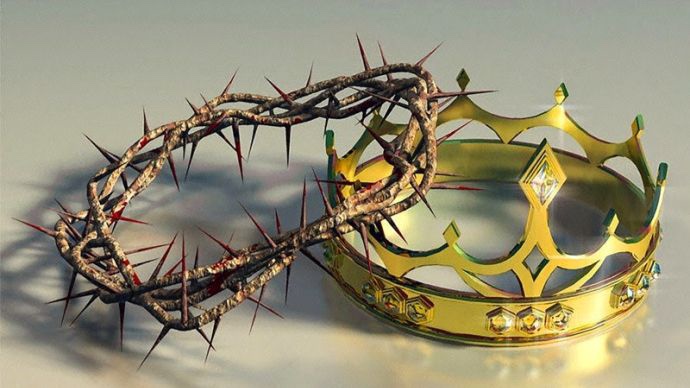
A: I know what sort of king he is! Remember when we were children, we imagined whatkings would look like, from all the stories we heard as children. A king or queen sits on a throne, has very fine robes and a crown made of gold and precious jewels. People bow down before the feet of the king in these stories. And look at how people act around the Queen! In her presence, they bow and curtsey.

B: Well, I don’t think Jesus is that sort of king at all. Where in the bible does it talk about Jesus having a throne, or jewels, or fine robes, or a golden crown? Falling at the feet of Jesus is a very different encounter. His feet are dirty and bloody, his body broken and beaten, his head bowed beneath the a crown of thorns. Jesus was executed by crucifixion, which was saved for the worst criminals and political rebels. Jesus at the end looked broken and defeated, and is definitely not what we might imagine as a king.

I think this scene is deeper than that. Pilate wants to know if Jesus sees himself as king of the Jews. PiIate might be thinking of thrones and crowns, but Jesus isn’t. He is thinking of something quite different, I am sure. I can see it now: Pilate, the messenger of the earthly kingdom of Rome facing off with Jesus, the messenger of God’s unearthly kingdom.

A: I hear what you are saying, but are you sure about the unearthly bit? After all, Jesus was pretty intentional about challenging the earthly empire and the corruption in authority. Look at him when the widow gave everything, he was exposing systems that were oppressive; and what about when he turned over the tables at the temple? That would have infuriated the temple priests, men who were in the pay of, and appointed by Rome itself, at the time.

B: He did say his kingdom wasn’t an earthly one.

A: On thinking about it, maybe being king of an unearthly kingdom means you act differently when you ARE on earth. Look at Jesus when he entered Jerusalem riding on a donkey, allowing the crowd to shout out Hosanna (which means save us), and acclaim him as a king. His allowing the crowd to shout seditious things at him, would have made him a target not only of the temple priests, but of their Roman masters. Jesus must have known such actions would lead to him being arrested.

B: Hmmm, I see what you are saying. That is a very interesting idea. It is unfortunate that over the centuries, the subversive message of this unlikely king has been somewhat lost. So on the one hand, we have Jesus, the king who: * refused to allow fighting * would not grant prime posts to cronies * would not live in a fine house * refused to hate enemies or plot their downfall * mixed with the common crowds without any sense of royal dignity * refused to play political games to increase his power * did not dress in fine robes, or wear a jewelled crown.

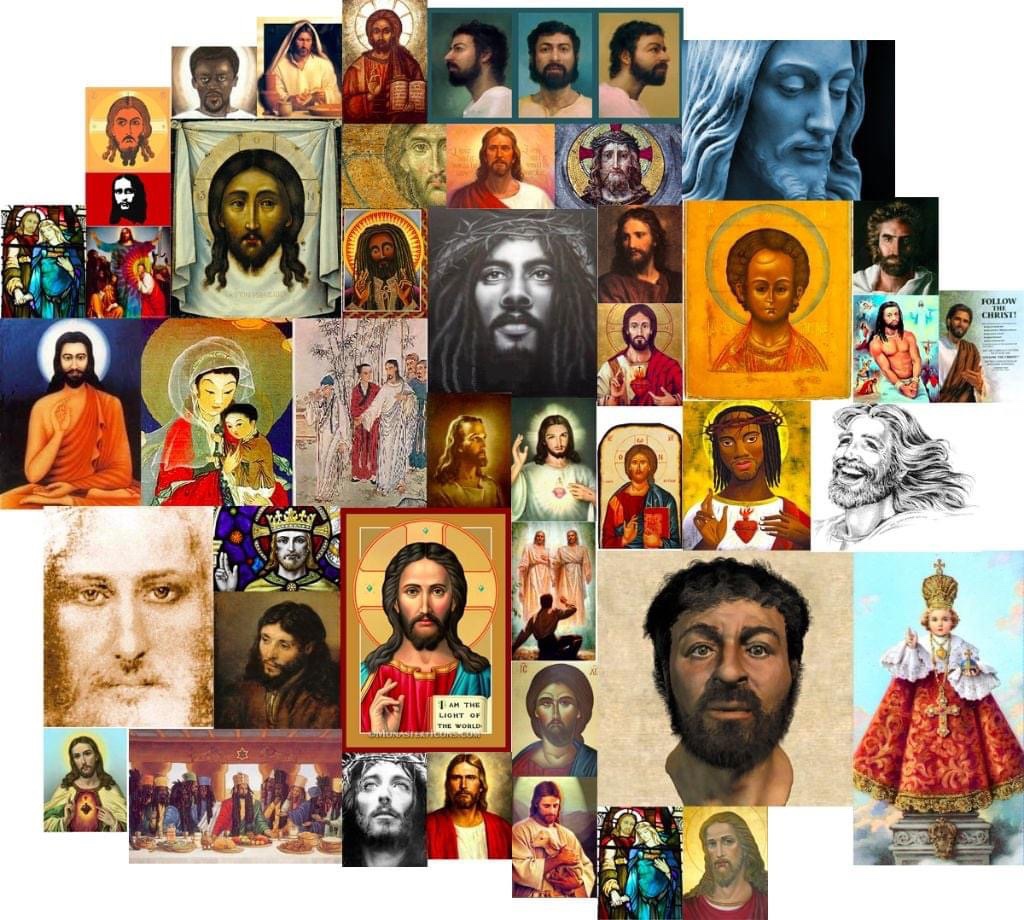
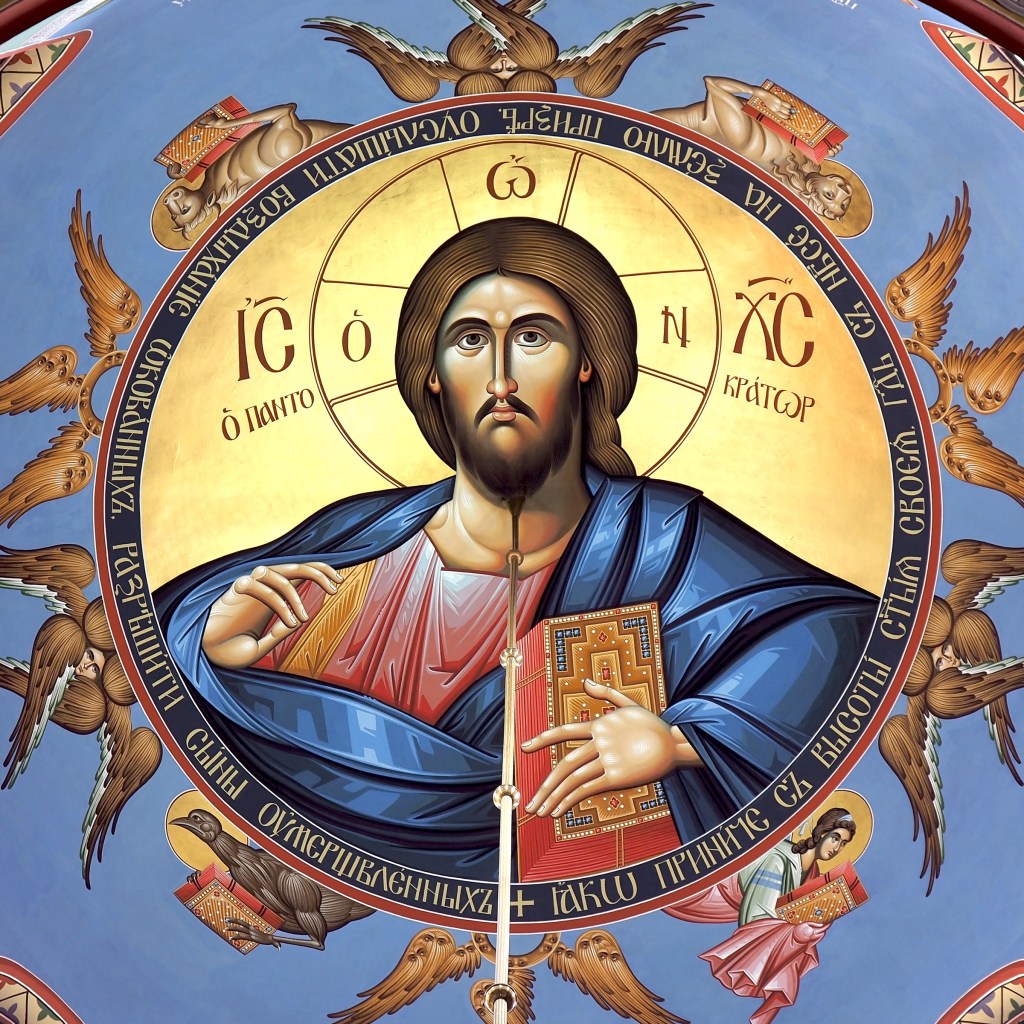
A: But in reality, one the other hand, Jesus is pictured as a heavenly King with a worldly majesty: * who was painted in crowns and fine robes * who was given features similar to earthly monarchs * in whose church was created courtiers and princely representatives * in whose name people blessed their armies as they attacked the cities of their enemies * and of whom the church taught that the next time he came things would be very different as he would subdue the earth and put all opposition under his boot.

B: Well, that does raise some tricky issues. Today on the festival of Christ the King, I think it is important that we think about this. Which kind of King do we want to be worshipping? Will the real Jesus please stand up?

 A: I have been reading about this actually.

B: You? Reading?

A: Yes, me. Now stop with the smart answers. I have been reading Bruce Prewer, who suggests that we grow like the thing we worship. So who do we want to resemble? The king of power, commanding armies, destroying enemies, with fine robes as depicted by artists at the church’s instigation throughout the centuries? Or the king who mixes with common folk, who says put away your sword, who works to free the oppressed, who welcomes the stranger, who eats with sinners, who overturns the tables of the money changers, and who forgives the people responsible for his death?

B: Wow, that is a great way of looking at it. Do we want to be at the edge of our communities our in the middle of power? We don’t know what the future of our world will look like, but surely the kingdom of God shouldn’t have fear or hate or oppression in it.

A: That’s right. If the kingdom of God as Jesus saw it is ever going to happen on earth, then every interaction, every decision, every moment and every place we find ourselves in must be seen as an opportunity to experience God’s reign in our lives, and to share the blessing of God’s reign with others. We need to turn our faith into a life-transforming practice, rather than just an intellectual assent to some ideas about God.

B: For Christ to truly be King in our world, Christ must be King in every individual lives in such a way that God’s peace and justice, God’s love and grace, will constantly flow through us, God’s people, into the world – one moment, one interaction and one transformative step at a time.

A: Surely Christ is the King who turns all of our human notions and illusions of power squarely on their heads. What the world defines as weakness and failure, Jesus shows is the real power rooted in love, bathed in grace, and covered with mercy. He is the one who redeems that which seems unredeemable and the one who loves those who appear unlovable.

By his death, we are offered a way to wholeness and the kingdom of God, a kingdom where love is so powerful that forgiveness is offered to all; where the hungry are fed, the naked are clothed, and the poor and the sick are cared for. In standing with this kingly Jesus today, we can fight racism, classism, homophobia, poverty, discrimination, and homelessness.

B: Yes! We can start to work to make the systems of injustice just, and work to overturn the powers of corruption and darkness. We don’t know what the future of our world will look like, but the kingdom of God doesn’t include fear, hate, or shutting down.

We must answer the call of Jesus which hasn’t changed in 2000 years—“Follow me to a kingdom where domination and oppression have been overcome, where the basic human needs are met, where all dwell in harmony with God and each other.”

A: Now that sounds like a king and a kingdom worth working for.

B: Pilate asked him, “So you are a king?”

A: Jesus answered, “You say that I am a king. For this I was born, and for this I came into the world, to testify to the truth. Everyone who belongs to the truth listens to my voice.” (John 18:37)

*****

B: Loving God of power and justice and peace, in our broken world we seek a new order where there is courage to speak truth to power;

A: we seek a new order where there is mutual support in church and community;

B: we seek a new order where there is abundant time for healing;

A: we seek a new order where there is peace and freedom for all. Amen.

The superior high priest who provides “the better sacrifices” (Hebrews 9; Pentecost 24B)

In explaining the importance of Jesus as priest and sacrifice, the section of Hebrews that is provided by the lectionary for this coming Sunday (Heb 9:24–28) articulates an uncompromising criticism of the Jewish sacrificial system. There are four components to this criticism, drawn through a series of contrasts.

The first contrast drawn relates to the nature of the sanctuary in which the priest operates: “Christ did not enter a sanctuary made by human hands, a mere copy of the true one, but he entered into heaven itself, now to appear in the presence of God on our behalf”.

The second contrast deals with matters of time and repetition: “Nor was it to offer himself again and again, as the high priest enters the Holy Place year after year with blood that is not his own; for then he would have had to suffer again and again since the foundation of the world.”

The third point is made in a simple, direct affirmation: “But as it is, he has appeared once for all at the end of the age to remove sin by the sacrifice of himself.”

And then, another contrast, relating to judgment: “And just as it is appointed for mortals to die once, and after that the judgment, so Christ, having been offered once to bear the sins of many, will appear a second time, not to deal with sin, but to save those who are eagerly waiting for him.”

The author considers that the law “has only a shadow of the good things to come and not the true form of these realities” and therefore cannot provide those who seek to approach God with “perfection” (10:1; the Greek is teleiōsai).

The technique of typology is used to interpret scripture throughout this sermon. In this technique, the words of the text are considered to provide a pattern for a greater truth or a spiritual meaning which is not immediately evident in the literal words. Heb 8:5 cites Exod 25:40, a passage including the Greek word typos (literally, the mark made by a hammer in a soft piece of wood) which the NRSV translates “pattern”. Finding a key to unlocking the interpretation of the text is thus essential.

For the author of this sermon, the key lies in the superiority of Jesus (1:4; 7:7). This is worked out in a series of passages which take a scriptural text as the basis for claims made about Jesus. The scripture passages point to various aspects of Jesus; but more than this, the belief in the superiority of Jesus is the key which unlocks the true meaning of the scripture passages which are cited. We can see this interlocking hermeneutic at work in a series of teaching sections in this sermon “to the Hebrews”.

❖ Heb 1:5–13 cites seven passages, mostly from the Psalms, to support the claim of the superiority of Jesus, for he is God’s son, worshipped by angels, place over all, seated at God’s right hand.

❖ Heb 2:5–18 reinforces this claim, drawing on further passages, of which Ps 8:5–7 is prominent, asking “what are human beings that you are mindful of them?” Jesus is pictured as “now crowned with honour and glory” over the angels, who themselves rule over humanity (2:9).

❖ A brief exegesis of Num 12:7 (Heb 3:1–6), concerning the faithfulness of Moses, leads into a forceful exhortation (Heb 3:7–4:13) which revolves around the key scriptural text of Ps 95:7–8 (quoted at Heb 3:7, 3:15 and 4:7), “today, if you hear his voice, do not harden your hearts”. Obedience is crucial.

❖ Heb 4:14–5:10 combines two psalms (Ps 2:7 and 110:4) to identify Jesus as “designated by God as a high priest according to the order of Melchizedek” (5:10). Jesus is of a different, higher order.

❖ After an excursus in which the hearers are reminded of the importance of seeking perfection (5:11–6:12), the sermon to the Hebrews turns its attention back to the mysterious scriptural figure of Melchizedek (6:13–7:28). Melchizedek was not a Levite, but he received tithes from Abraham (Gen 14:18–20), as Heb 7:1–2 reports; this priestly role may explain why he provides a model for interpreting Jesus (another non-Levite) as a priest. This extended discussion returns to Ps 110:4 (at Heb 7:17 and 7:21) as it is the key text undergirding this section.

❖ A lengthy discussion of the priestly role of Jesus follows (8:1–9:28). This section deals with the inadequacies of the first covenant, revolving around the prophetic text about the gift of a “new covenant” (Jer 31:31–34, cited in full at Heb 8:8–12). The author builds an aggressive case against the first covenant, in order to persuade the audience of the many virtues of Jesus, the new priest who is “mediator of a new covenant” (9:15).

Part of this discussion contrasts the ritual of the Day of Atonement (described in Lev 26) with the sacrifice offered by Jesus (9:1–14). The former took place in “an earthly sanctuary” (9:1), but the latter takes place in “the greater and perfect tent” (9:11). The argument continues (9:15–28) by claiming that the sacrifices of priests must be offered “again and again” (9:25), but Jesus “has appeared once for all” (9:26) and thereby “entered into heaven itself” (9:24).

❖ Yet another extended discussion (10:1–39) continues this polemic by arguing that the sacrifices of the first covenant fail to achieve their goal, as Ps 40:6–8 claims (cited at Heb 10:5–6). What Jesus has done, in offering a single sacrifice through his death (10:12), is to enact the new covenant (Jer 31:31, cited at Heb 10:16) and thus provide believers with confident access to God (10:19–23).

This claim is, in turn, reinforced by another series of scripture citations (10:26–39), culminating in a famous prophetic assertion, “my righteous one will live by faith” (Hab 2:3–4, cited at Heb 10:37–38; we find it also at Rom 1:17 and Gal 3:11).

❖ Such faith is then expounded in another long section of the sermon (11:1–12:2). This faith is introduced by a concise and complex definition of “faith” (“the assurance of things hoped for, the conviction of things not seen”, 11:1–3) and concludes with an inspiring vision of Jesus as “the pioneer and perfecter of our faith” (12:1–2). The bulk of this section of the sermon refers to numerous “witnesses” to this faith, drawn from a plethora of scriptural stories.

❖ Further exhortations in the sermon derive their motivation from scriptural texts. Prov 3:11–12 is the focal point for Heb 12:3–11; and a cluster of reassuring words from scripture, cited at 13:5–6, fuel the string of exhortations in Heb 13:1–17.

From this survey, we can see that the argument of the sermon, as a whole, is intricately bound up with “the word of God”, as given expression in the Hebrew Scriptures. Both teaching and exhortation gain momentum from scriptural citations and allusions.

As well, it is clear that the author of this sermon has a definite and unbending perspective on the relative value of old and new covenants. The author is in no doubt that Jesus is the one who shows the way to God, and must therefore be followed as the supreme example for people of faith. It’s a clear, direct, confronting message.

*****

This language in Hebrews can lead from a sense of superiority in Christianity, to an attitude of supersessionism with regard to Judaism—“Jesus came to replace the old covenant; all of that is now obsolete, superseded, irrelevant”. By such an attitude, the living faith of Judaism is summarily dismissed. Of course, this is not the only text that provides warrant for such an interpretation; other parts of the New Testament can be, and have been, read in this manner.

For myself, I don’t see this as a valid way of interpreting these passages—taking a strand of the argument, isolating it from the literary and historical context in which it was written, and using it for ideological purposes in today’s context.

In my own denomination, the Uniting Church in Australia, we have adopted a statement concerning our relationships with Jewish people (see https://assembly.uca.org.au/rof/resources/learn-more/item/2658-jews-and-judaism)

This statement affirms that “Judaism is a living faith today, and was at the time of Jesus, possessed of its own integrity and vitality within its own developing traditions” (2), and that “historically, understandings of Judaism have been imposed from without, and that Judaism should be understood on its own terms” (3).

It goes on to assert that “antisemitism in all its expressions is an affront to the gospel of Jesus Christ” (8) and that “the Uniting Church does not accept Christian teaching that is derogatory towards Jews and Judaism; that belief that God has abolished the covenant with the Jewish people; [and] supersessionism, the belief that Christians have replaced Jews in the love and purpose of God” (16–18).

So that invites us to read Hebrews carefully, in context, with sensitivity to Jewish brothers and sisters , within our current context.

*****

See also https://johntsquires.com/2021/09/29/the-word-of-exhortation-that-exults-jesus-as-superior-hebrews-1-pentecost-19b/

A great high priest who “has passed through the heavens” (Hebrews 4; Pentecost 23B)

A priest forever, “after the order of Melchizedek” (Hebrews 5; Pentecost 21B)

The perfect high priest who mediates “a better covenant” (Hebrews 9; Pentecost 23B)

The superior high priest who provides “the better sacrifices” (Hebrews 9; Pentecost 24B)