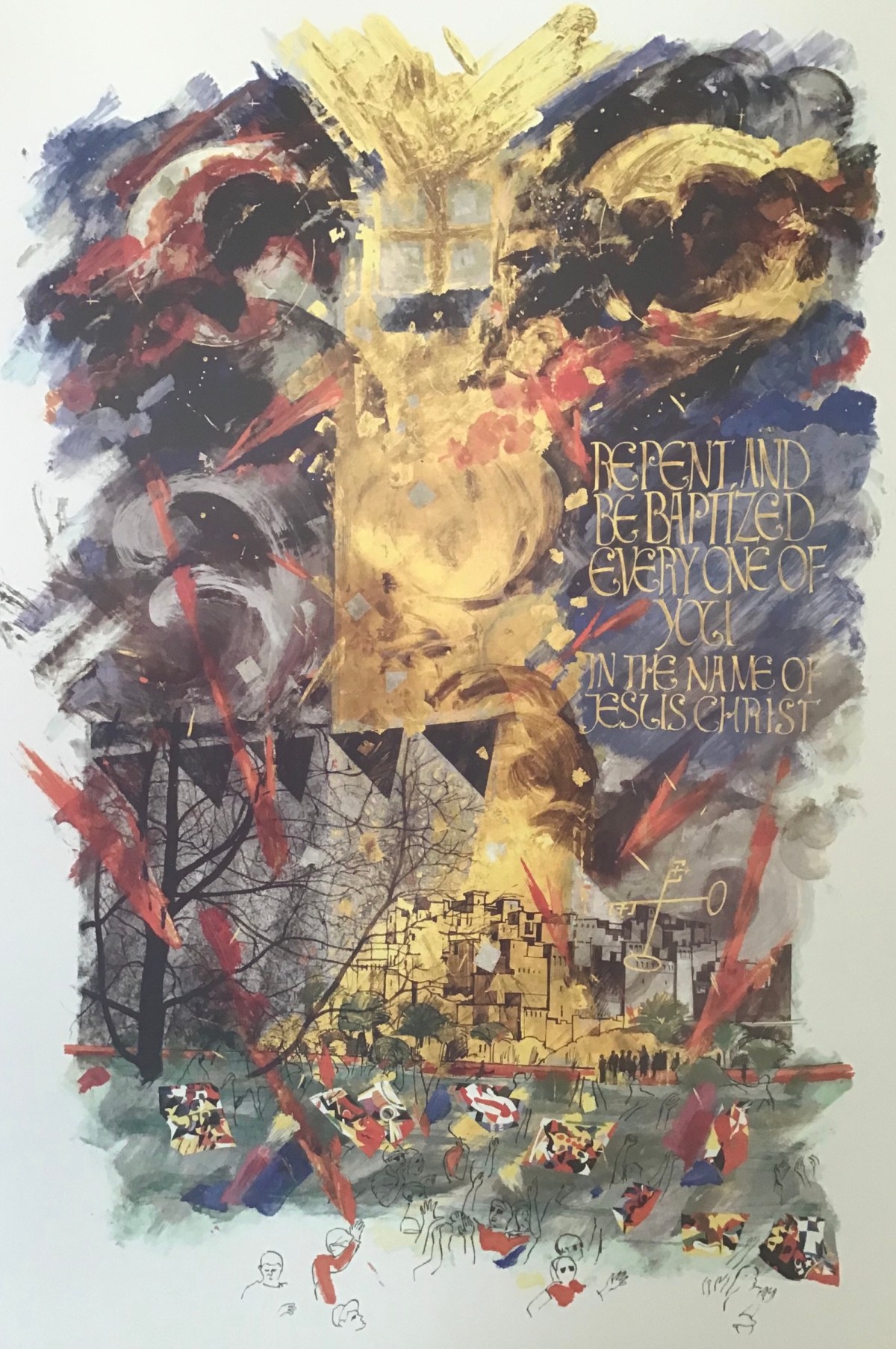
Liberating Life: a new way of being. Easter Sunday Reflections

Every Easter Sunday, Christian people greet each other with “The Lord is risen: He is risen indeed!”. And throughout the year, we repeat the central affirmation, that “God raised Jesus from the dead”. The claim that Jesus was raised from the dead is central to our faith. According to Luke, this was central in the preaching of the apostles (Acts 2:24,32, 3:15,26, 4:10, 5:30, 10:40, 13:30,37). It is repeated in the letters by or attributed to Paul on a number of occasions (Rom 7:4, 10:9; 1 Cor 6:14, 15:15; Gal 1:1; Eph 1:20; see also 1 Pet 1:21).

The resurrection is regarded as the pointer to a new form of life, a liberating life, lived in the transformed state of resurrected being, which was first experienced by Jesus, and which is then promised to all believers. This promise is a liberating promise. The life of resurrection is a liberating life. Claims about the resurrection also bring points of contention and discussion within contemporary Christian thinking.

Contemporary debate has canvassed a number of options as to the nature of the resurrection: Must it be in a bodily form? Was Jesus raised ‘in the memory of his followers’, but not as a physical body? Is resurrection a pointer to a transcendent spiritual dimension? What was meant by the reference to an “immortal state” in 1 Cor 15:53-54?

Some believers aggressively promote the claim that we must believe in the boldly resurrection of Jesus, that we must adhere to a literal understanding of what the biblical texts report. I prefer to advocate for ways of responding to the story which are creative, imaginative, expanding our understandings and drawing us out of our comfort zones into new explorations in our lives.

The resurrection is not directed away from this world, into a heavenly or spiritual realm. The resurrection offers us both an invitation to affirm our bodily existence in this world, and to explore fresh ways of renewal and recreation in our lives, in our society. It is about liberating life for renewal in our own time and place, here in this world.

It is the apostle Paul who, most of all in the New Testament, provides evidence for the way that early believers began to think about the central aspects of the Easter story—death on the cross, newness in the risen life (Rom 6:3-4:23, 8:6,13; 1 Cor 15:21-23; 2 Cor 4:8-12; Phil 2:5-11, 3:10-11). Paul probably did not begin such ideas; indeed, in both arenas, there are clear Jewish precedents.

The sacrificial understanding of the death of Jesus draws heavily from the Jewish sacrificial cult (Heb 2:17, 7:23-28, 9:11-14). The notion of resurrection was developed first by the Pharisees, a teaching group within the Judaism of the time (Acts 23:8). From these bases, it is Paul who most clearly and most often articulates and develops these central ideas in his writings as we have them in scripture.

These ideas sit at the heart of what traditional Christianity has regarded as its distinctive theological understanding: that God became human, suffered for us, died for us, and was raised to inaugurate the new way of being that will characterise the kingdom of God. This expression of belief comes to form the core of the emerging doctrinal self-understanding of early Christianity, into the following centuries of theological debate. It is the whole life—death—resurrection of Jesus that forms this central doctrinal core.

A further observation regarding the theological significance of Easter is the way that the story of the death and resurrection of Jesus forms the end point—indeed, the climactic moment—of the story of his life, as it is reported in all four canonical Gospels. There were about 50 Gospels written in the early centuries of Christianity, and most of them do not lead to this dramatic conclusion.

The fact that the four Gospels which were chosen for inclusion in the canon of Scripture each end with the passion and resurrection narrative, indicates the way that this part of the story of Jesus came to have a central and defining purpose in the development of Christian doctrine. “Jesus, crucified and risen” became the centerpiece of Christian theology. That is at the heart of the Easter story. That is at the centre of Christian faith. And that comes clearly into focus in this current Easter season.

See also https://johntsquires.com/2020/04/07/it-was-on-that-night-that-everything-came-to-a-head-maundy-thursday-reflections/

https://johntsquires.com/2020/04/07/sacrificial-death-to-give-his-life-good-friday-reflections/

https://johntsquires.com/2020/04/07/liminal-space-waiting-and-not-knowing-holy-saturday-reflections/

Liminal Space: waiting and not knowing. Holy Saturday Reflections

This Easter, it is Holy Saturday that holds the key.

This week, we have travelled through Holy Week; the final part of Lent, a 40-day period of preparation leading up to Easter, called Lent. We do this every year, as part of the annual cycle. It is a familiar and comforting ritual for many people of faith.

This year, however, will be different. In the middle of a viral pandemic, with restrictions prohibiting gathering for worship, people of faith will be walking through Holy Week in their own homes, not in gatherings at church. We are not able to gather together. This year, we are gathering-apart. All the familiar patterns are changed. All the comforting rituals are altered. (See https://johntsquires.com/2020/03/15/when-you-come-together-reflections-on-community-in-the-midst-of-a-pandemic/)

For that reason, this year I have been thinking much more about Holy Saturday, which is also known as Easter Eve. This day is a day of vigil, when believers watch, wait and pray. This is an in-between time, a day when time can be spent reflecting back on the traumatic events that have just taken place, remembering the arrest and crucifixion of Jesus, his burial in the tomb, and the grief of his followers. It is a time of looking forward with hope to the new possibilities that might emerge beyond those events.

In my thinking this year, Holy Saturday is the day for our current season. Services for people of faith to gather together on this day are rare; people do not expect to “go to church” on this day, even if they go on Friday or Sunday. But this year, this day takes on deeper significance. It speaks to our situation in a more compelling way.

Last year, I offered a service of reflection and prayer on Holy Saturday—and a small group of people attended, sat in silence, offered prayers for the congregation and the world, and experienced the eerie in-between, liminal, nature of this day.

Jesus, by tradition, had been laid in the tomb; on this day, according to one letter in the New Testament, he descended into Hades and “made a proclamation to the spirits in prison” (1 Peter 3:19). It is a time when there is no apparent activity evident on earth—but in the tradition, there is something significant happening “underground”.

On Holy Saturday, the tradition offers us a moment to pass, and reflect, and wonder: in this time of grief and abandonment, how is God still at work? How is faith still being made evident?

Back amongst the followers of Jesus, there was fear and grief. Jesus had been crucified and buried. He was no longer their leader. They had been left alone, suddenly, dramatically. What they had come to know and value as their normal and regular life together, had been interrupted, turned upside down.

The Gospels give us clear indications of this distress. If we enter into the stories that are offered by the evangelists, we might begin to imagine how the disciples were feeling.

On the road to Emmaus, two followers of Jesus lament that their hopes were shattered (Luke 24:21). They are completely unaware of the identity of the stranger who walks with them; they are caught in their own hopelessness.

In a room in Jerusalem, followers gather behind closed doors, their fears intensified by events (John 20:19). They are not connected in any way with the news that had begun to percolate through the city. They are behind locked doors, because their fear was dominating their every thought, their every move.

Some days earlier, Thomas had uttered prophetic words, before the critical events had occurred, when he cried, “Lord, we do not know where you are going. How can we know the way?” (John 14:5). That speaks for how the disciples were feeling, after the crucifixion and burial of Jesus. That speaks also for us, in our current situation.

Could this sense of fear, uncertainty, and hopelessness, be a point or connection with the story, for us for this current time? In this time of global pandemic, we are in a period of waiting, not knowing, a time of deepened fear and broken hopes. We look around and see that things are so, so different now. We are afraid for what will happen next. We do not know what is sure and certain, what is transient and passing. Life has suddenly looked so different.

Like the disciples, on that first Sabbath day after the death of Jesus, we do not know where we are going; we do not know where this global pandemic will end up. We do not know the ending—unlike the disciples after they encountered the risen Jesus, or the evangelists when they wrote their Gospels, or preachers through the centuries, who have been able to craft their sermons so that they point, inevitably, to the Good News that resolves the tension.

Like Thomas, we do not know where this is going. Like the two on the road to Emmaus, our hopes have been shattered. Like the group gathered behind locked doors, we are caught in the grip of fear. We do not know the ending.

We can have hope; we can pray, seek solace, look for comfort. But we do not know. We just do not know. And that is a very scary place to be.

Holy Saturday is where we are now, in society, in families, in the church, in our homes. Waiting with uncertainty; living with a different pattern; looking forward, hope against hope, to a different future. We are with the disciples, separated from the one they had given their all to follow, wondering what the next step might be.

The Christian festival of Holy Week moves on, beyond this day. It reaches its climax on Easter Day with celebration marking Jesus conquering death. “The Lord is risen: he is risen, indeed!” is the greeting we exchange on Easter Sunday.

The traditional Easter affirmation is that Jesus rose “on the third day”. Counting inclusively, as was done at the time, beginning from Friday, means that Sunday is the third day. This leads into an expression of joy, an Easter assertion, that the trauma and grief, the uncertainty and fear, are now passed. Life is different; hope is renewed; the future, even if it looks different, will still be viable.

For the next period of time, the Church is in a new season—the season of Easter, 40 days when the celebration of resurrection continues.

For us, and for all in society at this moment of pandemic, the time for that celebratory affirmation will come. But it will not come quickly. It will not come on the third day. It will not even come after the third month. It will require months of social isolation, before we can step out into that time of social reconnection and the resumption of a life together for society.

But until that time, we remain, sitting, isolated, uncertain, in our own Holy Saturday. Let us not run from that experience. Let us allow this time to deepen our faith and strengthen our discipleship, as we sit, silently, waiting, lamenting, praying.

Peter Lockhart offers this reflection on sitting in the silence: https://revplockhart.blogspot.com/2013/06/the-silence-of-god.html

Sarah Agnew has written this prayer for Holy Saturday: https://praythestory.blogspot.com/2019/04/a-prayer-for-holy-saturday.html

N.T. Wright offers this insight into the significance of lament in Christian tradition: https://time.com/5808495/coronavirus-christianity/

Other blogs for this Easter:

See also https://johntsquires.com/2020/04/03/towards-palm-sunday-matt-21-acclaiming-the-king-anticipating-the-kingdom/

https://johntsquires.com/2020/04/07/it-was-on-that-night-that-everything-came-to-a-head-maundy-thursday-reflections/

https://johntsquires.com/2020/04/07/sacrificial-death-to-give-his-life-good-friday-reflections/

https://johntsquires.com/2020/04/07/liberating-life-a-new-way-of-being-easter-sunday-reflections/

Sacrificial Death: to give his life. Good Friday Reflections

On Good Friday each year, we remember the death of Jesus. This event is interpreted as a fundamental theological event of significance for all Christian believers. “Christ died for us” is a key phrase found in a number of letters by Paul (Rom 5:6,8, 14:15; 1 Cor 8:11, 15:3; 2 Cor 5:14-15; Gal 2:21; 1 Thess 5:10). This affirmation forms the foundation for an intricate and complex system of sacrificial atonement theology—understanding the death of Jesus as a death made on behalf of, and in the place of, believers.

This area of Christian theology has become a debated and disputed arena. How do we understand this today? One concern that is often expressed concerns the way that a religious system has a focus on a violent action at the centre of its belief system. Can it be a good thing to celebrate the way that God causes, or at least approves of, the putting to death of Jesus? We have every right to ask critical and penetrating questions about this aspect of our faith.

Another element of the debate is the claim that can be paraphrased as “Jesus died in my place, he was sacrificed for my sins, to save me from hell”. This is the classic way that I hear this view expressed, and it is often described as the substitutionary atonement theory. Certainly, dealing with the sinful manifestations of human nature is at the heart of Christian doctrine, and theories of atonement regularly grapple with how this is effected.

In my mind, there are a number of points at which the kind of statement about the death of Jesus that I noted above, narrows the understanding of faith too much.

For a start, it focuses intensely on a personal dimension, to the detriment of the wider relational, societal, and political dimensions. Easter faith, to me, is broader, more expansive, more encompassing, than just the focus on my personal eternal destiny. I find this communal orientation expressed very strongly in scripture, both in relation to the atonement as well as in many other broader ways. The narrow expression of atonement is based on an understanding of God who is a wrath-filled, vengeance-seeking God, seeking to impact individual lives in a highly judgemental way. I don’t find that perspective in scripture.

Then, the narrow understanding of atonement plays off the will of God over against the actions of a devil figure. This is a problematic element because it contradicts the idea of an all-loving, all-just God. Is all evil in the world to be attributed to a personified devil? What has the allegedly all-powerful and all-loving God done about this?

Such simplistic dualism is problematic, if we just leave it at this. Hebrew scripture steadfastly resists any temptation to sit in a dualistic worldview, and the New Testament continues in that vein, despite pressures from the Hellenistic worldview, as direct heir of the Platonic dualistic schema.

Appreciating the sacrificial dimension of the story of Jesus dying on the cross is important. Jesus went willingly to his death. He did, in the end, offer his life as a sacrifice. The key verse often cited for this understanding is Mark 10:45 (“the Son of Man came not to be served but to serve, and to give his life a ransom for many). Other verses that relate include Rom 3:25-26, Eph 5:2,1 John 2:1-2, 4:10, as well as the whole argument of Hebrews (see especially Heb 2:17, 9:23-28, 10:12, 13:12).

Understanding the death of Jesus as a sacrifice remains at the heart of our Christian faith. The option of taking up a violent path was rejected by Jesus. He did not stir up an uprising against the imperialist Roman overlords, despite opportunities to do so (on Palm Sunday, for instance). He did knowingly offer his life as a sacrifice. After an inner struggle about this matter (Mark 14:32-35 and parallels in the Synoptics), it appears that Jesus went willingly to his death (Mark 14:36, and reflected in the whole prayer that the evangelist crafts in John 17).

The preaching of Jesus in the period prior to his arrest offered a vision of a kingdom in which righteous-justice is dominant and peace is evident (Matt 6:33, 7:21, 21:43, 25:34-36; Mark 12:32-34; Luke 4:16-19, 6:20-21, 12:31-34, 18:24-25). In this preaching, he signalled his key commitments, which are instructive as we consider what he thought he was doing, when he submitted to death. We need to consider these words as we think about the significance of Jesus for our faith, and for how the sinfulness of humanity is dealt with.

The way that Jesus calls us into faithful discipleship is central to this approach. To enter the kingdom means to live in accord with the righteous-justice that Jesus advocates. The greater picture beyond the events of the cross is hugely significant. The cross, the event of the death of Jesus, points beyond to this greater vision. It is the whole life of Jesus, along with his death, which is crucial as we grapple with how Jesus transforms us from “sinful humanity” to “justified and saved” (to use the biblical terms that have become the catchcries in this debate).

His manner of death was consistent with this vision; the complete commitment of Jesus to this vision meant that his death, unjust and violent as it was, provides a glimpse into the way of faithfulness for each of us in our lives. Following the way of Jesus is treading this path of nonviolent affirmation of the greater vision.

See also https://johntsquires.com/2020/04/03/towards-palm-sunday-matt-21-acclaiming-the-king-anticipating-the-kingdom/

https://johntsquires.com/2020/04/07/it-was-on-that-night-that-everything-came-to-a-head-maundy-thursday-reflections/

https://johntsquires.com/2020/04/07/liminal-space-waiting-and-not-knowing-holy-saturday-reflections/

https://johntsquires.com/2020/04/07/liberating-life-a-new-way-of-being-easter-sunday-reflections/

It was on that night that everything came to a head. Maundy Thursday Reflections.

This reflection is set in the first century. The voice is that of person who was raised in the Jewish faith and who became a committed follower of Jesus. Seven candles may be lit and then extinguished one by one as the reflection proceeds.


Gathering

It was on that night that everything came to a head.

A gathering of friends and family;
a joyful occasion, with the drinking of wine,
some singing, some laughing; a meal shared together;
but then, a kiss … a betrayal … a denial … a trial …

Yet it began in celebration.

For years, it was so; for decades, for centuries,
on this very night, we would gather, joined as family,
to remember, to rejoice, to recall the act of liberation.

So we praise you, Lord our God, King of the universe;
You who have chosen us and made us holy.
Yes, we praise you, Lord our God, King of the universe;
You who create the fruit of the vine.
Yes, we praise you, Lord our God, King of the universe;
You who bring forth bread from the earth.


SEVEN CANDLES MAY BE LIT


It was on that night that everything came to a head.

But first, we recall the story …
the story we remember each year on this night.

Recalling the Passover Meal

 We remember the way that God saves his people:
The lamb, the herbs, the bread without leaven;
The lamb, the blood, the Passover of God.

And we follow the instructions given to the priests:
“On the tenth of this month, the people are to take
a lamb for each family, a lamb for each household.” [Exod 12:3]

THE FIRST CANDLE MAY BE EXTINGUISHED

It began in celebration.
For years, it was so; for decades, for centuries,
on this very night, we would gather, joined as family,
to remember, to rejoice, to recall the great stories.

But as the meal progressed, the mood began to shift.
One by one, those gathered together began to look back,
to ponder what they had been a part of…
for the joy of recent times had a shadow side, a menacing feel.

THE SECOND CANDLE MAY BE EXTINGUISHED

Just a few days before the meal, they entered the city,
coming for the festival, riding on a donkey;
crowds were gathered to cheer him on,
singing psalms and waving palms.

Hopes were high that indeed he was the one—
Blessed is he who comes in the name of the Lord.

But days later, as the palms still lay strewn beside the road,
the signs were ominous.
Is this the one to redeem the people?
Silence, and fear, as the tensions rose … …

On that night, we remembered the festival of the Lord,
as we have remembered it throughout the centuries.

On the table, in the centre: the matzah bread.
“Our ancestors ate this bread in the land of Egypt.
All who are hungry, come in and eat! come and celebrate Passover!”

On the table, beside the matzah bread, were the cups for the wine.
Four cups: cups of judgement, a reminder of God’s punishments.
But the same four cups are also cups of celebration.
Reminders of the gracious saving actions of God.

So the table was set, with bread and wine,
for this festival of the Lord, the celebration of Passover.

We met around the table; a family extended,
with brothers and sisters, children and friends;
aunts … uncles … cousins … disciples;
a cacophony of colleagues, family and followers.

As we met around the table, we joined ourvoices,
with a psalm of celebration; a psalm of hallelujah.

What shall I return to the LORD for all his bounty to me?
I will lift up the cup of salvation and call on the name of the LORD,
I will pay my vows to the LORD in the presence of all his people.
[Psalm 116]

THE THIRD CANDLE MAY BE EXTINGUISHED

Recalling the Passover of the Lord

 It was on that night that everything came to a head.

For years, it was so; for decades, for centuries,
on this very night, we would gather, joined as family,
to remember, to rejoice, to recall the act of liberation.

And so, we praise you, Lord our God, King of the universe;
You who create the fruit of the vine.

Then he took the wine, as they had always taken the wine;
and lifting it high, he offered his prayers to God.
“May the one who blessed Abraham, Isaac, and Jacob,
May the one who blessed our mothers,
Bless this house, this table, and all assembled here;
And so may our loved ones share our blessing.”

And when he had given thanks,
he gave it to them, saying: “Drink this, all of you”;
and then he spoke of the fruit of the vine, of the kingdom of God.

THE FOURTH CANDLE MAY BE EXTINGUISHED

We praise you, Lord our God, King of the universe;
You who bring forth bread from the earth.

So he took the bread, as they had always taken the bread;
And lifting it high, he offered his prayers to God.

Then the shank of lamb for the Passover, in the centre of the table:
“It is the sacrifice of the Passover of the Lord, for he passed over
the houses of the children of Israel in Egypt”.          
        [Exod 12:27]

And then, the herbs of bitterness;
“for their lives were bitter, with hard labour,
and mortar, and brick, and work in the fields.
All the labour which the Egyptians had forced upon them was harsh.”      [Exod 1:14]

And when he had given thanks for the bread,
he broke it, and he gave it to them,
speaking words which bled from familiar, to disturbing:
“Take this, and eat it; this bread of the Lord, manna from heaven;
take, and eat. This is my body, given for you.
Eat this in the remembrance of me.”      So they ate.

THE FIFTH CANDLE MAY BE EXTINGUISHED     A period of silence is kept

Then Judas Iscariot, who was one of the twelve,
went to the chief priests in order to betray him to them.
When they heard it, they were greatly pleased,
and promised to give him money.
So he began to look for an opportunity to betray him.        [Mark 14]

The bitter moment of betrayal. Can it ever be retrieved?

It was on that night that everything came to a head;

And tonight, this year, as in every year, we remember.

THE SIXTH CANDLE MAY BE EXTINGUISHED

Recalling the Final Supper

For I received from the Lord what I also handed on to you, that the Lord Jesus on the night when he was betrayed took a loaf of bread, and when he had given thanks, he broke it and said, “This is my body that is for you. Do this in remembrance of me.” In the same way he took the cup also, after supper, saying, “This cup is the new covenant in my blood. Do this, as often as you drink it, in remembrance of me.” For as often as you eat this bread and drink the cup, you proclaim the LORD’s death until he comes. [1 Cor 11]

THE SEVENTH CANDLE MAY BE EXTINGUISHED

A period of silence is kept

It was on that night that everything came to a head;
and the shadows gathered, looming, menacing…

A gathering of friends and family;
a joyful occasion, with the drinking of wine,
some singing, some laughing; a meal shared together;
but then, a kiss … a betrayal … a denial … a trial …

It was on that night that everything came to a head:
a commandment to love; to love one another …
a call to discipleship; take up the cross, and follow …

It is on this night that everything comes to a head.


Adapted from a service devised by John Squires in 2008

Towards Palm Sunday (Matt 21): Acclaiming the king, anticipating the kingdom

Next Sunday is Palm Sunday. As we approach the day, we have opportunity (during this period of enforced social distancing and self-isolation), to survey the scene of the first Palm Sunday, and reflect on its significance. What do you see? What do you hear? How is God revealed to you in this story? How does God speak to you in this story? What is the word of God, the vision of the Lord, for you, today, from this well-known story from so long ago?

As you read the account in Matt 21, ask yourself: What do you see? What do you hear? We see pilgrims travelling the winding route to Jerusalem, and Jesus amongst them. We hear the crowd singing Hosanna! and we see them spreading their cloaks along the way, to honour him. And we hear their cries in the ancient hymn, “Blessed is the coming king, the one who comes in the name of the Lord, the one bringing the peace of heaven into this city here on earth”.

So the people cry, singing words from Psalm 118 about the king who comes to implement the kingdom willed by God—a psalm which is echoed in the song of the angels from early in Luke’s Gospel, declaring that, in Jesus, God is bringing “peace on earth, among those whom he favours” (Luke 2:14)

What do you see? What do you hear? Can you see the thoroughly political nature of the activity of Jesus? Can you hear the thoroughly political nature of the cries of the crowd? Hosanna—Save us! Blessed is the King—not Caesar, not ruler of the Romans, but Jesus, King of the Jews, the one Chosen by God to proclaim the kingdom. Can you hear these cries?

In this story, as throughout all of the Gospel accounts, the actions of Jesus have clear and strong resonances from the scriptures that he knew so well. He does not enter Jerusalem with a fatalistic acceptance of what lies ahead; instead, they are a call to this-worldly involvement, to action in our own time, serving the people amongst whom we live.

So it is in this story of the Passover pilgrims. The cries of the crowd, the actions of the people, the anticipation of the Roman soldiers and the symbolic statement made by Jesus as he rides into the city on a donkey—all of this points to the inherently political, thoroughly this-worldly orientation of the ministry of Jesus.

The kingdom is coming, the future kingdom is here and now in our midst, and the kingdom will overturn the expectations and practices of the political powers within this world. The Romans did well to notice, and anticipate, and respond to such a message. The Jewish leaders, so it seems, were anxious, also, about what was taking place.

Matthew ends his report by noting that “the whole city was in turmoil, asking, ‘Who is this?’” That was the critical question, for all four authors of the Gospels in the New Testament. The stories they tell are focussed on answering that question: ‘Who is this?’ Matthew has this questioned answered immediately, as the crowds were telling one another, “This is the prophet Jesus from Nazareth in Galilee.” His name and reputation were known. Certainly they perceived the significance of the way that he chose to enter the capital city. He was calling people to follow him in a clear, direct, and challenging way.

On the following Friday, we will remember that Jesus, ultimately, was condemned to death with a sign that declared that he was “the King of the Jews” (John 19:19–20). We see, very clearly, in the inscription nailed to the cross, the political nature of the message of Jesus. From the perspective of the Roman rulers, articulated by Pilate, Jesus was given a drastic political punishment, death by crucifixion, for the political insurgency that he was seen as undertaking, in claiming to be the King of the Jews.

That King is the one whom we follow. This is the path that he calls us to walk. When we pray, as Jesus instructed us, your kingdom come, your will be done, on earth as in heaven, we are praying that what we hope for, in heaven, is to be lived out, here, on earth, every day, in our life of discipleship. Our faith calls us to be faithful disciples of Jesus. It calls us to compassionate engagement with others in our society. It is a costly call, but a compelling call.

For us, today, that is the challenge: how do we show the merciful love and righteous-justice that Jesus spoke about and lived for in his life? Jesus ultimately was crushed by Roman imperial power; as he died, however, he showed that there was another way. A way of faithfulness to God’s calling. A way that truly leads to peace, to peace with righteous-justice.

And so, as we look to that time with hope and anticipation, we pray, as we always do: your kingdom come, your will be done, on earth as in heaven … and we wait, patiently, and work, persistently, with that end in view.

This series of blogs on Palm Sunday is based on research by Elizabeth Raine and John Squires, published in Validating Violence – Violating Faith? Religion, Scripture and Violence. Edited by W. Emilsen & J.T. Squires, ATF Press, Adelaide 2008. See https://assembly.uca.org.au/rof/images/stories/interfaithsep/25sept.pdf

See also https://johntsquires.com/2020/03/31/towards-palm-sunday-matt-21-passover-and-politics/ and https://johntsquires.com/2020/04/01/towards-palm-sunday-matt-21-riding-on-a-donkey-or-two-as-the-crowd-shouts-hosanna/ and https://johntsquires.com/2020/04/02/towards-palm-sunday-matt-21-waving-branches-spreading-cloaks/

and https://johntsquires.com/2023/03/27/why-jesus-never-did-and-never-would-ride-a-horse-for-palm-sunday-lent-6/

See more on righteous-justice at https://johntsquires.com/2020/02/06/an-excess-of-righteous-justice-matt-5/ and https://johntsquires.com/2020/02/13/you-have-heard-it-said-but-i-say-to-you-matt-5/

We have also turned it into a creative dialogue, which you can read at https://ruralreverend.blogspot.com/2019/04/palm-sunday-ps-1181-2-19-29-luke-1928.html

Towards Palm Sunday (Matt 21): Waving branches, spreading cloaks

Next Sunday is Palm Sunday. As we approach the day, we have opportunity (during this period of enforced social distancing and self-isolation), to survey the scene of the first Palm Sunday, and reflect on its significance. What do you see? What do you hear? How is God revealed to you in this story? How does God speak to you in this story? What is the word of God, the vision of the Lord, for you, today, from this well-known story from so long ago.

As you read the account in Matt 21, ask yourself: What do you see? What do you hear? We see pilgrims travelling the winding route to Jerusalem, and Jesus amongst them. We hear the crowd singing Hosanna! and we see them spreading their cloaks along the way, to honour him.

What do you see? What do you hear? Can you see the people, waving branches? Of course, this Sunday in the church year is traditionally called Palm Sunday. However, no palms are mentioned in the reading we have heard from Matthew’s version of the story, nor in Mark or Luke. That the branches are from palm trees is noted only in John’s version. Both Mark and Matthew refer to branches that the people cut and waved, even though they don’t specify that they are palm branches. Nevertheless, we see the palm branches, because they are front and centre in the tradition of today—it is Palm Sunday, as we call it!

This waving of palm branches was an activity intimately associated with the actions of the Maccabees, who were men from a priestly family who took up arms to fight back the Seleucid overlords and reclaim the Temple. The waving of palm branches became closely associated with this event; we can read the instructions in one of the Jewish books (2 Maccabees 10), which directs the people to “carry ivy-wreathed wands and beautiful branches and fronds of palms, and offer hymns of thanksgiving to [God] who had given success to the purifying of their own holy place”. So the palms evoke the famous military campaign of centuries earlier.

What do you see? What do you hear? Do you see the cloaks, spread on the ground, by those along the side of the road? A curious detail. What can this mean? Perhaps the more astute of the Jews along the side of the road, would have had some insight; perhaps they recalled the story of the time when a young prophet from Ramoth-gilead declared that God was anointing Jehu, the son of Jehoshaphat, as the next king of Israel.

The story is recounted in 2 Kings 9, and it contains this striking detail, as the prophet decreed, “Thus says the Lord, ‘I anoint you king over Israel’”, and so they took their cloaks and spread them for him on the bare steps, and blew the trumpet, and proclaimed, ‘Jehu is King’” (2 Kings 9:13). Can you hear the resonances in the story of the Passover pilgrims? The cloaks on the steps, when Jehu is King … the cloaks on the wayside, when Jesus comes as King.

So Jesus, the prophet from Nazareth in Galilee, entered the city in the midst of the pilgrims, for the festival of Passover. Did he come as King, in the minds of the crowd? He came preaching the coming kingdom of God—a kingdom to be marked by righteous-justice (Matt 6:33). He blessed those who sought that righteous-justice (Matt 5:6, 10). He urged people to walk the way that led to justice for all (Matt 12:18-21).

Jesus came into the city filled with zeal for God’s righteous-justice kingdom (Matt 23:23). The festival of Passover was a most appropriate time for him to enter the city and make his mark as God’s chosen King. The branches and the cloaks both point to the immediate political significance of this event.

This series of blogs on Palm Sunday is based on research by Elizabeth Raine and John Squires, published in Validating Violence – Violating Faith? Religion, Scripture and Violence. Edited by W. Emilsen & J.T. Squires, ATF Press, Adelaide 2008. See https://assembly.uca.org.au/rof/images/stories/interfaithsep/25sept.pdf

See also https://johntsquires.com/2020/03/31/towards-palm-sunday-matt-21-passover-and-politics/ and https://johntsquires.com/2020/04/01/towards-palm-sunday-matt-21-riding-on-a-donkey-or-two-as-the-crowd-shouts-hosanna/ and https://johntsquires.com/2023/03/27/why-jesus-never-did-and-never-would-ride-a-horse-for-palm-sunday-lent-6/

See more on righteous-justice at https://johntsquires.com/2020/02/06/an-excess-of-righteous-justice-matt-5/ and https://johntsquires.com/2020/02/13/you-have-heard-it-said-but-i-say-to-you-matt-5/

Tomorrow: Acclaiming the king, anticipating the kingdom

Towards Palm Sunday (Matt 21): Riding on a donkey (or two) as the crowd shouts ‘Hosanna’

Next Sunday is Palm Sunday. As we approach the day, we have opportunity (during this period of enforced social distancing and self-isolation), to survey the scene of the first Palm Sunday, and reflect on its significance. As you read the account in Matt 21, ask yourself: What do you see? What do you hear? How is God revealed to you in this story? How does God speak to you in this story? What is the word of God, the vision of the Lord, for you, today, from this well-known story from so long ago?

What do you see? What do you hear? We see pilgrims travelling the winding route to Jerusalem, climbing the hills outside the city as they make their way to the capital of ancient Israel. And in their midst, can you see the figure of Jesus, surrounded by his followers, approaching the city?

Jesus, seated on the colt, riding on a donkey, was the centre of attention—at least for his own followers. Those in the crowd who knew their scriptures, would have immediately recognised the allusion. The account of this story that we find in Matthew’s Gospel and that we hear this Sunday, actually specifies the verse that interprets the significance of the donkey (Matt 21:4-5).

In Zechariah 9:9, the vision is clear: “your king comes to you, triumphant and victorious, humble and riding on a donkey”. That is what the prophet declares; in this story of Passover pilgrims, Jesus can be seen to be bringing that vision to fruition. And that vision declares that this coming ruler “shall command peace to the nations, and his dominion will be from sea to sea, from the river to the ends of the earth”. That is the vision that Jesus evokes as he rides into Jerusalem on this donkey.

What do you see? What do you hear? Can you hear the cries of the crowd: “Hosanna, hosanna!” they cry. What were they calling out? Hosanna is a foreign term, a word from the Hebrew language, not a common word in our English usage. The best way to translate Hosanna, is “save us”. It is a cry for salvation; a yearning for deliverance. The word appears in the Psalm we have heard today, in Psalm 118:25, where they people cry out, “save us, we beseech you, O Lord!” Save us, redeem us, liberate us.

Psalm 118 was one of the Hallel Psalms, the Praise Psalms, which were associated with celebrations on each of the three great festival days—the Feast of Tabernacles, or Booths; the Feast of Weeks, or Pentecost; and the Feast of Passover. These psalms of praise became particularly associated with the celebrations of the rebuilding of the Temple.

Rebuilding the Temple was an inherently political action. It was the foreign invasion of Palestine by the Hellenistic Seleucids some two centuries before Jesus which had led to the destruction of the Temple. It was the political activity of the Jewish Maccabees which had led to the reclaiming of the Temple two decades later.

“Praise you, O God, for we have our Temple, rebuilt, restored, renewed”. So the prayer might well have gone. And it was the political activity of the Maccabees which had brought this about. The Hallel Psalms had become Psalms of Praise for liberating political activity. And this is what the people were singing out!

They expected Jesus, the prophet from Nazareth in Galilee. He entered the city in the midst of the pilgrims, for the festival of Passover. He came preaching the coming kingdom of God—a kingdom to be marked by righteous-justice (Matt 6:33). He blessed those who sought that righteous-justice (Matt 5:6, 10). He urged people to walk the way that led to justice for all (Matt 12:18-21). He came into the city filled with zeal for God’s righteous-justice kingdom (Matt 23:23). The festival of Passover was a most appropriate time for him to enter the city and make his mark.

This series of blogs on Palm Sunday is based on research by Elizabeth Raine and John Squires, published in Validating Violence—Violating Faith? Religion, Scripture and Violence. Edited by W. Emilsen & J.T. Squires, ATF Press, Adelaide 2008. See https://assembly.uca.org.au/rof/images/stories/interfaithsep/25sept.pdf

See also https://johntsquires.com/2020/03/31/towards-palm-sunday-matt-21-passover-and-politics/ and https://johntsquires.com/2023/03/27/why-jesus-never-did-and-never-would-ride-a-horse-for-palm-sunday-lent-6/

See more on righteous-justice at https://johntsquires.com/2020/02/06/an-excess-of-righteous-justice-matt-5/ and https://johntsquires.com/2020/02/13/you-have-heard-it-said-but-i-say-to-you-matt-5/

We have also turned it into a creative dialogue, which you can read at https://ruralreverend.blogspot.com/2019/04/palm-sunday-ps-1181-2-19-29-luke-1928.html

Tomorrow: Waving branches, spreading cloaks

Towards Palm Sunday (Matt 21): Passover and politics

Next Sunday is Palm Sunday. To hear the story, we are turning back to the book of origins (better known as the Gospel according to Matthew), after a month during Lent of healing stories from the book of signs (the Gospel according to John), where there is an account of what took place as Jesus entered Jerusalem (Matt 21:1-11).

As we approach the day, we have opportunity (during this period of enforced social distancing and self-isolation), to survey the scene of the first Palm Sunday, and reflect on these questions: What do you see? What do you hear? How is God revealed to you in this story? How does God speak to you in this story? What is the word of God, the vision of the Lord, for you, today, from this well-known story from so long ago?

What do you see? What do you hear? I see pilgrims travelling the winding route to Jerusalem, climbing the hills outside the city as they make their way to the capital of ancient Israel, to the city where the Lord God, so it was believed, was residing in the Holy of Holies, the inner court of the Temple. I hear the noisy, bustling sounds of these pilgrims, excited with anticipation as they make their way along the same routes, up the same hills, year after year, at this time of the year.

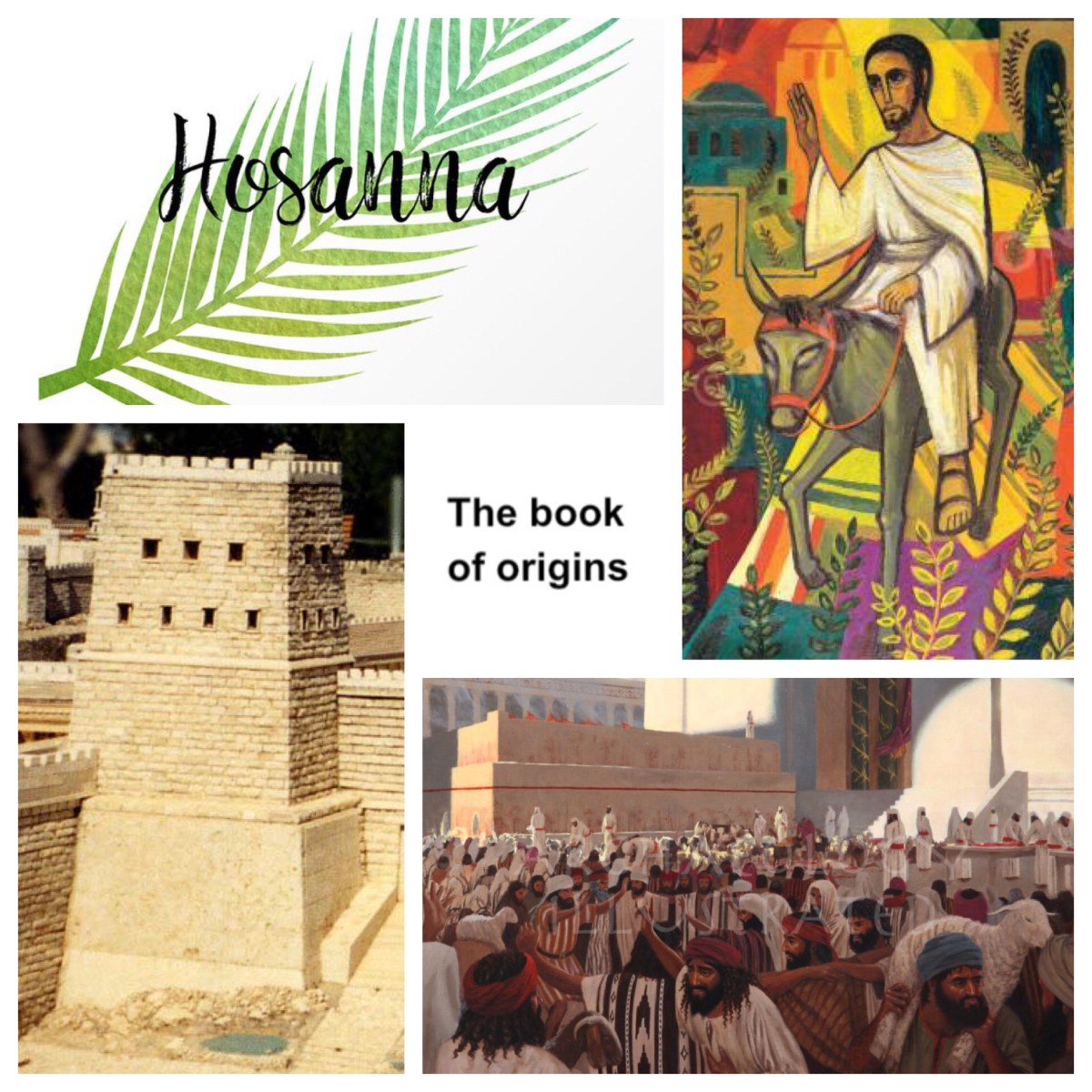
It was Passover; one of the three high festivals of the year for good religious Jewish people. It was Passover, the festival of unleavened bread, which recalled the hurried departure of the people, long ago, from captivity in Egypt (Exodus 13). It was Passover, a celebration of the foundational myth at the heart of Jewish identity; the story that tells of the liberating actions of God, in the face of the military might of the Egyptians, the liberation of the people from their time of enforced slavery, as they set out, across the wilderness, to the land they had been promised (Exodus 14–17 and beyond).

Passover was a central religious celebration. But also, it was a thoroughly politicised procession of pilgrims, wending their way to the holy city, the city of peace. Passover was when bread was eaten without leaven, to signify the haste with which the departure from Egypt took place. Passover was when lambs were roasted and eaten as a sign of that liberation, when bitter herbs were sprinkled eaten as a reminder of the bitterness of slavery. Passover was when the intervention of the divine into the social and political situation of those ancient Israelites was to the fore in the minds of those later pilgrims.

So, we see a scene of Passover pilgrims, celebrating this ancient political action of God which they hold before themselves as the fundamental paradigm for what their faith means for them. “Yes, God is for us! Yes, God will save us!”

The story is told in each of the three synoptic Gospels, Mark, Matthew, and Luke. In each account, the disciples arrive in the city, seek out lodgings, and at the appointed time, they recline at table to eat the Passover meal, the annual family celebration when the story of that first Passover is told. A time when the actions of God in confronting and overturning the political rulers is remembered, retold, and celebrated.

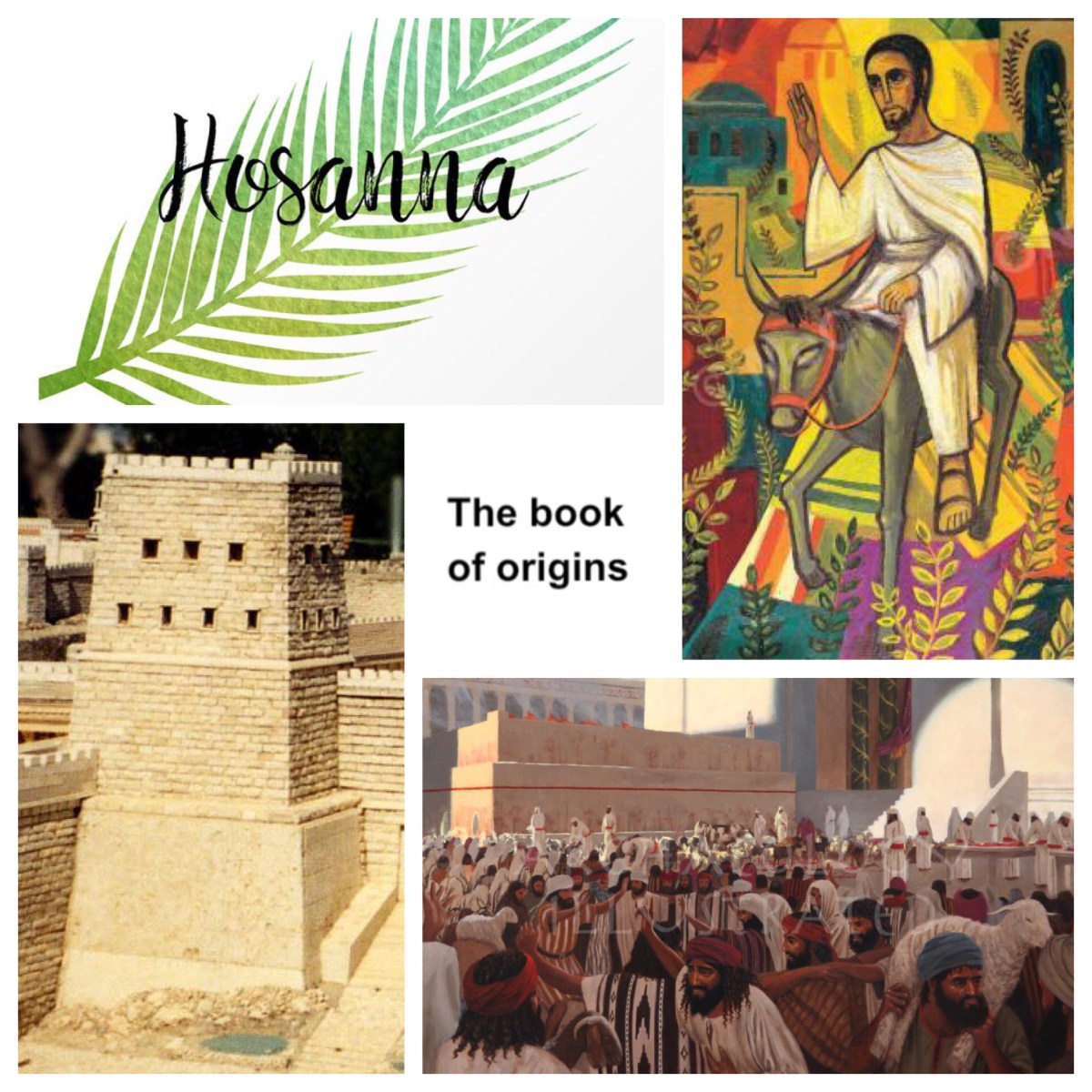
What do you see? What do you hear? Can you see the Roman soldiers, on the edges, behind the crowds, looking out from the Antonia Fortress? The Roman soldiers, strategically deployed, watching with care the every move that was taking place in the approaches to the city. They knew, from many years’ experience, that the city swelled with the influx of pilgrims each year at this time, as the Passover pilgrims made their way towards Jerusalem.

They knew, from years of monitoring the crowds, of the potential for dispute and conflict that simmered underneath the crowds. They knew that this was a high point in the Jewish year, and that any Jew with finely-attuned attention to the history of their people, would know of the charged political consequences of this festival.

Passover was a celebration of that time when God intervened, overturning the despotic ruler, liberating the faithful people. As it was long ago in Egypt … so it now could well be, in Jerusalem under Roman rule. A political celebration, wrapped around with religious significance, a celebration of political victory.

That is the context for the entry into the city of the prophet from Nazareth in Galilee. He came preaching the coming kingdom of God—a kingdom to be marked by righteous-justice (Matt 6:33). He blessed those who sought that righteous-justice (Matt 5:6, 10). He urged people to walk the way that led to justice for all (Matt 12:18-21). He came into the city filled with zeal for God’s righteous-justice kingdom (Matt 23:23). The festival of Passover was a most appropriate time for him to enter the city and make his mark.

See more on righteous-justice at https://johntsquires.com/2020/02/06/an-excess-of-righteous-justice-matt-5/ and https://johntsquires.com/2020/02/13/you-have-heard-it-said-but-i-say-to-you-matt-5/

Tomorrow: riding on a donkey (or two) as the crowd shouts ‘Hosanna’

This series of blogs on Palm Sunday is based on research by Elizabeth Raine and John Squires, published in Validating Violence – Violating Faith? Religion, Scripture and Violence. Edited by Emilsen & J.T. Squires , ATF Press, Adelaide 2008. See https://assembly.uca.org.au/rof/images/stories/interfaithsep/25sept.pdf

We have also turned it into a creative dialogue, which you can read at https://ruralreverend.blogspot.com/2019/04/palm-sunday-ps-1181-2-19-29-luke-1928.html

See also https://johntsquires.com/2023/03/27/why-jesus-never-did-and-never-would-ride-a-horse-for-palm-sunday-lent-6/