A new church was formed this month. The so-called Global Methodist Church (GNC) was launched as a new denomination—in effect, a sectarian schismatic movement, splitting from the United Methodist Church (UMC)—on the basis of, you guessed it, sexuality.
The GMC has placed to the fore a belief that marriage is between one man and one woman, and clergy must adhere to this in their ministry. This has been a point of persistent debate, dissension, and division in the UMC for decades. Many efforts have been made to hold the different points of view together under the one umbrella of the UMC. That fragile union cracked with a decision last year, and now the moment has been seized by the breakaway group, acting unilaterally, to set up its own structures.
Rev. Keith Boyette, chairman of the new denomination’s Transitional Leadership Council and until now a United Methodist minister in Virginia, complained that “some bishops are intentionally blocking churches from using certain processes for exiting the denomination”—a reference to the fact that the UMC’s Council of Bishops has twice delayed holding a General Conference that would enable a friendly parting of the church.
The COVID pandemic had been the reason for delaying the General Conference first set for 2020, and then for 2021; this year, the delay has been credited to the delays being experienced in the US of the processing of visa applications. The United Methodist Church currently claims 6.3 million members in the U.S. and 6.5 million overseas, so half the representatives would have been travelling into the US and would have needed visas.
Bishop Thomas Bickerton, who recently became the President of the UMC Council of Bishops, said that the continuing United Methodist Church was “not interested in continuing sexism, racism, homophobia, irrelevancy and decline … what we are interested in is a discovery of what God has in mind for us on the horizon as the next expression of who we are as United Methodists.”
Sadly, it seems to me that this is just another instance of people within a Christian church perpetuating actions that will impinge in negative ways on people in society—and, indeed, within the church. The discriminatory actions of the new schismatic denomination will have a negative impact on a small, but significant, minority group within society.
It’s simply a fact that the majority of the population identify as heterosexual (experiencing sexual attraction to people of the opposite gender) and cis-gender (the gender assigned to them at birth correlates with their sense of personal identity and gender). LGBTIQA+ people do not identify as either cis-gender, or as heterosexual, or as both. So whilst it is true that they are a minority in society, that should not affect the way that they are treated in society, and by churches.
However, the key plank in the formation of the GMC is a perpetuation of a discriminatory attitude towards same-gender attracted people who are seeking to be married in a service of Christian marriage. The GMC will not allow its ministers to marry such people. There are many denominations around the world who, sadly, share that attitude.
Up until 2018, my own denomination, the Uniting Church in Australia was one. All of this changed with a decision taken by the National Assembly in 2018, which meant that ministers now do have discretion to marry people of the same gender. That is part of a continuing trajectory within the Uniting Church, affirming and valuing the place of LGBTIQA+ people within the life of the church, and, indeed, within society.
It’s my hope that we can continue along that trajectory, continue to marry people regardless of their gender identity, and hopefully in due course issue an Apology to LGBTIQA+ people for how the church has treated such people in past years.
For an exploration of the forces that worked for so long against this, and earlier, enlightened moves relating to sexuality within the UCA, see my series of posts that are linked below.
For my series of blogs on the failed strategy of conservatives in the Uniting Church over the decades, see
We continue exploring the readings from Acts that are offered by the lectionary in the session of Easter. The second main section of the second volume of Luke’s orderly account (8:1–12:25) outlines the steps taken by members of the Jerusalem community as they continue to fulfil the prophecy of Jesus (1:8), bearing witness to the good news as they move out from Jerusalem and Judaea to Samaria and beyond.
There are four main steps taken in this second section, recounting how selected community members begin to “turn to the Gentiles”, as Paul later describes it (13:46). These steps together form a pivotal moment in the narrative; they provide initial validation for the establishment of communities which are inclusive of both Jewish and gentile members. The readings for this Sunday include the narrative of one of these steps—the call and commissioning of Saul (Acts 9:1–6).
1 Turning to the Gentiles: four steps
The geography of this section (8:1–12:25) is structured in a spiral-like fashion, moving away from Jerusalem only to return to it before the next outwards movement occurs. In the first step (8:4–40), Philip enters the city of Samaria (8:5) but ends by returning to Caesarea (8:40). His actions in Samaria receive validation through a visit from the apostles in Jerusalem (8:14). The second step, concerning Saul (9:1–31), begins in Damascus (9:2) but returns to Jerusalem (9:26) before Saul leaves for Tarsus (9:30). This is the step that is in view in this Sunday’s lectionary offering.
The third step, focussed on Peter (9:32–11:18), begins in Judaea at Lydda (9:32) before moving through Joppa (9:36) to Caesarea (10:1). The action moves between Joppa and Caesarea before Peter returns to Jerusalem (11:2) and recounts what has taken place in Joppa and Caesarea to the Jerusalem community.
The final step (11:19–12:25) begins in Antioch (11:20), where the community receives envoys: Barnabas from Jerusalem (11:22) and Saul from Tarsus (11:25), followed by prophets from Jerusalem (11:27). The narrative then returns to Judaea (11:29–30) for the delivery of the “collection” and for an account of further events in Jerusalem. A brief visit to Tyre and Sidon (12:20) precedes the return of Barnabas and Saul to Jerusalem (12:25).
2 A pivotal figure: Saul of Tarsus
The second step in this section (9:1–31) recounts a key miracle: the complete turnaround of a persecutor, including his blinding and then restoration to sight, prior to his engagement in preaching activity amongst the messianic believers. The man who experienced this miracle has been introduced in passing at the point of Stephen’s death (7:58; 8:1a); the inference of this brevity may be that he was a character already well known to Luke’s audience.
At 9:1, the narrative returns to this individual, Saul. He will become the pre-eminent human character in the later narrative of Acts; for Luke, he will become the model par excellence of faithfulness in the face of opposition and persecution. So this is an account, not only of a conversion, but more than that (and most importantly, for a Luke), it is an account of the commissioning of this central figure, Saul.
But at this moment in Luke’s orderly account, Saul is simply a vigorous persecutor of “the disciples of the Lord” (9:1). The account of his conversion and commissioning (9:1–19a) begins on the road to Damascus, a predominantly Jewish town in the Roman province of Syria. This location foreshadows the ultimate move into the Gentile world. Luke appears to assume knowledge that Damascus contains “disciples of the Lord” (9:1). How they got there is not narrated, nor whether they were Jewish or gentile disciples.
By using the term “the Way” for the first time in his account of the conversion and call of Saul, Luke emphasises the Jewish characterisation of those communities which declare Jesus to be Messiah, even if they are in gentile areas.
3 The conversion of Saul
When Luke introduces Saul, he is described as a fearsome opponent of “the Way” (9:1). The Greek of this verse reads literally, “he breathes a murderous threat” (9:1; NRSV, “breathing threats and murder”), precisely the antagonistic threatening attitude about which the Jerusalem community has already prayed (4:29). Saul has gained his authority from the high priest (9:1), already identified as standing in opposition to God’s agents, Peter and John (4:6; 5:21,24) and Stephen (7:1).
Saul was previously described as being “in agreement with their plan” (8:1a). The scene is thus set for a continuation of the conflict narrated in Jerusalem; Luke’s description of Saul’s activities (9:2) imports this conflict to Damascus in tangible ways.
In letters written later by Saul (under the name of Paul), he refers to this period of his life as “violently persecuting” the believers (Gal 1:13; Phil 3:6). His own references to his change of heart, to become a member of the messianic assemblies, are brief and lack any of the narrative colour and detail that Luke’s accounts provide (Gal 1:15–16; Phil 3:7–11; 2 Cor 4:4–6; and possibly 1 Cor 9:1).
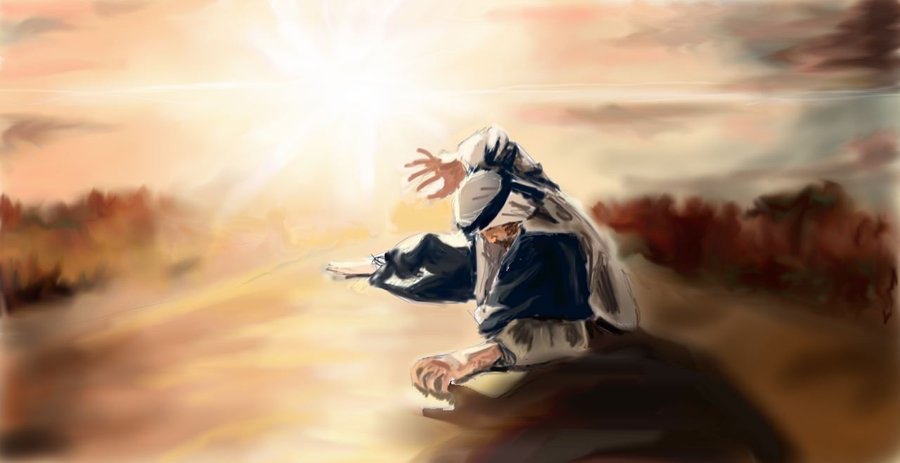
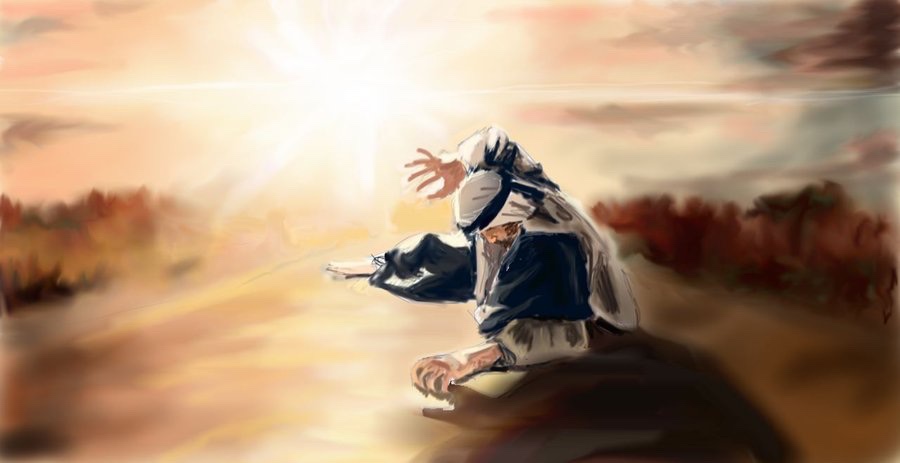
The crucial event which takes place as Saul draws near to Damascus is initiated by an epiphany: an overpowering light shines and a voice speaks to Saul (9:3–6). The epiphanies which have already taken place in Acts (1:10–11; 5:19; 8:26) are described in a rather bare fashion. By contrast, this particular epiphany is recounted in detail (as is the later epiphany to Peter, 10:10-16). The divine origin of the epiphany is promptly identified: the light was from heaven (9:3). The voice which addresses Saul is that of Jesus, whom Saul (as did Stephen before him, 7:59–60) addresses as “Lord” (9:4–5).
4 The Lord: an ambiguous term
At this point in the narrative, the ambiguity of the term “Lord” is heightened. Until now, the vast majority of occurrences of “Lord” have referred to God. From this point on, the term can be used to refer to Jesus (20 times, of which 4 repeat the incident from ch.9), although more often it still refers to God (36 times).
When Luke reports that people “turned to the Lord” (9:35; 11:21) or “believed in the Lord” (9:42; 11:17; 14:23; 16:15,31; 18:8; 20:21), the phrase appears somewhat ambiguous as to its precise referrent. However, in each case the context indicates that “the Lord” is now referring to Jesus.
The later categories of christological thought (after Nicaea) introduce categories not relevant for the time when Luke’s text was being written. The most that can be said is that Luke never envisages any ontological unity of Jesus and God, but on some occasions (and certainly not always) there is an overlap of function—Jesus now functions as God has functioned in the past.
For the most part, Luke presents Jesus as an agent of God’s sovereignty, as one member amongst many (Peter, Philip, Stephen, Saul, Barnabas, and so on), who have functioned as agents of God’s sovereignty. Occasionally, Jesus is distinguished from these figures, such as when he appears as a divine messenger to Saul (9:5, paralleled at 26:15, and expanded at 22:8–10; also 9:10–17, 27).
5 The command to Saul: necessity is placed on him
The vision and command to Saul (9:3–6) find a parallel in the subsequent vision and command of the Lord to Ananias, instructing him to meet with Saul (9:10–16). God is at work in these events; Luke reports that it is the divine voice (speaking through Jesus) which addresses both Saul (9:4–6) and Ananias, when he speaks of Saul (9:15–16).
The theme of divine necessity has already been present in the Jerusalem narrative, both with reference to events narrated (1:22; 3:21; 4:12;19–20 5:29) and with reference to the death of Jesus (2:23; 4:28). This theme is stated in both divine speeches: to Saul, who is given a general charge: “it will be told to you what you must do” (9:6); and to Ananias, who is instructed to tell Saul “I will show him what he must suffer” (9:16), because “he is a chosen vessel for me” (9:15). Both statements establish that Saul must do what is prescribed, as a part of “the plan of God”.
6 The significance of Saul (Paul) in Luke’s story
Indeed, Saul is a critical agent in the execution of the necessary plan which God has for the believing communities in Jerusalem, Damascus, and beyond. Acts 13–28 is not solely about what was done by Paul (as he is then known); it is unambiguously about “what the Lord did through the activity of Paul” (14:27; 15:4,12; 21:19).
The other dimension of Saul’s role will become evident by implication throughout the latter half of Acts; that is, he stands as a model for what faithful proclamation and faithful discipleship entails. All that Paul does and says, and how he deals with what he encounters, functions as a role model for the readers of Luke’s narrative. Luke has Paul claim this explicitly in his final speech to the elders of Ephesus (20:35), soon before his arrest in Jerusalem. This is underscored by Paul’s two repetitions of the story of his conversion and call, with alterations and elaborations, in the final section of Acts.
7 Saul and Ananias
After being blinded, Saul is brought back to wholeness by Ananias, who acts in ways consistent with membership of “the Way”. Ananias lays his hands on Saul to heal him (9:17), a divinely-endowed ability (4:28) exercised by the apostles in Jerusalem (5:12) and Samaria (8:17). He tells him that “the Lord sent me” (9:17), a phrase which evokes the divine commissioning of Moses (7:34; cf. Exod 3:9-15, 4:13, 5:22–23), the sending of the angel Gabriel (Luke 1:19,26) and the task of Jesus (Luke 4:43; cf. 4:18).
Ananias then commands Saul to be “filled with the holy spirit” (9:17), repeating the divine action already evident in Jerusalem (2:4,38, 4:31) and Samaria (8:15–17). Like Peter (4:8) and Stephen (7:55), Saul is now filled with the spirit. Philip, too, is guided by the spirit (8:29,39), although the precise terminology of “being filled” is not applied to him.
The association of laying-on of hands with this spirit-filling is reminiscent of the account of how Joshua, “a man in whom is the spirit”, was commissioned as YHWH directed through Moses by the laying-on of hands (Num 27:18–23, esp. v.23). Like Joshua, Saul has been given authority over God’s people (Num 27:20) as “a chosen vessel” who will bear God’s name (9:15). Paul is then baptised (9:18), following the pattern set for new believers by Peter (2:38) and Philip (8:16). A new chapter in the story is unfolding.
This blog is based on a section of my commentary on Acts in the Eerdmans Commentary on the Bible, ed. Dunn and Rogerson (Eerdmans, 2003). I have also explored the theme of the plan of God at greater depth in my doctoral research, which was published in 1993 by Cambridge University Press as The plan of God in Luke-Acts (SNTSM 76).
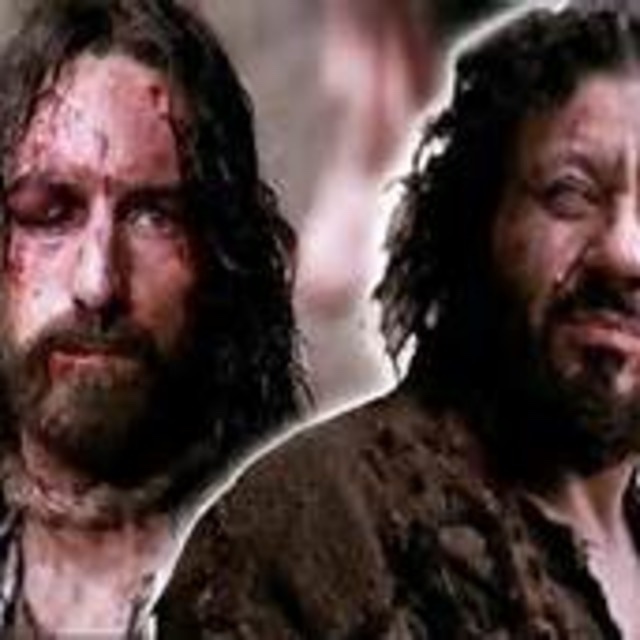
“So Pilate, wishing to satisfy the crowd, released Barabbas for them; and after flogging Jesus, he handed him over to be crucified” (Mark 15:15). Each of the four canonical Gospels report that there was a chance that Jesus of Nazareth might have been released, and not sent to his death on the cross; and that Barabbas was released in his place.
Is this factual reporting? Did this actually happen in real historical time? Or was it a fable, a myth, a story “made up” in the telling? Barabbas appears in all four Gospels (Matt 27:15–26; Mark 15:6–15; Luke 23:13–25; John 18:39–40). What are we to make of him?
Certainly the actual death of Jesus was an event that happened in real historical time. Although some critics have disputed this, the evidence is clear that Jesus did exist, and that he did actually die. The year 33 is the year that is normally identified as the year of his death. See https://www.patheos.com/blogs/keithgiles/2022/04/did-jesus-even-exist/
I
In thinking about this story, there are a number of elements to consider. The name Barabbas is the first of these. It is an Aramaic name, combining two nouns: bar, meaning son, and abba, meaning father. So he is “the son of the father”—a name replete with symbolism, especially when he is placed alongside Jesus of Nazareth, son of God.
Indeed, the third century writer, Origen, in his Commentary on Matthew (ch 27, para 17), indicates that he had access to versions of Matthew’s Gospel that identified Barabbas as “Jesus Barabbas”. This strengthens the symbolic power of this figure and suggests that he might have functioned as an “alternative Jesus”, a literary device, to invite the reader to see the choice available to the crowd, and by extension, to consider their own choice in relation to Jesus: a kind of ancient altar call, “whom do you choose: Jesus, son of the father, or Jesus, the Son of God?”
Some interpreters suggest that perhaps there might be an allusion to the Israelite ritual of the scapegoat, in which one sacrificial goat is released whilst another bears the weight of sin as an atoning substitute (Lev 16:8-10; 23:27–32). In the Gospels, one son is released on behalf of the people; but this person is not the true “son of the [F]ather”; rather, the true son of God is forced to his death, which is later interpreted as a death that does carry the weight of Israel’s sin, in the manner of the scapegoat. It’s an ironic, dramatic depiction of the scapegoat process. Perhaps.
II
The status of Barabbas is a second factor to consider. Mark describes him as “a man [who] was in prison with the rebels who had committed murder during the insurrection” (Mark 15:7). The word used to describe this “insurrection”, stasis, has the sense of a violent uprising. A word from the same root is used to describe those in prison with Barabbas—“rebels”.
The word stasis had long been used to describe the civil wars that broke out within the Greek city-states, often because of economic inequalities, social conflicts, and class struggle. Barabbas, it would seem, had been implicated in such an uprising; he was imprisoned with others (rebels) who had taken part in such an uprising, and he had committed murder in the course of this insurrection.
Matthew describes him, more succinctly, as “a notorious prisoner” (Matt 27:16); the word used here, desmion, has a less dramatic force, for it is the usual term for a prisoner, with no sense of political agitation attached (for instance, it is applied to Paul when he is in prison at Acts 16:25, 27; 23:8; 25:14, 27; 28:17; Phlmn 1:1, 9; Eph 3:1; 4:1; 2 Tim 1:8). Matthew has reduced the tension and removed the dimension of political agitation in his version.
John is similarly succinct, describing Barabbas as “a bandit” (John 18:40). However, the word used here, lēstēs, is loaded with political weight. It can refer to a robber, or a bandit; or it can have a more focussed sense of a rebel, a revolutionary. The former meaning is conveyed by the word in the parable of the Good Samaritan (Luke 10:30, 36) and in the words of denunciation that Jesus speaks to the money changers and buyers and sellers in the temple forecourt (Mark 11:17; Matt 21:13; Luke 19:46). Such people are robbers who steal by surprise attack or by their unscrupulous practices.
It is, however, the more political sense of the word lēstēs that is more clearly in view in John’s narrative. Josephus, writing his account of the war that took place between the Romans and the Jews in 66–74 CE, uses this word forty two times; most of these instances describe either men who lay in wait beside the roadside to rob passing travellers (like in the familiar parable), or, more often, individuals who took part in the counter-insurgency against the Romans.
Their actions are violent and threatening; such men would work in groups, attack individuals (often in a crowd, which gave a protective cover to the perpetrator), acting with brutal violence. A number of times, in the reports of Josephus, these are violent actions undertaken for political purposes, by members of the group known collectively as the Zealots. The political overtones of the word are strong.
In such company, then, we find Barabbas (John 18:40) and, by implication, Jesus; certainly, the inscription that is placed over Jesus on the cross (Mark 15:26; Matt 27:37; Luke 23:38; John 19:19) refers to him as “King of the Jews”, a political attribution without doubt. Even when (as John reports) the chief priests questioned this wording, Pilate insisted: “what I have written, I have written” (John 19:20–22).
Indeed, those crucified alongside Jesus are described with the same term for the political insurgents described by Josephus, lēstēs, in two Gospel accounts: “with him they crucified two bandits (lēstas), one on his right and one on his left” (Mark 15:27; so also Matt 27:38, repeated at 27:44). Luke modifies his description of these two (Luke 23:23:33, 39; they are kakourgoi (literally, those who do wrong). Nevertheless, the NRSV and NIV both render this as “criminals”.
In fact, Jesus had already opened the door to a politicised interpretation of his mission, when he was approached by Temple soldiers in the garden, kissed in betrayal by Judas, and handed over to be taken to the authorities. Seeing the soldiers arrive, he said, “Have you come out with swords and clubs to arrest me as though I were a bandit (lēstēn) ? (Mark 14:48; the same word is also used at Matt 26:55; Luke 22:52). Jesus had already indicated that he knew that the Roman and Jewish authorities were perceiving that he was a political agitator.
Luke intensifies the negative portrayal of Barabbas, alongside of the way that he strengthens the innocence of Jesus. He depicts Barabbas as “a man who had been put in prison for an insurrection that had taken place in the city, and for murder” (Luke 23:19, repeated in 25). The word translated as insurrection is the Greek term stasis, already noted above as referring to a political uprising. Barabbas, in this account, is clearly a political agitator, prepared to commit murder in the course of his violent activism.
Luke provides this description in the context of the accusation that the chief priests made to Pilate against Jesus, that “he stirs up the people by teaching throughout all Judea, from Galilee where he began even to this place” (23:5), and the later indication by Pilate, that they had presented him as “one who was perverting the people” (23:14). This sounds clearly political; Jesus was being accused of being an activist, an agitator, at the very least.
Both times that this claim is raised, Pilate declares Jesus innocent; yet the same declaration is never made in relation to Barabbas. Luke’s apologetic intent is to lessen the blame placed on the Romans for the the death of Jesus, and to divert attention towards the Jews, as the prime instigator of this action against Jesus. This is yet another indication of political intent in the way that Jesus is perceived.
Did this incident involving Barabbas actually take place? The historical implausibility of this incident is a third important factor. The fact is that there is no evidence of such a custom in other ancient sources. Certainly, some conservative scholars have searched carefully and drawn from other texts incidents that they claim provide an analogy to the Barabbas incident.
An incident retold by Josephus is cited to indicate that the liberation of a prisoner did once take place (Antiquities 20.9.3); but this one-off occurrence did not reflect an annual custom. There are far too many dissimilarities to the Gospel narrative. It fails to support the Barabbas story. Another incident recounted by Livy (History of Rome 5.13) does tell of a temporary release of prisoners from their manacles; but this was done, under difficult conditions, in an attempt to appease the gods, to bring a change in the weather. It’s quite different from the Barabbas situation.
A third alleged parallel, from Roman law, is in the Papyrus Florentinus (61, 59ff). However, the prisoner who is released in this scene, after pleas from the crowd, had not yet been declared guilty (as Barabbas had), and it was not at a Jewish festival or even a Roman feast day (as Barabbas was). The parallels are feeble. There is also a complex argument mounted in relation to a single phrase in the tractate of the Mishnah dealing with Passover (Pesahim 8:6), but the parallels claimed and the way in which the text needs to be treated both mitigate against there being any relevance to the Barabbas story.
So I think that the ways that these incidents are claimed to provide a demonstration of the existence of a Paschal pardon such as the Gospels report are not at all clear. The more such scholars trawl the evidence and mount their arguments to say that this could really have happened, the more I recall the famous words, “methinks they doth protest too much” (adapted from Shakespeare’s Hamlet).
There is a clear political improbability to the account found in all four Gospels. Pilate was a ferocious and fearless leader whose strength of character is made clear by the numerous times that, according to Josephus, he sent in his troops to quell an uprising, to scatter a crowd, to squash a rebellion.
American scholar Bart Ehrman writes that Pilate “was a brutal, ruthless ruler with no concerns at all for what the people he governed thought about him or his policies. He was violent, mean-spirited, and hardheaded. He used his soldiers as thugs to beat the people into submission, and he ruled Judea with an iron fist.” (See https://www.patheos.com/blogs/rationaldoubt/2019/05/pilate-released-barabbas-really/)
Pilate would not have been cowed by the crowd in Jerusalem for Passover; had he wanted to act, he would simply have ordered his troops to attack, scatter the crowd, and disperse the built-up tension. The Gospel accounts of Pilate, across all four narratives, are improbable; the apologetic purpose (to show the Romans in a better light, to avoid being seen as an agitator or rebel, and to place the blame on the Jewish authorities) becomes clear, when we read in this way. We need to bear all of this in mind, as we read and listen to the familiar narrative this Easter, and each Easter.
“Do not remember the former things, or consider the things of old. I am about to do a new thing; now it springs forth, do you not perceive it?” (Isa 43:18–19).
These words are attributed to the prophet Isaiah, who lived in the southern kingdom of Judea eight centuries before Jesus, serving as a “court prophet” during times of abundance. Isaiah was active a time when the southern kingdom of Judah was flourishing. He became active in the last years of the reign of Uzziah, who, it was said, ruled as king for fifty-two years (788–736). He lived through the reigns of Jotham and Ahaz (16 years each), and died towards the end of the reign of Hezekiah, who himself enjoyed 29 years on the throne.
The year of Isaiah’s death is uncertain; he may well have been alive, still, when the Assyrian army of Sennacherib laid waste to the northern kingdom (722–721) and deported the northerners to clear the land. In such a context of stability, however, the promise that God would do “a new thing” sits somewhat uneasily in the situation we can reconstruct.
This is one reason why many scholars maintain that the section of the book of Isaiah where we find this passage (Isaiah 40–55) is set some centuries later, after the southern kingdom itself had been conquered by the Babylonians (587–586), and the people taken into exile in Babylon. This became the pivotal event in the history of Israel, the people as a whole—at least in terms of the stories that we have gathered in the scrolls of the Hebrew Scriptures.
The first 39 chapters of the book of Isaiah focus on Jerusalem and Judah (2:1; 3:1; 5:3; 11:12-16; 22:5-8, 20-25; 26:1) and Assyria (7:10–25; 8:1–10; 10:5–12; 14:24–27); 19:23–25; 20:1–6; 30:29–33). The final section of the book (chs. 36—39) is clearly the describing events of the 720s which led to the Assyrian invasion and conquest of the northern kingdom, Israel.
By contrast, second section of the book of Isaiah has a primary concern for the power which had taken the people of Judah into exile—Babylon (43:14–21; 47:1–15; 48:14, 20–21). The prophet promises a return to Jerusalem (40:1–2), but it is identified as Zion (40:9; 41:27; 46:13; 49:14; 51:3, 11, 16; 52:1-2, 7-8).
There are many stories in Isa 1—39 relating to the personal life of the prophet, but no such personal connections in Isa 40—55. By contrast, a very direct historical reference, in a section referring to Cyrus, King of Persia (44:24–45:19), indicates a later setting. Cyrus ruled the Achaemenid Empire from 559 to 530 BCE and, after defeating the Babylonians in 539, issued a decree permitting the exiled Israelites to return to their homeland.
We have already reflected on one passage from this section of Isaiah (55:1–12, Lent 3), noting how it differs from the worldview and understanding of God from earlier periods in the life of Israel.
This passage thus comes from a time when the Israelites were in exile in Babylon. It was not a happy time for many of the people of Israel. (Psalm 137 is the classic expression of this; note especially the anger expressed in verses 8–9.) The people of Israel yearned to return home (Jer 29:10–14; 30:1–31:26). They looked back on the past with longing eyes. They remembered their years in the land which God had given to them. Now, they were living among Babylonians—foreigners, conquerors.
Soon, they would leave behind these memories, and grasp hold of the future that God has for them. God would “send to Babylon and break down all the bars” (43:14). God, the prophet declares, is doing a new thing! (43:19).
And yet, that “new thing” is informed by the past. The people once travelled out of slavery in Egypt, into freedom in Canaan, leaving behind the Egyptian “chariot and horse, army and warrior”, stuck in the waters of the sea that suddenly swamped them—“extinguished, quenched like a wick” (43:17; cf. Exod 14:26–31, 15:4–12, 19, 21). In the time of the prophet, “the shouting of the Chaldeans will be turned to lamentation” as the people depart (43:14).
In like manner, now, the people will take the journey back home, pass through the desert, and return to their land. The one who made “a way in the sea, a path in the mighty waters” (43:16) during the Exodus from Egypt (Exod 15), will now “make a way in the wilderness” (43:19) for the people to follow, leading them right back to the land from which they had been forcibly removed decades earlier (2 Kings 25:1–21; 2 Chron 35:15–21).
As they were sustained in that desert journey long ago, so God now will give “rivers in the desert” (43:19) which will provide “water in the wilderness … to give drink to my chosen people” (43:20) as they travel on that way. That caled for shouts of praise to God! (43:21).
The Exodus imagery was potent for Israel; not only was the story developed over centuries to provide a story of origins for Israel, but it was also co-opted into the prophecies predicting the return to the land, providing those oracles with greater strength and rigour. (And, of course, the story continued on into the feast of Passover, the annual celebrations which continue amongst Jews right through until the present day.)
The Exodus imagery also undergirds the Christian story. Jesus, declared by John the Baptist to be the lamb of God (John 1:29, 36), affirmed by Paul as the new Passover lamb (1 Cor 5:7), envisaged by the ageing prophet on Patmos to be the slaughtered lamb (Rev 5:6–14), is believed to enact a new Passover for his followers, according to the developing Christian tradition.
Just as the shedding of the blood smeared on the doorposts of the Israelites was their salvation (Exod 12:7, 13, 22–23), so the shedding of Christ’s blood is understood to effect salvation (Rom 5:8–10; 1 Pet 1:18–21). So the age-old imagery and symbolism is reworked by the early Christian writers, continuing the process seen in the words of the prophet speaking during the return from Exile (Isa 43:16–21).
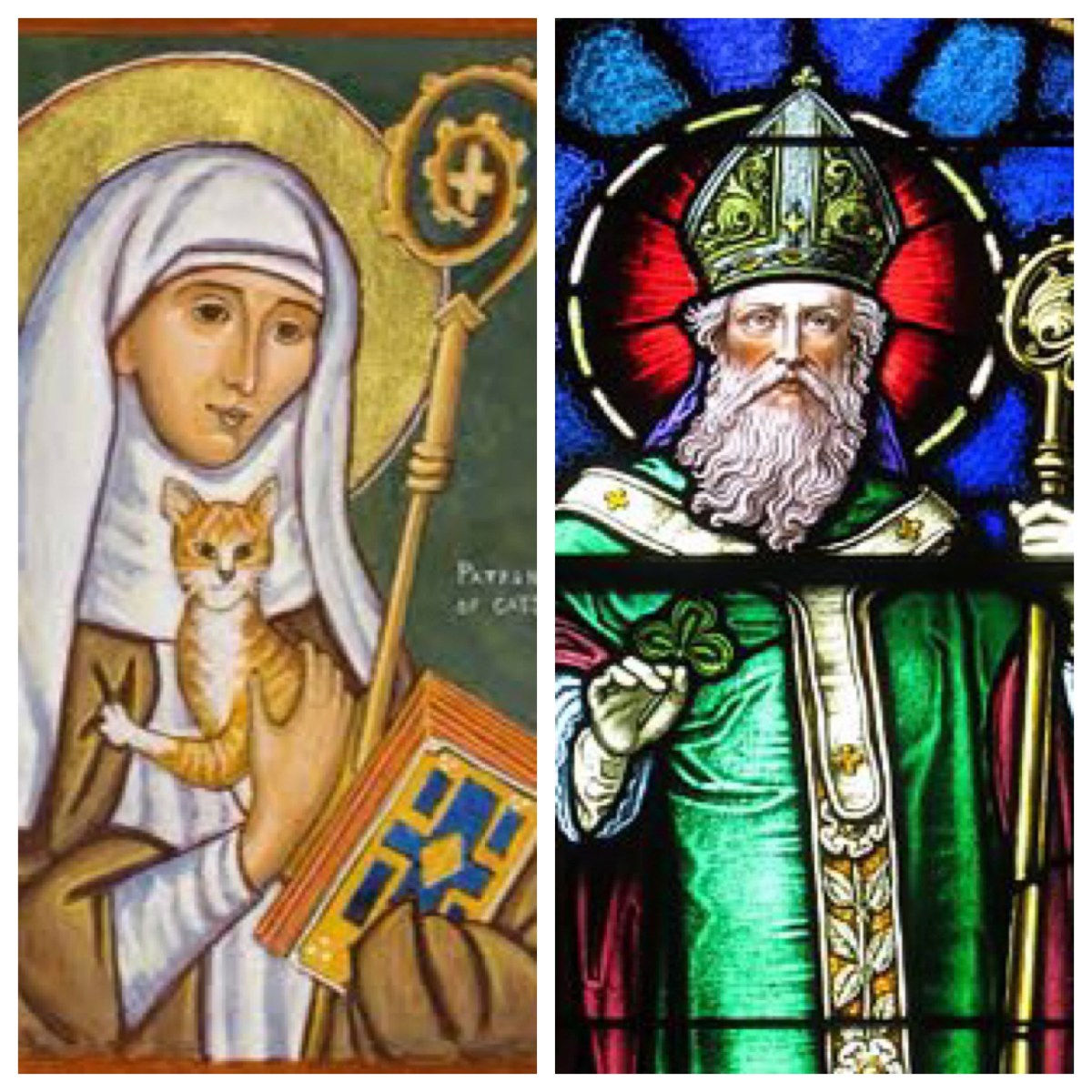
We have all heard of Patrick, a fifth century missionary and patron saint of Ireland, who is touted as being the cause for the lack of snakes on the island of Ireland. The legend is that the snakes that were on the island had all been banished by Patrick, chasing them into the sea after they attacked him during a 40-day fast he was undertaking on top of a hill. 😫 Shades of Jesus, the Gerasene demoniac, and the poor pigs, who took the legion of demons into the sea (Mark 5).
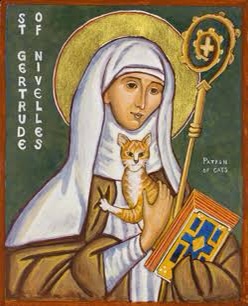
But what about Gertrude? She shares the same day—17 March—with Patrick; it is the feast day for both of them in the calendar of the Roman Catholic Church, for 17 March was the day that both Gertrude, as well as Patrick, was said to have died.
So, while all of Ireland and all of the Irish diaspora vigorously celebrates Patrick today (wearing green clothes, drinking lots of Guinness, with hair dyed green, walking in street parades and telling predictable jokes with incomprehensible accents), spare a thought for Gertrude of Nivelles, who shares her patronal festival with Patrick the Confessor.
Gertrude lived in the seventh century in the nation we now call Belgium. Her father was a powerful Frankish nobleman in the court of the king, Dagobert I. It is said that, at the age of ten, Gertrude refused a marriage proposal from the son of a duke, “saying that she would have neither him nor any earthly spouse but Christ the Lord.”
When her father died a few years later, her mother Itta shaved her head into a monkish tonsure to deter would-be suitors from marrying into her wealthy family by force. Itta and Gertrude established a monastery at Nivelles and retired to a religious life. So here’s the first reason to admire Gertrude (and her other Itta): a monastery for females was one of the few options for females in antiquity to preserve their intellectual, economic and sexual autonomy.
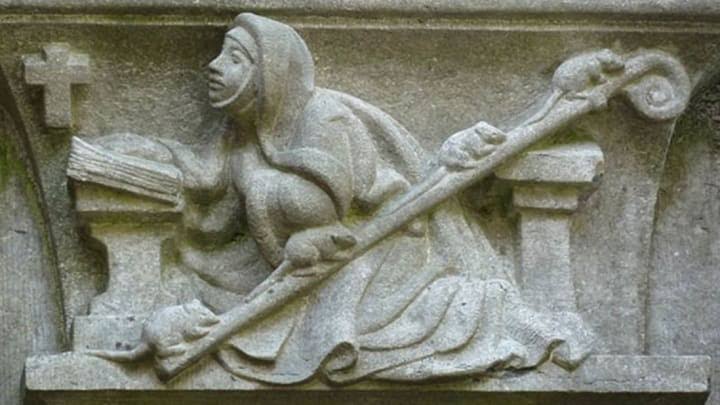
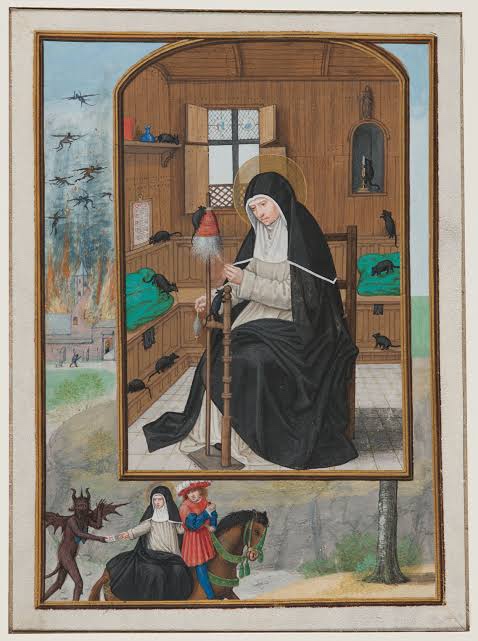
It is said that Gertrude kept cats in the monastery to keep rats and mice under control — a wise and sensible move, so a second reason to like Gertrude.
There are some illuminated manuscripts, church fresco paintings and stained glass windows which depict Gertrude in a garden setting, surrounded by cats, rats and mice (often with a mouse running up her staff). However, there is no ancient written claim that is explicit about Gertrude and cats; it seems that this connection is a late 20th century invention! Nevertheless, we can roll with the newish evolution of the tradition, and honour Gertrude for her care of cats, can’t we?
Gertrude, and her feline friends, are important in my household. We have three cats, all ragdolls, all quite handsome, aged 14, 11, and 8; they are all well-fed and cared for, able to roam into any room of the house (but not outdoors, unless in the special enclosure). They are living the good life every day with their two full-time live-in servants; and every so often, they go on vacation to Curtin Cat Care to be spoiled 😁.
Gertrude’s mother Itta died in 650, so the 24-year-old Gertrude took on sole governance of the monastery, and was known for her hospitality to pilgrims. She died in 659 – worn out in her early thirties, says the Cambridge Medieval History, “because of too much abstinence and keeping of vigils”.
Mel Campbell reports that the story is told, that a visiting Irish monk, whose brother Gertrude had sheltered, predicted she would die on St Patrick’s Day, and that “blessed Bishop Patrick with the chosen angels of God … are prepared to receive her”. Begorrah, it was so!
Mel Campbell also writes, “On a day that has become unfortunately associated with public displays of boorish masculinity, wouldn’t it be nice to honour a saint whose domains of patronage have traditionally been belittled as feminised and domestic? Gertrude was an independent woman who refused to be treated as a chattel.”
And THAT, above all else (even above our feline friends!) is cause for remembering and honouring Gertrude of Nivelles.
The following reflection was written by John Squires and Elizabeth Raine, and shared with the Rainbow Christian Alliance at Tuggeranong Uniting Church on Sunday 13 March 2022.
In many churches, including the Uniting Church, today is called the Second Sunday in Lent. Our church follows the calendar of seasons that is held by many churches around the world; instead of spring, summer, autumn, winter, we have Advent, Christmas, Epiphany, Lent, Easter, and Pentecost.
The season of Lent lasts for just six weeks, and it leads into the three day celebration of Easter. It’s called Lent, incidentally, not because it is tilted or skew-whiff, but because in the northern hemisphere, where such seasons were first given their names, the days are starting to lengthen (the name was Lencten in Old English).
In the Roman Catholic and Orthodox churches, Lent is a period of fasting. The day before, Mardi Gras, which is French for Fat Tuesday, was a day to use up all the fatty goods in the kitchen — eggs, flour, milk — so they were out of the way for Lent. The day is also known as Pancake Tuesday. In South America, in countries where Roman Catholicism was the dominant religion, Mardi Gras became a public festival, a day not only to feast, but a day for street parades, for big banquets to celebrate, with colourful costumes and extravagant public exhibitions of joy.
And that has surely been the inspiration for the Sydney Gay and Lesbian Mardi Gras, both in recent years with colourful and extravagant floats, and in the decades before, with lots of rainbow groups marching, and even in the early days of protest and attempting to “claim the streets” and “go public” about gays and lesbians and more.
*****
Immediately after Mardi Gras, Fat Tuesday, comes Ash Wednesday — a solemn day of penitence; and the fasting continued right through Lent, until Easter Sunday. We don’t actually do full-on fasting in the Uniting Church, but in recent times it has become customary to decide to “give up something for Lent” — chocolate and alcohol being the most common, but also more significant things like not driving your car and catching public transport; or not eating meat. In this way, Lent becomes a time of challenge, as we try to remind ourselves each day of the importance of being faithful to God. We “give up” so that we can focus in more clearly on God, if you like.
So there is already a connection between the season of Lent and rainbow people; because Lent starts immediately after Mardi Gras. And the annual Sydney Gay and Lesbian Mardi Gras, now an institution in our annual public events; the extravagantly colourful celebrations of that event mark, if you like, the climax of joy as rainbow people celebrate that they are each made exactly as they are, and they can be happy about that.
We both enjoyed watching (on TV) the parade of organisations and people that were out and proud, out and loud, a week ago, walking unhindered around the SCG — a striking contrast to the first Mardi Gras, when police barricaded the road and people were arrested. It is truly wonderful to see that the rainbow colours can be flown in society, that people can acknowledge and declare who they are, and not be under threat of arrest.
*****
So in the cycle of seasons for Christians, after Mardi Gras comes Lent. And Lent is about giving up; or, at least, focussing intently on Jesus, the one in whom we see most clearly see God. How else might Lent relate to the experience of rainbow people?
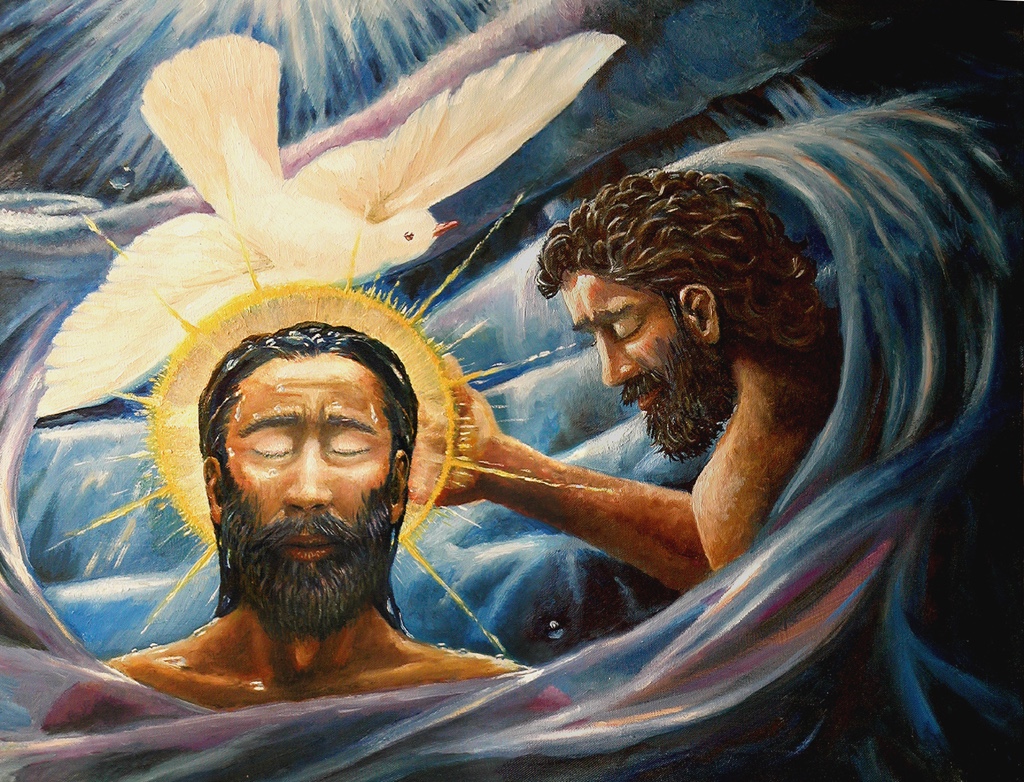
There are a collection of stories that the church retells each year, in association with Lent. In preparation for Lent, the story is told of the day that Jesus was baptised: in the river Jordan, to the east of Jerusalem, fully submerged into the water by his crazy cousin John, baptising people as they repented of their sins.
John was crying out to the people who came to him, to repent; to change their way of being and living; to be transformed, completely, by being baptised. That’s what is meant by the single Greek word that John used, calling people to metanoia—to a complete transformation of who they are and how they love. Jesus came to that moment, willing to submit to that call, willing to experience metanoia in his own life.
OLYMPUS DIGITAL CAMERA
And yet for Jesus, this baptism became more than just the moment of call, or the moment of change; it was the moment when God publicly acknowledged him, when God declared, “this is my son, my beloved child; listen to him”. In that voice, booming from the clouds, a central affirmation is made: look at him, this is who he is; can you see that this is really who he is? And from that moment, Jesus began his mission of challenging people and transforming society.
The story of the baptism of Jesus tells us that, when God looks at us, God sees us exactly as we are; and we may well also hear God saying to use, and to those around us, “this is my child, my beloved one; I can see exactly who they are, and I am well pleased that this is who they are”. God sees me, a straight white male, and is well pleased; God sees a lesbian woman, and is equally well pleased; a trans man, and God is pleased; an intersex person, and is well pleased; an enbie, a gay, a pan sexual—God is just well pleased with each of us, as we are, and declares us to be beloved. And that means that we can get on with the kind of life that we each want to live, and are called to live.
*****
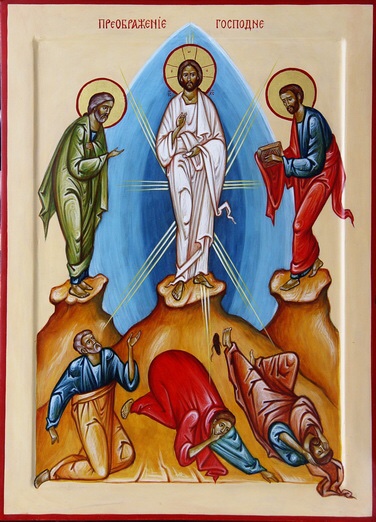
There’s another story about Jesus that is associated with Lent. It’s a story that, from our rather privileged, straight, perspective, sounds a great challenge to us. It’s a story about being changed; about being transformed. It’s a story that shows that being transformed means you are able to stand and challenge others to be transformed. It’s the story of when Jesus took his three closest friends to a mountain, and they had a shared experience of seeing Jesus standing between two of the greats of their people: Moses, to whom God had given the Law to govern the people of Israel, and Elijah, through whom God had established a long line of prophets in Israel.
The Gospel writers say that Jesus was transformed at that moment. But in this story, also, there is the indication that the friends of Jesus were transformed. That moment on the mountain was a challenge to each of them; the response that Peter wanted to make was seen to be inadequate. Jesus challenged him to respond differently. It was another moment when metanoia, complete transformation, took place. And these disciples did change; yes, it took some time, but these friends of Jesus ultimately became leaders amongst the followers of Jesus, and spearheaded the movement that became the church.
The change, the metanoia, that occurred within Peter, James, and John, spread widely. They faced the challenge head on, and responded with their own metanoia. That is mirrored, today, in changes that are taking place in society. As we watched the Mardi Gras last weekend, it soon became evident that this was no longer a side carnival, an event that was important to a minority group in society, and that’s all.
For the Mardi Gras—commercialised, mainstreamed, headlined and noticed—now reflects the way that society has been challenged—by you, by rainbow people—and how it has responded in metanoia, by being transformed. Banks, unions, police, sports teams, churches, golfing clubs, and more—all marched in the Mardi Gras, all affirming that there is a place in their ranks for rainbow people, no matter what letter an individual identifies with. And that reflects a very significant change in society, in which public acknowledgement and public discussion of gender and sexuality can take place.
Sure, there is still work to be done—much work to be done; many changes still to occur, deeper acceptance still to take place. But the changes are clear and evident; and it has been because those who themselves have been able to meet challenges by holding firm and calling for change, have then effected transformation, thoroughgoing change, in society. Rainbow people are changing our society. Last week’s Mardi Gras demonstrated that.
And for that, we are grateful, and say: thanks be to God.
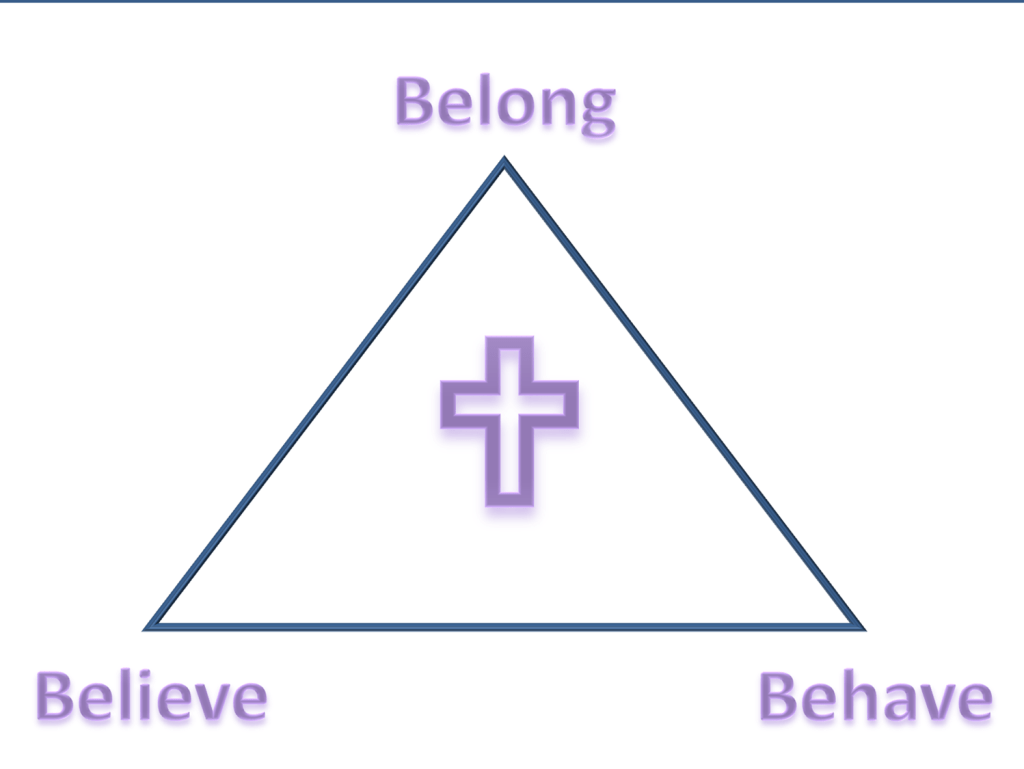
There is much debate amongst Christian thinkers, these days, about what comes first as we invite people to be a part of the church. Do we say, “this is what we believe, expressing our fundamental understanding of life; do you want to sign up to show you have the same beliefs?” Or do we say, “this is how we behave, guided by our fundamental ethical principles; would you like to act the same way and join us?” Or perhaps the invitation is simply, “come along, join in with us, see what we believe, what we are on about, and soon you’ll feel like you belong”?
Is it believe first? Or behave? Or simply, belong? The tendency to put a creed at the forefront of our invitations—to show that we are a people who believe, first and foremost—is widespread and deeply ingrained. Whether it be affirming The Apostles Creed in baptism, or saying The Believer’s Prayer at conversion, or working out a new Mission Statement for the Congregation, giving priority to belief is a very familiar pattern for us. We tend to think that, whatever formula we are repeating, that is exactly what declares and confirms our identity as people of faith.
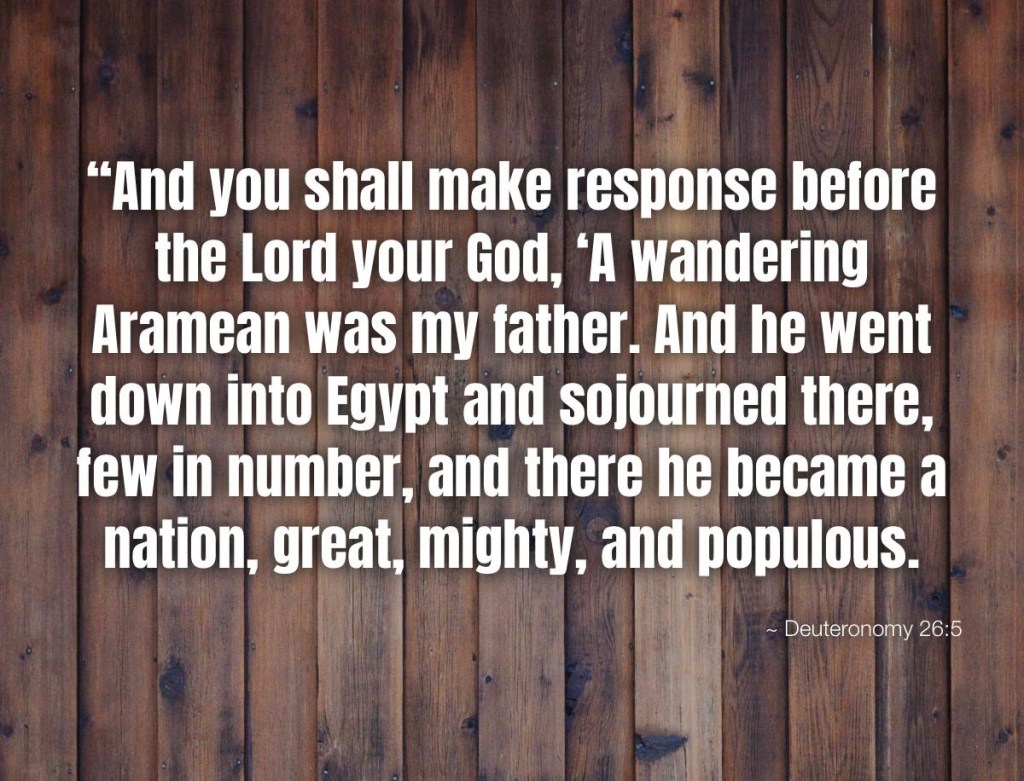
So it’s no surprise that when we read Deuteronomy 26 (the Hebrew Scripture passage in next Sunday’s lectionary), we gravitate to the middle part of the passage, and lay claim to what looks to be an early affirmation of faith that sets out the identity of the people of Israel: “A wandering Aramean was my ancestor; he went down into Egypt and lived there as an alien, few in number, and there he became a great nation, mighty and populous” (Deut 26:5). This affirmation seems to go right back to the start, affirming what sets the people of Israel apart as a distinctive entity.
This way of reading this passage gained influence from the analysis of Gerhard von Rad, a German scholar of the 20th century. Von Rad claimed that the credal statement in verses 5 following was most likely a formula much older than the era when the book of Deuteronomy was written. And the origins of this creed, he claims, most likely lay in ancient cultic remembrances of the origins of the people. The wandering Aramean (Jacob, grandson of Abraham of Aramn) and the time in Egypt (leading up to Moses) reflect those times of origin.
*****
But the whole of this “creed” is not actually a “statement of faith”. It is more a narrative that tells a story. Such was the way of the ancient world; central beliefs were not articulated in crisp propositional statements (for this is the way of the post-Enlightenment western world); rather, a story was told, in the course of which key events pointed to central affirmations for the people. The ancients were story-tellers, more concerned to tell the story than state the faith. This is the story of the people; it is their saga.
God is important in the story that is told, nevertheless. God is the one who “heard our voice and saw our affliction, our toil, and our oppression … who brought us out of Egypt with a mighty hand and an outstretched arm, with a terrifying display of power, and with signs and wonders” (26:7–8). The rescue of the people by their powerful God is central to the story. This, of course, if the story of the Exodus, which stands at the heart of Israelite identity and later Jewish identity. It is the central story of the people of Israel.
More than this, God is the one who “brought us into this place and gave us this land, a land flowing with milk and honey” (26:9). The land of Israel is the second aspect of ancient Israelite life that is central and fundamental; and so it continues to be, in the 20th and 21st centuries, in which the land of Israel has been one of the most contested pieces of land in the world.
The story is told, however, for a purpose. Not just to remember—although remembering is important, for it recurs as a regular refrain in the book of Deuteronomy (7:18: 8:2, 18: 9:7, 27; 11:2; 15:15; 16:12; 24:9, 18, 22; 25:17; 32:7). The story is told, also, to inculcate the ethos, the values, the very identity of the people. And central to that ethos, taking prime place amongst the things that were seen to be important to affirm about who the people of Israel were, is this: giving back to God the first fruits produced by the land.
“So now I bring the first of the fruit of the ground that you, O LORD, have given me”, are the words that the people are to say, each time a harvest is produced. “You shall set it down before the LORD your God and bow down before the LORD your God”, the instruction declares (26:10). Gratitude is to the fore; gifting back the beginnings of “the fruit of the ground” to the God who gave the people the land to grow this fruit.
*****
Of course, there is a dark story submerged, for the most part, underneath that celebratory action. The land was “given” by God over the resistance of the people who were already IN the land, producing fruit, settled and content with their lot in life. The battles recounted in the book of Joshua—most likely not actual historical events, but reflecting a reality of submission to the Hebrews who took control of the land—reflect this dark story.
This dark story does not figure in the “received tradition” and “authorised affirmation” that we read in Deut 26. Nor do we find this in the affirmation of Deut 6:20–24, which begins “we were Pharaoh’s slaves in Egypt, but the Lord brought us out …”. Mention of the Exodus jumps straight across to life in the land—no mention of the conquest that (in other biblical texts) is reported in detail.
This conquest is part, by contrast, of the larger recitation of Josh 24:2–13, “I brought you out of Egypt … and I handed the Amorites over to you, and you took possession of their land, and I destroyed them before you … and also the Amorites, the Perizzites, the Canaanites, the Hittites, the Girgashites, the Hivites, and the Jebusites; and I handed them over to you … I gave you a land on which you had not labored, and towns that you had not built, and you live in them; you eat the fruit of vineyards and oliveyards that you did not plant.” At least this version of the affirmation is honest about the cost to the earlier inhabitants, and the benefits enjoyed with relative ease by the invading Hebrews.
*****
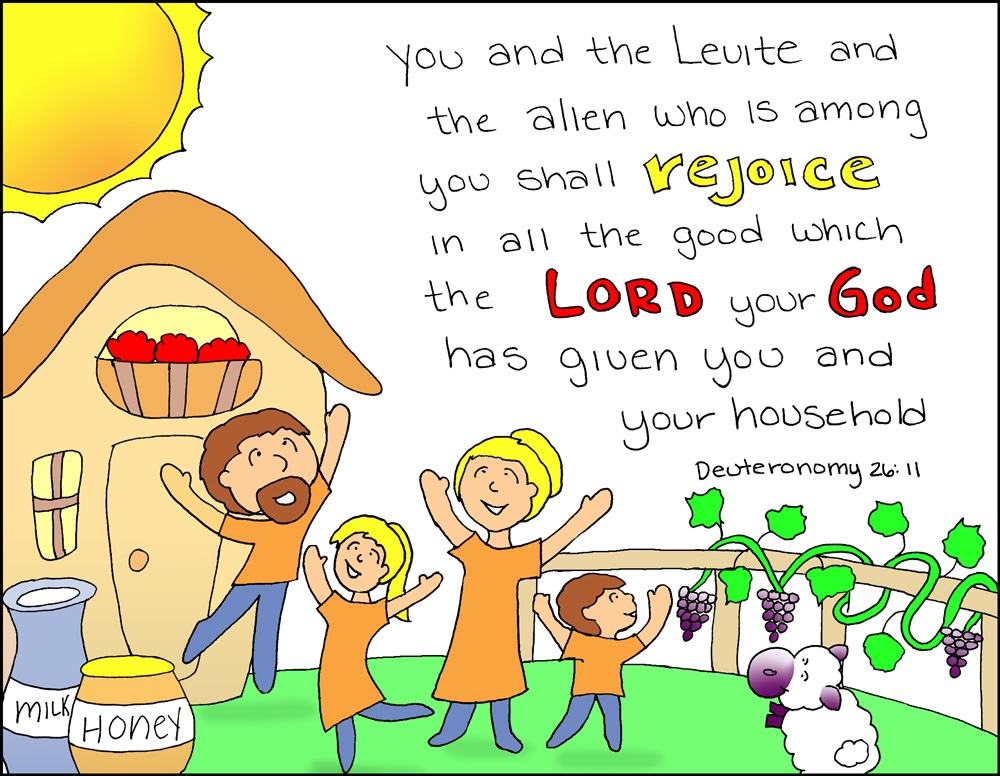
Yet the affirmation of Deut 26 highlights the central importance of gratitude for the gift of the land; and not only that, for it especially indicates the importance of making this celebration inclusive: “you, together with the Levites and the aliens [or, sojourners] who reside among you, shall celebrate with all the bounty that the LORD your God has given to you and to your house” (26:11). So the instructions for the annual festival of the first fruits provide.
The inclusion of the aliens in this annual festival reflected a gracious openness to others in the developing people of Israel. These texts differ from the xenophobic antagonism of earlier texts, recounting the conquest of Israel. They reflect a later understanding of the identity of the people, as they were collated during and after the Exile, centuries after the formation of Israel. People designated as aliens (non-Israelites), sojourners in the land, were welcome to bring offerings to the Lord (Lev 22:18), to adhere to Israelite food prescriptions (Lev 17:12), to keep the Sabbath (Exod 20:8–11; 23:12), to have gleaning rights (Lev 23:22), and to join in the annual process of atonement (Lev 16:29–31; Num 15:29).
The foundational Passover narrative indicates that aliens, or sojourners, were able to join (under certain conditions) in the Passover celebrations (Exod 12:47–49); a second narrative (Num 9:14) is much less restrictive. Aliens were to be subject to the same laws regarding murder (Lev 24:17–22), able to have right of access to cities of refuge (Num 35:13–15), and indeed to enter into the covenant at the annual covenant renewal ceremony (Deut 29:10–13; see also 31:10–13). The voice of the alien even sounds appreciation for the Law: “I live as an alien in the land; do not hide your commandments from me” (Ps 119:19).
Because Israelites were once “an alien residing in the land” of Egypt, the people were instructed, “you shall not abhor any of the Edomites, for they are your kin; you shall not abhor any of the Egyptians” (Deut 23:7); by the third generation, the children of aliens “may be admitted to the assembly of the Lord” (Deut 23:8).
This meant that “the alien who resides with you shall be to you as the citizen among you; you shall love the alien as yourself, for you were aliens in the land of Egypt: I am the LORD your God” (Lev 19:34; a similar affirmation is made at Num 15:14–16).
The principle of equality is clear: “you shall not deprive a resident alien or an orphan of justice; you shall not take a widow’s garment in pledge” (Deut 24:17; see also Jer 7:5–7; 23:5–7; Zech 7:9–10; Mal 3:5). The alien, or sojourner, deserves the same measure of justice as all residents of Israel.
Accordingly, amongst the curses at the end of Deuteronomy, we read, “cursed be anyone who deprives the alien, the orphan, and the widow of justice. All the people shall say, ‘Amen!'” (Deut 27:19). The curse outlines the negative consequences from not adhering to the positive principle of welcoming and including those sojourning for a time innIsrael, the “alien”. That is integral to the celebrations each year, when the harvest produces its fruit from the land.
Gratitude. Belonging. Celebration. Inclusion. All of this is embedded in the story; and all of this comes before believing, repeating doctrinal claims, affirming credal statements. We are a people of welcome, including, belonging. This much is embedded in the ancient Hebrew tradition. This much should be living, still, in Christianity today.
Next Sunday is the last Sunday in the season of Epiphany. The tradition within the churches that use the Revised Common Lectionary is that this is designated as the Feast of the Transfiguration, and the Gospel reading jumps from the early sections of Luke (chapters 4, 5 and 6) of recent weeks, to the story of the Transfiguration (9:28–36). See my reflections at https://johntsquires.com/2019/02/26/bringing-his-exodos-to-fulfilment/
In other denominations, including a number of Orthodox churches and in Roman Catholicism, the Transfiguration is celebrated on 6 August (the date was set for Catholics by decree of Pope Callixtus III in 1456).
For the last five weeks, we have been following key stories from the earlier chapters of Luke’s orderly account (Luke 4–6). But this Sunday we jump to chapter 9. By shifting from the continuous reading of Luke’s Gospel at this time, we lose the passage that would have been next to hear—the concluding section of the Lukan sermon on the plain (6:39–49). And we also lose the next story, the healing of the centurion’s servant (7:1–10). These two passages are scheduled in the lectionary for the Sundays of Epiphany 8C and Epiphany 9C, respectively.
That’s a contingency for those rare years when Easter, which follows the lunar calendar, is late, and the season of Epiphany stretches out for a full two months. In 2038, for instance, Easter Sunday will fall on 25 April and allow for a full Epiphany season. But not in 2022; Easter is mid-April, and the season of Epiphany ends earlier.
The parallel to this story in Matthew’s book of origins (Matt 8:5–13) does not appear in the Year A lectionary at all. Epiphany ends with the Sermon on the Mount (7:21–29), and the continuous reading of the Gospel resumes after Trinity Sunday with the account of the calling of the tax collector, Matthew (9:9–13). The story is also told in John’s book of signs (John 4:46–54) but that version also does not appear in the lectionary at any stage through the three-year cycle.
So I’m offering a blog on this story, even though it’s not on offer next Sunday. It’s a story that points to some important Lukan themes, so it is a pity that it is usually omitted.
The figures at the centre of this story are the centurion and his slave (doulos) who was ill, “at the point of death” (7:2); these characters appear also in Matthew’s account, where the ill person is his servant (pais). In John, Jesus engages with “a royal official”, whose son (huios—not servant or slave) was ill. The story is obviously the same, even though the characters are slightly different.
Only Luke reports that Jewish elders were sent by the centurion to Jesus, to function as intermediaries (7:3). There are no such intermediaries in the versions found in Matthew and John. It is been hypothesised that this avoids having Jesus come into direct contact with a Gentile—although, as we have seen, Gentiles were surely already present listening to Jesus and being healed by him (6:17–20). Nevertheless, Jesus himself follows the protocols expected of a faithful Jew, by not entering the house of a Gentile.
This is in accord with the statement placed in the mouth Peter, when he met with Cornelius some years later: “it is unlawful for a Jew to associate with or to visit a Gentile” (Acts 10:28). This position, of course, was overturned by the vision that Peter saw in Joppa (10:11–12), and led to his desire and intention to share in table fellowship with Cornelius (as is implied by 10:23a and 10:48). This is the big, climactic moment in Luke’s two-volume account of “the events that have been fulfilled among us” (Luke 1:1), when the Jew—Gentile barrier is broken down and the fully inclusive nature of the church is revealed.
To have Jesus deliberately adhere to traditional Jewish protocols in his engagement with the centurion in Capernaum allows for the dramatic build-up to this pivotal scene in Acts. We might note also that Luke omits the section of Mark (7:1–20) in which Jesus explicitly “declares all food clean” (7:19), which also points to the climactic intent in the Peter—Cornelius narrative. Leaving out that section of Mark ensures that Luke doesn’t spoil the impact of the later scene in Acts.
A later text, the Mishnah, from the 3rd century, states that “the houses of Gentiles are unclean” (m.Oholeth 18.7). However, it is not clear either that this dictum was in force in the time of Jesus, or that Jesus felt compelled to adhere to it as a sign of his keeping “pure” in terms of the holiness system of the day. Indeed, his later practice—paradoxically—is to share at table with tax collectors or sinful people, which indicates a willingness to breach the strong boundaries of that system. See https://johntsquires.com/2019/05/22/jesus-and-his-followers-at-table-in-lukes-orderly-account/
Only Luke reports that the centurion—a Gentile authority figure—had a relationship with the Jewish synagogue in Capernaum. Indeed, the Jewish elders give accolades to this man, stating that “he loves our people, it is he who built our synagogue for us” (7:5). That reveals an interesting relationship, positive and supportive, between a Gentile (the centurion) and the local Jewish community. So the barrier which Jesus allegedly maintains by not visiting the Gentile house is breached by the patronage (and, we presume, the visits) of a Gentile to a Jewish synagogue.
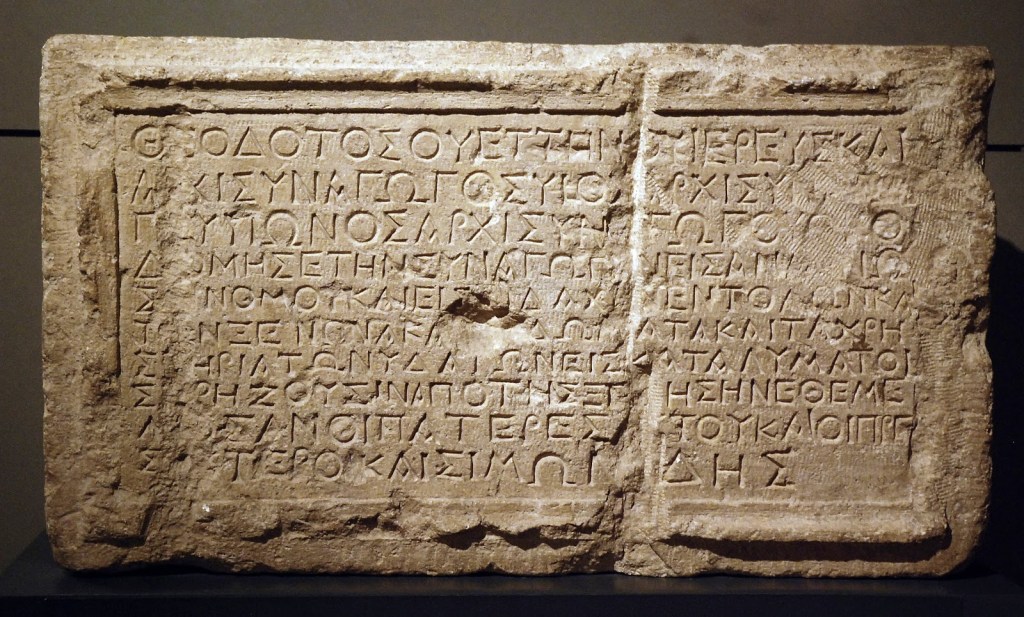
The Theodotus Inscription
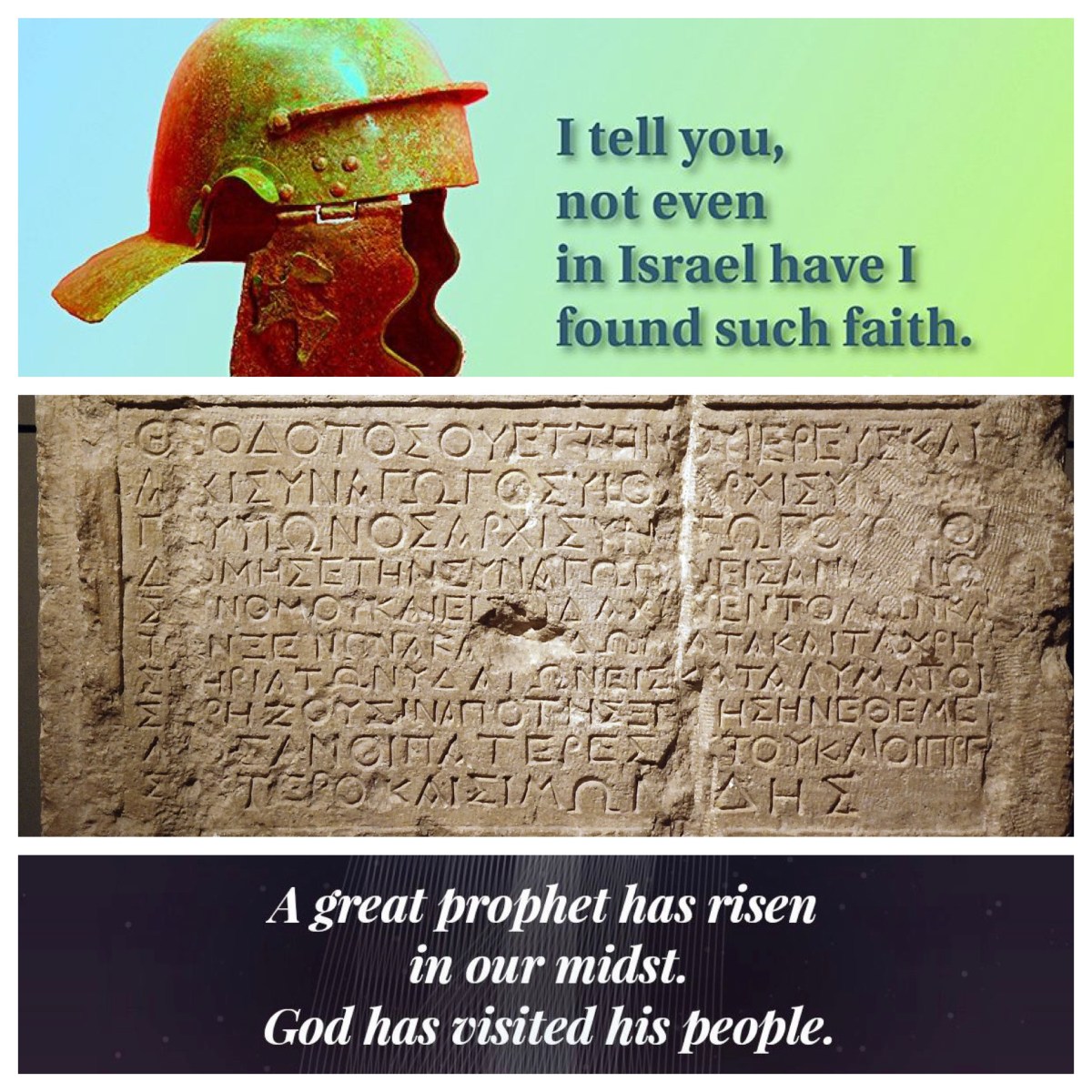
Gentile patronage of Jewish synagogues is known from outside the New Testament; an inscription found in Jerusalem, which is dated from before the fall of the Temple in 70CE, indicates that a certain Theodotus “built the synagogue for the reading of the law and the teaching of the commandments, and also the guest chamber and the upper rooms and the ritual pools of water for accommodating those needing them from abroad, which his fathers, the Elders and Simonides founded.” See https://www.worldhistory.biz/ancient-history/52996-the-theodotus-inscription.html
“Only speak the word”, the elders beg Jesus, “do not trouble yourself” to come all the way to the house (7:6–7). In this way, they maintain the protocols, and try to ensure that that Jesus is kept from defiling himself. This is an interesting positive perspective on the Jewish leadership—a positive assessment that Luke often provides. (See, for instance, how positively he depicts the Pharisees in various scenes: 7:36; 11:37; 13:31; 14:1; and also Acts 5:34; 23:9).
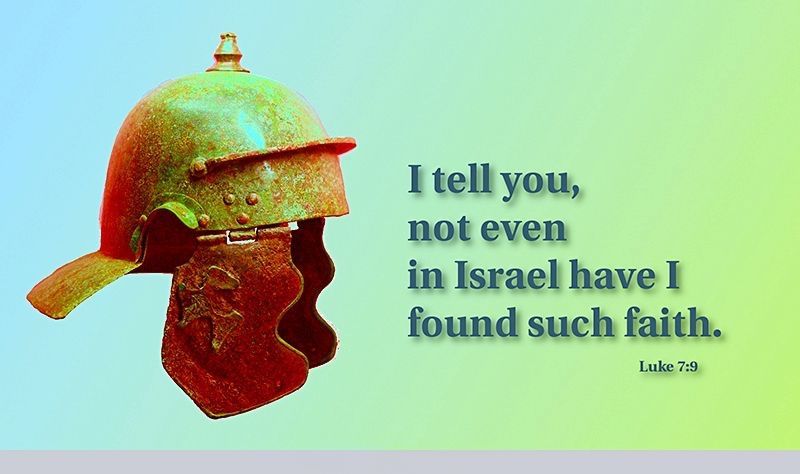
Jesus affirms the man with the words, “not even in Israel have I found such faith” (7:9). This affirmation is given also in the account of this incident in Matthew’s book of origins (Matt 8:10), but not in John’s version of the encounter.
In these words, Jesus sounds a theme which recurs in his subsequent affirmations of the faith of the woman who anointed his feet (Luke 7:50), the woman who had suffered from haemorrhages for twelve years (8:48), the returning Samaritan leper (17:19), and the blind man outside Jericho (18:42), all of whom were characters on the edge, or outside, the central purity group. These affirmations sit uncomfortably alongside Jesus’ recurring lament over the lack of faith of his own followers (8:25; 12:28; 17:5–6; and see also 18:8; 22:31–34).
It’s also noteworthy that the statement of judgement found at Matt 8:11–12, where the characteristic Matthean theme of judgement over the sinful people of Israel is found, is omitted from the Lukan version of the story—although Luke does include this saying in his orderly account at a later point (13:28–30), in the context of his lament over the fate that lies in store for Jerusalem (13:31–35). That different context gives it a narrower focus than the Matthean setting, in which appears to be a (typically Matthean) global condemnation of the people of Israel.
Luke ends this incident with a simple report that the slave was found to be well once again (7:10), as does Matthew (8:13).
The story that follows, recounting how Jesus raises from the dead the son of a widow in the town of Nain (7:11–17), is also a key passage. It also appears rarely in the three-yearly cycle of readings in the Revised Common Lectionary. The fact that it narrates the raising of a person from the dead, yet is rarely heard in worship or preached on (in churches following the lectionary), is curious. After all, the story in John’s book of signs, about Jesus raising Lazarus from the dead, is very well-known and clearly entrenched in the regular lectionary cycle (see https://johntsquires.com/2020/03/25/holding-out-for-hope-in-the-midst-of-turmoil-john-11/)
I consider that the key point of this story is to establish Jesus as a prophet who enacts the visitation of God for the people of Israel (7:16). It is strange that the NRSV renders this statement as “God has looked favourably”, but it is the same verb (episkopeo) which appears at 19:44, where it is more accurately translated as “the time of your visitation from God”. And in that passage, Jesus comes to pronounce judgement up the sinful city.
It is clear that Jesus, by raising this man from the dead, demonstrates his credentials as a prophet, as the people cry that “a great prophet has risen among us!” (7:16)
The cry of the people also signals that the divine is drawing near to the people of Israel. It is curious that this story sits so deeply within the shadow cast by that other story of raising a man (Lazarus): from the dead. This is a striking and dramatic story, as is attested in the response of the people, of whom Luke reports, “fear seized all of them, and they glorified God” (7:16).
Fear (or better, awe) is the regular response in the presence of an angel (Zechariah, 1:12–13; Mary, 1:30; the shepherds, 2:10). It is also evoked by a miracle, as is seen in the responses of the neighbours of Zechariah and Elizabeth (1:65); Peter, James, and John after the huge catch of fish (5:10); the people of the Gerasene countryside (8:37); a messenger from the house of Jairus (8:50); and Peter, James, and John at the Transfiguration (9:34). Fear is also, understandably, manifest before the divine activity in the days of distress when “the powers of the heavens will be shaken” (21:25–26) when the Son of Man appears in power and great glory (21:27).
This passage appears in Proper 5, for those years when Easter is early, and the season of Pentecost has additional Sundays. The earlier story, of the centurion and his slave in Capernaum, is also offered in Proper 4 (when Pentecost is in mid-May). They are great stories, worth considering, even if not scheduled in the regular cycle of lectionary readings.
In this story, when Jesus reads in the synagogue in Nazareth, he quotes a scripture passage which begins with a reference to the holy spirit. The understanding of the spirit as an agent for divine guidance of human beings, as found in this passage early in the orderly account of Luke’s Gospel, is the same understanding which is found right throughout the books of the Hebrew Scriptures. The follow list summarises the key points concerning the spirit in these writings.
First, the spirit is active in the creation of the world (Gen 1:1–2; Job 33:4; Ps 104:30; Isa 42:5). Then, the spirit guides selected leaders within Israel, such as Moses (Num 11:16–17); Joshua (Deut 34:9); Othniel (Judg 3:10); Gideon (Judg 6:34); and David (1 Sam 16:17).
Further, it is the spirit which inspires prophecy (1 Sam 10:6, 19:23–24; Ezek 37:1; Joel 2:28–29; Mic 3:8), enables the interpretation of dreams by Joseph (Gen 41:38) and Daniel (Dan 4:8,18, 5:1), and gives other specific gifts to Israel (Num 11:25; Deut 34:9; Dan 4:8–18; Prov 1:23).
The qualities of the spirit will characterise the coming Messianic figure envisaged by the prophet Isaiah (Isa 11:2–5). This idea is taken up later in Isaiah in descriptions of the Servant (Isa 42:1–4; 61:1–7). In second Isaiah the spirit is promised as a gift to the people who are led by the Servant (Isa 42:5; 44:3; 48:16; 59:21). Third Isaiah recalls the time of Moses as a period when the spirit was given to Israel (Isa 63:11–14).
Jesus appropriates the passage from Isaiah 61 for himself in the claim “today this scripture has been fulfilled” (Luke 4:21). In so doing, he asserts that this spirit has now rested upon him, as the one anointed by the Lord. The previous chapters of Luke’s narrative have already established this point; the spirit has rested upon the adult Jesus at his baptism (3:21) and led him into the wilderness to be tempted (4:1).
Jesus returns to Galilee to begin his preaching “filled with the power of the spirit” (4:14). Indeed, even as an infant, the spirit is seen to be at work in Jesus (1:35, in his conception; 2:25– 34, in Simeon’s prophecy about the future role of Jesus). Thus, the reading of this scripture citation in the synagogue in Nazareth—“the Spirit of the Lord is upon me”—and the claim that it is now fulfilled in him, together confirm the Lukan claims about Jesus by undergirding them with scriptural validation.
Further references to the spirit in the life of Jesus are few (as he prays, 10:21; in his sayings, 11:13; 12:10–12; at his death, 23:46). Yet the principle that the spirit guides Jesus has been established beyond doubt in Luke 1–4 and stands as the keynote for understanding the activities of Jesus which will follow, and indeed for understanding the activities of the early church also.
In the second volume of this orderly account, the Acts of the Apostles, the presence of the spirit is widespread and consistent throughout the early church. The church is motivated for mission by the outpouring of the spirit (Acts 2:4, 17–18, 33). Specific leaders within the early church are said to be “filled with the spirit”: Peter (4:8), Stephen (6:3, 5; 7:55), Paul (9:17; 13:9), Barnabas (11:24). The spirit inspires Agabus to prophesy (11:28) and probably also guides the preaching of Apollos (18:25).
Indeed, in the early period, the whole community in Jerusalem is filled with the spirit (4:31); subsequently, the spirit falls on the Gentile believers in Caesarea (10:44–45; 11:15–16). The spirit guides Philip to travel with the Ethiopian eunuch (8:29, 39). The Spirit guides Peter to meet the men sent by Cornelius and travel with them to Caesarea (10:19; 11:12).
The Spirit guides Barnabas and Paul to Seleucia and onwards (13:2) and later guides Paul away from Asia Minor, towards Macedonia (16:6–7). Paul’s final visit to Jerusalem and his subsequent arrest there are also guided by the spirit (20:22–23; 21:11).
What does the spirit equip Jesus to do? The citation from Isaiah 61 identifies four activities: “good news to the poor…release to the captives…recovery of sight to the blind…freedom for the oppressed”, all summarised in the phrase “to proclaim the year of the Lord’s favour” (Luke 4:18–19). The holistic nature of these deeds characterises the activities of Jesus in subsequent chapters of the Gospel.
Jesus proclaims the good news (4:43; 8:1; 16:16; 20:1) and releases people bound in the captivity of demon possession (4:31–37; 8:2, 26–39; 9:37–43; 11:14–26; 13:32). He heals not only those unable to see (18:35–43) but also those with physical disabilities (5:17–26; 6:6–10; 14:1– 4), lepers (5:12–12; 17:11–19) and a number of women with specific ailments (4:38–39; 8:43–48; 13:11–13). He even raises one person from the dead (7:11–17).
When John the baptiser sends messengers to ask of Jesus, “are you the one who is to come?” (7:19), in his reply Jesus refers to precisely these kinds of deeds: “the blind receive their sight, the lame walk, the lepers are cleansed, the deaf hear, the dead are raised, the poor have good news brought to them” (7:22). This answer draws on Isaianic descriptions of the restorative deeds of the Lord (Isa 29:18–19; 35:5–6; 61:1).
In Luke’s second volume, the Acts of the Apostles, the early church is characterised by the ability to perform similar signs and wonders (Acts 2:43) alongside of their public proclamation of the good news (5:42). The apostles perform healings in Jerusalem (3:1–10; 4:22, 30; 5:12) and interpret these as being God’s actions.
Through the spirit, Stephen is able to perform signs and wonders (6:3, 8). Philip both heals and exorcises (8:6) and preaches the good news (8:4, 12, 25, 40). Peter heals in Lydda (9:32–25) and raises the dead Joppa (9:26–43). Barnabas and Paul perform signs and wonders as they travel throughout Asia Minor (14:3, 8–10; 15:12) and proclaim the good news (14:7, 15, 21; 15:35).
Alongside his public speaking, Paul continues his miraculous activity in Ephesus (19:11–12), Troas (20:7–12) and Malta (28:6–10). The spirit enables Paul to oppose the magician Elymas on Cyprus (13:4–12) and to cast out demons in Ephesus (19:13–20).
So we see that the presence of the spirit within the early church continues the holistic ministry which was seen in the life of Jesus, through proclamation, healings, and exorcisms. The scriptural citation in Luke 4:18–19 thus provides a declaration of a major theme running throughout both of Luke’s volumes.
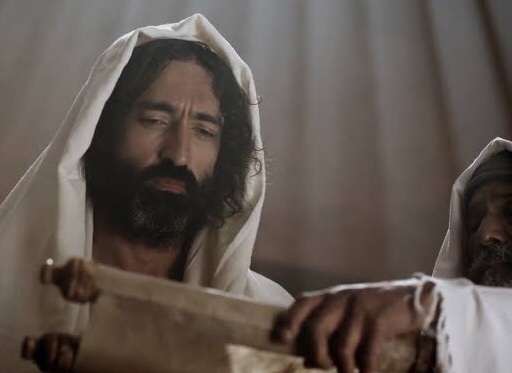
In this passage, Luke reports that Jesus attends synagogues in his home region, Galilee (Luke 4:14) and especially in his hometown of Nazareth (4:16). As a faithful Jew, in the synagogue on the sabbath day, Jesus would expect to hear scripture read and interpreted. In fact, this is the task which he himself undertakes on this sabbath day in Nazareth.
Luke expands the Markan account of the incident (Mark 6:1–6) by noting that Jesus unrolled the scroll and read a passage from the prophets; he then provides a direct quote from the passage, which we recognise as being found in Isaiah 61:1–2a, with the additional insertion of a line from Isaiah 58:6b, “to let the oppressed go free”.
Luke also adds the firm declaration of Jesus, “today this scripture has been fulfilled in your hearing” (Luke 4:21). In these brief put potent additions, Luke signals another of the themes which will recur throughout his story of Jesus: the inter-relation of scripture and experience.
An explicit citation of scripture, with an associated comment that it could be understood to explain events that were taking place, is moved to the very start of Luke’s description of the activities of the adult John the baptiser (3:4–6, quoting Isa 40:3–5).
The same pattern of interpreting an event by reference to scripture is followed by Jesus when he comments on the people’s misunderstanding of parables at 8:9–10; then when he criticises the practices being carried out in the temple courtyard at 19:45–46. Luke inserts a similar comment into his account of the passion of Jesus, at 22:37.
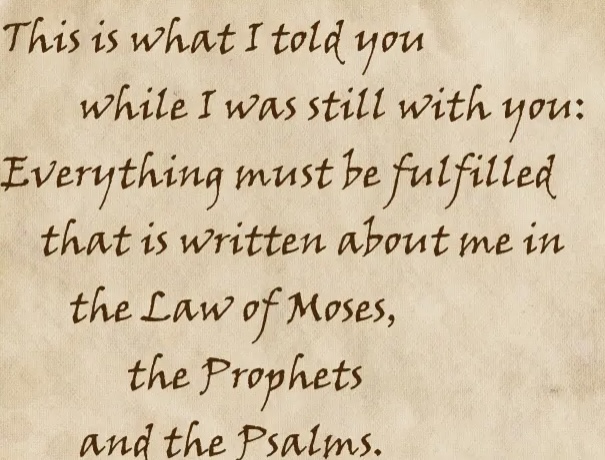
In his final appearance in Luke’s Gospel, the risen Jesus articulates the principle which undergirds these instances: “everything written about me in the law of Moses, the prophets, and the psalms, must be fulfilled” (24:44). That is to say, inherent in scripture is the potential for shedding light on the meaning of any event associated with Jesus.
These passages are the tip of the iceberg, where the link is explicitly noted; at many other points in Luke’s story of Jesus, there are scriptural allusions or suggestions that scriptural passages lie just below the surface of the narrative.
This particular hermeneutic is not unique to Luke; it is also to be found in other early Christian texts: in the good news told by Mark, in the book of signs attributed to the beloved disciple (John), and in certain of the letters of the apostle Paul. It saturates the sermon which we know as the epistle to the Hebrews, and recurs with a particular intensity throughout the book of origins, attributed to Matthew. It is also to be found, in a variant but related form, in the so-called pesher scrolls amongst the library discovered in the caves near Qumran. Such a hermeneutic was widespread throughout the Jewish world in the late hellenistic period.
In Luke’s second volume, the Acts of the Apostles, the same dynamic inter- relation between experience and scripture is to be found. This is most conspicuous at the start of Peter’s speech on the day of Pentecost, when he interprets the portentous events of the day by relating them to Joel 2:28–32, “God declares, I will pour out my spirit upon all flesh” (Acts 2:14–21).
It is also highlighted quite firmly at the conclusion of Paul’s defence speech in Caesarea. Paul declares to King Agrippa, Queen Bernice, and Governor Festus that the prophets and Moses have all pointed to the suffering of the Messiah as well as to the proclamation of light to the people and the Gentiles (26:23). This same perspective recurs on the lips of others who preach in the Acts of the Apostles: Peter (2:25–35), Stephen (7:2–50), Philip (8:32–35), James (15:16–18) and Paul (13:27–37; 28:23–27).
The perspective which the Lukan Jesus exemplifies in the hometown incident at Luke 4 is thus replicated throughout both volumes of Luke’s work. In this perspective, scripture and experience are brought into an intimate relationship—the one interprets the other. The experiences of faith are informed by scriptural passages which resonate with those experiences; and the passages which are read in scripture resound with the experiences of people of faith.
























 An Informed Faith