“You have established equity; you have executed justice and righteousness in Jacob” (Ps 99:4). So the psalmist sings, in the psalm offered by the lectionary for this coming Sunday, The Feast of the Transfiguration. Perhaps it has been selected for this festival because it depicts the Lord sitting “enthroned upon the cherubim” as the earth quakes (v.1), that he spoke to Israel “in the pillar of cloud” (v.7)—images that resonate with the stories of Moses and Jesusnthatnwe have heard this week.
Noting that leaders of the past have called out to God and been answered—Moses, Aaron, and Samuel (99:6)—the psalmist praises God, “you answered them; you were a forgiving God to them, but an avenger of their wrongdoings” (99:8).
In this psalm it is the king, the “Mighty King, lover of justice [who has] established equity” (99:4), whose “royal scepter is a scepter of equity” (Ps 45:6), modelled on the Lord God himself, who “judges the world with righteousness [and] judges the peoples with equity” (Ps 9:8; see also 67:4; 75:2; 96:10; 98:9). Accordingly, King David is remembered as the one who “administered justice and equity to all his people” (2 Sam 8:15; 1 Chron 18:14), and the opening words of the book of wisdom attributed to King Solomon are “love righteousness, you rulers of the earth, think of the Lord in goodness and seek him with sincerity of heart” (Wisd Sol 1:1).
Divine justice is regularly noted in tandem with God’s mercy forgiveness. “Great is your mercy, O Lord; give me life according to your justice” (Ps 119:156); and “in your steadfast love hear my voice; O Lord, in your justice preserve my life” (Ps 119:149). The prophet Isaiah tells the rebellious people of his day, “the Lord waits to be gracious to you; therefore he will rise up to show mercy to you—for the Lord is a God of justice; blessed are all those who wait for him” (Isa 30:18).
Likewise, through the prophet Hosea, the Lord God promises to Israel, “I will take you for my wife in righteousness and in justice, in steadfast love, and in mercy” (Hos 2:19), whilst centuries later, Ezekiel reminds the exiles of God’s pledge: “I say to the righteous that they shall surely live, yet if they trust in their righteousness and commit iniquity, none of their righteous deeds shall be remembered; but in the iniquity that they have committed they shall die” (Ezek 33:13). Justice and mercy belong hand-in-hand, as yet another prophetic voice declares as the exiles are returning to the land: “in my wrath I struck you down, but in my favour I have had mercy on you” (Isa 60:10).
God’s mercy sat at the heart of the covenant made with Israel; the Lord affirms to Moses, “I will be gracious to whom I will be gracious, and will show mercy on whom I will show mercy” (Exod 33:19). So in the longest psalm, declaring persistent praise of the Law, the psalmist offers the petition, “let your mercy come to me, that I may live, for your law is my delight” (Ps 119:77). A number of other psalms likewise contain petitions God to show mercy (Ps 25:6; 40:11; 51:1; 69:16; 123:3).
Jesus, centuries later, brings together mercy and justice when he accuses the scribes and the Pharisees of hypocrisy, as they “neglect the weightier matters of the law: justice and mercy and faith” (Matt 23:23).
Justice, of course, is at the heart of the covenant that God made with Israel. Moses is said to have instructed, “justice, and only justice, you shall pursue” (Deut 16:20), the king is charged with exhibiting justice (Ps 72:1–2; Isa 32:1), whilst many prophets advocate for justice (Isa 1:17; 5:7; 30:18; 42:1–4; 51:4; 56:1; Jer 9:24; 22:3; 23:5; 33:15; Ezek 18:5–9; 34:16; Dan 4:37; Hos 12:6; Amos 5:15, 24; Mic 3:1–8; 6:8).
That God is righteous is likewise declared in scripture (Deut 32:4; Ps 145:7; Job 34:17). The psalmists regularly thank God for God’s righteousness (Ps 5:8; 7:17; 9:8; 33:5; 35:24, 28; 36:6; 50:6; etc) and note the importance of humans living in that same way of righteousness (Ps 18:20, 24; 85:10–13; 106:3, 31; 112:1–3, 9).
The book of Proverbs advises that the wisdom it offers is “for gaining instruction in wise dealing, righteousness, justice, and equity” (Prov 1:3) and the prophets consistently advocated for Israel to live in accordance with righteousness (Hos 10:12; Amos 5:24; Isa 1:22; 5:7; 28:17; 32:16–17; 54:14; Jer 22:3; Ezek 18:19–29; Dan 9:24; 12:3; Zeph 2:3; Mal 4:1–3; Hab 2:1–4).
This psalm thus focusses some important elements in the Israelite understanding of God, summarising notes from many places elsewhere in Hebrew Scriptures. These recurring notes of the nature of God then form the basis for a Christian understanding of Jesus, who affirms mercy (Matt 23:23), teaches righteousness (Matt 5:6, 10, 20; 6:33), offers forgiveness (Mark 2:10; Luke 23:34; 1 John 1:9), and exudes grace (John 1:14–18). The affirmation made in this ancient Jewish psalm is one that we Christians can joyfully sing and affirm this Transfiguration!
*****
The situation in the Middle East continues to be volatile. My reflections in the early stages of the present inflammation of that conflict is at
As the coming Sunday is the Festival of the Transfiguration, the passages offered by the lectionary cluster around the theme of the revelation of God’s glory. That is what happened for the three disciples on the mountain, when Jesus was transfigured (Luke 9:28–36). That was also the experience for Israel, in a story that is much older. When Moses came down from the mountain, Aaron and all the Israelites saw that “the skin of his face shone because he had been talking with God” (Exod 34:29–35).
I’ve reflected on the Gospel in another blog. To better understand the significance of this statement in Exodus, we need to see this Hebrew Scripture passage in its larger narrative context. See
This incident comes after a very significant moment in the story of Israel, when the people had sinned by making a golden calf to worship (32:1–6). This story most likely relates to the god who was regarded as the head of the gods amongst the Canaanites—El, who was often depicted as a bull. The bull was the strongest animal in the ancient farmyard, and thus a fitting symbol for a powerful god. The Israelites chose to imitate that god through their golden construction. The story told in Exodus 32 mocks the Canaanite god, depicting him as more like a calf.
By adopting a Canaanite symbol, the Israelites had turned from God (32:21). It seems they would deserve their fate—although Moses interceded and saved them from divine wrath (32:23). Moses is the hero who stands in the breach, to convince God to change God’s mind. He had negotiated with God for forgiveness (32:11–14, 30–34), and had also sought clarification from God as to what “God’s ways” entailed (33:16–17).
In response, God promises that “my presence will go with you, and I will give you rest” (33:14), but Moses presses his case: “show me your glory, I pray” (33:18). Not just the divine presence, but the glory of God is what Moses seeks. God does not respond exactly as Moses hoped for, saying that “I will make all my goodness pass before you, and will proclaim before you the name, ‘The Lord’; and I will be gracious to whom I will be gracious, and will show mercy on whom I will show mercy” (33:19).
These words that the Lord offers to Moses are subsequently echoed in the prayer that Moses offers Aaron and his sons: “the Lord bless you and keep you … and be gracious to you” (Num 6:22–27)—a ancient prayer which lives on in Christian spirituality and liturgy!
However, the Lord God stops short of full self-revelation, declaring, “you cannot see my face; for no one shall see me and live” (Exod 33:20). Moses is granted a view of God’s “back”, but is not able to see the face of God (33:23). Now, the Hebrew word here translated as “back” refers to the “hindquarters”—a polite way of saying that Moses saw only God’s exposed buttocks, rather than his smiling face. Almost every translation chooses the polite wording, “my back”. The King James Version comes closest to an honest translation with “my back parts”. We might best translate this verse as “you will see my backside, but not my face”.
Yet the request for God’s face to shine upon people is made in a number of psalms. “There are many”, says the psalmist, “who say, ‘O that we might see some good! Let the light of your face shine on us, O Lord!’” (Ps 4:6). In Psalm 31, the psalmist sings, “Let your face shine upon your servant; save me in your steadfast love” (Ps 31:16). Again in Psalm 67, the psalmist echoes more explicitly the Aaronic Blessing, praying, “May God be gracious to us and bless us and make his face to shine upon us—Selah—that your way may be known upon earth, your saving power among all nations” (Ps 67:1–3).
So although Moses asks God to “show me your glory” (33:18), he is permitted to see back(side) of God, but not the full glory of God (33:21–23). This encounter is enough to make “the skin of [Moses’s] face shine because he had been talking with God” (34:30, 35). Of course, this story, located within the mythic sagas of ancient Israel, is not presented as an historical account. Rather, as myth (a story with a deep meaning) it is rich with symbolism—encountering the divine is a deeply transformative experience.
The Lord God had assured Moses that “you have found favour in my sight, and I know you by name” (33:17). And so, after the breach of the covenant that took place in the creation of the idolatrous image of the Canaanite Bull, Moses and the Lord God renew the covenant with Israel (34:1–28). This reinforces that God’s favour remains with the nation. As the people remain faithful to the various requirements that are stipulated (34:11–26), including pilgrimage by all adult males three times a year to the temple (34:23), so the Lord God promises “I will cast out nations before you, and enlarge your borders; no one shall covet your land when you go up to appear before the Lord your God three times in the year” (34:24). That is how God’s favour is shown.
Throughout the worship of the Lord God in the temple, psalmists have prayed for God’s favour to be shown to the faithful people of Israel (Ps 90:17; 106:4; 119:58). As well as in this covenant renewal ceremony (Exod 34:9), the ancestral sagas of Israel record that God showed favour to Noah (Gen 6:8), Joseph (Gen 39:4), Moses (Exod 33:12–17), the people in the wilderness (Lev 26:9), Samuel (1 Sam 2:26), Manasseh (2 Chron 33:12–13), and the remnant who returned to the land (Ezra 9:8). God’s gracious favour endures through the generations.
The favour of the Lord is manifested most often in “the glory of the Lord” which shines over Israel. Moses had experienced this on the top of Mount Sinai, when “the appearance of the glory of the Lord was like a devouring fire on the top of the mountain in the sight of the people of Israel” (Exod 24:16–18). That glory had already been seen by the Israelites in the wilderness of Sin (Exod 16:10), and that glory filled the tabernacle when the people had finished constructing it (Exod 40:34–35).
The closing verse of the book of Exodus notes that “the cloud of the Lord was on the tabernacle by day, and fire was in the cloud by night, before the eyes of all the house of Israel at each stage of their journey” (Exod 40:38). A number of other references to this are made throughout the books of the Torah (Lev 9:6, 23; Num 14:10; 16:19, 42; 20:6; Deut 5:24). This appears to have continued on until the ark of God was captured by the Philistines, for at that moment “the glory has departed from Israel” (1 Sam 4:21–22).
Centuries later, at the time that Solomon prayed his lengthy prayer of dedication of the newly-built Temple in Jerusalem, “when the priests came out of the holy place, a cloud filled the house of the Lord, so that the priests could not stand to minister because of the cloud; for the glory of the Lord filled the house of the Lord” (1 Kings 8:10–11; 2 Chron 7:1–3).
The glory of the Lord was then closely associated with the Temple in ensuing centuries, as various psalms attest (Ps 24:3–10; 96:7–8). “O Lord, I love the house in which you dwell, and the place where your glory abides”, one psalmist sings (Ps 26:8); yet other psalms extend the location of God’s glory, exulting that it extends “over all the earth” (Ps 57:5, 11; 72:19; 102:15; 108:5) and even “above the heavens” (Ps 8:1; 19:1; 57:5, 11; 97:6; 108:5; 113:4; 148:13).
By the time of the prophet Isaiah, this wider scope of the glory of the Lord was sung by the seraphim in their song, “Holy, holy, holy is the Lord of hosts; the whole earth is full of his glory” (Isa 6:3), whilst a little later another voice sang that “the earth will be filled with the knowledge of the glory of the Lord, as the waters cover the sea” (Hab 2:14). During the Exile, another prophet, looking to the return of the people to the land of Israel, declared that “the glory of the Lord shall be revealed, and all people shall see it together” (Isa 40:5).
Another exilic prophet had a series of visions in which “the glory of the Lord” was seen (Ezek 1—39), culminating in a declaration by God that “I will display my glory among the nations; and all the nations shall see my judgment that I have executed, and my hand that I have laid on them” (Ezek 39:21), followed by a vision in which “the Lord entered the temple by the gate facing east”, and at that time “the spirit lifted me up, and brought me into the inner court; and the glory of the Lord filled the temple” (Ezek 44:4–5).
Later still, a prophetic voice during the time of return to the land declared to the people that “the Lord will arise upon you, and his glory will appear over you; nations shall come to your light, and kings to the brightness of your dawn” (Isa 60:2–3). And well after that, another prophet attributes to “one like a human being, coming with the clouds of heaven”, the gift of “dominion and glory and kingship, that all peoples, nations, and languages should serve him” (Dan 9:13–14). So God’s presence had continued with the people through his glory over the years, and it was still expected to be seen in their hoped-for future.
Another way that this vision of God’s presence was sought was through yearning for the ability to “see God face to face”. That’s what Moses experienced at Sinai (Deut 5:1–4), and what he experienced when he went out of the camp, to where the tent was pitched, for “whenever Moses entered the tent, the pillar of cloud would descend and stand at the entrance of the tent, and the Lord would speak with Moses … thus the Lord used to speak to Moses face to face, as one speaks to a friend” (Exod 33:7–11).
That’s what Jacob had experienced at the ford of the Jabbok (Gen 32:30). That’s what Moses continued to experience through the wilderness years (Num 12:7–8), as Moses reports: “you, O Lord, are seen face to face, your cloud stands over them and you go in front of them, in a pillar of cloud by day and in a pillar of fire by night” (Num 14:14). Moses is remembered as unique amongst the prophets because he was one “whom the Lord knew face to face” (Deut 34:10; see also Sir 44:5).
Gideon was also privileged to see the angel of the Lord face to face (Judg 6:22), while Ezekiel tells Israel that God declares to them, “I will bring you out from the peoples … and I will bring you into the wilderness of the peoples, and there I will enter into judgment with you face to face” (Ezek 20:34–35).
And most strikingly and strategically of all, it was on the top of Mount Sinai that Moses had the most direct encounter with God of any in the ancestral sagas: “Moses came down from Mount Sinai; as he came down from the mountain with the two tablets of the covenant in his hand, Moses did not know that the skin of his face shone because he had been talking with God” (Exod 34:29). It was said that “the Lord used to speak to Moses face to face, as one speaks to a friend” (Exod 33:11).
Paul draws on the scriptural idea of the divine glory when he writes to the Romans that “we boast in our hope of sharing the glory of God” (Rom 5:2), and that it is through the work of the Spirit which gives hope to the whole creation that it will “obtain the freedom of the glory of the children of God” (Rom 8:21). He tells the Thessalonians that “God … calls you into his own kingdom and glory” (1 Thess 2:12) and speaks of the life of believers as being “sown in dishonour … raised in glory” (1 Cor 15:43).
So Paul advises the Corinthians, “whether you eat or drink, or whatever you do, do everything for the glory of God” (1 Cor 10:31), and later on—in the passage that forms the Epistle reading this Sunday—he tells them that “all of us, with unveiled faces, seeing the glory of the Lord as though reflected in a mirror, are being transformed into the same image from one degree of glory to another; for this comes from the Lord, the Spirit” (2 Cor 3:18). So this glory is a means of transformation for believers.
So Paul celebrates that God “has shone in our hearts to give the light of the knowledge of the glory of God in the face of Jesus Christ” (2 Cor 4:6), rejoicing that Jesus “will transform the body of our humiliation that it may be conformed to the body of his glory, by the power that also enables him to make all things subject to himself” (Phil 3:21).
Later writers pick up on this motif of believers sharing in the glory of God. Writing in the name of Paul, one affirms that “God chose to make known how great among the Gentiles are the riches of the glory of this mystery, which is Christ in you, the hope of glory” (Col 1:27), while another declares that that God “called you through our proclamation of the good news, so that you may obtain the glory of our Lord Jesus Christ” (2 Thess 2:14). Another writer speaks of God “bringing many children to glory” through Jesus (Heb 2:10), yet another celebrates that God will “make you stand without blemish in the presence of his glory with rejoicing” (Jude 24).
This, of course, leads into the notion in later Christian theology that heaven can be described as the place of glory—the place where James and John wish to be seated alongside Jesus (Mark 10:37), the place where believers are raised (1 Cor 15:43), the place where faithful elders will “win the crown of glory that never fades away” (1 Pet 5:4), the place where the place where Jesus himself is ultimately “taken up in glory” (1 Tim 3:16).
And that glory was most clearly seen, one writer maintains, in Jesus, when “the Word became flesh and lived among us, and we have seen his glory” (John 1:14). For the author of John’s Gospel, the full manifestation of heaven (glory) was made on earth, in Jesus, who was God’s only son, “who is close to the Father’s heart, who has made him known” (John 1:18).
So it is that this Sunday, we celebrate the festival in which that glory is most clearly seen in Jesus. Luke reports that “while he was praying, the appearance of his face changed, and his clothes became dazzling white” (Luke 9:29). As Moses and Elijah appeared, talking to him, Luke continues that “they appeared in glory and were speaking of his departure, which he was about to accomplish at Jerusalem” (9:31), and then that Peter and those with him “saw his glory and the two men who stood with him” (9:32). In Jesus, the offering of divine favour and the manifestation of divine glory, seen already many times in the long story of Israel, is now brought to a higher level of more satisfying fulfilment. And so, we celebrate.
The story that is told in the Gospel for this coming Sunday (included in the longer reading of Mark 8:27—9:8) is a story about being changed; about being transformed. It’s a story that shows that being transformed means you are able to stand and challenge others to be transformed.
It’s the story of when Jesus took his three closest friends to a mountain, and they had a shared experience of seeing Jesus standing between two of the greats of their people: Moses, to whom God had given the Law to govern the people of Israel, and Elijah, through whom God had established a long line of prophets in Israel (Mark 9:2–8). It’s a story that in Christian tradition is called The Transfiguration.
The word Transfiguration is a strange word. It is not often found in common English usage. It’s one of those peculiar church words, that seems to be used only in church circles. Like thee and thy, holy and righteous, sanctification and atonement … and trinity. These words don’t usually pop up in regular usage!
I looked for some helpful synonyms for the word transfiguration, and found these: change, alter, modify, vary, redo, reshape, remodel, transform, convert, renew … and transmogrify. I am not sure whether that last one gets us anywhere nearer to a better understanding, but some of the others are helpful. Transfiguration is about change, adaptation, and taking on a new shape or size or appearance.
One of the other words offered as a synonym was metamorphose; and that caught my eye, because that word comes directly from the Greek word, metamorphidzo, which is used by Mark in his Gospel, when he tells his account of this incident. “After six days, Jesus took Peter, James and John with him and led them up a high mountain, where they were all alone; and he was metamorphosed before them” (Mark 9:2). Mark then explains that this metamorphosis was evident in that “his clothes became dazzling white”.
The story of the Transfiguration tells of the moment that Peter, James, and John perceived Jesus in a new way. No longer did they see him as the man from Nazareth. In this moment, they see him as filled to overflowing with divine glory. He was not simply the son of Joseph; he was now the divinely-chosen, God-anointed, Beloved Son (9:7).
Jesus brings the heavenly realm right to the earthly disciples. It is what is known, in Celtic Christianity, as a “thin place”: the place where heaven breaks into earthly life.
The disciples had the possibility, in a moment of time, to feel intensely close to the heavenly realm, to stand in the presence of God. They symbolise the desire of human beings, to reach out into the beyond, to grasp hold of what is transcendent—to get to heaven, as that is where God is (see Gen 28:10-12 and Deut 30:12; Pss 11:4, 14:2, 33:13, 53:2, 80:14, 102:19; although compare the sense of God being everywhere in Ps 139:8-12).
This key mountaintop moment contains the words from the heavens about Jesus, “This is my Son, the Beloved; listen to him!” (9:7). These words link back to the initial baptism of Jesus, when the same words were heard (1:11) and forward to the final scene of crucifixion, when a centurion and those with him at the foot of the cross witnesses Jesus’ death, and declares, “Truly this man was God’s Son!” (15:39).
All three scenes contain the foundational statement, recognising Jesus as Son of God, reiterating the words of the unclean spirits in Galilee (3:11) and the man possessed by demons in the country of the Gerasenes (5:7). For, as Simon Peter declares in the pivotal scene at Caesarea Philippi that is also included in this Sunday’s reading, Jesus is “the Messiah” (8:29).
The voice, booming forth from the clouds, “This is my Son, the Beloved; with him I am well pleased; listen to him!” (9:7) seems, at first hearing, to be quoting Hebrew scripture: perhaps the second Psalm, which praises the King of ancient Israel as the one whom God has begotten; or perhaps the song in Isaiah 42, which extols the servant as the one whom God has chosen, or anointed; or perhaps even the oracle in Deuteronomy 18, which instructs the people to listen carefully to the words of the prophet.
Whatever scripture, or scriptures, are here spoken by the divine voice, making this bold declaration from the cloud, it is clear that God has a special task, a special role, and a special place for Jesus. The words of this heavenly voice link this story back to the opening scenes of the story of the adult period in the life of Jesus, and also to a moment towards the end of that adult life.
As this voice is heard, Jesus is on a mountain, with three of his closest followers—and also with two key figures from the past of Israel: Moses, who led the people out of slavery, who then was the instrument for delivering the Torah to Israel; and Elijah, who stood firm in the face of great opposition, whose deep faith bequeathed him the mantle of prophet, as he ascended into heaven.
Mark says that “there appeared to them Elijah with Moses, who were talking with Jesus” (9:4). Matthew reverses the order, placing Moses before Elijah: “suddenly there appeared to them Moses and Elijah, talking with him” (Matt 17:3). Priority, in Matthew’s narrative, goes to Moses. Indeed, Matthew’s concern has been to make as many parallels as possible between the story of Jesus and the story of Moses. The regular reminder that “this took place to fulfil what the Lord has said through the prophets” (Matt 1:22; 2:4, 15, 17, 23) underlines this Mosaic typology.
The covenant given to Moses on Mount Sinai (Exod 19:1–6) is accompanied by the giving of the law (Exod 20:1–23:33), and is later sealed in a ceremony by “the blood of the covenant” (Exod 24:1–8). The scene on the mountaintop, with Jesus and his three disciples, evokes the mystery of the mountaintop scene in Exodus. This story is but one part of the story of Jesus which draws connections with the story of Moses.
*****
The Gospel writers say that Jesus was transformed at that moment. But in this story, also, there is the indication that the friends of Jesus were transformed. That moment on the mountain was a challenge to each of them; the response that Peter wanted to make was seen to be inadequate. Jesus challenged him to respond differently. It was another moment when metanoia, complete transformation, took place. And these disciples did change; yes, it took some time, but these friends of Jesus ultimately became leaders amongst the followers of Jesus, and spearheaded the movement that became the church.
The change, the metanoia, that occurred within Peter, James, and John, spread widely. They faced the challenge head on, and responses, in metanoia. That is mirrored, today, in changes that are taking place in society. Especially, that has been the experience of people over the last few years. We have met the challenge of a global viral pandemic; patterns of behaviour have been modified, as we prioritise safety and care for the vulnerable, and wear masks, sanitise, and socially distance. We have changed as a society.
In the church generally, through the pandemic that hit with such force in 2020, we have changed how we gather, how we worship, how we meet for Bible studies and fellowship groups, how we meet as councils and committees, how we attract people to our gatherings. Transformation has been widespread.
In my own church of these past few years, we worked hard to meet the challenge of reworking our understanding of mission; for across the church, we now see the importance of people from each Congregation engaging with the mission of God in their community as the priority in the life of the church. See
So in each place where people gather as church, there is a pressing need to consider how we might grow fresh expressions of faith, nurture new communities of interest, foster faith amongst people “outside of the building” and outside the inner circle of committed people. It is an ongoing process.
Change is taking place. Change is all around us. Change is the one thing that is constant about life: we are always changing. Sometimes we think that the church doesn’t change, isn’t changing, even resists changing. But that is not the case. Our church is changing. Our society is changing. And the story of the Transfiguration of Jesus encourages us throughout this change.
A sermon by the Rev. Elizabeth Raine, given in worship at Tuggeranong Uniting Church on Sunday 19 February 2023.
*****
It’s Transfiguration Sunday again! We hear this story every year on the last Sunday of Epiphany, before we head into Lent—this year, from the version that we have in Matthew’s Gospel (Matt 17:1–9).
The Transfiguration is about a vision. It tells a story where the power of the divine broke into the ordinary world to give hope and inspiration. It is a complex story, with lots of things going on. The true nature of Jesus’ identity, his relationship to the Jewish tradition, God, his relationship with his disciples, and what is going to happen when they come down off the mountain are all in this story. Then there is the question of what this means for us at the church today. So there is lots to think about.
To give the context, just prior to this, Jesus had revealed to the disciples that he is to suffer, be rejected, killed and resurrected. The disciples do not understand, and arehorrified. Jesus reminds them of the cost of discipleship: if any want to follow Jesus, let them renounce their self-centeredness. Those who play it safe will perish; those who give their lives for him and the gospel will be saved. These would have been hard words to hear, let alone live out.
But just six days later, something changes. Jesus takes Peter, James and John up a mountain. There he is “transfigured”, that is, his clothes become dazzlingly white in Luke, and he is “metamorphosed” in Mark and Matthew, where his face shines just as Moses’ did when he had been “talking with God” (Exodus 34:29), a sure sign of God’s presence.
Let us pause and consider the phrase “he was transfigured before them”.The word “transfigured,” is very important. It comes from a familiar Greek word that is known to us today: “metamorphosis.” It means to completely change or transform such as a cocoon transforms into a butterfly or a tulip bulb transforms into a flower.Jesus was transformed into something closer to God, and along with the appearance of Elijah and Moses, the disciples experienced a glimpse of the divine. A cloud, traditionally symbolic of God’s presence, appears and a proclamation is spoken by the divine voice, echoing the words of Jesus baptism, “This is my son, the chosen one, listen to him”. It is an epiphany moment. But the vision ends suddenly, and what then?
There has been a lot of debate about what really happened and what the disciples saw. To quote C.S. Lewis, “What you see . . . depends a good deal on where you are standing: It also depends on what sort of person you are.” (C. S. Lewis, The Magician’s Nephew, in The Chronicles of Narnia [New York: HarperCollins, 2001], 75). As we might anticipate, what the disciples see is a vision that put Jesus at the heart of Jewish tradition alongside the great prophets, Moses and Elijah, and establishes his authority as the messianic one. It transcends the ordinary space-time dimensions of Matthew’s narrative, creating a “thin place” where the veil is momentarily lifted and the divine enters the earthly realm.
The Rev. Dr. Leah Schade in her article on the Patheos website describes it very well: “There in that thin place, divinity touches humanity. Transcendence touches immanence. Love touches fear.” (Rev. Dr. Leah D. Schade is the Associate Professor of Preaching and Worship at Lexington Theological Seminary in Lexington, Kentucky)
I like to think that the disciples were touched by this vision, a vision that gave them to courage to abandon their former dreams of a Messiah who would reestablish Israelite rule over the land and instead keep going along the road to Jerusalem and death out of love for their master. It would keep them going in the days of the early church, continuing to nourish their firm belief in Jesus as messiah.
As well as an uplifting experience, Peter’s words show it was a disorienting experience and a frightening one. Matthew writes that upon hearing God’s voice theyfall on their faces in terror. Jesus has to touch them and tell them to rise and says the time-honoured statement of most heavenly beings when they encounter humans – “Do not be afraid.” Jesus’ presence reassures them and they get up and descend back to their mission and ministry.
What is the relevance for this is story from two thousand years ago? What can we draw out from its message of divine transformation?
Firstly, it reminds us that we all have those moments when something was transformed for us. Our wedding day, the birth of a child, the recovery of a loved one from illness, beautiful places in nature and the spaces inside soaring cathedrals can all be thin places where we become aware of the presence of God and find a glimpse of eternity. We find the memory of these things uplifting and inspiring and draw upon them to remind ourselves of hope and joy when things seem mundane or don’t go so well in our lives. Such things remind us we are loved by God who presence is available to us in our fear and gives us courage.
Secondly, this story reminds us that Jesus is with us, not just in a thin place or transformational moment, but also in our everyday moments, that divinity is always within the reach of humanity. The story affirms that in our normal lives, Jesus’ reassuring presence is still there, walking down or up the mountain with us, telling us not be afraid and to take heart and go on with our tasks and our work.
And the story reminds us of our long tradition of holy people, people whose stories inspire us and who we can draw upon for inspiration and courage. Jesus is not alone in his work in this story. He is with Elijah and Moses, the great prophets of Israel, and his transformation implies he is one with them at that moment. His words to his disciples imply that he is at one with them as well, as they share in the moment where God’s approval is bestowed on Jesus and addressed to them all. Jesus is notalone in the universe, nor are we. He doesn’t just offer himself, but the deep hope and light of those who preceded him and those who will come after him. He is the human manifestation of the divine, where transcendence touches immanence.
Such is the power of God’s transformative processes that the cross, once an instrument of death, became the source of hope for all Christians. Through the cross, pain and sorrow were transformed into a luminous vision of hope and confidence in the future. Not only that, Christians believe Jesus’ resurrected presence lives on through the spirit and his words and the stories about him, undergirding our ordinary world with the resurrection hope of renewal.
At some point or another in our lives, all of us, like the disciples, will fall flat on our faces after the highs of life, too afraid to do anything or not knowing how to move forward. This story encourages us not to keep staring at the ground, which can only lead to despair, but to take heart and pick ourselves up to continue what we are called to do.
This story encourages us to know the presence of Jesus and take in our hands the power of this luminous vision of hope and renewal to not only inspire ourselves, but inspire those who currently see no bright future. Whether it is through feeding hungry people, providing a safe place to meet and socialize, or inspiring someone to keep on going, we can make the vision of God’s kingdom a real and infectious thing.
Reflective Prayer (from Spill the Beans)
May our imaginations inspire us, lift us from the mundane that we might rise above the clay and find ourselves within touching distance of what is eternal and sacred.
May our eyes unfold for us the shift on the horizon that reveals how thin a place this is, only a whisper away from the breath of God.
May our minds be unbound and dare see beyond the rules of religion that we might invite the One who is beyond all things to call us into your story.
May our prayers deepen us not with familiar and comforting words but with silences that call us beyond doctrine and dogma.
May our faith stretch us, calling us from moribund traditions towards the journey into God where we have not yet been and where the church dares us not to go.
And in such a place, may we wait, pause, linger, and wonder … and ponder what is yet to be revealed. Amen.
This coming Sunday—the Feast of the Transfiguration—offers an excerpt from the work which we know as 2 Peter, the second letter attributed to the leader of the first group of disciples (2 Pet 1:16–21). This section of the letter is chosen to provide a companion piece to the account of the Transfiguration of Jesus, which we hear this year in Matthew’s version (Matt 17:1–9), and the story found in Exodus, of Moses atop a mountain “for forty days and forty nights” in the presence of “the glory of the Lord” (Exod 24:12–18).
2 Peter presents as a letter; the first verses follow the pattern of the opening address of a letter: “Simeon Peter…to those who have received faith…grace and peace” (1:1–2), but nothing else reflects standard letter practice. There are no closing greetings, simply a reference (unique amongst New Testament books) to Paul and “all his letters” and a warning not to be swayed by erroneous interpretations of them (3:15b–17). The work ends abruptly with a truncated benediction (3:18b).
The true purpose of this short document is signalled by a series of revealing phrases in an opening statement. With his death in view, the author asserts, “I intend to keep on reminding you …to refresh your memory…so that you may be able to recall these things” (1:12–15). Rather than a letter, the work is more accurately characterised as a farewell testament, delivered by a teacher to his disciples with his imminent death in view, to ensure that his teaching is remembered after his death.
Such works can be found in Jewish literature (Gen 47–49; 2 Sam 23; 2 Esdras 14; 2 Baruch 57–86; Testament of Moses; Testament of the Twelve Patriarchs) as well as in the New Testament (John 14–16; Acts 20:17–38; and we have noted that there may be elements in 2 Timothy).
The content of the teaching preserved in this document, however, is distant both from the teachings of Jesus (which the historical Peter would have heard) and from the first letter attributed to Peter. Rather than a letter penned by the disciple Peter, this book is a later work, written in the name of Peter in order to gain authority, to encourage believers at the end of the first century to hold fast to their faith.
The context in which this work was written was one of intense debate about doctrinal differences. However, in prosecuting his case, the author uses an argumentative style, with slogans and slanders to the fore, in place of substantive debate. Those who hold opinions different from the author are dismissed as “false prophets and false teachers” (2:1) and later as “scoffers” (3:3). Such people, it is claimed, are “nearsighted and blind” (1:9), “blots and blemishes” (2:13), “waterless springs and mists driven by a storm” (2:17).
Their behaviour is licentious (2:2, 18), greedy (2:3, 14), depraved (2:10), enslaved to corruption (2:19), defiled (2:20), irrational (2:12), insatiable (2:14), revelling in dissipation (2:13) and adulterous (2:14). What they teach is characterised as “the error of the lawless” (3:17); they malign the truth (2:2) and entice others (2:14, 18) by using slander (2:10, 12) and “deceptive words” (2:3); what they say is dismissed as “bombastic nonsense” (2:18) and “cleverly-disguised myths” (1:16).
The author claims that they once knew “the way of righteousness”, but have fallen away (2:20–21), in fulfillment of two rather odious proverbs, “the dog turns back to its own vomit” and “the sow is washed only to wallow in the mud” (2:22; the first from Prov 26:11; the origin of the second is unknown).
The author, by contrast, presents “precious and very great promises” (1:4) through his own “prophetic message” (1:19), which is further supported by the claim that he speaks as an eyewitness (1:16). The event which he witnessed is the moment when the divine voice declared Jesus as “my Son, my Beloved”, and Jesus was transformed (1:17–18).
This reference to the event known as the Transfiguration (reported in all three Synoptic Gospels) is intended to provide apologetic validation for his argumentative approach to things. His message is apologetically portrayed as “the truth” (1:12) and “the way of truth” (2:2), phrases familiar from the post-Pauline letter to the Ephesians and the “pastoral” epistles written by a student of Paul.
The author speaks this “prophetic message” as one “moved by the Holy Spirit” (1:21); the authority he claims is akin to “the words spoken in the past by the holy prophets, and the commandment of the Lord and Saviour spoken through your apostles” (3:2). Such apologetic claims are intended to support the views of the author, although whether they will have had any effect on those he criticises is doubtful, as he says of them that they “despise authority” (2:10)!
These words also indicate that the author writes at some remove from the time of Jesus, since the phrase “in the past” clearly applies not only to the prophets but also to the commandment of Jesus spoken by the apostles (3:2). The consistently negative, adversarial tone of the work indicates that constructive elucidation of the way of Jesus has taken a back seat to castigating those who hold a different point of view from the author.
The scenario is of a time late in the first century, perhaps even early in the second century, when conflicts over teaching had intensified. The scene of Jesus on the mountain is told purely and simply to buttress the authority being claimed by the writer—part of the cut and thrust of argumentation at the time.
The season of Epiphany celebrates the manifestation of God in Jesus, the one chosen by God to show God’s love to the world. Running through many of the scripture passages offered by the lectionary for this season is the motif of light—for light illumines, light reveals. The passages remind us that God’s light shines brightly on our lives.
Also key to many of the passages is the gift of the Law, first given to Moses on Mount Sinai, and a millennium later explicated by Jesus on top of another mountain. The Law was the light shining the way for the people of Israel: “your word is a lamp to my feet and a light to my path” (Ps 119:105), “the unfolding of your words gives light; it imparts understanding to the simple” (Ps 119:130). The place where the Law was given was on the mountain: “The Lord said to Moses, ‘Come up to me on the mountain, and wait there; and I will give you the tablets of stone, with the law and the commandment, which I have written for their instruction’” (Exod 24:12).
The readings for this Sunday, Transfiguration, thus appropriately situates the stories told on the heights of mountains: Moses set out with his assistant Joshua, and Moses went up into the mountain of God” (Exod 24:13); Jesus “took with him Peter and James and his brother John and led them up a high mountain, by themselves” (Matt 17:1); the eyewitnesses “heard this voice come from heaven, while we were with him [Jesus] on the holy mountain” (2 Pet 1:18); and the psalmist records the words of the Lord, “I have set my king on Zion, my holy hill” (Ps 2:6).
It was on Horeb, “the mountain of God”, that Moses had the startling experience of encountering a bush, burning bright, and not consumed (Exod 3:1–6). The call that Moses received in that encounter atop a mountain would lead him to Sinai, a mountain in the wilderness where Moses would hear the call to all of Israel to be the Lord’s “treasured possession out of all the peoples … a priestly kingdom and a holy nation” (Exod 19:1–6).
That call to Moses would see him serve as the intermediary, receiving the Law from the mountain top and delivering it to the people camped below (Exod 19:10–14; Neh 9:13–14)—although another tradition appears to place the people in direct contact with the Lord, for Moses tells the people that it was at Horeb that “you approached and stood at the foot of the mountain while the mountain was blazing up to the very heavens, shrouded in dark clouds. Then the Lord spoke to you out of the fire. You heard the sound of words but saw no form; there was only a voice. He declared to you his covenant, which he charged you to observe, that is, the ten commandments; and he wrote them on two stone tablets.” (Deut 4:11–13).
It was also on the top of Mount Sinai that Moses had the most direct encounter with God of any in the ancestral sagas: “Moses came down from Mount Sinai; as he came down from the mountain with the two tablets of the covenant in his hand, Moses did not know that the skin of his face shone because he had been talking with God” (Exod 34:29). It was said that “the Lord used to speak to Moses face to face, as one speaks to a friend” (Exod 33:11).
It was on the top of a “mountain of the Abarim range” where Moses appointed Joshua as his successor (Num 27:12–23), and it was on the top of this mountain, identified as Mount Nebo, that Moses would end his life, according to the account preserved in the closing chapters of Deuteronomy (Deut 32:48—34:8).
Once Joshua had led the people into the land of Canaan, he oversaw a ceremony in which the covenant with the Lord God was renewed; that took place in the land between Mount Ebla, on which an altar had been erected, and Mount Gerizim (Josh 8:30–35). In the time of the judges, the battle in which the prophet Deborah led Barak and his troops to defeat the army of King Jabin of Canaan, led by Sisera, was waged on Mount Tabor (Judg 4:1–24), whilst the downfall of Abimelech at the hands of the lords of the Tower of ash Chen took place on Mount Zalmon (Judg 9:22–57).
It was on Mount Carmel that the prophet Elijah had his famous interaction with the prophets of Baal and of Asherah (1 Kings 18:19–46). In that scene, despite all the water poured on the altar, the prophet’s petition is effective, and “the fire of the Lord fell and consumed the burnt offering, the wood, the stones, and the dust, and even licked up the water that was in the trench” (1 Kings 18:38).
The psalmist extols Mount Zion, the mountain on which David had built his city, as God’s “holy mountain, beautiful in elevation, the joy of all the earth, Mount Zion, in the far north, the city of the great King” (Ps 48:2), and this site is praised in other psalms (Ps 68:16–20; 87:1–3); “those who trust in the Lord are like Mount Zion, which cannot be moved, but abides forever” (Ps 125:1). The people are urged, “extol the Lord our God, and worship at his holy mountain; for the Lord our God is holy” (Ps 99:9).
The prophet Isaiah foresees a day after the troubles of his time when “the Lord will create over the whole site of Mount Zion and over its places of assembly a cloud by day and smoke and the shining of a flaming fire by night; indeed over all the glory there will be a canopy” (Isa 4:5) and also that “gifts will be brought to the Lord of hosts from a people tall and smooth, from a people feared near and far, a nation mighty and conquering, whose land the rivers divide, to Mount Zion, the place of the name of the Lord of hosts” (Isa 18:7).
A central vision for this prophet is the picture “in days to come [when] the mountain of the Lord’s house shall be established as the highest of the mountains, and shall be raised above the hills; all the nations shall stream to it. Many peoples shall come and say, ‘Come, let us go up to the mountain of the Lord, to the house of the God of Jacob; that he may teach us his ways and that we may walk in his paths’” (Isa 2:2–3; see also Isa 66:19–20). The vision offers an assurance of universal peace, stemming from these visits to Zion (Isa 2:4; see also Mic 4:2–4 and Isa 65:25).
More than this, it is “on this mountain [Zion] the Lord of hosts will make for all peoples a feast of rich food, a feast of well-aged wines, of rich food filled with marrow, of well-aged wines strained clear; and he will destroy on this mountain the shroud that is cast over all peoples, the sheet that is spread over all nations; he will swallow up death forever” (Isa 25:6–7); “the the hand of the Lord will rest on this mountain” (Isa 25:10).
When Israel is attacked by foreign armies, it is Mount Zion that symbolises the claim that the Lord God will fight for his people: “as a lion or a young lion growls over its prey, and—when a band of shepherds is called out against it—is not terrified by their shouting or daunted at their noise, so the Lord of hosts will come down to fight upon Mount Zion and upon its hill. Like birds hovering overhead, so the Lord of hosts will protect Jerusalem; he will protect and deliver it, he will spare and rescue it” (Isa 31:4–5; see also Ps 78:54–55). It is from Mount Zion that “a band of survivors” will go forth, as the remnant who remained faithful in the face of these attacks (Isa 37:32).
Other prophets likewise foresee salvation and escape from tribulation on Mount Zion (Joel 2:32; Obad 1:17); “the lame I will make the remnant, and those who were cast off, a strong nation; and the Lord will reign over them in Mount Zion now and forevermore” (Mic 4:7). This mountain holds a special place in the hearts of kings and prophets.
However, in the apocalyptic fervour that Zechariah generates, he envisages that it will be the Mount of Olives, to the east across the Kidron Valley, that will be the place where “the Lord will go forth and fight against those nations as when he fights on a day of battle … you shall flee from the earthquake … [and] the Lord my God will come, and all the holy ones with him” ( Zech 14:3–5).
Was this the mountain where, in Ezekiel’s vision, “the glory of the Lord ascended from the middle of the city, and stopped on the mountain east of the city” (Ezek 11:23) ? Certainly, the prophet Ezekiel saw that the future of Israel, after their exile, was bound up with regeneration from the mountaintop down: “Thus says the Lord God: I myself will take a sprig from the lofty top of a cedar; I will set it out. I will break off a tender one from the topmost of its young twigs; I myself will plant it on a high and lofty mountain. On the mountain height of Israel I will plant it, in order that it may produce boughs and bear fruit, and become a noble cedar. Under it every kind of bird will live; in the shade of its branches will nest winged creatures of every kind.” (Ezek 17:22–23; also 20:40–41).
Ezekiel sees his idiosyncratic vision of a rebuilt Temple from “a very high mountain” (Ezek 40:1–4, and the ensuing five chapters), leading to his clear assertion of “the law of the temple: the whole territory on the top of the mountain all around shall be most holy. This is the law of the temple.” (Ezek 43:12).
So mountains are the places in the story where close encounters with the deity took place. As Jesus leads his closest followers up the mountain, there might well be high expectation that God would be encountered in a direct way, given all that Israelite and Jewish tradition had collected regarding stories. And it should be no surprise that those atop that mountain saw a vision, and heard a voice, and witnessed a transformation in Jesus, that could only signal that they had, indeed, encountered the divine.
The story that is told in the Gospel for this coming Sunday is a story about being changed; about being transformed. It’s a story that shows that being transformed means you are able to stand and challenge others to be transformed. It’s the story of when Jesus took his three closest friends to a mountain, and they had a shared experience of seeing Jesus standing between two of the greats of their people: Moses, to whom God had given the Law to govern the people of Israel, and Elijah, through whom God had established a long line of prophets in Israel. It’s a story that in Christian tradition is called The Transfiguration.
The word transfiguration is a strange word. It is not often found in common English usage. It’s one of those peculiar church words, that seems to be used only in church circles. Like thee and thy, holy and righteous, sanctification and atonement … and trinity. These words don’t usually pop up in regular usage!
I looked for some helpful synonyms for the word transfiguration, and found these: change, alter, modify, vary, redo, reshape, remodel, transform, convert, renew … and transmogrify. I am not sure whether that last one gets us anywhere nearer to a better understanding, but some of the others are helpful. Transfiguration is about change, adaptation, and taking on a new shape or size or appearance.
One of the other words offered as a synonym was metamorphose; and that caught my eye, because that word comes directly from the Greek word, metamorphidzo, which is used by Mark in his Gospel, when he tells his account of this incident. “After six days, Jesus took Peter, James and John with him and led them up a high mountain, where they were all alone; and he was metamorphosed before them” (Mark 9:2). Mark then explains that this metamorphosis was evident in that “his clothes became dazzling white”.
The story of the Transfiguration tells of the moment that Peter, James, and John perceived Jesus in a new way. No longer did they see him as the man from Nazareth. In this moment, they see him as filled to overflowing with divine glory. He was not simply the son of Joseph; he was now the divinely-chosen, God-anointed, Beloved Son (Matt 17:5).
Jesus brings the heavenly realm right to the earthly disciples. They had the possibility, in a moment of time, to feel intensely close to the heavenly realm, to stand in the presence of God. They symbolise the desire of human beings, to reach out into the beyond, to grasp hold of what is transcendent—to get to heaven, as that is where God is (see Gen 28:10-12 and Deut 30:12; Pss 11:4, 14:2, 33:13, 53:2, 80:14, 102:19; although compare the sense of God being everywhere in Ps 139:8-12).
*****
This key mountaintop moment contains the words from the heavens about Jesus, “This is my Son, the Beloved; listen to him!” (17:5). These words link back to the initial baptism of Jesus, when the same words were heard (3:17) and forward to the final scene of crucifixion, when a centurion and those with him at the foot of the cross witnesses Jesus’ death, and declares, “Truly this man was God’s Son!” (27:54).
All three scenes contain the foundational statement, recognising Jesus as Son of God, reiterating the words of all the disciples in the boat with Jesus (14:33), and of two men possessed by demons (8:29)—and even, in the early scene of desert testing, the words the tempter supreme himself (4:3, 6). For, as Simon Peter declares in a pivotal scene at Caesarea Philippi, Jesus is “the Messiah, the Son of the living God” (16:16).
The voice, booming forth from the clouds, “This is my Son, the Beloved; with him I am well pleased; listen to him!” (17:5) seems, at first hearing, to be quoting Hebrew scripture: perhaps the second Psalm, which praises the King of ancient Israel as the one whom God has begotten; or perhaps the song in Isaiah 42, which extols the servant as the one whom God has chosen, or anointed; or perhaps even the oracle in Deuteronomy 18, which instructs the people to listen carefully to the words of the prophet.
Whatever scripture, or scriptures, are here spoken by the divine voice, making this bold declaration from the cloud, it is clear that God has a special task, a special role, and a special place for Jesus. The words of this heavenly voice link this story back to the opening scenes of the story of the adult period in the life of Jesus, and also to a moment towards the end of that adult life.
As this voice is heard, Jesus is on a mountain, with three of his closest followers—and also with two key figures from the past of Israel: Moses, who led the people out of slavery, who then was the instrument for delivering the Torah to Israel; and Elijah, who stood firm in the face of great opposition, whose deep faith bequeathed him the mantle of prophet, as he ascended into heaven.
Mark says that “there appeared to them Elijah with Moses, who were talking with Jesus” (Mark 9:4). Matthew reverses the order, placing Moses before Elijah: “suddenly there appeared to them Moses and Elijah, talking with him” (Matt 17:3). Priority, in Matthew’s narrative, goes to Moses. Indeed, Matthew’s concern has been to make as many parallels as possible with the story of Moses, the one whose life was imperilled by a powerful ruler (Exod 2:15; cf. Matt 2:13–14), who escaped the murderous rampage that occurred (Exod 1:22; cf. Matt 2:16), who fled into a foreign land (Exod 2:15; cf. Matt 2:14), and who then returned to where he had been born (Exod 4:20; cf. Matt 2:21).
The regular reminder that “this took place to fulfil what the Lord has said through the prophets” (Matt 1:22; 2:4, 15, 17, 23) underlines this Mosaic typology. The five blocks of teaching in Matthew’s Gospel (chs. 5–7, 10, 13, 18, 23–25) recall the five Books of Moses in the Torah. So, too, does the account of the Transfiguration in Matt 17 prioritise Moses.
The covenant given to Moses on Mount Sinai (Exod 19:1–6), accompanied by the giving of the law (Exod 20:1–23:33), is sealed in a ceremony by “the blood of the covenant” (Exod 24:1–8). The scene on the mountaintop, with Jesus and his three disciples, evokes the mystery of the mountaintop scene in Exodus. This story is but one part of a whole complex of events, from conception through birth to flight, which are (in my view) deliberately and consciously shaped in the light of the story of Moses, to make the claim that Jesus was the New Moses. (The theme continues strongly throughout this particular Gospel.)
*****
The Gospel writers say that Jesus was transformed at that moment. But in this story, also, there is the indication that the friends of Jesus were transformed. That moment on the mountain was a challenge to each of them; the response that Peter wanted to make was seen to be inadequate. Jesus challenged him to respond differently. It was another moment when metanoia, complete transformation, took place. And these disciples did change; yes, it took some time, but these friends of Jesus ultimately became leaders amongst the followers of Jesus, and spearheaded the movement that became the church.
The change, the metanoia, that occurred within Peter, James, and John, spread widely. They faced the challenge head on, and responses, in metanoia. That is mirrored, today, in changes that are taking place in society. Especially, that has been the experience of people over the last few years. We have met the challenge of a global viral pandemic; patterns of behaviour have been modified, as we prioritise safety and care for the vulnerable, and wear masks, sanitise, and socially distance. We have changed as a society.
In the church generally, through the pandemic, we have changed how we gather, how we worship, how we meet for Bible studies and fellowship groups, how we meet as councils and committees, how we attract people to our gatherings. Transformation is underway.
In my own church, we are attending to the challenge of reworking our understanding of mission; we now see the importance of people from each Congregation engaging with the mission of God in their community as the priority in the life of the church. We have considered, and continue to consider, how we might grow fresh expressions of faith, nurture new communities of interest, foster faith amongst people “outside of the building” and outside the inner circle of committed people. It is an ongoing process.
Change is taking place. Change is all around us. Change is the one thing that is constant about life: we are always changing. Sometimes we think that the church doesn’t change, isn’t changing, even resists changing. But that is not the case. Our church is changing. Our society is changing. And the story of the Transfiguration of Jesus encourages us throughout this change.
The season of Epiphany celebrates the manifestation of God in Jesus, the one chosen by God to show God’s love to the world. Running through many of the scripture passages offered by the lectionary for this season in Year A is the motif of light—for light illumines, light reveals. The passages remind us that God’s light shines brightly on our lives. See
This coming Sunday is the last Sunday in the season of Epiphany, and the readings for this Sunday do no disappoint in this regard. A theme of light runs through the readings: the appearance of the glory of the Lord” on Mount Sinai (Exod 24:17), the transformation of the appearance of Jesus as “he was transfigured before them, and his face shone like the sun, and his clothes became dazzling white” (Matt 17:2), and a reminiscence of that event from one who styles himself as one of the “eyewitnesses of his majesty” (2 Pet 1:16).
Light first figures in the biblical narrative in the Priestly narrative of creation that was placed at the head of the Torah, when the first word from God’s mouth was, “‘Let there be light’”; and there was light” (Gen 1:3; see also Job 12:22). Light is the companion to the Israelites as the traversed the wilderness: “the Lord went in front of them in a pillar of cloud by day, to lead them along the way, and in a pillar of fire by night, to give them light” (Exod 13:21; see also Neh 9:12).
Light was to burn constantly in the Tabernacle: “command the people of Israel to bring you pure oil of beaten olives for the lamp, that a light may be kept burning regularly. Aaron shall set it up in the tent of meeting, outside the curtain of the covenant, to burn from evening to morning before the Lord regularly” (Lev 24:2–3). In Numbers, the command is for seven golden lamps to shine forth light (Num 8:1–4).
In David’s last words, he sings an inspired song about the king as one “who rules over people justly, ruling in the fear of God, [who] is like the light of morning, like the sun rising on a cloudless morning, gleaming from the rain on the grassy land” (2 Sam 23:3–4). In this regard, the king reflects the Lord God, for “he will make your vindication shine like the light, and the justice of your cause like the noonday” (Ps 37:5–6). Many centuries later, the prophet Daniel would declare that God “reveals deep and hidden things; he knows what is in the darkness, and light dwells with him” (Dan 5:22).
In like fashion, the psalmist sings, “the Lord is my light and my salvation; whom shall I fear?” (Ps 27:1), rejoices that God is “clothed with honour and majesty, wrapped in light as with a garment” (Ps 104:1–2), and prays, “ let the light of your face shine on us, O Lord!” (Ps 4:6). “Your word is a lamp to my feet and a light to my path”, the writer of the longest psalm sings (Ps 119:105), rejoicing that “the unfolding of your words gives light; it imparts understanding to the simple” (Ps 119:130). The same thought appears in Proverbs: “the commandment is a lamp and the teaching a light” (Prov 6:23), and “the path of the righteous is like the light of dawn, which shines brighter and brighter until full day” (Prov 4:18).
Israel’s vocation, according to the exilic prophet whose words are included in the scroll of Isaiah, is to be “a covenant to the people, a light to the nations” (Isa 42:6, Epiphany 1A), “a light to the nations, that my salvation may reach to the end of the earth” (Isa 49:6, Epiphany 2A). That same prophet evokes the creation story, affirming that “I form light and create darkness, I make weal and create woe; I the Lord do all these things” (Isa 45:7), and reminds the people that God promises, “a teaching will go out from me, and my justice for a light to the peoples” (Isa 51:4). Later, after returning from exile, another prophet rejoices in the bright shining of the light of the Lord (Isa 60:1–3, set for the day of the Epiphany).
This theme extends the call of the prophet Isaiah himself, who cries, “O house of Jacob, come, let us walk in the light of the Lord!” (Isa 2:5) and foresees a time when “the people who walked in darkness have seen a great light; those who lived in a land of deep darkness—on them light has shined” (Isa 9:2, Epiphany 3A). For Micah, realisation of the scale of injustice within Israel lads him not only to call the the people “to do justice, and to love kindness, and to walk humbly with your God” (Mic 6:8, Epiphany 4A), but also leads him to express his deep penitence: “when I sit in darkness, the Lord will be a light to me … he will bring me out to the light; I shall see his vindication” (Mic 7:8–9).
The prophet Isaiah also links light with judgement, declaring that “the light of Israel will become a fire, and his Holy One a flame; and it will burn and devour his thorns and briers in one day; the glory of his forest and his fruitful land the Lord will destroy, both soul and body, and it will be as when an invalid wastes away” (Isa 10:17; see also 13:10–11
Other prophets use the absence of light—the presence of darkness—as a symbol for divine judgement in the face of human sinfulness (Amos 5:18–20; Jer 4:23; 13:16; 25:10; Lam 3:1–3; Ezek 32:7–8), although in his apocalyptic mode, Isaiah offers hope using this image: “the light of the moon will be like the light of the sun, and the light of the sun will be sevenfold, like the light of seven days, on the day when the Lord binds up the injuries of his people, and heals the wounds inflicted by his blow” (Isa 30:26).
In Third Isaiah this promise blossoms wonderfully: “the sun shall no longer be your light by day, nor for brightness shall the moon give light to you by night; but the Lord will be your everlasting light, and your God will be your glory. Your sun shall no more go down, or your moon withdraw itself; for the Lord will be your everlasting light, and your days of mourning shall be ended” (Isa 60:19–20). For Zechariah, the apocalyptic vision of the final victory of the Lord includes the affirmation that “ there shall be continuous day (it is known to the Lord), not day and not night, for at evening time there shall be light” (Zech 14:7).
Light, of course, forms one of the famous “I Am”affirmations that Jesus makes of himself in John’s Gospel (John 8:12; 9:5; see also 1:4–9; 3:19–21; 11:9–10; 12:35–36, 46) and the description of his faithful followers as “the light of the world” (Matt 5:14, 16). Paul rejoiced that “it is the God who said, “Let light shine out of darkness,” who has shone in our hearts to give the light of the knowledge of the glory of God in the face of Jesus Christ” (2 Cor 4:6).
He urged believers to “lay aside the works of darkness and put on the armour of light” (Rom 13:12) and affirmed that they are “all children of light and children of the day; we are not of the night or of darkness” (1 Thess 5:5). He rejoices that “it is the God who said, “Let light shine out of darkness,” who has shone in our hearts to give the light of the knowledge of the glory of God in the face of Jesus Christ” (2 Cor 4:6).
The author of 1 John also uses this imagery to affirm that “ God is light” (1 John 1:5) and advises believers, “if we walk in the light as he himself is in the light, we have fellowship with one another” (1 John 1:7; 2:10). The final vision of Revelation includes a description of the servants of the Lamb, noting that “there will be no more night; they need no light of lamp or sun, for the Lord God will be their light, and they will reign forever and ever” (Rev 22:5); indeed, “the city has no need of sun or moon to shine on it, for the glory of God is its light, and its lamp is the Lamb; the nations will walk by its light, and the kings of the earth will bring their glory into it” (Rev 21:23–24).
So the readings for this Sunday express a strong biblical theme that has run from the opening story of creation, through the story of Israel and the movement initiated by Jesus, to the vision of the promised future. What has been to the fore throughout Epiphany climaxes atop the mountains where Moses receives and Jesus interprets the Torah, with the appearance of “the glory of the Lord … like a devouring fire on the top of the mountain in the sight of the people of Israel” on Mount Sinai (Exod 24:17) and the glittering transformation of the appearance of Jesus as “his face shone like the sun, and his clothes became dazzling white” (Matt 17:2).
The following reflection was written by John Squires and Elizabeth Raine, and shared with the Rainbow Christian Alliance at Tuggeranong Uniting Church on Sunday 13 March 2022.
In many churches, including the Uniting Church, today is called the Second Sunday in Lent. Our church follows the calendar of seasons that is held by many churches around the world; instead of spring, summer, autumn, winter, we have Advent, Christmas, Epiphany, Lent, Easter, and Pentecost.
The season of Lent lasts for just six weeks, and it leads into the three day celebration of Easter. It’s called Lent, incidentally, not because it is tilted or skew-whiff, but because in the northern hemisphere, where such seasons were first given their names, the days are starting to lengthen (the name was Lencten in Old English).
In the Roman Catholic and Orthodox churches, Lent is a period of fasting. The day before, Mardi Gras, which is French for Fat Tuesday, was a day to use up all the fatty goods in the kitchen — eggs, flour, milk — so they were out of the way for Lent. The day is also known as Pancake Tuesday. In South America, in countries where Roman Catholicism was the dominant religion, Mardi Gras became a public festival, a day not only to feast, but a day for street parades, for big banquets to celebrate, with colourful costumes and extravagant public exhibitions of joy.
And that has surely been the inspiration for the Sydney Gay and Lesbian Mardi Gras, both in recent years with colourful and extravagant floats, and in the decades before, with lots of rainbow groups marching, and even in the early days of protest and attempting to “claim the streets” and “go public” about gays and lesbians and more.
*****
Immediately after Mardi Gras, Fat Tuesday, comes Ash Wednesday — a solemn day of penitence; and the fasting continued right through Lent, until Easter Sunday. We don’t actually do full-on fasting in the Uniting Church, but in recent times it has become customary to decide to “give up something for Lent” — chocolate and alcohol being the most common, but also more significant things like not driving your car and catching public transport; or not eating meat. In this way, Lent becomes a time of challenge, as we try to remind ourselves each day of the importance of being faithful to God. We “give up” so that we can focus in more clearly on God, if you like.
So there is already a connection between the season of Lent and rainbow people; because Lent starts immediately after Mardi Gras. And the annual Sydney Gay and Lesbian Mardi Gras, now an institution in our annual public events; the extravagantly colourful celebrations of that event mark, if you like, the climax of joy as rainbow people celebrate that they are each made exactly as they are, and they can be happy about that.
We both enjoyed watching (on TV) the parade of organisations and people that were out and proud, out and loud, a week ago, walking unhindered around the SCG — a striking contrast to the first Mardi Gras, when police barricaded the road and people were arrested. It is truly wonderful to see that the rainbow colours can be flown in society, that people can acknowledge and declare who they are, and not be under threat of arrest.
*****
So in the cycle of seasons for Christians, after Mardi Gras comes Lent. And Lent is about giving up; or, at least, focussing intently on Jesus, the one in whom we see most clearly see God. How else might Lent relate to the experience of rainbow people?
There are a collection of stories that the church retells each year, in association with Lent. In preparation for Lent, the story is told of the day that Jesus was baptised: in the river Jordan, to the east of Jerusalem, fully submerged into the water by his crazy cousin John, baptising people as they repented of their sins.
John was crying out to the people who came to him, to repent; to change their way of being and living; to be transformed, completely, by being baptised. That’s what is meant by the single Greek word that John used, calling people to metanoia—to a complete transformation of who they are and how they love. Jesus came to that moment, willing to submit to that call, willing to experience metanoia in his own life.
OLYMPUS DIGITAL CAMERA
And yet for Jesus, this baptism became more than just the moment of call, or the moment of change; it was the moment when God publicly acknowledged him, when God declared, “this is my son, my beloved child; listen to him”. In that voice, booming from the clouds, a central affirmation is made: look at him, this is who he is; can you see that this is really who he is? And from that moment, Jesus began his mission of challenging people and transforming society.
The story of the baptism of Jesus tells us that, when God looks at us, God sees us exactly as we are; and we may well also hear God saying to use, and to those around us, “this is my child, my beloved one; I can see exactly who they are, and I am well pleased that this is who they are”. God sees me, a straight white male, and is well pleased; God sees a lesbian woman, and is equally well pleased; a trans man, and God is pleased; an intersex person, and is well pleased; an enbie, a gay, a pan sexual—God is just well pleased with each of us, as we are, and declares us to be beloved. And that means that we can get on with the kind of life that we each want to live, and are called to live.
*****
There’s another story about Jesus that is associated with Lent. It’s a story that, from our rather privileged, straight, perspective, sounds a great challenge to us. It’s a story about being changed; about being transformed. It’s a story that shows that being transformed means you are able to stand and challenge others to be transformed. It’s the story of when Jesus took his three closest friends to a mountain, and they had a shared experience of seeing Jesus standing between two of the greats of their people: Moses, to whom God had given the Law to govern the people of Israel, and Elijah, through whom God had established a long line of prophets in Israel.
The Gospel writers say that Jesus was transformed at that moment. But in this story, also, there is the indication that the friends of Jesus were transformed. That moment on the mountain was a challenge to each of them; the response that Peter wanted to make was seen to be inadequate. Jesus challenged him to respond differently. It was another moment when metanoia, complete transformation, took place. And these disciples did change; yes, it took some time, but these friends of Jesus ultimately became leaders amongst the followers of Jesus, and spearheaded the movement that became the church.
The change, the metanoia, that occurred within Peter, James, and John, spread widely. They faced the challenge head on, and responded with their own metanoia. That is mirrored, today, in changes that are taking place in society. As we watched the Mardi Gras last weekend, it soon became evident that this was no longer a side carnival, an event that was important to a minority group in society, and that’s all.
For the Mardi Gras—commercialised, mainstreamed, headlined and noticed—now reflects the way that society has been challenged—by you, by rainbow people—and how it has responded in metanoia, by being transformed. Banks, unions, police, sports teams, churches, golfing clubs, and more—all marched in the Mardi Gras, all affirming that there is a place in their ranks for rainbow people, no matter what letter an individual identifies with. And that reflects a very significant change in society, in which public acknowledgement and public discussion of gender and sexuality can take place.
Sure, there is still work to be done—much work to be done; many changes still to occur, deeper acceptance still to take place. But the changes are clear and evident; and it has been because those who themselves have been able to meet challenges by holding firm and calling for change, have then effected transformation, thoroughgoing change, in society. Rainbow people are changing our society. Last week’s Mardi Gras demonstrated that.
And for that, we are grateful, and say: thanks be to God.
Next Sunday is the last Sunday in the season of Epiphany. The tradition within the churches that use the Revised Common Lectionary is that this is designated as the Feast of the Transfiguration, and the Gospel reading jumps from the early sections of Luke (chapters 4, 5 and 6) of recent weeks, to the story of the Transfiguration (9:28–36). See my reflections at https://johntsquires.com/2019/02/26/bringing-his-exodos-to-fulfilment/
In other denominations, including a number of Orthodox churches and in Roman Catholicism, the Transfiguration is celebrated on 6 August (the date was set for Catholics by decree of Pope Callixtus III in 1456).
For the last five weeks, we have been following key stories from the earlier chapters of Luke’s orderly account (Luke 4–6). But this Sunday we jump to chapter 9. By shifting from the continuous reading of Luke’s Gospel at this time, we lose the passage that would have been next to hear—the concluding section of the Lukan sermon on the plain (6:39–49). And we also lose the next story, the healing of the centurion’s servant (7:1–10). These two passages are scheduled in the lectionary for the Sundays of Epiphany 8C and Epiphany 9C, respectively.
That’s a contingency for those rare years when Easter, which follows the lunar calendar, is late, and the season of Epiphany stretches out for a full two months. In 2038, for instance, Easter Sunday will fall on 25 April and allow for a full Epiphany season. But not in 2022; Easter is mid-April, and the season of Epiphany ends earlier.
The parallel to this story in Matthew’s book of origins (Matt 8:5–13) does not appear in the Year A lectionary at all. Epiphany ends with the Sermon on the Mount (7:21–29), and the continuous reading of the Gospel resumes after Trinity Sunday with the account of the calling of the tax collector, Matthew (9:9–13). The story is also told in John’s book of signs (John 4:46–54) but that version also does not appear in the lectionary at any stage through the three-year cycle.
So I’m offering a blog on this story, even though it’s not on offer next Sunday. It’s a story that points to some important Lukan themes, so it is a pity that it is usually omitted.
The figures at the centre of this story are the centurion and his slave (doulos) who was ill, “at the point of death” (7:2); these characters appear also in Matthew’s account, where the ill person is his servant (pais). In John, Jesus engages with “a royal official”, whose son (huios—not servant or slave) was ill. The story is obviously the same, even though the characters are slightly different.
Only Luke reports that Jewish elders were sent by the centurion to Jesus, to function as intermediaries (7:3). There are no such intermediaries in the versions found in Matthew and John. It is been hypothesised that this avoids having Jesus come into direct contact with a Gentile—although, as we have seen, Gentiles were surely already present listening to Jesus and being healed by him (6:17–20). Nevertheless, Jesus himself follows the protocols expected of a faithful Jew, by not entering the house of a Gentile.
This is in accord with the statement placed in the mouth Peter, when he met with Cornelius some years later: “it is unlawful for a Jew to associate with or to visit a Gentile” (Acts 10:28). This position, of course, was overturned by the vision that Peter saw in Joppa (10:11–12), and led to his desire and intention to share in table fellowship with Cornelius (as is implied by 10:23a and 10:48). This is the big, climactic moment in Luke’s two-volume account of “the events that have been fulfilled among us” (Luke 1:1), when the Jew—Gentile barrier is broken down and the fully inclusive nature of the church is revealed.
To have Jesus deliberately adhere to traditional Jewish protocols in his engagement with the centurion in Capernaum allows for the dramatic build-up to this pivotal scene in Acts. We might note also that Luke omits the section of Mark (7:1–20) in which Jesus explicitly “declares all food clean” (7:19), which also points to the climactic intent in the Peter—Cornelius narrative. Leaving out that section of Mark ensures that Luke doesn’t spoil the impact of the later scene in Acts.
A later text, the Mishnah, from the 3rd century, states that “the houses of Gentiles are unclean” (m.Oholeth 18.7). However, it is not clear either that this dictum was in force in the time of Jesus, or that Jesus felt compelled to adhere to it as a sign of his keeping “pure” in terms of the holiness system of the day. Indeed, his later practice—paradoxically—is to share at table with tax collectors or sinful people, which indicates a willingness to breach the strong boundaries of that system. See https://johntsquires.com/2019/05/22/jesus-and-his-followers-at-table-in-lukes-orderly-account/
Only Luke reports that the centurion—a Gentile authority figure—had a relationship with the Jewish synagogue in Capernaum. Indeed, the Jewish elders give accolades to this man, stating that “he loves our people, it is he who built our synagogue for us” (7:5). That reveals an interesting relationship, positive and supportive, between a Gentile (the centurion) and the local Jewish community. So the barrier which Jesus allegedly maintains by not visiting the Gentile house is breached by the patronage (and, we presume, the visits) of a Gentile to a Jewish synagogue.
The Theodotus Inscription
Gentile patronage of Jewish synagogues is known from outside the New Testament; an inscription found in Jerusalem, which is dated from before the fall of the Temple in 70CE, indicates that a certain Theodotus “built the synagogue for the reading of the law and the teaching of the commandments, and also the guest chamber and the upper rooms and the ritual pools of water for accommodating those needing them from abroad, which his fathers, the Elders and Simonides founded.” See https://www.worldhistory.biz/ancient-history/52996-the-theodotus-inscription.html
“Only speak the word”, the elders beg Jesus, “do not trouble yourself” to come all the way to the house (7:6–7). In this way, they maintain the protocols, and try to ensure that that Jesus is kept from defiling himself. This is an interesting positive perspective on the Jewish leadership—a positive assessment that Luke often provides. (See, for instance, how positively he depicts the Pharisees in various scenes: 7:36; 11:37; 13:31; 14:1; and also Acts 5:34; 23:9).
Jesus affirms the man with the words, “not even in Israel have I found such faith” (7:9). This affirmation is given also in the account of this incident in Matthew’s book of origins (Matt 8:10), but not in John’s version of the encounter.
In these words, Jesus sounds a theme which recurs in his subsequent affirmations of the faith of the woman who anointed his feet (Luke 7:50), the woman who had suffered from haemorrhages for twelve years (8:48), the returning Samaritan leper (17:19), and the blind man outside Jericho (18:42), all of whom were characters on the edge, or outside, the central purity group. These affirmations sit uncomfortably alongside Jesus’ recurring lament over the lack of faith of his own followers (8:25; 12:28; 17:5–6; and see also 18:8; 22:31–34).
It’s also noteworthy that the statement of judgement found at Matt 8:11–12, where the characteristic Matthean theme of judgement over the sinful people of Israel is found, is omitted from the Lukan version of the story—although Luke does include this saying in his orderly account at a later point (13:28–30), in the context of his lament over the fate that lies in store for Jerusalem (13:31–35). That different context gives it a narrower focus than the Matthean setting, in which appears to be a (typically Matthean) global condemnation of the people of Israel.
Luke ends this incident with a simple report that the slave was found to be well once again (7:10), as does Matthew (8:13).
The story that follows, recounting how Jesus raises from the dead the son of a widow in the town of Nain (7:11–17), is also a key passage. It also appears rarely in the three-yearly cycle of readings in the Revised Common Lectionary. The fact that it narrates the raising of a person from the dead, yet is rarely heard in worship or preached on (in churches following the lectionary), is curious. After all, the story in John’s book of signs, about Jesus raising Lazarus from the dead, is very well-known and clearly entrenched in the regular lectionary cycle (see https://johntsquires.com/2020/03/25/holding-out-for-hope-in-the-midst-of-turmoil-john-11/)
I consider that the key point of this story is to establish Jesus as a prophet who enacts the visitation of God for the people of Israel (7:16). It is strange that the NRSV renders this statement as “God has looked favourably”, but it is the same verb (episkopeo) which appears at 19:44, where it is more accurately translated as “the time of your visitation from God”. And in that passage, Jesus comes to pronounce judgement up the sinful city.
It is clear that Jesus, by raising this man from the dead, demonstrates his credentials as a prophet, as the people cry that “a great prophet has risen among us!” (7:16)
The cry of the people also signals that the divine is drawing near to the people of Israel. It is curious that this story sits so deeply within the shadow cast by that other story of raising a man (Lazarus): from the dead. This is a striking and dramatic story, as is attested in the response of the people, of whom Luke reports, “fear seized all of them, and they glorified God” (7:16).
Fear (or better, awe) is the regular response in the presence of an angel (Zechariah, 1:12–13; Mary, 1:30; the shepherds, 2:10). It is also evoked by a miracle, as is seen in the responses of the neighbours of Zechariah and Elizabeth (1:65); Peter, James, and John after the huge catch of fish (5:10); the people of the Gerasene countryside (8:37); a messenger from the house of Jairus (8:50); and Peter, James, and John at the Transfiguration (9:34). Fear is also, understandably, manifest before the divine activity in the days of distress when “the powers of the heavens will be shaken” (21:25–26) when the Son of Man appears in power and great glory (21:27).
This passage appears in Proper 5, for those years when Easter is early, and the season of Pentecost has additional Sundays. The earlier story, of the centurion and his slave in Capernaum, is also offered in Proper 4 (when Pentecost is in mid-May). They are great stories, worth considering, even if not scheduled in the regular cycle of lectionary readings.



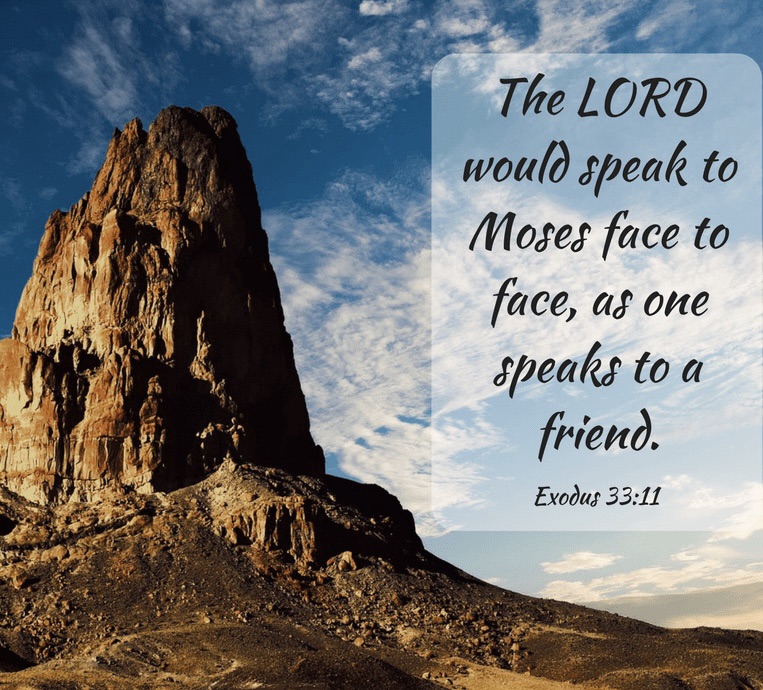

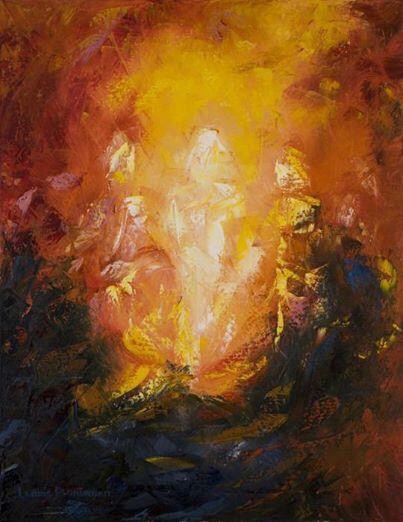

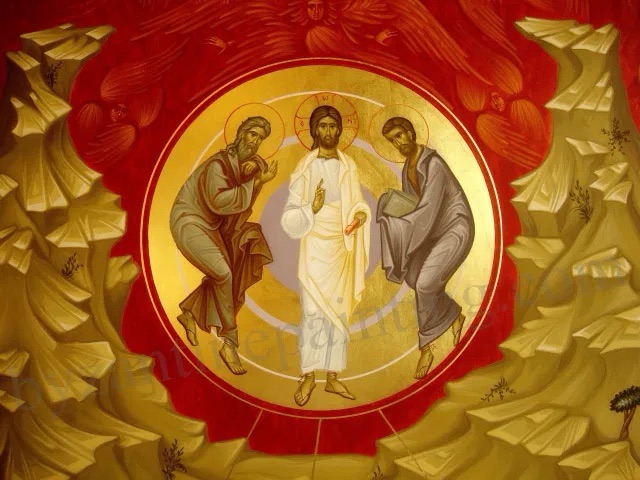


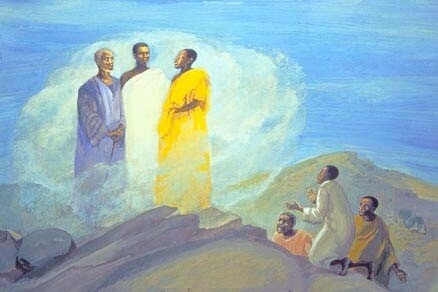
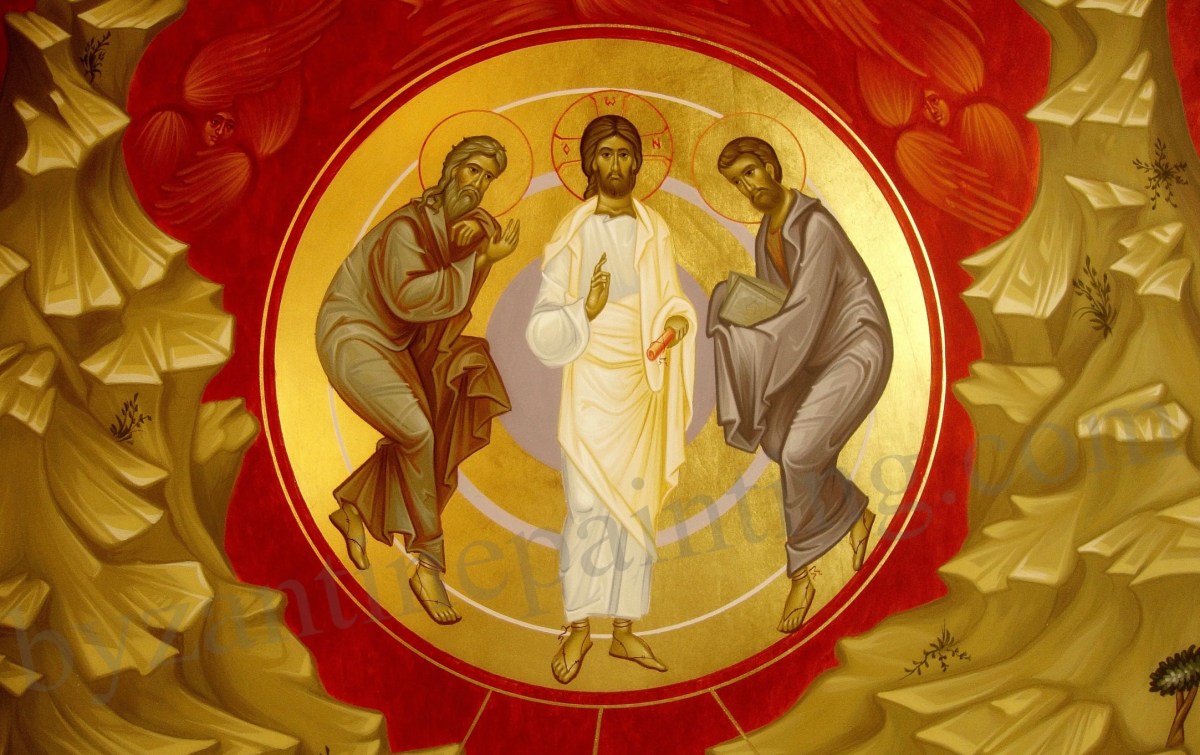

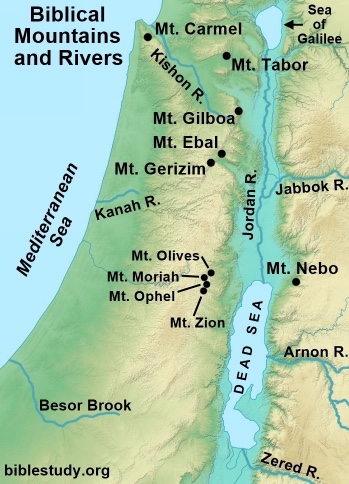


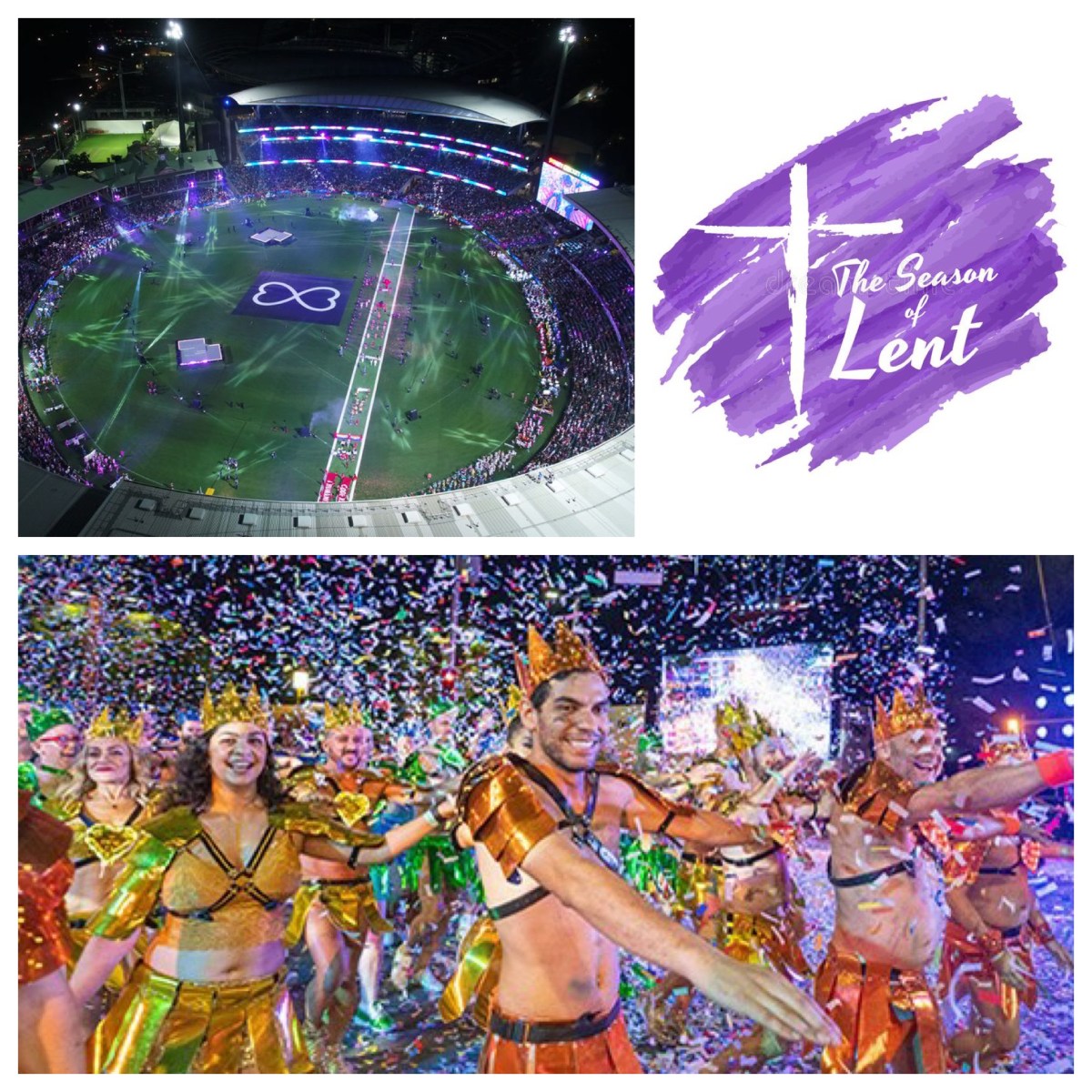


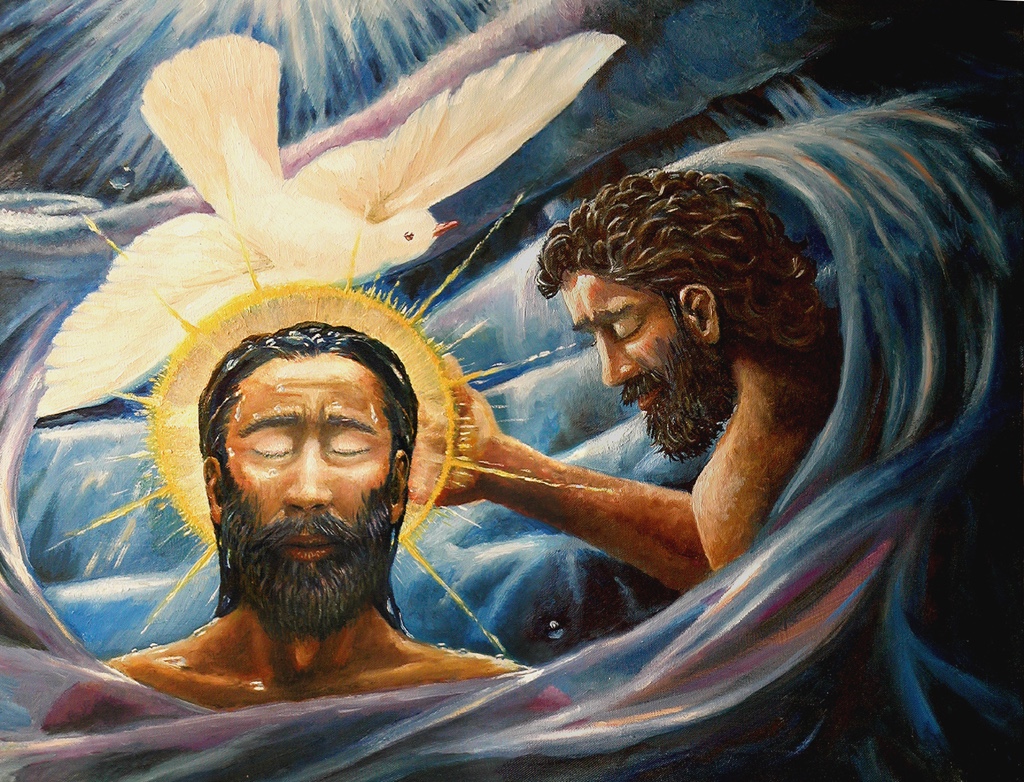
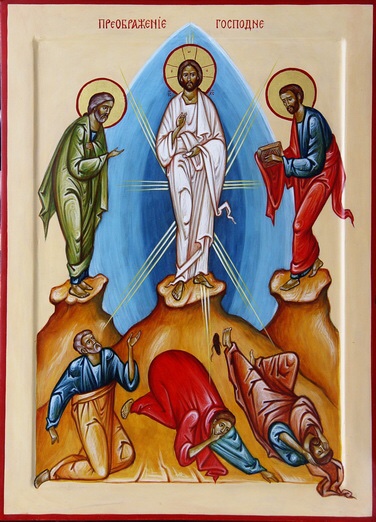


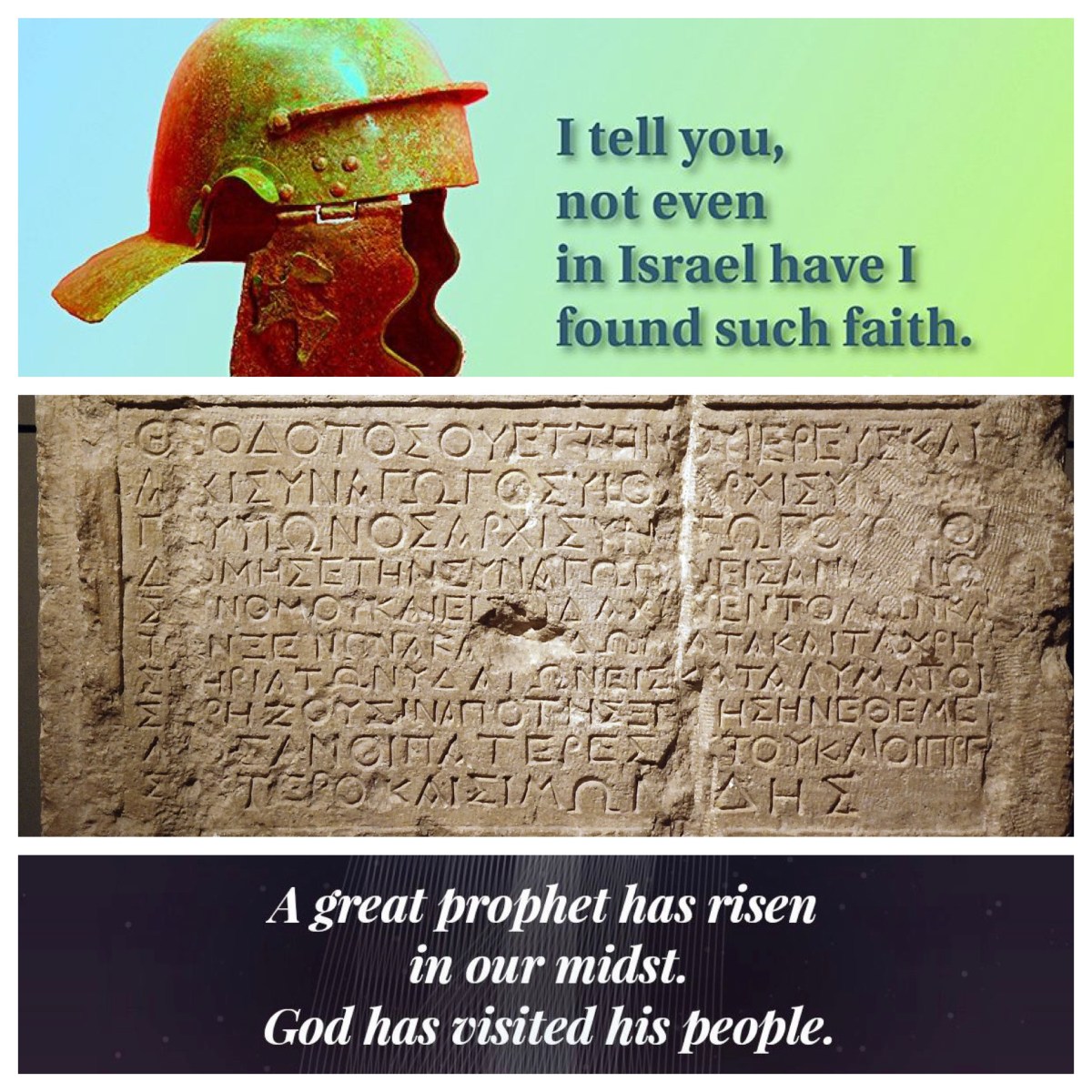
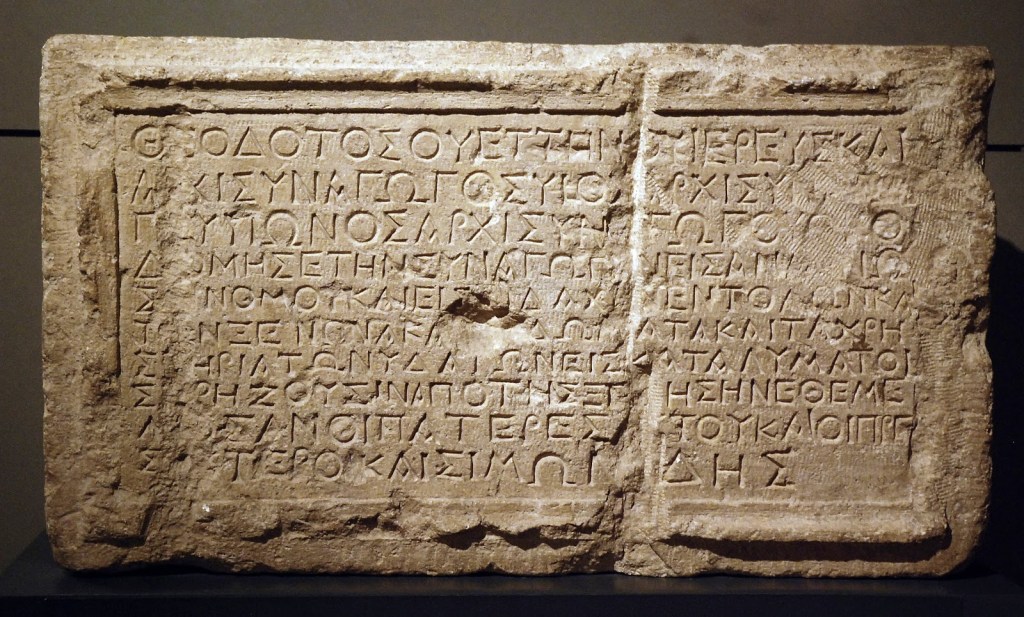
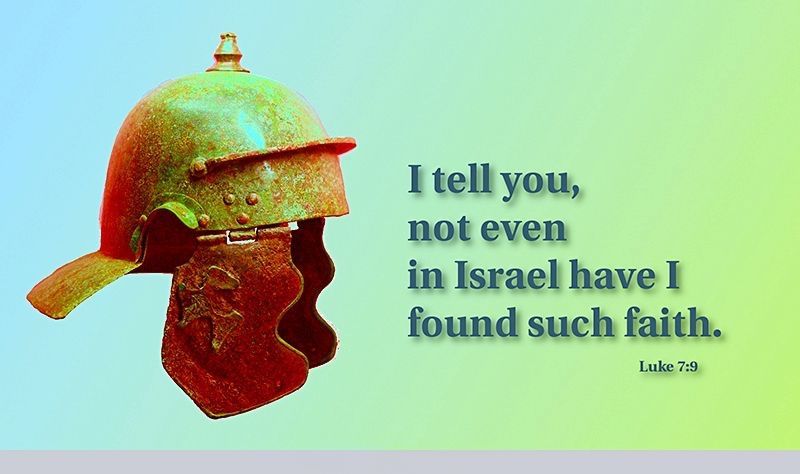
 An Informed Faith