The Senate, house of review, place of hope

“To fulfil the role the Constitution allows the Senate in relation to the government, the Senate is able to scrutinise and judge the activities, policies and legislation of the government. This is why the Senate is known as a house of review.” So reads a section of the office Parliament of Australia website explaining the nature and function of The Senate. (https://www.aph.gov.au/About_Parliament/Senate/Powers_practice_n_procedures/Senate_Briefs/Brief10)

I have known this principle, and voted in accordance with this principle, for decades. As well as holding as my personal principle to “always vote below the line” (something that has been quite challenging at various times, given the size of the ballot paper!), I have also maintained that the Senate should be a real house of review—not just a rubber stamp, like the House of Lords is in the British Parliament.

The reality is that, at times throughout the past 120 years, the Senate has indeed been simply a “rubber stamp”, acting to endorse the legislation introduced and debated in the lower house. Those times, especially, when the dominant party in the lower house has also had control of the Senate, have been times when the Senate has seemed to have lived up to its most famous description as “unrepresentative swill”. (Take a bow, Paul Keating.)

So in order to ensure that there is at least some measure of review that might occur when a bill is introduced into the Senate, I have held the practice of never voting for the same party in the lower house, as in the Senate. It has been my personal contribution to ensure (vainly, in many instances) that there are at least someone in the Senate who might advocate for a point of view different from what is advocated by the party in Government, and what is (often) blindly expressed as opposition to that point of view by those who, well, are in fact, the Opposition.

So it has been with great pleasure that I have heard the news, today, that in the ACT (the jurisdiction where I currently live), one of the two Senators elected will bring precisely that function of review—not toeing the Government line, not unthinkingly adopting the resistance of the Opposition, but considering each piece of legislation on its merits.

I’m referring, of course, to the election of David Pocock as the second Senator for the ACT. He was elected alongside Katy Gallagher, of the Labor Party—a fine Senator, in my eyes, who has been an excellent representative for the ACT over her term in parliament (as, indeed, is my local member in Bean, David Smith).

Ever since the ACT has elected senators, the second Senate spot has been held by the Liberal Party (John Knight—Margaret Reid—Gary Humphries—Zed Seselja). This year, however, Zed Seselja failed in his bid to return to the Senate. And so it is that Zed has dropped off the end of the alphabet (at least, in the ACT)!

Pocock stood as an Independent, with a platform advocating for real action in relation to climate change; the establishment of a national integrity commission; the adoption of what is advocated by the Statement from the Heart to ensure First Nations people have a voice in shaping our nation;

and measures to improve the safety of women and girls in their homes, schools, and workplaces. (He also had other economic measures and more parochial territory matters in his platform.) All of this augurs well for the next three years in Australia—especially if the Labor Government does act in accordance with its rhetoric about climate, integrity, and First Peoples. See https://www.davidpocock.com.au

Alongside the 12 Green senators (who are committed to similar policies) and the two Jacqui Lambie Network senators (Jacqui Lambie herself has a track record of independent thinking about legislation), the Senate is well-placed to be a real house of review that will consider, debate, and advocate for a range of important matters—holding the Government to account, refining legislation and e surging principles are adopted that are in the best interests of the country.

So I’m pleased that my choice has been elected—and that the Senate has a really good chance, over the next three years, of fulfilling its intended purpose.

The voice of the Lord in the words of the prophets (the season of Pentecost in Year C)

Each year in the long season that stretches “after Pentecost”, the lectionary offers us selections from the prophetic literature of Hebrew Scripture, as companions to the Gospel readings from the orderly account of Luke. It is Luke’s narrative which most directly depicts Jesus speaking as God’s prophet (Luke 7:16; 24:19; Acts 2:30; 3:22).

Many of the prophets of Israel remind us that they speak forth “the voice of the Lord” (Isa 66:6; Jer 42:5–6; Dan 9:9–10; Mic 6:9; Hag 1:12; Zech 6:15). Jesus stands in this tradition, offering words of guidance, challenge, and judgement. He is the way by which, “in these last days, God … has spoken to us” (Heb 1:1–2).

This year, Sunday by Sunday, we are listening to “the voice of the Lord” mediated through a number of prophetic words. In the coming Sundays, the lectionary offers us stories of prophetic voices speaking to the people of the northern kingdom during the 9th and 8th centuries BCE.

We begin with sections relating to Elijah and Elisha, two great prophets who figure prominently in the history-like narratives of 1—2 Kings (Pentecost 2–4). Elijah encounters God, not in wind or earthquake or fire, but in “a sound of sheer silence” in a cave, where he gains clarity about his task (1 Kings 19:9– 15). Elisha picks the mantle of Elijah after he is taken up (2 Kings 2:13) and demonstrates this as he heals Naaman (2 Kings 5:8–14).

Next, we turn to Amos (Pentecost 5 and 6). Amos, the shepherd of Tekoa, humbly defers “I am no prophet” (Amos 7:14); nevertheless, he castigates those in Israel who “trample on the needy and bring to ruin the poor of the land” (Amos 8:4). His most famous prophetic word is the call for “justice and righteousness” (Amos 5:22).

Hosea (Pentecost 7 and 8) was also active in the northern kingdom. The fractured relationship between Israel and the Lord God is mirrored in the naming of his children: “God sows”, “not pitied”, “not my people” (1:2–9). Yet Hosea sings of the love of the Lord for Israel, who “led them with cords of human kindness”, and assures them that God will not abandon them (Hosea 11:1–11). Nevertheless, soon after his long period as prophet, that kingdom would fall.

Then follows is a brief foray (Pentecost 9 and 10) to hear the words of a major and significant prophet of the southern kingdom, Isaiah, who was active from 742 BCE onwards. Isaiah criticises the sinfulness of the people (Isa 1:10-20) and exhorts the people to “learn to do good, seek justice” (Isa 1:17). The vivid “love-song concerning a vineyard” culminates in a potent condemnation that the Lord “expected justice, but saw bloodshed; righteousness, but heard a cry” (Isa 5:1–7). This cry is a consistent prophetic message.

Then follows a series of passages from the great prophet Jeremiah (Pentecost 11–18). Jeremiah had the misfortune of being called to prophesy just at the time when Israel was crumbling and would be overrun by the Babylonians and sent into exile (721 BCE). He was called to declare words from the Lord, “to pluck up and to pull down, to destroy and to overthrow, to build and to plant” (1:10).

Jeremiah is famous for his series of laments about the fate of Jerusalem (“how lonely sits the city … how like a widow she has become”, Lam 1:1); we hear two excerpts from Lamentations at Pentecost 17. In these words, we are invited into the experience of deep lament through the poetic wails of this prophet, as he first envisages, and then experiences, the devastation of exile.

Yet Jeremiah comes to terms with life in a foreign land, amongst people of different customs, speaking a different language, eating different foods, worshipping different gods. He leaves behind the laments of not being in the land that God gave the people; instead, he encourages his fellow-exiles to “seek the welfare of the city where I have sent you into exile … build houses and live in them; plant gardens and eat what they produce; take wives and have sons and daughters” (Jer 29:5–7), for the Lord “plans for your welfare and not for harm, to give you a future with hope” (Jer 29:11).

Nevertheless, Jeremiah also speaks a damning word over the people; God, he says, “is a potter shaping evil against you and devising a plan against you” (Jer 18:11). How are we to hear and receive this striking word of the Lord? Yet the prophet “redeems” himself, perhaps, with the famous declaration about “the new covenant … I will write it on their hearts” (Jer 31:31–34)—a passage that a number of New Testament writers refer to in their portrayal of Jesus instigating a “new covenant”.

After Jeremiah, we visit famous words about “the time to come”, spoken by a number of prophets. Joel (Pentecost 20) describes the terrors of the coming time, yet promises that “everyone who calls on the name of the Lord shall be saved” (Joel 2:32). Habakkuk (Pentecost 21) laments “destruction and violence”, yet declares “a vision for the appointed time—the righteous live by their faith” (Hab 1:3–4; 2:3–4).

Haggai (Pentecost 22), living in a time of drought, “spoke to the people with the Lord’s message: I am with you” (Hag 1:10–11, 13). And a much later voice, active well after the return from exile (collected at the end of the book of Isaiah), affirms that God is “about to create new heavens and a new earth” (Isa 65:17; Pentecost 23).

These voices sounded forth long ago; their message resonates still with us today. The call for justice and righteousness undergirds the entire narrative of the people of Israel, from the call attributed to Moses in Deut 16:20, “justice, and only justice, shall you follow”; through the words of Amos and Isaiah, into the declarations of Jeremiah and a number of the “minor prophets”.

In the later scriptures in the New Testament, we hear resonances from many of these selected passages in Hebrew Scripture. Jesus, the prophet of Nazareth, stands in this tradition and speaks “the voice of the Lord”, so the call for justice and righteousness sits at the heart of who we are, as people of faith, heirs of this tradition, in the 21st century. As we read and hear these prophetic passages week after week, we are invited to reflect more deeply on how these ancient words, particular to their original time and place, can yet be for us the word of God to us, in our time, in our place.

See further at https:// johntsquires.com/2021/08/16/justice-and-only-justice-you-shall-follow/

William and Sarah Stubbs, and the Coromandel: remembering, 220 years later

It is 220 years ago today (13 June) since the East India ship Coromandel arrived in the Colony of New South Wales. The ship was captained by Master Alex Stirling and the welfare of all on board was the responsibility of the Ship’s Surgeon, Charles Throsby. The Coromandel had been built in India in 1793 and was owned by Reeve and Green.

In late 1801, the Coromandel was chartered by the Commissioners of Transport in London for the purpose of transporting male convicts, along with a group of free settlers, to the Colony. Also chartered at the same time, for the same purpose, was the ship Perseus, whose Captain was John Davison, with the Ship’s Surgeon being W.S. Fielding.

A painting of the Coromandel

Both ships set out from Portsmouth on 8 February 1802, but it was a false start; after a delay of some days because of the weather, they sailed through the Spithead and into the English Channel on 12 February.

On board the Coromandel were 138 male convicts; 20 civilians provided by the Commissioner to serve as the guards of the prisoners; and a number of free settlers, with their families. On board the Perseus were 114 male convicts; 16 civilians provided by the Commissioner to serve as the guards of the prisoners; and another group of free settlers.

80 of the convicts that sailed on the Coromandel had been held on convict hulks at Gravesend, near the mouth of the River Thames, in terrible conditions. The remainder of the convicted men from various English prisons had been brought to Portsmouth to join the ship.

Six of the free settlers on the Coromandel were married men and with children: James and Jane Davison, with two sons; George Hall and Mary Smith, with one daughter and three sons; John Howe and Frances Ward, with two daughters; Andrew Johnston and Mary Beard, with five sons; William Stubbs and Sarah Wingate, with a son and two daughters; and John Turnbull and Ann Warr, with two sons and two daughters. Also on board were James Mein and his wife Susannah Skene (but without their two children) and Andrew Mein, unmarried.

*****

During the voyage that they undertook to the Colony, all three Stubbs children, as well as a number of other passengers, contracted scarlet fever. Sadly, both Andrew Mein and the youngest Johnston child, Alexander, died of scarlet fever during the voyage.

These men had decided to accept an offer from the English government, set out in a document of January 1798, which George Hall had acquired while living in London. It reads as follows:

We whose names are undersigned acknowledge that, at our own request, we offered ourselves as settlers to go out to N.S.W. with our families on the following terms:

To have our passage found and our families victualled by the Government during the voyage. On our arrival in the Colony we have a grant of 100 acres of land at Port Jackson, or fifty acres at Norfolk Island.

To be victualled and clothed free from the Public Stores for a term of twelve months after being put in possession of our allotments, and to be allowed the labour of two prisoners maintained by the Government for the same term.

After which term we and our families are to be no further expense to the Crown. Likewise we have the same proportion of stock, such grain and agricultural tools as have been furnished to other settlers, together with such other assistance as the Governor need judge proper to afford us.

Outfit for men: 1 jacket, 1 shirt, pair of trousers, pair of shoes, 1 hat.
ditto for women: 1 Jacket, 1 petticoat, 1 shift, pair shoes, 1 cap, 1 handkerchief, Children as above on stores.

In a character reference for William Stubbs, which he brought with him on the journey, five men who knew him certified that he was “a man of honest deportment, of a quiet and industrious disposition and well affected to the excellent constitution of our country”.

*****

The Coromandel departed Portsmouth on 8th February 1802 and arrived in Port Jackson on 13 June 1802. It is said that this was the fastest time for this voyage between 1788 and 1819; it is also noteworthy that the Coromandel was the first convict ship to sail direct to Port Jackson without landing anywhere en route. The Perseus did not arrive in Port Jackson until 4 August 1802.

On 9 August 1802, Philip Gidley King, the third Governor of the Colony, wrote to the Transport Commissioners to inform them that:

The healthy state in which the Coromandel and Perseus arrived requires my particularly pointing out the masters of those ships to your notice. It appears by the log books, surgeon’s diaries and the unanimous voice of every person on board those ships of the utmost kindness to the convicts.

King continued with his positive appraisal of these ships’ journeys:

This, with the proper application of the comforts Government had so liberally provided for them and the good state of health all the people were in, induced the master of the Coromandel to proceed without stopping at any port. He arrived here in four months and one day, bringing every person in a state of high health, and fit for immediate labour; and although it appears that the Perseus necessarily stopped at Rio and the Cape, yet the convicts were in as good condition as those on board the Coromandel; nor can I omit the great pleasure felt by myself and the other visiting officers at the grateful thanks expressed by the prisoners and passengers for the kind attention and care they had received from the masters and surgeons.

*****

After disembarking, William Stubbs took his family to the Hawkesbury River region, about 45 miles northwest of the small settlement known as Sydney. He took up a grant of 100 acres at Crescent Reach. The other freemen and their families also travelled to this area, where they had each been given grants of land in the region known as Portland Head. The land granted to Stubbs was, unbeknownst to him, liable to flooding.

In time, the men from the Coromandel would join with others settled in the region to erect a chapel where they could gather to worship in accordance with their Reformed faith. That church building (erected in 1809) still exists; it lays claim to being the oldest Christian church still standing in Australia, and the first non-conformist church built in the Colony. The name chosen for the church, Ebenezer, means “God is our help”.

Ebenezer Uniting (formerly Presbyterian) Church

See https://www.ebenezerchurch.org.au

But before this, and after the Stubbs family had arrived at their land grant and William had cleared his land and planting crops, the Stubbs farm and home was raided by people of the the local Aboriginal clan four times in 12 months. It is thought, now, that a cave on a neighbouring property was a sacred site for the local Aboriginal people. At the time, this would not have been known by Stubbs or by those granting the land to him.

Relations between blacks and whites at this time, early in the development of the British colony, were, understandably, very tense; after all, the British families had been given grants to settle the area which had been the country of the Dharug people for millennia.

A local history website notes that “The river, which they [the Dharug] called Derrubbin, was a focal point as a source of food, i.e. fish, eels, water birds, and mussels, and transport, in their bark canoes. Yams, a staple food, grew along the banks of the river. On the sandstone platforms they engraved images of animals and mythological figures and in the rock shelters they displayed their ochre and charcoal art. The Hawkesbury was also a source of stones for axes and pebbles for making barbs, points and scrapers.” See http://westernsydneylibraries.nsw.gov.au/hawkesbury/history.html

In the early years of the Colony, in June 1789, Lieutenant Watkin Tench had sailed up the Hawkesbury River with Captain Arthur Phillip. Tench observed that “Natives were found on the banks in several parts, many of whom were labouring under the smallpox”. Smallpox, introduced by the British settlers, would prove to be a major factor in drastically reducing the Aboriginal population; one estimate is that amongst the Dharug people, up to 70% of the population died in the outbreak of 1789. See https://www.nma.gov.au/defining-moments/resources/smallpox-epidemic

An engraving of British officers visiting an Aboriginal woman in 1789
(from the collection of the National Library of Australia)

Another way of disrupting the Aboriginal population came from the settlers erecting houses and building fences on the land granted to them, and planting crops and running animals on their newly-established farms. In this way, British settlers interfered with the traditional lifestyle of the local people—whether unwittingly, or intentionally. And by fencing off part of the land that was so important to the culture and spirituality and lifestyle of the Dharug people, Stubbs and his fellow settlers had confronted the central element of Aboriginal culture: the land. “Aboriginal people feel a belonging to land rather than ownership of it. They respect it and refer to it as their mother.”

See https://www.cumberland.nsw.gov.au/history-and-land

*****

The scene was set for a conflict, between the longstanding traditional custodians of the land, respecting the land as their Mother, and the newly-arrived colonists, eager to replicate the best of life that they had known in the Mother Country. In this place, as in countless places across the continent, as British colonists settled on the land, they were regarded by those long- present as invaders, taking away the close knit connection between people and country.

It is said that 16 white settlers were murdered by the Dharug people during the early period of white settlement on the land around the Hawkesbury river. The number of Dharug people killed in these battles is not known. Certainly, by April 1805, Governor King had warned that “the natives … have in an unprovoked and inexcusable manner lately committed the most brutal murder on some defenceless settlers”. He instructed that if approached by the indigenous inhabitants, “the settlers are required to assist each other in repelling those visitors”. Relations had become antagonistic and brittle.

The Hawkesbury a river, a drawing by William Bradley
(from his journal A Voyage to New South Wales,
c.1802, Mitchell Library)

It is reported that on 28 May 1805, the Stubbs house was plundered of all its contents by Dharug people. The next day, William crossed the river in a canoe; it capsized, he struggled to swim to the bank, but was unable to do so. His eight-year old son, William, witnessed the drowning.

Because all the food in the house had been taken in the raid on the house, William’s wife, Sarah, had travelled to Parramatta to obtain provisions for the family. On her return, she discovered that she was now a widow with four small children to raise—William, Sarah, and Elizabeth, who were each born in England; and Keturah, who had been born in the Colony at Portland Head, just two months earlier, on 31 March 1804.

The Sydney Gazette and New South Wales Advertiser of Sunday 2 Jun 1805 reported the sequence of events of these two days in great detail (see the extract below).

Sarah Stubbs was initially dependent on the goodwill and support of friends. With a young family to raise, however, it is no surprise that she soon would marry again. Her second husband was James Painter, a carpenter who had travelled to the Colony on the Sirius, the flagship of the First Fleet. They had no children.

Each of Sarah’s children married at St Matthew’s Church of England in Windsor. William and Elizabeth were married on the same day in 1819, and Keturah two years later in 1821. On 12 August 1822, Sarah married Thomas Yarwood, a convict from a Cheshire, who had been transported to the Colony on the Indefatigable in 1814. Elizabeth’s husband, Jeremiah Sullivan, was also a convict, transported from Cork City, Ireland, on the Three Bees in 1814. William and Keturah married children of convicts.

All four Stubbs children had children of their own, producing 33 grandchildren for Sarah, although five died in childhood, and six were born after Sarah’s death in December 1838. Son-in-law Thomas Woods (Yarwood) had died the year before her, in August 1837; it is saidthat he died at the hands of the Dharug clan in yet another raid that ended badly for the freed-convict-became-landholder.

The line of descent from William and Sarah continued through Sarah and Thomas Yarwood, who changed his surname to Woods; then through their son, William James Woods (1833–1915), who married Annie Keenan (1837–1913); their daughter, Ada Sarah Woods (1861–1941), who married William Owen Newbury (1850–1915); and on to their daughter, Mabel Newbury (1901–1998), who married Fred Lowe (1889–1971).

*****

Descendants of Sarah Stubbs and Thomas Woods (Yarwood)
at the 2015 Stubbs Family Reunion at Ebenezer Church

Information about the annual Stubbs reunion at Ebenezer Church is at https://freepages.rootsweb.com/~stubbs1802/genealogy/

*****

ACCIDENTAL DEATH.

On Wednesday se’nnight Wm. Stubbs, a settler on the River Hawkesbury, was unfortunately drowned in crossing that river in a canoe ; a second person was accompanying him, and when in about the center the vehicle unexpectedly upset, and the above unfortunate man depending on his ability to swim on shore, advised his companion not to quit the boat, as it would be sure to drift, on the banks. He did so, and saved his life and Mr. Stubbs, after very nearly gaining the shore, unfortunately became entangled among a cluster of reeds, from which unable to extricate himself, it was his fate to perish in the presence of one of his children, who witnessed the melancholy disaster from the bank.

The accident is the more afflicting, as the deceased leaves a widow and large family to deplore his untimely fate ; the circumstances that led to which still heighten the calamity. The house was the day before surrounded by natives, at whose appearance Mrs. Stubbs being excessively alarmed, she fled towards the river side, and would have precipitated herself into the stream, had she not been prevented by assurances from one of the natives that she or her infants should not be harmed.

They afterwards gutted the house of its whole contents, and retreated with the plunder, and as soon as the deceased was made acquainted with what had happened, were closely pursued towards the Mountains, but in vain, as no single article of the property was recovered. As not a requisite to comfort remained to the family, Mrs. Stubbs set out that night for Parramatta, in order to procure a few requisites more immediately wanting ; and during her absence the unfortunate event of her husband’s death took place.

In addition to the lamentable circumstances that tend to multiply embarrassment upon the above unfortunate family, we have feelingly to mention, that within the space of twelve months they have been four times bitterly distressed by hostile natives, who have at either time stripped them of domestic comforts or “swept their fields before them.”

The poor child who sadly witnessed the dying struggles of an unfortunate parent is a fine boy, nearly eight years old; and eldest of four helpless Orphans in the dispensation of the Divine Will left to deplore a father’s loss. For poignant affliction, happy for the unfortunate, Heaven still provides by bestowing its bounties upon some among the many, who by the most delightful application give testimony, that all Mankind are not insensible of what they owe to Providence, and when distress like this presents her claim to sensibility, generously step forward to discharge the debt.

The Sydney Gazette and New South Wales Advertiser, Sunday 2 Jun 1805, Page 2.

*****

Sources:

https://www.freesettlerorfelon.com/convict_ship_coromandel_1802.htm

https://www.freesettlerorfelon.com/convict_ship_perseus_1802.htm

https://australianroyalty.net.au/tree/purnellmccord.ged/individual/I52434/William-Stubbs

The Story of William Stubbs and Sarah Wingate, a Coromandel 1802 Family (vol. 1)

The Children of William Stubbs and Sarah Wingate, a Coromandel 1802 Family (vol. 2)

Rufinus and Sophilla, on the Spirit, Wisdom, and the Trinity (Trinity Sunday Year C)

The following dialogue was written by my wife, the Rev. Elizabeth Raine, and myself, and was presented at the Tuggeranong Uniting Church in the ACT on Trinity Sunday, 12 June 2022.

The dialogue does not come from the time of the Bible, when Christians were a tiny minority group; but a little later, in the mature years of the Holy Roman Empire, when Christianity had become the state religion across the western world.

The character who opens the dialogue is Rufinus, who was present at the council of Nicea in the year 325, when the first formal declaration of the doctrine of the trinity was made by a council of bishops. Rufinus was one of the scribes at the council, taking notes for the eminent historian, Eusebius of Caesarea.

Rufinus is full of enthusiasm for what has taken place at Nicea. He is anxious to address you on the topic. But he is quickly joined by a mysterious and rather shadowy character, who questions the whole foundations of the Nicaean decision on this topic. She is a devotee of Sophia, or Lady Wisdom, who is described in Proverbs 8 (the Hebrew Scripture reading for Trinity Sunday) and other texts from the “wisdom literature”. We subsequently learn that this character is named Sophilla.

*********

JOHN: What do we mean when we speak of the Trinity? This is a good question, and one frequently asked by Christians. 

The first thing to say is that Christianity is unique. We believe that God is One; but we also hold that the one God has three distinct “persons”: the Father, the Son, and the Holy Spirit. This unique threefold God of Christian belief is referred to as the Trinity (from Latin trinitas, “three”).

It is true that the word “Trinity” does not appear in the Bible. However, we believe that some of the texts of the bible point to this doctrine. Yetwhile this concept is rather scarce in the biblical texts, there is no reason we should doubt the words of the early church fathers, where it appears often.

We should consider the early councils of the church—and especially the one held at Nicaea under the patronage of our great emperor, Constantine—to be authoritative. In these councils, doctrine is formally and correctly defined by the doctors and fathers of the church. 

The Nicene Creed declares Jesus to be: “God of God, Light of Light, very God of very God, begotten, not made, being of one substance with the Father.” That is the trinity in essence. It is elegant in its simplicity!

ELIZ: Now just a minute. This is not as beautifully simple as you claim,at all. There are lots of reasons for questioning this doctrine of the Trinity. For example, as you said, the word ‘trinity’ is not mentioned anywhere in the Bible. And think about it – it simply doesn’t make philosophical sense. It isn’t taught in the scripture of the Jewish people, the Old Testament. These were the scriptures of Jesus, and he never mentioned such a thing. Whoever heard of such strangeness as this ‘one in three’ business? 

Further, the idea of trinity is not compatible with monotheism. In fact, this is really why it was invented. The church fathers needed to explain away why they were worshipping two gods—God the Father, the supreme God; and Jesus, also regarded as a God. This would be polytheism. Sothey threw in the holy spirit for good measure, and came up with this notion of the “three in one”. 

JOHN: Well, you may be right about the word ‘trinity’ not being biblical, but I have to point out that the concept is found indirectly in various statements in the Bible. The three figures of Father, Son, and Holy Spirit are associated in such great New Testament passages as the Great Commission: Go therefore and make disciples of all nations, baptizing them in the name of the Father and of the Son and of the Holy Spirit (Matt 28:19).

It is also found in the benediction of the apostle Paul: The grace of the Lord Jesus Christ and the love of God and the fellowship of the Holy Spirit be with you all (2 Corinthians 13:14). So there: it’s in the Bible!

ELIZ: Well, if we are going to claim that the holy spirit is divine, we must acknowledge, then, that the spirit is a female. She is sent by God, to increase human understanding, to bring change and renewal, and to announce the will of God.

JOHN: She???!!!! What do you mean, she? The holy spirit, the blessed third person of the trinity, is male. Father, Son, Holy Spirit. Three persons in one being. Of course the spirit is male. How could it be otherwise? All three persons are male. And come to think of it, just who are you anyway, to be putting forth such ridiculous ideas?

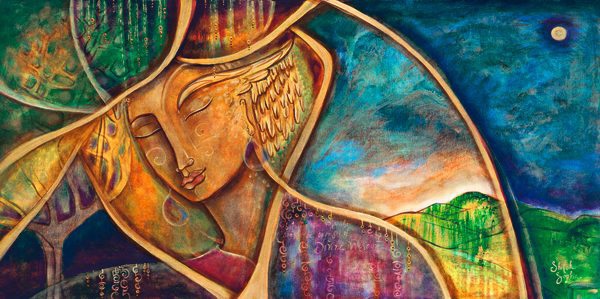
ELIZ: I thought you would never ask. I am Sophilla, handmaiden to Wisdom, and one of the keepers of the feminine tradition. Wisdom has been described in many and various ways—as an aspect of God, as a divine entity existing in her own right, even as something approaching a feminine deity. All of these have some truth to them.

Wisdom’s primary function is, of course, to be a mediating force between God and the world. Wisdom is very old; as it says in the book of Proverbs: The Lord created [Wisdom] at the beginning of his work, the first of his acts of old (Proverbs 8:22). Wisdom also functions as a vehicle of God’s self-revelation, granting knowledge of God to those who pursue her.

JOHN: I am sorry, this is getting out of hand here. What you are talking about is the function of Jesus. These are the things Jesus does. Let us consider these verses which come early in the letter to the Colossians: He is the image of the invisible God, the firstborn of all creation; for in him all things in heaven and on earth were created, things visible and invisible, whether thrones or dominions or rulers or powers — all things have been created through him and for him. This makes it very clear.

ELIZ: All that this makes clear is that the New Testament writers usurped Wisdom’s function and gave it to Jesus. The name of Wisdom was used by you men at the early Church gathering at Nicaea to try and explain how a ‘three persons in one’ related to the created world. You just conveniently forgot that Wisdom is female. 

JOHN: My dear Sophilla, the spirit, as part of the trinity, is masculine. The parakletos, the comforter, the spirit, is of masculine gender. This is female bias gone mad!

ELIZ: I would remind you that the holy spirit was alive and active in the Old Testament, and the ruach, which is one of her names, is most definitely feminine gender in the language of Hebrew. The ruach elohim is literally the Spirit of God who descends on kings and prophets alike, anointing them for the role of leadership of the people. And the ruach is female!

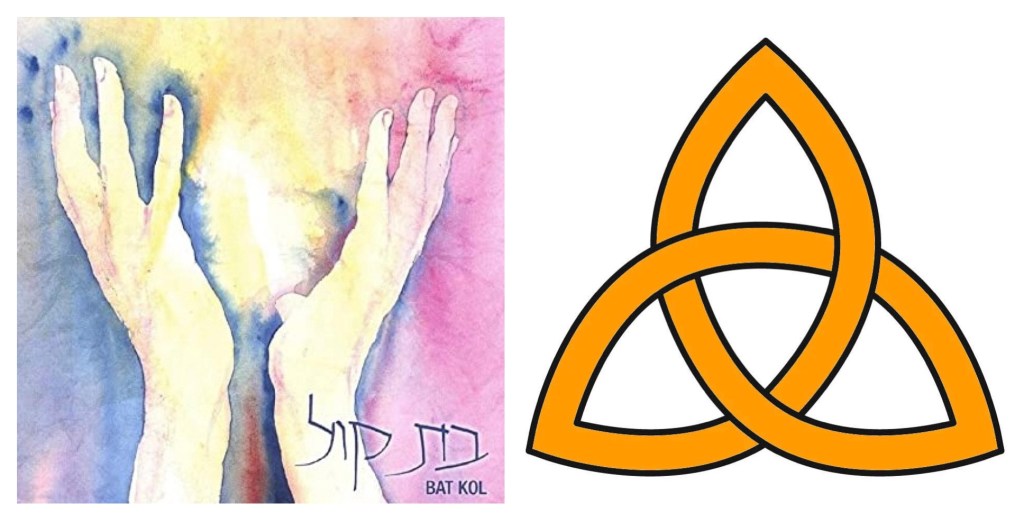
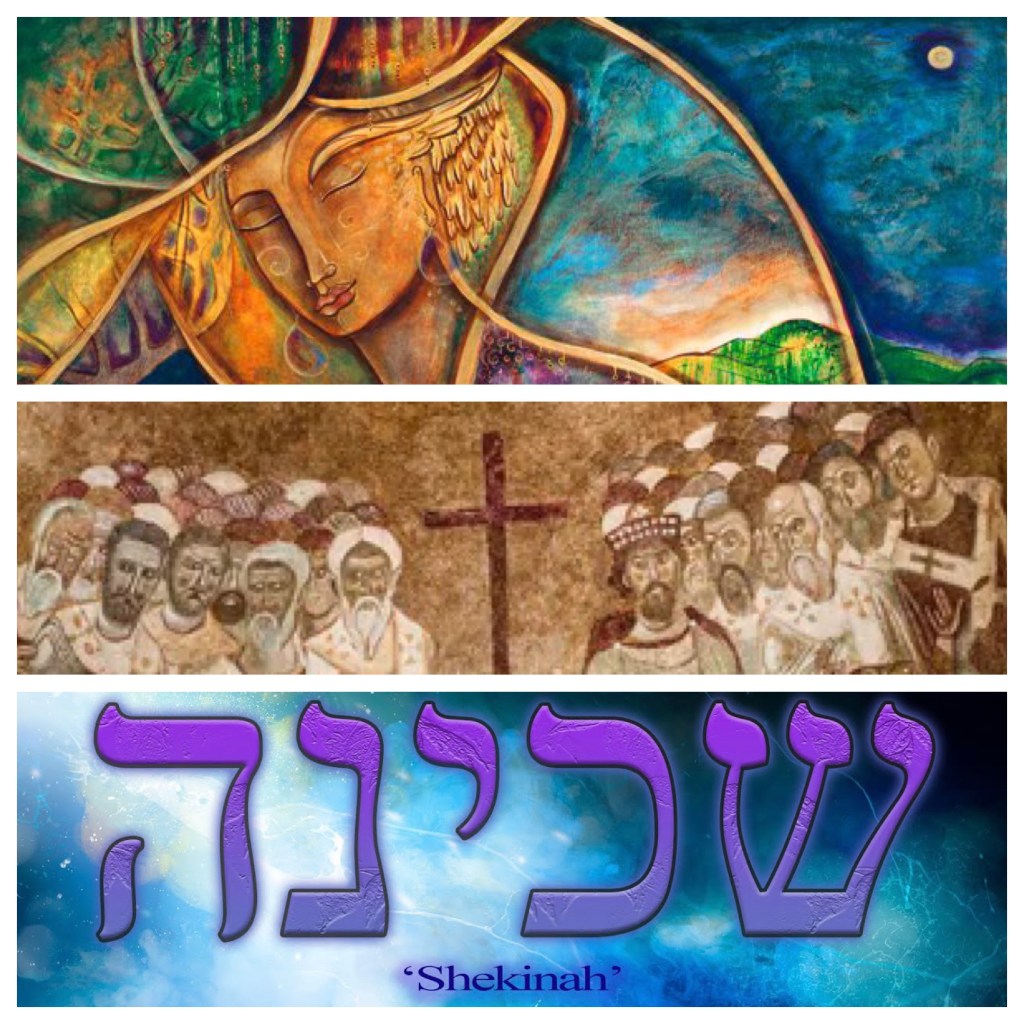
Further, we find in the Hebrew scriptures the presence of two other figures: the Shekinah, also known as the glory of God, who always indicates God’s “presence”; and the bat kol, “the Daughter of the Voice,” which is how any proclamation made by God is described. Both of them are female characters. Every action of God in the ancient writings is feminine. What have you to say to that?

JOHN: What are you talking about, with bat kols and Shekinahs? These are not words I have heard; we did not discuss these at Nicea.

ELIZ: Let me spell it out for you then. The Hebrew word ruach means “spirit”, just as the Latin word spiritus means “spirit”; but in Hebrew, ruach is a feminine noun, while in Latin, spiritus is a masculine noun. The Holy Spirit changed its sex somewhere in the last few centuries!

Rabbi Hillel, who was a contemporary of Jesus, understood that the Hebrew understanding of Wisdom and Spirit was the same as the Greek understanding of the Logos, and therefore she was feminine. It was Paul and John who first claimed that the Word or Logos was Christ, and therefore masculine.

In the Eastern Church, the Spirit was always considered to have a feminine nature. She was the life-bearer of the faith. But instead of recognizing this feminine aspect of the divine, you have tried to satisfy women throughout the world by presenting them with models of martyrs and virgins, thereby setting a standard that no normal female can aspire to. You tried to turn Wisdom into the mother of Jesus, rather than seeing her as true divinity.

JOHN: You still haven’t explained what you mean by bat kol.

ELIZ: The bat kol, the ‘daughter of the voice’, was the voice of God that proclaimed God’s will and intention, God’s judgments and his promises, the warnings and commands of God to various people, sometimes even to all of Israel. Jewish tradition always spoke of the bat kol. And every time, she is a woman!

But later Christian writers have taken the bat kol and made her masculine! The ruach, the spirit of God, who descended from the heavens was changed into the pneuma, or spiritus, and made masculine. The qualities of Wisdom and the Shekinah were grafted onto Jesus – again the feminine became masculine. And the bat kol, the voice of God and the means of communication between God and the people, morphed into a male.

So you could say that all three ‘persons’ of this newly invented trinity were in fact, originally female. And did I mention that the bat kol is represented in Jewish tradition by the symbol of the dove?


Returning now to the 21st century: This view of the Trinity that we have presented today is not meant to discredit the traditional doctrine. On the contrary; what we hope to have done is to open up new possibilities for further exploration of the idea of the divine attributes and the different aspects of God. The trinity can be a stimulus for such exploration in our thinking about God, and how we experience God’s presence in our lives.

One important consequence of what we have noted today, is that instead of keeping this feminine aspect of the divine, early Christian male leaders have tried to satisfy women throughout the world by presenting them with models of martyrs and virgins, thereby setting a standard that the vast majority of females cannot aspire to.

Wisdom fast lost her independence and feisty nature, and the meek, obedient woman, characterized by the mother of Jesus, was held up as the model to which all women should strive to be.

It should be no surprise, then, that Christian faith is seen by some as being at odds with women who identify as feminist. Women are looking for new ways to know themselves and to connect with God.

So the Wisdom of scripture, who offers wise counsel, who offers an authentic feminine experience and interpretation of the divine, has grown more relevant to feminist Christian life. She reflects real women’s real experiences of community in the world, and the characteristics of justice, grace and love that can be said to be the preservers of community, a role most often occupied by women.

Unlike the virgin martyrs of early Christianity, Wisdom is a cosmic figure delighting in the dance of creation, a master craftswoman and teacher of justice. She is a leader of her people and accompanies them on their way through history. In a most unladylike way, she raises her voice in public places and calls everyone who would hear her. She transgresses boundaries, celebrates life, and nourishes those who will become her friends. Her cosmic house is without walls and her table is set for all.

Wisdom offers us a radical example, a subversive model, and a disturbing presence. She is not confined to a building, but is out there in the public space, meeting people where they are, and offering a spirituality of roads and journeys, of public places and open borders, of nourishment and celebration, of justice and equality – rather than a spirituality of categories, doctrines, systems and boxes that have come to categorise the Christian church. Instead of an enclosed gathering, she offers a space where social and spiritual change can take place.

It is a spirituality that offers connection and integration, rather than the separation and differentiation that has characterised patriarchal Christianity for centuries. As such, Wisdom spirituality has the potential to transform the church into a life-giving force in our community.

I trust we will continue to encounter Wisdom, and learn from her, again and again in the coming years.

Curiosity about the identity of Jesus, with the aid of the Holy Spirit and the biblical witness (for Trinity Sunday Year C)

This coming Sunday, we will be celebrating Trinity Sunday in worship, and hearing from biblical passages which our ancestors in the faith have assumed to provide some “biblical basis” for the Doctrine of The Trinity.

I’ve blogged before about my views on the Trinity (see “Do you believe in the Triune God?” – An Informed Faith (johntsquires.com) and The missional opportunity of Trinity Sunday – An Informed Faith (johntsquires.com)) … so this is lucky number three post about the three-in-one!!!

This year, I’ve been musing on the words of my colleague, the Rev. Dr Peter Walker (Principal of United Theological College in Sydney). Peter has contributed a fine set of commentaries and questions for the week leading up to this Sunday, for With Love to the World, a daily bible reading resource that I edit. In reflecting on the Gospel reading for this coming Sunday, Peter writes:

“The church has pursued its curiosity about the identity of Jesus, with the aid of the Holy Spirit and the biblical witness, for two-thousand years. John’s contribution is critical. With John’s help, the church has come to believe that the relationship of Jesus to the One who sent him is even deeper than what might be named as the sensitivity of a son or daughter to their father or mother. So, too, the relationship of the Spirit is more profoundly entwined to God than is captured by ‘Advocate’.”

I’m accepting of the notion that the way God relates to others—Jesus of Nazareth, the spirit of holiness, the woman of Wisdom (Prov 8, also offered by the lectionary for this coming Sunday), and even to each and every human being—can’t be fully contained within one title or one phrase or even a single proposition. So we need multiple terms, multiple ways of envisaging how God relates to us, as well as to Jesus and Spirit, and shouldn’t be limited to just one way (or a small, finite set of ways) to describe that relationship.

Nevertheless, we have biblical passages that have been “used” throughout Christian history to provide the “building blocks” from scripture for the systems and doctrines that human beings have devised, over time, to explain and interpret the nature of God and the ways that God relates to us. So I think that it is incumbent upon us to deal with those scriptural passages in ways that are sensitive to the original intentions of the documents in which they appear, and cogniscent of the dangers of overwhelming these texts by placing upon them layer after layer of later speculative and systematising thoughts. 

I like the turn of phrase that Peter uses—our “curiosity about the identity of Jesus”—and have been thinking about how we might foster that curiosity, as we engage with the biblical texts that are offered—and perhaps, also, as we resist the path into an “easy acceptance” of what those who have gone before us have decided that these passages must mean.

I think Peter exemplifies very well this open attitude towards the biblical text, in dealing with John 16:12-15. He writes, “The phrase of Jesus in v.15a [“all that the Father has is mine”] is unconditional: all things of the Father, whatsoever, are also of the Son. The divine Word, born to flesh, is one with God. And the Spirit, whom Jesus says takes and declares ‘what is mine’ and therefore the Father’s (v.15), is also one with God. ‘Father’ is John’s preferred term for God, ‘son’ his preferred term for Jesus. This gendered, finite language is pushed to its limits, of course, in any attempt to describe the infinite glory of divine life.”

That last sentence identifies one of the critical issues relating to the notion of Trinity in our own times. The strongly-gendered language reflects the hegemony of patriarchal power in society, both at the time that the scriptural texts were being written, and in the centuries when “The Church Fathers” undertook the work of interpreting, collating, systematising, and theorising, in relation to the nature of God—to say nothing, of course, of the way that patriarchal dominance has continued into the 20th century, and has, in so many ways, resisted the challenges brought against it from the 1960s onwards into the 21st century. We need to recognise its limits and be willing to explore beyond those limits.

There is still work to be do to re-gender our language, both about God, and about us as human beings. There is work crying out to be done to deconstruct the patriarchal power structures of our times and, alongside that, to reconstruct an understanding of people, and of God, that is not limited, constrained, and diminished, by slavish adherence to language and concepts that held sway in past eras. If we really are in the post-Christendom era, as many now propose, then we need to be willing to enter into this process and to embrace the unexpected, challenging, and enlivening results that we will experience.

Peter concludes his comments on John 16: “Through Word and Spirit, divine life has and is unfolding among us and throughout the world while still enfolded, all the while, in the Creator. How fortunate we are to have the Spirit of truth as our guide as we seek to bear faithful witness to the wonder and work of God.” That might be the best gift that we have from our focus, this Sunday, on the Trinity: a deep and abiding awareness that our perception of “the divine life” is growing, deepening, expanding, transforming, as we faithfully undertake our witness to God, insofar as we know God, in our lives. 

We don’t have to rest content with the “God as Father” language, nor even with “Jesus as Son” (although his maleness is not in dispute). We don’t have to limit ourselves to the ten, or twelve, or 42, or however-many names of God we can discern within the Bible; nor do we have to limit our understanding of “the person and work of Jesus” to eight key Christological titles and seven main theories of the atonement (or whatever numbers we find to be relevant).

Our explorations can canvass both the various scriptural passages and the ongoing patristic and medieval and reformed and enlightenment and contemporary formulations of God as three-in-one and more … and canvass them in ways that uses them, not as limitations on what is approved or orthodox, but rather, as springboards to wider, creative, exploratory thinking.

So may that be our experience this Sunday, when “Trinity” swims into view in our worship services and bible readings.

*****

See also

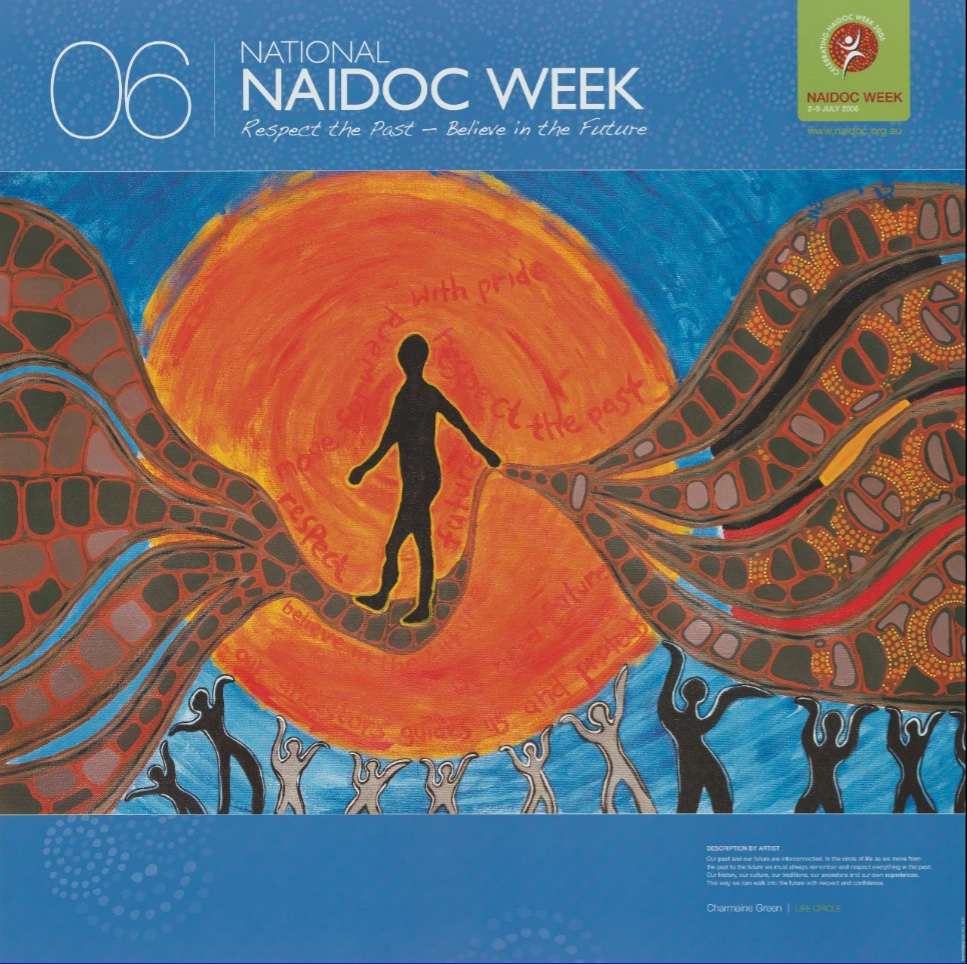
50 Years of NAIDOC WEEK 5 (1998–2006)

John Howard came to power in 1996, after 13 years of Labor dominance under Hawke and Keating. We have already noted that the themes chosen for NAIDOC WEEK in the early Howard years, 1996 and 1997, were both incisive comments about our public life.

See https://johntsquires.com/2022/06/03/50-years-of-naidoc-week-4-1991-1997/

The themes that followed in the Howard years continued this stance of naming key issues from an indigenous perspective.

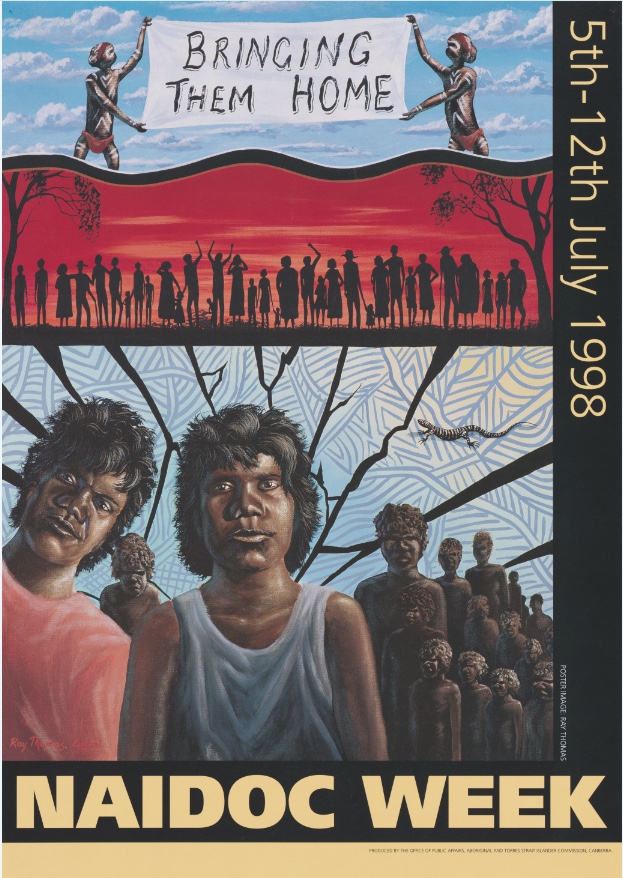
1998: Bringing Them Home

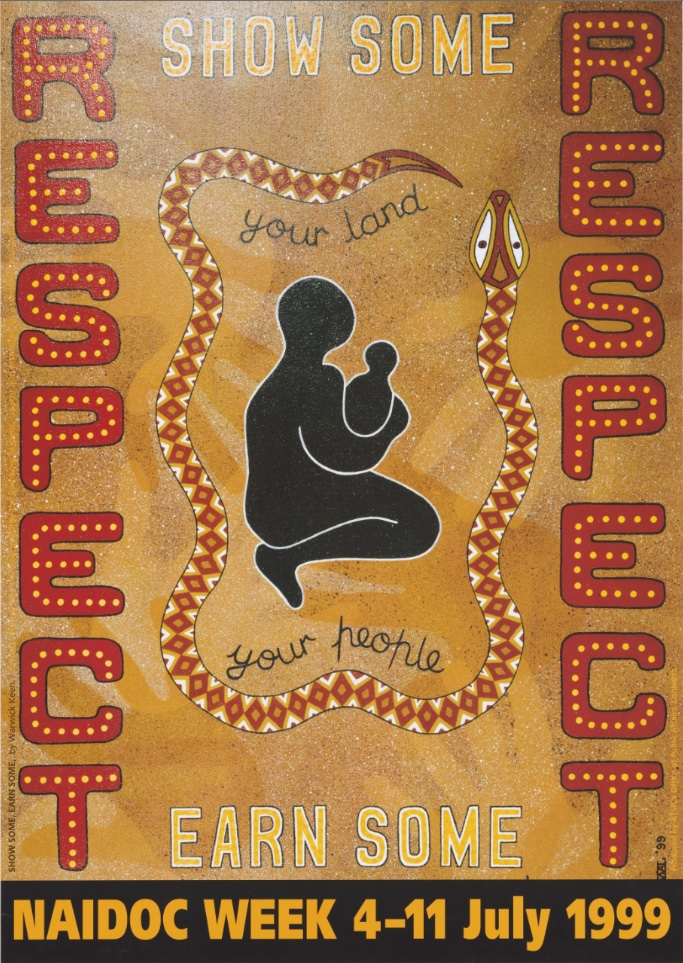
1999: Respect

2000: Building Pride in Our Communities

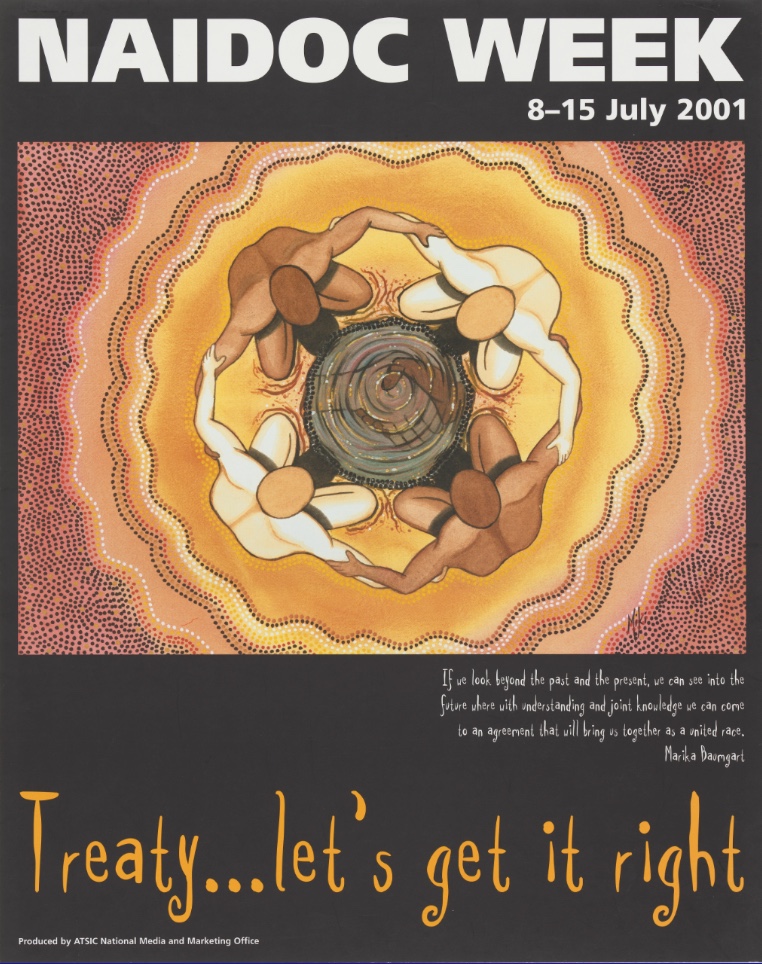
2001: Treaty—Let’s Get It Right

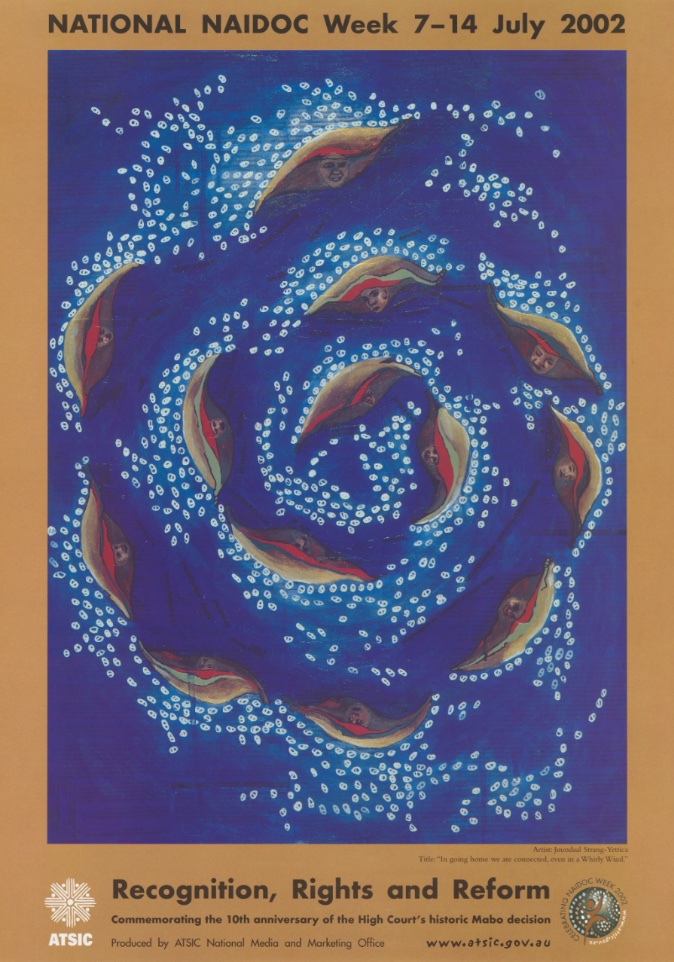
2002: Recognition, Rights and Reform

2003: Our Children Our Future

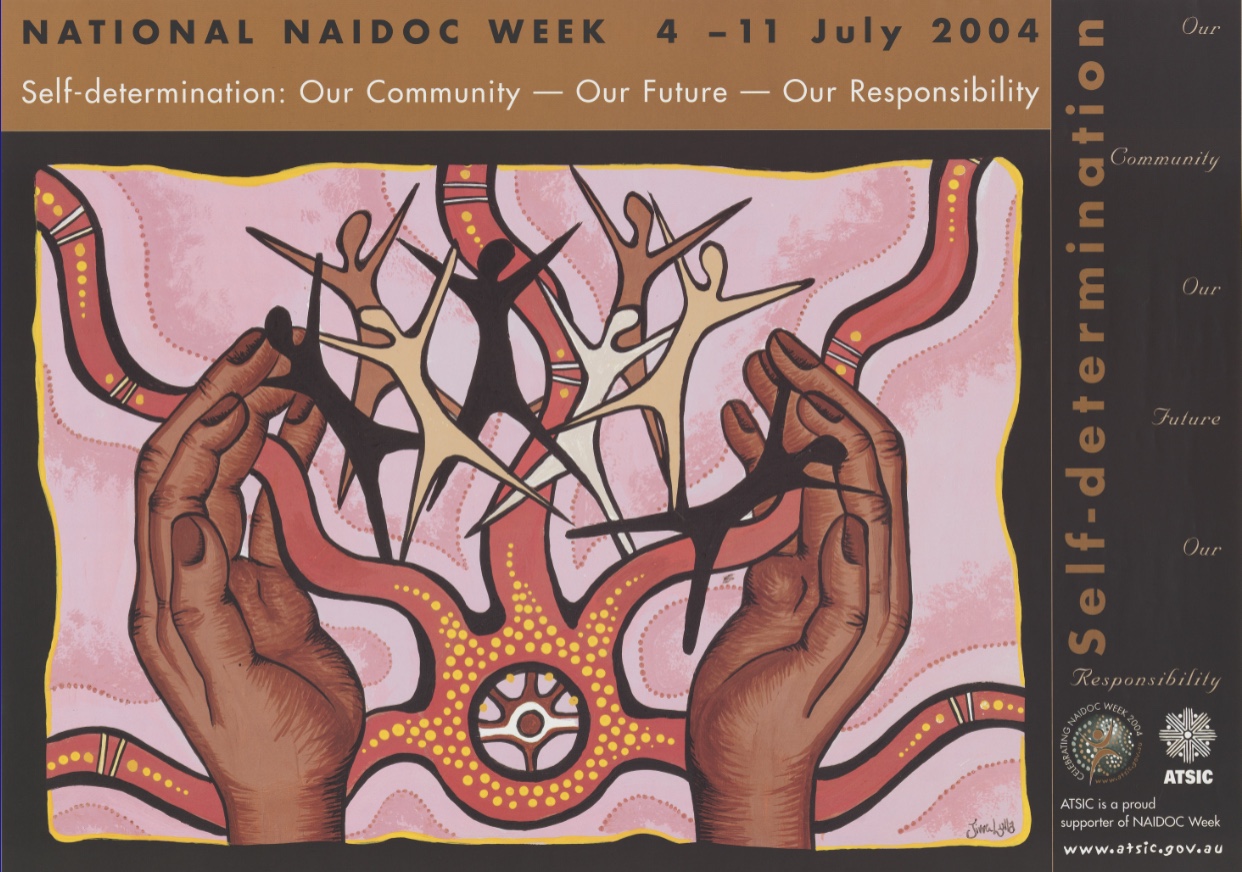
2004: Self-determination—Our Community—Our Future—Our Responsibility

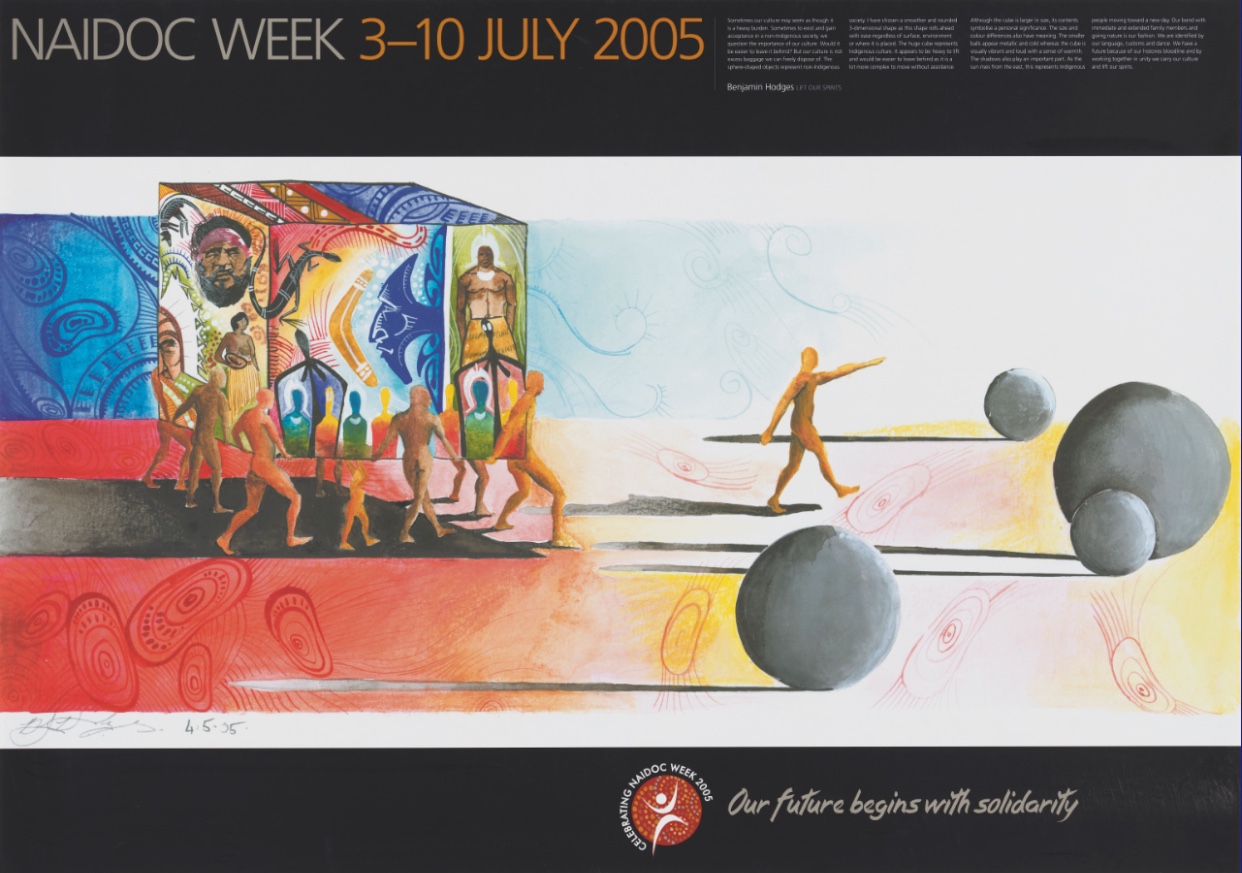
2005: Our Future Begins with Solidarity

2006: Respect the Past—Believe in the Future

In his overview of indigenous affairs during the period of the Howard Government, Dr John Gardiner-Garden notes a cluster of immediate changes made by the incoming Howard government—changing terminology, withdrawing support from established initiatives, applying economic markers to the outcomes desired, amending the Native Title Act, and reducing funding to ATSIC (the Aboriginal and Torres Strait Islander Commission). See https://www.aph.gov.au/about_parliament/parliamentary_departments/parliamentary_library/pubs/bn/1011/indigenousaffairs2#_Toc295218057

Over the ensuing decade, Gardiner-Garden notes that “perceived inactions on reconciliation and in responding to the rhetoric of the new One Nation Party placed a strain on relations with the Indigenous community”, and records a series of decisions and actions which provided ongoing concern within Aboriginal communities: the ultimate demise of ATSIC, the attempt to establish a Special Auditor “to make a determination on whether a prospective grantee was ‘not fit and proper’ to receive public money”, a contentious Ten Point Plan to deal with the Wik decision, alterations to the Native Title Act which were seen as racially discriminatory, a Racial Hatred Act (1996) which fell short of many provisions that had been requested, and finally the Northern Territory Emergency Response, more widely known as The Intervention.

This latter event was applied to 73 Indigenous communities across the Northern Territory, and involved withholding 50% of welfare payments from Indigenous welfare recipients—-bans on alcohol and pornography—-increased police presence in Aboriginal communities—-compulsory health checks for all Aboriginal children—-and the power for government to take possession of Aboriginal land and property.

The Intervention was a highly controversial policy, with many Aboriginal leaders speaking out against it.

There was some support within the Australian Indigenous community as well as beyond it. Australians Together report that “two of Australia’s most influential Indigenous academics and leaders, Noel Pearson and Marcia Langton, supported several of the more controversial aspects of the Intervention.”

See https://australianstogether.org.au/discover/the-wound/the-intervention/#Interventionreference1a

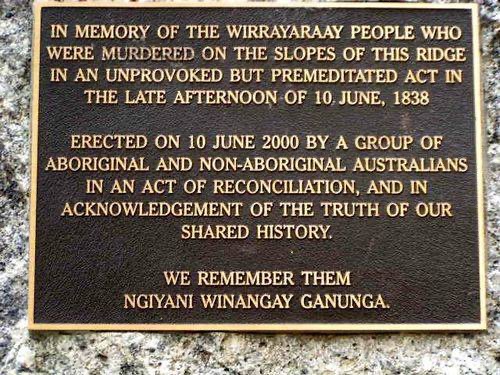
The Intervention, however, is viewed by most Aboriginal people as yet another instance of white colonial supremacy over blacks. It is perhaps appropriate, then, for this blog to go live on 10 June, which was the day that the infamous Myall Creek Massacre took place, in 1838. This event has come to be a symbol of all that has been wrong about the way that the invading British colonisers treated the indigenous peoples who had been the continuous inhabitants of the land “since time immemorial”.

Creative Spirits describes the 1838 event as follows: “12 heavily armed colonists rounded up and brutally kill 28 Aboriginal people from a group of 40 or 50 people gathered at Henry Dangar’s Station, at Myall Creek near Inverell (NSW). The massacre was believed to be a payback for the killing of several hut keepers and two shepherds. But most of those killed were women and children and good relations existed between the Aboriginal people and European occupants of the station. Seven stockmen are eventually hanged for murder. This outrages the colonial press and parts of the public who cannot understand why anyone should hang for murdering Aboriginal people.”

See https://www.creativespirits.info/aboriginalculture/history/australian-aboriginal-history-timeline/massacres

The Myall Creek Massacre Memorial

A pivotal event took place in 1997, when Prime Minister Howard addressed the Australian Reconciliation Convention, a forum for Australians to discuss Indigenous issues. The conference drew widespread participation, but was overshadowed by the controversy that Howard generated in his opening address on 27 May 1997.

Howard said: In facing the realities of the past, […] we must not join those who would portray Australia’s history since 1788 as little more than a disgraceful record of imperialism […] such an approach will be repudiated by the overwhelming majority of Australians who are proud of what this country has achieved although inevitably acknowledging the blemishes in its past history.

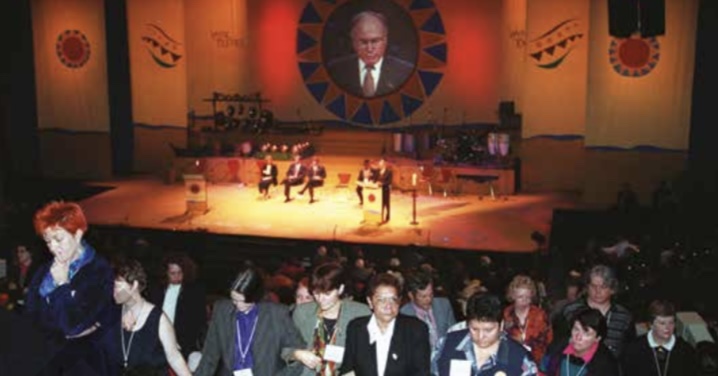
The reference to “blemishes” in Australia history was an incendiary remark. Indigenous delegates who were listening to the lecture stood up and turned their backs on the Prime Minister.

Delegates at the 1997 Reconciliation Convention,
upset by the speech of Prime Minister John Howard,
stand and turn their backs to him

It was a shameful moment, a deliberate aggravation by the elected leader of the First Peoples present. The 1997 theme, Gurindji, Mabo, Wik—Three Strikes for Justice—Celebrating the 30th Anniversary of the 1967 Referendum, offered a striking rejoinder to the mean-spirited assessment of the Prime Minister (see previous post).

*****

In 1998, the theme for NAIDOC WEEK was equally striking. It was a direct reference to the landmark report on the stolen generations which had been issued in April 1997 by the Australian Human Rights Commission. The report was entitled Bringing Them Home, and that exact phrase was used for the NAIDOC WEEK theme in 1998: Bringing Them Home.

Sir Ronald Wilson, former High Court justice and the President of the Human Rights and Equal Opportunity Commission at that time, had led the National Inquiry along with Mick Dodson, the Aboriginal Social Justice Commissioner. They heard testimony directly from 535 people and read a further 600 submissions that had been made. Wilson stated that they encountered “hundreds of stories of personal devastation, pain and loss. It was a life-changing experience.”

The report, entitled Bringing Them Home: Report of the National Inquiry into the Separation of Aboriginal and Torres Strait Islander Children from their Families, estimated that “between 1910 and 1970, up to 100,000 Aboriginal children were taken from their parents and put in white foster homes”. The commissioners found that this was in breach of international law, and called for a national compensation fund to be established. They also recommended a national “sorry day”; the first one was held in 1998 and this has remained an annual fixture of growing significance to Aboriginal Australians.

Creative Spirits offers an excellent overview of the issues associated with the Aboriginal people who had formed what became known as “the stolen generations”; see https://www.creativespirits.info/aboriginalculture/politics/stolen-generations/a-guide-to-australias-stolen-generations

They also have a comprehensive cataloguing of the impacts that being removed from your family home as a child can have on such children, running throughout their lives and on into subsequent generations; see https://www.creativespirits.info/aboriginalculture/politics/stolen-generations/stolen-generations-effects-and-consequences

The response of the Howard Government to this report was jarring: Howard refused to make a public apology to “the stolen generations”. Apologies were made by the governments of South Australia (May 1997), Western Australia (May 1997), the Australian Capital Territory (June 1997), New South Wales (June 1997), Tasmania (August 1997), Victoria (September 1997), Queensland (May 1999), and the Northern Territory (October 2001), as well as a number of local governments and churches across the country.

The texts of the above apologies can be found at https://humanrights.gov.au/our-work/bringing-them-home-apologies-state-and-territory-parliaments-2008

The Howard Government did not offer a formal apology; instead, they brought a motion to the Parliament in 1999 which expressed “deep and sincere regret that indigenous Australians suffered injustices under the practices of past generations”, noting “the hurt and trauma that many indigenous people continue to feel as a consequence of those practices”.

The government described this intentional, systemic, multi-generational mistreatment of Indigenous Australians as the “

“most blemished chapter” in Australian history. The understatement of this language (“regret” rather than “sorry” or “apology”; “blemish” rather than “systemic injustice”, for instance) reflected the conservative white preference for minimising—or perhaps removing from sight—the story of Aboriginal people in recent centuries.

Subsequent NAIDOC WEEK themes would speak back to this inadequate and insulting governmental response.

*****

In 1999, the theme was Respect: Show Some, Earn Some. This was a plea to provide what many Aboriginal people had felt had been missing over the decades: respect.

In 2000, the theme was Building Pride in Our Communities. This connected back with earlier themes in which community had been a motif. It also offered an encouragement to Aboriginal people, to be proud of who they are and what they have to offer.

2000 was the year when hundreds of thousands of people “walked for reconciliation”, a strong statement of the popular support that existed for clear action in the way that Aboriginal and Islander people are treated. The most memorable walk was across the Sydney Harbour Bridge on 28 May 2000, when a quarter of a million people (250,000 people) walked across the bridge.

See https://www.nma.gov.au/defining-moments/resources/walk-for-reconciliation

*****

For the centenary of Australia as a nation, the theme for 2001 was Treaty—Let’s Get It Right. This was another strong statement to government and public intransigence in the face of a growing recognition that the situation of Indigenous peoples was damaged by injustice upon injustice.

The history of seeking a treaty reveals stalled attempts, negative responses, and inaction by various governments. In 1979, the former Governor of the Reserve Bank, ‘Nugget’ Coombs, had convened a number of prominent non-Aboriginal Australians, working towards the implementation of a Treaty with Aboriginal peoples.

In 1981, the Fraser Government responded by rejecting the notion that a Treaty was needed. Treaties, it was said, are concluded between separate sovereign nations; the Aboriginal people were not a nation with which a treaty could be concluded.

In 1983, the National Aboriginal Conference proposed that, rather than a single national treaty, each individual Aboriginal nation might negotiate its own treaty or agreement. By 1987, the Prime Minister, Bob Hawke, had signalled a willingness to produce some form of agreement for the Bicentenary of 1988. The Barunga Statement was presented to him in June 1988, but no action ensued.

By 1991, a Council for Aboriginal Reconciliation had been formed. In 1996, iconic rock band Yothu Yindi released their single, Treaty, which peaked at number 11 on the Australian charts and number 6 internationally. But no action followed. By the end of the decade, Prime Minister Howard had definitively rejected any notion of a treaty, because “it implies that we are two nations; and we are not, we are one nation”. Thus, the 2001 theme of Treaty—Let’s Get It Right was a clear political statement.

For the history of discussions and proposals relating to a treaty, see https://www.creativespirits.info/aboriginalculture/selfdetermination/treaty-timeline-events-from-1835-to-today?page=2

On what is involved in such a treaty, see https://www.creativespirits.info/aboriginalculture/selfdetermination/what-is-a-treaty

*****

In the following years, the NAIDOC WEEK themes referenced familiar motifs.

For 2002, the theme continued the explicit political plea of 2001, with the triple alliteration of Recognition, Rights and Reform. In 2003, the theme of Our Children Our Future looked back to earlier themes.

In 2004, the theme had four parts: Self-determination—Our Community—Our Future—Our Responsibility. The poster had a striking indigenous image set within a pair of cupped brown hands.

The 2005 theme, Our Future Begins with Solidarity, reinforced once more the importance of working together, both within the Aboriginal community as a whole, and also with white allies in the wider Australian society.

*****

Perhaps the theme for 2006, Respect the Past—Believe in the Future, was chosen with an eye to the prevailing “black armband” view of history that had been actively prosecuted in the so-called “history wars” during the Howard years.

The “black armband view of history” had been first suggested by historian Geoffrey Blainey in a public lecture he gave in 1993. A series of polemic interactions from historians and commentators ensued over the next decade, fuelled by comments made by John Howard in a 1996 lecture, soon after he had been elected Prime Minister.

Mr Howard asserted that “the ‘black armband’ view of our history reflects a belief that most Australian history since 1788 has been little more than a disgraceful story of imperialism, exploitation, racism, sexism and other forms of discrimination.”

Howard continued, “I believe that the balance sheet of our history is one of heroic achievement and that we have achieved much more as a nation of which we can be proud than of which we should be ashamed. In saying that I do not exclude or ignore specific aspects of our past where we are rightly held to account. Injustices were done in Australia and no-one should obscure or minimise them. … But … our priority should … [be] to commit to a practical program of action that will remove the enduring legacies of disadvantage.”

The transcript of the lecture is at https://web.archive.org/web/20110727080235/http://www.menzieslecture.org/1996.html

This Prime-Ministerial advocacy added fuel to the fire raging in the debate. It was countered by the patient work of Henry Reynolds in advocating honesty in the public discourse about “The Frontier Wars”, a term which has come into popular usage to describe the series of aggressive engagements and terrible massacres that took place from early in the years of British colonisation, through into the 20th century.

Respect the Past—Believe in the Future was a fine and suitable theme to highlight in 2006. The theme for the following year built on this with its reference to Looking Forward, Looking Blak.

*****

See also

The Paraclete as a “replacement Jesus” and the Doctrine of the Trinity (John 16; Trinity Sunday, Year C)

This coming Sunday is designated as Trinity Sunday. It’s an unusual occurrence, for two reasons. First, it’s the only time in the Christian calendar that a Sunday is named for a doctrine, rather than for a biblical story. And second, it is unusual in that it presents problems for the shapers of the lectionary, since (in my view) the Doctrine of the Trinity is not actually proclaimed in the biblical texts.

Yes, there are passages that canvass some aspects of the Doctrine—how the Son relates to the Father, what is the essential character of God, how the Spirit was experienced and understood, and how Son and Spirit might relate. But there is no biblical passage which articulates the full scope of the Doctrine of the Trinity: God is three, God is one, Father, Son, and Spirit, consubstantial, co-eternal, while unending ages run (as it were).

That’s quite understandable, since the full expression of this Doctrine took a number of centuries to develop, after the period in which the texts of the New Testament were written. If the latest NT text comes from the end of the first century, the earliest form of the Doctrine of the Trinity is found in the Apostles’ Creed, adopted by the Council of Nicea in 325 CE, and a more fulsome and complex form is to be found in the Nicene Creed, adopted by the Council of Constantinople in 381 CE.

So we should not expect the lectionary to provide any texts which set out the Doctrine of the Trinity. What we do find, however, is that certain texts are offered, in which some, or all, of the three persons of the Trinity—Father, Son, and Spirit—are in view.

In fact, two texts name all three persons in a quasi-formulaic way: the benediction at the close of 2 Corinthians 13, and final words of Jesus in Matthew 28. Indeed, these two passages are set for Trinity Sunday in the first of the three years of the lectionary, Year A. Associated with these two passages is a text that expounds something of the nature of one of these persons, God the Creator, in Genesis 1.

In Year B, two texts are offered which focus somewhat on the third person of the Trinity, the Spirit: Romans 8, where Paul wrestles with the role of the Sprit, and John 3, the conversation between Jesus and Nicodemus, which includes reference to the Spirit. The Hebrew Scripture offering in Year C draws from the wonderful depiction of Wisdom in Proverbs 8; while the epistle in Year C, from Romans 5, appears to be included because it manages to refer to each of the three person of the Trinity within the space of five verses.

The Gospel offered in Year C (the current year) is just a short section (John 16:12–15) from the last chapter in the lengthy “farewell discourses” of Jesus (chs. 14–16), which John reports as being given to the disciples at the last meal that Jesus shared with his followers (from 13:1 onwards). It contains the fourth of four brief references in these “farewell discourses” to the Spirit, identified as “the Spirit of truth” (14:17; 15:26; 16:13), the parakletos (14:16, 26; 15:26; 16:7) and “the Holy Spirit” (14:26).

These passages are considered to provide some biblical material for the Doctrine of the Trinity relating specifically to the third person, the Holy Spirit. In particular, I am interested in how the Spirit is defined in relation to the other two persons of the Trinity.

There are three ways in which the Spirit is defined in relation to Jesus. First, the Spirit is identified as a parakletos—a word with multiple translation options. It could mean one who advocates for, one who provides counsel, one who offers help, or one who gives comfort.

See https://johntsquires.com/2019/06/07/the-paraclete-in-john-15-exploring-the-array-of-translation-options/

Whatever option we take in translating this word, it is striking that Jesus says that the main role of the Spirit (at least as we encounter the explanation in this gospel) is to be “another parakletos” (14:16). The implication is that Jesus himself has been a parakletos—an implication that is confirmed when we read the statement in 1 John, that “we have a parakletos with the Father, Jesus Christ the righteous; and he is the atoning sacrifice for our sins, and not for ours only but also for the sins of the whole world” (1 John 2:1–2).

This first statement about the Spirit thus places the Spirit in the position that Jesus had whilst living in human form amongst the people of Israel. The Spirit is the present manifestation of the role that Jesus of Nazareth had all those centuries ago. The Spirit is, in effect, a “replacement Jesus”.

Indeed, this is strengthened by the affirmation that this figure will “abide with you … and be in you”, precisely the same terminology used of Jesus in the earlier parable of the vine (“abide in me and I abide in you”, 15:4) and in the final prayer that Jesus prays before his arrest (“may [they] be one, as we are one, I in them and you in me, that they may become completely one”, 17:22–23]). The reality of the presence of the Spirit is the same as the reality of the presence of Jesus when he was with the disciples.

This idea is confirmed by the second statement about the parakletos, who is the one “whom the Father will send in my name” (14:26), the one “whom I will send to you from the Father” (15:26). Indeed, Jesus makes it clear that “if I do not go away, the parakletos will not come to you; but if I go, I will send him to you” (16:7). This seems to suggest that the Spirit is unable to take up the role assigned to it until Jesus has departed from his followers—the Spirit is a “replacement Jesus”.

Indeed, at an earlier point in the narrative, on “the last day of the festival, the great day” (7:37; the festival referred to was Booths, 7:2), Jesus was speaking about the Spirit, and portraying the “rivers of living water” that the Spirit would give, as something still to come. The narrator informs us that he was speaking “about the Spirit, which believers in him were to receive; for as yet there was no Spirit, because Jesus was not yet glorified” (7:37–39).

This, of course, is directly contradicted by the many references in Hebrew Scripture to the activity of the Spirit in Israel (Gen 1:1–2; Job 33:4; Ps 104:30; Isa 42:5, 44:3, 48:16, 59:21, 61:1, 63:11–14; Num 11:16–17; Deut 34:9; 1 Sam 10:6, 19:23–24; Ezek 37:1; Joel 2:28–29). Nevertheless, the definitive arrangement of things that is held to quite firmly in the book of signs, is that the Spirit comes only after Jesus has returned to the Father.

The language of sending is used frequently in the fourth Gospel, in describing the relationship between the Father and the Son. The Father is regularly described as the one who sent the Son (3:34; 4:34; 5:23, 30; 6:29, 39, 44, 57; 7:16, 18, 28–29, 33; 8:16, 18, 26, 29, 42; etc). In the final prayer of Jesus, the Father is “him who sent me” (17:3, 8, 18, 21, 23, 25). Amongst the final words of the risen Jesus, we hear Jesus say again, “as the Father has sent me” (20:21).

So, when Jesus refers to the parakletos as the one “whom the Father will send in my name” (14:26), he is reinforcing the notion that the Spirit is the “replacement Jesus”. This is further strengthened by the affirmation that the parakletos will “teach you everything, and remind you of all that I have said to you” (14:26). The language of teaching also recalls a key function of Jesus, who “went up into the temple and began to teach” (7:14), who “sat down and began to teach” the people in the temple (8:2), who characterises his ministry as “I have always taught in synagogues and in the temple, where all the Jews come together” (18:20).

Further, Jesus describes the role of the parakletos as “he will take what is mine and declare it to you” (16:15). Jesus has already declared that “my teaching is not mine but his who sent me” (7:16) and “the word that you hear is not mine, but is from the Father who sent me” (14:24); now he passes that divinely-given material on to the parakletos, clearly stating that “he will take what is mine and declare it to you. All that the Father has is mine. For this reason I said that he will take what is mine and declare it to you” (16:14–15). The teaching function that the parakletos performs is to replicate the teaching role that Jesus has already enacted.

The content of the teaching provided by the parakletos is also evocative of the teaching that Jesus has provided. The parakletos will teach “about sin and righteousness and judgment” (16:8, expanded in 16:9–11). In relation to sin, what Jesus does as “the lamb of God” is to “take away the sin of the world” (1:29); he provides freedom from the slavery of sin (8:34–36), and the final commission that he gives his disciples (who are sent just as he has been sent) is to decree that they have the authority of grant forgiveness of sins (20:23).

Likewise, in relation to judgement, Jesus has stated, “as I hear, I judge; and my judgment is just, because I seek to do not my own will but the will of him who sent me” (5:30), and again, “even if I do judge, my judgment is valid; for it is not I alone who judge, but I and the Father who sent me” (8:16)—although later, Jesus asserts that “I came not to judge the world, but to save the world. The one who rejects me and does not receive my word has a judge; on the last day the word that I have spoken will serve as judge” (12:47–48).

Thus, as the parakletos teaches about sin, and about judgement, the teachings of Jesus on these matters are repeated. (On the matter of righteousness—apart from a single reference to God as “righteous Father”, 17:25—this Gospel is silent.) Again, we see that the parakletos is a “replacement Jesus”.

Finally, the distinctive term used in this Gospel to describe the Spirit, “the Spirit of truth”, also reinforces this way of viewing the relationship between the Son and the Spirit. The Johannine Jesus is “the Word became flesh” who “lived among us … full of grace and truth” (1:14). It is through Jesus Christ that “grace and truth came” (1:17). Jesus describes himself to the leaders in Jerusalem as “a man who has told you the truth that I heard from God” (8:40), and to the Roman Governor, Pilate, he declares, “for this I was born, and for this I came into the world, to testify to the truth. Everyone who belongs to the truth listens to my voice” (18:37).

So Jesus tells his followers that “if you continue in my word, you are truly my disciples; and you will know the truth, and the truth will make you free” (8:31–32), and even affirms unreservedly that “I am the truth” (14:6). Again, the language applied to the Spirit links in with key terminology that describes Jesus and his role. The Spirit of truth now teaches “the truth that will make you free”, that the one who is the truth had taught.

Finally, it is noteworthy that nowhere in the book of signs is there any direct statement about the relationship between Father and Sprit. Although Jesus states that “God is spirit” (4:24), the relationship is always, apparently, mediated through the Son: the Father sends the Son, the Son sends the parakletos; the Son teaches what the Father provides, the parakletos continues the teaching of Jesus; the Father incarnates the Word “in truth”, the Son teaches and is “the truth”, so the Spirit is named as “the Spirit of truth”.

In summary, the relationship between Son and Spirit reads to me as a quite hierarchical style of relationship—not at all a relationship of equals who abide in each other, who are of the same nature and share the same substance with one another, who exist co-eternally and inherit co-equally. Indeed, in the relationship between Father and Spirit/Parakletos, there is no direct link, as there is in the classic Doctrine of the Trinity; all is mediated through the Son, as we have seen. The fourth Gospel offers a different, distinctive—we might even say, unorthodox—theology of Father, Son, and Spirit/Parakletos.

The Trinity is a complex idea, a doctrine with many subsets and dimensions and component parts. Although there are passages in scripture which many say point to this doctrine, nevertheless gaining a full understanding of this doctrine really means entering into the world of metaphysics, philosophy, and linguistics of a later age.

All of this is beyond the capacity of the lectionary to provide, nor can it be done in a relatively brief reflection time within a Sunday worship service—and it runs the risk of charging away from the world of ideas in which the biblical texts were written, and opening up the danger of imposing later ideas, anachronistically, onto those texts.

The little passage from the Gospel of John that we encounter in the lectionary this coming Sunday actually points us in quite another direction!

*****

See also