In the loving example of Joseph (Matt 1; Advent 4A)

A Sermon –preached by James Ellis for Advent 4A – Sunday 18 December 2022 – at Tuggeranong Uniting Church, on the occasion of his commissioning into the specified ministry of Lay Preacher within the Uniting Church in Australia

Readings: Matthew 1: 18-25 (with reference to Isaiah 7: 10-16).

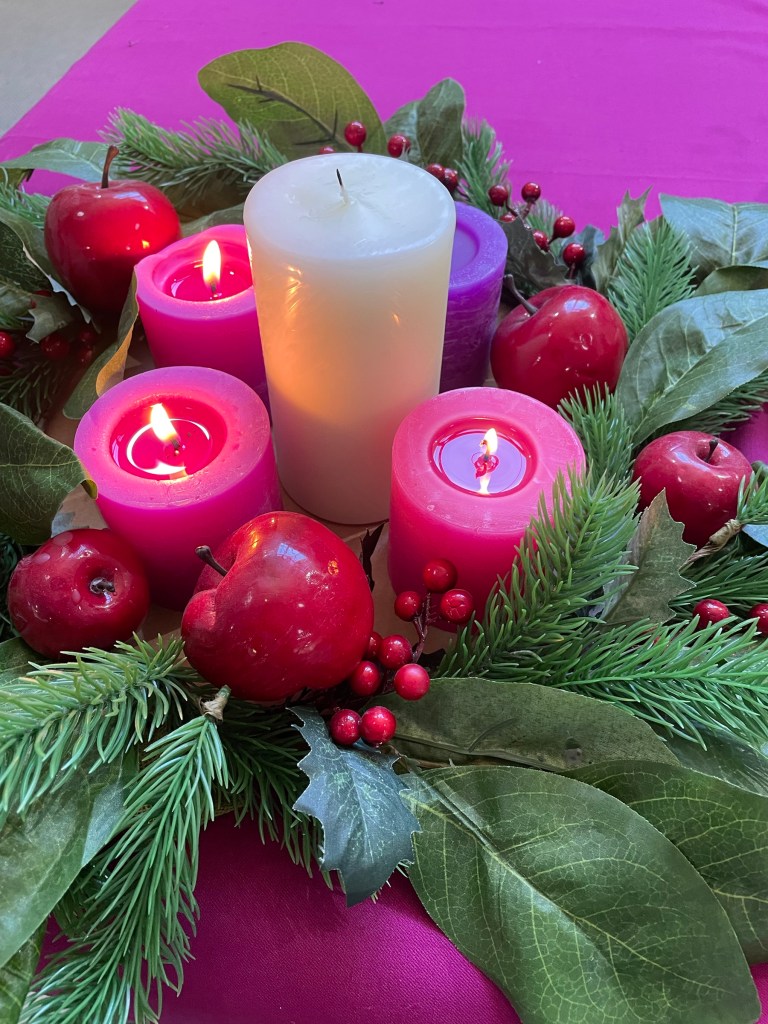
Christmas is coming – or so we have been saying over the past four Sundays! Our lighting of the fourth candle on our advent wreath this morning – the candle of ‘love’ – marks the final days of advent. Christmas is ever closer, but it is not quite here yet.

Some liturgical fusspots can get in a flap about crossing the Christmas threshold “too early” – that is before Christmas Eve, and I admit – not to great surprise I am sure – that I am usually one of these fusspots – especially when it comes to Lent and Advent. 

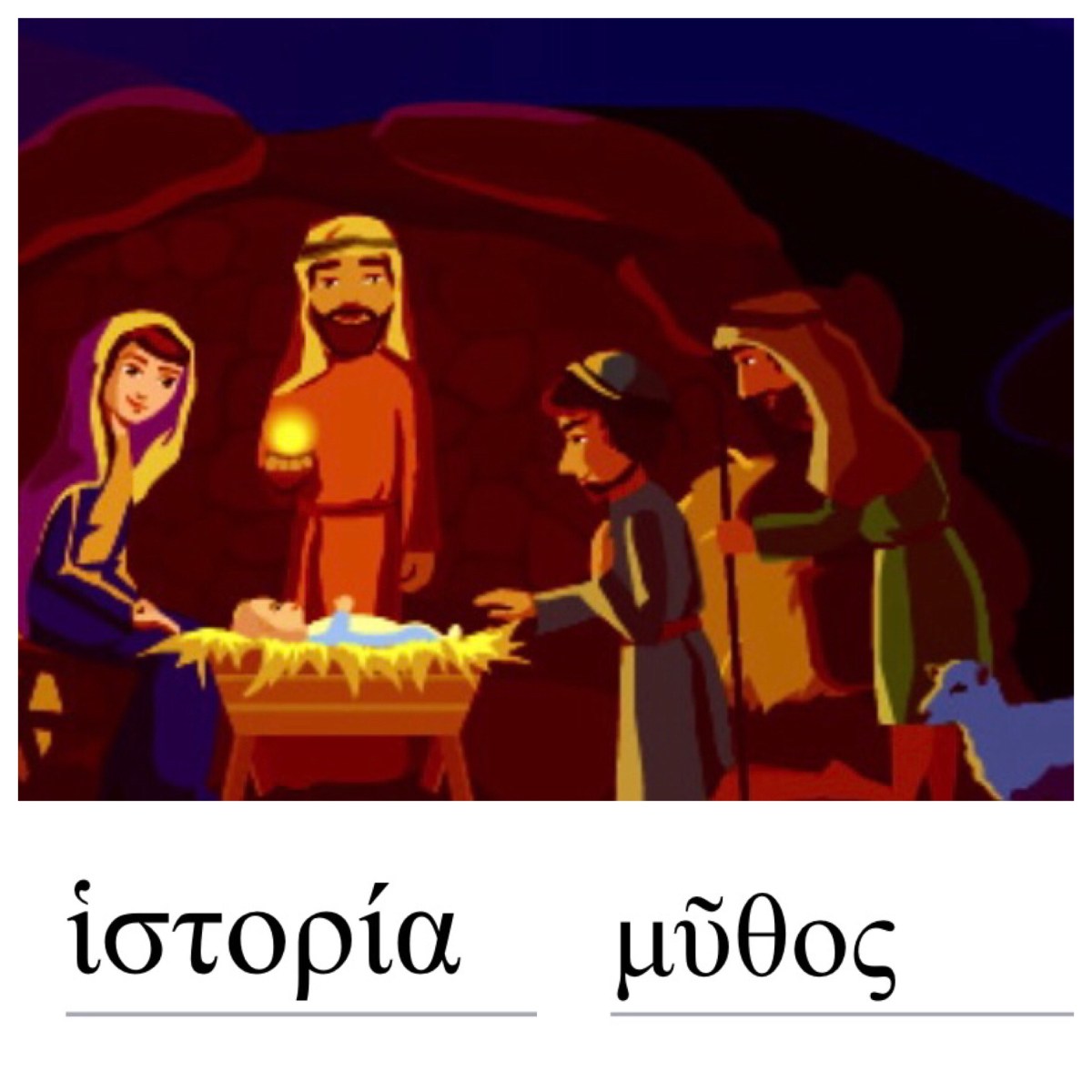
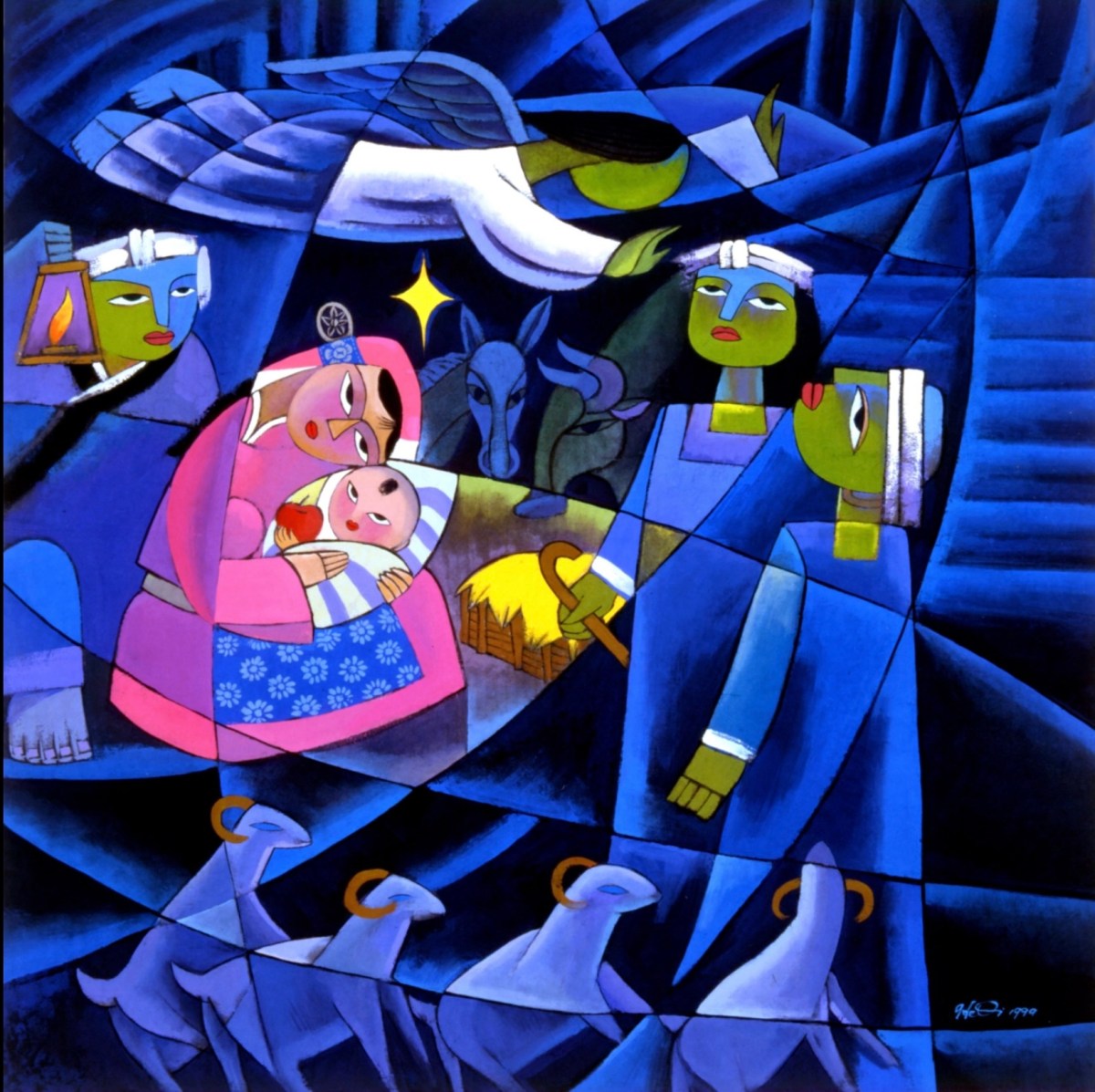
Well, it seems that the lectionary is not so fussy and frequently prepares us for what lies ahead with a spoiler. That is the case today where our Gospel reading: Matthew’s account of the birth of Jesus. This account, a week before Christmas for us this year, invites us to start pondering the great marvel that is Jesus coming among us in anticipation of Christmas. 

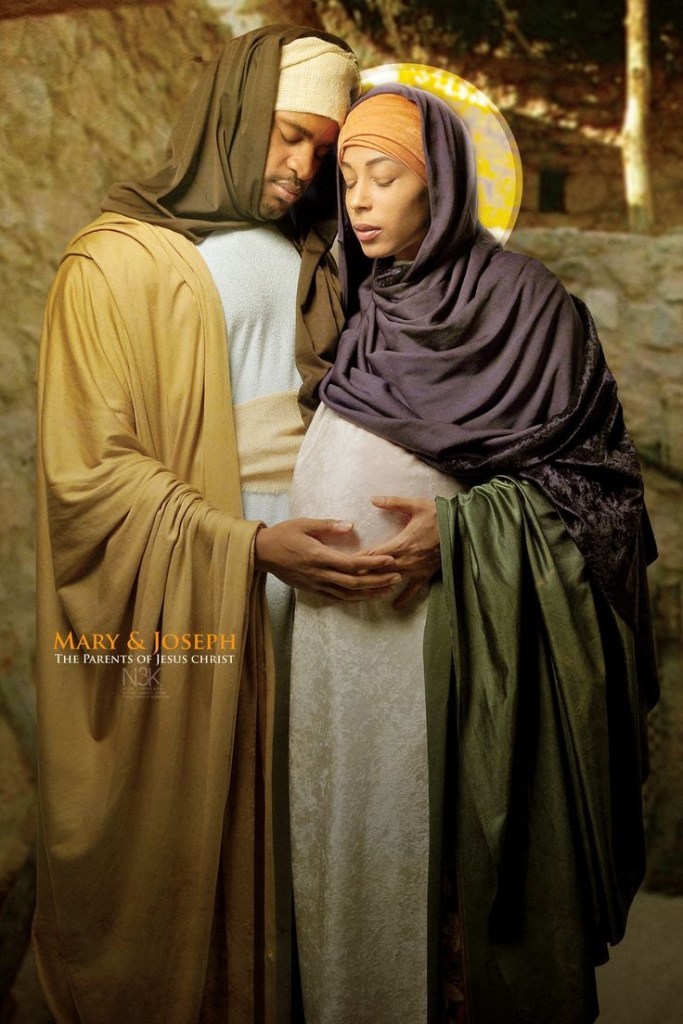
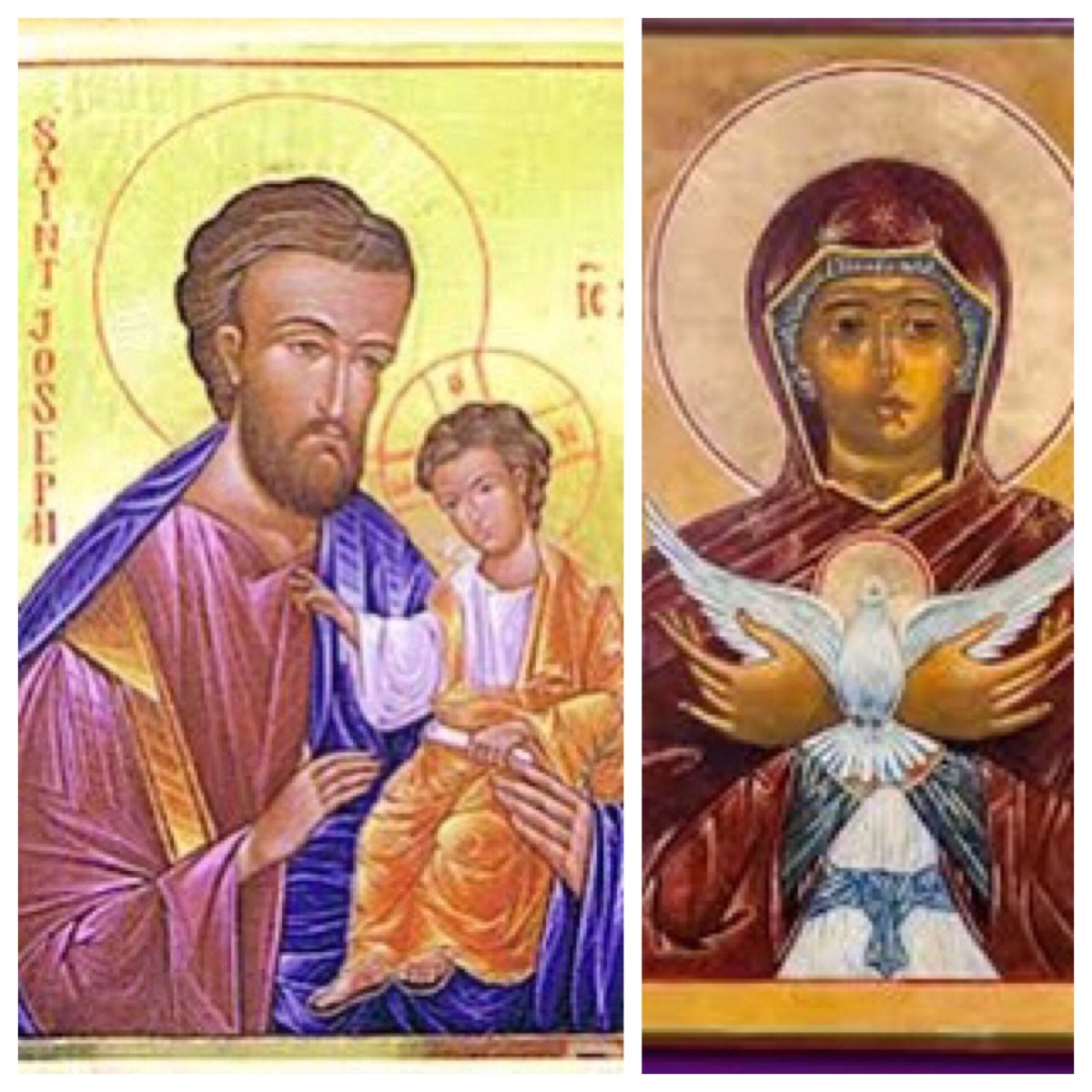
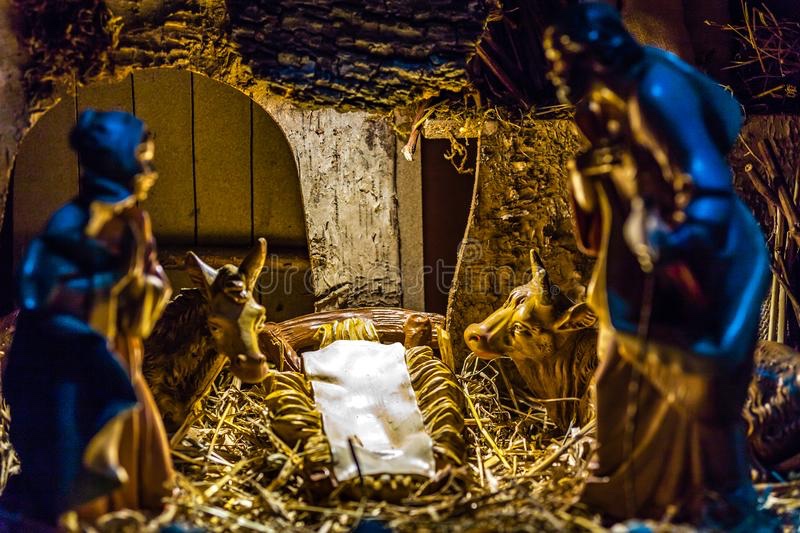
Matthew’s story of Jesus’ birth is very much from the point of view of Joseph. This is quite unique. We usually focus on Mary – and rightly so! We don’t know much about Joseph. We can guess, make assumptions, follow the ‘tradition’ attributed to him – but we simply don’t know. He seems to disappear from the story following the birth. Even when later in Matthew’s Gospel, when Jesus is lost in Jerusalem as a boy, it is his mother Mary who finds (and scolds) him, not Joseph. At the Cross, Mary is there, but Joseph is not. Perhaps, as tradition assumes, Mary is a widow and Joseph has died. 

So, where Luke is very much focussed on Mary’s story and journey, Matthew gives us some insight into Joseph and the situation he found himself in. In this we see the human side of this story…

Joseph is betrothed (NRSV – engaged) to Mary. At the time, this was not like how we view engagement today where it can be called off rather informally. But contracted to marry and considered bound by the laws of marriage, just not living together yet. Scholar Brendan Byrne makes this point in his commentary on this passage when he details the practice of the time to be betrothed young and not live together until much later. The “before they lived together” in verse 18 is to emphasise they had not had any kind of relations together.

It is during this waiting that Joseph becomes aware that Mary is pregnant. We can imagine the dilemma Joseph found himself in – the ambiguity; the lack of certainty; the confusion. He needs reassurance, but also society requires from him a posture of honour and respect. The initial assumption here – for Joseph and anyone who knew – is that Mary has committed adultery. An act which could get her stoned to death under the Deuteronomic laws.

Joseph, as the man ‘wronged’, would be expected at a minimum to divorce (dismiss) her in public and have her attract the shame and humiliation of many other women who have been in a similar situation. We read however that Joseph was a righteous man – and unwilling to expose Mary to such public disgrace (v19). So, he plans to dismiss her ‘quietly’. Still somewhat harsh in our context, but compassionate in his. This reveals to us something of Joseph’s character that he doesn’t want to bring Mary public shame but instead wants to protect her. He cares about her. He loves her.

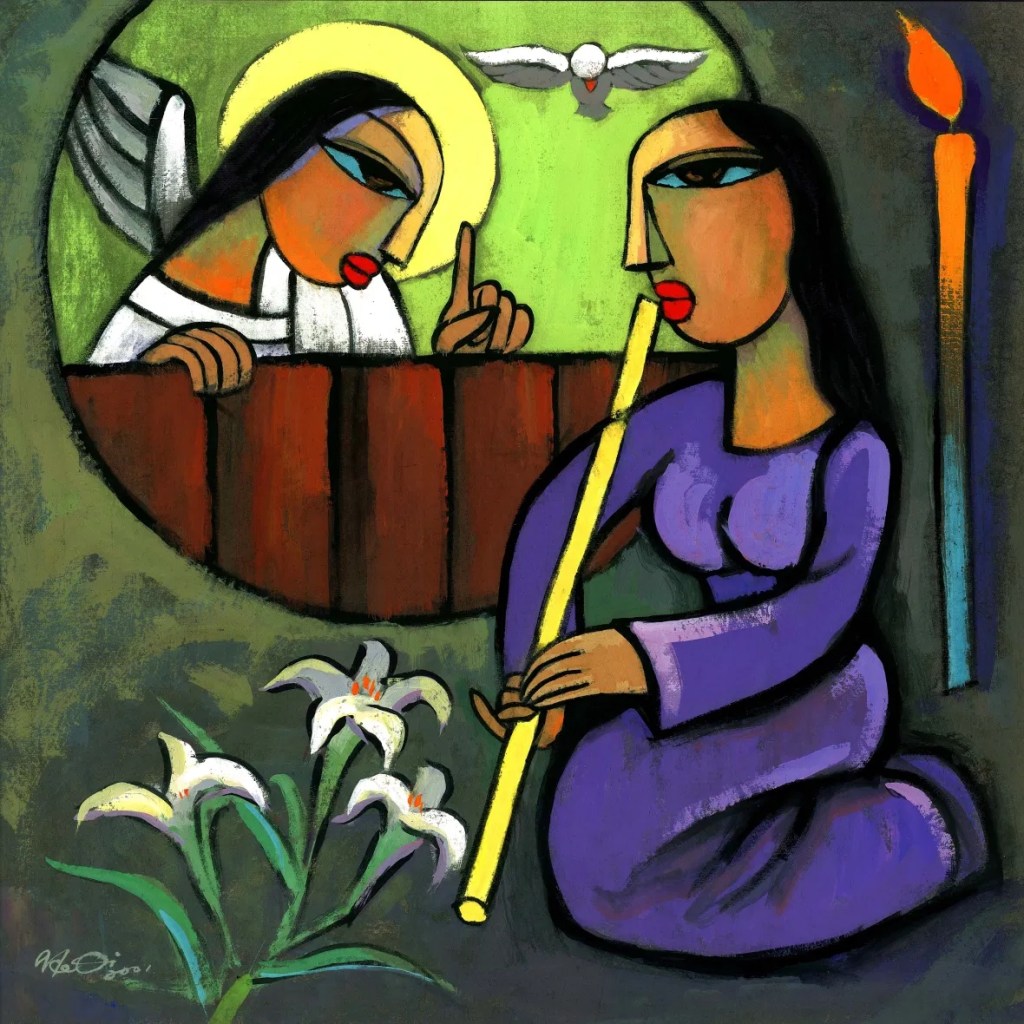
This is attitude and plan before the truth is revealed to him in a dream – where an angel tells him that Mary is in fact pregnant by the Holy Spirit and not because she has been up to no good. Compared to other Angel appearances, Joseph listens and acts. He doesn’t argue or dismiss or come up with excuses. It is almost as though this was what he wanted to hear or needed to hear. 

While we could argue around the who, where, how of a virgin birth, that isn’t the point here today. The Focus here is instead to consider the mysterious and the miraculous as the way that God deals with humanity. Whether it is Abraham and Sarah, Moses (particularly his survival as an infant), Samson, Samuel, Elizabeth and Zechariah … this is the way God deals with the humanly impossible and brings in the new – with impossible births. This is powerful, very powerful, and is the story that speaks through this story. 

Matthew understands this of this story also and we see this by the way he links this event with those contained in Isaiah, also read this morning. “Look, the virgin shall conceive and bear a son, and they shall name him Emmanuel”, which means God with us (v23). Isaiah 7 speaks of the birth of a child, who will be named “Emmanuel”. His birth is a “sign” of God’s promise to deliver and bless King Ahaz and the Judean people with abundance, but also of devastating judgment if the sign is refused. When the son born of the “virgin,” or young woman, is rejected, he becomes a sign of judgment rather than deliverance. Matthew uses the citation of Isaiah 7:14 to indicate that Jesus’ person and mission compel people to make choices, resulting in both redemption and judgment.

The use of “God with us” in Matthew 1:23 and 28:20 thus frames the whole Gospel, which serves as a comprehensive narrative that defines what it means for Jesus to be God with us. The culmination of Jesus’ mission in his death and resurrection means that God’s work of redemption has reached its climactic moment, when Israel is gathered and restored, the mission to the nations has begun, and the whole creation—heaven and earth—will be restored and renewed as God’s dwelling place. 

What role might disciples—all of us—play in the continuing realization of this story?

How is this story still our story in a world ever more filled with greed, exploitation, violence, and death?

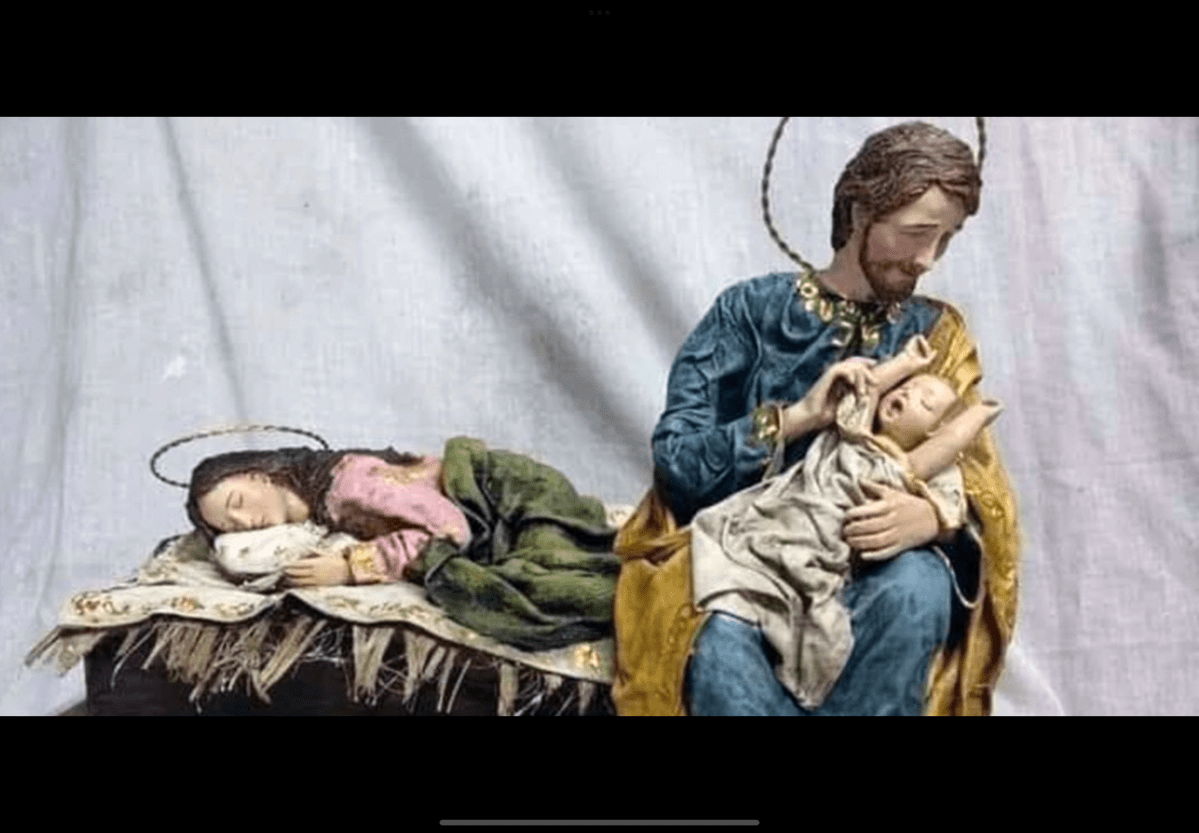
The birth narrative ends with an act of love and commitment from Joseph – where it is he that names Jesus. They become a family, a family of choice. Because of this choice of Joseph’s, Jesus becomes part of the line of David. This family is far from the typical family at the time, but perhaps speaks well into our context.

Rev Dr Jo Inkpin, in her lectionary reflections for the latest issue of Insights, says this about the example of Joseph and the Holy family: “It is an extraordinary family, and as such should give courage to all other families that do not fit neatly into what society says they should. For those who do live within typical expectations this family may also give strength to acknowledge hidden differences and to support those who face other hurts and condemnations. Without the courage of both Joseph and Mary in choosing to step outside conventional boundaries, exercising compassion and common sense, the Christian story could not have begun”.  

I have often heard it said: you don’t know true love until you become a parent. And while the love I experienced when my daughter was born truly made me experience love I never had before – to say I didn’t really know love until then feels … shallow? diminutive?

It seems to me, then, that there are all kinds of love we don’t know until we know it. The love of true, deep friendship. The love of finding a vocation that fills you with purpose. The love of a place that becomes home, perhaps unexpectedly. The love of children birthed or adopted, fostered or through partnership. The love of a community that is a family – like here at Tuggeranong. 

Advent is a journey of God’s unfolding love for us, with us, and before us; it is a time of living in the “here” of a world where Christ came as an infant 2,000 years ago and a time of “not yet” as we live in the midst of sin and sorrow and despair. Advent challenges us to live in this paradox without resolving it. 

And Advent is a time where we are pushed to trust that the love God has for us is going to carry us through – perhaps through unknown paths, or along a winding highway, and almost definitely not where we thought we would go. But the love of God will never, never fade or tire. For God’s love for us is greater than the love parents have for their children, and greater than the love friends have for each other, and greater than the love Joseph showed to Mary and Jesus. 

May we journey together in love this last week of Advent.

The Lord be with you.

*****

Source material: By the Well podcast and Working Preacher podcast, Brendan Byrne, Lifting the Burden: Reading Matthew’s Gospel in the Church Today (Liturgical Press, 2004)

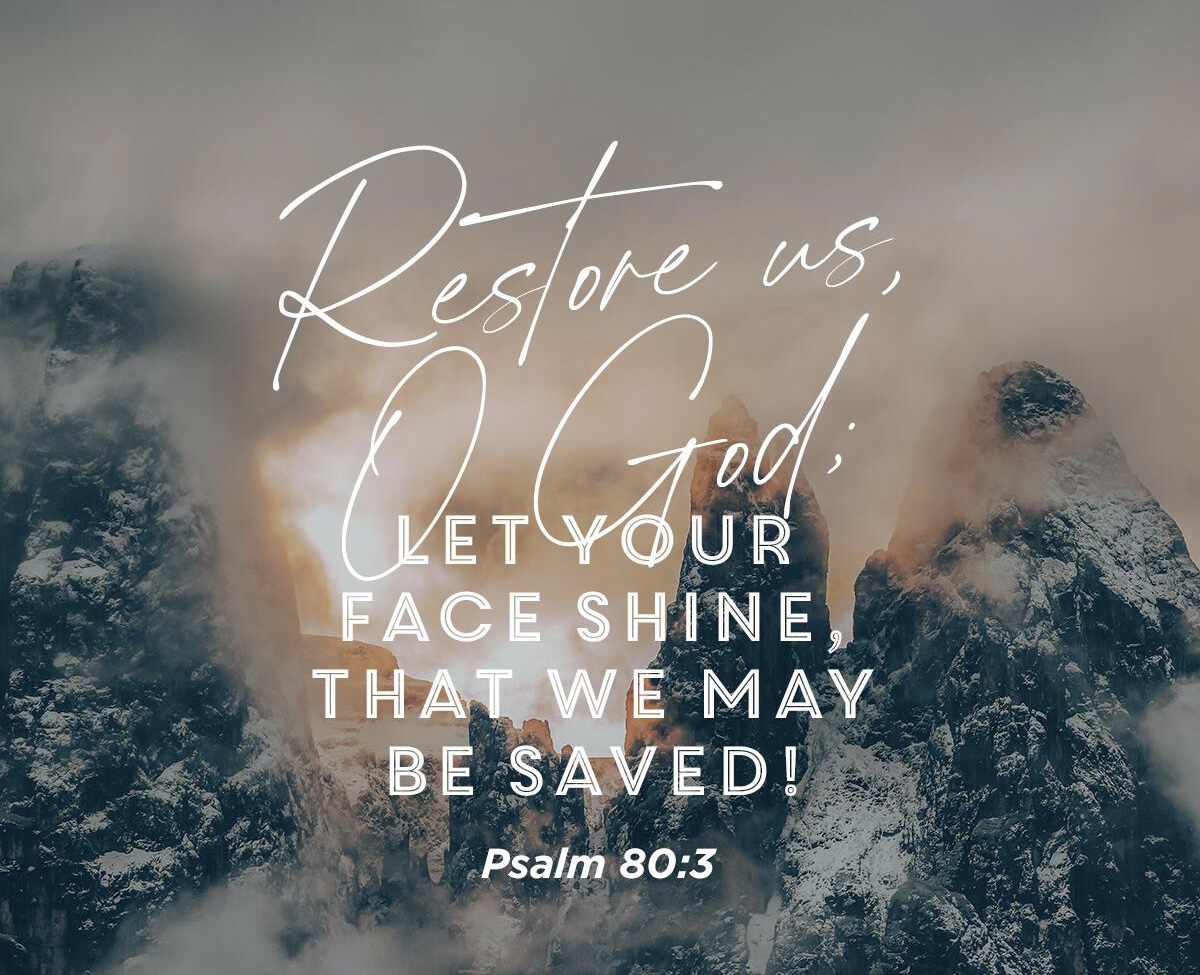
Restore us, O God; let your face shine, that we may be saved (Psalm 80; Advent 4)

“Restore us, O God; let your face shine, that we may be saved.” So pleads the psalmist, in a psalm that is offered by the lectionary this coming Sunday, Advent 4. The verses chosen (Psalm 80:1–7, 17–19) contain a plea to God, to act in defence of Israel at a time of deep distress. Perhaps this psalm is chosen for this particular Sunday, a week before Christmas, because it refers to “the one at your right hand, the one whom you made strong for yourself” (80:17).

The section of the psalm that is omitted by the lectionary recounts the story of Israel, using the familiar image of a vine (80:8–10) which grew and spread (80:11), but now is ravaged by passers-by (80:12–13), before lamenting the destruction that has taken place amongst the people (80:14–16). The setting seems clearly to reflect the experience of exile in Babylon, after the devastation of the city of Jerusalem by the Babylonian army.

In this psalm, the writer prays for God to act. However, this is not just a single prayer; rather, the writer pleads with God to restore Israel to her former glory. “Restore us” is the persistent plea (80:3, 7, 19), along with calls to “give ear” (80:1), “stir up your might” (80:2), “turn again” (80:14), “come to save us” (80:2), and “give us life” (80:18).

This recurring refrain of petitions is accompanied by the request for God to “let your face shine” (80:3, 7, 19); the prayers accumulate in intensity, reflected in the wording that builds throughout the psalm: “restore us, O God” (80:3); “restore us, O God of hosts” (80:7); “turn again, O God of hosts” (80:14); “restore us, O LORD God of hosts” (80:19).

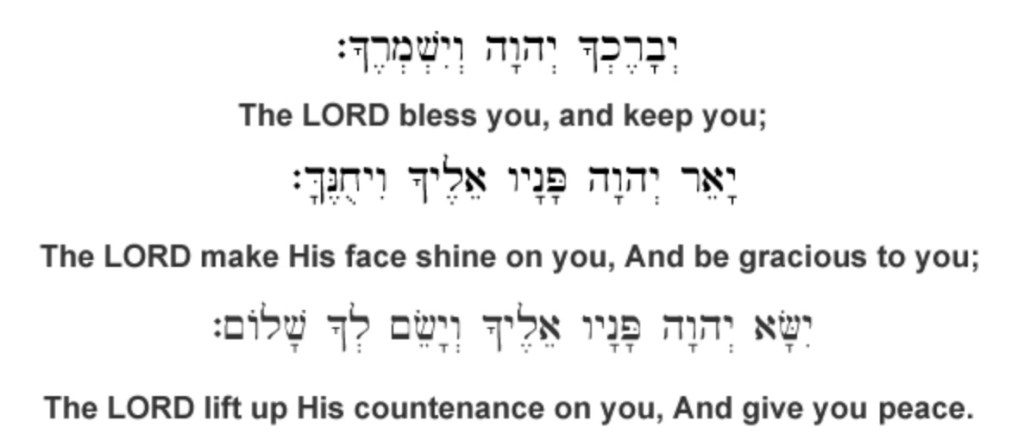
The request for God to let God’s face shine reflects the ancient priestly blessing recorded in Num 6:24–26: “The LORD bless you and keep you; the LORD make his face to shine upon you, and be gracious to you; the LORD lift up his countenance upon you, and give you peace.”

In this three-line prayer, the second line includes the phrase, “the LORD make his face to shine upon you”. The simple parallelism in this blessing indicates that for God to “make his face shine” (v.25) is equivalent to blessing (v.24) and lifting up his countenance (v.26). The second verb in each phrase is, likewise, in parallel: the psalmist asks God to keep (v.24), be gracious (v.25), and grant peace (v.26). These words offer a prayer seeking God’s gracious presence for the people of Israel.

The face of God was a matter of some significance in the ancestral story of Jacob, who becomes Israel. Estranged for decades from his twin, Esau, when they meet up again, Jacob has just spent the night wrestling with a man (Gen 32:22–32). Jacob’s hip is struck, and he walks with a limp; yet he describes the place where this happened as Peniel, “the face of God”, and characterises the encounter as a time when “I have seen God face to face, and yet my life is preserved” (32:30). To see God face-to-face was a rare and intense experience. Jacob was, indeed, blessed.

When Esau then appears and informs Jacob that he now accepts that the birthright which Jacob stole years ago from Esau should rightly remain with him (33:9), Jacob marvels at the favour which Esau shows him, saying, “truly to see your face is like seeing the face of God—since you have received me with such favour” (33:10). God’s face, evident in Esau, is a face that bestows grace and favour.

So the Psalmist sings, “My soul thirsts for God, for the living God. When shall I come and behold the face of God?” (Ps 42:2). And after the incident involving the idolatry of the golden bull (Exod 32:1–35), Moses yearns to know that he has found favour with God: “if I have found favour in your sight”, he prays, “show me your ways, so that I may know you and find favour in your sight” (33:13). God promises that “my presence will go with you, and I will give you rest” (33:14), but Moses presses his case: “show me your glory, I pray” (33:18).

God holds fast, saying that “I will make all my goodness pass before you, and will proclaim before you the name, ‘The LORD’; and I will be gracious to whom I will be gracious, and will show mercy on whom I will show mercy” (33:19), but then stops short of full self-revelation, declaring, “you cannot see my face; for no one shall see me and live” (33:20). Moses is granted a view of God’s “back”, but is not able to see the face of God (33:23).

(The Hebrew word here translated as “back” refers to the “hindquarters”—a polite way of saying that Moses saw only God’s exposed buttocks, rather than his smiling face. Almost every translation chooses the polite wording, “my back”. The King James Version comes closest to an honest translation with “my back parts”.)

Yet the request for God’s face to shine upon people is pressed in a number of other psalms. “There are many”, says the psalmist, “who say, ‘O that we might see some good! Let the light of your face shine on us, O LORD!’” (Ps 4:6). In Psalm 31, the psalmist sings, “Let your face shine upon your servant; save me in your steadfast love” (Ps 31:16). Again in Psalm 67, the psalmist echoes more,explicitly the Aaronic Blessing, praying, “May God be gracious to us and bless us and make his face to shine upon us—Selah—that your way may be known upon earth, your saving power among all nations” (Ps 67:1–3).

In the seventeenth section of the longest of all psalms, Psalm 119, a prayer asking for God to help the psalmist keep the Law culminates with the request for God’s face to shine: “Turn to me and be gracious to me, as is your custom toward those who love your name. Keep my steps steady according to your promise, and never let iniquity have dominion over me. Redeem me from human oppression, that I may keep your precepts. Make your face shine upon your servant, and teach me your statutes.” (Ps 119:132–135).

Another psalm indicates that human faces can shine: “you [God] cause the grass to grow for the cattle, and plants for people to use, to bring forth food from the earth, and wine to gladden the human heart, oil to make the face shine, and bread to strengthen the human heart” (Ps 104:14–15). The Preacher, Qohelet, links a shining human face with Sophia, Wisdom. In response to the question, “who is like the wise man? and who knows the interpretation of a thing?”, the Preacher proposes: “Wisdom makes one’s face shine, and the hardness of one’s countenance is changed” (Eccles 8:1). A shining face is a sign of being imbued with Wisdom!

This idea is then picked up in apocalyptic writings, such as 2 Esdras, writing about “the sixth order, when it is shown them how their face is to shine like the sun, and how they are to be made like the light of the stars, being incorruptible from then on” (2 Esd 7:97). In a later chapter, as Ezra encounters a weeping woman, he reports, “While I was talking to her, her face suddenly began to shine exceedingly; her countenance flashed like lightning, so that I was too frightened to approach her, and my heart was terrified” (2 Esd 10:25).

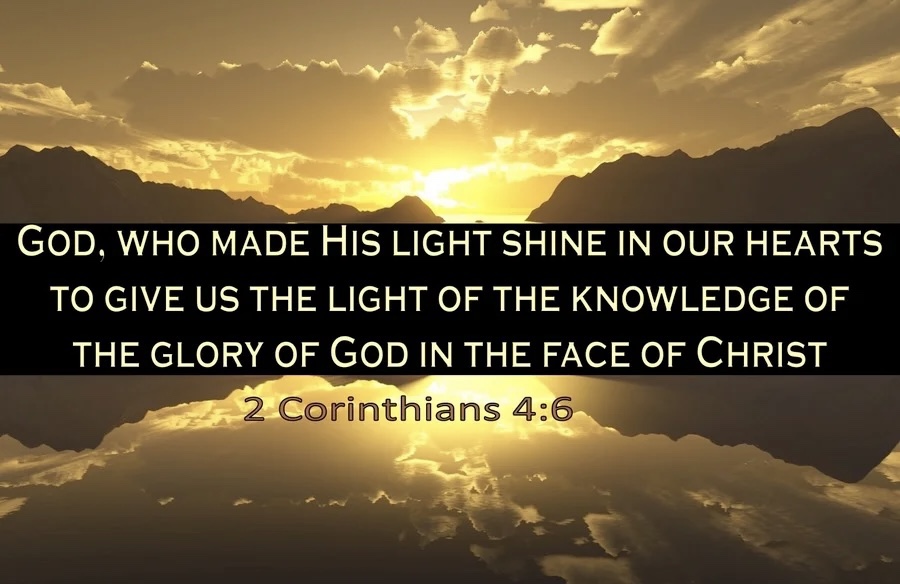
The trajectory flows on into the New Testament, as Paul in writes to the believers in Corinth, applying the language of a shining face to Jesus: “it is the God who said, “Let light shine out of darkness,” who has shone in our hearts to give the light of the knowledge of the glory of God in the face of Jesus Christ” (2 Cor 4:6).

The culmination of this trajectory is reached in the accounts of the Transfiguration of Jesus, on a mountain, when Jesus was transfigured (Mark 9:2), “the appearance of his face changed” (Luke 9:29), and “his face shone like the sun” (Matt 17:2). And so, the brightly shining face of Jesus, God’s chosen one, points to the enduring steadfast love and covenant faithfulness of God, which is what is remembered and celebrated with such clarity each Christmas.

And so it is that these verses from Psalm 80 stand on the fourth Sunday in Advent as a pointer to the coming Christmas celebrations. (And the divine glow, of course, is there to see in so many of the classic Christmas images that adorn Christmas cards and shop windows!)

Now the birth of Jesus the Messiah took place in this way (Matthew 1; Advent 4A)

The passages set in the lectionary for this coming Sunday place alongside each other a prophetic oracle spoken by Isaiah, and an angelic announcement delivered to Joseph. The Gospel selection from the book of origins recounts how the birth of Jesus the Messiah took place in this way. The prophetic selection looks to the predicted conception, birth, and naming of a child.

The prophet (Isaiah) was speaking some seven centuries before the time of Jesus, when Judah was ruled by a king. But it was a time when the kingdom was under pressure from stronger forces—the kingdom of Israel to the north, in league with the much stronger empire of Syria.

The angel (unnamed) was speaking to Josephus at a time when the Hebrew people were under Roman rule, after many centuries of foreign domination and oppression. The Assyrians had conquered Israel, in the north, and then the Babylonians had conquered Judah, in the south. In time, the Persians, then the Seleucids, and then the Romans, took control throughout the region.

The centuries of foreign rule took their toll on the national psyche. Hope for a leader from within the people, identified by the prophet, continued on in various forms throughout the period. Some who claimed such leadership met unhappy ends, and led the people into disastrous situations. Hatred of the foreigners grew and remained strong, alongside of persistent hope for the people of Israel.

The oracle of the prophet speaks about a child to be born. The message of the angel announces a child to be born. The context of this latter message, under Roman occupation, resonates strongly with the context of threat when the prophet was speaking. By this means, the overlapping of the child predicted by the prophet and the child announced by the angel is secured.

Thus the author of the book of origins (whom I refer to, following tradition, as Matthew) quotes the prophetic oracle and claims that it has been fulfilled in the angelic announcement. In subsequent verses, he clearly shapes the story of Jesus so that it fulfils scripture at each point along the way. “This took place to fulfil the scriptures” is a common refrain in the chapters that follow (see 1:22, 2:5, 2:17, 3:3, and so on).

Both angel and prophet affirm that child to be born would be a sign to the people, that God was still with them, in the midst of their difficulties. In traditional Hebrew fashion, the name given to the child signals the prophetic understanding of the role of the child. Thus, Emmanuel, meaning “God is with us”, is the name decreed for the child (Isa 7:14).

This prophetic pronouncement is quoted, with intent, in the book of origins (Matt 1:23). The child should be known as Emmanuel. And yet—the name actually given to the child whose birth was announced by the angel is “he saves”. Not, “God is with us”; but, “he saves”. And we know this child by this given name—in Hebrew, Yehoshua, or modified into English, Jesus. Saviour. The one who “will save his people from their sins” (1:21).

As Saviour, then, the child will serve as a signal of God’s enduring presence with the people. Salvation is effected by God and mediated through the child, it would seem.

The announcement reported in Matt 1 is made to Joseph. Not to Mary, as is the case in the orderly account that we know as the Gospel of Luke. In Matthew’s version, the angel speaks directly to Joseph, addressed as “son of David” (1:20). The story comes immediately after recounting a genealogy for the child, made through Joseph, “the husband of Mary, of whom Jesus was born” (1:16).

And the irony of this is that, if we take the literal explanation provided regarding the parentage of Jesus, then Mary is the mother (1:18), but she has had no marital relations with Joseph (1:25). Joseph is not presented as the “natural father”. And the citation of the prophetic oracle is intended to align Mary, the mother, with the virgin who shall conceive (1:23).

Of course, many commentators have noted that there is a translation issue at stake here. (See my post on this at https://johntsquires.com/2019/12/21/a-young-woman-a-virgin-pregnant-about-to-give-birth-isa-714-in-matt-123/)

In Christian tradition, the fathering of the child is attributed to the Holy Spirit, who overshadows the virgin to produce the child (Luke 1:35; Matt 1:18,23). When did that tradition develop? Perhaps it was already known outside of the community of which the author of this book of origins was a part? Certainly, it was later articulated in the orderly account attributed to Luke. Awareness of this claim most likely influenced Matthew to include the prophetic oracle as a foundation for the angelic announcement—he turns to scripture to provide a foundation for his story at many points.

And so the tradition of the virginal conception of Mary arose—leading to the (less accurate) claim about the birth of Jesus having been a Virgin Birth, now strongly cemented in traditional Christian dogma.

But back to the book of origins. Here, we have a child named incorrectly and a lineage traced back to key figures through the apparent non-father. A strange way to start a story!!

And yet, the book of origins is insistent on the Davidic lineage of Jesus—through the line of Joseph. And that is clearly because the covenant with David was an important motif to many groups in Jewish history. God promised that there would always be a descendant of David upon the throne of Israel; by the time that a member of Matthew’s community started to write the book of origins, this had developed into a messianic expectation in certain groups.

Members of the Jewish community in which the book of origins itself originated firmly believed Jesus to be the Messiah. Accordingly, the stress upon the “correct” ‘Davidic’ genealogy of Jesus would have been of particular importance to this predominantly Jewish group, especially one challenging the authority of the Pharisaic Jews of the time. It is probable that this is why Matthew uses the term “son of David” for Jesus much more than the other Gospel writers (1:1, 20; 9:27; 12:24; 15:22; 20:30–31; 21:9, 15, 42).

Matthew’s use of “formula quotations” also provide indications that the life, work and death of Jesus, in its totality, is the fulfilment of prophecy in the Hebrew scriptures, and therefore the expected Messiah.

“This took place to fulfil what had been spoken by the prophet” (or a close variant of this formula) can be found five times within the infancy narrative (1:22; 2:5, 15, 17, 23), and then a further nine times throughout the remainder of the gospel (3:3; 4:14; 8:17; 12:17; 13:14, 35; 21:4; 26:56; 27:9).

There are other scripture quotations which are introduced by simpler formulae; for example:

“it is written” (4:4, 6, 7, 10; 21:13; 26:31)

“Isaiah prophesied rightly about you when he said…” (15:7)

“have you not read that…?” (19:4; 21:16)

“have you never read in the scriptures…?” (21:42)

“David by the Spirit calls him Lord, saying” (22:43).

Some passages are clearly quoted, but without any introductory formula (for instance, 24:29 and 26:64). Indeed, Hebrew Scripture influences many other parts of the gospel, through allusion and inference as well as through use of selected terminology.

On the importance of using care when reading Hebrew Scripture passages quoted by the Gospel writers (especially during Advent), see https://johntsquires.com/2022/11/22/on-reading-scripture-during-advent-drawing-from-the-ancient-prophecies-isaiah-2-advent-1a/

More than half of these fulfilment quotations come from the book of Isaiah, indicating the importance of its themes and theology for Matthew. Matthew uses the fulfilment quotations to emphasise that what Jesus said and did was to fulfil the plan of God, as set out by the prophets and writers of old.

By adding so many of these quotations, Matthew emphasises something about Jesus and what it means to believe in him. Matthew wishes to stress beyond a shadow of a doubt, that Jesus is the chosen one of God and that the community’s belief in him as Messiah is completely justified; this justification can be found in the fulfilment of Hebrew scripture.

Therefore, in keeping with this notion, Matthew’s report of the baptism of Jesus highlights that Jesus is the fulfilment of righteousness. Only Matthew (3:14–15) reports the conversation between Jesus and John the Baptist, in which Jesus states that for John to baptise him “is proper for us in this way to fulfil all righteousness”.

Thus, Jesus begins his public ministry by demonstrating a central theme of this Gospel—that of obedience to the will of God. Not surprisingly, Jesus’ baptism is accompanied by a sign commonly found in scriptural theophanies, that of God’s voice. Jesus is announced as a “beloved son”, pleasing to God (3:17). He is, in this Gospel, not only the son of David, but the son of God.

As the book itself begins: the book of origins of Jesus the chosen one, descendant of David, descendant of Abraham.

See also

https://johntsquires.com/2019/12/11/the-origins-of-jesus-in-the-book-of-origins-matthew-1/

https://johntsquires.com/2019/12/04/for-our-instruction-that-we-might-have-hope-rom-15-isa-11-matt-3/

https://johntsquires.com/2019/11/28/leaving-luke-meeting-matthew/

https://johntsquires.com/2018/12/19/what-can-we-know-about-the-birth-of-jesus/