My name is John Squires. I live in the Hunter Valley in rural New South Wales, on land which has been cared for since time immemorial by the Gringai people (one of the First Nations of the island continent now known as Australia). I have been an active participant in the Uniting Church in Australia (UCA) since it was formed in 1977, and was ordained as a Minister of the Word in this church in 1980. I have had the privilege to serve in rural, regional, and urban congregations and as a Presbytery Resource Minister and Intentional Interim Minister. For two decades I taught Biblical Studies at United Theological College at North Parramatta in Sydney, and more recently I was Director of Education and Formation and Principal of the Perth Theological Hall. I've studied the scriptures in depth; I hold a number of degrees, including a PhD in early Christian literature. I am committed to providing the best opportunities for education within the church, so that people can hold to “an informed faith”, which is how the UCA Basis of Union describes it. This blog is one contribution to that ongoing task.
The scene from Acts which is offered by the lectionary this coming Sunday (Acts 10:44–48) reports what occurred in Caesarea after an impassioned speech to Gentiles, by the Jewish man, Peter (10:34-43). What takes place in this scene needs to be understood in the context of the speech just given, and indeed in terms of the whole span of events recounted in this volume.
As its particular theme, it employs “the impartiality of God” (10:34), a scriptural theme (Deut 10:17; Job 34:19; Wisd 6:7; Sir 35:13-15). This theme reinforces the message of the vision (10:11-16) which rebutted the levitical holiness motif and validated table-fellowship as being consistent with divine impartiality, a key aspect of God’s nature.
This divine impartiality is especially evident in Jesus, who can be affirmed as Lord of all (10:36). Peter interprets the life of Jesus as the action of God, who anointed him, was with him, raised him and made him manifest (10:37-43).
Peter affirms the apostolic witness (10:39,41; see 2:32, 3:15, 5:32) and the prophetic witness (10:43; see 2:25-31,33-35, 3:18,21-25, 4:25-26); once again, Luke has him make the exaggerated claim that “all the prophets testify about him” (10:43; see 3:24). These prophets testify to “the forgiveness of sins” which is essential to the proclamation (2:38, 5:31, 13:38).
Jesus has been “ordained by God” to be the eschatological “judge of the living and the dead” (10:42), a concept which Paul will later express (17:31; cf. 24:15). The speech thus comprises a consistent exposition of God’s activities in Jesus, extensively in the past as well as (briefly) in the future.
2 Spirit, come!
The response to this speech is both unequivocal and not unfamiliar when the spirit falls on the Gentiles (10:44-48). At the beginning the spirit had instructed Peter to accompany the messengers from Cornelius (10:19-20) and initiate contact with this household of the Gentiles in Caesarea; at the conclusion of the speech to this group “the holy spirit fell upon all who heard the word” (10:44).
The spirit, of course, was an important element in the ancient Jewish worldview. The creation story of the Hebrews affirmed that creation took place when “the spirit moved over the face of the waters” (Gen 1:1–3). Moses and the elders whom he appointed as judges were filled with the spirit (Num 11:16–17, 25) and judges were filled with the spirit (3:10; 6:34; 11:29; 13:25; 14:6, 19; 15:14).
Prophets were anointed by the spirit to declare “the word of the Lord” for the people of their time (1 Sam 19:20, 23; Isa 11:2; 59:21; 61:1; Ezek 2:2; Joel 2:28–29; Micah 3:8; Zech 7:12, referring to “the former prophets”). Indeed, the servant of the Lord himself is guided by the spirit (Isa 42:1).
This coming of the Spirit had happened before, and it will happen again, as the story of Acts continues. But there is something striking and significance about this story of the coming of the spirit.
This has happened before. The spirit has twice filled the messianic community gathered in the Jewish capital, Jerusalem (at Pentecost, 2:1-4, and subsequently, 4:31). When the spirit is poured out on the Gentiles (10:45) in this gentile capital, it is already known that this is an act of God (2:17).
In both previous cases, God had acted through the spirit in relation to Jews. That this current outpouring of the spirit, outside of Judaea, amongst Gentiles, is still an act of God, is emphasised by a series of narrative comments. The Jewish believers present express surprise at “the gift of the holy spirit” (10:45), but the reader already knows that such a gift is from God (2:38, 8:18).
They hear the Gentiles “speaking in tongues” (10:46), a phenomenon already experienced as a divine event in Jerusalem (2:11). Peter draws this connection when he interprets the event: they “received the spirit as we also [did]” (10:47; see 2:38). Peter and his fellow Jews thus “exulted God” (10:47; see 5:13).
Indeed, the Spirit had come to these Gentiles after a striking sequence of events had taken place. Peter had a vision whilst praying in Joppa, that he was no longer to keep separate at table (10:9-16). No longer were Jews to eat separated from Gentiles. God had declared all foods clean (10:15), so separate table fellowship was now overturned. Peter receives this dramatic change to the status quo—and he faithfully acts on it.
Peter and his companions in Joppa share at table with the men from Cornelius (10:23; 11:4-11) and then, when they have travelled to Caesarea, with the household of Cornelius and those who were baptised with him (10:48; 11:12-18). Indeed, the very point of the vision seen by Peter is to establish an inclusive, all-embracing table fellowship in the Jesus movement, open to both Jews and Gentiles, from this point onwards (11:3).
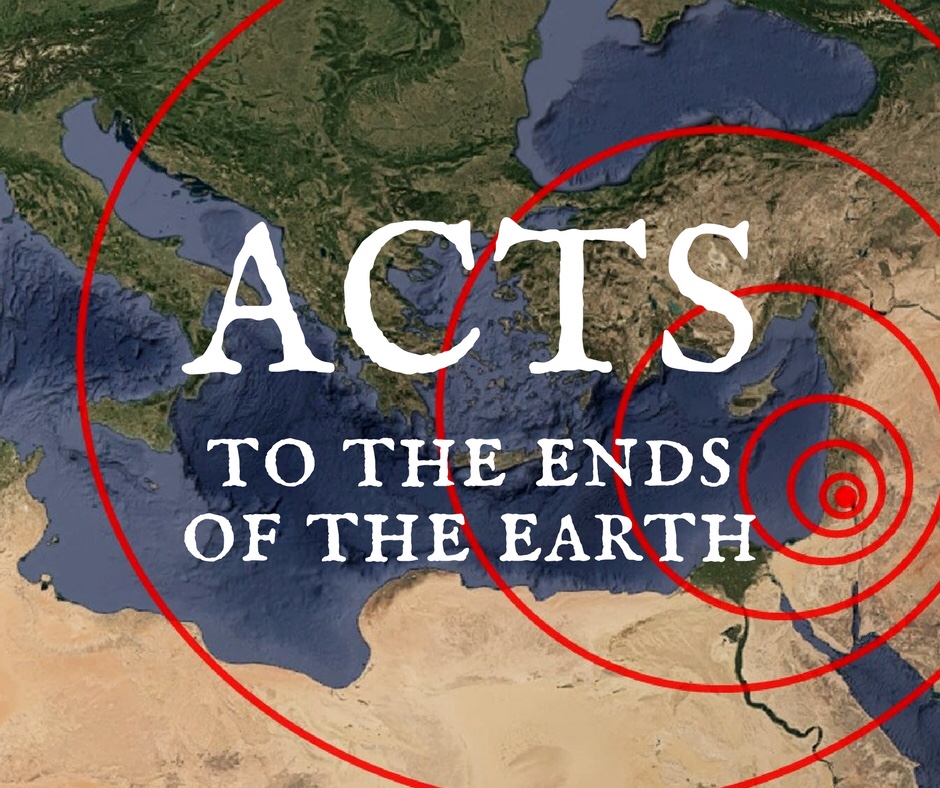
This is a moment when the old is overturned, and the new is implemented. It is a strong moment of transition for the early church. From this time, the good news spreads amongst Gentiles; to the extent that it does, indeed, reach “to the ends of the earth”.
Baptism ensues (10:48; cf. 2:38). The deepest significance of this moment for Luke is identified as being that “the gift of the holy spirit had been poured out even on the Gentiles” (10:45). That God has acted even on the Gentiles signals that the ‘turn’ which has been anticipated since 8:4 has come about in a fulsome way.
*****
The author’s interpretation of the events that have taken place in Caesarea draws them into close relationship with the interpretation of Jesus which Peter has given (here, and in earlier speeches in Acts). The impartial God who has acted through Jesus (10:34-43) is the same God who declares all things clean (10:15), who shows this to Peter (10:28), who gifts Gentiles by pouring out the spirit (10:45), and who is exulted by the people (10:46). It is language about God which interprets the significance of the narrative at each key moment.
The consequence of this dramatic event is noted briefly: “they invited him to remain for some days” (10:48b). Table-fellowship with Gentiles and the breach of the food rules was considered to be the inevitable result of God’s actions (see also 11:15–18). Such hospitality continues to be one of the key markers of the church.
This blog is based on a section of my commentary on Acts in the Eerdmans Commentary on the Bible, ed. Dunn and Rogerson (Eerdmans, 2003). I have also explored the theme of the plan of God at greater depth in my doctoral research, which was published in 1993 by Cambridge University Press as The plan of God in Luke-Acts (SNTSM 76).
The Uniting Church is part of the one holy catholic and apostolic church – we see ourselves as just one part of a much larger whole. We do the things that other denominations within the church do: we gather for worship, preach the Gospel, care for the needy, witness to our faith, and connect with communities.
We have many organisations that cater specifically for pre-schoolers, school students, people with disabilities, theological students, adult learners, Indigenous people and aged and infirm people. We have chaplains in hospitals, schools, industry, and the defence forces. And we have congregations in many places across the continent.
When we worship, we feel connected with the people of God of all denominations across the globe. When we witness, we bear testimony to the faith shared by Christians of many varieties. When we reach out in service, we act in solidarity with people of Christian faith, people of other faiths, and people of goodwill of any stripe, in our communities and across the globe.
We share in the call to be missional, universal, set apart, and unified, as God’s people together. Or in more traditional theological language, we are part of the ‘one, holy, catholic and apostolic’ church.
But we believe that we have some distinctive elements to contribute to that larger whole. Our identity as the Uniting Church in Australia is marked by ten distinctive features.
I In Ecumenical Relationship
When the Congregational, Methodist and Presbyterian churches joined together in 1977 to form the Uniting Church in Australia, they declared that this union was both in accord with the will of God, and that it was a gift of God to the people of God in Australia.
Since then, the Uniting Church has been a church which is committed to working ecumenically with other Christian denominations. That commitment is one very important aspect of our identity as a Uniting Church. We belong to the National Council of Churches in Australia and the World Council of Churches, where we co-operate with many denominations.
Nationally, we have participated in ongoing conversations with other denominations (Anglican, Lutheran, Greek Orthodox, and Roman Catholic). At the grassroots level, our ministers participate in local ministers’ associations in hundreds of towns and cities across the nation. Some Congregations share buildings with other denominations; some worship and serve together, especially in rural towns.
We are an ecumenical church.
II In Covenant with First Peoples
A very important dimension to being the church in this country is that we are a church in Covenant with the First Peoples of Australia. From its earliest years, the Uniting Church has been involved in actions which express our solidarity with the Aboriginal and Torres Strait Islander peoples. Older members will recall events at Noonkanbah Station in the Kimberley in 1980, when Uniting Church members stood in solidarity with the traditional owners, the Yungngora people, against the mining of their land.
The Uniting Aboriginal and Islander Christian Congress (UAICC) was established in 1985, and a Covenant between the UAICC and the UCA was implemented in 1994. This Covenant recognises that working for reconciliation amongst people is central to the Gospel. This gives expression to our commitment to shape a destiny together.
In 2009, the Preamble to the UCA Constitution was revised to recognise the difficult history of relationships between the First Peoples and the later arrivals, as Second Peoples. In 2018, we agreed to support a Makarrata process to give a clear national voice to First Peoples, and to support a national Treaty. Our present relationship is one which seeks to ensure that we commit to the destiny together which we share as Australians. The Assembly fosters ongoing work in this area through the Walking Together as First and Second Peoples Circle.
We stand in covenant relationship with the First Peoples.
III A Multicultural Church
In the same year that the Congress was formed, the Uniting Church declared that it is a multicultural church, which rejoices in the diversity of cultures and languages which are found across Australia. The Basis of Union recognises that we share much, as Australians, with people of Asia and the Pacific. The Uniting Church has maintained strong relationships with churches from these regions, as well forging new links with churches in Africa and the Middle East.
The Statement to the Nation, issued in 1977, acknowledged that the Uniting Church seeks a unity that transcends cultural, economic and racial distinctions. Within Australia, there are at least 12 national conferences based on regional groupings and people from 193 language groups who belong to the Uniting Church.
Each Sunday, worship takes place in Uniting Churches in 26 languages from cultures beyond Australia, as well as many indigenous languages used in worship by first peoples across our church. We have learnt the importance of moving from “enjoying each other’s foods”, to conversing at a deep level about the hopes and expectations we bring from different cultural experiences. We have learnt that we need to be intercultural in our relationships.
Through UnitingWorld, we maintain partnerships with churches in Asia, the Pacific, Africa and the Middle East. We are truly a multicultural church. Through the Relations with Other Faiths Working Group and the Seeking Common Ground Circle, the Uniting Church has been active in developing relationships with other faith communities. We have had a long and fruitful Dialogue with the Jewish Community, and participate in a number of other interfaith Dialogue conversations. We are firmly committed to constructive interfaith relations.
We continue to develop as a church in deepening relationships with many cultures and faiths.
IV All the people of God
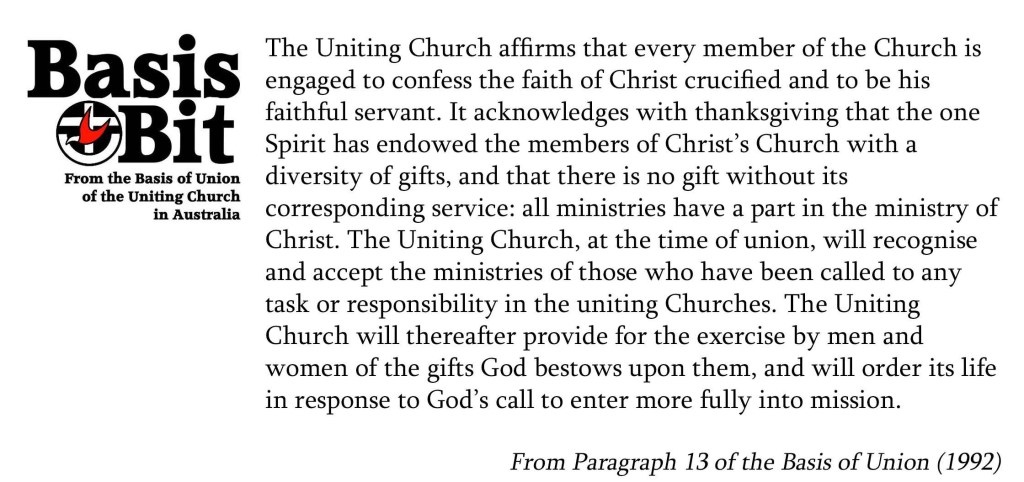
The Uniting Church is a church which values the ministry of all the people of God and seeks to order itself in accordance with the will of God. Our Basis of Union affirms that every member of the church is engaged to confess Christ crucified, and every person is gifted by the Spirit to engage in ministry in their own particular way. We are a church that values the ministry of each and every person.
Throughout the life of the Uniting Church, we have held our structures and forms of ministry accountable to ongoing scrutiny. Alongside the Ministry of the Word, to nurture and guide Congregations, we have introduced the Ministry of Deacon, to focus attention on people living on the margins. We have introduced the Ministry of Pastor to recognise the giftedness of lay people, and that sits alongside the Ministry of Lay Preacher (which we have had since 1977), and the more recent accreditation of Lay Presiders in many locations.
We have also undertaken important conversations about membership and the relationship of Baptism to Holy Communion. We now have a clear commitment to an open table when we gather for The Lord’s Supper: all who are baptised (whether adult or child, whether confirmed or not) are welcome to share at this table.
We are a church which values the ministry of all the people of God.
V Women and Men
The Basis of Union makes it very clear that we are a church which is committed to equality and mutuality of women and men in ministry. Even before 1977, the three previous denominations had ordained women to ministry. This is a very strong distinctive, especially in the Australian scene.
Since 1977, many women have stood on an equal basis alongside men, as Ministers of the Word, Deacons, Elders, Church Councillors, Lay Preachers, Lay Presiders, Chaplains, and Pastoral Carers. We value the insights and experience of women in each and every way that we seek to “be church”—as we gather to worship, as we witness to our faith, as we serve the wider community.
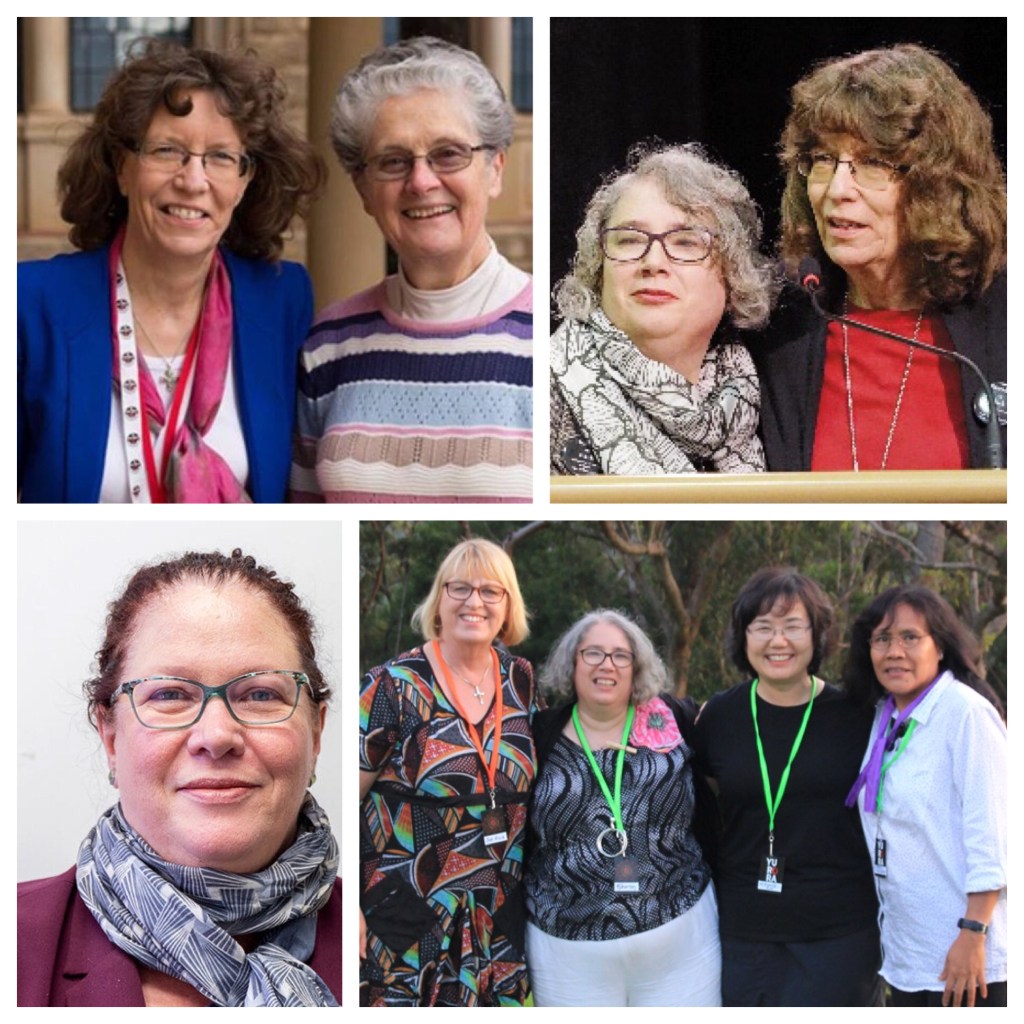
Women in leadership: Presidents Jill Tabart (1994–1997) and Deidre Palmer (2018–2021); Deidre Palmer and President-Elect Sharon Hollis (2021–2024); Assembly General Secretary Colleen Geyer (2016– ); and Moderators Sue Ellis (SA), Sharon Hollis (VicTas), Myung Hwa Park (NSW.ACT) and Thresi Mauboy (Northern Synod).
Both lay and ordained women have served in leadership positions across all councils of the Uniting Church, from Church Council Chairpersons to Presbytery Chairpersons, to Synod Moderators and Secretaries, to the Assembly General Secretary and President. Many couples minister together as husband and wife. Gender equality is most certainly part of our identity.
We are committed to mutuality and gender equality in every part of the church.
VI Discernment
Another contribution that the UCA has made has been to highlight the importance, when we gather in council, of being open to the Spirit, and seeking to discern the will of God. We live this out in our councils by practising a process of consensus decision-making. The Manual for Meetings sets out the various elements that are involved in making decisions by discernment: a time of information, a time of deliberation, and a time of decision-making.
The infamous “coloured cards” are only one small part of the whole. The focus is on listening to the Spirit before we speak, and striving to find a way forward that most, if not all, people can see as the will of God for the church. This way of decision-making, which originated in the UCA, has now been adopted by the World Council of Churches and a number of its member Churches.
We are a church which deliberately seeks to discern the movement of the Spirit in our midst.
VII Professional Standards
Over the last 20 years, the Uniting Church has developed a firm commitment to strong professional standards, for Ministers as well as for lay people who exercise leadership in the church. Our commitment to professional standards emerged initially in response to the problems of sexual misconduct within the church. A whole section of the Regulations is now devoted to this.
Since 1999, all Ministers have been expected to adhere to a Code of Ethics, and this has most recently been revised to provide a Code of Ethics Ministry Practice for Ministers and a Code of Conduct for Lay Leaders. Ministers and Pastors undertake regular training in aspects of this code, in ethical ministry workshops.
Since the Royal Commission into Institutional Responses to Child Sexual Abuse, we have intensified our efforts to ensure that our churches are Safe Places, valuing everybody, honouring integrity, avoiding negative and hurtful behaviours.
We are a church which values integrity and clarity about our ethical standards.
VIII Open to explore difficult issues
Over 40 years, the Uniting Church has shown that it is a church which is prepared to engage in difficult discussions about contentious issues. Our Basis of Union commits us to learn from the insights of contemporary scientific and historical studies, and affirms that we remain open to correction by God in the way we order our life together.
In the early years of the Uniting Church, debates about Baptism were the focus of great controversy. Infant baptism had been an integral part of the worship practices of each denomination which joined the Uniting Church, but Ministers and Elders Councils were receiving regular requests for baptism by adults who had been baptised as infants but had come to a personal faith later in their lives. After debates stretching through the 1980s and 1990s, the Uniting Church has developed a clear set of protocols to cover such requests.
Another area of enduring controversy has been that of human sexuality. There is a wide diversity of opinion within society relating to such matters, and this diversity is present within the Uniting Church. Once again, from the 1980s though into the present era, lively debates regarding human sexuality have taken place in the various councils of the church. We have worked through difficult decisions about sexuality and leadership, and then about sexuality, gender, and marriage. We continue to learn, explore, and adapt.
In dealing with such issues, we have learned how to debate with respect and integrity with ongoing conversations looking to employ a “Space for Grace” process to encourage respectful, empowering, and inclusive decision-making.
We seek to be a church that engages in the difficult discussions with honesty, transparency, and hopefulness.
IX Advocating for Justice
The Uniting Church inherited from its predecessor Churches a strong commitment to advocating for justice for all. Many Uniting Church congregations and members are actively committed to serving those people who find themselves on the margins of society. This commitment was clearly articulated in the 1977 Statement to the Nation and it has been evident in many actions undertaken by Uniting Church members over the decades.
The Uniting Church has joined in common cause with other groups and organisations in society, in advocating for a welcoming attitude towards refugees; in lobbying for a fair and just system of caring for people who are experiencing poverty and homelessness; in seeking equity for workers in their workplace; and in many other issues. The Assembly Working for JusticeCircle, brings together people who are strongly committed to this avenue of ministry.
A regular stream of policy documents and public resolutions point to a clear and unbroken commitment to seeking justice for all. Each federal election, we are provided with resources that encourage us, as people of faith, to consider the implications of our votes in the life of the nation.
We are a church which is strongly committed to justice for all.
X Environmental Sustainability
In like manner, the Uniting Church has always been a church which honours the environment and supports a sustainable lifestyle. Although such matters are firmly on the radar of the public now, they have long been integral to the identity of the UCA. Once again, the 1977 Statement to the Nation flagged such commitment. A series of subsequent documents attest to the ongoing determination of the church to live responsibly, in such a way that we minimise the damage we cause to the environment in which we live.
Our partnerships with Churches in the Pacific have intensified our awareness of the negative impacts that are resulting from climate change. We know that we need to act now, to reduce the threat. Each year, we experience catastrophic consequences from more regular and more intensified “natural disasters”—fires, floods, drought, cyclones. Just as we provide pastoral support in these situations through Disaster Response Chaplains, so too we maintain advocacy with governments, urging them to set policies which will turn us away from the trajectory of yet more environmental disasters.
Locally, many Congregations and individual members of the UCA are seeking to implement practices that will reduce their carbon footprint on the planet. We know that we owe it to future generations, to live responsibly in the present.
We are a church that lives, acts, and advocates for a sustainable environmental future.
*****
You may have some thoughts about what I have articulated above. You may have thought, “what about …?” – something that I have overlooked, that you see as important. You may have some questions about how I have described some of these elements. I encourage you to talk with others about how you respond. Together, we are the Uniting Church!
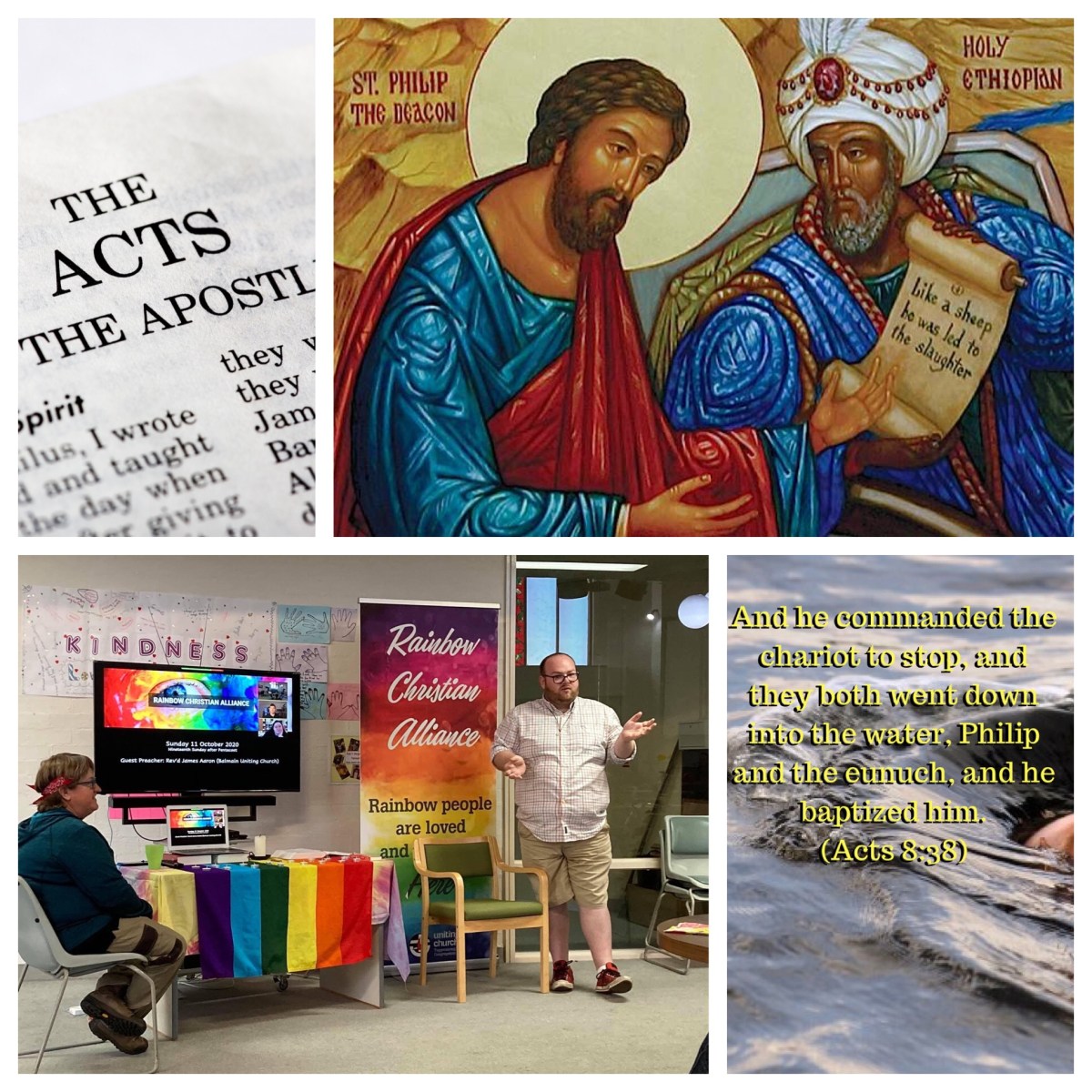
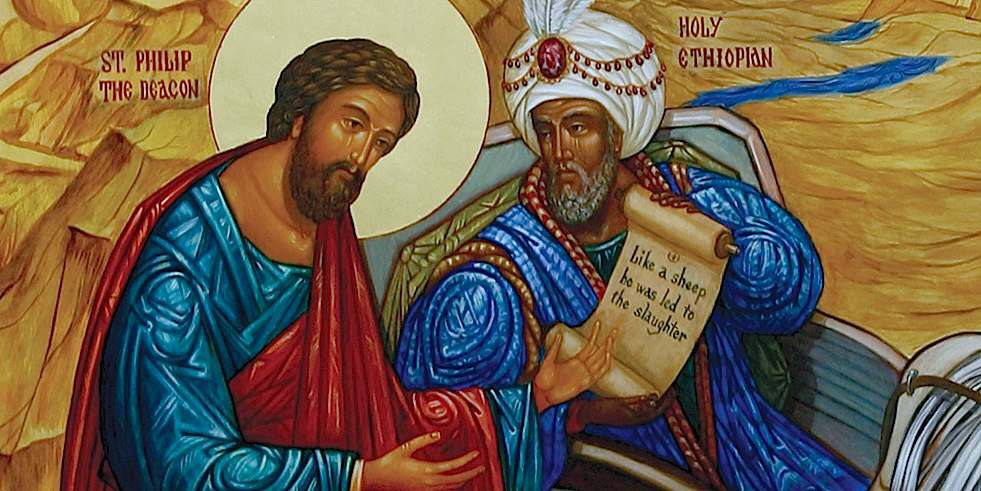
The reading from Acts offered this Sunday takes us to the edges. The man who encounters Philip is from Ethiopia. The Israelites regarded Ethiopia as the furthest extent of the earth in the south-westerly direction (Isa 11:11-12). I’ve already pondered whether this passage might provide a clear Lukan pointer to how the Gospel went “to the end of the earth” (see https://johntsquires.com/2021/04/27/edging-away-from-the-centre-easter-5-acts-8/)
Although the man was a Gentile, he was returning from worship in Jerusalem (8:27); he is probably thus the first of a number of proselytes who appear in the narrative of Acts (10:2; at 13:50; 16:14; 17:4,17; 18:7).
He is travelling in the wilderness; the place where, by tradition, God could be encountered in a new way, a way that deepens faith and sharpens understanding. The journey through the wilderness figured in the songs of Israel, being regularly recalled in the Psalms (68:7, 78:15-20, 40, 52, 95:8, 106:14-33, 136:16). It also appears in various prophetic oracles (Isaiah 40:3-5, 41:17-20, 43:19-20, Jer 2:6, 31:2-3, Ezekiel 20:8b-21, Hosea 13:4-6, Amos 2:9-10, Wisdom of Solomon 11:1-4) and occasional narrative references.
The exodus from Egypt and the subsequent wilderness wandering, provided the foundational story for Israel, from long ago, and still through into the present. Journeying through the wilderness is how Israel encountered God, deepened their faith, and shaped new ways of obedience.
The wilderness was where Israel met God; where Israel’s commitment was tested; where Israel’s faith was shaped. And as the story continues, that is exactly what happens for the man from Ethiopia. In the wilderness, he encounters God, and is welcomed into community.
*****
However, when he was in Jerusalem, this man from Ethiopia would have been barred from entering the temple precincts because he was a eunuch (Deut 23:1). In the eyes of the Law, he was not perfect, and thus not able to present himself directly before the Lord. He could approach the temple, but not take part in its rituals.
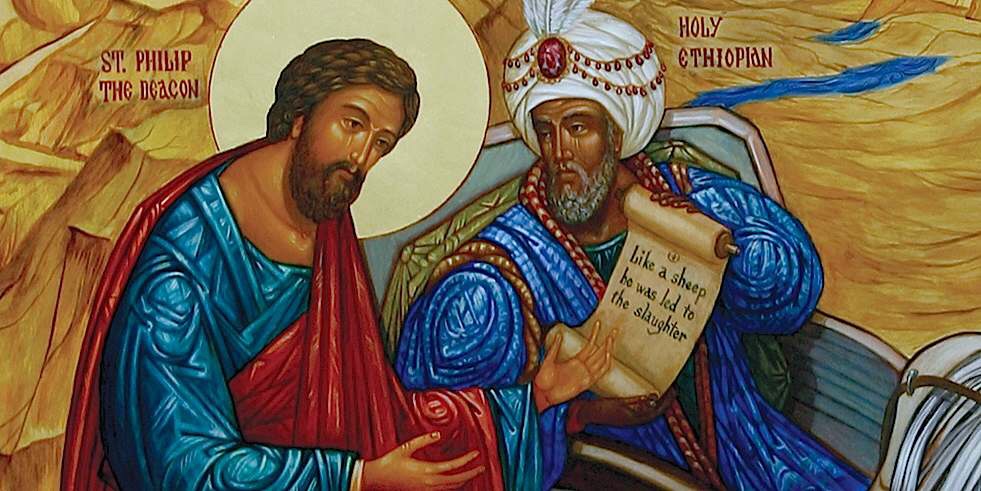
And yet, we see that the man was reading from the book of the prophet Isaiah—from the Hebrew Scriptures. He was reading of the trials of the servant, suffering humiliation and injustice, before being sent to his death (Isa 53:7-8). Philip, of course, relates this poem to the story of Jesus.
But once Philip has left the man, I wonder: did he keep on reading?
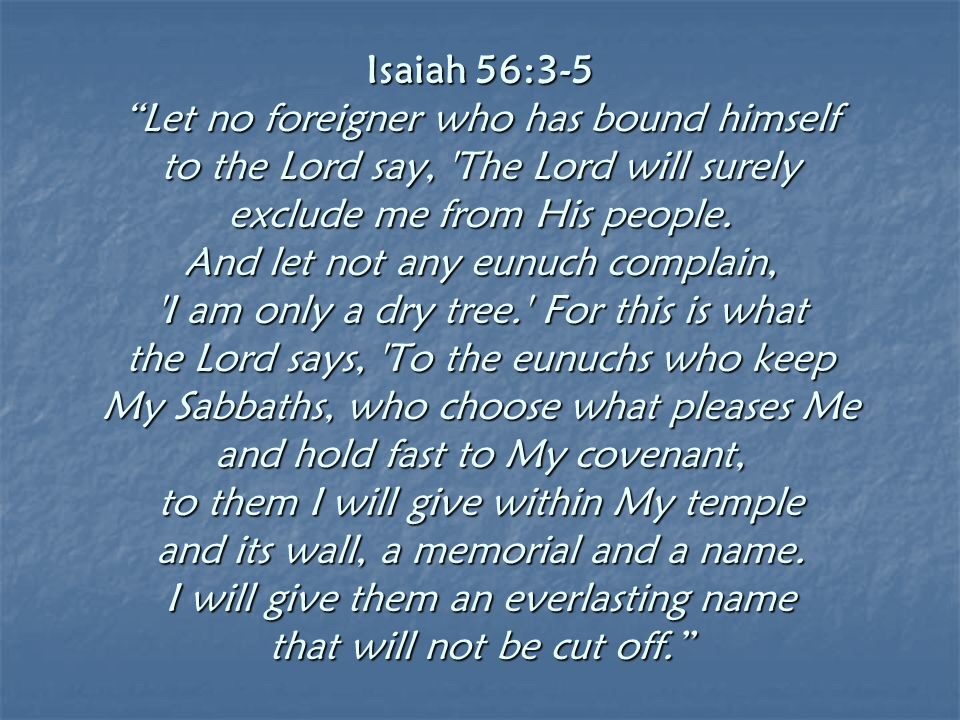
If he had done so, he would fairly soon have come to this striking passage in chapter 56:
Do not let the foreigner joined to the LORD say,
“The LORD will surely separate me from his people”;
and do not let the eunuch say, “I am just a dry tree.”
For thus says the LORD: To the eunuchs who keep my sabbaths,
who choose the things that please me and hold fast my covenant,
I will give, in my house and within my walls,
a monument and a name better than sons and daughters;
I will give them an everlasting name that shall not be cut off.
And the foreigners who join themselves to the LORD,
to minister to him, to love the name of the LORD,
and to be his servants, all who keep the sabbath,
and do not profane it, and hold fast my covenant—
these I will bring to my holy mountain,
and make them joyful in my house of prayer;
their burnt offerings and their sacrifices
will be accepted on my altar;
for my house shall be called a house of prayer for all peoples.
Thus says the Lord GOD, who gathers the outcasts of Israel,
I will gather others to them besides those already gathered.
What an amazing passage! What a delightful expression of the gracious opening-up from the old, valued traditions of Israel, to the new, more expansive, more inclusive community of faith. Outsiders, foreigners, even eunuchs, will be welcome in the house of the Lord. They will be gathered in, accepted, valued, and loved. They will be integral parts of the community of faith.
The story of Philip and the wealthy, privileged court official from Ethiopia is a story that moves this gracious welcome of God, promised in Isaiah 56, into a reality, as the story of Acts 8 is told. Coming from another nation, coming as a man considered not to fit into the predetermined categories of gender and purity in the culture of the time, Philip’s welcoming of this Ethiopian eunuch challenges the categories, opens the doors, and invites into the centre, this person from the edge.
Whether or not the man from Ethiopia continued reading until he encountered this passage in Isaiah 56, the story recounted in Acts 8 clearly indicates that he was welcomed into the community of faith.
*****
Here is the word of God for us, today. Tradition is important. History cannot be denied. Our inheritance is significant. We bring all of this into our life today, as a community of faith. And yet, the driving dynamic in this story is about the acceptance of the outsider, the integration of the edges into the centre, the reaching out for fresh and new expressions of faith.
This is a pivot story, taking us from the central religious site of the people of Israel, the Temple, in the capital of the nation of Israel, Jerusalem; out on the road, into the wilderness, heading out towards the edge of the known world, to the ends of the earth, with a man who came from the edges, from a land at the ends of the earth, of a different religion and culture, and of uncertain gender identity.
The story actually ends with Philip in Caesarea (8:40), which is where Peter preaches and the Spirit moves amongst Gentiles (10:44-48; 11:15-18). It is another pivotal location in the overarching story of Acts. This is where God provokes the leadership of this movement to reach out and encompass new people, different people, into the community of faith.
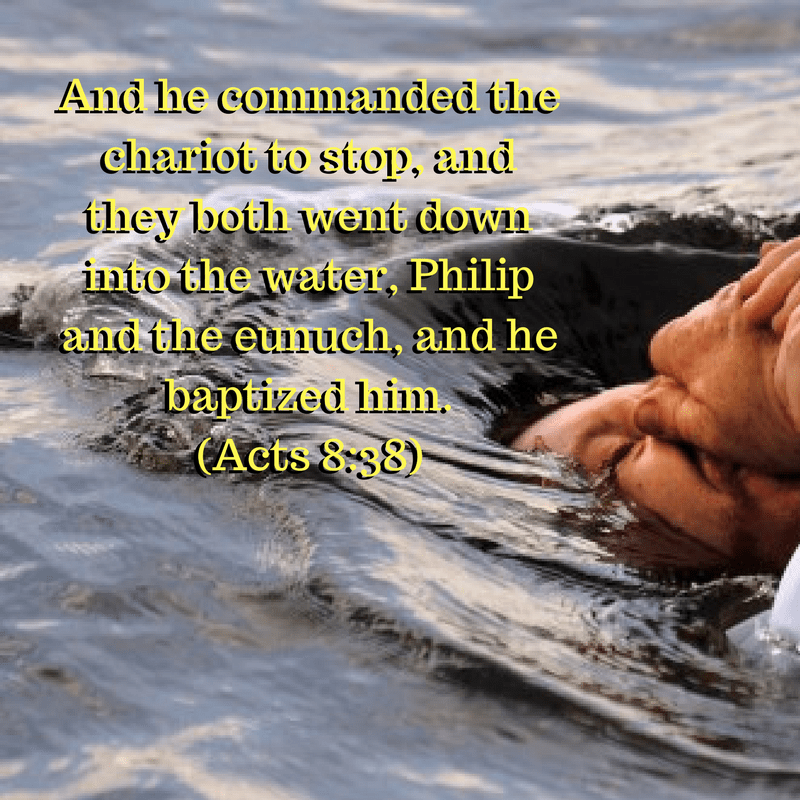
So this is the man who was baptised by Philip during his wilderness travels: a man on the edges, out of place, not fitting the expected “normal” categories. “What is there to prevent me from baptising you?”, Philip asks the man who has read scripture, asked questions, received answers, engaged in deepening engagement with the Gospel—and then, was baptised, dunked into the water, welcomed into the community of faith that was shaped by the teachings and stories of Jesus of Nazareth (8:36-38).
From the edges, into the centre. This is who we are to be, as church. Open to those we perceive as outsiders; inviting them in to become integral insiders. Accepting those whose patterns of life we might question—in his case, a person whose gender is uncertain, up for question—maybe even perceived as deviant, by those hardliners who hold fast, without breaking their grip, to the dogmatic way that they understand their faith.
In the congregation where I worship regularly, we welcome all. We especially welcome rainbow people—people who do not readily identify with the dominant pattern of heterosexual male or female, but who name their sexual attraction to others as meaning that they are gay or lesbian, who are grappling with the challenge of being intersex, who have travelled the pathway of transgender identity, who are bisexual or asexual, or who happily adopt the once-derogatory term of being “queer” and use it in a positive, affirming way.
Within the total population of human beings, is a wide range, and amazing diversity, a kaleidoscope of sexual preferences and gender identities; and such diversity is represented within the community of the Tuggeranong Valley, and within the Tuggeranong Uniting Church community. And that is precisely the way that church is supposed to be.
And as we continue to reflect on this passage, we might also remember that this is but one way, this is but one sector in the community, to which we might carefully and intentionally open our doors. Alongside rainbow people, we are called to offer welcoming hospitality to families where issues of faith and spirituality are live and important, but for whom the traditional patterns of church do not satisfy; to those who have been scarred by traumatic experiences in life and who are looking for validation and valuing, for a safe place to belong with no questions asked and no demands imposed; to any who seek the deeper things of the dimension of spirit in their own lives.
The book we know as 1 John is unlikely, as we have seen, to have been a letter. It is more likely that it came into being as a sermon, which was later collected alongside some other works attributed to John, which were actual letters (2 John and 3 John), themselves placed alongside letters by other leaders (Peter, James, Jude—and, of course, Paul).
This sermon-letter is intended to encourage believers, who are to live in light, not in darkness, to love, and not to hate (1:5–10; 2:9–11; 3:11–15; 4:20–21), and to strive to ensure that their love reaches “perfection” (2:5; 4:12, 17–18) in their lives.
Set in stark contrast to these believers is “the world”, which is full of desire (2:16); those in “the world” do not help a person who is in need (3:17); they hate believers (3:13) and do not know God (3:1; 4:3–6).
The concluding words of the book, asserting that “the whole world lies under the power of the evil one” (5:20), suggest high tension, even outright conflict, between the people addressed in this letter, and some indeterminate “opponents”.
The work is attributed to the apostle John, and that invites comparisons with the Gospel which also, by tradition, carries the name of John as its author. The sectarian tendencies, already seen in John’s Gospel, appear to have intensified in the situation addressed in this letter. Yet, in the end, “the world” is only temporary (2:17); victory over the world is assured, for it has already come (4:4; 5:3–5). Indeed, God’s intention is to save the whole world (2:1–2; 4:9, 14).
Who are the opponents? A dispute regarding the nature of Jesus is hinted at; this may point towards a doctrinal basis for the conflict. A central assertion, for the author of this sermon-letter, is that “Jesus Christ has come in the flesh” (4:2).
This claim appears to have been made in opposition to another view (that Jesus only appeared to be “in the flesh”, it is often assumed). Likewise, it is twice asserted that Jesus is “the atoning sacrifice for our sins” (2:2; 4:10; this is the NRSV translation of the complex Greek word used, hilasmos). We encounter this technical word in the affirmation of 4:10, in the Epistle passage offered by the lectionary this coming Sunday.
These credal claims have led some interpreters to claim that the “opponents” reflected in this sermon-letter were Docetists, who claimed that Jesus only appeared to be of human flesh. (The term “Docetist” comes from the Greek word dokeo, meaning to appear or to seem.)
Various claims made concerning Jesus reflect the developing Christology that we can see in other New Testament documents: Jesus is “Son of God” (4:15; 5:5, 10), “Messiah” (2:22; 3:23; 5:1), the one who is “righteous” (2:2, 29). The author of this sermon-letter thus takes his place alongside other “apostolic” authors who together will provide the data for the developing “apostolic faith” of the second century onwards.
There is a particular emphasis in this sermon-letter on the claim that Jesus “came by water and blood” (5:6). This appears to argue against a view that Jesus came “by water” only—that is to say, a view that minimises or rejects the saving significance of the death of Jesus. For the author, a central assertion is that “the blood of Jesus [God’s] Son cleanses us from all sin” (1:7).
The conflict between the author and his opponents had become tense and even malicious, as we might deduce from the references to “deceivers” (2:26; 5:7), “false prophets” (4:1), “liars” and their “lies” (2:4, 22, 27; 4:20; 5:10), and the “spirit of error” (4:6). These condemnatory terms climax in the reference to, not one, but many “antichrists” (2:18–25; 4:2– 6).
The connection of such derogatory labels with the credal assertions of the author (especially at 2:22 and 5:10) suggests that sectarianism has fuelled this conflict. A further piece of evidence in support of this is the use of the term “anointing” (2:20, 27) to describe the status of the recipients. This word, in Greek, is related to “Christ”, the title reserved for Jesus. Those anointed by God claim a special status as Christ’s people—a claim that fits well within the polemical context of increasing sectarianism.
*****
A striking feature of the letter occurs towards its end, in a compact sentence (5:13) which contains both a description of the recipients (“you who believe in the name of the Son of God”) and a declaration of the purpose of the letter (“so that you may know that you have eternal life”). The key terms in this sentence are immediately reminiscent of a similar declaration of purpose towards the end of John’s Gospel (John 20:31).
Table A: Purpose Statements in John and 1 John John 20:31 But these are written so that you may believe that Jesus is the Messiah, the Son of God, and that through believing you may have life in his name. 1 John 5:13 I write these things to you who believe in the name of the Son of God, so that you may know that you have eternal life.
Each work is “written” concerning “eternal life”, granted to people who “believe” in Jesus as “the Son of God”. The similarities suggest either common authorship, or an intentional allusion to the Gospel by the author of the letter. The differences in style and theology between the two works are subtle, but they do reinforce the latter option as preferable.
One clear difference to be noted is that, whilst the Gospel makes frequent references to Hebrew Scripture (both in quotations and by allusion), the letter betrays little awareness of these scriptures, other than what had already been mediated through the Gospel. The strong Jewish context of the Gospel is not evident in this letter. Other points of differentiation are noted below.
There are many signs of the common theological standpoint shared by letter and Gospel. The opening of the letter is reminiscent of the grand poem which begins John’s Gospel, and three important themes of this Gospel are flagged in both prologues. Central to each is the revelation of God (1 Jn 1:2; John 1:14, 18) which occurs through speaking (1 Jn 1:1, 3; compare “the Word” of John 1:1, 14) and conveys the message of eternal life (1 Jn 1:2; John 1:4).
Another important motif in the prologue to the letter is the believer’s fellowship with God and Jesus (1 Jn 1:3), which may be compared with the Gospel terminology of “abiding in” (John 14:17; 15:1–11). The sense lof testimony which permeates 1 Jn 1:1–4 resonates with the frequent emphasis on testimony, or witness, in the Gospel (John 1:6–8, 15, 19, 32– 34; 3:31–34; 5:31–32, 36–39; 8:17–19; 10:25–27; 19:35). The note of joy which ends the prologue (1 Jn 1:4) reflects similar expressions in the Gospel (John 15:11; 16:20–24; 17:13).
Beyond the letter’s prologue, other themes also point towards the Gospel of John, with some observable differences. The language of light and darkness (1 John 1:5–7; 2:8–10) is a reminder of the Gospel’s use of similar imagery (John 1:4–9; 3:19–21; 12:46), although there is a change in attribution, from Jesus as “the light of the world” (John 8:12; 9:5), to the affirmation that “God is light” (1 Jn 1:5).
The letter writer asserts that “we are from the truth” (3:19) and “we know the spirit of truth” (4:6); this is reminiscent of the claim of the Johannine Jesus that “I am the truth” (John 14:6) and his promise that “if you continue in my word…you will know the truth” (John 8:32).
Indeed, a consistent emphasis on adherence to the truth runs through the letter (1 John 1:6, 8; 2:4, 8, 21, 27; 3:18–19; 4:6; 5:6, 20) as through the Gospel (John 1:9, 14, 16; 3:21; 4:23–24; 6:55; 7:18; 8:32; 14:6, 17; 16:13; 17:17–19; 19:37–38).
We have already noted the occurrence of the phrase eternal life in the letter’s prologue (1 Jn 1:2); it occurs elsewhere in the letter (2:25; 3:15; 5:11, 13, 20). This is a recurrent theme in the Gospel, for it characterises the offer which Jesus makes to his followers (John 3:15–16, 36; 4:14; 5:24; 6:27, 40, 47, 54, 68; 12:25, 50; 17:1–3).
Again, as we have seen, the attribute of love is highly prized by the letter writer; the command to love, which issues from God (1 John 2:7–8; 3:23– 24; 4:21; 5:1–5), looks back to the Johannine Jesus, who is twice reported as delivering this commandment (John 13:34–35; 15:12–17) and whose death exemplifies such love (John 15:13; see also 10:11–18; 12:23–26). However, the notion that love can be perfectly expressed (1 Jn 4:17) and the opposition between love and fear (1 Jn 4:18) go beyond the Gospel’s exposition of love, as does the claim that “God is love” (1 Jn 4:8).
Knowledge is a key concern of this letter (1 John 2:4, 13–14, 21; 3:1, 19; 4:2, 6–8, 16; 5:13); likewise, in the Johannine account of the life of Jesus, knowing Jesus is crucial (John 10:4–5, 14–15, 27; 14:1–7; 16:29–30; 17:3, 7, 25–26). The assertion to the letter’s recipients that “all of you have knowledge” (1 John 2:20) reflects the Gospel’s concern for people to know Jesus; this is especially important in the early chapters (John 1:10, 18, 26, 31, 33, 48; 3:2, 11; 4:22, 25, 42).
The emphasis on knowledge in this letter has led interpreters to the view that the writer is combating a Gnostic development in the Jesus movement, which places great weight on knowing in contrast to believing. (The Greek word for knowledge is gnosis.) We have seen a similar debate in 1 Corinthians 2:6–3:4. The letter-writer assures the recipients that the anointing they have received provides them with knowledge about all things (1 Jn 2:20, 27).
The substance of this knowledge, in the Gospel, is that Father and Son are one (John 10:30; related expressions are found at 14:7 and 16:32); a similar discussion in the letter treats Father and Son as a unity (1 Jn 2:22– 24). The characteristic Johannine language of Father and Son, in intimate and reciprocal relationship with one another (given fullest expression in John 17), also runs throughout this letter (1 Jn 1:3, 7; 2:22–24; 3:8, 23; 4:9–10, 14–15; 5:9–12, 13, 20).
The Spirit is given by the Father (1 Jn 3:24; 4:13) and is described as “the spirit of truth” (1 Jn 4:6), reflecting the most frequent Gospel portrayal of the Spirit (John 14:17; 15:26; 16:13). The Spirit is not yet a personal entity, as envisaged in the doctrine of the Trinity, but plays a role as a witness (1 Jn 5:6–9), as is noted of the Spirit in the Gospel (John 15:26; 16:13).
The negative attitude towards the world in this letter is consistent with the polemics of the Gospel (John 1:10; 7:7; 8:23; 15:18–19; 17:14–19). Jesus has distinguished himself as being “from above…not of this world” (John 18:23) and stated that his kingdom “is not of this world” (John 18:36); as a result, he observes, the world hates him and his followers (John 15:18– 19).
The same antagonism is clearly evident, as we have noted, in the letter; the world hates believers (1 Jn 3:13) and is “under the power of the evil one” (1 Jn 5:20). The role of “the devil” in this struggle is clear, both in the letter (1 Jn 3:8–10) and in the Gospel (John 6:70; 8:44; 13:2).
The letter articulates an apocalyptic view that “it is the last hour” (1 Jn 2:18), but anticipates a moment of full revelation in the future (1 Jn 2:28– 3:3). Presumably this is equivalent to “the last day” which is anticipated at points in the Gospel (John 6:39–40, 44, 54; 11:24; 12:47–49), although much of the Gospel does convey the sense that this day has already arrived.
Jesus asserts, “now is the judgment of this world; now the ruler of this world will be driven out” (John 12:31); “from now on, you know him [the Father] and have seen him” (John 14:7). This perspective is often labelled “realised eschatology”; it is a clear point of difference between letter and Gospel.
However, the connections between letter and Gospel are more complex than can be indicated simply by a comparison of the occurrence of key words.
There is a high degree of what is now called intertextuality exhibited by these two books. This term refers to the level of cross- referencing which can be seen when the two books are read together; such cross-referencing may be intentional, by means of direct word-for- word citation and clear allusions to dominant ideas or motifs, or it may take place through more tangential and suggestive means. There is a synergy which arises when the interaction of the two books is allowed to “speak”, as it were, in its own right.
Many parts of 1 John contain words or ideas which sound very much like the Gospel, but which have their own enhancement or development, so that there is both similarity and difference. (The same kind of relationship, incidentally, can be seen when other New Testament books are read with a view to their relationship with passages from Hebrew Scripture. There is both direct citation and specific allusion, as well as more general intimations of scriptural thinking.)
Some parts of the Gospel have been the focus of such creative rewriting by the author of 1 John; the prologue (John 1:1–18) and the final chapter (John 20:1–31) are two clear examples.
This letter, then, reflects the ongoing development of thinking within the Jesus movement. Stories of Jesus and reflections on his significance give rise, over time, to creative and insightful reworkings of these stories, applied to new situations, resulting in an expanding discernment about the importance of Jesus and of following his way. In this respect, the first letter of John provides a model for thoughtful, faithful discipleship along the way of Jesus.
This blog is based on draws on material in IN THE NAME OF: an exploration of writings attributed to the apostles by Elizabeth Raine and John Squires (self-published 2014).
“You will be my witnesses in Jerusalem and in all Judea and Samaria, and to the end of the earth.” (Acts 1:8) So Jesus declares at the start of the second volume of the orderly account of the things being fulfilled among us—the work we know as the book of Acts.
After a series of incidents located in Jerusalem (1:4–8:4), the move into Samaria is recounted in two striking stories. The first (8:5-25) tells of the activities of Philip and the subsequent visit from Peter and John. The second, a conversation between Philip and the Ethiopian (8:26-40), serves to moves the narrative still further away from Judaea, where the events of earlier chapters had been located.
The movement into Samaria begins to play out the progression that Jesus set out in his programmatic words at the head of the volume, telling his followers that they would be empowered as “witnesses in Jerusalem and in all Judea and Samaria, and to the end of the earth” (1:8). Could it be, perhaps, that this encounter with a man from Ethiopia prefigured that eventual move to “the end of the earth”?
On the edge
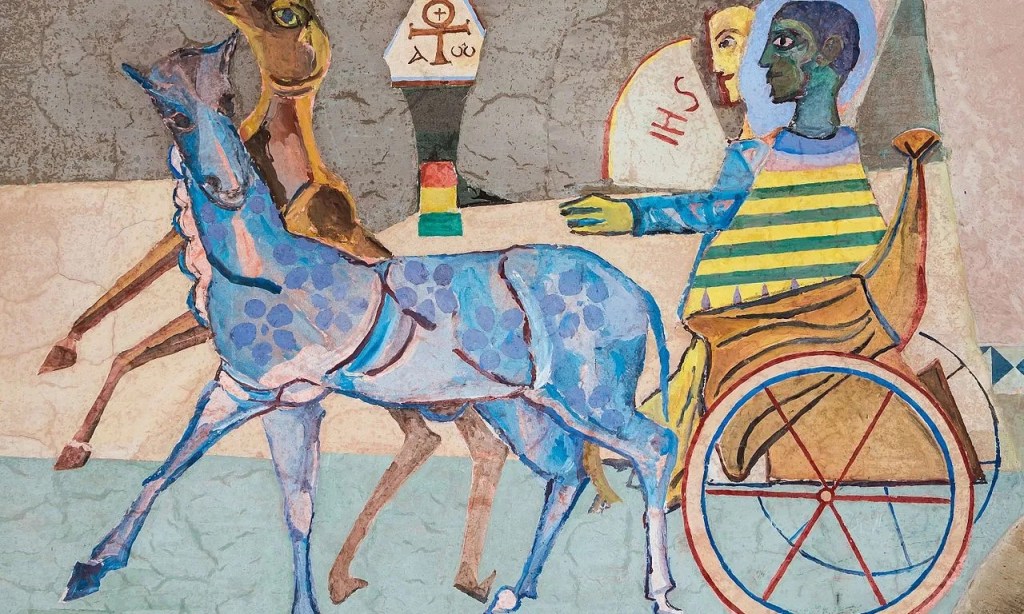
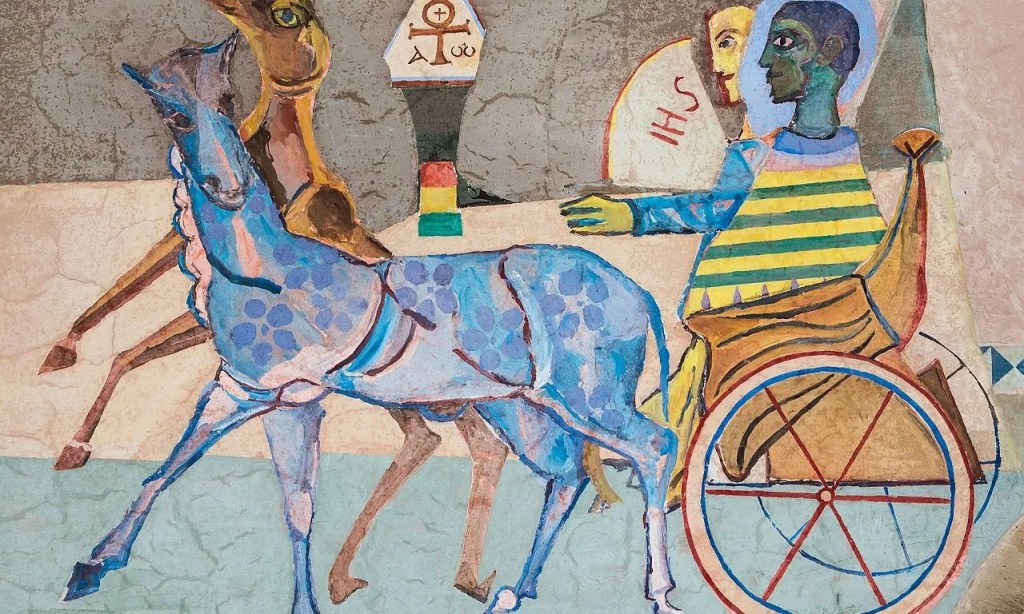
We certainly are moving to the edges. The scene brings Philip into contact with an Ethiopian: an edgycharacter, who comes from a location on the edge of the world (in ancient Israelite view), with a gender identity on the edge (a eunuch), in a situation not quite the usual, expected manner (in a chariot travelling away from Jerusalem, not in a home or a settled synagogue or a temple forecourt).
The Israelites regarded Ethiopia as the furthest extent of the earth in the south-westerly direction (Isa 11:11-12). Could this passage, offered as the Acts in Easter reading for this coming Sunday (Easter 5), provide a clear Lukan pointer to “the end of the earth”?
Although the man was a Gentile, he was returning from worship in Jerusalem (8:27); he is probably thus the first of a number of prosecutes who appear in the narrative of Acts (10:2; at 13:50; 16:14; 17:4,17; 18:7). However, he would have been barred from entering the temple precincts because he was a eunuch (Deut 23:1). He was not perfect, and thus not able to present himself directly before the Lord.
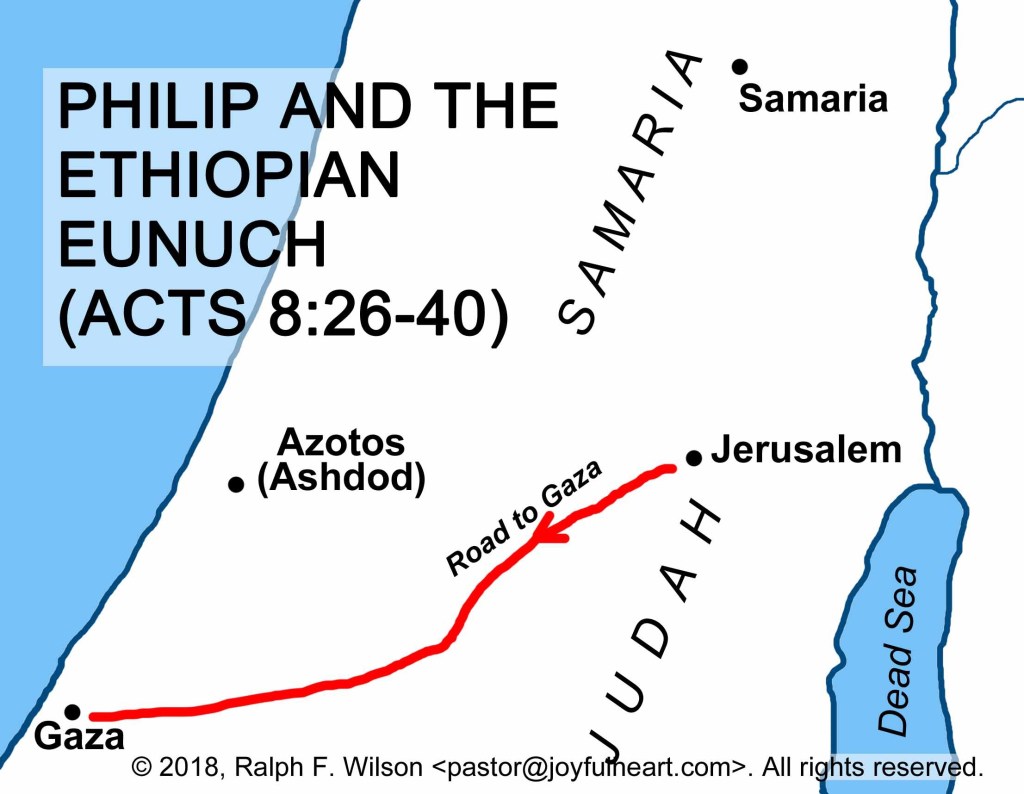
Philip travels south-west towards the coast, on the wilderness road to Gaza, at the urging of “an angel of the Lord” (8:26), a phenomenon already seen in Jerusalem (5:19). His encounter with the Ethiopian is initiated by the spirit (8:29), another phenomenon already abundantly evident in Jerusalem (2:4; 4:8; 4:31; 6:5; 7:55), as also in Samaria (8:17). The encounter is ended by the spirit, when Philip is snatched away immediately after baptising the Ethiopian (8:39). It is a strange and evocative scene.
In the Scriptures
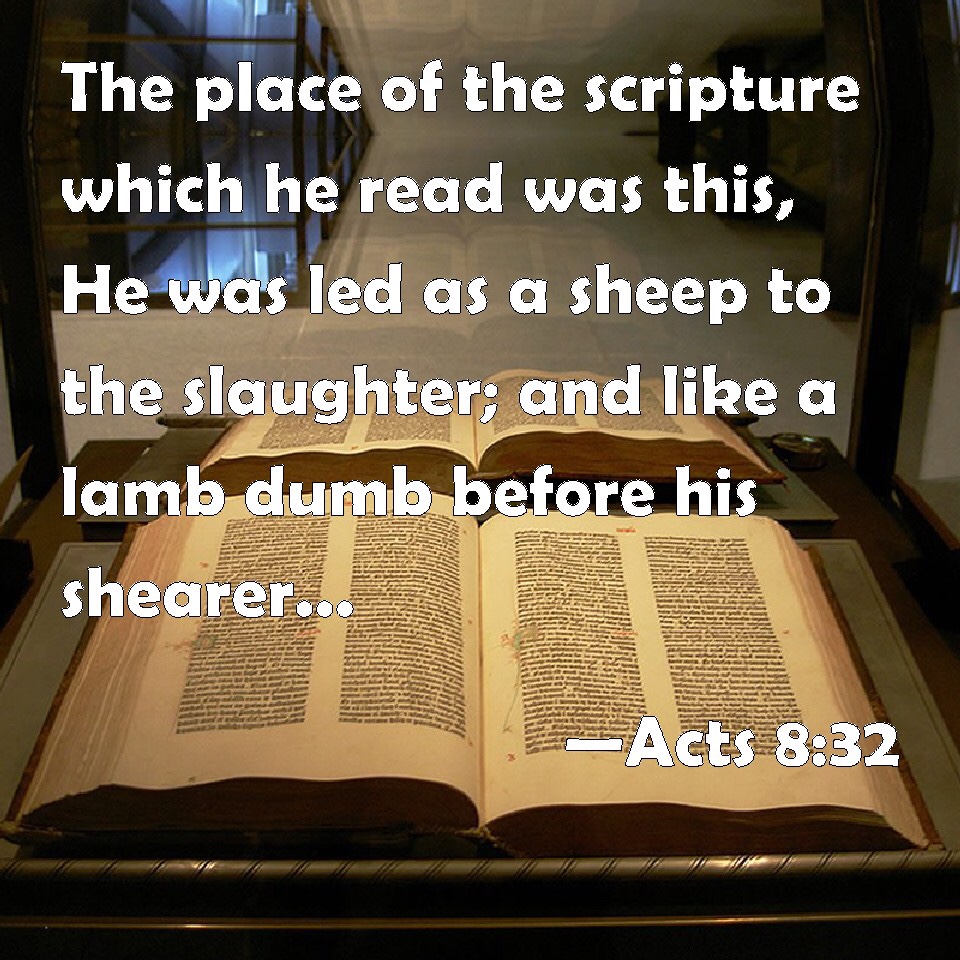
The content of the conversation is given in some detail; of particular interest is the fact that one of the scriptural prophecies which is fulfilled by Jesus is here identified. As the Ethiopian reads of the “lamb led to the slaughter” (Isaiah 53:7-8), Philip explains that this relates to Jesus, whom Philip then preaches to him (8:32-35). Such fulfilment of prophecy has already been introduced in speeches in Jerusalem (2:16-21,25-31,34-35, 3:18, 4:25-26) as another indicator of God’s sovereignty in the events of history.
The particular scriptural passage quoted is part of the fourth “servant song” (Isa 52:13-53:12); various excerpts from this song are interpreted as applying to Jesus by a range of New Testament writers (Matt 8:17; Luke 22:37; John 12:38; Rom 4:25; 5:18-19; 10:16; 15:21; Heb 9:28; 1 Pet 2:21-25).
Into the community
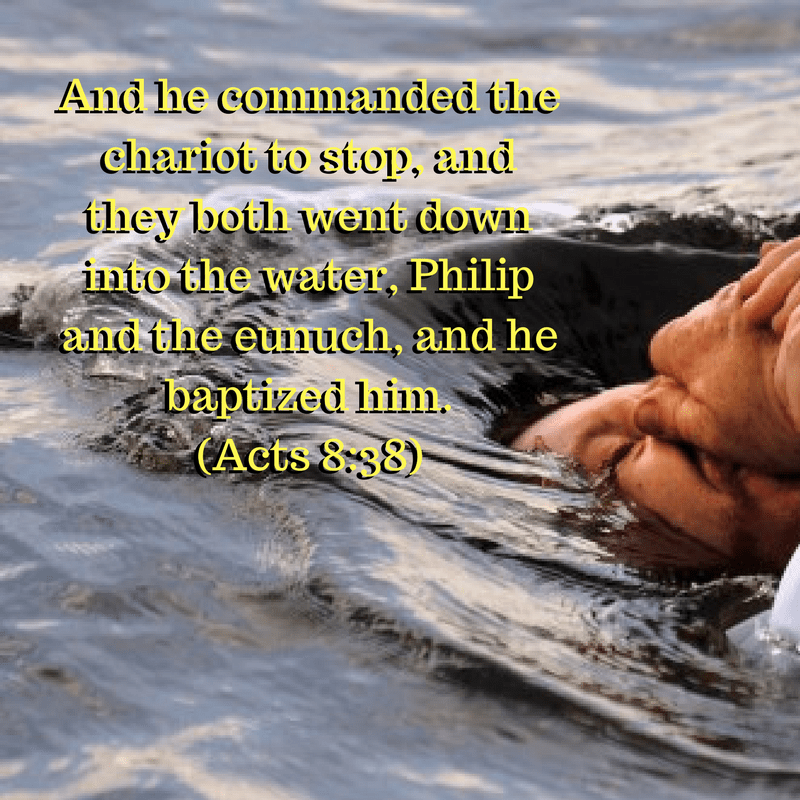
The scene ends with the baptism of the Ethiopian (8:38; see 2:38). Baptism became a means for incorporating people into the community of the followers of Jesus. Baptism of this Ethiopian enabled a person of another nationality to enter into the extending community of messianic believers.
Baptism had been proclaimed as necessary by Peter, on the day of Pentecost (2:38); this appears to link baptism closely with the gift of the Spirit (2;1-4, 17-21). However, there is no reference to the spirit interacting with the Ethiopian in the scene with Philip. The spirit guided Philip in the encounter (8:29, 39)—but appears to have no direct contact with the Ethiopian himself.
Just prior to this incident, the Samaritans who had already “received the word of God” (8:14) were enabled to “receive the holy spirit” through the laying on of hands by the apostles who visited the region (8:15-18). Although the gift of the spirit (8:17) had been separated from baptism (8:12), as also in Ephesus (19:1-7), Luke does not intend this pattern to be read as prescriptive for all situations, as other accounts of baptisms indicate (2:38-41; 8:38; 10:44-48; 19:1-7).
Baptism is accompanied by the laying-on of hands in Ephesus (19:6) and in Samaria (8:15-16), but not with the Ethiopian. The laying-on of hands results in the holy spirit coming upon those in Ephesus (19:6), a link similar to that made in Samaria (8:15-17,19) and Antioch (13:3-4). The gift of the spirit leads to speaking in tongues in Ephesus (19:7), as in Jerusalem (2:4) and Caesarea (10:45-46), but not for the Ethiopian.
In Acts, baptism may come both prior to (2:38-42; 8:14-17) and after (10:44-48; 11:15-17) the gift of the spirit; further, the gift of the spirit is not necessarily linked with baptism (for instance, at 2:1-4 and 4:31). Yet, whilst the time sequence is found in different patterns, the collation of similar elements implies strong continuity with events in Jerusalem, Samaria, Caesarea, and Ephesus. The baptism of the Ethiopian fits, by inference, within that sequence.
Immediately after this baptism, Philip is removed by the spirit of the Lord (8:39). The language of Philip being “snatched away” (8:39) is striking. But unlike those whom Paul describes as being “snatched away” up into heaven (1 Thess 4:17), Philip returns to Caesarea, continuing to preach “good news” (8:40).
His message has already been defined as concerning “the sovereignty of God” (8:12)—a central message in the Lukan works (Luke 7: 29-30; Acts 2:23, 4:28, 5:38, 20,27). The persistent and continuing activity of God in the story that Luke tells, is a strong element throughout the narrative.
This blog is based on a section of my commentary on Acts in the Eerdmans Commentary on the Bible, ed. Dunn and Rogerson (Eerdmans, 2003). I have also explored the theme of the plan of God at greater depth in my doctoral research, which was published in 1993 by Cambridge University Press as The plan of God in Luke-Acts (SNTSM 76).
The most well-known verse in the Bible is surely John 3:16—“for God so loved the world that he gave his only Son, so that everyone who believes in him may not perish but may have eternal life.”
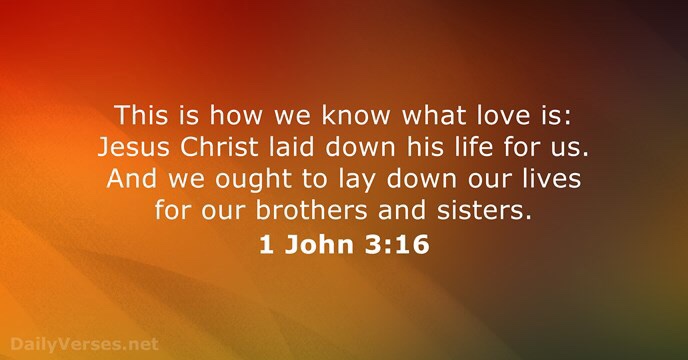
Actually, there is ANOTHER John 3:16 in the Bible. This “other” John 3:16 is actually in the first letter of John: “we know love by this, that he laid down his life for us—and we ought to lay down our lives for one another” (1 John 3:16).
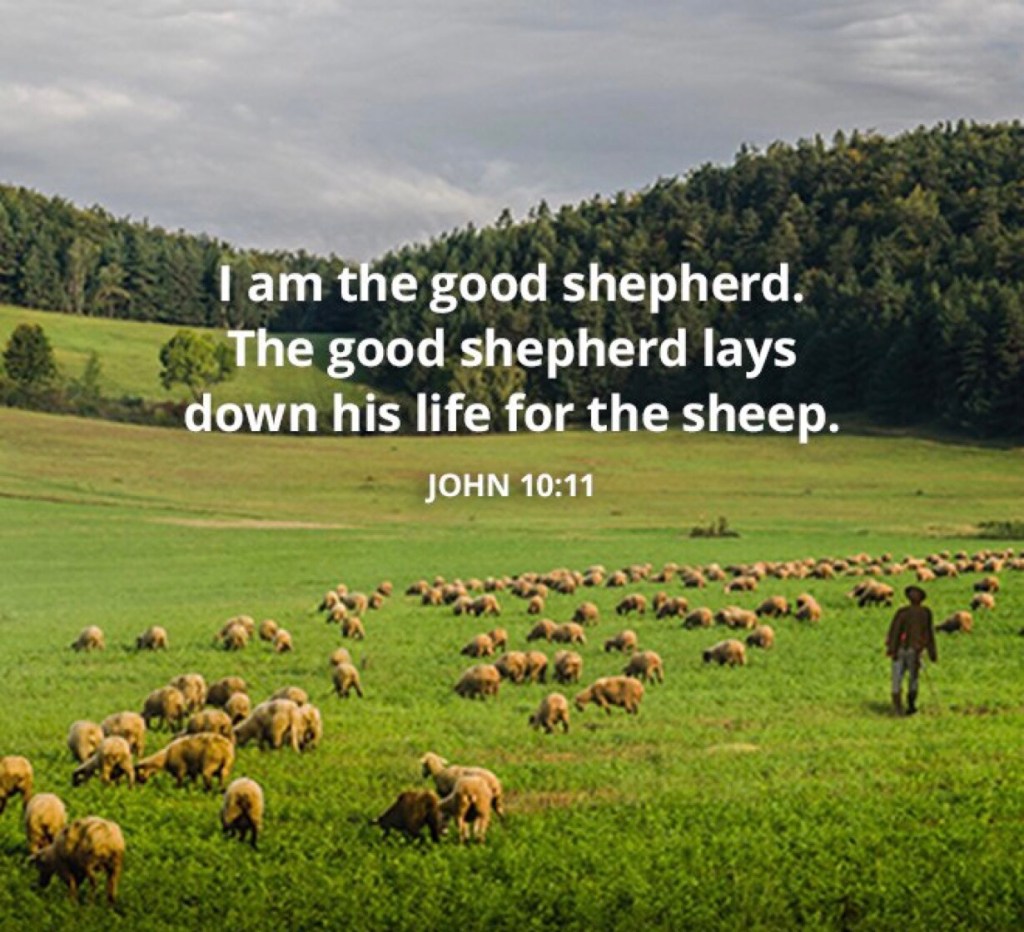
There is an other verse in the Bible, also written by the author of John’s Gospel, which is being referenced in this “other” John 3:16—“I am the good shepherd. The good shepherd lays down his life for the sheep.” (John 10:11)
In a neat conjunction, these readings, set in the lectionary for the fourth Sunday in the season of Easter, are what is being read and heard in churches around Australia on this Sunday which, in 2021, is also ANZAC Day.
ANZAC Day is a day when we think about the laying down of lives. We remember, and pledge that we will not cease remembering, those who engaged in military service, including those who laid down their lives in that service, in wars from years past: at Lone Pine and Villers-Bretonneux, on the Somme and the Mekong, on the track to Kokoda and at Hellfire Pass, in multiple places in Asia (Borneo, Malaysia, Korea, Indonesia), in the Persian Gulf, Afghanistan, and Iraq; and peacekeeping forces working in co-operation with other United Nations forces in trouble spots near to and far from our continent.
There are so many places to remember, so many people in service and supporting them to remember, and so many who laid down their lives to remember.
To lay down your life for others is an action that those of us who have not had to face this prospect, cannot fully comprehend. To remember those who have been confronted by this reality, we can listen attentively to the stories from those who served, as they faced that prospect on a daily basis.
To remember those who laid down their lives, we can read the accounts of bravery in action, of soldiers and sailors persisting doggedly in the face of strategic errors committed by their officers. We can listen to accounts of personal hopes dashed by injuries sustained in battle.
We can pause and reflect on far too many instances of grief and sadness permeating the decades after the loved one failed to return home after serving in war. And as events this past week have reminded us, as a new Royal Commission was announced, we must work to ensure that returned veterans receive support, that they are not left to ruminate, grow in anxiety, deepen in depression, and, tragically, take their own lives in suicide.
To lay down your life takes us to the heart of being human; it reflects the essence of relationship, giving away of ourselves for the sake of another. To live our lives in such a way that the other person, the other people, are accorded greater importance than our own lives—this is admirable, this is something to be emulated, and this is something that is so difficult to achieve.
But to lay down our lives for others is to show what it is to be human; not necessarily to be prepared to die, but rather to be considerate of others, to place the needs of others ahead of our own. That’s what parents are required to do as they raise their children. That’s what couples are required to do when entering into faithful lifelong relationships. That’s what life in community means; to seek the good of the other, first and foremost.
And this takes us also to the centre of faith, for it shows how God became human amongst us: at the very core of the divine becoming human is the giving up of self for the sake of the other. Traditional Christian doctrine teaches that when God took on human form in the person of Jesus of Nazareth, God laid aside the glory and honour that was seen as being the essence of the holy, transcendent God.
God came into our midst, to be as one of us, even humbling himself to be crucified, to actually lay down the totality of his human life, as a demonstration of divine love for all humanity. As the letter writer states, “we know love by this, that he laid down his life for us”. That is at the heart of the faith we share, and celebrate, today.
ANZAC Day is the most intense religious moment in the life of our nation; and on this day of remembrance, stories of bravery, courage, and sacrifice, bleed into the Gospel narrative of humility, commitment, and sacrifice. The national story hums in tune with the Gospel story. Together, they sound in harmony.
1 John 3:16 and John 10:11 evoke the centre of the Gospel, as they refer to this key dynamic, “to lay down one’s life”, and today the foundational elements of ANZAC Day resonate with the very heart of the Gospel. Laying down our life, for the sake of the other: that is how we know the love of God.
Service of others, putting others first ahead of ourselves—we say these words, we repeat these formulas, year in and year out, in our services of worship.
We say these words, and we seek to put them into practice in our personal lives, by caring for others, going out of our way to care for the sick, visiting those in need, feeding the hungry, providing clothing to the poor at reasonable prices through Op Shops, ensuring that we are a warm and welcoming community when we gather.
In this way, we follow the guidance we have heard in the letter from John: “let us love, not in word or speech, but in truth and action” (3:18).
Through our words and our actions, we follow the command, following the way of Jesus, that “we ought to lay down our lives for one another” (3:16).
In this, we follow the example of Jesus that we have heard in the Gospel: “I am the good shepherd. The good shepherd lays down his life for the sheep.” (John 10:11).
In 2009, the United Nations designated 22 April as “Mother Earth Day”, and encouraged all member nations to observe this and advocate for sustainable ways of living, to show our care and respect for the earth on which we live.
The term “Mother Earth” was adopted, recognising that this was a common expression for the planet earth in a number of countries and regions. The term intends to reflect the interdependence that exists among human beings, other living species and the planet we all inhabit.
Over the years, the day has become better known by the shorter title, “Earth Day”. This year, the theme for Earth Day 2021 is Restore Our Earth™. The theme focuses our attention on natural processes, emerging green technologies, and innovative thinking that can restore the world’s ecosystems.
The theme rejects the notion that mitigation or adaptation are the only ways to address climate change. It is up to each and every one of us to Restore Our Earth, not just because we care about the natural world, but because we live on it. We all need a healthy Earth to support our jobs, livelihoods, health and survival, and happiness. A healthy planet is not an option — it is a necessity.
More than 1 billion people in 192 countries now participate in Earth Day activities each year, making it the largest civic observance in the world. So this week, why not be a part of Earth Day and help further climate action across the globe? There are plenty of suggestions at https://www.earthday.org/toolkit-earth-day-2021-restore-our-earth/
The Uniting Church has had a long commitment to living in a way that is sustainable, respectful to the environment, minimising our carbon footprint on the earth. More than forty years ago, a Statement to the Nation was promulgated by the first National Assembly of the Uniting Church. This statement recognised the importance of the kind of lifestyles that we lead, and the impact that they are having on the environment of which we are an integral part.
With growing awareness of this matter over the ensuing decades, we can clearly recognise, today, the imperative of the words from 1977, urging us to ensure the wise use of energy, the protection of the environment and the replenishment of the earth’s resources. These matters were evident then; they are pressing and urgent today.
Environmental responsibility sits at the heart of the story of God’s dealings with people, as it is recounted in the biblical texts. From the myth of origins of the creation, as recounted in Genesis, to the vision of a renewed heaven and earth, as portrayed in Revelation, the concern of the divine is for the goodness of creation.
Since then, a whole series of statements and policies relating to the environment have been produced by the Uniting Church, at national, regional, and local levels. The national statements and policies are collected at https://www.unitingjustice.org.au/environment. Many local churches have participated in projects promoted by the Five Leaf Eco-Awards, which has its own website at https://fiveleafecoawards.org
These churches have taken all sorts of actions for the environment, including crosses made of solar panels, restoring and replanting watercourses next to their church, leading mud brick shed building workshops, setting up community gardens, installing water tanks, developing a peace garden of native plants. Others have collected signatures for petitions, planted trees, rung their church bells for climate change, held talks and discussions of environmental issues, and held worship around environmental themes.
So recognising and participating in Earth Day is an important part of our faithful discipleship—and living each and every day in accord with these principles is even more important.
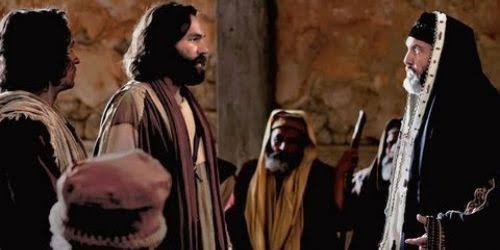
The Acts readings in the lectionary during Easter give us glimpses into the life of the early messianic community in Jerusalem. The passage set for next Sunday gives us a different glimpse into the life of the early church. It recounts the beginning of the first trial of Peter and John (4:5-22).
Acts, as a whole, reports a number of arrests and trials, involving Peter and John (here, and 5:17–18), Stephen (6:11–14), assorted unnamed believers (8:3; 22:4; 26:10), Peter alone (12:3–6), Paul and Silas (16:19–24), and then Paul alone (21:30–33). Paul also refers to his numerous arrests and trials, along with other hardships, in his own letters (2 Cor 11:23–27; see also 2 Cor 4:8–12; Rom 5:3; Phil 4:11-13)
The speech of Peter
In this first arrest narrated in Acts, Luke has the authorities return to the issue posed by Peter in his earlier speech in the Temple precincts (3:12). The move from “by power or piety” (3:12) to “by what power or by what name” (4:7) depicts the authorities as oblivious of the explicit claims which Peter had made, regarding the name of Jesus, in this earlier speech (3:6,16). Their question continues the focus on the source of the healing, provoking yet another speech in reply.
Peter presents a set speech for the fourth time (4:8-12; see his previous speeches at 1:16-22; 2:14-36; 3:12-26). These speeches are all Lukan creations. The author of this work was not present when any of the speeches in Acts were delivered. The speeches in Acts contain both standard material common to many of the speeches in Acts, and also elements which contextualise the speech for the immediate occasion.
This, we must recognise, is the work of the author of this orderly account, constructing and creating speeches both faithful to the received traditions about what the apostles proclaimed, and also appropriate for each occasion.
In this regard, Luke is following the technique set out by the historian Thucydides: “I have made the persons say what it seemed to me most opportune for them to say in view of each situation; at the same time, I have adhered as closely as possible to the general sense of what was actually said.” (History of the Peloponnesian War 1.22.1). See https://johntsquires.com/2020/04/14/what-god-did-through-him-proclaiming-faith-in-the-public-square-acts-2/
Luke indicates that Peter’s speech is delivered once he is “filled with the holy spirit” (4:8), a state which reproduces that of the messianic community at Pentecost (2:4). Peter is the first individual who is so filled; after him will come Stephen (6:3,5; 7:55), Saul (9:17; 13:9) and Barnabas (11:24).
Peter stands in continuity with individuals in the Gospel who are spirit-filled: John the baptiser (1:15), Zachariah (1:67), Simeon (2:25-26) and Jesus himself (4:1,14). This spirit-filled state has the effect of reinforcing the validity of the interpretation which Peter here provides, as a spirit-filled prophet. It also reinforces his membership of the messianic Jewish community, since members of this community are typically “filled with the spirit”.
Peter answers the question posed at 4:7 by repeating his assertion of 3:6, that the name by which the healing took place was that of “the Messiah, Jesus the Nazarene” (4:10). Immediately he presents Jesus in the now familiar way, as the one whom “God raised from the dead” (4:10; see 3:15; 2:24) and as the one who (implicitly) fulfils the scriptural description of “the stone” (4:11, alluding to Ps 118:22).
The name of Jesus
This brief speech ends with an assertion of the necessity of this name, the name of Jesus, for salvation (4:12). Only if it is taken out of context can this verse be seen to prescribe that a relationship with Jesus alone is the single necessary element of salvation.
The speech as a whole has made it clear that, whilst the name of Jesus is the necessary means by which salvation comes, God is the source of that salvation. Indeed, such salvation has been offered prior to Jesus, as other speeches indicate (2:21; 7:25,35-36; 13:17-19). And God is sovereign, to enact salvation by means that God chooses, not limited to the narrow confession of “the name of Jesus”.
Luke’s view of salvation is broad: for a start, it has occurred already in the story of Israel (Luke 1:69, 77). It then occurs through events occurring early in the life of Jesus (2:30; 3:6), through preaching and enacting the ways that the blind have their eyes open and the poor hear the good news (4:18-21). Salvation occurs when honour is accorded to Jesus (7:50), when possessions are surrendered and poverty is embraced (18:24-27), through table fellowship with Jesus (19:9), and when the lost are found (19:10).
We might note that all of this takes place before any atoning sacrificial death has occurred. Salvation is not explicitly linked with the death of Jesus, in the Lukan writings, in contrast to a conclusion that is often deduced from the letters of Paul. It need not be tightly bound with a narrow definition of “faith in Jesus”, such as we hear proclaimed in some quarters today. It has a broad, encompassing sweep.
Boldly proclaiming
Luke’s narrative commentary on the speech notes that Peter speaks with “frankness” (4:13; the NRSV translates the Greek word, parrhesia, as “boldness”). This characteristic, already evident at Pentecost (2:29), will become a recurrent quality, evident in the prayer of the Jerusalem community (4:29,31), the teaching of Apollos (18:26) and the proclamation of Paul (9:27-28; 19:8; 28:31; with Barnabas, 13:46 and 14:3).
The early followers of Jesus, at least in Luke’s eyes, were thoroughly emboldened by their experiences with Jesus. This might be contrasted with the divisive nature of witness that Paul perceived in Corinth (1 Cor 1:13; 3:1–9, 21–23), or the lukewarm testimony that John experienced from the church in Laodicea (Rev 3:15).
Frankness of speech was a quality which philosophers held to be most desirable in the wise man (see, for instance, Dio Chrysostom, Oration 32.11 and 77/78.37; Diogenes Laertius, Lives 2.122-123 [on Simon the cobbler] and 6.69 [on Diogenes the Cynic]]; Julian, Oration 6), so the juxtaposition with the assertion that Peter and John were “unlettered and uneducated” (4:13) is striking. Luke is intending to portray them as holding their own in the marketplace of ideas, alongside the rhetorically sophisticated philosophers of the day. The apostles speak powerfully, convincingly.
The mighty works of God
The authorities ponder what action to take; Luke depicts them as being cowed by the power demonstrated by Peter and John, both in their speech (4:13) and in their deed of healing (4:14,16). Peter has clearly identified this power as divine in origin (3:12-16), and the authorities even describe what has taken place as “a notable sign” (4:16), ironically using the term which has already been identified as describing divine activity (2:19).
Yet they remain oblivious to the divine dimension of the event; they can see only the consequences amongst the general populace should they take no action. Thus, they make a pronouncement banning Peter and John from speaking in the name of Jesus (4:18). Clearly, it is unlikely that they will comply with this demand, given that Peter has already indicated that the name of Jesus is the centrepoint of their claims (2:38) and was instrumental in their healing the lame man (3:6,16; 4:10,12).
Accordingly, Peter and John reply (4:19-20) in a way which underlines the futility of this command in the face of God’s sovereignty. To refrain from speaking out would mean that they ceased being “right before God”, that they preferred “to listen to you [the authorities] rather than to God” (4:19).
The climax to the apostolic speeches in this section comes when Peter and John assert the necessity of bearing witness to “what we have seen and heard” (4:20, prefiguring the way that Paul describes his commissioning at 22:15). This sign must be declared and interpreted!
The narrative conclusion, in noting that the apostles were released (4:21), appears to align the people with the messianic community, for as they glorified God they adopt the interpretive stance of those who praise God for events they experience: the healed man (3:8,9) and the whole community (2:47). The influence of the community thus appears to be spreading amongst the people, but not amongst the authorities. It cannot be regarded as having broken from Jewish faith; yet it is set on a collision course with the Jewish authorities.
Luke’s final comment repeats the description of the healing as a sign (4:22), thereby reinforcing his view that it was God who enabled this healing, as with the other signs (2:19). The whole scene contributes to the unfolding saga of what God was doing amongst the earliest believers. These events are an integral part of the plan of God, stretching across the years. The book, in the end, is not so much the book of the Acts of the Apostles (as tradition has labelled it), as it is the book of the Deeds of God—“the mighty works of God” (2:11).
This blog is based on a section of my commentary on Acts in the Eerdmans Commentary on the Bible, ed. Dunn and Rogerson (Eerdmans, 2003). I have also explored the theme of the plan of God at greater depth in my doctoral research, which was published in 1993 by Cambridge University Press as The plan of God in Luke-Acts (SNTSM 76).
The lectionary is currently offering a series of passages from the book we know as 1 John. They run from Easter 2 (last week) to Easter 7 (in mid May).
1 John is a book that’s about love: “I am writing you no new commandment, but an old commandment that you have had from the beginning … we know that we have passed from death to life because we love one another … let us love, not in word or speech, but in truth and action … this is his commandment, that we should love one another, just as he has commanded us … let us love one another, because love is from God; everyone who loves is born of God and knows God … God is love, and those who abide in love abide in God, and God abides in them.”
Although, it’s about more than love, too—as we shall see.
Although it is usually described as a letter, the work is actually more in the form of a sermon. It does not begin with the kind of opening address expected in a letter, nor is there any form of expected epistolary conclusion at its end.
The opening verses of this sermon-letter, instead of providing information about the context in which the document came into being, launch straight into an urgent rhetorical statement (1:1–4) about the important generic message which will follow. “This is the message we have heard from him and proclaim to you, that God is light and in him there is no darkness at all” (1:5). It is an unusual way to begin a “letter”.
The sermon-letter ends quite abruptly, with a stark admonition: “Little children, keep yourselves from idols” (5:21). There is no context given for this instruction; and no discussion of travel plans or the sending of an emissary, no greetings, no final blessing. It is a strange way to end a “letter”.
Is it a letter, a book, a sermon–or what?
The book clearly has the ethos of a letter, as found in the first person plural of the opening verses (“we declare…we declare…we are writing…”, 1:1–4), the direct address to “little children” (2:1; 3:18; 5:21) and “beloved” (2:7; 4:1, 7), and the repeated assertion that “I write these things” (2:1, 7, 12–14, 26; 5:13).
Moral exhortation and doctrinal teaching, elements regarded as being classic component parts of early Christian letters, are interwoven throughout the book without clear distinction.
Yet there appears to be no marshalling of a case and no logical development of thought, such as is found in the carefully-shaped rhetoric of the letters of Paul. At first reading, the letter’s structure is somewhat circular and repetitive, more an extended meditation on “love” (the term appears around fifty times) than a tightly-argued instruction. The tone is often reflective—although there are moments of contention and dispute. More like a sermon, perhaps?
The author of the sermon-letter is never named, but the opening verse (that we heard in the lectionary reading last week) makes the claim that the letter comes from one who has “heard…seen…looked at and touched” for himself, the very “word of life” (1:1).
The inference is that the author has had personal contact with Jesus himself; in the third century, Irenaeus made the definitive claim that the letter was written by “John, the disciple of the Lord” (Against Heresies 3.16.5). And that tradition has stuck ever since.
This claim goes beyond any direct assertion within the sermon-letter itself; although such a claim might be reinforced by the author’s reiteration of his privileged status as eyewitness (and earwitness): “we have seen it” (1:2), “what we have seen and heard” (1:3), “the message we have heard from him” (1:5), as well as a later reminder: “just as he has commanded us” (3:23).
The frequent use of “from the beginning” (1:1; 2:7, 13, 14, 24; 3:11) might also be taken as a reference back to the teachings of Jesus, mediated through the writing of this author.
Likewise, from the text of this sermon-letter itself, its recipients cannot be specifically identified in any meaningful way. There are references to “little children … fathers … young people” (2:12–14) which are formulaic and generalised. They already know the message about Jesus, for they “know him who is from the beginning” (2:13, 14) and have already heard his commandment to “love one another” (2:7; 3:11).
Their situation involves a controversy about how to live in obedience to Jesus; the contrast between darkness and light, love and hate is marked throughout the work (1:5–10; 2:9–11; 3:11–15; 4:20–21). A key idea in this regard is the way that love reaches “perfection” (2:5; 4:12, 17–18) in the lives of believers. This is what the recipients of the letter are to set as their aim.
Set in stark contrast to the believers is “the world”, which is both personified and portrayed as a negative character. The world is full of desire (2:16); those in it do not help a person who is in need (3:17); they hate believers (3:13) and do not know God (3:1; 4:3–6).
The sermon-letter ends with the strong assertion that “the whole world lies under the power of the evil one” (5:20). This suggests high tension, even outright conflict, between the people addressed in this document, and some indeterminate “opponents”.
What can we know about this opposition that is reflected in this sermon-letter? And what kind of theology emerges from this conflict? That’s the focus of my next blog on 1 John.
This blog draws on material in IN THE NAME OF …an exploration of writings attributed to the apostles, by Elizabeth Raine and John Squires (self-published 2014)
The Acts reading offered in the lectionary for this Sunday comes after an account of a healing, performed by Peter and John at the Beautiful Gate of the temple (Acts 3:1-11). The apostles heal a man who had been lame from birth. The passage we hear on Sunday places the focus on Peter, who provides an interpretation of what has taken place, just as he did on the day of Pentecost. The reading includes a part of Peter’s third speech (3:12-26).
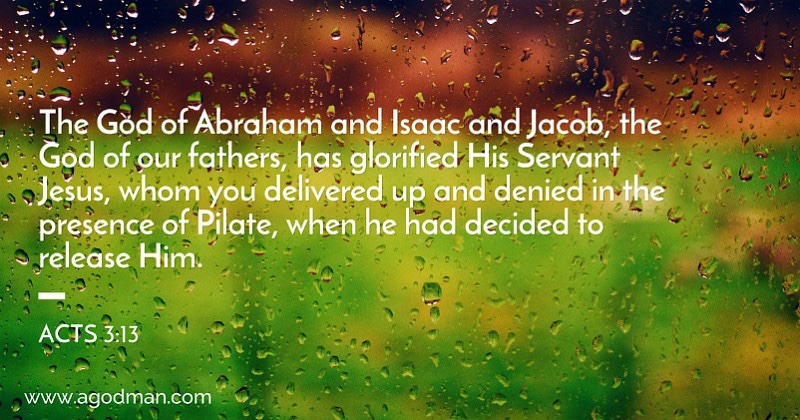
Peter begins his speech by accusing the people of thinking “as if by our own power or piety we have made him walk” (3:12). Not so, he claims. Peter asserts that it is God — “the God of Abraham and Isaac and Jacob, the God of our ancestors” (3:13) — who has enabled the miracle. Like many speeches in Acts, it begins by acknowledging what God has been doing (2:22; 7:2; 10:34; 13:17; 15:7; 17:24; 21:19).
In addition, the speech contains a number of other key elements of speeches, from the template established in Peter’s Pentecost speech. The healing took place in the name of “the Messiah, Jesus of Nazareth” (3:6; see 2:36), who is here represented to the people in ways largely familiar from this earlier speech. Jesus is the one whom God glorified (3:13) and God raised (3:15; see 2:24); he is the one of whom the apostles are witnesses (3:15; see 2:32) for of him they “see and know” (3:16).
Jesus is the suffering Messiah, in fulfilment of “what God announced beforehand through the mouth of all the prophets” (3:18). This extends the fulfilment of prophecy from Jesus’ resurrection (2:25-31) and exaltation (2:34-35) to his crucifixion. Such a claim is important for Luke; he has Paul make the same affirmation, that the suffering of the Messiah fulfils scripture, at 26:23; indeed, he places its initial appearance on the lips of Jesus at Luke 24:26. (However, Peter’s claim that “all the prophets” predicted this is surely one of a number of Lukan exaggerations.)
So the speech both reprises and develops the story of Jesus, using explicit language about how God was at work amongst these happenings, as told in 2:22-36, as well as the prophetic and apostolic witness which characterises the apostolic proclamation.
Luke has Peter once more evoke the response of repentance (3:19) by reference to God, as he did at 2:37-39. Repentance is portrayed as an integral element in the eschatological scenario. The eschatological hope which was often proclaimed by Jesus (Luke 4:43; 9:26-27; 10:1-16; 12:49-56; 13:22-30; 17:20-37; 19:11-27; 21:5-36) continues as an essential element in the apostolic proclamation.
Luke reports Peter as describing the eschatological sequence in some detail (3:19-21). The sovereignty of God is clearly in focus in this eschatological process: God will wipe out sins (3:19b) because people will have already repented and turned to God (3:19a); “times of refreshing” will come “from the presence of the Lord” (3:20a); and God will then send the appointed Messiah (3:20b).
After this, there is an interim period, as the ascended Jesus remains in heaven (cf. 1:11; 2:33), awaiting “the time of universal restoration” which will implement what God has long ago promised (3:21). The delay occasioned by this waiting does not signal a breakdown in God’s providential control of events, for Jesus remains in heaven by divine decree (he “must”, 3:21). This concentrated eschatological proclamation thus underlines the continuing sovereignty of God, which is especially manifested at the end times.
The “times of refreshing” may refer to Jesus’ teaching that “the Lord will cut short the end” (Mark 13:20, but omitted in Luke 21); the sense of “refreshing” is of a breathing space before the next event in sequence takes place (see Exod 8:15).
The “time of universal restoration” transcends the earlier question of the disciples concerning the restoration of the kingdom to Israel (1:6); here, restoration has a universal scope. It may thus correlate with the eschatological events which Peter has already reported at 2:17-21 (citing Joel 2:28-32; see also Mal 4:5-6).
References to the eschaton also appear in Peter’s Caesarea speech (10:42) and in Paul’s Areopagus speech (17:31). On these occasions, however, the description of the eschaton is limited to noting the role that Jesus will perform, as the one “ordained” (10:42) or “appointed” (17:31; cf. 3:20) to execute God’s judgement. Nowhere else in Acts do we find the fulsome eschatological description offered in this speech by Peter at Solomon’s Portico.
The time of universal restoration which Peter declares is that which “God spoke through the mouth of his holy prophets” (3:21; cf. Luke 1:70). In addition to the exaggerated claim that “all the prophets … predicted these days” (3:24), Luke has Peter cite specific scriptural passages in support of his statement about the eschatological role of Jesus.
Peter identifies Jesus in two eschatological roles: as the prophet promised by Moses (3:22-23, quoting Deut 18:15-16,19) and as the one who implements the blessing in the covenantal promise to Abraham (3:25, alluding to Gen 12:3; 18:18; 22:18; 26:4). The way that Peter here expresses the eschatological role of Jesus is evocative of the prophetic words of Mary (Luke 1:54-55) and Zechariah (Luke 1:68-75).
This eschatological act of God is still awaited. It is the decisive action which provides the springboard for Peter’s demand for repentance (3:19). Waiting for the coming kingdom is not simply a passive, do-nothing time. It requires active waiting—so Peter concludes his speech by urging the people to “turn, each one, from your sins because God raised up his son and sent him as a blessing to you” (3:26, as a fulfilment of the promise to Abraham cited in 3:25).
In addressing the issue posed in 3:12, Peter thus uses the affirmation that God has been at work in the healing, as the basis for expounding God’s eschatological actions, which will bring blessing to the people. Looking at what has happened in the immediate situation provides an important clue for understanding the larger scheme of things. That might be a clue for how we operate as the church today: sensing that each small, hopeful happening is a glimpse of what is still to come in the overarching plan of God.
This blog is based on a section of my commentary on Acts in the Eerdmans Commentary on the Bible, ed. Dunn and Rogerson (Eerdmans, 2003). I have also explored the theme of the plan of God at greater depth in my doctoral research, which was published in 1993 by Cambridge University Press as The plan of God in Luke-Acts (SNTSM 76).