Today, the calendar of the church year marks the Feast of the Ascension. It’s a day that is celebrated within Roman Catholic and Anglican churches, but not so much in Protestant churches.
Of course, the story of the ascension of Jesus is premised on the ancient worldview, which saw heaven “in there” and earth “down here”; as Jesus leaves his earthly followers to return to his Heavenly Father, then of course, he was ascending, rising upwards!
The ascension is an event in the story of Jesus that is referred to only in one Gospel—that of Luke. This Gospel reports the ascension of Jesus into heaven (24:50–53) as the climax of the whole Gospel. This brings the whole Jesus saga to a head. Yet it’s not narrated in John’s Gospel (although there appears to be a hint of it in the words of Jesus in John 20:17).
Nor is it told in Matthew’s Gospel where the ending explicitly affirms “I am with you always” (Matt 28:20). And no sign, of course, in Mark, whose account ends at the empty tomb, even before the resurrection (Mark 16:8). And Paul (who barely refers to any of the key moments in the life of Jesus) may well be alluding to it in his letter to the Romans (Rom 10:5–13), but not in a direct and unequivocal way.
For Luke, it is also an important pivotal event, for it is repeated at the start of the second volume (Acts 1:6–11). This second version provides more details; it fills out the story in narrative form, and appears to incorporate details that have significance for the author of the work.
Also crucial is to note Luke’s version of the commission which the risen Jesus gives as a parting word to his disciples: in the Gospel, he declares that repentance and forgiveness of sins is to be proclaimed in his name to all nations, “beginning from Jerusalem” (24:47).
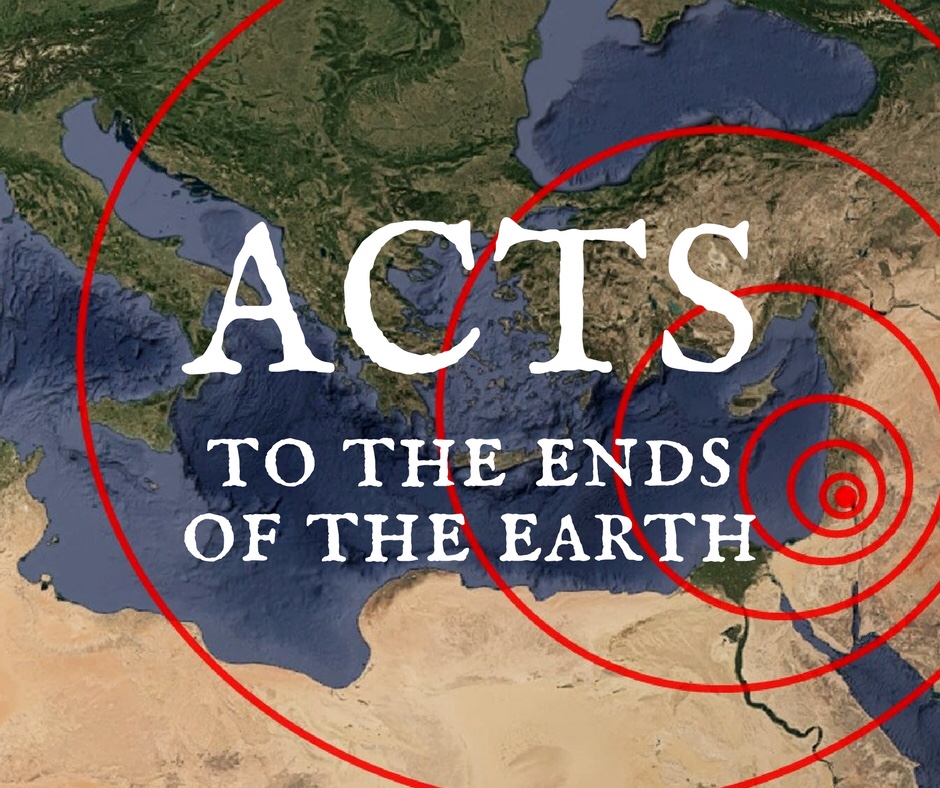
Another version of this commission introduces the second volume (Acts 1:8): “You will be my witnesses in Jerusalem, in all Judea and Samaria, and to the ends of the earth.” This verse sets out the programme for the rest of this volume.
Immediately after this, Jesus ascends into heaven (Acts 1:9-11). This is the pivot from the earthly period of Jesus into the time when the movement of those who followed Jesus in that time will begin to form the customs and practices that led to the creation of the church.
Luke presents the whole sequence of the death, resurrection and ascension of Jesus as both the climax to his earthly life and the foundation for the time of the church.
That final point is what we really ought to take from this doubly-offered story: the departure of Jesus by means of his ascension into heaven is actually the moment when Jesus charges his followers to be engaged in mission. The departure of Jesus heralds the start of the church. The (physical) absence of the Saviour brings in the impetus for engaging wholeheartedly with the world which he has (physically) left.
Every year, at Easter time, people of faith recount the story of the earth and resurrection of Jesus. The key days of Easter are constructed so that we focus, step by step, on the main elements in the story: the poignant last meal that Jesus shared with his followers (Thursday evening), the tragedy of trials and committal to crucifixion and death (Friday morning); the waiting in the quiet (Saturday, the sabbath day); the sombre early morning visit to the tomb, found to be empty (Sunday morning); and the joyous stories of encountering the risen Jesus (Sunday evening).
So many parts to the familiar story; so many opportunities to recall, retell, and reflect on these seminal events, the centre of our Christian faith.
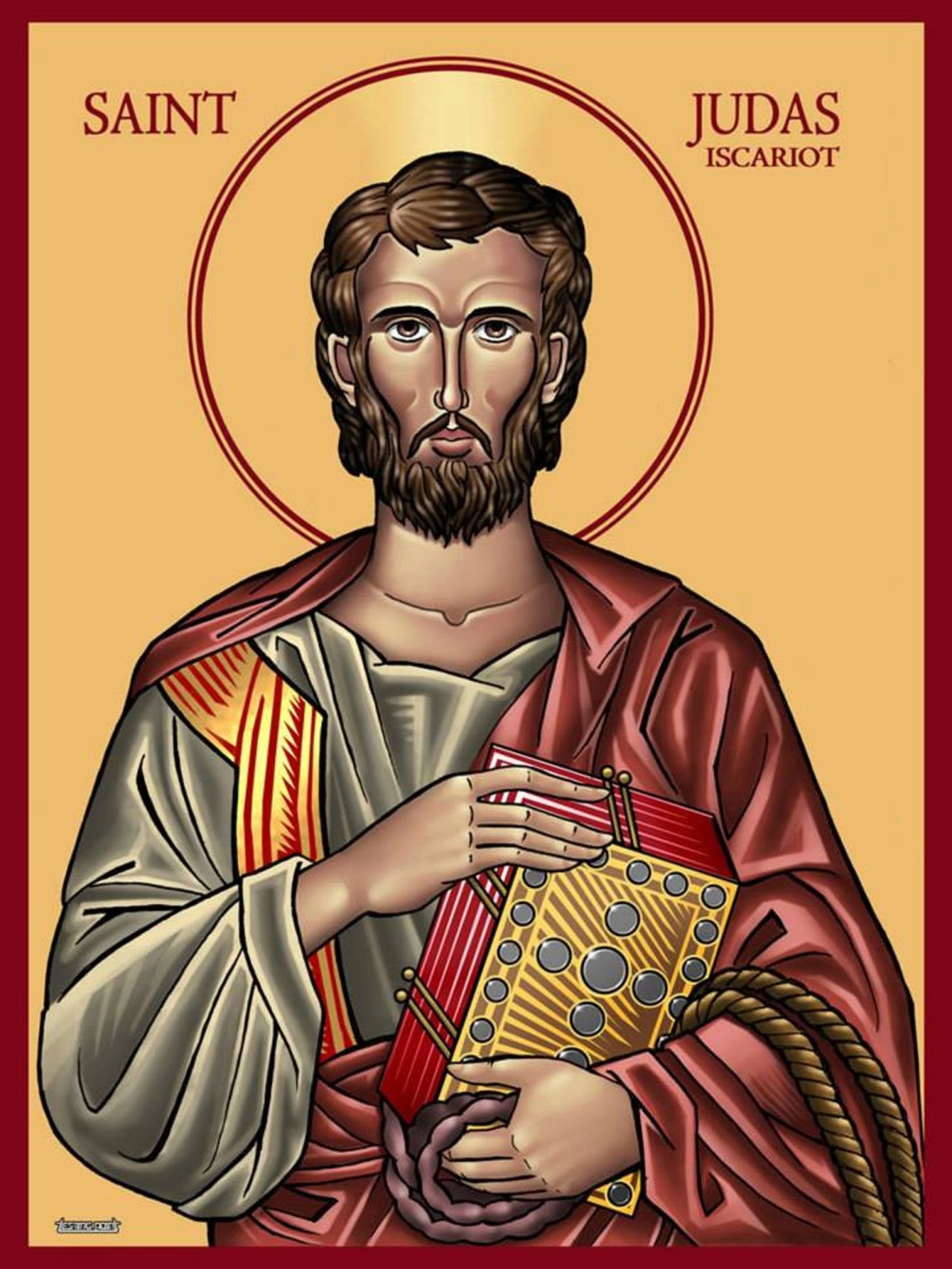
And yet: there are other parts of the story which do not often (if at all) take their place in this retelling of the story. Other parts, which may surprise, confront, or challenge, if we hear them, explore them, and ponder their significance for us. There is the story of the Roman soldiers and their corrupt collusion with Jewish authorities (Matt 27:62–66, 28:11–15). There are the two dramatic earthquakes that are linked with the appearances of resurrected ones (Matt 27:50–54, 28:2–4). And there is the tragic figure of Judas: apostle, betrayer, sinner, apostate.
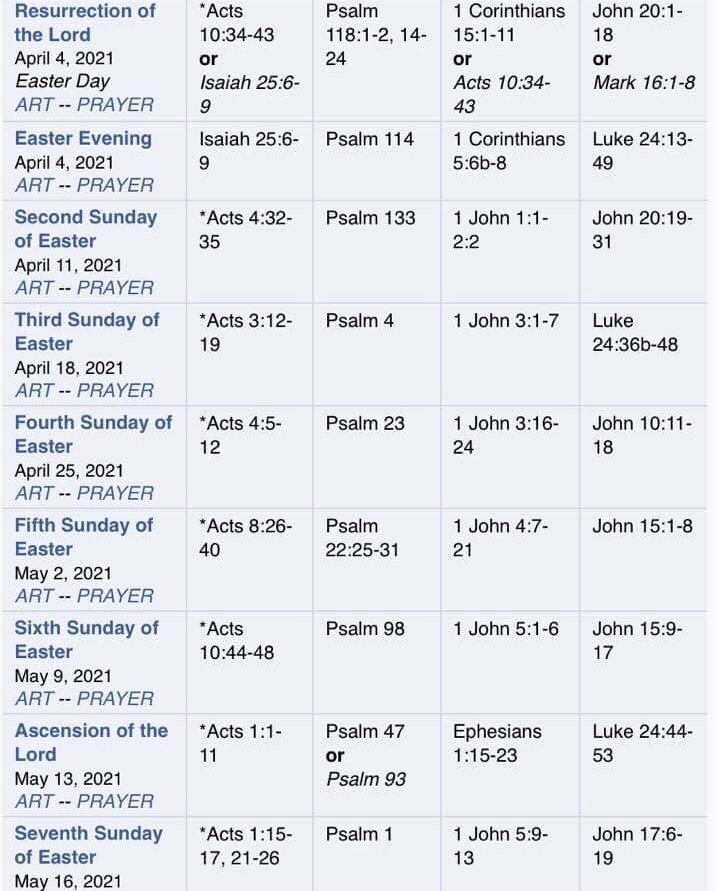
The last part of the story of Judas is told in the final reading from Acts that we are offered in the sequence that has been provided for this season of Easter. (The season runs from 4 April, Easter Sunday, to 23 May, the Day of Pentecost. Acts replaces the Hebrew Scripture passages throughout this season.) The fate of Judas is told during the narrative about the choice of the twelfth disciple to replace Judas (Acts 1:15–26).
In what follows, I a, indebted to discussions about these passages with my wife, the Rev. Elizabeth Raine, who has thought much about how Judas is portrayed in these early texts.
There are three versions of how Judas died. This account in Acts reports that Judas bought a field with the moment he had gained from his betrayal of Jesus, and subsequently died there. This part of the passage is actually omitted by the lectionary, so here it is for good measure:
“This man acquired a field with the reward of his wickedness, and falling headlong he burst open in the middle and all his bowels gushed out. And it became known to all the inhabitants of Jerusalem, so that the field was called in their own language Akeldama, that is, Field of Blood.” (1:18-19).
The author of Acts, just for good measure, quotes two passages from “the Book of Psalms” (1:20) which, in his eyes, validate what has taken place in the death of Judas. That’s a common strategy in the Gospel narratives in the New Testament—reporting a passage from scripture, either inferring, or—more clearly—directly stating that this old text was now fulfilled in the event being narrated.
Even though the psalms that are quoted are not prophecies, they are treated as if their words, “may his camp become desolate” (Ps 69:25) and “let another take his office” (Ps 109:8), were prophetic words waiting to be fulfilled. Both the actions of Judas, in dying in the field that he had bought (1:18–19), and the subsequent election, by casting lots, of Matthias as replacement for Judas (1:26), fulfil these two psalm verses.
That replacement of Judas, it seems, is the main point the way that the lectionary has edited this passages for use in Sunday worship. And the edited version avoids disturbing the congregation with the gory details of his suicide: “he burst open in the middle and all his bowels gushed out” (1:18). Propriety and decorum is maintained.
A second account of the death of Judas is attributed to Papias of Hierapolis, a second century bishop whose works are no longer extant—but who is quoted in the writings of later church leaders. His account of Judas is reported by Apollinaris of Laodicea, a fourth century bishop, who writes:
“Judas did not die by hanging, but lived on, having been cut down before choking. And this the Acts of the Apostles makes clear, that falling headlong his middle burst and his bowels poured forth. And Papias the disciple of John records this most clearly, saying thus in the fourth of the Exegeses of the Words of the Lord:
“Judas walked about as an example of godlessness in this world, having been bloated so much in the flesh that he could not go through where a chariot goes easily, indeed not even his swollen head by itself. For the lids of his eyes, they say, were so puffed up that he could not see the light, and his own eyes could not be seen, not even by a physician with optics, such depth had they from the outer apparent surface. And his genitalia appeared more disgusting and greater than all formlessness, and he bore through them from his whole body flowing pus and worms, and to his shame these things alone were forced [out].
“And after many tortures and torments, they say, when he had come to his end in his own place, from then the place became deserted and uninhabited until now from the stench, but not even to this day can anyone go by that place unless they pinch their nostrils with their hands, so great did the outflow from his body spread out upon the earth.”
In this version, Judas did not die immediately as he tried to he hang himself on the field he had bought. He survived that suicide attempt. He lived on, in pain and agony, for some (unspecified) time, tortured by his swollen, bloated, stinking, putrified body.
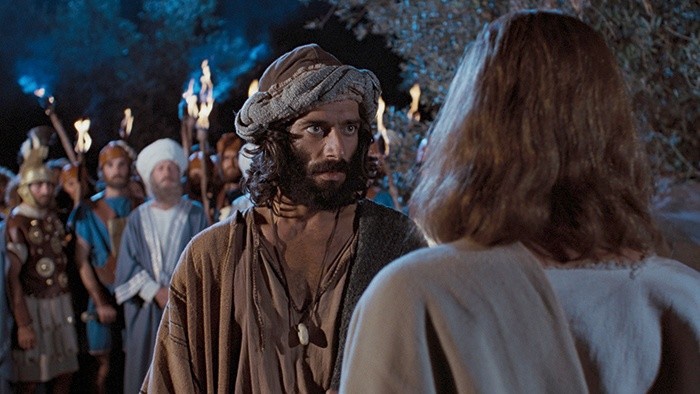
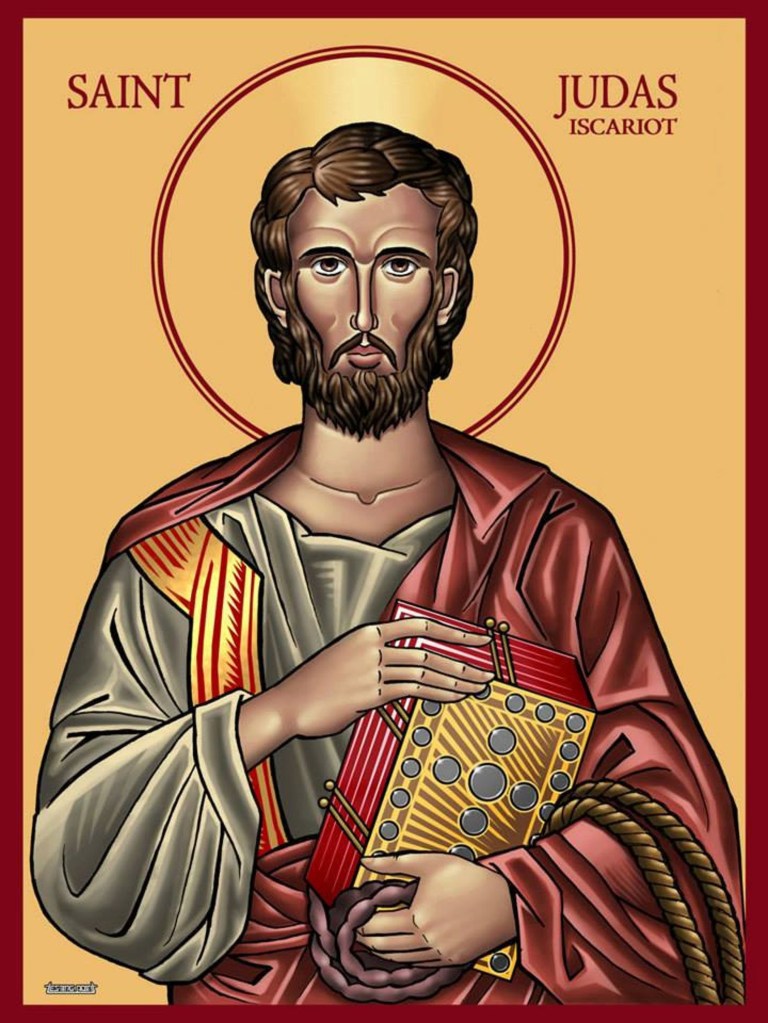
It is very clear in both passages, from Acts and from Papias via Apollinaris, that Judas was known for his wickedness and godlessness. The Greek word used in Acts 1:18 is ἀδικία, which is the negated version of δικία, meaning righteousness or justice. Judas was perceived as having acted unjustly, unfairly, in betraying Jesus. Indeed, the canonical Gospels regularly refer to him simply as “Judas who betrayed Jesus” (Mark 3:19; Matt 10:4; John 18:2, 5), or as “the betrayer” (Mark 14:42, 44; Matt 26:25, 46, 48, 27:3; Luke 6:16; John 6:71, 12:4, 13:2, 11).
Judas has forever since then been known in this strongly negative manner: the betrayer. And, to add fuel to the fire, it is asserted that “Satan entered into Judas” (Luke 22:3), that “the devil had already put it into the heart of Judas Iscariot, Simon’s son, to betray him” (John 13:2). Judas is a marked man, infiltrated, recruited, and persuaded by the enemy.
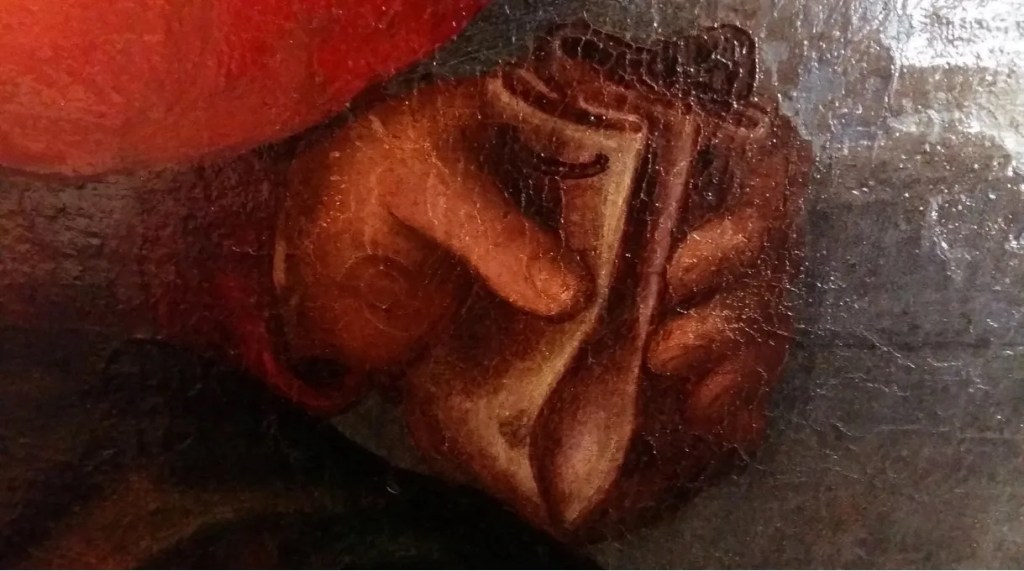
Matthew provides the third account of the death of Judas. This account differs from Luke and Papias. There is no field that was purchased. There is no planning or scheming in order to obtain the field. Rather, there is a sense of deep,remorse, guilt for what he has done, which leads Judas to the decision to end his life. He threw down the pieces of silver, rushed out, and committed suicide. The priests had instructed him to take responsibility for his actions. He knew that Torah mandated death for what he had done, but the priests were not interested in applying that punishment. so Judas obeyed the law and took his own life.
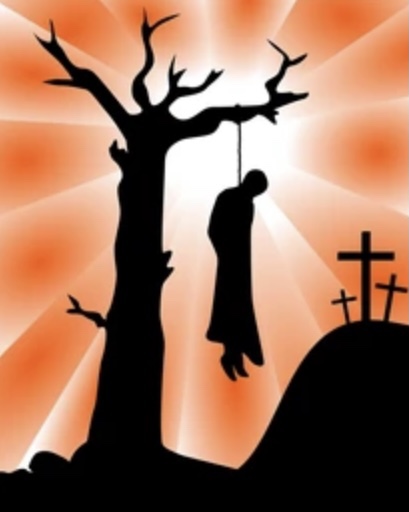
As Matthew reports: “Then when Judas, his betrayer, saw that Jesus was condemned, he changed his mind and brought back the thirty pieces of silver to the chief priests and the elders, saying, “I have sinned by betraying innocent blood.” They said, “What is that to us? See to it yourself.” And throwing down the pieces of silver into the temple, he departed, and he went and hanged himself.” (Matt 27:1-3)
That is short and simple. “He hanged himself.” No gory details, no extended descriptions. Just the simple statement, “he hanged himself”.
The fate of Judas is grim. Jesus had said “woe to the man who betrays the Son of Man”. That woe is enacted in his hanging. Judas, according to the traditional way that this narrative has been taken, went and hung himself in the depths of guilt. In one discussion that I had about this story, a friend claimed that the notion that Judas repented was speculative—that Jesus had given Judas a chance to change his mind at the Last Supper. But he didn’t, so he died with the enduring reputation as “the one who betrayed Jesus” as his enduring legacy.
However, such a claim overlooks one important word. It is found only in Matthew’s account of Judas, after he had betrayed Jesus. It was my wife Elizabeth who drew my attention to this aspect of Matthew’s version of events. It’s an important detail that merits careful attention.
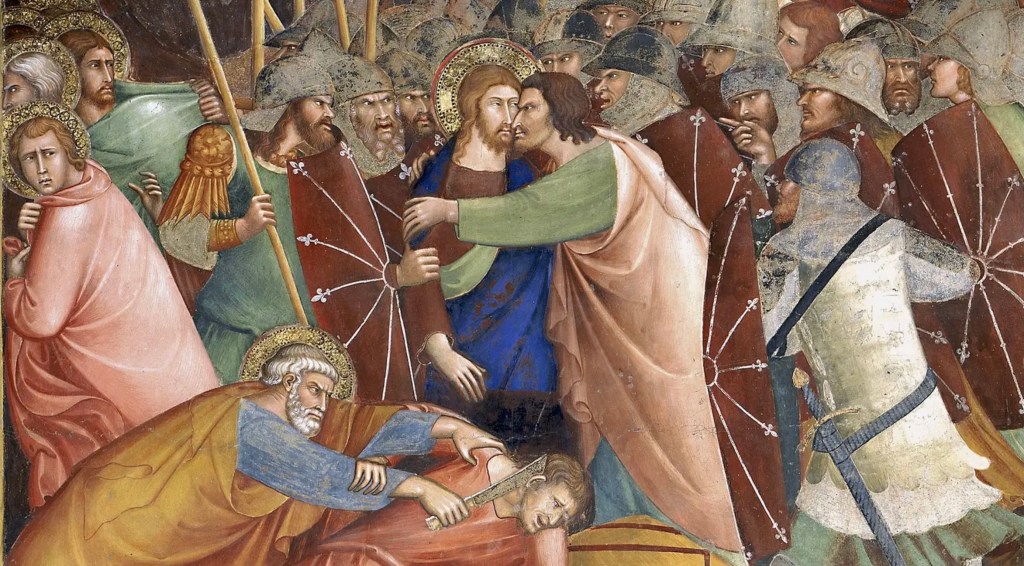
In the immediate aftermath of the sequence of events that unfolded from that potent kiss in the garden (reported in Mark 14:45 and Matt 26:49, and hinted at in Luke 22:48), Matthew asserts that “when Judas, his betrayer, saw that Jesus was condemned, he changed his mind and brought back the thirty pieces of silver to the chief priests and the elders” (Matt 27:3).
Judas had a change of mind about what he had done. The Greek participle used is μεταμεληθεὶς. That comes from a root word which is defined by James Strong as “to regret, repent”. Strong’s Dictionary indicates that this can mean “I change one care or interest for another, I change my mind (generally for the better), I repent, I regret.”
And, in fact, Matthew grounds this in the words that Judas spoke to the chief priests and elders: “I have sinned by betraying innocent blood” (Matt 27:4). That is a clear confession of sinfulness, which—we are assured elsewhere in scripture—will evoke a response of forgiveness (1 John 1:9)—a claim that carries over into traditional Christian liturgy even to this day. Why is Judas thus not forgiven? He has confessed and repented.
Christian theology has overlooked this indication of repentance. Judas did hang himself in deep remorse, with an impetuous action that proved to be fatal. And yet—he did this, not as a sign of his depression, but as a signal of his heartfelt repentance. Judas changed his mind. He repented of the evil that he had done.
And yet, we continue to remember him as the Satan-inspired betrayer of Jesus.
Elsewhere in scripture, Luke indicates that divine retribution is the immediate result for those people who undertake serious sinful actions. Acts has a sequence of events involving divine retribution, with people not being able to get away with their bad actions; they need to face up to the lethal consequences of their sin. We see this for Judas (Acts 1:1); for Ananias and Sapphira (Acts 5:1-11); and then for Herod Agrippa I (Acts 12:20-23).
For Luke, this can all be explained in terms of his ideology of divine providence. All that transpired in what is found in the two volumes authored by Luke was part of The Plan of God, including the betrayal by Judas. Peter states this most clearly in his speech on the day of Pentecost: “this Jesus, delivered up according to the definite plan and foreknowledge of God, you crucified and killed by the hands of lawless men” (Acts 2:23).
The verb translated as “delivered up” is closely related to the verb that is often used in the Gospel narratives, to describe the action of Judas. Jesus was betrayed, or handed over, by Judas. This verse directly refers to the actions of Judas. And his deed of handing over (or betrayal) was an integral part of the plan of God for his chosen one, Jesus.
That, of course, raises huge theological and pastoral issues: if something is done as part of the divine plan, does that provide moral justification for the actions of the human being involved? Can we therefore excuse Judas for his action of betrayal, given that he did that as one part of the overall divine plan (as least, as Luke portrays it)?
And what does it say about the nature of God? What are we to make of a God who recruits a human being to carry out a part of the divine plan, and then sends divine retribution upon that person for what they have done? Is this sheer arbitrary fun? Is this moral turpitude?
And, most pointedly of all: if Judas WAS doing God’s will, why do we still paint him as evil and beyond redemption? Especially if, as Matthew declares, he repented of what he had done.
*****
And perhaps, on a lighter note, one last word on Judas: he offers us a salutary lesson on how NOT to read the Bible. We need to beware of the arbitrary method putting two verses from different contexts together to produce a specific teaching. Such as: “Judas … went and hanged himself. Go and do likewise.” (Matthew 27.5 combined with Luke 10.37.) Just don’t do it!!
*****
With thanks to Elizabeth Raine for her insights into the stories told bout Judas in early Christian texts.
The scene from Acts which is offered by the lectionary this coming Sunday (Acts 10:44–48) reports what occurred in Caesarea after an impassioned speech to Gentiles, by the Jewish man, Peter (10:34-43). What takes place in this scene needs to be understood in the context of the speech just given, and indeed in terms of the whole span of events recounted in this volume.
As its particular theme, it employs “the impartiality of God” (10:34), a scriptural theme (Deut 10:17; Job 34:19; Wisd 6:7; Sir 35:13-15). This theme reinforces the message of the vision (10:11-16) which rebutted the levitical holiness motif and validated table-fellowship as being consistent with divine impartiality, a key aspect of God’s nature.
This divine impartiality is especially evident in Jesus, who can be affirmed as Lord of all (10:36). Peter interprets the life of Jesus as the action of God, who anointed him, was with him, raised him and made him manifest (10:37-43).
Peter affirms the apostolic witness (10:39,41; see 2:32, 3:15, 5:32) and the prophetic witness (10:43; see 2:25-31,33-35, 3:18,21-25, 4:25-26); once again, Luke has him make the exaggerated claim that “all the prophets testify about him” (10:43; see 3:24). These prophets testify to “the forgiveness of sins” which is essential to the proclamation (2:38, 5:31, 13:38).
Jesus has been “ordained by God” to be the eschatological “judge of the living and the dead” (10:42), a concept which Paul will later express (17:31; cf. 24:15). The speech thus comprises a consistent exposition of God’s activities in Jesus, extensively in the past as well as (briefly) in the future.
2 Spirit, come!
The response to this speech is both unequivocal and not unfamiliar when the spirit falls on the Gentiles (10:44-48). At the beginning the spirit had instructed Peter to accompany the messengers from Cornelius (10:19-20) and initiate contact with this household of the Gentiles in Caesarea; at the conclusion of the speech to this group “the holy spirit fell upon all who heard the word” (10:44).
The spirit, of course, was an important element in the ancient Jewish worldview. The creation story of the Hebrews affirmed that creation took place when “the spirit moved over the face of the waters” (Gen 1:1–3). Moses and the elders whom he appointed as judges were filled with the spirit (Num 11:16–17, 25) and judges were filled with the spirit (3:10; 6:34; 11:29; 13:25; 14:6, 19; 15:14).
Prophets were anointed by the spirit to declare “the word of the Lord” for the people of their time (1 Sam 19:20, 23; Isa 11:2; 59:21; 61:1; Ezek 2:2; Joel 2:28–29; Micah 3:8; Zech 7:12, referring to “the former prophets”). Indeed, the servant of the Lord himself is guided by the spirit (Isa 42:1).
This coming of the Spirit had happened before, and it will happen again, as the story of Acts continues. But there is something striking and significance about this story of the coming of the spirit.
This has happened before. The spirit has twice filled the messianic community gathered in the Jewish capital, Jerusalem (at Pentecost, 2:1-4, and subsequently, 4:31). When the spirit is poured out on the Gentiles (10:45) in this gentile capital, it is already known that this is an act of God (2:17).
In both previous cases, God had acted through the spirit in relation to Jews. That this current outpouring of the spirit, outside of Judaea, amongst Gentiles, is still an act of God, is emphasised by a series of narrative comments. The Jewish believers present express surprise at “the gift of the holy spirit” (10:45), but the reader already knows that such a gift is from God (2:38, 8:18).
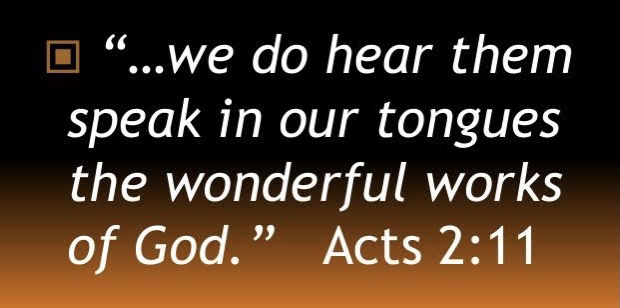
They hear the Gentiles “speaking in tongues” (10:46), a phenomenon already experienced as a divine event in Jerusalem (2:11). Peter draws this connection when he interprets the event: they “received the spirit as we also [did]” (10:47; see 2:38). Peter and his fellow Jews thus “exulted God” (10:47; see 5:13).
Indeed, the Spirit had come to these Gentiles after a striking sequence of events had taken place. Peter had a vision whilst praying in Joppa, that he was no longer to keep separate at table (10:9-16). No longer were Jews to eat separated from Gentiles. God had declared all foods clean (10:15), so separate table fellowship was now overturned. Peter receives this dramatic change to the status quo—and he faithfully acts on it.
Peter and his companions in Joppa share at table with the men from Cornelius (10:23; 11:4-11) and then, when they have travelled to Caesarea, with the household of Cornelius and those who were baptised with him (10:48; 11:12-18). Indeed, the very point of the vision seen by Peter is to establish an inclusive, all-embracing table fellowship in the Jesus movement, open to both Jews and Gentiles, from this point onwards (11:3).
This is a moment when the old is overturned, and the new is implemented. It is a strong moment of transition for the early church. From this time, the good news spreads amongst Gentiles; to the extent that it does, indeed, reach “to the ends of the earth”.
Baptism ensues (10:48; cf. 2:38). The deepest significance of this moment for Luke is identified as being that “the gift of the holy spirit had been poured out even on the Gentiles” (10:45). That God has acted even on the Gentiles signals that the ‘turn’ which has been anticipated since 8:4 has come about in a fulsome way.
*****
The author’s interpretation of the events that have taken place in Caesarea draws them into close relationship with the interpretation of Jesus which Peter has given (here, and in earlier speeches in Acts). The impartial God who has acted through Jesus (10:34-43) is the same God who declares all things clean (10:15), who shows this to Peter (10:28), who gifts Gentiles by pouring out the spirit (10:45), and who is exulted by the people (10:46). It is language about God which interprets the significance of the narrative at each key moment.
The consequence of this dramatic event is noted briefly: “they invited him to remain for some days” (10:48b). Table-fellowship with Gentiles and the breach of the food rules was considered to be the inevitable result of God’s actions (see also 11:15–18). Such hospitality continues to be one of the key markers of the church.
This blog is based on a section of my commentary on Acts in the Eerdmans Commentary on the Bible, ed. Dunn and Rogerson (Eerdmans, 2003). I have also explored the theme of the plan of God at greater depth in my doctoral research, which was published in 1993 by Cambridge University Press as The plan of God in Luke-Acts (SNTSM 76).
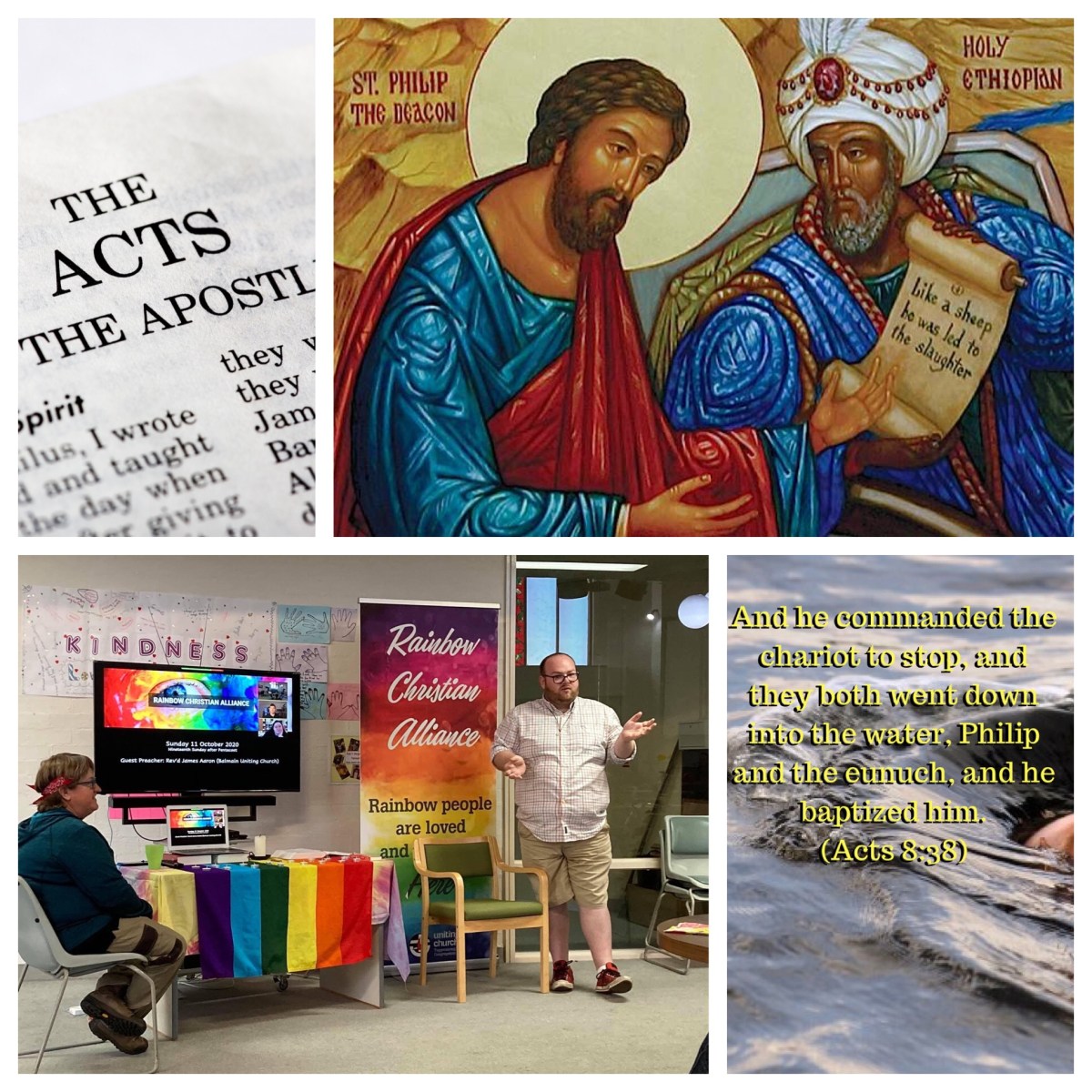
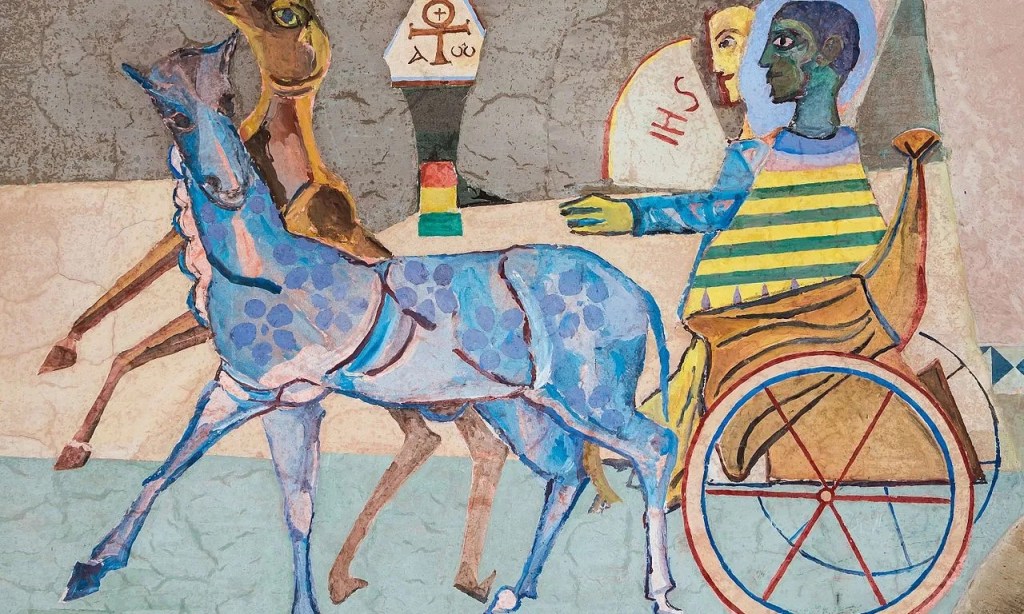
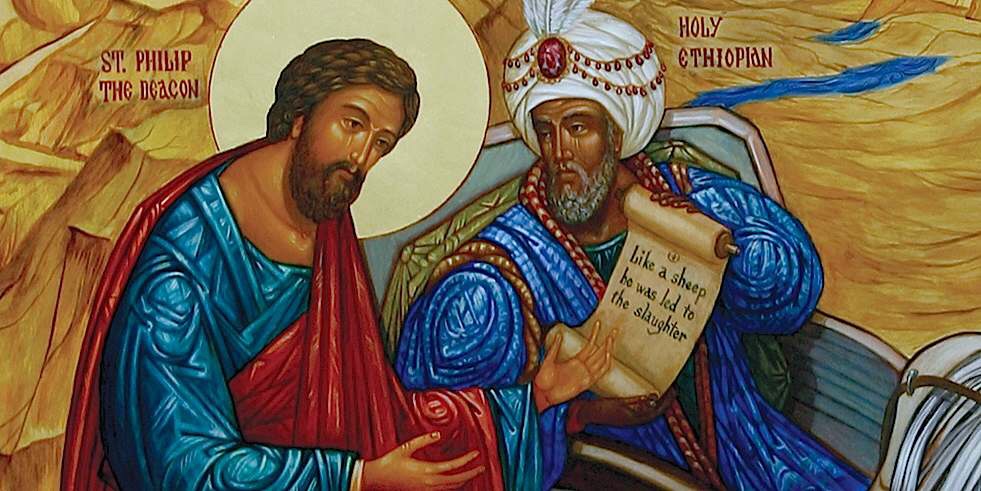
The reading from Acts offered this Sunday takes us to the edges. The man who encounters Philip is from Ethiopia. The Israelites regarded Ethiopia as the furthest extent of the earth in the south-westerly direction (Isa 11:11-12). I’ve already pondered whether this passage might provide a clear Lukan pointer to how the Gospel went “to the end of the earth” (see https://johntsquires.com/2021/04/27/edging-away-from-the-centre-easter-5-acts-8/)
Although the man was a Gentile, he was returning from worship in Jerusalem (8:27); he is probably thus the first of a number of proselytes who appear in the narrative of Acts (10:2; at 13:50; 16:14; 17:4,17; 18:7).
He is travelling in the wilderness; the place where, by tradition, God could be encountered in a new way, a way that deepens faith and sharpens understanding. The journey through the wilderness figured in the songs of Israel, being regularly recalled in the Psalms (68:7, 78:15-20, 40, 52, 95:8, 106:14-33, 136:16). It also appears in various prophetic oracles (Isaiah 40:3-5, 41:17-20, 43:19-20, Jer 2:6, 31:2-3, Ezekiel 20:8b-21, Hosea 13:4-6, Amos 2:9-10, Wisdom of Solomon 11:1-4) and occasional narrative references.
The exodus from Egypt and the subsequent wilderness wandering, provided the foundational story for Israel, from long ago, and still through into the present. Journeying through the wilderness is how Israel encountered God, deepened their faith, and shaped new ways of obedience.
The wilderness was where Israel met God; where Israel’s commitment was tested; where Israel’s faith was shaped. And as the story continues, that is exactly what happens for the man from Ethiopia. In the wilderness, he encounters God, and is welcomed into community.
*****
However, when he was in Jerusalem, this man from Ethiopia would have been barred from entering the temple precincts because he was a eunuch (Deut 23:1). In the eyes of the Law, he was not perfect, and thus not able to present himself directly before the Lord. He could approach the temple, but not take part in its rituals.
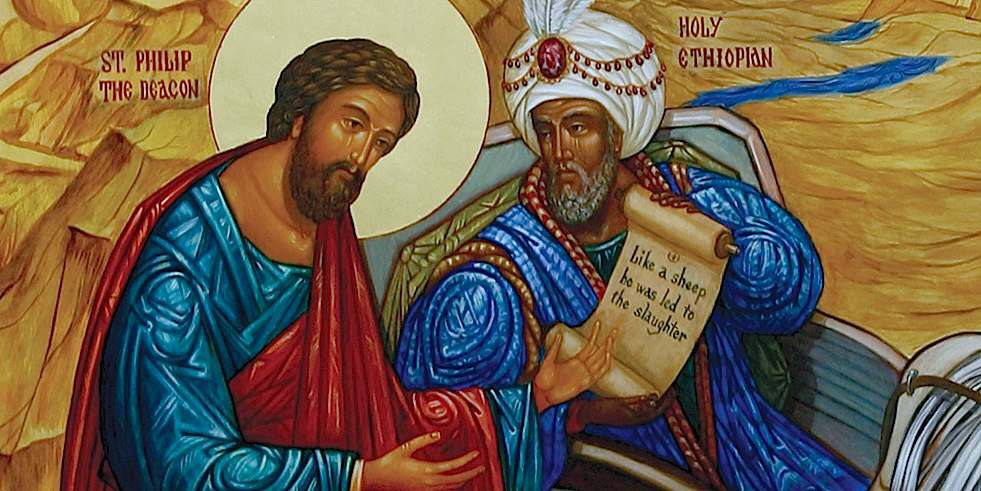
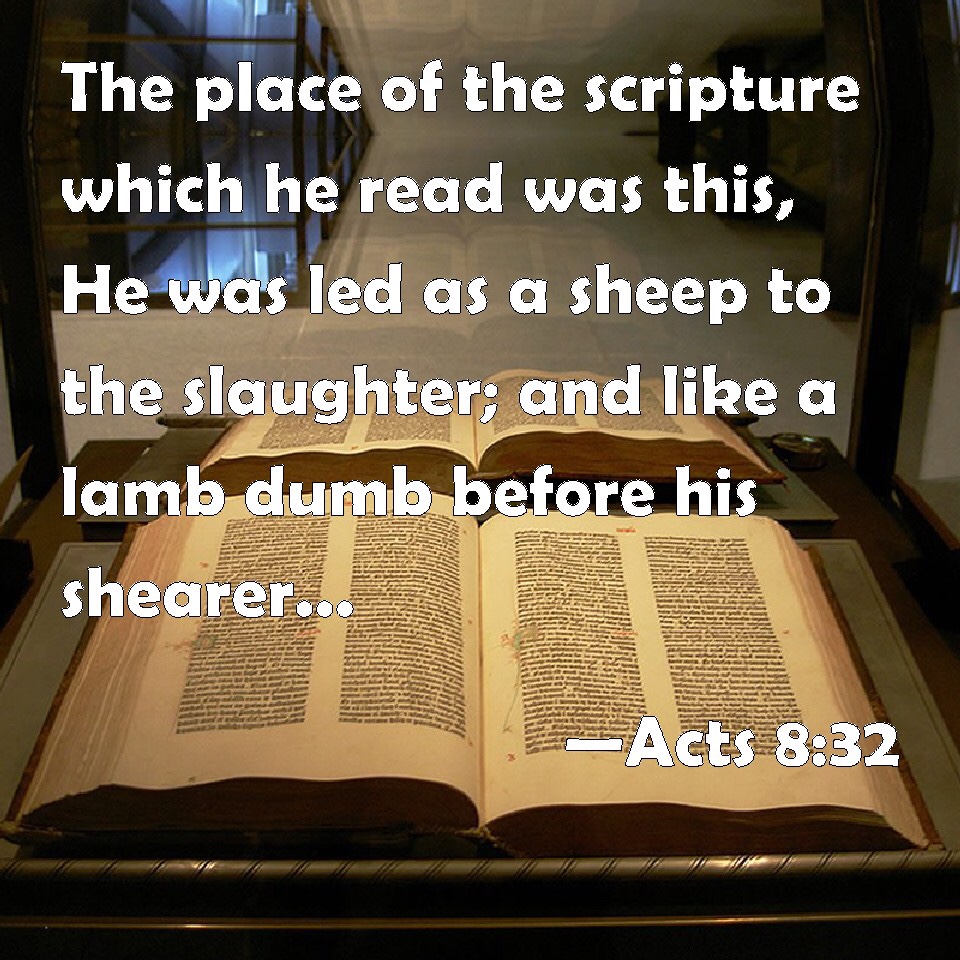
And yet, we see that the man was reading from the book of the prophet Isaiah—from the Hebrew Scriptures. He was reading of the trials of the servant, suffering humiliation and injustice, before being sent to his death (Isa 53:7-8). Philip, of course, relates this poem to the story of Jesus.
But once Philip has left the man, I wonder: did he keep on reading?
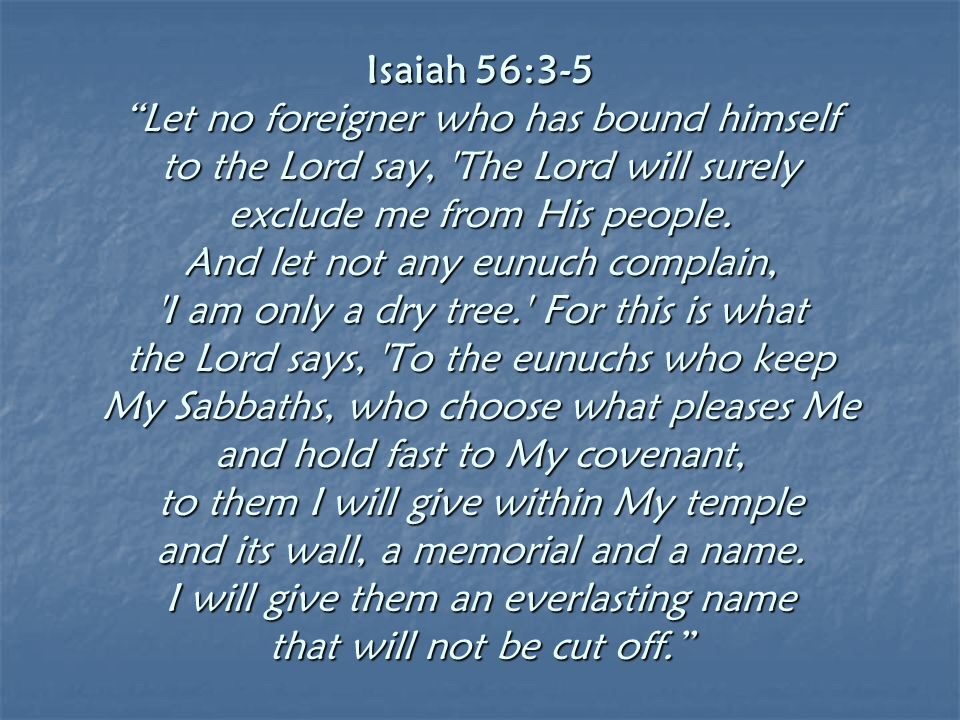
If he had done so, he would fairly soon have come to this striking passage in chapter 56:
Do not let the foreigner joined to the LORD say,
“The LORD will surely separate me from his people”;
and do not let the eunuch say, “I am just a dry tree.”
For thus says the LORD: To the eunuchs who keep my sabbaths,
who choose the things that please me and hold fast my covenant,
I will give, in my house and within my walls,
a monument and a name better than sons and daughters;
I will give them an everlasting name that shall not be cut off.
And the foreigners who join themselves to the LORD,
to minister to him, to love the name of the LORD,
and to be his servants, all who keep the sabbath,
and do not profane it, and hold fast my covenant—
these I will bring to my holy mountain,
and make them joyful in my house of prayer;
their burnt offerings and their sacrifices
will be accepted on my altar;
for my house shall be called a house of prayer for all peoples.
Thus says the Lord GOD, who gathers the outcasts of Israel,
I will gather others to them besides those already gathered.
What an amazing passage! What a delightful expression of the gracious opening-up from the old, valued traditions of Israel, to the new, more expansive, more inclusive community of faith. Outsiders, foreigners, even eunuchs, will be welcome in the house of the Lord. They will be gathered in, accepted, valued, and loved. They will be integral parts of the community of faith.
The story of Philip and the wealthy, privileged court official from Ethiopia is a story that moves this gracious welcome of God, promised in Isaiah 56, into a reality, as the story of Acts 8 is told. Coming from another nation, coming as a man considered not to fit into the predetermined categories of gender and purity in the culture of the time, Philip’s welcoming of this Ethiopian eunuch challenges the categories, opens the doors, and invites into the centre, this person from the edge.
Whether or not the man from Ethiopia continued reading until he encountered this passage in Isaiah 56, the story recounted in Acts 8 clearly indicates that he was welcomed into the community of faith.
*****
Here is the word of God for us, today. Tradition is important. History cannot be denied. Our inheritance is significant. We bring all of this into our life today, as a community of faith. And yet, the driving dynamic in this story is about the acceptance of the outsider, the integration of the edges into the centre, the reaching out for fresh and new expressions of faith.
This is a pivot story, taking us from the central religious site of the people of Israel, the Temple, in the capital of the nation of Israel, Jerusalem; out on the road, into the wilderness, heading out towards the edge of the known world, to the ends of the earth, with a man who came from the edges, from a land at the ends of the earth, of a different religion and culture, and of uncertain gender identity.
The story actually ends with Philip in Caesarea (8:40), which is where Peter preaches and the Spirit moves amongst Gentiles (10:44-48; 11:15-18). It is another pivotal location in the overarching story of Acts. This is where God provokes the leadership of this movement to reach out and encompass new people, different people, into the community of faith.
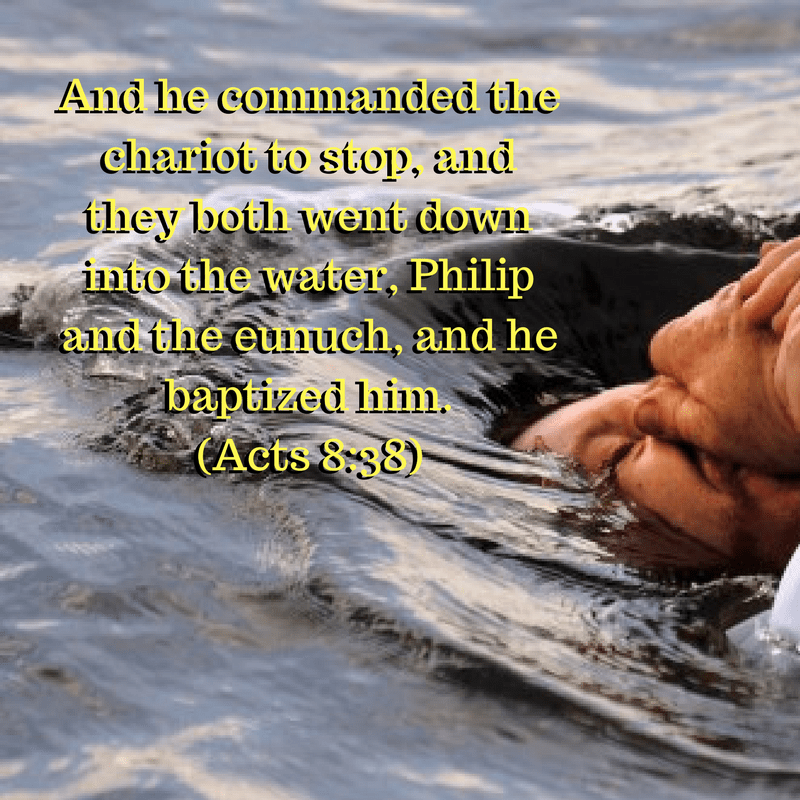
So this is the man who was baptised by Philip during his wilderness travels: a man on the edges, out of place, not fitting the expected “normal” categories. “What is there to prevent me from baptising you?”, Philip asks the man who has read scripture, asked questions, received answers, engaged in deepening engagement with the Gospel—and then, was baptised, dunked into the water, welcomed into the community of faith that was shaped by the teachings and stories of Jesus of Nazareth (8:36-38).
From the edges, into the centre. This is who we are to be, as church. Open to those we perceive as outsiders; inviting them in to become integral insiders. Accepting those whose patterns of life we might question—in his case, a person whose gender is uncertain, up for question—maybe even perceived as deviant, by those hardliners who hold fast, without breaking their grip, to the dogmatic way that they understand their faith.
In the congregation where I worship regularly, we welcome all. We especially welcome rainbow people—people who do not readily identify with the dominant pattern of heterosexual male or female, but who name their sexual attraction to others as meaning that they are gay or lesbian, who are grappling with the challenge of being intersex, who have travelled the pathway of transgender identity, who are bisexual or asexual, or who happily adopt the once-derogatory term of being “queer” and use it in a positive, affirming way.
Within the total population of human beings, is a wide range, and amazing diversity, a kaleidoscope of sexual preferences and gender identities; and such diversity is represented within the community of the Tuggeranong Valley, and within the Tuggeranong Uniting Church community. And that is precisely the way that church is supposed to be.
And as we continue to reflect on this passage, we might also remember that this is but one way, this is but one sector in the community, to which we might carefully and intentionally open our doors. Alongside rainbow people, we are called to offer welcoming hospitality to families where issues of faith and spirituality are live and important, but for whom the traditional patterns of church do not satisfy; to those who have been scarred by traumatic experiences in life and who are looking for validation and valuing, for a safe place to belong with no questions asked and no demands imposed; to any who seek the deeper things of the dimension of spirit in their own lives.
“You will be my witnesses in Jerusalem and in all Judea and Samaria, and to the end of the earth.” (Acts 1:8) So Jesus declares at the start of the second volume of the orderly account of the things being fulfilled among us—the work we know as the book of Acts.
After a series of incidents located in Jerusalem (1:4–8:4), the move into Samaria is recounted in two striking stories. The first (8:5-25) tells of the activities of Philip and the subsequent visit from Peter and John. The second, a conversation between Philip and the Ethiopian (8:26-40), serves to moves the narrative still further away from Judaea, where the events of earlier chapters had been located.
The movement into Samaria begins to play out the progression that Jesus set out in his programmatic words at the head of the volume, telling his followers that they would be empowered as “witnesses in Jerusalem and in all Judea and Samaria, and to the end of the earth” (1:8). Could it be, perhaps, that this encounter with a man from Ethiopia prefigured that eventual move to “the end of the earth”?
On the edge
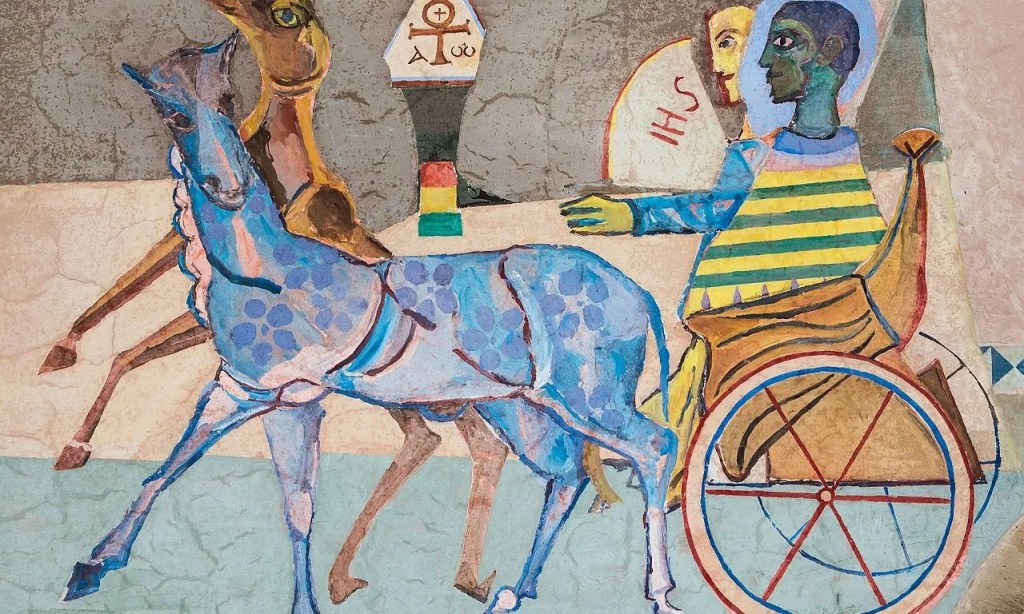
We certainly are moving to the edges. The scene brings Philip into contact with an Ethiopian: an edgycharacter, who comes from a location on the edge of the world (in ancient Israelite view), with a gender identity on the edge (a eunuch), in a situation not quite the usual, expected manner (in a chariot travelling away from Jerusalem, not in a home or a settled synagogue or a temple forecourt).
The Israelites regarded Ethiopia as the furthest extent of the earth in the south-westerly direction (Isa 11:11-12). Could this passage, offered as the Acts in Easter reading for this coming Sunday (Easter 5), provide a clear Lukan pointer to “the end of the earth”?
Although the man was a Gentile, he was returning from worship in Jerusalem (8:27); he is probably thus the first of a number of prosecutes who appear in the narrative of Acts (10:2; at 13:50; 16:14; 17:4,17; 18:7). However, he would have been barred from entering the temple precincts because he was a eunuch (Deut 23:1). He was not perfect, and thus not able to present himself directly before the Lord.
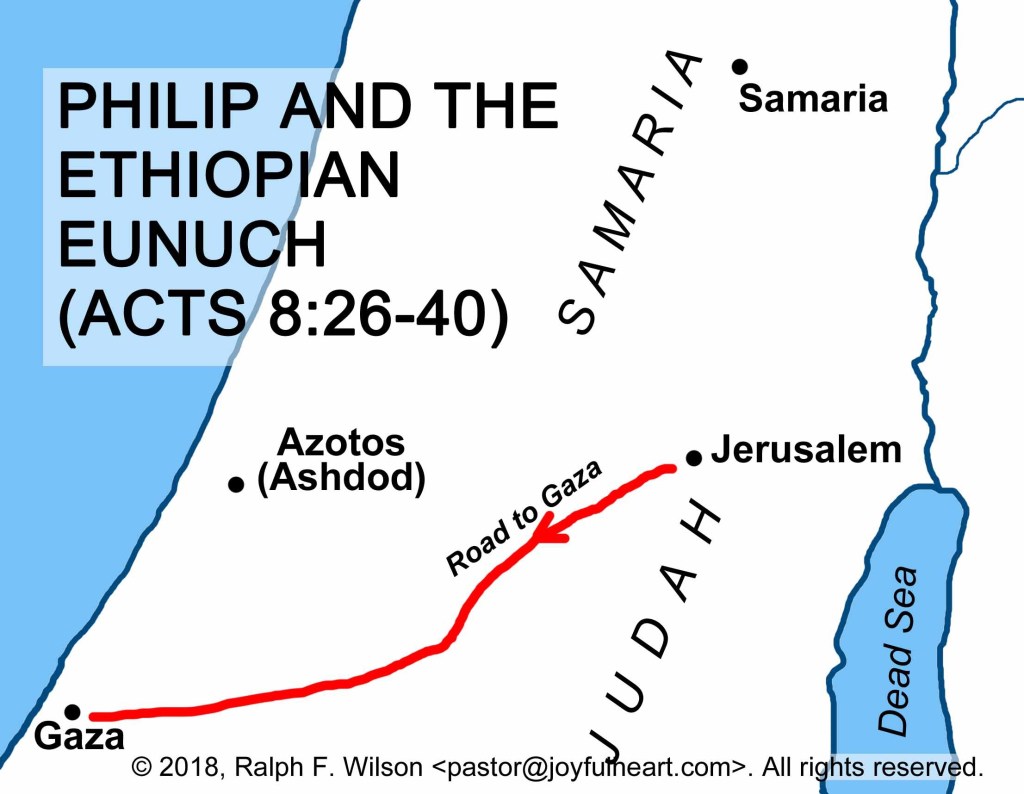
Philip travels south-west towards the coast, on the wilderness road to Gaza, at the urging of “an angel of the Lord” (8:26), a phenomenon already seen in Jerusalem (5:19). His encounter with the Ethiopian is initiated by the spirit (8:29), another phenomenon already abundantly evident in Jerusalem (2:4; 4:8; 4:31; 6:5; 7:55), as also in Samaria (8:17). The encounter is ended by the spirit, when Philip is snatched away immediately after baptising the Ethiopian (8:39). It is a strange and evocative scene.
In the Scriptures
The content of the conversation is given in some detail; of particular interest is the fact that one of the scriptural prophecies which is fulfilled by Jesus is here identified. As the Ethiopian reads of the “lamb led to the slaughter” (Isaiah 53:7-8), Philip explains that this relates to Jesus, whom Philip then preaches to him (8:32-35). Such fulfilment of prophecy has already been introduced in speeches in Jerusalem (2:16-21,25-31,34-35, 3:18, 4:25-26) as another indicator of God’s sovereignty in the events of history.
The particular scriptural passage quoted is part of the fourth “servant song” (Isa 52:13-53:12); various excerpts from this song are interpreted as applying to Jesus by a range of New Testament writers (Matt 8:17; Luke 22:37; John 12:38; Rom 4:25; 5:18-19; 10:16; 15:21; Heb 9:28; 1 Pet 2:21-25).
Into the community
The scene ends with the baptism of the Ethiopian (8:38; see 2:38). Baptism became a means for incorporating people into the community of the followers of Jesus. Baptism of this Ethiopian enabled a person of another nationality to enter into the extending community of messianic believers.
Baptism had been proclaimed as necessary by Peter, on the day of Pentecost (2:38); this appears to link baptism closely with the gift of the Spirit (2;1-4, 17-21). However, there is no reference to the spirit interacting with the Ethiopian in the scene with Philip. The spirit guided Philip in the encounter (8:29, 39)—but appears to have no direct contact with the Ethiopian himself.
Just prior to this incident, the Samaritans who had already “received the word of God” (8:14) were enabled to “receive the holy spirit” through the laying on of hands by the apostles who visited the region (8:15-18). Although the gift of the spirit (8:17) had been separated from baptism (8:12), as also in Ephesus (19:1-7), Luke does not intend this pattern to be read as prescriptive for all situations, as other accounts of baptisms indicate (2:38-41; 8:38; 10:44-48; 19:1-7).
Baptism is accompanied by the laying-on of hands in Ephesus (19:6) and in Samaria (8:15-16), but not with the Ethiopian. The laying-on of hands results in the holy spirit coming upon those in Ephesus (19:6), a link similar to that made in Samaria (8:15-17,19) and Antioch (13:3-4). The gift of the spirit leads to speaking in tongues in Ephesus (19:7), as in Jerusalem (2:4) and Caesarea (10:45-46), but not for the Ethiopian.
In Acts, baptism may come both prior to (2:38-42; 8:14-17) and after (10:44-48; 11:15-17) the gift of the spirit; further, the gift of the spirit is not necessarily linked with baptism (for instance, at 2:1-4 and 4:31). Yet, whilst the time sequence is found in different patterns, the collation of similar elements implies strong continuity with events in Jerusalem, Samaria, Caesarea, and Ephesus. The baptism of the Ethiopian fits, by inference, within that sequence.
Immediately after this baptism, Philip is removed by the spirit of the Lord (8:39). The language of Philip being “snatched away” (8:39) is striking. But unlike those whom Paul describes as being “snatched away” up into heaven (1 Thess 4:17), Philip returns to Caesarea, continuing to preach “good news” (8:40).
His message has already been defined as concerning “the sovereignty of God” (8:12)—a central message in the Lukan works (Luke 7: 29-30; Acts 2:23, 4:28, 5:38, 20,27). The persistent and continuing activity of God in the story that Luke tells, is a strong element throughout the narrative.
This blog is based on a section of my commentary on Acts in the Eerdmans Commentary on the Bible, ed. Dunn and Rogerson (Eerdmans, 2003). I have also explored the theme of the plan of God at greater depth in my doctoral research, which was published in 1993 by Cambridge University Press as The plan of God in Luke-Acts (SNTSM 76).
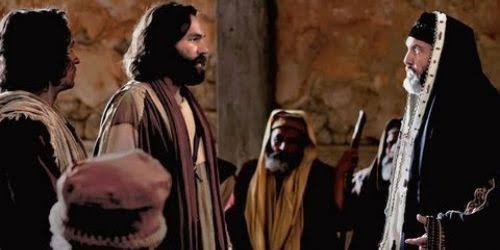
The Acts readings in the lectionary during Easter give us glimpses into the life of the early messianic community in Jerusalem. The passage set for next Sunday gives us a different glimpse into the life of the early church. It recounts the beginning of the first trial of Peter and John (4:5-22).
Acts, as a whole, reports a number of arrests and trials, involving Peter and John (here, and 5:17–18), Stephen (6:11–14), assorted unnamed believers (8:3; 22:4; 26:10), Peter alone (12:3–6), Paul and Silas (16:19–24), and then Paul alone (21:30–33). Paul also refers to his numerous arrests and trials, along with other hardships, in his own letters (2 Cor 11:23–27; see also 2 Cor 4:8–12; Rom 5:3; Phil 4:11-13)
The speech of Peter
In this first arrest narrated in Acts, Luke has the authorities return to the issue posed by Peter in his earlier speech in the Temple precincts (3:12). The move from “by power or piety” (3:12) to “by what power or by what name” (4:7) depicts the authorities as oblivious of the explicit claims which Peter had made, regarding the name of Jesus, in this earlier speech (3:6,16). Their question continues the focus on the source of the healing, provoking yet another speech in reply.
Peter presents a set speech for the fourth time (4:8-12; see his previous speeches at 1:16-22; 2:14-36; 3:12-26). These speeches are all Lukan creations. The author of this work was not present when any of the speeches in Acts were delivered. The speeches in Acts contain both standard material common to many of the speeches in Acts, and also elements which contextualise the speech for the immediate occasion.
This, we must recognise, is the work of the author of this orderly account, constructing and creating speeches both faithful to the received traditions about what the apostles proclaimed, and also appropriate for each occasion.
In this regard, Luke is following the technique set out by the historian Thucydides: “I have made the persons say what it seemed to me most opportune for them to say in view of each situation; at the same time, I have adhered as closely as possible to the general sense of what was actually said.” (History of the Peloponnesian War 1.22.1). See https://johntsquires.com/2020/04/14/what-god-did-through-him-proclaiming-faith-in-the-public-square-acts-2/
Luke indicates that Peter’s speech is delivered once he is “filled with the holy spirit” (4:8), a state which reproduces that of the messianic community at Pentecost (2:4). Peter is the first individual who is so filled; after him will come Stephen (6:3,5; 7:55), Saul (9:17; 13:9) and Barnabas (11:24).
Peter stands in continuity with individuals in the Gospel who are spirit-filled: John the baptiser (1:15), Zachariah (1:67), Simeon (2:25-26) and Jesus himself (4:1,14). This spirit-filled state has the effect of reinforcing the validity of the interpretation which Peter here provides, as a spirit-filled prophet. It also reinforces his membership of the messianic Jewish community, since members of this community are typically “filled with the spirit”.
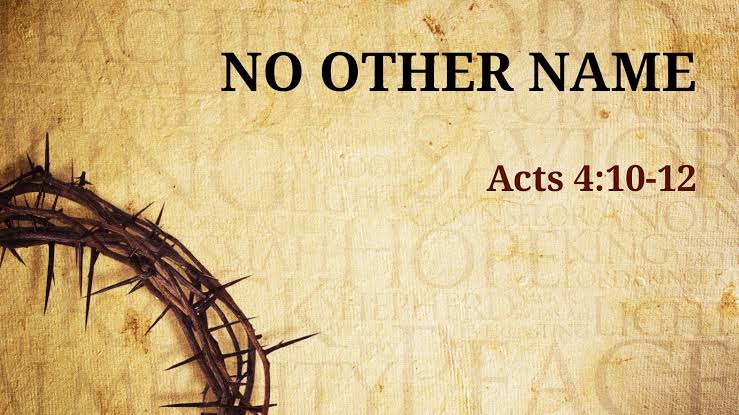
Peter answers the question posed at 4:7 by repeating his assertion of 3:6, that the name by which the healing took place was that of “the Messiah, Jesus the Nazarene” (4:10). Immediately he presents Jesus in the now familiar way, as the one whom “God raised from the dead” (4:10; see 3:15; 2:24) and as the one who (implicitly) fulfils the scriptural description of “the stone” (4:11, alluding to Ps 118:22).
The name of Jesus
This brief speech ends with an assertion of the necessity of this name, the name of Jesus, for salvation (4:12). Only if it is taken out of context can this verse be seen to prescribe that a relationship with Jesus alone is the single necessary element of salvation.
The speech as a whole has made it clear that, whilst the name of Jesus is the necessary means by which salvation comes, God is the source of that salvation. Indeed, such salvation has been offered prior to Jesus, as other speeches indicate (2:21; 7:25,35-36; 13:17-19). And God is sovereign, to enact salvation by means that God chooses, not limited to the narrow confession of “the name of Jesus”.
Luke’s view of salvation is broad: for a start, it has occurred already in the story of Israel (Luke 1:69, 77). It then occurs through events occurring early in the life of Jesus (2:30; 3:6), through preaching and enacting the ways that the blind have their eyes open and the poor hear the good news (4:18-21). Salvation occurs when honour is accorded to Jesus (7:50), when possessions are surrendered and poverty is embraced (18:24-27), through table fellowship with Jesus (19:9), and when the lost are found (19:10).
We might note that all of this takes place before any atoning sacrificial death has occurred. Salvation is not explicitly linked with the death of Jesus, in the Lukan writings, in contrast to a conclusion that is often deduced from the letters of Paul. It need not be tightly bound with a narrow definition of “faith in Jesus”, such as we hear proclaimed in some quarters today. It has a broad, encompassing sweep.
Boldly proclaiming
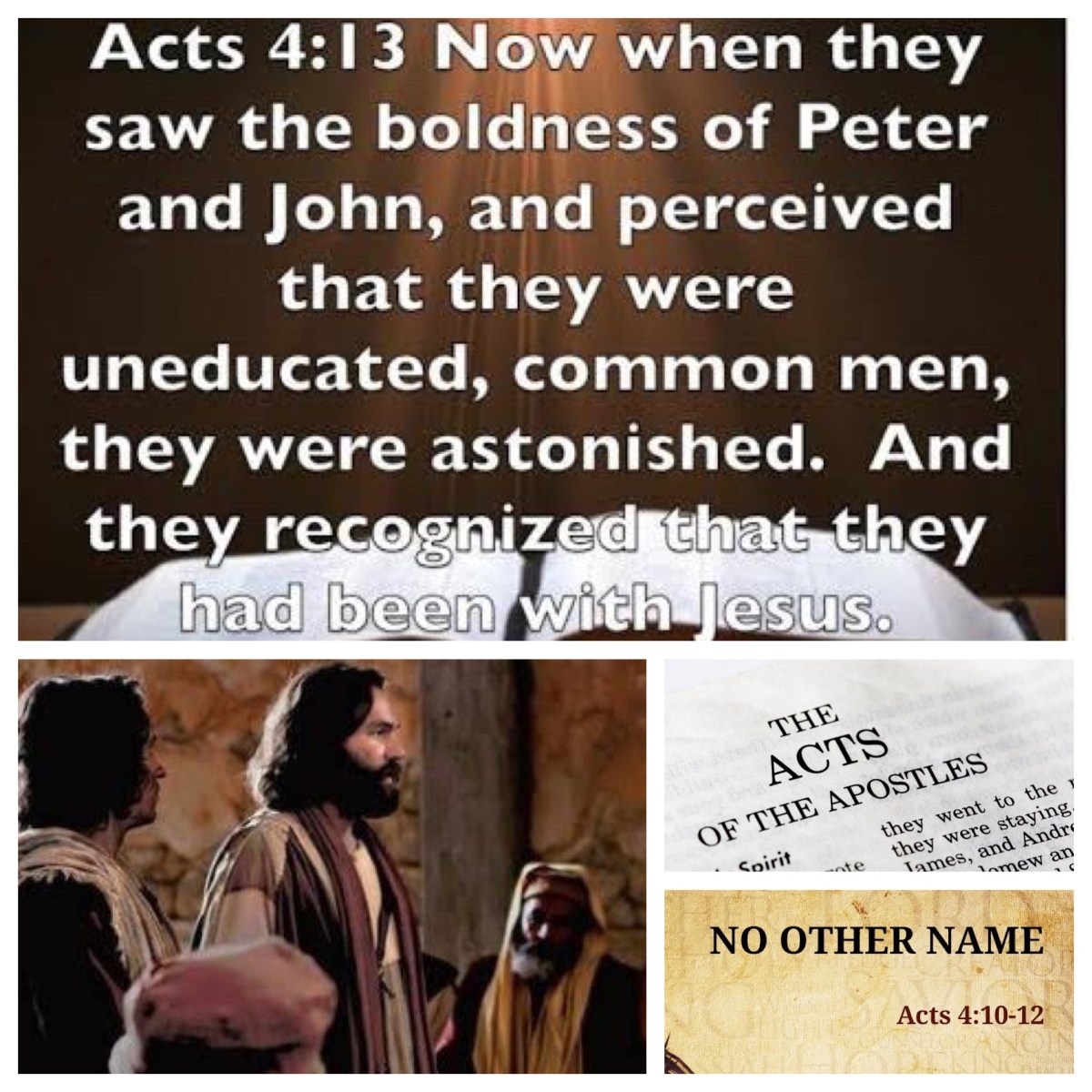
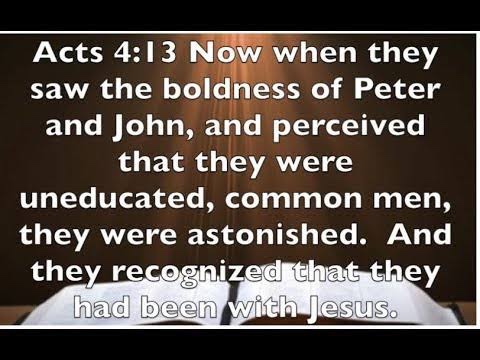
Luke’s narrative commentary on the speech notes that Peter speaks with “frankness” (4:13; the NRSV translates the Greek word, parrhesia, as “boldness”). This characteristic, already evident at Pentecost (2:29), will become a recurrent quality, evident in the prayer of the Jerusalem community (4:29,31), the teaching of Apollos (18:26) and the proclamation of Paul (9:27-28; 19:8; 28:31; with Barnabas, 13:46 and 14:3).
The early followers of Jesus, at least in Luke’s eyes, were thoroughly emboldened by their experiences with Jesus. This might be contrasted with the divisive nature of witness that Paul perceived in Corinth (1 Cor 1:13; 3:1–9, 21–23), or the lukewarm testimony that John experienced from the church in Laodicea (Rev 3:15).
Frankness of speech was a quality which philosophers held to be most desirable in the wise man (see, for instance, Dio Chrysostom, Oration 32.11 and 77/78.37; Diogenes Laertius, Lives 2.122-123 [on Simon the cobbler] and 6.69 [on Diogenes the Cynic]]; Julian, Oration 6), so the juxtaposition with the assertion that Peter and John were “unlettered and uneducated” (4:13) is striking. Luke is intending to portray them as holding their own in the marketplace of ideas, alongside the rhetorically sophisticated philosophers of the day. The apostles speak powerfully, convincingly.
The mighty works of God
The authorities ponder what action to take; Luke depicts them as being cowed by the power demonstrated by Peter and John, both in their speech (4:13) and in their deed of healing (4:14,16). Peter has clearly identified this power as divine in origin (3:12-16), and the authorities even describe what has taken place as “a notable sign” (4:16), ironically using the term which has already been identified as describing divine activity (2:19).
Yet they remain oblivious to the divine dimension of the event; they can see only the consequences amongst the general populace should they take no action. Thus, they make a pronouncement banning Peter and John from speaking in the name of Jesus (4:18). Clearly, it is unlikely that they will comply with this demand, given that Peter has already indicated that the name of Jesus is the centrepoint of their claims (2:38) and was instrumental in their healing the lame man (3:6,16; 4:10,12).
Accordingly, Peter and John reply (4:19-20) in a way which underlines the futility of this command in the face of God’s sovereignty. To refrain from speaking out would mean that they ceased being “right before God”, that they preferred “to listen to you [the authorities] rather than to God” (4:19).
The climax to the apostolic speeches in this section comes when Peter and John assert the necessity of bearing witness to “what we have seen and heard” (4:20, prefiguring the way that Paul describes his commissioning at 22:15). This sign must be declared and interpreted!
The narrative conclusion, in noting that the apostles were released (4:21), appears to align the people with the messianic community, for as they glorified God they adopt the interpretive stance of those who praise God for events they experience: the healed man (3:8,9) and the whole community (2:47). The influence of the community thus appears to be spreading amongst the people, but not amongst the authorities. It cannot be regarded as having broken from Jewish faith; yet it is set on a collision course with the Jewish authorities.
Luke’s final comment repeats the description of the healing as a sign (4:22), thereby reinforcing his view that it was God who enabled this healing, as with the other signs (2:19). The whole scene contributes to the unfolding saga of what God was doing amongst the earliest believers. These events are an integral part of the plan of God, stretching across the years. The book, in the end, is not so much the book of the Acts of the Apostles (as tradition has labelled it), as it is the book of the Deeds of God—“the mighty works of God” (2:11).
This blog is based on a section of my commentary on Acts in the Eerdmans Commentary on the Bible, ed. Dunn and Rogerson (Eerdmans, 2003). I have also explored the theme of the plan of God at greater depth in my doctoral research, which was published in 1993 by Cambridge University Press as The plan of God in Luke-Acts (SNTSM 76).
The Acts reading offered in the lectionary for this Sunday comes after an account of a healing, performed by Peter and John at the Beautiful Gate of the temple (Acts 3:1-11). The apostles heal a man who had been lame from birth. The passage we hear on Sunday places the focus on Peter, who provides an interpretation of what has taken place, just as he did on the day of Pentecost. The reading includes a part of Peter’s third speech (3:12-26).
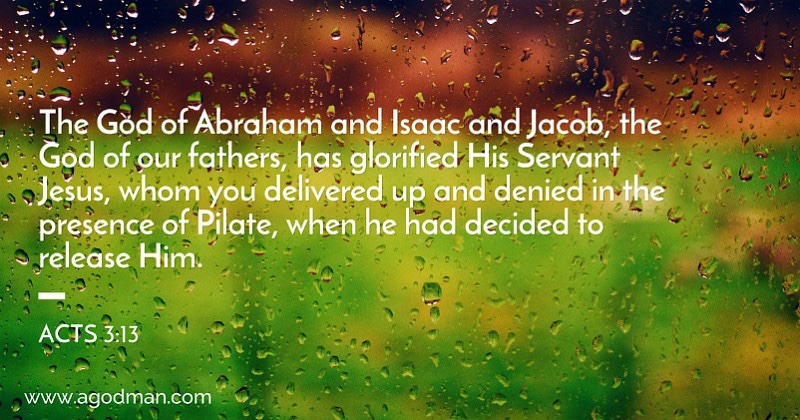
Peter begins his speech by accusing the people of thinking “as if by our own power or piety we have made him walk” (3:12). Not so, he claims. Peter asserts that it is God — “the God of Abraham and Isaac and Jacob, the God of our ancestors” (3:13) — who has enabled the miracle. Like many speeches in Acts, it begins by acknowledging what God has been doing (2:22; 7:2; 10:34; 13:17; 15:7; 17:24; 21:19).
In addition, the speech contains a number of other key elements of speeches, from the template established in Peter’s Pentecost speech. The healing took place in the name of “the Messiah, Jesus of Nazareth” (3:6; see 2:36), who is here represented to the people in ways largely familiar from this earlier speech. Jesus is the one whom God glorified (3:13) and God raised (3:15; see 2:24); he is the one of whom the apostles are witnesses (3:15; see 2:32) for of him they “see and know” (3:16).
Jesus is the suffering Messiah, in fulfilment of “what God announced beforehand through the mouth of all the prophets” (3:18). This extends the fulfilment of prophecy from Jesus’ resurrection (2:25-31) and exaltation (2:34-35) to his crucifixion. Such a claim is important for Luke; he has Paul make the same affirmation, that the suffering of the Messiah fulfils scripture, at 26:23; indeed, he places its initial appearance on the lips of Jesus at Luke 24:26. (However, Peter’s claim that “all the prophets” predicted this is surely one of a number of Lukan exaggerations.)
So the speech both reprises and develops the story of Jesus, using explicit language about how God was at work amongst these happenings, as told in 2:22-36, as well as the prophetic and apostolic witness which characterises the apostolic proclamation.
Luke has Peter once more evoke the response of repentance (3:19) by reference to God, as he did at 2:37-39. Repentance is portrayed as an integral element in the eschatological scenario. The eschatological hope which was often proclaimed by Jesus (Luke 4:43; 9:26-27; 10:1-16; 12:49-56; 13:22-30; 17:20-37; 19:11-27; 21:5-36) continues as an essential element in the apostolic proclamation.
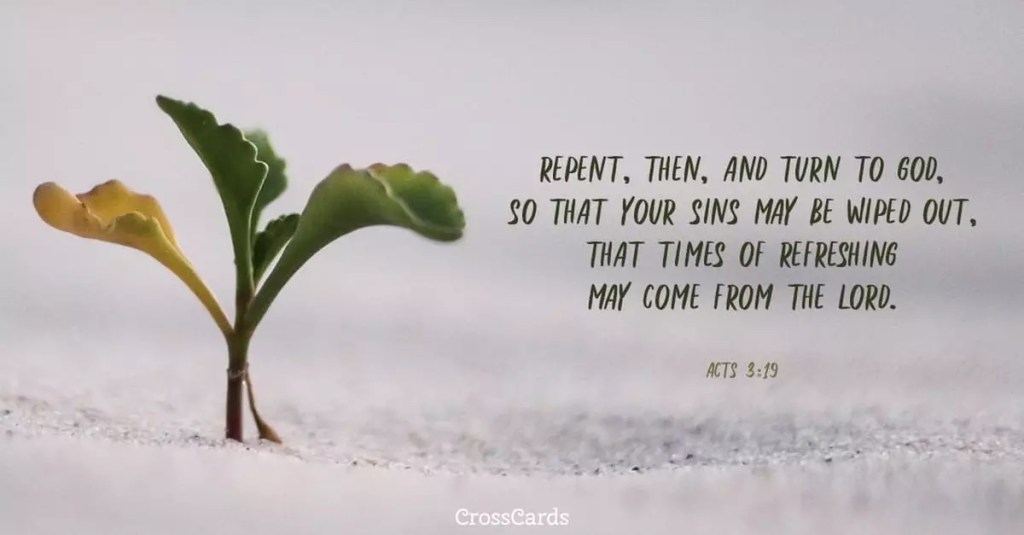
Luke reports Peter as describing the eschatological sequence in some detail (3:19-21). The sovereignty of God is clearly in focus in this eschatological process: God will wipe out sins (3:19b) because people will have already repented and turned to God (3:19a); “times of refreshing” will come “from the presence of the Lord” (3:20a); and God will then send the appointed Messiah (3:20b).
After this, there is an interim period, as the ascended Jesus remains in heaven (cf. 1:11; 2:33), awaiting “the time of universal restoration” which will implement what God has long ago promised (3:21). The delay occasioned by this waiting does not signal a breakdown in God’s providential control of events, for Jesus remains in heaven by divine decree (he “must”, 3:21). This concentrated eschatological proclamation thus underlines the continuing sovereignty of God, which is especially manifested at the end times.
The “times of refreshing” may refer to Jesus’ teaching that “the Lord will cut short the end” (Mark 13:20, but omitted in Luke 21); the sense of “refreshing” is of a breathing space before the next event in sequence takes place (see Exod 8:15).
The “time of universal restoration” transcends the earlier question of the disciples concerning the restoration of the kingdom to Israel (1:6); here, restoration has a universal scope. It may thus correlate with the eschatological events which Peter has already reported at 2:17-21 (citing Joel 2:28-32; see also Mal 4:5-6).
References to the eschaton also appear in Peter’s Caesarea speech (10:42) and in Paul’s Areopagus speech (17:31). On these occasions, however, the description of the eschaton is limited to noting the role that Jesus will perform, as the one “ordained” (10:42) or “appointed” (17:31; cf. 3:20) to execute God’s judgement. Nowhere else in Acts do we find the fulsome eschatological description offered in this speech by Peter at Solomon’s Portico.
The time of universal restoration which Peter declares is that which “God spoke through the mouth of his holy prophets” (3:21; cf. Luke 1:70). In addition to the exaggerated claim that “all the prophets … predicted these days” (3:24), Luke has Peter cite specific scriptural passages in support of his statement about the eschatological role of Jesus.
Peter identifies Jesus in two eschatological roles: as the prophet promised by Moses (3:22-23, quoting Deut 18:15-16,19) and as the one who implements the blessing in the covenantal promise to Abraham (3:25, alluding to Gen 12:3; 18:18; 22:18; 26:4). The way that Peter here expresses the eschatological role of Jesus is evocative of the prophetic words of Mary (Luke 1:54-55) and Zechariah (Luke 1:68-75).
This eschatological act of God is still awaited. It is the decisive action which provides the springboard for Peter’s demand for repentance (3:19). Waiting for the coming kingdom is not simply a passive, do-nothing time. It requires active waiting—so Peter concludes his speech by urging the people to “turn, each one, from your sins because God raised up his son and sent him as a blessing to you” (3:26, as a fulfilment of the promise to Abraham cited in 3:25).
In addressing the issue posed in 3:12, Peter thus uses the affirmation that God has been at work in the healing, as the basis for expounding God’s eschatological actions, which will bring blessing to the people. Looking at what has happened in the immediate situation provides an important clue for understanding the larger scheme of things. That might be a clue for how we operate as the church today: sensing that each small, hopeful happening is a glimpse of what is still to come in the overarching plan of God.
This blog is based on a section of my commentary on Acts in the Eerdmans Commentary on the Bible, ed. Dunn and Rogerson (Eerdmans, 2003). I have also explored the theme of the plan of God at greater depth in my doctoral research, which was published in 1993 by Cambridge University Press as The plan of God in Luke-Acts (SNTSM 76).
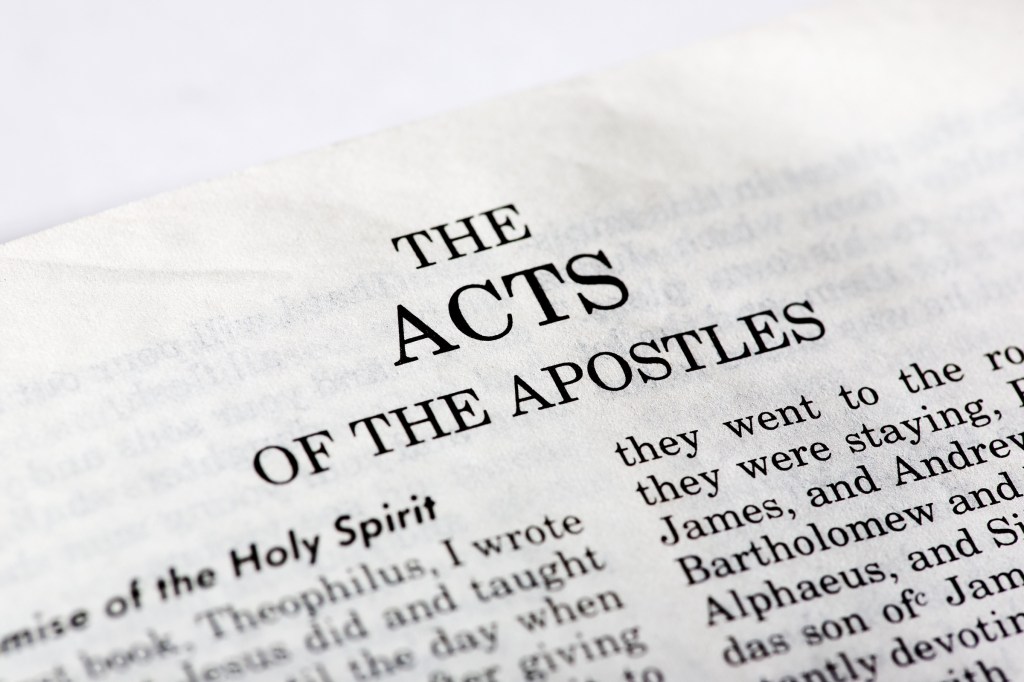
During the weeks that stretch out after Easter Sunday, we are in the season of the year (in the church calendar) that is called, simply, Easter. This coming Sunday will be the second Sunday in Easter (the second of seven, running through to the middle of May). During this season, the lectionary we use replaces the first reading from Hebrew Scripture with sections from the book of Acts—the second of two volumes attributed to Luke.
Acts recounts, from one perspective, the way that the church emerged as the key organisational response to the teachings and example of Jesus. Luke, the presumed author of the two volumes which provide an orderly account of the things fulfilled among us (Luke 1:1, 3), takes pains to indicate multiple lines of connection and continuity between his account of Jesus (the Gospel of Luke) and his subsequent account of the church (the book of Acts).
In this second volume, there are many indications of how Luke understood the emergence of the church to have occurred. It began as a series of loosely-connected Jewish communities, bonded by their common belief that Jesus of Nazareth was the Messiah (Acts 2:31,36,38; 3:6,18; 4:10; 8:5,37; 9:22; 10:36,48; 11:17; 15:26; 16:18; 17:3; 18:5; 20:21; 28:31).
They were messianic communities, followers of ‘The Way’ (9:2; 18:25; 19:9,23; 22:4; 24:14,22) which grew, over time, into groups identified as Christians (11:26)—and from that developed the Christian church. From these descriptive narratives, the church has drawn guidance for ways to shape its life in subsequent eras.
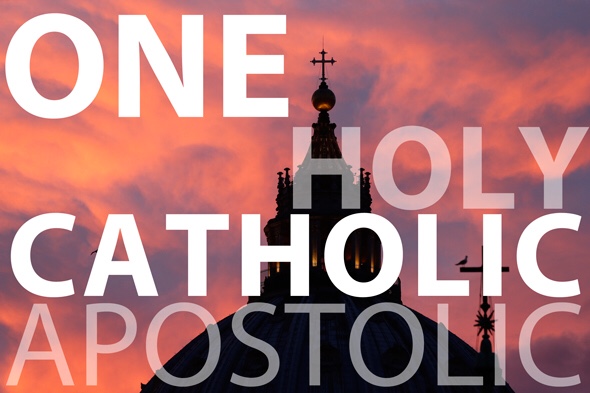
How do we characterise the church? A classic way from the traditions of the church is to cite ‘The Marks of the Church’: one, holy, catholic, and apostolic. Those four descriptions have been derived from various biblical sources (including the narrative shaped in Acts), and have certainly influenced theology, church organisation, and preaching over the centuries.
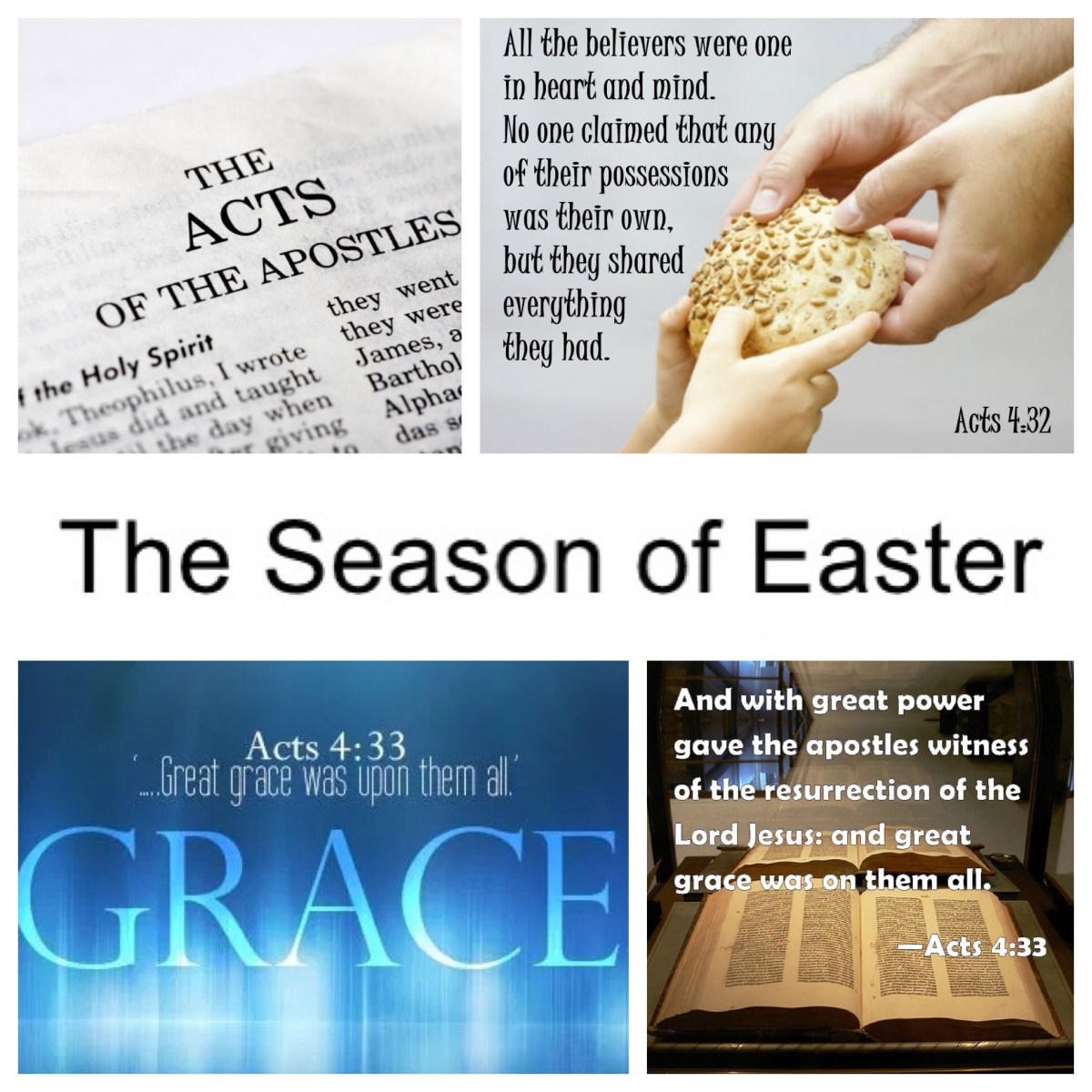
The Acts passage provided by the lectionary for this coming Sunday, although quite short (4:32-35), nevertheless is very rich. It offers another set of Marks, which the author of Acts used to describe the church. All three have already been offered in an earlier section of the narrative, as the author recounts them formation of the faith community after the preaching by Peter on the Day of Pentecost. (See https://johntsquires.com/2020/04/28/teaching-fellowship-bread-and-prayers-the-marks-of-community-acts-2/)
The first mark is unity of purpose (4:32; see 2:42,46). A second mark refers to the powerful testimony to the resurrection that the church offers (4:33; see 2:24,32; 3:15; 4:2). A third mark is the manifestation of grace (4:33b; see 2:47).
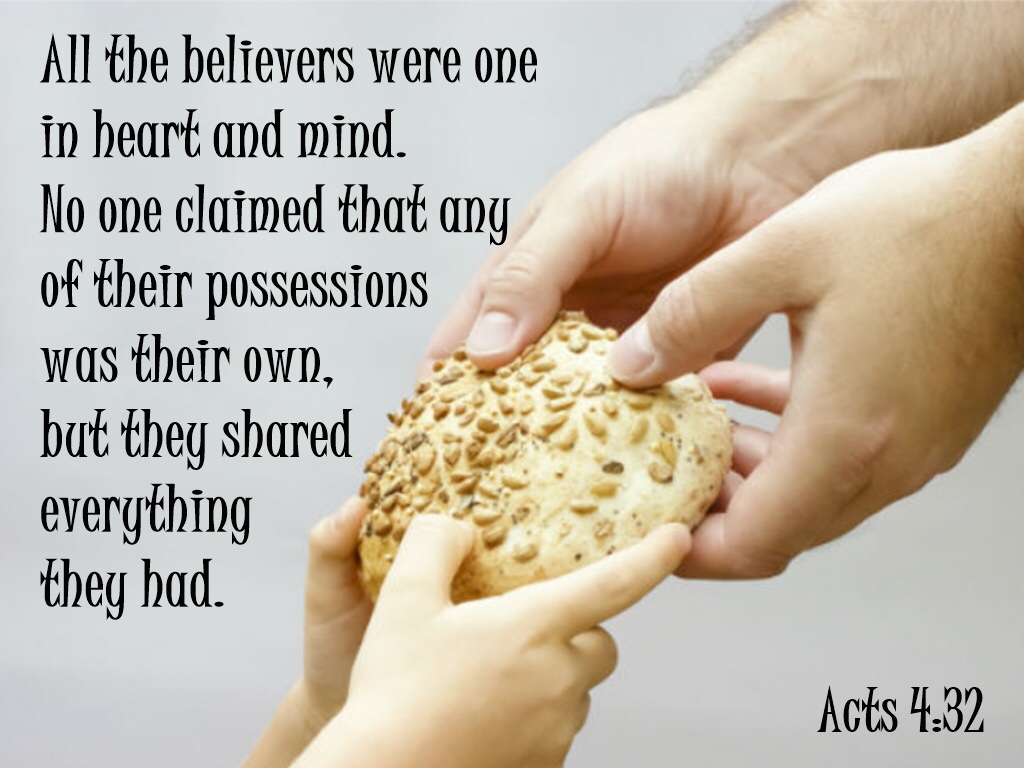
The major focus in this summary description is on the first feature, which is introduced with a striking phrase: the believers were “one in heart and soul”, to which is added a repetition of the earlier comment that “for them all things were common” (4:32; see 2:44).
Fellowship is identified as a key aspect of the community (2:42). The precise term koinonia occurs only here in Acts; however, the notion of sharing or togetherness which is inherent in it is evident in other ways. Members of the community gather with one mind (2:46) in a way that will consistently characterise the community (4:24; 5:12; 15:25).
These phrases used evoke the traditional Greek proverbs, ‘friends have one soul’ and ‘the goods of friends are common property’, which were known since the time of Aristotle (Aristotle, Nicomedian Ethics 9.8.2; Cicero, De officiis 1.16.51; Plutarch, On Brotherly Love 490E, How to Tell a Flatterer 65A and De amic. mult. 96E; Iamblichus, Life of Pythagoras 65A; Dio Chrysostom Oration 34.20; Diogenes Laertius Lives 5.20, 8.10).
The Essenes were described in a similar way by Philo, Every Good Man is Free 85, and Josephus, Jewish War 2 §122. The first phrase is also reminiscent of the common Deuteronomic reference to ‘heart and soul’ (Deut 6:5; 10:12; 11:13; 13:4; 26:16; 30:2,6,10). The early messianic communities shared in this central characteristic. For the author of this book, it was to be a defining mark of the messianic communities in each place they were found.
2. A second mark refers to the powerful testimony to the resurrection that the church offers (4:33; see 2:24,32; 3:15; 4:2). The proclamation the apostles, of course, is a regular element in the story of Acts: there is a comprehensive list of no less than thirty-six speeches in Act at
Proclaiming the good news about Jesus was at the centre of these messianic communities, as Acts takes pains to indicate (2:23; 3:7, 15, 26; 4:10; 5:30; 10:40; 13:30-37).
3. A third mark of these communities was the manifestation of grace (4:33b). The community in Jerusalem was earlier described in this way, as “having grace towards the whole of the people”—the NRSV translates this, less accurately, as “having the goodwill of all the people” (2:47). This introduces another term which will have significance in the narrative of Acts: charis. In 2:47, charis is linked with the inner life of the community as they “ate their food with glad and generous hearts, praising God and having grace towards the whole of the people”.
Grace is a characteristic which also marks Stephen, enabling him to perform “great wonders and signs” (6:8); in his speech, he notes that God ascribed grace to Moses (7:10) and to David (7:46). It is this grace of God which is evident in the growing community in Antioch (11:23) and continues to be a characteristic of the community in Iconium, where once again it is evident through the signs and wonders granted by God (14:3).
Such grace is regarded as the means of salvation (15:11) which enables people to believe that Jesus is Messiah (18:27-28). This same grace of God is attested by Paul throughout his ministry (20:24,32). It thus forms another of the characteristics of messianic communities in Jerusalem and beyond.
This blog is based on a section of my commentary on Acts in the Eerdmans Commentary on the Bible, ed. Dunn and Rogerson (Eerdmans, 2003). I have also explored the theme of the plan of God at greater depth in my doctoral research, which was published in 1993 by Cambridge University Press as The plan of God in Luke-Acts (SNTSM 76).
Events in Australian society over recent weeks have seen the emergence of a powerful hashtag: #IBelieveHer.
The announcement of Grace Tame as Australian of the Year for 2021 set in train a dramatic series of events. Grace’s testimony to the abuse she has suffered is powerful. Her appointment to this role validates the stories of countless survivors with similar stories.
Since Australia Day, it has been fascinating, and disturbing, to see how the announcement of this particular Australian of the Year has set in train a powerful and disturbing sequence of events in Australian public life. Sexual abuse, and especially male mistreatment of females, has been in the news each day since then.
The announcement about Grace Tame was soon followed by the testimony of Brittany Higgins, about being raped in Parliament House. This was another key catalyst in the public discussion of sexual abuse and misogyny in our society. In contrast to the shocking and shameful characterisation of her testimony by a Federal minister, her public words invited the clear response: #IBelieveHer.
The turmoil swirling around these revelations soon encompassed a matter that, apparently, had long been a widely-known secret in the corridors of Parliament House and amongst the media in the national capital. That secret started to leak into public awareness; rumour and supposition spread.
When the then Attorney General eventually spoke publicly, identifying himself as the subject of the rumours, we were offered the options: believe him, with his emotionally theatrical presentation of denial; or listen to the testimony of the sadly-deceased woman, as she grappled with her recollection of events in 1988, and attested to friends of her abuse by him at that time. The opportunity arose, once more, to consider our response; and many have responded with heightened intensity: #IBelieveHer.
And in the ensuing weeks, many other females: members of parliaments, parliamentary staffers, public figures, and private individuals, have borne testimony to their experiences of harassment, discrimination, and abuse. Each of them invites us to consider whether #IBelieveHer.
Brittany Higgins, Grace Tame, and the former Attorney General.
In this context, it is sobering for us to read and reflect on the Gospel texts which provide the underlying narrative for The Easter Story, which we remember and reflect on each year at this time.
*****
The earliest of our Gospels affirms that women were involved with the movement started by Jesus. They were present, they experienced life on the road with him, they heard his words and saw his deeds; and they remained faithful until the very end.
In his beginning of the good news about Jesus, Mark reports:
There were also women looking on from a distance; among them were Mary Magdalene, and Mary the mother of James the younger and of Joses, and Salome. These used to follow him and provided for him when he was in Galilee; and there were many other women who had come up with him to Jerusalem. (Mark 15:40–41)
The passage raises questions: how do we know about what happened to Jesus on the cross? Do we attend to, and give credence to, the testimony of the women? Do we respond, #IBelieveHer ?
Just a few verses later, Mark provides the first account of the scene at the tomb, where a group of female followers of Jesus were the first to discover that the tomb was empty. He ends the scene with the women fleeing, and the abrupt observation that “they said nothing to anyone” (Mark 16:8). Was that because they feared that nobody would believe them?
However, others who report this scene feels that this ending is quite inadequate—after all, we do have a story about that empty tomb encounter, so surely someone there must have spoken about it?
With that in mind, in his book oforigins, Matthew modifies the story, even as he repeats it: “So they left the tomb quickly with fear and great joy, and ran to tell his disciples.” (Matt 28:8) And the silence of the text about how this news was received, invites the unspoken question about their testimony: do #IBelieveHer ?
In narrating his orderly account of things being fulfilled, Luke provides a more nuanced account of the scene, more directly reflecting an awareness of the strong patriarchal context of his day. Why would men believe this report from the women? Would not the typical response be that this was simply women, gossiping, repeating hearsay, even causing trouble??
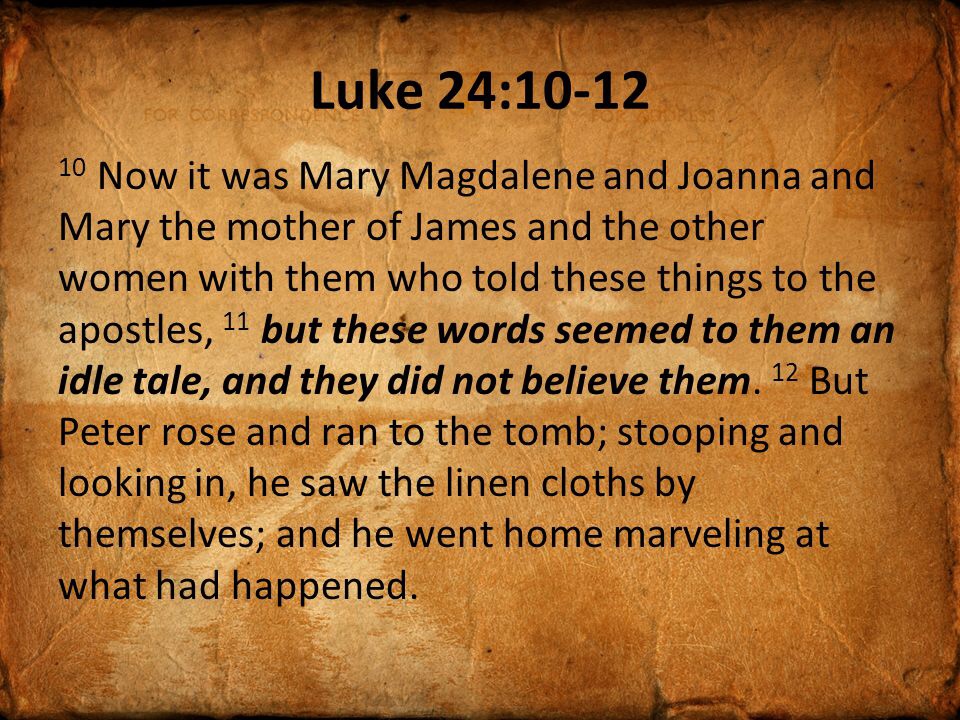
Luke notes: They remembered his words, and returning from the tomb, they told all this to the eleven and to all the rest. Now it was Mary Magdalene, Joanna, Mary the mother of James, and the other women with them who told this to the apostles. But these words seemed to them an idle tale, and they did not believe them. (Luke 24:10-11).
The male apostles (identified so by the same author at Acts 1:13) clearly did not believe the women. #IBelieveHer appears not to apply here.
So Luke continues: Peter got up and ran to the tomb; stooping and looking in, he saw the linen cloths by themselves; then he went home, amazed at what had happened. (Luke 24:12)
Male authorisation of female claims was still needed, even in this Gospel where women appear to have a stronger voice. Those male leaders did not respond with #IBelieveHer, until they were able to see and experience for themselves. In the house where they gathered in Jerusalem, them men at last believe the women—because one of their own had validated their words.
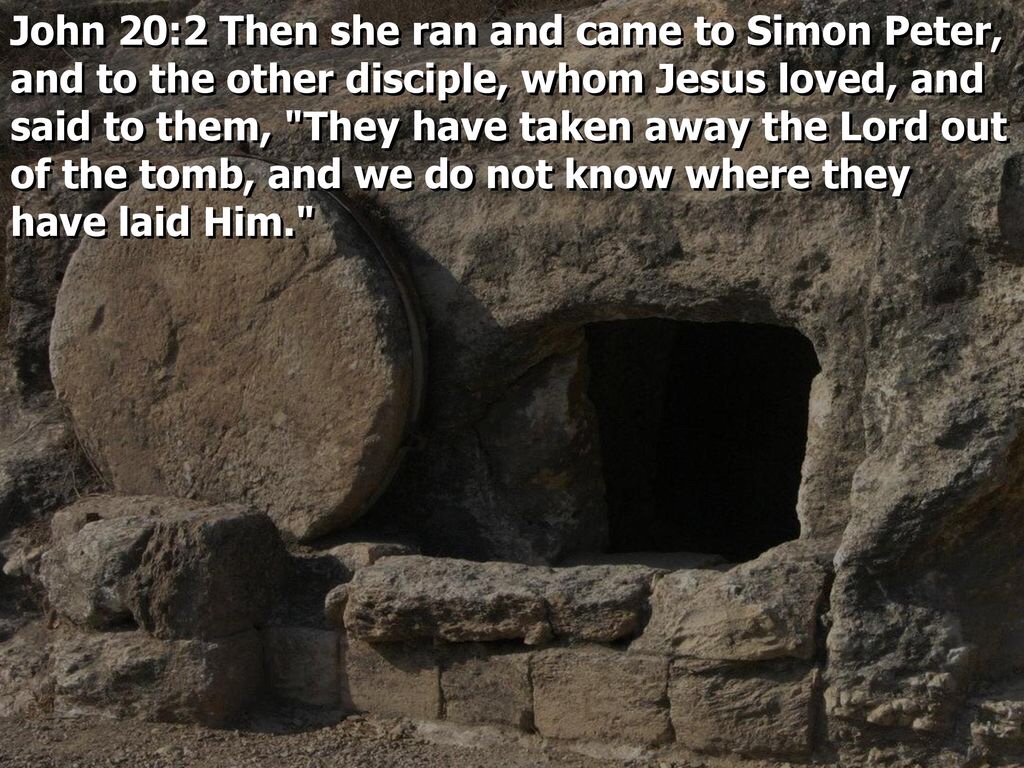
The latest of the four canonical Gospels locates this response of disbelief at the empty tomb, rather than in the house in Jerusalem. In this Gospel, the book of signs, Mary has come by herself to the tomb, found it empty, and returned to tell Simon Peter and the beloved disciple of this news.
As a result, John notes:
Peter and the other disciple set out and went toward the tomb. The two were running together, but the other disciple outran Peter and reached the tomb first. He bent down to look in and saw the linen wrappings lying there, but he did not go in.
Then Simon Peter came, following him, and went into the tomb. He saw the linen wrappings lying there, and the cloth that had been on Jesus’ head, not lying with the linen wrappings but rolled up in a place by itself. Then the other disciple, who reached the tomb first, also went in, and he saw and believed. (John 20:3–8)
Yet again, the males were required to inspect and authorise the claims of the women. In this Gospel, “seeing is believing” (see John 1:39, 46, 50; 4:29; 4:48–53; 6:30: 7:3; 9:15–17, 25; 11:9; 11:34–40; 12:21; 20:25–27). #IBeliveHer was conditional on male affirmation. They saw; we believe. Yet we take the story of Mary, in the garden, seeing Jesus, as part of our “Gospel truth”. It is clear that believers affirm: #IBelieveHer—even when the early male leaders did not!
John recounts another, more personal, more profound story, focussed solely on Mary of Magdala, who later encounters a man in the garden. Uncertain of his identity, she thinks he is the gardener. It takes only one word from the man to persuade her that he is, indeed, Jesus:
Jesus said to her, “Mary!” She turned and said to him in Hebrew, “Rabbouni!” (which means Teacher). (John 20:16)
This story ends, as the earlier accounts do, with a woman testifying to the male (and presumably other female) followers of Jesus:
Mary Magdalene went and announced to the disciples, “I have seen the Lord”; and she told them that he had said these things to her. (John 20:18).
#IBelieveHer. This is the logical deduction to draw from each of these narratives—at times, in counterpoint to the males in the story, but eventually, in relation to each account, with assurance that the voice of the females is acceptable, trustworthy, believable. #IBelieveHer.
And other Gospel narratives contain stories in which women are placed alongside men as experiencing the ministry of Jesus (most notably, Luke 8:1–3; John 11:20–27; Mark 1:29–31; and many other scenes), as well as accounts where the word of a woman was heard and believed: for instance, the woman of the Samaritan village (John 4:39–42); the unnamed woman who anoints Jesus in Bethany (Mark 14:3–9 and parallels); and the Syrophoenician woman in the region of Tyre (Mark 7:24–30), whose pushback against Jesus convinces him! In these stories, also, our response is: #IBelieveHer!
****
Of course, the passages noted above with women as the key protagonists raise the question: who told the evangelists about these incidents? Are they based on eye-witness testimony? Are they historical narratives, attested from the very beginning? Or are they stories developed and expanded over time, imaginative recreations of what is assumed to have taken place, shaped as stories for later generations?
In reconstructing “the historical Jesus”, scholars developed a number of criteria for assessing whether sayings and teachings in the Gospels were likely to have been authentic—that is, spoken by the historical Jesus himself. (See a simple listing at https://www.westmont.edu/~fisk/articles/CriteriaOfAuthenticity.htm)
One of these criteria was “dissimilarity”: does the saying sit uneasily, both with Judaism of the time, and in terms of what we know about the early church? The same criteria can be used, by extension, to consider narrative accounts in the Gospels: they are more likely to have been authentic if they reflect “dissimilarity”. Why would an author create something that sat uneasily within the worldview of the day?
On this basis, placing weight on the testimony of women might be seen to be as close as we can get to an authentic account. There is an argument that women were not regarded as valid witnesses—a passage in the Talmud (Shavuot 30a) interprets Deut 19:17 as requiring males only to be witnesses.
And they shall stand the two men, who have them the conflict, before God. Before the priests, and the judges, that will be, in those days.
Deliberately casting doubt on the testimony of women (Mark 16:8; Luke 24:11; John 20:3–8) would be a counter-productive move, if that testimony was to serve as the earliest account of what happened to Jesus. More likely than not, this was a tradition received and valued as plausible, perhaps even historical.
Indeed, feminist theological reflection on these and other narratives moves away from the “kyriachal” nature of these male-generated criteria, and into a “hermeneutic of remembrance” in which the voices of women—present, but often diluted, softened, or hidden in the final,form of the biblical text—are valued and accorded primary significance.
(See a useful discussion of the hermeneutics of remembrance, focussed on the writings of Schüssler Fiorenza, at https://www.degruyter.com/document/doi/10.1515/opth-2020-0117/html) In this approach to the texts, we read carefully and listen attentively, to hear the voices of ancient women, and respond affirmatively: #IBelieveHer.
At any rate, however we assess these early narratives, the way they have been handled throughout the ensuing two millennia is clear: #IBelieveHer. That is how we deal with the narratives of cross and resurrection that we receive in the scriptures. #IBelieveHer. And that principle is surely valid and valuable to guide us in life today. #IBelieveHer.
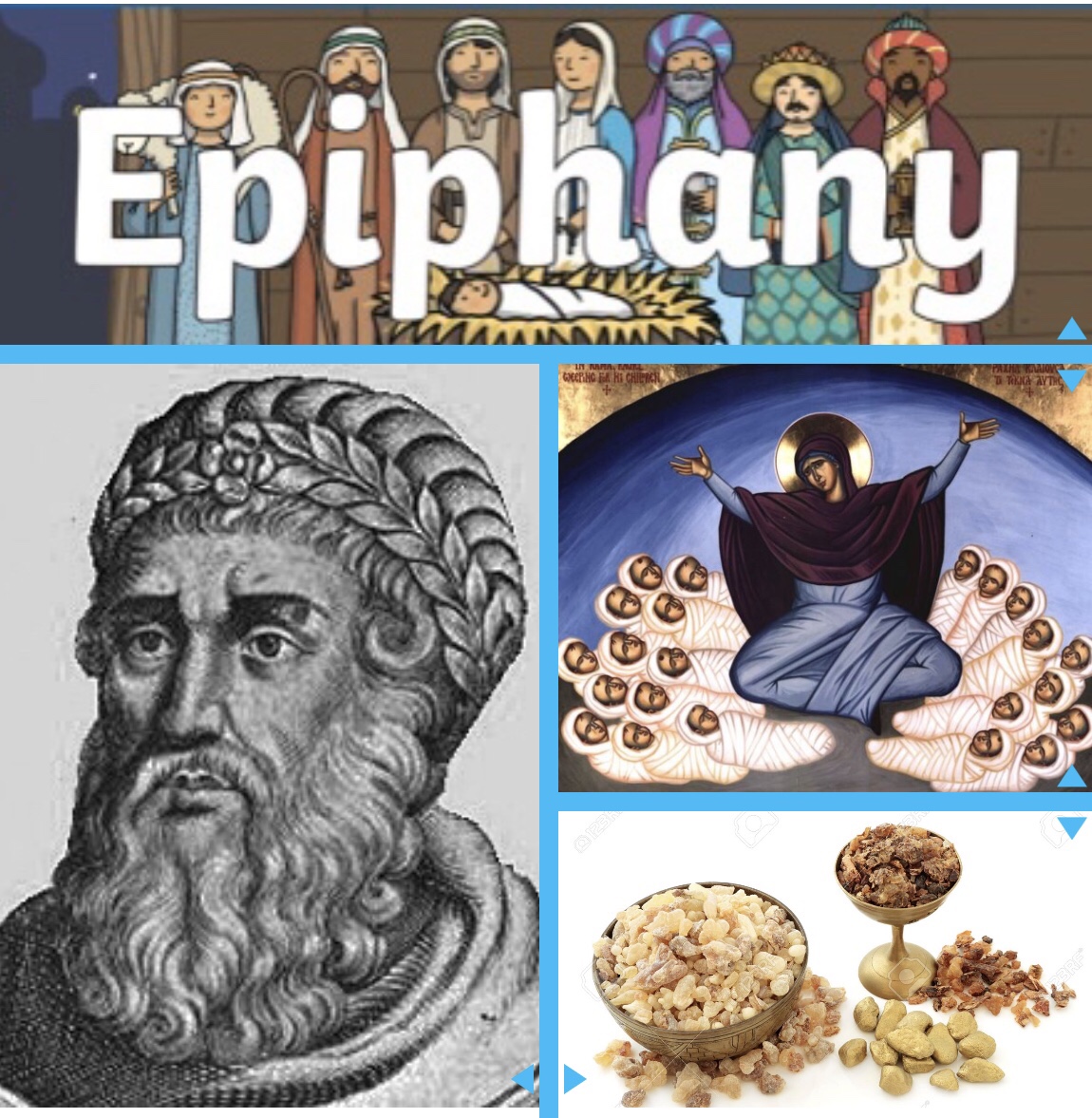
At the end of the twelve days of Christmas — running from 25 December to 5 January — stands the day known as Epiphany. That’s from a Greek word which means “the revealing” or “the shining forth”.
On this day, we focus our thinking on that part of the Christmas story which was told by Matthew, in his Gospel, about the moment of epiphany, or revealing, of the infant Jesus, to the whole world, represented in Matthew’s story by travellers who had journeyed from afar to see him (Matt 2:1-12).
Here, we encounter an infant (not necessarily a newborn) with his mother and father, some travellers from the East (no mention of how many, actually), the gifts which they bring to the infant (specified as three in number), and the bright star in the sky which, it is said, guided them to the child with his parents. And the notion that this was history — real, accurate history — is alive and well as people sing of these characters.
Indeed, what we understand as “history”, today, varies quite significantly from the way that “historia” was understood by Josephus (who did write historical works about the Jews) or by Lucian (who wrote a whole treatise on the nature of “historia”), or even Luke or Matthew, for that matter.
As Luke begins his work, he says quite clearly that he is providing an account (“diegesis”) of “the things that have come to fulfillment amongst us”, written to supplement what Theophilus had already been instructed (“katechesis”). This is history in first century terms, but not quite history as we know it today.
And Matthew offers us a book of the origins (“genesis”) of Jesus, outlining the scope of his teachings and narrating the key moments in his life. But this work is written from faith for faith; not to document events or substantiate historical occurrences. Matthew crafts a story from Jewish midrashic techniques of story-telling that link story with text in all manner of creative ways. His purpose is more to explain the significance of Jesus and his teachings than it is simply to state what Jesus did or said.
In particular, in the opening chapters (where we encounter the pregnant Mary, the newborn infant Jesus, his father Joseph, a bright star in the sky, visitors from the east, the tyrannical rule of Herod, and slaughtered infant boys), Matthew is working hard to place Jesus alongside the great prophet of Israel, Moses. The early years of Jesus unfold in striking parallel to the early years of Moses. The parallel patterns are striking.
Both Matthew and Luke produce works which are a far cry from the craft of the modern day historian. History is far from their minds, at least as we know it in the modern conception of “history”.
As we head into Epiphany, we need to ponder the story for what it is. It is a tale told with creative power, a story that locates plausible characters within an inviting storyline, in order to point to some deep aspects of our human existence. There is the mystery of exploration, a journey to a destination far off, respectful encounter with foreigners, as well as the fear induced by tyrannical rule, and the hurried journey away from repression, seeking the safety of refuge in an unknown, but hopefully welcoming, distant place. All of these elements are realities in our life today. The story from long ago is a story for us, today.
As we sing songs of this story, let us not reify the story (that is, turn the narrative into “a thing”, like history) … let us not collapse the story into a surface “real history”, but let us allow the story to speak in a deep way of who we are as humans, and of the reality of our lives today. That is how the story functions, as myth. (Not in the sense of myth being “not true”, but rather, in the sense of myth plumbing the depths of human existence.)
Myths are the stories we tell that convey deep-seated and fundamental insights about life. Whether they “actually happened” is not the point. More fundamental is that they help us to make sense of our lives. They draw us out of the mundane routines of daily life and offer us glimpses of a greater picture. May that be what happens for us as we hear the story of the magi, this Epiphany.


















 An Informed Faith