1 September: as the seasons change

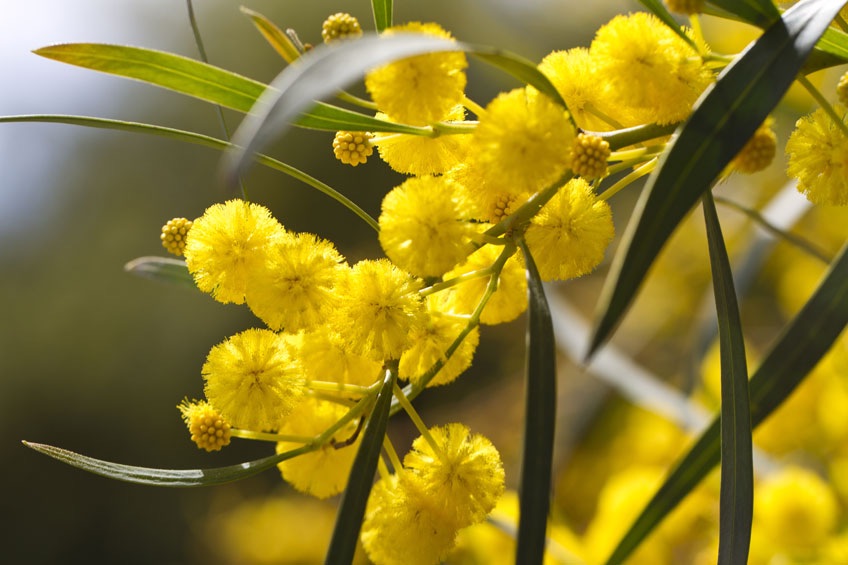
Today, 1 September, is the day (in the southern hemisphere) which marks the beginning of Spring. My nose and eyes had already alerted me, some time ago, to this turn-of-the-seasons. But now, it’s official. And to further reinforce this moment, today in Australia is Wattle Day, in celebration of the golden wattle (Acacia pycnantha), whose bright yellows flowers are prolific from August through to January.

Of course, there’s are many other signs of the coming of Spring downunder. The days are lengthening, the warming sun is strengthening its heat, the grass and flowers—and weeds!—are returning from their wintry hibernation, and (at least in the town where I live) there is a string of local community events that are planned for these pleasantly warm weeks. We have already had Run Dungog and Sculpture on the Farm. Ahead, there lies the Dungog Tea Party, Ride Dungog social bike rides, a new art exhibition in one of the local galleries, the Dungog Rumble for hot rod cars, and then the Dungog Show early in November.

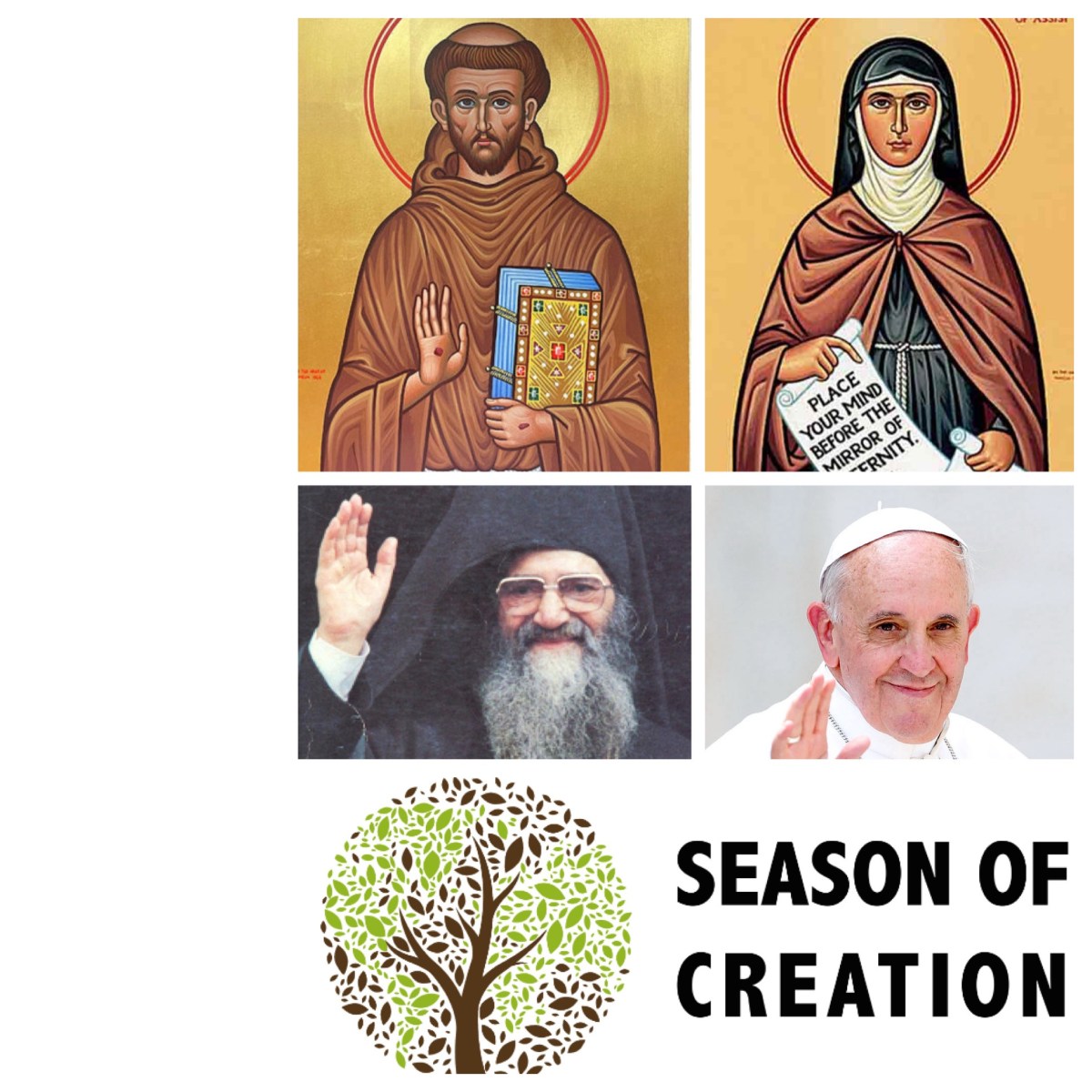
However, alongside the seasonal change, there’s also an ecclesial significance to today. In 1989, the Ecumenical Patriarch Dimitrios I (then head of the Eastern Orthodox Church, pictured) declared 1 September to be a day of prayer for the natural environment. In 2008, the World Council of Churches invited all churches to observe a Time for Creation from 1 September to 4 October—the day which had long been kept as the feast day for St Francis of Assisi

Francis, of course, is probably the most popular Catholic saint in the world. He is the one who preached to the birds; blessed fish that had been caught, releasing them back into the water; communicated with wolves, brokering an agreement between one famous ferocious wolf and the citizens of a town that were terrified of it; and used real animals when he created the very first, live, Christmas nativity scene. As a result of these, Francis is the patron saint of animals and the environment. And he is the inventor of the familiar nativity scene. 

Every 4 October, Francis of Assisi is remembered in churches around the world—along with Clare of Assisi who, like Francis, came from a noble family, but decided to renounce it all to live a life of simplicity with Francis and his brothers. Unlike Francis, who was a mendicant, Clare lived an enclosed life of poverty and prayer, leading a community of women who shared the same vision.

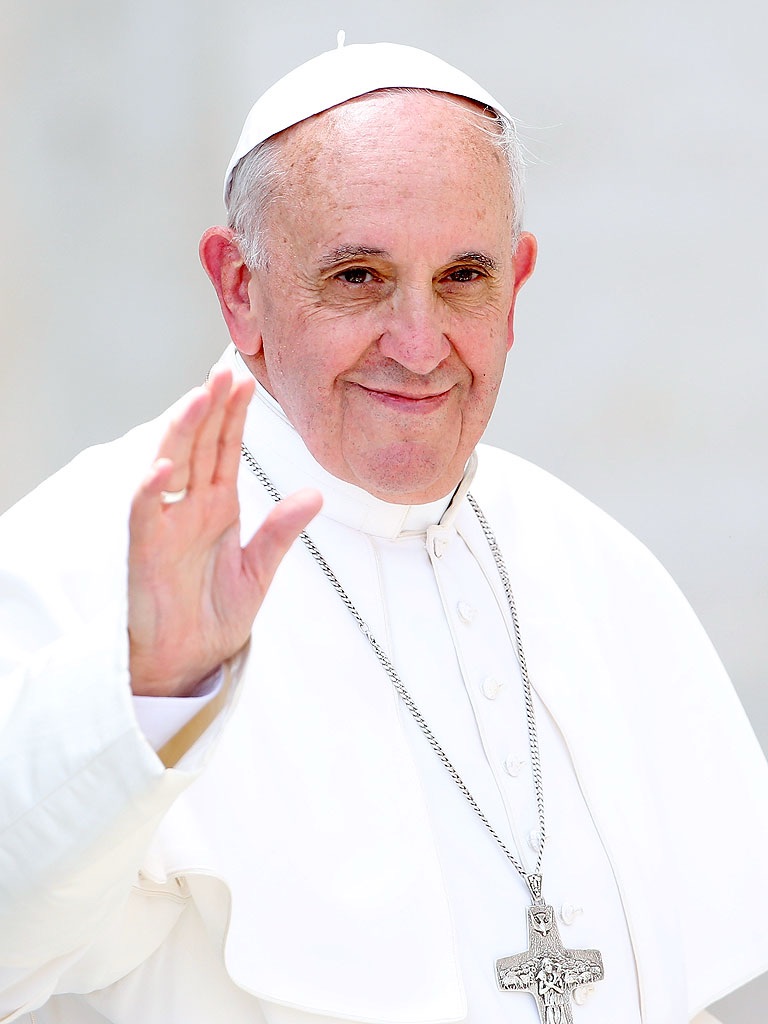
In 2019, Pope Francis (pictured) adopted the Season of Creation for Roman Catholic worship. It runs from 1 September to 4 October. And so, in many churches around the world, the whole of September is now designated as a time to focus on Creation—a truly ecumenical festive season, involving Eastern Orthodox, Roman Catholic, Anglican, and Protestant churches alike.

Recently the Rev. Dr Elizabeth Smith (Anglican priest and well-known hymn writer) attended an internal colloquium which was exploring the adoption of a Season of Creation by all mainstream denominations. She described the impetus for such a gathering in this way: “Christians have joined the growing chorus lamenting the climate crisis and its effects on nature and on vulnerable humanity, especially the poor. Energy is coalescing around liturgical acknowledgement of the value of ‘creation’—both God’s creative action and the universe it produces.” 

She then noted that “Ecumenical efforts are pressing toward a feast or season that raises both the act and fact of creation to the praise and thanksgiving of assemblies across denominations, from the Orthodox and Catholics where the initiatives began, to Anglican, Reformed, Lutheran, Methodist, and Pentecostal fellowships and associations.”

Let us hope that this initiative moves from “a good idea” to “a practical implementation” of that good idea! It will be good to have a formal liturgical accompaniment, ecumenical and international, to the signs of the change of season that is all around us.

The Uniting Church in Australia has produced resources to assist in the celebration of the Season of Creation at https://uniting.church/season-of-creation-2025/

Plastic Barbie, plastic waste, plastic problems

My mind has been pondering the collision of ideas and facts that I have been experiencing this week. Specifically, the collision between the fantasy movie Barbie (at a cinema near you) and series three of the reality documentary The War on Waste (on ABC-TV).

But my thoughts are not about that movie. I haven’t seen it—I have only read a range of reviews of it. My thoughts are more about the facts presented by Craig Reucassel in the latest series of The War on Waste. Facts like: Australia uses over 10 million plastic bags a day — those same plastic bags are causing huge problems in our oceans — 85% of soft plastics from bags and packaging ends up in landfill — plastic is with us for centuries to come.

Of major concern is the infiltration of plastic into human bodies. Plastic is in our bloodstream and in our digestive system, as studies of human excreta show. Since a single plastic bottle takes approximately 450 years to decompose, the plastic rubbish left in our environment as “litter” simply breaks down into smaller plastics, known as microplastics, which end up inside marine animals and even inside our own bodies. Microplastics are a severe problem for wildlife as they are eaten and accumulated inside animals’ stomachs, causing health issues such as damaged organs or fatal intestinal complications.

Plastic is found everywhere. But in particular, plastic is the basis for so many children’s toys. And there are lots of toys being manufactured. Indeed, 60 million plastic toy Barbies were produced this year. With the release of the Barbie film, Mattel is expecting to produce 70 million this year. In 2022, Mattel’s Barbie brand generated gross sales amounting to about $US1.49 billion. Mattel recorded profits of $903 million in 2022.

The toy industry uses 40 tons of plastic for every $1 million in revenues and is the most plastic-intensive industry in the world. So that’s a lot of plastic that Mattel has used. 90% of toys on the market at the moment are made of plastic. Plastic toys can contain heavy metals such as lead or cadmium or other harmful chemicals such as dioxins.

This is why no plastic toys are bought in my household for our various grandchildren. Elizabeth does a fine job of sourcing toys made of wood or recyclables for their birthdays and for Christmas. (And no wrapping paper, either—we reuse decent paper wrapping or cloth bags for that purpose, too!). Other options we use are to buy tickets to “experiences” (museums or theatres) or a year’s subscription to “foster” a native animal in a zoo.

It is thought that soft plastic toys may contain more than 40 percent phthalates by weight. Phthalates have been linked to a number of reproductive health effects, including reduced fertility, miscarriage, birth defects, abnormal sperm counts, and testicular damage, as well as to liver and kidney cancer.

The production of toys has also been linked to child labor, sweatshops and modern day slavery in China where over 70% of the world’s toys are made. Barbies and many other toys are not fairly made or fairly traded.

There are so many important environmental and justice reasons to be careful not to get sucked into this voracious, destructive commercial enterprise. Do you really need that plastic Barbie? Do we really need all,our food to the wrapped in plastic? Do we really need to accumulate more and more plastic bags in our cupboards?

https://www.theworldcounts.com/challenges/consumption/other-products/environmental-impact-of-toys

-> Link to War On Waste ABC iView

The Season of Creation, every September

When the Common Lectionary was created in 1983, it followed the pattern of the Roman Catholic Lectionary Mass (1969), with seasons focussing on the traditional calendar of the church year: Advent in preparation for Christmas, then Epiphany; Lent in preparation for Easter, then Pentecost Sunday. This took half of the calendar year (from late November to late May or early June, depending on the moveable dating of Easter each year).

For the other half of the year, there was a long period of “Sundays in Pentecost”. They were also called “Ordinary Sundays”, in recognition of the fact that they did not fall in the special seasons already noted; or “Proper”, derived from the Latin proprium, which referred to the parts of the liturgy which changed according to what was proper, or appropriate, to the day.

The Revised Common Lectionary (1992) continues this pattern, and is followed in many churches around the globe. Although created by a task force that was almost all-male (Gail Ramshaw was the only female member) and almost entirely Protestant (John Fitzsimmons was the sole Roman Catholic member), this lectionary is now used by almost 50 major Protestant denominations around the world.

In 1989, the Ecumenical Patriarch Dimitrios I (head of the Eastern Orthodox Church) declared 1 September to be a day of prayer for the natural environment. In 2008, the World Council of Churches invited all churches to observe a Time for Creation from 1 September to 4 October—the day which had long been kept as the feast day for St Francis of Assisi.

In 2019, Pope Francis adopted the Season of Creation for Roman Catholic worship. And so, in many churches around the world, September is now designated as a time to focus on Creation—a truly ecumenical festive season, involving Eastern Orthodox, Roman Catholic, Anglican, and Protestant churches alike.

Saint Francis, of course, is remembered for his simplicity of living, as well as his care for the natural environment. His Canticle of the Sun (found in modern hymnals—AHB 3, and TiS 100, for instance) is a well-loved poem which praises all the elements of the natural environment and the cycle of life.

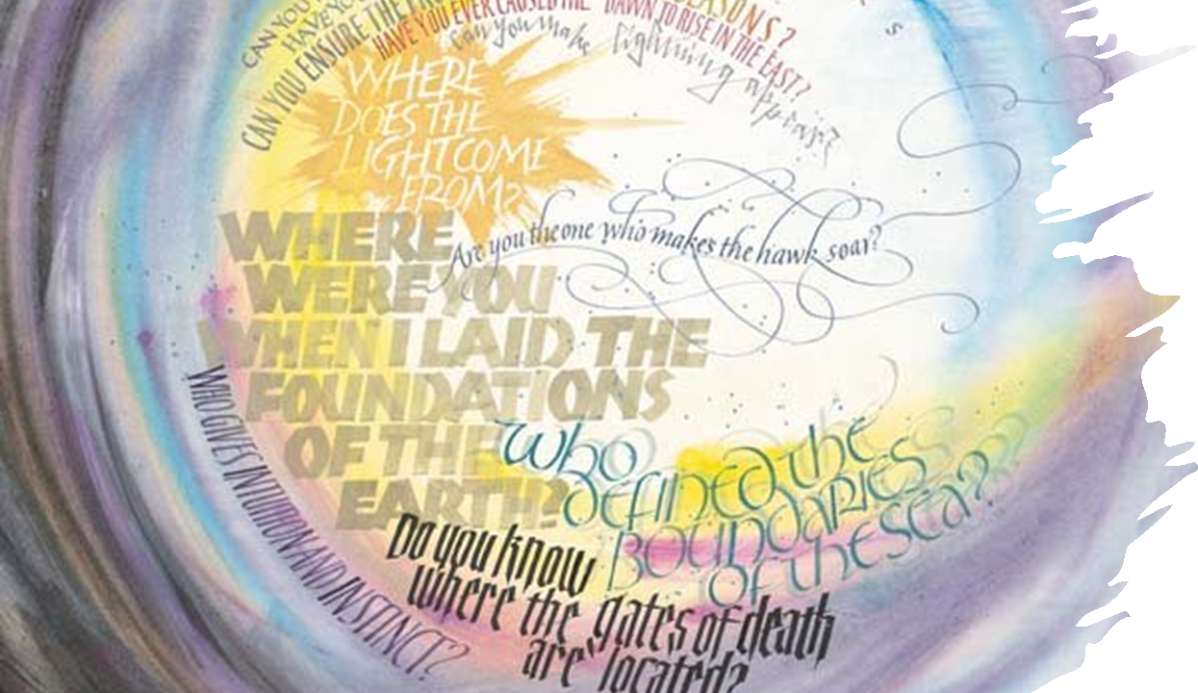
The current issue of With Love to the World, which I edit, is designated as the Creation issue. It starts before September and runs on into November; but at the heart is the Season of Creation. This year, we are extending the Season of Creation through the whole issue. Each week, three passages from Hebrew Scripture, chosen for what they say regarding the creation, are placed alongside the regular four passages from the lectionary.

Commentaries on each passage are offered from a different contributor each week, along with questions for discussion, a song that matches the theme, and a focus prayer for each day. There is an introduction to the additional biblical passages used in the Creation 2022 issue on my blog at https://johntsquires.com/2022/05/29/the-season-of-creation-in-with-love-to-the-world/

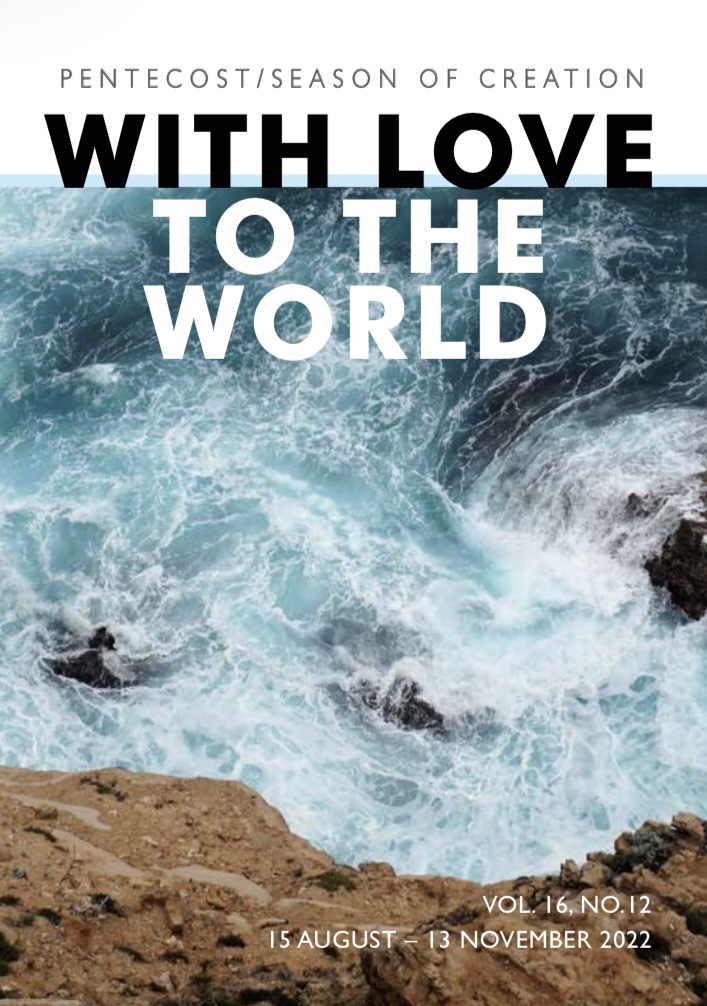
And there is a stunning cover photo, contributed by the Revd Sophie Lizares, who ministers in a Uniting Church congregation in Perth.

Contributors have been asked to focus on questions relating to care of the environment, living sustainably, and demonstrating responsible stewardship of the earth’s resources, as integral to the life of discipleship to which we are all called. It is an experiment in reading the passage each day with focus issues in mind. My hope is that this way of proceeding in this issue will prove valuable to subscribers to With Love to the World.

With Love to the World can be ordered as a printed resource for just $24 for a year’s subscription (see http://www.withlovetotheworld.org.au/wp-content/uploads/2020/07/Ordering-and-paying-for-Website-7.vii_.2020.pdf) or it can be accessed on phones and iPads via an App, for a subscription of $24.49 per year (go to the App Store or Google Play).

Celebrating creation: Job 38 and Psalm 104 (Pentecost 22B)

A sermon preached by the Rev. Elizabeth Raine at Tuggeranong Uniting Church on 17 October 2021

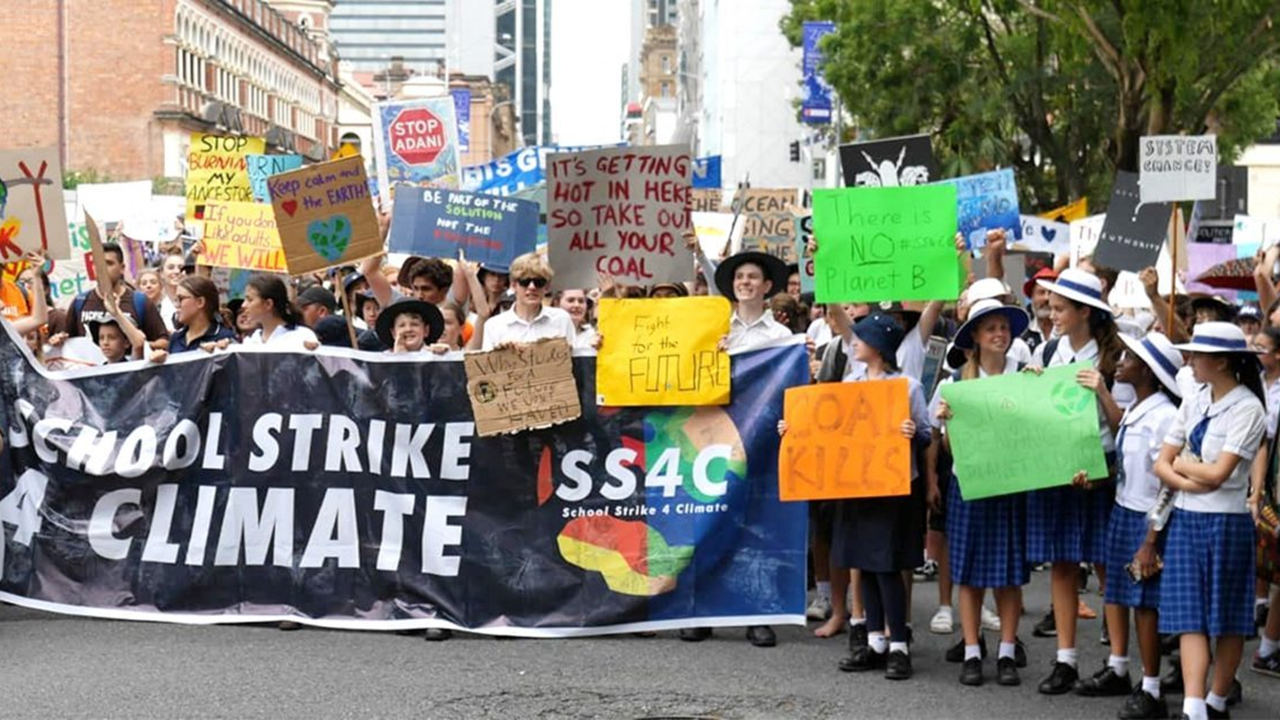
This week, there have been many school students striking around the world for something to be done about climate change. Young people are very concerned about the impacts of climate change, and the future of life on our planet.

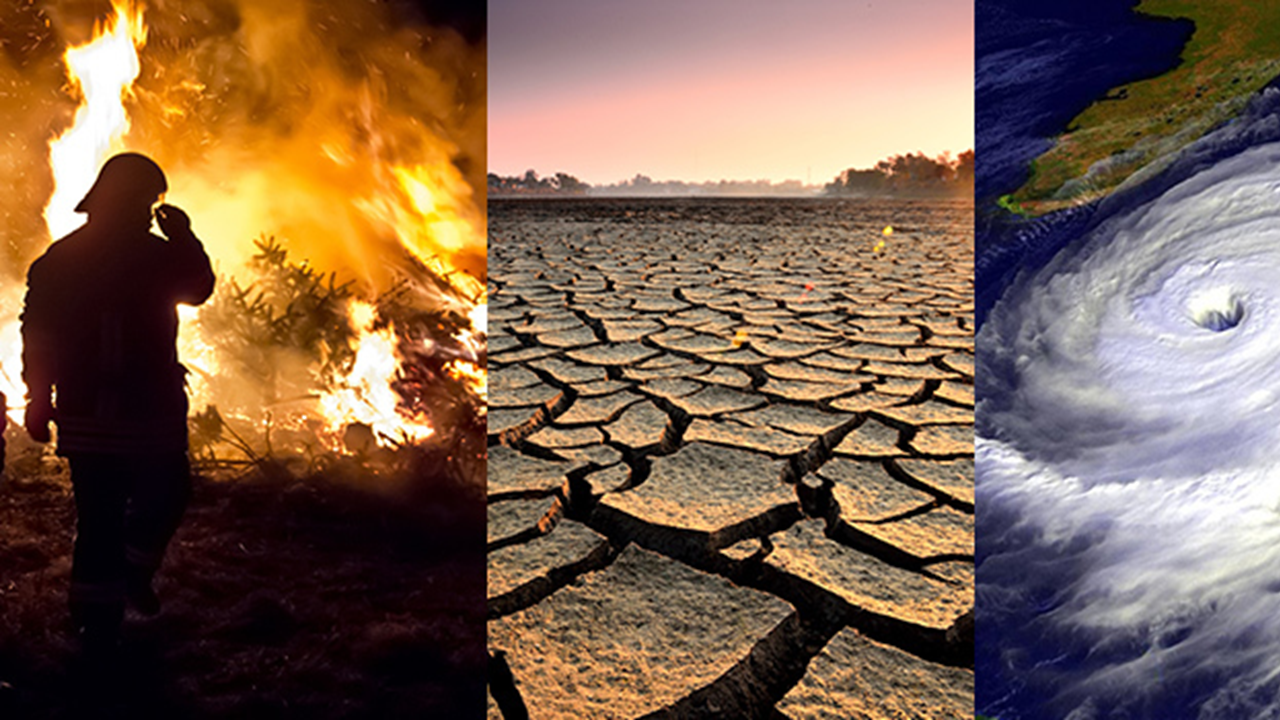
Despite the growing evidence of the consequences of climate change, such as huge fires, floods, rising seas and extreme weather events, many governments and corporations around the world continue to subsidise the fossil fuel industry, putting all of us at risk.

Young people (and many of the rest of us!) believe that if we don’t take action now and transition swiftly away from fossil fuels to 100% renewable energy, things are just going to get worse.

Climate change is the greatest challenge we have confronted as a human species. To stop emitting waste carbon dioxide completely within the next five or 10 years, we would need to radically reorient almost all human economic and social production, a task that while it looks almost impossible, really does need to happen if human and other mammalian life forms are to continue existing. It will demand an agreement and global coordination between nations on a scale never seen before.

Despite this, much of our world still pursues a decidedly unsustainable environmental course. Even worse, a disproportionate share of the consequences of climate change is borne by the very poor, those 40% of our fellow human beings who live in “poverty” (1.5 billion people) or “extreme poverty” (the 1 billion people who earn less than $2 a day).

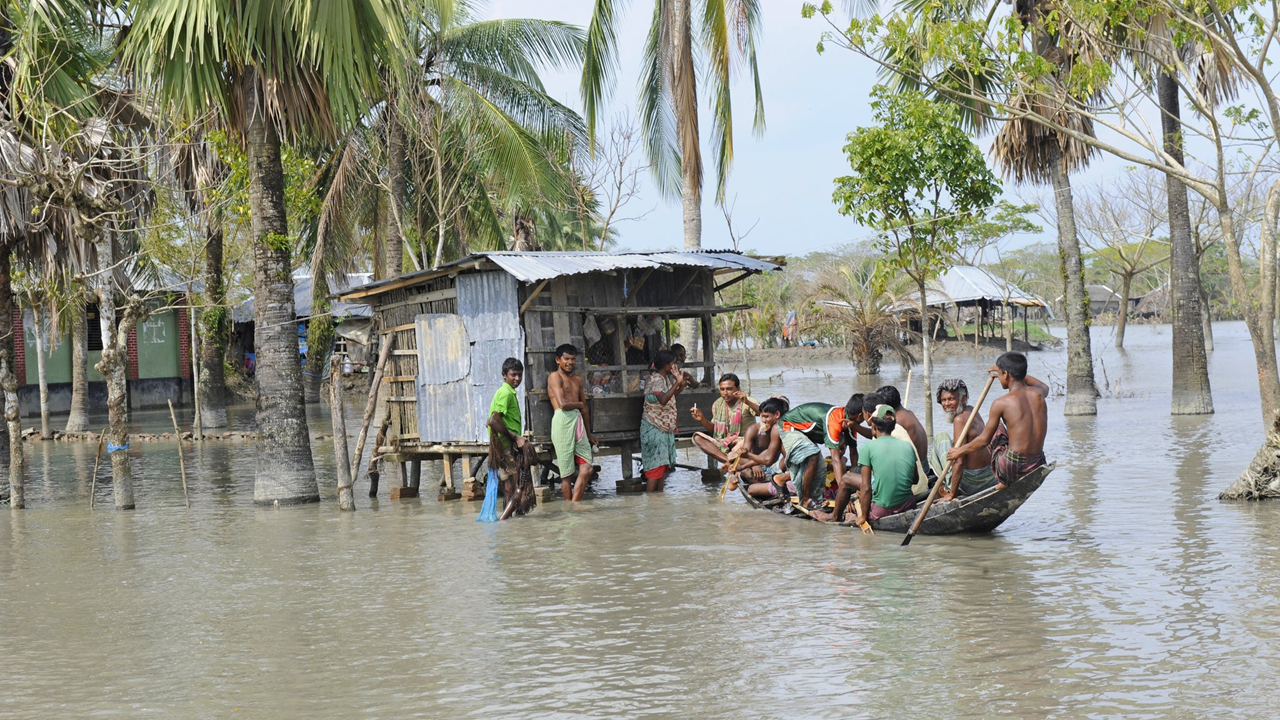
We have island nations that will be consumed by a rising sea, nations where subsidence farmers will no longer be able to grow food and climate refugees from places like Bangladesh who will see their land flooded and become uninhabitable. Without significant changes, planet earth will exact a heavy price for our choices.

But what does our scriptures have to say about this? Is there a faith imperative to act? There are many parts of the Hebrew bible that celebrate creation, and that emphasise that its gifts are God-given. In return for this gift, the human creature is meant to care for creation.

So as well as science and environmental expertise, our scriptural tradition is also informing our motives and choices. If God created the world and called it good, and then made a covenant after the flood narrative with every living creature, all life, and with the very earth itself, then surely we should be reaffirming our commitment to creation as its caring stewards.

Starting right at the beginning of our scripture with the creation narrative, we might note in Genesis that God states that God’s creation is “very good.” If the human creature is created in the image of God, and not only looking like God but having something of the character of God, then surely our purpose would not be to destroy the creation that God declared as ‘good’ but to keep it that way.

Two of the passages on the lectionary today take a different, but very important direction. Both Psalm 104 and Job put forward the notion that the human creature is but one among many creatures, and all are seen as equally important within the framework that is creation.

Psalm 104 makes it very clear that all creation is not only dependent on God, but there are many parts of it dependent on each other. God holds it all in balance, and each of the component parts interact with each other in necessary ways. Some would say it is a poetic way of describing an ecosystem. The creation is represented as a living, breathing entity, where all creatures are nephesh and filled with the breath or spirit of God. All have their place, none is more important than the other.

Our next reading from the book of Job describes creation as a delicately balanced system that God takes care of, including animals and isolated geographical areas, not just the human part of it. God provides food and shelter for wild animals that have nothing to do with humanity as such, and God causes it to rain in wild and desolate areas where humans are not.

This particular verse is very striking, as unlike Genesis, God is emphasising to Job that mortals like him are no more important in the creation than anything else. Everything is equal and all contribute to the goodness of the created. The book of Job has defined and marked the extent of things like rain, wind, snow and sunshine.

God in Job makes it clear that the creation of the earth and heavens runs on specific laws that allow the whole system to function for the benefit of everything. Therefore, the book of Job raises the question about whether it is advisable for humanity to irrevocably alter the creation as God has set it out. What will be the consequences if we do so?

Video: The Sixth Mass Extinction http://www.youtube.com/watch?v=p0aHPeqg2zI

So here we have two readings where humans are not the centre of God’s story and all creatures are — literally – created as our equals. The relationship appears to be non-exploitative, with all creatures secure in the place or habitat God has created for them.

Far from maintaining the delicate ecosystem balance set out by God that these writings imply, the earth’s capacity to sustain life is threatened by an ever-expanding human population and growing material demands. We are depleting earth’s nonrenewable resources and exceeding the environment’s capacity to absorb the pollutants we discard. This is particularly true of C02, the main gas driving climate change.

If nothing else, simple self-interest should remind us that all life remains fundamentally dependent upon being an integral part of a functioning ecosystem. Our fate is bound up with the fate of the planet.

Unless some miracle happens, the next 20 years are going to see increasingly chaotic global climate patterns, unpredictable biological adaptation and human responses that includes scapegoating and war over scarce resources. By the middle and later decades of this century — my grandchildren’s adult lives — this could look like a Mad Max story that should be filling us all with horror.

Our children and grandchildren will confront a range of outcomes that will be determined by the choices we make now. Whose voices will be heard the loudest? The fossil fuel industry and those whom it enriches? Or the voice of those who research the scientific evidence and those who are watching their homelands sink beneath the waves?

The worst outcomes of our consumptive lifestyles could be avoided if we did something concrete now. Are we willing to not only change our own habits, but to actively lobby our government to change theirs, and develop policies which will nurture and create life, rather than destroy and de-create it? Do we care enough to stop the sixth great extinction of species on the planet that God created and called “very good”?

The Christian Church has a particular calling to re-vision a much more holistic view of how we see and use God’s world, and how we look after the life that God has created on our planet. If we see the whole world and everything in it as the house of God, as the psalmist writes in Psalm 24, we may be more likely to treat everything and everyone with dignity and respect.

We need to value the things that cannot be counted, such as the beauty of a wilderness, river or forest. Consumer choices and economic growth should not be the only measure of good stewardship and well-being. Surely God intended us to treat our neighbours, including our fellow creatures, fairly and with love, and his creation with care. If members of God’s family continue to suffer because some of us are taking too much or many of God’s wild creatures continue to experience the threat of mass extinctions, we are not growing a more holistic household of God on our planet.

We are at a critical point in history, facing some considerable challenges including the damaging effects of human-induced climate change, the depletion of cheap abundant energy and a global food shortage. These challenges are global and they are connected to each other as both cause and consequence.

They are the results of social, political and economic systems that have come to do more harm than good; systems built on values of greed, power and materialism. We have developed a global economic system that is now diminishing, rather than improving our capacity to live sustainably on our planet.

The Christian life is not judged by comfort and prosperity and reward by God – especially not financially – but by suffering with the Christ and by the giving up of those things that distract or impede us. It is a challenging message. I hope that we, as the Uniting Church, can re-imagine a world where creation is treated with respect and all peoples are seen as equal.

And I hope that by doing so, we can tackle the cause of climate change appropriately and ensure the future of our planet and its fragile ecosystems for the grandchildren and great grand children of all the peoples of the earth.

See the source image
+

See also https://johntsquires.com/2021/10/02/living-through-lifes-problems-job-1-pentecost-19b/

Hope in a broken world (Job 23; Pentecost 20B)

https://johntsquires.com/2021/10/24/coping-with-chaos-and-death-the-wisdom-of-job-pentecost-22b/

The climate is changing; the planet is suffering; humanity is challenged.

For some years now, Elizabeth and I have been supporting the Climate Council. It used to be an independent Commission which was funded by the federal government—set up to study the impacts of climate change, and to give expert advice to the Australian public on climate change.

But then, Tony Abbott happened. One of its first orders of business by the incoming Abbott government was to abolish the country’s Climate Commission. Soon after that, the body was independently relaunched as the Climate Council, with the same commissioners that the Commission had, with the head of the Council being Tim Flannery.

So the Climate Council has continued, operating on the basis of financial support from sympathetic individuals and organisations. And they have produced regular reports on a range of climate-related issues. You can see the most recent reports at https://www.climatecouncil.org.au/news/

In its most recent email, the Climate Council has written: “The Intergovernmental Panel on Climate Change (IPCC) has now released the first instalment of its landmark Sixth Assessment Report. This is the most comprehensive and authoritative overview of the physical science of climate change to date.”

They go on to note that “the threat now facing all of humanity due to inaction on climate change is more serious than ever, and every day of further delay puts us more at risk”. They note that the findings of this report will be confronting for many people. They also press the point that “strong action today will make a profound difference to communities and ecosystems worldwide, both in our lifetimes and well into the future”.

The Climate Council summarises the four key findings of the IPCC report under four headings:

The scale and pace at which humans are altering the climate system has almost no precedent. Human influence has warmed the climate at a rate that is unprecedented in at least the last two thousand years.

Climate change and its impacts are accelerating, and more impacts are on the way. Lack of action, despite decades of warnings, means we are now seeing these alarming changes unfold at a faster and faster rate. In other words, our climate is not merely changing, the rate of change is now accelerating.

Every fraction of a degree matters. Every additional increment of warming means more extreme weather, including increases in the intensity and frequency of heatwaves, damaging rainfall, and droughts.

Responding to climate change means doing everything possible to reduce emissions, while also adapting to the impacts that can no longer be avoided. Past inaction means that more impacts from climate change are on the way but the right choices made today will be measured in lives, livelihoods, species and ecosystems saved.

What does the IPCC’s latest report mean?

The need for action is clear: advocacy of government, lobbying of companies, protests in public, letter writing by individuals—as well as reviewing our own lifestyles, encouraging friends and family to adjust their lifestyles, and pressing the companies from whom we buy products to ensure that they are operating in sustainable ways.

In Australia, since the commencement of a federal government comprising members of the Liberal and National parties, our environmental policies have been hamstrung by the grip of reactionary conservatives renegades within these parties. Our commitment to environmental responsibility has gone backwards. Our situation is shameful. The need for action cannot be any clearer.

In this context, the Climate Council has joined with 55 organisations across the Australian climate movement, representing millions of Australians, in calling on the Federal Government to cut emissions by 75% by 2030, and reach net zero by 2035. “Now, more than ever, we need to demonstrate the sheer number of Australians that want to see strengthened emissions reduction targets”, they say.

You can support this call to our federal government—“We need to adopt a science-backed target of at least 75% emissions reduction below 2005 levels, by 2030”—by clicking on https://www.climatecouncil.org.au/actions/petition-cut-emissions-75/ and signing the petition. It’s the least you can do.

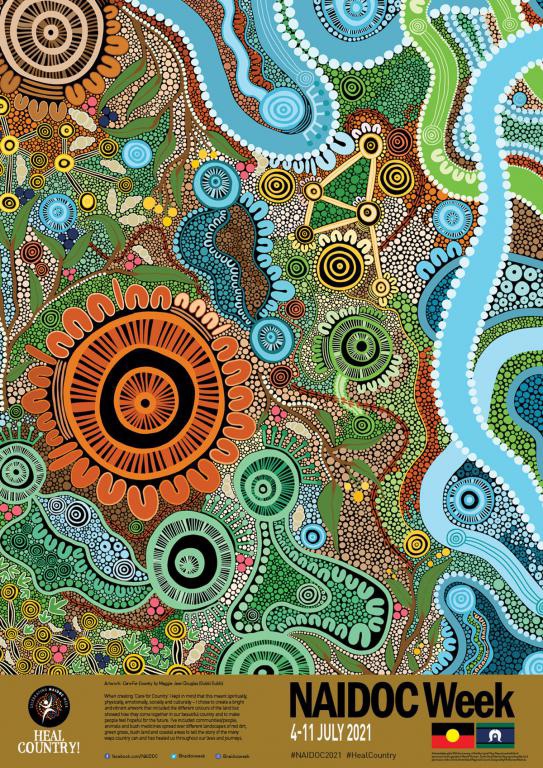
Heal Country: the heart of the Gospel (for NAIDOC WEEK 2021)

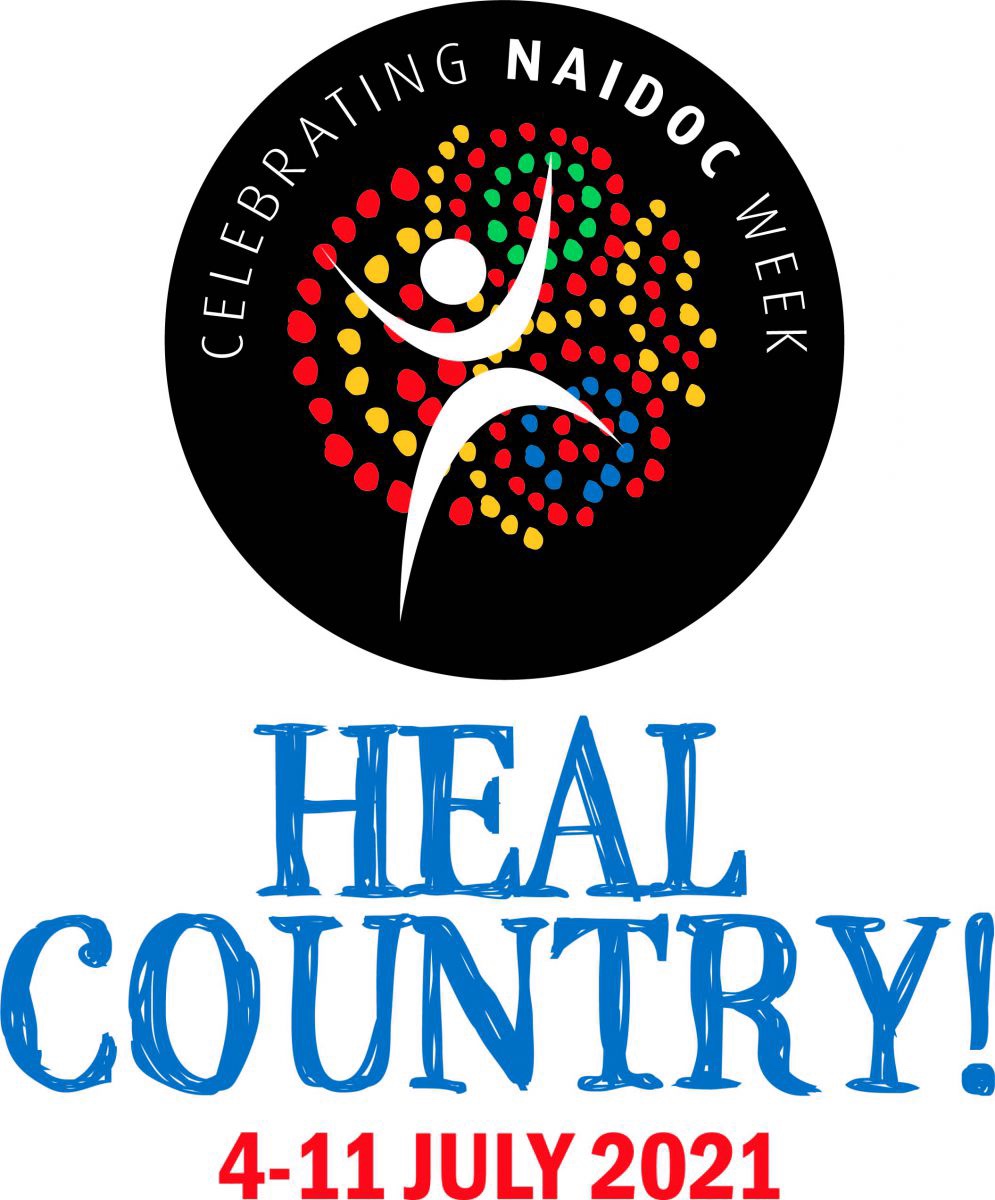
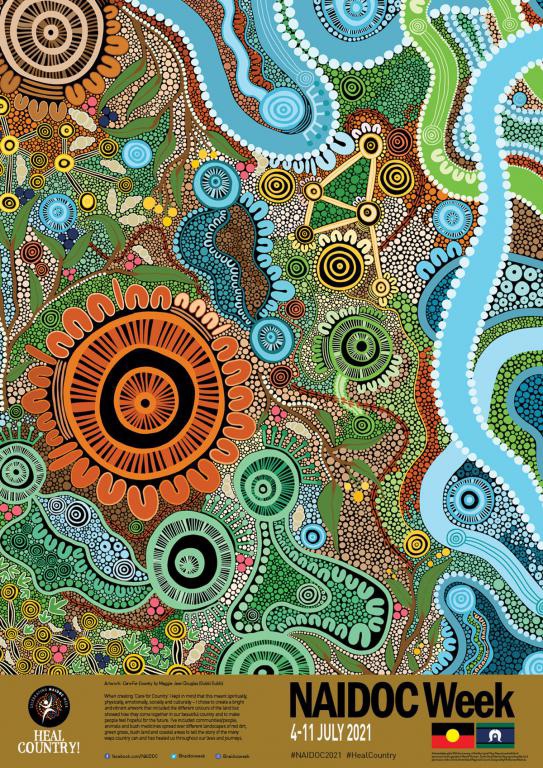
This week is NAIDOC WEEK (4-11 July 2021).

NAIDOC WEEK is usually held in the first week (Sunday to Sunday) of July that incorporates the second Friday. Historically, it began life as ‘National Aborigines Day’, then it became known as ‘The Day of Mourning’, before it was taken on by the National Aboriginal Day Observance Committee (NADOC). Some time later, the National Aborigines and Islanders Day Observance Committee (NAIDOC) was formed, and this provides the name to the week.

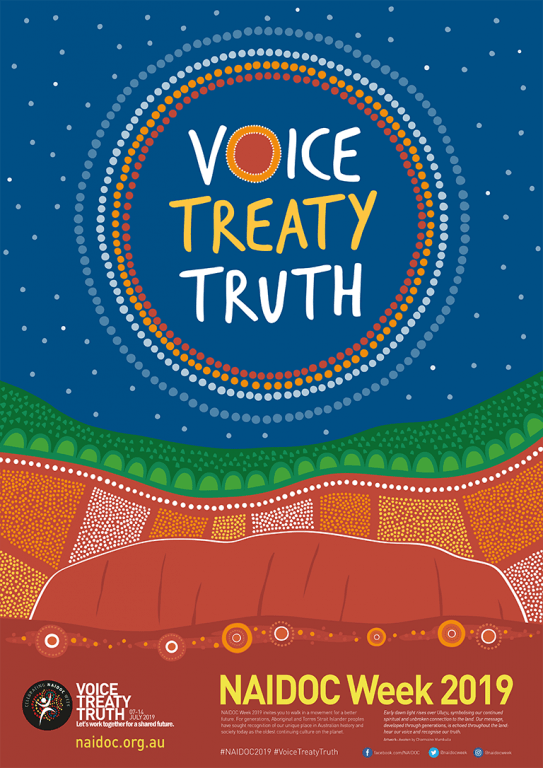
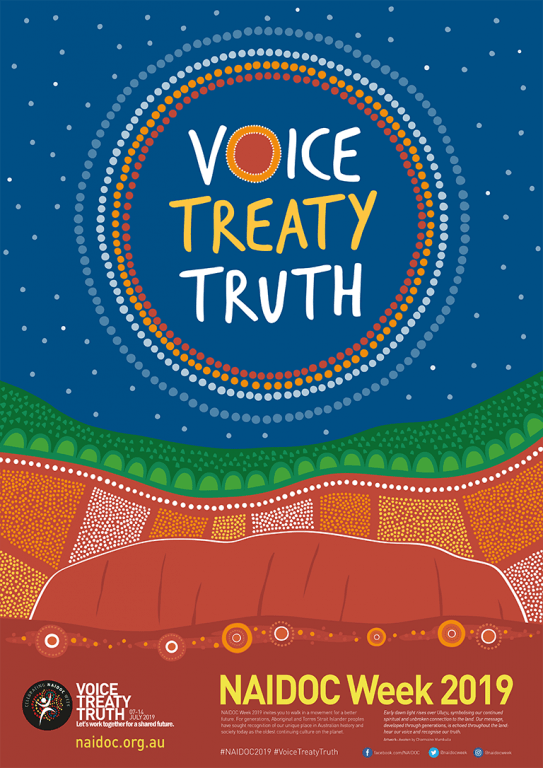
Each year, NAIDOC WEEK has a theme. Two years ago, inspired by the Statement from the Heart that was adopted in 2017 at Uluru, the theme was Voice. Treaty. Truth.

In that same year, the NSW.ACT Synod of the Uniting Church adopted a proposal to lobby the commonwealth government to establish a Makarratta Commission and to advocate with state governments that they make treaties with the indigenous peoples of their region.

In the Uniting Church, as we have drawn on the voices of Indigenous peoples, we have named the settlement of this continent as a colonising movement, generated by foreign imperialism, manifesting in violent invasion and genocidal massacres, spread from north to south, from east to west, of this continent. The commission and these treaties would have Voice to the First Peoples, ensuring that their Truth was known.

See https://www.insights.uca.org.au/what-synod-support-for-the-statement-from-the-heart-means/

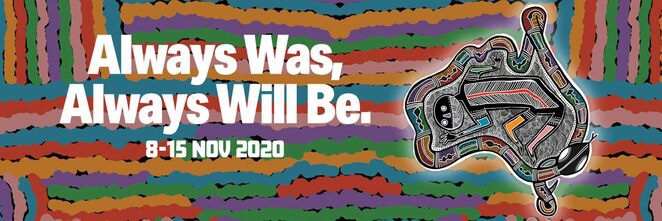
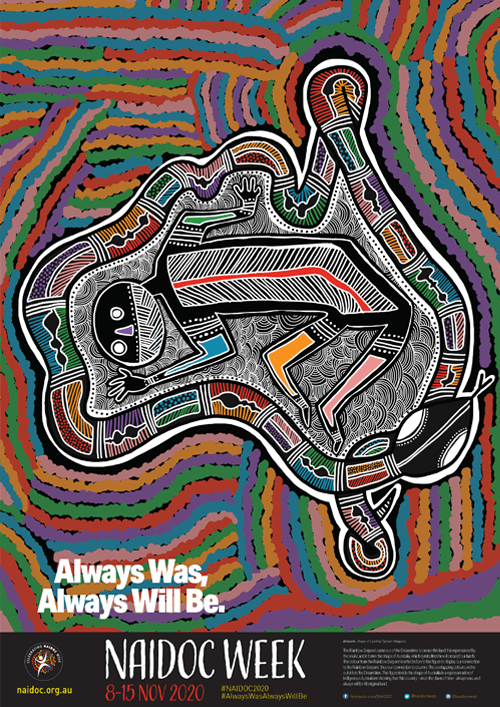
The next year, building on the call from the Statement from the Heart, was the theme of Always Was. Always Will Be. (It was held later in the year, because of the COVID-19 pandemic.)

This theme recognised that these lands of the continent of Australia and its surrounding islands had not, indeed, been terra nullius. Rather, a complex interrelated web of nations had been living on the land, and the islands, fishing in the seas, meeting in ceremony and trading with each other, and caring for country in a deeply spiritual way for millennia upon millennia.

In the Uniting Church, the National Assembly adopted a proposal in 2018 that affirmed “that the First Peoples of Australia, the Aboriginal and Islander Peoples, are sovereign peoples in this land.” The proposal noted “the Statement from the Heart’s acknowledgment that sovereignty is a spiritual notion, reflecting the ancestral tie between the land and First Peoples”. Connection to country is deeply important, profoundly spiritual, amongst all of the First Peoples of this land.

We have continued to strengthen the covenant relationship with the United Aboriginal and Islander Christian Congress (UAICC) and we have worked hard to give priority to the Voice of First Peoples in our church. See https://uniting.church/sovereignty/

This year, the theme is Heal Country.

This theme takes us to the heart of the Gospel. In scripture, Paul offers his vision of hope for the whole of creation, “the glory that is to be revealed to us” (Rom 8:18–22). Because he can see that those who are in Christ are “a new creation”, he charges the followers of Jesus to commit to “the ministry of reconciliation” (2 Cor 5:16–19).

That includes reconciliation with people, but it also points to “that coming reconciliation and renewal which is the end in view for the whole creation” as articulated in the Uniting Church’s Basis of Union (para. 3). Such a vision is offered in a highly imaginative, and much more detailed way, in the final book of scripture, where “a new heaven and an new earth” is described (Rev 21:1–2, 21:9–22:5, drawing on the vision of Isa 65:17–25).

These visions are built upon the affirmation that the land, earth, sea and skies which God created, are indeed “very good” (Gen 1:1–31; so also Neh 9:6; Psalm 104:24–25; Job 26:7—14), and that human beings have a responsibility of respectful care for that creation (Gen 2:15; and see the laws that command respect for the land, such as Lev 18:26, 28; 25:23–24; Num 35:33–34; Deut 20:19).

Further to that, scripture tells of the ancient Israelite understanding that God made a covenant, not only with human beings, but with “the beasts of the field and the birds of the air and the creatures that move along the ground” (Hosea 2:18; see the narrative of Gen 9:8–17). The eschatological view of scripture is that God will “heal the land” (2 Chron 7:13–14), “renew the face of the earth” (Psalm 104:29–30), at the time when God will restore everything (Acts 3:21) or bring universal reconciliation (Col 1:20; Eph 1:10).

So the theme of Heal Country is a central motif throughout the books of scripture. And we can see how, in our time, it draws together environmental concerns with indigenous matters. This theme recognises that respect and care for country has been integral to the life of indigenous peoples for millennia, and there is a need to recapture that care and respect in the present time. The impact of just two centuries of western living on this ancient country has been incredibly damaging. It is time for us to listen to the wisdom of the elders, and Heal Country.

Our continent is greatly blessed by the long and faithful heritage of the people of those nations which have called this country home: for millennia, across this continent, and in the adjacent islands, they have cared for the land, nurtured their law, and showed resilience, and they are gracious enough now to seek continued relationship with those of us whose forbears have invaded, colonised, and decimated their lifestyle. We are living in the midst of a people of persistence and determination, and of abundant grace. For this, we give thanks.

From their stories, we can learn the importance of caring for country, of honouring the land in which we walk and live. Something that has been so important from so long ago; something that is so important in our own time, as we respond to the challenge of climate change, with global issues such as rising sea levels, widespread deforestation, the destruction of species and a deliberate blindness to the perils of continuing to burn fossil fuels with impunity; and the pressing personal demands of environmental responsibility and sustainable lifestyle.

The theme of Heal Country is important for the life of the whole of Australia at this moment in time. It is also a theme that draws deeply from the scriptural witness. It is a theme that people of faith should embrace, proclaim, and live with all our being—this week, this year, and on into the future.

*****

A whole series of statements and policies relating to the environment have been produced by the Uniting Church, at national, regional, and local levels. The national statements and policies are collected at https://www.unitingjustice.org.au/environment.

Many local churches of various denominations have participated in projects promoted by the Five Leaf Eco-Awards, which has its own website at https://fiveleafecoawards.org

There are links to many resources relating to First Peoples at https://nswact.uca.org.au/first-nations-resources/

There is a prayer for Healing Country at https://www.commongrace.org.au/healingcountry_prayer

The Roman Catholic Church has been guided by the papal document Laudato si’, which provides an extensive exploration of environmental issues from a faith perspective. I’ve posted a series of reflections on this important statement at

https://johntsquires.com/2019/03/09/laudato-si-mi-signore-1/

https://johntsquires.com/2019/03/09/laudato-si-mi-signore-2/

“Laudato si’, mi’ Signore” (3)

“Laudato si’, mi’ Signore” (4)

NAIDOC WEEK 2021

Today we start NAIDOC WEEK (4-11 July 2021). NAIDOC WEEK is usually held in the first week of July (Sunday to Sunday) that incorporates the second Friday – which historically was celebrated as ‘National Aboriginal Day’. (Yes, like Easter, it moves around in a rather arcane fashion!)

On Australia Day, 1938, protestors marched through the streets of Sydney, followed by a congress attended by over a thousand people. One of the first major civil rights gatherings in the world, it was known as the Day of Mourning. Following the congress, a deputation led by William Cooper presented Prime Minister Joseph Lyons with a proposed national policy for Aboriginal people. This was again rejected because the Government did not hold constitutional powers in relation to Aboriginal people.

From 1940 until 1955, the Day of Mourning was held annually on the Sunday before Australia Day and was known as Aborigines Day. In 1955 Aborigines Day was shifted to the first Sunday in July after it was decided the day should become not simply a protest day but also a celebration of Aboriginal culture.

Major Aboriginal organisations, state and federal governments, and a number of church groups all supported the formation of the National Aborigines Day Observance Committee (NADOC). At the same time, the second Sunday in July became a day of remembrance for Aboriginal people and their heritage.

In 1974, the NADOC committee was composed entirely of Aboriginal members for the first time. The following year, it was decided that the event should cover a week, from the first to second Sunday in July. In 1984, NADOC asked that National Aborigines Day be made a national public holiday, to help celebrate and recognise the rich cultural history that makes Australia unique. While this has not happened, other groups have echoed the call.

Next, the committee became known as the National Aborigines and Islanders Day Observance Committee (NAIDOC). This new name has become the title for the whole week, not just the day. Each year, a theme is chosen to reflect the important issues and events for NAIDOC Week.

Last year, 2020, the theme of NAIDOC WEEK was Always Was, Always Will Be—a reference to the reality that the lands of Australia have been cared for over millennia by the First Peoples of the continent and its nearby islands. The now-discredited ‘Doctrine of Discovery’ and the notion of terra nullius undergirded the colonial enterprise of “claiming the country” for Britain? See https://johntsquires.com/2018/08/13/affirming-the-sovereignty-of-first-peoples-undoing-the-doctrine-of-discovery/

That focus is further developed in this year’s theme, Heal Country—a theme that draws together environmental concerns with indigenous matters. This theme recognises that respect and care for country has been integral to the life of indigenous peoples for millennia, and there is a need to recapture that care and respect in the present time. The impact of just two centuries of western living on this ancient country has been incredibly damaging. It is time for us to listen to the wisdom of the elders, and Heal Country.

Our continent is greatly blessed by the long and faithful heritage of the people of those nations which have called this country home: for millennia, across this continent, and in the adjacent islands, they have cared for the land, nurtured their law, and showed resilience, and they are gracious enough now to seek continued relationship with those of us whose forbears have invaded, colonised, and decimated their lifestyle. We are living in the midst of a people of persistence and determination, and of abundant grace. For this, we give thanks.

From their stories, we can learn the importance of caring for country, of honouring the land in which we walk and live. Something that has been so important from so long ago; something that is so important in our own time, as we respond to the challenge of climate change, with global issues such as rising sea levels, widespread deforestation, the destruction of species and a deliberate blindness to the perils of continuing to burn fossil fuels with impunity; and the pressing personal demands of environmental responsibility and sustainable lifestyle.

The theme of Heal Country is an important and entirely relevant theme for all Australians, this year!

This week, also, the Uniting Church Assembly launches its first Covenant Action Plan (ACAP) – a strategic and practical framework which gives shape to our commitment as a national church to walk together as First and Second Peoples.

The plan is being launched 27 years after the UCA formally entered into a covenantal relationship at the invitation of and with the Uniting Aboriginal and Islander Christian Congress (UAICC). See https://johntsquires.com/2018/10/13/on-covenant-reconciliation-and-sovereignty/

The plan can be read at https://mk0unitingchurcq6akw.kinstacdn.com/wp-content/uploads/2021/06/Assembly-Covenant-Action-Plan-2021_Feb2021-FINAL.pdf

******

The full list of themes of each NAIDOC WEEK, back to 1972, can be found at https://www.naidoc.org.au/previous-themes-posters

and posters from previous years are collected at https://www.naidoc.org.au/resources/poster-gallery

The history of NAIDOC WEEK is taken from https://www.naidoc.org.au/about/history

Reflecting on faith amidst the flooding

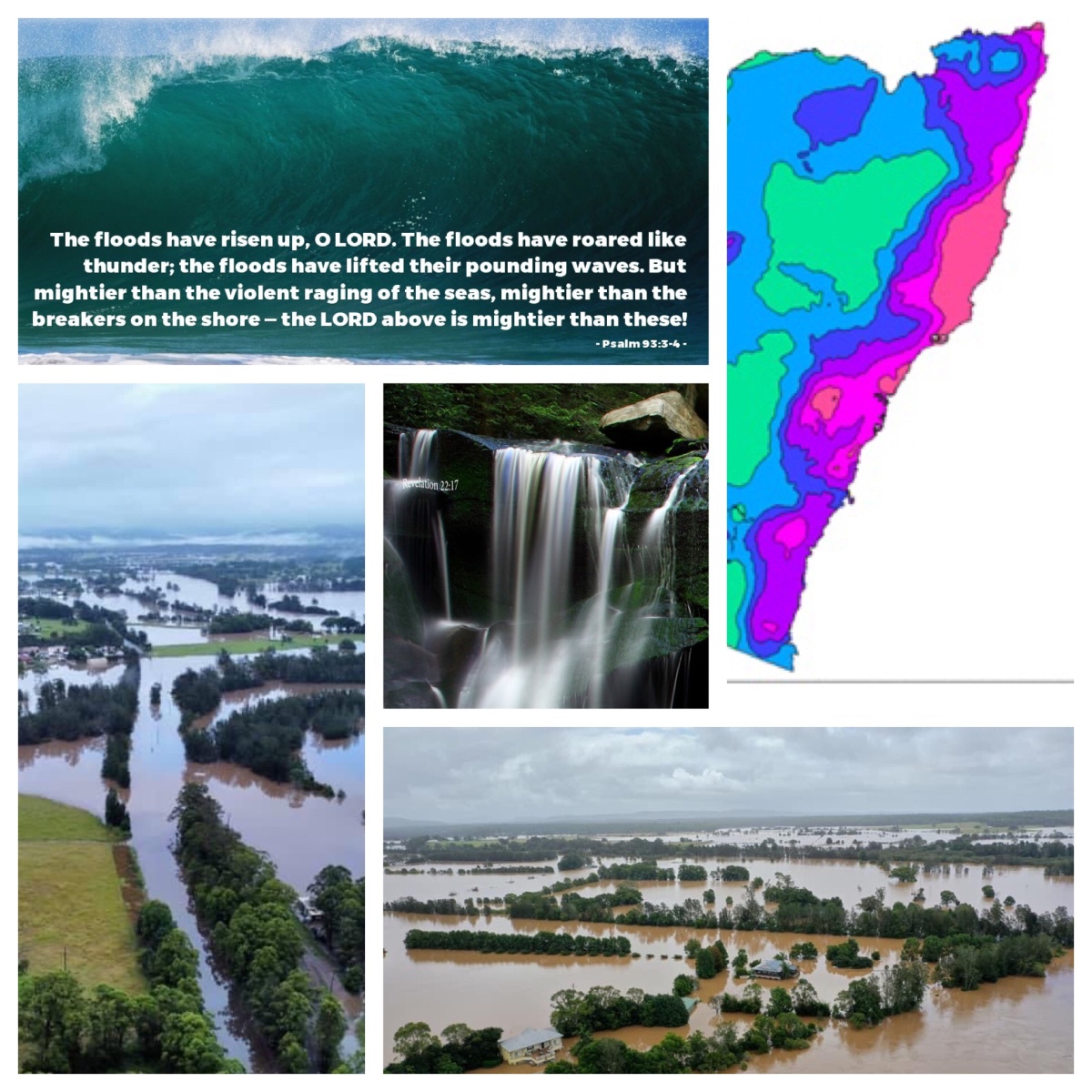
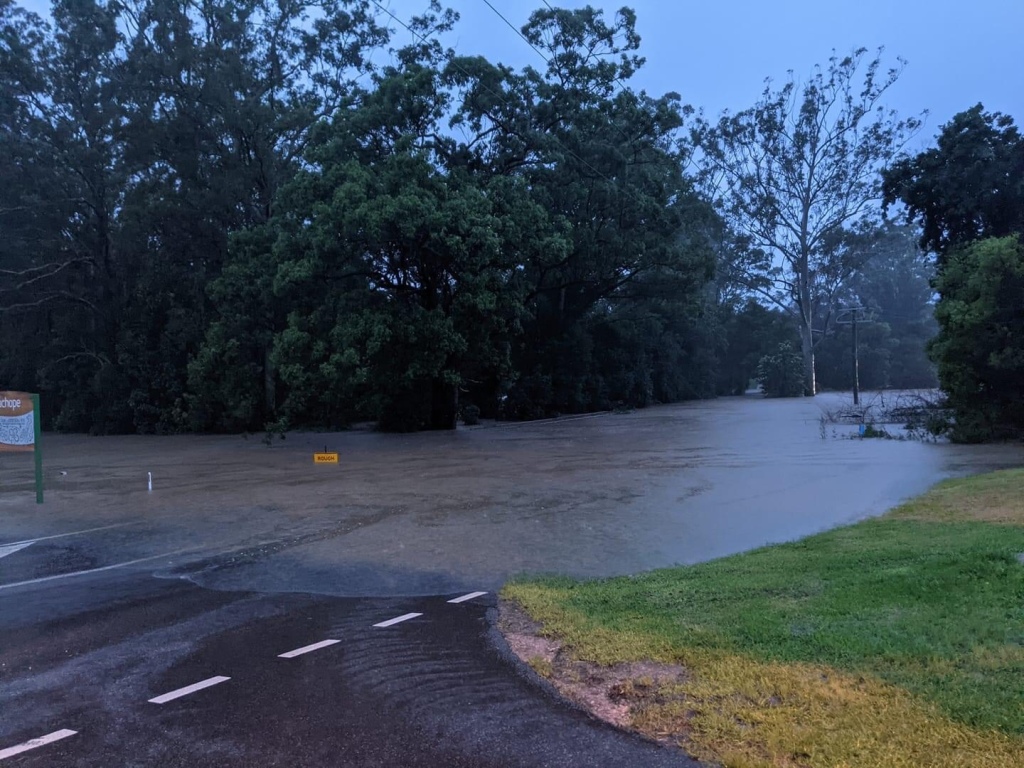
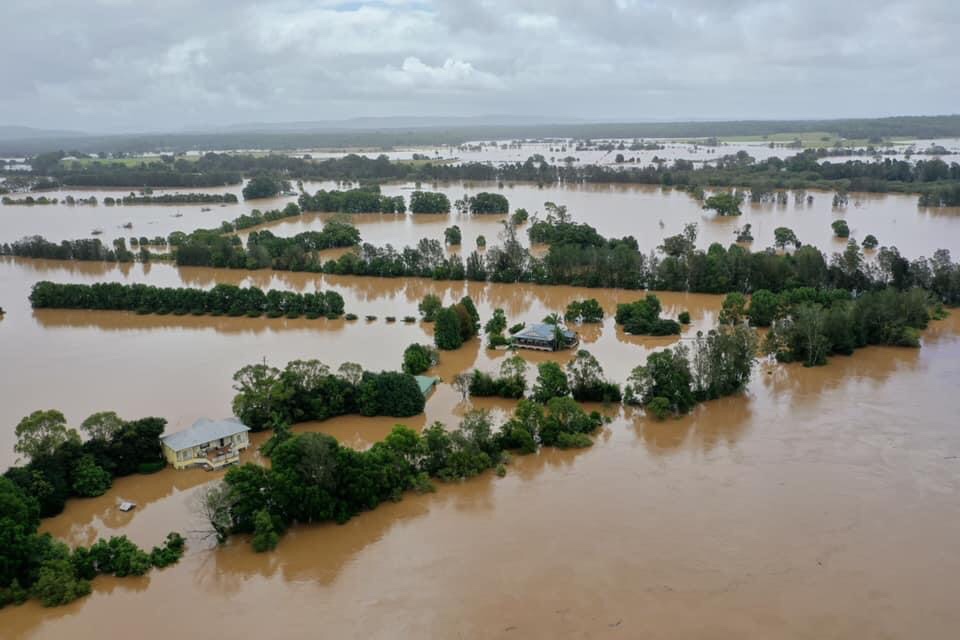
Water is on our mind, on the east coast of Australia, at the moment. Widespread flooding has occurred. Houses and businesses in many seaside locations, as well as in inland flood plains beside rivers, have been inundated by rising waters. People have been evacuated, some were stuck away from home, some now have no home to return to amd live in.

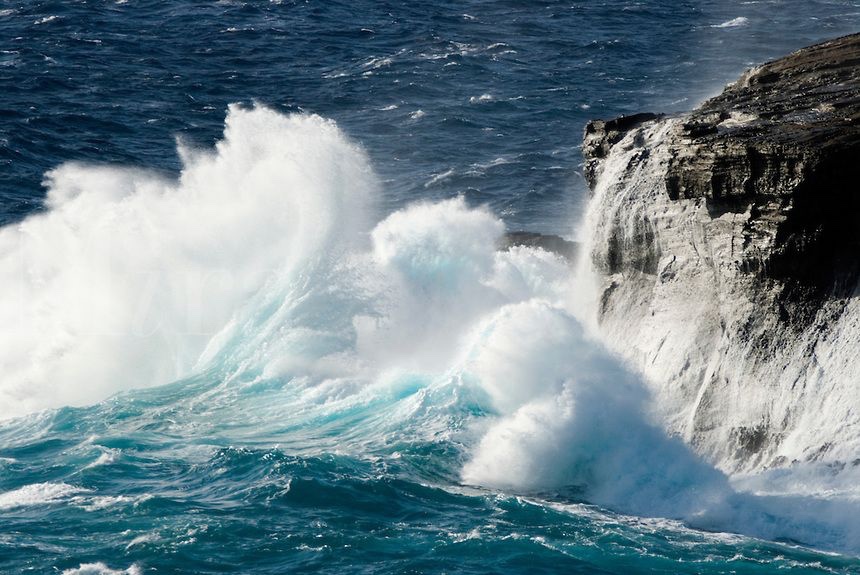
The power of water has been on display all around us. Constant sheets of wind-driven rain have fallen across hundreds of kilometres on the eastern coast of Australia. Surges of creek and river waters created currents that moved vehicles—even houses—and spread across flood plains, invading domestic and industrial spaces in towns and suburbs. Crashing ocean waves menaced beaches and cliff-faces, and currents swirled fiercely in the ocean.

We stand in awe and trepidation before the power of water—just as, a little over a year ago, we stood in awe and trepidation as roaring fires swept through bushland, invaded towns and suburbs, and wrought widespread and long-lasting damage. Then, we pondered, as now, we reflect on what this manifestation of “Nature, red in tooth and claw” means for us, as people of faith. (See https://johntsquires.com/2020/01/12/reflecting-on-faith-amidst-the-firestorms/)

Is this a demonstration of divine power in the pouring rain and rising floodwaters? Is this, somehow (as some would maintain), God declaring judgement on human beings, for our sinful state and rebellious nature?

I have been looking at a range of public commentary on the floods. One church website (not Uniting Church) includes these statements: “[These] devastating floods are not to be considered as an act of judgement upon our world, but instead, a warning to repent. Whether it’s drought, bushfire, flood or pandemic, these disasters are an important time for us all to consider Christ in the crisis. As we pray for the recovery of our land from these devastating floods, let us also pray that through this disaster might be a fresh opportunity for people to find eternal comfort and security in Christ Jesus.”

This appears to understand the floods as God seeking to make human beings respond with an act of faith in Jesus. Whilst ancient understandings may have made this kind of immediate connection between an event in nature and the intentions of God, we cannot make such a simple link. It’s much more than just “flood—warning—repentance—faith”. We need to reflect more deeply.

*****

Water, of course, is an essential of life. It covers 70% of the surface of planet Earth. We need water. Without access to water, humans and other creatures will dehydrate, weaken, and die. Scientific analysis indicates that 60% of the human adult body is water; the brain and heart are composed of 73% water, muscles are 79% water, and the lungs are about 83% water. (See https://www.usgs.gov/special-topic/water-science-school/science/water-you-water-and-human-body?qt-science_center_objects=0#qt-science_center_objects)

Water in our bodies helps us to form saliva, regulate body temperature through sweating, contribute to the brain’s manufacturing of hormones and neurotransmitters, lubricate our joints, and enable oxygen to be distributed throughout the body. Water facilitates the digestion of food, and the waste that is produced in our bodily systems is regularly flushed out as we pass urine. And we use water every day, to wash away solid bodily waste, to clean our hair and skin, to wash our clothes and keep our kitchen utensils clean.

Water is also a source of enjoyment: sitting on the beach, watching the powerful rhythmic surge of wave after wave; sitting beside the babbling brook, appreciating the gentle murmuring of running water; sitting beside the pool, listening the the squeals of delight as children jump into the water, splashing and playing with unrestrained glee.

The power of the ocean, of course, has often drawn the attention of human beings. We are reminded of this when swimmers are caught in rips and transported rapidly out into the ocean, or towards the jagged rocks at the edge of the beach. Sadly, the son of a friend was caught in a rip one day a few years ago. His two companions were rescued; the body of our friend’s son has never been found. The power of the ocean, whipped up by the wind, can be intense and unforgiving.
*****

Water makes regular appearances in the Bible. It is a key symbol throughout scripture. It appears in the very first scene, when the priestly writer tells how, “in the beginning … the earth was without form and void … and a wind from God was hovering over the face of the waters” (Gen 1:1-2).

It also appears near the very end of the last book of scripture, where the exiled prophet reports that “the Spirit and the bride say, ‘Come.’ And let everyone who hears say, ‘Come.’ And let everyone who is thirsty come. Let anyone who wishes take the water of life as a gift” (Rev 22:17).

Water flows throughout the scripture as a central image, appearing another 720 times in the intervening pages of scripture. Water enables healings to occur, for instance (Namaan, commander of the army of the king of Aram, in 2 Kings 5; the man by the pool at the Sheep Gate in Jerusalem, in John 5).

To the people of Israel, as they retold their foundational myth of the Exodus and the subsequent forty years of wandering in the wilderness, the gift of water was a sustaining grace. Parched by desert thirst, the Israelites cried out for water, Moses struck the rock, and water flowed (Exod 17:1–7; Num 20:2-13). Rivers flowing with water then provided food for the people living in the land—the fish of the waters (Deut 14:9; Lev 11:9), alongside the beasts of the land and the birds of the air (Ezek 29:3-5; Deut 14:3–20; Lev 11:1–45).

Flowing water—“living water”—is one of the images adopted in John’s account of Jesus, to explain his role within the society of his day: “Let anyone who is thirsty come to me, and let the one who believes in me drink. As the scripture has said, ‘Out of the believer’s heart shall flow rivers of living water” (John 7:37–38).

The precise scriptural quote is unclear—commentators suggest that the reference may be to Prov 18:4 (“the fountain of wisdom is a bubbling brook”), or Zech 14:8 (“living waters shall flow out of Jerusalem”), or Psalm 78:16 (“[God] made streams come out of the rock, and caused waters to flow down like rivers”), or Rev 22:1–2 (“the river of the water of life, bright as crystal, flowing from the throne of God and of the Lamb through the middle of the street of the city”). The uncertainty as to the precise reference alerts us, however, to the many instances where “living water” is mentioned.

The imagery of water was used, in addition, in earlier stories in this Gospel. To the request of the woman of Samaria at the well, “give me some water”, Jesus replies, “If you knew the gift of God, and who it is that is saying to you, ‘Give me a drink,’ you would have asked him, and he would have given you living water” (John 4:7–10).

To the crowd beside the Sea of Galilee, who asked, “Sir, give us this bread always”, Jesus replied, “I am the bread of life. Whoever comes to me will never be hungry, and whoever believes in me will never be thirsty” (John 6:34–35). Water is powerfully creative, restorative, empowering.
*****

Water also threatens destruction: witness the paradigmatic stories of the Flood (Gen 6:1–9:17) and the Exodus from Egypt (Exod 14:1–15:21, retold in Psalms 78 and 105). The destructive power of massive flows of water is evident in both of these stories: water falling from the heavens (Gen 7:4, 12) in one version of The Flood story, water rising from The Deep in an alternate version (Gen 7:11, 8:2).

Although (as we noted above), the gift of water was a sustaining grace to the people of Israel as they wandered in the wilderness, from the time of settlement in the land of Canaan, the Great Sea to the west of their lands (what we know as the Mediterranean Sea) was seen as a threat. In the sea, Leviathan and other monsters dwelt (Ps 74:13-14; 104:25–26; Isa 27:1).

The Exodus was made possible because the waters of the Red Sea had caught and drowned the Egyptian army (Exod 14:23–28); this unleashing of destructive divine power was celebrated by the escaping Israelites in victory songs (Exod 15:2–10, 19–21), in credal remembrance (Deut 11:2–4; Josh 24:6–7), and in poetic allusions in psalms (Ps 18:13–18; 66:6; 77:18–20; 78:13, 53; 106:8–12; 136:10–16).

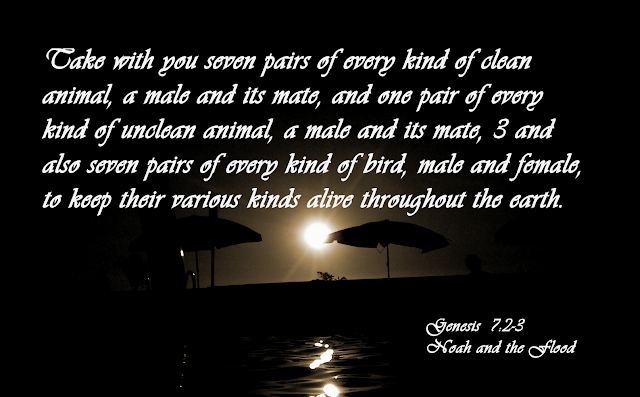
In like manner, the waters in The Flood caused almost compete annihilation of living creatures on the earth (Gen 6:12–13, 17); only the family of Noah and the animals they put onto the Ark were saved from the destructive waters (Gen 6:19–21 indicates “two of every sort”, whilst Gen 7:2–3 refers to “seven pairs of all clean animals … and a pair of the animals that are not clean”).

*****

Both the creative power of water, and destructive capabilities of water, led the people of Israel to ascribe power to God over the seas and the rivers. The Psalmist affirms of God that “the sea is his, for he made it, and the dry land, which his hands have formed” (Ps 95:5).

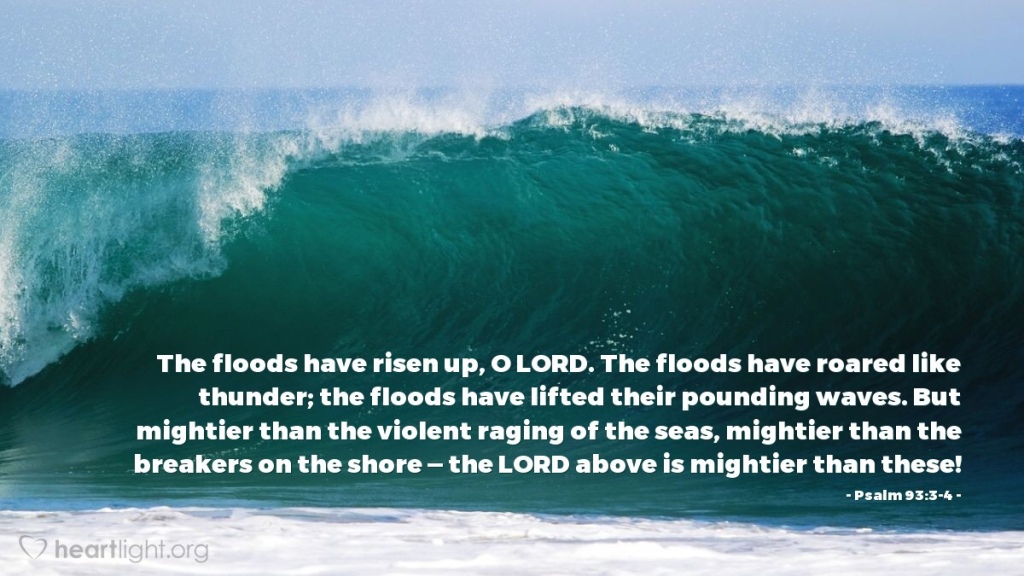
Accordingly, the Lord God, who “made heaven and earth, the sea, and all that is in them (Ps 146:6), was seen as able to “rule the raging of the sea; when its waves rise, you still them” (Ps 89:9). God’s power over creation is also expressed through flooding: “The floods have lifted up, O LORD, the floods have lifted up their voice; the floods lift up their roaring. More majestic than the thunders of mighty waters, more majestic than the waves of the sea, majestic on high is the LORD!” (Ps 93:4).
In our current context, such words are deeply troubling. Can it be that God is exercising divine judgement through the increased rainfall and rising floodwaters currently being experienced? There are two problems with this point of view, both with an inherently theological note to be sounded.
The first relates to the nature of God, and how God interacts with the created world. The ancients had a view that God was an interventionist God, directly engaging with the created world. When something happened “in nature” (like a birth, a death, a flood, a fire, and earthquake, etc), it was seen to be directly attributable to God. It simply happened “to” human beings.

Contemporary scientific and sociological views, however, would provide much more room for human agency. When things happen, what contribution does the human being (or an animal of some kind) have in the process? We would want to say that events that take place do not “just happen”; they are shaped by the actions of human beings in history, by our intention and interaction.

So, the second element I see as integral to understanding the current situation, theologically, is the contribution that human beings have made to the current environmental situation. Why are floods occurring more regularly, and with more intensity, in recent times? The answer is, simply, that we are seeing the effects of climate change right around the earth.

And the human contribution to climate change cannot be argued away. Climate change is real. (See this excellent website from NASA, at https://climate.nasa.gov/evidence/)

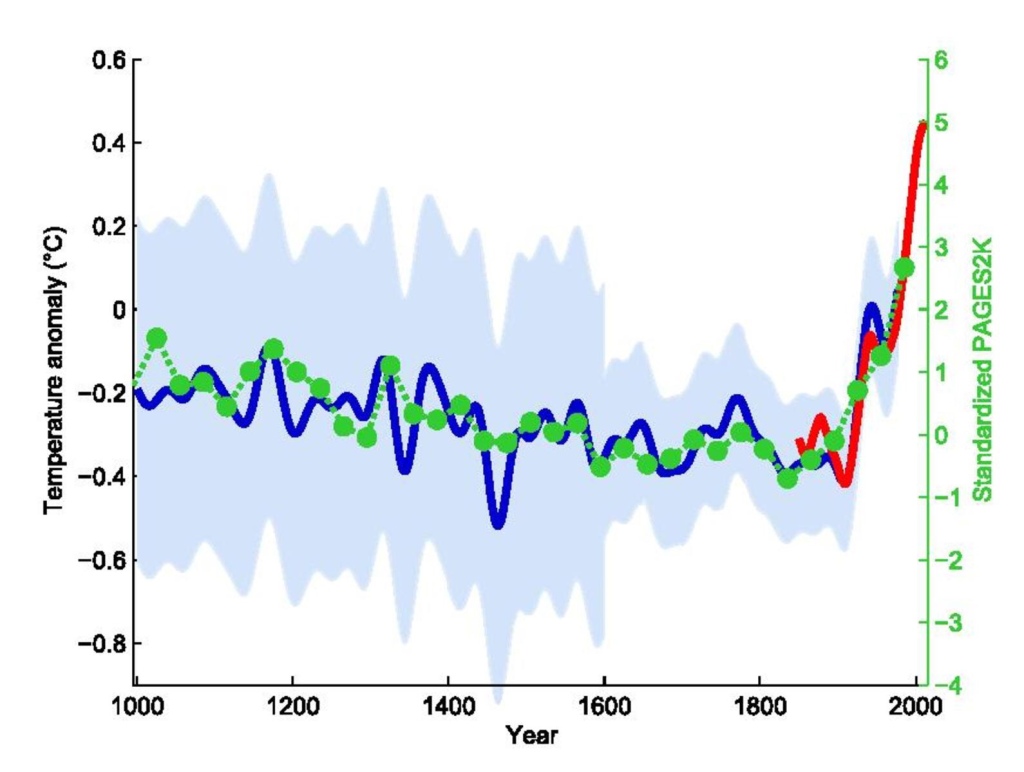
The rate of change to various climatic elements has increased noticeably in the last two and a half centuries, since the Industrial Revolution, and at an exponential rate since the 1960s, when we expanded the use of fossil fuel right across the globe. (See this article on the so-called “hockey stick graph”, https://www.theatlantic.com/technology/archive/2013/05/the-hockey-stick-the-most-controversial-chart-in-science-explained/275753/)

We human beings know this. We have known it for some decades, now. Yet policy makers bow to the pressures and enticements they receive from vested interests in business, pressing and bribing to ensure that their businesses can continue—even though it contributes the greatest proportion to the rise in temperature.

For every one degree Celsius that temperature rises, the atmosphere holds 7% more water. Given the right atmospheric conditions (such as we have seen develop in the last week), that water will get dumped somewhere—in recent times, that has been over much of the east coast of Australia, in massive amounts.

And it is obvious to thinking human beings, that how we have lived, how we have developed industries, how we have expanded international travel, how we have expanded the transportation of food and other goods around the globe, how we have mined deeper and wider to find fossil fuels to sustain this incessant development, has all contributed to that rise in temperature.

*****

Certainly, a fundamental human response to the tragedies we have seen unfolding around us through the rainfall and flooding, is one of compassion. Compassion for the individuals who have borne the brunt of the damage that has occurred.

Compassion and thankfulness for the emergency services personnel and others who have spent countless hours in assisting those caught by the floods. Compassion and careful listening provided by Disaster Recovery Chaplains in many evacuation centres.

Compassion, practical support, and prayerful support for all who have been affected by these events, is fundamental.

Yet whilst the massive rainfall and the high floods are the processes of nature at work around us, we know that we have intensified and exacerbated them. And we see tragic results in the rivers that have surged and flooded in recent days—just as the same instability in the earth’s system has generated more intense and more frequent cyclones, created more intense and more frequent fires, warmed the oceans and melted the edges of the polar caps, and caused other observable events around the world.

This past week, there have been two opportunities for us to remember what we are doing to the planet—opportunities to commit to a different way of living in the future. The first was Australia’s Overshoot Day, on 22 March. This is the day that Australia has used up its yearly allocation of the earth’s resources. What should have taken 365 days has taken Australians 81 days. You can read about this at https://www.insights.uca.org.au/overshoot-day-and-a-theology-of-creation/

The second opportunity was Earth Hour 2021, on 27 March. This hour was an invitation to turn off electricity and rely on natural sources of energy, for just one hour— and then to use this as the basis for living more sustainably in the future. See https://johntsquires.com/2021/03/27/switchfornature-earth-hour-2021/

So, in the midst of the increased and more intense cyclones, and more regular meltings, and bleachings of coral, and eruptions of fire storms, and flooding of plains, God is communicating with us: the world cannot go on like this, the planet can not sustain our incessant disregard for its natural ways.

So let’s not blame God for dumping all that water and flooding all those homes and businesses. Let’s look closer to home, and consider how, in the years ahead, we can adjust our lifestyle, reduce our carbon footprint, live more sustainably, and treat God’s creation with respect and care.

*****

For my other blogs on the environment, see

https://johntsquires.com/2019/06/25/873/

https://johntsquires.com/2019/05/05/to-care-for-honour-and-respect-the-creation-we-need-to-stopadani-k/

https://johntsquires.com/2019/03/09/laudato-si-mi-signore-1/

https://johntsquires.com/2019/03/09/laudato-si-mi-signore-2/

https://johntsquires.com/2019/03/09/laudato-si-mi-signore-3/

https://johntsquires.com/2019/03/09/laudato-si-mi-signore-4/

My wife Elizabeth Raine has written some helpful reflections on environmental theology at

And God saw it was good…

and

http://ruralreverend.blogspot.com/2012/06/musing-on-ecological-economy-why.html

and a series of blogs on living a life with low environmental impact, at

http://ruralreverend.blogspot.com/2013/10/setting-sail-on-ss-low-impact.html

http://ruralreverend.blogspot.com/2013/10/rubbish-to-left-of-me-and-rubbish-to.html

http://ruralreverend.blogspot.com/2014/07/planet-at-risk-sorry-for-inconvenience.html

http://ruralreverend.blogspot.com/2014/10/hygenically-sealed-in-plastic-for-your.html

and a lot more at https://elementcityblog.com (follow the links on the right of the page)

Reimagining—the spirit of our times

The city where I live, Canberra, has a regular annual festival. Each year, a large section of a central park is planted out with bulbs, around this time of the year. Lots of tourists come in September, joining with many of the residents of Canberra, to enjoy the festival known as Floriade.

The bulbs that have been planted grow, silently and stealthily, throughout winter, so that when spring arrives, they are fully grown plants, ready to burst into a display of spectacular colours—in time for hundreds of thousands of people to walk through, enjoying the display.

507,550 people saw the display in 2019 (see https://www.canberratimes.com.au/story/6456817/floriade-breaks-attendance-record/)

That’s not going to happen this year. The ACT Government wisely decided that it would not be sensible to plan for a large, crowded event in September—with the uncertainty that crowds of people would be able to gather, even in the outdoors.

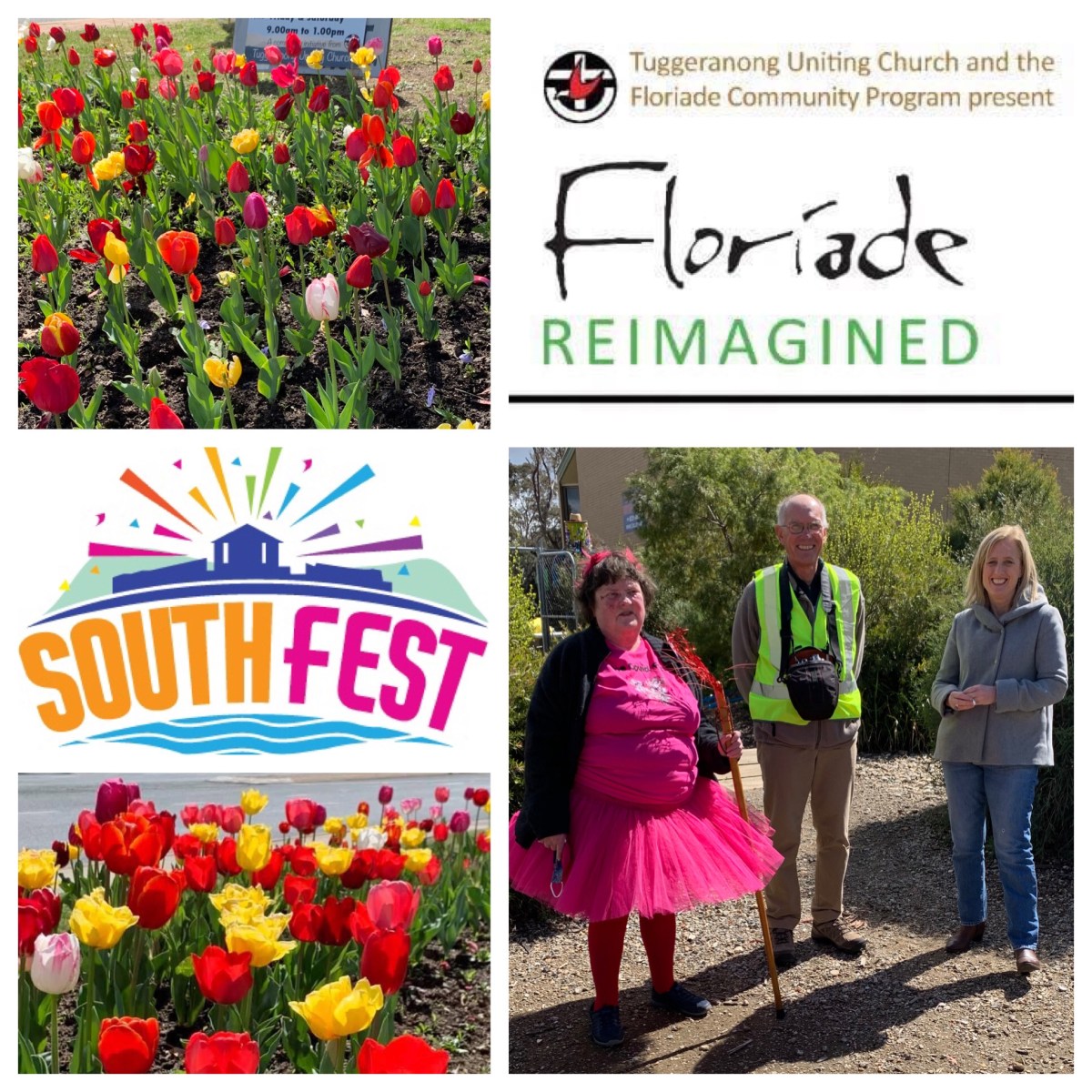
So they have implemented Floriade Reimagined. Bulbs have been offered to community groups, to be planted at dispersed locations right around Canberra. Those bulbs are to be planted in locations that are visible from the road. Now, in September, people are able to drive around Canberra and enjoy the displays of flowers in many community locations. (See https://floriadeaustralia.com)

Alongside this, in the southern part of Canberra, there has been an annual festival in Tuggeranong, called, quite appropriately, SouthFest. This has been based around the Tuggeranong Town Centre in past years, with many stall lining the streets, and a festive atmosphere pervading the day.

But this year, again because of COVID-19, it has not been possible to plan for and hold the usual festivities. (See https://the-riotact.com/southfest-organisers-make-early-call-to-cancel-2020-festival/379080)

But SouthFest, alongside Floriade, has also been reimagined. And that’s where the Tuggeranong Uniting Church comes into the picture. They took their annual Spring Fair, and in 2019, gave it a strong sustainability focus. This year, they once again reimagined that that spring fair would look like. And so, SpringFest was born.

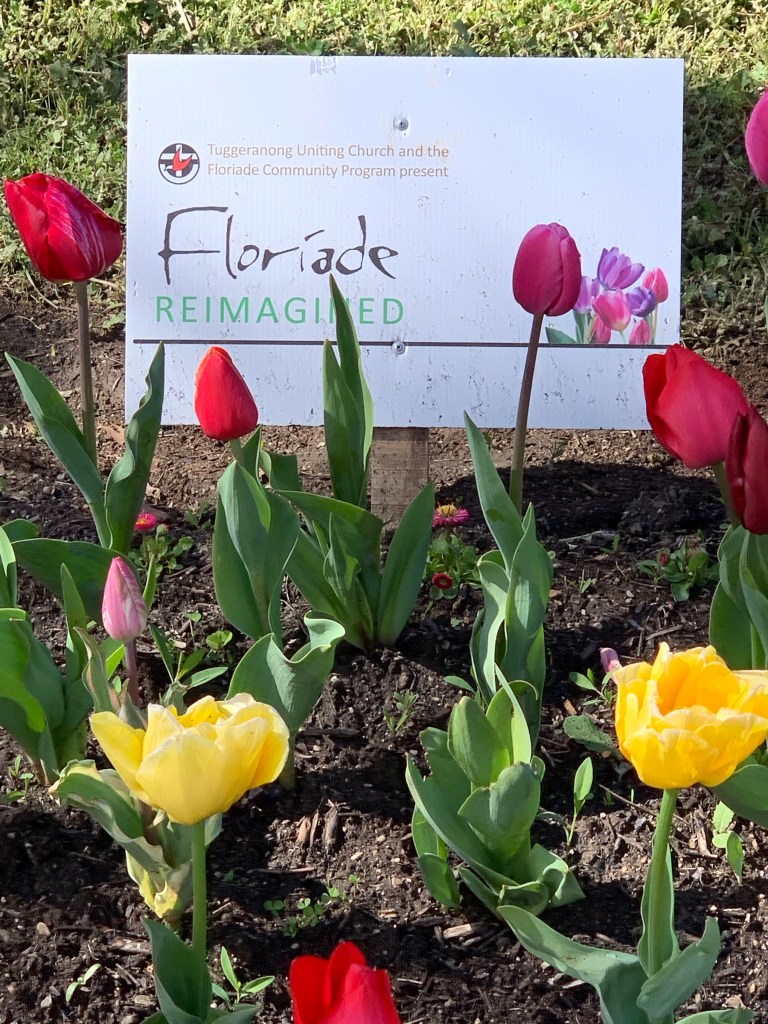
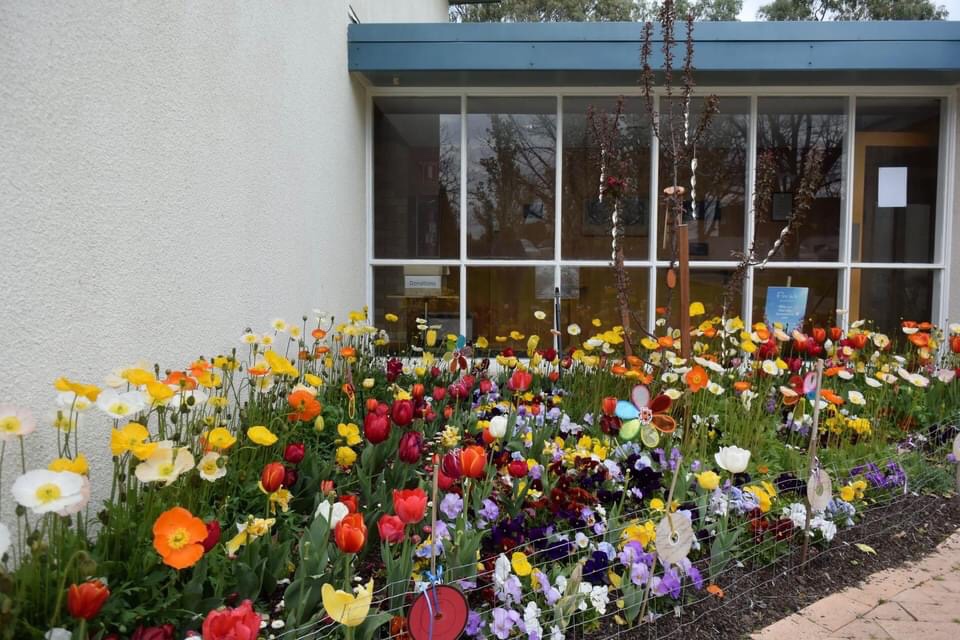
Tuggeranong, where Elizabeth is serving as Minister, submitted an expression of interest for Floriade Reimagined, and was awarded a set of bulbs. A crew of volunteers has worked hard to dig garden beds, build up the soil, and plant the bulbs. (See the picture, and https://www.insights.uca.org.au/tuggeranong-to-provide-a-symbol-of-hope-during-floriade/)

Now, in September, the Tuggeranong Uniting Church is surrounded with colour, as the bulbs burst into flower.

And this church, along with the Yarralumla Uniting Church (pictured below), is on the visiting list for Floriade Reimagined.

And Tuggeranong Uniting Church, under the enthusiastic and energetic leadership of Elizabeth, along with a fine team of dedicated volunteers, has partnered with SEE-Change to have a modified, downscale (but still very much appreciated) SouthFest happening, in the grounds at Erindale. The sustainability focus of 2019 was kept and expanded in SpringFest 2020.

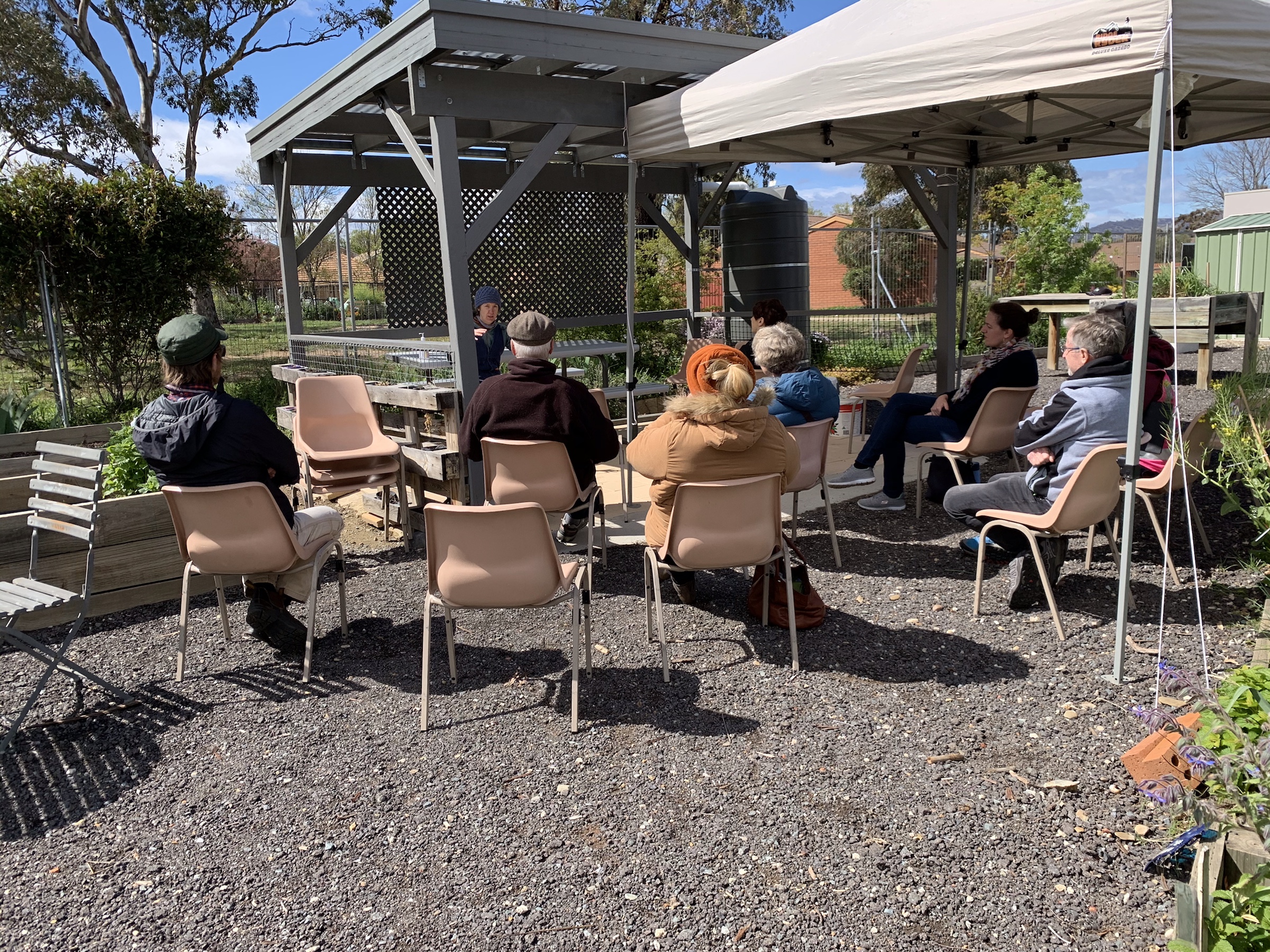
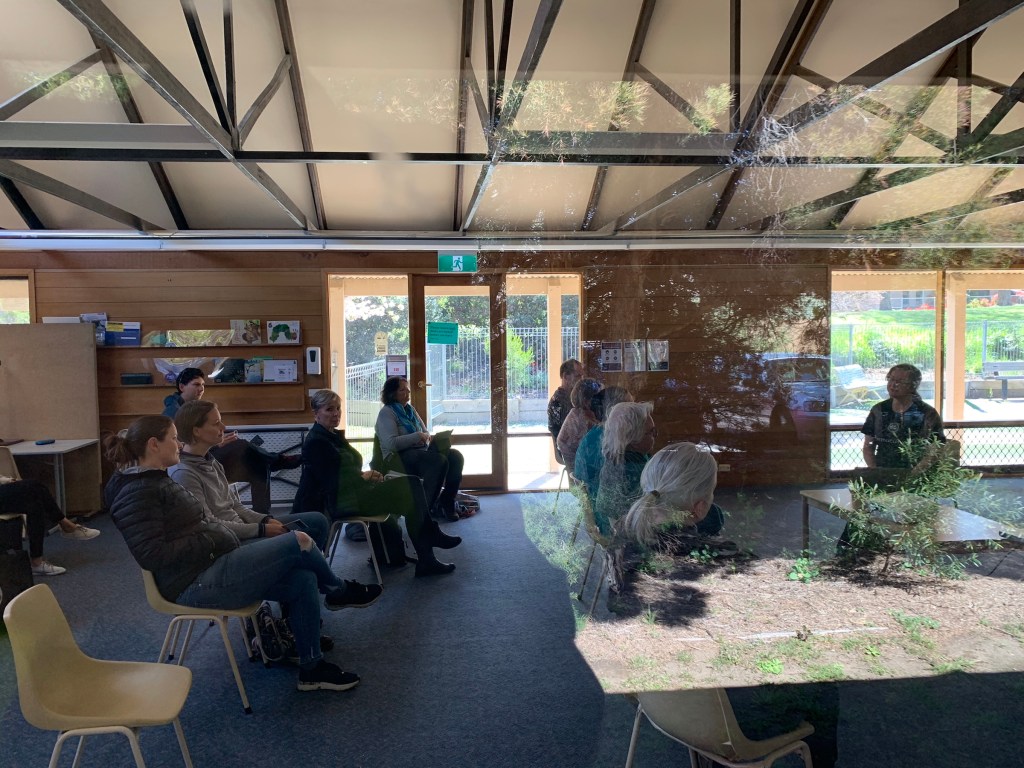
SEE-Change, a local sustainability group, ran a series of workshops, in the community garden and the community hall, on topics relating to sustainability: composting, worm farms, bee keeping, and reducing plastic.

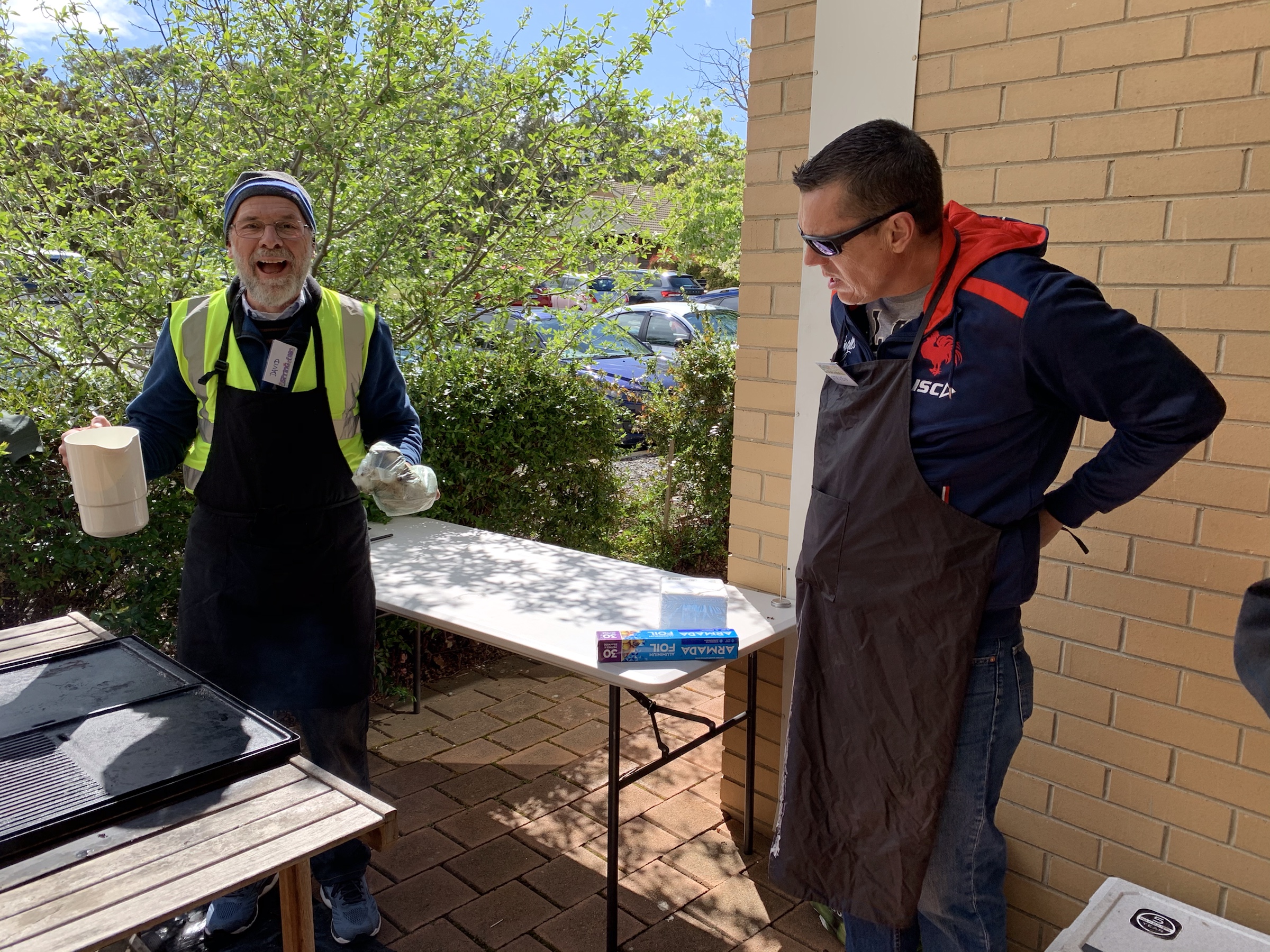
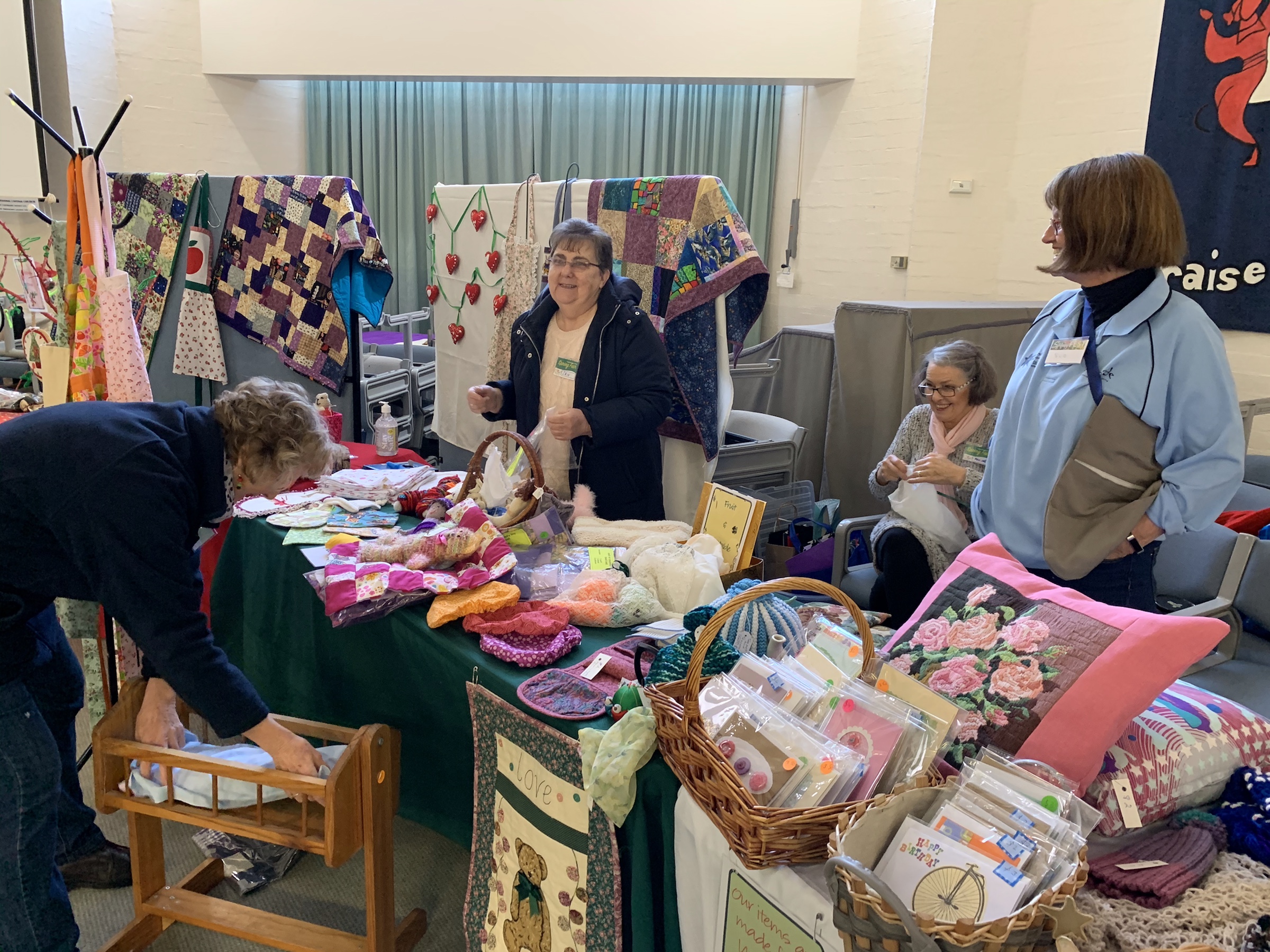
Meanwhile, in and around the church auditorium, the Red Dove Pre-Loved Op Shop was selling second hand clothes, the church was offering Devonshire teas and BBQ sandwiches, the Girls Brigade were selling delicious cakes, reuseable bags to replace single use plastic bags were on sale, as was a wide range of potted plants, and there was a Beeswax stall and assorted other goods for sale.

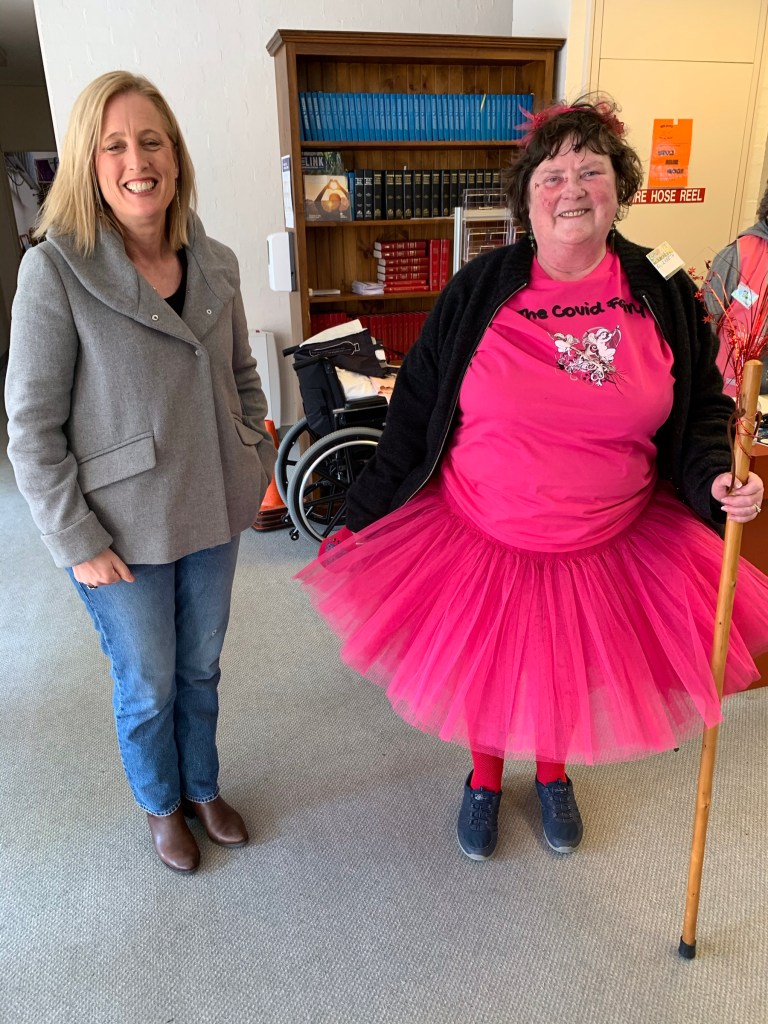
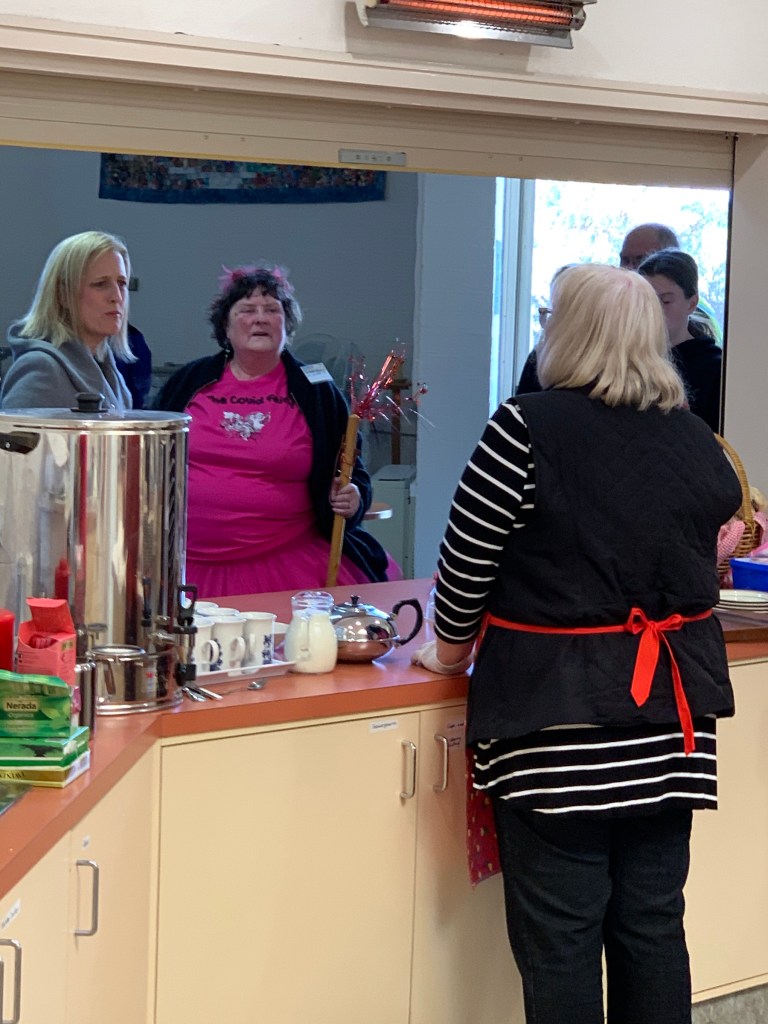
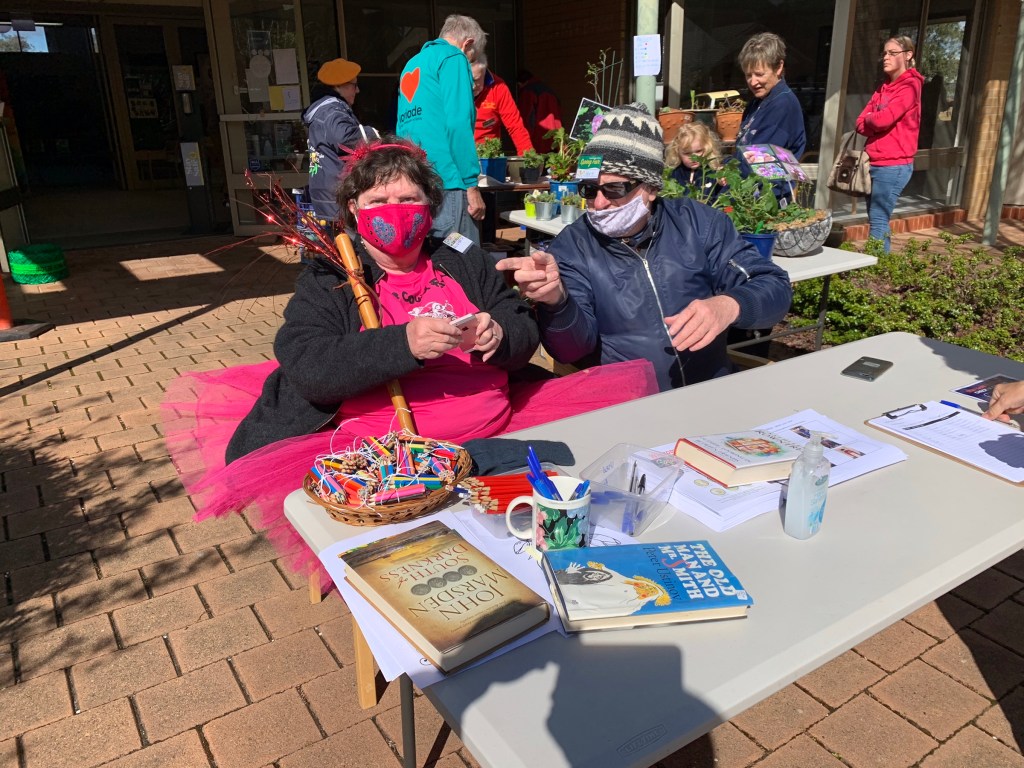
Why, the COVID Fairy was even in attendance (ensuring that all COVID Safe precautions were being adhered to). And she brought Senator Katy Gallagher along, to open the proceedings!

Floriade has reimagined itself. SouthFest has reimagined itself. COVID-19 has been the impetus. Tuggeranong Church has reimagined how it can partner with community groups to provide an enjoyable and inviting community event.

Can the church as a whole, similarly, reinvent itself? Can we take the stimulus of the present time to move out into the future with renewed creativity, imagination, and community engagement? Can we demonstrate that we are capable of the spirit of the times—reimagination?