Whenever Christians think about the Spirit—and specifically about the dynamic force that is displayed by the Holy Spirit—our attention goes most immediately to the story of the Day of Pentecost in Acts 2. That’s when the coming of the Spirit was experienced as “a sound like the rush of a violent wind [which] filled the entire house where they were sitting”, followed by “tongues, as of fire … resting on each of them” (vv.2–3). And, of course, the chaos that resulted—“all of them … began to speak in other languages” meant that the crowd that heard them were bewildered, amazed, astonished, and thought that they were drunk!
That’s a disruptive event initiated and impelled by the Spirit right there. The story of Pentecost is a story about God intervening, overturning, and reshaping the people of God. The Spirit certainly was active at Pentecost; but this was not the first time that Jewish people had experienced the Spirit. Pentecost was far from being the first time that the Spirit came and caused upheaval!
Hebrew Scripture refers to the actions of the spirit at many places throughout the story of Israel. In the Exodus from Egypt, the foundational story of Israel—an incredibly disruptive and disturbing experience, to be sure!—the Spirit was at work. “You gave your good spirit to instruct them, and did not withhold your manna from their mouths, and gave them water for their thirst” is how Ezra recounts the story (Neh 9:20–22). It was the work of the Spirit to release the captives from Egypt, lead them through the challenges of the wilderness, and then bring them into the land promised to them.
The Spirit which had guided Moses and was then gifted to chosen elders (Num 11:16–25) was subsequently imparted to Joshua (Num 27:18; Deut 34:9) and then to a string of Judges: Othniel (Judg 3:10), Gideon (6:34), Jephthah (11:29), and Samson (13:24–25; 14:6,19; 15:14). Each of these men led their people through dangerous, challenging, and turbulent experiences, as they sought to impose Israelite domination on the peoples already living in Canaan.
We might justifiably have a different ethical assessment of this process today—invasion, colonisation, and massacre are familiar dynamics, unfortunately, in the Australian context—but for our present purposes we can note that the Spirit was the energising force in this long and disruptive process. It was disruptive for the inhabitants of the land, as they lost homes, families, and cultural heritage. It was disruptive for the invading Israelites, as they followed they call of their leaders to enter and inhabit the land that they believed God had long promised to them.
The Spirit was also active during the period of kingship in Israel. Saul, after he was anointed as king, was possessed by the Spirit and fell into “a prophetic frenzy” (1 Sam 10:6, 10). During his reign, the Spirit continued to operate through David (1 Sam 16:13; 2 Sam 23:2) and presumably gifted Solomon with “his very great wisdom, discernment, and breadth of understanding as vast as the sand on the seashore” (1 Ki 4:29–34; and see Prov 2:6–11). Perhaps Solomon was the model for the spirit-gifted wisdom exhibited by Joseph (Gen 41:33, 38–39), when the ancestral sagas were collected and compiled into the book of Genesis?
It was the Spirit seen in these first three kings who would be seen as the agent for God to be at work in subsequent rulers (Isaiah 11:2). In addition, the prophetic frenzy manifested by Saul might well be regarded as the prototype for later prophetic activity. It signals just how powerfully the work of the Spirit can disrupt and disturb individuals, and a collective group.
*****
The clearest example of this personally disruptive impact is found in the story of the priest Ezekiel, son of Buzi, who was dramatically called to be a prophet. After Ezekiel saw a striking and bizarre vision of a winged chariot, bearing four winged figures (Ezek 1:4–28), he fell on his face; but the Spirit grabbed hold of Ezekiel, entering into him and raising him up onto his feet (Ezek 2:2). Ezekiel has the same visceral experience many more times (Ezek 3:12, 14, 24; 8:3; 11:1, 24; 37:1; 43:5). The work of the Spirit was anything but calm and measured for Ezekiel.
In his prophecies, Ezekiel notes that the Lord God promised to mete out the same dramatic treatment to the Israelites during their exile (Ezek 11:19; 36:26–27; 37:14). Being seized by the Spirit would reorient the hearts and refashion the lives of the exiles, as they look to a return to the land. That is thoroughly disruptive!
Other prophets also look to the activity of the Spirit to be both disruptive and also transformative. The Spirit would inspire prophecies amidst dramatic portents (Joel 2:28–42); the Spirit would declare the way of justice in the midst of the injustices perpetrated by the people, which presages ruin for the land (Micah 3:8–12); and the Spirit would equip leadership during the return to the land, ahead of the tumult of God “shaking the heavens and the earth and the sea and the dry land” (Haggai 1:14—2:9).
The book of Isaiah contains various exilic oracles which point to the Spirit as the agent of declaring justice to the people (Isa 42:1–9; 61:1–11) and wreaking revenge on the enemies of Israel (Isa 48:14–16). Once again, the disruptive dimension of the Spirit’s work is evident.
In later texts in Hebrew Scripture, there are indications that the spirit inhabits human beings simply through the fact that they exist as the creations of God (Job 27:3; 32:18; 33:4; Zech 12:1). Indeed, all of creation came into being through the spirit of God (Ps 104:30). The act of creation itself was a fracturing of an existing state, a breaking-open of what was for it to become something other than what it had been. Creative activity is disruptive activity.
*****
So the last thing to note about the Spirit in Hebrew Scripture is the first thing that is said about it in the opening chapter of Genesis—the post-exilic priestly document which recounts the foundational creation myth of the Israelite peoples. As the story of creation is placed at the very beginning of the first scroll in the Hebrew Scriptures (Gen 1:1—2:4a), it is explicitly noted that it was by the spirit of God that the creation came into being (Gen 1:1-3).
That creative act began with complete chaos, and shaped and formed the “formless void and darkness” of the very beginning, to become an ordered, cohesive, complex system of inter-relating parts. The status quo of formless nothingness was disrupted, as the wondrously beautiful creation was shaped by “a wind from God [which] swept over the face of the waters” (Gen 1:2). Interpreters over the centuries have assumed that this wind was in fact the Spirit of God, active from the very beginning of God’s creative act.
The Holy Spirit was already integral to the faith of the ancient Israelites. The Holy Spirit continued to play a key role for the early Christians. The Holy Spirit remains a force to be reckoned with in our own times, today. The Spirit may well be how God is calling us to disrupt the status quo of the church today!
The instructions are clear: “take some of the blood and put it on the two doorposts and the lintel of the houses in which they eat it” (Exod 12:7).
The explanation is also clear: “I will pass through the land of Egypt that night, and I will strike down every firstborn in the land of Egypt, both human beings and animals … the blood shall be a sign for you on the houses where you live: when I see the blood, I will pass over you, and no plague shall destroy you when I strike the land of Egypt” (Exod 12:12–13).
It’s a story of hope, expressed in joy; and it’s a story about death, filled with despair. We will hear it this Sunday, as it is offered as the Hebrew Scripture reading for Pentecost 15 (Exodus 12:1–14). It all depends on where you stand as you hear the story. Are you in the shoes of the escaping Hebrews? Or in the shoes of the Egyptians who saw their beloved children slaughtered?
The story that is told about the Exodus in the Hebrew Scriptures is a story filled with hope. It tells of the liberation of an oppressed people, suffering under the burdens of forced labour; it recounts the sequence of events that led to the miraculous escape from slavery, crossing through the Sea of Reeds, travelling unhindered through the wilderness, into a land which the story claims was promised by God—a promised land, gifted to a chosen people by a holy God.
The story that is told in the Hebrew Bible about the Exodus is also a story filled with violence. There is the violence executed in Pharaoh’s actions in having the young boys murdered. There is the violence that is threatened by the Egyptian army as their chariots and horses thunder in hot pursuit of the escaping Israelites.
Worse, there is the insistent violence in the series of increasingly damaging plagues which God is said to have sent against the Egyptians. And finally, there is the climactic and catastrophic violence of the surging of waters over the army and their horses, as they as swamped and drowned in the middle of the Sea of Reeds.
It is a difficult story to take at face value; what sort of people remember such a tale of incessant violence? and what sort of a God takes sides with one group of people and acts in such a vicious way against their opponents? Furthermore, how can we accept this story as part of our canon of scripture, when it is so filled with violent act after violent act?
The Crossing of the Red Sea by Nicholas Poussin (1633–34)
This is not the only place that we encounter violence in the Hebrew Scriptures; as the story goes on, it proves to be one of invasion, massacre, colonisation, and dispossession of people in the land of Canaan; and then, a string of battles take place in various locations, as the invading Israelites gradually exert their dominance over the indigenous people of the land.
All of this violence is indeed of deep concern, and it can be seen to place the whole of those scriptures under a cloud. However, I don’t want to fall into the supercessionist trap, the approach taken in the second century by Marcion of Sinope, who discarded the whole of the Old Testament—and, indeed, a significant part of the New Testament! We have these stories as part of our scriptures, and we need to hear them, ponder them, and engage critically with them.
Nor do I want to gloss over the fact that acts of violence, both those committed by human beings, and those attributed to the Lord God, can be found in many parts of the New Testament. It is a ubiquitous problem. Violence is expressed in many texts in scripture—both Jewish and Christian—and, indeed, is found in the texts of many other religious traditions. Human beings live, and die, by violence. We can never escape it, it seems.
If we take these texts as a literal account of historical events, we have significant theological issues to address. And there are a number of difficult historical questions that must be addressed, if we want to hold to the claim that Exodus is reporting an historical “as it really happened”. Where is the evidence for the escape of a huge number of people at that time? (There is none.) Who was the Pharaoh of the time? (There are two very different suggestions about this.)
What about the evidence for the huge crowd that spent 40 years in the desert? Where are the bones of the dead, the remains of campsites, from that crowd, if that is accepted to be the massive crowd 600,000 males (plus their women and children) that would set forth into the wilderness (see Exod 12:37) and then their descendants? There is absolutely no evidence for these archaeological remains, at all.
But such a forensic historical interrogation is not my approach to the story of the Exodus, nor to other parts of Hebrew Scripture, nor, indeed, to the narratives found in the New Testament.
So my approach to these texts has been to undertake an appreciative enquiry approach: what is this text saying? what drives the energy of the writer? what issues of concern do I read and hear—explicitly in the words used, and implicitly, in between and under what is said? what elements can I affirm, as contributing constructively to the Hebrew Scriptures’ understandings of God? and, as a consequence of that, to the New Testament’s understandings of God?
To begin, we need to recognise that the Exodus was seen as the paradigm for liberation—political, cultural, social, religious—which has shaped Jewish life for millennia. It is no wonder that it was picked up as a key motif for early followers of Jesus, to describe his significance: preaching the kingdom of God, the righteous-justice of a compassionate God, a challenge to the collective political, social, and religious status quo, and a liberating way of being for those following him.
A group of priests in the exile in Babylon collected and collated materials from earlier traditions, and developed a series of stories that conveyed in saga form the key elements of their national story. Symbolism and poetry were the paramount features of these stories, originally oral, later written on scrolls.
In the latter stages of the Exile or perhaps in the early stages of return to the land and rebuilding society, the stories and sagas were drawn into the set of scrolls we know as the Torah, the first part of the TaNaK. Symbolism featured prominently in these poetic stories and narrative rehearsals of the past.
The Passover occupies a central place in the long, sweeping narrative that is told in Hebrew Scripture. As well as the story of the Passover which led to the exodus from Egypt (Exod 12–15) and the thrice-documented priestly regulations governing the annual celebration (Lev 23:4–8; Num 28:16–25; Deut 16:1–8), the story is told of celebrating Passover at key moments in that ongoing narrative: at the foot of Mount Sinai (Num 9:1–14), at Gilgal when about to enter the land of Canaan (Josh 5:10–12), when the Temple worship was restored under Hezekiah (2 Chron 30:1–27), and during the great reformation that took place under Josiah (2 Ki 23:21–23).
The priest-prophet Ezekiel, in his vision of the restored land and new Temple, seen during the Exile, insists that the Passover be celebrated on a recurring annual basis (Ezek 45:21–25). Even though the Temple that was eventually rebuilt was of a different size and shape, when the Exiles returned under Darius, the Passover was celebrated at the dedication of the rebuilt Temple (Ezra 6:19–22).
Over time, interpreters under influence from later developments in thinking began to “reify” and “historicise” these symbolic sagas and develop the idea that they reported “events that actually happened”. They didn’t—as we have noted, there is no evidence outside the Bible for the sequence of events found in the Exodus saga. But the story had a potency for these priestly writers as the land was restored, the Temple rebuilt, society reconstructed.
The Passover story, leading up to the escape of the Exodus, that Jews recall and relive each year and which Christians remember on a regular basis in the eucharistic celebration, tells the age-old scapegoat dynamic in a dramatic story filled with symbolism. It too was not an historical event, but a story developed to explain the special significance of the people of Israel and their faith in a god who took extraordinary steps to secure their freedom.
Of course, within the emerging Jewish movement that had a focus on Jesus as an authoritative teacher of the Torah, a key way of grappling with the fact that Jesus was put to death as a criminal, hung on a cross under the orders of the Roman Governor, was to draw on this story of blood shed, lambs sacrificed, and salvation gained.
The timing of the death of Jesus is placed within the Passover festival by all four canonical Gospels. That is the festival that remembers the story of what happened to Israel, long ago—and that passes on the story that this happens year-in, year-out, as the faithful people of Israel remember and relive their national salvation.
One Gospel even locates the actual hour when Jesus dies on the cross as being “on the day of preparation for the Passover” (John 19:14, 31). Jesus, already identified in this Gospel as “the lamb of God who takes away the sins of the world” (John 1:29, 36), dies when the Passover lambs are being slaughtered in preparation for the Passover meal that evening. (The other three Gospels, of course, place the last meal of Jesus with his disciples at the Passover meal—Mark 14:12–25 and parallels—and thus, in their chronology, he dies on the day after Passover.)
Jesus is remembered as the “paschal lamb … who has been sacrificed” (1 Cor 5:7); it is by the shedding of his blood that atonement with God takes place (Rom 3:25), that faithful people are justified (Rom 5:9), that peace is achieved (Col 1:20), that redemption occurs (Eph 1:7). One writer makes much of this, emphasising that this redemption is eternal (Heb 9:12; 13:20), opening up “a new and living way” (Heb 10:19–20). It is his shed (sprinkled) blood makes Jesus “the mediator of a new covenant” (Heb 12:24) and that his faithful people are sanctified (Heb 13:12).
So this ancient story, passed down by word of mouth and then written in scrolls that themselves were passed down for reading and understanding, sits deeply within the self-understanding of both Jewish and Christian people. It is a story we cannot avoid.
“The Lord made his people very fruitful, and made them stronger than their foes, whose hearts he then turned to hate his people, to deal craftily with his servants” (Ps 105:24–25). These words appear in the psalm that is offered by the Revised Common Lectionary this coming Sunday (Ps 105:1–6, 23–26, 46b).
“Dealing craftily” is presented as something quite negative; a characteristic of the way that the “foes” of Israel deal with the “servants” of the Lord. The reference is made in the course of providing a summation of one part of the Joseph episode within the overall story of Israel that is told by this psalm.
In the course of the 45 verses of this psalm, there are summaries of key episodes in this story, from the ancestral covenant with Abraham, Isaac, and Jacob (vv.7–11), through the times involving the elderly Jacob, his sons, the famine in Canaan, and the rescue provided by Joseph in Egypt (vv.12–25), on to the period of Moses and Aaron (vv.26–36), the Exodus from Egypt and wilderness wandering (vv.37–42) and then the entry into the land of Canaan (vv.43–45).
This lyrical retelling of the story of Israel fits it well for singing on the first day of Passover, remembering the escape from slavery in Egypt. However, the portion offered by the lectionary this Sunday tells of a time prior to that, when “Israel came to Egypt; Jacob lived as an alien in the land of Ham” (v.23). Of that period, the psalmist sings that “the Lord made his people very fruitful” (v.24).
This presumably reflects the time after the severe famine in Canaan (Gen 43:1), when, after various machinations, Jacob and his family relocate to Egypt, and Joseph, having revealed his true identity to his family (Gen 45:1–5), “settled his father and his brothers, and granted them a holding in the land of Egypt, in the best part of the land, in the land of Rameses, as Pharaoh had instructed; and Joseph provided his father, his brothers, and all his father’s household with food, according to the number of their dependents” (Gen 47:11–12).
Of course, soon after this, famine hit Egypt as well (Gen 47:13). Joseph’s scheme for surviving the famine works (Gen 47:14–26), the country survives, and “Israel settled in the land of Egypt, in the region of Goshen; and they gained possessions in it, and were fruitful and multiplied exceedingly” (Gen 47:27). This bounty is reiterated in the opening chapter of Exodus, which declares that “the Israelites were fruitful and prolific; they multiplied and grew exceedingly strong, so that the land was filled with them” (Exod 1:7).
All of this is conveyed in the highly compressed summation of the psalm, “the Lord made his people very fruitful” (Ps 105:24). But then, according to the psalmist, the Lord turned the hearts of the Egyptians “to hate his people, to deal craftily with his servants” (Ps 105:25). This marries with the way that the narrative continues in Exodus, which notes that “a new king arose over Egypt, who did not know Joseph”, and so “they set taskmasters over them to oppress them with forced labour” (Exod 1:11).
The Egyptians are described as acting “shrewdly” (Exod 1:10). Is this the same as the psalmist’s note that the foes of Israel “dealt craftily” with them (Ps 105:25)? The Hebrew word used in the quasi-historical narrative of Exodus is chakam, which is most often translated as “act wisely”. Thus it is applied to Solomon (1 Ki 4:31), the simple who are made wise through “the decrees of the Lord” (Ps 19:7; so also 119:97–100), the instruction of Wisdom herself (Prov 8:33), and the activity (as whispily vain as it is) of the Preacher, Qohelet (Eccles 2:15, 19). The way the Egyptian treated the Israelites had a certain cunning involved—they acted with a canny, shrewd wisdom.
The Hebrew word chosen in the poetry of the psalmist’s song is nakal, “to be crafty, deceitful, or knavish”, according to Brown, Driver, and Briggs. This word is also employed in the Genesis narrative, when the brothers of Joseph plot to kill him. “Here comes this dreamer; come now, let us kill him and throw him into one of the pits”, they say (Gen 37:19–20), as he approaches them in his “long robe with sleeves” (Gen 37:3). Such behaviour is described in various translations as being a conspiracy or a plot—the translation offered here for nakal.
Attributing this mode of behaviour to the sons of Jacob should not surprise us—after all, they have inherited the DNA which has previously led their ancestors to lie, deceive, and even threaten to murder their own child! Remember: Abraham lying about his wife Sarah as his sister (Gen 12 and again in Gen 20) and threatening to sacrifice his own son (Gen 22); Isaac, who also lied that his wife Rebekah was his sister (Gen 26); and Jacob, the deceiver, who stole his birthright from his twin brother Esau (Gen 27) and then deceived his father-in-law Laban and profited from his flock (Gen 30–31). They are not exactly wonderful role models!
But the Exodus narrative attributes such “shrewdness” to the Egyptians, as the foes of Israel (Exod 1:10); a shrewdness that overlaps, as we have seen, with divinely-granted wisdom. The Egyptians were being wise in pressing the foreigners in their midst to work for them in their building projects. And no, they were not being used as slave labour to build the great pyramids of Egypt. Those structures are dated to “the Old Kingdom”, from 2686 until about 2160 BCE—well, well before any possible dating of the Israelites were in Egypt.
It’s interesting that the psalmist called out the Egyptians for what they saw them to be—shrewd, conniving, deceitful—whereas the Exodus story leaves open a sliver of possibility they the Egyptians were being shrewd and wise in the way they use (and, it would seem, greatly abused) the Israelites living in their land. Interesting.
“Here comes this dreamer. Come now, let us kill him and throw him into one of the pits; then we shall say that a wild animal has devoured him, and we shall see what will become of his dreams” (Gen 37:19–20). There it is: “brotherly love” on display, for everyone to see!
The sons of Jacob, who became the sons of Israel, and then gave their names to “the twelve tribes of Israel”, as we saw in an earlier blog, are terrible role models. They show us fraternal jealousy and hatred at its worst. The story offered by the lectionary for this coming Sunday, Pentecost 11A, pulls no punches (37:1–4, 12–28). These sons could be mean!
We have left behind the stories of the three patriarchs of Israel, Abraham, Isaac, and Jacob, and their wives, the four matriarchs Sarah, Rebekah, Leah, and Rachel—although Jacob is still alive, and he will figure in some of the final scenes of Genesis in chapters 46 and 48—50. We turn our attention to Joseph, who had been born to Jacob’s wife Rachel, after years of waiting.
Only after his first wife Leah had given birth to six sons and a daughter, did Rachel give birth, as God “heeded Rachel and opened her womb” (Gen 30:22). As a sign of the passing of her barren state, Rachel declared, ‘God has taken away my reproach’; and we read that “she named him Joseph, saying, ‘May the LORD add to me another son!’ (Gen 30:23). That son, Benjamin, came years later, although Rachel tragically died giving birth (Gen 35:16–20).
We meet Joseph in the passage offered by the lectionary, which notes that, as he grew, Joseph was the favoured son (Gen 37:3). Of course, this fostered the jealousy of his brothers, who “hated him, and could not speak peaceably to him” (Gen 37:4). And so the scene is set for the problematic sequence of events that ensues, as his brothers initially plot to kill him (Gen 37:19–20), before Reuben intervenes (Gen 37:21–23).
We have already seen that the ethical standards of the people in these ancestral stories leaves something to be desired. Cheating, stealing, rape, incest, murder, and double dealing appear to be par for the course. Yet these brothers who plot to kill Joseph are the men who give their names to the tribes of Israel—names that are given pride of place in the priestly garments (Exod 1:1–4; 28:9–12, 21, 29; 39:6–7, 14) and in the later history of the people (1 Chron 2:1–2).
That these stories of their murky ways of operating have been preserved, passed on, and preached on with regularity, is quite remarkable! Perhaps we should reflect that human beings have always been flawed? Or that we should well expect that the ethical standards and cultural practices of our time are different from what held sway in past eras?
And perhaps we need also to note—and take caution from the observation—that this particular incident, selling Joseph for twenty pieces of silver, has fed into the unhelpful stereotype of the Jews who are always and in every way concerned about money. It’s a stereotype that has fed the burgeoning antisemitic attitude and actions of people throughout the Middle Ages, past the Enlightenment on into the modern age—culminating, of course, in the horrors of the Shoah (Holocaust) in Nazi Germany.
Back to the story of Genesis 37. That the brothers plot to kill Joseph, and are only dissuaded by the intervention of Reuben (Gen 37:21–23), is clearly a mark against them. That Judah then suggests that they sell him to a passing caravan of Ishmaelites (Gen 37:25–28), whilst it saves the life of Joseph, is yet another mark against the brothers.
Christian readers will perhaps compare the “twenty pieces of silver” that was paid for Joseph (Gen 37:28) with the thirty pieces of silver paid to Judas for handing Jesus over to the authorities (Matt 26:15). However, a number of passages in Hebrew Scriptures provide a more fitting contrast to the price paid for Joseph.
Abimelech, in his unsuccessful attempt to install himself as king in Israel, took “seventy pieces of silver out of the temple of Baal-berith with which [he] hired worthless and reckless fellows, who followed him” (Judg 9:4). So twenty pieces are significantly less.
And the story is told in Judges about when the lords of the Philistines bribed Delilah with eleven hundred pieces of silver to hand over Samson to them (Judg 16:5; 17:1–5), and in the Song of Songs the (poetically-exaggerated) claim is made that Solomon expected a thousand pieces of silver from each of the keepers of his vineyard (Song 8:11). So twenty pieces pales into utter significance, by comparison. Was Joseph worth so little.
The irony is that Israel as a whole is identified with reference to Joseph at a number of places in the Hebrew Scriptures. Both narrative texts and prophets refer to the whole nation as “the house of Joseph” (Josh 17:17; 18:5; Judg 1:22–23, 35; 2 Sam 19:20; 1 Ki 11:28; Amos 5:6; Obad 1:18; Zech 10:6).
The psalms sing of “the descendants of Jacob and Joseph” (Ps 77:15) and bring petitions to God, “Shepherd of Israel, you who lead Joseph like a flock” (Ps 80:1). Psalm 81 places Joseph alongside Jacob and Israel: “it is a statute for Israel, an ordinance of the God of Jacob, he made it a decree in Joseph, when he went out over the land of Egypt” (Ps 81:4–5). The name of Joseph was revered in the ongoing traditions of Israel.
So let us treasure and reflect on this story, in which Joseph is sold off to foreign travellers. His life had been saved from the plotting of his brothers by a compassionate intervention by one of their number; but he is taken off into Egypt—for what fate?
*****
Reading the story chapter-by-chapter, as it appears in Genesis, we don’t yet know the significance of Egypt (other than the account of the time that Abram and Sarai spent in Egypt in Gen 12:10–13:12). But people hearing the story when it was written into the scrolls, after the return from Exile, would know of the time of slavery spent by their ancestors in Egypt, when “the Egyptians became ruthless in imposing tasks on the Israelites, and made their lives bitter with hard service” (Exod 1:13–14). They know the ominous threat that lies over Joseph at the end of this week’s story: “they took Joseph to Egypt” (Gen 37:28).
That fate is symbolised by the note in the immediately following verses, that the brothers of Joseph dipped his coat into the blood of a slaughtered goat and brought it back to Jacob. When Jacob recognized the coat, he concluded that “a wild animal has devoured him; Joseph is without doubt torn to pieces” (Gen 37:33). Jacob mourned for many days; despite the best efforts of his family, “he refused to be comforted, and said, ‘I shall go down to Sheol to my son, mourning” (Gen 37:35).
The narrative leaves Joseph with the tantalising comment that he was sold by the Midianites to Potiphar, one of Pharaoh’s officials (Gen 37:36), before veering off to tell a long story about Judah and Tamar (Gen 38). The question remains: what fate awaits Joseph?
The book of Genesis is dominated by people whose stories are told because they have shaped the self-understanding and identity of the ancient nation of Israel. Written in the form that we now have them by the priests who had held the stories of Israel through the decades of Exile, those stories comprise oral tales, told and retold over centuries before that Exile, remembered and passed on because they offered insights into who the people of Israel had become—committed, resilient, crafty, and faithful.
The stories are dominated by the men—Adam and Noah, Abraham and Isaac, Jacob, and his twelve sons, most notably Joseph. Indeed, the closing chapters of Genesis contain a series of poetic blessings on those twelve men, who are remembered as “the twelve tribes of Israel” (Gen 49), before recounting a key familial reconciliation, the death of the great partriarch Jacob, and then the death of his son Joseph (Gen 50). We have heard these stories, from the second Sunday after Pentecost (Gen 12) through to the tenth Sunday after Pentecost (Gen 32).
In these stories, the men dominate. There are, to be sure, women who also play key roles in the stories that are collected into this first narrative book. Sarah and Hagar get a place in the story alongside Abraham. Rebekah is there, with Isaac; and Leah and Rachel too, with the manipulation of their father Laban and the lust of their husband Jacob. Here we have the four great matriarchs of Judaism, arrayed alongside their husbands: Abraham and Sarah, Isaac and Rebekah, Jacob with Leah and Rachel. The stories told give insight into the characters of these women; they serve as role models in the ongoing story of Israel.
There are also servants co-opted to produce children when the matriarch looked like she would not reproduce: Hagar, Zilpah, and Bilhah—important women, but not included in the traditional list of matriarchs. They take their place in the story largely because of the male offspring they produced. And when we come to the twelve sons of Jacob, there are wives who are noted, but nothing further is revealed about them—except for Asenath, the wife of Joseph.
But who have we missed, in the stories from Genesis which have been offered by lectionary over the past few months? Seven women, or groups of women, should be noted. In this post, I will deal with those who appear in the section of Genesis which is dominated by Abraham and Isaac (Gen 12:1—28:9). The women in the chapters beyond this, which tell the story of Jacob and his sons, and especially of Joseph, that will be considered in a later post.
1 The wife and daughters of Lot
First, there is reference to the wife and two daughters of Abraham’s son-in-law, Lot. Lot is noted in the genealogical material listing the descendants of Terah, his grandfather (Gen 11:31). Lot accompanies Abram and Sarai and “all the possessions that they had gathered, and the persons whom they had acquired in Haran” as they journeyed to Canaan (Gen 12:5); he then moves with them into the Negeb, en route to Egypt (Gen 13:1).
We learn that “Lot chose for himself all the plain of the Jordan, and Lot journeyed eastward”, and so “Lot settled among the cities of the Plain and moved his tent as far as Sodom” (Gen 13:11–12). There is no mention of any female associated with Lot in any of these instances. However, after Abraham entertains visitors who stay with him at Mamre, as they are travelling to Sodom (Gen 18:1–16), and then after Abraham debates with God about the threat to destroy Sodom and Gomorrah (Gen 18:17–33), Lot is visited by “two angels” (Gen 19:4).
He offers them hospitality; but the people of Sodom call for Lot to release those two people “so that we may know them” (Gen 19:5). So Lot offers, in their place, his “two daughters who have not known a man” (Gen 19:8). This is the first indication that Lot was married with children; and the way his virgin daughters are offered as sexual objects for the people of Sodom is a horrifying introduction to them!
So, warned by these “two angels” to leave the area, Lot hesitates (Gen 19:15–16). What they say to Lot is the first reference to his wife: “get up, take your wife and your two daughters who are here, or else you will be consumed in the punishment of the city” (Gen 19:15). They also advise him, “do not look back or stop anywhere in the Plain; flee to the hills, or else you will be consumed” (Gen 19:17). Lot leaves Sodom, but “Lot’s wife, behind him, looked back, and she became a pillar of salt” (Gen 19:26). And that is how she is best known—not by her name, not as the daughter of her father, but as Lot’s wife, who was turned into a pillar of salt.
Dr Tamar Kadari, writing in the Jewish Women’s Archive, notes that in a later rabbinic text, this woman is given the name Idit, and a story is told about her reluctance to obtain salt from her neighbours, as Lot has requested. This becomes the reason for her punishment, being turned into a pillar of salt. Another text she cites, attributed to Rabbi Eliezer, says that Lot and his wife were actually saved from the destruction of the city; but there were two married daughters who had remained in Sodom, so she looked behind her to see them for the last time. When she did this, she saw the back of the Shekhinah (the Divine Presence), and so she was transformed into a pillar of salt.
Lot’s daughters went with Lot into the hills nearby; the biblical text describes their devious acts of making their father drunk and both having sexual intercourse with him, thereby producing two sons, Moab and Ben-ammi (Gen 19:30–38). From these two children of incestual rape (of a man, by his daughters, no less!), the despised Moabites and Ammonites descended. Of these people, none are permitted to enter God’s assembly (Deut 23:3; Neh 13:1–2) and good Israelites were later forbidden to marry them (Ezra 9:1–2). Those prohibitions explain the awful nature of these aetiological tales about Lot’s family.
Lot, his disobedient wife, and his aggressively incestual daughters, certainly provides a stark tale (none of which is included in any lectionary offering!). The anonymous women in the story are certainly strong characters. Their actions are told to explain the character of near neighbours with whom the Israelites later had difficult relationships. We remember these women, but perhaps not for the usual reason we seek to remember characters in the biblical text.
Next, there is the sombre tale of Dinah, the sole female child of Jacob, birthed by Leah after the six sons she had produced (Gen 30:21). This story is told in Gen 34, after Jacob, after he had left Laban in Paddan-aram, had encountered his brother Esau, after a long period of separation (Gen 33:1–17). Jacob and his family settled in Shechem in Canaan, where he bought land and erected an altar (Gen 33:18–20).
Dinah was raped by a man who bore the name of the town, Shechem (Gen 34:2)—but immediately “his soul was drawn to Dinah … he loved the girl and spoke tenderly to her”, and asked his father to be married to her (Gen 34:3–4). Was it possible that a relationship that was formed on the basis of crass selfishness and the forceful expression of power could develop into one shaped by love and respect? The text seems to hint …
However, what ensues is a tale of family revenge for the dishonouring of Dinah. When the sons of Jacob came in from their work in the fields, they were, quite rightly it would seem, “indignant and very angry, because [Shechem] had committed an outrage in Israel by lying with Jacob’s daughter, for such a thing ought not to be done” (Gen 34:7).
Shechem’s princely father, Hamor, attempted to negotiate, but the words of the brothers were deceptive (Gen 34:13–19). They convinced Hamor that they were “friendly with us” and he, in turn, persuaded “the men of the city … at the gates of the city” to “agree with them, and they will live among us” in peace (Gen 34:20–23), on condition that the men of the city be circumcised—which they were (Gen 34:21).
But the sons of Jacob (remember, these are the men who are honoured in ongoing Israelite and Jewish traditions as the venerable men who have their name to the twelve tribes of Israel) then pounce: “two of the sons of Jacob, Simeon and Levi, Dinah’s brothers, took their swords and came against the city unawares, and killed all the males”, including Hamor and Shechem (Gen 34:25). They “took Dinah out of Shechem’s house, and went away” (Gen 34:26).
Then, “the other sons of Jacob came upon the slain, and plundered the city … they took their flocks and their herds, their donkeys, and whatever was in the city and in the field” (Gen 34:27–30). This massive over-reaction was to avenge the fact that “their sister had been defiled” (Gen 34:27). Their father, Jacob, was unimpressed; “you have brought trouble on me”, he said, “by making me odious to the inhabitants of the land”, lamenting that “my numbers are few, and if they gather themselves against me and attack me, I shall be destroyed, both I and my household” (Gen 34:30).
What did Dinah make of this wholescale, and out-of-proportion, revenge attack? She is silent—indeed, she is absent from the text from verse 26, when her brothers removed her from the house of Shechem. In contrast, we hear their voice loud and clear, in their riposte to their father: “should our sister be treated like a whore?” (Gen 34:31). Nothing will dissuade them of the “rightness” of their actions. Men, standing up for women, by acts of violence and destruction; women, absent from the story, as their honour is defended. It is a sorry tale.
Writing on the biblical text in the Jewish Women’s Archive, Professor Rachel Adelman observes that the narrative “is rife with gaps and ambiguities, in which Dinah’s silence and the divide between father and brothers loom large”. The story, she posits, presents “the impossibility of integration with the Canaanites in the land”—the story of Dinah and Shechem demonstrates that this produces disastrous results.
Furthermore, Dr Adelman notes that “boundaries of identity are forged through negotiations over the destiny of the young woman’s body”—in other words, the silent, debased, raped female is the fulcrum around which the identity of the nation of Israel is shaped. “In the context of the honor-shame socio-cultural milieu, the daughter’s voice hardly matters. Even when the Hivites are willing to remove the Israelite symbol of “disgrace” (the foreskin) from their male bodies in order to intermarry with Jacob’s family, their status as the tainted ineluctable “other” remains.”
Then, Dr Adelman observes that “contemporary feminist readers seek to reclaim the voice of the silenced Dinah, to reassert her own agency and even desire to be with Shechem … alternatively, if she was raped, her own pain and anguish must be heard over the violent clamor in defense of male honor.” Dare we listen carefully, to hear that silent female pain, over the noise of male revenge?
Dr Tamar Kadari, also writing in the Jewish Women’s Archive, observes of Dinah that “the Rabbis present her as possessing many positive qualities, as was fitting for the daughter of the progenitors of the Israelite nation.” They attempt to rehabilitate Dinah by recounting her later marriage—one account has her married to Job, because she is a “shameless woman [ha-nevalot]” (Job 2:10), which they connect with the shame [nevalah] of Dinah (Gen 34:7).
Another explanation is that Dinah married her brother, Simeon. Dr Kadari explains the rabbinic midrash: “a son was born from this union, “Saul the son of a Canaanite woman” (Gen 46:10); Dinah was the ‘Canaanite woman’, because her behavior was like that of the Canaanites.” A final claim is that Dinah, impregnated by Shechem, gave birth to Asenath, who was transported to Egypt and raised by the barren wife of Potiphar. And then, along came Joseph!
But that is skipping ahead; more on Asenath in the next blog on this topic.
A group of women are noted and indeed named in association with Esau, the brother of Jacob. The narrative first notes that “when Esau was forty years old, he married Judith daughter of Beeri the Hittite, and Basemath daughter of Elon the Hittite; and they made life bitter for Isaac and Rebekah” (Gen 26:34–35). The note of family discord is not unusual in these ancestral narratives! But who is the “they” in this comment? Just those wives of Esau? Or is Esau himself included? It depends on how patriarchal and sexist we think the text is.
Next, we are told that “when Esau saw that the Canaanite women did not please his father Isaac, Esau went to Ishmael and took Mahalath daughter of Abraham’s son Ishmael, and sister of Nebaioth, to be his wife in addition to the wives he had” (Gen 28:9). So Mahalath joins Judith and Basemath as named wives of Esau.
Later genealogical listings offer the names of Adah, Oholibamah, and Basemath, but not Judith. First, we learn that “Esau took his wives from the Canaanites: Adah daughter of Elon the Hittite, Oholibamah daughter of Anah son of Zibeon the Hivite, and Basemath, Ishmael’s daughter, sister of Nebaioth. Adah bore Eliphaz to Esau; Basemath bore Reuel; and Oholibamah bore Jeush, Jalam, and Korah. These are the sons of Esau who were born to him in the land of Canaan.” (Gen 36:1–5).
Then, after Esau took his family and “settled in the hill country of Seir; Esau is Edom” (Gen 36:8), we learn that “these are the names of Esau’s sons: Eliphaz son of Adah the wife of Esau; Reuel, the son of Esau’s wife Basemath” (Gen 36:10). Only two wives are noted at this point.
The text continues, “the sons of Eliphaz were Teman, Omar, Zepho, Gatam, and Kenaz. (Timna was a concubine of Eliphaz, Esau’s son; she bore Amalek to Eliphaz.) These were the sons of Adah, Esau’s wife. These were the sons of Reuel: Nahath, Zerah, Shammah, and Mizzah. These were the sons of Esau’s wife, Basemath. These were the sons of Esau’s wife Oholibamah, daughter of Anah son of Zibeon: she bore to Esau Jeush, Jalam, and Korah.” (Gen 36:10–14). So three wives are named in this final passage.
Sadly—as is often the case—these genealogical listings focus on the male descendants. Whether any daughters were born, or survived beyond birth, is not stated. The gender bias is clear; we hear only about the sons. And we know nothing about the life of most of these men in the subsequent generation—and in association with them, the women married to them or any sisters they had; nothing is revealed by the text. So many questions; so little information!!
As a family historian, this is a familiar problem: tracing the male line is easier than connecting in the females, men are mentioned more frequently in published sources, many women remain mute and invisible in the family story. It takes effort and intention to retrieve even a little of them for our attention. Let us at least attend to the women included in the stories that are told, and honour them for the roles they played and the contribution they made to the larger story.
The stories we are following in the sagas of ancient Israel, during this season after Pentecost, come from a different time, a different place. They reflect different cultures, with different customs, and seemingly different moralities. And they certainly depict the women at the centre of these stories in ways that we would recoil from, if we were to tell stories in our own time, place, and culture.
“Leah’s eyes were lovely, and Rachel was graceful and beautiful” (Gen 29:17). That’s how we are introduced to the two women, sisters, daughters of Laban, who figure in the story offered by the lectionary for this coming Sunday (Gen 29:15–28). Could a more patronising and sexist introduction be given to these two characters? Descriptions of women on the basis of their outward appearance are sure to disturb and anger contemporary readers of this story; judging a woman by her appearance is not a sensible way to proceed!
More than that, however, we find that the older male protagonist in this story, Laban, appears to have very dubious ethical standards. He does not seem to act in accord with the propriety that we, today, would expect. Jacob had been instructed by Isaac “not marry one of the Canaanite women” but rather to take a wife from “one of the daughters of Laban, your mother’s brother” (28:2). Jacob is under instruction; what role does Laban play?
On arrival at Haran, or Paddan-Aram, in “the land of the people of the east” (29:1), Jacob early on indicates his interest in Laban’s daughter Rachel, kissing her (29:11). When Rachel then conveys to her father the fact of his family’s connection to theirs, Laban greets him with joy: “surely you are my bone and my flesh!” (19:14). From that, we might expect honest behaviour will follow.
Jacob flags his interest in Rachel; Laban promises her to him in exchange for seven years of work (29:15–20). Writing in My Jewish Learning, Dr Kristine Henriksen-Garroway, Associate Professor of Hebrew Bible at the Hebrew Union College in Jerusalem, observes that “to marry a woman, a man had to first pay her father a מֹהַר (mohar), ‘bride-price.’ Although Laban allows Jacob to marry Rachel before working off his debt, she only has her first child at the end of the seven-year period.
Dr Henriksen-Garroway explains, “Jacob wishes to marry Rachel, but he has no land or money to speak of; he is a guest in Laban’s house. Marriage is not free, so he offers his own labor as the bride-price (mohar/tirḫatum). While the text makes no mention of his being betrothed first, Jacob’s need to wait until the bride-price is paid in full in order to marry Rachel fits with biblical and ancient Near Eastern practice.”
*****
So Jacob marries Rachel and works for Laban for seven years; after which time, Laban craftily provided Leah as the woman with whom Jacob slept (29:21–22). The language suggests that it is sexual union that is to the forefront of Jacob’s mind (“give me my wife that I may go in to her, for my time is completed”, 29:21), so his lack of awareness appears due to this focus. Had he not slept with Rachel in those seven years?
The NRSV, following the KJV, renders the words of Jacob in this crass manner, “that I may go in to her”. The NIV reports Jacob as saying, “give me my wife; I want to make love with her”; the NASB says, “that I may have relations with her”; and the NLT is much more demure with “so I can sleep with her”.
Whatever translation is used, it is clear that events are driven by the libido of Jacob. He was the “supplanter”, who gained his birthright by bargaining with his brother and deceiving his father. But his time has come; as we read on in the story, it is clear that Laban has always been intent on deceiving Jacob.
Citing local customs, Laban claims that “giving the younger [daughter] before the firstborn” in marriage was a custom that was “not done in our country” (29:26). Laban manipulates matters so that Jacob, still besotted by Rachel’s grace and beauty, is willing to submit to a further seven years of working for Laban, in order to secure Rachel as his wife, even though he is now married to Leah, who had lovely eyes. Jacob trusts Laban—but why? He has already been deceived once by him.
So, he needs to work for Laban for another “week (of years)”. The text is very matter-of-fact at this point, simply recounting that “Jacob did so, and completed her week; then Laban gave him his daughter Rachel as a wife” (29:28). Dr Henriksen-Garroway notes that “the requirement for Jacob to ‘pay’ to marry Rachel fits with the basic sequence of marriage steps assumed in the Bible and ancient Near East”.
In her further exploration of ancient Israelite marriage customs, she notes that “when a girl’s father agreed to a union between a suiter and his daughter, the suiter often did not have the bride-price handy. This may be one reason for the betrothal period, what the rabbis call ʾerusin (from the root א.ר.שׂ). The girl’s betrothal to the man made her unavailable to other men, but she still lived with her father until the man paid the bride-price.”
This explains Jacob’s seven years of working whilst betrothed to Rachel, who continued to live with Laban, before Laban deceitfully gave him Leah (29:18–20). It also explains the further seven years of working before he actually is given Rachel in marriage (29:27–28). What trust Jacob had—believing Laban, even after that first act of trickery. Would he do the same yet again? Perhaps, as he seems to have had only two daughters, Rachel would be “supplied” to him second time around.
Dr Henriksen-Garroway offers further explanation: “when we look at Laban’s agreement carefully, we can see that he never explicitly accepts Jacob’s proposal or mentioned which of his daughters he is offering”, citing the vagueness of Laban’s earlier comment, “it is better that I give her to you than that I should give her to any other man; stay with me” (29:19).
*****
So, after Jacob had worked his second term of seven years, this time actually for Rachel (29:28), another matter-of-fact statement follows in the NRSV: “Jacob went in to Rachel also, and he loved Rachel more than Leah” (29:30). Once again, other translations use the euphemisms we have earlier noted, in order to soften the crude physical depiction into a more relational understanding.
Yet the story is crassly sexualised—consummating the marital relationship is at the heart of events. Although, to be fair, the production of an heir is an important focus in ancient societies, and an heir for Jacob is necessary to fulfil “the promise that the Lord made on oath … to Abraham, to Isaac, and to Jacob” (Deut 9:5; Exod 32:13). This promise was first announced to Abraham—“I will make of you a great nation” (Gen 12:1, reiterated at 22:17)—then repeated to his son, Isaac (26:4–5, 24) and to his grandson, Jacob (28:13–14; 32:12). So the story continues with a sequence of event that show how this eventuates.
Like his grandfather and his father, Jacob finds that his wife, Rachel, is barren (29:31). In subsequent years, Leah bore him four sons, Reuben, Simeon, Levi, and Judah (29:32–35), and Rachel’s maid Bilhah bore him two sons, Dan and Naphtali (30:4–8), and Leah’s maid Zilpah then bore him two more sons, Gad and Asher (30:9–13), and then Leah bore him two further sons, Issachar and Zebulun (30:16–20) as well as a daughter, Dinah (30:21).
Six boys and one girl, in seven years: Leah fulfils the primary expectation of fertile women in ancient Israel—producing children. That the majority are males is even better! And it is noteworthy that, as Dr Henriksen-Garroway observes, “a wife who cannot produce children might even feel the need to give her husband a surrogate to produce children for her (Gen 16:2, 30:3, 9), since otherwise, they are not fulfilling their function as wife”.
As Leah produces children for Jacob, Rachel remains barren—a stigma in ancient societies, an indication amongst Israelites that God has chosen not to “open her womb”. Barrenness is attributed to the action of God, for he had previously “closed fast all the wombs of the house of Abimelech because of Sarah” (20:18). Perhaps the fact that Jacob had not yet paid off his debt to Laban meant that God would not act to provide a child to this union?
It is only after the seven children had been born to Leah, and the seven years that Jacob was working towards marriage with Rachel had been completed, that we then read, “then God remembered Rachel, and God heeded her and opened her womb; she conceived and bore a son … and she named him Joseph, saying, ‘May the Lord add to me another son!’” (30:22–24).
Later still, after fleeing from Laban and returning at last to Canaan, Rachel becomes mother to a second son, Benjamin (35:16–18), although sadly she dies during this childbirth. Ironically, Benjamin was the only one of “the twelve sons of Israel” (Gen 35:22–26; Exod 28:21; 39:14; 1 Ki 18:31) who gave their names to the regions of Israel (Num 26:52–56) to have been born in that land.
*****
And the one daughter, Dinah, of course has no place in “the twelve tribes of Israel”, named after the twelve sons (by four different women!) that Jacob produced (Gen 49:1–28). Despite the fractured nature of their origins—twelve boys from four mothers, two of whom took fourteen years and one deceitful trick for Jacob to secure—these twelve sons gave their names to “the twelve tribes of Israel” throughout the ensuing saga (Exod 24:4; 28:21; 39:14; Josh 3:12; 4:8; 1 Ki 18:31; Ezra 6:17).
Dinah’s own fate is sombre; she is raped by “Shechem son of Hamor the Hivite, prince of the region”, who when he saw her, “he seized her and lay with her by force” (34:3). He then wishes to marry her, and negotiates to receive the blessing of the men of the city at the gates of the city, who curiously agree, subject to the one condition “that every male among us be circumcised as they are circumcised” (34:22).
However, before this can be finalised, the dishonouring of Dinah is enacted by two of her brothers, Simeon and Levi, who “killed Hamor and his son Shechem with the sword, and took Dinah out of Shechem’s house, and went away”, only to be followed by “the other sons of Jacob [who] came upon the slain, and plundered the city, because their sister had been defiled” (34:25–29).
Jacob is unimpressed at their violent actions; but the reposte of the brothers cannot be answered: “should our sister be treated like a whore?” (34:31). As a result, the whole family returns to Bethel, in southern Canaan (35:1), where Jacob will have a significant religious experience (35:9–15), and his name is changed to Israel.
And the new name of the father, as well as the names of each of the twelve sons, live on throughout the stories told and the scrolls written in Israel—and on through into today.
*****
The image on the front of this post is Jacob accusing Laban for having given him Leah instead of Rachel, a colour lithograph by L. Gruner, after N. Consoni, after Raphael (1483–1520), from the Wellcome Collection, a free online museum and library.
This coming Sunday, the third Sunday in the season of Easter, the lectionary offers a series of verses from psalm 116 (1–4, 12–19). This psalm is one of six psalms, numbered from 113 to 118, which are known as Hallel psalms—from the Hebrew term hallelu-jah, meaning “praise the Lord”. That phrase starts psalm 113 and ends psalms 115, 116, and 117. These psalms were, and are, used in Jewish communities at times of festive celebration; so they are also most suitable in the current Christian season of Easter.
The opening section of this psalm celebrates a rescue from near death (v.8) and continuing in life (v.9), which is a relevant motif for the season of Easter—it evokes the story of Jesus we heard over the Easter weekend, recently. In verse 5, the psalmist identifies some central characteristics of God. That God is merciful and gracious is a recurring Israelite theme (Exod 34:6; 2 Chron 30:8–9; Neh 9:17, 32; Jonah 4:2; Joel 2:13; Ps 86:15; 103:8, 11; 111:4; 145:8–9).
That God is righteous is likewise declared in scripture (Deut 32:4; Ps 145:7; Job 34:17). The psalmists regularly thank God for God’s righteousness (Ps 5:8; 7:17; 9:8; 33:5; 35:24, 28; 36:6; 50:6; etc) and note the importance of humans living in that way for righteousness (Ps 18:20, 24; 85:10–13; 106:3, 31; 112:1–3, 9). The book of Proverbs advises that the wisdom it offers is “for gaining instruction in wise dealing, righteousness, justice, and equity” (Prov 1:3) and the prophets consistently advocated for Israel to live in accordance with righteousness (Hos 10:12; Amos 5:24; Isa 1:22; 5:7; 28:17; 32:16–17; 54:14; Jer 22:3; Ezek 18:19–29; Dan 9:24; 12:3; Zeph 2:3; Mal 4:1–3; Hab 2:1–4).
These recurring notes of the nature of God then form the basis for a Christian understanding of Jesus, who affirms mercy (Matt 23:23), teaches righteousness (Matt 5:6, 10, 20; 6:33), and exudes grace (John 1:14–18). This is an ancient Jewish psalm that we Christians can joyfully sing and affirm!
The second part of the psalm focusses on appropriate ways for the psalmist to respond to the experience of escaping death (see v.8). The psalmist affirms, “I will pay my vows”—not once (v.14), but twice (v.18). Other palms refer to paying vows before God (Ps 22:25; 50:14; 61:8; 65:1; 66:13; 76:11). The words of the psalmist are echoed by Eliphaz in one of his speeches to Job: “you will delight yourself in the Almighty, and lift up your face to God; you will pray to him, and he will hear you, and you will pay your vows” (Job 22:26–27).
Paying a vow is a public act, most likely undertaken in the Temple precincts, as v.19 indicates. The psalmist indicates two such public actions to “pay my vows”. First, the cup of salvation is to be lifted up (v.13). Perhaps this was the drink offering that was to be presented each year at the Festival of First Fruits (Lev 23:13), an expression of deep gratitude for God’s continuing care.
Then, because of the predominance of sacrifices within Israelite religion, offering “a thanksgiving sacrifice” is also an appropriate response (v.17). The regulations for this sacrifice (found in Lev 7:11–15; see also Ps 50:14) indicate that it can be made at any time during the year, as a regular expression of that gratitude for God’s care.
Jews today do not bring specific physical sacrifices, but understand the scriptural language about sacrifice to refer to a way of living. It is said that, on one occasion, as Rabbi Yochanan ben Zakkai and his disciple Rabbi Yehoshua were leaving Jerusalem, Rabbi Yehoshua looked at the ruins of the destroyed Temple and despaired, “Woe to us! The place where Israel obtained atonement for sins is in ruins!” Rabbi Yochanan said to him, “My son, be not distressed. We still have an atonement equally efficacious, and that is the practice of benevolence” (Aboth de Rabbi Nathan 4).
So this is how this ancient psalm functions in Judaism today: as a call to a way of life that is offered fully to God. This parallels the way that Christian writers developed a spiritualised understanding of sacrifices—both of the sacrifice of Jesus, and of the sacrifices to be offered by followers of Jesus.
The offering of his life on the cross by Jesus is understood by early Christian writers within the framework of the ancient Jewish system of sacrifices and offerings: “Christ loved us and gave himself up for us, a fragrant offering and sacrifice to God” (Eph 5:2); “he is the atoning sacrifice for our sins, and not for ours only but also for the sins of the whole world” (1 John 2:2).
In John’s Gospel, the time when Jesus dies is not the day after Passover (as in the Synoptics), but on “the Day of Preparation for the Passover” (John 19:14), as the Passover lambs were being slaughtered and prepared for the meal that evening. The symbolism is potent; Paul adopts this symbolic and spiritual understanding as he notes, “our paschal lamb, Christ, has been sacrificed” (1 Cor 5:7).
Those who follow Jesus are called to live in the same sacrificial mode, offering their lives to God. Paul refers to the gifts sent by the Philippians (most likely financial support for his mission) as “a fragrant offering, a sacrifice acceptable and pleasing to God” (Phil 4:18).
Most famously, he appeals to the Romans “to present your bodies as a living sacrifice, holy and acceptable to God, which is your spiritual worship” (Rom 12:1), and reinterprets the Exodus story as spiritualised symbolism, telling the Corinthians that “all were baptised into Moses in the cloud and in the sea, and all ate the same spiritual food, and all drank the same spiritual drink; for they drank from the spiritual rock that followed them, and the rock was Christ” (1 Cor 10:2–4).
Other letter-writers whose works were collected into the New Testament speak of “a spiritual circumcision … putting off the body of the flesh in the circumcision of Christ” (Col 2:11) and encourage believers to “let yourselves be built into a spiritual house, to be a holy priesthood, to offer spiritual sacrifices acceptable to God through Jesus Christ” (1 Pet 2:25).
So this psalm, and others like it, continue to hold a valued place in Christian spirituality, because of this process of reinterpretation that has taken place in Second Temple and Rabbinic Judaism, and in the early stages of the Jesus movement. The reference to the vows to be paid and the thanksgiving sacrifice to be offered can be understood as metaphors for the way that we are to live our lives as the offering of ourselves to God in obedience and gratitude.
The psalm ends with a joyful exclamation which picks up the key theme: hallelu-jah! praise the Lord! This encapsulates the joyful appreciation for God and God’s way that encompasses all of these psalms of Hallel. It is a fitting psalm for the Easter season.
“Save us, we beseech you, O Lord!” This is the cry we hear in the psalm which is offered by the lectionary for this coming Sunday, Palm Sunday, the Sunday in Lent. Psalm 118 is one of the Hallel Psalms—six psalms (113 to 118) which are sung or recited on high festival days, such as Passover (Pesach), the Festival of Weeks (Shavuot), and the Festival of Booths (Sukkot), as well as Hanukkah and the beginning of each new month. This final Hallel Psalm, like the other five, is intended to be an uplifting, celebratory song, suitable for the congregation to hear and to sing as a way to inspire and rejoice.
It is no surprise that this psalm is offered by the lectionary for this coming Sunday, Palm Sunday—because the Gospel story for this day, of Jesus entering the city of Jerusalem to the acclaim of the crowd (Matt 21:1–11), is certainly one of celebration and joy. It is also, equally unsurprisingly, offered as the psalm for a week later, on Easter Sunday, which celebrates something much greater and more enduring: the raising of Jesus from the dead (Matt 28:1–10).
But clearly the psalm has a good fit with the Palm Sunday story that we will hear on Sunday; indeed, the Gospel writers report that the crowd cheering Jesus was singing, “Blessed is the one who comes in the name of the Lord”—which is, of course, a verse from the final Hallel Psalm (Ps 118:26).
Blessing God is a favourite Jewish activity—indeed, so many prayers still used by Jews today begin with a phrase of blessing: “Blessed are you, O Lord our God …”. Blessed are You, O Lord our God, Ruler of the universe, Who brings forth bread from the earth is prayed before a meal. Blessed are You, O Lord our God, Ruler of the universe, who creates the fruit of the vine is prayed before drinking wine. And a favourite blessing which I learnt from Jews is Blessed are you, O Lord our God, Ruler of the Universe, who has kept us alive, sustained us, and brought us to this moment. It’s a prayer to mark momentous occasions in life.
All of these prayers of blessing begin with the Hebrew words, Baruch atah Adonai Elohenu melekh ha’olam, the same formula of approaching, acknowledging, and blessing God.
We can see that formula used in blessings spoken by David (1 Chron 29:19 and the psalmist (Ps 119:12), as well as in later Jewish texts such as Tobit 3:11; 8:5, 15–17; Judith 13:17; 14:7; the Prayer of Azariah (six times), and 1 Maccabees 4:20. It appears also in New Testament texts such as Luke 1:68; Rom 9:5; 2 Cor 1:3; Eph 1:3; and 1 Pet 1:3.
More familiar, perhaps, is when Jesus uses a prayer of blessing, but speaks it to human beings; “blessed are you, Simon son of Jonah” (Matt 16:17), or “blessed are the eyes that see what you see”, to his disciples (Luke 10:23), or “blessed are those who have not seen and yet have come to believe” (John 20:29), and most famously of all, in a set of blessings spoken to a crowd on a level place (Luke 6:20–22) or to his disciples on a mountain top (Matt 5:3–12).
So the cry of the crowd as Jesus enters Jerusalem, “Blessed is the one who comes in the name of the Lord” (Ps 118:26) is a typical Jewish exclamation at a moment of joyful celebration.
*****
A further reason for linking this psalm with the Gospel narrative might well be that the cry of the crowd, “Hosanna!” (Mark 11:9–10; Matt 21:9; John 12:13). The word transliterated as “Hosanna” might actually be better translated as “save us”—another quote from the previous verse in that same psalm (Ps 118:25). The Hebrew comprises two words: hosha, which is from the verb “to save”, and then the word na, meaning “us”. Hosanna is not, in the first instance, a cry of celebration; rather, it is a cry of help, reaching out to God, pleading for assistance—and yet with the underlying confidence that God will, indeed, save, for “his steadfast love endures forever” (vv.1, 29).
Whilst the psalm, overall, sounds thanks for a victory that has been achieved, the petition, “save us” (v. 25) lies behind the first substantial section of this psalm (vv.5–14), which is largely omitted by the lectionary offering for this coming Sunday (which is Ps 118:1–2, 14–24). That section begins “out of my distress I called on the Lord” (v.5), claims that “the Lord is on my side to help me” (v.7), and concludes with rejoicing, “I was pushed hard, so that I was falling, but the Lord helped me; the Lord is my strength and my might; he has become my salvation” (vv.13–14).
“Save us” is a prayer offered in other psalms (Ps 54:1; 80:2; 106:47); the petition appears more often in the singular, “save me” (Ps 7:1; 22:21; 31:16; 54:1; 55:16; 59:2; 69:1; 71:2; 109:26; 119:94, 146; 142:6; 143:9). “Save us” when faced with danger is the prayer of the elders of Israel as they faced the Philistine army (1 Sam 4:3) and the all the people a little later (1 Sam 7:8), David when the ark was put in place in Jerusalem (1 Chron 16:35), Hezekiah when Judah was being threatened by the Assyrians (2 Ki 19:19), as well as the prophet Isaiah at the same time (Isa 25:9; 33:22; 37:20).
This prayer in the context of festive celebrations—the context for which Psalm 118 appears to have been written—expresses the firm confidence of the people, trusting in the power of their God. That viewpoint is perfectly applicable to the Palm Sunday story (and even more so to the Easter Sunday narrative!).
But this psalm is not only a prayer of celebration; it is also a strong statement about the resilience and trust of the people, expressing their belief that God will give them redemption, even in the face of their Roman overlords, who had held political and military power for many decades. If this is what the crowd intended with their cry as Jesus enters the city—and I have no reason to see otherwise—then this is a striking, courageous political cry embedded in the story! It is a cry that affirms that salvation is at hand.
*****
Salvation is what is in the mind of the people as they cry, “save us” (v.25) and the earlier affirmation, “I thank you that you have answered me and have become my salvation” (v.21). As we have noted, “save us” was a recurring cry amongst the Israelites. In the song sung after the Exodus, the people acclaim God, singing “the Lord is my strength and my might, and he has become my salvation” (Exod 15:2). In his song of thanksgiving after battles with the Philistines, David praises God as “my rock, my shield and the horn of my salvation” (2 Sam 22:3; also vv.36, 47, 51; and 1 Chron 16:23, 35).
The same language, of salvation, appears in the psalms (Ps 13:5; 18:2, 35, 46; 24:5; 25:5; and another 40 times) and the prophets (Isa 12:2–3; 25:9; 33:2, 6; 45:8, 17; 46:13; 51:5–6; 52:7, 10; 56:1; 59:11; 61:10; 62:11; Mer 3:23; Mic 7:7; Hab 3:18). From the psalms, we remember “the Lord is my light and my salvation” (Ps 27:1); from Isaiah, “I will give you as a light to the nations, that my salvation may reach to the end of the earth” (Is 49:6).
There are a dozen occasions in Hebrew Scripture when God is identified as Saviour (2 Sam 22:3; Ps 17:7; 106:21; Isa 43:3, 11; 45:15, 21; 49:26; 60:16; 63:8; Jer 14:8); as the Lord God declares through Hosea, “I have been the Lord your God ever since the land of Egypt; you know no God but me, and besides me there is no Saviour” (Hos 14:4).
Salvation is linked with righteousness; “the salvation of the righteous is from the Lord … he rescues them from the wicked and saves them” (Ps 37:39–40). Being righteous is a quality of the Lord God (Ps 11:7; 35:28; 50:6; 71:16; 85:10; 89:16; 97:2, 6; 103:17; 111:3; 116:5; 119:137, 152; 129:4; Isa 45:21; Jer 23:6; 33:16; Dan 9:16; Zeph 3:5) which is thus desired of those in covenant with God (Gen 18:19; 1 Sam 26:23; 2 Sam 22:21, 25; 1 Ki 10:9; 2 Chron 9:8; Job 29:14; Ps 5:8; 9:8; 11:7; 33:5; Prov 1:3; Isa 1:27; 5:7; 28:17; 42:6; 61:11; Jer 22:3; Ezek 18:5–9; Hos 10:12; Amos 5:24; Zeph 2:3; Mal 3:3).
It is no surprise, then, that this psalm celebrates that “[God] has become my salvation” (Ps 118:21) by holding a “festal procession with branches” (v.27), entering through “the gates of righteousness” (v.19) and proceeding all the way “up to the horns of the altar” (v.27), singing “save us, Lord” (v.25) and “blessed is the one who comes in the name of the Lord” (v.26). This is a high celebratory moment!
So the closing verses take us back to the opening refrain, “O give thanks to the Lord, for he is good, for his steadfast love endures forever” (v.29; see also vv.1–4). The celebration is lifted to the highest level, with praise and thanksgiving abounding. And that makes this a perfect psalm for Palm Sunday!
****(
On the indications of the political nature of the Palm Sunday scene, see
“Go into the village ahead of you, and immediately you will find a donkey tied, and a colt with her; untie them and bring them to me. If anyone says anything to you, just say this, ‘The Lord needs them.’ And he will send them immediately.” So reports the Gospel of Matthew, in the Gospel offered by the lectionary for this coming Sunday (Matt 21:1–11). The same story is told at Mark 11 and Luke 19.
John’s account is much more succinct; that Gospel simply notes, “Jesus found a young donkey and sat on it” (John 12:14), before explaining that this fulfils what was written in a scripture passage, “Do not be afraid, daughter of Zion. Look, your king is coming, sitting on a donkey’s colt!” (John 12:15, quoting Zech 9:9).
The narrator in Matthew’s Gospel explains that “this took place to fulfill what had been spoken through the prophet, saying, ‘Tell the daughter of Zion, Look, your king is coming to you, humble, and mounted on a donkey, and on a colt, the foal of a donkey’” (Matt 21:15). The prophet who is referred to in both John and Matthew is Zechariah, a post-exilic figure whose work is found as the eleventh of the twelve Minor Prophets in Hebrew Scripture.
Zechariah was active in the period when the exiles in Babylon were returned to Judah late in the 6th century BCE, by a decree of the Persian King, Cyrus (whom Second Isaiah described as God’s “Messiah”; see Isa 45:1). We are told that in his decree, Cyrus acknowledges “the Lord, the God of heaven” and states that “any of those among you who are of his people … are now permitted to go up to Jerusalem in Judah, and rebuild the house of the Lord, the God of Israel” (Ezra 1:2–4).
Under Nehemiah as Governor, worship had been reinstituted in Jerusalem (Ezra 3:1–7), the walls around the city of Jerusalem were rebuilt (Neh 2—6, 12), and the Temple was rebuilt and rededicated (Ezra 5–6). After this, the Law was read in the city under the guidance of Ezra, a priest who is also described as a scribe (Neh 8) and the covenant with the Lord is renewed (Neh 9–10).
Initially, there was opposition to the rebuilding works from “the enemies of Judah and Benjamin” (Ezra 4:1–16), and with intervention from King Artaxerxes, work on the temple ceased (Ezra 4:17–24). The narrative in Ezra reports that “the prophets, Haggai and Zechariah son of Iddo, prophesied to the Jews who were in Judah and Jerusalem, in the name of the God of Israel who was over them” (Ezra 5:1), and then work on restoring the temple recommenced (Ezra 5:2).
Further opposition emerged (Ezra 5:3–17), resulting in intervention from King Darius that decreed “let the house be rebuilt … let the Governor of the Jews and the elders of the Jews rebuild this house of God on its site … let it be done with all diligence” (Ezra 6:1–12).
The end result is that the prophets of the Lord and the rulers of the Persian Empire collaborated together to ensure that the temple would be restored: “So the elders of the Jews built and prospered, through the prophesying of the prophet Haggai and Zechariah son of Iddo. They finished their building by command of the God of Israel and by decree of Cyrus, Darius, and King Artaxerxes of Persia” (Ezra 6:14).
*****
Zechariah dates his opening prophecy to “the eighth month, in the second year of Darius” (Zech 1:1), which places him as a contemporary of Haggai and perhaps around the same time that the anonymous prophet whose words are known as Third Isaiah (Isaiah 56—66). Zechariah begins witha familiar prophetic refrain: “return to me, says the Lord of hosts, and I will return to you, says the Lord of hosts” (1:3), noting that when this message was presented to earlier Israelites, “they repented and said, ‘the Lord of hosts has dealt with us according to our ways and deeds, just as he planned to do’” (1:6).
What follows this opening salvo is a report of eight visions (1:7—6:8). They are dated to “the twenty-fourth day of the eleventh month, the month of Shebat, in the second year of Darius” (2:7), two months after the final prophecy of Haggai. The visions combine glimpses of hope with reminders of the need to remain faithful to the covenant: “if you will walk in my ways and keep my requirements, then you shall rule my house and have charge of my courts” (3:7). The fourth vision (3:1–10) includes the figure of “the accuser” (ha-satan in Hebrew) standing at the right hand of Joshua, to accuse him (3:1).
At the conclusion of the eighth vision there follows words of condemnation (7:1–7) and punishment (7:8–14), citing classic prophetic notes: “render true judgments, show kindness and mercy to one another; do not oppress the widow, the orphan, the alien, or the poor; and do not devise evil in your hearts against one another” (7:9–10).
Then come words of promise (8:1–23): “I will return to Zion, and will dwell in the midst of Jerusalem; Jerusalem shall be called the faithful city, and the mountain of the Lord of hosts shall be called the holy mountain” (8:3). Once again, prophetic injections are offered: “speak the truth to one another, render in your gates judgments that are true and make for peace, do not devise evil in your hearts against one another, and love no false oath” (8:16–17).
An oracle pronouncing judgement on other nations then follows (9:1–8), followed by a joyful celebration of the restoration of Judah (9:9–11:3), introduced by a rousing shout of joy: “rejoice greatly, O daughter Zion!Shout aloud, O daughter Jerusalem! Lo, your king comes to you; triumphant and victorious is he, humble and riding on a donkey, on a colt, the foal of a donkey.” (Zech 9:9). This verse is well-known, of course, from its quotation in the story of Jesus’s entry into the city of Jerusalem, which we will hear this Sunday (Matt 21:5).
A quirky feature is that some interpreters have taken the words of Zechariah so literally, that they imagine Jesus actually had two animals with him as he entered the city. Of course, the original oracle was formed in typical Hebraic parallelism, a pattern whereby an idea is expressed one way, then immediately repeated using other words. Thus, “riding on a donkey” was the first expression of the idea, followed immediately by “on a colt, the foal of a donkey”. One animal, two ways of expressing that.
The remaining chapters of Zechariah continue the note of exultation about the future, reworking the motif of “the day of the Lord” so that it signals joy for Jerusalem and terror for other nations (12:3, 4, 6, 8, 9, 11; 13:1, 2, 4; 14:1, 4, 6, 8, 9, 13, 20, 21). A triumphant note of universalism is sounded: “on that day “the Lord will become king over all the earth” (14:9) and “all who survive of the nations that have come against Jerusalem shall go up year after year to worship the King, the Lord of hosts, and to keep the festival of booths” (14:16).
The quotation from Zechariah in the story is a reminder that there is always hope; in the difficult situation of rebuilding the beloved ruins, reconstituting the fractured society, reconstituting the religious practices and customs that had lapsed, hope remains strong. Little did those travelling with Jesus into the city know what lay ahead of him, and them, in the coming days. Their hopes were high, very high, on this day. Joy came easily to them.
It was a day for celebration. This could well be the time when “the Lord will become king over all the earth”—even over the mighty Romans, they may well have felt. Joy was the dominant emotion, as the singing, waving of branches, and celebration demonstrated.
It’s a good guess that you, like me, would have heard it said, on more than one occasion, that “Jesus rode a donkey into Jerusalem to protest against the Jews, to tell them that he would not be the military king that they desired”. According to this view, Jesus chose to ride into Jerusalem on a donkey, rather than a horse, to signal that he was a man of peace, and also that he would not be acting in the way that the Jews were expecting the Messiah to act.
I’ve discussed this claim quite a lot with my wife, Elizabeth Raine, whose knowledge of classical and Jewish texts has been most helpful in informing this blogpost. In what follows, I want to demolish that claim. Jesus never did, and never would, ride a horse. Nor would the Messiah, in Jewish thinking, be expected to ride a horse, a mighty weapon of war.
Horses were highly valued in the Roman Empire, which was the dominant power in the region at the time when Jesus lived. Horses were valuable both in warfare and in domestic life. They provide efficient and (relatively) quick means of communication along the extensive road system that the Romans built to link all the parts of their Empire, both for the upper classes who could afford them, and within the imperial communications system operating from Rome.
Horses were used for entertainment, in chariot races. And they were important animals in the military strategy that the Romans had developed, as a second line of attack behind the infantry. The foot-and-horseback nstrategies developed by the Romans enabled them to conquer far-flung regions and add them to their burgeoning Empire.
Within Israelite society, we encounter a different approach to horses. The hilly, rocky terrain of Israel must have contributed to this; but there are more factors at work. The Psalmist sets out the basic problem: “Do not be like a horse or a mule, without understanding, whose temper must be curbed with bit and bridle, else it will not stay near you” (Ps 32:9). The horse is wild, unruly, unstable. Indeed, in the foundational story of Israel, the horse is enmeshed with the enemy, Egypt; “I will sing to the Lord, for he has triumphed gloriously; horse and rider he has thrown into the sea” is the song of both the prophet Miriam (Exod 15:21) and her brother Moses (Exod 15:1).
Accordingly, the Psalmist sings, “Some take pride in chariots and some in horses, but our pride is in the name of the Lord our God” (Ps 20:7), and indicates that “a king is not saved by his great army; a warrior is not delivered by his great strength; the war horse is a vain hope for victory, and by its great might it cannot save” (Ps 33:16–17). The story of the Exodus hovers not far away from each of these assertions. And it begs the question: with this heritage and tradition, why would Jesus even consider riding on a horse to enter Jerusalem?
In the long historical saga of Israel, the great King Solomon is praised for his wisdom; the Lord God grants him “a wise and discerning mind; no one like you has been before you and no one like you shall arise after you” (1 Ki 3:12). However, in that same speech by God, we hear also that “I give you also what you have not asked, both riches and honour all your life; no other king shall compare with you” (1 Ki 3:13). So as the story continues, Solomon is revealed as a man who appointed a large administrate infrastructure, accrued immense wealth, raised a huge army, and built a lavish Temple for the Lord God, as well as a grand Palace for himself (1 Ki 4—7).
To support this grandeur, Solomon, we are told, “had forty thousand stalls of horses for his chariots, and twelve thousand horsemen” (1 Ki 4:26). In a later story, it was noted that “King Solomon excelled all the kings of the earth in riches and in wisdom”, that “the whole earth sought the presence of Solomon to hear his wisdom”, and that “every one of them brought a present”, including horses and mules (1 Ki 10:23–25).
The effect of this was that Solomon had accumulated “fourteen hundred chariots and twelve thousand horses” (1 Ki 10:26), and a note is made that “Solomon’s import of horses was from Egypt and Kure”, at a price of 600 shekels of silver for a chariot and 150 shekels for a horse (1 Ki 10:29; also 2 Chron 1:17). As the work of a labourer was paid with between two and ten shekels per month, both chariots and horses were very expensive commodities.
These descriptions of Solomon demonstrate the grandeur of his court and the profligate nature of his spending. Horses were integral to his means of gaining and holding power, even though a word of the Lord commands that the one set as king over the people “must not acquire many horses for himself, or return the people to Egypt to acquire more horses” (Deut 17:16). Solomon, in his wisdom, disobeyed this word of the Lord—although we recognise, of course, that whilst the speeches in Deuteronomy are placed on the lips of Moses, the actual scroll dates from a much later time—perhaps the time of Josiah (Solomon’s 13th great-grandson!).
*****
Horses were obviously crucial in Solomon’s grand expansionary venture, enlarging the extent of Israel through his military and political nous. The value of horses in warfare is clear from the way that the Lord God describes them in his “speech from the whirlwind” in Job (chapters 38–39). The horse is known for its might; it leaps “like the locust” and snorts majestically; “it paws violently, exults mightily, and goes out to meet the weapons”, all the while being fearless, raging fiercely, as it smells the battle and hears “the thunder of the captains” (Job 39:19–25).
When the trumpet sounds, calling the army into battle, the horse exclaims heach, a Hebrew word regularly translated simply as “aha!” (Job 39:25). Brown, Driver and Briggs note that this word is an “interjection (onomatopoetic) expressing joy”. Perhaps the horse thrives on the battle! But this a somewhat ironic use of the term, which generally has a pejorative sense. When the word appears in psalms, it clearly expresses ridicule, being used as a taunt of derision (Ps 35:21; 40:15; 70:3).
Nahum describes with poetic vigour “the crack of whip and rumble of wheel, galloping horse and bounding chariot, horsemen charging, flashing sword and glittering spear, piles of dead, heaps of corpses, dead bodies without end” (Nah 3:2–3). However, to the Psalmist, “the horse is without understanding”, for “its temper must be curbed with bit and bridle” (Ps 32:9), and the rider must always be ready with a whip (Prov 26:3). A later writer noted wistfully that, just as an “unbroken horse turns out stubborn, [so] an unchecked son turns out headstrong” (Sir 30:8).
As we have noted, in Israelite piety, “the war horse is a vain hope for victory” (Ps 33:17); although “the horse is made ready for the day of battle, the victory belongs to the Lord” (Prov 21:31) and the delight of the Lord “is not in the strength of the horse” (Ps 147:10). The horse exemplifies the folly of sinful Israel—those who “turn away in perpetual backsliding … do not speak honestly … no one repents of wickedness … all turn to their own course, like a horse plunging headlong into battle” (Jer 8:5–6). Such behaviour clearly undergirds the divine lament that “my people do not know the ordinance of the Lord” (Jer 8:7).
Indeed, a story told of the time when the people were in Exile in Persia, the scroll of Esther, has a scene in which a Jew, Mordecai, is clothed with royal robes and a royal crown and, seated on a horse from the royal stables, is led through the open square of the city, with a proclamation that he is to be obeyed (Esther 6:6–11).
*****
Earlier in the saga of Israel, recounting how the people of Israel came to take control of the land of Canaan, the “very many horses and chariots” of King Jabin of Hazor and the alliance of kings which he had gathered to stand against Joshua (Josh 11:1–5) proved not to be a barrier to the forces assembled by Joshua. The instructions to “hamstring their horses and burn their chariots with fire” are, it is said, executed precisely by Joshua and his “fighting force”, as he takes Hazor, “the head of all those kingdoms” (Josh 11:6–15)—a strategic victory in the conquest of the land.
Nevertheless, prophets employ references to horses both to indicate the power of the Lord (Isa 43:16–17; Jer 51:20–23). It is a horse bearing a rider “of frightening mien” who vanquished Heliopolis as he prepares to sack the Temple (2 Mac 3:25–28), thereby demonstrating “the sovereign power of God (2 Mac 3:28). Much later, in a Christian apocalypse, a series of horses appear to deliver vivid messages: a white horse “to conquer”; a red horse with “a great sword”, to wage war; a black horse, whose rider “held a pair of scales in his hand”; and a pale green horse “whose rider’s name was Death, and Hades followed with him” (Rev 6:1–8).
Later still, another white horse appears, whose rider leads an army to do battle with “the beast and the kings of the earth with their armies” (Rev 19:19). This climactic battle ends with “the beast” and “the false prophet” thrown into “the lackey of fire that burns with sulfur” and the others slaughtered to provide carrion for the hovering birds (Rev 19:20–21). The imagery is potent; the account is not, of course, intended to be either literal history or specific predictive prophecy.
It is a prophecy of Zechariah, writing during the period of return to the land of Israel after Exile in Babylon, that is then applied to Jesus by the writer of two of the Gospels, as he enters Jerusalem. In this prophecy, the victorious ruler does not ride a horse; he comes riding on a donkey. Zechariah, centuries earlier than Jesus, had informed the exiles returning to Judah that a ruler would soon come to usher in universal peace; “his dominion shall be from sea to sea, and from the River to the ends of the earth” (Zech 9:10). This ruler arrives, “triumphant and victorious … humble and riding on a donkey, on a colt, the foal of a donkey” (Zech 9:9).
Indeed, the prophet declares that the king riding on a donkey “will cut off the chariot from Ephraim and the war-horse from Jerusalem” (Zech 9:10). The peaceful ruler will use force to rebut and destroy the weapons of warfare—chariots and horses. Thus the prophecy is seen to be particularly applicable to Jesus; it is cited at Matt 21:4–5 and John 12:14. So under no circumstances would Jesus, wishing to fulfil this prophecy, intending to place himself as the one chosen by God to bring in the kingdom, give consideration to riding on a horse. That would send all the wrong signals.
So we should not think that he considered this as an option. Nor would his followers, or the faithful people of Israel in the crowd that welcomed him as he enters the city, have thought that Jesus would appear riding on a horse. Not at all!!! So I hope this speculative idea doesn’t find its way into any sermons, this Palm Sunday!





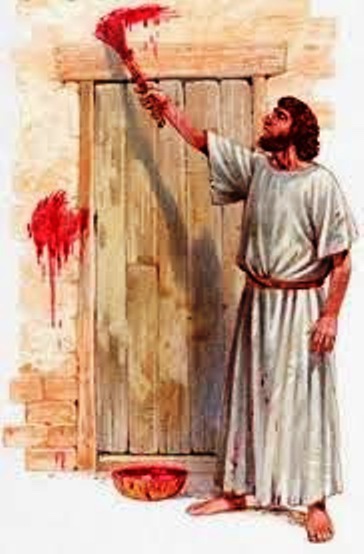




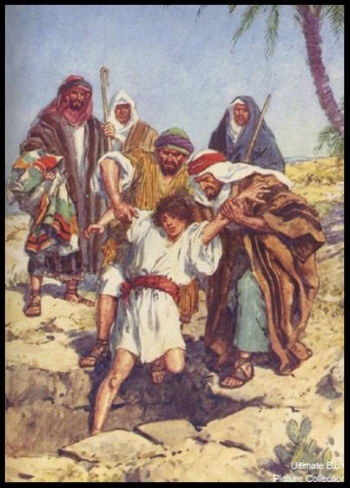
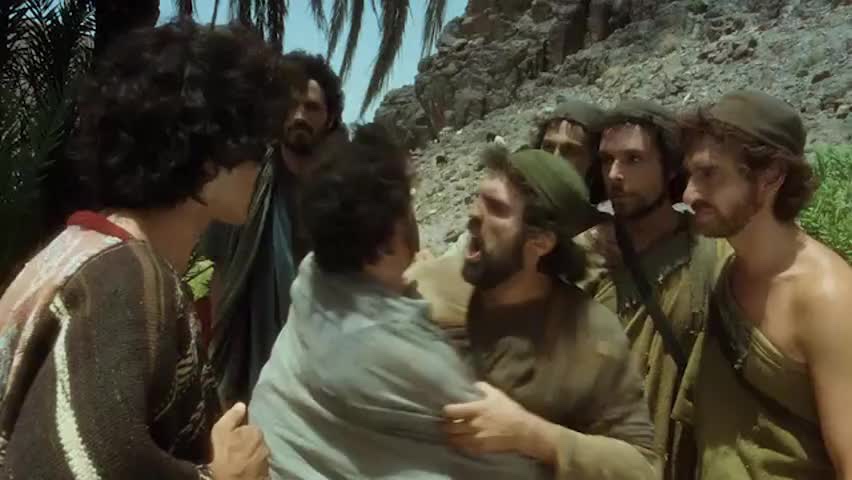
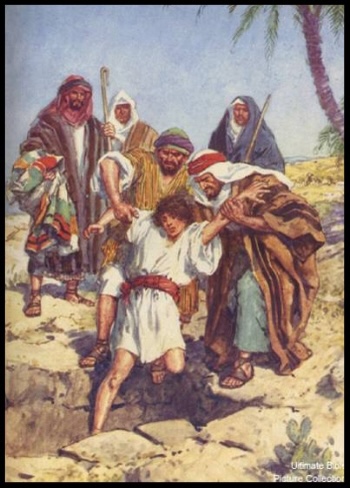
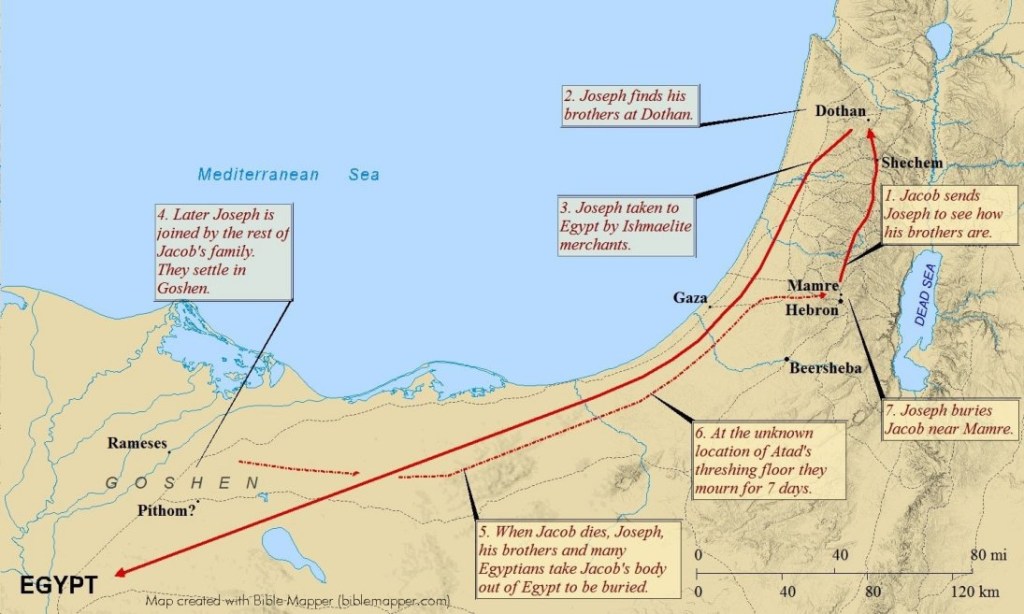
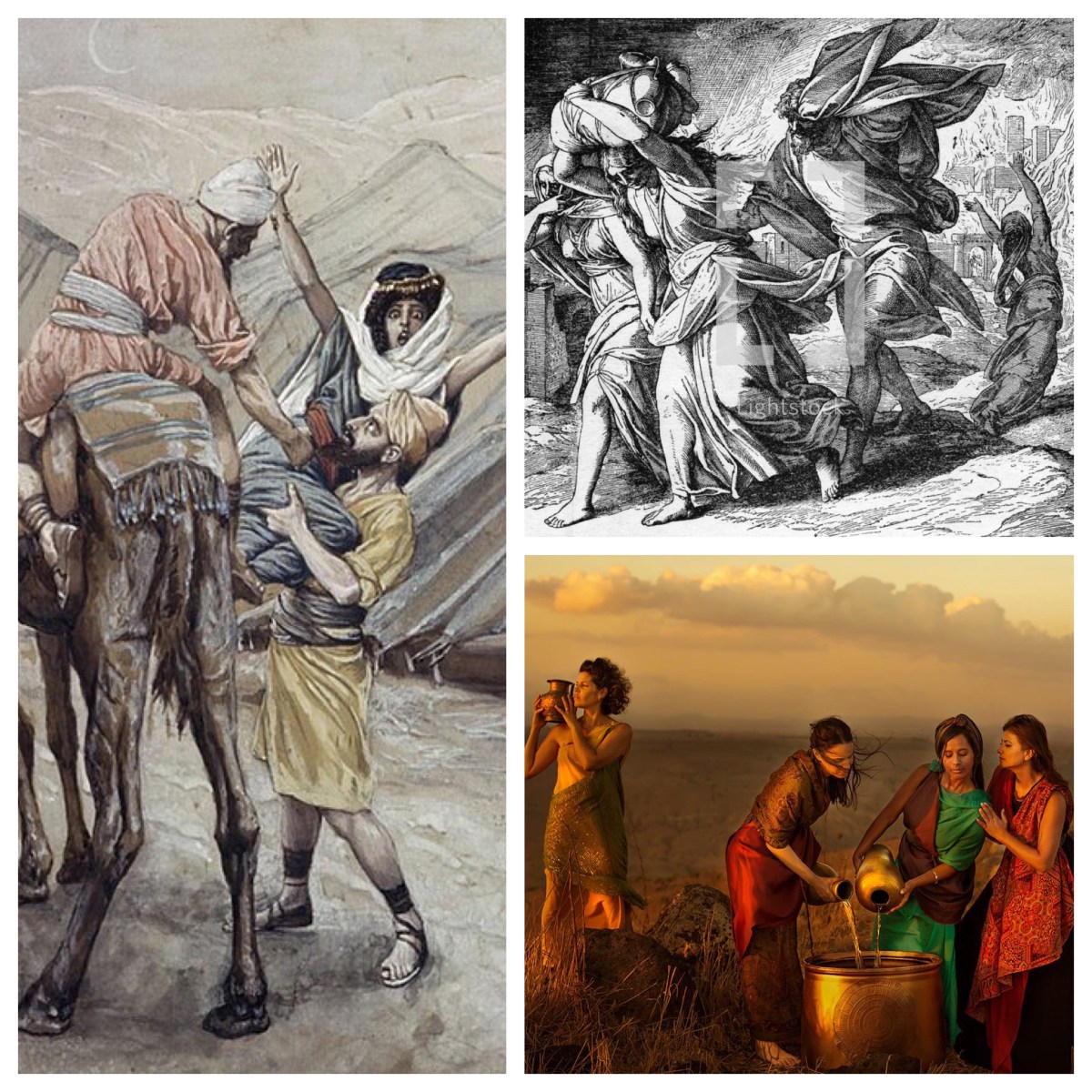
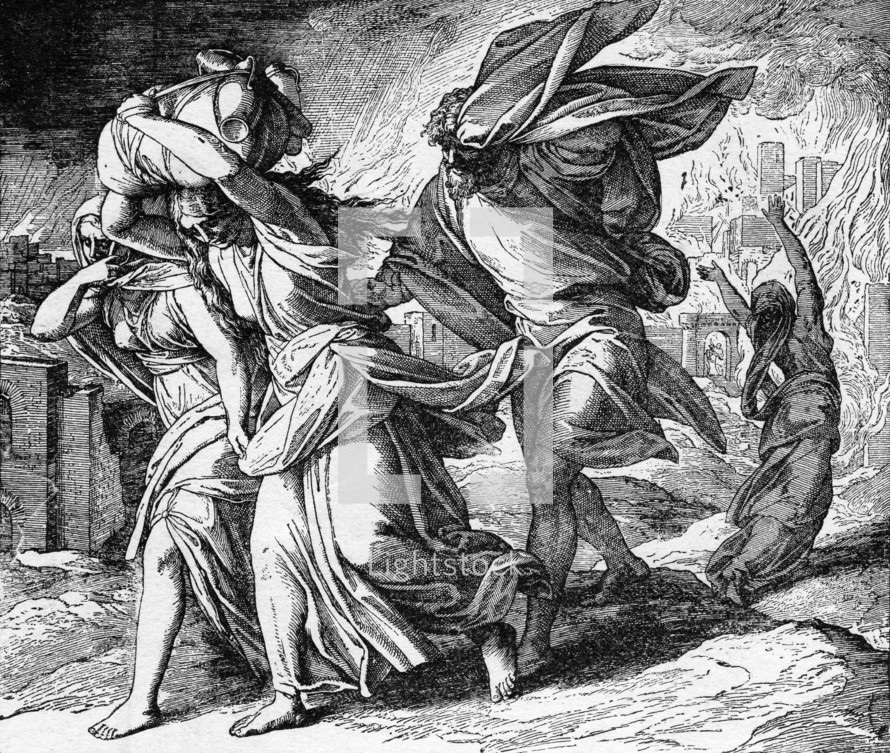
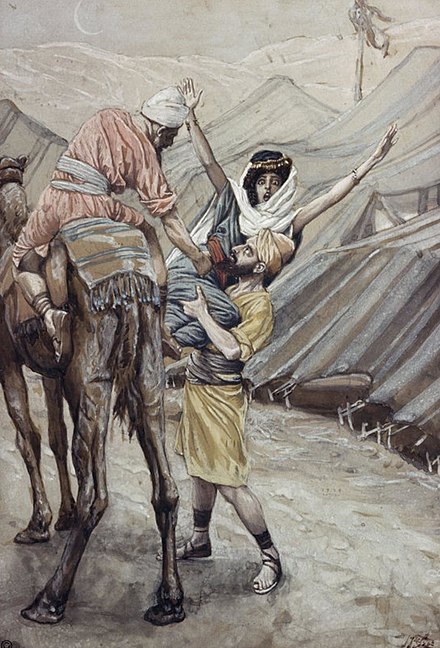

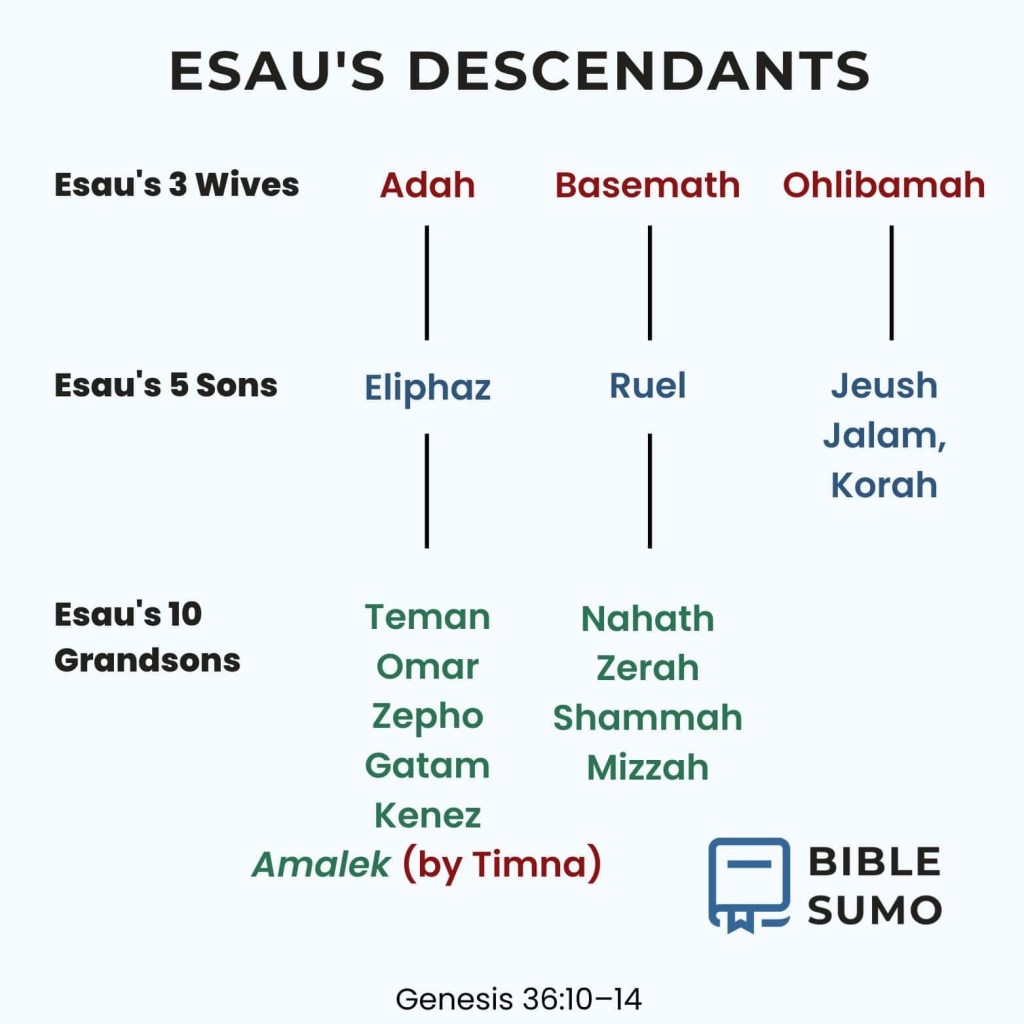
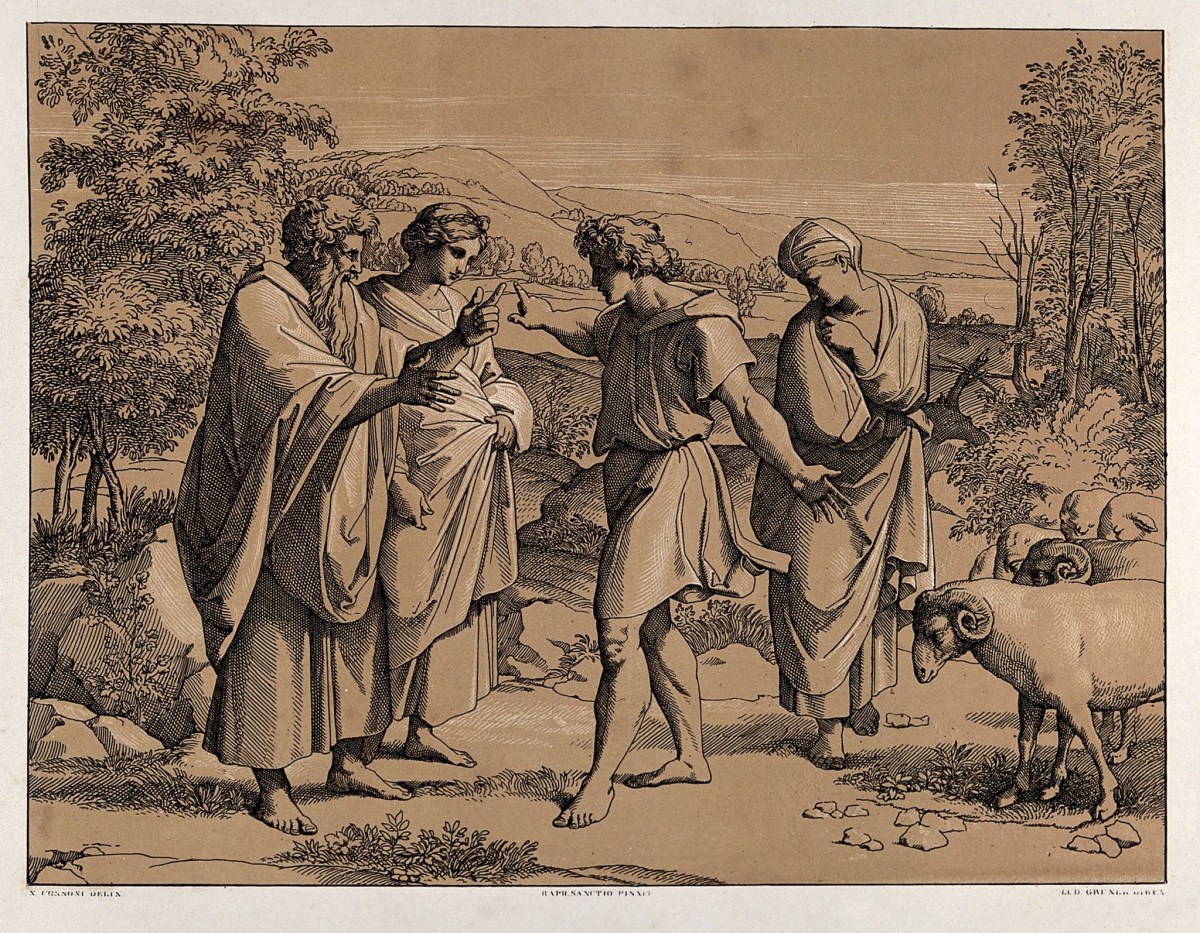
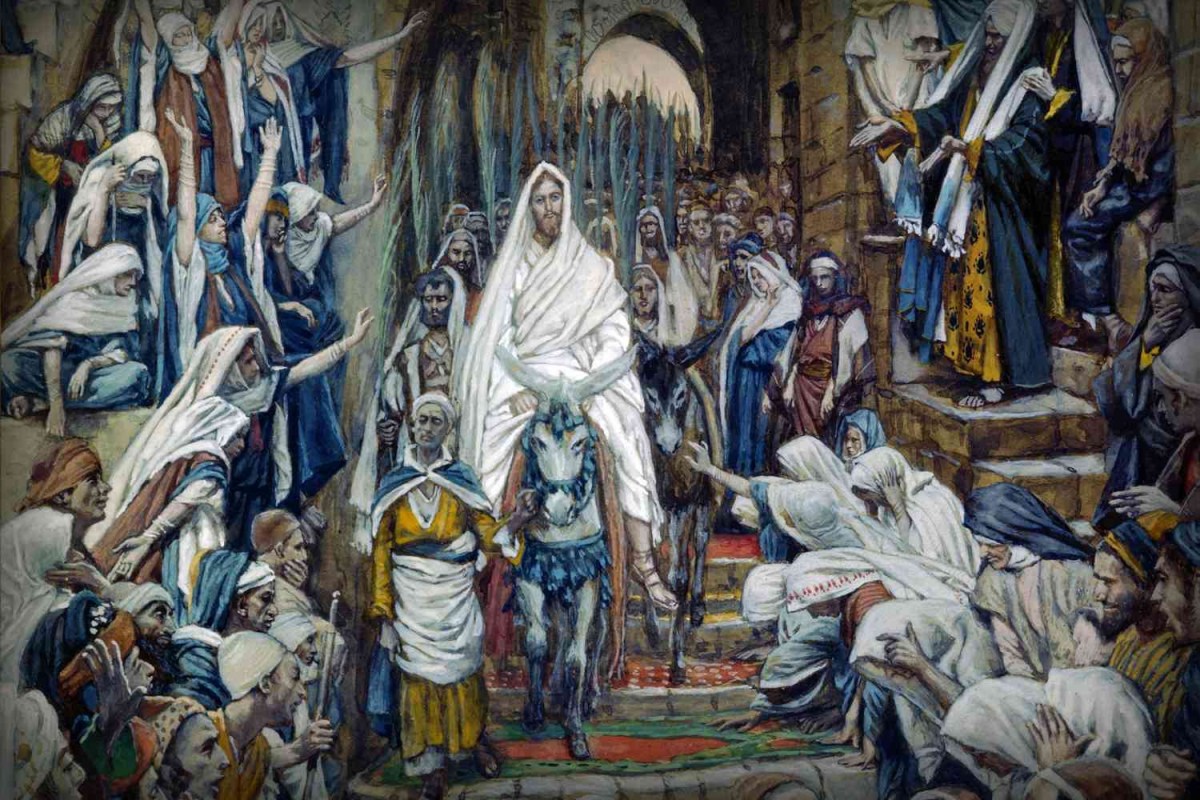
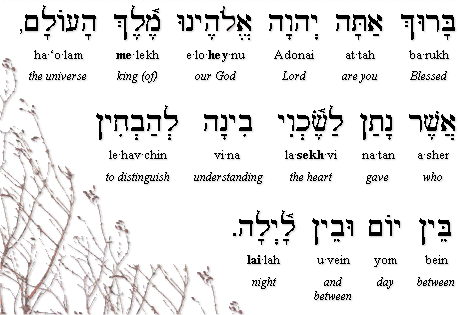

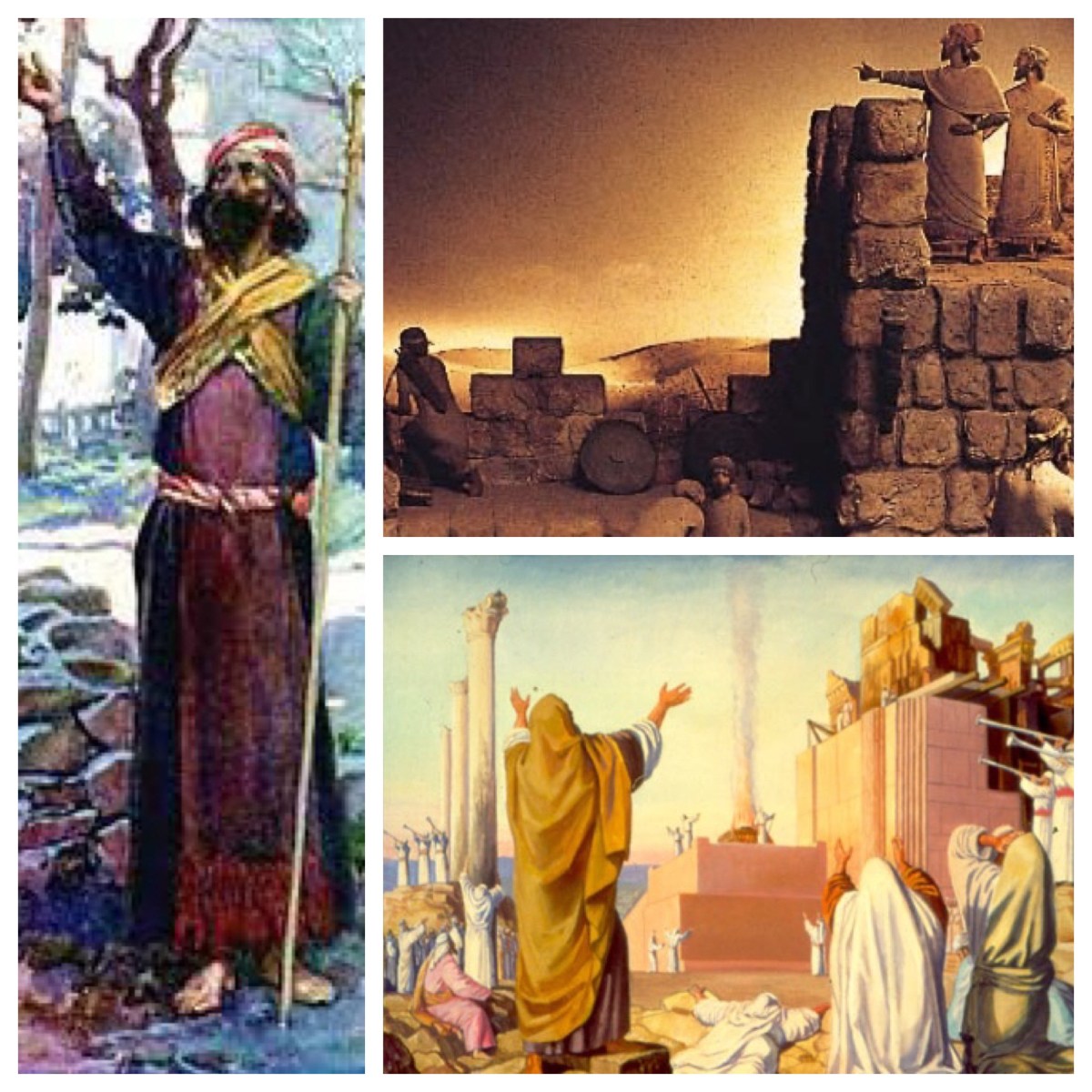
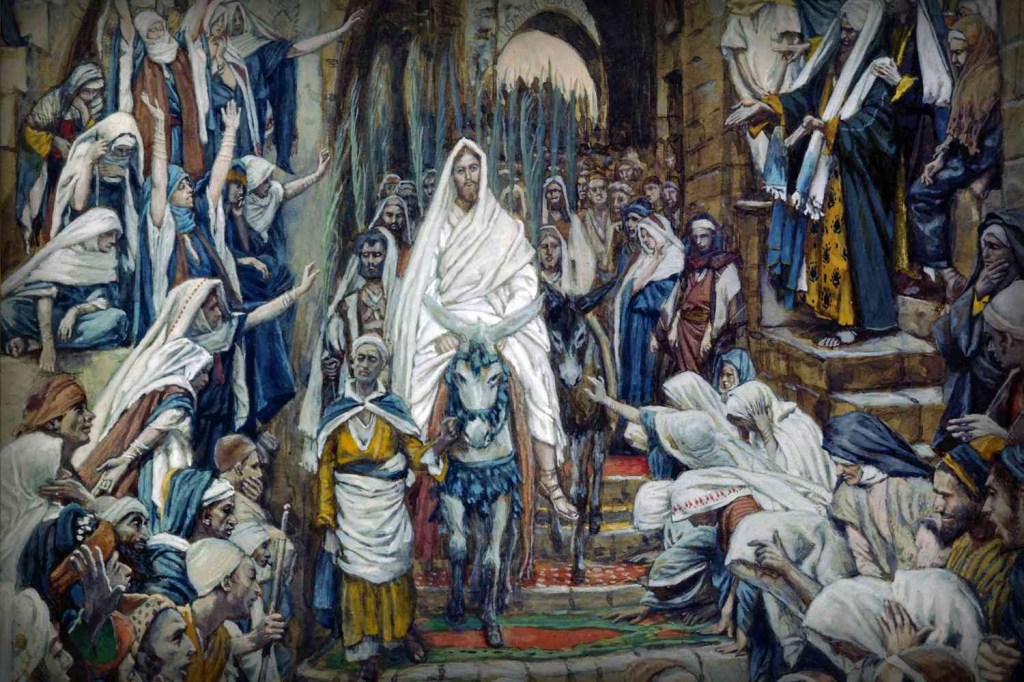
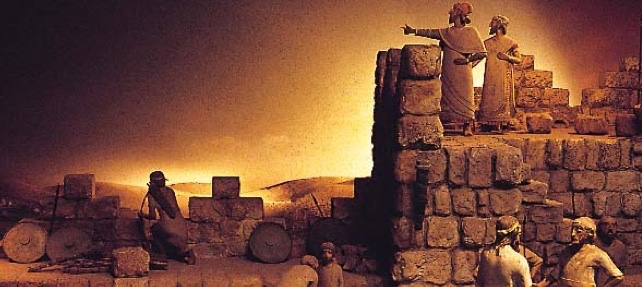
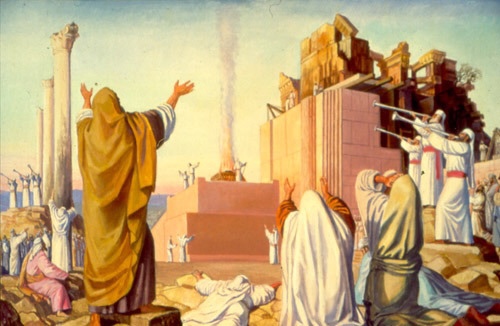
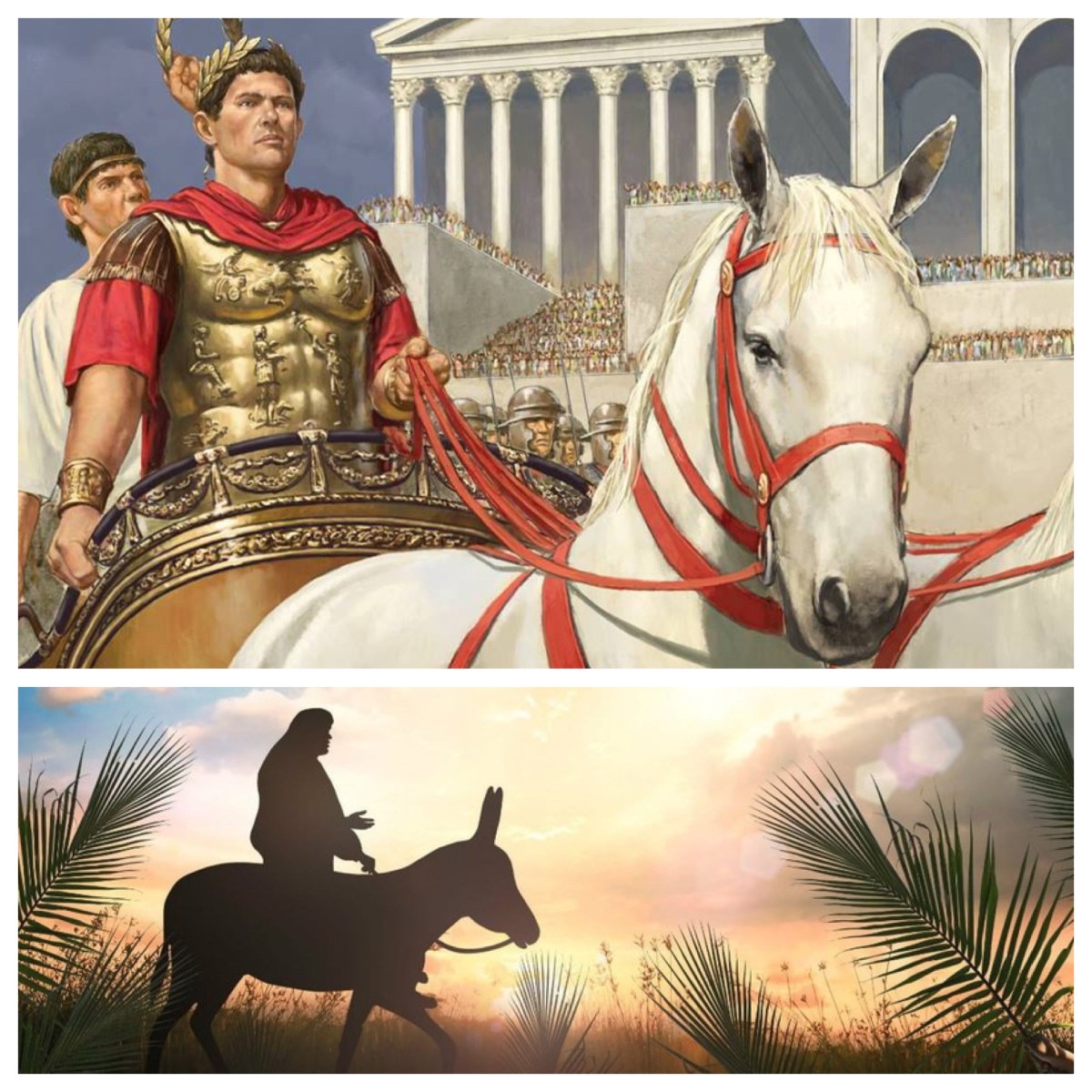
 An Informed Faith