A blaze of glory, to end Epiphany (Exod 24 and Matt 17; Transfiguration A)

The season of Epiphany celebrates the manifestation of God in Jesus, the one chosen by God to show God’s love to the world. Running through many of the scripture passages offered by the lectionary for this season in Year A is the motif of light—for light illumines, light reveals. The passages remind us that God’s light shines brightly on our lives. See

This coming Sunday is the last Sunday in the season of Epiphany, and the readings for this Sunday do no disappoint in this regard. A theme of light runs through the readings: the appearance of the glory of the Lord” on Mount Sinai (Exod 24:17), the transformation of the appearance of Jesus as “he was transfigured before them, and his face shone like the sun, and his clothes became dazzling white” (Matt 17:2), and a reminiscence of that event from one who styles himself as one of the “eyewitnesses of his majesty” (2 Pet 1:16).

Light first figures in the biblical narrative in the Priestly narrative of creation that was placed at the head of the Torah, when the first word from God’s mouth was, “‘Let there be light’”; and there was light” (Gen 1:3; see also Job 12:22). Light is the companion to the Israelites as the traversed the wilderness: “the Lord went in front of them in a pillar of cloud by day, to lead them along the way, and in a pillar of fire by night, to give them light” (Exod 13:21; see also Neh 9:12).

Light was to burn constantly in the Tabernacle: “command the people of Israel to bring you pure oil of beaten olives for the lamp, that a light may be kept burning regularly. Aaron shall set it up in the tent of meeting, outside the curtain of the covenant, to burn from evening to morning before the Lord regularly” (Lev 24:2–3). In Numbers, the command is for seven golden lamps to shine forth light (Num 8:1–4).

In David’s last words, he sings an inspired song about the king as one “who rules over people justly, ruling in the fear of God, [who] is like the light of morning, like the sun rising on a cloudless morning, gleaming from the rain on the grassy land” (2 Sam 23:3–4). In this regard, the king reflects the Lord God, for “he will make your vindication shine like the light, and the justice of your cause like the noonday” (Ps 37:5–6). Many centuries later, the prophet Daniel would declare that God “reveals deep and hidden things; he knows what is in the darkness, and light dwells with him” (Dan 5:22).

In like fashion, the psalmist sings, “the Lord is my light and my salvation; whom shall I fear?” (Ps 27:1), rejoices that God is “clothed with honour and majesty, wrapped in light as with a garment” (Ps 104:1–2), and prays, “ let the light of your face shine on us, O Lord!” (Ps 4:6). “Your word is a lamp to my feet and a light to my path”, the writer of the longest psalm sings (Ps 119:105), rejoicing that “the unfolding of your words gives light; it imparts understanding to the simple” (Ps 119:130). The same thought appears in Proverbs: “the commandment is a lamp and the teaching a light” (Prov 6:23), and “the path of the righteous is like the light of dawn, which shines brighter and brighter until full day” (Prov 4:18).

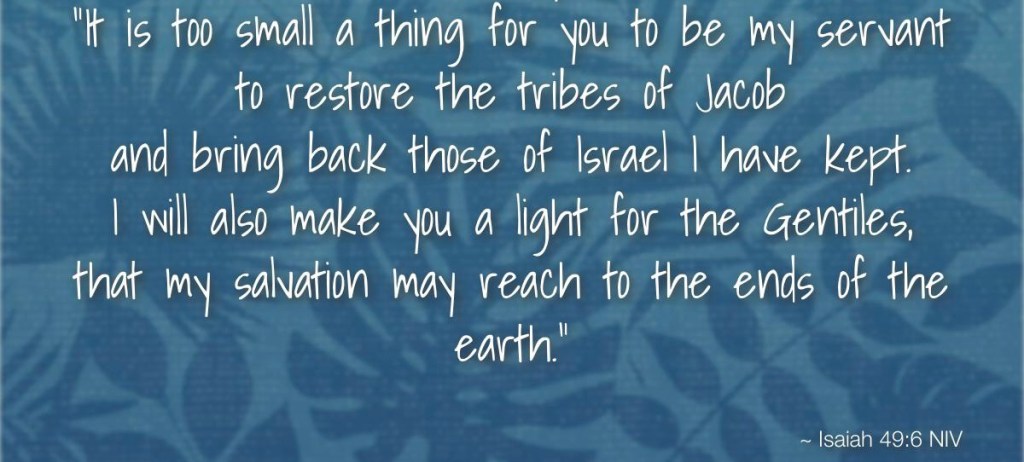
Israel’s vocation, according to the exilic prophet whose words are included in the scroll of Isaiah, is to be “a covenant to the people, a light to the nations” (Isa 42:6, Epiphany 1A), “a light to the nations, that my salvation may reach to the end of the earth” (Isa 49:6, Epiphany 2A). That same prophet evokes the creation story, affirming that “I form light and create darkness, I make weal and create woe; I the Lord do all these things” (Isa 45:7), and reminds the people that God promises, “a teaching will go out from me, and my justice for a light to the peoples” (Isa 51:4). Later, after returning from exile, another prophet rejoices in the bright shining of the light of the Lord (Isa 60:1–3, set for the day of the Epiphany).

This theme extends the call of the prophet Isaiah himself, who cries, “O house of Jacob, come, let us walk in the light of the Lord!” (Isa 2:5) and foresees a time when “the people who walked in darkness have seen a great light; those who lived in a land of deep darkness—on them light has shined” (Isa 9:2, Epiphany 3A). For Micah, realisation of the scale of injustice within Israel lads him not only to call the the people “to do justice, and to love kindness, and to walk humbly with your God” (Mic 6:8, Epiphany 4A), but also leads him to express his deep penitence: “when I sit in darkness, the Lord will be a light to me … he will bring me out to the light; I shall see his vindication” (Mic 7:8–9).

The prophet Isaiah also links light with judgement, declaring that “the light of Israel will become a fire, and his Holy One a flame; and it will burn and devour his thorns and briers in one day; the glory of his forest and his fruitful land the Lord will destroy, both soul and body, and it will be as when an invalid wastes away” (Isa 10:17; see also 13:10–11

Other prophets use the absence of light—the presence of darkness—as a symbol for divine judgement in the face of human sinfulness (Amos 5:18–20; Jer 4:23; 13:16; 25:10; Lam 3:1–3; Ezek 32:7–8), although in his apocalyptic mode, Isaiah offers hope using this image: “the light of the moon will be like the light of the sun, and the light of the sun will be sevenfold, like the light of seven days, on the day when the Lord binds up the injuries of his people, and heals the wounds inflicted by his blow” (Isa 30:26).

In Third Isaiah this promise blossoms wonderfully: “the sun shall no longer be your light by day, nor for brightness shall the moon give light to you by night; but the Lord will be your everlasting light, and your God will be your glory. Your sun shall no more go down, or your moon withdraw itself; for the Lord will be your everlasting light, and your days of mourning shall be ended” (Isa 60:19–20). For Zechariah, the apocalyptic vision of the final victory of the Lord includes the affirmation that “ there shall be continuous day (it is known to the Lord), not day and not night, for at evening time there shall be light” (Zech 14:7).

Light, of course, forms one of the famous “I Am”affirmations that Jesus makes of himself in John’s Gospel (John 8:12; 9:5; see also 1:4–9; 3:19–21; 11:9–10; 12:35–36, 46) and the description of his faithful followers as “the light of the world” (Matt 5:14, 16). Paul rejoiced that “it is the God who said, “Let light shine out of darkness,” who has shone in our hearts to give the light of the knowledge of the glory of God in the face of Jesus Christ” (2 Cor 4:6).

He urged believers to “lay aside the works of darkness and put on the armour of light” (Rom 13:12) and affirmed that they are “all children of light and children of the day; we are not of the night or of darkness” (1 Thess 5:5). He rejoices that “it is the God who said, “Let light shine out of darkness,” who has shone in our hearts to give the light of the knowledge of the glory of God in the face of Jesus Christ” (2 Cor 4:6).

The author of 1 John also uses this imagery to affirm that “ God is light” (1 John 1:5) and advises believers, “if we walk in the light as he himself is in the light, we have fellowship with one another” (1 John 1:7; 2:10). The final vision of Revelation includes a description of the servants of the Lamb, noting that “there will be no more night; they need no light of lamp or sun, for the Lord God will be their light, and they will reign forever and ever” (Rev 22:5); indeed, “the city has no need of sun or moon to shine on it, for the glory of God is its light, and its lamp is the Lamb; the nations will walk by its light, and the kings of the earth will bring their glory into it” (Rev 21:23–24).

So the readings for this Sunday express a strong biblical theme that has run from the opening story of creation, through the story of Israel and the movement initiated by Jesus, to the vision of the promised future. What has been to the fore throughout Epiphany climaxes atop the mountains where Moses receives and Jesus interprets the Torah, with the appearance of “the glory of the Lord … like a devouring fire on the top of the mountain in the sight of the people of Israel” on Mount Sinai (Exod 24:17) and the glittering transformation of the appearance of Jesus as “his face shone like the sun, and his clothes became dazzling white” (Matt 17:2).

This is “the fast that I choose” (Isaiah 58; Epiphany 5A)

The passage of Hebrew Scripture which is offered by the lectionary for this coming Sunday, Isaiah 58:1–12, comes from the third section of the book of Isaiah (chapters 56–66). This section of the book was written during the period when the people of Judah were returning to their land, to the city of Jerusalem (from the 520s BCE).

The section begins with a familiar prophetic announcement: “maintain justice, and do what is right, for soon my salvation will come, and my deliverance be revealed” (Isa 56:1). In the following chapters, the unnamed prophet demonstrates what justice will look like through a series of powerful oracles. The extensive worship of idols (57:1–13) will bring God’s wrath on the people; “there is no peace, says my God, for the wicked” (57:13). Rather, “the high and lofty one who inhabits eternity, whose name is Holy” chooses “to revive the spirit of the humble and to revive the heart of the contrite” (57:15).

Because God indicates that “I will not continually accuse, nor will I always be angry” (57:16), the prophet conveys what the Lord sees as the fast that is required; not a fast when “you serve your own interest on your fast day, and oppress all your workers” (58:3), not a fast when “you quarrel and to fight and to strike with a wicked fist” (58:4). The sad reality is that the lives of the people demonstrate their rebellion and sin (58:1). Caring actions, actions of compassion, acts which adhere to God’s justice and righteousness, are what is required.

So the prophet declares that God chooses a fast “to loose the bonds of injustice, to undo the thongs of the yoke, to let the oppressed go free, and to break every yoke … to share your bread with the hungry, and bring the homeless poor into your house; when you see the naked, to cover them, and not to hide yourself from your own kin” (58:6–7).

The words of this post-exilic prophet resonate with the actions of “the righteous” in the well-known parable of Jesus, as they gave food, water, a welcome, clothing, and care to those sick or imprisoned (Matt 25:31–46). “I was hungry and you gave me food”, says the Son of Man; “I was thirsty and you gave me something to drink, I was a stranger and you welcomed me, I was naked and you gave me clothing, I was sick and you took care of me, I was in prison and you visited me” (Matt 25:35–36). It is because of these caring acts that the invitation is extended to these righteous ones: “come, you that are blessed by my Father, inherit the kingdom prepared for you from the foundation of the world” (Matt 25:34).

Throughout Hebrew scripture, these acts of the righteous—deeds of justice—are consistently affirmed as what God requires. The Psalmist praises “the God of Jacob … who executes justice for the oppressed; who gives food to the hungry … [who] sets the prisoners free, [who] opens the eyes of the blind, [who] lifts up those who are bowed down [and] loves the righteous, [who] watches over the strangers [and] upholds the orphan and the widow” (Ps 146:5, 7–9).

The people of God are regularly enjoined to emulate these actions in their lives. The Law is clear that “you must not distort justice; you must not show partiality; and you must not accept bribes … justice, and only justice, you shall pursue” (Deut 16:19–20), while Isaiah proclaims God’s judgement on those who “turn aside the needy from justice … and rob the poor of my people” (Isa 10:1–2).

Regarding feeding the hungry, the sages advise, “if your enemies are hungry, give them bread to eat; and if they are thirsty, give them water to drink” (Prov 25:21), and “if you close your ear to the cry of the poor, you will cry out and not be heard” (Prov 21:23). The law relating to gleaning (Lev 19:9–10) indicates that provision for the poor was integral to the way that society was to function in ancient Israel.

Housing those in need of shelter was expected in Israel. Strangers from other nations who came to Israel, with no homes to live in, were to be welcomed (Deut 10:19) and regarded “as the citizen among you; you shall love the alien as yourself” (Lev 19:34). The law concerning “any of your kin [who] fall into difficulty” instructs that “you shall support them; they shall live with you as though resident aliens” (Lev 25:35), and the people are to allot land “as an inheritance … for the aliens who reside amongst you”, for “they shall be to you as citizens of Israel” (Ezek 47:22)

Nakedness was a sign of shame in ancient Israelite society, first articulated in the second creation story (Gen 3:7–11) and then in the story of Noah’s drunken state (Gen 9:20–23) and David’s frenzied dancing before the ark of the Lord (2 Sam 6:16, 20–22). Job comments disapprovingly of those who, amongst other sinful actions, “cause the poor to go about naked without clothing” (Job 24:2–10). Many prophets rail against nakedness as a symbol of Israel’s sinfulness (Isa 20:3; 47:3; 57:8; Ezek 16:36–38; 23:18; Nah 3:5) and indicate the importance of “covering one’s nakedness” (Ezek 16:8; Hos 2:9–10).

The story is told of how “certain chiefs of the Ephraimites”, in obedience to the words of the prophet Obed (2 Chron 28:9–11), covered nakedness of the captured southerners, “and with the booty they clothed all that were naked among them; they clothed them, gave them sandals, provided them with food and drink, and anointed them”, and then returned them as freed men to Jericho (2 Chron 28:15).

So the “fast that [God] chooses” which the prophet describes is a thread of justice and equity running through the story of Israel, and on into the Jesus movement. Feeding the hungry, housing the homeless, and clothing the naked were all practical ways to signal that the society was founded on the justice and righteousness that God required through the covenant. This is what provides “a fast, a day acceptable to the Lord” (58:5).

Yet the prophet decries the state of the nation, as they return from Exile, and laments that “there is no justice … justice is far from us … we wait for justice, but there is none … justice is turned back … the Lord saw it, and it displeased him” (59:8–15); he declares that, as a consequence, God “put on righteousness like a breastplate, and a helmet of salvation on his head; he put on garments of vengeance for clothing, and wrapped himself in fury as in a mantle” (59:17)—a description that underlines the later exhortations to the followers of Jesus to “put on the whole armour of God, so that you may be able to stand against the wiles of the devil” (Eph 6:10–17).

Because the Lord “loves justice” (61:8), the prophet has been anointed “to bring good news to the oppressed, to bind up the brokenhearted, to proclaim liberty to the captives, and release to the prisoners; to proclaim the year of the Lord’s favour, and the day of vengeance of our God” (61:1–2)—words which are appropriated by Jesus when he visits his hometown and reads from the scroll of Isaiah (Luke 4:18–19); “today this scripture has been fulfilled in your hearing”, Jesus declares (Luke 4:21).

Adhering to this way of justice, practising the fast that the Lord desires, means that he will give Israel a new name; as the prophet declares, “you shall no more be termed Forsaken, and your land shall no more be termed Desolate; but you shall be called My Delight Is in Her, and your land Married; for the Lord delights in you, and your land shall be married” (Isa 62:4).

To secure this promised future, the prophet adopts an attitude of penitence, yearning for God to “look down from heaven and see, from your holy and glorious habitation” (63:15). His plea for the Lord to “tear open the heavens and come down, so that the mountains would quake at your presence—to make your name known to your adversaries, so that the nations might tremble at your presence!” (64:1–2) must surely have been in the mind of the evangelists as the reported the baptism of Jesus, when he “saw the heavens torn apart and the Spirit descending like a dove on him” (Mark 1:10).

The book of Isaiah ends with a sequence in which the prophet reports the words of the Lord which indicate that Israel will be restored (65:1–16), followed by the statement that the Lord is “about to create new heavens and a new earth” (65:17–25; 66:22–23). This vision is taken up and expanded in the closing chapters of the final book of the New Testament (Rev 21:1–22:7). It is a hopefully positive way to end the whole book, as well as the oracles of the anonymous post-exilic prophet whose words are collected in the latter part of this long book of Isaiah.

Within that envisaged new creation, “no more shall the sound of weeping be heard in it, or the cry of distress” (65:19). There will be houses for shelter and vineyards for sustenance, and a just and equitable distribution of resources (65:21–22), with blissful peace marking all relationships (65:25) and a wonderful inclusiveness of the peoples of “all nations and tongues” (66:18–21). The prosperity of the people (66:12–13) reflects the absence of inequity and the diligent practice of justice—a fine fulfilment of the prophecy about “the true fast” that we will read, and hear, this coming Sunday.

Justice, kindness, and humility (Micah 6; Epiphany 4A)

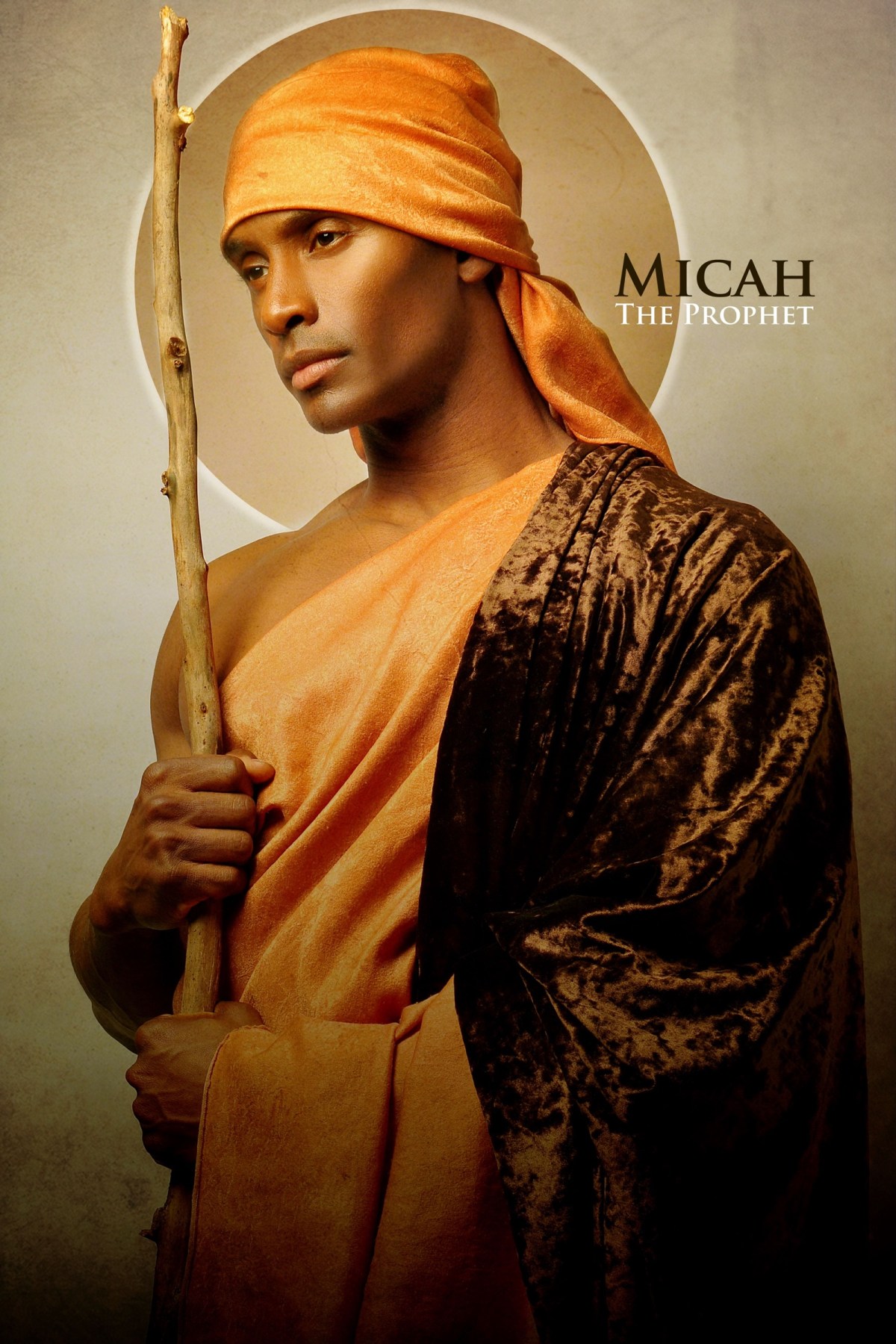
This Sunday, the selection of Hebrew Scripture that is offered by the lectionary comes from the book of the prophet Micah (Mic 6:1–8). This book is best known for a number of oracles, including a verse (6:8) that is included in this Sunday’s reading.

The first well-known oracle is the the vision of universal peace that Micah utters: “many nations shall come and say, come, let us go up to the mountain of the Lord … they shall beat their swords into plowshares, and their spears into pruning hooks” (4:1–4).

Second, there is an oracle best known because it is quoted in Matthew’s Gospel: “you, O Bethlehem of Ephrathah, who are one of the little clans of Judah, from you shall come forth for me one who is to rule in Israel” (5:2–6; see Matt 2:6). In the context in which Micah speaks these words, they refer to a coming ruler of Judah. In Matthew’s narrative, the prophetic word provides support for the notion that the Messiah was to be born in Bethlehem (Matt 2:3–5; also John 7:42), which then means that the story of the birth of Jesus needs to take place in Bethlehem. Two evangelists work independently to tell stories that, in quite different ways, adhere to this requirement (Matt 2:1; Luke 2:4).

The third oracle of Micah which is well known—the one offered in this Sunday’s lectionary—appears within an extended scene that reads like a lawsuit being prosecuted in court. It begins with the charge: “rise, plead your case before the mountains, and let the hills hear your voice … for the Lord has a controversy with his people, and he will contend with Israel” (6:1–2). Then it moves through some argumentation, before the famous rhetorical question is posed: “what does the Lord require of you, but to do justice, and to love kindness, and to walk humbly with your God?” (6:8).

In its immediate literary context, the verse stands as a climax to the case being mounted by the prophet, as he instructs the people,of a Israel what they are to do: to do justice, offer kindness, and live with humility. This verse has gained a life of its own; it is regularly quoted to support people of faith undertaking acts of social justice, and it adorns a multitude of t-shirts as a succinct “quotable quote”.

This verse has been the inspiration for many organisations bearing the prophet’s name—locally, there is Micah Australia (“empowering Australian Christians to advocate for global justice”; see https://www.micahaustralia.org), which is part of the Micah Challenge International (birthed by the World Evangelical Alliance and Micah Network; see https://lausanne.org/content/lga/2015-03/micah-challenge-international).

The historical context for this verse is instructive. The prophet Micah is introduced in the opening chapter of the book bearing his name, as “Micah of Moresheth in the days of Kings Jotham, Ahaz, and Hezekiah of Judah” (Mic 1:1). This places him in the second half of the 8th century BCE. As he was active in the southern kingdom, he did not directly experience the conquest and exile of people in the northern kingdom in 721 BCE, although he must have been aware of the disasters falling his countrymen to the north. His prophetic activity is thus a couple of decades after Amos and Hosea.

Indeed, the southern kingdom of Judah directly experienced a military attack from the Assyrian king Sennacherib in 701, attacking several towns in Judah (see 2 Kings 18–19; Micah 1:10–16) before retreating from Jerusalem. As Micah says, “the sins of the house of Israel” (1:5) have reached down and infected the house of Judah; “her wound is incurable; it has come to Judah; it has reached to the gate of my people, to Jerusalem” (1:9, 12).

Under Hezekiah, the economic patterns in Judah changed from a reliance on barter, to an international trading society. Literacy rates rose, and the size of Jerusalem grew to be a city with a population of around 25,000—which is considered to be about five times larger than the population of Jerusalem under Solomon!

Associated with this growth was the development of corrupt practices and the rise of hypocrisy amongst the people. The rulers in Jerusalem “give judgment for a bribe, its priests teach for a price, its prophets give oracles for money; yet they lean upon the Lord and say, ‘Surely the Lord is with us! No harm shall come upon us’” (3:11).  

Micah, like many other prophets, conveys God’s deep concern about the way that some in society were profiting unjustly from their mistreatment of the poor. He rails against those who “covet fields, and seize them; houses, and take them away; they oppress householder and house, people and their inheritance” (2:2). Their haughty demeanour will swiftly turn to lamenting, as they cry out “we are utterly ruined; the Lord alters the inheritance of my people; how he removes it from me!” (2:4).

In another oracle, he dramatises the state of the people, attacking the heads and rulers of the people as those “who tear the skin off my people, and the flesh off their bones; who eat the flesh of my people, flay their skin off them, break their bones in pieces, and chop them up like meat in a kettle, like flesh in a cauldron” (3:1–3). He decries their selfish actions in very specific terms: “its rulers give judgment for a bribe, its priests teach for a price, its prophets give oracles for money” (3:11).

Still later, Micah remonstrates with the people for “the treasures of wickedness in the house of the wicked, and the scant measure that is accursed” (6:10). He conveys God’s displeasure: “Can I tolerate wicked scales and a bag of dishonest weights? Your wealthy are full of violence; your inhabitants speak lies, with tongues of deceit in their mouths.” (6:11–12). He laments that “the faithful have disappeared from the land” (7:2); of those who are left, he says, “their hands are skilled to do evil; the official and the judge ask for a bribe, and the powerful dictate what they desire; thus they pervert justice” (7:3).

The people are accused of following “the statutes of Omri and all the works of the house of Ahab” (6:16)—two kings who are condemned for their idolatrous and evil ways (on Omri, see 1 Ki 16:25–26; on his son Ahab, see 1 Ki 16:30, 22:37–39).

Micah, like Amos before him, declares that punishment will come on the people in a time of deep darkness: “it shall be night to you, without vision, and darkness to you, without revelation; the sun shall go down upon the prophets, and the day shall be black over them” (2:6; cf. Amos 5:18–20). Because of the evil deeds of the heads and rulers, “Zion shall be plowed as a field; Jerusalem shall become a heap of ruins, and the mountain of the house a wooded height” (3:12).

In a future time of anger and wrath, says the prophet, God will wreak vengeance: “I will cut off your horses from among you and will destroy your chariots; and I will cut off the cities of your land and throw down all your strongholds; and I will cut off sorceries from your hand, and you shall have no more soothsayers; and I will cut off your images and your pillars from among you” (5:10–15). The disdain with which the people have treated their covenant with the Lord, described in some detail here by the prophet, will merit this savage punishment.

The passage that appears in this Sunday’s lectionary offering thus provides the key to behaviour for the people of Israel in their situation of turmoil and upheaval. The prophet calls them back to fidelity to the covenant. His words stand also as a clarion call to people of faith in subsequent times who stand in the heritage and tradition of Micah: “do justice, love kindness, and walk humbly with your God”. May this be how we live!

Appropriating prophetic passages in the season of Epiphany (Isa 49; Epiphany 2A)

Every Sunday throughout the Christian year (save for the six Sundays in the season of Easter), the Revised Common Lectionary provides a passage from Hebrew Scripture as the First Reading in the set of four readings for that Sunday. (During Easter, a passage from Acts stands as the First Reading, providing stories from the early years of the movement which Jesus founded.)

Each year, during the season of Epiphany, the First Readings relate to the prophetic figures of ancient Israel. In Year A (this year), almost all of them are drawn from the book of Isaiah the prophet, with one from Micah and one from Deuteronomy (where the link is with Moses, the great prophet).

Each year, the Feast of Epiphany includes Isaiah 60:1–6 as the First Reading. In this passage, the prophet foresees that “nations shall come to your light, and kings to the brightness of your dawn” (Isa 60:3); he specifies that when they come to the light of the Lord, “they shall bring gold and frankincense,

and shall proclaim the praise of the Lord” (Isa 60:6). The reason for reading this on Epiphany is obvious—it correlates well with the story in Matthew of when the magi came to visit Jesus, and “they offered him gifts of gold, frankincense, and myrrh” (Matt 2:11).

The first Sunday after the Feast of Epiphany is always the day on which the Baptism of Jesus is recalled. One year (Year B) places the beginnings of the priestly creation account (Gen 1:1–5) alongside this Gospel story. In the other two years, passages from Second Isaiah are offered; in Year C, this is Isaiah 43:1–7, which includes the affirmation, “do not fear, for I have redeemed you; I have called you by name, you are mine; when you pass through the waters, I will be with you” (Isa 43:1–2). The presence of water in both of these passages seems to be the reason for their linking with the baptism of Jesus.

This year, Year A, the prophetic excerpt is the first of four songs that are linked explicitly with the Servant (42:1–9; 49:1–7; 50:4–11; and 52:13–53:12). In this first song, the Servant is designated as the one in whom God delights (42:1); the phrase recurs in the message of the voice from the cloud which speaks at the baptism of Jesus, declaring that he is the one “with whom I am well pleased” (Matt 3:17).

The song also affirms that the Servant has God’s spirit within him (Isa 42:1), something which is directly enacted in the baptism of Jesus when he “saw the Spirit of God descending like a dove and alighting on him” (Matt 3:16). It is clear, therefore, why this passage has been selected for this day.

On the ensuing Sundays, we are offered two further sections from Isaiah (Isa 49 and Isa 9), a famous passage from Micah 6, another passage from Isaiah (Isa 58), and then a section of the lengthy speech attributed to Moses after the covenant renewal ceremony (Deut 29–30), in which he speaks like a prophet: “I have set before you life and death, blessings and curses; choose life so that you and your descendants may live” (Deut 30:19).

The four prophetic passages that appear in weeks two to six this year offer some striking words from the times of ancient Israel. Their inclusion in a key lectionary of the Christian churches alongside Gospel passages recounting the early period of the public activity of Jesus invites us to appropriate these passages as pointing to Jesus as God’s chosen one (messiah).

This is particularly evident in this Sunday’s passage (Isa 49:1–7), where a number of elements have been interpreted as predictors of the role that Jesus undertook. There are six different elements in these seven verses which can be seen to serve as such predictors, pointing forward to Jesus.

The one who sings this song is declared by God to be God’s servant (49:3), in the same way that Jesus is acknowledged as servant (Acts 3:13, 26; 4:27, 30). The song was originally composed and sung during the Exile in Babylon, as the prophet looked to a return to the land of Israel and the resumption of Israel’s role as God.

See

This servant has an awareness that he has been chosen before his birth for his role (49:1, 5), a sense that is conveyed in the Gospel narratives that variously indicate God’s plan and purpose for Jesus was conveyed to his mother (Luke 1:32–33), his father (Matt 1:21), and then both parents (Luke 2:34–35, and 3:38). The sense of a purpose for Jesus that was determined long before his activities in Galilee and Jerusalem is also evident in the prologue to the book of signs (John 1:9–14) and in a later controversy reported in that book (John 8:42, 58).

The servant is the one in whom God would be glorified (49:3), pointing to a key theme in the book of signs, where the function of Jesus is to glorify God (Jon 17:1–5). The servant will gather Israel back to God (49:5), “to raise up the tribes of Jacob and to restore the survivors of Israel” (49:6). This is the mission that Jesus declares when he asserts that “I was sent only to the lost sheep of the house of Israel” (Matt 10:24), and is inherent in his charge to the disciples, “you will sit on thrones judging the twelve tribes of Israel” (Luke 22:30).

This particular servant song also includes two key statements which figure prominently in the orderly account of the early church which is told in two volumes and is attributed to Luke. First, the servant is told by God, “I will give you as a light to the nations” (49:6)—an image that is picked up by three evangelists. Simeon declares that Jesus will be “a light for revelation to the Gentiles and for glory to your people Israel” (Luke 2:38). The Johannine Jesus affirms of himself, “I am the light of the world” (John 8:12; 9:5). And the Matthean Jesus then extrapolates the image, telling his disciples, “you are the light of the world” (Matt 5:14).

Then, the servant is told that God has given him that light “that my salvation may reach to the end of the earth” (49:6). This phrase occurs in the definitive statement of the risen Jesus, in the second Lukan account of the ascension of Jesus, when he charges his followers, “you will be my witnesses in Jerusalem, in all Judea and Samaria, and to the ends of the earth” (Acts 1:8); the phrase recurs when this servant song is later quoted by Paul (Acts 13:47).

When we look back at this text, through the prism of Jesus, we can see just how well it seems to speak of Jesus. In Christian understanding, he was indeed the Servant, chosen by God, glorifying God in his life and his death, recalling Israel to their covenant with God, and shining as a light that would bring the good news of salvation to the ends of the earth. The text looks to be a clear prediction of Jesus.

And yet, interpreting this passage and other ancient Israelite prophetic passages as predictive of Jesus is a strategy that we should undertake with care. Christians have a bad track record of taking Jewish texts and Christianising them, talking and writing and thinking about them as if they were always intended simply to be understood as Christian texts. But first of all, they were Jewish (or, to be precise, ancient Israelite texts).

So the original setting of such passages needs always to be considered—the historical, social, political, cultural contexts in which they came into being, as well as the literary genre being used and the linguistic and literary conventions being deployed. Obliterating the original setting and acting as if the text was intended for a time many centuries later, is unfair and unethical.

Indeed, Christianising Old Testament texts can well become the first step in a dangerous process, as we firstly remove Judaism from our interpretive framework, and then treat the prophetic text as having nothing to do with Judaism, and everything to do with Christianity. This is the pathway that can lead to supercessionism—a view that Christianity has superseded and indeed replaced Judaism—and even antisemitism—actively speaking and acting against Jews and Judaism. And having arrived at such a destination, we are reinforced in our pattern of ignoring and obliterating the earlier meanings in the text.

Texts (whether biblical or other literature) are always multivalent—that is, open to being interpreted in a number of ways, offering multiple ways of understanding them. That’s why we have sermons, and don’t just read the biblical text and then put it down. We keep it before our minds, and explore options for understanding and appropriating it. Ignoring the multiple layers of meaning inherent in biblical passages is a reductionist and self-centred way of undertaking interpretation. Reducing the prophetic texts to predictive declarations solely about Jesus is a poor interpretive process.

See also

Reading the prophetic texts during Advent (Isaiah 11; Advent 2A)

For much of the year, the lectionary presents us with a First Reading taken from the Hebrew Scriptures. (The exception is during Easter, when a reading from Acts stands as the First Reading.) I am regularly asked, “why has this reading been chosen?” In Epiphany and the “ordinary” season of the Sundays Epiphany after Pentecost, the reading is consecutive—or almost consecutive—following the narrative of a designated book, or set of books, in order. So there is not necessarily any obvious, or intentional, link between the Hebrew Scripture, Epistle, and Gospel readings.

For the seasons of Lent and Advent, however, the selection of each Sunday’s First Reading and Epistle is made with a deliberate intention to connect with the Gospel for that Sunday. So the way the lectionary is built itself includes a bias towards seeing the Gospel reading as the primary focus, and the other readings as feeding into that focus. Nevertheless, the immediate connection with the Gospel for this Sunday—an account of the fiery apocalyptic preaching of John the baptiser (Matt 3:1–12)—is not immediately evident.

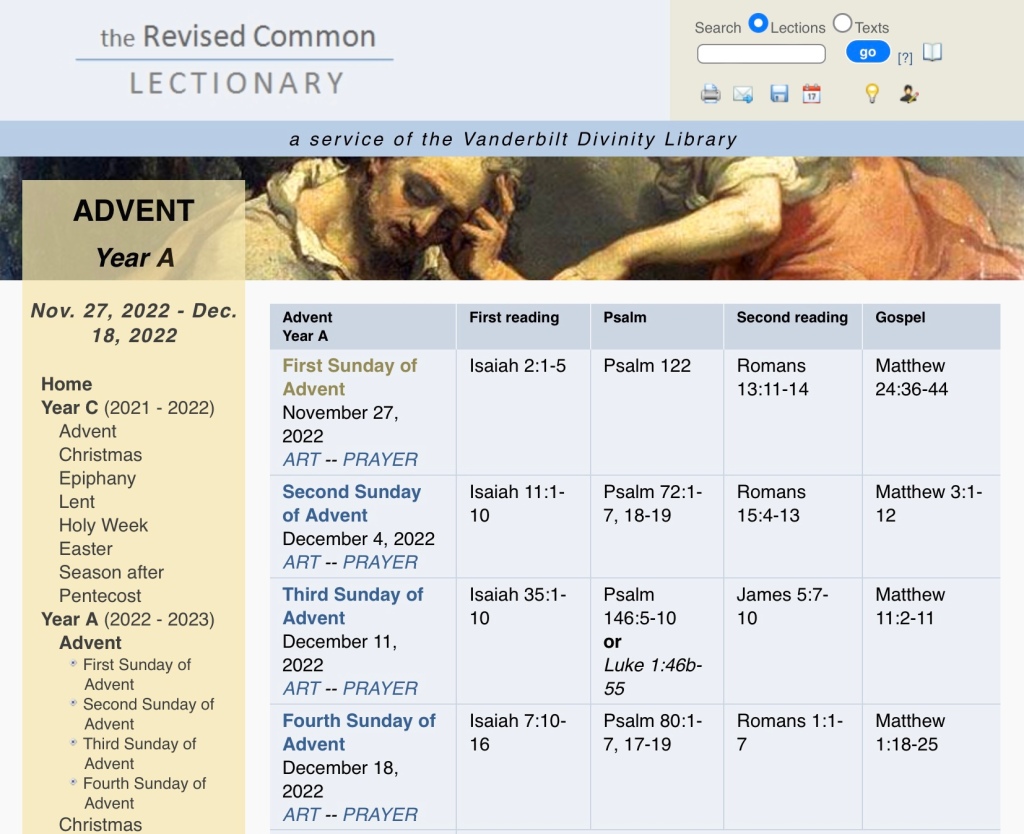
The First Reading offered for this coming Sunday is an oracle from Isaiah (Isa 11:1–10, Advent 2A) in which a vision of universal harmony is expressed: “the wolf shall live with the lamb, the leopard shall lie down with the kid … the nursing child shall play over the hole of the asp, and the weaned child shall put its hand on the adder’s den” (Isa 11:6–8).. It follows from the earlier reading last Sunday (Isa 2:1–5, Advent 1A) in which a similar vision is expressed: the nations “shall beat their swords into plowshares, and their spears into pruning hooks” (Isa 2:4).

In last week’s passage, the peoples of the nations stream in to Jerusalem, where they ascend to “the mountain of the LORD, to the house of the God of Jacob”. There, in the Temple, they will receive instruction in “the ways of the Lord” so that they will “walk in his paths” (2:3). Presumably this instruction will come from the priests of the Temple, for they were the authority figures who would “teach my people the difference between the holy and the common, and show them how to distinguish between the unclean and the clean” (Ezek 44:23; see also Mal 2:7). In disputes between people where the understanding of the law is at stake, “they shall act as judges, and they shall decide it according to my judgments” (Ezek 44:24).

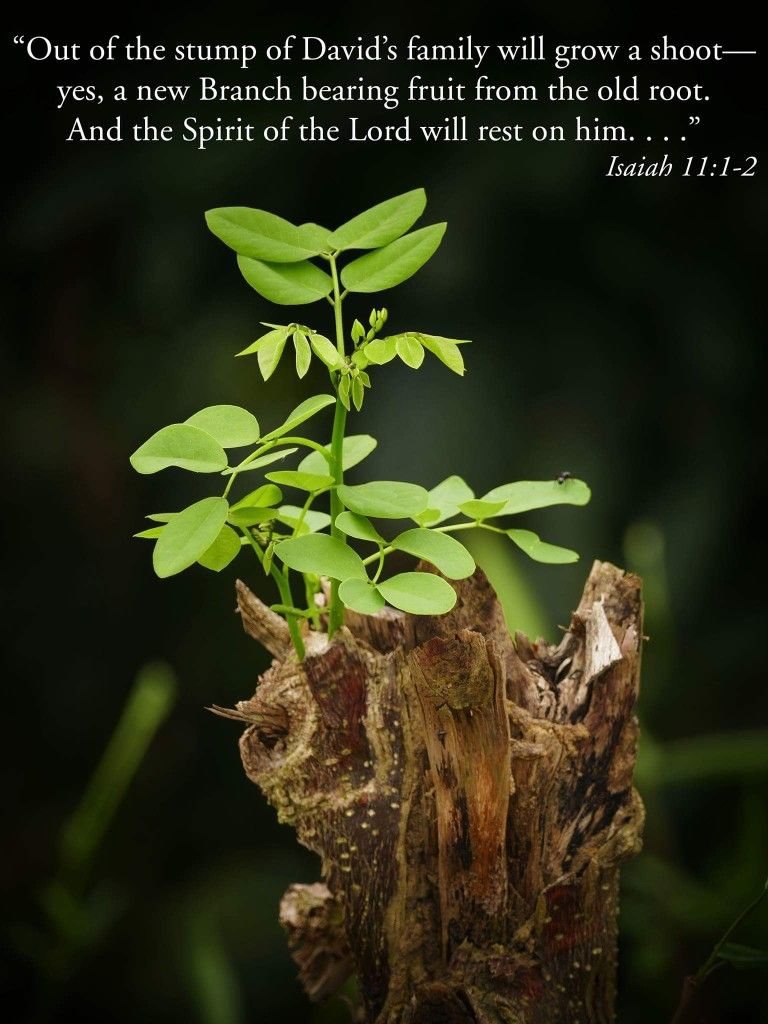
In this week’s passage, we are told of a promised figure, who will arise to lead the nations into that time of peace: “a shoot shall come out from the stump of Jesse, and a branch shall grow out of his roots” (11:1). That figure will exude “the spirit of wisdom and understanding, the spirit of counsel and might, the spirit of knowledge and the fear of the Lord” (11:2); he will judge with tsedeqah, righteous-justice, and mishor, equity (11:4). The proposing of this promised figure is a significant development from the prophetic word we heard last week.

This “shoot” from Jesse will advocate for “the poor” and “the meek”, and stand firmly against “the wicked” (11:4). This is precisely the stance that the prophets had previously advocated (Amos 27; 4:1; 5:11; 8:4–6; Isa 3:14–15; 10:2; 25:4; 26:6; 29:19) and would subsequently express (Isa 41:17: 58:7; Jer 22:16; Ezek 18:11–13; 22:29–31; Zech 7:9–10). It is consistent with teachings in The Law about justice for the poor and punishment for the wicked.

This “shoot” will be girded with righteous-justice, for which the prophets have consistently advocated (Hos 10:12; Amos 5:24; Isa 1:22; 5:7; 28:17; 32:16–17; 54:14; Jer 22:3; Ezek 18:19–29; Dan 9:24; 12:3; Zeph 2:3; Mal 4:1–3; Hab 2:1–4). The “shoot” will also exhibit faithfulness, a quality that the prophets have valued (Hos 2:20; 4:1; 14:8; Isa 16:5), because its presence amongst the people reflects its centrality in God’s own nature (Isa 38:19; 65:16; Jer 31:3; 32:41; Zech 8:8).

Thus the “shoot from Jesse” will demonstrate two qualities that feature strongly in Hebrew Scriptures: fidelity to “the fear of the Lord” (11:3; see Job 28:28; Ps 19:9; 34:11; 111:10; Prov 1:7, 29; 9:10; 14:27; 15:33; 19:23; 23:17; Isa 33:6) and the “knowledge of the Lord” (11:9; see Gen 2:9, 17; Exod 31:3; 35:31; Num 24:16; Ps 94:10; 119:66; Prov 1:7; 2:5; 5:2; 8:10; 9:10; 10:14; Hos 6:6; Hab 2:14; Mal 2:7).

*****

This oracle thus sits firmly within the stream of prophetic speech about what God desires amongst the people of Israel, calling them to be faithful to the Law and walk in its oaths. Yet its presence in the Christian lectionary at this time of the year directs our attention to a way of reading it as a prophecy that foretells the coming of Jesus. Indeed, each of the Hebrew Scripture readings during Advent and at Christmas offer us a similar invitation to understand them as saying, “this is what the prophet of old said, and we can see that these words are fulfilled in the coming of Jesus”.

How are we to deal with this hermeneutical invitation, guiding us to interpret words spoken 800 years before Jesus as clear and direct statements about what Jesus himself will be like, and what he will do? I started pondering this question in my blog on last week’s passage from Isaiah; see https://johntsquires.com/2022/11/22/on-reading-scripture-during-advent-drawing-from-the-ancient-prophecies-isaiah-2-advent-1a/

After reading this blog, one person responded to me by quoting scripture and posing a rhetorical question that appears to resolve the matter. “‘And beginning with Moses and all the Prophets, (Jesus) explained to them what was said in all the Scriptures concerning himself.’ — Luke 24:27 As followers of Jesus, is this not our interpretation of the Bible?”

Well, yes. And, no. So, let me explain.

I think that we need to be careful in the way that we say that “this passage is about Jesus”. There is one way of saying this that drives us towards claiming that “when the prophet said these words, he was looking forward in the future to the coming of Jesus and predicting him”. That is to say, prophecy is understood as foretelling; looking into the distant future and predicting what God will be doing at that time. And so, these words are about Jesus.

I think that this way of reading texts actually does violence to them. It runs roughshod over the original context in which the words were spoken. It ignores, and perhaps even obliterates, the original context (in the time of Israel) for the sake of highlighting the later context (in the time of Jesus). And in the course of doing this, it actually wrenches the passage out of its earlier Israelite context—within the society that developed into Judaism—and forces it into a later Christian context.

This can actually lead to a form of supercessionism; a way of claiming that the Jewish texts, and the Jewish way of life and faith, are superceded by Christian faith and understanding; that Judaism is “old” and no longer relevant, because Christianity is “new” and now the way that God relates to us.

I don’t subscribe to this interpretive approach; Judaism is a living faith in its own right, with its own sacred texts. Those texts maintain an integrity in their own right, within that faith context, and should not be forced into a different, dogmatic Christian framework. My church does not hold to this way of reading things, either. See https://johntsquires.com/2020/10/01/producing-the-fruits-of-the-kingdom-matt-21/

Nor do I subscribe to the notion that prophecy is always and only about foretelling. The ancient prophets were not just fixated on “what would happen with Jesus”. Prophecy may be about foretelling—and not always centuries into the future, but also about the time soon to come as the prophet spoke. But prophecy is also (and perhaps primarily) about forthtelling; speaking the word of God into the immediate context, addressing issues of concern in the political and social life of the people.

That is to say, prophecy is multilayered, multivalent, open to a range of interpretative options. It is not to be reduced to one line of sight, but should remain open to the richness of interpretive possibilities it offers.

Another person who respond to my blog said, “God can accomplish two things at once. He can send a prophet that speaks words that the people in a specific time and place need to hear, while at the same time those words can speak to us now.” Not exactly how I would say it; but I agree that any passage in scripture, and any communication from God, can indeed convey meanings at different levels of understanding.

(And one thing I have learnt from my years in dialogue with the Jewish community, representing my church in that dialogue, is that Jewish interpreters are open to a wide range of meanings, and the process of exploring those meanings raises questions and possibilities that invite even wider understandings!)

So I would say that Isaiah 11:1–10, and the other Hebrew Scripture texts offered during Advent, need, firstly, to be understood in their own right, in their original historical and religious context; but secondly, are able to be understood as setting out features which we find, much later, with the benefit of hindsight, are manifested by Jesus. In that sense, the ancient forthtelling for the society of the day also is capable of being understood as foretelling into the time of Jesus.

The prophet of old was looking for someone to act in ways that would be faithful to God’s way and helpful for society of the day, holding to the standard of righteous-justice that God desired. That way of acting is indeed the way that Jesus behaved; he was faithful to God’s way, demonstrating righteous-justice in his own actions, and calling his followers to live in accordance with that same righteous-justice. The words of the prophet tell us significant things about Jesus. But let’s not make it “all about Jesus”. It’s not.

On reading scripture during Advent: drawing from the ancient prophecies (Isaiah 2; Advent 1A)

“Many peoples shall come and say, ‘Come, let us go up to the mountain of the Lord, to the house of the God of Jacob; that he may teach us his ways and that we may walk in his paths’” (Isa 2:3). These are words in the section from Hebrew Scripture that are offered by the lectionary for this coming Sunday, the first day of Advent (Isa 2:1–5). How do we deal with the words of a prophet, speaking eight centuries before Jesus, when they are set for the season in which we look forward, with expectation and hope, to the coming (again) of Jesus, at Christmas?

Perhaps these words sit here, at the start of Advent, because they express a vision of the universal relevance and impact of faith in God, grown amongst the people of Israel, and brought to a fuller expression in the person of Jesus? The claim that “many peoples” will come to Jesus points to his universal impact. The notion that these “many people” will seek to learn the ways of the Lord and walk in his paths is a comforting and inspiring statement by the prophet.

This passage, too, is well-known for the prophet’s vision that divine judgement will take place “between the nations … for many peoples” (2:4a); as a result, those people “shall beat their swords into ploughshares and their spears into pruning hooks” (2:4b). This oracle, shared with the contemporary prophet Micah (Mic 4:1–4), foresees that these nations “shall not learn war any more” (2:4c). It’s a wonderful vision—sadly, one that is still awaiting fulfilment, even 28 centuries later.

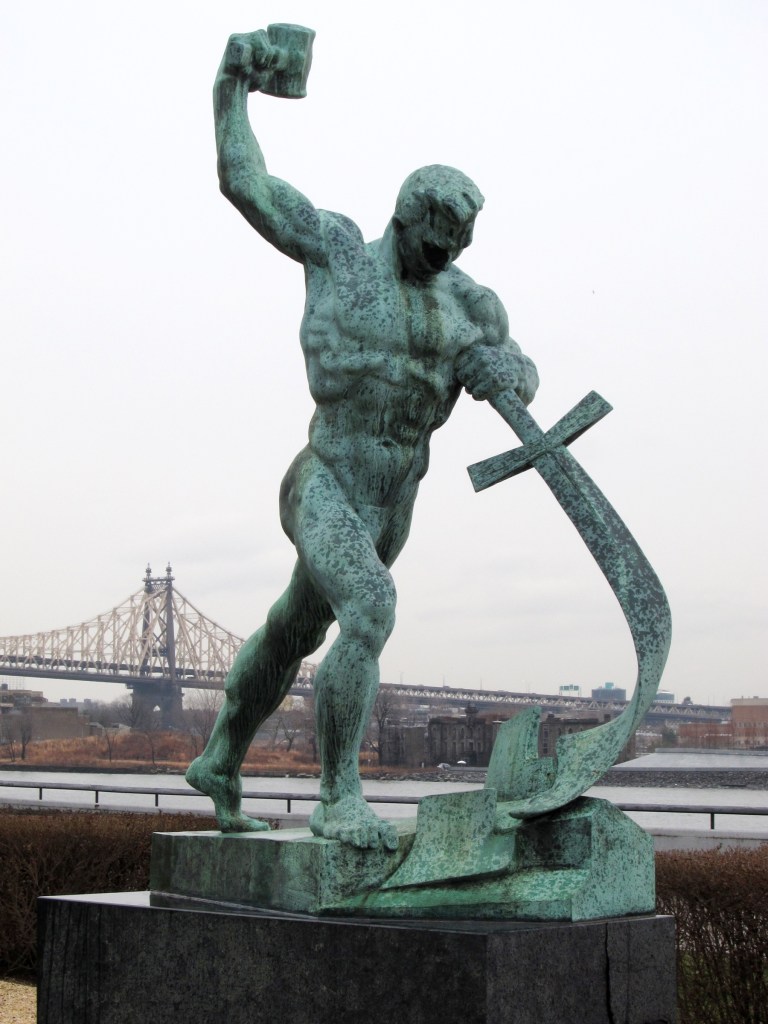
Let Us Beat Swords into Plowshares,
a sculpture by Evgeniy Vuchetich
in the United Nations Art Collection

*****

In the coming weeks, we will be hearing and considering other words from this prophet who lived eight hundred years before Jesus; words that the church has heard, and taken, and restated, and declared that they speak about Jesus—predictive prophecy, enabled by the Spirit, spoken well in advance of the time of their fulfilment. After the vision of universal peace this coming Sunday (Isa 2:1–5, Advent 1A), the following Sunday we will hear a similar oracle from Isaiah (Isa 11:1–10, Advent 2A), in which another vision of universal harmony is expressed.

The two passages sit curiously alongside the Gospel passages of the prediction of apocalyptic turmoil by Jesus (Matt 24:36–44, Advent 1A) and the fierce apocalyptic preaching of John (Matt 3:1–12, Advent 2A). Whilst the Gospel passages foresee disastrous events, the Hebrew Scripture passages look to universal peace.

The other two Sundays in Advent contain further oracles spoken eight centuries before Jesus by the prophet Isaiah. One comes from the later part of the long opening section of Isaiah (chapters 1–39), and once again offers a vision of restitution and harmony; a period of time with abundant blossoming (35:1–2), divine salvation (35:3–4), restoration of full health (35:5–6), an a highway, “the Holy Way”, where “no lion shall be there, nor shall any ravenous beast come upon it” (35:9). The whole vision is framed with joy and singing (35:2, 10; see Isa 35:1–10, Advent 3A).

This passage sits, more easily, alongside the Gospel reading for that Sunday, recounting an incident in which Jesus was asked about John the baptiser (Matt 11:2–11; Advent 3C), in which he talks about events taking place even in their midst: “the blind receive their sight, the lame walk, the lepers are cleansed, the deaf hear, the dead are raised, and the poor have good news brought to them” (11:5).

Finally, on the fourth Sunday of Advent, the lectionary takes us to the very familiar prophetic words, “the Lord himself will give you a sign; look, the young woman is with child and shall bear a son, and shall name him Immanuel” (Isa 7:14), a part of a longer prophecy that Isaiah speaks directly to King Ahaz (Isa 7:10–16), Advent 4A).

Alongside this, of course, is the Gospel passage where this famous prophetic utterance is cited (Matt 1:18–28, Advent 4A)—albeit, in a version that clearly mistranslates the Hebrew ‘almah (young woman) as the Greek parthenos (virgin)—a rendering that has become firmly fixed into the Christian traditions about the birth of Jesus.

*****

A brief footnote: two of these passages (Isa 7 and Isa 11) come from the famous three passages early in Isaiah that are regularly connected, in Christian tradition, with the birth of Jesus. The third passage (Isa 9) is designated by the lectionary as the first reading for “the Nativity of the Lord” on Christmas Eve or Christmas Day (Isa 9:2–7). Together, the “young woman shall conceive” (Isa 7), “a child has been born for us, a son is given” (Isa 9), and “a shoot shall come out from the stump of Jesse” (Isa 11) provide a natural collection of ancient words pointing to the good news of the Christmas story.

*****

That said: we need to be very careful in how we speak about these passages. Whilst they seem, to us Christians, to fit naturally within the context of our Advent expectation about the coming of Jesus, we need to remember that we are taking passages from scriptures that are sacred to people of another faith, which existed long before the Christian faith came into being as a system of belief; indeed, long before Jesus himself was born.

We know “in our heads” that Christianity emerged from the Jewish faith—but often we act as if this newly-formed religious system now stands in the place of Judaism, as the body of belief to which the Lord God, the ancient of days, now relates and responds; and that Judaism itself is now obsolete, no longer relevant, superseded. Presenting readings from Hebrew Scripture as if they speak directly and clearly about Jesus, continues such an attitude.

Judaism is not, of course obsolete; there are still millions of people holding the beliefs of Judaism and keeping the practices of Judaism around the world—in Israel, in the United States, in Australia, and in any other countries. The Jewish faith has not ended; Christian believers have not superceded Jews as God’s chosen people. God’s covenant with Jewish people continues; as Paul declared so clearly, “God has not rejected God’s people” (Rom 11:1), “the gifts and the calling of God [to Israel] are irrevocable” (Rom 11:29). “Salvation has come to the Gentiles” (Rom 11:11), but even so, “all Israel will be saved” (Rom 11:26), for “as regards election, they are beloved” (Rom 11:28).

See more at https://johntsquires.com/2020/08/10/god-has-not-rejected-his-people-all-israel-will-be-saved-rom-11/

Indeed, there is much in common amongst these two faith. Jews and Christians each orient our belief towards the same God, the God of Abraham and Sarah, of Isaac and Rebekah, the God of Moses, Aaron, and Miriam. Christians believe that this God is the same as the God of Mary and Jesus, of Peter and Paul, of Priscilla and Phoebe, and the God in whom we believe. We need to give due acknowledgement of that reality in our worship and preaching.

Supersessionism is a term used to describe the way that the Church, through the centuries, has simply taken over Jewish elements (such as scripture, the covenant, the Ten Commandments, Pentecost, the Passover Seder—and these “Advent texts” from Isaiah). We have “baptised” them so that believers have the view that these are Christian elements, without any sense of their Jewish origins—and their continuing place in contemporary Jewish life.

The Assembly of the Uniting Church issued a statement in 2009 regarding our relationship with Jews and Judaism. It affirmed the integrity of Judaism as a living faith, and made a commitment to engage in constructive relationships with Jews. It encouraged members of the Uniting Church to value Judaism as a living faith, and not to engage in acts or demonstrate actions that indicate a belief that Judaism has been superceded. See https://assembly.uca.org.au/rof/resources/learn-more/item/download/1109_09f709cccf49d83607c92e31d650d581

We should not therefore speak, sing, pray, or act in ways that are disrespectful to Jewish practice and beliefs, and in contravention of our strong commitment as a church to work constructively with our Jewish sisters and brothers. That should be an important guideline in the way we approach these “Advent texts”, even as we have our eyes firmly fixed on “the coming of Jesus”, which we celebrate at Christmas.

See also

New heavens and a new earth (Isaiah 65; Pentecost 23C)

The Hebrew Scripture passage offered by the lectionary this coming Sunday comes from the third main section of the book of Isaiah (chapters 56–66). This section of the book differs from the two main sections that precede it—the pre-exilic section (chapters 1–39) and the section as the exile itself is drawing to an end (chapters 40–55).

The prophet begins this third section with a familiar prophetic announcement which sets forth the classic prophetic programme, with the classic divine assurance: “maintain justice, and do what is right, for soon my salvation will come, and my deliverance be revealed” (Isa 56:1). The section offered by the lectionary (Isa 65:17–25) sets out how that justice will come to be, through the vision of “new heavens and a new earth”.

Written during the period when the people of Judah were returning to their land, to the city of Jerusalem (from the 520s BCE), this section of Isaiah sets out what this justice will look like through a series of powerful oracles. The prophet sounds a vivid counter-cultural note in the midst of the events of his time. He begins with the promise to foreigners and eunuchs that “I will give, in my house and within my walls, a monument and a name better than sons and daughters; I will give them an everlasting name that shall not be cut off” (Isa 56:5).

This is a striking contrast to the narrative provided in the books of Ezra and Nehemiah, which tell of the return to the city, the rebuilding of the walls, the renewal of the covenant and the public reading of the Law, the rededication of the Temple—and actions designed to remove foreigners (especially women) from within Israel (see Ezra 10; Neh 13).

Ezra and Nehemiah exhibited a zealous fervour to restore the Law to its central place in the life of Israel. Ezra, learning that “the holy seed has mixed itself with the peoples of the lands” (Ezra 9:2), worked with “the elders and judges of every town” to determine who had married foreign women; the men identified “pledged themselves to send away their wives, and their guilt offering was a ram of the flock for their guilt” (Ezra 10:19). (So much for the importance of families!)

Nehemiah considered that this project to “cleanse [the people] from everything foreign” (Neh 13:30) was in adherence to the command that “no Ammonite or Moabite should ever enter the assembly of God, because they did not meet the Israelites with bread and water, but hired Balaam against them to curse them” (Neh 13:1–2; see Num 22—24). The restoration of Israel as a holy nation meant that foreigners would be barred from the nation.

The oracle at the start of the third section of Isaiah stands in direct opposition to this point of view; “the foreigners who join themselves to the Lord … and hold fast my covenant—these I will bring to my holy mountain, and make them joyful in my house of prayer; their burnt offerings and their sacrifices will be accepted on my altar; for my house shall be called a house of prayer for all peoples” (Isa 56:6–7). This is what God’s justice looks like!

Jesus, of course, quoted this last phrase (“a house of prayer for all people”) in the action he undertook in the outer court of the Temple (Mark 11:17). Later, the welcome offered to the Ethiopian court official by Philip, who talked with him about scripture and baptised him, a eunuch (Acts 8:26–38), is consistent with the prophetic words, “to the eunuchs who keep my sabbaths, who choose the things that please me and hold fast my covenant, I will give them an everlasting name that shall not be cut off” (Isa 56:4–5).

From the earliest days, the church practised an inclusive welcoming of diversity that was consistent with this prophetic declaration. What went wrong, we may ponder, for the church to dig itself into the corner of exclusivism and judgementalism that unfortunately has characterised too many manifestation of church?

The particular passage that is provided for this coming Sunday is almost at the end of the book. It offers a wonderfully climactic vision to this section of the book—and indeed to the whole of Isaiah. The prophet has continued to explain what it means to adhere to the way of justice, practising the fast that the Lord desires.

The promise is that Israel will have a new name: “you shall no more be termed Forsaken, and your land shall no more be termed Desolate; but you shall be called My Delight Is in Her, and your land Married; for the Lord delights in you, and your land shall be married” (Isa 62:4). We can see the symbolic significance of names in considering the prophet Hosea and in Isaiah 8, for example.

By contrast, vengeance will be the experience of Edom; using the image of trampling down the grapes in the wine press, the prophet reports the intention of God: “I trampled down peoples in my anger, I crushed them in my wrath, and I poured out their lifeblood on the earth” (63:1–6). So vigorously does God undertake this task, that he is attired in “garments stained crimson” because “their juice spattered on my garments and stained all my robes” (63:1–3).

Once again, the prophet speaks in graphic terms. Edom is a symbolic portrayal of the Babylonian Empire, which had been dominant in the middle eastern world of the day for some time—yet it had recently been subsumed by the Persian Empire (under whom the people of Judah were able to return home). The punishment was on the horizon, either the horizon immediately in view, or the horizon that had just passed. Edom (Babylon) had been conquered—a happening interpreted by the anonymous prophet as divine retribution.

Confronted with this display of wrath and vengeance, the prophet adopts an attitude of penitence, yearning for God to “look down from heaven and see, from your holy and glorious habitation” (63:15). His plea for the Lord to “tear open the heavens and come down, so that the mountains would quake at your presence—to make your name known to your adversaries, so that the nations might tremble at your presence!” (64:1–2) must surely have been in the mind of the evangelists as the reported the baptism of Jesus, when he “saw the heavens torn apart and the Spirit descending like a dove on him” (Mark 1:10).

The book ends with a sequence in which the prophet reports the words of the Lord which indicate that Israel will be restored (65:1–16), followed by the statement that the Lord is “about to create new heavens and a new earth” (65:17–25; 66:22–23)—the passage provided by the lectionary this week. It is a wonderfully climactic, all-encompassing vision. Not only will Jerusalem enjoy prosperity, but “the wealth of the nations [shall be] like an overflowing stream” (66:12).

The vision of this penultimate chapter is global; it is for “all people” (picking up the hope of Isa 40:5), for “all the nations of the earth”, as both Jeremiah (Jer 33:9) and Haggai foresee (Hag 2:6–9), for “all flesh” as Joel predicts (Joel 2:28–29), for “every living creature”, as the final vision of Ezekiel portrays (Ezek 47:7–12). The “new heavens and new earth” (Isa 65:17) are for everyone of Israel (Isa 65:18–19), indeed, even for all creatures, “wolf and lamb, lion and ox” (Isa 65:25).

This vision is, of course, taken up and expanded in the closing chapters of the final book of the New Testament (Rev 21:1–22:7). That provides a globally wondrous vision to end the writings of the renewed covenant. The closing vision of Trito-Isaiah, the foundation for the vision of the seer at Patmos, has incorporated a number of references to earlier prophetic words: building houses and planting vineyards (65:21) recalls the words of Jeremiah (Jer 29:5–7); the image of wolves lying with lambs and lions “eating straw like the ox” recalls the vision of Isaiah (Isa 11:6–7).

The promise that “they shall not hurt or destroy all on my holy mountain” (65:25) recalls that same vision of Isaiah (Isa 11:9), whilst the next promise about not labouring in vain nor bearing children for calamity (65:23) reverses the curse of Gen 3:16–19. The story of creation from the beginning of Genesis is evoked when the Lord asserts that “heaven is my throne and the earth is my footstool … all these things my hand has made” (66:1–2); these are the words which Stephen will quote back to the council in Jerusalem (Acts 7:48–50) and will lead to his death at their hands. All the allusions together make this a fine conclusion to the visionary prophetic stream of the first covenant.

And yet, even to the very end of this book, the judgement of the Lord is evident; the prophet declares that “the Lord will come in fire, and his chariots like the whirlwind, to pay back his anger in fury, and his rebuke in flames of fire; for by fire will the Lord execute judgment, and by his sword, on all flesh; and those slain by the Lord shall be many” (66:15–16).

Nevertheless, the glory of the Lord shall be declared “among the nations” (66:19) and “they shall bring all your kindred from all the nations as an offering to the Lord” (66:20). The universalising inclusivism that was sounded in the oracle at the start of this prophet’s work (in chapter 56) is maintained through into this closing oracle. In “the new heavens and the new earth which I will make … all flesh shall come to worship before me, says the Lord” (66:22–23). The vision lives strong! It’s a good way to end the series of readings from the prophets we have followed during the past few months.

I am with you (Haggai 2; Pentecost 22C)

In recent months, the lectionary has been offering us passages from the prophets, the second main section of TaNaK, which is the Jewish name for the collection of scrolls, largely in Hebrew (with a tiny section in Aramaic in the prophet Daniel), which are known as the Old Testament by most Christians.

I prefer to call this collection of documents the Hebrew Scriptures—technically, not quite accurate, but a better option, I believe, than the title that labels these works as “old”, with the implications of out-of-date, no longer relevant, or (worst of all) superseded by something that is “new”. As it is quite unfair to label the scriptures of a living faith, Judaism, as “superseded”, I prefer to take the option of a descriptor which refers both to the language of the documents (well, most of them), and the cultural origins of the documents, as coming from the ancient Israelite culture of the Hebrews.

So, within the central section of these documents are the scrolls of the Prophets (nevi’im, in Hebrew). These books (using Christian terminology) date from a number of centuries, before, during, and after, the central historical era of the Exile (from 587 BCE until the various returns to the land of Judah in the 530s, 520s, and beyond). It is from this section of the scriptures that we have been offered a series of readings in recent months—starting with Amos and Hosea, touching on Isaiah, covering many key parts of Jeremiah, and then moving into a series of “minor prophets” (Joel, Habakkuk, and Haggai), before concluding with Isaiah 65.

See

There are four prophets whose activity can reasonably be dated to the specific time soon after the exiles had returned to Jerusalem. The books of Haggai and Zechariah each open with a specific date, both placing their activity in the time of Darius, King of Persia. The third section of Isaiah (chapters 56—66) are widely considered to have originated around this same period of time, as the exiles returned to the land and undertook the task of rebuilding its society and its buildings. The prophet Malachi is not dated, but is generally considered to have been written fairly soon after Haggai and Zechariah.

The people from Judah who had lived as exiles in Babylon for five decades were permitted to return to Judah late in the 6th century BCE, by decision of the Persian King, Cyrus (whom Deutero-Isaiah described as God’s “Messiah”, Isa 45:1). In his decree, Cyrus acknowledges “the Lord, the God of heaven” and states that “any of those among you who are of his people … are now permitted to go up to Jerusalem in Judah, and rebuild the house of the Lord, the God of Israel” (Ezra 1:2–4).

Under Nehemiah as Governor, worship is reinstituted in Jerusalem (Ezra 3:1–7), the walls around the city of Jerusalem are rebuilt (Neh 2—6, 12), and the Temple is rebuilt and rededicated (Ezra 5–6). After this, the Law is read in the city under the guidance of Ezra, a priest who is also described as a scribe (Neh 8) and the covenant with the Lord is renewed (Neh 9–10).

Initially, there was opposition to the rebuilding works from “the enemies of Judah and Benjamin” (Ezra 4:1–16), and with intervention from King Artaxerxes, work on the temple ceased (Ezra 4:17–24). The narrative in Ezra reports that “the prophets, Haggai and Zechariah son of Iddo, prophesied to the Jews who were in Judah and Jerusalem, in the name of the God of Israel who was over them” (Ezra 5:1), and work on restoring the temple recommenced (Ezra 5:2).

Further opposition emerged (Ezra 5:3–17), resulting in intervention from King Darius that decreed “let the house be rebuilt … let the Governor of the Jews and the elders of the Jews rebuild this house of God on its site … let it be done with all diligence” (Ezra 6:1–12).

The end result is that the prophets of the Lord and the rulers of the Persian Empire together ensure that the temple is restored: “So the elders of the Jews built and prospered, through the prophesying of the prophet Haggai and Zechariah son of Iddo. They finished their building by command of the God of Israel and by decree of Cyrus, Darius, and King Artaxerxes of Persia” (Ezra 6:14).

What is it, then, that Haggai says to the people? His prophetic words are nestled within a relatively brief narrative telling of this return to Jerusalem; they were delivered over a short period of time from “the second year of King Darius, in the sixth month, on the first day of the month” (Hag 1:1) until “the twenty-fourth day of the ninth month, in the second year of Darius” (Hag 2:10, 20).

In the course of those three months, Haggai condemns the people for failing to rebuild the ruined temple while people live in “paneled houses” (1:4) and encourages the people to “go up to the hills and bring wood and build the house” (1:8). In the oracle offered by the lectionary this coming Sunday (1:15b—2:9), Haggai declares that “the latter splendour of this house shall be greater than the former, says the Lord of hosts; and in this place I will give prosperity, says the Lord of hosts” (2:9).

“I am with you, says the Lord of hosts”, the prophet affirms, “according to the promise that I made you when you came out of Egypt; my spirit abides among you; do not fear” (Hag 2:4–5). The prophet offers a word of hope to a people who have suffered and who are anxious about what the future may hold for them.

Haggai then goes on to relay an ominous word of the Lord: “I am about to shake the heavens and the earth, and to overthrow the throne of kingdoms; I am about to destroy the strength of the kingdoms of the nations, and overthrow the chariots and their riders; and the horses and their riders shall fall, every one by the sword of a comrade” (2:21–22).

Yet this short book ends with a positive note for the future, promising to make Zerubbabel, who led the first wave of exiles to return to Judah, “like a signet ring, for I have chosen you” (2:23). It is undoubtedly with this motif of hope that the selected passage has been chosen for the lectionary, as we come to the final Sundays after Pentecost at the end of Year C in the cycle of seasons. It leads well into the vision of “new heavens and a new earth” that we will read the following Sunday (Isa 65:17).

The righteous live by their faith (Habakkuk 2; Pentecost 21C)

This Sunday, the lectionary invites us to hear two sections of the prophet Habakkuk (Hab 1:1–4, 2:1–4). Habakkuk is a shadowy figure, known, really, for only one statement—just half of one verse. That short statement, “the righteous live by their faith [or faithfulness]” (2:4b), stands as the text upon which Paul developed his important theological statement in Romans: “in it [the gospel] the righteousness of God is revealed through faith for faith; as it is written, ‘the one who is righteous will live by faith’” (Rom 1:17). As well, Paul quotes this verse in his letter to the Galatians (Gal 3:11) and the verse is cited in the “word of exhortation” sent to the Hebrews (Heb 10:38). So it appears in significant writings if the early Christian movement.

From an ancient Israelite figure about whom very little is known, this one short phrase has played such a foundational role in articulating a central tenet of Christian faith. It runs from Paul’s assertion that “the righteous live by their faith”, through Augustine’s affirmation that we are justified by grace through faith, to Luther’s central claim of “sola fide, sola scriptura, solus Christus, sola gratia”, into the contemporary evangelical doctrine of “justification by faith alone”.

Habakkuk was one of a number of Israelite prophets who were active in the few decades leading up to the conquering of the southern kingdom by Babylon in 587 BCE, and the removal into exile of the people as a result of that event. In this context, Habakkuk declares, “I will stand at my watch post, and station myself at the rampart” (Hab 2:1). From his watch post, he declaims the words of judgement given to him by God: the wealthy will be called to account by their creditors, violent terrors will arise, and “the cup in the Lord’s right hand will come around to you, and shame will come upon your glory” (Hab 2:15).

Amidst these thundering pronouncements, Habakkuk does offer hope, declaring that “the earth will be filled with the knowledge of the glory of the Lord, as the waters cover the sea” (2:14), and imploring the people, “the Lord is in his holy temple; let all the earth keep silence before him!” (2:20). He affirms that God’s “glory covered the heavens, and the earth was full of his praise” (3:3)—but that glory will swiftly lead to “the days of calamity” (3:16). The threat of Exile looms large for this prophet.

In the context of Habakkuk’s prophetic activity, the affirmation that “the righteous live by their faith [or faithfulness]” (2:4b) is the word that God gives to the prophet, responding to his complaints about what sufferings are taking place. God is “rousing the Chaldeans, that fierce and impetuous nation, who march through the breadth of the earth to seize dwellings not their own” (1:6), and through their dreadful and fearsome activities, God is “destroying nations without mercy” (1:17).

That God is using foreigners to deal with Israel is a striking theological development—one that is at odds with the traditions that emphasise Israel as a chosen nation, holy and set apart, dedicated to the Lord; the nation alone through whom the Lord God works. That this God will use foreigners is a theme found also in the later writings of Deutero-Isaiah (Isa 40–55), where Cyrus, the Persian ruler, is acclaimed as the one chosen by God, the Messiah, to allow the people of Judah to return to their land (Isa 44:24–45:13).

Habakkuk laments and complains; God instructs him to “look at the proud—their spirit is not right in them”, and to be assured that “the righteous live by their faith” (2:4). The theme of righteousness that is signalled here by the prophet is a central motif in Hebrew Scriptures. It appears in the ancestral stories concerning the key figures of Abraham (Gen 15:6), Saul (1 Sam 26:23), David (2 Sam 22:21–26; 1 Ki 3:6), and Solomon (1 Ki 10:9).

Further, Job exults in his righteousness (Job 27:6; 29:14) and the psalmists petition God on the basis of their righteousness (Ps 5:8; 7:8; 112:1–10). Righteousness is praised in assorted proverbs (Prov 1:3; 8:20; 11:4–6; 12:28; 15:9; 16:8; 21:3, 21) and figures in numerous prophetic oracles (Isa 1:22; 5:7; 28:17; 32:16–17; 54:14; Jer 22:3; Ezek 18:19–29; Dan 9:24; 12:3; Hos 10:12; Amos 5:24; Zeph 2:3; Mal 4:1–3). The message given to Habakkuk holds strong throughout Israelite history, and then continues to sound out, as we have seen, throughout the 20 centuries of Christian history.