Today (1 January) is the eighth day in the Season of Christmas. Some may up early, be preparing to collect their eight maids a-milking in order to mdeliver them to their true love, but many others (I suspect) will be enjoying a late start, sleeping off the effects of a long evening of celebrations, topped off by welcoming in “the New Year”.
In the calendar of saints that is followed in Roman Catholic and Orthodox churches around the world, today is the day to remember the Cappadocian Fathers:
Basil the Great: Bishop of Caesarea, lived from 330–379
Gregory of Nyssa: Bishop of Nyssa, lived from 335–395
Gregory of Nazianzus: Patriarch of Constantinople, lived from 329–389
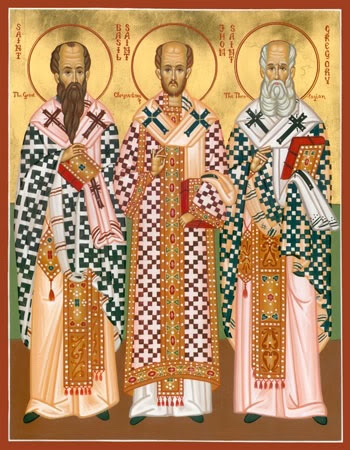
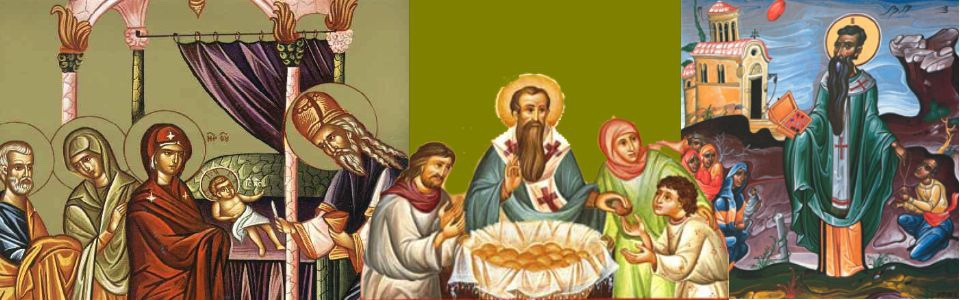
Today is the feast day of Saint Basil the Great in the Eastern churches. Basil wrote many theological works and is remembered (along with the two Gregorys, of Nyssa and Nazianzus—pictured below) as one of the Cappadocian Fathers, who played an influential role in the development of patristic thinking about the triune God.
It is said that Basil was tall, thin, partly bald, with a long beard. (He is the one on the left in the icon above.) He ate no more than was absolutely necessary for his survival; he never ate meat. It is said that he had only one worn undergarment and one overgarment.
Basil said that prayer was the seasoning for our daily work, as we season food with salt; that sacred and holy songs can only inspire us and give us joy and not grief. His philosophy fits well into the Christmas Season, when we season our lives with carols!
At the age of 28, Basil “left the world” and became a monk; at 35 a priest, then at 41, the Bishop of Caesarea. It is said that Basil, being born into a wealthy family, gave away all his possessions to the poor, the underprivileged, those in need, and children.
For Greeks and others in the Orthodox tradition, St Basil is the saint associated with Santa Claus. In Greek tradition, he brings gifts to children every January 1 (St Basil’s Day). It is traditional on St Basil’s Day to serve vasilopita, a rich bread baked with a coin inside.
It is also customary on his feast day to visit the homes of friends and relatives, to sing carols for the New Year, and to set an extra place at the table for Basil.
The celebration of St Basil on 1 January marks the day of his death. In the Western Church, because 1 January commemorates the Solemnity of Mary, Mother of God, Basil shares his saintly commemoration on the next day, 2 January, with Gregory of Nazianzus.
St Basil’s Hymn is one of many traditional Greek carols (often referred to as calanda) that are still sung by children on St Basil’s feast day (New Year’s Day). In the tradition still practiced to some extent in modern times, Greek children roam the neighborhoods from house-to-house on St Basil’s Day, playing instruments and singing songs, bidding New Year’s tidings to everyone, and receiving gifts of sweets and pastries from householders.
Here is the hymn (in a quirky and rather stilted translation):
It’s the beginning of the month beginning of the year High incense tree Beginning of my good year Church with the Holy Seat It’s the beginning of our Christ Saint and spiritual He got out to walk on earth And to welcome us St. Basil is coming from Caesarea And doesn’t want to deal with us May you long live, my lady He holds an icon and a piece of paper With the picture of Christ our Saviour A piece of paper and a quill Please look at me, the young man
(I’m not sure it’s going to make it onto any supermarket Christmas playlist any time soon …)
I guess those with diligent true loves are busy, today, trying to feed the seven partridges, twelve turtle doves, fifteen French hens, sixteen colly birds, twelve laying geese, and seven swimming swans that their true loves have delivered to them (thus far) to commemorate the twelve days of Christmas. And I hope they have their fifteen gold rings locked away securely!
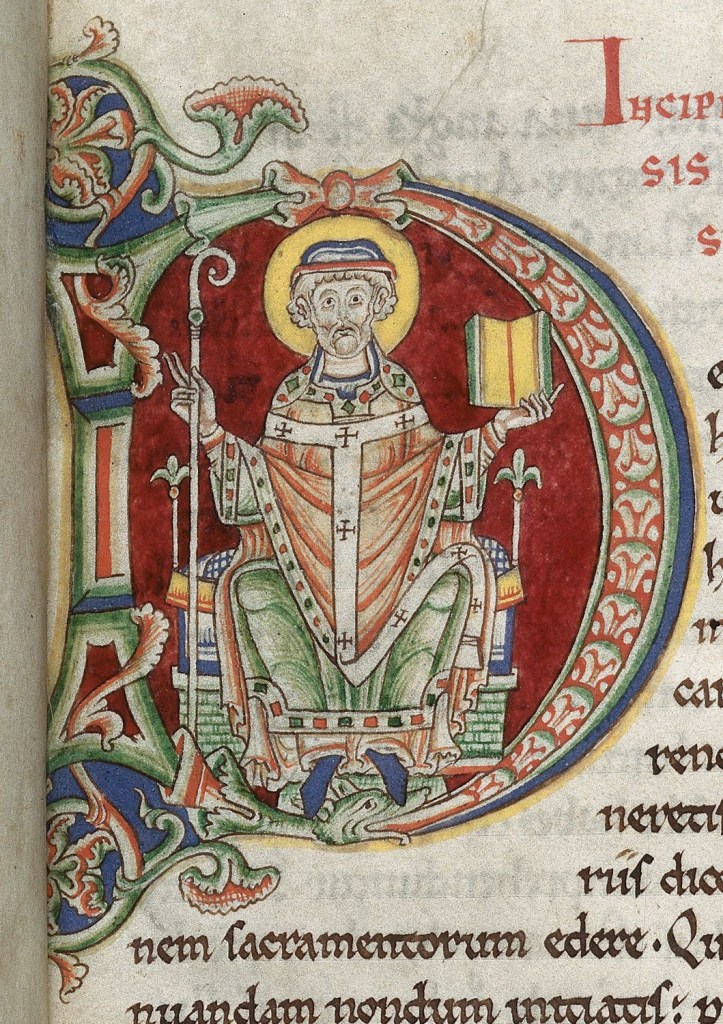
For my part, I am offering a further carol for The Season of Christmas: another one from the early centuries of Christianity, when theologians wrote the words of songs for the faithful to sing—thereby providing them with meaty teaching in the faith (at least as they understood it). Today, it is one by the forth century theologian Ambrose, who was Bishop of Milan from 374 until his death in 397.
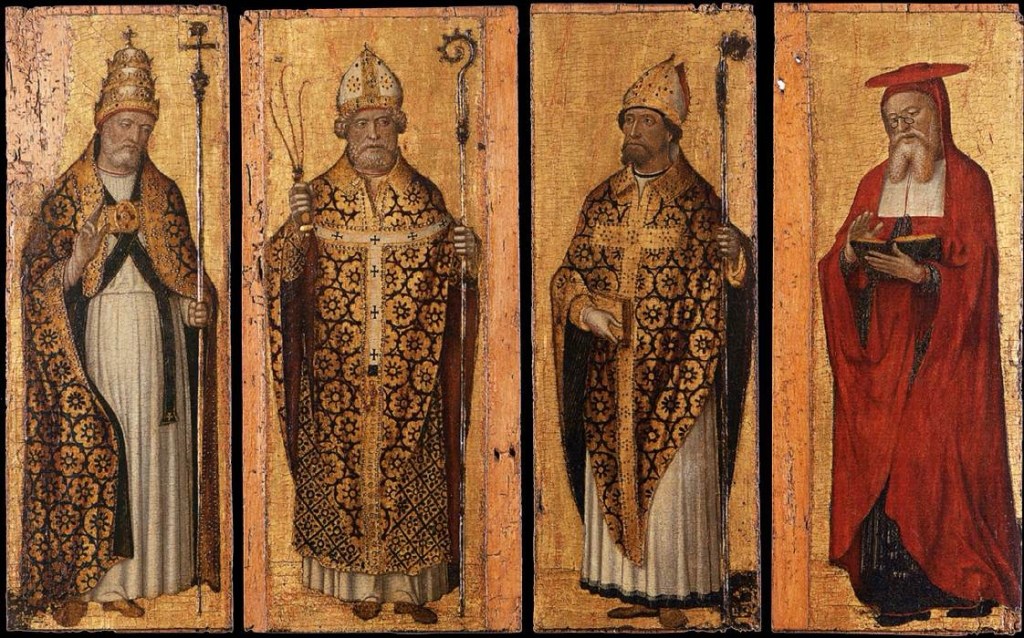
Four Doctors of the Church Four panels from a partially-preserved polyptych, dated c. 1495, and attributed to Galleria Franchetti, Ca’ d’Oro, Venice
Amongst the western church, dominated by Roman Catholicism, Ambrose of Milan (339—397) is counted as one of the four Doctors of the Church, along with his contemporaries Augustine of Hippo (354—430) and Jerome of Stridon (342—420). Pope Gregory the Great (540—604) is accounted as the fourth Doctor. All four had the title Doctor attributed to them, in the true sense of the word (it comes from the Latin word for Teacher).
In the eyes of many theological writers, the fourth century was critical in the development of classic orthodoxy, for this was when the various disputes about the nature of Jesus took place. Those who were leading the theological argumentation—including Ambrose, Augustine, and Jerome—contributed to the development of orthodox dogmas which were confirmed by various church councils: Nicea in 325, Constantinople in 381, Ephesus in 431, Chalcedon in 451, and others in subsequent centuries.
Those whose arguments failed to persuade—or who were condemned by decree of one of the councils—are known to us as “heretics”; they include Theodotius of Byzantium, Nestorian of Constantinople, Paul of Samosata, Apollinaris of Laodicea, Eutyches of Constantinople, and perhaps most famously of all, Arius of Alexandria. Legend has it that at the Council of Nicea, Arius slapped Nicholas of Myra (the historical figure who later morphed into Saint Nicholas and then Santa Claus) and so was temporarily defrocked and imprisoned.
Although their writings were instrumental in developing orthodox theology, such men have long been denigrated as heretics—although, in my mind, a number of these “heretics” offered wise and helpful insights. But the verdict of history stands, cemented now by centuries of church tradition and theological dogma.
Ambrose of Milan
It is in this context of debate, disputation, denigration, and entrenched doctrinal disagreements, that Ambrose penned this carol, Veni redemptor gentium (Come, Redeemer of Nations). It is filled with patristic theologising, reflecting the debates of the day, depicting Jesus as “a giant in twofold substance in one” and “equal to the Father”, whilst also affirming his mother as having “virgin honour all unstained”, a “royal home of purity”. These are the seeds for the theological affirmations about Jesus in some of the much later Christmas carols that we sing today!
Here is the hymn of Ambrose in a translation of the original Latin by John Mason Neale (whom we noted a few days ago provided us with the English of Good King Wenceslas).
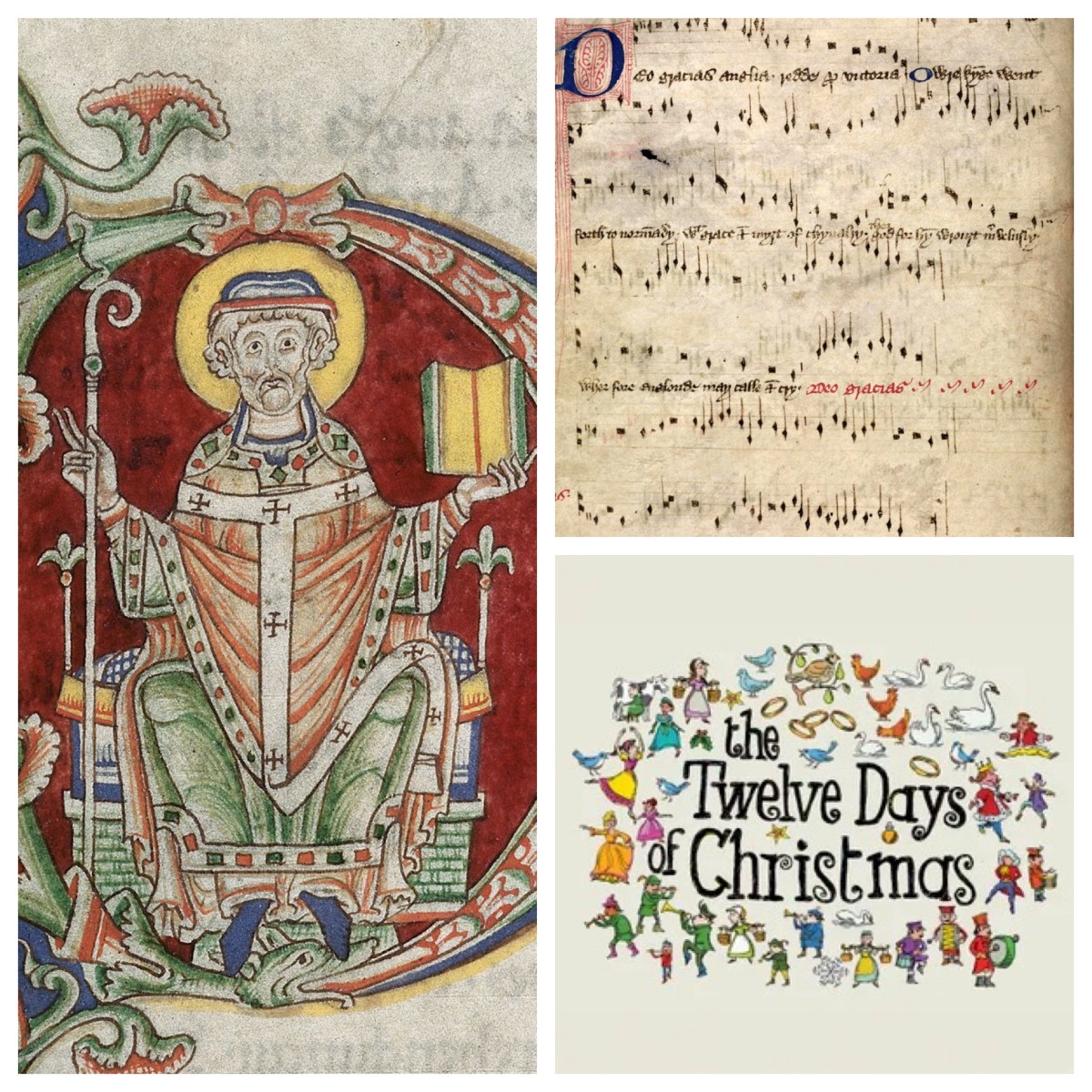
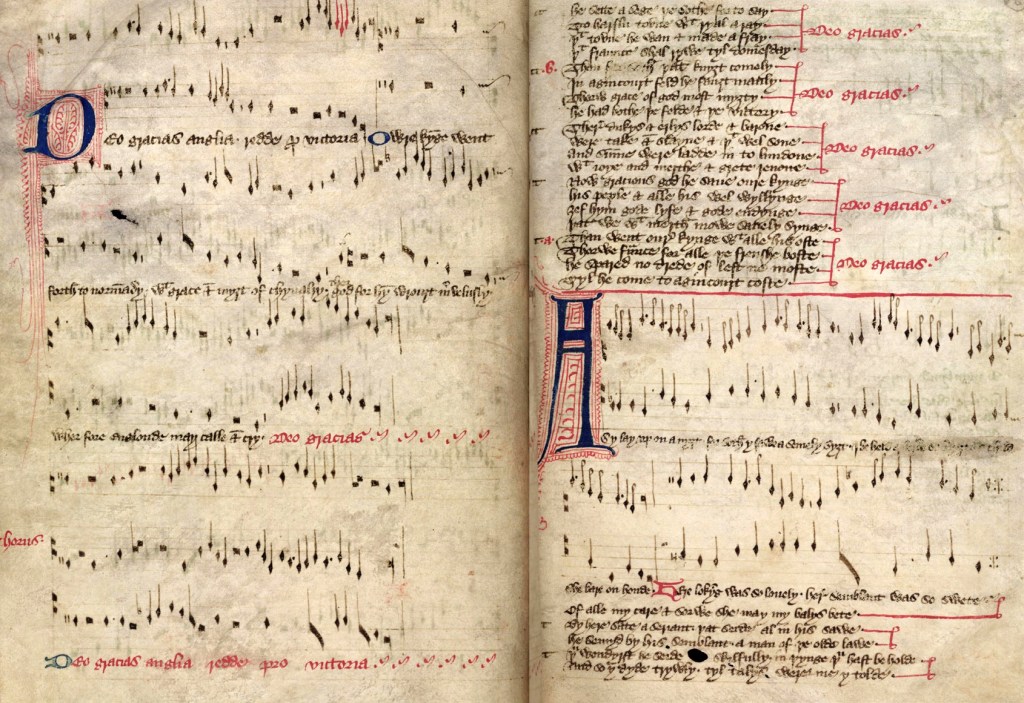
Closely related to this carol, there is another carol in a 15th century manuscript, the Selden Carol Book, a document which contains music and words for thirty carols of the day. (The manuscript is held in Oxford at the Bodleian Library.)
A page from the manuscript of the Selden Carol Book
This carol, number 28 in the collection, both uses the refrain of Ambrose’s original, and, in verse 3, refers directly to the work by Ambrose. Its author, as with all the carols in the Selden manuscript, is unknown.
Veni, redemptor gencium, Veni, redemptor gencium.
This worle wondreth of all thynge
Howe a maide conceyved a kynge;
To yeue us al therof shewynge,
Veni, redemptor gencium.
Whan Gabriel come with his gretynge
To Mary moder, that swete thynge,
He graunted and saide with grete lykynge,
Veni, redemptor gencium.
Ambrose saide in his writynge
Cryst sholde be in a maide dwellynge;
To make sothe alle that syngynge,
Veni, redemptor gencium.
And Davyd saide in his spellynge
That truthe sholde be in erthe growynge
To us, byer of alle thynge,
Veni, redemptor gencium.
Cryst, ycrowned at oure begynnynge,
Be with us at oure endynge
Us to thy ioye for to brynge,
Veni, redemptor gencium.
The text is from Richard Greene, The Early English Carols (Oxford, 1977), p.36. A version in modern English is offered at
I have been amazed to learn that, back in the fifth century, the poet Prudentius wrote a number of hymns that tell the story of the slaughter of innocent children, ordered by King Herod.
Whilst the basic theological orientation of these hymns is clearly patristic orthodoxy, they do contain a gritty realism that seems to have largely flown out the window when modern day carols are sung!
Here is a hymn which remembers those innocent children who were, according to the theology of Prudentius, “victims slain for Christ the King”.
All hail, you infant martyrs’ flow’rs,’
Cut off in life’s first dawning hours
As rosebuds, snapt in tempest strife
When Herod sought the Savior’s life.
O tender flock of Christ, we sing
Of victims slain for Christ the King
Oppression’s loud lament we raise,
Then join the martyrs’ song of praise:
All honor, laud, and glory be,
O Jesus, Virgin-born, to thee;
All glory, as is ever meet,
To Parent and to Paraclete.
(Prudentius, 5th century, alt.)
This hymn is a cento (a patchwork quilt of words from various sources) from the twelfth and last poem in the Cathemerinon of Prudentius, and in its full form it contains 208 lines. The first line of the complete hymn is Quicumque Christum quaeritis. Four beautiful centos from this hymn were included in the Breviary by Pius V (1568); see https://media.churchmusicassociation.org/pdf/hymnsofbreviary.pdf
The original Latin text of the hymn is:
Salvete, flores Martyrum, in lucis ipso lumine Quos ssevus ensis messuit, ceu turbo nascentes rosas.
Vos prima Christi victima, grex immolatorum tener, Aram sub ipsam simplices palma et coronis luditis.
Quid proficit tantum nefas ? Quid crimen Herodem juvat? Unus tot inter funera impune Christus tollitur.
Inter coaevi sanguinis fluenta solus integer, Ferrum quod orbabat nurus party’s fefellit virginis.
Qui natus es de Virgine Jesu, tibi sit gloria, Cum Patre, cumque Spiritu, in sempiterna secula.
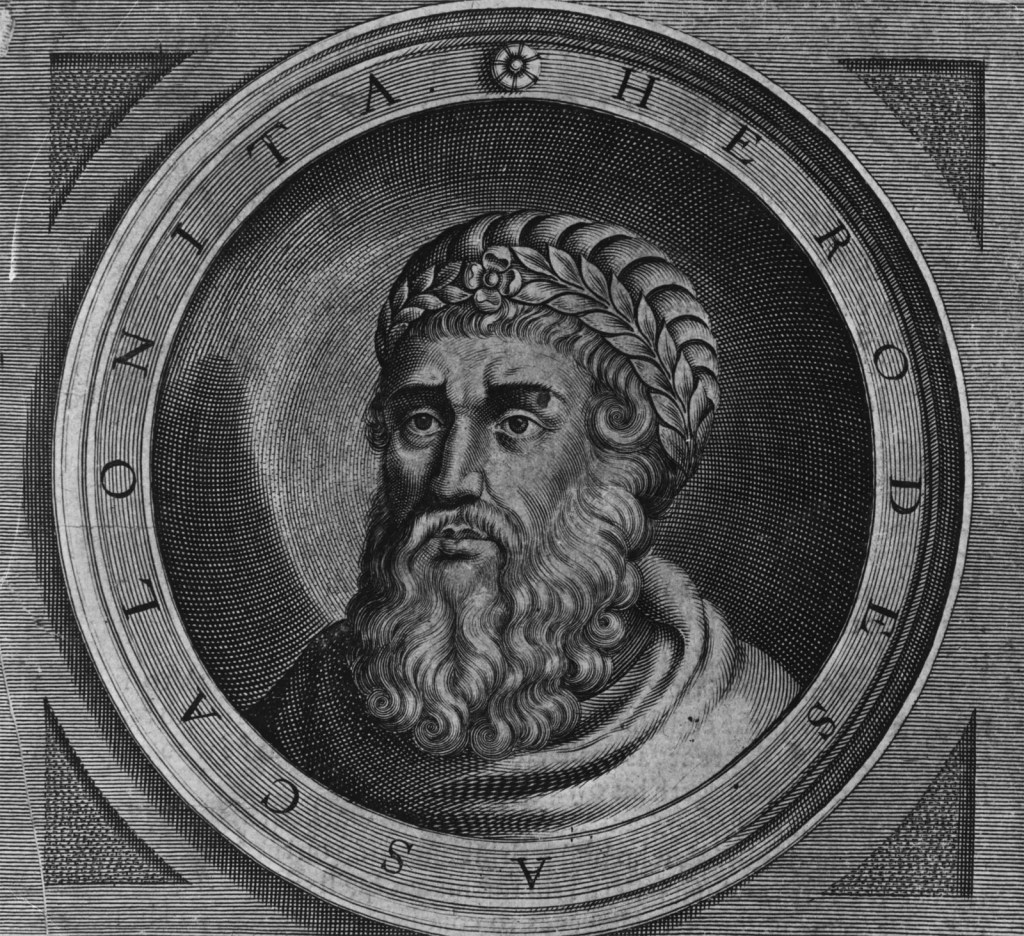
Another of his compositions recounts the same story from the perspective of King Herod.
With boding fears the tyrant hears A King of Kings is hard at hand, Who rule shall claim o’er Israel’s name And high in David’s palace stand.
With wild surprise, ” We die,” he cries, “ Around us lurks a traitor brood ; ” Up, guard, awake, thy weapon take, “ And every cradle drown in blood.”
What boots his ire, and dark desire; What help, if he his thousands slay ? Alone of all, around that fall, The Christ is safely borne away.
Jesu, to Thee all glory be, Of Mary, Virgin-Mother born ; To God Triune all praise be done, Through endless life’s unwaning morn.
The Latin text:
Audit tyrannus anxius adesse regum principem,
qui nomen Israel regat teneatque David regiam.
Exclamat amens nuntio, successor instat, pellimur;
satelles i, ferrum rape, perfunde cunas sanguine.
Quid proficit tantum nefas, quid crimen Herodem iuvat?
unus tot inter funera inpune Christus tollitur.
Iesu, tibi sit gloria, qui natus es de Virgine,
cum Patre et almo Spiritu, in sempiterna saecula. Amen.
This is the 12th and last poem in his Cathemerinon, and in its full form consists of 208 lines. It is found in a 5th century manuscript in the Bibliotheque Nationale, Paris (Prudentius, Opera, 8048, f. 39b).
Though one of the finest poems of Prudentius, it was apparently little used in the services of the Church until the revision of the Roman Breviary after the Council of Trent.
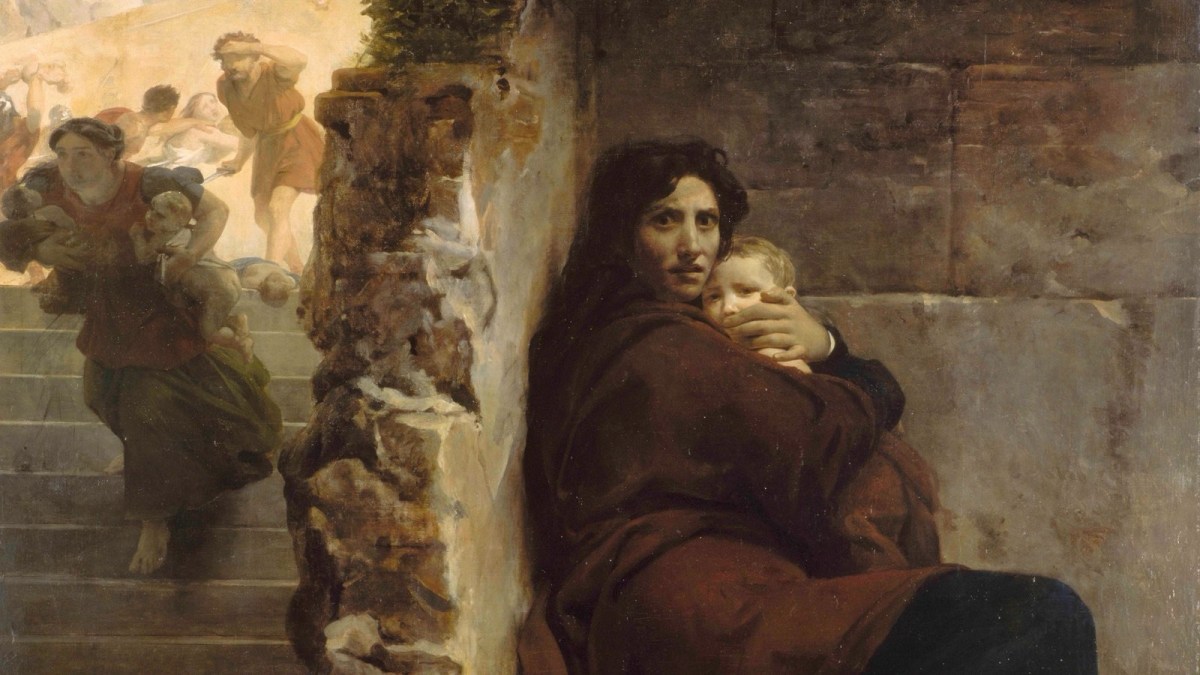
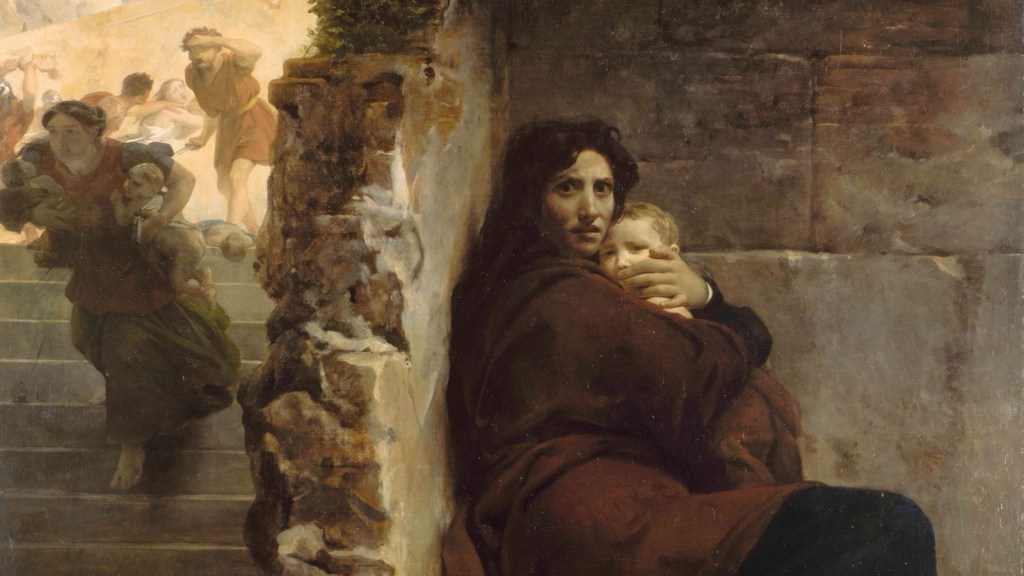
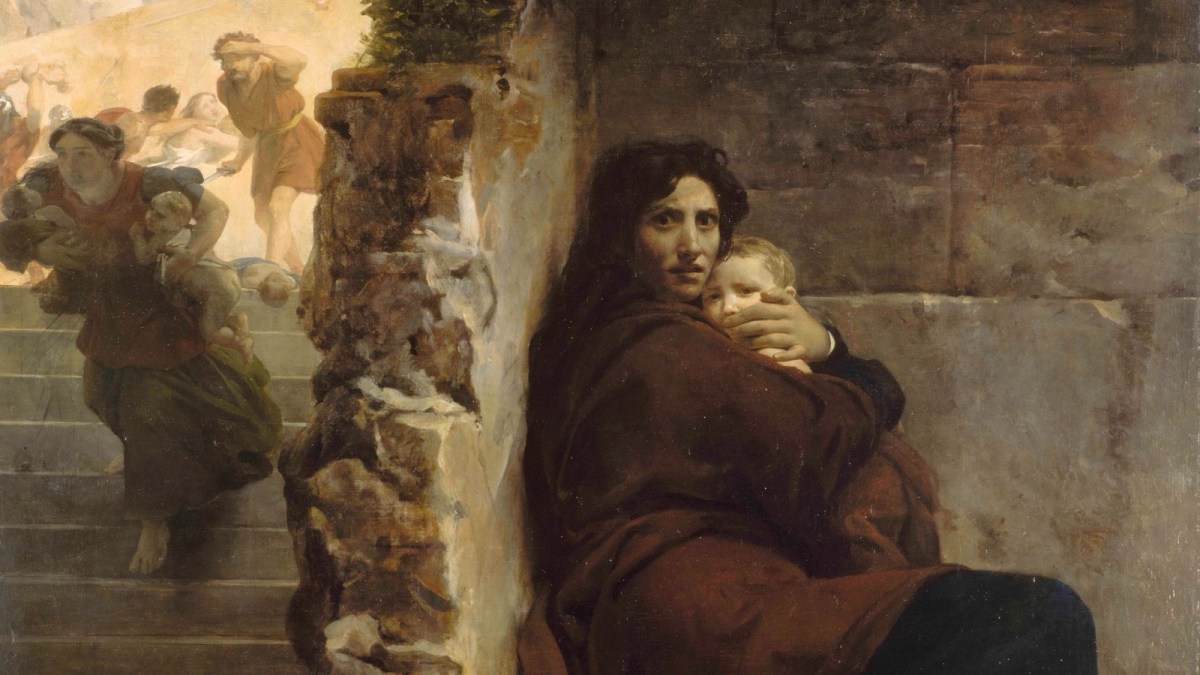
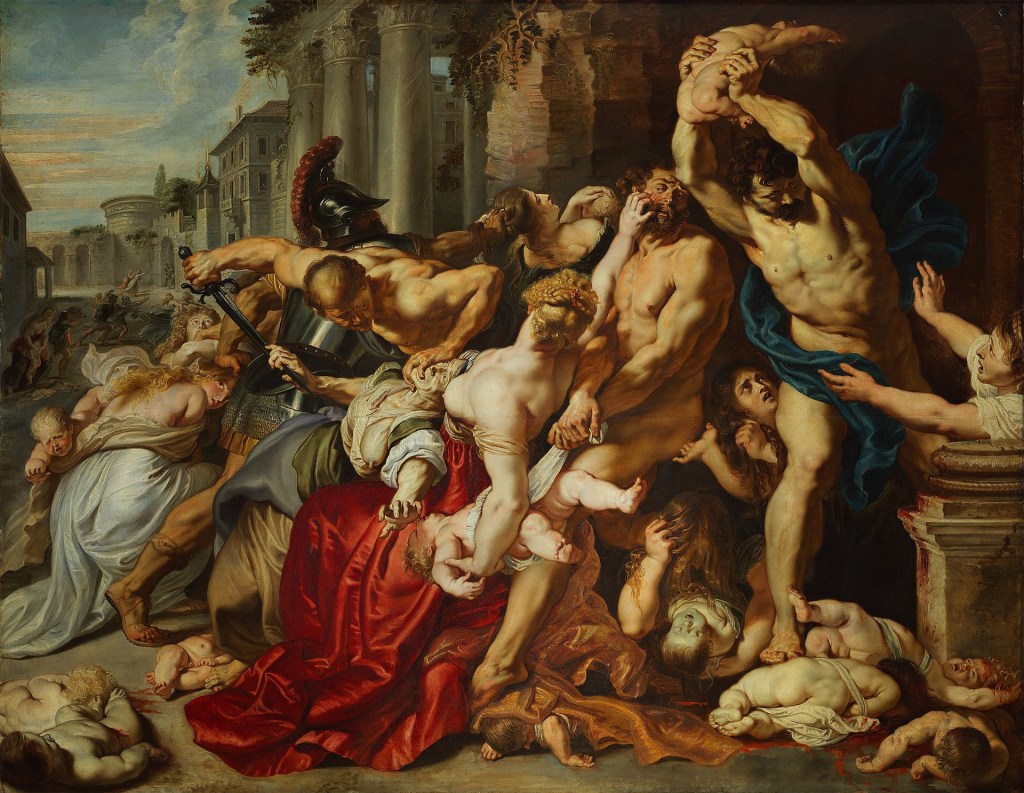
“The Massacre of the Innocents,” an 1824 painting by Léon Cogniet, held in the Musée des Beaux-Arts
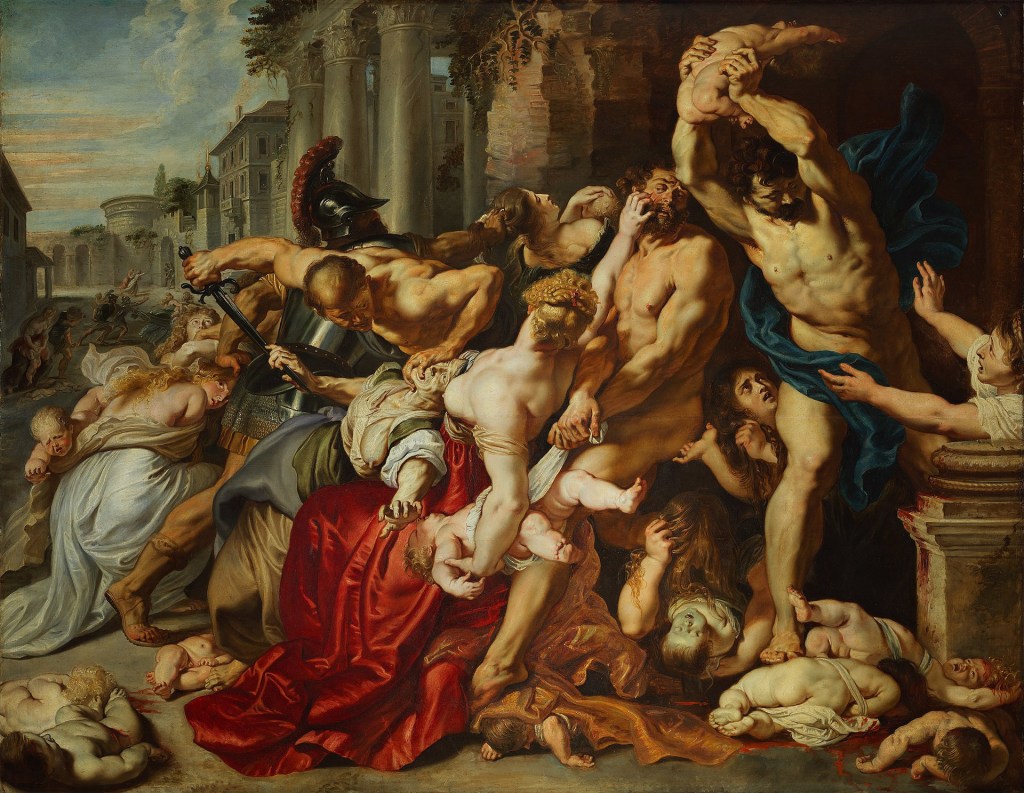
Yesterday, we focussed on “the slaughter of the innocents” which is commemorated in the Western Church on 28 December. Today, 29 December, is the day when this commemoration takes place in the Eastern Church.
This this potent story, full of pathos, is so resonant with events in the world in which we live today: people dying in invasions and wars; people fleeing, seeking refuge, in a safe place. Sadly, this part of the story has all but faded from view in “the Christmas story” that is recounted each Christmas. So here are some more thoughts—largely from the words written by contemporary hymn writers that tell this story.
There are clear words in these carols which show how the story challenges political values and policies and how it connects with the deepest feelings of human existence.
One contemporary hymn writer who has turned his attention to the story of Herod’s tyrannical rampage against the male children in Bethlehem, is the British Methodist, the Rev. Dr Andrew Pratt. Here is a powerful hymn which he has written about this story.
Another person who has worked well with words over many decades is the late Shirley Erena Murray, a Presbyterian from Aotearoa New Zealand. She was right on the money when she highlighted the violence and fear at the heart of the story, claiming that the infant in the story has “come to plead war’s counter-case”, and articulating the hope that “goodness will outclass the gun, evil has no tooth that can kill the truth.” Here’s her words:
Summer sun or winter skies, Christmas comes —
shepherds, angels, lullabies, words recorded by the wise:
read it in the book — take another look . . . .
Shadows track the hawk in flight, Christmas now —
children born in fire and fight, silent night a violent night,
hawks are in control of a nation’s soul.
There where terror plies its trade, Christmas now —
children learn to be afraid, minefields of distrust are laid,
evil is in force on a winning course.
Child of peace, God’s human face, Christmas now —
come to plead war’s counter-case, bring the dove a nesting place,
though her wings are torn, though her blood is drawn.
Winter skies or summer sun, Christmas comes —
still the threads of hope are spun, goodness will outclass the gun,
evil has no tooth that can kill the truth.
This ancient story resonates so strongly with our situation today, not because “it really happened, exactly like this”, but because (like a good myth does) it takes us to the centre of our humanity and reveals the depth of God’s presence in our midst. We ought to sing more about it!
Today (in the Western Church) is designated as the Feast of the Holy Innocents. (It is celebrated tomorrow in the Eastern Church.) This festival day commemorates a tradition known as “the slaughter of the Innocents”, reportedly ordered by King Herod. It’s a gruesome attachment to the story that is told in the Gospel of Matthew that begins, “now the birth of Jesus the Messiah took place in this way” (Matt 1:18).
The tradition is that when Herod learnt of the birth of “the King of the Jews”, he feared that this king would pose a threat to his own rule (as a client king under the Roman Empire) over the Jewish people. Herod, it is said, ordered that all male children under two years of age should be killed, to ensure that this rival king was safely despatched (Matt 2:16). Jesus survived this because after visitors “from the east” came from the court of Herod to pay tribute to him (2:11), his parents were advised of the imminent pogrom by an angelic visitation (2:13).
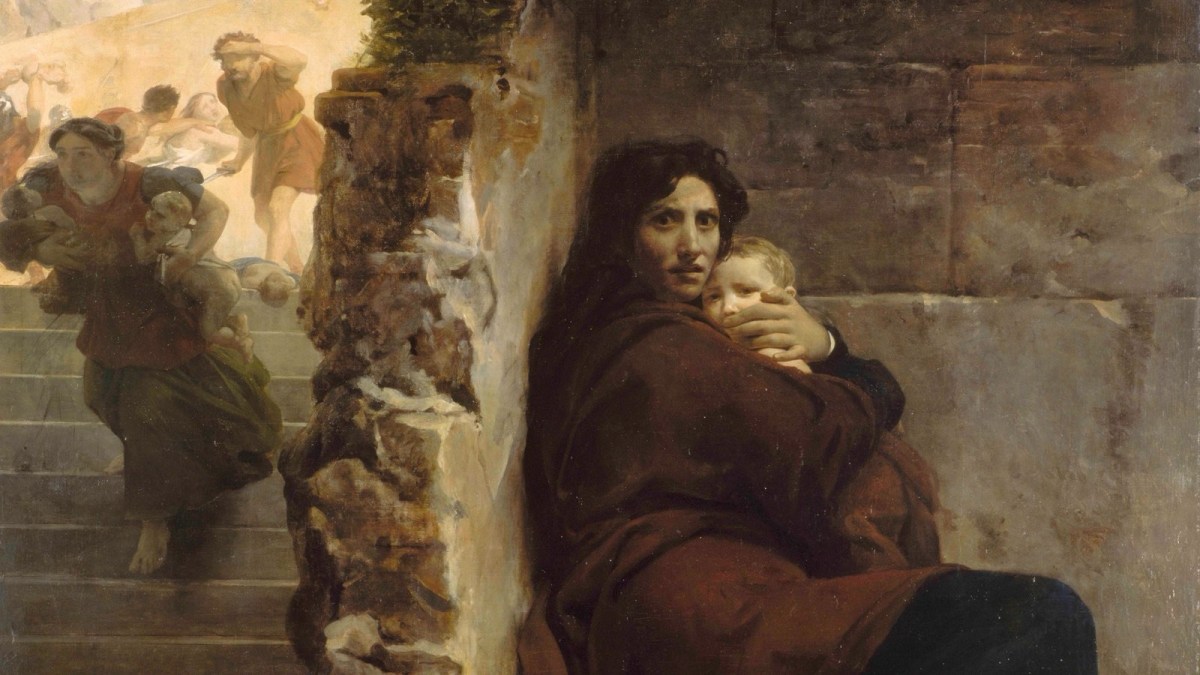
“The Massacre of the Innocents,” an 1824 painting by Léon Cogniet, held in the Musée des Beaux-Arts
The story is told only in Matthew’s Gospel. It is highly unlikely that the events reported by Matthew actually took place. First, his is the only account of such an event in any piece of literature from that time. An event with so many deaths would surely have been noted by other writers. It is true that Herod was a tyrannical ruler; but amongst the various accounts of his murderous deeds, there is nothing which correlates to the events reported in Matthew’s Gospel.
Second, the story is embedded in the opening section of the Gospel, which uses typical Jewish typology and scripture-fulfilment to present the story of Jesus as a re-enactment of the story of Moses. The author of Matthew’s Gospel, a follower of Jesus who had been raised as a faithful Jew, was especially partial in the opening chapters of his work to quoting scripture and claiming that events that he reports “took place to fulfill what had been spoken by the Lord through the prophet” (1:22–23).
The chief priests and scribes in the royal court, says this author, told Herod that Jesus had been born in Bethlehem, “for so it has been written by the prophet” (2:4–6); the flight into Egypt of Joseph, Mary, and their newborn child was “to fulfill what had been spoken by the Lord through the prophets (2:15); the slaughter of the children itself “fulfilled what had been spoken through the prophet Jeremiah” (2:17–18); and the return of the family some time later and their settling in Nazareth was “so that what had been spoken through the prophets might be fulfilled” (2:21–23).
Aiding and abetting these notes of scripture fulfilment are other typical elements in the Jewish traditions of storytelling, namely, that the events as they take place are guided by the appearance of an angel in the dreams of Joseph (1:20–21; 2:13; 2:19) as well as direct guidance mediated by a dream of the visitors “from the east” (2:12) and again in a further dream of Joseph (2:22). The story that appears in Matt 1:18–2:23 would readily have been recognised by Jewish listeners as employing the typical elements and patterns of Jewish haggadicmidrash.
The book of Exodus also employed these elements and patterns. It opens in the time when “a new king arose over Egypt, who did not know Joseph” (Exod 1:8). This king, unnamed except for the designation of “Pharaoh”, feared the increasing numbers and growing power of the Israelites who been enslaved in Egypt for hundreds of years, determined that he would slow the rate of increase and lessen the power of the Israelites by decreeing, “every boy that is born to the Hebrews you shall throw into the Nile, but you shall let every girl live” (Exod 1:22).
It is in this context that Moses is born; he is hidden “among the reeds on the bank of the river” (Exod 2:1–4), and then taken home by the daughter of Pharaoh (Exod 2:5–9), adopted by her, and raised as a member of the royal household (Exod 2:10). The origin of the child is revealed to the readers (but presumably not to the Pharaoh) by his being named Moses, because, as Pharaoh’s daughter said, “I drew him out of the water” (Exod 2:10b).
The fact that a name conveys a deeper meaning has been found again and again in the traditional tales collated to form the narrative of Genesis: Adam reflects his creation “from the dust of the ground” (Gen 2:7), Eve’s name indicates that she is “the mother of all living” (3:20), Cain means “acquired” and is reflected in Eve’s comment that “I have produced [or acquired, qanah] a man with the help of the Lord” (4:1), and Abel is related to the Hebrew word for “emptiness” (havel).
Abram’s name is changed to Abraham, which means “leader [ab] of multitudes [raham]”, to signal the covenantal promise of the Lord God that “I will make you exceedingly fruitful; and I will make nations of you, and kings shall come from you … for an everlasting covenant, to be God to you and to your offspring after you” (17:4–6). The name of the aged, barren Sarai is changed to Sarah, meaning “she laughed” (17:15), to signal her incredulous response to the news that she will bear a child (18:9–15). The name of Ishmael literally means “God listens” (16:11) and that of Jacob means “he who supplants” (25:24–26); after his all-night struggle with a man at the ford of Jabbok (32:22–24), his name was changed to Israel, meaning “the one who strives with God” (32:28). Names are deeply significant!
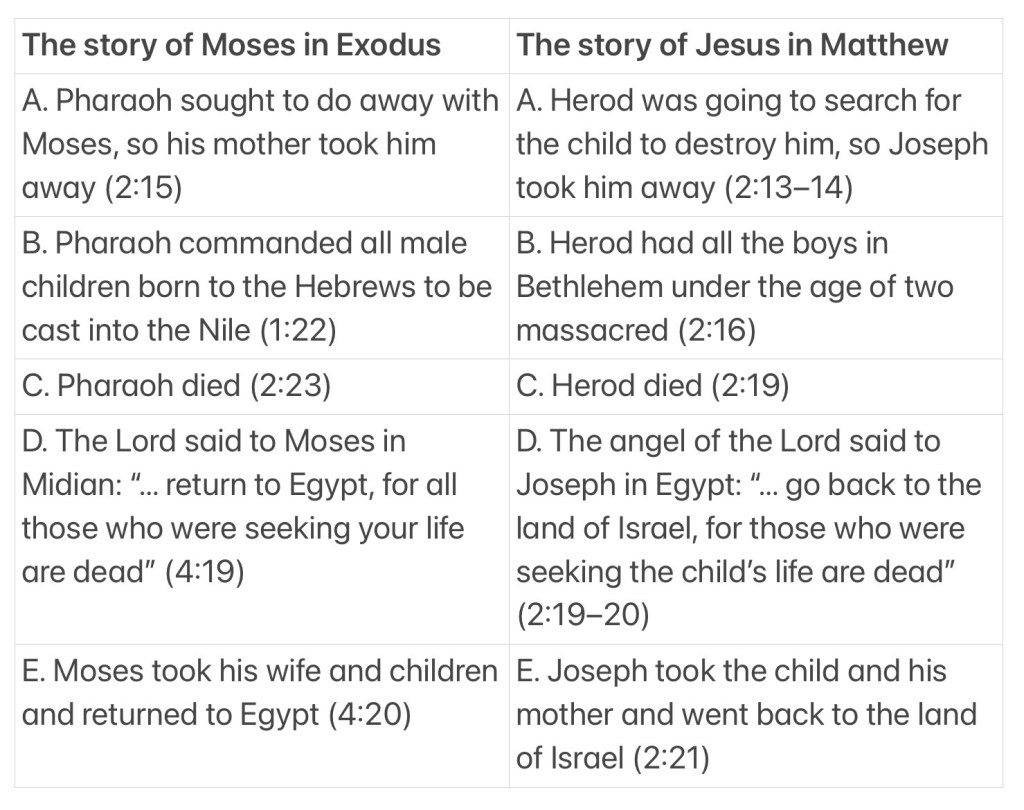
So Moses means “drawn from water”, and Jospeh is given the message that his son is to be given the name that signifies his role, Jesus: “for he will save his people from their sins” (Matt 1:21). And the ancient tale of the slaughter of infants at the time of the birth of Moses is replicated at many points in Matthew’s account of the slaughter of infants at the time of the birth of Jesus (Matt 2:1–18). This later account simply fits the pattern of the earlier account, as this chart shows:
The parallels are very clear!
And just as the literary structure of each story runs in the same pattern, so also the “historical” similarities are clear. Just as there is no historical evidence beyond Exodus to corroborate that the story of the pogrom at the time of Moses took place, neither is there evidence beyond the Gospel of Matthew to corroborate the account found there. Both patterns of events were stories, tales told, not history recorded.
But these non-historical stories are important for theological reasons. The Moses story is part of the whole Exodus complex that provides the fundamental explanation for the identity of Israel. The Jesus story as Matthew presents it is part of the foundational myth of the Christian faith. The writer of Matthew’s Gospel wants to make strong correlations between Jesus and Moses, as the two key figures in their respective stories—and religious systems. This starts in the mythological account found in the opening chapters, and continues throughout the following chapters of the Gospel.
As myth, the tradition found in Matt 1—2 points to important truths. The Slaughter of the Innocents grounds the story of Jesus in the historical, political, and cultural life of the day. It provides a dreadful realism to a story which, all too often in the developing Christian Tradition, has become etherealised, spiritualised, and romanticised.
So we remember this story as an important pointer to the counter-cultural, alternative-narrative impact of the person of Jesus. It is not history, but it offers a powerful myth.
A traditional hymn which remembers this tradition is the Coventry Carol. This dates from the 16th century, when it was performed in Coventry, England, as a part of a mystery play entitled The Pageant of the Shearman and Tailors.
The single surviving text of this pageant (including the words of this carol) was published by one Robert Croo, who dated his manuscript 14 March 1534. The carol is in the form of a lullaby, sung as a poignant remembrance by the mother of a child who is doomed to die in the pogrom.
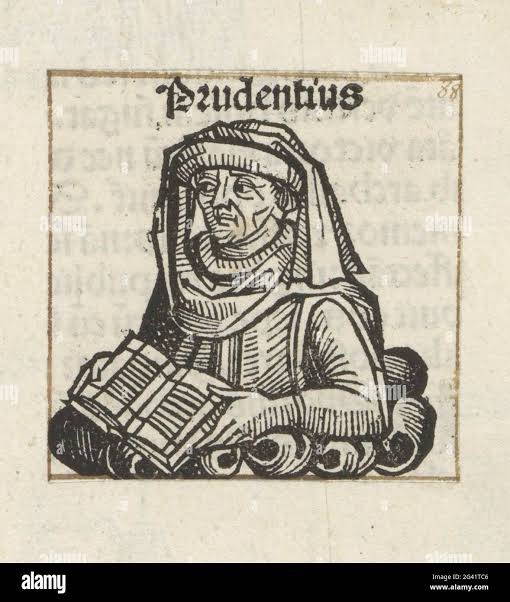
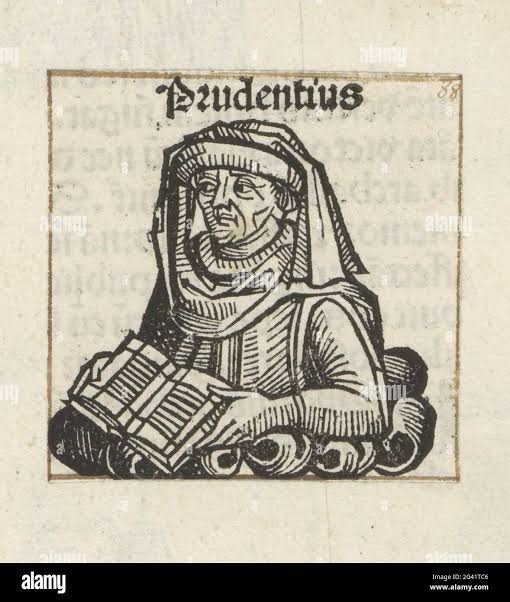
For today, the Third Day of Christmas, following the church calendar, I offer a Christmas carol which originates in the 4th century. It was written by the Roman poet, Aurelius Prudentius Clemens. Prudentius was a Spanish layman, a lawyer who twice served as a provincial governor. He was also a government official in the court of the Roman Empire, and is remembered as one of the greatest Latin Christian poets.
For the last period of his life (at least a decade, perhaps closer to two), Prudentius lived as an ascetic, fasting during daylight hours and eating only vegetarian meals. It was apparently during this period that he wrote many books and poems. Among these works was the Psychomachia, an allegorical treatment of “the conflict of the soul” (as illustrated).
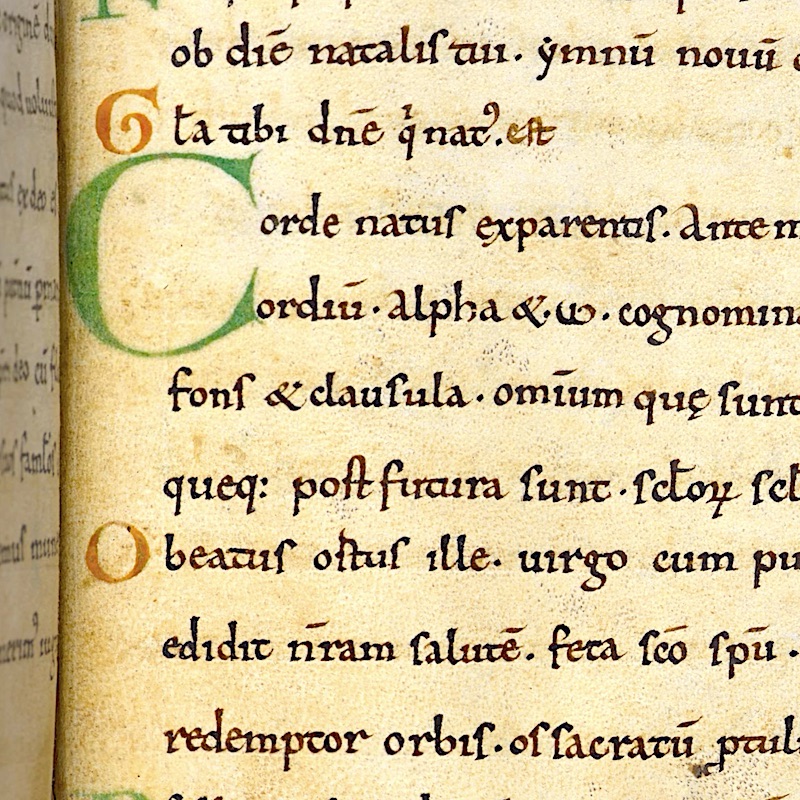
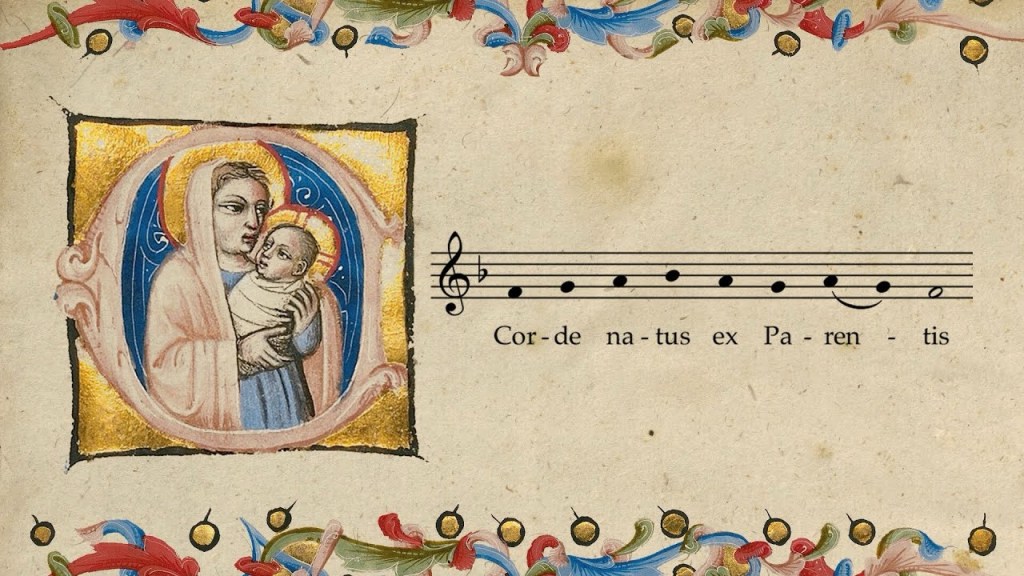
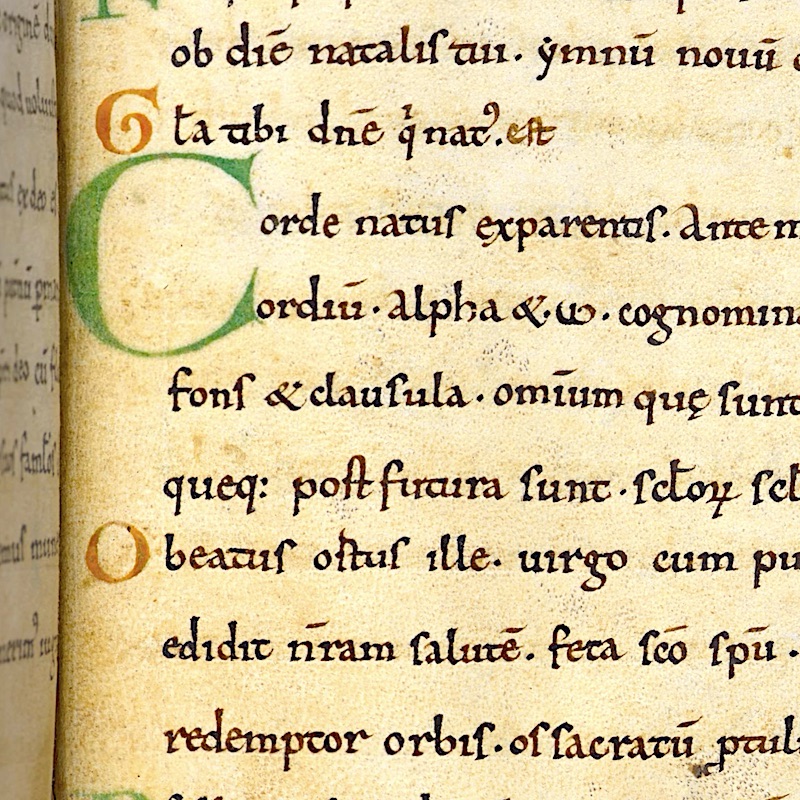
Prudentius composed Cordenatus ex Parentis, which was subsequently translated into English as “Of the Father’s love begotten”. The translator was John Mason Neale, whom we met yesterday. This hymn stands at the head of the section in Together in Song where we find the Christmas carols/hymns, so it is recognised as an ancient Christmas carol.
Prudentius, situated strongly within the developing patristic theology, gives expression to the “highest” view of Jesus, as Alpha and fons (source, or origin) and Omega and clausula (ending, or culmination) of the whole creation, existing “evermore and evermore”.
So the hymn resonates well with the developing credal tradition of the Nicea—Chalcedon-Constantinople stream. And so begins the long trek towards the transcendental, romantically-unrealistic, Christ of Christmas.
Corde natus ex parentis ante mundi exordium
A et O cognominatus, ipse fons et clausula
Omnium quae sunt, fuerunt, quaeque post futura sunt.
2. Ipse iussit et creata, dixit ipse et facta sunt,
Terra, caelum, fossa ponti, trina rerum machina,
Quaeque in his vigent sub alto solis et lunae globo.
3. Corporis formam caduci, membra morti obnoxia
Induit, ne gens periret primoplasti ex germine,
Merserat quem lex profundo noxialis tartaro.
4. O beatus ortus ille, virgo cum puerpera
Edidit nostram salutem, feta Sancto Spiritu,
Et puer redemptor orbis os sacratum protulit.
5. Psallat altitudo caeli, psallite omnes angeli,
Quidquid est virtutis usquam psallat in laudem Dei,
Nulla linguarum silescat, vox et omnis consonet.
6. Ecce, quem vates vetustis concinebant saeculis,
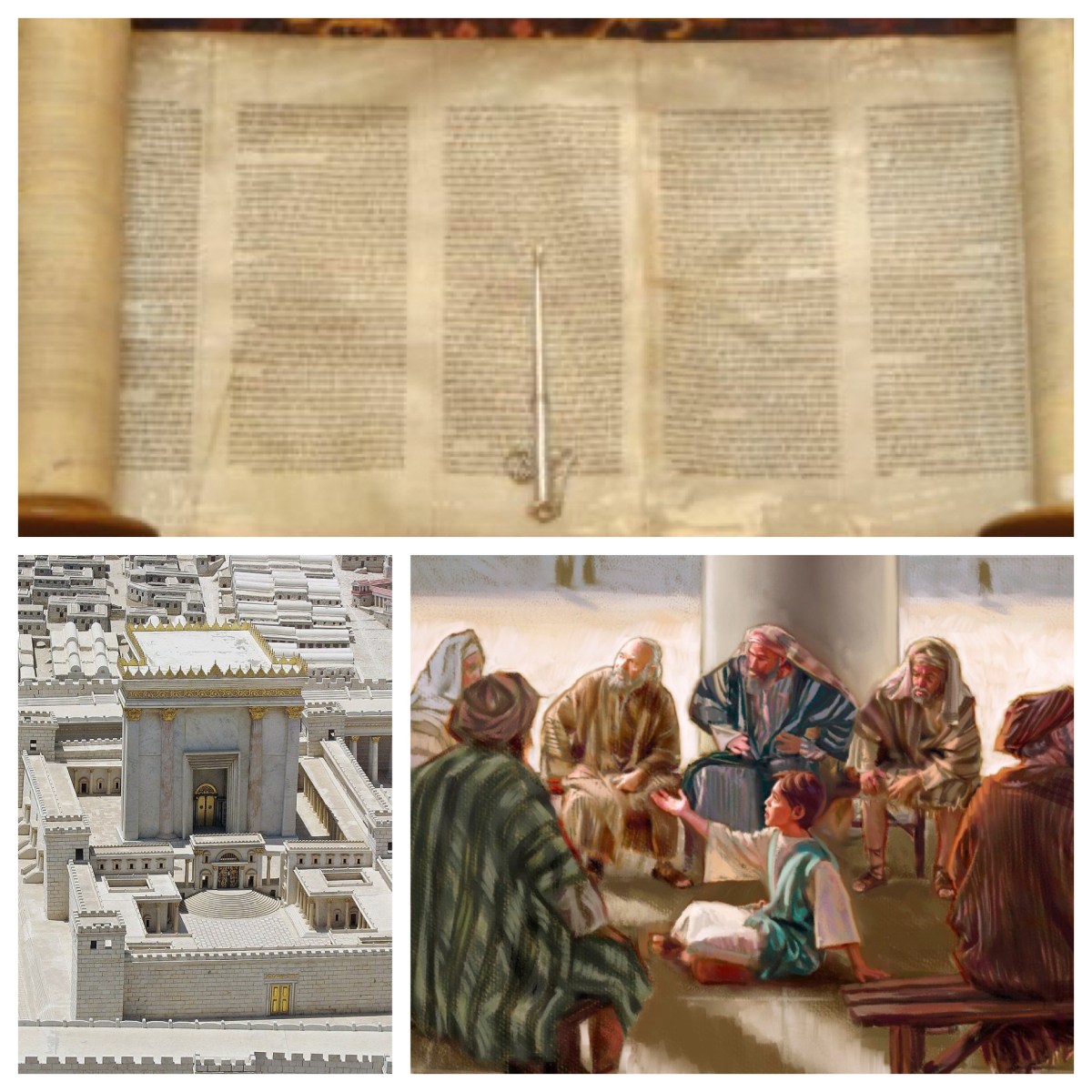
The Gospel for the first Sunday in the season of Christmas (Luke 2:41–52) tells a story found only in this Gospel. It is set when Jesus was twelve years old, and he goes missing on what Luke reports was an annual pilgrimage to Jerusalem for the Passover festival (Luke 2:41).
The canonical Gospels included very little at all about the childhood of Jesus: Mark and John have nothing at all, while Matthew leaps from the two-year Jesus to his adult years, and Luke has only a couple of stories about the infant Jesus in the temple—except for this passage, set twelve years later. Because of this absence of material about the childhood of Jesus, from the second century onwards, various works were produced which recounted tales of “the missing years” of the childhood of Jesus.
Some of these works focussed on expanding the story of the birth of Jesus. TheProtoevangelium of James, also known as TheInfancy Gospel of James, is a mid-2nd century work, which provides many more details than found in the canonical infancy narratives. It claims that Mary was a temple virgin who remained a virgin for her entire life. I have explored some of the content of this work in
The Infancy Gospel of Matthew, also known in antiquity as The Book About the Origin of the Blessed Mary and the Childhood of the Saviour, offers an expanded account of the Flight into Egypt (it is not known on what this is based), and an edited reproduction of The Infancy Gospel of Thomas. This work which bears Mary’s name in the alternative title is dated to the 8th century; it has been the basis for developing Catholic traditions about Mary which still hold sway in popular piety.
In The Infancy Gospel of Thomas, a Gnostic work of perhaps the late second century, elaborated stories about the childhood of Jesus are told. One writer has described it as “a flamboyant and entertaining account of Jesus as a little child growing up in his hometown”.
The most famous incident in this work is when Jesus created gives clay birds on the sabbath; when accused of breaking Torah by working on the sabbath, he clapped his hands and the birds came to life and flew away! (The story is retold in the Quran, 5.10.) But Jesus in this Gospel also curses other children and causes some of them to die.
The last story it tells is of the twelve year old Jesus in the Temple, which we know from Luke 2:41–52. In Luke’s version, the teachers of the Law heard Jesus and “they did not understand what he said to them” (Luke 2:50). In the version told in Thomas, in this place in the story there stands this interchange between Mary and the scribes and Pharisees: “‘Are you the mother of this child?’ She said ‘I am’. And they said to her, ‘Blessed are you among women because God has blessed the fruit of your womb. For such glory and such excellence and wisdom we have neither seen nor heard at any time.’” (Infancy 19:4).
Most manuscripts that we have of this Gospel are medieval, although a fragmented manuscript of this work, dated to the fifth century, is held by a German library. For a translation of the Infancy Gospel of Thomas from the medieval manuscripts , see http://www.gnosis.org/library/inftoma.htm
Other later texts that contain material on the childhood years of Jesus include The Syriac Infancy Gospel (sixth century?) and The History of Joseph the Carpenter (seventh century?). The earliest manuscripts we have for these works are medieval.
So the story that Luke includes, from the end of the childhood years of Jesus, is somewhat related to these non-canonical works, in that it reveals a curiosity about the earlier years of Jesus. Perhaps Luke includes this story to satisfy a little of that curiosity. However, Luke’s story is quite different from these non-canonical accounts, which inevitably are speculative, flamboyantly elaborated, and utterly unreliable as any form of historical evidence.
The story told by Luke relates to some central themes found throughout his two-volume work. A number of elements in the story point forward to themes that recur later in the Gospel.
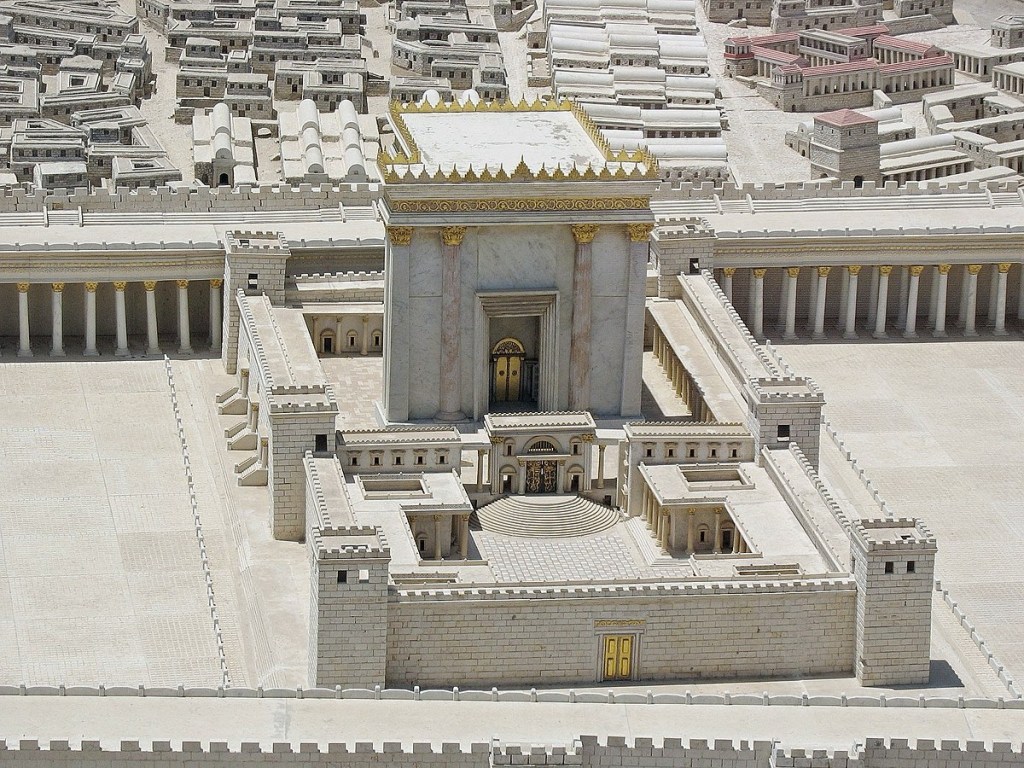
First, the setting is the Temple (2:46). In the Lukan version of the story of Jesus, the Jerusalem Temple plays a significant role. His “orderly account of the things that have been fulfilled among us” begins in the temple in Jerusalem, where we meet faithful Jewish people, Zechariah and Elizabeth (Luke 1:8–22) and then Simeon and Anna (2:22–38). This is the only Gospel that refers to these figures.
In Luke’s account of the story of the testing of Jesus (Luke 4:1–14), the order of testings found in Matthew’s account is altered, so that the testing relating to the Jerusalem Temple is placed at the climactic point of the last testing (4:11–13).
A reconstruction of how the Temple may have looked in the time of Jesus, towards the end of the Second Temple period
At a crucial point during his ministry in Galilee, Jesus “sets his face” to go to Jerusalem (9:51). On the way towards Jerusalem, Jesus laments the fate that is in store for Jerusalem (13:33–35) and when he enters the city, he weeps over the city (19:41–44) and provides more prophetic words about their fate (21:20–24). Each of these passages is found only in this particular Gospel.
Once Jesus has arrived in the city, the narration of his arrest, trial, betrayal, sentencing, death and burial follows the pathways recounted in other canonical Gospels. However, the risen Jesus appears, not in Galilee (as in other versions), but only in the nearby town of Emmaus (24:28–32) and then in Jerusalem itself (24:33–49). The final sentence of this Gospel indicates a return to the location of the opening scene, as the disciples “were continually in the temple blessing God” (24:53; cf. Acts 1:8–9).
The Lukan focus is singularly on the early movement as it formed in Jerusalem (Acts 1—7, 12) before spreading out from Jerusalem into other regions. Indeed, Acts 1:8 provides a programmatic statement that prioritises Jerusalem amongst all locations. And the disciples are noted as being in the temple a number of times (Acts 2:46; 3:1: 4:1–2; 5:21, 42). Indeed, this is specifically commanded by an angel of the Lord, who said, “Go, stand in the temple and tell the people the whole message about this life” (Acts 5:20). The Temple is a highly significant location in this Gospel.
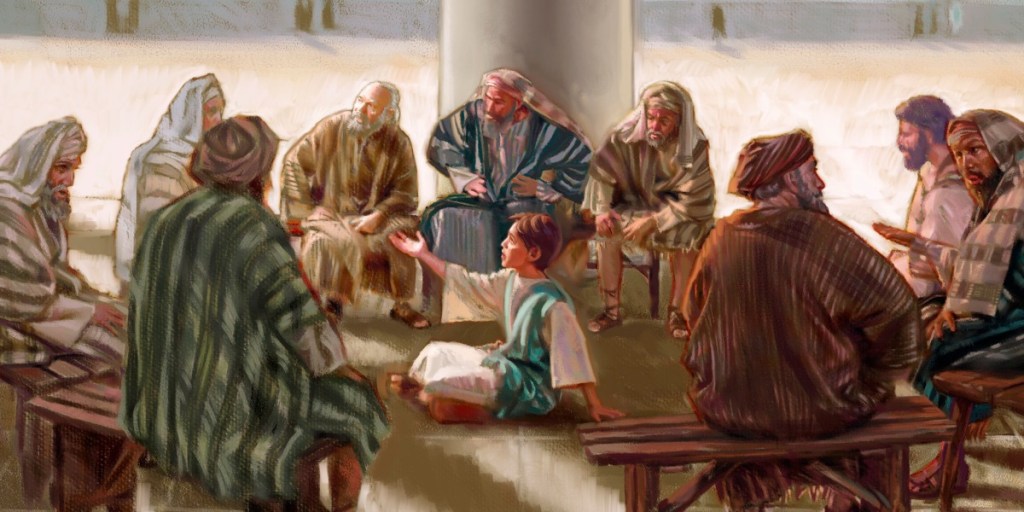
A second important feature that points ahead is the fact that Jesus is engaged in discussion with the teachers of Torah. When he was found, he was “sitting among the teachers, listening to them and asking them questions” (Luke 2:46). Discussion about Torah runs through Luke’s narrative, just as it had done in the Markan source that we presume he used (5:17–26; 6:1–5, 6–11; 10:25–37; 11:37–52; 12:1–3; 13:10–17; 14:1–6; 16:14–18; 18:18–30; 20:1–47).
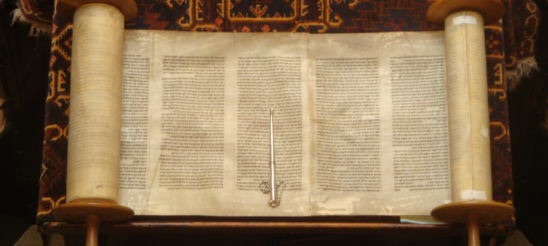
A Torah scroll
Indeed, such is the vigour with which Jesus debates the teachers of Torah that “the scribes and the Pharisees began to be very hostile toward him and to cross-examine him about many things, lying in wait for him, to catch him in something he might say” (11:53–54). And then “the elders of the people” conspire with the Temple authorities to arrest Jesus (22:52) and bring him to trial (22:66), “vehemently accusing him” when he is brought before Herod (23:10) and pressing Pilate to sentence him to death (23:13–18).
However, all of this is far into the future as the twelve year old Jesus sits in the Temple, “sitting among the teachers, listening to them and asking them questions” (Luke 2:46). The response at this stage is positive and encouraging; Luke comments that “all who heard him were amazed at his understanding and his answers” (2:47). The story thus points to the way that amazement will be the response of people later in Luke’s narrative when the adult Jesus teaches and heals (4:22, 36; 5:9, 26; 8:25; 9:43; 11:14).
A third element looking ahead to later in the Gospel occurs in the words spoken by Jesus. During this exchange in the Temple, the young Jesus speaks words of wisdom. “Did you not know that I must be in my Father’s house” (2:49) is the first example of many of the short, pithy sayings which Jesus speaks throughout the Gospel.
We know this kind of saying well: “the Son of Man is lord of the sabbath” (6:5), “do to others as you would have them do to you” (6:31), “wisdom is vindicated by all her children” (7:35), “let anyone with ears to hear listen!” (8:8), “my mother and my brothers are those who hear the word of God and do it” (8:21), “if any want to become my followers, let them deny themselves and take up their cross daily and follow me” (9:23), “whoever is not against you is for you” (9:50) … and so on. The words of Jesus in this story, “I must be in my Father’s house?” (2:49) prefigure this wise saying style of Jesus.
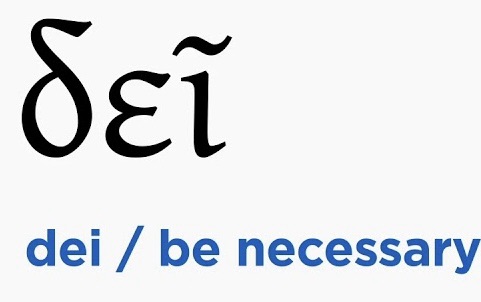
And the one small word “must” plays a key role at the centre of Luke’s theological explanation that all that takes place is integral to “the plan of God” (see esp. Acts 2:23 and Luke 7:30). (This was the topic for my PhD thesis, published as The plan of God in Luke-Acts, CUP, 1993; one whole chapter was devoted to the motif of divine necessity that is conveyed by this word and a cluster of terms used in Luke—Acts.)
What “must” take place is Jesus’s proclamation of the kingdom of God (Luke 4:43), the suffering of the Son of Man (9:22; 17:25), the necessary journey on the road to Jerusalem (13:34), and the inevitable occurrence of wars and insurrections (21:9), the flight from Jerusalem (21:20–21),, and the death of Jesus itself (22:36–37), followed by his being raised from the dead (24:7, 44–46). In Acts, this divine necessity continues to impel the activities of the apostles (Acts 4:19–20; 5:29) and of Paul (9:16; 14:22; 19:21; 23:11). All of this (and more) “must” take place.
Indeed, an alternative translation of Jesus’ words from the Greek, οὐκ ᾔδειτε ὅτι ἐν τοῖς τοῦ πατρός μου δεῖ εἶναί με; (and the translation that I prefer) is that he says “do you not know that I must be about the business of my Father?”. This rendering highlights how this verse performs a key programmatic function for the Gospel narrative as a whole, which tells of how Jesus carries out the business of his Father. That adds another depth to the significance of this passage.
Finally, what might we make of the fact that in this story Jesus was twelve years of age? Modern readers might connect this note with the fact that today, Jewish boys celebrate their bar mitzvah—a coming-of-age ritual—when they turn 13. (Jewish girls have a similar ceremony, a bat mitzvah.) So could this story about the 12 year-old Jesus somehow relate to his own bar mitzvah?
However, there is no reference to a bar mitzvah ceremony in the Hebrew Scriptures or the New Testament, nor in later rabbinic texts such as the Mishnah (3rd century) and the Talmuds (5th to 7th centuries). There is discussion in various medieval rabbinic texts that begins to develop the idea that such a ceremony was known; but as is always the case with rabbinic discussion, the discussions are subtle, complex, and not crystal clear to those not used to reading these kinds of texts.
My Jewish Learning places the first reference to a bar mitzvah in a fifth-century rabbinic text which references a blessing to be recited by the father thanking God for freeing him from responsibility for the deeds of his child, who is now accountable for his own actions. However, this is simply a prayer, not a full ritual ceremony. It then notes: “A 14th-century text mentions a father reciting this blessing in a synagogue when his son has his first aliyah [the “going-up” to the front of the synagogue to be blessed]. By the 17th century, boys celebrating this coming of age were also reading from the Torah, chanting the weekly prophetic portion, leading services, and delivering learned talks.”
So we should not read any magical significance into the age of Jesus in the story that Luke tells, other than it seems to mark a moment in the orderly account that Luke writes which reveals something of the character of Jesus at a time well before his public adult activity began. We can’t attribute any historical value to the story (the author of Luke’s Gospel was probably not even born at the time that this story was alleged to have taken place). But it does play an important role in the literary structure of the Gospel—it is a hinge between the infant Jesus and the adult Jesus—as well as offering some key theological elements in the understanding of Jesus that this Gospel develops.
Today, Christmas Day, is the first day in the season of Christmas. The First Day of Christmas, according to a well-known Christmas song, is to be celebrated with the gift of a partridge in a pear tree, is it not? Subsequent days, we learn from that song, should be celebrated with the gifts of assorted birds, five golden rings, and an assortment of drummers, leaping lords, milkmaids, and more!
For each of The Twelve Days in the ecclesial Season of Christmas, however, I will be thinking about various carols. We most likely have had our fill,of all the traditional carols and songs associated with Christmas in the lead-up to the actual day of Christmas; so I will be offering thoughts on carols, mostly lesser-known or unknown in the modern period, that are appropriate for the Season.
For today, I offer the words of a hymn (a very early Christmas carol) composed in Latin and attributed to the fourth century doctor of the church, Hilary, the Bishop of Poitiers. Hilary was sometimes referred to as the “Hammer of the Arians” (Malleus Arianorum) because of his active role in opposing Arian theology in Gaul, and also as the “Athanasius of the West”.
The carol Jesus refulsit omnium (“Jesus illuminates all”) is dated to 368. The words in Latin are:
Jesus refulsit omnium Pius redemptor gentium Totum genus fidelium Laudes celebret dramatum
Quem stella natum fulgida Monstrat micans per authera Magosque duxit praevia Ipsius ad cunabula
Illi cadentes parvulum Pannis adorant obsitum Verum fatentur ut Deum Munus ferendo mysticum.
The English Translation below is by Kevin Hawthorne, PhD
Jesus, devoted redeemer of all nations, has shone forth. / Let the whole family of the faithful celebrate the stories. / The shining star, gleaming in the heavens, / makes him known at his birth and, going before, has led the Magi to his cradle. / Falling down, they adore the tiny baby hidden in rags, / as they bear witness to the true God by bringing a mystical gift.
Where are the women in the story we tell at Christmas? We know that there was “no room at the inn” for Mary and Joseph, as they prepared for the birth of their son, Jesus. But it seems that there is precious room in the story for women. Where are the women in this story?
There are lots of men in the “traditional” story that is retold and enacted every year: the faithful father-figure Joseph, the excited shepherds (presumably males?) coming in from the fields, the innkeeper at the place where “there was no room”, and of course the infant baby, a little boy. Then, the angel who makes appearances to announce the imminent births of John and Jesus is identified as Gabriel, another male.
There are the “three wise men”—well, it is usually presumed that they were men—travelling from the east and the evil tyrant Herod conferring with his male advisors (the chief priests and the scribes, more men) before ordering the slaughter of infant boys. There is the census ordered by the male ruler, Emperor Augustus, and implemented by the male Governor, Quirinius, throughout the region of Syria. All men. Where are the women?
Many-a-time the girls and women who take part in the “traditional” nativity scene that we re-enact each year have to don the costume of a male character, and perhaps at times a false beard, so that they “fit the part”. It’s another way that women become invisible in the story that is told—as is so often the case with stories in the Bible.
Of course, we know that the “traditional” nativity scene is a fiction—an invention of Francis, a medieval monk (another man) who collated the two Gospel accounts (both written by men) and then added additional elements on the basis of his own informed (male) imagination. We sing about that scene in carols written, largely, by men: Joseph Mohr (Silent Night), Philip Brooks (O little town of Bethlehem), Edmund Sears (It came upon the midnight clear), Cecil Alexander (Once in Royal David’s city), Nahum Tate (While shepherds watched their flocks), Charles Wesley (Hark! the herald angels sing), John Henry Hopkins (We three kings), John Mason Neale (Good King Wenceslas), and John Francis Wade (O come, all ye faithful). All men.

And as far as the tunes we sing are concerned, there are yet more men involved: Felix Mendelssohn (Hark! the herald angels), Henry John Gauntlett (Once in royal David’s city), William J. Kirkpatrick (Away in a manger), John Henry Hopkins (We three kings), and Richard Storrs Willis (It came upon a midnight clear). The origins of the tune for O come, all ye faithful is not known, although at different times it has been attributed to no less than seven different composers—all, of course, being men! (George Frederick Handel is the best-known of the possible, but unproven, composers.)
And at least until fairly recently, most people have sent Christmas cards to each other that have been developed largely by men. These cards were originally popularised by the Hallmark company that began life as the Norfolk Post Card Company, established in 1907 by J.C. Hall and his older brothers, William and Rollie—three more men.
Lots of men. But where are the women?
Yes, there are some women in the story. Mary, for a start; every birth story needs a mother, and mothers must be female, and so we have Mary. And then there is Elizabeth, a relative of Mary, who is included in the story that Luke tells. And, in a wonderful version of the Christmas tale that my wife uses regularly in Christmas worship services, the cranky innkeeper has a wife who does her best to look after the visitors and keep the peace. So there are some women, explicit, and implicit, in the story.
But there are more women who would have been involved in the events surrounding the birth of Jesus. For a start, Mary would have had assistance—female assistance—as she gave birth. Midwives were present at births in the ancient world; the story of Moses refers to the midwives in Egypt—and they are rare amongst women in biblical narratives in that their names are recorded: Shiphrah and Puah (Exod 1:15–22). Midwives are also noted in the birth narratives about Benjamin, whose mother Rachel sadly died giving birth (Gen 35:16–20) and the twin boys, Perez and Zerah, born to Tamar (Gen 38:27–30).
Prof. Carol Meyers, writing in the Jewish Women’s Archive, notes that “the presence of such a health care professional, called meyalledet (“one who causes, helps birth”), was probably routine in Israelite and pre-Israelite society”. She further notes that “the belief that god is the creator of life underlies the metaphor of God as a midwife, one of several female metaphors for God in the Hebrew Bible”, citing a line of a psalm addressing God as a clear example: “it was you who took me from the womb; you kept me safe on my mother’s breast” (Ps 22:9). Prof. Meyers astutely observes that “the status of midwives—and their power to transform childbirth from what might be a negative experience to a positive one—did not erode until the advent of modern, male-dominated medicine”. See
J.M. Hochstetler, writing about “Childbirth in Jesus’ Time”, has hypothesised further: “Midwives, skilled practitioners of their profession, were significant figures in ancient society who provided comfort, pain relief, and encouragement to the laboring woman. They performed rituals and prayers to protect her and her baby, used their expertise to deal with any complications that might arise, delivered the baby and the afterbirth, and supervised the mother and baby’s aftercare.” Commenting specifically on the birth of Jesus, she deduces that “Joseph would definitely have been excluded, nor would he have protested. Giving birth was the province of women, and men were happy to absent themselves.” See
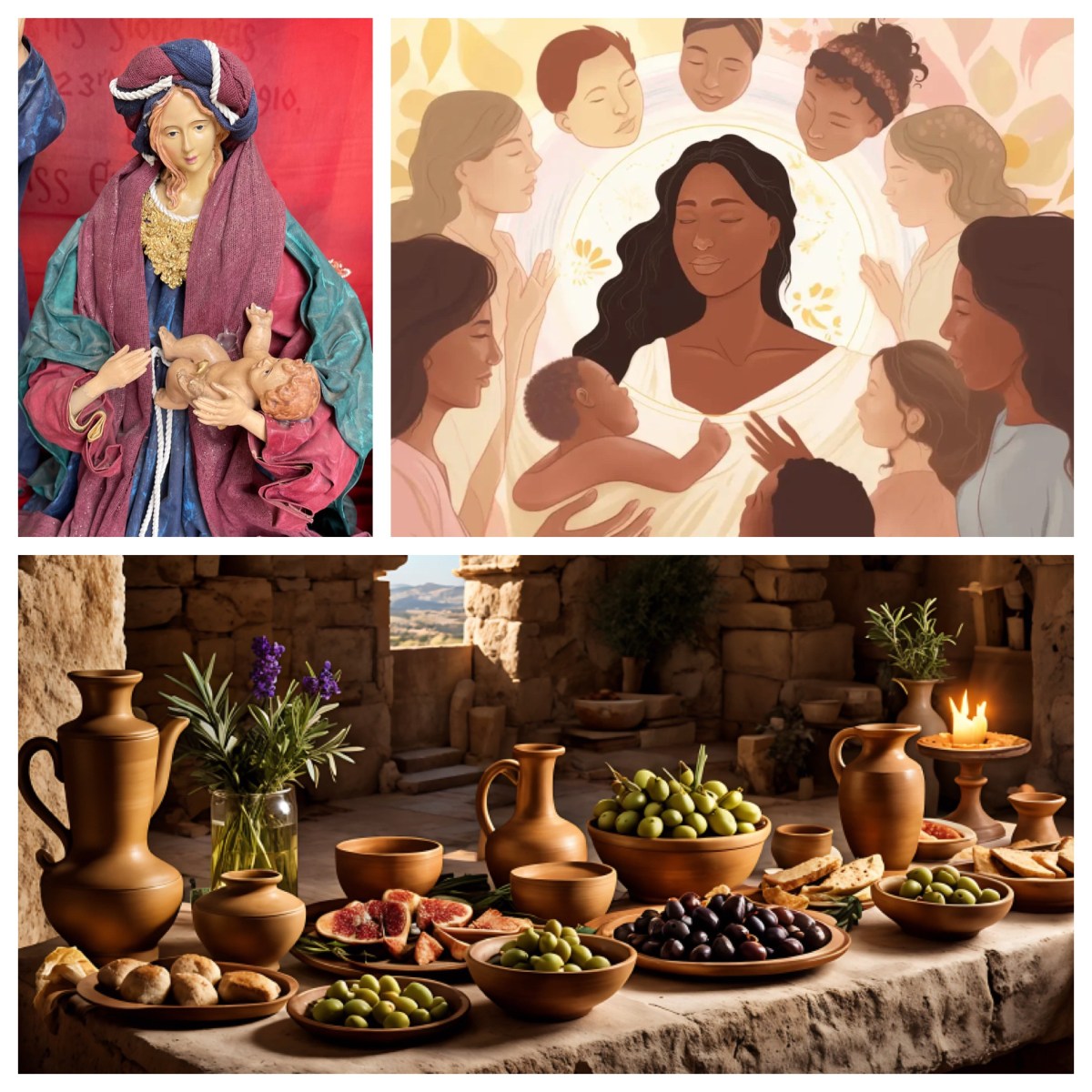
So it is a reasonable assumption that a midwife would have been present at, and assisted in, the birth of Jesus to his mother Mary. Why is there not at least a midwife (if not also some assistants) present in the “traditional” nativity scene that we re-enact each year?
Another place in the story at which women would most surely have been present would have been in the house where Joseph and Mary were staying at the time of this birth. Despite what the “traditional” story portrays, it was most definitely not a case of Joseph knocking on the doors of all the hotels in town, only to discover that, because of the census, every one of them was filled to overflowing, and so they had to settle for “a room around the back” with the animals.
Luke gives a minimum amount of detail concerning the birth of Jesus, informing us that Mary “laid him in a manger, because there was no place for them in the inn” (Luke 2:7). The word translated as “inn” is the Greek word κατάλυμα (kataluma). This is relatively rare in the New Testament, but appears in many places in ancient Greek literature, where it usually refers to a guest chamber or lodging place in a private home. The same term appears in Luke 22:11 with the meaning “guest room,” and the verb derived from this noun appears in two other places (Luke 9:12; 19:7) where it means something like “find lodging” or “be a guest.”
Moreover, and by contrast, in the story of the Good Samaritan, when Jesus refers to the place where the injured traveller rests—clearly a commercial inn—a different word is used; it means an inn frequented by travellers is used (pandokian; see Luke 10:34). So Joseph and Mary were not looking for lodging in an inn; they were most likely hoping to find shelter with a member of their family in Bethlehem.
That would make sense, given what we know of ancient life; in Jewish society (indeed, in all ancient Mediterranean societies), hospitality was very important. Travel to a town where members of the extended family lived would usually mean staying with them. Unfortunately for the key figures in the “traditional” Christmas story, once they arrived in town they found many other family members had arrived before them. So there was no room in the kataluma, the guest house in the family member’s home.
Luke’s story probably suggests that Joseph and Mary were planning to stay at the home of friends or relatives; but the home where they arrived was so full, even the guest room was overflowing, and so they had to be housed with the animals in a lower in the lower part of the house. It was the custom to house animals in a special section of the house, and that, of course, would be where the manger was to be found.
But once Mary and Joseph were given that space to stay, they would have been accepted into the family for the duration of their stay. And that meant including them in the family meals. And guess who prepared the meals? That’s right—the women of the family! And we know from familiar biblical stories that it was the women of the household who prepared and served the meals. When three visitors arrive unexpectedly at the tent of Abraham near the oaks of Mamre, the text says that “Abraham hastened into the tent to Sarah, and said, ‘Make ready quickly three measures of choice flour, knead it, and make cakes’” (Gen 18:6).
The last chapter of Proverbs praises the “woman of valour” who runs her household with such efficiency. Amongst her many and varied responsibilities, this woman “rises while it is still night and provides food for her household” (Prov 31:15). Overseeing the kitchen was integral to the efficient running of the household. The story of Abigail feeding the troops of David while they were in the wilderness, fleeing from Saul’s men and seeking sustenance from her husband, Nabal, a rich Calebite (1 Sam 25), reveals the proficiency of women as they brought provisions for the troops: Abigail took “two hundred loaves, two skins of wine, five sheep ready dressed, five measures of parched grain, one hundred clusters of raisins, and two hundred cakes of figs” and sent them off to feed David and his men (1 Sam 25:18). Abigail was the overseer of quite an impressive domestic operation, if these figures are to be believed!
So in Luke’s Gospel narrative, when Jesus visits the home of Martha and Mary, it is usually understood that “all the work” that Martha is undertaking, without the expected assistance of Mary, involved the preparation and serving of a meal for Jesus and those travelling with him (Luke 10:38–42). The same undertakings would have been the work of the women in the house where Joseph and Mary were staying when she gave birth to Jesus. They would have fed the new parents and ensured that they were well provided for as they cared for the infant Jesus in his first few days. There are more women at this point in this story!
So we ought to remember that there were actually many more women in the story of the birth of Jesus: present at the birth and immediately after it, involved in the food preparation and sharing food at table as the wider family gathered together, ensuring that there was support for the parents of the newly-born child. And we should make space in the story for these important characters to be seen and heard. Let’s remember that, and act on it, next time we prepare to tell or act out the “traditional” Christmas story.
For the Fourth Sunday in Advent this year, the Narrative Lectionary moves from words of the ancient prophets, to words which are similarly prophetic, in a song sung by a young woman who discovers that she is pregnant. The lectionary suggests that we hear about the message delivered to this young woman, Mary, which tells about the child she would bear—the scene often called “the Annunciation”—followed by the song sung by the young, pregnant Mary—the song that is best known as “the Magnificat” (Luke 1:46b—55). On the Annunciation scene, see
(Magnificat is the first word of the Latin version of this song. It makes sense, does it not, for a song that Mary most likely sang in Aramaic, and which is known to us from a Greek text, to be given a Latin title??? Such is the power of the western Roman Catholic Church, whose liturgy was in Latin for many centuries.)
The writer of the Gospel of Luke places this song in a scene that takes place after the pregnant Mary travels to visit a town in the hill country of Judaea. Mary is in the house of Zechariah and his wife Elizabeth, an elderly relative of Mary, who is also pregnant with child (Luke 1:39–45). This scene is rich with scriptural resonances.
I
Providing the Magnificat as the Psalm for the week has a certain poetic justice. Although this is part of the New Testament, this hymn is certainly a song in the mode of the psalms, as they are found in the book of that name in Hebrew Scripture. Indeed, such psalms are found not only in the book of Psalms, but in other places in those scriptures. Songs in the manner of psalms are scattered throughout the stories of the lives of the people of Israel—including into the century we identify as “the first century” (CE).
Included in these psalms are some striking songs. The Song of Miriam and the Song of Moses, both sung after the crossing of the Red Sea, are psalms of thanksgiving (Exod 15:21, and 15:1–18), whilst the Song of Moses at the end of his life recounts the story of the people (Deut 32:1–43). The Song of Deborah celebrates the defeat of Sisera of Canaan (Judges 5), whilst there are two Songs of David outside the book of Psalms: a psalm of thanksgiving after a series of battles with the Philistines (2 Sam 22) and another thanksgiving psalm after the ark was set inside the Tabernacle in Jerusalem (1 Chron 16:8–36).
Some prophetic books include psalms, such as a psalm of Hezekiah after he had recovered from illness (Isa 38:9-20), a psalm sung by Jonah from the belly of the fish that had swallowed him (Jon 2:1–10), and a prayer of praise sung by Habakkuk (Hab 3).
And then, at the beginning of the story of Samuel, his mother, Hannah, offers a long prayer in the manner of psalms of thanksgiving (1 Sam 2:1–10). We heard this song just a few weeks ago, on the penultimate Sunday of Year B (Pentecost 33). This particular psalm is most important when we come to consider the song sung about a later prophet, Jesus, by his mother, Mary (Luke 1:46–55).
II
We know that Jesus is intensely Jewish in the Synoptic Gospels. The story about Jesus begins in the heart of Jewish piety, and continues apace within the life of the people of Israel through his lifetime.
The opening scene of the orderly account of the things fulfilled among us (Luke’s Gospel), set in Jerusalem in the Temple precincts, reveals a pair of righteous Jews who faithfully keep the commandments of God (Luke 1:5–6). The first person we meet, Zechariah the priest, is devoted to the service of God in the Temple (1:8–9).
His wife, Elizabeth, expresses an attitude of deep faith in God, accepting her surprise pregnancy as “what the Lord has done for me” (1:25). They are both described as “righteous before God” (1:6). Elizabeth’s relative, Mary, demonstrates a similar faith as she submits to a similar fate, bearing a child, with the words, “here am I, the servant of the Lord” (1:38).
In turn, the traditional hopes and expectations of the people are articulated in spirit-inspired hymns sung by Mary (1:46–55, known as the Magnificat), Zechariah (1:67–79, known as the Benedictus), and Simeon the righteous (2:29–32, known as the Nunc dimittis, or the Song of Simeon). These songs set the strongly Jewish tone of the opening chapters.
The key characters operate as people of deep faith. God’s Spirit is active in these scenes; Mary is “overshadowed” by the Spirit (1:35), whilst Zechariah and Elizabeth are both “filled” with the Spirit (1:41, 1:67). Simeon is “righteous and devout” (2:25); the Spirit “rested on him” (2:25), then “revealed to him” the words he then speaks (2:26) before “guiding him … into the temple” (2:27).
This is the same Spirit that has been active since the moment of creation (Gen 1:2), that was breathed into human beings (Gen 2:7), and that infuses every one of the creatures brought into being in God’s wonderful creation (Ps 104:24–30). It is this Spirit that has endowed individuals with leadership (Exod 31:2–3; Num 11:25–26; Deut 34:9; and a number of judges) and which has inspired prophets to proclaim the word of the Lord (Isa 61:1; Ezek 2:2; Joel 2:28–29).
Mary stands in the long Jewish tradition of female singers. The story of the Exodus culminates in the short song sung by Miriam (Exod 15:21). Other females singing songs of salvation at key moments in the story include Deborah (Judges 5:1–31), Hannah (1 Sam 2:1–10), and Judith (Judith 16:1–17). These are the victory songs of the oppressed.
The two scenes involving Hannah and Mary have a number of parallels. The language and the events resonate with each other across the centuries. It seems to me that the author of this orderly account (by tradition, Luke) is well-read and very capable in his writing style. This whole section is shaped to read like a Hebrew Scripture narrative. So, in my understanding of Luke 1–2, the author has been influenced by the story of Hannah as he tells the story of Mary.
Indeed, we note this in the way the two songs begin. Hannah commences by singing out “my heart exults in the Lord; my strength is exalted in my God” (1 Sam 2:1). This is deliberately echoed in Mary’s song, where she begins “my soul magnifies the Lord, and my spirit rejoices in God my Saviour” (Luke 1:46).
Hannah describes God as the Holy One (2:2) and the Most High (2:10). Holy One is a term applied to God in the Writings (Ps 71:22; 78:41; 89:18; Prov 9:10; Job 6:10; Sir 4:14; 23:9; 53:10; 47:8; 48:20) and by the Prophets (Is 1:4; 5:19, 24; and a further 24 times; Jer 50:29; Ezek 8:13; Hos 11:9, 12; Hab 1:12; 3:3). Of course, Holiness was a central element of piety in ancient Israel, exemplified by the Holiness Code of Leviticus (Lev 11:44–45; 19:2; 20:7–8; see also Deut 7:6; 14:2, 21; 28:9). The followers of Jesus are instructed to consider themselves as God’s holy people (1 Cor 3:17; 6:19; Eph 5:25–27; Col 1:22; 3:12; Heb 3:1; 1 Pet 1:13–16; 2:5, 9) and to live accordingly.
Most High is also a very common way that God is described and addressed—23 times in the Psalms (Ps 7:17; 9:2; 18:13; etc) and a number of times elsewhere (Gen 14:17–24; Num 24:16; Deut 32:8; 1 Sam 2:10; 2 Sam 22:14; Isa 14:14; Lam 3:35, 38; Dan 3:26; 4:2, 17, 24, 25 and more; Hos 11:7; and also Wis Sol 5:15; 6:3; and 45 times in Sirach—4:10; 7:9, 15; 9:15, etc). It appears as a description of God in early Christian writings (Mark 5:7; Luke 1:32, 35, 76; 6:35: 8:28; Acts 7:48: 16:17).
Mary uses a similarly-familiar term, the Mighty One (1:49), which also is a biblical name for God (Gen 49:24; Ps 45:3; 50:1: 52:1; 132:2, 5; Isa 1:24; 49:26; 60:16; Sir 46:5–6, 16; 51:12), and then she goes on to affirm, “holy is his name”, alluding directly to the title of Holy One that Hannah has used.
Hannah’s declaration that “my strength is exalted in my God” (2:1) is echoed in Mary’s affirmation that “he has shown strength with his arm” (1:51). That strength is demonstrated in a series of claims made by Mary, regarding the proud, the powerful, and the rich, in contrast to the lowly and the hungry (1:51–53).
The clear juxtaposition of these categories, and God’s obvious preference for the latter group, is another way in which Mary’s song echoes and replicates Hannah’s song. Hannah’s “he brings low, he also exalts” (2:7) is expanded by Mary, “he has brought down the powerful, he has lifted up the lowly” (1:52). “He raises up the poor from the dust, lifts the needy from the ash heap, to make them sit with princes and inherit a seat of honour” (2:8) is reworked by Mary into her note that God “has filled the hungry with good things and sent the rich away empty” (1:53).
In these ways, it is clear that the righteous-justice desired by God for the people of God will in fact be evident; “the Lord will judge the ends of the earth” (2:10), sings Hannah; “he has helped his servant Israel in remembrance of his mercy” (1:54) is how Mary sings it. Both justice and mercy are fundamental aspects of the being of God which are worked out in the ways that God engages with the people of Israel. God is envisaged and experienced in the same way in each of these songs. The God of Hannah continues to be the God of Mary. These two songs strongly confirm that reality.
IV
What Hannah is celebrating is that God will be at work in the events of her time. In particular, despite her barren state (1 Sam 1:2, 5–8), Hannah prayed regularly for a son (1 Sam 2:10–18) and was blessed with just such a child: “in due time Hannah conceived and bore a son” (1 Sam 2:20, 27). Likewise, what Mary anticipates is that God will demonstrate the ongoing fulfilment of the promises made to Israel in the birth of her child given to her, despite her state as a virgin (Luke 1:27, 34).
Both newborn sons are dedicated to the Lord: Hannah’s son was dedicated as a nazirite (1 Sam 2:11, 22, 24–28), Mary’s son is recognised as the one who will have “the throne of David given to him” and who will “reign over the house of Jacob forever” (Luke 1:32–33). The son of Hannah is dedicated in “the house of the Lord at Shiloh” (1 Sam 2:24); the son of Mary is circumcised (Luke 1:21) and then taken “to Jerusalem to present him to the Lord” (Luke 1:22). The two stories mirror each other in the same way that the two songs run in parallel to each other.
So Mary affirms that “all generations will call me blessed” (1:48), in the same way that Leah exclaimed, “blessed am I! for the women will call me blessed” (Gen 30:13). Her song ends with the claim that the promise being fulfilled is made “to Abraham and to his descendants forever” (1:55), evoking the prayer of David, that the Lord “shows steadfast love to his anointed, to David and his descendants forever” (2 Sam 22:50). The exalting of the anointed is also noted at the very end of the song sung by Hannah (1 Sam 2:10).
V
Dietrich Bonhoeffer, a German pastor and theologian who was executed by the Nazis, declared that the Magnificat, this song of Mary, “is at once the most passionate, the wildest, one might even say the most revolutionary advent hymn ever sung. This is not the gentle, tender, dreamy Mary whom we sometimes see in paintings … This song has none of the sweet, nostalgic, or even playful tones of some of our Christmas carols. It is instead a hard, strong, inexorable song about the power of God and the powerlessness of humankind.” (From a sermon during Advent on December 17, 1933; see http://cdn.bakerpublishinggroup.com/processed/esource-assets/files/1780/original/8.40.Luke_1.46-55__The_World%27s_First_Advent_Hymn.pdf?1524151427)
Martin Luther echoed Mary’s perspective when he declared, “the mightier you are, the more must you fear; the lowlier you are, the more must you take comfort.” Pope John Paul II noted the scholarly view that this song, as well as the songs by Zechariah and Simeon, are songs of the anawim (the faithful poor), whose songs offer “glorious praise of God … thanksgiving for the great things done by the Mighty One, the battle against the forces of evil, solidarity with the poor and fidelity to the God of the Covenant” (in a general audience on Psalm 149 on Wednesday 23 May 2001; see https://www.vatican.va/content/john-paul-ii/en/audiences/2001/documents/hf_jp-ii_aud_20010523.html)
Sister Elizabeth Johnson sums it up well,
“The Magnificat is a revolutionary song of salvation whose political, economic, and social dimensions cannot be blunted. People in need in every society hear a blessing in this canticle. The battered woman, the single parent without resources, those without food on the table or without even a table, the homeless family, the young abandoned to their own devices, the old who are discarded: all are encompassed in the hope Mary proclaims”.