In the squares she raises her voice: Lady Wisdom in Proverbs (Pentecost 16B)

A sermon by Elizabeth Raine, preached at Tuggeranong Uniting Church (in the ACT, Canberra) on 12 September 2021

The purpose of the book of Proverbs is to guide us in learning how cope with life (Prov 1.2-6). It places an emphasis on teachings gathered from tradition of the elders (e.g., 4.1-4) and from experience (e.g., 6.6-11). In contrast to many other books of the Hebrew Bible, major themes such as the Mosaic and Davidic covenants are absent; Temple worship and sacrifice are rarely mentioned.

Most of the sayings are meant to inspire moral ideals. Guided by the principle that “the fear of the Lord is the beginning of wisdom” (9.10; 1.7; 15.33), the authors emphasise values such as honesty, diligence, trustworthiness, self-restraint, and appropriate attitudes toward wealth and poverty.

This first chapter of Proverbs introduces us to Lady Wisdom, a mystical feminine aspect of God. She calls to us and invites us on an unexpected journey. She is a central character in many chapters in this book, and those who know her are seen as righteous people. She is offered as a role model for us, her teachings are a template for life, and she a pioneer who opens upa pathway to faith and obedience.

Lady Wisdom, by Sara Beth Baca,

Lady Wisdom, as she is known, has fascinated ecclesiasts and scholars since the inception of the Christian church. She has been described in many ways—as an aspect of God, as a divine entity existing in her own right, even as something approaching a feminine deity, as Proverbs 8 states that Wisdom was present at the beginning of creation, and was a co-creator with God, who delighted in her presence.

This personification of wisdom as a female in Proverbs is one of the most extraordinary portrayals of femininity in the Hebrew Bible. 

This very positive image of the feminine is a stark counterpoint to the very negative metaphorical depiction of women generally encountered in the Old Testament: for example, the whore with many lovers (Jer 3:1); the slaughterer of the Lord’s children (Ezek 16:21), and the adulterous woman in Proverbs itself (Prov 7).

Wisdom offers us a radical example of faithfulness yet she remains a disturbing presence. She transgresses boundaries by standing amidst the male elders at the city gates and presuming to teach them. She has a clear voice, a colourful personality, a dominant presence, and offers words of hope and the promise of life. She is a vehicle of God’s self-revelation, and grants knowledge of God to those who pursue her through scripture and learning.

Unlike most woman of her time, Wisdom occupies what was the domain of men, teachers and prophets. She stands on busy street corners, she is at the town gate; she sets her table at the crossroads where many pass by. Unlike her counterpart in Proverbs 31, there is nothing of the domestic goddess about her. She is counter cultural and subversive. She teaches knowledge and leads her people on their way through history. In a most unladylike way, she raises her voice in public places that are the domain of men and calls to everyone who would hear her. 

The prominent biblical scholar, Elisabeth Schüssler Fiorenza, has written this about Wisdom:

“Divine Wisdom is a cosmic figure delighting in the dance of creation, a ‘master’ crafts wo/man and teacher of justice. She is a leader of Her people and accompanies them on their way through history. Very unladylike, she raises her voice in public places and calls everyone who would hear her. She transgresses boundaries, celebrates life, and nourishes those who will become her friends. Her cosmic house is without walls and her table is set for all.”

In short, the biblical figure of Wisdom represents a spirituality of roads and journeys, of public places and open borders, of nourishment and celebration, of justice and equality – rather than a spirituality of categories, doctrines, closed systems and ideologies.

Her dramatic modus operandi stands in striking contrast to the slow and methodical way of operating that we see in the classic formulations of Christendom, doctrines that have come to define the church in the eyes of those outside of it.

Wisdom calls us to work together, for the common good, with others in our society. She is not a figure bound to books and writing; she is out in the community seeking relationships with people, engaging wholeheartedly in public discourse, and living by example the key elements of a faith-filled life.

The church fathers, the male patriarchs of the church, loved making categories; they articulated their doctrines by amassing data, analysing the information, systematising the component parts and categorising the key dogmas. From this intensely rational approach to faith, we have inherited works such as the Congessions of Augustine, the Summa Theologiae of Thomas Aquinas, the institutes of the Christian Life by Jean Calvin, the string of creeds and confessions from the Westminster Confession onwards, and the massive Church Dogmatics of Karl Barth.

By contrast to these closed systems of knowledge, the biblical figure of Wisdom asks for a relational faith and invites us to develop a wide openness in the way we approach others and God. She requires of us that we really listen to others, including those we don’t agree with … she calls us to listen, to understand, to speak in ways that connect with others and ways that build productive and fruitful relationships across the differences that separate us.

I think that Wisdom is precisely the kind of person who would have relished the invitation, once offered to his disciples by Jesus, to push out to sea again and fish on the other side of the boat. She would value the opportunity to look in a different direction, to reconsider the task at hand and seek a new way of undertaking it. She would jump at the chance to explore a new arena, to pioneer a new task and to reshape her missional engagement so that it was fresh, invigorating, and creative. What a role model that is for us today!

So, the question that I invite you to ponder at this moment is: Where will we find Wisdom? Are we open to the exploration and discoveries that the biblical figure of Wisdom invites us to pursue?

Are we content with repeating our tried and true traditions from the past? Are we content with staying in our familiar comfort zone? Will our mission be simply no more than wishing people to walk through the door, as we remain in our comfortable, self-contained space?

Or will we choose the way of the rather unladylike Wisdom, the radical at the street corner, crying out to all who pass by? Can we understand Wisdom’s model as invitation to the church today? Should we be more concerned with ‘raising our voices’ in the public arena than confining ourselves to church buildings?

Hopefully we will choose to follow the path which offers us the potential to transform contemporary situations of injustice, brokenness and violence into communities that truly reflect the love of God, and we will take our stance in the marketplace in ways that show our deep and profound relationship with God. Hopefully we will follow Wisdom out of our enclosed gatherings to the space where social and spiritual change can take place.

*****

See https://johntsquires.com/2021/09/19/the-woman-of-valour-proverbs-31/

and also https://johntsquires.com/2021/09/08/wisdom-cries-in-the-streets-proverbs-1-pentecost-16b/ and https://johntsquires.com/2021/09/15/the-wisdom-from-above-james-3-pentecost-17b/

Declare boldly the gospel of peace, put on the armour of God (Ephesians 6; Pentecost 13B)

This morning, as the Canberra Region Presbytery gathered online to meet in council, the theme for consideration was Advocacy. At the start of the meeting, the Rev. Andrew Smith led the gathering in a time of reflection and preparation. Andrew read from the closing section of Ephesians 6 (the epistle that is offered in the revised common lectionary for the Sunday after the meeting).

Andrew invited members of the presbytery to listen, reflect, and then write in the chat what stands out for them, as we consider advocacy and hear these words about “the cosmic powers … the armour of God … the gospel of peace … the mystery of the gospel” (Eph 6:10—20).

Those present noted motifs such as “speaking boldly” … “boldly to proclaim the mystery of the gospel” … “declare it boldly” … “speak directly and bluntly to power”. One person noted that perseverance is required, and there is no indication of victory only resources for the fray. One participant observed, “I saw a shimmering chainmail ‘armour’, more the quality of water that is soft, resists and extinguishes flaming arrows, and wears down hard places over time” and, a little later, “I also wondered about cloaks of feathers as ‘armour’ insisting on identity, diversity, justice for all – those cloaks we have seen in parliaments in recent times”.

Some people noted the imperative present in this passage: “I MUST speak” … “ the imperative is incontestable; we have the armour to take whatever gets thrown at us” … “we have no other option but to speak up for justice” … “we MUST stand strong against evil and pray continually,  we have the armour of God to give us strength and protection”. Another person observed the need for “thorough preparation and then to stand”. One noted, “I was struck by the phrase “fighting against the spiritual forces of evil”.  It brings out the spiritual nature of injustice and the need for faith and commitment to address this.”

Some participants related the biblical text to current circumstances: “In the electronic world in which we live, the actions of the principalities and powers for good and evil are more clearly revealed, so our enemies and allies are more clearly seen.”

One commented at length: “An Ambassador in chains to me shows three ideas. Firstly the idea of servant leadership the need to take actions in the service of others. Secondly, the idea that an advocate has no choice but to be a prisoner to their passion to help others an idea of a destiny to do good. Thirdly, the need to be empathetic with the suffering of others not from a vantage point outside their hardship but from a feeling of a common struggle and hardship.”

Another highlighted that “faith in Christ is the basis to understand and do good”; another said, “first we must read the Bible and understand God’s will, then proclaim it in the need for justice for others”. Others commented, “pray constantly, be bold, be well prepared, promote peace” … “every footfall can bring peace to our context” … “’Be Strong in God’ – struggle against evil, with Prayer, Preparation, God’s Protection, and then Action”. One noted “the promise of being able to ‘stand firm’”, another highlighted “feeling that you are armed with God’s love to speak up with no fear”, yet another, “constant prayer in the Spirit”.

One observed that the passage speaks of “the whole armour, not just feet, we have been given the armour to use”; another that “the whole armour of God evokes a gathering of so many things- love, peace and truth. These are in uneasy relationship. Here faith comes in that there is a way through.” That led another person to note “the irony of dressing like a Roman soldier”, and yet another to observe “the internal contradictions between putting on the armour and proclamation of peace”.

A good question posed was, “Where is the distinction between God’s justice and human justice? or are they the same?” That’s a question worth pondering beyond this particular reading, in each of our actions, day by day, week after week.

Collated from the chat at the August 2021 Presbytery meeting by John Squires

See also https://johntsquires.com/2021/08/16/justice-and-only-justice-you-shall-follow/
A Pastoral Letter for the people of the Canberra Region Presbytery

Colleagues in ministry leadership, and people of the Congregations of the Canberra Region Presbytery,

The news, late last week, of the return of lockdowns to all locations within our Presbytery did not come as a surprise. The Delta variant of the SARS-CoV-2 virus appears to be a potent variant, and the wisdom of locking down while it is spreading cannot be doubted.

We encourage you to think of the restrictions that we are currently experiencing as our contribution to the common good. We are avoiding social contact in order to lessen the risk of transmitting the virus. We are accepting deprivations for ourselves in order to lessen the number of people who might become ill, hospitalised, or die. As we act in this way to contribute to the common good, we are demonstrating the priority of loving our neighbours. This is how Jesus called us to live.

The impact on each and every one of us will be to the fore of our thinking in the coming days. No doubt each one of us has our own personal ways of dealing with the lockdown period. Special routines are helpful for the duration of lockdown. Special treats at designated times can assist to encourage us. We are experienced in caring for ourselves; we have done this before, we can do it again.

We can spend time praying for others who have needs greater and deeper than ourselves. The events in Afghanistan, the earthquake in Haiti, the floods in Japan and Turkey, the bushfires occurring in the northern hemisphere: these news items remind us that there are people in other places on the globe who are in terrible peril. We can pray for them. We should pray for them.

We can offer thankful gratitude for the blessings that we experience. We are able to connect with other people in so many ways other than in person—by phone, FaceTime, ZOOM, email, WhatsApp, Instagram, Facebook, Twitter … the list seems endless. We can gather-apart for worship using one of the platforms available (YouTube, Facebook, ZOOM) to reconnect as a community of faith.

We can give thanks for the doctors, nurses, cleaners, security guards, police officers, contact tracers, and others who ensure that hospitals, vaccination centres, walk-in clinics and COVID testing centres continue to operate well, despite the pressures they are experiencing.

We can know that “we are in this together” is not just a slogan—it can be the way that we gain strength from our encouragement of one another. We have friends to connect with at our point of need. We can give thanks for the existence of LifeLine, Beyond Blue, Headspace, YarnSafe, MindSpot, ACON, and many other agencies dedicated to ensuring that we have a safe, caring listening ear available to us when we need it.

And in our praying and reflecting, let us hold one another, the people whom we serve, and those for whom they care, in the bonds of compassion and care.

Ross Kingham and Judy McKinlay, Presbytery Co-Chairpersons
Jared Mitchell, Presbytery Deputy Chairperson
Robbie Tulip, Presbytery Secretary
Elizabeth Raine, Pastoral Relations Committee Chairperson
Andrew Smith and John Squires, Presbytery Ministers

*****

What if you thought of it
as the Jews consider the Sabbath—
the most sacred of times?
Cease from travel.
Cease from buying and selling.
Give up, just for now,
on trying to make the world
different than it is.
Sing. Pray. Touch only those
to whom you commit your life.
Center down.

And when your body has become still,
reach out with your heart.
Know that we are connected
in ways that are terrifying and beautiful.
(You could hardly deny it now.)
Know that our lives
are in one another’s hands.
(Surely, that has come clear.)
Do not reach out your hands.
Reach out your heart.
Reach out your words.
Reach out all the tendrils
of compassion that move, invisibly,
where we cannot touch.

Promise this world your love–
for better or for worse,
in sickness and in health,
so long as we all shall live.

Lynn Ungar, March 11, 2020

http://www.lynnungar.com/poems/

Justice, and only justice, you shall follow.

“Justice, and only justice, you shall follow, that you may live and inherit the land that the LORD your God is giving you.” So we read in scripture (Deut 16:20). And once they were in that land (even though they colonised it unjustly), the people of Israel were reminded of the centrality of justice. “What does the LORD require of you, but to do justice, and to love kindness, and to walk humbly with your God?”, one prophet asked (Micah 6:8). “Let justice roll down like waters, and righteousness like an ever-flowing stream”, another of the prophets declared (Amos 5:24).

Justice is an important and oft-recurring theme in scripture, in both Old and New Testaments. It is not an add-on, an optional extra. It sits at the centre of the scriptural witness

1 Jesus and Justice

When one of the evangelists told the story of Jesus, the person chosen by God for a special task, he related him to the words (from yet another prophet) in which God affirmed, “Behold, my servant whom I have chosen, my beloved with whom my soul is well pleased. I will put my Spirit upon him, and he will proclaim justice to the Gentiles … a smoldering wick he will not quench, until he brings justice to victory” (Matt 12:18–20, quoting Isaiah 42:1–4).

Jesus himself had made it clear that when his focus was on fulfilling all the Law (Matt 5:17–20), it was “the weightier matters of the law: justice and mercy and faithfulness” that ought to be given priority (Matt 23:23). So when Jesus instructs his followers to “seek first the kingdom of God and his righteousness” (Matt 6:33), he is pointing to the centrality of justice in the ways of God. And when he affirms that “those who hunger and thirst for righteousness” are blessed, “for they shall be satisfied” (Matt 5:6), he is placing justice at the centre of his message. (The Greek word translated here as “righteousness” can equally be translated as “justice”.)

2 The Justice [Righteousness] of God

The letters of Paul place this justice (“righteousness”) at the heart of the gospel which he proclaimed: “I am not ashamed of the gospel, for it is the power of God for salvation to everyone who believes, to the Jew first and also to the Greek. For in it the righteousness [justice] of God is revealed from faith for faith, as it is written, ‘The righteous [the just] shall live by faith.’” (Rom 1:16–17).

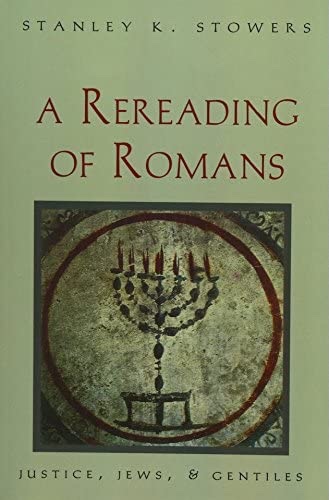
Indeed, in his excellent analysis of Paul’s letter to the Romans, identifies this clearly in the title of his book: A Rereading of Romans: Justice, Jews, and Gentiles (Yale University Press, 1997).

Justice [righteousness] is the very essence of God, given as an act of grace to all who put trust in God. It is through this “righteousness [justice] of God, through faith in Jesus Christ for all who believe”, that “all are justified by his grace as a gift, through the redemption that is in Christ Jesus” (Rom 3:21–26). Paul asserts that it is “one act of righteousness [justice] [which] leads to justification and life for all” so that “grace also might reign through righteousness [justice] leading to eternal life through Jesus Christ our Lord” (Rom 5:18–21). Justice is the very essence of God, given to all through Jesus.

3 Justice and Grace

One way of expressing this quality of justice, or righteousness, in the life of faith, is to show grace, or compassion, to those who are in need. Jesus recognised this when affirmed “whoever gives a cup of water to drink” (Mark 9:41), and in his parable about the Samaritan who went out of his way to assist and care for an injured traveller (Luke 10:25–37).

Both the manifesto for mission that Luke highlights at the start of the public activity of Jesus (Luke 4:18–21) and the climactic parable of the sheep and the goats that Matthew places at the end of the public teaching of Jesus (Matt 25:31–46). Jesus declares his intention to enact justice by setting free the captives, giving sight to the blind, and liberating the oppressed (Luke 4:18). He tells his followers that whenever they sheltered the homeless, fed the hungry, or gave a drink to the thirsty, “you did it to me” (Matt 25:35–40). James, his brother, likewise asserted that to practice true religion was “to visit orphans and widows in their affliction” (James 1:27).

So acts of kindness give expression to the very heart of who God is, by manifesting God’s justice, or righteousness. “Unless your righteousness [justice] exceeds that of the scribes and Pharisees, you will never enter the kingdom of heaven”, he declares (Matt 5:20), and so “blessed are those who are persecuted for the sake of righteousness [justice], for theirs is the kingdom of heaven” (Matt 5:10).

4 Advocating for Justice in Scripture

Taking care that justice is done also requires speaking out for those who are silenced, marginalised, oppressed, or persecuted. In Proverbs, the sage advises, “Open your mouth for the mute, for the rights of all who are destitute. Open your mouth, judge righteously, defend the rights of the poor and needy.” (Prov 31:8–9).

Likewise, the Psalmist affirms, “Blessed is the one who considers the poor! In the day of trouble the LORD delivers him” Psalm 41:1).

Advocating for justice is thus seen as integral to faith in God.

One of the prophets delivered the word of the Lord: “Render true judgments, show kindness and mercy to one another, do not oppress the widow, the fatherless, the sojourner, or the poor, and let none of you devise evil against another in your heart.” (Zech 7:9). Another prophet asserted, “Keep justice, and do righteousness, for soon my salvation will come, and my righteousness be revealed.” (Isa 56:1).

Jesus is remembered in the preaching of his followers as The Righteous One—we might also say, The Just One. This is what he is called by Peter (Acts 3:14), Stephen (Acts 7:52), and Paul (Acts 22:14). The title recalls the centrality of justice in the ministry of Jesus.

And Jesus maintains the importance of advocating for justice in his teachings. We have already noted his teachings in which he advocates that we care for the little ones and those in need (Matt 25) and instructs his followers to work for liberty for the oppressed (Luke 4). He teaches the central significance of love for neighbour (Mark 12:31), which surely entails advocating for justice.

And he tells the parable of the widow calling persistently for justice (Luke 18:1-8), which concludes with the powerful rhetorical question, “will not God give justice to his elect, who cry to him day and night?” (Luke 18:7), followed I meant the striking affirmation, “tell you, he will give justice to them speedily” (Luke 18:8). A commitment to justice requires advocacy for justice.

5 Justice in the Basis of Union

The centrality of justice, so evident in the witness of scripture, is reiterated in the Basis of Union of the Uniting Church. If we are followers of Jesus, called to walk the way he sets out before us, then as faithful disciples, we are called to walk right into what the Basis of Union envisages as a “new order of righteousness and love” (para 3). The words in that phrase are drawn from the deep wells of tradition, especially in scripture, where both live and righteousness are frequently-occurring words. It is the kingdom of God which is the new order of righteousness (justice), manifested in love.

These words call us to care for one another but also to do what is right. They call us to live a live grounded in justice, in the same terms that Jesus and the prophets before him cried out, seeking justice for everyone—not just for ourselves or those close to us, but for the whole of society.

These words challenge us to live with the same self-giving, fully-emptying love, that we see in the cross at the centre of the story of Jesus. And they lead us to the conclusion that as we live in this way, we will advocate for justice.

6 Advocating for Justice in the Statement to the Nation

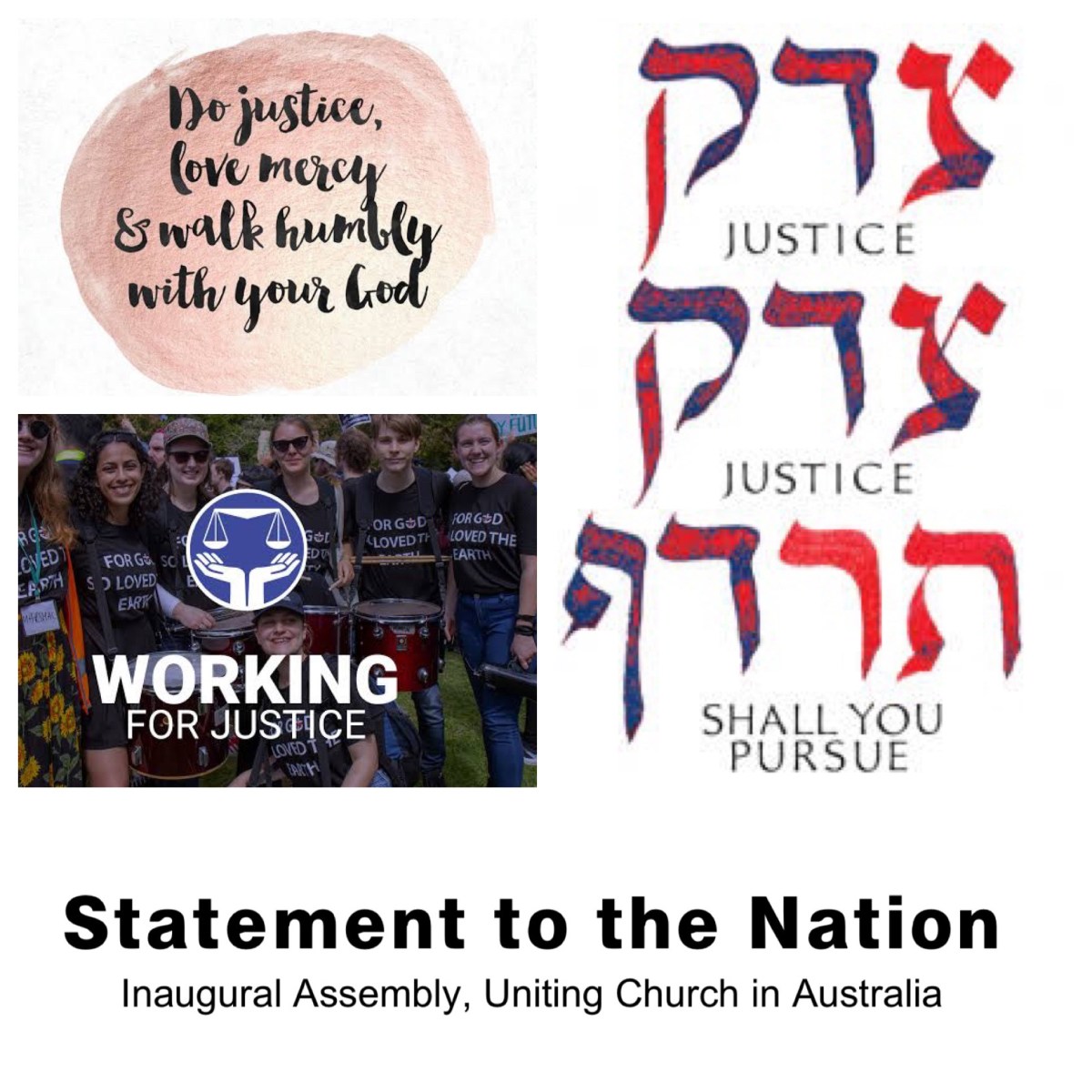
The Uniting Church inherited from its predecessor Churches this resolutely firm commitment to advocating for justice for all. Many Uniting Church congregations and members are actively committed to serving those people who find themselves on the margins of society. This commitment was clearly articulated in the 1977 Statement to the Nation, which declared, “We pledge ourselves to seek the correction of injustices wherever they occur.”

That Statement then identified specific forms of injustice: “poverty, racism and discrimination, acquisitiveness and greed, and the daily widening gap between the rich and poor”. It identified a number of rights to be supported: “equal educational opportunities, adequate health care, freedom of speech, employment or dignity in unemployment if work is not available”.

It also noted some just actions that were to be followed, including “the wise use of energy, the protection of the environment and the replenishment of the earth’s resources”, as well as a concern for the welfare of the whole human race.

The Statement spoke out publicly about these matters. It models for future Uniting Church people the importance of advocating for justice.

7 Advocating for Justice in Action

This commitment to advocating for justice has been evident in many actions undertaken by Uniting Church members over the decades. The Uniting Church has joined in common cause with other groups and organisations in society, in standing in covenant solidarity with First Peoples; in advocating for a welcoming attitude towards refugees; in lobbying for a fair and just system of caring for people who are experiencing poverty and homelessness; in seeking equity for workers in their workplace; and in many other issues. A regular stream of policy documents and public resolutions point to a clear and unbroken commitment to seeking justice for all.

“Justice, and only justice, you shall follow.” The words of the ancient prophet sound clear, still, today. “Do justice, love kindness, and walk humbly” has become a compelling guide for people of faith. And as we walk the way of The Just One, we do well to “seek first the kingdom of God and God’s justice”.

*****

On justice in scripture, see https://johntsquires.com/2021/05/26/reading-old-and-new-testaments-together-2-worship-and-justice/. For the Basis of Union, see https://assembly.uca.org.au/basis-of-union. For the Statement to the Nation, see https://assembly.uca.org.au/resources/introduction/item/134-statement-to-the-nation-inaugural-assembly-june-1977. For policy documents and Assembly resolutions on matters of justice, see the many resources collected at https://unitingjustice.org.au

There are further articles about justice and advocacy in the Spring 2021 issue of Viewpoint, the magazine of the Canberra Region Presbytery of the Uniting Church in Australia, at https://canberra.uca.org.au/media/10701/viewpoint-crp-advocacy-august-2021.pdf

The climate is changing; the planet is suffering; humanity is challenged.

For some years now, Elizabeth and I have been supporting the Climate Council. It used to be an independent Commission which was funded by the federal government—set up to study the impacts of climate change, and to give expert advice to the Australian public on climate change.

But then, Tony Abbott happened. One of its first orders of business by the incoming Abbott government was to abolish the country’s Climate Commission. Soon after that, the body was independently relaunched as the Climate Council, with the same commissioners that the Commission had, with the head of the Council being Tim Flannery.

So the Climate Council has continued, operating on the basis of financial support from sympathetic individuals and organisations. And they have produced regular reports on a range of climate-related issues. You can see the most recent reports at https://www.climatecouncil.org.au/news/

In its most recent email, the Climate Council has written: “The Intergovernmental Panel on Climate Change (IPCC) has now released the first instalment of its landmark Sixth Assessment Report. This is the most comprehensive and authoritative overview of the physical science of climate change to date.”

They go on to note that “the threat now facing all of humanity due to inaction on climate change is more serious than ever, and every day of further delay puts us more at risk”. They note that the findings of this report will be confronting for many people. They also press the point that “strong action today will make a profound difference to communities and ecosystems worldwide, both in our lifetimes and well into the future”.

The Climate Council summarises the four key findings of the IPCC report under four headings:

The scale and pace at which humans are altering the climate system has almost no precedent. Human influence has warmed the climate at a rate that is unprecedented in at least the last two thousand years.

Climate change and its impacts are accelerating, and more impacts are on the way. Lack of action, despite decades of warnings, means we are now seeing these alarming changes unfold at a faster and faster rate. In other words, our climate is not merely changing, the rate of change is now accelerating.

Every fraction of a degree matters. Every additional increment of warming means more extreme weather, including increases in the intensity and frequency of heatwaves, damaging rainfall, and droughts.

Responding to climate change means doing everything possible to reduce emissions, while also adapting to the impacts that can no longer be avoided. Past inaction means that more impacts from climate change are on the way but the right choices made today will be measured in lives, livelihoods, species and ecosystems saved.

What does the IPCC’s latest report mean?

The need for action is clear: advocacy of government, lobbying of companies, protests in public, letter writing by individuals—as well as reviewing our own lifestyles, encouraging friends and family to adjust their lifestyles, and pressing the companies from whom we buy products to ensure that they are operating in sustainable ways.

In Australia, since the commencement of a federal government comprising members of the Liberal and National parties, our environmental policies have been hamstrung by the grip of reactionary conservatives renegades within these parties. Our commitment to environmental responsibility has gone backwards. Our situation is shameful. The need for action cannot be any clearer.

In this context, the Climate Council has joined with 55 organisations across the Australian climate movement, representing millions of Australians, in calling on the Federal Government to cut emissions by 75% by 2030, and reach net zero by 2035. “Now, more than ever, we need to demonstrate the sheer number of Australians that want to see strengthened emissions reduction targets”, they say.

You can support this call to our federal government—“We need to adopt a science-backed target of at least 75% emissions reduction below 2005 levels, by 2030”—by clicking on https://www.climatecouncil.org.au/actions/petition-cut-emissions-75/ and signing the petition. It’s the least you can do.

Clobbering the clobber passages

There are a number of passages in scripture which appear to address the matter of sexual relationships between people of the same gender. They have often been (mis)used to “clobber” LGBTIQA+ people by Christians.

This small handful of scripture passages have exercised an inordinately huge influence on the church—and, indeed, on society as a whole—in relation to various matters associated with same-gender relationships and the range of gender identities which exist amongst humanity.

Over the past 25 years, Elizabeth and I have regularly taught about these passages, providing a constructive way of understanding each of them. In keeping with the Basis of Union of the Uniting Church in Australia, the way we approach these biblical texts is to draw on the insights of critical scholarship in order to develop a clear understanding of what is, and what is not, referred to in these passages.

This is consistent with the commitment of the church to “sharpen its understanding of the will and purpose of God by contact with contemporary thought”, through drawing on “the inheritance of literary, historical and scientific enquiry which has characterised recent centuries”, which leads to the articulation of “an informed faith” (para 15). There are many insights about gender identity and sexual relationships that have been gained over the past decades, from work undertaken in medical, psychological, sociological, and biological arenas.

In surveying these passages, it is to be noted that none of them must, by necessity, be seen as weapons to be used to “clobber” LGBTIQ people. Each passage needs to be understood within its context. Careful scholarly work has been undertaken to indicate just how this interpretative process illuminates these texts, and does not provide any warrant for their earlier negative, hurtful, and harmful use, by the church, against LGBIQ people.

Language. The first thing to note is that the Bible was written in Hebrew and Greek languages, so there are questions about how particular words should be translated, whether there are exact equivalences in English, and so on. A key observation is that many translations use the word “homosexual” where the original language actually requires more nuance in translation.

Culture. A second factor is that we need to reflect on the cultural customs of the societies within which the Bible came to be written. It is important to consider how these cultural customs have shaped the way in which the words were written. “Homosexuality” is a modern concept, which was not known to the writers of the biblical texts in the way that we understand it. Scripture does not show awareness of the loving, committed, lifelong relationship of two people of the same gender. There is a clear cultural difference between the world of the texts of scripture, and the 21st century world.

Leviticus 18 and 20: Neither the oft-quoted verse about same-gender sex (Leviticus 18:22), nor a similar statement two chapters later (Leviticus 20:13), are dealing primarily with same gender relationships, but about cultural shaming practices, using power to create inequality in relationship. This text occurs in a section of Leviticus called “The Holiness Code” which has as its main purpose to set out laws to keep Israel different from the surrounding cultures.

The rules in this section of Leviticus were meant to set the Israelites apart from the Canaanites and Egyptians, who at that time participated in fertility rites in their temples that involved different forms of sex, including homosexual sex. Male-to-male sex was seen to mix the roles of man and woman and such “mixing of kinds” during ancient times was defined as an “abomination,” in the same way that mixing different kinds of seeds in a field was an abomination.

These verses critique the practice in which a stronger male seeks to subordinate and demean a weaker male, through sexual activity. This is what is declared to be an “abomination”. This abusive and shaming action is not what we are talking about when we refer to same gender relationships today: committed, loving, long-term relationships between two equal people.

Genesis 19:1–29: The same applies to the story of Sodom and Gomorrah (told in Genesis 19). This story is an example of what happens when God’s people do not live up to God’s expectations. It provides a lesson about the importance of hospitality to the stranger—a key value in ancient Israelite society. The cruel men of the town were planning to rape the visitors and were definitely not homosexuals. The prophet Ezekiel, inspired by the spirit (Ezekiel 16:49-50), declares that this is not about sexual sin, but about the sin of not providing hospitality.

Judges 19:1–30: The terrible story of the Levite’s concubine (Judges 19) also deals with hospitality. It is clear that hostile men used a breach of hospitality protocols as a weapon against other men, seeking to shame the strangers in this way. Like the story of Sodom (Gen 19), this account shows the extremely inhospitable behaviour of the town. Some mistakenly interpret the townsmen’s behaviour to be somehow related to homosexuality, but this was an example of the brutality of one group of men toward a group of visitors. This, again, is not about a same-gender relationship where equality and mutuality are paramount. It is about violating a cultural norm in an abusive and violent manner.

Genesis 1:1–2:4a: This passage is not part of the “clobber passages”, but is included because it provides a clear affirmation that God made a good creation, and encouraged human beings to enter into positive relationships with each other within that good creation (Genesis 1–2). Our human expression of sexuality is one way of expressing the goodness of that creation. We ought not to exclude people who are attracted to people of the same gender from this understanding.

Romans 1:18–27: The behaviour which Paul was addressing here is explicitly associated with idol worship (probably temple prostitution). It is directed towards heterosexual people who searched for pleasure and broke away from their natural sexual orientation or their natural ways of having sex (both male and female) and participated in promiscuous sex with anyone available or used methods not culturally accepted.

In the surrounding culture, it was common for men of a higher status to take sexual advantage of male slaves or male prostitutes. Here Paul is instructing his readers to keep pure and honour God. Paul is talking about the use and misuse of power and authority and how that impacts one’s relationship with God. Paul didn’t have in mind specifically prohibiting consensual same-sex relationships, because they were never considered in his cultural context.

1 Corinthians 6:9–10: In Paul’s vice-list he identifies a list of sinners whom he declares will not be granted entry into the kingdom of God. Amongst the thieves and robbers, drunkards and “revilers” we find a number of sexual transgressions mentioned. This includes two critical words: malakoi and arsenokoites.

The term malakoi means “soft” and is also interpreted as male prostitutes. The word arsenokoites is difficult to translate, but it probably refers to a male using his superiority to take sexual advantage of another male. Paul is right to condemn these sexual activities, but this has nothing to do with a consensual homosexual relationship.

References to sexual sins in Paul’s letters (in both Romans 1 and 1 Corinthians 6) sit alongside a range of other sins, which are equally condemned, and equally challenging to our discipleship. It is quite legitimate to ask, why single one particular sin out?

Paul related all of these sins to idolatry, which, for him, was the fundamental sin. A loving relationship between people of the same gender is not idolatrous, but rather it can strengthen a sense of the value of human life which God desires for us. Paul was writing about the abuse of relationships, which is quite different from the expression of a loving, faithful relationship.

1 Timothy 1:8–11: This passage is similar to 1 Cor 6, above. This time it is a list of sins (as opposed to sinners) and includes the words pornos, arsenokoites and andrapodistes. Each term needs to be clearly understood. The word pornos most likely refers to a male having sex outside of marriage, presumably with a female (but also, feasibly, with a male); the second term, arsenokoites (found also in 1 Cor 6) can probably be defined as male same-sex relationships that involved some level of exploitation, inequality or abuse. Finally, andrapodistes can be translated as “slave traders.”

Scholars believe that the three terms were used together in that slave dealers (andrapodistes) would be acting as pimps for captured boys (pornos) who would be taken advantage of by powerful men (arsenokoites). These are sins that certainly need to be addressed, but this particular passage does not relate to homosexuals in a committed relationship.

Jesus: In all four Gospels, Jesus rarely discusses sexuality; when he does, there is very little detail. This topic rates as of only tiny significance for him, alongside the greatest focus which Jesus had—on wealth and poverty, and the importance of serving those on the edge, those who are in need. There is no saying or parable of Jesus that directly addresses the situation of LGBTIQ people in particular—apart from the fact that such people are part of the whole of humanity who are addresses in the same way by Jesus in all of his teachings.

From this very brief survey of key passages, we are able to affirm that the most important conclusion to draw from the scholarly explorations of relevant biblical texts, is this: what God wants from human beings, is a commitment to loving, respectful relationships, a commitment to long-term, hopefully lifelong, relationships. In short, the specific genders of people in relationships is less important than the quality of relationship shown between individuals in relationship with each other.

In the Church, we affirm that God is faithful—that those who diligently seek to know the will of God, will be upheld and loved by God. God is not disturbed by differences of opinion; God made a diverse creation, and God honours our search for truth within that creation.

In Jesus, we see the key attributes of God, lived out in a human life. The Uniting Church’s Basis of Union declares that “in his life and in his death, he made a response of humility, obedience and trust” (para 3). These are the key qualities of a faithful life. These qualities are the controlling lenses through which we should read the biblical texts, and develop our understanding of sexuality and marriage.

A heterosexual relationship, at its best, will exhibit mutual respect, deep love, faithful commitment, and personal humility in placing the other as first. So too can a same genderrelationship. Medical, psychological, and social explorations show that a relationship between two people of the same gender, can itself exhibit the best of human qualities, and demonstrate the finest moral values in human relationship. It can certainly exhibit mutual respect, deep love, faithful commitment, and personal humility in placing the other as first. 

Reinterpretation for the present age. Throughout the New Testament, we can see places where NT writers offer radical reinterpretations of the norms of their cultural and religious practices. The accounts of the ministry of Jesus tell us of Jesus’ affirmation of women, his willingness to break religious law by healing on the Sabbath, and his redefining of aspects of Jewish law in the light of his message of the coming kingdom.

The accounts of the early Church include instances where redefinition and breakthrough took place: most strikingly, in Acts 10, as we have already noted. This chapter tells the story of Peter, who was a faithful adherent to a long-established pattern of eating in the manner that was set forth in the laws of Leviticus. He was told that what he did not eat—because it was “unclean”—he was now free to eat—because God had declared such food “clean”.

This opened the way, in the early church, to a new way of inclusive table fellowship where Jews and Gentiles are welcome to eat and share together. Who is to say that the spirit, which once moved in this way, is now not able to move in a similar way, and to declare what some consider “unclean” to be “clean”—and that we can rejoice in this!

In Ephesians, a standard Hellenistic pattern (a “household table”) is adapted to instruct husbands and wives. Eph 5:21–33, while appearing on the surface to reinforce patriarchal norms of wives submitting to husbands, actually instructs husbands to love their wives with self-sacrificing love (“as Christ gave himself for the Church”) and encompasses all marriage relationships under the heading, “submit yourselves to one another”. This was a radical reinterpretation of the marriage relationship itself, even within the first few decades of the life of the church.

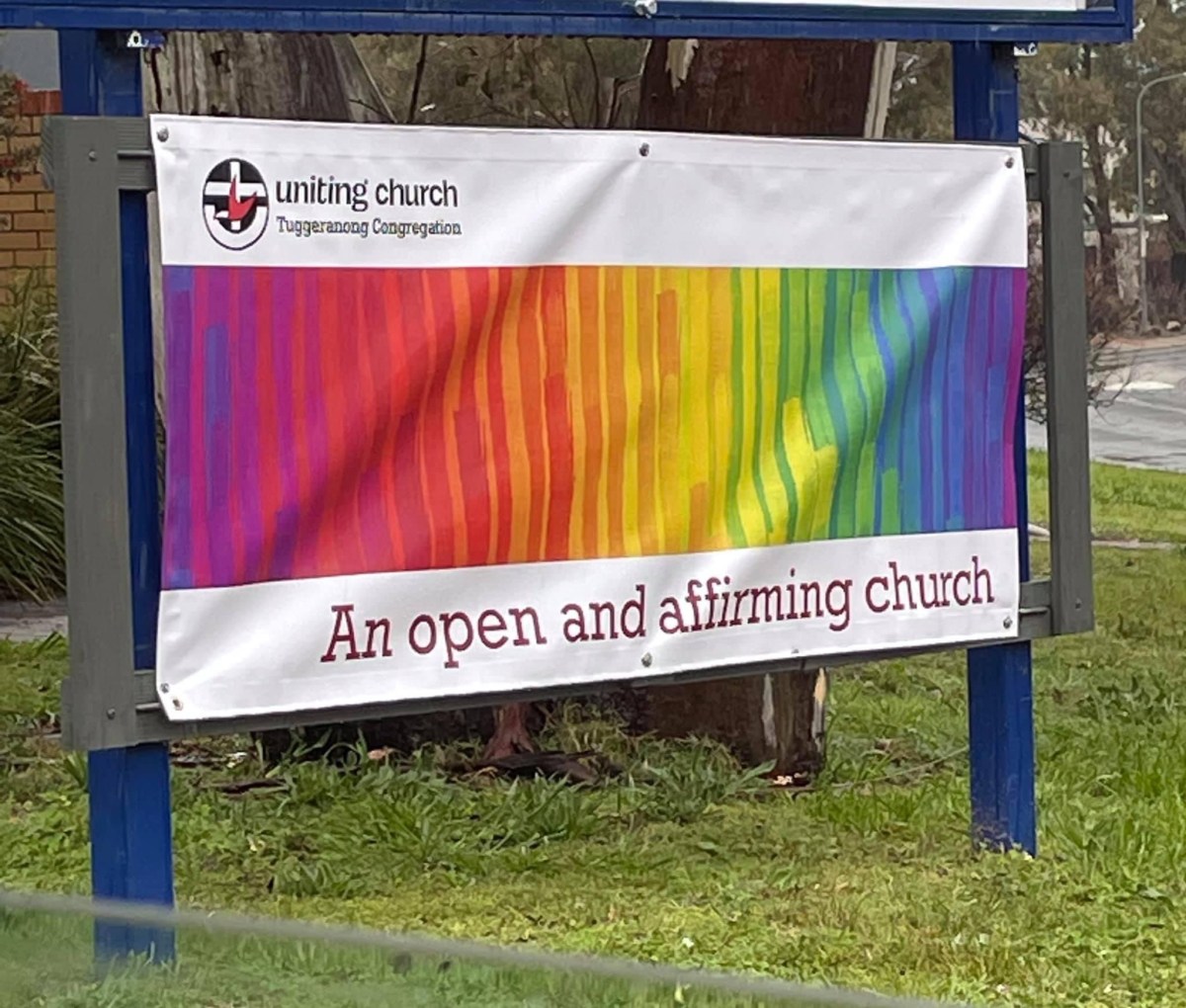
The biblical account shows that the spirit comes to faithful people, offers a vision of a new way, and opens hearts and minds to a greater vision which broadens the impact of the good news and reinvigorates missional activity. In the Uniting Church, we seek to walk in that new way, faithful to the witness of scripture, and open to the guidance of the Spirit, accepting of new insights and welcoming to all.

*****

This post formed the basis for a presentation by Elizabeth and myself at the Rainbow Christian Alliance on 8 August 2021. A follow-up presentation on passages from scripture that support an inclusive and affirming attitude on 14 November 2021; see https://johntsquires.com/2021/09/30/affirming-and-inclusive-passages-from-scripture/

A Safe Place for Rainbow Christians

A post from guest blogger Delia Quigley

July 2015 saw the beginning of  Rainbow Christian Alliance (RCA) as a joint program run in partnership between Tuggeranong Uniting Church (TUC) and Diversity ACT community services. RCA was initiated to provide a Safe Place for LGBTIQA+ people of faith, their families and friends who wanted to be able to get together in fellowship in an environment away from the judgement, hurt and pain often caused by Christian Churches and other faiths to the LGBTIQA+ community.

See the source image

RCA  gathers  on the second Sunday of each month with a dinner church format, meeting with LGBTIQA+ people of faith and their allies; gathering, chatting, eating, then sharing in a variety of worship styles including modified liturgy, readers theatre, discussion groups, guest speakers and the evening is usually wrapped up with dessert and much more chatting!

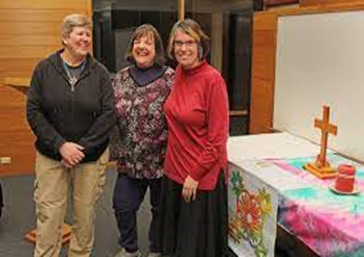
Initially RCA was led by Delia Quigley, Rev Anne Ryan and  Megan Watts

Initially the RCA project was set up utilising the space in the Erindale Neighbourhood Centre, next door to TUC, but since the arrival of COVID-19 and the requirements for modifications including increased space for those gathered, RCA has been meeting in the TUC auditorium.

Following the commencement of RCA in July 2015, an invitation was extended by Rev Aimee Kent and a partnership was also created with Goulburn Grace Community. Dare Café commenced in Goulburn in February 2016, meeting monthly, and later incorporating a Bible Study group. The Dare Café and Grace Community has been impacted by COVID-19, but Pastor Amy Junor is now keen to work with the Dare Café group and keep things moving where possible.

See the source image

Over its six years, RCA has provided support to many people, including Ministers or Pastors who lost their congregation or Church because of their own sexuality, as well as people who faced exorcism, conversion therapies or even had lobotomies performed on them to cure their sexuality!

RCA also provided information to other congregations on LGBTIQA+ education and issues, including at the very stressful time of the Marriage Plebiscite. Following the June 2016 Orlando shooting at the Pulse night club in the USA, where 49 patrons were killed and 53 were wounded, RCA partnered with Canberra City Church to hold a Blue service for Orlando which was catered for with heart warming soups and fresh bread rolls by the City Church Congregation.

In more recent times RCA has had increasing support from TUC Congregation members, who provide a core support group to assist with set up, catering and running of RCA, giving more space for the leadership team of Rev. Miriam Parker-Lacey, James Ellis and Rev. Elizabeth Raine to concentrate on working with the group activities.

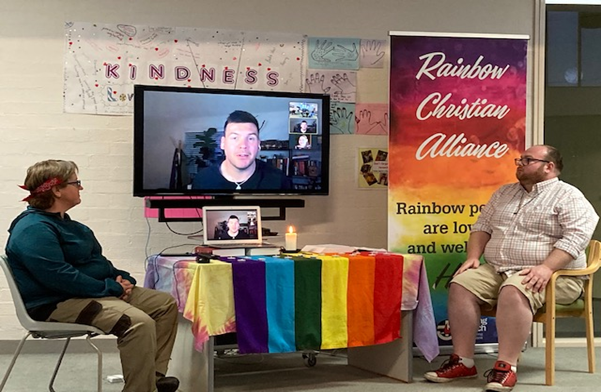
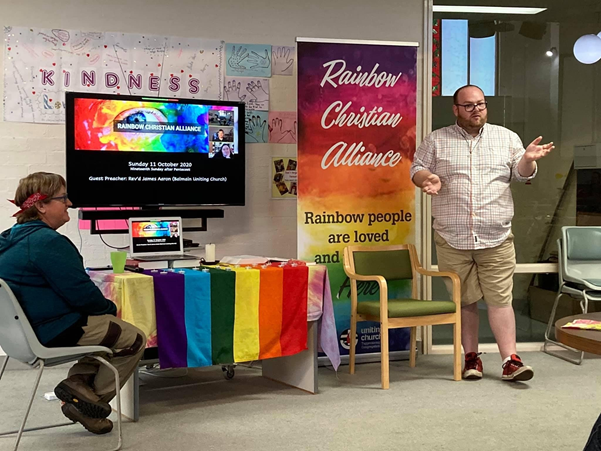
Rev Aaron James pictured speaking online to the RCA gathering in October 2020
with Rev Miriam Parker-Lacey and James Ellis 

RCA has provided a safe place for many and has had steady numbers of attendees of approximately 20-22 people at each gathering over the past 6 years.  Obviously there has been changes as to who attends, but the numbers have remained steady and in recent months there has been an increase in LGBTIQA+ youthful attendees. These younger attendees may not face some of the issues older generation LGBTIQA+ people faced but there are still many  ongoing issues for LGBTIQA+ plus Christians.

6th Birthday gluten-free chocolate mud cake 

Sadly, since the Marriage Plebiscite, there has been an increased push from certain quarters to demonise Transgender or Non-Binary people, and the current Olympics has been used to push fears that Trans people are stealing women’s rights and your children! (The “protect your children” fears was also previously used to push the falsehood that homosexuality equalled paedophilia.)

There are ongoing pushes for legislative changes being introduced by Mark Latham in NSW to prevent even mentioning LGBTIQA+ issues in classrooms.  LGBTIQA+ people are also faced with possible legislation to be tabled by the current Federal Government on ‘Religious Freedom’. Initially the Prime Minister promised to look at legislation to keep LGBTIQA+ young people safe, but there is much cynicism as to what may be introduced and many LGBTIQA+ people fear exclusion or even loss of employment because of their sexuality or gender identity

The Rainbow Christian Alliance continues to provide a Safe Space for people who have been hurt or marginalised within society–even by the church–to gather, relax in each other’s company, and share their faith.

More information on RCA can be found at  https://tuc.org.au/worship/rainbow-christian-alliance/ or on Facebook at https://www.facebook.com/groups/1025029234182558

See also https://www.abc.net.au/news/2017-08-17/what-is-it-like-to-be-christian-and-in-the-lgbtiq-rainbow-family/8808584

Working with First Peoples and advocating for them

I recently participated in a workshop on Advocating for First Peoples, led by Nathan Tyson, an Aboriginal man, of Anaiwon and Gomeroi heritage in North Western NSW. (This was part of the excellent Out Of The Box mission conference held in July.) Nathan is currently working as Manager, First Peoples Strategy and Engagement, in the Synod of NSW and the ACT of the Uniting Church.

The workshop had two parts. In the first part, we explored what we know about the history and current situation of First Peoples. In the second part, we considered what actions we might take to work with and advocate for First Peoples.

What do we know?

In the first part, Nathan offered us a series of insights into the experience of the First Peoples of Australia, drawing on what we know about the history, customs, and current situation of Aboriginals and Torres Strait Islanders across the continent, and in the associated islands linked to this continent.

The five areas were: the impact of invasion and colonisation — the many massacres that occurred, and the almost complete absence of calling British settlers to account for these massacres — the Doctrine of Discovery and the resulting claim of terra nullius about Australia — the Stolen Generations — and the current push to tell the Truth, listen to the Voice of First Peoples, and establish Treaties with the various nations of the First Peoples.

First, there is the story—now becoming well-known and widespread— of the impact on First Peoples from the invasion and colonization that took place from 1788 onwards. (I use these terms deliberately; describing the British colony as a settlement is far too benign; it ignores much of the harsh reality of what took place.)

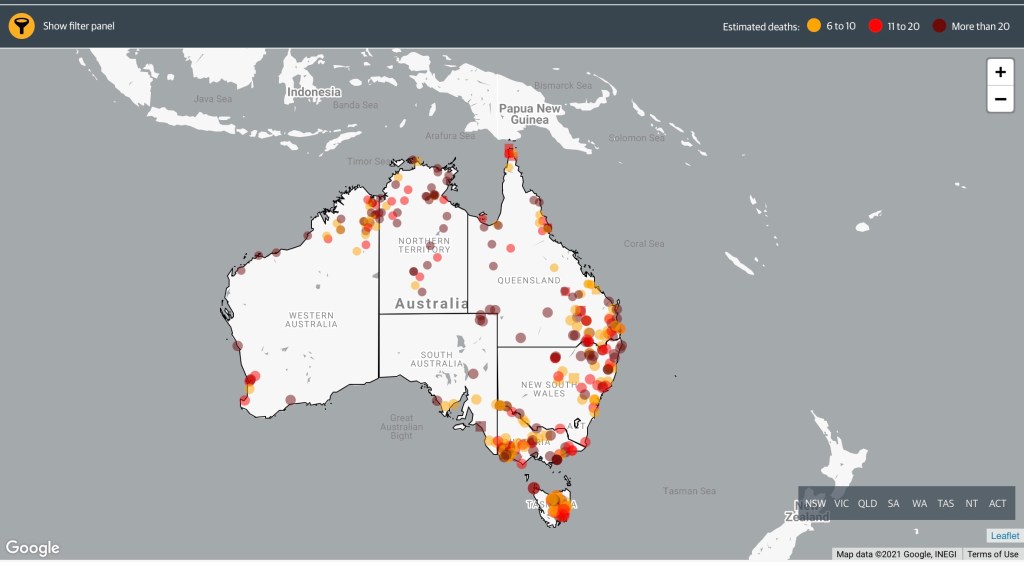
The period of invasion and colonisation saw innumerable massacres take place. As well as the thousands of Aboriginal deaths that occurred through these massacres, British invasion also led to the deliberate marginalising of people in many of the Aboriginal nations that existed at that time.

There is a powerful visual symbol of these massacres at The killing times: a massacre map of Australia’s frontier wars | Australia news | The Guardian

The map is interactive. The number of massacres that were perpetrated by ordinary people—not soldiers, not government officials—is truly horrifying.

Associated with this is an observation that provides a second area worthy of note. It is the case that virtually no white persons were charged for the acts of violence and murder that they perpetrated. (The Myall Creek Massacre provides one of the rare exceptions to this claim. See https://www.creativespirits.info/aboriginalculture/history/myall-creek-massacre-1838)

Third, Nathan referred to the rationale that was driving both the colonisation of the continent and the massacre of First Peoples—the Doctrine of Discovery, promulgated in medieval times and driving the expansionary colonisation policies of many European nations, including Britain. It was this Doctrine which formed the foundation of the claim of terra nullius—the notion that the there were no people in the land who were settled in the land.

The Uniting Church in Australia has joined with other churches around the world in repudiating the Doctrine of Discovery. See https://johntsquires.com/2018/08/13/affirming-the-sovereignty-of-first-peoples-undoing-the-doctrine-of-discovery/

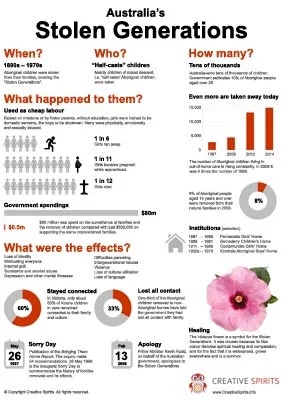
Fourth, Nathan noted the issue of the Stole Generations, a blight on the history of Australia since the nineteenth century. This matter was addressed in Bringing Them Home, a highly important report issued in 1997. The commission that produced this report was led by Sir Ron Wilson, a High Court judge who had served as UCA Moderator in Western Australia and then as the fifth national President (1988–1991).

See https://humanrights.gov.au/our-work/aboriginal-and-torres-strait-islander-social-justice/publications/bringing-them-home

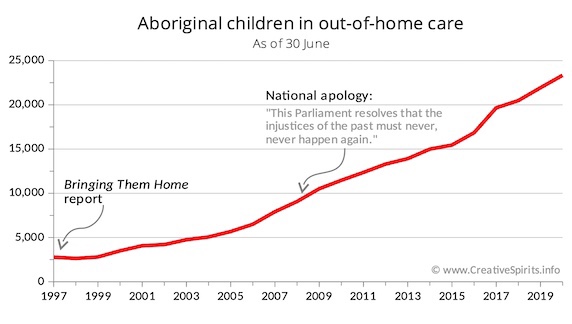
The continuing saga of Aboriginal children being taken from their homes remains with us today, to our national shame. Even in the 21st century, indigenous children continue to be taken from their families. In fact, there are far more Aboriginal children in out-or-home care now, than there were in 1997 when the Bringing Them Home report exposed countless stories of terror and tragedy amongst the Stolen Generations.

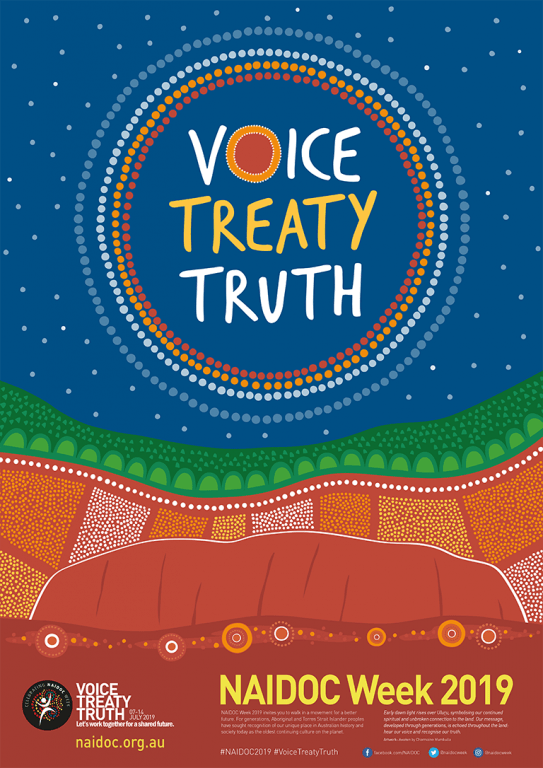
The final area canvassed in the first part of the workshop focussed on the theme of Voice. Treaty. Truth. This was the theme for NAIDOC Week 2019. It consists of a call to give Voice to the First Peoples of Australia by establishing a representative body to advise federal law makers; to establish a Treaty with each of the nations that were in the land before the British sent their invading colonisers; and to tell Truth about the history and the present situation of Aboriginal and Torres Strait Islander peoples.

See https://johntsquires.com/2019/07/07/giving-voice-telling-truth-talking-treaty-naidoc-2019/

Nathan encouraged all of the workshop participants to learn about First Peoples, their history, their realities, and their aspirations, and to approach First Peoples with an open mind and with a compassionate heart.

What can be done?

In the second part, Nathan then provided a comprehensive set of practical pointers for us to consider. Given what we know about the situation and perspective of our First Peoples, what can we do to support, collaborate with, and advocate for these peoples? Here are the practical steps that Nathan provided for us to consider and adopt:

Put yourself in the shoes of First Peoples and try to walk the journey with them as they experience it

Talk with family and friends about the issues that you hear about, encourage truth telling, stand up against racism

Develop relationships, listen deeply to the needs and aspirations of First Peoples

Respect the right of self-determination of Aboriginal Peoples

Undertake simple advocacy activities to support the needs and aspirations of First People’s (synod, assembly, Common Grace, ANTAR, Amnesty)

Join rallies and marches to show solidarity with First Peoples, eg those advertised by FISTT (Fighting In Solidarity Towards Treaties, a Facebook group)

Pay to undertake a Walking on Country experience with a local organisation

Employ First Peoples in your business, purchase goods from Aboriginal businesses, collaborate in social enterprises and community initiatives

Make your church space available for use by Aboriginal Community, for elders, community, social gatherings

Help with fundraising to support Aboriginal community initiatives

Use the system: help a person to lodge a complaint with agencies such as NSW Ombudsman’s Office, Anti-Discrimination NSW, NSW Office of Fair Trading, Ombudsman for Telecommunication Industry, Energy Industry, Community Legal Services (for civil matters)

There are plenty of practical suggestions in this list. It is worth the effort to start implementing some of them!

Jesus, growing, learning: a review of ‘What Jesus Learned from Women’

Jesus, fully divine, was yet also fully human. So we affirm: in creeds, in songs, in sermons and prayers. As fully human as each one of us, Jesus—like us—grew and developed, broadening in his understanding and deepening in his maturity over the years. This growth into maturity took place as Jesus learnt. He was exposed to new experiences, offered different perspectives, given fresh insights, and so, as he learnt, he grew.

Indeed, we read this claim quite explicitly in scripture, in the only place in our canonical Gospels that explicitly deals with Jesus as a growing child: “the child grew and became strong, filled with wisdom” (Luke 2:40), and then, “Jesus increased in wisdom and in stature” (Luke 2:52).

If we accept this claim—consistent with the creeds and articulated in scripture—then it is quite legitimate to ask, “from whom did Jesus learn?” Perhaps from scribes in his local synagogue, as he grows and develops in his understanding of Torah. Perhaps from others of his age in that setting, as they delve deeper together, sharing insights about their customs and scriptures. And perhaps from members of his own family, as a young child, encountering new things each day as he grows.

In all of this, Jesus is “one who in every respect … [is] as we are” (Heb 4:15). He was fully one of “the children [who] share in flesh and blood, [who] himself likewise partook of the same things” (Heb 2:14), who “in the days of his flesh … offered up prayers and supplications, with loud cries and tears, to him who was able to save him from death” (Heb 5:7). His full humanity must surely also mean that he learnt from his interactions with all manner of people in his life.

Including women. Including his mother, and perhaps his grandmother, if she was still alive during his childhood. Including the feisty Syrophoenician woman he encountered near Tyre, as well as the sisters of Lazarus whose home he visited in Bethany; and including Joanna and Mary of Magdala who followed him faithfully, as well as other women whom he encountered at various times during his travels in Galilee and Jerusalem. Jesus learnt from each of these women.

This is the thesis that is proposed, explored, and advocated in detail by North American biblical scholar, James McGrath, in his most recent book, What Jesus Learned from Women (Cascade Books, Oregon, 2021). The book has twelve chapters, and deals with the interactions between Jesus and a dozen women, with conclusions drawn about what Jesus learned in each instance.

If the notion of Jesus, the human being, needing to learn and grow, is problematic for a reader with a strong theology of Jesus as “fully divine”, then the claim that this learning was from women is sure to antagonise those who lay claim to the (unbiblical) notion that women ought not to teach men. But of course Jesus developed, of course Jesus learnt, and of course he learned from women.

In the 16 page Introduction to this book, matters of method in interpreting biblical texts are canvassed. In the 10 page Conclusion, a summary is provided as to “what Jesus learned from women”, and some pointers for other possibilities to explore are offered. If you don’t want to read the whole book, dip into these bookends. But the book is most certainly worth reading in full!

Each of the intervening chapters begin with a creative monologue, from the perspective of the woman in the encounter or another woman closely involved. These creative monologues draw heavily on what we know, from decades of scholarship, about the cultural customs and religious practices of Judaism at the time when Jesus lived in Galilee.

What follows, in each chapter, is a careful discussion of the key issues identified in those monologues. The chapters show thoughtful interaction with contemporary scholarship, with judicious use of footnotes enabling Dr McGrath to engage in the more technical interactions with other scholars. Indeed, there is a comprehensive bibliography of 26 pages at the end of the book, signalling that the author has canvassed other scholarly views most thoroughly.

This book is readable and engaging. The scholarly foundations of James McGrath’s thinking are evident, but these do not, for the most part, impair the flow of the writing or the stimulus of ideas canvassed. Indeed, because I’ve known James in person for many years, I feel confident to say that the book is equally as engaging and enjoyable as the enthusiastic and energetic author is, himself.

That’s not to say that every detail is amenable to my own predilections and beliefs about various aspects of the biblical texts that are explored. I don’t think that chapter 3, that pins a lot on what a fanciful second century document claims about Jesus’s family (Joseph and Mary, and her parents Joachim and Anna), really works–at least, not for me. Nor am I taken by the harmonising down into one incident of the various accounts of the woman who anointed Jesus, dealt with in chapter 7—although I do quite like the notion that the woman, in this incident, functions as a divinely-inspired prophet, foreseeing with clarity the fate of Jesus.

In the longest chapter, treating perhaps the most well-known woman in the life of Jesus (apart from his mother), my willingness to run with the creativity of the opening monologue and the claims that then followed in the ensuing 30 pages, was severely tested. I was minimally persuaded by reliance on abstracted explanations and hypothetical extrapolations from some isolated sections of the late second-century Valentinian gnostic work, the Gospel of Philip.

The kiss that Jesus gave Mary of Magdala, referred to in that work, must be read, I believe, not as a physical act, but as a spiritual claim: Mary was loved more than the one identified as “the disciple whom Jesus loved” in John’s Gospel. The distinctive connections of salt and Jonah with Magdala seem too far fetched to me; was not salt, for instance, widely-used in the ancient world? And yet, the proposal about the relative ages of Jesus and Mary, the economic context of Mary, and the explanation of how the demons left her, have some attraction.

When I arrived at the final substantive chapter of the book, dealing with Joanna, wife of Chuza and one of the witnesses to the empty tomb, I was well-schooled in the McGrath style of beginning with a creative, dramatic-style monologue (in italics) followed by a careful, academic-style analysis of what the ancient texts (biblical and others) report. By the end of the chapter, I was thinking: why was not all of this in italics? That is to say: this whole chapter felt like a free-wheeling historical drama set in the ancient world, not a closely-argued forensic analysis of the character.

I’m a confirmed sceptic about the identification of Joanna with Junia (the apostle named in Rom 16:7). It comes from the work of one scholar, known for his dramatic hypotheses, and not substantiated by other scholarly work. The Nabatean origins of the name Chuza seem to rest simply on one inscription noted in an 1898 archaeological work. The possible relationship of Paul to the family of Chuza and Joanna (perhaps Andronicus and Junia?) does not seem to be demonstrated, at least to my thinking. It’s a creative chapter, but it’s relationship to history is tenuous (like the Star Wars saga that McGrath alludes to at the end of the chapter).

However, a number of the other chapters have strong persuasive power, at least to me. It is clear that the Mary who is depicted in Luke’s Gospel expresses views strongly consistent with key teachings of Jesus (compare Luke 1:46–55 with 4:16–21 and 6:20–26). Was this because the same person authored these passages? (as is most often assumed by scholars). Or was it because Mary in fact taught her son Jesus these central scriptural insights when he was a young child? (as James McGrath advocates in chapter 2). The possibility is enticing, and plausible.

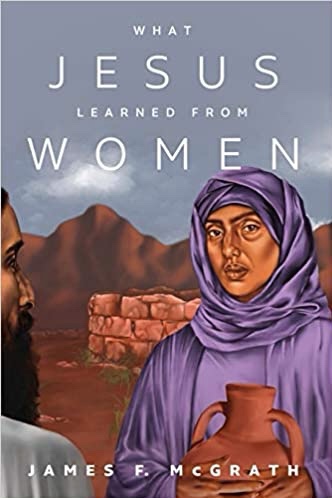
I am also persuaded by the chapters which explain what Jesus learnt from the woman he encountered beside a well in Samaria (chapter 4) and the Syrophoenician woman in the region of Tyre (chapter 5). The way that each of these encounters is reported in the Gospel narratives (the former in John, the latter in Mark and Matthew) provides clear validation for the claim that Jesus did, in fact, learn significant things from each of these women. It seems to me that the discussion in these chapters does a fine job of amplifying what is in the text. And the encounter by the well in Samaria gave the inspiration for the wonderful artwork on the cover of the book, by Indianapolis artist Macey Dickerson. (See https://www.maceydickersonarts.com/)

And, despite my earlier comments about the historical implausibility of the chapter on Joanna, I found the brief discussion of the “intersectional” nature of life for people such as Saul/Paul and Joanna/Junia, living with two names that signify their two cultures, two languages, two places of being. That dynamic is so important for contemporary living in the global society.

The “thickest” chapter, in my view, is the chapter dealing with the young woman who was “presumed innocent”. We know her in Christian tradition as “the woman caught in adultery”—a story told in a section of text that is missing from the earliest manuscripts of John’s Gospel, and also floats into Luke’s Gospel in other manuscripts. The chapter draws from passages in Hebrew Scriptures and rabbinic texts to shed light on the scene. Who knew that dust on the mosaic floor in the Temple could be such a vital clue to this reconstruction?

Dr McGrath reconstructs the scene develops a thesis about what took place in a detailed, well-researched argument which is quite rabbinic in style and character. In the end, the chapter offers a creative interpretation that I find at once persuasive in many aspects—yet enticingly unresolved. Did Jesus learn from this woman the importance of not judging, and the imperative of not assuming one person is any more “without sin” than any other person?

Perhaps the most interesting claim that is made in this book is nestled into a footnote in the consideration of “two suffering daughters” in chapter six, relating to the woman who had bled for 12 years and the twelve year old daughter of Jairus, the synagogue leader (Mark 5:21–43). Noting that the world of the time was a strongly oral society, Dr McGrath proposes that the written Gospels “may well have served as memory aids for those who reflect stories about Jesus in Christian communities”.

Functioning in this way, those who used these written narratives may well have elaborated and expanded on them, drawing from what they knew as people of the time, and responding to questions from those hearing the stories. This fits very well into what we know of ancient (and, indeed, modern!) Jewish practices of storytelling.

We know that the Pharisees (and Jesus), and the rabbis in later centuries into the modern era, were masterful storytellers, using exaggeration, expansion, elaboration, and dramatic techniques to “get the point across”. And ancient synagogue congregations were not at all like the sedate, restrained congregations of contemporary Protestantism—schooled not to interrupt or ask questions! Synagogue gatherings were hectic, bustling, noisy events.

So what does this mean, then, for the whole enterprise that has developed, of careful, meticulous, written scholarly examination of each and every word in the biblical texts? Are we overegging the enterprise in our zealous focus on minute details, given the hypothesis that the texts were simply the springboards for more expansive and creative storytelling? As someone who thrives on that scholarly enterprise, I am stunned by this possibility. But it bears further consideration.

Yet the suggestion that the written text formed the basis for a more extempore, elaborated account of each story involved, is an enticing prospect. And we know that it can work, since the book itself shows how the biblical text can generate a fuller story, offered in the creative monologues at the start of each chapter (and at the end of some).

That’s one of the great gifts of this book—along with the theological affirmations that Jesus was human, and thus did learn from other human beings; and that, in fact, he did learn from women at multiple points throughout his life. For establishing the reality of these insights, through this book, we are most grateful to James McGrath.

*****

Postscript: I have read this book in company with a group of friends, from three continents, meeting once a week online to discuss a chapter at a time. It’s one of the gifts of the pandemic—we have learnt to be agile in the way we function online. It’s meant we can draw together people who are geographically dispersed—including, in this case, the author himself! It’s been a great way to explore a whole host of ideas that have emerged within the book, or during our conversations about it.

See also https://www.insights.uca.org.au/new-book-to-explore-what-jesus-learned-from-women/ and https://www.patheos.com/blogs/religionprof/2021/03/what-jesus-learned-from-women-insights.html where James McGrath engages in conversation with Jonathan Foye about the book.

The book can be ordered from https://wipfandstock.com/9781532680601/what-jesus-learned-from-women/

“The exercise by men and women of the gifts God bestows upon them”: celebrating women in leadership in the Uniting Church

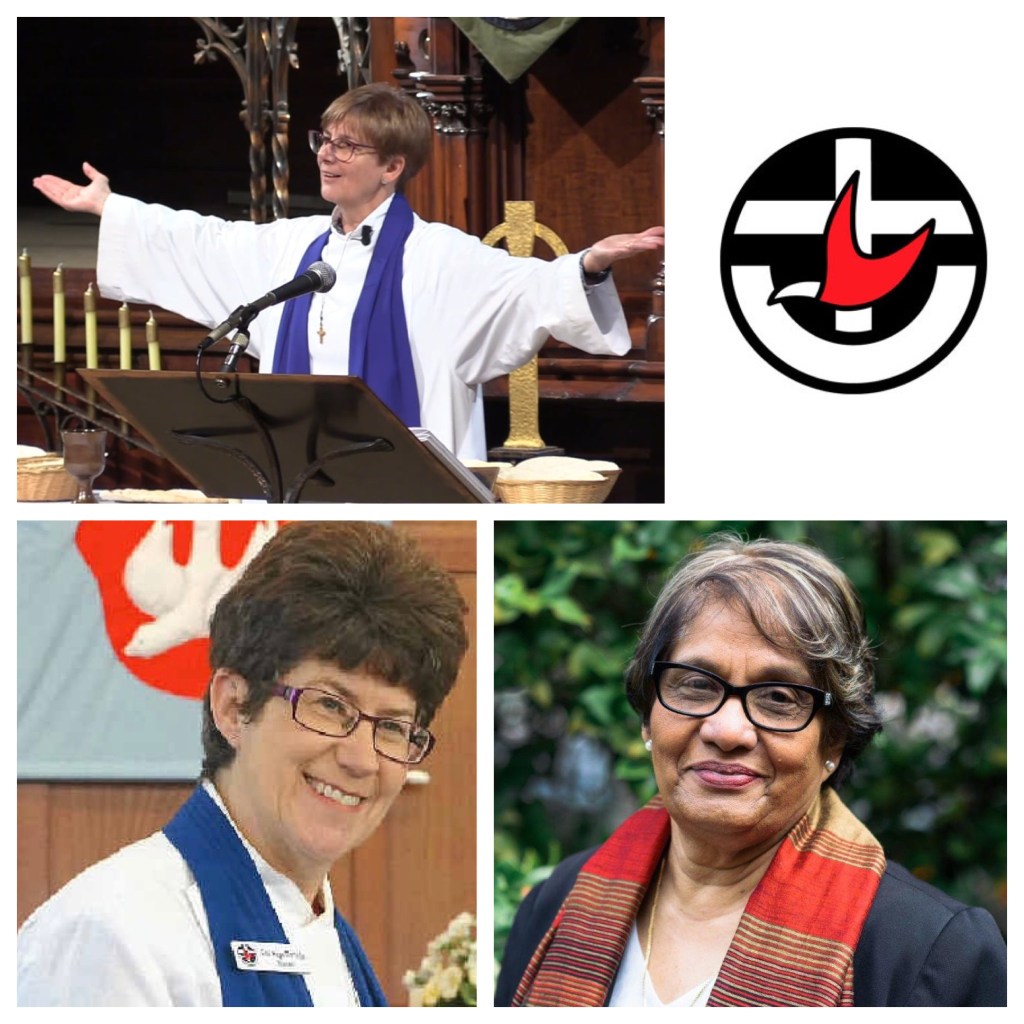
The National Assembly of the Uniting Church in Australia has just installed the Rev. Sharon Hollis as President of the Assembly for the next three years (2021–24).

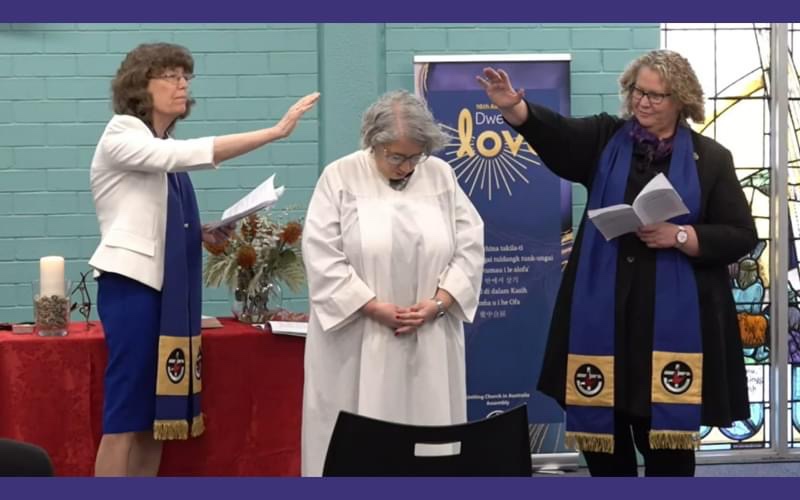
15th President Dr Deidre Palmer and General Secretary Colleen Geyer
pray over the Rev. Sharon Hollis as she is installed as the 16th President

At the same meeting (being held online because of the COVID pandemic), members of the Assembly have elected a female President-Elect, the Rev. Charissa Suli. She will serve as President-Elect for three years, and then take up the position of President in July 2024.

President-Elect, the Rev. Charissa Suli

The UCA employs a system where the current President, the immediate former President, and the President-Elect all serve as ex officio members of the Assembly Standing Committee, the body that oversees the church during the three years in between National Assembly meetings.

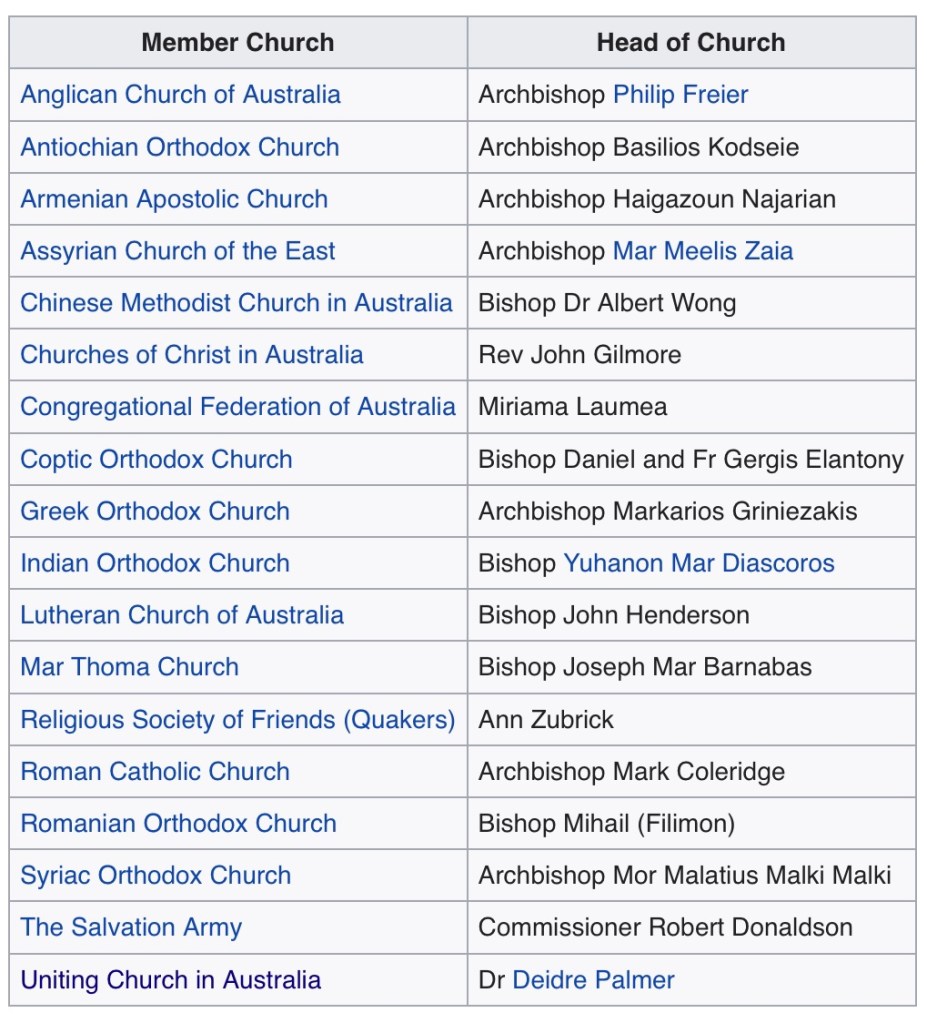
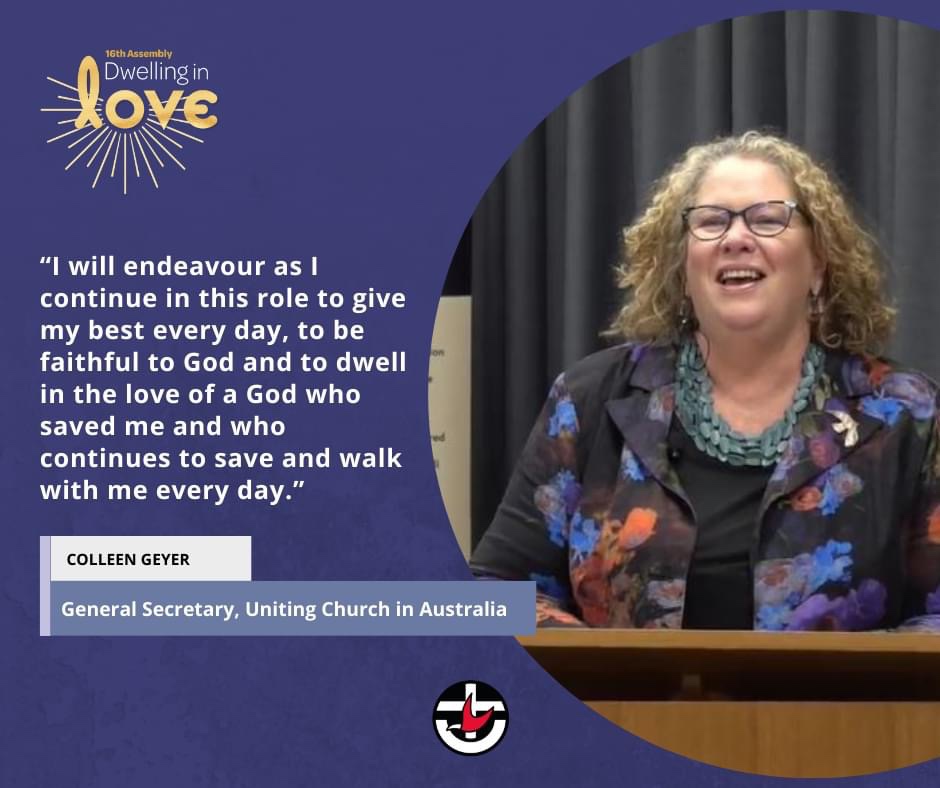
For the next three years, the President, the Past President, and the President-Elect will all be females: the Rev. Sharon Hollis, Dr Deidre Palmer, and the Rev. Charissa Suli, respectively. In addition, the current General Secretary of the Assembly is also female: Colleen Geyer. Her term has just been extended by the current Assembly. It is a striking symbol, when considering the national leadership of Christian churches across Australia. All of our key leadership are female.

The symbolism is potent, when Heads of Churches gather: women in such ranks have, to this point, been somewhat rare. The Uniting Church contribution has been, and will continue to be, a reminder, of the importance of providing a female perspective when issues of national social and political importance are being considered. (It’s a message that our national political leadership seems incapable of hearing and implementing—despite the power of the #EnoughIsEnough movement from earlier this year.)

Women in leadership is not an unusual thing for the UCA. To be sure, women have served in leadership roles in a number of denominations. But amongst the historic mainstream denominations, the Uniting Church stands out from Roman Catholic and Anglican Churches, with many more women stepping forward in leadership.

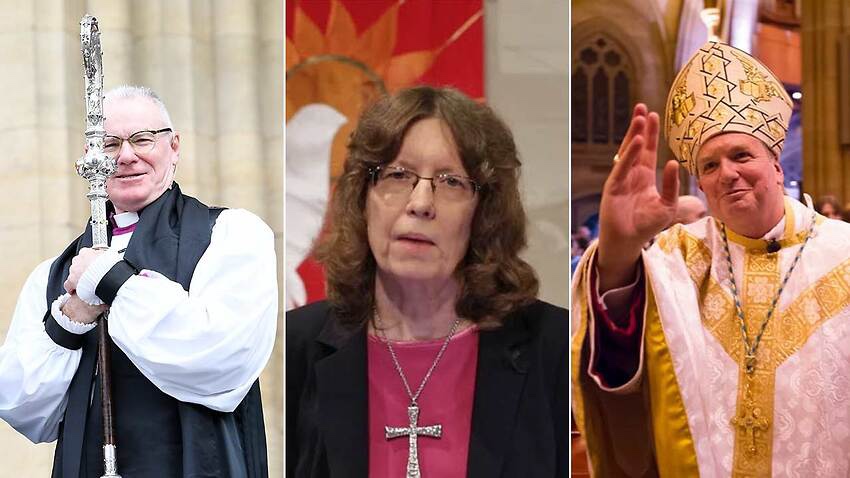
Heads of Churches in 2018:
Melbourne’s Anglican Archbishop Philip Freier,
President of the Uniting Church Dr Deidre Palmer,
and Sydney’s Catholic Archbishop, Anthony Fisher.

The same comparisons can be drawn with Baptist, Church of Christ, and Pentecostal churches over the past half century. (And a number of women in leadership in Pentecostal or other conservative churches have been in married teams, where their role has been “covered” by the “headship” of their husband—partner).

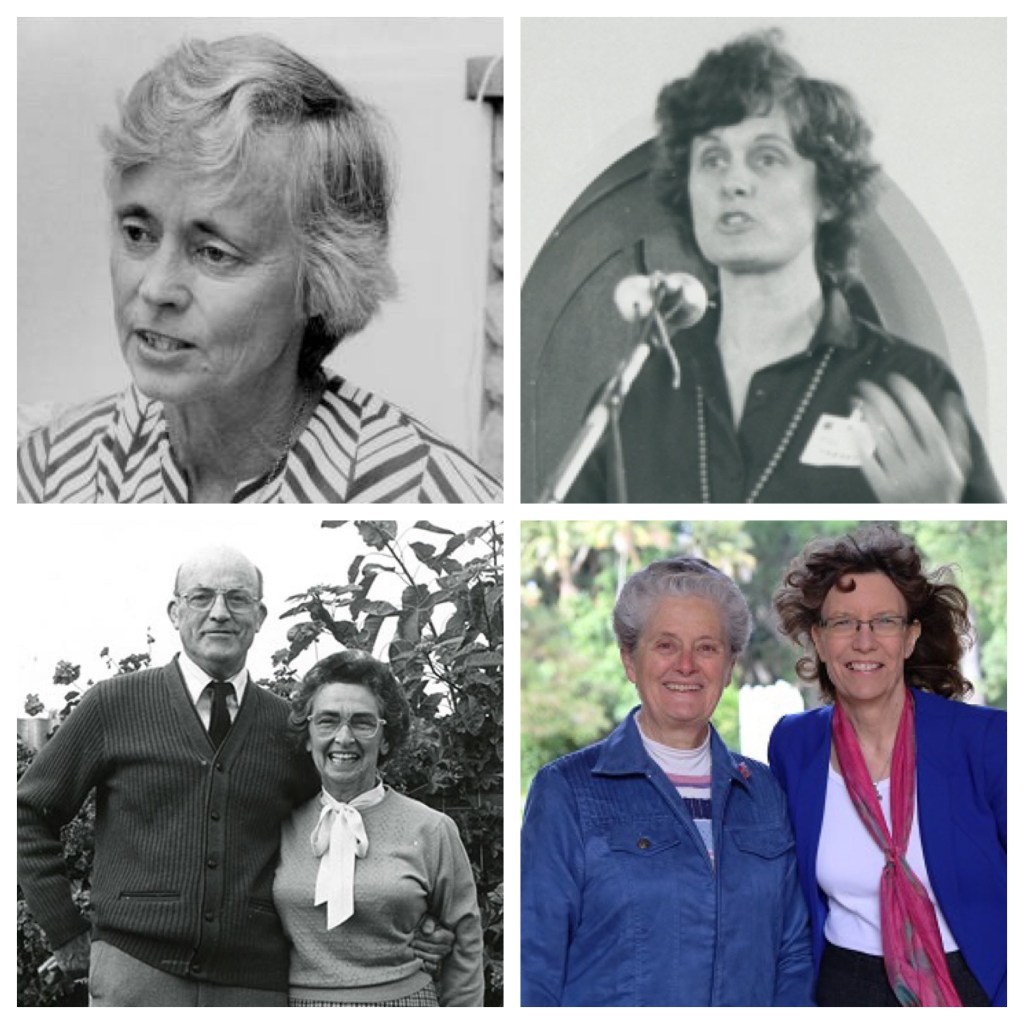
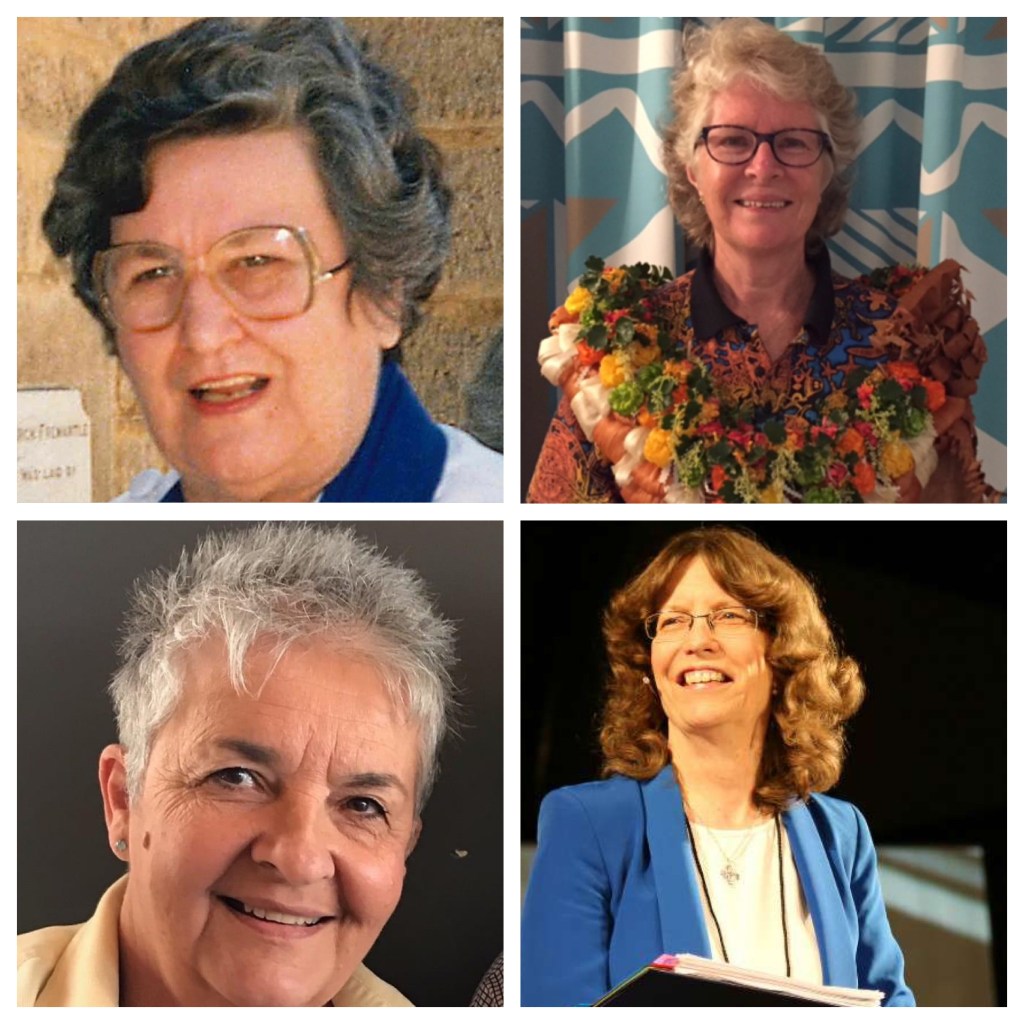
The first Moderator of the NSW Synod was Mrs Lilian Wells (1977–78) and the second Moderator of the Victorian Synod was Mrs Ethel Mitchell (1978–79). The South Australian Synod elected Mrs Elizabeth Finnegan as the sixth Moderator (1987–89) and then the Rev. Margaret Polkinghorne as the tenth Moderator (1995–97) in that Synod. The seventh Moderator of the Tasmanian Synod was Dr Jill Tabart (1984–85). Dr Tabart went on to be elected as the seventh President, serving 1994–97 in that role. She was the first female President.

Top: Moderators Lilian Wells (NSW) and Dr Jill Tabart (Tas)
Bottom: Moderator Elizabeth Finnegan (SA) with husband Paddy;
Presidents Dr Jill Tabart and Dr Deidre Palmer in 2015

This is completely consistent with the affirmation made in the Basis of Union—the document on which the formation of the Uniting Church was based. Paragraph 13 of the Basis, after recognising the existing ministries in the three participating denominations at the time of union, states, “The Uniting Church will thereafter provide for the exercise by men and women of the gifts God bestows upon them, and will order its life in response to God’s call to enter more fully into mission” (para. 13).

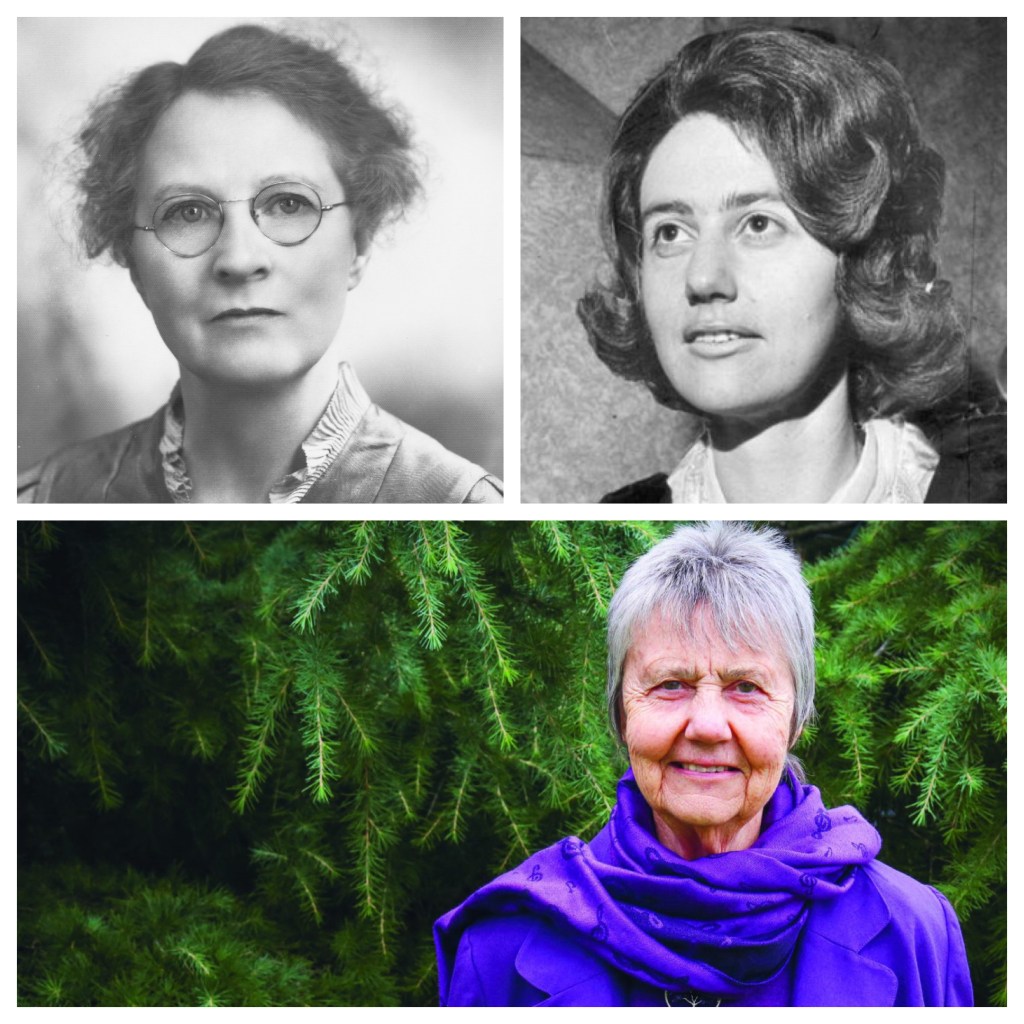
This was consistent with the practice of those three earlier denominations, which each had ordained women to serve in ministry: the Congregational Church had ordained Rev Winifred Kiek in 1927; Rev Dr Coralie Ling, a deaconess, became the first woman to be ordained in the Methodist Church in 1969; and Rev Marlene (Polly) Thalheimer was ordained as the first female minister in the Presbyterian Church in 1974. You can read about these women, and more, in a fine article by Rev Dr Avril Hannah-Jones, at https://revdocgeek.com/2013/06/22/women-in-the-uniting-church-by-a-partial-prejudiced-ignorant-historian-to-quote-the-immortal-jane/

Top left: the Rev. Winifried Kirk.
Top right: the Rev. Coralie Ling, in 1969,
and (below) in 2018.

Indeed, this practice is also consistent with the fundamental theological affirmation made earlier in paragraph 13 of the Basis, declaring that the church “acknowledges with thanksgiving that the one Spirit has endowed the members of Christ’s Church with a diversity of gifts, and that there is no gift without its corresponding service: all ministries have a part in the ministry of Christ.” This, of course, derives from the crystal clear affirmations about the gifting of the Spirit that Paul makes in 1 Corinthians 12. The Spirit knows no limits of gender in gracing individuals with gifts for ministry.

And Paul (despite the inaccurate ways in which his letters are portrayed) was completely accepting and affirming of women in ministry leadership as partners with him in the work they were undertaking. See my considerations of this matter at https://johntsquires.com/2020/11/19/women-in-the-new-testament-1-the-positive-practices-of-jesus-and-the-early-church/ and https://johntsquires.com/2020/11/19/women-in-the-new-testament-2-six-problem-passages/

So, women in key leadership roles is a practice consistent with scripture and in accord with the central values and practices of the Uniting Church. Along with the women already noted in the opening paragraphs above, a number of the Synods have had female Moderators, Queensland being the last to elect a female in Kaye Ronalds, who was the first female in that role in that Synod, serving 2011–14 (pictured below).

Moderators Denise Liersch (VicTas),
Kaye Ronalds (Qld), and Susy Thomas (WA)

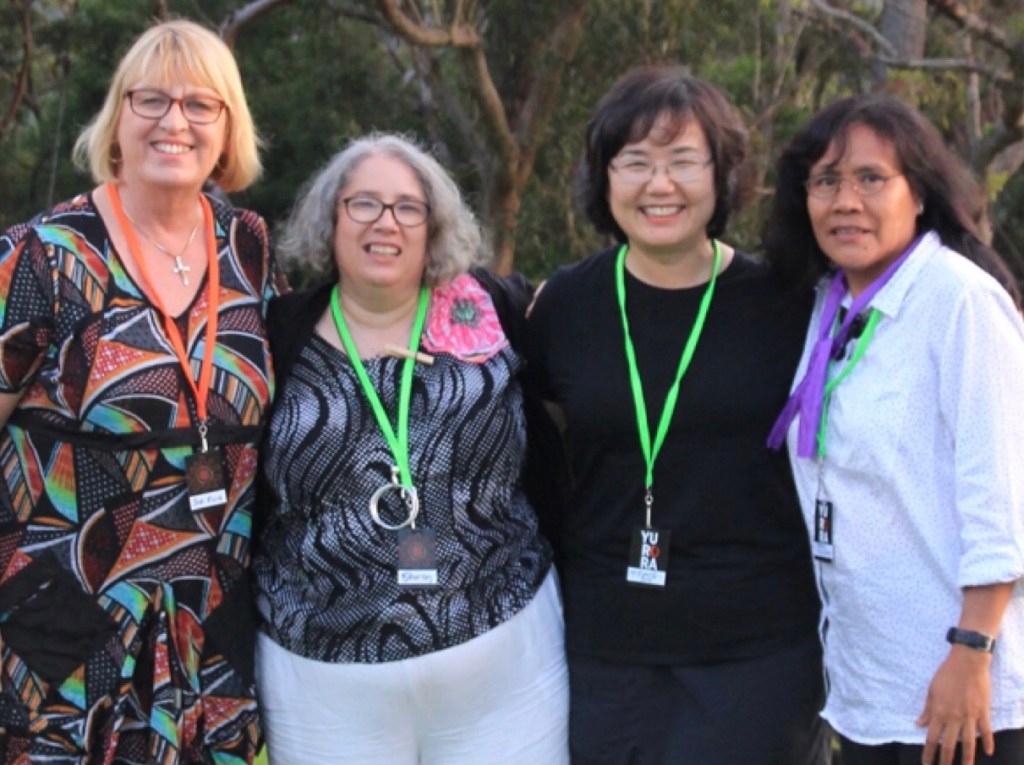
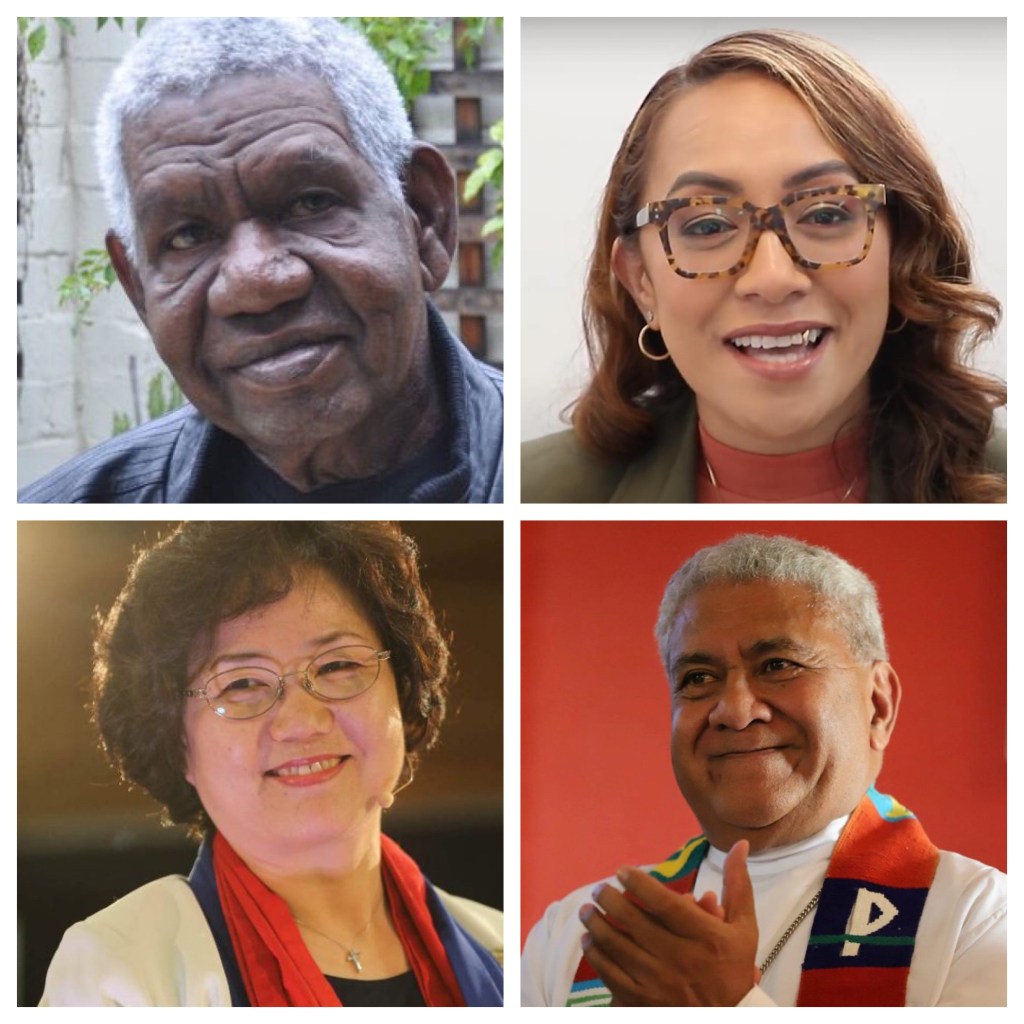
Five years ago, there were four female Moderators around the country: Myung Hwa Park (NSW.ACT, 2014–17), Sharon Hollis (VicTas, 2016–19), Thresi Mauboy Wohangara (Northern Synod, 2015–21), and Sue Ellis (SA, 2016–19) (pictured below).

Moderators Sue Ellis (SA), Sharon Hollis (VicTas)
Myung Hwa Park (NSW.ACT),
and Thresi Mauboy Wohangara (Northern Synod)
in 2016

Currently, there are three female Moderators: Thresi Mauboy Wohangara in the Northern Synod, Denise Liersch in VicTas, and Susy Thomas, in WA.

Whilst the Assembly has elected two lay women to the top leadership role—Dr Jill Tabart (1994–97) and Dr Deidre Palmer (2018–21)—lay female Moderators have been more scarce. In two Synods, lay women were elected as Moderator early in the life of the Uniting Church—in Victoria, Mrs E.A. Mitchell was the second Moderator (1979), whilst in NSW, Lilian Wells was the first Moderator (1977).

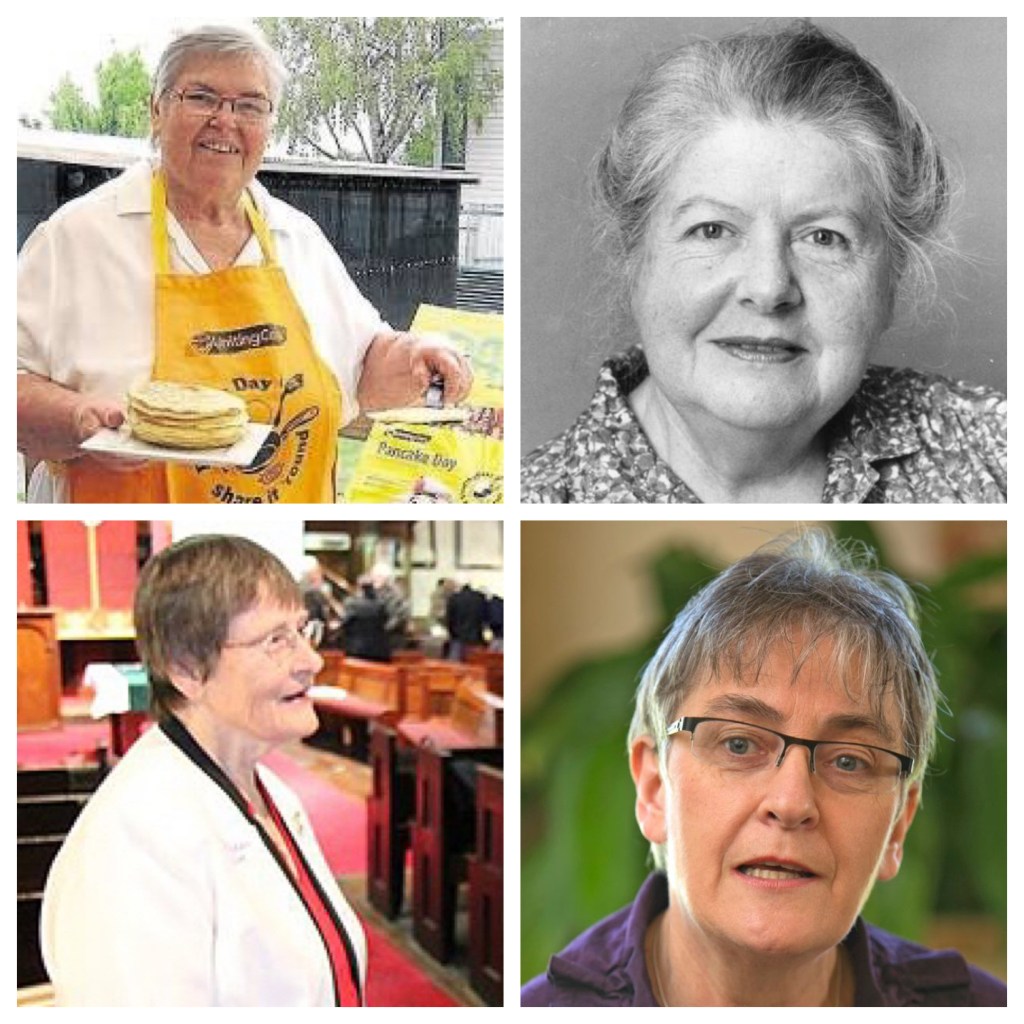
NSW subsequently elected Freda Whitlam (1985–86) and Margaret Reeson (2000–02) as Moderators. Tasmania elected Isabel Thomas Dobson (1997–99) and then the VicTas Synod elected her as Moderator for a second term (2009–13). The last Moderator for the Synod of Tasmania, before it joined with Victoria, was Colleen Grieve (2001–02).

Top: Moderators Colleen Grieve (Tas) and Freda Whitlam (NSW)
Bottom: Moderators Margaret Reeson (NSW.ACT)
and Isabel Thomas Dobson (Tas, and then VicTas)

South Australia elected Jan Trengove as Moderator (2001–03) and Dr Deidre Palmer (2013–16). In the Northern Synod, Ros McMillan served as Moderator (1996–2000)—her husband, Stuart McMillan, served as both Moderator (2010–15) and then as President (2015–18). In Western Australia, three lay women have served as Moderator: Beryl Grant (1985–87), Lillian Hadley (1993–95), and Elizabeth Burns (1999–2001).

Top: Moderators Beryl Grant (WA)
and Ros McMillan (Northern Synod)
Bottom: Moderators Jan Trengove (SA)
and Dr Deidre Palmer (SA)

Lay men have served in Western Australia (Ron Wilson, 1977–79, then Robert Watson, 2005–08), Tasmania (Neville Marsh, 1979–80, Dr Peter Gunn, 1991–93, and Don Hall, 1995–97), NSW.ACT (Bruce Irvine, 1989–92, and Jim Mein, 2004–07), Queensland (Dr John Roulston, 1990–91), South Australia (Dr Don Hopgood, 1997–99), and VicTas (Charles Lavender, 1982–83, Alex Kilgour, 1985–86, and Dan Wootton, 2013–16). In South Australia, the current Moderator is layman Bronte Wilson (2019-22).

The Rev. Charissa Suli, a second-generation Australian of Tongan heritage, is the first person of non-Anglo origins to serve in the National leadership role, although some Synods have elected non-Anglos as Moderators: Tongan Jason Kioa in VicTas (2006–09); Chinese Dr Tony Chi (1992–93) and Korean Myung Hwa Park (2014–17) in NSW.ACT. In the Northern Synod, indigenous leader Djiniyini Gondarra served as Moderator (1985–87) and now Thresi Mauboy Wohangara is Moderator. All of these leaders have been ordained people.

Top: Moderator Djiniyini Gondarra (Northern Synod),
President-Elect Charissa Suli.
Bottom: Moderators Myung Hwa Park (NSW.ACT)
and Jason Kioa (VicTas)

And the age of Charissa Suli is striking: she is a “young person” by church reckoning, having been ordained for just seven years, and still being in her thirties. That must surely be something not often seen in church leadership.

Of course, all of this recounting of females in prominent leadership roles hasn’t yet taken into account the numerous females who have served as Chairperson of Presbyteries, Church Councils, and Congregations—to say nothing of the thousands upon thousands of females serving as active members of Congregations and Fellowship Groups and living out their discipleship in community groups right around the country. Females outnumber males within the church by a factor of at least 2:1, so it is way beyond time that our leadership reflects this!

As we look back on 44 years of the Uniting Church, it is clear that we have sought to reflect the affirmations made in the Basis of Union, in undertaking the discernment about who would provide the leadership required in the various councils of the church. It might have looked better if the ratio of male/female, and ordained/lay, and even Anglo/CALD had been more evenly balanced. (The names of other leaders not noted in my survey above were all, like me, ordained males, usually “of mature age”.)

Nevertheless, the array of leadership we can point to provides a sign of our commitment as a church, to be open to the moving of the Spirit. We have seen that in the gifted leadership of Dr Tabart (who signed the Covenant relationship with the United Aboriginal and Islander Christian Congress in 1985) and Dr Palmer (who has steered the church through the difficulties of the 2018 decision about marriage, and who has been key to the development of a fine resource on domestic violence in 2021).

May that be what transpires under the leadership of Sharon Hollis, our first ordained female President, and then Charissa Suli, our first Pacific Islander female President.

*****

Confession: I haven’t done an exhaustive search into the names of all the Moderators. Those noted in the blog are those whose names I found in online resources (largely Wikipedia). Not every Synod has provided a full list of Moderators online. If there are other females, or lay people, who should be included amongst those I have noted, please let me know, and I will add them in!

*****

Footnote: a month later, the NSW.ACT Synod elected the Rev. Mata Havea Hiliau as Moderator-Elect, to take office for three years commencing in early 2023. Gender, generational change, and CALD leadership all in one go.

*****

See https://uniting.church/installation-of-rev-sharon-hollis/ and https://uniting.church/rev-charissa-suli-announced-as-president-elect/

See also https://johntsquires.com/2021/05/02/the-identity-of-the-uniting-church/ and https://johntsquires.com/2019/06/20/providing-for-the-exercise-by-men-and-women-of-the-gifts-god-bestows-upon-them-lay-people-presiding-at-the-sacraments-in-the-uniting-church/

See also https://johntsquires.com/2018/08/15/what-i-really-like-about-the-basis-of-union/ and https://johntsquires.com/2018/08/20/alongside-the-basis-of-union-there-was-the-statement-to-the-nation/