With this Sunday’s Hebrew Scripture passage, we move on from the ancestral sagas that featured the three patriarchs of Israel (Abraham, Isaac, and Jacob) and their four matriarchs (Sarah and Rebekah, Leah and Rachel), as well as the twelve sons of Jacob, their sister Dinah, and the escapades in Egypt that proved to be their salvation. We move now into the story of Moses, who occupies a unique place in the story of Israel: Moses the lawgiver, Moses the prophet, Moses the teacher.
Whereas land has been the location for the Genesis stories, with movement happening between Chaldea (later Babylonia), Canaan (later Israel), and Egypt, water now enters the story in a significant way. Indeed, water is present and plays a prominent role in both readings from the Hebrew Scriptures that the lectionary provides for this coming Sunday (Exod 1:8–2:10; Psalm 124).
In the story told in Exodus, the situation of the Israelites is grim. Whilst life in the time of Joseph had been flourishing, in this story, “a new king arose over Egypt who did not know Joseph” (Exod 1:8). The situation of the Israelite descendants of Joseph was marred by envy (v.9), distrust and scheming (v.10), oppression (v.11), intensified fear (v.12), and the ruthless imposition of tasks (v.13).
Life for the enslaved Israelites was bitter (v.14), and then in peril, as the king of Egypt plotted to murder all the males born to the Israelites (v.15–16). That scheme, however, was foiled by Shiphrah and Puah, who refused to follow through the instructions of the king (v.17) and gave a devious answer about this (v.19). The role that these women play—the first of a number of women—will provide to be important.
In this narrative, the river Nile features prominently (Exod 1:22; 2:4–6). The Nile was the place where Pharaoh threatened to drown “every boy that is born to the Hebrews” (1:22). That river is where the woman married to “a man from the house of Levi” placed her child, inside “a papyrus basket … plastered with bitumen and pitch” to make it waterproof (2:3). It is where the daughter of Pharaoh bathes, and discovers the basket, and the child inside it (2:5–6). That river was the salvation for this particular child, even if it was the threatened place of death for many other children.
In the Psalm, water is present in the floods that threaten the people of Israel. “The flood would have swept us away, the torrent would have gone over us; then over us would have gone the raging waters” (Ps 124: 4–5). That water surges and sweeps with menace, generating fear and anxiety amongst the land-living Israelites. Those waters portended doom.
The sea was integral to God’s creative works: “yonder is the sea, great and wide, creeping things innumerable are there, living things both small and great” (Ps 104:25). The early part of the priestly narrative about God’s creating activity indicates that controlling and corralling the waters was an essential first step (see Gen 1:6–7, 9–10), and also that those waters provided the source of life for “swarms of living creatures” (Gen 1:20).
Yet the sea was a threatening place for the people of Israel, accustomed to life on the land, planting grapevines and herding sheep in “the land of milk and honey”. Later in the story of Moses, the sea of reeds was the place of destruction for Egypt (Ps 114:1–8), although it was also the location of salvation for Israel, as is celebrated in David’s song of praise (2 Sam 22:1–4, repeated at Ps 18:6, 12–19).
For sailors, the sea could be a place of great danger (Ps 107:23–31)—the story of Jonah attests to this (Jon 1:4–17), as does the final trip of Paul as he is taken as a prisoner to Rome (Acts 27:14–20). Yet the power of the roaring sea, as majestic as it is, pales into insignificance beside the majesty of the Lord on high (Ps 93:3–4). In the sea lurks the great sea monster, Leviathan (Job 3:8; Ps 104:26) of whom Job muses, “who can confront it and be safe?” (Job 41:11). It is only the Lord who is able to subdue Leviathan (Ps 74:14; Isa 27:1).
The dangers of the sea which the Israelites escaped may well be reflected in Psalm 124, recalling the threat of floods sweeping them away, torrents rising over them, raging waters submerging them. That psalm concludes, with a sigh of relief, “our help is in the name of the Lord, who made heaven and earth” (Ps 124:8). The Lord is somehow able to overcome that threat for the Israelites. And that story, as we shall note, has resonances with the earlier narrative of “the great flood” that subsumed the whole earth, and from which only a chosen handful of people and animals survived (Gen 7—9).
The same movement towards salvation takes place in the Exodus narrative, as the unnamed baby is taken out of the river, brought into the household of Pharaoh, the very one who would have the child killed, and nurtured by his own daughter’s nursemaid (Exod 2:6–10). The waters are paradoxical forces, for they sustain and protect life even as they threaten to overwhelm life.
And lest we overlook this element too quickly: the saving of this child depends on a sequence of women who took steps to ensure his safety. We have already noted the actions of Shiphrah and Puah (1:19). Now, we should note the unnamed mother of this child, who placed him in the basket on the river (2:3), and her sister-in-law, also unnamed, who “stood at a distance to see what what happen to him” (2:4).
Then, there was the daughter of Pharaoh, who saw the basket (2:5), her unnamed maid, who took pity on the child (2:6), the sister of this maid, who suggested and then procured someone to nurse the child (2:7). And then, another unnamed woman, “a nurse from the Hebrew women to nurse the child” (2:7–9), which ensured that the child would survive (2:9–10). And finally, back to Pharaoh’s daughter (still unnamed), who bequeathed the name Moses on the rescued child (2:10). So many women, so many important interventions—and so many names not known!
The name of the child taken out of that river is known, and it is given at the end of the story: Moses. This is considered to be an Egyptian name, not an Israelite name—for although the child was born to an Israelite mother, he was raised in the household of an Egyptian family (and a privileged and powerful one, at that!). Moses (Hebrew Mosheh) signifies the “drawing out” of the child from the water (Exod 2:10). And just as he was saved by Egyptian women, so he will later be instrumental in the saving of his people from the Egyptians. A neat piece of irony in the larger storyline.
The story, like many others in these early narrative books, is told as an aetiology, to explain the meaning of the person’s name, as here, or as with Ishmael, Esau, and Jacob, and the new name, Israel, and his twelve sons and two grandsons Ephraim and Manasseh, and others; or the name of a place, as with Beersheba, or Bethel, or Peniel, amongst quite a number of locations named in Genesis. The story is constructed to explain the significance of the name of the people (or place). So for Moses, it is that he was “drawn out” of the waters, where by rights he should have died.
Which provides the groundwork for another ironic twist in the story, for as Moses is rescued out of the water and nurtured to ensure that he lives, so in a subsequent chapter of the story, the people he comes to lead will likewise be rescued from out of the waters of the sea, and will celebrate their saving at the hand of the Lord God (Exod 14:15–15:21). His name and his origins encapsulate a central feature of the story that will unfold in his life.
And those pursuing them, the Egyptian army, meet the fate that was most feared by the Israelites: “you blew with your breath, the sea covered them, they sank like lead in the mighty waters” (Exod 15:10; see a narrative explanations of this, that the sea was held back by the outstretched hands of Moses, at 14:21–28).
But this is jumping ahead to the story told in the lectionary excerpt we are offered in two weeks time! For today, we sit with the story of the origins of the one who was “drawn out of the water”—the child Moses.
There are a number of well-known, oft quoted verses in Romans. “All have sinned and fall short of the glory of God” (Rom 3:23). “I know that nothing good dwells within me, that is, in my flesh” (Rom 7:18)—expressing the innate sinfulness of humanity that perhaps Paul was seeking to explain at 5:12–21, and which Augustine sought to leverage through his interpretation of two small words in 5:12.
There is also the succinct “Christ is the end of the law” (10:4), which seems clear it—although a number of interpreters (myself included) maintain has been taken out of context and misinterpreted in ways that Paul did not intend. And, on the other side of the equation, “the one who is righteous will live by faith” (Rom 1:17)—although here Paul is quoting a prophet from within Israelite tradition itself(Hab 2:4).
Also, there is “since we are justified by faith, we have peace with God through our Lord Jesus Christ, through whom we have obtained access to this grace in which we stand” (Rom 5:1–2)—made famous by Luther’s sola gratia, sola fide. Paul returns to this motif when he affirms that “there is now no condemnation for those who are in Christ Jesus, for the law of the Spirit of life in Christ Jesus has set you free from the law of sin and of death” (Rom 8:1–2). All rich, juicy statements about the Gospel.
So from the passage offered by the lectionary for this coming Sunday, Pentecost 13A (Rom 12:1–8), we hear this familiar injunction, to “present your bodies as a living sacrifice, holy and acceptable to God, which is your spiritual worship. Do not be conformed to this world, but be transformed by the renewing of your minds” (Rom 12:1–2). It’s a familiar command that has a clear place within the context of the communities of faith in Rome to whom Paul was writing, and which has been applied time and time and again over the centuries, to believers in vastly different cultures and contexts.
With these verses, we leave the complex theological argumentation that we have been exploring in the passages that the lectionary has offered from Romans 4–11 (Pentecost 2A to 12A), where Paul teases out all of the factors that are involved in his proclaiming the gospel which is “the power of God for salvation to everyone who has faith, to the Jew first and also to the Greek”, in which he demonstrates that “the righteousness of God is revealed through faith for faith” (1:16–17).
Paul has made the exuberant affirmation that “neither death, nor life, nor angels, nor rulers, nor things present, nor things to come, nor powers, nor height, nor depth, nor anything else in all creation, will be able to separate us from the love of God in Christ Jesus our Lord” (8:31–39).
He has then sung with joy, celebrating “the depth of the riches and wisdom and knowledge of God! How unsearchable are his judgments and how inscrutable his ways! ‘For who has known the mind of the Lord? Or who has been his counselor?’ ‘Or who has given a gift to him, to receive a gift in return?’ For from him and through him and to him are all things. To him be the glory forever. Amen.” (11:33–36).
It sounds like he has completed the work that he set out to do in writing this letter. A big full stop (Amen), underlined by a shout of praise (to him be the glory forever)!! But not so fast—there is more to come, as Paul immediately pivots from his theological exposition, into a section where he provides a string of ethical exhortations and instructions to the community in Rome. The pivot happens with a simple phrase: “I appeal to you therefore, brothers and sisters” (12:1).
The words which Paul uses here deserve careful attention. First, we should note that this is a word of exhortation; Paul begins his sentence, “I appeal to you” (NRSV), “I urge you” (NIV), “I encourage you” (CEB), even “I beg you” (Phillips), or the more antiquated “I beseech you” (KJV). Paul seems to be hoping to instruct the believers in Rome, without coming across as dominating—although he has been consistently forceful in the first eleven chapters, as he set out his understanding of the Gospel.
In fact, the Greek phrase used here, Παρακαλῶ οὖν ὑμᾶς, is a common way of turning the attention of his listeners from more abstract (or doctrinal) matters, to direct ethical matters of behaviour. We see this at 1 Cor 4:16 and 2 Cor 10:1, each time signalling a new section, as well as at 1 Cor 1:10 and Phlm 9, where the primary issue of each letter is described. It is a familiar rhetorical turn of phrase designed to draw the attention of those hearing, or reading, the letter, to a new topic of instruction.
Indeed, this phrase itself draws from the practice of Greek moral philosophisers in antiquity, of providing “moral exhortation in which someone is advised to pursue or abstain from something”. That’s a quote from one of my teachers, Prof. Abraham Malherbe, who spent decades researching and writing about these philosophers; see Malherbe, “Styles of Exhortation”, in Moral Exhortation; Westminster John Knox Press, 1986 pp. 121–127.
So Paul utilises this technique from Greek literature—just like he also makes extensive use of many elements of a diatribe in his letter to the Romans. However, although he is writing in Greek, some of the language which follows is drawn from Jewish traditions. Paul exemplifies the richness of the multicultural society of the day, where Jewish and hellenistic Greek customs, traditions, and religions intermingled, along with distinctively local practices in each place of the Roman Empire where the traditional deities, language, and culture survived.
“Present your bodies as a living sacrifice”, Paul advises the Romans (12:1). However, he is not specifically instructing them to offer their loves as martyrs. The language is more subtle than this. The offering of sacrifices to the deities was known within ancient Greece and in the Roman Empire. Writing on religion in Ancient Greece, Colette and Séan Hemingway state that “the central ritual act in ancient Greece was animal sacrifice, especially of oxen, goats, and sheep. Sacrifices took place within the sanctuary, usually at an altar in front of the temple, with the assembled participants consuming the entrails and meat of the victim.” See
Paul himself asserts that “what pagans sacrifice, they sacrifice to demons and not to God” (1 Cor 10:20), and so, when believers share in meals involving meat which has been bought at the meat market, “if someone says to you, ‘This has been offered in sacrifice,’ then do not eat it” (1 Cor 10:28). The offering of meat as a sacrifice which was subsequently sold on to the market by the pagan priests was obviously still happening in Corinth.
However, sacrifice was also at the heart of Israelite faith; the Temple was not simply the holy place where the God of Israel resided, but it was also the place to which offerings and sacrifices were brought in order to give thanks to God and to seek forgiveness from God. As the psalmist sings, “lift up your hands to the holy place and bless the Lord” (Ps 134:2).
Since “the Lord is in his holy temple” (Ps 11:4) the psalmist also promises, “I will offer to you a thanksgiving sacrifice and call on the name of the Lord; I will pay my vows to the Lord in the presence of all his people, in the courts of the house of the Lord, in your midst, O Jerusalem” (Ps 116:18–19). Sacrifice was integral to the ancient faith of the Israelites, continued on by Jewish people into the first century CE.
But sacrifice was not just the slaughter of animals and birds. Interpreting the death of Jesus in terms of his sacrifice was a logical move for the Jews who were the first followers of Jesus. In doing that, they “spiritualised” the concept of sacrifice. It was a small step from that, to apply the language of sacrifice to the lives of believers.
Jewish writers had already taken this step: the psalmist sings that “the sacrifice acceptable to God is a broken spirit; a broken and contrite heart, O God, you will not despise” (Ps 51:17), and “those who bring thanksgiving as their sacrifice honour me; to those who go the right way I will show the salvation of God” (Ps 50:23).
So to “present your bodies as a living sacrifice” (Rom 12:1) was not, therefore, a call to martyrdom, but a call to humble, selfless living. The bodies of believers are to be presented to God as holy. Holiness was at the heart of Israelite religion, the faith into which Paul, and Jesus, were born.
Paul also notes that the “living sacrifice” presented to God should be “acceptable”. There’s a strong emphasis throughout Leviticus on the need to bring an offering or sacrifice that is “acceptable” (Lev 1:4; 7:18; 19:5–8; 22:17–21, 26–30); for a sacrifice of wellbeing “to be acceptable it must be perfect; there shall be no blemish in it” (Lev 22:21). That was the role of the priests: to examine carefully the animals being brought for sacrifice, to ensure that they were “perfect”.
The next phrase, often rendered as “spiritual worship”, also needs careful consideration. Paul has earlier referred to “some spiritual gift” that he wished to share with the Roman believers (Rom 1:11), and talked to the Jews about “real circumcision” being “a matter of the heart—it is spiritual and not literal” (2:29). However, the Greek word used in both instance is derived from the root word for spirit (πνευματικὸν at 1:11; ἐν πνεύματι at 2:29).
Not so at Romans 12:1–the phrase in question is τὴν λογικὴν λατρείαν ὑμῶν, which the NASB translates as “your spiritual act of worship”, the NCV as “the spiritual way for you to worship”, the WEB as “your spiritual service”. The use of the word “spiritual” here is misleading; more accurate translations are offered by the NRSV as “your reasonable act of worship”, the NIV as “your true and proper worship”.
The kind of worship for which Paul is advocating is worship which is grounded in the logos, the reason, the rational capacity of human beings. He is not encouraging the Romans to waft off into the ether of “spiritual gifts” that he had found manifest, causing such problems, within the community in Corinth. He is, rather, advocating for a careful, reasoned approach to the worship of God. The sacrifice to be offered should be considered and well thought-out, much in the same way that priests in the Temple would scrutinise and assess potential sacrifices.
There are clues, then, as to what would typify this kind of “worship”. Paul refers to the grace which was “given to me” (12:3)—grace at work in Paul’s life (1:5), and grace lavished on believers (3:24; 5:2, 15–21; 6:15–15). That grace has been a significant motif throughout the theological exposition that Paul has undertaken in the complex argumentation he sets out in the chapters prior to chapter 12.
The ethic that is inculcated by this grace is to think first of the other: “not to think of yourself more highly than you ought to think, but to think with sober judgment, each according to the measure of faith that God has assigned” (12:3). Again, the Greek term translated as “sober judgement” (σωφρονεῖν) has the sense of what is sensible or reasonable. Mark employs this word when he reports that the Gadarene demoniac, after being exorcised by Jesus, was “sitting there, clothed and in his right mind” (Mark 5:15).
This leads smoothly into a discussion of the community of faith as the body—an image which he had already used in his first letter to the Corinthians (1 Cor 12:12–31). There, Paul first identified a range of gifts (1 Cor 12:8–10), and then emphasised the claim that “the body does not consist of one member, but of many” (1 Cor 12:14). As a result, each and every member plays an integral role in the whole.
From this, Paul deduces that “the members of the body that seem to be weaker are indispensable … God has so arranged the body, giving the greater honour to the inferior member” (1 Cor 12:22–25). The context in Corinth shapes the direction into which Paul develops this image.
Here, in writing to the Romans, Paul begins with the same affirmation that “in one body we have many members” (Rom 12:4), but then heads firmly in the direction of identifying the gifts that God has given: “we have gifts that differ according to the grace given to us”, before naming seven such gifts (Rom 12:6–8).
The list of gifts in these verses overlaps with, but differs at key points from, the lists found in 1 Cor 12:8–10 and 12:28. The specifics of the particular gifts are not the point at hand; of more significance in this letter is to press the point that the Romans are “not to think of yourself more highly than you ought to think” (Rom 12:3).
This is a central ethical exhortation to which Paul will return in later chapters when he instructs the believers in Rome to “extend hospitality to strangers” (12:13), “live in harmony with one another” (12:16), and “love your neighbour as yourself” (13:9, quoting Lev 19:18). He directs them to “welcome those who are weak in faith” (14:1), urging them, “let us no longer pass judgement on one another” (14:13) and “let us pursue what makes for peace and for mutual upbuilding” (14:19)
As he draws towards the close of his long letter, Paul advocates for “the good purpose of building up the neighbour” (15:2), and so the believers in Rome are to “welcome one another just as Christ has welcomed you” (15:7). This is the mode for which he has advocated in chapter 12, when he has urged them, “do not be conformed to this world, but be transformed by the renewing of your minds” (12:2). The transformation that Paul seeks is to develop a perspective that is fully oriented to the other, “not to please ourselves” (15:1), but to “please our neighbour” (15:2).
His prayer for the Roman believers is that God will “grant you to live in harmony with one another … so that together you may with one voice glorify the God and Father of our Lord Jesus Christ” (15:5–6). His words in 12:1–8 (which the lectionary offers us this coming Sunday) have set a strong foundation for this trajectory of teaching about mutual responsibility and accountability.
A dialogue sermon on Jesus’ encounter with a Canaanite Woman (Matt 15), written by the Rev. Elizabeth Raine and the Rev. Dr John Squires, and preached by them on Project Reconnect for Sunday 20 August 2023.
The Gospel story we have heard today is an interesting one. It tells of an encounter that took place between Jesus, the disciples and a Canaanite woman, near the ambiguous are of the borders of the lands of Tyre and Sidon. The unnamed woman has come out from there to seek Jesus’ help. Initially repulsed both by Jesus and the disciples, she remains undeterred.
Today, we invite you to join us on an imaginative journey, which may well lead you to think about the story from different perspectives, to engage with different assumptions, and perhaps lead you to different conclusions. We are going to offer you the opportunity to listen in to a conversation about what might have happened that day when Jesus encountered the Canaanite woman.
We will not be listening directly to the conversation between Jesus and the woman—although it will figure in the discussion that takes place. Instead, we will be eavesdropping on a conversation between an acquaintance of the woman, Tamar, and a relative of one of the followers of Jesus, known as Baruch.
Baruch and Tamar are somewhat different people. Tamar is a Canaanite, from the land of Canaan which was taken over by the Israelites who conquered its original inhabitants. Baruch is an Israelite who has become a follower of Jesus, and who has heard a version of the story from his cousin Zebedee. They have accidentally met up in one of the Palestinian market places and have been drawn into a conversation about Jesus’ latest miracle.
So now, please imagine yourself watching this scene.
*****
B: Have you heard of the latest miracle performed by our Lord? Why, he healed the daughter of a Canaanite – and by long distance! A truly remarkable feat.
T: Can I enquire as to the details of this miracle, Baruch? I believe I may have some knowledge of it.
B: Sure. She was an unaccompanied Canaanite woman – a woman without a male relative! I ask you, do these Canaanites have no sense of decorum? She came crying after Jesus and his disciples, all alone, no male to chaperone her, demanding that he heal her daughter. Such presumption!
T: Now just a minute. I object to you pronouncing the word ‘Canaanite’ as if we were a nasty plague of insects. I also do not think you appreciate the desperation of a loving mother, worried about her child.
B: If this Canaanite woman was a decent woman, she would have approached Jesus with her husband, let him do the talking, and remained quiet, eyes down and head bent.
T: What if she was widowed, or her husband did not want to beg a favour of a Jew – after all, it was the Jews who drove many of the Canaanites from their traditional homelands?
B: You must know that Canaan was the land that God promised to the Israelite people. It was foreordained that the Canaanites would have to relinquish it. And rightly so. Just look at some of the dreadful practices they had – worshipping strange gods, boiling baby goats in their mother’s milk – disgusting! All stopped when Israel took over the land.
T: I believe you are exaggerating – both about their practices and whether Israel indeed stopped them. But what right do you have to use this ancient history to belittle this woman? Whatever her ancestors did, it was hardly her fault.
B: I disagree. We all know these things can be passed down from generation to generation. And I reiterate – what was she doing running around alone on the public roadways crying after strange men? And a why would a Canaanite seek help from their Jewish conquerors like that?
T: I believe you know the answer to that. She understood that Jesus was a healer, someone special. I heard she called him “Lord”.
B: Well, there is that. I suppose his fame and reputation had spread far. But this is no excuse for her behaviour, and she must have known that the Messiah was to come only to the Jews!
T: I have heard he made that abundantly clear to the woman – and called her names. I thought a Messiah was meant to love everyone, not to mention have some sympathy with a race that had originally shared a homeland.
B: Nonsense. The Messiah was sent only to the lost sheep of Israel – everyone knows that. And a lone woman shrieking like a mad thing out in public – she deserved to be called names! And for presuming to quarrel with our Lord.
T: Don’t you think calling someone “dog” is rather insulting? Even if it is the Lord who says so? And as the Canaanites were killed or were hustled out of their land by God’s orders, I would think that it is time to make some amends to them. Why shouldn’t the Messiah share the love around a bit? And what would you do if your daughter was demon possessed? Maybe she was right to quarrel with Jesus.
B: Hmmmmm, I see your point. Of course we all want what is best for our children. And the scriptures do occasionally say that God is the God of other people. But you must admit that she behaved in a somewhat irregular way.
T: I am admitting nothing of the sort. This poor woman goes in search for help for her daughter, and she is told to go away, she is scorned for not being a Jew, and called a dog into the bargain. It is to her credit that she persisted with such a rude lot.
B: You are not telling the whole story. She was helped by Jesus, remember?
T: Let me recap as I heard this story. The woman called Jesus ‘Lord’, and asked for help. The disciples wanted her sent away. So Jesus tells her that he is sent only to the lost sheep of Israel. He then informs her that this is because it is wrong to take bread from the children (that is, the Jews) and throw it to the dogs (that is, the Canaanites). Are you honestly telling me she did not have a right to feel insulted?
B: (reservedly) Well, I suppose when you put it that way, you have a point. But still, a woman alone in public, crying out – I am not sure about this at all.
T: Then let me put it another way. If Jesus decided that after all, she had a case, and he decided to help her, then what is your problem? Remember what the law says about caring for widows and the oppressed. Baruch, you place great value in these laws, don’t you? So surely you should be prepared to some sympathy to this woman?
B: I am not entirely convinced. She must have been some sort of sinner or outcast to behave that way.
T: Nonsense. And actually, she behaved exactly like Lady Wisdom in the scroll of Proverbs. Bold, unafraid, in public alone and demanding justice. Are you saying Wisdom is a bad role model? After all, when Jesus did engage her in conversation, he accepted the woman’s argument as the right one and healed her daughter. I have also heard that he called her faith ‘great’.
B: Lady Wisdom? What rubbish. And why would Jesus commend the faith of a Canaanite woman?
T: Well, he did. And I believe that once she had convinced him that her faith was sound, he was making a point to those men in the Jewish faith who didn’t believe. Seems she knew the scripture about the Messiah better than they.
B: I grant you that there may have been extenuating circumstances. But you must understand that in Jewish custom, men do not speak to strange women in public. No wonder Jesus acted the way he did in the first instance.
T: Jesus did not shame her for being a woman. His quarrel with her was the fact she was not an Israelite. You Jews are so exclusive!
B: But he did concede the argument to her.
T: Are you saying then that she changed Jesus’ mind?
B: I suppose I am. I guess she must have been someone pretty special.
T: As I said, just like Wisdom. This woman stuck to her beliefs and cried out for justice. She was persistent, she was not going to be oppressed or pushed to the side. There is great power in the way that this woman acted.
B: She took quite a risk, then, in acting like this.
T: Indeed she did. It is an interesting point, isn’t it? Some people I have heard speaking about Jesus tend to claim that he is always the one who was right; that he will always persuade the other person, always win the debate. But in this instance, it is the woman who seems to be the one who speaks the deepest truth. In the end, Jesus admits that she is right, and he grants her request. Perhaps Jesus was the one who was transformed. So that doesn’t suggest a woman who is an outcast, does it? It suggests a woman brimming over with wisdom and spirit!
B: Well, it is clear that Jesus was affected by her. And I guess it follows that this must be good news for all of those people who aren’t Jews, but who want to follow Jesus.
T: Ah, now I think you are on to something. If the Messiah allows himself to be transformed, just think; if we emulate this, then we could transform our world, not just our two peoples. Think of it. The Canaanites were despised by Israel, whose ancestors took over their land. So the way that the disciples and Jesus responded to her at first, was simply the customary way. Such a response perpetuates resentment and hatred that then runs from people to people, from generation to generation.
B: Yes, I can see that humiliation, resentment, and violence have been passed down by people who do not stop to think that things may have changed, that there may be a better way. Jesus, with his final acceptance of the woman and his gift of healing, has set aside these conventions of ethnic hatred. In his final words, he treats the woman as one of the faithful, and opens up the way for all of us to do the same.
T: That appeals to me, for this is the attitude that can heal these historical rifts and create community. Imagine if our peoples reached out to each other in love and acceptance. And that in spite of a long history of enmity between us, we accepted that we are all equally loved by God, and that our faith and worship could be shared and celebrated together. What is to stop it happening now?
Why is it that we all just cannot talk to one another to heal the hurts of history?
*****
Today there are voices that want us to think that the foreigner or our indigenous and colonised races are a threat –a danger to be kept away, or a problem to be ignored. There are voices that press us to toe the line and follow the well-worn traditions of society and remain comfortable, settled, and unchanging. But the path of discipleship instead takes us to liminal borders and beckons us into an uncertain future. It invites us to question, consider and maybe even change our minds. It calls us to live out our beliefs, to put into practice our ideals, to venture into ambiguous places and to travel along the path less followed. Then maybe, like Jesus, we too will be transformed.
Mercy: doesn’t need to be pristine, nor need to be huge. It doesn’t need to be protected, nor kept in a pot with a lid and a lock – and oh-so-carefully parcelled out to those deemed ‘deserving’. And … just a crumb will do.
Mercy: is not like pie, nor is it mealy-mouthed or stingy. It can’t be measured, cannot help itself cannot be contained. No matter how some try, still, it overspills the tables of power and privilege, subversively escaping in scraps and crumbs that are limitless, boundary-breaking and render tables irrelevant. And … just a crumb will do.
Mercy: is subversive, spilling out for all, even those deemed (by some) as: ‘undeserving’, ‘different’, ‘not one of us’. It re-draws the circle wider than the edges of our imagination. Just a crumb contains more than enough: more grace and love than we will ever need. And … just a crumb will do.
Exorcising the Canaanite Woman’s Daughter by Peter Gorman (1990)
In an earlier post, we noted that the book of Genesis is dominated by people whose stories shaped the self-understanding and identity of the nation of Israel. Written in the form that we now have them by the priests who had held the stories of Israel through the decades of Exile, those stories comprise oral tales, told and retold over centuries before that Exile, remembered and passed on because they offered insights into who the people of Israel had become—committed, resilient, crafty, and faithful.
We heard these stories, from the second Sunday after Pentecost (Gen 12) through now to the twelfth Sunday after Pentecost (Gen 45). The stories are dominated by the men—Adam and Noah, Abraham and Isaac, Jacob and his twelve sons, most notably Joseph. In these stories, as we have noted, the men dominate. There are, to be sure, women who also play key roles in the stories that are collected into this first narrative book, as we have noted—Sarah and Hagar, Rebekah, Leah and Rachel, as well as others with lesser prominence in the stories (or, indeed complete absence from the story).
This blog focusses on women in Genesis 38 and onwards. On the women who were overlooked by the lectionary in the earlier chapters, see
In this blog, we turn first to Tamar, the wife of Er, whom Judah, son of Jacob, had conceived with his Canaanite wife, Shua (Gen 38:2–6). Tamar was sister-in-law to Onan and Selah, the two brothers of Er. With Er being struck dead for his sinfulness, Onan is urged by Judah to fulfil the responsibility of the Levirate law (Deut 25:5–10) by marrying Tamar and producing heirs (Gen 38:7–8).
Onan is remembered, however, for disobeying this instruction of his father-in-law; “since Onan knew that the offspring would not be his, he spilled his semen on the ground whenever he went in to his brother’s wife, so that he would not give offspring to his brother” (37:9). As this displeased God, Onan is struck dead (37:10)—a harsh penalty!
Judah then wants to reserve Tamar “until my son Shelah grows up”, when they can marry, in accordance with the Levirate law (37:11). Through a series of misunderstandings, Judah ends up impregnating Tamar, whom he appeared to believe was a temple prostitute (38:12–19). Nobody said that the men of this family were all upstanding moral exemplars!
However, Tamar was canny. She asserts herself when she lies with Judah, asking him for his signet, cord, and staff—so that she can later identify the father of the child and call him to account. Professor Tikva Frymer-Kensky, of the University of Chicago, writing in the Jewish Women’s Archive, notes that this liaison was not illicit; it was in accord with the Levirate law. She also describes Tamar as “assertive of her rights and subversive of convention” and as “deeply loyal to Judah’s family”.
Months later, on learning that Tamar was pregnant, and not realising that he was responsible, Judah wanted her to be burned (38:24)—at which point “the big reveal” occurs, as Tamar shows the signet and the cord and the staff that she had taken from the man who impregnated her (38:18, 25). Judah, to his credit, accepts responsibility (38:26). Tamar gives birth to twins, Perez and Zerah (38:27–30).
Perez has a claim to fame in that the male line of descent from him arrives, eight generations later, at Jesse, father of David (Ruth 4:18–22) and thus of Jesus (Matt 1:3–6; Luke 3:32–33). So the origin of this ancestor of Jesus is a fascinating tale, consistent with a number of other enticing tales related to others amongst his ancestors.
Professor Tikva Frymer-Kensky notes that the assertive and loyal qualities of Tamar also show up in Ruth. “The blessing at Ruth’s wedding underscores the similarity in its hope that Boaz’s house ‘be like the house of Perez, whom Tamar bore to Judah’ (Ruth 4:12). These traits of assertiveness in action, willingness to be unconventional, and deep loyalty to family are the very qualities that distinguish their descendant, King David.”
Less well known amongst the descendants of Perez is Jashobeam, son of Zabdiel, “chief of all the commanders of the army” at the time that David was preparing to build the Temple, who had charge “of the first division in the first month; in his division were twenty-four thousand” (1 Chron 27:2–3). Years later, on return from exile in Babylon, “all the descendants of Perez who lived in Jerusalem were four hundred sixty-eight valiant warriors” (Neh 11:6).
The story of Onan, Tamar, and Judah is disturbing. Tamar was a faithful woman, obeying instructions to be married, to obey the Levirate law, and to wait for the appropriate time for another marriage. She asserts her rights and remains faithful in adversity. Yet Tamar is surrounded by men who misbehave badly—a sinful husband (Er),struck dead; his disobedient brother (Onan), also struck dead; and their opportunistic father (Judah), who at least, in the end, appears to recant of his deeds. Poor Tamar!
Writing elsewhere on the Jewish Women’s’ Archive about her namesake, Dr Tamar Kadari notes that whilst “the Rabbis spare no criticism of Judah and his sons, pointing out the sins that were responsible for their bitter fate”, they display a different attitude toward Tamar, praising her as “a woman with sterling qualities, who maintained the strictures of modesty and faithfully observed the laws of niddah”. (The laws of niddah govern the behaviour of menstruating women.)
Nevertheless, noting that Judah obeys the Levirate laws, she comments further that “the Rabbis find Judah’s conduct praiseworthy: even though the Torah had not yet been given, he nonetheless took care to observe all the commandments (Lev. Rabbah 2:10)”. One midrash claims that Tamar prayed: “May it be Your will that I not leave this house empty” (Gen. Rabbah 85:7), which indicates that her true aim “was to cleave to the house of Judah and provide a successor for his line”.
Dr Kadari reports that another midrash argues that it was “inconceivable that Judah thought [Tamar] to be a harlot because she covered her face, since, if anything, prostitutes show their faces. Rather, out of modesty, Tamar had always covered her face in her father-in-law’s home. Thus, when she disguised herself as a harlot and revealed her face, Judah did not recognize her (BT Sotah 10b).”
She further notes that “Another midrashic account has Judah saying: ‘This one is a harlot; of what concern is she to me?’ and continuing on his way. Once he had passed by, Tamar raised her eyes to God and said: ‘Master of the Universe, am I to go forth with nothing from the body of this righteous one?’ Then God immediately sent the angel Michael to bring Judah back (Tanhuma [ed. Buber], Vayeshev 17).” It was Tamar’s persistence in prayer that ensured the lineage of Judah.
And finally, amongst numerous other fascinating midrashic explanations that Dr Kadari reports, we note that it was seen that, because of his honesty in admitting he was the father and excusing Tamar from blame, Judah is blessed with the full line of the thirty kings of Judah, from David through to Zedekiah (Gen. Rabbah 97:8).
5 The wife of Potiphar
The wife of Potiphar is an intriguing presence in the section of Genesis that focusses on Joseph, one of Jacob’s twelve sons, while he was in Egypt (Gen 37—50). Potiphar was “one of Pharaoh’s officials, the captain of the guard” to whom the Midianites had sold Joseph (Gen 37:36). Potiphar’s wife is never named, but she plays a key role in Joseph’s story while he is serving as overseer to the household of Potiphar.
First, this woman attempts to seduce Joseph (39:7, 11–12), then she accuses Joseph of trying to seduce her (37:14–18). Of course this enraged Potiphar, who put Joseph in prison (37:19–20). No due process and fair trials in ancient Egypt, it seems! However, “the Lord was with Joseph and showed him steadfast love”; he enjoyed the favour of the chief jailer and “whatever he did, the Lord made it prosper” (37:21–23).
Some years ago, my wife Elizabeth Raine did a study of this particular woman (in a series that she wrote and taught about “ Women in the Bible”). She found that artists and commentators alike across the centuries have had a field day with the promiscuous nature of this unnamed woman—she was a shrewd villain, a seductress, a deceiver, the embodiment of temptation.
A third century text (attributed to the late 1st century bishop, Clement of Rome) railed against her: “did not a woman conceive an excessive passion for the beauty of this chaste and upright man? and when he would not yield and consent to gratify her passionate desire, she cast the righteous man into every kind of distress and torment, by bearing false witness”.
She found an online PowerPoint display that said, “no doubt she went on with her immoral behaviour; perhaps one day her husband found out the truth of her character, perhaps not; but certainly, one day, she will pay the ultimate penalty of her sinful life, separation from God, in a place of torment”.
However, we do not know whether Potiphar’s wife did want a sexual liaison. Perhaps she was jealous of Joseph when he replaced her as head of the household? Perhaps she did long for the emotional intimacy that Potiphar was not providing? The text is silent.
Jewish interpretation of this story seeks to be sympathetic about this woman. The Testament of Joseph, a 2nd century Jewish text, relates that Potiphar’s wife initially embraced Joseph like the son she lacked, and only gradually did she become seductive with him. Her nakedness before Joseph occurs when she is beset by grief at not being able to draw close to Joseph.
A little earlier, the Jewish scholar Philo of Alexandria sees Potiphar as a eunuch—he was an official in the court, so this was not an unusual supposition. His wife wished to “be with a man”, but as he tells the story, Philo presents the story as an allegory: the woman represents the physical pleasure of the body, but Joseph, committed to celibacy, represents the soul.
The Rabbis, of course, have various explanations: Joseph was attracted to the woman, but cooled off when an image of his parents appeared before him; or the woman wanted to seduce him in order to produce a son, which Potiphar had not given her, and that she saw a vision in which the stars showed that she would have children with Joseph; or Joseph is compelled by a vision from God to resist at all costs.
As is the case with a number of unnamed female figures in scripture, this particular woman is bequeathed a name as later tradition develops. The medieval commentator Sefer HaYashar, in his commentary on the Torah, gave her the name Zuleika.
In the Quran, this story is told in chapter 12. The woman Zulaikha overhears a group of women speaking about the incident involving Yusuf, verbally shaming Zulaikha for what she did. Wikipedia offers a helpful summary: “Zulaikha, angered by this, gives each woman a knife and calls for Yusuf. Upon his arrival, the women cut themselves with their knives, shocked by his beauty. Zulaikha, boosted by proving to the women that any woman would fall for Yusuf, proudly claims that Yusuf must accept her advances, or he will be imprisoned. Yusuf prays to Allah, begging Allah to make them imprison him, as Yusuf would rather go to jail than do the bidding of Zulaikha and the other women. Allah, listening to Yusuf’s request, makes the chief in power believe Yusuf should go to prison for some time, and so Yusuf does.”
6 Asenath
Whilst in Egypt, Joseph gained a reputation for his interpretations of dreams; he rose to power when he interpreted a dream of the Pharaoh (Gen 41:14–37). Pharaoh installed him into an office in his court and “set him over all the land of Egypt” with all the trappings of high office (Gen 41:41–43). Further, “Pharaoh gave Joseph the name Zaphenath-paneah; and he gave him Asenath daughter of Potiphera, priest of On, as his wife. Thus Joseph gained authority over the land of Egypt” (Gen 41:45).
So it is that Asenath, daughter of an Egyptian priest, wife of Joseph, enters the story. (As we noted in an earlier post, there is a rabbinic midrash that says that Asenath was the product of the union of Dinah and Shechem who was given to Potiphar’s wife to be raised.) She gives birth to two sons: Manasseh, meaning, “God has made me forget (nashani) completely my hardship and my parental home”, and Ephraim, meaning, “God has made me fertile (hiprani) in the land of my affliction”. These sons, grandsons to Jacob, would later have a key role (but the lectionary doesn’t include this part of the story). See Gen 41:50–52; 46:20.
Dr Kadari notes that “there are two approaches to the issue of Asenath’s descent in the Rabbinic texts”. One view sees Asenath as “an ethnic Egyptian who converted in order to be married to Joseph”, which is a plain reading of the text. The second approach argues that “Asenath was not an Egyptian by descent, but was from the family of Jacob, directed by God to end up in Egypt so that Joseph would find a suitable wife from among the members of his own family.”
In either case, Dr Kadari notes that Asenath is “accepted as part of the family and her sons are accepted as worthy descendants by Jacob.” The midrash that Asenath was the result of the rape of Dinah, as noted above, provides such an explanation. See
Dr Kadari notes that “the traditions that maintain that Asenath was a convert present her as a positive example of conversion, and include her among the devout women converts”. She cites Hagar, who was Egyptian, Zipporah the Midianite, Shiprah and Puah, Egyptian midwives, and the Egyptian wife of Pharaoh in the story of Moses, and the Rahab the Canaanite, Ruth the the Moabite, and Jael the Jenite. Asenath stands in fine company!
The closing chapters of Genesis contain a series of poetic blessings on the twelve sons of Jacob—those twelve men who are remembered as “the twelve tribes of Israel” (Gen 49)—before recounting a key familial reconciliation, the death of the great partriarch Jacob, and then the death of his son Joseph (Gen 50). The story ends with this long poetic set of blessings and then with these two key men of the sagas reconciled. And still, the women are missing from the story.
7 Asherah?
To conclude, we might note that there is another female who has been completely absent from the narrative of Genesis. She a figure that we know was present throughout the period when Israel was ruled by kings, a period when these stories were shaped and crafted to serve as as aetiological explanations for the nature of Israel. This woman is the goddess Asherah, whose presence is signalled in later narrative books (1 Ki 15:13; 18:19; 2 Ki 21:7; 23:4–14; 2 Chron 15:16).
Writing in the Jewish Women’s Archive, Dr Susan Ackerman observes that there is evidence from a “late-thirteenth-century B.C.E. Lachish ewer” dedicated to Asherah which is “decorated with images of sacred trees”. See
She continues: “The Canaanite association of Asherah with sacred trees is also found in Israelite tradition. For example, one of the Canaanite epithets of Asherah, elat, “goddess,” is etymologically identical to the Hebrew word for the terebinth tree (ela). Another word for “terebinth” (alla) and two words for “oak” (elon and allon) are also closely related.”
As a result, Ackerman notes that “Gen 2:4b—3:24 may further suggest the association of Asherah with sacred trees, since the way that Eve, “the mother of all living” (3:20), is described in the Eden story mimics in certain respects the role of the Canaanite mother goddess Asherah. If a correspondence holds, then the trees of life and of knowledge in the Eden narrative may also reflect Asherah imagery.”
But beyond that story, it is not until the narrative quasi-historical texts which follow after the Pentateuch that we find reflections of “Israelite worship of “sacred poles or stylised trees associated with Asherah were erected by the Israelites” under the judges (Judg 6:25–26, 28, 30), the kings in the northern kingdom of Israel (1 Ki 14:15; 16:33; 2 Ki 13:6; 17:10, 16; 23:15; and parallel references in 2 Chronicles) and kings in the southern kingdom of Judah, in the south (1 Ki 14:23; 15:13; 2 Ki 18:4; 21:3, 7; 23:6, 14; and parallel references in 2 Chronicles).
Since the books of the Pentateuch—and Genesis in particular—were compiled and written during and after that long period of time, as the exiles returned to Israel, might there be nuances and hints in these ancient sagas concerning Asherah?
This blog owes much to the many discussions about this woman, her story, and the Gospel of Matthew, that I have had over many years with my wife, Elizabeth Raine. She has undertaken quite detailed research into this story, which is reflected at many points in the blog that follows.
*****
Jesus meets a woman. She is distressed—shouting and pleading, then debating and arguing. She has a daughter who is seriously unwell: “tormented by a demon” is the way she describes it (Matt 15:22). We fully expect Jesus to subdue her, to demonstrate his power, and to heal her daughter.
But this is a striking, dramatic story: in the way that Matthew tells this story, it is not Jesus who exercises power; rather, it is the woman who gets the best of Jesus. Her snappy response to his seemingly dismissive words, wins her the debate. Jesus acknowledges this. “Great is your faith”, he affirms (15:28). And he heals her immediately. Her request is granted.
The woman is a Canaanite. The geography is important. In the earlier version of this story, found in Mark’s Gospel, she is presented as a Syro-Phoenician (7:26), from the territory outside of Israel, to the northwest. “Syro-Phoenician” was a Roman invention, a description imposed on the northern region of Phoenicia, which was close to the region of Syria, by the Romans when they conquered the area. It is the area we know today as the nation of Lebanon. This woman, Mark would have us know, is a Gentile (7:26), from this area just outside the boundaries of Israel.
In Matthew, she is a Canaanite (15:22). In this account, there is no reference at all to the notion that she is a Gentile. In Matthew’s Gospel, the word “Gentile” is nearly always used as a pejorative term (5:47; 6:7, 32; 18:17), which suggests that few, if any, Gentiles were to be found in Matthew’s community. Matthew has redacted Mark’s account, so that any reference to her Gentile status has been removed.
Through this redaction, the identity of the woman is reshaped, such that she becomes a person indigenous to the area that was invaded and settled by the Hebrews, centuries before. Her origins lie within the area designated, by political force, as the homeland of the people of Israel. She falls within the scope of “the house of Israel” that is the primary focus for Jesus in this Gospel (10:6; 15:24). Indeed, she is one of the servants in this house, waiting at the table of the masters—the people of Israel (15:27).
The geography is important. For Matthew, this is not Jesus encountering a Gentile. She is a person of the land—albeit, not a descendant of the Hebrews, but a person of the land of Canaan. She is no mere Gentile. She is indigenous to the area, a people settled there from prior to the time of Hebrew invasion.
The woman in this story is a pointed reminder of the invading, colonising force of the Hebrews, power exercised over the indigenous people, the Canaanites—a story of violence and destruction, recounted (from the victor’s point of view) in the book of Joshua. Her subservient status indicates the power of the conquering Hebrews. This story is thus heavily weighted with past stories of power, domination, and violence. Will the encounter between Jesus and this woman have the same colonising outcome? Will she, like her people before, be subservient and defeated?
*****
The woman has her base, now, not in Canaan, the land invaded and colonised by the Hebrews. She lives in the region of Tyre and Sidon. Those towns already have a reputation for arrogance and intransigence. The prophet Isaiah spoke an oracle of condemnation over Sidon, “the merchant of the nations”, and Tyre, “whose merchants were princes, whose traders were the honoured of the earth” (Isa 23:1-18). The abundance that was generated through their trade and commerce was stored and hoarded, in defiance of the Lord.
The prophet Ezekiel also condemns Tyre (Ezek 28:1-19), whose “heart has become proud in your wealth”, and then Sidon (Ezek 28:20-24), one of the many neighbours of Israel “who have treated them with contempt”.
And these cities have already figured in what Jesus has said, prior to this incident. Matthew reports the words of Jesus which notes that the experience of judgement for Chorazin and Bethsaida will be “more tolerable for Tyre and Sidon than for you” (11:21-22). They will encounter the punishment of divine judgement—not as severely as Chorazin and Bethsaida, but still deserving of punishment, it would seem.
*****
Matthew tells us that the woman comes out from that region. Jesus had set out towards that region, but she comes out, intercepts him, meets him on the edge, the border between Jewish and Gentile lands (15:21-22). In Mark, Jesus goes into the region of Tyre, and enters a house in that region. That is typical of Jesus in Mark’s Gospel; he is regularly “in a house” (Mark 1:29, 2:15, 2:26, 5:35, 38, 6:10, 7:17, 9:28, 33, 10:10, 14:3).
Most of those occasions when Jesus is “in the house” are repeated in Matthew’s account (Matt 8:14, 9:10, 23, 28, 10:6, 12–13, 12:4, 13:36, 26:6). But not this occasion, with the woman in Tyre—in Matthew’s account, there is no reference to Jesus entering the woman’s house. He does not step over the threshold, into her place of living. Indeed, he does not step over the threshold, out of Israel, into Gentile territory. He remains resolutely on Jewish land.
Yet, here Jesus at the border: at the liminal space, on the edge of his homeland, right on the threshold, but still within his territory. He encounters a woman from across the border, yet a woman whose origins place her in the homeland, in the land of the house of Israel, an indigenous woman of Canaan encountering a Jewish man of Nazareth. The geography is important.
The persistence of this woman bears fruit for her, personally: Jesus relents and heals her daughter—even though she was not one of “the lost sheep of the house of Israel” (15:24). Indeed, the persistence of this woman enables Matthew to report that his Jesus reinforces and underlines his strong commitment to the people of Israel—to them, first and foremost, and solely, to his own people.
The declaration of Jesus in this story (“I was sent only to the lost sheep of the house of Israel”, 15:24) reinforces and intensifies his earlier instruction to his disciples (“Go nowhere among the Gentiles, and enter no town of the Samaritans, but go rather to the lost sheep of the house of Israel”, 10:5-6). The Jesus of Matthew, throughout the 27 chapters of his earthly life, remains resolutely focussed on the people of Israel. Geography is important.
*****
And yet, the story ends with Jesus commending the Canaanite woman: “woman, great is your faith” (15:28). And on the basis of this faith, Jesus heals her daughter; the demon is cast out “instantly”. Such a commendation of someone who is not of the people of Israel (although, like the Canaanite woman, was nevertheless among those people) is also given by Jesus to the centurion whose servant was “lying at home paralyzed, in terrible distress” (8:6). The centurion is highly commended by Jesus: “truly I tell you, in no one in Israel have I found such faith” (8:10). The servant, like the daughter, is healed immediately (“in that hour”, 8:13).
The same affirmation of faith is expressed in encounters which lead to a number of healings while Jesus was in his home town (9:1). Jesus first heals a bedridden man with paralysis—on the basis of the faith of his friends, who have brought him to Jesus (9:2). Soon after, perhaps while he is still in the same region, Jesus heals a haemorrhaging woman (“take heart, daughter; your faith has made you well”, 9:22) and then two blind men (“according to your faith let it be done to you”, 9:29).
These encounters, where Jesus commends the faith of Gentiles and Jews alike, provide a stark contrast to the frustration that Jesus later expresses when he berates his disciples as those of “little faith”: “you faithless and perverse generation, how much longer must I be with you? how much longer must I put up with you?” (17:17).
It is not the disciples, however, who are ultimately in peril of rejection by Jesus. He later says to the Jews, “the kingdom of God will be taken away from you and given to a people that produces the fruits of the kingdom” (21:43). These words are directed towards the chief priests and Pharisees (as 21:45 indicates), who will be excluded from God’s kingdom.
For Jesus, it is those Jews who “produce the fruits of the kingdom” who will be given entry to the kingdom. Those who do “produce the fruits of the kingdom” include those normally considered as “unclean” by the Pharisees, and therefore outcasts or rejects from Judaism (9:10–13; 21:31, 32). They are the ones who join the healed men and women, the centurion whose slave was healed and the mother whose daughter was healed, as models of faith who will enter the kingdom.
*****
Like so many women in the strongly patriarchal world of the ancient world, this woman is anonymous in both passages where she appears in scripture (Mark 7 and Matt 15). However, beyond the pages of the New Testament, she is gifted with a name, Justa—in the same way that the unnamed woman of Samaria who encountered Jesus (in John 4) is gifted with a name by later Christian writers. (She gains the name Photini—and she also becomes a saint; see
Not only is this woman named in later Christian writing, but it is very clear that she is a believer. In the Clementine Homilies, a third century work, the story of the encounter between Jesus as Justa, as she is named, is retold, clarified, and expanded in Homily II, Chapter XIX. Jesus says to her, “It is not lawful to heal the Gentiles, who are like to dogs on account of their using various meats and practices, while the table in the kingdom has been given to the sons of Israel.” She is numbered among those “sons of Israel”; this woman’s faith in Jesus assures her of a place in the church. See
This story is a favourite of my wife. It figured in a significant way in the postgraduate research that she undertook in relation to Matthew’s Gospel. Elizabeth and I have often discussed this story and taught it to lots of students. I am grateful for the insights and stimulus for understanding that she has provided me. Thanks to this feisty women from the past, and for the provocations that her story has provided to so many people over the years!
The lectionary, in characteristic style, picks and chooses select passages that it offers, week by week, as we move through the ancestral narratives that have been collected and consolidated in Genesis. As we have noted before, these stories have been told and retold, collected and written down, because they have shaped the self-understanding and identity of the ancient nation of Israel.
Written in the form that we now have them by the priests who had held the stories of Israel through the decades of Exile, these stories comprise oral tales, told and retold over centuries before that Exile, remembered and passed on because they offered insights into who the people of Israel had become—committed, resilient, crafty, and faithful. They have the nature of aetiology, explaining character through narrative, and they function as myths, or stories told in an entertaining style that are designed to convey important information .
So this week we jump from last Sunday’s tale of Joseph, sold off to the Egyptians (Gen 37), to this coming Sunday’s fraternal encounter. We now find Joseph as an important official in the court of Egypt, confronted by his starving brothers, who are begging for help from the grain-rich Egyptians (Gen 43–45). What has happened in between these two stories?
First, Potiphar made Joseph his personal attendant; he was in charge of the entire household. There is a subplot concerning Potiphar’s wife and Joseph, resulting in Joseph being imprisoned (Gen 39; but the lectionary skips over this). However, the chief gaoler liked Joseph and put him in charge of all the other prisoners, including Pharaoh’s butler and baker. One night both the butler and the baker had strange dreams, which Joseph interpreted in ways that soon came true. Joseph gained a reputation as a dream interpreter (Gen 40; again, we jump over this).
Two years later, Pharaoh had two dreams that his magicians could not interpret. Joseph was summoned and told Pharaoh that the dreams forecasted seven years of plentiful crops followed by seven years of famine. Following Joseph’s advice, Pharaoh made Joseph his second-in-command. He gave Joseph his ring and dressed him in robes of linen with a gold chain around his neck. Pharaoh gave him the Egyptian name Zaphenath-paneah and found him a wife named Asenath, daughter of Poti-phera the priest of On (Gen 41, not included in the lectionary).
Joseph traveled throughout Egypt, gathering and storing enormous amounts of grain from each city. During these years, Asenath and Joseph had two sons: Manasseh, meaning, “God has made me forget (nashani) completely my hardship and my parental home, and Ephraim, meaning, “God has made me fertile (hiprani) in the land of my affliction”. These sons, grandsons to Jacob, would later have a key role (but the lectionary doesn’t include this part of the story).
After seven years, a famine spread throughout the world, and Egypt was the only country that had food. Joseph was in charge of rationing grain to the Egyptians and to all who came to Egypt. The famine affected Canaan, so Jacob sent ten of his sons to Egypt. He kept back Benjamin, Rachel’s second son and Jacob’s youngest child, the son who had intervened to save Joseph years earlier (Gen 42).
The story assumes a rollicking-good-yarn feeling, as Joseph recognises the brothers but does not let on, and sends them back to Canaan. He kept Simeon in jail pending their return with Benjamin, as instructed, despite Jacob’s misgivings (Gen 43).
The brothers return to Egypt with Benjamin, along with a gift for Joseph as well as double the necessary money to repay the money that was returned to them. Again, there is a comedy-of-errors feel, as Joseph acts is if he does not know the brothers when they actually do; in the end he instructed his servant to fill the brothers’ bags with food, return each one’s money a second time, and put his own silver goblet in Benjamin’s bag. Then he sends his servant after them, to accuse them of theft. Benjamin is detained; Judah pleads with Joseph to release him (Gen 44). Will he do so?
This is the point at which the lectionary takes up the story (Gen 45:1), as Joseph reveals his true identity to his brothers. It is a narrative that is fraught with emotion: Joseph could no longer control himself (v.1), he wept loudly (v.2), his brothers are dumbstruck and dismayed (v.3). After a lengthy speech of explanation (vv.4–13), Joseph bursts into tears, as does Benjamin (v.14), and then Joseph “kissed all his brothers and wept upon them” (v.15). The emotions are deep-seated and visceral; the physical actions described signal the profound effect that the experiences have had on Joseph and his brothers.
What does this note mean, that Joseph “fell upon his brother Benjamin’s neck” (v.14)? A discussion of this story on the Jewish website chabad.org notes that these chapters of Genesis tell “no mere family drama. The twelve sons of Jacob are the founders of the twelve tribes of Israel, and their deeds and experiences, their conflicts and reconciliations, their separations and reunions, sketch many a defining line in the blueprint of Jewish history.”
In particular, the website (based on the teachings of the Lubavitcher Rebbe, the leader of the ultra-conservative Chanda-Lubavitcher movement, adapted by Yanki Tauber) comments that “The Talmud (Megillah 16b) interprets their weeping on each other’s necks as expressions of pain and sorrow over future tragedies in their respective histories”.
The website offers the Talmudic explanation: “[Joseph] wept over the two Sanctuaries that were to stand in the territory of Benjamin and were destined to be destroyed … and Benjamin wept over the Shiloh Sanctuary that was to stand in the territory of Joseph and was destined to be destroyed.”
Through a series of rabbinic treatments of biblical texts concerning “the neck” and “the Temple”, the conclusion is drawn: “The Sanctuary is the “neck” of the world, the juncture that connects its body to its head. A person’s head contains his highest and most vital faculties — the mind and the sensing organs, as well as the inlets for food, water and oxygen — but it is the neck that joins the head to the body and channels the flow of consciousness and vitality from the one to the other: the head heads the body via the neck. By the same token, the Holy Temple is what connects the world to its supernal Vitalizer and source. It is the channel through which G‑d relates to His creation and imbues it with spiritual perception and material sustenance.”
So rabbinic midrashic interpretation sees deep significance in the comments about Joseph and Benjamin each “falling on the neck” (Gen 45:14). See
The scene is also marked by tears. When “he fell upon his brother Benjamin’s neck”, Joseph wept (Gen 45:14). There have been tears before in the stories told in Genesis. When he first meets his cousin, “Jacob kissed Rachel, and broke into tears” (Gen 29:11). Reunited with Jacob, “Esau embraced him and, falling on his neck, he kissed him; and they wept” (Gen 33:4).
There are more tears after this particular story concerning Joseph, too. Reunited with his father, Jacob, Joseph embraces “him around the neck [and] wept on his neck a good while” (Gen 46:29). When Jacob dies, “Joseph flung himself upon his father’s face and wept over him and kissed him” (Gen 50:1). After his father’s death, when his brothers tell him that Jacob had commanded Joseph not to seek revenge, “Joseph was in tears as they spoke to him” (Gen 50:17).
Writing on this story on the Haaretz website, Dr Ariel Seri-Levi, of the Ben Gurion University of the Negev, notes that there were three reasons for weeping in Hebrew Bible stories: mourning for a dead person (Abraham for Sarah, at Gen 23:2; the prophet for Jerusalem at Lam 1:16; Joseph as Jacob dies, at Gen 50:1); distress directed toward a leader, either divine or human (the Israelites in the wilderness, Num 11:4, or the residents of Jabesh Gilead, 1 Sam 11:4–5); and weeping on “an encounter or reunion between relatives or close friends”. The weeping of Joseph, and Benjamin, in this scene, is of this nature.
Dr Seri-Levi writes that such “weeping confirms and expresses their bond. Thus, weeping does not necessarily express an emotional collapse or inner turmoil; conversely, a person’s avoidance of weeping does not necessarily reflect indifference.” He relates this to the need that Joseph had, initially, to conceal his identity, and then, at the release when he felt able to reveal his identity. It is a part of the craft of the storyteller, deployed to intensify emotion in the listener, or reader. It is a way to ensure we find ourselves “in the story”, right in the midst of all that is taking place.
*****
The section offered by the lectionary ends, then, in a very prosaic manner: “and after that his brothers talked with him” (Gen 45:15). The fractured relationships amongst the twelve has been repaired; the lines of communication between estranged individuals have been restored. It just remains for this to be communicated to Jacob—which is done in the rest of chapter 45. Jacob and his whole family, sixty-six persons in all, relocate to Egypt (Gen 46), but famine eventually strikes even Egypt (Gen 47).
Beyond the lectionary offerings from Genesis (since we jump, on the following Sunday, to Exodus 1), the book concludes with grand scenes of blessing and farewell. Jacob blesses Joseph (Gen 48:15–16), Joseph’s sons Ephraim and Manasseh (Gen 48:17–22), and then the full complement of his twelve sons (Gen 49:1–28), before Jacob dies amd is buried (Gen 49:29—50:14). In due time, Joseph himself comes to the end of his earthly life; aged 110, he was “embalmed and placed in a coffin in Egypt” (Gen 50:26).
My mind has been pondering the collision of ideas and facts that I have been experiencing this week. Specifically, the collision between the fantasy movie Barbie (at a cinema near you) and series three of the reality documentary The War on Waste (on ABC-TV).
But my thoughts are not about that movie. I haven’t seen it—I have only read a range of reviews of it. My thoughts are more about the facts presented by Craig Reucassel in the latest series of The War on Waste. Facts like: Australia uses over 10 million plastic bags a day — those same plastic bags are causing huge problems in our oceans — 85% of soft plastics from bags and packaging ends up in landfill — plastic is with us for centuries to come.
Of major concern is the infiltration of plastic into human bodies. Plastic is in our bloodstream and in our digestive system, as studies of human excreta show. Since a single plastic bottle takes approximately 450 years to decompose, the plastic rubbish left in our environment as “litter” simply breaks down into smaller plastics, known as microplastics, which end up inside marine animals and even inside our own bodies. Microplastics are a severe problem for wildlife as they are eaten and accumulated inside animals’ stomachs, causing health issues such as damaged organs or fatal intestinal complications.
Plastic is found everywhere. But in particular, plastic is the basis for so many children’s toys. And there are lots of toys being manufactured. Indeed, 60 million plastic toy Barbies were produced this year. With the release of the Barbie film, Mattel is expecting to produce 70 million this year. In 2022, Mattel’s Barbie brand generated gross sales amounting to about $US1.49 billion. Mattel recorded profits of $903 million in 2022.
The toy industry uses 40 tons of plastic for every $1 million in revenues and is the most plastic-intensive industry in the world. So that’s a lot of plastic that Mattel has used. 90% of toys on the market at the moment are made of plastic. Plastic toys can contain heavy metals such as lead or cadmium or other harmful chemicals such as dioxins.
This is why no plastic toys are bought in my household for our various grandchildren. Elizabeth does a fine job of sourcing toys made of wood or recyclables for their birthdays and for Christmas. (And no wrapping paper, either—we reuse decent paper wrapping or cloth bags for that purpose, too!). Other options we use are to buy tickets to “experiences” (museums or theatres) or a year’s subscription to “foster” a native animal in a zoo.
It is thought that soft plastic toys may contain more than 40 percent phthalates by weight. Phthalates have been linked to a number of reproductive health effects, including reduced fertility, miscarriage, birth defects, abnormal sperm counts, and testicular damage, as well as to liver and kidney cancer.
The production of toys has also been linked to child labor, sweatshops and modern day slavery in China where over 70% of the world’s toys are made. Barbies and many other toys are not fairly made or fairly traded.
There are so many important environmental and justice reasons to be careful not to get sucked into this voracious, destructive commercial enterprise. Do you really need that plastic Barbie? Do we really need all,our food to the wrapped in plastic? Do we really need to accumulate more and more plastic bags in our cupboards?
“Here comes this dreamer. Come now, let us kill him and throw him into one of the pits; then we shall say that a wild animal has devoured him, and we shall see what will become of his dreams” (Gen 37:19–20). There it is: “brotherly love” on display, for everyone to see!
The sons of Jacob, who became the sons of Israel, and then gave their names to “the twelve tribes of Israel”, as we saw in an earlier blog, are terrible role models. They show us fraternal jealousy and hatred at its worst. The story offered by the lectionary for this coming Sunday, Pentecost 11A, pulls no punches (37:1–4, 12–28). These sons could be mean!
We have left behind the stories of the three patriarchs of Israel, Abraham, Isaac, and Jacob, and their wives, the four matriarchs Sarah, Rebekah, Leah, and Rachel—although Jacob is still alive, and he will figure in some of the final scenes of Genesis in chapters 46 and 48—50. We turn our attention to Joseph, who had been born to Jacob’s wife Rachel, after years of waiting.
Only after his first wife Leah had given birth to six sons and a daughter, did Rachel give birth, as God “heeded Rachel and opened her womb” (Gen 30:22). As a sign of the passing of her barren state, Rachel declared, ‘God has taken away my reproach’; and we read that “she named him Joseph, saying, ‘May the LORD add to me another son!’ (Gen 30:23). That son, Benjamin, came years later, although Rachel tragically died giving birth (Gen 35:16–20).
We meet Joseph in the passage offered by the lectionary, which notes that, as he grew, Joseph was the favoured son (Gen 37:3). Of course, this fostered the jealousy of his brothers, who “hated him, and could not speak peaceably to him” (Gen 37:4). And so the scene is set for the problematic sequence of events that ensues, as his brothers initially plot to kill him (Gen 37:19–20), before Reuben intervenes (Gen 37:21–23).
We have already seen that the ethical standards of the people in these ancestral stories leaves something to be desired. Cheating, stealing, rape, incest, murder, and double dealing appear to be par for the course. Yet these brothers who plot to kill Joseph are the men who give their names to the tribes of Israel—names that are given pride of place in the priestly garments (Exod 1:1–4; 28:9–12, 21, 29; 39:6–7, 14) and in the later history of the people (1 Chron 2:1–2).
That these stories of their murky ways of operating have been preserved, passed on, and preached on with regularity, is quite remarkable! Perhaps we should reflect that human beings have always been flawed? Or that we should well expect that the ethical standards and cultural practices of our time are different from what held sway in past eras?
And perhaps we need also to note—and take caution from the observation—that this particular incident, selling Joseph for twenty pieces of silver, has fed into the unhelpful stereotype of the Jews who are always and in every way concerned about money. It’s a stereotype that has fed the burgeoning antisemitic attitude and actions of people throughout the Middle Ages, past the Enlightenment on into the modern age—culminating, of course, in the horrors of the Shoah (Holocaust) in Nazi Germany.
Back to the story of Genesis 37. That the brothers plot to kill Joseph, and are only dissuaded by the intervention of Reuben (Gen 37:21–23), is clearly a mark against them. That Judah then suggests that they sell him to a passing caravan of Ishmaelites (Gen 37:25–28), whilst it saves the life of Joseph, is yet another mark against the brothers.
Christian readers will perhaps compare the “twenty pieces of silver” that was paid for Joseph (Gen 37:28) with the thirty pieces of silver paid to Judas for handing Jesus over to the authorities (Matt 26:15). However, a number of passages in Hebrew Scriptures provide a more fitting contrast to the price paid for Joseph.
Abimelech, in his unsuccessful attempt to install himself as king in Israel, took “seventy pieces of silver out of the temple of Baal-berith with which [he] hired worthless and reckless fellows, who followed him” (Judg 9:4). So twenty pieces are significantly less.
And the story is told in Judges about when the lords of the Philistines bribed Delilah with eleven hundred pieces of silver to hand over Samson to them (Judg 16:5; 17:1–5), and in the Song of Songs the (poetically-exaggerated) claim is made that Solomon expected a thousand pieces of silver from each of the keepers of his vineyard (Song 8:11). So twenty pieces pales into utter significance, by comparison. Was Joseph worth so little.
The irony is that Israel as a whole is identified with reference to Joseph at a number of places in the Hebrew Scriptures. Both narrative texts and prophets refer to the whole nation as “the house of Joseph” (Josh 17:17; 18:5; Judg 1:22–23, 35; 2 Sam 19:20; 1 Ki 11:28; Amos 5:6; Obad 1:18; Zech 10:6).
The psalms sing of “the descendants of Jacob and Joseph” (Ps 77:15) and bring petitions to God, “Shepherd of Israel, you who lead Joseph like a flock” (Ps 80:1). Psalm 81 places Joseph alongside Jacob and Israel: “it is a statute for Israel, an ordinance of the God of Jacob, he made it a decree in Joseph, when he went out over the land of Egypt” (Ps 81:4–5). The name of Joseph was revered in the ongoing traditions of Israel.
So let us treasure and reflect on this story, in which Joseph is sold off to foreign travellers. His life had been saved from the plotting of his brothers by a compassionate intervention by one of their number; but he is taken off into Egypt—for what fate?
*****
Reading the story chapter-by-chapter, as it appears in Genesis, we don’t yet know the significance of Egypt (other than the account of the time that Abram and Sarai spent in Egypt in Gen 12:10–13:12). But people hearing the story when it was written into the scrolls, after the return from Exile, would know of the time of slavery spent by their ancestors in Egypt, when “the Egyptians became ruthless in imposing tasks on the Israelites, and made their lives bitter with hard service” (Exod 1:13–14). They know the ominous threat that lies over Joseph at the end of this week’s story: “they took Joseph to Egypt” (Gen 37:28).
That fate is symbolised by the note in the immediately following verses, that the brothers of Joseph dipped his coat into the blood of a slaughtered goat and brought it back to Jacob. When Jacob recognized the coat, he concluded that “a wild animal has devoured him; Joseph is without doubt torn to pieces” (Gen 37:33). Jacob mourned for many days; despite the best efforts of his family, “he refused to be comforted, and said, ‘I shall go down to Sheol to my son, mourning” (Gen 37:35).
The narrative leaves Joseph with the tantalising comment that he was sold by the Midianites to Potiphar, one of Pharaoh’s officials (Gen 37:36), before veering off to tell a long story about Judah and Tamar (Gen 38). The question remains: what fate awaits Joseph?
The book of Genesis is dominated by people whose stories are told because they have shaped the self-understanding and identity of the ancient nation of Israel. Written in the form that we now have them by the priests who had held the stories of Israel through the decades of Exile, those stories comprise oral tales, told and retold over centuries before that Exile, remembered and passed on because they offered insights into who the people of Israel had become—committed, resilient, crafty, and faithful.
The stories are dominated by the men—Adam and Noah, Abraham and Isaac, Jacob, and his twelve sons, most notably Joseph. Indeed, the closing chapters of Genesis contain a series of poetic blessings on those twelve men, who are remembered as “the twelve tribes of Israel” (Gen 49), before recounting a key familial reconciliation, the death of the great partriarch Jacob, and then the death of his son Joseph (Gen 50). We have heard these stories, from the second Sunday after Pentecost (Gen 12) through to the tenth Sunday after Pentecost (Gen 32).
In these stories, the men dominate. There are, to be sure, women who also play key roles in the stories that are collected into this first narrative book. Sarah and Hagar get a place in the story alongside Abraham. Rebekah is there, with Isaac; and Leah and Rachel too, with the manipulation of their father Laban and the lust of their husband Jacob. Here we have the four great matriarchs of Judaism, arrayed alongside their husbands: Abraham and Sarah, Isaac and Rebekah, Jacob with Leah and Rachel. The stories told give insight into the characters of these women; they serve as role models in the ongoing story of Israel.
There are also servants co-opted to produce children when the matriarch looked like she would not reproduce: Hagar, Zilpah, and Bilhah—important women, but not included in the traditional list of matriarchs. They take their place in the story largely because of the male offspring they produced. And when we come to the twelve sons of Jacob, there are wives who are noted, but nothing further is revealed about them—except for Asenath, the wife of Joseph.
But who have we missed, in the stories from Genesis which have been offered by lectionary over the past few months? Seven women, or groups of women, should be noted. In this post, I will deal with those who appear in the section of Genesis which is dominated by Abraham and Isaac (Gen 12:1—28:9). The women in the chapters beyond this, which tell the story of Jacob and his sons, and especially of Joseph, that will be considered in a later post.
1 The wife and daughters of Lot
First, there is reference to the wife and two daughters of Abraham’s son-in-law, Lot. Lot is noted in the genealogical material listing the descendants of Terah, his grandfather (Gen 11:31). Lot accompanies Abram and Sarai and “all the possessions that they had gathered, and the persons whom they had acquired in Haran” as they journeyed to Canaan (Gen 12:5); he then moves with them into the Negeb, en route to Egypt (Gen 13:1).
We learn that “Lot chose for himself all the plain of the Jordan, and Lot journeyed eastward”, and so “Lot settled among the cities of the Plain and moved his tent as far as Sodom” (Gen 13:11–12). There is no mention of any female associated with Lot in any of these instances. However, after Abraham entertains visitors who stay with him at Mamre, as they are travelling to Sodom (Gen 18:1–16), and then after Abraham debates with God about the threat to destroy Sodom and Gomorrah (Gen 18:17–33), Lot is visited by “two angels” (Gen 19:4).
He offers them hospitality; but the people of Sodom call for Lot to release those two people “so that we may know them” (Gen 19:5). So Lot offers, in their place, his “two daughters who have not known a man” (Gen 19:8). This is the first indication that Lot was married with children; and the way his virgin daughters are offered as sexual objects for the people of Sodom is a horrifying introduction to them!
So, warned by these “two angels” to leave the area, Lot hesitates (Gen 19:15–16). What they say to Lot is the first reference to his wife: “get up, take your wife and your two daughters who are here, or else you will be consumed in the punishment of the city” (Gen 19:15). They also advise him, “do not look back or stop anywhere in the Plain; flee to the hills, or else you will be consumed” (Gen 19:17). Lot leaves Sodom, but “Lot’s wife, behind him, looked back, and she became a pillar of salt” (Gen 19:26). And that is how she is best known—not by her name, not as the daughter of her father, but as Lot’s wife, who was turned into a pillar of salt.
Dr Tamar Kadari, writing in the Jewish Women’s Archive, notes that in a later rabbinic text, this woman is given the name Idit, and a story is told about her reluctance to obtain salt from her neighbours, as Lot has requested. This becomes the reason for her punishment, being turned into a pillar of salt. Another text she cites, attributed to Rabbi Eliezer, says that Lot and his wife were actually saved from the destruction of the city; but there were two married daughters who had remained in Sodom, so she looked behind her to see them for the last time. When she did this, she saw the back of the Shekhinah (the Divine Presence), and so she was transformed into a pillar of salt.
Lot’s daughters went with Lot into the hills nearby; the biblical text describes their devious acts of making their father drunk and both having sexual intercourse with him, thereby producing two sons, Moab and Ben-ammi (Gen 19:30–38). From these two children of incestual rape (of a man, by his daughters, no less!), the despised Moabites and Ammonites descended. Of these people, none are permitted to enter God’s assembly (Deut 23:3; Neh 13:1–2) and good Israelites were later forbidden to marry them (Ezra 9:1–2). Those prohibitions explain the awful nature of these aetiological tales about Lot’s family.
Lot, his disobedient wife, and his aggressively incestual daughters, certainly provides a stark tale (none of which is included in any lectionary offering!). The anonymous women in the story are certainly strong characters. Their actions are told to explain the character of near neighbours with whom the Israelites later had difficult relationships. We remember these women, but perhaps not for the usual reason we seek to remember characters in the biblical text.
Next, there is the sombre tale of Dinah, the sole female child of Jacob, birthed by Leah after the six sons she had produced (Gen 30:21). This story is told in Gen 34, after Jacob, after he had left Laban in Paddan-aram, had encountered his brother Esau, after a long period of separation (Gen 33:1–17). Jacob and his family settled in Shechem in Canaan, where he bought land and erected an altar (Gen 33:18–20).
Dinah was raped by a man who bore the name of the town, Shechem (Gen 34:2)—but immediately “his soul was drawn to Dinah … he loved the girl and spoke tenderly to her”, and asked his father to be married to her (Gen 34:3–4). Was it possible that a relationship that was formed on the basis of crass selfishness and the forceful expression of power could develop into one shaped by love and respect? The text seems to hint …
However, what ensues is a tale of family revenge for the dishonouring of Dinah. When the sons of Jacob came in from their work in the fields, they were, quite rightly it would seem, “indignant and very angry, because [Shechem] had committed an outrage in Israel by lying with Jacob’s daughter, for such a thing ought not to be done” (Gen 34:7).
Shechem’s princely father, Hamor, attempted to negotiate, but the words of the brothers were deceptive (Gen 34:13–19). They convinced Hamor that they were “friendly with us” and he, in turn, persuaded “the men of the city … at the gates of the city” to “agree with them, and they will live among us” in peace (Gen 34:20–23), on condition that the men of the city be circumcised—which they were (Gen 34:21).
But the sons of Jacob (remember, these are the men who are honoured in ongoing Israelite and Jewish traditions as the venerable men who have their name to the twelve tribes of Israel) then pounce: “two of the sons of Jacob, Simeon and Levi, Dinah’s brothers, took their swords and came against the city unawares, and killed all the males”, including Hamor and Shechem (Gen 34:25). They “took Dinah out of Shechem’s house, and went away” (Gen 34:26).
Then, “the other sons of Jacob came upon the slain, and plundered the city … they took their flocks and their herds, their donkeys, and whatever was in the city and in the field” (Gen 34:27–30). This massive over-reaction was to avenge the fact that “their sister had been defiled” (Gen 34:27). Their father, Jacob, was unimpressed; “you have brought trouble on me”, he said, “by making me odious to the inhabitants of the land”, lamenting that “my numbers are few, and if they gather themselves against me and attack me, I shall be destroyed, both I and my household” (Gen 34:30).
What did Dinah make of this wholescale, and out-of-proportion, revenge attack? She is silent—indeed, she is absent from the text from verse 26, when her brothers removed her from the house of Shechem. In contrast, we hear their voice loud and clear, in their riposte to their father: “should our sister be treated like a whore?” (Gen 34:31). Nothing will dissuade them of the “rightness” of their actions. Men, standing up for women, by acts of violence and destruction; women, absent from the story, as their honour is defended. It is a sorry tale.
Writing on the biblical text in the Jewish Women’s Archive, Professor Rachel Adelman observes that the narrative “is rife with gaps and ambiguities, in which Dinah’s silence and the divide between father and brothers loom large”. The story, she posits, presents “the impossibility of integration with the Canaanites in the land”—the story of Dinah and Shechem demonstrates that this produces disastrous results.
Furthermore, Dr Adelman notes that “boundaries of identity are forged through negotiations over the destiny of the young woman’s body”—in other words, the silent, debased, raped female is the fulcrum around which the identity of the nation of Israel is shaped. “In the context of the honor-shame socio-cultural milieu, the daughter’s voice hardly matters. Even when the Hivites are willing to remove the Israelite symbol of “disgrace” (the foreskin) from their male bodies in order to intermarry with Jacob’s family, their status as the tainted ineluctable “other” remains.”
Then, Dr Adelman observes that “contemporary feminist readers seek to reclaim the voice of the silenced Dinah, to reassert her own agency and even desire to be with Shechem … alternatively, if she was raped, her own pain and anguish must be heard over the violent clamor in defense of male honor.” Dare we listen carefully, to hear that silent female pain, over the noise of male revenge?
Dr Tamar Kadari, also writing in the Jewish Women’s Archive, observes of Dinah that “the Rabbis present her as possessing many positive qualities, as was fitting for the daughter of the progenitors of the Israelite nation.” They attempt to rehabilitate Dinah by recounting her later marriage—one account has her married to Job, because she is a “shameless woman [ha-nevalot]” (Job 2:10), which they connect with the shame [nevalah] of Dinah (Gen 34:7).
Another explanation is that Dinah married her brother, Simeon. Dr Kadari explains the rabbinic midrash: “a son was born from this union, “Saul the son of a Canaanite woman” (Gen 46:10); Dinah was the ‘Canaanite woman’, because her behavior was like that of the Canaanites.” A final claim is that Dinah, impregnated by Shechem, gave birth to Asenath, who was transported to Egypt and raised by the barren wife of Potiphar. And then, along came Joseph!
But that is skipping ahead; more on Asenath in the next blog on this topic.
A group of women are noted and indeed named in association with Esau, the brother of Jacob. The narrative first notes that “when Esau was forty years old, he married Judith daughter of Beeri the Hittite, and Basemath daughter of Elon the Hittite; and they made life bitter for Isaac and Rebekah” (Gen 26:34–35). The note of family discord is not unusual in these ancestral narratives! But who is the “they” in this comment? Just those wives of Esau? Or is Esau himself included? It depends on how patriarchal and sexist we think the text is.
Next, we are told that “when Esau saw that the Canaanite women did not please his father Isaac, Esau went to Ishmael and took Mahalath daughter of Abraham’s son Ishmael, and sister of Nebaioth, to be his wife in addition to the wives he had” (Gen 28:9). So Mahalath joins Judith and Basemath as named wives of Esau.
Later genealogical listings offer the names of Adah, Oholibamah, and Basemath, but not Judith. First, we learn that “Esau took his wives from the Canaanites: Adah daughter of Elon the Hittite, Oholibamah daughter of Anah son of Zibeon the Hivite, and Basemath, Ishmael’s daughter, sister of Nebaioth. Adah bore Eliphaz to Esau; Basemath bore Reuel; and Oholibamah bore Jeush, Jalam, and Korah. These are the sons of Esau who were born to him in the land of Canaan.” (Gen 36:1–5).
Then, after Esau took his family and “settled in the hill country of Seir; Esau is Edom” (Gen 36:8), we learn that “these are the names of Esau’s sons: Eliphaz son of Adah the wife of Esau; Reuel, the son of Esau’s wife Basemath” (Gen 36:10). Only two wives are noted at this point.
The text continues, “the sons of Eliphaz were Teman, Omar, Zepho, Gatam, and Kenaz. (Timna was a concubine of Eliphaz, Esau’s son; she bore Amalek to Eliphaz.) These were the sons of Adah, Esau’s wife. These were the sons of Reuel: Nahath, Zerah, Shammah, and Mizzah. These were the sons of Esau’s wife, Basemath. These were the sons of Esau’s wife Oholibamah, daughter of Anah son of Zibeon: she bore to Esau Jeush, Jalam, and Korah.” (Gen 36:10–14). So three wives are named in this final passage.
Sadly—as is often the case—these genealogical listings focus on the male descendants. Whether any daughters were born, or survived beyond birth, is not stated. The gender bias is clear; we hear only about the sons. And we know nothing about the life of most of these men in the subsequent generation—and in association with them, the women married to them or any sisters they had; nothing is revealed by the text. So many questions; so little information!!
As a family historian, this is a familiar problem: tracing the male line is easier than connecting in the females, men are mentioned more frequently in published sources, many women remain mute and invisible in the family story. It takes effort and intention to retrieve even a little of them for our attention. Let us at least attend to the women included in the stories that are told, and honour them for the roles they played and the contribution they made to the larger story.
On 6 August 1945, at 8:15 am, a nuclear weapon which had been given the ironic name “Little Boy” was dropped on the Japanese city of Hiroshima. The bomb was dropped from an American B-29 plane, the Enola Gay. A number of military units were located nearby, including the command centre for the defence of all of southern Japan.
Three days later, on 9 August 1945, at 11:01 am, another nuclear weapon was dropped from another American B-29 plane, the Bokscar, onto another Japanese city, Nagasaki.
In the months before August, Tokyo and Yokohama and other cities had been extensively fire-bombed, but no one could have imagined the devastation of the A-bombs. It has been estimated that these two bombings killed between 129,000 and 226,000 people, most of whom were civilians, on the day and in the weeks immediately following the bombings. There are many other deaths that took place in the years afterwards, as well as many, many accounts of diseases, which have been attributed to the fallout from the nuclear bombs.
These two incidents remain the only use of nuclear weapons in an armed conflict. They come to the fore of our attention in August each year, as the anniversary rolls around. This year, however, it may well be more focussed, because,of the recent release of the movie Oppenheimer, which tells the story of Robert Oppenheimer, who was the driving intellectual force behind the development of the technology that enabled nuclear power to be exploded in such a destructive way.
Also involved in that process was Mark Oliphant, an Australian scientist, who some commentators believe was the person that guided Oppenheimer from his theoretical scientific pursuits into this applied field of using physics for human warfare. See
This year, in remembering these two bombings and the subsequent damage caused by them both, I have explored some online resources relating to Hiroshima and Nagasaki, and the ongoing impacts of those two terrible bombings.
On one online page, creative writer Marie Neil writes about the personal impact of warfare: “Increasingly, we realise war is not even about soldiers – the greatest casualties are always civilians – just like the atomic blasts all those decades ago. Returned men and women, damaged beyond recognition suffering the extremities of loss and bereavement.
“They do not get over it, or move on, or get closure. Survivors with grievous wounds often chose suicide, others clung to another existence, a shadow of their previous life. There were soldiers who had accidents or illness and died without getting near a battlefield.” It is a never-ending roll of casualties, spread across the world.
In commemoration of the 70th anniversary of the dropping of bombs on Hiroshima and Nagasaki almost a decade ago, TIME Magazine curated a selection of testimonies from survivors in both cities, recounting their experiences in 1945. It makes for sober reading.
A scene in Nagasaki after the bombing
YASUJIRO TANAKA (in Nagasaki)
“I lost hearing in my left ear, probably due to the air blast. More than a decade after the bombing, my mother began to notice glass shards growing out of her skin – debris from the day of the bombing, presumably. My younger sister suffers from chronic muscle cramps to this day, on top of kidney issues that has her on dialysis three times a week. ‘What did I do to the Americans?’ she would often say, ‘Why did they do this to me?’”
SHIGEKO MATSUMOTO (in Nagasaki)
“At 11:02am, the sky turned bright white. My siblings and I were knocked off our feet and violently slammed back into the bomb shelter. We had no idea what had happened. As we sat there shell-shocked and confused, heavily injured burn victims came stumbling into the bomb shelter en masse.
“Their skin had peeled off their bodies and faces and hung limply down on the ground, in ribbons. Their hair was burnt down to a few measly centimeters from the scalp. Many of the victims collapsed as soon as they reached the bomb shelter entrance, forming a massive pile of contorted bodies. The stench and heat were unbearable. My siblings and I were trapped in there for three days.”
A scene in Hiroshima after the bombing
FUJIO TORIKOSHI (in Hiroshima)
“I heard my mother’s voice in the distance. ‘Fujio! Fujio!’ I clung to her desperately as she scooped me up in her arms. ‘It burns, mama! It burns!’ I drifted in and out of consciousness for the next few days. My face swelled up so badly that I could not open my eyes. I was treated briefly at an air raid shelter and later at a hospital in Hatsukaichi, and was eventually brought home wrapped in bandages all over my body.
“I was unconscious for the next few days, fighting a high fever. I finally woke up to a stream of light filtering in through the bandages over my eyes and my mother sitting beside me, playing a lullaby on her harmonica. I was told that I had until about age 20 to live.
“Yet here I am seven decades later, aged 86. All I want to do is forget, but the prominent keloid scar on my neck is a daily reminder of the atomic bomb. We cannot continue to sacrifice precious lives to warfare. All I can do is pray – earnestly, relentlessly – for world peace.”
INOSUKE HAYASAKI (in Nagasaki)
“The injured were sprawled out over the railroad tracks, scorched and black. When I walked by, they moaned in agony. ‘Water… water…’
I heard a man in passing announce that giving water to the burn victims would kill them. I was torn. I knew that these people had hours, if not minutes, to live. These burn victims – they were no longer of this world.
‘Water… water…’
“I decided to look for a water source. Luckily, I found a futon nearby engulfed in flames. I tore a piece of it off, dipped it in the rice paddy nearby, and wrang it over the burn victims’ mouths. There were about 40 of them. I went back and forth, from the rice paddy to the railroad tracks. They drank the muddy water eagerly. Among them was my dear friend Yamada. ‘Yama- da! Yamada!’ I exclaimed, giddy to see a familiar face. I placed my hand on his chest. His skin slid right off, exposing his flesh. I was mortified. ‘Water…’ he murmured. I wrang the water over his mouth. Five minutes later, he was dead.
“In fact, most of the people I tended to were dead. I cannot help but think that I killed those burn victims. What if I hadn’t given them water? Would many of them have lived? I think about this everyday.”
My colleague Chris Walker has written wisely, in reflection on war and the great damage it causes: ‘Let us then be peacemakers following the way of Jesus. Jesus himself rejected the way of the sword. At his arrest he told his disciples to put away their swords. He followed the way of suffering love and did not resort to violence. Even on the cross he cried out, “Father forgive them; for they do not know what they are doing” (Luke 23:34).’ See



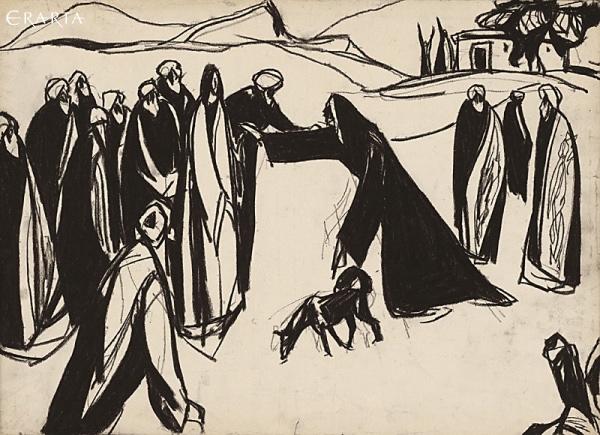
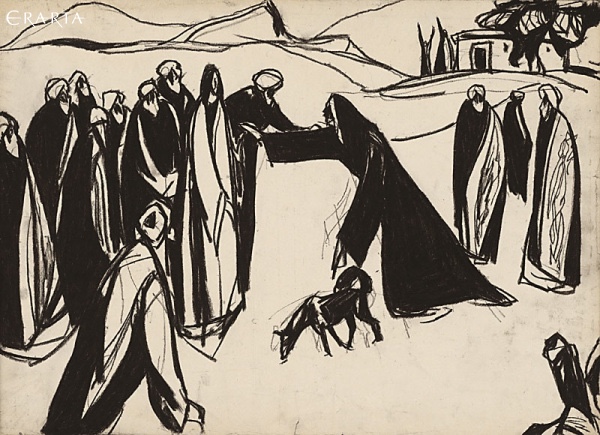
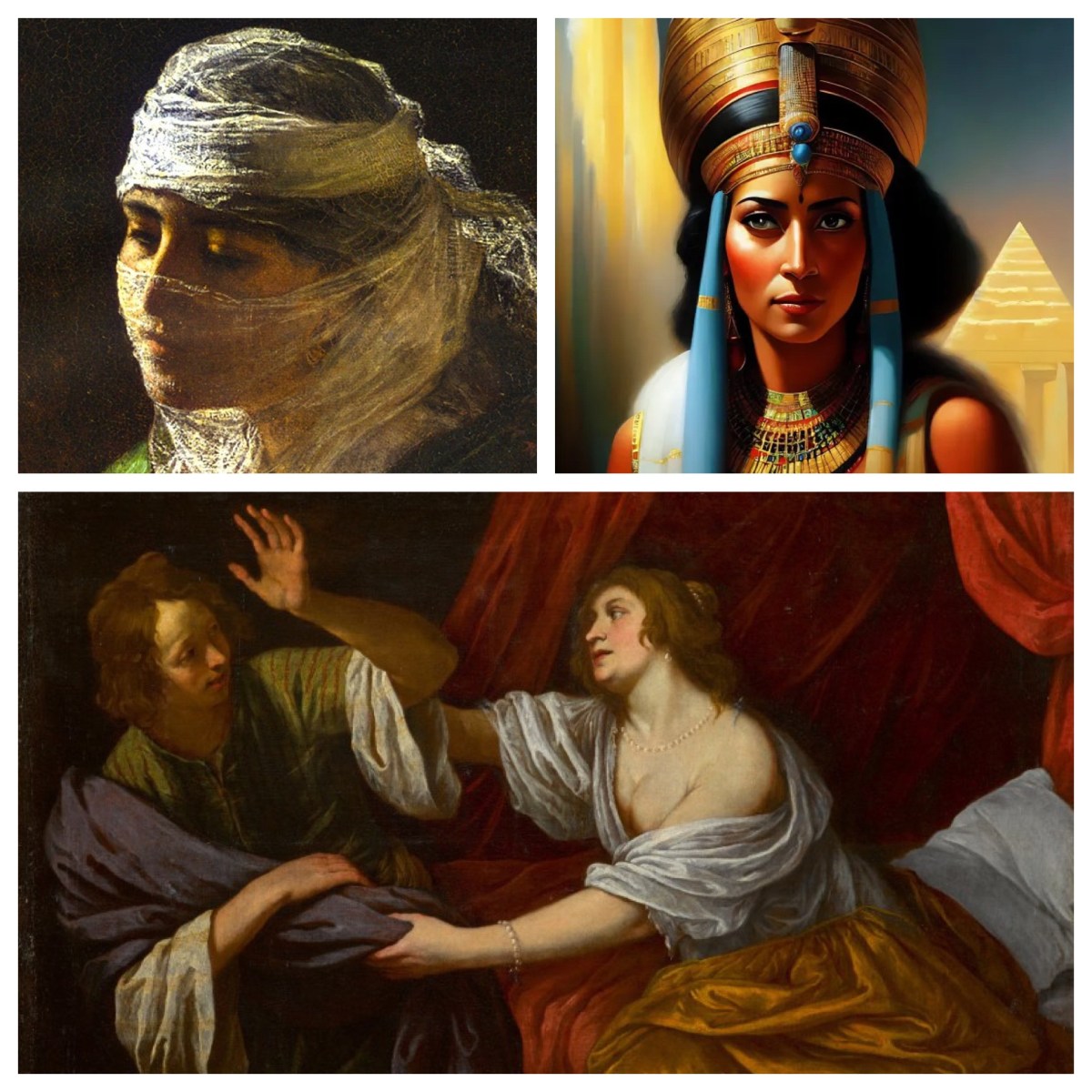
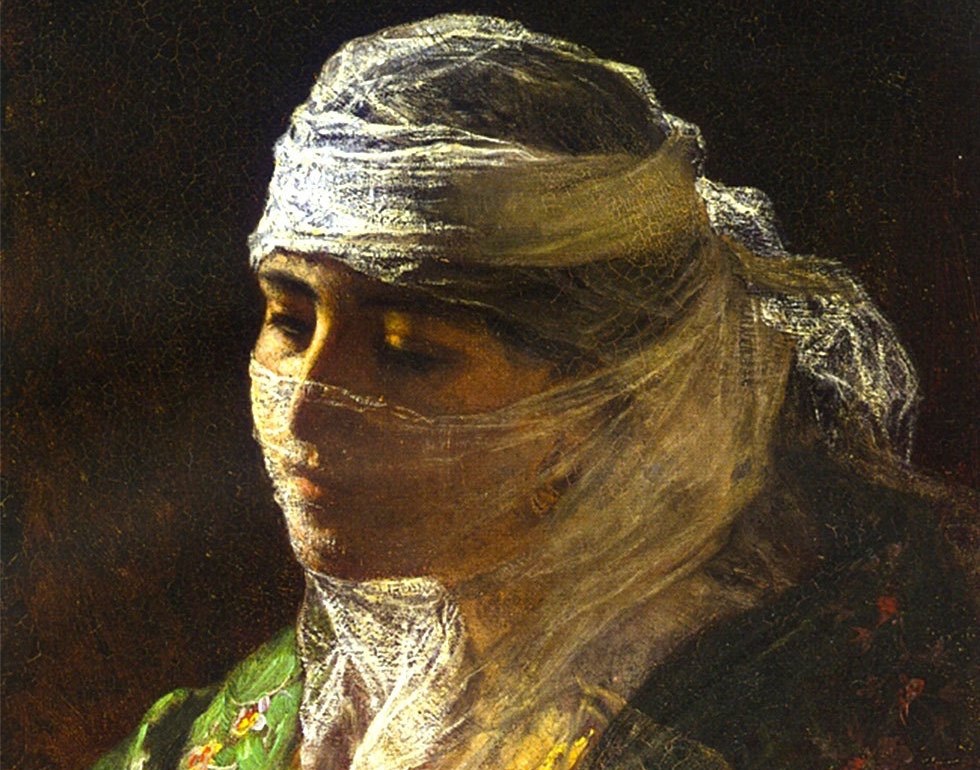
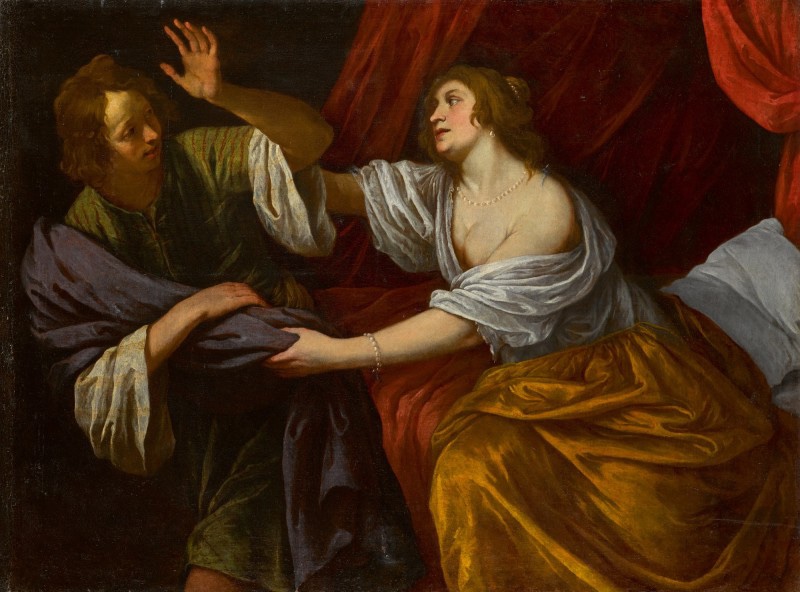
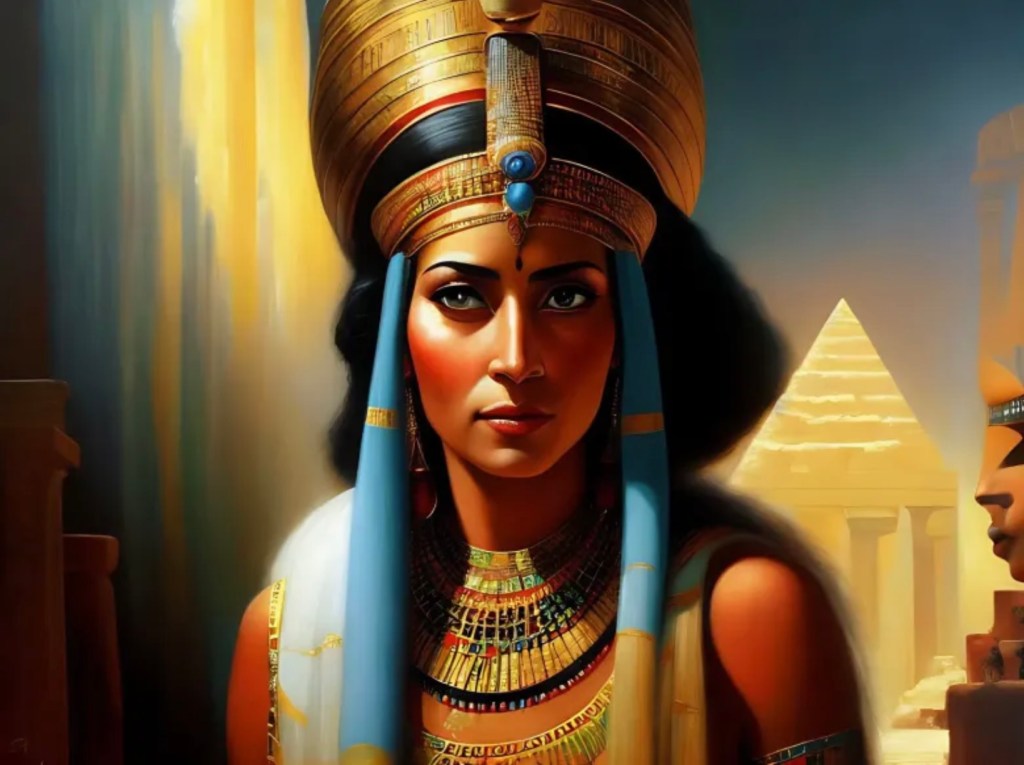
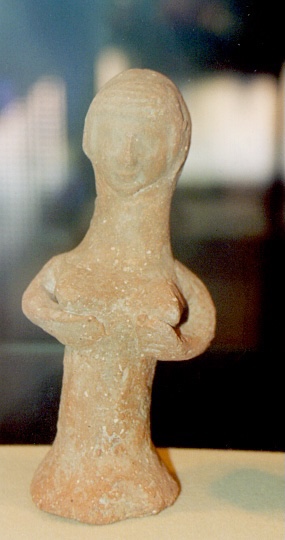

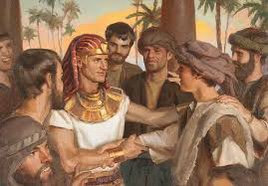
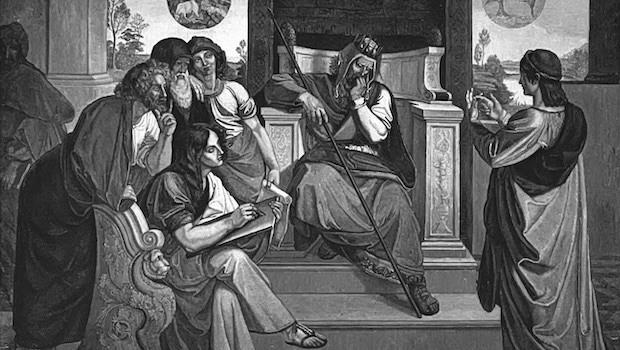
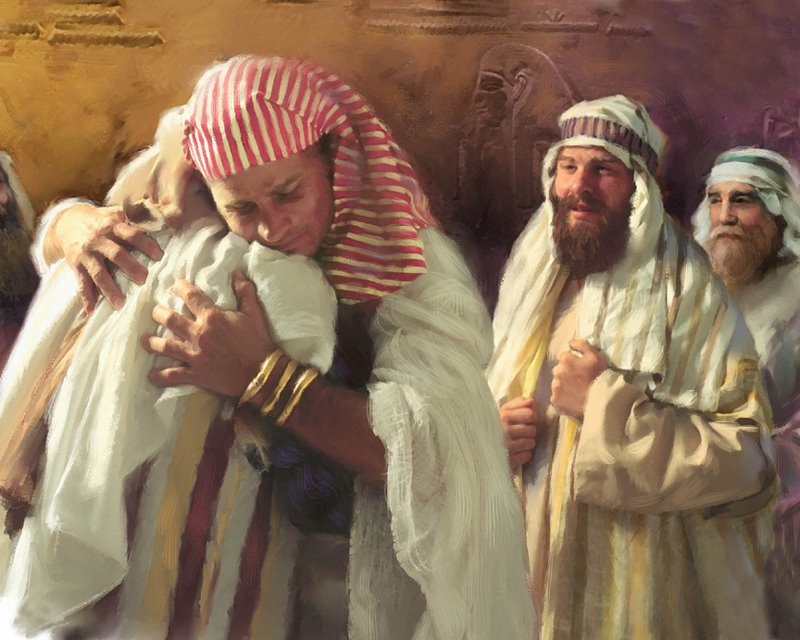
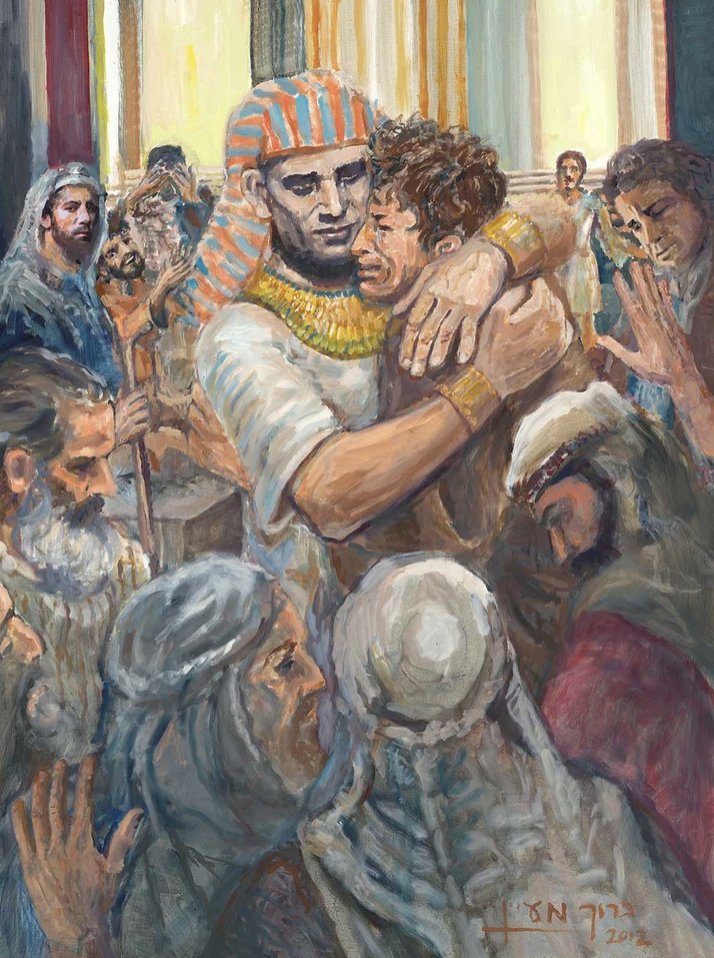


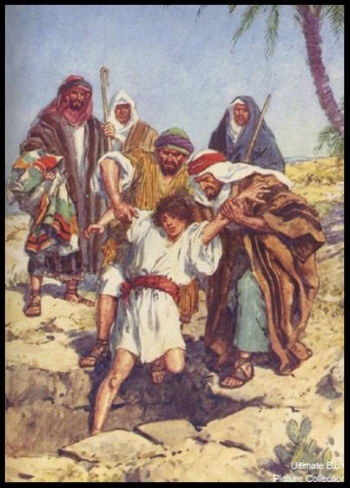
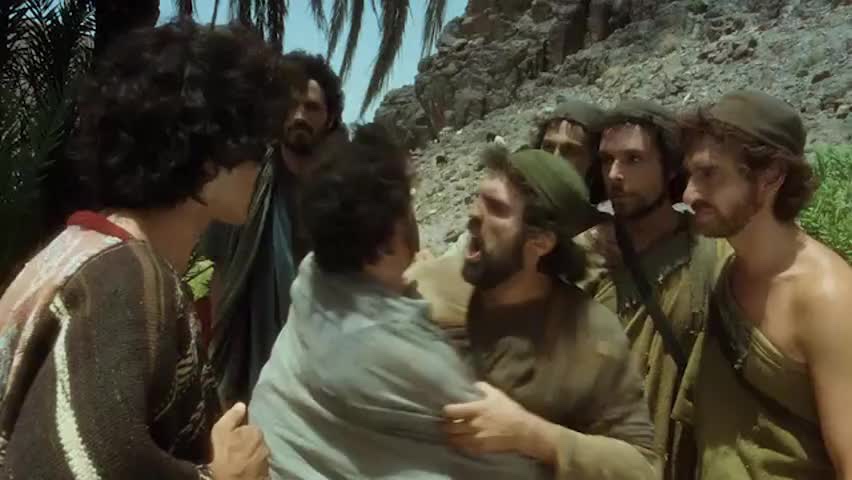
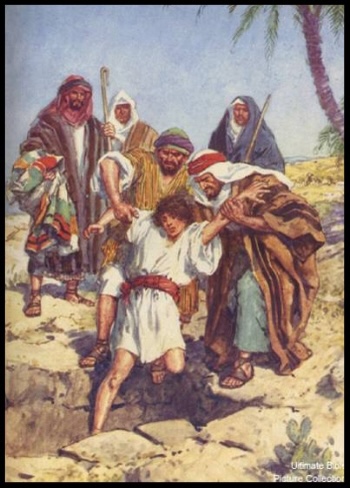
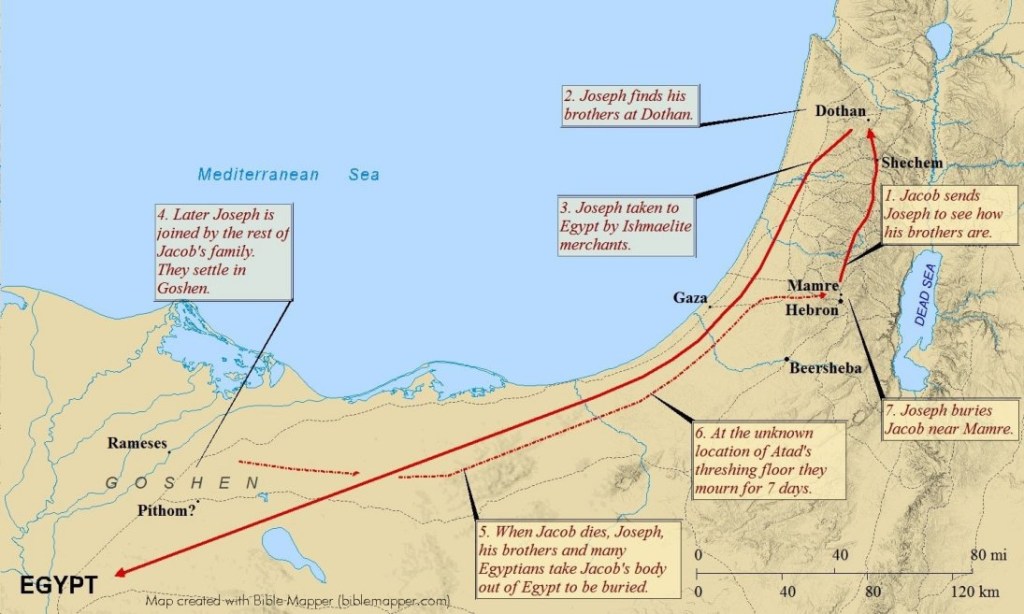
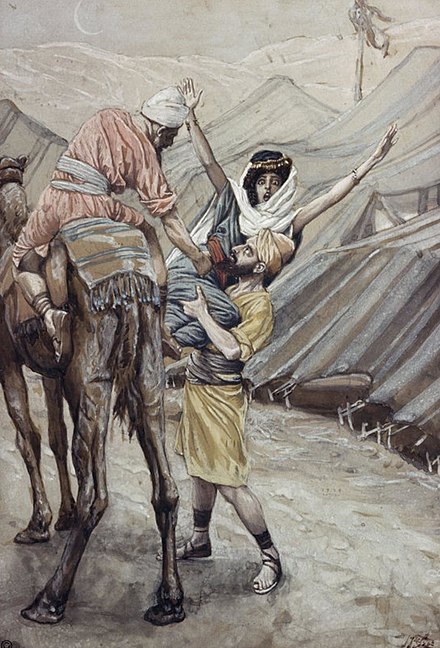

 An Informed Faith