Eye of the Heart Enlightened: words for the opening of the Parliamentary Year (2023)

Australia is a democracy, governed by a series of parliaments—one for each state and territory, and one for the whole nation, drawing together representatives from across the continent, to meet, deliberate, and legislate. The Federal Parliament meets in the Australian Parliament House, in Canberra, the capital city of the nation.

Each time a new parliamentary sitting commences, one of the churches of Canberra hosts a service of worship, to which come the Prime Minister, the Leader of the Opposition, their parliamentary colleagues, and others connected with the workings of the Parliament. The service moves around churches on a rotating basis, and the liturgist and preacher are provided each time by leaders in those churches.
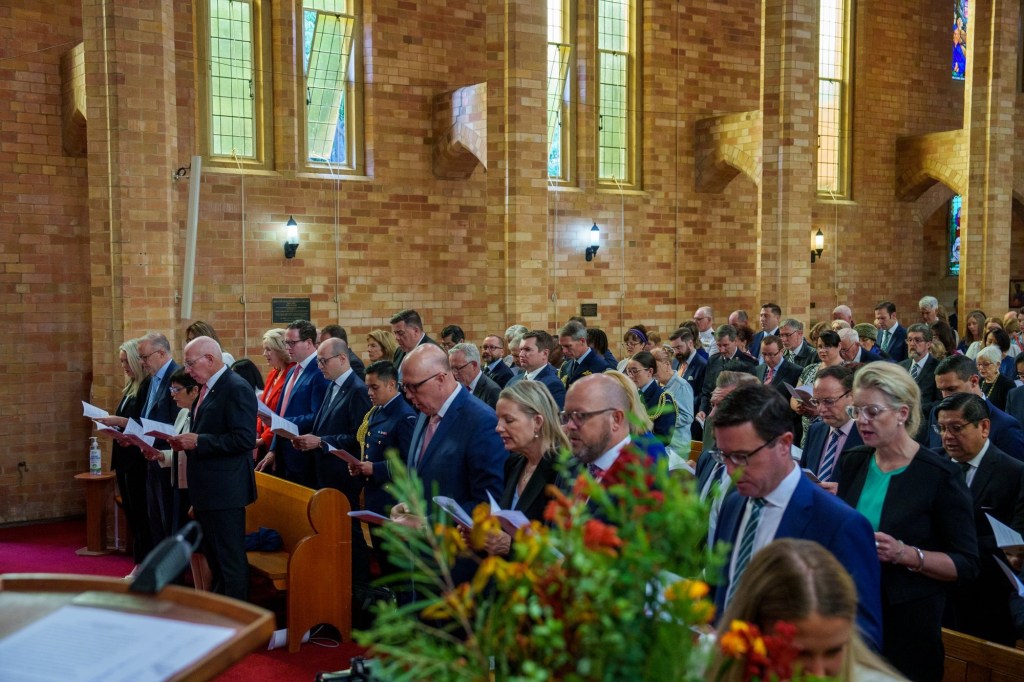
This year, at the start of the parliamentary year, the preacher was a friend and colleague, the Rev. Dr Sarah Bachelard, who is the Director of the Benedictus Community, which meets in Canberra and online. Sarah spoke words drawing from the scriptural heritage of Christianity and Judaism; the texts read in the service were Proverbs 8:1–4, 8–11; Psalm 24:1–5; and Matthew 5:1–10.

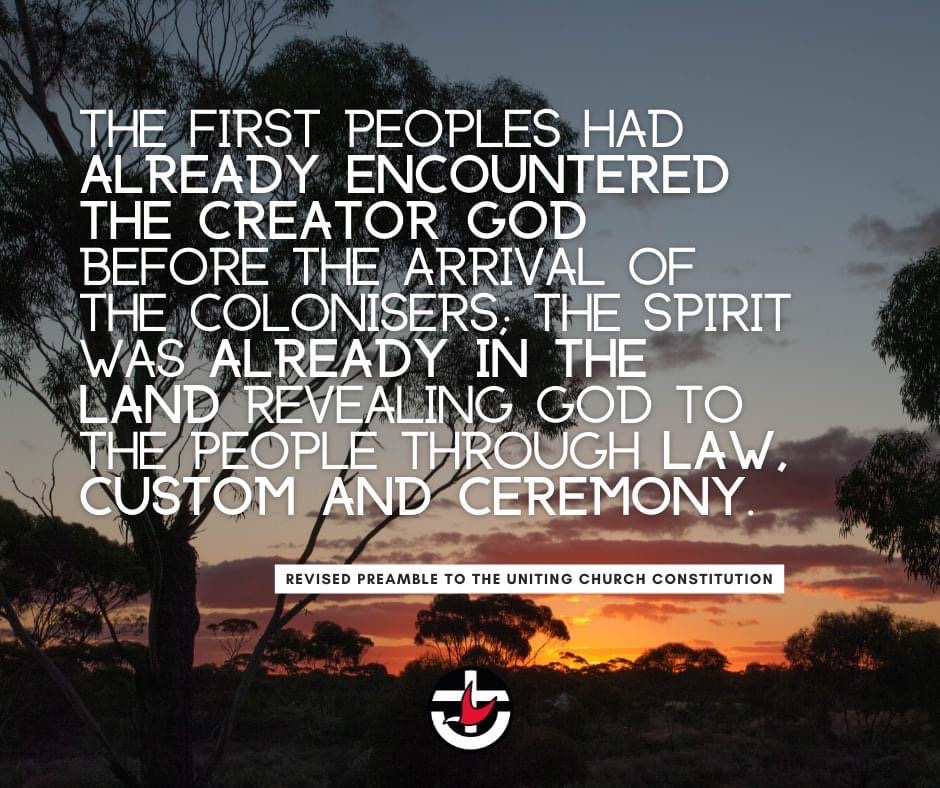
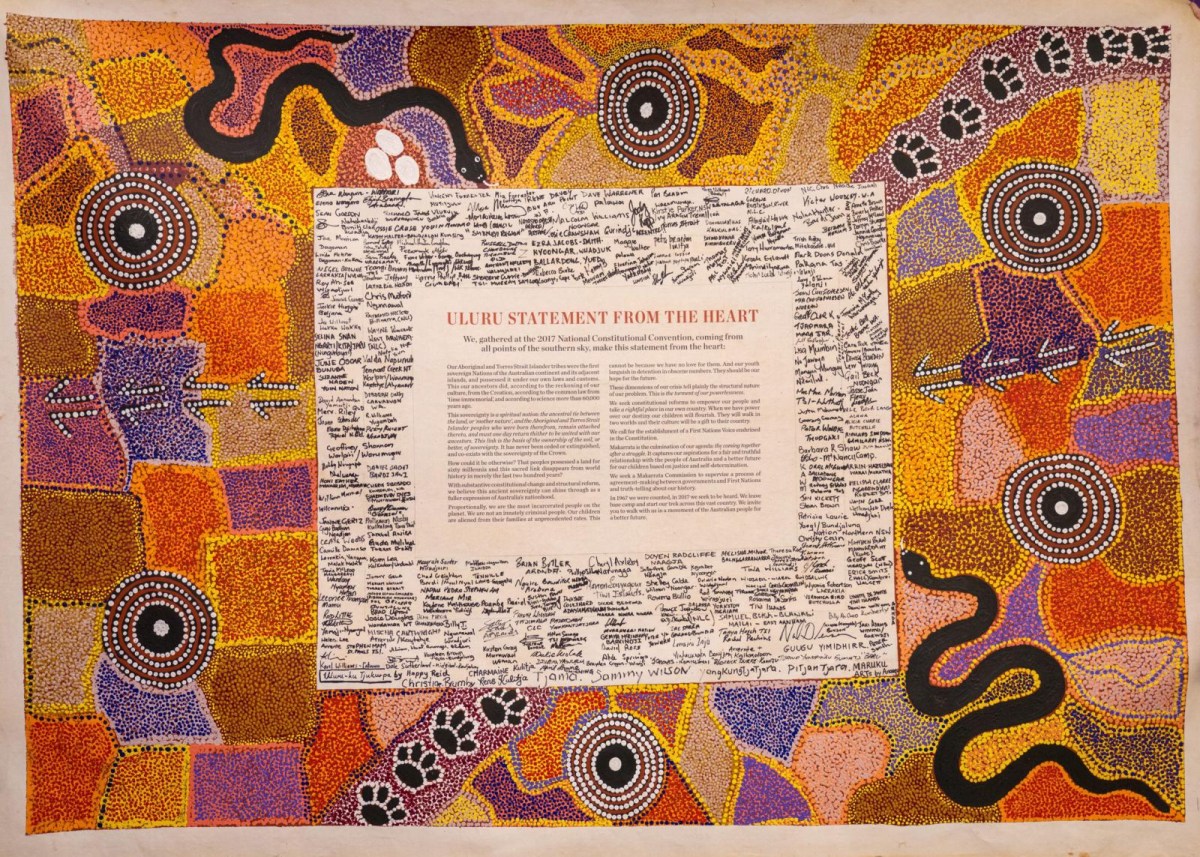
Sarah spoke directly, and clearly, to the parliamentary leadership, about an issue which deserves to have the central place in our public and political considerations during 2023: the Statement from the Heart, an offering written at Uluṟu in 2017 by leaders of the First Peoples of Australia, addressing the nation of Australia. With Sarah’s permission, I am reproducing what she said at that service of worship.

*****

Every week in religious communities around Australia, prayers are offered for those charged with leadership and the government of peoples. ‘Give wisdom to those who have responsibility and authority in every land’, so the Anglican version goes, ‘that we may share with justice the resources of the earth, and work together in trust’. It’s a theme as old as human community.

To those of you who commit to this service, these difficult responsibilities, on behalf of us all – thank you. For as I’m sure I don’t need to tell you, real leadership in the face of this complexity is demanding. It involves many elements – good intentions, good information, the willingness to nurture relationships and build consensus, and sheer hard work. There’s something else needed too, as the prayer I cited above suggests. Something absolutely vital. We call it wisdom.

The recognition that nurturing just and life-giving relationships between peoples, negotiating competing desires and interests in a world of gift and limit, while caring for the very conditions of existence, is no straightforward matter.

Wisdom is the quality of those we relate to as elders, of those who speak with authority, whether or not they have positional power. It has to do with judgement, discernment, seeing a bigger picture. Of course, like every human quality – wisdom can be corrupted or reduced by self-interest. Guile and cunning are its debased expressions.

True wisdom, though, is different. The wise perceive and connect to the depth dimension of reality and so enable creative, compassionate engagement with the fuller truth of things. Wisdom is a form of what the great Australian poet, Les Murray, called ‘whole-thinking’. (The phrase comes from his poem, ‘Poetry and Religion’ in Les Murray, Selected Poems; Melbourne: Black Inc, 2007, p.94. )

As one contemplative teacher has put it, ‘wisdom is not knowing more things. It’s knowing with more of ourselves’. (see Cynthia Bourgeault, https://www.cynthiabourgeault.org)

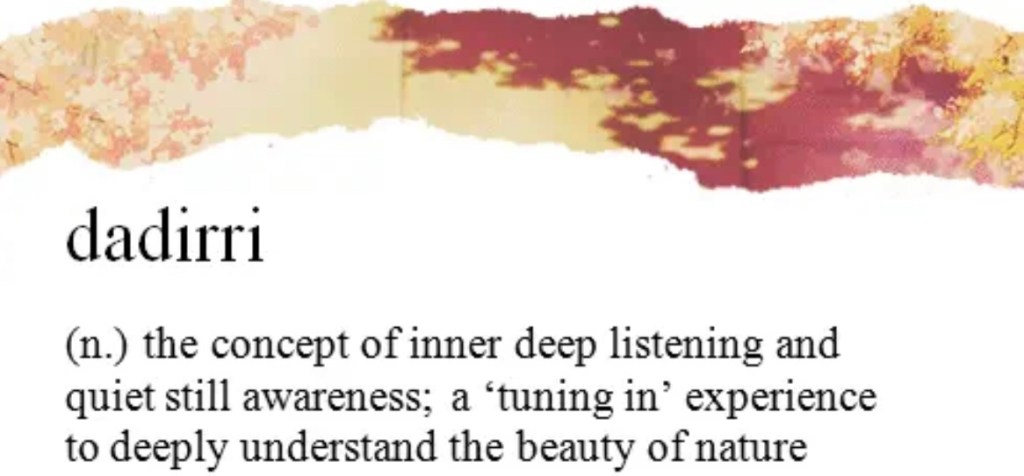
For the wisdom traditions of the world this capacity for ‘whole thinking’, fuller knowing, is connected to the ‘heart’ – where ‘heart’ refers not to feelings alone, but to the centre or soul of a person. Wisdom is an integrated, attentive, compassionate responsiveness. It embodies what Miriam-Rose Ungunmerr, former Senior Australian of the year, calls ‘dadirri’ – ‘inner deep listening and quiet still awareness’. (See Miriam-Rose Ungunmerr, ‘Dadirri: Inner Deep Listening and Quiet Still Awareness’, https://www.miriamrosefoundation.org.au/dadirri/, © 1988 Miriam-Rose Ungunmerr)
‘Give wisdom to those in authority’. But where does wisdom come from? How does any of us grow in it, amidst the messy, busy and often overwhelming circumstances of politics, work and life?

Strangely enough, experience teaches that our access to this integrated, heart’s knowing is usually by way of the heart’s breaking. And maybe you know this for yourself. A time, perhaps, when a disappointment, failure, betrayal or profound grief threw you out of the life you’d known and had tried to fashion for yourself. A time when your ways of making sense faltered, and you found yourself unable to go on as before.

Almost none of us undergoes heart-break willingly. Yet the great paradox is that if we can abide in this broken space without closing ourselves off by becoming bitter or repressed, we wake up at a different level. As the grip of our ego-ic illusions and fantasies of control loosens, we discover ourselves rooted in deeper ground. And gradually, we come to know ourselves more fully part of an interconnected, interdependent whole, capable of being responsible to the whole. Which is the beginning of wisdom.

This has nothing to do with valorising suffering or deprivation; licensing a society to neglect the vulnerable and dispossessed, or to fail to redress injustice. It’s simply the recognition that we don’t attain to ‘whole-thinking’ by cleverness, but through the integration of our wounds. We cannot acquire wisdom as a possession – it grows within us as we are opened at the level of the heart.

This is what Jesus means by poverty of spirit. And as he says in the text we heard read, it’s the poor in spirit … those who have touched the tears of things … those who walk humbly on the earth … who are blessed. For they are connected to the fullness of life and so are capable of truthful vision, of mercy and of making peace.

And this speaks directly to a matter which you, Prime Minister, have identified as central to the work of this current Parliament. Our nation has received the great gift of a Statement from the Heart of the first peoples of this land. This is a wisdom text. Born of heartbreak – of long and continuing suffering, yet marked by an extraordinary generosity of spirit open to the possibility that the wounds of our history might be reconciled for the good of all – the Statement from the Heart can only truly be heard and enacted when those to whom it is addressed make contact with and listen from their own heart
This is its gift and challenge to us all. The call for a First Nations Voice to be enshrined in the Constitution is thus not just another policy proposal, to be debated at the level of strategy and argument. As well as a condition of lasting justice for Australia’s first peoples, it’s an invitation to our nation as a whole to grow in wisdom’s way.

At a time when petty factionalism is tearing at the fabric of national and international communities, and the crises of our age escalate, the necessity for wisdom in the government and among the peoples of the world is urgent. May this Parliament, this nation – all of us – grow in wisdom that we may share with justice the resources of the earth, and work together in trust.

(A Sermon preached at St Paul’s Anglican Church, Manuka, in a Service for the Opening of Parliament, on 6 February 2023, by the Rev. Dr Sarah Bachelard)

*****
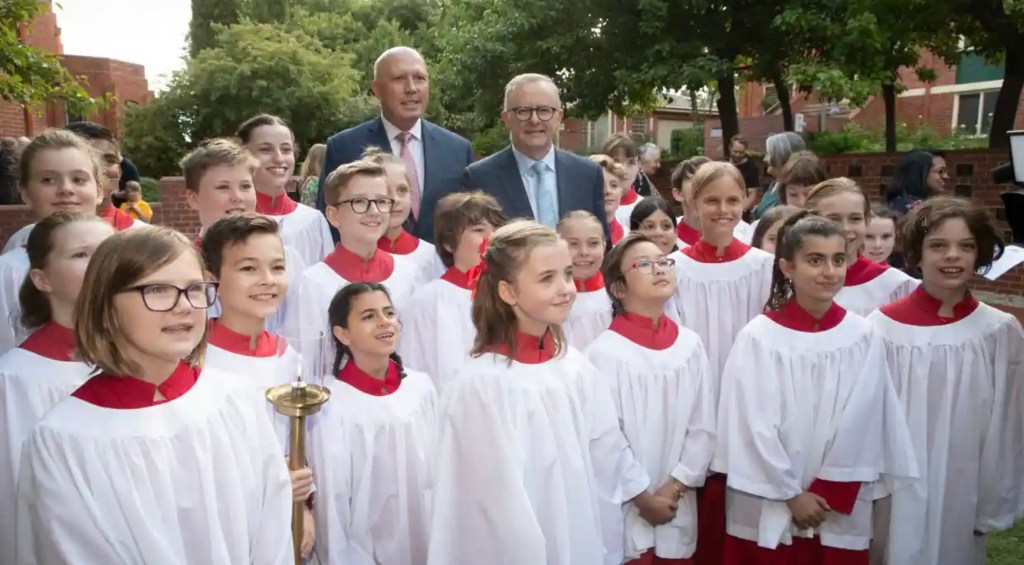
In a “doorstop” media interview after the service, two of the four questions asked of the Prime Minister related to the issue of a Voice. He was asked, “When do you think you will want to introduce legislation and set up the Voice? Would it be in this term of Parliament?”

Mr Albanese replied: “I’d be very hopeful that it would be, of course, in this term of Parliament. This is a task which we need to, of course, get the detail right. And there’d be a process as well of that parliamentary debate about the legislation. And I’d want to get as much agreement as possible, because I want this to be a long-term reform to benefit Indigenous Australians, to help close the gap. We’ll be talking about closing the gap, and the targets, and the fact that so many of them have not been met, when that is debated in Parliament over this sitting. And that is why this is a change that’s necessary.”

Then he was asked, “Will the Voice also advise National Cabinet?”, and he responded, “This is a Voice to Parliament, and it will be a Voice that will release its views publicly. Publicly, it will be available for all, is one of the principles that has been there. And of course, so many of the issues go across different levels of government. This is about consultation. It won’t have a right of veto, it won’t be a funding body, it’s very clear with the principles that have been put out.”

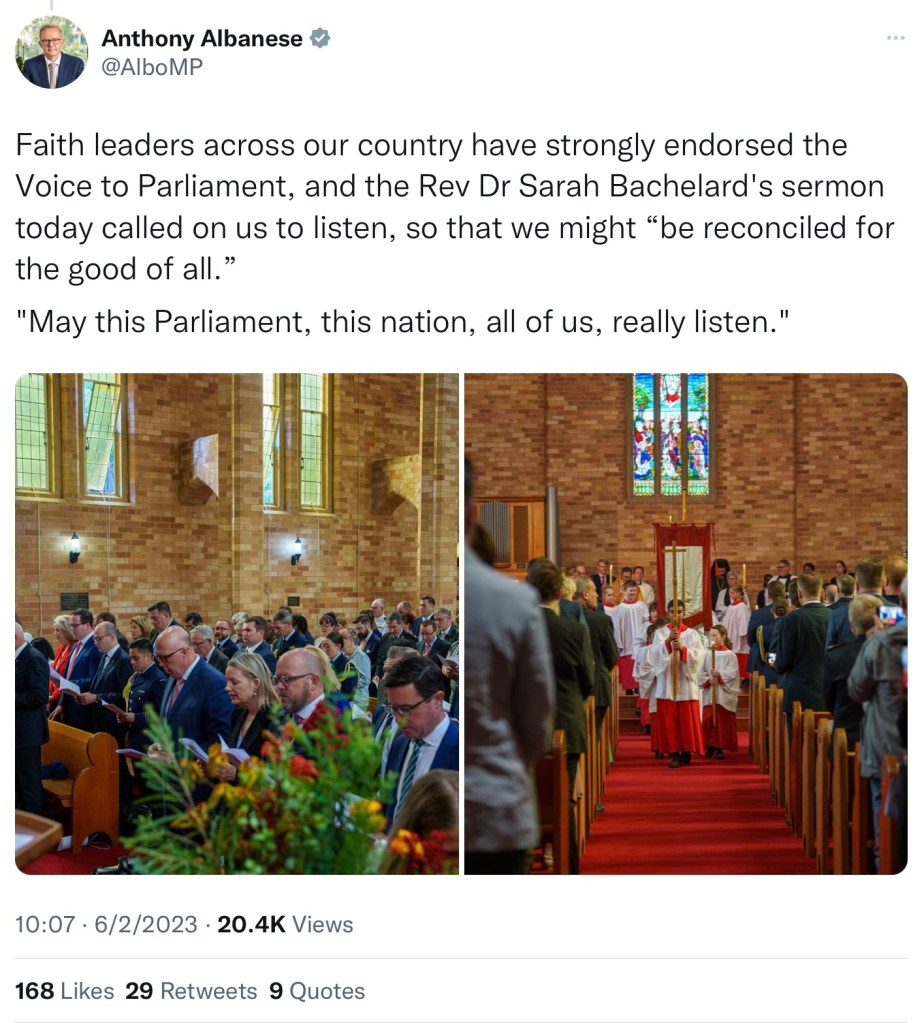
A little later, the Prime Minister tweeted, quoting Sarah Bachelard and affirming her words.
For information about Benedictus, see https://benedictus.com.au
Saltiness restored: the need for innovation. An Ordination Celebration.

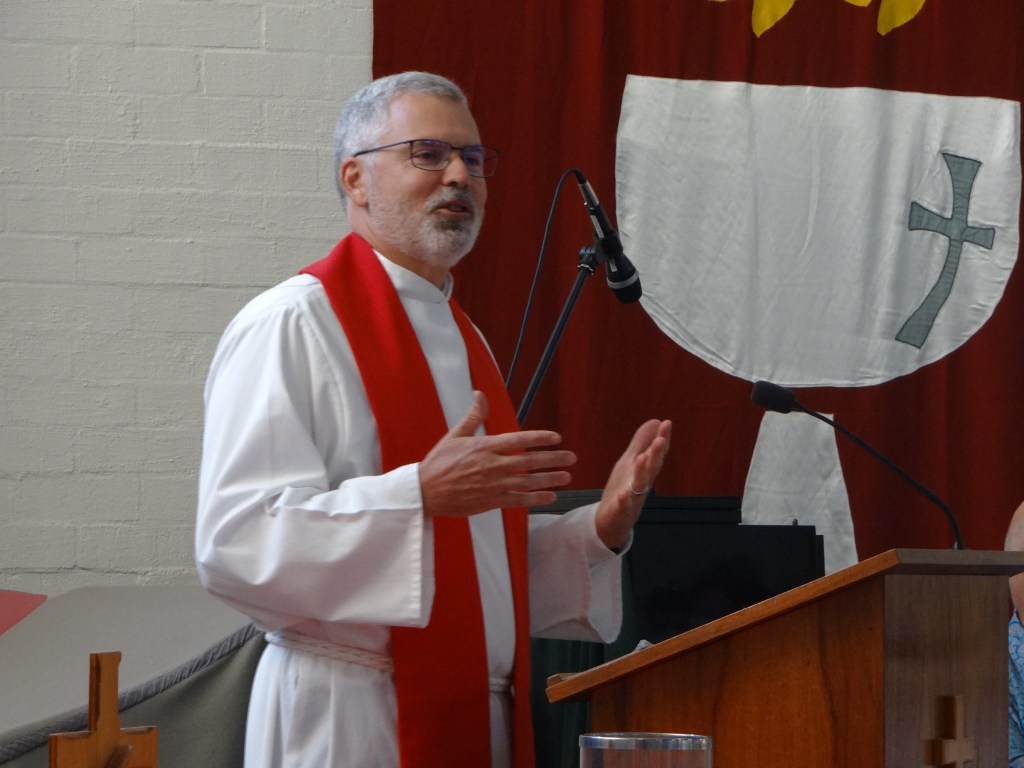
“The church does not need inventors; rather, we need innovators.” This was the heart of the message delivered by the Director of Education and Principal of United Theological College, the Rev. Dr Peter Walker, at a joyful celebratory service last Sunday evening in the Tuggeranong Uniting Church in the ACT.

Dr Walker was speaking at a service to ordain Sharon Jacobs as a Minister of the Word and to induct her into placement in the Tuggeranong Congregation as the Relationships and Growth Minister, a newly-created position funded substantially by the Synod Growth Fund. The ordination was presided over by the recently-elected Co-Chairperson of the Canberra Region Presbytery, Ms Janet Kay.

Dr Walker was addressing a capacity congregation in the building, with more people connecting online, from Canberra, as well as Melbourne, Aotearoa—New Zealand, and Scotland—the places where the Rev. Jacobs has lived in the past. Speaking under the title of “saltiness restored”, derived from Matthew 5, Dr Walker noted that “whilst inventors create new things, innovators know what they have to offer, and work to ensure that others can appreciate this”.

We have the Gospel, he said; we know what we have to offer others; and we need to work to find ways in which this good news comes alive in the lives of others. Our charge is to be “salt of the earth”; the church in our time is to discover how to be “saltiness restored”.

His words were particularly appropriate for the Tuggeranong Congregation, which has been innovating its life and witness in recent years, under the energetic leadership of the Rev. Elizabeth Raine and a strong team of lay leaders. The Congregation has refreshed its worship life, and continues its online worship alongside the in-person gathering each week. The Rev. Raine has developed the Congregation into an intentional learning community, providing leadership in three weekly online BIble Studies throughout the pandemic lockdowns. These studies are also continuing, as they draw participants from across the Presbytery and beyond, even interstate and overseas!!

The Church Council has charted a deliberate course to make a difference in the wider Tuggeranong community—to be the “salt of the earth” in southern Canberra. Deliberate connections have been fostered with a number of community groups; the Congregation has participated in Floriade Reimagined, reinvigorated its Red Dove pop-up Op Shop, continued providing its weekly Emergency Food and Lunchtime Conversation group, and offered the wider community innovative events such as Christmas Reimagined and SpringFest. A partnership with SeeChange Tuggeranong has seen regular events with a focus on sustainability.

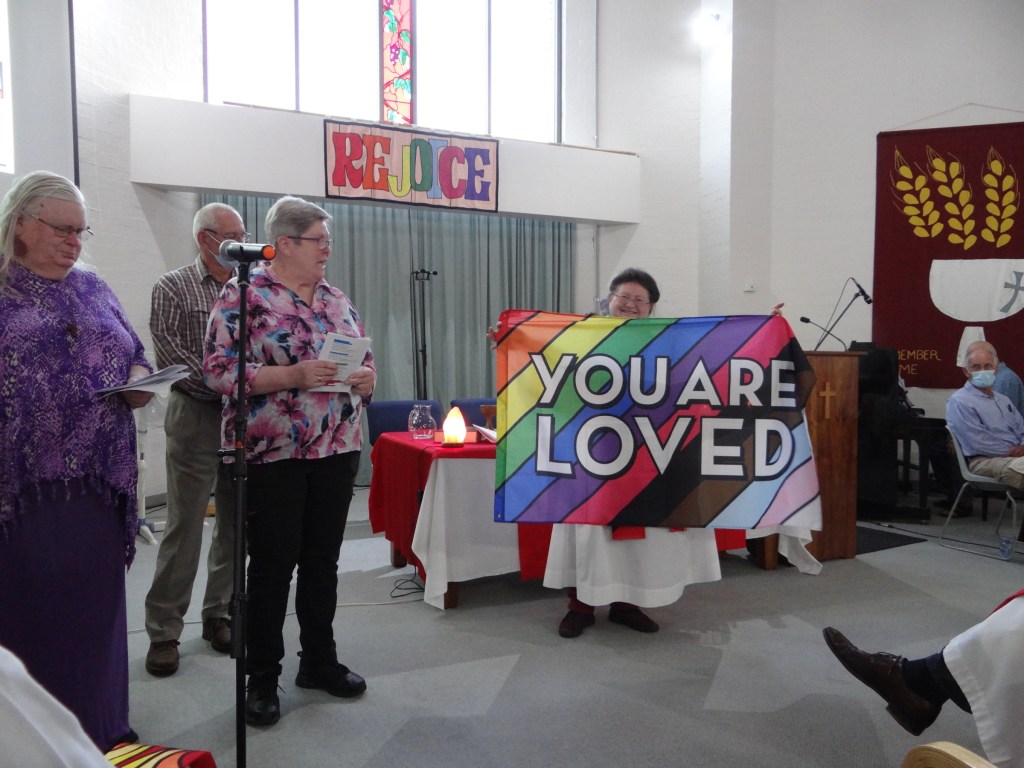
Members of the Congregation, Sally-Anne, Iain, and Delia, with Sharon as she holds the Rainbow Christian Alliance affirming that “you are loved”

The monthly Rainbow Christian Alliance now meets in the church and has broadened its membership beyond LGB people to include growing numbers of TIQ members. A monthly Messy Church under the name of Fam@4 now meets at 4pm on the 4th Sunday of the month. Regular intergenerational worship services are scheduled for key moments on Sunday mornings, and inevitably the church is filled with people of all ages, craft activities, vibrant music, with lots of colour, energy, and caring relationships growing.

Sharon will focus her 50% role on developing the Congregation’s work with families and children, as well as supporting and growing the leadership and membership of the Rainbow Christian Alliance. She brings experience and giftedness in pastoral care, working creatively with children, and generating enthusiasm—qualities that fit her well for this role.

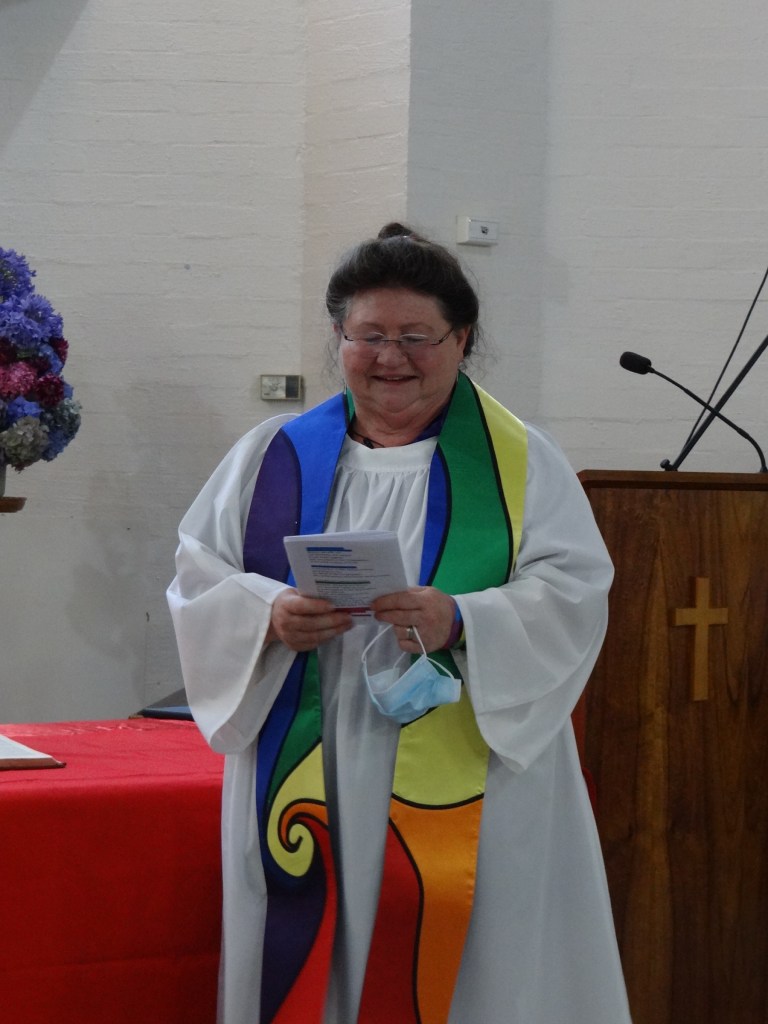
During the service, Sharon was welcomed as she joins the team of the Rev. Elizabeth Raine, Minister in placement, and the Rev. Margaret Middleton, the Tuggeranong Minister-in-Association. She was charged for her life as an ordained minister by her former minister, the Rev. David Thiem, and presented with a colourful rainbow stole by the congregation.

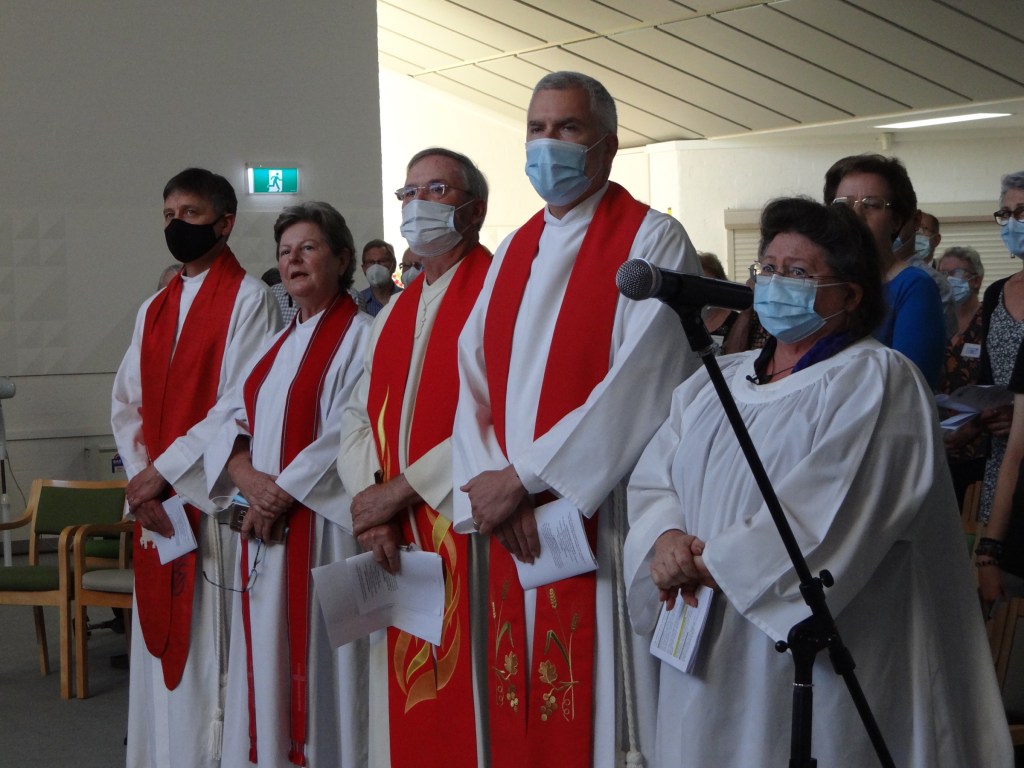
The Revs. Andrew Smith, LizMcMillan, David Thiem,
and Dr Peter Walker, with Sharon Jacobs

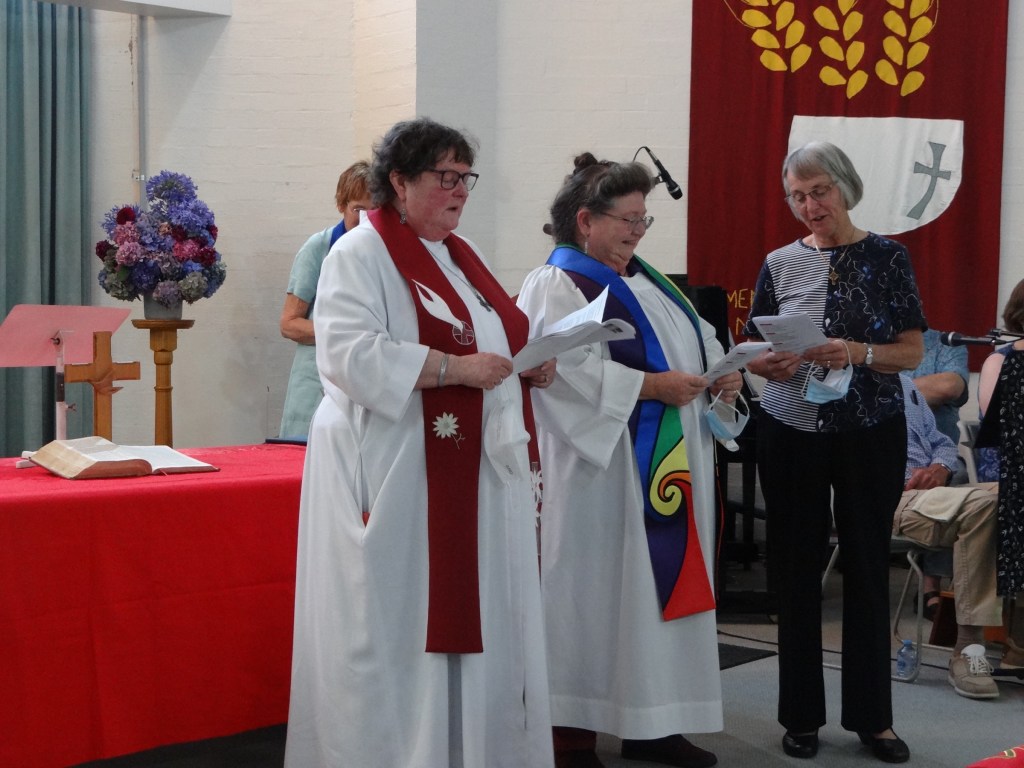
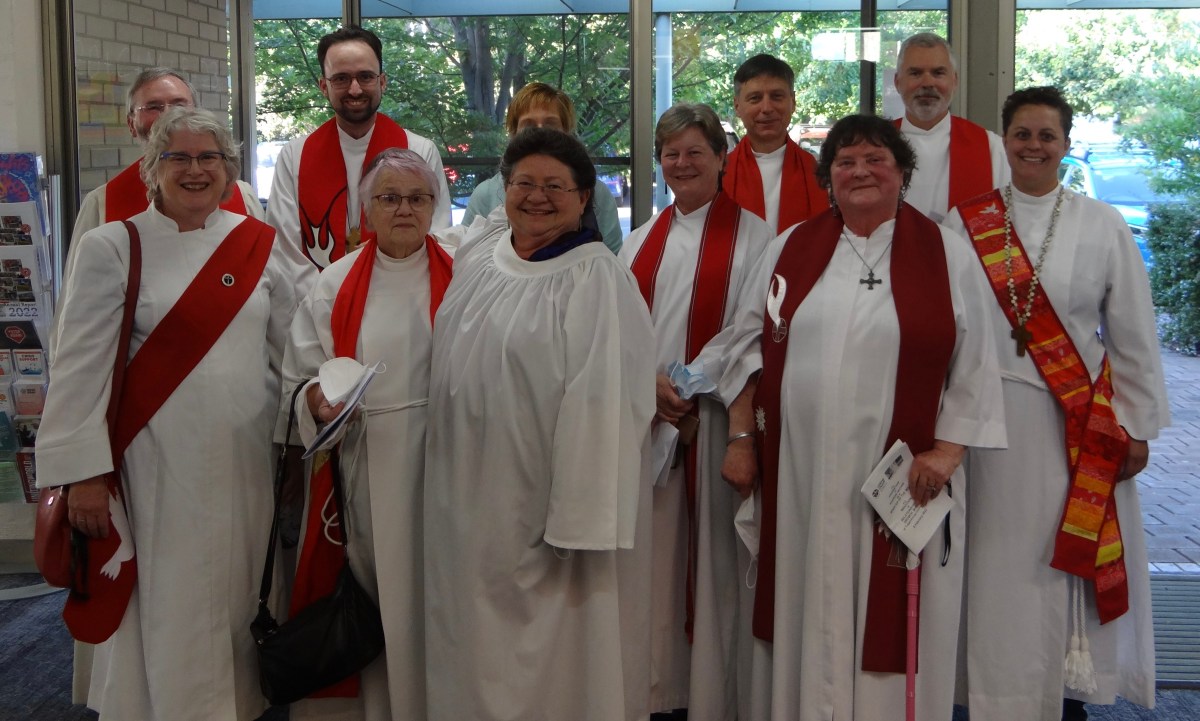
Also participating in the service were Canberra Region Presbytery Ministers, the Rev. Andrew Smith, and the Rev. Liz McMillan, recently arrived from Melbourne. Many members of the Presbytery greeted Sharon after her induction, and members of the Tuggeranong Congregation offered their trademark hospitality of a generous supper, as friendships were rekindled amongst those present after the service concluded.

Keep watching Tuggeranong, as innovation continues, its salty contribution to the local community in southern Canberra develops, and the vibrant life of the Congregation grows!

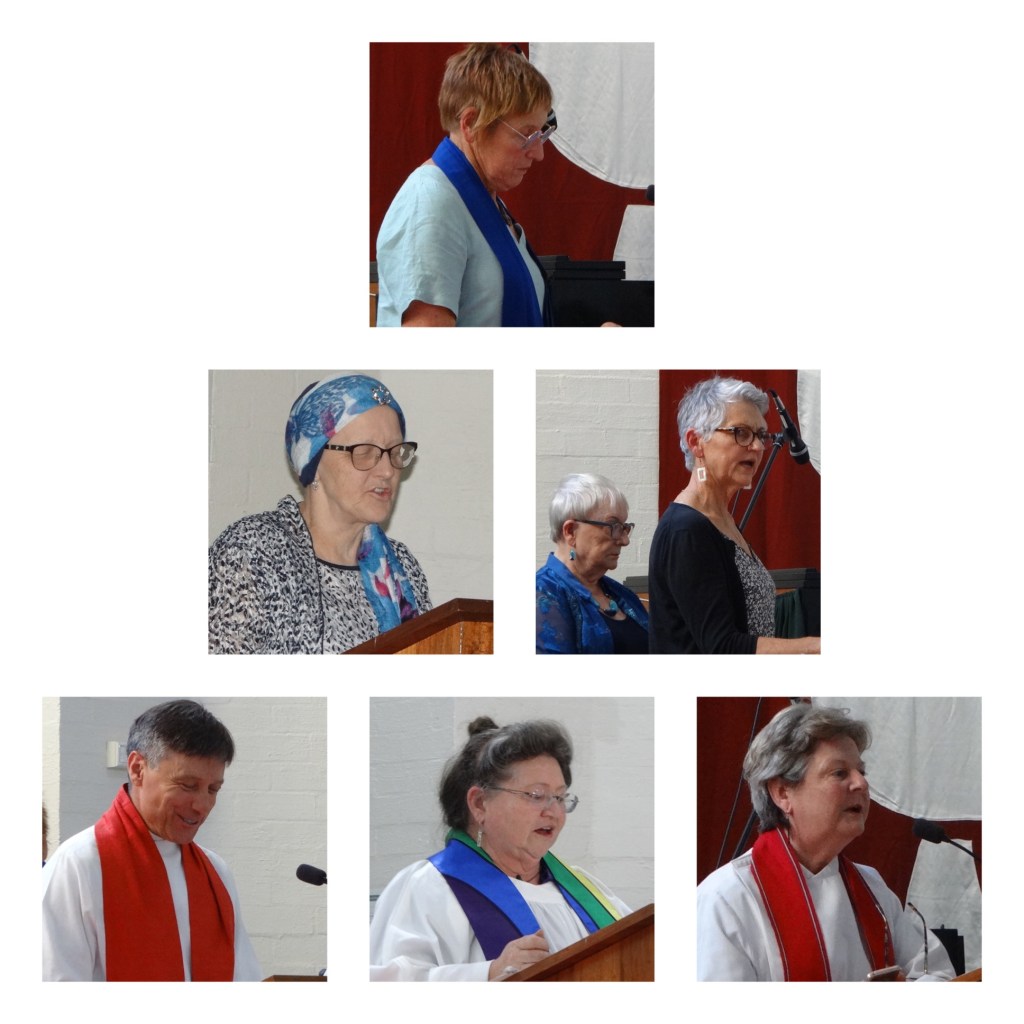
Presbytery Co-Chair, Girls Brigade Captain, Scripture readers,
Andrew Smith, Sharon Jacobs, Liz McMillan

*****

See also

Choose life: loving, obeying, holding fast (Deuteronomy 30; Psalm 119; Epiphany 6A)

The season of Epiphany is marked by an emphasis on light, a symbol of the manifestation or revelation of God in Jesus. (Epiphany is from the Greek word for “shine forth”—thus, a manifestation, a revelation.)

The note of revelation through light was sounded in the announcement of an unnamed post-exilic prophet found in the Hebrew Scripture reading for The Feast of the Epiphany: “arise, shine; for your light has come, and the glory of the Lord has risen upon you … nations shall come to your light, and kings to the brightness of your dawn” (Isa 60:1, 3).

It was continued in the words of another, earlier, unnamed prophet in the Hebrew Scripture reading for Epiphany 1, the Feast of the Baptism of Jesus, in words sung to The Servant: “I have given you as a covenant to the people, a light to the nations, to open the eyes that are blind, to bring out the prisoners from the dungeon, from the prison those who sit in darkness” (Is 42:6–7).

Then, for Epiphany 2, we heard a repetition and extension of that imagery of light, in the second song sung to The Servant: “I will give you as a light to the nations, that my salvation may reach to the end of the earth” (Isa 49:6). There was also a repeated indication of the worship that kings will bring: “Kings shall see and stand up, princes, and they shall prostrate themselves, because of the Lord, who is faithful, the Holy One of Israel, who has chosen you” (Isa 49:7).

The motif of illumination continued on Epiphany 3, as the prophet Isaiah, some centuries earlier, foresaw the significance of the birth of a child in the royal line: “the people who walked in darkness have seen a great light; those who lived in a land of deep darkness on them light has shined” (Isa 9:2).

For Epiphany 4, the focus shifted to the way that people were to respond to the revelation of God’s ways, made known in the words of the prophets, through the testimony of The Servant, and even through the birth of a child. So, Micah proclaimed, “the Lord … has told you, O mortal, what is good; and what does the Lord require of you but to do justice, and to love kindness, and to walk humbly with your God?” (Mic 6:8).

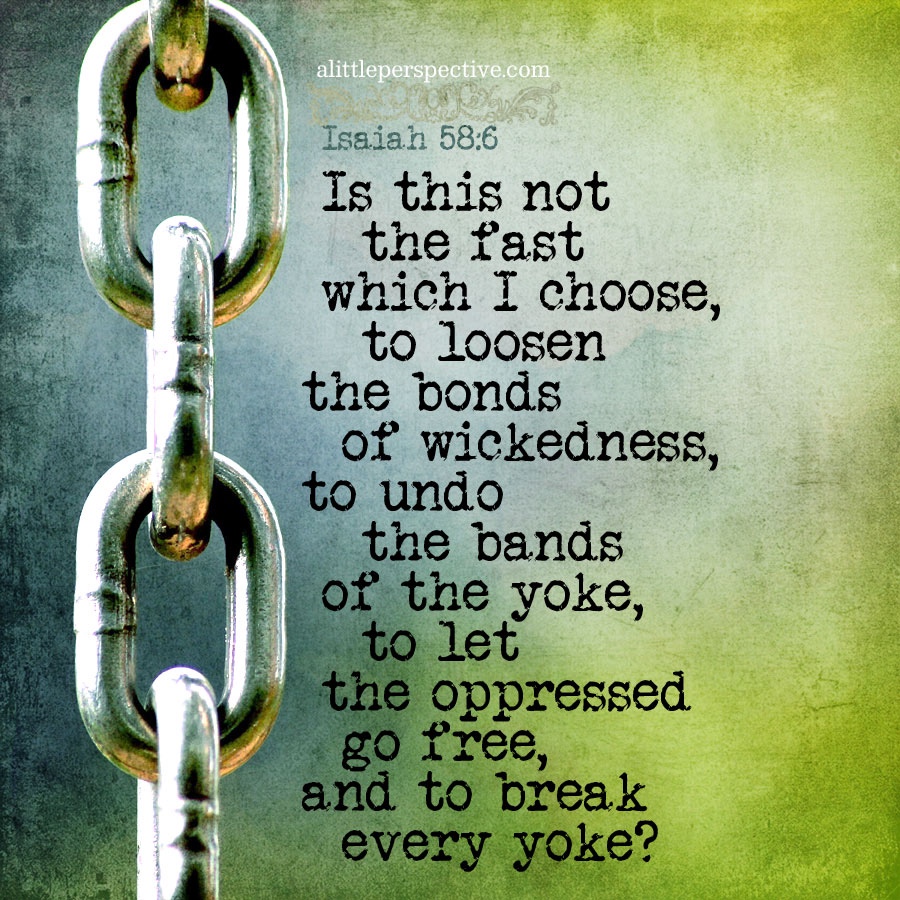
Then followed, on Epiphany 5, the advice of the anonymous post-exilic prophet whose words are collected in the last section of the book of Isaiah. Ne advises the people to enact the fast that the Lord chooses: “to loose the bonds of injustice, to undo the thongs of the yoke, to let the oppressed go free, and to break every yoke … to share your bread with the hungry, and bring the homeless poor into your house; when you see the naked, to cover them, and not to hide yourself from your own kin” (Isa 58:6–7).

Immediately following this, the prophet returns to the Epiphany theme of illumination: “your light shall break forth like the dawn, and your healing shall spring up quickly; your vindicator shall go before you, the glory of the Lord shall be your rear guard” (Isa 58:8). These ways of acting are, as I have explored, central to the covenant between God and Israel; the prophet itemises a series of practical behaviours that would signal that Israelite society was founded on the justice and righteousness that God required through the covenant. That is how they were to respond to the illumination of the light, given to them time and time again. See

So each week, an excerpt from a prophetic text has undergirded the key feature of the ongoing season of Epiphany. Of course, the prophets weren’t speaking about our Christian season of Epiphany; but the compilers of the lectionary have chosen these passages, quite deliberately, to provide an ongoing focus each Sunday throughout this season.

*****

This coming Sunday, by contrast, there is no mention of light, or dark. However, the passage chosen from Hebrew Scripture (Deut 30:15–20) does continue the motif of justice, as articulated by prophets before the Exile (Micah 6) and on return to the land, after exile (Isaiah 58). We are offered an excerpt from the final speech of Moses, the great prophet, as it was attributed to him by a writer many centuries later from the time he is alleged to have lived—the unknown author of the book of Deuteronomy.

When Josiah was King of Judah (from 640 to 609 BCE), he instituted a series of reforms (probably during the late 620’s). What drove the reforms was the discovery, in the midst of the restoration of the Temple, of an ancient book of the Law, at the bottom of a money chest that had recently been raided to pay for renovations to the Temple (2 Ki 22:8–10).

This book set out the requirements of the Law; when it was discovered, Josiah realises that the nation has not been faithful to the covenant, and that God will punish them. He consults the prophet Huldah, who advised King Josiah to undertake the thoroughgoing reforms of religion in Judah that characterised his reign. “Josiah took away all the abominations from all the territory that belonged to the people of Israel, and made all who were in Israel worship the Lord their God. All his days they did not turn away from following the Lord the God of their ancestors” (2 Chron 24:33).

It is thought by some scholars that the book found in the money chest was Deuternonomy, or perhaps an earlier version of the book we now have. (The name, Deuteronomy, comes from two Greek words, meaning “second law”—perhaps a reference to the fact that in this book so many of the laws stated in Exodus and Leviticus are restated a second time.) There is no doubt that this book sounds a single, insistent theme, requiring that the people of Israel listen to the words that God gave Moses to speak to them, that they listen and obey, putting the instructions and commands into practice in every element of their daily lives.

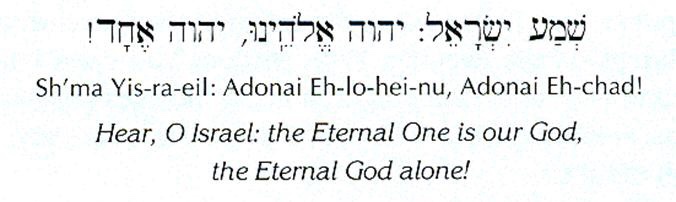
Indeed, a key statement in this book is recited to this day by faithful Jews, reminding them of their obligation to respond to God’s gift: “Hear, O Israel: The Lord is our God, the Lord alone; you shall love the Lord your God with all your heart, and with all your soul, and with all your might” (Deut 6:4–5, known for the first word of these verses, the Shema).

So this passage continues: “Keep these words that I am commanding you today in your heart. Recite them to your children and talk about them when you are at home and when you are away, when you lie down and when you rise. Bind them as a sign on your hand, fix them as an emblem on your forehead, and write them on the doorposts of your house and on your gates.” (Deut 6:6–9; see also 11:18–21).

This central commandment is to be remembered and enacted at every time of the day, in every situation and place. Throughout this book, the people are regularly reminded to “keep” the commandments (4:2, 40; 5:10, 12, 15, 29; 6:2, 6, 17, 24; 7:9; 8:2, 6, 11; 10:13; 11:1, 8; 13:4; 16:10, 13, 15; 26:17–18; 27:1, 9; 28:9). They are told to “obey the voice of the Lord God” (8:20; 13:4, 18), the Lord who speaks through the commandments (11:27–28; 12:28; 15:5; 26:17; 27:10; 28:1–2, 13, 15; 30:2, 8, 10, 16). Loving the Lord God is at the heart of these commandments (6:5; 7:9; 10:12; 11:1, 13, 22; 13:3; 19:9; 30:6, 16, 20). In this way, the people “hold fast” to God (10:20; 11:22; 13:4; 30:20).

*****

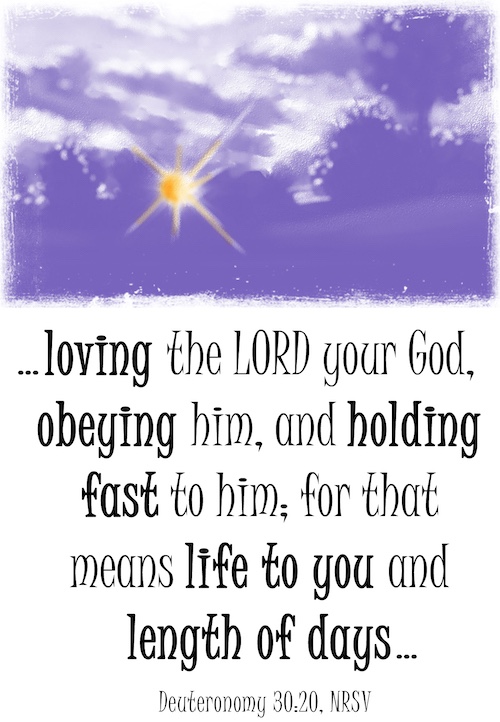
In the passage offered for this coming Sunday, this requirement of diligent listening and faithful obedience is sounded for the final time in this long book; the people are instructed to “choose life, so that you and your descendants may live, loving the Lord your God, obeying him, and holding fast to him” (Deut 30:19–20).

And so, the benefits of such listening, obeying, and holding fast are set forth: “if you obey the commandments of the Lord your God that I am commanding you today, by loving the Lord your God, walking in his ways, and observing his commandments, decrees, and ordinances, then you shall live and become numerous, and the Lord your God will bless you in the land that you are entering to possess” (Deut 30:16).

We have already discussed how Torah (the Law) was widely appreciated and deeply valued amongst the people of Israel, such that psalms and prophetic voices could exclaim, “happy are those who fear the Lord, who greatly delight in his commandments” (Ps 112:1). See

It is worth noting that, in Hebrew, the same word (Shema) is translated into English by two key terms—most often, as “hear” (as in Deut 6:4), but on occasions, as “obey” (as in Deut 11:27–28, and other places in this book). The sense of obey, then, is to hear, register, and put into practice what has been heard—thus, to obey. Hearing is not simply an act of the ear; it is an act of the whole being, moving from what the ear registers to what the mouth says, the hands do, the heart shows. That is the full sense of the instructions that are given in this speech by Moses at the end of his life (according to the narrative setting of the whole book; see Deut 31:14; 32:48–52; 34:1–8).

In the verse prior to this section, the people are reminded of how they are to relate to God: “the word is very near to you; it is in your mouth and in your heart for you to observe” (30:14). Hearing God, obeying the commandments that God has given, and living God’s way, are all immediately at hand—indeed, they are within the people. This is much like Jeremiah’s vision of the new covenant, when “I will put my law within them, and I will write it on their hearts” (Jer 31:33), or Ezekiel’s vision of the valley of dry bones, when God promises, “I will put my spirit within you, and you shall live” (Ezek 37:14).

Indeed, this positive appreciation of the Law is picked up well in the Psalm offered for this Sunday, namely, the first stanza (verses 1–8) of the longest psalm in the Bible, Psalm 119. This psalm offers lavish and continued praise for Torah—identified variously as “the law of the Lord” (v.1), “his decrees” (v.2), “his ways” (v.3), “your precepts” (v.4), “your statutes” (v.5), “your commandments” (v.6), “your righteous ordinances” (v.7), and once again “your statutes” (v.8). These terms recur in each stanza of this lengthy, extended psalm of 178 verses, along with the familiar “your word” (vv.9, 11, 16).

The blessings of hearing and obeying this law are also set forth in this opening stanza of Psalm 119: those who hear and obey are blameless (v.1), blessed (vv.1,2), they do no wrong (v.3), keep the precepts diligently (v.4), have steadfast ways (v.5), will not be opus to shame (v.6), praise God with an upright heart (v.7) and are not forsaken by God (v.8). Similarly appreciative phrases recur through all 22 stanzas of this psalm.

“Choose life, that you may live; loving the Lord your God, obeying him, and holding fast to him” (Deut 30:19–20). “Happy are those whose way is blameless, who walk in the law of the Lord” (Ps 119:1). Or, as Jesus declares, “whoever breaks one of the least of these commandments, and teaches others to do the same, will be called least in the kingdom of heaven; but whoever does them and teaches them will be called great in the kingdom of heaven” (Matt 5:19).

See

Who has known the mind of the Lord? (1 Cor 2; Epiphany 5A)

The cross is the benchmark for understanding how believers are to behave, how they are to relate to one another, and how the community that they form is to be described. This is the thesis that Paul and Sosthenes propose near the start of their lengthy letter to “the church of God that is in Corinth, to those who are sanctified in Christ Jesus, called to be saints” (1 Cor 1:1–2), and also to “all those who in every place call on the name of our Lord Jesus Christ” (1:2).

As we have already noted, “the word of the cross” features prominently in the authentic letters of Paul. See

It also shapes the way that Sosthenes and Paul begin to work their way through the many issues that have been festering within the community in Corinth—issues which apparently have been brought to their attention by “Chloe’s people” (1:11) and which may well have been further developed in discussions in person with Stephanas, Fortunatus, and Achaicus, when they came to Ephesus (16:17). We have explored this initial argument (in 1:18–31) at

The thesis concerning “the word of the cross” continues to be advanced in the following section of the letter (2:1–16), which is offered by the lectionary as the Epistle for this coming Sunday. It is worth reading right through to the end of the chapter in v.16, rather than stopping at v.13, as the lectionary suggests, since (in my view) v.16 provides the capstone of the argument of the whole two chapters, with its citation of yet another scriptural text, from the prophet Isaiah (1 Cor 2:16, citing Isa 40:13).

It is, after all, only “Jesus Christ, and him crucified” (2:2), which is at the heart of the preaching undertaken by Paul, who “did not come proclaiming the mystery of God to you in lofty words or wisdom” (2:1), who preached not trusting in his own strength, but “with a demonstration of the Spirit and of power” (2:4). Paul is concerned to ensure that the faith of the Corinthians “might rest not on human wisdom but on the power of God” (2:5).

It is “Jesus Christ, and him crucified” who provides the foundation, also, for the letter which Paul writes in association with Sosthenes, in which they set out “the message of the cross” (1:18). The two authors expound this central message through a sequence of clearly-shaped sections (1:18–31; 2:1–12; 3:1–20). The part of the argument as presented by Sosthenes and Paul in this chapter (2:1–12) both continues in the rhetorically-shaped form that we have seen in 1:18–31, and follows the rabbinic pattern of drawing from scripture in the argument (2:9, citing Isa 64:4), finishing with a climactic quotation that “proves” the point (Isa 40:13 at 2:16).

The rhetorical shaping is evident particularly in the oppositions that are proposed in the letter in a sequence of antithetical parallelisms. First, the Corinthians hear the declaration, “I did not come to you … in lofty words or wisdom … [rather] I came to you in weakness and in fear and in much trembling” (2:1, 3). Then follows, “my speech and my proclamation were not with plausible words of wisdom, but with a demonstration of the Spirit and of power” (2:4).

The writers declare that they speak wisdom, “not a wisdom of this age or of the rulers of this age … [but rather] God’s wisdom, secret and hidden, which God decreed before the ages for our glory” (2:6–7). They continue, “we have received not the spirit of the world, but the Spirit that is from God” (2:12), and then, “we speak of these things in words not taught by human wisdom but taught by the Spirit” (2:13).

Finally, the argument draws towards its conclusion with this striking application to the Corinthian situation: “those who are unspiritual do not receive the gifts of God’s Spirit … [rather] those who are spiritual discern all things” (2:14–15). The antithetical parallelisms (not … but …, regularly repeated) have functioned throughout to throw the emphasis always on the second half of the pairing, for that is the point of each statement.

So the first half of each anthesis sets up the expectation with an offering that is negated, before the second half affirms what is actually being proposed by the letter-writers: they bring a demonstration of the Spirit, God’s wisdom, being taught by the Spirit, the Spirit from God, and able to discern all things through the Spirit. That’s really the short-hand summary of what the argument is, stripped of its rhetorical finesse.

*****

Sosthenes, we presume, was one of the leaders of the synagogue in Corinth (Acts 18:17). Paul had been well-trained in understanding Torah (Phil 3:5) and was known for being “advanced in Judaism” and “zealous for the traditions of my ancestors” (Gal 1:14). So it should be no surprise that in this letter, they make regular use of scriptures drawn from their Jewish traditions—and follow traditional rabbinic patterns in the way they use these passages.

The two prophetic citations they make in this chapter were spoken by prophets whose names we do not know. Their oracles were included in the scroll that bears the name of the eighth century BCE prophet, Isaiah, who provided advice to kings in Judah in the decades prior to the people being taken into exile in Babylon. These later oracles may well have been shaped by prophets who traced their allegiance to Isaiah, who may well have been trained within an ongoing “school of Isaiah”. Such a school is hypothesised on the basis of Isaiah’s instructions to “bind up the testimony, seal the teaching among my disciples” (Isa 8:4).

The first oracle cited in 1 Corinthians 2 comes from the time when Israel had been in exile in Babylon for some time, and was looking with hope to the promised return to the land (Isaiah 40–55). The second oracle cited was from an earlier time, when Israel was seeking to re-establish itself as a functioning nation in a land and city that had been devastated by the destruction of invasion some decades earlier (Isaiah 55–66).

The first text, cited earlier in the argument as the subsidiary passage, is “what no eye has seen, nor ear heard, nor the human heart conceived, what God has prepared for those who love him” (Isa 64:4). These words were spoken during a prayer of petition in which the unknown prophet at the time of restoration urges God to act: “O that you would tear open the heavens and come down … to make your name known to your adversaries, so that the nations might tremble at your presence!” (Isa 64:1–2).

This prophet confesses that “we are the clay, and you are our potter; we are all the work of your hand” and pleads, “do not be exceedingly angry, O Lord, and do not remember iniquity forever” (Isa 64:8–9), observing that “your holy cities have become a wilderness, Zion has become a wilderness, Jerusalem a desolation” (Isa 64:10). The prophet’s faith is expressed in the final phrase of the cited text, in that the Lord “works for those who wait for him” (Isa 64:4). It is this faith which is referenced during the argument of 1 Corinthians 2.

The second text, which provides the climax to the argument to the Corinthians, comes from the other unknown prophet, still in exile, who offers his people words of comfort, asking God to “speak tenderly to Jerusalem, and cry to her that she has served her term, that her penalty is paid, that she has received from the Lord’s hand double for all her sins” (Isa 40:2).

As the voice cries out in the wilderness to “prepare the way of the Lord, make straight a highway” 40:3) and to “lift up your voice with strength, O Jerusalem, herald of good tidings, lift it up, do not fear” (40:9), he prepares his people to receive the restorative presence of God, who “gives power to the faint, and strengthens the powerless” (40:29).

The oracle identifies the mystery of the way that the Lord works, pondering: “Who has directed the spirit of the Lord, or as his counselor has instructed him? Whom did he consult for his enlightenment, and who taught him the path of justice? Who taught him knowledge, and showed him the way of understanding?” (40:13–14).

This is the part of the text that Sosthenes and Paul deploy as their concluding “proof text”, as they remind the Corinthians that any claim to have access to “the depths of God” (1 Cor 2:10), to comprehend “what is truly God’s” (2:11), needs to be measured by “the gifts bestowed on us by God” (2:12), the “things God has revealed to us through the Spirit” (2:10), which is what is communicated through “the message about the cross” (1:18), the proclamation of “Christ crucified” (1:23; 2:2).

So the argument in this section strengthens the polemic that was already present in the critique of “the world” in 1:18-31. In that section, the criticism was levelled against “the wisdom of the world” (1:20-21, 25, 27) and also against worldly power (1:24-25). In this section, the positive contribution of the Spirit to God’s wisdom is set forth; and the way that the Spirit operates is through the foolishness of the cross, which is indeed a clear insight into “the mind of the Lord”.

In this way, the letter writers articulate “the message of the cross”, consistent with Paul’s decision to “know nothing among you except Jesus Christ, and him crucified”.

This is “the fast that I choose” (Isaiah 58; Epiphany 5A)

The passage of Hebrew Scripture which is offered by the lectionary for this coming Sunday, Isaiah 58:1–12, comes from the third section of the book of Isaiah (chapters 56–66). This section of the book was written during the period when the people of Judah were returning to their land, to the city of Jerusalem (from the 520s BCE).

The section begins with a familiar prophetic announcement: “maintain justice, and do what is right, for soon my salvation will come, and my deliverance be revealed” (Isa 56:1). In the following chapters, the unnamed prophet demonstrates what justice will look like through a series of powerful oracles. The extensive worship of idols (57:1–13) will bring God’s wrath on the people; “there is no peace, says my God, for the wicked” (57:13). Rather, “the high and lofty one who inhabits eternity, whose name is Holy” chooses “to revive the spirit of the humble and to revive the heart of the contrite” (57:15).

Because God indicates that “I will not continually accuse, nor will I always be angry” (57:16), the prophet conveys what the Lord sees as the fast that is required; not a fast when “you serve your own interest on your fast day, and oppress all your workers” (58:3), not a fast when “you quarrel and to fight and to strike with a wicked fist” (58:4). The sad reality is that the lives of the people demonstrate their rebellion and sin (58:1). Caring actions, actions of compassion, acts which adhere to God’s justice and righteousness, are what is required.

So the prophet declares that God chooses a fast “to loose the bonds of injustice, to undo the thongs of the yoke, to let the oppressed go free, and to break every yoke … to share your bread with the hungry, and bring the homeless poor into your house; when you see the naked, to cover them, and not to hide yourself from your own kin” (58:6–7).

The words of this post-exilic prophet resonate with the actions of “the righteous” in the well-known parable of Jesus, as they gave food, water, a welcome, clothing, and care to those sick or imprisoned (Matt 25:31–46). “I was hungry and you gave me food”, says the Son of Man; “I was thirsty and you gave me something to drink, I was a stranger and you welcomed me, I was naked and you gave me clothing, I was sick and you took care of me, I was in prison and you visited me” (Matt 25:35–36). It is because of these caring acts that the invitation is extended to these righteous ones: “come, you that are blessed by my Father, inherit the kingdom prepared for you from the foundation of the world” (Matt 25:34).

Throughout Hebrew scripture, these acts of the righteous—deeds of justice—are consistently affirmed as what God requires. The Psalmist praises “the God of Jacob … who executes justice for the oppressed; who gives food to the hungry … [who] sets the prisoners free, [who] opens the eyes of the blind, [who] lifts up those who are bowed down [and] loves the righteous, [who] watches over the strangers [and] upholds the orphan and the widow” (Ps 146:5, 7–9).

The people of God are regularly enjoined to emulate these actions in their lives. The Law is clear that “you must not distort justice; you must not show partiality; and you must not accept bribes … justice, and only justice, you shall pursue” (Deut 16:19–20), while Isaiah proclaims God’s judgement on those who “turn aside the needy from justice … and rob the poor of my people” (Isa 10:1–2).

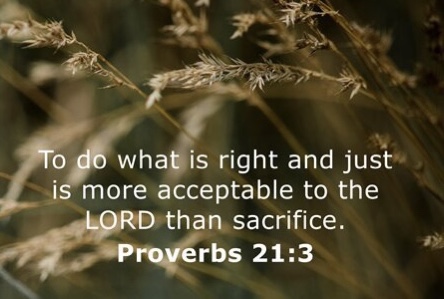
Regarding feeding the hungry, the sages advise, “if your enemies are hungry, give them bread to eat; and if they are thirsty, give them water to drink” (Prov 25:21), and “if you close your ear to the cry of the poor, you will cry out and not be heard” (Prov 21:23). The law relating to gleaning (Lev 19:9–10) indicates that provision for the poor was integral to the way that society was to function in ancient Israel.

Housing those in need of shelter was expected in Israel. Strangers from other nations who came to Israel, with no homes to live in, were to be welcomed (Deut 10:19) and regarded “as the citizen among you; you shall love the alien as yourself” (Lev 19:34). The law concerning “any of your kin [who] fall into difficulty” instructs that “you shall support them; they shall live with you as though resident aliens” (Lev 25:35), and the people are to allot land “as an inheritance … for the aliens who reside amongst you”, for “they shall be to you as citizens of Israel” (Ezek 47:22)

Nakedness was a sign of shame in ancient Israelite society, first articulated in the second creation story (Gen 3:7–11) and then in the story of Noah’s drunken state (Gen 9:20–23) and David’s frenzied dancing before the ark of the Lord (2 Sam 6:16, 20–22). Job comments disapprovingly of those who, amongst other sinful actions, “cause the poor to go about naked without clothing” (Job 24:2–10). Many prophets rail against nakedness as a symbol of Israel’s sinfulness (Isa 20:3; 47:3; 57:8; Ezek 16:36–38; 23:18; Nah 3:5) and indicate the importance of “covering one’s nakedness” (Ezek 16:8; Hos 2:9–10).

The story is told of how “certain chiefs of the Ephraimites”, in obedience to the words of the prophet Obed (2 Chron 28:9–11), covered nakedness of the captured southerners, “and with the booty they clothed all that were naked among them; they clothed them, gave them sandals, provided them with food and drink, and anointed them”, and then returned them as freed men to Jericho (2 Chron 28:15).

So the “fast that [God] chooses” which the prophet describes is a thread of justice and equity running through the story of Israel, and on into the Jesus movement. Feeding the hungry, housing the homeless, and clothing the naked were all practical ways to signal that the society was founded on the justice and righteousness that God required through the covenant. This is what provides “a fast, a day acceptable to the Lord” (58:5).

Yet the prophet decries the state of the nation, as they return from Exile, and laments that “there is no justice … justice is far from us … we wait for justice, but there is none … justice is turned back … the Lord saw it, and it displeased him” (59:8–15); he declares that, as a consequence, God “put on righteousness like a breastplate, and a helmet of salvation on his head; he put on garments of vengeance for clothing, and wrapped himself in fury as in a mantle” (59:17)—a description that underlines the later exhortations to the followers of Jesus to “put on the whole armour of God, so that you may be able to stand against the wiles of the devil” (Eph 6:10–17).

Because the Lord “loves justice” (61:8), the prophet has been anointed “to bring good news to the oppressed, to bind up the brokenhearted, to proclaim liberty to the captives, and release to the prisoners; to proclaim the year of the Lord’s favour, and the day of vengeance of our God” (61:1–2)—words which are appropriated by Jesus when he visits his hometown and reads from the scroll of Isaiah (Luke 4:18–19); “today this scripture has been fulfilled in your hearing”, Jesus declares (Luke 4:21).

Adhering to this way of justice, practising the fast that the Lord desires, means that he will give Israel a new name; as the prophet declares, “you shall no more be termed Forsaken, and your land shall no more be termed Desolate; but you shall be called My Delight Is in Her, and your land Married; for the Lord delights in you, and your land shall be married” (Isa 62:4).

To secure this promised future, the prophet adopts an attitude of penitence, yearning for God to “look down from heaven and see, from your holy and glorious habitation” (63:15). His plea for the Lord to “tear open the heavens and come down, so that the mountains would quake at your presence—to make your name known to your adversaries, so that the nations might tremble at your presence!” (64:1–2) must surely have been in the mind of the evangelists as the reported the baptism of Jesus, when he “saw the heavens torn apart and the Spirit descending like a dove on him” (Mark 1:10).

The book of Isaiah ends with a sequence in which the prophet reports the words of the Lord which indicate that Israel will be restored (65:1–16), followed by the statement that the Lord is “about to create new heavens and a new earth” (65:17–25; 66:22–23). This vision is taken up and expanded in the closing chapters of the final book of the New Testament (Rev 21:1–22:7). It is a hopefully positive way to end the whole book, as well as the oracles of the anonymous post-exilic prophet whose words are collected in the latter part of this long book of Isaiah.

Within that envisaged new creation, “no more shall the sound of weeping be heard in it, or the cry of distress” (65:19). There will be houses for shelter and vineyards for sustenance, and a just and equitable distribution of resources (65:21–22), with blissful peace marking all relationships (65:25) and a wonderful inclusiveness of the peoples of “all nations and tongues” (66:18–21). The prosperity of the people (66:12–13) reflects the absence of inequity and the diligent practice of justice—a fine fulfilment of the prophecy about “the true fast” that we will read, and hear, this coming Sunday.

To delight in the commandments (Psalm 112; Epiphany 5A)

The psalm which is offered by the lectionary for this coming Sunday (Psalm 112:1–10) portrays “those who fear the Lord” (verses 1–9) in contrast to “the wicked” (verse 10). I suspect that this psalm was chosen as a fitting companion to the Gospel reading, in which Jesus strongly affirms the Law: “do not think that I have come to abolish the law or the prophets; I have come not to abolish but to fulfill” (Matt 5:17).

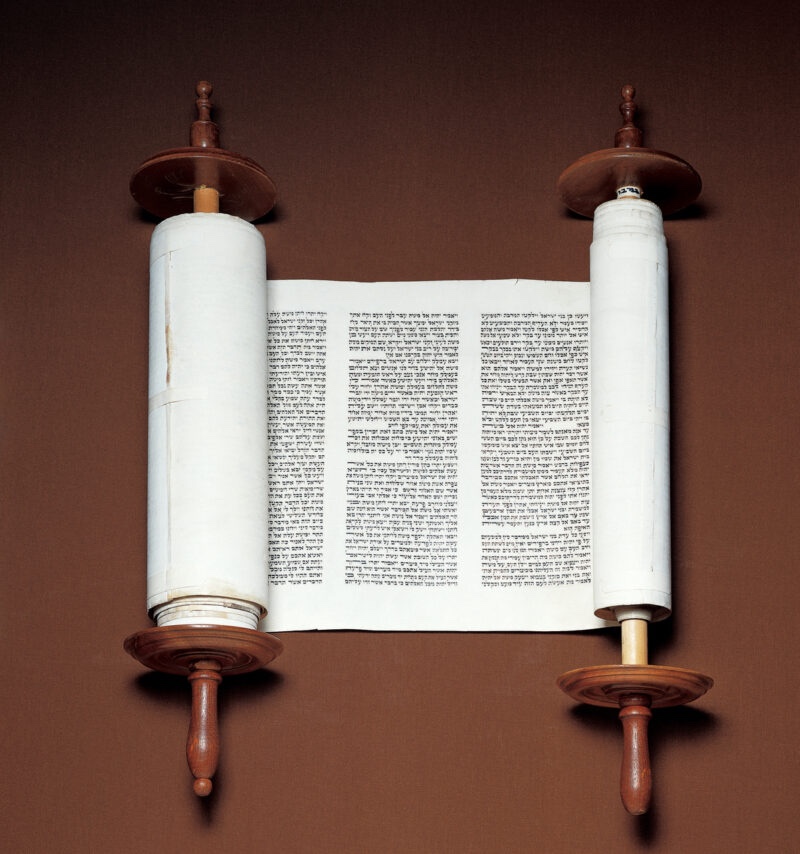
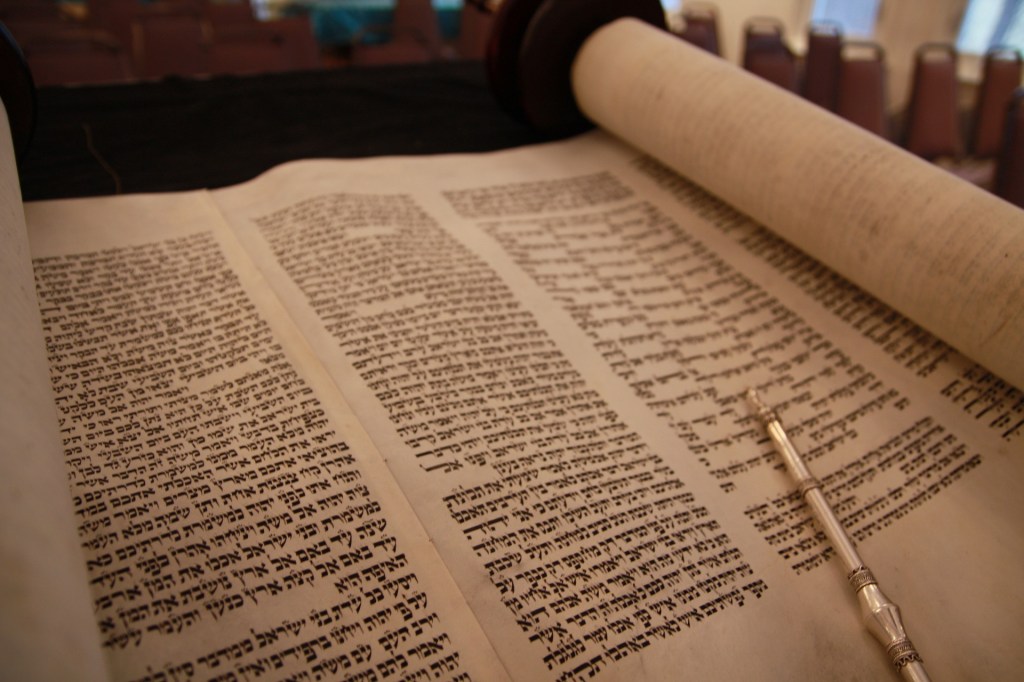
This affirmation of the Law (in Hebrew, תּוֹרָה, transliterated as Torah) is a distinctive characteristic of the book of origins which we attribute, by tradition, to the disciple Matthew. In this Gospel, Jesus holds consistently to the requirements of Torah, advocating strongly for the righteous-justice that is at its heart, debating strenuously the interpretations offered by the scribes and Pharisees, and claiming his role as the authorised Teacher of Torah: “you have one teacher, and you are all students … nor are you to be called instructors, for you have one instructor, the Messiah” (Matt 23:8, 10).

[As a side note: the last verse of Psalm 112—which should not be omitted, despite the suggestion that is possible by the lectionary itself—also resonates with the words of Jesus in Matthew’s Gospel. It is largely in this Gospel that Jesus speaks of evildoers being thrown into “outer darkness” where there will be “weeping and gnashing of teeth” (Matt 8:12; 13:42, 50; 22:13; 24:51; 25:30; cf. Luke 3:28). That phrase, of course, is used by the psalmist to characterise the fate of “the wicked”, who, when they see the blessings of the righteous, “are angry; they gnash their teeth and melt away” (Ps 112:10).]

The strong affirmation of Torah which is expressed in Matthew’s Gospel is ubiquitous throughout Hebrew Scripture. The Law is God’s gift to Israel; in Exodus, God tells Moses, “I will give you the tablets of stone, with the law and the commandment, which I have written for their instructions (Exod 24:12).

In a later retelling the story of Moses, the Deuteronomist has Moses, speaking on behalf of God, telling the Israelites, “take to heart all the words that I am giving in witness against you today; give them as a command to your children, so that they may diligently observe all the words of this law” (Deut 32:46). Indeed, he intensifies this in the next sentence: “this is no trifling matter for you, but rather your very life” (Deut 32:47). The Torah is the very heart of the matter.

Some of the great figures in Israel (at least in the historical sagas that were collected) are remembered as those who were faithful to Torah. On Josiah, the great reformer who recalled a faithless Israel to the covenant, we are told “before him there was no king like him, who turned to the Lord with all his heart, with all his soul, and with all his might, according to all the law of Moses; nor did any like him arise after him” (2 Kings 23:25).

On Hezekiah, who had the neglected Temple cleansed and sanctified and then restored the right worship of the Lord in the Temple (2 Chron 30:8–9), we read that “every work that he undertook in the service of the house of God, and in accordance with the law and the commandments, to seek his God, he did with all his heart; and he prospered” (2 Chron 31:21). And during the restoration of Jerusalem, we are told that Ezra “had set his heart to study the law of the LORD, and to do it, and to teach the statutes and ordinances in Israel” (Ezra 7:10).

*****

Each of these leaders manifested in their life what this Sunday’s psalm states; they are “those who fear the Lord, who greatly delight in his commandments” (Ps 112:1). Elsewhere in the psalms, this same piety is clearly evident. The opening psalm affirms that for the righteous, “their delight is in the law of the Lord, and on his law they meditate day and night” (Ps 1:2). A later psalm declares that “I delight to do your will, O my God; your law is within my heart” (Ps 40:8).

The longest psalm of all, Psalm 119, is an acrostic series of 22 eight-verse stanzas (arranged alphabetically) in which the author(s) consistently affirm this. “I will delight in your statutes; I will not forget your word” (Ps 119:16). By contrast to “the arrogant”, whose “hearts are fat and gross”, the psalmist declares, “I delight in your law” (Ps 119:70).

Again, we hear, “let your mercy come to me, that I may live, for your law is my delight” (Ps 119:77); “if your law had not been my delight, I would have perished in my misery” (Ps 119:92); and “I long for your salvation, O Lord, and your law is my delight” (Ps 119:74). Echoing these words many centuries later, Paul, in the midst of his agonising about Torah in Romans 7, is able to affirm, “I delight in the law of God in my inmost self” (Rom 7:22). Delight for the Law runs through Jewish history.

So this longest of all psalms, a series of 22 meditations on Torah, contains regular affirmations of its place in personal and communal piety: “give me understanding, that I may keep your law and observe it with my whole heart” (v.34); “Oh, how I love your law! It is my meditation all day long” (v.97); “I hate the double-minded, but I love your law” (v.113); “I hate and abhor falsehood, but I love your law” (v.163); and, “great peace have those who love your law; nothing can make them stumble” (v.165).

In the long speech attributed to Moses (but actually crafted many centuries later during the time of a renewal of the covenant), the lawgiver distills the essence of Torah: “now, O Israel, what does the Lord your God require of you? Only to fear the Lord your God, to walk in all his ways, to love him, to serve the Lord your God with all your heart and with all your soul” (Deut 10:12). Love is at the heart of the Law, as later faithful Jews would affirm. the Preacher, writing as Hellenism comes to the ascendancy, declares that “those who fear the Lord seek to please him, and those who love him are filled with his law” (Sirach 2:16).

Just a few centuries later the Pharisee-turned-evangelist Paul declares that “the one who loves another has fulfilled the law” and, citing a number of commandments, emphasises that “love is the fulfilling of the law” (Rom 13:8–10); and again, citing a verse from the Torah, he affirms that “the whole law is summed up in a single commandment, ‘You shall love your neighbour as yourself’” (Gal 5:14, quoting Lev 19:18).

*****

The terms used in Psalm 112 to describe “those who fear the Lord” and “delight in his commandments” are striking. Most strikingly, they are characterised by their “righteousness” (112:3), which is at the heart of Torah. The psalmist places these two concepts in poetic parallelism in the song, “your righteousness is an everlasting righteousness, and your law is the truth” (Ps 119:142).

They are depicted as “upright” (112:2, 4) and they “conduct their affairs with justice” (112:5). This is a central claim of Torah on the people: “justice, only justice you shall follow” (Deut 16:20), “with justice you shall judge your neighbour” (Lev 19:15)—with the corollary that “anyone who deprives the alien, the orphan, and the widow of justice” is to be cursed (Deut 27:19). The call for justice is, likewise, a regular refrain amongst the prophets, calling the people to act justly (Amos 5:18–24; Micah 6:6–8; Isa 5:1–7; 42:1–4; 56:1–2; Jer 21:12; 22:3; 33:15; Ezek 18:5–9; 34:11–16; Zeph 3:5; Zech 7:9, to name just some of the many key passages on justice).

These people are “blessed” (112:2), a word which resounds through the stories and songs of the ancient Israelites. God’s blessings are given in the story of the creation of the world, where God blessed “living creatures of every kind” (Gen 1:22), and then humankind, made “in the image of God” and blessed to “be fruitful and multiply, and fill the earth” (Gen 1:26–28). God blesses Noah and his sons, with the same charge to “be fruitful and multiply, and fill the earth” (Gen 9:1), and Abram (Gen 12:2), and through Abram promises to bless “all the families of the earth” (Gen 12:3; the b,easing is on “all the nations of the earth” at Gen 22:18).

An early prayer, later attributed to the priests, began, “the Lord bless you and keep you” (Num 6:23); these words are picked up in a later psalm, praying “may God be gracious to us and bless us” (Ps 67:1–7). God’s blessing is indeed realised by those who are faithful to God’s way, as expressed in Torah, with each of the patriarchs blessed: Abraham (Gen 22:15–18), Isaac (Gen 26:24), Jacob (Gen 28:1–4), and Joseph (Gen 49:22–26).

God blessed the people in the land (Deut 30:16), Elkanah and Hannah, parents of Samuel (1 Sam 2:18–20), David (2 Sam 7:28–29), and on through the ahead the blessing continued for the faithful people of Israel (Psalms 3:8; 5:12; 24:5; 29:11; 63:4; 107:38; 115:12–13; 133:3; Isa 44:1–5; Jer 31:23; Ezek 34:25–31; 37:26; Hag 2:19; Joel 2:14; Mal 3:10).

These blessed people, righteous and upright, thus are said to have exhibited the character of God, for they are “gracious, merciful and righteous” (Ps 112:4). This description echoes the refrain heard many times through the Hebrew Scriptures, affirming that the Lord God is “gracious and merciful, slow to anger and abounding in steadfast love” (Exod 34:6; 2 Chron 30:8–9; Neh 9:17, 32; Jonah 4:2; Joel 2:13; Ps 86:15; 103:8, 11; 111:4; 145:8–9). This is the Lord God who enters into covenant, time and time and again, with the people of Israel; they, in turn, exemplify the qualities of God in their daily lives. They are “gracious, merciful, and righteous” (Ps 112:4).

Such a strong affirmation and deep appreciation for Torah, as we find in this psalm—and, indeed, in a number of other psalms—underlies the portrayal of Jesus in Matthew’s Gospel that we will encounter, week by week, throughout this Year A of the liturgical cycle. This is the emphasis that Matthew offers, for he wants to heighten the fidelity of Jesus as a Torah-abiding Jew, and encourage his hearers and readers to follow that same pathway of faithfulness to the Torah. Jesus stands firmly in the tradition of the psalms, grateful to God for his covenant relationship with God, and seeking to live with justice and steadfast love in all the ways that God expects and requires; and he beckons us to follow in that same pathway in our lives of faith.

*****

See also

A focus on discipleship in With Love to the World

The next issue of the Bible-reading resource With Love to the World is now available. The issue covers the seasons of Lent and Easter (from mid-February to mid-May).

I edit this resource, which is produced by the Uniting Church in Australia and follows the Revised Common Lectionary. That lectionary provides four readings for each Sunday. These are the readings which are heard in worship each Sunday in many churches around the world. The resource includes short devotional commentaries on these four Bible passages, as well as an additional three readings each week.

That means that there is a passage with commentary each day of the week. In addition, for each passage there is a short prayer, a relevant song or hymn, and a discussion question relating to that passage. Whilst designed for personal use, many small groups also use the resource for their weekly discussion group.

The resource helps people who are preparing to lead worship and preach. My own view is that proclamation in sermons should encompass both the good news of the Gospel and the cares and concerns of our daily life. It’s about how we live out our discipleship each day. That’s the focus in the issue which has just been published.

This issue has contributions from writers in Western Australia, Victoria, the Australian Capital Territory, New South Wales and Tasmania. During Lent, a number of cherished stories told in John’s Gospel are read and considered each week, whilst in the season of Easter many stories of the early church from Acts are in focus.

One week of commentaries reflects on the passages from a First Nations perspective, contributed by Alison Overeem. The cover is a striking Australian coastal scene painted by artist, art historian and Uniting Church minister Rod Pattenden. The issue includes a reflection on the artwork by Rod.

Subscriptions for With Love to the World are easy to arrange. The printed resource is available for just $24 for a year’s subscription (see http://www.withlovetotheworld.org.au/wp-content/uploads/2020/07/Ordering-and-paying-for-Website-7.vii_.2020.pdf) or the resource can be accessed on phones and iPads via an App, for a subscription of $24.49 per year (go to the App Store or Google Play).

Artworks by Rod Pattenden can be viewed at https://www.rodpattenden.id.au

I have some copies available at no cost if you would like to sample the current issue of this resource in the coming weeks. Send me a direct message, or contact me on 0408 024 642 or editorwlw@bigpond.com and I can arrange postage.

Justice, kindness, and humility (Micah 6; Epiphany 4A)

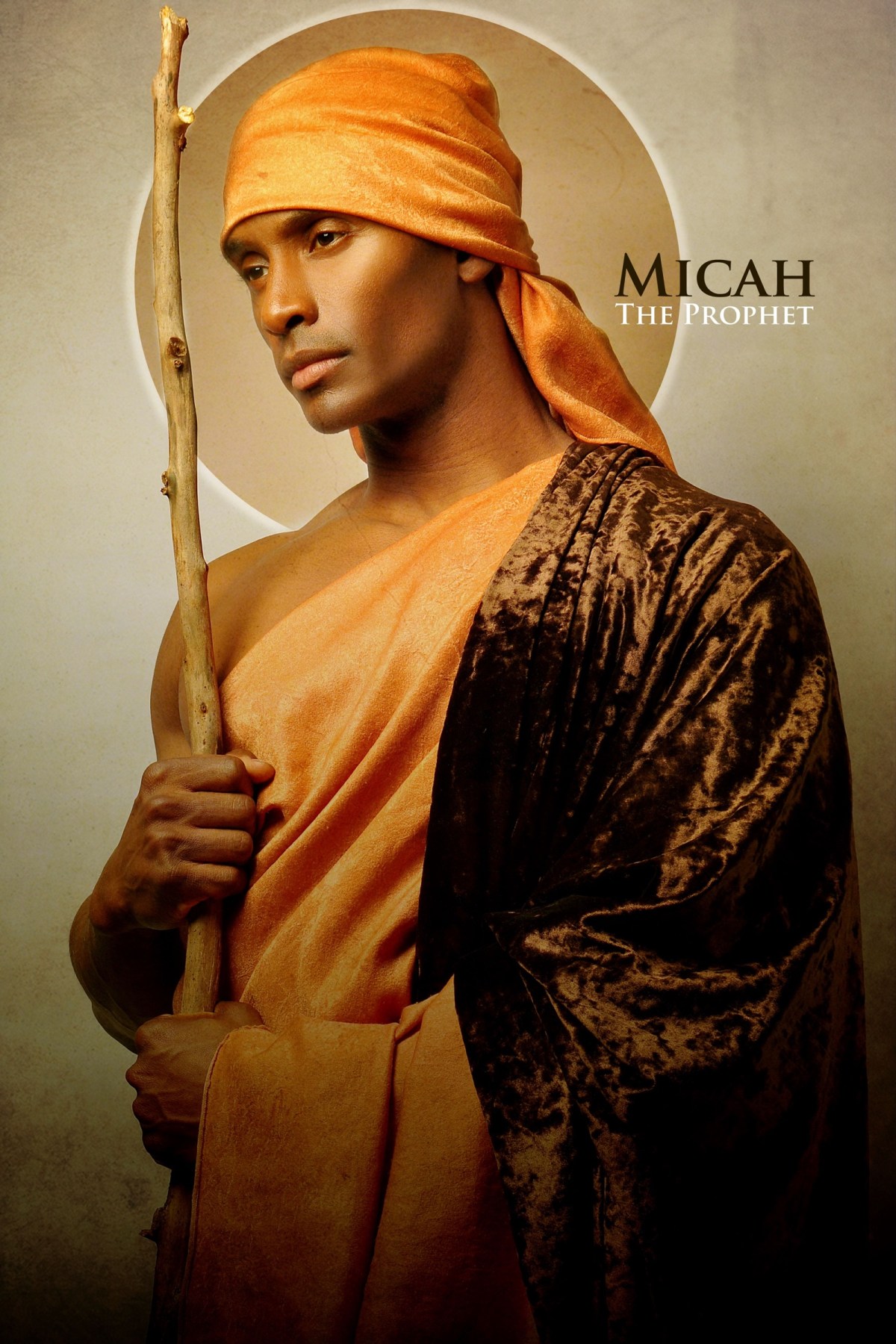
This Sunday, the selection of Hebrew Scripture that is offered by the lectionary comes from the book of the prophet Micah (Mic 6:1–8). This book is best known for a number of oracles, including a verse (6:8) that is included in this Sunday’s reading.

The first well-known oracle is the the vision of universal peace that Micah utters: “many nations shall come and say, come, let us go up to the mountain of the Lord … they shall beat their swords into plowshares, and their spears into pruning hooks” (4:1–4).

Second, there is an oracle best known because it is quoted in Matthew’s Gospel: “you, O Bethlehem of Ephrathah, who are one of the little clans of Judah, from you shall come forth for me one who is to rule in Israel” (5:2–6; see Matt 2:6). In the context in which Micah speaks these words, they refer to a coming ruler of Judah. In Matthew’s narrative, the prophetic word provides support for the notion that the Messiah was to be born in Bethlehem (Matt 2:3–5; also John 7:42), which then means that the story of the birth of Jesus needs to take place in Bethlehem. Two evangelists work independently to tell stories that, in quite different ways, adhere to this requirement (Matt 2:1; Luke 2:4).

The third oracle of Micah which is well known—the one offered in this Sunday’s lectionary—appears within an extended scene that reads like a lawsuit being prosecuted in court. It begins with the charge: “rise, plead your case before the mountains, and let the hills hear your voice … for the Lord has a controversy with his people, and he will contend with Israel” (6:1–2). Then it moves through some argumentation, before the famous rhetorical question is posed: “what does the Lord require of you, but to do justice, and to love kindness, and to walk humbly with your God?” (6:8).

In its immediate literary context, the verse stands as a climax to the case being mounted by the prophet, as he instructs the people,of a Israel what they are to do: to do justice, offer kindness, and live with humility. This verse has gained a life of its own; it is regularly quoted to support people of faith undertaking acts of social justice, and it adorns a multitude of t-shirts as a succinct “quotable quote”.

This verse has been the inspiration for many organisations bearing the prophet’s name—locally, there is Micah Australia (“empowering Australian Christians to advocate for global justice”; see https://www.micahaustralia.org), which is part of the Micah Challenge International (birthed by the World Evangelical Alliance and Micah Network; see https://lausanne.org/content/lga/2015-03/micah-challenge-international).

The historical context for this verse is instructive. The prophet Micah is introduced in the opening chapter of the book bearing his name, as “Micah of Moresheth in the days of Kings Jotham, Ahaz, and Hezekiah of Judah” (Mic 1:1). This places him in the second half of the 8th century BCE. As he was active in the southern kingdom, he did not directly experience the conquest and exile of people in the northern kingdom in 721 BCE, although he must have been aware of the disasters falling his countrymen to the north. His prophetic activity is thus a couple of decades after Amos and Hosea.

Indeed, the southern kingdom of Judah directly experienced a military attack from the Assyrian king Sennacherib in 701, attacking several towns in Judah (see 2 Kings 18–19; Micah 1:10–16) before retreating from Jerusalem. As Micah says, “the sins of the house of Israel” (1:5) have reached down and infected the house of Judah; “her wound is incurable; it has come to Judah; it has reached to the gate of my people, to Jerusalem” (1:9, 12).

Under Hezekiah, the economic patterns in Judah changed from a reliance on barter, to an international trading society. Literacy rates rose, and the size of Jerusalem grew to be a city with a population of around 25,000—which is considered to be about five times larger than the population of Jerusalem under Solomon!

Associated with this growth was the development of corrupt practices and the rise of hypocrisy amongst the people. The rulers in Jerusalem “give judgment for a bribe, its priests teach for a price, its prophets give oracles for money; yet they lean upon the Lord and say, ‘Surely the Lord is with us! No harm shall come upon us’” (3:11).  

Micah, like many other prophets, conveys God’s deep concern about the way that some in society were profiting unjustly from their mistreatment of the poor. He rails against those who “covet fields, and seize them; houses, and take them away; they oppress householder and house, people and their inheritance” (2:2). Their haughty demeanour will swiftly turn to lamenting, as they cry out “we are utterly ruined; the Lord alters the inheritance of my people; how he removes it from me!” (2:4).

In another oracle, he dramatises the state of the people, attacking the heads and rulers of the people as those “who tear the skin off my people, and the flesh off their bones; who eat the flesh of my people, flay their skin off them, break their bones in pieces, and chop them up like meat in a kettle, like flesh in a cauldron” (3:1–3). He decries their selfish actions in very specific terms: “its rulers give judgment for a bribe, its priests teach for a price, its prophets give oracles for money” (3:11).

Still later, Micah remonstrates with the people for “the treasures of wickedness in the house of the wicked, and the scant measure that is accursed” (6:10). He conveys God’s displeasure: “Can I tolerate wicked scales and a bag of dishonest weights? Your wealthy are full of violence; your inhabitants speak lies, with tongues of deceit in their mouths.” (6:11–12). He laments that “the faithful have disappeared from the land” (7:2); of those who are left, he says, “their hands are skilled to do evil; the official and the judge ask for a bribe, and the powerful dictate what they desire; thus they pervert justice” (7:3).

The people are accused of following “the statutes of Omri and all the works of the house of Ahab” (6:16)—two kings who are condemned for their idolatrous and evil ways (on Omri, see 1 Ki 16:25–26; on his son Ahab, see 1 Ki 16:30, 22:37–39).

Micah, like Amos before him, declares that punishment will come on the people in a time of deep darkness: “it shall be night to you, without vision, and darkness to you, without revelation; the sun shall go down upon the prophets, and the day shall be black over them” (2:6; cf. Amos 5:18–20). Because of the evil deeds of the heads and rulers, “Zion shall be plowed as a field; Jerusalem shall become a heap of ruins, and the mountain of the house a wooded height” (3:12).

In a future time of anger and wrath, says the prophet, God will wreak vengeance: “I will cut off your horses from among you and will destroy your chariots; and I will cut off the cities of your land and throw down all your strongholds; and I will cut off sorceries from your hand, and you shall have no more soothsayers; and I will cut off your images and your pillars from among you” (5:10–15). The disdain with which the people have treated their covenant with the Lord, described in some detail here by the prophet, will merit this savage punishment.

The passage that appears in this Sunday’s lectionary offering thus provides the key to behaviour for the people of Israel in their situation of turmoil and upheaval. The prophet calls them back to fidelity to the covenant. His words stand also as a clarion call to people of faith in subsequent times who stand in the heritage and tradition of Micah: “do justice, love kindness, and walk humbly with your God”. May this be how we live!

God of all the tribes and nations

This prayer was written by my friend and colleague Janet Dawson a couple of years ago. This year, on the Day of Mourning (22 January) prior to Australia Day, it was offered in prayer during morning worship at Port Macquarie Uniting Church, on Biripi land, in New South Wales. It is fitting for our consideration on this day, remembered by First Peoples as Invasion Day.

God of all the tribes and nations of the earth,

I give you thanks for Australia’s First Peoples.

I have so much to learn from them.

All my life I have been a wanderer upon the face of the earth.

I struggle to understand a sense of bone deep connection with the land,

of having been with the land for tens of thousands of years,

of being one with the land.

I struggle with it.

I yearn for it.

Yet even as I yearn,

I glimpse the pain that comes from separation.

I do not know what is like to be torn from your country,

Your roots,

Your culture,

Your language,

Your family,

Your self.

How many of us turn our eyes away because the pain is too great?

God, forgive us, and give us the strength to turn around, and see.

Strength.

With deepest respect I give thanks for the strength of Australia’s First Peoples.

They have survived.

Against all the odds, against all the good and bad intentions,

They have survived.

But not all.

And not all who are alive today are whole,

Many have lost too much.

God, forgive us for what we have done,

For what we continue to do.

I pray for the continued resurgence of First Peoples’ culture, language and pride.

Named or unnamed,

You are their strength,

You are their inspiration,

You are in their Law,

You sing in their Dreaming.

And out of my own small circle of experience,

I give thanks for the United Aboriginal and Islander Christian Congress,

Their insightful theology,

Their inspiring worship,

Their bright and beautiful young leaders.

May they continue to enrich and heal their peoples.

May they continue to be a gift and inspiration to the whole church.

God of all the tribes and nations of the earth,

I give you thanks for Australia’s First Peoples.

Amen.

Teaching the disciples (Matt 5; Epiphany 4A)

“When Jesus saw the crowds, he went up the mountain; and after he sat down, his disciples came to him; then he began to speak, and taught them” (Matt 5:1). These verses introduce the famous “Sermon on the Mount” in Matthew’s book of origins, and lead immediately into the Beatitudes, a series of blessings in which Jesus explains what is involved in “the kingdom of heaven”, which is the centre of his message (4:17, 23; 5:3, 10, 19–20).

On those Beatitudes, see

The author of this narrative knows very well the traditional rabbinic methods of teaching which were consistently employed by Jesus—he collects parables and pithy sayings, reports his dialogical debates and midrashic expositions, and shapes the whole “book of origins” so that, through its five collated teaching blocks, it evokes the five books of the Law of Moses—the “books of origins” of the people Israel. Jesus is presented as the Rabbi (Teacher) par excellence, the new Moses for the people of his time.

These five blocks of teaching provide an extensive catechisms for the disciples who travelled with Jesus throughout Galilee. We should remember that these disciples included more than “the twelve apostles” of later Christian tradition—Matthew himself notes that “many women … had followed Jesus from Galilee and had provided for him”, and identifies “Mary Magdalene, and Mary the mother of James and Joseph, and the mother of the sons of Zebedee” amongst them (Matt 27:55–56).

However, this group of followers is representative for the larger group of people who had begun to follow Jesus in the years since the events reported in the Gospel. The work was compiled in order to provide a catechetical foundation for those later followers—through even to our own times, many centuries later.

These five teaching blocks canvass ethical imperatives (5:1–7:29), missional guidelines (10:5–11:1), parables of the kingdom (13:1–53), relationships within the community of faith (18:1–19:1), and apocalyptic predictions about the coming kingdom along with strengthened indications of what righteousness is required in that kingdom (23:1–26:2). These teachings are demanding and comprehensive.

Who compiled this teaching Gospel? Within ecclesial tradition, the author is identified as Matthew, the tax collector who became a disciple of Jesus. There is absolutely no hint that he was schooled in the intricacies of Torah interpretation. In that tradition, Matthew was appointed as an apostle, and later wrote an eye-witness account of the time he spent with Jesus. It’s a point of view that I don’t personally adhere to.

Within biblical scholarship, Matthew is recognised simply as a character who appears briefly in the story told by the first Gospel in the New Testament. He is identified in one short verse narrating his call by Jesus (Matt 9:9). He is also included in the list of twelve who were called to be apostles, with the added descriptor, “the tax collector” (Matt 10:3). He is also named in three other books, with nothing further said about him (Mark 3:18; Luke 6:15; and Acts 1:13). But little else about him is conveyed in the four books that name him.

On the authorship of the Gospels, see

Those five fleeting references are the only times we see directly this person in the biblical narratives. He is surely there in other scenes, but he simply blends into the collection of “the disciples” (Mark 2:23; 3:7; 5:31: 6:1, 35, 41, 45; 7:17; 8:1–10, 14, 27, 34: 9:14, 28, 31; 10:10, 13, 23–24; 11:19; 12:43; 13:1; 14:12–16; and Synoptic parallels), “the twelve” (Mark 4:10; 6:7; 9:35; 14:20; and Synoptic parallels; and John 6:66–71; 20:24), or, even more anonymously, into “the crowd” (Mark 2:4, 13; 4:1; Matt 7:28; 13:2; Luke 5:1; 6:17; 7:11–12; 8:4; John 6:2; 12:9, 12; Acts 1:15; 2:6; etc.).

And yet, in the evolving church traditions, Matthew emerges from the shadows to take centre stage as disciple, apostle, saint, and author of the Gospel which is placed first in the New Testament. Some churches even maintain the patristic claim that Matthew wrote in Aramaic, and was later translated into the Greek version that forms the basis of the New Testament text.

The claim about Aramaic comes from a fourth century report by Eusebius of Caesarea that a second century bishop, Papias of Heirapolis, claimed that Matthew “put the logia in an ordered arrangement in the Hebrew language (Ἑβραΐδι διαλέκτῳ), but each person interpreted them as best he could” (Eusebius, Ecclesiastical History 3.39.16). We should note that this is a somewhat indirect witness at quite some remove, and also that the Greek word Ἑβραΐδι can be translated either as Hebrew or as Aramaic.

But this claim falls down from the clear evidence of the Greek text of Matthew’s Gospel, which mirrors very closely both the Gospel of Mark, at many points, and the Gospel of Luke, at other points, in passages found only in Matthew and Luke. The two key conclusions drawn by many scholars are twofold: first, that Matthew (like Luke) used the Gospel of Mark as a basis for writing a narrative about Jesus—but modified and adapted both the order and wording of passages; and second, that Luke and Matthew had access to another source (whether oral or written) for many of the sayings of Jesus (the source is known as Q). This makes it completely unlikely that Matthew wrote, in Aramaic, or in Hebrew, the earliest account of Jesus.

And ascribing the authorship of this Gospel to the tax collector identified at Matt 9:9 is also a patristic move. The title of this (and the other) Gospels, identifying the alleged author, is found only in later manuscripts and patristic writings; the narrative itself fails to identify anyone as the author, let alone the tax collector named Matthew. This claim is a later apologetic move, most likely made to provide an “apostolic authorisation” to the Gospel.

See

So what do we say, then, of “Matthew”, the purported author of this Gospel, a work which the author declares at the start to be “the book of origins of Jesus, Messiah” (Matt 1:1)? For me, a key to the way that the author of this “book of origins” operated is provided at Matt 13:52, where Jesus concludes a sequence of parables with the statement that “every scribe who has been trained for the kingdom of heaven is like the master of a household who brings out of his treasure what is new and what is old”.

That description encapsulates very clearly, for me, who the author of this Gospel was—a scribe, “trained for the kingdom”, drawing on old resources, but reshaping them so that they are seen to be new. We can see this in many ways in the narrative that he constructs. We can especially see this in the way he presents Jesus as an authoritative teacher of Torah—the one whose words are to be heard, remembered, studied, and passed on. (Thus, the reason for his writing of this Gospel.) It’s a point of view that undergirds the way that I interpret the various Gospel selections that the lectionary offers in this coming year, in which Jesus gathers his disciples, speaks to them, and teaches them.