Christians relating to Jews

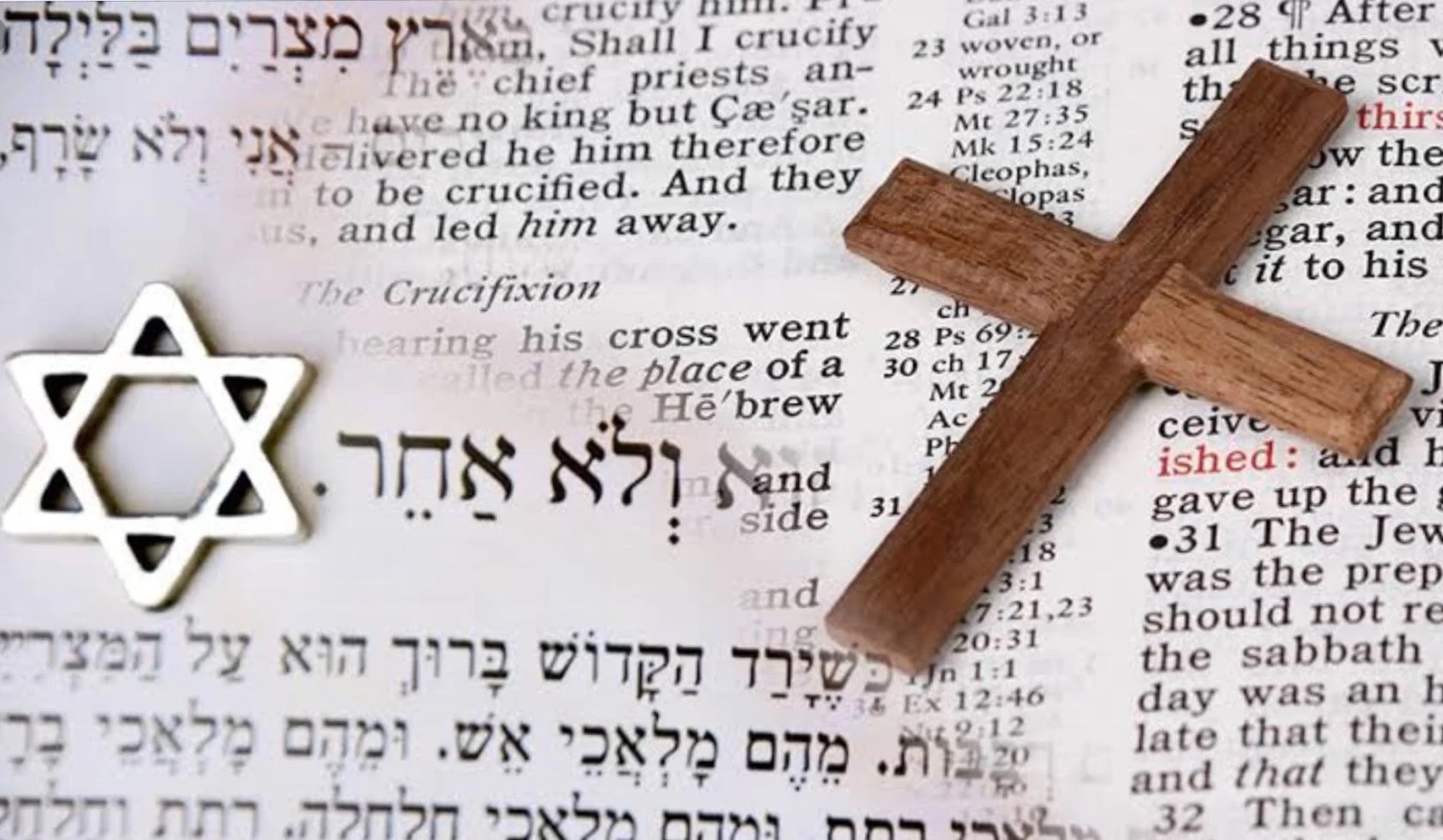
I recently taught a session in a course on Judaism and Early Christianity in which I talked about developments over the past 75 years in the ways that Christians have related to Jews. I went back to some material that I had developed when teaching fulltime, and amongst that, I found the following reflection. I wrote this in 2012, at a time when I was concluding 12 years as a member (and six years as co-convenor) of the Uniting Church’s National Dialogue with the Jewish People. I think it still holds good.

“Love your neighbour…”, Jesus instructs us—drawing on his own personal non-Christian tradition (Judaism, and the Hebrew Scriptures which stand at the heart of this faith). “Who is our neighbour?”, we may well ask. Jews, Muslims, Buddhists, Hindus, Sikhs, and others, are near to us. They are our near neighbours. We have a commission to relate to them in love.

To take just one example from this list of other faiths: in Australia, we have had Jews beside us and in our midst since the First Fleet itself! Jewish individuals have made significant contributions to Australian society in many spheres. In recent decades, the relationship between Christians and Jews has been nurtured and has developed in positive and constructive ways. It is time for us to ask, what “fresh expression” of our faith might we make, arising out of our relationship with Jewish people?

For almost two decades, the Uniting Church has engaged in a formal Dialogue with representatives of the Jewish Community in Australia. With my wife, Rev. Elizabeth Raine, I have participated in this national Dialogue group. We meet twice each calendar year, to share concerns, discuss issues, read scripture together, and canvass ways in which we might work together for a better society. This group is one of many hundreds of such groups around the world, seeking mutual understanding and common action for justice.

The international movement of Jewish-Christian dialogue has been growing since the late 1940s. Out of that movement, has come an understanding that Christians need to create a renewed understanding of who we are, and what we believe. No longer is it possible to dismiss Jews as people enslaved to a legalistic religion. No longer is it possible to declare that Christ has rendered obsolete the “old covenant” and put in its place a spiritually vigorous “new covenant”.

Instead, we are reminded of the ancient claims of Paul. For one, he wrote, “Has God rejected his people? By no means!” (Rom 11:1)—that is, the covenant made with Israel needs to be considered as ongoing, valid, continuing, into our own time. For another, Paul declared, “It is not as though the word of God had failed” (Rom 9:6)—that is, God’s promises to Israel stand fast in their own right, and will be fulfilled in their own right, not through any adaptation or mediation as imposed by another religious group. And then, there is Paul’s climactic cry: “And so all Israel will be saved” (Rom 11:26)—that is, Jews have access in their own right, through their own faith, to the God of Abraham, alongside the access that is granted through Jesus.

If we take seriously the rediscovery of these affirmations, we will seek to make a “fresh expression” of the Gospel which acknowledges these claims. There is important theological work to be undertaken to enable us to declare afresh the Gospel in our immediate context of a multicultural, multi-faith society!

If we are prepared to stand alongside Jews, as fellow children of God with equal insight into God’s ways, then we will start to create a “fresh expression” of what it means to be people of faith within our contemporary Australian society. There are important steps to be taken in shaping communities of faith for our time!

And if we recognise that Jews and Christians each orient our belief towards the same God, the God of Abraham and Sarah, of Isaac and Rebekah, the God of Mary and Jesus, of Peter and Paul, of Priscilla and Phoebe—then we will seek to implement actions based on that faith, in new and fresh ways within our society.  This is the challenge that I see, most immediately, from my involvement in one growing area of the church’s life.  

*****

Some of my blogs from the last few years that touch on some of these matters include:

Amy Jill Levine has produced a helpful guide to the ways we might deal with these texts, noting what is helpful and what is not helpful in the various approaches; see https://www.abc.net.au/religion/holy-week-and-the-hatred-of-the-jews/

Father, Son, and Disciples (II): the *real* trinity in John’s Gospel (John 17; Easter 7A,B,C)

“In the name of the Father, the Son, and the Holy Spirit” is a familiar phrase within the Christian Church. (“Holy Ghost” is used in more antiquated contexts.) The triune formula is uttered frequently, consistently, in all manner of church contexts (liturgical, catechetical, instructional, devotional), by all manner of church people (ordained and lay, stipended or voluntary, intensely devout or loosely affiliated).

In a previous blog, I began an analysis of the content of a section of the book of signs—which we know as the Gospel according to John—which is offered by the lectionary each time the seventh Sunday of Easter comes around (John 17:6–19). It is often called the Great High Priestly Prayer of Jesus (17:1–26).

This prayer is reported only in this Gospel, in a style that is distinctive to this Gospel. In this work, it represents the final climactic prayer of Jesus for those who are following him. The prayer, I contend, sets before us a different trinity. Not the trinity of orthodox doctrine and liturgy. Rather, it is quite another trinity!

My argument has three main parts to it—not surprisingly, because it is, after all, about a three-part entity! Parts I and II were set forth in that earlier blog.

I The Spirit in John’s Gospel

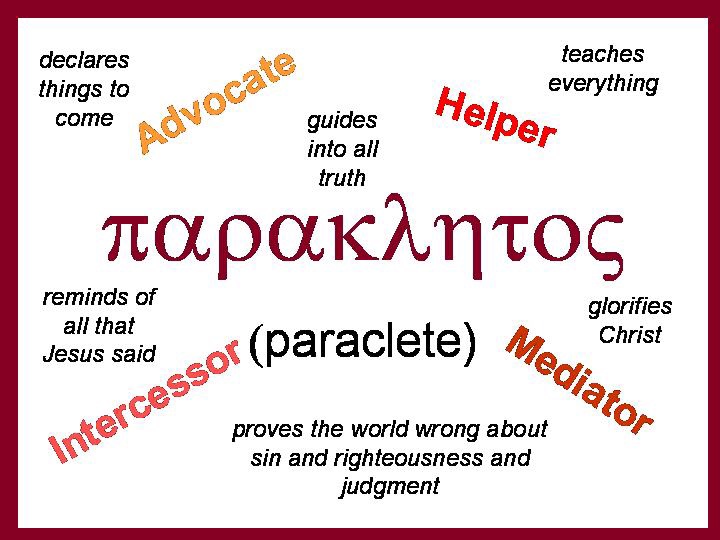
References to the Spirit are few and far between in this Gospel. When Jesus refers to the Spirit as the Advocate (parakletos) (14:15–17, 26; 15:26: 16:12–15), it is clear that the Advocate steps into the place that will be left empty after the departure of Jesus. The Advocate replaces Jesus, rather than being one of the three personae in interrelationship within the triune Godhead.

II The relationship between the Father and the Son

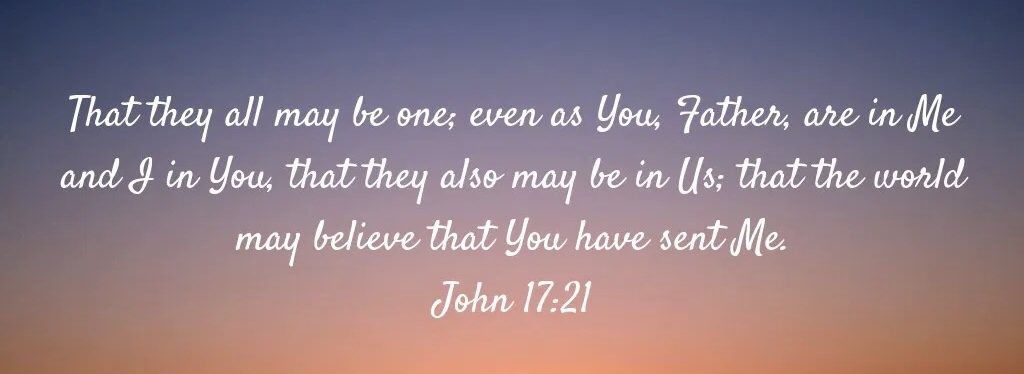
There are ten ways in which this relationship is described. The central affirmation about Jesus in this Gospel is claiming the unity of the Son with the Father: “we are one” (17:22), “you, Father, are in me and I am an in you” (17:21; “you in me” is repeated in 17:23). Second, the Father knows the Son, just as the Son knows the Father. “The world does not know you; but I know you”, Jesus prays (17:25); “the Father knows me and I know the Father” (10:15).

Third, the Father loves the Son just as the Son loves the Father (17:23, 24, 26). Fourth, the Father gifts the Son with a number of different gifts: “authority over all people” (17:2), work to do (17:4), words to speak (17:8, 14), and glory (17:22, 24). Fifth, the Father sends the Son into the world (17:3, 8, 18, 21, 23, 25).

Sixth, the Son makes known the Father to the world (17:7–8). Seventh, the Father has sanctified the Son; while he was “in the world” (17:11), the Son prays to the Father that he has “made your name known” to those he has gathered (17:6), by giving the words that are from God (17:8,14). Through this process, the Son is sanctified (17:19).

Eighth, the Father glorifies the Son, just as the Son glorifies the Father (17:1, 4, 5). Ninth, the prayer indicates that the Son returns to the Father (17:10, 13), and tenth, it is clear that the Son is now with the Father (17:5, 11, 14, 16, 22).

Each of these lines of connection between the Father and the Son are clearly expressed in the prayer of Jesus in John 17. Each of them is signalled at various points earlier in the narrative. And many of them are found within the prayer, and elsewhere in the Gospel, as characterising the relationship between the Son and the Disciples.

*****

III The relationship between the Son and the Disciples

So the next step in my argument is to propose that the third element in this Johannine trinity is, not the Spirit, but rather—the Disciples. The Disciples relate to the Son as the Son relates to the Father. Seven of the ten ways by which the Father and the Son relate to one another are mirrored in the way that the Son relates to the Disciples.

The first way is that the Son and the Disciples are unified as one: “so that they may be one, as we are one, I in them and you in me” (17:22–23). This unity is expressed also in that the Son abides in the Disciples, and the Disciples abide in the Son (17:21). This intimate interrelationship leads Jesus to pray “I in them and you in me, that they may be perfectly one” (17:23). The unity of Father and Son is exactly paralleled in the perfect unity of Son and Disciples.

The language of “abide” has earlier been used by Jesus to refer to his relationship with his disciples as he expanded the imagery of the vine and the branches (15:6, 7, 10). “I am in my Father and you are in me and I am in you”, he has also declared (14:20)—a striking expression of trinitarian interrelationship!

The second connection is that the Disciples know who the Son is (17:21, 23, 25). “If you know me”, Jesus has earlier taught the Disciples, “you will know my Father also” (14:7). The way by which the Disciples then demonstrate what they know about the Son is through their deeds: “if you know these things, blessed are you if you do them” (13:17).

Third, the unity of Son and Disciples results in knowledge about the Son spreading amongst others: “I in me and you in me … so that the world may know that you have sent me and have loved them, even as you love me” (17:23). This, then, mirrors what we identified as the sixth way of connecting, as the Son makes known the Father; now, Jesus affirms, the Disciples make known the Son.

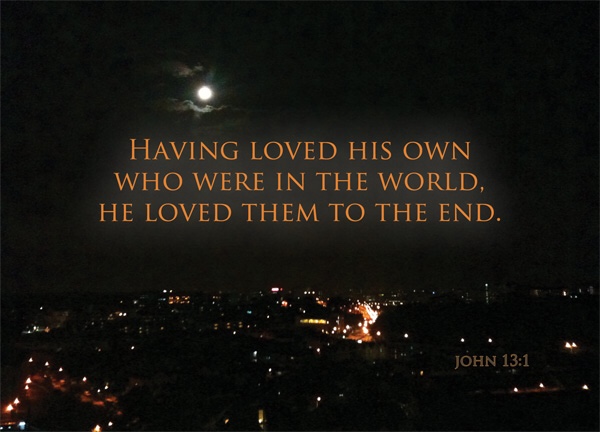
The fourth way that there is connection is that the Son loves the Disciples and thus the Disciples can love the Son (17:23). The love of the Son for the Disciples is articulated in a very strong statement that introduces the second half of the gospel (chs. 13–21), namely, “having loved his own who were in the world, he loved them to the end” (13:1).

Jesus references his love for the Disciples as well as their love for him again at 13:34; 14:21; 15:9–10. He also affirms that “those who love me will be loved by my Father” (14:21) and “the Father himself loves you because you have loved me” (16:27). The three-way interconnectedness of mutual love strengthens the notion of a trinity of relationship involving Father, Son, and Disciples.

The fifth manner of relationship is that the Son gives gifts to the Disciples. These gifts are identified as words (17:8, 14), glory (17:22), and love (17:26). Earlier narratives in this Gospel have likewise noted that the Son gives the Disciples “power to become children of God” (1:12), “the food of eternal life” (6:12), eternal life (10:28), peace (14:27), and “another Advocate” (as already noted, 14:16). This mirrors the fourth element in the relationship between the Father and the Son.

The sixth way is that the Son sends the disciples into the world (17:18), in the same way that the Father has sent the Son into the world (see the many references cited above). The parallelism is also evident in the word that “whoever receives anyone I send, receives me” (13:20), and in the command of the risen Jesus, “as the Father sent me, so I send you” (20:21). As with the Father sending the Son (the fifth way of connecting), so the Son sends the Disciples.

The seventh way of relating is that the Son is glorified in the Disciples (17:10). This, too, parallels one of the ways by which the Father relates to the Son (listed above as the eighth way). “The glory that you have given me, I have given them”, says Jesus (17:22). And more than this, in the story of the vine and the branches, Jesus affirms that “in this, my Father is glorified; that you bear much fruit and prove to be my disciples” (15:8). Once again, the three elements of the Johannine trinity are drawn into intimate relationship.

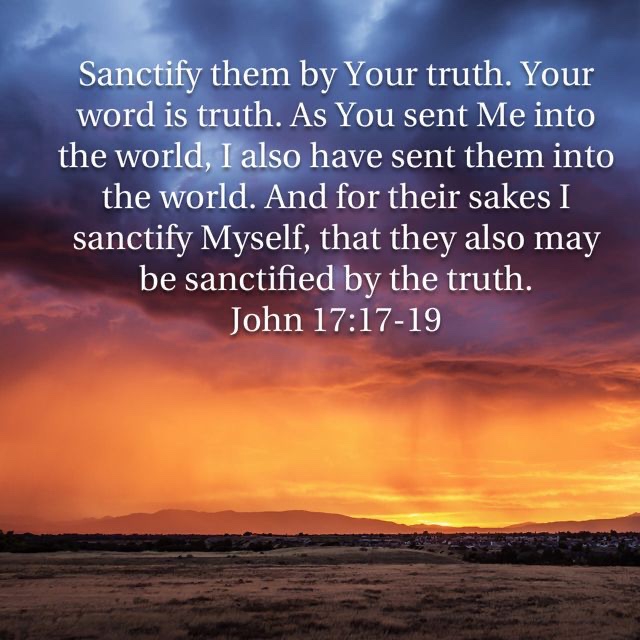
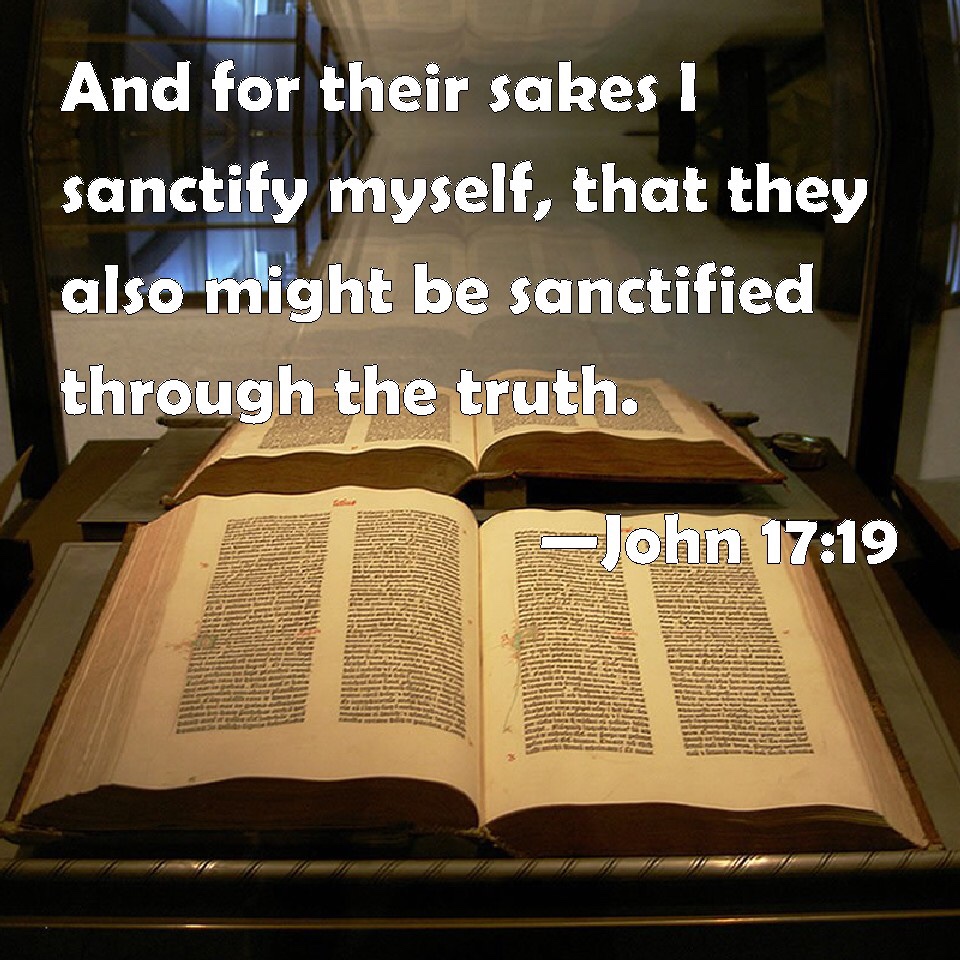
The final, eighth, line of connection is that the Son sanctifies the Disciples. Jesus prays, “Sanctify them in the truth; your word is truth. As you have sent me into the world, so I have sent them into the world. And for their sakes I sanctify myself, so that they also may be sanctified in truth” (17:17-19). This mirrors what we identified as the eight way of connection between Father and Son.

These eight lines of connection between the Son and the Disciples directly parallel the way that the Father relates to the Son. Only the final two means of connection between Father and Son are absent from the way the Son relates to the Disciples; and there are clear reasons for this, since they relate to the post-ascension state of Jesus, who has returned to the Father and is now with the Father.

*****

So, in this wonderful prayer, the High Priestly Prayer of Jesus, we have the foundational elements set out for this somewhat distinctive trinity: the Father, the Son, and the Disciples, bound together in intimate unity, inter-relating, distinct and yet overlapping.

The prayer draws together many elements in the way that the relationship between the Father and the Son is expressed in this Gospel. The prayer also incorporates many of the ways by which the Son is connected with the Disciples. In fact, the interconnected nature of this threeway relationships actually appears to be highly developed, well thought through, and clearly articulated in this Gospel.

As Father and Son are one, so Son and Disciples are one. As the Father is glorified in the Son, so the Disciples are glorified in the Son. As the Father sanctifies the Son, so the Son sanctifies the Disciples. As the Father sends the Son, so the Son sends the Disciples. As the Son makes the Father known, so the Disciples make known the Son. As the Father abides in the Son, and the Son in the Father, so the Son abides in the Disciples, and the Disciples abide in the Son.

Father, Son, and Disciples. This is what I call, the real Johannine Trinity.

Now, let the accusations of heresy begin ………

*****

For other considerations relating to the Trinity, see https://johntsquires.com/2019/06/10/do-you-believe-in-the-triune-god/

Father, Son, and Disciples (I): the *real* trinity in John’s Gospel (John 17; Easter 7A,B,C)

“In the name of the Father, the Son, and the Holy Spirit” is a familiar phrase within the Christian Church. (“Holy Ghost” is used in more antiquated contexts.) The triune formula is uttered frequently, consistently, in all manner of church contexts (liturgical, catechetical, instructional, devotional), by all manner of church people (ordained and lay, stipended or voluntary, intensely devout or loosely affiliated).

This coming Sunday is the seventh Sunday in the season of Easter. Each year, on this Sunday, the lectionary takes us back to the long prayer attributed Jesus, recorded in John 17, and (by my reckoning) created by the anonymous author of this “book of signs” quite some decades after the lifetime of Jesus. In Year A, we read the first 11 verses. in Year B, we hear verses 6–19. In Year C, we are offered verses 20–26.

It’s a creative and insightful prayer, even if somewhat repetitive (as, indeed, is so much of this Gospel!). However, in my view, it draws together many key ideas that are peppered throughout the narrative of the preceding 16 chapters. And—also in my view—it offers another way for us to conceive of the relationship between Father, Son, and disciples; and because of that, it sets up the groundwork for a new take on “the trinity”.

This section of the book of signs—which we know as the Gospel according to John—that is offered by the lectionary each year, on the Seventh Sunday after Easter, is often called the Great High Priestly Prayer of Jesus (John 17:1–26). It is a prayer reported only in this Gospel, in a style that is distinctive to this Gospel. In this work, it represents the final climactic prayer of Jesus for those who are following him.

This prayer, I contend, sets before us a different trinity. Not the trinity of orthodox doctrine and liturgy. Rather, it is quite another trinity!

Let me explain. My argument has three main parts to it—not surprisingly, because it is, after all, about a three-part entity!

I The Spirit in John’s Gospel

First, let us note that references to the Spirit are few and far between in this Gospel. The Spirit is noted in John’s testimony about the baptism of Jesus (1:32–34) and then is referred to in passing in later statements by Jesus (3:34; 6:63; 7:39; 20:22), but no more expansive exposition of the role or significance of the Spirit is offered in this Gospel.

In three brief discussions during his farewell discourse with the disciples, Jesus refers to the Spirit as the Advocate (parakletos) (14:15–17, 26; 15:26: 16:12–15). In each instance, it is clear that the Advocate steps into the place that will be left empty after the departure of Jesus.

The role of the Advocate is a replacement role, rather than being one of the three personae in interrelationship within the triune Godhead. Other than these brief references, there is no indication of the Spirit as a personal entity in relationship with God or Jesus in this Gospel.

(For more on this figure in this Gospel, see https://johntsquires.com/2019/06/07/the-paraclete-in-john-15-exploring-the-array-of-translation-options/)

So the third person in the trinity in John’s Gospel: who is it?

*****

II The relationship between the Father and the Son

To get to that point, first, we need to observe the way that this Gospel sets out the intimate relationship between the Father and the Son. There are ten ways by which this relationship is described in this prayer; and indications of these ten ways of connecting can be found scatted throughout the long narrative about Jesus constructed by the author.

The central affirmation about Jesus in this Gospel is claiming the unity of the Son with the Father. “The Father and I are one”, Jesus has dramatically, and provocatively declared (10:30). (These words provoked “the Jews” to pick up stones to stone Jesus, 10:31.)

This affirmation is reiterated as Jesus prays to God: “we are one” (17:22). It is also expressed in the language of intimate and mutual interrelationship: “you, Father, are in me and I am an in you” (17:21; “you in me” is repeated in 17:23).

The intimate relationship of the Father and the Son has been noted already in the chapter where Jesus speaks about the vine and the branches, when he declares that “I have kept my Father’s commandments and abide in his love” (15:10). The language of abiding recurs in the first letter attributed to John—although most likely from a different author (see 1 John 2:24, 28; 3:6, 24; 4:13–16).

The second way in which the Father and the Son are related is that the Father knows the Son, just as the Son knows the Father. “The world does not know you; but I know you”, Jesus prays (17:25). This mutual knowledge of one another has been affirmed earlier in controversies in Jerusalem (7:29; 8:55). Jesus is perfectly clear: “the Father knows me and I know the Father” (10:15).

Third, the Father loves the Son just as the Son loves the Father. This is expressed three times in this prayer (17:23, 24, 26). This again is a motif that has been expressed earlier, when Jesus affirms that “the Son loves the Father” (14:31) and that “the Son loves the Father” (15:9).

Fourth, there is a persistent theme running through the prayer, that the Father gifts the Son with a number of different gifts. These gifts include “authority over all people” (17:2), work to do (17:4), words to speak (17:8, 14), and glory (17:22, 24). The prayer also twice references “your name that you have given me” (17:11, 12). God’s gifts in the earlier chapters have included, most famously, “his only Son” (3:16), as well as “living water” (4:10), “bread in the wilderness” (6:31), the “true bread from heaven” (6:32), another Helper” (14:16), and “whatever you ask from God” (11:22; 15:16; 16:23)—although these are all directed towards believing humanity, rather than directly to the Son.

Fifth, the Father sends the Son into the world. This is another strong thread running through this prayer (17:3, 8, 18, 21, 23, 25). The motif of sending is equally strong in this Gospel; “him who sent me” is a description of the Father that frequently recurs (1:33; 4:34; 5:23, 30, 36–38; 6:38, 44; 7:16, 28–29; 8:16, 18, 26, 29, 42; 9:4; 10:36; 11:42; 12:44–49; 13:20; 14:24; 15:21; 16:5). The famous verse about God sending the Son (3:16–17) is later alluded to in one of the final words of the risen Jesus: “as the Father has sent me” (20:21).

Sixth, the Son makes known the Father to the world (17:7–8). This function of revealing, or making known, is integral to the role that Jesus has throughout the book of signs. This function is introduced in the majestic opening prologue: “the Father’s only Son, who is close to the Father’s heart, who has made him known” (1:18).

This theme continues in affirmations that Jesus healed the man born blond “so that the works of God might be manifest in him” (9:3); to those who love the Son “I will love him and manifest myself to him” (14:21); and in the affirmation that those formerly called servants are now called friends, “for a servant does not know what the master is doing” (15:15).

The root word underlying the verb “to make known” (gnōridzō) is the noun gnōsis, which in itself does not appear in the book of signs; however, many interpreters regard this book as being heavily influenced by the emerging movement we label as Gnosticism. In this movement, salvation is attainable not by trusting in a sacrificial action, but rather by gaining knowledge (gnosis). The insight and knowledge that is conveyed by Jesus as he teaches (6:59; 7:28, 35; 8:2, 20, 34; 18:20) is the key for those who follow him.

Seventh, the Father indicates to the Son that he has sanctified the Son him by sending him “into the world” (10:36). Whilst he was “in the world” (17:11), the Son prays to the Father that he has “made your name known” to those he has gathered (17:6), by giving to the Word (1:1-3) the words that are from God (17:8,14). Through this process, the Son is sanctified (17:19).

Eighth, the Father glorifies the Son, just as the Son glorifies the Father (17:1, 4, 5). This has been declared earlier by Jesus, that “my Father is glorified by this” (15:8), and prayed for when Jesus cries out “Father, glorify your name”, to which a voice from heaven responds, “I have glorified it, and I will glorify him at once” (12:28).

Still earlier in the Gospel, Jesus notes that “it is my Father who glorifies me” (8:54). This motif has also been signalled very early on, in the poetic prologue, in which the author claims that “we have seen his glory, the glory as of a father’s only son” (1:14). The signs that Jesus performed “revealed his glory” (2:11; 11:4, 40).

The moment in which the full realisation of the glory of Jesus actually manifests in its fullness in the cluster of events that take place in his crucifixion, resurrection, and ascension (12:23–24; see also 13:31–32).

Ninth, the prayer indicates that the Son returns to the Father (17:10, 13). Jesus had foretold this quite directly to his followers (14:18–19, 28). This leads to the tenth, final, line of connection and relationship between the Father and the Son: that the Son is now with the Father (17:5, 11, 14, 16, 22), bringing fulfilment to the words uttered earlier by Jesus (14:10–11, 20).

Each of these lines of connection between the Father and the Son are clearly expressed in the prayer of Jesus in John 17. Each of them is signalled at various points earlier in the narrative. And many of them are found within the prayer, and elsewhere in the Gospel, as characterising the relationship between the Son and the Disciples.

*****

III The relationship between the Son and the Disciples

I will offer my considerations of this third part in a subsequent blog …

*****

For other considerations relating to the Trinity, see https://johntsquires.com/2019/06/10/do-you-believe-in-the-triune-god/

Looking forward to co-operative leadership in a “collaborative parliament”

I am really glad that we are cracking open the two-party duopoly in federal politics. We already have a good number of Green members in the federal parliament, led by Adam Bandt, with prospects of some more joining them once the results of this election are finalised.

And we have had a good collection of thinking independents in parliament in recent times—Tony Windsor, Rob Oakeshott, Cathy McGowan, Rebecca Sharkie, Helen Haines, Zali Steggall—with the prospects of quite a number of new members in this ilk (collectively known as “the Teal Independents”) joining them on the cross benches.

This will most likely produce what the commentators regularly call “a hung parliament”–although one of my colleagues says that we really should call it “a collaborative parliament”. For that is what the members of this next parliament will need to do: collaborate!

This will be in stark contrast to the disastrous shirtfronting, bulldozing approach of our feral federal leadership over the past decade, as both The Abbott of Inequity and The Liar from The Shire have relentlessly driven the COALition further to the right, turning the public discourse into a series of hate-speech episodes, fanning the flames of misogyny, xenophobia, and anti-science attitudes, targeting renewable industries, people below the poverty line, females in the workplace, same-gender attracted people, and transgender people. It has been a shameful period, thriving on the partisan conflict generated by confrontational rhetoric and aggressive actions.

Regardless of how many Greens and Teal Independents are elected to the lower house, the incoming government will still need to work with the range of Senators sitting on the cross benches in the red house, the Senate. There are currently Greens, a number of independents, and members from the Jacqui Lambie Network, the One Nation Party, and the Centre Alliance in the Senate. More Greens and perhaps some RWNJs may well be joining them once the Senate votes are all counted and the preferences distributed.

A “collaborative parliament” is not a disaster. Having a minority government which needs to propose legislation that it negotiates with cross bench members (Greens, Independents) to get through the House and the Senate, is a sensible, mature, responsible process.

In the last “collaborative parliament”, with a minority government led by Julia Gillard (2010–2013), more than 560 pieces of legislation were passed — more than the preceding Rudd government and more than John Howard when he controlled both houses of government between 2005 and 2007.

Some major policy initiatives of the Gillard government included: the Clean Energy Bill 2011; the Mineral Resource Rent Tax; a National Broadband Network; a schools funding formula following the Gonski Review; the National Disability Insurance Scheme; the carbon price package; a means test on the health insurance rebate; paid parental leave; a plan for the Murray Darling Basin; plain packaging for cigarettes; and the establishment of a Parliamentary Budget Office, which is available to cost policies on request. That is an impressive list.

Michelle Grattan wrote that in a hung parliament, “Parliament has a much more active role, rather than the House being a rubber stamp. The government is kept on its toes. Having the parliament “hung” is another check and balance in the system.” See https://theconversation.com/looking-back-on-the-hung-parliament-16175

She notes that in 2010–2013, about a quarter of House of Representatives time has been used for private members business. 357 private members bills and motions were introduced and debated; 150 were voted on and 113 supported, according to figures supplied by the Leader of the House’s office. By comparison, in 2005 under the Howard government no private members motions were voted on. Democracy works much better in a situation where the parliament has to work collaboratively.

Rob Oakeshott reflected that the great lesson for him out of that parliamentary term was that “bipartisanship is the best and politically the only way to achieve long-standing reform”. Tony Windsor noted that people do not understand what it is. “In some ways they do not fully comprehend what a hung parliament is, and still look at it through the prism of the two party system. It is not that”.

Bob Katter’s assessment was, “a hung parliament … is a multiparty democracy which is experienced everywhere else in the world. The two party system is primitive”. Andrew Wilkie noted that “the parliament itself has proved to be remarkably stable, reformist and productive.”

I am looking forward to the next three years, as collaboration and co-operation become the key markets of our federal leadership.

Scriptural resonances in Revelation 21–22 (Easter 6C)

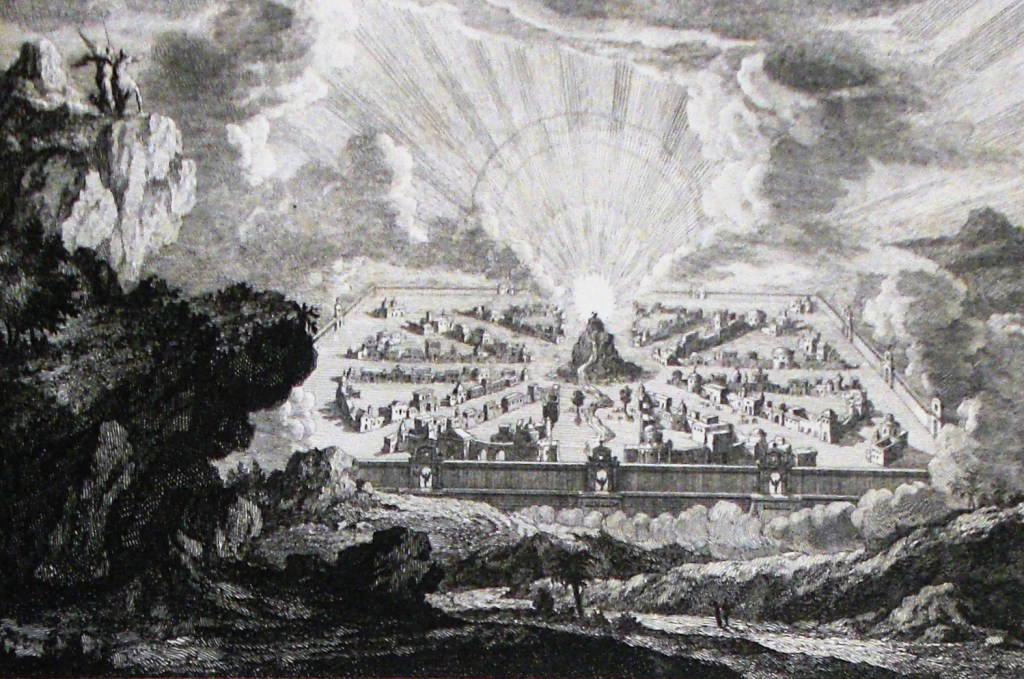
The section of Revelation provided by the lectionary for this coming Sunday (21:10, 22–22:5) is the final vision from a long sequences of visions, in which the writer, carried “in the spirit” to “a great, high mountain”, sees “the holy city Jerusalem, coming down out of heaven from God” (22:10).

The top of a mountain is significant in biblical narratives; we only need to remember Moses atop Mount Sinai, receiving the commandments from God (Exod 19:1–25) and viewing the promised land, which he would not himself enter (Deut 34:1–4); and Jesus on the mountain in Galilee, teaching his disciples (Matt 5:1–7:28), being transfigured in the presence of Moses and Elijah (Matt 17:1–8), and giving his last instructions to his followers before departing from them (Matt 18:16–20).

Visions in Scripture

There are many accounts of visions being seen by people on earth, as God reveals guidance to them; noteworthy are the visions of Abraham (Gen 18:1–16), Moses (Exod 3:1–6), Balaam and his donkey (Num 22:22–35), Joshua (Josh 5:13–15), Eli (1 Sam 3:2–18), and the visions of various prophets (Isa 6:1–13; Ezek 2:1–10; Ezek 40:1–44:31; Dan 7:1–14; Dan 8:1–14; Amos 7:1–9; Amos 8:1–14; Zech chapters 1–6).

In early chapters of the Gospels, visions experienced by key figures shape the course of the story—Zechariah (Luke 1:8–20), Mary (Luke 1:26–38), shepherds (Luke 2:8–14), and Joseph (Matt 1:19–21; 2:13; 2:19–20). Paul experienced “visions and revelations of the Lord” (2 Cor 12:1–7a); according Luke’s account of the journey he took towards Damascus, it was the visions to both Ananias and to Paul himself (Acts 9:10–12) that brought Paul into the community of believers, in a life-transforming moment.

However, the most notable vision is surely that experienced by Peter, in Joppa: “he saw the heaven opened and something like a large sheet coming down, being lowered to the ground by its four corners. In it were all kinds of four-footed creatures and reptiles and birds of the air. Then he heard a voice saying, ‘Get up, Peter; kill and eat.’” (Acts 10:11–13). This vision not only changes Peter’s understanding of things; it sets forth the rationale for the fundamental nature of the movement founded by Jesus, as an inclusive community of Jews and Gentiles.

Visions in Revelation 19–22

The vision that the author of Revelation sees is part of an extended sequence of visions which are introduced by the same phrase that is used in Acts: “then I saw heaven opened” (19:11; cf. Acts 10:11). God’s opening of the heavens is recognised by the psalmist (Ps 78:23) as the means by which manna was provided in the wilderness; and perhaps this resonance is picked up in the Gospel accounts of the baptism of Jesus in the Jordan, when Jesus “saw the heavens torn apart and the Spirit descending like a dove on him” (Mark 1:10 and parallels). God tears open the heavens to bless and to commission.

More pertinent, however, is the statement by Isaiah, in an oracle describing incredible devastation wrought in divine judgement over Israel, when “the earth shall be utterly laid waste and utterly despoiled … the earth dries up and withers, the world languishes and withers; the heavens languish together with the earth [for] the earth lies polluted under its inhabitants” (Isa 24:3–4). The prophet declares that “the windows of heaven are opened, and the foundations of the earth tremble; the earth is utterly broken, the earth is torn asunder, the earth is violently shaken” Isa 24:18–19). This is a fearsome rending apart of the heavens!

So, too, in Revelation, where the opening of the heavens (19:1) reveals a series of seven visions. There is a vision of an intense, violent battle (19:11–21), a vision of the binding of a dragon and “the first resurrection” (20:1–6), and two visions of judgement (20:7–10, 11–15); followed by a vision of “a new heaven and a new earth” (21:1–8), a vision of “the holy city Jerusalem, coming down out of heaven from God” (21:9–27), and then the final vision of “the river of the water of life, flowing … through the middle of the street of the city” (22:1–5).

Scriptural resonances in the visions of Revelation 19–22

In the initial vision of a cataclysmic battle, “the beast and the kings of the earth”, along with their armies, are confronted by a fiery, blood-soaked rider on a white horse, with “the armies of heaven” (19:11–16). The description of this particular figure, as is so often the case on this book, draws from biblical imagery (eyes like a flame of fire, sharp sword, rod of iron, treading the winepress). Indeed, each of the visions that follow are themselves thoroughly shaped by biblical language and imagery. As the author looks forward, he draws heavily on the traditions and stories of his own faith, as expressed in the scrolls of Hebrew Scriptures with which he is intimately familiar.

An angel steps forward to issue the call to battle—yet his call is an invitation to “the great supper of God” (19:17). The image of a supper had been utilised by the prophet Isaiah, who saw the final gathering of the nations in terms of a lavish feast (Isa 25:6–10; see also 55:1–5). This time, however, the supper is a feast for cannibals—turning the imagery upside-down, in a manner reminiscent of a grisly oracle uttered by Ezekiel (Ezek 39:17–20).

The beast and his false prophet are thrown alive into a lake of burning sulphur, evoking the punishment visited upon Sodom and Gomorrah (Gen 19:24–25; Deut 29:23; 3 Macc 2:5; Luke 17:28–30). The armies of the kings of the earth are slain by the sword, and Satan is cast into a locked pit for one thousand years (19:17–20:6). This recalls an oracle delivered by Isaiah, in which he declared that God, in judgement, would imprison “the host of heaven and the kings of the earth” (Isa 24:21–22).

But for a thousand years? The Psalmist says that “a thousand years in [God’s] sight are like yesterday when it is past, or like a watch in the night” (Ps 90:4), and a late New Testament book affirms that “with the Lord one day is like a thousand years, and a thousand years are like one day” (2 Pet 3:8); however, we should note that the period of one thousand years is nowhere associated with divine punishment elsewhere in biblical texts.

After the release of Satan, one further battle takes place, against “the nations … Gog and Magog” (20:8). The account in Revelation 20 is brief, but the distinctive names (Gog and Magog) evoke a reference to an older battle against invaders from the north, described by Ezekiel (Ezek 38:1–39:20). This decisive encounter effected the definitive punishment of God and paved the way for the promised restoration of Israel to the land (Ezek 39:21–29) and the vision of a restored temple (Ezek 40:1–46:24). The same pattern is followed in Revelation 20. After the battle against Gog and Magog, the devil is also cast into the lake of burning sulphur, all the dead are judged, and Death itself is destroyed (20:7–15).

This is followed by the establishment of a new heaven and a new earth, a place devoid of death, bathed in light, sustained by the water of life, a city dazzling with jewels and home to “the throne of God and of the Lamb” (21:1–22:5). The vision appears closely related to the final visions reported at the end of the book of Isaiah (Isa 65:17; 66:22–23).

The imagery used in these verses relates particularly to various sections of the book of Isaiah. The bride prepared for her husband (21:2) recalls the scene of Isa 61:10; the wiping away of tears (21:4) evokes the banishing of sorrow (Isa 35:10). The gift of water from the spring of life (21:6) is suggestive of the way that water functions as an image of life (Isa 35:6–7; 41:18), and the prominent place of the river of the water of life in the new Jerusalem (22:1–2) evokes Isaiah’s link between “the new thing” and “rivers in the desert” (Isa 43:18–21).

Likewise, the description of the spectacular beauty of the city and the careful itemizing of its measurements (21:10–21) imitates the section of Ezekiel where the Temple of his vision is carefully described and numerous measurements are provided (Ezek 40–42). What is noteworthy, of course, is the pointed declaration that “I saw no temple in the city” (21:22) and the insistence that the divine presence will provide more than enough light for the whole city (21:23– 25; 22:5).

Despite the author’s lengthy and intricate entwining with scriptural sources, in this final vision he points beyond the past, to a new form of the future. Yet still, he reaches back before the temple, to the times when the shining light signaled the divine presence (Exod 3:2; 13:21–22; Ps 78:14). In similar fashion, perhaps the prominence of the tree of life (22:2) is intended to supplant the many trees beside the river in Ezekiel’s vision (Ezek 47:12) and provide a reminder of the single tree in the creation story (Gen 2:9).

The closing scenes this provide assurance of God’s providential care of the people of Israel, and perhaps even of the whole earth. Indeed, the familiar patterns of this life, as we know it—night and day, light and dark, even life and death—will be transcended in this new order of reality. Written for a people in the midst of oppressive persecution, this glorious vision and triumphant conclusion provides assurance, reinforcing their faith with hope and certainty.

So it is no wonder, then, that the prayer of those who first heard these visions proclaimed to them, is simply: “Come” (22:17, 20). As we know, that coming was not, as was hoped for, “soon” (22:7, 12, 20). How we now apply these visionary words to our own times is the challenge that rests with us!

See https://johntsquires.com/2022/05/04/with-regard-to-revelation-and-rev-14/

*****

This blog draws on material in JOURNEYING WITH JOHN: an exploration of the Johannine writings, by Elizabeth Raine and John Squires (self-published 2014)

What language shall we use?

Lately I have been in some conversations relating to the language we use. We all speak English; a number of us speak or read another language, or languages, in the course of our days. But mostly, in most situations, we use English.

For many years, much of my work was focussed on making sense in the English language of material that was written in another language. The books of the Bible, as we should know, were not first written in English. Our Bibles are translations from Greek, in the case of the New Testament, and Hebrew (and a few chapters of Aramaic) in the case of the Hebrew Scriptures. So choosing the right words to render those foreign language texts into our English language is an important task.

Indeed, when it comes to Bible translations, we have allowed the Enlightenment to drive us into an incessant search for The Right Word/Phrase/Translation. Since translating is a skill that relies on nuance and subtlety, the offer of multiple options is just too good to refuse—and it invites us to explore, to question, to search for ourselves. That can only be good for our own discipleship and faith development.

These days, my work is focussed more on other areas where language matters. Sure, I still am involved in Bible studies where the meaning of a particular word or phrase in a biblical book might be a point of consideration. But more often during the week, I am involved in conversations where I am listening to people speak in the words and the phrases of their own choosing.

My task in such conversations is to listen carefully, to seek to understand what is being said by my conversation partner. Grasping the words that are spoken and sensing the meaning of what is being conveyed are important processes. We all do it when we converse. In ministry, listening carefully, hearing and understanding correctly, are vitally important skills.

Another area where understanding the words used—and making decisions about what words to use—is worship. I have long been of the practice that I will try to choose hymns and songs that don’t include complex, inscrutable, incomprehensible words—theological jargon, in particular. (To be honest, sometimes, if I really want to use such a hymn or song, I will “translate” such terms into more manageable words, and put them into the lyrics on the screen—although nobody seems to notice!)

I also have a personal dislike of hymns that persist in using “thee” and “thou”—fine, common words in Shakespearean English, but not at all in common use in the 21st century! A simple change from “thee” to “you” is easy and clear. The same goes for verbs that end in “-est” and “-eth”, like “thou doest” and “they saieth”. They are strange to people listening with a 21st century ear and not readily understandable in the contemporary context.

The matter becomes a little more complex when thinking about other terms often found in traditional hymns—and even in contemporary choruses. Persistently calling God “he” and referring to human beings as “men” really grates with me—and has for half a century, now. Using inclusive language is the policy of the Uniting Church, and that should carry into our hymns and songs in worship.

Likewise, I avoid hymns or songs that reflect particular theological viewpoints that I don’t personally adhere to (like hymns glorying in the shed blood of the lamb and extolling him as the

substitutionary means of atonement for our terrible sins). We can sing about how we relate to Jesus without adopting medieval theological terminology that has “stuck” in some quarters of the church long beyond its use-by-date.

In the same way, we can seek out those songs, poems, and prayers that move away from the stultify ing predictability of calling God “Father” or “Lord” over and over, never deviating from these so-called “biblical” names for God. Why, there are many names for God that are found in scripture—Holy One, Righteous One, Eternal One—and a proliferation of terms that identify a quality of God—Gracious God, Loving God, God of justice, Compassionate God, Faithful God, and so on.

There are also ways of addressing God that have been developed more recently—Ground of our Being, and the variant threefold pattern of “Creator, Redeemer, Sustainer” come to mind. And I recently found someone, writing about our care for creation, referring to God as “Gardener God”. I like that! Surely we ought to rejoice in the diversity of divine names that we have at our disposal.

And another pet peeve I have is the way that some grand favourite hymns simply assume that we are in the northern hemisphere; that Easter is taking place when the temperature is warming and the flowers are budding; that Christmas is celebrated at the time of the year when days are shortest and temperatures are coldest, with snow on the ground and warm fires burning.

That’s not my experience, and it feels weird to sing as if it is, when it isn’t! There are Southern Hemisphere alternatives that can be sung—not just “The north wind”, but many others that have been written downunder in recent decades by writers such as Shirley Erena Murray, Colin Gibson, Robin Mann, David MacGregor, Craig Mitchell, Leigh Newton, Heather Price, Malcolm Gordon, and more.

We have, in our midst, some fine wordsmiths who write new songs for us to sing—songs that use contemporary words, that avoid theological jargon, that employ inclusive language, that relate to a contemporary “downunder” context. People have always created new songs, and they still are today. Fostering that creativity by singing these songs and hymns is good to do.

There are also talented folks who are able to revise the words or even craft new verses for existing hymns, maintaining the traditional beloved tunes, but inviting people to sing using words, concepts, phrases, and ideas that more readily reflect the natural way of conversing and speaking in daily life.

I’m thinking of Sue Wickham and Sarah Agnew within the Uniting Church; I am sure there are many more. Sarah writes fine poetry for use in worship; and when it comes to poetry, the work of Jason John is excellent, also—although not always geared for liturgical use. (And there’s often a language warning with Jason’s work!)

That’s a good thing, I believe; articulating the Gospel in ways that make most sense within the context is an important thing to do. It’s perhaps somewhat akin to paraphrases that people make of biblical passages—or, indeed, preaching, where the aim is to communicate the message of scripture in ways that connect into the contemporary context.

Sadly, I know not everyone shares my interest and delight in discovering “new words for old tunes”. Some people think that the ”traditional” words shouldn’t be changed or interfered with in any way. However, if the original is acknowledged as the inspiration for the reworking, then I think that should be acceptable; it indicates that the person reworking the old hymn is finding inspiration to express in refreshing and invigorating ways, the age-old truths of the Gospel.

And really, this is actually doing what many fine hymn writers of the past have done—they reworked their own words, they reshaped verses from other writers, they wrote whole new sets of verses for tunes that were popular in their day (although they weren’t bound by the laws of copyright as we are). It’s part and parcel of the fine tradition of hymnody that we celebrate within our church.

So choosing the right words is a very good thing to be concerned about. What language shall we use? The language that conveys our faith in relevant, understandable, enlivening ways, right here, right now! I’m all for that.

See

Sarah Agnew at https://www.sarahagnew.com.au and https://praythestory.blogspot.com

Jason John at https://ecofaith.org

Sue Wickham at https://pilgrimwr.unitingchurch.org.au/?p=925

Robin Mann at http://www.robinmann.com.au/Robin-Mann-Songs-pg23732.html

David MacGregor at https://dmacgreg1.wordpress.com and https://togethertocelebrate.com.au/songs-for-free-streaming/

Craig Mitchell at https://craigmitchell.com.au/music/

Leigh Newton at https://leighnewton.com.au/

Heather Price at https://heatherprice.com.au/

Malcolm Gordon at https://malcolmgordon.bandcamp.com

Shirley Erena Murray at https://hymnary.org/person/Murray_SE and https://www.methodist.org.uk/our-faith/worship/singing-the-faith-plus/posts/a-jolt-of-reality-the-hymns-of-shirley-erena-murray/

Colin Gibson at https://hymnary.org/person/Gibson_C1 and https://songselect.ccli.com/search/results?List=contributor_P130845_Colin%20Gibson&CurrentPage=1&PageSize=100

See also links to all manner of reworked and new material at http://lectionarysong.blogspot.com

UCA Music at https://ucamusic.com.au

the Centre for Music, Liturgy and the Arts at https://www.cmla.org.au/shop/

and original songs at https://www.paddingtonuca.org.au/music

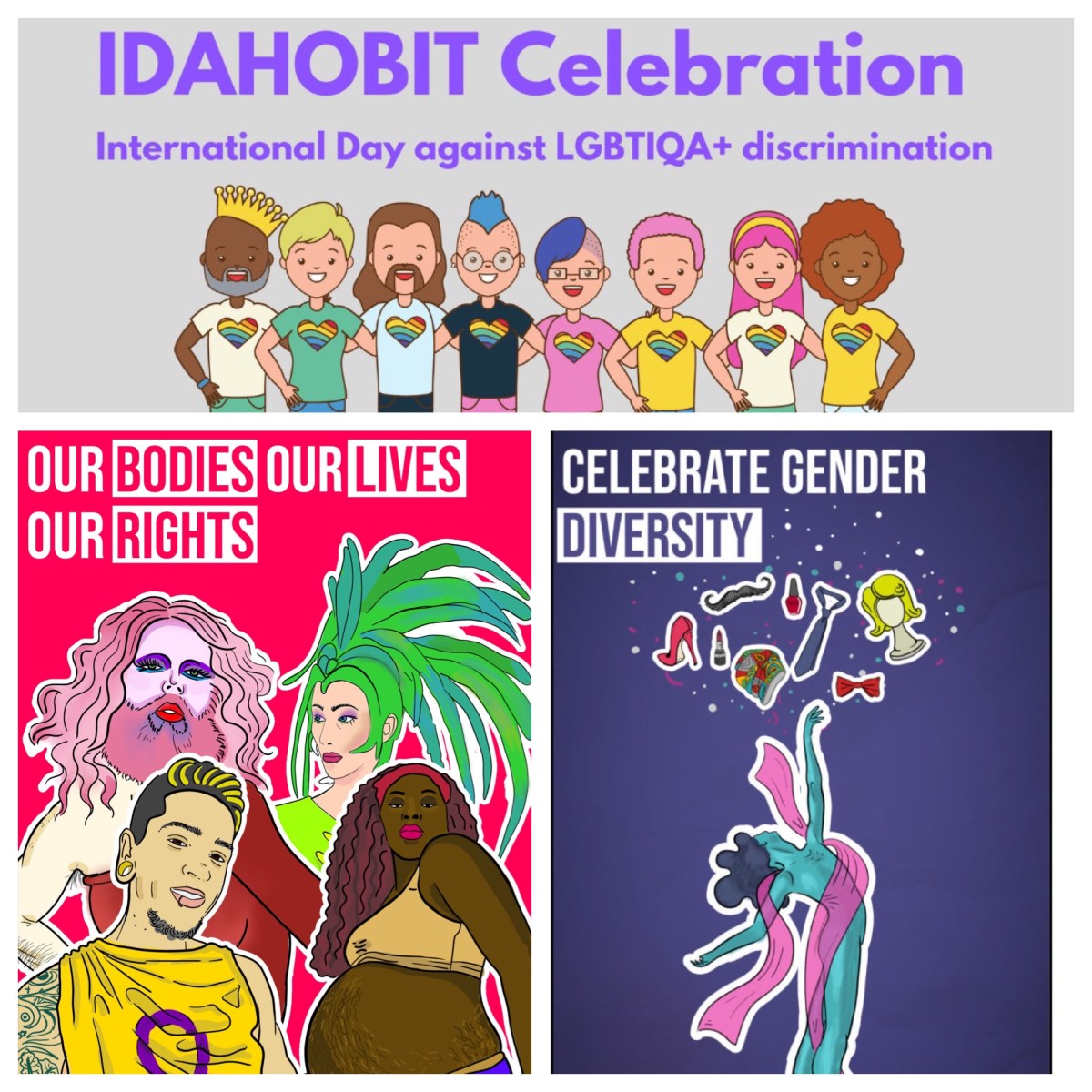
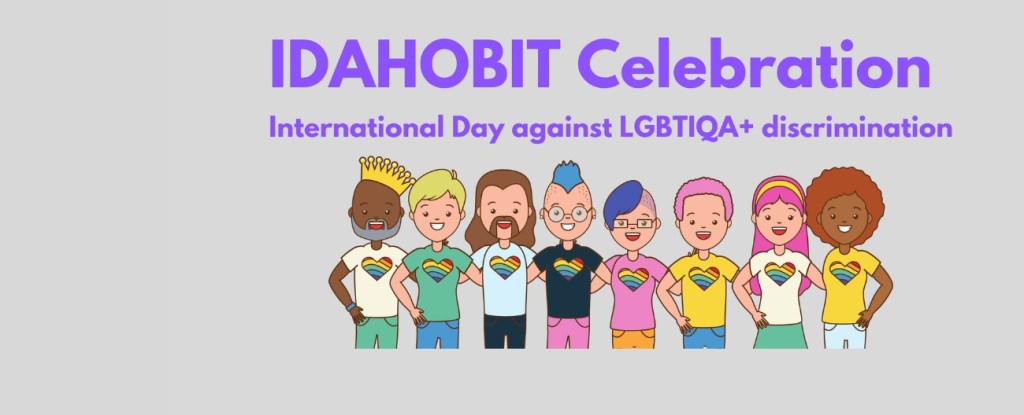
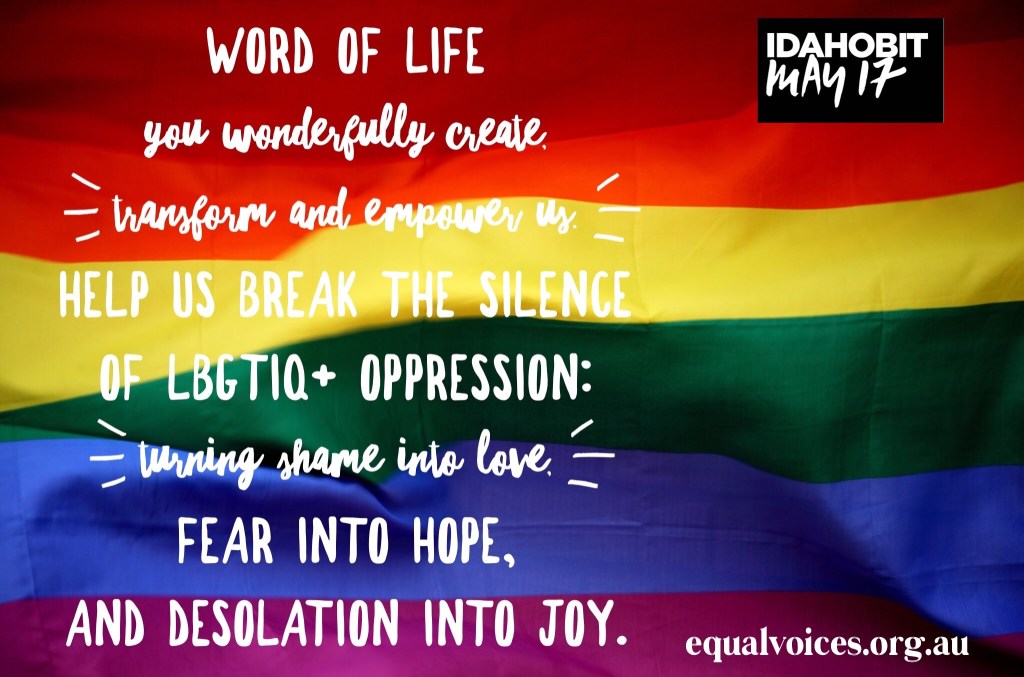
IDAHoBiT – the International Day Against Homophobia, Biphobia and Transphobia

May 17 is IDAHoBiT, the International Day Against Homophobia, Biphobia and Transphobia. IDAHoBiT is a day to draw attention to the discrimination experienced by LGBTQI+ people internationally.

The day is marked worldwide in over 130 countries, including 37 countries where same-sex acts are still illegal. The first day was held in 2004 to raise awareness of the violence and discrimination faced by lesbian, gay, bisexual and transgender people, including all people who have diverse gender identities or sexual expressions.

The date of 17 May was chosen for IDAHoBiT as this was the date in 1990 when the World Health Organisation finally removed homosexuality from its list of mental illnesses. Despite this, LGBTQI+ people across the world continue to face hate, discrimination and violence.

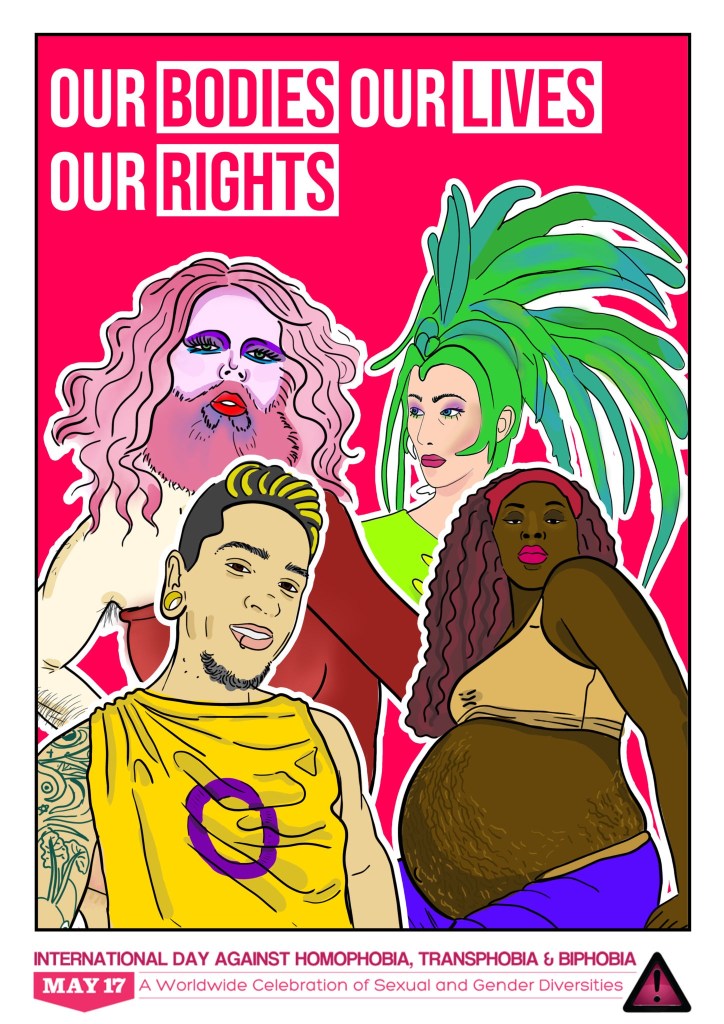
The theme for IDAHoBiT 2022, adopted after consultation with LGBTQI+ organisations worldwide, is Our Bodies, Our Lives, Our Rights.

The theme claims the rights of sexually- and gender-diverse people to live their sexual identity and to express their gender freely. It also signals a desire for such people to be free from physical violence, free from conversion practices (mislabelled as “therapies”), able to access transition services for Trans people, and free from the forced sterilisation of Intersex people.

The website for this day (https://may17.org/) states that the theme provides a reminder that “many of us around the world live LGBTQI-phobias in their very flesh every day and that our bodies are being abused, ruining our lives. Our bodies are our lives. And we have a right to live free and in dignity!”

For myself, I do not identify with any of the letters in the LGBTIQA+ acronym. I have lived my life as a male who is heterosexual (experiencing sexual attraction to people of the opposite gender) and cis-gender (the gender assigned to me at my birth correlates with my sense of personal identity and gender)—in short, I am what is referred to as heteronormative. And, as a white male in the Western world, my life experience has certainly been privileged and sheltered from internal or external disturbances and challenges related to my sexuality or gender identity.

So I have no personal experience of the gender dysmorphia that others experience in their lives; nor have I had any experience of the prejudice or persecution experienced by people identifying as a member of the LGBTIQA+ community. My understanding of what such people have experienced has come through relationships, conversations, readings, and personal thinking through of the issues. It has required empathy and understanding, and I think that it’s clear that I haven’t done this perfectly; but hopefully I have done so at least adequately.

I’m also a person of faith, and thus embedded within a community that, sadly, has demonstrated a collection of failures in the way that sexually and gender diverse people have been seen and treated. The Christian Church has shown a persistent lack of understanding, a continual marginalising (or “othering”), an aggressive assertion about the sinfulness of the particular identity or lifestyle, and undertaking attempts to “change the protestation” or “reverse the gender” of some people. All of these attitudes and actions have been unloving, uncaring, and indeed (in my view) unChristian.

Recent events in a number of churches have indicated that these attitudes and actions remain, tragically, alive and well in churches today. The United Methodist Church has become the Untied Methodist Church, as the so-called Global Methodist Church splits off in schismatic separation from the UMC because of differences of opinion about sexuality issues.

The General Synod of the Anglican Church of Australia, this week, has been debating the definition of marriage, and has shown a continuing need by many within its ranks to condemn (once again) all manner of people living outside the narrow norms that are set up, by some, as being “biblical” requirements.

My own denomination, the Uniting Church in Australia, has struggled with these issues over decades; more intensely, and intentionally, in the last decade, addressing matters relating to gender identity and sexual attraction. Recently the National Assembly agreed to a proposal “that sexual orientation and gender identity change efforts (SOGICE) are harmful to people’s mental health and wellbeing”. The proposal cited the Uniting Church Statement, Dignity in Humanity, which states that “every person is precious and entitled to live with dignity because they are God’s children”.

See https://www.unitingjustice.org.au/human-rights/uca-statements/item/484-dignity-in-humanity-a-uniting-church-statement-on-human-rights

How are privileged, cis-gender heterosexual people like myself to respond to a day like IDAHoBiT? I think we need to cultivate empathy and develop understanding. I think we need to seek out and develop respectful relationships in which we can hear stories, learn of experiences, articulate our own inadequacies and sorrow for how we have acted or interacted with people in the past. Most importantly, I believe we need to learn ways by which we can support survivors of gender identity change efforts and help prevent harm from the ideology and practices of such gender identity change efforts.

Underlying this is my own firm commitment to an understanding of human beings as intentionally created by God, exactly as we are, to be exactly who we are, without qualification or change. The “doctrine of sin” that the church has promulgated has impressed on us that we are all “fall short of the glory of God”, that we all do wrong things—and who would argue with that?

But this doctrine has also been used to identify and persecute specific sinfulness on the part of identifiable minority groups—gays, lesbians, bisexuals, intersex, and transgender people in particular—not recognising the nuances of differences that actually do exist across the spectrum of humanity. That’s a misuse of the doctrine, in my opinion. It should not be used to persecute someone on the basis of differences that are perceived.

What gender a person believes that they are, and what attraction an individual has to other people, is built into the very DNA of them as a person, wanting to force change in either of those matters is, to my mind, one of the greatest sins. I think it’s important for “allies” such as myself to remind others of this truth, and to stand in solidarity with “rainbow people” each and every day.

On this International Day Against Homophobia, Biphobia and Transphobia, let us ensure that each and every lesbian, gay, bisexual, transgender, intersex, queer, asexual, or otherwise identifying people knows that we accept them, value them, and love them, exactly as they are!

And let us be strong in calling out any sign of homophobia, biphobia, or transphobia, when we hear it expressed or see it enacted.

For information about IDAHoBiT in Australia, go to https://www.idahobit.org.au/

I close with a short prayer written by the Rev. Josephine Inkpin, for IDAHoBiT Day

Fairly produced, fairly traded: for World Fair Trade Day 2022

World Fair Trade Day will be Saturday 14th May this year. Fair Trade helps support small-scale farmers, artisans and producers to cultivate safer, healthier and more sustainable communities around the world.

The theme for World Fair Trade Day this year is Climate Justice. We are all aware that climate change is causing major problems across the world. Climate change is affecting the people in the world unevenly.

It is clear that we are not all suffering from the changes in climate in the same way. Those who are least responsible for the climate crisis are the ones who are most affected by its impacts.

Fairtrade is a way to support those who are most vulnerable, those who are most exposed to the impacts of climate change. There are more than 1.9 million farmers and workers in Fairtrade certified producer organisations, in 71 countries in Asia, South America, and Africa—some of the countries that are most at risk because of rising sea levels, the spread of drier desert climates, the increasing number of catastrophic weather events such as floods or bushfires, and other effects of climate change.

47% of all Fairtrade farmers produce coffee, and 41% of all FairTrade workers produce flowers. But many other products are produced in ways that ensure they are fairly produced and fairly traded: tea, chocolate, sugar, bananas, rice, honey, nuts, vanilla wine—but also textiles and cotton, used in our clothing. There is even, now, a Fairtrade Carbon Credit scheme operating under the auspices of Fairtrade International.

An easily-recognised symbol on products marks them as Fairtrade. This symbol that designates products certified in accordance with Fairtrade Standards.

These Fairtrade Standards require producers to meet minimum social, economic and environmental requirements. In addition, participating organisations are encouraged to provide an ongoing improvement of farmers’ employment conditions or the situation of estate workers. 

“When you buy Fairtrade certified products, you are part of an effective global movement for change,” says Uniting Church minister and longterm Fair Trade Advocate, John Martin, who is a member of the Executive Committee of the Fair Trade Association (ANZ). “You are also contributing, in a small but significant way, to lessening the impact of climate change.”

The Fairtrade organisation began in the UK in 1992, and has now spread around the globe, with strong support in Australia and many other countries with big purchasing power—the USA, Canada, India, Japan, and over 20 European nations.

Springwood Uniting Church is one of a number of UCA congregations which is strongly supportive of Fairtrade, holding an annual Fairtrade Festival to promote the initiative and e courage people to buy Fairtrade. About a decade ago, the Synod of NSW.ACT agreed to use Fairtrade products, and encouraged congregations and organisations in the Synod to do likewise.

That proposal was brought by the Revs. Elizabeth Raine and John Squires, who have a personal commitment to buying all their food and clothing from organic, fairly produced, and fairly traded sources. Elizabeth says, “it can sometimes be a challenge to keep to this regime; but we believe that the time it takes, and the extra cost that is sometimes (not always) involved, is really not much to ask. We don’t want to be supporting any product that exploits, degrades, or oppresses anybody involved in making it”.

In keeping with the Climate Justice theme for World Fair Trade Day 2022, the lectionary for the next Sunday (15 May) includes Psalm 148–a wonderful statement where the whole of creation praises God.

In this Psalm, the whole of creation praises God: “Praise the Lord from the earth, you sea monsters and all deeps, fire and hail, snow and frost, stormy wind fulfilling his command! Mountains and all hills, fruit trees and all cedars! Wild animals and all cattle, creeping things and flying birds!” (Ps 148:7–10).

The psalm causes us to ask: how can the whole creation praise God when the life is being stifled out of it by ecological damage principally caused by climate change? Perhaps you can refer to World Fair Trade Day and use this psalm in worship this Sunday—and encourage your congregation to adopt Fairtrade products.

For further resources, see this excellent 1 minute 32 sec. video and other resources prepared by the World Fair Trade Organisation:

https://wfto.com/fairtradeday2022/page1.html

To see how Fair Trade enterprises use sustainable methods in the production and packaging of their products:

https://wfto.com/fairtradeday2022/

If your church uses Fairtrade products, you can apply to use this logo at https://fairtradeanz.org/what-is-fairtrade/get-involved