The challenge of COVID-19 to Social Ethics as we know them

A guest blog by the Rev. Dr Geoff Dornan, minister with the Wesley Forrest Uniting Church Congregation in Canberra, ACT.

COVID-19 has turned the world upside down. Its impact upon the way we reason ethically has been immeasurable. There were the portentous signs in the first wave of infection of 2019-2020, especially in Italy, as clinical practice was tested as never before. I recall the Italian peak body for anaesthetics and critical care issuing a divisive guideline about the allocation of intensive care resources, suggesting an upper age limit for ventilator eligibility, the implicit condoning of ventilator withdrawal if necessary, and a ‘pragmatic’ focus upon maximizing clinical outcomes.
It could be said that there was little new in this. After all, much of it had been anticipated in longstanding clinical policy about the allocation of scarce healthcare resources, in what was known as the “fair innings” argument. The point, however, was not the clinical theory per se, but rather the shock of having to actually put such theory into practice on a wide scale.

Another clinical issue, as the virus spread across the world, was the relationship between patients and healthcare providers. Hospitals cancelled elective surgery to save on PPE supplies, beds, and human resources. Access to ICU level care was restricted and strict infection prevention controls were also put into place. Many patients faced prolonged precautionary isolation without the reprieve of visits from friends or family.

As if these challenges to clinical ethical practice, were not enough, COVID has also tested public health policy. As governments implemented biosecurity powers to ensure compliance with business closures and social distancing measures, available technologies were deployed to ensure adherence to new laws and contact tracing of those who contracted COVID-19. The use of phone metadata to locate and track individuals, occurred even in liberal democracies, as the seriousness of the pandemic intensified.

Phone applications were also introduced by governments in several countries to communicate with surrounding phones through Bluetooth, so as to record those with whom a person had been in close contact. In some cases, GPS tracking was also utilized: something generally restricted to police functions.[i] The public health emergency powers enacted in liberal democracies during the COVID-19 crisis have permitted to some extent a power imbalance between governments and citizens. Moreover, and most importantly, the framing of public health as a security issue, continues to allow exceptional actions to be taken, beyond what would be normally politically acceptable.[ii]

The Church’s Conundrum: Inclusion and Safety

While COVID-19 has ‘set the cat among the pigeons’ in the ethics of clinical practice and public health policy, the impact continues, raising new issues and challenges for many institutions, not least the church. Most recently, as countries open-up, and governments set policies which distinguish between the vaccinated and unvaccinated, denominations have made their own responses. Roman Catholic and Anglican leaders of Sydney have been quite clear about their reservations in following public policy.

The Roman Catholic Archbishop of Sydney, Anthony Fisher OP, in his message of September 9th, declared, “I would insist that ‘Jesus is Lord of all, and his gospel is a gospel for all. A ‘No Entry’ sign at the door of the church is wholly inconsistent with the Gospel preached inside.’ Race, gender, ethnicity, age, education, wealth or health status (including vaccination) must not be points of division within the Christian community or barriers to communion with Christ Jesus.”

The motivation for this stance is the high view that Catholicism harbours of the Church and the centrality of the Mass as the fundamental liturgical expression of being church. Moreover, speaking broadly, as evidenced in recent statements of ‘push-back’ from the Polish Catholic Bishops’ Conference, the Catholic Church is wary of the extension of state powers as a weakening of democracy and a slide into authoritarianism. Something we have seen as not entirely without foundation.[iii]
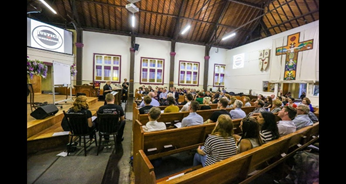
There have also been evangelical responses, such as the “Ezekiel Declaration” recently published by three pastors from Queensland, directed to the Prime Minister Scott Morrison, which states concern for those suffering mental and emotional stress from lockdowns, and which appeals to Morrison to resist the policy of vaccination passports on the basis that such a practice “risks creating an unethical two-tiered society”.

In spirit and mood, the declaration reflects not a high view of the Church in the Catholic sense, but a libertarian ethos with a strong inclination toward a priority for individual freedoms. More disturbingly, the document raises questions of soundness as it slides into a barely concealed ‘anti-vaxxer ethos’, and mistakenly implies that vaccination will be made mandatory. The declaration appears to be primarily ideological. [iv]

For the Uniting Church in Australia, thinking our way through the current challenge of the conundrum of the ‘vaccinated-unvaccinated’ as we prepare to ‘open up’ is confronting. Rather than seeing the issue in the singular terms of inclusion, for us, there is also the issue of safety.

Robert McFarlane has succinctly explained it, “The first principle of safety for the most vulnerable implies that people who are not fully vaccinated may need to be excluded for the safety of the vulnerable. The second principle of inclusion implies that we can’t turn anyone away”.[v] https://www.insights.uca.org.au/vaccination-inclusion-and-exclusion-the-ethics-of-regathering-for-worship-in-a-part-vaccinated-world/

John Squires, in an article ‘On Vaccinations, Restrictions and Fundamentalism”[vi] https://johntsquires.com/2021/09/20/on-vaccinations-restrictions-and-fundamentalism/, notes that there is a strong defence of the priority of vaccination, and by extension mandatory vaccination, plus the need for that priority to be exercised in deciding who attends worship and who does not. Of course, within the opinion piece, the author accepts that there may be good reasons for people not being vaccinated, especially underlying health issues.

He also argues for the continuation of on-line worship to serve the unvaccinated from the safety of their homes, so that the principle of inclusion can still be maintained in unison with that of safety. He concludes, “So, at the moment, I will advocate for complete adherence to government restrictions. My faith calls me to work for the common good, to care for the vulnerable, to love my neighbours, both near and far. Minimising risk of transmission as we gather is our first duty. Ministry takes place in many ways other than sitting in an enclosed space for an hour once a week!”

Considering the Problem through the Lens of our Ethical Traditions 

Given the various Christian responses, which range from a priority for unrestrained inclusion of all comers to a physical place of worship, to a priority for safety, limiting physical presence at worship to the vaccinated alone, at least until the danger of COVID subsides, I think we need some help. My suggestion is to appeal to and examine the three major ethical traditions which have shaped and continue to shape the way we moderns think about ethics. My question is simply this: what would each have to say to us about this problem?                                                                   

There are three traditions that I shall briefly examine: the Ethics of Duty, the Ethics of Consequence, and the Ethics of Virtue.

Ethics of Duty

The ethics of duty are not concerned with the consequences or results of actions, but rather their inherent rightness. The point is do the right thing, do it because it is the right thing to do, irrespective of the results; after all results or consequences cannot be entirely foreseen or controlled. The father of the ethics of duty was Immanuel Kant, whose august figure you can see below.

Within the ethics of duty there are what are called categorical imperatives, one of which you would already know: “act so as to treat people never only as a means, but always as an end”. There is another categorical imperative which you may not know. In it, Kant points out that you should not do something if it cannot be done by everybody. Put another way, “you ought not act according to any principle that cannot be universalized”.

A simple example has to do with cheating. What a cheat wants is not that everyone else should do what they do, but that an exception should be made in their case.

Turning to the issue of the vaccinated and unvaccinated, of course people have a right to remain unvaccinated as a question of individual conscience, but it does not end there. The question must be, what if everyone were to do the same, to remain unvaccinated? Clearly the results would be catastrophic, with immeasurably more sickness, substantially more deaths, the collapse of medical systems and glaring economic damage. Moreover, communities and organizations have the duty to protect people from such a scenario. Short of mandating vaccination, the ethics of duty would tell us that it is both reasonable and necessary that a community differentiate between the vaccinated and those who choose in conscience to remain unvaccinated; and this for reasons of the community’s wellbeing and safety. That said, such measures should always be taken treating people, all people – to quote Kant – as ends not just means.

Ethics of Consequence

The ethics of consequence think about ethical issues, as the name suggests, from the perspective of what results from an action. Utilitarianism, a school established and shaped by Jeremy Bentham and John Stuart Mill, the latter caricatured below, embrace this idea.  Central to its understanding is that good ethical policy should seek to maximize the good or utility in a society.

Bentham and Mill explained that good as “happiness”. In other words, the broader and greater the happiness, the better. This ethics that focuses upon results, correlates closely to the way Christianity thinks about ethical issues: for example, the Golden Rule – “do to others what you want them to do to you” (Matt 7:12, Luke 6:31).

As an ethics for maximizing happiness, the ethics of consequence is particularly important for thought and decision making about public welfare and social reform: pensions, benefits, health, education; fundamental dimensions of what we refer to as the common good. This idea of maximizing happiness through welfare, was significant in the post-World War II reconstruction of many societies, including the establishment of the welfare state.

In broad terms, the ethics of consequence which focus upon the welfare of a community, would support the comprehensive vaccination of a society as a means of protection for its members. On the other hand, it does not do especially well when considering the rights of minorities, simply because they are minorities. Because it focuses upon the bigger picture of collective gain, particular heed needs to be paid to what it is prone to ignore: as J.S. Mill put it, “the rights of freedom of expression”.

This deficit serves as a warning in our current circumstances, to understand that ethical policy and practice – to be ethical – requires a committed balancing of majority rights with those of a dissenting minority. In this sense, any church practice that brusquely favours safety over inclusion, meaning the ‘exclusion’ of the unvaccinated, needs to be rebalanced.                                        

Ethics of Virtue

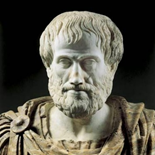
Virtue ethics is quite different to the ethics of duty or consequence in that they focus upon the individual character with the question, “what and who ought I be?” Going back to even before Aristotle – the gentleman we see below – virtue ethics dominated ethical thought for centuries. Thomas Aquinas was particularly important in developing a Christian ethics of virtue, in the light of his theology built upon the shoulders of Aristotelian thought.
In recent times there has been a return to virtue ethics as a way of completing the more modern approaches of rules-based ethics of duty and situational ethics of consequence. In a sense virtue ethics offers depth in that ethics are understood as a way of life.

Virtue ethics address two very human issues: the first, the emotions and the second, wisdom. In developing the virtues, the emotions are trained to serve the virtues, not undermine them. Likewise, in developing the virtues, practical wisdom (phronēsis) is cultivated, meaning that it is not sufficient to only do what a just person does, but to do it in a way that a just person does it. In other words, the emphasis lies with the how as much as the what.

Moreover, the content of the virtues changes depending upon the purpose (telos) that a person lives for. For the Christian, the primary virtues have been considered to be charity, patience and humility as pathways to living out the kingdom of God. For Aquinas, charity reigned supreme: “Charity is the form of all virtues”.

Finally, conscience constitutes a significant aspect of virtue and the moral knowledge entailed in living virtuously. That said, the virtue tradition insists that conscience can never be lazy, for we are bound to subject our conscientiously held views to rigorous analysis.

As we consider the question of how to proceed with the challenge of giving expression to the values of inclusion and safety in our services and liturgies, the ethics of virtue would counsel us to do so aware of the priority of charity and the need for an informed conscience.

Conclusions

What is it that these ethical traditions offer to us as we find ourselves on the horns of a dilemma, caught between two noble and necessary practices: inclusivity and safety?  All suggest, either explicitly or implicitly, that a good decision will likely need to include a balance of each.

Unconstrained inclusivity alone, will open congregations to the possibility of infection. Safety alone, will open congregations to excluding those for whom they love and care. After all what good is safety if it cuts us off from each other?  

Additionally, for those who refuse vaccination in conscience, the challenge is to ensure that their conscience is well informed, not determined by ideological bias or irrational partisanship.

Of course, there are multiple ways to balance these requirements. Each congregation, presbytery and synod will need to do just that, accessing and utilizing the knowledge of their specific contexts and the technologies to which they have access, keeping in mind that how we do things is every bit as critical as what we do.

Rev. Dr. Geoff Dornan, October 3rd, 2021

Geoff Dornan is minister in the Wesley Forrest Congregation in Canberra, ACT. He holds a PhD in Philosophy, Theology & Ethics from Boston University, USA.


[i] In March 2020, the government of Singapore, launched a smartphone application to assist in monitoring COVID-19 by enabling public health authorities to investigate infections and limit further transmission. In May 2020 the Australian government announced it would implement similar technology.

[ii] Kamradt-Scott, A., & McInnes C. (2012), The Securitization of Pandemic Influenza: Framing Security and Public Policy. Global Public Health, 7, 95-110, 106.

[iii] Jonathon Luxmoore, “Polish Archbishop criticizes anti-church Covid measures”, The Tablet, August 11th, 2021.

[iv] Timothy Grant, Matthew Littlefield, Warren McKenzie, The Ezekiel Declaration, https://caldronpool.com/ezekieldeclaration/

[v] McFarlane, R. “Vaccination, Inclusion and Exclusion: The Ethics of Regathering for Worship in a Part Vaccinated World”, Insights Magazine, September 17th, 2021.

[vi]  John T. Squires, “On Vaccinations, Restrictions and Fundamentalism”, blog at https://johntsquires.com/2021/09/20/on-vaccinations-restrictions-and-fundamentalism/

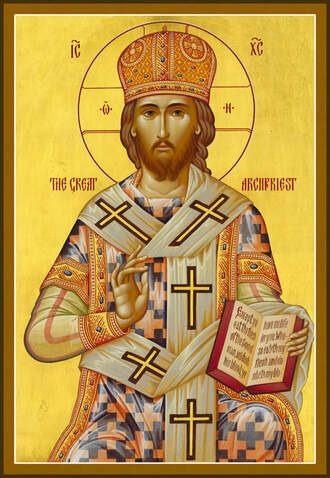
A great high priest who “has passed through the heavens” (Hebrews 4; Pentecost 23B)

“We have a great high priest who has passed through the heavens, Jesus, the Son of God, so let us hold fast to our confession; for we do not have a high priest who is unable to sympathize with our weaknesses, but we have one who in every respect has been tested as we are, yet without sin” (Heb 4:14–15).

In this way, the anonymous author of the word of encouragement written to the Hebrews highlights what will be come the overriding image, the dominating theme, of the whole book. (On the nature of this book, see https://johntsquires.com/2021/09/29/the-word-of-exhortation-that-exults-jesus-as-superior-hebrews-1-pentecost-19b/)

The author has already identified Jesus as “a merciful and faithful high priest in the service of God, to make a sacrifice of atonement for the sins of the people” (2:17), the “apostle and high priest of our confession” (3:1). The claim that Jesus was a sinless high priest (4:15) is striking. He is being placed at a level above and beyond the already high level of the Jewish high priest. This is the foundation for the argument that is proposed and developed in subsequent chapters

When Jesus is designated high priest according to “the order of Melchizedek” (5:10; 6:20), he is understood to be the high priest who has “passed through the heavens” (4:14) and is “holy, blameless, undefiled, separated from sinners, and exalted above the heavens” (7:26). We will come back to the mysterious Melchizedek next week.

As Jesus is seated at God’s right hand (8:1), he is able to enter into the holy place of “the greater and perfect tent” (9:11–12) to offer the sacrifice which “makes perfect those who approach” (10:1, 14). The comparison is made using the long-existing system of offerings and sacrifices which were integral to the Israelite practice of religion.

The Temple was the central point of faith for the people; it was the focus of pilgrimage at festival times, the place where priests mediated between the people and God through the offerings and sacrifices, the place where the rich liturgical life of ancient Israel was developed (as we see in the psalms).

The comparison that is made is stark: the earlier Jewish system of offering sacrifices is exposed as flawed, insufficient, and now rendered redundant. We will return to this element of the comparison in a later post, when we consider again the picture of Jesus as priest in this word of exhortation (the letter to the Hebrews).

The purpose of using the imagery of sacrifice and priesthood in this book is not intentionally negative towards the Jewish sacrificial system. The constructive purpose of this language is to demonstrate that Jesus brings the process of sanctification to a head (13:12; see also 2:11; 9:13–14; 10:10, 14, 29) and enables believers to “approach [God] with a true heart in full assurance of faith” (10:19–22).

This work is not unique in drawing on the language of the sacrificial cult. The death of Jesus is interpreted in language drawn from the sacrificial practices of Israel. He is the one “who gave himself for our sins to set us free from the present evil age” (Gal 1:4), who “loved us and gave himself up for us, a fragrant offering and sacrifice to God” (Eph 5:2), who “gave himself for us that he might redeem us from all iniquity and purify for himself a people of his own who are zealous for good deeds” (Titus 2:14).

Paul draws on the sacrificial system of the Temple when he encourages the followers of Jesus “to present your bodies as a living sacrifice, holy and acceptable to God, which is your spiritual worship” (Rom 12:1-2). He points to his own life as an example, saying that “I am being poured out as a libation over the sacrifice and the offering of your faith” (Phil 2:17), and then encouraging the Philippians that, “in the same way, you also must be glad and rejoice with me” (Phil 2:18).

In another letter attributed to him, but more likely written at a later time by one of his followers, invoking his name to claim his authority, this line of instruction recurs. The saints addressed in the letter allegedly written to the Ephesians directs that they are to “live in love, as Christ loved us”, following the author’s example of living as “a fragrant offering and sacrifice to God” (Eph 5:2).

The Gospel writers use language drawn from the sacrificial cult describe Jesus; most obviously, in the description of Jesus as “the lamb of God” (John 1:29, 36)—there was an unblemished lamb offered daily at the Temple in sacrifice (Exod 29:38–46). The saying that the Son of Man came “to give his life a ransom for many” (Mark 10:45) uses the language of the cult (Exod 21:30); that language is used to describe the effect of the death of Jesus in later letters (Eph 1:17; 1 Tim 2:6; 1 Pet 1:18–19).

The language of covenant, used in the accounts of the last meal that Jesus shared with his followers (Mark 14:24; Matt 26:28; Luke 22:20; 1 Cor 11:25) itself draws from the foundational understanding of the people of Israel. This covenant was the very heart of their relationship with God that undergirded the sacrificial system of the people of Israel (Exod 24:1–8; Lev 26, see verses 9, 15, 25, 40–45). At its heart, the remembrance of the body broken and the blood shed at the final meal of Jesus—the central enduring ritual within the Christian church—continues to evoke the sacrificial practices of ancient Israel.

The way that the idea is developed in Hebrews, however, is curious. Paradoxically, Jesus both stands in the place of the priest slaughtering the sacrificial beast (2:17; 3:1; 5:1–6; 6:20; 7:26–28; 8:3; 10:12) and simultaneously lies on the altar as the one whose blood is being shed (9:11–14; 9:26; 10:19; 12:24; 13:20). Although the details of the imagery are confused, there is a consistently firm assertion developed through this image: Jesus is the assurance of salvation (2:10; 5:9; 10:22).

The use of this idea throughout the book is a piece of contextual theology. It makes use of ideas and practices well-known in the world of the time, to explain the significance of Jesus and to interpret the meaning of his death.

Portraying Jesus as priest is intended to provide comfort to the readers. As the great High Priest, Jesus is now able to broker the relationship between believers and God, in the way that the High Priest did for centuries. That Jesus is the high priest who has “passed through the heavens” (Heb 4:14) provides strong assurance.

Portraying him as victim, however, seeks to make sense of the brutal death of Jesus, suffocating to death of the cross, his dead body laid in a tomb. This death was not in vain; it is effective in securing God’s forgiveness and grace, just as the victims sacrificed in the temple cult removed the sins and provided forgiveness to those who brought those sacrifices. The sacrifice of Jesus “makes perfect those who approach” (Heb 10:1). And because the one who is sacrificed is the same one as the perfect priest making the sacrifice, “by a single offering he has perfected for all time those who are sanctified” (Heb 10:14).

The logic is strange, to us; to the author of Hebrews, it obviously made perfect sense.

See also https://johntsquires.com/2021/09/29/the-word-of-exhortation-that-exults-jesus-as-superior-hebrews-1-pentecost-19b/
https://johntsquires.com/2021/10/05/a-great-high-priest-who-has-passed-through-the-heavens-hebrews-4-pentecost-20b/

A priest forever, “after the order of Melchizedek” (Hebrews 5; Pentecost 21B)

https://johntsquires.com/2021/11/02/the-superior-high-priest-who-provides-the-better-sacrifices-hebrews-9-pentecost-24b/

https://johntsquires.com/2021/11/08/the-assurance-of-hope-in-the-word-of-exhortation-hebrews-10-pentecost-25b/

Living through life’s problems (Job 1; Pentecost 120B)

A sermon by the Rev. Elizabeth Raine, on the Book of Job (Part 1), preached at Tuggeranong Uniting Church on 3 October 2021.

The book of Job has always been famous for two things – the patience of Job, and the introduction to the alleged malicious machinations of Satan. When we read the text closely though, we may be surprised, as both these ‘truths’ are actually found to be wanting.

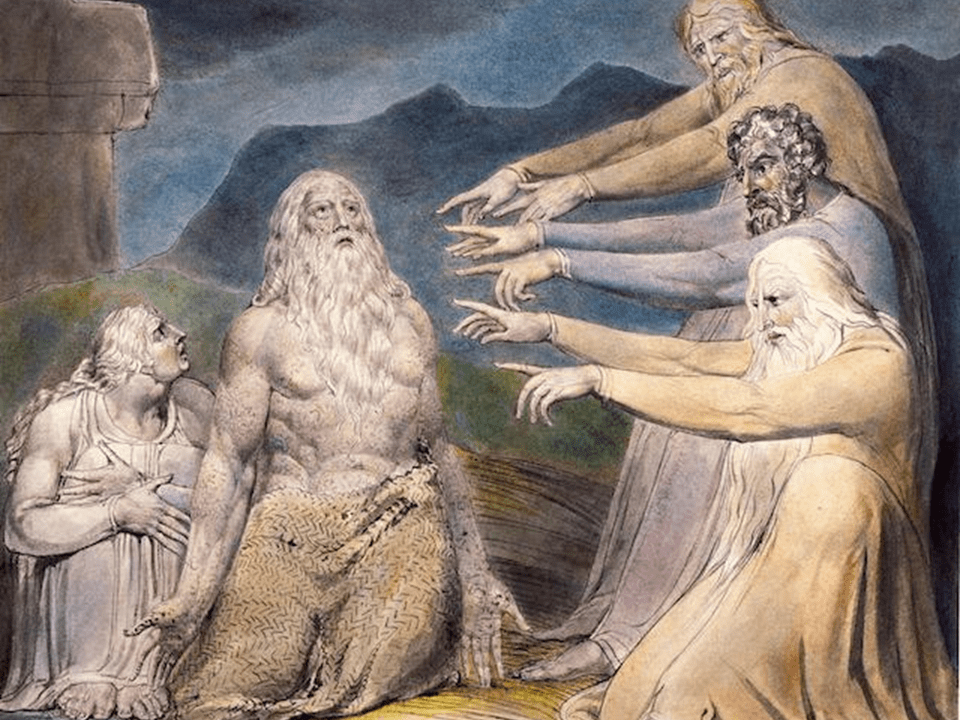
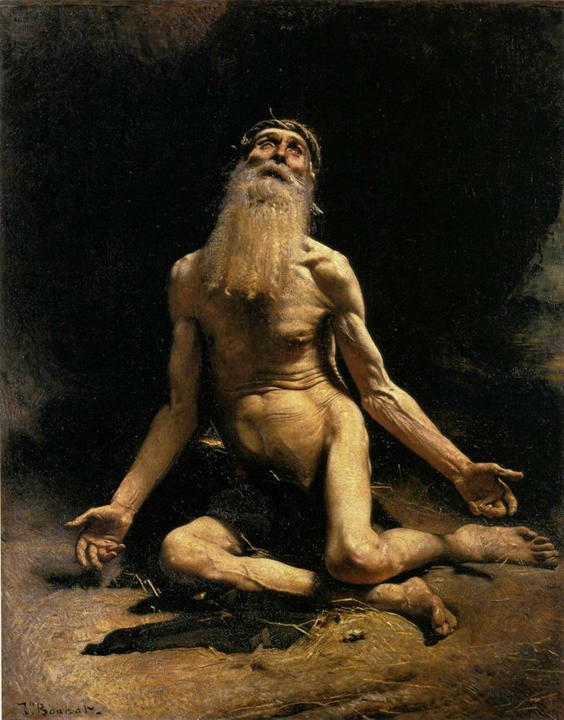
Job is not patient, nor is the satan the personified force of evil found in later biblical literature. Whilst afflicted, Job spends all of his time challenging the injustice that has reduced him to these straits, and shows little patience in regards to his unfortunate situation. For example, in chapter 3 he cries:

Why is light given to one in misery,
and life to the bitter in soul,
who long for death…
and … are glad when they find the grave?
For my …groanings are poured out like water.
I am not at ease, nor am I quiet;
I have no rest; but trouble comes. (Job 3:20–26)

Despite the dramatic capital “S” translation in our bibles of the Hebrew word sātān, the word should be translated rather as ‘adversary’, or ‘prosecutor’. The adversary is the servant of God, his role to investigate the goings on of humanity and report on them. This adverserial role requires him to present the case to the contrary at the heavenly court. We also find him in this role in the prophet Zechariah 3:1, where he stands ready to accuse Joshua in the setting of the heavenly court.

So what is the book of Job about then? One of its functions was to challenge the theology of Deuteronomy, which claimed that righteousness was always rewarded, and evil always punished. The author of Job disagrees, as his experience has shown him good people suffer and evil goes unpunished in an imperfect world. The author also wants to explore the notion of whether God is good and just. So in the literary setting of the heavenly court, the author constructs a debate between God and the adversary, around these questions.

The book of Job was probably written sometime after the Babylonian exile, in the 6th century BCE. It deliberately avoids mentioning any identifying historical features and is written not as an historical account but as a fable or folktale encounter between a human being and God. The book’s action does not take place in Israel. Its characters are from Edom, to the southwest of Israel, which perhaps allows for a freer discussion of the issues the story raises.

The seeming puzzle of the suffering of the righteous, and the apparent blessing of good fortune to the wicked was a problem addressed by various books in Hebrew scripture, but none of them exhibit the radical protests and questions that we find in the book of Job. The book of Job lists a large number of injustices that regularly happen to the righteous poor, at the hands of the unscrupulous wealthy. 

We frequently find verses such as “Therefore I say, he destroys both the blameless and the wicked, when disaster brings sudden death, he mocks at the calamity of the innocent. The earth is given into the hand of the wicked, he covers the eyes of its judges – if it is not he, who then is it?” (Job 9).

So the author of Job has set himself an enormous task – he will explore the truth that the innocent, not just the wicked, do suffer, and attempt to explain the rationale for God’s actions in regard to such suffering.

In the scene before us, the adversary makes the point that Job has never suffered from poverty or adversity in his life. Why shouldn’t he be righteous? Surely, he argues, if Job’s wealth and family were struck down,then his faith would be tested to the point where he would curse God. God, intrigued by this notion, agrees to the adversary’s suggestions. Job is to be tested rigorously in regard to his faith.

This is not the picture of the loving, merciful Christian God that we have come to know and love. Here is a God who knows that his human servant is righteous, yet is quite happy to gamble with his feelings, faith andthe life of his family in order to test the adversary’s claim. Is this a fair representation of God? Do we really think that God tests the faith of humanity?

This idea that God tests us is one that has taken hold in western societies. There is a belief that God never sends us any more than we can bear, and that testing can be good for us and aids the development of our faith. This concept therefore understands the loss of family and friendsthrough accident or cancer, for example, are to test us. This is surely a terrible idea.

And if God really does test the faith of humanity through harsh adversity and poverty, then one must wonder why poor dark-skinnedchildren under the age of ten seem to be the ones most in need of such testing. After all, they and their families are the ones most often the victims of war, disease and starvation. While there is no doubt that certain forms ofsuffering can bring us closer to God, much of the suffering that is experienced by humanity does not have such an outcome.

Perhaps one of the greatest differences between us and the author of Job is the belief that God is responsible for such suffering. We tend to let God off the hook by the use of doctrines such as freewill, despite the imbalance of power that suggests our freewill is a large cause of the extraordinary death toll from war, disease and poverty in the developingworld. Not so Job – he is determined to hold God accountable for what he sees as unjust suffering.

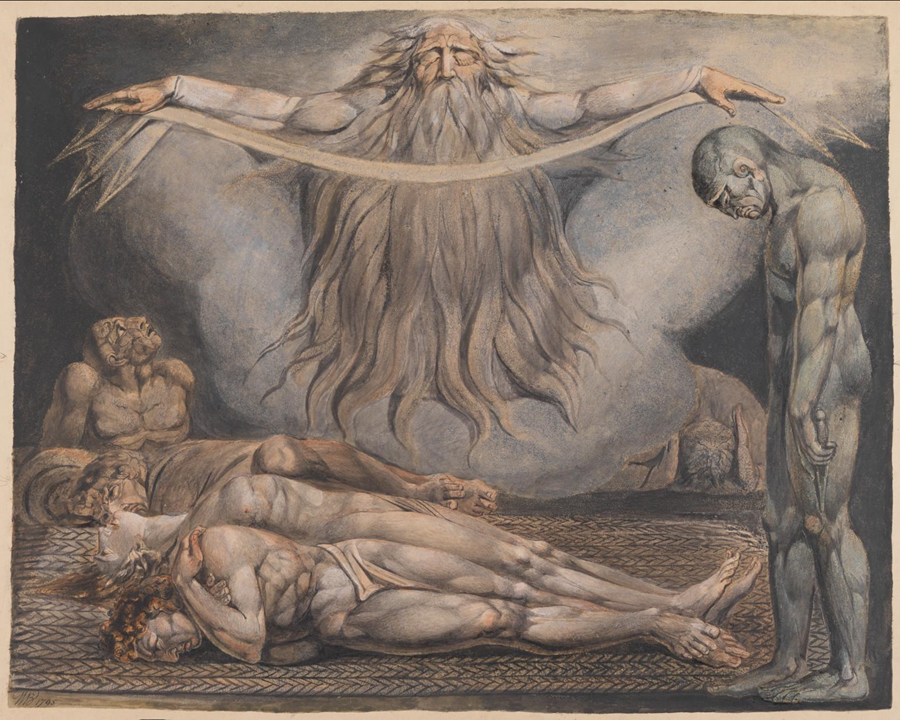
The great misfortune which has stuck Job, which include the stealing of his animals, the killing of his servants and destruction of his children are not initially blamed on an unjust God. At first Job can still bless the name of God. So the scenario in the heavenly counsel repeats itself. God again boasts of Job’s righteousness, the adversary again seeks to test Job’s faith by an attack on his actual person. Again God agrees, and Job is afflicted with terrible sores. Ignoring the counsel of his wife (curse God and die), Job still persists in his faith.

While this may seem a commendable attitude, Job’s question in 2:10 (“Shall we receive the good at the hand of God, and not receive the bad?”) raises some difficult issues: Does God send both good and bad upon humanity?  Do both good and evil emanate from God?

This might seem like a ridiculous question. But consider Isaiah 45:7, in which God states, “I form the light, and create darkness: I make peace, and create evil; I the LORD do all these things”. And Deuteronomy 32:39, where God declares, “See now that I, even I, am he; there is no god besides me. I kill and I make alive; I wound and I heal; and no one can deliver from my hand”.

In the Hebrew world view, such an idea was not unknown, though it may seem anathema to us. Evil had to be explained somehow, and it seemed reasonable in a monotheistic religion that God both blessed and cursed, gave and took away.

Despite’s Job’s protestations of innocence, Job’s three friends, who arrive to console with him, do not waver from their belief that God is right, and that Job is undoubtedly being punished for some secret sin, although they themselves are at a loss as to know exactly what this sin might be. Theypersist in believing that Job must deserve all of the punishments.

The author of the book uses the friends of Job to expose the inadequacies of the tradition, and Job counters their arguments by some pretty stark statements about the injustice of God. Job confidently believes that God is omnipotent. The question is therefore, why doesn’t he use this power to right wrongs, punish the wicked and ensure that justice is done?

Consider the end of chapter 12, for example: “The Lord makes nations great, then destroys them … He strips understanding from the leaders of the earth and makes them wander in a pathless waste. They grope in the dark without light, he makes them stagger like drunkards.”

Job, whether he realises it or not, has engaged himself in the study of theodicy, the theological examination of how a loving, just and all-powerful God can allow suffering and evil to exist. Job appears to be the first theologian that we know of to begin to ask some of the pertinent questions of theodicy. David Hume summed up these questions nicely:

Is he [God] willing to prevent evil, but not able? Then he is impotent. Is he able, but not willing? Then he is malevolent. Is he both willing and able? Whence then is evil? David Hume, Dialogues Concerning Natural Religion (New York: Social Science Publishers, 1948) p. 198.

Job represents an age-old problem of power and justice. Those who have not been the victim of unjust power, whether divine or human-made, can not really appreciate the insecurity that capricious power and the denial of human rights generates.

This aspect of the story of Job is particularly disturbing for us. There is no doubt that what has happened thus far to Job is absolutely unfair. Why should “a blameless and upright man who feared God” be made to suffer so?The only ‘freewill’ that can be blamed here is God’s – the decision to test Job was God’s alone.

For us, the question is, how can we believe in a God that apparently has such a dark side? A God who willingly strikes dead the family of a person who has God’s goodness at heart, who has done no wrong? Who afflicts him with a dreadful disease and deprives him of his farm and means to make a living?How can we hold to the idea of an all-loving God when these kinds of things not only happened to Job, but do happen routinely in today’s world? 

Christianity has always taught of a loving, caring, forgiving God, one who is there to heal and to comfort. Yet here a swift and harsh punishment is placed on Job as the result of a wager between God and the adversary. 

Despite its antiquity, this story of Job confronts us with many unanswered questions. Do we accept the thought that all things, good and evil, are sent from the one true all-powerful God? Perhaps we need to further question our ideas of God. Is God truly all-loving and all-powerful? Or can God be only one, or the other, of these?

The bible consistently makes it clear that God – and our own fears and frailties – are encountered in wild, dangerous places. In the New Testament, the letter to the Hebrews clearly states that “it is a fearful thing to fall into the hands of the living God”. Faith is not a journey that is safe or straightforward. There will always be darkness and perplexities to be confronted.

We can use our faith to avoid the harsh facts and unpleasantness of the real world that surrounds us, and cocoon ourselves into a warm and fuzzy kind of spirituality. Or we can use our faith as a way of living through life’s problems and injustices with a small flame of hope, to live a God centred-life with all the uncertainty that such a faith brings with it. This is the ultimate challenge that this passage presents to us.

For other sermons in this series, see

https://johntsquires.com/2021/10/10/hope-in-a-broken-world-job-23-pentecost-20b/

https://johntsquires.com/2021/10/17/celebrating-creation-job-38-and-psalm-104-pentecost-21b/

https://johntsquires.com/2021/10/24/coping-with-chaos-and-death-the-wisdom-of-job-pentecost-22b/

Affirming and inclusive passages from scripture

Tuggeranong Uniting Church, a Congregation within the Canberra Region Presbytery (and the Congregation where my membership is held) has a series of banners inside the building which signify and celebrate the commitments of the Congregation in ministry: acknowledging the First Peoples, committing to sustainable living through care for the environment, and ministry to rainbow people.

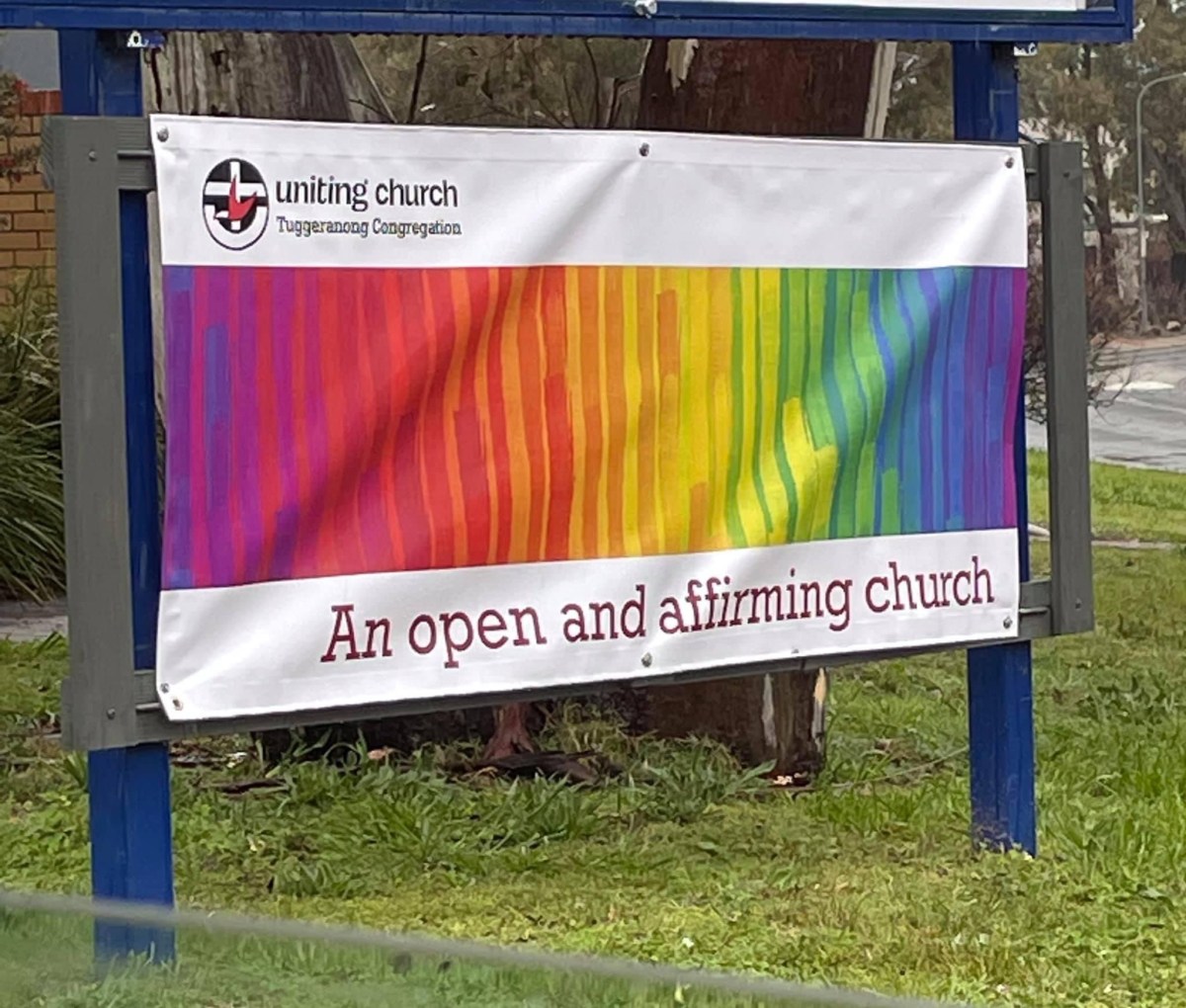
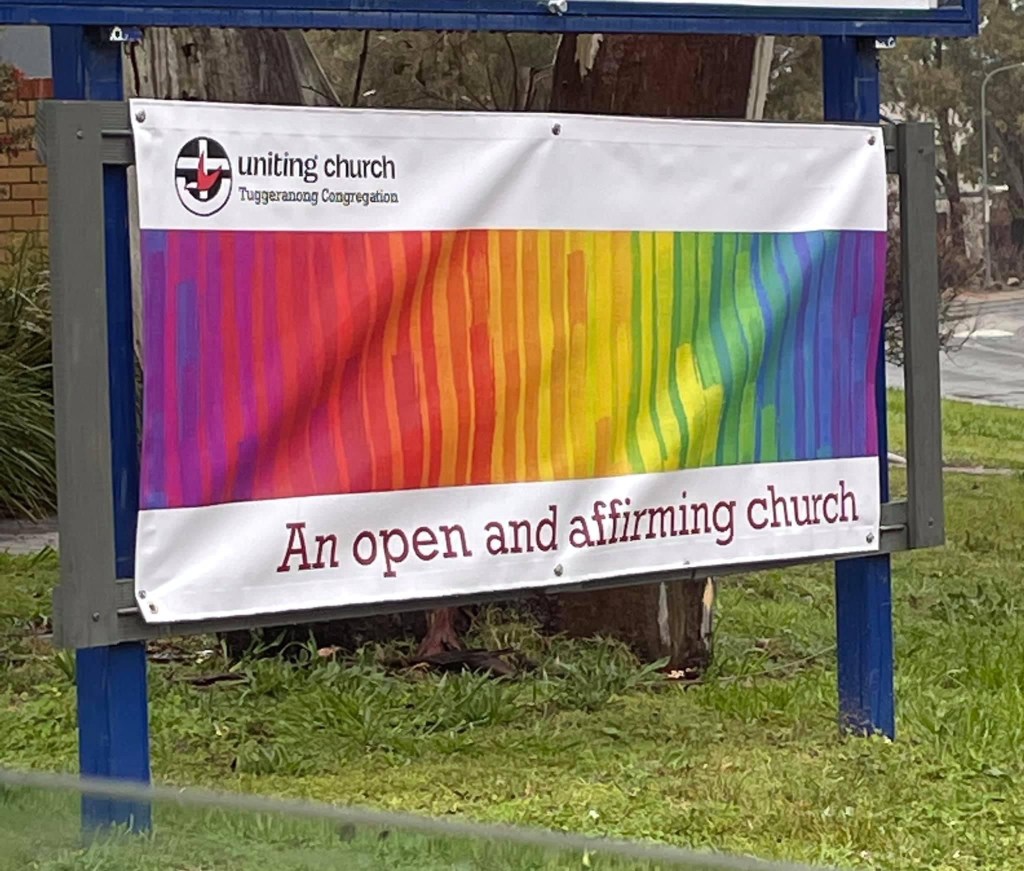
Outside the building, for some years now, a banner proclaiming that refugees are welcome has hung in public. This week, the Congregation has erected a larger banner declaring that they are an open and affirming church. It sits at the front entrance opposite the local regional shopping centre, where all who pass by can clearly see it.

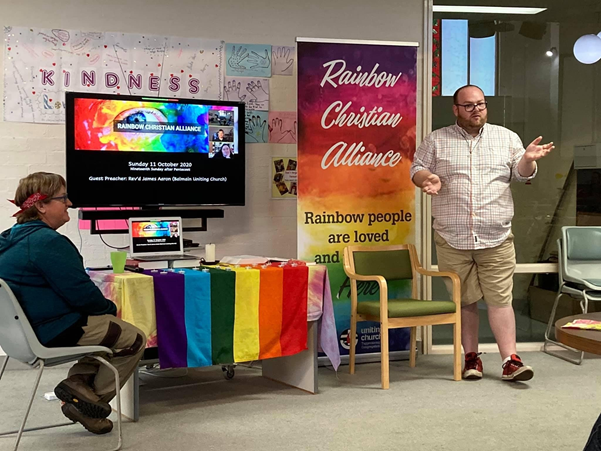
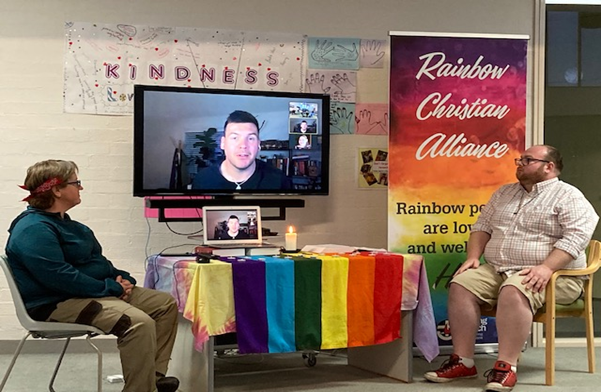
This commitment to an inclusive ministry which welcomes, values, and includes rainbow people (those who identify with one of the letters in LGBTIQA+) has been manifest in the Rainbow Christian Alliance, which was commenced six years ago by the minister and two members of the Congregation. (See https://johntsquires.com/2021/08/04/a-safe-place-for-rainbow-christians/)

That initiative in Tuggeranong, in the south of Canberra, has seeded another rainbow church in Goulburn: DARE Cage Church. It is a ministry that the Uniting Church has supported and fostered, both locally in these two faith communities, but more widely, in similar initiatives in cities and towns right across Australia. It is a ministry that is undergirded by strong and clear theological principles grounded in an informed understanding of scripture.

Scripture includes numerous passages that undergird an attitude of welcome, inclusion, and valuing of LGBTIQA+ people. None of the passage that follow address directly and unequivocally this issue; rather, they establish important and foundational claims about God and humanity, that enables us then to extrapolate and apply those claims to the situation of LGBTIQA+ people.

1) Genesis 1:26: “Let us create humankind in our image.”

In the Bible’s creation story, God makes clear that, out of all of creation, human beings are created in God’s image. That God is referred to in the plural in this passage could even suggest the idea of God containing a diversity of identities within God’s own mysterious and infinite self.

The assurance that all human beings are created in God’s image reminds us from the get-go that everyone is a sacred creation, and that God’s image is broader than our own experience and understanding. Someone may look — or love — differently than you do, and still, simply by being a human, reflect the image of God.

2) Acts 10:15: “What God has made clean, you must not call profane.”

In Acts 10, Peter has a dream in which he is commanded by God to consume food that is deemed “unclean” according to Jewish law. When Peter protests, God reminds him that God’s declaration of what is clean is above — and may even contradict — any command of the law.

This dream serves as a crucial instructive for Peter later in the passage, when he encounters Gentiles, which Jewish law would normally reject. This passage reminds us that God’s promise and beloved community are not defined by our own rules or boundaries, or even our own understanding of God’s law.

3) Mark 2:22: “And no one puts new wine into old wineskins; otherwise, the wine will burst the skins, and the wine is lost, and so are the skins; but one puts new wine into fresh wineskins.”

This passage recalls a time when Jesus is questioned as to why his disciples don’t rigidly obey the laws of their faith tradition. Jesus’ reply is very illuminating: “No one sews a piece of unshrunk cloth on an old cloak; otherwise, the patch pulls away from it, the new from the old, and a worse tear is made.”

Jesus reminds us that religion, tradition and belief are evolving concepts, and may require us to re-evaluate and reconsider our traditions and push at the boundaries.

4) Acts 8:26-40: “What is to prevent me from being baptized?”

This passage recounts Philip’s encounter with an Ethiopian eunuch, and is probably the most-cited biblical story by those seeking to affirm queer identity within Christian faith. Eunuchs in biblical times were othered and ostracized because of their failure to adhere to sexual norms.

Common cultural understanding of the time would have held that their status as eunuchs barred them from inclusion in God’s community. And yet, this eunuch seeks to follow the path of Christ even as he continues to live out his sexual otherness. And he is welcomed and joyfully baptized into Christ’s community. The eunuch’s question to Philip — “What is to prevent me from being baptized?” — underscores that his sexual status is not a barrier to inclusion in the eyes of God.

5) Isaiah 56:3-5: “For thus says the Lord: To the eunuchs who keep my sabbaths, who choose the things that please me and hold fast my covenant, I will give, in my house and within my walls, a monument and a name better than sons and daughters; I will give them an everlasting name that shall not be cut off.”

This text from Isaiah establishes that God’s love for those deemed “sexually other” — re-emphasized generations later in Philip’s encounter with the Ethiopian eunuch — in fact predates Jesus’ radical message of inclusion and love. God promises everlasting recognition and inclusion for all who honour God, regardless of whether they have been deemed outsiders.

6) Isaiah 43:1: “Do not fear, for I have redeemed you; I have called you by name, you are mine.”

This message from the prophet Isaiah emphasizes God’s steadfast love and protection for God’s people. This verse in particular reminds believers that we are loved and claimed by a God who redeems us and will always be with us — not out of our own achievement or deserving but out of God’s devotion.

For many who are queer and/or transgender, this passage can serve as a reminder that we, too, are called by name and do not need to be afraid.

7) Galatians 3:23-29: “There is no longer Jew or Greek, there is no longer slave or free, there is no longer male and female; for all of you are one in Christ Jesus.”

This well-known passage from Galatians is used in many contexts to sound the Christian call of unity in the face of division and difference. In fact, most of Galatians is an instruction to early Christians to embrace Gentile Christ-followers, even though they did not share in other early believers’ Jewish history, tradition, or laws.

Paul makes clear in these verses and elsewhere that Christ’s promise is abundant and available to all people, and that those divisions and prejudices that have historically kept groups of people apart or given some power to some over others have no place in Christ’s community. The particular phrase “there is no longer male and female” offers a challenge to traditional binary understandings of gender roles.

8) Matthew 22:37-40: “Love God … love your neighbour … On these two commandments hang all the law and the prophets.”

In Matthew’s Gospel, Jesus addresses the great number of Jewish laws and prophetic teachings — including those that many consider to condemn homosexuality — by making clear that the overarching command of a faithful life is love: love of God, and love of neighbor.

This command to love underpins any and all other commands. And so, pursuit of law-abiding faithfulness that does not first root itself in love fails to understand the true purpose of the law and the true call of faith.

9) Psalm 139: “For it was you who formed my inward parts; you knit me together in my mother’s womb. I praise you, for I am fearfully and wonderfully made.”

This beautiful, famous psalm sings of God’s intimate and intentional knowledge of each person. It suggests that every crucial part of our identity was known to God, crafted by God before we were born — and that, as beings made in such love, we are created good. This psalm also suggests that there is nowhere we can go that will remove us from God’s steadfast love and presence.

10) Matthew 15:21-28: “Yes, Lord, yet even the dogs eat the crumbs that fall from their masters’ tables.”

This story details Jesus’ encounter with a Canaanite woman. Her nationality makes her an outsider, and on this basis even Jesus rejects her when she comes seeking his help for her daughter. But the Canaanite woman challenges Jesus on his refusal, and Jesus praises her faith and heals her daughter after all.

This story demonstrates that God’s love is so expansive, it can surprise and stretch even Jesus Christ himself. It encourages Christians to be mindful of our own prejudices and understand that God’s love isn’t as restrictive as our own.

11) Romans 15:7: “Welcome one another, therefore, just as Christ has welcomed you, for the glory of God.”

This is not just a nice-sounding phrase that churches like to put on their walls. Paul is telling believers to fully accept and include other Christians in community with themselves, including those who disagree strongly about what is and is not permitted.

12) 1 John 4:7-8: “Beloved, let us love one another, because love is from God; everyone who loves is born of God and knows God.”

This passage from 1 John emphasizes the centrality of love. It suggests that love is always from God, and a reflection of God. Thus any genuine love, no matter what form it takes, comes from God and glorifies God. Anyone seeking to follow God must also seek to love others. We must trust that anyone who loves is also born of God.

Based on a study by Layton E. Williams (accessed 06/03/2019)
https://sojo.net/articles/10-bible-passages-teach-christian-perspective-homosexuality

See also https://johntsquires.com/2021/08/08/clobbering-the-clobber-passages/

The ‘word of exhortation’ that exults Jesus as superior (Hebrews 1; Pentecost 20B)

This week, the lectionary takes us into the book of Hebrews—by tradition, considered to be a letter to Jewish believers. Yet this book does not show any clear formal signs of being a letter until right at the very end. There is no opening address; throughout the work, neither author nor recipients are ever identified. The “letter” contains no thanksgiving, no sharing of news at its start, as letters normally did at that time.

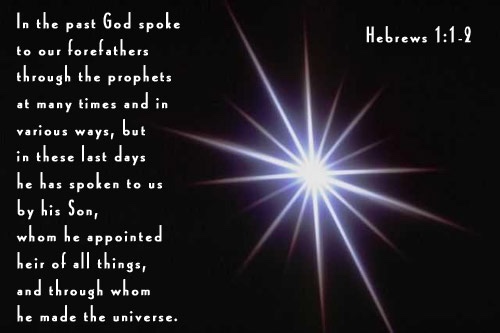
Instead, this book begins with a poetic preface, elegantly balancing a series of affirmations; first, about God (long ago God spoke … in these last days God has spoken), and then, about God’s Son (appointed heir … the reflection of God’s glory … the exact imprint of God’s very being). Each of these sections ends with a further affirmation about this Son (he is the agent of God’s creation … he sustains all things). The final section offers more about the Son (he made purification … he sat down at the right hand of the Most High … he became superior to the angels).

This poetic preface (1:1–4) provides a compact statement of the significance of Jesus. This is part of this Sunday’s lectionary passage (1:1–4, 2:5–12). It sets out the position of the author of this book quite clearly: the Son—soon to be identified with Jesus (2:9)—is superior to the angels, with a name more excellent than theirs (1:4). The motif of superiority and greater excellence permeates this work.

After this poetic opening, the work plunges into a didactic string of scripture citations (1:5–14), supporting the claim of the superiority of the Son. This is followed by the first of many direct exhortations (2:1–4), encouraging the readers to “pay greater attention to what we have heard” (2:1). The pattern of alternating teaching and exhortation continues for thirteen chapters, until the final appeal brings the work to an end with a benediction (13:20–21) and a rapid sequence of news, greetings and a final blessing (13:22–25). Finally, right at the very end, the work looks like a letter!

Like the “letter” of Jude, the “letter” to the Hebrews is actually much closer in form and function to a sermon; but it does not share the sectarian aggression of Jude. Like the “letter” of James, the “letter” to the Hebrews provides numerous exhortations and encouragements; indeed, at its end, its author identifies it simply as “a word of exhortation” (13:22).

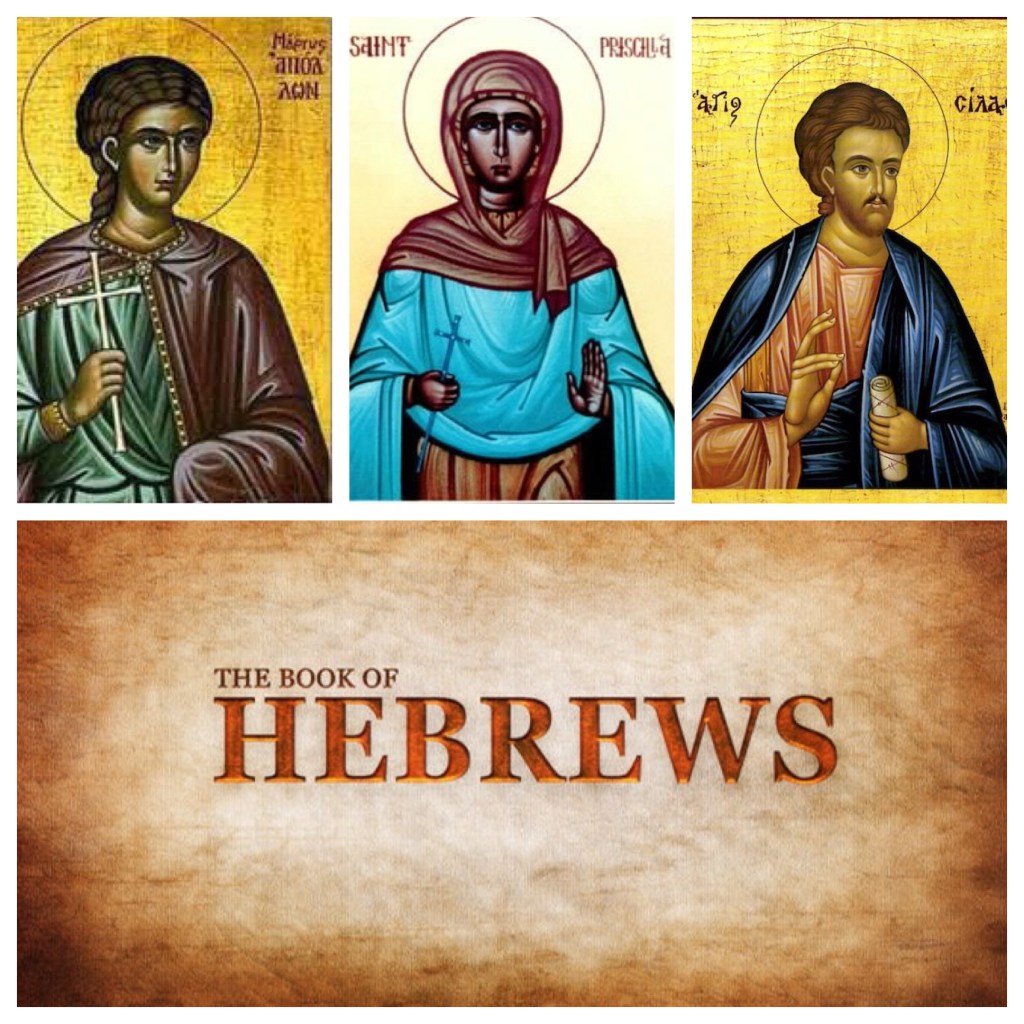
The author is most certainly not Paul, as some ancient church writers maintained. Despite claims that the work was written by various individuals mentioned in other New Testament books (Apollos? Priscilla? Silvanus?), it is not possible to be absolutely certain about the identity of the author. The single reference to a known individual, Timothy, in the closing greetings (13:23), does not guarantee that the work came from Paul, an associate of Paul, or even a Pauline circle.

Three suggestions for the author of the word of exhortation to the Hebrews: Apollos, Priscilla, and Silvanus. But none of them can be proven
to have been the author.

The use of a refined Greek style, the intense engagement with Hebrew scripture, and the use of typological interpretation (for instance, 8:1–7, 13; 10:1, 11–13) together suggest an educated Hellenistic Jew who had come to faith in Jesus as Messiah and was a powerful preacher of the Gospel.

Somebody like Apollos would be quite apposite to be named as author—he was “an eloquent man, well-versed in the scriptures … he spoke with burning enthusiasm and taught accurately the things concerning Jesus” (Acts 18:24–25). Indeed, we learn further that “he powerfully refuted the Jews in public, showing by the scriptures that the Messiah is Jesus” (Acts 18:28).

I would love for Apollos to be proven as the author of this word of exhortation. However, apart from the similarity of rhetorical style and interpretive method in Hebrews, there is nothing explicit that will allow us to pin the authorship on the powerful rhetorician, Apollos of Alexandria.

The writer of Hebrews, whoever they are, notes that the message of salvation was “declared at first through the Lord, [then] attested by those who heard him” (2:3), thus acknowledging a chain of tradition lying behind the work. This indicates that it was probably written towards the end of the first century (and thus, a few decades later than when Apollos was active). But by whom, exactly, remains speculation.

Likewise, the precise identity of the recipients cannot be known, although some things can be said about them in rather general terms. The reference to “city” (13:14) might suggest an urban context, whilst notes of the good works carried out by the recipients (10:34; 13:16) and a warning to avoid “the love of money” (13:5) might point to a group with a degree of wealth. But these are fragile links, which can’t be definitive in identifying the audience.

The author indicates that the recipients had experienced “a hard struggle with sufferings, sometimes being publicly exposed to abuse and persecution” (10:32–33)—although not to the point of sacrificing their lives (12:4). As a result of this, some may have “drifted away” (2:1) or “fallen away” (6:4–6) from their faith.

There are occasional flashes of scathing rhetoric in referring to these people: they are in danger of having an “evil, unbelieving heart” and “hardened by the deceitfulness of sin” (3:12–13), or they are “crucifying again the Son of God and are holding him up to contempt” (6:6), or they have “spurned the Son of God, profaned the blood of the covenant by which they were sanctified, and outraged the Spirit of grace” (10:29). This is powerful rhetoric.

Elsewhere, however, the author describes such people in more subdued tones, as being “dull in understanding” (5:11) and needing someone to teach them (5:12). This is the task that is undertaken in this word of exhortation.

So this anonymous work to the Hebrews, as we have noted, opens with a soaring poetic description which sets out the hermeneutical stance of the author, as well as the centrality of Jesus in the schema which is to be expounded (1:1–4). Images in these verses are drawn consistently from Hebrew Scripture.

The verses portray a continuing relationship between God and humanity, which has come to a point of fulfilment in “a Son”. What is claimed of this Son has an all-encompassing scope. A number of images are used, pointing to other sections of New Testament texts where traditional Jewish ideas are pressed into the service of proclaiming Jesus.

The imagery of word is central in 1:1–4; this image derives from the prophetic figure of Israel and from the seminal text of Gen 1, and is also prominent at John 1:1–18. Jesus is claimed to be God’s word “in these last days” who “sustains all things” (1:3). As God’s word, Jesus is the one who “created the worlds”, in the same way that Wisdom is the co-worker with God in the process of creation in Proverbs 8, the Wisdom of Solomon, and Sirach 24.

A second image depicts the Son as reflecting the divine glory, the physical manifestation of God’s presence. This image hearkens back to wilderness stories in Exodus and Numbers and receives its clearest New Testament expression at Col 1:15–20. More than this, it is claimed that the Son is “the exact imprint of God’s very being” (1:3), terminology similar to that used in Jewish wisdom literature such as the Wisdom of Solomon 7.

A third term uses cultic imagery to assert that the Son has “made purification for sins” (1:3); the need for purity is familiar from Leviticus and Deuteronomy and runs through the ethical exhortations of Paul. The cultic dimension of understanding the role of Jesus will assume huge proportions as the word of exhortation develops. The image of Jesus as the great high priest will provide the dominant framework for understanding the person and work of Jesus.

A fourth image refers to the Son as having been “appointed heir of all things” (1:2). The language of inheritance reflects a concern of the patriarchal narratives of Genesis—where expected and surprising lines of inheritance are narrated—as well as language picked up by Paul at Rom 8:12–17.

Finally, the superiority of this Son is explicitly asserted, insofar as he has inherited a name “more excellent” than the names of the angels (1:4). He now rests at the right hand of God, a location recognised as a position of power in Exodus 15 and the Psalms, as well as in sayings of Jesus. This motif of superiority—indeed, even supercession—runs throughout the book, and provides both a central element of its theology, and a disturbing dimension of its rhetoric.

This collection of imagery strongly suggests that the author of this book was located within a strongly Jewish sector of the ongoing movement of the followers of Jesus. The arguments advanced in this book reflect the growing tensions and disagreements within the Jewish arena, as the followers of Jesus clash with the teachers of Judaism. We’ll explore those arguments in posts in subsequent weeks.

See also https://johntsquires.com/2021/10/05/a-great-high-priest-who-has-passed-through-the-heavens-hebrews-4-pentecost-20b/

A priest forever, “after the order of Melchizedek” (Hebrews 5; Pentecost 21B)

https://johntsquires.com/2021/10/27/the-perfect-high-priest-who-mediates-a-better-covenant-hebrews-9-pentecost-23b/

https://johntsquires.com/2021/11/02/the-superior-high-priest-who-provides-the-better-sacrifices-hebrews-9-pentecost-24b/

https://johntsquires.com/2021/11/08/the-assurance-of-hope-in-the-word-of-exhortation-hebrews-10-pentecost-25b/

Boundary lines and the kingdom of God (Mark 9–10; Pentecost 18B to 20B)

Last week (Pentecost 18) we heard a Gospel passage in which Jesus affirmed that “whoever is not against us is for us” (Mark 9:40). He refused to draw strong and clear boundaries around his “inner group” simply on the basis of explicit identification with him—rather, he affirmed that it is the actions of people that define where people are to be placed in relation to him. Deeds, not words, define the followers of Jesus.

That line of argument would be take up by his brother, James, in his “letter” affirming that “faith without works is dead” (James 2:26), and by another follower (by radiation, the evangelist Matthew), who quoted him as saying, “not everyone who says to me, ‘Lord, Lord,’ will enter the kingdom of heaven, but only the one who does the will of my Father in heaven” (Matt 7:21). It is a strong theme in the testimony to Jesus in Christian scripture: actions, not words, define allegiance to Jesus.

This week (Pentecost 19), we hear a Gospel passage in which Jesus becomes indignant with his closest followers, rebuking them for hindering children from gaining access to him. In contrast to the attempts of the disciples to keep the children at a distance, Jesus drew children close to himself and blessed them, saying, “whoever does not receive the kingdom of God as a little child will never enter it” (Mark 10:15). The boundary line which Jesus draws is clearly not based on age. The ability to articulate a complex theological affirmation is not the key criterion. Rather, it seems that a willingness to search out Jesus, a desire to be with him, is the key criterion.

Jesus has already affirmed the central significance of a child in his consideration of this issue. Mark notes that “he took a little child and put it among them” (9:36), speaking the very clear affirmation that “whoever welcomes one such child in my name welcomes me, and whoever welcomes me welcomes not me but the one who sent me” (9:37). Still earlier, Jesus had placed the health of a child at the centre of his focus, when approached by a synagogue leader, who pleads with Jesus, “my little daughter is at the point of death; come and lay your hands on her, so that she may be made well, and live” (5:23).

We have noted that the child was a person with no authority, no status, no prestige or power, in the society of the day; yet the low-status, not-important child is the exemplar, not only of Jesus, but of God, “the one who sent me” (9:37). Welcoming the child is a clear manifestation of the paradox that lies at the heart of the Gospel. Jesus is the one who will walk resolutely towards death (8:31: 9:31: 10:34), becoming “the slave of all” (10:44) who will “give his life a ransom for many” (10:45).

Those who follow Jesus on this pathways will need to take up their crosses (8:34), lose their lives (8:35), be “last of all and servant of all” (9:35), “receive the kingdom of God as a little child” (10:15), sell all that they possess (10:21), leave their families (10:29), and become “last of all” (10:31). (See https://johntsquires.com/2021/09/06/the-paradoxes-of-discipleship-mark-8-pentecost-16b/)

Next week (Pentecost 20), we will hear a Gospel passage in which Jesus sadly informs a man of means who prides himself on keeping all the commandments, that still “you lack one thing: go, sell what you own, and give the money to the poor, and you will have treasure in heaven; then come, follow me” (Mark 10:21). The man left, shocked and grieving; he could not do what Jesus instructed. Jesus here draws the line of belonging or being alienated from him on the basis of whether a person is able to implement radical actions of obedience.

We have seen the way that the author of this account of Jesus (by tradition, Mark the evangelist) redraws the boundaries of the people of God, by his actions in relating to people in need (see https://johntsquires.com/2021/06/24/on-not-stereotyping-judaism-when-reading-the-gospels-mark-5-pentecost-5b/) and by the geography that he traverses, as he edges outside of the land of Israel (see https://johntsquires.com/2021/08/24/stretching-the-boundaries-of-the-people-of-god-mark-7-pentecost-14b-15b/).

We have also seen that it was the courageous rhetorical challenging of Jesus by a Gentile woman which provoked him to be absolutely clear about this more inclusive boundary (see https://johntsquires.com/2021/09/02/on-jesus-and-justa-tyre-and-decapolis-mark-7-pentecost-15b/) And again, in this incident, it is the health of a young child which draws action from Jesus (7:26, 29).

The passages in our current stream of lectionary readings reinforce the perspective already developed in these earlier sections of the Gospel (chapters 5 to 10). Jesus is not an exclusivist, drawing hard boundary lines close around his group. He is an inclusivist, looking to welcome those from beyond the traditional inner group, inviting in those on the fringe or outside this conventional group.

That’s the consistent message about Jesus in the stories that we read through the central chapters of this account. It’s the consistent theme that followers of Jesus in the 21st century need to ensure are the key markers of the Christian church today.

Convicted (2): Bridget Ormsby

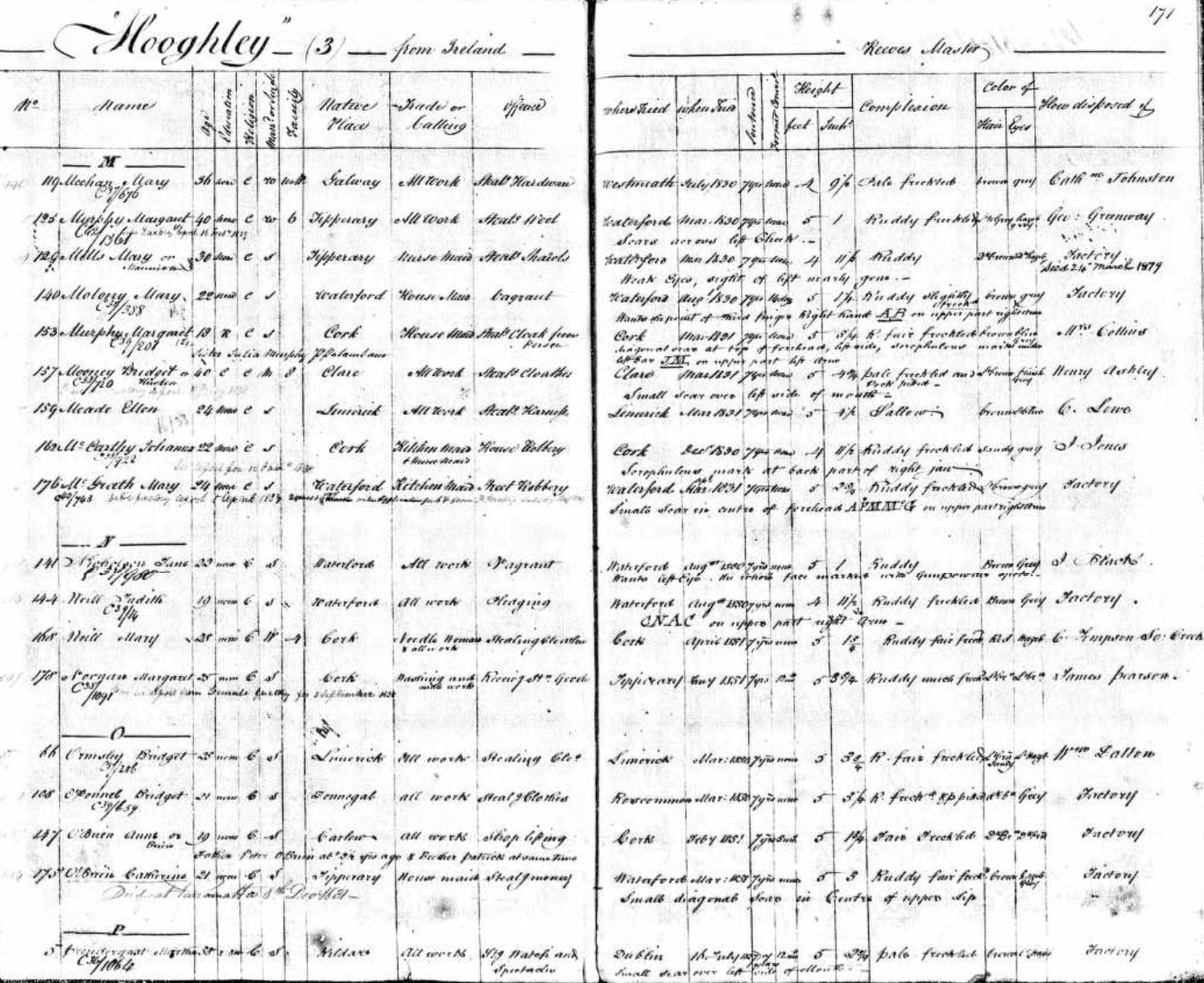
My ancestor Bridget Ormsby arrived in the colony of New South Wales on the ship Hooghly 190 years ago today, on 27 September 1831. Bridget was my great-great-great-great-grandmother on my father’s maternal line. She is the second reason that I was born in Sydney. (The first is my ancestor Joseph Pritchard; see https://johntsquires.com/2021/09/14/convicted-1-joseph-pritchard/)

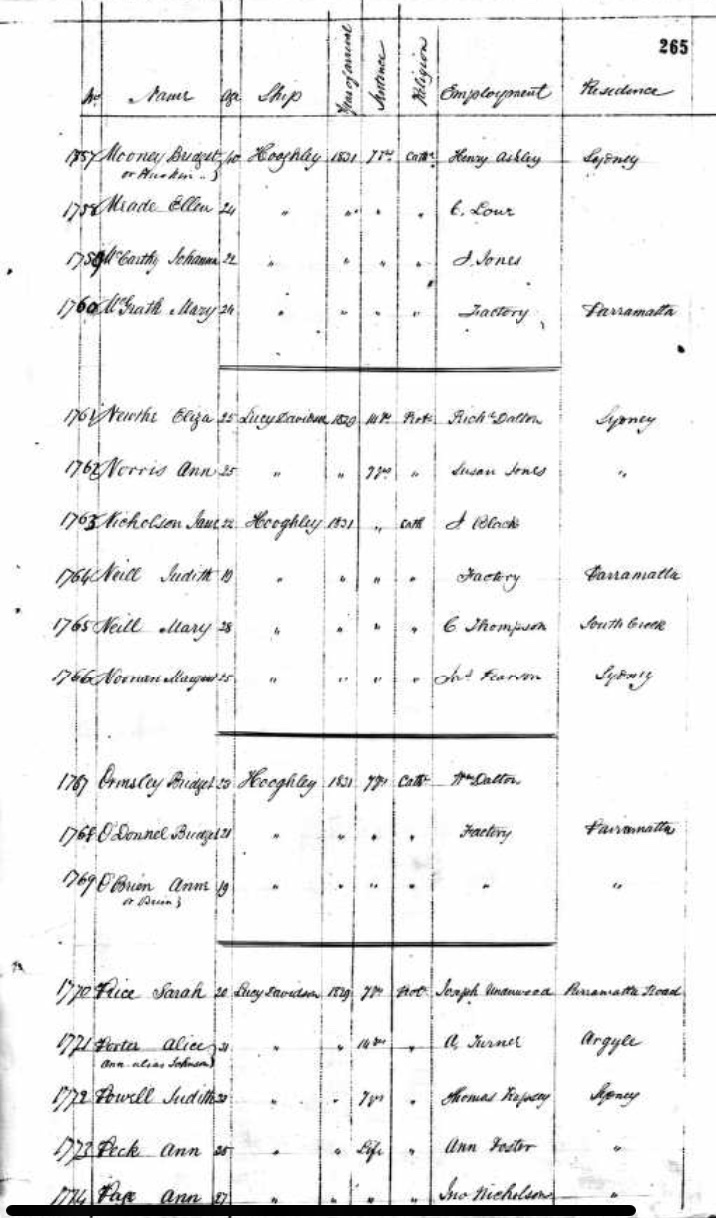
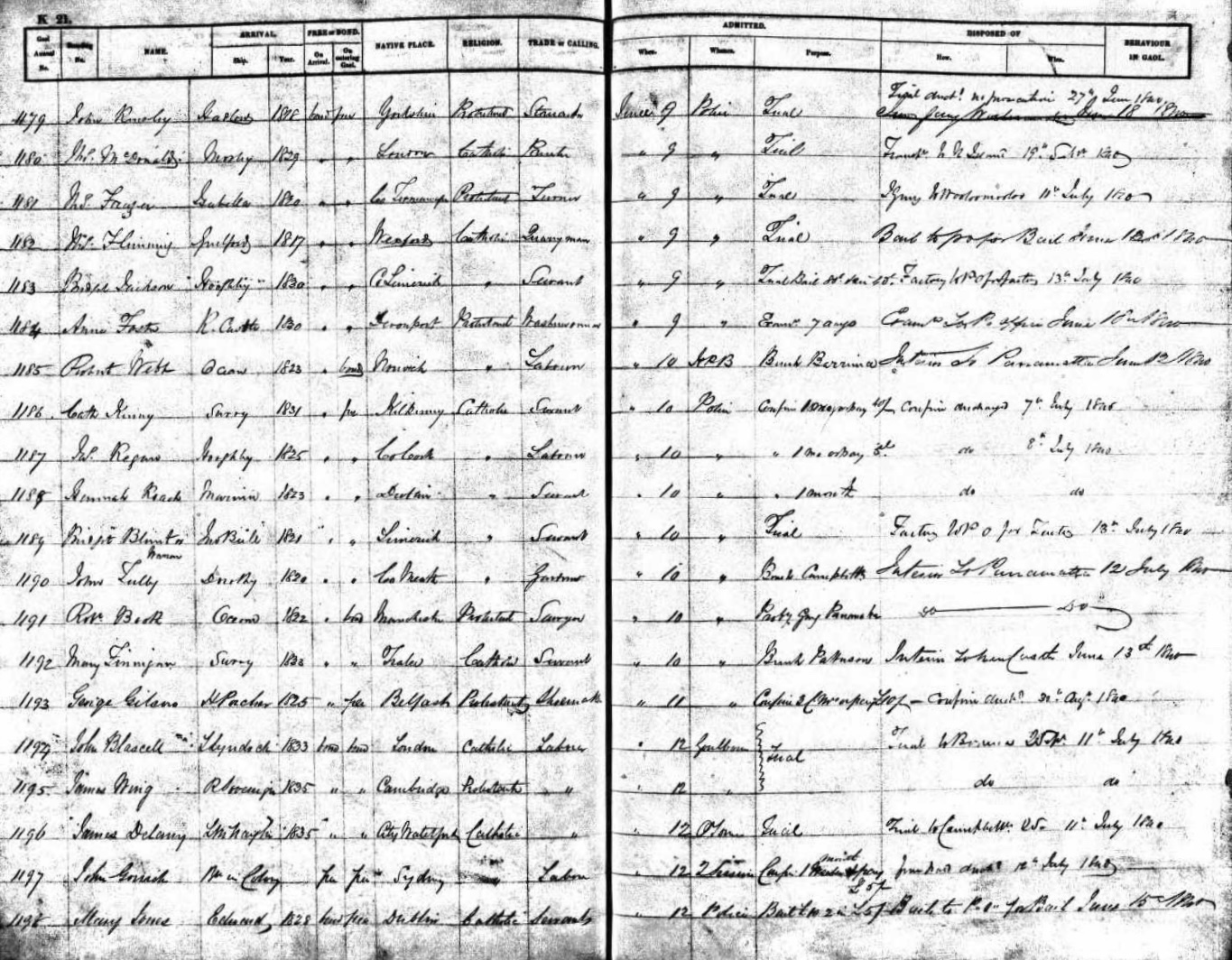
On 13 March 1830, at Limerick in Ireland, Bridget Ormsby was convicted of stealing clothes and sentenced to transportation to NSW for 7 years. She was identified as a Servant who was a native of County Limerick, Ireland, and was aged 22 years the time of her conviction.

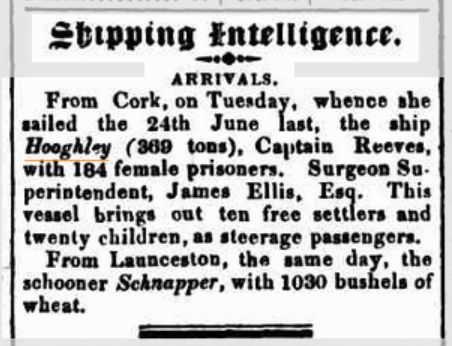
She was one of 184 female prisoners who were transported on the ship Hooghly, which set sail from Cork on 24 June 1831. The ship sailed under Captain Peter J. Reeves, with James Ellis as the Surgeon Superintendent. Also on the ship were ten free settlers and twenty children, travelling steerage.

A contemporary account in an Irish newspaper described the terrible situation in Ireland, where famine was gripping the population. “On 15th June 1831 the Bury and Norwich Post and reported: The accounts from Ireland are truly appalling. At the lowest estimate, ascertained from personal and minute inquiries, upwards of two hundred thousand human beings are in danger of perishing from famine. A deputation from the Mayo Relief committee waited upon the Lord Lieutenant, at Dublin, on Saturday, to implore of the Government to interfere and endeavour to rescue the population of that county from the dreadful fate which awaits them.

“The Freeman’s Journal states that the members of the deputation offered themselves for examination on oath before the Privy Council, to prove that 148,000 human beings are exposed to the most horrible of deaths—starvation. In Newport 15 have actually died of hunger in four days. Fever, too, in its worst and deadliest form, is setting in, and will soon rise to the wealthy and the noble.

“No words can describe the terrible scenes that overspread the country. Persons endeavouring to support life on sea weed, on nettles, and the common weeds of the field – poor mothers wailing for their children, and hordes of men roaming about asking for work and food – families stretched in sickness, without one to attend them.”

It is quite possible that Bridget Ormsby could have resorted to stealing in order to survive in such tenuous circumstances, like so many of the other women sentenced and transported. Indeed, transportation to the colonies might well have been preferable to remaining in Ireland.

The ship Hooghly in arrived at Sydney Cove on 27 September 1831. A muster of 181 women was held on board by the Colonial Secretary on 29 September. Three women were absent from the Muster as they had been sent straight to the hospital in Sydney on arrival.

The Hooghly was one of four convict ships bringing female prisoners to New South Wales in 1831, the others being the Kains, the Palambam and the Earl of Liverpool. A total of 504 female convicts arrived in the colony in 1831. But the Hooghly soon gained quite a reputation in Sydney Town. In “Free Settler or Felon?”, at jenwilletts.com, we read:

“It wasn’t long before the Hooghly women made their presence felt. They were often charged at the Police Office before being sent to the Female Factory at Parramatta; and soon their names were entered in the Principal Superintendent of Convict’s List of absconding convicts as well.”

Mary Ann Agnew, a recent importation per Hooghly made her maiden appearance, charged by Mr. Flynn, her master with walking off, bag and baggage, from his premises, and taking up her abode with a number of notorious characters. She was recommended a six weeks’ specimen of Factory discipline, by way of opening her eyes a little. Sydney Gazette 10 November 1831

The list of charged at the Police Office on Monday was unusually long; some few of them were of a serious nature, but the majority the effects of that hydra headed monster, rum; no less than six of the damsels recently imported per Hooghly figured among the number. Sydney Gazette 24 November 1831

The women per the ship Hooghly have turned out a rare set of incorrigibles, the Police office daily overflows with them, while the factory can bear testimony to their conduct. Sydney Herald 28 November 1831

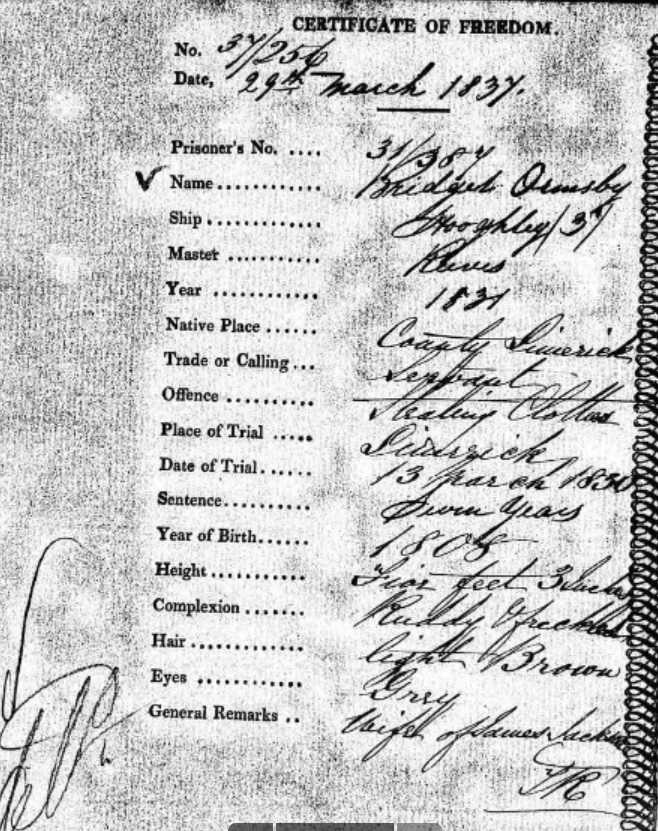
Despite the company of which she was a part on this ship, once in the colony, Bridget worked out her seven years’ sentence and duly obtained her Certificate of Freedom on 29 March 1837. This document describes her as being 5 feet 3 inches in height, of a ruddy and freckled complexion, with light brown hair and grey eyes. The certificate also notes that she was “the wife of James Jackson”.

At the age of 24, Bridget Ormsby married James Jackson, a fellow convict (more about him in a later post). James Jackson had already married once, to Elizabeth Crasby, in 1820 (and presumably had been widowed); he married his second wife, Bridget Ormsby, aged 24, on 19 March 1832.

The ceremony was one of three for convict couples conducted on the same day by Rev William Cowper in Sydney. The couples being married were all identified by the ship on which they had arrived (James Jackson, Mariner; Bridget Ormsby, Hooghley).

The couple had a son, James, born in 1832. This son, James Jnr, married Margaret Jane Crowley in 1856. Their daughter, Maria, b. 1862, married Joseph Pritchard in 1880. Two further sons were born: John in 1834, William in 1836. I am descended from this 1880 marriage, of Joseph and Maria Pritchard.

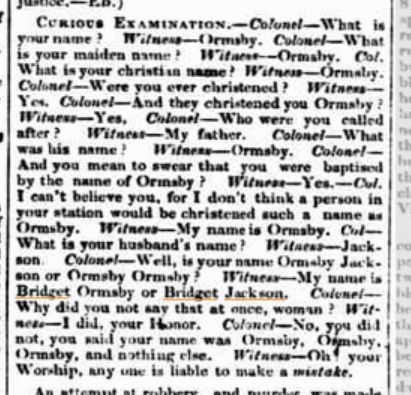
Two years after she gained her Certificate of Freedom in 1837, Bridget was cross-examined in relation to a crime. The interchange is recorded in the Sydney Monitor & Commercial Advertiser, on page 2 of the issue of Monday 26 August 1839.

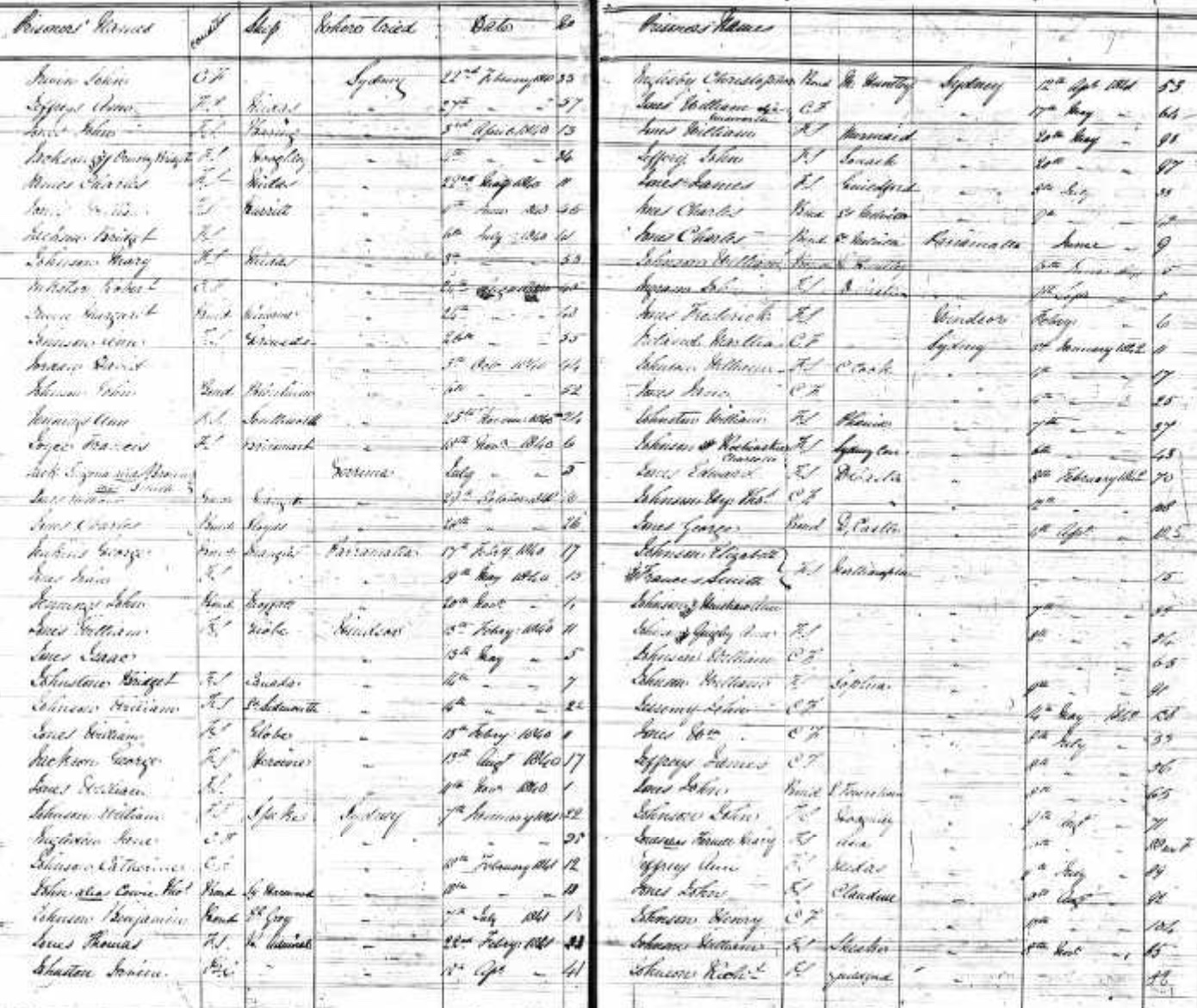
(There is a record of the death of Bridget Kingsley in 1840. Could this be her?) (Also the death of a Bridget Jackson, aged 53, at Camperdown, in 1861)

As an example, take the prophets (James 5; Pentecost 18B)

“Is anyone among you suffering? Let him pray.” So we read in this week’s selection from the treatise of James which is offered by the lectionary (James 5:13–20). As a further encouragement, a few verses earlier, we are enjoined, “as an example of suffering and patience, brothers, take the prophets who spoke in the name of the Lord” (5:10).

In this rhetorical question and proverbial statement, we find that the author of this treatise does something that we have seen to be quite familiar from other sections of the book; he makes reference to Hebrew scripture. In doing this, James, the author, was doing what his more famous brother—Jesus—so regularly did. Referencing scriptural traditions was a family trait; indeed, it was what any faithful Jewish man would do, and provide scriptural resonances in what he was saying.

A number of statements in the treatise of James resonate with the teachings of Jesus that we know so well in the Beatitudes (Matt 5:3–10). Most strikingly, the final beatitude spoken by Jesus, in which he exhorts joy in the face of persecution, in the manner of “the prophets who were before you”, is reflected in the opening exhortation of James, “whenever you face trials…consider it nothing but joy” (1:2), as well as the later reminder of James, “as an example of suffering and patience, take the prophets” (5:10). The two brothers are simply providing variations on a theme.

Other teachings in the book of James provide similarities to the teachings of Jesus spoken in the beatitudes, in the form found in Matt 5:3–12. The question posed by James, “has not God chosen the poor in the world…to be heirs of the kingdom?” (2:5) is similar to the first beatitude of Jesus, “blessed are the poor” (Matt 5:3).

The promise that James envisages, of “a harvest of righteousness…for those who sow peace” (3:18), is reminiscent of another beatitude of Jesus, “blessed are the peacemakers” (Matt 5:9). The instruction to “purify your hearts” (4:8) echoes “blessed are the pure in heart” (Matt 5:8).

Perhaps we should not be surprised about these resonances between the teachings of Jesus and the treatise of James; if this work was indeed written by James, the brother of Jesus, a leader of the church in Jerusalem (Gal 1:19), would we not expect him to know what Jesus was teaching? The two brothers are singing from the same songsheet.

These similarities between the teachings of Jesus and the writings of James are significant. The fact that they are preserved in different documents, shaped and then preserved by the followers of Jesus, is suggestive of an awareness of a common tradition of these ethical guidelines amongst Jewish members of the growing messianic movement.

James quotes Hebrew Scripture directly in verse 4:6, “God opposes the proud but gives grace to the humble” (Prov 3:34). This is the basis for his instruction, “humble yourselves before the Lord, and he will exalt you” (4:10).

The same scripture undergirds the words of Jesus which declare the same thing: “whoever exalts themselves will be humbled, and whoever humbles themselves will be exalted” (Matt 23:12; see also Luke 14:11, 18:14). It is also informs the prophetic words sung by his mother before his birth, “he has brought down the mighty from their thrones and exalted those of humble estate” (Luke 1:52). The two sons of Mary (Jesus and James) are singing from the same songsheet as their mother!

When James writes a warning about laying up treasure (5:3), we are reminded of Jesus’ parable about the same topic. (Luke 12:13-21). In these words, both Jesus and James are drawing from Hebrew scriptures. Speaking against the oppressive actions of the rich sounds very much like a number of oracles thundered by the ancient prophets (Amos 2, 4, Micah 6, Hosea 12, Ezekiel 7).

The details use snippets of pertinent prophetic denunciations. “The last days” evoke “the Day of the Lord” (Isa 34:7-8, Jer 25:33-34, Ezek 7:1-4, Joel 2:1-3, Amos 5:18-20). The withholding of the wages of the labourers (5:4) contradicts the Law (Lev 19:13, Deut 24:14-15) and echoes denunciations spoken by prophets (Jer 22:13, Mal 3:5).

The condemnation of “fattened hearts” (5:5) evokes Jer 5:27-28, Ezek 34:2-4. And murdering the righteous person reminds us, not only of the wrongheaded approach of wicked people (Wisdom 2:10-20) and the fate of the righteous servant (Isa 53:3-5, 7-9), but especially of the fate of Jesus, the Righteous One (John 15:20; Acts 3:14).

Then, the command of James, “be patient until the coming of the Lord” (5:7), sounds a note that we hear in the final teachings which Jesus gives to his disciples, not long before his arrest. The earlier version of these teachings infers that patience will be required as “the beginnings of the birth pains” are seen (Mark 13:5–8), before Jesus exhorts his disciples: “the one who endured to the end will be saved” (Mark 13:13).

Interestingly, “be patient” in the midst of these tumultuous happenings is a refrain found elsewhere in the New Testament. Paul advises, “let us keep awake and be sober” (1 Thess 5:6); John encourages, “little children, abide in him” (1 John 2:28); and Jesus himself is quoted as saying, “I am coming soon” (Rev 22:7).

It was a widespread belief amongst the followers of Jesus in the first century, that Jesus would soon return, and that God would establish the kingdom of heaven on earth. (That is the final, climactic vision, offered in Revelation 21:1-22:6). “The coming of the Lord is at hand” (5:8) is a recurring New Testament motif (Rom 13:12; Phil 4:5; 1 Pet 4:7).

Over twenty centuries later, we know that this did not eventuate in the timeframe that was imagined, and hoped for, in the first century. Does that invalidate all that those earliest believers thought, wrote, and prayed for? Or is there another way that we are to take their words for our times?

Certainly, the direct ethical instructions found in this passage of the treatise of James sound like they are timeless: cultivate patience (5:7-8), avoid complaining (5:9), remain steadfast (5:11), be as good as your word in all you do (5:12), prayer and sing praise (5:13), seek healing and forgiveness (5:14–15) after confessing your sins (5:16). This is what we are called to do as we await the coming of God.

We are buying more debt, pain, and death: a case against nuclear-powered submarines

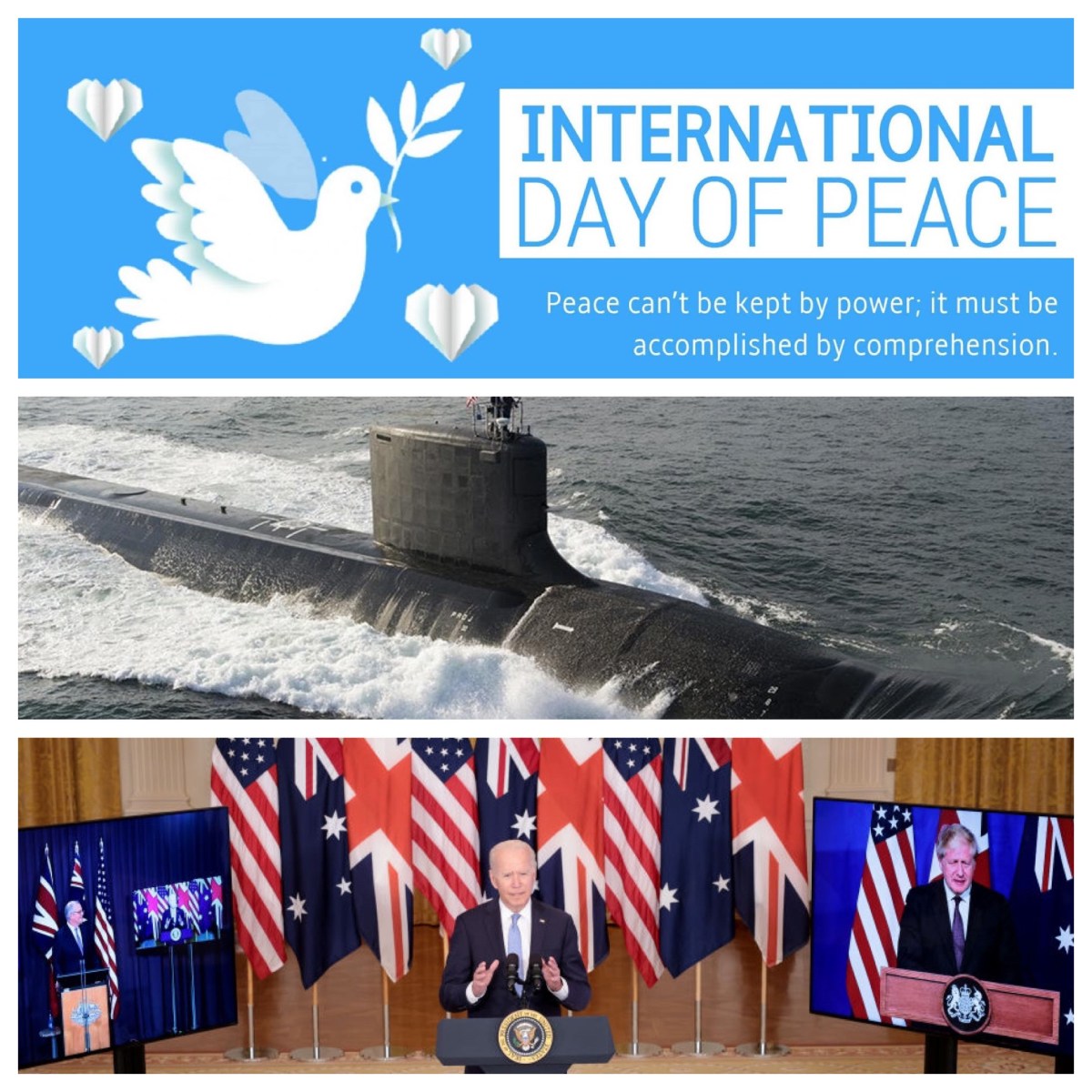
Today is the International Day of Peace. That is an appropriate time to reflect on the fact that, as a country, we have just scrapped a $90 billion contract with Naval Group of France for a new fleet of submarines—in favour of a currently proposed (a d as yet uncosted) deal with our American and UK allies to purchase nuclear-powered submarines. At least, in nothing I have read is the actual cost of this awkward AUKUS deal specified–it seems that is still to be negotiated.

It seems to me that, whatever the actual dollar cost of this new deal, it is outrageously expensive, and will prove to be incredibly costly. I believe we are buying, not only more debt, but also pain and death, for future generations. I am happy to leave the debate about the precise financial cost to the politicians, journalists, and defence pundits in the months and years ahead. What is perfectly clear to me, however, is that the cost to our country will indeed be large and invasive, penetrating deeply and impacting widely.

Allocating money in the federal budget to defence matters is a highly contested matter. By making this a high priority, other matters are pushed down the priority list. We hear regular pronouncements about the need to tighten our belts and reduce the deficit in our federal budget. But we rarely if ever hear considered reflections

about the impact of this on essential elements of our federal spending which are essential to our lifestyle—social security, Medicare and health care, education and training, and veterans’ affairs.

What will it mean for future federal budgets, to have massive and increasing commitments to defence spending, such that these other areas will need to be limited or even reduced? Allocating a large amount of the limited funds available to the Federal Government to this deal will mean less money for other areas. That will impact on the everyday lives of all Australians.

But it is not the financial costs that concern me. Nuclear-powered submarines have the simple function of contributing to efforts to defend our coastline—something that has been a high priority for the current federal government. But they also have the capacity to go on the attack (and against China, of all countries—what are we thinking?). They are agents of warfare, dedicated to be at our disposal to wage war.

At the moment, there is no country in the world with a repository to dispose of high-level nuclear waste. There is only one repository in the world capable of disposing of intermediate-level nuclear waste, in New Mexico (USA), and it was shut for three years (2014–2017) because of a chemical explosion. How are we planning to dispose responsibly of our nuclear waste?

And further: do we really want nuclear-powered weapons to be involved in any future war? The environmental impact of a nuclear blast is serious. We have seen the scale of illness and death from nuclear explosions, in the 1945 bombings of Japan, the Chernobyl explosion in 1986, and the Fukushima accident in 2011.

An incident involving a nuclear-powered element in current times would be even more potent and damaging. Most worryingly, the ABC has reported that nuclear-powered submarines “have a ‘long history’ of involvement in accidents across the globe”. See https://www.abc.net.au/news/2021-09-17/nuclear-submarines-prompt-environmental-and-conflict-concern/100470362

Alongside these concerns, we know that there are costs associated with warfare other than the finance required to train troops and provide weapons for the battle—costs that go deep into people’s lives and spread wide across society. War means injury and death, to our own troops, and to the troops of those we are fighting against. Every death means a family and a local community that is grieving. There is great emotional cost just in one death, let alone the thousands and thousands that wars incur.

Every person injured in waging war experiences suffering, anxiety, and pain, with their loved ones looking on, suffering with them, and with the medical and hospital system having to devote resources to their healing.

I have a friend who has served with pride in the Australian Navy, in the troubled region of the Persian Gulf. He and his mates have returned home after their service, and they are living “regular” lives in society, with families, jobs, friends. Yet I know from my friend just how costly his service was. Psychological trauma and emotional scarring place heavy burdens on an apparently healthy man in his “regular” life. Those burdens ripple out in unhealthy ways to those around him–both family and friends. It is another cost of war, that is multiplied time and time again by the numbers of people who have served in the military.

But these are the expected, observable costs of war. War also brings “collateral damage”, in that terrible, dehumanising phrase first used by the US military during the Vietnam conflict. It is a euphemistic way of referring to “civilian casualties of a military operation”. But the reality is much starker than what this smooth phrase conveys. Countrysides are invaded, villages and towns are looted, women are raped, civilian women and men are injured or killed, buildings are destroyed, and people can be forced to seek refuge in another place.

We see these consequences of war again and again on our screens, in so many places around the world. Whilst we might enter into a war in order to resolve an immediate problem, the reality is that it is usually a short-term “fix”. War never fully resolves a conflict or solves a problem; war inevitably generates further conflict and raises more problems. The history of Afghanistan in the last 43 years testifies to this—the 1978 Saur Revolution, the 1979 Soviet Invasion, the guerilla war of the 1980s, the rise of the Mujaheedin, civil war from 1989, the rise of the Taliban, the American Invasion of 2001 and the war which has run on for two decades through into this current year. At every point, warfare has generated yet more conflict.

As people of the Uniting Church, we are committed to being a peacemaking people, firmly working for the cause of peace in our world. We are also a church which sees the problems inherent in the use of nuclear power—and especially, the use of nuclear power in waging war.

We should be totally opposed to this latest deal signalled by the Federal Government. It is not simply a matter of purchasing new nuclear-powered submarines. We are buying more debt, pain, and death, for future generations of Australians. We should be pressing our political representatives to urge the government to back away from this deal.

In 1979, the Uniting Church Assembly received a statement advocating opposition to the mining and export of uranium; see https://assembly.uca.org.au/news/item/3137-a-world-free-of-nuclear-weapons

In 1982, the Uniting Church Assembly declared that “affirm that the Uniting Church is committed to be a peacemaking body, seeking to follow the Lord of the Church by encouraging political authorities to resolve political tensions by peaceful means”, in a statement on Militarism and Disarmament, at https://www.unitingjustice.org.au/uniting-for-peace/uca-statements/item/500-militarism-and-disarmament

In 1988, the Uniting Church Assembly adopted a comprehensive statement relating to nuclear power and the nuclear arms race. See https://www.unitingjustice.org.au/uniting-for-peace/uca-statements/item/499-nuclear-deterrence-disarmament-and-peace

The same year, the Assembly adopted the Statement to the Nation: Australian Bicentennial Year, 1988, in which it describes itself as a church which had “engaged constructively with the peoples of Asia, the Pacific and the rest of the world as peacemaker.” See https://assembly.uca.org.au/resources/introduction/item/133-statement-to-the-nation-australian-bicentennial-year-1988

In 2003, the Uniting Church Assembly declared once more that “the Church is committed to be a peacemaking body” and adopted the Statement, Uniting for Peace; see https://www.unitingjustice.org.au/uniting-for-peace/uca-statements/item/497-uniting-for-peace

The Uniting Church has supported the International Campaign to Abolish Nuclear Weapons (ICAN), a coalition of non-governmental organisations in one hundred countries, promoting adherence to and implementation of the United Nations Treaty on the Prohibition of Nuclear Weapons. Canberra Region Presbytery signed a letter of support for this campaign in 2020, on the 75th anniversary year of the Hiroshima and Nagasaki bombings. See https://www.icanw.org/australia

See also a fine blog on this topic by Chris Walker at https://revdrchriswalker.wordpress.com/2021/09/21/nuclear-submarines/

and an address for International Day of Peace by the Moderator of the UCA in NSW.ACT, Simon Hansford, at https://talbragar.net/2021/09/21/when-peace-is-not-peace/