For a good month, the adults were out and about across the country. “Tell me what you need”, many of them said—and stopped to listen. “This is what I think we can do”, others said— and gave indications of what they could offer to people who were listening. Why,some of them even said how much it would cost to do what they were offering, and where the money would come from to pay for that.
And then the people came, and considered, and voted, and told the adults what they wanted. And the adults all nodded, and said, “yes, indeed,the people have spoken: we respect that, and we will do what we said”.
Then the adults caught planes and drove cars and gathered in their sandpits in the special place that had been made for them to come together and play. Some of the adults said they needed a bigger sandpit, because there were more of them. Other adults said they didn’t want little Eddie and Mackie to play with them any more in their “special” sandpit. Amd other adults started a very public squabble about who would have the best toys and the most play space in their sandpits. Why, one of them even decided she didn’t like the sandpit where she said she would play; so she decided to join the adults in another sandpit, just across the way.
But by then, it was apparent to all the people who had listened, and talked, and voted, that the adults had become children, once again. Which was, after all, what they had been before they had spent that month as adults, amongst the people.
*****
Or, in plain language:
MPs are elected to represent the people of their electorate, first and foremost. National policy needs to be formulated with due awareness of the impact across the board: each MP ought to be advocating for the needs and concerns that they are hearing from their electors.
Instead, party members focus on climbing the factional ladder (in both “majors”) and gaining the prestige, power, and salary of the next few rungs “up”. Leadership competitions and factional deals reveal that once they return to Canberra, they have a completely skewed and unpredictable upside-down set of priorities.
To me, that is more reason next time around NOT to vote for “the major parties”—especially since they are funded by gambling companies, fossil-fuel industry, multi- million dollar magnates, and, in the case of the National Party, the tobacco industry.
*****
For my posts on the election from my perspective in Lyne:
The church is alive and well. In recent years, Uniting Mission and Education, working within the Synod of New South Wales and the Australian Capital Territory of the Uniting Church in Australia, has supported a project in which good news stories of thriving congregations are told through professionally-produced videos. The Signal Box has just completed the sixth video in this series, Transforming Connections, featuring the mission and ministry of the Tuggeranong Congregation in the southern suburbs of Canberra.
Under the energetic leadership of the Rev. Elizabeth Raine [my wife], the Tuggeranong Church Council has charted a deliberate course to make a difference in the wider Tuggeranong community—to be the “salt of the earth” in southern Canberra. “I am a change agent”, says Elizabeth, with great honesty; “I won’t just come in and do the ‘status quo’.” The video, which shows the results of this approach, can be viewed at https://www.nswact.uca.org.au/resources/our-story-future-directions-video-series/
In this video, we learn how deliberate connections have been fostered with a number of community groups in the area. Kirsty and Liz speak about the flourishing with SeeChange Tuggeranong, which has seen regular events with a focus on sustainability. In recent years, the Congregation has also participated in local ACT community events such as Floriade Reimagined and SouthFest, and hosted the Canberra SleepBus for a period of time.
Jenny and Anne represent the fine team of volunteers in the Red Dove pop-up Op Shop. Wearing their “volunteers uniform” (which has the words of Micah 6:8 as the motif for the shop), they speak about the reinvigoration that has taken place, as the team has focussed on both living and sharing the good news—the Gospel—that drives the enterprise. As well as providing recycled clothing and goods at very reasonable prices, there is an environmental plus: “Jesus would be horrified with all this clothing going into the tip”, Anne says. That marks one of the many ways that the Congregation is working to reduce their carbon footprint on the earth.
Within the Congregation, another group continues to provide its weekly Emergency Food programme and the Lunchtime Conversation group. Quite a number of people within the Congregation take part in the weekly visit to Karralika, a drug and alcohol rehabilitation centre in the Tuggeranong Valley, to offer a “God space” to residents. Leonie and one of the former residents speak in the video with joy and hope about the positive impact that this ministry offering has had over many years.
Bill Lang, a member of the Church Council, is responsible for communications for the Congregation. Under Bill’s leadership, the website has been upgraded, regular Facebook posts are made about activities of the church, and short seasonal videos are posted on the Tuggeranong Uniting Church (TUC) website at https://tuc.org.au. Bill also edits and uploads videos of the weekly online Bible Studies which are offered throughout the year—they can be accessed in the TUC YouTube Library at https://www.youtube.com/@tuggeranongunitingchurch4795/playlists
Bill has been a member at Tuggeranong for many decades, and in the video he speaks about the ways the Congregation has adapted and developed through into the contemporary period. The online presence of TUC, through website, Facebook, and Instagram, is a key to the growth of the Congregation. Another longterm member Liz talks about the TUC Girls Brigade ministry that has been offered over the years.
Supporting the Congregation in its development, Canberra Region Presbytery Minister Andrew Smith talks in the video about the importance of informed, enthusiastic leadership—from ministers as well as from key lay leaders. “Elizabeth’s leadership has been really important”, Andrew says; “she has enabled them to see differently, to imagine differently for what church might be”.
“Canberra has a higher proportion of same-sex couples than any other city according to the Australian Bureau of Statistics”, Elizabeth Raine comments, “and TUC offers a safe space for the many Christian LGBTQI people who report poor experiences with churches and Christianity in general.” A monthly Rainbow Christian Alliance, which has been a part of the Congregation for eight years, has broadened its membership in recent years, spreading beyond gay and lesbian people to include growing numbers of people who are trans, intersex, and asexual. Three members of the Rainbow group speak in the video about their experiences of being accepted and valued within a faith community.
The local Greens MLA, Jonathan Davis, who himself identifies as gay, is a friend of the Congregation. In the video, he speaks about how he finds the Tuggeranong Community to be a welcoming space for him—unlike many other faith spaces where he has felt awkward or unwanted.
A monthly Messy Church under the name of Fam@4 now meets at 4pm on the 4th Sunday of the month, providing a time for younger folk to enjoy craft, worship, and eat a meal together. The video shows one of the regular intergenerational worship services which are held at key moments on Sunday mornings. Inevitably the church is filled with people of all ages, craft activities, vibrant music, with lots of colour, energy, and caring relationships growing. Pentecost is always a blaze of red; Christmas offers opportunity for joyous celebrations!
The Rev. Sharon Jacobs recently began a placement as the Relationships and Growth Minister, a newly-created position funded substantially by the Synod Growth Fund. Sharon is focussing her 50% role on developing the Congregation’s work with families and children, as well as supporting and growing the leadership and membership of the Rainbow Christian Alliance.
She works alongside Elizabeth Raine, whose experience in transitional ministry and understanding of how systems work has undergirded the way she has encouraged, enthused, challenged, and grown the many aspects of the life of the Congregation. The video offers dramatic and encouraging glimpses into the development and growth that has taken place.
And there is a stunning drone shot of the recently-completed mural on the large western wall of the church building which looks out across Comrie St to the regional Erindale Shopping Centre. The joy and colour of the symbols in the mural offer an inviting facade to those who pass by each day. The church is known and valued within its local community—and the many connections that have been made, and are being made, are truly “transforming connections”. They are transforming for the community; and they are transforming for the Congregation.
The church is alive and well. In recent years, Uniting Mission and Education, working within the Synod of New South Wales and the Australian Capital Territory of the Uniting Church in Australia, has supported a project in which good news stories of thriving congregations are told through professionally-produced videos. The Signal Box has just completed the sixth video in this series, Transforming Connections, featuring the mission and ministry of the Tuggeranong Congregation in the southern suburbs of Canberra.
Under the energetic leadership of the Rev. Elizabeth Raine [my wife], the Tuggeranong Church Council has charted a deliberate course to make a difference in the wider Tuggeranong community—to be the “salt of the earth” in southern Canberra. “I am a change agent”, says Elizabeth, with great honesty; “I won’t just come in and do the ‘status quo’.” The video, which shows the results of this approach, can be viewed at https://www.nswact.uca.org.au/resources/our-story-future-directions-video-series/
In this video, we learn how deliberate connections have been fostered with a number of community groups in the area. Kirsty and Liz speak about the flourishing with SeeChange Tuggeranong, which has seen regular events with a focus on sustainability. In recent years, the Congregation has also participated in local ACT community events such as Floriade Reimagined and SouthFest, and hosted the Canberra SleepBus for a period of time.
Jenny and Anne represent the fine team of volunteers in the Red Dove pop-up Op Shop. Wearing their “volunteers uniform” (which has the words of Micah 6:8 as the motif for the shop), they speak about the reinvigoration that has taken place, as the team has focussed on both living and sharing the good news—the Gospel—that drives the enterprise. As well as providing recycled clothing and goods at very reasonable prices, there is an environmental plus: “Jesus would be horrified with all this clothing going into the tip”, Anne says. That marks one of the many ways that the Congregation is working to reduce their carbon footprint on the earth.
Within the Congregation, another group continues to provide its weekly Emergency Food programme and the Lunchtime Conversation group. Quite a number of people within the Congregation take part in the weekly visit to Karralika, a drug and alcohol rehabilitation centre in the Tuggeranong Valley, to offer a “God space” to residents. Leonie and one of the former residents speak in the video with joy and hope about the positive impact that this ministry offering has had over many years.
Bill Lang, a member of the Church Council, is responsible for communications for the Congregation. Under Bill’s leadership, the website has been upgraded, regular Facebook posts are made about activities of the church, and short seasonal videos are posted on the Tuggeranong Uniting Church (TUC) website at https://tuc.org.au. Bill also edits and uploads videos of the weekly online Bible Studies which are offered throughout the year—they can be accessed in the TUC YouTube Library at https://www.youtube.com/@tuggeranongunitingchurch4795/playlists
Bill has been a member at Tuggeranong for many decades, and in the video he speaks about the ways the Congregation has adapted and developed through into the contemporary period. The online presence of TUC, through website, Facebook, and Instagram, is a key to the growth of the Congregation. Another longterm member Liz talks about the TUC Girls Brigade ministry that has been offered over the years.
Supporting the Congregation in its development, Canberra Region Presbytery Minister Andrew Smith talks in the video about the importance of informed, enthusiastic leadership—from ministers as well as from key lay leaders. “Elizabeth’s leadership has been really important”, Andrew says; “she has enabled them to see differently, to imagine differently for what church might be”.
“Canberra has a higher proportion of same-sex couples than any other city according to the Australian Bureau of Statistics”, Elizabeth Raine comments, “and TUC offers a safe space for the many Christian LGBTQI people who report poor experiences with churches and Christianity in general.” A monthly Rainbow Christian Alliance, which has been a part of the Congregation for eight years, has broadened its membership in recent years, spreading beyond gay and lesbian people to include growing numbers of people who are trans, intersex, and asexual. Three members of the Rainbow group speak in the video about their experiences of being accepted and valued within a faith community.
The local Greens MLA, Jonathan Davis, who himself identifies as gay, is a friend of the Congregation. In the video, he speaks about how he finds the Tuggeranong Community to be a welcoming space for him—unlike many other faith spaces where he has felt awkward or unwanted.
A monthly Messy Church under the name of Fam@4 now meets at 4pm on the 4th Sunday of the month, providing a time for younger folk to enjoy craft, worship, and eat a meal together. The video shows one of the regular intergenerational worship services which are held at key moments on Sunday mornings. Inevitably the church is filled with people of all ages, craft activities, vibrant music, with lots of colour, energy, and caring relationships growing. Pentecost is always a blaze of red; Christmas offers opportunity for joyous celebrations!
The Rev. Sharon Jacobs recently began a placement as the Relationships and Growth Minister, a newly-created position funded substantially by the Synod Growth Fund. Sharon is focussing her 50% role on developing the Congregation’s work with families and children, as well as supporting and growing the leadership and membership of the Rainbow Christian Alliance.
She works alongside Elizabeth Raine, whose experience in transitional ministry and understanding of how systems work has undergirded the way she has encouraged, enthused, challenged, and grown the many aspects of the life of the Congregation. The video offers dramatic and encouraging glimpses into the development and growth that has taken place.
And there is a stunning drone shot of the recently-completed mural on the large western wall of the church building which looks out across Comrie St to the regional Erindale Shopping Centre. The joy and colour of the symbols in the mural offer an inviting facade to those who pass by each day. The church is known and valued within its local community—and the many connections that have been made, and are being made, are truly “transforming connections”. They are transforming for the community; and they are transforming for the Congregation.
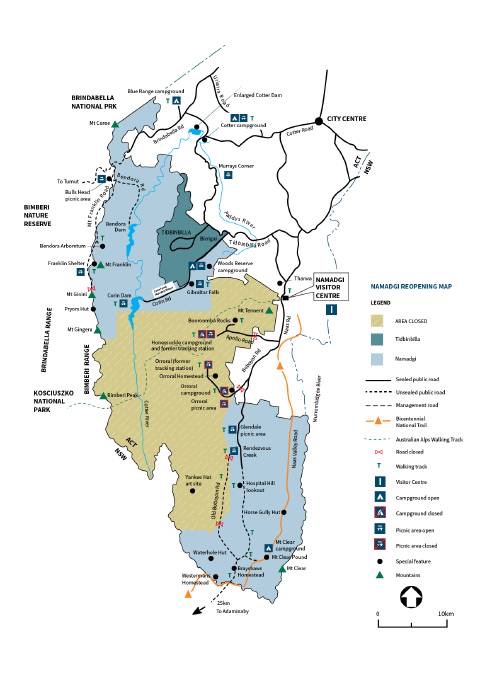
Not far from where we live, to the southwest in what is known as the Brindabella Ranges, there is a large swathe of national park. The Namadgi National Park actually stretches for almost 100 kilometres and it covers just over 100,000 hectares. It is a beautiful “natural” landscape with just a few roads running through it, quite a number of walking trails, and many features of significance.
Because it is so close (the entry point is just a 10km drive from where Elizabeth and I live), we have often ventured into the park for a Sunday afternoon drive; or, as was the case during the pandemic lockdown, for a once-a-week escape from the confines of home and the demands of the ZOOM screen!
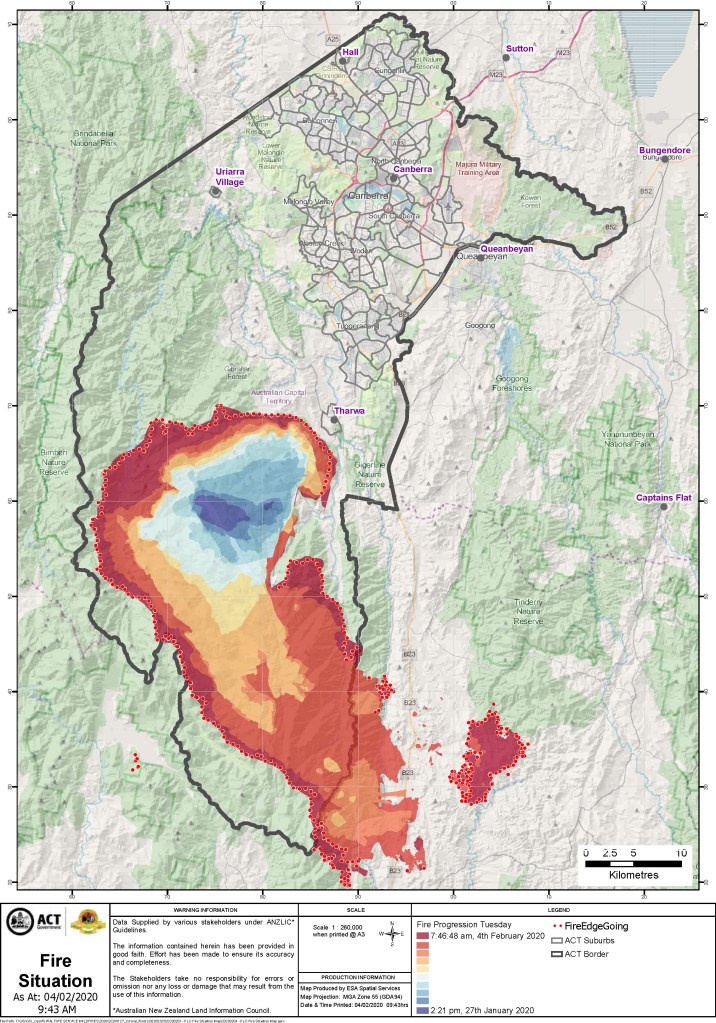
In early 2020, the Orroral Valley bushfire burnt over 80% of Namadgi National Park, or about 86,562 hectares. The fire came perilously close to the urban area where we love, at the southern edge of Canberra. Maps were published showing the danger of embers falling on the suburbs of Gordon and Banks. Plans to evacuate were publicised. We had packed our essentials into a couple of boxes, ready to whisk them away at an early opportunity.
One night, we stood with half of the residents of our street, watching the tops of the Brindabella range mountains that could be seen from our street. There were a number of fires, burning bright in the night. The darkness meant there was no real perspective; the flames, actually 5–6km away, looked like they were just across in the next street. The overhead buzz of planes and copters indicated that the Emergency Services were doing their very best to stop the spread of the fire—as they had been doing for weeks prior to this night.
The fire did not run down the mountain, into the urban area, as it had done in 2003, when a number of suburbs in the south-western area of Canberra were devastated. The memories of that event, scarred deep into the memories of people who had lived in the city longer than we had, were brought back to life in striking and vivid ways, for many we knew.
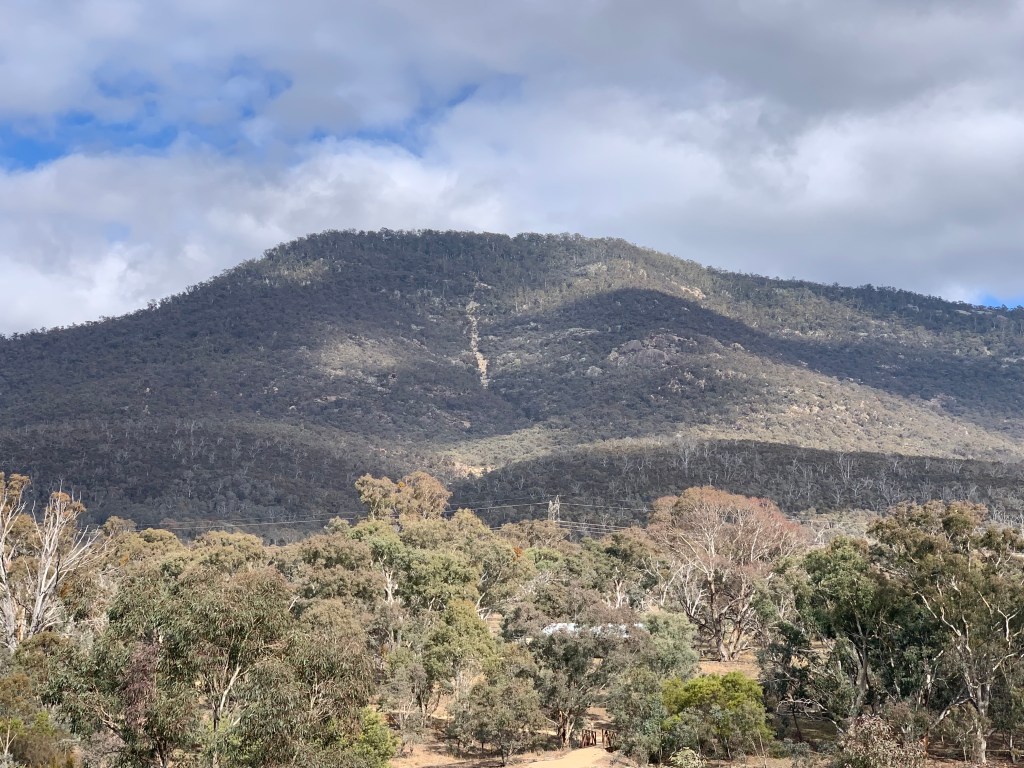
Just past the entry to the national park, the mountain of Tharwa stands high. It was given the name of Mount Tennent early in the colonial period, when British colonisation began. It was named after John Tennant, a bush ranger who lived in a hideout on the mountain behind Tharwa.
Tennant absconded from his assigned landholder in 1826 and with some others formed a gang which raided local homesteads in the years 1827 and 1828. Eventually he was arrested and transported to Norfolk Island. Tennant was 29 years old when he had been sentenced to transportation to Australia for life in 1823. He arrived in Sydney on 12 July 1824 on the ‘Prince Regent’. Old habits died hard, it would seem. He died in 1837, a year after coming back to Sydney.
Soon after the 2020 bushfire, flooding to the fireground caused significant and widespread damage. The road that ran deep into the national park was closed. Added to the risk of burnt trees falling was the damage done to roads and infrastructure in the floods that occurred some months after the fires. Eventually, the road into the park was opened. We were able to venture back into the bush—to see at close quarters the scarred landscape, the swathes of burnt trees, and the bursts of vibrant green leaves now decorating those burnt trunks.
The savage brutality of what had taken place was evident, from a distance, to those of us who paid attention. Now, at close range, we were able to see just how severe the damage was, as well as how resilient the Australian bush is. New life is bursting forth in so many ways—sadly, not everywhere, as some areas will take much longer to recover—but overall, a picture of verdant health is evident.
******
Archaeological excavation and carbon dating of sites in Tidbinbilla Nature Reserve and Namadgi National Park has confirmed an Aboriginal presence in the ACT region 25,000 years ago. Temperatures in the region would have been several degrees lower 25,000 years ago—similar to the conditions on the summit of Mount Kosciuszko today. In other words, seriously cold!!
Bogong Moths would pass through the area in October on their way from breeding grounds on the plains, up to the mountains to hibernate for the summer. The moths are highly nutritious, easy to collect and were in sufficient numbers to warrant large gatherings. Many Aboriginal people from different clan groups and neighbouring nations gathered here for initiation ceremonies, marriage, corroborees and trade.
In fact Jedbinbilla, which means ‘a place where boys become men’ in Ngunnawal language, is situated adjacent to Tidbinbilla and we are told that it was an important place for young boys to learn the first of three stages of man-hood (gatherer, hunter, warrior).
Archaeological surveys of two of the main access routes to the valley area, the Fishing Gap Trail and the path over Devil’s Gap, have found clear evidence of frequent Aboriginal passage. Gibraltar Rocks is a highly significant spiritual site and a corroboree site has been found near the headwaters of Sheedy’s Creek.
Researchers believe the Tidbinbilla valley floor was the focus of a territorial group that survived on the plentiful supply of possum, ducks, wild turkeys, emus, platypus, kangaroo, fish, yabbies and a range of plants, tubers, seeds and fruit.
When Europeans first arrived in the area in the early 1820s hundreds of Aboriginal people lived here. The population of Aboriginal people increased at various times during the year when people travelled to the region for social gatherings, ceremonies and seasonal food collecting. European settlement had the same impact on Aboriginal communities in the ACT as it did in other parts of Australia. It brought displacement from the land and exposed people to new diseases such as influenza, smallpox and tuberculosis, from which many died. That, to our shame, is an enduring legacy that we forced into the First Peoples.
Aboriginal heritage sites found in this region include burial places, campsites, rock shelters (with or without ochre paintings), stone arrangements, scarred trees, ceremonial grounds, grinding grooves, quarries and sacred places. At times, Aboriginal occupation is also evident at early European sites such as historic homesteads, cemeteries, reserves and old bridle tracks and coach roads. There is lots of information at https://www.tidbinbilla.act.gov.au/learn/tidbinbilla?a=396477
*****
Men’s sites were often found in the higher peaks of the valley. One of the rock shelters is home to ancient rock art found along a pathway to the Gibraltar rock peak, which is a men’s site. While the mountains in Tidbinbilla are also important to Ngunnawal women, women’s sites were found closer to the river system that twisted through the valley. In some women’s places grinding grooves can still be found on the river’s edge.
Often grand geological formations would be significant to the story of place. Many formations can still be seen today which visually reflect the dreaming story of the valley and its important relationship to the people that have survived and thrived within it for thousands of years. An example of this is the shape of a pregnant woman seen through the contours in the western slopes of the valley and found in the centre of the Tidbinbilla valley is a rock that looks like a perched eagle (Maliyan) the creator spirit of the Tidbinbilla dreaming story.
Tidbinbilla was a key place for Ngunnawal ceremonies, with groups from surrounding areas entering through key points such as Gibraltar Peak, where an elder would light a fire to guide people into the valley. Neighbouring language groups travelled to Ngunnawal Country for the purpose of ceremony, lore, marriage arrangements, trade, sharing of seasonal foods and cultural knowledge.
Tidbinbilla was also a place where young men learnt traditional lore/law, and where they were taken into the mountains as they learnt to become men in the traditional way. Similarly, Ngunnawal women carried out their customary ceremonies in the lower areas of the landscape preparing young girls for womanhood. And as we have noted, the mountains surrounding the valley were home in spring to the migrating bogong moths, which were gathered by Ngunnawal people as a source of food. See
Not far from where we live, to the southwest in what is known as the Brindabella Ranges, there is a large swathe of national park. The Namadgi National Park actually stretches for almost 100 kilometres and it covers just over 100,000 hectares. It is a beautiful “natural” landscape with just a few roads running through it, quite a number of walking trails, and many features of significance.
Because it is so close (the entry point is just a 10km drive from where Elizabeth and I live), we have often ventured into the park for a Sunday afternoon drive; or, as was the case during the pandemic lockdown, for a once-a-week escape from the confines of home and the demands of the ZOOM screen!
In early 2020, the Orroral Valley bushfire burnt over 80% of Namadgi National Park, or about 86,562 hectares. The fire came perilously close to the urban area where we love, at the southern edge of Canberra. Maps were published showing the danger of embers falling on the suburbs of Gordon and Banks. Plans to evacuate were publicised. We had packed our essentials into a couple of boxes, ready to whisk them away at an early opportunity.
One night, we stood with half of the residents of our street, watching the tops of the Brindabella range mountains that could be seen from our street. There were a number of fires, burning bright in the night. The darkness meant there was no real perspective; the flames, actually 5–6km away, looked like they were just across in the next street. The overhead buzz of planes and copters indicated that the Emergency Services were doing their very best to stop the spread of the fire—as they had been doing for weeks prior to this night.
The fire did not run down the mountain, into the urban area, as it had done in 2003, when a number of suburbs in the south-western area of Canberra were devastated. The memories of that event, scarred deep into the memories of people who had lived in the city longer than we had, were brought back to life in striking and vivid ways, for many we knew.
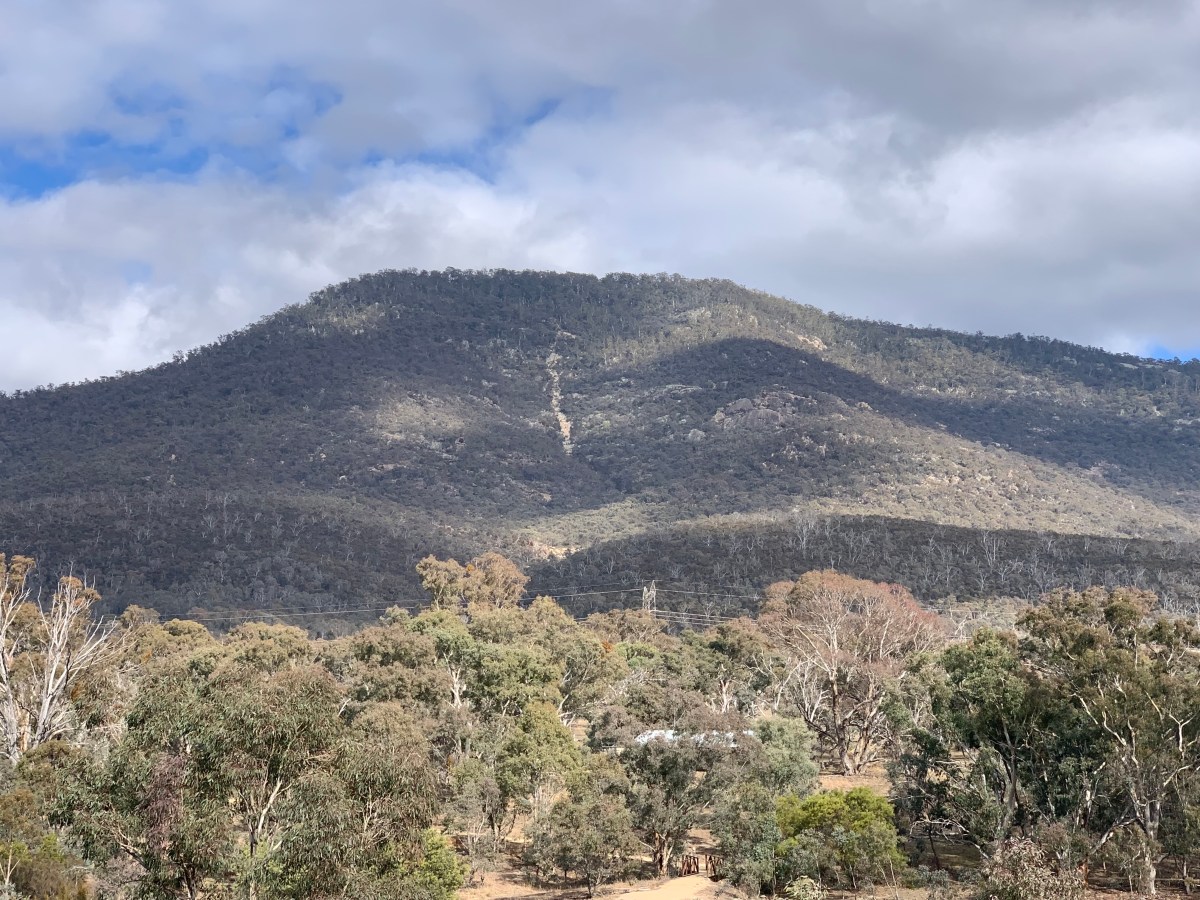
Just past the entry to the national park, the mountain of Tharwa stands high. It was given the name of Mount Tennent early in the colonial period, when British colonisation began. It was named after John Tennant, a bush ranger who lived in a hideout on the mountain behind Tharwa.
Tharwa (Mount Tennant) some months after the 2020 fires
Tennant absconded from his assigned landholder in 1826 and with some others formed a gang which raided local homesteads in the years 1827 and 1828. Eventually he was arrested and transported to Norfolk Island. Tennant was 29 years old when he had been sentenced to transportation to Australia for life in 1823. He arrived in Sydney on 12 July 1824 on the ‘Prince Regent’. Old habits died hard, it would seem. He died in 1837, a year after coming back to Sydney.
Soon after the 2020 bushfire, flooding to the fireground caused significant and widespread damage. The road that ran deep into the national park was closed. Added to the risk of burnt trees falling was the damage done to roads and infrastructure in the floods that occurred some months after the fires. Eventually, the road into the park was opened. We were able to venture back into the bush—to see at close quarters the scarred landscape, the swathes of burnt trees, and the bursts of vibrant green leaves now decorating those burnt trunks.
The savage brutality of what had taken place was evident, from a distance, to those of us who paid attention. Now, at close range, we were able to see just how severe the damage was, as well as how resilient the Australian bush is. New life is bursting forth in so many ways—sadly, not everywhere, as some areas will take much longer to recover—but overall, a picture of verdant health is evident.
******
Archaeological excavation and carbon dating of sites in Tidbinbilla Nature Reserve and Namadgi National Park has confirmed an Aboriginal presence in the ACT region 25,000 years ago. Temperatures in the region would have been several degrees lower 25,000 years ago—similar to the conditions on the summit of Mount Kosciuszko today. In other words, seriously cold!!
Bogong Moths would pass through the area in October on their way from breeding grounds on the plains, up to the mountains to hibernate for the summer. The moths are highly nutritious, easy to collect and were in sufficient numbers to warrant large gatherings. Many Aboriginal people from different clan groups and neighbouring nations gathered here for initiation ceremonies, marriage, corroborees and trade.
In fact Jedbinbilla, which means ‘a place where boys become men’ in Ngunnawal language, is situated adjacent to Tidbinbilla and we are told that it was an important place for young boys to learn the first of three stages of man-hood (gatherer, hunter, warrior).
Archaeological surveys of two of the main access routes to the valley area, the Fishing Gap Trail and the path over Devil’s Gap, have found clear evidence of frequent Aboriginal passage. Gibraltar Rocks is a highly significant spiritual site and a corroboree site has been found near the headwaters of Sheedy’s Creek.
Researchers believe the Tidbinbilla valley floor was the focus of a territorial group that survived on the plentiful supply of possum, ducks, wild turkeys, emus, platypus, kangaroo, fish, yabbies and a range of plants, tubers, seeds and fruit.
When Europeans first arrived in the area in the early 1820s hundreds of Aboriginal people lived here. The population of Aboriginal people increased at various times during the year when people travelled to the region for social gatherings, ceremonies and seasonal food collecting. European settlement had the same impact on Aboriginal communities in the ACT as it did in other parts of Australia. It brought displacement from the land and exposed people to new diseases such as influenza, smallpox and tuberculosis, from which many died. That, to our shame, is an enduring legacy that we forced into the First Peoples.
Aboriginal heritage sites found in this region include burial places, campsites, rock shelters (with or without ochre paintings), stone arrangements, scarred trees, ceremonial grounds, grinding grooves, quarries and sacred places. At times, Aboriginal occupation is also evident at early European sites such as historic homesteads, cemeteries, reserves and old bridle tracks and coach roads. There is lots of information at https://www.tidbinbilla.act.gov.au/learn/tidbinbilla?a=396477
*****
Men’s sites were often found in the higher peaks of the valley. One of the rock shelters is home to ancient rock art found along a pathway to the Gibraltar rock peak, which is a men’s site. While the mountains in Tidbinbilla are also important to Ngunnawal women, women’s sites were found closer to the river system that twisted through the valley. In some women’s places grinding grooves can still be found on the river’s edge.
Often grand geological formations would be significant to the story of place. Many formations can still be seen today which visually reflect the dreaming story of the valley and its important relationship to the people that have survived and thrived within it for thousands of years. An example of this is the shape of a pregnant woman seen through the contours in the western slopes of the valley and found in the centre of the Tidbinbilla valley is a rock that looks like a perched eagle (Maliyan) the creator spirit of the Tidbinbilla dreaming story.
Tidbinbilla was a key place for Ngunnawal ceremonies, with groups from surrounding areas entering through key points such as Gibraltar Peak, where an elder would light a fire to guide people into the valley. Neighbouring language groups travelled to Ngunnawal Country for the purpose of ceremony, lore, marriage arrangements, trade, sharing of seasonal foods and cultural knowledge.
Tidbinbilla was also a place where young men learnt traditional lore/law, and where they were taken into the mountains as they learnt to become men in the traditional way. Similarly, Ngunnawal women carried out their customary ceremonies in the lower areas of the landscape preparing young girls for womanhood. And as we have noted, the mountains surrounding the valley were home in spring to the migrating bogong moths, which were gathered by Ngunnawal people as a source of food. See
“To fulfil the role the Constitution allows the Senate in relation to the government, the Senate is able to scrutinise and judge the activities, policies and legislation of the government. This is why the Senate is known as a house of review.” So reads a section of the office Parliament of Australia website explaining the nature and function of The Senate. (https://www.aph.gov.au/About_Parliament/Senate/Powers_practice_n_procedures/Senate_Briefs/Brief10)
I have known this principle, and voted in accordance with this principle, for decades. As well as holding as my personal principle to “always vote below the line” (something that has been quite challenging at various times, given the size of the ballot paper!), I have also maintained that the Senate should be a real house of review—not just a rubber stamp, like the House of Lords is in the British Parliament.
The reality is that, at times throughout the past 120 years, the Senate has indeed been simply a “rubber stamp”, acting to endorse the legislation introduced and debated in the lower house. Those times, especially, when the dominant party in the lower house has also had control of the Senate, have been times when the Senate has seemed to have lived up to its most famous description as “unrepresentative swill”. (Take a bow, Paul Keating.)
So in order to ensure that there is at least some measure of review that might occur when a bill is introduced into the Senate, I have held the practice of never voting for the same party in the lower house, as in the Senate. It has been my personal contribution to ensure (vainly, in many instances) that there are at least someone in the Senate who might advocate for a point of view different from what is advocated by the party in Government, and what is (often) blindly expressed as opposition to that point of view by those who, well, are in fact, the Opposition.
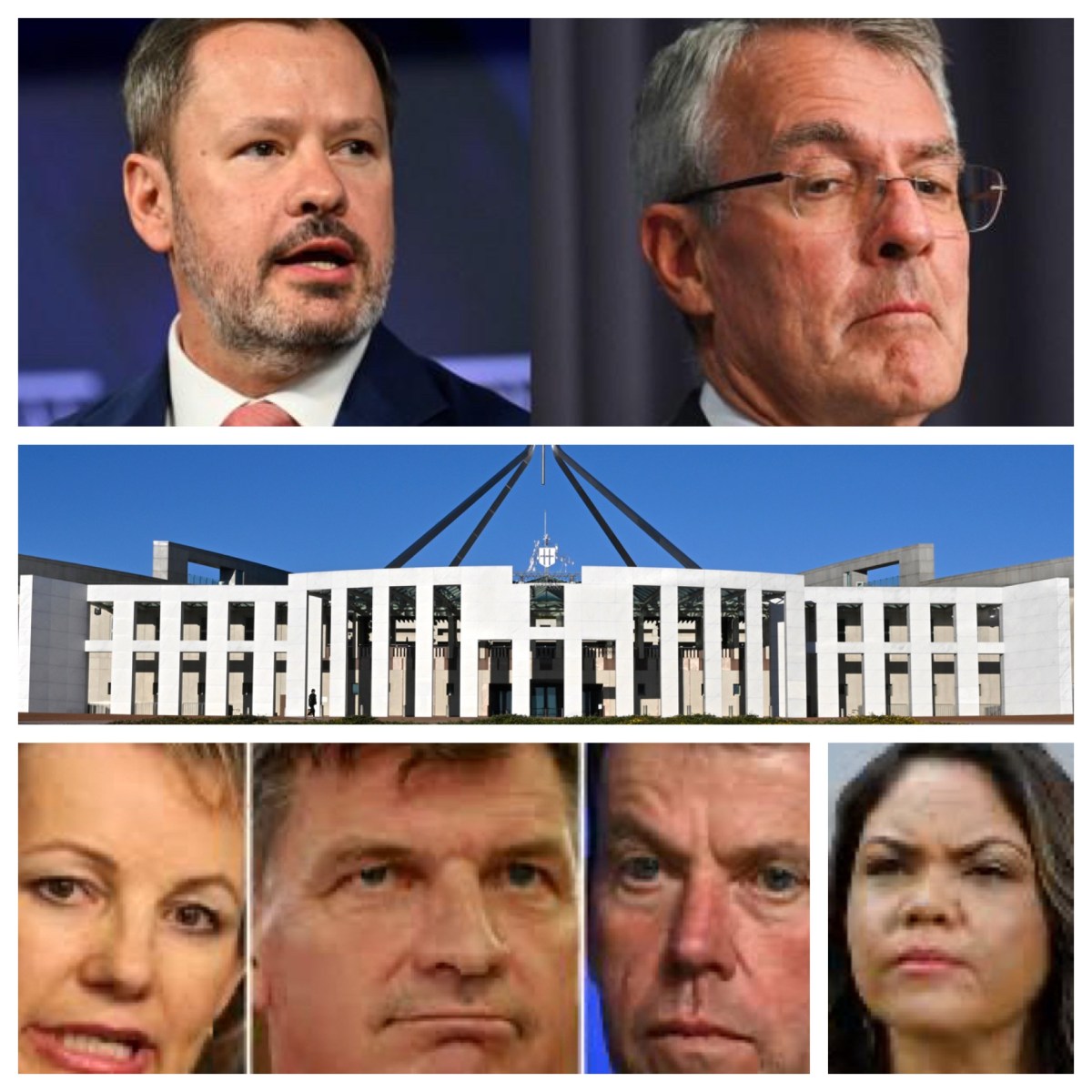
So it has been with great pleasure that I have heard the news, today, that in the ACT (the jurisdiction where I currently live), one of the two Senators elected will bring precisely that function of review—not toeing the Government line, not unthinkingly adopting the resistance of the Opposition, but considering each piece of legislation on its merits.
I’m referring, of course, to the election of David Pocock as the second Senator for the ACT. He was elected alongside Katy Gallagher, of the Labor Party—a fine Senator, in my eyes, who has been an excellent representative for the ACT over her term in parliament (as, indeed, is my local member in Bean, David Smith).
Ever since the ACT has elected senators, the second Senate spot has been held by the Liberal Party (John Knight—Margaret Reid—Gary Humphries—Zed Seselja). This year, however, Zed Seselja failed in his bid to return to the Senate. And so it is that Zed has dropped off the end of the alphabet (at least, in the ACT)!
Pocock stood as an Independent, with a platform advocating for real action in relation to climate change; the establishment of a national integrity commission; the adoption of what is advocated by the Statement from the Heart to ensure First Nations people have a voice in shaping our nation;
and measures to improve the safety of women and girls in their homes, schools, and workplaces. (He also had other economic measures and more parochial territory matters in his platform.) All of this augurs well for the next three years in Australia—especially if the Labor Government does act in accordance with its rhetoric about climate, integrity, and First Peoples. See https://www.davidpocock.com.au
Alongside the 12 Green senators (who are committed to similar policies) and the two Jacqui Lambie Network senators (Jacqui Lambie herself has a track record of independent thinking about legislation), the Senate is well-placed to be a real house of review that will consider, debate, and advocate for a range of important matters—holding the Government to account, refining legislation and e surging principles are adopted that are in the best interests of the country.
So I’m pleased that my choice has been elected—and that the Senate has a really good chance, over the next three years, of fulfilling its intended purpose.
The city where I live, Canberra, has a regular annual festival. Each year, a large section of a central park is planted out with bulbs, around this time of the year. Lots of tourists come in September, joining with many of the residents of Canberra, to enjoy the festival known as Floriade.
The bulbs that have been planted grow, silently and stealthily, throughout winter, so that when spring arrives, they are fully grown plants, ready to burst into a display of spectacular colours—in time for hundreds of thousands of people to walk through, enjoying the display.
That’s not going to happen this year. The ACT Government wisely decided that it would not be sensible to plan for a large, crowded event in September—with the uncertainty that crowds of people would be able to gather, even in the outdoors.
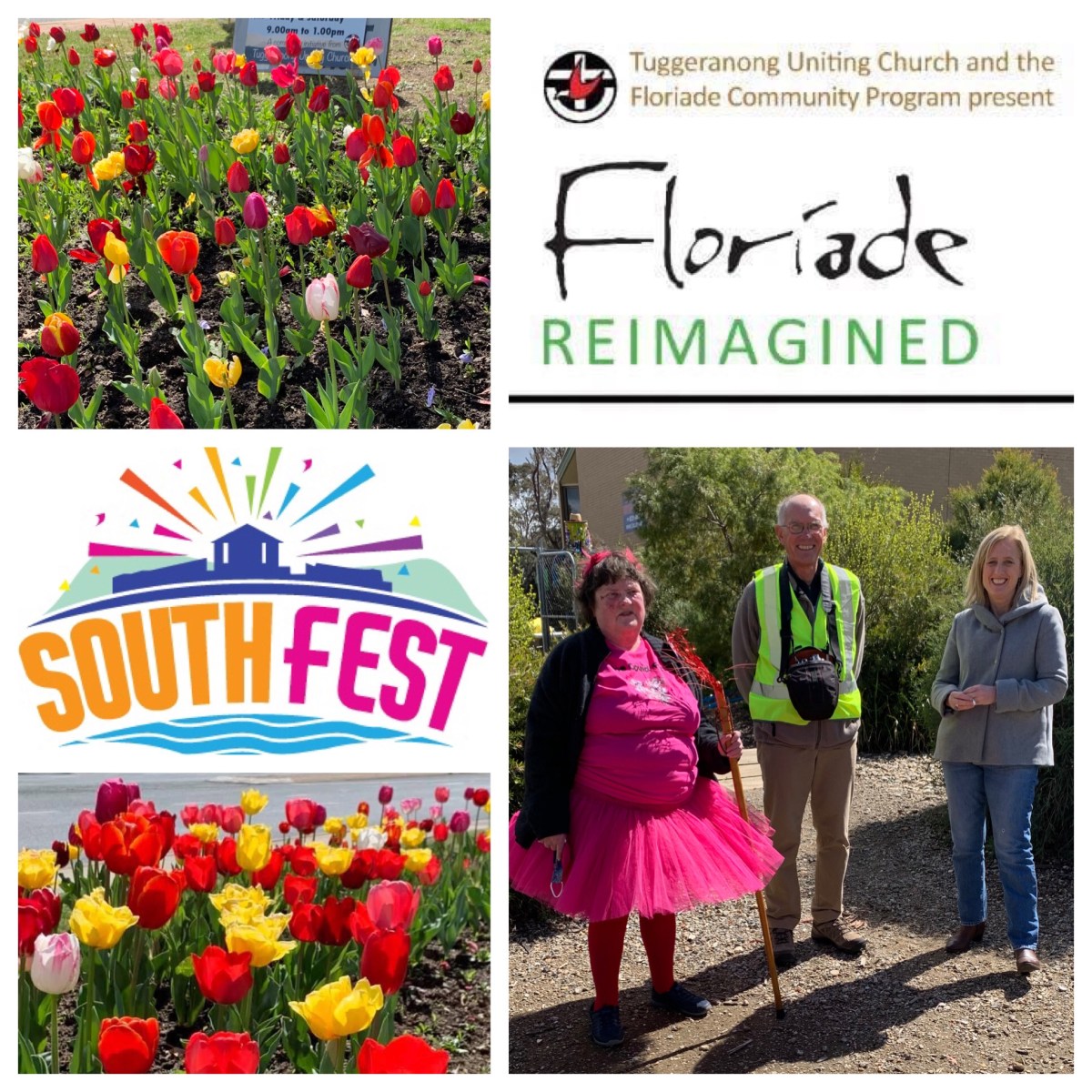
So they have implemented Floriade Reimagined. Bulbs have been offered to community groups, to be planted at dispersed locations right around Canberra. Those bulbs are to be planted in locations that are visible from the road. Now, in September, people are able to drive around Canberra and enjoy the displays of flowers in many community locations. (See https://floriadeaustralia.com)
Alongside this, in the southern part of Canberra, there has been an annual festival in Tuggeranong, called, quite appropriately, SouthFest. This has been based around the Tuggeranong Town Centre in past years, with many stall lining the streets, and a festive atmosphere pervading the day.
But SouthFest, alongside Floriade, has also been reimagined. And that’s where the Tuggeranong Uniting Church comes into the picture. They took their annual Spring Fair, and in 2019, gave it a strong sustainability focus. This year, they once again reimagined that that spring fair would look like. And so, SpringFest was born.
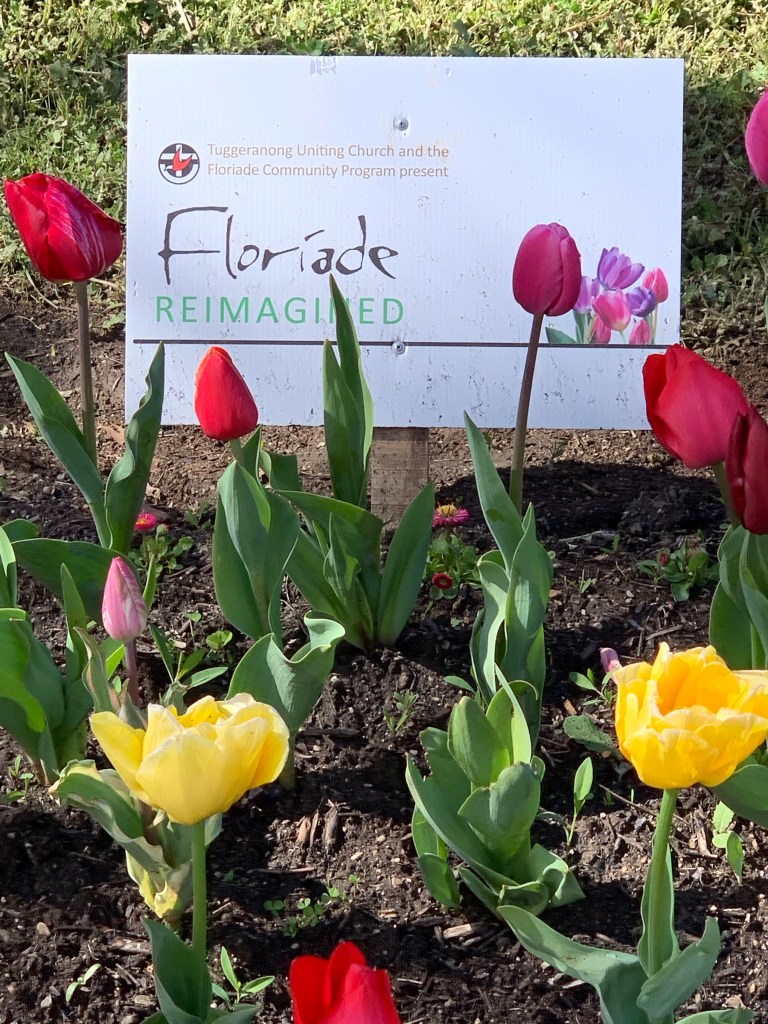
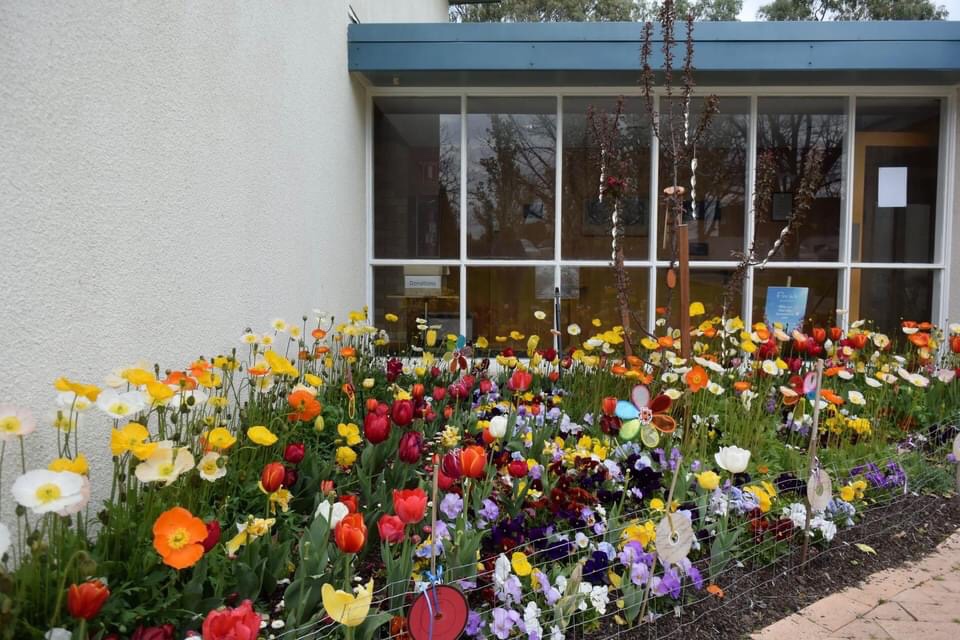
Tuggeranong, where Elizabeth is serving as Minister, submitted an expression of interest for Floriade Reimagined, and was awarded a set of bulbs. A crew of volunteers has worked hard to dig garden beds, build up the soil, and plant the bulbs. (See the picture, and https://www.insights.uca.org.au/tuggeranong-to-provide-a-symbol-of-hope-during-floriade/)
Now, in September, the Tuggeranong Uniting Church is surrounded with colour, as the bulbs burst into flower.
And this church, along with the Yarralumla Uniting Church (pictured below), is on the visiting list for Floriade Reimagined.
And Tuggeranong Uniting Church, under the enthusiastic and energetic leadership of Elizabeth, along with a fine team of dedicated volunteers, has partnered with SEE-Change to have a modified, downscale (but still very much appreciated) SouthFest happening, in the grounds at Erindale. The sustainability focus of 2019 was kept and expanded in SpringFest 2020.
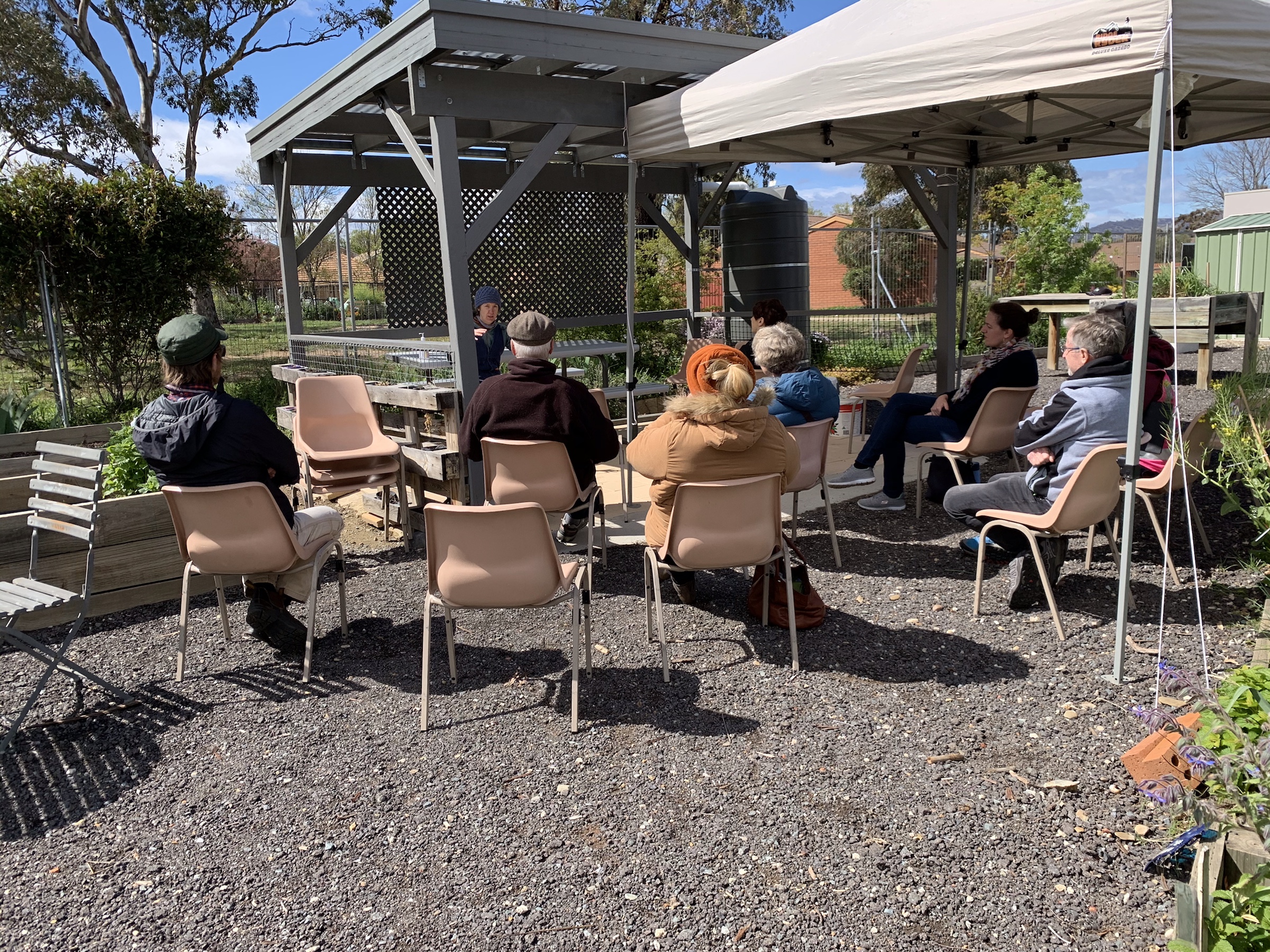
SEE-Change, a local sustainability group, ran a series of workshops, in the community garden and the community hall, on topics relating to sustainability: composting, worm farms, bee keeping, and reducing plastic.
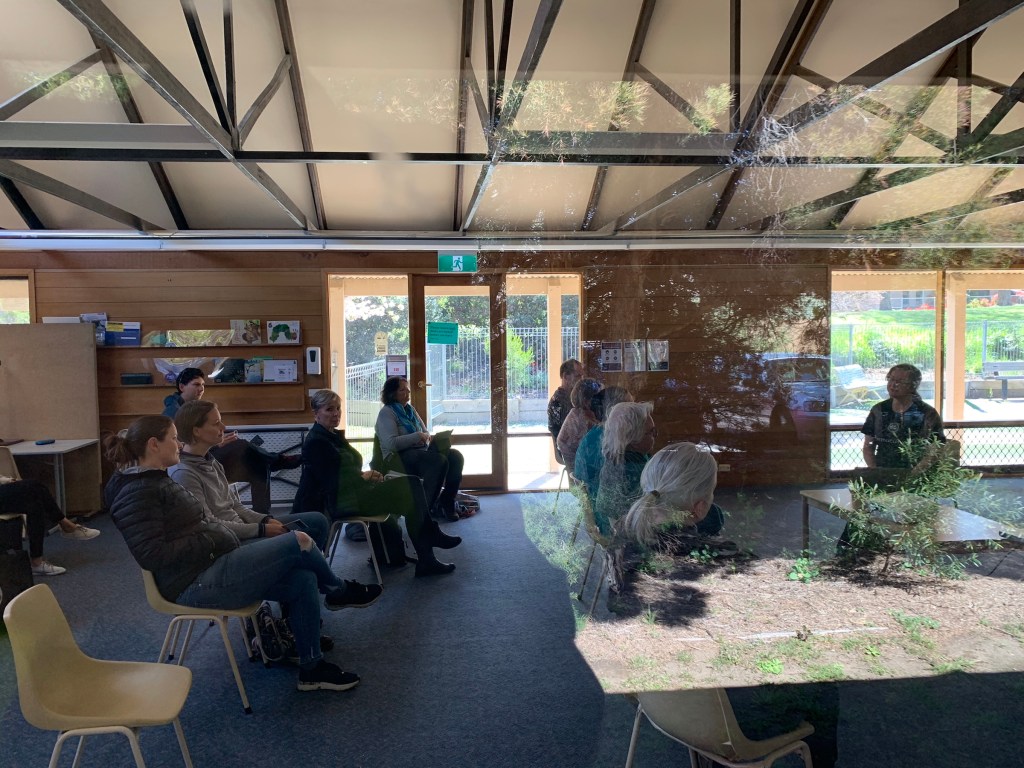
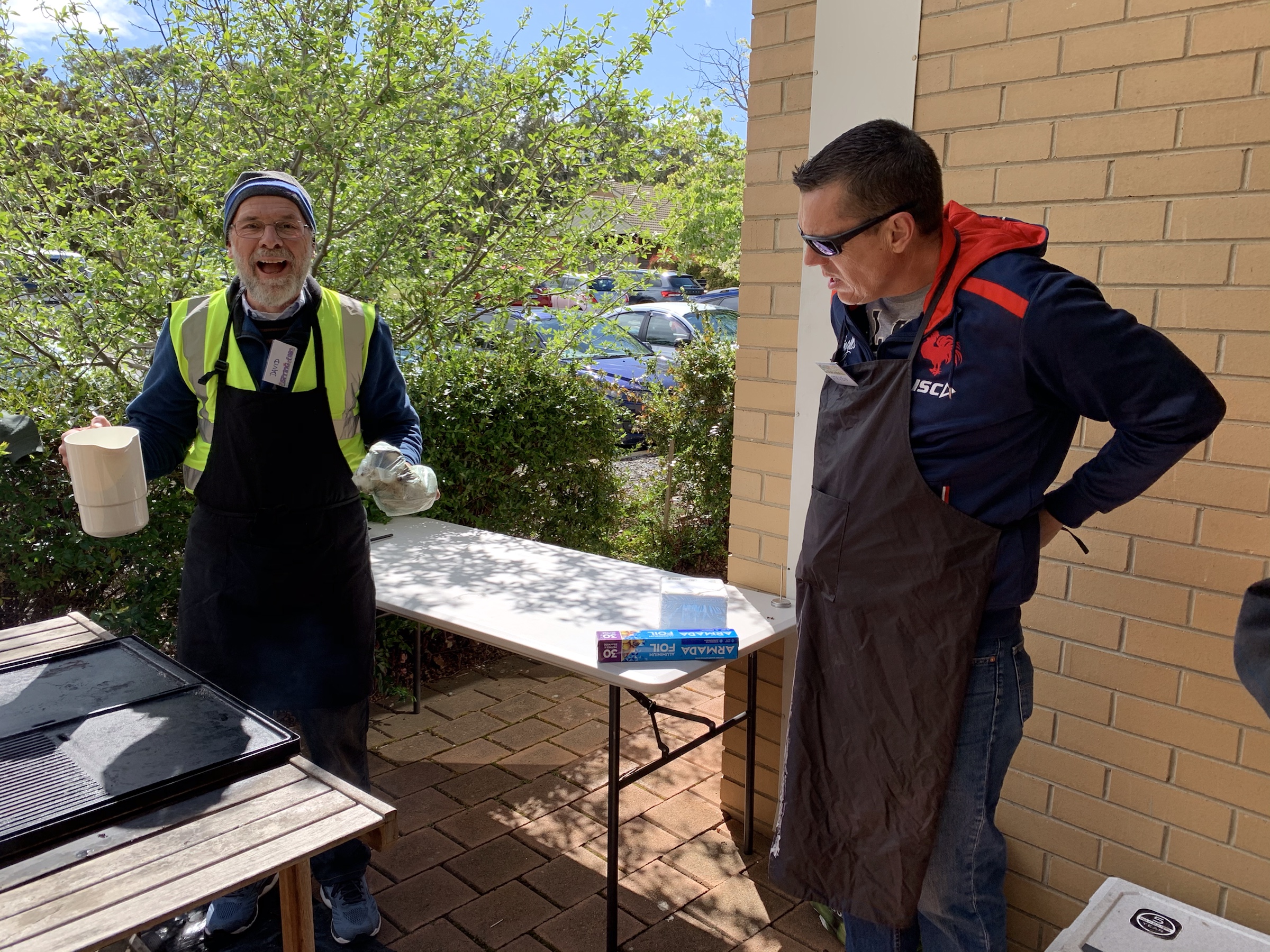
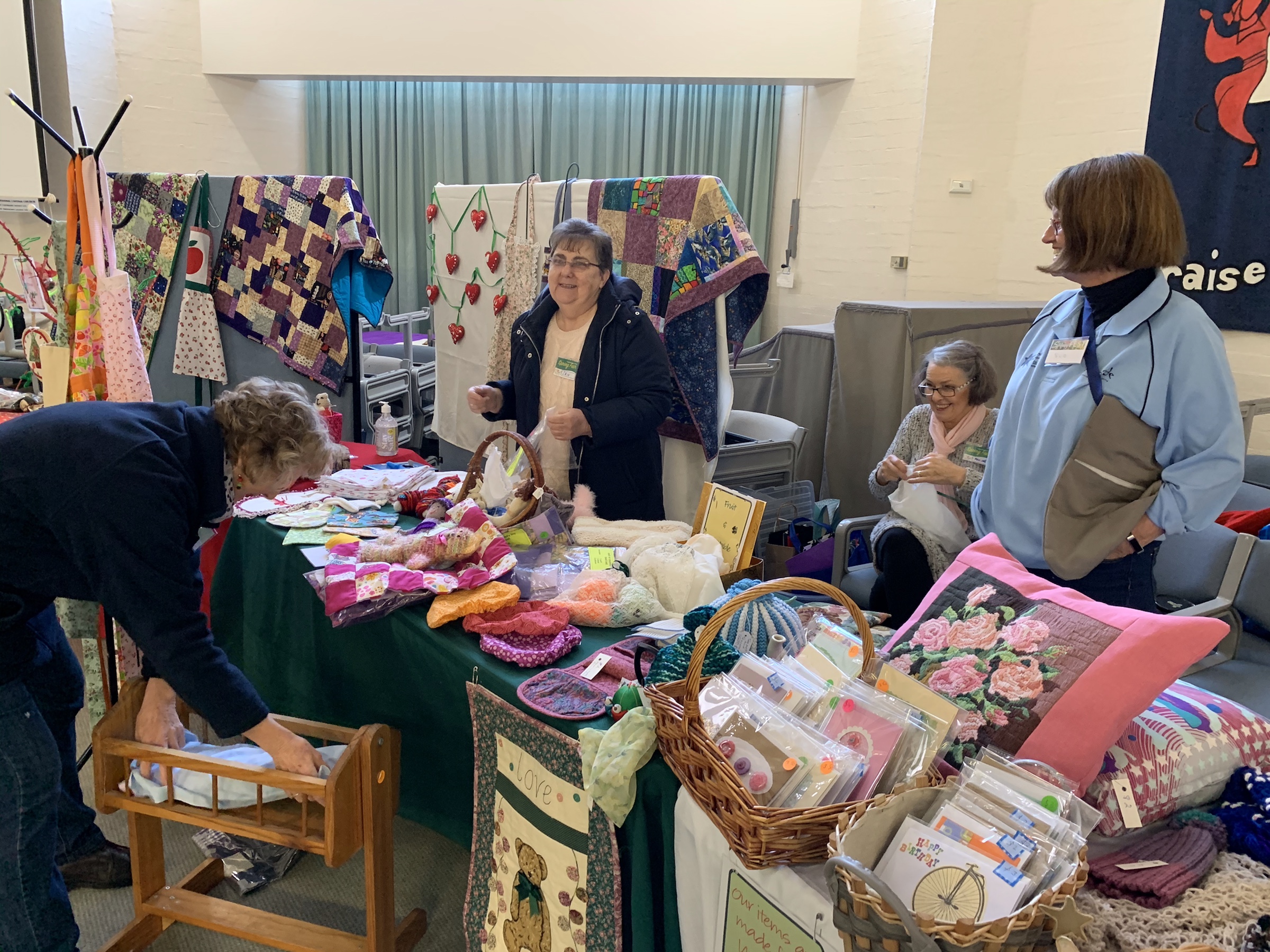
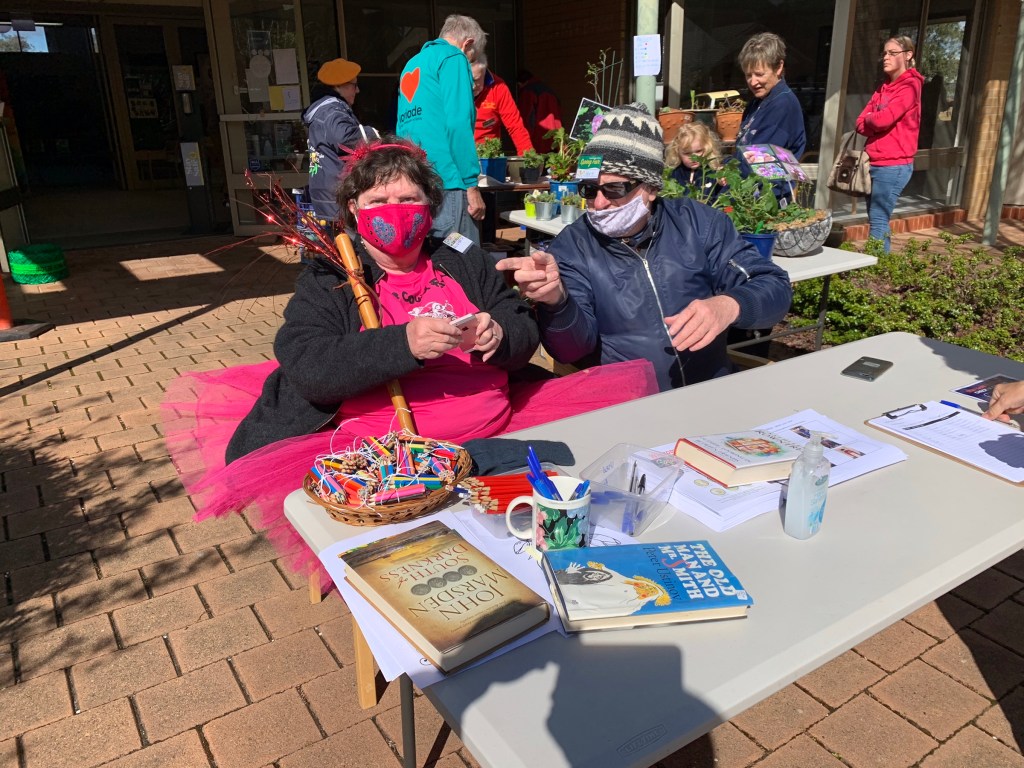
Meanwhile, in and around the church auditorium, the Red Dove Pre-Loved Op Shop was selling second hand clothes, the church was offering Devonshire teas and BBQ sandwiches, the Girls Brigade were selling delicious cakes, reuseable bags to replace single use plastic bags were on sale, as was a wide range of potted plants, and there was a Beeswax stall and assorted other goods for sale.
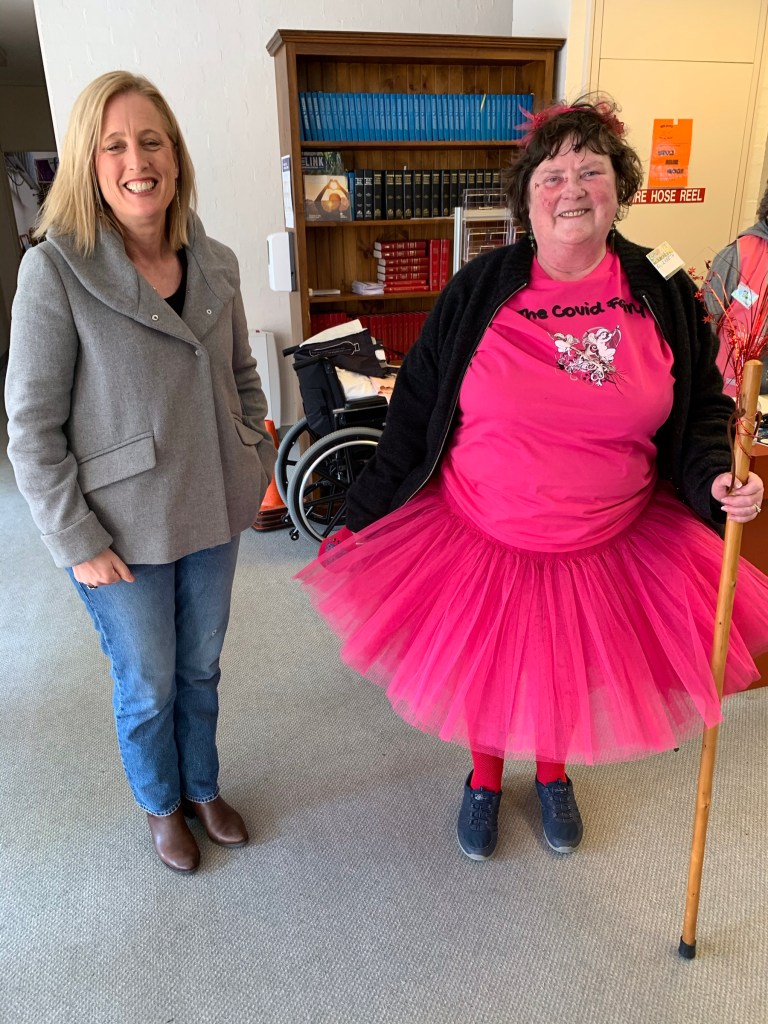
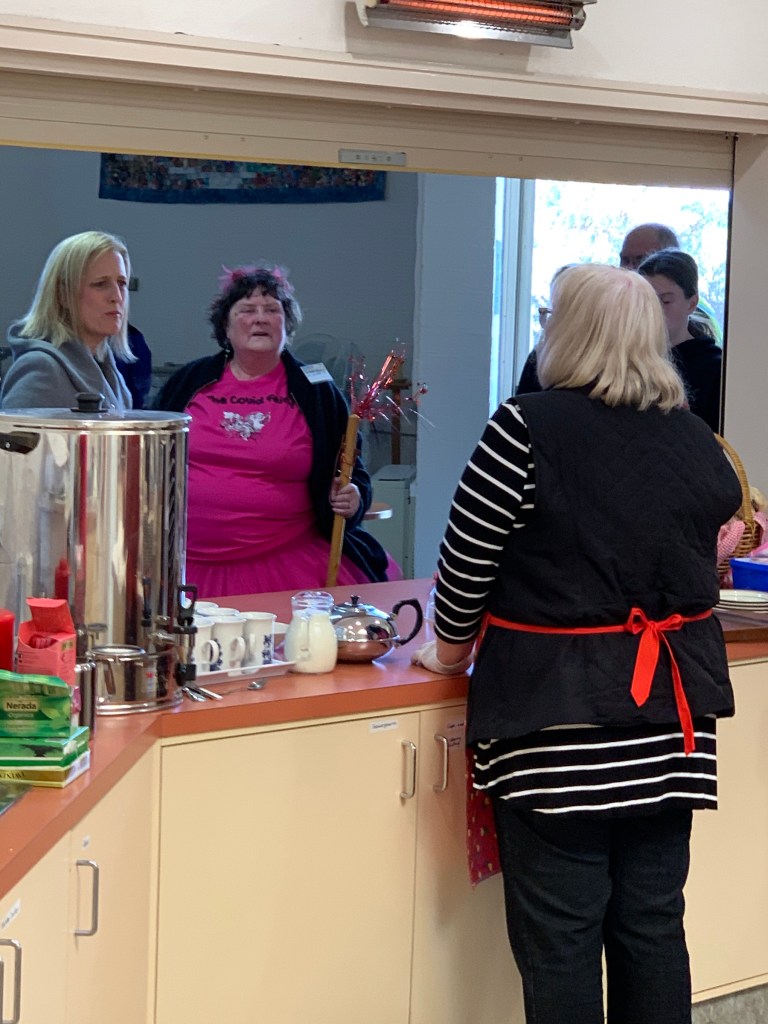
Why, the COVID Fairy was even in attendance (ensuring that all COVID Safe precautions were being adhered to). And she brought Senator Katy Gallagher along, to open the proceedings!
Floriade has reimagined itself. SouthFest has reimagined itself. COVID-19 has been the impetus. Tuggeranong Church has reimagined how it can partner with community groups to provide an enjoyable and inviting community event.
Can the church as a whole, similarly, reinvent itself? Can we take the stimulus of the present time to move out into the future with renewed creativity, imagination, and community engagement? Can we demonstrate that we are capable of the spirit of the times—reimagination?
Last week the Legislative Assembly of the Australian Capital Territory debated, and passed, legislation which will ban the practice of “conversion therapy” within the territory. The legislation was introduced as the Sexuality and Gender Identity Conversion Practices Bill (2020). See https://www.legislation.act.gov.au/View/es/db_62959/20200813-74809/PDF/db_62959.PDF
The aim of the legislation was very simple: “to recognise and prevent the harm caused by sexuality and gender identity conversion practice.” The Bill was introduced on 13 August 2020, following two years of consultation with conversion practice survivors, schools, faith leaders and members of the community. Both before and after its introduction, the Government has engaged closely with these groups in order to clarify the Bill’s intent.
There can be no doubt that questioning one’s own gender identity is a very challenging matter; more so, in the case of younger people. Supportive counselling and the encouragement to explore with honesty in such a situation is imperative; pressure to change, to conform to an alleged “norm”, can be incredibly unhelpful and even damaging for people in such a situation.
The Bill was introduced by the Chief Minister, Andrew Barr, and supported by the leader of the Greens, Shane Rattenbury. The leader of the Liberals, Alistair Coe, spoke in support of the Bill in principle, but then raised questions about how “conversion therapy” was defined, citing in particular the possibility that a parent might be charged with a breach of the law simply by counselling their child about their sexual identity.
Prior to the debate in the Assembly, a group of 16 Uniting Church Ministers and Chaplains who are serving within the ACT decided that we would write to all 25 members of the Assembly, expressing our support for the Bill. I was pleased to be a part of this important action, bearing witness in a public way to an important element of our faith.
In supporting this legislation, we drew on our pastoral experiences of working with people who identify in ways other than “straight”, or opposite-sex attracted. Indeed, we wrote knowing that there are people within so many of our Congregations who identify with each of the letters in the LGBTIQ+ rainbow (lesbian, gay, bisexual, transgender, intersex, queer, and more).
The primary intent of the letter was to underline the ongoing commitment of the Uniting Church, to accept, value, and honour people who identify as same-gender attracted. Supporting a Bill that would outlaw “conversion therapy” is one way of making clear this fundamental commitment.
On Church Councils, in Congregational study groups, in local outreach activities, and amongst our ordained ministers, there are such “rainbow people”—each of them faithful disciples, committed participants in the church, willing followers of Jesus in all of their lives.
Our letter to the ACT MLAs was an expression of the joy that we have, in serving together, alongside people of a wide diversity of gender identities, expressing a wide array of sexual attractions. There is absolutely no need to persuade (or worse, force) such people to change in their own identity, or in their sexual preferences.
In this letter, we drew on theological work that the Rev. Elizabeth Raine had written, as she had reflected on the wonderful diversity of human beings, which is evident in many ways, not least in expressions of sexuality and gender identity.
“All creatures are ‘nephesh’, or sentient beings”, Elizabeth wrote. “We have a soul, a state of being, a life that is fully formed and given by God. All human beings are created with the spirit of God within us (Gen 1:20, 21, 24, 30, 2:7; Job 12:7-10). There are no exceptions to this in biblical understanding. All human beings exist within this understanding. Our human identity is grounded in the creative work of God’s spirit. Who we are is how God has made us to be—each human being is made in God’s image (Gen 1:27; Sir 17:3).”
This has been an important stance for Uniting Church leaders to take during the past ten days, especially since some fundamentalist lobby-group agitators who (mis)use the term “Christian” have been arguing that this legislation was fundamentally flawed, that people of faith had a right to persuade (or force) people to change their sexual orientation, and that all of this was consistent with “biblical Christianity”.
I believe that we can be proud that we have had leadership over many years, which has advocated for, offered support to, and worked constructively with, LGBTIQ+ people. Opposite-gender attracted people like myself have, over the years, moved from understanding such people, to welcoming them, accepting them, and valuing them, within our communities of faith, and within the wider society.
With this latest matter we are showing a firm commitment to protecting the vulnerable, advocating for them and working proactively alongside them, and declaring our clear acceptance of the wonderful diversity of humanity. This is the very heart of Christian community. This is the essence of the Gospel.
Today I am enjoying a public holiday. This is because of the peculiarities of our history as a federation of states (and those lesser beasts known as territories), and the vagaries of border demarcations from various times in the history of this country over recent centuries.
Our state boundaries evolved over many decades. Our federation was originally intended to include New Zealand, but they invoked the Tasman Sea and remained a separate nation. Five states agreed to join the federation through referenda held in 1898 and 1899. Western Australia, naturally, came to the party only late, joining up with a last minute yes vote on 31 July 1900, just in time for the declaration of Australia on 1 January 1901.
I live, as you probably known, in the #anonymousterritory amongst the #undifferentiatedeasternstates (at least, that is how #overeast is seen from #overwest). And the capital of this territory is the city of Canberra—whose day, Canberra Day—is being celebrated today.
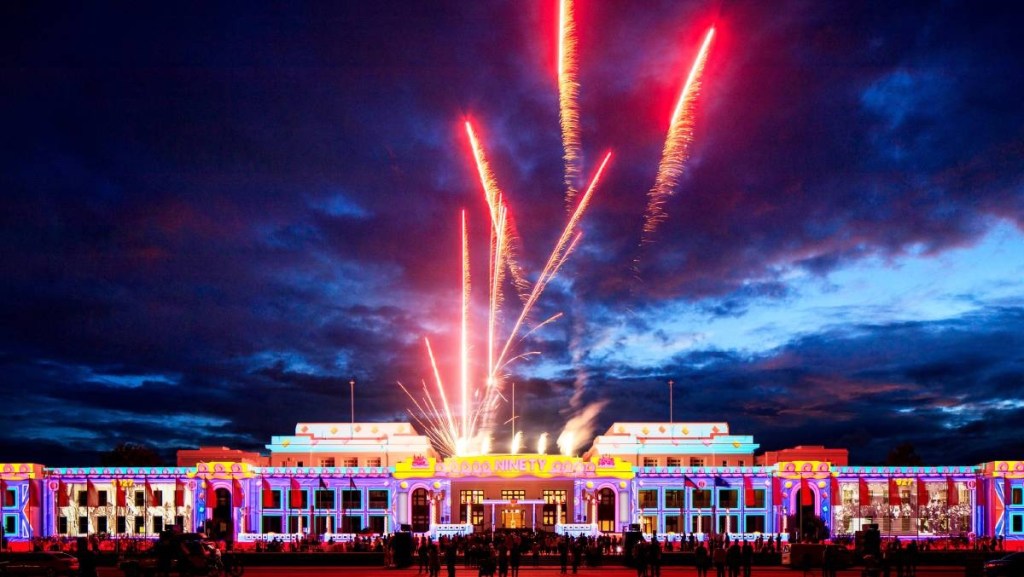
Accordingly, all the employees and public servants and local (territory) politicians here are on holidays, for the day. Over the weekend, there have been early morning balloon flights and evening light shows, and the weekend is surrounded by a ten-day festival with concerts and all manner of festivities on offer.
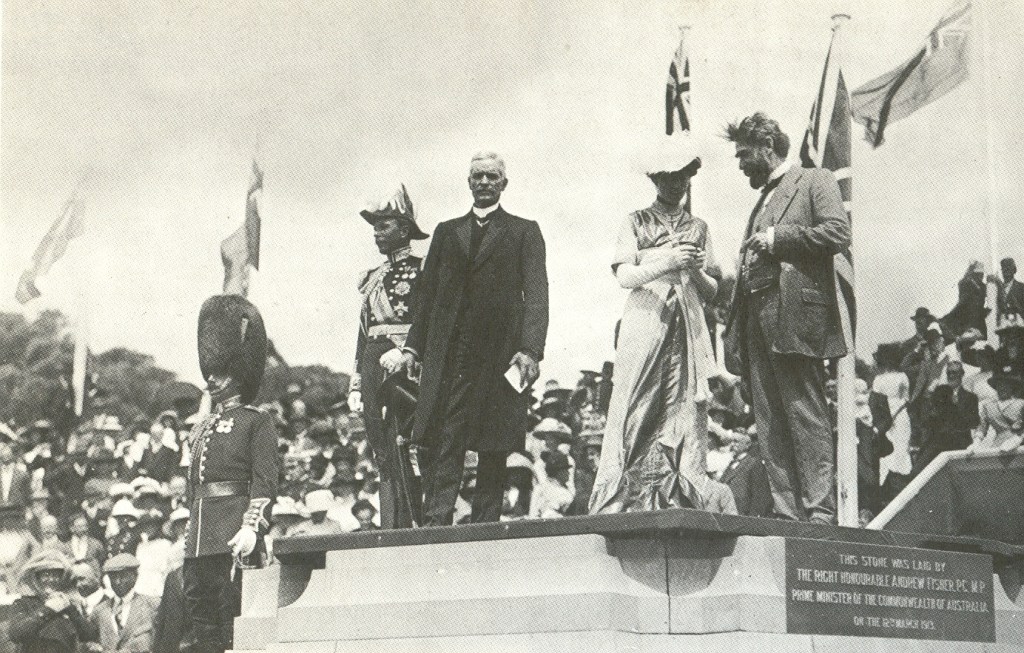
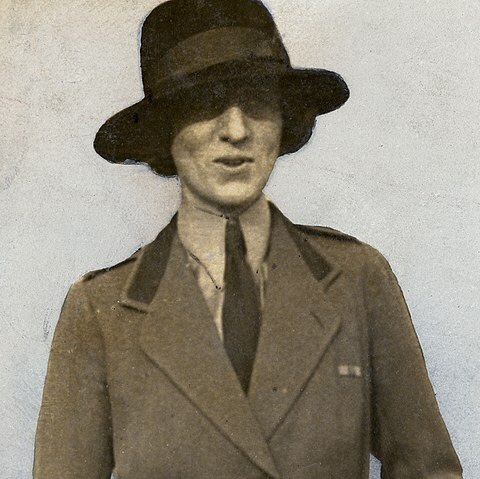
The city of Canberra was named at a ceremony on 12 March 1913 by the wife of the Governor-General, Gertrude Mary Denman, known formally as Lady Denman and informally as Trudie.
The name Canberra, as I have previously blogged, is believed to have been derived from a local Indigenous word which identifies the location as a meeting place, where the Ngunnawal, Ngambri, Ngarigo, Walgalgula, amd Wiradjuri people would meet each year, for a gathering focussed around the bogong moth.
So that’s what all the celebration and festivities are about today—remembering the naming of this place by the daughter of an engineer, who married a minor British aristocrat who was sent to the colonies to represent the British monarch in the fledgling federation.
So today, while people in New South Wales, Queensland, the Northern Territory and Western Australia are hard at work, we Territorians are enjoying a day off—along with folks in South Australia (for Adelaide Cup Day), Tasmania (celebrating Eight Hour Day) and Victoria (celebrating the same thing as the Taswegians, but there it is called May Day—go figure!).
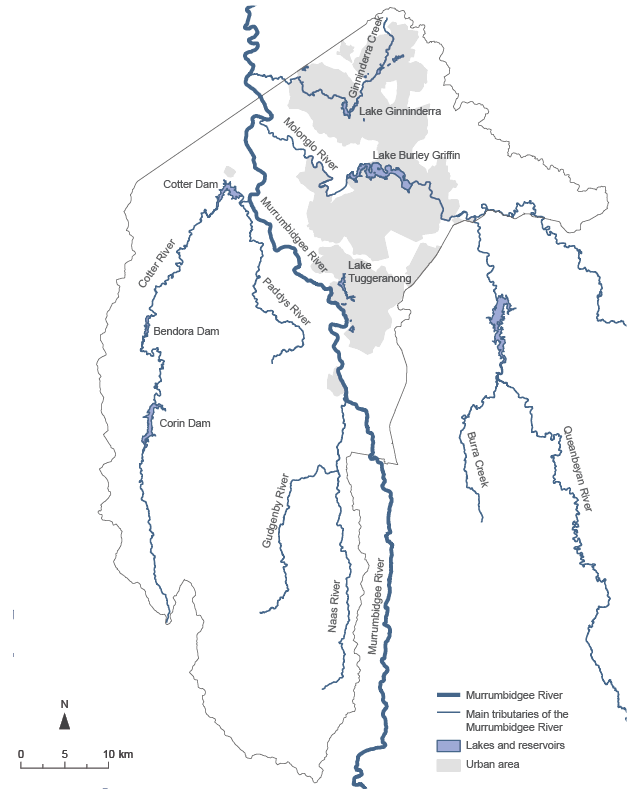
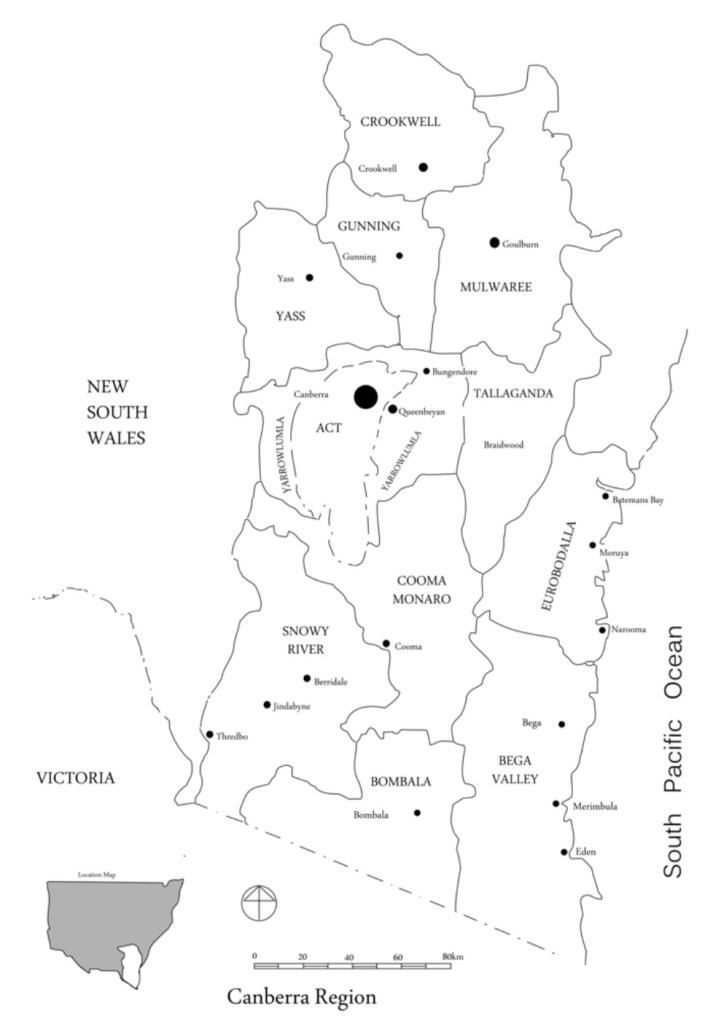
Canberra sits in the area around the Molongolo River, near its junction with the Murrumbidgee River, to the east of the Brindabella Ranges. The area was named Canberra, after much posturing and politicking by assorted leaders, in 1911, when the NSW government ceded the district to the federal government and the Federal Capital Territory was formed. Its name was changed to the present name two decades later.
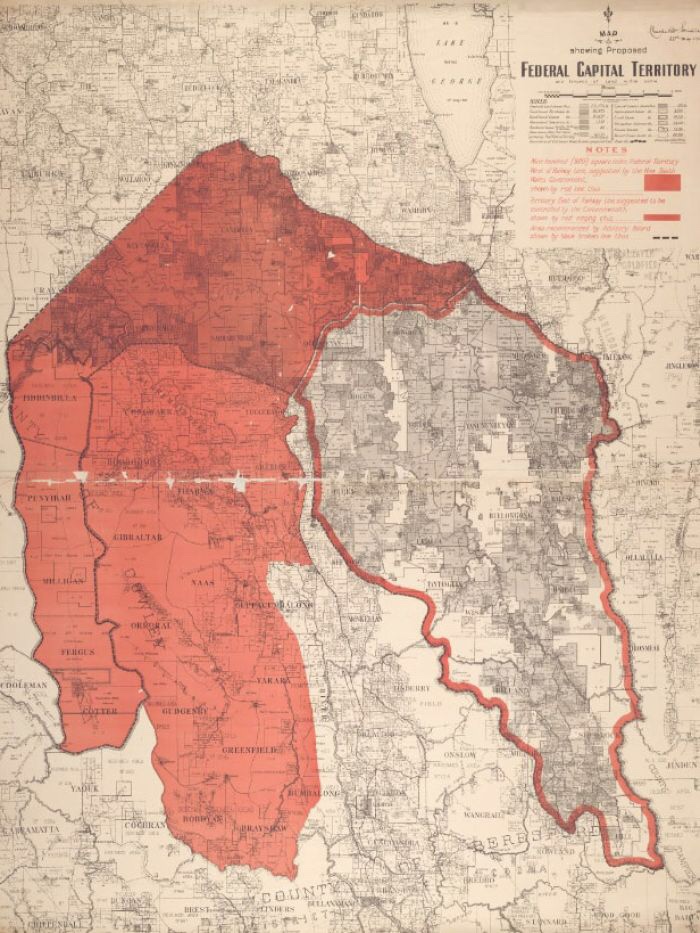
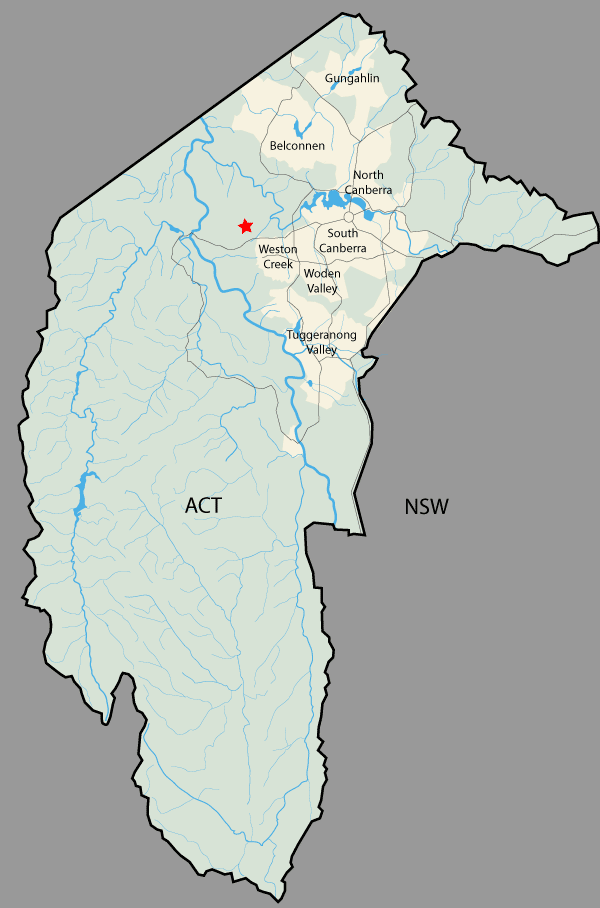
Canberra is the only city in the Australian Capital Territory. If you look at a map, you will see that the shape of the ACT is quite distinctive. The way the borders were agreed to offers a very interesting story. They produce a territory with a very strange shape. Some might say, this quite befits the place where politicians gather from all over the continent, to work in the very strange environment of the APH (the Australian Parliament House) and to make decisions which also have some very strange aspects!
There is one section of the ACT borders that is a straight line; the rest is far from straight. The shape of the ACT is quite asymmetrical, and Canberra is bunched into just one end of the elongated shape that forms the territory. The rest of the ACT is set aside as a series of nature reserves and the Namadgi National Park.
The story of how the borders were decided, and then surveyed and implemented, is told in this ABC article:
The original intention was to form a territory around the series of rivers in the region. The ACT was going to be a horseshoe shape, since the Surveyor-General, Charles Scrivener, originally wanted to include the Queanbeyan and Molonglo River catchments, and the Queanbeyan township itself, in the Federal Capital Territory.
That proposal was—surprise, surprise!—vetoed by the NSW government, who did not want to lose the main southern train line as it earn south from Queanbeyan. You can check this by following the train line south from Queanbeyan—the eastern ACT/NSW border follows the train line precisely, through all its twists and turns, to the southern tip of the ACT.
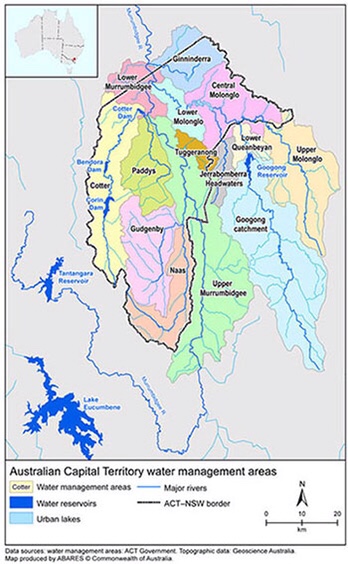
Mind you,as the above map indicates, the ACT water catchment area still draws from all the river systems originally proposed. And in this way (along with employment and entertainment factors), Queanbeyan is integrally connected with Canberra!
So, back in the day, in place of the Queanbeyan catchment, the NSW Government offered a series of catchments to the south of the Molongolo—the Cotter, Gudgenby, Naas and Paddy’s River catchments—which gave the territory is distinctive elongated shape.
This month I have started fulltime into a regional ministry role with the Canberra Region Presbytery of the Uniting Church in Australia. The Presbytery includes Congregations, Faith Communities, and Uniting Agencies across the ACT and in coastal and rural areas in the southeast of NSW.
I am joined in another fulltime regional ministry role by Andrew Smith, a colleague minister in the Uniting Church, and we work with administrative support staff, as well as in a collegial relationship with the Saltbush Project of our church, serving rural and remote Congregations, and Uniting, building community connections in locations across the region.
My role is described as Presbytery Minister Wellbeing, and I will be working with Ministers and Pastors, Congregations and Faith Communities, to guide them in their development and growth and support their leadership in their communities. I am charged to provide pastoral care, leadership development, and other training. There is a significant administrative component in the position. Despite this (or because of this?), I am looking forward to what this role will set before me.
Andrew has been called to serve as Presbytery Minister Congregation Futures, working with Congregations and Faith Communities, Pastors and Ministers, to empower their spiritual life, develop missional capacity, strengthen missional leadership, and build strong missional networks across the region. We are already working closely, and look forward to a constructive collaboration over the time ahead.
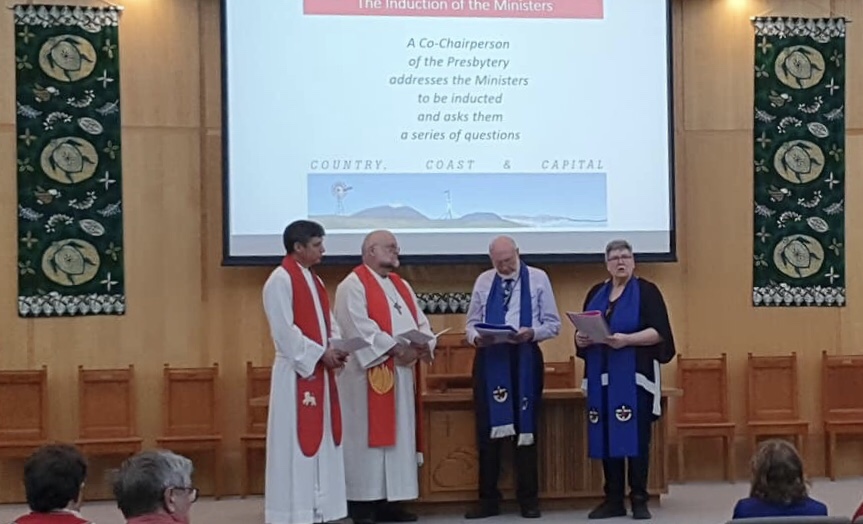
In the Service of Induction on 21 February 2020, we were privileged to have the President of the National Assembly, Dr Deidre Palmer, preach a thoughtful and stirring sermon. She focussed on the call to serve embedded in Luke 4:16-30 and the prayer of hope expressed in Psalm 13. What follows are the words that I offered in response at this service.
*********
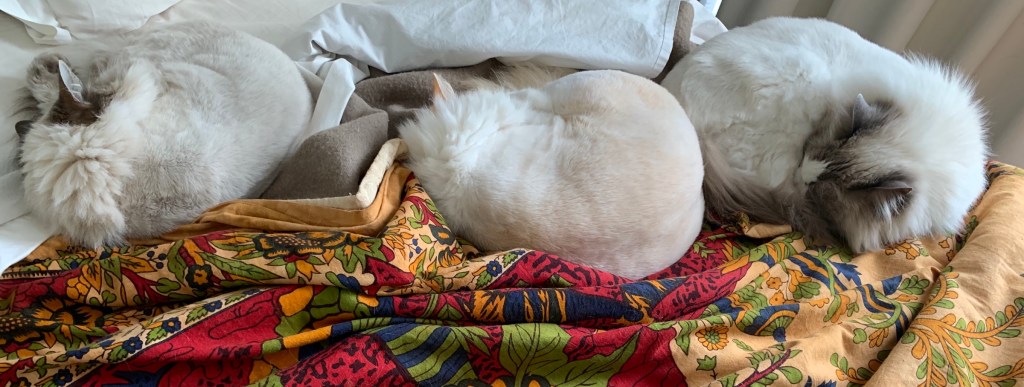
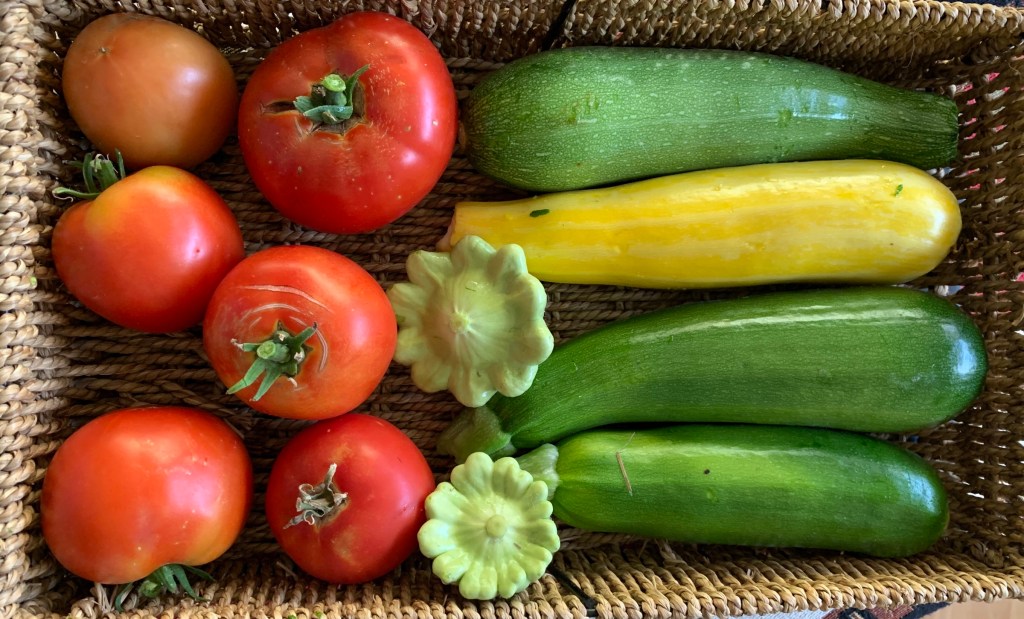
Co-Chairpersons, President, colleagues and friends, I thank you for your welcome. I am pleased to be in Canberra, here because Elizabeth was called by God through the church, to the right place at the right time, to be minister of the Tuggeranong Congregation. We are very content to be here. The cats are contented, and after a year in our house, the veggies are growing abundantly.
Maisie, Felix, and Fearghal, settled into life in Canberra
I am grateful for the support and encouragement that I have received as I have undertaken the slow and extended process, over the last year, of working my way into this role of Wellbeing within your Presbytery.
I come with a commitment to support and serve the leadership of our 29 congregations, both lay and ordained; to equip and encourage the whole people of God in order that together we might be faithful followers of Jesus; and to work to strengthen the mission and ministry that is undertaken by our congregations and faith communities.
In a world where a mother and her children can be incinerated by an act of savage fury, we need the Gospel of God, which invites us to value others deeply and to share with others in the depths of pain …
In a world where barriers are built and walls reinforced, where borders are patrolled and security is intensified, where fear and distrust leads us to keep at bay those who are perceived as different, foreign, strangers, we need to live out the Gospel of welcoming acceptance, so that we may no longer be strangers to one another …
In a world where stereotypes are promulgated and intolerance of difference and diversity in personal identity is growing, we need to reinforce that the Gospel in which we stand calls us to value diversity, love everyone, and work together to strengthen the common good in society …
In a world where land is taken, communities are neglected, the voices of Indigenous Peoples are silenced and their peoples and communities are marginalised, we need to live by our covenant commitment to honour and respect them, to listen and share with them, to seek a destiny together with the First Peoples of this continent and its islands …
In a world where vested interests cajole and threaten, pouring money into supporting ventures which continue to inflict damage on the environment and destroy ecosystems, we need the Gospel of renewal and reconciliation for the whole creation …
In a world where bushfires and cyclones wreak havoc, where droughts and floods destabilise, we need the Gospel of patient care and loving concern, looking to rebuild lives and strengthen community resilience, which all comes from the central command, that we are to love one another …
In a world where captives are tortured, prisoners are held unjustly, systems are corrupted, and injustice is contagious, we need the Gospel which calls us to set free the prisoner, enable the blind to see, and offer God’s gracious liberty as a sign of the year of the Lord’s favour …
This is the world we live in, and this is the Gospel we believe in. It invites us into wholeness, shalom, wellbeing.
The 29 Congregational units in this Presbytery cover 54 locations under the banner of the Uniting Church. Every Sunday, when people in our Presbytery gather together to worship, every weekday, when people gather in our buildings to eat and talk, to listen and learn, we demonstrate that we are committed to this Gospel, as the good news for all, that we seek to live it out to the fullest.
Our congregations and faith communities are the lifeblood of that Gospel in our region. Our pastors and ministers are the people who call and care, who proclaim and practice the good news for our world in each of those places, as we live out that Gospel.
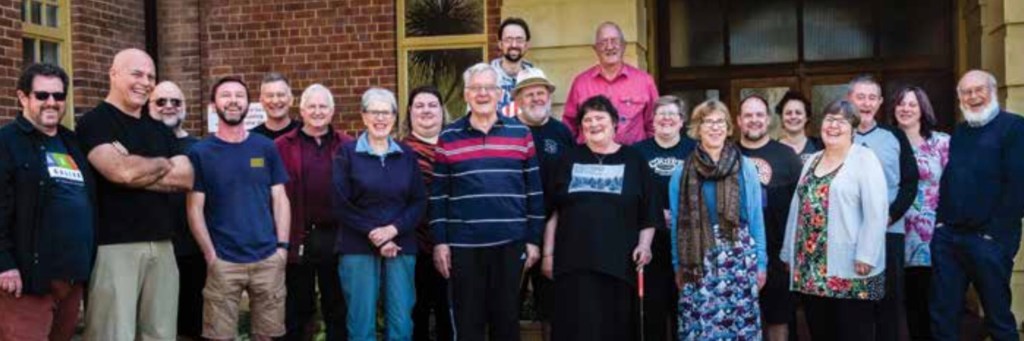
Canberra Region Presbytery Ministers and Pastors with the Co-Chairs of Presbytery, on retreat in October 2019
I am looking forward to working with you all, to continue working with Amy and Janise in the Presbytery Office, and especially to work closely with Andrew as we offer resourcing and guidance as the ministers you have called to serve across this Presbytery, charged to support ministers and pastors as they offer their leadership, called to equip faith communities and congregations to be resilient, faithful and engaged with their local communities.
I am committed to working with you, alongside each of you, to seek the wellbeing of our church and to contribute to the common good in society. I look forward to the adventures that lie ahead, as together we serve the Gospel in the world through our church.









 An Informed Faith