Carols for the Season of Christmas (10) The Tenth Day of Christmas, 3 January

Contextualising our Carols: the work of Shirley Erena Murray

Shirley Erena Murray, of Aotearoa New Zealand, has been one of the most prolific and important hymn writers of the 20th century. One of my favourite quotes from her is “I’m despairing of outdated hymns and songs that are irrelevant to contemporary life and the way we live it”. As you may have guessed, I am right on the same wavelength as Shirley Murray!
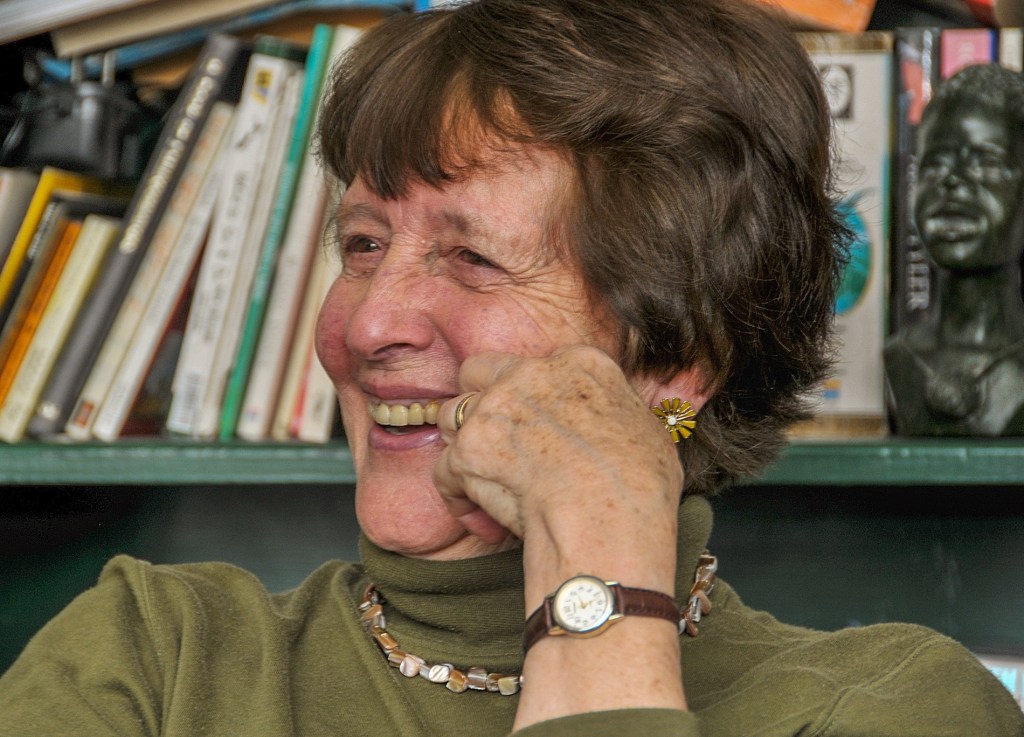
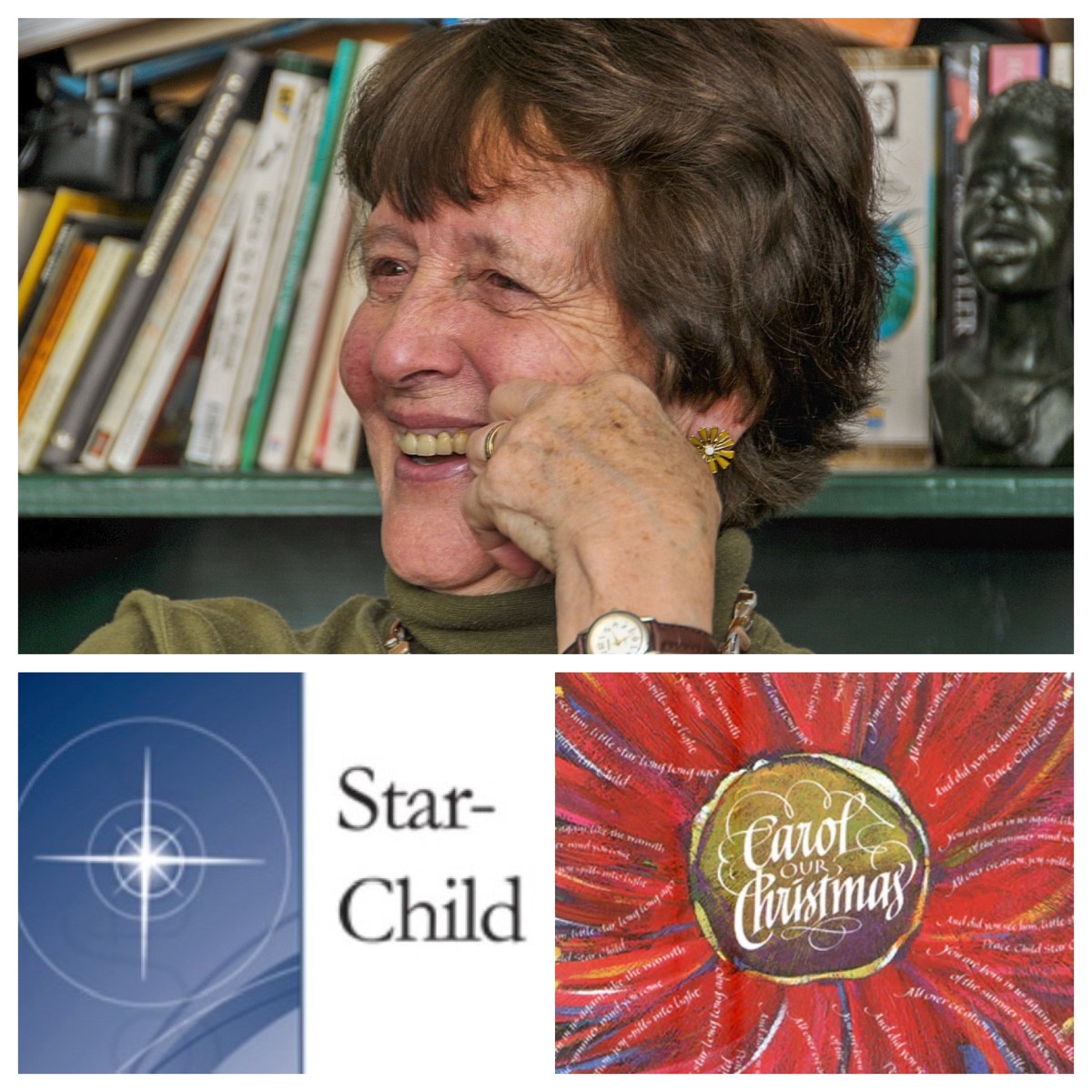
Shirley Erena Murray, pictured in 2009

“I choose to write with liberal intent, persuading people to look again at what the Gospels actually say and what new truths can come out of them”, she said. With over 400 hundred hymns written by her over her life, and many of them published in more than 140 collections across denominations, countries and continents—including Together in Song—she is well-qualified to speak about this. “What has nudged and provoked me”, she continued, “are the people I admire who have gone to the edge in terms of taking the gospels seriously and followed the Jesus principles.”

Perhaps her best-known Christmas hymn is surely Star-Child, earth-Child:
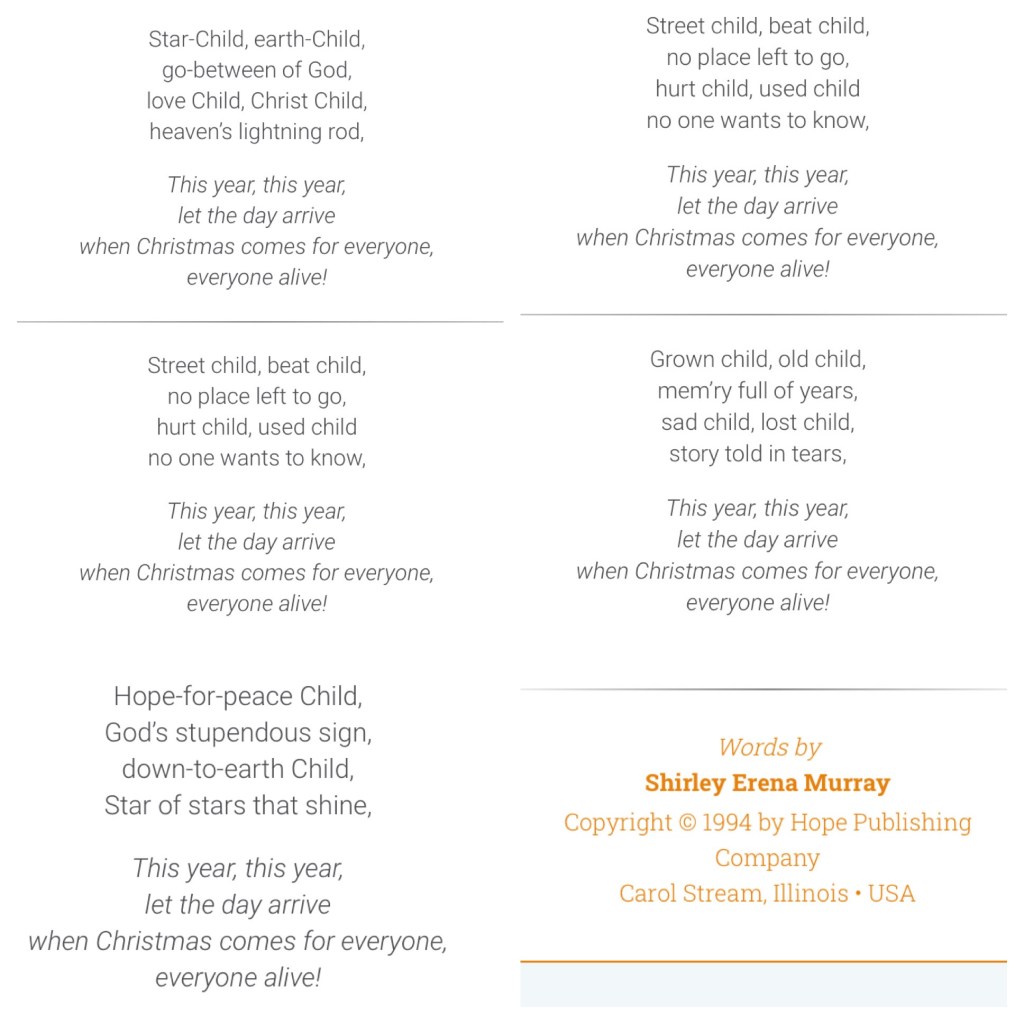
See https://musiklus.com/product/star-child/

Another insightful carol reflects the “upside-down” nature of Christmas in the southern hemisphere. It begins:

Carol our Christmas, an upside-down Christmas: /snow is not falling and trees are not bare. / Carol the summer, and welcome the Christ Child, / warm in our sunshine and sweetness of air.

See https://folksong.org.nz/nzchristmas/upside_down_xmas.html

Commenting on how she approaches such seasonal carolling in a 1996 interview, Shirley said: “All our theology in New Zealand is upside down. We don’t have springtime at Easter. Instead, we think of burning leaves and planting bulbs for the spring. We can’t talk about robins and reindeer and snow at Christmas time, which is why I wrote Upside Down Christmas. This explores the images that make sense to us in summertime.” (Peace is Her Song p.137).

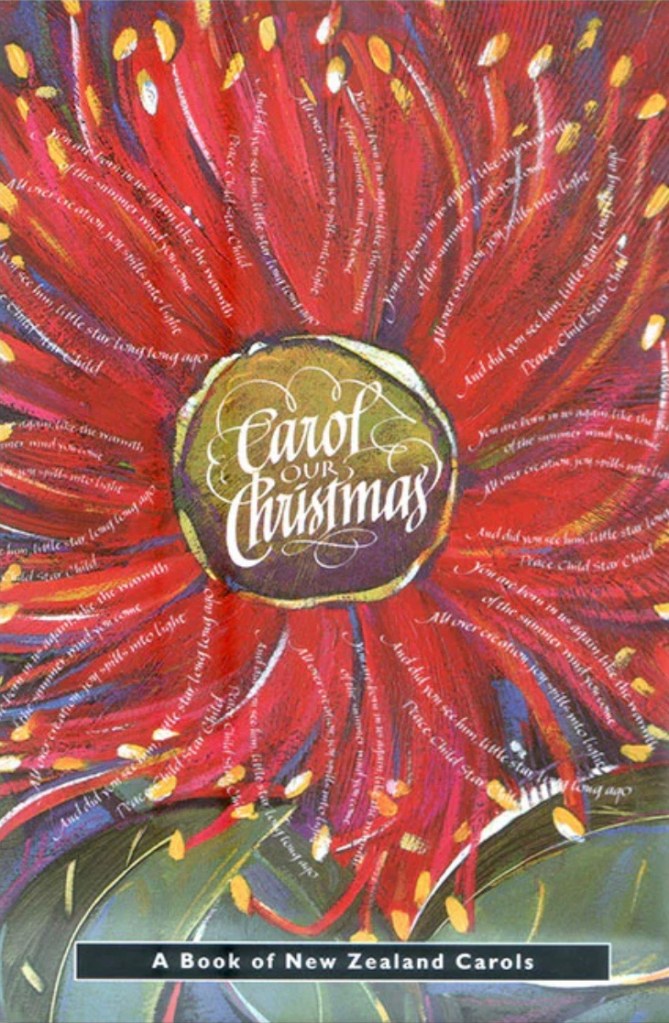
Joy Cowley, in her introduction to the 1996 collection that was entitled Carol Our Christmas, wrote: “For this country and its people, the prevailing symbol of the Christmas season is not snow but light. The star that heralds the Christ child in our midst is the sun, and even the sound of its name is symbolic blessing … In this volume of New Zealand carols … not only do the words and the music here reflect Christmas in Aotearoa, they offer us a wide experience of music and rejoicing.” (Peace is Her Song p.115)
In a 2004 interview, Shirley Murray said: “Carols are one of my favourite areas of work, because they are so challenging, not just because I am a southern hemisphere person when Christmas comes. They are the most theologically challenging part of the story for me. Incarnation is much more important than arguing about resurrection; being embodied is more important than talking about where we go hereafter.”

So in “Summer sun or winter skies”, she writes a carol with many of the “classic” carol elements (Christmas, shepherds, angels, silent night, lullabies) but with a potent message for the contemporary world: “silent night a violent night, hawks are in control of a nation’s soul … goodness will outclass the gun, evil has no tooth that can kill the truth”. 

See https://www.hopepublishing.com/find-hymns-hw/hw8388_44.aspx

She continued: “Carols have always posed a lot of questions. How do you relate to what might be called the gaiety and festivity of what Christmas is meant to be and how do you say something about the child in the manger? … I have written about 20 carols and every Christmas, I struggle again to deal with humanity and God and this amazing baby. Carols have kept hustling me, annoying me, making me work on them.” (Peace is Her Song p.114)

So in 2013 she published The Christmas Child is a Troublesome Child, containing the insightful words that this child was “as troublesome as the Word that stirred the waters from the deep … who questions given rule, who flouts convention’s pious face … whose vision takes a thorny path whose cross may be our own”.

See https://musiklus.com/product/troublesome-carol/

Commenting on this carol, Murray observed: “The childhood of Jesus … was surely like any other kid’s. Jesus became very annoying to the system. When you remember that, carols cease to be throw-away, jolly songs, and start to dig at you, to make you worry and wonder what God is saying through this. I sometimes introduce imagery from my own country but generally I write songs that will apply to almost anybody wanting to talk about the Jesus person, not just the Jesus baby.” (Peace is Her Song p.114)
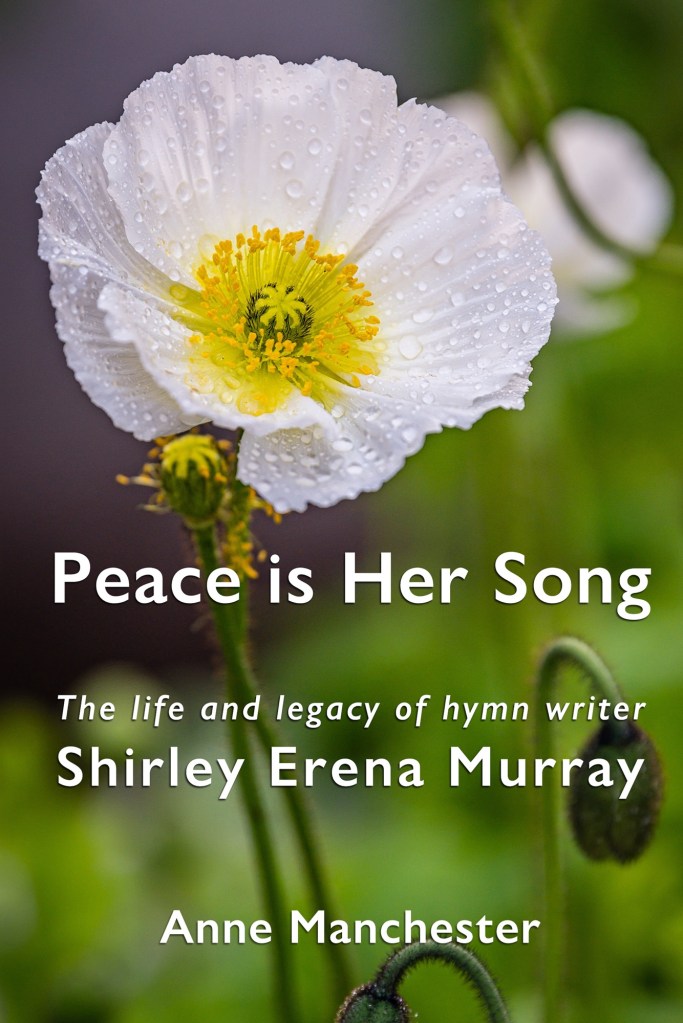
I am going to include the words of a wonderful Epiphany hymn that she wrote in tomorrow’s post in this series. But for today, perhaps a novel way to end this exploration of Murray’s Christmas carols is to offer the words of her Lullaby for Judas (2001). In Peace is Her Song, her grandson Alex specifically notes this hymn, and reflects on how his grandmother “wanted to picture the human experience in its highs and lows, humans as fallible beings, with weaknesses and strengths. She dealt with the light and the dark of human experience—she didn’t gloss over things. She had the courage to confront the difficult topics, I find this particularly inspiring, and it is what makes her reputation so great.” (p.167) 

The child is sleeping sound whose star is yet to rise.
Like any baby born, an innocent he lies,
this Judas child, a happy child, with laughter in his eyes.

The child can never dream the wonders he will meet:
the hungry filled with bread, the bitter lives made sweet,
the friend, forgiving to the end, who sees his heart’s deceit.

The child is sleeping sound who knows no horoscope:
his kiss that will betray, his hand to grasp, in hope,
the money bag, the silver swag, and then, the knotted rope.

An extensive list of the Christmas carols written by Shirley Murray can be accessed at https://www.hymnsandcarolsofchristmas.com/Hymns_and_Carols/Notes_On_Carols/christmastide_carols_of_shi.htm

Unfortunately the hyperlinks no longer appear to be active.

Shirley’s life and contribution to the worldwide church are now told in a biography, Peace is Her Song: The life and legacy of hymn writer Shirley Erena Murray. Written by journalist Anne Manchester, the book draws on rich sources of material, particularly Shirley’s own words as recorded in several audio and video interviews, and published articles.

The book can be ordered directly from New Zealand via the website www.philipgarsidebooks.com or you can order it via Amazon (Kindle $28 or Paperback $60) at https://www.amazon.com.au/Peace-Her-Song-Legacy-Shirley/dp/1991027826

Carols for the Season of Christmas (7) The Seventh Day of Christmas, 31 December

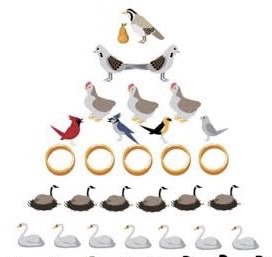
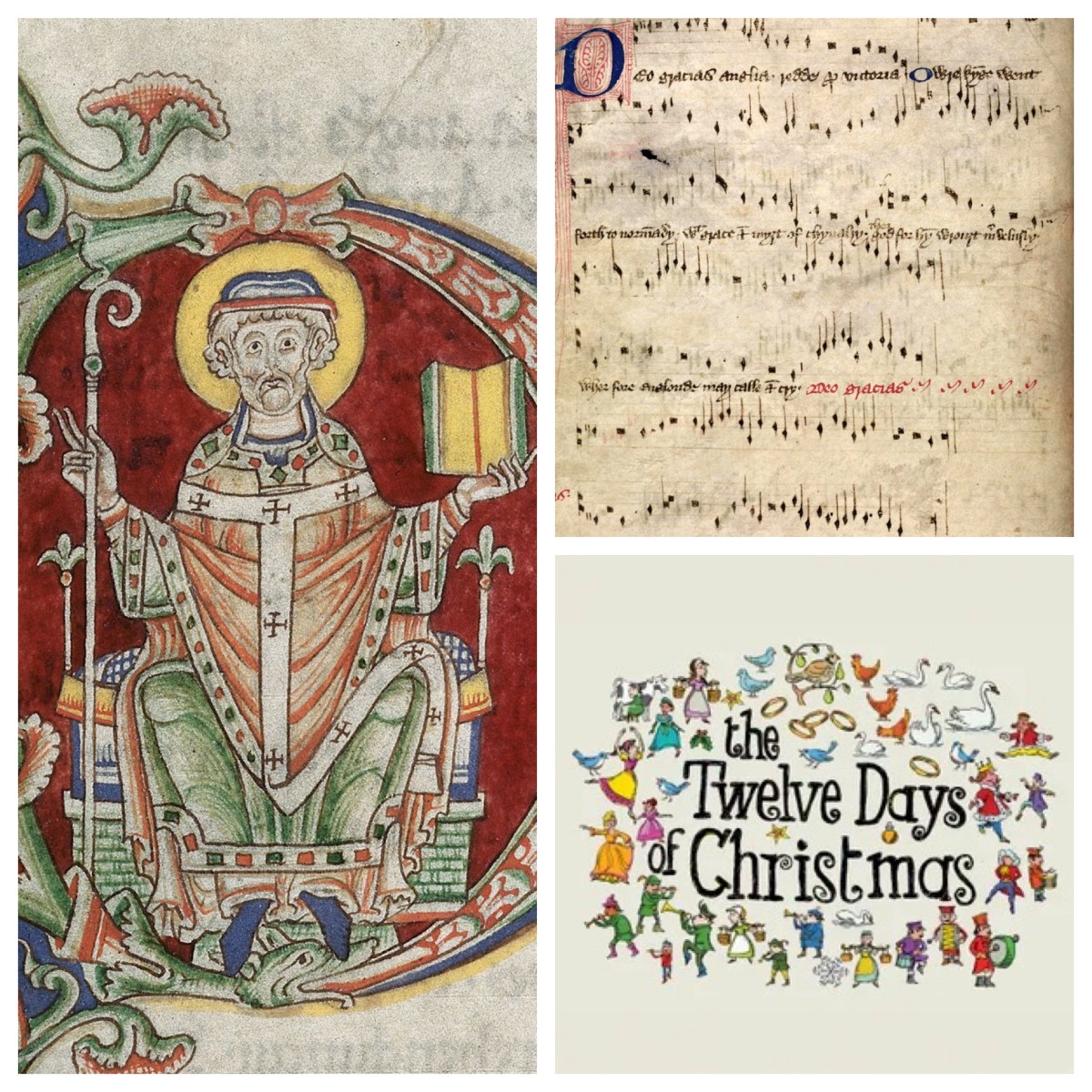
I guess those with diligent true loves are busy, today, trying to feed the seven partridges, twelve turtle doves, fifteen French hens, sixteen colly birds, twelve laying geese, and seven swimming swans that their true loves have delivered to them (thus far) to commemorate the twelve days of Christmas. And I hope they have their fifteen gold rings locked away securely!

For my part, I am offering a further carol for The Season of Christmas: another one from the early centuries of Christianity, when theologians wrote the words of songs for the faithful to sing—thereby providing them with meaty teaching in the faith (at least as they understood it). Today, it is one by the forth century theologian Ambrose, who was Bishop of Milan from 374 until his death in 397.

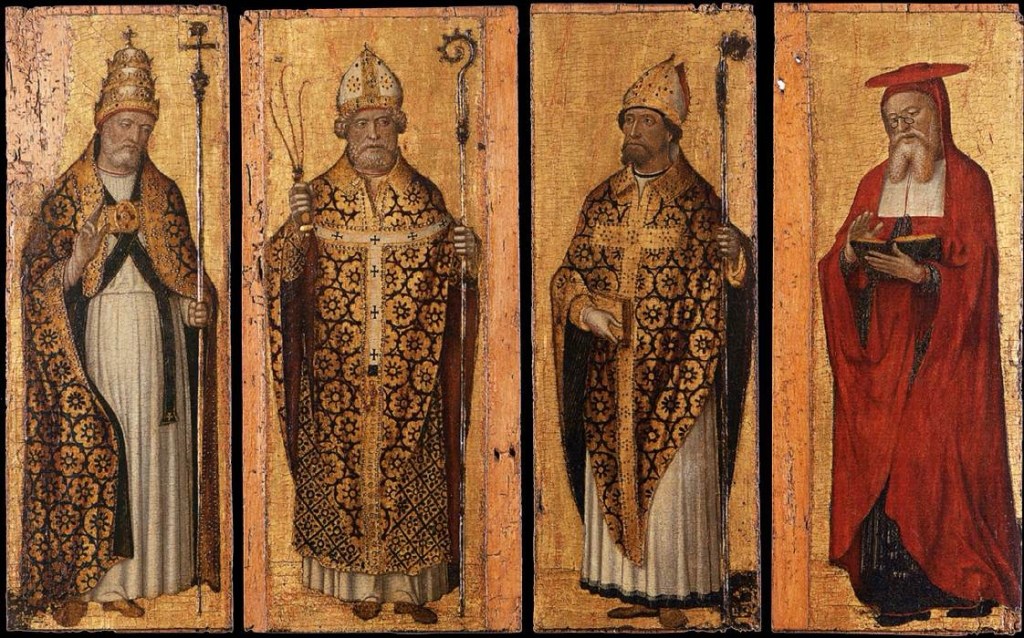
Four Doctors of the Church
Four panels from a partially-preserved polyptych, dated c. 1495, and attributed to Galleria Franchetti, Ca’ d’Oro, Venice

Amongst the western church, dominated by Roman Catholicism, Ambrose of Milan (339—397) is counted as one of the four Doctors of the Church, along with his contemporaries Augustine of Hippo (354—430) and Jerome of Stridon (342—420). Pope Gregory the Great (540—604) is accounted as the fourth Doctor. All four had the title Doctor attributed to them, in the true sense of the word (it comes from the Latin word for Teacher). 

In the eyes of many theological writers, the fourth century was critical in the development of classic orthodoxy, for this was when the various disputes about the nature of Jesus took place. Those who were leading the theological argumentation—including Ambrose, Augustine, and Jerome—contributed to the development of orthodox dogmas which were confirmed by various church councils: Nicea in 325, Constantinople in 381, Ephesus in 431, Chalcedon in 451, and others in subsequent centuries. 

Those whose arguments failed to persuade—or who were condemned by decree of one of the councils—are known to us as “heretics”; they include Theodotius of Byzantium, Nestorian of Constantinople, Paul of Samosata, Apollinaris of Laodicea, Eutyches of Constantinople, and perhaps most famously of all, Arius of Alexandria. Legend has it that at the Council of Nicea, Arius slapped Nicholas of Myra (the historical figure who later morphed into Saint Nicholas and then Santa Claus) and so was temporarily defrocked and imprisoned. 

Although their writings were instrumental in developing orthodox theology, such men have long been denigrated as heretics—although, in my mind, a number of these “heretics” offered wise and helpful insights. But the verdict of history stands, cemented now by centuries of church tradition and theological dogma. 

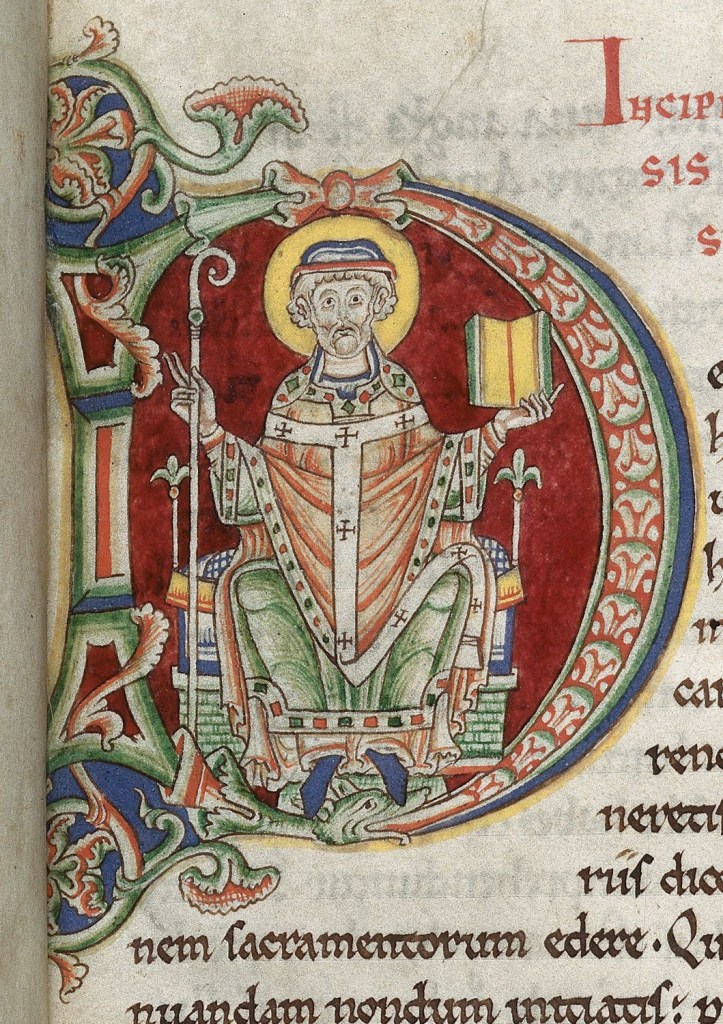
Ambrose of Milan

It is in this context of debate, disputation, denigration, and entrenched doctrinal disagreements, that Ambrose penned this carol, Veni redemptor gentium (Come, Redeemer of Nations). It is filled with patristic theologising, reflecting the debates of the day, depicting Jesus as “a giant in twofold substance in one” and “equal to the Father”, whilst also affirming his mother as having “virgin honour all unstained”, a “royal home of purity”. These are the seeds for the theological affirmations about Jesus in some of the much later Christmas carols that we sing today!

Here is the hymn of Ambrose in a translation of the original Latin by John Mason Neale (whom we noted a few days ago provided us with the English of Good King Wenceslas).

1. Come, Thou Redeemer of the earth,

And manifest Thy virgin birth:

Let every age adoring fall;

Such birth befits the God of all.

2. Begotten of no human will,

But of the Spirit, Thou art still

The Word of God in flesh arrayed,

The promised Fruit to man displayed.

3. The virgin womb that burden gained

With virgin honour all unstained;

The banners there of virtue glow;

God in His temple dwells below.

4. Forth from His chamber goeth He,

That royal home of purity,

A giant in twofold substance one,

Rejoicing now His course to run.

5. From God the Father He proceeds,

To God the Father back He speeds;

His course He runs to death and hell,

Returning on God’s throne to dwell.

6. O equal to the Father, Thou!

Gird on Thy fleshly mantle now;

The weakness of our mortal state

With deathless might invigorate.

7. Thy cradle here shall glitter bright,

And darkness breathe a newer light,

Where endless faith shall shine serene,

And twilight never intervene.

8. All laud to God the Father be,

All praise, eternal Son, to Thee;

All glory, as is ever meet,

To God the Holy Paraclete.

Trans. J. M. Neale. 

https://www.preces-latinae.org/thesaurus/Hymni/VeniRedemptorG.html

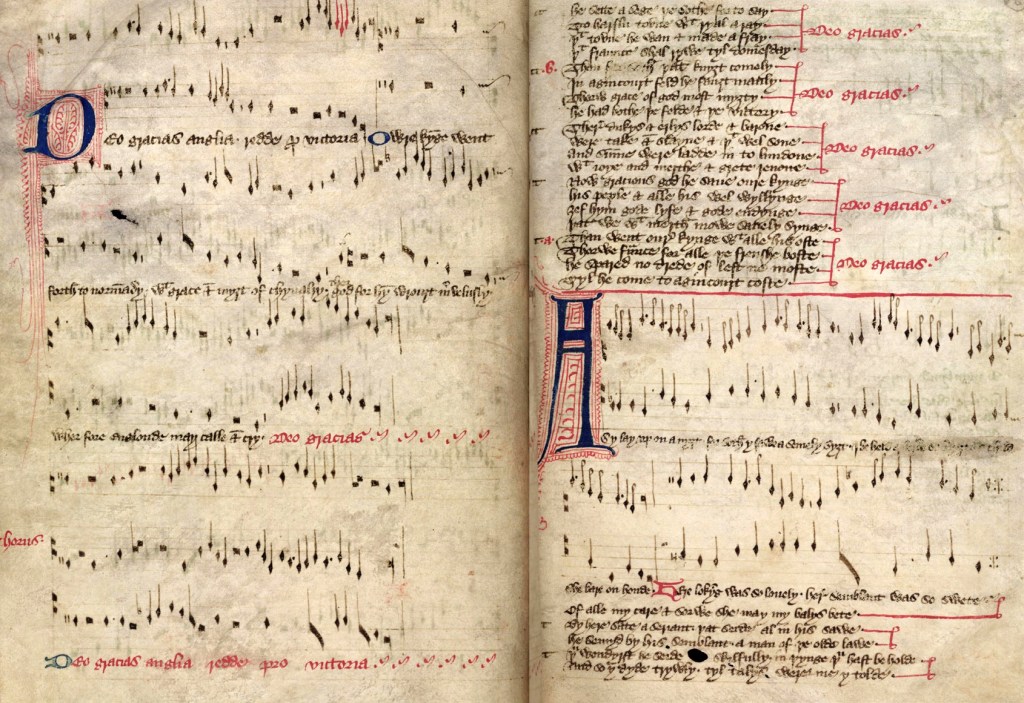
Closely related to this carol, there is another carol in a 15th century manuscript, the Selden Carol Book, a document which contains music and words for thirty carols of the day. (The manuscript is held in Oxford at the Bodleian Library.)

A page from the manuscript of the Selden Carol Book

This carol, number 28 in the collection, both uses the refrain of Ambrose’s original, and, in verse 3, refers directly to the work by Ambrose. Its author, as with all the carols in the Selden manuscript, is unknown.

Veni, redemptor gencium, Veni, redemptor gencium. 

This worle wondreth of all thynge

Howe a maide conceyved a kynge;

To yeue us al therof shewynge,

Veni, redemptor gencium.

Whan Gabriel come with his gretynge

To Mary moder, that swete thynge,

He graunted and saide with grete lykynge,

Veni, redemptor gencium.

Ambrose saide in his writynge

Cryst sholde be in a maide dwellynge;

To make sothe alle that syngynge,

Veni, redemptor gencium.

And Davyd saide in his spellynge

That truthe sholde be in erthe growynge

To us, byer of alle thynge,

Veni, redemptor gencium.

Cryst, ycrowned at oure begynnynge,

Be with us at oure endynge

Us to thy ioye for to brynge,

Veni, redemptor gencium.

The text is from Richard Greene, The Early English Carols (Oxford, 1977), p.36. A version in modern English is offered at  

http://aclerkofoxford.blogspot.com.au/2013/12/veni-redemptor-gentium-this-world.html

Carols for the Season of Christmas (3) The Third Day of Christmas, 27 December

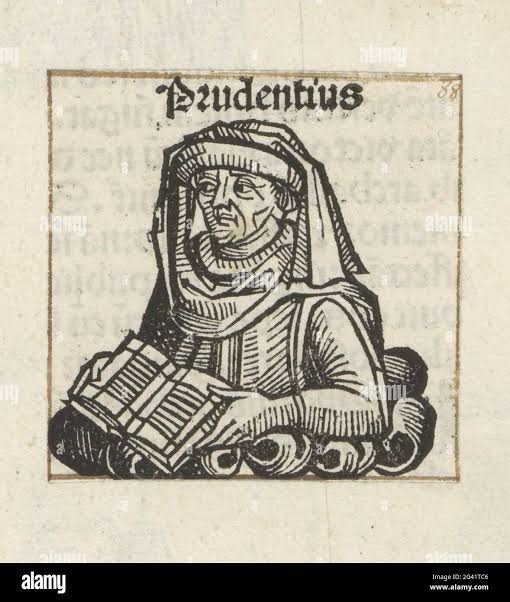
For today, the Third Day of Christmas, following the church calendar, I offer a Christmas carol which originates in the 4th century. It was written by the Roman poet, Aurelius Prudentius Clemens. Prudentius was a Spanish layman, a lawyer who twice served as a provincial governor. He was also a government official in the court of the Roman Empire, and is remembered as one of the greatest Latin Christian poets. 

For the last period of his life (at least a decade, perhaps closer to two), Prudentius lived as an ascetic, fasting during daylight hours and eating only vegetarian meals. It was apparently during this period that he wrote many books and poems. Among these works was the Psychomachia, an allegorical treatment of “the conflict of the soul” (as illustrated).

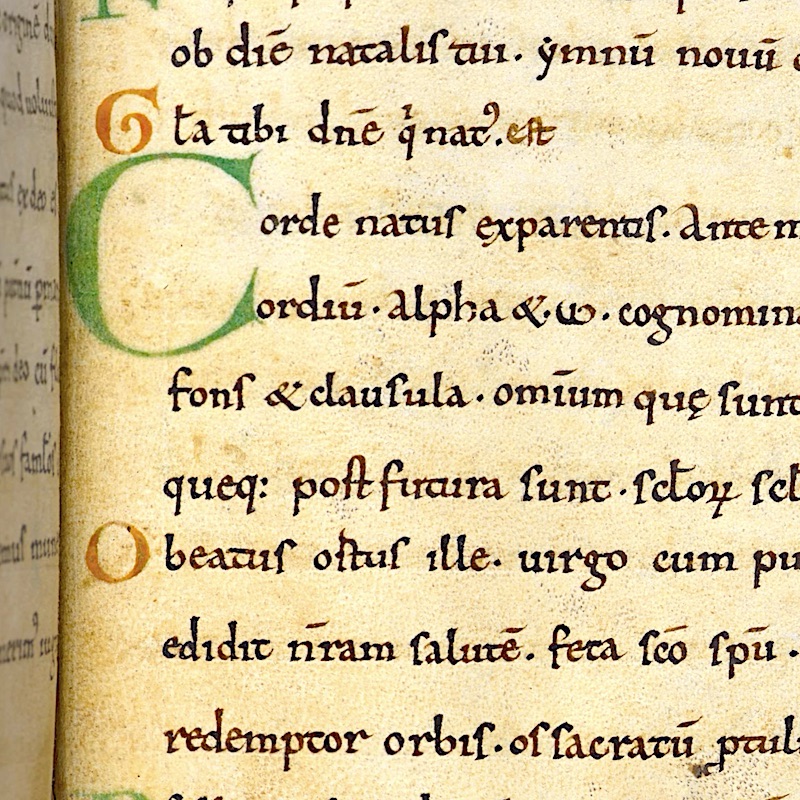
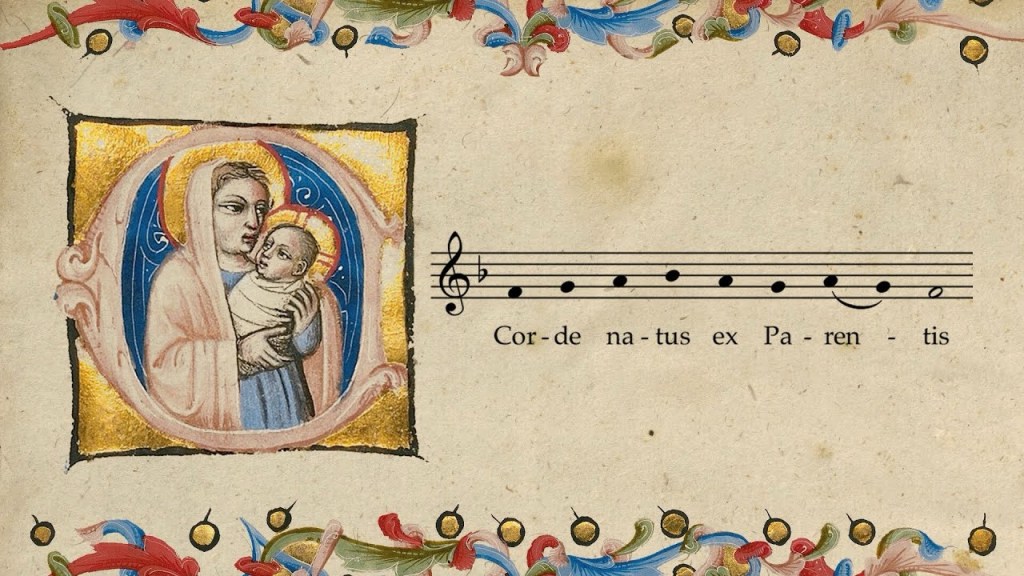
Prudentius composed Corde natus ex Parentis, which was subsequently translated into English as “Of the Father’s love begotten”. The translator was John Mason Neale, whom we met yesterday. This hymn stands at the head of the section in Together in Song where we find the Christmas carols/hymns, so it is recognised as an ancient Christmas carol. 

Prudentius, situated strongly within the developing patristic theology, gives expression to the “highest” view of Jesus, as Alpha and fons (source, or origin) and Omega and clausula (ending, or culmination) of the whole creation, existing “evermore and evermore”. 

So the hymn resonates well with the developing credal tradition of the Nicea—Chalcedon-Constantinople stream. And so begins the long trek towards the transcendental, romantically-unrealistic, Christ of Christmas.

  1. Corde natus ex parentis ante mundi exordium

A et O cognominatus, ipse fons et clausula

Omnium quae sunt, fuerunt, quaeque post futura sunt.

2. Ipse iussit et creata, dixit ipse et facta sunt,

Terra, caelum, fossa ponti, trina rerum machina,

Quaeque in his vigent sub alto solis et lunae globo.

3. Corporis formam caduci, membra morti obnoxia

Induit, ne gens periret primoplasti ex germine,

Merserat quem lex profundo noxialis tartaro.

4. O beatus ortus ille, virgo cum puerpera

Edidit nostram salutem, feta Sancto Spiritu,

Et puer redemptor orbis os sacratum protulit.

5. Psallat altitudo caeli, psallite omnes angeli,

Quidquid est virtutis usquam psallat in laudem Dei,

Nulla linguarum silescat, vox et omnis consonet.

6. Ecce, quem vates vetustis concinebant saeculis,

Quem prophetarum fideles paginae spoponderant,

Emicat promissus olim; cuncta conlaudent eum.

7. Macte iudex mortuorum, macte rex viventium,

Dexter in Parentis arce qui cluis virtutibus,

Omnium venturus inde iustus ultor criminum.

8. Te senes et te iuventus, parvulorum te chorus,

Turba matrum, virginumque, simplices puellulae,

Voce concordes pudicis perstrepant concentibus.

9. Tibi, Christe, sit cum Patre hagioque Pneumate

Hymnus, decus, laus perennis, gratiarum actio,

Honor, virtus, victoria, regnum aeternaliter.

The English translation:

(1) Of the Father’s love begotten

Ere the worlds began to be,

He is Alpha and Omega,

He the Source, the Ending He,

Of the things that are, that have been,

And that future years shall see

Evermore and evermore.

(2) Oh, that birth forever blessed

When the Virgin, full of grace,

By the Holy Ghost conceiving,

Bare the Savior of our race,

And the Babe, the world’s Redeemer,

First revealed His sacred face

Evermore and evermore.

(3) O ye heights of heaven, adore Him;

Angel hosts, His praises sing;

Powers, dominions, bow before Him

And extol our God and King.

Let no tongue on earth be silent,

Every voice in concert ring

Evermore and evermore.

(4) This is He whom Heaven-taught singers

Sang of old with one accord;

Whom the Scriptures of the prophets

Promised in their faithful word.

Now He shines, the Long-expected;

Let creation praise its Lord

Evermore and evermore.

(5) Christ, to Thee, with God the Father,

And, O Holy Ghost, to Thee

Hymn and chant and high thanksgiving

And unending praises be,

Honor, glory, and dominion,

And eternal victory

Evermore and evermore.

http://etymologyofhymns.blogspot.com.au/2012/12/of-fathers-love-begotten.html

Carols for the Season of Christmas (1) The First Day of Christmas, 25 December

Today, Christmas Day, is the first day in the season of Christmas. The First Day of Christmas, according to a well-known Christmas song, is to be celebrated with the gift of a partridge in a pear tree, is it not? Subsequent days, we learn from that song, should be celebrated with the gifts of assorted birds, five golden rings, and an assortment of drummers, leaping lords, milkmaids, and more!

For each of The Twelve Days in the ecclesial Season of Christmas, however, I will be thinking about various carols. We most likely have had our fill,of all the traditional carols and songs associated with Christmas in the lead-up to the actual day of Christmas; so I will be offering thoughts on carols, mostly lesser-known or unknown in the modern period, that are appropriate for the Season.

For today, I offer the words of a hymn (a very early Christmas carol) composed in Latin and attributed to the fourth century doctor of the church, Hilary, the Bishop of Poitiers. Hilary was sometimes referred to as the “Hammer of the Arians” (Malleus Arianorum) because of his active role in opposing Arian theology in Gaul, and also as the “Athanasius of the West”.

The carol Jesus refulsit omnium (“Jesus illuminates all”) is dated to 368.  The words in Latin are:

Jesus refulsit omnium
Pius redemptor gentium
Totum genus fidelium
Laudes celebret dramatum

Quem stella natum fulgida
Monstrat micans per authera
Magosque duxit praevia
Ipsius ad cunabula

Illi cadentes parvulum
Pannis adorant obsitum
Verum fatentur ut Deum
Munus ferendo mysticum.

The English Translation below is by Kevin Hawthorne, PhD

Jesus, devoted redeemer of all nations, has shone forth. / Let the whole family of the faithful celebrate the stories. / The shining star, gleaming in the heavens, / makes him known at his birth and, going before, has led the Magi to his cradle. / Falling down, they adore the tiny baby hidden in rags, / as they bear witness to the true God by bringing a mystical gift.

See http://archive.wf-f.org/Hymns-carols.html

Some carols for Epiphany

Some carols from Aotearoa-New Zealand and Australia, as we head towards Epiphany, orienting us to the journey motif in the story.

God, help the weary travelers (Daniel Charles Damon)

1. God, help the weary travelers who follow their star,
seeking a refuge, so near, yet so far,
seeking a place of shelter from hatred and war,
seeking the safety of some distant shore.

Refrain: God, help the weary travelers, the lost and the found,
all of us travelers on this holy ground.
God, help the weary travelers, those just passing through,
all of us travelers with love’s work to do.

2. God, help the gifted people who come seeking gold,
far from their homelands, their lives bought and sold.
God, free us from the judgments that turn us to stone,
show us the river that flows from your throne.

3. God, lift new generations from muck and from mire,
baptized with water and Spirit and fire.
God, raise new generations with hearts set ablaze,
singing and dancing their Maker’s high praise.

Suggested Hymn Tune: PRAYER FOR TRAVELERS – Damon, Daniel Charles
Poetic Meter: 12.10.12.10. Ref.

*****

Wise men came journeying (Shirley Erena Murray)

Wise men came journeying, once, long ago,
camel hooves swirling the sand dune and snow,
gold in the saddlebag, myrrh in the jar,
incense to honor the Child of the star.

Wise are the travelers led to move on
following signs where the Christ light has shone,
facing the deserts and crossing the lines,
heeding no limits that culture defines.

Wise are each one of us looking for change,
stargazer people, respecting the strange,
inner and outer worlds open to light,
centered on seeing the real and the right.

Wise ones keep journeying all through their days
bringing their gifts to the source of their praise,
risking the Promise with all they hold dear,
seeking God’s peace at the door of the year.

http://www.hopepublishing.com/html/main.isx?sitesec=40.2.1.0&hymnID=2956

*****

The star and hope for our times (Shirley Erena Murray)

Shirley Erena Murray writes of looking to peace and justice in our world, with particular reference to the three Abrahamic faiths.

Now the star of Christmas shines into our day,
points a new direction: change is on the way –
there’s another landscape to be travelled through,
there’s a new-born spirit broadening our view.

When the Christ of Christmas speaks to heart and mind,
clears the clouded vision hurting humankind,
kindred spirits gather, drawn toward the light,
sharing revelation, joyful at the sight.

If we choose to follow, we may yet be wise:
where the three kings travel, three great faiths arise:
Christ within the Christian, Jesus in the Jew,
Prophet for the Muslim, each tradition true.

Where the star enlightens, light is shared around.
God has drawn no borders, faith sees common ground:
Peace the hopeful journey, justice without bar,
God’s illumination from the Christmas star.

Suggested Hymn Tune: NOEL NOUVELET –
Poetic Meter: 6.5.6.5.D.

*****

Be the light (Craig Mitchell and David MacGregor)

Be the light that shrouds the twilight
Be the might that holds our fears
Be the home that yearns our dwelling
Be the stone that takes our tears

Refrain: Christ be our light, Whom shall we fear?
Deep in the night, Spirit, draw near.

Be the cry that whispers mercy
Be the seeker when we hide
Be the taker and the giver
Be the pathway and the guide

Be the sacrifice that breaks us
Be the shelter in the flood
Be the promise that remakes us
Be the parent who is good

Realism at Christmas

The combined collection of traditional carols that we sing each Christmas demonstrate a very strange dichotomy.

On the one hand, there are those carols, or verses in carols, which go goo-gah at ten news of the cute little bay by, ruddy-cheeked and gurgling enticingly (or sleeping silently, making not a hint of baby noise).

On the other hand, there are those carols that really want us to focus on Jesus the exalted Lord, resplendent in glory, coming to earth from heaven, bring peace and joy, salvation and redemption, to the whole world. They move us quickly away from the vulnerable infant, and especially from the grim political and social realities of the time, into an ethereal heavenly realm.

Aotearoa/New Zealand hymn writer Colin Gibson has written a fine hymn, We who love Jesus, that offers a realistic take on what Christmas might/should/must mean for people of faith:

We who love Jesus asleep in the hay,
for all those children who wander today,
homeless and hungry and driven, we pray.
Et te Ariki, whakarongo ki a matou.*

We who see Jesus on Mary’s sweet breast
pray for the children who are nobody’s guest,
walking to nowhere, with nowhere to rest.
Et te Ariki, whakarongo ki a matou.

We who praise Jesus, the gentle and kind,
pray for all children unseen, out of mind,
beaten, abused or in conflict entwined.
Et te Ariki, whakarongo ki a matou.

We who in Jesus know God come to earth
pray for all children, wherever their birth;
may they find shelter, beloved, given worth.
Et te Ariki, whakarongo ki a matou.

*New Zealand Maori for ‘Lord, hear our prayer’;
it is pronounced ay tay areekee, fockarongo kee a ma-toe.

*****

Another much more realistic offering comes in one of my favourites, to the tune of Away in a Manger, in which Rebecca Dudley (of Shine on Star of Bethlehem, Christian Aid, UK) has reworked the unrealistic saccharine lyrics of the traditional Carol into a reflection on the story in a far more realistic mode:

How ancient and lovely this news of a star,
a baby, a mother, the kings from afar.
Come close now, Lord Jesus, we ask you to stay
and show us your face in your people today.

What star shall we follow but one that leads here
to a baby born homeless and a family in fear?
What heaven shall we long for but one that starts there
for all the world’s children in your tender care?

We thank you, Lord Jesus, for coming to earth;
for the light in the darkness that shone at your birth,
for life in its fullness that you promise today,
and the hope of a baby asleep in the hay.

*****

There are some other reworkings of Away in a manger that I have collected at https://johntsquires.com/2019/12/18/no-crying-he-makes-get-real-puhhh-leeeease/

*****

British lyricist Andrew Pratt has written What makes Christmas real? — a whole Carol devoted to being more realistic!

Christmas is real when the cost that we measure
reaches the manger and touches the skies,
shop fronts give way to divine revelation,
God is among us and selfishness dies.

Christmas is real when the gifts that are given
mirror the love of this God upon earth,
God who is known in self-giving and loving
crowning our poverty, coming to birth.

Christmas still echoed when screams of the children,
slaughtered by Herod inflamed people’s fear.
Christmas remains when the trees and the tinsel
make way for news that we’d rather not hear.

Christmas is real when we enter the squalor
mirrored in Bethlehem so long ago;
off’ring the love that was seen in the God-head,
total self-giving not baubles and show.

Copyright Andrew Pratt (andrewpratt@btconnect.com)

Tune: Epiphany Hymn