Carols for the season

Last Sunday, Advent Three, in my congregation, we met to hear lessons, or readings, and to sing carols. Our eyes were firmly fixed on the joy of the child who is coming, who comes to us, each year, in the story of Christmas.

This Sunday, Advent Four, in that same congregation, we will hear more readings, telling the story that we recall, each Christmas, and sing more carols, focussed on the significance of those events long ago and their relevance for our lives today.

This is how I introduced the service:

Christmas Carols evoke a wonderful sense of tradition and memory. It is good to be doing that, at this time of the year. Yet it’s also important that we listen for the ways God is singing new songs, with new themes of hope and promise, with new melodies of inclusion, equality and welcome into our communities.

As you sing, you may notice that some of the carols may appear a little different from what you may be use to. The tunes will be familiar. And the words, in many ways, will also be familiar. But not all of them, not always familiar, not exactly as you know them. Some of the words will be different.

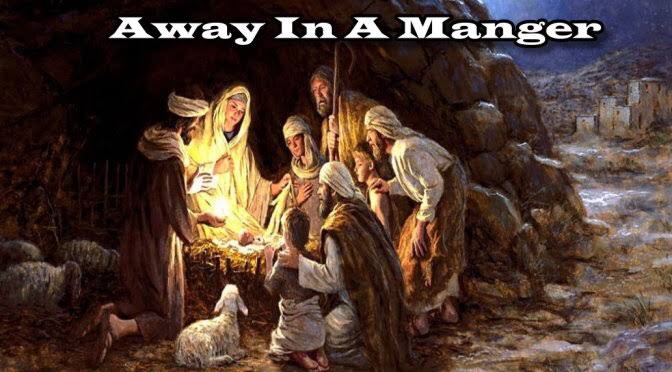
Now, this follows a long tradition, in writing words for hymns and carols, of varying the words, reshaping and reworking them. If you look up the Wikipedia article on Away in a manger, for instance, you will find that almost every line in the carol has recorded variants. The most significant are noted; for instance, “no crib for his bed”, or “No crib for a bed”; “the poor baby wakes”, or “The baby awakes“, and so on.

The last line of verse two appears in multiple published variants:

“And stay by my crib watching my lullaby” (Christian Cynosure, 1882)

“And stay by my crib to watch lullaby” (Seamen’s Magazine, 1883)

“And stay by my cradle to watch lullaby” (Murray, 1887)

“And watch by me always, and ever be nigh” (1890)

“And stay by my cradle till morning is nigh” (Herbert, 1891)

“And watch o’er my bed while in slumber I lie” (1893)

“And stay by my side until morning is nigh (1895)

So the carols that we sing today will follow a long tradition in hymnody, by which words are fluid, lyrics are flexible, and changes are allowable—the words of the carols are being reworked, rewritten, by people who are alive in our own time, today, making the message of the carol applicable to today and expressed in current language.

Our carols will follow the well-loved tunes, and will start out with words that are comfortably familiar. But as they proceed, the words will take some turns; so I invite you to pay attention, listen to the changes, reflect on the reshaping, and be prepared to encounter the familiar story in ways that refresh and renew your faith.

O Come, O Come, Emmanuel

(adapted by Sue Wickham)

O come, O come, Emmanuel,

and fill our lives, all dark and fear dispel,

as once an exiled Israel you found,

redeemed, restored and set on holy ground.

Rejoice! Rejoice! Emmanuel

shall come to us and in our hearts will dwell.

O come, O light of Christ, so bright and clear

and lift our spirits by your advent here.

In all who gather, show us your face,

that we may know the warmth of your embrace.

Rejoice! Rejoice! Emmanuel

shall come to us and in our hearts will dwell.

O come, O Wisdom, mind and heart divine,

help us restore a world we’ve let decline.

Enlighten us; your way we would know
and show us where new seeds of hope to sow.

Rejoice! Rejoice! Emmanuel

shall come to us and in our hearts will dwell.

O Advent God of hope, joy, love and peace,

in you we pray our sad divisions cease.

Bind us as one, a people of grace,

for at your table each one has a place.

Rejoice! Rejoice! Emmanuel

shall come to us and in our hearts will dwell.


Words © Sue Wickham 2010

https://pilgrimwr.unitingchurch.org.au/?p=925

The Angel Gabriel

(Words reworked by Sarah Agnew)

The angel Gabriel from heaven came,

surprising her by calling out her name:

‘Fear not,’ he said, ‘for God has seen and favours you,

You’re chosen for a blessing, Maria.

‘You will become a mother, Mary,

by Holy Spirit, with a child holy;

he is the one earth’s waiting for – the child of God,

O chosen for a blessing, Maria.’

‘But Gabriel how can this be, my friend?’

‘With God no thing’s impossible,’ he said.

‘Then let it be as you have said, I sing God’s praise.’

O, chosen for a blessing: Maria.

And so in Bethlehem she bore her boy

beneath a star as angels sang for joy:

Immanuel, our God with us, through Mary.

O chosen for a blessing, Maria.

words (c) Sarah Agnew 2019

music ‘Gabriel’s song’ Basque tune

http://praythestory.blogspot.com/2019/12/gabriel-and-maria.html

How ancient and lovely

Away in a manger with additional verses

by British writer Rebecca Dudley

(Shine on Star of Bethlehem, Christian Aid)

Away in a manger, no crib for his bed,

the little Lord Jesus lay down his sweet head;

the stars in the bright sky look down where he lay,

the little Lord Jesus asleep on the hay.

How ancient and lovely, this news of a star,

a baby, a mother, the kings from afar.

Come close now, Lord Jesus, we ask you to stay

and show us your face in your people today.

What star shall we follow but one that leads here

to a baby born homeless and a family in fear?

What heaven shall we long for but one that starts there

for all the world’s children in your tender care?

We thank you, Lord Jesus, for coming to earth;

for the light in the darkness that shone at your birth,

for life in its fullness that you promise today,

and the hope of a baby asleep in the hay.

This version is published in Hunger for Justice (Christian Aid UK)

https://www.musicroom.com/product/kmp1400356/hunger-for-justice-organ.aspx

For some other versions of this carol, see https://johntsquires.com/2019/12/18/no-crying-he-makes-get-real-puhhh-leeeease/

Hark! the herald angels, combined with

More than a Dream (David MacGregor)

(Arranged by John Squires)

Hark! the herald angels sing,

glory to the new born king.

Peace on earth and mercy mild,

God and sinners reconciled.

Humankind called: “come together,

live in peace with one another.”

Glory, glory from the heights,

Peace on earth, goodwill has come.

Glory, glory from the heights,

Peace on earth has come to us.

Christ, by highest heaven adored:

Christ, the everlasting Lord;

called to bring your peaceful kingdom,

lion rests besides the lamb.

Justice for the poor and needy

come to us, a child will lead us:

Glory, glory from the heights,

Peace on earth, goodwill has come.

Glory, glory from the heights,

Peace on earth has come to us.

Hail! the heaven-born prince of peace!

Hail! the Son of Righteousness!

Jesus, Saviour, born among us,

bring your peace anew to us.

Hearts of love reach out to all,

for the world, in your great love.

Glory, glory from the heights,

Peace on earth, goodwill has come.

Glory, glory from the heights,

Peace on earth has come to us.

Adapted from a song, More Than Dream (peace be our living), by David MacGregor © 2015 Willow Publishing

https://dmacgreg1.wordpress.com/2015/12/05/peace-on-earth-mercy-mild/

Combined with words from Hark! the herald angels sing, with the permission of David MacGregor (but not Charles Wesley!)

No crying he makes? Get real, puhhh-leeeease!

The traditional words of the much-sung carol, Away in a Manger, offer a heavily romanticised, sickly-sweet, unrealistic take on the infant Jesus.

Yes, to be sure, newborn babies do look sweet and innocent. But not quite as clean, not quite as picture-perfect, as the many cards and carols present the newborn Jesus. And no crying? Not ever? That does not ring true, surely!

Indeed, one could argue that the way that Jesus is depicted in this carol flies in the face of the very claim that the carol, and the story to which it refers, seeks to make: that, in Jesus, God entered human life, became one of us, was incarnate, enfleshed, fully and completely human. After all, an infant who never cries must surely not be human, we would think?

And yet, still the carol features in Christian worship services as well as shopping mall Muzak and perpetual Christmas movie reruns on tv.

In response to these beloved words, a number of contemporary lyricists have offered rewrites of this classic carol (it is only around 130 years old, if the truth be known).

Each of these versions reworks the carol so that the realism of the day is evident — especially highlighting the plight of the family as refugees, seeking safety in another country. That part of the story resonates so strongly with our contemporary world: the number of refugees across the globe is the largest it has ever been, and it continues to grow as warfare afflicts country after country.

How ancient and lovely. Words by British writer Rebecca Dudley (Shine on Star of Bethlehem, Christian Aid)

How ancient and lovely, this news of a star,

a baby, a mother, the kings from afar.

Come close now, Lord Jesus, we ask you to stay

and show us your face in your people today.

What star shall we follow but one that leads here

to a baby born homeless and a family in fear?

What heaven shall we long for but one that starts there

for all the world’s children in your tender care?

We thank you, Lord Jesus, for coming to earth;

for the light in the darkness that shone at your birth,

for life in its fullness that you promise today,

and the hope of a baby asleep in the hay.

Away and in danger. Words by Shirley Erena Murray from Aeotearoa New Zealand

Away and in danger, no hope of a bed,

the refugee children, no tears left to shed

look up at the night sky for someone to know

that refugee children have no place to go.

The babies are crying, their hunger awakes,

the boat is too loaded, it shudders and breaks;

humanity’s wreckage is thrown out to die,

the refugee children will never know why.

Come close, little children, we hold out our hand

in rescue and welcome to shores of our land –

in *aroha, touching your fear and your pain,

with dreams for your future when peace comes again.

*aroha is Maori for ‘warm embracing love’

alternative line “in touching, in healing’

http://www.hopepublishing.com/html/main.isx?sitesec=40.2.1.0&hymnID=5787

If I saw my toddler. Words by Carolyn Winfrey Gillette of the USA

If I saw my toddler with hands in the air

In fearful surrender to someone, somewhere,

I’d search for a people in some other place

Who practiced their preaching and showed love and grace.

If I had to flee from the madness of war—

From terror and violence and things I abhor,

I’d search for a nation with arms open wide,

With safety and beauty and friendships inside.

Be with me, Lord Jesus, as I seek to be

A friend to the stranger and poor refugee,

And as I remember you once had no bed,

May I give up fear and give welcome instead.

This hymn was inspired by a photo of a small Syrian child,

hands in the air, fearing that a camera lens was a gun:

www.snopes.com/syria-refugee-child-surrender/

Biblical References: Leviticus 19:34; Matthew 25:35; Luke 2:7; Hebrews 13:1; 1 John 4:18

Tune: James Ramsey Murray, 1887 (“Away in a Manger”)  

Text: Copyright © 2015 by Carolyn Winfrey Gillette. All rights reserved.

http://www.carolynshymns.com/if_i_saw_my_toddler.html

Millennium Carol. Words by Jan Chamberlin of Aeotearoa New Zealand

Away in a manger, no crib for a bed,

A long ago baby was born in a shed.

What possible meaning could this have for me,

A child of computers and technology.

The stars in the bright sky look down on me now,

But Christmas in these days lacks something, somehow,

There’s tinsel and turkey and gifts by the score,

Yet I am left feeling that there should be more.

Wise men with research grants can do awesome deeds,

But we are neglectful of our neighbors needs

For love and for caring, a Christ-child reborn:

God’s hand touching our hand on each Christmas morning.

The old manger story, with shepherds and kings:

Amazing how simple the message it brings.

Regardless of science or surfing the net:

God still sends us Jesus, and he loves us yet.

Words by Jan Chamberlin, from With Heart and Voice

http://www.methodist.org.nz/files/docs/alec/with%20heart%20and%20voice/1%20millennium%20carol.pdf

Preparing prayerfully for Christmas celebrations

It is the custom, in the Congregation where I am serving this year, for a member of the Congregation to lead the prayers of the people each Sunday. Yesterday, Robyn Robinson led us in prayers which, with her permission, I post here: assisting us to prepare prayerfully for Christmas celebrations.

Loving God, we bring to you the prayers of the people: your people, greatly loved and willingly sought.

As Christmas approaches, we are reminded of the amazing gift you have given us, for as a God who knew no boundaries, you were willing to limit yourself to the constraints and boundaries of being human.

You came to your people as one of us: Emmanuel, God with us.

The angels sang of peace and goodwill on earth; and yet, here, so many years later, we are still struggling with terrible tragedies and inexplicable events.

We think of the continuing battle against the bushfires, and pray for rain.

We think of the civil unrest in countries overseas, and pray for calm.

We think of the natural disaster in New Zealand, and pray for comfort.

We think of the continuing violence in our homes, work places, and cities, and pray for peace.

Compassionate God, we pray for all those who are suffering, and ask for your comfort and peace to surround them.

There was no room at the inn for the child of Mary and Joseph, a king born in lowly surroundings; we pray for all of royal birth, for all of humble origins, for all who find no room or acceptance in society today.

We pray for those who have no room in their life for you; for those who publicly mock or ridicule you, and for all who suffer in your name.

May your love grow more and more in us, as we become more and more like Jesus, living out our faith in ways that will change the world.

We pray that we might see beyond the decorations and the holidays, the food and the presents, to the coming of the Christ child and the love, joy, hope and peace that comes with your presence.

May we all see beyond the snap of a cracker, filled with a few trinkets and a party hat, to see a richly fulfilling life as a child of God.

Help us to let go of our personal kingdoms of selfishness and greed, and, like Mary, bring Jesus to the world through everything we say and do. Amen.

The depth of God’s presence in our midst

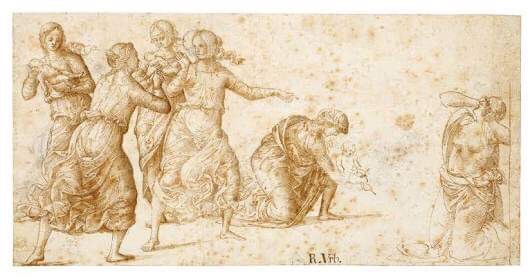
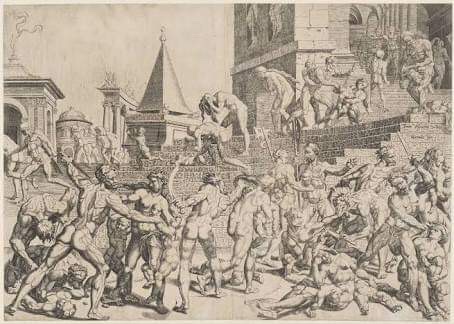
Today (in the Eastern Church) is designated as the Feast of the Holy Innocents. (It was celebrated yesterday in the Western Church.) This festival day commemorates the story of “the Slaughter of the Innocents”, reportedly ordered by King Herod, and recorded in the opening chapters of Matthew’s Gospel (and nowhere else). It is a tragic story, a myth which is filled with pathos, and it resonates with events in the world we live in today. It is a story with great power (as are all myths).

But this story is strikingly absent from the usual array of carols that are sung at this time of the year. Sugar-coated reminiscences of the cute li’l baby Jesus (“holy infant so tender and mild”, “the little Lord Jesus laid down his sweet head”, “but little Lord Jesus, no crying he makes”, “gentle and lowly lived below”) take us well away from the murderous acts of the tyrannical ruler.

Most of the traditional carols really want us to focus on Jesus the exalted Lord, resplendent in glory, coming to earth from heaven, so they move us quickly away from the vulnerable infant, and especially from the grim political and social realities of the time.

Some of the traditional carols take us to the edge of the story of violence and repression, and then leave it unspoken, or rather, unsung. “Unto us a boy is born” refers to the fury unleashed by Herod in slaughtering the baby boys, but fails then to go on and narrate the flight undertaken by Joseph, Mary and Jesus. In “The first Nowell”, the three wise men see the star in verse 4 and come to find Jesus in verse 5, but nothing further is told of the ensuing events of Herod—slaughter—flight into Egypt.

A similar dynamic happens in verse 4 of “O come, all you faithful”, verse 3 of “Angels, from the realms of glory”, verse 3 of “Silent night, holy night”, and in verse 3 of the rollicking calypso carol, “The Virgin Mary had a baby boy”. “Brightest and best of the stars of the morning” spends one verse describing the cradle scene and two verses reflecting on the gifts brought to the infant Jesus, but nothing more as to how the visitors had come to him via Herod.

“As with gladness, men of old” devotes three verses to the story of the men of old seeing the star and bringing their gifts, but then dovetails into a pietistic plea to Jesus to “keep us in the narrow way”. No mention of the scenes of slaughter of the innocent infants and the fearful flight of refugees in these carols.

The star and the visitors from the east get prime billing; the murdered children and the hastily-departing family of Jesus, seeking the safety of refuge in a foreign country, are passed over very quickly.

Why is this state of affairs so? The lack of reference to the murderous acts of Herod and the fearful flight of the family of Jesus indicates that our Christmas carols sanitise and sanctify this foundational story, gilding the lily, reshaping our perspective on the story. They completely omit any references to a part of the story that has gained such traction, and that occupies such attention, in the minds of carefully critical contemporary Christians. Children continue to be sacrificed today, in the course of jingoistic warfare waged for ideological reasons. The tragedy continues today …

A number of contemporary hymn writers have turned their attention to this story. Shirley Erena Murray is right on the money when she highlights the violence and fear at the heart of the story, claims that the infant in the story has “come to plead war’s counter-case”, and articulates the hope that “goodness will outclass the gun, evil has no tooth that can kill the truth.”

Summer sun or winter skies, Christmas comes —

shepherds, angels, lullabies, words recorded by the wise:

read it in the book — take another look . . . .

Shadows track the hawk in flight; Christmas now —

children born in fire and fight, silent night a violent night,

hawks are in control of a nation’s soul.

There where terror plies its trade; Christmas now —

children learn to be afraid, minefields of distrust are laid,

evil is in force on a winning course.

Child of peace, God’s human face, Christmas now —

come to plead war’s counter-case, bring the dove a nesting place,

though her wings are torn, though her blood is drawn.

Winter skies or summer sun, Christmas comes —

still the threads of hope are spun, goodness will outclass the gun,

evil has no tooth that can kill the truth.

That is why the ancient story retold at Christmas resonates so strongly with our situation today. Not because “it really happened, exactly like this”, but because it takes us to the centre of our humanity and reveals the depth of God’s presence in our midst. We ought to sing more about it!

See also https://johntsquires.wordpress.com/2018/12/28/the-counter-cultural-alternative-narrative-impact-of-the-person-of-jesus/#

Ye who now will bless the poor shall yourselves find blessing

https://johntsquires.wordpress.com/2018/12/24/resonating-with-christmas-a-story-of-restless-travel-and-seeking-refuge/# 

and https://johntsquires.wordpress.com/2018/12/25/away-in-a-manger/#

The counter-cultural, alternative-narrative impact of the person of Jesus

Today (in the Western Church) is designated as the Feast of the Holy Innocents. (It is celebrated tomorrow in the Eastern Church.) This festival day commemorates a tradition known as “the slaughter of the Innocents”, reportedly ordered by King Herod.

Continue reading “The counter-cultural, alternative-narrative impact of the person of Jesus”

Away in a manger

No doubt you have sung that much-loved carol, “Away in a manger”, this Christmas.

The traditional words offer a heavily romanticised, sickly-sweet, unrealistic take on the infant Jesus. Who ever heard of a baby that made NO noise??

I have been collecting rewrites of this carol. Each version reworks the carol so that the realism of the day is evident — especially highlighting the plight of the family as refugees, seeking safety in another country.

That part of the story resonates so strongly with our contemporary world: the number of refugees across the globe is the largest it has ever been, and it continues to grow as warfare afflicts country after country.

In the midst of this despair and turmoil, I wish for the traditional greeting to become a reality through acts of justice and compassion for all who are displaced, homeless, seeking the safety of refuge in another country: Merry Christmas! May it be so!

How ancient and lovely

Words by British writer Rebecca Dudley

(Shine on Star of Bethlehem, Christian Aid)

How ancient and lovely, this news of a star,

a baby, a mother, the kings from afar.

Come close now, Lord Jesus, we ask you to stay

and show us your face in your people today.

What star shall we follow but one that leads here

to a baby born homeless and a family in fear?

What heaven shall we long for but one that starts there

for all the world’s children in your tender care?

We thank you, Lord Jesus, for coming to earth;

for the light in the darkness that shone at your birth,

for life in its fullness that you promise today,

and the hope of a baby asleep in the hay.

Away and in danger

Words by Shirley Erena Murray

Away and in danger, no hope of a bed,

the refugee children, no tears left to shed

look up at the night sky for someone to know

that refugee children have no place to go.

The babies are crying, their hunger awakes,

the boat is too loaded, it shudders and breaks;

humanity’s wreckage is thrown out to die,

the refugee children will never know why.

Come close, little children, we hold out our hand

in rescue and welcome to shores of our land –

in *aroha, touching your fear and your pain,

with dreams for your future when peace comes again.

*aroha is Maori for ‘warm embracing love’

alternative line “in touching, in healing’

http://www.hopepublishing.com/html/main.isx?sitesec=40.2.1.0&hymnID=5787


If I saw my toddler

Words by Carolyn Winfrey Gillette.

If I saw my toddler with hands in the air

In fearful surrender to someone, somewhere,

I’d search for a people in some other place

Who practiced their preaching and showed love and grace.

If I had to flee from the madness of war—

From terror and violence and things I abhor,

I’d search for a nation with arms open wide,

With safety and beauty and friendships inside.

Be with me, Lord Jesus, as I seek to be

A friend to the stranger and poor refugee,

And as I remember you once had no bed,

May I give up fear and give welcome instead.

This hymn was inspired by a photo of a small Syrian child, hands in the air, fearing that a camera lens was a gun: www.snopes.com/syria-refugee-child-surrender/

Biblical References: Leviticus 19:34; Matthew 25:35; Luke 2:7; Hebrews 13:1; 1 John 4:18

Tune: James Ramsey Murray, 1887 (“Away in a Manger”)

Text: Copyright © 2015 by Carolyn Winfrey Gillette. All rights reserved.

http://www.carolynshymns.com/if_i_saw_my_toddler.html

See also https://johntsquires.wordpress.com/2018/12/24/resonating-with-christmas-a-story-of-restless-travel-and-seeking-refuge/# and https://johntsquires.wordpress.com/2018/12/19/what-can-we-know-about-the-birth-of-jesus/#

What can we know about the birth of Jesus?

We are about to celebrate the birth of Jesus, the real reason behind the Christmas season. Tradition has it that Jesus was born after a long journey by his parents, in the animal feeding-tray of an overcrowded inn, surrounded by noisy animals. He was visited by shepherds from the field after they heard an angelic choir singing his praises. Soon after, three wise men from the East also came, bearing gifts. They had followed a bright star from their distant country in order to see him.

But what do we really know about this story? What is the undisputed history of the birth of Jesus?

Continue reading “What can we know about the birth of Jesus?”