Here I am; speak, for your servant is listening (1 Sam 3; Epiphany 2B)

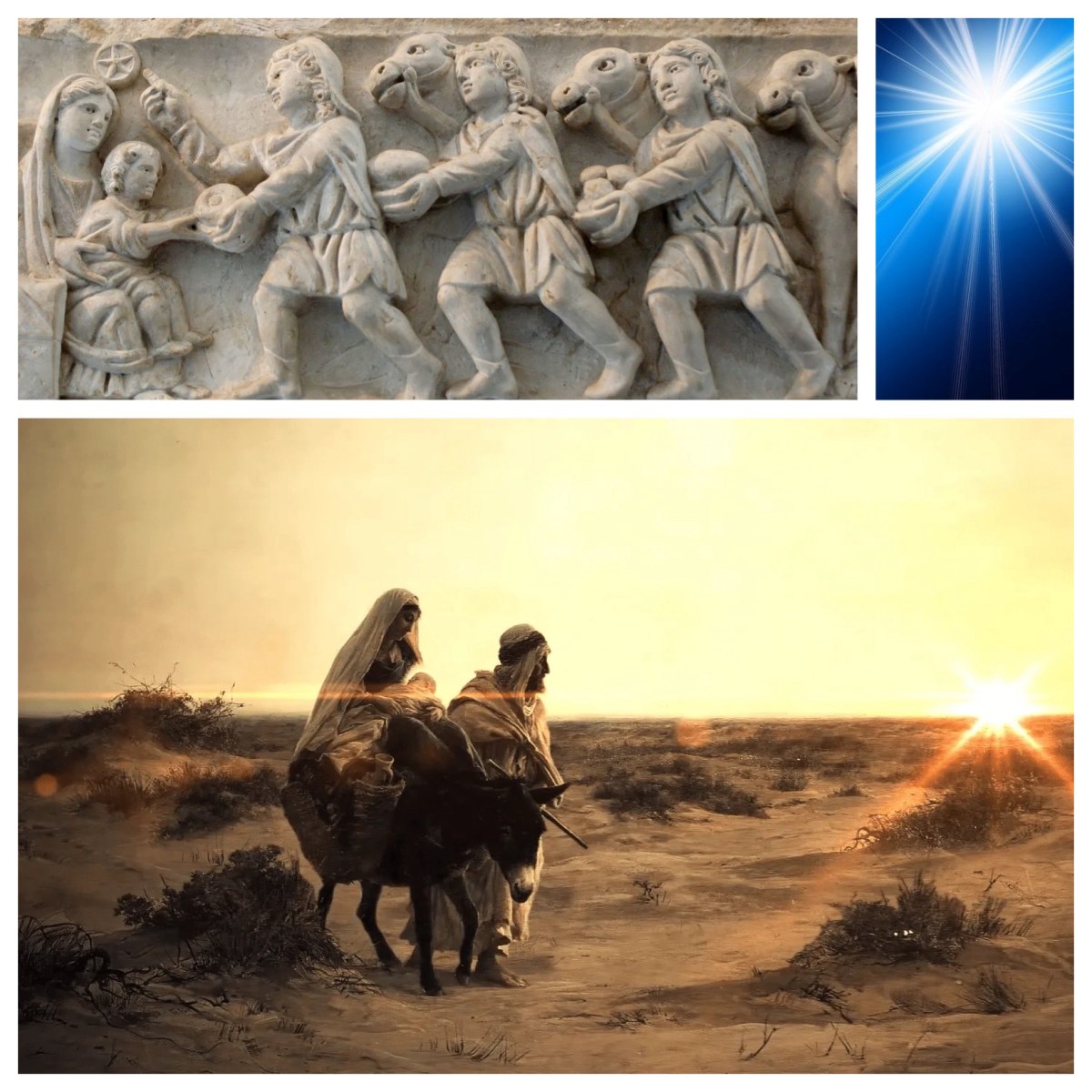
Next Sunday is the second Sunday in the season of Epiphany. The word epiphany refers to the manifesting of light, the shining forth of revelation. It is applied to this season, which follows on from Christmas, and is initiated by the story of “the star in the east” told in Matthew 2:1-12.

The birth of Jesus, and the story of the Magi following the star, signals the early Christian belief that God was acting in a new way through this child. The Magi come from the east, following the star, to pay homage to the infant Jesus. Light is of symbolic significance in this story, as is the theological claim that the child Jesus provides a revelation of God.

Throughout the five Sundays of Epiphany, as indeed throughout much of the year, we hear and read the stories contained in the earliest account of Jesus, the beginning of the good news of Jesus, which we know more typically as the Gospel according to Mark. During these five Sundays, we will hear and read most of the opening chapter of this Gospel (with a detour this coming Sunday to the first chapter of John’s Gospel).

Alongside these Gospel excerpts, the passages set by the lectionary from the Hebrew Scriptures for the season of Epiphany have been carefully chosen. These passages illuminate the message of the Gospel which we hear each week from the New Testament, as we celebrate Christ as the light that comes into the world, illuminating and enlightening.

This week, we hear the story of the call of Samuel to be a prophet of the Lord (1 Sam 3:1–20). We may think of prophets as loud and assertive, boldly proclaiming their “word of the Lord” in the marketplace; but today we learn that Samuel was different. In this story, he is marked by obedience and an openness to listen.
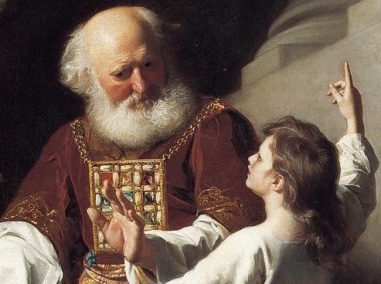
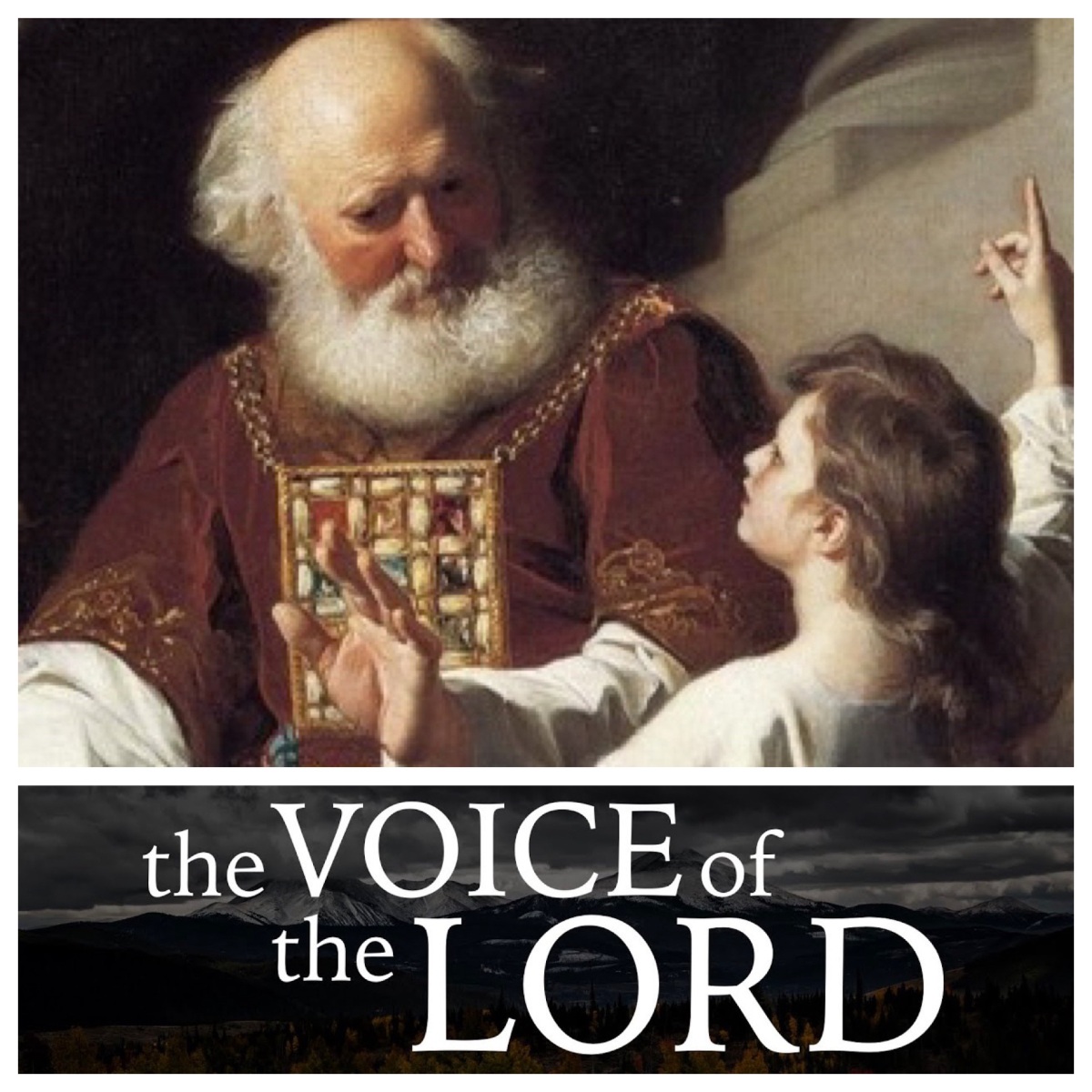
Young Samuel was in the temple, where the elderly Eli was priest. In the evening, while the lamp was still burning, Samuel hears a voice. The voice simply calls his name. “Here I am”, Samuel responds when he hears that voice. He is sure that it is Samuel,speaking to him—there is nobody else around. Three times, he hears “Samuel”; and three times, he responds “here I am” (vv.4,6,8).

Samuel had been thinking that it was Eli speaking to him; but it was not the priest, it was the voice of the Lord. The story conveys a sense of confusion and unknowing. This reflects something of the uncertainty that people of faith often have with regard to “hearing the voice of the Lord”.

Indeed, the fragility of living by faith without clear and obvious demonstration of he presence of God is signalled in the opening verse: “the word of the Lord was rare in those days; visions were not widespread” (v.1). The poor vision of the elderly priest, Eli (v.2), is a second signal of this uncertainty. The priest cannot see; the child hears but does not understand.

Paying attention to the voice of the Lord is a persistent refrain in Hebrew Scriptures. Indeed, the psalmist rejoices in the clarity of God’s voice: “the voice of the Lord is over the waters; the God of glory thunders, the Lord, over mighty waters; the voice of the Lord is powerful; the voice of the Lord is full of majesty” (Ps 29:3–4). Yet another psalmist recalls the time, in the wilderness, when the people of Israel “grumbled in their tents, and did not obey the voice of the Lord” (Ps 106:25). The people were not always faithful, even though the voice sounded with clarity. They needed reminders of that voice.

In the foundational saga of Israel, Moses is called by the voice of God while tending sheep on Mount Horeb (Exod 3:4). In obedience, he leads the people to freedom—and then informs the people, “if you will listen carefully to the voice of the Lord your God, and do what is right in his sight, and give heed to his commandments and keep all his statutes”, then God promises not to inflict them with disease (Exod 15:26). Later, when Moses has delivered to them “all the words of the Lord and all the ordinances”, the response of the people is an affirmative “all the words that the Lord has spoken we will do” (Exod 24:3).

A number of the prophets indicate that they are impelled to declare “the word of the Lord” to a sinful people because they have heard, and are obedient to, “the voice of the Lord”. Isaiah hears the voice of the Lord calling him: “whom shall I send, and who will go for us?” (Isa 6:8). Isaiah is given words of woe to pronounce over the people (Isa 6:9–13); he warns the leaders of Israel, “listen, and hear my voice; pay attention, and hear my speech” (Isa 28:23).

His fellow-southerner, the shepherd Amos, opens his words with the bold declaration, “the Lord roars from Zion, and utters his voice from Jerusalem” (Amos 1:2), before he launches into his long series of oracles against the surrounding nations (Amos 1:3—2:3) and then against Judah and Israel (Amos 2:4–16).

The image of the Lord God as a roaring lion is used also by Joel, “the Lord roars from Zion, and utters his voice from Jerusalem, and the heavens and the earth shake” (Joel 3:16), while in another oracle he says, “the Lord utters his voice at the head of his army; how vast is his host!” (Joel 2:11).
Joel’s words of judgement penetrate to the heart of the evil of the people: the coming day will be “a day of darkness and gloom, a day of clouds and thick darkness!” (Joel 2:2), and so he calls the people to “return to [the Lord] with all your heart, with fasting, with weeping, and with mourning; rend your hearts and not your clothing” (Joel 2:12–13).

Micah also declares, “the voice of the Lord cries to the city (it is sound wisdom to fear your name)” (Mic 6:9) before he lambasts the people for their wickedness: “your wealthy are full of violence; your inhabitants speak lies, with tongues of deceit in their mouths” (Mic 6:12; the whole damning oracle is 6:9–16).

Called as a youth by “the word of the Lord” (Jer 1:4–8), Jeremiah hears the assurance, “I have put my words in your mouth” (Jer 1:9); the prophet later instructs the people, “amend your ways and your doings, and obey the voice of the Lord your God, and the Lord will change his mind about the disaster that he has pronounced against you” (Jer 26:13). Again, he tells them, “obey the voice of the Lord in what I say to you, and it shall go well with you, and your life shall be spared” (Jer 38:20). Eventually, the people affirm, “whether it is good or bad, we will obey the voice of the Lord our God to whom we are sending you, in order that it may go well with us when we obey the voice of the Lord our God” (Jer 42:6).

In the return from exile, both Haggai (Hag 1:12) and Zechariah (Zech 6:15) rejoice that Israel “obeyed the voice of the Lord their God”; but Daniel laments that his people “have not obeyed the voice of the Lord our God by following his laws, which he set before us by his servants the prophets; Israel has transgressed your law and turned aside, refusing to obey your voice” (Dan 9:10).
And yet, various prophets had hesitated when first hearing “the voice of the Lord”. The initial response of Moses is “who am I that I should go to Pharaoh, and bring the Israelites out of Egypt?” (Exod 3:11), followed by a series of further objections that he raises (Exod 3:13; 4:1; 4:10). Amos explains to the priest Amaziah how his call had surprised him: ““I am no prophet, nor a prophet’s son; but I am a herdsman, and a dresser of sycamore trees” (Amos 7:14).

Isaiah seeks to excuse himself from the prophetic task: “I am lost, for I am a man of unclean lips, and I live among a people of unclean lips” (Isa 6:5). Jeremiah objects, “truly I do not know how to speak, for I am only a boy” (Jer 1:6). A number of the prophets are, initially at least, reluctant spokespersons for the Lord God.

By contrast, in the story told in 1 Sam 3, after hearing his name spoken by the Lord for a third time, Samuel responds with a declaration of obedience: “speak, for your servant is listening” (v.10). This was just as the priest Eli had instructed him (v.9). Here, Samuel demonstrates careful listening, patience, openness to what he encounters, and complete obedience to that voice.

His response is similar to that of Mary when she is given startling news: “Here am I, the servant of the Lord; let it be with me according to your word” (Luke 1:38). Soon after that, she produced an amazing prophetic oracle, which we know as the Magnificat, declaring that God has “scattered the proud in the thoughts of their hearts … brought down the powerful from their thrones, and lifted up the lowly … filled the hungry with good things, and sent the rich away empty” (Luke 1:51–53). Like Samuel, she proves to be an important prophetic voice.

This story from the early years of Samuel’s life is remembered and retold because it instructs those who hear it in later generations, to listen, and to obey. It is a reminder that being “guided by God” is not always clear and obvious. It is also a reminder of the need to respond with faith and openness; to be obedient. It is a story worth hearing, and pondering.

We have found him of whom Moses and the prophets spoke (John 1; Epiphany 2B)

“Follow me”. We most likely know these words of Jesus as the words that he spoke to Peter and his brother Andrew, as they were fishing in the Sea of Galilee (Mark 1:16–17). This was also, presumably, what Jesus said to the brothers James and John, soon after (Mark 1:20), as well as to Levi the tax collector (Mark 2:14), and then, later on, to the crowd that was following him through Galilee (Mark 8:34) and, quite poignantly, to the rich man who felt unable to follow (Mark 10:21–22).

We encounter these words in the Synoptic parallels to these incidents; but as well, we hear them spoken by Jesus in the book of signs which we know as the Gospel according to John. The resurrected Jesus tells Peter, “follow me” (John 21:19), and soon after, speaks the same words to the beloved disciple (John 21:22). At the last meal he shared with his followers, he had warned them, “where I am going, you cannot follow me now; but you will follow afterward” (John 13:36), and a little before that, he had said to Philip and Andrew, “whoever serves me must follow me, and where I am, there will my servant be also; whoever serves me, the Father will honour” (John 12:26).

The first time these words occur in the book of signs is in the scene when Jesus first meets Philip (1:43–51). This is the passage which is offered by the lectionary for this coming Sunday, the second Sunday after Epiphany. The scene also involves Nathaniel, who poses the sceptical question to Philip concerning Jesus: “can anything good come out of Nazareth?” (1:46). The following interaction with Jesus leads to Nathaniel making a high claim about Jesus: “Rabbi, you are the Son of God! You are the King of Israel!” (1:49). The scene itself ends with another description of Jesus, from his own lips, as “the Son of Man”, upon whom the very angels of heaven are resting (1:51).

This scene concludes the extended prose narrative (1:19–51) that follows the majestic poetic prologue which opens this opening chapter (1:1–18). Throughout the various scenes in this prose narrative (which I call the Prelude to the Gospel), a series of revelations of the identity and significance of Jesus are made.

It is noteworthy that there are a number of Jewish titles which are embedded in this prose narrative, as key characters confess the significance of Jesus throughout this extended preface (1:19–51). Jesus is addressed as “Rabbi” (1:38, 49), “Messiah” (1:41), “King of Israel” (1:49), and “Son of God” (1:49). It is worth noting that these claims about Jesus are each made also within the Synoptic traditions. Indeed, the Johannine Jesus himself refers, in the allusive synoptic fashion, to the “Son of Man” (thirteen times, from 1:51 to 13:31), which we must presume to be a self–reference.

In later scenes in the book of origins, Jesus is also addressed by these Jewish terms, when he is called “prophet” (4:19), “Messiah” (4:29; 11:27), and “Rabbouni” (my teacher, 20:16). Then, the ultimate Christological confession of the Gospel is uttered by Thomas, when he moves beyond this viewpoint in the phrase, “my Lord and my God” (20:28), echoing the perception of the Jews, that Jesus was “making himself equal to God” (5:18).

Perhaps we tend to remember the fourth Gospel as the one which reveals the extensive cosmic significance of Jesus—the Word made flesh (1:14), the one closest to the heart of the Father who has “made the Father known” (1:18), and most famously, the one through whom God shows that “God so loved the world” (3:16). This Gospel seems to offer much in terms of a Saviour for the whole world (4:42), a sign for Greeks (that is, Gentiles) from beyond Judaism (12:20).

Yet, for the most part of this Gospel, Jesus is presented in terms drawn from within a Jewish context. Indeed, even the final, climactic confession by Thomas can be understood within a particular stream of Jewish tradition, for the hellenistic Jewish author Philo uses the terms “Lord” and “God” to designate the two major divine powers of creation (signified by “God”) and eschatological judgement (signified by “Lord”). In light of this usage of the terms by Philo, Jerome Neyrey wisely concludes that “Jesus is correctly called ‘God’ because he exercises creative power, and ‘Lord’ because he has full eschatological power”; see https://www3.nd.edu/~jneyrey1/MyLord.God.htm

So an important clue to a central motif running throughout this Gospel is placed in the mouth of Philip, when he says to Nathanael, “We have found him about whom Moses in the law and also the prophets wrote, Jesus son of Joseph from Nazareth” (1:45). The Jewish terms point to this reality about how Jesus was understood in the community within which the book of signs was written: Jesus is to be regarded as the fulfilment of scripture.

Notice that the author of this Gospel takes Philip, an almost anonymous figure in the Synoptic Gospels, and places in his mouth these key sayings, about the fulfilment of the scriptures (1:45), and the relevance of Jesus to Gentiles (12:20–26), and, indeed, the fundamental request, “Lord, show us the Father” (14:8). Philip articulates what the author of the book of signs seeks.

Now, it is true that the affirmation that Jesus fulfils scripture is common to all four canonical Gospels. It is very clear in the Synoptic accounts; we should not, however, diminish its significance on the fourth Gospel. This interpretive stance is hinted at as early as the Prologue, in the comparison between Jesus and Moses (1:17).

This perspective is stated explicitly, as we have noted, in the claim put on the mouth of Philip, “we have found him of whom Moses and the prophets wrote” (1:45), and later in the words attributed to Jesus, “You search the scriptures, because you think that in them you have eternal life; and it is they that bear witness to me” (5:39).

There are fifteen clear quotations from Hebrew Scriptures in this Gospel. There are eight explicit references to scripture in the early chapters (1:23; 2:17; 6:31; 6:45; 7:38; 7:42; 10:34; 12:13–15), while a “fulfilment formula” is used in later chapters, to introduce seven such scriptural quotations (12:38–40; 13:18; 15:25; 18:9; 19:24, 28, 36–37). There is also a passing note that Judas died after betraying Jesus “so that the scripture might be fulfilled” (17:12).

However, the total significance of the Hebrew Scriptures in this Gospel is much greater than these sixteen occurrences, as the Gospel contains numerous allusions to specific scripture passages, such as references to Jacob’s ladder (1:51) and the sacrificial lamb (1:29, 36), as well as more generalised allusions to scripture. These allusions are much freer in their form and indicate that, for the author of this Gospel, the Hebrew Scriptures had become an integral part of his mind and heart, for he treats them with a freedom born from intimate familiarity. (For this last phrase, I am indebted to an unpublished paper on this topic by my first New Testament teacher, the late Rev. Dr Robert Maddox.)

So this Gospel passage for the second Sunday in Epiphany reminds us of the Jewish origins of Jesus and also the continuing appreciation of Jesus in Jewish terms, throughout the early decades of the movement that was initiated by his proclamation and action in Galilee and (especially in John’s account) in Jerusalem, over some years. In our Christian appropriation of the figure of Jesus, we would do well to remember his Jewish origins, and the strongly Jewish nature of early Christian interpretation of Jesus. We owe much to Judaism, both as our ancient heritage and indeed as an enduring living faith which continues to proclaim faith in the God whom Jesus knew, and loved, and revealed.

A star and some magi, a tyrant and some infants (Matt 2; Epiphany)

Each year, on the Feast of the Epiphany (6 January), we hear the story that is told in the book of origins (the Gospel according to Matthew) about the infant Jesus, the magi who travel with gifts to offer him, and the tyrant Herod (Matt 2:1–12). We usually stop the story before the account of the slaughter of children which Herod orders, and the flight into Egypt which Jesus undertakes with his mother, Mary, and his father, Joseph (Matt 2:13–18).

The much-loved Christmas story, found only in the orderly account of Luke, says nothing of any such high-status visitors to the newborn Jesus. The magi appear only in Matthew’s account. The actual birth of Jesus is mentioned very quickly by Matthew (1:18, 25). By contrast, the dark story of the slaughter of boys aged two and under dominates Matthew’s narrative (Matt 2:16–18). It is in connection with that part of the story that the magi appear.

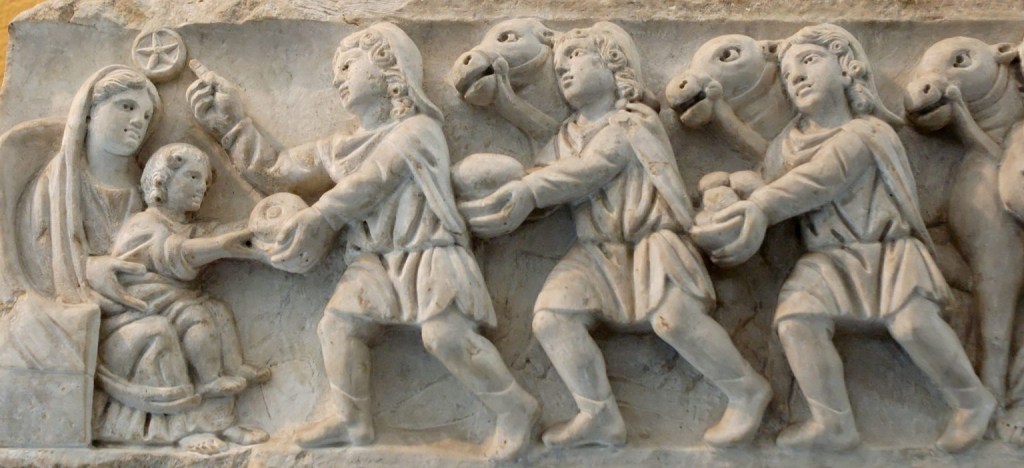
Adoration of the Magi, detail from a 4th century sarcophagus
in the Vatican Museum

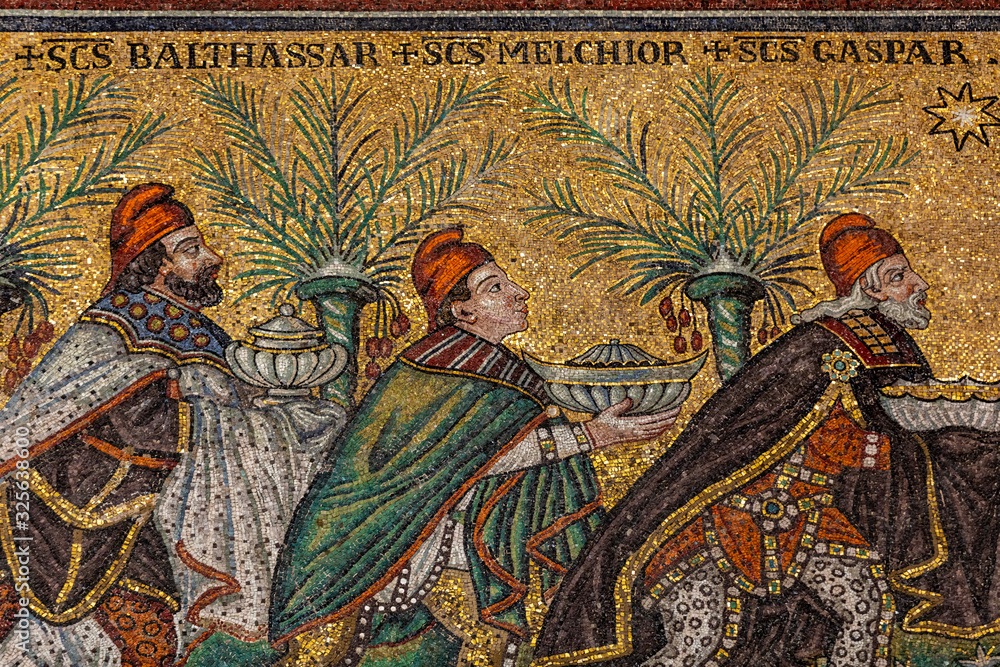
We are not told their names, nor how many they were. They are described as magi, probably meaning that they were astrologers. Only in later church tradition would they be identified as the three men, Caspar, Balthasar, and Melchior. Although Matthew’s gospel does not include the names or number of the magi, many believe that the number of the gifts he notes is what led to the tradition of the Three Wise Men—and, of course, they then needed to gain names (as do many anonymous biblical figures in the evolving church tradition over subsequent centuries).

These magi appear to have come from Gentile lands. They could be seen as exemplars of faithful obedience, travelling far to “adore the child”. But they are very mysterious figures in Matthew’s account. The gifts they bring were valuable items—reflecting a standard of gifts that might be offered to honour a king or deity in the ancient world: gold as a precious metal, frankincense (incense) as perfume, and myrrh as anointing oil.

It is claimed that these same three items were among the gifts that the Seleucid ruler, Seleucus II Callinicus, who ruled for 20 years (246–225 BCE), offered to the god Apollo at the temple in Miletus in 243 BCE. (I found this claim often in online articles, but I can’t trace any of them back to the actual historical source.)

The Three Magi (including the traditional names), Byzantine mosaic
in the Basilica of Sant’ Apollinare Nuovo, Ravenna, Italy

More significant for Matthew, I believe, would be the fact that two of the gifts resonate with a Hebrew Scripture passage, late in the book of Isaiah. Jerusalem’s restoration is portrayed as a time when “nations shall come to your light, and kings to the brightness of your dawn” (Isa 60:3); they will “bring gold and frankincense and proclaim the praise of the Lord” (Isaiah 60:6).

The visitors bringing these gifts come from Sheba (a kingdom in South Arabia). The gifts, it is claimed by interpreters, are symbolic of what is to come. The gold is considered to symbolise the royal status of the child Jesus, as he is of the line of David. The frankincense is connected with the Temple cult, and thus considered a symbol of the priestly role eventually to be played by that same child.

The myrrh, in Christian tradition, is linked with the death that will be experienced by the infant when he has grown to maturity—death at the hands of a Romans, who offered him wine mixed with myrrh as he hung dying on a cross (Mark 15:23). This symbolism reveals the reasons for adopting and expanding the earlier oracle.

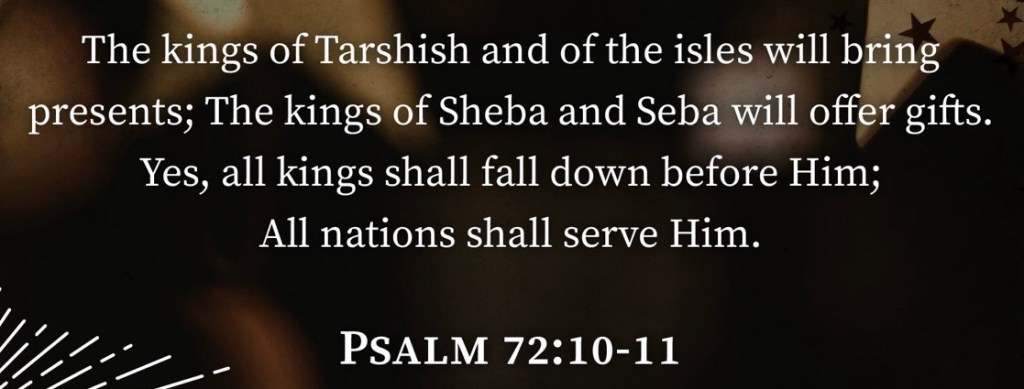
And the notion that was developed later in Christian writings, that the three magi were kings in their respective kingdoms (as in, “we three kings of orient are”), derives from the application of Isaiah 60:3 , noted above, and Psalm 72:10–11, as the psalmist praises the King of Israel and prays, “may the kings of Tarshish and of the isles render him tribute; may the kings of Sheba and Seba bring gifts; may all kings fall down before him, all nations give him service.”

This is typical midrashic practice, to link up verses from different verses in different books which contain the same key words. It indicates that Matthew is “spinning a yarn”, telling a story, narrating a myth that contains important clues as to the nature and significance of the person about whom the story is told. It is not a factual historical account.

Matthew, who portrays Jesus as the new Moses throughout his Gospel, considers that his mission was solely to “the lost sheep of the house of Israel” (Matt 10:6; 15:24)—and to them alone. The visit of the magi from the East plays a symbolic role in the story. It represents a Gentile acknowledgement of the high role that Jesus will play, bringing to fulfilment the intentions of God for the covenant people. So this element, told very early in the narrative, is simply a literary technique to introduce a key theme which will reach fulfilment in the time well beyond the tale that the narrative offers.

I’m not going to go down the rabbit-hole of trying to identify the actual star that these magi followed (Matt 2:2, 9–10) and correlate it with known astronomical events from the early first century. It’s too complicated and anything I have ever seen requires us to put aside our historical-critical skills and believe in a series of “amazing coincidences”.

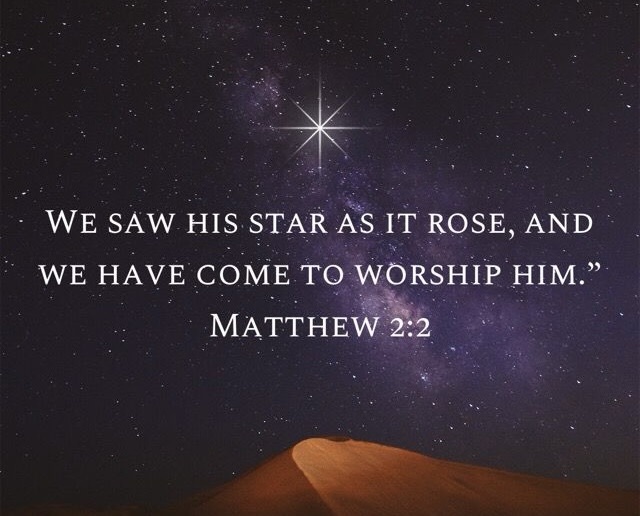
Besides, as this post makes abundantly clear, I don’t regard the story found in Matt 2 as in any way historical! It is yet another component of his story which draws heavily from Hebrew Scripture, as befits a Jew writing to Jews. The rising of the star in the east correlates well with the prophet Balaam’s prediction in Num 24:17 that “a star shall come out of Jacob and a sceptre shall rise out of Israel”.

The identification of the star as being “in the east” comes because, in Greek, the word for “east” is the same as “rising”. The Greek translation thus is ambiguous about whether the star simply “rises up out of Israel” or whether it is “to the east” of Israel. We can see this ambiguity if we compare how different recent translations of the Bible render this phrase in Matt 2:9 — “a star they saw in the east” (KJV), “the star they had seen when it rose” (NIV and ESV), “the star they had seen at its rising” (NRSV), “the star they had seen in the east” (NLT).

So this is another element in the story that has been shaped by Hebrew Scripture.

Evidence from beyond the Bible, that the baby boys in Bethlehem were actually slaughtered by Herod’s troops (Matt 2:16), is absent. The story that Matthew presents is grounded, not in history, as we know it, but in the art of story-telling, where recognisable themes and characters are presented in a new, creative combination.

So it is that in the opening chapters of this Gospel, we encounter the pregnant Mary, the newborn infant Jesus, his father Joseph, a bright star in the sky, visitors from the east, the tyrannical rule of Herod, and slaughtered infant boys. Many of these characters and events are “types”, imitations of an earlier story—for in his narrative, Matthew is working hard to place Jesus alongside the great prophet of Israel, Moses.

The early years of Jesus unfold in striking parallel to the early years of Moses. The parallel patterns are striking—deliberately shaped that way by the author of this Gospel, I would maintain. Moses, for instance, was in danger of being killed as a small boy, as the Pharaoh instructed the midwives, “When you act as midwives to the Hebrew women, and see them on the birthstool, if it is a boy, kill him; but if it is a girl, she shall live” (Exod 1:16). The child Moses was rescued by midwives who “feared God; they did not do as the king of Egypt commanded them, but they let the boys live” (Exod 1:17).

Matthew’s account of “the Slaughter of the Innocents” is generated by his Moses typology. This grounds the story of Jesus in the historical, political, and cultural life of the day, when tyrants exercised immense power. But it raises our suspicions about whether this event actually took place. There is no other evidence for it in any ancient writing, apart from Matthew’s Gospel. Can we be sure that it took place? Not by any standard of historical assessment.

Massacre of the Innocents, ca. 1520;
engraving by Marco Dente (1486–1527),
based on a design by Baccio Bandinelli (1493–1560)

(I recognise that some claim that a report by Josephus in book 2 of his account of the Jewish War, about an uprising related to a certain shepherd named Athrongeus, might be telling of this event—except that this took place after the death of Herod, and it took place in Jerusalem, not in Bethlehem, as Matthew’s account maintains. And, of course, Matthew has no shepherds in the story, so the connection is even more diffuse. The search for a parallel account in another ancient source is undertaken in vain.)

We recognise that, in this narrative, Matthew is not reporting an actual historical event; yet his narrative of what allegedly happened to those children does provide a dreadful realism to a story which, all too often in the developing Christian Tradition, became etherealised, spiritualised, and romanticised.

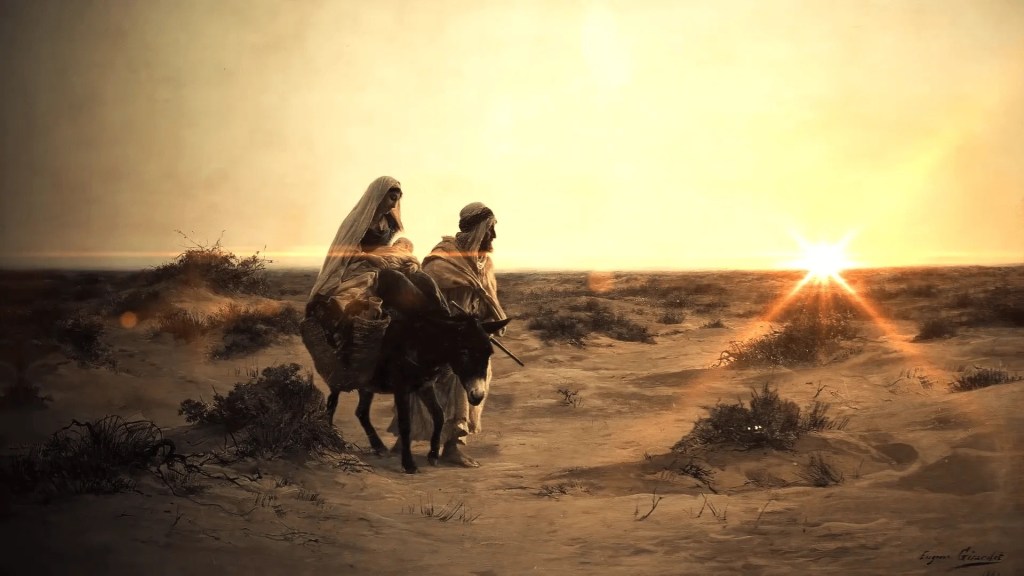
Matthew has Jesus escape this fate by fleeing, with his parents, to Egypt (Matt 2:13–15). Once again, there is no evidence for this journey outside of Matthew’s book of origins, so the story is just that: a story, not an historical account. The Moses typology we have already noted is also relevant here. Matthew emphasises the many ways in which events in the early years of Jesus fulfilled the prophecies found in Hebrew Scripture (see Matt 1:22–23; 2:5–6, 15, 17, 23; and for the adult Jesus, see 3:3; 4:12–16; 12:15–21; 13:14–15, 35).

So many parts of the early life of Jesus as Matthew recounts it are presented in a way that makes them consistent with these prophecies—although one of them (2:23) cannot actually be found in the Bible! It is most likely that Matthew has constructed his story so that it fits with these scriptural prophecies. They provide him with a familiar framework for telling the story.

Only Matthew tells about Herod and his slaughter of the innocents. Such an event is unknown from any other ancient literature. Had it actually taken place, it is likely that it would have been reported elsewhere. This event, together with others in Matthew’s version of Jesus’ early life, mirror the pattern of events at the start of Moses’ life.

With Moses, as with Jesus, there is the slaughter of infant males under 2 years by a tyrannical ruler, and the flight into another country by the boy’s parents, so that the boy is saved. In this way, Matthew presents Jesus as “the new Moses”. That is the key concern that he has in this opening sequence—not providing an historical narrative, but introducing his story of Jesus through the typology of Moses.

See also

A mountain-top high, to end Epiphany (Matt 17; Transfiguration A)

The season of Epiphany celebrates the manifestation of God in Jesus, the one chosen by God to show God’s love to the world. Running through many of the scripture passages offered by the lectionary for this season is the motif of light—for light illumines, light reveals. The passages remind us that God’s light shines brightly on our lives.

Also key to many of the passages is the gift of the Law, first given to Moses on Mount Sinai, and a millennium later explicated by Jesus on top of another mountain. The Law was the light shining the way for the people of Israel: “your word is a lamp to my feet and a light to my path” (Ps 119:105), “the unfolding of your words gives light; it imparts understanding to the simple” (Ps 119:130). The place where the Law was given was on the mountain: “The Lord said to Moses, ‘Come up to me on the mountain, and wait there; and I will give you the tablets of stone, with the law and the commandment, which I have written for their instruction’” (Exod 24:12).

The readings for this Sunday, Transfiguration, thus appropriately situates the stories told on the heights of mountains: Moses set out with his assistant Joshua, and Moses went up into the mountain of God” (Exod 24:13); Jesus “took with him Peter and James and his brother John and led them up a high mountain, by themselves” (Matt 17:1); the eyewitnesses “heard this voice come from heaven, while we were with him [Jesus] on the holy mountain” (2 Pet 1:18); and the psalmist records the words of the Lord, “I have set my king on Zion, my holy hill” (Ps 2:6).

It was on Horeb, “the mountain of God”, that Moses had the startling experience of encountering a bush, burning bright, and not consumed (Exod 3:1–6). The call that Moses received in that encounter atop a mountain would lead him to Sinai, a mountain in the wilderness where Moses would hear the call to all of Israel to be the Lord’s “treasured possession out of all the peoples … a priestly kingdom and a holy nation” (Exod 19:1–6).

That call to Moses would see him serve as the intermediary, receiving the Law from the mountain top and delivering it to the people camped below (Exod 19:10–14; Neh 9:13–14)—although another tradition appears to place the people in direct contact with the Lord, for Moses tells the people that it was at Horeb that “you approached and stood at the foot of the mountain while the mountain was blazing up to the very heavens, shrouded in dark clouds. Then the Lord spoke to you out of the fire. You heard the sound of words but saw no form; there was only a voice. He declared to you his covenant, which he charged you to observe, that is, the ten commandments; and he wrote them on two stone tablets.” (Deut 4:11–13).

It was also on the top of Mount Sinai that Moses had the most direct encounter with God of any in the ancestral sagas: “Moses came down from Mount Sinai; as he came down from the mountain with the two tablets of the covenant in his hand, Moses did not know that the skin of his face shone because he had been talking with God” (Exod 34:29). It was said that “the Lord used to speak to Moses face to face, as one speaks to a friend” (Exod 33:11).

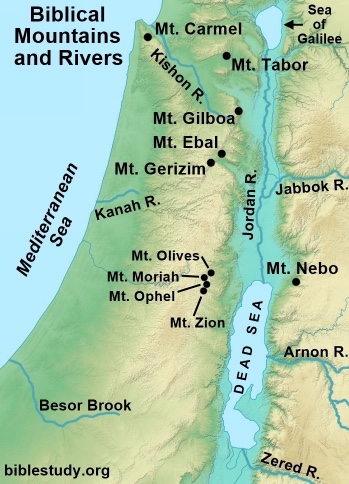
It was on the top of a “mountain of the Abarim range” where Moses appointed Joshua as his successor (Num 27:12–23), and it was on the top of this mountain, identified as Mount Nebo, that Moses would end his life, according to the account preserved in the closing chapters of Deuteronomy (Deut 32:48—34:8).

Once Joshua had led the people into the land of Canaan, he oversaw a ceremony in which the covenant with the Lord God was renewed; that took place in the land between Mount Ebla, on which an altar had been erected, and Mount Gerizim (Josh 8:30–35). In the time of the judges, the battle in which the prophet Deborah led Barak and his troops to defeat the army of King Jabin of Canaan, led by Sisera, was waged on Mount Tabor (Judg 4:1–24), whilst the downfall of Abimelech at the hands of the lords of the Tower of ash Chen took place on Mount Zalmon (Judg 9:22–57).

It was on Mount Carmel that the prophet Elijah had his famous interaction with the prophets of Baal and of Asherah (1 Kings 18:19–46). In that scene, despite all the water poured on the altar, the prophet’s petition is effective, and “the fire of the Lord fell and consumed the burnt offering, the wood, the stones, and the dust, and even licked up the water that was in the trench” (1 Kings 18:38).

The psalmist extols Mount Zion, the mountain on which David had built his city, as God’s “holy mountain, beautiful in elevation, the joy of all the earth, Mount Zion, in the far north, the city of the great King” (Ps 48:2), and this site is praised in other psalms (Ps 68:16–20; 87:1–3); “those who trust in the Lord are like Mount Zion, which cannot be moved, but abides forever” (Ps 125:1). The people are urged, “extol the Lord our God, and worship at his holy mountain; for the Lord our God is holy” (Ps 99:9).

The prophet Isaiah foresees a day after the troubles of his time when “the Lord will create over the whole site of Mount Zion and over its places of assembly a cloud by day and smoke and the shining of a flaming fire by night; indeed over all the glory there will be a canopy” (Isa 4:5) and also that “gifts will be brought to the Lord of hosts from a people tall and smooth, from a people feared near and far, a nation mighty and conquering, whose land the rivers divide, to Mount Zion, the place of the name of the Lord of hosts” (Isa 18:7).

A central vision for this prophet is the picture “in days to come [when] the mountain of the Lord’s house shall be established as the highest of the mountains, and shall be raised above the hills; all the nations shall stream to it. Many peoples shall come and say, ‘Come, let us go up to the mountain of the Lord, to the house of the God of Jacob; that he may teach us his ways and that we may walk in his paths’” (Isa 2:2–3; see also Isa 66:19–20). The vision offers an assurance of universal peace, stemming from these visits to Zion (Isa 2:4; see also Mic 4:2–4 and Isa 65:25).

More than this, it is “on this mountain [Zion] the Lord of hosts will make for all peoples a feast of rich food, a feast of well-aged wines, of rich food filled with marrow, of well-aged wines strained clear; and he will destroy on this mountain the shroud that is cast over all peoples, the sheet that is spread over all nations; he will swallow up death forever” (Isa 25:6–7); “the the hand of the Lord will rest on this mountain” (Isa 25:10).

When Israel is attacked by foreign armies, it is Mount Zion that symbolises the claim that the Lord God will fight for his people: “as a lion or a young lion growls over its prey, and—when a band of shepherds is called out against it—is not terrified by their shouting or daunted at their noise, so the Lord of hosts will come down to fight upon Mount Zion and upon its hill. Like birds hovering overhead, so the Lord of hosts will protect Jerusalem; he will protect and deliver it, he will spare and rescue it” (Isa 31:4–5; see also Ps 78:54–55). It is from Mount Zion that “a band of survivors” will go forth, as the remnant who remained faithful in the face of these attacks (Isa 37:32).

Other prophets likewise foresee salvation and escape from tribulation on Mount Zion (Joel 2:32; Obad 1:17); “the lame I will make the remnant, and those who were cast off, a strong nation; and the Lord will reign over them in Mount Zion now and forevermore” (Mic 4:7). This mountain holds a special place in the hearts of kings and prophets.

However, in the apocalyptic fervour that Zechariah generates, he envisages that it will be the Mount of Olives, to the east across the Kidron Valley, that will be the place where “the Lord will go forth and fight against those nations as when he fights on a day of battle … you shall flee from the earthquake … [and] the Lord my God will come, and all the holy ones with him” ( Zech 14:3–5).

Was this the mountain where, in Ezekiel’s vision, “the glory of the Lord ascended from the middle of the city, and stopped on the mountain east of the city” (Ezek 11:23) ? Certainly, the prophet Ezekiel saw that the future of Israel, after their exile, was bound up with regeneration from the mountaintop down: “Thus says the Lord God: I myself will take a sprig from the lofty top of a cedar; I will set it out. I will break off a tender one from the topmost of its young twigs; I myself will plant it on a high and lofty mountain. On the mountain height of Israel I will plant it, in order that it may produce boughs and bear fruit, and become a noble cedar. Under it every kind of bird will live; in the shade of its branches will nest winged creatures of every kind.” (Ezek 17:22–23; also 20:40–41).

Ezekiel sees his idiosyncratic vision of a rebuilt Temple from “a very high mountain” (Ezek 40:1–4, and the ensuing five chapters), leading to his clear assertion of “the law of the temple: the whole territory on the top of the mountain all around shall be most holy. This is the law of the temple.” (Ezek 43:12).

So mountains are the places in the story where close encounters with the deity took place. As Jesus leads his closest followers up the mountain, there might well be high expectation that God would be encountered in a direct way, given all that Israelite and Jewish tradition had collected regarding stories. And it should be no surprise that those atop that mountain saw a vision, and heard a voice, and witnessed a transformation in Jesus, that could only signal that they had, indeed, encountered the divine.

*****

See also

Choose life: loving, obeying, holding fast (Deuteronomy 30; Psalm 119; Epiphany 6A)

The season of Epiphany is marked by an emphasis on light, a symbol of the manifestation or revelation of God in Jesus. (Epiphany is from the Greek word for “shine forth”—thus, a manifestation, a revelation.)

The note of revelation through light was sounded in the announcement of an unnamed post-exilic prophet found in the Hebrew Scripture reading for The Feast of the Epiphany: “arise, shine; for your light has come, and the glory of the Lord has risen upon you … nations shall come to your light, and kings to the brightness of your dawn” (Isa 60:1, 3).

It was continued in the words of another, earlier, unnamed prophet in the Hebrew Scripture reading for Epiphany 1, the Feast of the Baptism of Jesus, in words sung to The Servant: “I have given you as a covenant to the people, a light to the nations, to open the eyes that are blind, to bring out the prisoners from the dungeon, from the prison those who sit in darkness” (Is 42:6–7).

Then, for Epiphany 2, we heard a repetition and extension of that imagery of light, in the second song sung to The Servant: “I will give you as a light to the nations, that my salvation may reach to the end of the earth” (Isa 49:6). There was also a repeated indication of the worship that kings will bring: “Kings shall see and stand up, princes, and they shall prostrate themselves, because of the Lord, who is faithful, the Holy One of Israel, who has chosen you” (Isa 49:7).

The motif of illumination continued on Epiphany 3, as the prophet Isaiah, some centuries earlier, foresaw the significance of the birth of a child in the royal line: “the people who walked in darkness have seen a great light; those who lived in a land of deep darkness on them light has shined” (Isa 9:2).

For Epiphany 4, the focus shifted to the way that people were to respond to the revelation of God’s ways, made known in the words of the prophets, through the testimony of The Servant, and even through the birth of a child. So, Micah proclaimed, “the Lord … has told you, O mortal, what is good; and what does the Lord require of you but to do justice, and to love kindness, and to walk humbly with your God?” (Mic 6:8).

Then followed, on Epiphany 5, the advice of the anonymous post-exilic prophet whose words are collected in the last section of the book of Isaiah. Ne advises the people to enact the fast that the Lord chooses: “to loose the bonds of injustice, to undo the thongs of the yoke, to let the oppressed go free, and to break every yoke … to share your bread with the hungry, and bring the homeless poor into your house; when you see the naked, to cover them, and not to hide yourself from your own kin” (Isa 58:6–7).

Immediately following this, the prophet returns to the Epiphany theme of illumination: “your light shall break forth like the dawn, and your healing shall spring up quickly; your vindicator shall go before you, the glory of the Lord shall be your rear guard” (Isa 58:8). These ways of acting are, as I have explored, central to the covenant between God and Israel; the prophet itemises a series of practical behaviours that would signal that Israelite society was founded on the justice and righteousness that God required through the covenant. That is how they were to respond to the illumination of the light, given to them time and time again. See

So each week, an excerpt from a prophetic text has undergirded the key feature of the ongoing season of Epiphany. Of course, the prophets weren’t speaking about our Christian season of Epiphany; but the compilers of the lectionary have chosen these passages, quite deliberately, to provide an ongoing focus each Sunday throughout this season.

*****

This coming Sunday, by contrast, there is no mention of light, or dark. However, the passage chosen from Hebrew Scripture (Deut 30:15–20) does continue the motif of justice, as articulated by prophets before the Exile (Micah 6) and on return to the land, after exile (Isaiah 58). We are offered an excerpt from the final speech of Moses, the great prophet, as it was attributed to him by a writer many centuries later from the time he is alleged to have lived—the unknown author of the book of Deuteronomy.

When Josiah was King of Judah (from 640 to 609 BCE), he instituted a series of reforms (probably during the late 620’s). What drove the reforms was the discovery, in the midst of the restoration of the Temple, of an ancient book of the Law, at the bottom of a money chest that had recently been raided to pay for renovations to the Temple (2 Ki 22:8–10).

This book set out the requirements of the Law; when it was discovered, Josiah realises that the nation has not been faithful to the covenant, and that God will punish them. He consults the prophet Huldah, who advised King Josiah to undertake the thoroughgoing reforms of religion in Judah that characterised his reign. “Josiah took away all the abominations from all the territory that belonged to the people of Israel, and made all who were in Israel worship the Lord their God. All his days they did not turn away from following the Lord the God of their ancestors” (2 Chron 24:33).

It is thought by some scholars that the book found in the money chest was Deuternonomy, or perhaps an earlier version of the book we now have. (The name, Deuteronomy, comes from two Greek words, meaning “second law”—perhaps a reference to the fact that in this book so many of the laws stated in Exodus and Leviticus are restated a second time.) There is no doubt that this book sounds a single, insistent theme, requiring that the people of Israel listen to the words that God gave Moses to speak to them, that they listen and obey, putting the instructions and commands into practice in every element of their daily lives.

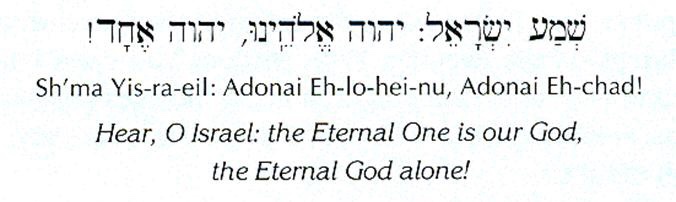
Indeed, a key statement in this book is recited to this day by faithful Jews, reminding them of their obligation to respond to God’s gift: “Hear, O Israel: The Lord is our God, the Lord alone; you shall love the Lord your God with all your heart, and with all your soul, and with all your might” (Deut 6:4–5, known for the first word of these verses, the Shema).

So this passage continues: “Keep these words that I am commanding you today in your heart. Recite them to your children and talk about them when you are at home and when you are away, when you lie down and when you rise. Bind them as a sign on your hand, fix them as an emblem on your forehead, and write them on the doorposts of your house and on your gates.” (Deut 6:6–9; see also 11:18–21).

This central commandment is to be remembered and enacted at every time of the day, in every situation and place. Throughout this book, the people are regularly reminded to “keep” the commandments (4:2, 40; 5:10, 12, 15, 29; 6:2, 6, 17, 24; 7:9; 8:2, 6, 11; 10:13; 11:1, 8; 13:4; 16:10, 13, 15; 26:17–18; 27:1, 9; 28:9). They are told to “obey the voice of the Lord God” (8:20; 13:4, 18), the Lord who speaks through the commandments (11:27–28; 12:28; 15:5; 26:17; 27:10; 28:1–2, 13, 15; 30:2, 8, 10, 16). Loving the Lord God is at the heart of these commandments (6:5; 7:9; 10:12; 11:1, 13, 22; 13:3; 19:9; 30:6, 16, 20). In this way, the people “hold fast” to God (10:20; 11:22; 13:4; 30:20).

*****

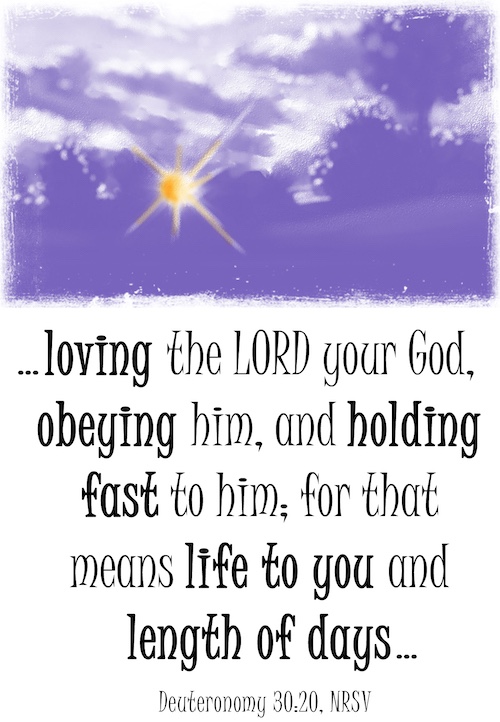
In the passage offered for this coming Sunday, this requirement of diligent listening and faithful obedience is sounded for the final time in this long book; the people are instructed to “choose life, so that you and your descendants may live, loving the Lord your God, obeying him, and holding fast to him” (Deut 30:19–20).

And so, the benefits of such listening, obeying, and holding fast are set forth: “if you obey the commandments of the Lord your God that I am commanding you today, by loving the Lord your God, walking in his ways, and observing his commandments, decrees, and ordinances, then you shall live and become numerous, and the Lord your God will bless you in the land that you are entering to possess” (Deut 30:16).

We have already discussed how Torah (the Law) was widely appreciated and deeply valued amongst the people of Israel, such that psalms and prophetic voices could exclaim, “happy are those who fear the Lord, who greatly delight in his commandments” (Ps 112:1). See

It is worth noting that, in Hebrew, the same word (Shema) is translated into English by two key terms—most often, as “hear” (as in Deut 6:4), but on occasions, as “obey” (as in Deut 11:27–28, and other places in this book). The sense of obey, then, is to hear, register, and put into practice what has been heard—thus, to obey. Hearing is not simply an act of the ear; it is an act of the whole being, moving from what the ear registers to what the mouth says, the hands do, the heart shows. That is the full sense of the instructions that are given in this speech by Moses at the end of his life (according to the narrative setting of the whole book; see Deut 31:14; 32:48–52; 34:1–8).

In the verse prior to this section, the people are reminded of how they are to relate to God: “the word is very near to you; it is in your mouth and in your heart for you to observe” (30:14). Hearing God, obeying the commandments that God has given, and living God’s way, are all immediately at hand—indeed, they are within the people. This is much like Jeremiah’s vision of the new covenant, when “I will put my law within them, and I will write it on their hearts” (Jer 31:33), or Ezekiel’s vision of the valley of dry bones, when God promises, “I will put my spirit within you, and you shall live” (Ezek 37:14).

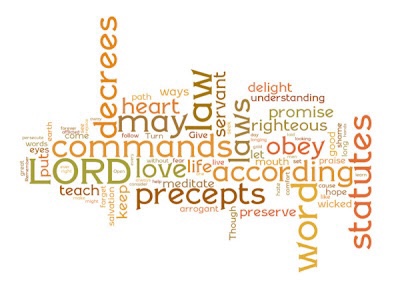
Indeed, this positive appreciation of the Law is picked up well in the Psalm offered for this Sunday, namely, the first stanza (verses 1–8) of the longest psalm in the Bible, Psalm 119. This psalm offers lavish and continued praise for Torah—identified variously as “the law of the Lord” (v.1), “his decrees” (v.2), “his ways” (v.3), “your precepts” (v.4), “your statutes” (v.5), “your commandments” (v.6), “your righteous ordinances” (v.7), and once again “your statutes” (v.8). These terms recur in each stanza of this lengthy, extended psalm of 178 verses, along with the familiar “your word” (vv.9, 11, 16).

The blessings of hearing and obeying this law are also set forth in this opening stanza of Psalm 119: those who hear and obey are blameless (v.1), blessed (vv.1,2), they do no wrong (v.3), keep the precepts diligently (v.4), have steadfast ways (v.5), will not be opus to shame (v.6), praise God with an upright heart (v.7) and are not forsaken by God (v.8). Similarly appreciative phrases recur through all 22 stanzas of this psalm.

“Choose life, that you may live; loving the Lord your God, obeying him, and holding fast to him” (Deut 30:19–20). “Happy are those whose way is blameless, who walk in the law of the Lord” (Ps 119:1). Or, as Jesus declares, “whoever breaks one of the least of these commandments, and teaches others to do the same, will be called least in the kingdom of heaven; but whoever does them and teaches them will be called great in the kingdom of heaven” (Matt 5:19).

See

Teaching the disciples (Matt 5; Epiphany 4A)

“When Jesus saw the crowds, he went up the mountain; and after he sat down, his disciples came to him; then he began to speak, and taught them” (Matt 5:1). These verses introduce the famous “Sermon on the Mount” in Matthew’s book of origins, and lead immediately into the Beatitudes, a series of blessings in which Jesus explains what is involved in “the kingdom of heaven”, which is the centre of his message (4:17, 23; 5:3, 10, 19–20).

On those Beatitudes, see

The author of this narrative knows very well the traditional rabbinic methods of teaching which were consistently employed by Jesus—he collects parables and pithy sayings, reports his dialogical debates and midrashic expositions, and shapes the whole “book of origins” so that, through its five collated teaching blocks, it evokes the five books of the Law of Moses—the “books of origins” of the people Israel. Jesus is presented as the Rabbi (Teacher) par excellence, the new Moses for the people of his time.

These five blocks of teaching provide an extensive catechisms for the disciples who travelled with Jesus throughout Galilee. We should remember that these disciples included more than “the twelve apostles” of later Christian tradition—Matthew himself notes that “many women … had followed Jesus from Galilee and had provided for him”, and identifies “Mary Magdalene, and Mary the mother of James and Joseph, and the mother of the sons of Zebedee” amongst them (Matt 27:55–56).

However, this group of followers is representative for the larger group of people who had begun to follow Jesus in the years since the events reported in the Gospel. The work was compiled in order to provide a catechetical foundation for those later followers—through even to our own times, many centuries later.

These five teaching blocks canvass ethical imperatives (5:1–7:29), missional guidelines (10:5–11:1), parables of the kingdom (13:1–53), relationships within the community of faith (18:1–19:1), and apocalyptic predictions about the coming kingdom along with strengthened indications of what righteousness is required in that kingdom (23:1–26:2). These teachings are demanding and comprehensive.

Who compiled this teaching Gospel? Within ecclesial tradition, the author is identified as Matthew, the tax collector who became a disciple of Jesus. There is absolutely no hint that he was schooled in the intricacies of Torah interpretation. In that tradition, Matthew was appointed as an apostle, and later wrote an eye-witness account of the time he spent with Jesus. It’s a point of view that I don’t personally adhere to.

Within biblical scholarship, Matthew is recognised simply as a character who appears briefly in the story told by the first Gospel in the New Testament. He is identified in one short verse narrating his call by Jesus (Matt 9:9). He is also included in the list of twelve who were called to be apostles, with the added descriptor, “the tax collector” (Matt 10:3). He is also named in three other books, with nothing further said about him (Mark 3:18; Luke 6:15; and Acts 1:13). But little else about him is conveyed in the four books that name him.

On the authorship of the Gospels, see

Those five fleeting references are the only times we see directly this person in the biblical narratives. He is surely there in other scenes, but he simply blends into the collection of “the disciples” (Mark 2:23; 3:7; 5:31: 6:1, 35, 41, 45; 7:17; 8:1–10, 14, 27, 34: 9:14, 28, 31; 10:10, 13, 23–24; 11:19; 12:43; 13:1; 14:12–16; and Synoptic parallels), “the twelve” (Mark 4:10; 6:7; 9:35; 14:20; and Synoptic parallels; and John 6:66–71; 20:24), or, even more anonymously, into “the crowd” (Mark 2:4, 13; 4:1; Matt 7:28; 13:2; Luke 5:1; 6:17; 7:11–12; 8:4; John 6:2; 12:9, 12; Acts 1:15; 2:6; etc.).

And yet, in the evolving church traditions, Matthew emerges from the shadows to take centre stage as disciple, apostle, saint, and author of the Gospel which is placed first in the New Testament. Some churches even maintain the patristic claim that Matthew wrote in Aramaic, and was later translated into the Greek version that forms the basis of the New Testament text.

The claim about Aramaic comes from a fourth century report by Eusebius of Caesarea that a second century bishop, Papias of Heirapolis, claimed that Matthew “put the logia in an ordered arrangement in the Hebrew language (Ἑβραΐδι διαλέκτῳ), but each person interpreted them as best he could” (Eusebius, Ecclesiastical History 3.39.16). We should note that this is a somewhat indirect witness at quite some remove, and also that the Greek word Ἑβραΐδι can be translated either as Hebrew or as Aramaic.

But this claim falls down from the clear evidence of the Greek text of Matthew’s Gospel, which mirrors very closely both the Gospel of Mark, at many points, and the Gospel of Luke, at other points, in passages found only in Matthew and Luke. The two key conclusions drawn by many scholars are twofold: first, that Matthew (like Luke) used the Gospel of Mark as a basis for writing a narrative about Jesus—but modified and adapted both the order and wording of passages; and second, that Luke and Matthew had access to another source (whether oral or written) for many of the sayings of Jesus (the source is known as Q). This makes it completely unlikely that Matthew wrote, in Aramaic, or in Hebrew, the earliest account of Jesus.

And ascribing the authorship of this Gospel to the tax collector identified at Matt 9:9 is also a patristic move. The title of this (and the other) Gospels, identifying the alleged author, is found only in later manuscripts and patristic writings; the narrative itself fails to identify anyone as the author, let alone the tax collector named Matthew. This claim is a later apologetic move, most likely made to provide an “apostolic authorisation” to the Gospel.

See

So what do we say, then, of “Matthew”, the purported author of this Gospel, a work which the author declares at the start to be “the book of origins of Jesus, Messiah” (Matt 1:1)? For me, a key to the way that the author of this “book of origins” operated is provided at Matt 13:52, where Jesus concludes a sequence of parables with the statement that “every scribe who has been trained for the kingdom of heaven is like the master of a household who brings out of his treasure what is new and what is old”.

That description encapsulates very clearly, for me, who the author of this Gospel was—a scribe, “trained for the kingdom”, drawing on old resources, but reshaping them so that they are seen to be new. We can see this in many ways in the narrative that he constructs. We can especially see this in the way he presents Jesus as an authoritative teacher of Torah—the one whose words are to be heard, remembered, studied, and passed on. (Thus, the reason for his writing of this Gospel.) It’s a point of view that undergirds the way that I interpret the various Gospel selections that the lectionary offers in this coming year, in which Jesus gathers his disciples, speaks to them, and teaches them.

Teaching in “their synagogues” (Matt 4; Epiphany 3A)

“Jesus went throughout Galilee, teaching in their synagogues and proclaiming the good news of the kingdom and curing every disease and every sickness among the people” (Matt 4:23). So we hear at the end of the Gospel passage offered by the lectionary for this coming Sunday.

This verse contains a very significant statement, when it refers to “their synagogues”. It is the passing reference, a seemingly fleeting, yet quite significant, reference to “their synagogues”. Not “our synagogues”, not even “the synagogues”, but “their synagogues” (Matt 4:23; 9:35; 10:17). There is a note of tension in this description; perhaps a hint of a conflict simmering between “our synagogues” and “their synagogues”?

In fact, the third of these texts (Matt 10:17) equates those who were flogging disciples in “their synagogues” as “wolves”—perhaps harking back to the prophetic denunciations of priests (Ezek 22:23–27), judges (Zeph 3:1–5), and Chaldeans (Hab 1:6–11). We might also note the devastating depiction of Benjamin as “a ravenous wolf, in the morning devouring the prey, and at evening dividing the spoil” (Gen 49:27). That is how “their synagogues” are depicted in Matthew’s book of origins.

Synagogues were the places in towns and villages throughout Judea and Galilee where the Torah was taught, through memorisation, debate, and discussion. These debates about Torah in synagogues across the land took on an intensified form after 70 CE. The survival of Judaism without the Temple depended on the faithful practice of the Torah: all of its commandments and instructions were there to shape a whole way of life for the people, to maintain the covenant that their ancestors had entered into with the Lord God. So there was much debate about how to keep all those commandments appropriately and faithfully.

The polemic in Jesus’ debates with the Pharisees, and the warnings that are uttered to Israel, show that Matthew still had hope that his ideas would become normative for all Jewish people. What was being taught in “our synagogues” at the time of the writing of this Gospel, some decades after the time of Jesus, was somewhat different from what was being taught in “their synagogues”—the places of teaching for the scribal authorities of the time. And this was despite the fact that Jesus himself had taught in “their synagogues”.

If the author of this Gospel knew anything about what was happening elsewhere in the movement initiated by the life and teachings of Jesus, he would have known about the gathering strength of the movement led by Saul of Tarsus, for whom strict obedience to Torah was of less importance than belief in Jesus as Messiah.

This arm of the movement was opening a door wide for Gentiles, who did not follow the Torah, to belong to such communities. This had been underway since the 50s. It had gained momentum by the late 60s and would become the dominant form of Christianity later in the second century. At the time that Matthew’s book of origins was being compiled, however, there were still people maintaining fidelity to the covenant of Israel, holding fast to the commandments and ordinances of the Torah, who nevertheless confessed Jesus to be Messiah—the chosen one of God, the Teacher supreme of Torah.

It was perhaps with an awareness of this growing trajectory of less attachment to Torah within the Jesus movement, that Matthew’s Gospel was created—to insist on the centrality and priority of the traditional teaching of Jesus, the Torah-observant Jew, whom God had chosen as the anointed one. And the picture that he offers of Jesus is a resolutely Jewish one. Remembering that Jesus said “Go nowhere among the Gentiles” (10:5) makes perfect sense in this context.

The Jesus who is presented in this Gospel is a fearful and demanding figure. In his capacity as the disciple’s Rabbi and as God’s Messiah, Jesus frequently promises (or threatens) judgement (5:21–26; 7:1–2; 10:15; 11:21–24; 12:36–37; 19:28–30; 21:33–44; 22:1–14; 24:29–31, 36-44, 45–51; 25:1–13, 14–30, 31–46; 26:64). Many of these declarations occur in eschatological contexts, where Jesus is warning about the punishment that is to come unless righteous-justice is followed in the present. The threat of this judgement is constantly before the people, calling them to lives of righteous-justice, which is the hallmark of the kingdom which God has in store for God’s people—the central message that Jesus persistently proclaims.

Proclaiming the good news of the kingdom (Matt 4; Epiphany 3A)

“Jesus went throughout Galilee, teaching in their synagogues and proclaiming the good news of the kingdom and curing every disease and every sickness among the people” (Matt 4:23). So we hear at the end of the Gospel passage offered by the lectionary for this coming Sunday.

Again, some chapters later, we hear that Jesus leaves his family (10:35–38) to travel from town to town, “proclaiming the good news of the kingdom, and curing every disease and every sickness” (9:35). As he travels, he has “nowhere to lay his head” (8:20) and no possessions to call his own, in accordance with the instruction he later gives to a rich man, telling him, “if you wish to be perfect, go, sell your possessions, and give the money to the poor, and you will have treasure in heaven; then come, follow me” (19:21).

The “good news” that Jesus proclaims so insistently as he travels around contains some hard, demanding requirements. In fact, towards the end of this Gospel, Jesus gives a series of clear directions regarding what is required to “be perfect”, to gain “eternal life”, to enter “the kingdom of heaven” (19:16–26). His call is challenging.

At the very start of his public activity in Matthew’s account, Jesus has sounded the central motif of his preaching: “repent, for the kingdom of heaven has come near” (4:17, repeating the very same message of John the baptiser, 3:2).

On the significance of the themes in this key verse, see

This coming kingdom, which Jesus has proclaimed from the start of his public preaching (4:17, 23; 5:3, 10; 5:19-20; 6:10, 33; 7:21; 8:11–12; 9:35; 10:7), is the same kingdom that Daniel had foreseen (“the God of heaven will set up a kingdom that shall never be destroyed”, Dan 2:44). The promise that God had made long ago was that “my covenant of peace shall not be removed” (Isa 54:10). It is this kingdom that many prophets had been speaking about—the time when the ways of God would be faithfully followed by the people chosen by God, as they maintained their commitment to the covenant made with their God.

Those prophets had regularly reminded the people of Israel of the need to act in ways that were consistent with the tsedeqah, the righteous-justice, that the Lord God required of them. Jesus stands in this prophetic tradition; in Matthew’s narrative, he emphasises that it is keeping righteous-justice (5:20; 10:41; 13:17; 21:32) which characterises “the kingdom of God” (6:33). It is this righteous-justice which is a prerequisite to “inherit the kingdom prepared from the foundation of the world” (25:34–40).

Acting in accordance with this righteous-justice brings into present reality the prophetic promise about the coming kingdom, when God’s way of righteous-justice will be followed by faithful people (Isa 26:7–9; 40:3–5; Jer 6:16; Mal 3:1; 4:4–6; and the many prophetic oracles concerning the Day of the Lord).

It is only in this Gospel that Jesus is directly equated with the Servant, chosen by God, on whom God’s Spirit rests, the one who will “proclaim righteous-justice to the Gentiles” (Matt 12:18, quoting Isa 42:1) and will not rest until “he brings righteous-justice to victory” (Matt 12:20, quoting Isa 42:3).

This way of righteous-justice is consistent with the message of many prophetic voices (Amos 5:24; Hos 10:12; Isa 5:7, 16; 9:7; 11:4–5; 32:1, 16–17; 42:6; 61:1–4; Jer 9:23–24; 22:3; 33:14–16; Zeph 2:3; Mal 4:1–6). The Servant exemplifies this way of faithful obedience to the claims of the covenant. And it is in this way of righteous-justice that Jesus stands, as he proclaims “the good news of the kingdom”.

Appropriating prophetic passages in the season of Epiphany (Isa 49; Epiphany 2A)

Every Sunday throughout the Christian year (save for the six Sundays in the season of Easter), the Revised Common Lectionary provides a passage from Hebrew Scripture as the First Reading in the set of four readings for that Sunday. (During Easter, a passage from Acts stands as the First Reading, providing stories from the early years of the movement which Jesus founded.)

Each year, during the season of Epiphany, the First Readings relate to the prophetic figures of ancient Israel. In Year A (this year), almost all of them are drawn from the book of Isaiah the prophet, with one from Micah and one from Deuteronomy (where the link is with Moses, the great prophet).

Each year, the Feast of Epiphany includes Isaiah 60:1–6 as the First Reading. In this passage, the prophet foresees that “nations shall come to your light, and kings to the brightness of your dawn” (Isa 60:3); he specifies that when they come to the light of the Lord, “they shall bring gold and frankincense,

and shall proclaim the praise of the Lord” (Isa 60:6). The reason for reading this on Epiphany is obvious—it correlates well with the story in Matthew of when the magi came to visit Jesus, and “they offered him gifts of gold, frankincense, and myrrh” (Matt 2:11).

The first Sunday after the Feast of Epiphany is always the day on which the Baptism of Jesus is recalled. One year (Year B) places the beginnings of the priestly creation account (Gen 1:1–5) alongside this Gospel story. In the other two years, passages from Second Isaiah are offered; in Year C, this is Isaiah 43:1–7, which includes the affirmation, “do not fear, for I have redeemed you; I have called you by name, you are mine; when you pass through the waters, I will be with you” (Isa 43:1–2). The presence of water in both of these passages seems to be the reason for their linking with the baptism of Jesus.

This year, Year A, the prophetic excerpt is the first of four songs that are linked explicitly with the Servant (42:1–9; 49:1–7; 50:4–11; and 52:13–53:12). In this first song, the Servant is designated as the one in whom God delights (42:1); the phrase recurs in the message of the voice from the cloud which speaks at the baptism of Jesus, declaring that he is the one “with whom I am well pleased” (Matt 3:17).

The song also affirms that the Servant has God’s spirit within him (Isa 42:1), something which is directly enacted in the baptism of Jesus when he “saw the Spirit of God descending like a dove and alighting on him” (Matt 3:16). It is clear, therefore, why this passage has been selected for this day.

On the ensuing Sundays, we are offered two further sections from Isaiah (Isa 49 and Isa 9), a famous passage from Micah 6, another passage from Isaiah (Isa 58), and then a section of the lengthy speech attributed to Moses after the covenant renewal ceremony (Deut 29–30), in which he speaks like a prophet: “I have set before you life and death, blessings and curses; choose life so that you and your descendants may live” (Deut 30:19).

The four prophetic passages that appear in weeks two to six this year offer some striking words from the times of ancient Israel. Their inclusion in a key lectionary of the Christian churches alongside Gospel passages recounting the early period of the public activity of Jesus invites us to appropriate these passages as pointing to Jesus as God’s chosen one (messiah).

This is particularly evident in this Sunday’s passage (Isa 49:1–7), where a number of elements have been interpreted as predictors of the role that Jesus undertook. There are six different elements in these seven verses which can be seen to serve as such predictors, pointing forward to Jesus.

The one who sings this song is declared by God to be God’s servant (49:3), in the same way that Jesus is acknowledged as servant (Acts 3:13, 26; 4:27, 30). The song was originally composed and sung during the Exile in Babylon, as the prophet looked to a return to the land of Israel and the resumption of Israel’s role as God.

See

This servant has an awareness that he has been chosen before his birth for his role (49:1, 5), a sense that is conveyed in the Gospel narratives that variously indicate God’s plan and purpose for Jesus was conveyed to his mother (Luke 1:32–33), his father (Matt 1:21), and then both parents (Luke 2:34–35, and 3:38). The sense of a purpose for Jesus that was determined long before his activities in Galilee and Jerusalem is also evident in the prologue to the book of signs (John 1:9–14) and in a later controversy reported in that book (John 8:42, 58).

The servant is the one in whom God would be glorified (49:3), pointing to a key theme in the book of signs, where the function of Jesus is to glorify God (Jon 17:1–5). The servant will gather Israel back to God (49:5), “to raise up the tribes of Jacob and to restore the survivors of Israel” (49:6). This is the mission that Jesus declares when he asserts that “I was sent only to the lost sheep of the house of Israel” (Matt 10:24), and is inherent in his charge to the disciples, “you will sit on thrones judging the twelve tribes of Israel” (Luke 22:30).

This particular servant song also includes two key statements which figure prominently in the orderly account of the early church which is told in two volumes and is attributed to Luke. First, the servant is told by God, “I will give you as a light to the nations” (49:6)—an image that is picked up by three evangelists. Simeon declares that Jesus will be “a light for revelation to the Gentiles and for glory to your people Israel” (Luke 2:38). The Johannine Jesus affirms of himself, “I am the light of the world” (John 8:12; 9:5). And the Matthean Jesus then extrapolates the image, telling his disciples, “you are the light of the world” (Matt 5:14).

Then, the servant is told that God has given him that light “that my salvation may reach to the end of the earth” (49:6). This phrase occurs in the definitive statement of the risen Jesus, in the second Lukan account of the ascension of Jesus, when he charges his followers, “you will be my witnesses in Jerusalem, in all Judea and Samaria, and to the ends of the earth” (Acts 1:8); the phrase recurs when this servant song is later quoted by Paul (Acts 13:47).

When we look back at this text, through the prism of Jesus, we can see just how well it seems to speak of Jesus. In Christian understanding, he was indeed the Servant, chosen by God, glorifying God in his life and his death, recalling Israel to their covenant with God, and shining as a light that would bring the good news of salvation to the ends of the earth. The text looks to be a clear prediction of Jesus.

And yet, interpreting this passage and other ancient Israelite prophetic passages as predictive of Jesus is a strategy that we should undertake with care. Christians have a bad track record of taking Jewish texts and Christianising them, talking and writing and thinking about them as if they were always intended simply to be understood as Christian texts. But first of all, they were Jewish (or, to be precise, ancient Israelite texts).

So the original setting of such passages needs always to be considered—the historical, social, political, cultural contexts in which they came into being, as well as the literary genre being used and the linguistic and literary conventions being deployed. Obliterating the original setting and acting as if the text was intended for a time many centuries later, is unfair and unethical.

Indeed, Christianising Old Testament texts can well become the first step in a dangerous process, as we firstly remove Judaism from our interpretive framework, and then treat the prophetic text as having nothing to do with Judaism, and everything to do with Christianity. This is the pathway that can lead to supercessionism—a view that Christianity has superseded and indeed replaced Judaism—and even antisemitism—actively speaking and acting against Jews and Judaism. And having arrived at such a destination, we are reinforced in our pattern of ignoring and obliterating the earlier meanings in the text.

Texts (whether biblical or other literature) are always multivalent—that is, open to being interpreted in a number of ways, offering multiple ways of understanding them. That’s why we have sermons, and don’t just read the biblical text and then put it down. We keep it before our minds, and explore options for understanding and appropriating it. Ignoring the multiple layers of meaning inherent in biblical passages is a reductionist and self-centred way of undertaking interpretation. Reducing the prophetic texts to predictive declarations solely about Jesus is a poor interpretive process.

See also

What are you looking for? Come and see! (John 1; Epiphany 2A)

“When Jesus turned and saw them following, he said to them, ‘What are you looking for?’ They said to him, ‘Rabbi’ (which translated means Teacher), ‘where are you staying?’ He said to them, ‘Come and see.’ (John 1:38–39).

“Come and see” is the key invitation spoken by Jesus in these opening scenes in the book of signs. First, in Judea, Jesus extends an invitation to Andrew, at that stage a follower of John, and one other, a fellow-disciple of John (1:35–40). Later, in Galilee, Jesus calls Philip to follow him (1:43), and when Philip is asked by Nathaniel about this interaction, Philip invites Nathaniel to “come and see” (1:46).

Some years later, “we wish to see Jesus” is the request made by some Greeks to Philip in Jerusalem at the Passover (12:21). And then, after the momentous events that ensure, “come, see” is the invitation that Jesus makes to his disciple Thomas, at the end of the book of signs, when he invites his doubting friend to “put your finger here and see my hands” (20:27).

This reading from the book of signs (which we know as the Gospel according to John) is an appropriate offering for this coming Sunday, the second Sunday in the season of Epiphany. The season celebrates the manifestation of God in Jesus, the one chosen by God to show God’s love to the world. The reading contains a number of pointers to that key theme of the book of signs—stories that reveal how God was present in Jesus.

In that interaction between Philip and “some Greeks”, Philip gathers Andrew, and together they approach Jesus to report the request made of them to “see Jesus” (12:22). Jesus informs them that what they will see, if they look with care, is “the hour … for the Son of Man to be glorified” (12:23)—a moment that occurs soon after, when the crowd mistakes “the voice from heaven” for thunder (12:28–29), but which is actually the light that shines in the darkness (12:35–36).

In Hebrew Scripture, the “glory of God” is the shekinah, the visible sign of the presence of God amongst God’s people (Exod 25:8)—in the stories of the wilderness wanderings, the shekinah was “the pillar of cloud by day to lead them on the way, and in a pillar of fire by night to give them light” (Exod 13:21–22). In John’s Gospel, when Jesus is glorified, he reveals the divine presence amongst human beings (John 1:14; 2:11; 11:4, 40; 12:16, 28, 41–43; 17:5, 22–24).

This is the climactic revelation of Jesus in the book of signs; and whilst this is signalled in the poetic prologue to the book (1:14), in the prose narrative that ensues in this opening chapter (1:19–51), a number of revelations of the identity and significance of Jesus are made.

Indeed, there is a series of Jewish titles which are embedded in this prose narrative, as key characters confess the significance of Jesus throughout this extended preface (1:19–51). Jesus is addressed as “Rabbi” (1:38, 49), “Messiah” (1:41), “King of Israel” (1:49), and “Son of God” (1:49). It is worth noting that these claims about Jesus are each made also within the Synoptic traditions. Indeed, the Johannine Jesus himself refers, in the allusive synoptic fashion, to the “Son of Man” (thirteen times, from 1:51 to 13:31), which we must presume to be a self–reference.

In later scenes, Jesus is also addressed by these Jewish terms, when he is called “prophet” (4:19), “Messiah” (4:29; 11:27), and “Rabbouni” (my teacher, 20:16). Then, the ultimate Christological confession of the Gospel is uttered by Thomas, when he moves beyond this viewpoint in the phrase, “my Lord and my God” (20:28), echoing the perception of the Jews, that Jesus was “making himself equal to God” (5:18).

Perhaps we tend to remember the fourth Gospel as the one which reveals the extensive cosmic significance of Jesus—the Word made flesh (1:14), the one closest to the heart of the Father who has “made the Father known” (1:18), and most famously, the one through whom God shows that “God so loved the world” (3:16). This Gospel seems to offer much in terms of a Saviour for the whole world (4:42), a sign for Greeks (that is, Gentiles) from beyond Judaism (12:20).

Yet, for the most part of this Gospel, Jesus is presented in terms drawn from within a Jewish context. Indeed, even the final, climactic confession by Thomas can be understood within a particular stream of Jewish tradition, for the hellenistic Jewish author Philo uses the terms “Lord” and “God” to designate the two major divine powers of creation (signified by “God”) and eschatological judgement (signified by “Lord”). In light of this usage of the terms by Philo, Jerome Neyrey wisely concludes that “Jesus is correctly called ‘God’ because he exercises creative power, and ‘Lord’ because he has full eschatological power”; see https://www3.nd.edu/~jneyrey1/MyLord.God.htm

So an important clue to a central motif running throughout this Gospel is placed in the mouth of Philip, when he says to Nathanael, “We have found him about whom Moses in the law and also the prophets wrote, Jesus son of Joseph from Nazareth” (1:45). The Jewish terms point to this reality about how Jesus was understood in the community within which the book of signs was written: Jesus is to be regarded as the fulfilment of scripture.

Notice that the author of this Gospel takes Philip, an almost anonymous figure in the Synoptic Gospels, and places in his mouth these key sayings, about the fulfilment of the scriptures (1:45), and the relevance of Jesus to Gentiles (12:20–26), and, indeed, the fundamental request, “Lord, show us the Father” (14:8). Philip articulates what the author of the book of signs seeks.

Now, it is true that the affirmation that Jesus fulfils scripture is common to all four canonical Gospels. It is very clear in the Synoptic accounts; we should not, however, diminish its significance on the fourth Gospel. This interpretive stance is hinted at as early as the Prologue, in the comparison between Jesus and Moses (1:17). It is stated explicitly, as we have noted, in the claim put on the mouth of Philip, “we have found him of whom Moses and the prophets wrote” (1:45), and later in the words attributed to Jesus, “You search the scriptures, because you think that in them you have eternal life; and it is they that bear witness to me” (5:39).

There are fifteen clear quotations from Hebrew Scriptures in this Gospel. There are eight explicit references to scripture in the early chapters (1:23; 2:17; 6:31; 6:45; 7:38; 7:42; 10:34; 12:13–15), while a “fulfilment formula” is used in later chapters, to introduce seven such scriptural quotations (12:38–40; 13:18; 15:25; 18:9; 19:24, 28, 36–37). There is also a passing note that Judas died after betraying Jesus “so that the scripture might be fulfilled” (17:12).

However, the total significance of the Hebrew Scriptures in this Gospel is much greater than these sixteen occurrences, as the Gospel contains numerous allusions to specific scripture passages, such as references to Jacob’s ladder (1:51) and the sacrificial lamb (1:29, 36), as well as more generalised allusions to scripture. These allusions are much freer in their form and indicate that, for the author of this Gospel, the Hebrew Scriptures had become an integral part of his mind and heart, for he treats them with a freedom born from intimate familiarity.

So this Gospel passage for the second Sunday in Epiphany reminds us of the Jewish origins of Jesus and also the continuing appreciation of Jesus in Jewish terms, throughout the early decades of the movement that was initiated by his proclamation and action in Galilee and (especially in John’s account) in Jerusalem, over some years. In our Christian appropriation of the figure of Jesus, we would do well to remember his Jewish origins, and the strongly Jewish nature of early Christian interpretation of Jesus. We owe much to Judaism, both as our ancient heritage and indeed as an enduring living faith which continues to proclaim faith in the God whom Jesus knew, and loved, and revealed.