Maintaining faith in God in difficult circumstances (Psalm 22; Lent 2B)

In the psalm that is set for the Second Sunday in Lent (a section of Psalm 22), the psalmist exults the worldwide dominion of the Lord God and sings that “to [the Lord], indeed, shall all who sleep in the earth bow down; before him shall bow all who go down to the dust, and I shall live for him” (Ps 22:29).
This psalm is best known for its opening line, “my God, my God, why have you forsaken me?” (Ps 22:1a), as this is the last word of Jesus as he dies on the cross, at least according to two evangelists (Mark 15:34; Matt 27:46). The psalm is one of the psalms of individual lament, as the psalmist reflects the wretched condition of a person who is suffering unjustly, as the psalmist cries, “why are you so far from helping me, from the words of my groaning? … I am a worm, and not a human … all who see me mock at me; they make mouths at me, they shake their heads …. I am poured out like water, and all my bones are out of joint; my heart is like wax; it is melted within my breast; my mouth is dried up like a potsherd, and my tongue sticks to my jaws; you lay me in the dust of death.” (Ps 22:1, 6, 14–15).

The other psalms usually considered to express individual lament reflect similar ideas: Ps 3 (“O Lord, how many are my foes! many are rising against me), Ps 6 (“be gracious to me, O Lord, for I am languishing”, Ps 13 (“how long will you hide your face from me?), Ps 25 (“I am lonely and afflicted; relieve the troubles of my heart, and bring me out of my distress”), Ps 31 (“my eye wastes away from grief, my soul and body also; for my life is spent with sorrow, and my years with sighing”), Ps 71 (“in your righteousness deliver me and rescue me; incline your ear to me and save me”), Ps 77 (“I think of God, and I moan; I meditate, and my spirit faints”), Ps 86 (“O God, the insolent rise up against me; a band of ruffians seeks my life, and they do not set you before them”), and Ps 142 (“with my voice I cry to the Lord; with my voice I make supplication to the Lord”).
However, the section of the psalm that is offered for this coming Sunday (Ps 22:23–31) comes from the second half of the psalm, where—as is typical of many psalms of lament—the mood turns from internal personal introspection, to an external offering of praise and adoration to God. In each psalm the undergirding assumption is that God does care, God will act, and the trials of the present will be swept away. They are psalms imbued both with the sober reality of the human condition, and an unswerving optimism that faith in God will ensure an ultimate condition of salvation, deliverance, redemption.

Although the psalms offered by the lectionary are chosen each Sunday to provide a companion piece to the Hebrew Scripture passage, this element of this psalm makes it a most fitting accompaniment to the Gospel passage offered this coming Sunday in Lent, as the path that Jesus walks towards the cross is in view during this season.

So the psalmist rejoices. God has dominion over the whole earth: “all the ends of the earth shall remember and turn to the Lord and all the families of the nations shall worship before him; for dominion belongs to the Lord and he rules over the nations” (vv.27–28). This affirmation reflects other parts of Hebrew Scripture where the global reach of God is asserted.

One psalmist calls the ends of the earth “the possession of the Lord” (Ps 2:8), for they “have seen the victory of our God” (Ps 98:3). Both the name and the praise of the Lord “reaches to the ends of the earth” (Ps 48:10), for when God acts to judge the nations, “the it will be known to the ends of the earth that God rules over Jacob” (Ps 59:13). One psalmist declares that God is “the hope of all the ends of the earth and of the farthest seas” (Ps 65:5) and another prays, “may God continue to bless us; let all the ends of the earth revere him” (Ps 67:7).

But in this psalm, the dominion of God reaches beyond this life, to humans who lie in the realm of those who have died. “To him shall all who sleep in the earth bow down; before him shall bow all who go down to the dust” (v.29). A number of other psalms indicate that “in the dust” is where the dead rest (Ps 7:5; 30:9; 90:3; 104:29; likewise Job 10:9; 17:16; 20:11; 21:23–26; 40:12–13).

In Daniel’s grand vision “at the time of the end” (11:40–12:13) he refers to “many of those who sleep in the dust of the earth shall awake, some to everlasting life, and some to shame and everlasting contempt” (12:2). This is a key Hebrew Scripture text which is used in discussions of the resurrection as reported in the New Testament. Clearly, those who “sleep in the dust” are dead.

In the archetypal story that opens Hebrew Scripture, “the dust of the ground” is identified as the source for God’s creation of humanity (Gen 2:7)—and as the place where people’s bodies go when they die. The man Adam is told, “you return to the ground, for out of it you were taken; you are dust, and to dust you shall return.”

God, indeed, “knows how we were made; he remembers that we are dust” (Ps 103:14), and in the end, “all go to one place; all are from the dust, and all turn to dust again” (Eccles 3:20). The Preacher wistfully observes that at the end, “when the years draw near … the silver cord is snapped, and the golden bowl is broken, and the pitcher is broken at the fountain, and the wheel broken at the cistern, and the dust returns to the earth as it was, and the breath returns to God who gave it”, before drawing his inevitable and well-known conclusion, “Vanity of vanities, says the Teacher; all is vanity” (Eccles 12:1, 6–7).
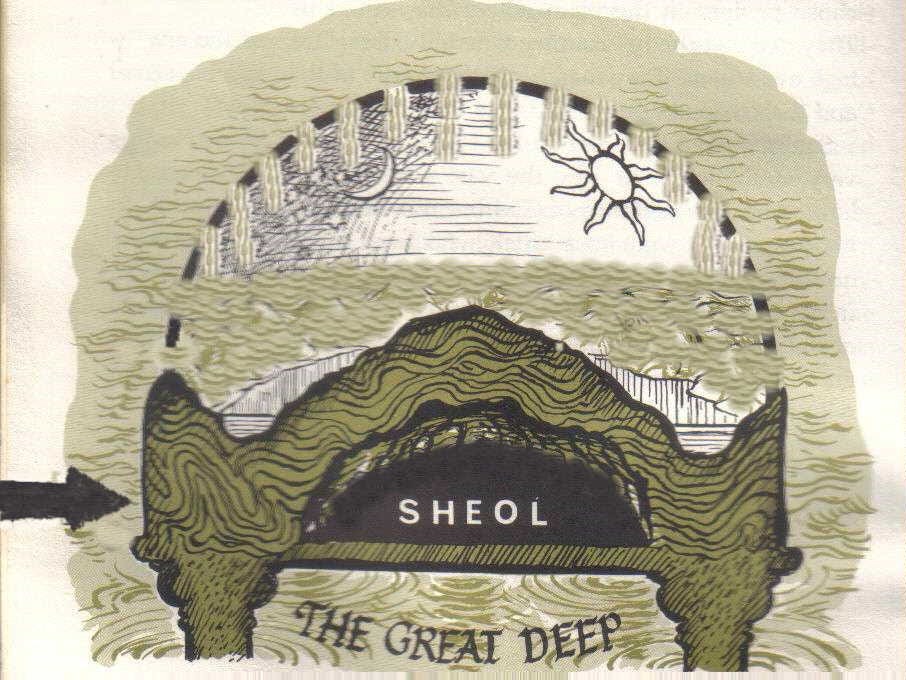
In other passages in the Hebrew Scriptures, those who are dead are located, not in the dust, but in Sheol, in The Pit. These terms each describe the state of the nephesh (the essence of being) of those whose bodies have died. In one psalm, the pit that is dug for “the wicked” describes this place as “the land of silence” (Ps 94:17), while the prophet Ezekiel imagines it as the place where the dead, the “people of long ago” lie “among primeval ruins” (Ezek 26:20).

In Psalm 88, when the psalmist laments “my soul is full of troubles”, they use these and other terms in poetic parallelism to describe their fate: “my life draws near to Sheol; I am counted among those who go down to the Pit; I am like those who have no help, like those forsaken among the dead, like the slain that lie in the grave, like those whom you remember no more, for they are cut off from your hand; you have put me in the depths of the Pit, in the regions dark and deep” (Ps 88:3–6).

In this state, people simply lie in darkness, not living, with no future in view, no hope in store. Job laments, “if I look for Sheol as my house, if I spread my couch in darkness, if I say to the Pit, ‘You are my father,’ and to the worm, ‘My mother,’ or ‘My sister,’ where then is my hope?” (Job 17:13-15). Job also equates entering the Pit with “traversing the River” (Job 33:18), in words that seem to reflect the River Hubur (in Sumerian cosmology) or the River Styx (in Greek cosmology), the place where the souls of the dead cross over into the netherworld.

Other words for Sheol in Hebrew Scripture include Abaddon, meaning ruin (Ps 88:11; Job 28:22; Prov 15:11) and Shakhat, meaning corruption (Isa 38:17; Ezek 28:8). These terms indicate the forlorn, lost, irretrievable nature of this state of being. This is the fate in store for all human beings, whether righteous or wicked; there is no sense of judgement or punishment associated with this state. It is simply a state of non-being.

And yet, even in this state—this state where “my mouth is dried up like a potsherd, and my tongue sticks to my jaws; you lay me in the dust of death” (Ps 22:15)—the psalmist finds hope. They are confident that the Lord God “raises up the needy out of distress” (Ps 107:41) and “lifts up the downtrodden” (Ps 147:5). In like manner, Hannah has sung that the Lord “raises the poor from the dust and lifts the needy from the ash heap” (1 Sam 2:8; also Ps 113:7).

And so the psalmist bursts into praise for what, they are confident, God will do. Calling for their listeners to “praise [the Lord] … glorify him … stand in awe of him” (Ps 22:23), they affirm that God “did not despise or abhor the affliction of the afflicted; he did not hide his face from me, but heard when I cried to him” (v.24) and rejoice that “the poor shall eat and be satisfied” (v.26).

The psalmist is certain not only that “the ends of the earth shall remember and turn to the Lord and all the families of the nations shall worship before him” (v.27), but also that “posterity will serve him; future generations will be told about the Lord, and proclaim his deliverance to a people yet unborn, saying that he has done it” (vv.30–31).

And so, they offer this resounding declaration of hope: “to him, indeed, shall all who sleep in the earth bow down; before him shall bow all who go down to the dust” (v.29). It is that hope which we hear, and affirm, when these closing verses of this psalm (vv.23–31) are read or sung during this coming Sunday’s worship.

Promise and proclamation: passages from the Prophets at Christmas

There is a richness of scriptural resources for reflecting on our faith at Christmas. These resources come from the developing traditions of Christmas worship in the early centuries of Christianity. This post concerns especially some passages from the prophet Isaiah that are proposed by the Revised Common Lectionary for our Christmas worship celebrations.

In the ancient Roman church, a Christmas Mass was originally celebrated as a vigil service at the manger of St Mary Major in Rome. It was a small service originating under Pope Sixtus III, and was known as The Angel’s Mass, as the story was told of the angels appearing to the shepherds in the fields (Luke 2:1–14).

In time, a large public service was added at the church of St Peter on the morning of Christmas Day, presided over by the Pope. This practice continues to this day. This service was known as The Shepherd’s Mass, for the story of the shepherds coming to visit the newborn child (Luke 2:8–20).

A third service, The Mass of the Divine Word, was added in the fifth century, originally to celebrate St Anastasia, whose body, it was said, rested in the palace church of the Byzantine Governor in Rome. The focus of this service shifted, over time, from a veneration of the saint’s remains, to a celebration of the Incarnation. The Gospel read at this service was John 1:1–14.

These three Gospel passages were retained in the Common Lectionary when it was created in 1983, drawing on the ancient Roman practices, and continued on in the Revised Common Lectionary of 1992. To the three Gospel passages were added nine additional readings—three psalms, three from the prophets, and three from the epistles. The three options are identified as Nativity of the Lord Proper I, Proper II, and Proper III.

Alongside the Gospel passage and the prophetic passage for each of the three traditional services for Christmas (Nativity of the Lord I, II, and III), there is a psalm offered for each service, as well as a passage from the book of Isaiah. We would do well to use them to guide our response at Christmas, as we hear the story and celebrate the birth of Jesus.

The three psalms (Psalms 96, 97, and 98) come from a sequence of songs offering praise—a note that is entirely suitable for the Christmas season! The three passages from the book of Isaiah come from the three different sections of that large prophetic book, each offering words of hope.

The book of Isaiah comprises three sections, which most scholars believe originated in three different periods during the history of Israel. The first section (chs. 1–39) is located in Judah in the eighth century BCE, as the Assyrians conquered the northern kingdom of Israel and attempted to gain control of the southern kingdom, but that effort failed.

The second section of Isaiah (chs. 40–55) dates from the time of exile for the southern kingdom, after the people of Judah had been conquered by the Babylonians in 587 BCE; it offers words of hope as the people look to a return to the land. Then, the third section (chs. 56–66) is dated to a time when the exiles had returned to Judah, sometime after 520 BCE. By convention, the three parts are known as First Isaiah, Second Isaiah, and Third Isaiah.

The first of these three passages from the book of Isaiah proposed as Christmas readings is an oracle in the early part of the first section (chs.1—39). Here, the prophet is looking forward to the birth of a child (Isa 9:6). This, of course, is a most appropriate theme for Christmas. Yet the child of whom Isaiah of Jerusalem spoke was not Jesus, but rather, a royal child, already announced at Isa 7:14.

This child would be born in difficult circumstances (Isa 9:4–5), for the people were under attack by the Assyrians to the north (as reported in 2 Kings 16). The hope that the prophet holds out is of darkness in light, joy in the midst of hard work, release from oppression, and the establishment of justice and righteousness.

Is not that what we hope for, pray for, and work for, through the coming of Jesus which we celebrate at Christmas? Although the prophet did not “predict Jesus”, yet we can see how Jesus invites us to work with him for this desired result.

The second reading from Isaiah comes from the third section of the book (chs. 56—66). It comprises a set of prophecies delivered many decades after the prophet Isaiah of Jerusalem himself lived. As the people returned to the land of Israel, hopes were high. The anonymous prophet whose words are collected in the book of Isaiah speaks about justice and deliverance (56:1), with light illuminating the darkness (60:1–3) and the Spirit inspiring leaders “to proclaim the year of the Lord’s favour” (61:1–2). The security that is foreseen (Isa 62:8–9) and the celebration that takes place (v.10) is marked with names that signal to the people how God has been at work (v.12).

In the same spirit of hope, we prepare for the annual celebration of the coming of Jesus, in whom we surely find the Spirit at work, bringing salvation, proclaiming God’s way “to the end of the earth” (v.11). Once again, the prophet is not specifically forthtelling the coming of Jesus; but as we have experienced Jesus and know him in our lives, we can see how he brings to fruition these hopes, held firm from centuries ago, still alive for our own times.

The third reading from the book of Isaiah offered for Christmas is a rather short reading (Isa 52:7–10). It comes from the middle section of the book (chs. 40—55). a set of prophecies delivered to people from Judah who had been in exile in Babylon for some decades. This section of the book begins with a clear signal of the great hope of the time: “prepare the way of the Lord … every valley shall be lifted up, and every mountain made low” (40:3–4).

A key figure at that time was the Servant, called to lead the people with teaching and example. (The resonances with Jesus are frequently noted; but the prophet was not speaking directly about Jesus.) This passage speaks about those who “announce peace, bring good news, announce salvation” (52:7); all activities that we associate with Jesus, through the Christmas story and the Gospel narratives.

However, this particular herald, some eight centuries before Jesus, would bring comfort to the exiled people, assuring them of their redemption when they return to the land. This good news must surely be made known “before the eyes of all the nations”, so that “all the ends of the earth shall see the salvation of our God” (v.10). These sentiments surely correlate with how we, joyfully and hopefully, regard Jesus, in our Christmas celebrations.

See

I will offer a sacrifice and call on the name of the Lord (Psalm 116; Easter 3A)

This coming Sunday, the third Sunday in the season of Easter, the lectionary offers a series of verses from psalm 116 (1–4, 12–19). This psalm is one of six psalms, numbered from 113 to 118, which are known as Hallel psalms—from the Hebrew term hallelu-jah, meaning “praise the Lord”. That phrase starts psalm 113 and ends psalms 115, 116, and 117. These psalms were, and are, used in Jewish communities at times of festive celebration; so they are also most suitable in the current Christian season of Easter.

The opening section of this psalm celebrates a rescue from near death (v.8) and continuing in life (v.9), which is a relevant motif for the season of Easter—it evokes the story of Jesus we heard over the Easter weekend, recently. In verse 5, the psalmist identifies some central characteristics of God. That God is merciful and gracious is a recurring Israelite theme (Exod 34:6; 2 Chron 30:8–9; Neh 9:17, 32; Jonah 4:2; Joel 2:13; Ps 86:15; 103:8, 11; 111:4; 145:8–9).

That God is righteous is likewise declared in scripture (Deut 32:4; Ps 145:7; Job 34:17). The psalmists regularly thank God for God’s righteousness (Ps 5:8; 7:17; 9:8; 33:5; 35:24, 28; 36:6; 50:6; etc) and note the importance of humans living in that way for righteousness (Ps 18:20, 24; 85:10–13; 106:3, 31; 112:1–3, 9). The book of Proverbs advises that the wisdom it offers is “for gaining instruction in wise dealing, righteousness, justice, and equity” (Prov 1:3) and the prophets consistently advocated for Israel to live in accordance with righteousness (Hos 10:12; Amos 5:24; Isa 1:22; 5:7; 28:17; 32:16–17; 54:14; Jer 22:3; Ezek 18:19–29; Dan 9:24; 12:3; Zeph 2:3; Mal 4:1–3; Hab 2:1–4).

These recurring notes of the nature of God then form the basis for a Christian understanding of Jesus, who affirms mercy (Matt 23:23), teaches righteousness (Matt 5:6, 10, 20; 6:33), and exudes grace (John 1:14–18). This is an ancient Jewish psalm that we Christians can joyfully sing and affirm!

The second part of the psalm focusses on appropriate ways for the psalmist to respond to the experience of escaping death (see v.8). The psalmist affirms, “I will pay my vows”—not once (v.14), but twice (v.18). Other palms refer to paying vows before God (Ps 22:25; 50:14; 61:8; 65:1; 66:13; 76:11). The words of the psalmist are echoed by Eliphaz in one of his speeches to Job: “you will delight yourself in the Almighty, and lift up your face to God; you will pray to him, and he will hear you, and you will pay your vows” (Job 22:26–27).

Paying a vow is a public act, most likely undertaken in the Temple precincts, as v.19 indicates. The psalmist indicates two such public actions to “pay my vows”. First, the cup of salvation is to be lifted up (v.13). Perhaps this was the drink offering that was to be presented each year at the Festival of First Fruits (Lev 23:13), an expression of deep gratitude for God’s continuing care.

Then, because of the predominance of sacrifices within Israelite religion, offering “a thanksgiving sacrifice” is also an appropriate response (v.17). The regulations for this sacrifice (found in Lev 7:11–15; see also Ps 50:14) indicate that it can be made at any time during the year, as a regular expression of that gratitude for God’s care.

Jews today do not bring specific physical sacrifices, but understand the scriptural language about sacrifice to refer to a way of living. It is said that, on one occasion, as Rabbi Yochanan ben Zakkai and his disciple Rabbi Yehoshua were leaving Jerusalem, Rabbi Yehoshua looked at the ruins of the destroyed Temple and despaired, “Woe to us! The place where Israel obtained atonement for sins is in ruins!” Rabbi Yochanan said to him, “My son, be not distressed. We still have an atonement equally efficacious, and that is the practice of benevolence” (Aboth de Rabbi Nathan 4).

So this is how this ancient psalm functions in Judaism today: as a call to a way of life that is offered fully to God. This parallels the way that Christian writers developed a spiritualised understanding of sacrifices—both of the sacrifice of Jesus, and of the sacrifices to be offered by followers of Jesus.

The offering of his life on the cross by Jesus is understood by early Christian writers within the framework of the ancient Jewish system of sacrifices and offerings: “Christ loved us and gave himself up for us, a fragrant offering and sacrifice to God” (Eph 5:2); “he is the atoning sacrifice for our sins, and not for ours only but also for the sins of the whole world” (1 John 2:2).

In John’s Gospel, the time when Jesus dies is not the day after Passover (as in the Synoptics), but on “the Day of Preparation for the Passover” (John 19:14), as the Passover lambs were being slaughtered and prepared for the meal that evening. The symbolism is potent; Paul adopts this symbolic and spiritual understanding as he notes, “our paschal lamb, Christ, has been sacrificed” (1 Cor 5:7).

Those who follow Jesus are called to live in the same sacrificial mode, offering their lives to God. Paul refers to the gifts sent by the Philippians (most likely financial support for his mission) as “a fragrant offering, a sacrifice acceptable and pleasing to God” (Phil 4:18).

Most famously, he appeals to the Romans “to present your bodies as a living sacrifice, holy and acceptable to God, which is your spiritual worship” (Rom 12:1), and reinterprets the Exodus story as spiritualised symbolism, telling the Corinthians that “all were baptised into Moses in the cloud and in the sea, and all ate the same spiritual food, and all drank the same spiritual drink; for they drank from the spiritual rock that followed them, and the rock was Christ” (1 Cor 10:2–4).

Other letter-writers whose works were collected into the New Testament speak of “a spiritual circumcision … putting off the body of the flesh in the circumcision of Christ” (Col 2:11) and encourage believers to “let yourselves be built into a spiritual house, to be a holy priesthood, to offer spiritual sacrifices acceptable to God through Jesus Christ” (1 Pet 2:25).

So this psalm, and others like it, continue to hold a valued place in Christian spirituality, because of this process of reinterpretation that has taken place in Second Temple and Rabbinic Judaism, and in the early stages of the Jesus movement. The reference to the vows to be paid and the thanksgiving sacrifice to be offered can be understood as metaphors for the way that we are to live our lives as the offering of ourselves to God in obedience and gratitude.

The psalm ends with a joyful exclamation which picks up the key theme: hallelu-jah! praise the Lord! This encapsulates the joyful appreciation for God and God’s way that encompasses all of these psalms of Hallel. It is a fitting psalm for the Easter season.

The living and enduring word of God (1 Peter 1; Easter 3A)

A second excerpt from the letter we know as 1 Peter is offered by the lectionary this coming Sunday (1 Peter 1:17–23). We explored the letter as a whole through the first lectionary offering in this blog:

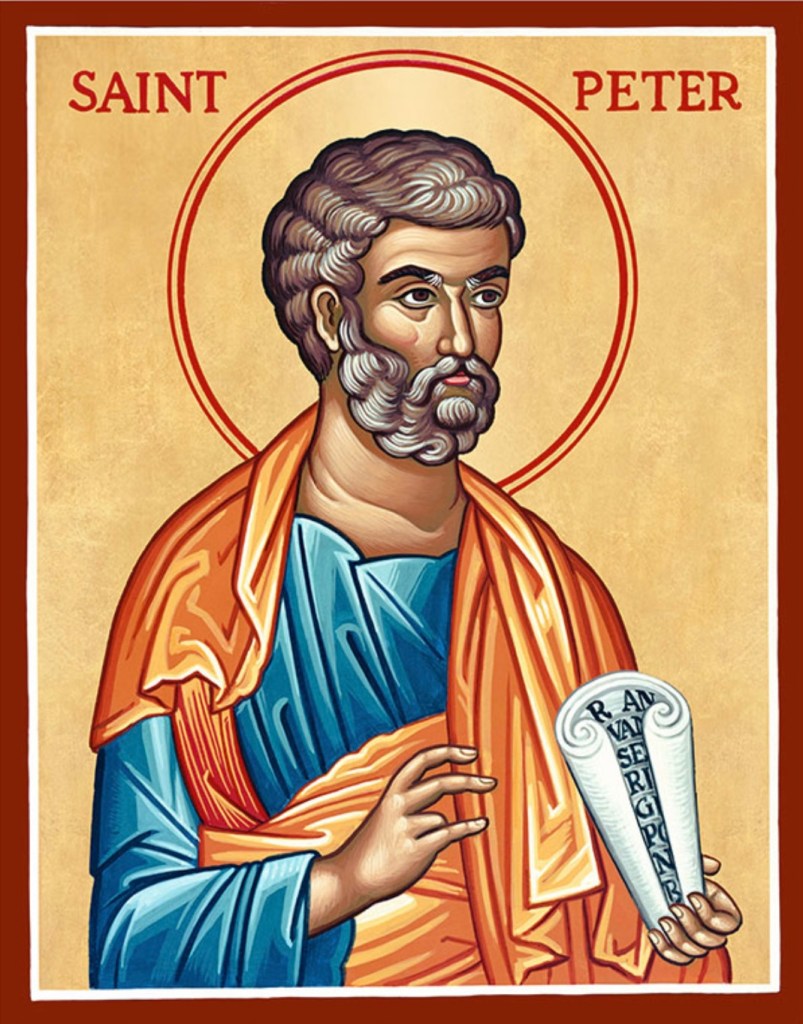
The recipients of this letter that is attributed to Peter appeared to reside in no less than five Roman provinces (1 Pet 1:1), indicating that the letter must have been composed as a general letter for a wide audience. It is not sent to a specific local community (as with Paul’s authentic letters) but is written for a generalised audience of believers (as with James, and probably also Ephesians).

The recipients are initially identified as “the exiles of the dispersion” (1:1) and later as “aliens and exiles” (2:11). “Dispersion” is a term drawn from Hebrew scripture (Ps 106:27; Isa 11:12; Jer 25:34; Ezek 12:15; 20:23; 22:15; 29:12; 30:23, 26; 36:19; Tob 4:4), as is the phrase “aliens and exiles” (Gen 23:4; each noun appears individually many times in scripture). This language has a primary reference to Jews living as non-citizens in a foreign land; there were many such individuals in many nations of the eastern Mediterranean in the first century.

Other terms used reflect the common Jewish discourse shared by author and recipients, such as “a chosen race, a royal priesthood, a holy nation, God’s own people” (2:9), and “living stones…a spiritual house…a holy priesthood” who offer “spiritual sacrifices” (2:5). Holiness, sacrifice, priesthood, royalty, and a spiritual house are all ideas found often in Hebrew Scripture. The description of the community of believers as “living stones” is supported by a string of scripture citations (Isa 28:16; Ps 117:22; Isa 8:14; quoted at 2:6–8), whilst the appellation of “God’s own people” is explained by a poetic allusion to the prophet Hosea (Hos 1:6, 9; 2:25; at 1 Pet 2:10).

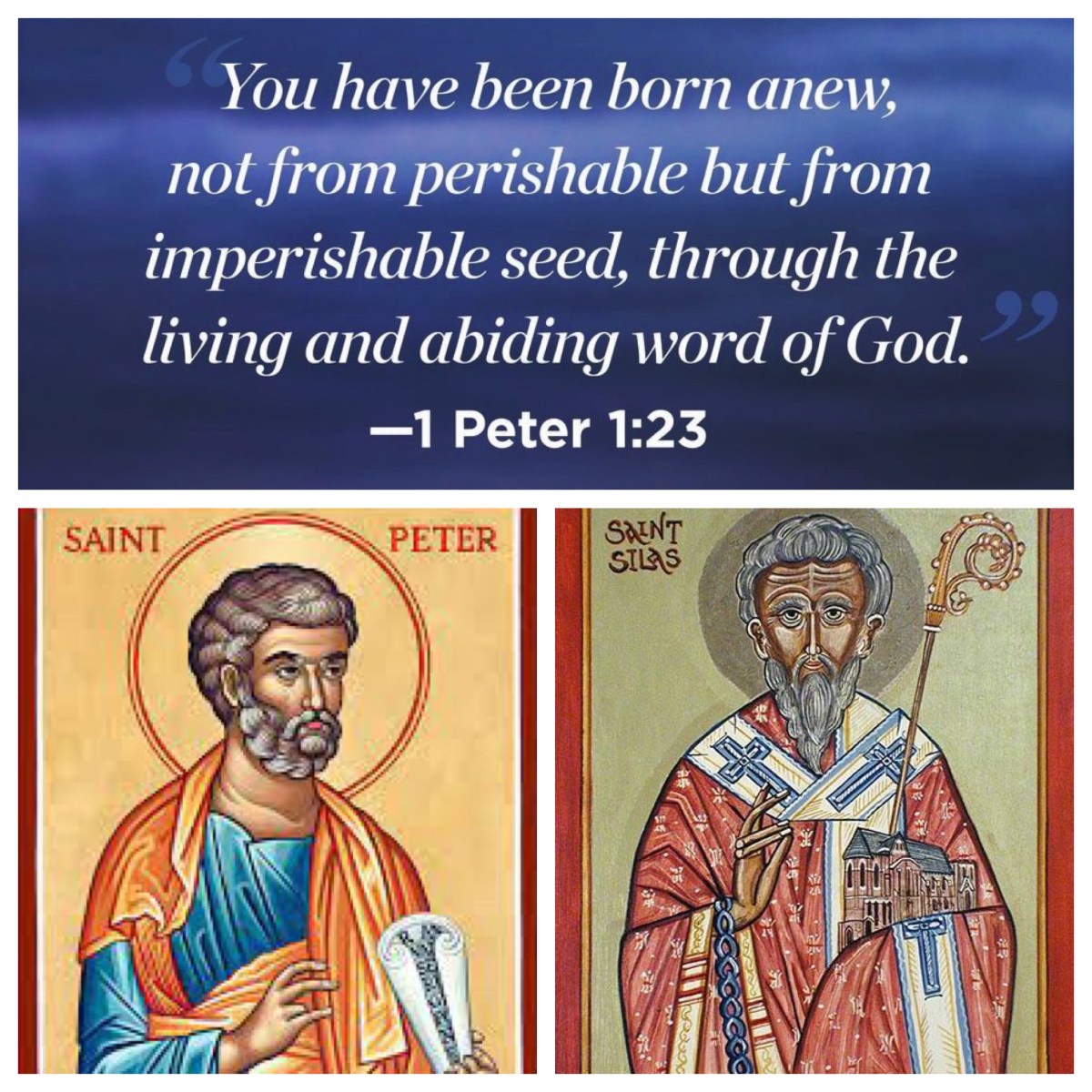
This Jewish scriptural focus is a prominent feature of this letter, which indicates a reverence for “the living and enduring word of God” (1:23). For the nominal author, Peter (and possibly also for his colleague, Silvanus; see 5:12), this must refer to the Hebrew Scriptures. The letter includes other scripture citations and scriptural imagery. The early focus of the letter on holy living, for instance, is supported by reference to Lev 11:44–45; 19:2 (quoted at 1:16). The role of “the word of God” is indicated by Isa 40:6–8 (quoted at 1:24–25).

The sacrificial suffering of Jesus is interpreted with reference to the fourth servant hymn of Isaiah 53. The direct citation of Isa 53:9 at 1 Pet 2:22 introduces a series of intertextual connections weaving together the death of Jesus with the servant song (2:23–25 refers to Isa 53:4, 5, 6 and 12).

The contrast between good and evil is expounded at one point by a long Psalm citation (Ps 34:13–17, quoted at 3:10–12) and later by drawing on a proverb (Prov 11:31, quoted at 4:18). Likewise, a proverb contrasting the proud and the humble is quoted as a justification for the exhortation, “humble yourselves” (5:5–6, citing Prov 3:34).

Other scriptural elements include an allusion to the “day of visitation” (2:12, referring to Isa 10:3); a proverbial phrase (4:8 quotes some words from Prov 10:12); a reference to the spirit of God (4:14 alludes to Isa 11:2); and a Christologically-expanded interpretation of the story of Noah and the flood (3:18–20, in reference to Gen 7). As this letter regularly intertwines Hebrew scripture with guidance about the way of Jesus, it surely reflects a continuing Jewish presence in the Jesus movement.

However, the key words “aliens and exiles” (2:11) also carry symbolic significance. They both derive from scriptural usage in the scrolls of Hebrew Scripture, collected into the books of the Old Testament. The purpose of the letter is to reinforce the identity of the community of believers as “aliens and exiles”, an especially important process because of the pressures which are being experienced by those members from the society in which they lived.

The language which is applied to them ought not to be taken purely at the literal level, for it is often metaphorical. This is obvious with regard to references to “newborn infants” and “spiritual milk” (2:2), “living stones” and the “spiritual house” (2:5), and being “born anew” (1:23). It applies also to the references to “aliens and exiles”; we cannot assume that all believers addressed were literally living in a foreign country. Rather, the force of the image is to describe the alienation that has taken place between the wider society and the group of believers who follow the way of Jesus.

Indeed, there are various indications that the recipients of the letter had previously been Gentiles living in sinful and idolatrous ways, but now were striving to live by standards which set them apart from others, and may at times have caused them intense difficulties. The author hints that they were “going astray like sheep” (2:25) and followed “futile ways” (1:18) which were characterised by “desires that you formerly had in ignorance” (1:14). These are spelled out as “malice…guile, insincerity, envy…slander” (2:1) and “living in licentiousness, passions, drunkenness, revels, carousing, and lawless idolatry” (4:3).

Coming to faith in Jesus was like being called out of darkness (2:9), being raised from the dead (1:21), being born anew (1:23). Such believers are to stand in a different relationship to the customs and practices in which they were raised: “now that you have purified your souls” (1:22), “do not be conformed” (1:14), “abstain from the desires of the flesh” (2:11), “live no longer by human desires” (4:2). People addressed in these terms by a Jew (such as Peter, the nominal author of the letter) could not have been Jews; they must have been Gentiles. Perhaps some of them were Godfearers, such as are identified in Acts?

At any rate, the language and ideas of Hebrew Scripture permeates this letter and undergirds its key ideas, whether the recipients were Jews, Godfearers, Gentiles, or a combination of all three. It is an enticing mixture, to be sure.

*****

See also

A new birth into a living hope (1 Peter 1; Easter 2A)

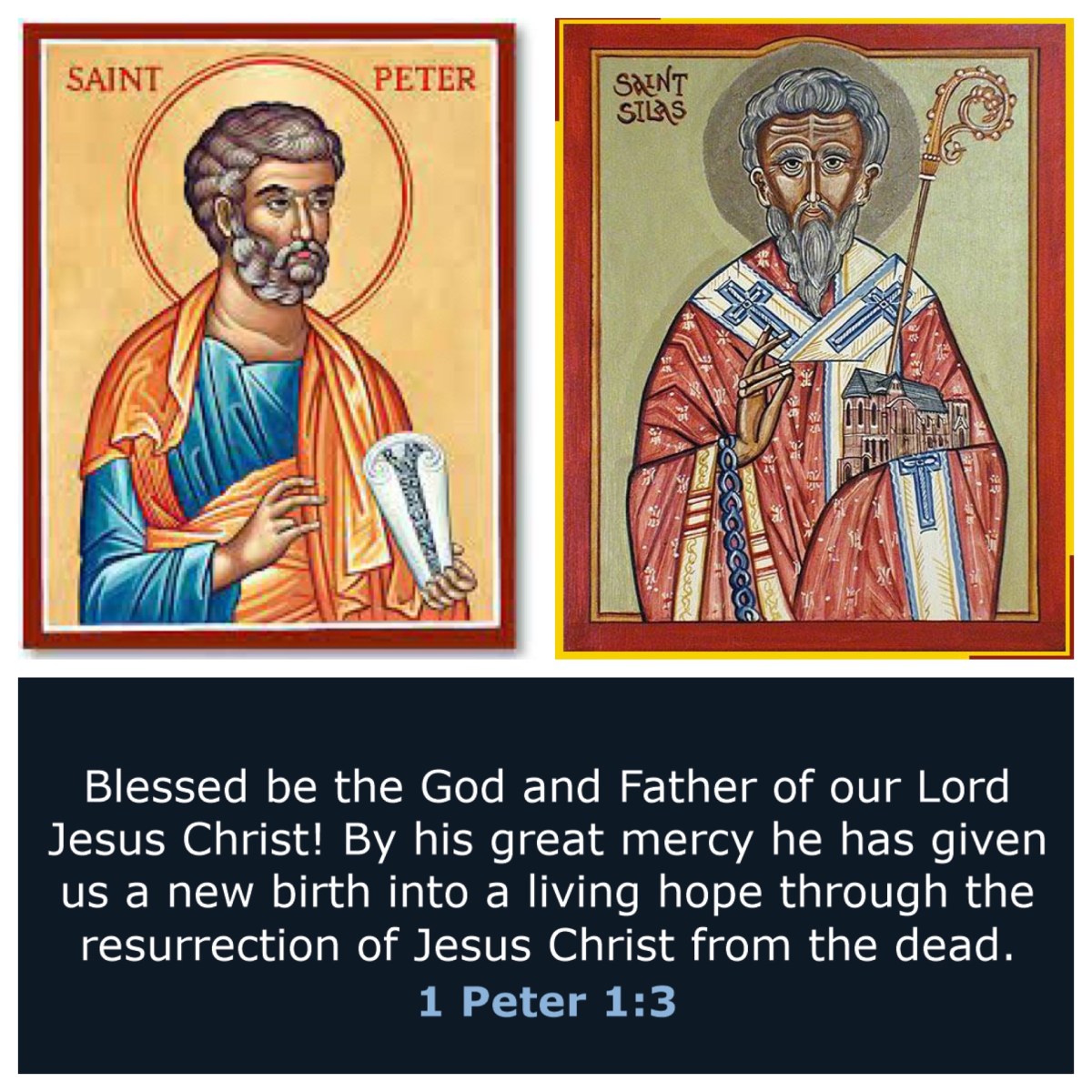
Excerpts from the letter which we know as 1 Peter are being offered in the coming Sundays throughout this season of Easter. The letter has a focus on joy in the midst of suffering, which might thus suit it well as an Easter series. For this coming Sunday, we will hear 1:3–9, an extended blessing offered to God, who “has given us a new birth into a living hope through the resurrection of Jesus Christ from the dead” (1:3)—a most suitable acclamation for the Easter season!

The letter has opened (in verses omitted by the lectionary) with the standard opening address of an ancient letter form: “Peter … to the exiles of the dispersion … grace and peace” (1:1–2). Instead of a thanksgiving, which usually opened an ancient Greek letter, in this case the letter launches into this blessing (1:3–12), which was a common Jewish feature (found also in 2 Cor 1:3–7 and Eph 1:3–14).

Unfortunately, the lectionary offers only verses 3 to 9, so we are somewhat shortchanged by this truncated passage. Ending the lectionary selection with “… you are receiving the outcome of your faith, the salvation of your souls” (v.9) does conclude a thought-sequence; but the next three verses (vv.10–12) expound the meaning of that salvation, as already having been revealed through the prophets. The author of this letter is thoroughly grounded in scripture; regular reference to the sacred texts of Israelite faith occur throughout this letter.

The main theme of the letter is declared after the blessing, in an initial exhortation (one of many in the letter) to “prepare your minds for action … do not be conformed to the desires that you formerly had in ignorance … be holy yourselves in all your conduct” (1:13–15). Curiously, the lectionary also overlooks this passage; the passage offered on Sunday week (Easter 3) starts at verse 17, “if you invoke as Father the one who judges all people impartially according to their deeds …”.

Once again, in true Jewish style, this exhortation is grounded in a central scriptural text, the Levitical call to holiness (Lev 11:44; 19:2). The emphasis throughout the letter is on living faithfully as God’s chosen people. A closing comment reinforces that the purpose of the letter is “to encourage you and to testify that this is the true grace of God” (5:12). Then follow some closing greetings and a short benediction (5:12–14). Unusually amongst the New Testament books not by Paul which are usually identified as letters (those attributed to James, Peter, John, and Jude, and the anonymous work to the Hebrews), this document is indeed a true letter.

The author is announced simply as “Peter, an apostle of Jesus Christ” (1:1). This would suggest a letter from a writer with close personal links with Jesus. The substance of the letter sits uneasily with this claim. The letter’s refined style of language, and especially the use of a number of classical Greek words, is rather unexpected for a Galilean fisherman.

There are a number of references to the suffering of Jesus (1:11; 2:4, 21, 24; 3:18; 4:1, 13; 5:1), but no other indication that the author knew anything of the earthly ministry of Jesus. Instead, the letter reflects the Christology of the developing movement, interpreting the death of Jesus in sacrificial terms (1:18–19; 2:24; 3:18) and attesting to him as the one who is risen (1:3; 3:21), a mediator with God (2:5), to be acknowledged as Lord (3:15), now dwelling with God in glory (3:22; 5:10), whose future return is awaited (1:7–8, 13; 4:13; 5:4).

The author claims to have been “a witness of the sufferings of Christ” (5:1)—a curious claim to be made by Peter, if the accounts of his denial and desertion of Jesus, found in the canonical gospels, are to be believed! He also describes himself as an “elder” (5:1), which we would not expect to be a term to be adopted by Peter. The word indicates the author’s leadership role within the developing community of faith.

The identification of this community as being “in Babylon” (5:13) is frequently interpreted as being code for Rome, drawing on the same tradition found in Revelation 17:1–18:24. The link with Mark (5:13) has been taken as a further indication of Roman origins, as Mark was alleged to have been in Rome with Peter. However, these connections are faint, revealing nothing of substance about the nature or purpose of the letter.

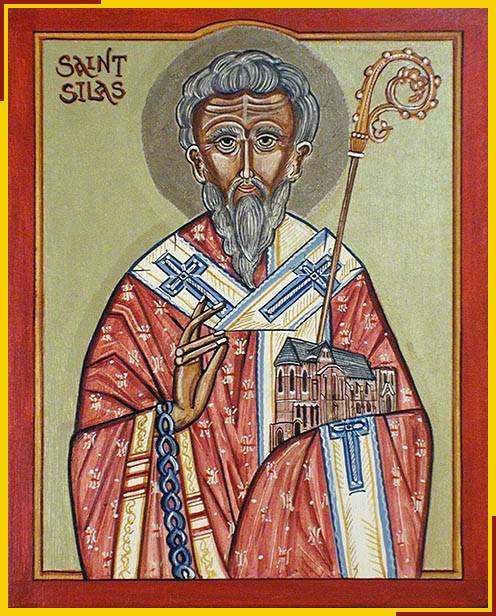
The close of the letter indicates that it has been written “through Silvanus” (5:12), leading some interpreters to suggest that Silvanus, as secretary, placed a more educated and polished mark on the letter as he transcribed the author’s thoughts. But an alternative translation of this verse is possible, by which Silvanus is designated as the one who delivers the letter, rather than being involved in its writing.

This Silvanus may well be a different person from the Silvanus who is known as a fellow-worker with Paul (2 Cor 1:19; Acts 15:40) and is called the co-author, with Paul, of both letters to Thessalonica. As he was a member of the Pauline group, we would expect more Pauline influence to be evident in 1 Peter if he was involved in its creation.

In fact, this letter shows more similarity to the “pastoral” letters attributed to Paul—which have some similarities with Paul’s thinking, but demonstrate a clear development in ideas, language, and theology, most likely reflecting a different (layer) context. Like them, it is more feasible that this letter was written after the death of the apostle, in his name, in order to encourage and guide believers in what appears to have been a time of increased suffering. Jesus is invoked as the guide and example for believers in this situation.

See also

Your king is coming, sitting on a donkey (Zech 9; Matt 21; Lent 6A, Palm Sunday)

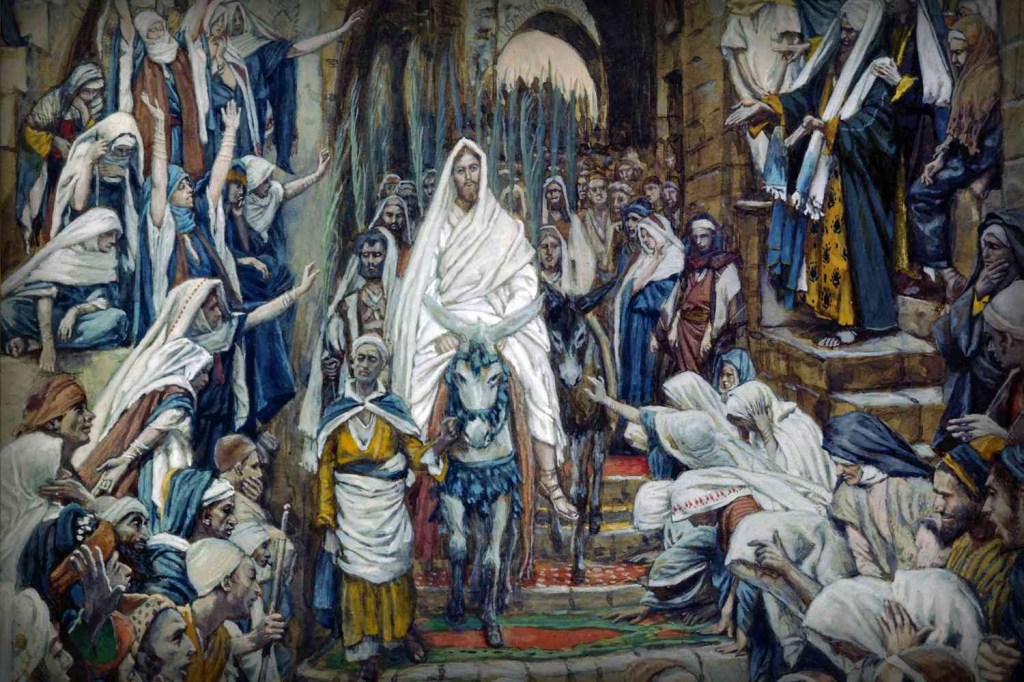
“Go into the village ahead of you, and immediately you will find a donkey tied, and a colt with her; untie them and bring them to me. If anyone says anything to you, just say this, ‘The Lord needs them.’ And he will send them immediately.” So reports the Gospel of Matthew, in the Gospel offered by the lectionary for this coming Sunday (Matt 21:1–11). The same story is told at Mark 11 and Luke 19.

John’s account is much more succinct; that Gospel simply notes, “Jesus found a young donkey and sat on it” (John 12:14), before explaining that this fulfils what was written in a scripture passage, “Do not be afraid, daughter of Zion. Look, your king is coming, sitting on a donkey’s colt!” (John 12:15, quoting Zech 9:9).

The narrator in Matthew’s Gospel explains that “this took place to fulfill what had been spoken through the prophet, saying, ‘Tell the daughter of Zion, Look, your king is coming to you, humble, and mounted on a donkey, and on a colt, the foal of a donkey’” (Matt 21:15). The prophet who is referred to in both John and Matthew is Zechariah, a post-exilic figure whose work is found as the eleventh of the twelve Minor Prophets in Hebrew Scripture.

Zechariah was active in the period when the exiles in Babylon were returned to Judah late in the 6th century BCE, by a decree of the Persian King, Cyrus (whom Second Isaiah described as God’s “Messiah”; see Isa 45:1). We are told that in his decree, Cyrus acknowledges “the Lord, the God of heaven” and states that “any of those among you who are of his people … are now permitted to go up to Jerusalem in Judah, and rebuild the house of the Lord, the God of Israel” (Ezra 1:2–4).

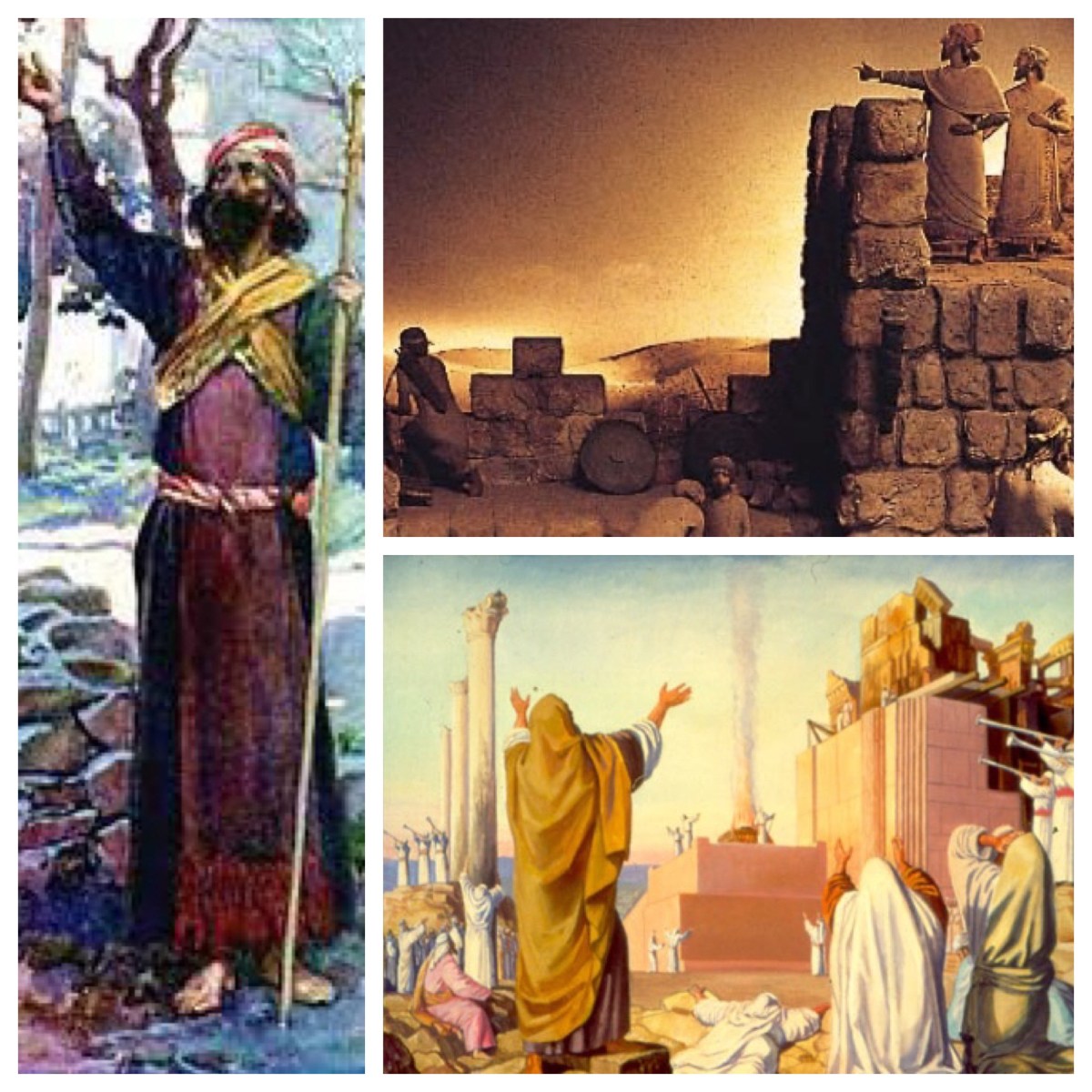
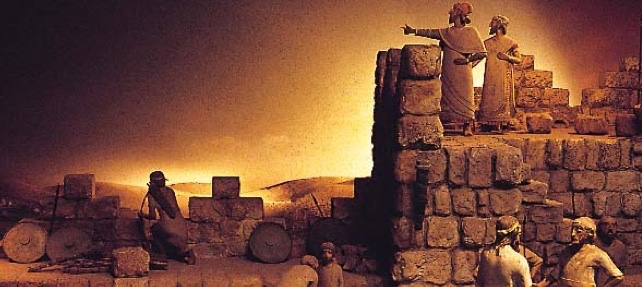
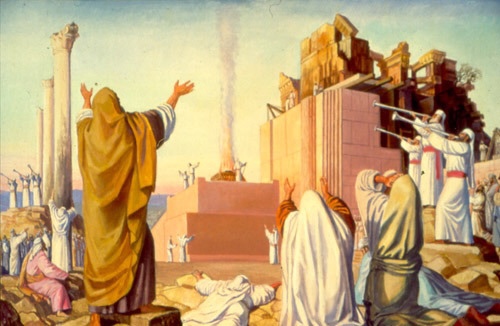
Under Nehemiah as Governor, worship had been reinstituted in Jerusalem (Ezra 3:1–7), the walls around the city of Jerusalem were rebuilt (Neh 2—6, 12), and the Temple was rebuilt and rededicated (Ezra 5–6). After this, the Law was read in the city under the guidance of Ezra, a priest who is also described as a scribe (Neh 8) and the covenant with the Lord is renewed (Neh 9–10).

Initially, there was opposition to the rebuilding works from “the enemies of Judah and Benjamin” (Ezra 4:1–16), and with intervention from King Artaxerxes, work on the temple ceased (Ezra 4:17–24). The narrative in Ezra reports that “the prophets, Haggai and Zechariah son of Iddo, prophesied to the Jews who were in Judah and Jerusalem, in the name of the God of Israel who was over them” (Ezra 5:1), and then work on restoring the temple recommenced (Ezra 5:2).

Further opposition emerged (Ezra 5:3–17), resulting in intervention from King Darius that decreed “let the house be rebuilt … let the Governor of the Jews and the elders of the Jews rebuild this house of God on its site … let it be done with all diligence” (Ezra 6:1–12).

The end result is that the prophets of the Lord and the rulers of the Persian Empire collaborated together to ensure that the temple would be restored: “So the elders of the Jews built and prospered, through the prophesying of the prophet Haggai and Zechariah son of Iddo. They finished their building by command of the God of Israel and by decree of Cyrus, Darius, and King Artaxerxes of Persia” (Ezra 6:14).

*****

Zechariah dates his opening prophecy to “the eighth month, in the second year of Darius” (Zech 1:1), which places him as a contemporary of Haggai and perhaps around the same time that the anonymous prophet whose words are known as Third Isaiah (Isaiah 56—66). Zechariah begins witha familiar prophetic refrain: “return to me, says the Lord of hosts, and I will return to you, says the Lord of hosts” (1:3), noting that when this message was presented to earlier Israelites, “they repented and said, ‘the Lord of hosts has dealt with us according to our ways and deeds, just as he planned to do’” (1:6).

What follows this opening salvo is a report of eight visions (1:7—6:8). They are dated to “the twenty-fourth day of the eleventh month, the month of Shebat, in the second year of Darius” (2:7), two months after the final prophecy of Haggai. The visions combine glimpses of hope with reminders of the need to remain faithful to the covenant: “if you will walk in my ways and keep my requirements, then you shall rule my house and have charge of my courts” (3:7). The fourth vision (3:1–10) includes the figure of “the accuser” (ha-satan in Hebrew) standing at the right hand of Joshua, to accuse him (3:1).

At the conclusion of the eighth vision there follows words of condemnation (7:1–7) and punishment (7:8–14), citing classic prophetic notes: “render true judgments, show kindness and mercy to one another; do not oppress the widow, the orphan, the alien, or the poor; and do not devise evil in your hearts against one another” (7:9–10).

Then come words of promise (8:1–23): “I will return to Zion, and will dwell in the midst of Jerusalem; Jerusalem shall be called the faithful city, and the mountain of the Lord of hosts shall be called the holy mountain” (8:3). Once again, prophetic injections are offered: “speak the truth to one another, render in your gates judgments that are true and make for peace, do not devise evil in your hearts against one another, and love no false oath” (8:16–17).

An oracle pronouncing judgement on other nations then follows (9:1–8), followed by a joyful celebration of the restoration of Judah (9:9–11:3), introduced by a rousing shout of joy: “rejoice greatly, O daughter Zion!Shout aloud, O daughter Jerusalem! Lo, your king comes to you; triumphant and victorious is he, humble and riding on a donkey, on a colt, the foal of a donkey.” (Zech 9:9). This verse is well-known, of course, from its quotation in the story of Jesus’s entry into the city of Jerusalem, which we will hear this Sunday (Matt 21:5).

A quirky feature is that some interpreters have taken the words of Zechariah so literally, that they imagine Jesus actually had two animals with him as he entered the city. Of course, the original oracle was formed in typical Hebraic parallelism, a pattern whereby an idea is expressed one way, then immediately repeated using other words. Thus, “riding on a donkey” was the first expression of the idea, followed immediately by “on a colt, the foal of a donkey”. One animal, two ways of expressing that.

The remaining chapters of Zechariah continue the note of exultation about the future, reworking the motif of “the day of the Lord” so that it signals joy for Jerusalem and terror for other nations (12:3, 4, 6, 8, 9, 11; 13:1, 2, 4; 14:1, 4, 6, 8, 9, 13, 20, 21). A triumphant note of universalism is sounded: “on that day “the Lord will become king over all the earth” (14:9) and “all who survive of the nations that have come against Jerusalem shall go up year after year to worship the King, the Lord of hosts, and to keep the festival of booths” (14:16).

The quotation from Zechariah in the story is a reminder that there is always hope; in the difficult situation of rebuilding the beloved ruins, reconstituting the fractured society, reconstituting the religious practices and customs that had lapsed, hope remains strong. Little did those travelling with Jesus into the city know what lay ahead of him, and them, in the coming days. Their hopes were high, very high, on this day. Joy came easily to them.

It was a day for celebration. This could well be the time when “the Lord will become king over all the earth”—even over the mighty Romans, they may well have felt. Joy was the dominant emotion, as the singing, waving of branches, and celebration demonstrated.

*****

On why Jesus was riding a donkey, and not a horse (definitely NOT a horse!), see https://johntsquires.com/2023/03/27/why-jesus-never-did-and-never-would-ride-a-horse-for-palm-sunday-lent-6/

Flesh and bones, spirit and life (Ezek 37, Psalm 130, Rom 8, John 11, Lent 5A)

On the Fifth Sunday in Lent, the scripture passages offered by the lectionary revolve around a central theme: life in contrast to death. It’s not every Sunday that all four passages line up to provide a clear and obvious focus on a single theme. For more than half of the Sundays in the year, the Hebrew Scripture, Epistle, and Gospel each follow their own course, and any overlap of theme is accidental, not planned. For Sundays in Advent, Christmas, and Lent, as well as key days like Pentecost, Trinity, and the Reign of Christ, the thematic overlap is intentional. This week we have just such a Sunday!

Death is at the heart of the story of Lazarus that forms the Gospel passage for Sunday (John 11:1–45). Initially, Jesus is told “he whom you love is ill” (John 11:3), but when he arrives in Bethany, Martha accosts him with “Lord, if you had been here, my brother would not have died” (11:21)—an accusation repeated by her sister Mary (11:31); and then comes a graphic description provided by Martha as they draw near to the tomb: “already there is a stench because he has been dead four days” (11:39).

The emergence of Lazarus from the tomb marks a climactic moment, for the family in Bethany and many of their neighbours (11:44–45), but also for the chief priests and Pharisees, who together determine to put Jesus to death (11:53). The seventh sign recounted in this Gospel is the most significant miracle of Jesus, but also the deed that determines the fate of Jesus. Soon after this event in Bethany, he says, “I have come to this hour” (12:27), the hour when “I am lifted up from the earth, [when I] will draw all people to myself” (12:32), the hour when the Father will “glorify your Son so that the Son may glorify you” (17:1). The death of Jesus is to be, paradoxically, the complete fulfilment of his mission (19:30)—the pathway into life eternal (3:16; 10:28; 17:3).

This climactic movement, of death moving to life in Bethany, resonates with the words of the prophet Ezekiel and also the writings of the apostle Paul that are offered for this coming Sunday. Ezekiel confronts the signs of death: “The Lord set me down in the middle of a valley; it was full of bones. He led me all around them; there were very many lying in the valley, and they were very dry” (Ezek 37:1–2). Paul considers the state of humanity: “to set the mind on the flesh is death … the mind that is set on the flesh is hostile to God; it does not submit to God’s law—indeed it cannot, and those who are in the flesh cannot please God” (Rom 8:6–8).

So, death is in view in these three readings. It is no wonder that the psalm we are offered alongside them speaks a cry of deep despair: “out of the depths I cry to you, O Lord” (Ps 130:1). The depths of the earth were the place where sinful people went (Ps 63:9; Isa 14:15), following the lead of the Egyptians who pursued the Israelites and “went down into the depths like a stone” (Exod 5:4–5; Neh 9:11; Isa 63:11–13). There, in the depths, God’s anger burned (Deut 32:22).

However, those banished to the depths were able to be brought back from the depths by God’s decree (Ps 68:22; 71:20; 86:13), so the cry of the psalmist from the depths is followed by the plea, “Lord, hear my voice! Let your ears be attentive to the voice of my supplications!” (Ps 103:2). As the prophet Micah affirms, God’s steadfast love will rescue those who “lick dust like a snake,

like the crawling things of the earth”, and will indeed “cast all our sins into the depths of the sea” (Mic 7:17, 19). So the psalmist affirms, “I wait for the Lord, my soul waits, and in his word I hope” (Ps 103:5).

Just as Lazarus emerges from the tomb where his dead body was laid, so Ezekiel foresees a wondrous revival amongst the dead bones of the people of Israel: “I will put my spirit within you, and you shall live, and I will place you on your own soil; then you shall know that I, the Lord, have spoken and will act,” says the Lord” (Ezek 37:11). The vision he sees emac s that dramatically. Likewise, Paul glimpses that same hope: “if the Spirit of him who raised Jesus from the dead dwells in you, he who raised Christ from the dead will give life to your mortal bodies also through his Spirit that dwells in you” (Rom 8:11).

Both prophet and apostle hold to the hope enacted in the Gospel and articulated by the psalmist: “Israel, hope in the Lord! For with the Lord there is steadfast love, and with him is great power to redeem. It is he who will redeem Israel from all its iniquities” (Ps 103:7–8).

*****

Ezekiel was both a prophet and a priest (Ezek 1:3). He had been exiled to Babylon during the siege of Jerusalem by King Nebuchadnezzar II of Babylon (599 BCE; see 2 Kings 24:10–17). His prophetic activity was thus undertaken entirely in exile. He addresses both those in exile with him in Babylon, and also those left behind in Judah. His prophecies continue through the period when the people in Judah were conquered and taken to join Ezekiel in exile (587 BCE; see 2 Ki 25:1–21), and then for some time after that.

A dramatic vision opens the book, in which “the glory of God” appears in the form of a fiery, flaming chariot (1:4–28). Priestly attention to detail marks the account of this vision, whilst contains multiple allusions to other scriptural stories. The bright cloud and flashing fire evokes the scene on Mount Sinai, when God gave Moses the Law (Exod 19:16–19); the “burning coals of fire” (1:13) remind us of the burning coals in the scene of the call of Isaiah (Isa 6:6); and “the bow in the cloud on a rainy day” evokes the sign of the covenant made with Noah (Gen 9:12–17). In seeing this vision, Ezekiel has had a life-transforming experience!

Ezekiel is impelled to play his role as a prophet by “the hand of the Lord” (1:3; 3:22; 8:1; etc); indeed, he says, “the spirit lifted me up” (3:12). That same spirit continues to lift him up with regularity (8:3; 11:1, 24; 37:1; 43:5) to show him vision after vision. More than this, Ezekiel declares that “the spirit entered me” (3:24), a process which he promises will be experienced by Israel as a whole (36:26–28)—for the Lord says he will “pour out my spirit upon the house of Israel” (39:29).

This emphasis on the renewing spirit of God is seen, most dramatically, by Ezekiel when he is taken by the spirit into “the middle of a valley … full of bones” (37:1) and sees a vision that he conveys in what must be his most famous oracle. What Ezekiel sees in this valley of dry bones is the work of God, as God puts sinews and flesh and skin on the bones, and breathes into the bodies so created, so that they live (37:5–6, 8, 10).

The vision indicates what God will do: “I will put my spirit within you, and you shall live, and I will place you on your own soil” (37:14). The end of the exile, it seems, is in sight. This passage is often interpreted in a Christian context as a pointer both to the resurrection of Jesus, and also to the general resurrection; indeed, its appearance on the Fifth Sunday in Lent means that it complements, and indeed illuminates, the dramatic story of Jesus bringing Lazarus back to life, as he approaches the tomb, and cries in a loud voice, “Lazarus, come out!” (John 11:38–44).

For Ezekiel, however, this vision is not a far-into-the-future prediction (foretelling), but a word of hope to the people in their immediate situation (forthtelling). Indeed, the very next section of this chapter reports a proclamation of Ezekiel which is quite directly forthtelling. The two sticks that he takes (37:16) stand for Judah and Israel; as he joins the sticks, so he points to the return of these peoples from their exile, their return “to their own land”, and a cleansing which will mean “they shall be my people, and I will be their God” (37:21–23, 27).

That final phrase is a common covenantal affirmation made by God (Lev 26:12; Ruth 1:16; Jer 7:23; 11:4; 24:7; 30:22; 31:1, 33; 32:38; Ezek 11:20; 14:11; 36:28; Zech 2:11; and Hos 1:10–11, overturning Hos 1:9). The reunited people shall have one king (37:24) and they will observe “an everlasting covenant” (37:26).

So the dramatic story that the prophet Ezekiel reports from his vision set in the middle of a valley full of dry bones is intended to speak directly into the life of the covenant people of God, the people of Israel, offering them hope despite their current circumstances.

*****

Paul also was commissioned for his task through a vision—reported in graphic terms by Luke, who makes the moment into a grand call-and-commissioning scene (Acts 9:3–8; 22:6–11; 26:12–18), but mentioned only briefly, in general terms, in passing by Paul himself (1 Cor 9:1; and perhaps Gal 1:1, 12). Of course, Luke was not present for this event, so he shaped in along the lines of classic call-and-commissioning narratives that existed in earlier Jewish writings. (I have explored this in detail in my commentary on Acts in the Eerdman’s Commentary on the Bible, 2003).

That vision turned Paul from persecutor of the followers of Jesus to an apostle fervently declaring “the good news of Jesus Christ” as far as possible, “from Jerusalem and as far around as Illyricum” (Rom 15:19). (Illyricum was a Roman province that covered the coastal area of the Balkans, northwest of Macedonia stretching towards Italy.) Paul delivers this good news in person to many communities, but he sets it out at length in his letter to believers in Rome, which he had not yet visited.

Paul is embued with the same hope that the psalmist and the prophet demonstrate. He rejoices with the Thessalonians that they share with him in “hope in our Lord Jesus Christ” (1 Thess 1:3), tells the Galatians that “through the Spirit, by faith, we eagerly waits for the hope of righteousness” (Gal 5:5), and reminds the Corinthians that “faith, hope and love abide” (1 Cor 13:13). In a subsequent letter to believers in Corinth, he asserts that “he who rescued us from so deadly a peril will continue to secure us; on him we have set our hope that he will rescue us again” (2 Cor 1:10)

Paul reports to the Romans that “we boast in our hope of sharing the glory of God” (Rom 4:2) and that it is “in hope that we were saved” (Rom 8:24). He affirms that it is “by steadfastness and the encouragement of the scriptures, we might have hope” (Rom 15:4), notes that scripture promises that “the root of Jesses shall come … in him the Gentiles shall hope” (Rom 15:12), and so characterises God as “the God of hope” (Rom 15:13). He shares in that strong hope which is sung by the psalmist and spoken by the prophet, and which is acted out in the Gospel reading for this Sunday.

Saltiness restored: the need for innovation. An Ordination Celebration.

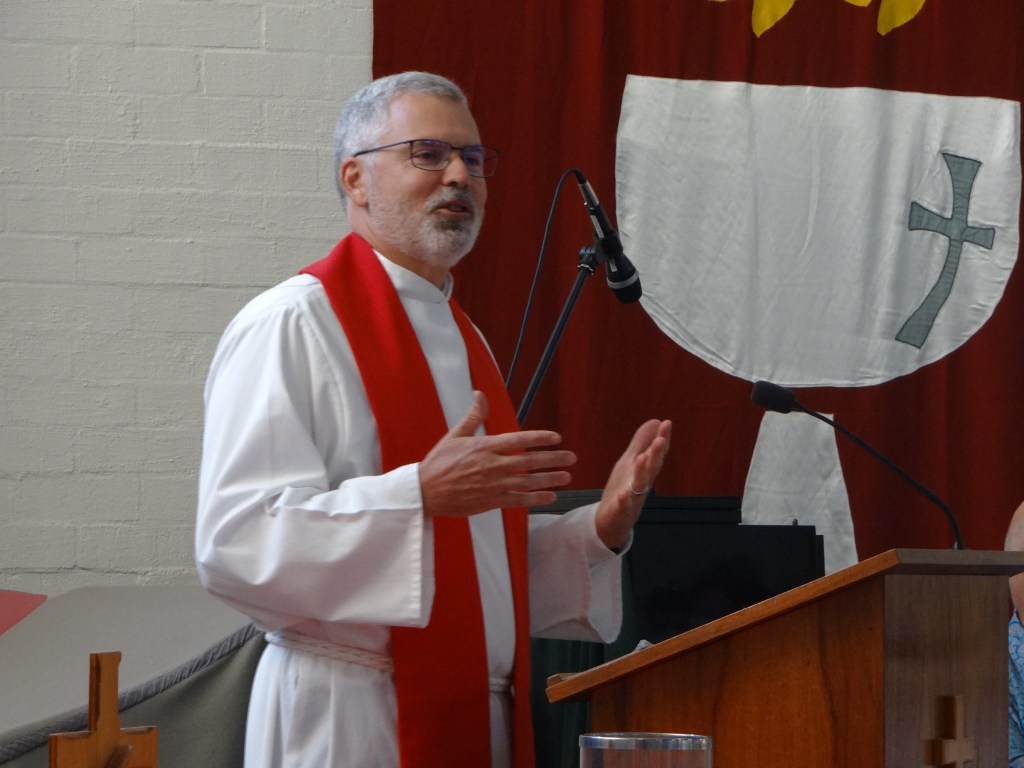
“The church does not need inventors; rather, we need innovators.” This was the heart of the message delivered by the Director of Education and Principal of United Theological College, the Rev. Dr Peter Walker, at a joyful celebratory service last Sunday evening in the Tuggeranong Uniting Church in the ACT.

Dr Walker was speaking at a service to ordain Sharon Jacobs as a Minister of the Word and to induct her into placement in the Tuggeranong Congregation as the Relationships and Growth Minister, a newly-created position funded substantially by the Synod Growth Fund. The ordination was presided over by the recently-elected Co-Chairperson of the Canberra Region Presbytery, Ms Janet Kay.

Dr Walker was addressing a capacity congregation in the building, with more people connecting online, from Canberra, as well as Melbourne, Aotearoa—New Zealand, and Scotland—the places where the Rev. Jacobs has lived in the past. Speaking under the title of “saltiness restored”, derived from Matthew 5, Dr Walker noted that “whilst inventors create new things, innovators know what they have to offer, and work to ensure that others can appreciate this”.

We have the Gospel, he said; we know what we have to offer others; and we need to work to find ways in which this good news comes alive in the lives of others. Our charge is to be “salt of the earth”; the church in our time is to discover how to be “saltiness restored”.

His words were particularly appropriate for the Tuggeranong Congregation, which has been innovating its life and witness in recent years, under the energetic leadership of the Rev. Elizabeth Raine and a strong team of lay leaders. The Congregation has refreshed its worship life, and continues its online worship alongside the in-person gathering each week. The Rev. Raine has developed the Congregation into an intentional learning community, providing leadership in three weekly online BIble Studies throughout the pandemic lockdowns. These studies are also continuing, as they draw participants from across the Presbytery and beyond, even interstate and overseas!!

The Church Council has charted a deliberate course to make a difference in the wider Tuggeranong community—to be the “salt of the earth” in southern Canberra. Deliberate connections have been fostered with a number of community groups; the Congregation has participated in Floriade Reimagined, reinvigorated its Red Dove pop-up Op Shop, continued providing its weekly Emergency Food and Lunchtime Conversation group, and offered the wider community innovative events such as Christmas Reimagined and SpringFest. A partnership with SeeChange Tuggeranong has seen regular events with a focus on sustainability.

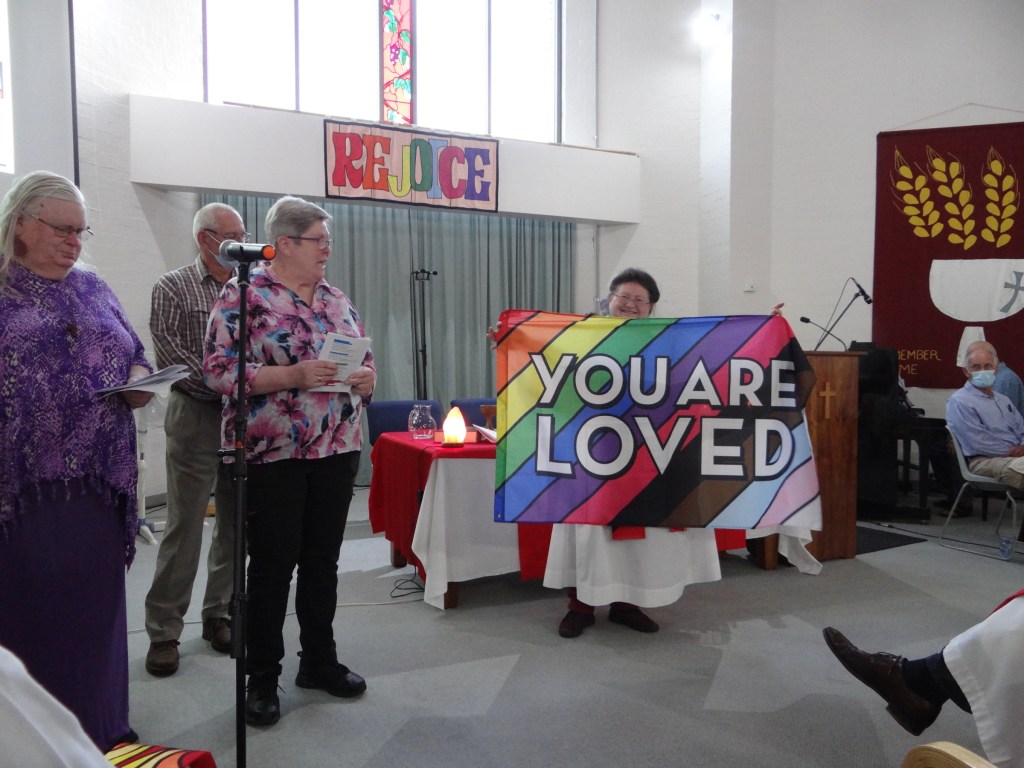
Members of the Congregation, Sally-Anne, Iain, and Delia, with Sharon as she holds the Rainbow Christian Alliance affirming that “you are loved”

The monthly Rainbow Christian Alliance now meets in the church and has broadened its membership beyond LGB people to include growing numbers of TIQ members. A monthly Messy Church under the name of Fam@4 now meets at 4pm on the 4th Sunday of the month. Regular intergenerational worship services are scheduled for key moments on Sunday mornings, and inevitably the church is filled with people of all ages, craft activities, vibrant music, with lots of colour, energy, and caring relationships growing.

Sharon will focus her 50% role on developing the Congregation’s work with families and children, as well as supporting and growing the leadership and membership of the Rainbow Christian Alliance. She brings experience and giftedness in pastoral care, working creatively with children, and generating enthusiasm—qualities that fit her well for this role.

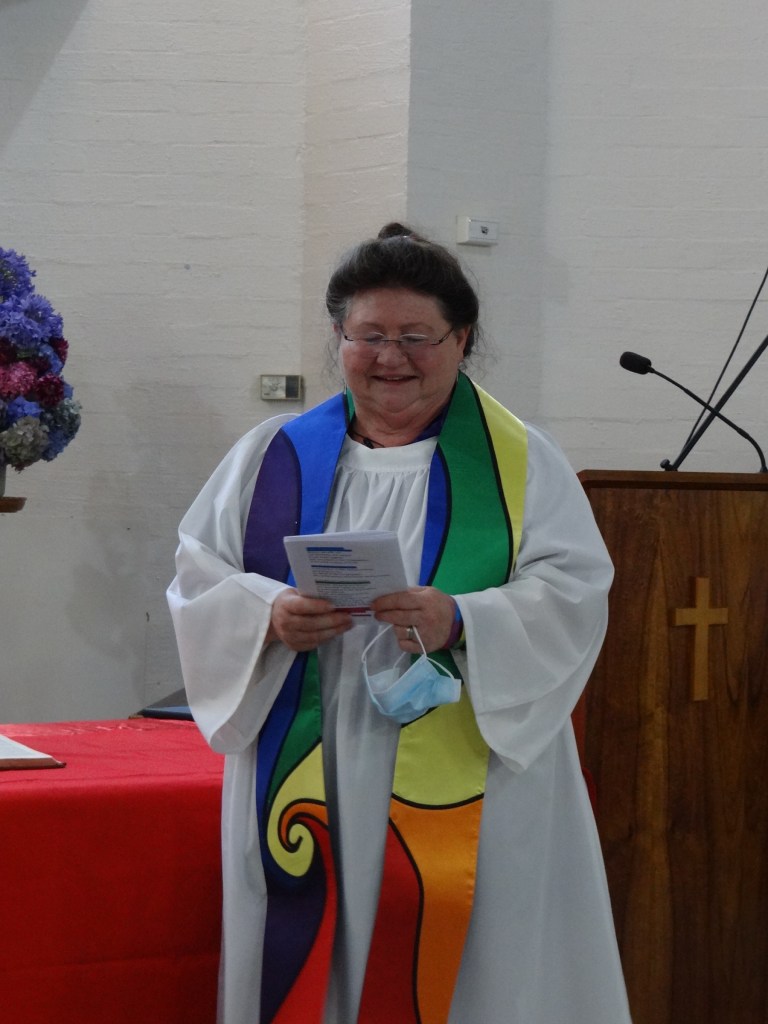
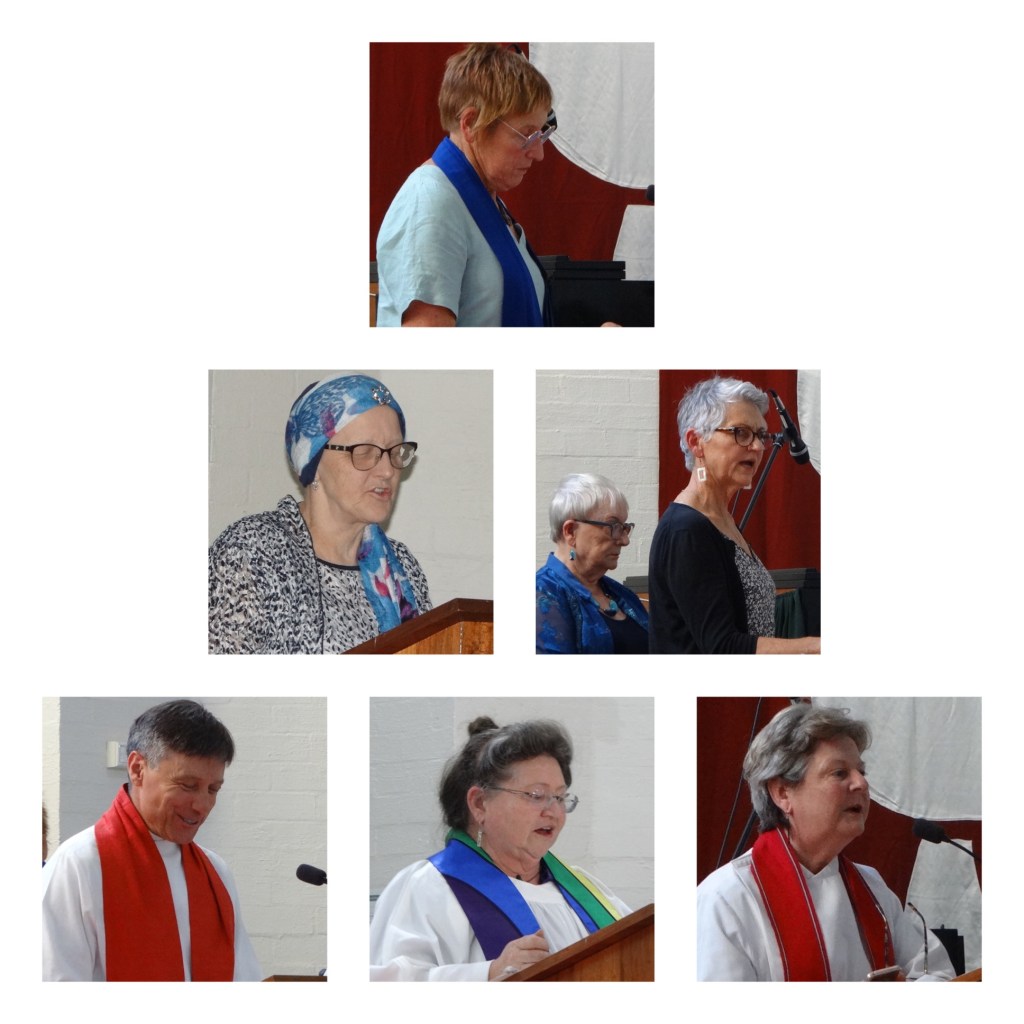
During the service, Sharon was welcomed as she joins the team of the Rev. Elizabeth Raine, Minister in placement, and the Rev. Margaret Middleton, the Tuggeranong Minister-in-Association. She was charged for her life as an ordained minister by her former minister, the Rev. David Thiem, and presented with a colourful rainbow stole by the congregation.

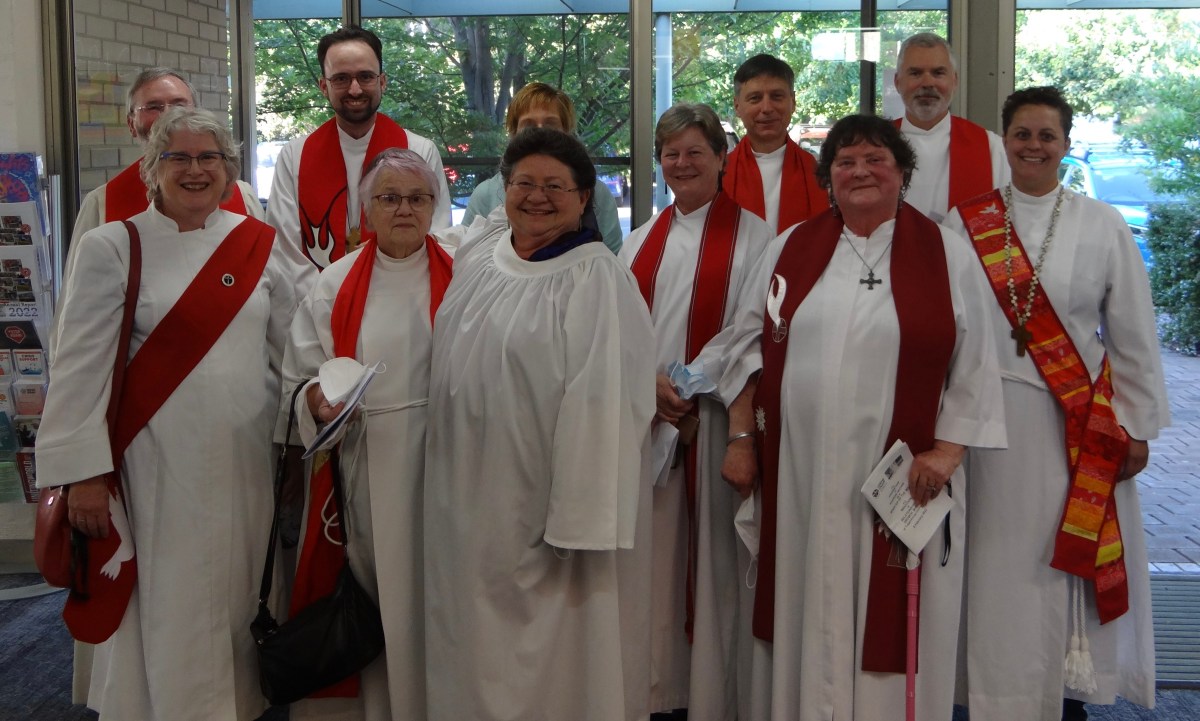
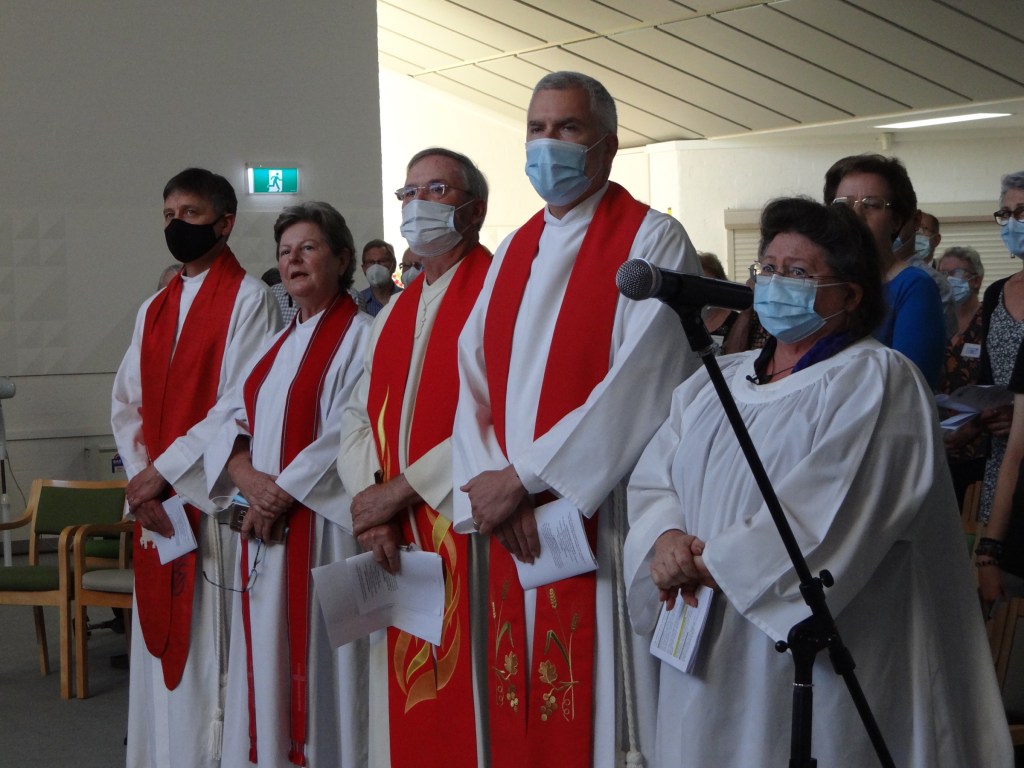
The Revs. Andrew Smith, LizMcMillan, David Thiem,
and Dr Peter Walker, with Sharon Jacobs

Also participating in the service were Canberra Region Presbytery Ministers, the Rev. Andrew Smith, and the Rev. Liz McMillan, recently arrived from Melbourne. Many members of the Presbytery greeted Sharon after her induction, and members of the Tuggeranong Congregation offered their trademark hospitality of a generous supper, as friendships were rekindled amongst those present after the service concluded.

Keep watching Tuggeranong, as innovation continues, its salty contribution to the local community in southern Canberra develops, and the vibrant life of the Congregation grows!

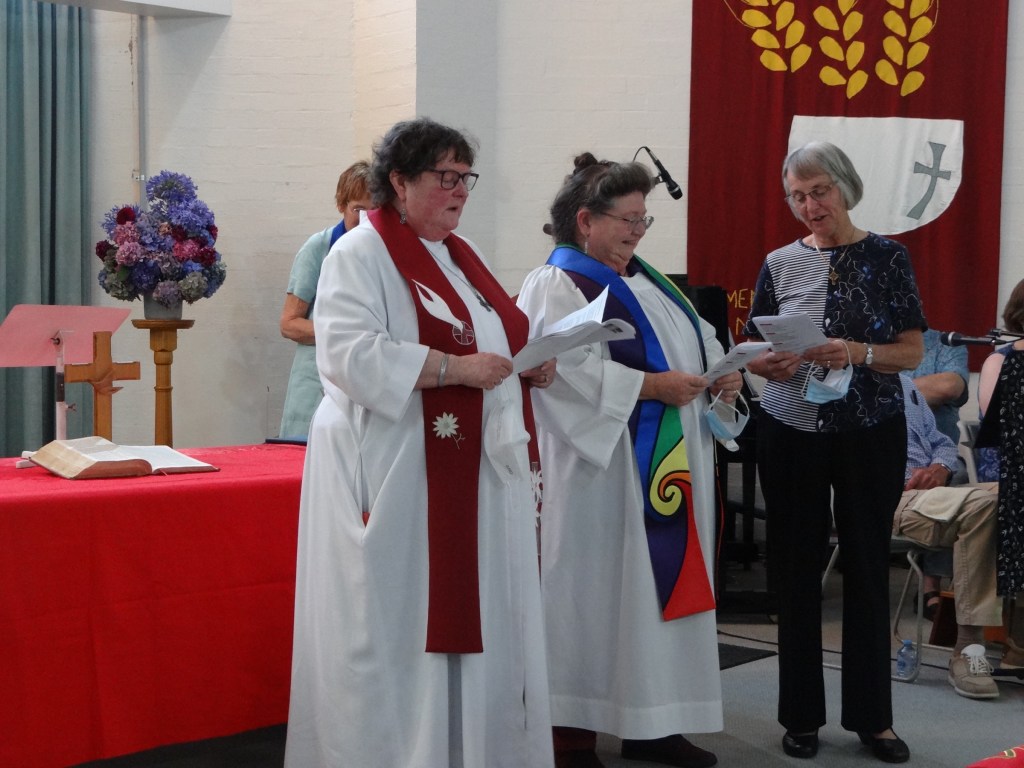
Presbytery Co-Chair, Girls Brigade Captain, Scripture readers,
Andrew Smith, Sharon Jacobs, Liz McMillan

*****

See also

Joyfully hoping and waiting (Isa 35, Ps 146, and Matt 11; Advent 3C)

The readings for this coming Sunday really do go hand-in-hand. It is not always this way; for more than half the year, the First Reading, Epistle, and Gospel each go their own way, following their own independent sequential pathway of readings with little or no explicit acknowledgement of each other. Sometimes, hopefully, the Psalm will resonate with one or more of these readings. Not so, however, this Sunday—as, indeed, on each Sunday in Advent (and in Lent)—for the four readings for today were deliberately yoked together by the creators of the lectionary for this third Sunday in Advent.

The lines of connection are clear. “The wilderness and the dry land shall be glad, the desert shall rejoice and blossom; like the crocus it shall blossom abundantly, and rejoice with joy and singing”, declares the prophet (Isa 35:1–2). “The farmer waits for the precious crop from the earth, being patient with it until it receives the early and the late rains. You also must be patient”, advises the letter-writer (James 5:7–8). And Jesus hears the question of the disciples sent by John, “are you the one who is to come, or are we to wait for another?” (Matt 11:1–2). Waiting, with patience, for the long-desired coming.

The revolutionary impact of what is being waited for is also evident. “The eyes of the blind shall be opened, and the ears of the deaf unstopped; the lame shall leap like a deer, and the tongue of the speechless sing for joy”, the prophet sings exultantly (Isa 35:5–6). The Psalmist sounds, too, this song of sheer joy, praising “the God of Jacob … who executes justice for the oppressed; who gives food to the hungry … [who] sets the prisoners free, [who] opens the eyes of the blind, [who] lifts up those who are bowed down [and] loves the righteous, [who] watches over the strangers [and] upholds the orphan and the widow” (Ps 146:5, 7–9).

And Jesus himself informs the messengers sent by John that, yes, indeed, in what he is doing “the blind receive their sight, the lame walk, the lepers are cleansed, the deaf hear, the dead are raised, and the poor have good news brought to them” (Matt 11:5). In the alternate psalm offered by the lectionary, the young, pregnant, trusting Mary sings out loud that “the Mighty One … has scattered the proud in the thoughts of their hearts [and] has brought down the powerful from their thrones, and lifted up the lowly; he has filled the hungry with good things, and sent the rich away empty” (Luke 1:49, 51–53).

Indeed, this recitation of how God acts for the good in the lives of God’s people forms the foundational claim and then a recurring leitmotif in the Lukan account of the activities of Jesus throughout Galilee (Luke 4:18–19; 6:20–26; 7:22; 9:1–2; 10:8–9; 13:30; 14:11, 13–14, 21–24; 18:14, 22–25). An exact parallel to the declaration made by Jesus at Luke 7:22 forms the central claim in the passage from Matthew (11:2–11) that the lectionary offers us this coming Sunday. This upside-down kingdom, to be brought about by the righteous-justice of God (Matt 6:33), is at the heart of what we wait for, what we hope for, what we work towards.

So the prophetic word this Sunday looks to a time when “waters shall break forth in the wilderness, and streams in the desert; the burning sand shall become a pool, and the thirsty ground springs of water; the haunt of jackals shall become a swamp, the grass shall become reeds and rushes” (Isa 35:6–7). This is possible because it is the Lord “who made heaven and earth, the sea, and all that is in them; who keeps faith forever” (Ps 146:6).

The prophet envisages a highway, to be called “the Holy Way”, on which God’s people shall travel and not go astray, for all the familiar elements of danger will be absent. Safety is assured, for “no lion shall be there, nor shall any ravenous beast come up on it; they shall not be found there, but the redeemed shall walk there” (Isa 35:8–9). Joy and gladness will replace sorrow and sighing (Isa 35:10). An attitude of confident hope is called for as such a time is awaited, for “as an example of suffering and patience, beloved, take the prophets who spoke in the name of the Lord” (James 5:10).

There is a parallel to this eruption of joy during Lent, when in traditional practice the fourth Sunday in Lent was known as Laetere Sunday—from another Latin word meaning “rejoice”, which forms the opening of the introit for that day in the Latin Mass: Laetare Jerusalem et conventum facite omnes qui diligitis eam (“Rejoice with Jerusalem and be glad for her, all you that delight in her”, Isa 66:10).

These readings are intentionally clustered together for this coming Sunday, since it is, by tradition, known as Gaudate Sunday—from the Latin word meaning “rejoice”, the opening word of the introit to the Latin Mass for this day: Gaudete in Domino semper: iterum dico, gaudete (“rejoice in the Lord always; again I say, rejoice”, Phil 4:4). It is also known as Rose Sunday, and a rose colour can replace the purple of Advent for this day.

The note of rejoicing is clear in the Psalm, as “those whose help is the God of Jacob, whose hope is in the Lord their God” celebrate that “the Lord will reign forever” (Ps 146:5, 10). There is rejoicing envisaged by the prophet, as “the ransomed of the Lord return, and come to Zion with singing; everlasting joy shall be upon their heads” (Isa 35:10).

It is rejoicing which permeates every phrase of the young Mary’s insightful song, as her “soul magnifies the Lord” and her “spirit rejoices in God [her] Saviour” (Luke 1:46–47). And there was joy, surely, amongst the disciples of Jesus, as they heard the powerful words that he speaks in response to the request of John’s disciples, “are you the one who is to come, or are we to wait for another?” (Matt 11:3). They had been privileged to be there, alongside him, as these events transpired.

In Advent, our waiting with patient hope for the coming of Jesus transforms into proleptic joy—that is, joy which is expressed in advance of the actual event, in firm confidence that what is anticipated will, indeed, come to pass. In that sense, then, this coming Sunday is already a celebration-in-advance of the joy that overcame the wise ones (Matt 2:10) and, in another account, the shepherds (Luke 2:10, 20). It is a prefiguring of the joyous celebrations of the season Christmas. Enjoy!

New heavens and a new earth (Isaiah 65; Pentecost 23C)

The Hebrew Scripture passage offered by the lectionary this coming Sunday comes from the third main section of the book of Isaiah (chapters 56–66). This section of the book differs from the two main sections that precede it—the pre-exilic section (chapters 1–39) and the section as the exile itself is drawing to an end (chapters 40–55).

The prophet begins this third section with a familiar prophetic announcement which sets forth the classic prophetic programme, with the classic divine assurance: “maintain justice, and do what is right, for soon my salvation will come, and my deliverance be revealed” (Isa 56:1). The section offered by the lectionary (Isa 65:17–25) sets out how that justice will come to be, through the vision of “new heavens and a new earth”.

Written during the period when the people of Judah were returning to their land, to the city of Jerusalem (from the 520s BCE), this section of Isaiah sets out what this justice will look like through a series of powerful oracles. The prophet sounds a vivid counter-cultural note in the midst of the events of his time. He begins with the promise to foreigners and eunuchs that “I will give, in my house and within my walls, a monument and a name better than sons and daughters; I will give them an everlasting name that shall not be cut off” (Isa 56:5).

This is a striking contrast to the narrative provided in the books of Ezra and Nehemiah, which tell of the return to the city, the rebuilding of the walls, the renewal of the covenant and the public reading of the Law, the rededication of the Temple—and actions designed to remove foreigners (especially women) from within Israel (see Ezra 10; Neh 13).

Ezra and Nehemiah exhibited a zealous fervour to restore the Law to its central place in the life of Israel. Ezra, learning that “the holy seed has mixed itself with the peoples of the lands” (Ezra 9:2), worked with “the elders and judges of every town” to determine who had married foreign women; the men identified “pledged themselves to send away their wives, and their guilt offering was a ram of the flock for their guilt” (Ezra 10:19). (So much for the importance of families!)

Nehemiah considered that this project to “cleanse [the people] from everything foreign” (Neh 13:30) was in adherence to the command that “no Ammonite or Moabite should ever enter the assembly of God, because they did not meet the Israelites with bread and water, but hired Balaam against them to curse them” (Neh 13:1–2; see Num 22—24). The restoration of Israel as a holy nation meant that foreigners would be barred from the nation.

The oracle at the start of the third section of Isaiah stands in direct opposition to this point of view; “the foreigners who join themselves to the Lord … and hold fast my covenant—these I will bring to my holy mountain, and make them joyful in my house of prayer; their burnt offerings and their sacrifices will be accepted on my altar; for my house shall be called a house of prayer for all peoples” (Isa 56:6–7). This is what God’s justice looks like!

Jesus, of course, quoted this last phrase (“a house of prayer for all people”) in the action he undertook in the outer court of the Temple (Mark 11:17). Later, the welcome offered to the Ethiopian court official by Philip, who talked with him about scripture and baptised him, a eunuch (Acts 8:26–38), is consistent with the prophetic words, “to the eunuchs who keep my sabbaths, who choose the things that please me and hold fast my covenant, I will give them an everlasting name that shall not be cut off” (Isa 56:4–5).

From the earliest days, the church practised an inclusive welcoming of diversity that was consistent with this prophetic declaration. What went wrong, we may ponder, for the church to dig itself into the corner of exclusivism and judgementalism that unfortunately has characterised too many manifestation of church?

The particular passage that is provided for this coming Sunday is almost at the end of the book. It offers a wonderfully climactic vision to this section of the book—and indeed to the whole of Isaiah. The prophet has continued to explain what it means to adhere to the way of justice, practising the fast that the Lord desires.

The promise is that Israel will have a new name: “you shall no more be termed Forsaken, and your land shall no more be termed Desolate; but you shall be called My Delight Is in Her, and your land Married; for the Lord delights in you, and your land shall be married” (Isa 62:4). We can see the symbolic significance of names in considering the prophet Hosea and in Isaiah 8, for example.

By contrast, vengeance will be the experience of Edom; using the image of trampling down the grapes in the wine press, the prophet reports the intention of God: “I trampled down peoples in my anger, I crushed them in my wrath, and I poured out their lifeblood on the earth” (63:1–6). So vigorously does God undertake this task, that he is attired in “garments stained crimson” because “their juice spattered on my garments and stained all my robes” (63:1–3).

Once again, the prophet speaks in graphic terms. Edom is a symbolic portrayal of the Babylonian Empire, which had been dominant in the middle eastern world of the day for some time—yet it had recently been subsumed by the Persian Empire (under whom the people of Judah were able to return home). The punishment was on the horizon, either the horizon immediately in view, or the horizon that had just passed. Edom (Babylon) had been conquered—a happening interpreted by the anonymous prophet as divine retribution.

Confronted with this display of wrath and vengeance, the prophet adopts an attitude of penitence, yearning for God to “look down from heaven and see, from your holy and glorious habitation” (63:15). His plea for the Lord to “tear open the heavens and come down, so that the mountains would quake at your presence—to make your name known to your adversaries, so that the nations might tremble at your presence!” (64:1–2) must surely have been in the mind of the evangelists as the reported the baptism of Jesus, when he “saw the heavens torn apart and the Spirit descending like a dove on him” (Mark 1:10).

The book ends with a sequence in which the prophet reports the words of the Lord which indicate that Israel will be restored (65:1–16), followed by the statement that the Lord is “about to create new heavens and a new earth” (65:17–25; 66:22–23)—the passage provided by the lectionary this week. It is a wonderfully climactic, all-encompassing vision. Not only will Jerusalem enjoy prosperity, but “the wealth of the nations [shall be] like an overflowing stream” (66:12).

The vision of this penultimate chapter is global; it is for “all people” (picking up the hope of Isa 40:5), for “all the nations of the earth”, as both Jeremiah (Jer 33:9) and Haggai foresee (Hag 2:6–9), for “all flesh” as Joel predicts (Joel 2:28–29), for “every living creature”, as the final vision of Ezekiel portrays (Ezek 47:7–12). The “new heavens and new earth” (Isa 65:17) are for everyone of Israel (Isa 65:18–19), indeed, even for all creatures, “wolf and lamb, lion and ox” (Isa 65:25).

This vision is, of course, taken up and expanded in the closing chapters of the final book of the New Testament (Rev 21:1–22:7). That provides a globally wondrous vision to end the writings of the renewed covenant. The closing vision of Trito-Isaiah, the foundation for the vision of the seer at Patmos, has incorporated a number of references to earlier prophetic words: building houses and planting vineyards (65:21) recalls the words of Jeremiah (Jer 29:5–7); the image of wolves lying with lambs and lions “eating straw like the ox” recalls the vision of Isaiah (Isa 11:6–7).

The promise that “they shall not hurt or destroy all on my holy mountain” (65:25) recalls that same vision of Isaiah (Isa 11:9), whilst the next promise about not labouring in vain nor bearing children for calamity (65:23) reverses the curse of Gen 3:16–19. The story of creation from the beginning of Genesis is evoked when the Lord asserts that “heaven is my throne and the earth is my footstool … all these things my hand has made” (66:1–2); these are the words which Stephen will quote back to the council in Jerusalem (Acts 7:48–50) and will lead to his death at their hands. All the allusions together make this a fine conclusion to the visionary prophetic stream of the first covenant.

And yet, even to the very end of this book, the judgement of the Lord is evident; the prophet declares that “the Lord will come in fire, and his chariots like the whirlwind, to pay back his anger in fury, and his rebuke in flames of fire; for by fire will the Lord execute judgment, and by his sword, on all flesh; and those slain by the Lord shall be many” (66:15–16).

Nevertheless, the glory of the Lord shall be declared “among the nations” (66:19) and “they shall bring all your kindred from all the nations as an offering to the Lord” (66:20). The universalising inclusivism that was sounded in the oracle at the start of this prophet’s work (in chapter 56) is maintained through into this closing oracle. In “the new heavens and the new earth which I will make … all flesh shall come to worship before me, says the Lord” (66:22–23). The vision lives strong! It’s a good way to end the series of readings from the prophets we have followed during the past few months.