Pondering the prophets (during Pentecost Year C)

Elizabeth and I are leading a weekly study on The Prophets, because excerpts from these books appear in the Revised Common Lectionary as the Hebrew Scripture selection each week during the current church season (the long season of Pentecost). See

Our study series kicked off last week with two sessions of robust, engaged discussion (one on Thursday morning, the same session repeated on Thursday evening). I’ll be blogging material relating to this series and these readings 8n coming weeks.

The concept of a prophet was widely-known in the ancient world. Marvin Sweeney writes that “prophets were well known throughout the ancient Near Eastern world as figures who would serve as messengers or mouthpieces for the gods to communicate the divine will to their human audiences.”

He notes, in particular: “Mesopotamian baru priests who read smoke patterns from sacrificial altars, examined the livers of sacrificial animals, read the movements of heavenly bodies … ecstatic muhhu prophets from the Mesopotamian city ofMari drew blood from themselves and engaged in trance possession as part of their preparation for oracular speech … the assinu prophets of Mari were well known for emulating feminine characteristics and dress as they prepared themselves to embody the goddess Ishtar of Arbela to speak on her behalf … Egyptian lector priests (see image) engaged in analysis of the worlds of nature and human beings in preparation for the well-crafted poetic compositions that gave expression to the will of the gods”. (“The Latter Prophets and prophecy”, pp.234–235 in The Cambridge Companion to the Hebrew Bible/Old Testament, ed. Stephen B. Chapman and Marvin A. Sweeney, CUP, 2016)
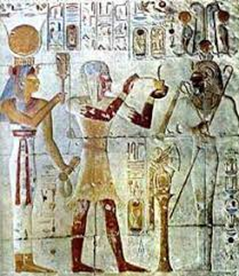
Egyptian lector priests

The Hebrew Prophets typically claim that the word of the Lord came to me and pepper their speeches with the interjection, thus says the Lord. They often report visionary experiences which provide the divine authorisation for what they speak. Some are reported as having had ecstatic experiences where they travel out-of-body and, they say, see things from God’s perspective. A number of prophets engage in symbolic activities which underline the message delivered by their words. Woe to you is a standard introductory phrase, leading to condemnations on nations or people for their sinfulness.

Adherence to the covenant of the Lord lies at the root of all that the prophets say—they recall Israel to their distinctive task of being a holy people, dedicated to the Lord. “I have given you as a covenant to the people, a light to the nations”, Isaiah declares (Isa 42:6); “cursed be anyone who does not heed the words of this covenant”, cries Jeremiah (Jer 11:3); “I pledged myself and entered into a covenant with you, and you became mine”, Ezekiel declaims (Ezek 16:8).

Daniel prays, saying, “Ah, Lord, great and awesome God, keeping covenant and steadfast love with those who love you and keep your commandments, we have sinned and done wrong … turning aside from your commandments and ordinances” (Dan 9:4–5). Amos announces that Israel has “rejected the law of the Lord, and have not kept his statutes” (Amos 2:4); Hosea denounces the people, for “you have forgotten the law of your God” (Hos 4:6); Malachi berates the people in the name of God, for “ever since the days of your ancestors you have turned aside from my statutes and have not kept them” (Mal 3:7).

Similar declarations of the sinfulness of Israel, turning away from the covenant, recur in other prophetic books (Isa 30:9–11; Jer 2:20–22; Ezek 18:21–22, 24; Hos 8:1; Mal 2:4–17). So many of the oracles of judgement pronounced by the prophets are built on the assumption that the sinful behaviours being described indicate that Israel and Judah have turned from the covenant and are ignoring the commandments that God gave.
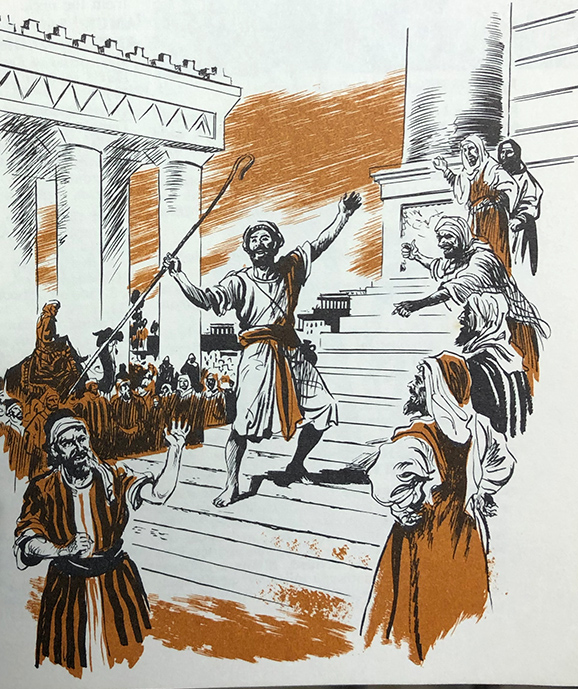
Ezekiel also notes that God says “I will establish with you an everlasting covenant” (Ezek 16:60), whilst Jeremiah says that God promises “I will make a new covenant with the house of Israel and the house of Judah … I will put my law within them and I will write it on their hearts” (Jer 31:31–33). Hosea declares that God promises, “I will make for you a covenant … I will make you lie down in safety” (Hos 2:18).

The prophetic call for repentance is heard often (Isa 1:27; 45:22; 59:20; Jer 15:19; 18:11; 22:1–5; 35:15; 36:5–7; 44:4-5; Ezek 3:19; 14:6–8; 18:21–32; 33:8–9; Mal 4:4–6). This call is based on the premise that God will relent, and redeem those who turn from sinful practices. Sadly, Jeremiah notes that “the Lord persistently sent you all his servants the prophets”, but “you did not listen to me, says the Lord” (Jer 25:4-7). The work of a prophet is often thankless.

In the course, we are exploring each of the named prophets in our Bibles: the four Major Prophets (Isaiah, Jeremiah, Ezekiel, Daniel) and the twelve Minor Prophets (Hosea—Joel—Amos—Obadiah—Jonah—Micah—Nahum—Habakkuk—Zephaniah—Haggai—Zechariah—Malachi); the latter ones are collected together in one scroll by Jews, who call this The Book of The Twelve. Some merit more detailed attention than others (because their works are longer), but all of them share a common concern to “set right” the people of Israel and Judah.

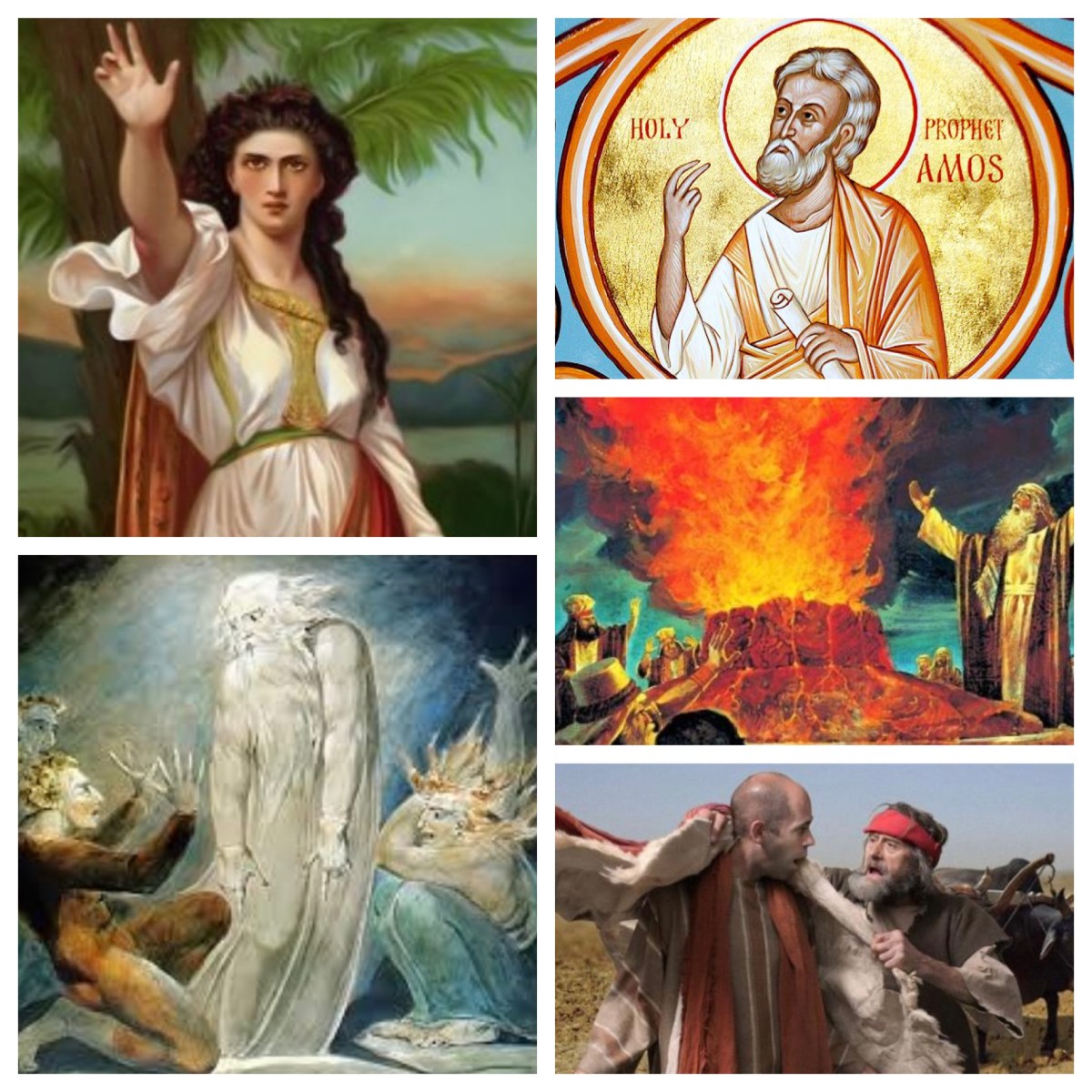
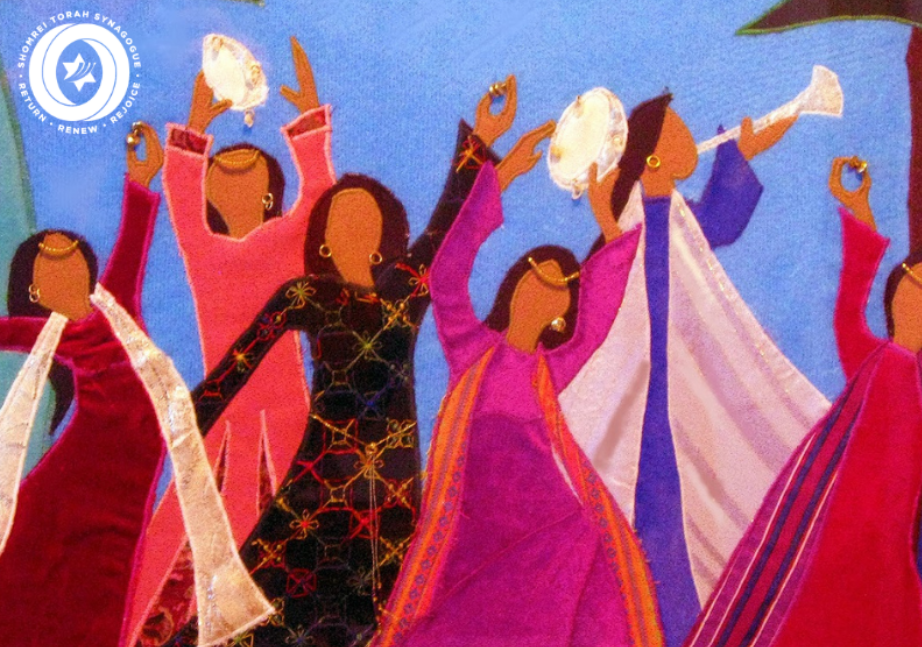
We have noted that there are others in scripture who are declared to be prophets, but who do not have a book dedicated to them. We’ll be paying some of them some attention as we work through the books. The first prophet mentioned in scripture is Miriam, the sister of Moses, who led the women of Israel in song, to celebrate victory over the Egyptians; the short Song of Miriam (Exod 15:20–21) was then attributed also to Moses, and placed at the head of a much longer song in his name (Exod 15:1–18).

Such musical leadership is recognised as an act of prophecy in the story of Saul: “you will meet a band of prophets coming down from the shrine with harp, tambourine, flute, and lyre playing in front of them; they will be in a prophetic frenzy” (1 Sam 10:5). Both males and females were able to serve as musicians who prophesied (1 Sam 18:6; 1 Chron 25:1–8).

Miriam is described as a prophet at Exodus 15:20 and again at Micah 6:4. She shares this designation with Deborah, who is introduced as a prophet “who was judging Israel” (Judg 4:4);. Deborah sits under a palm tree, the place for exercising judgement (Judg 4:5). However, the function of a “judge” was more akin to that of a military leader—a tribal elder who led military activities to protect their tribe from enemies and to establish justice within their group.
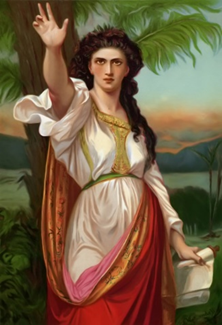
Deborah exercises such military leadership against Sisera, who led the army of King Jabin of Canaan. She recruits Barak to lead the fight (Judg 4:6–7); persuaded by her oracle, Barak insists that he will not fight unless Deborah goes out with him (Judg 4:8). When the Israelites gain victory over the Canaanite general (Judg 4:23–24), Deborah sings a song to celebrate her victory (Judg 5:1–31), maintaining the musical connection already noted in Miriam.

After the conquest and settlement of the land of Canaan, Samuel and Nathan figure significantly in the historical narratives about Israel. Samuel anoints Saul as the first king (and one interesting story about Saul ends with the question, is Saul also among the prophets? (1 Sam 19:18–24). Nathan, of course, is the prophet who promises David that “your house and your kingdom shall be made sure forever before me; your throne shall be established forever” (2 Sam 7:14). This is the oracle that assures the Davidic dynasty in Israel.
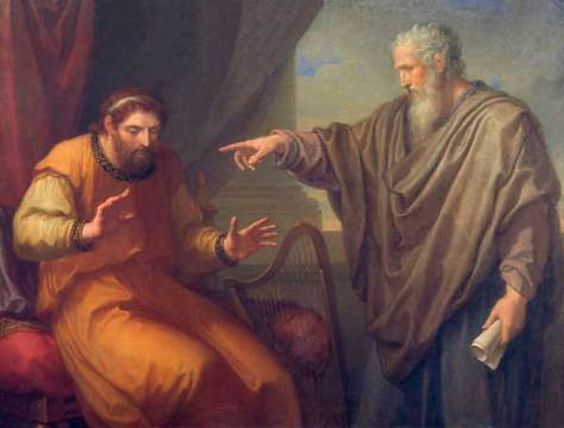
Nathan also is the one who confronts David about his adultery with Bathsheba, ending his famous parable of “the poor man [who] had nothing but one little ewe lamb” with the scathing denunciation: “you are the man” (2 Sam 12:1–7). Still later, Nathan tells the dying David of the plot by Adonijah to become king (1 Ki 1:11–14), leading to David’s final machinations which saw Solomon appointed as king (1 Ki 1:15–53) and the death of Adonijah (1 Ki 2:13­–25).

Later in the time of the divided kingdoms, Elijah and Elisha serve as prophets to call the king to account for the sinfulness of the court, and of all the people. Elijah spectacularly defended Yahweh against the might of the prophets of Baal, who were being worshipped in Israel, even by King Ahab. The prophets of Baal were unable to call down fire for the sacrifice (1 Ki 18:26–29), but Elijah, building an altar and drenching it with water, was able to call down “the fire of the Lord [which] fell and consumed the burnt offering” (1 Ki 18:30–40).

Elisha raised the son of a Shunnamite woman (2 Ki 4:8–37), turned a poisoned pot of stew into an edible meal (2 Ki 4:38–41), and fed a hundred men with twenty loaves of barley (2 Kings 4:42–44); these stories evoke Jesus.
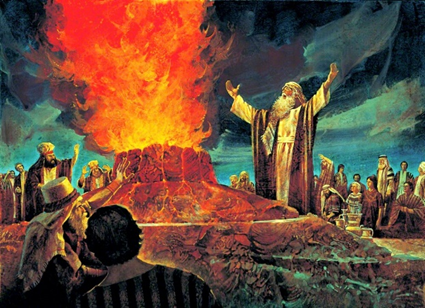
Elijah is taken up into heaven in a whirlwind (2 Ki 2), passing his mantle to Elisha. The last words of the prophet Malachi indicate that Elijah would return “before the great and terrible day of the Lord comes” (Mal 4:5–6); this prophecy plays an important role in New Testament texts. Just as it is not said that Enoch dies, but “walked with God, because God took him” (Gen 5:21–24), so this ascension of Elijah is believed to indicate that he did not die.

The final words uttered over Elisha were the same as those uttered over Elijah: “my father, my father! the chariots of Israel and its horsemen!” (2 Ki 13:14; cf. 2 Ki 2:12). His miraculous power lived on after his death; it is said that the body of a Moabite soldier killed in battle was thrown into his grave, and immediately “he came to life and stood on his feet” (2 Ki 13:20–21).
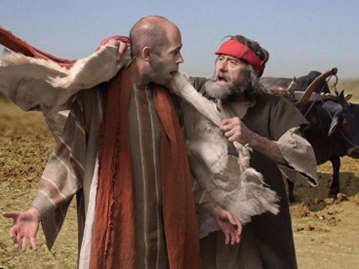
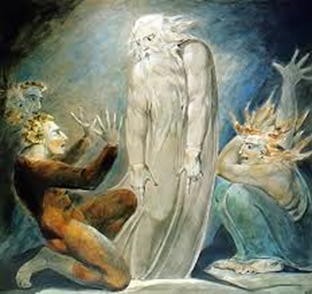
We might also include the woman of Endor as a prophet; despite the condemnation of divination (Deut 8:10–11), this woman provides Saul with guidance at the point where traditional means have failed. She consults with the ghosts; she sees “an old man is coming up, and he is wrapped in a robe” (1 Sam 28:14), and Saul recognises this as the ghost of Samuel. The deceased prophet thus directs the terrified king (1 Sam 28:15–19).
Later, we meet Huldah the wife of Shallum son of Tikva, son of Harhas, keeper of the wardrobe (2 Kings 22; 2 Chronicles 34). Both narratives tell of the reforms that took place under King Josiah, when a “Book of the Law” was discovered, and the king ordered that its prescriptions be followed. It is striking that Huldah, a female prophet, was consulted in relation to this book (not a male prophet). In a detailed oracle (2 Ki 22:16–20; 2 Chron 34:23–28), she speaks the word of the Lord to the king. Huldah validates the book that has been discovered.

Another female prophet is the wife of Isaiah, noted (without name) at Isa 8:3, who become the mother of one of Isaiah’s children; all of these children are given to be “signs and portents in Israel from the Lord of hosts” (Isa 8:18).

There were many more prophets active alongside Elijah and Elisha. Throughout the historical narratives, there are regular refences to “the prophets” (1 Sam 10:11–12; 1 Ki 18:4, 13, 20; 20:41; 22:6, 13; 2 Ki 23:2), “my servants the prophets” (2 Ki 9:7; 17:13, 23; 21:10; 24:2), a “band of prophets” (1 Sam 10:5, 10), a  “company of prophets” (1 Sam 19:20; 1 Ki 20:35; 2 Ki 2:3, 5, 7, 15; 4:1, 38; 5:22; 6:1; 9:1), 2 Chron 18:5, 12), and “all the prophets” (1 Ki 19:1; 22:10–12; 2 Chron 18:9–11).

Indeed, later Jewish tradition refers to the forty-eight prophets and the seven prophetesses who prophesied on behalf of the Jewish people. The relevant section of the Talmud reads: “In fact, there were more prophets, as it is taught in a baraita*: Many prophets arose for the Jewish people, numbering double the number of Israelites who left Egypt. However, only a portion of the prophecies were recorded, because only prophecy that was needed for future generations was written down in the Bible for posterity, but that which was not needed, as it was not pertinent to later generations, was not written. Therefore, the fifty-five prophets recorded in the Bible, although not the only prophets of the Jewish people, were the only ones recorded, due to their eternal messages.” (Talmud, Megillah 14a)   [* A Baraita is an ancient teaching that was not recorded in the Mishnah]

That would make the sum total of prophets a whopping 1,200,000 prophets! (This assumes the number of 600,000 “men on foot” as given at Exod 12:37—a gross exaggeration, by any account—-and also overlooks the complicating comment, “besides children”, and the complete omission of any reference to women!) We can at least say that there were more people undertaking prophetic activity than are named or designated in the scrolls of Hebrew scriptures. Whether each of them would meet the criteria that is set out for a true prophet (Deut 18:15-22), we will never know!

The seven female prophets are identified by later rabbis as Sarah, Miriam, Deborah, Hannah, Abigail, Hilda, and Esther. To read a brief contemporary Jewish discussion of the seven female prophets, see https://www.chabad.org/library/article_cdo/aid/4257802/jewish/The-7-Prophetesses-of-Judaism.htm
In the New Testament, the words of Joel that Peter cites on the Day of Pentecost indicate that the gifting of prophecy continues in this new era: “God declares that I will pour out my Spirit upon all flesh, and your sons and your daughters shall prophesy … even upon my slaves, both men and women, in those days I will pour out my Spirit” (Acts 2:17–18).

So we find Anna described as a prophet (Luke 2:38), as is Zechariah (Luke 1:67) and his son, John the Baptist (Mark 6:15; Matt 11:9; 21:26; Luke 1:76; 7:26; 20:6), while Jesus himself is recognised as a prophet (Matt 14:5; 21:11, 46; Luke 7:16; 24:19; John 4:19; 6:14: 7:40–42; 9:17).

There were prophets active at the time of Jesus, as we see in his saying about welcoming a prophet (Matt 10:41). The movement that continued after the time of Jesus had prophets active such as the four daughters of Philip (Acts 21:9) and Agabus (Acts 21:10), as well as those gifted by the Spirit with the gift of prophecy (Rom 12:6; 1 Cor 12:10, 28–29; 13:2; 14:1–5, 22–25, 29, 37; Eph 2:20; 4:11; 1 Tim 4:14), although the activity here described as prophecy may well differ in significant ways from what is found throughout Hebrew Scripture.

*****

See also
This is what the Lord showed me: the visions and messages of Amos (Pentecost 5C and 6C)

Over the next five months, the lectionary is taking a dive into the books of the prophets. These are offered as companions to the Gospel readings from the “orderly account” of Luke that we are hearing, week by week. It is, after all, Luke’s narrative which most directly depicts Jesus speaking as God’s prophet (Luke 7:16; 24:19; Acts 2:30; 3:22).

In turn, over the coming months we will read and hear excerpts from the northern kingdom prophets, Amos and Hosea; then from the southern kingdom prophets, Isaiah and Jeremiah, two of the “major prophets” of Israel; followed by three “minor prophets”, Joel, Habakkuk, and Haggai; and then a section from the closing vision in the much later set of oracles collected at the end of the book of Isaiah. We should buckle up for the ride; the prophets pull no punches and speak in ways that can confront, accuse, and terrify!

We have these books in our scriptures and read and reflect on them in our services of worship because, although these voices sounded forth long ago, their message resonates still with us today. The call for justice and righteousness undergirds the entire narrative of the people of Israel, from the call attributed to Moses in Deut 16:20, “justice, and only justice, shall you follow”, through the words of Amos and Isaiah, into the declarations of Jeremiah and in the various “minor prophets” that we will encounter.

See https://johntsquires.com/2021/08/16/justice-and-only-justice-you-shall-follow/

Justice is the common theme in these prophetic books—God’s justice; the justice which God desires for the people of God; the justice which God speaks through the voice of the prophets; the justice that God calls for in Israel; the justice that provides the measure against which Israel will be judged, and saved, or condemned.

In the later scriptures of the New Testament, we hear resonances from many of these selected passages of Hebrew Scripture. Jesus, the prophet of Nazareth, stands in this tradition and speaks “the voice of the Lord”, so the call for justice and righteousness sits at the heart of who we are, as people of faith, heirs of this tradition, in the 21st century.

As we read and hear these prophetic passages week after week, we are invited to reflect more deeply on how these ancient words, particular to their original time and place, can yet be for us the word of God to us, in our time, in our place.

*****

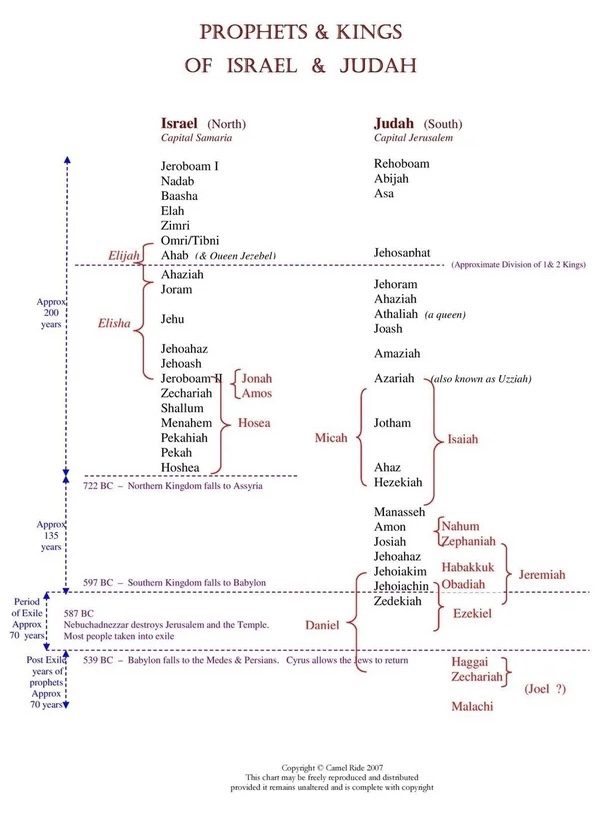
This Sunday, we will hear the vision of the plum line (Amos 7:7–17); next Sunday, the vision of the basket of fruit (Amos 8:1–12). Amos, who came from Tekoa in the southern kingdom (1:1), was active in the northern kingdom (Israel) during the reign of Jeroboam II, the thirteenth king of Israel, who reigned for four decades (786–746 BCE; see Amos 7:10). It was a time of prosperity, built on the trading of olive oil and wine with the neighbouring nations of Assyria to the north and Egypt to the south. But the sinfulness of the time was too much for Amos.

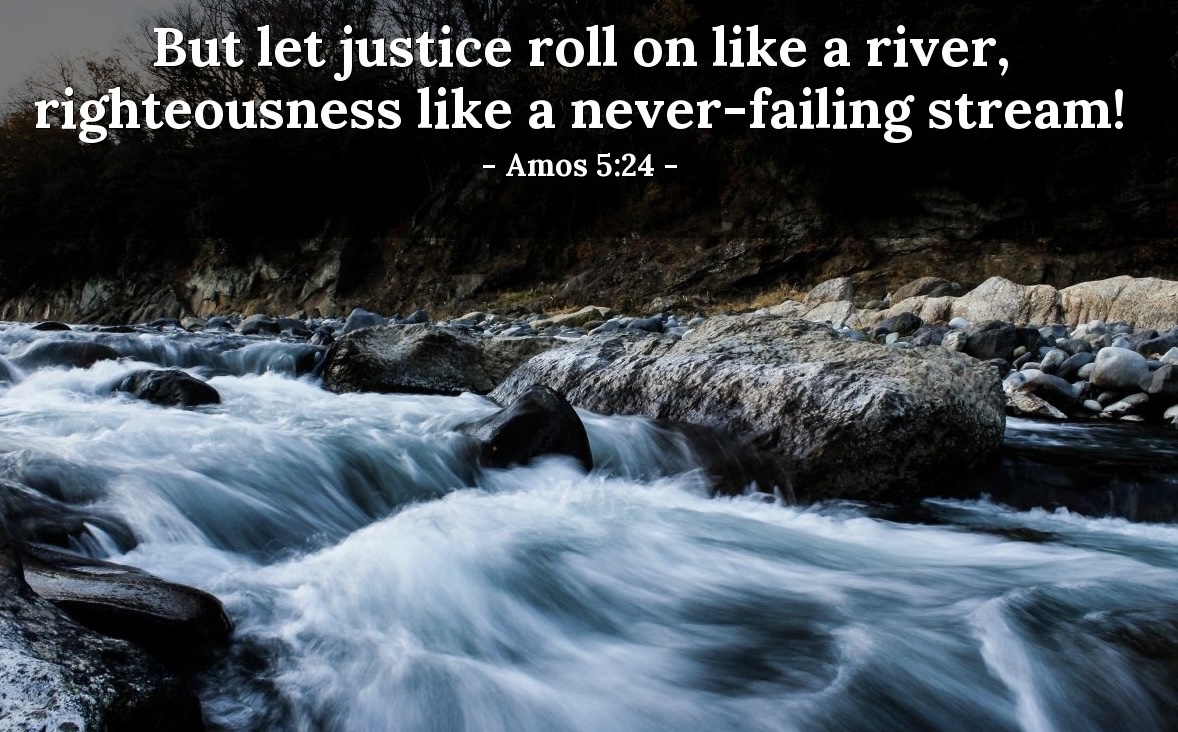
Although the Temple in Jerusalem was the focus for religious activity in the southern kingdom (Judah), there were a number of religious sites in the northern kingdom—Dan, Bethel, Gilgal and Beersheba (Amos 5:5; 8:14)—where not only was the Lord God worshipped, but idolatrous images were used in worship services (5:26). Amos is trenchant in his criticism of the worship that the people offer (5:21–27); embedded in this crisis is a doublet of poetry, words most often associated with Amos: “let justice roll down like waters, and righteousness like an ever-flowing stream” (5:24).

Indeed, it is the perpetration of social inequity within Israel that most causes him to convey the anger of divine displeasure. He admonishes the rich for the way that they mistreat the poor: “they sell the righteous for silver, and the needy for a pair of sandals—they who trample the head of the poor into the dust of the earth and push the afflicted out of the way” (2:6–7); “you trample on the poor and take from them levies of grain” (5:11).

Again, Amos rails: “you trample on the needy and bring to ruin the poor of the land … buying the poor for silver and the needy for a pair of sandals, and selling the sweepings of the wheat” (8:4, 6). In a biting oracle, he criticises the “cows of Bashan who are on Mount Samaria” for the way they “oppress the poor, crush the needy” (4:1).

Bashan was the mountainous area to the northeast of Israel (Ps 68:15), which rejoiced in majestic oaks (Isa 2:13) and extensive pasture lands (1 Chron 5:16). The luxurious lifestyle of these people can well be imagined. The reference to “winter houses … summer houses … houses of ivory … and great houses” (3:15) is telling. Luxury and opulence is evident amongst the wealthy.

So, too, is the description of “those who lie on beds of ivory, and lounge on their couches, and eat lambs from the flock, and calves from the stall; who sing idle songs to the sound of the harp, and like David improvise on instruments of music; who drink wine from bowls, and anoint themselves with the finest oils” (6:4–6). The extravagance of the wealthy is obvious, juxtaposed against the plight of the poor, as we have noted.

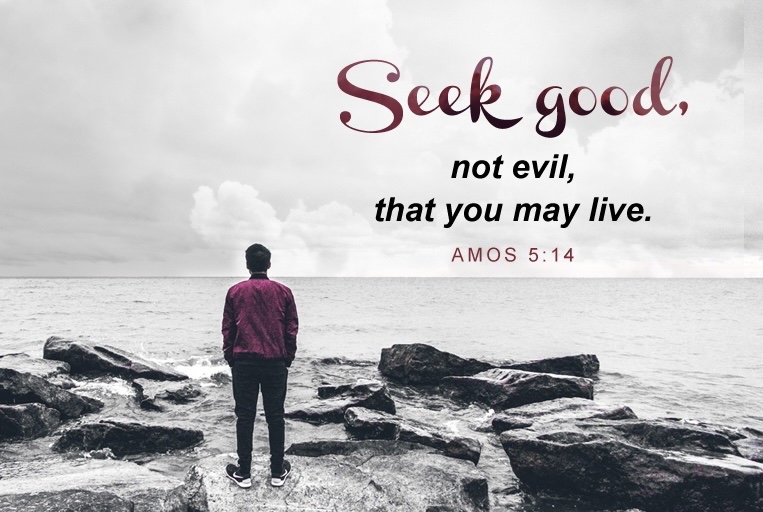
Amos indicates that God had given Israel a number of opportunities to repent, “yet you did not return to me” (4:6, 8, 9, 10, 11). God pleads for Israel to “seek me and live” (5:4), “seek the Lord and live” (5:6), “seek good and not evil, that you may live” (5:14).

But this is all in vain; ultimately, the prophet insists, the Lord God will bring on the day of the Lord—a day of “darkness, not light, and gloom with no brightness in it” (5:18–20). God is determined; “the great house shall be shattered to bits, and the little house to pieces” (6:11); later, he insists again, “the dead bodies shall be many, cast out in every place” (8:3).

***

In a series of visions, Amos sees how the judgement of God will be implemented. He sees a plague of locusts (7:1–3), a shower of fire (7:4–6), a plum line (7:7–9), and a basket of summer fruit (8:1–6). Finally, he sees “the Lord standing beside the altar” (9:1–8).

The first two visions give Amos an opportunity to intercede on behalf of the people: “O Lord God, forgive, I beg you!” (7:2), “O Lord God, cease, I beg you!” (7:5). On both occasions, God relents, declaring, “it shall not be” (7:3, 6).

Not so with the following visions, however. The vision of the plum line signals that “the high places of Isaac shall be made desolate, and the sanctuaries of Israel shall be laid waste, and I will rise against the house of Jeroboam with the sword” (7:8). The vision of the basket of fruits signals that “the end has come upon my people Israel” (8:2). In the vision of the Lord at the altar, God declares a definitive judgement on Israel: “those who are left I will kill with the sword; not one of them shall flee away, not one of them shall escape” (9:1).

Interrupting the sequence of visions, Amaziah, the priest of Bethel, confers with King Jeroboam of Israel, informing him that the prophet has spoken of the king’s imminent death and the people’s exile (7:11). Amaziah, disturbed by this pronouncement, commands Amos to flee south, to Judah (7:12-13).

Amos responds with what we recognise to be the humility of a true prophet: “I am no prophet” (7:14; cf. Moses at Exod 3:11; 4:1, 10, 13; Jeremiah at Jer 1:6), yet then he proceeds to reiterate his prophecy: “you yourself shall die in an unclean land, and Israel shall surely go into exile away from its land” (7:16-17).

*****

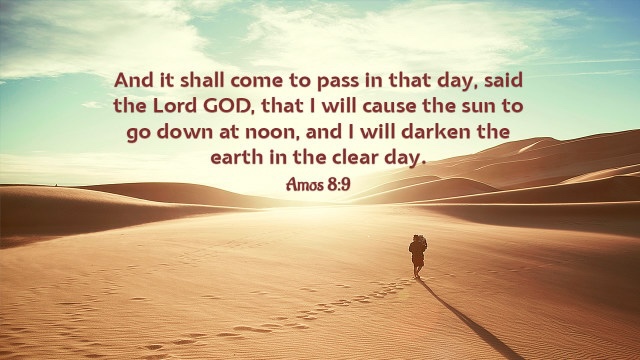
Returning to the sequence of visions, Amos notes that the day will come when God “will make the sun go down at noon, and darken the earth in broad daylight” (8:9–11). On that day, “the beautiful young women and the young men shall faint for thirst … they shall fall, and never rise again” (8:12–13).

Resolute in the intention to punish those who have perpetrated social inequity and religious idolatry, God insists that “I will fix my eyes on them for harm and not for good” (9:4); “the eyes of the Lord God are upon the sinful kingdom, and I will destroy it from the face of the earth” (9:8).

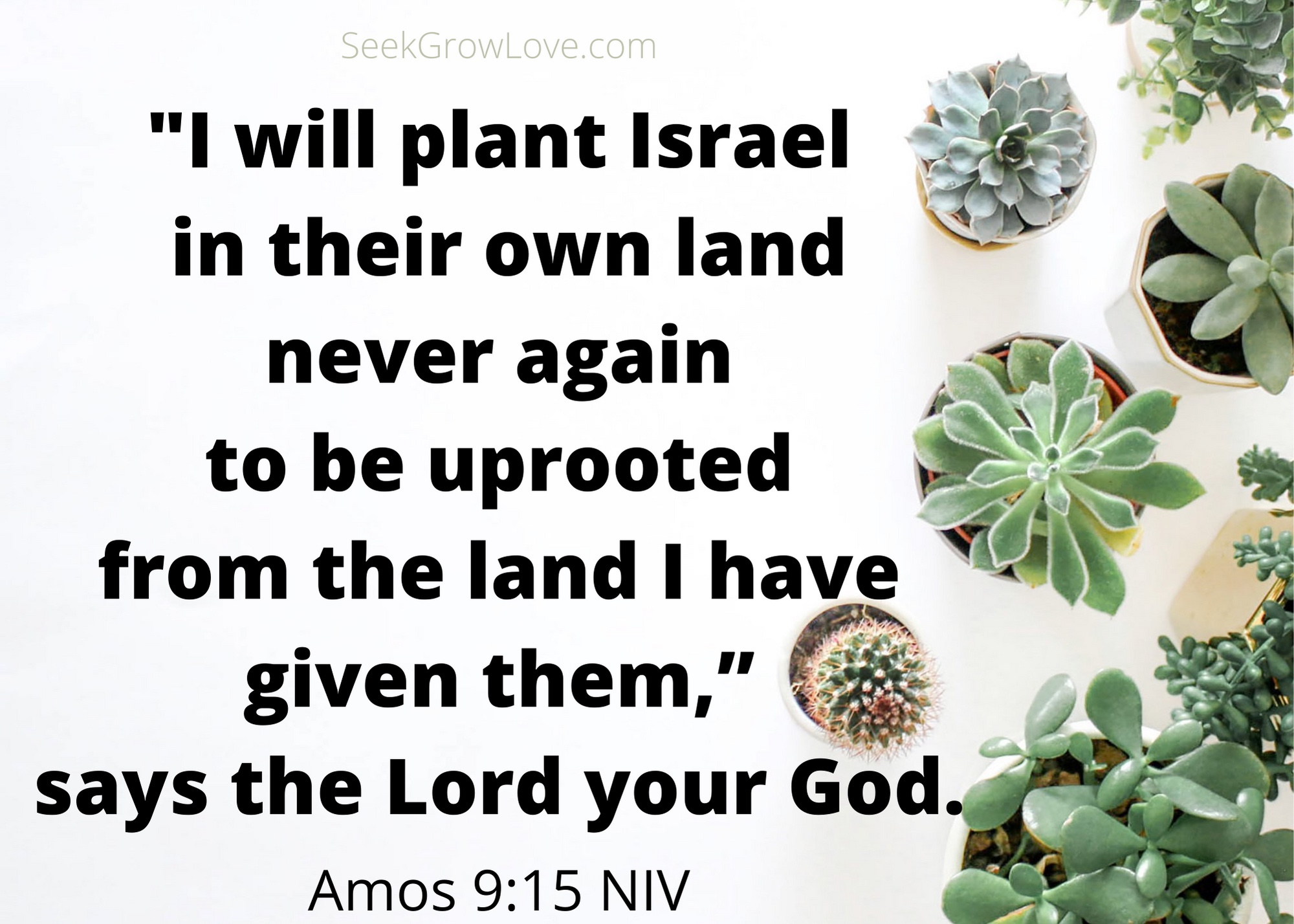
Yet, at the very end, Amos relays the news that God has modified this intention: “I will not utterly destroy the house of Jacob, says the Lord” (9:8); “on that day I will raise up the booth of David that is fallen, and repair its breaches, and raise up its ruins, and rebuild it as in the days of old” (9:11). This final oracle from Amos (9:11–15) envisages a restored and rebuilt Israel, a land once again productive, and ends with a strong expression of confidence in the people: “I will plant them upon their land, and they shall never again be plucked up out of the land that I have given them, says the Lord” (9:15).

Little did the prophet actually know what lay ahead; soon after this oracle, the king of Assyria began to deport Israelites to Assyria (2 Kings 15:29; 1 Chron 5:26), perhaps in the 730s; two decades later, a new Assyrian king captured the northern capital, Samaria (2 Kings 17:3–6). The northern kingdom had come to an end; the people taken into exile would never return to their land. They became known as “the lost tribes of Israel” (see https://www.britannica.com/topic/Ten-Lost-Tribes-of-Israel).

*****

See also

Voting on 21 May (7): Contributing to a Just and Peaceful World

Australian citizens go to the polls to elect a federal government on 21 May. The 17 million people eligible to vote will be electing both a local member to sit in the House of Representatives for the next three years; and a number of senators, to sit in the Senate for the next six years.

To assist voters in considering how they might vote, the Uniting Church has prepared a resource that identifies a number of issues, in seven key areas, that should inform the way that we vote, if we take seriously how the Gospel. calls us to live.

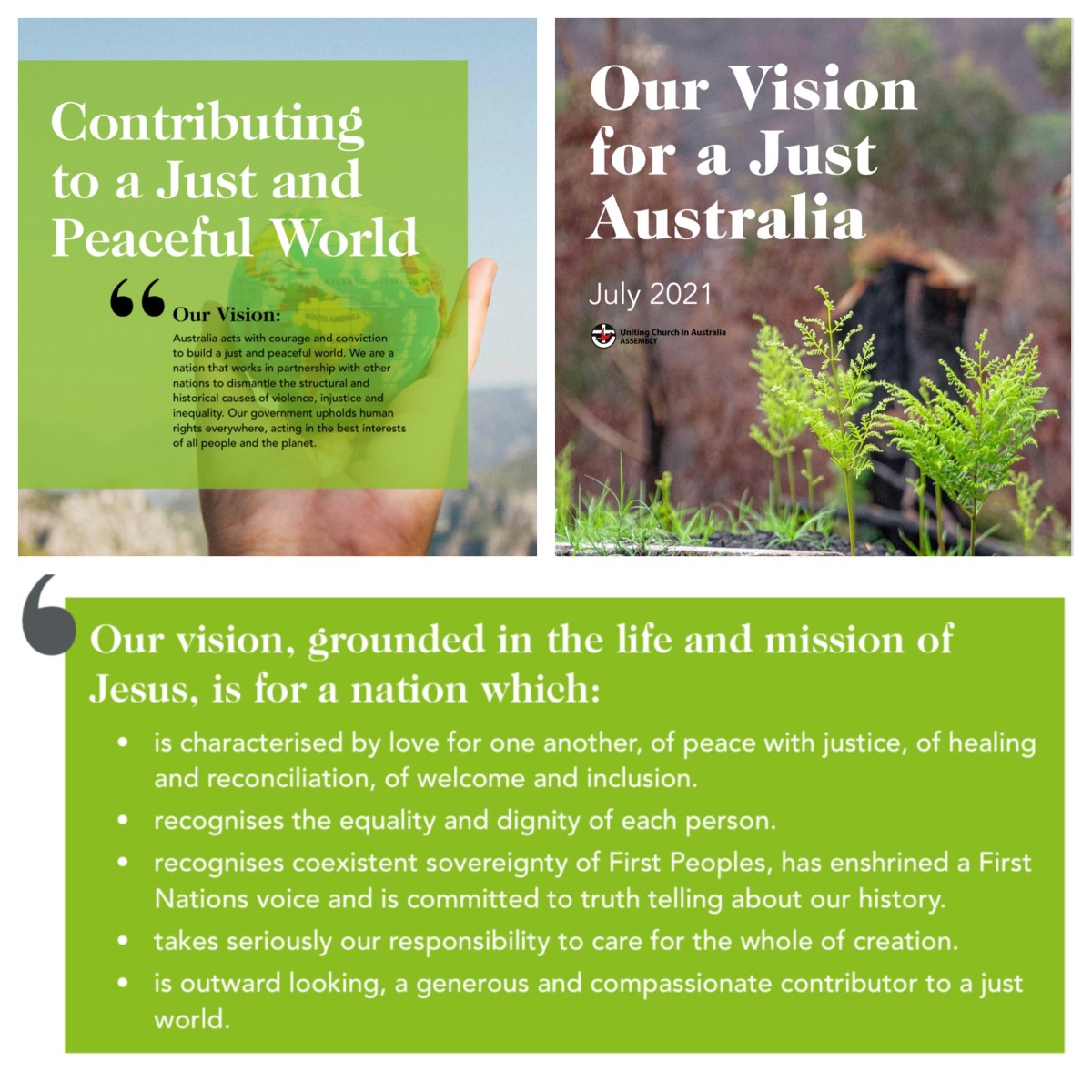
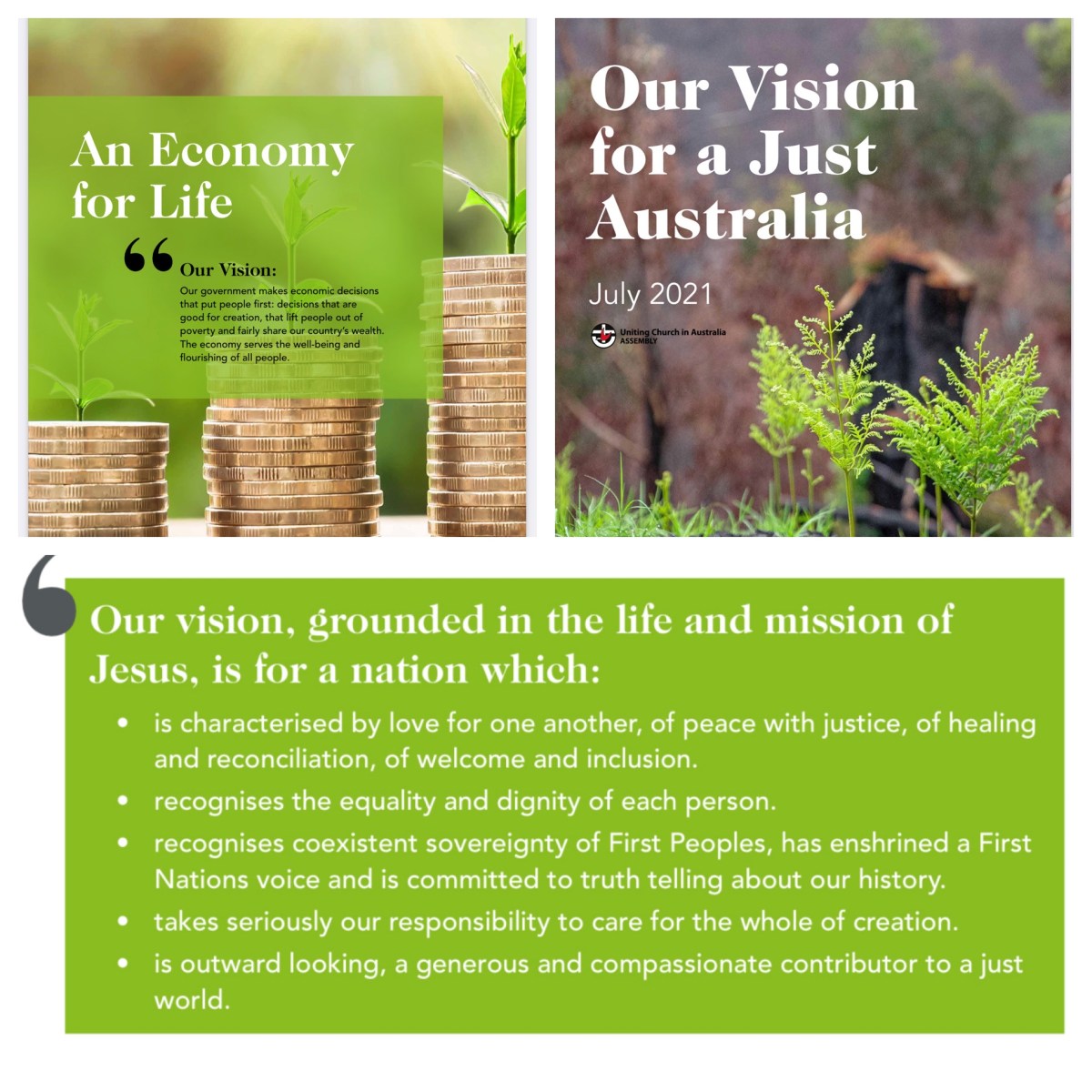
The seven areas are drawn from Our Vision for a Just Australia, a 40-page document expressing the Uniting Church vision for a just Australia and why our Christian faith calls us to work towards its fulfilment. It can be read in full at https://uniting.church/wp-content/uploads/2021/07/Our-Vision-For-a-Just-Australia_July2021.pdf

The Assembly has prepared a shorter 8-page document as a Federal Election Resource, in which key matters in each of the seven areas are identified. That document is found at https://uniting.church/wp-content/uploads/2022/04/Federal-Election-Resources-2022_11-April.pdf

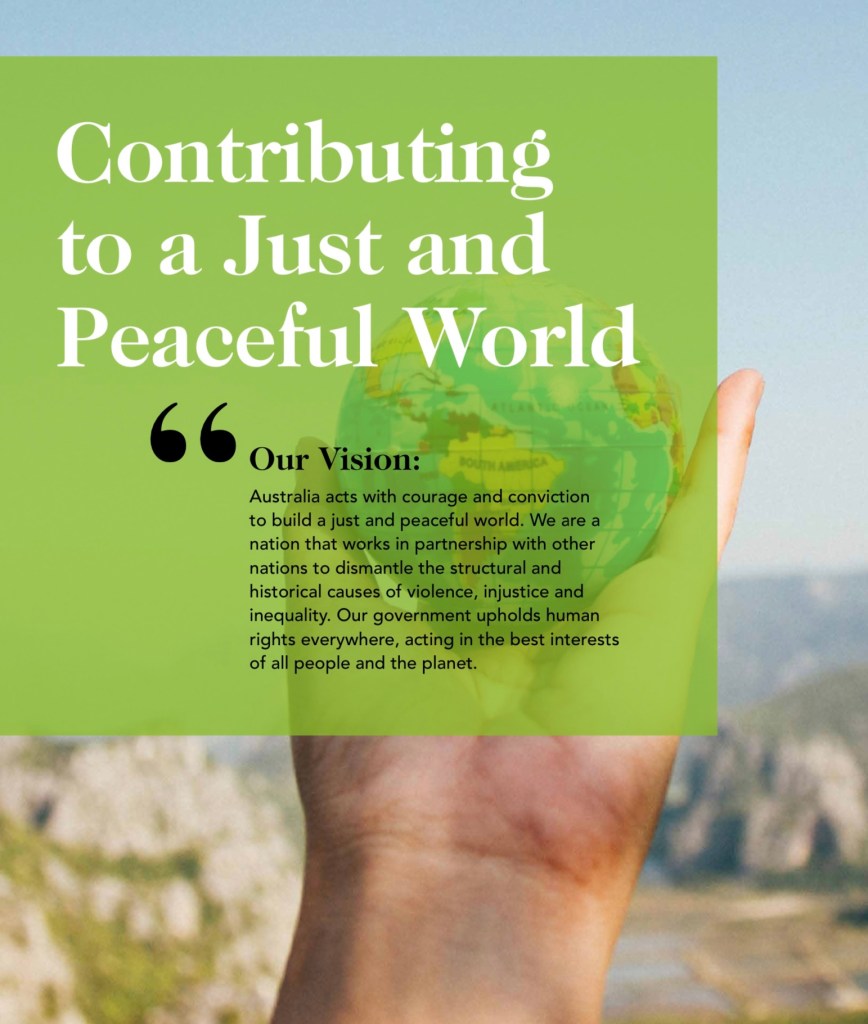
The final area reflects the vision of the Uniting Church for Contributing to a Just and Peaceful World.

The UCA resource notes that “we are a nation that works in partnership with other nations to dismantle the structural and historical causes of violence, injustice and inequality. Our government upholds human rights everywhere, acting in the best interests of all people and the planet.”

It further notes that we remain one of the wealthiest countries in the world, with the highest median wealth per adult, and fourth highest average wealth per adult. “Historically, we played a significant part in reducing world poverty and making significant gains in human flourishing. COVID-19 has made the world poorer, less equal and less secure.”

“Climate change and increased geopolitical competition is destabilising democracies and increasing the number of refugees in the world. In 2020, Australia boosted aid to our local region to support pandemic response, however, the current government has capped ongoing aid to pre-COVID levels, the lowest since 1961.”

“Despite our relative wealth, we are ranked an ungenerous 21st on the global list of overseas development aid as a percentage of gross national income. The recent and ongoing conflict in Ukraine reminds us again of the urgent need to rid the world of weapons capable of catastrophic, widespread destruction.”

The key issues to inform our voting in this regard are what each candidate or their party says about:

• Centering Australia’s foreign policy on a commitment to justice and peace; collaborating internationally to deliver community development and human rights.

• Legislate Australian Aid to reach 0.5% GNI by 2026 and 0.7% GNI by 2030.

• Increase support to fight COVID globally.

• Sign on to the global treaty banning nuclear weapons.

• Increase support to vulnerable nations to help address the impact of climate change.

For the full series of seven posts, see:

Voting on 21 May (6): Flourishing Communities, Regional, Remote, and Urban

Australian citizens go to the polls to elect a federal government on 21 May. The 17 million people eligible to vote will be electing both a local member to sit in the House of Representatives for the next three years; and a number of senators, to sit in the Senate for the next six years.

To assist voters in considering how they might vote, the Uniting Church has prepared a resource that identifies a number of issues, in seven key areas, that should inform the way that we vote, if we take seriously how the Gospel. calls us to live.

The seven areas are drawn from Our Vision for a Just Australia, a 40-page document expressing the Uniting Church vision for a just Australia and why our Christian faith calls us to work towards its fulfilment. It can be read in full at https://uniting.church/wp-content/uploads/2021/07/Our-Vision-For-a-Just-Australia_July2021.pdf

The Assembly has prepared a shorter 8-page document as a Federal Election Resource, in which key matters in each of the seven areas are identified. That document is found at https://uniting.church/wp-content/uploads/2022/04/Federal-Election-Resources-2022_11-April.pdf

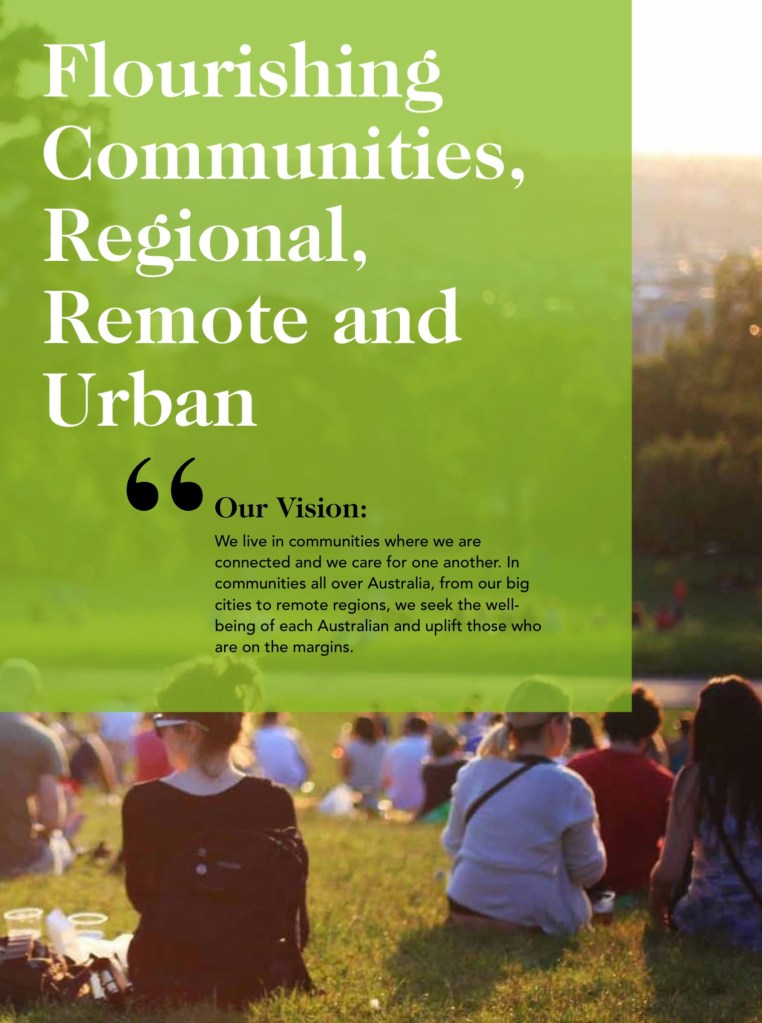
The sixth area reflects the vision of the Uniting Church for Flourishing Communities, Regional, Remote, and Urban—with particular reference to issues of housing and mental health in rural and remote areas.

We live in communities where we are connected and we care for one another. In communities all over Australia, from our big cities to remote regions, we seek the well-being of each Australian and uplift those who are on the margins.

People in Australia living in rural and remote areas tend to have shorter lives, higher levels of disease and injury and poorer access to and use of health services, including mental health care, compared to people living in metropolitan areas. The housing crisis and mental health crisis are converging in regional Australia as rental vacancy rates in some regions fall below 1%.

Regional towns have experienced a significant reduction in available properties and rental affordability, particularly since the onset of the pandemic. The Queensland Alliance for Mental Health, the state’s peak body for community mental health said the situation was “pushing people experiencing mental distress into homelessness”

The key issues to inform our voting in this regard are what each candidate or their party says about these two major areas:

(1) Improved mental health support for people in rural and remote Australia that is adequately funded, able to be flexibly used and well managed locally.

(2) Governments to do more to provide affordable housing in the regions – to boost housing for vulnerable people and strengthen local economies.

For the full series of seven posts, see:

Voting on 21 May (4): An Economy for Life

Australian citizens go to the polls to elect a federal government on 21 May. The 17 million people eligible to vote will be electing both a local member to sit in the House of Representatives for the next three years; and a number of senators, to sit in the Senate for the next six years.

To assist voters in considering how they might vote, the Uniting Church has prepared a resource that identifies a number of issues, in seven key areas, that should inform the way that we vote, if we take seriously how the Gospel. calls us to live.

The seven areas are drawn from Our Vision for a Just Australia, a 40-page document expressing the Uniting Church vision for a just Australia and why our Christian faith calls us to work towards its fulfilment. It can be read in full at https://uniting.church/wp-content/uploads/2021/07/Our-Vision-For-a-Just-Australia_July2021.pdf

The Assembly has prepared a shorter 8-page document as a Federal Election Resource, in which key matters in each of the seven areas are identified. That document is found at https://uniting.church/wp-content/uploads/2022/04/Federal-Election-Resources-2022_11-April.pdf

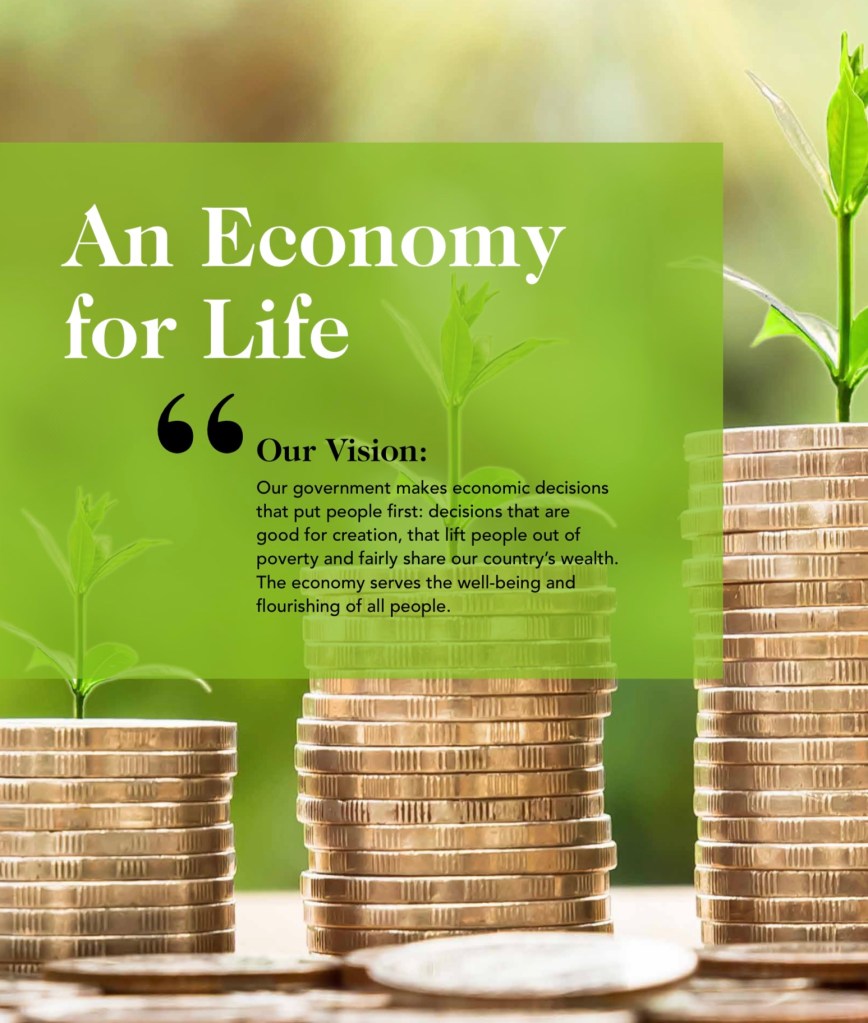
The fourth area reflects the vision of the Uniting Church for An Economy of Life. This was the title of an extensive document on economic policy which the Twelfth Assembly adopted in 2009. See https://ucaassembly.recollect.net.au/nodes/view/17

The resource notes that our “government makes economic decisions that put people first: decisions that are good for creation, that lift people out of poverty and fairly share our country’s wealth. The economy serves the well-being and flourishing of all people. We believe in an Australia where prosperity is shared fairly, embracing all people regardless of their privilege or upbringing.”

The resource makes these observations: “Aspirations for shared prosperity in Australia are unravelling under the sustained, twin trends of weak wage growth and rising asset prices. Over the past 10 years wage growth has limped under 2.5 per cent annually. Over the same period share portfolio and real estate values have grown around 10 per cent annually.”

“These settings deliver economic gains toward those with assets and away from those doing it tough, resulting in a greater and growing gap between the haves and the have-nots. Greater inequality strongly tracks with stress, hunger, poor physical health, poor mental health, homelessness and social exclusion, and has a negative impact on economic growth.”

“Older women are more at risk of reduced financial security after a lifelong gender pay-gap, interruptions to employment for care and reduced superannuation. The retirement savings gap between males and females in 2019 was almost one quarter. The result is that 34 percent of single women in Australia live in poverty.”

The key issues to inform our voting in this regard are what each candidate or their party says about:

• A clear commitment to undertake a review into the past decade of low-income growth.

• An increase in social security payments, especially Jobseeker.

• Tax reforms to increase the progressive nature of the Australian tax system to address unhealthy inequality.

• A clear commitment to make superannuation contributions on top of the government Parental Leave Pay.

For the full series of seven posts, see

The Aboriginal Tent Embassy: 50 years

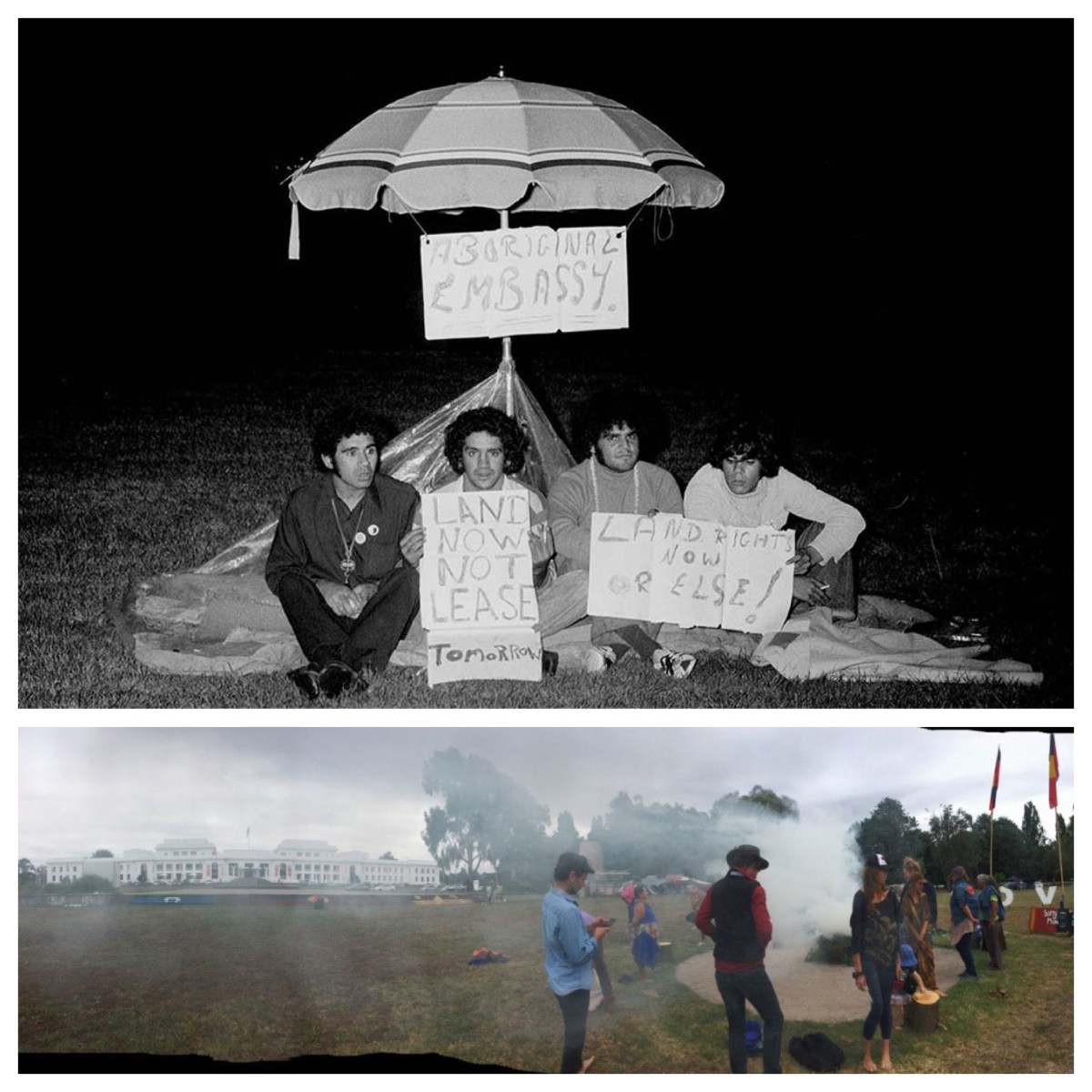
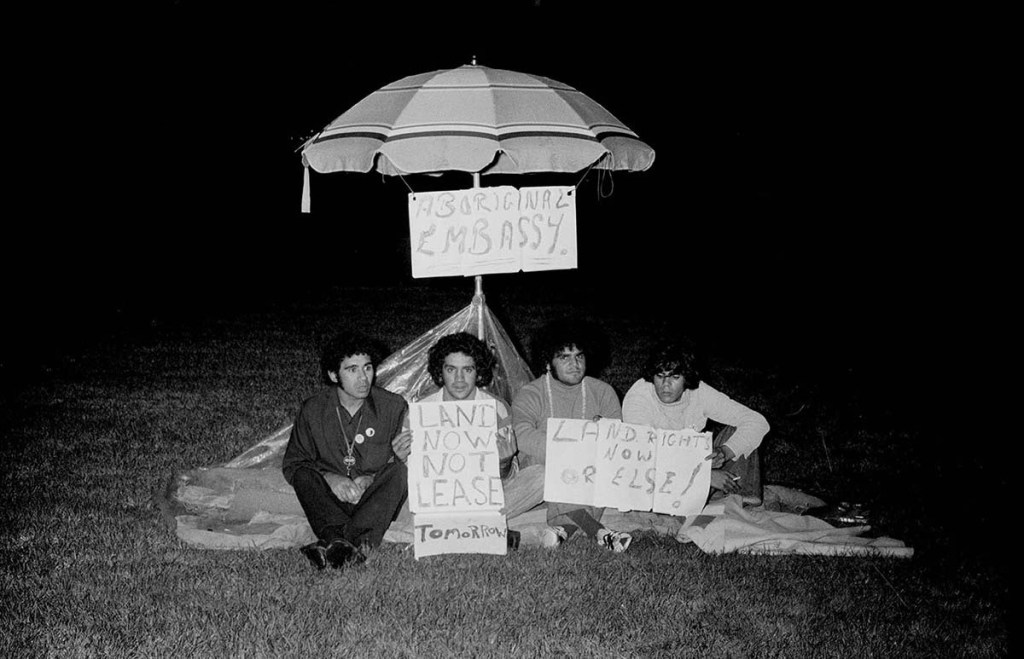
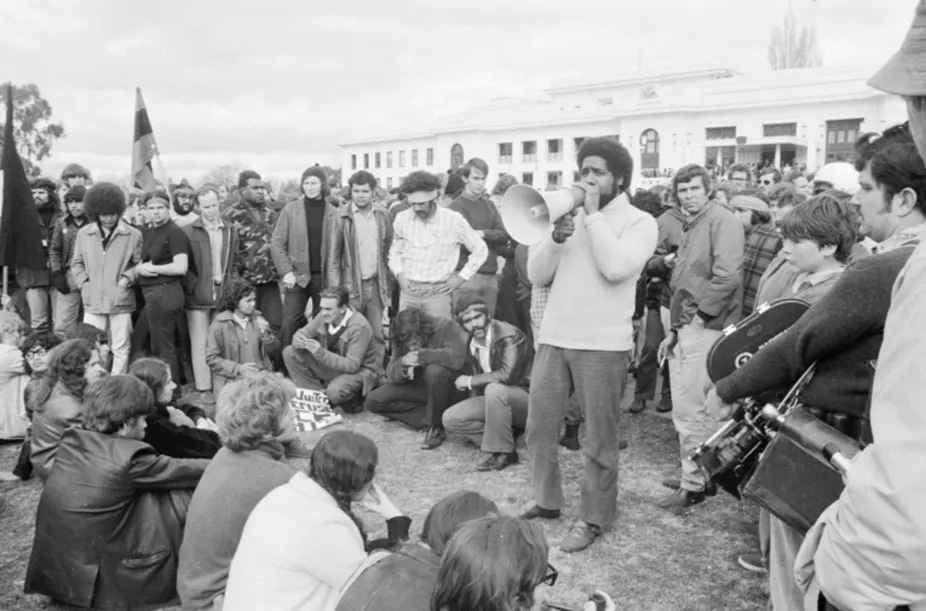
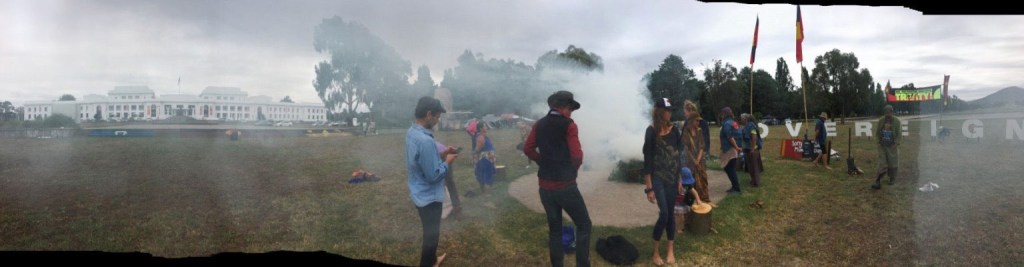
On 26 January 1972, four Aboriginal men—Billie Craigie, Michael Anderson, Bertie Williams, and Tony Coorey—set up a beach umbrella on the lawns opposite the Parliament House in Canberra. The men were protesting the resistance that the conservative Liberal-Country Party federal government were exhibiting towards granting land rights to Aboriginal people.

Even though Aboriginal people had lived on the land of the continent of Australia for millennia, they had no rights to land in most places across the continent. The British Invasion of Port Jackson in 1788, some years after Lt James Cook had imperiously claimed the land of New Holland for the British Crown in 1770, led to expanding colonisation of the land over the ensuing decades. Each new colonial settlement was associated with battles between the local indigenous people and the invading British. Massacres resulted in almost every location.

The men sitting under the umbrella in Canberra in 1972 described it as the Aboriginal Embassy, alluding to the fact that the city of Canberra was home to scores of embassies from the governments of overseas nations. Indeed, the city had been established early in the 20th century with the guarantee that those nations could have a piece of territory in the new capital city where their diplomatic staff could live and work.

By the late 1970s, seventy nations had embassies in Canberra (see https://openresearch-repository.anu.edu.au/bitstream/1885/115002/2/b11766608.pdf), but there was no formal channel for relationships with the First Peoples of Australia. Somewhere around 400 groupings of Aboriginal people were believed to have lived across the continent and on the surrounding islands, including the Torres Strait Islands, with at least 250 languages being spoken.

But decades of British colonisation had seen the indigenous people marginalised from “mainstream” white Australian society. Numbers declined, living conditions deteriorated, especially in towns and cities, and racist attitudes towards “the blacks” predominated. Of those 250 languages, less than a half had continued into the 20th century, and many of those continuing languages were in peril of dying out completely.

Aboriginal leadership had been agitating for their people for some time. The YES vote at the 1967 referendum augured well, it seemed. Yet the Prime Minister of the day (and arguably one of Australia’s worst leaders), William McMahon, and his conservative government colleagues exemplified the cultural arrogance and racism that held sway across the nation at that time.

The National Museum of Australia reports that “On the eve of Australia Day 1972, the McMahon government announced the implementation of a new system that rejected granting independent ownership of traditional land to Indigenous people in favour of 50-year general purpose leases for Indigenous communities, provided they could demonstrate a social and economic use for the land and excluding any mineral and forest rights.

“After the ongoing disappointments of the land rights struggle, this announcement sparked action among many Indigenous groups and directly contributed to the founding of the Tent Embassy.” (see https://www.nma.gov.au/defining-moments/resources/aboriginal-tent-embassy) The time was ripe for Aboriginal leaders to step up and speak out on behalf of their peoples.

The initial demands of the group which established the Tent Embassy read today as a sensible set of actions which, although achieved in part, are sadly yet to be completely fulfilled. Those demands included:

• Complete rights to the Northern Territory as a state within Australia and the installation of a primarily Aboriginal State Parliament. These rights would include all mining rights to the land

• Ownership and mining rights of all other Aboriginal reserve lands in Australia

• The preservation of all sacred sites in Australia

• Ownership of areas in major cities, including the mining rights

• Compensation for lands that were not able to be returned starting with $6 billion and including a percentage of the gross national income every year.

See https://www.creativespirits.info/aboriginalculture/history/aboriginal-tent-embassy-canberra

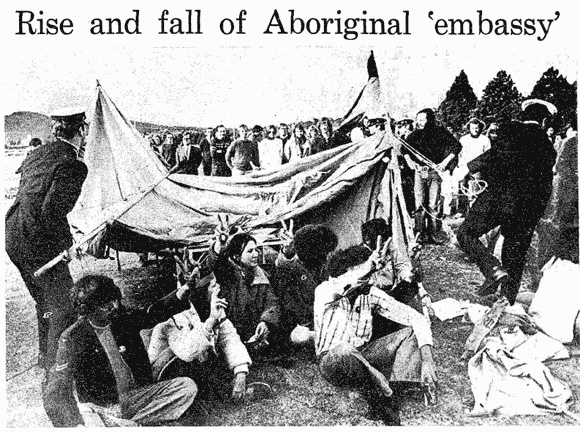
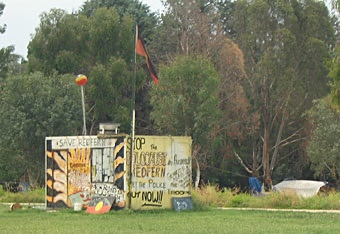
In the ensuing years, there have been legal challenges, removal of the embassy, reinstitution of the embassy, arson attacks, moves to other sites in Canberra, and eventually, the registration of the embassy site with the Australian Heritage Commission as a part of the National Estate.

The Embassy has been maintained continuously since 1972 by First People leaders, and this month the 50th anniversary is being celebrated. (The recent incident at the front of Old Parliament House was not associated in any way with the Tent Embassy, nor with any responsible Aboriginal leadership.)

Professor Bronwyn Carlson, Director of The Centre for Global Indigenous Futures, Macquarie University, writes that “Nowhere else in the world have we seen such longevity around a site of protest. The Aboriginal Tent Embassy is an impressive achievement that demonstrates the tenacity of Aboriginal and Torres Strait Islander people and our continued fight for the reclamation of our lands and sovereign rights as First Nations peoples.” (see https://theconversation.com/a-short-history-of-the-aboriginal-tent-embassy-an-indelible-reminder-of-unceded-sovereignty-174693)

See also https://johntsquires.com/2018/08/10/the-sovereignty-of-the-first-peoples-of-australia/

*****

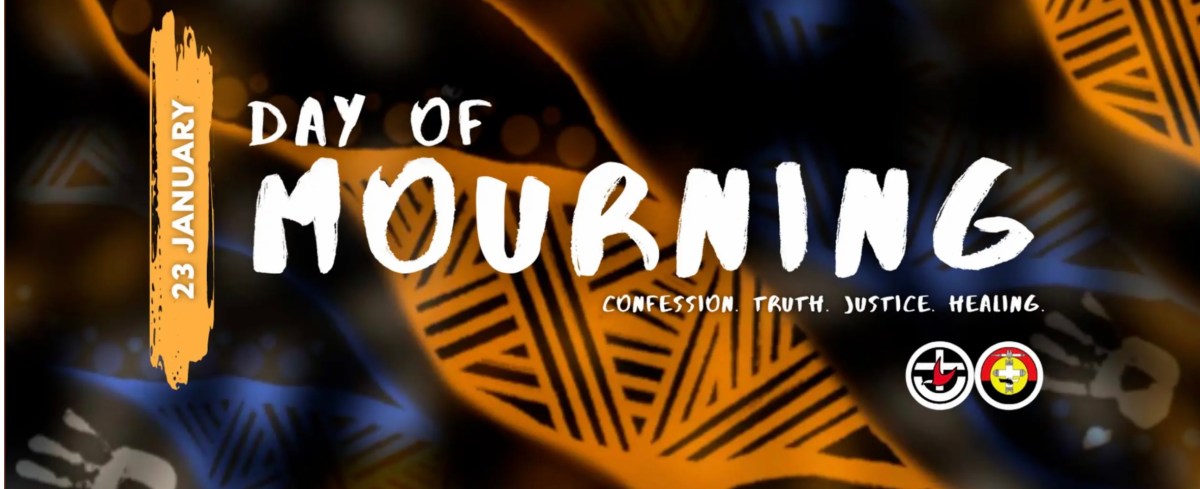
A Day of Mourning

Every year the Uniting Church marks a Day of Mourning to reflect on the dispossession of Australia’s First Peoples and the ongoing injustices faced by First Nations people in this land.

For the millions of Second Peoples in this country—those whose ancestors arrived on this continent from 1788 onwards—it is a day to lament that we were and remain complicit with the invasion and colonisation of the country, with the massacres of First Peoples that took place in so many locations across the continent, and with the continuing marginalisation and oppression of First Peoples in so many communities.

The observance of a Day of Mourning was endorsed in 2018 by the 15th Assembly of the Uniting Church, arising from a request of the Uniting Aboriginal and Islander Christian Congress (UAICC). At that same Assembly, an affirmation of the sovereignty of the First Peoples was also made.

As an expression of the Uniting Church’s commitment to justice and truth-telling, we keep the Sunday before Australia Day as a Day of Mourning. Today across Australia, people in many Uniting Church Congregations are reflecting on the effects of invasion and colonisation on First Peoples.

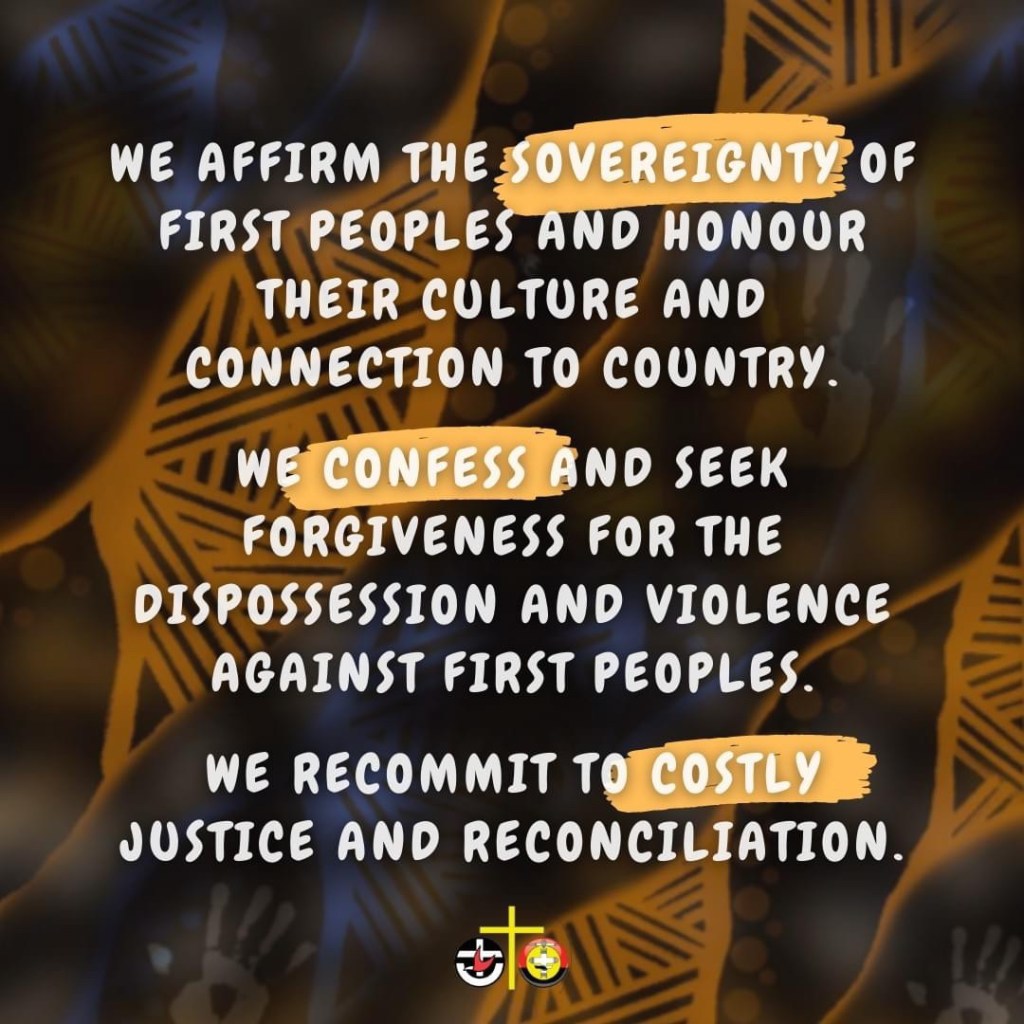
In the resources prepared for this day, the President of the Assembly, Rev. Sharon Hollis, and the Interim National Chair Uniting Aboriginal and Islander Christian Congress, the Rev. Mark Kickett, state: “In marking a day of mourning, we hear the call of Jesus to a love one another. We live into our covenant relationship to stand together with, and listen to the wisdom of First Nations people in their struggle for justice. We affirm the sovereignty of First Peoples and honour their culture and their connection to country.”

See https://uniting.church/wp-content/uploads/2021/12/Day-of-Mourning-2022-FINAL_2_web.pdf

The President and National Chair continue, “We reaffirm our understanding that First Peoples encountered the Creator God long before colonisation. We confess and seek forgiveness for the dispossession and violence against First Peoples, we lament our part, and we recommit to justice and truth-telling.” This echoes the words now embedded within the Constitution of the church, in a Revised Preamble which was adopted at the Church’s 12th Assembly in 2009 and subsequently endorsed by the Synods and Presbyteries throughout 2010.

See https://assembly.uca.org.au/images/stories/covenanting/PreamblePoster-web.pdf

The resources prepared for worship on this day include an expanded Acknowledgement which also draws on words in the Revised Preamble: We acknowledge that the First Peoples had already encountered the Creator God before the arrival of the colonisers; the Spirit was already in the land revealing God to the people through law, custom and ceremony. We acknowledge that the same love and grace that was finally and fully revealed in Jesus Christ sustained the First Peoples and gave them particular insights into God’s ways; and so we rejoice in the reconciling purposes of God found in the good news about Jesus Christ.

In a section known as “Truth-Telling and an Invitation”, the Congregation is invited to reflect: “In a nation, now called Australia, where is truth-telling not always told? To know mourning is to truly know injustice—a struggle for justice. We seek guidance from ancient wisdom of past and present, to hold this mourning in our hearts and minds, to honour, to pay respect, to know, to appreciate and to act on injustice. Layers of mourning unfold in the stories not told.”

At the conclusion of the service, again drawing on the Covenant relationship that the Uniting Church has with the United Aboriginal and Islander Christian Congress, the resources offer this word of mission to conclude worship, and to shape the witness and service of those who have shared in these services:

People of God, go from here to live out the covenant into which we, the First and Second Peoples of this land, have entered with one another. Confront and challenge injustice wherever you see it. Act justly yourselves and insist that others do the same. Rejoice in the richness of our diverse cultures and learn from them. Celebrate and demonstrate the unity we share in Jesus our Lord. Commit to worship, witness and serve as one people under God, until God’s promised reconciliation of all creation is complete.

*****

See also https://johntsquires.com/2018/08/10/the-sovereignty-of-the-first-peoples-of-australia/
On the move: a central feature of the Christmas story

At Christmas, we recall a familiar story. Central to the story is the baby born in a manger, because “there was no room in the inn”. This element is, of course, told and retold countless times in the weeks leading up to Christmas, and in churches in every country around the world, on Christmas Eve and Christmas Day.

That part of the story gets disseminated widely. That part of the story contributes strongly to the warm, fuzzy vibe that Christmas brings to many people. Less well shared, however, is that part of the story which reports that this family were soon under threat, and they hurriedly fled to another country, seeking the safety of refuge, until the threat was over.

Christmas cards, and Christmas carols, have tended to encourage us to romanticise and sentimentalise the first part of the story—the babe in the manger in Bethlehem. We sing so easily about the scene that Luke recounts in his Gospel, imagining it in the picture perfect way of so many cards and carols: the baby lying peacefully asleep in the manger, the adoring mother and doting father, the shepherds who come from the fields to worship. It all sounds so peaceful, so relaxed, so comfortable, so ideal.

As we sing all of this, I suspect that we forget that the newborn infant was born in the area that was shared with the animals, because there was no room, not in “the inn”, but rather in the guest room of the house where they were (according to the story) staying that night. So at the time when Mary gave birth, there were no homely comforts, but there would have been the sights and sounds and smells of the animals, all around.

We overlook, perhaps, that the shepherds who came in from the fields to pay homage to the newborn child (Luke 2:8–16) would have been despised for carrying out a lowly and unworthy occupation. They were outcasts, considers impure and unclean, placed outside the circle of holiness within which good Jews were expected to live. In the Mishnah, a third century work which collects and discusses traditional Jewish laws, shepherds are classified amongst those who practice “the craft of robbers”. These are not highly valued guests!

We forget, also, that Luke’s account of this birth places it in Bethlehem, which is not the place where the newly-formed family lived. They had been forced to travel there, according to Luke’s account, because of a nation-wide census that was required by the Romans (Luke 2:1-7).

Giving birth to the child in that town, in that room, in that manger, was not the plan that his parents initially had; this was a temporary, unforeseen situation, basic and crude. This part of the story is not at all the comfortable and soothing scene that cards and carols regularly depict. The birth takes place after a forced journey, in an less than desirable setting.

*****

The second part of the story, that found in the Gospel of Matthew, also has an unexpected and forced journey involved. This part of the story relates to the rapid flight that the family took after the child was born, heading away from Herod, fleeing into the safety of Egypt, a foreign country (Matt 2:13-15). Matthew’s contribution to the story rarely fosters those warm, fuzzy vibes that many associate with Christmas.

And often, in church, this part of the story is left for the time after Christmas Day—which is logical, since this is where it comes in the flow of the story; but which means that, downunder at least, it is featured during the Great Summer Holiday which comes immediately after the feasting and festivities of Christmas Day (and Boxing Day, if there are still plentiful left overs!)

Matthew’s account sets out very clearly that this journey was not part of the original plan, worked out methodically in advance. Rather, this was a rapid response to an emergency situation, a hurried seeking of refuge. It was a temporary measure, undertaken under great duress.

The ruler who gives the order which provokes the family to undertake this journey is the man whom Jesus once called “that fox”: Herod. Ruling over Judea as a client king of the Romans, Herod was a half-Jewish man who had risen to the top of Jewish society through political cunning and strategic marriages. He had a reputation for violent brutality.

Matthew’s story recounts that Herod ordered that all male children under two years of age should be killed, to ensure that this potential rival to his rule would be safely despatched (Matt 2:1-3, 16-18). Jesus survived this because his parents were advised of the imminent pogrom by visitors “from the east” who had come via the court of Herod (Matt 2:13-15). This part of the story also does not sound relaxed, sweet, and comfortable!

And then, as the story in Matthew’s account continues, there is yet another journey, returning from Egypt, back into Israelis–but not Judea, for fear of the ruler who followed Herod, his son Archelaus; rather, to Galilee, where the family,settled in Nazareth (Matt 2:19-23). Another episode of dislocation and disruption, that rarely features in the classic carols and Christmas cards.

*****

It is because of these disruptive and confronting elements in the story that, in my mind, Christmas challenges us to think about those who have no shelter. It especially invites us to think about those who have nowhere safe to shelter because their homes are beset by warfare, their lives are constrained by oppression, their families have been decimated by murders, their houses have been bombed or shelled.

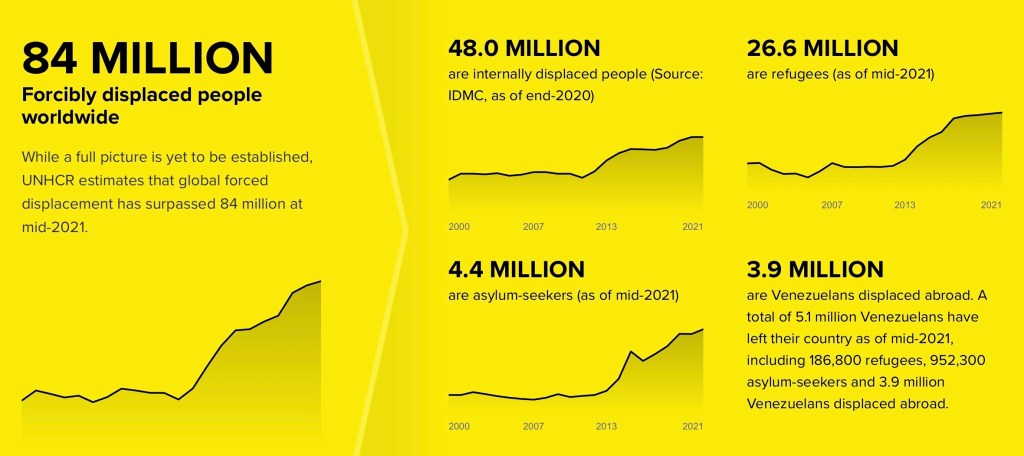
While the full impact of the COVID-19 pandemic on wider cross-border migration and displacement globally is not yet clear, UNHCR data shows that arrivals of new refugees and asylum-seekers were sharply down in most regions – about 1.5 million fewer people than would have been expected in non-COVID circumstances, and reflecting how many of those seeking international protection in 2020 became stranded.

Despite COVID-related movement restrictions and pleas from the international community for a ceasefire that would facilitate the COVID-19 response, displacement continued to occur – and to grow. As a result, above one per cent of the world’s population – or 1 in 95 people – is now forcibly displaced. This compares with 1 in 159 in 2010.

Most recent statistics from the UNHCR,
as of mid-2021

In that spirit, as we celebrate Christmas, let us also commit to working to ensure safety and security for those who are imperilled, homeless, stateless, and on the move. There are so many such people in our world today. There are so many ways we can live out the Christmas story as we reach out to them.

*****

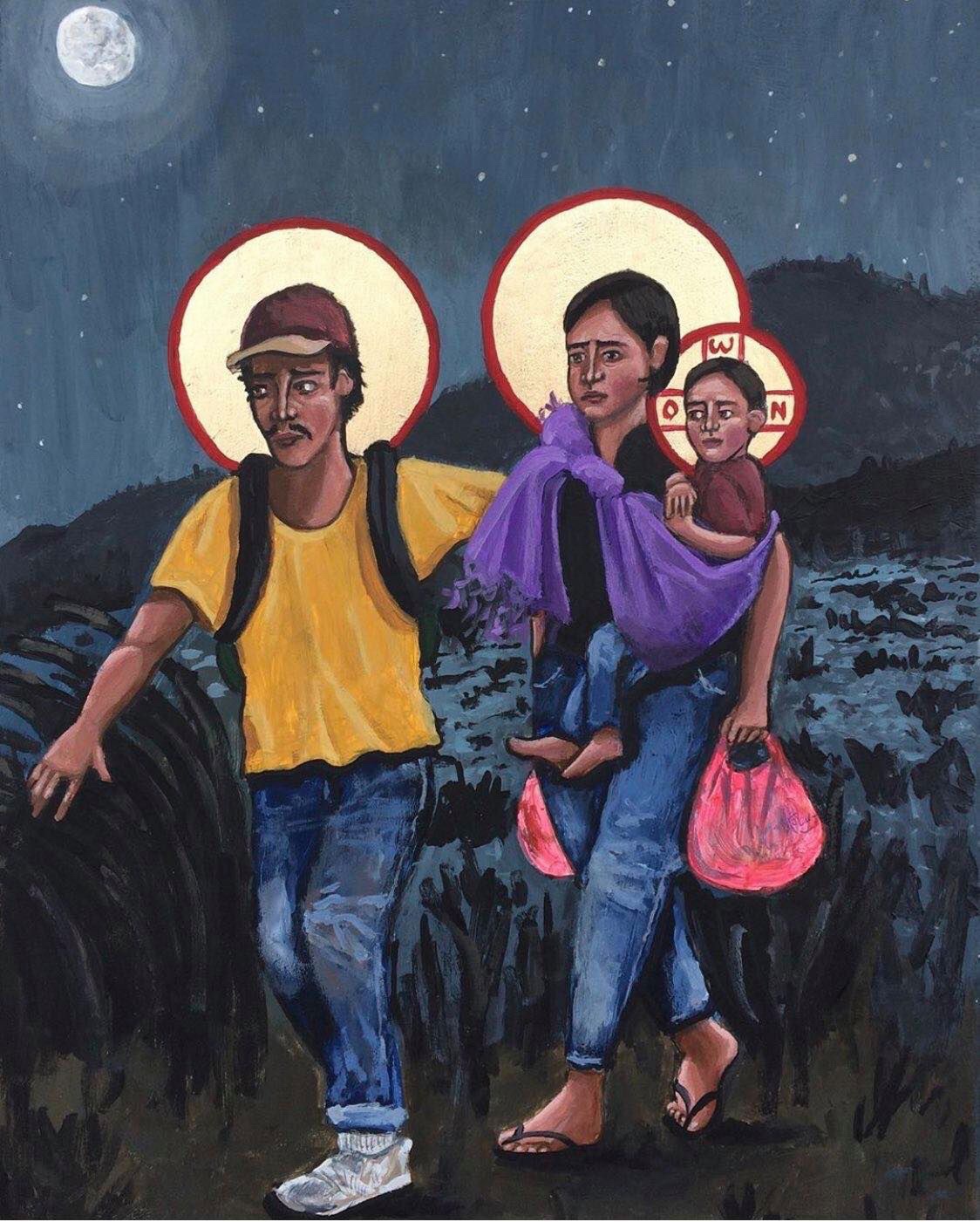
The image is La Sagrada Familia by Kelly Latimore https://kellylatimoreicons.com/gallery/img_2361/

See also https://johntsquires.com/2019/12/25/acting-for-peace-through-the-christmas-bowl/
https://johntsquires.com/2018/12/19/what-can-we-know-about-the-birth-of-jesus/

West Papua, 60 years on (remembering 1 December 1961)

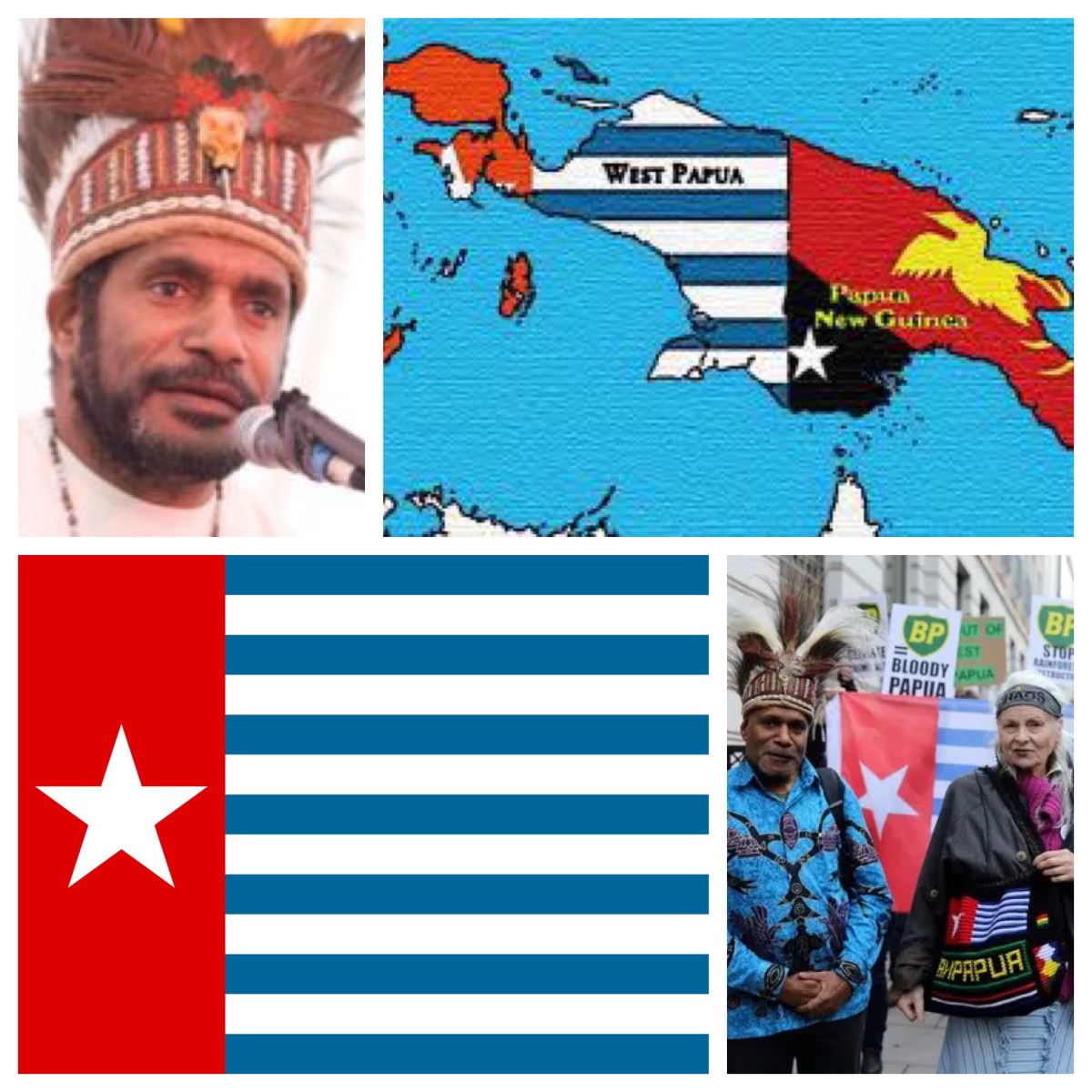
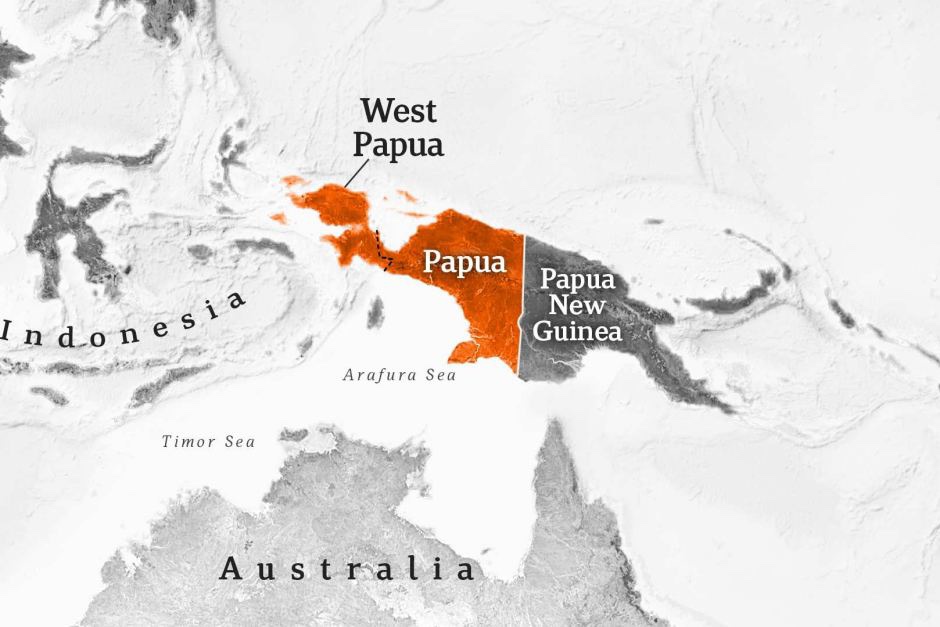
The Indigenous people of West Papua have been struggling for independence from Indonesia since Indonesia’s invasion of the territory in 1962. Since that time, Indonesia’s occupation of West Papua has resulted in ongoing human rights abuses from Indonesian security forces, massive deforestation and destruction of the land for resource extraction, racial discrimination against Indigenous Papuans, mass displacement of Papuans from their Indigenous lands as refugees and internally displaced persons, and the systematic destruction of a Papuan identity.

2021 is a significant year as it marks the 60th anniversary of the first raising of West Papua’s symbol of independence, the Morning Star Flag. Sixty years ago the Nieuw Guinea Raad (New Guinea Council) raised the Morning Star flag alongside the Dutch flag across West Papua for the first time, on 1 December 1961.

The event was a milestone in West Papua’s ongoing path to national self-determination, which had begun when the Netherlands registered West Papua with the United Nations as a Non-Self-Governing Territory in December 1950. The self-determination project was short-lived, however, with West Papua being invaded through Operation Trikora by Australian-backed Indonesian forces.

The Morning Star Flag continues to be a powerful unifying symbol for West Papua’s struggle for economic, social and political self-determination. Raising the flag in Indonesia carries a prison sentence of up to 15 years. West Papuans, as Melanesian people of the Pacific, continue to stand defiant against Indonesia’s fictitious claims to their land and identity.

(The flag is used by the Free Papua Organization and other independence supporters. It consists of a red vertical band along the hoist side, with a white five-pointed star in the center, and thirteen horizontal stripes, alternating blue and white, with seven blue stripes and six white ones. The seven blue stripes represents seven customary territories in the region.)

The Pacific Conference of Churches, with the Papua New Guinea Council of Churches, has strongly condemned the institutional racism against the indigenous npeople of West (Tanah) Papua and the increase of Indonesian militarisation in Papua that comes with this. PCC General Secretary, Rev. James Bhagwan and PNGCC General Secretary, Rev. Roger Joseph, have stated that the oppression of Papuan people underlines the need for an urgent investigation of ongoing abuse of

Human Rights, the Economic, Social and Cultural and Political rights of West Papuans, by the United Nations.

In 2019, the WCC Executive Committee released a statement of concern and solidarity for West Papua, a supporting the church leaders’ joint appeal for a comprehensive political dialogue, and calling on the Government of Indonesia to allow access to human rights organisations and journalists. The statement also invited all WCC member churches “to pray and act in support of the witness of the churches in West Papua – and that of PGI, PCC, and CCA – for justice and peace in the region.”

(The Uniting Church in Australia is a member of the Pacific Conference of Churches and the World Council of Churches.)

Map courtesy of the ABC

Sadly, the Australian Government has been notably silent on the issue of violence and human rights abuses in West Papua, being bound by the controversial 2006 Lombok Treaty to respect Indonesia’s “territorial integrity”.

The theme of this year’s flag raising is Youth Rize for Land Rights. In the words of West Papuan activist Cyndi Makabory: “What resonates for me with the theme is young people are the leaders of today not ‘tomorrow’, what I’m seeing in West Papua and outside of West Papua is that youths are mobilising and propelling movements”.

There are a number of West Papuans who are active in the Canberra City Congregation—they play together in worship, as some were members of the popular Black Brothers band (see https://asiapacificreport.nz/2016/09/20/west-papuas-black-brothers-message-to-png-musicians-stay-committed/). Elizabeth “discovered” them when she was ministering in the Canberra City Congregation in 2017. They include Benny Bettay and Willem Ayamiseba.

You can read the remarkable story of courage and tenacity of one of the West Papuan leaders, Benny Wenda, at https://www.freewestpapua.org/info/benny-wendas-story/

For people of faith in Australia, the continuing injustices seen in this near neighbour merit attention and prayer. We yearn for justice, we seek to see oppression end in West Papua.

*****

I have prepared this post in conjunction with Jack Johnson, regional organiser of the Free West Papua Youth—Australia Team, and a member of the St Columba’s Uniting Church, Braddon, in the ACT.

If the kingdom of God is ever going to happen on earth … (John 18; Christ the King Year B)

A dialogue sermon written by Elizabeth Raine and delivered online by Elizabeth Raine and John Squires at Tuggeranong Uniting Church and at Canberra Aboriginal Church on Sunday 21 November, the Festival of Christ the King.

*****

Today is known in the lectionary as Christ the King or Reign of Christ Sunday. It is a relative newcomer to the liturgical calendar, arriving only in the early twentieth century. Apparently this was because at that time, many Christians in Mexico were suffering religious persecution from their anti-religious government, and secularism was rapidly gaining the upper hand both there and in Europe.

In 1925, to counteract this, the Roman Catholic Church declared this day as a worldwide celebration of the kingship of Christ over every earthly power. Its timing at the conclusion of the Season after Pentecost was fixed both by Vatican II and the subsequent Protestant developments of the lectionary, including our own UC in Uniting in Worship.

With the rise of secular atheism, people are more likely nowadays to pledge allegiance to political and consumerist organisations than they do to kings or the politics of God as revealed in Scripture. These Scriptures make clear, as does the ministry of Jesus, that God’s politics are not identifiable with those of democracies or typical kings.

In this scene from John, we hear Pilate asking Jesus the question “So you are a king?” I wonder: what does this mean about Jesus? What sort of a king could he be?

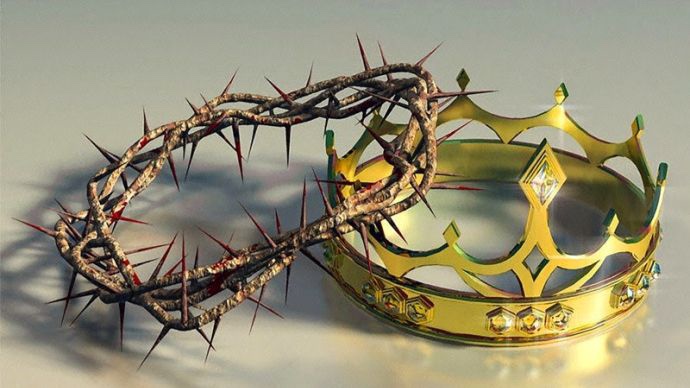
A: I know what sort of king he is! Remember when we were children, we imagined whatkings would look like, from all the stories we heard as children. A king or queen sits on a throne, has very fine robes and a crown made of gold and precious jewels. People bow down before the feet of the king in these stories. And look at how people act around the Queen! In her presence, they bow and curtsey.

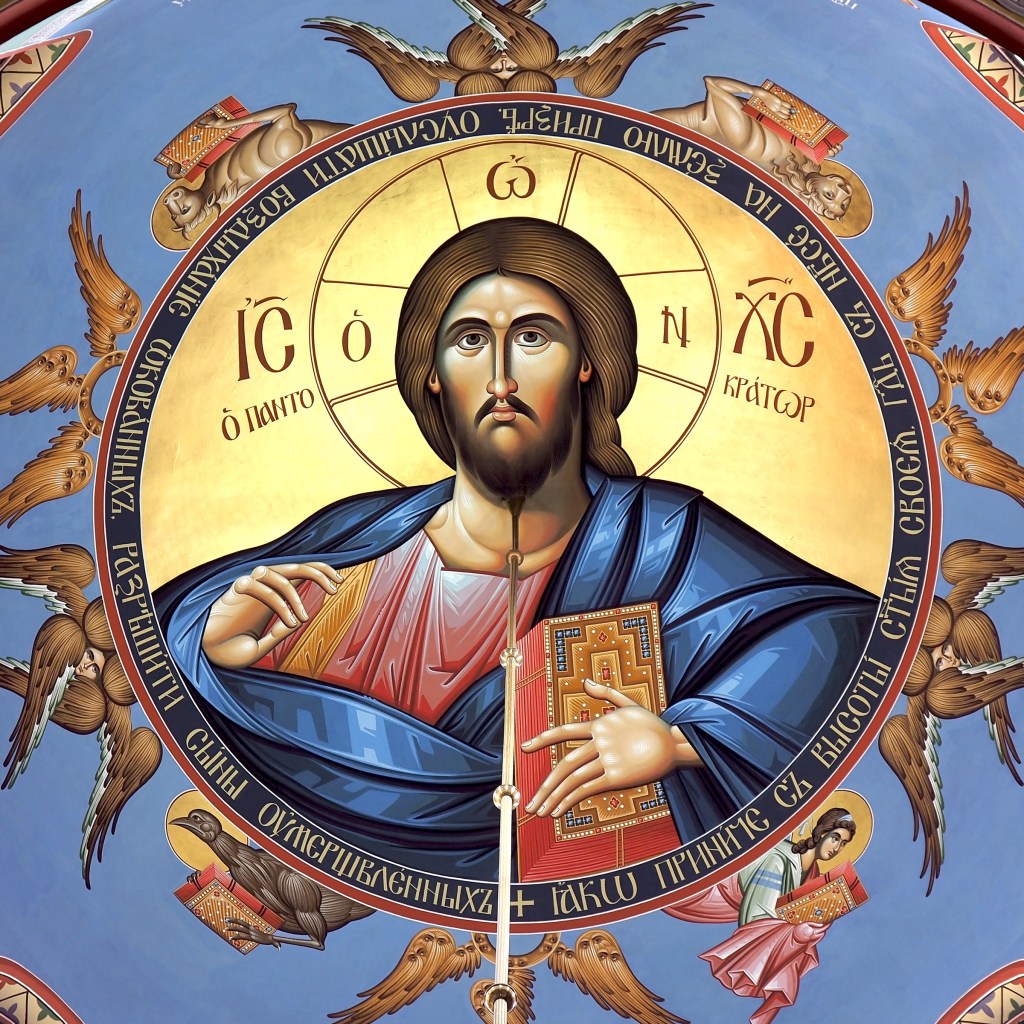
B: Well, I don’t think Jesus is that sort of king at all. Where in the bible does it talk about Jesus having a throne, or jewels, or fine robes, or a golden crown? Falling at the feet of Jesus is a very different encounter. His feet are dirty and bloody, his body broken and beaten, his head bowed beneath the a crown of thorns. Jesus was executed by crucifixion, which was saved for the worst criminals and political rebels. Jesus at the end looked broken and defeated, and is definitely not what we might imagine as a king.

I think this scene is deeper than that. Pilate wants to know if Jesus sees himself as king of the Jews. PiIate might be thinking of thrones and crowns, but Jesus isn’t. He is thinking of something quite different, I am sure. I can see it now: Pilate, the messenger of the earthly kingdom of Rome facing off with Jesus, the messenger of God’s unearthly kingdom.

A: I hear what you are saying, but are you sure about the unearthly bit? After all, Jesus was pretty intentional about challenging the earthly empire and the corruption in authority. Look at him when the widow gave everything, he was exposing systems that were oppressive; and what about when he turned over the tables at the temple? That would have infuriated the temple priests, men who were in the pay of, and appointed by Rome itself, at the time.

B: He did say his kingdom wasn’t an earthly one.

A: On thinking about it, maybe being king of an unearthly kingdom means you act differently when you ARE on earth. Look at Jesus when he entered Jerusalem riding on a donkey, allowing the crowd to shout out Hosanna (which means save us), and acclaim him as a king. His allowing the crowd to shout seditious things at him, would have made him a target not only of the temple priests, but of their Roman masters. Jesus must have known such actions would lead to him being arrested.

B: Hmmm, I see what you are saying. That is a very interesting idea. It is unfortunate that over the centuries, the subversive message of this unlikely king has been somewhat lost. So on the one hand, we have Jesus, the king who: * refused to allow fighting * would not grant prime posts to cronies * would not live in a fine house * refused to hate enemies or plot their downfall * mixed with the common crowds without any sense of royal dignity * refused to play political games to increase his power * did not dress in fine robes, or wear a jewelled crown.

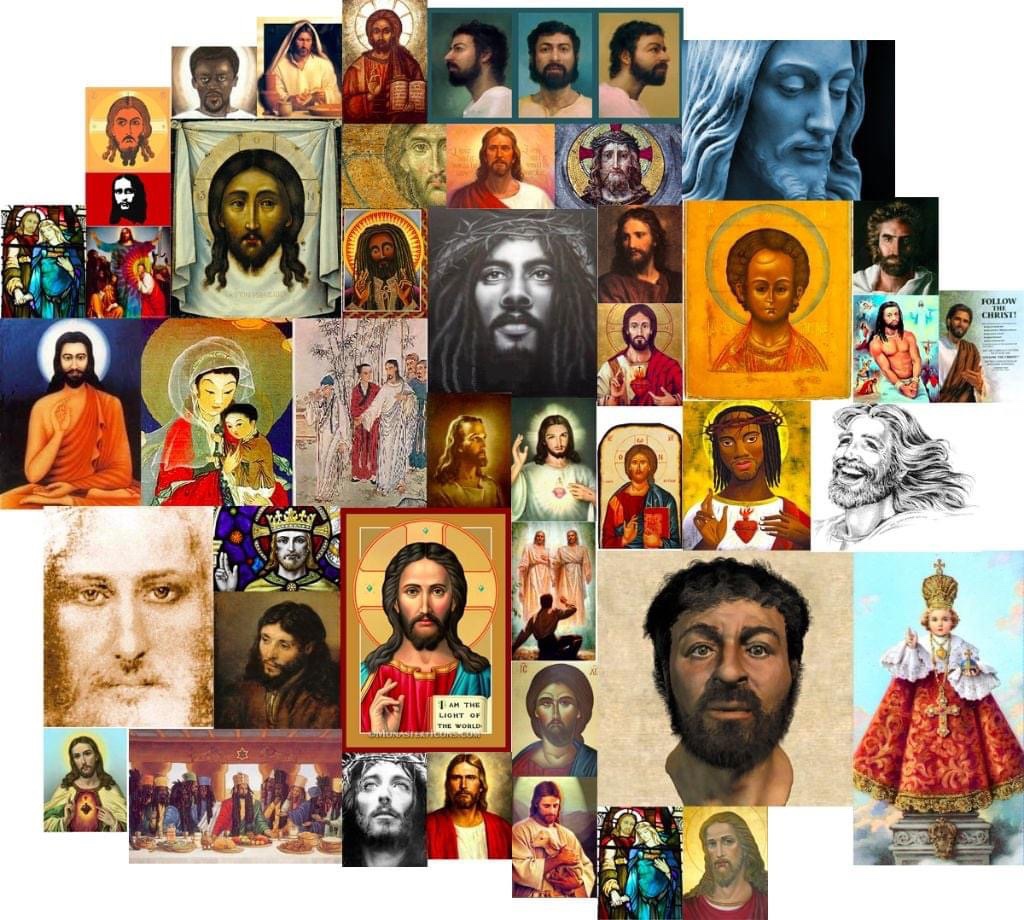
A: But in reality, one the other hand, Jesus is pictured as a heavenly King with a worldly majesty: * who was painted in crowns and fine robes * who was given features similar to earthly monarchs * in whose church was created courtiers and princely representatives * in whose name people blessed their armies as they attacked the cities of their enemies * and of whom the church taught that the next time he came things would be very different as he would subdue the earth and put all opposition under his boot.

B: Well, that does raise some tricky issues. Today on the festival of Christ the King, I think it is important that we think about this. Which kind of King do we want to be worshipping? Will the real Jesus please stand up?

 A: I have been reading about this actually.

B: You? Reading?

A: Yes, me. Now stop with the smart answers. I have been reading Bruce Prewer, who suggests that we grow like the thing we worship. So who do we want to resemble? The king of power, commanding armies, destroying enemies, with fine robes as depicted by artists at the church’s instigation throughout the centuries? Or the king who mixes with common folk, who says put away your sword, who works to free the oppressed, who welcomes the stranger, who eats with sinners, who overturns the tables of the money changers, and who forgives the people responsible for his death?

B: Wow, that is a great way of looking at it. Do we want to be at the edge of our communities our in the middle of power? We don’t know what the future of our world will look like, but surely the kingdom of God shouldn’t have fear or hate or oppression in it.

A: That’s right. If the kingdom of God as Jesus saw it is ever going to happen on earth, then every interaction, every decision, every moment and every place we find ourselves in must be seen as an opportunity to experience God’s reign in our lives, and to share the blessing of God’s reign with others. We need to turn our faith into a life-transforming practice, rather than just an intellectual assent to some ideas about God.

B: For Christ to truly be King in our world, Christ must be King in every individual lives in such a way that God’s peace and justice, God’s love and grace, will constantly flow through us, God’s people, into the world – one moment, one interaction and one transformative step at a time.

A: Surely Christ is the King who turns all of our human notions and illusions of power squarely on their heads. What the world defines as weakness and failure, Jesus shows is the real power rooted in love, bathed in grace, and covered with mercy. He is the one who redeems that which seems unredeemable and the one who loves those who appear unlovable.

By his death, we are offered a way to wholeness and the kingdom of God, a kingdom where love is so powerful that forgiveness is offered to all; where the hungry are fed, the naked are clothed, and the poor and the sick are cared for. In standing with this kingly Jesus today, we can fight racism, classism, homophobia, poverty, discrimination, and homelessness.

B: Yes! We can start to work to make the systems of injustice just, and work to overturn the powers of corruption and darkness. We don’t know what the future of our world will look like, but the kingdom of God doesn’t include fear, hate, or shutting down.

We must answer the call of Jesus which hasn’t changed in 2000 years—“Follow me to a kingdom where domination and oppression have been overcome, where the basic human needs are met, where all dwell in harmony with God and each other.”

A: Now that sounds like a king and a kingdom worth working for.

B: Pilate asked him, “So you are a king?”

A: Jesus answered, “You say that I am a king. For this I was born, and for this I came into the world, to testify to the truth. Everyone who belongs to the truth listens to my voice.” (John 18:37)

*****

B: Loving God of power and justice and peace, in our broken world we seek a new order where there is courage to speak truth to power;

A: we seek a new order where there is mutual support in church and community;

B: we seek a new order where there is abundant time for healing;

A: we seek a new order where there is peace and freedom for all. Amen.