In the loving example of Joseph (Matt 1; Advent 4A)

A Sermon –preached by James Ellis for Advent 4A – Sunday 18 December 2022 – at Tuggeranong Uniting Church, on the occasion of his commissioning into the specified ministry of Lay Preacher within the Uniting Church in Australia

Readings: Matthew 1: 18-25 (with reference to Isaiah 7: 10-16).
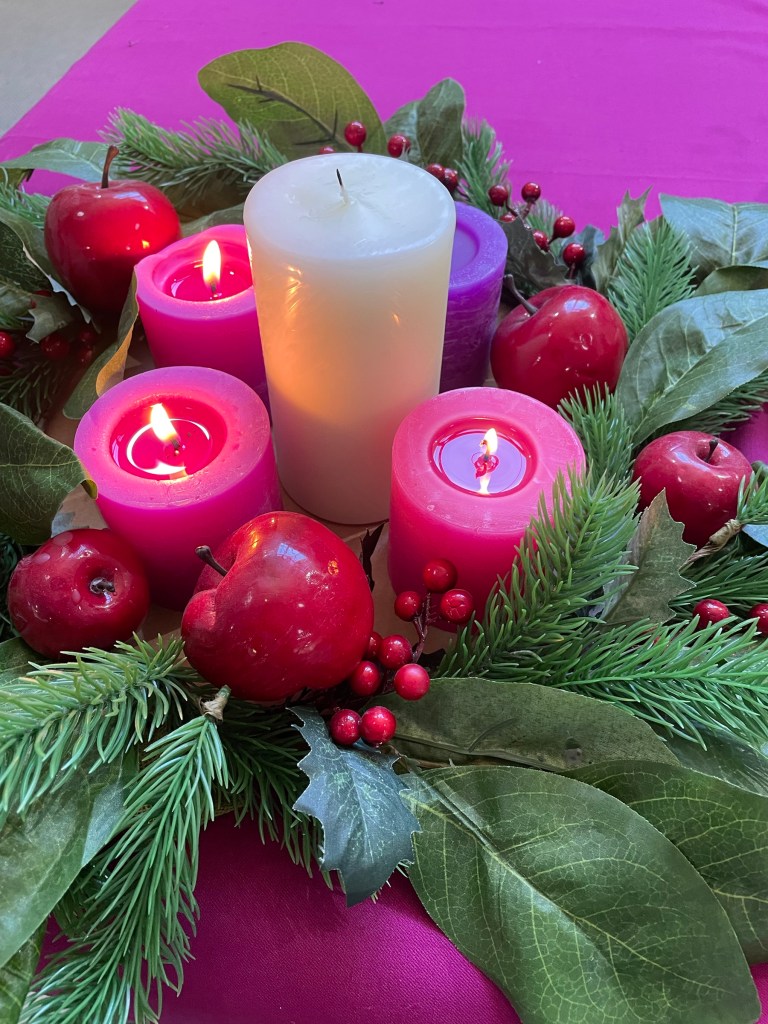
Christmas is coming – or so we have been saying over the past four Sundays! Our lighting of the fourth candle on our advent wreath this morning – the candle of ‘love’ – marks the final days of advent. Christmas is ever closer, but it is not quite here yet.

Some liturgical fusspots can get in a flap about crossing the Christmas threshold “too early” – that is before Christmas Eve, and I admit – not to great surprise I am sure – that I am usually one of these fusspots – especially when it comes to Lent and Advent. 

Well, it seems that the lectionary is not so fussy and frequently prepares us for what lies ahead with a spoiler. That is the case today where our Gospel reading: Matthew’s account of the birth of Jesus. This account, a week before Christmas for us this year, invites us to start pondering the great marvel that is Jesus coming among us in anticipation of Christmas. 

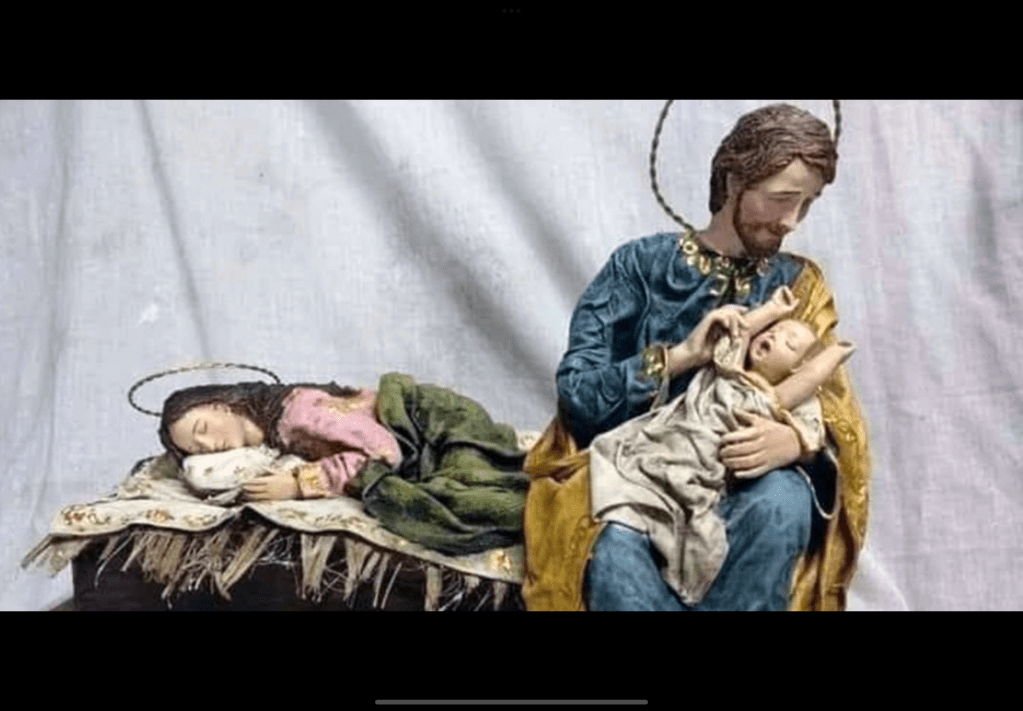
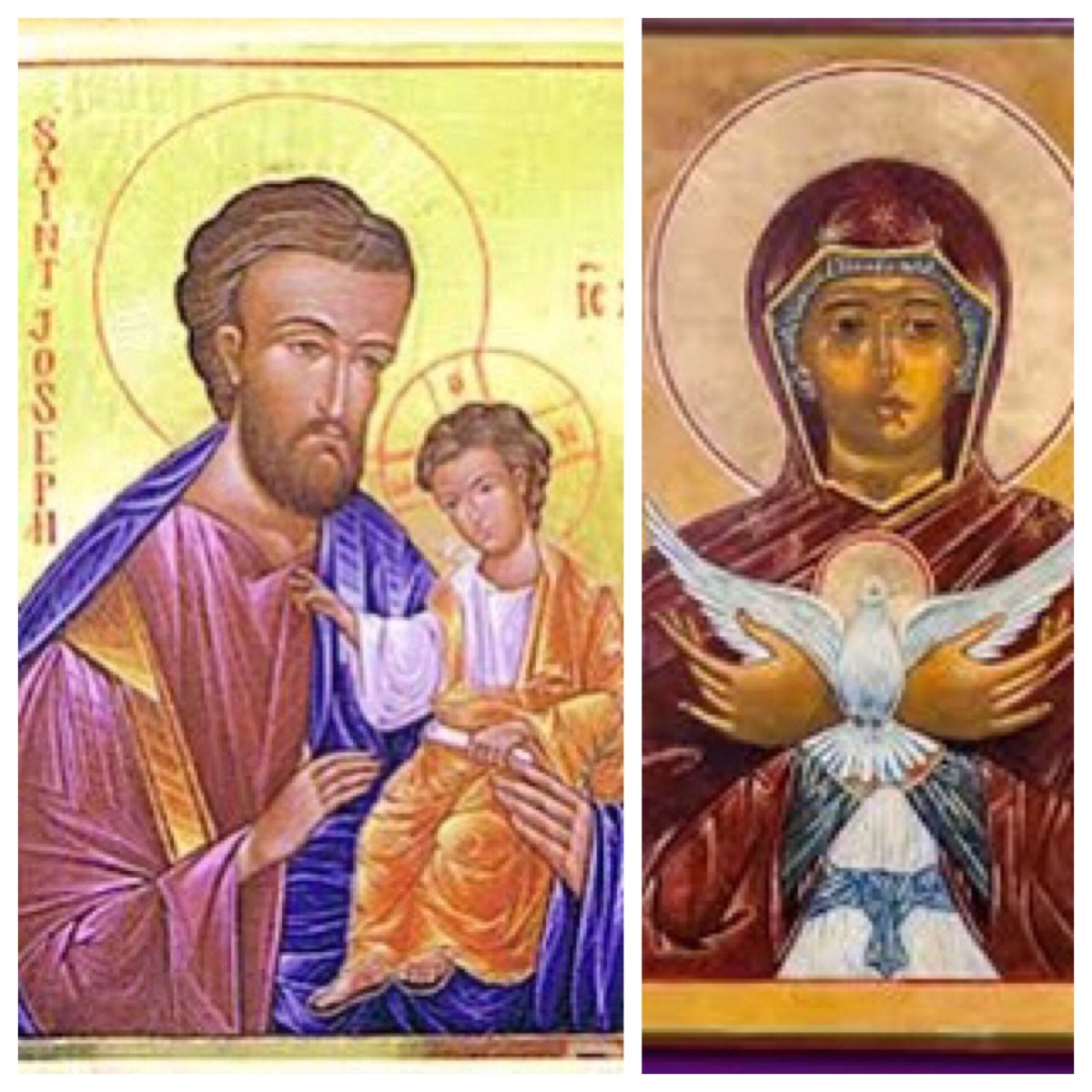
Matthew’s story of Jesus’ birth is very much from the point of view of Joseph. This is quite unique. We usually focus on Mary – and rightly so! We don’t know much about Joseph. We can guess, make assumptions, follow the ‘tradition’ attributed to him – but we simply don’t know. He seems to disappear from the story following the birth. Even when later in Matthew’s Gospel, when Jesus is lost in Jerusalem as a boy, it is his mother Mary who finds (and scolds) him, not Joseph. At the Cross, Mary is there, but Joseph is not. Perhaps, as tradition assumes, Mary is a widow and Joseph has died. 

So, where Luke is very much focussed on Mary’s story and journey, Matthew gives us some insight into Joseph and the situation he found himself in. In this we see the human side of this story…

Joseph is betrothed (NRSV – engaged) to Mary. At the time, this was not like how we view engagement today where it can be called off rather informally. But contracted to marry and considered bound by the laws of marriage, just not living together yet. Scholar Brendan Byrne makes this point in his commentary on this passage when he details the practice of the time to be betrothed young and not live together until much later. The “before they lived together” in verse 18 is to emphasise they had not had any kind of relations together.

It is during this waiting that Joseph becomes aware that Mary is pregnant. We can imagine the dilemma Joseph found himself in – the ambiguity; the lack of certainty; the confusion. He needs reassurance, but also society requires from him a posture of honour and respect. The initial assumption here – for Joseph and anyone who knew – is that Mary has committed adultery. An act which could get her stoned to death under the Deuteronomic laws.

Joseph, as the man ‘wronged’, would be expected at a minimum to divorce (dismiss) her in public and have her attract the shame and humiliation of many other women who have been in a similar situation. We read however that Joseph was a righteous man – and unwilling to expose Mary to such public disgrace (v19). So, he plans to dismiss her ‘quietly’. Still somewhat harsh in our context, but compassionate in his. This reveals to us something of Joseph’s character that he doesn’t want to bring Mary public shame but instead wants to protect her. He cares about her. He loves her.

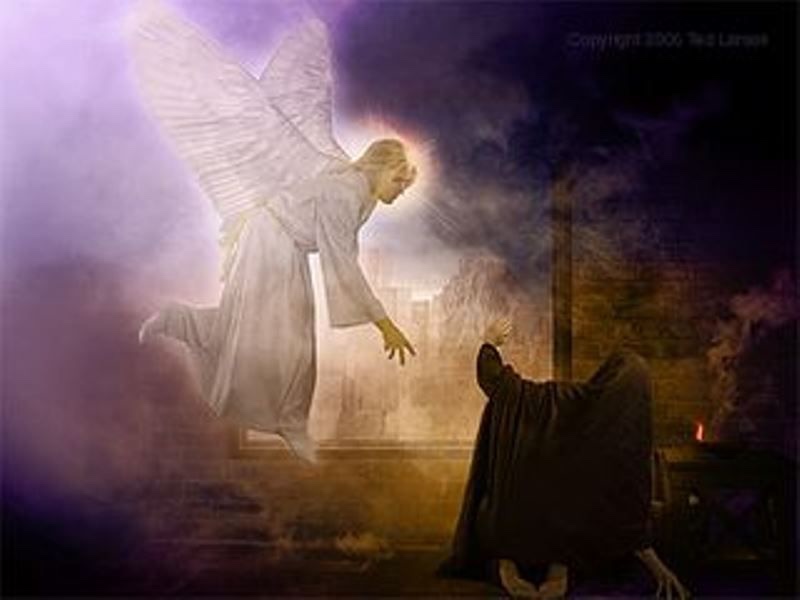
This is attitude and plan before the truth is revealed to him in a dream – where an angel tells him that Mary is in fact pregnant by the Holy Spirit and not because she has been up to no good. Compared to other Angel appearances, Joseph listens and acts. He doesn’t argue or dismiss or come up with excuses. It is almost as though this was what he wanted to hear or needed to hear. 

While we could argue around the who, where, how of a virgin birth, that isn’t the point here today. The Focus here is instead to consider the mysterious and the miraculous as the way that God deals with humanity. Whether it is Abraham and Sarah, Moses (particularly his survival as an infant), Samson, Samuel, Elizabeth and Zechariah … this is the way God deals with the humanly impossible and brings in the new – with impossible births. This is powerful, very powerful, and is the story that speaks through this story. 

Matthew understands this of this story also and we see this by the way he links this event with those contained in Isaiah, also read this morning. “Look, the virgin shall conceive and bear a son, and they shall name him Emmanuel”, which means God with us (v23). Isaiah 7 speaks of the birth of a child, who will be named “Emmanuel”. His birth is a “sign” of God’s promise to deliver and bless King Ahaz and the Judean people with abundance, but also of devastating judgment if the sign is refused. When the son born of the “virgin,” or young woman, is rejected, he becomes a sign of judgment rather than deliverance. Matthew uses the citation of Isaiah 7:14 to indicate that Jesus’ person and mission compel people to make choices, resulting in both redemption and judgment.

The use of “God with us” in Matthew 1:23 and 28:20 thus frames the whole Gospel, which serves as a comprehensive narrative that defines what it means for Jesus to be God with us. The culmination of Jesus’ mission in his death and resurrection means that God’s work of redemption has reached its climactic moment, when Israel is gathered and restored, the mission to the nations has begun, and the whole creation—heaven and earth—will be restored and renewed as God’s dwelling place. 

What role might disciples—all of us—play in the continuing realization of this story?

How is this story still our story in a world ever more filled with greed, exploitation, violence, and death?

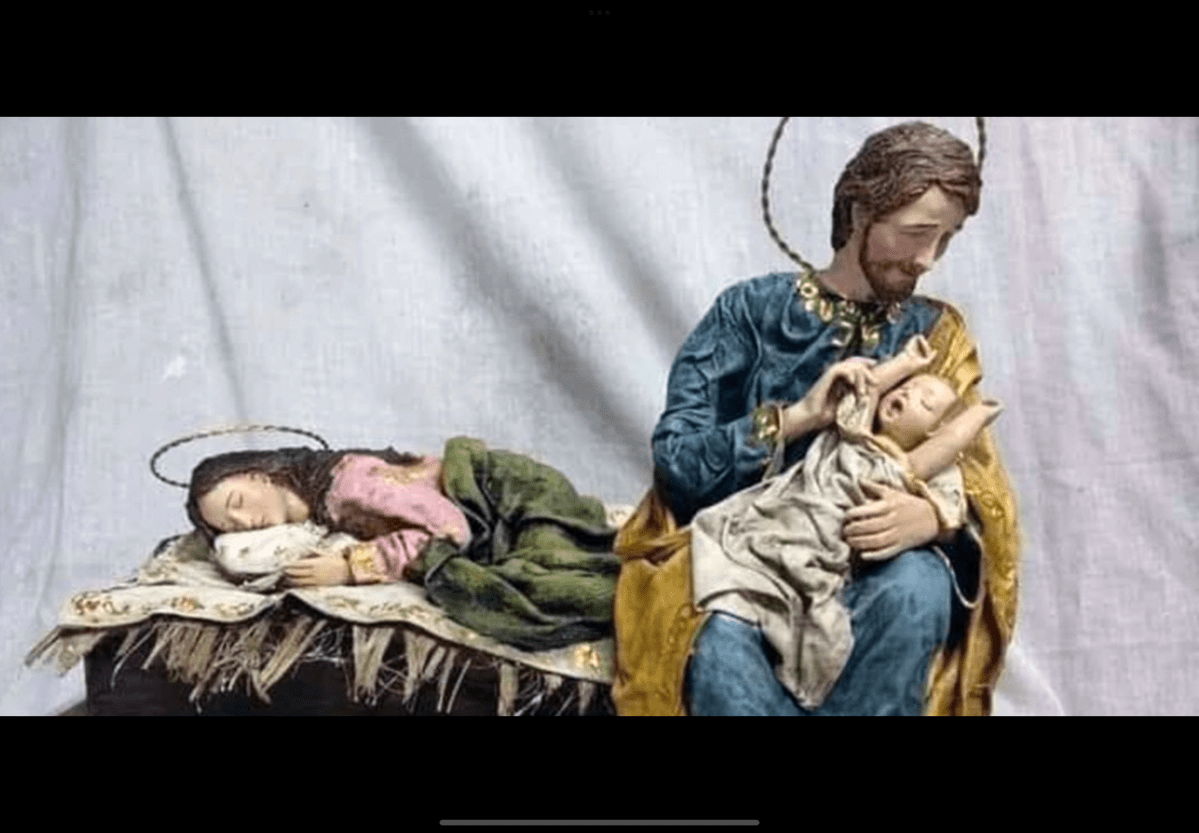
The birth narrative ends with an act of love and commitment from Joseph – where it is he that names Jesus. They become a family, a family of choice. Because of this choice of Joseph’s, Jesus becomes part of the line of David. This family is far from the typical family at the time, but perhaps speaks well into our context.

Rev Dr Jo Inkpin, in her lectionary reflections for the latest issue of Insights, says this about the example of Joseph and the Holy family: “It is an extraordinary family, and as such should give courage to all other families that do not fit neatly into what society says they should. For those who do live within typical expectations this family may also give strength to acknowledge hidden differences and to support those who face other hurts and condemnations. Without the courage of both Joseph and Mary in choosing to step outside conventional boundaries, exercising compassion and common sense, the Christian story could not have begun”.  

I have often heard it said: you don’t know true love until you become a parent. And while the love I experienced when my daughter was born truly made me experience love I never had before – to say I didn’t really know love until then feels … shallow? diminutive?

It seems to me, then, that there are all kinds of love we don’t know until we know it. The love of true, deep friendship. The love of finding a vocation that fills you with purpose. The love of a place that becomes home, perhaps unexpectedly. The love of children birthed or adopted, fostered or through partnership. The love of a community that is a family – like here at Tuggeranong. 

Advent is a journey of God’s unfolding love for us, with us, and before us; it is a time of living in the “here” of a world where Christ came as an infant 2,000 years ago and a time of “not yet” as we live in the midst of sin and sorrow and despair. Advent challenges us to live in this paradox without resolving it. 

And Advent is a time where we are pushed to trust that the love God has for us is going to carry us through – perhaps through unknown paths, or along a winding highway, and almost definitely not where we thought we would go. But the love of God will never, never fade or tire. For God’s love for us is greater than the love parents have for their children, and greater than the love friends have for each other, and greater than the love Joseph showed to Mary and Jesus. 

May we journey together in love this last week of Advent.

The Lord be with you.

*****

Source material: By the Well podcast and Working Preacher podcast, Brendan Byrne, Lifting the Burden: Reading Matthew’s Gospel in the Church Today (Liturgical Press, 2004)
Now the birth of Jesus the Messiah took place in this way (Matthew 1; Advent 4A)

The passages set in the lectionary for this coming Sunday place alongside each other a prophetic oracle spoken by Isaiah, and an angelic announcement delivered to Joseph. The Gospel selection from the book of origins recounts how the birth of Jesus the Messiah took place in this way. The prophetic selection looks to the predicted conception, birth, and naming of a child.

The prophet (Isaiah) was speaking some seven centuries before the time of Jesus, when Judah was ruled by a king. But it was a time when the kingdom was under pressure from stronger forces—the kingdom of Israel to the north, in league with the much stronger empire of Syria.

The angel (unnamed) was speaking to Josephus at a time when the Hebrew people were under Roman rule, after many centuries of foreign domination and oppression. The Assyrians had conquered Israel, in the north, and then the Babylonians had conquered Judah, in the south. In time, the Persians, then the Seleucids, and then the Romans, took control throughout the region.

The centuries of foreign rule took their toll on the national psyche. Hope for a leader from within the people, identified by the prophet, continued on in various forms throughout the period. Some who claimed such leadership met unhappy ends, and led the people into disastrous situations. Hatred of the foreigners grew and remained strong, alongside of persistent hope for the people of Israel.

The oracle of the prophet speaks about a child to be born. The message of the angel announces a child to be born. The context of this latter message, under Roman occupation, resonates strongly with the context of threat when the prophet was speaking. By this means, the overlapping of the child predicted by the prophet and the child announced by the angel is secured.

Thus the author of the book of origins (whom I refer to, following tradition, as Matthew) quotes the prophetic oracle and claims that it has been fulfilled in the angelic announcement. In subsequent verses, he clearly shapes the story of Jesus so that it fulfils scripture at each point along the way. “This took place to fulfil the scriptures” is a common refrain in the chapters that follow (see 1:22, 2:5, 2:17, 3:3, and so on).

Both angel and prophet affirm that child to be born would be a sign to the people, that God was still with them, in the midst of their difficulties. In traditional Hebrew fashion, the name given to the child signals the prophetic understanding of the role of the child. Thus, Emmanuel, meaning “God is with us”, is the name decreed for the child (Isa 7:14).

This prophetic pronouncement is quoted, with intent, in the book of origins (Matt 1:23). The child should be known as Emmanuel. And yet—the name actually given to the child whose birth was announced by the angel is “he saves”. Not, “God is with us”; but, “he saves”. And we know this child by this given name—in Hebrew, Yehoshua, or modified into English, Jesus. Saviour. The one who “will save his people from their sins” (1:21).

As Saviour, then, the child will serve as a signal of God’s enduring presence with the people. Salvation is effected by God and mediated through the child, it would seem.

The announcement reported in Matt 1 is made to Joseph. Not to Mary, as is the case in the orderly account that we know as the Gospel of Luke. In Matthew’s version, the angel speaks directly to Joseph, addressed as “son of David” (1:20). The story comes immediately after recounting a genealogy for the child, made through Joseph, “the husband of Mary, of whom Jesus was born” (1:16).

And the irony of this is that, if we take the literal explanation provided regarding the parentage of Jesus, then Mary is the mother (1:18), but she has had no marital relations with Joseph (1:25). Joseph is not presented as the “natural father”. And the citation of the prophetic oracle is intended to align Mary, the mother, with the virgin who shall conceive (1:23).

Of course, many commentators have noted that there is a translation issue at stake here. (See my post on this at https://johntsquires.com/2019/12/21/a-young-woman-a-virgin-pregnant-about-to-give-birth-isa-714-in-matt-123/)

In Christian tradition, the fathering of the child is attributed to the Holy Spirit, who overshadows the virgin to produce the child (Luke 1:35; Matt 1:18,23). When did that tradition develop? Perhaps it was already known outside of the community of which the author of this book of origins was a part? Certainly, it was later articulated in the orderly account attributed to Luke. Awareness of this claim most likely influenced Matthew to include the prophetic oracle as a foundation for the angelic announcement—he turns to scripture to provide a foundation for his story at many points.

And so the tradition of the virginal conception of Mary arose—leading to the (less accurate) claim about the birth of Jesus having been a Virgin Birth, now strongly cemented in traditional Christian dogma.

But back to the book of origins. Here, we have a child named incorrectly and a lineage traced back to key figures through the apparent non-father. A strange way to start a story!!

And yet, the book of origins is insistent on the Davidic lineage of Jesus—through the line of Joseph. And that is clearly because the covenant with David was an important motif to many groups in Jewish history. God promised that there would always be a descendant of David upon the throne of Israel; by the time that a member of Matthew’s community started to write the book of origins, this had developed into a messianic expectation in certain groups.

Members of the Jewish community in which the book of origins itself originated firmly believed Jesus to be the Messiah. Accordingly, the stress upon the “correct” ‘Davidic’ genealogy of Jesus would have been of particular importance to this predominantly Jewish group, especially one challenging the authority of the Pharisaic Jews of the time. It is probable that this is why Matthew uses the term “son of David” for Jesus much more than the other Gospel writers (1:1, 20; 9:27; 12:24; 15:22; 20:30–31; 21:9, 15, 42).

Matthew’s use of “formula quotations” also provide indications that the life, work and death of Jesus, in its totality, is the fulfilment of prophecy in the Hebrew scriptures, and therefore the expected Messiah.

“This took place to fulfil what had been spoken by the prophet” (or a close variant of this formula) can be found five times within the infancy narrative (1:22; 2:5, 15, 17, 23), and then a further nine times throughout the remainder of the gospel (3:3; 4:14; 8:17; 12:17; 13:14, 35; 21:4; 26:56; 27:9).

There are other scripture quotations which are introduced by simpler formulae; for example:

“it is written” (4:4, 6, 7, 10; 21:13; 26:31)

“Isaiah prophesied rightly about you when he said…” (15:7)

“have you not read that…?” (19:4; 21:16)

“have you never read in the scriptures…?” (21:42)

“David by the Spirit calls him Lord, saying” (22:43).

Some passages are clearly quoted, but without any introductory formula (for instance, 24:29 and 26:64). Indeed, Hebrew Scripture influences many other parts of the gospel, through allusion and inference as well as through use of selected terminology.

On the importance of using care when reading Hebrew Scripture passages quoted by the Gospel writers (especially during Advent), see https://johntsquires.com/2022/11/22/on-reading-scripture-during-advent-drawing-from-the-ancient-prophecies-isaiah-2-advent-1a/

More than half of these fulfilment quotations come from the book of Isaiah, indicating the importance of its themes and theology for Matthew. Matthew uses the fulfilment quotations to emphasise that what Jesus said and did was to fulfil the plan of God, as set out by the prophets and writers of old.

By adding so many of these quotations, Matthew emphasises something about Jesus and what it means to believe in him. Matthew wishes to stress beyond a shadow of a doubt, that Jesus is the chosen one of God and that the community’s belief in him as Messiah is completely justified; this justification can be found in the fulfilment of Hebrew scripture.

Therefore, in keeping with this notion, Matthew’s report of the baptism of Jesus highlights that Jesus is the fulfilment of righteousness. Only Matthew (3:14–15) reports the conversation between Jesus and John the Baptist, in which Jesus states that for John to baptise him “is proper for us in this way to fulfil all righteousness”.

Thus, Jesus begins his public ministry by demonstrating a central theme of this Gospel—that of obedience to the will of God. Not surprisingly, Jesus’ baptism is accompanied by a sign commonly found in scriptural theophanies, that of God’s voice. Jesus is announced as a “beloved son”, pleasing to God (3:17). He is, in this Gospel, not only the son of David, but the son of God.

As the book itself begins: the book of origins of Jesus the chosen one, descendant of David, descendant of Abraham.

See also

https://johntsquires.com/2019/12/11/the-origins-of-jesus-in-the-book-of-origins-matthew-1/

https://johntsquires.com/2019/12/04/for-our-instruction-that-we-might-have-hope-rom-15-isa-11-matt-3/

https://johntsquires.com/2019/11/28/leaving-luke-meeting-matthew/

https://johntsquires.com/2018/12/19/what-can-we-know-about-the-birth-of-jesus/

Descended from David according to the flesh (Rom 1; Advent 4A)

In the selection from Paul’s letter to the Romans that is offered by this Sunday’s lectionary, Paul refers explicitly to the gospel concerning [God’s] Son, who was descended from David according to the flesh (Rom 1:3). In the midst of the Christmas carols and Christmas cake, the Christmas cards and the Christmas parties, there stands this stark affirmation: Jesus was a Jew. And, more specifically, that Jesus was a descendant of David.

It is noteworthy that Paul makes very little reference in his letters to the earthly life of Jesus; he is much more focussed on the death and the resurrection of Jesus, rather than his life of teaching, preaching, story-telling and miracle-working. In his letter to the Galatians, however, he makes a similar affirmation about the humanity, and the Jewishness, of Jesus: when the fullness of time had come, God sent his Son, born of a woman, born under the law (Gal 4:4).

Descended from David, born under the law: Jesus was clearly a Jew. That needs to sit at the heart of the story that we recall each year at this time. The Jewishness of Jesus is an essential element of the Christmas story.

Those who recount the story of Jesus, in the documents we know as the Gospels of the New Testament, are clear about this fact. Mark locates Jesus in Galilee, the northern part of the land of Israel, and identifies his home town as Nazareth (Mark 1:9; 10:47; 14:67; 16:6). Matthew and Luke follow the pattern established by Mark, in locating the vast majority of the activity of the adult Jesus in the northern regions of Israel.

Matthew intensifies this picture, however. At the start of his book of origins, he traces the lineage of Jesus back to David, and further back to Abraham (Matt 1:1-17). He traces this lineage of Jesus, not through his mother, Mary, but through Joseph—because it was Joseph who was of the lineage of David. This Davidic heritage of Jesus is central and important for Matthew, for he, most of all the evangelists, has characters in the story address Jesus as “Son of David” (1:1, 20; 9:27; 12:24; 15:22; 20:30–31; 21:9, 15, 42). He wants to advocate, as he tells his story, that it is through Jesus that the ancient promises to David will come to fruition.

At the start of his story, and at various places further on, Matthew notes that the actions and words of Jesus occur as fulfilment of prophetic words (Matt 1:22; 2:5, 15, 17, 23; 3:3; 4:14; 8:17; 12:17; 13:14, 35; 21:4; 26:56; 27:9).

Twice in his account of Jesus, Matthew is insistent that his active ministry and that of his first followers took place only amongst “the lost sheep of the house of Israel” (Matt 10:6; 15:24). For Matthew, Jesus was resolutely, scrupulously, Jewish.

The Gospel of John also reinforces the Jewish identity of Jesus. The Samaritan woman describes Jesus as “a Jew” (John 4:9), Jesus regularly travels to Jerusalem for Jewish festivals (John 2:13, 6:4, 7:1-10, 10:22, 12:12, 13:1), in conformity with Jewish piety. When Pilate questions Jesus, he recognises him as King of the Jews (18:33-35) and refers Jesus to Jewish leaders for their decision (18:31, 19:6-7, 19:14). Pilate then has him crucified under a sign identifying him as “Jesus of Nazareth, the King of the Jews” (as, indeed, the other three Gospels also report).

In the Gospel of Luke, the Jewish identity of Jesus is recounted, repeated, and intensified. Although often touted as the evangelist who most strongly orients the story of Jesus towards Gentiles throughout the hellenistic world of the Roman Empire, Luke actually sets his orderly account in the heart of Jewish piety, from the very opening scene of the Gospel which reveals a pair of righteous Jews who faithfully keep the commandments of God (Luke 1:5–6).

The man, Zechariah, is devoted to the service of God in the Temple (1:8–9). His wife, Elizabeth, expresses an attitude of deep faith in God, accepting her surprise pregnancy as “what the Lord has done for me” (1:25). Her relative, Mary, demonstrates a similar faith as she submits to a similar fate with the words, “here am I, the servant of the Lord” (1:38).

In turn, the traditional hopes and expectations of the people are articulated in spirit-inspired hymns sung by Mary (1:46–55), Zechariah (1:67–79) and Simeon the righteous (2:29–32). These are, by rights, the first Christmas carols—songs which sing of the one to come, which tell of the birth of one promised, which look with hope to the change he will effect. And they are resolutely Jewish.

The children whose births are recounted in these early chapters of Luke—Jesus and his cousin John—bear the weight of traditional Jewish hopes and expectations as they come into being. They are born as faithful Jews. They both lived in fidelity to the Jewish law. The mission of Jesus to fulfil the hopes articulated by Jewish prophets (Luke 4:18-21) and to point to the promise of the kingdom ruled by God (Mark 1:15; Matt 4:17) which, he proclaimed, was already becoming a reality in his own time (Luke 17:20).

The sense of deeply devoted and strongly conventional Jewish piety continues in the reports of the early years of Jesus. Luke’s Gospel reports that Jesus was circumcised (2:21) and dedicated in the Temple (2:22–24) in accordance with Jewish custom, and that he showed an early interest in the Law (2:41–51).

So we would do well not to skirt away from this very particular and specific aspect of the Christmas story.

As we come to the celebration of the child in the manger, let us remember that he spoke with a voice that called people—his people in Israel, and people beyond his people—to the enticing vision (sourced from the Hebrew prophets) of a world renewed and reconciled, where righteousness and justice were realities, where the hopes of Israel could flourish and come to fruition. That is the thoroughly Jewish vision that the story of Jesus offers.

…….

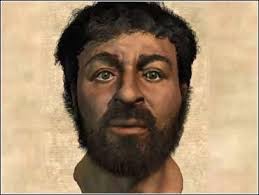
The featured picture portrays a Judean man from Jesus’s time, based on archaeological findings, and is often used as an image for what the historical Jesus may have looked like.

See also https://johntsquires.com/2019/12/11/the-origins-of-jesus-in-the-book-of-origins-matthew-1/

https://johntsquires.com/2019/12/17/now-the-birth-of-jesus-the-messiah-took-place-in-this-way-matthew-1/

https://johntsquires.com/2019/12/04/for-our-instruction-that-we-might-have-hope-rom-15-isa-11-matt-3/

https://johntsquires.com/2019/11/28/leaving-luke-meeting-matthew/

https://johntsquires.com/2018/12/19/what-can-we-know-about-the-birth-of-jesus/

A young woman? A virgin? Pregnant? About to give birth? (Isa 7:14 in Matt 1:23; Advent 4A)

The passages set in the lectionary for this coming Sunday place alongside each other a prophetic oracle spoken by Isaiah, and an angelic announcement delivered to Joseph. The two passages seem to sit side-by-side very comfortably. The Gospel selection from the book of origins recounts how the birth of Jesus the Messiah took place in this way. The prophetic selection from Isaiah declares that the Lord himself will give you a sign and looks to the conception, birth, and naming of a child.

The oracle of the prophet speaks about a child to be born to a young woman. The message of the angel announces a child to be born to a young woman who was a virgin. The author of the book of origins (whom I refer to, following tradition, as Matthew) quotes the prophetic oracle about the birth of a child and claims that it has been fulfilled in the angelic announcement about the birth of a child to Mary and Joseph. The angel follows the prophet in affirming that child to be born would be a sign to the people, that God was still with them, in the midst of their difficulties. But the status of the young mother is a question that has long vexed interpreters.

How do we read the Gospel account when it takes up an ancient word of the prophet and interprets it to relate specifically to the story of Jesus? I have reflected on the issues we need to bear in mind as we do this, especially during this season of Advent, at

On reading scripture during Advent: drawing from the ancient prophecies (Isaiah 2; Advent 1A)

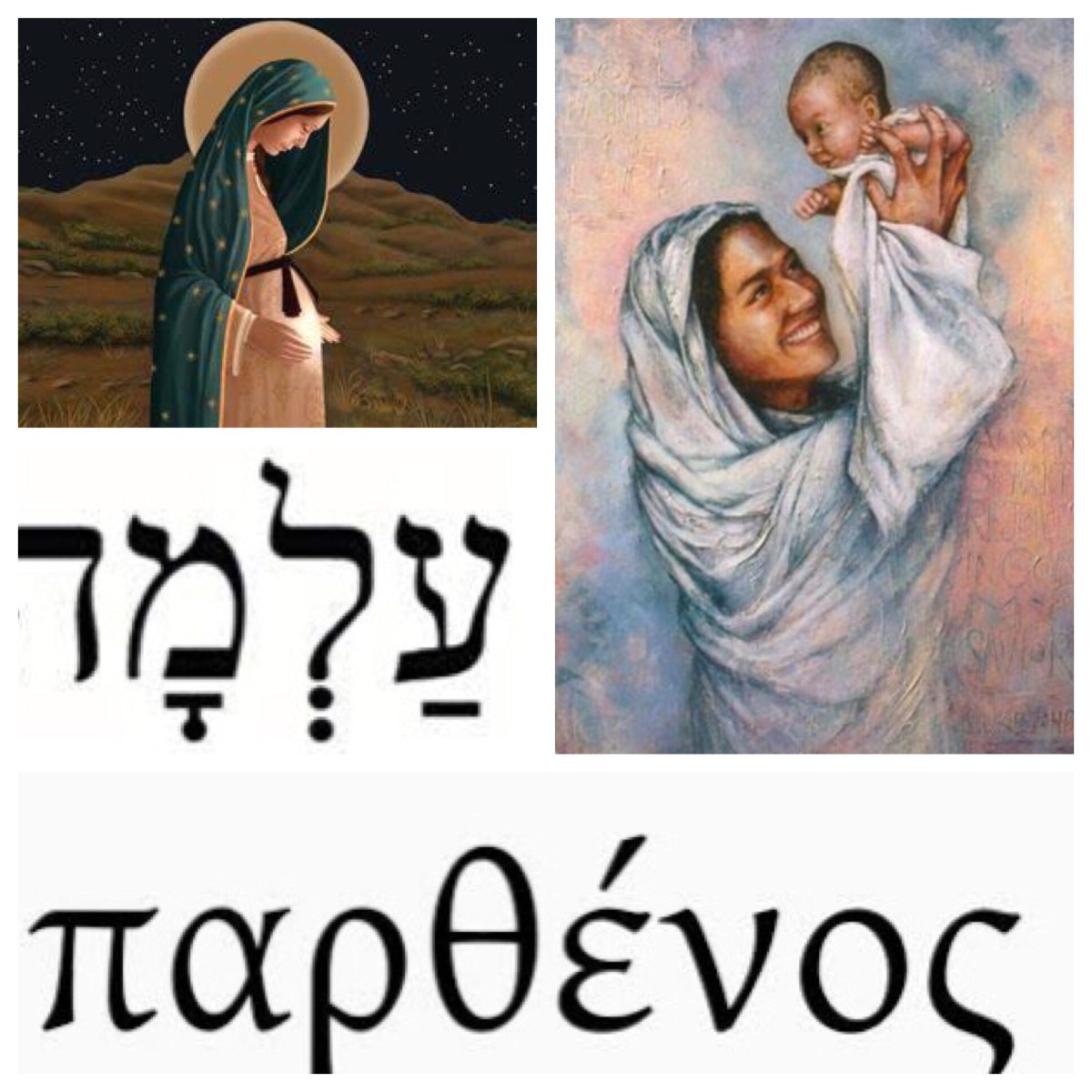
The Hebrew word found in the original oracle of the prophet, almah, refers simply to a young woman of childbearing age; it had no connotation at all relating to virginity. It occurs in eight other places in Hebrew scripture—with reference to Rebekah and Miriam, in three references to female musicians, and in wisdom texts relating simply to young women. In none of those places does it have any reference to the virginity of the young woman.

There is also, in Hebrew, the word bethulah, which refers specifically to a young woman who was a virgin; but it is important to note that this word was not employed by the prophet Isaiah. He clearly was referring to a young woman aged around puberty, who was now able to bear a child. He was not referring to a young woman who had never had sexual intercourse, who was still a virgin.

The Greek translation of these Hebrew texts was made some centuries before Jesus. The translation is known as the Septuagint, attributed to seventy wise scholars. In this translation, the Hebrew word bethulah is usually rendered in Greek as parthenos. This Greek word can refer quite generally to a young woman, but it can have a more specific reference to the virginity of the young woman.

Now, on two occasions in the Septuagint, the word almah is rendered as parthenos: Gen 34:3 and Isa 7:14. The first refers to Dinah. It occurs in the story at the point where the powerful prince Schechem rapes the young woman. The point is being made that her state of virginity has at that point been lost, so the Greek word is appropriate.

But the oracle of Isaiah 7 refers simply to a woman who, at an early stage in her capacity to bear a child, is indeed pregnant. So there appears to be no reference at all to her lack of sexual activity prior to this pregnancy. This much is clear in the Hebrew. But the Septuagint translators chose the Greek word parthenos.

We must wonder: is the choice of parthenos when translating Isa 7:14 from Hebrew a strategic move by the seventy wise scholars? Is it an inspired insight into the meaning of the Hebrew text? Or is it an unguarded moment, a slip of concentration, amongst the translators?

I incline to the latter view. I don’t think the intention of the Septuagint translators was to insist that we know more than what the original prophet knew—that is, the precise sexual status of the young woman in question, not just young, but still a virgin.

Nevertheless, Matthew uses the version of the prophet’s oracle that includes this Greek word. He quotes the Greek version of the Septuagint, since he is writing in Greek. Mind you, Matthew regularly and consistently quotes the Septuagint translation, rather than other options that would have been available to him. So this is not really a surprise.

Whatever identity we accord the author of this book of origins, it is quite clear that he was an educated Jewish male. As such, he would have known and used the scriptures of the people of Israel, in Hebrew. And yet, he is writing his account of Jesus in Greek—so he makes use, on a regular basis, of this version.

And this version places a focus on the virginal status of the young woman, who was to give birth to Jesus of Nazareth. So Matthew has deliberately chosen to include this in his story.

Why? That is a good question! Why?

Rather than seeing Matthew as trying to prove the historical veracity of the virginal status of Mary, however, I incline to the view that the primary purpose, as Matthew tells the origins of Jesus, is for him to prove Jesus’ legal status as the stepson of Joseph, as a legal heir of David. Whilst the infancy narrative in Luke places Mary at the centre of the story—and the angel makes his announcement directly to her—in Matthew’s version it is Joseph who is centre-stage—and the angel speaks to him, and only him, in this version.

This passage in Matthew 1 is the one and only time in the book of origins when the virginal status of the mother of Jesus is noted. By contrast, the Davidic lineage of Jesus, through Joseph, is a concern which is both in view here at the start of the whole story, and which returns at various points through the ensuing story. (See https://johntsquires.com/2019/12/17/now-the-birth-of-jesus-the-messiah-took-place-in-this-way-matthew-1/)

And as if to reinforce this lineage through Joseph, the book of origins takes pains to establish that Joseph, a descendant of David, was “a righteous man”, as befits a Davidic descendant (1:19; David is declared as righteous at 1 Sam 24:17).

Although, it is worth noting one way by which Joseph exemplifies the questionable moral character of his ancestor—initially he was “unwilling to expose her to public disgrace” and wanted to dismiss Mary (1:19). Nevertheless, after hearing the announcement of the angel, he remained faithful and “did as the angel of the Lord commanded him” (1:24).

And whilst he took Mary as his wife, Matthew maintains that, as a righteous man, Joseph “had no marital relations with her until she had borne a son” (1:25). At which point, we may presume, Joseph functions as the de facto father of the newborn child. So this is part of the pro-Davidic apologetic of this book, not the basis for the doctrine of the Virgin Birth.

Joseph, descendant of David, takes on the legal role of father of the child. (Indeed, we are never told that he refrained from relations when they were engaged, before Mary conceived; rather, might we infer that the shame that Joseph expresses incriminates him?)

Certainly, in Christian tradition the fathering of the child is attributed to the Holy Spirit, who overshadows the virgin to produce the child (see Luke 1:35). That developing tradition was presumably already known in early Christian communities of the first century. But how early, we do not know.

In the earliest decades of the movement that Jesus initiated, Paul makes no reference to this claim in any of his letters. He knows the Jewish origins of Jesus, but says nothing even hinting at Mary’s virginal status (see https://johntsquires.com/2019/12/19/descended-from-david-according-to-the-flesh-rom-1/)

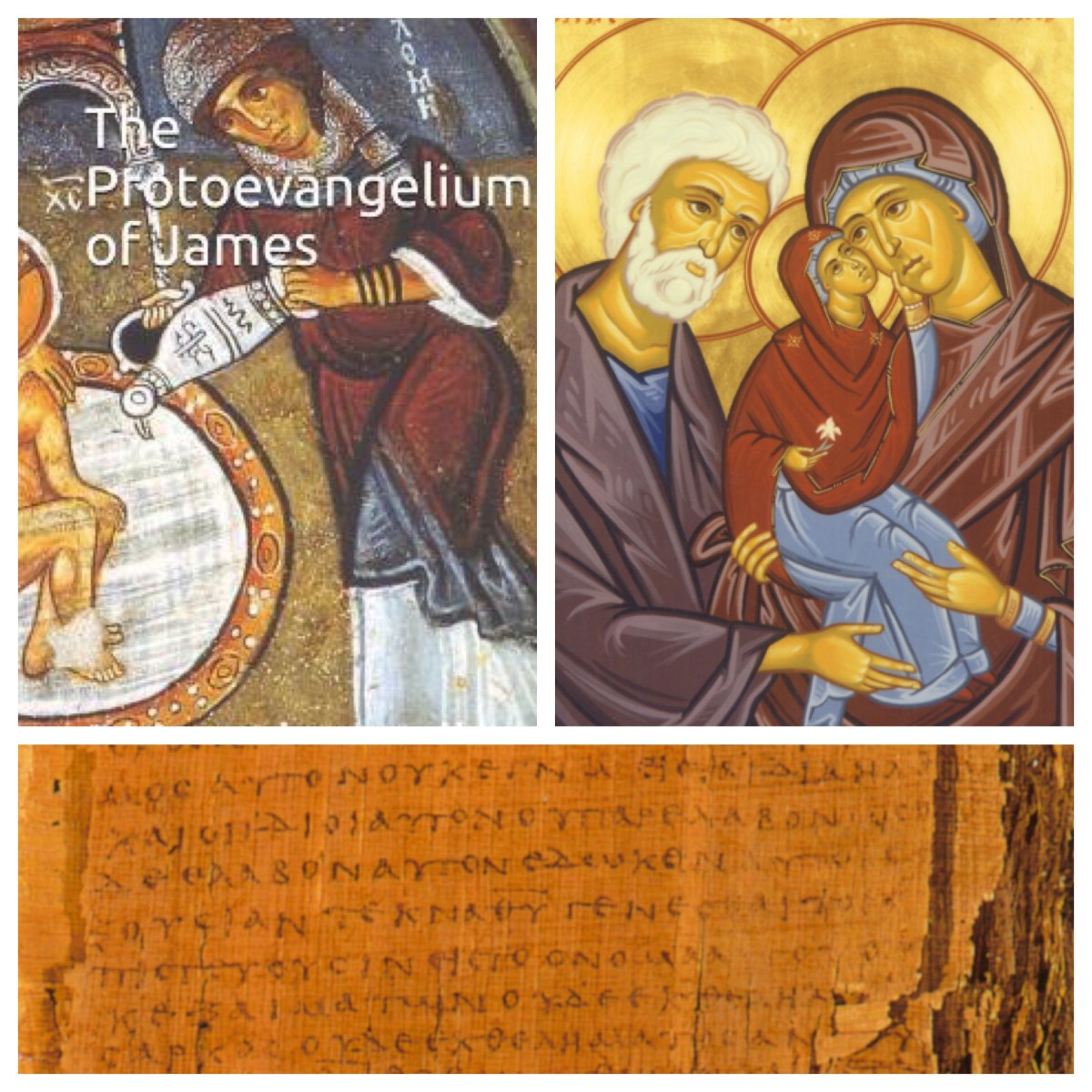
The letter of James, if it was authored by the brother of Jesus, is an early witness that shows no concern for this doctrine. Mark, the earliest extant Gospel, makes no reference at all to the virginal status of Mary. Early witnesses make no reference to the doctrine which emerged much later, they provide no hints or clues upon which this dogma can be founded.

What we do know is that this claim was articulated in the later part of the first century in the orderly account attributed to Luke, as well as in this book of origins, attributed to Matthew, who includes the prophetic oracle as a foundation for the angelic announcement and to refer directly to this claim (1:18, 20).

And so the tradition of the virginal conception of Mary arose, eventually leading to the (less accurate) claim about the birth of Jesus having been a Virgin Birth, now strongly cemented in traditional Christian dogma. But I don’t think that this particular book of origins was really concerned, either to establish this claim, or to utilise it as a foundation for a whole developed dogma about Jesus, as would subsequently occur in Christian tradition.

And thus, I don’t think we need to hold to a notion that the mother of Jesus was still a virgin when he was born. She was, quite simply, young, at the beginning of her childbearing years, around 14 or 15 years of age. What sexual activity she engaged in at that time can never be known. But she was, in due course, married to a descendant of David; and that is what mattered for Matthew.

See also

https://johntsquires.com/2019/12/11/the-origins-of-jesus-in-the-book-of-origins-matthew-1/

https://johntsquires.com/2019/12/17/now-the-birth-of-jesus-the-messiah-took-place-in-this-way-matthew-1/

https://johntsquires.com/2019/12/04/for-our-instruction-that-we-might-have-hope-rom-15-isa-11-matt-3/

https://johntsquires.com/2019/11/28/leaving-luke-meeting-matthew/

https://johntsquires.com/2018/12/19/what-can-we-know-about-the-birth-of-jesus/

Joyfully hoping and waiting (Isa 35, Ps 146, and Matt 11; Advent 3C)

The readings for this coming Sunday really do go hand-in-hand. It is not always this way; for more than half the year, the First Reading, Epistle, and Gospel each go their own way, following their own independent sequential pathway of readings with little or no explicit acknowledgement of each other. Sometimes, hopefully, the Psalm will resonate with one or more of these readings. Not so, however, this Sunday—as, indeed, on each Sunday in Advent (and in Lent)—for the four readings for today were deliberately yoked together by the creators of the lectionary for this third Sunday in Advent.

The lines of connection are clear. “The wilderness and the dry land shall be glad, the desert shall rejoice and blossom; like the crocus it shall blossom abundantly, and rejoice with joy and singing”, declares the prophet (Isa 35:1–2). “The farmer waits for the precious crop from the earth, being patient with it until it receives the early and the late rains. You also must be patient”, advises the letter-writer (James 5:7–8). And Jesus hears the question of the disciples sent by John, “are you the one who is to come, or are we to wait for another?” (Matt 11:1–2). Waiting, with patience, for the long-desired coming.

The revolutionary impact of what is being waited for is also evident. “The eyes of the blind shall be opened, and the ears of the deaf unstopped; the lame shall leap like a deer, and the tongue of the speechless sing for joy”, the prophet sings exultantly (Isa 35:5–6). The Psalmist sounds, too, this song of sheer joy, praising “the God of Jacob … who executes justice for the oppressed; who gives food to the hungry … [who] sets the prisoners free, [who] opens the eyes of the blind, [who] lifts up those who are bowed down [and] loves the righteous, [who] watches over the strangers [and] upholds the orphan and the widow” (Ps 146:5, 7–9).

And Jesus himself informs the messengers sent by John that, yes, indeed, in what he is doing “the blind receive their sight, the lame walk, the lepers are cleansed, the deaf hear, the dead are raised, and the poor have good news brought to them” (Matt 11:5). In the alternate psalm offered by the lectionary, the young, pregnant, trusting Mary sings out loud that “the Mighty One … has scattered the proud in the thoughts of their hearts [and] has brought down the powerful from their thrones, and lifted up the lowly; he has filled the hungry with good things, and sent the rich away empty” (Luke 1:49, 51–53).

Indeed, this recitation of how God acts for the good in the lives of God’s people forms the foundational claim and then a recurring leitmotif in the Lukan account of the activities of Jesus throughout Galilee (Luke 4:18–19; 6:20–26; 7:22; 9:1–2; 10:8–9; 13:30; 14:11, 13–14, 21–24; 18:14, 22–25). An exact parallel to the declaration made by Jesus at Luke 7:22 forms the central claim in the passage from Matthew (11:2–11) that the lectionary offers us this coming Sunday. This upside-down kingdom, to be brought about by the righteous-justice of God (Matt 6:33), is at the heart of what we wait for, what we hope for, what we work towards.

So the prophetic word this Sunday looks to a time when “waters shall break forth in the wilderness, and streams in the desert; the burning sand shall become a pool, and the thirsty ground springs of water; the haunt of jackals shall become a swamp, the grass shall become reeds and rushes” (Isa 35:6–7). This is possible because it is the Lord “who made heaven and earth, the sea, and all that is in them; who keeps faith forever” (Ps 146:6).

The prophet envisages a highway, to be called “the Holy Way”, on which God’s people shall travel and not go astray, for all the familiar elements of danger will be absent. Safety is assured, for “no lion shall be there, nor shall any ravenous beast come up on it; they shall not be found there, but the redeemed shall walk there” (Isa 35:8–9). Joy and gladness will replace sorrow and sighing (Isa 35:10). An attitude of confident hope is called for as such a time is awaited, for “as an example of suffering and patience, beloved, take the prophets who spoke in the name of the Lord” (James 5:10).

There is a parallel to this eruption of joy during Lent, when in traditional practice the fourth Sunday in Lent was known as Laetere Sunday—from another Latin word meaning “rejoice”, which forms the opening of the introit for that day in the Latin Mass: Laetare Jerusalem et conventum facite omnes qui diligitis eam (“Rejoice with Jerusalem and be glad for her, all you that delight in her”, Isa 66:10).

These readings are intentionally clustered together for this coming Sunday, since it is, by tradition, known as Gaudate Sunday—from the Latin word meaning “rejoice”, the opening word of the introit to the Latin Mass for this day: Gaudete in Domino semper: iterum dico, gaudete (“rejoice in the Lord always; again I say, rejoice”, Phil 4:4). It is also known as Rose Sunday, and a rose colour can replace the purple of Advent for this day.

The note of rejoicing is clear in the Psalm, as “those whose help is the God of Jacob, whose hope is in the Lord their God” celebrate that “the Lord will reign forever” (Ps 146:5, 10). There is rejoicing envisaged by the prophet, as “the ransomed of the Lord return, and come to Zion with singing; everlasting joy shall be upon their heads” (Isa 35:10).

It is rejoicing which permeates every phrase of the young Mary’s insightful song, as her “soul magnifies the Lord” and her “spirit rejoices in God [her] Saviour” (Luke 1:46–47). And there was joy, surely, amongst the disciples of Jesus, as they heard the powerful words that he speaks in response to the request of John’s disciples, “are you the one who is to come, or are we to wait for another?” (Matt 11:3). They had been privileged to be there, alongside him, as these events transpired.

In Advent, our waiting with patient hope for the coming of Jesus transforms into proleptic joy—that is, joy which is expressed in advance of the actual event, in firm confidence that what is anticipated will, indeed, come to pass. In that sense, then, this coming Sunday is already a celebration-in-advance of the joy that overcame the wise ones (Matt 2:10) and, in another account, the shepherds (Luke 2:10, 20). It is a prefiguring of the joyous celebrations of the season Christmas. Enjoy!

On reading scripture during Advent: starting with the end (Matt 24; Advent 1A)

Last Sunday, we drew to a close the series of readings that we have been following from “the orderly account of the events that have been fulfilled among us”, for our weekly Gospel passages. This orderly account, offered to a person named “lover of God” (in Greek, Theophilus), we are told, was written so that this Theophilus might “know the certainty concerning the things about which you have been instructed” (Luke 1:1–4).

In this narrative, Jesus has been positioned as “a light for revelation to the Gentiles and for glory to [the] people Israel” (2:32), through whom “all flesh shall see the salvation of God” (3:6). His final words to his followers charge them with proclaiming “repentance and forgiveness of sins … to all nations” (24:47)—indeed, “to the ends of the earth” (Acts 1:8). It’s the strongest biblical expression of the universal, scope of the Gospel.

Now we turn to the narrative entitled the origins of Jesus, chosen one, the son of David, the son of Abraham. This Gospel, by contrast, focuses intently on the Jewish origins of the Gospel. The opening chapters signal the Jewishness of Jesus (Matt 1:1), presents his Jewish genealogy (1:2–18), and locates him as the chosen ruler “who is to shepherd [God’s] people Israel” (2:6) and fulfil Isaiah’s words for “the people who sat in darkness have seen a great light” (4:16).

In this Gospel, Jesus affirms that he did not come “to abolish the law and the prophets”, but rather to fulfil them (5:17); he instructs his followers to “strive first for the kingdom of God and God’s righteousness” (6:33), is portrayed as one proclaiming justice (12:18–21), advocating what is central to the life of Israel—God’s justice and righteousness (Amos 5:24; Ps 33:4; 72:1–2; Prov 21:3; Isa 1:21; 5:7; 28:17; 32:16; Jer 22:3; 33:15).

In the Matthean narrative, Jesus becomes the teacher supreme, the sole instructor, of the people (23:8, 10); his final instructions to his followers are that they are to “teach all nations … to obey everything that I have commanded you” (28:20). So this Gospel invites us (indeed, it leads us) into the heart of Jewish faith, for it is there that Jesus takes his stand, calling for repentance, the enacting of righteous-justice, through a deeper, more radical commitment to the covenant that Israel has with the Lord God. See

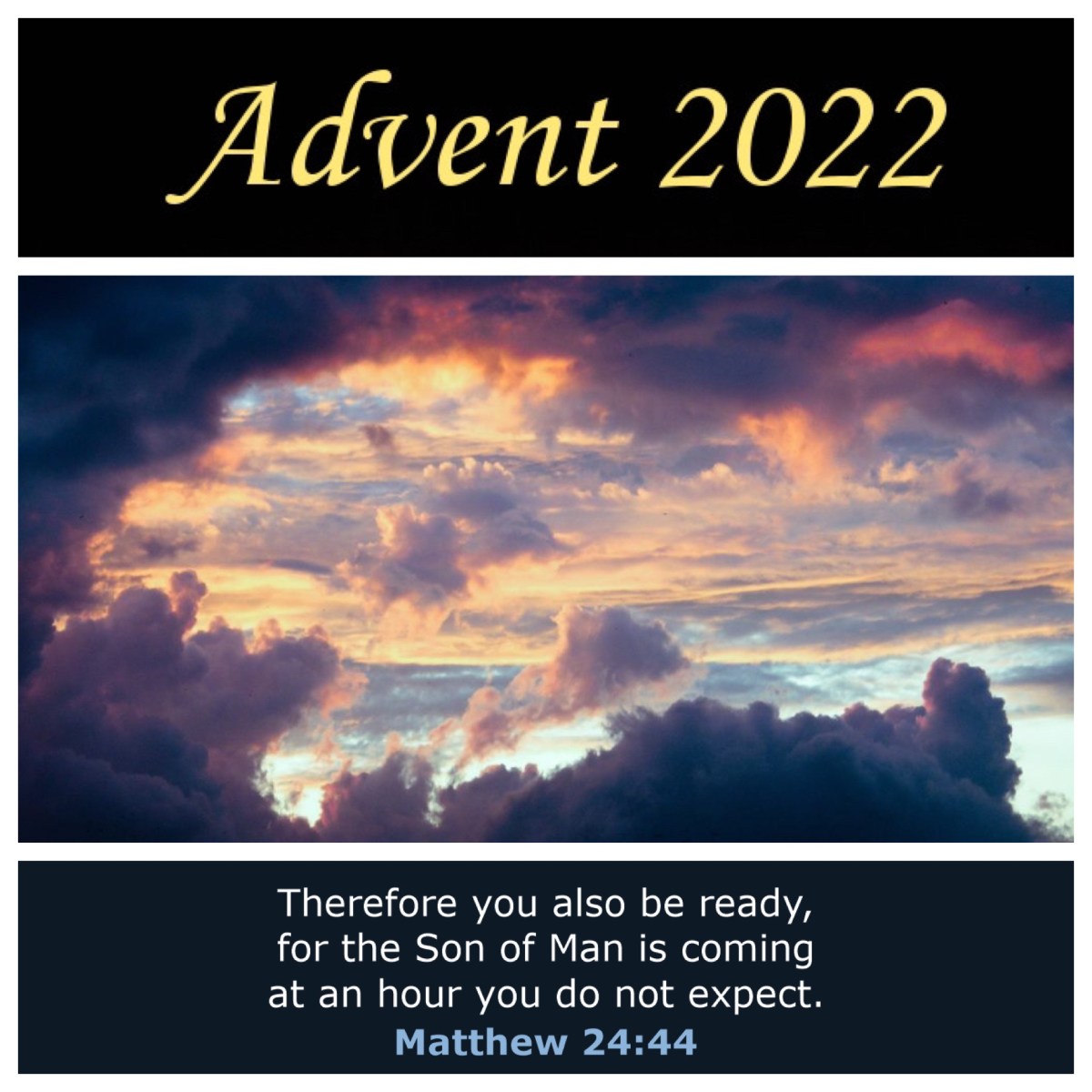
All of that lies ahead of us in the coming twelve months. Yet this Sunday, the first Sunday in Advent, we start with a confronting word from the latter part of the story: “two will be in the field; one will be taken and one will be left; two women will be grinding meal together; one will be taken and one will be left” (Matt 24:40–41). This striking declaration sits alongside exhortations to “keep awake, for you do not know on what day your Lord is coming” (24:42) and “you also must be ready, for the Son of Man is coming at an unexpected hour” (24:44).

These exhortations are characteristic elements in apocalyptic literature of the time; and they crystallise the sense of an imminent catastrophic event which is set out in a longer speech which is vivid and explicit in its dramatic apocalyptic imagery (24:3–44). Immediately after these exhortations, Jesus tells a series of four parables (24:45–25:46) which further dramatise the message that “the end is near”, “you do not know when”, “make yourself ready”, “be prepared”.

The section offered by the lectionary for the first Sunday in Advent (24:36–44) seems a strange place to start a year of Matthean stories about Jesus. Why begin Advent with an apocalyptic passage? And yet, the injunctions of this passage seem to sit neatly with the opening words of Jesus in this Gospel: “repent, for the kingdom of heaven has come near” (4:17). See

These words echo exactly the message of John the baptiser (3:2) and point forward also to the demands that Jesus makes throughout his public ministry, culminating in the calls to “keep awake” and “be ready”, because “you do not know on what day your Lord is coming”. The opening message of Jesus is clearly echoed in this later apocalyptic speech.

David Cassian Cole is the founder and executive director of Waymark Ministries CIC. He is known as Brother Cassian. He writes about a custom in the early centuries of the Celtic church, for Advent to stretch for 40 days (mirroring Lent, the 40 days of preparation prior to Easter).

Cole writes, “It is believed that the 40 days of Advent were split into three sections, colloquially termed the three comings of Christ. The first is the incarnation, what we all focus upon at this time of year; the second is Christ coming into our lives; the third is the coming of Christ at the end of all things, as depicted in the book of Revelation. The third coming of Christ is that which comes at the end of all things, and through this period the Celtic Christians examine their own lives, not in a self-judgmental way, but in a positive self-reflection to see whether they are ready and prepared, in the way they are living, for Christ to return at any moment.” See more at

So we are offered these words from the final long sermon of Jesus as the introduction to the year of Matthew: a reminder of the claim that God holds authority of the creation as the one who will determine “the time”, and that “about that day and hour no one knows, neither the angels of heaven, nor the Son, but only the Father” (24:36), a call to “keep awake, for you do not know on what day your Lord is coming” (24:42), an exhortation to “be ready, for the Son of Man is coming at an unexpected hour” (24:44).

Those phrases set forth the attitude that is required, in being open to the coming of Jesus—an attitude that is quite appropriate for Advent, that is essential for personal faith in Jesus, and that is fitting for the whole year of reading and pondering stories about Jesus, in this “book of origins”.

On the move: a central feature of the Christmas story

At Christmas, we recall a familiar story. Central to the story is the baby born in a manger, because “there was no room in the inn”. This element is, of course, told and retold countless times in the weeks leading up to Christmas, and in churches in every country around the world, on Christmas Eve and Christmas Day.

That part of the story gets disseminated widely. That part of the story contributes strongly to the warm, fuzzy vibe that Christmas brings to many people. Less well shared, however, is that part of the story which reports that this family were soon under threat, and they hurriedly fled to another country, seeking the safety of refuge, until the threat was over.

Christmas cards, and Christmas carols, have tended to encourage us to romanticise and sentimentalise the first part of the story—the babe in the manger in Bethlehem. We sing so easily about the scene that Luke recounts in his Gospel, imagining it in the picture perfect way of so many cards and carols: the baby lying peacefully asleep in the manger, the adoring mother and doting father, the shepherds who come from the fields to worship. It all sounds so peaceful, so relaxed, so comfortable, so ideal.

As we sing all of this, I suspect that we forget that the newborn infant was born in the area that was shared with the animals, because there was no room, not in “the inn”, but rather in the guest room of the house where they were (according to the story) staying that night. So at the time when Mary gave birth, there were no homely comforts, but there would have been the sights and sounds and smells of the animals, all around.

We overlook, perhaps, that the shepherds who came in from the fields to pay homage to the newborn child (Luke 2:8–16) would have been despised for carrying out a lowly and unworthy occupation. They were outcasts, considers impure and unclean, placed outside the circle of holiness within which good Jews were expected to live. In the Mishnah, a third century work which collects and discusses traditional Jewish laws, shepherds are classified amongst those who practice “the craft of robbers”. These are not highly valued guests!

We forget, also, that Luke’s account of this birth places it in Bethlehem, which is not the place where the newly-formed family lived. They had been forced to travel there, according to Luke’s account, because of a nation-wide census that was required by the Romans (Luke 2:1-7).

Giving birth to the child in that town, in that room, in that manger, was not the plan that his parents initially had; this was a temporary, unforeseen situation, basic and crude. This part of the story is not at all the comfortable and soothing scene that cards and carols regularly depict. The birth takes place after a forced journey, in an less than desirable setting.

*****

The second part of the story, that found in the Gospel of Matthew, also has an unexpected and forced journey involved. This part of the story relates to the rapid flight that the family took after the child was born, heading away from Herod, fleeing into the safety of Egypt, a foreign country (Matt 2:13-15). Matthew’s contribution to the story rarely fosters those warm, fuzzy vibes that many associate with Christmas.

And often, in church, this part of the story is left for the time after Christmas Day—which is logical, since this is where it comes in the flow of the story; but which means that, downunder at least, it is featured during the Great Summer Holiday which comes immediately after the feasting and festivities of Christmas Day (and Boxing Day, if there are still plentiful left overs!)

Matthew’s account sets out very clearly that this journey was not part of the original plan, worked out methodically in advance. Rather, this was a rapid response to an emergency situation, a hurried seeking of refuge. It was a temporary measure, undertaken under great duress.

The ruler who gives the order which provokes the family to undertake this journey is the man whom Jesus once called “that fox”: Herod. Ruling over Judea as a client king of the Romans, Herod was a half-Jewish man who had risen to the top of Jewish society through political cunning and strategic marriages. He had a reputation for violent brutality.

Matthew’s story recounts that Herod ordered that all male children under two years of age should be killed, to ensure that this potential rival to his rule would be safely despatched (Matt 2:1-3, 16-18). Jesus survived this because his parents were advised of the imminent pogrom by visitors “from the east” who had come via the court of Herod (Matt 2:13-15). This part of the story also does not sound relaxed, sweet, and comfortable!

And then, as the story in Matthew’s account continues, there is yet another journey, returning from Egypt, back into Israelis–but not Judea, for fear of the ruler who followed Herod, his son Archelaus; rather, to Galilee, where the family,settled in Nazareth (Matt 2:19-23). Another episode of dislocation and disruption, that rarely features in the classic carols and Christmas cards.

*****

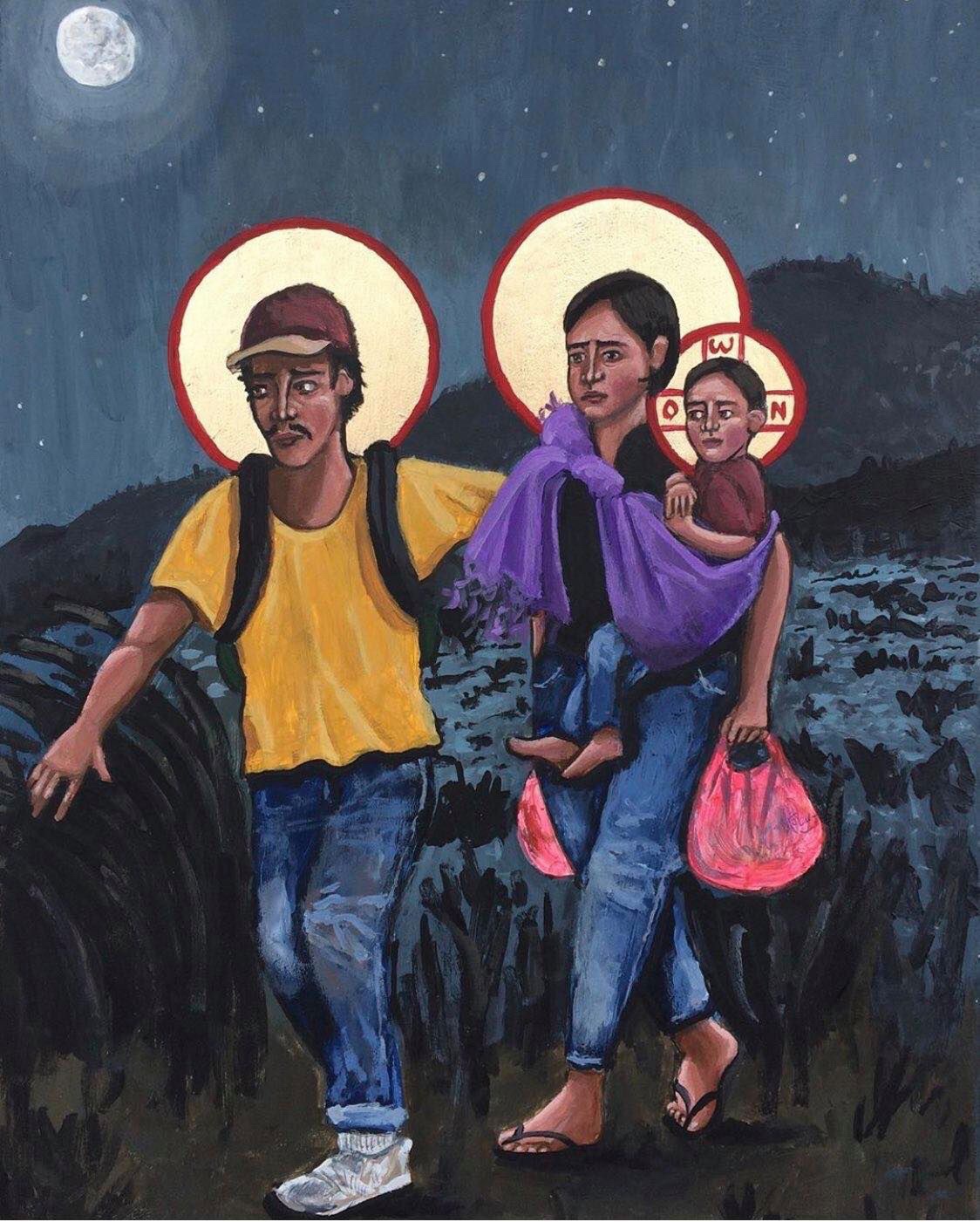
It is because of these disruptive and confronting elements in the story that, in my mind, Christmas challenges us to think about those who have no shelter. It especially invites us to think about those who have nowhere safe to shelter because their homes are beset by warfare, their lives are constrained by oppression, their families have been decimated by murders, their houses have been bombed or shelled.

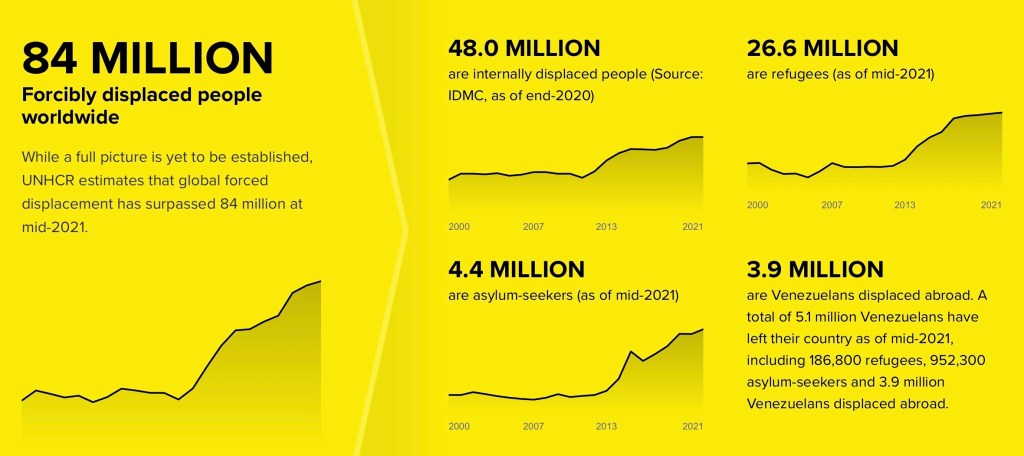
While the full impact of the COVID-19 pandemic on wider cross-border migration and displacement globally is not yet clear, UNHCR data shows that arrivals of new refugees and asylum-seekers were sharply down in most regions – about 1.5 million fewer people than would have been expected in non-COVID circumstances, and reflecting how many of those seeking international protection in 2020 became stranded.

Despite COVID-related movement restrictions and pleas from the international community for a ceasefire that would facilitate the COVID-19 response, displacement continued to occur – and to grow. As a result, above one per cent of the world’s population – or 1 in 95 people – is now forcibly displaced. This compares with 1 in 159 in 2010.

Most recent statistics from the UNHCR,
as of mid-2021

In that spirit, as we celebrate Christmas, let us also commit to working to ensure safety and security for those who are imperilled, homeless, stateless, and on the move. There are so many such people in our world today. There are so many ways we can live out the Christmas story as we reach out to them.

*****

The image is La Sagrada Familia by Kelly Latimore https://kellylatimoreicons.com/gallery/img_2361/

See also https://johntsquires.com/2019/12/25/acting-for-peace-through-the-christmas-bowl/

https://johntsquires.com/2018/12/19/what-can-we-know-about-the-birth-of-jesus/