Come to me, take my yoke, I will give you rest (Matt 11; Pentecost 6A)

Come to me, all you that are weary and are carrying heavy burdens, and I will give you rest. Take my yoke upon you, and learn from me; for I am gentle and humble in heart, and you will find rest for your souls. For my yoke is easy, and my burden is light. (Matt 11:28-30)

The book of origins, the first of four accounts of Jesus in the New Testament (known to us as the Gospel according to Matthew), locates Jesus firmly within his historical context, as a teacher and prophet within Israel. He is the one who has come to renew the covenant, to restore Israel, to instruct them in the ways of righteous-justice. He is the one who brings the Law to fulfilment and establishes the way into the kingdom.

This book has a high view of Jesus within that Jewish context. It positions Jesus as the most authoritative teacher in his community, the one who guides, directs, and inspires those who listen to him.

It is to the words of Jesus that believers are to look for guidance in their lives (7:24–27). In this Gospel, Jesus is the one and only teacher (23:8), the one and only instructor (23:10). Whilst “heaven and earth will pass away”, the words spoken by Jesus will endure (24:35). The last words of Jesus reported in this book are the instructions from Jesus, to his disciples, to go to the nations, “teaching them to obey everything that I have commanded you” (28:20). His teachings stand supreme.

In the lectionary for this coming Sunday, we find a striking passage from Matthew’s Gospel (11:25–30) which depends this understanding of Jesus the Teacher. In this passage, Jesus offers a prayer to God in which he lays claim to this distinct, even unique, place.

The first part of this passage (11:25-27) is often nicknamed “the Johannine Thunderbolt from a Synoptic Sky”, because it seems so out of place in this Gospel; the language used (“Father” and “Son”, amongst other things) invites comparison with the Fourth Gospel, as does the insistence on Jesus as the one who “knows the will of the Father” and thus reveals “the gracious will” of the Father (11:26-27). How these verses found there way into this particular Gospel is an intriguing question. (If you have a compelling answer to this question, I would love to hear it!)

As this prayer continues (11:28-30), Jesus is depicted as laying claim to be the authoritative teacher; his words claim an absolute authority to interpret the Law, which is here portrayed as “the yoke”, a term for the Law which is found in rabbinic writings (Mishnah, Aboth 3:5, Berakoth 2:5; see also 2 Enoch 34:1 and 2 Baruch 41:3).
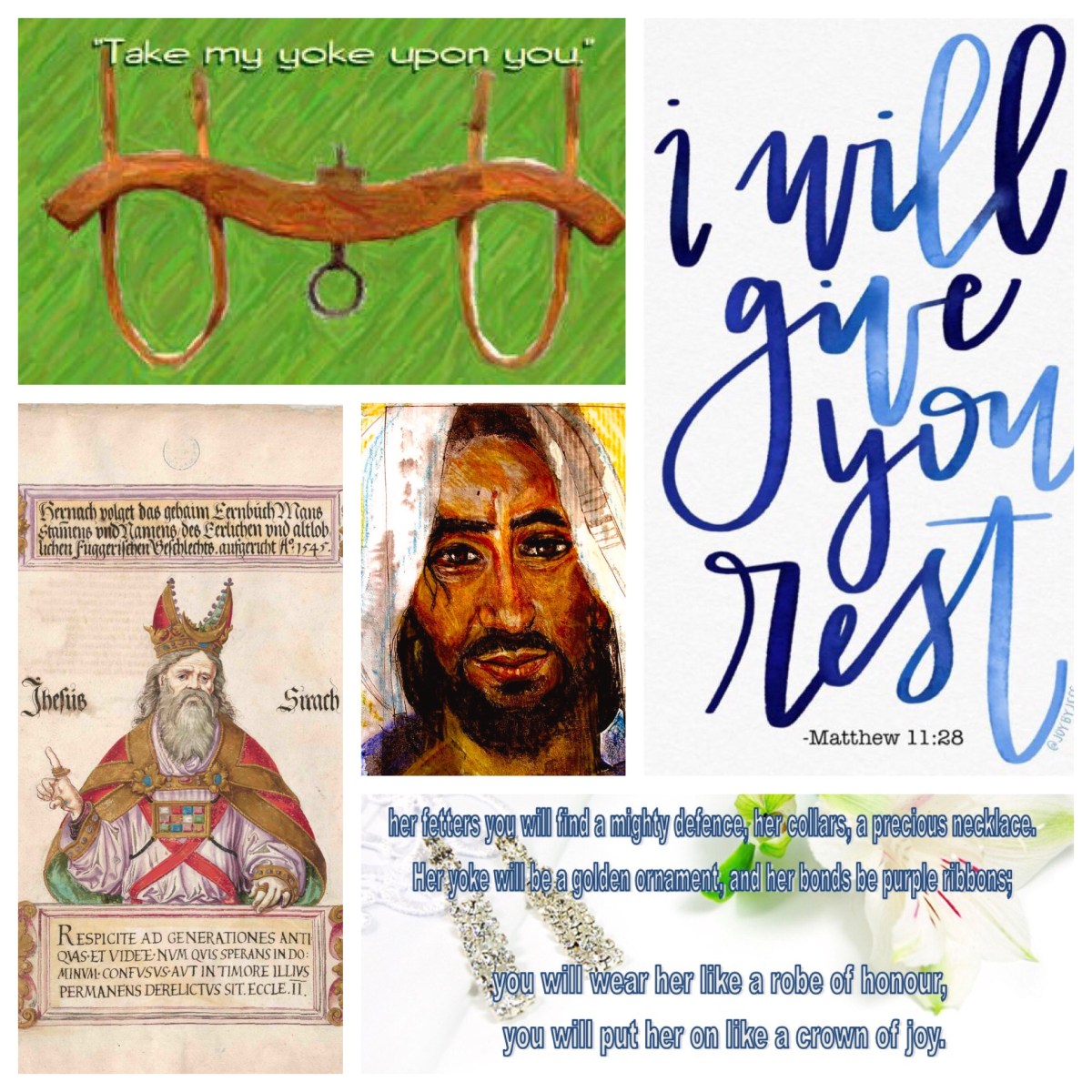
Jesus here is portrayed as claiming this high authority for himself; his yoke provides a sure understanding of the Law. His language is filled with scriptural words; he speaks in a way that is strongly evocative of certain passages in Sirach concerning Wisdom (Sirach 6:18–33; 24:19–22; 51:23–28). In this book (dating from around 200-250 years before the time of Jesus), Wisdom commands attention (“draw near to me”, “come to me”), offers instruction, commands submission to the yoke of her teaching, and offers rest.

A hymn on the values of Wisdom concludes that book, with the invitation to “acquire wisdom for yourself … put your neck under her yoke and let your souls receive instruction” (Sir 51:25-26). Earlier in the book, this invitation to learn from Wisdom had been issued by Wisdom herself: “come to me, you who desire me, and eat your fill of my fruits” (Sir 24:19).

And in the opening chapters of this book, an extended poem in praise of wisdom includes the invitation to “come to her like one who plots and sows … put your feet into her fetter and your neck into her collar, bend your shoulders and carry her, and do not fret under her bonds … come to her with all your soul … search out and seek … when you get hold of her, do not let her go, for at last you will find the rest she gives, and you will be changed into joy for you” (Sir 6:19, 24-28).

The poem continues, “then her fetters will become for you a strong defence and her collar a glorious robe; her yoke is a golden ornament, and her bonds a purple cord; you will wear her like a glorious robe and put her on like a splendid crown” (Sir 6:29-31).

So many of these phrases resonate in the words attributed to Jesus in the book of origins (Matt 11:28-30). As he speaks, he claims the authority of Wisdom. His words provide insight, guidance, direction, as do the words of Wisdom in earlier Jewish traditions. Indeed, just a few verses earlier, the voice of Wisdom has been invoked by Jesus as he reflects on the criticisms he has received, as “a glutton and a drunkard, a friend of tax collectors and sinners” (11:19). The proof of the pudding is in the eating—“Wisdom is vindicated by her deeds”, is what Jesus responds.

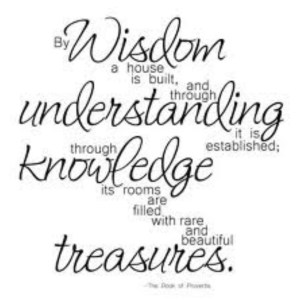
Wisdom appears in the book of Proverbs, where she is portrayed as a teacher of “good advice and sound wisdom” who offers insight and strength (Prov 8:14), leading people along “the way of righteousness, the paths of justice” (8:20). She is also portrayed as the one who worked beside God to bring the created world into being (8:22-31).

Wisdom then appears in later Jewish literature, including Sirach (Ecclesiasticus), always as the teacher, instructing people in God’s ways, instructing and guiding people of faith through their journeys in life.
We have noted in earlier blogs that this Gospel, the book of origins, came into being in a community which found itself in competition with regard to other streams of Judaism. (See the blog posts listed below.) This Gospel, it would seem, seeks to validate the interpretation of scripture promoted by the followers of Jesus over and above other understandings and interpretations of the Law.

Who better to call upon for such validating support than the master exegete, the authoritative teacher, Jesus, the one to whom “all things have been revealed by the heavenly Father”, the one who speaks with the voice of Wisdom herself?
This blog draws on material in MESSIAH, MOUNTAINS, AND MISSION: an exploration of the Gospel for Year A, by Elizabeth Raine and John Squires (self-published 2012)

See also

https://johntsquires.com/2019/11/28/leaving-luke-meeting-matthew/

https://johntsquires.com/2020/02/13/you-have-heard-it-said-but-i-say-to-you-matt-5/

https://johntsquires.com/2020/02/06/an-excess-of-righteous-justice-matt-5/

https://johntsquires.com/2020/01/30/blessed-are-you-the-beatitudes-of-matthew-5/

“Even the hairs of your head are all counted.” (Matt 10:30; Pentecost 4A)

Who goes around counting the hairs on the heads of people? I don’t, that’s for sure! Although it would be a lot easier for anyone wanting to count my particular head of hair (or not), than for other people.

But God does, according to this week’s Gospel passage. God counts the hairs on our heads. Or so we are told. It’s part of a speech by Jesus when he assures his followers that their lives are of value (Matt 10:28-31).

Now, I think the idea of God taking time to count the number of hairs on the heads of every single person alive today beggars belief. Think about it: 7.8 billion people (that’s 7,800,000,000 people—quite a lot!), each with one head, with approximately 100,000 hairs on each of those head—that’s 7,800,000,000,000,000 hairs to count.

At one hair per second, that’s 248,015,873 years. (Thank goodness for Google!!) 248 million years! And that’s just for the current population. It doesn’t count those who have already lived. Or those who might be alive when those 248 million years of counting have been completed.

Of course, we could reduce the number by arguing that there are some (like me) with much less than 100,000 hairs on their head. But that group is still a small minority amongst the 7.8 billion alive today.

And we could reduce it further by arguing that this speech of Jesus was addressed to believers who were following him—at that time, and then on across the ensuing years up to our time. That reduces the number of hairs to be counted quite a lot. But that is a problematic principle for interpretation: it means we take everything as applicable only to those who were part of the first audience, and not to anyone else later on.

All of which goes to the point I want to make about the words of Jesus in this passage: Exaggeration! Exaggeration is a common rhetorical technique employed by Jesus. Jesus exaggerates on a number of occasions in his teachings. Think about it:

“If your right eye causes you to sin, tear it out and throw it away… and if your right hand causes you to sin, cut it off and throw it away; it is better for you to lose one of your members than for your whole body to go into hell”. (Matt 5:29) Who obeys that command?

Why do you look at the speck that is in your brother’s eye, but do not notice the log that is in your own eye? (Matt 7:3) Who has ever had a log of wood in their eye? A speck, yes; a splinter, maybe— but not a log.

Jesus condemned the Pharisees as “Blind guides, who strain out a gnat and swallow a camel!” (Matthew 23:24). Again: imagine swallowing a camel. Urgh.

For truly I say to you, if you have faith like a mustard seed, you will say to this mountain, ‘Move from here to there,’ and it will move, and nothing will be impossible for you.” (Matthew 17:20). Mountains moving? Perhaps possible in a massive seismic shift event, but not your normal run of the mill happening.

Or the Samaritan woman, who spoke of Jesus and said: “He told me all that I ever did” (John 4:39). Had Jesus really told that woman everything that she had ever done in her life? No, she was using hyperbole to make her point.

“John came baptizing in the wilderness and preaching a baptism of repentance for the remission of sins. Then all the land of Judea, and those from Jerusalem, went out to him and were all baptized by him in the Jordan River, confessing their sins” (Mark 1:4-5). What, every single person?? Again, exaggeration, overreach, hyperbole. Typical of Jesus—and typical of the Gospel writers.

We do this in our everyday speech: “He’s got tons of money.” (have you weighed it?) “He is older than the hills.” ( were talking geological eras, here) “I’m so hungry I can eat a horse.” (OK, lets not go there.) “His brain is the size of a pea.” (Or there.) “My feet are killing me.” (Says the person who is still alive.)

Get the point? Exaggeration, hyperbole, is a common rhetorical technique. We use it. We find it in scripture. It’s a reminder not to take everything spoken, or written, absolutely literally. That’s a really important principle for interpretation. For this passage—and for everyone time we turn to scripture.

Holy Week: a week set apart, in a time set apart.

Today we begin Holy Week. This is the final part of a longer period leading up to Easter, called Lent. We do this every year, as part of the annual cycle. It is a familiar and comforting ritual for many people of Christian faith.

This year, however, will be different. In the middle of a viral pandemic, with restrictions prohibiting gathering for worship, Christian people will be walking through Holy Week in their own homes, not in gatherings at church. This is a week set apart, for people of faith, in a time set apart, for all of society.

We are not able to gather together. This year, people of faith are not gathering together. Instead, we are gathering-apart, through virtual worship, online. (See https://johntsquires.com/2020/03/15/when-you-come-together-reflections-on-community-in-the-midst-of-a-pandemic/)

Holy Week culminates the season of Lent, which is an ancient practice for a Christian people. It lasts for 40 days, serving as a time of preparation for Easter. But whereas Lent is an ancient tradition, Holy Week is a more recent development. Designating the week leading up to Easter as Holy Week most probably comes from the narration of chapters 11 and 12 of Mark’s Gospel, in which Jesus is understood as being in Jerusalem from a Sunday until his last meal on a Thursday.

The week starts with Palm Sunday when Christians remember Jesus entering Jerusalem and the crowds waving palm leaves as he enters the city. Jesus stays near to the city for the remainder of the week. This year, we have not remembered that event with festive processions and cheerful hymns. Many of my colleagues have provided resources for Virtual Worship, Church At Home, Postcards for Reflection, and the like. People are gathering-apart.

On Maundy Thursday, Christians remember Jesus washing his disciples’ feet. His words are recorded in John 13:34, “A new command I give you: Love one another. As I have loved you, so you must love one another.” This gives rise to the name for the day. The Latin for “commandment” is mandatum—hence the name of the day, Maundy.

Some people believe that Lent officially ends at sundown on Maundy Thursday, so they celebrate that with Holy Communion, or with a meal known as an agapé or a “love feast”. It is a remembrance of the last meal that Jesus shared with his followers. Others maintain that Lent continues through into Easter Saturday, until the end of the day just before the empty tomb is discovered.

After Maundy Thursday comes Good Friday, remembering when Jesus was crucified. Why is this day called Good? It comes from the theological evaluation that, on this Friday, Jesus died on the cross “for our sins”, thereby securing our redemption. This is the basis for the “good news” which the Church has proclaimed for centuries.

Churches all around the world normally hold various rituals for people to attend. Roman Catholics have the Adoration of the Cross, the Mass of the Pre-Sanctified, the Stations of the Cross, and Evening Prayers. Anglicans have a three-hour service with reflections on the Last Words of Christ. Many people come for these times of gathering together. But not this year—we have to gather-apart.

The Stations of the Cross are focused around the events of Good Friday, recalling the various events which took place as Jesus made his way from his trial to his death on the cross. These Stations have been appropriated, in art or through personal creative responses, as ways of moving attention from the story as a singular ‘history’, to the significance of the story and the resonance of the events with universal human experiences.

This year, gathering together is not possible. As we gather-apart, there is the opportunity for personal reflection; perhaps, for instance, using this exhibition of contemporary art work that was specifically commissioned in 2015: https://www.youtube.com/playlist?list=UUDH-6NVr6aj6X6DAmzSKLvg

Next comes Holy Saturday or Easter Eve—a day of vigil, when believers watch, wait and pray. This is an in-between time, a day when time can be spent reflecting back on the traumatic events that have just taken place, and looking forward with hope to the new possibilities that might emerge from those event.

(I will make a post about Holy Saturday on that day.)

After Holy Saturday, the celebration of Easter Sunday bursts through the gloom and despair with a vibrant message: Jesus is risen, Jesus has conquered death. Counting inclusively, as was done at the time, beginning from Friday, means that Sunday is the third day. So the traditional affirmation is that Jesus rose “on the third day”. This leads into an expression of joy, that the trauma and grief, the uncertainty and fear, are now passed. Life is different; hope is renewed; the future, even if it looks different, will still be viable.

For the next period of time, the Church moves into a new season—the season of Easter, 40 days when the celebration of resurrection continues. And so the cycle continues, death turning into life, despair breaking out into hope, frustration moving into promise.

See also https://johntsquires.com/2020/04/03/towards-palm-sunday-matt-21-acclaiming-the-king-anticipating-the-kingdom/

It was on that night that everything came to a head. Maundy Thursday Reflections.

Sacrificial Death: to give his life. Good Friday Reflections

Liminal Space: waiting and not knowing. Holy Saturday Reflections

Liberating Life: a new way of being. Easter Sunday Reflections

Towards Palm Sunday (Matt 21): Acclaiming the king, anticipating the kingdom

Next Sunday is Palm Sunday. As we approach the day, we have opportunity (during this period of enforced social distancing and self-isolation), to survey the scene of the first Palm Sunday, and reflect on its significance. What do you see? What do you hear? How is God revealed to you in this story? How does God speak to you in this story? What is the word of God, the vision of the Lord, for you, today, from this well-known story from so long ago?

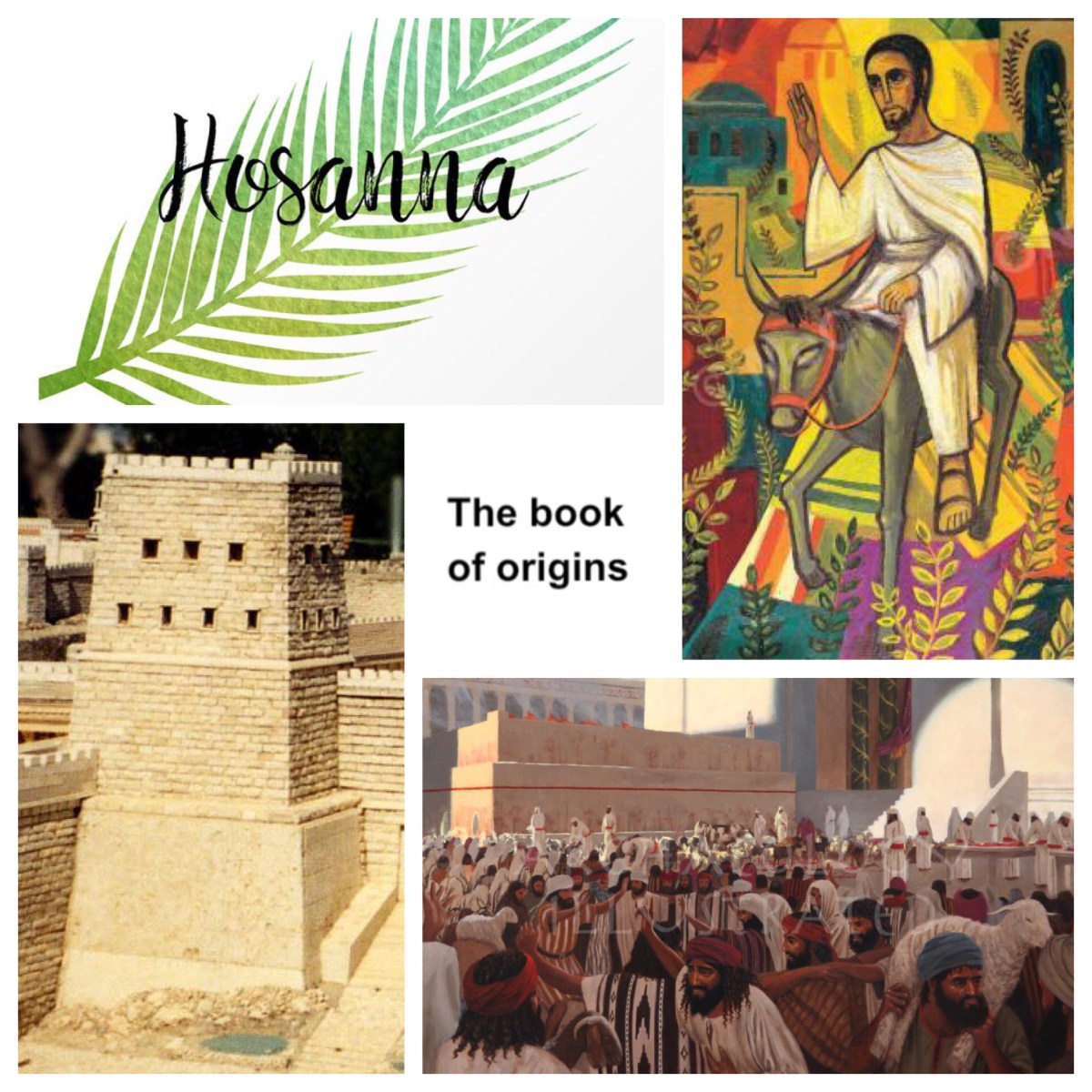
As you read the account in Matt 21, ask yourself: What do you see? What do you hear? We see pilgrims travelling the winding route to Jerusalem, and Jesus amongst them. We hear the crowd singing Hosanna! and we see them spreading their cloaks along the way, to honour him. And we hear their cries in the ancient hymn, “Blessed is the coming king, the one who comes in the name of the Lord, the one bringing the peace of heaven into this city here on earth”.

So the people cry, singing words from Psalm 118 about the king who comes to implement the kingdom willed by God—a psalm which is echoed in the song of the angels from early in Luke’s Gospel, declaring that, in Jesus, God is bringing “peace on earth, among those whom he favours” (Luke 2:14)

What do you see? What do you hear? Can you see the thoroughly political nature of the activity of Jesus? Can you hear the thoroughly political nature of the cries of the crowd? Hosanna—Save us! Blessed is the King—not Caesar, not ruler of the Romans, but Jesus, King of the Jews, the one Chosen by God to proclaim the kingdom. Can you hear these cries?

In this story, as throughout all of the Gospel accounts, the actions of Jesus have clear and strong resonances from the scriptures that he knew so well. He does not enter Jerusalem with a fatalistic acceptance of what lies ahead; instead, they are a call to this-worldly involvement, to action in our own time, serving the people amongst whom we live.

So it is in this story of the Passover pilgrims. The cries of the crowd, the actions of the people, the anticipation of the Roman soldiers and the symbolic statement made by Jesus as he rides into the city on a donkey—all of this points to the inherently political, thoroughly this-worldly orientation of the ministry of Jesus.

The kingdom is coming, the future kingdom is here and now in our midst, and the kingdom will overturn the expectations and practices of the political powers within this world. The Romans did well to notice, and anticipate, and respond to such a message. The Jewish leaders, so it seems, were anxious, also, about what was taking place.

Matthew ends his report by noting that “the whole city was in turmoil, asking, ‘Who is this?’” That was the critical question, for all four authors of the Gospels in the New Testament. The stories they tell are focussed on answering that question: ‘Who is this?’ Matthew has this questioned answered immediately, as the crowds were telling one another, “This is the prophet Jesus from Nazareth in Galilee.” His name and reputation were known. Certainly they perceived the significance of the way that he chose to enter the capital city. He was calling people to follow him in a clear, direct, and challenging way.

On the following Friday, we will remember that Jesus, ultimately, was condemned to death with a sign that declared that he was “the King of the Jews” (John 19:19–20). We see, very clearly, in the inscription nailed to the cross, the political nature of the message of Jesus. From the perspective of the Roman rulers, articulated by Pilate, Jesus was given a drastic political punishment, death by crucifixion, for the political insurgency that he was seen as undertaking, in claiming to be the King of the Jews.

That King is the one whom we follow. This is the path that he calls us to walk. When we pray, as Jesus instructed us, your kingdom come, your will be done, on earth as in heaven, we are praying that what we hope for, in heaven, is to be lived out, here, on earth, every day, in our life of discipleship. Our faith calls us to be faithful disciples of Jesus. It calls us to compassionate engagement with others in our society. It is a costly call, but a compelling call.

For us, today, that is the challenge: how do we show the merciful love and righteous-justice that Jesus spoke about and lived for in his life? Jesus ultimately was crushed by Roman imperial power; as he died, however, he showed that there was another way. A way of faithfulness to God’s calling. A way that truly leads to peace, to peace with righteous-justice.

And so, as we look to that time with hope and anticipation, we pray, as we always do: your kingdom come, your will be done, on earth as in heaven … and we wait, patiently, and work, persistently, with that end in view.

This series of blogs on Palm Sunday is based on research by Elizabeth Raine and John Squires, published in Validating Violence – Violating Faith? Religion, Scripture and Violence. Edited by W. Emilsen & J.T. Squires, ATF Press, Adelaide 2008. See https://assembly.uca.org.au/rof/images/stories/interfaithsep/25sept.pdf

See also https://johntsquires.com/2020/03/31/towards-palm-sunday-matt-21-passover-and-politics/ and https://johntsquires.com/2020/04/01/towards-palm-sunday-matt-21-riding-on-a-donkey-or-two-as-the-crowd-shouts-hosanna/ and https://johntsquires.com/2020/04/02/towards-palm-sunday-matt-21-waving-branches-spreading-cloaks/

and https://johntsquires.com/2023/03/27/why-jesus-never-did-and-never-would-ride-a-horse-for-palm-sunday-lent-6/

See more on righteous-justice at https://johntsquires.com/2020/02/06/an-excess-of-righteous-justice-matt-5/ and https://johntsquires.com/2020/02/13/you-have-heard-it-said-but-i-say-to-you-matt-5/

We have also turned it into a creative dialogue, which you can read at https://ruralreverend.blogspot.com/2019/04/palm-sunday-ps-1181-2-19-29-luke-1928.html

Towards Palm Sunday (Matt 21): Waving branches, spreading cloaks

Next Sunday is Palm Sunday. As we approach the day, we have opportunity (during this period of enforced social distancing and self-isolation), to survey the scene of the first Palm Sunday, and reflect on its significance. What do you see? What do you hear? How is God revealed to you in this story? How does God speak to you in this story? What is the word of God, the vision of the Lord, for you, today, from this well-known story from so long ago.

As you read the account in Matt 21, ask yourself: What do you see? What do you hear? We see pilgrims travelling the winding route to Jerusalem, and Jesus amongst them. We hear the crowd singing Hosanna! and we see them spreading their cloaks along the way, to honour him.

What do you see? What do you hear? Can you see the people, waving branches? Of course, this Sunday in the church year is traditionally called Palm Sunday. However, no palms are mentioned in the reading we have heard from Matthew’s version of the story, nor in Mark or Luke. That the branches are from palm trees is noted only in John’s version. Both Mark and Matthew refer to branches that the people cut and waved, even though they don’t specify that they are palm branches. Nevertheless, we see the palm branches, because they are front and centre in the tradition of today—it is Palm Sunday, as we call it!

This waving of palm branches was an activity intimately associated with the actions of the Maccabees, who were men from a priestly family who took up arms to fight back the Seleucid overlords and reclaim the Temple. The waving of palm branches became closely associated with this event; we can read the instructions in one of the Jewish books (2 Maccabees 10), which directs the people to “carry ivy-wreathed wands and beautiful branches and fronds of palms, and offer hymns of thanksgiving to [God] who had given success to the purifying of their own holy place”. So the palms evoke the famous military campaign of centuries earlier.

What do you see? What do you hear? Do you see the cloaks, spread on the ground, by those along the side of the road? A curious detail. What can this mean? Perhaps the more astute of the Jews along the side of the road, would have had some insight; perhaps they recalled the story of the time when a young prophet from Ramoth-gilead declared that God was anointing Jehu, the son of Jehoshaphat, as the next king of Israel.

The story is recounted in 2 Kings 9, and it contains this striking detail, as the prophet decreed, “Thus says the Lord, ‘I anoint you king over Israel’”, and so they took their cloaks and spread them for him on the bare steps, and blew the trumpet, and proclaimed, ‘Jehu is King’” (2 Kings 9:13). Can you hear the resonances in the story of the Passover pilgrims? The cloaks on the steps, when Jehu is King … the cloaks on the wayside, when Jesus comes as King.

So Jesus, the prophet from Nazareth in Galilee, entered the city in the midst of the pilgrims, for the festival of Passover. Did he come as King, in the minds of the crowd? He came preaching the coming kingdom of God—a kingdom to be marked by righteous-justice (Matt 6:33). He blessed those who sought that righteous-justice (Matt 5:6, 10). He urged people to walk the way that led to justice for all (Matt 12:18-21).

Jesus came into the city filled with zeal for God’s righteous-justice kingdom (Matt 23:23). The festival of Passover was a most appropriate time for him to enter the city and make his mark as God’s chosen King. The branches and the cloaks both point to the immediate political significance of this event.

This series of blogs on Palm Sunday is based on research by Elizabeth Raine and John Squires, published in Validating Violence – Violating Faith? Religion, Scripture and Violence. Edited by W. Emilsen & J.T. Squires, ATF Press, Adelaide 2008. See https://assembly.uca.org.au/rof/images/stories/interfaithsep/25sept.pdf

See also https://johntsquires.com/2020/03/31/towards-palm-sunday-matt-21-passover-and-politics/ and https://johntsquires.com/2020/04/01/towards-palm-sunday-matt-21-riding-on-a-donkey-or-two-as-the-crowd-shouts-hosanna/ and https://johntsquires.com/2023/03/27/why-jesus-never-did-and-never-would-ride-a-horse-for-palm-sunday-lent-6/

See more on righteous-justice at https://johntsquires.com/2020/02/06/an-excess-of-righteous-justice-matt-5/ and https://johntsquires.com/2020/02/13/you-have-heard-it-said-but-i-say-to-you-matt-5/

Tomorrow: Acclaiming the king, anticipating the kingdom

Towards Palm Sunday (Matt 21): Riding on a donkey (or two) as the crowd shouts ‘Hosanna’

Next Sunday is Palm Sunday. As we approach the day, we have opportunity (during this period of enforced social distancing and self-isolation), to survey the scene of the first Palm Sunday, and reflect on its significance. As you read the account in Matt 21, ask yourself: What do you see? What do you hear? How is God revealed to you in this story? How does God speak to you in this story? What is the word of God, the vision of the Lord, for you, today, from this well-known story from so long ago?

What do you see? What do you hear? We see pilgrims travelling the winding route to Jerusalem, climbing the hills outside the city as they make their way to the capital of ancient Israel. And in their midst, can you see the figure of Jesus, surrounded by his followers, approaching the city?

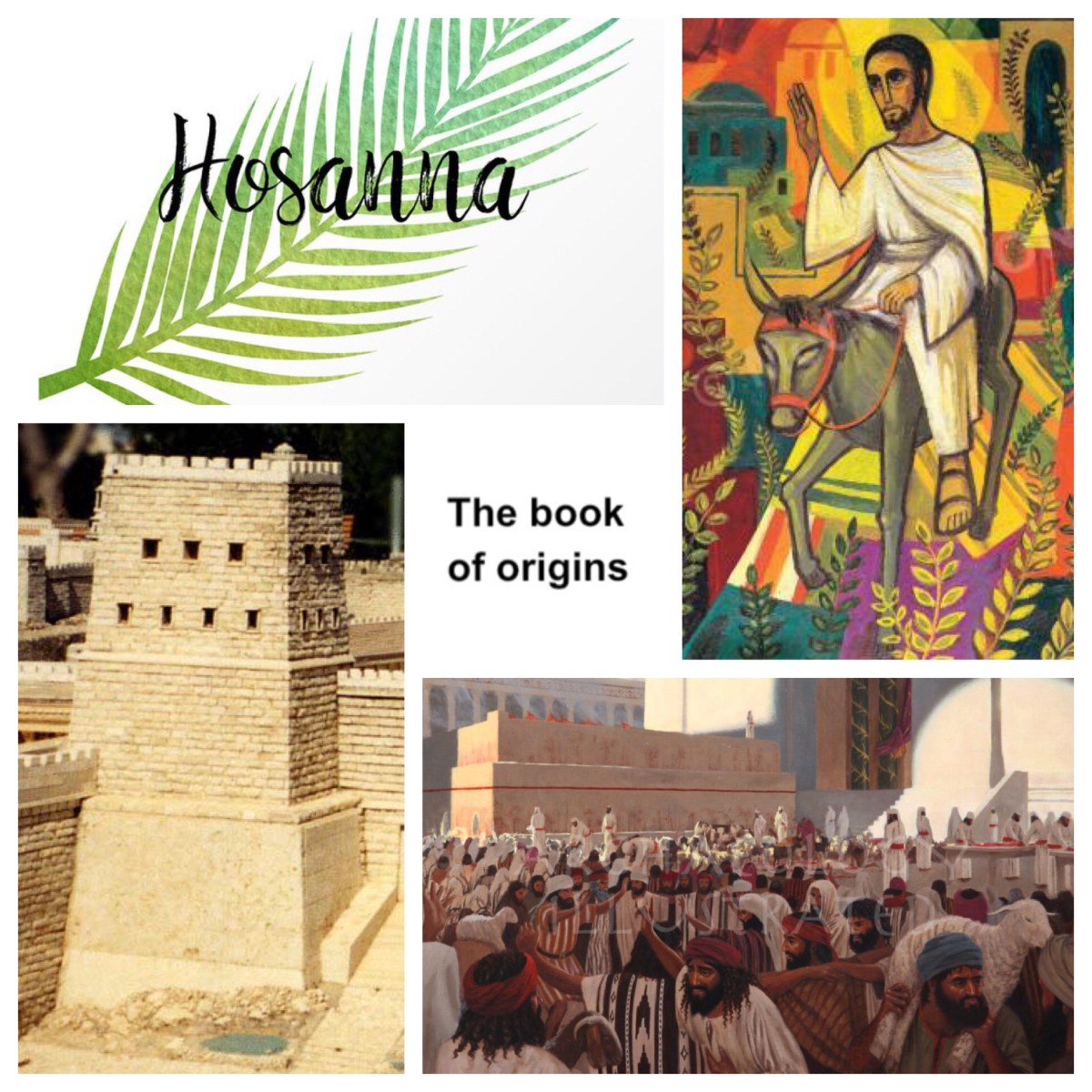
Jesus, seated on the colt, riding on a donkey, was the centre of attention—at least for his own followers. Those in the crowd who knew their scriptures, would have immediately recognised the allusion. The account of this story that we find in Matthew’s Gospel and that we hear this Sunday, actually specifies the verse that interprets the significance of the donkey (Matt 21:4-5).

In Zechariah 9:9, the vision is clear: “your king comes to you, triumphant and victorious, humble and riding on a donkey”. That is what the prophet declares; in this story of Passover pilgrims, Jesus can be seen to be bringing that vision to fruition. And that vision declares that this coming ruler “shall command peace to the nations, and his dominion will be from sea to sea, from the river to the ends of the earth”. That is the vision that Jesus evokes as he rides into Jerusalem on this donkey.

What do you see? What do you hear? Can you hear the cries of the crowd: “Hosanna, hosanna!” they cry. What were they calling out? Hosanna is a foreign term, a word from the Hebrew language, not a common word in our English usage. The best way to translate Hosanna, is “save us”. It is a cry for salvation; a yearning for deliverance. The word appears in the Psalm we have heard today, in Psalm 118:25, where they people cry out, “save us, we beseech you, O Lord!” Save us, redeem us, liberate us.

Psalm 118 was one of the Hallel Psalms, the Praise Psalms, which were associated with celebrations on each of the three great festival days—the Feast of Tabernacles, or Booths; the Feast of Weeks, or Pentecost; and the Feast of Passover. These psalms of praise became particularly associated with the celebrations of the rebuilding of the Temple.

Rebuilding the Temple was an inherently political action. It was the foreign invasion of Palestine by the Hellenistic Seleucids some two centuries before Jesus which had led to the destruction of the Temple. It was the political activity of the Jewish Maccabees which had led to the reclaiming of the Temple two decades later.

“Praise you, O God, for we have our Temple, rebuilt, restored, renewed”. So the prayer might well have gone. And it was the political activity of the Maccabees which had brought this about. The Hallel Psalms had become Psalms of Praise for liberating political activity. And this is what the people were singing out!

They expected Jesus, the prophet from Nazareth in Galilee. He entered the city in the midst of the pilgrims, for the festival of Passover. He came preaching the coming kingdom of God—a kingdom to be marked by righteous-justice (Matt 6:33). He blessed those who sought that righteous-justice (Matt 5:6, 10). He urged people to walk the way that led to justice for all (Matt 12:18-21). He came into the city filled with zeal for God’s righteous-justice kingdom (Matt 23:23). The festival of Passover was a most appropriate time for him to enter the city and make his mark.

This series of blogs on Palm Sunday is based on research by Elizabeth Raine and John Squires, published in Validating Violence—Violating Faith? Religion, Scripture and Violence. Edited by W. Emilsen & J.T. Squires, ATF Press, Adelaide 2008. See https://assembly.uca.org.au/rof/images/stories/interfaithsep/25sept.pdf

See also https://johntsquires.com/2020/03/31/towards-palm-sunday-matt-21-passover-and-politics/ and https://johntsquires.com/2023/03/27/why-jesus-never-did-and-never-would-ride-a-horse-for-palm-sunday-lent-6/

See more on righteous-justice at https://johntsquires.com/2020/02/06/an-excess-of-righteous-justice-matt-5/ and https://johntsquires.com/2020/02/13/you-have-heard-it-said-but-i-say-to-you-matt-5/

We have also turned it into a creative dialogue, which you can read at https://ruralreverend.blogspot.com/2019/04/palm-sunday-ps-1181-2-19-29-luke-1928.html

Tomorrow: Waving branches, spreading cloaks

Towards Palm Sunday (Matt 21): Passover and politics

Next Sunday is Palm Sunday. To hear the story, we are turning back to the book of origins (better known as the Gospel according to Matthew), after a month during Lent of healing stories from the book of signs (the Gospel according to John), where there is an account of what took place as Jesus entered Jerusalem (Matt 21:1-11).

As we approach the day, we have opportunity (during this period of enforced social distancing and self-isolation), to survey the scene of the first Palm Sunday, and reflect on these questions: What do you see? What do you hear? How is God revealed to you in this story? How does God speak to you in this story? What is the word of God, the vision of the Lord, for you, today, from this well-known story from so long ago?

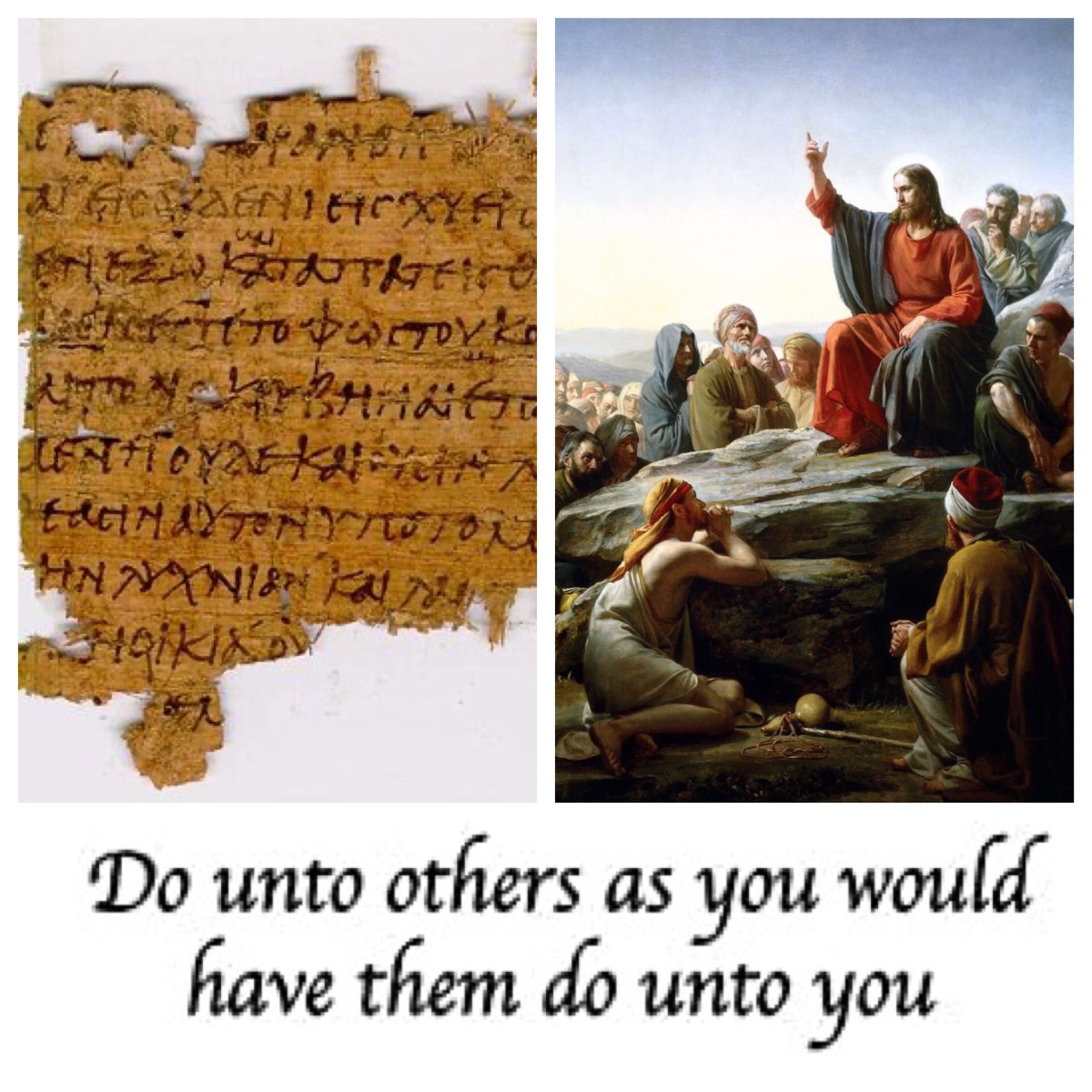
What do you see? What do you hear? I see pilgrims travelling the winding route to Jerusalem, climbing the hills outside the city as they make their way to the capital of ancient Israel, to the city where the Lord God, so it was believed, was residing in the Holy of Holies, the inner court of the Temple. I hear the noisy, bustling sounds of these pilgrims, excited with anticipation as they make their way along the same routes, up the same hills, year after year, at this time of the year.

It was Passover; one of the three high festivals of the year for good religious Jewish people. It was Passover, the festival of unleavened bread, which recalled the hurried departure of the people, long ago, from captivity in Egypt (Exodus 13). It was Passover, a celebration of the foundational myth at the heart of Jewish identity; the story that tells of the liberating actions of God, in the face of the military might of the Egyptians, the liberation of the people from their time of enforced slavery, as they set out, across the wilderness, to the land they had been promised (Exodus 14–17 and beyond).

Passover was a central religious celebration. But also, it was a thoroughly politicised procession of pilgrims, wending their way to the holy city, the city of peace. Passover was when bread was eaten without leaven, to signify the haste with which the departure from Egypt took place. Passover was when lambs were roasted and eaten as a sign of that liberation, when bitter herbs were sprinkled eaten as a reminder of the bitterness of slavery. Passover was when the intervention of the divine into the social and political situation of those ancient Israelites was to the fore in the minds of those later pilgrims.

So, we see a scene of Passover pilgrims, celebrating this ancient political action of God which they hold before themselves as the fundamental paradigm for what their faith means for them. “Yes, God is for us! Yes, God will save us!”

The story is told in each of the three synoptic Gospels, Mark, Matthew, and Luke. In each account, the disciples arrive in the city, seek out lodgings, and at the appointed time, they recline at table to eat the Passover meal, the annual family celebration when the story of that first Passover is told. A time when the actions of God in confronting and overturning the political rulers is remembered, retold, and celebrated.

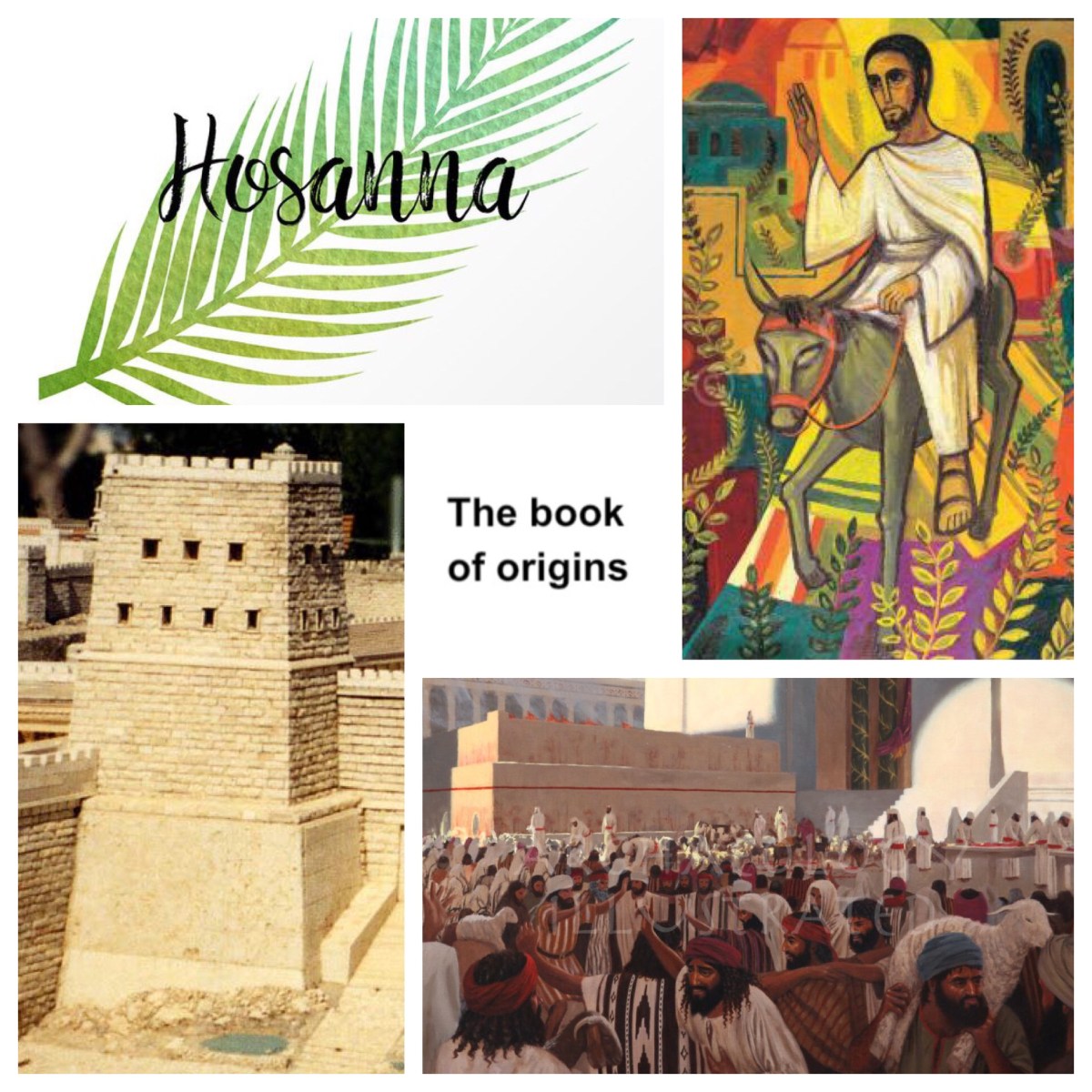
What do you see? What do you hear? Can you see the Roman soldiers, on the edges, behind the crowds, looking out from the Antonia Fortress? The Roman soldiers, strategically deployed, watching with care the every move that was taking place in the approaches to the city. They knew, from many years’ experience, that the city swelled with the influx of pilgrims each year at this time, as the Passover pilgrims made their way towards Jerusalem.

They knew, from years of monitoring the crowds, of the potential for dispute and conflict that simmered underneath the crowds. They knew that this was a high point in the Jewish year, and that any Jew with finely-attuned attention to the history of their people, would know of the charged political consequences of this festival.

Passover was a celebration of that time when God intervened, overturning the despotic ruler, liberating the faithful people. As it was long ago in Egypt … so it now could well be, in Jerusalem under Roman rule. A political celebration, wrapped around with religious significance, a celebration of political victory.

That is the context for the entry into the city of the prophet from Nazareth in Galilee. He came preaching the coming kingdom of God—a kingdom to be marked by righteous-justice (Matt 6:33). He blessed those who sought that righteous-justice (Matt 5:6, 10). He urged people to walk the way that led to justice for all (Matt 12:18-21). He came into the city filled with zeal for God’s righteous-justice kingdom (Matt 23:23). The festival of Passover was a most appropriate time for him to enter the city and make his mark.

See more on righteous-justice at https://johntsquires.com/2020/02/06/an-excess-of-righteous-justice-matt-5/ and https://johntsquires.com/2020/02/13/you-have-heard-it-said-but-i-say-to-you-matt-5/

Tomorrow: riding on a donkey (or two) as the crowd shouts ‘Hosanna’

This series of blogs on Palm Sunday is based on research by Elizabeth Raine and John Squires, published in Validating Violence – Violating Faith? Religion, Scripture and Violence. Edited by Emilsen & J.T. Squires , ATF Press, Adelaide 2008. See https://assembly.uca.org.au/rof/images/stories/interfaithsep/25sept.pdf

We have also turned it into a creative dialogue, which you can read at https://ruralreverend.blogspot.com/2019/04/palm-sunday-ps-1181-2-19-29-luke-1928.html

See also https://johntsquires.com/2023/03/27/why-jesus-never-did-and-never-would-ride-a-horse-for-palm-sunday-lent-6/

The missing parts of the Sermon on the Mount (Matt 6 and 7; Epiphany Year A)

Over recent Sundays, as we follow teachings of Jesus that are recorded in the book of origins, the revised common lectionary has led us to hear the early section of the Sermon on the Mount (Matt 5:1-37) in our worship. This section of Matthew’s Gospel has been read over three Sundays during Epiphany, before Ash Wednesday arrives and introduces the season of Lent, with its thematic selection of texts from various places in Matthew and John.

However, because Lent starts relatively early this year, the length of Epiphany is shortened, and so that means that miss critical sections of this sermon from the end of chapter 5, as well as all of chapters 6 and 7. (After Lent, Easter, Pentecost and Trinity, the lectionary Gospel selections return to Matthew’s Gospel—but they start back at the end of chapter 9!)

We have seen the strongly Jewish nature of the eight Beatitudes, or blessings, which begin this sermon (5:3-12). Soon after these blessings, Jesus announces his intention to intensify the demands of the Law (5:18) by demanding that his followers exhibit a righteous-justice that exceeds that demonstrated by the Pharisees (5:20). Then he offers a series of case studies in exactly how this intensified righteous-justice plays out in specific situations in life (5:21-48).

See my previous blogs at

https://johntsquires.com/2020/01/30/blessed-are-you-the-beatitudes-of-matthew-5/

https://johntsquires.com/2020/02/06/an-excess-of-righteous-justice-matt-5/

https://johntsquires.com/2020/02/13/you-have-heard-it-said-but-i-say-to-you-matt-5/

As this first main discourse continues, the Matthean Jesus instructs his listeners on righteous-justice (6:1–18; some contemporary English translations use the term “piety”). In this context, this word indicates the means of expressing righteousness, undertaking just actions, or performing acts of piety.

By selecting alms (6:2–4), prayer (6:5–15), and fasting (6:16–18), Jesus does no less than instruct on the three forms of traditional Jewish piety (Tobit 12:8 states, “Prayer with fasting is good, but better than both is almsgiving with righteousness”).

One of these traditional forms of piety is prayer; whilst instructing his disciples how to pray (6:5–15), the Matthean Jesus offers a distinctive formula for prayer (6:9–13). Although this prayer has become known as the distinctive Christian prayer, a close study of Hebrew Scriptures shows that the concept in each clause (and in almost every case, the precise terminology of each clause) has originated in Jewish thought.

The ethical injunctions which follow on from this teaching about prayer continue the intensified approach to Torah which characterises the Matthean Jesus. He canvasses attitudes to possessions (6:19–21), absolute obedience to one master (6:24), avoidance of judgmental attitudes (7:1–5), devotion to holiness (7:6), and a focus on the essential elements of life (7:13–14).

The Sermon includes the “Golden Rule” (7:12), a rule that is repeated in various ways throughout the Gospel. All that Jesus has been teaching and encouraging in 5:17–7:11 is summarised by this rule, which is the essence of the law and prophets. This “Golden Rule” is also found in the rabbinic writings, for it is modelled on Lev 19:18, “You shall love your neighbour as yourself”.

One example is found in the writings about Hillel and Shammai, two Rabbis who consistently held opposite interpretations of Scripture. The story goes that a Gentile asked Shammai to explain to him the entire Jewish law while standing on one foot (i.e. briefly). Shammai drove him away. The Gentile made the same request to Hillel, and was told “What is hateful to you, do not do to anyone. That is the whole law; all the rest is commentary.”

Jesus, in the “Sermon on the Mount”, makes a similar plea to focus on the essentials at the heart of the Law. A later saying likewise sharpens the view of Torah, with a reference to “the weightier matters of the law: justice and mercy and faith” (23:23).

Towards the end of the Sermon, Jesus criticises those who mouth the confession, “Lord, Lord”, but fail to do God’s will (7:21–23). Such people are condemned as “evildoers” in the NRSV; a more accurate translation is conveyed by the phrase “lawless ones”. It is their inability to live by Torah which condemns them.

Alongside the affirmation of the Law in this Sermon (7:12) stands a fierce condemnation of those who do not follow its paths (7:23). The same Greek term (literally, “without law”) is applied in eschatological contexts to those who do not follow the Law (13:41; 24:12) and, with great irony, to the Pharisees (23:28)—those charged with the teaching of the Law! This provides a cutting edge to the stance of the Matthean Jesus: to follow his way means to take seriously the Torah—something which even its authorised teachers appear unable to do.

******

This blog draws on material in MESSIAH, MOUNTAINS, AND MISSION: an exploration of the Gospel for Year A, by Elizabeth Raine and John Squires (self-published 2012)

See also 

https://johntsquires.com/2020/01/23/repentance-for-the-kingdom-matt-4/

https://johntsquires.com/2019/12/27/reading-matthews-gospel-alongside-the-hebrew-scriptures-exploring-matthew-2/

https://johntsquires.com/2019/12/21/a-young-woman-a-virgin-pregnant-about-to-give-birth-isa-714-in-matt-123/

https://johntsquires.com/2019/12/11/the-origins-of-jesus-in-the-book-of-origins-matthew-1/

https://johntsquires.com/2019/12/17/now-the-birth-of-jesus-the-messiah-took-place-in-this-way-matthew-1/

https://johntsquires.com/2019/11/28/leaving-luke-meeting-matthew/

You have heard it said … but I say to you … (Matt 5; Epiphany 6A)

This Sunday, as we follow the revised common lectionary, we read another section of the teachings of Jesus from the book of origins (Matt 5:21-37) which forms a part of a larger section which is traditionally called the Sermon on the Mount (5:1-7:29). It has this name because it takes place after Jesus “went up the mountain” (5:1), and concludes with the note that Jesus “had come down from the mountain” (8:1).

Sections of the sermon feature as the Gospel passage in the latter Sundays in Epiphany. This year, we have heard Matt 5:1-37 over three Sundays, before turning next week to the Transfiguration and then moving into the season of Lent, with its thematic selection of texts from various places in Matthew and John.

Although called, by tradition, a sermon, these chapters are more a collection of many of the key teachings of Jesus. A striking feature of these chapters is that they comprise many elements of Jewish ethical teaching. Indeed, in these chapters, Jesus strengthens the Jewish ethos of his teachings.

We have seen the strongly Jewish nature of the eight Beatitudes, or blessings, which begin this sermon (5:3-12). Soon after these blessings, Jesus announces his intention to intensify the demands of the Law (5:18) by demanding that his followers exhibit a righteous-justice that exceeds that demonstrated by the Pharisees (5:20). See my previous blogs at

https://johntsquires.com/2020/01/30/blessed-are-you-the-beatitudes-of-matthew-5/

https://johntsquires.com/2020/02/06/an-excess-of-righteous-justice-matt-5/

Many sections of what then follows contain Jesus’ own interpretation of Jewish traditions. He is, after all, in the mind of the author of this book of origins, THE authoritative teacher, THE definitive interpreter of how the Torah is to apply in everyday life. And what he says, it is believed, needs to be understood as taking place within the context of argument and disputation with the Pharisees, who were the acknowledged teachers of the Law.

It seems that Jesus, in his interpretations, often intensifies, or strengthens, what Hebrew Scripture states concerning the Torah, the Law of Moses. It is most likely that the report that we have in the book of origins concerning these interpretive debates reflects perhaps something of what the historical Jesus said, but much more of the antagonistic and polemical context of the community of faith in which the author of the book of origins was located.

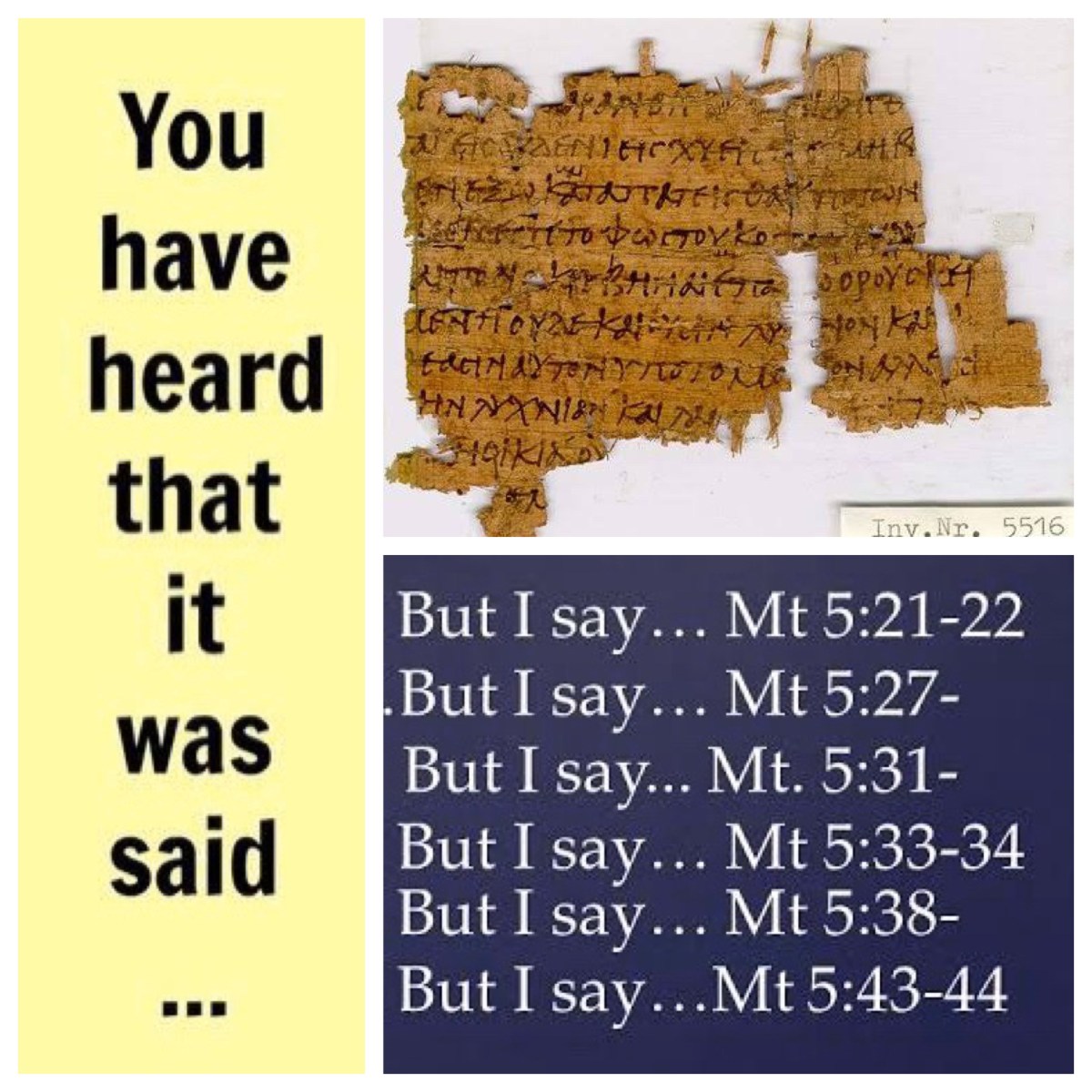
The passage set in the lectionary forms a major part of what is often called the “Antitheses” (5:21-48), because Jesus sets himself up in opposition to what his followers have heard, presumably in the teachings on the Law offered by the Pharisees. The six “antitheses” provide clear case studies in how Jesus, in the way he is presented in this Gospel, approaches the task of interpreting and applying the Torah.

This sequence of six “antitheses” demonstrates the intensification which Jesus brings to the Law. Six times, Jesus refers to a commandment, provides a common understanding of that commandment, and then provides an interpretation which strengthens the force of the commandment. (Although they are traditionally called Antitheses, because of the form, I think that the substance actually points to each of them as being Intensifiers.)

Thus, it is not enough not to kill, or not to commit adultery. It is not enough to love just your neighbour, but hate your enemy. True righteousness—living with total justice—does not even consider doing any of these things, however briefly, but forgives wrong and loves enemies freely.

And, to press his point to the full, Jesus in this sermon uses some striking images to emphasise just how challenging and just how daunting it is to follow this pathway: cut off your hand and pluck out your eye, most strikingly. And, less dramatically: do not swear oaths, and do not divorce unless there are extenuating circumstances. These are striking instances of what an intensified obedience to the Law means. These dramatic images push followers of Jesus to the very heart of our faith, and ask us to consider, how do we fully and completely live in obedience to God’s way?

It is living by this intensified interpretation of the Law set forth by Jesus, that will ensure that the righteous-justice of Jesus’ followers will be seen as greater than that of the Pharisees (5:19). The words of Jesus recorded in this section of the Gospel head towards the climactic instruction that followers of Jesus are to be “perfect” as God is perfect (5:48). They will demonstrate a totally just way of life, fully immersed in the life that God offers.

The teaching of Jesus in these Antitheses, and throughout the whole Sermon on the Mount, shows how fully God must be present in the life of the followers of Jesus. They indicate that it is God who must guide not only the deeds of believers, but also their motivations and emotions. Such striving for perfection signals the in-breaking of the kingdom, the faint dawn of the new age of righteous-justice breaking in upon the earth.

There is a cutting edge to the stance of the Matthean Jesus: to follow his way means to take seriously the Torah, to live by the commandments in every aspect of life. As is stated in Deuteronomy 30:19-20, in this exhortation: “Choose life so that you and your descendants may live, loving the LORD your God, obeying him, and holding fast to him”. It is an all-of-life matter.

****

This blog draws on material in MESSIAH, MOUNTAINS, AND MISSION: an exploration of the Gospel for Year A, by Elizabeth Raine and John Squires (self-published 2012)

See also

https://johntsquires.com/2020/02/06/an-excess-of-righteous-justice-matt-5/

https://johntsquires.com/2020/01/30/blessed-are-you-the-beatitudes-of-matthew-5/

https://johntsquires.com/2020/01/23/repentance-for-the-kingdom-matt-4/

https://johntsquires.com/2019/12/27/reading-matthews-gospel-alongside-the-hebrew-scriptures-exploring-matthew-2/

https://johntsquires.com/2019/12/21/a-young-woman-a-virgin-pregnant-about-to-give-birth-isa-714-in-matt-123/

https://johntsquires.com/2019/12/11/the-origins-of-jesus-in-the-book-of-origins-matthew-1/

https://johntsquires.com/2019/12/19/descended-from-david-according-to-the-flesh-rom-1/

https://johntsquires.com/2019/12/17/now-the-birth-of-jesus-the-messiah-took-place-in-this-way-matthew-1/

https://johntsquires.com/2019/12/04/for-our-instruction-that-we-might-have-hope-rom-15-isa-11-matt-3/

https://johntsquires.com/2019/11/28/leaving-luke-meeting-matthew/

An excess of righteous-justice (Matt 5; Epiphany 5A)

Recent scholarship has recognised the Jewish character of the first Gospel in the New Testament—the work that I refer to as the book of origins (for that is my translation of how the book begins, in Matt 1:1).

A consensus is emerging that the book of origins was most likely written for a community that was still thoroughly immersed within its Jewish tradition. One place we can see that is in what is perhaps the most famous section of the Gospel, the Sermon on the Mount (Matt 5–7). These chapters stand as an excellent example of how Jesus was understood, by Matthew, to be THE authoritative Jewish teacher, interpreting and applying the Torah, the Law of Moses, to all of daily life.

In this sermon, Jesus debates with the Pharisees concerning their interpretation of scripture. His pugnacious words, “you have heard it said … but I say to you …” (occurring six times within 5:21-48) reflect the common dialectical interaction that Pharisees (and, later, Rabbis) used to tease out the meaning of each commandment found within the Law. Torah teaching was inherently dialogical in nature; those teaching the Law would argue, back and forth, over what it meant and how it was to be followed.

As Jesus uses these established Jewish debating techniques, he proposes a way of living that is thoroughly grounded in Jewish ethics and practices, such as prayer, fasting, and almsgiving. The emphasis on righteousness is central to the discourse; four times during this sermon (5:6, 10, 20; 6:33) Jesus particularly emphasises the importance of being righteous.

Indeed, in the verse which culminates the Gospel passage set for this coming Sunday, Jesus is attributed as having taught his disciples that he is looking for an excess of righteousness: “unless your righteousness exceeds that of the scribes and Pharisees, you will never enter the kingdom of heaven” (5:20).

That verse has followed straight after Jesus’ emphatic insistence that the Law, the whole of the Law, must still stand for his followers. “Do not think that I have come to abolish the law or the prophets; I have come not to abolish but to fulfill. For truly I tell you, until heaven and earth pass away, not one letter, not one stroke of a letter, will pass from the law until all is accomplished” (Matt 5:17-18). And then follows strict instructions to those who follow Jesus, to ensure that they keep all the commandments, and ensure they do not break any of them (5:19).

So righteousness means living in accord with the Law, obeying all the requirements that it sets out, keeping all the commandments in fine detail. That is why Jesus instructs his followers to be the “salt of the earth” (5:13), the “light of the world” (5:14), so that others “may see your good works” (5:16). This means, always living in a way that bears “good fruit” (7:17), doing “the will of the Father” (7:21), listening to the words which Jesus speaks and acting on them diligently (7:24). Giving alms, praying faithfully, and fasting regularly, are offered as three key ways by which this righteous way of living will be manifest (6:1-18).

There can be no doubt that, in the book of origins, Jesus is intensely, rigorously, Jewish, scrupulously upholding the Law in every tiny detail in the way that he understands it to apply. And righteousness is at the centre of that way of life.

The concept of righteousness is thoroughly Jewish in origin. It is closely linked with the demand for justice. Patriarchal stories remember Noah as a righteous man (Gen 6:9) and recall that Abraham was accounted as righteous by God (Gen 15:6); Ezekiel adds Daniel and Job to this list (Ezek 14:14). A number of psalms make the claim that God is just and righteous by nature and in action (Ps 7:11; 116:5; 119:137, 144; 129:4; see also Isa 5:16; 11:3–5; 24:16; 45:21) and proverbs were collected to inform people of the ways to live righteously and with justice (for instance, Prov 10:11–13:25).

Various prophetic voices regularly called for justice and righteousness within Israel (Isa 1:24–28; 26:7–9; 32:16–17; 45:8; 61:10–11; Jer 22:3; 23:5–6; Ezek 3:20–21; 18:5–9; Dan 9:24; Hos 10:12; Amos 5:20; Hab 2:4; Zeph 2:3). Malachi envisages a book in which the names of the righteous will be written as the “special possession” of God (Mal 3:16–18).

The central catchcry of Amos, “let justice roll down like waters, and righteousness like an ever-flowing stream” (5:24), exemplifies the desires of faithful Israelites in ages past and is carried over into the hopes of faithful Jews in our own times.

And this word righteousness appears frequently in New Testament books (all four Gospels, Acts, most of the letters of Paul, and the letters to the Hebrews, and from James, Peter and John). And in many of these occurrences, it can equally validly be translated as justice. The two terms become interchangeable: living in a righteous way means living in a manner that prioritises justice.

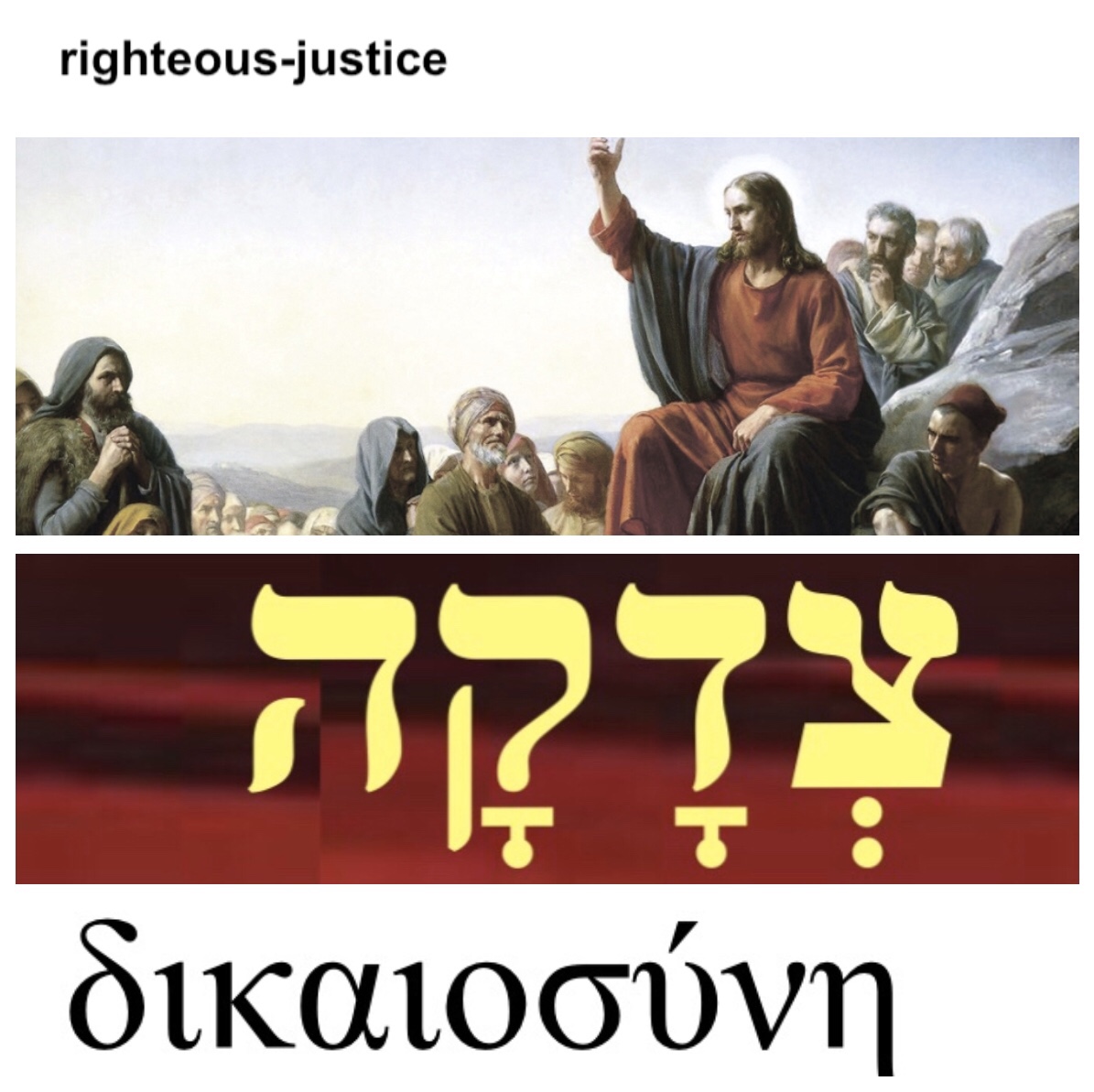
Perhaps we would do better, in English, to render the Hebrew word tsdeqah, and the corresponding Greek word dikaiosune, as something like righteous-justice. The two words, in English, tend to pint us in different directions—righteousness has a personal orientation, justice refers to the way society operates. In Hebrew, and in Greek, the words overlap because those categories of personal and societal were not clearly distinguished and separated.

It was the Torah, the Law of Moses, which was at the heart of this desire for righteous-justice. Living in accordance with the prescriptions of a holy God meant leading a life of righteous-justice. The teachings of Jesus which are recorded in Matthew’s Gospel are both grounded in a commitment to Torah, and developed in accordance with Jewish understandings of a faithful life. Obedience to the Law essentially meant living a just life, a life of righteousness, in every aspect of life.

Indeed, there is a cluster of terms that sat at the heart of traditional Jewish piety at the time of Jesus. The terms righteous-justice and lawlessness, along with the devout and the ungodly, were common in sectarian language of the late Second Temple period. Use of such language was aimed at validating the position of the writer (and the writer’s community) in opposition to other positions.

We find that righteous-justice is a key term for defining the self-identity of the sectarian communities which produced various Jewish documents 4 Ezra (7:17, 49–51; 8:55–58), 2 Baruch (15:7–8; 85:3–5), 1 Enoch (94:1, 4–5; 96:1; 99:1–3; 95:6–7), and the Psalms of Solomon (4:8; 13:6–9; 15:6–9). In each of these writings, usually within the same sentences, the terms “sinners”, “ungodly” and “lawless” are used to define those outside the community.

In similar fashion, the Dead Sea Scrolls define their community as one marked by righteous-justice (Community Rule 3, 9; Commentary on Habbakuk 8), in distinction from outsiders who are “the wicked” (Damascus Rule 4) and “the children of falsehood” (Community Rule 3). The struggle between the various sectarian communities and those in power was couched in very black-and-white terms.

The same cluster of terms is to be found in the book of origins. To live by righteous-justice is a key defining feature of faithful disciples (10:41; 13:17, 43; 25:37, 46), and righteous-justice is the keynote of Jesus’ ministry (3:15; 5:6, 10, 20; 6:33). By contrast, those who are unfaithful are depicted as “lawless” (7:23; 13:41; 23:28; 24:10–12). This Gospel thus draws the same distinction between its members and outsiders, as is found in other Jewish sectarian documents of the time.

To be righteous means to adhere to the Law. To adhere to the Law means to live a just life. This is what Jesus taught, and this is how Jesus lived, as we find reported in the book of origins. And so, the whole Sermon on the Mount is included in this book as a challenging statement of what it means to be a faithful follower of Jesus, keeping the Law in every respect, living with an excess of righteous-justice.

See also

https://johntsquires.com/2020/01/23/repentance-for-the-kingdom-matt-4/

https://johntsquires.com/2019/12/27/reading-matthews-gospel-alongside-the-hebrew-scriptures-exploring-matthew-2/

https://johntsquires.com/2019/12/21/a-young-woman-a-virgin-pregnant-about-to-give-birth-isa-714-in-matt-123/

https://johntsquires.com/2019/12/11/the-origins-of-jesus-in-the-book-of-origins-matthew-1/

https://johntsquires.com/2019/12/19/descended-from-david-according-to-the-flesh-rom-1/

https://johntsquires.com/2019/12/17/now-the-birth-of-jesus-the-messiah-took-place-in-this-way-matthew-1/

https://johntsquires.com/2019/12/04/for-our-instruction-that-we-might-have-hope-rom-15-isa-11-matt-3/

https://johntsquires.com/2019/11/28/leaving-luke-meeting-matthew/