I have been exploring just how it is that my federal electorate of Lyne has been “represented” National Party incumbent in recent times. It’s quite revealing.
The member who “represented” the people of Lyne in Canberra for the past three years has consistently voted
AGAINST increasing support for rural and regional Australia
AGAINST improving housing affordability
AGAINST growing our investment in renewable energy
AGAINST increasing workplace protection for women
AGAINST a transition plan for people working in the coal industry, whose jobs will become obsolete in the future
AGAINST treating the COVID vaccine rollout as a matter of urgency
But the voting record for our representative is not always NO; unfortunately, it is sometimes YES. In the same period of time, our member has voted
FOR getting rid of penalty rates on Sundays and public holidays
FOR political intervention into research funding grants
FOR privatising more government services
FOR banning mobile devices in immigration centres
FOR decreasing the availability of welfare payments
FOR putting welfare payments onto a “cashless card” system
Is this really how we want to be represented in parliament? These issues are all central to the commitments that the National Party has—all their members voted the same way. They showed little concern for local issues, but were focussed on “following the party line”.
As the saying goes, “if you want things to change, you need to change the way you vote”. A vote FOR Jeremy Miller will ensure that the concerns of people in the electorate are heard and considered, and that there will be strong advocacy about what really matters to you.
One of the questions that is often put to Independent candidates relates to the issue of funding. “Where is your funding coming from?” “Your candidate is on the Climate 200 website—that means they’re a Teal, doesn’t it?” Some basic figures might be helpful here.
In the 2022 election, Climate 200 donated a total of $6.5 million, distributed amongst 19 candidates. This money had come from 6,750 donors—including Simon and Karina Holmes à Court, but obviously including so many more than them. That indicates widespread support for Independents amongst the community; the vast majority of C200 donors were individual supporters of the community-backed Independents.
However, the $6.5 million from Climate 200 for community-backed Independents pales into insignificance when we note the donations received by the two major parties. For the 2022 election, Labor raised $124 million to spend on its electioneering, and the Coalition raised $115 million. Together, that’s 36 times more money than was provided by Climate 200.
And the bulk of these donations come from a small number of well-heeled individuals: the top 5% of donors provided 82% of the donations to the major parties. The Centre for Public Integrity reports that the top 5 individual donors to the ALP contributed $205.4 million, (that’s 34.5% of their total donations), while the top 5 donors to the Coalition contributed $118.8 million (22.6% of their total donations). So who is calling the shots? Just a few very rich people.
Many of the community-supported Independent candidates ran strong grassroots campaigns in the 2022 election, attracting much more of their funding support from donations made by community members. For example, Monique Ryan raised $1.8 million from 3,762 donors for her successful campaign to unseat former treasurer Josh Frydenberg in the Melbourne seat of Kooyong. This clearly reflects the higher socio-economic level of the population in this electorate, compared with western Melbourne or western Sydney seats, where support at such a level would not be able to materialise.
Climate 200 has been completely transparent about the individual donors whose money is them distributed amongst community-nominated Independent campaigns that they supported. They are listed by name on their website:
These donors support C200 in its platform of assisting Independent candidates with community support, who are each committed to the three basic areas of responsible climate policies, integrity in government, and gender equity. These three areas are designed to ensure a focus on equity within society. Our federal members need to represent us all.
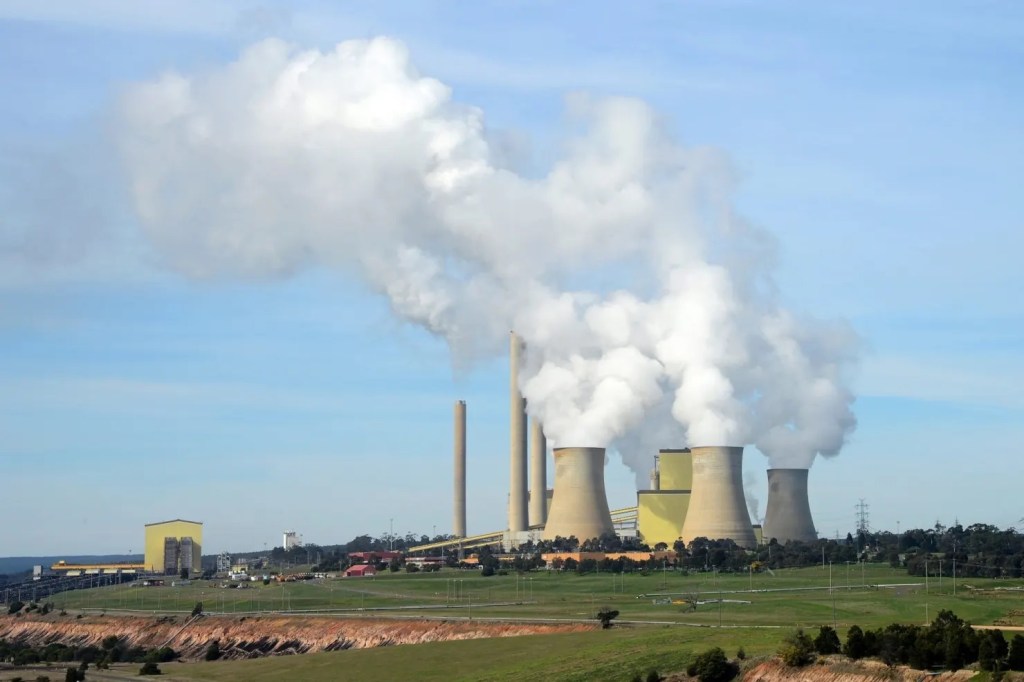
By contrast, the fossil fuel industry has provided strong support for the major parties in an attempt to further their environmentally damaging projects, which bring financial benefit to their businesses. Their intense lobbying and continued financial support is intended to get these parties to support their businesses enterprises, and to slow or stall the support given to renewable sources of energy,which are much more environmentally responsible.
The Australian Electoral Commission has published the figures of where donations came from in the 2022 election, and it shows that:
Fossil fuel industry sources gave more than $2.3 million to the major political parties ($1.4 million to Labor and over $900,000 to the Coalition parties).
The mining and energy division of the CFMEU union ($500,000) and industry lobby group the Minerals Council ($105,000) were the biggest fossil fuel interest donors to Labor, while oil and gas lobby group APPEA ($56,700) was also a big contributor.
Tamboran Resources, the company that plans to extract gas from the Beetaloo Basin, donated a combined total of $200,000 to Labor, Liberal and National parties.
Oil and gas giant Woodside donated a total of $109,930 to Labor, Liberal and Nationals.
Mineral Resources Limited ($135,000) and gas giant Santos ($77,310) were the biggest individual fossil fuel company donors to Labor.
Coal miner Adani donated $100,000 to the Liberal-National Party in Queensland.
Climate 200 estimates that if the proposed changes to electoral funding are in place for the 2028 election, the two parties could expect to receive 2.44 times as much as in 2025, with the forecast windfall increasing by $82.66m to $140.01m. This includes an estimated $16.53m in new administrative support funding.
These calculations are based on the Reserve Bank of Australia’s inflation projections, the current trajectory of first-preference voting for the two biggest parties and the proposed rate of public funding per eligible vote.
So any criticism of the support given to community-nominated and community-supported Independents should be placed alongside these figures!
******
Declaration of interest: for the 2025 federal election I am an active and committed member of the campaign team for Jeremy Miller,who is the community-supported Independent candidate in the seat of Lyne.
Since the middle of last year, Elizabeth and I have been involved in a process that has led to the selection of a Community Independent to stand as a candidate for the seat we live in, Lyne, and then into the forming of a team to run the campaign for JeremyMiller4Lyne. It has been a most interesting experience! See
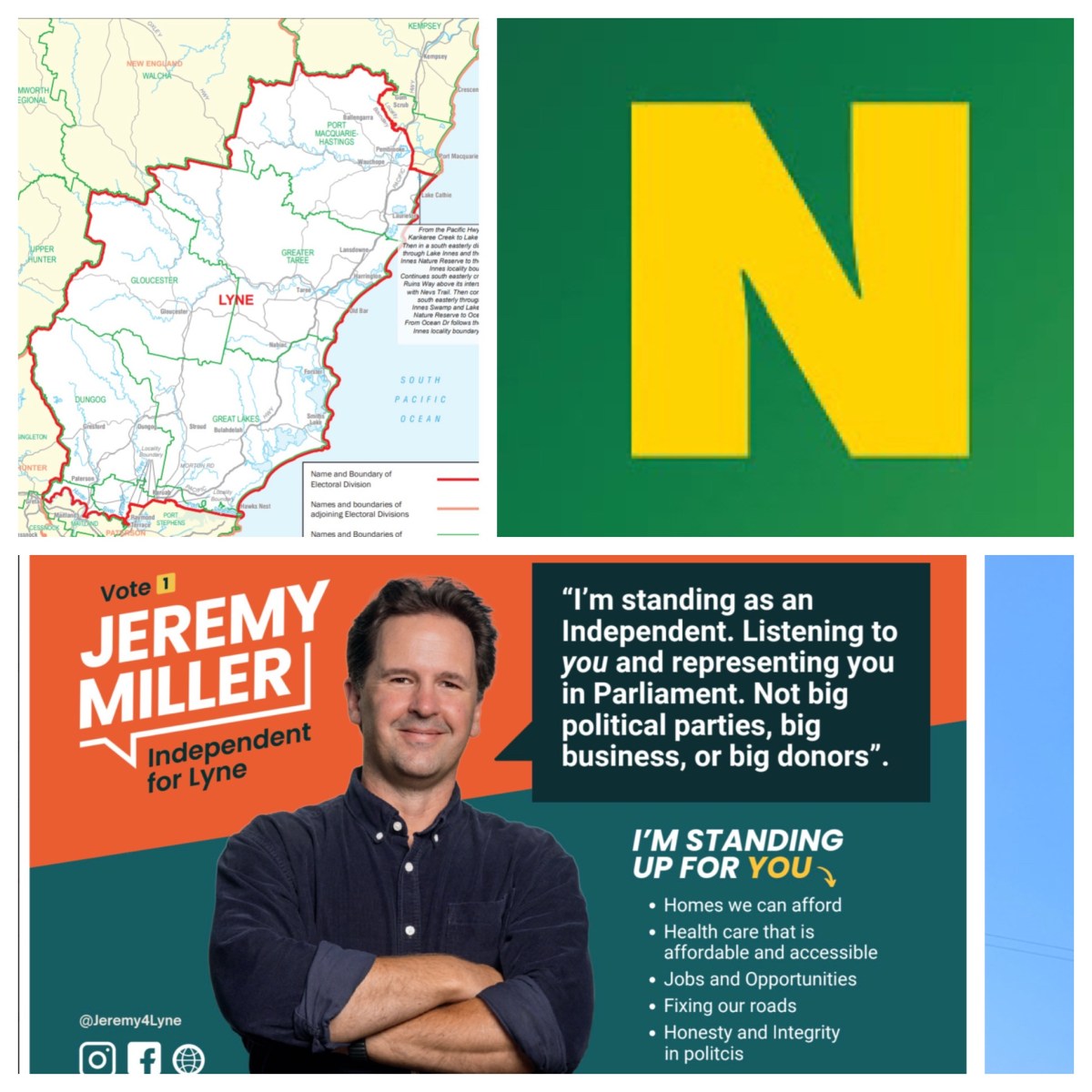
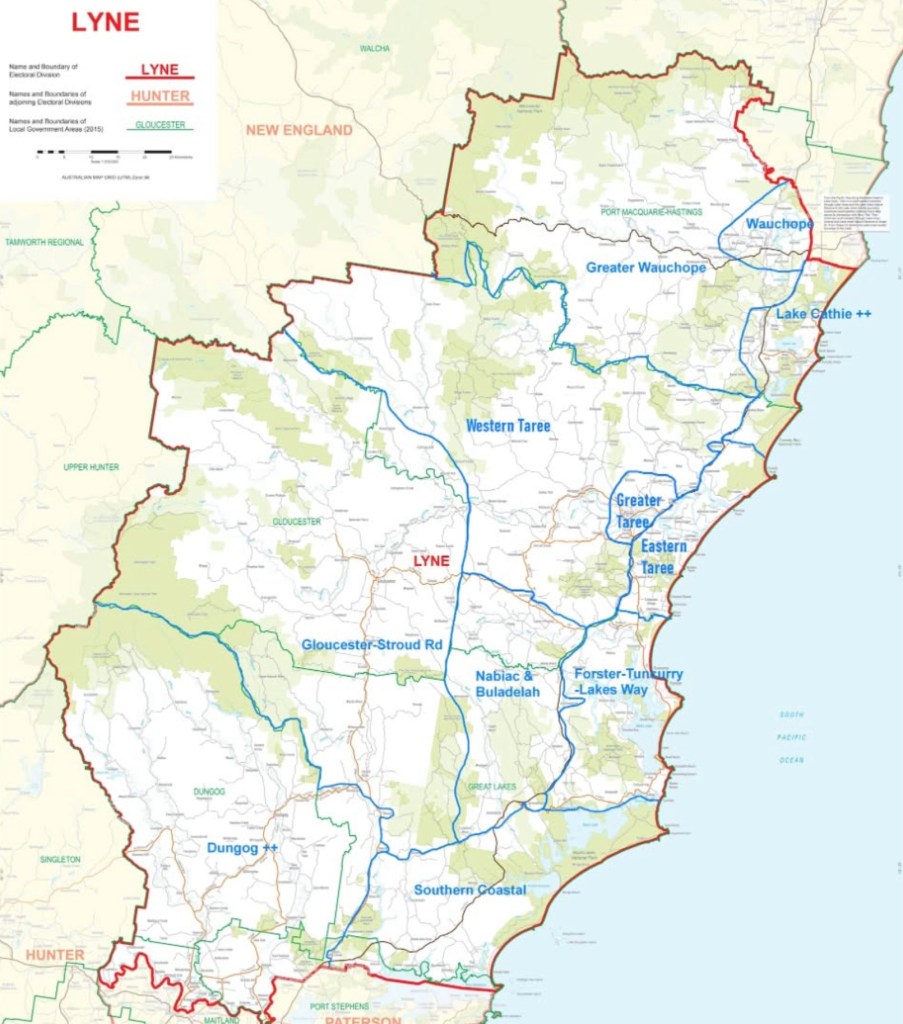
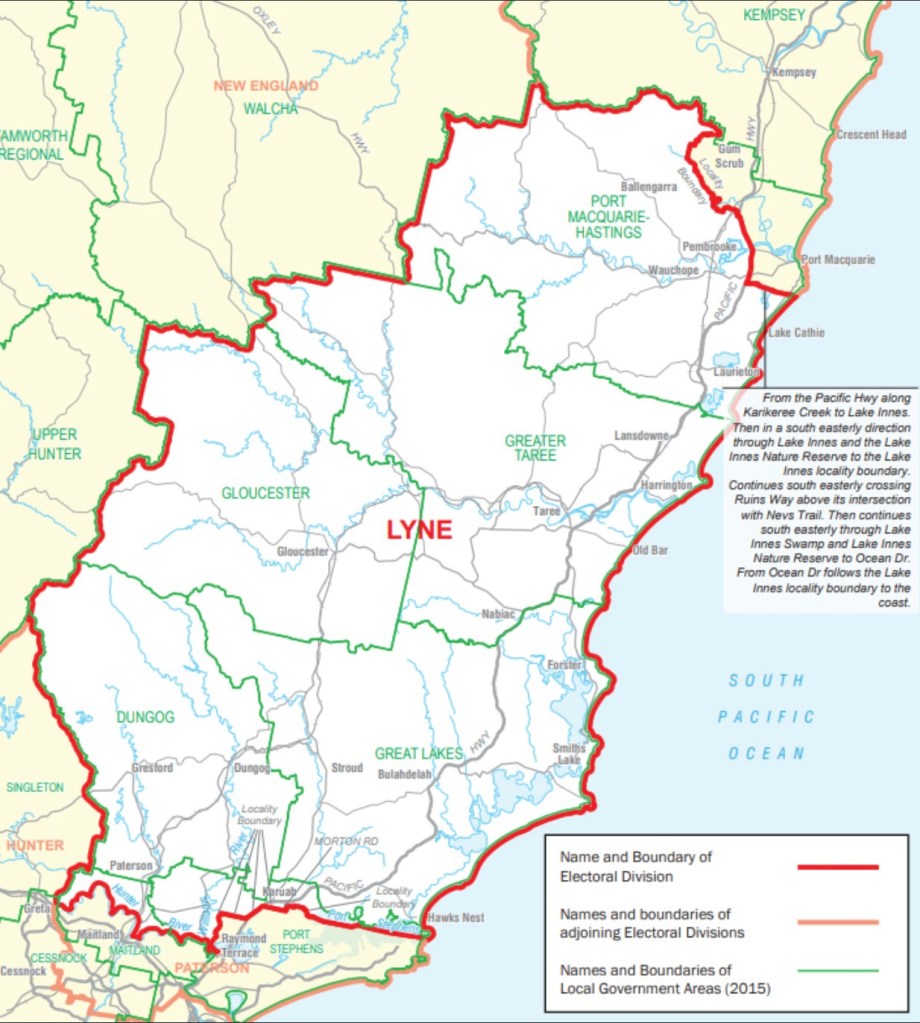
The federal electorate of Lyne is large. It is about 230km in length and over 100km in width. It takes about two and a half hours to drive it south to north, although there are very few roads that run east to west as there are wonderful areas of natural beauty in national parks, nature reserves, and state forests through much of the inland area. The electorate includes the magnificent rainforests of the Barrington Tops National Park, just north of where we live in Dungog.
The electorate stretches from the northern suburbs of Maitland on the banks of the Hunter River, across to Tea Gardens and Hawks Nest, and then north all the way to the southern suburbs of Port Macquarie near the Hastings River, and inland to the west to our old stomping ground of Wauchope. It includes significant urban areas on the coast—Taree, Forster, and Tuncurry—as well as a string of smaller coastal towns and villages.
There are some key rural hubs inland—Wauchope, Gloucester, and Dungog—as well many other smaller towns and villages in the hinterlands, and widely dispersed farmland areas through many river valleys. It is an area with wonderful scenery along the coastline as well in the mountain areas inland, and many natural features that attract visitors throughout the year.
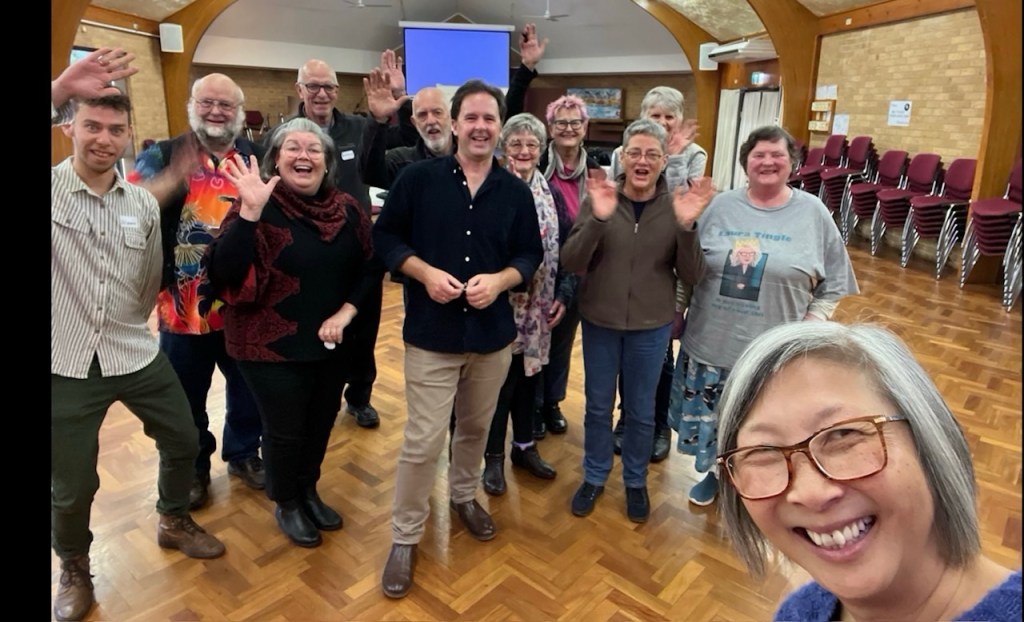
To cover all of these diverse locations, the campaign team has sent up Hubs (see above). Each Hub is running its own events locally. Each Hub has a local leader—Elizabeth has taken on this role for the Dungog Hub, which includes the whole of Dungog Shire (Dungog, Clarence Town, Paterson, Vacy, and Gresford) as well as the northern suburbs of Maitland (Lorn, Largs, and Bolworra Heights).
Elizabeth has marshalled a team of volunteers, mostly living in Dungog itself. We have started a weekly street stall in the Main Street of Dungog, to let people know about Jeremy. Three of us set up a stall at Clarence Town Markets some weeks back, with the same purpose. Volunteers in other hubs have been at stalls for markets in Taree, Forster, Gloucester, and other places where monthly markets are held. We have started putting up Corflutes in our various hubs. Some hubs are now starting Corflutes Marches in the main towns. There’s lots of activity happening.
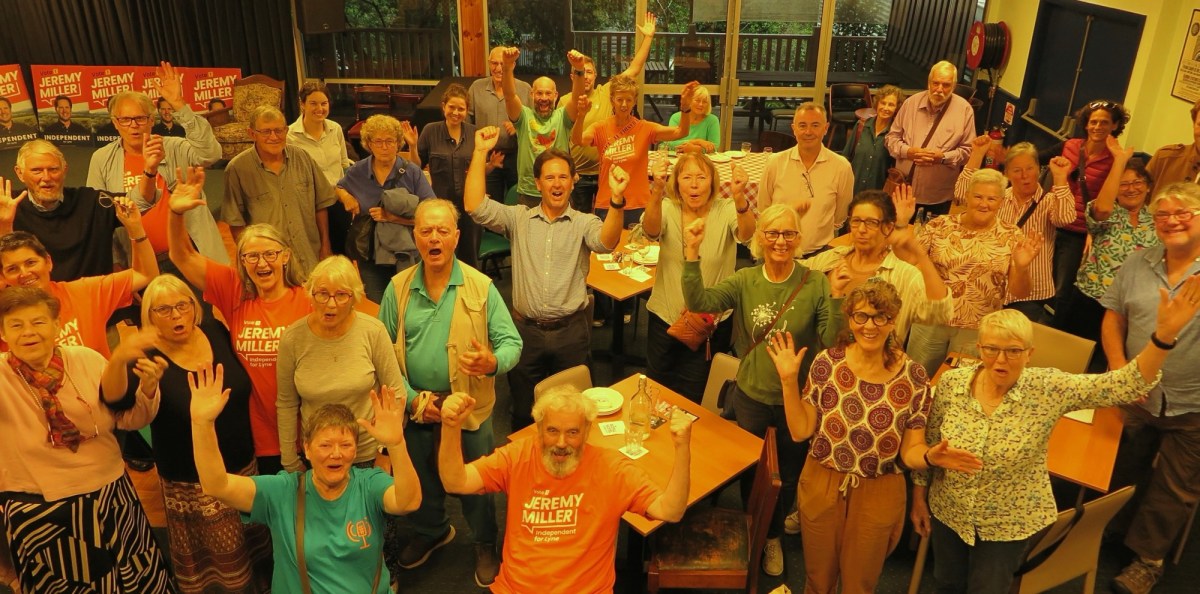
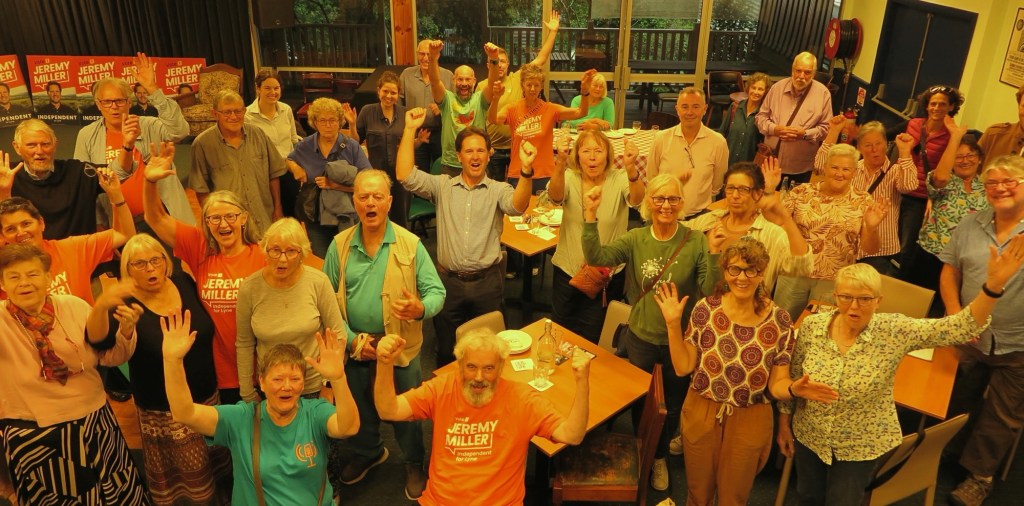
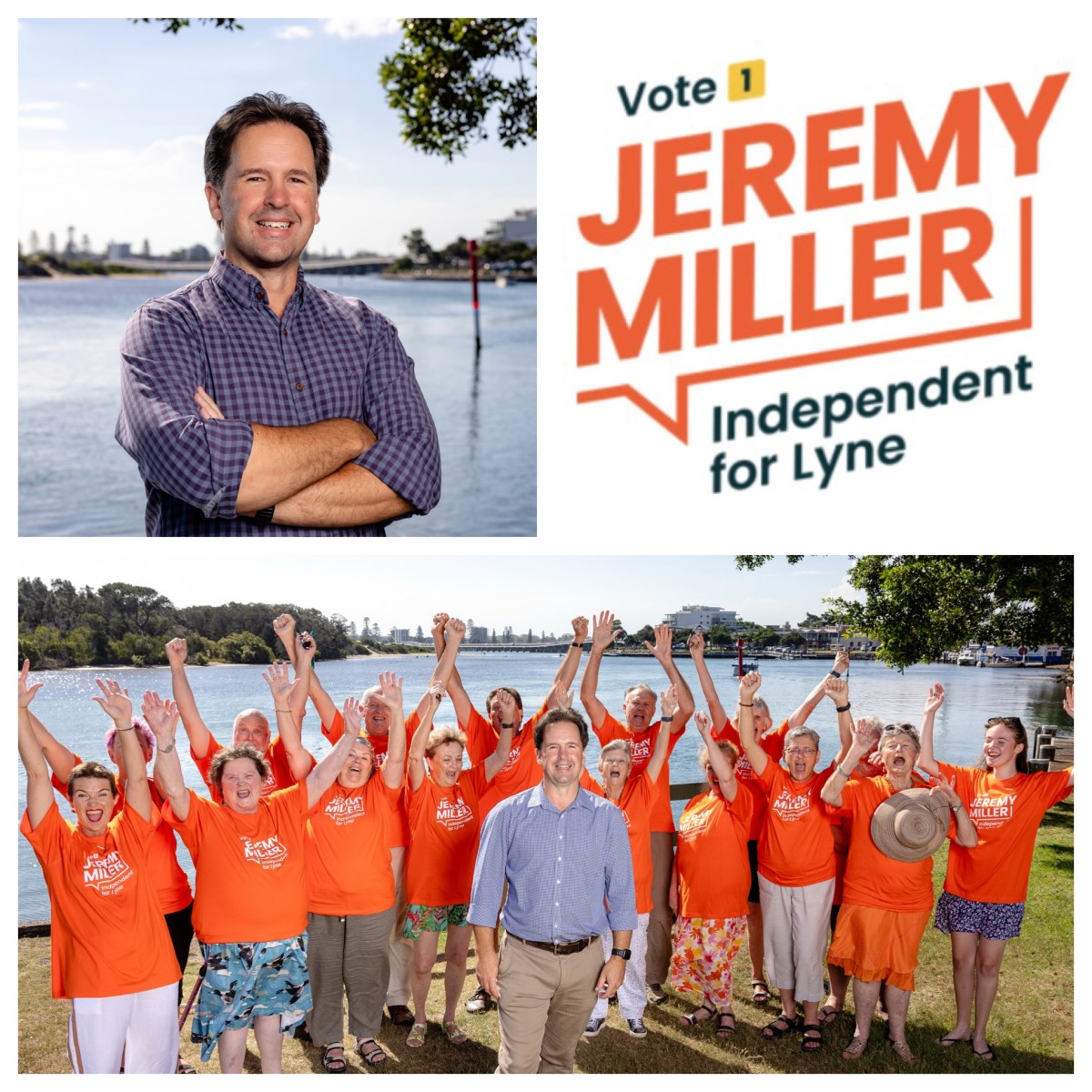
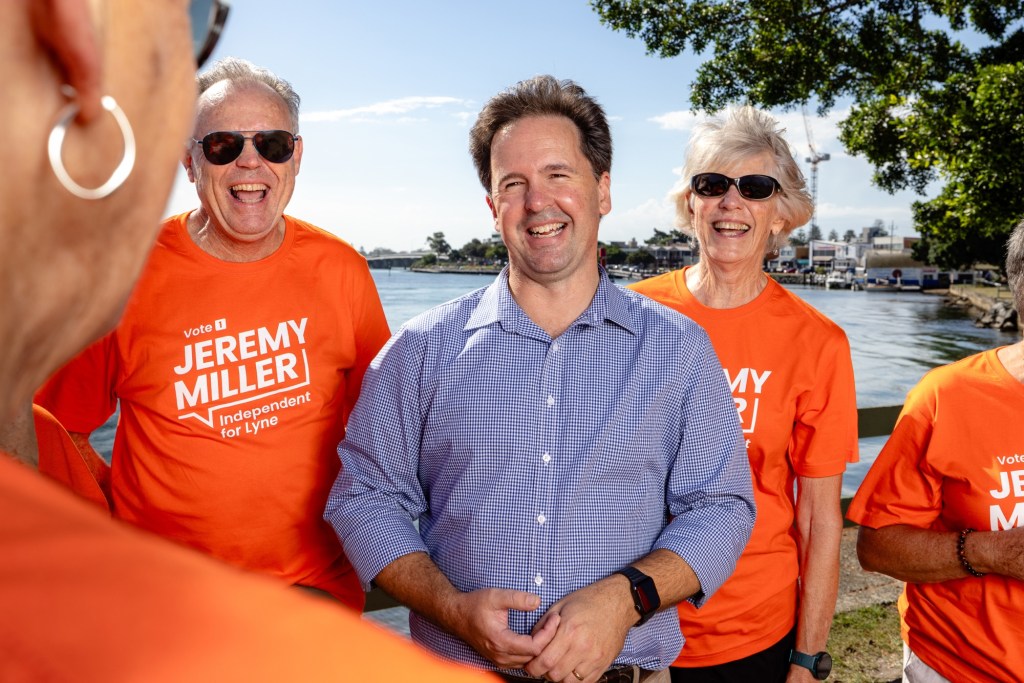
Jeremy Miller (in the centre) with Dungog supporters
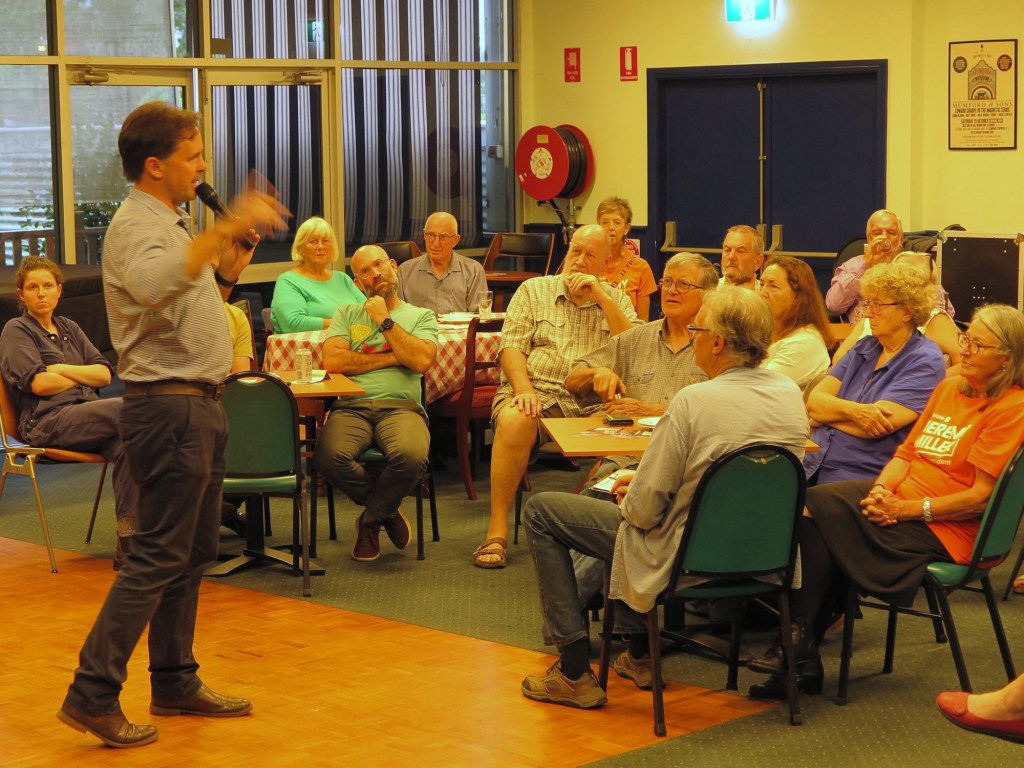
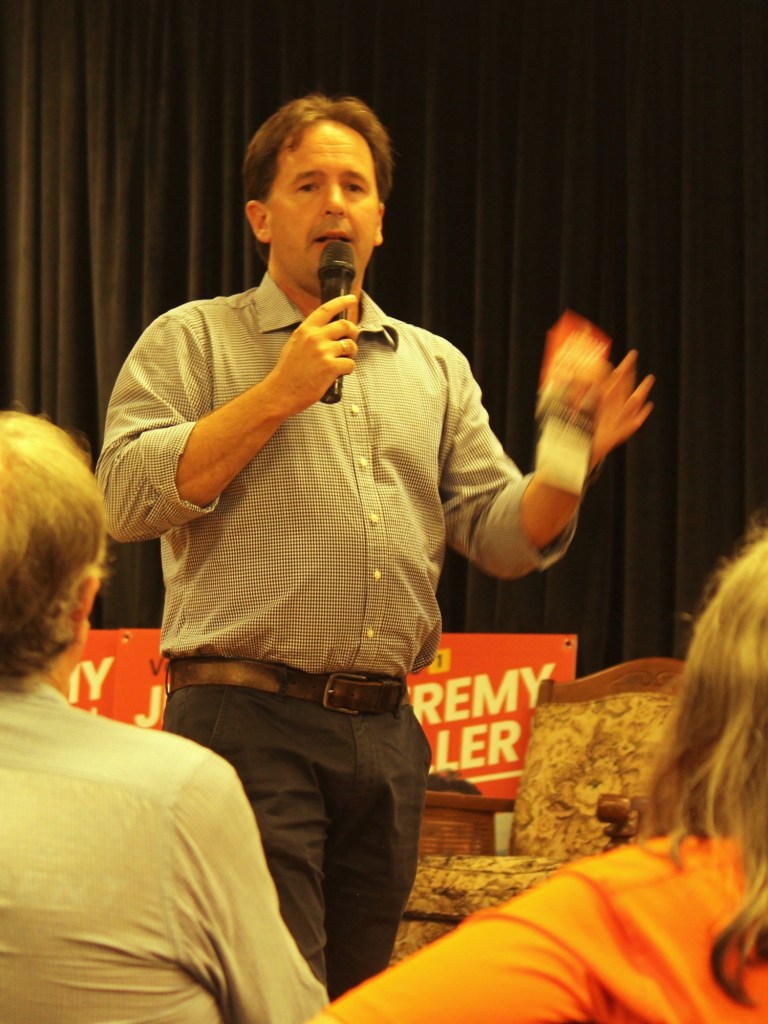
As a team, we decided not to have a “campaign launch”, but to have a series of “Meet the Candidate” events in key locations. The first one was held this week at Dungog, in the heart of the southern part of the electorate. A crowd of over 40 locals gathered at the Royal Hotel to hear Jeremy speak about his candidature. He spoke a little about his own life and outlined how he would serve as the member for Lyne. “As your Independent representative”, he declared, “my only loyalty is to our community. I’ll work with anyone who helps our region and stand up to anyone who doesn’t”.
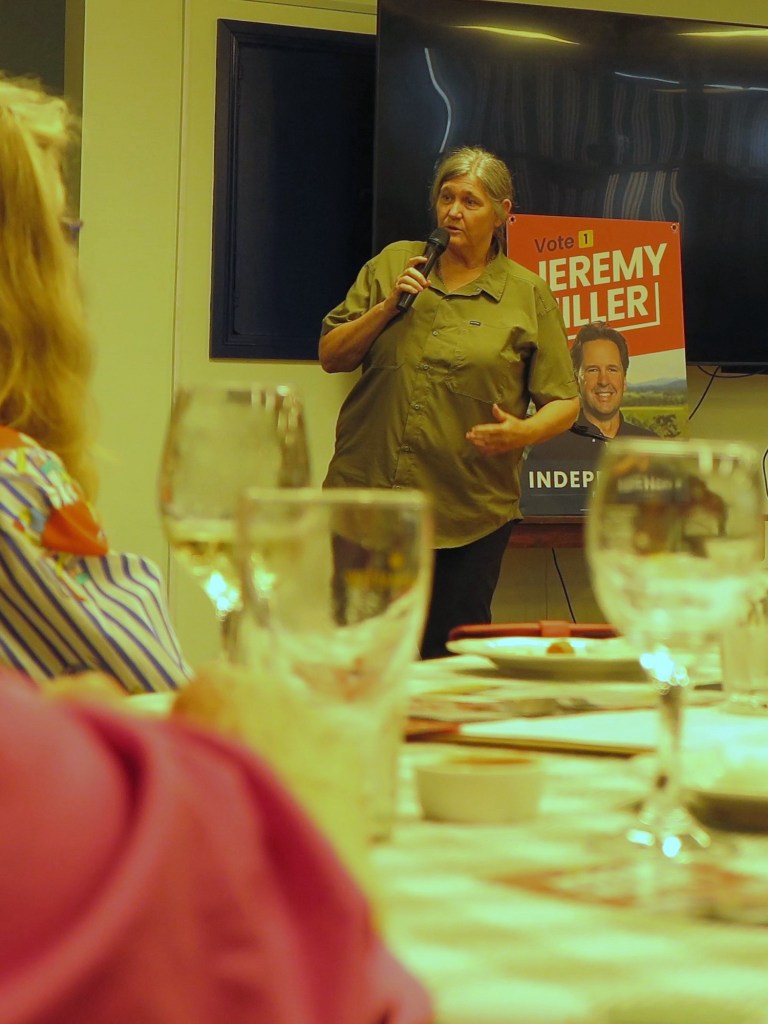
The room was decked out with Corflutes and Banners in support of Jeremy’s visit. Local volunteer Janine Atkin served as the MC for the evening. Former Dungog Shire Mayor Tracey Norman spoke enthusiastically about what Jeremy would bring to federal parliament. The pub provided a fine spread of finger food for people to eat as they listened intently to what Jeremy had to say.
Former Mayor of Dungog Shire Council, Tracey Norman, introducing Jeremy Miller
David Smith and Libby Doolan made sure that everyone who attended was invited to sign up as a supporter. In the audience were some Dungog Shire Councillors, including the current Mayor of Dungog, Digby Rayward. Jeremy had met with Cr Rayward some days earlier in order to gain a better understanding of the current priorities of the Dungog Shire Council.
The whole event ran smoothly, due largely to the careful planning of Elizabeth as the Dungog local leader and her persistence in inviting people from a wide range of local community groups in Dungog. We believe that offers a fine model for how other “Meet the Candidate” events in other parts of the electorate could run. There’s one scheduled for Tea Gardens today and Forster tomorrow.
Answering questions about key issues
Questions were asked about Jeremy’s environmental commitment and his stance on nuclear power and large-scale renewable energy installations. He said that community consultation was really important in setting up such things. He said that each project needs to be assessed on its own merits, and that there are too many unknown factors relating to nuclear power installations. “The Government shouldn’t be running large-scale risky businesses” such as nuclear power. Other questions asked related to tertiary education, tax reform, and truth-telling and treaty.
One good question was about what principles guided his ethics. Jeremy said he will always seek to do “what is right” for the people of the electorate. He noted that, according to the ABC’s votecompass, he was “socially left, economically a little right, overall pretty much in the centre”. What he would most like to achieve whilst in parliament would be “to change the mindset that things can’t change for the better”.
One person who attended commented that Jeremy “reeked of integrity”—an interesting turn of phrase! Another observed that he was up front and honest; perhaps a rare quality in public life? A number of people had come wondering “who is Jeremy Miller?” and “what does he stand for?” As they left, quite a number took Corflutes and signed up to volunteer to support Jeremy in his campaign in the coming days. It was a great evening!
Much of Jeremy’s funding is from donations by individuals. He also has received funding from Climate 200 and the Community Independents Project; see https://www.communityindependentsproject.org
Elizabeth and I have had an interesting sequence of experiences over the past six months. It all began some months after we had moved to Dungog, late last year, and settled in to the community here. In about May we were invited to attend a gathering of people who had interest in exploring what it might look like to start a “Voices for Lyne” group locally. This would be a group of people from the community in and around Dungog who would be happy to support an Independent candidate in the upcoming federal election.
Lyne is the federal electorate that we live in. It stretches from the northern suburbs of Maitland on the banks of the Hunter River, to the southern suburbs of Port Macquarie near the Hastings River. It includes significant urban areas on the coast—Taree, Forster, and Tuncurry—as well as a string of smaller coastal towns and villages. There are also some key rural hubs inland—Wauchope, Gloucester, and Dungog—as well many other smaller towns and villages in the hinterlands, and widely dispersed farmland areas through many river valleys. It is a diverse region with wonderful scenery along the coastline as well in the mountain areas inland. It has many natural features that attract visitors throughout the year.
Since it was established in 1949, the seat of Lyne has had only six members: five Nationals and one Independent. It was long regarded as a National Party stronghold. The one Independent member was Rob Oakeshott, whom we got to know and respect while we lived in Wauchope from 2011 onwards. Rob was an excellent local member, highly attuned to representing the needs and concerns of his electorate, and right over a wide range of policy areas. By contrast, the various National Party members elected by Lyne over the decades have—quite predictably—been more concerned to vote according to the party line, and so the electorate has suffered a degree of neglect as they have each prosecuted the ideological wars of the Coalition.
We were two of a dozen people at that meeting in May, to talk about forming a “Voices for Lyne”. A month after that, an organisation called Independent Lyne was formed, and Elizabeth and I both committed to working with other folks on an organising committee. The committee has met every two or three weeks since early June. (Guess who is the secretary, diligently taking minutes of each of those meetings …)
We have established a website, invited people to complete an online survey about their hopes and needs, appointed a number of Local Leaders (Elizabeth took on that role for Dungog), held kitchen table conversations, had stalls at local markets, and generally “talked up” the benefits of having a federal representative who is Independent and not bound to party policy—someone willing to consider each issue on its merits, consult with the people whom they represent, and commit to integrity and transparency in their decision-making.
We called for expressions of interest from local people; a small committee did the hard work of sifting and sorting those applications, then the Organising Committee was expanded with other interested community members to form a Community Panel to listen to those shortlisted. Emerging from this, we identified the best person to be our candidate, to stand as a community-backed Independent in the seat of Lyne at the 2025 federal election. And so Independent Lyne has given birth to Standing4Lyne.
At the same time, the incumbent local member announced his retirement, after 11 predictable years in the position, and the National Party announced their new candidate. It was no surprise that the new candidate was his chief policy advisor—a clear case of keeping the party machine hegemony rolling over. Just a week after this announcement, Independent Lyne announced support for our community-backed Independent candidate.
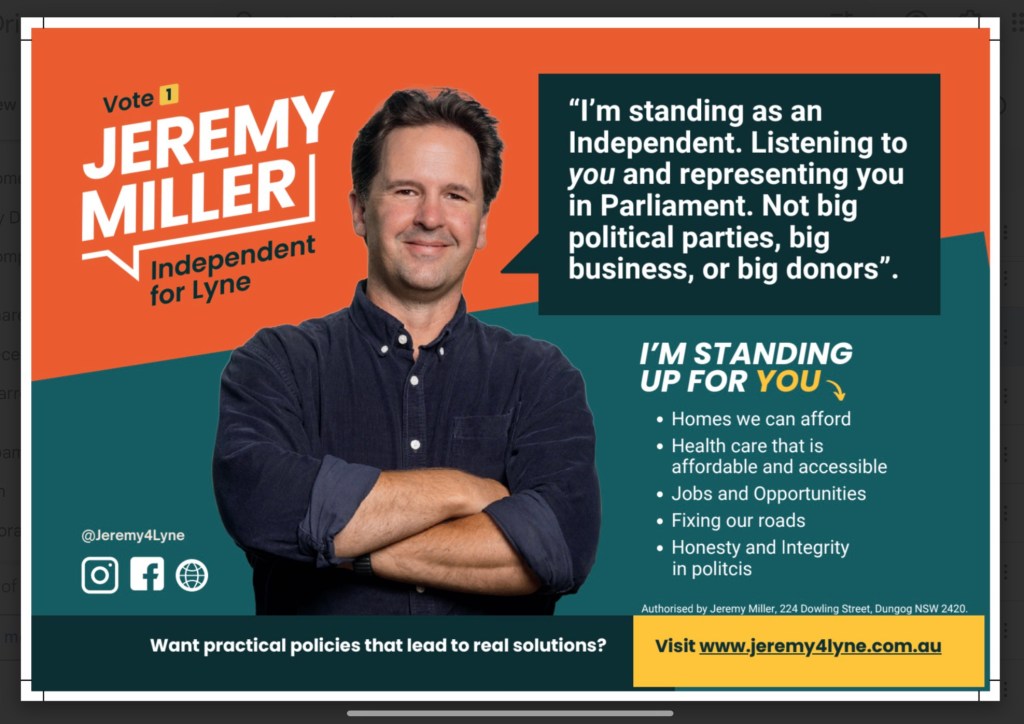
Our candidate who is Standing4Lyne is Jeremy Miller, who is well-known in the Greater Taree area as an energetic small business owner, and throughout the Mid Coast Council area as the Deputy Mayor of Council. “I’ve always looked for practical ways to make things better—whether that’s running local events, managing the Manning Entertainment Centre, or serving on Council”, Jeremy said. “I’m married to a local teacher, we’ve raised three kids here, and there’s nowhere else we’d rather be”.
Standing4Lyne is part of the Community Independents Project (CIP) that has grown exponentially across the country in the last few years. This project supports groups like Standing4Lyne that are putting forward community-backed Independents as candidates in the next election. Standing4Lyne people have participated in the training and resourcing that CIP provides. It has given us a base for working towards the election.
The Community Independent candidates that are emerging are committed to genuinely representing their community, reflecting the values and views of their electorates. They each have developed a ‘compact’ with their community that guides their actions and they seek to empower their communities through collaborating and partnering with them. This movement is at the vanguard of real political change in Australia. See more at https://www.communityindependentsproject.org
I can affirm from my personal knowledge of Jeremy that he is personable, intelligent, enthusiastic, and committed. He has travelled to many places across the electorate in recent years, met with many people, and listened to their concerns. In my experience he is always respectful in his interactions with others. He would bring the same freshness to politics that we have seen in a number of the Independents now in the Federal Parliament.
Jeremy stresses he’s not “joining the Teals” if he’s elected. He is and will remain a genuine community-backed Independent, taking the issues that most concern Lyne voters, guided by their suggestions, ensuring that he is always transparent to voters in his thinking and how he plans to implement them. He plans to work as a truly Independent regional member like Helen Haines in Indi.
Jeremy knows that for a truly Independent member of Parliament, “every vote is a conscience vote, so I will consult with community about issues before the parliament and be accountable to the electorate for my decisions”.
“My record will be transparent to everyone”, he assures; “I will be visible across the communities of Lyne throughout the three years, I will always be open to chatting with people and listening carefully, and I hope to be a strong and positive ambassador for Lyne”.
He maintains that he will “work constructively with whoever’s in government to get things done for our region, while maintaining my independence to fight for our community’s interests. After 30 years of bringing people together locally to get results, that’s exactly what I’ll do in Canberra.”
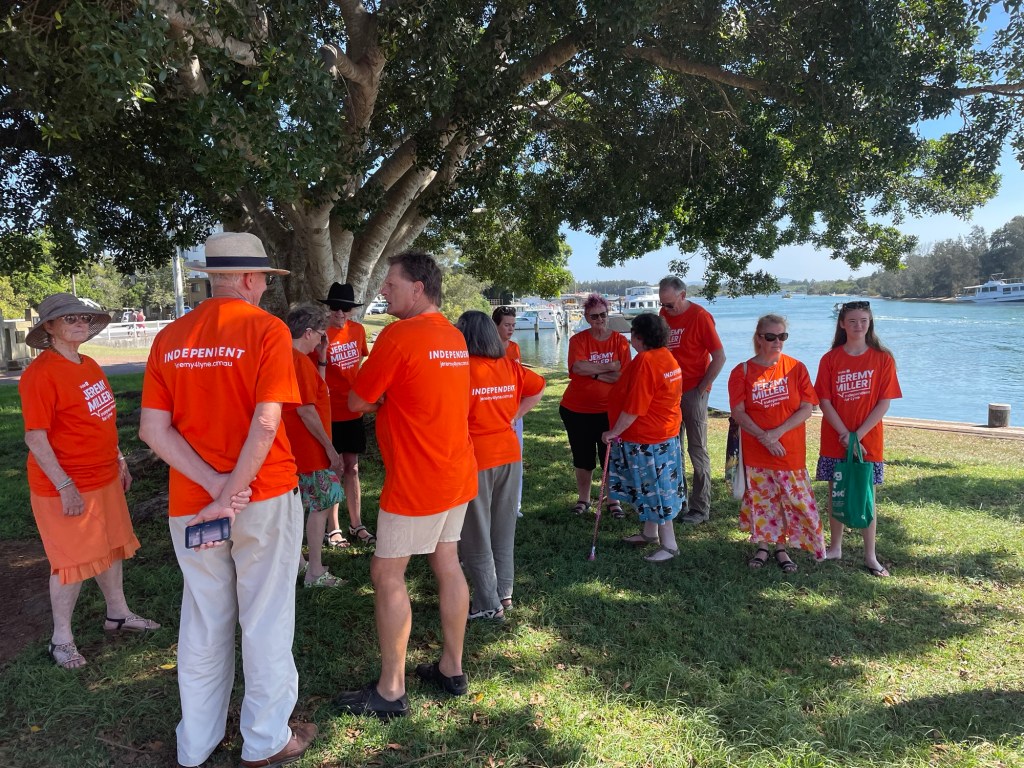
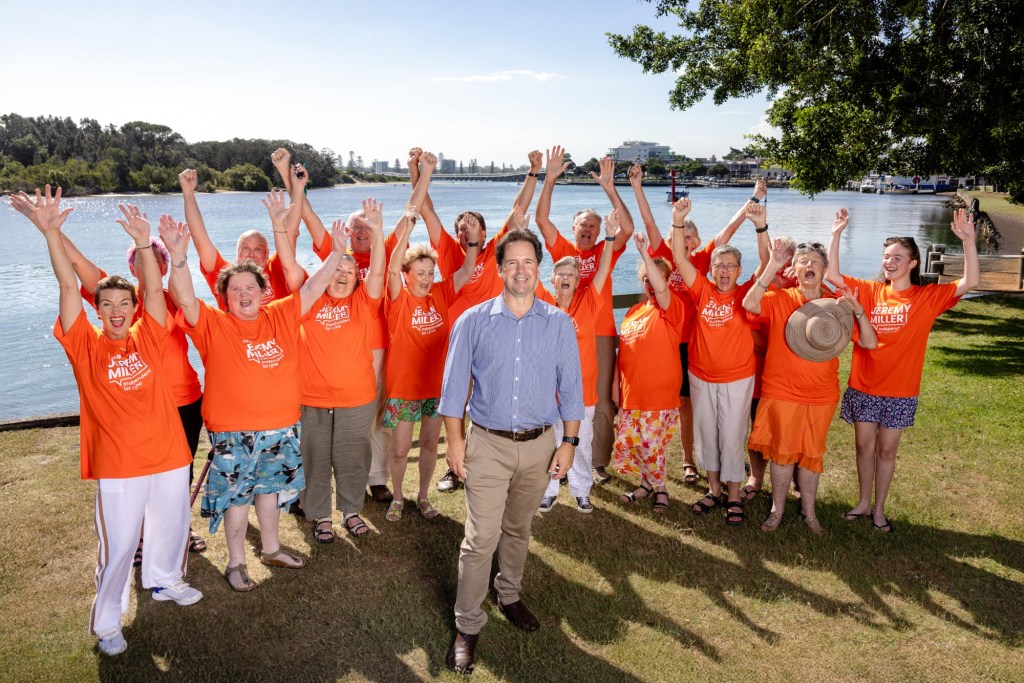
So this past weekend we gathered in Forster with a group of a dozen people from across the electorate to focus on what we need to do to plan the campaign. It was an energising and inspiring day—although to be honest, what lies ahead looks utterly daunting! The day finished with photos by the river, as we showed our enthusiastic support for Jeremy. In January, we begin the campaign proper. It looks like it will be a fascinating experience!
This coming Sunday, known as Palm Sunday, we will hear the story of Jesus, riding into Jerusalem, acclaimed by the crowds, for the festival of Passover. This year, we hear the story as it is told by Mark (Mark 11:1–11). It is a story which is well-known across the church, and is often re-enacted by children waving branches, adults singing songs—and sometimes a co-opted donkey—at this time of the year. It is a story which is often misinterpreted as portraying the gentle Jesus, meek and mild, receiving the accolades of the crowd with a beatific smile as he gently trots in to the city amidst the cheering crowd of pilgrims.
The actual story is far from that, however. If we read it carefully, we will find a number of indications that point us in quite a different direction entirely. There is no “gentle Jesus, meek and mild” in this story. Instead, we find a politically acute Jesus, provocatively and deliberately entering the city at the start of the important festival of Passover, with a clear message to the people of Israel and to the powers of Rome.
(The interpretation that follows is the result of careful exploration of the text in the context of Jewish and Roman history, that my wife Elizabeth and I have undertaken. See the end of the blog for more details.)
The political focus of Passover
The festival of Passover recalls the story that is told in the Hebrew Scriptures, about the exodus of Israel out of Egypt. This is a story of the liberation of an oppressed people, suffering under the burdens of forced labour. Every year throughout the centuries, Jews have recounted the sequence of events that led to the miraculous escape from slavery of their ancestors, crossing through the Sea of Reeds, travelling unhindered through the wilderness, towards a land which the story claims was promised by God—a promised land, gifted to a chosen people by a holy God (Exod 13–15).
Passover is therefore a political festival, recalling a central event in which the leader of a group of enslaved people confronted the leader of an oppressive power and gained liberation through divine intervention. In the time of Jesus, Jews from around the ancient world flocked to Jerusalem for this high moment of celebration, and the story was retold each year with notes of jubilation and joy.
During feast days, especially at each Passover, tensions reached fever pitch. Fervent Jews known as Zealots would use the opportunity of the many pilgrims in the city to mingle in the crowd with daggers hidden under their tunic—and take the opportunity to cause a commotion in the crowd, hoping that they could stab Roman soldiers, their dreaded enemy. The Romans increased their military presence to prevent open revolt. (See Josephus, Jewish War 2:255; Jewish Antiquities 20:186.)
So the Roman soldiers charged with keeping the peace in Jerusalem at Passover would therefore have been on high alert as the pilgrims entered the city. It is in this context that the story of Mark 11 takes place.
Riding on a donkey shows messianic intention
Jesus, seated on the colt, riding on a donkey, was the centre of attention—at least for his own followers (Mark 11:7). Those in the crowd who knew their scriptures, would have immediately recognised the allusion. What did this mean for observant Jews? First, Jesus was on a donkey, not a horse. Indeed, Jesus, as a faithful Jew, would never ride in triumph on a horse! See more at
The account of this story that we find in Matthew’s Gospel actually specifies the verse that interprets the significance of the donkey (Matt 21:4-5). Matthew refers to Zechariah 9:9, where a clear vision is offered: “your king comes to you, triumphant and victorious, humble and riding on a donkey”. And Zechariah himself may well have been referencing the moment when the young Solomon is summonsed to his father, the old king, David, and instructed to “ride on my own mule, and bring him down to Gihon” (1 Ki 1:33)—which Solomon duly does (1 Ki 1:38).
On his arrival, “the priest Zadok took the horn of oil from the tent and anointed Solomon. Then they blew the trumpet, and all the people said, “Long live King Solomon!” And all the people went up following him, playing on pipes and rejoicing with great joy, so that the earth quaked at their noise.” (1 Ki 1:39–40). Solomon’s journey on a mule is the journey to his accession to the throne. The resonances in the story about Jesus are clear.
That is what the reference to the words of the prophet evokes. In this story of Passover pilgrims, Jesus can be seen to be bringing the prophetic vision to fruition, as the fulfilment of the role that kingship plays in Israel. Zechariah’s vision declares that this coming ruler “shall command peace to the nations, and his dominion will be from sea to sea, from the river to the ends of the earth” (Zech 9:10). That is the vision that Jesus evokes as he rides into Jerusalem on this donkey.
The cries of the crowd evoke political resistance to Rome
The crowd sings out, “Hosanna! Blessed is the one who comes in the name of the Lord” (Mark 11:9). The words were familiar words to observant Jews; they clearly evoke a well-known and oft-sung psalm, Psalm 118: “Save us, we beseech you, O Lord! Blessed is the one who comes in the name of the Lord” (Ps 118:25–26).
Why were they singing this psalm? Psalm 118 was one of the HallelPsalms, the Praise Psalms, which were associated with celebrations on each of the three great festival days—the Feast of Tabernacles, or Booths; the Feast of Weeks, or Pentecost; and the Feast of Passover. These psalms of praise became particularly associated with the celebrations of the rebuilding of the Temple.
Rebuilding the Temple was an inherently political action. It was the foreign invasion of Palestine by the Hellenistic Seleucids some two centuries before Jesus which had led to the destruction of the Temple. It was the political activity of the Jewish Maccabees which had led to the reclaiming of the Temple two decades later.
The HallelPsalms had become Psalms of Praise for liberating political activity. When the people cried out “hosanna”, a word from their native Hebrew language, they were crying “save us”. It is a cry for salvation; a yearning for deliverance. This is what the people were singing out; so the people singing this at the festival of Passover as Jesus entered the city was a strong political statement. See more at
This Sunday in the church year is traditionally called Palm Sunday. However, no palms are mentioned in the reading we have heard from Mark’s version of the story (nor in Matthew or Luke). That the branches are from palm trees is noted only in John’s version (John 12:13). Both Mark (11:8) and Matthew (21:8) refer to branches that the people cut and placed on the ground, even though they don’t specify that they are palm branches. (Nevertheless, waving palm branches has come to define this day—Palm Sunday—in contemporary re-enactments.)
This waving of palm branches was an activity intimately associated with the actions of the Maccabees, who were men from a priestly family who took up arms to fight back the Seleucid overlords and reclaim the Temple. The instructions in one of the Jewish books (2 Maccabees 10) direct the people to “carry ivy-wreathed wands and beautiful branches and fronds of palms, and offer hymns of thanksgiving to [God] who had given success to the purifying of their own holy place”. So the palms that are noted in John’s Gospel, at least, evoke the famous military campaign of centuries earlier.
The cloaks on the ground recall political leadership
Some people threw their cloaks over the donkey before Jesus sat on it—but Mark also notes that “many people spread their cloaks on the ground” (Mark 11:8). This is a curious detail; what can this mean? Perhaps the more astute of the Jews along the side of the road, would have had some insight; perhaps they recalled the story of the time when a young prophet from Ramoth-gilead declared that God was anointing Jehu, the son of Jehoshaphat, as the next king of Israel.
The story is recounted in 2 Kings 9, and it contains this striking detail, as the prophet decreed, “Thus says the Lord, ‘I anoint you king over Israel’”, and so they took their cloaks and spread them for him on the bare steps, and blew the trumpet, and proclaimed, ‘Jehu is King’” (2 Kings 9:13). There are clear resonances with the story of the Passover pilgrims. The cloaks on the steps, when Jehu is King … the cloaks on the wayside, when Jesus comes as King.
So Jesus, the prophet from Nazareth in Galilee, entered the city in the midst of the pilgrims, for the festival of Passover. Did he come as King, in the minds of the crowd? The festival of Passover was a most appropriate time for him to enter the city and make his mark as God’s chosen King. The donkey and the songs, the branches and the cloaks, all point to the immediate political significance of this event.
The incident in the temple sets the ball rolling
Once in the city, Jesus goes to the temple, where another famous incident occurs. Jesus, as he is portrayed in the striking account of this incident, demonstrates very little gracious, self-effacing humility. There is no “gentle Jesus, meek and mild” here, to be sure! Rather, Jesus is acting out his righteous anger, embodying zealous piety.
Jesus enters the temple precincts, overturning the tables of the money changers (Mark 11:15; Matt 21:12) and driving them out of the temple area (Mark 11:15; Matt 21:12; Luke 19:45). In John’s account, Jesus also tips out the coins of those money changers and knits together cords to form a whip (John 2:15), by which he drives out the moment changers. (Of course, John has completely relocated this scene to the beginning of the public activity of Jesus, rather than near its end, as in the Synoptic accounts of this scene).
Jesus was entering the area with intention and purpose. What was taking place there was, in his eyes, contrary to God’s will. So he performs a prophetic action designed to convey his message to those present (and to those of us in later times who hear and read the account of this incident).
James McGrath notes that “both the selling of animals for sacrifices and the payment of the temple tax were activities required by Jewish law and central to the temple’s functions” (see https://www.bibleodyssey.org/en/passages/main-articles/jesus-and-the-moneychangers). What Jesus does is therefore not an incidental act of anger; it is part of a deliberate plan of action.
McGrath suggests that the reference to the Temple as a marketplace might be an allusion to the eschatological prophecy of Zechariah, that “there shall no longer be traders in the house of the Lord of hosts on that day” (Zech 14:21). Is Jesus enacting this prophecy through his actions in the Temple forecourt?
Certainly, the actions of Jesus when “he would not allow anyone to carry anything through the temple” was confronting. He accuses the money changers of making the temple “a den of robbers” (Mark 11:17, Matt 21:13, and Luke 19:46). That most likely references the rhetorical question of the prophet Jeremiah: “Has this house, which is called by my name, become a den of robbers in your sight?” (Jer 7:11).
Gail O’Day considers that “by going to the Jerusalem temple and disrupting the practices that were necessary for the celebration of Passover, Jesus places himself in a long line of Israel’s prophets who go to Jerusalem, the center of religious and political power, and announce and enact the word of God.” (see https://www.bibleodyssey.org/en/passages/related-articles/cleansing-or-cursing)
In this dramatic prophetic action, Jesus acts and speaks carefully, deliberately, with “righteous anger”. He makes it clear what he is standing against, and what he is working towards—and he knows what the cost will be for him. After his dramatic entry into the city (Mark 11:1–11), he then presses on relentlessly into the temple (Mark 11:15–17), even symbolising his message in what he says to the fig tree: “may no one ever eat fruit from you again” (Mark 11:12–14).
Jesus knows exactly what he is doing. He has set in motion the events that will lead to his death: “when the chief priests and the scribes heard it, they kept looking for a way to kill him; for they were afraid of him” (Mark 11:18). His actions in the temple precincts were just as political as his entry into the city.
This is no “gentle Jesus, meek and mild”. This is a leader acting with a clear, focussed intent, regardless of the cost to himself and his followers. So this Palm Sunday, let us banish the Sunday School stereotype of Jesus, and acknowledge him in his full and fierce expression of his faith.
This blog on the Palm Sunday story is based on research by Elizabeth Raine and John Squires, published in Validating Violence—Violating Faith? Religion, Scripture and Violence. Edited by W. Emilsen & J.T. Squires, ATF Press, Adelaide 2008. See https://assembly.uca.org.au/rof/images/stories/interfaithsep/25sept.pdf
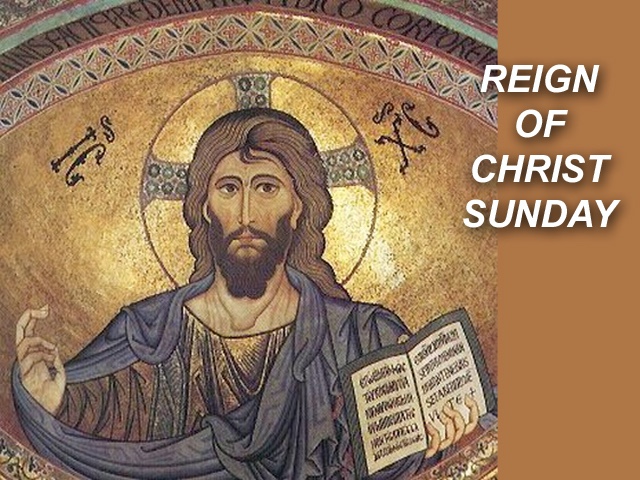
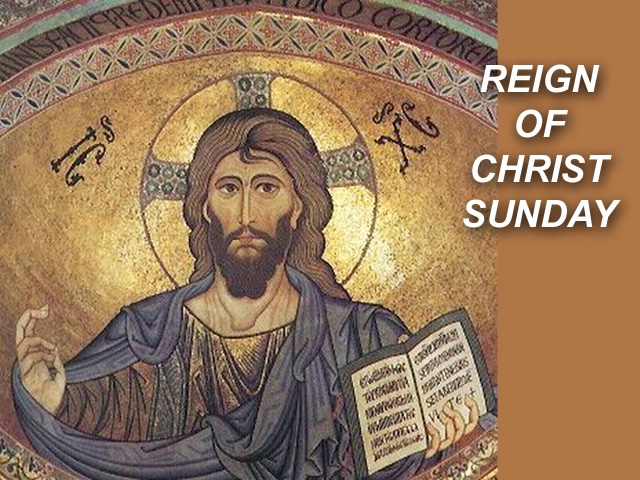
The church’s year draws to a close this coming Sunday, with the festival of the Reign of Christ, after which we enter a new church year. The church’s year is organised differently from the calendar year; it revolves around the key events of our faith: the birth of Jesus, which we celebrate each Christmas, the death and resurrection of Jesus, which comes into focus at Easter, the birth of the Church, which we recall at the celebration of Pentecost, and the long season after Pentecost, when we attend to our life as disciples and the mission into which we are called as people of faith.
What I am referring to as the festival of the Reign of Christ has been known traditionally as the festival of Christ the King, when we commemorate the reign that Christ exercises over the world. I prefer the term Reign of Christ as at least one step away from the connotations that are associated with that archaic institution of monarchy. And that flags one of the issues that I have with this feast day—more below.
This is a relatively new festival in the calendar of church festivals—it was introduced by Pope Pius XI in 1925, and has since been adopted by Lutheran, Anglican, and various Protestant churches around the world, and also, apparently, by the Western Rite parishes of the Russian Orthodox Church Outside Russia. (Yes, that is a real denomination!)
So that is a second issue that I have with this day—along with Trinity Sunday, it sits as a day devoted to “a doctrine” developed later in the church’s life, rather than “a time in the life of Jesus”, which is what Christmas and Easter is, or “a time in the life of the church”, namely, Pentecost.
In Roman Catholic tradition, the day is explained by some words from Cyril of Alexandria, a fifth century Doctor of the Church who served as Patriarch of Alexandria, in Egypt, from 412 to 444. In establishing this festival, Pope Pius XI quoted from the writings of Cyril: “Christ has dominion over all creatures, …by essence and by nature … the Word of God, as consubstantial with the Father, has all things in common with him, and therefore has necessarily supreme and absolute dominion over all things created. From this it follows that to Christ angels and men are subject. Christ is also King by acquired, as well as by natural right, for he is our Redeemer. …’ We are no longer our own property, for Christ has purchased us with a great price; our very bodies are the members of Christ.”
*****
Now, if you wonder where the Pope derived this understanding from, then perhaps the words offered by the Revised Common Lectionary, from the letter to the Colossians, might have provided the foundations for this grand cosmic vision of the place of Jesus, the Risen Lord, in the overall scheme of things (Col 1:11–20). Here, Jesus is described as, not only the agent of God’s creative powers (1:16) and the one who is “before all things” (1:17), but also as the one who has “first place in everything” (1:18). The passage also indicates that believers are “transferred … into the kingdom of [God’s] beloved son” (1:13). It is a festival that invites us to lift our eyes to grasp this grand vision, of the one ruling over all creation, with a realm dedicated for those who have been rescued (1:13) and redeemed (1:14).
The Hebrew Scripture passage provided by the lectionary this coming Sunday is an oracle of the prophet Jeremiah (Jer 23:1–6). In this oracle, the promise is that the Lord “will raise up shepherds over [the people] who will shepherd them, and they will not fear any longer” (23:4), followed by a direct statement that the Lord “will raise up for David a righteous Branch, and he shall reign as king and deal wisely, and shall execute justice and righteousness in the land” (23:5). The connection with the Reign of Christ is clear; the reign of the righteous branch will be executed with assistance from good shepherds who will care for the people.
The Gospel is the story narrated in Luke’s orderly account of the last hours of Jesus, hanging on the cross (Luke 23:33–43). This passage relates to the theme at two points. First, it contains the mocking of the Roman soldiers at the cross, as they taunt Jesus, saying, “If you are the King of the Jews, save yourself!” (23:37)—a taunt provoked by the sign that was affixed to the top of the cross, bearing an inscription that read, “This is the King of the Jews” (23:36). That inscription, although it is intended to identify Jesus, is actually a statement of power and authority, made by Governor Pilate on behalf of the Roman Empire which he served.
Second, this passage contains the word of one of the two criminals who were being crucified alongside Jesus; the one who petitioned him, saying, “Jesus, remember me when you come into your kingdom” (23:42), to which Jesus replied, “Truly I tell you, today you will be with me in Paradise” (23:43). The correlation of Paradise to Christ’s kingdom is a link that can legitimately be made. Jesus has earlier declared to his disciples, “I confer on you, just as my Father has conferred on me, a kingdom, so that you may eat and drink at my table in my kingdom, and you will sit on thrones judging the twelve tribes of Israel” (22:28–30). Jesus as King hovers, perhaps uncomfortably, in this passage. It’s not as clear cut as it might appear on first reading.
So, at this time of the year, the green of the season after Pentecost is retired from view, and the white of this high festival comes into view. White, for a festival of the Church, is the colour for this one Sunday. And the passages offered are “cherry picked” from the range of scriptural options, with little regard to what went before or comes after—the three key passages are chosen because they have the buzzwords “king” or “kingdom”.
*****
However, the basic reason for my angst with this day is the way that the central message of Luke’s Gospel, which we have been following throughout the year, appears to have been put to one side. This Gospel is the one which introduces Jesus, early on, as a revolutionary, when his pregnant mother looks to the time when he will have “scattered the proud in the thoughts of their hearts … brought down the powerful from their thrones, and lifted up the lowly … filled the hungry with good things, and sent the rich away empty” (Luke 1:51–53).
This is the Gospel in which Jesus blesses “the poor … those who are hungry … those who weep” whilst promising to bring down “the rich … those who are filled … those who are laughing” (6:20–26). It is the Gospel which contains an explicit critique of monarchy: “the kings of the Gentiles lord it over them; and those in authority over them are called benefactors; but not so with you; rather the greatest among you must become like the youngest, and the leader like one who serves” (22:25–26). Would Jesus appreciate being identified as a king, after he has uttered this saying?
It is the Gospel (along with the other Synoptics, Mark and Matthew) in which Pilate sarcastically poses the direct question to Jesus, “Are you the king of the Jews?”—to which Jesus answers with a neat deflection, “You say so” (Luke 23:3; see also Mark 15:2; Matt 27:11). It is the sole Gospel in which Jesus is mockingly dressed as a king by the soldiers of Herod (23:11). Is this the kind of kingship to which he really aspires?
And it is the Gospel which flows on into a second volume, Acts, in which followers of Jesus are portrayed as “people who have been turning the world upside down” and accused of “acting contrary to the decrees of the emperor”, with the mocking claim that they say “there is another king named Jesus” (Acts 17:6–7). The tone is clear; this Jesus cannot be king, surely?
*****
Kingship, in Luke’s narrative, is consistently portrayed as an institution which fails to adhere to the standards that the Lord God expects. In Hebrew Scripture, the king of Israel was expected to “trust in the Lord” (Ps 21:7), “rejoice in God” (Ps 63:11), and “judge [the] people with righteousness, and [the] poor with justice” which have been granted by God (Ps 72:1–2).
We know, of course, from the narratives that tell the story of Israel over many generations (1–2 Samuel, 1–2 Kings, 1–2 Chronicles), that many kings failed in this requirement, and “did evil in the sight of the Lord”, fulfilling the predictive prophecy of the prophet Samuel (1 Sam 8:10–18). Nevertheless, the idealised view of kingship, which Samuel dutifully set out in writing for the people (1 Sam 10:26), held sway through the ensuing centuries. It was particularly developed in the portrayal of Solomon, filled with “wisdom and knowledge”, and granted “riches, possessions, and honour, such as none of the kings had who were before you, and none after you shall have the like” (2 Chron 1:7–12, especially verses 10 and 12).
Does the festival of the Reign of Christ draw on the idealised view of kingship that Hebrew Scripture advocates? Is Jesus put forward as the King who fulfils the hopes for Israelite kingship—which so many of the kings had failed to achieve? That’s a disturbing, possibly antisemitic, way of treating the stories of scripture.
Or even more disturbingly, does the festival of the Reign of Christ reflect the height of Christendom, ideas first shaped by Cyril in the 5th century, then adopted and expanded by Christian rulers over the centuries (Charlemagne, or Vladimir the Great, for example)? That, too, is worrying.
This festival was introduced into the liturgical cycle of the Roman Catholic Church by Pope Pius XI in 1925, at a time when Fascist dictators were rising to power in Europe. I have read that “the specific impetus for the Pope establishing this universal feast of the Church was the martyrdom of a Catholic priest, Blessed Miguel Pro, during the Mexican revolution”; see Today’s Catholic, 18 Nov 2014:
The article continues, “The institution of this feast was, therefore, almost an act of defiance from the Church against all those who at that time were seeking to absolutize their own political ideologies, insisting boldly that no earthly power, no particular political system or military dictatorship is ever absolute. Rather, only God is eternal and only the Kingdom of God is an absolute value, which never fails.”
The scriptures puncture the pomposity of powerful kings, and subversively present Jesus as the one who stands against all that those kings did. In that sense, and only in that sense, this is a feast day to maintain and support.
There have been some great speeches by politicians over the years. It was before my time, but Chifley’s “light on the hill” speech at a 1949 Labor Conference in Sydney, is often cited. “We have a great objective”, Prime Minister Chifley declared, “the light on the hill, which we aim to reach by working the betterment of mankind [sic.] not only here but anywhere we may give a helping hand. If it were not for that, the Labor movement would not be worth fighting for.” The Labor party has referenced this speech regularly in the ensuing decades.
So too, also before my time, but also regularly referenced in the decades that followed, was a 1941 speech by Prime Minister Menzies, identifying “the forgotten class — the middle class — those people who are constantly in danger of being ground between the upper and the nether millstones of the false war; the middle class who, properly regarded represent the backbone of this country.”
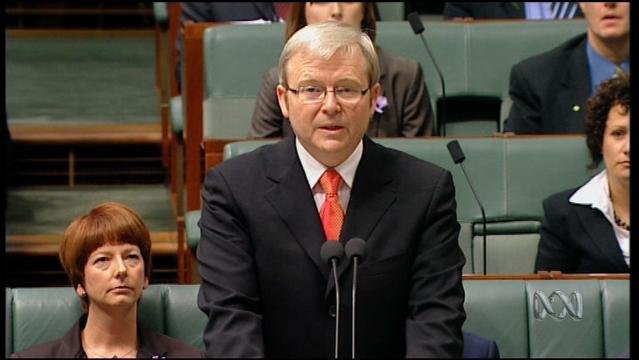
Alongside them, who could forget other Prime Ministerial offerings? One of huge significance was Kevin Rudd’s 2008 Apology to the Stolen Generations: “we say, sorry; to the mothers and the fathers, the brothers and the sisters, for the breaking up of families and communities, we say sorry; and for the indignity and degradation thus inflicted on a proud people and a proud culture, we say sorry.”
Another, also filled with rhetorical power and cultural significance, was Paul Keating’s Redfern Speech in 1997: “we committed the murders, we took the children from their mothers, we practised discrimination and exclusion; it was our ignorance and our prejudice.”
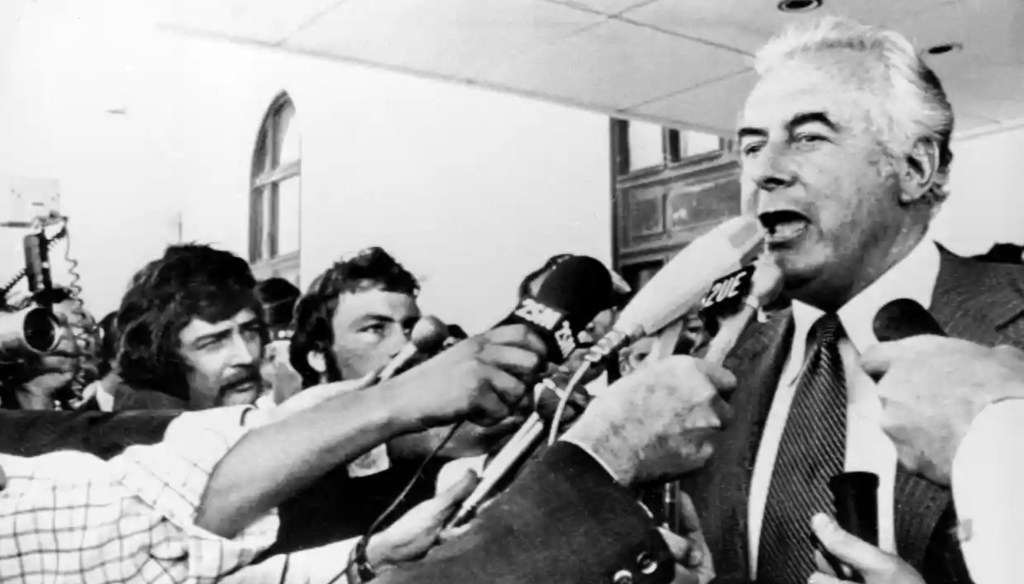
And, of course, there is Gough Whitlam, a master wordsmith, whose quick wit and rhetorical prowess was evident on the steps of Old Parliament House, immediately after the treachery of The Dismissal in November 1975; “well may we say God Save the Queen, because nothing will save the Governor-General.”
All memorable speeches, on (mostly) memorable occasions, eliciting words which live on in Australian culture and memory. They point to the best in Australian society, the most worthy aspects of our developing national culture.
There have been other signal speeches with a very different perspective—speeches that I won’t quote from, such as Pauline Hanson’s 1996 inaugural speech making outrageously discriminatory racist claims; John Howard, opportunistically picking up and running with this xenophobic streak with his declaration, in 2001, that “we will decide who comes to this country”; and Fraser Anning’s terrible reference to “the final solution” in his 2018 speech. These speeches live on in infamy. They reflect the worst of who some of us are.
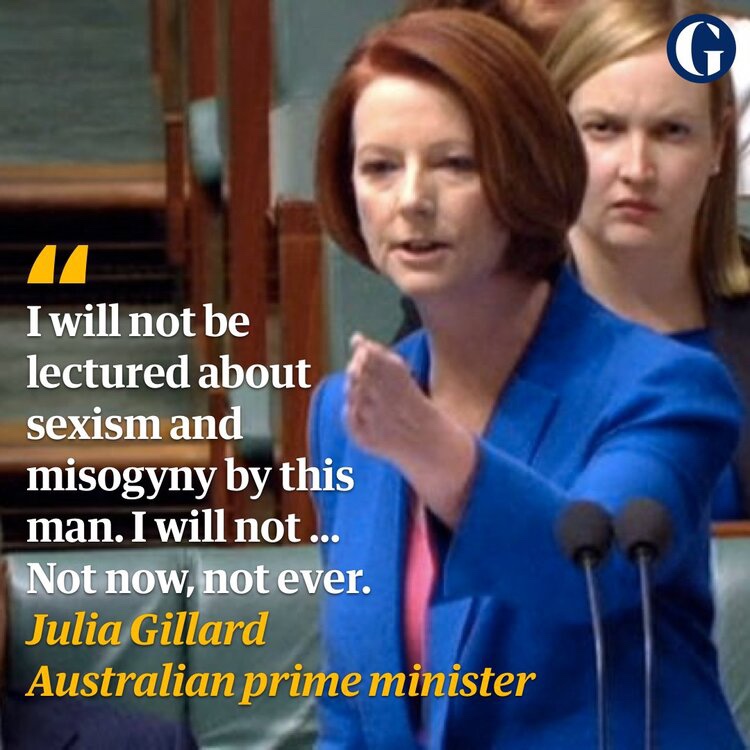
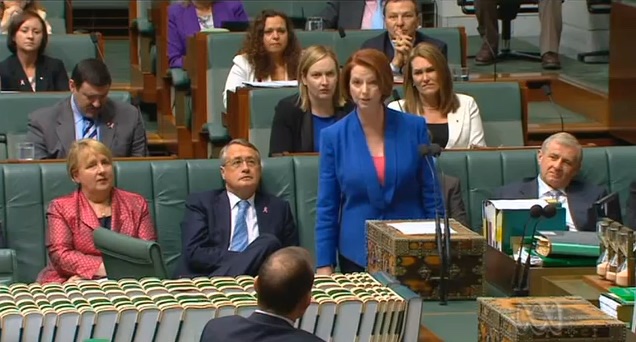
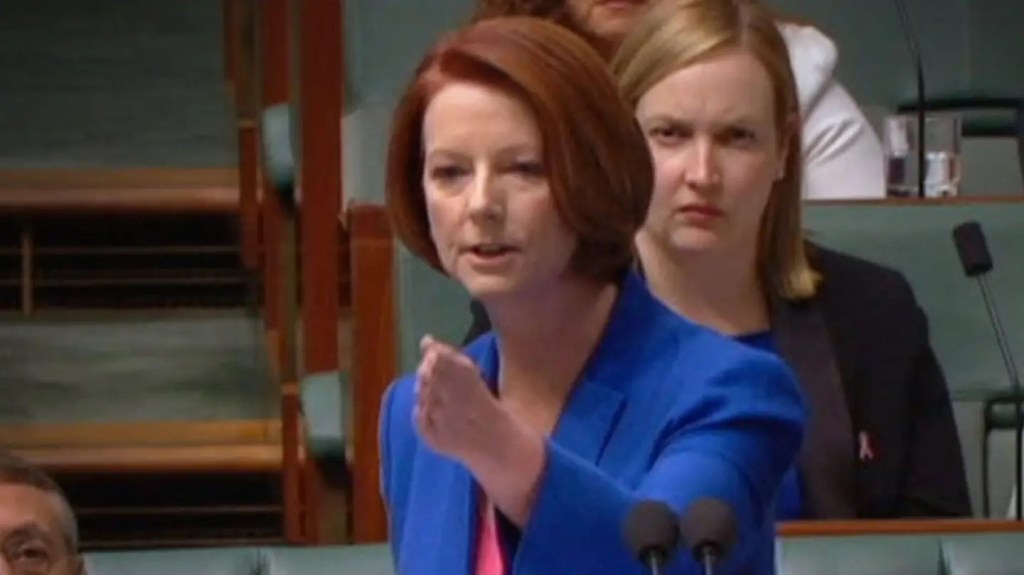
Today is the tenth anniversary of the most recent memorable, and utterly praiseworthy, speech by a federal political leader: a speech by Julia Gillard that has come to be known as the Misogyny Speech. This speech was delivered on 9 October 2012, with the penetrating declaration, “I will not be lectured about sexism and misogyny by this man; I will not—not now, not ever ”, searing the air in the House of Representatives chamber, as Prime Minister Gillard spoke directly and forcefully to the Opposition Leader, Tony Abbott.
Katherine Murphy has written a fine analysis of the moment, and how the speech was a turning point in the cultural change that focussed the nation’s attention on male privilege, misogynistic practices, and sexist words and actions, especially in the federal political arena. From that speech to the Enough is Enough! rallies on 15 March 2020, a significant shift has taken place. There is momentum for deep-seated cultural change, despite the troglodyte resistance of the pathetic remnant of conservative members currently in the post-Morrison federal parliament.
Julia Gillard’s potent impromptu speech is well worth reading once again on this anniversary—and worth remembering each day as a pointer to what is of fundamental importance in our society, if we really do want to commit to a fully equitable society. We remember this fine political speech, with gratitude. We anticipate ongoing cultural change, with hope. And so may it be.
Now that all the results have been finalised in the Australian Federal Election 2022, we can see clearly the extent of Liberal losses. It’s been extensive, cutting right to the heart of the party in the so-called “blue-ribbon Liberal” seats.
From early on it was clear that six House of Representatives seats were lost to “teal independents”, standing on a platform of real action to address climate change, and the introduction of a corruption commission to begin to repair the shocking state of integrity in public life.
Three of these seats were in Sydney: Kylea Tink in North Sydney, the seat of former Treasurer Hockey; Sophie Scamps in Mackellar; and Allegra Spender in Wentworth, the seat of former PM Turnbull amd former Opposition Leader Hewson.
Two more were in Melbourne: Monique Ryan in Kooyong, the seat of former Treasuer Frydenberg, as well as former Opposition Leader Andrew Peacock, and foundation Liberal leader and (twice) Prime Minister Robert Menzies; and Zoe Daniel in Goldstein.
The sixth seat to fall to a “ teal independent” was in WA: Kate Chaney in Curtin, the seat of former Deputy Liberal Leader Bishop.
They join existing members Helen Haines in Indi and Zali Steggal in Warringah, both of which were once blue-Liberal seats; the latter was previously held by the former PM, the Abbott of Inequity.
The Liberals also lost to Labor in Bennelong, the seat of former PM Howard, and Robertson in NSW; in Victoria, they lost to Labor in Higgins, the seat of former Treasurer Peter Costello and former Prime Ministers Harold Holt and John Gorton, and Chisholm. In SA, they lost Boothby to Labor, and the Centre Alliance held on to Mayo, which it had taken from the Liberals in 2016; while in QLD, they lost to the Greens in Ryan.
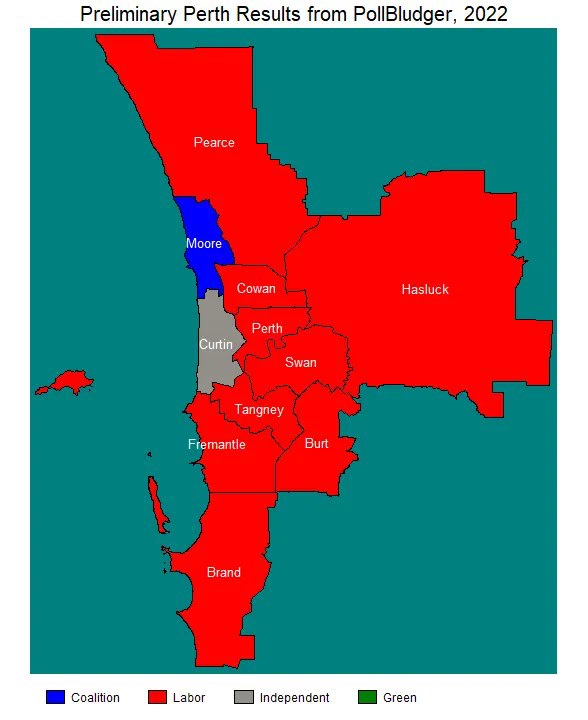
They lost massively in WA, with four seats going to Labor: Hasluck, Swan, Pearce, and Tangney. The map of electorates in the Perth area tells the story quite dramatically!
In the Senate, four Liberal seats were lost: to David Pocock in the ACT, to Labor in WA, to the Jacqui Lambie Network in Tasmania, and to “it’s my kinda party” Untied Australia in Victoria.
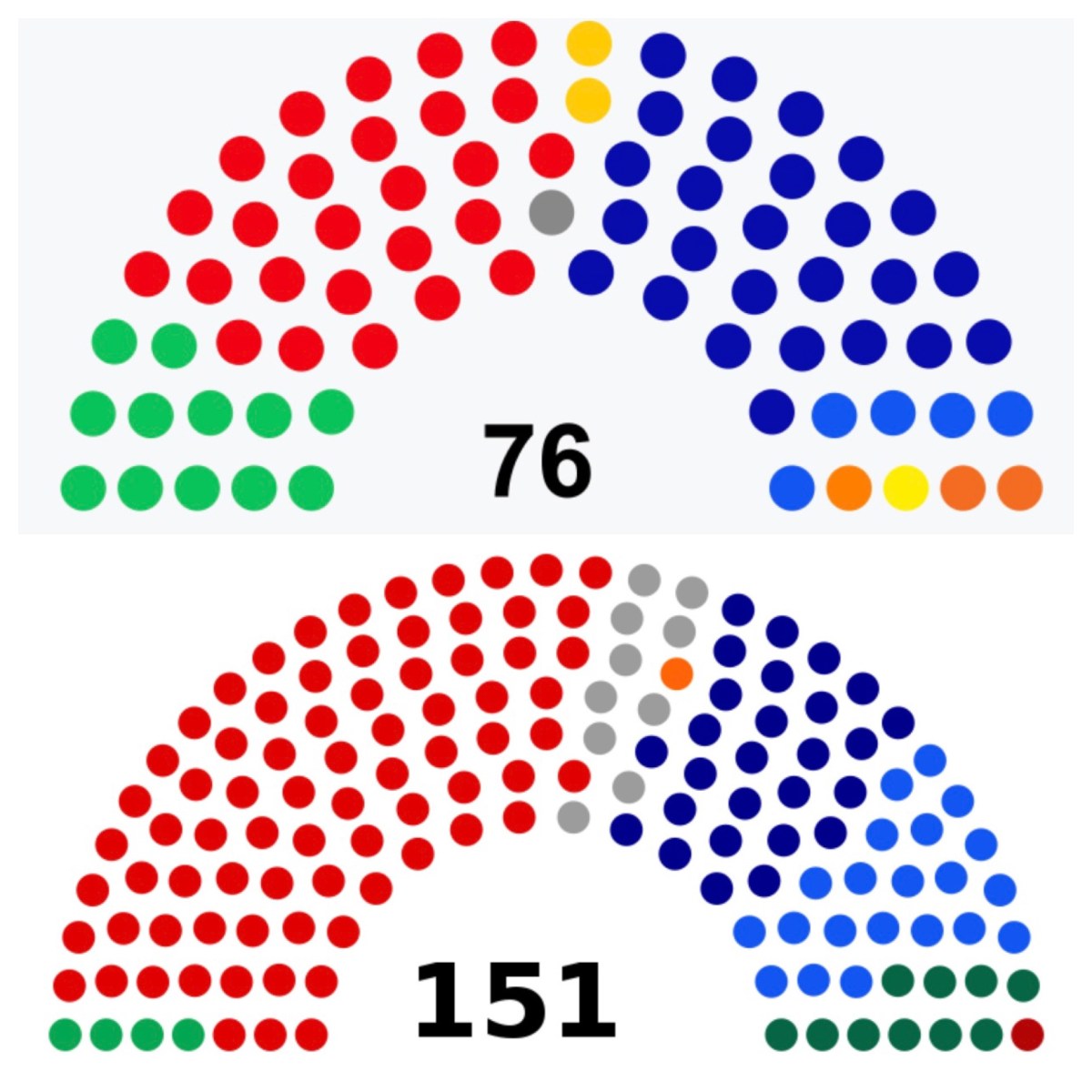
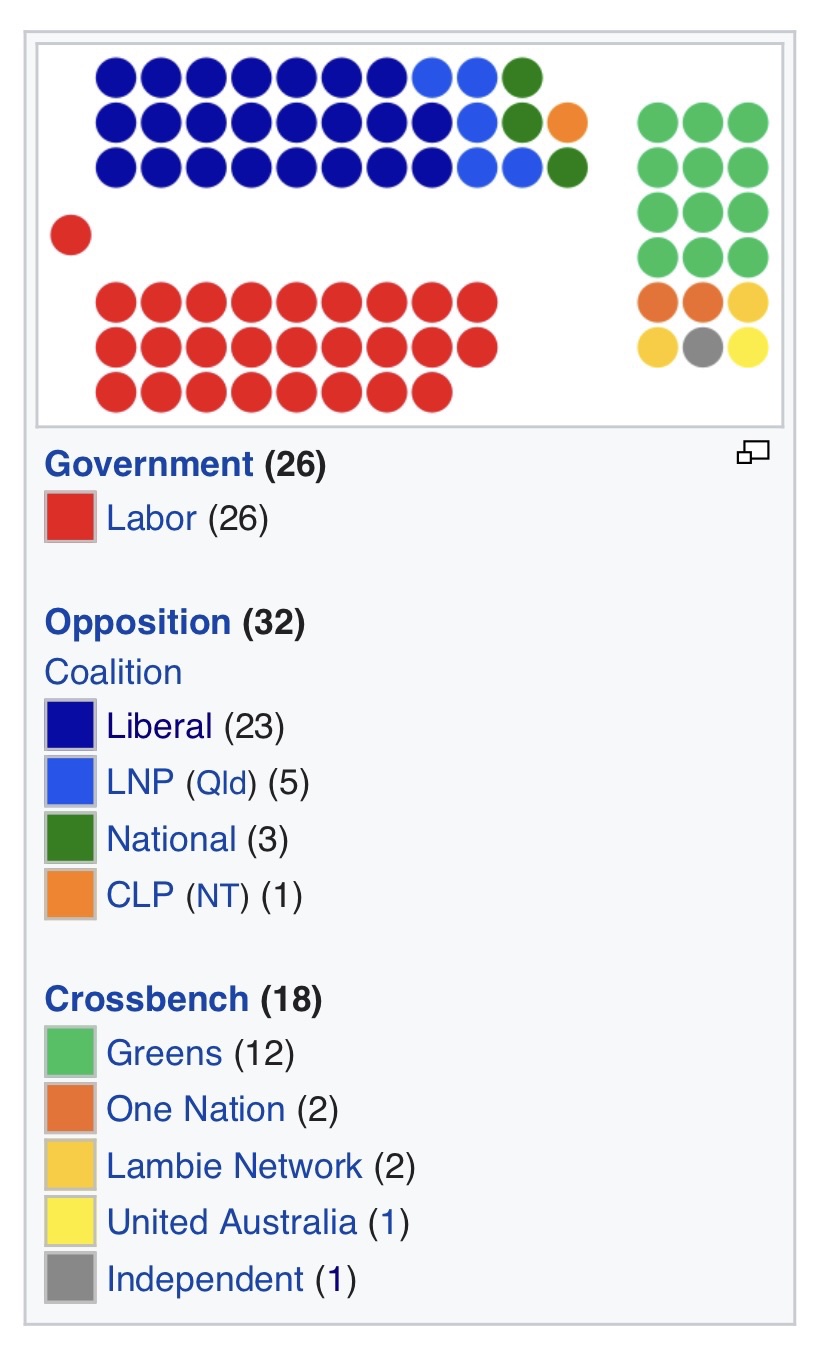
The Liberals now have only 23 seats in the Senate—but we add to that 5 from the Liberal National Party in QLD, 3 from the Nationals, and 1 from the Country Liberals in NT, to total 32 Senators as the main opposition body.
Labor now has 26 seats in the Senate, and no doubt they will work co-operatively with the 12 Greens and independent David Pocock on much of their legislative agenda. The 2 Jacqui LambieNetwork senators may well also figure in these negotiations.
The conservative rump is now irrelevant in the Senate, except for the predictably useless aggravating grunts that they will surely make as often as they can to gain media attention: Pauline Hanson and Malcolm Roberts in QLD, and newcomer Ralph Babet in Victoria.
Lots of Liberal losses overall. And a clear indication that the Liberals are no longer anything like “liberal” in their policies or their practices.
The true cost of the Howard—Abbott—Morrison conservative hegemony is now evident: years of rhetoric about fiscal conservatism masking disastrous social policies, especially amongst the poor; years of dog whistling promoting xenophobia and overt racism, often in cahoots with various rightwingnutjobs; years of resistance to any significant action on climate, signing off on a bleak future for all humanity whilst profiting from the largesse of always-profitable fossil fuel companies; years of resisting real support for renewables; years of offering leftover scraps to the First Peoples of the country, while ignoring Royal Commission recommendations; and years of blithely ignoring the misogynistic culture that tolerated (and generated) many acts of sexist abuse.
“To fulfil the role the Constitution allows the Senate in relation to the government, the Senate is able to scrutinise and judge the activities, policies and legislation of the government. This is why the Senate is known as a house of review.” So reads a section of the office Parliament of Australia website explaining the nature and function of The Senate. (https://www.aph.gov.au/About_Parliament/Senate/Powers_practice_n_procedures/Senate_Briefs/Brief10)
I have known this principle, and voted in accordance with this principle, for decades. As well as holding as my personal principle to “always vote below the line” (something that has been quite challenging at various times, given the size of the ballot paper!), I have also maintained that the Senate should be a real house of review—not just a rubber stamp, like the House of Lords is in the British Parliament.
The reality is that, at times throughout the past 120 years, the Senate has indeed been simply a “rubber stamp”, acting to endorse the legislation introduced and debated in the lower house. Those times, especially, when the dominant party in the lower house has also had control of the Senate, have been times when the Senate has seemed to have lived up to its most famous description as “unrepresentative swill”. (Take a bow, Paul Keating.)
So in order to ensure that there is at least some measure of review that might occur when a bill is introduced into the Senate, I have held the practice of never voting for the same party in the lower house, as in the Senate. It has been my personal contribution to ensure (vainly, in many instances) that there are at least someone in the Senate who might advocate for a point of view different from what is advocated by the party in Government, and what is (often) blindly expressed as opposition to that point of view by those who, well, are in fact, the Opposition.
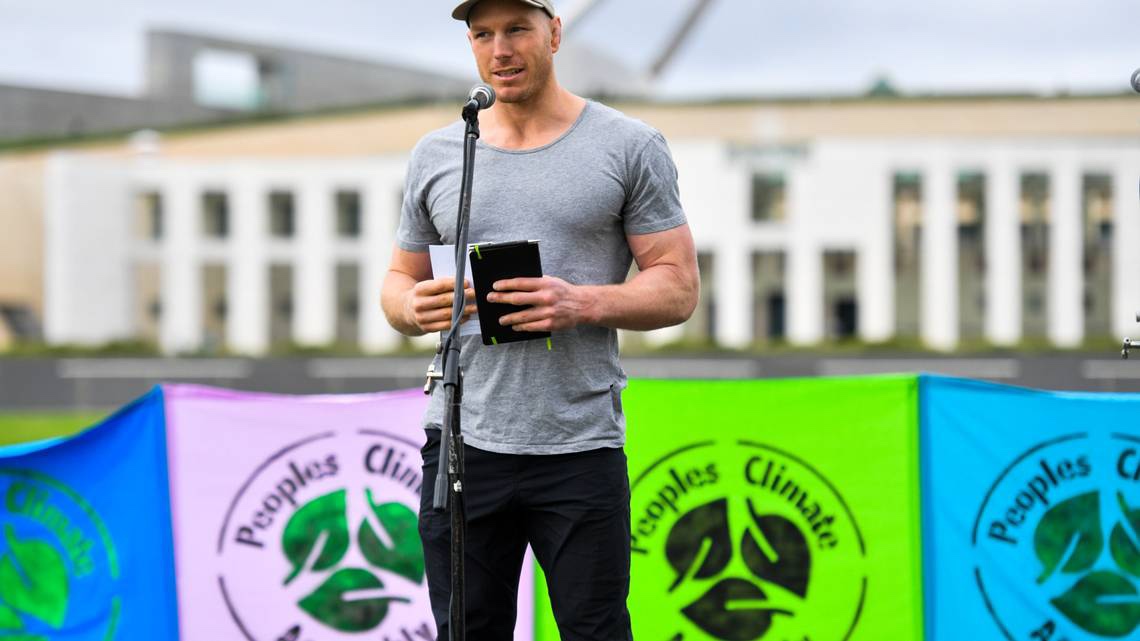
So it has been with great pleasure that I have heard the news, today, that in the ACT (the jurisdiction where I currently live), one of the two Senators elected will bring precisely that function of review—not toeing the Government line, not unthinkingly adopting the resistance of the Opposition, but considering each piece of legislation on its merits.
I’m referring, of course, to the election of David Pocock as the second Senator for the ACT. He was elected alongside Katy Gallagher, of the Labor Party—a fine Senator, in my eyes, who has been an excellent representative for the ACT over her term in parliament (as, indeed, is my local member in Bean, David Smith).
Ever since the ACT has elected senators, the second Senate spot has been held by the Liberal Party (John Knight—Margaret Reid—Gary Humphries—Zed Seselja). This year, however, Zed Seselja failed in his bid to return to the Senate. And so it is that Zed has dropped off the end of the alphabet (at least, in the ACT)!
Pocock stood as an Independent, with a platform advocating for real action in relation to climate change; the establishment of a national integrity commission; the adoption of what is advocated by the Statement from the Heart to ensure First Nations people have a voice in shaping our nation;
and measures to improve the safety of women and girls in their homes, schools, and workplaces. (He also had other economic measures and more parochial territory matters in his platform.) All of this augurs well for the next three years in Australia—especially if the Labor Government does act in accordance with its rhetoric about climate, integrity, and First Peoples. See https://www.davidpocock.com.au
Alongside the 12 Green senators (who are committed to similar policies) and the two Jacqui Lambie Network senators (Jacqui Lambie herself has a track record of independent thinking about legislation), the Senate is well-placed to be a real house of review that will consider, debate, and advocate for a range of important matters—holding the Government to account, refining legislation and e surging principles are adopted that are in the best interests of the country.
So I’m pleased that my choice has been elected—and that the Senate has a really good chance, over the next three years, of fulfilling its intended purpose.
I am really glad that we are cracking open the two-party duopoly in federal politics. We already have a good number of Green members in the federal parliament, led by Adam Bandt, with prospects of some more joining them once the results of this election are finalised.
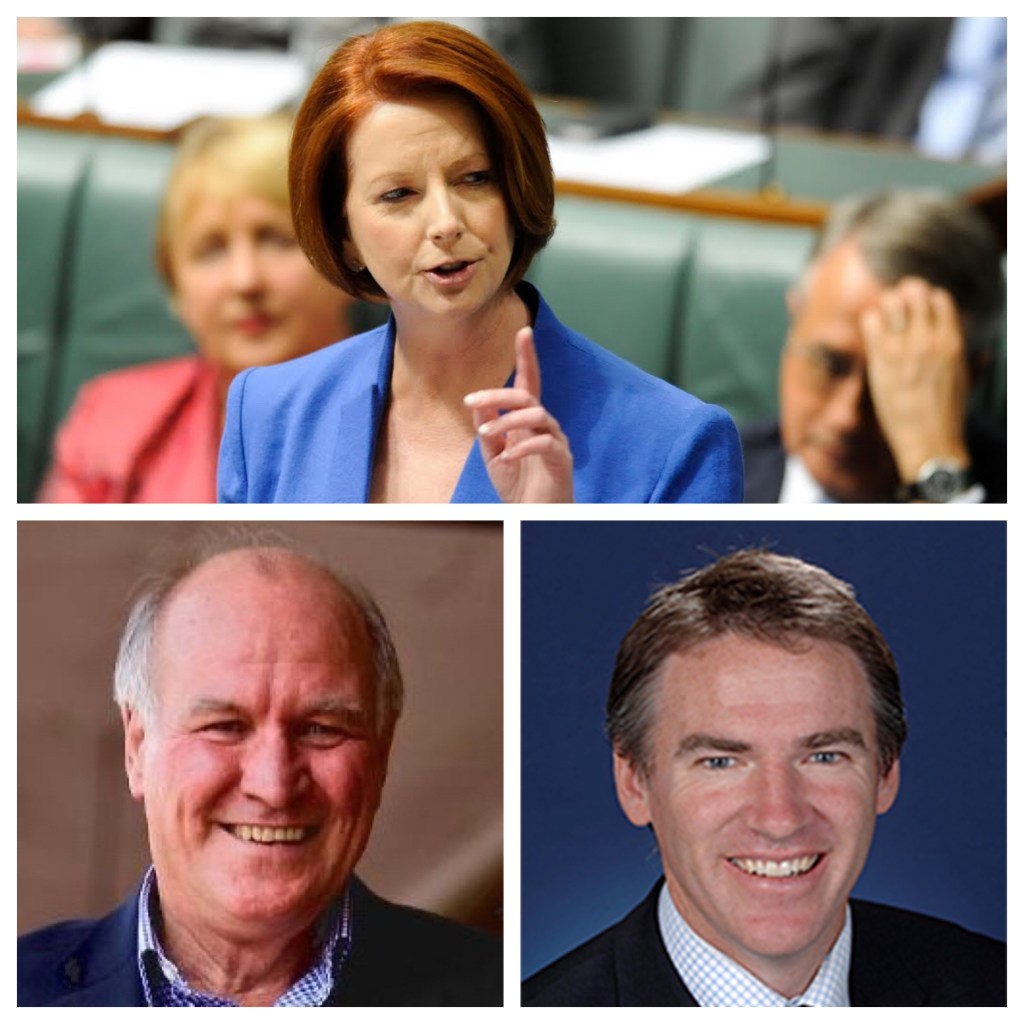
And we have had a good collection of thinking independents in parliament in recent times—Tony Windsor, Rob Oakeshott, Cathy McGowan, Rebecca Sharkie, Helen Haines, Zali Steggall—with the prospects of quite a number of new members in this ilk (collectively known as “the Teal Independents”) joining them on the cross benches.
This will most likely produce what the commentators regularly call “a hung parliament”–although one of my colleagues says that we really should call it “a collaborative parliament”. For that is what the members of this next parliament will need to do: collaborate!
This will be in stark contrast to the disastrous shirtfronting, bulldozing approach of our feral federal leadership over the past decade, as both The Abbott of Inequity and The Liar from The Shire have relentlessly driven the COALition further to the right, turning the public discourse into a series of hate-speech episodes, fanning the flames of misogyny, xenophobia, and anti-science attitudes, targeting renewable industries, people below the poverty line, females in the workplace, same-gender attracted people, and transgender people. It has been a shameful period, thriving on the partisan conflict generated by confrontational rhetoric and aggressive actions.
Regardless of how many Greens and Teal Independents are elected to the lower house, the incoming government will still need to work with the range of Senators sitting on the cross benches in the red house, the Senate. There are currently Greens, a number of independents, and members from the Jacqui Lambie Network, the One Nation Party, and the Centre Alliance in the Senate. More Greens and perhaps some RWNJs may well be joining them once the Senate votes are all counted and the preferences distributed.
A “collaborative parliament” is not a disaster. Having a minority government which needs to propose legislation that it negotiates with cross bench members (Greens, Independents) to get through the House and the Senate, is a sensible, mature, responsible process.
In the last “collaborative parliament”, with a minority government led by Julia Gillard (2010–2013), more than 560 pieces of legislation were passed — more than the preceding Rudd government and more than John Howard when he controlled both houses of government between 2005 and 2007.
Some major policy initiatives of the Gillard government included: the Clean Energy Bill 2011; the Mineral Resource Rent Tax; a National Broadband Network; a schools funding formula following the Gonski Review; the National Disability Insurance Scheme; the carbon price package; a means test on the health insurance rebate; paid parental leave; a plan for the Murray Darling Basin; plain packaging for cigarettes; and the establishment of a Parliamentary Budget Office, which is available to cost policies on request. That is an impressive list.
Michelle Grattan wrote that in a hung parliament, “Parliament has a much more active role, rather than the House being a rubber stamp. The government is kept on its toes. Having the parliament “hung” is another check and balance in the system.” See https://theconversation.com/looking-back-on-the-hung-parliament-16175
She notes that in 2010–2013, about a quarter of House of Representatives time has been used for private members business. 357 private members bills and motions were introduced and debated; 150 were voted on and 113 supported, according to figures supplied by the Leader of the House’s office. By comparison, in 2005 under the Howard government no private members motions were voted on. Democracy works much better in a situation where the parliament has to work collaboratively.
Rob Oakeshott reflected that the great lesson for him out of that parliamentary term was that “bipartisanship is the best and politically the only way to achieve long-standing reform”. Tony Windsor noted that people do not understand what it is. “In some ways they do not fully comprehend what a hung parliament is, and still look at it through the prism of the two party system. It is not that”.
Bob Katter’s assessment was, “a hung parliament … is a multiparty democracy which is experienced everywhere else in the world. The two party system is primitive”. Andrew Wilkie noted that “the parliament itself has proved to be remarkably stable, reformist and productive.”
I am looking forward to the next three years, as collaboration and co-operation become the key markets of our federal leadership.







 An Informed Faith