Your king is coming, sitting on a donkey (Zech 9; Matt 21; Lent 6A, Palm Sunday)

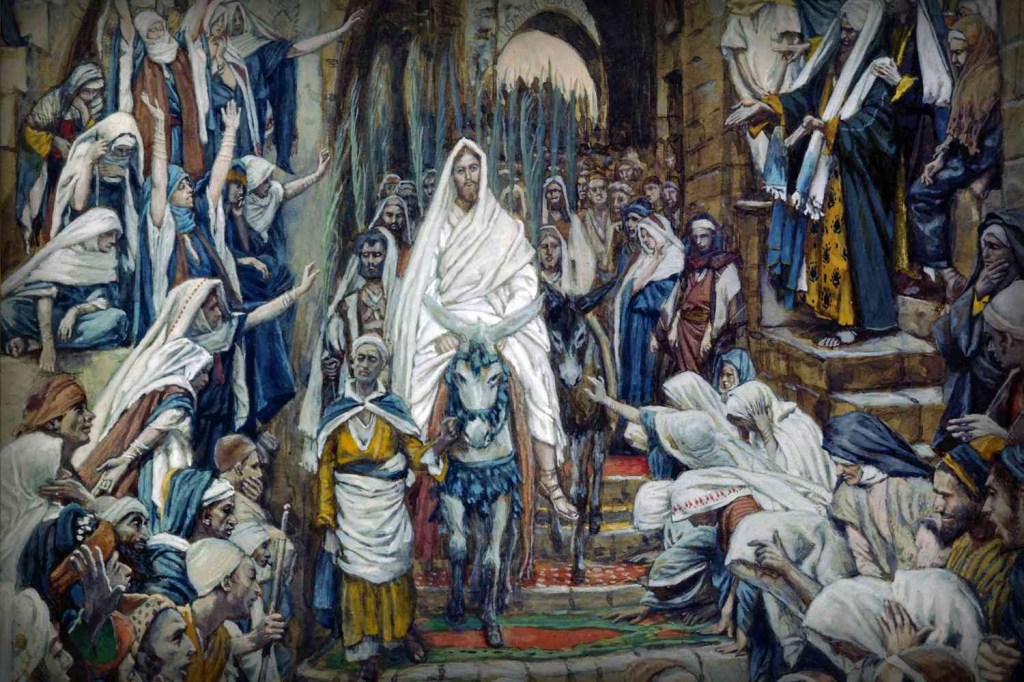
“Go into the village ahead of you, and immediately you will find a donkey tied, and a colt with her; untie them and bring them to me. If anyone says anything to you, just say this, ‘The Lord needs them.’ And he will send them immediately.” So reports the Gospel of Matthew, in the Gospel offered by the lectionary for this coming Sunday (Matt 21:1–11). The same story is told at Mark 11 and Luke 19.

John’s account is much more succinct; that Gospel simply notes, “Jesus found a young donkey and sat on it” (John 12:14), before explaining that this fulfils what was written in a scripture passage, “Do not be afraid, daughter of Zion. Look, your king is coming, sitting on a donkey’s colt!” (John 12:15, quoting Zech 9:9).

The narrator in Matthew’s Gospel explains that “this took place to fulfill what had been spoken through the prophet, saying, ‘Tell the daughter of Zion, Look, your king is coming to you, humble, and mounted on a donkey, and on a colt, the foal of a donkey’” (Matt 21:15). The prophet who is referred to in both John and Matthew is Zechariah, a post-exilic figure whose work is found as the eleventh of the twelve Minor Prophets in Hebrew Scripture.
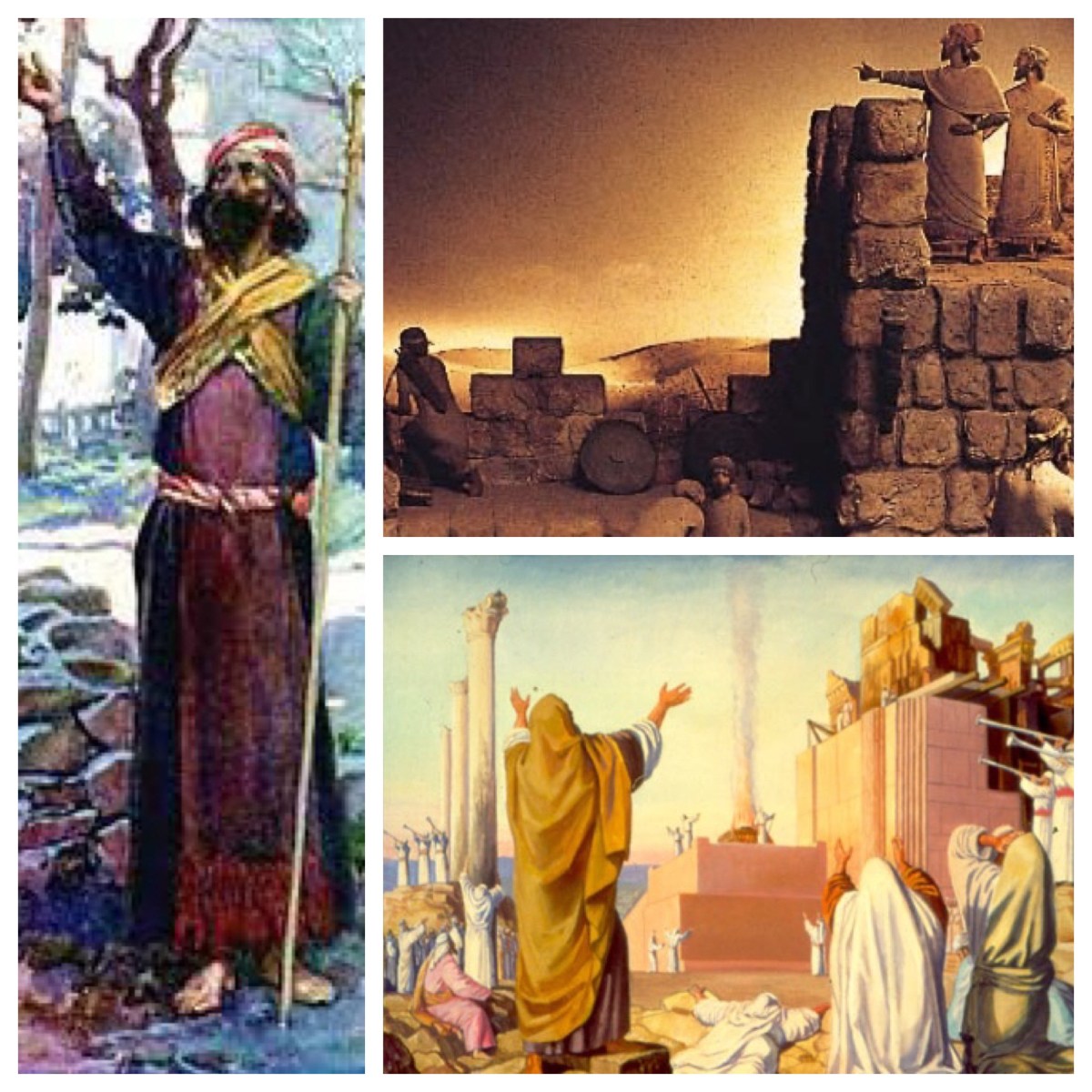
Zechariah was active in the period when the exiles in Babylon were returned to Judah late in the 6th century BCE, by a decree of the Persian King, Cyrus (whom Second Isaiah described as God’s “Messiah”; see Isa 45:1). We are told that in his decree, Cyrus acknowledges “the Lord, the God of heaven” and states that “any of those among you who are of his people … are now permitted to go up to Jerusalem in Judah, and rebuild the house of the Lord, the God of Israel” (Ezra 1:2–4).

Under Nehemiah as Governor, worship had been reinstituted in Jerusalem (Ezra 3:1–7), the walls around the city of Jerusalem were rebuilt (Neh 2—6, 12), and the Temple was rebuilt and rededicated (Ezra 5–6). After this, the Law was read in the city under the guidance of Ezra, a priest who is also described as a scribe (Neh 8) and the covenant with the Lord is renewed (Neh 9–10).

Initially, there was opposition to the rebuilding works from “the enemies of Judah and Benjamin” (Ezra 4:1–16), and with intervention from King Artaxerxes, work on the temple ceased (Ezra 4:17–24). The narrative in Ezra reports that “the prophets, Haggai and Zechariah son of Iddo, prophesied to the Jews who were in Judah and Jerusalem, in the name of the God of Israel who was over them” (Ezra 5:1), and then work on restoring the temple recommenced (Ezra 5:2).
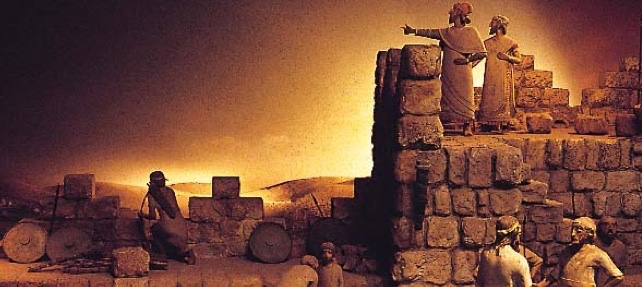
Further opposition emerged (Ezra 5:3–17), resulting in intervention from King Darius that decreed “let the house be rebuilt … let the Governor of the Jews and the elders of the Jews rebuild this house of God on its site … let it be done with all diligence” (Ezra 6:1–12).

The end result is that the prophets of the Lord and the rulers of the Persian Empire collaborated together to ensure that the temple would be restored: “So the elders of the Jews built and prospered, through the prophesying of the prophet Haggai and Zechariah son of Iddo. They finished their building by command of the God of Israel and by decree of Cyrus, Darius, and King Artaxerxes of Persia” (Ezra 6:14).

*****

Zechariah dates his opening prophecy to “the eighth month, in the second year of Darius” (Zech 1:1), which places him as a contemporary of Haggai and perhaps around the same time that the anonymous prophet whose words are known as Third Isaiah (Isaiah 56—66). Zechariah begins witha familiar prophetic refrain: “return to me, says the Lord of hosts, and I will return to you, says the Lord of hosts” (1:3), noting that when this message was presented to earlier Israelites, “they repented and said, ‘the Lord of hosts has dealt with us according to our ways and deeds, just as he planned to do’” (1:6).
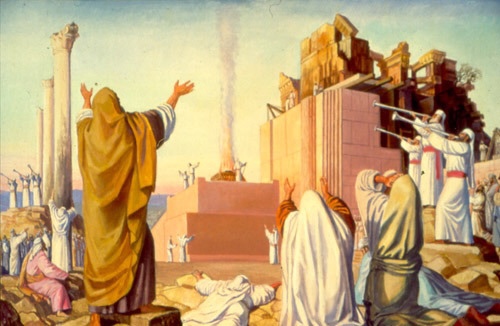
What follows this opening salvo is a report of eight visions (1:7—6:8). They are dated to “the twenty-fourth day of the eleventh month, the month of Shebat, in the second year of Darius” (2:7), two months after the final prophecy of Haggai. The visions combine glimpses of hope with reminders of the need to remain faithful to the covenant: “if you will walk in my ways and keep my requirements, then you shall rule my house and have charge of my courts” (3:7). The fourth vision (3:1–10) includes the figure of “the accuser” (ha-satan in Hebrew) standing at the right hand of Joshua, to accuse him (3:1).

At the conclusion of the eighth vision there follows words of condemnation (7:1–7) and punishment (7:8–14), citing classic prophetic notes: “render true judgments, show kindness and mercy to one another; do not oppress the widow, the orphan, the alien, or the poor; and do not devise evil in your hearts against one another” (7:9–10).

Then come words of promise (8:1–23): “I will return to Zion, and will dwell in the midst of Jerusalem; Jerusalem shall be called the faithful city, and the mountain of the Lord of hosts shall be called the holy mountain” (8:3). Once again, prophetic injections are offered: “speak the truth to one another, render in your gates judgments that are true and make for peace, do not devise evil in your hearts against one another, and love no false oath” (8:16–17).

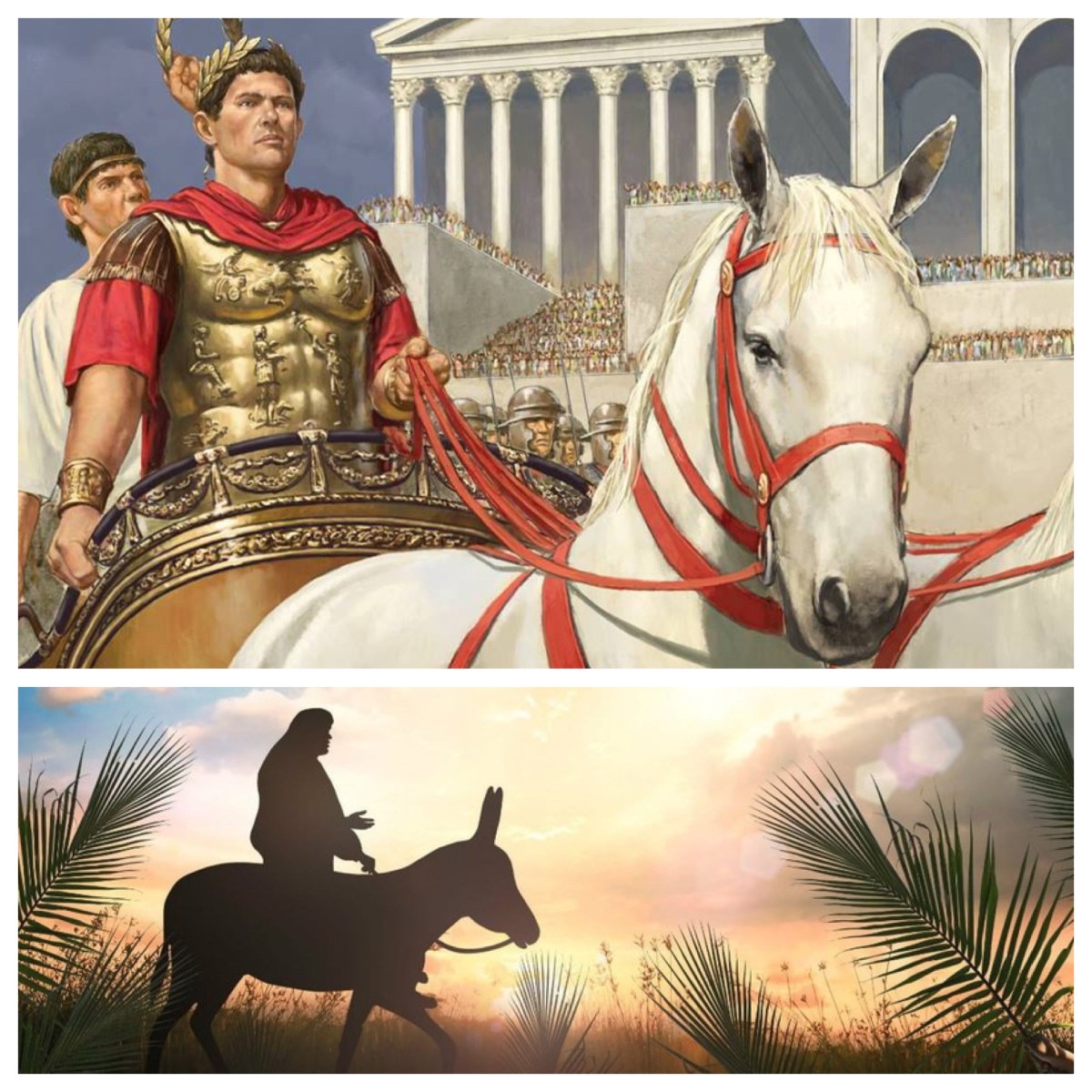
An oracle pronouncing judgement on other nations then follows (9:1–8), followed by a joyful celebration of the restoration of Judah (9:9–11:3), introduced by a rousing shout of joy: “rejoice greatly, O daughter Zion!Shout aloud, O daughter Jerusalem! Lo, your king comes to you; triumphant and victorious is he, humble and riding on a donkey, on a colt, the foal of a donkey.” (Zech 9:9). This verse is well-known, of course, from its quotation in the story of Jesus’s entry into the city of Jerusalem, which we will hear this Sunday (Matt 21:5).

A quirky feature is that some interpreters have taken the words of Zechariah so literally, that they imagine Jesus actually had two animals with him as he entered the city. Of course, the original oracle was formed in typical Hebraic parallelism, a pattern whereby an idea is expressed one way, then immediately repeated using other words. Thus, “riding on a donkey” was the first expression of the idea, followed immediately by “on a colt, the foal of a donkey”. One animal, two ways of expressing that.

The remaining chapters of Zechariah continue the note of exultation about the future, reworking the motif of “the day of the Lord” so that it signals joy for Jerusalem and terror for other nations (12:3, 4, 6, 8, 9, 11; 13:1, 2, 4; 14:1, 4, 6, 8, 9, 13, 20, 21). A triumphant note of universalism is sounded: “on that day “the Lord will become king over all the earth” (14:9) and “all who survive of the nations that have come against Jerusalem shall go up year after year to worship the King, the Lord of hosts, and to keep the festival of booths” (14:16).

The quotation from Zechariah in the story is a reminder that there is always hope; in the difficult situation of rebuilding the beloved ruins, reconstituting the fractured society, reconstituting the religious practices and customs that had lapsed, hope remains strong. Little did those travelling with Jesus into the city know what lay ahead of him, and them, in the coming days. Their hopes were high, very high, on this day. Joy came easily to them.

It was a day for celebration. This could well be the time when “the Lord will become king over all the earth”—even over the mighty Romans, they may well have felt. Joy was the dominant emotion, as the singing, waving of branches, and celebration demonstrated.

*****

On why Jesus was riding a donkey, and not a horse (definitely NOT a horse!), see https://johntsquires.com/2023/03/27/why-jesus-never-did-and-never-would-ride-a-horse-for-palm-sunday-lent-6/
Reading scripture with attention to its context (John 11, Year A)

The lectionary has offered us a series of readings during Lent which show Jesus encountering and conversing with others (John 3, 4, 9, and 11). The anonymous author of the Gospel of John had high-level literary and dramatic skills. The lectionary has very clearly demonstrated this in the series of readings offered in weeks 2–5 of Lent.

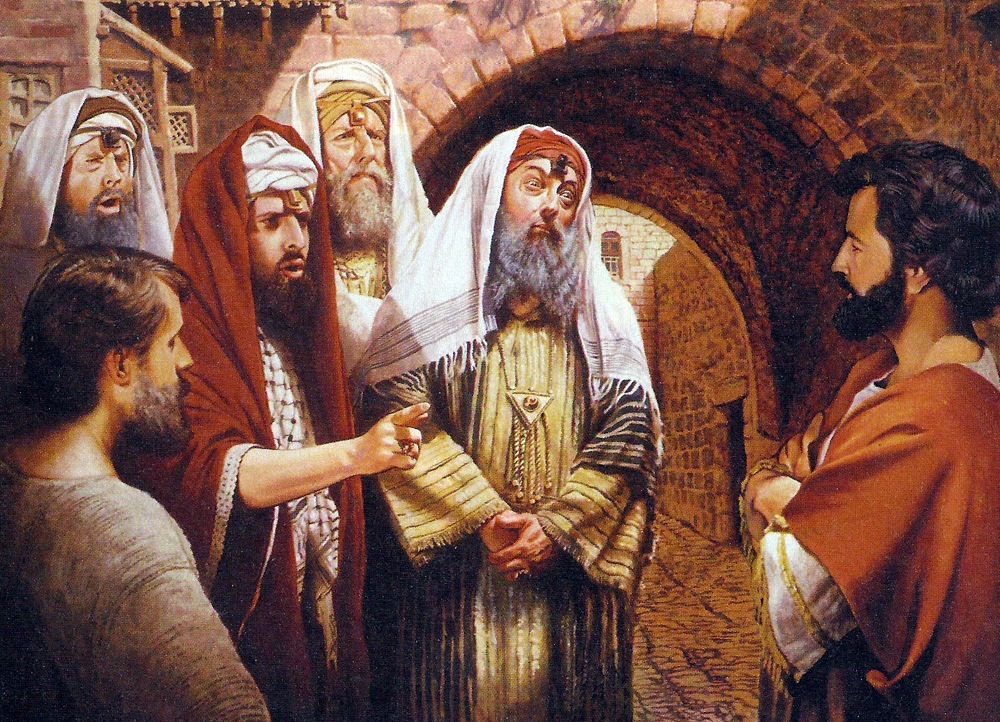
The Pharisee in Jerusalem (Ch.3) is really a foil who asks leading questions which offer Jesus the opportunity to speak forth at some length for the first time in the Gospel (3:11–21). The woman in Samaria is a genuine dialogue partner for Jesus who learns through the back-and-forth of their conversation about a number of matters (4:7–26). The story of the man born blind (9:1–41) is presented as a seven-part comedic drama, illustrating the “light of the world” claim of Jesus (8:12; 9:5) and showing how people respond in varied ways to that.

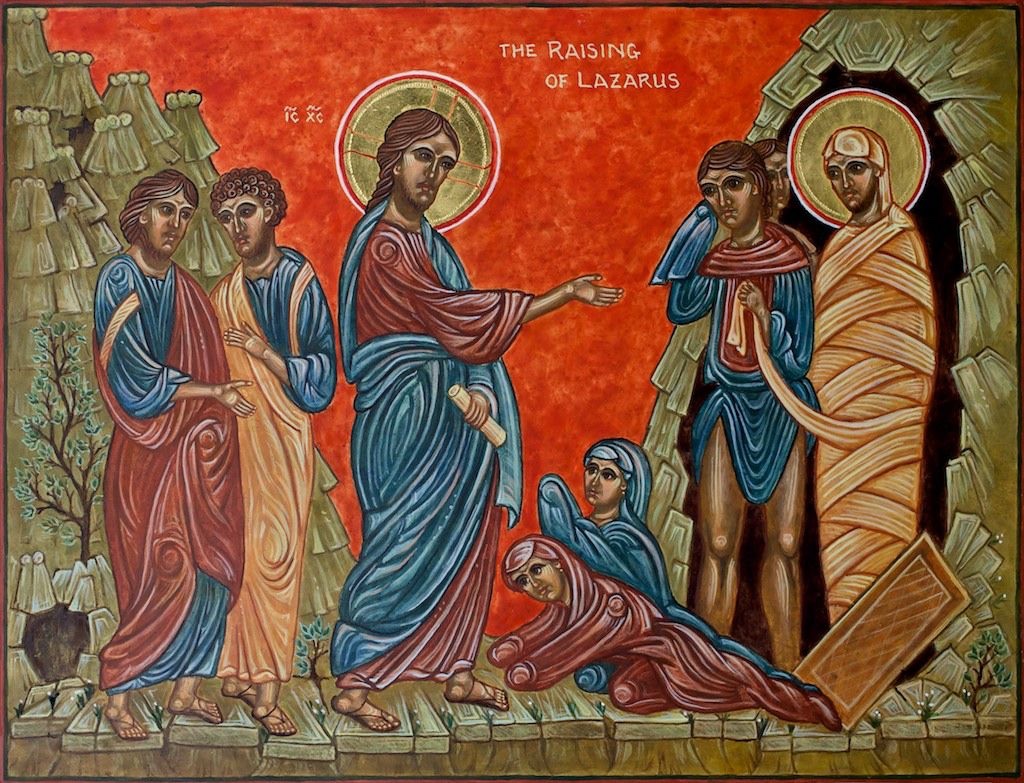
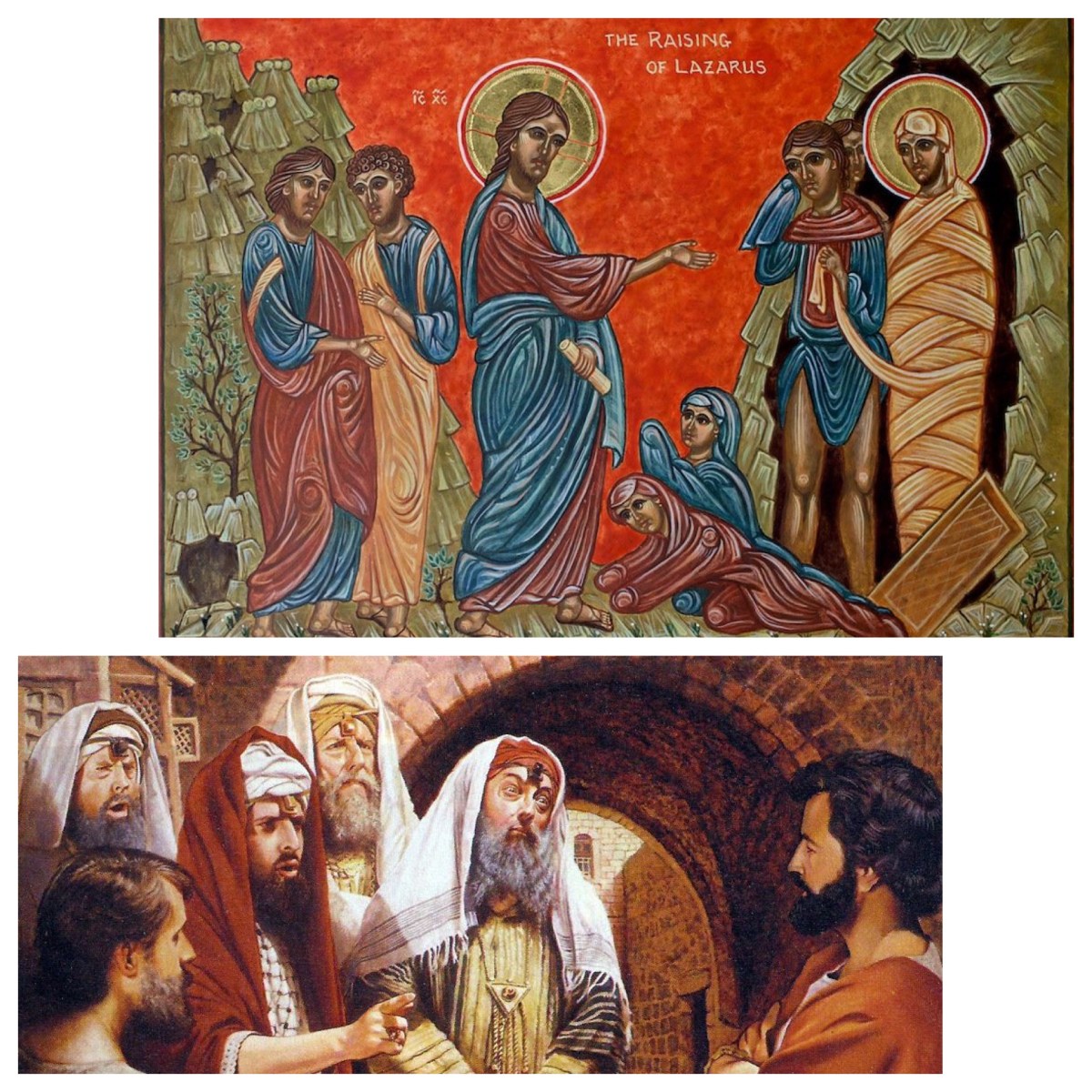
Then, the story of Lazarus (11:1–45) is a complex dramatic moment, a story with its own integrity and form, with a range of characters and varied dramatic moments. This story also serves as the seventh and final sign in the Gospel; these signs commenced at 2:1–11 and are interspersed throughout the ensuing narrative (4:46–54; 5:1–9; 6:1–15; 6:16–21; 9:1–7; and 11:38–44). This sign, like others before, has lead many to believe (11:45), but it serves also to confirm the plot of the Sanhedrin leaders to arrest and kill Jesus: the reason for the crucifixion, in this author’s eyes (11:46–53; 11:57; 18:1–12).

All of this is a masterly dramatic development through the first half of this “book of signs”. These stories are certainly worth hearing in full every three years!

These encounters, however, are told in the context of an emerging story which places Jesus into a position of antagonist, arguing and dissenting, disputing and disagreeing, with some regularity. This thread comes to a head in the story of Martha and Mary, their recently-deceased brother Lazarus, and Jesus (John 11:1–45).

The emergence of Lazarus from the tomb marks a climactic moment, for the family in Bethany and many of their neighbours (11:44–45), but also for the chief priests and Pharisees, who together determine to put Jesus to death (11:53). The seventh sign recounted in this Gospel is the most significant miracle of Jesus, but also the deed that determines the fate of Jesus, for it leads immediately to the plot to arrest Jesus (11:53) and then inevitably to his death at the hands of the Romans (19:30).

Soon after he has raised Lazarus back to life in Bethany, Jesus says, “I have come to this hour” (12:27), the hour when “I am lifted up from the earth, [when I] will draw all people to myself” (12:32), the hour when the Father will “glorify your Son so that the Son may glorify you” (17:1). The death of Jesus is to be, paradoxically, the complete fulfilment of his mission (19:30). Its inevitability has been flagged since early in the Gospel narrative.

Antagonism begins early in that narrative. It is initially signalled by “the incident in the Temple” (John 2:13–22). In his conversation with Nicodemus, Jesus tells the Pharisee, “we speak of what we know and testify to what we have seen; yet you do not receive our testimony. If I have told you about earthly things and you do not believe, how can you believe if I tell you about heavenly things?” (3:11–12). The plural form of the Greek word translated “you” makes it clear that the “you” being addressed is at least the collective Sanhedrin Council, if not the whole population of Judea. It is an oppositional, confrontational encounter at this point.

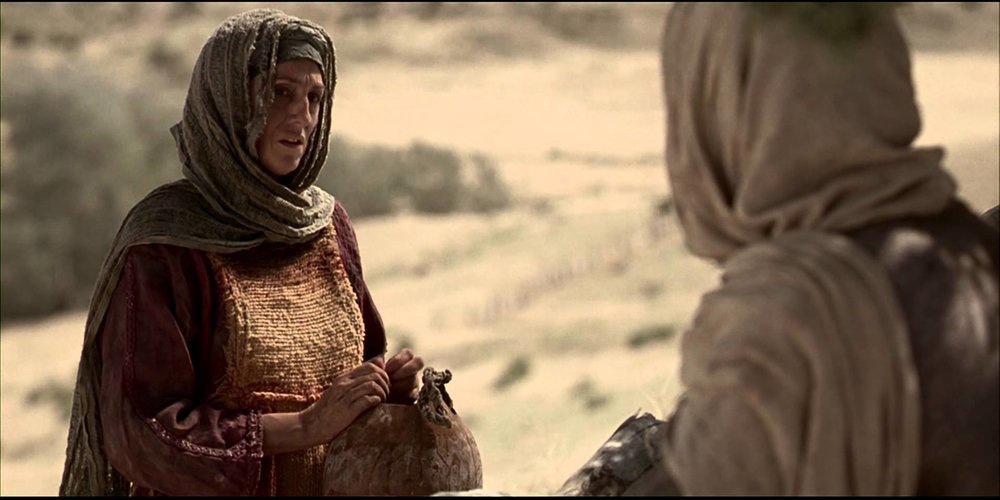
In talking with the Samaritan woman, Jesus reflects the historical antagonism between the Judeans of the south and those of the north. “Our ancestors worshiped on this mountain, but you say that the place where people must worship is in Jerusalem”, the woman says to Jesus (4:20). Jesus replies, pugnacious oh, “you worship what you do not know; we worship what we know, for salvation is from the Jews” (4:22). The use of the plural “you” once again in these verses makes clear the antagonism between the peoples, especially if we translate that final phrase, “salvation is from the Judeans”.

When Jesus heals a man born blind, the Jewish authorities function as the chorus reflecting on, and reacting to, the events taking place in Jerusalem. First, some Pharisees declare, “This man is not from God, for he does not observe the sabbath” (9:16). Then, they declare to the healed man, “we know that God has spoken to Moses, but as for this man, we do not know where he comes from” (9:29).

Their view of Jesus is quite negative— in an earlier debate with him, they had called him “a Samaritan and have a demon” (8:48), and that encounter ends, “they picked up stones to throw at him” (8:59). Mind you, Jesus had said to them, “you are from your father the devil, and you choose to do your father’s desires” (8:44), so it was a vigorous two-way argument!

So Jesus responds to the negativity of the Jewish authorities who questioned his credentials after learning of the healing of the man born blind, with a statement, “I came into this world for judgment so that those who do not see may see, and those who do see may become blind” (9:39), followed by, “if you were blind, you would not have sin; but now that you say, ‘We see,’ your sin remains” (9:41). This encounter ends, yet again, on a negative note.

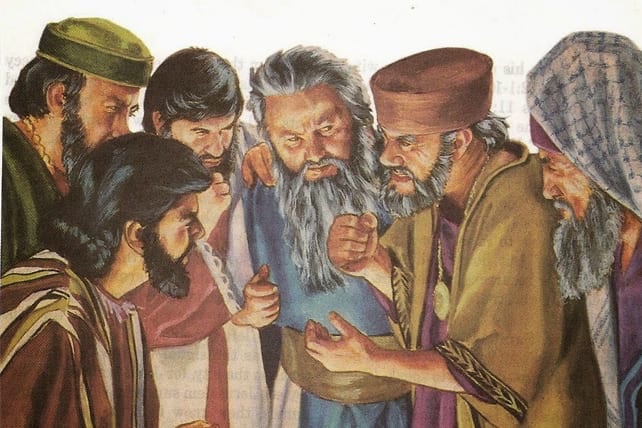
Then, after Jesus has raised Lazarus back to life, the Jewish authorities decide to make their move. Worried that, “if we let him go on like this, everyone will believe in him, and the Romans will come and destroy both our holy place and our nation” (11:48), Caiaphas leads with these prophetic words: “it is better for you to have one man die for the people than to have the whole nation destroyed” (11:50). And so, “from that day on they planned to put him to death” (11:53).

Jesus is clearly aware of this antagonism; he later warns his disciples, “the world hates you” (15:19), and then, “they will put you out of the synagogues; indeed, an hour is coming when those who kill you will think that by doing so they are offering worship to God” (16:2). And of course, the narrative of the Gospel ends with Jesus handed over to die by crucifixion (18:28). We need to think carefully about how we interpret this antagonism.

*****

Was the world an evil place, in the sway of the devil, which would inevitably turn against Jesus? But what, then, of the claim that God sent Jesus because he “so loved the world” (3:16)? How are we to see the relationship between Jesus and “the world”?

Of course, it needs to be said that none of these scenes offered by the lectionary—nor any of the intervening scenes in this Gospel—come as eyewitness (or rather, earwitness) accounts of what actually happened in a real, historical encounter. Of none of the scenes can we say with certainty that they actually occurred, let alone that the dialogue recorded by the author of the book of signs was what was actually said. These scenes are all literary creations, perhaps based on a report of an encounter that took place, but most certainly elaborated and developed over a period of time, worked into a narrative that catches attention, invites reflection, and has a life all of its own.

“John” wrote his book of signs some 50 to 80 years after the lifetime of Jesus. The account of each of these conversations—at night with Nicodemus, at noon with the woman, in Jerusalem with the authorities, and then the encounter in Bethany and the council meeting in Jerusalem—are thus far removed from each of these events. (How could we possibly claim to know verbatim what was said in a Sanhedrin meeting in the early 30s CE? — especially since the High Priest articulates a central tenet of later Christian doctrine!).

I recently read a comment that said, “The television show MASH was set during the Korean War but was about the Vietnan War. While the framework was faithful to the earlier conflict with regard to combatants, equipment, etc., the issues selected reflected Vietnam: distrust of authority, questioning blind patriotism, the need to get around the rules, the effort to ‘get out of this place’, the cynicism-based humor.”

Similarly, John tells a story set in the the time of Jesus; but this period is seen through the lens of the division of Christians and Jews that has eventuated and the heartache that comes when there’s a separation. I think that’s a helpful analogy. The later situation, when the work is created, is reflected in so many ways, even though the story is set decades earlier. As with MASH, so with John’s Gospel.

The depictions of these encounter scenes in the first half of John’s Gospel are shaped by the events that have taken place over those intervening decades—particularly, the rising antagonism between “messianic Jews” following Jesus, and “rabbinic Jews” adhering to the teachings of their teachers. The antagonism reflects the situation.

John’s Gospel indicates, three times, that followers of Jesus were expelled from the synagogue (9:22; 12:42; 16:1–2). That’s quite a schism! So any negative comments or portrayals of people from years back may well have as much to do with what has transpired in those intervening years, as with the actual event—probably, I think, much more to do with those intervening years than with the conversations and encounters as reported in the book of signs. All of this is basic Gospel interpretation.

The church to which I belong, the Uniting Church in Australia, adopted a Statement on Jews and Judaism in 2009 (I was on the working group that developed initial material for this) which offered guidance about our theology, exegesis, and preaching. It is in the same vein as many other statements issued by various enlightened denominations around the world, ever since the lead was taken by the Roman Catholic Church in promulgating Nostra Aetate in 1965.

(I published an analysis of these statements as “Christians relating to Jews: key issues in public statements”, Journal of Ecumenical Studies 44/2, 2009, 180–202.)

Nostra Aetate covered important new ground: it repudiated the centuries-old “deicide” charge against all Jews, stressed the religious bond shared by Jews and Catholics, reaffirmed the eternal covenant between God and the People of Israel, and dismissed church interest in trying to baptize Jews. It called for Catholics and Jews to engage in friendly dialogue and biblical and theological discussions to better understand each other’s faith. Many other Christian denominations have followed suit in the decades since.

The 2009 Uniting Church Statement declares that “The Uniting Church acknowledges with repentance a history of interpretation of New Testament texts which has often failed to appreciate the context from which these texts emerged, viz. the growing separation of Christianity and Judaism with attendant bitterness and antagonism, resulting in deeply rooted anti-Jewish misunderstandings” (para. 9).

See https://assembly.uca.org.au/resources/key-papers-reports/item/1704-jews-and-judaism

That’s a key guiding principle for me, as I read and interpret the Gospels—particularly those attributed to John and Matthew, for these books contain texts which have been grossly and inventively distorted and misused by the Church over many centuries, to fuel the false doctrine of supersessionism and thus the hatred of antisemitism. They do provide evidence for the growing separation between Judaism and Christianity, but they should not be used in a supersessionist way or to fuel antisemitism.

The Uniting Church Statement offers concise definitions of supersessionism (“the belief that Christians have replaced Jews in the love and purpose of God”) and antisemitism (“a term coined in imperial Germany during the 1870s by propagandists who did not wish Jews to enjoy equal rights with Christians. Its true political meaning is ‘I am against the Jews’.”). We should take care not to reflect either of these in our interpretation of scripture. Passages from John’s Gospel, especially, present us with the temptation to be negative about “the Jews”. We need to resist these temptations with all our heart!

*****

See also

Flesh and bones, spirit and life (Ezek 37, Psalm 130, Rom 8, John 11, Lent 5A)

On the Fifth Sunday in Lent, the scripture passages offered by the lectionary revolve around a central theme: life in contrast to death. It’s not every Sunday that all four passages line up to provide a clear and obvious focus on a single theme. For more than half of the Sundays in the year, the Hebrew Scripture, Epistle, and Gospel each follow their own course, and any overlap of theme is accidental, not planned. For Sundays in Advent, Christmas, and Lent, as well as key days like Pentecost, Trinity, and the Reign of Christ, the thematic overlap is intentional. This week we have just such a Sunday!

Death is at the heart of the story of Lazarus that forms the Gospel passage for Sunday (John 11:1–45). Initially, Jesus is told “he whom you love is ill” (John 11:3), but when he arrives in Bethany, Martha accosts him with “Lord, if you had been here, my brother would not have died” (11:21)—an accusation repeated by her sister Mary (11:31); and then comes a graphic description provided by Martha as they draw near to the tomb: “already there is a stench because he has been dead four days” (11:39).

The emergence of Lazarus from the tomb marks a climactic moment, for the family in Bethany and many of their neighbours (11:44–45), but also for the chief priests and Pharisees, who together determine to put Jesus to death (11:53). The seventh sign recounted in this Gospel is the most significant miracle of Jesus, but also the deed that determines the fate of Jesus. Soon after this event in Bethany, he says, “I have come to this hour” (12:27), the hour when “I am lifted up from the earth, [when I] will draw all people to myself” (12:32), the hour when the Father will “glorify your Son so that the Son may glorify you” (17:1). The death of Jesus is to be, paradoxically, the complete fulfilment of his mission (19:30)—the pathway into life eternal (3:16; 10:28; 17:3).

This climactic movement, of death moving to life in Bethany, resonates with the words of the prophet Ezekiel and also the writings of the apostle Paul that are offered for this coming Sunday. Ezekiel confronts the signs of death: “The Lord set me down in the middle of a valley; it was full of bones. He led me all around them; there were very many lying in the valley, and they were very dry” (Ezek 37:1–2). Paul considers the state of humanity: “to set the mind on the flesh is death … the mind that is set on the flesh is hostile to God; it does not submit to God’s law—indeed it cannot, and those who are in the flesh cannot please God” (Rom 8:6–8).

So, death is in view in these three readings. It is no wonder that the psalm we are offered alongside them speaks a cry of deep despair: “out of the depths I cry to you, O Lord” (Ps 130:1). The depths of the earth were the place where sinful people went (Ps 63:9; Isa 14:15), following the lead of the Egyptians who pursued the Israelites and “went down into the depths like a stone” (Exod 5:4–5; Neh 9:11; Isa 63:11–13). There, in the depths, God’s anger burned (Deut 32:22).

However, those banished to the depths were able to be brought back from the depths by God’s decree (Ps 68:22; 71:20; 86:13), so the cry of the psalmist from the depths is followed by the plea, “Lord, hear my voice! Let your ears be attentive to the voice of my supplications!” (Ps 103:2). As the prophet Micah affirms, God’s steadfast love will rescue those who “lick dust like a snake,

like the crawling things of the earth”, and will indeed “cast all our sins into the depths of the sea” (Mic 7:17, 19). So the psalmist affirms, “I wait for the Lord, my soul waits, and in his word I hope” (Ps 103:5).

Just as Lazarus emerges from the tomb where his dead body was laid, so Ezekiel foresees a wondrous revival amongst the dead bones of the people of Israel: “I will put my spirit within you, and you shall live, and I will place you on your own soil; then you shall know that I, the Lord, have spoken and will act,” says the Lord” (Ezek 37:11). The vision he sees emac s that dramatically. Likewise, Paul glimpses that same hope: “if the Spirit of him who raised Jesus from the dead dwells in you, he who raised Christ from the dead will give life to your mortal bodies also through his Spirit that dwells in you” (Rom 8:11).

Both prophet and apostle hold to the hope enacted in the Gospel and articulated by the psalmist: “Israel, hope in the Lord! For with the Lord there is steadfast love, and with him is great power to redeem. It is he who will redeem Israel from all its iniquities” (Ps 103:7–8).

*****

Ezekiel was both a prophet and a priest (Ezek 1:3). He had been exiled to Babylon during the siege of Jerusalem by King Nebuchadnezzar II of Babylon (599 BCE; see 2 Kings 24:10–17). His prophetic activity was thus undertaken entirely in exile. He addresses both those in exile with him in Babylon, and also those left behind in Judah. His prophecies continue through the period when the people in Judah were conquered and taken to join Ezekiel in exile (587 BCE; see 2 Ki 25:1–21), and then for some time after that.

A dramatic vision opens the book, in which “the glory of God” appears in the form of a fiery, flaming chariot (1:4–28). Priestly attention to detail marks the account of this vision, whilst contains multiple allusions to other scriptural stories. The bright cloud and flashing fire evokes the scene on Mount Sinai, when God gave Moses the Law (Exod 19:16–19); the “burning coals of fire” (1:13) remind us of the burning coals in the scene of the call of Isaiah (Isa 6:6); and “the bow in the cloud on a rainy day” evokes the sign of the covenant made with Noah (Gen 9:12–17). In seeing this vision, Ezekiel has had a life-transforming experience!

Ezekiel is impelled to play his role as a prophet by “the hand of the Lord” (1:3; 3:22; 8:1; etc); indeed, he says, “the spirit lifted me up” (3:12). That same spirit continues to lift him up with regularity (8:3; 11:1, 24; 37:1; 43:5) to show him vision after vision. More than this, Ezekiel declares that “the spirit entered me” (3:24), a process which he promises will be experienced by Israel as a whole (36:26–28)—for the Lord says he will “pour out my spirit upon the house of Israel” (39:29).

This emphasis on the renewing spirit of God is seen, most dramatically, by Ezekiel when he is taken by the spirit into “the middle of a valley … full of bones” (37:1) and sees a vision that he conveys in what must be his most famous oracle. What Ezekiel sees in this valley of dry bones is the work of God, as God puts sinews and flesh and skin on the bones, and breathes into the bodies so created, so that they live (37:5–6, 8, 10).

The vision indicates what God will do: “I will put my spirit within you, and you shall live, and I will place you on your own soil” (37:14). The end of the exile, it seems, is in sight. This passage is often interpreted in a Christian context as a pointer both to the resurrection of Jesus, and also to the general resurrection; indeed, its appearance on the Fifth Sunday in Lent means that it complements, and indeed illuminates, the dramatic story of Jesus bringing Lazarus back to life, as he approaches the tomb, and cries in a loud voice, “Lazarus, come out!” (John 11:38–44).

For Ezekiel, however, this vision is not a far-into-the-future prediction (foretelling), but a word of hope to the people in their immediate situation (forthtelling). Indeed, the very next section of this chapter reports a proclamation of Ezekiel which is quite directly forthtelling. The two sticks that he takes (37:16) stand for Judah and Israel; as he joins the sticks, so he points to the return of these peoples from their exile, their return “to their own land”, and a cleansing which will mean “they shall be my people, and I will be their God” (37:21–23, 27).

That final phrase is a common covenantal affirmation made by God (Lev 26:12; Ruth 1:16; Jer 7:23; 11:4; 24:7; 30:22; 31:1, 33; 32:38; Ezek 11:20; 14:11; 36:28; Zech 2:11; and Hos 1:10–11, overturning Hos 1:9). The reunited people shall have one king (37:24) and they will observe “an everlasting covenant” (37:26).

So the dramatic story that the prophet Ezekiel reports from his vision set in the middle of a valley full of dry bones is intended to speak directly into the life of the covenant people of God, the people of Israel, offering them hope despite their current circumstances.

*****

Paul also was commissioned for his task through a vision—reported in graphic terms by Luke, who makes the moment into a grand call-and-commissioning scene (Acts 9:3–8; 22:6–11; 26:12–18), but mentioned only briefly, in general terms, in passing by Paul himself (1 Cor 9:1; and perhaps Gal 1:1, 12). Of course, Luke was not present for this event, so he shaped in along the lines of classic call-and-commissioning narratives that existed in earlier Jewish writings. (I have explored this in detail in my commentary on Acts in the Eerdman’s Commentary on the Bible, 2003).

That vision turned Paul from persecutor of the followers of Jesus to an apostle fervently declaring “the good news of Jesus Christ” as far as possible, “from Jerusalem and as far around as Illyricum” (Rom 15:19). (Illyricum was a Roman province that covered the coastal area of the Balkans, northwest of Macedonia stretching towards Italy.) Paul delivers this good news in person to many communities, but he sets it out at length in his letter to believers in Rome, which he had not yet visited.

Paul is embued with the same hope that the psalmist and the prophet demonstrate. He rejoices with the Thessalonians that they share with him in “hope in our Lord Jesus Christ” (1 Thess 1:3), tells the Galatians that “through the Spirit, by faith, we eagerly waits for the hope of righteousness” (Gal 5:5), and reminds the Corinthians that “faith, hope and love abide” (1 Cor 13:13). In a subsequent letter to believers in Corinth, he asserts that “he who rescued us from so deadly a peril will continue to secure us; on him we have set our hope that he will rescue us again” (2 Cor 1:10)

Paul reports to the Romans that “we boast in our hope of sharing the glory of God” (Rom 4:2) and that it is “in hope that we were saved” (Rom 8:24). He affirms that it is “by steadfastness and the encouragement of the scriptures, we might have hope” (Rom 15:4), notes that scripture promises that “the root of Jesses shall come … in him the Gentiles shall hope” (Rom 15:12), and so characterises God as “the God of hope” (Rom 15:13). He shares in that strong hope which is sung by the psalmist and spoken by the prophet, and which is acted out in the Gospel reading for this Sunday.

Perception is everything: a sermon on John 9 (Lent 4A)

This sermon was written and preached by the Rev. Elizabeth Raine at the Tuggeranong Uniting Church on Sunday 19 March (the Fourth Sunday in Lent).

*****

The story in John this week reminded me of the play, The One Day of the Year. I don’t know if you know it, but it is about different perceptions of Anzac Day. For Hughie Cook, the son, Anzac Day appeared to be just an excuse for “one long grog-up”. For his father Alf, an ex-servicemen, it was a day to be with your mates. For Wacka, his mate, it was a day when we as a nation reflected on those who had paid with the sacrifice of their lives.

At one point during a heated debate between father and son, Alf points out that Wacka was there at Gallipoli and knew what Anzac was all about. Hughie puts the counter argument that soldiers who took part in the campaign at Gallipoli couldn’t know the full story of the disaster that was Anzac Cove because they only saw part of the whole picture, the part they were involved in. He sees himself as having a full overview, having studied history.

But Hughie’s view that Anzac Day was just “one long grog-up” is also flawed, as this is the only part of the picture Hughie can currently see. He doesn’t see the mateship, or the skill and resourcefulness, or the sense of pride that Alf and Wacka see in the ex-servicemen who ‘hung in there’ on Anzac Cove. And Hughie fails to recognise that the freedom that gives him the right to speak his opinion was a freedom in part won by soldiers like his father, fighting in the jungles of Asia.

These different viewpoints in the play all contributed to the whole picture of what Anzac day is, but none of the parts on their own are the full story. The story today of the healing of the blind man is very similar in its construction.

How often do we fail to grasp the whole picture? Let us do a simple exercise. Look around you. What do you see? Now, look around again, more carefully. What do you now see that you didn’t notice the first time? If I asked to describe the church, the answer would vary depending on whether you were looking at the front or the back, or even relying on your memory. The whole picture can be hard to take in.

We view the world through the lens of our own experience and perceptions. Like Alf and Hughie in the play, we concentrate on some things and take them in, but filter out others that we deem as unimportant or that perhaps we don’t understand or don’t like. We regularly interpret the information we receive, and we each choose different ways to respond to it. The writer Anais Nin was right when she said, “We do not see things as they are. We see things as we are.” In effect, often we see only what we choose to see.

We see this happening in the gospel story. As the disciples walk down a village street with Jesus, they saw what they had been taught to see – a man who was being punished by God. They knew something of his story. He had always been blind. Which raised a tough question for them. Did the birth defect mean that he had somehow sinned in the womb, or was he the victim of his parents’ transgression? For the disciples, this was simply an interesting theological question to raise with their teacher, Jesus, but for the man concerned it was a painful reality that he lived every day, and that, it seems, had left him destitute.

We know that his parents were still alive because later in the story they get called in by the religious authorities to testify at the investigation into his healing. But, probably out of fear, they refuse to be drawn in, and simply point out their son is now a grown adult and can answer for himself.

Their presence at this point in the story raises some questions though. If they were alive, and close enough to be called in for questioning, why was this man a beggar? why was he left pleading for the pity of strangers in order to survive? why was he not cared for by his parents?

*****

How then did this man see himself? After a life of being outcast, perhaps from his parents, from his neighbours, from the Temple, how could he have felt anything but shame and despair? how could he possibly even think that he might see something different in himself from what everyone else saw? how could he not accept the wisdom of the crowds and judge himself accordingly?

And he remains this way until someone came along who could see the whole situation, and see it differently. Jesus did not accept the dominant paradigm of his times, that illness and disability was a punishment from God. Perhaps for the first time, the blind man felt the gaze of someone who did not pity him or wonder what sin he had committed. For the first time the blind man knew what it was to be valued, to be accepted and to be made whole.

And then, as if this wasn’t enough, he discovered what it was like to really see, to accept light into his eyes and have it transformed into colours and textures, depth and movement. But if he thought this healing would make everything right he was mistaken. He may have had his eyes opened, but there were other, more powerful people who were not interested in having theirs opened. They were convinced that they knew how the world worked, and they weren’t about to change their perceptions.

*****

It can’t have been easy for the Pharisees in this story, for Jesus had a tendency to complicate things. When religious custom dictates that blindness is God’s judgement for sin, it’s easy to know what to do and what to think. But, when blind people get miraculously healed in God’s name, it all gets messy. If sin didn’t cause the problem, then where did it come from? And what about all those other beggars? Would they now be expected to be treated as equals? And if a healing really had happened, then they had another problem. None of them had done it, Jesus had done it. For them, it was best not to see the whole picture and just stick with what they knew.

What to do? The Pharisees try and extract a confession from the blind man. Perhaps he wasn’t really blind – it had been a lifelong hoax and the community had fallen for it. Or maybe he’d found a body-double who was now pretending to be healed to get him a few minutes of fame. Then they resorted to questioning his parents. Again, the result was unsatisfactory.

*****

Finally, there was no other option but to throw him out of the synagogue. Though the blind man could see, the Pharisees refused to see. The religious leaders had decided that Jesus was a fraud, so that’s all they could see. They decided the blind man was a sinner, so that’s all they could see. And they had decided that God could no more use Jesus to heal than that God would heal a person God had afflicted with blindness in the first place. Because that’s what they believed, that’s what they saw.

Perception is everything. It’s not just what we see or don’t see, but how we interpret what we see that determines our actions, our responses and our beliefs. We can look at the poor and see unfortunate victims of circumstance, or lazy people who refuse to work, or dignified human beings making the most of a tough situation. We can look at climate science and see a natural cycle which has just happened to hit us now, or human actions putting our planet under pressure.

Ultimately, how we determine what we see and what it means must flow from Jesus’ example. How did Jesus address poverty? How did Jesus view the natural world, power, violence, sickness, and human dignity? If we are to follow Jesus into a world of justice, we will have to wrestle with these questions and not see them as outside of the realm of faith. And once we have seen the problems, we also have the task of helping others – our leaders, our neighbours, our children – to see as well.

In our daily lives we all make choices (consciously or subconsciously) about what we will see and what we won’t. It’s tempting to choose not to see the suffering and injustice in our world – to switch off the news, and to ignore reports of grief, warand trauma. It’s tempting to avoid seeing certain people and to allow them to just blend in with the landscape, removing their need and struggle from our vision.

It’s tempting to avoid seeing God’s truth and grace in those with whom we disagree, and whom we would rather see as “all bad”. It’s tempting to avoid seeing the brokenness in those we support and with whom we agree and to see them as “all good”. It’s tempting to avoid seeing the resources, the opportunities and the capacity we have for making a difference, and to believe we can do nothing.

But, if we have really seen Jesus, and if we have truly seen God’s reign proclaimed and manifest in him, then we have to confront how we see things, and allow God’s grace and mercy, God’s truth and justice to change our seeing and shed light on our world, our relationships and our neighbourhoods.

And, once again, our seeing must be informed by God’s different perspective where the greatest are the least, and where everyone – even a young shepherd boy, or a carpenter from the countryside – can make significant differences in the world.

We do not know how it is that he now sees (John 9; Lent 4A)

The lectionary offers us stories, during Lent, of encounters that Jesus had with a range of people. We have already heard of his conversation with a Pharisee in Jerusalem and a woman beside a well in Samaria. This week, he is in Jerusalem, where one of the people he encounters is a man who was born blind (John 9:1–41).

Of course, each of these scenes is a narrative which has been shaped and formed by the author, more in the nature of a developed literary creation than a verbatim account of an historical event. It may be that each extended scene is based on a report of an encounter that took place decades before the Gospel was written, but most certainly it has been elaborated and developed over a period of time, worked into a narrative that catches attention, invites reflection, and has a life all of its own.

“John” wrote his Gospel some 50 to 80 years after the lifetime of Jesus. The account of each of these conversations—at night with Nicodemus, at noon with the woman, in Jerusalem with the authorities, and then the encounter in Bethany and the council meeting in Jerusalem—are thus far removed from each of these events. (And how could we possibly claim to know verbatim what was said in a Sanhedrin meeting in the early 30s CE? — especially since the High Priest articulates a central tenet of later Christian doctrine! ).

But removing certainty with regard to the historical accuracy of the encounter does not in any way impair the power of the story to connect with us as we read and hear it, many centuries later, in a very different context—we still have stories from the 1st century, valued and passed on and collected in scripture, that speak to our own journeys of faith development in the 21st century.

The scene—or rather, the series of scenes—that we are offers this coming Sunday occur within a context that has set up antagonism and tension in the relationship that Jesus has with the authorities in Jerusalem. In John’s narrative, he has set things off in an interesting way: violence in the courtyard of the Temple (2:13–22) is his first action in the capital city.

Then follows the secret meeting with Nicodemus, “a leader of the Jews” in which Jesus appears to accuse Nicodemus and his ilk of misunderstanding what Jesus teaches about “heavenly things” (3:11–12), and the public noontime meeting with a Samaritan woman by the well, in which he contests the northern penchant for worship “on this mountain” (4:19–24).

However, the antagonism in these encounters pales into insignificance when compared with what follows. After he has healed an official’s son in Galilee (4:46–54) and a man challenged by his poor mobility (5:2–9), Jesus enters into debate with “the Judeans”—most likely the scribal and priestly authorities in Jerusalem—which has already stirred them up, as “they were seeking all the more to kill him” (5:18).

For my views on why references to “the Jews” in this Gospel should be translated as “the Judean authorities”, see

Then a long session of exposition with his disciples by the lake in Galilee (6:22–71) sees not only Judeans stirred by his words (6:52), but his own disciples resistant (6:60) and some, indeed, leaving his company of followers (6:66). We don’t hear much, usually, about Jesus’ failures!!

After a debate about whether Jesus and his followers should go south to Jerusalem (7:1–9), Jesus went, “not publicly but as it were in secret” (7:10), engaging in yet more discussion with “the Judeans” (7:15–62), in the course of which, the accusation is shouted by the crowd, “you have a demon!” (7:20). That languages comes back in the subsequent scene, an extended section in which Jesus remains in Jerusalem (8:12–10:21).

The claim that Jesus makes, “I am the light of the world” (8:12), introduces a section where accusation and counter-accusation intensify. “You are from your father the devil, and you choose to do your father’s desires”, Jesus declares, continuing with the accusation that “he was a murderer from the beginning and does not stand in the truth, because there is no truth in him” (8:44). In response, “the Judeans” ask, “are we not right in saying that you are a Samaritan and have a demon?” (8:48), and then “they picked up stones to throw at him” (8:59). Jesus escapes by leaving the temple.

This polemic continues in chapter 10, when many of “the Judeans” were saying, “He has a demon and is out of his mind. Why listen to him?” (10:20), whilst others were saying, “These are not the words of one who has a demon. Can a demon open the eyes of the blind?” (10:21). The long scene ends with the narrator reporting, “they tried to arrest him again, but he escaped from their hands” (10:39).

The antagonism will continue, nevertheless, for after Jesus has moved to Bethany, encountered a grieving family, and raised Lazarus back to life (11:1–44), the Jewish authorities decide to make their move. Worried that, “if we let him go on like this, everyone will believe in him, and the Romans will come and destroy both our holy place and our nation” (11:48), Caiaphas leads with these prophetic words: “it is better for you to have one man die for the people than to have the whole nation destroyed” (11:50). And so, “from that day on they planned to put him to death” (11:53).

*****

The extended narrative revolving around the man born blind, whom Jesus heals, and the associated controversy, is thus set at the heart of this extended sequence of conflict scenes. It is different, in character, from the earlier scenes of encounter, where the focus is on Jesus and the person with whom he is talking—Nicodemus, and the Samaritan woman in particular. This particular scene of encounter has quite a cast of characters—Jesus, his disciples, the blind man, his parents, the Pharisees, and a crowd of people in Jerusalem.

In fact, this encounter leads to a sequence that feels more like a dramatic portrayal of a court scenario, than a religious story. There are seven scenes in all. The first scene is narrated in the opening verses (9:1–7), telling of Jesus healing the man. The question from the disciples (9:2) allows Jesus to give an explanation about the purpose of “his work” (9:3–5) which culminates in a reprise of his earlier claim, “I am the light of the world” (9:5; see 8:12, as well as the initial reference at 1:5).

Jesus heals the man by forming mud with his own saliva (9:6)—something jarring to modern sensibilities, but a common practice amongst ancient miracle-workers and healers. For my reflections on the distinctive way that Jesus heals this blind man, see

The second scene involves the neighbours of the healed man debating with him about what has happened (9:8–12); “how were your eyes opened?”, they ask him (9:10), incredulous at the change that has taken place. This scene is something of “set-up”, to lead into the third scene, in which the complexities of the situation begin to be unravelled.

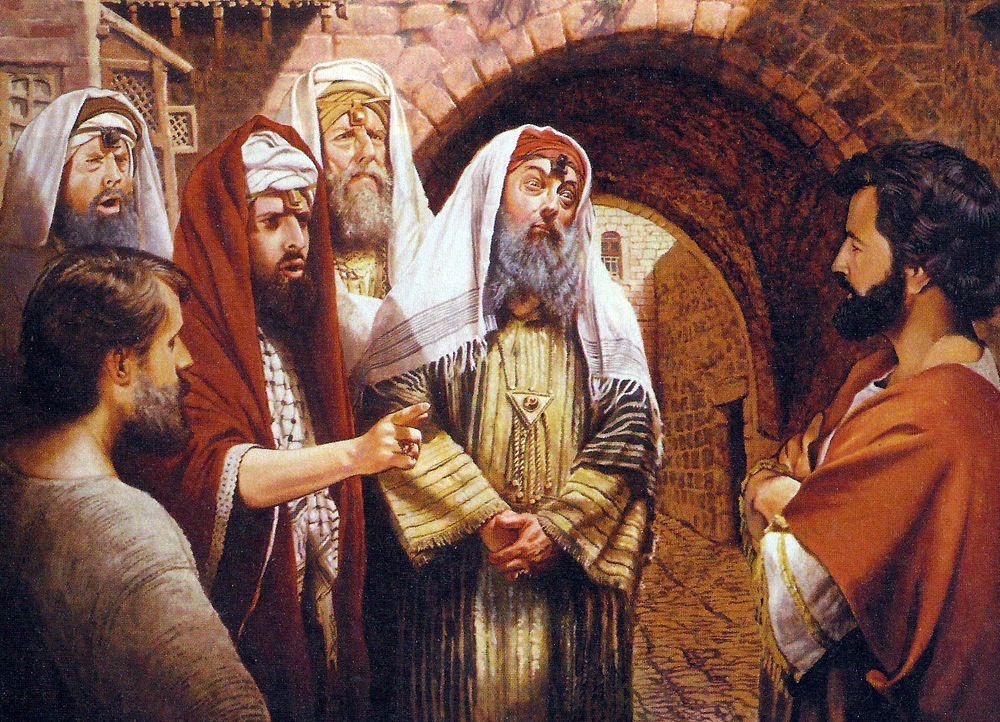
The third scene sees the healed man brought before the Pharisees (9:13–17); what ensues feels like it is setting up to be a cross-examination, since the healing took place on a sabbath (9:14) and thus the event comes under Torah prescriptions (cf. Mark 2:23–28; 3:1–6; Luke 13:10–17; 14:1–6; and John 7:19–24). In fact, the Pharisees accuse Jesus, “this man is not from God, for he does not observe the sabbath” (9:16), while the healed man, pressed hard, declares, “he is a prophet” (9:17).

A prophet: is the same affirmation made by the Samaritan woman (4:19), a crowd in Galilee after a miracle (6:14), and a crowd in Jerusalem (7:40)—and, by implication, perhaps some in the Sanhedrin, led by Nicodemus, say that also (7:52)?

Does the author want his hearers and readers to understand each of these affirmations in terms of the central one: “this is indeed the prophet who is to come into the world” (6:14), presumably along the lines of the earlier statement of Moses, “the Lord your God will raise up for you a prophet like me from among your own people; you shall heed such a prophet … I will raise up for them a prophet like you from among their own people; I will put my words in the mouth of the prophet, who shall speak to them everything that I command” (Deut 18:15, 18). Certainly, this is the text on the basis of which Samaritans were anticipating the return of Moses as their Taheb, their Restorer.

We resume the extended narrative of John 9 with the fourth scene, involving the parents of the man, whom the Pharisees summonses and proceed to question (9:18–23). They ask, “Is this your son, who you say was born blind? How then does he now see?” (9:19). The key element in this scene is the narrative comment—reflecting the experience of the followers of Jesus many decades after the setting of this scene, in Jerusalem in the early 30s—that “the [Judean authorities] had already agreed that anyone who confessed Jesus to be the Messiah would be put out of the synagogue” (9:22).

John’s Gospel indicates, three times, that followers of Jesus were expelled from the synagogue (9:22; 12:42; 16:1–2). That’s quite a schism! This indicates that the negative portrayals of people from years back may well have as much to do with what has transpired in those intervening years, as with the actual event—probably, I think, much more to do with those intervening years than with the conversations and encounters as reported in the book of signs.

The whole Gospel reflects a situation much developed from the time in which the story is set, when Jesus was a Galilean man preaching and teaching in Israel in the 30s CE. American scholar Raymond Brown developed a complex hypothesis about multiple stages of development of this Gospel, with the figure of the Beloved Disciple providing a focal point of leadership and identity—and perhaps also serving as the earliest source for the distinctive Johannine traditions?

Brown developed this hypothesis as he worked on a marvellous two-volume commentary on John’s Gospel (Anchor Bible, Yale Uni Press, 1966) and then published a clear analysis of this in his book The Community of the Beloved Disciple (Paulist Press, 1978).

Much had transpired in the decades between the time of Jesus and the finalisation of the Gospel—including an intensification of the antagonism between the followers of Jesus and the rabbinic leadership of Judaism. This antagonism is “written back” into the time of the story of Jesus through the verbal polemics that take place in chapters 5–12, between Jesus and the authorities in Jerusalem.

My own teacher, Wayne Meeks (in his classic article, “The Man from Heaven in Johannine Sectarianism”, JBL 91 (1972) 44–72), noted that the claims made about Jesus in the fourth Gospel function as reinforcements of the sectarian identity of the community. As this community had come into existence because of the claims that it had made about Jesus, so the reinforcement of the life of the new community took place, to a large degree, through the strengthening and refining of its initial claim concerning Jesus. The account of the interaction between Jesus, the man born blind, now healed, and the Pharisees and leadership in Jerusalem, reflects elements of that sectarian mindset.

This becomes clear in the fifth scene, in which the Pharisees recall the healed man to question him further (9:24–34). The Pharisees set the key issue: “as for this man, we do not know where he comes from” (9:29). The experience of the healed man, “you do not know where he comes from, and yet he opened my eyes”, leads him to testify, “never since the world began has it been heard that anyone opened the eyes of a person born blind. If this man were not from God, he could do nothing” (9:30–33). That clear affirmation of faith in Jesus, and recognition of his status, from one “on the inside”, brings the cross-examination to an abrupt close; incredulous, the Pharisees ask, “are you trying to teach us?”, and then drive him out from their gathering (9:34).

The issue at stake is the identity of Jesus and his status as prophet, teacher, “from God”. Of course, hearers and readers of the Gospel have known from the beginning that Jesus, the Word, “was with God, and … was God” (1:1), that this Word “became flesh and lived among us … full of grace and truth” (1:14), and that this Word was “the only Son, who is close to the Father’s heart, who has made him known” (1:18). We have been let into the insiders’ world, with access to full knowledge. This is where the healed man is to be found; he recognises Jesus, not only as miracle worker, but as “from God” (9:33).

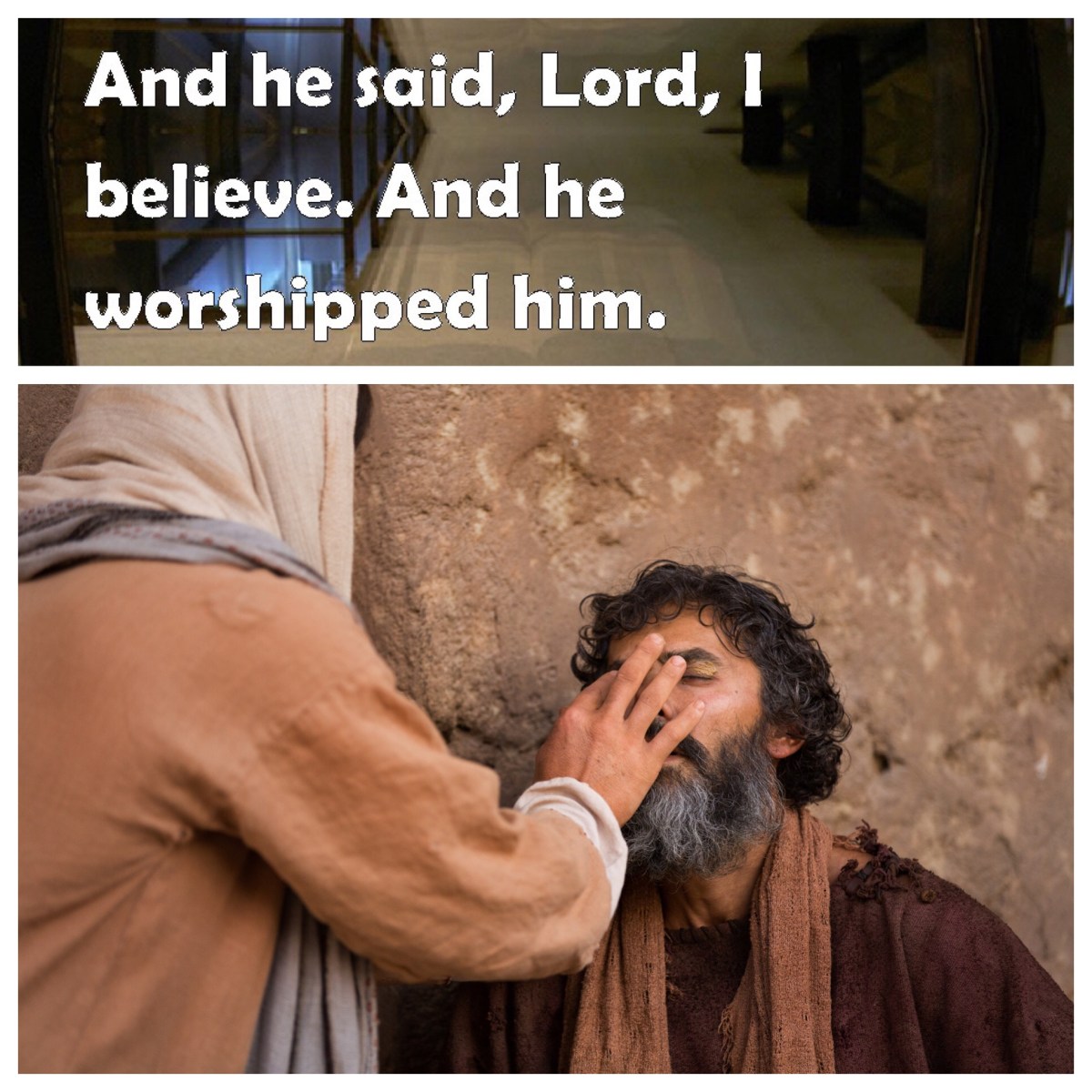
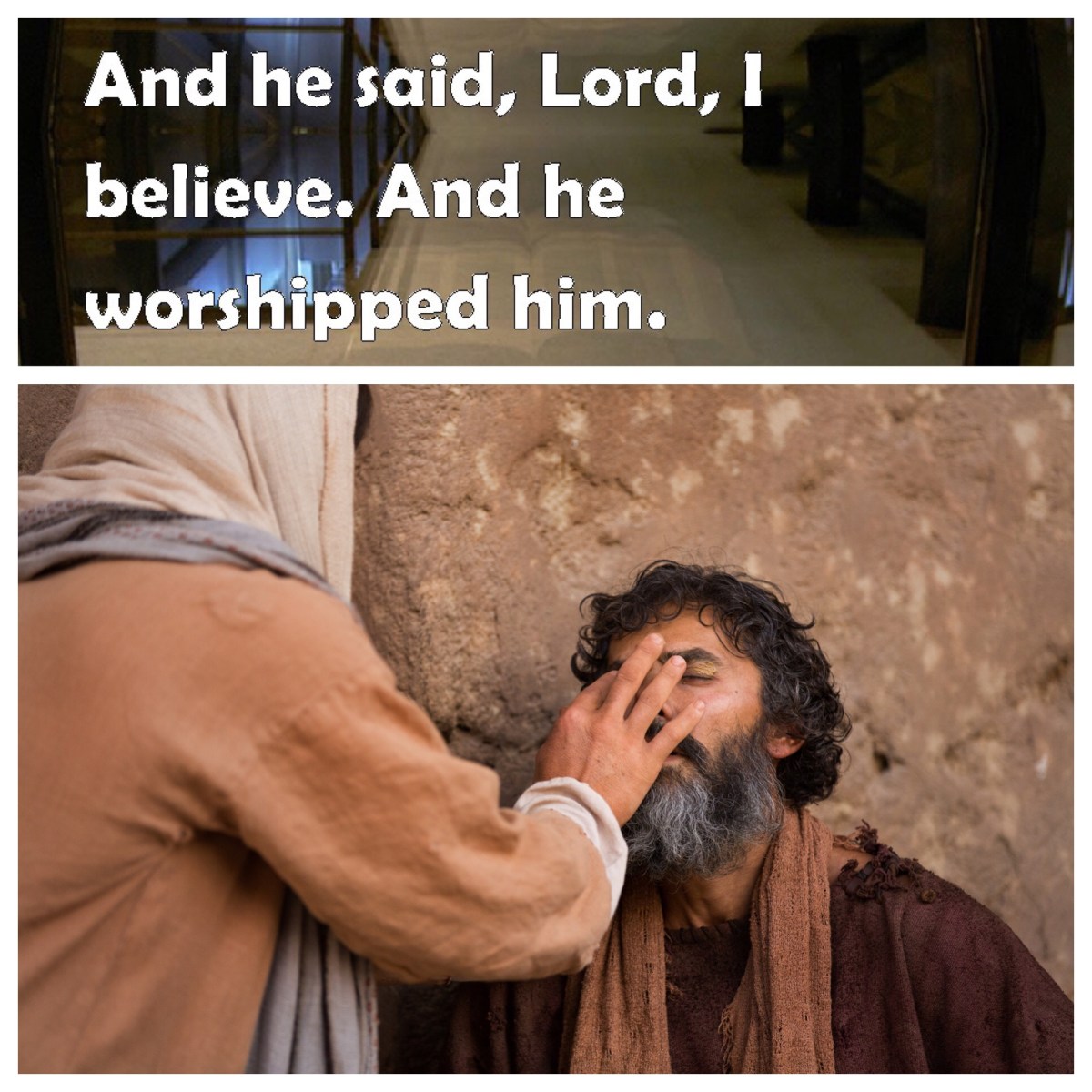
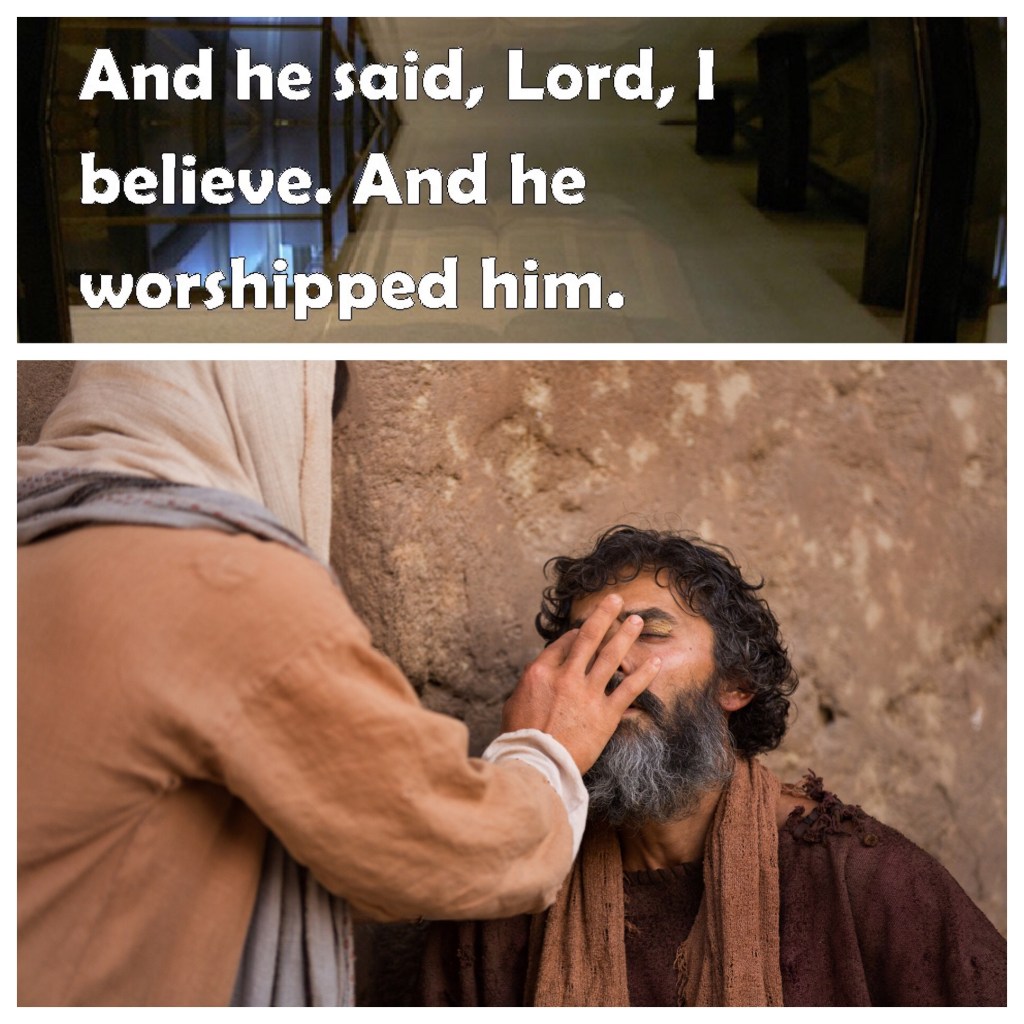
So the sixth scene (9:35–38) depicts Jesus interacting directly with the healed man once more—the last time he saw him was back in scene one, when he had spat onto the ground to make mud, rubbed it on the man’s eyes, and told him to “wash in the pool of Siloam” (9:6–7). Now, Jesus asks the leading question, “do you believe in the Son of Man?” (9:35), evoking the clear affirmation, “Lord, I believe” (9:38). That is the same affirmation of faith made by Simon Peter (6:69), Martha (11:27), and, by inference, Thomas (20:24–28). The identity of Jesus—Holy One of God, Messiah, Son of Man, Lord and God—is the critical issue which delineates insiders from outsiders.

For my reflections on the significance of this man’s confession of faith in the context of the book of signs as a whole, see

The seventh scene brings Jesus directly into contact with the Pharisees (9:39–41). Compared to the earlier extended debate of 8:31–59 and the less extensive debate which follows at 10:22–39, this is brief, succinct, and focussed on the theological issues of blindness and seeing, and sin. This links back to the opening question of the disciples about blindness and sin (9:2) and the consequent statement of Jesus, “as long as I am in the world, I am the light of the world” (9:5). This statement, of course, repeats the earlier declaration of Jesus (8:12) which has introduced the whole narrative context in which this encounter sits (8:12–10:21).

*****

So the whole scene (like the whole Gospel) is about the situation of a group of followers of Jesus towards the end of the first century CE, inheriting the richness of the Jewish faith, convinced that they have found The Teacher of the way that God requires, in Jesus of Nazareth. As a result, they have encountered opposition, argumentation, and expulsion from their familiar faith community, and through this they have engaged in verbal warfare with those who have pushed them out.

Retelling the story of that man in a way that validates their perspective as what God intends and desires, is what has led an unknown member of their community to construct this narrative, in which he reinforces the views that have been developed by the members of his community, even as he hopes that others might “come to believe that Jesus is the Messiah, the Son of God, and that through believing [they] may have life in his name” (20:31).

Speaking out for equality: a sermon for Lent 3A

A sermon preached on Sunday 12 March 2023 (the third Sunday in Lent) in the Tuggeranong Uniting Church, by the Rev. Elizabeth Raine.

Last Thursday was International Women’s Day, and we are at the end of the week which has both celebrated women and called for true equality. We learnt that women still earn a million dollars less than men over their lifetime and retire with $136,000 less superannuation, according to research from the Australia Institute’s Centre for Future Work.

This research also noted that men still have higher average salaries than women in 95% of all occupations, even in female-dominated ones such as midwifery. Women also suffer more from gendered violence, with around 30% of women worldwide subjected to either physical and/or sexual intimate partner violence or non-partner sexual violence in their lifetime.

All religions tend to subjugate women and view them as lesser mortals. Many forbid women to become leaders or to preach, and see women’s religious duties as almost domestic. This includes Christianity, with many denominations and churches not allowing women’s ordination or meaningful leadership. Look, they say as they point to 1 Timothy 2:12 “I do not permit a woman to teach or to have authority over a man; she is to keep silent.”

This verse has taken on an authority and power that apparently trumps many a story of women leading, teaching, ministering and preaching in the Old and New Testaments. It has coloured the view of the Catholic and Orthodox traditions and many an evangelical church. And not only have women been seen as lesser in these traditions, they have also acquired reputations as sinners, temptresses and Jezebels, to be feared and not trusted.

In today’s bible reading, we meet such a woman. She has been frequently cast as an outsider, a prostitute, an adulteress, despite the text neither saying or even inferring she is any of these things. I find myself getting increasing annoyed at this view of the unnamed Samaritan woman. Many of these accepted views of her originate with male biblical scholars.

I think these views are usually quite moralistic and border on misogyny. They are also applied to other New Testament women, leaders of the early church who have been besmirched and relegated to an inferior status.

I invite you to join me in the redemption of the Samaritan and other NT women, and to explore their stories from a different perspective. I hope this will lead you to different conclusions.

*****

The Samaritan woman is the antithesis of Nicodemus, who we met last week seeking Jesus under the cover of night in a private location. She is not skulking about in the dark, she talks to Jesus in the full light of noon, in a public place. Further, her journey to belief doesn’t take the whole gospel as Nicodemus’ did, it takes one chapter, and she is well on the way in this encounter – so much so, that she convinces the people of her town to come and meet with Jesus as a potential messiah. Due to her missionary efforts, everyone ends up believing Jesus is the Saviour of the world.

This woman has frequently been called an outcast and a adulteress and occasionally a prostitute, due to her coming to the well at noon (an unusual time of the day) and the fact she has had 5 husbands and is currently with a 6th man who is not her husband. It is highly unlikely a serial adulteress would still be alive and not stoned, let alone find 5 men to marry her. Nor are 5 men likely to marry a prostitute. The 6th man may well be her protector or goel (a word we met in Ruth) as women could not manage alone in the ancient world. Whoever he is, Jesus offers no condemnation on the arrangement.

Further, an outcast would not have been listened to by the village folk in the way she is listened to and believed. Lastly, this is the gospel of John, where light and dark and day and night are highly symbolic. The author is deliberately contrasting her with Nicodemus and she is the one represented as grasping the truth and passing it on – in broad daylight.

*****

I also want to mention some other women who led in the bible, who have either been tarnished by the moral brush of sexist scholars or had their roles downplayed. To begin, the feminine is undergirded by the Old Testament view that all the characteristics of God are feminine – the Spirit, ruach, present at creation and in all creation, Wisdom, hochma, also present at creation and something to be highly desired, the shekinah, the glory of God, and finally, the voice of God, the bat kol. These feminine characteristics permeate the work of God and the very essence of God, undermining the idea that the being of God is male.

Next, we have the wonderful women of the Old Testament. Deborah the judge, leading Israel to victory in battle. Prophets Miriam and Huldah, the latter confirming that the book that had been found was indeed God’s law. Tamar, Sarah, Ruth and Naomi and the woman of Endor, all who changed their’s and Israel’s destiny by their resourcefulness and courage.

In the New Testament, we find Mary Magdelene (another women accused of being a prostitute without a shred of textual evidence), devoted follower of Jesus; Phoebe, a deacon highly commended by Paul; Priscilla, a co-worker of Paul and a teacher so famous she is mentioned in no less than four different books in the NT; and Lydia, a merchant in her own right who ran the house church in Philippi.

An important figure is Junia, imprisoned alongside Paul and called prominent among theapostles. Junia actually had her sex changed to male by later scribes who couldn’t countenance a female apostle. We also have Tabitha, called a disciple as she ministers to poor widows in Acts; and Martha, sister of Lazarus and faithful follower of Jesus, who like the Samaritan woman, confessed him as Messiah.

There are many others, including the women who ministered to Jesus and the disciples and who supported Jesus’ ministry with their resources, including Mary of Bethany who sat at Jesus’ feet as a male disciple would to learn from him. All were highly esteemed by Jesus, their peers, Paul and the writers of the gospels. All have been relegated to lesser roles by later male Christians, with a number standing accused of immoral behaviour or having their status relegated to cooks and assistants.

It is this sort of relegation that has led to the subjugation and poor treatment of women in many countries. Christianity has a lot to answer for in terms of its missionary and cultural heritage that taught girls were to be domesticated and boys educated. The notion that woman must subjugate herself to a husbandand unquestioningly obey a male leader has led to much violence and abuse, even in churches.

Recent research in Australia by Julia Baird found that domestic abuse in churches that taught male headship was prevalent in Australia churches and it is now widely accepted that gender inequality is a contributing factor to violence against women.

*****

The Australian Institute of Family Studies in a study concluded that in terms of violence against women “the vital element to consider is the gender norms and beliefs surrounding male dominance and male superiority, created by power hierarchies that accord men greater status.”

This is confirmed by global research. A study published in the Lancet in 2015 analysed data from 66 surveys across 44 countries, covered the experiences of almost half a million women. It found that the greatest predictor of partner violence was “environments that support male control”, especially “norms related to male authority over female behaviour”. Many of these unequal environments are supported by religions, including Christianity.

It does say something about such teachings and beliefs that the plight of abused women was acknowledged literally decades after many countries had established laws to prohibit the abuse of animals.

*****

In contrast to this narrow role-related view of women, we find that Jesus clearly elevated women to a position of equality with men in a way that must of astounded his audiences.

Jesus defied Jewish custom and spoke to women directly and in public, as we see in our story today. The Samaritan woman is the first person he reveals his messiahship too. He disclosed to her deep truths about his role in human history and salvation. She was not just a passive recipient of what Jesus offers to her. While aware of the potential barriers and boundaries created by her society, all of which make sure that she stays in her place, this does not stop her challenging Jesus’ authority and tradition: “Are you greater than our ancestor Jacob, who gave us the well, and with his sons and his flocks drank from it?” (4:12).

The concept of “living water” becomes intertwined with what Jesus knows about her; she herself becomes a vessel of living water because of the relationship she has formed with Jesus, and his insight into her identity gives her insight into his. As a result of this, she leaves behind her water jar, going into the city, and invites the people to encounter Jesus for themselves.

As her enthusiasm spills out, she enacts what Jesus says later in this Gospel, where he speaks about an overflowing of enthusiasm as he quotes Hebrew scripture: “Out of the believer’s heart shall flow rivers of living water” (7:38). This living water is not simply a gift which Jesus offers to the woman; it became a gift to others who she encounters in her village. This first missionary is dynamic. Could a man have done a better job? I doubt it.

*****

This story, and indeed all the pages of Scripture, reveal women being used by God in practically every imaginable way – prophets, judges, negotiators,leaders, teachers and disciples. 

Phyllis and James Alsdurf in their paper, The Church and the Abuse of Women (from the Journal, The Priscilla Papers) say, “For Christians, the liberating message of the Gospel is that a redeemed social order is possible because in Christ “there is neither Jew nor Greek, slave nor free, male nor female” (Gal. 3:28). The good news the church is called to proclaim is that Christ’s transforming power ends injustice and oppression, and that within the Body of Christ discrimination and abuse based on sex, race, or class is no longer permitted.”

*****

Prayer

So let us pray that we continue to remember the women of silenced generations, whose names have been lost to time, and whose roles were lost to power.

Let us remember those who led churches, healed the sick and opened up their houses to the faithful, but who have been downgraded to helpers in historical patriarchal oppression.

Let us also speak out, leaving a legacy of equality for our grandchildren.

We will be the waves at their back, their encouragement and voices crying for true fairness. We will not lose hope.

May we support each other in our resilience, our strength, and our resistance.

May we recognize that we are all uniquely beautiful and powerful. May we honour each other, and challenge each other. Then together, we will recover the bones of justice from the archaeology of inequity.

Go forth, women of worth, and be your ancestors’ wildest dreams. Amen.

*****

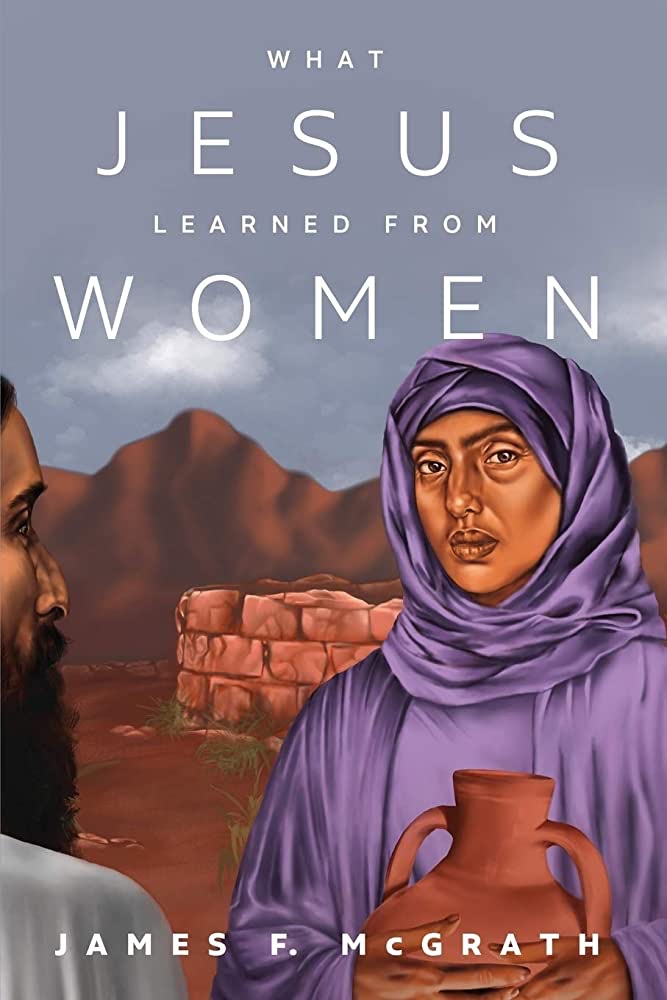
The featured image is a depiction of Jesus and the Samaritan woman painted by Mackey Dickerson for the cover of What Jesus Learned from Women, by James McGrath (Cascade, 2021)


Righteous by faith and at peace with God (Rom 5; Lent 3A)

We are being offered a veritable feast by the lectionary during the season of Lent, through Hebrew Scripture passages which recall key moments in the story of Israel (Abraham, Moses, David, return after exile) as well as in Gospel narratives telling of the transformative encounters which Jesus had with a range of people (a Pharisee and a Samaritan woman, a man born blind and two sisters of a dead man).

Alongside this, the lectionary offers us a set of readings from Paul’s longest and most richly-developed theological letter, that which he wrote to “all God’s beloved in Rome, who are called to be saints” (Rom 1:7). After exploring the rationale for human sinfulness (Rom 5:12–19, Lent 1A), we have read of Paul’s use of Abraham as a model to explain how God “reckons us to be righteous” (Rom 4:1–5, 13–17, Lent 2A).

Today we are offered another passage replete with fundamental theological affirmations (Rom 5:1–11, Lent 3A) and in two more weeks we will hear yet another “purple passage” from Romans (Rom 8:6–11, Lent 5A). In the intervening week we are diverted in Ephesians, most likely because the passage illuminates the Gospel story of Jesus enabling the man born blind to see (John 9).

Whilst Romans 4 exhibits many signs of the diatribe style, as we have noted, Paul seems to set this to one side for a time. He will pick up the pattern of apostrophe (posing questions to a hypothetical listener) and speech-in-character (providing answers to those questions from an imaginary person) in the next chapter: “What then are we to say? Should we continue in sin in order that grace may abound? By no means! How can we who died to sin go on living in it?” (Rom 6:1–3).

He will extend that through the agonising of the following chapter: “What then should we say? That the law is sin? By no means! Yet, if it had not been for the law, I would not have known sin.” (Rom 7:7). He will pick this up again at the end of his lengthy argument begun in 5:1 when he exclaims: “What then are we to say about these things? If God is for us, who is against us? He who did not withhold his own Son, but gave him up for all of us, will he not with him also give us everything else? Who will bring any charge against God’s elect? It is God who justifies.” (Rom 8:31–34).

Paul uses these techniques because he is, in the depths of his being, what we would call a “pastoral practitioner”. He is a good theological thinker, but he is oriented at every point to the pastoral engagement that he has with people in the churches which (mostly) he has founded—the church in Rome being a key exception to this, since he writes to a community that he has not yet visited.

Paul tells the Thessalonians that he seeks to operate “like a father with his children” (1 Thess 2:11), “like a nurse tenderly caring for her own children” (1 Thess 2:7). He tells the Philippians “how I long for all of you with the compassion of Christ Jesus” (Phil 1:8), and the Corinthians that “I wrote you out of much distress and anguish of heart and with many tears, not to cause you pain, but to let you know the abundant love that I have for you” (2 Cor 2:4). And he assures the Romans that he prays that “by God’s will I may come to you with joy and be refreshed in your company” (Rom 15:32).

Amidst all the harsh rhetoric, direct intervention, and controlling instructions that pepper all the letters of Paul, this kind, compassionate, caring heart can be glimpsed. Paul does what he does for the sake of the people whom he serves. Rabbinic midrash and rhetorical diatribe a pre pressed into the service of compassionate care for his people.

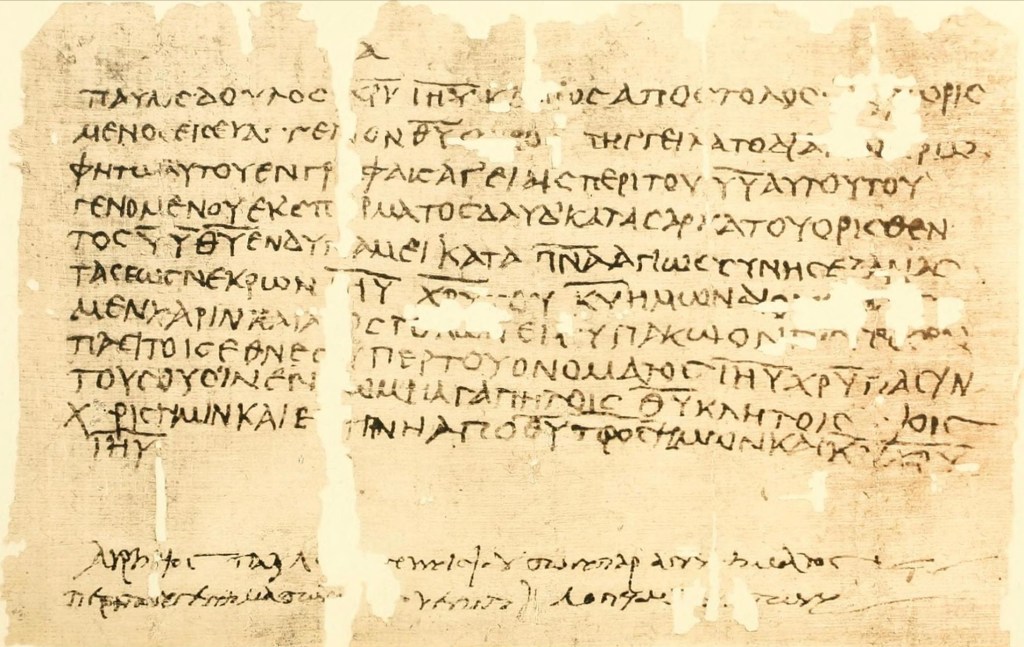
The opening of Paul’s letter to the Romans,
from an early fourth century papyrus (p10)

*****

But for the passage from Romans which we are offered this coming Sunday (Rom 5:1–11), the style changes. Rather than the diatribe style of question—response, shaped by the Pharisaic midrashic pattern of exploring key scripture passages, Paul seems to switch, to become a doctrinal pedagogue much as we find in later patriotic, medieval, and reformed writers.

In just eleven verses, Paul identifies and names a sequence of ten key theological claims—perhaps the closest he ever gets to becoming what we know as a “systematic theologian”. Paul mentions, in turn, justification by faith, peace with God, access to God’s grace, the glory of God, the place of sufferings, endurance, and hope, the gift of the Holy Spirit, the function of the death of Christ and the process of being justified by his blood, salvation from God’s wrath, and finally, reconciliation with God. They are each worth pondering.

Being justified by faith—or, in another English translation, being made righteous by faith—is the first concept which has pride of place in this passage—and, indeed, forms the basis for the theological argument that is developed throughout this Gospel. Paul’s opening statement is that, in the Gospel, “the righteousness of God is revealed through faith for faith”, quoting a scripture passage to provide the basis for his assertion (Rom 1:17); that righteousness is explained at length through the ensuing chapters, canvassing a range of matters in the process.

Righteousness, of course, has its origins deep in the Hebrew Scriptures. Abram had been given promises by God but he expresses doubt that these promises would come to pass (15:2-3). God provides further reassurance; the multitude of stars in the sky is testimony to that (15:5). Abraham’s resulting affirmation of faith leads to the famous phrase, so central to Paul’s later argument about righteousness: “he believed the Lord; and the Lord reckoned it to him as righteousness” (15:6; see Rom 4:3,9,22).

The psalmists regularly thank God for God’s righteousness (Ps 5:8; 7:17; 9:8; 33:5; 35:24, 28; 36:6; 50:6; etc) and note the importance of humans living in that way for righteousness (Ps 18:20, 24; 85:10–13; 106:3, 31; 112:1–3, 9), whilst the book of Proverbs advises that the wisdom it offers is “for gaining instruction in wise dealing, righteousness, justice, and equity” (Prov 1:3) and the prophets consistently advocated for Israel to live in accordance with righteousness (Hos 10:12; Amos 5:24; Isa 1:22; 5:7; 28:17; 32:16–17; 54:14; Jer 22:3; Ezek 18:19–29; Dan 9:24; 12:3; Zeph 2:3; Mal 4:1–3; Hab 2:1–4).

So “being made righteous with God” (Rom 5:1) is both a central element of Paul’s theology, and a strong thread running from Hebrew scriptural texts into the life of the early church.

Peace with God is the second element in this section. Paul regularly commences his letters with the formulaic “grace and peace to you” (Rom 1:7; 1 Cor 1:3; 2 Cor 1:2; Gal 1:3; Phil 1:2; 1 Thess 1:1; Phlm 3), but the peace spoken of at 5:1 goes deeper than this formula. God is “the God of peace” (1 Thess 5:23) who offers peace “which surpasses all understanding” (Phil 4:7). “God is a God not of disorder but of peace” (1 Cor 14:33) so believers are urged to live in peace (2 Cor 13:11). The Galatians are told that of the fruits of the Spirit is peace (Gal 5:22); the Philippians are informed that “the peace of God, which surpasses all understanding, will guard your hearts and your minds in Christ Jesus” (Phil 4:7).

Such peace is grounded in the understanding of God expressed in Hebrew Scriptures. The Psalmist prays, “may the Lord bless his people with peace” (Ps 29:11), celebrates that God “will speak peace to his people, to his faithful, to those who turn to him in their hearts”, such that “steadfast love and faithfulness will meet; righteousness and peace will kiss each other” (Ps 84:8, 10), and gives thanks that God “grants peace within [Jerusalem’s] borders” (Ps 147:4).

The vision of peaceful co-existence amongst all creatures is declared. by various prophets (Isa 2:2–5; Mic 4:1–5; Isa 52:7; 57:19; 60:17; 65:25) and amongst the names of the one whom Isaiah foresees as the hope for Israel’s future is “Prince of Peace” (Isa 9:2). Both Ezekiel (Ezek 13:8–16) and Jeremiah (Jer 14:13–22) decry those who cry out “peace when there is no peace”. Ezekiel states that God promises, “I will make a covenant of peace with them; it shall be an everlasting covenant with them” (Ezek 37:26; also 34:25, and Zech 8:12).

*****

This being-made-righteous and the consequent gift of peace comes, according to Paul’s comments later in this passage, through the death of Jesus on the cross. He uses a number of phrases to describe this death, and its “benefits” for believers. In verse 6, he notes that “Christ died for the ungodly”, and in verse 8, “while we still were sinners, Christ died for us”.

“Christ died for us” is a common phrase in Paul’s letters—so much so that it is regarded as a formulaic statement (an early credal affirmation?) which appears in various forms (Rom 6:10; 8:34; 14:9; 1 Cor 8:11; 2 Cor 5:14–15; 1 Thess 5:9–10; see also Gal 1:4; 2:20; Rom 7:4; 1 Thess 4:14; and the later formula of 1 Tim 2:5–6). Specifically relating the death of Christ to dealing with sin is also addressed by Paul in some detail earlier in this letter (Rom 3:9–26; 5:15–21; 6:5–14) as well more briefly as in other letters (1 Cor 15:56–57; 2 Cor 5:21; Gal 3:22).

To explain how this death deals with our sins, Paul here specifies that “we have been made righteous by his blood” (Rom 5:9). This clearly relates to the practice of faithful Jews, who for centuries brought their sacrifice to the Temple, so that the priests could kill the animals brought as offerings to God. Shedding blood was integral to this process.

The Torah specifies that the priests should receive “a bull of the herd” as a sin offering, and “the bull shall be slaughtered before the Lord; the anointed priest shall take some of the blood of the bull and bring it into the tent of the meeting … and dip his finger in the blood and sprinkle some of the blood seven times before the Lord” (Lev 4:3–6). Some of the blood is also placed on the horns of the altar and the rest “he shall pour out at the base of the altar of burnt offering” (Lev 4:7).

Likewise, the priest was to “slaughter the guilt offering, and its blood shall be dashed against all sides of the altar” (Lev 7:2); to purify a leper, two lambs are offered, and the priest “shall slaughter the lamb … and take some of the blood of the guilt offering and put it on the lobe of the right ear of the one to be cleansed [the leper] and on the thumb of the right hand and on the big toe of the right foot” (Lev 14:13–14; so also 14:25).

So likewise for the bull on the Day of Atonement: “Aaron … shall slaughter bull as a sin offering for himself … and sprinkle the blood with his finger on the front of the mercy seat … seven times” (Lev 16:11, 14), and then do the same with “the goat of the sin offering” (Lev 16:15–19), before then releasing a live goat (the “scapegoat”) or “bear all their iniquities to a barren region, and the goat shall be set free in the wilderness” (Lev 16:22).

The significance of the shedding of blood is clearly and strikingly articulated in the Torah: “the life of the flesh is in the blood; and I have given it to you for making atonement for your lives on the altar; for, as life, it is the blood that makes atonement” (Lev 7:11). When the blood of the animal is shed, that life is given as an offering to effect atonement. So, too, when the blood of Jesus was shed, his life functioned as an atoning offering for human beings.

The slaughter of animals and the sprinkling of blood thus signifies the sacrificial offering of a gift to God, seeking cleansing or forgiveness. Applying this common practice to Jesus makes sense in the context of the time—but it is an image which is far more difficult for us to accept and appreciate in the modern world, where we might feel that we have moved beyond such “primitive practices”, as some callously call those ancient practices.

What we can take from this language, perhaps, is the observation that sacrifice for sin, seeking to remove the tarnish of that sinfulness and find restoration and wholeness, was a dynamic signalled elsewhere in Hebrew Scripture—most clearly in that famous fourth Servant Song in Second Isaiah, which refers to the servant as the one who “has borne our infirmities and carried our diseases … wounded for our transgressions, crushed for our iniquities; upon him was the punishment that made us whole, and by his bruises we are healed” (Isa 53:4–5). As “the Lord has laid on him the iniquity of us all”, so “it was the will of the Lord to crush him with pain [to] make his life an offering for sin” (Isa 53:6, 10).

That same dynamic is at work every year in Australia, as those military people who have died in battle over the past century are remembered each ANZAC Day for their sacrifice and thanked for what they have bequeathed to our society. It is the same dynamic of sacrifices offered by some to ensure the safety of the many.

So, Paul is able to affirm that when Jesus died, it was to assure us of forgiveness, to deal with our sinfulness, and to restore us to the original state of goodness (Gen 1:26–31) that was God’s gift and intention for humankind.

See more on this at

*****

This passage is so beloved within the church, and was so highly regarded by the creators of the lectionary, that it appears again, slightly reduced in length, in the readings for the Third Sunday after Pentecost, later in this year (5:1–8), as well as in an even shorter form in the readings for Trinity Sunday in Year C (5:1–5). So I am going to reserve my comments on the remainder of the elements I have identified in this passage until it returns, later this year, in the readings for the Third Sunday after Pentecost! I will leave you, simply, with Paul’s clear affirmation that, “since we are made righteous through faith, we have peace with God through our Lord Jesus Christ” (5:1).

See also

A well, two mountains, and five husbands (John 4; Lent 3A)

This is a post about a well, two mountains, and five husbands. We learn about each of these elements in a story told in the book of signs, which we know as the Gospel according to John. The story tells of an encounter between a teacher from Galilee and a woman from Samaria. That story is offered as the Gospel reading for this coming Sunday, the Third Sunday in Lent (John 4:5–42).

The well is Jacob’s well (John 4:6). It is the location for the meeting of the teacher and the woman. This site is not explicitly named in Hebrew Scriptures, but it is thought that the account of Jacob buying land in Shechem in Gen 33 records the site, which Jacob, it is said, calls El-Elohe-Israel (Gen 33:18–20). The name signifies “the God of Israel”, which is the name that Jacob had adopted just before this, after wrestling all night with a man at Peniel (Gen 32:22–32).

In fact the narrative has earlier given a long account of how Jacob married the two daughters of Laban—Leah and Rachel—after he had met the younger daughter, Rachel, at a well in the land of (Gen 29:1–35). Laban lived in Paddan-aram, a tableland area in northern Mesopotamia (28:5); the well in this region was where Jacob first sighted Rachel (29:4–12).

Wells, of course, were vital parts of the infrastructure of ancient societies—as indeed they continue to be so for many people today. As well as water for washing, drinking, and cooking, people needed wells to provide water for their animals. We are told that the oldest servant of Abraham, whilst journeying to Nahor, a city in Paddan-aram, “made the camels kneel down outside the city by the well of water; it was toward evening, the time when women go out to draw water” (24:11).

Not only was the well used to collect water for animals, however; it was a place where men could go to meet women—which is what the servant did, meeting Rebekah, Abraham’s niece by marriage (24:15–21), who would become the wife of Abraham’s son Isaac (24:67). So it was no surprise that Jesus would meet a woman beside the well identified as Jacob’s well.

What is a surprise is that he met her at noon (John 4:6). The clearest explanation for this is that it provides a striking juxtaposition to the story just told, of Nicodemus, who “came to Jesus by night” (3:2). It is one of the many literary devices so favoured by the author of the book of signs. We should not take this time reference as a direct historical fact in a story which the author of this Gospel has developed.

*****

The two mountains in this story (John 4:21) are Gerizim and Zion. We know about Mount Zion because the long historical narrative of Israel that exists in the Bible (from Deuteronomy through Joshua, Judges, 1–2 Samuel, 1-2 Kings, Ezra and Nehemiah) was compiled by southern kingdom writers, using sources from both the north and the south. Zion was captured from the Jebusites by David’s army (2 Sam 5:6–10) and was honoured as the location for the Temple built under Solomon (1 Ki 8:1–13).

It was on Zion that the Lord God dwelt (Ps 9:11)—at least for southerners—and Zion was praised as “beautiful in elevation, the joy of all the earth” (Ps 48:2). Jesus reflects the southern view of life when he asserts to the Samaritan woman that “salvation is from the Judeans” (John 4:22).

Centuries before, people in the northern kingdom had built a rival temple on Mount Gerizim, one of the ancient holy sites in the northern kingdom (Deut 27:12; Josh 8:33–34; Judg 9:7). That temple survived beyond the invasion and resettlement of the north, continuing on until it was destroyed in 107BCE, when John Hyrcanus razed the temple and the capital city of Samaria.

The city of Samaria gave its name to the whole region, and the people were known as Samaritans. Southerners looked down on them as being the descendants of the people who committed idolatry after the Assyrians had conquered the northern kingdom (2 Kings 17:5–6) and resettled the northern region with people from other locations in their empire (2 Kings 17:24), from “every nation [who] still made gods of its own and put them in the shrines of the high places that the people of Samaria had made, every nation in the cities in which they lived” (2 Kings 17:29).

Flavius Josephus, a late 1st century CE historian, retells the sequence of events we read in 2 Kings, indicating that the Samaritans descended from this hybrid, unfaithful group of people (Antiquities 11.297–347). He also recounts an incident which entrenched the antagonism of southern Judeans towards the northern Samaritans (Antiquities 11.297–347).

The Samaritans attempted to undermine the returning exiled Judeans with their Persian rulers and slowed the rebuilding of Jerusalem and its temple (Ezra 4:6–24). Josephus notes disagreement about which site should be the location for the temple (Josephus, Antiquities 12.9–10). This is the same issue that is reflected in words attributed to Jesus at John 4:20–22.

Josephus also recounts a later time when some Samaritans scattered bones of dead people in the in portico of the Jerusalem Temple, thus rendering it unclean (Antiquities 18.29–30), and he gives a graphic description of the time when Cumanus (governor of Judea 48–52 CE) was bribed by some Samaritans, leading some Judean brigands to mount an uprising. Cumanus ordered the Romans to join with the Samaritans in battling the Judeans; many were killed, many more taken captive (Antiquities 20.118–123).

References to the Samaritans in the 3rd century CE Mishnah may reflect views current at the time of Jesus: “Rabbi Eliezer used to say, ‘He that eats of the bread of Samaritans is as one who eats the flesh of swine’” (m. Seb. 8.10); “the daughters of Cutheans [Samaritans] are menstruants from their cradle” (m. Nid. 4.1). That undergirds the author’s comment in the Johannine narrative, that “Jews do not share things in common with Samaritans” John 4:9). Jesus was stepping across the prescribed boundaries by asking for a drink from the woman (John 4:7–9).

*****

The five husbands have occasioned much debate amongst interpreters. One entirely predictable and utterly incorrect interpretation is that the woman was an outcast amongst her people, because she had been married five times. Adultery and promiscuity are assumed by the—always male—interpreters.

This line of interpretation has no justification at all in the text. No reason is given for the five husbands—neither adultery nor promiscuity are mentioned in John’s narrative. Perhaps it could have been an application of the Levirate law of marriage to the brother of a deceased husband (see Deut 25:5–10; also Ruth 3:1–4:13; Mark 12:18–23)?

And if the woman had been such an outcast amongst the people of her own village, why would they have listened to what she had to say about Jesus (John 4:39)? Although Jesus comments that “the man you have now is not your husband” (4:18), this does not indicate sexual irregularity; this man could well have been the protector of the woman, the man who heads the household in which she has been given shelter.

Certainly, the main rationale for this particular interpretation can only be the patriarchal bias of the interpreters. The fact that it is so often cited does not lend weight to it; it simply reflects the ubiquity of sexist patriarchal interpreters!

James McGrath has a chapter on what Jesus learnt from the woman of Samaria in his 2022 book, What Jesus Learned from Women (Cascade)

Other interpreters regard the “five husbands” as symbols for the five groups of people who were imported into the northern kingdom after it was conquered by the Assyrians. 2 Kings 17 does give an account of “the origins of the Samaritans”, in which it provides the claim that the Assyrians deported the Israelites living in the northern kingdom and imported people from five areas (people from Babylon, Cuthah, Avva, Hamath, and Sepharvaim; see 2 Ki 17:24) into the region.

This accurately reflects what we know of the practice of the Assyrians—deporting locals and importing vassals from other conquered territories from elsewhere in their kingdom. This was a clever power play; there was not much chance of local resistance, once the men were deported elsewhere, and a strong chance that those imported from elsewhere into the territory would maintain the status quo and ensure “peace” in the newly-conquered territory.

However, we need to bear in mind that 2 Kings and other historical narratives (1–2 Samuel, 1 Kings, Ezra—Nehemiah) are compiled and written by people in the southern kingdom, some time after the events reported—indeed, quite some time later, centuries later. The southern author(s) seem to have had a consistent programme to depict the northern kingdom as resolutely and persistently evil.

Just look at how so many of the northern kings are described in this formulaic manner: Jeroboam, son of Solomon, at 1 Ki 14:1–20 (and have a look at verse 11 for a gory fate!), the first king of the northern kingdom; and then Nadab at 1 Ki 15:25–26; Baasha at 1 Ki 15:33–34; Zimri at 1 Ki 16:15–20; Omri at 1 Ki 16:25–28; Ahab at 1 Ki 16:29–30, 22:37–40; Ahaz at 1 Ki 22:51–53; Jehoram at 2 Ki 3:1–2; Ahaziah at 2 Ki 8:26–27; Jehoash at 2 Ki 13:10–13; Jeroboam II at 2 Ki 14:23–29; Zechariah at 2 Ki 15:8–12; Menahem at 2 Ki 15:17–22; Pekahaiah at 2 Ki 15:23–26; Pekah at 2 Ki 15:27–31; and Hoshea at 2 Ki 17:1–4. In other words, almost all of the kings of Israel!!!

So what we have in 1–2 Kings is southern propaganda about those evil northerners, right from the time of Solomon’s death, on through the centuries, until the fall of the north under Assyria—who then imported pagan foreigners, had them “pretend” to follow the Lord God; but they brought their own various pagan religious practices, even whilst giving a show of worshipping the Lord God as the ancestral god of the land (2 Ki 17:7–18). So they defiled the land even further!!

We can see how the rhetoric in 2 Kings piles up against the northerners, courtesy of the southerners, writing at a time when great antagonism had built up about them. So I take the claim that this narrative was “history” with a big, big pile of salt.

And then we still have the question, how do we say that the text of John 4 is pointing to the story (the propaganda) told in 2 Kings 17? I can’t see anything in the John text that does so, other than the (typically southern) criticism of the northerners’ worship “on this mountain” (John 4:20–22) that is placed on the lips of Jesus—who, curiously, was a northerner from Galilee, not a southerner from Bethlehem. So the reference must maintain something of a mystery.

*****

The understanding of John 4 that I have outlined above has been developed through many fruitful conversations over the years with my wife, the Rev. Elizabeth Raine. My exploration of the “five husbands” has most recently been prompted by a question from Alison Campbell, a faithful reader of this blog.

Depths and heights, sea and dry land (Psalm 95; Lent 3A)

As we move through the season of Lent, in my own congregation we are meeting for daily prayers where the focus is on being “in the wilderness”. It’s a theme that is inspired by the Gospel from the First Sunday in Lent, when Jesus is led “into the wilderness” where he was tested. It is a story about becoming prepared for what lies ahead; Jesus would enter, after that wilderness time of engagement with The Tester, into the public ministry which is recorded in each of the Synoptic Gospels, when “he went throughout Galilee, proclaiming the message in their synagogues and casting out demons” (Mark 1:39).

As we journey through that (symbolic) wilderness during Lent, the scripture passages offered by the lectionary invite attention to key moments in the story of Israel (the Hebrew Scripture passages) and key encounters that Jesus had (the narratives from John’s Gospel), as well as a series of theological discussions from Paul (in his letter to the Romans).

And then we have the Psalms. This coming Sunday, Psalm 95 invites further reflection on God’s ways during this wilderness journey. It is a celebratory psalm, beginning “let us sing to the Lord; let us make a joyful noise … let us come into his presence with thanksgiving “ (Ps 95:1–2). The song continues in that same vein for a number of verses, celebrating God as “a great God” (v.3), creator of “the depths of the earth, the heights of the mountains … the sea … and the dry land” (vv.4–5), honouring him worshipfully as “our maker” (v.6) and inferring that God is the shepherd of all his people (v.7).

The celebration of God’s creative capacities in the the middle section of this psalm draws on themes which are regularly sounded by the Psalmist. God is celebrated as the “maker of heaven and earth” (Ps 134:3), the one who created “all mortals” (Ps 89:47), indeed all creatures (Ps 104:24–30), even “the north and the south” (Ps 89:12), “sun and moon, shining stars and highest heavens” (Ps 148:3–5). Second Isaiah evokes God as “creator of the ends of the earth” (Is 40:28) whilst Third Isaiah looks to God’s new creation, “new heavens and a new earth” (Isa 65:17–18).

In Proverbs, Wisdom marks off each of the elements noted in the psalm (depths and heights, sea and dry land) when she declares that “the Lord created me at the beginning of his work … when there were no depths, I was brought forth … before the mountains had been shaped … when he assigned to the sea its limit … when he marked out the foundations of the earth, then I was beside him, like a master worker” (Prov 8:22–30).

The depths of the earth were the place where sinful people went (Ps 63:9; Isa 14:15), following the lead of the Egyptians who pursued the Israelites and “went down into the depths like a stone” (Exod 5:4–5; Neh 9:11; Isa 63:11–13). There, in the depths, God’s anger burned (Deut 32:22). However, those banished to the depths were able to be brought back from the depths by God’s decree (Ps 68:22; 71:20; 86:13), so in one psalm we hear the cry, “out of the depths I cry to you, O Lord; Lord, hear my voice” (Ps 130:1), and the prophet Micah affirms that God “will cast all our sins into the depths of the sea” (Mic 7:19).

The heights are where the Lord God set the people once they had made their home in Israel, “atop the heights of the land … [where] he fed [them] with the produce of the land” (Deut 32:13; similarly, Isa 49:9; 58:14; Ezek 34:14). It is a place of security (2 Sam 22:34; Ps 18:33); indeed, “on the heights” is where Wisdom is to be found (Prov 8:2) and the Temple was built on the (relative) heights of Mount Zion, and so it is from “the holy height” that God looks down over the people (Ps 102:19).

However, for the prophet Jeremiah, “the bare heights” is the location for God’s judgement (Jer 12:12; 14:6). It is evident that, “on the heights”, the sinful people have “polluted the land” (Jer 3:2) and “perverted their way” (Jer 3:21). Accordingly, “a hot wind from me [comes] out of the bare heights in the desert … I speak in judgement against them” (Jer 4:11), for “on the bare heights the Lord has rejected and forsaken the generation that provoked his wrath” (Jer 7:29).

Just as the depths and the heights were parts of God’s good creation, so too the sea was integral to God’s creative works: “yonder is the sea, great and wide, creeping things innumerable are there, living things both small and great” (Ps 104:25). Yet the sea was a threatening place for the people of Israel, accustomed to life on the land, planting grapevines and herding sheep in “the land of milk and honey”. The sea of reeds was the place of destruction for Egypt (Ps 114:1–8), although it was also the location of salvation for Israel, as is celebrated in David’s song of praise (2 Sam 22:1–4, repeated at Ps 18:6, 12–19).

The dangers of the sea which the Israelites escaped are detailed in Psalm 124, recalling the threat of floods sweeping them away, torrents rising over them, raging waters submerging them. That psalm concludes, with a sigh of relief, “our help is in the name of the Lord, who made heaven and earth” (Ps 124:8). In the sea lurks the great sea monster, Leviathan (Job 3:8; Ps 104:26) of whom Job muses, “who can confront it and be safe” (Job 41:11). Only the Lord is able to subdue Leviathan (Ps 74:14; Isa 27:1).

For sailors, the sea could be a place of great danger (Ps 107:23–31)—the story of Jonah attests to this (Jon 1:4–17), as does the final trip of Paul as he is taken as a prisoner to Rome (Acts 27:14–20). Yet the power of the roaring sea, as majestic as it is, pales into insignificance beside the majesty of the Lord on high (Ps 93:3–4).

Just as the sea was a place of danger, so the dry land was a place of safety—as evidenced by the way the story of crossing the sea of reeds is told (Exod 14:21; Neh 9:11; Ps 66:6) and when Jonah is vomited up onto dry land by the fish (Jon 2:10). However, when the Psalmist finds themselves in “a dry and weary land where there is no water”, a prayer is offered to God because “my soul thirsts for you; my flesh faints for you” (Ps 63:1). When linked with “the wilderness”, “the dry land” receives blessing from God, who will “make the wilderness a pool of water, and the dry land springs of water” (Isa 41:18) and “pour water on the thirsty land, and streams on the dry ground” (Isa 44:3).

This opening section of the psalm might be seen to be a reworking of the creation narrative, crafted by the priests in the Exile, which is placed at the beginning of the Torah to signal its fundamental importance (Gen 1:1–2:4A). The deep” is initially covered by darkness, when “the earth was a formless void” (v.2), before God creates light. A dome is placed “in the midst of the waters” in order to separate the waters (v.6), and then God decrees, “let the waters under the dome be gathered together into one place, and let the dry land appear” (v.9). These were the fundamental building blocks for the intricate and complex creation which then evolved.

*****

After this celebration of creation—depths and heights, sea and dry land—there follows in Psalm 95 an exhortation directly to the people to “listen to his voice” (v.7b). The exhortation to listen is repeated often in Hebrew Scripture, in narratives (Exod 23:22; 1 Sam 15:1; 1 Ki 11:38), in works of wisdom (Job 37:2; Ps 81:11, 13; Prov 1:33; 8:32), and by various prophets (Isa 1:10; Jer 11:4; Ezek 40:4; Hos 4:1; 5:1; Joel 1:2; Amos 3:1; 4:1; 5:1; 7:16; 8:4; Mic 1:2; 3:9; 6:1; Mal 2:1–3).

The fundamental instruction to Israel throughout the long speech attributed to Moses in Deuteronomy is, “hear, O Israel” (Deut 5:1; 6:3; 9:1; 13:11; 20:3; 27:9); even the heavens and the earth are commanded to “give ear … hear the words of my mouth” (Deut 32:1). The Preacher advises, “to draw near to listen [to God] is better than sacrifice offered by fools” (Eccles 5:1), and The Sage instructs, “listen to advice and accept instruction, that you may gain wisdom for the future” (Prov 19:20).

Isaiah’s instruction to “listen to the teaching of our God” (Isa 1:10) is reiterated in both Second Isaiah (Isa 42:23; 46:3, 12; 48:12; 49:1; 51;1–7) and Third Isaiah (Isa 55:2–3; 66:6). Jeremiah is instructed to report God’s message to the people, “listen to my voice and do all that I command you” (Jer 11:4) recurs in later oracles (Jer 17:24–27; 26:1–6; 28:7).

The advice to Ezekiel, that “the house of Israel will not listen to you, for they are not willing to listen to me” (Ezek 3:7) leads to God’s severe warning, “I will act in wrath; my eye will not spare, nor will I have pity; and though they cry in my hearing with a loud voice, I will not listen to them” (Ezek 8:18; see also 13:19; 20:8; 20:39). Eventually, however, Ezekiel is commanded, “look closely and listen attentively … declare all that you see to the house of Israel” (Ezek 40:4)—which is precisely what he then does (Ezek 44:5–45:25; 46:1–18).

The instruction to listen is, of course, picked up by Jesus in his teachings (Mark 4:3, 9, 23; 7:14; 8:18; Matt 13:3, 16–17; 15:10; Luke 6:27; 8:8, 18, 21; 11:28; 13:32; 18:6; John 5:24; 8:47; 10:3, 16, 27; 14:24). At the Transfiguration, the disciples are instructed to “listen to him” (Mark 9:7; Matt 17:5; Luke 9:35).

The psalm as a whole ends on a sombre note, with a warning of God’s testing of Israel (vv.8–10) and a declaration that God’s punishment will stand (v.11). The note of exuberant celebration that marked the opening verses has dimmed. Yet the overall mood of the psalm is one of joyful appreciation of God’s creative works. It is a good reminder for us, to celebrate God’s creation, as we move though our (metaphorical) wilderness journey during Lent.