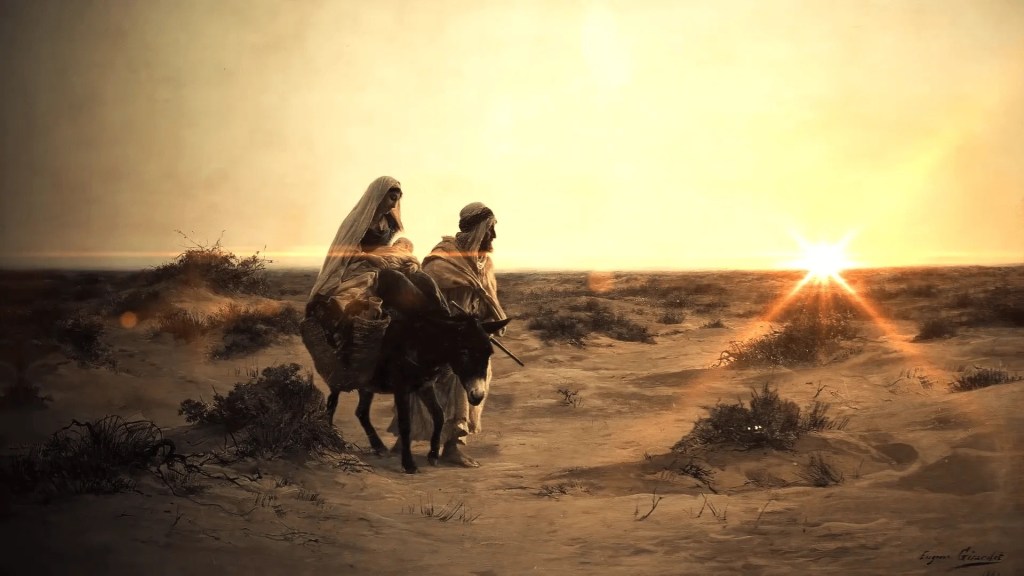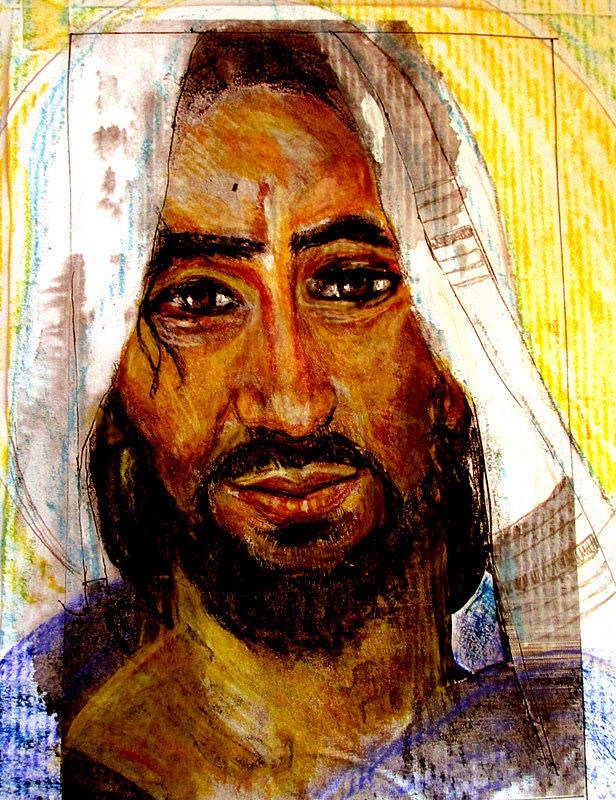
A prophet like Moses (Deut 18; Epiphany 4B)

“I will raise up for them a prophet like you from among their own people; I will put my words in the mouth of the prophet, who shall speak to them everything that I command” (Deut 18:18). These words are the heart of the Hebrew Scripture passage which the Revised Common Lectionary proposes for this coming Sunday, the Fourth Sunday after Epiphany.

Here, Moses informs the people that, just as he spoke words placed into his mouth by God, so there will be later individuals who also will speak words given to them by God. And so, Israel is assured of the presence of a prophet in their midst throughout the centuries.

Indeed, a number of the prophets of Israel remind us that they speak forth “the voice of the Lord” (Isa 66:6; Jer 42:5–6; Dan 9:9–10; Mic 6:9; Hag 1:12; Zech 6:15). Jesus stands in this tradition, offering words of guidance, challenge, and judgement. In traditional Christian understanding, he is the way by which, “in these last days, God … has spoken to us” (Heb 1:1–2).

What will the prophet speak? In so many reports of prophetic activity, it is justice which is the heart of their message—God’s justice; the justice which God desires for the people of God; the justice which God speaks through the voice of the prophets; the justice that God calls for in Israel; the justice that provides the measure against which Israel will be judged, and saved, or condemned.

Moses himself was charged with ensuring that justice was in place in Israelite society. One story told of the time after the Israelites had escaped from Egypt places Moses as a judge. Whilst in the wilderness of Sin, being visited by his father-in-law Jethro, we learn that “Moses sat as judge for the people, while the people stood around him from morning until evening” (Exod 18:13).

Noticing that Moses was overwhelmed by the volume of matters requiring adjudgment, Jethro suggested—and Moses adopted—a system whereby appointed men who “judged the people at all times; hard cases they brought to Moses, but any minor case they decided themselves” (Exod 18:14–16). The charge given to these men is clear: they are to give a fair hearing to every member of the community, and they “must not be partial in judging: hear out the small and the great alike; [do] not be intimidated by anyone, for the judgment is God’s” (Deut 1:16–17).

Prophets coming after Moses thus inherited this responsibility to ensure that justice was upheld within society. Amos calls for “justice and righteousness” (Amos 5:22). Micah asks the question, “what does the Lord require of you but to do justice?” (Mic 6:8), while through the prophet Hosea, the Lord God promises to Israel, “I will take you for my wife in righteousness and in justice, in steadfast love, and in mercy” (Hos 2:19).

Isaiah ends his famous love-song of of the vineyard by declaring that God “expected justice” (Isa 5:7); Jeremiah notes the need to “not oppress the sojourner, the fatherless, or the widow” (Jer 7:5–7). Second Isaiah foresees that the coming Servant “will bring forth justice to the nations” (Isa 42:1) while Third Isaiah begins his words with a direct declaration, “maintain justice, and do what is right” (Isa 56:1), for “I the Lord love justice” (Isa 62:8).

This commitment resonates with the psalmist, who praises “the God of Jacob … who executes justice for the oppressed; who gives food to the hungry … [who] sets the prisoners free, [who] opens the eyes of the blind, [who] lifts up those who are bowed down [and] loves the righteous, [who] watches over the strangers [and] upholds the orphan and the widow” (Ps 146:5, 7–9). See

It may be significant that, in this year when Mark’s Gospel is featured in the lectionary, the Hebrew Scripture passages offered during the short season of Epiphany are drawn from the books of the prophets: 1 Samuel, Jonah, this passage from Deuteronomy, Isaiah, and then the story of Elijah and Elisha in 2 Kings. These passages help us to see in clear focus the way that Jesus operates like a prophet in Mark’s narrative. See

So the offering of the Deuteronomy passage this week particularly pushes us to consider how Jesus might be seen as a prophet, one whom God raised up to be like Moses (Deut 18:15-18). There are three key features of Mark’s portrayal of Jesus which depict him in a prophetic vein: words and deeds, a kingdom focus, and the importance of repentance.

I Words and deeds

Words, of course, are important, both for the prophets, and for Jesus. “Thus says the Lord”, a commonplace of prophetic rhetoric, is reflected in the comments of the Markan narrator that Jesus “went about all the villages teaching” (Mark 6:6), proclaiming his message (1:14–15, 38) and speaking of the kingdom of God in parables (4:11, 26–32; 12:1–12), in sayings (9:1, 47; 10:14–15, 23–25; 12:34), and in an extended apocalyptic discourse (13:3-37). Words were central to his public and private activity.

Jesus is remembered, however, as “a prophet mighty in deed and word” (Luke 24:19), so the deeds he performed are equally as important as the words he spoke. Indeed, this was always the case for prophets; God gave Moses words to speak and signs to perform (Exod 4:28–30), and the prophets that followed him accompany their message with acts that manifest the truth of what is proclaimed: Ahijah tearing his garment into twelve pieces (1 Ki 11), Isaiah walking naked for three years (Isa 20), Jeremiah buying and then breaking an earthenware jug (Jer 19), Ezekiel eating a scroll (Ezek 3), Ezekiel shaving his head and slashing the hair with a sword (Ezek 5), and many more.

In like manner, Jesus sent out his followers to proclaim his message, but also to “cast out many demons and anoint with oil many who were sick and cure them” (Mark 6:12–13). Word and deed belong together. So Mark reports, alongside the parables and sayings of Jesus, numerous instances when Jesus healed people (2:1–12; 3:1–6; 3:22; 5:21–43; 6:5, 53–56; 7:31–37: 8:22–26; 10:46–52), cast out demons and unclean spirits (1:21–28, 32–34, 39; 3:11; 5:1–20; 7:24–30; 9:14–29), as well as miraculously fed multitudes (6:30–44; 8:1–10), cleansed a leper (1:40–45), stilled a storm (4:35–41), and walked on water (6:45–52).

II The coming kingdom

Another way in which Jesus reflects his prophetic calling was through the kingdom focus in his teaching. That the imminence of the kingdom is a key note for Jesus is reflected both in his opening words in Mark (“the time is fulfilled, and the kingdom of God has come near”, 1:15a) and in some of his final words to his closest followers (“I will never again drink of the fruit of the vine until that day when I drink it new in the kingdom of God”, 14:25).

Jesus has so shaped the expectations of his followers that they anticipate this coming with intensity. “There are some standing here who will not taste death until they see that the kingdom of God has come with power”, he told them (9:1); to one enquirer, he affirmed, “you are not far from the kingdom of God” (12:34), and after his death, another follower who was “waiting expectantly for the kingdom of God ensured that the body of Jesus was cared for (15:43).

When some of his disciples hindered children wanting to come to him, Jesus chided them, saying, “whoever does not receive the kingdom of God as a little child will never enter it” (10:15); a little later, to his disciples, he warned, “how hard it will be for those who have wealth to enter the kingdom of God!” (10:23).

The final extended discourse of Jesus that Mark reports (13:4–37) provides reassurance of the sovereignty of God in the midst of crises and calamities. These events are but “the beginning of the birth pangs” (13:8). Jesus affirms that those enduring will be saved by divine action (13:13, 20), culminating in the appearance of “‘the Son of Man coming in clouds’ with great power and glory” (13:26) and the gathering of the elect by the angels of God (13:27).

The kingdom is the realm in which God will act decisively. In the words of the prophets, the kingdom of David and his successors was the realm in which God was seen to be active; after that kingdom was conquered and its people taken captive, the prophetic voices of Israel began to develop a notion that, at some time in the future, there would indeed be a kingdom which would be the realm in which God would be active. The prophetic hope in The Day when God would act came to full, dramatic expression in the apocalyptic portrayals of The End that was anticipated.

See

III Metanoia: a complete transformation

Proclaiming that repentance, metanoia, is the essential prerequisite for entry into that kingdom in order to fulfil God’s justice is a third feature of Mark’s portrayal of Jesus in the manner of a prophet. The first word of Jesus in Mark’s early account is clear: “the time is fulfilled, and the kingdom of God has come near; repent (metanoeite) and believe (pisteuete) in the good news” (1:15).

In this programmatic Markan announcement, the two statements (in the indicative mood) about “the time” and “the kingdom” are followed by two commands (in the imperative mood) to “repent” and “believe”. The imminence of the kingdom is the motivation for the call to repent and believe.

This call to repent is evident in the activity of the followers of Jesus who are sent out in pairs with “authority over the unclean spirits”; as they cast out demons and cured the sick, so they also “they proclaimed that all should repent” (6:7–13). Beyond that, the explicit call to repent is not repeated by Jesus, but its presence is evident throughout the narrative.

Jesus calls people to follow him; fishermen Peter and Andrew “left their nets and followed him” (1:18), fishermen James and John “left their father Zebedee in the boat with the hired men, and followed him” (1:20), and tax collector Levi son of Alphaeus, “got up and followed him” (2:14). Leaving behind signals the complete transformation undertaken by following Jesus.

Following Jesus is akin to taking up the cross, a sign of social rejection and alienation as well as personal denial (8:34). Jesus delivers a sequence of three sayings that reflect the complete turnaround that is required to effect metanoia. First, “those who want to save their life will lose it, and those who lose their life for my sake, and for the sake of the gospel, will save it” (8:35). Next, “whoever wants to be first must be last of all and servant of all” (9:35).

And then, “whoever wishes to become great among you must be your servant, and whoever wishes to be first among you must be slave of all” (10:43–44). Jesus himself provides the foundational model for this way of living; as the Son of Man, he came “to give his life a ransom for many” (10:45).

This persistent demand for complete life transformation—metanoia—resonates with Isaiah’s signal declaration that “Zion shall be redeemed by justice, and those in her who repent, by righteousness” (Isa 1:27), and regular prophetic calls to “return to me, says the Lord of hosts … return from your evil ways and from your evil deeds” (Zech 1:3–4); “repent and turn away from your idols; and turn away your faces from all your abominations” (Ezek 14:6; also 18:30), “return to me … remove your abominations from my presence and do not waver” (Jer 4:1); “return to me with all your heart, with fasting, with weeping, and with mourning” (Joel 2:12).

The recurring refrain of Amos, lamenting, “yet you did not return to me, says the Lord” (Amos 4:6,8,9,10,11), leads the prophet to assure Israel that “I will do this to you; prepare to meet your God, O Israel!” (Amos 4:12)—words akin to what the psalmist says, “if one does not repent, God will whet his sword; he has bent and strung his bow; he has prepared his deadly weapons, making his arrows fiery shafts” (Ps 7:12–13).

“I will raise up for them a prophet like you from among their own people; I will put my words in the mouth of the prophet, who shall speak to them everything that I command” (Deut 18:18). In the way that Mark presents Jesus in his narrative, we can see how Jesus speaks and acts in the manner of a prophet like Moses, the archetype of prophetic leadership.

*****

Please Note: in the above comments, I am not seeking to “ prove” that Jesus “fulfils prophecy”. Rather, I am interested to explore the ways that an understanding of Hebrew Scripture can inform the way we read and understand the Gospel narratives about Jesus. For further thoughts on how we read prophetic texts in a Christian context, see

and

A bleeding woman, a dying child in Mark 5 (Narrative Lectionary for Epiphany 4)

This coming Sunday, the section of Mark’s Gospel that the narrative lectionary proposes contains a pair of interlinked stories: one about the dying girl who had lived for 12 years (Mark 5:25–34) and one about the woman who has bled for 12 years (Mark 5:21–24, 35–43). These are stories with a Jewish focus. They each contain the number 12, a very important number in Judaism. I have reflected on the significance of this number in these stories in this blog:

These two stories each tell of a way that Jesus offered hope to the woman and the girl. And they each deal with matters of protocol and behaviour within the Jewish holiness system.

Holiness was central to the people of Israel. Those who ministered to God within the Temple, as priests, were to be especially concerned about holiness in their daily life and their regular activities in the Temple (Exod 28-29; Lev 8-9). The priests oversaw the implementation of the Holiness Code, a large section of Leviticus (chapters 17–26), which explained the various applications of the word to Israel, that “you shall be holy, for I the Lord your God am holy” (Lev 19:2; also 20:7,26).

As well as overseeing the various offerings and sacrifices that were to be brought to the Temple, the priests provided guidance and interpretation in many matters of daily life, including sexual relationships and bodily illnesses, as well as the annual festivals and other ritual practices.

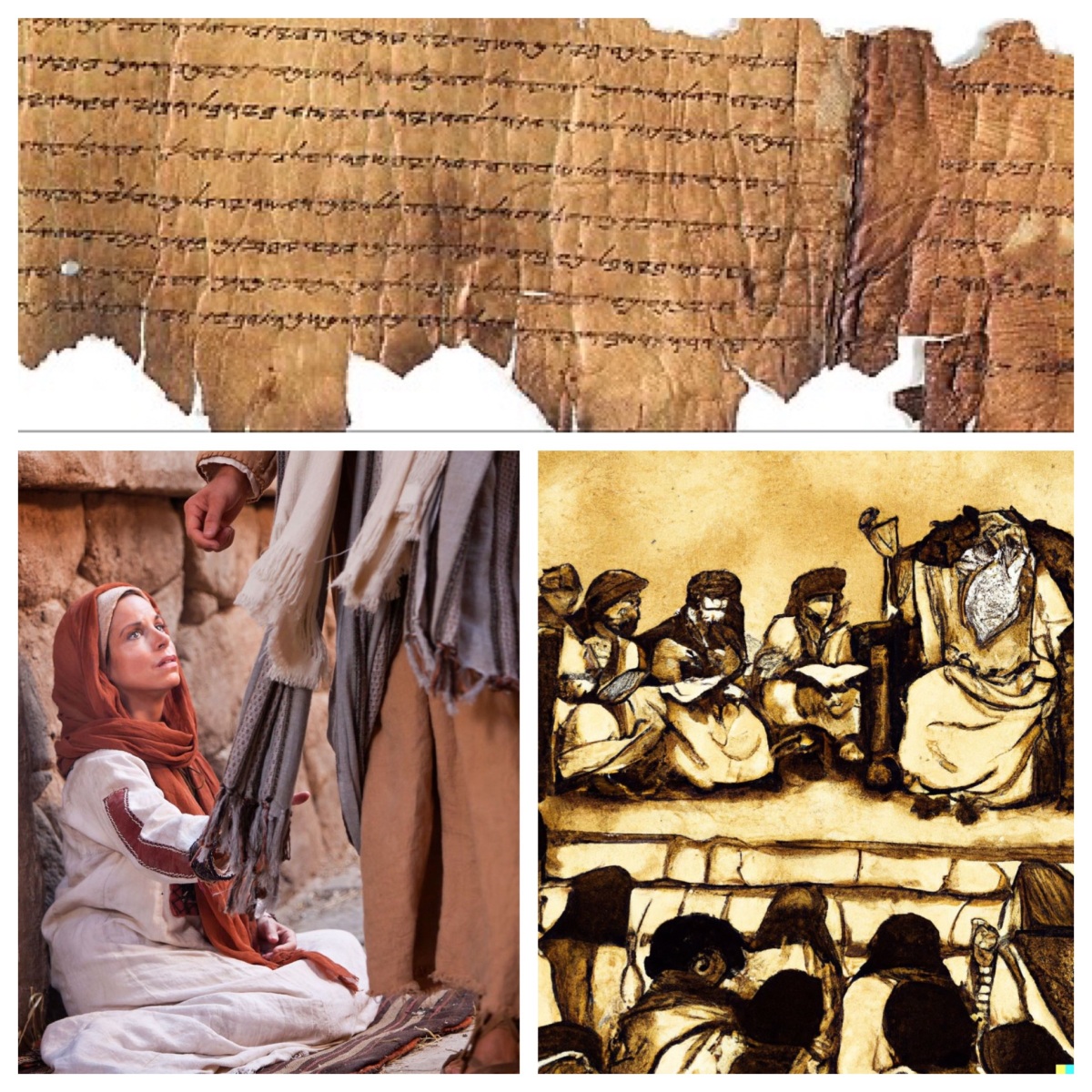
Part of the Paleo-Hebrew Leviticus scroll (discovered 1956; dated C2–C1 BCE)
which contains the oldest known copy of the Holiness Code.

In the towns and villages of Israel, by contrast, the scribes and Pharisees provided guidance in the interpretation of Torah and in the application of Torah to ensure that holiness was observed in daily living. They undertook the highly significant task of showing how the Torah was relevant to the daily life of Jewish people. It was possible, they argued, to live as God’s holy people at every point of one’s life, quite apart from any pilgrimages made to the Temple in Jerusalem.

So the encounter of the bleeding woman with Jesus had implications in terms of how he interacted with someone suffering from a physical illness. This was a matter regulated by various laws, including, most prominently, a comprehensive catalogue of laws relating to skin diseases, or leprosy (Lev 13–14) and, more relevant to this story, bodily discharges (Lev 15).

These laws specify that, if blood was being discharged from the woman as menstrual blood (“her regular discharge from her body”) that required specific actions to deal with the uncleanness that this produced (Lev 15:19-24).

An image generated by AI,
illustrating an ancient synagogue gathering
where the Law is read

If it was for other reasons (“a discharge of blood … not at the time of her impurity”) another set of laws applies (Lev 15:25-30). The woman herself is not seen as unclean; but anything she touches, anything she sits or lies on, is regarded as unclean. The processes for maintaining a clean status in her household, avoiding these items of furniture, or even direct contact with the woman, would have been onerous.

Furthermore, the request of the synagogue leader to Jesus could possibly bring him into contact with a dead body—a matter that was regulated by laws (Lev 22:4; Num 5:1-2, 9:6-12, 19:11-13). Jairus says that the girl is “at the point of death” (5:23). The cries of the crowd (“your daughter is dead”, 5:35) and the weeping and wailing of the people outside the house (5:38) suggest that the rituals of mourning for a deceased person had already begun. Nevertheless, Jesus assures Jairus that the girl is not dead, but sleeping (5:35).

Another strongly Jewish element in the story of the bleeding woman in her belief that, if she touched the clothing of Jesus (most likely the fringes or tassels), she would be cured. Whilst the laws relating to bleeding indicate that the “direction” of things is that an unclean state touching a clean state renders the clean state unclean, the direction is reversed in this story. The power that resides in Jesus is able to overcome the uncleanness associated with the woman (5:29).

The way that Christians have often read the Levitical prescriptions has been to dismiss the so-called “cultic laws” and maintain adherence only to the moral imperatives embedded within the pages of details about ritual and worship. From this perspective, the stories included in the section of Mark’s Gospel that we are focussing on, it is said, reveal that Jesus ignored or dismissed the prescriptions of the Law. Jesus is seen to validate the attitude that the laws in the Old Testament are no longer valid.

But neither of these Gospel stories give any warrant for such a negative approach to the Holiness Code. In neither case does Jesus actually breach the provisions of the Law. Indeed, the way that the Law functions is misunderstood in so many Christian readings of this story, as well as other parts of the Gospels.

Rather than operating as a constraining imposition, the Law actually deals with real life situations and provides ways that these situations are to be dealt with or managed. The woman with a discharge “beyond the time of her impurity”, for instance, could remove her uncleanness by offering two turtle doves or two pigeons (Lev 15:29–30).

The Pharisees, it is often said, imposed numerous demands on the people. They “made a fence around the law”—a phrase derived from the opening words of Pirke Aboth (The Sayings of the Fathers), a tractate in the Mishnah. The tractate begins: “Moses received the Torah at Sinai and transmitted it to Joshua, Joshua to the elders, and the elders to the prophets, and the prophets to the Men of the Great Assembly. They said three things: Be patient in [the administration of] justice, raise many disciples and make a fence round the Torah.”

Making a fence around the Law is apparently derived from Deut 22:8, which in one translation instructs that when you are building a house, you must build a fence around the roof in order to avoid guilt should someone fall off the roof.

The Pharisees were operating as ancient fence-makers (or gatekeepers, if you will), ensuring that people operated within the bounds of what was required by the Law. Of course, each time a particular law is invoked in a specific situation, it needs to be applied to that situation, interpreted as to how it might apply. That goes for laws in society today, as much as it does for laws in the ancient Jewish society. See

The criticisms that Jesus makes of those who follow the Law and teach the Law need to be seen as debates taking place within Judaism, not as criticisms made from outside Judaism. Jesus was a Jew, living in Jewish lands, trained in understanding the Torah, engaged in applying it to situations in life. His words reflect his interpretation of the Law, not a rejection per se of the Law, as he participates in the culture, practices, and customs of his people.

Christians and Jews have had difficult relationships over the years. The difficulties have been based on misunderstandings, accusations, and the damaging intensification that comes through polemical debate, where careful listening and understanding have been absent. That has been the case, sadly, when matters associated with the application of the Law is concerned.

The Gospel passage for this Sunday reminds us of this lack of appreciation, and invites us to commit to a positive appreciation of Jewish traditions and practices, recognising that Judaism continues as a living faith today, and acknowledging that Jesus was engaged in interpretation, not rejection, of the Law. And in the midst of this, he offers hope to a woman who had suffered for 12 years, and a girl of 12 who was on the point of death.

God changed God’s mind (Jonah 3; Epiphany 3B)

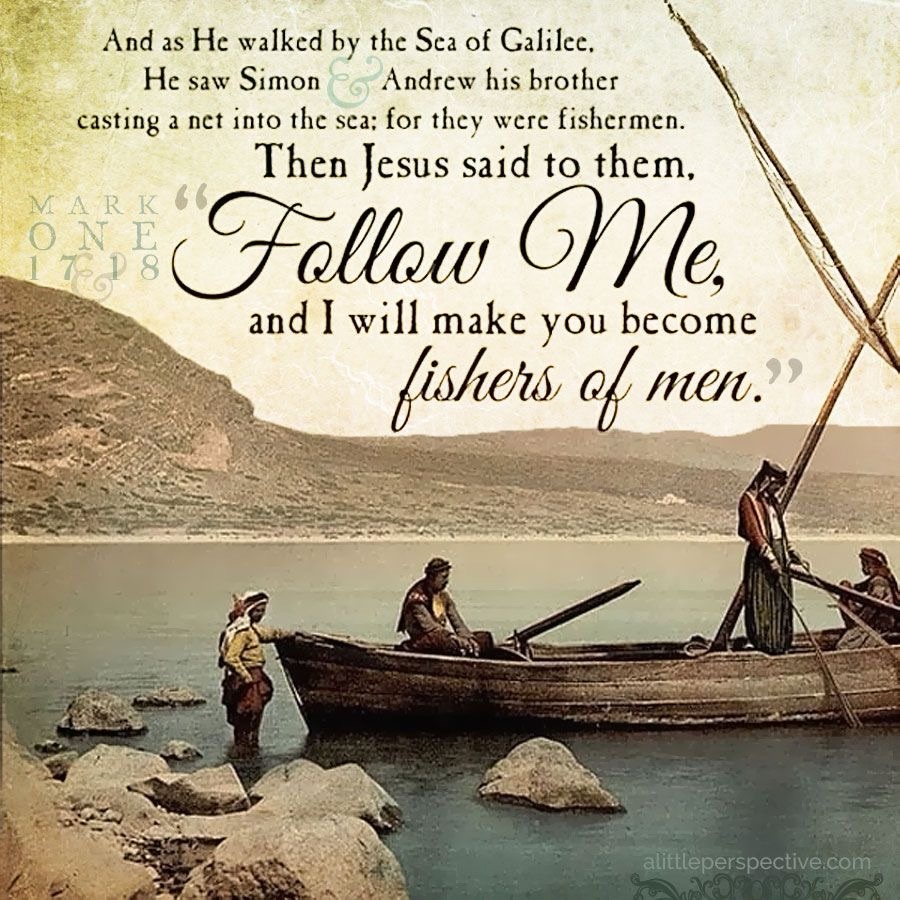
“Follow me and I will make you fish for people”, Jesus tells some fishermen, in the Gospel offered by the lectionary for this coming Sunday (Mark 1:14–20, the Third Sunday after Epiphany). Perhaps because of the fishing theme, the lectionary pairs with it an excerpt from what must be the best-known fish story of Hebrew Scripture—that of Jonah.

Although, curiously, in what the lectionary offers, we don’t get the actual fish scene (Jonah 1:17—2:10). What we have is the “second chance” that Jonah has, to act as a real prophet. Rather than running away to sea (1:3), in the opposite direction from where he had been commanded to go, Jonah this time accepts the call from God, “get up, go to Nineveh, that great city, and proclaim to it the message that I tell you” (3:2).

What we hear in this chapter is the simple report of Jonah’s fiery message—“forty days more, and Nineveh shall be overthrown!”—and the immediate response, “the people of Nineveh believed God; they proclaimed a fast, and everyone, great and small, put on sackcloth” (3:4–5).

The book of Jonah, of course, is one great comic burlesque from beginning to end. In the midst of the accounts of prophets who heard the call of God, hesitated, and then accede to the divine pressure to take up the challenge and declare the judgement of the Lord to a sinful people, we have Jonah.

We have Jonah, who when he is commanded to go northeast to Nineveh, immediately flees in the opposite direction, boarding a ship that was headed west across the Mediterranean Sea, to Tarshish, “away from the presence of the Lord” (Jon 1:3).

We have Jonah, escaping from the command of the Lord, only to find that “the Lord hurled a great wind upon the sea”—so all the cargo on the ship is thrown overboard. We have Jonah, blissfully sleeping, apparently unaware of the great storm (as if!), interrogated by the sailors, eventually offering himself as a sacrifice to save the boat (1:12). A comic hero, indeed.

Jonah, by Albert Pinkham Ryder (1885)

So the sailors try in vain to save the ship; but realising that this is futile, they throw Jonah into the sea—and immediately “the sea ceased from its raging” (1:15). Then, adding further incredulity to the unbelievable narrative, “the Lord provided a large fish to swallow up Jonah” (1:17). The three days and three nights that he spends “in the belly of the fish” before he is vomited onto dry land (2:10) add to the comic exaggeration. You can just imagine the ancient audiences rolling with laughter.

The psalm that Jonah prays from inside the fish (2:1–9) and the successful venture to Nineveh, where even the king “removed his robe, covered himself with sackcloth, and sat in ashes” (3:1–10) apparently demonstrate that Jonah should have obeyed the command of the Lord in the first place. However, Jonah’s response continues the exaggerated response of a burlesque character; “this was displeasing to Jonah, and he became angry” (4:1).

Jonah’s resentment and his plea for God to take his life (4:2–4) and his patient waiting for God to act (4:5) lead to yet another comic-book scene, as a bush grows and then is eaten by a worm and Jonah is assaulted by “a sultry east wind” (4:6–8). The closing words of the book pose a rhetorical question to Jonah (4:9–11) which infers that God has every right to be concerned about the lives of pagans in Nineveh. The last laugh is on Jonah; indeed, he has given his readers many good laughs throughout the whole story!

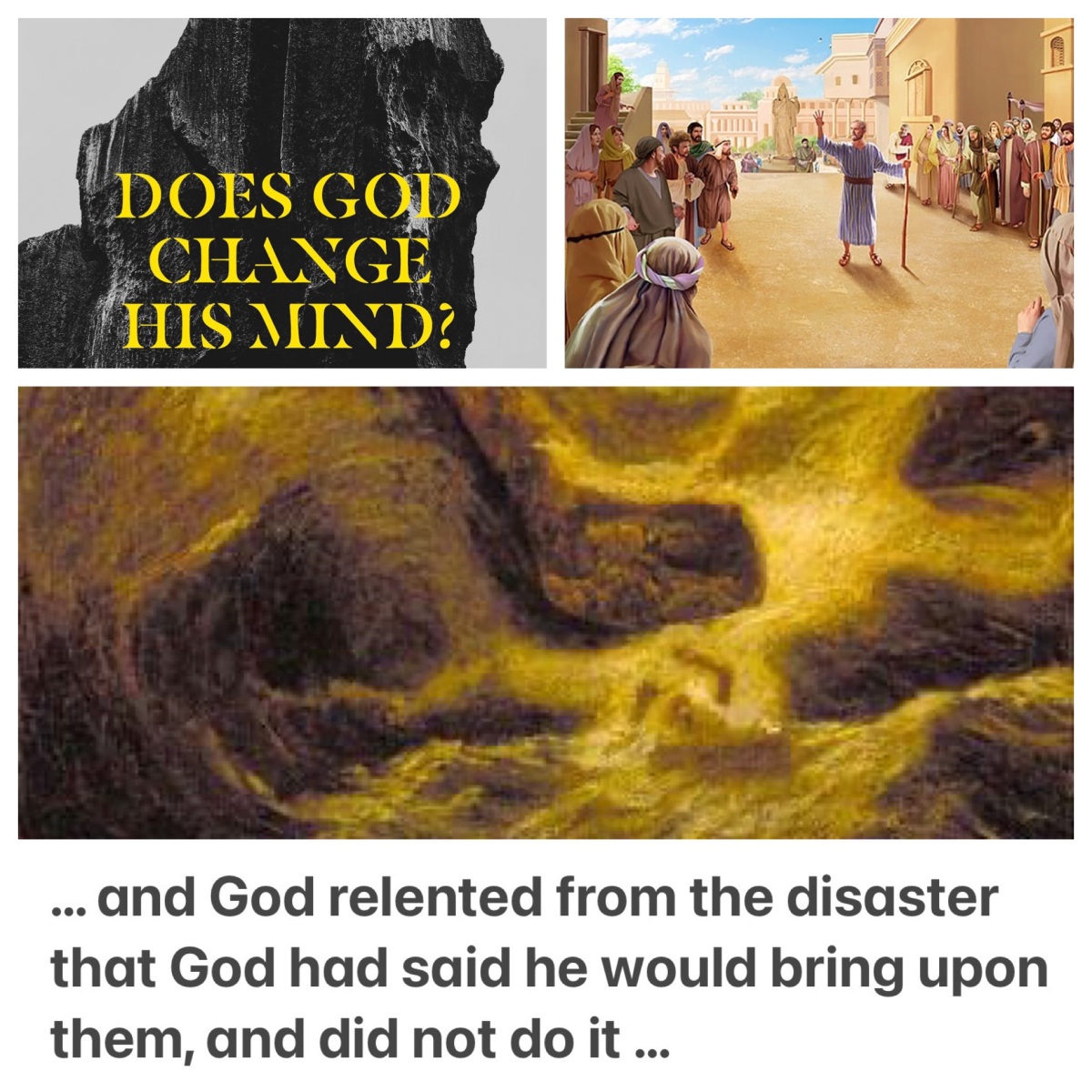
However, the section offered by the lectionary does provide us with a matter warranting serious thought. In the midst of the comedy, the narrator reports that when God saw the repentance of the people of Nineveh, “God changed his mind about the calamity that he had said he would bring upon them; and he did not do it” (3:10).

God changed God’s mind. That is a striking statement! If we read from the perspective of classic Christian theology, then we read with the expectation that God knows everything (and thus would have known of Jonah’s initial resistance and subsequent obedience); that God is in control of everything (and thus would have engineered the vomiting fish and the sheepishly-repentant prophet); and that God has sovereign power to determine the course of events (and thus would have planned well in advance the repentance of the Ninevites).

So a classic theological approach is somewhat stymied, I would have thought, by the comment that “God changed God’s mind”. By contrast, reading the story as part of Hebrew Scripture (rather than from the lens of systematic theological thinking) means that we can recognise that there is a vigorous “debate” being undertaken amongst the various authors of different parts of scripture on precisely this issue.

On the one hand, some texts make it quite clear that God was understood to have been averse to any change of mind; once God had decided, that was the end of the matter. M

In the historical narrative of the story of Israel, when Samuel informs Saul that David will be anointed as king, he asserts that “the Glory of Israel will not recant or change his mind; for he is not a mortal, that he should change his mind” (1 Sam 15:29). In an earlier book in that extended narrative, Balaam tells Barak that “God is not a human being, that he should lie, or a mortal, that he should change his mind. Has he promised, and will he not do it? Has he spoken, and will he not fulfill it” (Num 23:19).

And in a well-known royal psalm (which Jesus was said to have quoted), the psalmist declares that “the Lord has sworn and will not change his mind, ‘You are a priest forever according to the order of Melchizedek’” (Ps 110:4, quoted at Heb 7:21). This idea of the unchanging deity whose mind remains resolutely fixed is also reflected in the oft-quoted line from Hebrews, “Jesus Christ is the same yesterday and today and forever” (Heb 13:8).

On the other hand, other biblical authors recount stories in which God is, indeed, capable of changing God’s mind. God has a change of mind in the story of Moses and the Golden Calf, narrated in Exodus 32. Moses is appalled when he discovers that the Israelites, in his absence, have created an idol—a Golden Calf—and have thereby breached one of the Ten Words that are at the heart of the covenant he has made with God. Moses mounts a passionate plea to God, asking for the divine fury to be turned away from the sinful people.

Invoking the covenant made with Abraham, Isaac, and Jacob, Moses implores God to “turn from your fierce wrath; change your mind and do not bring disaster on your people” (Exod 32:12–13). So the Lord repented (v.14), and Moses took revenge on the people (vv.19–20); he burned the idol and ground it into water, and made the people drink it. God clearly has a change of mind in this story.

God also has a change of mind in Genesis. Abraham is instructed to take his son, Isaac, and “offer him there as a burnt offering on one of the mountains that I shall show you” (Gen 22:2). Abraham is obedient, and “reached out his hand and took the knife to kill his son”; but an angel of the Lord called to him from heaven and restrained him (Gen 22:11–12), providing instead “a ram, caught in a thicket by its horns” as the sacrificial victim (Gen 22:13). Clearly, God changed God’s mind.

The prophet Amos speaks two short oracles in which God was planning to judge the people, sending a plague of locusts (Amos 7:1) and then a shower of fire (Amos 7:4). In both instances, after petitions from the prophet, “the Lord relented concerning this; ‘it shall not be,’ said the Lord” (Amos 7:3, 6).

And how many psalms contain petitions to the Lord, from faithful people, imploring God to change God’s mind? “O Lord, do not rebuke me in your anger, or discipline me in your wrath” (Ps 6:1); “rise up, O Lord; O God, lift up your hand; do not forget the oppressed” (Ps 10:12); “do not cast me away from your presence, and do not take your holy spirit from me” (Ps 51:11); “hear a just cause, O Lord; attend to my cry” (Ps 17:1).

One psalm presses the point with intensity: “do not let the flood sweep over me, or the deep swallow me up, or the Pit close its mouth over me; answer me, O Lord … turn to me; do not hide your face from your servant, for I am in distress—make haste to answer me” (Ps 69:15, 17). Another reflects on their situation with pathos, pleading, “do not cast me off in the time of old age; do not forsake me when my strength is spent” (Ps 71:9; see also vv.12, 18).

And in the longest psalm of all, Psalm 119, even though the psalmist notes that they are consistently faithful to Torah, yet the plea comes: “do not utterly forsake me” (v.8), “turn away the disgrace that I dread” (v.39), “I implore your favour with all my heart” (v.58), “how long must your servant endure? when will you judge those who persecute me?” (v.84), “look on my misery and rescue me … plead my cause and redeem me” (vv.153–54). This psalm, like so many psalms, is premised on the understanding that God will hear the passionate prayer of the psalmist and have a change of mind.

The prophet Jeremiah considers the possibility, and then affirms the actuality of God changing God’s mind. “At one moment I may declare concerning a nation or a kingdom, that I will pluck up and break down and destroy it”, he says, in the name of the Lord; “but if that nation, concerning which I have spoken, turns from its evil, I will change my mind about the disaster that I intended to bring on it. And at another moment I may declare concerning a nation or a kingdom that I will build and plant it, but if it does evil in my sight, not listening to my voice, then I will change my mind about the good that I had intended to do to it.” (Jer 17:7–10). The capacity for a change of mind is crystal clear here (and see also Jer 26:3, 13).

Later, Jeremiah tells of the prophet Micah of Moresheth, from the days of King Hezekiah of Judah, who threatened destruction for the city in his oracle. Jeremiah comments, “did he not fear the Lord and entreat the favour of the Lord, and did not the Lord change his mind about the disaster that he had pronounced against them?” (Jer 26:18–19).

So while the systematicians want to locate our knowledge of God and our relationship with God within the constraints of doctrines and structures and systems, those attending carefully to the biblical text will know that the witness of scripture is diverse and varied, and also that there are different points of view put forward within the pages of the Bible, about important matters—including, as we have seen, the capacity of God to have a change of mind. Some authors consider God can do this; others reject the possibility.

So what do you think?

Fishing for people: not quite what you think! (Mark 1; Epiphany 3B)

Jesus said to them, “Follow me and I will make you fish for people” (Mark 1:17). That’s the famous verse in the Gospel reading that is suggested for this coming Sunday, the third Sunday in the season of Epiphany. They are striking words, coming at the very start of the public activity that Jesus undertook in the region of Galilee (see Mark 1:28, 39; 6:6b, 56; 9:30).

What do you think of when you hear these words? Perhaps you are guided by many sermons you have heard and devotional material you have read, and so you imagine that Jesus is calling his earliest followers to participate in the mission that he has in view for his life and for those who follow him? After all, at a crucial point in his ministry, he sent his earliest followers through the villages of Galilee with a message of proclamation (6:12).

Inspired by this instruction, and despairing at the lack of a satisfactory conclusion to this shortest of Gospels, one scribe later added a “longer ending” that concludes by re-affirming this missionary orientation: “they went out and proclaimed the good news everywhere, while the Lord worked with them and confirmed the message by the signs that accompanied it.” (This appears as Mark 16:20 in many Bibles today.)

In like manner, another scribe provided a much more succinct “shorter ending”, declaring that “Jesus himself sent out through them, from east to west, the sacred and imperishable proclamation of eternal salvation.” (The language is most un-Markan—just one of the clues that this ending was a later addition to the Gospel.)

This line of interpretation is fostered, no doubt, by the fact that other Gospels frame their accounts of the life of Jesus with statements about his missional directives. “As you go, make disciples of all nations, baptizing them … and teaching them …” is how Matthew ends his Gospel (Matt 28:19)—leading multiple interpreters to regard the visit of the Magi from the east (Matt 2:1–12) as a prefiguring of this mission. (I have a different take on the role played by the Magi.)

Luke is more forthright from the start of his “orderly account”. Inspired by the Spirit as he lays eyes on the infant Jesus, the aged Simeon tells his parents, “my eyes have seen your salvation, which you have prepared in the presence of all peoples, a light for revelation to the Gentiles and for glory to your people Israel” (Luke 2:30–32). Decades later, as he reports the activity of John the baptiser, the author includes the affirmation that “all flesh shall see the salvation of God” (Luke 3:6, quoting Isa 40:5).

Luke ends his account with Jesus telling his followers that “repentance and forgiveness of sins is to be proclaimed in his name to all nations, beginning from Jerusalem” (Luke 24:47). He then begins the second volume of his account with Jesus commissioning these followers, “you will be my witnesses in Jerusalem, in all Judea and Samaria, and to the ends of the earth” (Acts 1:8). The missionary impulse is clear.

These passages play a large role in shaping our understanding of the words and activities of Jesus as being oriented strongly towards mission. Certainly, that was a key impulse as the followers of Jesus grew and the faith gatherings that were established made inroads into their local communities with the message of the good news. But is that what is going on in the excerpt from Mark (1:14–20) that we will hear this Sunday? Let me offer some different thoughts.

(The direction that I have taken in the comments below has been inspired by a short commentary by Chad Bird, in his daily devotional book, Unveiling Mercy, pub. 2020.)

Was Jesus focussed on a world-wide mission from the very start? I want to propose that Mark’s account—the earliest “story of Jesus” that we have—does not suggest this. Not only is there no “mission commission” at the end of his Gospel, if we accept the earliest manuscripts do not include this; there is no call to mission anywhere in his narrative.

It is true that in chapter 6, Mark notes that the disciples are sent out to proclaim repentance; but this does not build through the following chapters into a persistent and expanding mission. In fact, in Mark’s narrative, rather than being empowered for mission, the disciples remain ignorant and unknowing.

“Do you not understand this parable?”, Jesus has asked them as he was teaching, continuing, “Then how will you understand all the parables?” (4:13). A little later, Mark notes that “they did not understand about the loaves, but their hearts were hardened” (6:52). Mark reinforces this view of the disciples as he reports Jesus asking them, “do you also fail to understand?” (7:17), then “do you still not perceive or understand?” (8:17) and “do you not yet understand?” (8:21), before concluding “they did not understand what he was saying and were afraid to ask him” (9:32). The disciples, in Mark’s narrative, remain unrelentingly obdurate. So much for the idea of energetic, enthusiastic missionaries!!

Jesus, according to Mark, is not intent on developing a crack mission team. Rather, he is focussed on calling people to metanoia—to a full, deep, all-pervading change of being that reorients their lives and resets their priorities. The first word of Jesus in Mark’s early account is clear: “the time is fulfilled, and the kingdom of God has come near; repent (metanoeite) and believe (pisteuete) in the good news” (1:15).

In this programmatic Markan announcement, the two statements (in the indicative mood) about “the time” and “the kingdom” are followed by two commands (in the imperative mood) to “repent” and “believe”. The imminence of the kingdom is the motivation for the call to repent and believe.

This fourfold declaration sits immediately before the story of the call of the fishermen, who are called to follow and told, “I will make you fish for people” (1:17). It is the imperative of metanoia and pistis that is at the heart of the enterprise that Jesus is engaged in. It is this dual imperative that should most strongly inform the way that we hear and understand the call to “fish for people”.

Fish are referenced in Hebrew Scripture texts on a number of occasions. Along with “every animal of the earth, and every bird of the air, and everything that creeps on the ground”, all the fish of the sea are integral to God’s created world (Gen 1:26, 28; 9:2; Deut 4:17–18; 1 Ki 4:33; Job 12:7–8; Ps 8:7–8; Ezek 38:20; Hos 4:3). But the Markan text is not quite about the fish of the sea; rather, the language of fishing is used as a metaphor for what Jesus is calling his disciples to undertake.

The prophet Jeremiah displays this kind of use of language, with metaphorical references to describe a known process. After he has warned Israel that the Lord God is “weary of relenting” and is now determined to bring punishment on a sinful people (Jer 15:2–9), he envisages that there will come a time when he “will bring them back to their own land that [he] gave to their ancestors” (Jer 16:15).

However, before this occurs, God makes this threatening promise: “I am now sending for many fishermen, says the Lord, and they shall catch them; and afterward I will send for many hunters, and they shall hunt them from every mountain and every hill, and out of the clefts of the rocks … I will doubly repay their iniquity and their sin, because they have polluted my land with the carcasses of their detestable idols, and have filled my inheritance with their abominations” (Jer 16:16–18). The men looking to catch fish, and the hunters looking to catch miscreants, are carrying out the work of the Lord God, bringing judgement on the people.

Is this the task that Jesus is calling his followers to undertake, when he says, “I will make you fish for people”? Centuries earlier than Jeremiah, Amos had warned the “cows of Bashan who are on Mount Samaria” of the punishment in store for them: “the time is surely coming upon you, when they shall take you away with hooks, even the last of you with fishhooks” (Amos 4:1–2).

A little later, Habakkuk uses similar imagery as he complains to God, “you have made people like the fish of the sea, like crawling things that have no ruler; the enemy brings all of them up with a hook; he drags them out with his net, he gathers them in his seine; so he rejoices and exults” (Hab 1:14–15). This is the way that God undertakes his task of “destroying nations without mercy” (Hab 1:17). To fish for people is to execute God’s righteous judgement.

Consistent with this understanding, the prophet-in-exile, Ezekiel, is charged with proclaiming this oracle of judgment against the Pharaoh of Egypt: “I will put hooks in your jaws, and make the fish of your channels stick to your scales. I will draw you up from your channels, with all the fish of your channels sticking to your scales. I will fling you into the wilderness, you and all the fish of your channels; you shall fall in the open field, and not be gathered and buried.” (Ezek 29:4–5). Once again, in the prophetic rhetoric, the metaphor of fishing for a human being indicates the means of carrying out the judgement of God.

Is Jesus, in Mark’s Gospel, engaged in a mission to declare divine judgement and warn of the wrath to come? Most certainly he is! Indeed, the instruction that he gives his disciples as he sends them out on mission (Mark 6:7–11) appears to be that they are to preach judgement; Mark comments that “they went out and proclaimed that all should repent” (6:12). Such repentance is the foundation of the message of Jesus (1:15; cf. 4:12).

Repentance, metanoia, entails a complete and thoroughgoing transformation of the individual, in light of the imminent appearance of God’s realm (1:14; 9:1; 14:25). This apocalyptic orientation (“the kingdom is coming, and coming soon”) governs the distinctive flavour of the preaching of Jesus, which is apocalyptic in that it is oriented towards the message of divine judgement. The coming kingdom of God, and the present need for metanoia, together show this clear orientation.

That Jesus expected God to act, to intervene in history, to redeem the faithful, is evident in his teaching: people will see “‘the Son of Man coming in clouds’ with great power and glory” (Mark 13:26, quoting Dan 7:13). Indeed, the expectation is that this will be very soon: “there are some standing here who will not taste death until they see that the kingdom of God has come with power” (Mark 9:1) and “this generation will not pass away until all these things have taken place” (13:30). So he warns his followers to “beware … keep alert … keep awake” (13:33, 35, 37).

There is no doubt that the Jesus portrayed in each of the Synoptic Gospels was an apocalyptic preacher with a fervent presentation of an intense message. It required a whole-hearted and equally intense response. “Follow me” is his clarion call (1:17; 2:14). Such following means that they must “deny themselves and take up their cross” (8:34); it is akin to losing their own lives (8:35–37).

No wonder when Jesus called one man in Judea to “sell what you own, and give the money to the poor … then come, follow me”, we are told that “he was shocked and went away grieving” (10:21–22). It is equally unsurprising that people in Galilee were saying of him, “he has gone out of his mind” and “he has an unclean spirit” (3:21, 30). Following Jesus was not for the faint hearted! Mark makes this clear; Matthew and Luke each intensify this in their portrayals of Jesus.

On the apocalyptic preaching of Jesus in Mark, see

and

So the call to “follow me” and the indication that “I will make you fish for people” (Mark 1:17) is intense. Fishing for people, if we understand it in the light of the Hebrew scriptural usage of this idea, is an apocalyptic enterprise, which means undertaking the daunting task of announcing the imminent judgement of God, calling those who listen to a complete life-transforming metanoia, and letting them know that “life as you once knew it is over”, as Chad Bird says (Unveiling Mercy, 11 Nov).

Here I am; speak, for your servant is listening (1 Sam 3; Epiphany 2B)

Next Sunday is the second Sunday in the season of Epiphany. The word epiphany refers to the manifesting of light, the shining forth of revelation. It is applied to this season, which follows on from Christmas, and is initiated by the story of “the star in the east” told in Matthew 2:1-12.

The birth of Jesus, and the story of the Magi following the star, signals the early Christian belief that God was acting in a new way through this child. The Magi come from the east, following the star, to pay homage to the infant Jesus. Light is of symbolic significance in this story, as is the theological claim that the child Jesus provides a revelation of God.

Throughout the five Sundays of Epiphany, as indeed throughout much of the year, we hear and read the stories contained in the earliest account of Jesus, the beginning of the good news of Jesus, which we know more typically as the Gospel according to Mark. During these five Sundays, we will hear and read most of the opening chapter of this Gospel (with a detour this coming Sunday to the first chapter of John’s Gospel).

Alongside these Gospel excerpts, the passages set by the lectionary from the Hebrew Scriptures for the season of Epiphany have been carefully chosen. These passages illuminate the message of the Gospel which we hear each week from the New Testament, as we celebrate Christ as the light that comes into the world, illuminating and enlightening.

This week, we hear the story of the call of Samuel to be a prophet of the Lord (1 Sam 3:1–20). We may think of prophets as loud and assertive, boldly proclaiming their “word of the Lord” in the marketplace; but today we learn that Samuel was different. In this story, he is marked by obedience and an openness to listen.

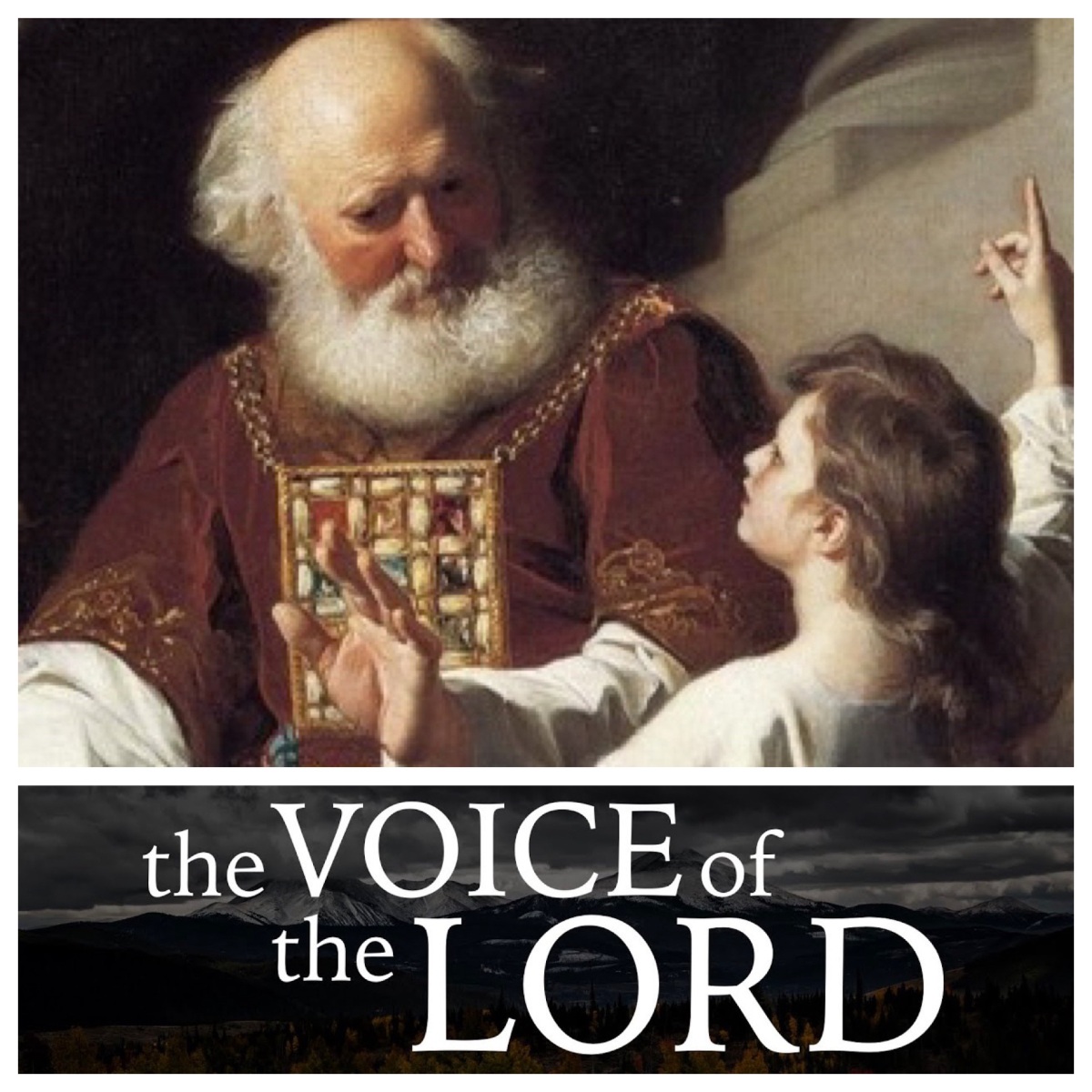
Young Samuel was in the temple, where the elderly Eli was priest. In the evening, while the lamp was still burning, Samuel hears a voice. The voice simply calls his name. “Here I am”, Samuel responds when he hears that voice. He is sure that it is Samuel,speaking to him—there is nobody else around. Three times, he hears “Samuel”; and three times, he responds “here I am” (vv.4,6,8).

Samuel had been thinking that it was Eli speaking to him; but it was not the priest, it was the voice of the Lord. The story conveys a sense of confusion and unknowing. This reflects something of the uncertainty that people of faith often have with regard to “hearing the voice of the Lord”.

Indeed, the fragility of living by faith without clear and obvious demonstration of he presence of God is signalled in the opening verse: “the word of the Lord was rare in those days; visions were not widespread” (v.1). The poor vision of the elderly priest, Eli (v.2), is a second signal of this uncertainty. The priest cannot see; the child hears but does not understand.

Paying attention to the voice of the Lord is a persistent refrain in Hebrew Scriptures. Indeed, the psalmist rejoices in the clarity of God’s voice: “the voice of the Lord is over the waters; the God of glory thunders, the Lord, over mighty waters; the voice of the Lord is powerful; the voice of the Lord is full of majesty” (Ps 29:3–4). Yet another psalmist recalls the time, in the wilderness, when the people of Israel “grumbled in their tents, and did not obey the voice of the Lord” (Ps 106:25). The people were not always faithful, even though the voice sounded with clarity. They needed reminders of that voice.

In the foundational saga of Israel, Moses is called by the voice of God while tending sheep on Mount Horeb (Exod 3:4). In obedience, he leads the people to freedom—and then informs the people, “if you will listen carefully to the voice of the Lord your God, and do what is right in his sight, and give heed to his commandments and keep all his statutes”, then God promises not to inflict them with disease (Exod 15:26). Later, when Moses has delivered to them “all the words of the Lord and all the ordinances”, the response of the people is an affirmative “all the words that the Lord has spoken we will do” (Exod 24:3).

A number of the prophets indicate that they are impelled to declare “the word of the Lord” to a sinful people because they have heard, and are obedient to, “the voice of the Lord”. Isaiah hears the voice of the Lord calling him: “whom shall I send, and who will go for us?” (Isa 6:8). Isaiah is given words of woe to pronounce over the people (Isa 6:9–13); he warns the leaders of Israel, “listen, and hear my voice; pay attention, and hear my speech” (Isa 28:23).

His fellow-southerner, the shepherd Amos, opens his words with the bold declaration, “the Lord roars from Zion, and utters his voice from Jerusalem” (Amos 1:2), before he launches into his long series of oracles against the surrounding nations (Amos 1:3—2:3) and then against Judah and Israel (Amos 2:4–16).

The image of the Lord God as a roaring lion is used also by Joel, “the Lord roars from Zion, and utters his voice from Jerusalem, and the heavens and the earth shake” (Joel 3:16), while in another oracle he says, “the Lord utters his voice at the head of his army; how vast is his host!” (Joel 2:11).

Joel’s words of judgement penetrate to the heart of the evil of the people: the coming day will be “a day of darkness and gloom, a day of clouds and thick darkness!” (Joel 2:2), and so he calls the people to “return to [the Lord] with all your heart, with fasting, with weeping, and with mourning; rend your hearts and not your clothing” (Joel 2:12–13).

Micah also declares, “the voice of the Lord cries to the city (it is sound wisdom to fear your name)” (Mic 6:9) before he lambasts the people for their wickedness: “your wealthy are full of violence; your inhabitants speak lies, with tongues of deceit in their mouths” (Mic 6:12; the whole damning oracle is 6:9–16).

Called as a youth by “the word of the Lord” (Jer 1:4–8), Jeremiah hears the assurance, “I have put my words in your mouth” (Jer 1:9); the prophet later instructs the people, “amend your ways and your doings, and obey the voice of the Lord your God, and the Lord will change his mind about the disaster that he has pronounced against you” (Jer 26:13). Again, he tells them, “obey the voice of the Lord in what I say to you, and it shall go well with you, and your life shall be spared” (Jer 38:20). Eventually, the people affirm, “whether it is good or bad, we will obey the voice of the Lord our God to whom we are sending you, in order that it may go well with us when we obey the voice of the Lord our God” (Jer 42:6).

In the return from exile, both Haggai (Hag 1:12) and Zechariah (Zech 6:15) rejoice that Israel “obeyed the voice of the Lord their God”; but Daniel laments that his people “have not obeyed the voice of the Lord our God by following his laws, which he set before us by his servants the prophets; Israel has transgressed your law and turned aside, refusing to obey your voice” (Dan 9:10).

And yet, various prophets had hesitated when first hearing “the voice of the Lord”. The initial response of Moses is “who am I that I should go to Pharaoh, and bring the Israelites out of Egypt?” (Exod 3:11), followed by a series of further objections that he raises (Exod 3:13; 4:1; 4:10). Amos explains to the priest Amaziah how his call had surprised him: ““I am no prophet, nor a prophet’s son; but I am a herdsman, and a dresser of sycamore trees” (Amos 7:14).

Isaiah seeks to excuse himself from the prophetic task: “I am lost, for I am a man of unclean lips, and I live among a people of unclean lips” (Isa 6:5). Jeremiah objects, “truly I do not know how to speak, for I am only a boy” (Jer 1:6). A number of the prophets are, initially at least, reluctant spokespersons for the Lord God.

By contrast, in the story told in 1 Sam 3, after hearing his name spoken by the Lord for a third time, Samuel responds with a declaration of obedience: “speak, for your servant is listening” (v.10). This was just as the priest Eli had instructed him (v.9). Here, Samuel demonstrates careful listening, patience, openness to what he encounters, and complete obedience to that voice.

His response is similar to that of Mary when she is given startling news: “Here am I, the servant of the Lord; let it be with me according to your word” (Luke 1:38). Soon after that, she produced an amazing prophetic oracle, which we know as the Magnificat, declaring that God has “scattered the proud in the thoughts of their hearts … brought down the powerful from their thrones, and lifted up the lowly … filled the hungry with good things, and sent the rich away empty” (Luke 1:51–53). Like Samuel, she proves to be an important prophetic voice.

This story from the early years of Samuel’s life is remembered and retold because it instructs those who hear it in later generations, to listen, and to obey. It is a reminder that being “guided by God” is not always clear and obvious. It is also a reminder of the need to respond with faith and openness; to be obedient. It is a story worth hearing, and pondering.

Parables of Jesus in Mark 4 (Narrative Lectionary)

Jesus used parables as the chief means of his story-telling. A parable is a story told in a specific way, often to make a single clear point. Parables are conundrums. They contain unresolved tensions. They invite multiple understandings. They press for exploration and investigation. We have a few parables in the Gospel reading for this coming Sunday!

The accounts of Jesus that we have in scripture—Mark’s “beginning of the good news of Jesus”, Matthew’s “book of origins of Jesus, Chosen One”, and Luke’s “orderly account of the things fulfilled”—each contain a number of parables. Even in John’s “book of signs”, there are some parable-like sections, buried in the midst of the long discourses that this book contains.

In the section of Mark’s “beginning of the good news of Jesus” that the narrative lectionary offers for this week (Mark 4:1–34), we begin with a parable (4:1–9), followed immediately by an “interpretation” of the parable (4:1–20). For years, I followed the line (and taught my students) that this later allegorising understanding of the parable has been placed on the lips of Jesus, in this Gospel account. In this understanding, the interpretation really treats the parable as an allegory, rather than as a simple parable.

In an allegory, each and every character and event in the story is regarded as being a symbol for something else beyond the story. Allegory literally means, “to say something other”; it comes from two Greek words, the verb agoreuo (to speak in the assembly), and the prefix allos (other). Allegories are found in ancient literature; in Greek, from the earliest literature, that of Homer, through to Plato, and on into the writings of people centuries after the time of Jesus. They were commonplace across Greek and Latin literature.

However, in more recent times, I have come to see parables differently—especially in light of how they were seen and used in Judaism. The idea that the allegorising interpretation was a later addition, beyond the time of Jesus, has held sway for a number of decades in critical biblical scholarship. Christian scholars are dubious about whether Jesus would have utilise this somewhat hellenised approach to stories. (We know that allegories were in evidence centuries before Jesus in Greek literature. Whether Jesus knew this long tradition is debated.)

This critical Christian perspective on parables overlooks the claim that Judaism, and the long stream of Jewish tellers of parables, have on such stories. Parables are found, in Jewish literature, in various forms. With that information, we might well come to the text of Mark 4 with a different set of questions. How do we hear these parables of Jesus? In what sense do they reveal “the secret of the kingdom of God”? (Mark 4:11). Do they remain to us words which we may well “listen, but not understand”? (4:12, quoting Isa 6:10).

How do we undertake the task that Jesus instructs of his disciples at the start (“listen!”, 4:3) and at the end of this section (“let anyone with ears to hear listen!” (4:21), which he then undergirds with a final saying, “pay attention to what you hear” (4:22). Will we be able to respond to the question of Jesus, “do you not understand this parable?” (4:13) with a resounding “of course we do!”? Or will we remain, as the disciples did, hard of hearing and lacking in understanding (see 6:52; 7:14, 18; 8:17, 21; 9:32). The task of interpretation in this passage is daunting indeed!

*****

Parables are found in various places in Hebrew Scripture. There is, for a start, a brief introductory announcement (“listen!”) and a single image which is used to describe a characteristic of the kingdom (a sower sowing seeds). The first part of this week’s parable (4:3) has this form. It is short and direct.

The parable then tells of the sowing of seeds onto a variety of surfaces, which gives the story plot development of a kind. In this regard, this is like other parables of Jesus, which are a little more developed; they still make a single point, but it is developed or explained a little more. What do these ground surfaces represent? What do we make of the actions of the sower?—they seem somewhat profligate, sowing on hard ground! So the questions are raised … and the listeners ponder, and consider their responses …

The development that occurs in the plot of this parable, and the subsequent allegorical interpretation, might well relate to the fact that the Hebrew Scriptures also contain parables with developed plots and allegorical elements. In an allegory, particular individual features can play an independently figurative role, so that the story told becomes a kind of riddle which invites a response from the listener. “What do you think?” becomes the implied way that the allegory-riddle ends. Listening to the story is not enough—the listener needs to engage, enter the conundrum, make up their mind!

What do you think, then, about the sower who sowed seed on four different types of ground. A symbol of the lavish generosity of God? A farmer who wasn’t really thinking sensibly? A pointer to the need to receive the seed, ground it deep, and nurture it, so that it will flourish? A warning about “the wiles of the devil” who waits to choke the growing plant? The possibilities are endless … … …
In like fashion, what do we make of the short,sharp parables in the latter part of this passage? The seed growing secretly seems to be a set-up,for some of the typical eschatological teaching that Jesus gave (“when the grain is ripe, at once he goes in with his sickle, because the harvest has come”, 4:29).

And what do we make of the even shorter parable about the mustard seed? This tiny seed grows into a large shrub with large branches, such that “the birds of the air can make nests in its shade” (4:32). Is this, as is often suggested, a subtle indication of the worldwide spread of the good news of the kingdom? (The prophetic parable of the lofty cedar is often cited in this regard; see Ezek 31:2–9, esp. v.6 regarding the birds).

A classic short, simple riddle in Hebrew scripture is that spoken by Samson, “out of the eater came something to eat; out of the strong came something sweet” (Judg 14:14). The narrative comment that follows is delightful: “for three days they could not explain the riddle”! Another example is the proverb quoted by two prophets, about the impact of the Exile: “the parents have eaten sour grapes, and the children’s teeth are set on edge” (Jer 31:29; Ezek 18:2). The point of this saying is clear, and telling.

In Hebrew Scripture, the allegory of the Eagles and the Vine (Ezek 17:3–10) is described as both ḥidah (“riddle”) and mashal. The parable first describes “a great eagle, with great wings and long pinions”, who carried seed far away where it took root and became a vine (a classic symbol of Israel). It then offers a further description of “another great eagle, with great wings and much plumage”, which the teller of the parable fears may seek to uproot the vine. “When it is transplanted, will it thrive”, the parable ends (v.10)—will Israel, transplanted into exile, manage to survive that experience?

Further parable-riddles occur in subsequent chapters in Ezekiel. There is the Lamenting of the Lioness (Ezek 19:2–9) and the Transplanted Vine (Ezek 19:10–14), and the stories of the Harlot Sisters (ibid. 23:2–21). There is also one of my favourites, the very vivid—and gruesome—parable of the Cooking-Pot (Ezek 24:3b—5).

In this parable, the prophet warns the people of judgement: “set on the pot … pour in water … put in the pieces, the thigh and the shoulder … fill it with choice bones” (that is, the meat and bones of the Israelites being punished). The prophet concludes with a booming denunciation: “woe to the bloody city … the blood is shed inside it … to rouse my wrath, I have placed the blood she shed on on a bare rock” (Ezek 24:6–8, and then the metaphor extended still further in 24:9–14).

Each of these parables are clearly allegorical, in that the overall point is clear, and yet also the details in the story invite connection with specific people or events. Ezekiel is a powerful speaker, who utilises this dramatic story-form with great flair, and effect.

A third type of mashal is the fable, where animals or inanimate objects are made to speak and act like men. The article on “Parables” in the Jewish Virtual Library notes two good examples: Judg 9:8–15, where the trees confer as to who will become king, and 2 Ki 14:9–10, where a thornbush sends a message to a cedar, but a wild animal tramples down the thornbush. These fables can be seen to relate directly to the political situation of Israel at different times in their history.

The article on “Parable” in the Jewish Virtual Library also notes: “Mashal and ḥidah are used almost synonymously in Ezekiel 17:2; Habakkuk 2:6; Psalms 49:5 and 78:2; and Proverbs 1:6. Certain proverbs are in effect parable-riddles, e.g., Proverbs 30:15a, 15b–16, 18–19, and 21–31.

“Other biblical forms related to the parable type of mashal are: prophetic oracles where a metaphor is extended into a lively description, e.g., Isaiah 1:5–6; Hosea 2:2–15; 7:8–9, 11–12; Joel 4:13; and Jeremiah 25:15–29; prophetic oracles proclaimed through symbolic actions, e.g., I Kings 11:29; II Kings 13:15–19, and Isaiah 20:2–6; extended personifications as of Wisdom and Folly in Proverbs 1:20–33; 8:1–36; 9:1–6, 13–18; and revelatory dreams and visions having symbolism which the sequel interprets as allegorical, e.g., Genesis 37:6–11; 40:9–13, 16–19; Zechariah 1:8–11; 2:1–4; and Daniel 2:31–45.

Beyond these many examples, there are the multitudes of parables in rabbinic literature (about which, see the further resources listed at the end of this blog).

All of which leaves us with the question: what do we make of these parables of Jesus? Have we gained insight into “the secret of the kingdom of God”? Or will we remain with the outsiders, deaf of hearing and unable to grasp the good news of what God is about to do? These questions confront us as we hear this passage, this coming Sunday.

*****

The Jewish Virtual Library article on “Parable” can be found at https://www.jewishvirtuallibrary.org/parable

For further reading on parables in the rabbinic tradition, see

Click to access rabinnic-parables.pdf

https://www.jewishencyclopedia.com/articles/11898-parable

https://www.jerusalemperspective.com/2721/

We have found him of whom Moses and the prophets spoke (John 1; Epiphany 2B)

“Follow me”. We most likely know these words of Jesus as the words that he spoke to Peter and his brother Andrew, as they were fishing in the Sea of Galilee (Mark 1:16–17). This was also, presumably, what Jesus said to the brothers James and John, soon after (Mark 1:20), as well as to Levi the tax collector (Mark 2:14), and then, later on, to the crowd that was following him through Galilee (Mark 8:34) and, quite poignantly, to the rich man who felt unable to follow (Mark 10:21–22).

We encounter these words in the Synoptic parallels to these incidents; but as well, we hear them spoken by Jesus in the book of signs which we know as the Gospel according to John. The resurrected Jesus tells Peter, “follow me” (John 21:19), and soon after, speaks the same words to the beloved disciple (John 21:22). At the last meal he shared with his followers, he had warned them, “where I am going, you cannot follow me now; but you will follow afterward” (John 13:36), and a little before that, he had said to Philip and Andrew, “whoever serves me must follow me, and where I am, there will my servant be also; whoever serves me, the Father will honour” (John 12:26).

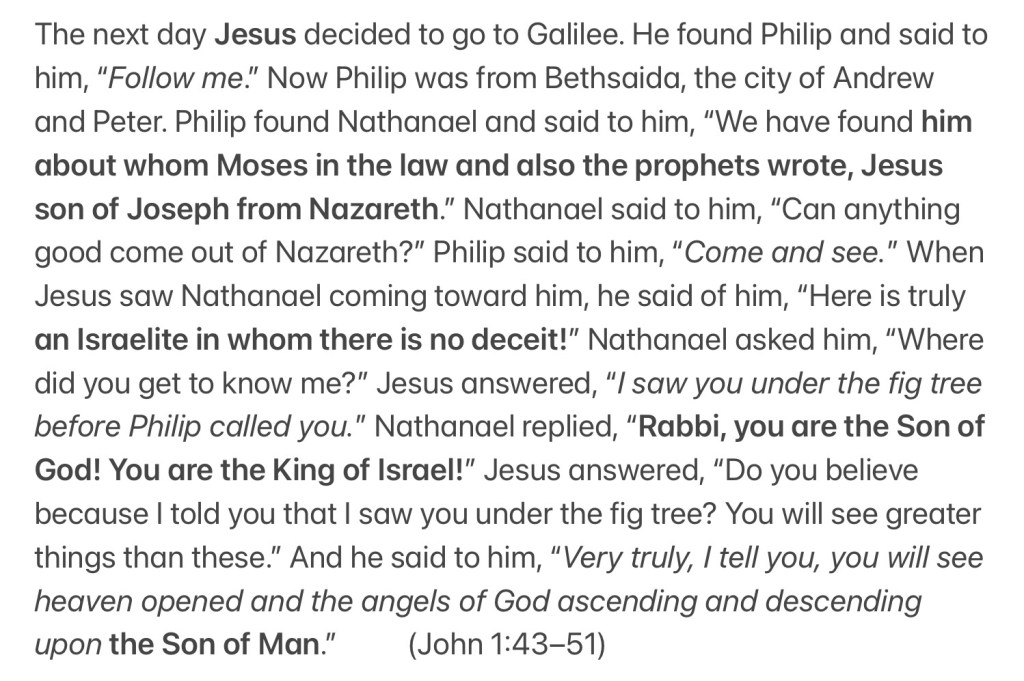
The first time these words occur in the book of signs is in the scene when Jesus first meets Philip (1:43–51). This is the passage which is offered by the lectionary for this coming Sunday, the second Sunday after Epiphany. The scene also involves Nathaniel, who poses the sceptical question to Philip concerning Jesus: “can anything good come out of Nazareth?” (1:46). The following interaction with Jesus leads to Nathaniel making a high claim about Jesus: “Rabbi, you are the Son of God! You are the King of Israel!” (1:49). The scene itself ends with another description of Jesus, from his own lips, as “the Son of Man”, upon whom the very angels of heaven are resting (1:51).

This scene concludes the extended prose narrative (1:19–51) that follows the majestic poetic prologue which opens this opening chapter (1:1–18). Throughout the various scenes in this prose narrative (which I call the Prelude to the Gospel), a series of revelations of the identity and significance of Jesus are made.

It is noteworthy that there are a number of Jewish titles which are embedded in this prose narrative, as key characters confess the significance of Jesus throughout this extended preface (1:19–51). Jesus is addressed as “Rabbi” (1:38, 49), “Messiah” (1:41), “King of Israel” (1:49), and “Son of God” (1:49). It is worth noting that these claims about Jesus are each made also within the Synoptic traditions. Indeed, the Johannine Jesus himself refers, in the allusive synoptic fashion, to the “Son of Man” (thirteen times, from 1:51 to 13:31), which we must presume to be a self–reference.

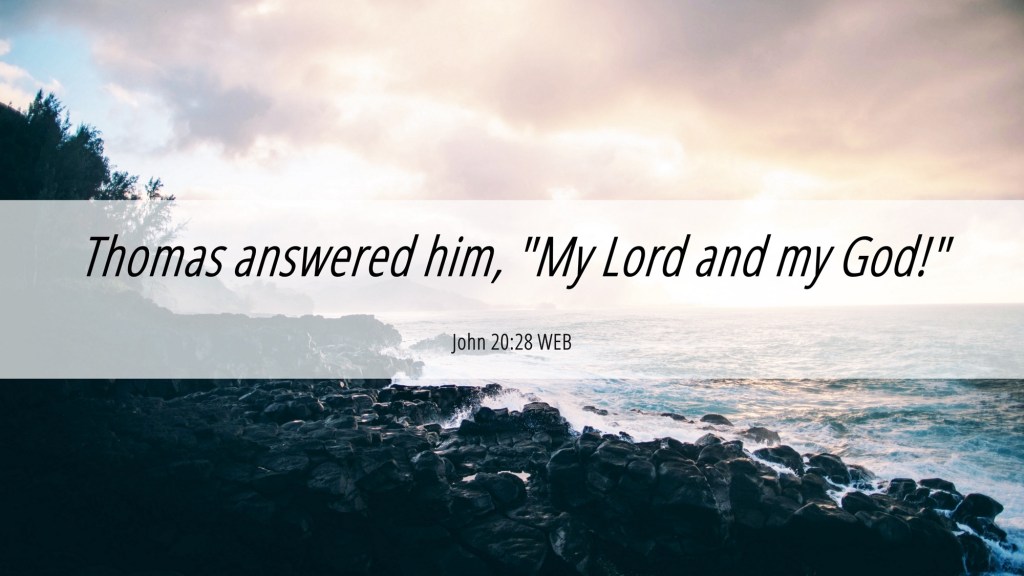
In later scenes in the book of origins, Jesus is also addressed by these Jewish terms, when he is called “prophet” (4:19), “Messiah” (4:29; 11:27), and “Rabbouni” (my teacher, 20:16). Then, the ultimate Christological confession of the Gospel is uttered by Thomas, when he moves beyond this viewpoint in the phrase, “my Lord and my God” (20:28), echoing the perception of the Jews, that Jesus was “making himself equal to God” (5:18).

Perhaps we tend to remember the fourth Gospel as the one which reveals the extensive cosmic significance of Jesus—the Word made flesh (1:14), the one closest to the heart of the Father who has “made the Father known” (1:18), and most famously, the one through whom God shows that “God so loved the world” (3:16). This Gospel seems to offer much in terms of a Saviour for the whole world (4:42), a sign for Greeks (that is, Gentiles) from beyond Judaism (12:20).

Yet, for the most part of this Gospel, Jesus is presented in terms drawn from within a Jewish context. Indeed, even the final, climactic confession by Thomas can be understood within a particular stream of Jewish tradition, for the hellenistic Jewish author Philo uses the terms “Lord” and “God” to designate the two major divine powers of creation (signified by “God”) and eschatological judgement (signified by “Lord”). In light of this usage of the terms by Philo, Jerome Neyrey wisely concludes that “Jesus is correctly called ‘God’ because he exercises creative power, and ‘Lord’ because he has full eschatological power”; see https://www3.nd.edu/~jneyrey1/MyLord.God.htm

So an important clue to a central motif running throughout this Gospel is placed in the mouth of Philip, when he says to Nathanael, “We have found him about whom Moses in the law and also the prophets wrote, Jesus son of Joseph from Nazareth” (1:45). The Jewish terms point to this reality about how Jesus was understood in the community within which the book of signs was written: Jesus is to be regarded as the fulfilment of scripture.

Notice that the author of this Gospel takes Philip, an almost anonymous figure in the Synoptic Gospels, and places in his mouth these key sayings, about the fulfilment of the scriptures (1:45), and the relevance of Jesus to Gentiles (12:20–26), and, indeed, the fundamental request, “Lord, show us the Father” (14:8). Philip articulates what the author of the book of signs seeks.

Now, it is true that the affirmation that Jesus fulfils scripture is common to all four canonical Gospels. It is very clear in the Synoptic accounts; we should not, however, diminish its significance on the fourth Gospel. This interpretive stance is hinted at as early as the Prologue, in the comparison between Jesus and Moses (1:17).

This perspective is stated explicitly, as we have noted, in the claim put on the mouth of Philip, “we have found him of whom Moses and the prophets wrote” (1:45), and later in the words attributed to Jesus, “You search the scriptures, because you think that in them you have eternal life; and it is they that bear witness to me” (5:39).

There are fifteen clear quotations from Hebrew Scriptures in this Gospel. There are eight explicit references to scripture in the early chapters (1:23; 2:17; 6:31; 6:45; 7:38; 7:42; 10:34; 12:13–15), while a “fulfilment formula” is used in later chapters, to introduce seven such scriptural quotations (12:38–40; 13:18; 15:25; 18:9; 19:24, 28, 36–37). There is also a passing note that Judas died after betraying Jesus “so that the scripture might be fulfilled” (17:12).

However, the total significance of the Hebrew Scriptures in this Gospel is much greater than these sixteen occurrences, as the Gospel contains numerous allusions to specific scripture passages, such as references to Jacob’s ladder (1:51) and the sacrificial lamb (1:29, 36), as well as more generalised allusions to scripture. These allusions are much freer in their form and indicate that, for the author of this Gospel, the Hebrew Scriptures had become an integral part of his mind and heart, for he treats them with a freedom born from intimate familiarity. (For this last phrase, I am indebted to an unpublished paper on this topic by my first New Testament teacher, the late Rev. Dr Robert Maddox.)

So this Gospel passage for the second Sunday in Epiphany reminds us of the Jewish origins of Jesus and also the continuing appreciation of Jesus in Jewish terms, throughout the early decades of the movement that was initiated by his proclamation and action in Galilee and (especially in John’s account) in Jerusalem, over some years. In our Christian appropriation of the figure of Jesus, we would do well to remember his Jewish origins, and the strongly Jewish nature of early Christian interpretation of Jesus. We owe much to Judaism, both as our ancient heritage and indeed as an enduring living faith which continues to proclaim faith in the God whom Jesus knew, and loved, and revealed.

A star and some magi, a tyrant and some infants (Matt 2; Epiphany)

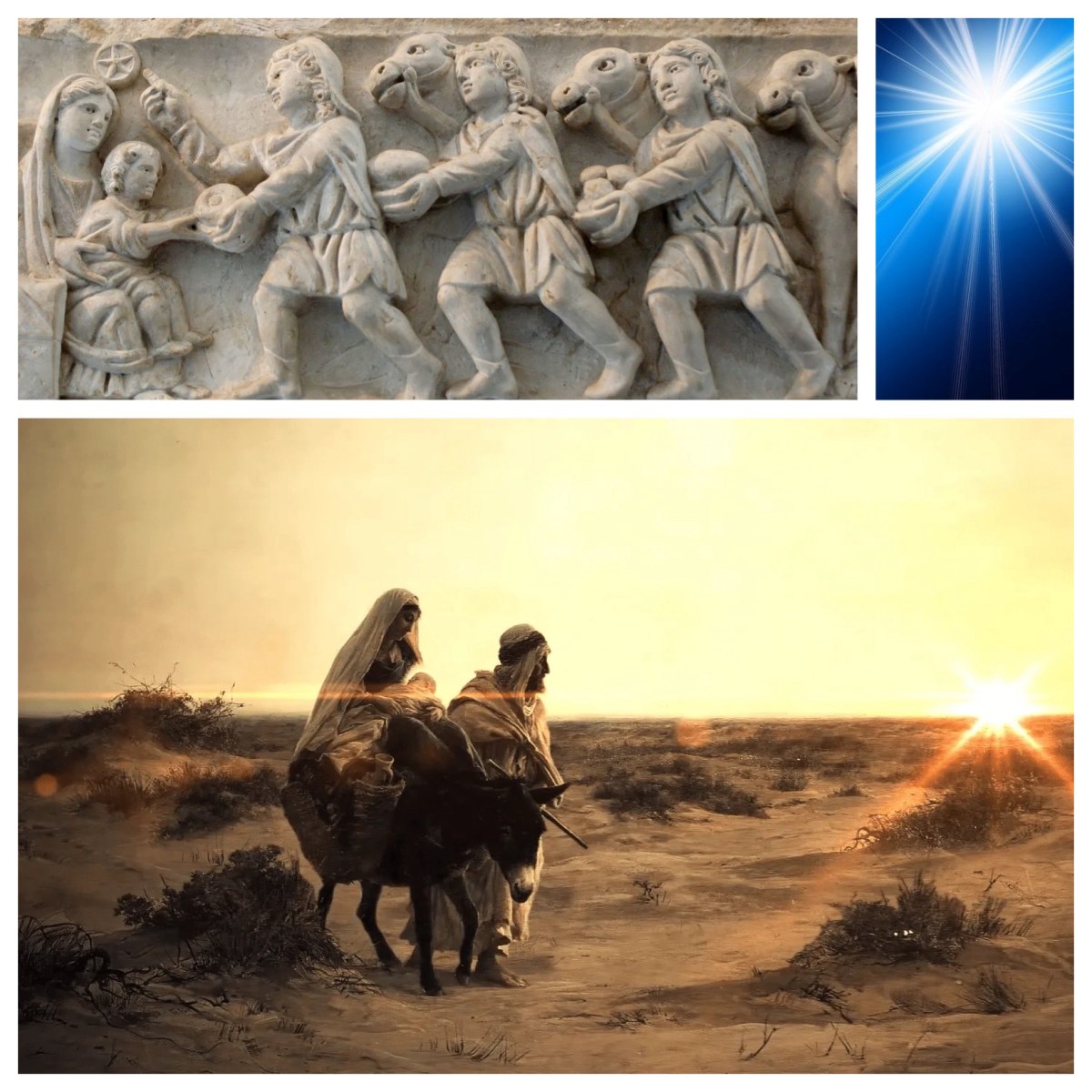
Each year, on the Feast of the Epiphany (6 January), we hear the story that is told in the book of origins (the Gospel according to Matthew) about the infant Jesus, the magi who travel with gifts to offer him, and the tyrant Herod (Matt 2:1–12). We usually stop the story before the account of the slaughter of children which Herod orders, and the flight into Egypt which Jesus undertakes with his mother, Mary, and his father, Joseph (Matt 2:13–18).

The much-loved Christmas story, found only in the orderly account of Luke, says nothing of any such high-status visitors to the newborn Jesus. The magi appear only in Matthew’s account. The actual birth of Jesus is mentioned very quickly by Matthew (1:18, 25). By contrast, the dark story of the slaughter of boys aged two and under dominates Matthew’s narrative (Matt 2:16–18). It is in connection with that part of the story that the magi appear.

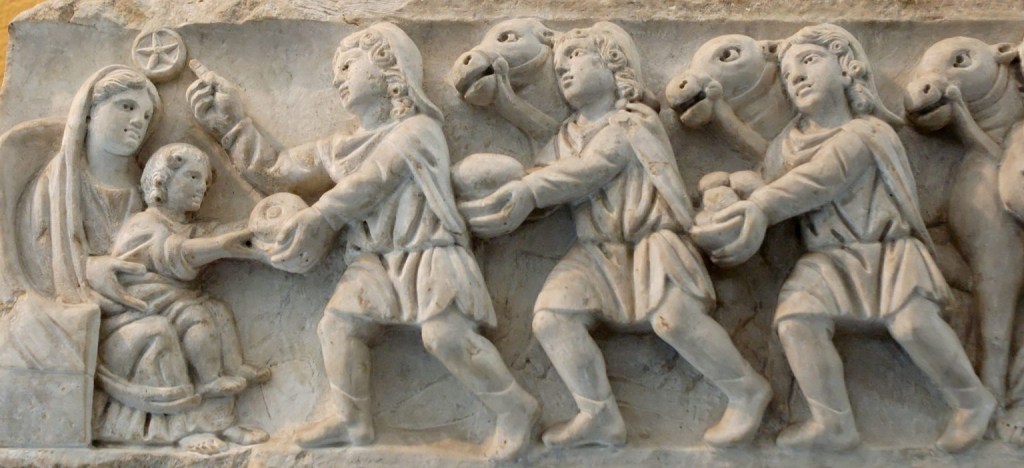
Adoration of the Magi, detail from a 4th century sarcophagus
in the Vatican Museum

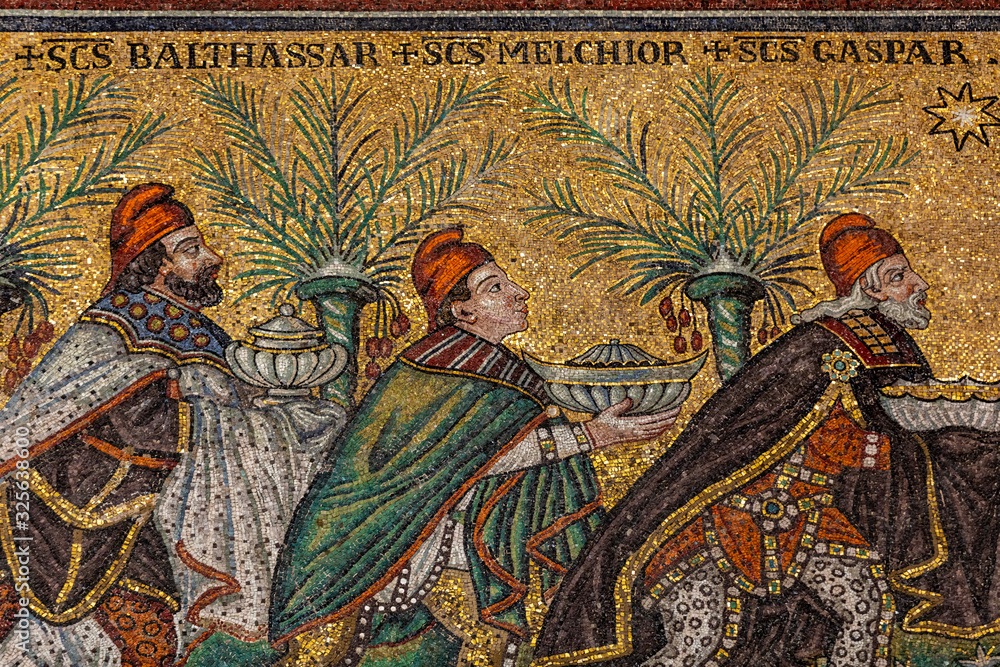
We are not told their names, nor how many they were. They are described as magi, probably meaning that they were astrologers. Only in later church tradition would they be identified as the three men, Caspar, Balthasar, and Melchior. Although Matthew’s gospel does not include the names or number of the magi, many believe that the number of the gifts he notes is what led to the tradition of the Three Wise Men—and, of course, they then needed to gain names (as do many anonymous biblical figures in the evolving church tradition over subsequent centuries).

These magi appear to have come from Gentile lands. They could be seen as exemplars of faithful obedience, travelling far to “adore the child”. But they are very mysterious figures in Matthew’s account. The gifts they bring were valuable items—reflecting a standard of gifts that might be offered to honour a king or deity in the ancient world: gold as a precious metal, frankincense (incense) as perfume, and myrrh as anointing oil.

It is claimed that these same three items were among the gifts that the Seleucid ruler, Seleucus II Callinicus, who ruled for 20 years (246–225 BCE), offered to the god Apollo at the temple in Miletus in 243 BCE. (I found this claim often in online articles, but I can’t trace any of them back to the actual historical source.)

The Three Magi (including the traditional names), Byzantine mosaic
in the Basilica of Sant’ Apollinare Nuovo, Ravenna, Italy

More significant for Matthew, I believe, would be the fact that two of the gifts resonate with a Hebrew Scripture passage, late in the book of Isaiah. Jerusalem’s restoration is portrayed as a time when “nations shall come to your light, and kings to the brightness of your dawn” (Isa 60:3); they will “bring gold and frankincense and proclaim the praise of the Lord” (Isaiah 60:6).

The visitors bringing these gifts come from Sheba (a kingdom in South Arabia). The gifts, it is claimed by interpreters, are symbolic of what is to come. The gold is considered to symbolise the royal status of the child Jesus, as he is of the line of David. The frankincense is connected with the Temple cult, and thus considered a symbol of the priestly role eventually to be played by that same child.

The myrrh, in Christian tradition, is linked with the death that will be experienced by the infant when he has grown to maturity—death at the hands of a Romans, who offered him wine mixed with myrrh as he hung dying on a cross (Mark 15:23). This symbolism reveals the reasons for adopting and expanding the earlier oracle.

And the notion that was developed later in Christian writings, that the three magi were kings in their respective kingdoms (as in, “we three kings of orient are”), derives from the application of Isaiah 60:3 , noted above, and Psalm 72:10–11, as the psalmist praises the King of Israel and prays, “may the kings of Tarshish and of the isles render him tribute; may the kings of Sheba and Seba bring gifts; may all kings fall down before him, all nations give him service.”

This is typical midrashic practice, to link up verses from different verses in different books which contain the same key words. It indicates that Matthew is “spinning a yarn”, telling a story, narrating a myth that contains important clues as to the nature and significance of the person about whom the story is told. It is not a factual historical account.

Matthew, who portrays Jesus as the new Moses throughout his Gospel, considers that his mission was solely to “the lost sheep of the house of Israel” (Matt 10:6; 15:24)—and to them alone. The visit of the magi from the East plays a symbolic role in the story. It represents a Gentile acknowledgement of the high role that Jesus will play, bringing to fulfilment the intentions of God for the covenant people. So this element, told very early in the narrative, is simply a literary technique to introduce a key theme which will reach fulfilment in the time well beyond the tale that the narrative offers.

I’m not going to go down the rabbit-hole of trying to identify the actual star that these magi followed (Matt 2:2, 9–10) and correlate it with known astronomical events from the early first century. It’s too complicated and anything I have ever seen requires us to put aside our historical-critical skills and believe in a series of “amazing coincidences”.

Besides, as this post makes abundantly clear, I don’t regard the story found in Matt 2 as in any way historical! It is yet another component of his story which draws heavily from Hebrew Scripture, as befits a Jew writing to Jews. The rising of the star in the east correlates well with the prophet Balaam’s prediction in Num 24:17 that “a star shall come out of Jacob and a sceptre shall rise out of Israel”.

The identification of the star as being “in the east” comes because, in Greek, the word for “east” is the same as “rising”. The Greek translation thus is ambiguous about whether the star simply “rises up out of Israel” or whether it is “to the east” of Israel. We can see this ambiguity if we compare how different recent translations of the Bible render this phrase in Matt 2:9 — “a star they saw in the east” (KJV), “the star they had seen when it rose” (NIV and ESV), “the star they had seen at its rising” (NRSV), “the star they had seen in the east” (NLT).

So this is another element in the story that has been shaped by Hebrew Scripture.

Evidence from beyond the Bible, that the baby boys in Bethlehem were actually slaughtered by Herod’s troops (Matt 2:16), is absent. The story that Matthew presents is grounded, not in history, as we know it, but in the art of story-telling, where recognisable themes and characters are presented in a new, creative combination.

So it is that in the opening chapters of this Gospel, we encounter the pregnant Mary, the newborn infant Jesus, his father Joseph, a bright star in the sky, visitors from the east, the tyrannical rule of Herod, and slaughtered infant boys. Many of these characters and events are “types”, imitations of an earlier story—for in his narrative, Matthew is working hard to place Jesus alongside the great prophet of Israel, Moses.

The early years of Jesus unfold in striking parallel to the early years of Moses. The parallel patterns are striking—deliberately shaped that way by the author of this Gospel, I would maintain. Moses, for instance, was in danger of being killed as a small boy, as the Pharaoh instructed the midwives, “When you act as midwives to the Hebrew women, and see them on the birthstool, if it is a boy, kill him; but if it is a girl, she shall live” (Exod 1:16). The child Moses was rescued by midwives who “feared God; they did not do as the king of Egypt commanded them, but they let the boys live” (Exod 1:17).

Matthew’s account of “the Slaughter of the Innocents” is generated by his Moses typology. This grounds the story of Jesus in the historical, political, and cultural life of the day, when tyrants exercised immense power. But it raises our suspicions about whether this event actually took place. There is no other evidence for it in any ancient writing, apart from Matthew’s Gospel. Can we be sure that it took place? Not by any standard of historical assessment.

Massacre of the Innocents, ca. 1520;
engraving by Marco Dente (1486–1527),
based on a design by Baccio Bandinelli (1493–1560)

(I recognise that some claim that a report by Josephus in book 2 of his account of the Jewish War, about an uprising related to a certain shepherd named Athrongeus, might be telling of this event—except that this took place after the death of Herod, and it took place in Jerusalem, not in Bethlehem, as Matthew’s account maintains. And, of course, Matthew has no shepherds in the story, so the connection is even more diffuse. The search for a parallel account in another ancient source is undertaken in vain.)

We recognise that, in this narrative, Matthew is not reporting an actual historical event; yet his narrative of what allegedly happened to those children does provide a dreadful realism to a story which, all too often in the developing Christian Tradition, became etherealised, spiritualised, and romanticised.

Matthew has Jesus escape this fate by fleeing, with his parents, to Egypt (Matt 2:13–15). Once again, there is no evidence for this journey outside of Matthew’s book of origins, so the story is just that: a story, not an historical account. The Moses typology we have already noted is also relevant here. Matthew emphasises the many ways in which events in the early years of Jesus fulfilled the prophecies found in Hebrew Scripture (see Matt 1:22–23; 2:5–6, 15, 17, 23; and for the adult Jesus, see 3:3; 4:12–16; 12:15–21; 13:14–15, 35).

So many parts of the early life of Jesus as Matthew recounts it are presented in a way that makes them consistent with these prophecies—although one of them (2:23) cannot actually be found in the Bible! It is most likely that Matthew has constructed his story so that it fits with these scriptural prophecies. They provide him with a familiar framework for telling the story.

Only Matthew tells about Herod and his slaughter of the innocents. Such an event is unknown from any other ancient literature. Had it actually taken place, it is likely that it would have been reported elsewhere. This event, together with others in Matthew’s version of Jesus’ early life, mirror the pattern of events at the start of Moses’ life.

With Moses, as with Jesus, there is the slaughter of infant males under 2 years by a tyrannical ruler, and the flight into another country by the boy’s parents, so that the boy is saved. In this way, Matthew presents Jesus as “the new Moses”. That is the key concern that he has in this opening sequence—not providing an historical narrative, but introducing his story of Jesus through the typology of Moses.

See also

My son, the beloved, with whom I am well pleased (Mark 1; Epiphany 1B)

In this year of the lectionary, the focus is on the narrative offered by “the beginning of the good news of Jesus, Chosen One”, which we know as Mark’s Gospel. The author of this work plunges right in to the story from the very beginning. There is no preface, no prologue, no extended set up, like we have in other Gospels; just straight down to business. The various scenes in this opening chapter are offered in the revised common lectionary in Year B, largely during the season of Epiphany.

These scenes offer a snapshot of the key features of the lead character in the story that is told. That figure, Jesus of Nazareth, is intensely religious (Mark 1:9–11, 35), articulately focussed on his key message (1:14–15, 22, 39), building a movement of committed followers (1:16–20), regularly living out his faith in actions alongside his words (1:26, 31, 34, 39). Jesus is energised by personal contacts with individuals: the brothers whom he called (1:17, 20), the man in the synagogue (1:25), Simon’s mother-in-law (1:30–31), and a begging leper (1:40). In the midst of all of this, he makes sure that his central message (1:14–15) is conveyed with clarity and passion (1:27, 39, 45).

Jesus is nourished by quiet moments, in his wilderness testing (1:12–13) and in early morning prayer (1:35), and yet is consistently immersed in the public life of his community. The author most likely exaggerates, but he does indicate that Jesus was with “people from the whole Judean countryside and all the people of Jerusalem” (1:5), teaching a crowd in the synagogue in Capernaum (1:21), renowned “throughout the surrounding region of Galilee” (1:28).

The author also notes that Jesus is visited by “all who were sick or possessed with demons”, indeed by “the whole city” (1:32–33), told that “everyone is searching for you” (1:37), and touring throughout Galilee (1:39), where “people came to him from every quarter” (1:45). He is quite the drawcard!

It is an holistic portrayal of Jesus, setting the scene for the story that follows. Jesus is passionate and articulate, compassionate and caring, energised and engaged, focused on a strategy that will reap benefits as the story emerges. And yet, as we know, that passion and energy will also lead to conflict, suffering, and death; a conflict already depicted in some of these opening scenes, as the story commences, but soon to make its presence felt in full force as the narrative continues.

An image that depicts the way a first century Jewish male,
like Jesus, might well have appeared

The author of this narrative—known by tradition as “Mark”—begins this series of scenes with the striking moment when Jesus of Nazareth was declared to be the beloved Son, anointed by the Spirit, equipped for his role of proclaiming the kingdom of God (Mark 1:1–13), which we hear this coming Sunday when the focus is on the Baptism of Jesus.

We know that Jesus was raised as a good Jew. We can hypothesise much about his upbringing and faith. He knew the daily prayer of the Jews, the Shema (“Hear, O Israel, the Lord our God is One”). He also knew the major annual festivals of his people: Passover, Harvest (later called Pentecost) and Tabernacles.

Jesus attended the synagogue each Sabbath, where he watched the scrolls containing the Hebrew scriptures unrolled, before they were read (in Hebrew, the sacred language) and explained (in Aramaic, the language of the common Jewish folk). Jesus, like all his fellow–Jews, believed that his God, Yahweh, was the one true God. He followed the traditional practices of worship and studied the scriptures under the guidance of the scribes in his synagogue.

At a mature age (by tradition, in his early 30’s), Jesus made his way south towards Jerusalem, into the desert regions, along with other Jews of the day. Beside the Jordan River he listened to the preaching of a strange figure—a desert-dwelling apocalyptic prophet named John (Mark 1:4–8). This appears to have been a pivotal moment for the pious Jewish man from Nazareth. His encounter with John deepens his faith and sharpens his commitment.

John’s message was the traditional prophetic call to repent (1:4). Prophets occasionally call directly for teshuva (Hebrew; in Greek, metanoia). These words are usually translated into English as “repentance” (see Isa 1:27; Jer 8:4-7, 9:4-5, 34:15; Ezek 14:6, 18:30; Zech 1:1-6). Indeed, so many of the oracles included in both major and minor prophets provide extended diatribes against the sinfulness of Israel and call for a return to the ways of righteousness that are set out in the convening with the Lord. When prophets called for metanoia, repentance, they were seeking a striking and thoroughgoing change of mind, a reversal of thinking and acting, a 180 degree turnaround, amongst the people. This is what metanoia means.

Accompanying this, however, was a very distinctive action that John the desert dweller performed, of immersing people into the river (Mark 1:5). Our Bibles translate this as “baptising”, but it was actually a wholesale dunking right down deep into the waters of the river.

Our refined ecclesial terminology of “baptism” is often associated, in the popular mind, with cute babies in beautiful christening gowns surrounded by adoring grandparents, aunties and uncles. This leads us far away from the stark realities of the act: being pushed down deep into the river, being completely surrounded by the waters, before emerging saturated and maybe gasping for air.

Such a dramatic dunking was designed to signify the cleansing of the repentant person. Repentance and baptism were necessary for the ushering in of the reign of God, according to John. Jesus appears to have accepted this point of view; it is most likely that his baptism was an intense religious experience for him. He underwent a whole scale change of mind, a reorientation towards the mission that was thrust upon him.

Certainly, the way that the experience is presented by Mark (and also in the other canonical Gospels) presents Jesus as being singled out by God for a special role. There are multiple signs on the short account of this moment (Mark 1:9–11).

FIrst, Jesus sees “the heavens torn apart” (1:10). This breaking apart is mirrored in the water of the river, which parts “as he was coming up out of the water”. The breaking of the heavens perhaps echoes the cry of the prophet of old: “O that you would tear open the heavens and come down, so that the mountains would quake at your presence … to make your name known to your adversaries, so that the nations might tremble at your presence!” (Isa 64:1).

Then, he sees a vision of “the Spirit like a dove” (Mark 1:10). A dove, of course, appeared at a key moment early in the biblical narrative: as the waters of the Great Flood recede (Gen 8:6–12); but the association of the dove with the Spirit (a commonplace in our thinking today, surely) is not actually made anywhere in scripture before this moment. The dove which appears seems, to Jesus, to come from beyond rest on him, in the way that the prophet declares that “the spirit of the Lord God is upon me” (Isa 61:1). The dove brings a signal from the sky—from the Lord God, perhaps?

A third signal comes through “a voice from heaven” (Mark 1:11). This is a common note regarding the hearing of the divine voice. Moses tells the Israelites, “from heaven he made you hear his voice to discipline you” (Deut 4:36). In the wilderness, God “came down upon Mount Sinai, and spoke with them from heaven, and gave them right ordinances and true laws, good statutes and commandments” (Neh 9:13; also Exod 20:22). Ben Sirach tells the story of the judges, when “the Lord thundered from heaven, and made his voice heard with a mighty sound” (Sir 46:17). David sang that “the Lord thundered from heaven; the Most High uttered his voice” (2 Sam 22:14). So a voice speaking from heaven, in Jewish understanding, is a communication from God.

Finally, the actual words which that voice speaks are deeply significant. “You are my son” are words spoken by God to David (Ps 2:7). “With you I am well pleased” echoes what God says about “my servant, whom I uphold, my chosen, in whom my soul delights” (Isa 42:1); indeed, of the Servant, the prophet declares, God indicates that “I have put my spirit upon him; he will bring forth justice to the nations” (Isa 42:2). What is heard at the moment of the baptism of Jesus is confirmation of the place of Jesus as one beloved, chosen, and equipped by God for what lies ahead of him.

So it is that from the moment of this intense experience, Jesus was fervently committed to the renewal and restoration of Israel. His first words, as reported in this shortest and earliest account of his ministry, were clear and focussed (1:14–15). There are four key elements: fulfilment of the time, nearness of the kingdom, the need to repent, and belief in the good news. Repentance is pivotal in this succinct summary of his message. It was the heart of the message that Jesus instructed his followers to proclaim (6:12).

After this dramatic dunking by the desert dweller, Jesus left his family and began travelling around Galilee, announcing that the time was near for dramatic changes to take place. He gathered a group of men and women who accepted his teachings, journeying with him as he spread the news throughout Galilee.

The intense religious experience of his dunking meant that the fierce apocalyptic message spoken by the desert dweller was lived out in a radical way in daily life by this group of deeply committed associates of Jesus. The intense religious experience associated with his dramatic dunking by the desert dweller had a deep and abiding impact. The challenge, for those of us who follow him, is to live out this radical way of life today.

From the old to the new: a blessing for the season (Eccles 1, Num 6; Jan 1)

As the year turns from “old” to “new” (at least in our secular calendrical reckoning), we hear familiar words reflecting on the passing of time. For the Preacher, the author of Ecclesiastes (Ecclesiastes 1:1), time is not a linear progression of units, ceaselessly marching forward, relentlessly ageing us, continually moving us on,,driving us to growth, improvement, and “progress”. Rather, time is seen as a sequence of moments, each with their own significance, about which we are invited to pause, reflect, and consider deeply.

The Hebrew Scripture passage that the lectionary proposes for New Year’s Day, 1 January (Eccles 3:1–13), gives a clear indication of how time was regarded in the ancient world. As some people are dying, infants are being born; as some people are weeping, so others celebrate joyously. As some people hunker down in protracted warfare, so others are enjoying a much-yearned-for peace; as some people are happily moving into a new house, a new community, so others are bidding a sad farewell to what has been a beloved home for decades.

At this moment, the continuation of the war in the Ukraine, the perpetuation of bombing in Gaza, the ongoing Sudanese conflict, and the insurgencies in numerous African nations—all of this, and more, continues, while people across the world rejoice at the birth of a new child, celebrate a new marriage, give thanks for a milestone reached in the long life of a much-loved family member. Each and every day, there is “a time to weep, and a time to laugh”.

The Preacher invites us to consider what the season, the time, might be for us at this moment; what might we embrace, and what might we relinquish? How might we best speak into a situation, and when is it wisest to hold our tongue and keep silent? Will this be a year when war continues, or peace grows? Shall we dance—or mourn?

These questions are posed, implicitly, by the rhetorical impact of the repeated “a time to … and a time to …”; for God “has made everything suitable for its time”. What is the time, for us, for me, at this moment, as the year turns?

Pondering what is suitable for this time led me to look also at what the lectionary offers for this same day, 1 January, which is recognised in some parts of the one, holy, catholic and apostolic church as the Feast of The Holy Name of Jesus. There is evidence that this feast was celebrated from the 15th century onwards, and it is usually placed on 1 January because this is eight days after Christmas Day, the conclusion of the “octave of Christmas” in Catholic churches.

The feast is based on the simple declaration by Luke: “after eight days had passed, it was time to circumcise the child; and he was called Jesus, the name given by the angel before he was conceived in the womb” (Luke 2:21). This is the concluding verse of the section of Luke’s orderly account which is proposed as the Gospel for this day. The lectionary also suggests that the Epistle reading be Gal 4:4–7.

On this, see https://johntsquires.com/2023/12/28/born-of-a-woman-born-under-the-law-gal-4-christmas-1b/

The Hebrew Scripture suggestion is the short poetic fragment in Num 6:22–27, which ends with the comment, “they [Aaron and his sons] shall put my name on the Israelites, and I will bless them” (Num 6:27), so in a sense it fits for a day which remembers “the name”, even if not that of Jesus. The blessing which the priestly family speaks over the Israelites is well-known: “the Lord bless you and keep you …” (Num 6:24).

This short poetic blessing lays claim to being an ancient part of scripture—perhaps one of the oldest passages? Indeed, the oldest artefact which contains a text from scripture is a silver scroll, dated to around 600 years before the time of Jesus, just before the Exile began. The scroll has a part of these words of blessing inscribed on them. We moderns have only known about this scroll since 1979, when it was discovered as one of a pair of silver scrolls in a cave in the Old City of Jersualem. See https://www.ancient-hebrew.org/inscriptions/140.html

and for a more detailed analysis,

As the year turns from old to new, it is most fitting that we recall this ancient priestly blessing, to send us on our way in the year that lies ahead.

The words on that tiny tightly-rolled strip of silver were well-known, of course, for centuries before Jesus. They are fragments of the beautiful words of blessing, given by God to Aaron through Moses, for Aaron and his priestly descendants to use as a blessing upon the people of Israel (Num 6:24–26), as well as a fragment from Deut 7:9 in which the importance of keeping the Torah is stated.

The blessing of Num 6 is simple in structure: three parallel clauses, with three verbs that express the same action (bless you / make his face shine on you / lift up his countenance upon you), followed by three further verbs in parallel (keep you / be gracious to you / give you peace). The movement from beraka, blessing, to shalom, peace (or better, wholeness) surely reflects God’s desire and intention towards faithful people of all time.

This blessing, for God’s light to shine, is reflected elsewhere in scripture. The psalmist prays “restore us, O God, let your face shine, that we may be saved (Ps 80:3, 7, 19). “There are many”, says another psalmist, “who say, ‘O that we might see some good! Let the light of your face shine on us, O Lord!’” (Ps 4:6). In Psalm 31, another psalmist sings, “Let your face shine upon your servant; save me in your steadfast love” (Ps 31:16).

In the seventeenth section of the longest of all psalms, Psalm 119, a prayer asking for God to help the psalmist keep the Law culminates with the request for God’s face to shine: “Turn to me and be gracious to me, as is your custom toward those who love your name. Keep my steps steady according to your promise, and never let iniquity have dominion over me. Redeem me from human oppression, that I may keep your precepts. Make your face shine upon your servant, and teach me your statutes.” (Ps 119:132–135).

The author of Psalm 67 echoes more explicitly the Aaronic Blessing, praying, “May God be gracious to us and bless us and make his face to shine upon us—Selah—that your way may be known upon earth, your saving power among all nations” (Ps 67:1–3). This reflects the wording and pattern of the ancient priestly blessing recorded in Num 6:24–26: “The Lord bless you and keep you; the Lord make his face to shine upon you, and be gracious to you; the Lord lift up his countenance upon you, and give you peace.”

In this three-line prayer, the second line includes the phrase, “the Lord make his face to shine upon you”. The simple parallelism in this blessing indicates that for God to “make his face shine” (v.25) is equivalent to blessing (v.24) and lifting up his countenance (v.26). The second verb in each phrase is, likewise, in parallel: the psalmist asks God to keep (v.24), be gracious (v.25), and grant peace (v.26).

These words offer a prayer seeking God’s gracious presence for the people of Israel. They are also words which we might well hear, and appropriate, for our lives of faith in the year stretching ahead of us. May there be keeping, grace, and peace, in our lives, and in the lives of others around us and far from us.

The silver scroll found at Ketef Hinnom
which contains part of the text of the Priestly Blessing:
a photograph, a transcription, and the fragmentary text in Hebrew script