
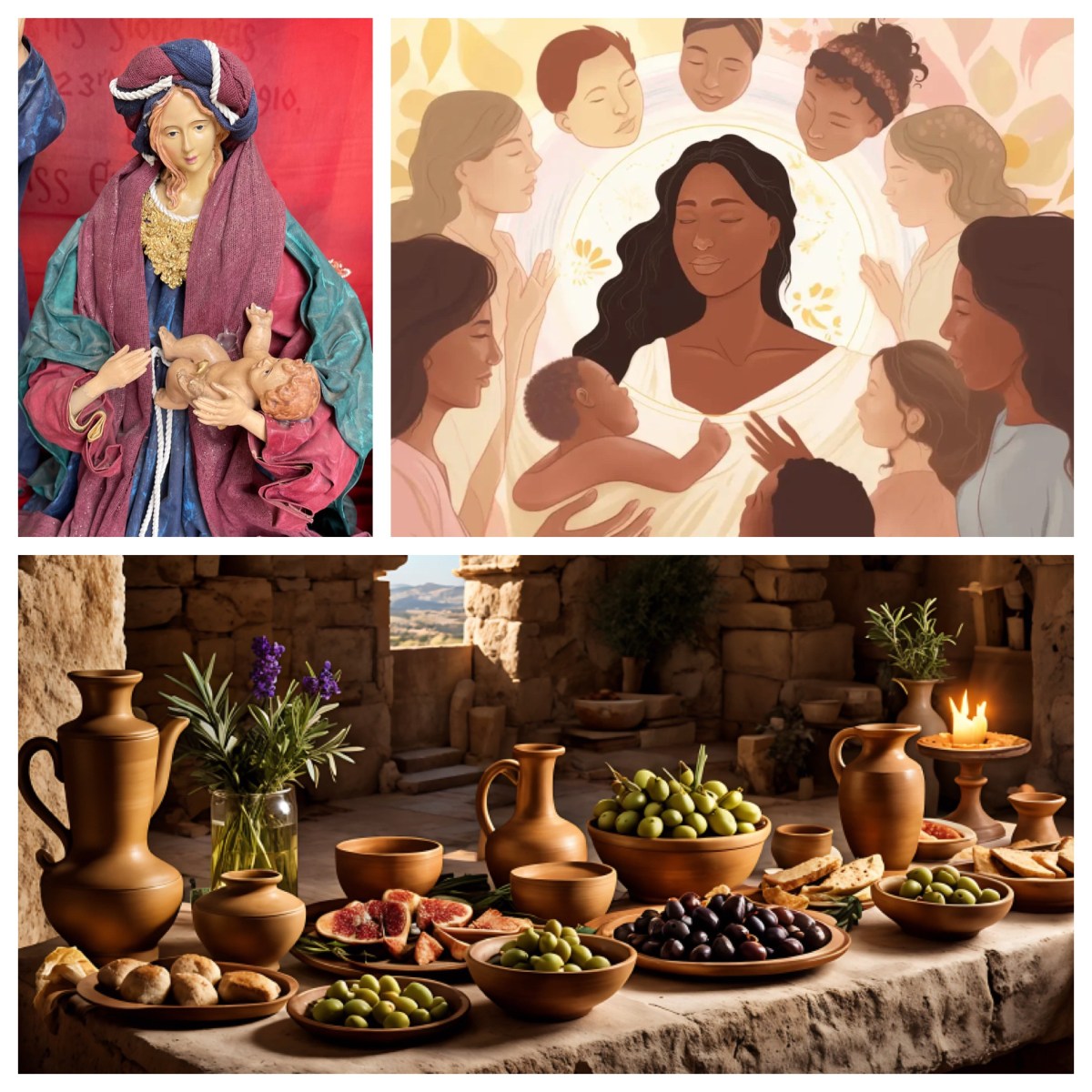
Where are the women in the story we tell at Christmas? We know that there was “no room at the inn” for Mary and Joseph, as they prepared for the birth of their son, Jesus. But it seems that there is precious room in the story for women. Where are the women in this story?
There are lots of men in the “traditional” story that is retold and enacted every year: the faithful father-figure Joseph, the excited shepherds (presumably males?) coming in from the fields, the innkeeper at the place where “there was no room”, and of course the infant baby, a little boy. Then, the angel who makes appearances to announce the imminent births of John and Jesus is identified as Gabriel, another male.
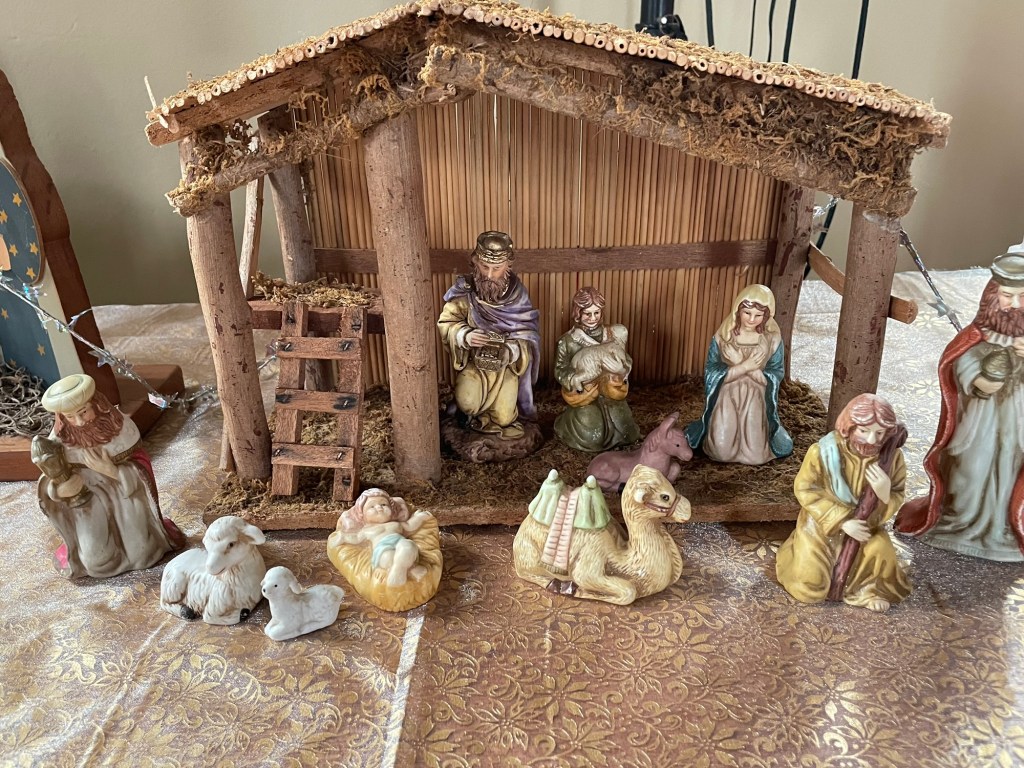
There are the “three wise men”—well, it is usually presumed that they were men—travelling from the east and the evil tyrant Herod conferring with his male advisors (the chief priests and the scribes, more men) before ordering the slaughter of infant boys. There is the census ordered by the male ruler, Emperor Augustus, and implemented by the male Governor, Quirinius, throughout the region of Syria. All men. Where are the women?
Many-a-time the girls and women who take part in the “traditional” nativity scene that we re-enact each year have to don the costume of a male character, and perhaps at times a false beard, so that they “fit the part”. It’s another way that women become invisible in the story that is told—as is so often the case with stories in the Bible.
Of course, we know that the “traditional” nativity scene is a fiction—an invention of Francis, a medieval monk (another man) who collated the two Gospel accounts (both written by men) and then added additional elements on the basis of his own informed (male) imagination. We sing about that scene in carols written, largely, by men: Joseph Mohr (Silent Night), Philip Brooks (O little town of Bethlehem), Edmund Sears (It came upon the midnight clear), Cecil Alexander (Once in Royal David’s city), Nahum Tate (While shepherds watched their flocks), Charles Wesley (Hark! the herald angels sing), John Henry Hopkins (We three kings), John Mason Neale (Good King Wenceslas), and John Francis Wade (O come, all ye faithful). All men.
See this list with explanations at https://www.countrylife.co.uk/out-and-about/theatre-film-music/who-wrote-christmas-carols-251067
And as far as the tunes we sing are concerned, there are yet more men involved: Felix Mendelssohn (Hark! the herald angels), Henry John Gauntlett (Once in royal David’s city), William J. Kirkpatrick (Away in a manger), John Henry Hopkins (We three kings), and Richard Storrs Willis (It came upon a midnight clear). The origins of the tune for O come, all ye faithful is not known, although at different times it has been attributed to no less than seven different composers—all, of course, being men! (George Frederick Handel is the best-known of the possible, but unproven, composers.)
See this list with explanations at https://www.classical-music.com/features/composers/composers-behind-your-favourite-carols
And at least until fairly recently, most people have sent Christmas cards to each other that have been developed largely by men. These cards were originally popularised by the Hallmark company that began life as the Norfolk Post Card Company, established in 1907 by J.C. Hall and his older brothers, William and Rollie—three more men.
Lots of men. But where are the women?
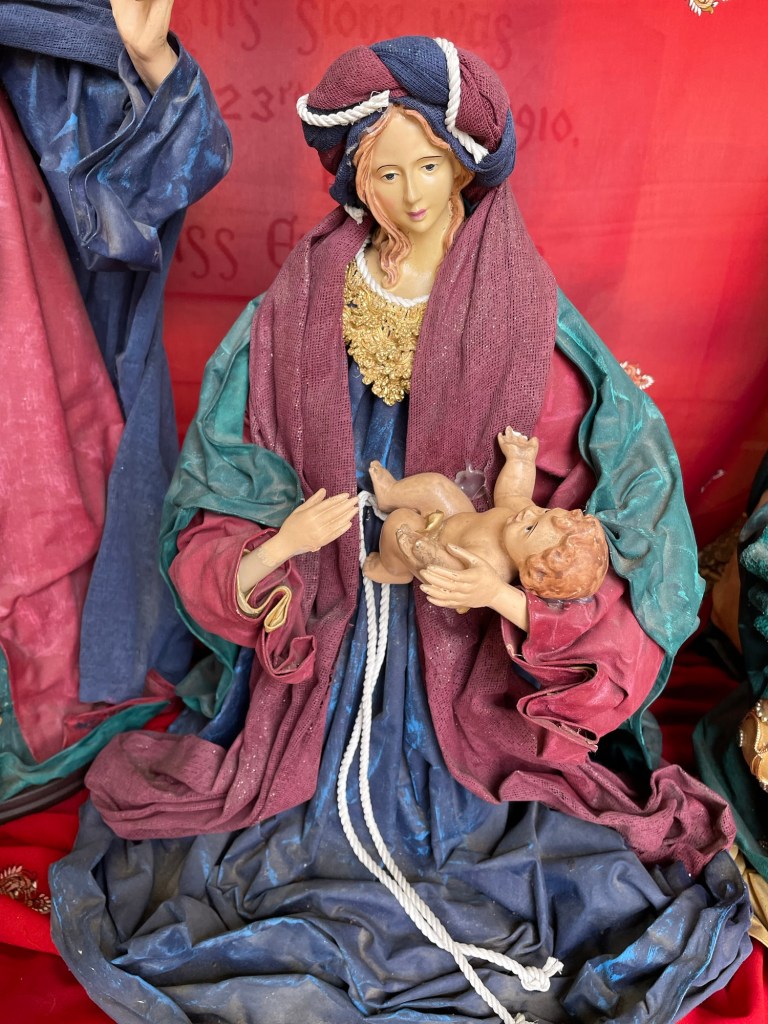
Yes, there are some women in the story. Mary, for a start; every birth story needs a mother, and mothers must be female, and so we have Mary. And then there is Elizabeth, a relative of Mary, who is included in the story that Luke tells. And, in a wonderful version of the Christmas tale that my wife uses regularly in Christmas worship services, the cranky innkeeper has a wife who does her best to look after the visitors and keep the peace. So there are some women, explicit, and implicit, in the story.
But there are more women who would have been involved in the events surrounding the birth of Jesus. For a start, Mary would have had assistance—female assistance—as she gave birth. Midwives were present at births in the ancient world; the story of Moses refers to the midwives in Egypt—and they are rare amongst women in biblical narratives in that their names are recorded: Shiphrah and Puah (Exod 1:15–22). Midwives are also noted in the birth narratives about Benjamin, whose mother Rachel sadly died giving birth (Gen 35:16–20) and the twin boys, Perez and Zerah, born to Tamar (Gen 38:27–30).
Prof. Carol Meyers, writing in the Jewish Women’s Archive, notes that “the presence of such a health care professional, called meyalledet (“one who causes, helps birth”), was probably routine in Israelite and pre-Israelite society”. She further notes that “the belief that god is the creator of life underlies the metaphor of God as a midwife, one of several female metaphors for God in the Hebrew Bible”, citing a line of a psalm addressing God as a clear example: “it was you who took me from the womb; you kept me safe on my mother’s breast” (Ps 22:9). Prof. Meyers astutely observes that “the status of midwives—and their power to transform childbirth from what might be a negative experience to a positive one—did not erode until the advent of modern, male-dominated medicine”. See
https://jwa.org/encyclopedia/article/midwife-bible
J.M. Hochstetler, writing about “Childbirth in Jesus’ Time”, has hypothesised further: “Midwives, skilled practitioners of their profession, were significant figures in ancient society who provided comfort, pain relief, and encouragement to the laboring woman. They performed rituals and prayers to protect her and her baby, used their expertise to deal with any complications that might arise, delivered the baby and the afterbirth, and supervised the mother and baby’s aftercare.” Commenting specifically on the birth of Jesus, she deduces that “Joseph would definitely have been excluded, nor would he have protested. Giving birth was the province of women, and men were happy to absent themselves.” See
https://www.hhhistory.com/2019/12/childbirth-in-jesus-time.html
So it is a reasonable assumption that a midwife would have been present at, and assisted in, the birth of Jesus to his mother Mary. Why is there not at least a midwife (if not also some assistants) present in the “traditional” nativity scene that we re-enact each year?
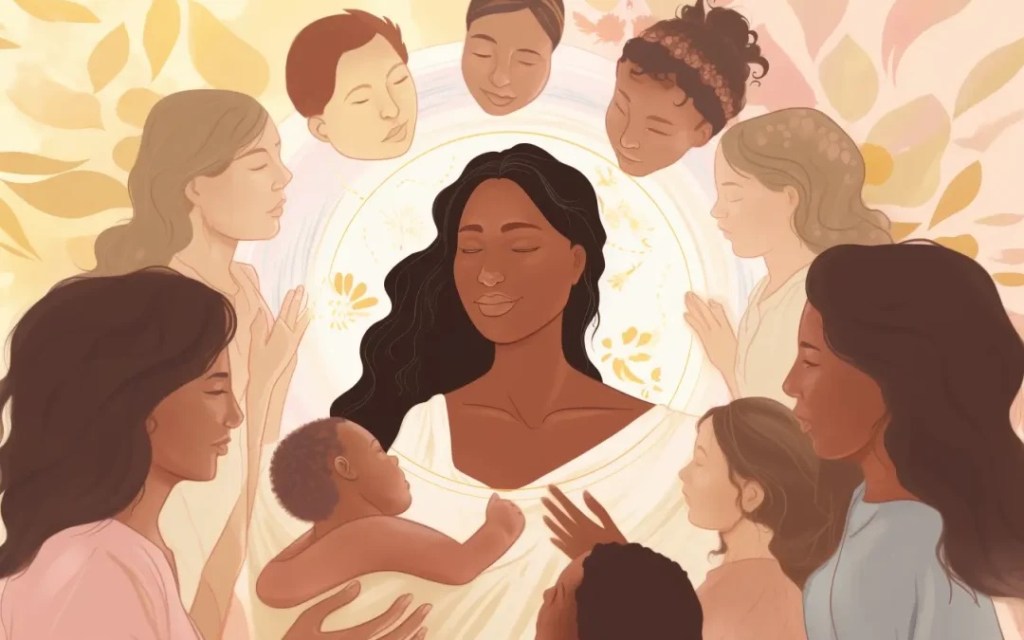
Another place in the story at which women would most surely have been present would have been in the house where Joseph and Mary were staying at the time of this birth. Despite what the “traditional” story portrays, it was most definitely not a case of Joseph knocking on the doors of all the hotels in town, only to discover that, because of the census, every one of them was filled to overflowing, and so they had to settle for “a room around the back” with the animals.
Luke gives a minimum amount of detail concerning the birth of Jesus, informing us that Mary “laid him in a manger, because there was no place for them in the inn” (Luke 2:7). The word translated as “inn” is the Greek word κατάλυμα (kataluma). This is relatively rare in the New Testament, but appears in many places in ancient Greek literature, where it usually refers to a guest chamber or lodging place in a private home. The same term appears in Luke 22:11 with the meaning “guest room,” and the verb derived from this noun appears in two other places (Luke 9:12; 19:7) where it means something like “find lodging” or “be a guest.”
Moreover, and by contrast, in the story of the Good Samaritan, when Jesus refers to the place where the injured traveller rests—clearly a commercial inn—a different word is used; it means an inn frequented by travellers is used (pandokian; see Luke 10:34). So Joseph and Mary were not looking for lodging in an inn; they were most likely hoping to find shelter with a member of their family in Bethlehem.
That would make sense, given what we know of ancient life; in Jewish society (indeed, in all ancient Mediterranean societies), hospitality was very important. Travel to a town where members of the extended family lived would usually mean staying with them. Unfortunately for the key figures in the “traditional” Christmas story, once they arrived in town they found many other family members had arrived before them. So there was no room in the kataluma, the guest house in the family member’s home.
Luke’s story probably suggests that Joseph and Mary were planning to stay at the home of friends or relatives; but the home where they arrived was so full, even the guest room was overflowing, and so they had to be housed with the animals in a lower in the lower part of the house. It was the custom to house animals in a special section of the house, and that, of course, would be where the manger was to be found.
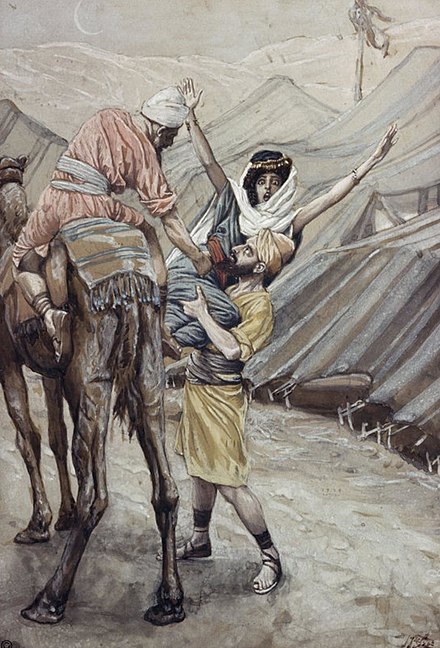
But once Mary and Joseph were given that space to stay, they would have been accepted into the family for the duration of their stay. And that meant including them in the family meals. And guess who prepared the meals? That’s right—the women of the family! And we know from familiar biblical stories that it was the women of the household who prepared and served the meals. When three visitors arrive unexpectedly at the tent of Abraham near the oaks of Mamre, the text says that “Abraham hastened into the tent to Sarah, and said, ‘Make ready quickly three measures of choice flour, knead it, and make cakes’” (Gen 18:6).
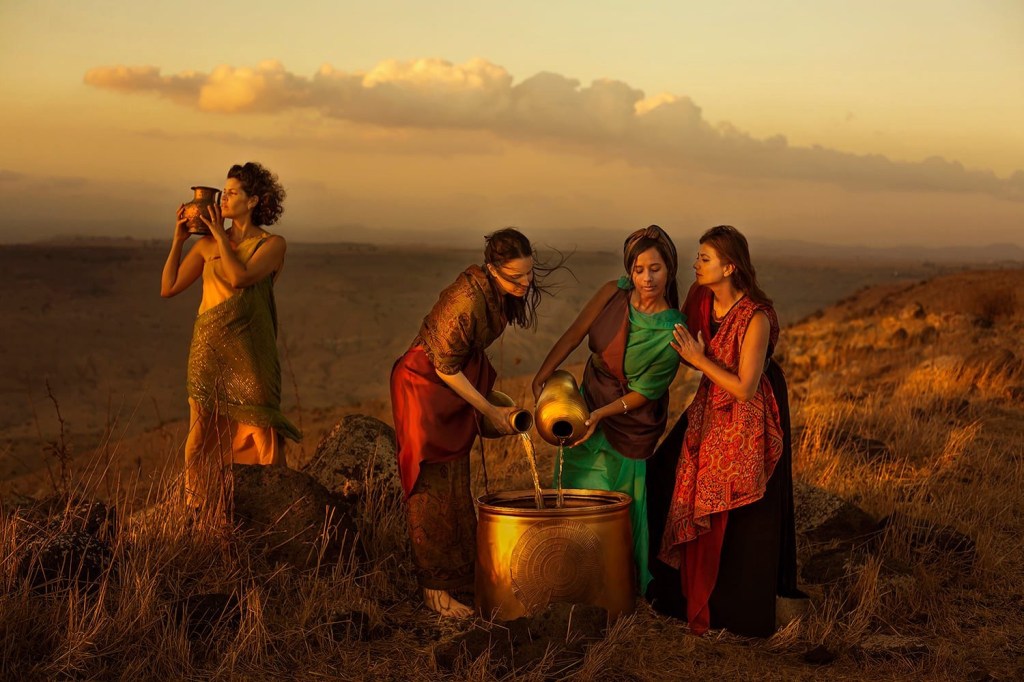
The last chapter of Proverbs praises the “woman of valour” who runs her household with such efficiency. Amongst her many and varied responsibilities, this woman “rises while it is still night and provides food for her household” (Prov 31:15). Overseeing the kitchen was integral to the efficient running of the household. The story of Abigail feeding the troops of David while they were in the wilderness, fleeing from Saul’s men and seeking sustenance from her husband, Nabal, a rich Calebite (1 Sam 25), reveals the proficiency of women as they brought provisions for the troops: Abigail took “two hundred loaves, two skins of wine, five sheep ready dressed, five measures of parched grain, one hundred clusters of raisins, and two hundred cakes of figs” and sent them off to feed David and his men (1 Sam 25:18). Abigail was the overseer of quite an impressive domestic operation, if these figures are to be believed!
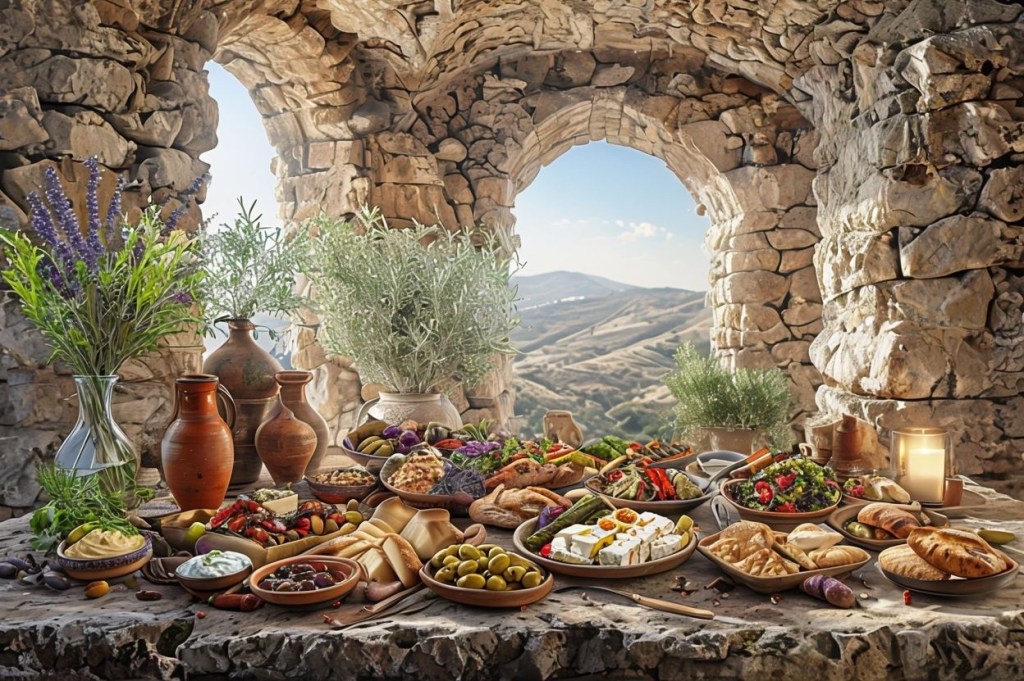
So in Luke’s Gospel narrative, when Jesus visits the home of Martha and Mary, it is usually understood that “all the work” that Martha is undertaking, without the expected assistance of Mary, involved the preparation and serving of a meal for Jesus and those travelling with him (Luke 10:38–42). The same undertakings would have been the work of the women in the house where Joseph and Mary were staying when she gave birth to Jesus. They would have fed the new parents and ensured that they were well provided for as they cared for the infant Jesus in his first few days. There are more women at this point in this story!
So we ought to remember that there were actually many more women in the story of the birth of Jesus: present at the birth and immediately after it, involved in the food preparation and sharing food at table as the wider family gathered together, ensuring that there was support for the parents of the newly-born child. And we should make space in the story for these important characters to be seen and heard. Let’s remember that, and act on it, next time we prepare to tell or act out the “traditional” Christmas story.



 An Informed Faith