Carols for the Season of Christmas (7) The Seventh Day of Christmas, 31 December

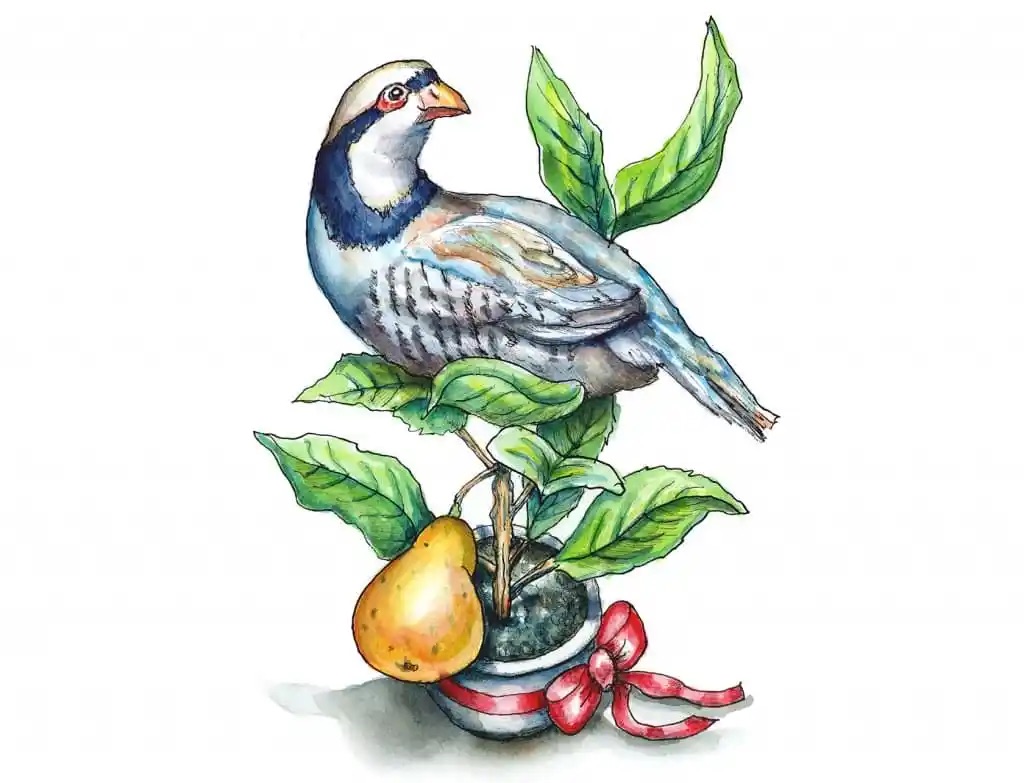
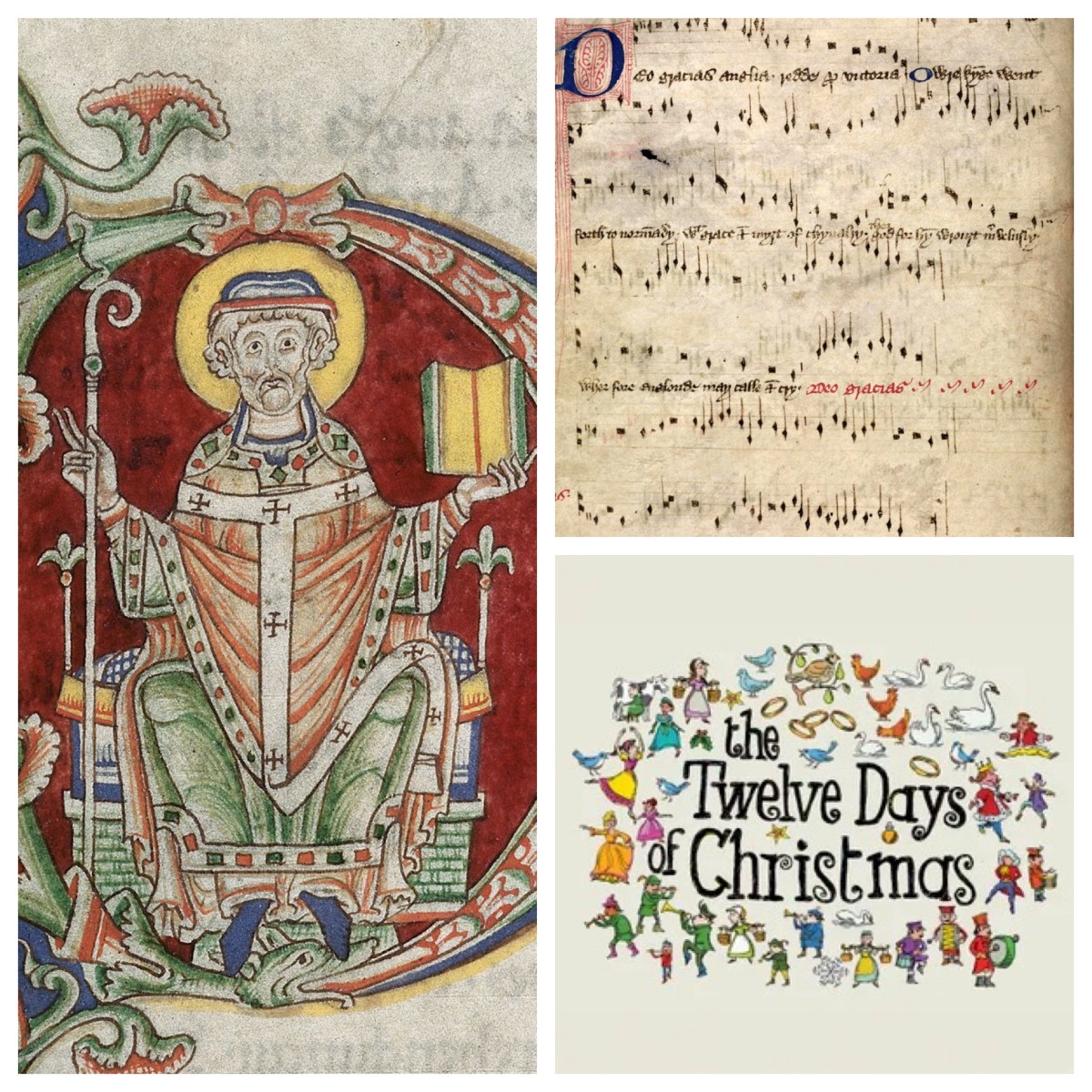
I guess those with diligent true loves are busy, today, trying to feed the seven partridges, twelve turtle doves, fifteen French hens, sixteen colly birds, twelve laying geese, and seven swimming swans that their true loves have delivered to them (thus far) to commemorate the twelve days of Christmas. And I hope they have their fifteen gold rings locked away securely!
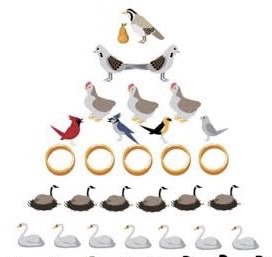
For my part, I am offering a further carol for The Season of Christmas: another one from the early centuries of Christianity, when theologians wrote the words of songs for the faithful to sing—thereby providing them with meaty teaching in the faith (at least as they understood it). Today, it is one by the forth century theologian Ambrose, who was Bishop of Milan from 374 until his death in 397.
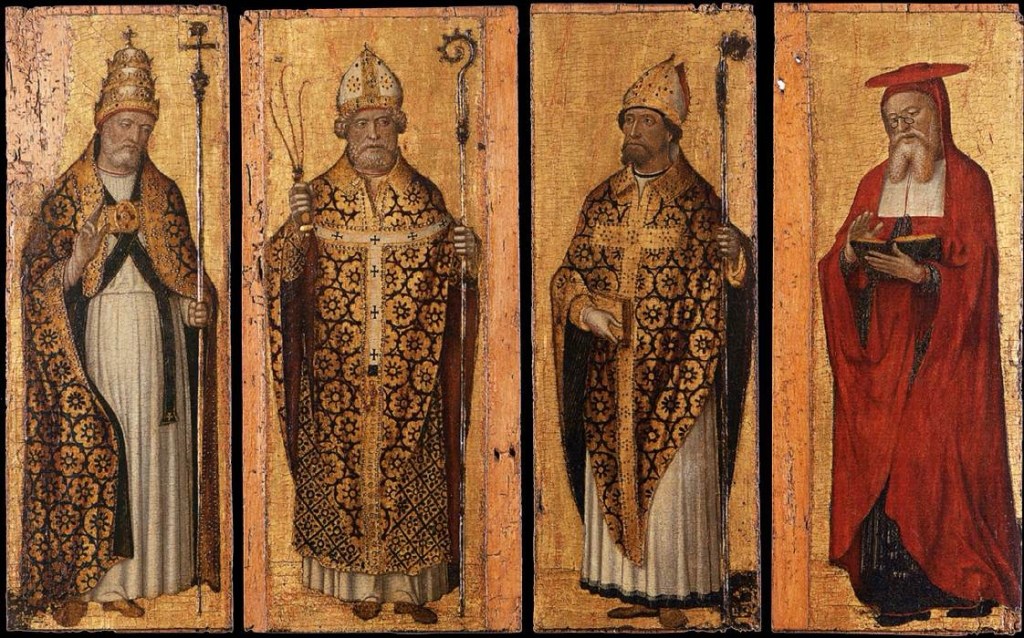
Four Doctors of the Church
Four panels from a partially-preserved polyptych, dated c. 1495, and attributed to Galleria Franchetti, Ca’ d’Oro, Venice

Amongst the western church, dominated by Roman Catholicism, Ambrose of Milan (339—397) is counted as one of the four Doctors of the Church, along with his contemporaries Augustine of Hippo (354—430) and Jerome of Stridon (342—420). Pope Gregory the Great (540—604) is accounted as the fourth Doctor. All four had the title Doctor attributed to them, in the true sense of the word (it comes from the Latin word for Teacher). 

In the eyes of many theological writers, the fourth century was critical in the development of classic orthodoxy, for this was when the various disputes about the nature of Jesus took place. Those who were leading the theological argumentation—including Ambrose, Augustine, and Jerome—contributed to the development of orthodox dogmas which were confirmed by various church councils: Nicea in 325, Constantinople in 381, Ephesus in 431, Chalcedon in 451, and others in subsequent centuries. 

Those whose arguments failed to persuade—or who were condemned by decree of one of the councils—are known to us as “heretics”; they include Theodotius of Byzantium, Nestorian of Constantinople, Paul of Samosata, Apollinaris of Laodicea, Eutyches of Constantinople, and perhaps most famously of all, Arius of Alexandria. Legend has it that at the Council of Nicea, Arius slapped Nicholas of Myra (the historical figure who later morphed into Saint Nicholas and then Santa Claus) and so was temporarily defrocked and imprisoned. 

Although their writings were instrumental in developing orthodox theology, such men have long been denigrated as heretics—although, in my mind, a number of these “heretics” offered wise and helpful insights. But the verdict of history stands, cemented now by centuries of church tradition and theological dogma. 
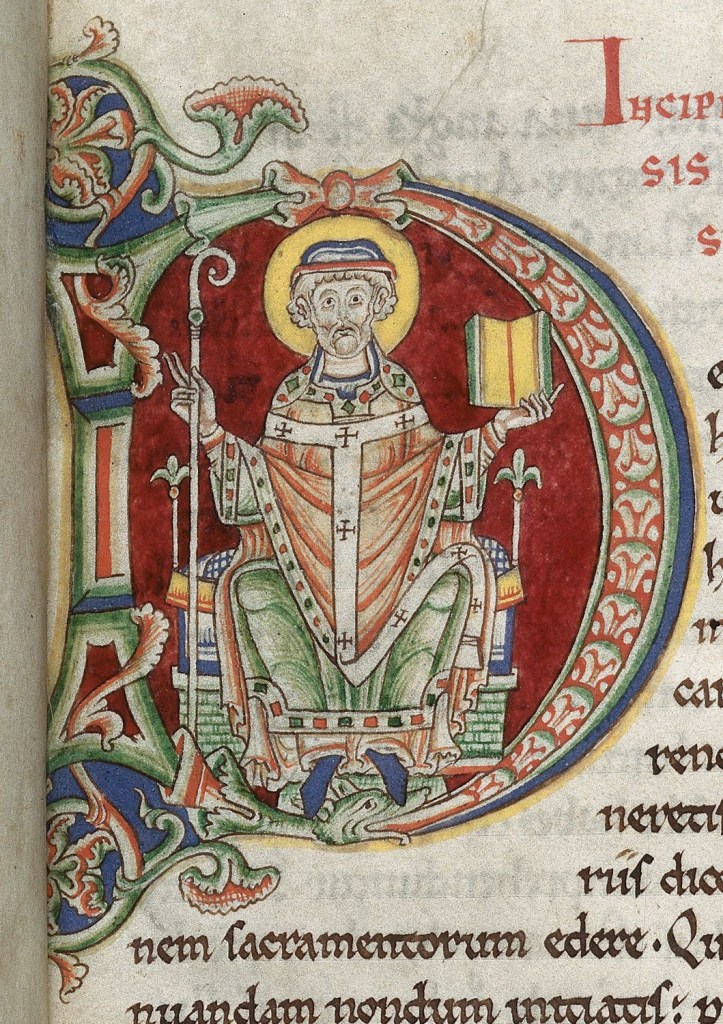
Ambrose of Milan

It is in this context of debate, disputation, denigration, and entrenched doctrinal disagreements, that Ambrose penned this carol, Veni redemptor gentium (Come, Redeemer of Nations). It is filled with patristic theologising, reflecting the debates of the day, depicting Jesus as “a giant in twofold substance in one” and “equal to the Father”, whilst also affirming his mother as having “virgin honour all unstained”, a “royal home of purity”. These are the seeds for the theological affirmations about Jesus in some of the much later Christmas carols that we sing today!

Here is the hymn of Ambrose in a translation of the original Latin by John Mason Neale (whom we noted a few days ago provided us with the English of Good King Wenceslas).

1. Come, Thou Redeemer of the earth,

And manifest Thy virgin birth:

Let every age adoring fall;

Such birth befits the God of all.

2. Begotten of no human will,

But of the Spirit, Thou art still

The Word of God in flesh arrayed,

The promised Fruit to man displayed.

3. The virgin womb that burden gained

With virgin honour all unstained;

The banners there of virtue glow;

God in His temple dwells below.

4. Forth from His chamber goeth He,

That royal home of purity,

A giant in twofold substance one,

Rejoicing now His course to run.

5. From God the Father He proceeds,

To God the Father back He speeds;

His course He runs to death and hell,

Returning on God’s throne to dwell.

6. O equal to the Father, Thou!

Gird on Thy fleshly mantle now;

The weakness of our mortal state

With deathless might invigorate.

7. Thy cradle here shall glitter bright,

And darkness breathe a newer light,

Where endless faith shall shine serene,

And twilight never intervene.

8. All laud to God the Father be,

All praise, eternal Son, to Thee;

All glory, as is ever meet,

To God the Holy Paraclete.

Trans. J. M. Neale. 

https://www.preces-latinae.org/thesaurus/Hymni/VeniRedemptorG.html

Closely related to this carol, there is another carol in a 15th century manuscript, the Selden Carol Book, a document which contains music and words for thirty carols of the day. (The manuscript is held in Oxford at the Bodleian Library.)
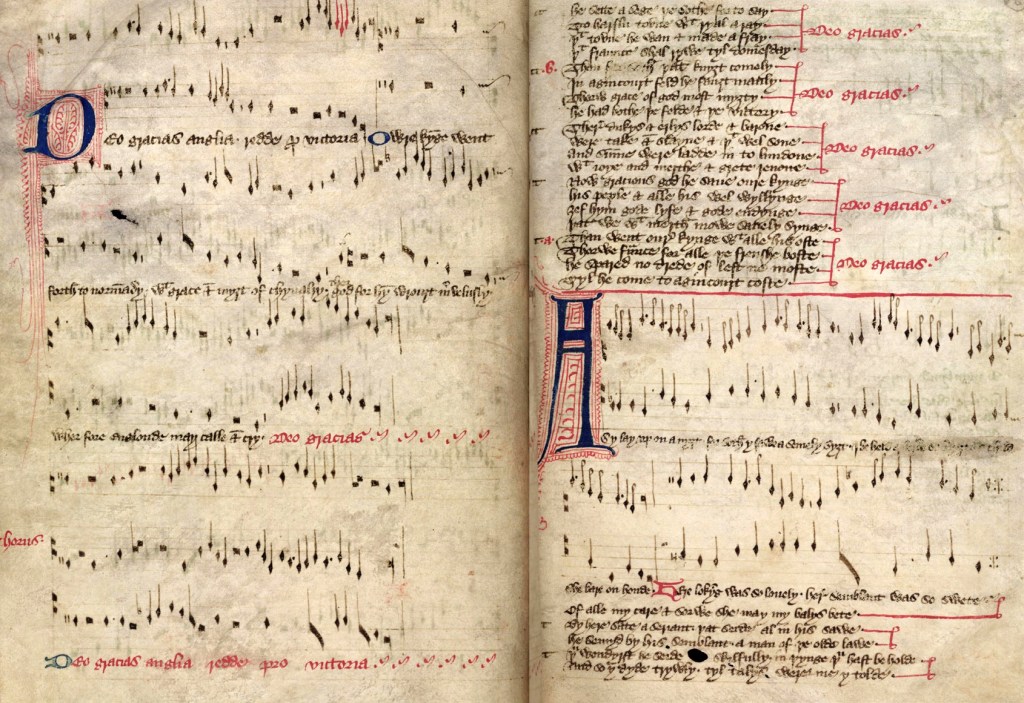
A page from the manuscript of the Selden Carol Book

This carol, number 28 in the collection, both uses the refrain of Ambrose’s original, and, in verse 3, refers directly to the work by Ambrose. Its author, as with all the carols in the Selden manuscript, is unknown.

Veni, redemptor gencium, Veni, redemptor gencium. 

This worle wondreth of all thynge

Howe a maide conceyved a kynge;

To yeue us al therof shewynge,

Veni, redemptor gencium.

Whan Gabriel come with his gretynge

To Mary moder, that swete thynge,

He graunted and saide with grete lykynge,

Veni, redemptor gencium.

Ambrose saide in his writynge

Cryst sholde be in a maide dwellynge;

To make sothe alle that syngynge,

Veni, redemptor gencium.

And Davyd saide in his spellynge

That truthe sholde be in erthe growynge

To us, byer of alle thynge,

Veni, redemptor gencium.

Cryst, ycrowned at oure begynnynge,

Be with us at oure endynge

Us to thy ioye for to brynge,

Veni, redemptor gencium.

The text is from Richard Greene, The Early English Carols (Oxford, 1977), p.36. A version in modern English is offered at  

http://aclerkofoxford.blogspot.com.au/2013/12/veni-redemptor-gentium-this-world.html
Carols for the Season of Christmas (6) The Sixth Day of Christmas, 30 December

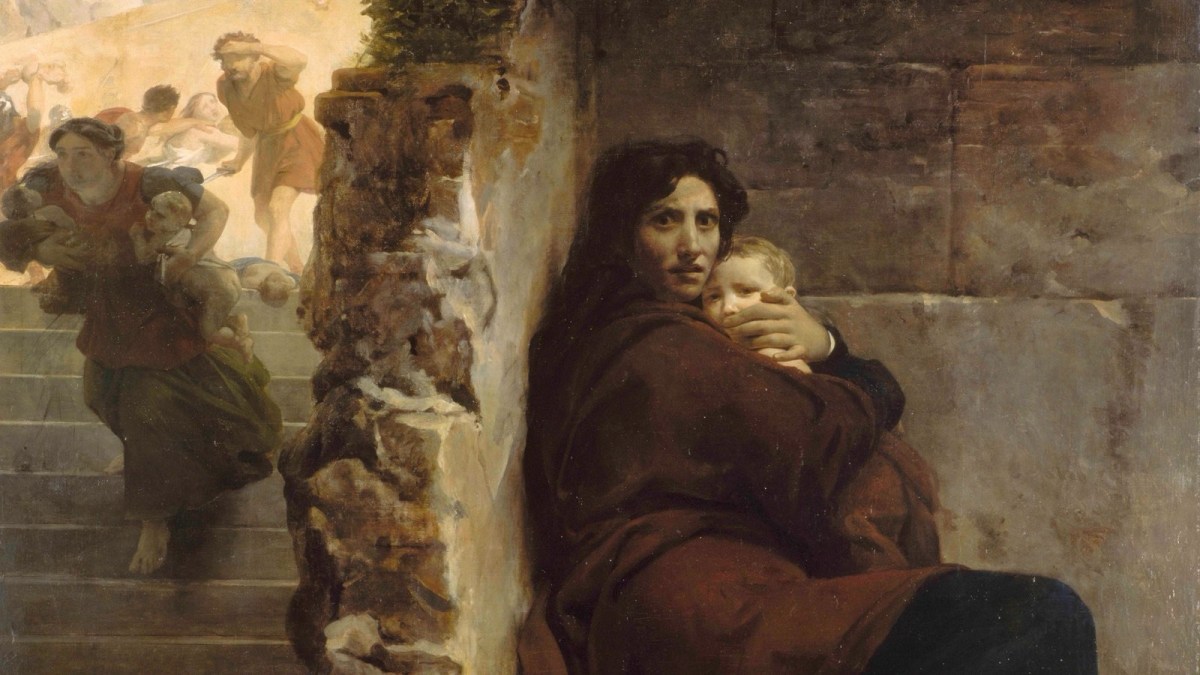
I have been amazed to learn that, back in the fifth century, the poet Prudentius wrote a number of hymns that tell the story of the slaughter of innocent children, ordered by King Herod.

Whilst the basic theological orientation of these hymns is clearly patristic orthodoxy, they do contain a gritty realism that seems to have largely flown out the window when modern day carols are sung!

Here is a hymn which remembers those innocent children who were, according to the theology of Prudentius, “victims slain for Christ the King”.

All hail, you infant martyrs’ flow’rs,’ 

Cut off in life’s first dawning hours 

As rosebuds, snapt in tempest strife 

When Herod sought the Savior’s life.

O tender flock of Christ, we sing 

Of victims slain for Christ the King 

Oppression’s loud lament we raise, 

Then join the martyrs’ song of praise:

All honor, laud, and glory be, 

O Jesus, Virgin-born, to thee; 

All glory, as is ever meet, 

To Parent and to Paraclete. 

(Prudentius, 5th century, alt.)

This hymn is a cento (a patchwork quilt of words from various sources) from the twelfth and last poem in the Cathemerinon of Prudentius, and in its full form it contains 208 lines. The first line of the complete hymn is Quicumque Christum quaeritis. Four beautiful centos from this hymn were included in the Breviary by Pius V (1568); see https://media.churchmusicassociation.org/pdf/hymnsofbreviary.pdf

The original Latin text of the hymn is:

Salvete, flores Martyrum, in lucis ipso lumine
Quos ssevus ensis messuit, ceu turbo nascentes rosas.

Vos prima Christi victima, grex immolatorum tener,
Aram sub ipsam simplices palma et coronis luditis.

Quid proficit tantum nefas ? Quid crimen Herodem juvat?
Unus tot inter funera impune Christus tollitur.

Inter coaevi sanguinis fluenta solus integer,
Ferrum quod orbabat nurus party’s fefellit virginis.

Qui natus es de Virgine Jesu, tibi sit gloria,
Cum Patre, cumque Spiritu, in sempiterna secula.


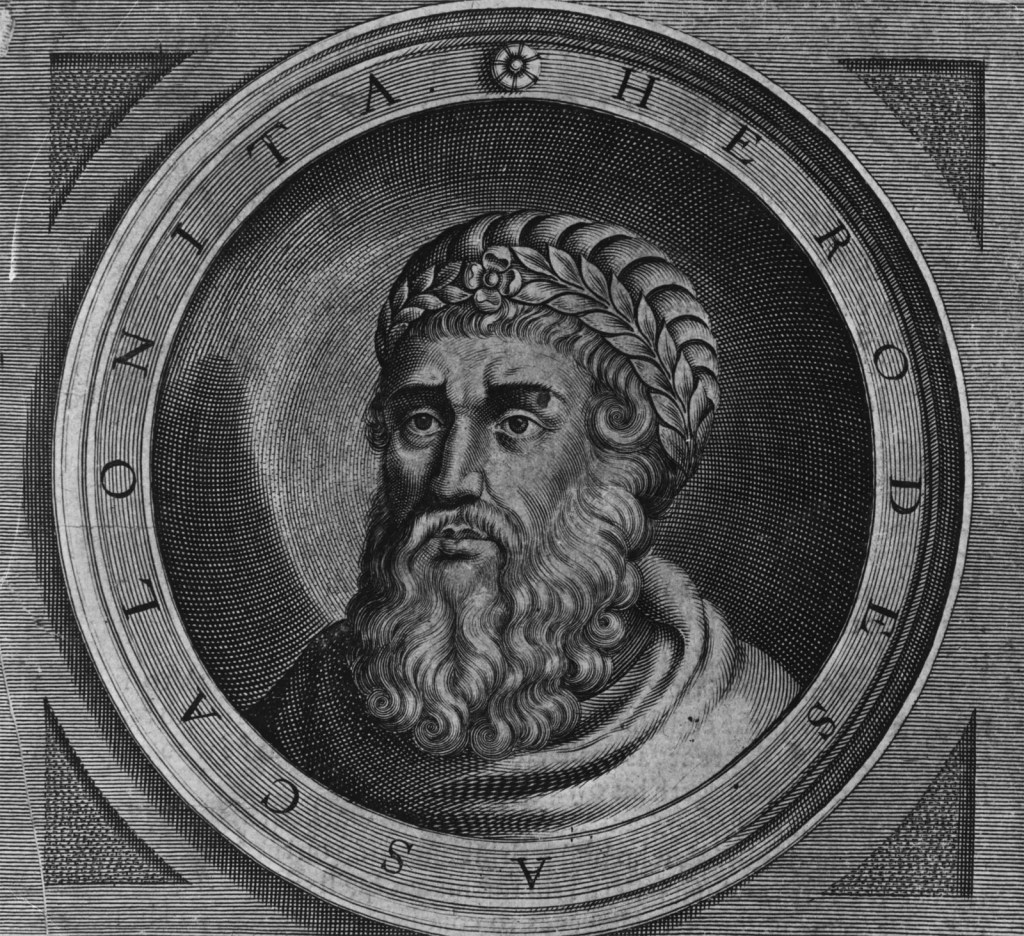
Bust of Herod the Great, from the Hulton Archive.
Encyclopædia Britannica. https://www.britannica.com/biography/Herod-king-of-Judaea#/media/1/263437/319900

Another of his compositions recounts the same story from the perspective of King Herod.

With boding fears the tyrant hears
A King of Kings is hard at hand,
Who rule shall claim o’er Israel’s name
And high in David’s palace stand.

With wild surprise, ” We die,” he cries, “
Around us lurks a traitor brood ;
” Up, guard, awake, thy weapon take, “
And every cradle drown in blood.”

What boots his ire, and dark desire;
What help, if he his thousands slay ?
Alone of all, around that fall,
The Christ is safely borne away.

Jesu, to Thee all glory be,
Of Mary, Virgin-Mother born ;
To God Triune all praise be done,
Through endless life’s unwaning morn.

The Latin text:

Audit tyrannus anxius adesse regum principem,

qui nomen Israel regat teneatque David regiam.

Exclamat amens nuntio, successor instat, pellimur;

satelles i, ferrum rape, perfunde cunas sanguine.

Quid proficit tantum nefas, quid crimen Herodem iuvat?

unus tot inter funera inpune Christus tollitur.

Iesu, tibi sit gloria, qui natus es de Virgine,

cum Patre et almo Spiritu, in sempiterna saecula. Amen.

This is the 12th and last poem in his Cathemerinon, and in its full form consists of 208 lines. It is found in a 5th century manuscript in the Bibliotheque Nationale, Paris (Prudentius, Opera, 8048, f. 39b).

Though one of the finest poems of Prudentius, it was apparently little used in the services of the Church until the revision of the Roman Breviary after the Council of Trent. 

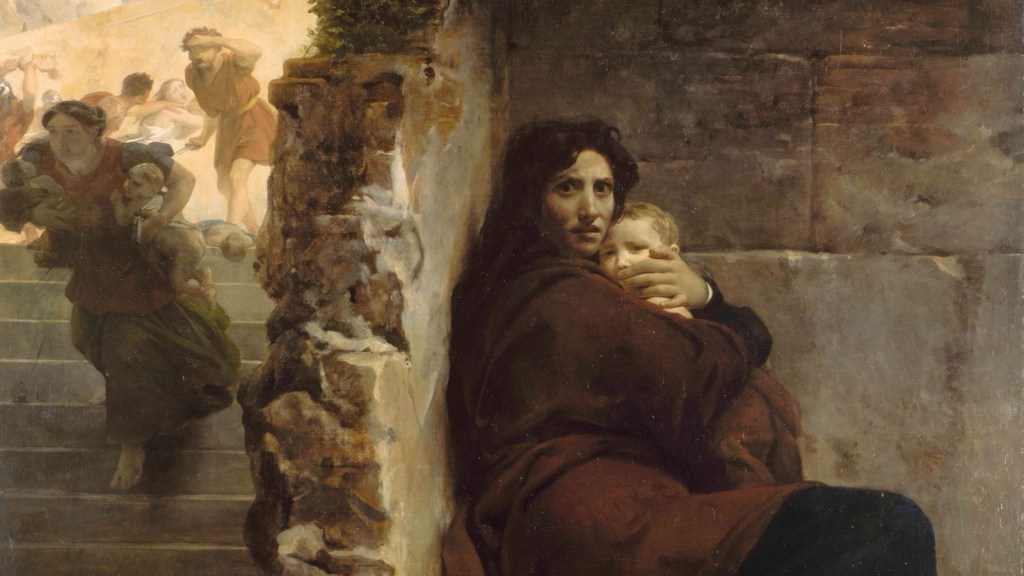
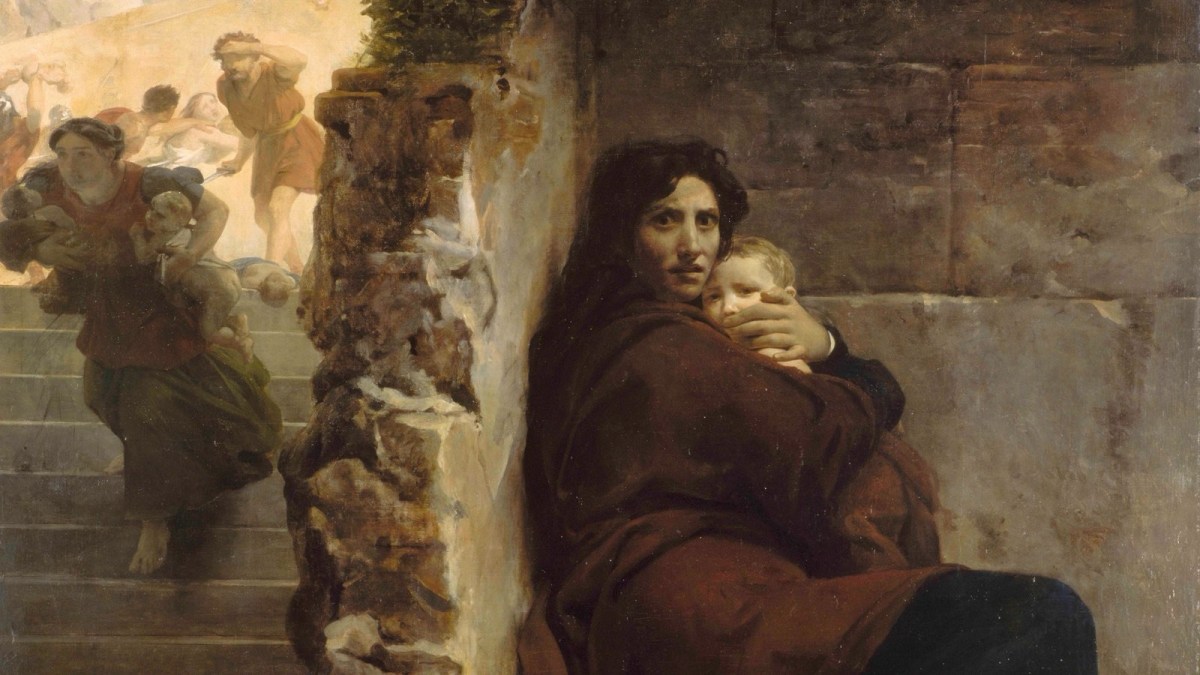
“The Massacre of the Innocents,” an 1824 painting
by Léon Cogniet, held in the Musée des Beaux-Arts

Carols for the Season of Christmas (5) The Fifth Day of Christmas, 29 December

Yesterday, we focussed on “the slaughter of the innocents” which is commemorated in the Western Church on 28 December. Today, 29 December, is the day when this commemoration takes place in the Eastern Church.

This this potent story, full of pathos, is so resonant with events in the world in which we live today: people dying in invasions and wars; people fleeing, seeking refuge, in a safe place. Sadly, this part of the story has all but faded from view in “the Christmas story” that is recounted each Christmas. So here are some more thoughts—largely from the words written by contemporary hymn writers that tell this story.

There are clear words in these carols which show how the story challenges political values and policies and how it connects with the deepest feelings of human existence.

One contemporary hymn writer who has turned his attention to the story of Herod’s tyrannical rampage against the male children in Bethlehem, is the British Methodist, the Rev. Dr Andrew Pratt. Here is a powerful hymn which he has written about this story.

Herod waiting, Herod watching,

Herod grasping, holding power,

Herod fearful for the future,

Herod counting every hour.

Now the thing that he was fearing:

love and justice, peace and health,

here embodied in a person,

God incarnate, heaven’s wealth.

This was more than he could stomach,

human wine skins tear and rend.

Herod’s dream had been confounded,

human power had met its end.

Many children now were crying,

temper triumphed, babies dead.

Mary, Joseph made an exit,

every step was filled with dread.

Into exile they were driven,

fear would ripple through each life:

Jesus challenged vested interests.

Gracious love fuelled hate and strife.

And the children still are crying,

forced to war and harmed by hate.

Still our world is deaf to hear them,

still our loving comes too late.

© Andrew Pratt 18/11/2010. For the First after Christmas, Matthew 2: 13 – 23; Herod, Holy Innocents, the flight into Egypt.

See https://www.umcdiscipleship.org/resources/herod-waiting-herod-watching

Another person who has worked well with words over many decades is the late Shirley Erena Murray, a Presbyterian from Aotearoa New Zealand. She was right on the money when she highlighted the violence and fear at the heart of the story, claiming that the infant in the story has “come to plead war’s counter-case”, and articulating the hope that “goodness will outclass the gun, evil has no tooth that can kill the truth.” Here’s her words:

Summer sun or winter skies, Christmas comes —

shepherds, angels, lullabies, words recorded by the wise:

read it in the book — take another look . . . .

Shadows track the hawk in flight, Christmas now —

children born in fire and fight, silent night a violent night,

hawks are in control of a nation’s soul.

There where terror plies its trade, Christmas now —

children learn to be afraid, minefields of distrust are laid,

evil is in force on a winning course.

Child of peace, God’s human face, Christmas now —

come to plead war’s counter-case, bring the dove a nesting place,

though her wings are torn, though her blood is drawn.

Winter skies or summer sun, Christmas comes —

still the threads of hope are spun, goodness will outclass the gun,

evil has no tooth that can kill the truth.

This ancient story resonates so strongly with our situation today, not because “it really happened, exactly like this”, but because (like a good myth does) it takes us to the centre of our humanity and reveals the depth of God’s presence in our midst. We ought to sing more about it!

See http://www.hopepublishing.com/html/main.isx?sitesec=40.2.1.0&hymnID=430

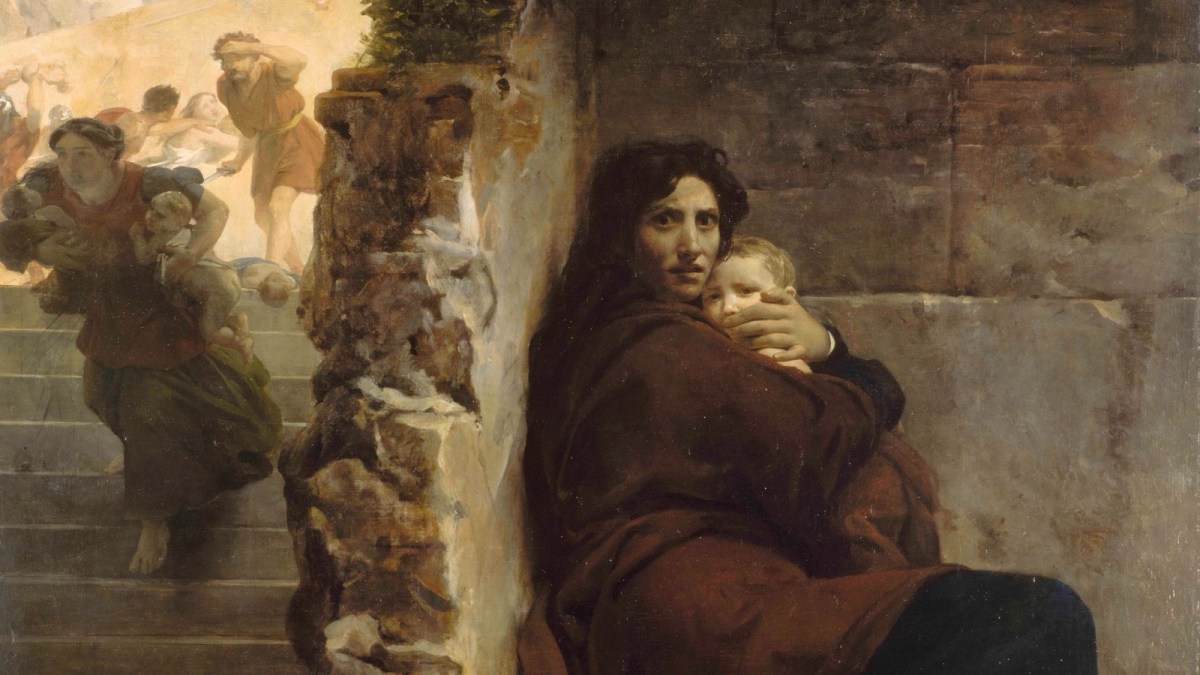
“The Massacre of the Innocents,” an 1824 painting
by Léon Cogniet, held in the Musée des Beaux-Arts

Carols for the Season of Christmas (4) The Fourth Day of Christmas, 28 December

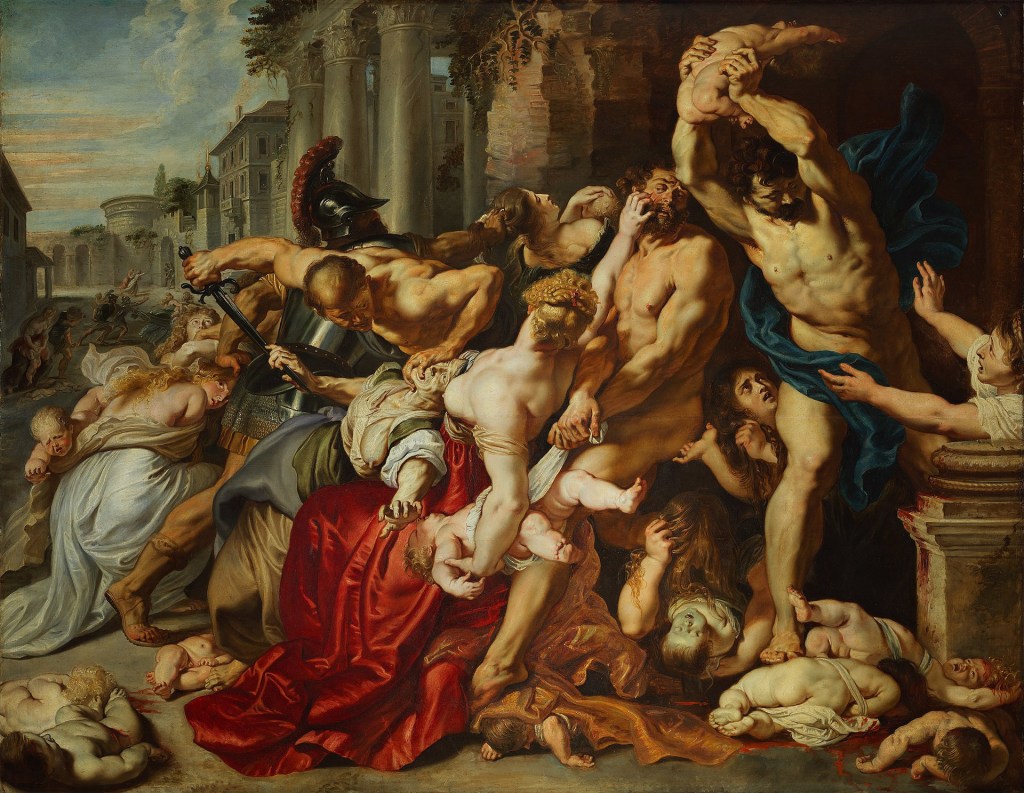
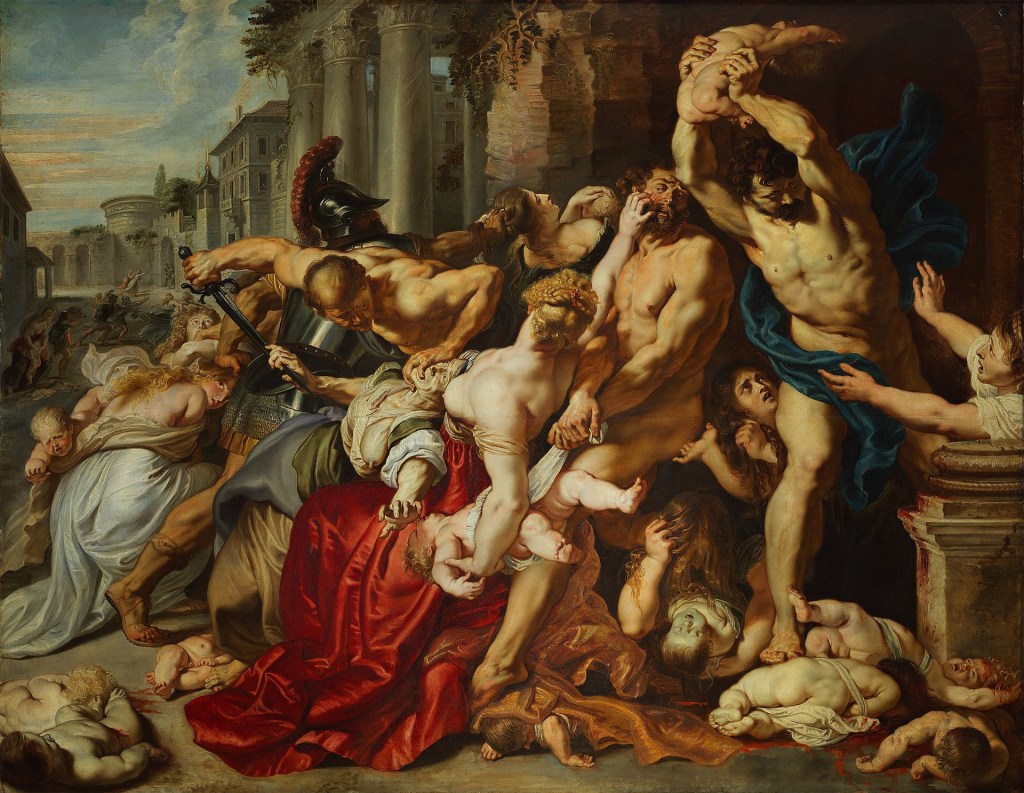
Today (in the Western Church) is designated as the Feast of the Holy Innocents. (It is celebrated tomorrow in the Eastern Church.) This festival day commemorates a tradition known as “the slaughter of the Innocents”,  reportedly ordered by King Herod. It’s a gruesome attachment to the story that is told in the Gospel of Matthew that begins, “now the birth of Jesus the Messiah took place in this way” (Matt 1:18). 

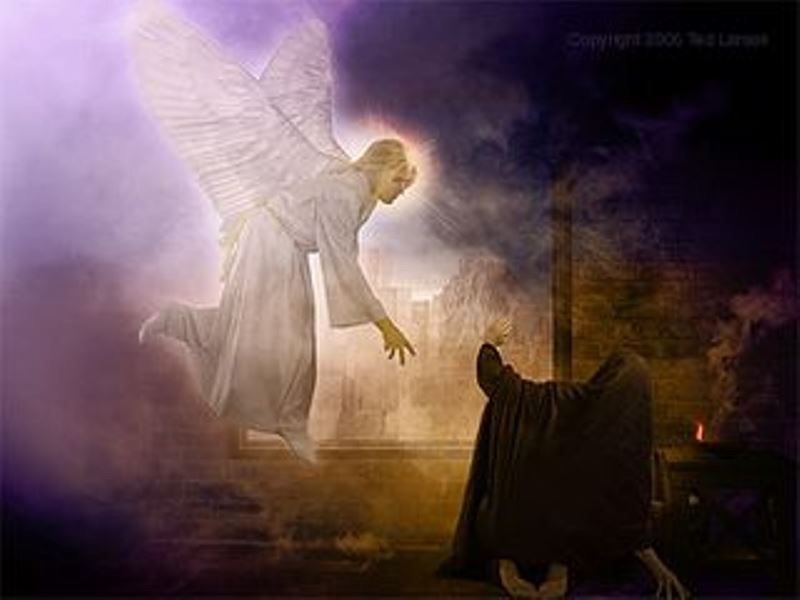
The tradition is that when Herod learnt of the birth of “the King of the Jews”, he feared that this king would pose a threat to his own rule (as a client king under the Roman Empire) over the Jewish people. Herod, it is said, ordered that all male children under two years of age should be killed, to ensure that this rival king was safely despatched (Matt 2:16). Jesus survived this because after visitors “from the east” came from the court of Herod to pay tribute to him (2:11), his parents were advised of the imminent pogrom by an angelic visitation (2:13).

“The Massacre of the Innocents,” an 1824 painting
by Léon Cogniet, held in the Musée des Beaux-Arts

The story is told only in Matthew’s Gospel. It is highly unlikely that the events reported by Matthew actually took place. First, his is the only account of such an event in any piece of literature from that time. An event with so many deaths would surely have been noted by other writers. It is true that Herod was a tyrannical ruler; but amongst the various accounts of his murderous deeds, there is nothing which correlates to the events reported in Matthew’s Gospel.

Second, the story is embedded in the opening section of the Gospel, which uses typical Jewish typology and scripture-fulfilment to present the story of Jesus as a re-enactment of the story of Moses. The author of Matthew’s Gospel, a follower of Jesus who had been raised as a faithful Jew, was especially partial in the opening chapters of his work  to quoting scripture and claiming that events that he reports “took place to fulfill what had been spoken by the Lord through the prophet” (1:22–23). 

The chief priests and scribes in the royal court, says this author, told Herod that Jesus had been born in Bethlehem, “for so it has been written by the prophet” (2:4–6); the flight into Egypt of Joseph, Mary, and their newborn child was “to fulfill what had been spoken by the Lord through the prophets (2:15); the slaughter of the children itself “fulfilled what had been spoken through the prophet Jeremiah” (2:17–18); and the return of the family some time later and their settling in Nazareth was “so that what had been spoken through the prophets might be fulfilled” (2:21–23). 

Aiding and abetting these notes of scripture fulfilment are other typical elements in the Jewish traditions of storytelling, namely, that the events as they take place are guided by the appearance of an angel in the dreams of Joseph (1:20–21; 2:13; 2:19) as well as direct guidance mediated by a dream of the visitors “from the east” (2:12) and again in a further dream of Joseph (2:22). The story that appears in Matt 1:18–2:23 would readily have been recognised by Jewish listeners as employing the typical elements and patterns of Jewish haggadic midrash.

See https://jwa.org/encyclopedia/article/midrash-and-aggadah-terminology

The book of Exodus also employed these elements and patterns. It opens in the time when “a new king arose over Egypt, who did not know Joseph” (Exod 1:8). This king, unnamed except for the designation of “Pharaoh”, feared the increasing numbers and growing power of the Israelites who been enslaved in Egypt for hundreds of years, determined that he would slow the rate of increase and lessen the power of the Israelites by decreeing, “every boy that is born to the Hebrews you shall throw into the Nile, but you shall let every girl live” (Exod 1:22). 

It is in this context that Moses is born; he is hidden “among the reeds on the bank of the river” (Exod 2:1–4), and then taken home by the daughter of Pharaoh (Exod 2:5–9), adopted by her, and raised as a member of the royal household (Exod 2:10). The origin of the child is revealed to the readers (but presumably not to the Pharaoh) by his being named Moses, because, as Pharaoh’s daughter said, “I drew him out of the water” (Exod 2:10b). 

The fact that a name conveys a deeper meaning has been found again and again in the traditional tales collated to form the narrative of Genesis: Adam reflects his creation “from the dust of the ground” (Gen 2:7), Eve’s name indicates that she is “the mother of all living” (3:20), Cain means “acquired” and is reflected in Eve’s comment that “I have produced [or acquired, qanah] a man with the help of the Lord” (4:1), and Abel is related to the Hebrew word for “emptiness” (havel). 

Abram’s name is changed to Abraham, which means “leader [ab] of multitudes [raham]”, to signal the covenantal promise of the Lord God that “I will make you exceedingly fruitful; and I will make nations of you, and kings shall come from you … for an everlasting covenant, to be God to you and to your offspring after you” (17:4–6).  The name of the aged, barren Sarai is changed to Sarah, meaning “she laughed” (17:15),  to signal her incredulous response to the news that she will bear a child (18:9–15). The name of Ishmael literally means “God listens” (16:11) and that of Jacob means “he who supplants” (25:24–26); after his all-night struggle with a man at the ford of Jabbok (32:22–24), his name was changed to Israel, meaning “the one who strives with God” (32:28). Names are deeply significant!

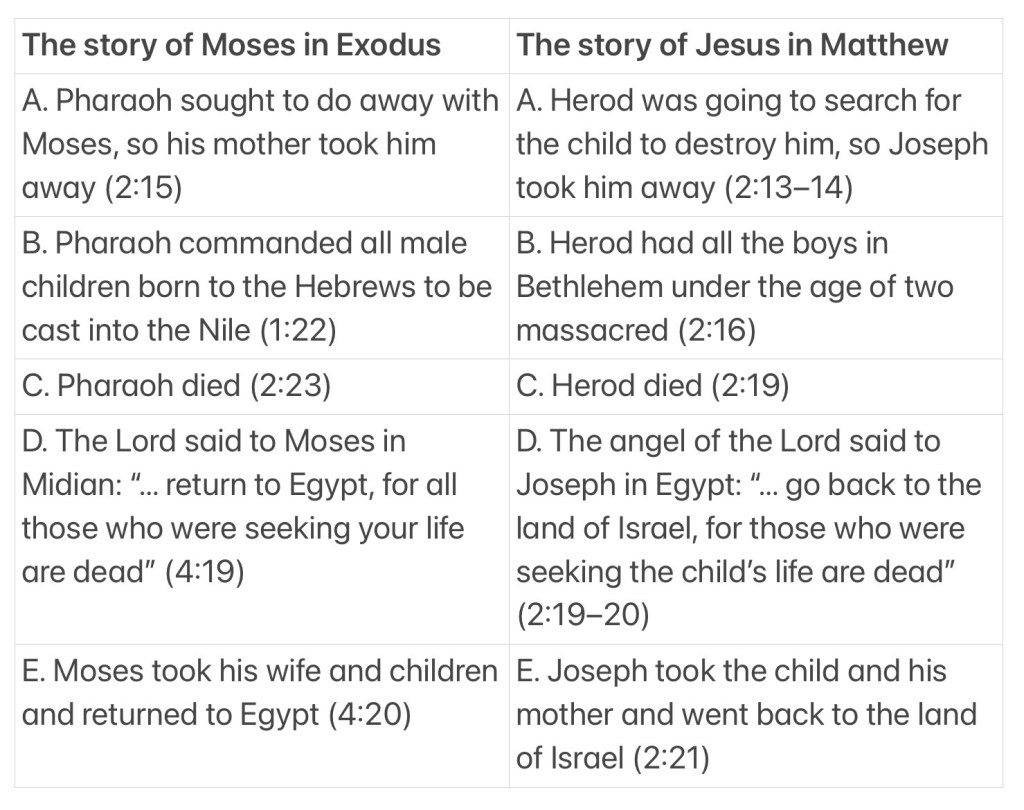
So Moses means “drawn from water”, and Jospeh is given the message that his son is to be given the name that signifies his role, Jesus: “for he will save his people from their sins” (Matt 1:21). And the ancient tale of the slaughter of infants at the time of the birth of Moses is replicated at many points in Matthew’s account of the slaughter of infants at the time of the birth of Jesus (Matt 2:1–18). This later account simply fits the pattern of the earlier account, as this chart shows:

The parallels are very clear!

And just as the literary structure of each story runs in the same pattern, so also the “historical” similarities are clear. Just as there is no historical evidence beyond Exodus to corroborate that the story of the pogrom at the time of Moses took place, neither is there evidence beyond the Gospel of Matthew to corroborate the account found there. Both patterns of events were stories, tales told, not history recorded.

But these non-historical stories are important for theological reasons. The Moses story is part of the whole Exodus complex that provides the fundamental explanation for the identity of Israel. The Jesus story as Matthew presents it is part of the foundational myth of the Christian faith. The writer of Matthew’s Gospel wants to make strong correlations between Jesus and Moses, as the two key figures in their respective stories—and religious systems. This starts in the mythological account found in the opening chapters, and continues throughout the following chapters of the Gospel.

As myth, the tradition found in Matt 1—2 points to important truths. The Slaughter of the Innocents grounds the story of Jesus in the historical, political, and cultural life of the day. It provides a dreadful realism to a story which, all too often in the developing Christian Tradition, has become etherealised, spiritualised, and romanticised.

So we remember this story as an important pointer to the counter-cultural, alternative-narrative impact of the person of Jesus. It is not history, but it offers a powerful myth.

A traditional hymn which remembers this tradition is the Coventry Carol. This dates from the 16th century, when it was performed in Coventry, England, as a part of a mystery play entitled The Pageant of the Shearman and Tailors.

The single surviving text of this pageant (including the words of this carol) was published by one Robert Croo, who dated his manuscript 14 March 1534. The carol is in the form of a lullaby, sung as a poignant remembrance by the mother of a child who is doomed to die in the pogrom.

Lully, lullay, thou little tiny child,

Bye bye, lully, lullay.

Lully, lullay, thou little tiny child,

Bye bye, lully, lullay.

O sisters too, how may we do

For to preserve this day

This poor youngling for whom we sing,

“Bye bye, lully, lullay”?

Herod the king, in his raging,

Charged he hath this day

His men of might in his own sight

All young children to slay.

That woe is me, poor child, for thee

And ever mourn and may

For thy parting neither say nor sing,

“Bye bye, lully, lullay.”

Carols for the Season of Christmas (3) The Third Day of Christmas, 27 December

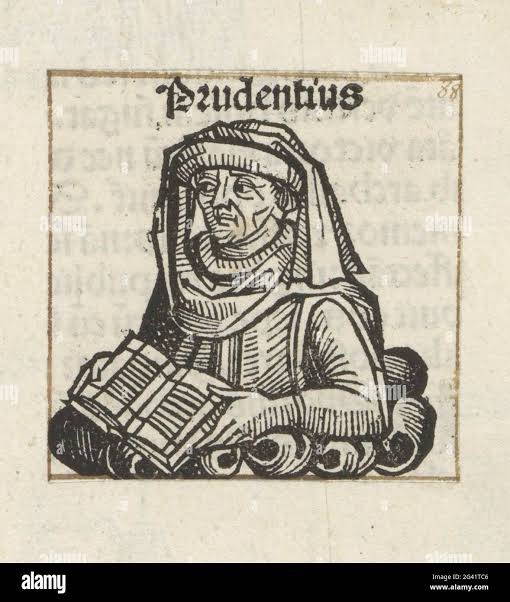
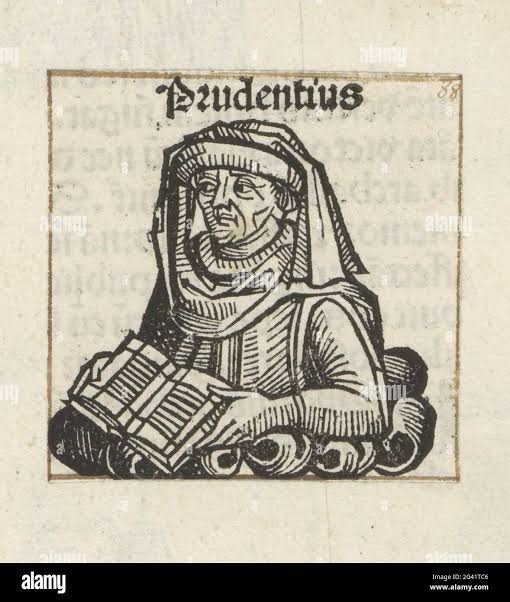
For today, the Third Day of Christmas, following the church calendar, I offer a Christmas carol which originates in the 4th century. It was written by the Roman poet, Aurelius Prudentius Clemens. Prudentius was a Spanish layman, a lawyer who twice served as a provincial governor. He was also a government official in the court of the Roman Empire, and is remembered as one of the greatest Latin Christian poets. 

For the last period of his life (at least a decade, perhaps closer to two), Prudentius lived as an ascetic, fasting during daylight hours and eating only vegetarian meals. It was apparently during this period that he wrote many books and poems. Among these works was the Psychomachia, an allegorical treatment of “the conflict of the soul” (as illustrated).

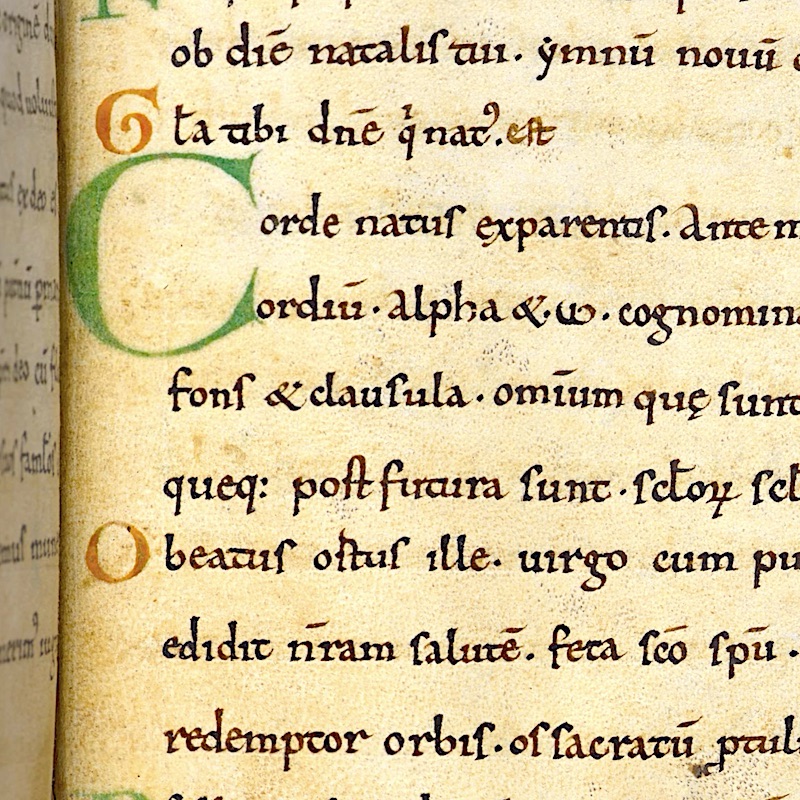
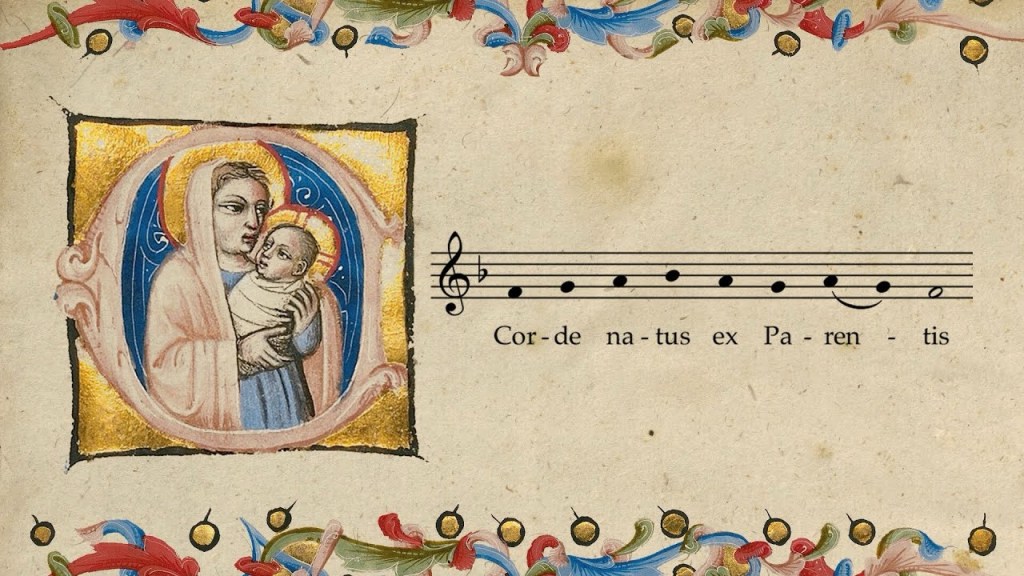
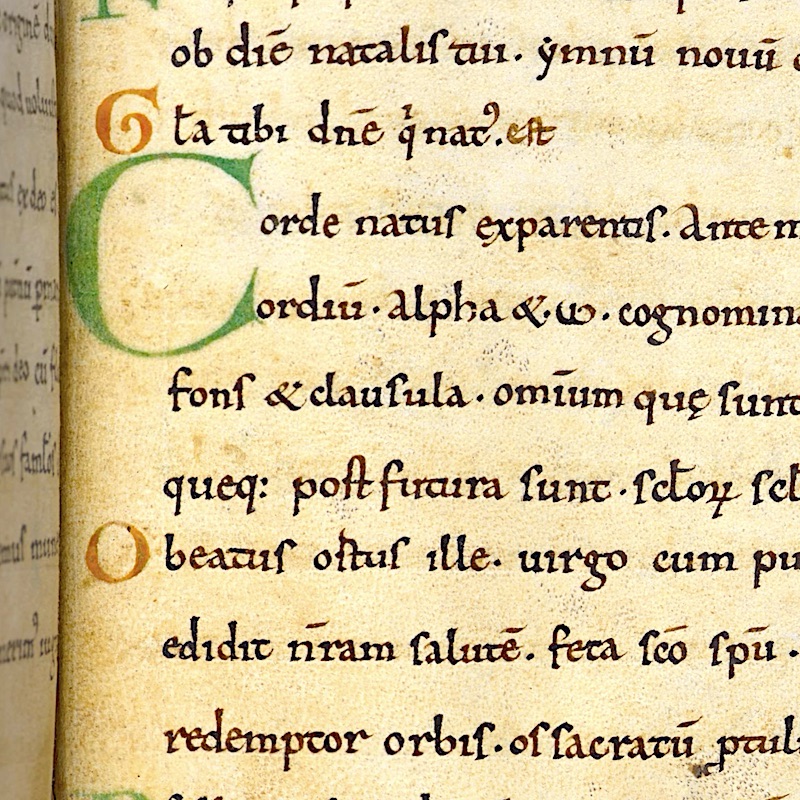
Prudentius composed Corde natus ex Parentis, which was subsequently translated into English as “Of the Father’s love begotten”. The translator was John Mason Neale, whom we met yesterday. This hymn stands at the head of the section in Together in Song where we find the Christmas carols/hymns, so it is recognised as an ancient Christmas carol. 

Prudentius, situated strongly within the developing patristic theology, gives expression to the “highest” view of Jesus, as Alpha and fons (source, or origin) and Omega and clausula (ending, or culmination) of the whole creation, existing “evermore and evermore”. 

So the hymn resonates well with the developing credal tradition of the Nicea—Chalcedon-Constantinople stream. And so begins the long trek towards the transcendental, romantically-unrealistic, Christ of Christmas.

  1. Corde natus ex parentis ante mundi exordium

A et O cognominatus, ipse fons et clausula

Omnium quae sunt, fuerunt, quaeque post futura sunt.

2. Ipse iussit et creata, dixit ipse et facta sunt,

Terra, caelum, fossa ponti, trina rerum machina,

Quaeque in his vigent sub alto solis et lunae globo.

3. Corporis formam caduci, membra morti obnoxia

Induit, ne gens periret primoplasti ex germine,

Merserat quem lex profundo noxialis tartaro.

4. O beatus ortus ille, virgo cum puerpera

Edidit nostram salutem, feta Sancto Spiritu,

Et puer redemptor orbis os sacratum protulit.

5. Psallat altitudo caeli, psallite omnes angeli,

Quidquid est virtutis usquam psallat in laudem Dei,

Nulla linguarum silescat, vox et omnis consonet.

6. Ecce, quem vates vetustis concinebant saeculis,

Quem prophetarum fideles paginae spoponderant,

Emicat promissus olim; cuncta conlaudent eum.

7. Macte iudex mortuorum, macte rex viventium,

Dexter in Parentis arce qui cluis virtutibus,

Omnium venturus inde iustus ultor criminum.

8. Te senes et te iuventus, parvulorum te chorus,

Turba matrum, virginumque, simplices puellulae,

Voce concordes pudicis perstrepant concentibus.

9. Tibi, Christe, sit cum Patre hagioque Pneumate

Hymnus, decus, laus perennis, gratiarum actio,

Honor, virtus, victoria, regnum aeternaliter.

The English translation:

(1) Of the Father’s love begotten

Ere the worlds began to be,

He is Alpha and Omega,

He the Source, the Ending He,

Of the things that are, that have been,

And that future years shall see

Evermore and evermore.

(2) Oh, that birth forever blessed

When the Virgin, full of grace,

By the Holy Ghost conceiving,

Bare the Savior of our race,

And the Babe, the world’s Redeemer,

First revealed His sacred face

Evermore and evermore.

(3) O ye heights of heaven, adore Him;

Angel hosts, His praises sing;

Powers, dominions, bow before Him

And extol our God and King.

Let no tongue on earth be silent,

Every voice in concert ring

Evermore and evermore.

(4) This is He whom Heaven-taught singers

Sang of old with one accord;

Whom the Scriptures of the prophets

Promised in their faithful word.

Now He shines, the Long-expected;

Let creation praise its Lord

Evermore and evermore.

(5) Christ, to Thee, with God the Father,

And, O Holy Ghost, to Thee

Hymn and chant and high thanksgiving

And unending praises be,

Honor, glory, and dominion,

And eternal victory

Evermore and evermore.

http://etymologyofhymns.blogspot.com.au/2012/12/of-fathers-love-begotten.html
Carols for the Season of Christmas (1) The First Day of Christmas, 25 December

Today, Christmas Day, is the first day in the season of Christmas. The First Day of Christmas, according to a well-known Christmas song, is to be celebrated with the gift of a partridge in a pear tree, is it not? Subsequent days, we learn from that song, should be celebrated with the gifts of assorted birds, five golden rings, and an assortment of drummers, leaping lords, milkmaids, and more!

For each of The Twelve Days in the ecclesial Season of Christmas, however, I will be thinking about various carols. We most likely have had our fill,of all the traditional carols and songs associated with Christmas in the lead-up to the actual day of Christmas; so I will be offering thoughts on carols, mostly lesser-known or unknown in the modern period, that are appropriate for the Season.

For today, I offer the words of a hymn (a very early Christmas carol) composed in Latin and attributed to the fourth century doctor of the church, Hilary, the Bishop of Poitiers. Hilary was sometimes referred to as the “Hammer of the Arians” (Malleus Arianorum) because of his active role in opposing Arian theology in Gaul, and also as the “Athanasius of the West”.

The carol Jesus refulsit omnium (“Jesus illuminates all”) is dated to 368.  The words in Latin are:

Jesus refulsit omnium
Pius redemptor gentium
Totum genus fidelium
Laudes celebret dramatum

Quem stella natum fulgida
Monstrat micans per authera
Magosque duxit praevia
Ipsius ad cunabula

Illi cadentes parvulum
Pannis adorant obsitum
Verum fatentur ut Deum
Munus ferendo mysticum.

The English Translation below is by Kevin Hawthorne, PhD

Jesus, devoted redeemer of all nations, has shone forth. / Let the whole family of the faithful celebrate the stories. / The shining star, gleaming in the heavens, / makes him known at his birth and, going before, has led the Magi to his cradle. / Falling down, they adore the tiny baby hidden in rags, / as they bear witness to the true God by bringing a mystical gift.

See http://archive.wf-f.org/Hymns-carols.html