Skip to content

An Informed Faith

John T Squires

An Informed Faith

Category: An Orderly Account: Gospel of Luke

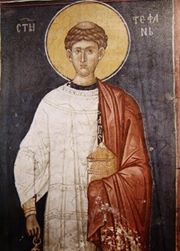
Stephen: deacon and prophet, martyr and disciple

Stephen: deacon and prophet, martyr and disciple

26 December is the day when the Western Church especially recognises Stephen, the person who lays claim to being the first Christian martyr. (The Eastern Church allocates 27 December for this purpose). In reflecting on Stephen, we find a richness in what Luke recounts in his second volume, the Acts of the Apostles. Here are seven things to note about Stephen.

  1. Stephen represents the ministry of Deacon. He was one of the seven appointed in the Jerusalem church “to wait on tables” during “the daily distribution of food”. In this account, we find the Greek term diakonia (6:1,4) and its cognate verb (6:2). These terms have a general reference to waiting at table in ordinary hellenistic Greek usage (Luke 4:39; 10:40; 12:37; 17:8), but here take on the distinctive sense which they collect in Luke-Acts, by referring to a leadership role in the community (Luke 8:3; 22:26-27; Acts 1:17,25; 12:25; 19:22; 20:24; 21:19).
  2. Stephen represents those gifted by the Spirit for ministry. As the first named of the seven, he is explicitly identified as being “a man full of faith and the Holy Spirit” (Acts 6:5). The phrase “filled with the Spirit” is applied to Peter (4:8), Stephen (6:3,5; 7:55), Saul (9:17; 13:9) and Barnabas (11:24). Earlier, in Luke’s Gospel, other individuals were identified as spirit-filled: John the baptiser (1:15), Zachariah (1:67), Simeon (2:25-26) and Jesus himself (4:1,14). The phrase “full of faith and the Holy Spirit” reinforces the role of the spirit-filled prophet within the messianic Jewish community. Indeed, all members of this community are typically “filled with the spirit” (4:31). They all had a ministry to exercise.
  3. Stephen exemplifies grace, wisdom and power–qualities to be found amongst those in ministry and leadership. Stephen is described as being “full of grace” (6:8), a defining mark of the community noted at 2:47, 4:33, and of power, a divine gift (2:22) exhibited by the apostles (4:33). He is able to perform wonders and signs (6:8), a divinely-inspired capacity (2:19) exhibited by Jesus (2:22) and the apostles (2:43; 5:12). Luke notes again that Stephen speaks with “wisdom and spirit” (6:10), attributes already noted as divine in origin the spirit is a direct gift of God (2:17), as is faith, or believing (5:14); wisdom is given by God (7:10) and is linked with spirit (6:3,10) and other divine gifts (grace, 7:10; power, 7:22).
  4. Stephen also represents those called to the Ministry of the Word. Acts 7 contains the longest speech of the book (and the only one spoken by Stephen). Stephen is portrayed as one powerful speaker. The speech serves to set the events that took place in Jerusalem (the accusations brought against Stephen, 6:9-15; and the stoning of Stephen, 7:51-60) within the broader framework of divine sovereignty (how God has been at work in Israel, 7:2-50). As is typical of speeches in Acts, Stephen makes God the subject of the speech (7:2); we see the same pattern in speeches by Peter (2:17; 3:13; 5:30) and Paul (13:17, 21; 17). The phrase used here, “the God of glory”, is drawn from scripture (Ps 29:3), and retells the story with this consistent perspective: what took place in the past was God working in and through human history. God is regularly the initiator of the actions reported (see verses 2,4,5,6,9,10,20,25,32,36,38,42,44,45,46).
  5. Stephen represents the continuation of the prophetic tradition in the early church. The speech Luke places on the lips of Stephen rebuts the charges that have been laid against Stephen; it demonstrates that, far from speaking “blasphemous words against God” (6:11), Stephen has a fulsome understanding of God’s place in Israel’s history. At the end of his speech, Stephen takes up the charge that he spoke “against the holy place” (6:13). Luke has Stephen quote scripture (7:49-50, citing Isa 66:1-2) in order to show that his criticism of the temple (God’s “place of rest”, 7:49) arises from within Jewish tradition itself. There are numerous scriptural allusions and quotations in this speech by Stephen. He provides a detailed rehearsal of significant parts of Israel’s history, by focussing in turn on Abraham (7:2-8), Joseph (7:9-16) and Moses (7:17-44). Then, after making brief mention of Joshua (7:45a), David (7:45b-46) and Solomon (7:47), Stephen moves to the climactic claim of the speech (7:48-53). Now, lengthy recitals of key features of Israel’s history are already found in Hebrew Scripture (Deut 26; Josh 24; Neh 9; Pss 78; 105; 106; 135; 136; Ezek 20). The long recital of the earlier part of Israel’s history reinforces Stephen’s Jewish credentials. When he begins to speak critically of the temple, and of the Jerusalem authorities, it is clear that he does so from within the Jewish tradition. Stephen is not an outsider, but an insider, offering a prophetic critique. This is at the heart of the proclamation of the good news.
  6. Stephen represents martyrs—those who bear witness to their faith, to the point of offering up their own lives. The Greek word martys actually derives from the word to bear witness; it is applied to Stephen at Acts 22:20, and this usage has come to define its central quality in later Christian thinking. Stephen stands for what he believes, to the point of death. The task of bearing witness is enabled by the gift of the spirit and given to all followers of Jesus (1:8), but Stephen is the first to reveal the extent to wich bearing witness requires total life commitment. The Greek word stephanos means “crown”, and much has been made of this in later Christian tradition (the crown of martyrdom, etc); but Luke avoids any such wordplay in his account of Stephen. In Luke’s description of the charges brought against Stephen in Jerusalem (Acts 6), there are echoes of the charged laid against Jesus, according to Synoptic traditions. Those in conflict with Stephen are Diaspora Jews who have returned to Jerusalem, where they worship in a synagogue (6:9). They conscript agitators to stir up the crowd (6:11-12). This is reminiscent of a detail in the trial of Jesus (Mark 15:11; Matt 27:20) which Luke omits, transferring it to Stephen’s trial. Similar agitation of the crowd will later be encountered by Paul (13:50; 14:19; 17:5,13); in Luke’s eyes, it is a typical characteristic of what was experienced by the early followers of Jesus. Likewise, the “false witnesses” who accuse Stephen of speaking against the temple (6:13) recall the false witnesses who charge Jesus with the claim that he would destroy the temple (Mark 14:55-58; Matt 26:59-61). This is another detail which Luke omits from his Gospel narrative and transfers to Stephen’s trial. The speech which Stephen delivers thus serves as the “defence speech” in his trial; a true witness to God, over against the charge of the false witnesses.
  7. Stephen shows us what it means to follow Jesus. Luke consciously models Stephen’s death on the death scene of Jesus (7:54-60; cf. Luke 23:34, 44-46). He is once again described as “filled with the spirit” (7:55, evoking 6:3,5), and he experiences an epiphany in which he sees “the glory of God” (7:55). At this liminal moment, Stephen is already transported into the divine presence. The same happens for Jesus in Luke’s account of his crucifixion. In 7:56, when Stephen describes the heavens opening, he evokes the Lukan account of Jesus’ baptism (Luke 3:21), and his vision of the Son of Man is similar to the apocalyptic  vision which Jesus paints at his trial (Luke 22:69). In both scenes, it is as if God intervenes into the events taking place. Stephen’s two cries “in a great voice” (7:57,60) are reminiscent of the death of Jesus (Luke 23:46), and his dying words, “receive my spirit” (7:59), are patterned on the final words of the Lukan Jesus (Luke 23:46, citing Ps 31:6). He is close to God at his  death—as is the Lukan Jesus. Stephen’s last cry, a petition that the Lord overlook this sin (7:60), is similarly evocative of the words of the Lukan Jesus, offering forgiveness to those who crucified him (Luke 23:34). In life, and in death, Stephen faithfully follows Jesus.

(These reflections are adapted from sections of my commentary on Acts, published in 2003 in the Eerdmans Commentary on the Bible.)

See also https://johntsquires.com/2018/12/26/ye-who-now-will-bless-the-poor-shall-yourselves-find-blessing/
Unknown's avatarAuthor John T SquiresPosted on December 26, 2019December 26, 2019Categories An Orderly Account: Gospel of LukeTags Acts, Christmas, scriptureLeave a comment on Stephen: deacon and prophet, martyr and disciple

On the move. A reflection on Christmas.

On the move. A reflection on Christmas.

At Christmas, we recall a familiar story. Central to the story is the baby born in a manger, because there was no room in the inn. This element is, of course, told and retold countless times in the weeks leading up to Christmas, and in churches in every country around the world, on Christmas Eve and Christmas Day.

That part of the story gets disseminated widely. That part of the story contributes strongly to the warm, fuzzy vibe that Christmas brings to many people. Less well shared, however, is that part of the story which reports that this family were soon under threat, and they hurriedly fled to another country, seeking the safety of refuge, until the threat was over.

Christmas cards, and Christmas carols, have tended to encourage us to romanticise and sentimentalise the first part of the story—the babe in the manger in Bethlehem. We sing so easily about the scene that Luke recounts in his Gospel, imagining it in the picture perfect way of so many cards and carols: the baby lying peacefully asleep in the manger, the adoring mother and doting father, the shepherds who come from the fields to worship.

It all sounds so peaceful, so relaxed, so comfortable, so ideal.

As we sing all of this, I suspect that we forget that the newborn infant was born in the area that was shared with the animals; there were no homely comforts, but there would have been the sights and sounds and smells of the barnyard, all around.

We overlook, perhaps, that the shepherds who came in from the fields to pay homage to the newborn child (Luke 2:8–16) would have been despised for carrying out a lowly and unworthy occupation. They were outcasts, considers impure and unclean, placed outside the circle of holiness within which good Jews were expected to live. In the Mishnah, a third century work which collects and discusses traditional Jewish laws, shepherds are classified amongst those who practice “the craft of robbers”. These are not highly valued guests!

We forget, also, that Luke’s account of this birth places it in Bethlehem, which is not the place where the newly-formed family lived. They had been forced to travel there, according to Luke’s account, because of a nation-wide census that was required by the Romans (Luke 2:1-7). Giving birth to the child in that town, in that inn, in that manger, was not the plan that his parents initially had; this was a temporary, unforeseen situation, basic and crude.

This part of the story is not at all the comfortable and soothing scene that cards and carols regularly depict. The birth takes place after a forced journey, in an less than desirable setting.

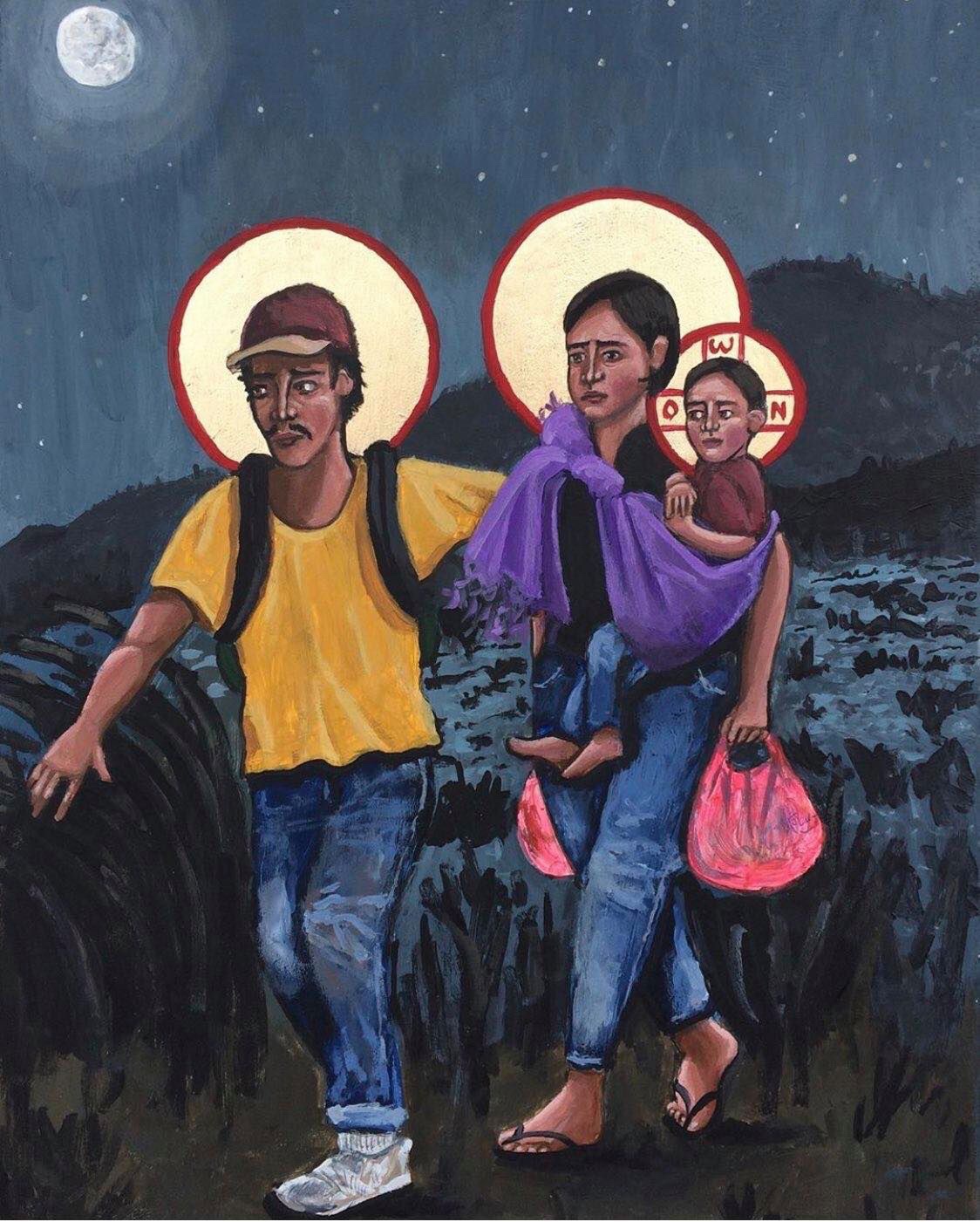
The second part of the story, that found in the Gospel of Matthew, also has an unexpected and forced journey involved. This part of the story relates to the rapid flight that the family took after the child was born, heading away from Herod, fleeing into the safety of Egypt, a foreign country (Matt 2:13-15).

Matthew’s contribution to the story rarely fosters those warm, fuzzy vibes that many associate with Christmas. And often, in church, this part of the story is left for the time after Christmas Day—which is logical, since this is where it comes in the flow of the story; but which means that, downunder at least, it is featured during the Great Summer Holiday which comes immediately after the feasting and festivities of Christmas Day (and Boxing Day, if there are still plentiful left overs!)

Matthew’s account sets out very clearly that this journey was not part of the original plan, worked out methodically in advance. Rather, this was a rapid response to an emergency situation, a hurried seeking of refuge. It was a temporary measure, undertaken under great duress.

The ruler who gives the order which provokes the family to undertake this journey is the man whom Jesus once called “that fox”: Herod. Ruling over Judea as a client king of the Romans, Herod was a half-Jewish man who had risen to the top of Jewish society through political cunning and strategic marriages. He had a reputation for violent brutality.

Matthew’s story recounts that Herod ordered that all male children under two years of age should be killed, to ensure that this potential rival to his rule would be safely despatched (Matt 2:1-3, 16-18). Jesus survived this because his parents were advised of the imminent pogrom by visitors “from the east” who had come via the court of Herod (Matt 2:13-15).

This part of the story also does not sound relaxed, sweet, and comfortable!

And then, as the story in Matthew’s account continues, there is yet another journey, returning from Egypt, back into Israelis–but not Judea, for fear of the ruler who followed Herod, his son Archelaus; rather, to Galilee, where the family,settled in Nazareth (Matt 2:19-23).

Another episode of dislocation and disruption, that rarely features in the classic carols and Christmas cards.

It is because of these disruptive and confronting elements in the story that, in my mind, Christmas challenges us to think about those who have no shelter. It especially invites us to think about those who have nowhere safe to shelter because their homes are beset by warfare, their lives are constrained by oppression, their families have been decimated by murders, their houses have been bombed or shelled.

In that spirit, as we celebrate Christmas, let us also commit to working to ensure safety and security for those who are imperilled, homeless, stateless, and on the move. There are so many such people in our world today. There are so many ways we can live out the Christmas story as we reach out to them.

The image is La Sagrada Familia by Kelly Latimore

https://kellylatimoreicons.com/gallery/img_2361/

See also

https://johntsquires.com/2019/12/25/acting-for-peace-through-the-christmas-bowl/

https://johntsquires.com/2019/12/11/the-origins-of-jesus-in-the-book-of-origins-matthew-1/

https://johntsquires.com/2019/12/19/descended-from-david-according-to-the-flesh-rom-1/

https://johntsquires.com/2019/12/17/now-the-birth-of-jesus-the-messiah-took-place-in-this-way-matthew-1/

https://johntsquires.com/2019/12/04/for-our-instruction-that-we-might-have-hope-rom-15-isa-11-matt-3/

https://johntsquires.com/2019/11/28/leaving-luke-meeting-matthew/

https://johntsquires.com/2018/12/19/what-can-we-know-about-the-birth-of-jesus/

Unknown's avatarAuthor John T SquiresPosted on December 24, 2019December 25, 2019Categories A Book of Origins: Gospel of Matthew, An Orderly Account: Gospel of LukeTags Christmas, Luke, Matthew, scripture2 Comments on On the move. A reflection on Christmas.

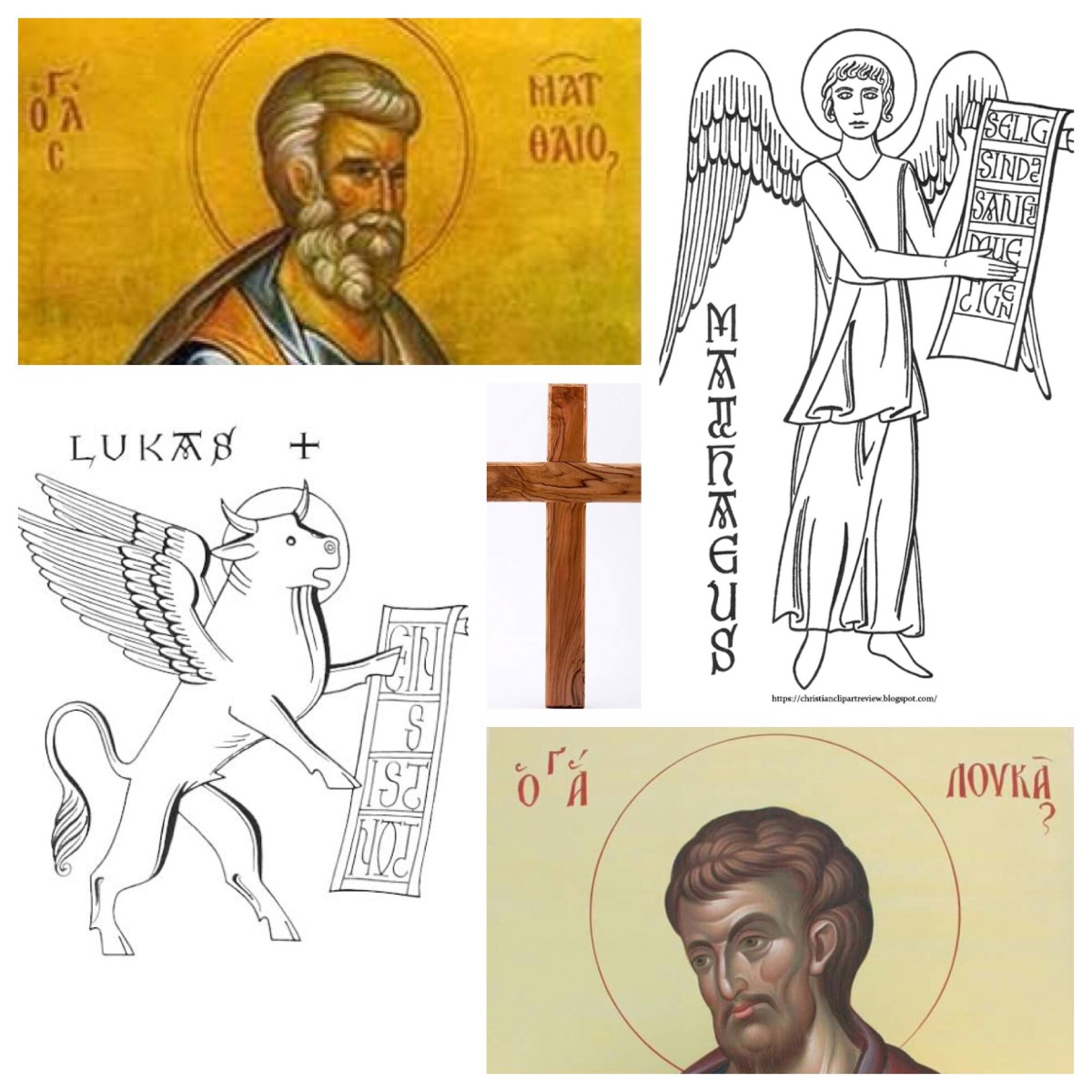
Leaving Luke . . . Meeting Matthew

Leaving Luke  . . . Meeting Matthew

This week is a pivot point in the year. Not in the calendar year—where attention is focussed on the drive towards the Great Commercial Festival of Christmas—but in the church year. This is the last week of the year, in the calendar which the church follows in its liturgical life. It is the week when the old year ends, leaving behind the Festival of the Reign of Christ, and the new year begins, moving into the Season of Advent, and then on into Christmas, Epiphany, Lent, Easter, Pentecost, and beyond. And so, the cycle begins once more.

It is also the time of the year when the Gospel which is in focus in the writings heard each Sunday, shifts from one Gospel to another. The year past (identified as Year C in the Revised Common Lectionary) has maintained a steadfast focus on the book which describes itself as “an orderly account of the events that have been fulfilled among us”—a work which know as the Gospel according to Luke.

The year now commencing (identified as Year A) provides us with a tour through another work, which introduces itself as “the book of the origins of Jesus the chosen one”—the work which we know as the Gospel according to Matthew. And so, this week, we are leaving Luke, and meeting Matthew.

Of course, both works tell the story of the man from Galilee, called to a prophetic role of inviting his people to renew their covenant relationship with their God and live faithfully within that renewed relationship; a man who gathered a group of committed followers whom he taught and told stories that offered a vision of God’s realm.

Both accounts relate how those followers travelled with their leader, from Galilee in to Jerusalem, where they witnessed the arrest, trials, crucifixion, and burial of their leader—who, they subsequently attested, had been raised from the dead and had appeared to them to commission them for their ongoing task. This much is found in both the “orderly account” and the “book of origins”.

So how do these stories differ? Each book came into being in a different context. The “orderly account”, it would seem, originated in a place where the vision of a renewed people, as proclaimed by Jesus, offered a sense of a broad, inclusive community—and people were being challenged to live as that community. The “book of origins”, it appears, came into being in a place where tensions and antagonisms between different groups within that one people had led each group to intensify their sense of who they were—and people were being instructed on the details of the way of righteousness that they were to follow.

What shades of interpretation and differences of perspective are there, when we move from “the orderly account of the things being fulfilled”, to “the book of origins of Jesus the chosen one”? How do these two stories, focussed on the same central person and reporting a largely quite similar set of events, differ from one another?

Luke’s “orderly account” offers a story in which Jesus functions as an eschatological prophet of hope, offering an attractive vision of the coming kingdom, pointing to the ways that God is calling the people of God on earth to work towards the realisation of that vision in the realities of the here and now: good news for the poor, sight for the blind, mobility for the lame, acceptance for shunned outsiders, as a sign of the Jubilee Year being enacted.

We leave that story and move towards a story, in the “book of origins”, that portrays Jesus as a frightening apocalyptic messenger, booming forth a shrill warning about the perils of what is to come, if people do not change their ways and live in accord with the strict demands of the kingdom of heaven: walk the second mile, turn the other cheek, give your coat to the needy, obey each element of every law and commandment, strive to be perfect as God is perfection itself.

We leave behind a story that affirms that salvation is offered to “all flesh”, that salvation has come “this very day”, that soldiers acting unjustly under forced orders will be forgiven, that even condemned political rebels will be welcomed into the realm of paradise in the company of the Saviour. It is a story in which Jesus offers a gracious invitation to the lost and forsaken, a promise that they will be found and restored, a vision of the restoration of the people of Israel, a glimpse of the heavenly realm breaking into the time of the here and now.

We move towards a story that insists that the hope of the future is withheld from those within the chosen people, in Israel, who fail to live in accordance with the strictest interpretations of the laws and commandments that Jesus teaches them, who do not put his stringent teachings into practice in their daily life. The focus of Jesus through much of this story is on the lost sheep within Israel; their response, however, means that only a few enter through the narrow door.

Jesus this insists that those amongst his people who fail to follow his way will be judged for their failure to produce good fruit; they will be cast into a fiery furnace, and condemned for eternity. He persistently calls for a deeper righteousness, a more perfect faithfulness.

Towards the end of this story, however, Jesus looks beyond the people of Israel, and envisages an offer of hope and an acceptance into God’s realm, of those who live with an openness to others at their point of need. He envisages, then, a judgement amongst the nations that does not require the same stringent response as is required within the chosen people.

We leave behind a story that indicates, time after time, that Jesus was the friend of all, that he entered the houses of tax collectors and shared at table with them, that he went to the homes of Pharisees and ate with them, such that they became his friends and followers. In this story, Jesus was able to gather committed followers of people from right across society, who were willing to follow him well into the future. This “orderly account” particularly emphasises the active presence of women alongside men in that inner group of followers.

We move towards a story that specifies the many ways by which Jesus engaged in robust and vigorous disputations about how the laws and commandments were to be understood, and recounts those occasions, both in public and in household gatherings, when the debating style of Jesus moved from debate into polemic, from disagreement into diatribe, from accusation into invective and condemnation of the scribes and the Pharisees, who are sternly portrayed as the enemies of Jesus.

We leave behind a story that values inclusive community, that takes pains to show how Jesus sat at table with the outcasts of the time: utterly impoverished beggars, morally destitute sinners, totally marginalised lepers, and patriarchally oppressed women. The story provides regular accounts of the practice of open table fellowship in the time of Jesus, and points to the fact that this practice came to lay a foundation for a richly inclusive community of insiders and outsiders, women and men, rich and poor, Gentiles as well as Jews.

We move towards a story that emphasises the clarity of identity and passionate commitment that comes from knowing that the one who is followed is The Teacher supreme, arguing out the finer details of beliefs and practices, laying down the foundations for a community which exhibits certainty and confidence in their identity, differentiated from the dominant group of teachers (the scribes and Pharisees), utterly committed to a pathway of righteous living, firmly convinced of the validity of their understandings and interpretations.

We leave behind a story that has sought to prepare the way for a larger, more encompassing story, in which the small movement of immediate followers of Jesus blossoms out into a growing and impressive movement of committed people who become fervent and effective in their mission, welcoming newcomers in an inclusive manner and broadening the movement in waves of growth, such that it ultimately reaches “to the ends of the earth”.

We move into a story that mostly gives no indication of this wider impact of the message of Jesus (save only for a short final command to “go into all nations”), and which demonstrates far more concern for establishing a deeply committed community of practice of a small number of people within the heart of Israel, as people are renewed and rededicated to upholding the laws and commandments to the ultimate degree.

That’s the turn that we take, at this time, as we leave a year focussed on Luke’s “orderly account”, with a Jesus who proclaims and enacts a gracious invitation into a realm of inclusion and hope. We are moving into a year tracing the story provided in Matthew’s “book of origins”, where Jesus is intent on teaching the essence of righteousness and demanding intense adherence to this way of life.

The challenge for us, then, is to be honest about the nature of the story in this “book of origins”, and to declare, faithfully and clearly, what this story tells us about what it means to follow Jesus, the chosen one, in our own time.

For more on Luke’s “orderly account”, see

https://johntsquires.com/2019/01/31/an-orderly-account-a-quick-guide-to-luke-and-acts/

https://johntsquires.com/2019/02/05/costly-discipleship-according-to-luke/

https://johntsquires.com/2019/05/22/jesus-and-his-followers-at-table-in-lukes-orderly-account/

https://johntsquires.com/2019/04/26/the-cross-cultural-nature-of-the-early-jesus-movement/

Unknown's avatarAuthor John T SquiresPosted on November 28, 2019November 26, 2022Categories A Book of Origins: Gospel of Matthew, An Orderly Account: Gospel of LukeTags Matthew, righteousness, scripture, theology13 Comments on Leaving Luke . . . Meeting Matthew

Ministry and Mission in the midst of change and transition (Luke 21:13; Pentecost 23C)

Ministry and Mission in the midst of change and transition (Luke 21:13; Pentecost 23C)

When you hear of wars and insurrections, do not be terrified; for these things must take place first, but the end will not follow immediately.” Then he said to them, “Nation will rise against nation, and kingdom against kingdom; there will be great earthquakes, and in various places famines and plagues; and there will be dreadful portents and great signs from heaven.

“But before all this occurs, they will arrest you and persecute you; they will hand you over to synagogues and prisons, and you will be brought before kings and governors because of my name. This will give you an opportunity to testify. (Luke 21)

In the long and disturbing speech that Jesus gave to his earliest followers towards the end of his ministry with them, he outlines what lay ahead in time for the people of his time—a speech referring to wars and insurrections, earthquakes, famines and plagues; betrayals, arrests and imprisonments; and even hatred. And we might want to add, from our immediate context, in the midst of a changing climate, more aggressive heatwaves and out of control bushfires—with all the damage and grief that this brings, as we have so recently seen.

In the midst of this speech, Jesus offers these simple, potent words: [all of] this will give you an opportunity to testify (Luke 21:13). I hear this as a piercing call to be on mission in precisely the tumult and turmoil of life as it rolls along, amidst all the upheaval and distress that life throws at us. Testifying to the hope we have and the love we know because of Jesus, is fundamental to who we are as the church.

To be on mission means to have a sense that we are sent to the people of the world. Mission comes from the Latin missio, the verb “to send”. Towards the end of the Gospel of John, we read that the risen Jesus appeared to his followers and said to them, “Peace be with you. As the Father has sent me, so I send you” (John 20). The first followers of Jesus were charged to be missionaries, sent, on mission, into the world.

In Greek, the corresponding term is apostello, the verb “to send”. The person who is sent for a specific purpose is known, in Greek, as an apostolos. We know how important it was, for the writers of the Synoptic Gospels, to depict the central role of a foundational group within the early church – those known as apostles, or “sent ones”.

We also know how important it was for Paul, who was not numbered among the first twelve, to be accepted as “an apostle of God, sent neither by human commission nor from human authorities, but [sent] through Jesus Christ and God the Father” (Gal 1). The first followers of Jesus understood themselves to be apostles, sent ones, on mission, into the world.

All of these texts feed into the call to be a church of mission, with a clear focus on mission. So the move for a Mission Focus in the local church has emerged out of a growing international and ecumenical grasp of the missio dei … the mission of embracing love towards the world, which God offers through Jesus Christ.

I reflect on this now, in the context of my own denomination, the Uniting Church in Australia. In our Basis of Union, there is a clear articulation of the centrality of Mission in the life of the church. The Basis clearly affirms that, as a Uniting Church, we seek “to enter more deeply into the faith and mission of the Church in Australia, by working together and seeking union with other Churches” (para. 2). Being on mission forms a central and essential dimension of contemporary life for the church.

Mission is at the heart of who we are, as the people of God. Mission is the key feature that we are seeking to highlight, and develop, within the contemporary church.

The importance of mission has been articulated in the Five Marks of Mission, developed by the Anglican Church in the UK and adopted by numerous denominations in many nations around the world.  The Five Marks of Mission are:

1.    To proclaim the Good News of the Kingdom TELL

2.    To teach, baptize and nurture new believers TEACH

3.    To respond to human need by loving service TEND

4.    To seek to transform unjust structures of society TRANSFORM

5.    To strive to safeguard the integrity of creation
and sustain and renew the life of the earth. TREASURE

They are often summarised in a succinct shorthand fashion, as:

Tell … Teach … Tend … Transform … Treasure

And those key terms help to focus the work of Congregations and people of faith in our current context.


Unknown's avatarAuthor John T SquiresPosted on November 14, 2019November 8, 2022Categories An Orderly Account: Gospel of Luke, Scripture and TheologyTags change and transition, Luke, mission, scripture4 Comments on Ministry and Mission in the midst of change and transition (Luke 21:13; Pentecost 23C)

In defence of the Pharisees: on humility and righteousness (Luke 18; Pentecost 20C)

In defence of the Pharisees: on humility and righteousness (Luke 18; Pentecost 20C)

The Gospel parable set for this coming Sunday is a parable which Jesus told about a Pharisee and a tax collector (Luke 18:9-14). This is one of the texts that is regularly used, in a most negative way, to berate the Pharisees for their self-righteousness and legalism. This feeds into an understanding of Jesus as a hardline critic of the Pharisees, regularly berating them for these deficiencies. That is a most unfortunate line of interpretation to take.

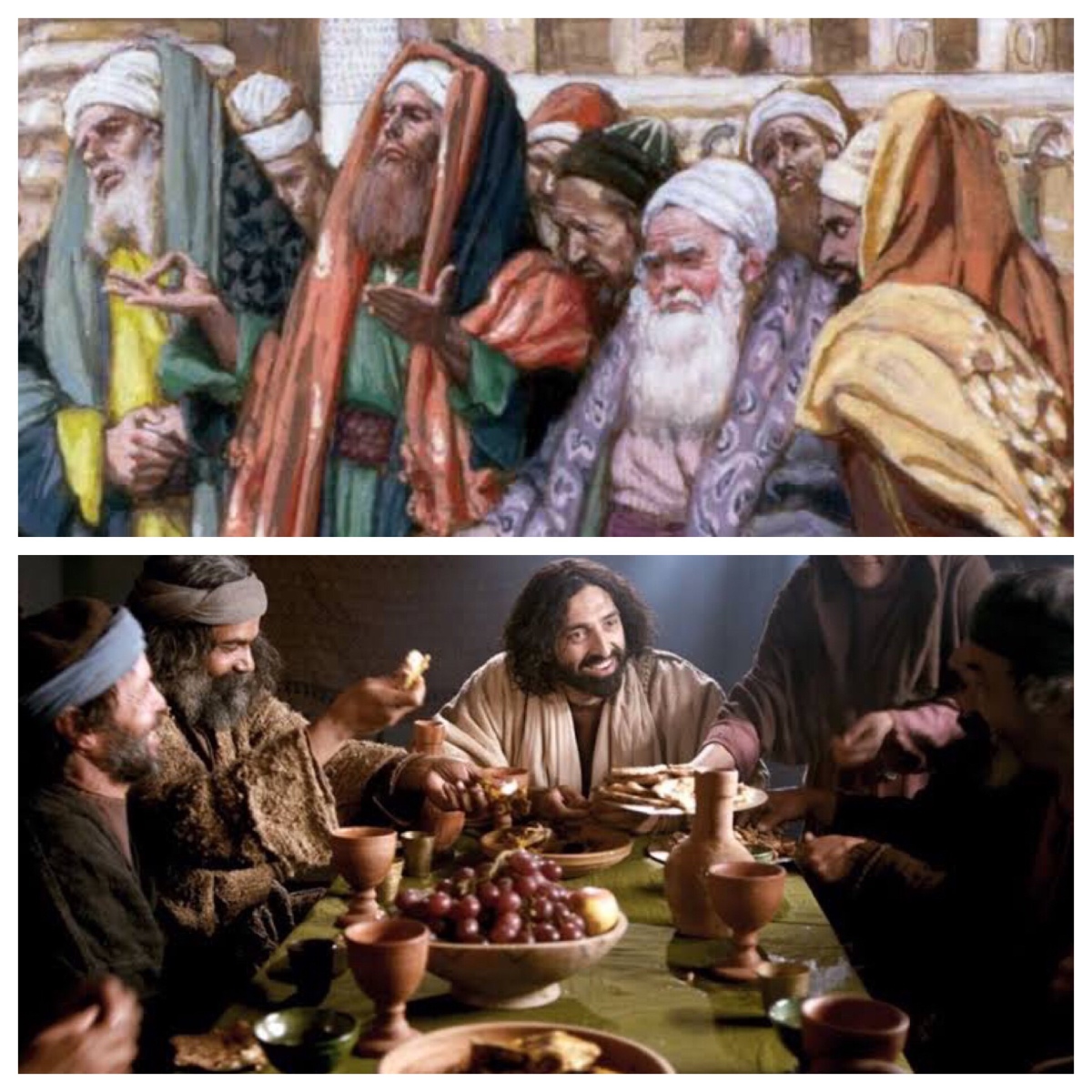
First, it is noteworthy that the Pharisees in Luke’s Gospel are regularly portrayed in ways that demonstrate a positive relationship with Jesus. Most strikingly, Jesus is found at table with Pharisees on a number of occasions: in the house of Simon, a Pharisee (7:36–50); by invitation of another Pharisee, in his house along with a lawyer, and scribes (11:37–54); again, in the house of a prominent Pharisee, with lawyers also present (14:1–24).

There is another occasion, when Jesus eats with tax collectors and sinners (15:1–32), where the opening verses (15:1–2) infer the additional presence of Pharisees and scribes at the meal. Eating a meal together was a clear sign that positive and mutually respectful relationships existed between Jesus and some Pharisees, at least.

Pharisees also acts in friendly ways to Jesus when they come to him to warn him about Herod (13:31) or ask him to explain his understanding of the kingdom of God (14:20-21) or seek to quell the uproar being caused by the disciples of Jesus (19:39-40). Not all of the encounters that Jesus had with Pharisees were negative or confrontational.

The early movement of followers of Jesus included Pharisees (Acts 15:5 — and even, quite strikingly, some priests, in 6:7 !). Paul was one such Pharisee, as he declares that he had been raised as a Pharisee (Acts 23:6), and there is an interesting scene later in Acts where some Pharisees (in dispute with some Sadducees) actually stand in support of Paul (Acts 23:7-9).

So the relationship is not thoroughly antagonistic. Both Jesus and, later, Paul, did have robust discussions and disagreements with Pharisees, but neither of them wrote the Pharisees off as lost causes or doomed to perdition. We should not use Pharisee as a cipher for a self-righteous or hypocritical person who has no humility — accusations that could well have been made in the heat of an argument.

Second, this unfortunate negative line of interpretation concerning Pharisees is based on a gross misunderstanding of the Pharisees, their faith, and their activities. All too often, Pharisees are misrepresented and scapegoated by Christians (especially since the rise of anti Semitic theologies in Germany in the late 19th and early 20th centuries), using them as a foil for their own views of a more positive Christian faith.

So: what do we really know about the Pharisees?


The scribal Pharisees specialised in the interpretation of Torah and in the application of Torah to ensure that holiness was observed in daily living. In contrast to the Sadducees, the Pharisees were very popular amongst the ordinary Jewish folk. This may well have been because they undertook the highly significant task of showing how the Torah was relevant to the daily life of Jewish people.

The story of Ezra, told in Nehemiah 8, gives an example of this in practice, referring especially those who “helped the people to understand the law” (Neh 8:7). Whilst the priests upheld the Torah as the ultimate set of rules for operating the Temple, the Pharisees showed how the Torah could be applied to every aspect of daily life as a Jew.

Most Jews went to the Temple only rarely—and found it to be an expensive enterprise when they got there! But in seeking guidance for daily life, the people were greatly helped by those skilled interpreters of Torah, the scribes and the Pharisees. Josephus comments that the Pharisees were usually held in high regard by the ordinary people of the day.


Since nine out of every ten persons could not read, the importance of scribes—literate, educated, and sympathetic—could not be underestimated. Whilst the Pharisees clustered around towns in Judea, the scribes were to be found in the synagogues of villages throughout greater Israel, and indeed in any place where Jews were settled. Their task was to educate the people as to the ways of holiness that were commanded in the Torah. It was possible, they argued, to live as God’s holy people at every point of one’s life, quite apart from any pilgrimages made to the Temple in Jerusalem.


Over time, the Pharisees and scribes developed particular methods for interpreting the Torah; many of these methods are reflected within the New Testament, as it seems that Paul, each of the Gospel writers, and even Jesus himself, were familiar with such methods of interpretation. They were certainly people of faith, devoted to serving God in humility, and focussed on fostering a sense of righteousness (obedience to the way that God had instructed them) amongst their people.

Associated with this, the Pharisees and scribes devoted much time to verbal discussion of the written texts of Torah, probing the meaning of every law that was recorded in their scripture. These debates were remembered and passed on by word of mouth. Over time, the accumulated body of these oral discussions and debates was accorded a certain authority in its own right. Eventually, the claim was made that the oral teachings were of similar importance to the written text; the Pharisees were said to have had an “oral Torah” alongside the written Torah. Debate over this matter is reflected in texts such as Mark 7 and Matt 15.

So, just as Pharisees debated amongst themselves about how best to interpret the laws given in scripture, so too Jesus engaged in such debates and disputations with them as to how the laws should be interpreted and applied. He used precisely the methods and techniques that the Pharisees themselves employed, with questions, counter-argument, scripture citations, and analogies, for instance.

This form of engagement wasn’t an antagonistic dispute; it was just the vigorous style of such debates. Jesus wasn’t looking to dismiss the Pharisees, but to reach into the heart of each law that they were debating together. The debate was taking place to clarify how people were to be faithful to God, living according to the righteousness (or holiness) that God required.

Later, accounts of these oral debates between Jesus and Pharisees were written down in the Gospels that we have in Christian scripture. However, these debates were remembered and recorded in ways that seem to reflect the intensity of fervent debate that was apparently taking place, at that later time, between followers of Jesus, and authorities in the synagogues. They retained the vigorous manner of debates about Jewish Torah, but were set into a polemical context that highlighted the differences and sharpened the sense of argumentative antagonism.

Accordingly, it is reasonable to regard many of the accounts of Jesus in debate with the scribes and Pharisees (such as Luke 11:37-54 and Matt 23:1-36) as more reflective of the antagonism, conflict, and even hatred that had grown between these two groups.

That wasn’t the historical reality. But it came to be the way that the followers of Jesus after his lifetime (and after the destruction of the Jerusalem Temple in 70 CE) most often remembered the Pharisees. And so the trajectory of the stereotype of the Pharisee began.


Both older academic Christian scholarship and popular Christian tradition today perpetuate the stereotype that the Judaism of the time of Jesus was a harsh, legalistic, rigid religion—precisely because of the claimed “hardness of heart” of the Pharisees in their debates with Jesus.

This stereotype was heightened by an unquestioning acceptance of the New Testament caricature of the Pharisees as hypocritical legalists who made heavy demands but had no soul commitment to their faith. It was claimed that they were the leaders of a static, dying religion.

This stereotype has been completely demolished in recent decades—both through the growing interaction between Christian and Jewish scholarship, and also through a more critical reading of the relevant primary texts. It has no place in our contemporary preaching.

In 2009, the Twelfth Assembly of my church (the Uniting Church in Australia) adopted a Statement on Jews and Judaism in which we resolved to:

acknowledge that many of the early Christian writings collected in the New Testament were written in a context of controversy and polemic between the Church and Synagogue;

not accept Christian teaching that is derogatory towards Jews and Judaism;

and encourage its members and councils to be vigilant in resisting antisemitism and anti-Judaism in church and society.

The full statement can be read at https://assembly.uca.org.au/resources/key-papers-reports/item/download/1022_7d707d6a8cd8a2fe2188af65d6f04548

I hope that those who are preaching on the parable of the Pharisee and the tax collector in Luke 18, bear in mind these things as they prepare and deliver sermons this coming Sunday. Yes, Jesus criticises the particular Pharisee in this parable. No, this was not how Jesus viewed each and every Pharisee that he knew. Yes, Jesus was a friend of Pharisees and entered enthusiastically into robust debate with them. No, he was not intending to write off all Pharisees as pious, hypocritical, self-righteous legalists.

You can read about how the Uniting Church has sought to engage the Jewish Community in constructive dialogue for many years, now, at https://uniting.church/an-introduction-to-the-uca-jewish-dialogue/

and learn about an excellent resource it has produced entitled Light Eternal at https://assembly.uca.org.au/rof/rof-news/item/1986-light-eternal

On the UCA commitment to interfaith relations, see https://johntsquires.com/2019/05/04/friendship-in-the-presence-of-difference-a-gospel-call-in-a-world-of-intolerance-and-hatred/

Unknown's avatarAuthor John T SquiresPosted on October 21, 2019October 29, 2021Categories An Orderly Account: Gospel of LukeTags interfaith, Luke, scripture, theology3 Comments on In defence of the Pharisees: on humility and righteousness (Luke 18; Pentecost 20C)

Unjust judge, shameless widow (Luke 18; Pentecost 19C)

Unjust judge, shameless widow (Luke 18; Pentecost 19C)

Jesus told many parables. The kingdom of God was the primary theme of many of these parables. Quite a number of his parables are found only in the “orderly account of the things that have been fulfilled among us”— the document which we know as the Gospel according to Luke. We have been hearing a number of these this year, as the lectionary has taken us through this Gospel: the lost coin, the lost sheep, the lost (prodigal) son and the lost (elder) son; the Good Samaritan, the rich man who built barns, the man planning to build a tower and the king planning to go to war.

In the parables of Jesus which are found only in Luke’s Gospel, we meet a variety of upper-class people: a rich man who built larger barns for his produce, a tower builder and a king at war, a rich father of two sons, a steward of a wealthy man, a rich man who dressed in purple and feasted daily, a farmer with slaves and a prestigious and powerful judge. In a number of these parables, the way that Jesus tells the story raises challenges for such people: they are called to account for the benefits and blessing s that they enjoy in their lives.

The parable set as the Gospel passage for this coming Sunday (Luke 18:1-8) is a case in point: the prestigious and powerful judge is called to account for the way he does (and does not) dispense justice. Alongside the judge, the widow is held up as a positive role model, because of the way she continues to raise the difficult questions with the judge.

This is regularly understood to be a parable about persistence, with the widow as the key figure. Don’t give up! Keep on pressing the point! Knock on the door of that judge, and keep knocking, until he rises from his sleep and opens the door to you. Don’t let the authorities ignore you or marginalise you. Make a noise! Rouse the sleepers! Agitate! Work to see your demands brought to fruition!

Now, a standard way of interpreting parables is to allegorise them. That means, drawing clear lines of connection between the characters in the story, and people in real life. Classically, the judge who was being disturbed by the persistent widow, knocking on his door, perhaps crying out in the dead of night, this judge is usually equated with God. The persistent widow, by contrast, is equated with faithful people, praying to God.

If that is done, then we are provided a most disturbing picture of God. Do we really see God as unjust, oblivious to the cries of need around him, asleep in bed as the needs of the world grow larger and more pressing? It is not, I would suggest, how people of faith really conceive of God.

What about turning this interpretation on its head? Even though the text suggests that we interpret the judge as a symbol,for God, that isn’t the end of the matter. If the text is about prayer, then it is about the two-way interaction that happens when we pray. Prayer is as much about what we say to God, as it is about what God says to us, what we hear when we pray, what is pressed upon us from our close and intimate engagement with our Creator.

So, if we flip things in the parable—what about if we see the judge as a symbol of systems in our human society? Like our systems often become, the judge was inflexible, aloof, resistant to interference, opposed to alteration. And why not see the woman as a picture of God? Persistent, incessant, calling out the injustices of our society, raising a ruckus when things are unfair or inequitable.

Read like this, the parable is about the way that God continues to press on us, challenging us, confronting us, pushing us to grow in our discipleship and deepen in our faith.

Finally, there is one more aspect of this parable that I want to raise. If we explore the word used to describe the widow in the original Greek of this Gospel, the word that is usually translated as “persistent”, we will find that the original Greek is more accurately rendered as “shameless”. How about that picture of God—the one who is utterly shameless–shamelessly persistent in making demands of us?

Widows in ancient Hebrew society were in a perilous position. In a strongly patriarchal society, the patronage of a man was vital: a man as husband and provider, a man as father and protector, a man as the household head. Children without fathers—orphans—as well as women without husbands—widows—were in equally perilous situations. They were vulnerable people, often at risk of being mistreated and exploited, of being pushed to the edge of society and being forgotten.

In our time, we require those in leadership in the church to have obtained a Working With Vulnerable People card, to signal that they are aware of the power imbalances present in situations where they minister. In the ancient world, no such system existed; but we do find in the Hebrew Scriptures that there are regular exhortations and instructions to the people to take care of widows and orphans, such as the command, “you shall not mistreat any widow or fatherless child” (Exod 22:22), or the instruction to gather a tithe of produce and invite “the Levite, the foreigner, the fatherless, and the widow to come and eat and be filled” (Deut 14:28–29), or the prophetic decree, “do not oppress the sojourner, the fatherless, or the widow” (Jer 7:5), and then in the New Testament true religion is defined as being “to care for orphans and widows in their distress” (James 1:27). Even in ancient society, vulnerable people needed protection.

The judge ought to have taken special care of the widow, if he had been paying attention to his scriptural teachings; but he shuts her out, literally and metaphorically, and wishes to have nothing to do with her. The widow needs to represent herself; there seems to be no male relative to speak for her in the male-dominated court. She needs to make multiple attempts to engage with the judge; she has no resources to offer a bribe which would ensure a swift hearing. And the woman appears to have suffered an injustice; she pleads, “grant me justice against my opponent”.

So the widow persists. She steps out of the submissive pattern of behaviour that is expected of her, the culture required women to keep shame, by remaining in the private sphere, and not to claim honour, by acting in the public sphere. This widow steps out of that private sphere, into public life, and takes responsibility for her own wellbeing, no longer dependant on a man to advocate for her. By doing this, she claims her own portion of honour, and so acts with no shame. She is shameless.

In this way of reading the parable, the widow acts in precisely the way that Lady Wisdom is portrayed in Proverbs 8:1-4. She, a female, is on the public arena of ancient Israel: On the heights, beside the way, at the crossroads she takes her stand; beside the gates in front of the town, at the entrance of the portals she cries out. These locations were where men were expected to be active, and the gates to the town were the places where men gathered to discuss Torah and determine cases brought to them as judges.

For a woman to be there, and to be vocally active in such a public way, was a breach of the honour-shame code. Women speaking out in public were acting in a way that challenged the honour of the men who alone “rightly” belonged there. They did not adhere to the posture and action of shame that they were required to demonstrate, as the flip side of honour. They were acting in a way that demonstrated they were shameless.

The widow, pressing the point with the judge, is not only persistent, but—like Lady Wisdom, like God as we listen to and engage with God—utterly shameless. She demonstrates intense, ongoing, persistence. How might she be a model for us to emulate in our discipleship?

See also

https://johntsquires.com/2019/02/05/costly-discipleship-according-to-luke/

https://johntsquires.wordpress.com/2019/01/31/an-orderly-account-a-quick-guide-to-luke-and-acts/

https://johntsquires.wordpress.com/2019/02/19/the-beloved-physician-the-lover-of-god-and-loving-our-enemies-luke-6/

https://johntsquires.wordpress.com/2019/04/17/the-death-resurrection-and-ascension-of-jesus-in-lukes-orderly-account/

https://johntsquires.wordpress.com/2019/04/26/the-cross-cultural-nature-of-the-early-jesus-movement/

https://johntsquires.wordpress.com/2019/04/30/the-calling-of-saul-and-the-turn-to-the-gentiles-modelling-the-missional-imperative-acts-8-12/

https://johntsquires.com/2019/05/22/jesus-and-his-followers-at-table-in-lukes-orderly-account/

https://johntsquires.com/2019/07/02/from-learners-to-leaders-deepening-discipleship-in-lukes-orderly-account/

Unknown's avatarAuthor John T SquiresPosted on October 16, 2019October 16, 2022Categories An Orderly Account: Gospel of LukeTags Luke, scripture2 Comments on Unjust judge, shameless widow (Luke 18; Pentecost 19C)

Was none of them found to return and give praise to God except this foreigner? (Luke 17; Pentecost 18C)

Was none of them found to return and give praise to God except this foreigner? (Luke 17; Pentecost 18C)

This year, we have been following the story of Jesus as it is offered to us by the author of the orderly account of the things that have been fulfilled among us–the document which we know as the Gospel according to Luke. (see https://johntsquires.wordpress.com/2019/01/31/an-orderly-account-a-quick-guide-to-luke-and-acts/)

This account of the ministry of Jesus gives a prominent place to the journey that Jesus undertook, along with his disciples, from his home region in Galilee, to the capital city of Jerusalem. The journey, in Mark’s Gospel, is all over in just a few verses. You can read about it in Mark 10—and look carefully, it is over pretty quickly!

In Luke’s account, this journey, from Galilee in the north to Jerusalem in the south, starts on chapter 9 and continues right through until chapter 19: that’s 40% of the whole story! The journey gets underway when Luke notes that, at a crucial point during his ministry in Galilee, Jesus sets his face to go to Jerusalem (9:51). This turn of phrase is prophetic term (found often in Ezekiel; see 4:3,7, 6:2, 14:8, 15:7, 21:2, 25:2, 28:21) which indicates his firm commitment to this pathway, but also indicates the judgement that will take place through this visit.

But significantly, the first thing that Jesus does on this journey is gather a larger group of his followers, seventy such disciples (or in some versions, seventy–two), to begin in the role that will later consume their lives. He sends them out to proclaim the central message that the kingdom of God has come near (10:1–12; cf. 9:2).

Quite significantly, when the seventy are sent out, they are in the region of Samaria (9:51-62). The Samaritans were difficult customers; James and John actually wanted Jesus to invoke the wrath of God and consume them (9:54). Jesus, by contrast, refuses to do this (9:55) and charges the seventy to preach a message peace to the Samaritans (10:5) and to declare the good news, that God’s kingdom is right there, in midst of them (10:9,11; cf. 9:2).

It is noteworthy, then, that after chapter 10, the next time that Luke reports an actual location for Jesus and his disciples, is in the passage set for our reading this week, in chapter 17. And that location, strangely enough, is no different from the starting point of the journey. Yes, after seven long chapters of travelling, Jesus and his disciples are still up north: On the way to Jerusalem, Jesus was going through the region between Samaria and Galilee, Luke reports (17:11).

In this story, Jesus heals a group of ten lepers. They, of course, are jubilant at being healed, no longer outcasts, but restored to health and reconnected with family and friends. However, as Luke reports, only one of these ten lepers had the grace, and the gratitude, to return to Jesus and thank him for what he had done to them all.

According to Luke, ‘one of them, when he saw that he was healed, turned back, praising God with a loud voice. He prostrated himself at Jesus’ feet and thanked him. And he was a Samaritan. Then Jesus asked, Were not ten made clean? But the other nine, where are they? Was none of them found to return and give praise to God except this foreigner? (17:15-18).

Only one; and that one, a Samaritan—a member of the despised northern tribe, the people who had long been at loggerheads with their southern neighbours in Judea, as well as with the people in Galilee, from where Jesus and a number of his first followers came.

These two stories, both set in and around Samaria, the enemy territory (as it were), set out some significant aspects of the ministry of Jesus.

On the way, Luke reports on the teachings and healings of Jesus and his encounters and debates with various people. Many of these reports are drawn from a special source that only Luke seemed to know, as well as another source known as ‘Q’, which provides material for both Luke and Matthew. So the journey, over ten chapters in Luke, provides the context for a rich selection of teaching and instruction at depth.

When Jesus sets his face towards the city to bring God’s judgement upon it (Luke 9:51), he knows what the cost will be for himself, personally. He is clear that he must travel with that end in view (13:33). When he enters the city, he comes as the messenger of divine judgement (19:44); the visitation of God is a biblical phrase for executing diving judgement. Along the way, he encounters opposition and criticism.

That started with the Samaritans, at the end of chapter 9, reflected in the antagonistic words of James and John, who wanted Jesus to pronounce judgement on them. At the start of the journey, the relationship is one of opponents. Jews and Samaritans do not get on.

But here, in chapter 17, as the journey has been underway for quite some time, the relationship between Jesus and his followers, and the Samaritans, has been transformed. Indeed, from amongst all ten of those keepers who were healed, only one returned to give thanks—and that one was a Samaritan! And perhaps this one solitary Samaritan might well signal the turnaround in understanding about Jesus.

No longer an opponent. No longer an enemy. Now, a friend. Now, a companion along the way. The turnaround is remarkable.

And yet—let us also remember that, back there are the start of the journey, in the early days, Jesus was already signalling this message. Immediately after the seventy had returned from their mission of proclaiming the kingdom, Jesus engaged in a debate with a scribe, a teacher of the Law. What must I do to inherit eternal life? was the scribe’s question. Love God, and love Neighbour, was the reply from Jesus, drawing directly from the very Law that the scribe knew and taught.

Who is my neighbour? the scribe then asked. And Jesus, typically, replied by telling a story. It’s a story reported only in Luke’s Gospel. Thank goodness for Luke, and for his special sources! It is the story that reveals who the neighbour actually is—yes, the neighbour is a Samaritan. The story is the parable of the Good Samaritan.

So, for Jesus, it is clear, from early in the journey, through until towards the ends of the journey. He reaches out, offering a hand of friendship, inviting a relationship of acceptance, to the traditional enemies—the Samaritans.

And even more strikingly, if we attend to the geography that Luke provides us, all of the journey thus far has been in or around or near to Samaria. Not in Galilee, the home territory of Jesus. Not in Judea, in the area around Jerusalem, the religious centre and economic capital of that region, he has been teaching and healing, preaching and telling parables, amongst the Samaritans—those very outsiders, in the traditional way of viewing things.

This returning, healed leper, was a Samaritan—an outsider, a foreigner, in the traditional understanding of the time. And yet, Jesus not only heals him, but commends him: your faith has made you well, he says to the Samaritan—as he had earlier said to the sinful woman who anointed his feet (7:50), and the haemmhoraging woman who touched the fringe of his clothes (8:48), and as he will subsequently say to the persistent widow (18:8) and the blind beggar outside Jericho (18:48), just before he finally enters Jerusalem.

And these figures, all outcasts because of their circumstances, were welcomed and affirmed by Jesus. They are the great examples of faith, in this Gospel! They are the ones whom he praises! Jesus demonstrates a gracious openness to those whom society regarded as unclean, despised, outcast.

Indeed, as Luke tells the story of Jesus, and then stretches it out to tell the story of the early church, in the book of Acts, we encounter, not only this foreigner, the healed Samaritan leper, but a number of other foreigners, whom Jesus accepts, and affirms. For instance, early in his ministry, he tells the old story of Naaman the Syrian, another foreigner, another leper, who was healed, and served as an example of faith (Luke 4; and at a key point in the second volume, Acts, we encounter the story of yet another foreigner, the centurion Cornelius, who becomes the first Gentile to receive the gift of the Holy Spirit (Acts 10).

So Naaman and Cornelius stand, with the anonymous Samaritan leper, as key signals for this central truth in the message and the practice of Jesus: Grace is offered openly, abundantly, to those who would be regarded by tradition as being beyond the pale. The Gospel, the good news, the message of the kingdom of God, is a message that opens out, that stretches out to reach beyond the traditional limitations of understanding, with an invitation shaped by gracious openness.

See also https://johntsquires.com/2019/09/29/gracious-openness-and-active-discipleship-as-key-characteristics-of-church-membership/

https://johntsquires.com/2019/08/26/disreputable-outsiders-invited-inside-parables-in-luke-14/

https://johntsquires.com/2019/02/05/costly-discipleship-according-to-luke/

https://johntsquires.wordpress.com/2019/01/31/an-orderly-account-a-quick-guide-to-luke-and-acts/

https://johntsquires.wordpress.com/2019/02/19/the-beloved-physician-the-lover-of-god-and-loving-our-enemies-luke-6/

https://johntsquires.wordpress.com/2019/04/17/the-death-resurrection-and-ascension-of-jesus-in-lukes-orderly-account/

https://johntsquires.wordpress.com/2019/04/26/the-cross-cultural-nature-of-the-early-jesus-movement/

https://johntsquires.wordpress.com/2019/04/30/the-calling-of-saul-and-the-turn-to-the-gentiles-modelling-the-missional-imperative-acts-8-12/

https://johntsquires.com/2019/05/22/jesus-and-his-followers-at-table-in-lukes-orderly-account/

https://johntsquires.com/2019/07/02/from-learners-to-leaders-deepening-discipleship-in-lukes-orderly-account/

Unknown's avatarAuthor John T SquiresPosted on October 10, 2019October 29, 2021Categories An Orderly Account: Gospel of LukeTags Luke, scripture3 Comments on Was none of them found to return and give praise to God except this foreigner? (Luke 17; Pentecost 18C)

Disturbing discipleship: exploring the teachings of Jesus in Luke 14 (Pentecost 12C to 13C)

Disturbing discipleship: exploring the teachings of Jesus in Luke 14 (Pentecost 12C to 13C)

The call to discipleship, already present in Mark’s Gospel, is highlighted in the teachings of the Lukan Jesus, concentrated especially in the section of Luke’s “orderly account” where Jesus journeys towards Jerusalem (from 9:51 onwards). On this journey, he reveals to his followers precisely what it will cost to follow him. We see this especially at 9:57–62, a passage set in the lectionary some weeks ago, and at 14:25–33, set in the lectionary for this coming Sunday.

On the journey, Jesus teaches that following him will entail a disturbing discipleship. It will mean adopting a radical lifestyle, including the renunciation of one’s family (12:49–53; 14:26; 18:28–30), the disbursement of one’s possessions (9:3; 10:4; 12:22–23; 14:33; 18:22) and the abandonment of familiar securities (9:24; 12:22–23).

Jesus predicts that his followers will know what it means to be “hated, excluded, reviled, defamed” (6:22); they will travel “like lambs into the midst of wolves” (10:3); and they will know the experience of arrest, persecution, trial, betrayal, hatred, and even death (21:12–19).

This scenario of disturbing discipleship continues beyond the lifetime of Jesus of Nazareth. As Luke extends his “orderly account” into a second volume, we see that people are persecuted, imprisoned, brought to trial, and even put to death. In these ways, the true cost of faithfulness is made known. The charge given to Paul summarises what all faithful followers of Jesus might expect: “how much he must suffer for the sake of my name” (Acts 9:16).

What follows is a study on disturbing discipleship, through the lens of Luke 14, which Elizabeth and I wrote some time ago.

Skim read through Luke 14:25–35.

(This is the passage set in the lectionary for this coming Sunday.)

This passage appears in the middle of the section of Luke’s Gospel which recounts the journey which Jesus took to Jerusalem. It contains a collection of sayings of Jesus which focus on the cost involved in following him.

Read Luke 14:26. Then read Matthew 10:37–38.

What did Jesus mean by this saying?

Are we meant to take his words literally, or symbolically?

What was the role of ‘family’ in Jewish society?

What would it have meant to have abandoned your family in the way that Jesus suggests?

Read Exodus 20:12.

What does this commandment contribute to our exploration of the words of

Jesus?

Read Exodus 32:25–29 and Deuteronomy 33:8–9.

How do these passages help us to understand this saying of Jesus?

Read Luke 14:27.

What did it mean to “carry your cross” in the world of Jesus?

Comment: Sometimes the cross was referred to in shorthand as “the slave’s punishment”. Plutarch, a Gentile writer of the 2nd century CE, wrote that “every

criminal condemned to death bears his cross on his back” (Moralia 554AB).

Sallust, a Roman historian of the 1st century BCE, wrote, “The most notorious [pirates] were either hung from the mast or flogged or fastened high up on a gibbet without being tortured first” (Historiae fragment 3.9).

In the light of such sayings, what do you think that it meant for the disciples of Jesus when they heard Jesus command them to “carry your cross”?

What connotations did this language hold?

How do we interpret these words today?

Do we still think of “the cross” as “the slave’s punishment”?

Jesus spoke often of this theme.

Read Luke 9:23 and 12:51; and John 12:24–25.

Now return to Luke 14:27.

What impact do these words have when we hear them in the context of Jesus’ journey towards Jerusalem, where he will die on a cross?

Read the parable of the tower builder at Luke 14:28–30.

What do you think is the basic point of this parable?

What does this parable tell us about discipleship?

Read the parable of the king preparing for war at Luke 14:31–32.

What do you think is the basic point of this parable?

What does this parable tell us about discipleship?

Read the saying at Luke 14:33. Now re-read Luke 14:27.

Read Luke 18:28–30.

Was Peter right in expressing his opinions like this?

Comment: In the 1st century, the place occupied by a person in society was determined by their relationships with many other people in society: their family members, their employer and their fellow-workers, and people with whom they conducted business.

In such a context, what would it have meant for a person to have renounced everything? Where would they gain their support and sustenance for living? What does it mean for you to “renounce everything”?

Read the saying at Luke 14:34–35.

Now read Matthew 5:13 and Mark 9:50.

Comment: In a society such as the 1st century, salt was used as a preservative to keep food edible over a long period of time. (Remember there were no refrigerators!)

How does this help us to understand the meaning of this saying?

Note the conclusion of this collection of sayings at Luke 14:35.

Once again, this was something that Jesus often said.

Read Mark 4:23; Matthew 13:9; Luke 8:8; Matthew 11:15; and Matthew 13:43.

Comment: Some medieval monks who were copying the text of the New Testament must have thought that the last phrase of this saying was worth repeating often. It appears also in some manuscripts at Mark 7:16, Matthew 25:29, Luke 12:21, and Luke 21:4. The same phrase provides a refrain in the early section of the book of Revelation (2:7, 11, 17, 29; 3:6, 13, 22; and see also 13:9).

What effect does this saying have on you?

What kind of emotions does it generate in you?

Unknown's avatarAuthor John T SquiresPosted on September 3, 2019October 29, 2021Categories An Orderly Account: Gospel of LukeTags Luke, scriptureLeave a comment on Disturbing discipleship: exploring the teachings of Jesus in Luke 14 (Pentecost 12C to 13C)

Disreputable outsiders invited inside: parables in Luke 14 (Pentecost 12C, 13C)

Disreputable outsiders invited inside: parables in Luke 14 (Pentecost 12C, 13C)

The Gospel lectionary reading for this coming Sunday includes a parable of Jesus, usually called the parable of the Wedding Banquet (Luke 14:1, 7-14).

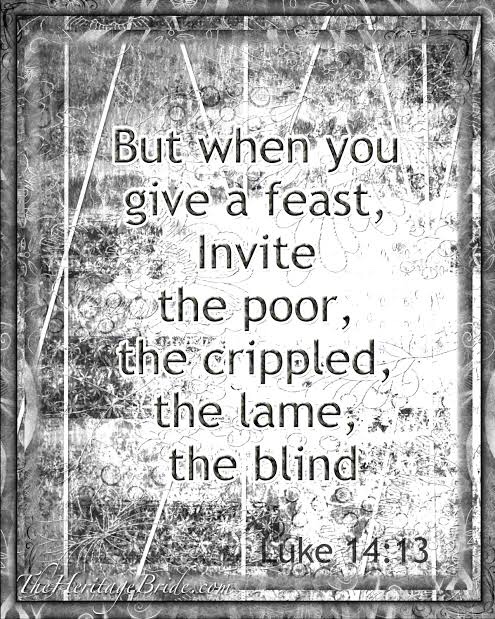
In this parable, Jesus speaks about including those who would normally be excluded: When you give a luncheon or a dinner, do not invite your friends or your brothers or your relatives or rich neighbours, in case they may invite you in return, and you would be repaid. But when you give a banquet, invite the poor, the crippled, the lame, and the blind. (14:12-13)

This emphasis on reaching out beyond the usual clientele expected at a banquet, to those traditionally seen as outsiders, is also found in the following story, the parable of the Great Banquet (Luke 14:16–24). In Luke’s version, Jesus concludes the parable with a double invitation not found in Matthew’s account of the same parable (Matt 22:1-10).

Luke has Jesus extend the invitation beyond the normal groups who would be invited to the banquet, reaching out to include outsiders: Go out at once into the streets and lanes of the town and bring in the poor, the crippled, the blind, and the lame. (14:21)

These instructions recall the clear guidance that Jesus has already given, in two passages appearing earlier in Luke’s orderly account. The first was when Jesus read from Isaiah in his home synagogue that, in his activities, … the Spirit of the Lord … has anointed me to bring good news to the poor; he has sent me to proclaim release to the captives and recovery of sight to the blind … (4:18-19).

The second occasion was when Jesus instructed his own followers to tell the two disciples of John the Baptiser that in the activities of Jesus, the blind receive their sight, the lame walk, the lepers are cleansed, the deaf hear, the dead are raised, the poor have good news brought to them … (7:22).

In both of these parables found in Luke 14, Jesus underlines his commitment to working constructively amongst those who have been displaced from the mainstream of society.

This is a trait which is already evident in the earlier report of the story of Jesus, the Gospel we attribute to Mark, which was clearly one of the sources used by Luke in compiling his later “orderly account”. The Markan Jesus, when accused of consorting with the less desirable elements of society (Mark 2:16), acknowledged that this was his deliberate policy: he intentionally associates with sick and sinners (Mark 2:17).

Luke reports the same scene almost verbatim (Luke 5:30–32), as well as other instances when Jesus has contact with people who are displaced from society. Thus, Jesus heals the sick (4:38–39, 40–41; 8:40–56) and has contact with outcasts such as a leper (5:12–16), a paralysed man (5:17–26), tax collectors (5:27–29), a man with a withered hand (6:6–11), some demon- possessed individuals (8:2,26–39; 9:37–43), and a blind man (18:35–43). These were all outsiders in the society of the day.

Indeed, Luke intensifies this theme by reporting other occasions when Jesus was in such company. Jesus encountered a crippled woman (13:10– 17), a man with dropsy (14:1–6), and ten lepers (17:11–19). The accusation of keeping bad company, once levelled against Jesus by the Pharisees and scribes (5:30), is repeated by Luke (15:1–2), in order to provide Jesus with an opportunity to tell three parables which justify his practice (15:3–32).

Throughout the Acts of the Apsotles, the followers of Jesus continue this practice, performing “signs and wonders” (Acts 2:43; 5:12; 6:8; 14:3; 15:12) as they cast out demons (13:9–11; 16:16–18; 19:12) and heal those afflicted by illness (3:1–10; 4:22; 9:32–43; 14:8–18; 19:11–12; 20:7–12; 28:1–6, 7–10).

That Jesus would be found in the company of outcasts had already been signalled in the prologue to Luke’s work (Luke 1—2), where some of the main characters in the narrative are outsiders from society.

Elizabeth, an older woman who was barren (Luke 1:25), bore a sign of God’s curse (1 Sam 1:1–18) for not being able to fulfil the blessing of bearing a child (Gen 1:28). Zechariah, a man who was unable to speak for some time (Luke 1:20), bore a sign of God’s displeasure (Ps 38:12–14).

Mary, a young woman who conceived before marriage (Luke 1:27), would undoubtedly have been regarded askance; because of the significance of the child she bore, the explanation for her state (“the power of the Most High will overshadow you”, 1:35) attempts to remove the possibility of criticism at an early stage in the developing tradition.

And the shepherds who came in from the fields to pay homage to the newborn child (Luke 2:8–16) would have been despised for carrying out a lowly and unworthy occupation; in the Mishah, a third century collection of Jewish laws, shepherds are classified amongst those who practice “the craft of robbers” (m.Kidd).

Quite clearly, Jesus and the earliest followers of Jesus welcomed outcasts into their midst. Luke’s “orderly account” makes this very clear. The community of the faithful that grew out of the movement that Jesus initiated, would reflect the same diversity in this way; both insiders and outsiders, powerful and powerless, respectable and disreputable, would be given a place together at the table.

And that ideal guides us in the church still, today, two millennia later.

See also

https://johntsquires.wordpress.com/2019/01/31/an-orderly-account-a-quick-guide-to-luke-and-acts/

https://johntsquires.wordpress.com/2019/02/05/costly-discipleship-according-to-luke/

https://johntsquires.wordpress.com/2019/02/19/the-beloved-physician-the-lover-of-god-and-loving-our-enemies-luke-6/

https://johntsquires.wordpress.com/2019/04/17/the-death-resurrection-and-ascension-of-jesus-in-lukes-orderly-account/

https://johntsquires.wordpress.com/2019/04/26/the-cross-cultural-nature-of-the-early-jesus-movement/

https://johntsquires.wordpress.com/2019/04/30/the-calling-of-saul-and-the-turn-to-the-gentiles-modelling-the-missional-imperative-acts-8-12/

https://johntsquires.com/2019/05/22/jesus-and-his-followers-at-table-in-lukes-orderly-account/

https://johntsquires.com/2019/07/02/from-learners-to-leaders-deepening-discipleship-in-lukes-orderly-account/

Unknown's avatarAuthor John T SquiresPosted on August 26, 2019October 29, 2021Categories An Orderly Account: Gospel of LukeTags Acts, Luke, scripture1 Comment on Disreputable outsiders invited inside: parables in Luke 14 (Pentecost 12C, 13C)

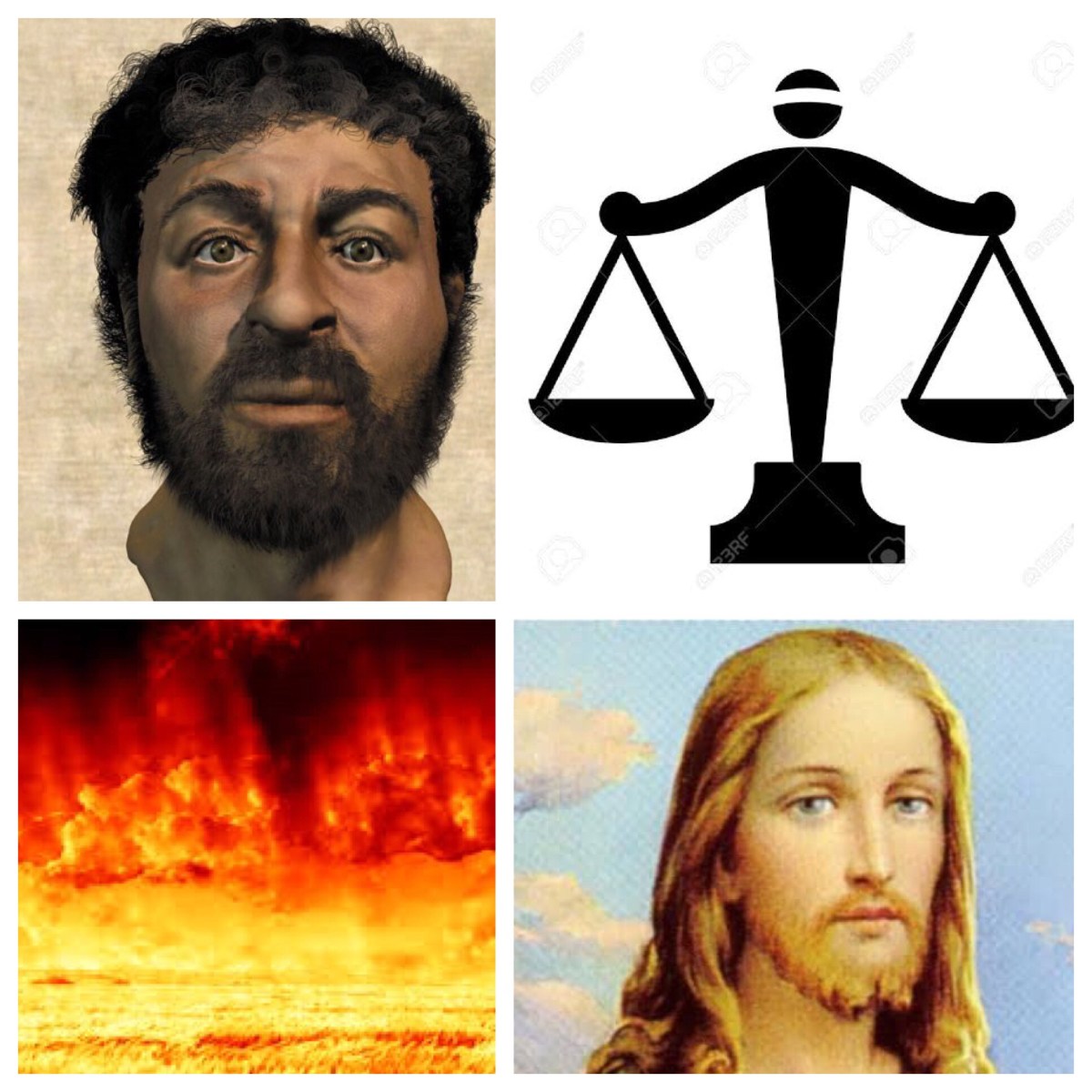
Coming to grips with the judgement of God (Luke 12 and Isaiah 5; Pentecost 10C)

Coming to grips with the judgement of God (Luke 12 and Isaiah 5; Pentecost 10C)

Some lines in the readings set in some of the lectionary passages for this coming Sunday place the focus on the judgement of God.

In the parable of the vineyard which is recounted in Isaiah 5, the Lord God is claimed to say: And now I will tell you what I will do to my vineyard. I will remove its hedge, and it shall be devoured; I will break down its wall, and it shall be trampled down. I will make it a waste; it shall not be pruned or hoed, and it shall be overgrown with briers and thorns; I will also command the clouds that they rain no rain upon it.

This is immediately followed by the declaration that the vineyard of the LORD of hosts is the house of Israel, and the people of Judah are his pleasant planting; he expected justice, but saw bloodshed; righteousness, but heard a cry!

In other words, the judgement of God is to be rained down on Israel:

bloodshed, not justice;

a cry, not righteousness.

By the way, there is a neat wordplay here in the original Hebrew of the parable that is worth reproducing In transliteration:

le-mishpat we-hinneh mispah

li-tzdaqah we-hinneh tzeaqah

The psalm chosen in the lectionary to accompany this scripture passage, Psalm 80, makes allusion to the same action of judgement threatened in the parable, before going on to utter a cry for divine compassion:

Why then have you broken down its walls, so that all who pass along the way pluck its fruit? The boar from the forest ravages it, and all that move in the field feed on it. Turn again, O God of hosts; look down from heaven, and see; have regard for this vine, the stock that your right hand planted.

God executes judgement according to this psalm, also.

The same emphatic declaration of divine judgement occurs in the words of Jesus in Luke 12: Do you think that I have come to bring peace to the earth? No, I tell you, but rather division! From now on five in one household will be divided, three against two and two against three; they will be divided: father against son and son against father, mother against daughter and daughter against mother, mother-in-law against her daughter-in-law and daughter-in-law against mother-in-law.

This is no “Jesus meek and mild” of the hymn by Charles Wesley:

Gentle Jesus, meek and mild, Look upon a little child,

Pity my simplicity, Suffer me to come to thee.

Loving Jesus, gentle Lamb, In thy gracious hands I am;

Make me, Saviour, what thou art, Live thyself within my heart.

Now I would be as thou art; Give me an obedient heart;

Thou art pitiful and kind, Let me have thy loving mind.

On the contrary, this is a Jesus filled with passion, declaring I came to bring fire to the earth, and how I wish it were already kindled! This Jesus is much more akin to the figure that is depicted by John Bell and Graham Maule of the Iona Community:

Jesus Christ is raging, raging in the streets,

where injustice spirals and real hope retreats.

Listen, Lord Jesus, I am angry too;

in the Kingdom’s causes let me rage with you.

In Luke 12, Jesus is carrying through the programme that he enunciated at the start of his ministry, preaching the good news of the kingdom of God (Luke 4:43)—the same kingdom in which God requires upright behaviour (Luke 13:22-30). And Jesus takes on the role of declaring God’s requirements (this is especially expressed in many parables in Matthew’s Gospel) and affirming that, in the very fact of his presence, the kingdom is already a present reality (Luke 11:20 and 17:20).

Jesus does not shy away from the role of stating divine judgement. He does so, on the basis of the claim that he makes, in the Synoptic Gospels, to be integrally related to the kingdom which God is seeking to establish.

What are we to make of the righteous judgements of God, threatened in the parable, prayed about in the psalm, and declared with forceful passion in the words of Jesus?

Judgement sits alongside grace as integral the nature of God. Divine judgement is carried out by God from the plagues of Exodus to the denunciations of the great prophets and the military victories of foreign powers. That same judgement is proclaimed by Jesus, valorised by Paul, and envisaged in the dreams of the prophet John in the last book of the Bible.

Judgement is executed on those human beings who have entered into covenant relationship with the Lord God. Judgement means that God is holding them (and us) to account for the actions they (and we) have undertaken, which contradict the conditions of the covenant and demonstrate that one party (the human party) has strayed from the agreement reflected in the covenant.

This is as much the case for the New Covenant (reflected in the New Testament) as it was in the Old Covenant (reflected in the books that Christians identify as the Old Testament). It’s not the case that the OT God is a figure of judgement but the NT God is a figure of grace. Grace and Judgement exist equally and consistently in the character of God as attested in both testaments of Christian Scripture.

Judgement sits alongside Grace. They are related as both being integral to the kingdom which God seeks to establish, and the demands which come when seeking to be faithful to the vision of that kingdom.

God’s Grace invites people into a covenantal relationship, where mutual respect is to be manifested in specified actions. The Law that is given in the Old Testament is a guide as to what is expected of the human parties to the Covenant. Grace brings with it responsibilities and expectations.

That Covenant is the foundation upon which the Kingdom is based. God seeks to establish a realm in which the convent relationship guides all actions; a realm in which the requirements of justice and righteousness are lived out in the actions and attitudes and relationships of those who inhabit the Kingdom. So Justice is a consequence of the covenant established by Grace.

God’s Judgement operates in a manner consistent with divine Grace and is consequent upon the requirement of Justice. Judgement is executed when the actions and behaviours that are expected within the covenant relationship are not carried out; when injustice reigns in place of justice. The Law that is given in the Old Testament is a guide as to what is expected of the human parties to the Covenant. Judgement expresses the consequences that follow when the responsibilities and expectations of the covenant relationship are not met.

So we ought reasonably to expect that God will exercise judgement.

It is, of course, ultimately a divine decision as to when and how judgement is to be executed. Scriptural advice is consistent, that is not for human beings to determine that judgement. Jesus exhorts this in Matt 7:1-5 and Luke 6:37, Paul repeats it in Romans 14:4, and James advises the same in James 4:11-12.

The psalmist expresses the claim that God rightly judges people in various Psalms, such as 7:8-11, 50:4-6, 58:1-11, 67:3-4, 76:1-12, 96:10-13, and 98:1-9, and the prophets concur: see Isa 2:4, 11:1-5, Jer 11:20, Ezek 7:27, 18:30-32, 34:17-22, Micah 4:1-5.

So faithful adherence to the covenant relationship means that we are expected to adhere to the demands of justice, which are integral to the kingdom which God seeks to establish. And those demands of justice mean that we might well expect and anticipate judgement when we, as humans, fail to keep our commitment in the covenant.

So, I wonder: does Jesus have every right to threaten a fiery judgement and execute divine wrath? Especially, given who he is confessed to be, within the tradition of Christian orthodoxy? The threat of judgement, based on a requirement of justice, comes with our agreement to commit to the covenant which God has established in grace. That’s what Jesus is seeking to affirm—isn’t it?

This offers us a different picture of Jesus from what Charles Wesley popularised. But it’s a portrayal that is faithful to the witness of scripture.

See also

https://johntsquires.wordpress.com/2019/01/31/an-orderly-account-a-quick-guide-to-luke-and-acts/

and

https://johntsquires.com/2022/07/25/undoing-the-stereotype-of-the-vengeful-god-of-the-old-testament-hosea-11-pentecost-8c/

Unknown's avatarAuthor John T SquiresPosted on August 15, 2019August 8, 2022Categories An Orderly Account: Gospel of LukeTags Luke, scriptureLeave a comment on Coming to grips with the judgement of God (Luke 12 and Isaiah 5; Pentecost 10C)

Posts pagination

Previous page Page 1 … Page 17 Page 18 Page 19 … Page 22 Next page

The Book of Origins

  • Leaving Luke . . . Meeting Matthew
  • Matthew: tax collector, disciple, apostle, evangelist—and “scribe trained for the kingdom”? (Matt 9; Pentecost 2A)
  • For our instruction … that we might have hope (Rom 15, Isa 11, Matt 3; Advent 2A)
  • The origins of Jesus in the book of origins: Matthew 1 (Advent Year A)
  • Now the birth of Jesus the Messiah took place in this way (Matthew 1; Advent 4A)
  • Descended from David according to the flesh (Rom 1; Advent 4A)
  • A young woman? A virgin? Pregnant? About to give birth? (Isa 7:14 in Matt 1:23; Advent 4A)
  • More on Mary (from the Protoevangelium of James)
  • Tales from the Magi (the Revelation of the Magi)
  • Herod waiting, Herod watching, Herod grasping, holding power (Matt 2; Christmas 1A)
  • Herod was infuriated, and he sent and killed all the children (Matt 2; Christmas 1A)
  • Repentance for the kingdom (Matt 4; Epiphany 3A)
  • Proclaiming the good news of the kingdom (Matt 4; Epiphany 3A)
  • Teaching in “their synagogues” (Matt 4; Epiphany 3A)
  • Teaching the disciples (Matt 5; Epiphany 4A)
  • Blessed are you: the Beatitudes of Matthew 5 (Epiphany 4A)
  • An excess of righteous-justice (Matt 5; Epiphany 5A)
  • You have heard it said … but I say to you … (Matt 5; Epiphany 6A)
  • The missing parts of the Sermon on the Mount (Matt 6 and 7; Epiphany Year A)
  • Our Father in heaven: a pattern for prayer (Luke 11, Matt 6) part III
  • Our Father in heaven: a pattern for prayer (Luke 11, Matt 6) part II
  • Our Father in heaven: a pattern for prayer (Luke 11, Matt 6) part I
  • “Go nowhere among the Gentiles” (Matt 10:5): the mission of Jesus in the book of origins (Pentecost 3A)
  • “Even the hairs of your head are all counted.” (Matt 10:30; Pentecost 4A)
  • Come to me, take my yoke, I will give you rest (Matt 11; Pentecost 6A)
  • Parables: the craft of storytelling in the book of origins (Matt 13; Pentecost 7A)
  • The righteous-justice of God, a gift to all humanity (Romans; Year A)
  • Let anyone with ears, hear! (Matt 13; Pentecost 8A)
  • Chopping and changing: what the lectionary does to the parables of Matthew (Pentecost 7–9A)
  • Nothing but five loaves and two fish (Matt 14; Pentecost 10A)
  • Liminal experiences and thin places (Matt 14; Pentecost 11A)
  • It’s all in the geography. Jesus, the Canaanite woman, and border restrictions (Matt 15; Pentecost 12A)
  • A rock, some keys, and a binding: clues to the identity of Jesus (Matt 16; Pentecost 13A)
  • An invitation that you just cannot … accept! (Pentecost 19A)
  • Towards Palm Sunday (Matt 21): Passover and politics
  • Towards Palm Sunday (Matt 21): Riding on a donkey (or two) as the crowd shouts ‘Hosanna’
  • Towards Palm Sunday (Matt 21): Waving branches, spreading cloaks
  • Towards Palm Sunday (Matt 21): Acclaiming the king, anticipating the kingdom
  • Producing the fruits of the kingdom (Matt 21; Pentecost 19A)
  • Darkness, weeping, and gnashing of teeth: the scene of judgement (Matt 22; Pentecost 20A)
  • The greatest and first commandment … and a second, like it (Matt 22)
  • On these two commandments hang all the law and the prophets (Matt 22; Pentecost 22A)
  • Sitting on the seat of Moses, teaching the Law—but “they do not practice what they teach” (Matt 23; Pentecost 23A)
  • Discipleship in an apocalyptic framework (Matt 23–25; Pentecost 23–26A)
  • A final parable from the book of origins: on sheep and goats, on judgement and righteous-justice (Matt 25; Pentecost 26A)
  • Scripture debate and disputation in the wilderness (Matt 4; Lent 1A)
  • Testing (not temptation) in the wilderness (Matt 4; Lent 1A)
  • Practising righteous-justice: alms, prayer, and fasting (Ash Wednesday)
  • Forcing scripture to support doctrine: texts for Trinity Sunday (2 Cor 13, Matt 28; Trinity A)

An Orderly Account: Luke and Acts

  • “An orderly account”: a quick guide to Luke and Acts
  • Costly discipleship, according to Luke
  • Did Luke write the first “orderly account” about Jesus?
  • With one eye looking back, the other looking forward: turning to Luke’s Gospel I (Year C)
  • Leaving out key moments, so they can appear later in the story: turning to Luke’s Gospel III (Year C)
  • “A light for the Gentiles, salvation to the ends of the earth”: turning to Luke’s Gospel II (Year C)
  • The scriptural resonances in the Annunciation (Luke 1; Advent 4B)
  • Magnificat: the God of Mary (Luke 1) is the God of Hannah (1 Sam 2) (Advent 4C)
  • “To give knowledge of salvation”: Luke’s portrayal of John the baptiser (Luke 3; Advent 2C)
  • On angels and virgins at Christmastime (Luke 2; Christmas Day B)
  • A light for revelation to the Gentiles and for glory to your people Israel (Luke 2; Christmas 1B)
  • John the baptiser’s call for ethical, faithful living (Luke 3; Advent 3C)
  • A Testing Time: forty days in the wilderness (Luke 4)
  • Sacred place and sacred scripture: forty days in the wilderness (2)
  • Scripture fulfilled in your hearing (Luke 4:16-30; Epiphany 3C, 4C)
  • Jesus and conventional Jewish piety (Luke 4:16; Epiphany 3C)
  • Jesus, scripture and experience (Luke 4:17, 21; Epiphany 3C)
  • The holistic spirit-inspired mission of Jesus (Luke 4:18–19; Epiphany 3C)
  • Jesus, the widow of Sidon and the soldier of Syria: representatives of the community of faith (Luke 4:25–27; Epiphany 4C)
  • Two prophets of Israel, the widow of Sidon and the soldier of Syria: an inclusive community of Jews and Gentiles (Luke 4:25–27; Epiphany 4C)
  • Leave everything, follow Jesus (Luke 5:1-11; Epiphany 5C)
  • On a level place, with a great crowd (Luke 6; Epiphany 6C)
  • Blessed are you … poor, hungry, weeping … (Luke 6; Epiphany
  • The plain, the synagogue, and the village (Luke 6, 4 and 1; Epiphany 6C)
  • Bless—Love—Forgive—and more. The teachings of Jesus (Luke 6; Epiphany 6C, 7C)
  • The beloved physician, the lover of God, and loving our enemies (Luke 6; Epiphany 7C)
  • Perfect, or merciful? The challenge Jesus poses (Matt 5, Epiphany 7A; Luke 6, Epiphany 7C)
  • Jesus and his followers at table in Luke’s “orderly account”
  • Before Transfiguration Sunday, the stories of the dying slave and the grieving widow (Luke 7; Epiphany 9C; Proper 4C)
  • What have you to do with me, Jesus? (Luke 8; Pentecost 2C)
  • Bringing his ‘exodos’ to fulfilment (Luke 9; Transfiguration C)
  • Setting his face to go to Jerusalem (Luke 9:51, 13:33, 17:11, 19:11; Lent 2C)
  • Through Samaria, heading to Jerusalem (Luke 9; Pentecost 3C)
  • Sent out in Samaria, proclaiming the kingdom (Luke 10; Pentecost 4C)
  • Listening and learning at the feet of Jesus (Luke 10; Pentecost 6C)
  • Mary and Martha: models of women following and learning from Jesus (Luke 10; Pentecost 6C)
  • There is need of only one thing. Or, maybe, two. (Luke 10; Pentecost 6C)
  • Where have all the women gone? Women in the movement initiated by Jesus (Luke 10; Pentecost 6C)
  • On earth, as in heaven: the key to The Lord’s Prayer (Luke 11; Pentecost 7C)
  • Sins or trespasses? Trial or temptation? Thine or yours? The prayer that Jesus taught (Luke 11; Pentecost 8C)
  • “Where your treasure is, there your heart will be also” (Luke 12; Pentecost 8C)
  • Coming to grips with the judgement of God (Luke 12 and Isaiah 5; Pentecost 10C)
  • She stood up straight and they were put to shame (Luke 13; Pentecost 11C)
  • Jerusalem, Jerusalem: holy city, holy calling (Luke 13; Lent 2C)
  • Disturbing discipleship: exploring the teachings of Jesus in Luke 14 (Pentecost 12C to 13C)
  • Disreputable outsiders invited inside: parables in Luke 14 (Pentecost 12C, 13C)
  • The discomfort of ambiguity (Luke 15; Lent 4C)
  • Human sinfulness and divine grace (Jeremiah 4; Luke 15; 1 Timothy 1; Pentecost 14C)
  • Shrewd? dishonest? manipulative? or contributing to the common good? (Luke 16; Pentecost 15C)
  • Lazarus and the rich man (Luke 16; Pentecost 16C)
  • Faith the size of a mustard seed (Luke 17; Pentecost 17C)
  • Was none of them found to return and give praise to God except this foreigner? (Luke 17; Pentecost 18C)
  • Unjust judge, shameless widow (Luke 18; Pentecost 19C)
  • In defence of the Pharisees: on humility and righteousness (Luke 18; Pentecost 20C)
  • Zacchæus: patron saint of change and transition (Luke 19; Pentecost 21C)
  • “When these things begin to take place … your redemption is drawing near” (Luke 21; Advent 1C)
  • “Be alert at all times, praying that you may have the strength … to stand before the Son of Man” (Luke 21; Advent 1C)
  • Look up to the sky? Look down to your feet! (Luke 20; Pentecost 22C)
  • Don’t take it at face value: on former things and new things
  • Don’t take it at face value: on what lies behind and what lies ahead (Lent 2C)
  • The death, resurrection and ascension of Jesus in Luke’s “orderly account”
  • What do you see? What do you hear? (Luke 19; Palm Sunday C)
  • Holy Week: the week leading up to Easter
  • Sacrificial death and liberating life: at the heart of Easter
  • Ministry and Mission in the midst of change and transition (Luke 21:13; Pentecost 23C)
  • Easter in Christian tradition and its relation to Jewish tradition
  • A time in-between the times, a space in no-space.
  • The tomb is empty. He is not here. He is risen. (Luke 24; Easter Sunday)
  • He Is Not Here Day
  • Discovering new futures … letting go of the old
  • The moment of recognition: walking … talking … listening … understanding … (Luke 24; Easter evening; Easter 3A)
  • Ten things about Pentecost (Acts 2)
  • The cross-cultural nature of the early Jesus movement
  • From Learners to Leaders: deepening discipleship in Luke’s “orderly account”
  • Constantly devoting themselves to prayer (Acts 1; Easter 7A)
  • You will be my witnesses (Acts 1; Easter 7A)
  • Judas: reconsidering his part in the Easter story (Acts 1; Easter 7B)
  • Pentecost, the Spirit, and the people of God (Acts 2; Pentecost B)
  • What God did through him: Peter’s testimony to Jesus (Acts 2; Easter 2A)
  • What God did through him: proclaiming faith in the public square (Acts 2; Easter 2A)
  • Repent and be baptised: Peter’s Pentecost proclamation (Acts 2; Easter 3A)
  • The church in Acts: Times of refreshing (Acts 3; Easter 3B)
  • Boldly proclaiming “no other name” (Acts 4; Easter 4 B)
  • The church in Acts: Unity, testimony, and grace (Acts 4; Easter 2B)
  • We must obey God rather than human authority (Acts 5; Easter 2C)
  • Edging away from the centre (Acts 8; Easter 5B)
  • What happened after Philip met the Ethiopian? (Acts 8; Easter 5B)
  • The calling of Saul and the turn to the Gentiles: modelling the missional imperative (Acts 8—12; Easter 3C)
  • People of ‘The Way’ (Acts 9; Easter 3C)
  • You will be told what you are to do (Acts 9; Easter 3C)
  • Resurrection life, economic responsibility, and inclusive hospitality: markers of the Gospel (Acts 9)
  • Another resurrection! (Acts 9; Easter 4C)
  • Even to the Gentiles! (Acts 10; Easter 6B)
  • Even to the Gentiles (Acts 11; Easter 5C)
  • On literary devices and narrative development (Acts 16; Easter 7C)
  • The unknown God, your own poets, and the man God chose: Paul on the Areopagus (Acts 17; Easter 6A)
  • Paul, Demetrius and Damaris: an encounter in Athens (Acts 17:16-17,22–34)
  • Lydia, Dorcas, and Phoebe: three significant strategic leaders in the early church
  • An Affirmation for Our Times
  • I make prayers on your behalf (Letters to Luke #1; Year C)
  • I rejoice in the gift of writing (Letters to Luke #2; Year C)
  • How exciting it was! (Letters to Luke #3; Year C)
  • I write briefly (Letters to Luke #4; Year C)
  • I am happy to report that we have held another reading (Letters to Luke #5; Year C)
  • I was astonished to receive your brief note (Letters to Luke #6; Year C)
  • Leaving Luke . . . Meeting Matthew

Scripture and Theology

  • The Word of God, Scripture, and Jesus Christ
  • Marrying same-gender people: a biblical rationale
  • Discernment
  • Interpreting the creeds “in a later age”
  • Affirming the Teachings of Jesus
  • To articulate faith contextually
  • Let your gentleness be known to everyone
  • What can we know about the birth of Jesus?
  • “An orderly account”: a quick guide to Luke and Acts
  • Costly discipleship, according to Luke
  • In the wake of the verdict about Pell …
  • Another Time, Another Place: towards an Australian Church
  • Holy Week: the week leading up to Easter
  • Sacrificial death and liberating life: at the heart of Easter
  • The death, resurrection and ascension of Jesus in Luke’s “orderly account”
  • Easter in Christian tradition and its relation to Jewish tradition
  • The cross-cultural nature of the early Jesus movement
  • Jesus and his followers at table in Luke’s “orderly account”
  • Once again: affirming our diversity, celebrating joyous marriages
  • Ten things about Pentecost (Acts 2)
  • The Paraclete in John’s Gospel: exploring the array of translation options (John 14, 15, 16)
  • “Do you believe in the Triune God?”
  • The DNA of the UCA (part I)
  • The DNA of the UCA (part II)
  • Harness the passion, but restrain the rhetoric. Musing on the role model which Paul offers in Galatians.
  • Providing for the exercise by men and women of the gifts God bestows upon them: lay people presiding at the sacraments in the Uniting Church
  • Freedom and unity: themes in Galatians
  • Australian Religious Leaders support renewable energy
  • Human sexuality and the Bible
  • Dividing the unity, splintering the connections: more ACC agitation
  • Giving Voice, Telling Truth, Talking Treaty: NAIDOC 2019
  • Advocacy and Climate Change, Growth and Formation, Treaty with First Peoples: Synod 2019
  • Climate Change: a central concern in contemporary ministry
  • On earth, as in heaven: the key to The Lord’s Prayer (Luke 11; Pentecost 7C)
  • Ramping up the rhetoric, generating guilt and provoking panic: the failed strategy of conservatives in the UCA (part I)
  • Ramping up the rhetoric, generating guilt and provoking panic: the failed strategy of conservatives in the UCA (part II)
  • Ramping up the rhetoric, generating guilt and provoking panic: the failed strategy of conservatives in the UCA (part III)
  • International Day of the World’s Indigenous Peoples
  • In the wake of the verdict (and appeal decision) relating to Pell …
  • Where will we find hope? When will we see justice?
  • Supporting the Climate Strike
  • Gracious openness and active discipleship as key characteristics of church membership
  • Please Leave ?? No — Please Stay !!
  • Stones singing and rivers vibrating … a liturgy for Holy Communion
  • Faith in Action: a religious response to the Climate Emergency (Part One)
  • Faith in Action: a religious response to the Climate Emergency (Part Two)
  • Faith in Action: a religious response to the Climate Emergency (Part Three)
  • Celebrating Transitions: into a strange and graceful ease … (part one)
  • Celebrating Transitions: into a strange and graceful ease … (part two)
  • We wait, and hope, and grieve, anticipating …
  • On the move. A reflection on Christmas.
  • Reflecting on faith amidst the firestorms
  • This is the world we live in, this is the Gospel we believe in
  • Giving up? Or going deep? The opportunity of Lent
  • Passing the peace, sharing the elements, greeting the minister
  • When you come together … reflections on community in the midst of a pandemic
  • Holy Week: a week set apart, in a time set apart.
  • It was on that night that everything came to a head. Maundy Thursday Reflections.
  • Sacrificial Death: to give his life. Good Friday Reflections
  • Liminal Space: waiting and not knowing. Holy Saturday Reflections
  • Liberating Life: a new way of being. Easter Sunday Reflections
  • It’s been just over a month—but there have been lots of learnings!
  • Not this year. So what about next year?
  • The times, they are are a-changin’.
  • When we come together (2) … values and principles in the midst of a pandemic
  • It’s been two months under restrictions—what will our future look like? (1)
  • It’s been two months under restrictions—what will our future look like? (2)
  • Saying sorry, seeking justice, walking together, working for reconciliation
  • Worship like the first Christians. What will our future look like? (3)
  • Pentecost: the spirit is for anyone, for everyone.
  • Racism and Reconciliation
  • Paul’s vision of “One in Christ Jesus” (Gal 3:28) and the Uniting Church
  • In memory of James Dunn (1939–2020)
  • Black Lives Matter. Now—and Then.
  • Hiroshima and Nagasaki (1945), and the commitment to seek peace (2020)
  • Sexuality and Gender Identity Conversion Practices Bill: A Christian Perspective
  • Always Was, Always Will Be. #NAIDOC2020
  • The Lectionary: ordering the liberty of the preacher
  • Women in the New Testament (1): the positive practices of Jesus and the early church
  • Women in the New Testament (2): six problem passages
  • Reflections on a significant anniversary
  • What do we know about who wrote the New Testament Gospels? (1)
  • What do we know about who wrote the New Testament Gospels? (2)
  • What do we know about who wrote the letters attributed to Paul? (3)
  • What do we know about who wrote the letters in the name of the apostles? (4)
  • Revelation: a complex and intricate world of heavenly beings and exotic creatures
  • Why the Christmas story is not history (1): the “nativity scene” and the Gospels
  • Why “the Christmas story” is not history (2): Luke 1-2 and Matthew 1-2
  • Advent Greetings from Canberra Region Presbytery
  • Honours. Honestly?
  • Celebrations in Canberra (in the Uniting Church Presbytery)
  • Enough is Enough!
  • Earth Day 2021
  • From BC (Before COVID) to AD (After the Disruption)
  • The identity of the Uniting Church
  • #IBelieveHer: hearing the voice of women (Easter Day; John 20)
  • An Affirmation for Our Times
  • The missional opportunity of Trinity Sunday
  • The Murugappans of Biloela
  • World Refugee Day 2021: “when I was a stranger, you welcomed me”
  • The climate is changing; the planet is suffering; humanity is challenged.
  • 20 years on, and the shame continues: the Palapa, the Tampa, and “children overboard”
  • Rosh Hashanah: Jewish New Year
  • Remembering John Shelby Spong (1931–2021)
  • International Day of Indigenous Peoples
  • A Safe Place for Rainbow Christians
  • Working with First Peoples and advocating for them
  • Jesus, growing, learning: a review of ‘What Jesus Learned from Women’
  • “The exercise by men and women of the gifts God bestows upon them”: celebrating women in leadership in the Uniting Church
  • On vaccinations, restrictions, and fundamentalism
  • We are buying more debt, pain, and death: a case against nuclear-powered submarines
  • World Rivers Day (27 September)
  • Affirming and inclusive passages from scripture
  • The challenge of COVID-19 to Social Ethics as we know them
  • Mental Health Day, 10 October
  • The shame continues: SIEV X after 20 years
  • What does it mean to be Protestant in the Contemporary World?
  • Eye of the Heart Enlightened: words for the opening of the Parliamentary Year (2023)
  • Saltiness restored: the need for innovation. An Ordination Celebration.
  • God of all the tribes and nations
  • A Day of Mourning, ahead of Invasion Day (26 January)

Life during COVID 19

  • Passing the peace, sharing the elements, greeting the minister
  • When you come together … reflections on community in the midst of a pandemic
  • Pastoral Letter to Canberra Region Presbytery on COVID-19 pandemic
  • Pastoral Letter to the Canberra Region Presbytery of the Uniting Church in Australia. 31 March 2020
  • Liminal Space: waiting and not knowing. Holy Saturday Reflections
  • It’s been just over a month—but there have been lots of learnings!
  • Not this year. So what about next year?
  • The times, they are are a-changin’.
  • When we come together (2) … values and principles in the midst of a pandemic
  • It’s been two months under restrictions—what will our future look like? (1)
  • It’s been two months under restrictions—what will our future look like? (2)
  • Worship like the first Christians. What will our future look like? (3)
  • Pastoral Letter to Canberra Region Presbytery: June 2020
  • “Greet one another” (2 Cor 13). But no holy kissing. And no joyful singing. (Trinity Sunday A)
  • Going “back” to church—what will our future look like? (4)
  • When you come together (3) … wait for one another (1 Cor 11)
  • Minimising risks in the ongoing reality of COVID-19
  • Pastoral Letter to Canberra Region Presbytery—September 2020
  • Reimagining—the spirit of our times
  • Coping in the aftermath of COVID-19: a global perspective, a local response
  • From BC (Before COVID) to AD (After the Disruption)
  • Values and Principles in the context of a pandemic (revisited)

The First Peoples of Australia

  • The sovereignty of the First Peoples of Australia
  • Affirming the Sovereignty of First Peoples: undoing the Doctrine of Discovery
  • On Covenant, Reconciliation, and Sovereignty
  • Learning of the land (1): Eora, Biripi, Whadjuk Noongar
  • Learning of the land (2): Ngunnawal, Namadgi and Ngarigo
  • The profound effect of invasion and colonisation
  • “Endeavour by every possible means … to conciliate their affections”
  • “We never saw one inch of cultivated land in the whole country”
  • “They stood like Statues, without motion, but grinn’d like so many Monkies.”
  • “Resembling the park lands [of a] gentleman’s residence in England”
  • On Remembering: Cook and Flinders (and Trim), Bungaree and Yemmerrawanne
  • “They are to be hanged up on trees … to strike the survivors with the greater terror.”
  • So, change the date—to what?
  • Learning of the land (3): Tuggeranong, Queanbeyan, and other Canberra place names
  • Learning from the land (4): Naiame’s Nghunnhu—fishtraps at Brewarrina
  • We are sorry, we recognise your rights, we seek to be reconciled
  • Reconciliation on the land of Australia: learning from the past
  • Reconciliation on the land of Australia: Bennelong and Yemmerrawanne
  • Reconciliation on the land of Australia: Bungaree and Mahroot
  • Reconciliation on the land of Australia: Cora Gooseberry and Biddy Giles
  • Reconciliation on the land of Australia: “these are my people … this is my land”.
  • Reconciliation on the land of Australia: living together with respect
  • Dark deeds in a sunny land: the exposé offered by John B. Gribble
  • This is the proper way: no climbing
  • “They appear’d to be of a very dark or black colour”. Cook, HMS Endeavour, and the Yuin people and country.
  • “Three canoes lay upon the beach—the worst I think I ever saw.” James Cook at Botany Bay, 29 April 1770
  • Saying sorry, seeking justice, walking together, working for reconciliation
  • Racism and Reconciliation
  • “We weigh’d and run into the Harbour”. Cook, the Endeavour, and the Guugu Yimithirr
  • Black Lives Matter. Now—and Then.
  • James Cook, the Endeavour, twelve turtles and the Guugu Yimithirr (3)
  • James Cook: Captain? Discoverer? Invader? Coloniser? Cook, the Endeavour, and Possession Island.
  • Always Was, Always Will Be. #NAIDOC2020
  • Invasion and colonisation, Joshua 3 and contemporary Australia (Pentecost 23A)
  • This whispering in our hearts: potent stories from Henry Reynolds
  • A vision, a Congress, and a struggle for justice
  • What’s in a name? Reconciliation ruminations
  • NAIDOC WEEK 2021
  • Heal Country: the heart of the Gospel (for NAIDOC WEEK 2021)
  • The Spirit was already in the land. Looking back on NAIDOC WEEK (2017–2021)
  • Working with First Peoples and advocating for them
  • World Rivers Day (27 September)
  • Eye of the Heart Enlightened: words for the opening of the Parliamentary Year (2023)
  • God of all the tribes and nations
  • A Day of Mourning, ahead of Invasion Day (26 January)

Paul

  • The calling of Saul and the turn to the Gentiles: modelling the missional imperative (Acts 8—12; Easter 3C)
  • The unknown God, your own poets, and the man God chose: Paul on the Areopagus (Acts 17; Easter 6A)
  • Freedom and unity: themes in Galatians
  • Paul’s vision of “One in Christ Jesus” (Gal 3:28) and the Uniting Church
  • Descended from David according to the flesh (Rom 1; Advent 4A)
  • Reckoning what is right (Romans 4; Lent 2A) part one
  • Reckoning what is right (Romans 4; Lent 2A) part two
  • Original Sin? or Innate Goodness? (Genesis 2, Romans 5; Lent 1A)
  • We have obtained access to this grace (Romans 5, Pentecost 3A)
  • Dead to sin and alive to God (Romans 6; Pentecost 4A)
  • The best theology is contextual: learning from Paul’s letter to the Romans (Year A)
  • The righteous-justice of God, a gift to all humanity (Romans; Year A)
  • Paul and the Law, sin and the self (Rom 7; Pentecost 6A)
  • Paul, the law of the Spirit, and life in the Spirit (Rom 8; Pentecost 7A)
  • Paul, the spirit of adoption, and the “Abba, Father” prayer (Rom 8; Pentecost 8A)
  • Sighs too deep for words: Spirit and Scripture in Romans (Rom 8; Pentecost 9A)
  • Praying to be cursed: Paul, the passionate partisan for the cause (Rom 9:3; Pentecost 10A)
  • A deeper understanding of God, through dialogue with “the other” (Romans 10; Pentecost 11A)
  • God has not rejected his people. All Israel will be saved. (Rom 11; Pentecost 12A)
  • The rhetoric of the cross (1 Cor 1; Epiphany 3A)
  • The paradox of “the word of the cross” in Corinth (1 Cor 1; Epiphany 4A)
  • Who has known the mind of the Lord? (1 Cor 2; Epiphany 5A)
  • “We do not lose hope” (2 Corinthians; Pentecost 3B—6B)
  • For our instruction … that we might have hope (Rom 15, Isa 11, Matt 3; Advent 2A)
  • When you come together (3) … wait for one another (1 Cor 11)
  • A new creation: the promise articulated by Paul (2 Cor 5; Pentecost 6B)
  • “Greet one another” (2 Cor 13). But no holy kissing. And no joyful singing. (Trinity Sunday A)
  • Paul the travelling philosopher (1 Thessalonians; Pentecost 21–25A)
  • The sincerest form of flattery? Or a later, imperfect imitation? (2 Thessalonians; Pentecost 21C to 23C)
  • To the saints [not just in Ephesus] who are faithful (Ephesians 1; Pentecost 7B)
  • Declare boldly the gospel of peace, put on the armour of God (Ephesians 6; Pentecost 13B)
  • To the saints [not just in Ephesus] who are faithful (Ephesians 1; Pentecost 7B)
  • Making (some) sense of the death of Jesus (Colossians 2; Pentecost 7C)
  • No longer as a slave: Paul, to Philemon, about Onesimus (Pentecost 13C)
  • An example to those who come to believe (1 Timothy 1; Pentecost 14C)
  • Human sinfulness and divine grace (Jeremiah 4; Luke 15; 1 Timothy 1; Pentecost 14C)
  • A ransom for all: a formulaic claim (1 Tim 2; Pentecost 15C)
  • On godliness, dignity, and purity: the life of faith in 1 Timothy (Epiphany 16C)
  • In the name of the apostle … (2 Timothy, Pentecost 17B to 21B)
  • Rightly explaining the word of truth (2 Tim 2:15; Pentecost 18C)
  • Guard the good treasure entrusted to you (2 Tim 1; Pentecost 17C)
  • What does it mean to say that the Bible is inspired? (2 Tim 3:16; Pentecost 19C)
  • On care for orphans and widows (James 1; Pentecost 14B)
  • Fulfilling the Law (James 2; Pentecost 16B)
  • Wisdom from ages past for the present times (Leviticus, Jesus, James, and Paul) (Pentecost 15B, 23B)
  • The wisdom from above (James 3; Pentecost 18B)
  • The ‘word of exhortation’ that exults Jesus as superior (Hebrews 1; Pentecost 20B)
  • A great high priest who “has passed through the heavens” (Hebrews 4; Pentecost 23B)
  • A priest forever, “after the order of Melchizedek” (Hebrews 5; Pentecost 21B)
  • The perfect high priest who mediates “a better covenant” (Hebrews 9; Pentecost 23B)
  • The superior high priest who provides “the better sacrifices” (Hebrews 9; Pentecost 24B)
  • The assurance of hope in “the word of exhortation” (Hebrews 10: Pentecost 25B)
  • Strangers and foreigners on the earth (Hebrews 11; Pentecost 9C)
  • Jesus, the pioneer and perfecter of faith (Hebrews 11–12; Pentecost 10C)
  • Jesus, justice, and joy (Hebrews 12; Pentecost 11C)
  • I will not be afraid; what can anyone do to me? (Hebrews 13; Pentecost 12C)
  • A new birth into a living hope (1 Peter 1; Easter 2A)
  • The living and enduring word of God (1 Peter 1; Easter 3A)
  • ‘Christ died for us’: reflections on sacrifice and atonement
  • Christ suffered for you, leaving you an example (1 Peter 2; Easter 4A)
  • On suffering as a virtue (1 Peter 3; Easter 6A)
  • The spirit of glory is resting on you (1 Peter 4–5; Easter 7A)

The Beginning of the Good News: Mark

  • The Lectionary: ordering the liberty of the preacher
  • Forty days, led by the Spirit: Jesus in the wilderness (Mark 1; Lent 1B)
  • The kingdom is at hand; so follow me. The Gospel according to Mark (Year B)
  • The more powerful one who is coming (Mark 1; Advent 2B)
  • The whole city? (Mark 1; Year B). Let’s take that with a grain of salt
  • “Let’s get down to business”: beginning the story of Jesus (Mark 1; Epiphany 3B)
  • Textual interplay: stories of Jesus in Mark 1 and the prophets of Israel (Year B)
  • 1: Where has Mark gone ?
  • 2 Mark: collector of stories, author of the passion narrative
  • 3 Mark: placing suffering and death at the heart of the Gospel
  • 4 The structure of the passion narrative in Mark
  • Reading the crucifixion as a scene of public shaming
  • In his house, out of his mind (Mark 3; Pentecost 2B)
  • The kingdom, God’s justice, an invitation to all (Mark 4; Pentecost 3B)
  • Mark: a Gospel full of questions (Mark 4; Pentecost 4B)
  • On ‘twelve’ in the stories of the bleeding woman and the dying child (Mark 5; Pentecost 5B)
  • On not stereotyping Judaism when reading the Gospels (Mark 5; Pentecost 5B)
  • Just sandals and a staff—and only one tunic (Mark 6; Pentecost 6B)
  • Shake off the dust that is on your feet (Mark 6; Pentecost 6B)
  • What’s in, and what’s out (Mark 6; Pentecost 8B)
  • Stretching the boundaries of the people of God (Mark 7; Pentecost 15B, 16B)
  • Wash your hands (Mark 7; Pentecost 14B)
  • On Jesus and Justa, Tyre and Decapolis (Mark 7; Pentecost 16B)
  • Disturbance, disruption, and destabilising words (Mark 8; Lent 2B)
  • Transfigured lives—in the here and now (Mark 9 and 1 Kings 2; Epiphany 6B)
  • The paradoxes of discipleship (Mark 8; Pentecost 17B)
  • Giving priority to “one of these little ones” (Mark 9; Pentecost 19B)
  • Boundary lines and the kingdom of God (Mark 9–10; Pentecost 18B to 20B)
  • Not to be served, but to serve: the model provided by Jesus (Mark 10; Pentecost 21B)
  • A ransom for many: a hint of atonement theology? (Mark 10; Pentecost 21B)
  • Seeing and believing as Jesus passes by (Mark 10; Pentecost 22B)
  • Love God, love neighbour: prioritising the Law (Mark 12; Pentecost 23B)
  • Love with all that you are—heart and soul, completely and entirely (Deut 6 in Mark 12; Pentecost 23B)
  • Jesus, the widow, and the two small coins (Mark 12; Pentecost 24B)
  • The beginnings of the birth pangs (Mark 13; Pentecost 25B)
  • Towards the Coming (Mark 13; Advent 1B)

The Book of Signs

  • In the beginning … the Prologue and the book of signs (John 1; Christmas 2B)
  • Living our faith in the realities of our own times … hearing the message of “the book of signs”
  • John (the baptizer) and Jesus (the anointed) in the book of signs (the Gospel of John; Epiphany 2A)
  • Righteous anger and zealous piety: the incident in the Temple (John 2; Lent 3B)
  • Raise up a (new) temple: Jesus and “the Jews” in the fourth Gospel (John 2; Lent 3B)
  • The serpent in the wilderness (John 3, Num 21; Lent 4B)
  • The complex and rich world of scriptural imagery in ‘the book of signs’ (John 3; Lent 4B)
  • The Pharisee of Jerusalem and the woman of Samaria (John 3 and 4; Lent 2–3A)
  • “How can anyone be born after having grown old?” The questions of Nicodemus (John 3; Lent 2A)
  • On the Pharisees: “to help the people to understand the Law”
  • From the woman at the well to a Byzantine saint: John 4, St Photini, and the path to enlightenment (Lent 3A)
  • A well, two mountains, and five husbands (John 4; Lent 3A)
  • Speaking out for equality: a sermon for Lent 3A
  • Misunderstanding Jesus: “they came to make him a king” (John 6; Pentecost 9B)
  • Claims about the Christ: affirming the centrality of Jesus (John 6; Pentecost 9B—13B)
  • In the most unlikely company: confessing faith in Jesus (John 9; Lent 4A)
  • In the most unlikely way … touching the untouchable (John 9; Lent 4A)
  • We do not know how it is that he now sees (John 9; Lent 4A)
  • Perception is everything: a sermon on John 9 (Lent 4A)
  • I am the gate for the sheep (John 10; Easter 4A)
  • The Father and I are one (John 10; Easter 4C)
  • Reading scripture with attention to its context (John 11, Year A)
  • Flesh and bones, spirit and life (Ezek 37, Psalm 130, Rom 8, John 11, Lent 5A)
  • Holding out for hope in the midst of turmoil (John 11; Lent 5A)
  • Yes, Lord, I believe—even in the midst of all of this! (John 11; Lent 5A)
  • We wish to see Jesus (John 12; Lent 5B)
  • Love one another: by this everyone will know (John 13; Easter 5C)
  • “I am the way” (John 14): from elitist exclusivism to gracious friendship? (Easter 5A)
  • The Paraclete in John’s Gospel: exploring the array of translation options (John 14, 15, 16)
  • Father, Son, and Disciples (I): the *real* trinity in John’s Gospel (John 17; Easter 7A,B,C)
  • Father, Son, and Disciples (II): the *real* trinity in John’s Gospel (John 17; Easter 7A,B,C)
  • #IBelieveHer: hearing the voice of women (Easter Day; John 20)
  • In defence of Thomas: a doubting sceptic? or a passionate firebrand? (Easter Sunday)
  • Hands and fingers: the work of God (John 20; Easter 2A)
  • The third time that Jesus appeared to the disciples (John 21; Easter 3C)
  • Back to the lake, back to fishing: a late resurrection story (John 21; Easter 3C)
  • “See what love the Father has given us”: the nature of 1 John (1 John 3; Easter 3B)
  • “We know love by this, that he laid down his life for us” (1 John 3; Easter 4B)
  • “In this is love: that God sent his son” (1 John 4; Easter 5B)
  • “The one who believes that Jesus is the Son of God” (1 John 5; Easter 6B)
  • Images drawn from the past, looking to the future, as a message for the present (Revelation; Easter, Year C)
  • “Worthy is the lamb that was slaughtered”: a paradoxical vision (Rev 5; Easter 3C)
  • With regard to Revelation … and the “great multitude that no one could count” in Rev 7 (Easter 4C)
  • With regard to Revelation … and the “great multitude that no one could count” in Rev 7 (Easter 4C)
  • A new heaven and a new earth … musing on Revelation 21 (Easter 5C, 6C)
  • I will offer a sacrifice and call on the name of the Lord (Psalm 116; Easter 3A)

The Basis of Union

  • What I really like about the Basis of Union
  • What is missing from the Basis of Union?
  • Alongside the Basis of Union, there was the Statement to the Nation
  • Fresh words and deeds
  • The Word of God, Scripture, and Jesus Christ
  • The sovereignty of the First Peoples of Australia
  • Affirming the Sovereignty of First Peoples: undoing the Doctrine of Discovery
  • On Covenant, Reconciliation, and Sovereignty
  • Forty four years on …

Marriage and the Uniting Church

  • Marrying same-gender people: a biblical rationale
  • A diversity of religious beliefs and ethical understandings
  • Marriage and the matter of being vital to the life of the church
  • Seven Affirmations
  • Recognising Pain, Working for Reconciliation
  • The “additional marriage liturgy” for Uniting Churches
  • An Explainer, in nine easy steps
  • Marriage of same gender people: a gift to the whole Church
  • Let your gentleness be known to everyone
  • The Uniting Church is not a political democracy
  • So, what just happened? (An Explainer, Updated)
  • A Prayer for the Uniting Church in Australia
  • “When you suffer, the whole body of Christ suffers”
  • Affirmations we can make together
  • Once again: affirming our diversity, celebrating joyous marriages

Archives

  • December 2025
  • November 2025
  • October 2025
  • September 2025
  • August 2025
  • July 2025
  • June 2025
  • May 2025
  • April 2025
  • March 2025
  • February 2025
  • January 2025
  • December 2024
  • November 2024
  • October 2024
  • September 2024
  • August 2024
  • July 2024
  • June 2024
  • May 2024
  • April 2024
  • March 2024
  • February 2024
  • January 2024
  • December 2023
  • November 2023
  • October 2023
  • September 2023
  • August 2023
  • July 2023
  • June 2023
  • May 2023
  • April 2023
  • March 2023
  • February 2023
  • January 2023
  • December 2022
  • November 2022
  • October 2022
  • September 2022
  • August 2022
  • July 2022
  • June 2022
  • May 2022
  • April 2022
  • March 2022
  • February 2022
  • January 2022
  • December 2021
  • November 2021
  • October 2021
  • September 2021
  • August 2021
  • July 2021
  • June 2021
  • May 2021
  • April 2021
  • March 2021
  • February 2021
  • January 2021
  • December 2020
  • November 2020
  • October 2020
  • September 2020
  • August 2020
  • July 2020
  • June 2020
  • May 2020
  • April 2020
  • March 2020
  • February 2020
  • January 2020
  • December 2019
  • November 2019
  • October 2019
  • September 2019
  • August 2019
  • July 2019
  • June 2019
  • May 2019
  • April 2019
  • March 2019
  • February 2019
  • January 2019
  • December 2018
  • November 2018
  • October 2018
  • September 2018
  • August 2018
  • July 2018

Archives

Recent Comments

Karen M Brown O.A.M.'s avatarKaren M Brown O.A.M. on Wisdom from ages past for the…
John T Squires's avatarJohn T Squires on Controversy, Context, and Crea…
No Perfect Witnesses… on Controversy, Context, and Crea…
What the Nicene Cree… on Building towards the Creed (6)…
karencj's avatarkarencj on In the squares she raises her…

Posts

January 2026
M T W T F S S
 1234
567891011
12131415161718
19202122232425
262728293031  
« Dec    

Recent Posts

  • “The young woman will conceive and bear a son”: a sign that is vague, nebulous, and longterm
  • Antisemitism: yes, it’s about legislation—but more, it’s about our culture
  • They are part of the whole of us
  • Truly God and truly human: the reason for the season
  • Expectations: a key theme for Advent

Recent Comments

Karen M Brown O.A.M.'s avatarKaren M Brown O.A.M. on Wisdom from ages past for the…
John T Squires's avatarJohn T Squires on Controversy, Context, and Crea…
No Perfect Witnesses… on Controversy, Context, and Crea…
What the Nicene Cree… on Building towards the Creed (6)…
karencj's avatarkarencj on In the squares she raises her…

Archives

  • December 2025
  • November 2025
  • October 2025
  • September 2025
  • August 2025
  • July 2025
  • June 2025
  • May 2025
  • April 2025
  • March 2025
  • February 2025
  • January 2025
  • December 2024
  • November 2024
  • October 2024
  • September 2024
  • August 2024
  • July 2024
  • June 2024
  • May 2024
  • April 2024
  • March 2024
  • February 2024
  • January 2024
  • December 2023
  • November 2023
  • October 2023
  • September 2023
  • August 2023
  • July 2023
  • June 2023
  • May 2023
  • April 2023
  • March 2023
  • February 2023
  • January 2023
  • December 2022
  • November 2022
  • October 2022
  • September 2022
  • August 2022
  • July 2022
  • June 2022
  • May 2022
  • April 2022
  • March 2022
  • February 2022
  • January 2022
  • December 2021
  • November 2021
  • October 2021
  • September 2021
  • August 2021
  • July 2021
  • June 2021
  • May 2021
  • April 2021
  • March 2021
  • February 2021
  • January 2021
  • December 2020
  • November 2020
  • October 2020
  • September 2020
  • August 2020
  • July 2020
  • June 2020
  • May 2020
  • April 2020
  • March 2020
  • February 2020
  • January 2020
  • December 2019
  • November 2019
  • October 2019
  • September 2019
  • August 2019
  • July 2019
  • June 2019
  • May 2019
  • April 2019
  • March 2019
  • February 2019
  • January 2019
  • December 2018
  • November 2018
  • October 2018
  • September 2018
  • August 2018
  • July 2018

Categories

  • 15th Assembly
  • A Book of Origins: Gospel of Matthew
  • An Orderly Account: Gospel of Luke
  • Australian society
  • Convicted: Convict Ancestors
  • Environment
  • Family History
  • First Peoples in Australia
  • Hebrew Scripture
  • Hebrews
  • James
  • Living in Canberra
  • Narrative Lectionary
  • Paul
  • Peace with Justice
  • Psalms
  • Scripture and Theology
  • The Beginning of the Good News: Mark
  • The Book of Signs: the Gospel of John
  • The Hebrew Prophets
  • Uncategorized

Meta

  • Create account
  • Log in
  • Entries feed
  • Comments feed
  • WordPress.com
An Informed Faith Start a Blog at WordPress.com.
An Informed Faith
Start a Blog at WordPress.com.
  • Subscribe Subscribed
    • An Informed Faith
    • Join 259 other subscribers
    • Already have a WordPress.com account? Log in now.
    • An Informed Faith
    • Subscribe Subscribed
    • Sign up
    • Log in
    • Report this content
    • View site in Reader
    • Manage subscriptions
    • Collapse this bar
 

Loading Comments...