Skip to content

An Informed Faith

John T Squires

An Informed Faith

Category: An Orderly Account: Gospel of Luke

More on Mary (from the Protoevangelium of James)

More on Mary (from the Protoevangelium of James)

This Sunday the lectionary invites us to revisit the wonderful song of praise that Luke says that the young, pregnant Mary offered (Luke 1:46–55; see https://johntsquires.com/2021/12/07/magnificat-the-god-of-mary-luke-1-is-the-god-of-hannah-1-sam-2-advent-4c/)

This follows soon after the account of how an angel appeared to Mary and informed her of God’s plan for her, a virgin, to be overshadowed by the Holy Spirit, conceive, and bear a child (Luke 1:26-38; see https://johntsquires.com/2020/12/14/advent-four-the-scriptural-resonances-in-the-annunciation-luke-1/)
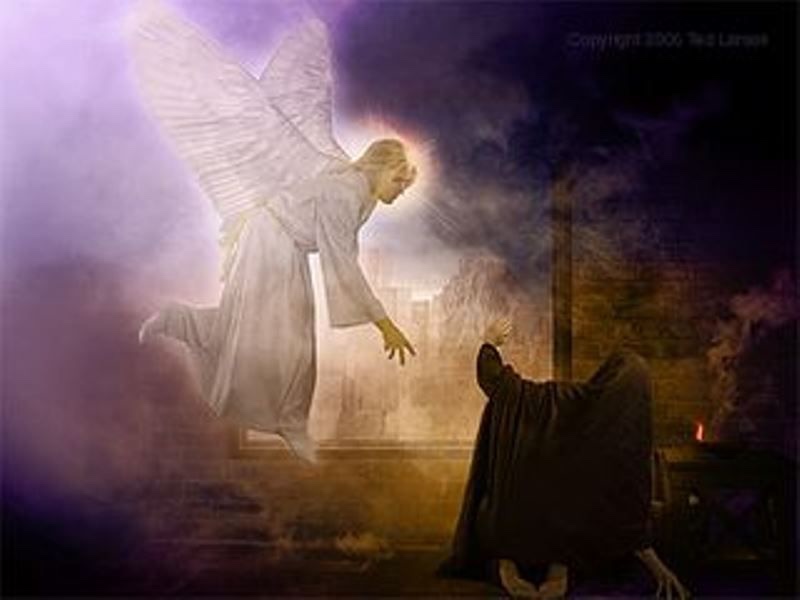
Of course, Matthew tells a very different version of how this news was conveyed: a scene in which an angel explains Mary’s pregnancy to Joseph, completely omitting any communication with Mary herself (Matthew 1:20–25; see https://johntsquires.com/2019/12/17/now-the-birth-of-jesus-the-messiah-took-place-in-this-way-matthew-1/)

So how did Joseph inform Mary of this news? Perhaps Matthew hints at a very early example of mansplaining?

There is more that we want to know, to fill in the gaps, in the accounts that both evangelists provide. And we are not alone in that desire to know more than what is in these Gospels. From early in the Christian movement, there were people whose curiosity led them to construct narratives which provided “more information” than what the earliest Gospels offer.

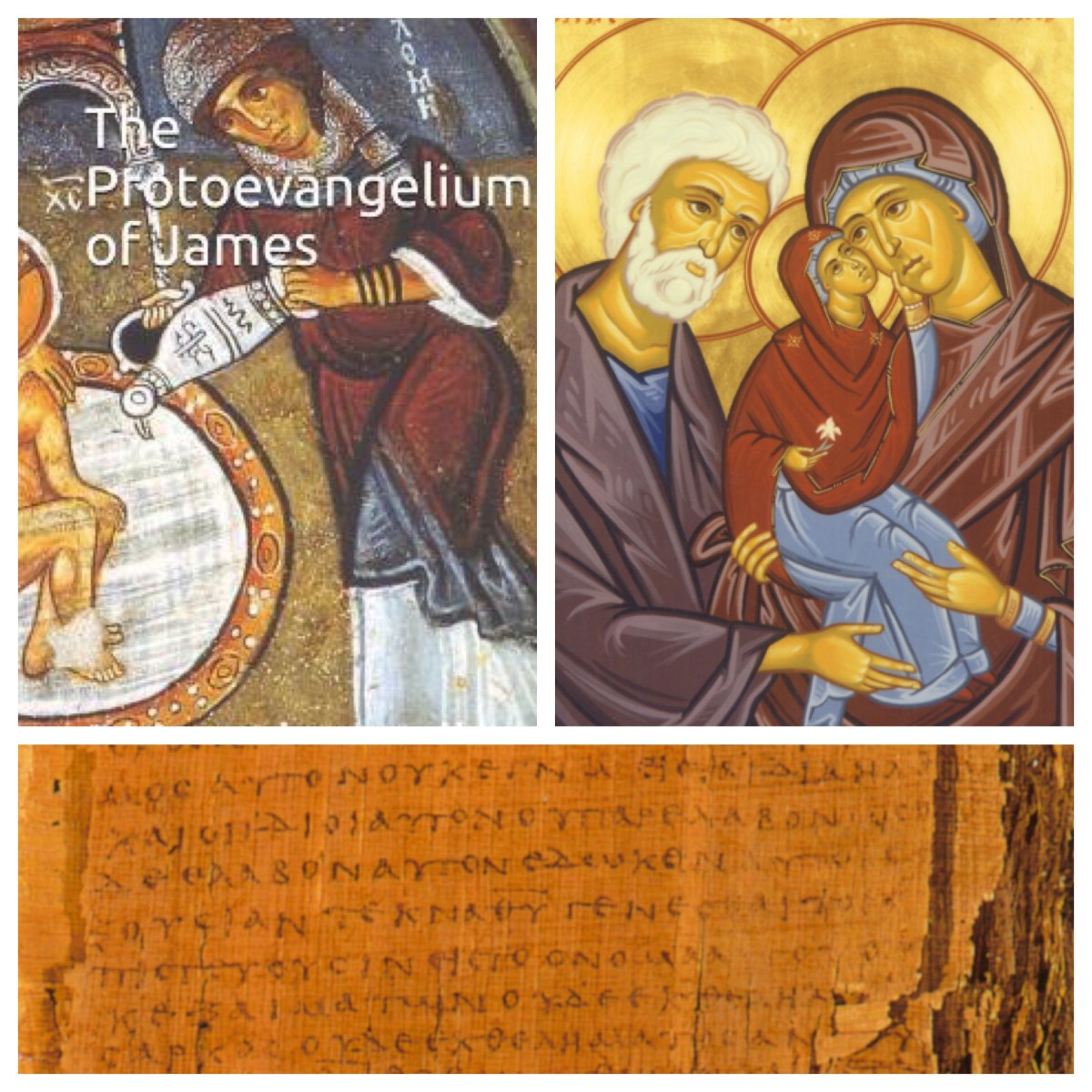
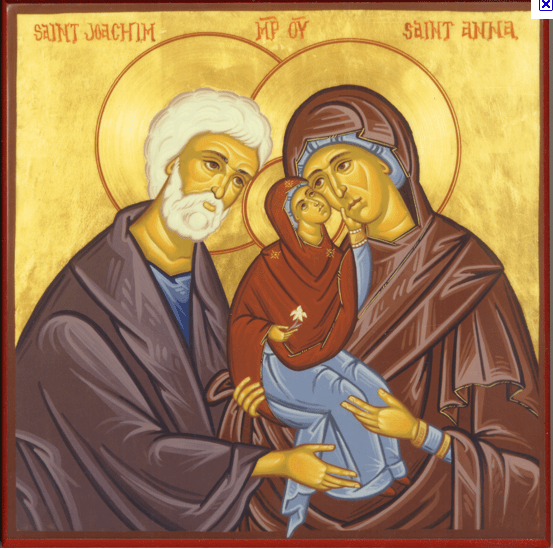
We find this, for example, in second century text, the Protoevangelium of James (also known as the Proto-Gospel of James, or the Infancy Gospel of James). This work weaves a long tale, commencing with Joachim and Anna, the parents of Mary, incorporating distinctive versions of the various events reported by both Luke and Matthew in their first two chapters—Zechariah and Elizabeth, Mary and Joseph, the census, Herod and the Magi—and it runs through until the mention of Simeon in the temple (towards the end of Luke 2).
In a later chapter, it describes a test that Mary had to take, when her pregnancy was discovered by the local authorities. The test follows the biblical prescription set out in Numbers 5:11-31, in which “if any man’s wife goes astray and is unfaithful to him … the man shall bring his wife to the priest; and he shall bring the offering required for her”.

After this, the priest shall make a mixture of “holy water that is in an earthen vessel … and some the dust that is on the floor of the tabernacle”, to form “the water of bitterness that brings the curse”. The priest is then instructed to make the woman take the oath of the curse, and say to the woman: “The LORD make you an execration and an oath among your people, when the LORD makes your uterus drop, your womb discharge; now may this water that brings the curse enter your bowels and make your womb discharge, your uterus drop!” The woman is then expected to reply, “Amen. Amen.”

In the Protoevangelium of James, both Mary AND Joseph are made to drink a potion in accordance with this test, to reveal whether they have committed adultery. If they have, it is anticipated that they will develop all sorts of physical ailments, to signal that they have, indeed, sinned by committing adultery. Chapter 16 reads:

16. And the priest said: “Give up the virgin whom you received out of the temple of the Lord.” And Joseph burst into tears. And the priest said: “I will give you to drink of the water of the ordeal of the Lord, and He shall make manifest your sins in in your eyes.” And the priest took the water, and gave Joseph to drink and sent him away to the hill-country; and he returned unhurt.

And he gave to Mary also to drink, and sent her away to the hill-country; and she returned unhurt. And all the people wondered that sin did not appear in them. And the priest said: “If the Lord God has not made manifest your sins, neither do I judge you.” And he sent them away. And Joseph took Mary, and went away to his own house, rejoicing and glorifying the God of Israel.

So Joseph and Mary return unscathed, and their examiner believes their story. They have survived the ordeal of the water of bitterness! But the story of miracles continues. This work provides a detailed description of events surrounding the birth of Jesus.

With no proper birthing room, let alone an epidural, one might think Mary had a tough time during labour. Matthew and Luke skip over the birth, mentioning it only off-handedly (Matthew 2:1; Luke 2:6–7), but some Christians were curious about the labour. As opposed to Luke’s account of the new-born Jesus lying in a Jesus manger (2:7), the Protoevangelium of James describes how Mary gives birth in a cave.

As soon as Mary enters the cave, it shines with bright light—reminiscent of the scene of the Transfiguration in our canonical Gospels. A midwife, arriving too late to help, is shocked when she sees the minutes-old Jesus walking over to Mary and suckling at her breast. Mary is said to have experienced no pain at all during the birth. The midwife then verifies that Mary retained her virginity even after giving birth.
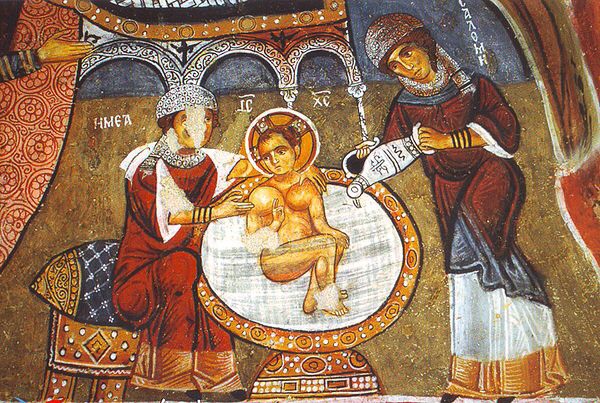
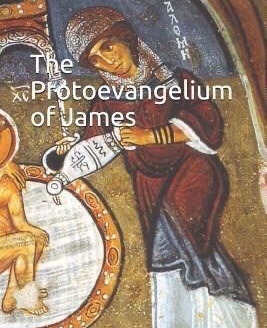
Salome (right) and the midwife “Emea” (left), bathing the infant Jesus.
A 12th-century fresco from Cappadocia.

Chapters 19-20 tell of the scene of the birth of the child in the cave.

19. And behold a luminous cloud overshadowed the cave. And the midwife said: “My soul has been magnified this day, because my eyes have seen strange things — because salvation has been brought forth to Israel.”

And immediately the cloud disappeared out of the cave, and a great light shone in the cave, so that the eyes could not bear it. And in a little that light gradually decreased, until the infant appeared, and went and took the breast from His mother Mary. And the midwife cried out, and said: “This is a great day to me, because I have seen this strange sight.”

And the midwife went forth out of the cave, and Salome met her. And she said to her: “Salome, Salome, I have a strange sight to relate to you: a virgin has brought forth — a thing which her nature admits not of.” Then said Salome: “As the Lord my God lives, unless I thrust in my finger, and search the parts, I will not believe that a virgin has brought forth.”

20. And the midwife went in, and said to Mary: “Show yourself; for no small controversy has arisen about you.” And Salome put in her finger, and cried out, and said: “Woe is me for mine iniquity and mine unbelief, because I have tempted the living God; and, behold, my hand is dropping off as if burned with fire.”

Of course, this offers us sooooo much information—too much information! There are intimate personal details, known in so much detail, that are recounted. At one level, it piques the interest and satisfies the curiosity of the human reader. But we should note that this comes from a writer who, according to scholarly consensus, was writing at a later time, many decades after the events reported. How did he have access to such detailed information, so many personal elements, so much later in time? We rightly adopt a scepticism about such a piece of literature. The “hermeneutic of suspicion” is clearly warranted in this instance.

(The author self-identifies as writing very soon after the events recounted: “I James that wrote this history in Jerusalem, a commotion having arisen when Herod died, withdrew myself to the wilderness until the commotion in Jerusalem ceased, glorifying the Lord God, who had given me the gift and the wisdom to write this history.” Nevertheless, contemporary scholars are unanimous in the view that the work was written by a person unknown, at least a century and a half, if not more, after the death of Herod in 4 BCE.)
It is worth noting, also, the way the story is written, throughout all 24 chapters. The book adopts a style that clearly and self-consciously imitates a scriptural way of writing. The author ensures that as many scriptural events and incidents are referred to in this work as is possible. The style is reminiscent of biblical passages which self-consciously evoke earlier writings, as a technique designed to bolster their validity. The method is a standard one, that nestles the later work into the stream of the earlier works. Some key sections of our canonical Gospels clearly adopt this technique—including Luke 1–2 and Matthew 1–2. Perhaps that is part of the reason why they were canonised?

Furthermore, the author, who calls himself James, seems to have enjoyed the tasks of harmonising the infancy narratives of Matthew and Luke, and adding in much more detail than is offered in either of these works. It feels to me that the author is working incredibly hard to establish his credentials as valuable and authoritative—perhaps too hard?

We know that the process of harmonising the Gospels became an industry in later centuries, as church fathers grappled with apparent discrepancies between the Gospels; witness the 2nd century Diatessaron by Tatian, the Gospel of the Ebionites from the same period (which unfortunately we don’t have in a full extant form), the Ammonian Sections, the Eusebian Canons, Augustine’s Harmony of the Gospels, and then a series of manuscripts from late antiquity and the Middle Ages. The Protoevangelium sits in this company, as it works exclusively to harmonise the infancy narratives. It is a later enterprise, from beyond the first century.

I wonder whether, as we lay aside our curiosity to know more, and adopt a rigorously critical approach to this particular text (and others like it, from later centuries, presenting themselves in the mode of earlier documents), we might also consider the value of the “hermeneutics of suspicion” and the historical-critical approach taken, when we read our canonical texts? It seems easier to be critical of works that have not been incorporated into our canon of scripture. Why can we then not take the same approach to the works that have been deemed to be canonical?

You can read the whole text of the Protoevangelium of James at https://www.newadvent.org/fathers/0847.htm

Postscript

The Protoevangelium of James provides the earliest assertion of the perpetual virginity of Mary (meaning she continued as a virgin during the birth of Jesus and afterwards). In this it is practically unique in the first four centuries. The only other place this view is expressed is by Origen, in his Commentary on John 1, 4, and also in his Commentary on Matthew 10, 17.

An edited version of the Protoevangelium, along with a set of letters alleged to have been exchanged between the scholar, Jerome, and two Bishops, Comatius and Heliodorus, forms the first part of a seventh or eighth century document entitled The Infancy Gospel of Matthew, also known in antiquity as The Book About the Origin of the Blessed Mary and the Childhood of the Saviour. It is followed by an expanded account of the Flight into Egypt (it is not known on what this is based), and an edited reproduction of the Infancy Gospel of Thomas.

The Infancy Gospel of Matthew, of course, is the basis for developing Catholic traditions about Mary which still hold sway in popular piety. It provides the first known mention that an ox and a donkey were present at the birth of Jesus. The work also helped popularize the image of a very young Mary and relatively old Joseph. We see both of these features in the classic “nativity scene” which was first created by Francis of Assisi.
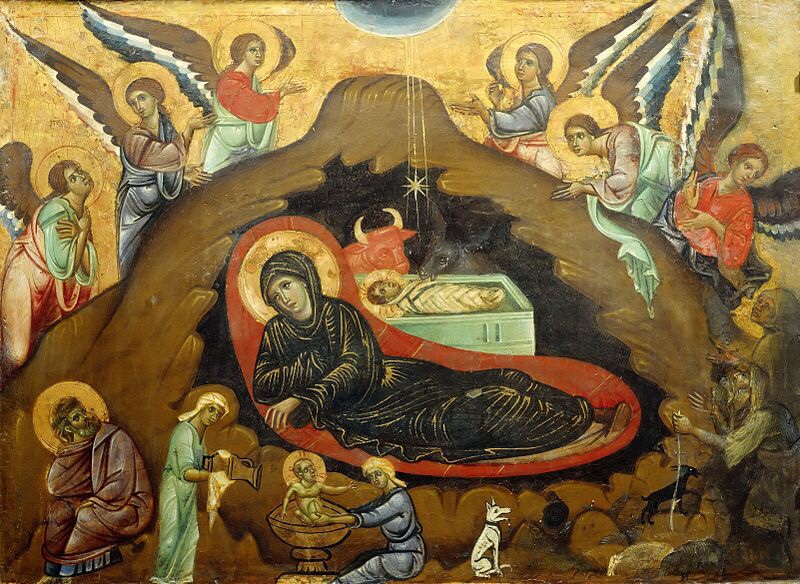
Byzantine Fresco (ca. 1175). Church of Karamlik Kilise, Cappadocia,
clearly showing features from the apocryphal tradition.
Salome (far right), ox and ass at the manger from Gospel of Pseudo-Matthew.

Finally, the Infancy Gospel of Matthew tells of how Mary, Joseph, and a two-year-old Jesus are surrounded by dragons. Jesus, unafraid, walks over and stands in front of them. The dragons worship him and then leave in peace. This event is linked to the prophecy of Psalm 148:7: “Praise the Lord from the earth, O dragons and all the places of the abyss.”

On Mary as a virgin in the canonical Gospels, see https://johntsquires.com/2019/12/21/a-young-woman-a-virgin-pregnant-about-to-give-birth-isa-714-in-matt-123/ and https://johntsquires.com/2020/12/22/on-angels-and-virgins-at-christmastime-luke-2/

James McGrath has used this ancient document as the basis for a very creative consideration of “what Jesus learnt” from both his mother and his grandmother, in his fine book, What Jesus Learned from Women. See
https://johntsquires.com/2021/08/04/jesus-growing-learning-a-review-of-what-jesus-learned-from-women/
Unknown's avatarAuthor John T SquiresPosted on December 9, 2022December 9, 2022Categories A Book of Origins: Gospel of Matthew, An Orderly Account: Gospel of LukeTags Christmas, Luke, Mary, Matthew1 Comment on More on Mary (from the Protoevangelium of James)

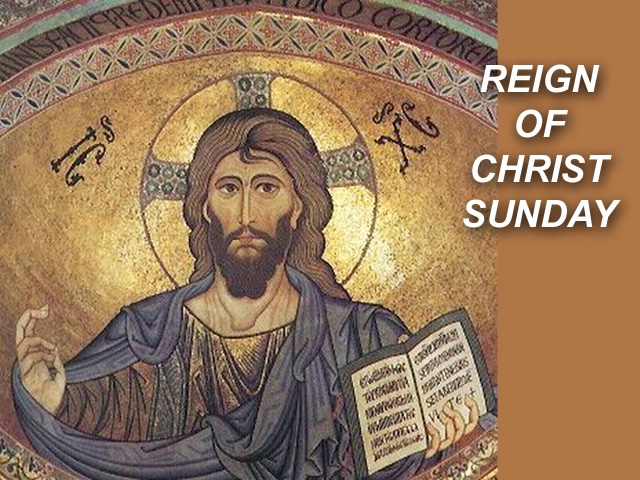
The Reign of Christ: a critical appreciation of a subversive festival (Pentecost 24C)

The Reign of Christ: a critical appreciation of a subversive festival (Pentecost 24C)

The church’s year draws to a close this coming Sunday, with the festival of the Reign of Christ, after which we enter a new church year. The church’s year is organised differently from the calendar year; it revolves around the key events of our faith: the birth of Jesus, which we celebrate each Christmas, the death and resurrection of Jesus, which comes into focus at Easter, the birth of the Church, which we recall at the celebration of Pentecost, and the long season after Pentecost, when we attend to our life as disciples and the mission into which we are called as people of faith.

What I am referring to as the festival of the Reign of Christ has been known traditionally as the festival of Christ the King, when we commemorate the reign that Christ exercises over the world. I prefer the term Reign of Christ as at least one step away from the connotations that are associated with that archaic institution of monarchy. And that flags one of the issues that I have with this feast day—more below.

This is a relatively new festival in the calendar of church festivals—it was introduced by Pope Pius XI in 1925, and has since been adopted by Lutheran, Anglican, and various Protestant churches around the world, and also, apparently, by the Western Rite parishes of the Russian Orthodox Church Outside Russia. (Yes, that is a real denomination!)

So that is a second issue that I have with this day—along with Trinity Sunday, it sits as a day devoted to “a doctrine” developed later in the church’s life, rather than “a time in the life of Jesus”, which is what Christmas and Easter is, or “a time in the life of the church”, namely, Pentecost.

In Roman Catholic tradition, the day is explained by some words from Cyril of Alexandria, a fifth century Doctor of the Church who served as Patriarch of Alexandria, in Egypt, from 412 to 444. In establishing this festival, Pope Pius XI quoted from the writings of Cyril: “Christ has dominion over all creatures, …by essence and by nature … the Word of God, as consubstantial with the Father, has all things in common with him, and therefore has necessarily supreme and absolute dominion over all things created. From this it follows that to Christ angels and men are subject. Christ is also King by acquired, as well as by natural right, for he is our Redeemer. …’ We are no longer our own property, for Christ has purchased us with a great price; our very bodies are the members of Christ.”

*****

Now, if you wonder where the Pope derived this understanding from, then perhaps the words offered by the Revised Common Lectionary, from the letter to the Colossians, might have provided the foundations for this grand cosmic vision of the place of Jesus, the Risen Lord, in the overall scheme of things (Col 1:11–20). Here, Jesus is described as, not only the agent of God’s creative powers (1:16) and the one who is “before all things” (1:17), but also as the one who has “first place in everything” (1:18). The passage also indicates that believers are “transferred … into the kingdom of [God’s] beloved son” (1:13). It is a festival that invites us to lift our eyes to grasp this grand vision, of the one ruling over all creation, with a realm dedicated for those who have been rescued (1:13) and redeemed (1:14).

The Hebrew Scripture passage provided by the lectionary this coming Sunday is an oracle of the prophet Jeremiah (Jer 23:1–6). In this oracle, the promise is that the Lord “will raise up shepherds over [the people] who will shepherd them, and they will not fear any longer” (23:4), followed by a direct statement that the Lord “will raise up for David a righteous Branch, and he shall reign as king and deal wisely, and shall execute justice and righteousness in the land” (23:5). The connection with the Reign of Christ is clear; the reign of the righteous branch will be executed with assistance from good shepherds who will care for the people.

The Gospel is the story narrated in Luke’s orderly account of the last hours of Jesus, hanging on the cross (Luke 23:33–43). This passage relates to the theme at two points. First, it contains the mocking of the Roman soldiers at the cross, as they taunt Jesus, saying, “If you are the King of the Jews, save yourself!” (23:37)—a taunt provoked by the sign that was affixed to the top of the cross, bearing an inscription that read, “This is the King of the Jews” (23:36). That inscription, although it is intended to identify Jesus, is actually a statement of power and authority, made by Governor Pilate on behalf of the Roman Empire which he served.

Second, this passage contains the word of one of the two criminals who were being crucified alongside Jesus; the one who petitioned him, saying, “Jesus, remember me when you come into your kingdom” (23:42), to which Jesus replied, “Truly I tell you, today you will be with me in Paradise” (23:43). The correlation of Paradise to Christ’s kingdom is a link that can legitimately be made. Jesus has earlier declared to his disciples, “I confer on you, just as my Father has conferred on me, a kingdom, so that you may eat and drink at my table in my kingdom, and you will sit on thrones judging the twelve tribes of Israel” (22:28–30). Jesus as King hovers, perhaps uncomfortably, in this passage. It’s not as clear cut as it might appear on first reading.

So, at this time of the year, the green of the season after Pentecost is retired from view, and the white of this high festival comes into view. White, for a festival of the Church, is the colour for this one Sunday. And the passages offered are “cherry picked” from the range of scriptural options, with little regard to what went before or comes after—the three key passages are chosen because they have the buzzwords “king” or “kingdom”.

*****

However, the basic reason for my angst with this day is the way that the central message of Luke’s Gospel, which we have been following throughout the year, appears to have been put to one side. This Gospel is the one which introduces Jesus, early on, as a revolutionary, when his pregnant mother looks to the time when he will have “scattered the proud in the thoughts of their hearts … brought down the powerful from their thrones, and lifted up the lowly … filled the hungry with good things, and sent the rich away empty” (Luke 1:51–53).

This is the Gospel in which Jesus blesses “the poor … those who are hungry … those who weep” whilst promising to bring down “the rich … those who are filled … those who are laughing” (6:20–26). It is the Gospel which contains an explicit critique of monarchy: “the kings of the Gentiles lord it over them; and those in authority over them are called benefactors; but not so with you; rather the greatest among you must become like the youngest, and the leader like one who serves” (22:25–26). Would Jesus appreciate being identified as a king, after he has uttered this saying?

It is the Gospel (along with the other Synoptics, Mark and Matthew) in which Pilate sarcastically poses the direct question to Jesus, “Are you the king of the Jews?”—to which Jesus answers with a neat deflection, “You say so” (Luke 23:3; see also Mark 15:2; Matt 27:11). It is the sole Gospel in which Jesus is mockingly dressed as a king by the soldiers of Herod (23:11). Is this the kind of kingship to which he really aspires?

And it is the Gospel which flows on into a second volume, Acts, in which followers of Jesus are portrayed as “people who have been turning the world upside down” and accused of “acting contrary to the decrees of the emperor”, with the mocking claim that they say “there is another king named Jesus” (Acts 17:6–7). The tone is clear; this Jesus cannot be king, surely?

*****

Kingship, in Luke’s narrative, is consistently portrayed as an institution which fails to adhere to the standards that the Lord God expects. In Hebrew Scripture, the king of Israel was expected to “trust in the Lord” (Ps 21:7), “rejoice in God” (Ps 63:11), and “judge [the] people with righteousness, and [the] poor with justice” which have been granted by God (Ps 72:1–2).

We know, of course, from the narratives that tell the story of Israel over many generations (1–2 Samuel, 1–2 Kings, 1–2 Chronicles), that many kings failed in this requirement, and “did evil in the sight of the Lord”, fulfilling the predictive prophecy of the prophet Samuel (1 Sam 8:10–18). Nevertheless, the idealised view of kingship, which Samuel dutifully set out in writing for the people (1 Sam 10:26), held sway through the ensuing centuries. It was particularly developed in the portrayal of Solomon, filled with “wisdom and knowledge”, and granted “riches, possessions, and honour, such as none of the kings had who were before you, and none after you shall have the like” (2 Chron 1:7–12, especially verses 10 and 12).

Does the festival of the Reign of Christ draw on the idealised view of kingship that Hebrew Scripture advocates? Is Jesus put forward as the King who fulfils the hopes for Israelite kingship—which so many of the kings had failed to achieve? That’s a disturbing, possibly antisemitic, way of treating the stories of scripture.

Or even more disturbingly, does the festival of the Reign of Christ reflect the height of Christendom, ideas first shaped by Cyril in the 5th century, then adopted and expanded by Christian rulers over the centuries (Charlemagne, or Vladimir the Great, for example)? That, too, is worrying.

This festival was introduced into the liturgical cycle of the Roman Catholic Church by Pope Pius XI in 1925, at a time when Fascist dictators were rising to power in Europe. I have read that “the specific impetus for the Pope establishing this universal feast of the Church was the martyrdom of a Catholic priest, Blessed Miguel Pro, during the Mexican revolution”; see Today’s Catholic, 18 Nov 2014:

Christ the King

The article continues, “The institution of this feast was, therefore, almost an act of defiance from the Church against all those who at that time were seeking to absolutize their own political ideologies, insisting boldly that no earthly power, no particular political system or military dictatorship is ever absolute. Rather, only God is eternal and only the Kingdom of God is an absolute value, which never fails.”

The scriptures puncture the pomposity of powerful kings, and subversively present Jesus as the one who stands against all that those kings did. In that sense, and only in that sense, this is a feast day to maintain and support.

Unknown's avatarAuthor John T SquiresPosted on November 15, 2022Categories An Orderly Account: Gospel of LukeTags liturgy, Luke, politics, scripture, theology2 Comments on The Reign of Christ: a critical appreciation of a subversive festival (Pentecost 24C)

Look up to the sky? Look down to your feet! (Luke 20; Pentecost 22C)

Look up to the sky? Look down to your feet! (Luke 20; Pentecost 22C)

Some Sadducees, those who say there is no resurrection, came to him and asked him a question…in the resurrection, whose wife will the woman be? This is the question that the Sadducees pose to Jesus, according the account found in the Gospel set for this Sunday, Luke 20.

A hard question—a trick question, to be sure, crafted by a learned group who wanted to have Jesus floundering, grasping for a firm point, sinking in the quicksand of a belief that they did not share.

I Look up, to the sky

Debate about the afterlife was common in the time of Jesus. Some scoffed at the idea. Others yearned to experience that reality beyond our current reality. God rewarded or punished people in this lifetime. The Sadducees noted that their scripture did not actually refer to a time or place for life after this life; they asserted that there was no “life after death”, so the present was all there is for God to judge people.

The Pharisees disagreed, drawing on a particular interpretation of just a small number of prophetic verses to argue that it was, indeed, in the afterlife that God bestowed his blessings or curses on people, in accordance with their faithfulness.

So, the Pharisees—and the followers of Jesus—taught about the resurrection of the dead, the life after this life, the heavenly realm, the promise that God offers to people of faith, to snatch them out of this life of misery, to take them up in the air to the heavenly realm, where God resides, where true believers are found, where hope is assured.

At least, that is where a traditional understanding of this passage in Luke 20 and the issues takes us. And the same attitudes persist today. What will life be like in the “afterlife”? What will we be doing when we are in the mysterious presence of God into eternity? People still wonder. The hypothetical question of the Sadducees was intended to trip Jesus up. Jesus avoids the trap, jumps over the snare, and focusses attention elsewhere.

The traditional understanding of the world was driven by the ancient Hebrew belief that the world was flat, resting on a set of pillars, there was an abyss of waters, a huge mass of waters under the earth. (See picture)

And in the sky, above the sun, moon and stars, there was a firmament, a dome stretching right across the sky, and above that firmament there was another huge body of water—water which made its way down to the earth when that dome was punctured, water which fell down on people and creatures through the windows in the firmament, and came onto the earth as rain.

Of course, that all made sense to the ancients, who didn’t have the capacity that we have, to see our world from afar, or to measure things off in the distance. A flat earth with a huge domed sky just made perfect sense. That’s precisely what it looked like.

And watching over all this, above the dome, above the waters in the sky, was the heavenly being, God, sovereign lord over the whole creation, safe and secure in his heavenly realm. And that was where faithful believers would end up, after moving beyond this earthly life, into the heavenly realm, to spend eternity with God. Death, for believers, meant ascending into heaven.

Well, that picture of the world, that way of envisaging the reality of our place in the grand scheme of things, does not stand up in the modern world. Driven by the understandings of science, astronomy, geology, physics, chemistry, and biology, we have a very different appreciation of the physical realities of this world.

We are not at the centre of the whole creation, as the ancients once thought. We are on just one planet, orbiting around just one sun—one of many planets, orbiting one of many suns. And our planetary system is but one such system in the galaxy we inhabit—one of many, many galaxies, stretching out, not just as far as the eye can see, but as far as we can conceptualise time, and space—light years, that distance which is covered by light travelling in a vacuum in one calendar year, 365.25 days as we measure them.

And we know that we are able to look through our telescopes far off, into the distance, back in time, across hundreds and hundreds of light years, into this magnificently wonderful, complex, inspiring creation, of which we are but a tiny, tiny part.

And in that context, then, the stereotyped image of the stern white-haired bearded ancient of days, seated on a throne amidst the clouds in heaven, surrounded by angels, serenaded by hymns of praise, watching over the saints in heaven who have been saved and the people still labouring on earth—this caricature, this conceptualisation of God and heaven, no longer makes sense.

So I have some questions about what really was meant, when Jesus refers, in the debate, to angels and children of God, being children of the resurrection. Did he have this heavenly realm of angelic creatures firmly in view?

And for us, today: Does this bear any relationship to the way that we visualise the scene, of seven brothers, deceased, but raised to life, in heaven? And does it disturb us, that our current understanding of the world, the solar system, the galaxy, the universe—the whole cosmos—this understanding really has no place? That God in the clouds up there in heaven does not actually make sense? That the Bible, at this point, doesn’t speak to our reality?

II Look down, to your feet

So now, hear this poem, There Are Stones That Sing, which was written by Lisa Jacobson, a contemporary Australian poet and novelist. This was one of the poems offered during the recent Annual Retreat for Ministers and Pastors in the Canberra Region Presbytery. It offers a different perspective, a different understanding, of God and the world.

There Are Stones That Sing

The churches are almost empty or sold,

as if they’ve reached their tipping point,

and from the pulpits, god slid out.

And all that fanciful gold leaf

on heaven’s floor was incinerated

by our telescopes, whose lenses caught it in their scope.

And bits of tattered god fell down.

I’ve heard that âme (‘soul’ in French)

is the name of a wooden chip,

very exposed and vulnerable,

that violin makers insert into

the bodies of their instruments to further enhance the sound.

So maybe that’s where god lives now.

If you ask a priest, he’ll point up.

If you ask black fellas, they’ll point down

to stones that sing

and rivers vibrating underground.

In this poem, Lisa Jacobson reflects, firstly, on the way that science appears to have punctured the traditional Christian view of reality; the fanciful gold leaf on heaven’s floor is incinerated by the piercing gaze of astronomers looking out into distant space through their intensely powerful telescopes. No matter how far they looked, no matter how many millions of light years away, they can see no trace of God sitting on the clouds up in heaven.

So the poet reflects the modernist view that God is an ancient idea which has had its day. God slid out from the churches; bits of tattered god fell down from the floor of heaven, she writes.

It’s a confronting image of the place of religious faith in the contemporary world.

But the part of the poem that really took hold of my imagination, from the first time I heard the poem, through my multiple re-readings of it during the retreat, was the closing section. If you ask where God lives now, she writes;

If you ask a priest, he’ll point up.

If you ask black fellas, they’ll point down

to stones that sing

and rivers vibrating underground.

And that is a stanza that offers a different perspective, a variant understanding, a refreshed imagining of how we encounter God, and where we encounter God. Not, look up, to the heavens; but rather, look down, look at your feet, look past your feet, to the stones—hear them singing? and the rivers—feel them vibrating?

Stones singing and rivers vibrating; that twofold expression of the inner life of the earth is also the key that unlocks a different understanding of God—as a being not remote and removed from humans on earth, but as a being beside us, around us, underneath us, in the earth, in the stones, in the rivers, in our very being.

And this, of course, is rightly acknowledged in this poem, as the insight of black fellas—the centre of spirituality for the First Peoples of this ancient continent. God is in the land, God is in amongst us.

This understanding of where we find God, how we enter the depths of spirituality, is set forth very clearly in the Statement from the Heart, which was made by a representative gathering of Aboriginal and Torres Strait Islander Peoples, meeting at Uluru in the heart of the continent, in May 2017.

That Statement refers to a deeply spiritual notion for the First Peoples:

the ancestral tie between the land, or ‘mother nature’, and the Aboriginal and Torres Strait Islander peoples who were born therefrom, remain attached thereto, and must one day return thither to be united with our ancestors.

This idea is set forth as the basis for the claim that the First Peoples have sovereignty of the land; this link is the basis of the ownership of the soil, or better, of sovereignty. It has never been ceded or extinguished, and co-exists with the sovereignty of the Crown.

But as well as this political claim—sovereignty—there is a spiritual claim. This ancestral tie to the land is what nurtures and grows and sustains the people. Take the people away from their land, and their spirits shrivel, their lives are diminished. Enable the connection between people and land to be maintained, and the people and the land flourish.

III God, not of the dead; God of the living

And so, now, we go back, and read the story told in Luke 20 again—a story of Jesus, debating with the Sadducees, about marriage, relationships, resurrection and the future, a story of debate and discussion.

Yes, there are elements that point very clearly to the ancient Hebraic worldview that saw God as remote, removed, above the clouds, above the sun and moon, beyond the firmament, far away in heaven, where resurrected beings danced as angels.

But alongside that, let us hear the way that Jesus ends the debate, moving away from the future orientation of resurrection life in the time beyond this life, placing the emphasis right back on the present moment: the Lord, the God of Abraham, the God of Isaac, and the God of Jacob, is God not of the dead, but of the living; for to him all of them are alive.

Jesus focusses on what is most important. Worry not about God in relation to the dead; focus on the now, on what we do in our lives, on how God is the God of the living. That is the punchline that he provides. That is consistent with what he instructs us to pray: your kingdom come, your will be done, on earth as in heaven. That is consistent with what he teaches about the kingdom of God: the kingdom of God is among you.

This is consistent with what the psalmist affirms about the earth: the earth is the Lord’s, and the fullness thereof. And again, what the psalmist sings: Lord, how manifold are your works! In wisdom you have made them all; the earth is full of your creatures … When you send forth your spirit, they are created; and you renew the face of the ground. Yes, God is here, in the midst of our lives on this earth, in this time and place.

Our God is God of the living. We do not need to wonder where God is, far away from us, high up in the heavens, distant and remote. God is among us. Look down. See the stones. Listen to the rivers. Care for the creation. Nurture life in this world. God is God of the living.

Unknown's avatarAuthor John T SquiresPosted on November 2, 2022November 2, 2022Categories An Orderly Account: Gospel of Luke, Environment, Scripture and TheologyTags climate change, ecotheology, indigenous, Luke, scripture, sovereignty, theology3 Comments on Look up to the sky? Look down to your feet! (Luke 20; Pentecost 22C)

Zacchæus: patron saint of change and transition (Luke 19; Pentecost 21C)

Zacchæus: patron saint of change and transition  (Luke 19; Pentecost 21C)

The Gospel passage for this coming Sunday offers us a familiar story—yet another one of the stories from the life of Jesus which is recorded in only one place, the “orderly account” that we have been following this year, which we know by custom and tradition as The Gospel according to Luke. (See https://johntsquires.wordpress.com/2019/01/31/an-orderly-account-a-quick-guide-to-luke-and-acts/)

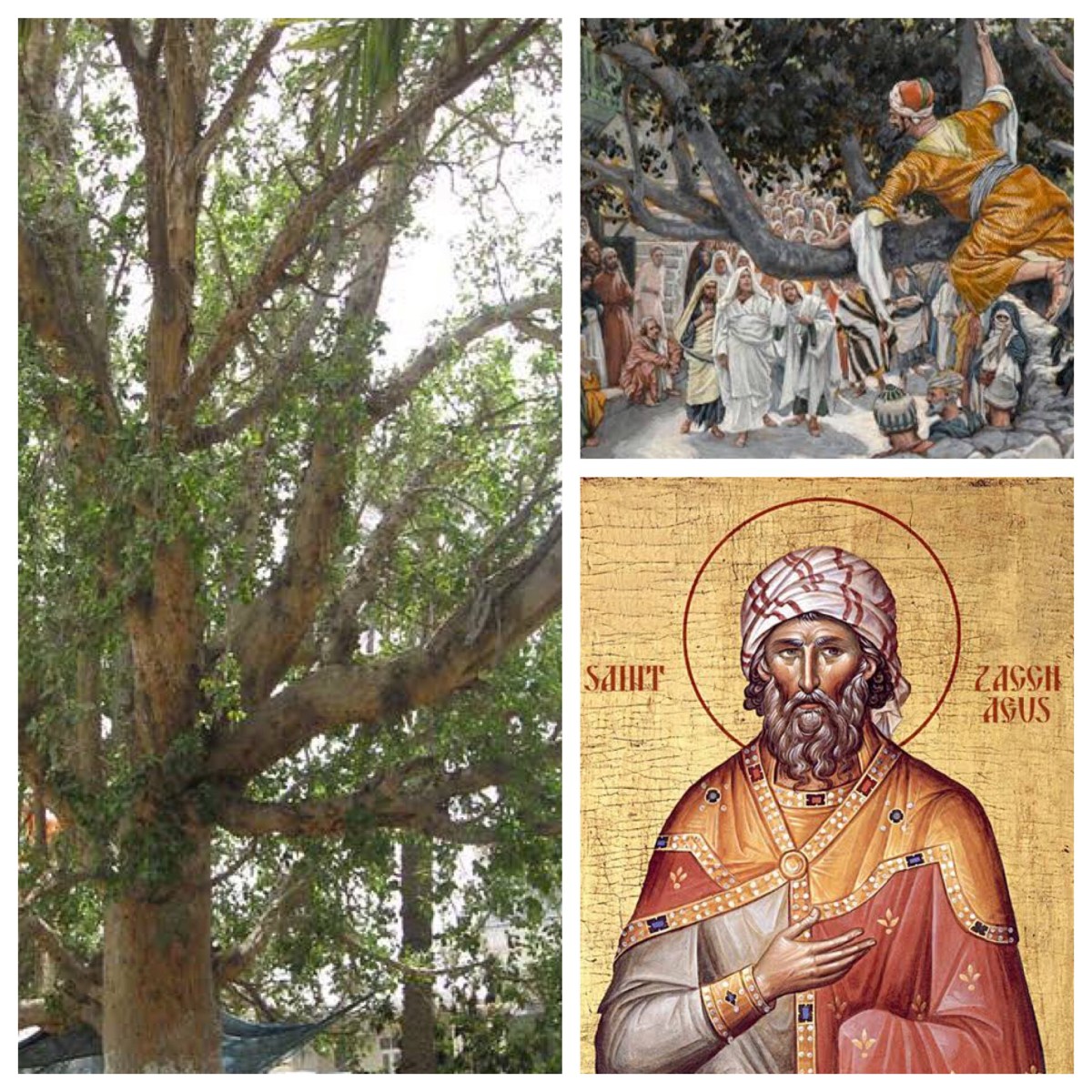
For Luke alone tells us about Zacchæus of Jericho—a man short of stature, but undoubtedly rich in money and possessions, if I read the text accurately. And an agile character, too—how many of us would be able to shimmy up the nearest syacamore tree so that we could see easily over the heads of the taller people standing in front of us?

At any rate, it is not the appearance, or wealth, or agility of Zacchæus that draws my attention as I hear again this story. It is, rather, in the words that he speaks, after he has seen, and interacted with, Jesus of Nazareth. Not only does Jesus stop and talk to Zacchæus, clinging bravely to the tree trunk, but he invites himself and his retinue to the house of Zacchæus, where they share a meal together.

And the words which Zacchæus speaks are words which should be ringing in our ears, today. “ I am a man of possessions”, he declares; and yet, “half of my possessions I will give to the poor”. He takes seriously what Jesus has just told the rich man a few verses back: sell all that you own and distribute the money to the poor, and you will have treasure in heaven (18:22)—and, indeed, what he had instructed all who would follow him, in an earlier chapter: sell your possessions, and give alms; make purses for yourselves that do not wear out, an unfailing treasure in heaven, where no thief comes near and no moth destroys (12:33).

In this regard, Jesus is being utterly faithful to his Jewish tradition, following the command of the lawgiver Moses, in Deut 15:7, if there is among you anyone in need, a member of your community in any of your towns within the land that the Lord your God is giving you, do not be hard-hearted or tight-fisted toward your needy neighbour; and the words attributed to prophet Isaiah, in Isa 58:6-8, is this not the fast that I have chosen: … to share your bread with the hungry, and that you bring to your house the poor who are cast out; when you see the naked, that you cover him, and not hide yourself from your own flesh? ; and again, in words attributed to King Lemuel, in Proverbs 31:7, speak out, judge righteously, defend the rights of the poor.

Zacchaeus commits to acting with integrity. He follows a central teaching of his tradition. He will give to the poor.

But then, Zacchaeus commits to still more: “I am a man of means, wealth gained through my profession as a collector of taxes”, he affirms; and yet, “to those I have defrauded, I will repay fourfold”—going far beyond what had been commanded in the Law, according to Leviticus 6:2-5, when any of you sin and commit a trespass against the Lord by deceiving a neighbor in a matter of a deposit or a pledge, or by robbery, or if you have defrauded a neighbour … you shall repay the principal amount and shall add one-fifth to it. Zacchaeus goes way beyond paying back 120%; he pledges to pay 400% to those he has defrauded. That is the radical economics of Jesus, and of Zacchaeus!

I will give my possessions to the poor; I will repay those I have defrauded. Serious words, signalling serious intent. And what are we to make of the fact that the story of Zacchæus was told and retold, remembered and written down, passed on through the early communities who followed Jesus, and retained in one of the key books of sacred scripture in the Christian church?

For myself, this surely indicates that Zacchæus was a man of his word, that Zacchæus carried out the intentions that he had signalled around that table in Jericho, with the man of Nazareth and his rag tag collection of Galilee fishermen and farmers, along with the women of means and capacity that Luke especially tells us were accompanying Jesus on this journey from Galilee to Jerusalem.

Zacchæus is worth remembering for various reasons, no doubt; a rather colourful character, in the midst of a whole host of followers of Jesus who blur together into a homogenous whole, who fade into obscurity as anonymous figures in the background as Jesus and his disciples, make and female, make their way to Jerusalem. Zacchæus, this colourful character, is remembered, his story is retold, his encounter with Jesus is remembered, and inscribed in scripture, because: he was willing to change his mind.

In Christian tradition, Zacchaeus is sometimes remembered as the patron saint of stewardship, teaching us how to look after our money, or the patron saint of humility, because he was prepared to come down from his vantage point up the tree. For myself, I want to follow the lead that the evangelist who wrote this Gospel offers us, and claim that Zacchæus is the patron saint of change and transition; or if you are not really into saints, then think of Zacchaeus as the role model supreme for being willing to change his mind.

Zacchaeus reminds us that an encounter with Jesus, an engagement with the Gospel, invites us—indeed, presses hard upon us—to change our minds, and our behaviour. Just think about what Zacchaeus does, in this story:

He comes down from his tree. He reaches out to a person passing by, whom he has just encountered. He was willing to be challenged, and accepted the invitation to deeper fellowship with the stranger from Nazareth.

He held his mind open to new possibilities and looked for the ways that he could transition into the kind of person God wanted him to be. He was willing to help those in desperate, destitute situations, and prepared to repay what he had falsely taken and to set forth in a new way of being.

So he looked to the road ahead, where the man of Nazareth was walking onwards, and stepped out in faith on the journey ahead. That’s what it took for Zacchaeus, the patron saint of change and transition!

See also

https://johntsquires.wordpress.com/2019/01/31/an-orderly-account-a-quick-guide-to-luke-and-acts/

https://johntsquires.wordpress.com/2019/02/05/costly-discipleship-according-to-luke/

https://johntsquires.wordpress.com/2019/02/19/the-beloved-physician-the-lover-of-god-and-loving-our-enemies-luke-6/

https://johntsquires.wordpress.com/2019/04/17/the-death-resurrection-and-ascension-of-jesus-in-lukes-orderly-account/

https://johntsquires.wordpress.com/2019/04/26/the-cross-cultural-nature-of-the-early-jesus-movement/

https://johntsquires.wordpress.com/2019/04/30/the-calling-of-saul-and-the-turn-to-the-gentiles-modelling-the-missional-imperative-acts-8-12/

https://johntsquires.com/2019/05/22/jesus-and-his-followers-at-table-in-lukes-orderly-account/

https://johntsquires.com/2019/07/02/from-learners-to-leaders-deepening-discipleship-in-lukes-orderly-account/

https://johntsquires.com/2019/05/22/jesus-and-his-followers-at-table-in-lukes-orderly-account/

Unknown's avatarAuthor John T SquiresPosted on October 25, 2022October 25, 2022Categories An Orderly Account: Gospel of LukeTags Luke, reconciliation, scriptureLeave a comment on Zacchæus: patron saint of change and transition (Luke 19; Pentecost 21C)

Personal notes from Paul (III): Aristarchus, Tychicus, Carpus, and Alexander (2 Tim 4; Pentecost 20C)

Personal notes from Paul (III): Aristarchus, Tychicus, Carpus, and Alexander (2 Tim 4; Pentecost 20C)

The second letter in the New Testament that is addressed to Timothy presents a scenario that sees Paul in prison (1:8; 2:9), where he is in contact with a group otherwise unknown from his letters—Phygelus and Hermogenes (1:15), Crescens (4:10), Carpus (4:13), Eubulus, Pudens, Linus and Claudia (4:21)—as well as with others known from letters of Paul and/or that narrative of Acts—Onesiphorus (1:16), Demas and Titus (4:10), Luke and Mark (4:11), Tychicus (4:12), Prisca and Aquila (4:19), Erastus (4:20), Trophimus (4:20), and Timothy himself (1:2).

We have already considered a number of these people connected with Paul; see

Personal notes from Paul (I): Timothy and Titus, Demas and Crescens (2 Tim 4; Pentecost 20C)
Personal notes from Paul (II): Luke and John Mark (2 Tim 4; Pentecost 20C)

Tychicus

The next note is also brief, but reinforcing the mobility of the group: “I have sent Tychicus to Ephesus” (1 Tim 4:12). Tychicus is mentioned late in Acts, in a group which accompanied Paul as he returned to Greece and Macedonia: “Sopater son of Pyrrhus from Beroea, Aristarchus and Secundus from Thessalonica, Gaius from Derbe, and Timothy, as well as Tychicus and Trophimus from Asia” (Acts 20:4).

The author of Colossians (perhaps Paul, although I am not so sure) referred to Tychicus, indicating that he would “tell you all the news about me; he is a beloved brother, a faithful minister, and a fellow servant in the Lord (Col 4:7). These words are repeated almost verbatim in Ephesians (most likely a circular letter, drawing directly on Colossians at this point): “Tychicus will tell you everything; he is a dear brother and a faithful minister in the Lord” (Eph 6:21).

Yet another reference to Tychicus, but without any further description of him, occurs in the letter to Titus: “when I send Artemas to you, or Tychicus, do your best to come to me at Nicopolis, for I have decided to spend the winter there” (Titus 3:2).

Carpus and Alexander

Back to the second letter to Timothy; this letter moves towards a conclusion with further instructions to Timothy: “when you come, bring the cloak that I left with Carpus at Troas, also the books, and above all the parchments” (4:13). Of Carpus, the (temporary?) guardian of Paul’s cloak, we know nothing else.

Mention of Alexander the coppersmith introduces yet another figure into the Pauline circle—although this is the only mention of him, and like the note about Demas, this is not at all a positive note, for Alexander, the letter writer states, “did me great harm; the Lord will pay him back for his deeds” (4:14). Added to this comment is a warning to Timothy: “you also must beware of him, for he strongly opposed our message” (4:14). The polemical context in which Paul and his co-workers undertook their activities is evident at a number of places in Paul’s authentic letters, and the polemical aggravation of that time continued on, as is reflected in this and other comments in the matter Pauline letters.

*****

Further people named

In the verses beyond the section offered by the lectionary this Sunday, there are two more people named to be the recipients of greetings. “Greet Prisca and Aquila” (2 Tim 4:19)—a couple who are well known from Paul’s authentic letters (Rom 16:3; 1 Cor 16:19) as well as the account of Acts (Acts 18:2, 18, 26).

Then, “[greet] the household of Onesiphorus” (2 Tim 4:19)—also mentioned earlier in this letter, with quite some affection: “may the Lord grant mercy to the household of Onesiphorus, because he often refreshed me and was not ashamed of my chain” (2 Tim 1:16).

Then follows mention of what has happened to two individuals; first, “Erastus remained in Corinth” (2 Tim 4:20). Paul has identified Erastus as “the city treasurer” in Corinth, where he writes to the Romans (Rom 16:23); in Acts, we read that whilst in Ephesus, Paul “sent two of his helpers, Timothy and Erastus, to Macedonia, while he himself stayed for some time longer in Asia” (Acts 19:22).

Next, we read that “Trophimus I left ill in Miletus” (2 Tim 4:20). “Trophimus the Ephesian” is noted twice in Acts; the first time is in a list of people with Paul when he changed his travel plans in Greece. We learn that Paul “was accompanied by Sopater son of Pyrrhus from Beroea, by Aristarchus and Secundus from Thessalonica, by Gaius from Derbe, and by Timothy, as well as by Tychicus and Trophimus from Asia” (Acts 20:4). Trophimus is found here along with Aristarchus, Timothy, and Tychicus, already mentioned.

In the next chapter of the narrative of Acts, we encounter Paul in Jerusalem, and “Trophimus the Ephesian with him in the city, and they supposed that Paul had brought him [Trophimus] into the temple” (Acts 21:29), presumably as one of the “Greeks [he had brought] into the temple [who] defiled this holy place”, according to “the Jews from Asia” (Acts 21:27–28).

Finally, the letter ends with greetings being sent from a number of individuals who are not known elsewhere in the New Testament. “Eubulus sends greetings to you” and greetings were also given from “Pudens and Linus and Claudia and all the brothers and sisters” (4:21). Paul was nothing if not a networker supreme; the exchange of greetings in many letters indicate this quite clearly.

Unknown's avatarAuthor John T SquiresPosted on October 21, 2022October 20, 2022Categories An Orderly Account: Gospel of Luke, PaulTags letters, Paul, scripture, theologyLeave a comment on Personal notes from Paul (III): Aristarchus, Tychicus, Carpus, and Alexander (2 Tim 4; Pentecost 20C)

Listening to the voice of Creation: a focus each September at Kippax Uniting Church

A post from my guest blogger, the Rev. Karyl Davison, a Deacon who is in placement as one of the Ministers at Kippax Uniting Church.

The Kippax congregation has been celebrating the Season of Creation for almost 10 years, but this year’s theme, Listen to the Voice of Creation, inspired us to do things a little differently in 2022.  Because it seems to us that the Voice of Creation is crying out to take urgent and meaningful action on climate change and its impact on the whole created order.

In Week 1, Rev. Dr Ockert Myer observed “that inexplicable thing that permeates all of creation and all of life, that inexplicable thing that Job longed for, that Luther longed for, that all of us long for,” is grace.  “And this grace, Job discovered, is revealed in the crevasses of creation itself – from the springs of the sea or the songs of the stars.”

Ms Alison Weeks, Chair of the Catholic Archdiocesan Caring for Creation Movement in the Canberra-Goulburn Archdiocese, spoke to us in Week 2 about the Pope’s climate encyclical, Laudato Si’, which means Praise Be to You!  The subtitle of the encyclical is On Care For Our Common Home, and represents “a seismic shift in the nature of Catholic encyclicals and the concerns of the Church.”[1]  Alison outlined the seven goals of Laudato Si’:
1.      the Cry of Earth
2.      the Cry of the Poor
3.      Ecological Economics
4.      Simple Lifestyles
5.      Ecological Education
6.       Ecological Spirituality; and
7.      Community Involvement and Participation.

The Canberra-Goulburn Archdiocese has signed up to this platform, and has committed itself to developing an action plan to implement these goals.

I was struck by the simplicity of just one line in the encyclical: “Purchasing is always a moral act – not simply an economic one.”[2]  It’s one we have repeated each subsequent week at Kippax.

As I planned out the Season, I reflected that taking action on climate change is one of the places where faith and politics meet.  The Christian Church has a unique perspective to bring to dialogue around climate because we believe that God at the centre of everything.  Yet the reality is that meaningful change has to occur in the political realm.  

And so for Week 3 we invited Karen Middleton, Press Gallery Journalist of the Year and member of the Kippax congregation, to talk to us about climate policy in the light of a change of government.  Karen gave us an overview of climate policies since 2007.  We were reminded that Kevin Rudd introduced legislation for a Carbon Pollution Reduction Scheme, legislation that was rejected in the Senate with the help of the Greens because it didn’t go far enough.

As we know, last month, the Albanese government’s greenhouse gas emissions reduction legislation passed, this time with the support of the Greens who insisted that the new legislation says the target is a cut of at least 43%, leaving room for more.  ACT Senator, David Pocock, won support for some amendments including strengthening the advisory role of the Climate Change Authority.  Voting against the amended bill was the Liberal-National Coalition, the two One Nation Senators and the United Australia Party Senator.  Tasmanian Liberal, Bridget Archer crossed the floor to vote for it.

From a tweet by Zoe Daniel (Photo by Auspic)
“The moment at which the Australian parliament’s lower house finally voted
to enshrine a climate target (floor not ceiling) in legislation. #auspol“

While there is a long way to go, it seems that the Albanese government is beginning to take meaningful action in response to climate change, and there are signs that this will continue.

At the same time as we Listen to the Voice of Creation, we felt it was critical to hear the voice of those who will be most affected by the warming of the climate – our young people.  So in the final week of the Season of Creation young people from the Kippax congregation were invited to tell the congregation how they felt about climate change. 

Sam (aged 10) created a video of him interviewing people at BILT, our intergenerational worship community.  Most of those interviewed (all under 40) told us they were worried about climate change and the future of the planet, and want we adults to do whatever we can to reduce the warming of our planet.   We also heard from Luke who, rather than worrying about the future, has faith that what we do now will form the groundwork for a positive future for our planet.

*****

[1] Alison Weeks, Presentation on Laudato Si’, 11 September 2022

[2] Laudato Si’ 206.

*****

See also

The Season of Creation, every September
The Season of Creation in ‘With Love to the World’
Unknown's avatarAuthor John T SquiresPosted on October 13, 2022Categories An Orderly Account: Gospel of LukeLeave a comment on Listening to the voice of Creation: a focus each September at Kippax Uniting Church

Faith the size of a mustard seed (Luke 17; Pentecost 17C)

Faith the size of a mustard seed (Luke 17; Pentecost 17C)

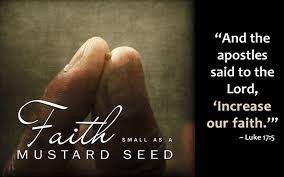
What is faith? The question is raised by the interaction between Jesus and the disciples, which comprises the short excerpt from Luke’s Gospel offered by the lectionary this coming Sunday (Luke 17:5–10). The disciples ask Jesus to increase their faith; Jesus, instead of responding with action, speaks back to them with a characteristic parabolic saying, about “faith the size of a mustard seed” (17:6).

The account that Luke provides is set during the long journey towards Jerusalem that Jesus began at 9:51, which continues until he enters the city riding on a colt (19:28–44). It introduces a series of incidents occurring in this last part of the journey in which faith is mentioned (17:5; 17:19; 18:8; 18:42). The sequence seems to come to a head when Jesus looks out over the city and weeps at their apparent lack of faith: “if you, even you, had only recognized on this day the things that make for peace! but now they are hidden from your eyes” (19:42).

This brief encounter, however, seems to be a Lukan redaction of an incident that Mark recounts after Jesus has entered the city (Mark 11:15), left the city (presumably for Bethany) for the evening (Mark 11:19), and then passed by a withered fig tree (Mark 11:20)—the same tree which Jesus had earlier cursed as the headed towards the city (Mark 11:12–14).

As Luke reworks the narrative he has inherited from Mark, he removes all reference to the fig tree and relocates the conversation to a place unknown, but certainly not within close distance of Jerusalem. The travelling group is still placed in “the region between Samaria and Galilee” at 17:11; some time later, they approach Jericho (18:35) and the tension mounts as they approach Jerusalem (19:11, 28) before finally arriving in the city (19:41, 45).

[Of course, if we were to try to harmonise Luke’s account with John’s Gospel, we would argue that Jesus and his companions had already visited Bethany—the meal in the house of Martha and Mary (Luke 10:38–42) would be at the same location where the brother of these sisters, Lazarus, died—in Bethany (John 11:1). Thus, he might well have already cursed the fig tree outside Bethany that is reported in a third Gospel (Mark 11:12–14). But we don’t engage in cross-Gospel harmonisation, forcing the evidence when it is lacking, do we? Just as well.]

So the Lukan redaction removes the fig tree, focusses the conversation on faith (Luke 17:5–6, a rewriting of Mark 11:22–23), and instead of the following instruction about prayer (“whatever you ask for in prayer, believe that you have received it, and it will be yours”, Mark 11:24) there is a parable about the role of a slave in a household (Luke 17:7–10).

In rewriting the saying of Jesus about faith, Luke deletes reference to the mountain (“if you say to this mountain, ‘Be taken up and thrown into the sea,’ and if you do not doubt in your heart, but believe that what you say will come to pass, it will be done for you”, Mark 11:23) with a saying in which a mustard seed is the key (“if you had faith the size of a mustard seed, you could say to this mulberry tree, ‘Be uprooted and planted in the sea,’ and it would obey you”, Luke 17:6).

Being thrown into the sea remains a constant; the strange injunction to be thrown into the sea is spoken to a mulberry tree rather than a mountain. The mustard seed, introduced in Luke’s rewriting of the saying, is allegedly (but not actually) “the smallest of all seeds” (as is claimed at Mark 4:31—although this description is omitted in Luke’s version of the parable, Luke 13:18–19). The point still remains the same: just a little faith has such power contained within it.

*****

Luke has inherited stories from Mark in which Jesus commends people for their faith. He notes the faith of the friends of a paralysed man who is lowered through the roof of the house where Jesus is, in the hope that he might heal the man; in both stories, Jesus pronounces forgiveness when he sees the faith of the men and the paralysed man is then able to walk (Mark 2:1–12; Luke 5:17–26). He tells of a Jewish woman who had been suffering from hemorrhages for twelve years, with faith enough to believe that just a touch of the cloak of Jesus would make her well (Mark 5:25–34; Luke 8:43–48). He also tells of a blind man outside of Jericho who has faith enough to believe that just a cry of petition to Jesus would make him well (Mark 10:46:52; Luke 18:35–43). Both persons are told by Jesus, “your faith has saved you”.

Luke may also have known the story that Mark reports, of the anointing of Jesus by a woman during a meal (Mark 14:3–9). If he did know this, he has significantly reworked it; it takes place much earlier in his narrative (Luke 7:36–50), somewhere in Galilee rather than in Bethany, in the house of a Pharisee rather than the house of a leper, and it is his feet which are anointed, rather than his head. Another significant change is that, instead of memorialising the woman (“what she has done will be told in remembrance of her”, Mark 14:9), the scene ends with an affirmation by Jesus, “your faith has saved you; go in peace” (Luke 7:50).

A little before this scene, in his narrative order, Luke has told of the encounter between Jesus and a distressed centurion—or, rather, with some Jewish elders sent to Jesus by the centurion, whose slave was at the point of death (Luke 7:1–10). It’s a story told also in Matthew’s book of origins, and thus was likely to have been part of the so-called “sayings material” (Q) found in both of these Gospels, but not in Mark’s narrative. The request from the centurion to Jesus demonstrates the strong faith that this Gentile official has in the Jewish preacher and miracle worker (Matt 8:13); in Luke’s version, Jesus commends the Gentile with strong words: “not even in Israel have I found such faith” (7:9).

A similar commendation of another figure outside of Israel is offered by Jesus to the Samaritan, one of ten lepers who were healed by Jesus; when this man alone returns to offer his gratitude, Jesus, noting his status as “this foreigner”, commends him for his faith: “go on your way; your faith has made you well” (17:11–19).

So it is that a group of Galileean men, two Galileean woman, a Roman centurion, a Samaritan leper, and a blind Judaean man, are each commended by Jesus for their faith.

*****

In stark contrast is the collective group of disciples of Jesus, four times reprimanded for their comparatively poor expression of faith. First, in a boat that is being tossed on the waves by a fierce windstorm, Jesus confronts his panicking disciples, saying to them, “where is your faith?” (8:22–25).

In a later teaching session with them, on the ways that the natural world reflects the providential care of God (12:22–31), he injects a note of caustic judgement of his disciples: “if God so clothes the grass of the field, which is alive today and tomorrow is thrown into the oven, how much more will he clothe you—you of little faith!” (12:28).

Then, in a further extended teaching session with his disciples (17:20–18:34), as he offers a parable about a judge and a widow (18:1–8), he somewhat pessimistically concludes, “and yet, when the Son of Man comes, will he find faith on earth?” (18:8).

Finally, whilst gathered at table for what would turn out to be the final time before his arrest and trials (22:14–38), not so many words after he has commended the disciples for being “those who have stood by me in my trials” (22:28), Jesus upbraids Simon Peter for what he will do, not much later, around a fire in the courtyard of the high priest’s house (22:54–62). “Simon, Simon, listen!”, he pleads; “Satan has demanded to sift all of you like wheat, but I have prayed for you that your own faith may not fail; and you, when once you have turned back, strengthen your brothers” (22:42).

Faith appears to have been in short supply amongst the disciples, travelling with Jesus, listening regularly to his teachings, consistently observing his medical interventions—in contrast to those who encounter him but once, approaching with a trusting attitude, seeking his assistance; demonstrating faith.

It is no wonder that Jesus responds to the request of his disciples, “increase our faith!” with a somewhat barbed reply, “if you had faith the size of a mustard seed, you could say to this mulberry tree, ‘Be uprooted and planted in the sea,’ and it would obey you” (17:5–6). The short parable about a slave (17:7–10) that follows this saying of Jesus is telling; the inference is that the disciples, still, despite everything, do not have such faith.

Just as the slave is expected to labour all day in the field and then undertake the required tasks in the house at night, before he eats and drinks, so the disciples are called to follow, listen, and obey, in diligence and humility; this is the kind of faith that they are required to have.

But do they have such faith? The inference that the disciples are lacking in this kind of faith is confirmed by the later declaration,matter still further teachings by Jesus, that “they understood nothing about all these things; in fact, what he said was hidden from them, and they did not grasp what was said” (18:34). The paradox that Luke sees running throughout the story of Jesus continues.

Unknown's avatarAuthor John T SquiresPosted on September 27, 2022September 27, 2022Categories An Orderly Account: Gospel of LukeTags faith, scripture; theology; LukeLeave a comment on Faith the size of a mustard seed (Luke 17; Pentecost 17C)

Lazarus and the rich man (Luke 16; Pentecost 16C)

Lazarus and the rich man (Luke 16; Pentecost 16C)

For the last two Sundays, the lectionary has offered us parables of Jesus (Luke 15:1–10; 16:1–13). This coming Sunday, the lectionary leads us to another parable of Jesus—that of the rich man and the poor man (Luke 16:19–31).

Interestingly, in this parable, whilst the rich man in not named, it is the poor man whose name is noted: Lazarus. This is a latinised version of the Hebrew name Eleazar, which means “God is my helper”. (It is only in later developments that the rich man acquires a name—Dives. This occurred in the Vulgate, an early Latin translation; the word dives simply means “rich man”, so it’s not really an actual name, just a shorthand descriptor.)

This parable is found only in Luke’s Gospel—one of many such parables. Some of them are much-beloved (the Good Samaritan in Luke 10, the Prodigal Son in Luke 15); some are pointedly provocative (the two parables about banquets in Luke 14) or challenging (the parables of the widow and the judge, and of the Pharisee and the tax collector, in Luke 18); this one is deeply disturbing. Once again, Jesus is addressing the responsible way to use the resources at our disposal. The rich man was selfish in his use of all that he had; he did not ever deign to offer some of his wealth and resources to the poor man, Lazarus.

In Luke’s Gospel, there are many places where Jesus talks about the use of money and resources. Some replicate Mark’s Gospel, namely the encounter between Jesus and the rich man (Mark 10:17– 27; Luke 18:18–30), and the story of the widow in the temple (Mark 12:41–44; Luke 211–4).

Other passages, however, are added into Luke’s narrative. For Luke, the ministry of Jesus is characterized by “preaching good news” to the poor (4:18; 7:22). In his preaching, Jesus reassures the poor, “yours is the kingdom of God” (6:22), and promises the hungry, “you will be filled” (6:23). He contrasts this with the punishments due to the selfish rich and powerful who do not share their blessings (6:24–26).

The desperately poor (those who are desperate, with no home and no regular source of income—and no social security net, such as we know today) are very prominent throughout Luke’s “orderly account”. They are the ones who benefit from the message preached by Jesus: “he has anointed me to bring good news to the poor” (4:18).

Such teachings are reminiscent of the hymn sung by Mary, before the birth of Jesus: “[God] has filled the hungry with good things, and sent the rich away empty” (1:53). Those words themselves evoke many of the proclamations of the prophets of earlier eras. See

Magnificat: the God of Mary (Luke 1) is the God of Hannah (1 Sam 2) (Advent 4C)

Subsequently, as an adult, Jesus tells parables in which the poor are reassured of their invitation to share in the feast of the kingdom (14:21; 16:19–31). The instruction is to be deliberate in broadening the groups of people who are to be welcomed at table: “when you give a banquet, invite the poor, the crippled, the lame, and the blind” (14:13); “go out into the streets and lanes of the town and bring in the poor, the crippled, the blind, and the lame” (14:21). The reason for this is made crystal clear by Jesus: “they cannot repay you, [but] you will be repaid at the resurrection of the righteous” (14:14).

Jesus sends his followers out with minimal possessions (10:4), tells a parable of the rich man and his barns (12:13–21), and commands his followers to “sell your possessions” (12:32–34). He advises his followers, “you cannot serve God and wealth” (16:13) and later commends Zacchaeus for giving half of his possessions to the poor (19:1–10). All of this, as we have noted, had long ago been sung out loud by his pregnant mother (1:52–53).

A simple statistical analysis shows that Jesus in Luke’s Gospel makes more references to the poor than in the other canonical Gospels. Alongside this, he also makes more references to people drawn from the upper classes of his society. They have a responsibility to share their resources with those who have much less. One such well-to-do person, a ruler with wealth, is instructed to “sell all that you own and distribute the moment to the poor” (18:22); soon after that, Jesus encounters Zacchaeus, who is transformed by Jesus to the extent that he says, “half of my possessions I will give to the poor” (19:8).

In the second volume of his orderly account, Luke reports that Joseph Barnabas from Cyprus “sold a field that belonged to him, then brought the money, and laid it at the apostles’ feet” (Acts 4:37). This exemplified the way that within the community of believes in Jerusalem, “as many as owned lands or houses sold them and brought the proceeds of what was sold”, so that “there was not a needy person among them” (Acts 4:34; so also 2:45).

As we read the story which Jesus tells of these two men—one rich, one poor—if we identify with Lazarus, the parable offers abundant grace. If we (as people living in the richest nation in the Western world) identify with the rich man (as we undoubtedly should), then the parable offers profound distress and enduring pain. It is a challenge!

*****

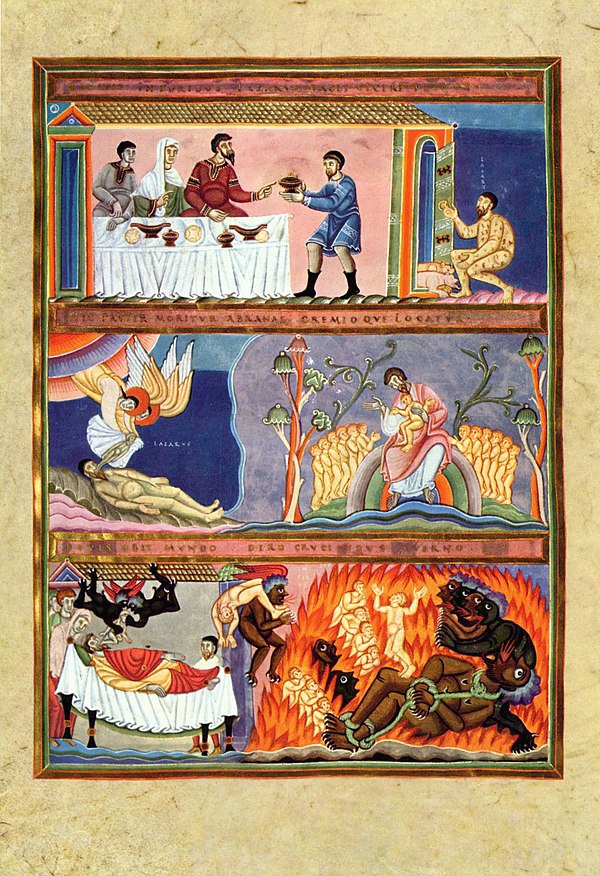
Cover illustration: Lazarus and Dives, illumination from the 11th century Codex Aureus of Echternach
Top panel: Lazarus at the rich man’s door
Middle panel: Lazarus’ soul is carried to Paradise by two angels; Lazarus in Abraham’s bosom
Bottom panel: The rich man’s soul is carried off by Satan to Hell; the rich man is tortured in Hades

See also

“Where your treasure is, there your heart will be also” (Luke 12; Pentecost 8C)
Unknown's avatarAuthor John T SquiresPosted on September 21, 2022September 21, 2022Categories An Orderly Account: Gospel of LukeTags justice, Luke, poverty, scripture; theology;Leave a comment on Lazarus and the rich man (Luke 16; Pentecost 16C)

Shrewd? dishonest? manipulative? or contributing to the common good? (Luke 16; Pentecost 15C)

Shrewd? dishonest? manipulative? or contributing to the common good? (Luke 16; Pentecost 15C)

Currently, as we follow the lectionary, we are reading a sequence of parables that Jesus tells in Luke’s orderly account (Luke 15:3–16:31). A key theme for these parables is sounded at the start: “all the tax collectors and sinners were coming near to listen to him, and the Pharisees and the scribes were grumbling and saying, ‘This fellow welcomes sinners and eats with them’” (15:1). That introduction sets the scene for what follows.

In the first two of these parables, the punchline is about “the joy in heaven over one sinner who repents” (15:7, 10), while the third parable concerns a son who confesses to his father, “I have sinned against heaven and before you” (15:18, 21) and whose return is celebrated, for “he was dead and has come to life; he was lost and has been found” (Luke 15:24, 32).

In the fourth parable, a shrewd steward is commended for forgiving debts owed to his master (16:3–7); by contrast, in the fifth parable, the sinful life of “a rich man who was dressed in purple and fine linen and who feasted sumptuously every day” is condemned (16:19, 25). All have to do with sin and forgiveness; in the three “lost-and-found” parables of Luke 14, the grace of the one who welcomes back the lost is highlighted.

What do we make, this week, of the shrewd steward? Amy-Jill Levine describes him as “a picaresque figure, or a conniving, deceiving cheat … who gets what he wants through manipulation” (Luke, p.437).

What do you think? Was he a dishonest intermediary, arranging things to his benefit—and, it should be said, to the benefit of the clients as well? Was he acting as a manipulative manager without his master’s knowledge? or did his actions result in a win-win-win situation for the rich master, his manager, and all the clients—a positive contribution to the common good?

*****

Whilst it is the rich man (16:1) who has overarching responsibility in this story, the key figure in the parable is actually the manager, who is described as an oikonomos (16:1, 3, 8). This, incidentally, is the word that provides the basis for our English term economics. In Greek, it is a compound word, joining together oikos, meaning household, and nomos, meaning organisation or arrangement. Thus, the oikonomos is the person who oversees the organisation and management of the household.

The manager is called to come before his master, the rich man, in what will likely be a confrontation (16:1). The NRSV says that he was “charged” with “squandering his property”; the NIV says he was “was accused of wasting his possessions”. The word translated as “charged” or “accused” is dieblēthē, from the root word diaballō. That translation has the inference of a formal charge being laid against the manager.

However, the word actually means to slander or gossip about someone, so it does not bear the formal sense that either “ charge” or “accuse” has. It seems to indicate that “stories were going around” about the manager. So the rich man was not bringing the manager to report to him because he had heard of malpractice. He is simply responding to some news about his activities—perhaps he wants to get it straight, to hear direct from the manager,rather than rely on the gossip mill.

The manager, however, is described as adikias (16:8). So all,is not rosy, it seems. The a- prefix means the word is a negative; the adjective that follows, dikias, refers to doing things right, keeping the law, being upright and honest. Thus, the manager is portrayed as acting in contradiction to the law, acting in a dishonest or unfair way. The rich man is gearing up to dismiss the manager from his post (16:2). The implication, then, is that something untoward has taken place. But we are not told what this is, other than “squandering his property” (16:1).

The manager is also described as being “shrewd” (16:8). The word used, phronimos, is translated, appropriately, as shrewd. It comes from the verb phroneō, which simply means to think, to use one’s brain. There is no malice involved in this; the manager is simply being intelligent.

The first character in the Bible who was called shrewd was the serpent, in Genesis 3. This creature is called “more shrewd than all other beasts”. Shrewd, of course, is an ambiguous term. On the one hand, it is a virtue the wise should cultivate: “show their anger at once, but the prudent ignore an insult” (Prov 12:16), and “a fool despises a parent’s instruction, but the one who heeds admonition is prudent (Prov 15,5). However, when this capacity is misused, it become wiliness and guile; the same Hebrew word is used to refer to those who are “crafty” (Job 5:12; 15:5), who “act with cunning” (Josh 9:4), or who practise “treachery” (Exod 21:14).

(In the Genesis account, the craftiness or cunning of the serpent is emphasised; he was “more crafty than any other wild animal” (3:1). The Hebrew, however, has a wordplay here; in the previous verse (2:25), Adam and Eve were “naked” (arummim); then (3:1) the serpent is described as “more crafty” (arum, shrewd) than all others. Paul, by contrast, takes a much more negative line, claiming that “as the serpent deceived Eve by his craftiness, so your minds may be corrupted from the simplicity that is in Christ” (2 Cor 11:3).)

So the manager exercises his mind and comes up with a plan of action that pleases his master and save his job, and also pleases the clients who find that their debts have been reduced to a more manageable level (16:3–7). The result is that the rich man commends the manager for being phronimōs—shrewd, or crafty (16:8); and then Jesus goes on to commend this way of acting to his disciples (16:9). The common good, the best for all, comes when the rich man forgoes a portion of what is due to him, meaning that those owing debt are released from some of their burden, and they rejoice.

So the narrator has Jesus spell out a clear way of acting in accord with the course of action taken by the manager (16:10–13). The parable must surely speak to contemporary Western society, where the rich get increasingly more and the poor get less and less. There is no common good in this situation. The message of the parable is one of letting go of possessions and wealth, for the benefit of the common good.

*****

The next verse, then, has a very sharp edge: accusing the Pharisees of being “lovers of money” (16:14) means that they would not actually do what the manager has done, and release their wealth for the common good.

(Incidentally, there is no evidence elsewhere in the New Testament or in ancient Jewish sources that the Pharisees were so inclined. By contrast, a number of interpreters have claimed that it was the Sadducees, working with the priests in the Temple, who profited from an oppressive system that laid heavy burdens on the people. The Pharisees, Josephus observes, lived in the towns and villages with and alongside the people. He wrote that “they live meanly, and despise delicacies in diet; and they follow the contract of reasons” (Antiquities of the Jews, 18.3), so presumably they lived without the ostentation and wealth that Josephus ascribes to the Sadducees.)

Is the steward acting in a way that opposes what is considered right and just? He is described as adikias, the opposite of dikiaos, just, or righteous. This may well be yet another parable or saying in which the perceived ways of adhering to the law is undercut by a deeper “righteousness” that appears “unrighteous” but is actually fundamentally faithful to the demands of God. This correlates with the later parable about the Pharisee and the tax collector (18:9–14), in which the “righteous man” is not the Pharisee, teacher of the law, but the tax collector, allegedly sitting outside the law.

It also links with the story of the rich man (18:18–30) who is instructed to “sell all your possessions”—not just to reduce his holdings by 20% (which is what the steward does). The steward gave just some away, and he gains all. The rich man, sadly, is not able to give any away, and he loses all. And in the famous parable that precedes this passage, the father gives away the inheritance of the younger son to that son, who loses it all; yet the father still has an abundance that enables him to kill the fatted calf and throw a party for all to come (15:11-24).

Jesus is accused of being a wastrel, consorting with sinners (15:1–2). The father gives his inheritance away to the son, and rejoices with a party when he returns (15:22–24). The manager, shrewdly organising the financial affairs of his rich master, works to the benefit of all—the rich master, whose debts will be paid, the clients, whose debts are reduced, and himself, whose position may well be saved by his clever actions—thus ensuring the common good is upheld (16:5–8).

It also links with the story of the rich man (18:18–30) who is instructed to “sell all your possessions”—not just to reduce his holdings by 20% (which is what the steward does). The steward gave just some away, and he gains all. The rich man, sadly, is not able to give any away, and he loses all. And in the famous parable that precedes this passage, the father gives his inheritance away to the son, and rejoices with a party when he returns (15:22–24).

Jesus had previously exhorted wealthy people to invite all manner of people to the feats they host (14:1–24). The manager, shrewdly organising the financial affairs of his rich master, works to the benefit of all, ensuring the common good is upheld (16:5–8). The responsible use of resources is a significant theme in all of these stories. And we will see that theme continue in the parable we read next week (16:19–31).

*****

Thanks to Elizabeth Raine and Andrew Jago for a very stimulating discussion in our weekly Greek class, which provided the basis for this blog!

See also

Human sinfulness and divine grace (Jeremiah 4; Luke 15; 1 Timothy 1; Pentecost 14C)
Disreputable outsiders invited inside: parables in Luke 14 (Pentecost 12C, 13C)
Unknown's avatarAuthor John T SquiresPosted on September 15, 2022September 16, 2022Categories An Orderly Account: Gospel of LukeTags economics, Luke, parables, scripture; theology; justice2 Comments on Shrewd? dishonest? manipulative? or contributing to the common good? (Luke 16; Pentecost 15C)

Human sinfulness and divine grace (Jeremiah 4; Luke 15; 1 Timothy 1; Pentecost 14C)

Human sinfulness and divine grace (Jeremiah 4; Luke 15; 1 Timothy 1; Pentecost 14C)

This Sunday the lectionary offers a number of passages that focus on the inherent sinfulness of human behaviour, and the consequent response of God to such a situation. The prophet Jeremiah, centuries before Jesus, looks at what is taking place before him, and sees the earth as “waste and void”, the heavens with “no light”, the mountains and hills shaking, and the creatures deserting the land (Jer 4:23–26).

This cosmic catastrophe of environmental disruption undoes the work of the creator (as described in the priestly creation narrative of Gen 1:1–2:4a) and bears testimony to “the fierce anger of the Lord”. Because of this undoing of creation, the prophet laments, “the whole land shall be a desolation” (4:27). There is no forgiveness in sight, at least in this passage, for those who have caused this disaster.

The reason for this desolation is placed fairly and squarely at the feet of the people of Judah: “My people are foolish, they do not know me; they are stupid children, they have no understanding; they are skilled in doing evil, but do not know how to do good” (Jer 4:22). He reminds them of their sinfulness in later oracles. When the people say to you, “Why has the Lord pronounced all this great evil against us? What is our iniquity? What is the sin that we have committed against the Lord our God?”, the reply that Jeremiah offers is, “It is because your ancestors have forsaken me, says the Lord” (Jer 16:10).

*****

Forsaking the Lord is a common accusation raised by the prophets against Israel (Hos 4:10) and Judah (Isa 1:28; 65:11; Jer 2:19; 17:13; 22:9; Dan 11:30), and the psalmist joins in that warning (Ps 119:53; 139:19–20). That the people have broken the covenant is a regular criticism raised by the prophets as an explanation for the wrath of God visited on them (Isa 24:5; Jer 11:1–5, 9–11; 22:8–9; 31:32; 34:12–22; Ezek 16:59; 44:6–8; Hos 6:7; 8:1; Mal 2:8–9, 10–12). The same theme is found in the words of the prophet Huldah at 2 Ki 22:14–17, and of the prophet Shemaiah at 2 Chron 12:5.

This is a motif echoed in the psalms (Ps 55:20–21; 78:32–37), although most of the references to the covenant in the psalms are affirming that God will keep the covenant with Israel. It is also set forth regularly in the narrative books, as the people are regularly criticised (Judg 2:12–15; 10:6–7, 10–14; 1 Sam 12:10; 1 Ki 9:9; 18:18; 19:10, 14; 2 Ki 21:19–22; 1 Chron 7:19–20; 2 Chron 7:19–22; 12:1; 24:17–19; 28:6; 34:25; Ezra 9:10–15).

That the people “did evil in the sight of the Lord” is a refrain in the narrative of Judges (Judg 2:11; 3:7, 12; 4:1; 6:1; 10:6; 13:1); this accusation is subsequently applied to King Solomon (1 Ki 11:6) and then forms a recurring formula of condemnation of the kings that followed him in the northern kingdom.

Those condemned include Nadab (1 Ki 15:25–26), Baasha (1 Ki 15:33–34), Zimri (1 Ki 16:19), Omri, who established Samaria as the capital of the northern kingdom (1 Ki 16:25-26), Ahab (1 Ki 16:30; 21:20, 25–26), Ahaziah (1 Ki 22:51–53), Jehoiakim (2 Ki 3:1–3), Jehoram (2 Ki 8:16–18), Jehoahaz (2 Ki 13:1–3), Jehoash (2 Ki 13:10–11), Jeroboam (2 Ki 14:23–24), Zechariah, who ruled for only six months (2 Ki 15:8–9), Menahem (2 Ki 15:17–18), Pekahiah (2 Ki 15:23–24), Pekah (2 Ki 15:27–28), and the last ruler of the northern kingdom, Hoshea (2 Ki 17:1–2).

The formula is also applied to rulers of the southern kingdom, Ahaziah (2 Ki 8:25–27), Manasseh (2 Ki 21:1–9), Amon (2 Ki 21:19–22), Jehoahaz (2 Ki 23:31–32), Jehoiakim (2 Ki 23:36-37), and the last southern king, Zedekiah (2 Ki 24:18–20). Just as the Lord finally gave up on the northern kingdom because of their persistent sinfulness (2 Ki 17:5–18), so also the accumulated sinfulness of the southern kingdom “so angered the Lord that he expelled them from his presence” (2 Ki 24:20).

The same formula recurs in 2 Chronicles, where it is applied to Jehoram, Ahaziah, Manasseh, Amon, Jehoiakim, Jehoiachin, and Zedekiah, as well as more generically to “our ancestors [who] have been unfaithful” (2 Chron 29:6).

This is also a refrain found in the book of Deuteronomy, where the Lord laments the failure of people to keep the covenant (Deut 8:11; 28:20; 29:22–28; 32:15, 51) and insistently instructs the people to “keep the commandments” (Deut 4:2; 4:40; 5:29; 6:2, 17; 8:6, 11; 10:13; 11:1, 8; 27:1), for “the Lord will establish you as his holy people, as he has sworn to you, if you keep the commandments of the LORD your God and walk in his ways” (Deut 28:9).

*****

And so, to the people who “are foolish, they do not know me; [who] are stupid children, they have no understanding; [who] are skilled in doing evil, but do not know how to do good” (Jer 4:22), Jeremiah declares, “the sin of Judah is written with an iron pen … with a diamond point it is engraved on the tablet of their hearts, and on the horns of their altars” (Jer 17:1). When a plot is mounted against him, Jeremiah pleads with God regarding the conspirators, “do not forgive their iniquity, do not blot out their sin from your sight; let them be tripped up before you; deal with them while you are angry” (Jer 18:23).

Later, however, he relents; in the new covenant that is promised, Jeremiah foresees that the Lord “will forgive their iniquity, and remember their sin no more” (Jer 31:34), and the Lord himself declares, “I will cleanse them from all the guilt of their sin against me, and I will forgive all the guilt of their sin and rebellion against me” (Jer 35:8).

In articulating ideas both of a vengeful God, unwilling to forgive, and of a gracious God, forgiving sin, Jeremiah reflects perspectives articulated elsewhere in the scriptures. The Psalmist both prays for the destruction of sinners (Ps 104:34) and yearns for sinners to return to God (Ps 51:13) and be instructed in “the way” (Ps 25:8). Prophets announce that sinners will die (Amos 9:10; Isa 1:28), but also that God will forgive them (Ezek 16:63; Dan 9:19; Amos 7:2).

*****

The sinfulness of humanity and the responsibility that the Lord God has to maintain covenant faithfulness with God’s people is a theme that recurs in other biblical books. It appears in the late first century letter to Timothy, in a formulaic way: “the saying is sure and worthy of full acceptance, that Christ Jesus came into the world to save sinners—of whom I am the foremost” (1 Tim 1:15). In this saying, the means of forgiveness is the coming of Jesus.

In the introduction to the sequence of five parables that Jesus tells in Luke’s orderly account (Luke 15:3–16:31), the same theme is sounded: “all the tax collectors and sinners were coming near to listen to him, and the Pharisees and the scribes were grumbling and saying, ‘This fellow welcomes sinners and eats with them’” (15:1). That introduction sets the scene for what follows.

In the first two of these parables, the punchline is about “the joy in heaven over one sinner who repents” (15:7, 10), while the third parable concerns a son who confesses to his father, “I have sinned against heaven and before you” (15:18, 21) and whose return is celebrated, for “he was dead and has come to life; he was lost and has been found” (Luke 15:24, 32).

In the fourth parable, a shrewd manager is commended for forgiving debts owed to his master (16:3–7); by contrast, in the fifth parable, the sinful life of “a rich man who was dressed in purple and fine linen and who feasted sumptuously every day” is condemned (16:19, 25). All have to do with sin and forgiveness; in the three “lost-and-found” parables found in Luke 15, the grace of the one who welcomes back the lost is highlighted.

Indeed, in the earliest layers of the Gospel traditions, Jesus is already brought into relationship with human sinfulness. In the Q tradition, the prayer of Jesus includes the petition, “forgive us our sins, as we forgive others …” (Luke 11:4; Matt 6:12). In the triple tradition, Jesus asserts that “the Son of Man has authority on earth to forgive sins” (Mark 2:10; Matt 9:5; Luke 5:23). Jesus articulates the rationale for his association with sinners in the saying, “those who are well have no need of a physician, but those who are sick; I have come to call not the righteous but sinners.” (Mark 2:15–17; Matt 9:10; Luke 5:31–32).

The fourth Gospel recounts stories of healings performed by Jesus, in which the relationship of sin and sickness is raised (John 5:14; 9:1–5, 34). In recalling the last meal of Jesus with his followers, Matthew’s account specifies that the wine in the cup is “my blood of the covenant, which is poured out for many for the forgiveness of sins” (Matt 26:28). What happens to Jesus in the following scenes is clearly understood to be the means by which sinfulness is dealt with. Interpreting the significance of Jesus in this light, Paul declares that “God proves his love for us in that while we still were sinners Christ died for us” (Rom 5:8).

The reality of sinful behaviours amongst human beings cannot be denied. Throughout history, people have always experienced the selfishness, greed, manipulation, abuse, and hatred manifested by others (as well, of course, as loving, selfless, caring, supportive and encouraging behaviours and ways of relating). That this sinfulness needs to be addressed and dealt with cannot be ignored.

That God, in Hebrew Scriptures, stands firm for justice and calls for covenant fidelity, is important. That Jesus, in turn, calls out unjust actions and invites sinful people to repent, is consistent with this earlier witness. As a society, we need to function in healthy ways that foster co-operation. Dealing with sin, which impedes this healthy functioning, is vitally important.

Unknown's avatarAuthor John T SquiresPosted on September 8, 2022Categories An Orderly Account: Gospel of Luke, Paul, Scripture and Theology, The Hebrew ProphetsTags forgiveness, grace, Jesus, justice, Paul, scripture; theology; prophetsLeave a comment on Human sinfulness and divine grace (Jeremiah 4; Luke 15; 1 Timothy 1; Pentecost 14C)

Posts pagination

Previous page Page 1 … Page 6 Page 7 Page 8 … Page 22 Next page

The Book of Origins

  • Leaving Luke . . . Meeting Matthew
  • Matthew: tax collector, disciple, apostle, evangelist—and “scribe trained for the kingdom”? (Matt 9; Pentecost 2A)
  • For our instruction … that we might have hope (Rom 15, Isa 11, Matt 3; Advent 2A)
  • The origins of Jesus in the book of origins: Matthew 1 (Advent Year A)
  • Now the birth of Jesus the Messiah took place in this way (Matthew 1; Advent 4A)
  • Descended from David according to the flesh (Rom 1; Advent 4A)
  • A young woman? A virgin? Pregnant? About to give birth? (Isa 7:14 in Matt 1:23; Advent 4A)
  • More on Mary (from the Protoevangelium of James)
  • Tales from the Magi (the Revelation of the Magi)
  • Herod waiting, Herod watching, Herod grasping, holding power (Matt 2; Christmas 1A)
  • Herod was infuriated, and he sent and killed all the children (Matt 2; Christmas 1A)
  • Repentance for the kingdom (Matt 4; Epiphany 3A)
  • Proclaiming the good news of the kingdom (Matt 4; Epiphany 3A)
  • Teaching in “their synagogues” (Matt 4; Epiphany 3A)
  • Teaching the disciples (Matt 5; Epiphany 4A)
  • Blessed are you: the Beatitudes of Matthew 5 (Epiphany 4A)
  • An excess of righteous-justice (Matt 5; Epiphany 5A)
  • You have heard it said … but I say to you … (Matt 5; Epiphany 6A)
  • The missing parts of the Sermon on the Mount (Matt 6 and 7; Epiphany Year A)
  • Our Father in heaven: a pattern for prayer (Luke 11, Matt 6) part III
  • Our Father in heaven: a pattern for prayer (Luke 11, Matt 6) part II
  • Our Father in heaven: a pattern for prayer (Luke 11, Matt 6) part I
  • “Go nowhere among the Gentiles” (Matt 10:5): the mission of Jesus in the book of origins (Pentecost 3A)
  • “Even the hairs of your head are all counted.” (Matt 10:30; Pentecost 4A)
  • Come to me, take my yoke, I will give you rest (Matt 11; Pentecost 6A)
  • Parables: the craft of storytelling in the book of origins (Matt 13; Pentecost 7A)
  • The righteous-justice of God, a gift to all humanity (Romans; Year A)
  • Let anyone with ears, hear! (Matt 13; Pentecost 8A)
  • Chopping and changing: what the lectionary does to the parables of Matthew (Pentecost 7–9A)
  • Nothing but five loaves and two fish (Matt 14; Pentecost 10A)
  • Liminal experiences and thin places (Matt 14; Pentecost 11A)
  • It’s all in the geography. Jesus, the Canaanite woman, and border restrictions (Matt 15; Pentecost 12A)
  • A rock, some keys, and a binding: clues to the identity of Jesus (Matt 16; Pentecost 13A)
  • An invitation that you just cannot … accept! (Pentecost 19A)
  • Towards Palm Sunday (Matt 21): Passover and politics
  • Towards Palm Sunday (Matt 21): Riding on a donkey (or two) as the crowd shouts ‘Hosanna’
  • Towards Palm Sunday (Matt 21): Waving branches, spreading cloaks
  • Towards Palm Sunday (Matt 21): Acclaiming the king, anticipating the kingdom
  • Producing the fruits of the kingdom (Matt 21; Pentecost 19A)
  • Darkness, weeping, and gnashing of teeth: the scene of judgement (Matt 22; Pentecost 20A)
  • The greatest and first commandment … and a second, like it (Matt 22)
  • On these two commandments hang all the law and the prophets (Matt 22; Pentecost 22A)
  • Sitting on the seat of Moses, teaching the Law—but “they do not practice what they teach” (Matt 23; Pentecost 23A)
  • Discipleship in an apocalyptic framework (Matt 23–25; Pentecost 23–26A)
  • A final parable from the book of origins: on sheep and goats, on judgement and righteous-justice (Matt 25; Pentecost 26A)
  • Scripture debate and disputation in the wilderness (Matt 4; Lent 1A)
  • Testing (not temptation) in the wilderness (Matt 4; Lent 1A)
  • Practising righteous-justice: alms, prayer, and fasting (Ash Wednesday)
  • Forcing scripture to support doctrine: texts for Trinity Sunday (2 Cor 13, Matt 28; Trinity A)

An Orderly Account: Luke and Acts

  • “An orderly account”: a quick guide to Luke and Acts
  • Costly discipleship, according to Luke
  • Did Luke write the first “orderly account” about Jesus?
  • With one eye looking back, the other looking forward: turning to Luke’s Gospel I (Year C)
  • Leaving out key moments, so they can appear later in the story: turning to Luke’s Gospel III (Year C)
  • “A light for the Gentiles, salvation to the ends of the earth”: turning to Luke’s Gospel II (Year C)
  • The scriptural resonances in the Annunciation (Luke 1; Advent 4B)
  • Magnificat: the God of Mary (Luke 1) is the God of Hannah (1 Sam 2) (Advent 4C)
  • “To give knowledge of salvation”: Luke’s portrayal of John the baptiser (Luke 3; Advent 2C)
  • On angels and virgins at Christmastime (Luke 2; Christmas Day B)
  • A light for revelation to the Gentiles and for glory to your people Israel (Luke 2; Christmas 1B)
  • John the baptiser’s call for ethical, faithful living (Luke 3; Advent 3C)
  • A Testing Time: forty days in the wilderness (Luke 4)
  • Sacred place and sacred scripture: forty days in the wilderness (2)
  • Scripture fulfilled in your hearing (Luke 4:16-30; Epiphany 3C, 4C)
  • Jesus and conventional Jewish piety (Luke 4:16; Epiphany 3C)
  • Jesus, scripture and experience (Luke 4:17, 21; Epiphany 3C)
  • The holistic spirit-inspired mission of Jesus (Luke 4:18–19; Epiphany 3C)
  • Jesus, the widow of Sidon and the soldier of Syria: representatives of the community of faith (Luke 4:25–27; Epiphany 4C)
  • Two prophets of Israel, the widow of Sidon and the soldier of Syria: an inclusive community of Jews and Gentiles (Luke 4:25–27; Epiphany 4C)
  • Leave everything, follow Jesus (Luke 5:1-11; Epiphany 5C)
  • On a level place, with a great crowd (Luke 6; Epiphany 6C)
  • Blessed are you … poor, hungry, weeping … (Luke 6; Epiphany
  • The plain, the synagogue, and the village (Luke 6, 4 and 1; Epiphany 6C)
  • Bless—Love—Forgive—and more. The teachings of Jesus (Luke 6; Epiphany 6C, 7C)
  • The beloved physician, the lover of God, and loving our enemies (Luke 6; Epiphany 7C)
  • Perfect, or merciful? The challenge Jesus poses (Matt 5, Epiphany 7A; Luke 6, Epiphany 7C)
  • Jesus and his followers at table in Luke’s “orderly account”
  • Before Transfiguration Sunday, the stories of the dying slave and the grieving widow (Luke 7; Epiphany 9C; Proper 4C)
  • What have you to do with me, Jesus? (Luke 8; Pentecost 2C)
  • Bringing his ‘exodos’ to fulfilment (Luke 9; Transfiguration C)
  • Setting his face to go to Jerusalem (Luke 9:51, 13:33, 17:11, 19:11; Lent 2C)
  • Through Samaria, heading to Jerusalem (Luke 9; Pentecost 3C)
  • Sent out in Samaria, proclaiming the kingdom (Luke 10; Pentecost 4C)
  • Listening and learning at the feet of Jesus (Luke 10; Pentecost 6C)
  • Mary and Martha: models of women following and learning from Jesus (Luke 10; Pentecost 6C)
  • There is need of only one thing. Or, maybe, two. (Luke 10; Pentecost 6C)
  • Where have all the women gone? Women in the movement initiated by Jesus (Luke 10; Pentecost 6C)
  • On earth, as in heaven: the key to The Lord’s Prayer (Luke 11; Pentecost 7C)
  • Sins or trespasses? Trial or temptation? Thine or yours? The prayer that Jesus taught (Luke 11; Pentecost 8C)
  • “Where your treasure is, there your heart will be also” (Luke 12; Pentecost 8C)
  • Coming to grips with the judgement of God (Luke 12 and Isaiah 5; Pentecost 10C)
  • She stood up straight and they were put to shame (Luke 13; Pentecost 11C)
  • Jerusalem, Jerusalem: holy city, holy calling (Luke 13; Lent 2C)
  • Disturbing discipleship: exploring the teachings of Jesus in Luke 14 (Pentecost 12C to 13C)
  • Disreputable outsiders invited inside: parables in Luke 14 (Pentecost 12C, 13C)
  • The discomfort of ambiguity (Luke 15; Lent 4C)
  • Human sinfulness and divine grace (Jeremiah 4; Luke 15; 1 Timothy 1; Pentecost 14C)
  • Shrewd? dishonest? manipulative? or contributing to the common good? (Luke 16; Pentecost 15C)
  • Lazarus and the rich man (Luke 16; Pentecost 16C)
  • Faith the size of a mustard seed (Luke 17; Pentecost 17C)
  • Was none of them found to return and give praise to God except this foreigner? (Luke 17; Pentecost 18C)
  • Unjust judge, shameless widow (Luke 18; Pentecost 19C)
  • In defence of the Pharisees: on humility and righteousness (Luke 18; Pentecost 20C)
  • Zacchæus: patron saint of change and transition (Luke 19; Pentecost 21C)
  • “When these things begin to take place … your redemption is drawing near” (Luke 21; Advent 1C)
  • “Be alert at all times, praying that you may have the strength … to stand before the Son of Man” (Luke 21; Advent 1C)
  • Look up to the sky? Look down to your feet! (Luke 20; Pentecost 22C)
  • Don’t take it at face value: on former things and new things
  • Don’t take it at face value: on what lies behind and what lies ahead (Lent 2C)
  • The death, resurrection and ascension of Jesus in Luke’s “orderly account”
  • What do you see? What do you hear? (Luke 19; Palm Sunday C)
  • Holy Week: the week leading up to Easter
  • Sacrificial death and liberating life: at the heart of Easter
  • Ministry and Mission in the midst of change and transition (Luke 21:13; Pentecost 23C)
  • Easter in Christian tradition and its relation to Jewish tradition
  • A time in-between the times, a space in no-space.
  • The tomb is empty. He is not here. He is risen. (Luke 24; Easter Sunday)
  • He Is Not Here Day
  • Discovering new futures … letting go of the old
  • The moment of recognition: walking … talking … listening … understanding … (Luke 24; Easter evening; Easter 3A)
  • Ten things about Pentecost (Acts 2)
  • The cross-cultural nature of the early Jesus movement
  • From Learners to Leaders: deepening discipleship in Luke’s “orderly account”
  • Constantly devoting themselves to prayer (Acts 1; Easter 7A)
  • You will be my witnesses (Acts 1; Easter 7A)
  • Judas: reconsidering his part in the Easter story (Acts 1; Easter 7B)
  • Pentecost, the Spirit, and the people of God (Acts 2; Pentecost B)
  • What God did through him: Peter’s testimony to Jesus (Acts 2; Easter 2A)
  • What God did through him: proclaiming faith in the public square (Acts 2; Easter 2A)
  • Repent and be baptised: Peter’s Pentecost proclamation (Acts 2; Easter 3A)
  • The church in Acts: Times of refreshing (Acts 3; Easter 3B)
  • Boldly proclaiming “no other name” (Acts 4; Easter 4 B)
  • The church in Acts: Unity, testimony, and grace (Acts 4; Easter 2B)
  • We must obey God rather than human authority (Acts 5; Easter 2C)
  • Edging away from the centre (Acts 8; Easter 5B)
  • What happened after Philip met the Ethiopian? (Acts 8; Easter 5B)
  • The calling of Saul and the turn to the Gentiles: modelling the missional imperative (Acts 8—12; Easter 3C)
  • People of ‘The Way’ (Acts 9; Easter 3C)
  • You will be told what you are to do (Acts 9; Easter 3C)
  • Resurrection life, economic responsibility, and inclusive hospitality: markers of the Gospel (Acts 9)
  • Another resurrection! (Acts 9; Easter 4C)
  • Even to the Gentiles! (Acts 10; Easter 6B)
  • Even to the Gentiles (Acts 11; Easter 5C)
  • On literary devices and narrative development (Acts 16; Easter 7C)
  • The unknown God, your own poets, and the man God chose: Paul on the Areopagus (Acts 17; Easter 6A)
  • Paul, Demetrius and Damaris: an encounter in Athens (Acts 17:16-17,22–34)
  • Lydia, Dorcas, and Phoebe: three significant strategic leaders in the early church
  • An Affirmation for Our Times
  • I make prayers on your behalf (Letters to Luke #1; Year C)
  • I rejoice in the gift of writing (Letters to Luke #2; Year C)
  • How exciting it was! (Letters to Luke #3; Year C)
  • I write briefly (Letters to Luke #4; Year C)
  • I am happy to report that we have held another reading (Letters to Luke #5; Year C)
  • I was astonished to receive your brief note (Letters to Luke #6; Year C)
  • Leaving Luke . . . Meeting Matthew

Scripture and Theology

  • The Word of God, Scripture, and Jesus Christ
  • Marrying same-gender people: a biblical rationale
  • Discernment
  • Interpreting the creeds “in a later age”
  • Affirming the Teachings of Jesus
  • To articulate faith contextually
  • Let your gentleness be known to everyone
  • What can we know about the birth of Jesus?
  • “An orderly account”: a quick guide to Luke and Acts
  • Costly discipleship, according to Luke
  • In the wake of the verdict about Pell …
  • Another Time, Another Place: towards an Australian Church
  • Holy Week: the week leading up to Easter
  • Sacrificial death and liberating life: at the heart of Easter
  • The death, resurrection and ascension of Jesus in Luke’s “orderly account”
  • Easter in Christian tradition and its relation to Jewish tradition
  • The cross-cultural nature of the early Jesus movement
  • Jesus and his followers at table in Luke’s “orderly account”
  • Once again: affirming our diversity, celebrating joyous marriages
  • Ten things about Pentecost (Acts 2)
  • The Paraclete in John’s Gospel: exploring the array of translation options (John 14, 15, 16)
  • “Do you believe in the Triune God?”
  • The DNA of the UCA (part I)
  • The DNA of the UCA (part II)
  • Harness the passion, but restrain the rhetoric. Musing on the role model which Paul offers in Galatians.
  • Providing for the exercise by men and women of the gifts God bestows upon them: lay people presiding at the sacraments in the Uniting Church
  • Freedom and unity: themes in Galatians
  • Australian Religious Leaders support renewable energy
  • Human sexuality and the Bible
  • Dividing the unity, splintering the connections: more ACC agitation
  • Giving Voice, Telling Truth, Talking Treaty: NAIDOC 2019
  • Advocacy and Climate Change, Growth and Formation, Treaty with First Peoples: Synod 2019
  • Climate Change: a central concern in contemporary ministry
  • On earth, as in heaven: the key to The Lord’s Prayer (Luke 11; Pentecost 7C)
  • Ramping up the rhetoric, generating guilt and provoking panic: the failed strategy of conservatives in the UCA (part I)
  • Ramping up the rhetoric, generating guilt and provoking panic: the failed strategy of conservatives in the UCA (part II)
  • Ramping up the rhetoric, generating guilt and provoking panic: the failed strategy of conservatives in the UCA (part III)
  • International Day of the World’s Indigenous Peoples
  • In the wake of the verdict (and appeal decision) relating to Pell …
  • Where will we find hope? When will we see justice?
  • Supporting the Climate Strike
  • Gracious openness and active discipleship as key characteristics of church membership
  • Please Leave ?? No — Please Stay !!
  • Stones singing and rivers vibrating … a liturgy for Holy Communion
  • Faith in Action: a religious response to the Climate Emergency (Part One)
  • Faith in Action: a religious response to the Climate Emergency (Part Two)
  • Faith in Action: a religious response to the Climate Emergency (Part Three)
  • Celebrating Transitions: into a strange and graceful ease … (part one)
  • Celebrating Transitions: into a strange and graceful ease … (part two)
  • We wait, and hope, and grieve, anticipating …
  • On the move. A reflection on Christmas.
  • Reflecting on faith amidst the firestorms
  • This is the world we live in, this is the Gospel we believe in
  • Giving up? Or going deep? The opportunity of Lent
  • Passing the peace, sharing the elements, greeting the minister
  • When you come together … reflections on community in the midst of a pandemic
  • Holy Week: a week set apart, in a time set apart.
  • It was on that night that everything came to a head. Maundy Thursday Reflections.
  • Sacrificial Death: to give his life. Good Friday Reflections
  • Liminal Space: waiting and not knowing. Holy Saturday Reflections
  • Liberating Life: a new way of being. Easter Sunday Reflections
  • It’s been just over a month—but there have been lots of learnings!
  • Not this year. So what about next year?
  • The times, they are are a-changin’.
  • When we come together (2) … values and principles in the midst of a pandemic
  • It’s been two months under restrictions—what will our future look like? (1)
  • It’s been two months under restrictions—what will our future look like? (2)
  • Saying sorry, seeking justice, walking together, working for reconciliation
  • Worship like the first Christians. What will our future look like? (3)
  • Pentecost: the spirit is for anyone, for everyone.
  • Racism and Reconciliation
  • Paul’s vision of “One in Christ Jesus” (Gal 3:28) and the Uniting Church
  • In memory of James Dunn (1939–2020)
  • Black Lives Matter. Now—and Then.
  • Hiroshima and Nagasaki (1945), and the commitment to seek peace (2020)
  • Sexuality and Gender Identity Conversion Practices Bill: A Christian Perspective
  • Always Was, Always Will Be. #NAIDOC2020
  • The Lectionary: ordering the liberty of the preacher
  • Women in the New Testament (1): the positive practices of Jesus and the early church
  • Women in the New Testament (2): six problem passages
  • Reflections on a significant anniversary
  • What do we know about who wrote the New Testament Gospels? (1)
  • What do we know about who wrote the New Testament Gospels? (2)
  • What do we know about who wrote the letters attributed to Paul? (3)
  • What do we know about who wrote the letters in the name of the apostles? (4)
  • Revelation: a complex and intricate world of heavenly beings and exotic creatures
  • Why the Christmas story is not history (1): the “nativity scene” and the Gospels
  • Why “the Christmas story” is not history (2): Luke 1-2 and Matthew 1-2
  • Advent Greetings from Canberra Region Presbytery
  • Honours. Honestly?
  • Celebrations in Canberra (in the Uniting Church Presbytery)
  • Enough is Enough!
  • Earth Day 2021
  • From BC (Before COVID) to AD (After the Disruption)
  • The identity of the Uniting Church
  • #IBelieveHer: hearing the voice of women (Easter Day; John 20)
  • An Affirmation for Our Times
  • The missional opportunity of Trinity Sunday
  • The Murugappans of Biloela
  • World Refugee Day 2021: “when I was a stranger, you welcomed me”
  • The climate is changing; the planet is suffering; humanity is challenged.
  • 20 years on, and the shame continues: the Palapa, the Tampa, and “children overboard”
  • Rosh Hashanah: Jewish New Year
  • Remembering John Shelby Spong (1931–2021)
  • International Day of Indigenous Peoples
  • A Safe Place for Rainbow Christians
  • Working with First Peoples and advocating for them
  • Jesus, growing, learning: a review of ‘What Jesus Learned from Women’
  • “The exercise by men and women of the gifts God bestows upon them”: celebrating women in leadership in the Uniting Church
  • On vaccinations, restrictions, and fundamentalism
  • We are buying more debt, pain, and death: a case against nuclear-powered submarines
  • World Rivers Day (27 September)
  • Affirming and inclusive passages from scripture
  • The challenge of COVID-19 to Social Ethics as we know them
  • Mental Health Day, 10 October
  • The shame continues: SIEV X after 20 years
  • What does it mean to be Protestant in the Contemporary World?
  • Eye of the Heart Enlightened: words for the opening of the Parliamentary Year (2023)
  • Saltiness restored: the need for innovation. An Ordination Celebration.
  • God of all the tribes and nations
  • A Day of Mourning, ahead of Invasion Day (26 January)

Life during COVID 19

  • Passing the peace, sharing the elements, greeting the minister
  • When you come together … reflections on community in the midst of a pandemic
  • Pastoral Letter to Canberra Region Presbytery on COVID-19 pandemic
  • Pastoral Letter to the Canberra Region Presbytery of the Uniting Church in Australia. 31 March 2020
  • Liminal Space: waiting and not knowing. Holy Saturday Reflections
  • It’s been just over a month—but there have been lots of learnings!
  • Not this year. So what about next year?
  • The times, they are are a-changin’.
  • When we come together (2) … values and principles in the midst of a pandemic
  • It’s been two months under restrictions—what will our future look like? (1)
  • It’s been two months under restrictions—what will our future look like? (2)
  • Worship like the first Christians. What will our future look like? (3)
  • Pastoral Letter to Canberra Region Presbytery: June 2020
  • “Greet one another” (2 Cor 13). But no holy kissing. And no joyful singing. (Trinity Sunday A)
  • When you come together (3) … wait for one another (1 Cor 11)
  • Going “back” to church—what will our future look like? (4)
  • Minimising risks in the ongoing reality of COVID-19
  • Pastoral Letter to Canberra Region Presbytery—September 2020
  • Reimagining—the spirit of our times
  • Coping in the aftermath of COVID-19: a global perspective, a local response
  • From BC (Before COVID) to AD (After the Disruption)
  • Values and Principles in the context of a pandemic (revisited)

The First Peoples of Australia

  • The sovereignty of the First Peoples of Australia
  • Affirming the Sovereignty of First Peoples: undoing the Doctrine of Discovery
  • On Covenant, Reconciliation, and Sovereignty
  • Learning of the land (1): Eora, Biripi, Whadjuk Noongar
  • Learning of the land (2): Ngunnawal, Namadgi and Ngarigo
  • The profound effect of invasion and colonisation
  • “Endeavour by every possible means … to conciliate their affections”
  • “We never saw one inch of cultivated land in the whole country”
  • “They stood like Statues, without motion, but grinn’d like so many Monkies.”
  • “Resembling the park lands [of a] gentleman’s residence in England”
  • On Remembering: Cook and Flinders (and Trim), Bungaree and Yemmerrawanne
  • “They are to be hanged up on trees … to strike the survivors with the greater terror.”
  • So, change the date—to what?
  • Learning of the land (3): Tuggeranong, Queanbeyan, and other Canberra place names
  • Learning from the land (4): Naiame’s Nghunnhu—fishtraps at Brewarrina
  • We are sorry, we recognise your rights, we seek to be reconciled
  • Reconciliation on the land of Australia: learning from the past
  • Reconciliation on the land of Australia: Bennelong and Yemmerrawanne
  • Reconciliation on the land of Australia: Bungaree and Mahroot
  • Reconciliation on the land of Australia: Cora Gooseberry and Biddy Giles
  • Reconciliation on the land of Australia: “these are my people … this is my land”.
  • Reconciliation on the land of Australia: living together with respect
  • Dark deeds in a sunny land: the exposé offered by John B. Gribble
  • This is the proper way: no climbing
  • “They appear’d to be of a very dark or black colour”. Cook, HMS Endeavour, and the Yuin people and country.
  • “Three canoes lay upon the beach—the worst I think I ever saw.” James Cook at Botany Bay, 29 April 1770
  • Saying sorry, seeking justice, walking together, working for reconciliation
  • Racism and Reconciliation
  • “We weigh’d and run into the Harbour”. Cook, the Endeavour, and the Guugu Yimithirr
  • Black Lives Matter. Now—and Then.
  • James Cook, the Endeavour, twelve turtles and the Guugu Yimithirr (3)
  • James Cook: Captain? Discoverer? Invader? Coloniser? Cook, the Endeavour, and Possession Island.
  • Always Was, Always Will Be. #NAIDOC2020
  • Invasion and colonisation, Joshua 3 and contemporary Australia (Pentecost 23A)
  • This whispering in our hearts: potent stories from Henry Reynolds
  • A vision, a Congress, and a struggle for justice
  • What’s in a name? Reconciliation ruminations
  • NAIDOC WEEK 2021
  • Heal Country: the heart of the Gospel (for NAIDOC WEEK 2021)
  • The Spirit was already in the land. Looking back on NAIDOC WEEK (2017–2021)
  • Working with First Peoples and advocating for them
  • World Rivers Day (27 September)
  • Eye of the Heart Enlightened: words for the opening of the Parliamentary Year (2023)
  • God of all the tribes and nations
  • A Day of Mourning, ahead of Invasion Day (26 January)

Paul

  • The calling of Saul and the turn to the Gentiles: modelling the missional imperative (Acts 8—12; Easter 3C)
  • The unknown God, your own poets, and the man God chose: Paul on the Areopagus (Acts 17; Easter 6A)
  • Freedom and unity: themes in Galatians
  • Paul’s vision of “One in Christ Jesus” (Gal 3:28) and the Uniting Church
  • Descended from David according to the flesh (Rom 1; Advent 4A)
  • Reckoning what is right (Romans 4; Lent 2A) part one
  • Reckoning what is right (Romans 4; Lent 2A) part two
  • Original Sin? or Innate Goodness? (Genesis 2, Romans 5; Lent 1A)
  • We have obtained access to this grace (Romans 5, Pentecost 3A)
  • Dead to sin and alive to God (Romans 6; Pentecost 4A)
  • The best theology is contextual: learning from Paul’s letter to the Romans (Year A)
  • The righteous-justice of God, a gift to all humanity (Romans; Year A)
  • Paul and the Law, sin and the self (Rom 7; Pentecost 6A)
  • Paul, the law of the Spirit, and life in the Spirit (Rom 8; Pentecost 7A)
  • Paul, the spirit of adoption, and the “Abba, Father” prayer (Rom 8; Pentecost 8A)
  • Sighs too deep for words: Spirit and Scripture in Romans (Rom 8; Pentecost 9A)
  • Praying to be cursed: Paul, the passionate partisan for the cause (Rom 9:3; Pentecost 10A)
  • A deeper understanding of God, through dialogue with “the other” (Romans 10; Pentecost 11A)
  • God has not rejected his people. All Israel will be saved. (Rom 11; Pentecost 12A)
  • The rhetoric of the cross (1 Cor 1; Epiphany 3A)
  • The paradox of “the word of the cross” in Corinth (1 Cor 1; Epiphany 4A)
  • Who has known the mind of the Lord? (1 Cor 2; Epiphany 5A)
  • “We do not lose hope” (2 Corinthians; Pentecost 3B—6B)
  • For our instruction … that we might have hope (Rom 15, Isa 11, Matt 3; Advent 2A)
  • When you come together (3) … wait for one another (1 Cor 11)
  • A new creation: the promise articulated by Paul (2 Cor 5; Pentecost 6B)
  • “Greet one another” (2 Cor 13). But no holy kissing. And no joyful singing. (Trinity Sunday A)
  • Paul the travelling philosopher (1 Thessalonians; Pentecost 21–25A)
  • The sincerest form of flattery? Or a later, imperfect imitation? (2 Thessalonians; Pentecost 21C to 23C)
  • To the saints [not just in Ephesus] who are faithful (Ephesians 1; Pentecost 7B)
  • Declare boldly the gospel of peace, put on the armour of God (Ephesians 6; Pentecost 13B)
  • To the saints [not just in Ephesus] who are faithful (Ephesians 1; Pentecost 7B)
  • Making (some) sense of the death of Jesus (Colossians 2; Pentecost 7C)
  • No longer as a slave: Paul, to Philemon, about Onesimus (Pentecost 13C)
  • An example to those who come to believe (1 Timothy 1; Pentecost 14C)
  • Human sinfulness and divine grace (Jeremiah 4; Luke 15; 1 Timothy 1; Pentecost 14C)
  • A ransom for all: a formulaic claim (1 Tim 2; Pentecost 15C)
  • On godliness, dignity, and purity: the life of faith in 1 Timothy (Epiphany 16C)
  • In the name of the apostle … (2 Timothy, Pentecost 17B to 21B)
  • Rightly explaining the word of truth (2 Tim 2:15; Pentecost 18C)
  • Guard the good treasure entrusted to you (2 Tim 1; Pentecost 17C)
  • What does it mean to say that the Bible is inspired? (2 Tim 3:16; Pentecost 19C)
  • On care for orphans and widows (James 1; Pentecost 14B)
  • Fulfilling the Law (James 2; Pentecost 16B)
  • Wisdom from ages past for the present times (Leviticus, Jesus, James, and Paul) (Pentecost 15B, 23B)
  • The wisdom from above (James 3; Pentecost 18B)
  • The ‘word of exhortation’ that exults Jesus as superior (Hebrews 1; Pentecost 20B)
  • A great high priest who “has passed through the heavens” (Hebrews 4; Pentecost 23B)
  • A priest forever, “after the order of Melchizedek” (Hebrews 5; Pentecost 21B)
  • The perfect high priest who mediates “a better covenant” (Hebrews 9; Pentecost 23B)
  • The superior high priest who provides “the better sacrifices” (Hebrews 9; Pentecost 24B)
  • The assurance of hope in “the word of exhortation” (Hebrews 10: Pentecost 25B)
  • Strangers and foreigners on the earth (Hebrews 11; Pentecost 9C)
  • Jesus, the pioneer and perfecter of faith (Hebrews 11–12; Pentecost 10C)
  • Jesus, justice, and joy (Hebrews 12; Pentecost 11C)
  • I will not be afraid; what can anyone do to me? (Hebrews 13; Pentecost 12C)
  • A new birth into a living hope (1 Peter 1; Easter 2A)
  • The living and enduring word of God (1 Peter 1; Easter 3A)
  • ‘Christ died for us’: reflections on sacrifice and atonement
  • Christ suffered for you, leaving you an example (1 Peter 2; Easter 4A)
  • On suffering as a virtue (1 Peter 3; Easter 6A)
  • The spirit of glory is resting on you (1 Peter 4–5; Easter 7A)

The Beginning of the Good News: Mark

  • The Lectionary: ordering the liberty of the preacher
  • Forty days, led by the Spirit: Jesus in the wilderness (Mark 1; Lent 1B)
  • The kingdom is at hand; so follow me. The Gospel according to Mark (Year B)
  • The more powerful one who is coming (Mark 1; Advent 2B)
  • The whole city? (Mark 1; Year B). Let’s take that with a grain of salt
  • “Let’s get down to business”: beginning the story of Jesus (Mark 1; Epiphany 3B)
  • Textual interplay: stories of Jesus in Mark 1 and the prophets of Israel (Year B)
  • 1: Where has Mark gone ?
  • 2 Mark: collector of stories, author of the passion narrative
  • 3 Mark: placing suffering and death at the heart of the Gospel
  • 4 The structure of the passion narrative in Mark
  • Reading the crucifixion as a scene of public shaming
  • In his house, out of his mind (Mark 3; Pentecost 2B)
  • The kingdom, God’s justice, an invitation to all (Mark 4; Pentecost 3B)
  • Mark: a Gospel full of questions (Mark 4; Pentecost 4B)
  • On ‘twelve’ in the stories of the bleeding woman and the dying child (Mark 5; Pentecost 5B)
  • On not stereotyping Judaism when reading the Gospels (Mark 5; Pentecost 5B)
  • Just sandals and a staff—and only one tunic (Mark 6; Pentecost 6B)
  • Shake off the dust that is on your feet (Mark 6; Pentecost 6B)
  • What’s in, and what’s out (Mark 6; Pentecost 8B)
  • Stretching the boundaries of the people of God (Mark 7; Pentecost 15B, 16B)
  • Wash your hands (Mark 7; Pentecost 14B)
  • On Jesus and Justa, Tyre and Decapolis (Mark 7; Pentecost 16B)
  • Disturbance, disruption, and destabilising words (Mark 8; Lent 2B)
  • Transfigured lives—in the here and now (Mark 9 and 1 Kings 2; Epiphany 6B)
  • The paradoxes of discipleship (Mark 8; Pentecost 17B)
  • Giving priority to “one of these little ones” (Mark 9; Pentecost 19B)
  • Boundary lines and the kingdom of God (Mark 9–10; Pentecost 18B to 20B)
  • Not to be served, but to serve: the model provided by Jesus (Mark 10; Pentecost 21B)
  • A ransom for many: a hint of atonement theology? (Mark 10; Pentecost 21B)
  • Seeing and believing as Jesus passes by (Mark 10; Pentecost 22B)
  • Love God, love neighbour: prioritising the Law (Mark 12; Pentecost 23B)
  • Love with all that you are—heart and soul, completely and entirely (Deut 6 in Mark 12; Pentecost 23B)
  • Jesus, the widow, and the two small coins (Mark 12; Pentecost 24B)
  • The beginnings of the birth pangs (Mark 13; Pentecost 25B)
  • Towards the Coming (Mark 13; Advent 1B)

The Book of Signs

  • In the beginning … the Prologue and the book of signs (John 1; Christmas 2B)
  • Living our faith in the realities of our own times … hearing the message of “the book of signs”
  • John (the baptizer) and Jesus (the anointed) in the book of signs (the Gospel of John; Epiphany 2A)
  • Righteous anger and zealous piety: the incident in the Temple (John 2; Lent 3B)
  • Raise up a (new) temple: Jesus and “the Jews” in the fourth Gospel (John 2; Lent 3B)
  • The serpent in the wilderness (John 3, Num 21; Lent 4B)
  • The complex and rich world of scriptural imagery in ‘the book of signs’ (John 3; Lent 4B)
  • The Pharisee of Jerusalem and the woman of Samaria (John 3 and 4; Lent 2–3A)
  • “How can anyone be born after having grown old?” The questions of Nicodemus (John 3; Lent 2A)
  • On the Pharisees: “to help the people to understand the Law”
  • From the woman at the well to a Byzantine saint: John 4, St Photini, and the path to enlightenment (Lent 3A)
  • A well, two mountains, and five husbands (John 4; Lent 3A)
  • Speaking out for equality: a sermon for Lent 3A
  • Misunderstanding Jesus: “they came to make him a king” (John 6; Pentecost 9B)
  • Claims about the Christ: affirming the centrality of Jesus (John 6; Pentecost 9B—13B)
  • In the most unlikely company: confessing faith in Jesus (John 9; Lent 4A)
  • In the most unlikely way … touching the untouchable (John 9; Lent 4A)
  • We do not know how it is that he now sees (John 9; Lent 4A)
  • Perception is everything: a sermon on John 9 (Lent 4A)
  • I am the gate for the sheep (John 10; Easter 4A)
  • The Father and I are one (John 10; Easter 4C)
  • Reading scripture with attention to its context (John 11, Year A)
  • Flesh and bones, spirit and life (Ezek 37, Psalm 130, Rom 8, John 11, Lent 5A)
  • Holding out for hope in the midst of turmoil (John 11; Lent 5A)
  • Yes, Lord, I believe—even in the midst of all of this! (John 11; Lent 5A)
  • We wish to see Jesus (John 12; Lent 5B)
  • Love one another: by this everyone will know (John 13; Easter 5C)
  • “I am the way” (John 14): from elitist exclusivism to gracious friendship? (Easter 5A)
  • The Paraclete in John’s Gospel: exploring the array of translation options (John 14, 15, 16)
  • Father, Son, and Disciples (I): the *real* trinity in John’s Gospel (John 17; Easter 7A,B,C)
  • Father, Son, and Disciples (II): the *real* trinity in John’s Gospel (John 17; Easter 7A,B,C)
  • #IBelieveHer: hearing the voice of women (Easter Day; John 20)
  • In defence of Thomas: a doubting sceptic? or a passionate firebrand? (Easter Sunday)
  • Hands and fingers: the work of God (John 20; Easter 2A)
  • The third time that Jesus appeared to the disciples (John 21; Easter 3C)
  • Back to the lake, back to fishing: a late resurrection story (John 21; Easter 3C)
  • “See what love the Father has given us”: the nature of 1 John (1 John 3; Easter 3B)
  • “We know love by this, that he laid down his life for us” (1 John 3; Easter 4B)
  • “In this is love: that God sent his son” (1 John 4; Easter 5B)
  • “The one who believes that Jesus is the Son of God” (1 John 5; Easter 6B)
  • Images drawn from the past, looking to the future, as a message for the present (Revelation; Easter, Year C)
  • “Worthy is the lamb that was slaughtered”: a paradoxical vision (Rev 5; Easter 3C)
  • With regard to Revelation … and the “great multitude that no one could count” in Rev 7 (Easter 4C)
  • With regard to Revelation … and the “great multitude that no one could count” in Rev 7 (Easter 4C)
  • A new heaven and a new earth … musing on Revelation 21 (Easter 5C, 6C)
  • I will offer a sacrifice and call on the name of the Lord (Psalm 116; Easter 3A)

The Basis of Union

  • What I really like about the Basis of Union
  • What is missing from the Basis of Union?
  • Alongside the Basis of Union, there was the Statement to the Nation
  • Fresh words and deeds
  • The Word of God, Scripture, and Jesus Christ
  • The sovereignty of the First Peoples of Australia
  • Affirming the Sovereignty of First Peoples: undoing the Doctrine of Discovery
  • On Covenant, Reconciliation, and Sovereignty
  • Forty four years on …

Marriage and the Uniting Church

  • Marrying same-gender people: a biblical rationale
  • A diversity of religious beliefs and ethical understandings
  • Marriage and the matter of being vital to the life of the church
  • Seven Affirmations
  • Recognising Pain, Working for Reconciliation
  • The “additional marriage liturgy” for Uniting Churches
  • An Explainer, in nine easy steps
  • Marriage of same gender people: a gift to the whole Church
  • Let your gentleness be known to everyone
  • The Uniting Church is not a political democracy
  • So, what just happened? (An Explainer, Updated)
  • A Prayer for the Uniting Church in Australia
  • “When you suffer, the whole body of Christ suffers”
  • Affirmations we can make together
  • Once again: affirming our diversity, celebrating joyous marriages

Archives

  • January 2026
  • December 2025
  • November 2025
  • October 2025
  • September 2025
  • August 2025
  • July 2025
  • June 2025
  • May 2025
  • April 2025
  • March 2025
  • February 2025
  • January 2025
  • December 2024
  • November 2024
  • October 2024
  • September 2024
  • August 2024
  • July 2024
  • June 2024
  • May 2024
  • April 2024
  • March 2024
  • February 2024
  • January 2024
  • December 2023
  • November 2023
  • October 2023
  • September 2023
  • August 2023
  • July 2023
  • June 2023
  • May 2023
  • April 2023
  • March 2023
  • February 2023
  • January 2023
  • December 2022
  • November 2022
  • October 2022
  • September 2022
  • August 2022
  • July 2022
  • June 2022
  • May 2022
  • April 2022
  • March 2022
  • February 2022
  • January 2022
  • December 2021
  • November 2021
  • October 2021
  • September 2021
  • August 2021
  • July 2021
  • June 2021
  • May 2021
  • April 2021
  • March 2021
  • February 2021
  • January 2021
  • December 2020
  • November 2020
  • October 2020
  • September 2020
  • August 2020
  • July 2020
  • June 2020
  • May 2020
  • April 2020
  • March 2020
  • February 2020
  • January 2020
  • December 2019
  • November 2019
  • October 2019
  • September 2019
  • August 2019
  • July 2019
  • June 2019
  • May 2019
  • April 2019
  • March 2019
  • February 2019
  • January 2019
  • December 2018
  • November 2018
  • October 2018
  • September 2018
  • August 2018
  • July 2018

Archives

Recent Comments

Michelle's avatarMichelle on Why Jesus never did, and never…
John T Squires's avatarJohn T Squires on Why Jesus never did, and never…
Michelle's avatarMichelle on Why Jesus never did, and never…
Karen M Brown O.A.M.'s avatarKaren M Brown O.A.M. on Wisdom from ages past for the…
John T Squires's avatarJohn T Squires on Controversy, Context, and Crea…

Posts

February 2026
M T W T F S S
 1
2345678
9101112131415
16171819202122
232425262728  
« Jan    

Recent Posts

  • A Reflection for A Day of Mourning 2025
  • “The young woman will conceive and bear a son”: a sign that is vague, nebulous, and longterm
  • Antisemitism: yes, it’s about legislation—but more, it’s about our culture
  • They are part of the whole of us
  • Truly God and truly human: the reason for the season

Recent Comments

Michelle's avatarMichelle on Why Jesus never did, and never…
John T Squires's avatarJohn T Squires on Why Jesus never did, and never…
Michelle's avatarMichelle on Why Jesus never did, and never…
Karen M Brown O.A.M.'s avatarKaren M Brown O.A.M. on Wisdom from ages past for the…
John T Squires's avatarJohn T Squires on Controversy, Context, and Crea…

Archives

  • January 2026
  • December 2025
  • November 2025
  • October 2025
  • September 2025
  • August 2025
  • July 2025
  • June 2025
  • May 2025
  • April 2025
  • March 2025
  • February 2025
  • January 2025
  • December 2024
  • November 2024
  • October 2024
  • September 2024
  • August 2024
  • July 2024
  • June 2024
  • May 2024
  • April 2024
  • March 2024
  • February 2024
  • January 2024
  • December 2023
  • November 2023
  • October 2023
  • September 2023
  • August 2023
  • July 2023
  • June 2023
  • May 2023
  • April 2023
  • March 2023
  • February 2023
  • January 2023
  • December 2022
  • November 2022
  • October 2022
  • September 2022
  • August 2022
  • July 2022
  • June 2022
  • May 2022
  • April 2022
  • March 2022
  • February 2022
  • January 2022
  • December 2021
  • November 2021
  • October 2021
  • September 2021
  • August 2021
  • July 2021
  • June 2021
  • May 2021
  • April 2021
  • March 2021
  • February 2021
  • January 2021
  • December 2020
  • November 2020
  • October 2020
  • September 2020
  • August 2020
  • July 2020
  • June 2020
  • May 2020
  • April 2020
  • March 2020
  • February 2020
  • January 2020
  • December 2019
  • November 2019
  • October 2019
  • September 2019
  • August 2019
  • July 2019
  • June 2019
  • May 2019
  • April 2019
  • March 2019
  • February 2019
  • January 2019
  • December 2018
  • November 2018
  • October 2018
  • September 2018
  • August 2018
  • July 2018

Categories

  • 15th Assembly
  • A Book of Origins: Gospel of Matthew
  • An Orderly Account: Gospel of Luke
  • Australian society
  • Convicted: Convict Ancestors
  • Environment
  • Family History
  • First Peoples in Australia
  • Hebrew Scripture
  • Hebrews
  • James
  • Living in Canberra
  • Narrative Lectionary
  • Paul
  • Peace with Justice
  • Psalms
  • Scripture and Theology
  • The Beginning of the Good News: Mark
  • The Book of Signs: the Gospel of John
  • The Hebrew Prophets
  • Uncategorized

Meta

  • Create account
  • Log in
  • Entries feed
  • Comments feed
  • WordPress.com
An Informed Faith Start a Blog at WordPress.com.
An Informed Faith
Start a Blog at WordPress.com.
  • Subscribe Subscribed
    • An Informed Faith
    • Join 259 other subscribers
    • Already have a WordPress.com account? Log in now.
    • An Informed Faith
    • Subscribe Subscribed
    • Sign up
    • Log in
    • Report this content
    • View site in Reader
    • Manage subscriptions
    • Collapse this bar
 

Loading Comments...