“Impishly uncomplicated, lightly subversive”: remembering Father Peter Maher

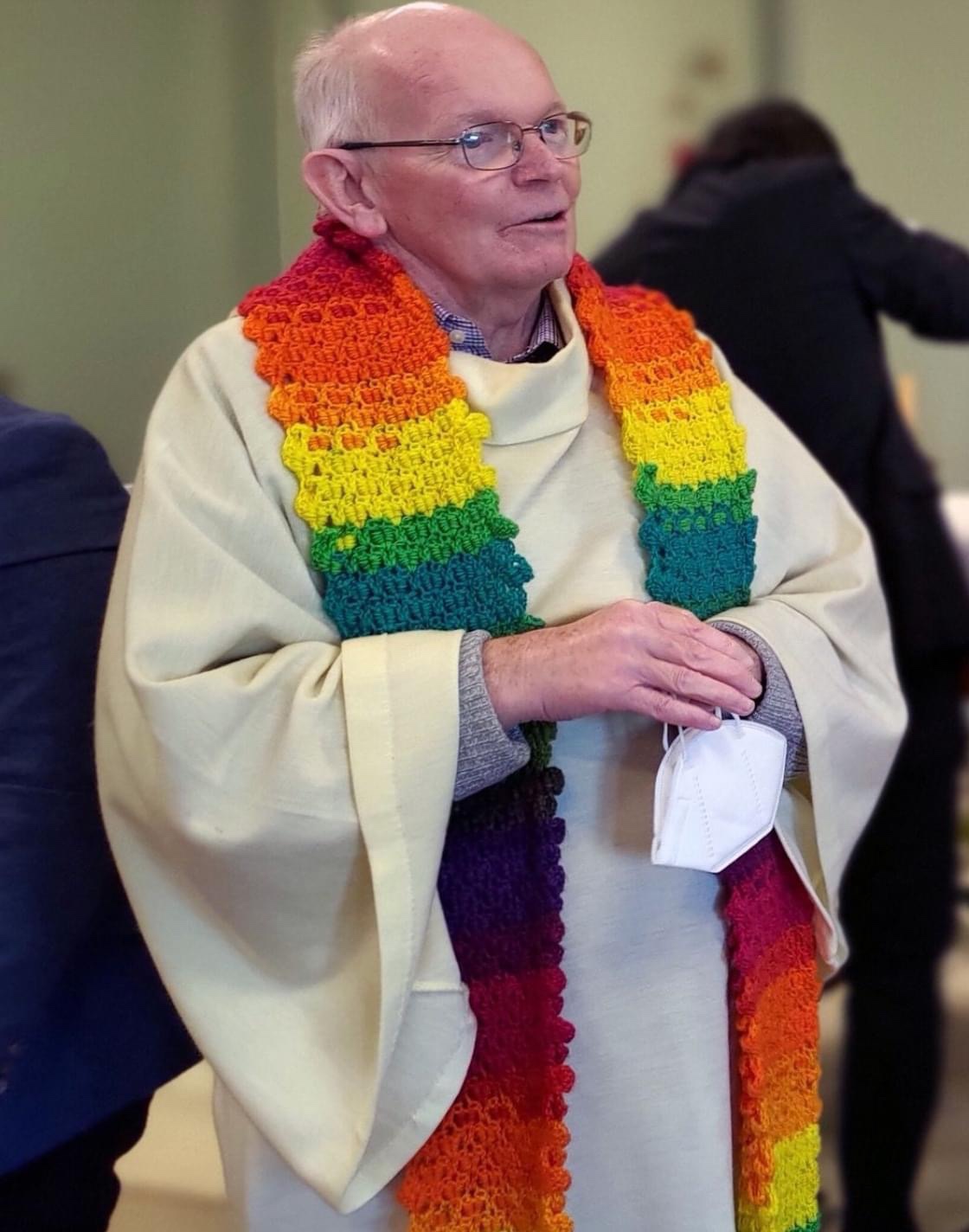
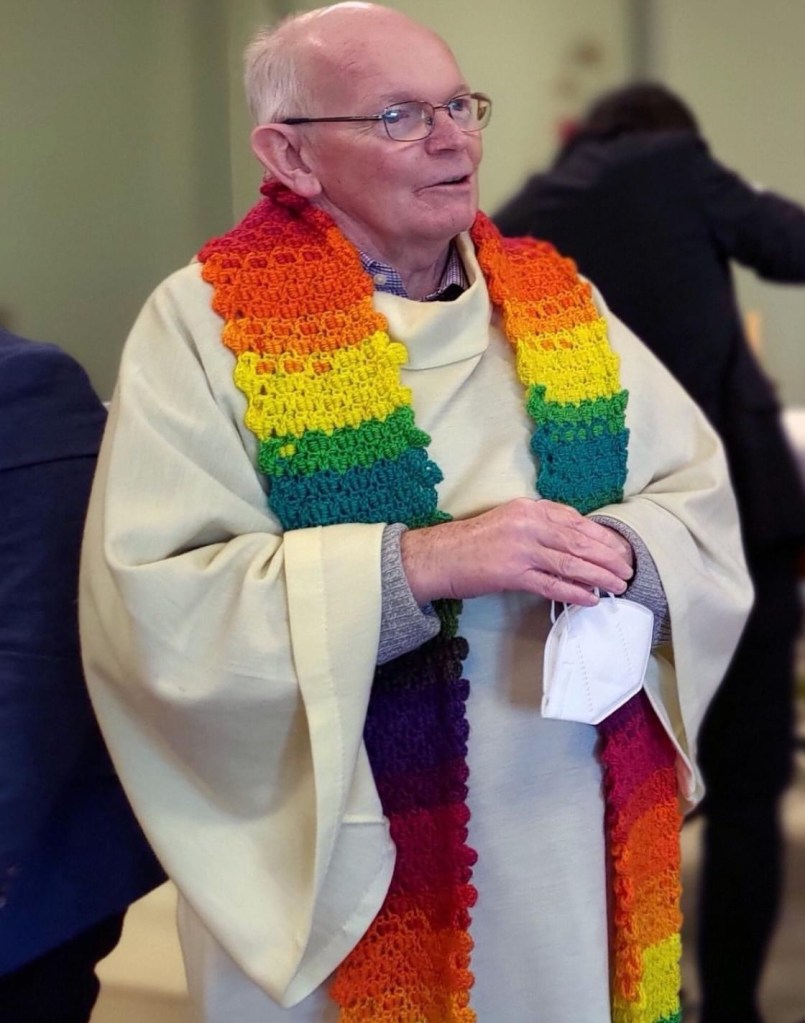
During the last week, the funeral of a Roman Catholic priest, Father Peter Maher, took place. I have known Peter for five decades, and was very sorry to learn that he was unwell earlier this year. I met him when he was training as a priest; in those early years, Peter and I were in a Christian musical together for a while (organised by the Anglican Youth Dept—very ecumenical!!).

I attended Peter’s ordination at St Mary’s Cathedral in the mid 1970s—and in an early act of quiet defiance of the established doctrines of his Church, he gave me, a Proddy, communion!. Peter then attended my ordination in 1980–and I gave him communion (with no angst in terms of Uniting Church polity). Peter and his brother Chris visited us while I was studying in the USA. We caught up from time to time over meals—Peter was a superb cook and delighted in offering hospitality through good food and even better conversation!

Years later, Peter spent a year as my professional supervisor when my previous supervisor took a sabbatical year. His gentle approach and incisive commentary was invaluable, especially as that was a time of heightened stress and intense emotional pressure because of an ugly and unhappy situation in my church environment at the time.

I heard Peter’s stories about his run-ins with George Pell, always told with a lightness of tone despite the cost that this brought to his own ministry. I was chatting to him a couple of months ago about an LGBTIQA+ initiative here in Canberra. There are lots of rich memories, even though we weren’t in regular communication over the last few decades.

Peter was a strong advocate, throughout his ministry, for “the least and the lost”, and especially, in recent decades, for members of the LGBTIQA+ community. His weekly Mass for rainbow people, held at St Joseph’s Church in Newtown, attracted people and was the basis for the formation of a wonderfully extensive community of people of faith who identify with sexual or gender diversity. Peter lived a lifetime of work devoted, in various ways, to the gender agenda—affirming, supporting, counselling, encouraging, and advocating for, the many people of faith (and of no faith) within the broad LGBTIQA+ community.

The former Executive Director of Uniting in the NSW.ACT Synod of the Uniting Church, Peter Worland, described Peter as “A mighty man. Small physically but massive heart … for others”. My Uniting Church colleague Rod Pattenden captured the very essence of Peter’s modus operandi: “impishly uncomplicated in attitude and lightly subversive”. The Roman Catholic media commentator, Noel Debien, referred to Peter’s “generous and inclusive ministry [which] he carried out at great cost to himself. He suffered significantly because of his compassion for others, but that was far, far outweighed by the blessing of his ministry. He made a huge pastoral difference” in the ArchDiocese of Sydney.

Noel recalls that “few (very few) priests I have ever known have had so much integrity, humour, compassion and determination to live the Gospel every day.” He continues, “I find it odd that in Sydney, we have gay bishops, archbishops with gay and lesbian siblings, clergy who are gay (and celibate) as well as huge numbers of Catholics with LGBTQIA kids, uncles, aunts and friends—and at a funeral like this, the church is not adequately able to fully recognise the real nature of LGBTQI ministry in our city.”

Another friend of Peter noted “This constant presence. This smile. Peter taught us about patience. About relationship. About being open to the most unlikely of allies. Planting seeds. And slowly waiting. And now we must wait to meet him again.” I saw a comment that described “the delight and mischief in his eyes”—how true! Another person noted, quite poignantly, “Peter was always encouraging and welcoming to me, even though I felt pretty unworthy.” That, there, is the Gospel, lived in all aspects of life.

Yet another wrote, “Peter always did the best he could and made the best of things. If something didn’t go as hoped for he’d say “that’s okay we can…”. “Well I’m glad because…”. A shrug, a twinkle of his nose and a “whatever”. He didn’t let what anyone else thought stop him from doing the right thing. He celebrated the smallest of wins and smallest of changes. An excited ‘Yes!’ fistpumped in the air. Always enthusiasm and heartfelt sincerity and seriousness in the one package.”

Others noted his “steadfast commitment to solidarity and equality”, his “warmth, kindness and affection … generosity, tenacity, laughter and good humour”. One wrote “Thank you for being a prophet. And teaching others to be too. Thank you for making mischief. Making change. With a twinkle of delight and hope in your eyes. Thank you for being a protector for people you will never meet. Doing justice.” Another, “Thank you for the healing. For the deep hearing. For the liturgy. For nourishing weary souls.” More Gospel qualities, so clearly evident!

These are wonderful testimonies to a man whose life was given in devoted service to the God who offers the grace of inclusivity, a celebration of God’s abiding love.

The songs and readings that Peter chose for his funeral are at

https://docs.google.com/document/u/0/d/1sRxct-DbuSVy-J_HafzxKiJw17rRIP63ew7wa0qFbis/mobilebasic

A fine tribute to Peter is at https://www.misacor.org.au/item/28929-rip-peter-maher-vigorous-priest-sydney-longtime-editor-of-the-swag

*****

See also

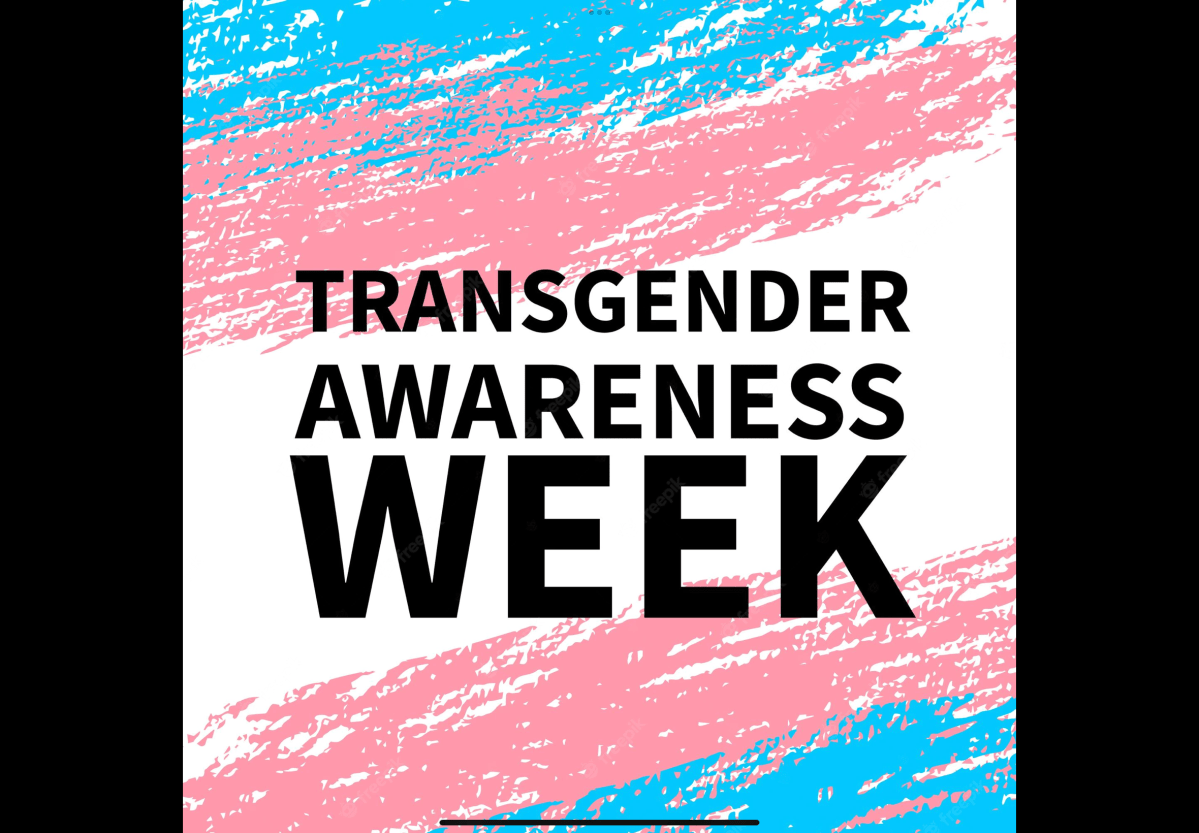
Transgender Awareness Week

Every year on 20 November, we pause for the Transgender Day of Remembrance. The week before that day is designated as Transgender Awareness Week. Individuals and organizations participate in this week to help raise the visibility of transgender people and address issues members of the community face.

My own awareness of Transgender people (the T in LGBTIQA+) has been a slow and gradual process of increasing awareness and understanding. Whilst trans people have been a reality in humanity ever since when, the public discussion of such people has been slow to emerge, only picking up visibility in the public arena in recent years.

In considering the sexuality of people, we have become familiar with the terms “gay” and “lesbian”—male and female people, respectively, who are attracted sexually to people of the same gender as they are—as well as “bisexual” (attracted sexually to people of either gender) and “asexual” (people who have no feelings of sexual attraction to others).

Alongside the terms that relate to our sexuality, there are terms that relate to gender. To put it simply (perhaps to oversimplify), if sexuality is about how our feelings of attraction are expressed, then gender is about how we identify ourselves, in terms of being male or female, the traditional terminology used over the centuries.

Often the genitals found on a person determine how gender is assigned. Think the classic film scene of a woman giving birth—after the mandatory cry from the baby, to assure people present that the newborn is breathing, the next matter is, “is the baby a boy or girl?” A quick look at the genitals—is there a penis or a vagina?—usually provides the answer to that question. Although, these days, for an increasing number of births, the gender of the baby has been explored and determined by means of ultrasounds, so more and more, parents already know the gender of their child.

However, as we have become aware in recent times, not everybody is born as clearly identifiable as either male, or female. The vast majority of people are; but for a significant minority, they may have been born with both male and female genitals. A superficial inspection may mean that answering the question, “boy or girl?”, can’t be readily answered. Such people are identified under the letter I , LGBTIQA+, I being short for Intersex.

For other people, whilst the genital determination of their gender is straightforward, the actual sense that such individuals have of their own innate gender is more complex. The deepest meaning of gender, is that is describes who you really are; what you feel, inside yourself, that your actual identity is. It is far more internal than it is external.

For the majority of people, they are cis-gendered—that is, their assigned gender correlates exactly with their physical body and their innate sense of who they are. (The prefix cis- comes from the Latin word which means “on this side of”; it is the opposite of the Latin word trans, meaning “on the other side of”. ) However, for others, these feelings may not necessarily fall into the assumed, “natural” category that is conveyed by their genital configuration. These are people who are referred under the letter T, standing for transgender.

In short, someone who is transgender most likely does not feel that “who they are” on the inside matches their assigned gender on the outside. This is quite different from intersex; it is a matter of personal psychology and self-understanding. Indeed, more recent scientific studies indicate that there may be differences in the white matter tracts in the brain between cisgender (agreement between gender and sex) and transgender men and women. See https://www.jneurosci.org/content/34/46/15466

The transgender flag, created in 1999, uses the stereotypical colours, “blue for boys, pink for girls”, and splice in the colour white, signalling those undertaking transition from one gender to another. With the T and I colours, they have been added to the now-traditional rainbow flag, representing LGB people, along with black and brown stripes, to represent marginalized LGBTIQA+ communities of colour. It is an ever-evolving symbol!

One important aspect of the recent discussion about transgender people relates to the emotional cost that comes with living in a body that does not correlate with the realities of emotions and experiences that they have. This is often called “gender dysmorphia”; the Mayo Clinic defines this as “the feeling of discomfort or distress that might occur in people whose gender identity differs from their sex assigned at birth or sex-related physical characteristics”. See https://www.mayoclinic.org/diseases-conditions/gender-dysphoria/symptoms-causes/syc-20475255

Those who are closely related to people who are experiencing such “gender dysmorphia” would do well to take careful advice about how they can support people through this process. See https://facty.com/lifestyle/wellness/what-does-transgender-mean/

Transgender people may choose to undertake a slow, lengthy, graduated process of transitioning from their assigned gender, into their innate gender. This may start with a time of sharing with people closest to them about their inner feelings. They may then adopt the clothing and grooming habits of their desired sex. Some may change their name at this point, or later.

The availability of hormone therapy means that transgender people who are transitioning are able to assist their bodies to take on the various characteristics of the gender to which they are transitioning. Likewise, they may decide to proceed with surgeries to modify their bodies to reach an external expression of the gender they are internally. Both hormone therapy and surgery are undertaken in close conjunction with counselling sessions from appropriately qualified people, to inform, guide, and support people through the transitioning process.

Such processes must, surely, be emotionally challenging and personally costly for transgender people. However, as I have been learning from friends that I know who are transitioning or who have transitioned, the deep-seated inner sense of “this is who I really am” is the primary factor that drives the complex process of transitioning. Empathic and patient listening, embedded within a non-judgemental attitude which is open to hearing and learning new things, is the best gift that a cis-gendered person can give to a person who is undergoing, or has competed, transitioning.

Being true to oneself is a virtue that has long been lauded in our society. “This above all: to thine own self be true, And it must follow, as the night the day, Thou canst not then be false to any man”, says Polonius in Shakespeare’s play, Hamlet. In Ancient Greece, a well-known saying connected with the Adelphi Oracle was “know thyself”. The famous existentialist philosopher, Sören Kierkegaard, advised that “Not to be one’s self, as God created you, is despair”. There is plenty of good philosophical and ethical consideration of the importance of being true to oneself.

For myself, there is a strong theological affirmation that also undergirds this issue. It comes from the opening story of scripture—the story of creation. When God created Adam from the earth, God breathed the breath of life into the human, and Adam became a nephesh, a living being (Gen 1:30; 2:7). All human beings—indeed, all living creatures—are given life by God’s spirit and share the essence of a nephesh (Ps 104:24–30; Job 12:7–10). That is the fundamental feature of all of God’s created beings.

This is what God first declared to be good (Gen 1:21, 24)—indeed, to be very good (Gen 1:31). So, as human beings, how we were made (straight or gay, identifying as male or female, or sensing that our biological gender does not match our inner sense of gender) is good; God made us that way, we are called to be true to ourselves, honest about our identity, comfortable in our own skin.

Transgender Awareness Week is a week when transgender people and their allies take action to bring attention to the community by educating the public about who transgender people are, sharing stories and experiences, and advancing advocacy around the issues of prejudice, discrimination, and violence that affect the transgender community. It is a good thing for each of us to make sure we are aware of the reality of Transgender people, and to ensure we relate sympathetically and encouragingly to such people when we uencounter them.

See also https://johntsquires.com/2022/05/04/moving-ahead-as-an-inclusive-respectful-community/

God calls all Christians to be peacemakers

Today there is one of those regular reminders that occur in social media, about remembering war—the victims of war, those who have died, the consequences of armed struggle.

It is a good day to remember, also, that the Gospel is a call to peacemaking and reconciliation. This is at the heart of the commitments that the Uniting Church in Australia, amongst many other churches, has made over the decades.

At the Tenth Assembly in 2003, the Uniting Church affirmed “that God came in the crucified and risen Christ to make peace; and that God calls all Christians to be peacemakers, to save life, to heal and to love their neighbours; and that the Church is committed to be a peacemaking body”. (Uniting for Peace, Tenth Assembly, Uniting Church in Australia) A number of the UCA statements and resources relating to peacemaking are collected at https://www.unitingjustice.org.au/uniting-for-peace

Peacemaking has been a central concern of the Uniting Church since its inception in 1977. As early as 1982, the Assembly made a major statement on peacemaking, with two clear declarations: first, that “God came in the crucified and risen Christ to make peace [and] He calls all Christians to be peacemakers, to save life, to heal and to love their neighbours”; and second, that “the call of Christ to make peace is the norm, the onus of proof rests on any who resort to military force as a means of solving international disputes” (Militarism and Disarmament, 1982).

In 1988, in a Statement to the Nation issued for the Australian Bicentennial, the church declared, “In cooperation with all fellow Australians of goodwill, we are committed to work for justice and peace, calling for honesty and integrity, encouraging tolerance and compassion, challenging acquisitiveness and greed, opposing discrimination and prejudice, condemning violence and oppression and creating a loving and caring community”.

At that same Assembly, a statement on Nuclear Deterrence, Disarmament and Peace was also issued, with the statement that “All Christian affirmation about peace is grounded in the declaration that Jesus Christ is our peace. Through him the power of evil, sin and death is decisively broken, and the hostile and alienated world is reconciled to God and is itself renewed. We speak in hope, trusting God’s promise of the final transformation of all things.”

In 2003 the Assembly adopted an extensive statement entitled Uniting for Peace. In this statement the Uniting Church promised to “work together for peace, justice and reconciliation at the local, national and global level and in collaboration with local communities, secular movements, non- government agencies and people of other faiths”. We declared that we embraced “creative approaches to peacebuilding which are consonant with the spirit of the Gospel” and that we sought to “empower people who are systematically oppressed by violence, and to act in solidarity with those struggling for justice, peace and the integrity of creation”. The Statement also indicated an intention to “repent of our complicity in violence and attempt to overcome the spirit, logic and practice of violence”.

For the International Day of Peace in 2016, the church issued a resource which explored three important “Building Blocks for Peace— gender equality, climate justice, and nuclear disarmament”. See https://www.unitingjustice.org.au/images/stories/PDFs/160909_Peace_IDPResource2016.pdf

Continuing this commitment to peace today is important. One member of the Uniting Church, Len Baglow, has written this helpful piece on making peace, in which he gives serious consideration to a difficult question: “what does it mean in our time to be a peacemaker?” He indicates that he writes “to encourage others to join in this adventure that scripture calls peacemaking. I would particularly urge leaders in the Church community to see peacemaking not as a peripheral activity, but something which is urgent for our times.”

See https://ucforum.unitingchurch.org.au/?p=4660

Len notes that IPAN, the Independent and Peaceful Australia Network, is planning a national conference later this month, at which there will be consideration of AUKUS and the current threat of war for Australia, as well as sessions on “building the peace movement: planning collaborative activism”. The details of the programme and registration are at

Continuing the commitment to making peace that Jesus articulated is an integral and important part of Christian discipleship in the contemporary world. May the resolutions of this conference and the networks that it builds contribute to the ongoing work of making peace and forming reconciliation in our fractured world.

See also

Prayers of the People for Pentecost 22C

Prayers of the People led by Cathy Rossiter at Tuggeranong Uniting Church on Sunday 6 November, during a service celebrating All Saints’ Day and reflecting on Halloween (All Hallow’s Eve)

At this time of much international and domestic uncertainty, of inequality and of hunger, let’s bring our prayers and thoughts for others before almighty God.

We ask you to be with us, O Lord, as we contemplate what it means to live out our faith in a world which seems more selfish and uncaring than ever before. Help us to stand up for what is right, just and compassionate.  Help us to meet people wherever they are at and not to be judgemental or self-righteous.  Help us to be generous with our time, our friendship and our finances.

We know that there are many troubling issues where the voice of compassion and justice needs to be raised.  We pray for those who influence the ways we act and think through their roles in the media, and we ask that those who are elected to represent us in our parliaments are always mindful of their responsibilities towards all Australians.  

We think of the many people whose lives and livelihoods have been turned upside down by extreme weather events, both here in Australia and elsewhere in the world.  As we come to grips with the dangers posed by the changing climate, help us to reassess our lives and the contributions that we make to the global situation.

O God, as the world contemplates the prospect of many more such catastrophes, and the destruction of more and more habitat, we ask that the coming meeting of nations in Egypt will move closer to serious commitments to drastically reduce the amount of greenhouse gases in the atmosphere.  As people of faith, we care for the world you have given us and we bring you our concerns for those who are least able to protect themselves from the ravages of extreme weather events.

As the evidence of ongoing cruelty and discrimination around the world continues to mount, we pray that the voices of calm and of wisdom will be heard in many places. We think especially of Myanmar, of North Korea, of China, of Ethiopia and of Iran.

We pray especially for the people of Ukraine and the people of Russia.  We pray for those who are afraid, for those who have lost loved ones, for those who choose war and for those who seek peace.   May the search for peace prevail.

In our own Canberra community, there are many who suffer from the indignities of poverty and discrimination, from long-term health problems, and from violence in their own families.  We ask that you will uphold them, give them strength and surround them with care and love.  

All these things we ask in the name of Jesus, who taught us how to live and to love, and to pray …

Ou Father in heaven, hallowed be your name … … …

*****

The sermon for the day is at http://ruralreverend.blogspot.com/2022/11/on-halloween-all-saints-and-ghosts-of.html

On Halloween, All Saints, and the ghosts of the past (All Saints Year C)

A sermon preached by the Rev. Elizabeth Raine at Tuggeranong Uniting Church on 6 November 2022, in a service remembering All Saints.

*****

Halloween seems to be a thing that has crept up on Australia more recently. Halloween trick or treating was not something I did as a child, nor was it even considered. But many Australian kids seem to have taken to Halloween including my grandchildren, and roam the street in spooky costumes in search of sugary and chocolatey treats. What they would do as a trick if they were refused is an interesting thought, and I am not sure they have worked that out yet.

We also seem to be having the Halloween equivalent of Christmas lights in streets around us, with house fronts covered in spiderwebs and large spiders, ghouls, witches and ghosts in front yards. My daughter even had three graves in hers.

But what is Halloween really? Is it dancing with the devil? A celebration of something sinister? An import from American culture we don’t need? Or is it imaginative good fun and giving kids a chance to be creative and neighbourhoods to come together and neighbours get to know each other? Is it representing the choosing of life over death, hope over despair, and good over evil?

Wikipedia informs us that Halloween (also known as All Hallows’ Eve, or All Saints’ Eve) is a “celebration observed in many countries on 31 October, the eve of the Western Christian feast of All Hallows’ Day. It begins the observance of Allhallowtide, the time in the liturgical year dedicated to remembering the dead, including saints (hallows), martyrs, and all the departed.”

Some scholars believe that Halloween traditions grew out of Celtic harvest festivals, particularly the Gaelic festival Samhain, which is believed to have pagan roots. Some go further and suggest that Samhain may have been Christianized as All Hallow’s Day, along with its eve, by the early Church in the same way Christmas was.

Other academics believe Halloween began solely as a Christian holiday, being the vigil of All Hallow’s Day. Celebrated in Ireland and Scotland for centuries, Irish and Scottish immigrants took many Halloween customs to North America in the 19th century, and then through American influence Halloween had spread to other countries by the late 20th and early 21st century.

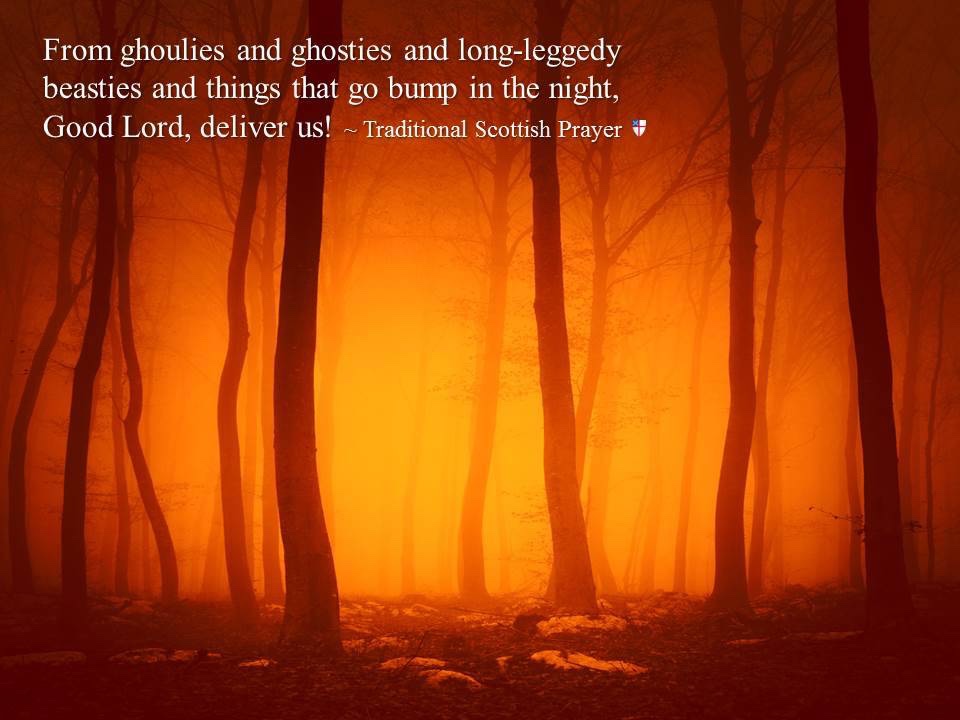
Despite the ghoulies and ghosties and long-legged beasties that may have roamed the drier streets of Canberra last Monday, Halloween and All Saints Day are predominantly Christian festivals, still celebrated as such in many parts of the world. Since the time of the early Church, the feast of All Hallows began the night before, as did the feast of Christmas. These days are collectively called Allhallowtide and are a time when Western Christians honour all saints and pray for departed souls.

It is easy to talk about All Saints Day, but not so easy to get a sermon from Halloween. Yet that is where I am heading. I read a really interesting article in the conversation on the topic of Halloween. By Alasdair Macintyre, it is on the topic of ‘hauntology’, a study of the memories and dreams that follow us through life. Macintyre writes, hauntology “is that eerie zone where time collapses and our past memories and associations haunt our minds, like a ghost”.

This philosophical concept of “hauntology” was invented by the French philosopher Jacques Derrida for his 1993 lecture Spectres of Marx. Apparently the words “hauntology” and “ontology” both sound identical when spoken in French, something which tickled Derrida’s fancy. Ontology is the philosophical and theological study of existence and being, dating back as far as ancient Greece and important in Christian theology, especially in regard to the Trinity. But in Derrida’s mind, the concept of ontology was shadowed by hauntology, a state of non-being.

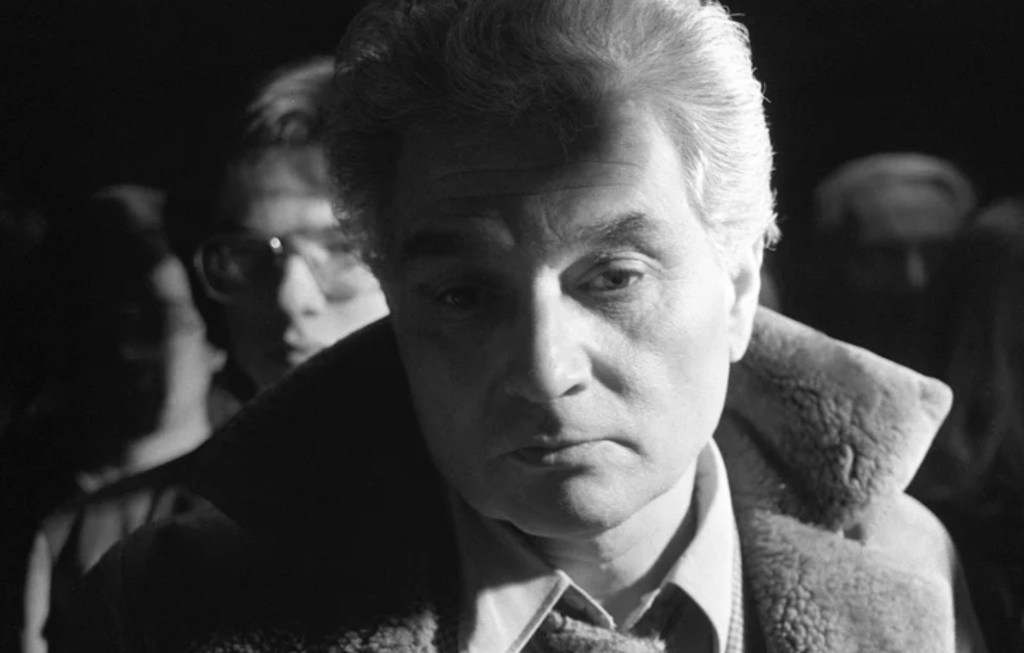
French philosopher Jacques Derrida

I have been thinking the modern day church just might be stuck in hauntology, both haunted by memories of its past practices and by visions of the future that did not eventuate. Nobody 30-40 years ago foresaw that the church would be dwindling and aging. And John and I have found, when you talk to small churches as a Presbytery minister they are haunted by memories Sunday school numbers form 1950s and 60s.

It’s an interesting idea, this one of hauntology. The church is not is the place it planned to be 30 years ago. It hasn’t evolved in the way that people thought it would. Not everything that was planned was executed into action. Are these unfulfilled hopes haunting us now us a church?

Apparently such hauntings by unfulfilled expectations is a thing and has been studied. English theorist and academic Dr. Mark Fisher called this concept “cancelled futures” and associated it with a lack of action and cultural stagnation. He believed very little that was innovative was happening in our culture and there was instead an endless repetition and recycling of old ideas, just now in high definition and on social media.

He wasn’t referring to technology (which is advancing) but to the collapse of hopes that politically, economically and socially, the world might be improved.the regular and often startling upheavals of the 1960s have disappeared to be slowly replaced by a culture which struggles to imagine truly the possibility of a better future. Instead, such cultural upheavals and flights of imagination have been replaced by advances in mobile communication technology that have intensified superficiality and isolation rather than brought people together in healthy ways. Community, relationship, logic, and compassion are seen asfrighteningly diminished and being replaced by social networking, short-term thinking, individualism and fake news.

To put it another way, being haunted by memories and nostalgia from the past along with unrealised hauntings of unfulfilled dreams has led to a crisis of imagination on our present times. For example, society as a whole has failed informulating new ways of living in the face of a looming climate disaster. We largely continue with business as usual, though expressing concern over the potential consequences.

This apathy or fear or inertia or whatever it is will not help us as the climate warms and things worsen. We are creating more ghosts with loss of habitat, loss of species, loss of faith in something. So what needs to be done? How are we to deal with unfulfilled hopes still being all around us, albeit unseen? Whether you believe in ghosts or not, people, traditions and events from decades past continue to appear and influence our minds and our behaviour.

Firstly, we need to rethink our relationship to the past. We can’t stay trapped in it or use it to develop excuses for not addressing the needs of the future. And we can’t just be critical of things such as non-action by governments on climate change. We need to do some re-imagining of what is needed and move beyond critique to alternative modes of living and being – from hauntology to ontology if you like.

Next, we need the skills to deconstruct the memories and stories we have created that no longer serve us well and make new ones. Jesus was a master at this. Derrida saw Jesus as the “greatest” and “most incomprehensible of ghosts.” He saw Jesus as having spectral and life-exceeding attributes. Why?

I assume it is because Jesus challenged the comfortable institutions of his day with a radical reinterpretation of the narrative of their inheritance and tradition. Refusing to be haunted by the ghosts of comfortable living in the knowledge the Jews were the chosen people, Jesus recast and reframed the narrative of justice and righteousness for his context. “Blessed are you who are poor … who are hungry now … who week now … you will laugh, you will be filled, yours is the kingdom of God” (Luke 6:20–21).

Jesus reimagined a future of equity and justice in the vision of the kingdom of God. “I say to you that listen, ‘Love your enemies, do good to those who hate you, bless those who curse you, pray for those who abuse you” (Luke 6:27–28).

He inspired followers who caught the vision and ran with it through the Roman empire and beyond. He started a movement that would lead people to transform lives and live in ways that supported fairness, acceptance and justice for everyone. “Do to others as you would have them do to you”, he instructs his followers ( Luke 6:31).

Jesus was present to his community through relationships and story, focused on being in an ontological sense rather than yearning for the ghosts of hauntology.

What has happened to this movement? What has happened to this story that lives in churches’ past and traditions but seems to have lost its transforming power and its bite? What is the story of the future that church should be telling? How do we reframe the story of the future in the face of instability, uncertaintyand failed futures? Can we escape the “eerie zone where time collapses and our past memories and associations haunt our minds, like a ghost?”

Instead of being haunted by things already done or by wistful thinking on unfulfilled futures, we need to listen to Jesus, the messiah who brought in new ways of perceiving life and faith and “who haunts our self-presence, our self-sufficiency, who disturbs the order of the same, who comes to us as the voice of the dead to whom we bear a responsibility, and as the voice of the one still to come.” (John D. Caputo 1997).

Jesus, as a messianic figure, holds “open the door” of the would-be closed system of empire. He disrupts the legacy of his heritage. He takes a stand with everyone and everything that has been rejected or expelled by heritage and empire, all that are disempowered by these powers,and demands a revisioned future of fairness.

The church, like Jesus, needs to haunt people and society in meaningful ways. Things do not evolve, thrive or disappear in isolation. Something or someone is creating the conditions to allow such things. It is only by transforming our narrative, our lifestyles, our faith stories that the church bring about the radical social change that Jesus was committed to.

It is only by transforming what we have that we can effectively alter what is bad and what is destructive in our lives and our communities. The ghouls and ghosts of uncritical thinking, fake news, war, patriarchy, racism, individualism, unbridled climate change and non-acceptance of the other have no place in our community, and we as the church are called by Jesus to do nothing less.

Prof. Rosalyn Diprose, from the UNSW, states that “In the extraordinary responsibility of inheriting the future-to-come, it is all of this that we must continue to interrupt, transform, and put at risk.” (2006, 446)

As a church, must develop this new narrative, this story of hope, metanoia and courage. We must take risks for the gospel, and not allow the ghosts of the past or the unfulfilled future to rob us of these things. And we must continue to pray, From ghoulies and ghosties / and long-leggéd beasties / and things that go bump in the night, / Good Lord, deliver us. Amen.

The Prayers of the People are at https://johntsquires.com/2022/11/06/prayers-of-the-people-for-pentecost-22c/

“Fresh words and deeds”: for Reformation Day

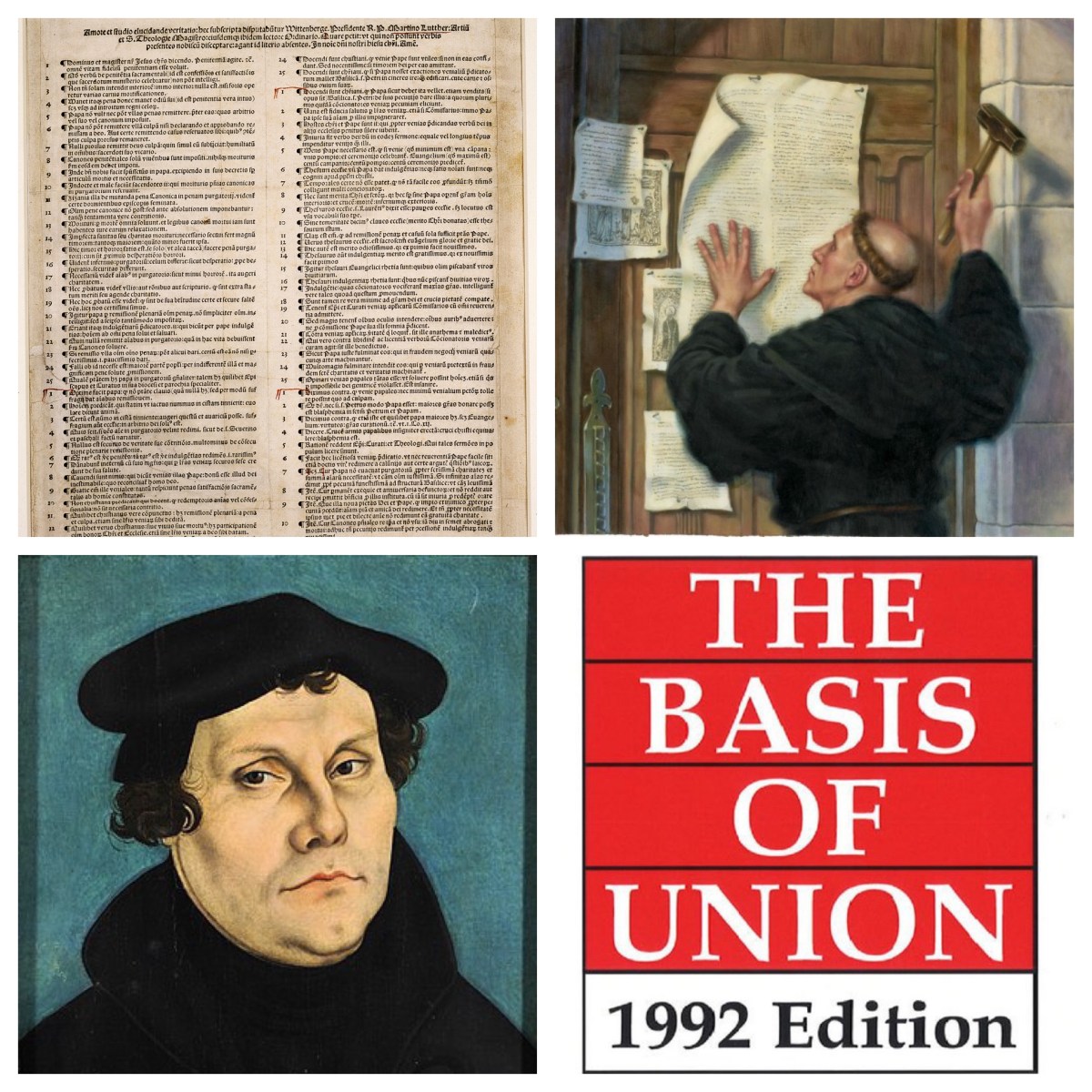
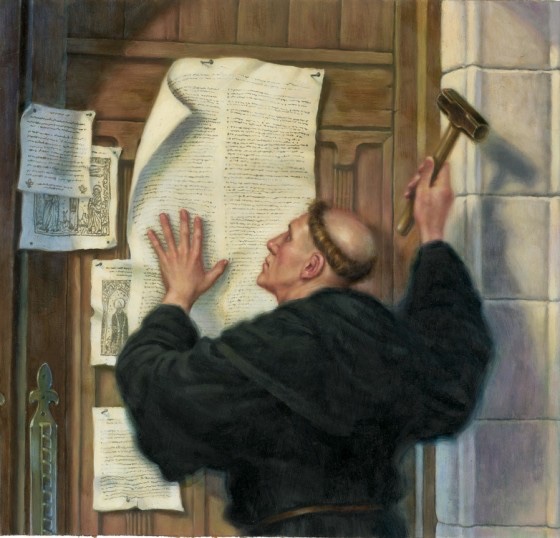
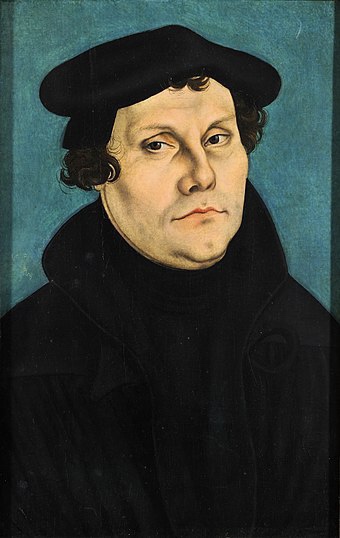
Over five centuries ago, allegedly on 31 October 1517, the Reformation began. That day, a German priest, Martin Luther, sent his Ninety-Five Theses on the Power and Efficacy of Indulgences his to the Archbishop of Mainz. In these theses, Luther criticised the common practice of his fellow priests, who sold indulgences to their parishioners.

He also disputed the teaching of the church about purgatory (an intermediate state after death, before entering heaven or hell), and criticised the authority which had been claimed by the Pope. As a result, he was excommunicated by the Pope and condemned as an outlaw.

Actions from that time unleashed a series of protests and changes across the church. This Reformation led to the formation of numerous Reformed churches. The Uniting Church stands with these churches, as a Protestant church, an heir of the Reformation. Our forebears held firm to the belief that the church was always to be seeking renewal; that supreme authority rested in the Bible; that salvation was possible only because of God’s abundant grace.

As we recall this event, on Reformation Day (31 October), we might well ask: is it time for a new Reformation? Have we come to a point in time when we need to kick off the shackles of old traditions and practices? Is it time to set forth on a new venture, as the people of God, to protest what we have left behind, to reform ourselves once more?

There are some very clear pointers in this direction, I believe, within my own denomination, which is a relatively young (45 years old) denomination. In the Basis of Union, the foundational document for the Uniting Church, for instance, I can find 12 occurrences of words like “new, anew, reform or renew”, as well as one “fresh” and one “afresh”.

Para 1 declares that the three denominations which united in 1977 “remain open to constant REFORM under his Word” and affirms that “they look for a continuing RENEWAL in which God will use their common worship, witness and service to set forth the word of salvation for all people”.

Foundational theological affirmations about Jesus which are included in Para 3 reiterate this perspective: Jesus is “the beginning of a NEW creation, of a NEW humanity”, “a pledge and foretaste of that coming reconciliation and RENEWAL which is the end in view for the whole creation”, and “a representative beginning of a NEW order of righteousness and love”. Para 4 concludes with a similar affirmation, that “in his own strange way Christ constitutes, rules and RENEWS them as his Church.

Para 15 locates us in “a period of RECONSIDERATION of traditional forms of the ministry, and of RENEWED participation of all the people of God” in the various aspects of ministry. And since the Basis was written, we have renewed the Diaconate and invited ongoing experimentation with other forms of ministry (Lay Pastor, Community Minister and Youth Worker—all now ended, and taken up in the umbrella Ministry of Pastor).

In para 11, the church declared that it “prays that it may be ready when occasion demands to confess the Lord in FRESH words and deeds”. Para 15 enjoined the councils of the church to “enter a period of self-examination in which members are asked to consider AFRESH their common commitment to the Church’s mission and their demonstration of its unity”. All of these phrases point to a hope for ongoing renewal, refreshment, and revitalisation.


There’s one reference to “history”, but it is in the phrase “the CHANGES of history”, and three uses of “tradition”, one of which is in the phrase “a period of RECONSIDERATION of traditional forms of the ministry”. So these excerpts are oriented towards change and reform.

“Inheritance” pops up twice: once, “the inheritance of the Kingdom” (hardly an advocate for the status quo) and once in “the inheritance of literary, historical and scientific enquiry which has characterised recent centuries”, which promotes a sense of exploration and discovery.

Then, of course, there are the widely-known references to being a “pilgrim people” (once) who are “on the way” (twice). This imagery clearly points to the hope for still more reforming and renewing within the church.

The closing sentence in the opening paragraph of the Basis sets the horizons of openness to the future: the church “awaits with hope the day of the Lord Jesus Christ on which it will be clear that the kingdom of this world has become the kingdom of our Lord and of the Christ”. It is this openness to whatever the future will bring which is most clearly to characterise the Uniting Church.

I think the primary orientation is very clear: as people of the Uniting Church, we are oriented towards the future with hope, and we are called to work for a different future. We are people with an inheritance from the Reformation and with a calling to continue to reform the church.

So, let’s protest, reform, and head on our way!!

The sincerest form of flattery? Or a later, imperfect imitation? (2 Thessalonians; Pentecost 21C to 23C)

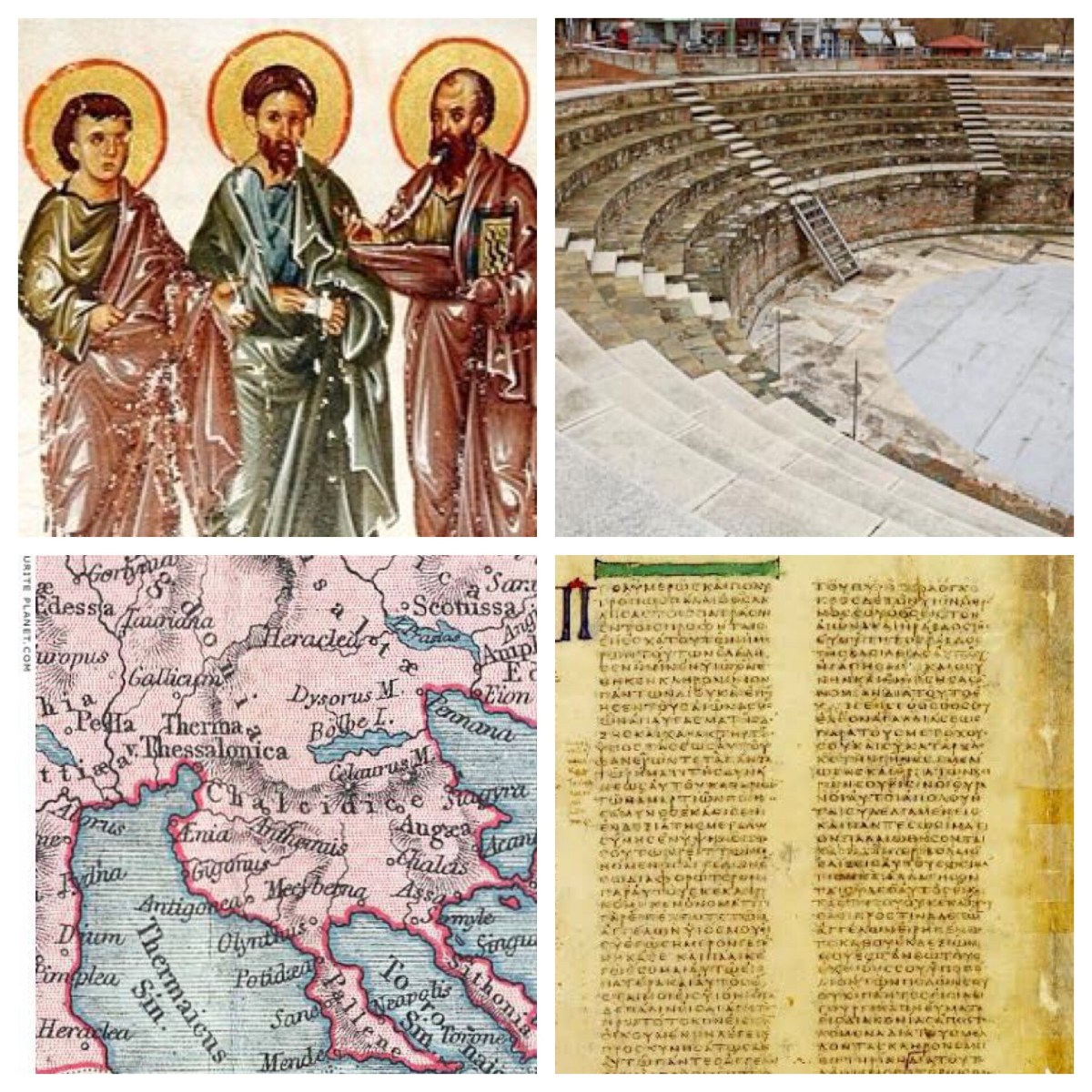
Paul, Silas and Timothy arrived in Thessalonika in the year 50 CE. Acts indicates that they went to the synagogue, where Paul declared that the Jewish scriptures pointed to Jesus as Messiah (Acts 17:2–3). This stirred up antagonism amongst the Jews of the city (Acts 17:5).

Those who accepted Paul’s message, realising that he was just recovering from the experience of prison in Philippi (Acts 16:19–24), sent him and Silas on to their next stop in Beroea after only three weeks in Thessalonica (Acts 17:2). Paul then travelled to Athens (Acts 17:15) and Corinth (Acts 18:1).

Little of this is reflected in Paul’s letters to the Thessalonians, apart from a direct comment about his difficulties in Philippi (1 Thess 2:2) and some generalised references to the persecution he was suffering (1 Thess 3:4, 7). Although it is likely that Paul wrote letters before he had visited Thessalonica, none of them are known to us.

1 Thessalonians, dating from the same year (50 CE) as his visit to Thessalonica, is the earliest example of Paul’s letter writing that we have. The letter itself contains no explicit indication of the time or place of its writing; tradition has it that Paul wrote from Athens, although it is more likely that he penned it in Corinth just months after his departure from Thessalonica. His visit was still fresh in Paul’s mind, and he writes with love and concern for the community of believers that he left behind in Thessalonica.

It is obvious that Paul had developed a strong bond with this community, and he is anxious to keep in touch with them (3:5). The letter was in reply to what he had learned from Timothy about their recent progress (3:6).

The letter known as 2 Thessalonians appears in the lectionary this Sunday and in the two following weeks. It seems to run in parallel to 1 Thessalonians in a number of ways. Some of the themes from the first letter are replicated, and varied, in the second letter to the Thessalonians. Both letters present Paul as a role model (1 Thess 1:6; 2 Thess 3:7); both criticise the Thessalonians for the idleness evident in their community (1 Thess 5:14; 2 Thess 3:6–12); and both letters contain reminders about Paul’s teachings (1 Thess 2:5–7, 12; 4:1–2; 5:1–2; 2 Thess 2:15). The general eschatological orientation is present in both letters (1 Thess 4:13–5:11; 2 Thess 1:5–2:16), but there are significant developments–a hardening of the apocalyptic mindset–in 2 Thessalonians.

The commonality of both general themes and specific words and phrases leads to a question about the relationship between these two letters: is this stylistic variation on common themes written by the same author, or a deliberate attempt to copy the first letter by another scribe at a later date?

Scholars answer the question differently; there are different views on the authorship of 2 Thessalonians. The opening and closing sections of 2 Thessalonians are revealing.

The letter concludes with an insistence that it was written by Paul: “I, Paul, write this greeting with my own hand” (3:17). At first glance, this looks similar to the reference to Paul’s “large letters” in his “own hand” at Gal 6:11; but this is a brief passing comment, whereas the claim is laboured in 2 Thessalonians by the addition of extra phrases, so that we start to have a sense of “methinks he doth protest too much”.

The first twenty words of the opening address of 1 Thess 1:1 are repeated exactly in 2 Thess 1:1–2a; this is unusual amongst the seven authentic letters of Paul, for in every other case there are variations of both minor and major significance in this opening section. (See Rom 1:2–6; 1 Cor 1:2b; 2 Cor 1:b; Gal 1:1 and 1:4; Phil 1:1b; Phlmn 2.)

In the thanksgiving (2 Thess 1:3–4), a string of key words evokes themes from 1 Thessalonians. There is virtually nothing in the thanksgiving of 2 Thessalonians which is not present, in some way, in 1 Thessalonians. This is unparalleled amongst the authentic letters of Paul; his usual practice was to contextualise this section of the letter by indicating key issues which will be dealt with in the body of the letter.

There are differences in content in the bodies of the two letters. The friendly relationship evident throughout the first letter differs from the highly critical attitude towards the community in 2 Thessalonians. The eschatological orientation of 1 Thessalonians is present in general terms in 2 Thessalonians, but the difference is that the second letter is marked by a much stronger apocalyptic character. And twice in 2 Thessalonians (2:15 and 3:6), claims are made that Paul taught the Thessalonians material which is not found in 1 Thessalonians.

In my assessment, then, these differences mark 2 Thessalonians as coming from a different hand, in a situation where different issues were at stake. It appears to be a later imitation of 1 Thessalonians. We still read it in the cycle of readings provided by the Revised Common Lectionary–it is still an integral part of Christian scripture–but we read it with a critical lens, aware of the way that this particular writer is developing the earlier thought of Paul.

See also https://johntsquires.com/2019/06/17/harness-the-passion-but-restrain-the-rhetoric-musing-on-the-role-model-which-paul-offers-in-galatians/

https://johntsquires.com/2018/11/17/let-your-gentleness-be-known-to-everyone/

https://johntsquires.com/2019/10/01/in-the-name-of-the-apostle/

Women’s voices speaking with love to the world this Christmas

For a little over a year now, I have been editing a quarterly publication called With Love to the World. It provides short commentaries on the biblical passages offered in the Revised Common Lectionary, which is used by mainstream denominations of the Christian church around the world. The four passages offered each week are read in worship and one or more of them usually form the basis for the sermon in that service of worship. The publication seeks to prepare people to think about the passages in the week before they hear them in Sunday worship.

Recently, I have been working with material submitted by a group of contributors who have been working with the four lectionary passages, and an additional three biblical texts drawn from a recently-created lectionary, known as the Women’s Lectionary for the Whole Church. The contributions received form a special all-female issue of With Love to the World. (Well, all female, except for the Editor, yours truly!) This issue covers the seasons of Advent, Christmas, and Epiphany, and runs from mid November to mid February.

WLW has historically had more male contributors than females; in some issues, the ratio has been very one-sided. I have been seeking, since beginning as Editor, to have a better balance of gender amongst the contributors. So this issue is an attempt to provide a pendulum swing-to begin to redress the balance by having an all-female list of contributors.

Alongside that, I invited the contributors to “play” a little with the biblical texts offered each week. Amongst the seven passages each week, the four set lectionary readings need to be included; that is the staple of weekly reading for our many thousands of subscribers, and, of course, that is what is read and preached on in those churches which follow the Revised Common Lectionary.

The other three readings for each week come from the work of Professor Wilda C. Gafney, a Hebrew Bible scholar and Episcopal priest in the USA, who both serves in an AME Zion Church and teaches at Brite Divinity School. She has published a series of Women’s Lectionary for the Whole Church (Church Publishing, NY, 2021) in which she offers four readings for each week, following the usual pattern of Hebrew Bible, Psalm, Epistle, and Gospel.

The readings seek to offer the people of God “a lectionary centering women’s stories, chosen with womanist and feminist commitments in mind, fram[ing] the presentation of scriptures for proclamation and teaching” (Women’s Lectionary Year A, p.xxi). You can see the work that Prof. Gafney does at https://www.wilgafney.com/womenslectionary/

In a recent interview, published in Christian Century, she explains the theological and hermeneutical aspects of her approach; see https://www.christiancentury.org/article/interview/new-lectionary-centers-women

I’ve been enjoying the challenge, and the refreshing vitality, in the way that she highlights women in the texts, invites readers to imagine God in ways beyond the limited patriarchal understandings, and engages us with the creative imagination for understanding that we all possess.

She writes, “Part of what I want to accomplish is for people to know that even though the Bible is androcentric—parts of it are patriarchal, parts of it are paternalistic, and parts of it are misogynist—it’s possible to frame preaching texts around passages that include women and tell some new stories, while reckoning with how women are treated. If the gospel isn’t good news to the women in the passage, is it still good news? If it’s not good news to those who are enslaved in the passage, is it still good news?”

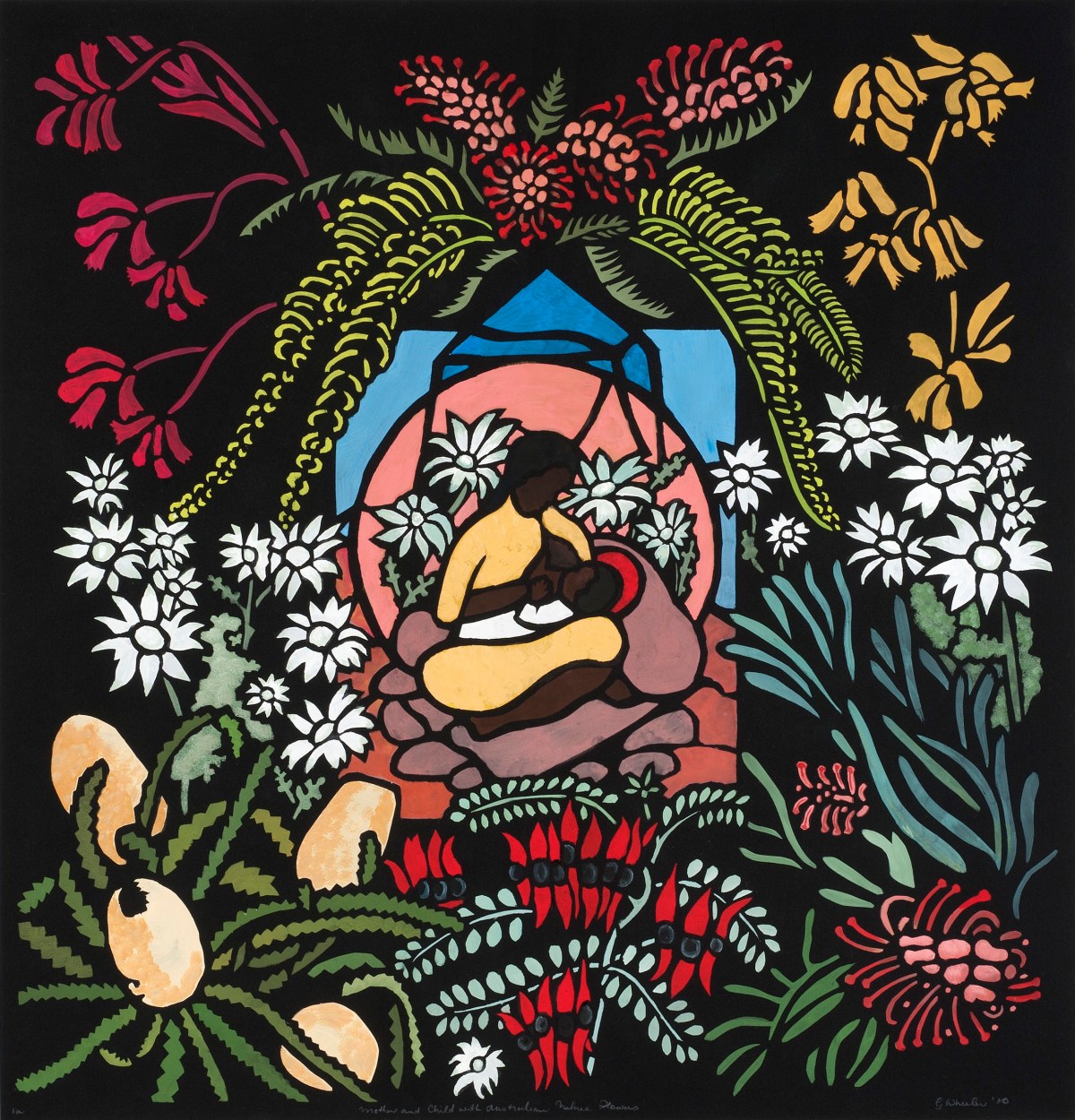
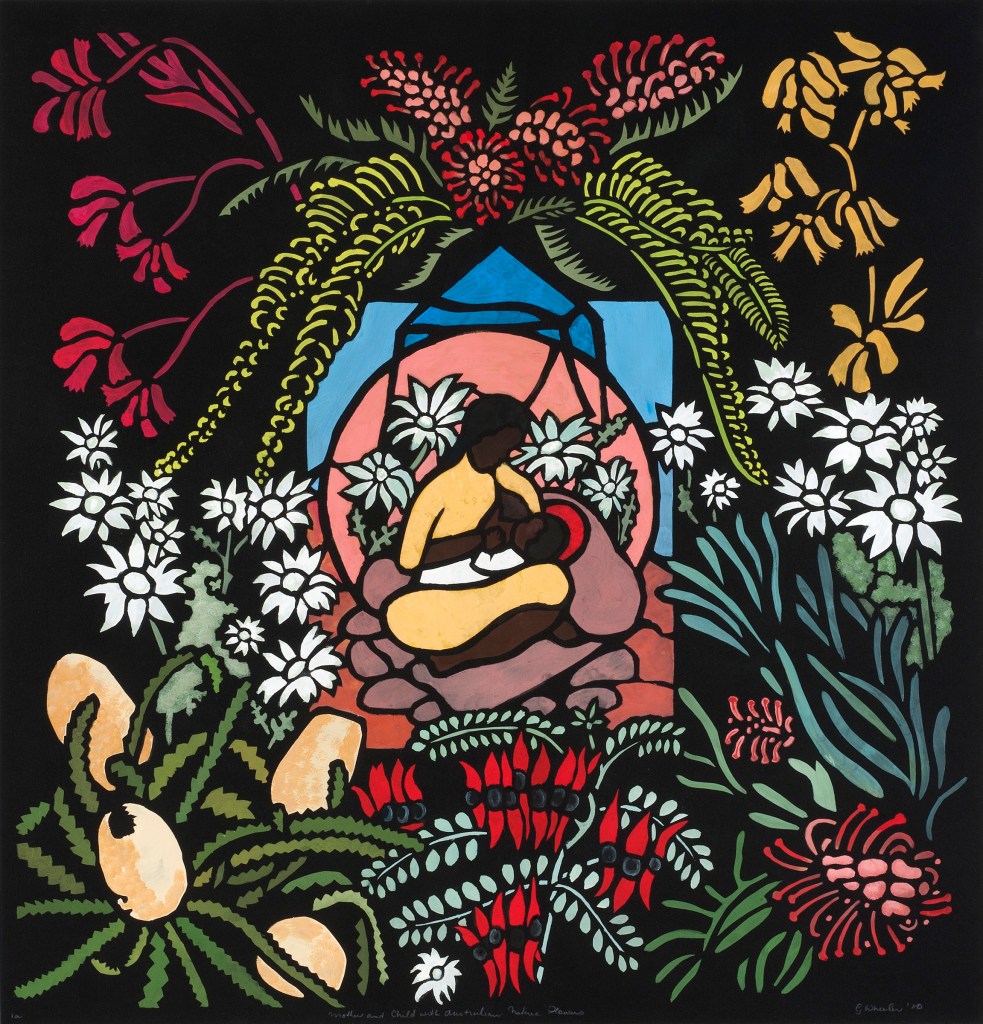
So, for the cover of this issue, Geraldine Wheeler has contributed a wonderful “Madonna and child”, contextualised to Australia, just as artists of other times and places have contextualised the story for their own settings (see below). Inside, Barbara Allen tells readers about her unusual spiritual discipline of writing haikus during Advent.

To start the series of commentaries, Anne Wright invites us to ponder, “if darkness, death, and despair have been defeated, how shall we live in the kingdom of light?” Continuing during the four weeks of Advent, Anita Monro meditates on “the way of the Womb of Life” as the theme for the season and explores “the responsibility we are given to act in and for” this way; and then Sarah Agnew ponders the paradox of a genealogy in which women “disrupt the male-dominated narrative of ancestry”, yet Mary is silenced and almost written out of the story of the birth of Jesus (Matt 1–2).

During the rather short Christmas season, Monica Melanchthon notes “the enormity of Israel’s need for a mothering God” (Isa 63); she observes how, in the Christmas story, “the divine mother changes grief into consolation” while “Joseph paves the way for a new understanding of masculinity”.

As we enter the season of Epiphany, Janice Mcrandal reflects on how we might read scripture in a way that “avoids simplistic readings and points us to a faith in Jesus that is not tied to idolatrous ideals of masculinity”, drawing from Elisabeth Schüssler Fiorenza’s critique of kyriarky. Kylie Crabbe then muses about what it might mean to read key biblical texts with an informed understanding of trauma, noting how “foreign occupation, violation, removal from country, and slavery” are narrated in Hebrew Scripture (and in the story of Jesus).

Elaine Ledgerwood follows the lead offered by Wilda Gafney by reading biblical texts, noting that “women’s voices were silenced in the patriarchal society of ancient cultures”, and inviting readers to replace male-focussed language with female-oriented terms; she asks, “what difference does this make for you?”

Reflecting on the image on the cover of the issue, Radhika Sukumar White comments “when a girl birthed the Saviour, they showed the world that the human body is not unclean, but holy, regardless of gender, orientation, ethnicity, and ability”. Alex Sangster concludes the issue with an invitation to “be in comfortable, curious contact with ‘negative’ emotions”, and then to “imagine Jesus holding your hand and saying, ‘you are my Beloved Child’”.

This issue of With Love to the World is now available. It can be ordered as a printed resource for just $24 for a year’s subscription (see http://www.withlovetotheworld.org.au/wp-content/uploads/2020/07/Ordering-and-paying-for-Website-7.vii_.2020.pdf) or it can be accessed on phones and iPads via an App, for a subscription of $24.49 per year (go to the App Store or Google Play).