This month, the 16th National Assembly meeting of the Uniting Church is being held. Assembly meets every three years, rotating around state capitals. This year, the plan was to meet in Brisbane—but last year the decision was made to meet online.
Each Synod reports to the Assembly. The report of the Synod of NSW and the ACT includes a section that provides a description of “who we are” as the Uniting Church in this Synod.
That description uses data from the 2016 NCLS results and also a single respondent Census of Congregations (2019) which included an estimate of average worship attendance and an actual headcount.
I thought it was worth extracting this part of the Synod report and hinting it a wider airing. So, when we look into the mirror of these surveys, what do we see? What is the Uniting Church like, right across Australia.
The 2019 Congregational Census reported that the NSW—ACT Synod has 23570 worship attenders each week, including 2896 children under 15 and 2556 youth and young adults aged 15-30. There are 533 local churches oversighted by 375 church councils and 85% of congregations participated in the census.
80% of our churches were monocultural (more than 80% one group), 14% multicultural with one group making up 50-80% and there were 6% of churches where the largest ethnic group made up less than 50% of the population.
In 2019, just 14% of congregations had direct relationship with Aboriginal or Torres Strait Islander people, although we know from the 2016 NCLS that 26% of churches conduct an acknowledgement of country in worship.
Just 12 churches had a weekly average of more than 150 people in worship.
31% of churches had no children, 34% had less than 5 children, but there were also 29 congregations had more than 20 children involved in congregational life, 6 of which had more than 50. 40% of churches had no young adults, 30% had less than 5, but 36 congregations had more than 20 young adults and 3 had more than 50.
As reported to the previous Assembly, the 2016 National Church Life Survey (NCLS) surveyed 10,183 adults and 392 children (8 to 14) from 275 local Churches across the Synod. The 2021 NCLS will be conducted in August-September this year.
The average age of UCA members was 66, compared to the average age 38 for the Australian population at the same time. In 2016 70% of NSW-ACT UCA attenders were over 60, compared to 21% of the wider population. 63% of NSW-ACT UCA attenders were women and 37% were men.
That’s who we are, according to these surveys. Ask yourself, as you look into the mirror: do you recognise yourself?
In the revised Preamble to the Constitution of the Uniting Church, adopted at the 2009 Assembly meeting in Sydney, our church made the affirmation that “the First Peoples had already encountered the Creator God before the arrival of the colonisers; the Spirit was already in the land revealing God to the people through law, custom and ceremony.”
That statement articulates something deeply important. The Spirit had been at work, long before the time of Jesus, millennia before the time of Israel, revealing God, through ancient indigenous stories, customs, and ceremonies.
What our First Peoples have long known about God, is consistent with what Christian people are discovering about God through Jesus. “The same love and grace that was finally and fully revealed in Jesus Christ sustained the First Peoples and gave them particular insights into God’s ways”, the revised Preamble continues. So we listen to the voice of the First Peoples. We listen, and learn. We hear resonances with the Gospel. And in this way, we encounter God.
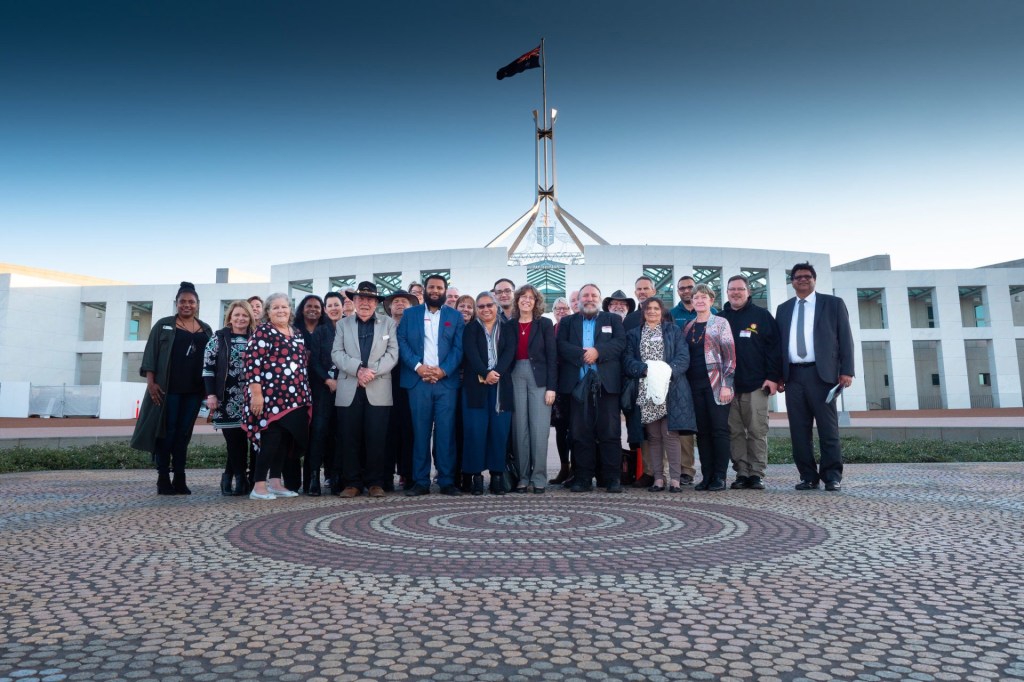
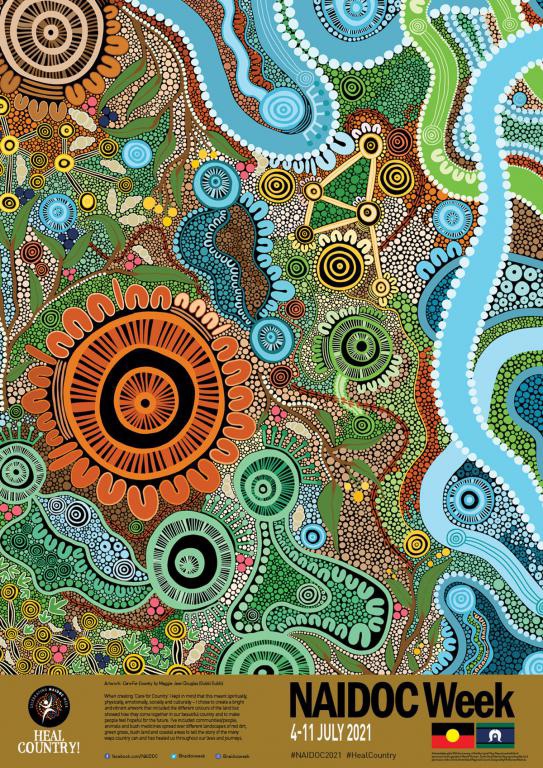
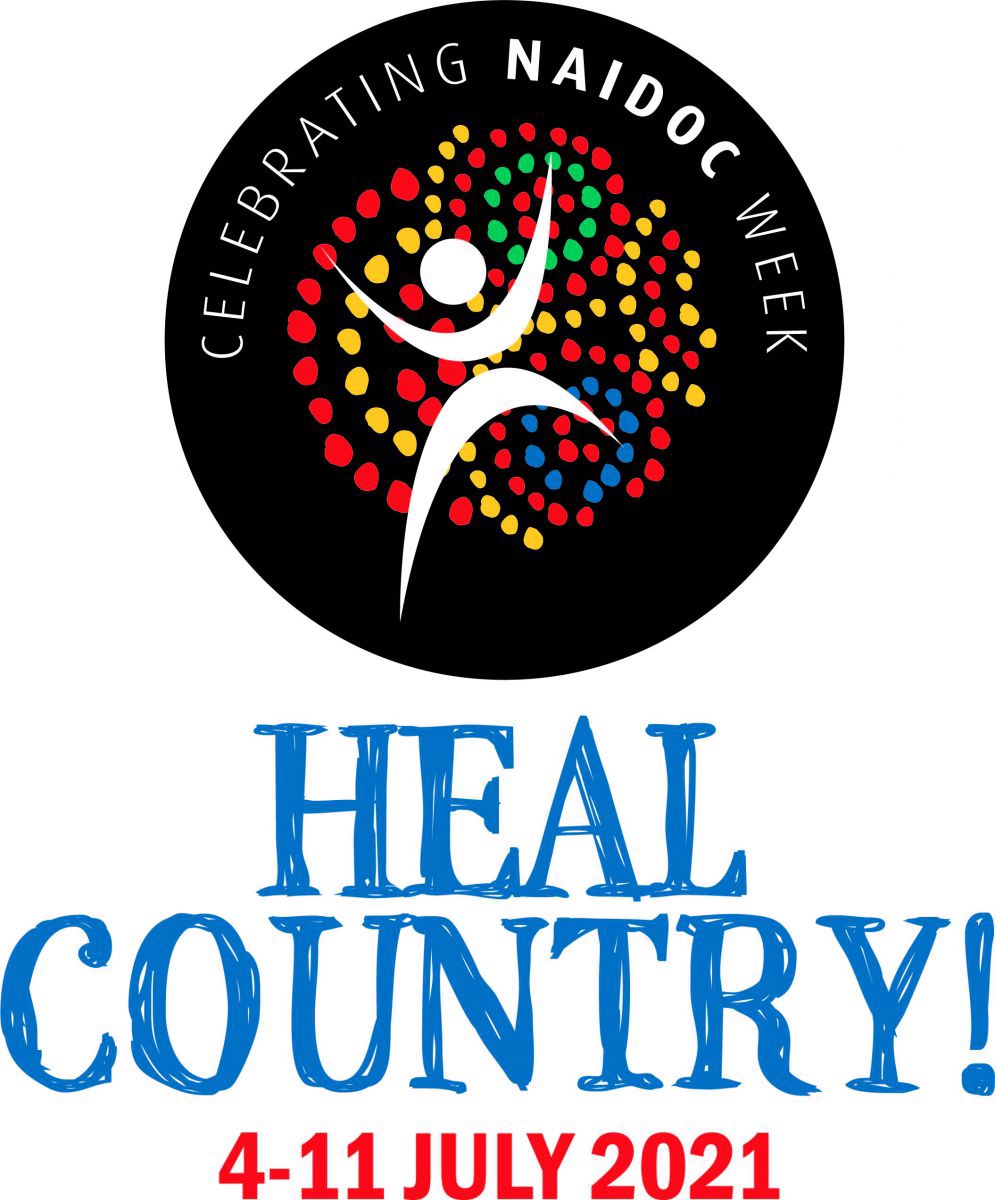
I am writing this at the end of NAIDOC WEEK (4-11 July 2021). Each year, NAIDOC WEEK has a theme. And as I reflect on the themes of the past few years, I realise that each of them articulates something that is central to the faith that we hold and the Gospel that we proclaim.
In 2017, the theme was Our Languages Matter. That’s a message which is integral to the Gospel—the Gospel that says, in the beginning, God spoke … and there was life (Gen 1). The Gospel that claims that “in the beginning was the Word, and the Word was with God, and the Word was God”, and that “the Word became flesh and dwelt among us, and we have seen his glory” in the person of Jesus of Nazareth (John 1).
We know God best of all, most intimately of all, because God speaks, God is word. Language connects us with God. Language matters. Language connects us with one another, enables us to know one another. Languages matter for First Peoples. They communicate, they articulate deep truths. Languages matter.
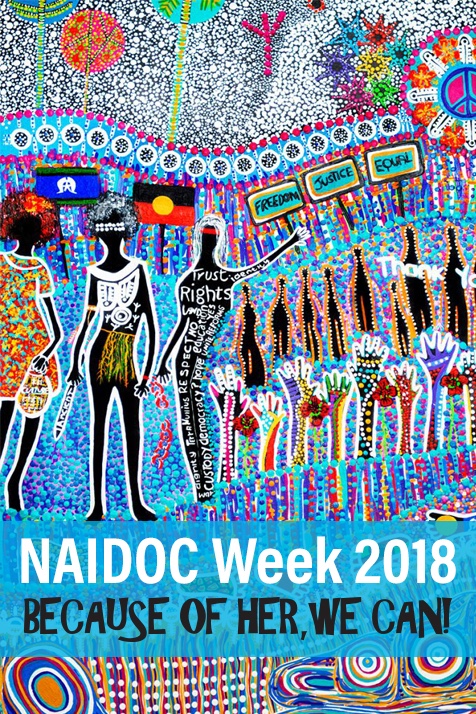
In 2018, the theme was the inspired message: Because of her, we can. That is another theme that resonates with countless stories throughout scripture. Because of the faithfulness of Mary, his mother, Jesus came. Because of the witness of Mary of Magdala, exclaiming “I have seen the Lord”, the male disciples believed.
Because of the proactive intervention of Shiphrah and Puah, Hebrew midwives in the court of the Egyptian Pharaoh, Moses survived and grew to lead Israel. Because of the fiercely powerful leadership of Deborah, centuries later, Israel survived the onslaught from the troops of Sisera, commander of the army of Canaan. Because of her, we can. (And there are many more such women; just ask the people who took part in Elizabeth’s Bible Studies last year, on women in the Bible!)
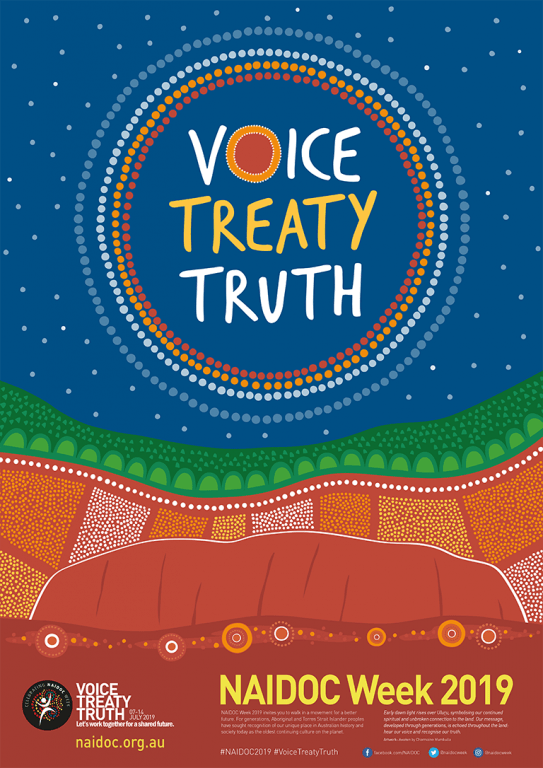
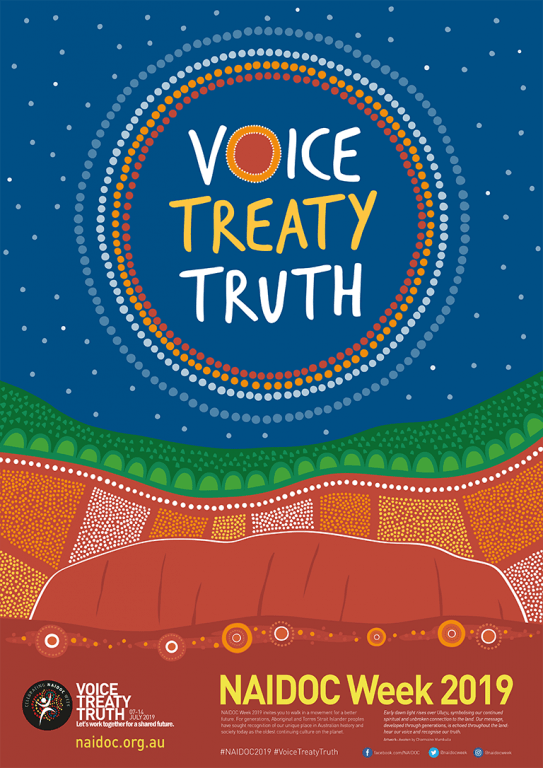
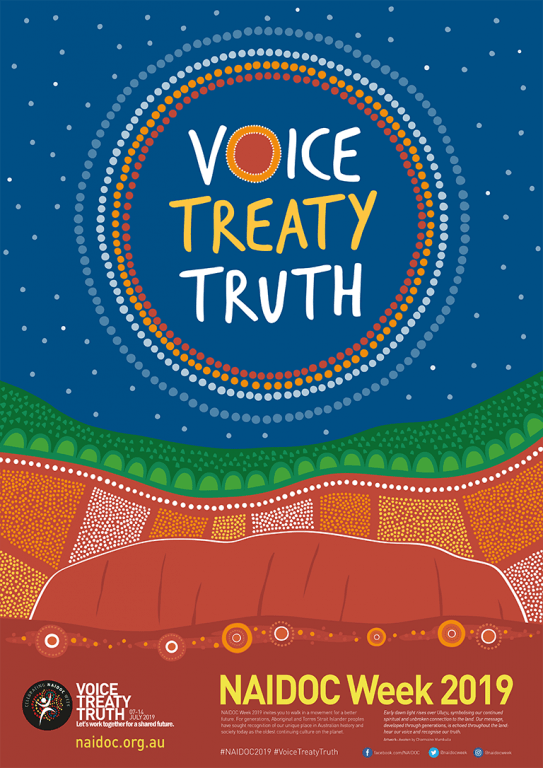
Two years ago, inspired by Statement from the Heart that was adopted in 2017 at Uluru, the 2019 theme was Voice. Treaty. Truth. The Statement called us to listen to the Voice of Indigenous peoples. As we do so, we realise that the settlement of this continent was a colonising movement, generated by foreign imperialism, manifesting in violent invasion and genocidal massacres, spread from north to south, from east to west, of this continent. This is the Truth we must hear.
The Voice of First Peoples speaks Truth. And truth is something that we value in our Christian faith. Jesus said, “I am the truth” (John 14:6); and he declared that “the truth will set you free” (John 8:32). Truth liberates. Truth is important.
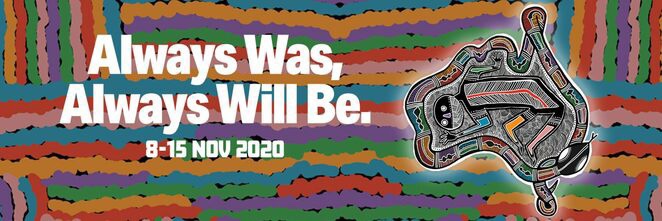
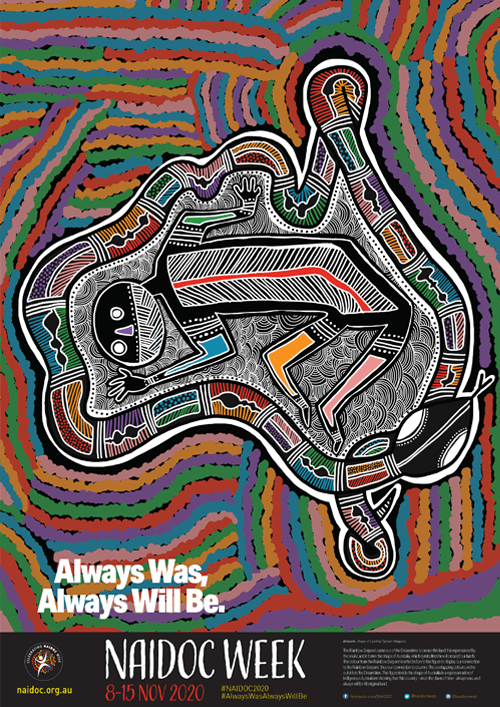
The next year, 2020, building on the call from the Statement from the Heart, we heard the theme of Always Was. Always Will Be. This recognised that these lands of the continent of Australia and its surrounding islands had not, indeed, been terra nullius. Rather, a complex interrelated web of nations had been living on the land, and the islands, fishing in the seas, meeting in ceremony and trading with each other, and caring for country in a deeply spiritual way for millennia upon millennia.
We know the importance of land in biblical stories—the identity of Israel is completely bound up with land. The land where Jesus walked, we call “The Holy Land”. Land is important.
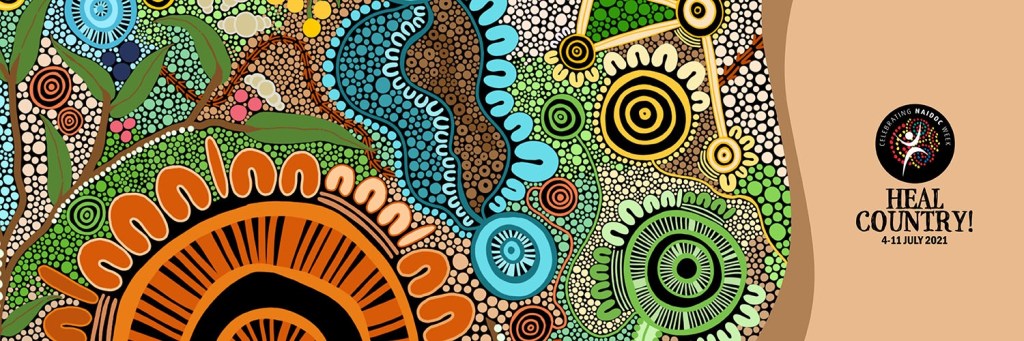
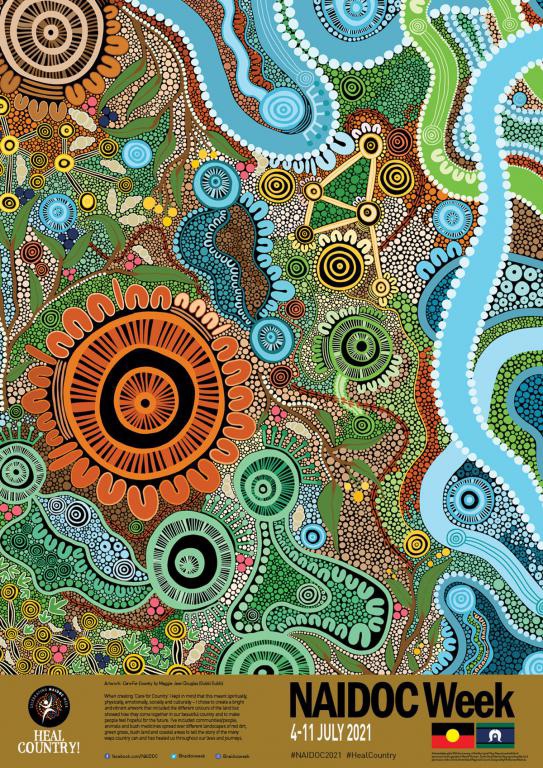
This year, the theme is Heal Country. This theme takes us to the heart of the Gospel. In scripture, Paul offers his vision of hope for the whole of creation, “the glory that is to be revealed to us” (Rom 8:18–22). Because he can see that those who are in Christ are “a new creation”, he charges the followers of Jesus to commit to “the ministry of reconciliation” (2 Cor 5:16–19). That includes reconciliation with people, but it also points to “that coming reconciliation and renewal which is the end in view for the whole creation” as articulated in the Uniting Church’s Basis of Union (para. 3).
This vision of reconciliation is built upon the affirmation that the land, earth, sea and skies which God created, are indeed “very good” (Gen 1:1–31), and that human beings have a responsibility of respectful care for that creation (Gen 2:15). Furthermore, scripture tells of the ancient Israelite understanding that God made a covenant, not only with human beings, but with “the beasts of the field and the birds of the air and the creatures that move along the ground” (Hosea 2:18; see the narrative of Gen 9:8–17).
And the view of scripture is that God will ultimately “heal the land” (2 Chron 7:13–14), “renew the face of the earth” (Psalm 104:29–30), at that time when God will restore everything (Acts 3:21) and bring universal reconciliation (Col 1:20; Eph 1:10).
So the theme of Heal Country is a central motif throughout the books of scripture. And we can see how, in our time, it draws together environmental concerns with indigenous matters. This theme recognises that respect and care for country has been integral to the life of indigenous peoples for millennia, and there is a need to recapture that care and respect in the present time. The impact of just two centuries of western living on this ancient country has been incredibly damaging. It is time for us to listen to the wisdom of the elders, and Heal Country.
The Spirit was already in the land, “revealing God to the people through law, custom and ceremony”. The Spirit had been at work, long before the time of Jesus, millennia before the time of Israel, revealing God, through ancient indigenous stories, customs, and ceremonies, Indeed, “the same love and grace that was finally and fully revealed in Jesus Christ sustained the First Peoples and gave them particular insights into God’s ways”, as the revised Preamble states.
Our continent is greatly blessed by the long and faithful heritage of the people of those nations which have called this country home: for millennia, across this continent, and in the adjacent islands, they have cared for the land, nurtured their law, and showed resilience, and they are gracious enough now to seek continued relationship with those of us whose forbears have invaded, colonised, and decimated their lifestyle. We are living in the midst of a people of persistence and determination, and of abundant grace. For this, we give thanks.
From their stories, we can learn the importance of caring for country, of honouring the land in which we walk and live. Something that has been so important from so long ago; something that is so important in our own time, as we respond to the challenge of climate change, with global issues such as rising sea levels, widespread deforestation, the destruction of species and a deliberate blindness to the perils of continuing to burn fossil fuels with impunity; and the pressing personal demands of environmental responsibility and sustainable lifestyle. From the testimony of the First Peoples, to care for country, we are challenged.
So we listen to the voice of the First Peoples. We listen, and learn. And we encounter God. Thanks be to God!
NAIDOC WEEK is usually held in the first week (Sunday to Sunday) of July that incorporates the second Friday. Historically, it began life as ‘National Aborigines Day’, then it became known as ‘The Day of Mourning’, before it was taken on by the National Aboriginal Day Observance Committee (NADOC). Some time later, the National Aborigines and Islanders Day Observance Committee (NAIDOC) was formed, and this provides the name to the week.
Each year, NAIDOC WEEK has a theme. Two years ago, inspired by the Statement from the Heart that was adopted in 2017 at Uluru, the theme was Voice. Treaty. Truth.
In that same year, the NSW.ACT Synod of the Uniting Church adopted a proposal to lobby the commonwealth government to establish a Makarratta Commission and to advocate with state governments that they make treaties with the indigenous peoples of their region.
In the Uniting Church, as we have drawn on the voices of Indigenous peoples, we have named the settlement of this continent as a colonising movement, generated by foreign imperialism, manifesting in violent invasion and genocidal massacres, spread from north to south, from east to west, of this continent. The commission and these treaties would have Voice to the First Peoples, ensuring that their Truth was known.
The next year, building on the call from the Statement from the Heart, was the theme of Always Was. Always Will Be. (It was held later in the year, because of the COVID-19 pandemic.)
This theme recognised that these lands of the continent of Australia and its surrounding islands had not, indeed, been terra nullius. Rather, a complex interrelated web of nations had been living on the land, and the islands, fishing in the seas, meeting in ceremony and trading with each other, and caring for country in a deeply spiritual way for millennia upon millennia.
In the Uniting Church, the National Assembly adopted a proposal in 2018 that affirmed “that the First Peoples of Australia, the Aboriginal and Islander Peoples, are sovereign peoples in this land.” The proposal noted “the Statement from the Heart’s acknowledgment that sovereignty is a spiritual notion, reflecting the ancestral tie between the land and First Peoples”. Connection to country is deeply important, profoundly spiritual, amongst all of the First Peoples of this land.
We have continued to strengthen the covenant relationship with the United Aboriginal and Islander Christian Congress (UAICC) and we have worked hard to give priority to the Voice of First Peoples in our church. See https://uniting.church/sovereignty/
This year, the theme is Heal Country.
This theme takes us to the heart of the Gospel. In scripture, Paul offers his vision of hope for the whole of creation, “the glory that is to be revealed to us” (Rom 8:18–22). Because he can see that those who are in Christ are “a new creation”, he charges the followers of Jesus to commit to “the ministry of reconciliation” (2 Cor 5:16–19).
That includes reconciliation with people, but it also points to “that coming reconciliation and renewal which is the end in view for the whole creation” as articulated in the Uniting Church’s Basis of Union (para. 3). Such a vision is offered in a highly imaginative, and much more detailed way, in the final book of scripture, where “a new heaven and an new earth” is described (Rev 21:1–2, 21:9–22:5, drawing on the vision of Isa 65:17–25).
These visions are built upon the affirmation that the land, earth, sea and skies which God created, are indeed “very good” (Gen 1:1–31; so also Neh 9:6; Psalm 104:24–25; Job 26:7—14), and that human beings have a responsibility of respectful care for that creation (Gen 2:15; and see the laws that command respect for the land, such as Lev 18:26, 28; 25:23–24; Num 35:33–34; Deut 20:19).
Further to that, scripture tells of the ancient Israelite understanding that God made a covenant, not only with human beings, but with “the beasts of the field and the birds of the air and the creatures that move along the ground” (Hosea 2:18; see the narrative of Gen 9:8–17). The eschatological view of scripture is that God will “heal the land” (2 Chron 7:13–14), “renew the face of the earth” (Psalm 104:29–30), at the time when God will restore everything (Acts 3:21) or bring universal reconciliation (Col 1:20; Eph 1:10).
So the theme of Heal Country is a central motif throughout the books of scripture. And we can see how, in our time, it draws together environmental concerns with indigenous matters. This theme recognises that respect and care for country has been integral to the life of indigenous peoples for millennia, and there is a need to recapture that care and respect in the present time. The impact of just two centuries of western living on this ancient country has been incredibly damaging. It is time for us to listen to the wisdom of the elders, and Heal Country.
Our continent is greatly blessed by the long and faithful heritage of the people of those nations which have called this country home: for millennia, across this continent, and in the adjacent islands, they have cared for the land, nurtured their law, and showed resilience, and they are gracious enough now to seek continued relationship with those of us whose forbears have invaded, colonised, and decimated their lifestyle. We are living in the midst of a people of persistence and determination, and of abundant grace. For this, we give thanks.
From their stories, we can learn the importance of caring for country, of honouring the land in which we walk and live. Something that has been so important from so long ago; something that is so important in our own time, as we respond to the challenge of climate change, with global issues such as rising sea levels, widespread deforestation, the destruction of species and a deliberate blindness to the perils of continuing to burn fossil fuels with impunity; and the pressing personal demands of environmental responsibility and sustainable lifestyle.
The theme of Heal Country is important for the life of the whole of Australia at this moment in time. It is also a theme that draws deeply from the scriptural witness. It is a theme that people of faith should embrace, proclaim, and live with all our being—this week, this year, and on into the future.
*****
A whole series of statements and policies relating to the environment have been produced by the Uniting Church, at national, regional, and local levels. The national statements and policies are collected at https://www.unitingjustice.org.au/environment.
Many local churches of various denominations have participated in projects promoted by the Five Leaf Eco-Awards, which has its own website at https://fiveleafecoawards.org
The Roman Catholic Church has been guided by the papal document Laudato si’, which provides an extensive exploration of environmental issues from a faith perspective. I’ve posted a series of reflections on this important statement at
Today we start NAIDOC WEEK (4-11 July 2021). NAIDOC WEEK is usually held in the first week of July (Sunday to Sunday) that incorporates the second Friday – which historically was celebrated as ‘National Aboriginal Day’. (Yes, like Easter, it moves around in a rather arcane fashion!)
On Australia Day, 1938, protestors marched through the streets of Sydney, followed by a congress attended by over a thousand people. One of the first major civil rights gatherings in the world, it was known as the Day of Mourning. Following the congress, a deputation led by William Cooper presented Prime Minister Joseph Lyons with a proposed national policy for Aboriginal people. This was again rejected because the Government did not hold constitutional powers in relation to Aboriginal people.
From 1940 until 1955, the Day of Mourning was held annually on the Sunday before Australia Day and was known as Aborigines Day. In 1955 Aborigines Day was shifted to the first Sunday in July after it was decided the day should become not simply a protest day but also a celebration of Aboriginal culture.
Major Aboriginal organisations, state and federal governments, and a number of church groups all supported the formation of the National Aborigines Day Observance Committee (NADOC). At the same time, the second Sunday in July became a day of remembrance for Aboriginal people and their heritage.
In 1974, the NADOC committee was composed entirely of Aboriginal members for the first time. The following year, it was decided that the event should cover a week, from the first to second Sunday in July. In 1984, NADOC asked that National Aborigines Day be made a national public holiday, to help celebrate and recognise the rich cultural history that makes Australia unique. While this has not happened, other groups have echoed the call.
Next, the committee became known as the National Aborigines and Islanders Day Observance Committee (NAIDOC). This new name has become the title for the whole week, not just the day. Each year, a theme is chosen to reflect the important issues and events for NAIDOC Week.
Last year, 2020, the theme of NAIDOC WEEK was Always Was, Always Will Be—a reference to the reality that the lands of Australia have been cared for over millennia by the First Peoples of the continent and its nearby islands. The now-discredited ‘Doctrine of Discovery’ and the notion of terra nullius undergirded the colonial enterprise of “claiming the country” for Britain? See https://johntsquires.com/2018/08/13/affirming-the-sovereignty-of-first-peoples-undoing-the-doctrine-of-discovery/
That focus is further developed in this year’s theme, Heal Country—a theme that draws together environmental concerns with indigenous matters. This theme recognises that respect and care for country has been integral to the life of indigenous peoples for millennia, and there is a need to recapture that care and respect in the present time. The impact of just two centuries of western living on this ancient country has been incredibly damaging. It is time for us to listen to the wisdom of the elders, and Heal Country.
Our continent is greatly blessed by the long and faithful heritage of the people of those nations which have called this country home: for millennia, across this continent, and in the adjacent islands, they have cared for the land, nurtured their law, and showed resilience, and they are gracious enough now to seek continued relationship with those of us whose forbears have invaded, colonised, and decimated their lifestyle. We are living in the midst of a people of persistence and determination, and of abundant grace. For this, we give thanks.
From their stories, we can learn the importance of caring for country, of honouring the land in which we walk and live. Something that has been so important from so long ago; something that is so important in our own time, as we respond to the challenge of climate change, with global issues such as rising sea levels, widespread deforestation, the destruction of species and a deliberate blindness to the perils of continuing to burn fossil fuels with impunity; and the pressing personal demands of environmental responsibility and sustainable lifestyle.
The theme of Heal Country is an important and entirely relevant theme for all Australians, this year!
This week, also, the Uniting Church Assembly launches its first Covenant Action Plan (ACAP) – a strategic and practical framework which gives shape to our commitment as a national church to walk together as First and Second Peoples.
Cases of COVID-19 continue to occur in Australia. Lockdowns and enforced periods of isolation have taken place in numerous locations over the last few months; they are taking place again now across the country; and given the slow vaccine rollout and the emergence of variants that spread far more easily and rapidly, they will take place again in the future.
As these new strains of the virus emerge with greater rates of infections, uncertainty continues as to how long and and how hard the restrictions will be needed, and where the next outbreak will occur. In this context of uncertainty, people of faith would do well to reflect on how we respond to the guidance provided by our leaders.
Our faith offers us some support as we navigate the difficulties and dangers that we find ourselves in. There is comfort, as well as guidance, in the beliefs we hold, and in the ways that they are applied to our current situation of pandemic. Whether we gather together for worship and fellowship, or we are gathering-apart by online means, there are principles which hold good for us.
So here are some key principles, along with some associated biblical passages that, in my thinking, shape our ethos and inform how we make responsible ethical decisions about how we gather as church.
1. Gathering for worship is important, but safety of people is more important
We know that, across society, there are many people who are vulnerable, who needs our particular care, support, and attention. Whilst gathering-together for worship, prayer, discussion, fellowship, and conversation, is highly valued, our highest priority must be to act in a manner that ensures the lowest risk for people in society, that offers a safe place and safe manner for people to gather-together.
We have committed to being a Safe Place some years ago, and whilst we have applied that to matters such as the safety of children and young people, the physical arrangement in our buildings, and acceptance of diversity. Can we now apply that to the matter of community health and wellbeing?
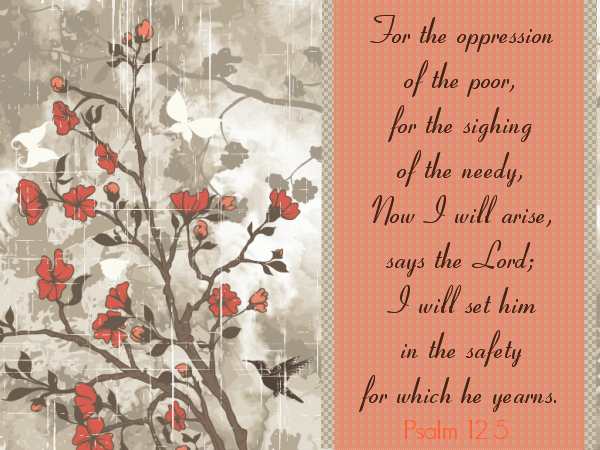
The psalmist reflects, “Because the poor are despoiled, because the needy groan, I will now rise up,” says the LORD; “I will place them in the safety for which they long” (Psalm 12:5). In another psalm, we hear the prayer, “O Lord, let your steadfast love and your faithfulness keep me safe forever” (Psalm 40:11). We need to echo that sentiment and follow that commitment to safety as we gather together.
2. The weakest or most vulnerable is the test for any decision we make
The people who have high risk of infection are those who have the following vulnerabilities: an impaired immune system, one of a number of chronic medical conditions, age, and people with Aboriginal and Islander descent.
Paul writes to the believers in a number of his communities, exhorting those who are “stronger” to attend to “the weak”, with the fundamental principle that “orientation to the needs of the other” undergirds everything. That orientation should govern how we think about, and how we act in, the days ahead. Those who are most vulnerable in terms of age or health should be the litmus test for anything that we consider doing when we gather-together.
Our own personal needs (or desires), the hopes and wants (or desires) of a community of faith, need to have this first consideration governing all that they decide. As Paul writes:
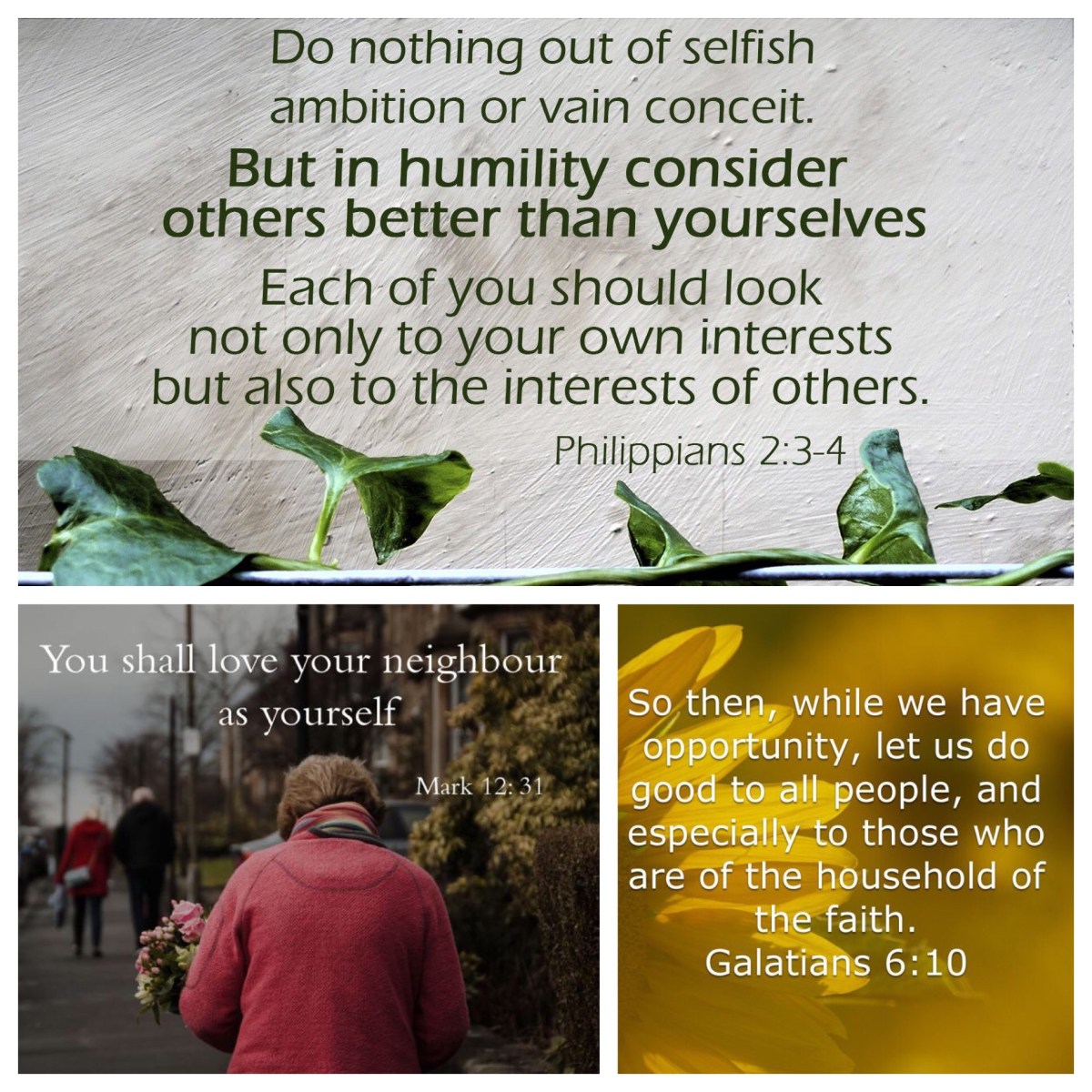
“Do nothing from selfish ambition or conceit, but in humility regard others as better than yourselves. Let each of you look not to your own interests, but to the interests of others.” (Phil 2:3-4)
“Let us therefore no longer pass judgment on one another, but resolve instead never to put a stumbling block or hindrance in the way of another.” (Rom 14:13)
You can read more about this way of operating in Romans 14:1-15:13. This would form an excellent focus for a Bible Study to go alongside a Church Council discussion of what steps can be taken as we consider gathering-together once more.
3. Relationships with others are our first priority. Loving our neighbour takes priority over programs and activities
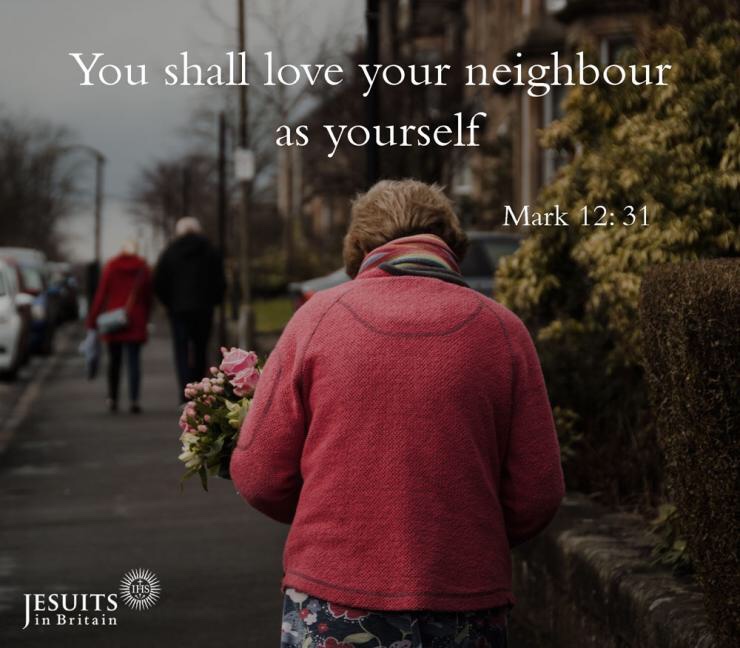
“Which commandment is the first of all?” Jesus answered, “The first is, ‘Hear, O Israel: the Lord our God, the Lord is one; you shall love the Lord your God with all your heart, and with all your soul, and with all your mind, and with all your strength.’ The second is this, ‘You shall love your neighbour as yourself.’ There is no other commandment greater than these.” (Mark 12:28-31)
Relationships with other people are given priority in this passage, and in the teachings of Jesus throughout the Gospels. That’s a fairly simple observation, but it is incredibly potent in the current situation. How do we ensure that we are “loving our neighbour” in what we decide and what we do together?
Jesus places this as the second “greatest commandment”, alongside the first, of loving God. We need to hold these two aspects in tension, and ensure that we do not focus solely on “loving God” (and doing that in the old, familiar ways, unthinkingly), but we hold together “loving our neighbour” with “loving God”, and that we prioritise these over “returning to business as usual”. If business as usual is just about ourselves as a group, then our higher priority needs to be about how we operate in relation to all those around us.
4. We have a commitment to the common good—the good of all people in society
Almost a decade ago, the Uniting Church adopted a snappy slogan which expressed our commitment to “the common good”. This has been a rallying cry at many gatherings where matters of social justice are being addressed and advocated for—refugees and asylum seekers, affordable housing, care for the creation and environmental policies, sheltering the homeless and feeding the hungry, for instance.
Now, in this challenging time, we need to apply that same commitment “to the common good” to the question of what the implications are when we gather-together, after a time of gathering-apart. We need to ensure that whatever steps we take do contribute to that common good, not simply to the benefit of the group gathering together—be that Congregation, Church Council, Fellowship Group, Bible Study Group, our informal lunch gathering at the church.
And let us remember that “the common good” is itself an important biblical marker:
“So then, whenever we have an opportunity, let us work for the good of all, and especially for those of the family of faith.” (Gal 6:10)
“To each is given the manifestation of the Spirit for the common good.” (1 Cor 12:7)
5. We need to ensure the safety of vulnerable people in leadership (ministry leaders, both ordained and lay)
“So the LORD said to Moses, “Gather for me seventy of the elders of Israel, whom you know to be the elders of the people and officers over them; bring them to the tent of meeting, and have them take their place there with you. I will come down and talk with you there; and I will take some of the spirit that is on you and put it on them; and they shall bear the burden of the people along with you so that you will not bear it all by yourself.” (Num 11:16-17)
This story from the Hebrew Scriptures demonstrates that God was concerned to take care of the leadership of the people of Israel. The seventy Elders were he people. appointed to assist Moses in his growing role as a leader of the people in a stressful and challenging time (as they journey through the wilderness, seeking a way to the promised land). The story from of old has strong resonances with our current situation!
If we accept that God demonstrated concerns for the pressures on Moses, can we see that this provides an analogy for the way that we offer care for our leaders, especially those who are vulnerable themselves, or living in a household with another vulnerable person?
Pressures on ministry leaders (both those ordained, and those lay people who are providing local leadership) to lead their people in gatherings should not be countenanced, until such time as it is clear that all the required protocols can be, and are being, adhered to, and they are not in any position of extra vulnerability because of this. That requires careful discernment and wise leadership at the local level.
Men in Canberra who are without a home have been able to sleep safely under the Safe Shelter scheme for the last decade. The Uniting Church has been at the forefront of assisting such men, with overnight sleeping available on the Northside at St Columba’s church hall in Braddon, and breakfast and associated services available each morning at the Early Morning Centre at Canberra City Church in Civic.
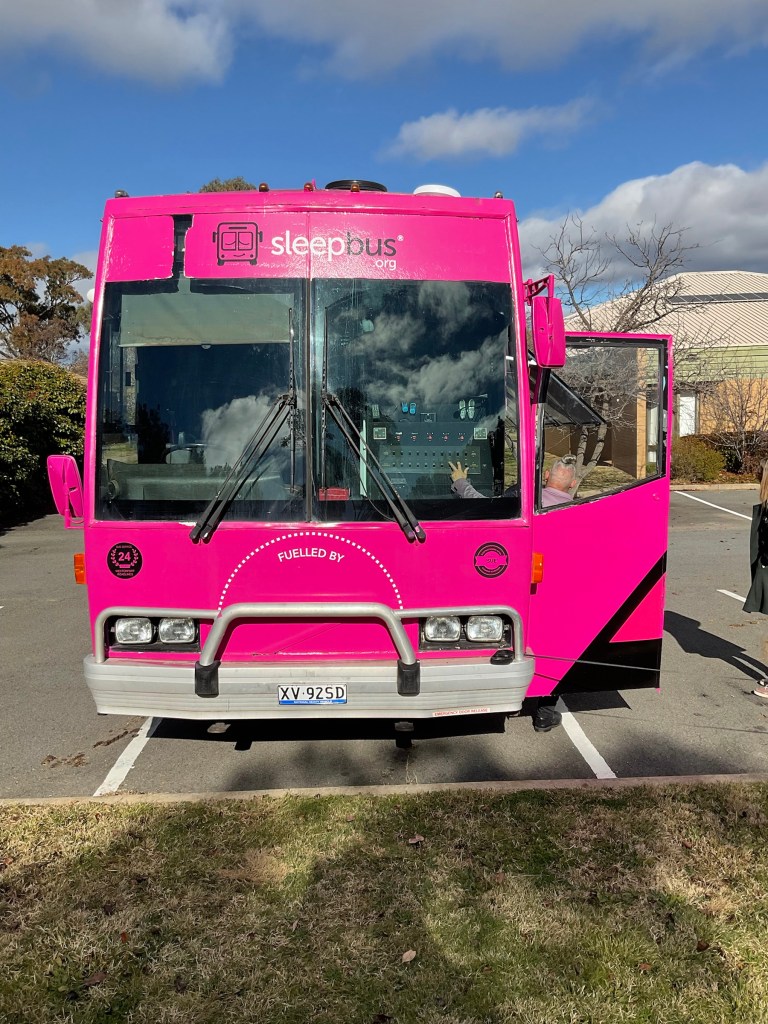
Where do women who are homeless find shelter at night? The limited spaces available in homeless shelters mean that many sleep rough—in door alcoves, under bushes, or, for the more fortunate, in their car, or couch surfing in the homes of friends. Until now. Until the coming of SUE, the Pink Sleepbus.
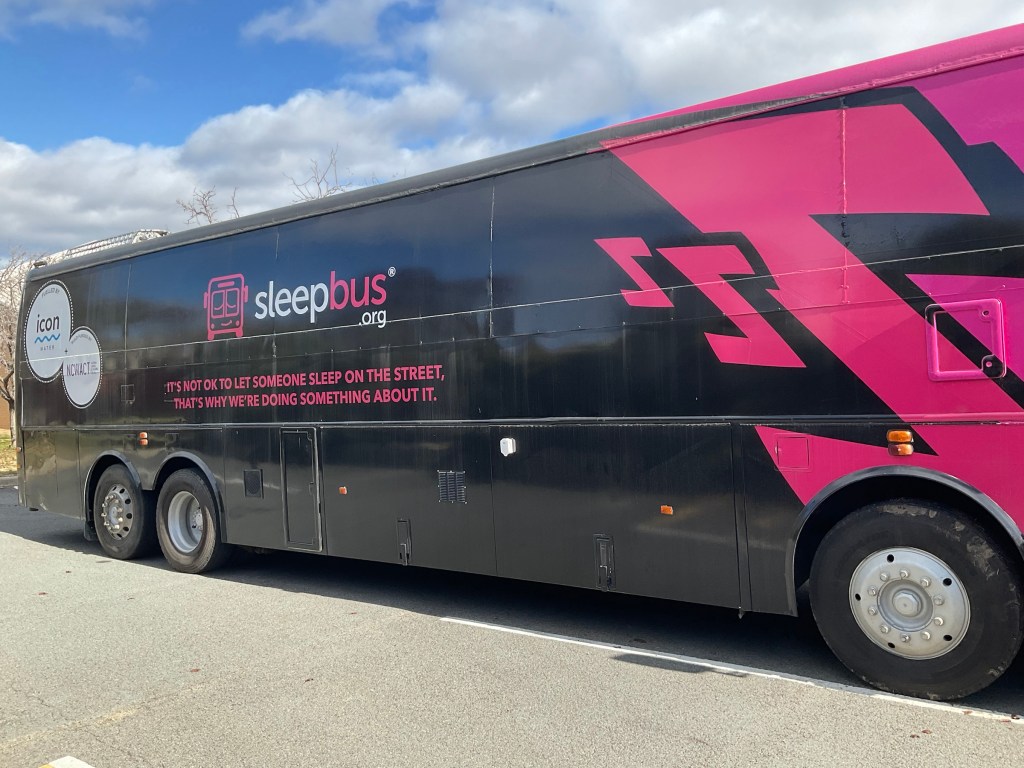
In a partnership including the Tuggeranong Uniting Church and the National Council of Women in the ACT, Sleepbus is about to open a service for women only, based in the Southside of the national capital. Already the Blue Sleepbus is operating in Queanbeyan, with beds available for men and women. SUE, the Pink Sleepbus, will be the first of its kind—offering safe sleeping for women, including women with children, as well as associated services such as breakfast and information about what services are available locally.
The Rev. Elizabeth Raine has had a concern for homeless women for some time. When she ministered at City and St Columba’s, she saw the value of “stop-gap” services—limited as they may be. They don’t solve the housing crisis for society, but they do offer support, care, and nourishment for those who live on the streets. When she moved to Tuggeranong, Elizabeth began exploring with her Church Council how the Congregation might reach out to needs in the community. Replicating the model of Safe Shelter, but for women, was on the cards.
Then the church became aware of the possibility of hosting a Sleepbus. Elizabeth had been involved in the Southside Homeless Initiative, which became aware of the initiative underway in Queanbeyan. Juanita Flett, of the National Council of Women in the ACT spearheaded a fundraising drive in late 2019, raising the $100,000 that is required to bring a Sleepbus to the area. By early 2020, everyone was poised, ready to go—and then COVID hit.
“We know that more than half the homeless in Canberra are currently women, and we know that the homeless rate of women over 50 is currently rising—not just in Canberra, but right around Australia”, the Rev. Raine said. She cited the most recent census data from the Australian Bureau of Statistics, which shows:
• over half of Canberra’s homeless population are women
• 59% of people accessing ACT homeless services are women
• 53 percent of Canberrans living in low-income households are women
• older single women are the largest growing cohort of homeless people in the ACT.
“That situation is a real concern to us as compassionate people of faith”, Elizabeth said. “When I read the Bible, I see that God charged the people of Israel with providing special care for the vulnerable members of society—widows and orphans, with no males to protect and support them—as well as the “aliens in the land”, foreigners residing in Israel (Deut 10:18, 14:28–29, 16:11,14).
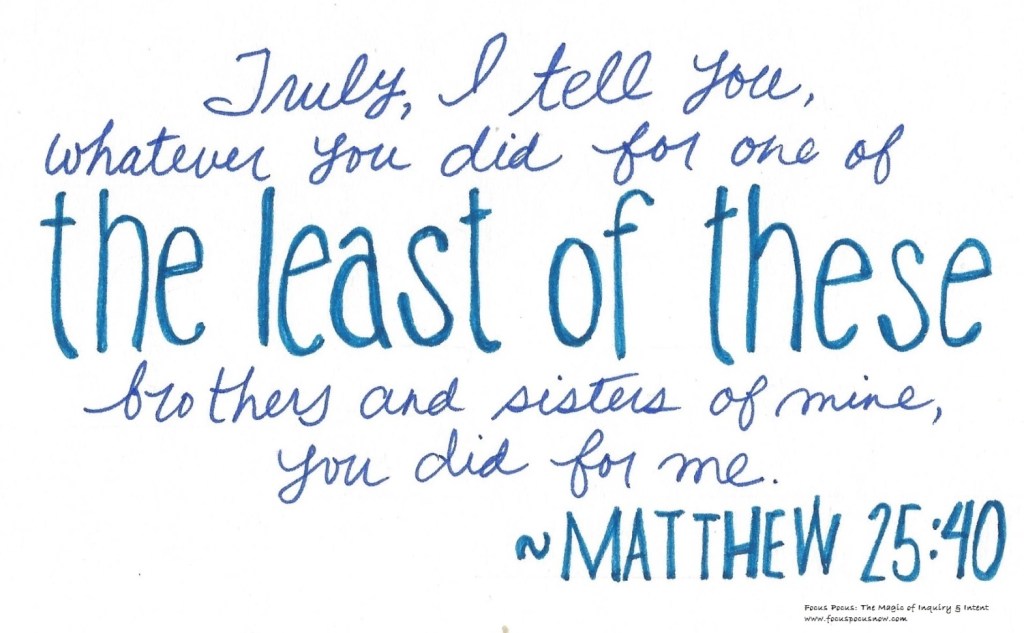
In his teachings, Jesus praises “whoever gives a cup of water to drink” (Mark 9:41), and in the parable of the sheep and the goats he indicates that whenever you shelter the homeless, feed the hungry, and give a drink to the thirsty, “you did it to me” (Matt 25:35–40).
“So we’re hoping that those women who are housed in very vulnerable circumstances can find a place on the Pink Sleepbus, to at least get a good night’s sleep, clear their heads, think properly, and hopefully access services that will give them a more permanent solution to their situation. That’s the least we can do for them.”
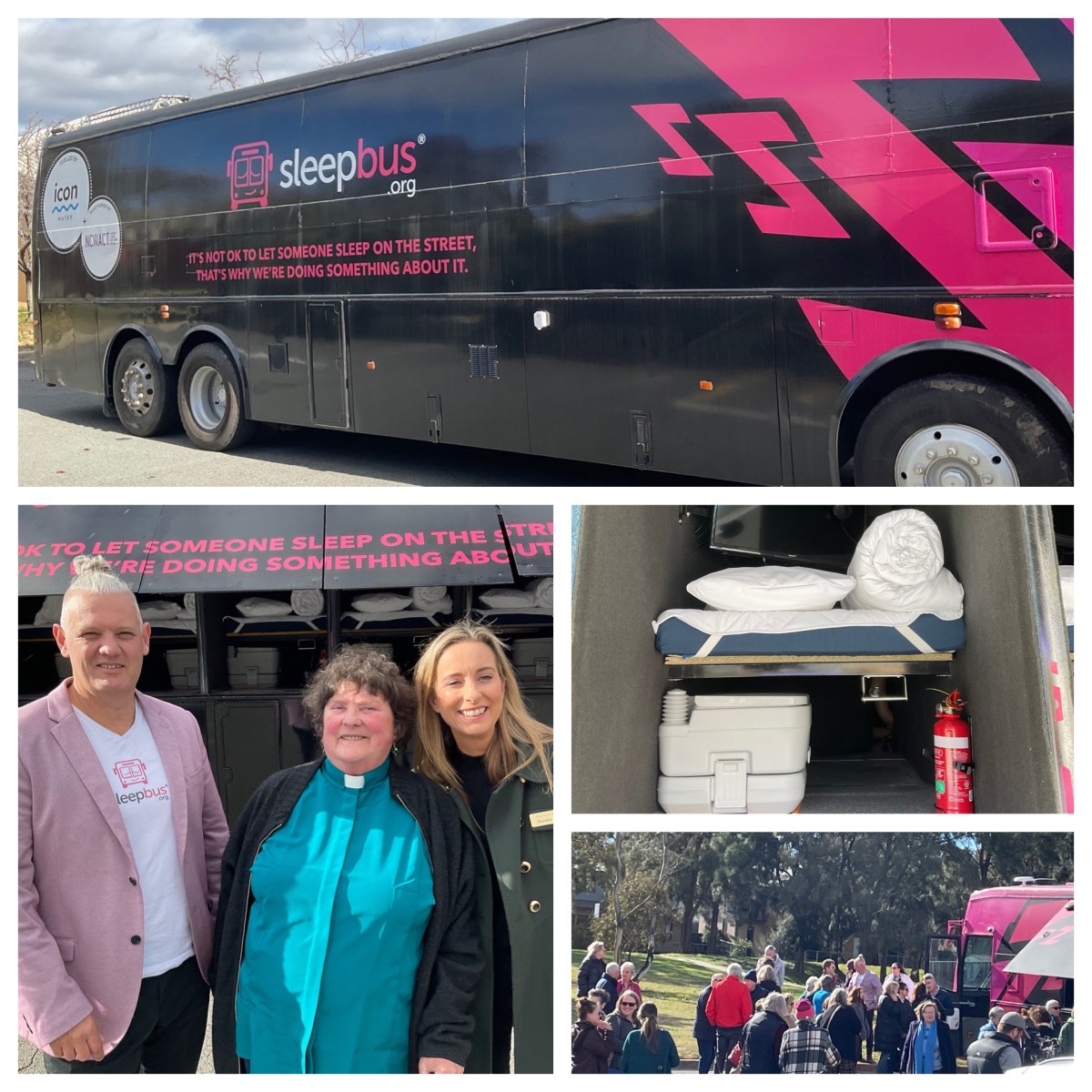
The bus is a large bus which can sleep up to 22 women each night—each in their own separate pod. Each pod (see picture above) is air-conditioned and comes with a mattress, pillows, sheets, blankets (washed daily), USB charging, portable toilet, fire extinguisher, lockable door and a television with a special channel showing services in the area for pathways out of homelessness. Inmates from the ACT Corrective Services unit, the Alexander Maconochie Centre, have been making sheets, quilt covers and pet beds for the bus.
The bus also has a special purpose-built larger pod (pictured below) that can cater for women with children, with two double bunks in its own area. There is a storage area running underneath the sleeping pods that includes pet pods, so that if women are travelling with their pets, there is somewhere for their pets to stay overnight.
The women are met each night by volunteers from local service groups and workers from employers who have a community service scheme. The pods are cleaned thoroughly each morning by a new set of volunteers, and fresh linen is provided for each night’s stay.
The front of the bus has its own self-contained section, where a caretaker sleeps at night. Juanita Flett explained that “the bus is really an emergency stop-over for the women; it’s not meant to be a permanent solution, it just provides a safe sleep for that night, and then the women can face the next day after having a good rest.”
“One of the contributing factors for some women who find themselves experiencing homelessness is trying to get away from a violent situation at home”, Juanita continues. However, the lack of available crisis and transitional accommodation in the ACT is also often a leading factor for women returning to abusive relationships and unsafe housing situations.
The ABS data indicates that over half of ACT women experiencing domestic and family violence become homeless in the first year post-crisis. “We are well aware of that”, says Juanita. “Given the extra challenges that this presents for those women, having a trained caretaker on hand at all times is important.”
Elizabeth adds, “With safety concerns in mind, the caretaker is able, if the situation requires, to drive the bus away from the scene to a safer location. Simon Rowe, the CEO of Sleepbus, has ensured that local police and other services are aware of the operations of the Sleepbus and are on hand to intervene should any situation escalate to that point.”
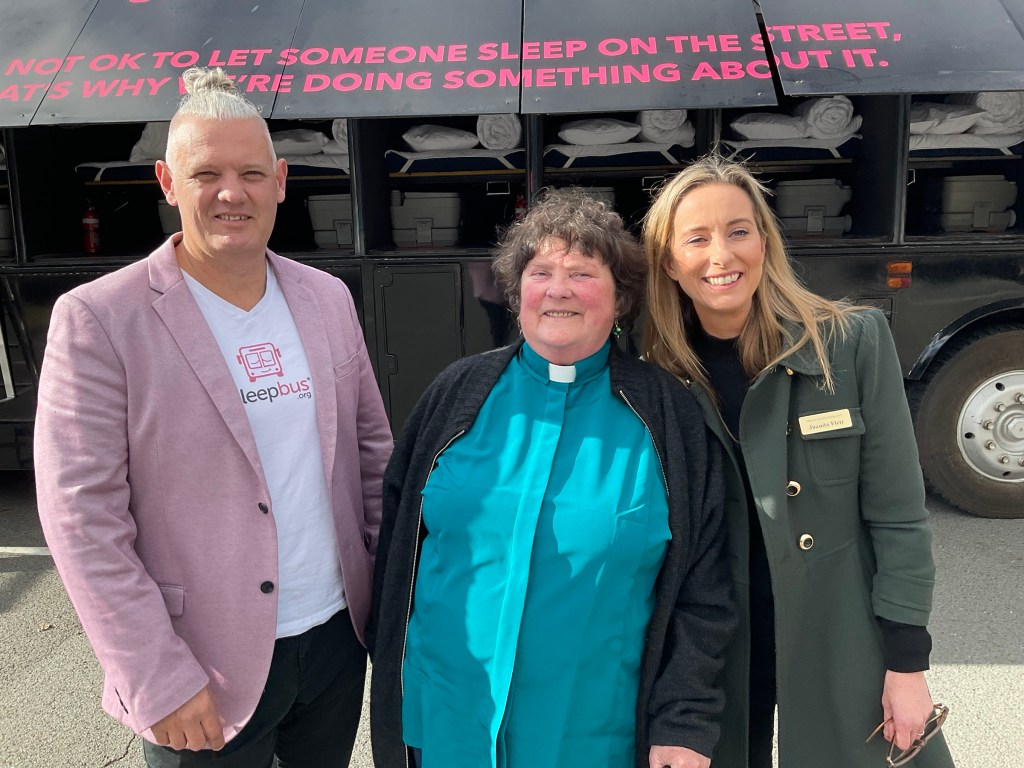
Simon Rowe (Sleepbus), Rev. Elizabeth Raine (Tuggeranong Uniting Church), Juanita Flett (National Council of Women ACT)
Juanita notes that “the bus is surrounded by CCTV. At night, the pods are completely blacked out, so you can’t see into them—nobody could know who is in a particular pod. All the CCTV cameras are connected to the caretaker’s cabin, and there is also security on call.” “Yes—the bus is on wheels”, Elizabeth noted, “so it can be moved if a desperate situation arose. That’s one of the things that originally appealed to us.”
The Pink Sleepbus will be stationed at Tuggeranong Uniting Church’s car park for three nights a week to start off with—Friday, Saturday and Sunday nights. Elizabeth notes that “We expect it will take some time to build up the service, for people to develop a trust in the volunteers who meet them. We want people to know that if you’re sleeping rough and you’re not getting a good night sleep, you don’t need to keep doing that. You can sleep on the Sleepbus, have a good breakfast, and be pointed to some of the local services that can assist you longer-term.”
Local community workers estimate the homeless population in Tuggeranong, in Canberra’s south, to be about 40 people sleeping rough at any one time, but they say it is hard to know. Georgie Fowler, President of the Tuggeranong Rotary Club, is involved in the Safe Shelter for men that operates in Tuggeranong. “The leading cause of homelessness is legal issues and family crisis,” Ms Fowler said. “So that surprised us, because there’s a common misconception that drugs and alcohol and general substance abuse lead to those situations—but that’s not the case.”
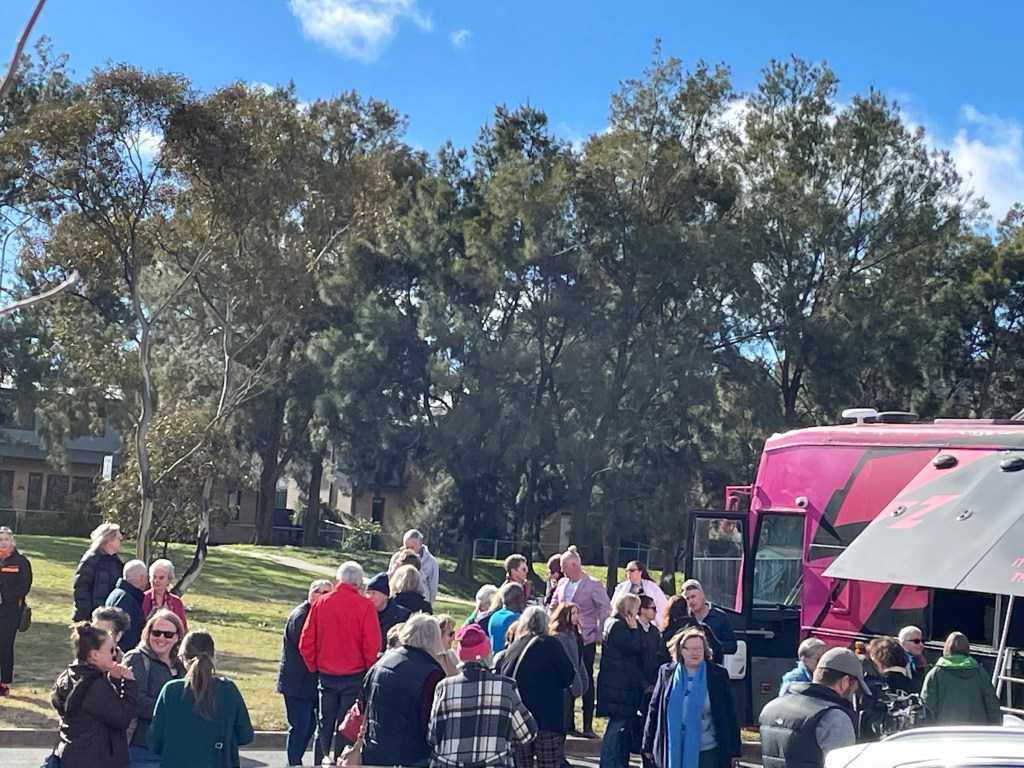
SUE the Pink Sleepbus was launched on Saturday 19 June in the car park of the Tuggeranong Uniting Church in Wanniassa, with a good crowd of almost 100 people from the Uniting Church, the National Council of Women ACT, and a number of local service organisations (SeeChange, Rotary, Lions, Communities At Work, and others).
Local members Nicole Lawder and Mark Parton attended the launch.
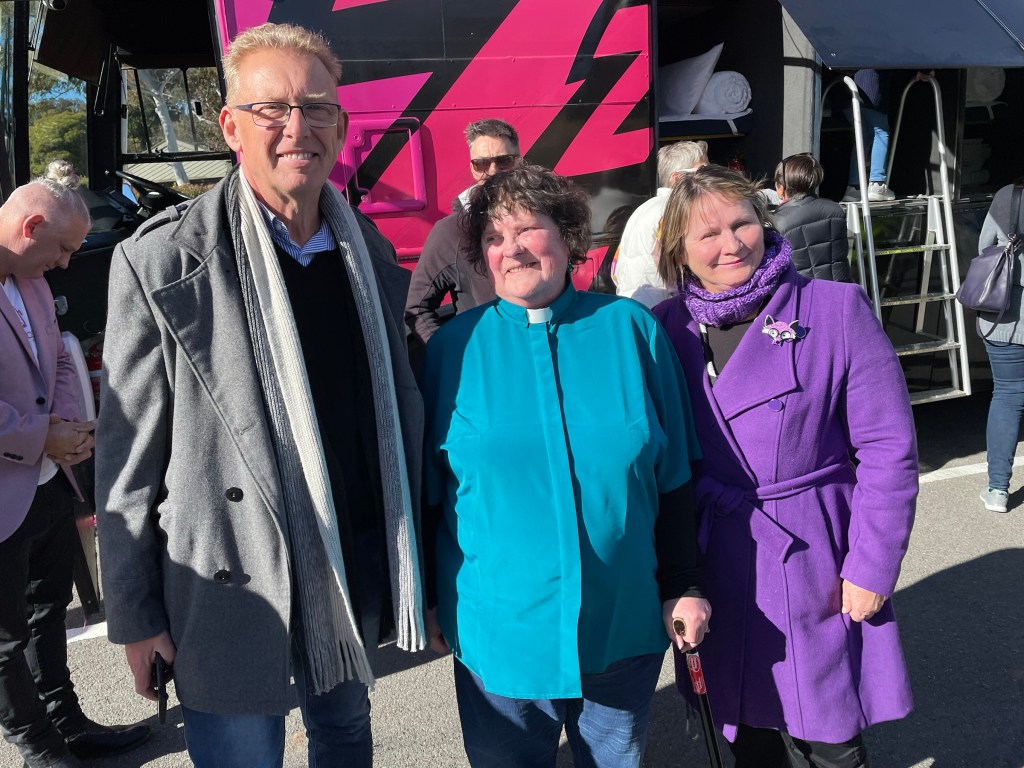
Mark Parton MLA, Rev. Elizabeth Raine, Nicole Lawder MLA
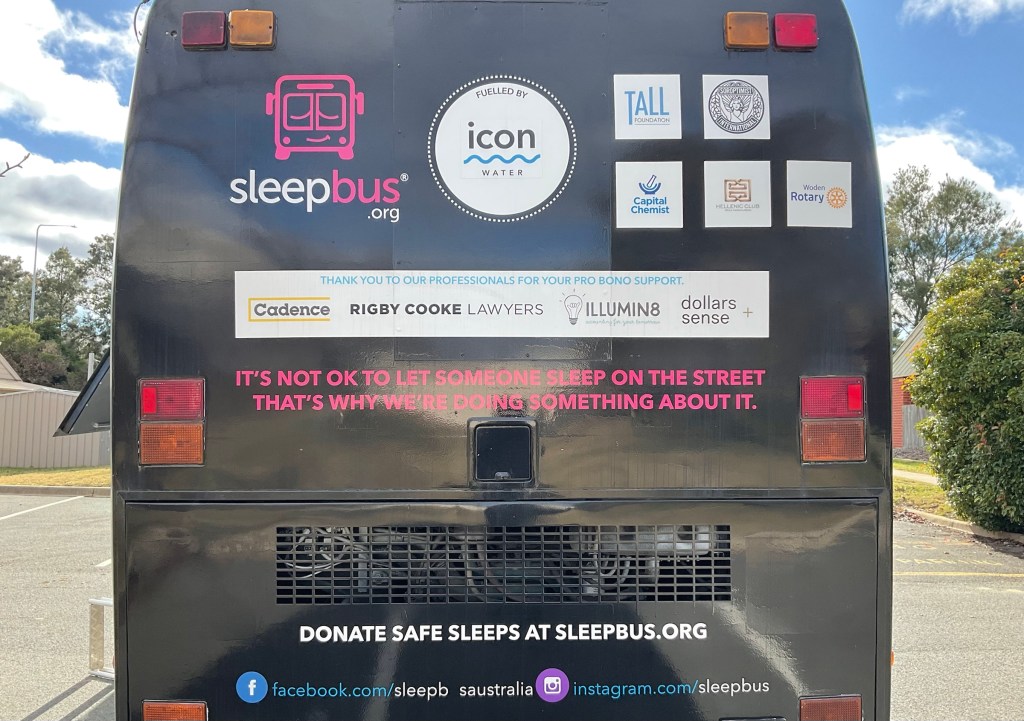
The bus is sponsored by ICON Water and some other local businesses, and is named after the late Sue Schreiner, feminist, lawyer, and ACT community activist. Ms Schreiner, the first woman from the ACT to be admitted to the New South Wales Bar, was a staunch advocate for finding solutions to homelessness.
SUE was “open for business” on Friday 25 June, the first night that she was stationed at the Tuggeranong Uniting Church, with a number of volunteers on hand to welcome women who were looking for a comfortable, safe, and warm sleep for the night.
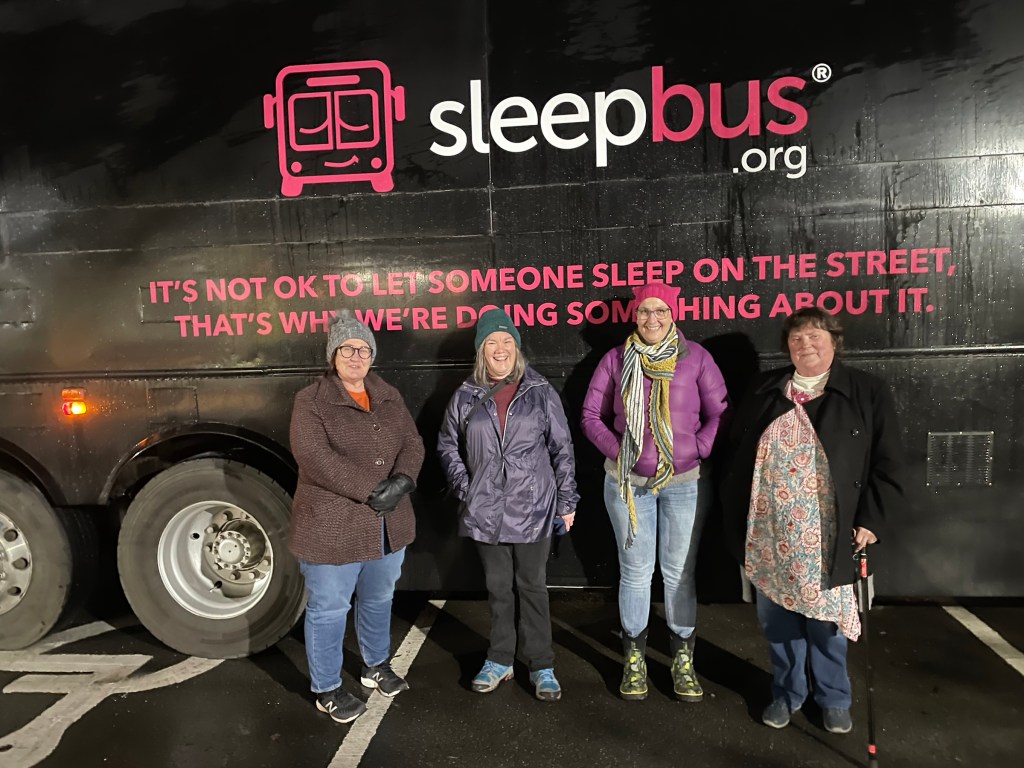
Elizabeth with some of the volunteers on “opening night”
After many years of careful conversation, three Protestant churches decided to join to form the Uniting Church in Australia—44 years ago, on 22 June 1977. The rhetoric was “we are a movement, not a denomination”. They were heady days. The new church issued a Statement to the Nation. There was front page newspaper coverage of the opening service of the new church. There was great optimism about what the future held.
44 years down the track, the Uniting Church has developed a clear identity and carved out a distinctive place within Australian society. We have made mistakes, followed some unhelpful paths leading to dead ends, and not always provided good, transparent, informed decisions. But we are human, flawed, striving, hopeful. We press on.
As the Uniting Church, we have a distinctively open and unconstricted theology, faithful to our reformed and catholic heritage, but contextualised to the contemporary Australian situation. We celebrate multicultural and linguistic diversity and exhibit a warm acceptance of LGBTIQ+ people. Across the church there is a clear and strong commitment to social justice, advocating for refugees, working to effect better housing policies, arguing against the excessive gambling addiction in society, decriminalising drug usage, and other issues.
We have a consistent and thoroughgoing commitment to living sustainably, honouring the creation, and working with community organisations devoted to environmental care. We have an enduring covenant with the First Peoples of the land, an openness to ecumenical and interfaith engagements, and a strong commitment to mission in other countries that means working carefully with partner churches and supporting local initiatives.
In each of these areas, we have ideals, goals, visions, and we have dashed hopes, failed enterprises, inadequate realisations. Yet we press on.
We still talk with orthodox, catholic, conservative, evangelical and pentecostal siblings, but don’t feel constrained by their dogmas or traditions, or by what we perceive to be their restrictions and limitations. We seek to set out in fresh directions, following untested pathways, sailing into unchartered waters, knowing that this means pushing the envelope, risking being criticised or unfriended or worse. Sometimes the fresh initiatives work well, sometimes they fail spectacularly. But at least we try—and we press on.
It’s a good place to be! We are appreciated by so many people in society. I can’t tell you how many times I have heard the comment, “If I went to church, it would be to a Uniting Church”. Well, it’s OK not to go to church, but it’s great that church folk can work with others in the community on projects of mutual interest, to the benefit of all. “Uniting for the Common Good” has been one of our catchcries in recent years. “Where the wild God is” is the current theme for our consideration—we go where God is already at work.
Earlier this year I had this piece on the identity of the Uniting Church posted to the Assembly website. I thought it was worth reposting today, the 44th anniversary of the formation of the Uniting Church in Australia. See https://johntsquires.com/2021/05/02/the-identity-of-the-uniting-church/
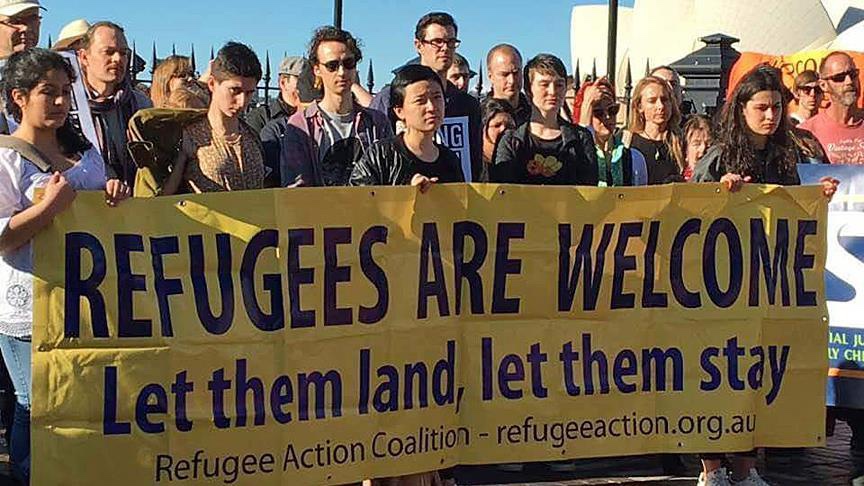
Today, 20 June, is World Refugee Day. On this day, people around the world celebrate the strength, courage and perseverance of millions of refugees. It stands at the beginning of Refugee Week; in Australia, this is always held from Sunday to Saturday of the week which includes 20 June (World Refugee Day).
The first Refugee Week events were organised in Sydney in 1986 by Austcare (Australians Caring for Refugees). Austcare’s mission is to assist refugees overseas, displaced people and those affected by landmines to rebuild their lives, through the expert delivery of development programs in partnership with local communitities and other agencies.
In 1987, the Refugee Council of Australia (RCOA) became a co-organiser of the week, and the week became a national event from 1988. RCOA took on responsibility for the national coordination of Refugee Week from 2004.
*****
The UNHCR (United Nations High Commissioner for Refugees) was established in 1951, when it was estimated that there were just 1.5 million refugees around the world. The UNHCR has most recently estimated that during 2020, for the first time in recorded history, the number of people forcibly displaced had reached over 80 million.
According to the UNHCR, there are now 82.4 million forcibly displaced people, as a result of persecution, conflict, violence, human rights violations or events seriously disturbing public order in their countries of origin. 35 million of these people are children, aged under 18 years. 1 million of these children were born as refugees; in the years 2018 to 2020, an average of between 290,000 and 340,000 children were born into a refugee life per year.
Over half of these people (48 million) are classified as “internally displaced”, meaning that they are homeless within their own country. About 26 million are officially classified as refugees, meaning that they are “unable or unwilling to return to their country of origin owing to a well-founded fear of being persecuted for reasons of race, religion, nationality, membership of a particular social group, or political opinion.” This is the definition in the Convention and Protocol Relating to the Status of Refugees—an international agreement which Australia signed in 1951, the year it was published.
A further 4.1 million people are classified as asylum seekers. Under Article 14 of the 1948Universal Declaration of Human Rights, everyone has the right to seek asylum The 1951Refugee Convention prohibits states from imposing penalties on those entering ‘illegally’ who come directly from a territory where their life or freedom is threatened. (Terms such as ‘illegals’, ‘queue jumpers’ and ‘boat people’ are both inaccurate and unhelpful—even though they appear in the media with saddening regularity, they are terms that should be avoided.)
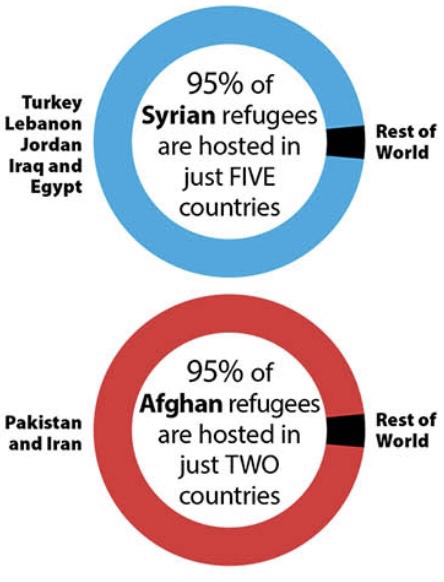
More than two thirds of all refugees currently under the UNHCR’s mandate come from just five countries: the Syrian Arabic Republic (6.7 million), Venezuela (4.0 million), Afghanistan (2.6 million), South Sudan (2.2 million), and Myanmar (1.1 million).
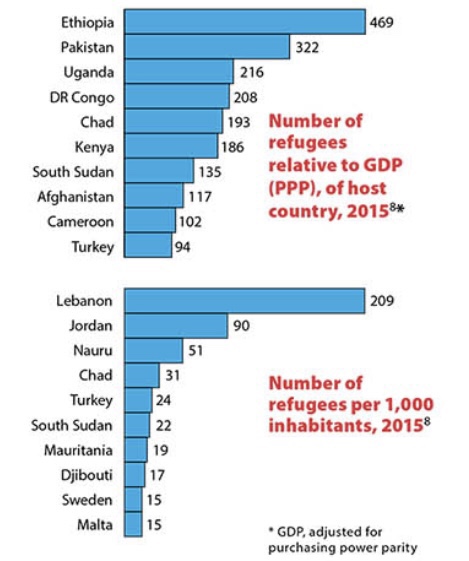
The countries which are currently hosting the most number of refugees are Turkey (3.6 million), Pakistan (1.4 million), Uganda (1.4 million), Germany (1.1 million), Sudan (just over 1 million), and the Islamic Republic of Iran (just under 1 million). Developing countries host 86 per cent of the world’s refugees, and the Least Developed Countries provide asylum to 27 per cent of the total.
Between January 2009 and December 2018, Australia recognised or resettled 180,790 refugees. This represented 0.89% of the 20.3 million refugees recognised globally over that period. Australia’s total contribution for the decade is ranked 25th overall, 29th per capita and 54th relative to national GDP. It is clear that, as a wealthy and robust country, we can do much better than this.
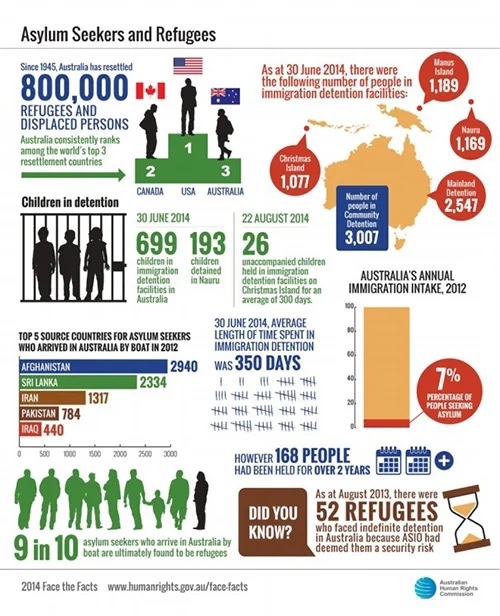
Some years ago, the Australian Human Rights Commission provided information on the number of refugees in Australia, and on various issues relating to refugees, as this graphic shows:
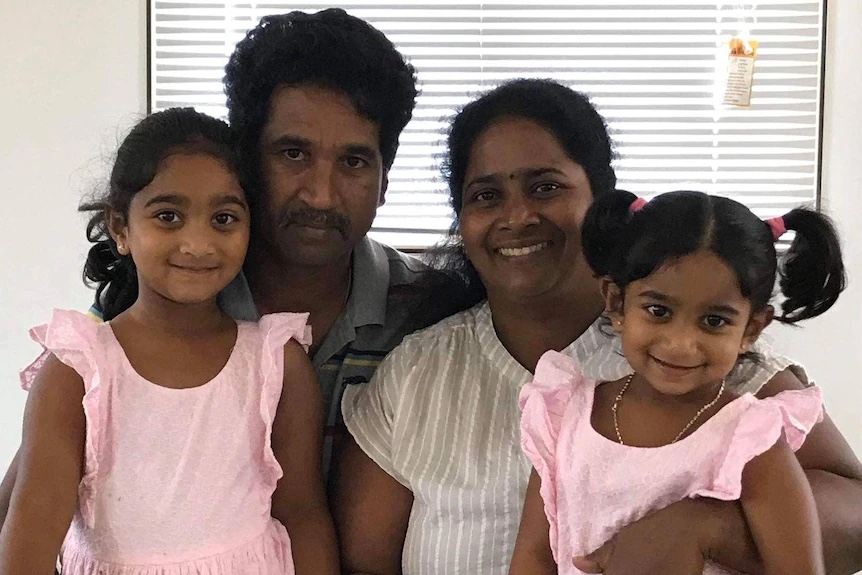
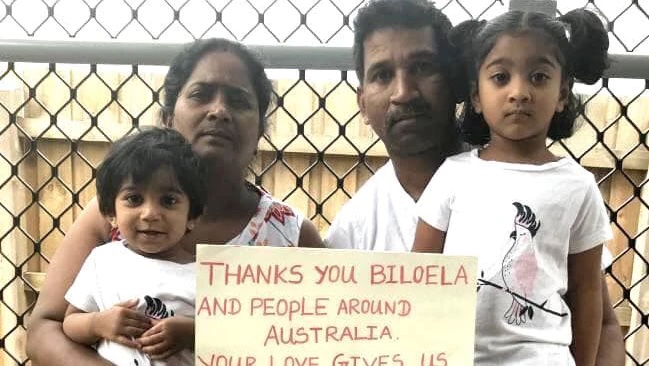
After intense and extended pressure, the Australian Government eventually reduced the numbers of children being held in detention. However, as recent events concerning the Murugappan family of Biloela have shown, there are still children being held in detention in this country.
Christians have a particular responsibility to welcome refugees and assist them to become fully functioning members of society. This responsibility reaches back well into the origins of the mother religion of Christianity, the faith of the people of ancient Israel.
In the Hebrew Scriptures, God charged the people of Israel with providing special care for the “ aliens in the land”, foreigners residing in Israel (see Deut 10:18, 14:28–29). There were specific provisions that “sojourner in the land” were to be accorded the justice due to all Israelites (Exod 22:21–24) and they were to be included in two of the major festive celebrations each year—the Feast of Weeks and the Feast of Booths (Deut 16:11, 14).
Hospitality was a central virtue in ancient Jewish society, and was well practised by the early Christians (Mark 6:10; Matt 10:11–13, 41; Luke 10: 8–9; Rom 12:13, 15:7; 1 Tim 5:10; 1 Pet 4:9). The importance of welcoming “the stranger” is emphasised in Christian letters (Heb 13:2; 3 John 5), and Paul encourages the Corinthians to consider “the outsider” in their worship (1 Cor 14:13–17).
The Uniting Church has had a long commitment to refugee issues, advocating for the rights of asylum seekers and refugees, and working on the ground to welcome and support refugees as they start to live within Australian society. In 2003, the National Assembly resolved:
a) to note the important call of the gospel to welcome the stranger;
b) to commend and celebrate the work of those within the Uniting Church and wider community who work with refugees and asylum seekers as they commence resettlement within Australia;
c) to celebrate the work which has been undertaken by the NCCA National Program for Refugees and Displaced Persons over many years and for the creation in late 1998 of an ecumenical committee to support this work;
d) to commit the Uniting Church in Australia to ongoing support for refugee and asylum seeker resettlement in Australia.
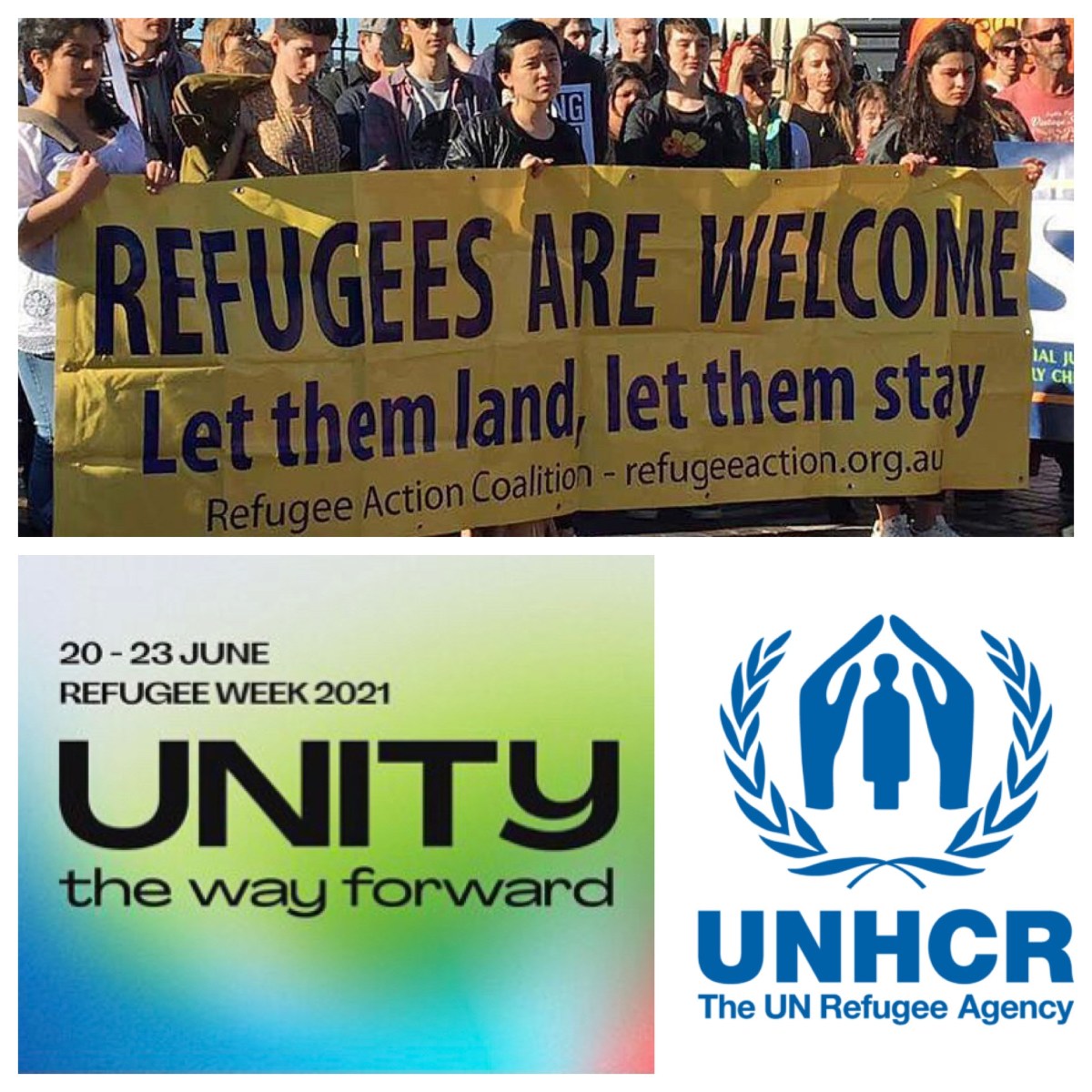
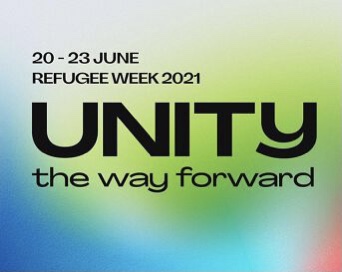
The theme for Refugee Week in 2021 is UNITY. The themes of Refugee Week in the past 16 years have been: Year of Welcome (2020), A World of Stories (2019), #WithRefugees (2018), With courage let us all combine (2015–2017), Restoring Hope (2012–2014), Freedom from Fear (2009–2011), A Place to Call Home (2008), The Voices of Young Refugees (2007), Journeys (2006) and Different Past, Shared Future (2005).
In explaining the 2021 theme of UNITY, the Refugee Council of Australia says:
“The volatility of life in recent times has shown us unequivocally that we need to work together often merely to survive, let alone to thrive and progress. Let’s take the opportunity to start afresh and rebuild our lives together. To count our blessings and to put them to work. Existing and emerging communities. Working together. The powerful potential of Unity. The special brew of ideas from all over the world that created our great way of life can continue evolving if we work together. Let’s not stop now, let’s move forward unified.
“In 2021, we are calling on you to help build a more cohesive community during Refugee Week. Whether hosting a local meal, a community event or attending an online event to hear from people all over the world, join us as we call for the spirit of unity as we recover from the isolation we have all endured in 2020. Stronger. Safer. Healthier. Happier. Together.”
Let’s not get carried away with today’s news about the Murugappan family, held for so long in detention on Christmas Island, but soon, apparently, to be reunited in community detention in Perth, whilst the two daughters receive medical attention.
And let’s use their names—Priya and Nadesalingam Murugappan, who have been in Australia for almost a decade, and Kopika and Tharunicaa, who were both born in Australia. They are not just “the Biloela family”, even though they did settle into that community in Queensland some years ago, nor are they just “the Tamil family” being held in offshore detention. They have names.
So let’s not get carried away with today’s news that the Murugappan family will be reunited in Perth. First, the timing of the announcement today is deviously designed to draw attention away from the revelations made last night by Four Corners on ABC-TV, that the PM had been influenced by a close friend, a devotee of QAnon, to include the signal phrase “ritual abuse” in the Apology to victims of sexual abuse in institutions that he delivered in October 2018. Strike One for devious strategy. See
Second, the Murugappan family will continue to be held in community detention in Perth. They are not being permitted to return, ultimately, to the life that they had made in the Biloela community—where they were well-accepted and greatly loved. They are still to be held in limbo, not yet permitted to be considered as legitimate refugees within Australian society, not yet permitted to make application for permanent residency, not yet permitted to plan for a longterm future in this country. The heartless policy of this government remains clear and obvious.
Third, this is just one small sampling of people who for years have been held—in direct contradiction to international law—in offshore detention. ThenRefugee Council of Australia reports that there are currently 1,483 people in closed detention (367 of whom came by boat, seeking asylum), while there are another 537 being held in community detention. That’s over 2,000 people being held in limbo—some of them for many years—while an unresponsive and heartless system defers any real action in responding to the situation of these people.
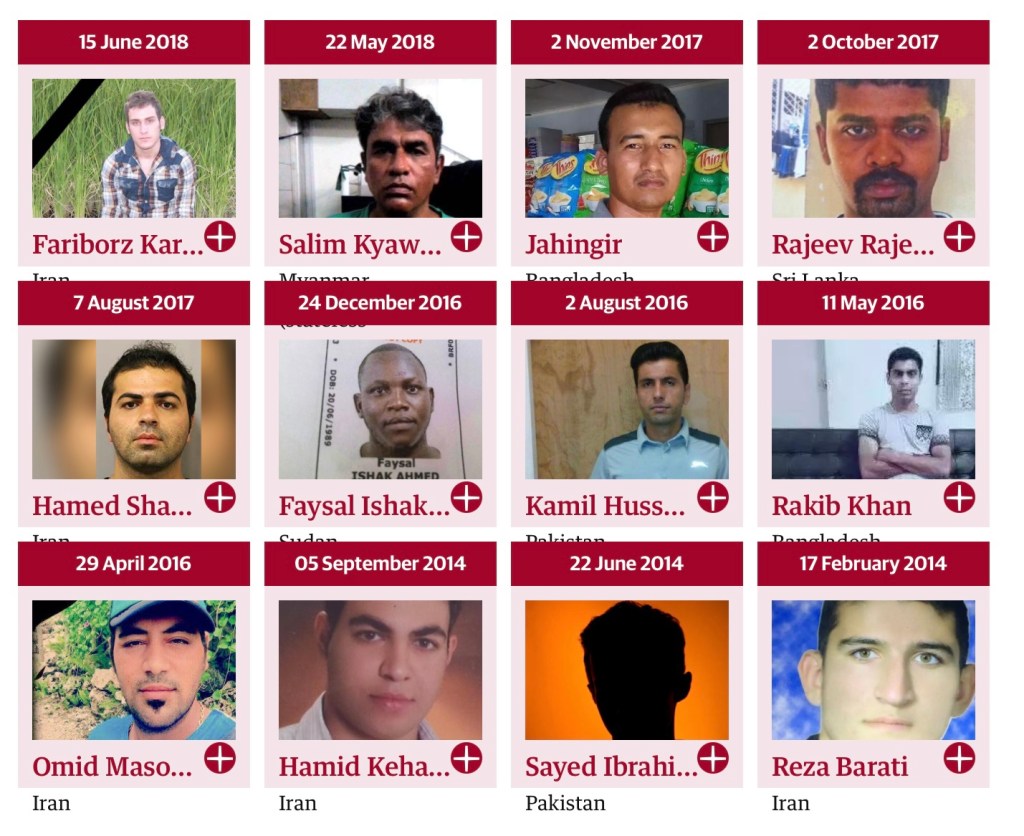
Fourth, and most troubling, let’s not forget that our government policy of detention and restriction (including minimal access to health services) has seen no less than twelve refugees and asylum seekers die whilst in detention under the care of Australia. And whilst there has been community response in each case, the government policy has remained steadfastly heartless and unresponsive. And the whole Australian community has been complicit in allowing this terrible situation to continue.
Finally, the situation with the Murugappan family exposes the lie that Australia is built on, and operates by, a “Judea-Christian ethic”. Our two decades of heartless refugee and asylum seeker policy have been in breach of international law and contrary to the principles articulated in scripture by prophet, sage, evangelist, and apostle. Welcome the stranger, care for the outcast, offer hospitality to the visitor, provide water to the thirsty and food to the hungry: commands that were central to the ancient Israelite ethos, that continued to be advocated in the teaching of Jesus, and that are central to the ethic of faithful Jews and Christians today.
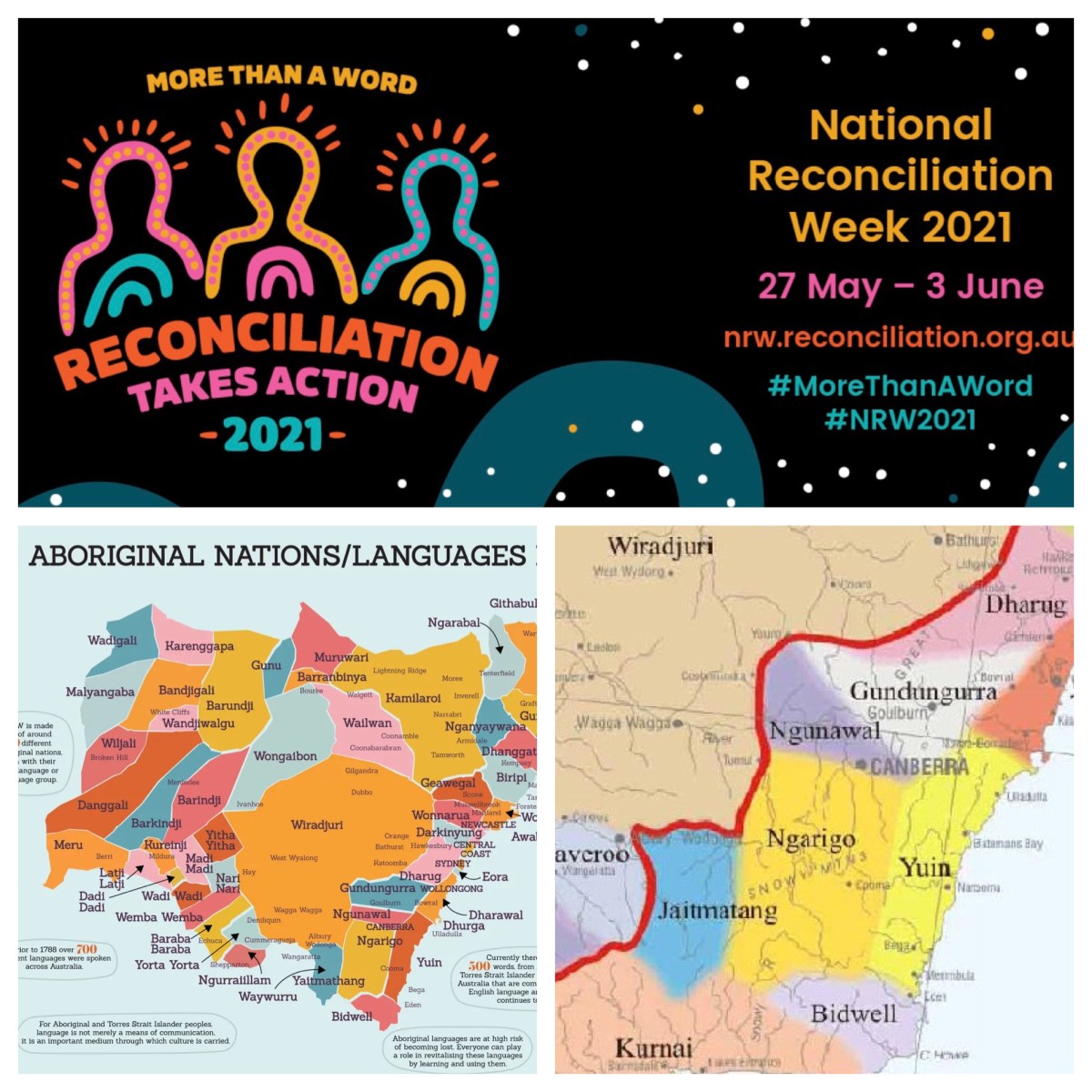
Today we are in the middle of National Reconciliation Week. The week runs from 27 May, the anniversary of the 1967 referendum which recognised the indigenous peoples of Australia and gave them the right to vote, through until 3 June, the day in 1992 that the legal case brought by Eddie (Koiki) Mabo was decided and the lie of terranullius was laid bare by Koiki in the Australian High Court.
Today, in the middle of this week, is Reconciliation Day in the Australian Capital Territory. Reconciliation Week was initiated in 1996 by Reconciliation Australia, “to celebrate Indigenous history and culture in Australia and promote discussions and activities which would foster reconciliation”. Reconciliation Day was only gazetted for the ACT in 2018. It’s another public holiday for Canberrans—but the ACT government reminds us that it provides “a time for all Canberrans to learn about our shared histories, cultures, and achievements, and to explore how each of us can contribute to achieving reconciliation in Australia”.
This year, as I reflect on the importance of reconciliation for the people of this nation, I am struck by the names we use, and their significance. I am thinking particularly of place names. There are many, many locations around the continent which bear names that have been imposed on those locations by invading colonisers without any regard for what names were already used by the people living there before the British began their colony at Port Jackson.
The suburb where I live, Gordon, bears the name of a man who was born in England but came to Australia where he was a jockey and police officer, and for a short while also a politician—Adam Lindsay Gordon. (Who knows why??) The suburb where I grew up as a child, Seaforth, bears the name of a loch in the Outer Hebrides of Scotland (perhaps, bizarrely, because it reminded someone of that locality?).
There are other locations which bear names that refer to local indigenous people, or to specific incidents that took place in past years, involving indigenous people. You may have driven past Blackfella’sGully, or Slaughterhouse Creek, or Nigger Creek, or similar names. They sound innocuous. They may not necessarily have been so.
Some sites identify specific massacres during the Frontier Wars. There is The Leap, in northern Queensland, where an Aboriginal woman leapt with her child, choosing suicide to avoid capture or killing by European vigilantes and Native Police. There is Red Rock, in NSW, where the name recalls the Aboriginal blood shed in a conflict there. There is Battle Hole, and Skull Hole, and no less than eighteen Skeleton Creeks, named for obvious reasons. (See https://press-files.anu.edu.au/downloads/press/p286811/html/ch08.xhtml?referer=&page=11)
There are other locations—quite a significant number of locations—that bear the name that has long been given to that location by the indigenous people of the area. The region where I live, Tuggeranong, bears a name which is said to be derived from a Ngunnawal expression meaning cold place. And at the moment, that feels like an entirely appropriate name!
From the earliest colonial times, the plain extending south into the centre of the present-day territory was referred to as Tuggeranong. The indigenous name was kept. I understand there is a rock shelter just a few kilometres from where I live, which dates Ngunnawal activity here at 20,000 years ago into the last Ice Age. They may have lived here much longer than that, possibly 60,000 or more years.
From the front of my house, I look out across to the Brindabella ranges—a formation bearing a name which is said to derive from an Aboriginal word meaning two kangaroo rats. However, another account claims that brindybrindy was a local term meaning water running over rocks, to which “bella” was presumably added by the Europeans as in “bella vista”. The British who invaded and colonised the area did such a comprehensive job of removing the indigenous locals from the area, that knowledge of the precise origin of the name has been lost.
The local nation, the Ngunnawal, shared the region we know as Canberra with a number of neighbouring nations, gathering during late spring for the arrival of the bogong moths. It was a time of feasting and ceremonies for those who joined with the Ngunnawal people.
The Ngambri came from the Limestone Plains (the area on which central Canberra sits today), although they are seen by some as a clan within Ngunnawal. The Namadgi people was a group inhabiting the high country to the west of modern-day Canberra (the area is gazetted as the Namadgi National Park). The Ngarigo people inhabited areas in the north and to the east of Canberra. There are also suggestions that some from the Wiradjuri people from the Central West participated in these regional gatherings.
These nations gathered at the place that today we call Canberra. The region is generally understood to have been a meeting place for different Aboriginal clans, suggesting that there was a reliable food and water supply. The name is believed to have been derived from a local Indigenous word Kamberri, which identifies the location as a meeting place of these many nations, for a gathering focussed around the bogong moth. See https://johntsquires.com/2019/01/30/learning-of-the-land-3-tuggeranong-queanbeyan-and-other-canberra-place-names/
So names are important. Names reveal much about those who bequeath the name. And names that have existed for millennia—indigenous names, the spirit names for the places—need to be honoured and remembers—and used! May that be one of the ways that we work towards reconciliation, this week, and long into the future.





 An Informed Faith