The voice of the Lord, made manifest in Jesus (Matt 3; Epiphany 1A)

The readings that are collected for this coming Sunday seem to gather around the theme of “the voice of the Lord”. This is one of those Sundays when the selection of four readings clearly focusses on a topic found in each of them (in contrast to the many “ordinary” Sundays where each of the four readings follow their own independent lines).

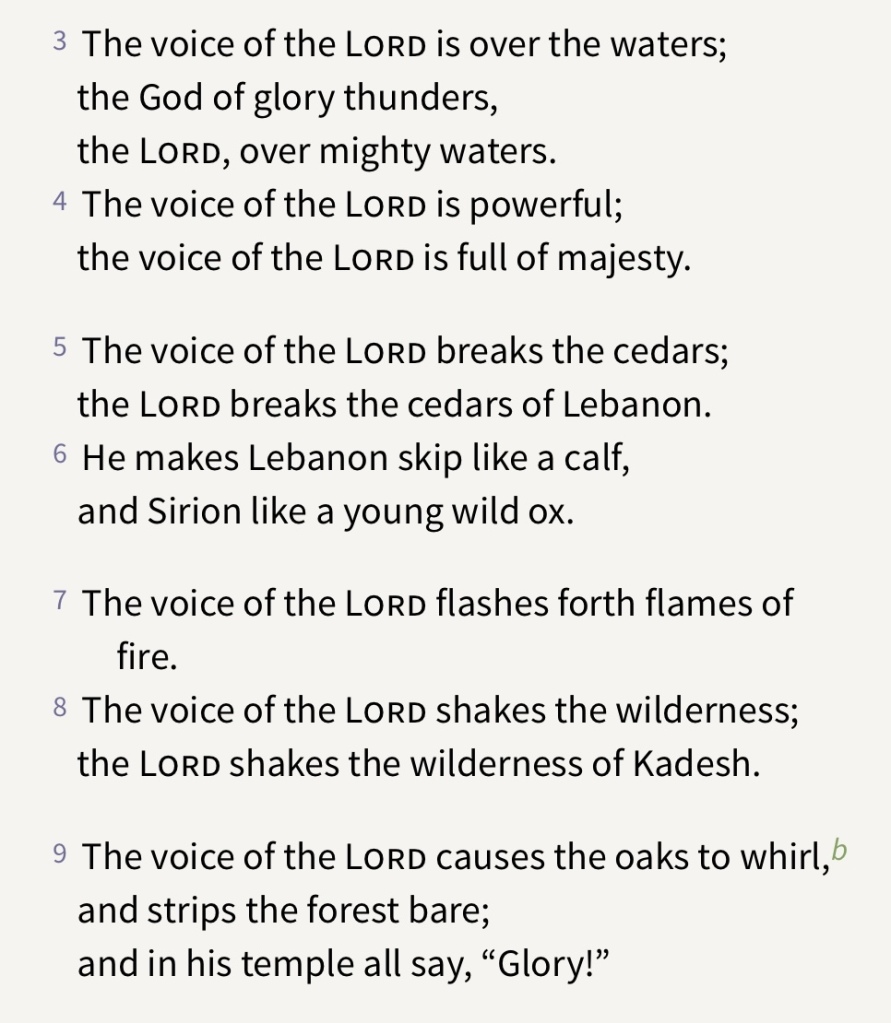
The theme of “the voice of the Lord” is sounded clearly in the psalm (Psalm 29), with a repeated refrain, “the voice of the Lord” through verses 3 to 9. First, the psalmist announces, “the voice of the Lord is over the waters; the God of glory thunders … the voice of the Lord is powerful; the voice of the Lord is full of majesty” (29:3–4).

Then follows a repeated affirmation, “the voice of the Lord breaks the cedars … the voice of the Lord flashes forth flames of fire … the voice of the Lord shakes the wilderness … the voice of the LORD causes the oaks to whirl, and strips the forest bare; and in his temple all say, ‘Glory!’” (29:5, 7–9). The message declared by the Lord God is conveyed by the natural order of things, in the elements of the creation, made by God (see Gen 1–2; Ps 104; and in this Sunday’s reading, Isaiah 42:5).
The speaking forth of God, made manifest and evident in God’s creation, is a fitting theme for the first Sunday in the season of Epiphany—a season that celebrates the shining forth, the manifestation, of God. However, this Sunday is designated, not only as the first Sunday in the season of Epiphany, but also as the day on which The Baptism of the Lord is recalled.

In the Gospel selection (Matt 3:13–17), the first evangelist reports that the Spirit of God “descended on [Jesus] like a dove” (3:16) as Jesus was baptised by John in the River Jordan. At that event, “a voice from heaven said, ‘This is my Son, the Beloved, with whom I am well pleased’” (3:17). The voice of the Lord is clear and prominent in this account of what was likely to have been the commissioning event for Jesus as he started into his public activities in the region of Galilee (Matt 4:12–25, and on until 19:1).
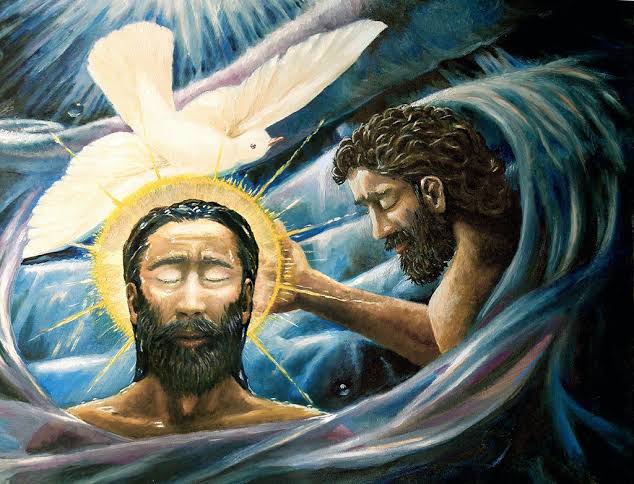
In the reading from Acts, in place of a section of an epistle, we hear Luke’s report of a speech of Peter, given in the house of the centurion Cornelius in Caesarea (Acts 1:34–43). In this speech, Peter announced how “the message spread throughout Judea, beginning in Galilee after the baptism that John announced; how God anointed Jesus of Nazareth with the Holy Spirit and with power” (Acts 10:38).

That message was to be continued by the disciples; Peter says that God “commanded us to preach to the people and to testify that he is the one ordained by God as judge of the living and the dead” (10:42). The voice of the Lord that has been heard in the early testimony (see Acts 2, 3, 7) continues through the later apostolic proclamation (see Acts 13, 17, 20).

Linked with this is the first of the four songs found in Second Isaiah (Isa 40–55) that are linked explicitly with the Servant (42:1–9; 49:1–7; 50:4–11; and 52:13–53:12). Here, the Servant is designated as the one in whom God delights (42:1); the phrase recurs in the message of the voice from the cloud which speaks at the baptism of Jesus, declaring that he is the one “with whom I am well pleased” (Matt 3:17). The Servant has God’s spirit within him (Isa 42:1), something which is directly enacted in the baptism of Jesus when he “saw the Spirit of God descending like a dove and alighting on him” (Matt 3:16).

The work of the Servant is to bring justice to the nations (Isa 42:1, 3, 4); that will be evident in the work of Jesus (Matt 12:18–21, quoting directly these verses from the first Servant Song). Through the Servant, the Lord calls people “in righteousness” (Isa 42:6); that call is echoed by Jesus as he calls his followers to demonstrate righteousness (Matt 5:20) and exhorts them to “strive first for the kingdom of God and his righteousness” (6:33). Indeed, the baptism of Jesus narrated by Matthew is said to have taken place “to fulfil all righteousness” (3:15).

Through the Servant, God establishes God’s people “as a covenant to the people, a light to the nations” (Isa 42:6); that charge is repeated by Jesus, who came as light shining in the darkness (Matt 4:15–16) and who equips his followers to be “the light of the world” (5:14–16), whose whole body will be “full of light” (6:23).

Through the Servant, God announces that “the former things have come to pass, and new things I now declare” (Isa 42:9); this is exemplified, according to Jesus, by “every scribe who has been trained for the kingdom of heaven [who] is like the master of a household who brings out of his treasure what is new and what is old” (Matt 13:52).

The identity of the Servant was debated in Israel; was this an individual, or a symbolic representation of the whole nation? The many resonances of the Servant Song in the story of Jesus indicate why Christian interpreters have identified Jesus as this servant. The story of his baptism provides a most appropriate occasion for underlining this connection. The shapers of the lectionary have thus linked these two passages on this Sunday, and set them into the context of passages declaring how “the word of the Lord” has been made manifest. It is a compelling start to the season of Epiphany.


Some carols for Epiphany

Some carols from Aotearoa-New Zealand and Australia, as we head towards Epiphany, orienting us to the journey motif in the story.

God, help the weary travelers (Daniel Charles Damon)

1. God, help the weary travelers who follow their star,
seeking a refuge, so near, yet so far,
seeking a place of shelter from hatred and war,
seeking the safety of some distant shore.

Refrain: God, help the weary travelers, the lost and the found,
all of us travelers on this holy ground.
God, help the weary travelers, those just passing through,
all of us travelers with love’s work to do.

2. God, help the gifted people who come seeking gold,
far from their homelands, their lives bought and sold.
God, free us from the judgments that turn us to stone,
show us the river that flows from your throne.

3. God, lift new generations from muck and from mire,
baptized with water and Spirit and fire.
God, raise new generations with hearts set ablaze,
singing and dancing their Maker’s high praise.

Suggested Hymn Tune: PRAYER FOR TRAVELERS – Damon, Daniel Charles
Poetic Meter: 12.10.12.10. Ref.

*****

Wise men came journeying (Shirley Erena Murray)

Wise men came journeying, once, long ago,
camel hooves swirling the sand dune and snow,
gold in the saddlebag, myrrh in the jar,
incense to honor the Child of the star.

Wise are the travelers led to move on
following signs where the Christ light has shone,
facing the deserts and crossing the lines,
heeding no limits that culture defines.

Wise are each one of us looking for change,
stargazer people, respecting the strange,
inner and outer worlds open to light,
centered on seeing the real and the right.

Wise ones keep journeying all through their days
bringing their gifts to the source of their praise,
risking the Promise with all they hold dear,
seeking God’s peace at the door of the year.

http://www.hopepublishing.com/html/main.isx?sitesec=40.2.1.0&hymnID=2956

*****

The star and hope for our times (Shirley Erena Murray)

Shirley Erena Murray writes of looking to peace and justice in our world, with particular reference to the three Abrahamic faiths.

Now the star of Christmas shines into our day,
points a new direction: change is on the way –
there’s another landscape to be travelled through,
there’s a new-born spirit broadening our view.

When the Christ of Christmas speaks to heart and mind,
clears the clouded vision hurting humankind,
kindred spirits gather, drawn toward the light,
sharing revelation, joyful at the sight.

If we choose to follow, we may yet be wise:
where the three kings travel, three great faiths arise:
Christ within the Christian, Jesus in the Jew,
Prophet for the Muslim, each tradition true.

Where the star enlightens, light is shared around.
God has drawn no borders, faith sees common ground:
Peace the hopeful journey, justice without bar,
God’s illumination from the Christmas star.

Suggested Hymn Tune: NOEL NOUVELET –
Poetic Meter: 6.5.6.5.D.

*****

Be the light (Craig Mitchell and David MacGregor)

Be the light that shrouds the twilight
Be the might that holds our fears
Be the home that yearns our dwelling
Be the stone that takes our tears

Refrain: Christ be our light, Whom shall we fear?
Deep in the night, Spirit, draw near.

Be the cry that whispers mercy
Be the seeker when we hide
Be the taker and the giver
Be the pathway and the guide

Be the sacrifice that breaks us
Be the shelter in the flood
Be the promise that remakes us
Be the parent who is good

Textual interplay: stories of Jesus in Mark 1 and the prophets of Israel (Year B)

The Revised Common Lectionary is shaped with deliberate intention, offering a selection from Hebrew Scripture each week, alongside a portion of the designated a gospel for the year (this year, Year B, it is Mark). For about half the year, there is no specific intention to correlate the Hebrew Scripture passage with the Gospel passage. In some seasons, however, there is a careful selection of the Hebrew Scripture passage, so that it resonates with and complements or intensifies themes in the Gospel passage.

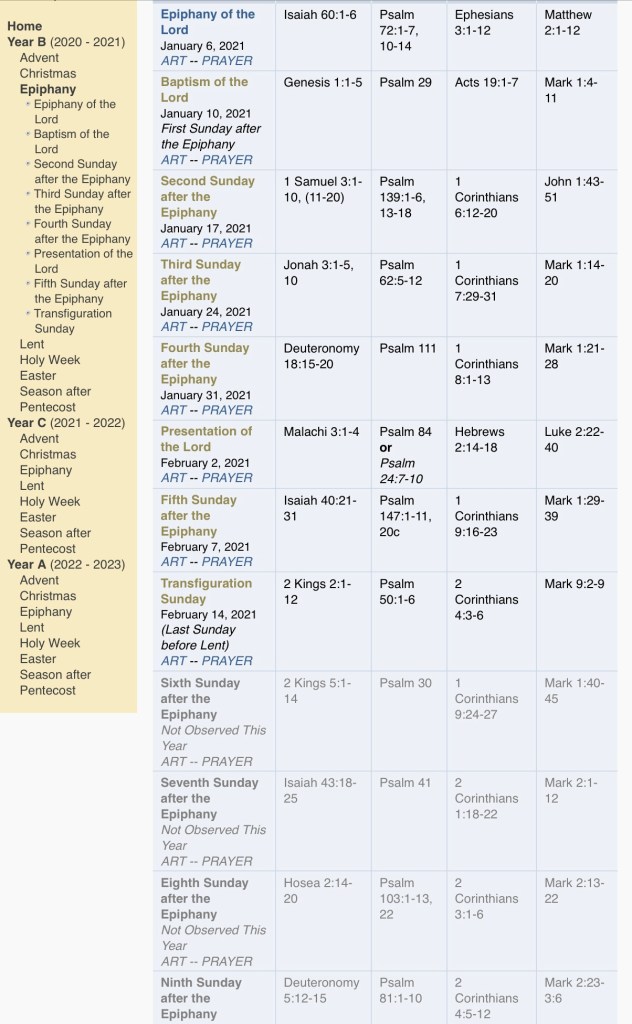
This appears to be the case in the season of Epiphany, during Year B. Whilst the Gospel sections largely trace the opening scenes of Mark (1:1-3:6), the Hebrew Scripture sections are drawn from a range of Hebrew prophets: Isaiah, 1 Samuel, Jonah, Deuteronomy, Malachi, Hosea, and stories about Elisha in 2 Kings. (Not all of these passages, nor all of Mark 1:1-3:6, appear in Epiphany in 2021; in other years, when Easter is later in the year, the season of Epiphany stretches over more weeks, as the image below indicates.)

The selection of a prophetic passage alongside, and directly oriented towards, a Gospel passage, invites readers and hearers of these scripture passages to explore in creative ways what themes are highlighted. Back in Advent 2, Isaiah 40:1-11 was offered alongside Mark 1:1-8, the account of the activities of John the baptiser in the wilderness. The logic of this is clear; the Gospel actually directly quotes Isa 40:3 in Mark 1:2b-3, depicting John as “crying out in the wilderness: ‘Prepare the way of the Lord’.”

On the feast of the Baptism of Jesus, Hebrew Scripture passages underline the breaking open of the heavens for the voice of the Lord to be heard (Ps 29:3-9 and Gen 1:3; see Mark 1:11). The words of that heavenly voice are drawn from Psalm 2:7 (“you are my Son”) and Isaiah 42:1 (“with you I am well-pleased”).

In following weeks, there are clear resonances of theme between the two selections. On Epiphany 3 (24 January), both Jonah 3:1-10 and Mark 1:14-20 recount call stories. We read the story of Jonah, called to proclaim God’s message to the city of Nineveh, alongside the story of Andrew and Simon Peter, John and James, called to become followers of Jesus.

Jonah is effective in his proclamation to Nineveh, which in turn provokes God to change his mind about the calamity that he had promised for them. That is power!! But this was the second call that Jonah had received (3:1); the first had ended in quite a catastrophe (Jonah was thrown overboard and swallowed whole, 1:15-17).

Andrew and Peter, John and James undergo a period of learning-on-the-road with Jesus, before they start to proclaim with power. Theirs was a slowly-evolving call, requiring diligent attention and persistence. And other calls following this pattern are narrated by Mark—Levi (2:15), a crowd following him (8:34-36), and women in Galilee (15:40-41).

On Epiphany 4 (31 January), words attributed to Moses in Deut 18:15-20 are placed alongside Mark 1:21-28. These passages address the question: once we are called by God—then what?? Deut 18 contains a story about the promise God made to Israel, to “raise up a prophet”, while Mark 1 tells the story of the man possessed in the synagogue in Capernaum, who was exorcised by Jesus.

Both stories focus on the distinctive nature of faith in the particular contexts of these stories. The prophet of Israel stands over against “other gods” (Isa 40:20). Jesus of Nazareth is recognised as one who speaks “a new teaching—with authority” (Mark 1:27).

Both stories indicate that being faithful to the call will place us in challenging, daunting, perhaps even threatening situations. Faith is a call to trust in God as we enter into those situations. How is your call being challenged? How are you responding?

On Epiphany 5 (7 February), Isaiah 40:21-31 and Mark 1:29-39 offer stories at the start of a significant period of ministry; an unnamed prophet of Israel, speaking to the people as they prepare to step into the wilderness, journeying to the promised land; and Jesus, interacting with people soon after his own wilderness experience (Mark 1:12-13). Both passages are set at the start of a significant period of time; both stories reveal important things about the nature of God, and the ways that God engages with human beings in their lives.

God is portrayed as powerful and sovereign in Isaiah 40; that was comforting and reassuring for the journeying Israelites. God comes with power, also, in Jesus; yet in his humanity, Jesus needs time to replenish and rejuvenate (Mark 1:35).

His example tells us that we need to hold in balance the desire to do great things, with the need to care for ourselves and remain connected with God.

In other years, we would follow on to explore the interplay of passages in Mark 2 and 3 with excerpts from 2 Kings 5, Isaiah 43, Hosea 2, and Deuteronomy 5. But this year, Epiphany ends on 14 February, the last Sunday before Lent. On this day, the story of the Transfiguration of Jesus, in the presence of Moses and Elijah (Mark 9:2-9) is linked, quite understandably, with the account of Elijah ascending into heaven, after his mantle is passed on to Elisha (2 Kings 2:1-12).

This account contains the second of three occasions in Mark’s Gospel where we encounter the voice of God, affirming his Son, in the words, “This is my Son, the Beloved; listen to him!” (Mark 9:7; cf. Ps 2:7). The other instances are at the Baptism of Jesus (1:11) and at his Crucifixion (15:39, although this affirmation is placed on the lips of the centurion who was guarding him).

The three occurrences of this affirmation encompass the whole Markan narrative within this clear claim about Jesus—echoing the very title of this work: “The beginning of the good news of Jesus Christ, the Son of God “ (1:1).

Readings for Epiphany 2021, from the website
of the Vanderbilt Divinity Library in the USA,
http://divinity.library.vanderbilt.edu/

See also https://johntsquires.com/2021/01/18/lets-get-down-to-business-beginning-the-story-of-jesus-mark-1/

and https://johntsquires.com/2020/11/24/the-kingdom-is-at-hand-so-follow-me-the-gospel-according-to-mark/

Herod was infuriated, and he sent and killed all the children (Matt 2; Christmas 1A)

In the orderly account in which Luke tells the story of the first Christmas, we become engrossed in a story that is always presented in gentle, romanticised ways. It is a story about a pregnant woman and her partner, an angel appearing at the time of conception to the mother-to-be, announcing good news of great joy.

It is a story that reports how, nine months later, the angel appeared again, to some shepherds in the fields. It is a bucolic pastoral scene, or so we think. (Luke 1–2).

There is also a census and a journey, a choir of angels singing songs, announcing peace, declaring good news, celebrating joyfully. And there is an overfull stable, necessitating the birth of the child in a temporary location, and finally a child who is laid in a manger with his mother and father by his side. But all is calm, all is serene, all is gentle. So we believe. So we sing. So we think.

By contrast, in the book of origins, as Matthew tells that same story, we are invited into a different saga, with a different tone. Whilst there is a baby, with mother and father, in this version, there is no manger, no shepherds, and certainly no choir of angels.

In fact, there is just one angel, and this solitary angel speaks only with the father, not with the mother, not once, but three times in all. And each time, the message is ominous: she is pregnant! you must leave, now! and, hurry back home!

There is no announcement of good news of great joy. There is no census and no journey, at least, at the point of birth. But there is a tyrannical king, a set of visitors from foreign places, a prophecy that enrages the king, and a response which terrifies the visitors, who rapidly leave to return to their homeland.

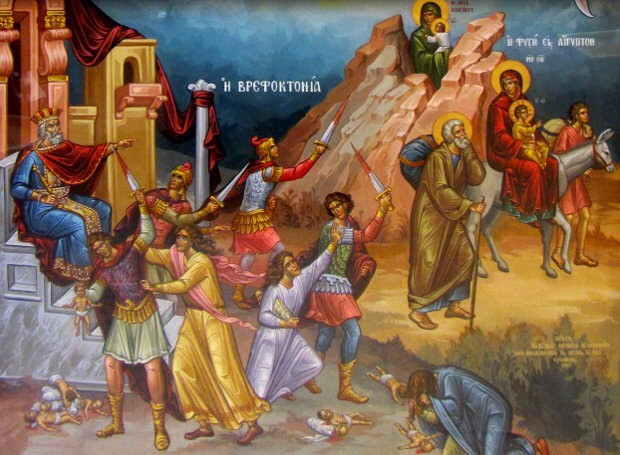
And the story as Matthew tells it continues with a violent pogrom, the slaughter of innocent babies. “Herod was infuriated, and he sent and killed all the children in and around Bethlehem who were two years old or under, according to the time that he had learned from the wise men” (Matt 2:16).

It continue with a rushed journey by the father and mother and their infant child, travelling as refugees seeking safety in a foreign place. They return home some time later, only after the tyrannical despot has died. This later part of the story is featured rarely, if at all, in the classic depictions of the Christmas story.

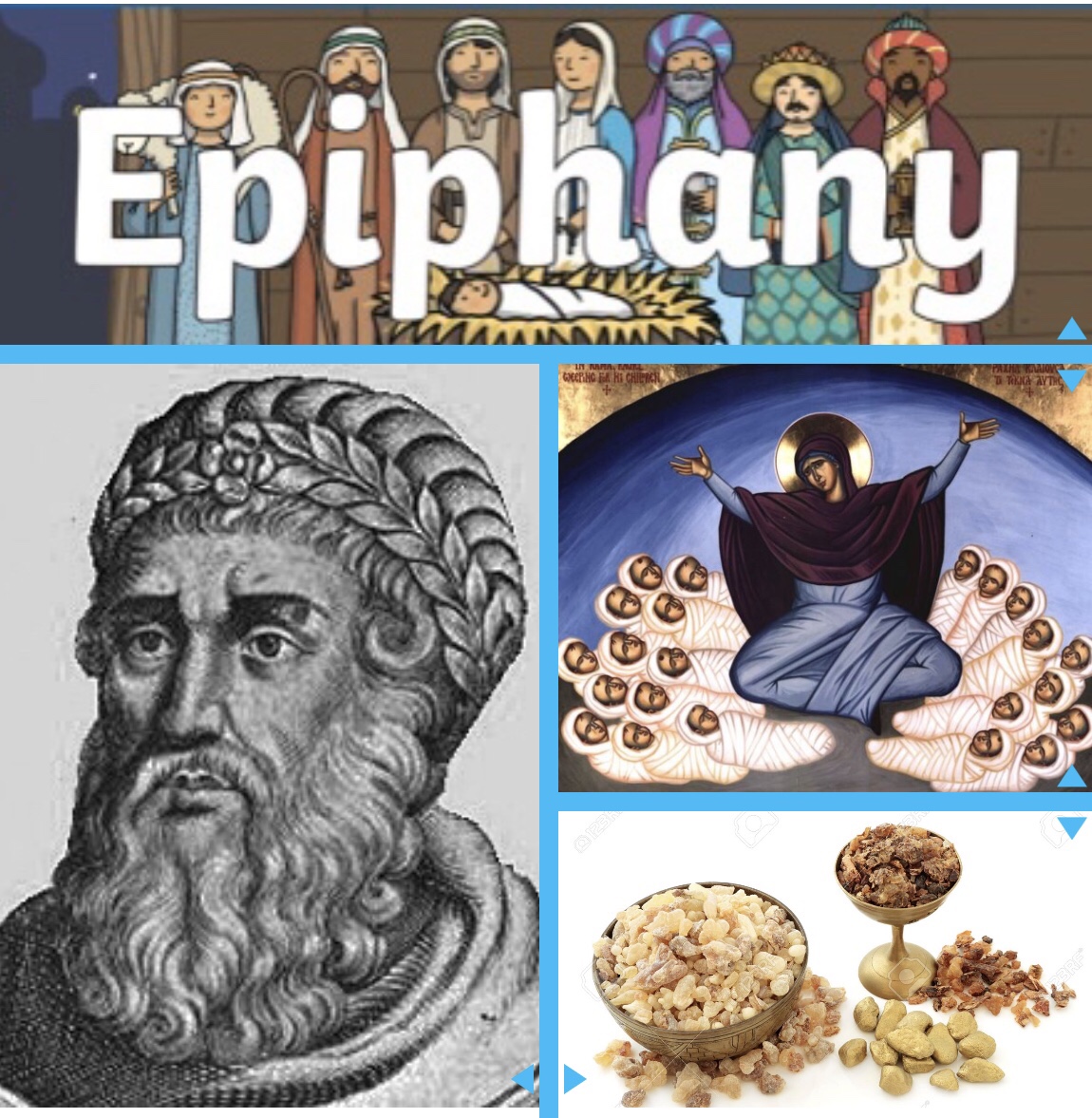
The festival of Epiphany, celebrated after the Twelfth Day of Christmas on 6 January, invites us to think about the journey made by these wise men. The journey is romanticised by the fact that they bring gifts to the infant and his family—gifts of gold, frankincense, and myrrh.

The gifts, it is claimed, are symbolic of what is to come. The gold is considered to symbolise the royal status of the child, as he is of the line of David. The frankincense is connected with the Temple cult, and thus considered a symbol of the priestly role eventually to be played by the child.

Then, there is myrrh, which Christian tradition links with the death that will be experienced by the infant when he has grown to maturity—death at the hands of a Romans, who offered him wine mixed with myrrh as he hung dying on a cross. The story of origins already prefigured the story of ending.

That part of the story—the gifts that the wise men brought—feeds into the romance and wonder that Luke’s version offers (at least, in the way it is usually understood). But the horror, the terror, the violence, the grief, of the events perpetrated under Herod, are not in view. Because Epiphany is about revelation, about light shining forth, about God being known and experienced in the midst of ordinary life.

This year, perhaps we might pause, and wonder: how does the story of Herod’s murderous rampage reveal the presence of God in the story?

I have no answer … just a question. How is God present, evident, shining forth, at such a time?

It is a question that is pressing, given the context in which I, and many Australians, have experienced Advent, Christmas and Epiphany this year.

As the bushfires rage, inflaming and destroying, purpling plumes of smoke into the air and ravaging forests, ecosystems, native animals and stock, as well as human property and human lives—the question seems ever more pertinent: where is God in this catastrophe?

As the early followers of Jesus found hope in the midst of the story of terror and violent destruction, so may we search, explore, and yearn for hope in this current situation.

On hymns that include the story of Herod’s rampage, see https://johntsquires.com/2020/01/03/herod-waiting-herod-watching-herod-grasping-holding-power-matt-2/

For prayers that are appropriate for a time in the midst of bushfires, see https://johntsquires.com/2019/12/22/we-wait-and-hope-and-grieve-anticipating/

and

blessed are you East Gippsland

For a reflective prayer on the wise men, see http://praythestory.blogspot.com/2019/12/make-it-now.html

For an overall comparison of Matthew with Luke, see https://johntsquires.com/2019/11/28/leaving-luke-meeting-matthew/

Herod waiting, Herod watching, Herod grasping, holding power (Matt 2; Christmas 1A)

The book of origins is unique, within the New Testament (and, indeed, within the whole literature of antiquity) in reporting a savage, indiscriminate pogrom, ordered by King Herod, and carried out under his watch—the murder of all infant males under two years of age within Bethlehem (Matt 2:16-18).

The story hardly ever features in any Christmas or Epiphany services or sermons. However, a number of contemporary hymn writers have turned their attention to this story. Shirley Erena Murray, a Presbyterian from Aotearoa New Zealand, is right on the money when she highlights the violence and fear at the heart of the story, claims that the infant in the story has “come to plead war’s counter-case”, and articulates the hope that “goodness will outclass the gun, evil has no tooth that can kill the truth.”

Summer sun or winter skies, Christmas comes —

shepherds, angels, lullabies, words recorded by the wise:

read it in the book — take another look . . . .

Shadows track the hawk in flight, Christmas now —

children born in fire and fight, silent night a violent night,

hawks are in control of a nation’s soul

There where terror plies its trade, Christmas now —

children learn to be afraid, minefields of distrust are laid,

evil is in force on a winning course

Child of peace, God’s human face, Christmas now —

come to plead war’s counter-case, bring the dove a nesting place,

though her wings are torn, though her blood is drawn

Winter skies or summer sun, Christmas comes —

still the threads of hope are spun, goodness will outclass the gun,

evil has no tooth that can kill the truth.

That is why the ancient story resonates so strongly with our situation today. Not because “it really happened, exactly like this”, but because it takes us to the centre of our humanity and reveals the depth of God’s presence in our midst. We ought to sing more about it!

http://www.hopepublishing.com/html/main.isx?sitesec=40.2.1.0&hymnID=430

Another contemporary hymn writer who has turned his attention to the story of Herod’s tyrannical rampage against the male children in Bethlehem, is the British Methodist, the Rev. Dr Andrew Pratt. Here is a powerful hymn which he has written about this story.

Herod waiting, Herod watching,

Herod grasping, holding power,

Herod fearful for the future,

Herod counting every hour.


Now the thing that he was fearing:

love and justice, peace and health,

here embodied in a person,

God incarnate, heaven’s wealth.


This was more than he could stomach,

human wine skins tear and rend.

Herod’s dream had been confounded,

human power had met its end.


Many children now were crying,

temper triumphed, babies dead.

Mary, Joseph made an exit,

every step was filled with dread.


Into exile they were driven,

fear would ripple through each life:

Jesus challenged vested interests.

Gracious love fuelled hate and strife.


And the children still are crying,

forced to war and harmed by hate.

Still our world is deaf to hear them,

still our loving comes too late.

© Andrew Pratt 18/11/2010

First after Christmas, Matthew 2: 13 – 23,

Herod, Holy Innocents, the flight into Egypt.

https://www.umcdiscipleship.org/resources/herod-waiting-herod-watching

What a pity that this potent story, full of pathos, and so resonant with events in the world in which we live today, has all but faded from view in the story that is recounted each Christmas. There are clear words in these carols which show how the story challenges political values and policies and how it connects with the deepest feelings of human existence.

For more on Epiphany, see next post