A parable of grace—and a story of grace (Matt 20 and Matt 27; Pentecost 17A)

A sermon on Matthew 20:1–16, written and preached by the Rev. Elizabeth Raine

The Gospel of Matthew was the subject of my PhD research, and I so enjoy teaching that Gospel to groups of people, especially when it comes around in the lectionary (as it has this year). And this might well lead you to think that I look forward to being able to share something of my interest in that gospel in weekly sermons.

However, I have found that as much as I like teaching Matthew, I actually don’t like preaching Matthew—at least not the passages that have fallen to my lot in recent months. You may have noticed that in most of the gospel readings we have heard over the few months, there is almost always a line or two about judgment, eternal punishment, and wailing and gnashing of teeth. Last week’s reading was no exception, with the unforgiving slave finding himself not only unforgiven, but also condemned to be tortured.

Matthew is very fond of predicting a harsh judgment and eternal punishment for his enemies. His gospel contains more references to hell and eternal punishment that most of the New Testament put together, with the possible exception of the book of Revelation. He sneaks these references into his material wherever possible, changing his Markan source to reflect his own interests in God’s wrath.

Now while this is interesting to teach, it is not very helpful when trying to construct a sermon that is meant to give food for thought and help folk reflect on their faith. Not all of us want our enemies to be gnashing teeth and wailing in hell. When I teach and research Matthew, I find myself often asking this question of Matthew’s gospel: what are its redeeming features as far as nurturing faith goes?

This is actually tricky to answer. Even last week’s teaching on forgiveness was undermined by the harsh punishment of the slave. And Matthew is actually a grace-free gospel, in that the Greek word for grace, charis, is never used by the author. Many of the stories in Matthew have a pronounced down side. Matthew often includes things such as alienation from family, name-calling, murder, impossible ethical demands and eternal damnation in his gospel.

However, Matthew does have one unique and I think, extraordinary act of redemption in his gospel, apart from Jesus’ death.
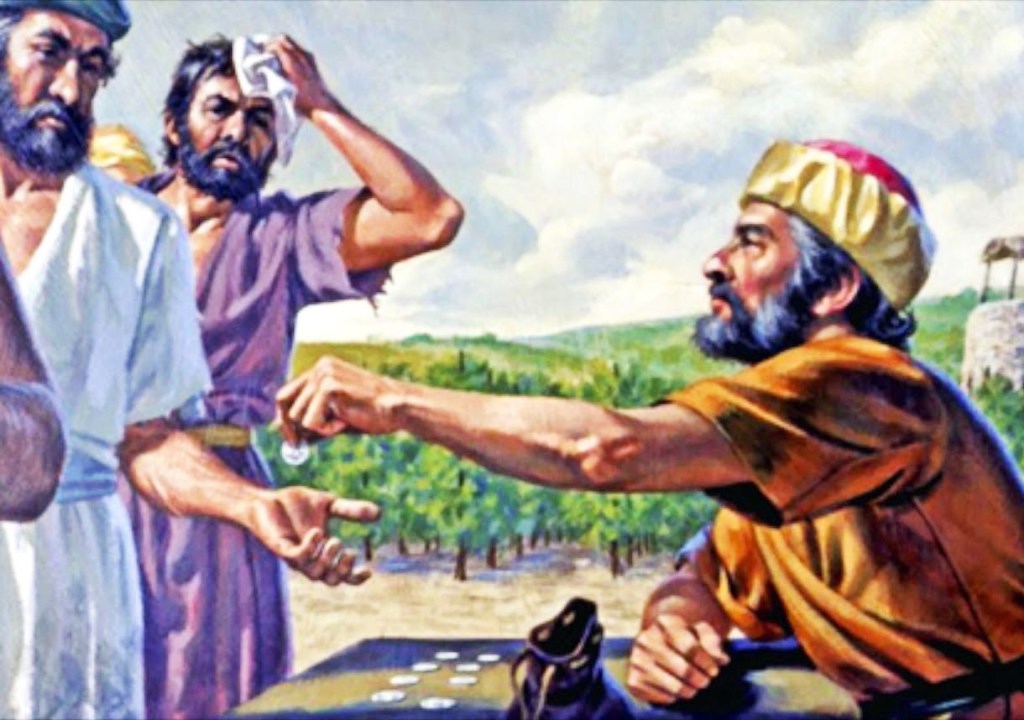
I will start with explaining what this is by using this week’s reading. The parable we encounter in this passage (Matt 20:1–16) is unique to Matthew’s Gospel. As such, it may be considered an insight into the special focus of the Gospel, and reflect something of the writer’s understanding of life around him in first century Palestine.

This story of the vineyard workers may well be taken straight from agricultural life in a Palestinian village. Like many of Jesus’ parables, it draws on images and practices familiar to the lifestyle of the crowds who gathered around Jesus to listen to him. Such familiarity would have caught the crowd’s attention and helped them understand the religious teaching that Jesus wanted to convey.

Like many of Jesus’ parables, though, the story has an unexpected twist. Even in first century Palestine, the concept of equal work for equal pay was an established principle. But here we find the vineyard owner paying the same wage to the labourers, regardless of how much or how little time they worked during the day. Such an uneconomical practice must have taken the crowd by surprise. What lord or owner would make such a foolishly generous offer?

The clue is in the last verse of the story, in a saying that Jesus has used a number of times, and one that was no doubt familiar to his disciples and regular followers: “the last shall be first and the first shall be last”.

With this phrase, the vineyard is revealed as the kingdom of heaven, and the owner is, of course, God – the God who is as generous to those who seek his kingdom at the last minute as he is to those who found it much earlier.

The verses which follow after this parable show that it must have been difficult for the disciples to hear, especially James and John! The request of the mother of James and John made it clear that they and the other disciples had given up everything they had to follow Jesus, with the expectation of heavenly reward. Now those who would join the movement later, who have not given up so much or suffered as long, would be greeted by God as equals.

Most scholars think that Matthew may have included this story to defend Jesus’ inclusion of sinners in the kingdom as well as the righteous, though this doesn’t explain why the emphasis is on those who come to the kingdom later. Maybe Jesus meant the story to be understood symbolically, with the ‘last’ being the same as the ‘least’, and thus servanthood and humbleness are being emphasised.
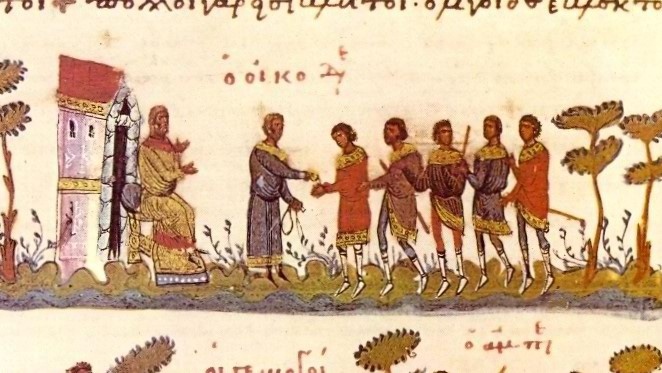
I have another take on this. In a swift segue, I am now jumping into another story in Matthew that does not make it into the lectionary. And that is the story of Judas.

What do we remember Judas for? What is his story? Does anyone remember how Judas died?

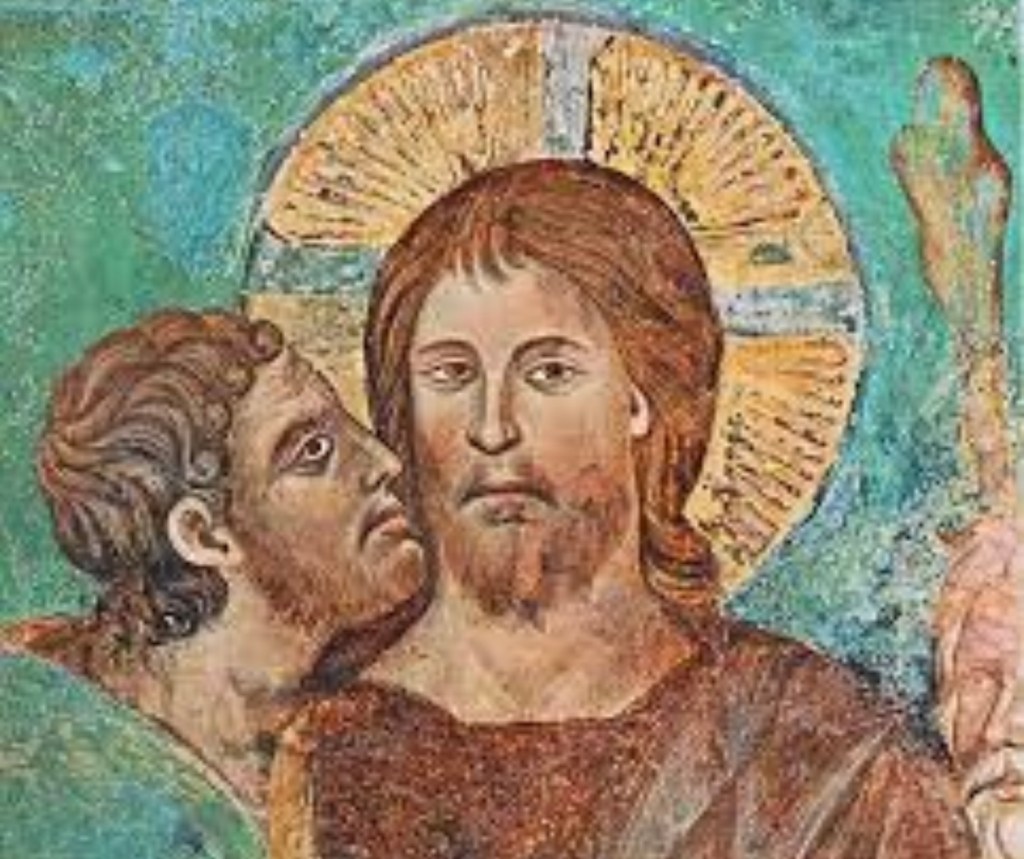
All the gospels state that Judas goes to the chief priests and asks for money to betray Jesus. Luke and John both state that Satan entered into Judas. John also calls him a devil and a thief. All the gospels have Judas arrive in the Garden of Gethsemane to betray Jesus with a kiss. It is what happens after this that is unique to Matthew.

Judas, as befitting his actions, meets with an untimely end. There is one version of Judas’ death in Acts: this man acquired a field with the reward of his wickedness; and falling headlong, he burst open in the middle and all his bowels gushed out. This became known to all the residents of Jerusalem, so that the field was called in their language Hakeldama, that is, Field of Blood. (Acts 1:18).

Another less familiar version of Judas’ death is found in the second century church father Papias. Papias obviously had a colourful imagination. A fourth century bishop named Apollonius cites what a second century bishop named Papias apparently claimed about Judas: Judas did not die by hanging, but lived on, having been cut down before choking. And this the Acts of the Apostles makes clear, that falling headlong his middle burst and his bowels poured forth.

Apollonius goes on to say that Papias the disciple of John records this most clearly, saying thus in the fourth of the Exegeses of the Words of the Lord: Judas walked about as an example of godlessness in this world, having been bloated so much in the flesh that he could not go through where a chariot goes easily, indeed not even his swollen head by itself. For the lids of his eyes, they say, were so puffed up that he could not see the light, and his own eyes could not be seen, not even by a physician with optics, such depth had they from the outer apparent surface. And his genitalia appeared more disgusting and greater than all formlessness, and he bore through them from his whole body flowing pus and worms, and to his shame these things alone were forced [out]. And after many tortures and torments, they say, when he had come to his end in his own place, from the place became deserted and uninhabited until now from the stench, but not even to this day can anyone go by that place unless they pinch their nostrils with their hands, so great did the outflow from his body spread out upon the earth.

One of the exercises we do in introduction to New Testament Studies is to examine which, or indeed, any account of the death of Judas could be historical. Most of the students find these two versions to be fiction. But we do have another account in the gospel of Matthew.

Matthew treats Judas differently from the beginning. For a start, only Matthew mentions the sum of 30 pieces of silver being Judas’ fee for the betrayal. The sum of 30 shekels of silver was the value put on the Lord by the corrupt leaders of Israel in the book of Zechariah.

Only in Matthew does Judas ask the question “Is it I, Rabbi?” when Jesus states that one of them will betray him. Just as an aside here, in Matthew’s gospel, Jesus is only called rabbi twice, and both times it is by Judas.

At the moment of the betrayal, only in Matthew does Jesus refer to Judas as ‘friend’, and he also tells him “may that for which you are here be done”. This is rather different to the question of Luke’s Jesus: “Judas, do you betray me with a kiss?” The Jesus of Mark and John says nothing to Judas at this point.

Whilst the account found in Luke—Acts indicates that Judas goes off to enjoy his ill-gotten gains, and is only cut short in this aim by some judicious punishment on God’s part, the story is very different in Matthew.

In a passage unique to this gospel, the Judas of Matthew is overcome with remorse when he sees Jesus is condemned. He repents, returns the thirty pieces of silver to the chief priests and elders, and states that he has “sinned by betraying innocent blood”. Met with disinterest and no compassion by the priests, Judas throws the money down in the temple, then leaves, to hang himself. The Greek in Matthew leaves us in no doubt as to Judas’ self-inflicted fate, despite Papias’ attempts to resurrect him so he can then unrepent, and go off and buy his field as per the account in Acts.
Judas, through Christian history, has been demonized for his actions. One can see this beginning in the later gospels of Luke and John, who insist that Judas was a sinner possessed by the devil or Satan, and of course in the later Papias, whose Judas is a very caricature of evil. Matthew does not join in this demonisation of Judas. Not only that though, Matthew goes even further, in that Matthew offers to Judas one of the greatest acts of salvation in our New Testament – he actually redeems Judas.

How can you be sure of that?, I hear you cry. Firstly, note that Judas repents. Repent is a word used sparingly in this gospel. It first appears with John the Baptist, he cries to people to ‘repent for the kingdom of heaven draws near”. John also tells them to ‘bear fruit worthy of repentance’. Jesus echoes the cry of ‘Repent, for the kingdom has drawn near’ in the next chapter.

In chapter 11, Jesus upbraids the cities of Chorazin and Bethsaida for not repenting, despite having many miracles carried out in them. In chapter 12, he reminds the unrepentant that the city of Ninevah repented when hearing Jonah’s proclamation about God. Where does Judas’ repentance fit with this?

The depiction of Judas throughout Christian history as infamy embodied has led most exegetes to the conclusion that this repentance in Matthew is merely regret, and not genuine repentance.

I have two things to say to this view. Firstly, it would seem that suicide is a rather drastic reaction to mere regret. Suicide speaks of deep remorse and repentance to me. Secondly, Matthew does not use ‘repent’ unless he means it. In fact, in the parable that follows this one in chapter 22, Matthew uses this very word to describe the actions of the son that initially refused to work in the vineyard, then changed his mind (or repented) and went. Jesus makes the point it is this son who did the will of the father.

So we should assume that Judas’ repentance is genuine. This is underscored by Judas not keeping the money but returning it.

Last of all, we need to consider Judas’ motivation in his act of betrayal. In looking at this, we should note firstly that Jesus goes to his death obedient to the will of God. Judas, therefore, becomes part of enacting the will of God. So the question is raised, “Does Judas have a choice”? I am sure that Matthew doesn’t think so, despite Jesus saying earlier ‘woe to the one who betrays the son of man’. The eventual fate of Judas bears out Jesus words, but does not damn him eternally.

The next surprise is that Jesus calls Judas ‘friend’ at the moment of betrayal, and makes the thoughtful statement “may that for which you are here be done” to Judas, implying some sort of foreordained action. 

The knock down argument is the scriptural fulfillment that follows hard on the telling of Judas’ demise, when the priests decide to purchase a field with the money:

Then was fulfilled what had been spoken through the prophet Jeremiah, “And they took the thirty pieces of silver, the price of the one on whom a price had been set, on whom some of the people of Israel had set a price, and they gave them for the potter’s field, as the Lord commanded me.” (Matt 27:9–10)

And Judas’ actions in betraying Jesus for 30 pieces of silver, is from the prophet Zechariah, another scriptural fulfillment allusion to the betrayal and sale of the Lord.

Now Matthew’s God is somewhat wrathful in his judgments, but is always just. If Judas had no choice, how can he then be condemned?

Judas’ suicide resembles that of Ahithophel, the man who had assisted Absalom in his rebellion against King David, and was thus the betrayer of David. Like Judas, Ahithophel hangs himself, yet is still described by many of the rabbis as having entered the world to come, or heaven as this world was known.

Judas not only shows regret and remorse, he repents, and in doing so, makes a confession to the priests of his guilt. He returns his ill-gotten gains. When the priests refuse to take the money, Judas throws it into the temple. When they do not reconsider his crime for the shedding of innocent blood, Judas enacts the appropriate punishment on himself. He seeks to make atonement through his own death.

Christians have always given lip service to the notion that even in the last days of life, true repentance is possible. However, the tradition in regard to Judas has consistently and systematically denied him this.

Not so Matthew. His parable of the workers in the vineyard insists that all who come to the right understanding of Jesus and God, even if it be very late in the day, will be welcome in the kingdom. Surely, in accord with the story he tells, this must include Judas.

Matthew, this grace-free, most judgmental of gospels, is also the gospel that extends the most mercy to one of Christianity’s most hated characters. Whatever Matthew’s exact reasons for his version of events, the parable – and its corollary in the story of Judas – surely must remind us of God’s overwhelming grace, a grace that is inclusive of all who would seek God.

It was reckoned to him; it will be reckoned to us (Rom 4; Pentecost 2A)

This Sunday, we start into a series of readings offered by the lectionary from the longest and most theologically weighty letter written by Paul—that addressed “to all God’s beloved in Rome, who are called to be saints” (Rom 1:7). Although it has this specific, localised audience in view, the letter has become a declaration heard and taken up and studied carefully by Christians right around the world, across millennia of years.

A reading from Romans will be offered each week until the Sixteenth Sunday after Pentecost (this year, 2023, that falls on 17 September). So we will have many weeks to consider the theological exposition that Paul provides. This letter is generally regarded as the most explicit and detailed exposition of the theological commitments which had energised Saul of Tarsus to spend years of his life “to be a minister of Christ Jesus to the Gentiles in the priestly service of the gospel of God, so that the offering of the Gentiles may be acceptable, sanctified by the Holy Spirit” (Rom 15:16). For this enterprise, he is well-known as the “Apostle to the Gentiles”.

In the structuring of the lectionary, the sequence of excerpts from Romans should begin with a declaration of the central theme of the letter (1:16–17) and the rich passage that details how God death with human sinfulness through Jesus (3:21–28). These two short, but central, sections of the letter are offered on the Sunday known as Proper 4, the first Sunday after Pentecost.

However, because Easter was (relatively) later this year, Pentecost is also later, and so this reading is not offered by the lectionary this year. Proper 4 is to occur “on the Sunday in between May 29 and June 4 inclusive, if after Trinity Sunday”; as Trinity Sunday this year fell on 4 June, there is no Proper 4 in 2023.

So we begin with Proper 5, for “the Sunday between June 5 and June 11 inclusive”—this year, Sunday 11 June. Which means that we have missed the initial declaration of the Gospel which Paul proclaims in this long letter; the Gospel which is “the power of God for salvation to everyone who has faith, to the Jew first and also to the Greek”, the Gospel in which “the righteousness of God is revealed through faith for faith” (Rom 1:16–17).

This theological understanding is set forth, initially, through a quotation from a short book in Hebrew Scripture, that of the prophet Habakkuk. This prophet is a shadowy figure, known, really, for only one statement—just half of one verse. That is the short statement, “the righteous live by their faith [or faithfulness]” (2:4b), which stands as the text upon which Paul developed his important theological statement in Romans: “in it [the gospel] the righteousness of God is revealed through faith for faith; as it is written, ‘the one who is righteous will live by faith’” (Rom 1:17).

In the context of Habakkuk’s prophetic activity, the affirmation that “the righteous live by their faith [or faithfulness]” (2:4b) is the word that God gives to the prophet, responding to his complaints about what sufferings are taking place. Habakkuk’s complaints come because God is “rousing the Chaldeans, that fierce and impetuous nation, who march through the breadth of the earth to seize dwellings not their own” (1:6), and through their dreadful and fearsome activities, God is “destroying nations without mercy” (1:17).

You can read more of my take on the short book of Habakkuk at

The claim that God is using foreigners to deal with Israel is a striking theological development—one that is at odds with the traditions that emphasise Israel as a chosen nation, holy and set apart, dedicated to the Lord; the nation alone through whom the Lord God works. That this God will use foreigners is a theme found also in the later writings of Deutero-Isaiah (Isa 40–55), where Cyrus, the Persian ruler, is acclaimed as the one chosen by God, the Messiah, to allow the people of Judah to return to their land (Isa 44:24–45:13).

That God is at work amongst people who are not of Israel resonates, of course, with the activity that Paul and his fellow-workers had been undertaking amongst the Gentiles (those not of the people of Israel)—although Paul is not working in a context of oppression and threatening invasion. So this brief citation from Habakkuk is entirely apposite for Paul’s work and his writings. And as the later chapters of Roman clearly show, God has indeed been at work amongst the Gentiles in Rome.

On the overall theological argument developed in Romans, see

*****

So in the passage that the lectionary offers us for this Sunday (4:13–25), we have the second part of Paul’s discussion of the patriarch Abraham—“the father of all nations” (4:17, citing Gen 17:5) and the figure who stands as the archetype for the message of the Gospel, that “the one who is righteous will live by faith” (1:17, citing Hab 2:4).

In this discussion, Paul is insistent that Abraham stands as the example supreme for that Gospel, since “his faith was reckoned to him as righteousness” (4:3, quoting Gen 15:6, and repeating this at Rom 4:9 and 4:22–23). And more than this: what was done with Abraham “will [also] be reckoned to us who believe in him who raised Jesus our Lord from the dead” (4:24).

This second half of the discussion of Romans 4 comes after Paul has established the universal scope of God’s providential grace—for this is how God meets the universal spread of sinfulness amongst human beings. So Paul focusses on the faith that Abraham showed, and its importance for believers in Rome (and elsewhere). The thesis for this part of the argument is that the promise to Abraham (which he was given in Gen 12:1–3) was “not through the law but through the righteousness of faith” (4:13).

First, Paul indicates that the promise cannot be fulfilled only through “the adherents of the law”, for “the law brings wrath” (4:14–15; he expands on this in chapter 7). Then, he asserts that the promise must rest on faith, both to those who adhere to the law but also “to those who share the faith of Abraham” (4:16). Abraham is here described as “the father of all of us”, drawing on yet another scripture citation (Gen 17:5; Paul uses the same argument at Gal 3:15–18, and the phrase is also at play in the debate reported in John 8:41–59).

Then follows further explication of this scripture (Gen 17:5), particularly explaining how Abraham, “hoping against hope”, became “the father of many nations” (4:17b—21). Despite the barrenness of Sarah’s womb (4:19), Abraham “was fully convinced that God was able to do what he had promised” (4:21). To conclude this exegetical foray, Paul quotes, for the third time, the foundational text: “his faith ‘was reckoned to him as righteousness’” (4:22, quoting Gen 15:6).

Paul then explains that these words describe not only the situation of Abraham, long ago in the past, but also the immediate situation of those to whom he writes (4:23–24). This is a foundational aspect of Paul’s hermeneutic; he restates it at Rom 15:4, declaring that the scripture “written in former days was written for our instruction”. See

And so the argument draws to a close, moving back into the heart of Paul’s concern, to expound the Gospel concerning God “who raised Jesus Christ from the dead” (4:24–25). The final verse is most likely a traditional formulaic expression; we find a similar pattern at 1 Cor 15:3–4, a midrashic-style reflection on this pattern at 1 Cor 15:42–44, and a variant form at 2 Cor 5:14–15.

There is also an extended discussion later in the letter to the Romans using the pattern of “Christ, dead and raised”, as the model for believers: “we are buried with him by baptism into death, so that, just as Christ was raised from the dead by the glory of the Father, so we too might walk in newness of life” (Rom 6:4). Paul provides a fuller discussion of this paradigm at 6:3–11, and there is a similar discussion, albeit varied for the different context, at Col 3:11–15.

And so the extended argument set out in all of this chapter takes us from an initial question about Abraham, through an exploration of the story of Abraham and Sarah, to a conclusion about the life of those who place their trust in what God has done through Jesus Christ. That God “will justify [or, reckon as righteous] the circumcised on the ground of faith and the uncircumcised through that same faith” (3:30) is the foundation for then claiming that, in like manner, “it will be reckoned to us who believe in him who raised Jesus our Lord from the dead” (4:24). It is all about being reckoned as righteous on the basis of faith. Thanks be to God!

*****

On the diatribe style that Paul uses here and throughout much of the letter to the Romans, which is reflected in that pattern (“it was reckoned to him … it will be reckoned to us”), see

Gracious and merciful, abounding in steadfast love (Joel 2; Ash Wednesday)

The Hebrew Scripture passage set by the lectionary for Ash Wednesday, the first day in the season of Lent, is part of an extended announcement by the prophet Joel (1:13–2:17), calling the people of Israel to “put on sackcloth and lament” (1:13), “sanctify a fast” (1:14), “blow the trumpet” (2:1) in order to “return to [the Lord] with all your heart, with fasting, with weeping, and with mourning” (2:12). He exhorts the people to offer a prayer to “spare your people, O Lord” (2:17).

The prophet makes this call in the midst of describing the Day of the Lord that is coming—“a day of darkness and gloom, a day of clouds and thick darkness” (2:1–2). He evokes the traditional imagery of repentance—sackcloth and lament, weeping and mourning, prayer and fasting—as the appropriate responses to that Day, even as he utilises the traditional imagery of the doom that awaits on that Day.

The prophets warned of the Day of the Lord; it will be “darkness, not light” (Amos 5:18), it will come “like destruction from the Almighty” (Isa 13:6), as “a day of distress and anguish” (Zeph 1:14). Joel joins his voice with this parade of doom: “Blow the trumpet in Zion; sound the alarm on my holy mountain! Let all the inhabitants of the land tremble, for the day of the LORD is coming, it is near—a day of darkness and gloom, a day of clouds and thick darkness! Like blackness spread upon the mountains a great and powerful army comes; their like has never been from of old, nor will be again after them in ages to come.” (Joel 2:1–2).

Yet the response desired is not meek acceptance, but rather to “return to me with all your heart, with fasting, with weeping, and with mourning; rend your hearts and not your clothing” (Joel 2:12). “Return to the Lord, your God”, Joel advises, highlighting the central purpose of the role of the prophet, to recall the people from their waywardness and lead them to recommit to the covenant with God, which lies at the heart of the identity of the people of Israel. That’s probably the reason that this passage from centuries before the time of Jesus (let alone our time) is set for Ash Wednesday, when the season of Lent begins.

The tradition about Lent is that it is a time for “giving up”, for restraint and abstention and ascetic practices. However, Lent is also a time for returning; for re-connecting with God, for turning back to depend on God, for returning to the heart of faith. And this passage helps to remind us of that purpose.

The passage also provides a further thought which undergirds the call to “return to the Lord”, and that is what it says about the fundamental nature of God. Joel repeats a mantra that must have been important to the people of ancient Israel; an affirmation about the nature of God, the one who, in the midst of the turmoil of the Day of the Lord, stands firm as the one who is “gracious and merciful, slow to anger, and abounding in steadfast love, and relents from punishing” (Joel 2:13).

For, although the Lord is credited as the one who demonstrates his wrath on the Day of the Lord, this divine figure is also one who is willing to step back from the threat of judgement and destruction, who is willing to give a new opportunity to a repentant person, and reach out to them in grace. “Who knows whether he will not turn and relent?”, the prophet asks. And so, he advocates that the people leave “a grain offering and a drink offering for the Lord, your God” (Joel 2:13–14). The process requires maintaining a tangible sign of the intention to return to God: an offering, in ancient Israel, a marking of ashes, on Ash Wednesday, for Christians.

The mantra that Joel offers about God is sounded by another prophet, Jonah; in his prayer to God, begging that God take his life, he affirms that “I knew that you are a gracious God and merciful, slow to anger, and abounding in steadfast love, and ready to relent from punishing” (Jonah 4:2).

The same affirmation about God is made in the story of Moses, after the account of the Golden Calf and the smashing of the first set of tablets containing The Ten Words. Here, Moses is instructed to cut two new tablets of stone, in preparation for renewing the covenant. The Lord then passed before him, declaring, “The Lord, the Lord, a God merciful and gracious, slow to anger, and abounding in steadfast love and faithfulness, keeping steadfast love for the thousandth generation, forgiving iniquity and transgression and sin (Exod 34:6). This citation, however, does maintain the ominous threat that this same Lord is yet “by no means clearing the guilty, but visiting the iniquity of the parents upon the children and the children’s children, to the third and the fourth generation”, so the picture is fuller and more realistic here.

During the time of King Hezeziah (king of the southern kingdom from 715 to 686 BCE, after the reign of Ahaz), after the neglected Temple had been cleansed and sanctified, Hezekiah restored the worship 9f the Lord in the Temple, exhorting the people, “do not now be stiff-necked as your ancestors were, but yield yourselves to the Lord and come to his sanctuary, which he has sanctified forever, and serve the Lord your God, so that his fierce anger may turn away from you” (2 Chron 30:8).

It was a time to “return to the Lord”, and Hezekiah encouraged the people, especially encouraging northerners who had suffered under the Assyrians to return, saying “your kindred and your children will find compassion with their captors, and return to this land; for the Lord your God is gracious and merciful, and will not turn away his face from you, if you return to him.” (2 Chron 30:8–9). That same mantra appears.

Still later, after the southern kingdom had been exiled to Babylon, and then returned to the land and the city, after Ezra had reinstated the Law in Jerusalem and the people had celebrated the Festival of Booths, Ezra prayed at a ceremony to recommit to the covenant, confessing that “our ancestors acted presumptuously and stiffened their necks and did not obey your commandments; they refused to obey, and were not mindful of the wonders that you performed among them; but they stiffened their necks and determined to return to their slavery in Egypt” (Neh 9:16).

Ezra continued in praise of God: “you are a God ready to forgive, gracious and merciful, slow to anger and abounding in steadfast love, and you did not forsake them.” (Neh 9:17). Again, we hear that central affirmation about God, who is also described as “the great and mighty and awesome God, keeping covenant and steadfast love” (Neh 9:32).

It’s a mantra that appears in a number of Psalms. In one, a fry for divine help, we hear, “you, O Lord, are a God merciful and gracious, slow to anger and abounding in steadfast love and faithfulness” (Ps 86:15). Here, the psalmist pleads, “turn to me and be gracious to me; give your strength to your servant; save the child of your serving girl; show me a sign of your favour, so that those who hate me may see it and be put to shame, because you, Lord, have helped me and comforted me” (Ps 86:16–17).

In another, a thanksgiving in praise of God’s steadfast love, we hear the familiar refrain, that “the Lord is merciful and gracious, slow to anger and abounding in steadfast love (Ps 103:8). This psalm continues, “He will not always accuse, nor will he keep his anger forever. He does not deal with us according to our sins, nor repay us according to our iniquities. For as the heavens are high above the earth, so great is his steadfast love toward those who fear him; as far as the east is from the west, so far he removes our transgressions from us. As a father has compassion for his children, so the Lord has compassion for those who fear him.” (Ps 103:9–13).

In another psalm of praise, the psalmist exults, “Great are the works of the Lord, studied by all who delight in them. Full of honour and majesty is his work, and his righteousness endures forever. He has gained renown by his wonderful deeds; the Lord is gracious and merciful. He provides food for those who fear him; he is ever mindful of his covenant.” (Ps 111:2–5).

And in still another psalm of praise, the psalmist affirms, “the Lord is gracious and merciful, slow to anger and abounding in steadfast love; the Lord is good to all, and his compassion is over all that he has made.” (Ps 145:8–9). It is this aged, gracious and merciful, abounding in steadfast love, to whom we turn on this Ash Wednesday, seeking to return to our foundational commitment.

See also

God, merciful and gracious: themes in The Prophets

That God’s grace is central to who God is and how God relates to human beings, is a fundamental claim in the writings of Paul. This affirmation is key to the extended theological,discussion we find in Romans, Paul’s longest letter, where Paul affirms that those who believe “are now justified by his grace as a gift, through the redemption that is in Christ Jesus” (Rom 3:24).

After citing the example of Abraham, justified by “the righteousness of faith” (4:13), which means that the promise rests on grace (4:16), Paul explains that, “since we are justified by faith, we have peace with God through our Lord Jesus Christ, through whom we have obtained access to this grace in which we stand” (5:1–2).

So Paul rejoices that “the grace of God and the free gift in the grace of the one man, Jesus Christ, [has] abounded for the many” (5:15), and he tells the Romans that “sin will have no dominion over you, since you are not under law but under grace” (6:14). It is God’s grace which marks the life of those who believe in Jesus as Messiah—the Messiah who, in an act of supreme graciousness, “while we were still weak, at the right time [this Messiah] died for the ungodly” (5:6).

Even when considering his unbelieving brothers and sisters in Israel, Paul insists that “God has not rejected his people” (11:1), for “the gifts and the calling of God are irrevocable” (11:29); accordingly, “there is a remnant, chosen by grace” (11:5), demonstrating that God remains persistently faithful to God’s people, for “if it is by grace, it is no longer on the basis of works, otherwise grace would no longer be grace” (11:6). God’s grace is the key.

This key theological motif is signalled in the standard greeting that we find at the start of every one of Paul’s seven authentic letters—“Grace to you and peace”, or some minor variant (Rom 1:7; 1 Cor 1:3; 2 Cor 1:2; Gal 1:3; Phil 1:2; 1 Thess 1:1; and Phlm 3). The greeting appears as well in many of the other letters collected in the New Testament (Col 1:2; Eph 1:2; 2 Thess 1:2; 1 Tim Q:2; 2 Tim 1:2; Tit 1:4; 1 Pet 1:2; 2 Pet 1:2; 2 John 3; Rev 1:4).

A blessing of grace also closes each of Paul’s authentic letters (Rom 16:20; 1 Cor 16:23; 2 Cor 13:13; Gal 6:18; Phil 4:23; 1 Thess 5:28; Phlm 25) as well as a number of other letters (Col 4:18; Eph 6:24; 2 Thess 3:18; 1 Tim 6:21; 2 Tim 4:22; Tit 3:5; Heb 13:25; 2 Pet 3:18) as well as the very last book of the New Testament (Rev 22:21). Each time, it reminds us of this central theological claim about God: God is a god of grace.

In reporting on the activities of Paul, the writer of Acts notes that his preaching told of the grace of God (Acts 13:43; 14:3; 20:24, 32). Indeed, in a rare moment of theological concordance, Peter is said to have concluded his speech to the council in Jerusalem with a characteristically Pauline flourish, affirming that “we believe that we will be saved through the grace of the Lord Jesus, just as they [the Gentiles] will” (Acts 15:11).

So God’s grace is central to early Christian understandings of God—and the fourth evangelist places it front and centre in his portrayal of Jesus, “the Word [who] became flesh and lived among us”, known to us as being “full of grace and truth” (John 1:14). (None of the Synoptic Gospels employ the precise term; many commentators, however, influenced by the predominance of grace in Pauline theology, interpret the way that Jesus offers forgiveness of sins—Mark 2:10 and parallels; Luke 23:34; Acts 5:31; 10:43; 13:38—to be an expression of God’s grace.)

The letter to the Hebrews describes Jesus as being seated on “the throne of grace”, which we are to approach “with boldness, so that we may receive mercy and find grace to help in time of need” (Heb 4:16). The letter attributed to James affirms that God “gives all the more grace”, citing the text that “God opposes the proud, but gives grace to the humble” (Jas 4:6, quoting Ps 138:6), whilst 1 Peter closes with a claim that was is contained in that letter reveals something of “the true grace of God” (1 Pet 5:12). That God is gracious is a fundamental theological claim in the New Testament.

*****

This is not a new insight into the nature of God, however. Centuries before, faithful Israelite people had grasped the same insight and expressed it in clear and unambiguous ways. The prophet Joel attests that God is “gracious and merciful, slow to anger, and abounding in steadfast love, and relents from punishing” (Joel 2:13).

The same note is sounded by another prophet, Jonah; in his prayer to God, begging that God take his life, he affirms that “I knew that you are a gracious God and merciful, slow to anger, and abounding in steadfast love, and ready to relent from punishing” (Jonah 4:2).

It is the very same affirmation about God which an explicit priestly writer placed on the lips of Moses, after the account of the Golden Calf and the smashing of the first set of tablets containing The Ten Words. Here, Moses is instructed to cut two new tablets of stone, in preparation for renewing the covenant. The Lord then passed before him, declaring, “The Lord, the Lord, a God merciful and gracious, slow to anger, and abounding in steadfast love and faithfulness, keeping steadfast love for the thousandth generation, forgiving iniquity and transgression and sin” (Exod 34:6).

During the time of King Hezeziah (king of the southern kingdom from 715 to 686 BCE, after the reign of Ahaz), once the neglected Temple had been cleansed and sanctified, Hezekiah restored the worship of the Lord in the Temple, informing the people that “the Lord your God is gracious and merciful, and will not turn away his face from you, if you return to him” (2 Chron 30:8–9).

Still later, after the southern kingdom had been exiled to Babylon, the prophet Jeremiah affirmed that God pledges to the exiled people, “I will be the God of all the families of Israel, and they shall be my people”, and then affirms that “the people who survived the sword found grace in the wilderness”, and continues by restating that “I have loved you with an everlasting love; therefore I have continued my faithfulness to you” (Jer 31:1–3).

These are the opening words of the chapter that contains Jeremiah’s most famous oracle, in which God promises, “I will make a new covenant with the house of Israel and the house of Judah … I will put my law within them, and I will write it on their hearts; and I will be their God, and they shall be my people … I will forgive their iniquity, and remember their sin no more” (Jer 31:31–34). That is deep, deep covenant love, expressing God’s thoroughly grace-filled character.

Later still, as the people returned to the land and the city, after Ezra had reinstated the Law in Jerusalem and the people had celebrated the Festival of Booths, Ezra prayed at a ceremony to recommit to the covenant, praising God as “a God ready to forgive, gracious and merciful, slow to anger and abounding in steadfast love, and you did not forsake them.” (Neh 9:17). Again, we hear that central affirmation about God, who is also described as “the great and mighty and awesome God, keeping covenant and steadfast love” (Neh 9:32).

It’s a mantra that appears in a number of Psalms. In one, a cry for divine help, we hear, “you, O Lord, are a God merciful and gracious, slow to anger and abounding in steadfast love and faithfulness” (Ps 86:15). Here, the psalmist pleads, “turn to me and be gracious to me; give your strength to your servant; save the child of your serving girl; show me a sign of your favour, so that those who hate me may see it and be put to shame, because you, Lord, have helped me and comforted me” (Ps 86:16–17).

In another psalm, a thanksgiving in praise of God’s steadfast love, we hear the familiar refrain, that “the Lord is merciful and gracious, slow to anger and abounding in steadfast love” (Ps 103:8). This psalm continues, “He will not always accuse, nor will he keep his anger forever. He does not deal with us according to our sins, nor repay us according to our iniquities. For as the heavens are high above the earth, so great is his steadfast love toward those who fear him; as far as the east is from the west, so far he removes our transgressions from us. As a father has compassion for his children, so the Lord has compassion for those who fear him.” (Ps 103:9–13).

In another psalm of praise, the psalmist exults, “Great are the works of the Lord, studied by all who delight in them. Full of honour and majesty is his work, and his righteousness endures forever. He has gained renown by his wonderful deeds; the Lord is gracious and merciful. He provides food for those who fear him; he is ever mindful of his covenant.” (Ps 111:2–5).

And in yet another psalm of praise, the psalmist affirms, “the Lord is gracious and merciful, slow to anger and abounding in steadfast love; the Lord is good to all, and his compassion is over all that he has made.” (Ps 145:8–9). It is this God, gracious and merciful, abounding in steadfast love, to whom people of faith turn in regular prayers of supplication and petition.

So we need to let go of the archaic and inaccurate claim that “the God of the Old Testament is a god of wrath, the God of the New Testament is a god of love”. God, in both testaments, with equal intensity and equal integrity, is a God of love, abounding in steadfast love—a God of grace, indeed!

*****

Alongside this strong prophetic affirmation of the grace of God, there is a similarly-strong thread that insists that God will judge the people of God in accordance with their faithfulness, or infidelity, to the covenant that God has made with them. Thus, alongside the God of grace in texts of the Hebrew prophets, stand many texts about the wrath of God, to be delivered on The Day of the Lord. See https://johntsquires.com/2022/09/12/the-day-the-end-themes-in-the-prophets/

How are we to reconcile these two aspects of God? That is the task that our biblical witness invites us to undertake for ourselves!

See also https://johntsquires.com/2021/08/16/justice-and-only-justice-you-shall-follow/

For freedom Christ has set us free (Galatians, Pentecost 2C, 3C, 4C)

As the epistle is the lectionary for this Sunday and the following two Sundays comes from Paul’s letter to the Galatians, here is an Introduction to Galatians.

Paul’s letter to the Galatians begins in a dramatic, striking fashion. Almost all of Paul’s letters begin with a prayer of thanksgiving, designed to strengthen the relationship between Paul and those to whom he writes.

Not so in Galatians: in place of a friendly thanksgiving, Paul launches straight into a devastating criticism of the Galatians (1:6–9). In quick succession, he criticizes their activities, attacks the beliefs they have adopted from their teachers, and invokes a curse on their heads. What do we make of this language used by Paul?

Strong language is not uncommon in Paul’s letters. It was also widespread amongst the educated class of the day, who had been taught how to mount a strong and effective criticism by the careful use of rhetorical techniques. Rhetoric was taught to privileged young (male) members of Graeco-Roman society—which would have included Paul.  

So Paul uses familiar rhetorical techniques to address the situation in Galatia. Other teachers had visited the Galatian community, and had taught the Christians there things that were at odds with what Paul was teaching. Paul uses rhetoric to persuade the Galatians to dissociate themselves from the teachings that apparently had been so effective amongst them.

If we knew precisely who the Galatians were, what group of teachers had been active amongst them, or what specific matters caused Paul to write this letter, we might be better placed to adjudicate on this matter. Unfortunately, we don’t have this kind of information.

The letter is sent to communities of faith in a whole region (Galatians 1:2), not a single city or town. Acts indicates that Paul visited there with Barnabas: he visited Pisidian Antioch (Acts 13:14–14:23) and later with Timothy (18.23). But we learn no further specifics of the Galatian churches from Acts. (There is a similar vagueness about the date of the letter: “late 40s or early 50s” is most often cited.)

The key themes of this letter relate to the Law, freedom, and unity.

The gospel that Paul proclaims makes believers “one in Christ”. This unity overshadows all divisions: as the most famous words in this letter declare, “there is no longer Jew or Greek, there is no longer slave or free, there is no longer male and female” (3:28).

The threat against this unity has arisen through the insistence of other teachers that true faith requires, first, circumcision (2:12; see Acts 15:1, 5). Paul asserts that these other teachers want their followers to be circumcised—although surprisingly, he notes, they themselves “do not obey the law” (6:13).

Paul claims that the “circumcision faction” were preaching “another gospel” (1:6) in which they actually “pervert the gospel” (1:7). He calls them “false believers” (2:4) who have “bewitched” the Galatians (3:1). His vehemence at one point is such that he exclaims, “I wish those who unsettle you would castrate themselves!” (5:12).

Paul’s problem, of course, is that he himself is circumcised, as he mentions at Philippans 3:5 (a fact that he omits when he rehearses his past at Galatians 1:13–14). How can he advocate the opening of the faith to those who are not circumcised, when he himself bears this sign of the covenant?

He insists that the Galatians “become as I am” (4:12), and yet threatens that “if you let yourselves be circumcised, Christ will be of no benefit to you” (5:2). What applies to Gentile converts must be different from what is the case amongst Jewish converts.

Circumcision was the pre-eminent sign of the Law for Jewish believers. Paul wants to move the Galatians away from their understanding of the Law. He re-interprets the scriptural passage that lies behind this Jewish custom. Galatians 3:1–5:1 thus contains a tightly-argued, complex argument concerning the Law.

Paul uses the story of Abraham, the patriarch to whom the requirement of circumcision was first commanded, as a sign of the covenant (Genesis 17). He interprets this story without once mentioning circumcision (3:6–18). It is the faith of Abraham, in believing God’s promise, that secured him righteousness (3:6–7) and opens the promise to Gentiles (3:8–9). It is that promise which is now fulfilled in Christ (3:13–14, 16, 29). This is the pathway to freedom in faith.

This letter demonstrates that freedom is at the heart of the Gospel. Paul offers this freedom anew to the believers in Galatia. The Gospel frees them from the complex web of duties and responsibilities under the Law.

The call to freedom (5:1, 13) becomes a platform for ethical guidance, grounded in love (5:13–14), manifested in living by the spirit (5:22–26), not by the flesh (5:16–21). This ethic requires believers to “bear one another’s burdens” (6:2) and to “work for the good of all” (6:10). In this way, they will become “a new creation” (6:15). The gospel, which brings liberation in community (3:28), will also lead to liberation for the creation (6:15).

Galatians is important because of the central theme of freedom that it articulates. In what ways does your faith provide you with a sense of freedom?