Skip to content

An Informed Faith

John T Squires

An Informed Faith

Tag: Luke

Accepting, or rejecting, the purpose of God (Narrative Lectionary for Epiphany 6C; Luke 7)

Accepting, or rejecting, the purpose of God (Narrative Lectionary for Epiphany 6C; Luke 7)

The passage which is proposed by the Narrative Lectionary for this coming Sunday contains material concerning the relationship between John and Jesus. Luke has indicated, in the first chapter of his Gospel, that these two figures were related. As the angel Gabriel tells the young Mary that “you will conceive in your womb and bear a son” (Luke 1:31), he also informs the young girl that “your relative Elizabeth in her old age has also conceived a son” (1:36). 

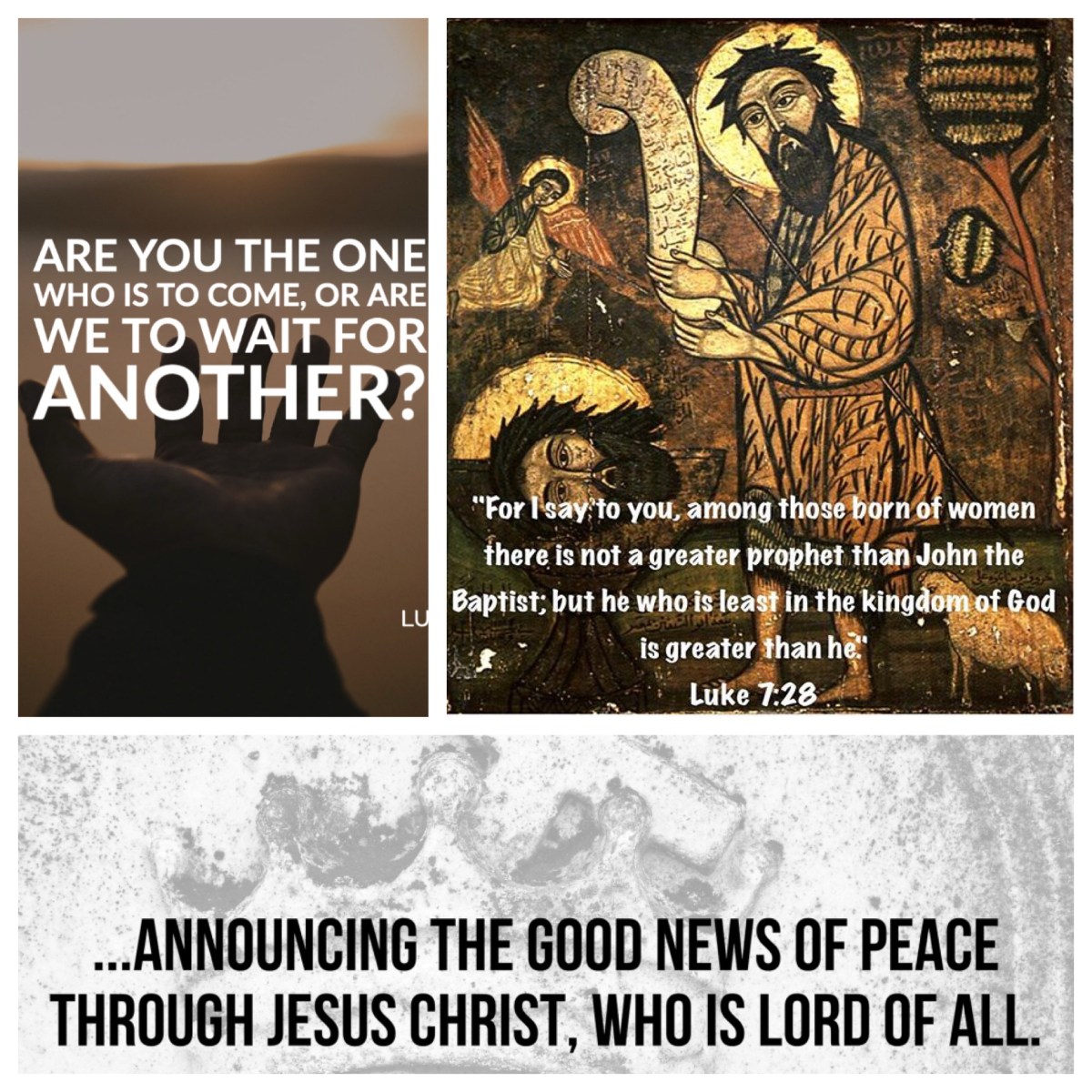
The Greek word used there, συγγενίς, was translated as “cousin” in the King James Version. However, the NIV recognizes that it has a broader sense of “relative”, while the NRSV translates it as “kinswoman”, without necessarily specifying the nature of the relationship. Nevertheless, it is clear that Jesus and John are related. In the passage for Sunday (Luke 7:18–35), this relationship underlies the enquiry that two disciples of Jesus make of Jesus: “are you the one who is to come, or are we to wait for another?” (7:19). The question its important, so it is repeated (7:20), before Jesus answers it (7:21–23).

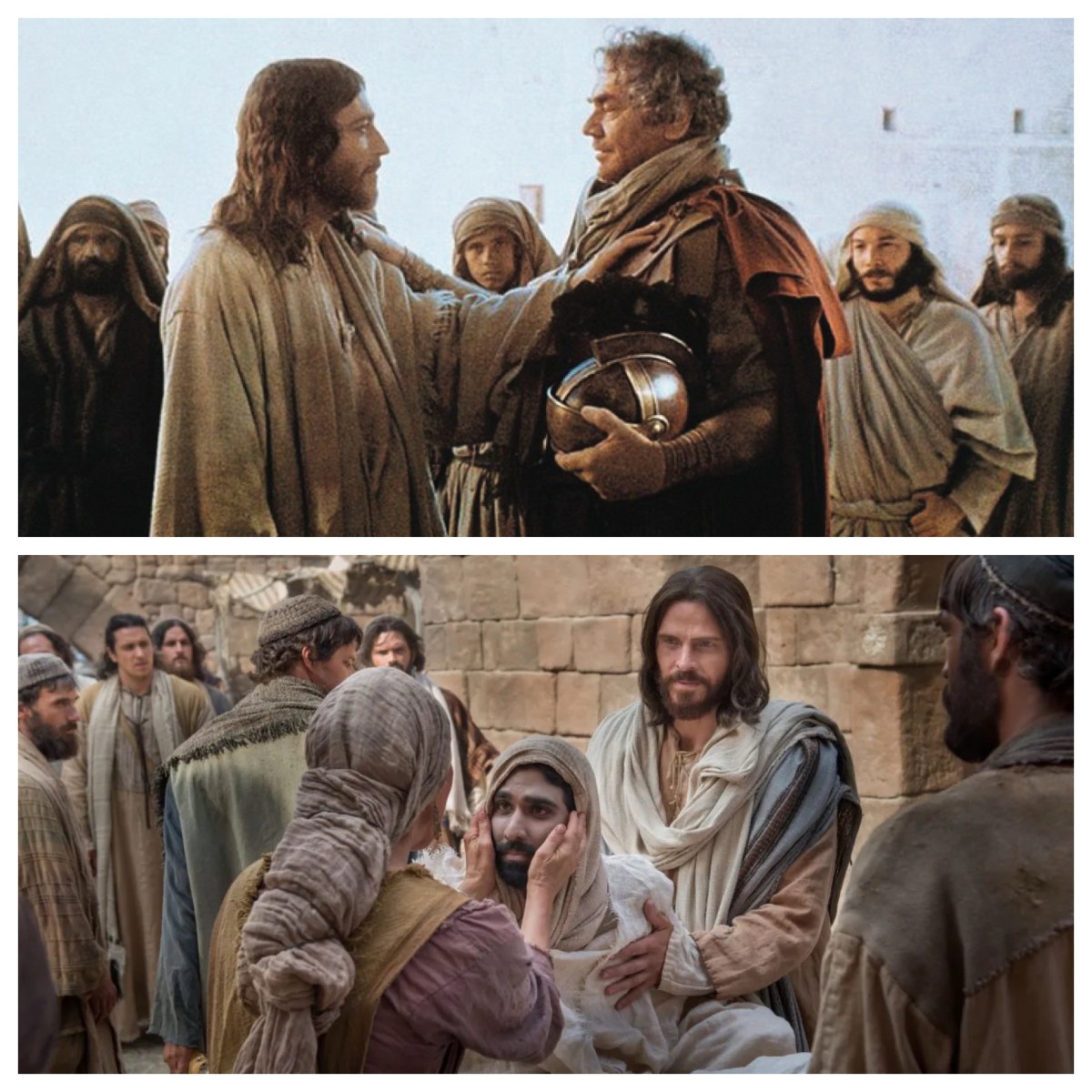
This response does not directly answer the question. Instead, Jesus uses scriptural language to describe a set of activities that resonate with Jewish expectations and hopes for “the one who is to come”. He speaks of how “the blind receive their sight, the lame walk, the lepers are cleansed, the deaf hear, the dead are raised, the poor have good news brought to them” (7:22). His answer draws on Isaianic descriptions of the restorative deeds of the Lord. Isaiah himself had looked to a time when “the deaf shall hear … the eyes of the blind shall see; the meek shall obtain fresh joy in the Lord, and the neediest people shall exult in the Holy One of Israel” (Isa 29:18–19).

He later rejoices that when those who have been banished from Israel return, “the eyes of the blind shall be opened,  and the ears of the deaf unstopped; the lame shall leap like a deer, and the tongue of the speechless sing for joy” (35:5–6). It is this hope-filled vision that inspires the later post-exilic prophet, whose words are collected in Isa 56—66, to declare that “the spirit of the Lord God is upon me … the Lord has anointed me [and] sent me to bring good news to the oppressed, to bind up the brokenhearted, to proclaim liberty to the captives, and release to the prisoners” (61:1). These are the words, of course, that Jesus has read in the synagogue in Nazareth (Luke 4:16–21); they are the words that undergird the blessings that Jesus gives to “those who are poor … those who hunger … those who weep” (Luke 6:20–21).

Jesus, in turn, then speaks to his disciples about John, the one “proclaiming a baptism of repentance for the forgiveness of sins” (Luke 3:3), instructing the crowds on “what we should do” (3:10–14), and awaiting “one who is more powerful than I [who] is coming” (3:16). “I tell you”, he declares, “among those born of women no one is greater than John; yet the least in the kingdom of God is greater than he” (7:28).
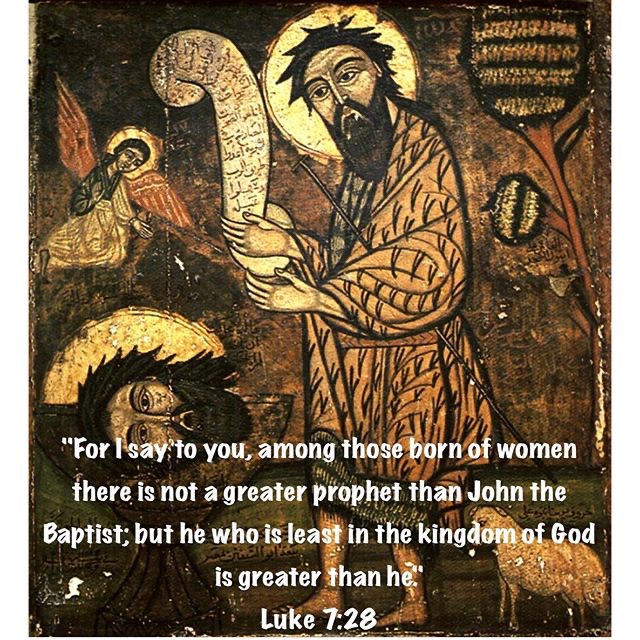
John ranks high in the estimation of Jesus. Indeed, it is quite likely that Jesus had initially been a disciple of John, learning from him (along with others who later became disciples of Jesus himself; see John 1:35–42), submitting to the baptism that John offered (Luke 3:3, 21–22), echoing the call to repent that John sounded (3:3, 8–9; see 5:32; 13:3, 5; 15:7, 10; 17:3) as well as the ethical teachings that John offered (3:10–14; see 6:29–31, 36).

A creative new way of envisaging the relationship between John and Jesus has been proposed in two recent books by James McGrath: Christmaker: A Life of John the Baptist (Eerdmans, 2024) and John of History, Baptist of Faith: The Quest for the Historical Baptizer (Eerdmans, 2024). See my review of Christmaker at 

The one coming after me: a review of “Christmaker”, a fresh look at John the Baptist

After reporting the interactions between the disciples of John, Jesus, and the disciples of Jesus, Luke then adds his own editorial commentary to the scene. He notes that “all the people who heard this, including the tax collectors, acknowledged the justice  of God, because they had been baptized with John’s baptism” (7:29). As a counterpoint to this explanation of the correct response offered by many, Luke then contrasts the negative response of others: “by refusing to be baptized by him, the Pharisees and the lawyers rejected God’s purpose ( τὴν βουλὴν τοῦ θεοῦ) for themselves” (7:30).

The phrase found here to describe the divine purpose (τὴν βουλὴν τοῦ θεοῦ) is a key element in the theological framework that Luke uses to shape his narrative. The two volumes he writes tell of the deliberate and intentional working out of the plan of God (τὴν βουλὴν τοῦ θεοῦ) in the life of Jesus. 

Everything that Jesus does and says indicates that his ministry is carrying out the will and purpose of God: Jesus is guided by the spirit, fulfilling the ancient prophecies, working in accord with God’s plan for all people, to bring salvation, hope, healing and joy into the world. His followers continue and develop that mission under the guidance of the spirit, in fulfillment of the prophecies, in accord with what Jesus has foreseen.

What follows reflects my own research into this theme, which has been published in The plan of God in Luke—Acts (CUP 1993); “The plan of God in Acts” in The Witness of the Gospel: the Theology of Acts (ed. I.H. Marshall and D. Peterson; Eerdmans, 1998); a commentary on “The Acts of the Apostles” in the Eerdmans Commentary on the Bible (ed. J.D.G. Dunn and John Rogerson; Eerdmans, 2003); and the chapter on “The Gospel of Luke” in the Cambridge Companion to the Gospels (ed.Stephen C. Barton and Todd Brewer; CUP, 2006).

This Gospel particularly emphasizes how God is active in all the twists and turns of events. There is an early emphasis in this book that “the Lord God of Israel” is at work among “the house of his servant David” (1:68–9). This is seen in miracles (1:22, 24, 34–7, 57–8, 64–5; 2:7), the appearance of angelic messengers (1:11–20, 26–38; 2:8–14), the activity of the Spirit (1:15, 35, 41, 67; 2:25–7), and the proclamation of prophetic oracles (1:67; 2:36–8). In response, God’s actions are praised in the series of scripture-like songs (1:46–55; 1:68–79; 2:14; 2:29–33). 

The context of God at work among the people of Israel frames the story. Jesus was “the message [God] sent to the people of Israel” (Acts 10:36). As Jesus is active in Galilee and Judea, people regularly acclaim that God has been at work (5:21, 25; 7:16; 8:39; 9:43; 11:20; 13:13; 17:15, 18; 18:43; 19:37). Jesus proclaims the standard Jewish message of God’s ultimate sovereignty (“the kingdom of God”, 4:43; 8:1; 16:16; 17:20–1; 22:16, 18) and instructs his followers to do likewise (9:2, 60; 10:9, 11). 

The attitude to life that Jesus demonstrates is grounded in the certainty of God’s providential care (12:22–31), which presents the assurance of the promised kingdom (12:32; 22:28–30). Even his death reveals God at work (23:47)—it takes place in accordance with what the prophets of Israel had foretold (18:31; 22:37; 24:26–7, 44–6).

As the story of Jesus is subsequently proclaimed in Acts, at the heart of Peter’s preaching stands the simple declaration: “God was with him” (Acts 10.38). God’s plan is manifest both in Jesus’ death (Acts 2:23) and when “God raised him from the dead” (Acts 2:24; 3:15; 4:10; 5:30; 10:40; cf. 13:30). The divine vindication experienced by Jesus provides believers who encounter opposition with hope and strength in their sufferings. Overall, the emphasis on God’s sovereignty aims to encourage those who hear (or read) Luke’s gospel that the community to which they belong is integral to the divine plan.

God’s sovereignty is declared in actions which bring salvation, or redemption. These terms had long been used to describe God’s way of relating with the people of Israel (Lk 1:68–71, 77). The particularly Lukan emphasis that “this salvation of God has been sent to the Gentiles” (Acts 28:28) is derived from the prophetic tradition that Israel is set as “a light for the Gentiles . . . to bring salvation to the ends of the earth” (Acts 13:47, quoting Isa 49:6; see also Lk 2:32; Acts 1:8).

The story of Jesus is set in the heart of this story of universal salvation. Jesus is the faithful agent, chosen by God, to carry out God’s actions, bringing salvation, or redemption, to all people. Jesus is God’s agent, restoring the fullness of the covenant to Israel and beginning the process of incorporating the Gentiles into this covenant community. Jesus inaugurates the kingdom long promised by the prophets. This provides guidelines for the church as it continues his mission in subsequent years. 

So, it is a very rich theme that is identified in the editorial commentary that Luke provides as he recounts the relationship of John to Jesus, and the role that Jesus plays. I am glad that the Narrative Lectionary invites us to reflect on this larger theological framework of the Gospel (and Acts), starting from this particular passage.
Unknown's avatarAuthor John T SquiresPosted on February 10, 2025Categories An Orderly Account: Gospel of Luke, Scripture and TheologyTags Jesus, Luke, plan of God, scripture, theology

On Poverty, Jesus, and the Gospel of Luke (for Epiphany 6C)

On Poverty, Jesus, and the Gospel of Luke (for Epiphany 6C)

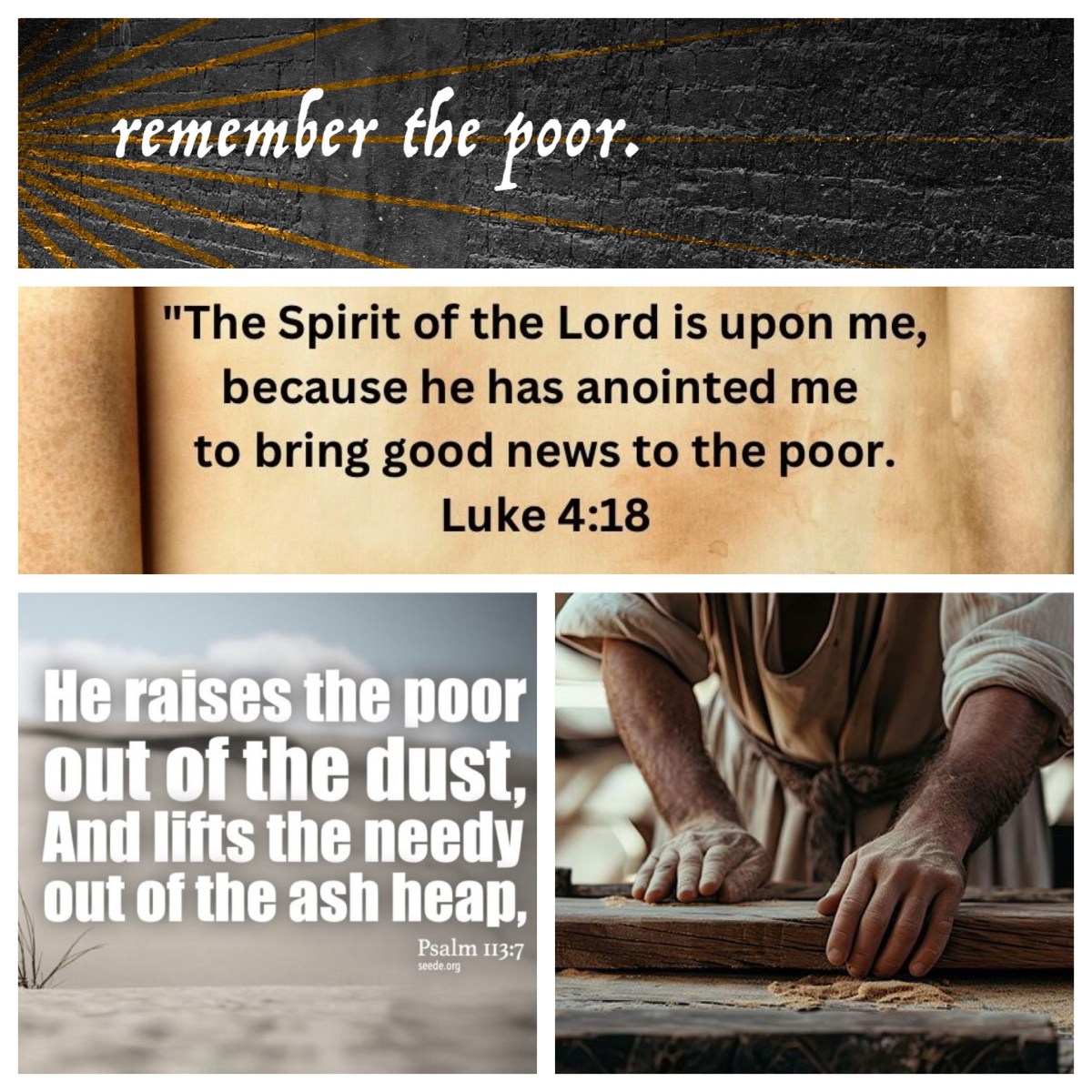
As we work our way this year through the Gospel of Luke, we will encounter a number of references to “the poor”. Early in his public activity as an adult, Jesus declares that he intends to fulfil the ancient prophetic words to “bring good news to the poor” (Luke 4:18, citing Isa 61:1). Addressing his disciples, he speaks words of blessing on “you who are poor, for yours is the kingdom of God” (6:20), and then tells messengers from John to “go and tell John what you have seen and heard: … the poor have good news brought to them” (7:22). And at the very end of this public activity, he praises a poor widow placing her gift in the Temple treasury, for “out of her poverty [she] has put in all she had to live on” (21:3–4). Concern for the poor is a theme running throughout the Gospel.

Performing acts which assist “the poor” is in the teaching that Jesus gives in the earliest version of his life, the Gospel of Mark (Mark 10:21). It is intensified in Luke’s later account. “Give to everyone who begs from you”, he teaches (6:30), while on another occasion he exhorts his followers to “sell your possessions, and give alms” (12:33). This word is then repeated with a deeper intensity when Jesus tells them, “none of you can become my disciple if you do not give up all your possessions” (14:33).

On one occasion while he was eating “in the house of a leader of the Pharisees … on the sabbath” (14:1), Jesus instructs his host, “when you give a banquet, invite the poor, the crippled, the lame, and the blind” (14:13). He then tells a parable in which a person giving “a great dinner” instructs his slave to “go out at once into the streets and lanes of the town and bring in the poor, the crippled, the blind, and the lame” (14:21).

He also tells a story in a parable about a rich man who ignored a poor man lying at his gate; the rich man dies and is sent to be tormented in Hades (16:19–23). Sometime after that, Jesus meets a rich man, commending him for his obedience to Torah, but then commanding him to “sell all that you own and distribute the money to the poor” (18:22). As he approaches Jerusalem, Jesus encounters Zacchaeus of Jericho and visits his home for a meal; Zacchaeus, taken by this act of grace, promises to change by pledging to Jesus that “half of my possessions, Lord, I will give to the poor; and if I have defrauded anyone of anything, I will pay back four times as much” (19:8).

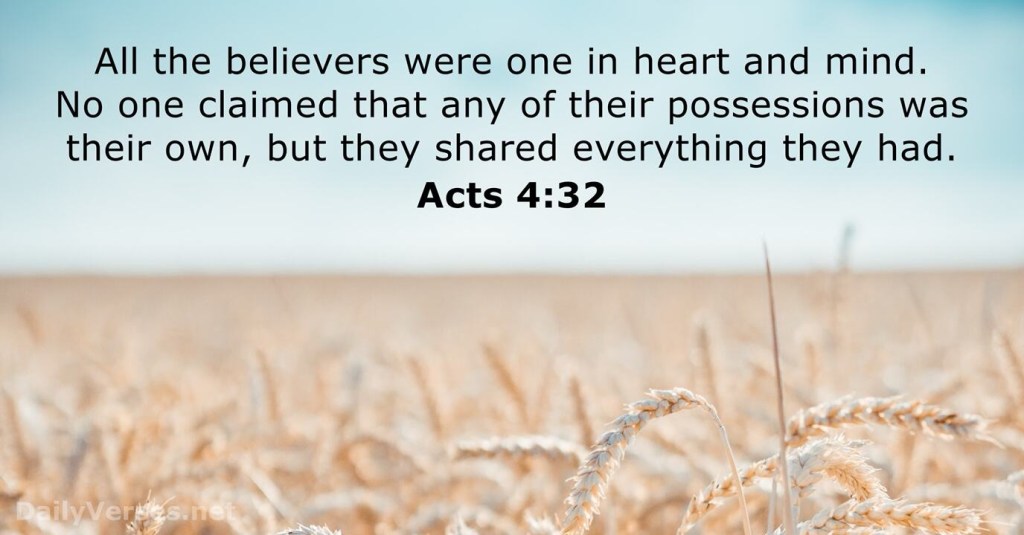
In fact, Luke would have us understand that the followers of Jesus attended to these words with serious diligence. Peter, speaking for all the disciples, declares that “we have left our homes and followed you” (18:28). Later, Luke characterises the community of believers that formed in Jerusalem after Jesus had been crucified, and then raised from the dead, as one in which “they had all things in common” (Acts 2:44), “they would sell their possessions and goods and distribute the proceeds to all, as any had need” (2:45), “no one claimed private ownership of any possessions, but everything they owned was held in common” (4:32).

Although Luke declares that “there was not a needy person among them, for as many as owned lands or houses sold them and brought the proceeds of what was sold” (4:34), we might reasonably assess that this is a “gilding of the lily” which romanticises the fidelity of the early community in a text written at least half a century later. The purpose was to encourage those who had means and possessions to be generous with what they had, to share with “the poor”.

One matter that merits attention in considering this theme is the question about the socio-economic level of Jesus and of the disciples to whom he was delivering these instructions. Was he one of “the poor”, advocating for their rights? Or did his family have some means at their disposal? Were his disciples “poor” or (in our terms) “middle class”? 

After all, in his letter to the Corinthians, Paul wrote that “not many [of you] were of noble birth” and that “God chose what is low and despised in the world, things that are not, to reduce to nothing things that are” (1 Cor 1:26, 28). And in writing to the Galatians, Paul talked about the “acknowledged pillars” asking that Paul and Barnabas “remember the poor, which was actually what I was eager to do” (Gal 2:9–10). Such references might well suggest that the early Jesus movement was a movement amongst “the poor”. 

Some interpreters have claimed that Jesus was born in poverty, deriving this from the “born in a manger … no room at the inn” element of “the Christmas story” (Luke 2:7), as well as Luke’s later comment that when Mary brought the offering for her purification (Luke 2:22), it was the lesser option prescribed for one who could not afford to offer a sheep (Lev 12:8). Further, that he was known as “the carpenter” (Mark 6:3) or as “the carpenter’s son” (Matt 13:55) is seen to be evidence of his lowly status.

More careful analysis, however, indicates that this is too simplistic. British Anglican scholar Ian Paul has posted a detailed consideration of this matter, in which he draws on very helpful research by historians and economists who have turned their attention to the ancient world. (Ian Paul can be aggressively dismissive of arguments that do not align with his clear-cut conservative-evangelical-Anglican perspective, especially when it comes to the debate about sexuality and gender in the. Church of England; but in this post—as in many others on his page—his careful scholarly analysis is most helpful.)

Paul notes what others before have observed—that a tiny minority of people in the Hellenistic world had power and wealth, but a substantial proportion of people were at the other end of the social stratum. At the very bottom, in the most precarious position, were those who were desperately poor: orphans, widows, unskilled workers, beggars, prisoners, and disabled people—perhaps 25 to 30% of the population. Above them were those who were dependent on their labour to meet their day-by-day needs—perhaps 30 to 40% of the population; and then above them, a further 20 to 25% of the population who generally lived just above the minimum level required to sustain a reasonable life: most merchants and traders, skilled artisans, freedpersons (formerly slaves), and families living on larger farms.

This breakdown is based on estimates by biblical scholar Bruce Longenecker in his analysis of social levels in Pauline churches (Remember the Poor, Eerdmans, 2010).  Longenecker in turn draws on the work of historian Peter Oakes, who had undertaken careful analysis of demography and housing in Pompeii (Reading Romans in Pompeii, SPCK, 2009). 

The Gospels provide a number of clues as to where the disciples might have fitted into this schema. The toll collector Matthew (or Levi) was a small business man operating to collect tolls from travellers along the roads (Mark 2:14; Matt 9:9); the four Galilean fisherman ran their own fishing businesses with their “hired men” (Mark 1:20). As for Jesus, Paul observes that “as a tekton, a general builder (Matt 13:55; Mark 6:3) working with stone and wood (though not metal), it is more than likely that Joseph (and therefore Jesus) … was above either 55% or 82% of the population not including slaves, across the Empire as a whole”. 

See https://www.psephizo.com/biblical-studies/was-jesus-actually-born-into-a-poor-family/

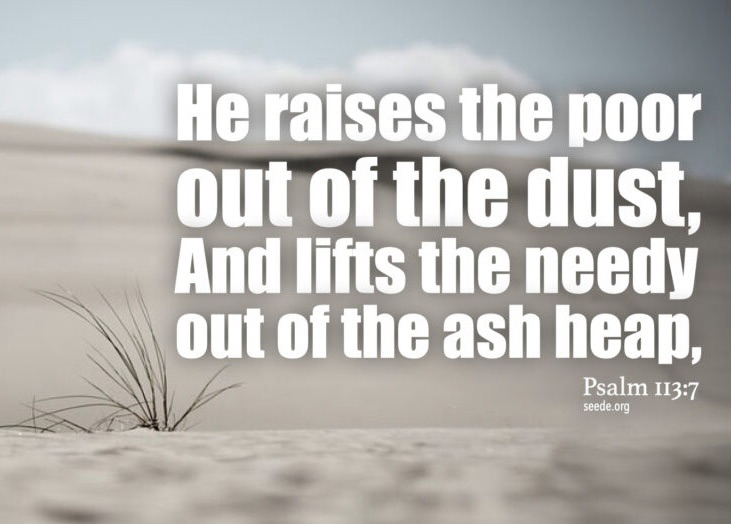
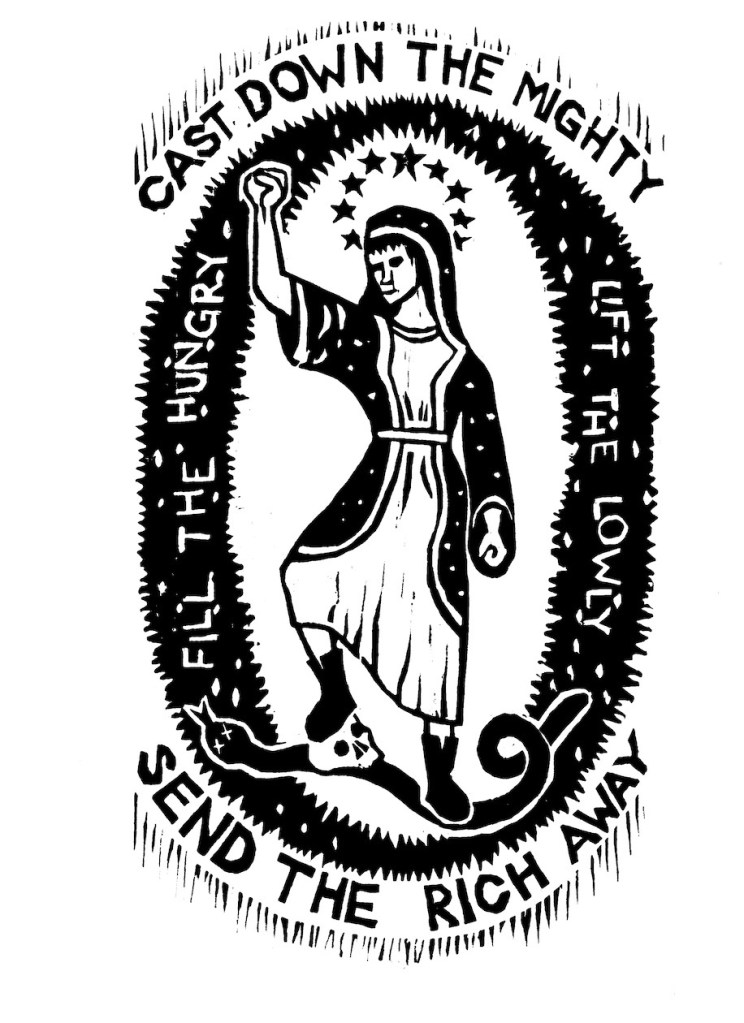
So we can see that the teachings of Jesus that instruct his followers on the matter of wealth and possessions are designed to stimulate the consciences of his followers, who were not beggardly poor, to alert them to their responsibilities towards those in the lowest socio-economic levels of society. They are to act towards them remembering that God has long had good news for the the poor and liberty for the oppressed (Isa 61:1–2, quoted at Luke 4:18), knowing that Jesus blesses those who are poor, hungry, and weeping (Luke 6:20–21), and recalling how Mary sang that God has “lifted up the lowly [and] filled the hungry with good things” (Luke 1:52–53), which itself evoked the ancient song of Hannah that God “raises up the poor from the dust [and] lifts the needy from the ash heap” (1 Sam 2:8, repeated at Ps 113:7).

In order to make sense of this thread running throughout the Gospel—and into the early chapters of Acts—we need to remember key elements of life in ancient times. First, that society was not individualist (like modern Western society), but thoroughly communal (as many cultures around the world still are today). Second, that the fundamental economic dynamic at work was that of patronage; everyone had their place in society, and they related “up” to people with greater means and power than they had, as well as “down” to those with less power and means.

Third, that society was an honour—shame culture, in which everyone knew what was appropriate and what was not, and which acts performed out of place would damage the honour of a man, or the shame of a woman. Such acts of care and support for those lowly and impoverished would gain honour in the public sphere. 

Screenshot

And finally, within ancient societies there was an acceptance that there were limited goods in society. Unlike the modern idea that “progress” could create more )more goods, more wealth, more power) in ancient societies it was accepted that what there was needed to do for everyone; there’s no “more” to be made.

So these dynamics shape the way that these teachings of Jesus functioned in his society; and they agitate us to live in socially responsible ways in our society today. Christians have a responsibility to ensure the material wellbeing of all in society, including (and especially!)  a commitment to support and advocate for those most at risk and most impacted.

Indeed, my own denomination, the Uniting Church in Australia, published a Statement to the Nation when it was formed in 1977, which made clear this responsibility and affirmed this commitment in very clear terms. This Statement declares that the Gospel cannot be reduced simply to personal piety or sexual morality or doctrinal disputation or practical ethics. The Church is most fully on mission when its people are engaged in society, not only tending to the needs of vulnerable and impoverished members of society, but also advocating for their rights, lobbying for changes in the law, pressing for justice in daily life. See 

Alongside the Basis of Union, there was the Statement to the Nation
Unknown's avatarAuthor John T SquiresPosted on February 10, 2025February 9, 2025Categories An Orderly Account: Gospel of Luke, Scripture and TheologyTags Jesus, justice, Luke, poor, scripture, theology

The dying slave and the grieving widow (Narrative Lectionary for Epiphany 5C; Luke 7)

The dying slave and the grieving widow (Narrative Lectionary for Epiphany 5C; Luke 7)

As the Narrative Lectionary continues to offer passages from Luke’s Gospel, this coming Sunday we will hear two stories from Luke 7: a story of a dying slave (7:1–10) and a story of a grieving widow (7:11–17). As is often the case in this orderly account of the things being fulfilled among us, the two scenes are intended to be complementary and interrelated.

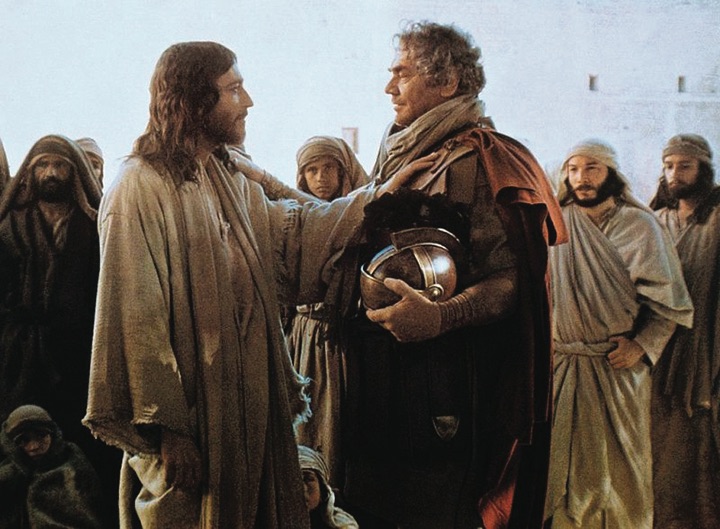
There are two parallels to Luke’s account of the story of the healing of the centurion’s servant. One is in Matthew’s book of origins (Matt 8:5–13), the other in John’s book of signs (John 4:46–54). It’s a story that points to some important Lukan themes.

The figures at the centre of this story are the centurion and his slave (doulos) who was ill, “at the point of death” (7:2); these characters appear also in Matthew’s account, where the ill person is his servant (pais). In John, Jesus engages with “a royal official”, whose son (huios—not servant or slave) was ill. The story is obviously the same, even though the characters are slightly different.

Only Luke reports that Jewish elders were sent by the centurion to Jesus, to function as intermediaries (7:3). There are no such intermediaries in the versions found in Matthew and John. It is been hypothesised that this avoids having Jesus come into direct contact with a Gentile—although, as we have seen, Gentiles were surely already present listening to Jesus and being healed by him (6:17–20). Nevertheless, Jesus himself follows the protocols expected of a faithful Jew, by not entering the house of a Gentile.

This is in accord with the statement placed in the mouth Peter, when he met with Cornelius some years later: “it is unlawful for a Jew to associate with or to visit a Gentile” (Acts 10:28). This position, of course, was overturned by the vision that Peter saw in Joppa (10:11–12), and led to his desire and intention to share in table fellowship with Cornelius (as is implied by 10:23a and 10:48). This is the big, climactic moment in Luke’s two-volume account of “the events that have been fulfilled among us” (Luke 1:1), when the Jew—Gentile barrier is broken down and the fully inclusive nature of the church is revealed.

To have Jesus deliberately adhere to traditional Jewish protocols in his engagement with the centurion in Capernaum allows for the dramatic build-up to this pivotal scene in Acts. We might note also that Luke omits the section of Mark (7:1–20) in which Jesus explicitly “declares all food clean” (7:19), which also points to the climactic intent in the Peter—Cornelius narrative. Leaving out that section of Mark ensures that Luke doesn’t spoil the impact of the later scene in Acts.

A later text, the Mishnah, from the 3rd century, states that “the houses of Gentiles are unclean” (m.Oholeth 18.7). However, it is not clear either that this dictum was in force in the time of Jesus, or that Jesus felt compelled to adhere to it as a sign of his keeping “pure” in terms of the holiness system of the day. Indeed, his later practice—paradoxically—is to share at table with tax collectors or sinful people, which indicates a willingness to breach the strong boundaries of that system. See https://johntsquires.com/2019/05/22/jesus-and-his-followers-at-table-in-lukes-orderly-account/

Only Luke reports that the centurion—a Gentile authority figure—had a relationship with the Jewish synagogue in Capernaum. Indeed, the Jewish elders give accolades to this man, stating that “he loves our people, it is he who built our synagogue for us” (7:5). That reveals an interesting relationship, positive and supportive, between a Gentile (the centurion) and the local Jewish community. So the barrier which Jesus allegedly maintains by not visiting the Gentile house is breached by the patronage (and, we presume, the visits) of a Gentile to a Jewish synagogue.

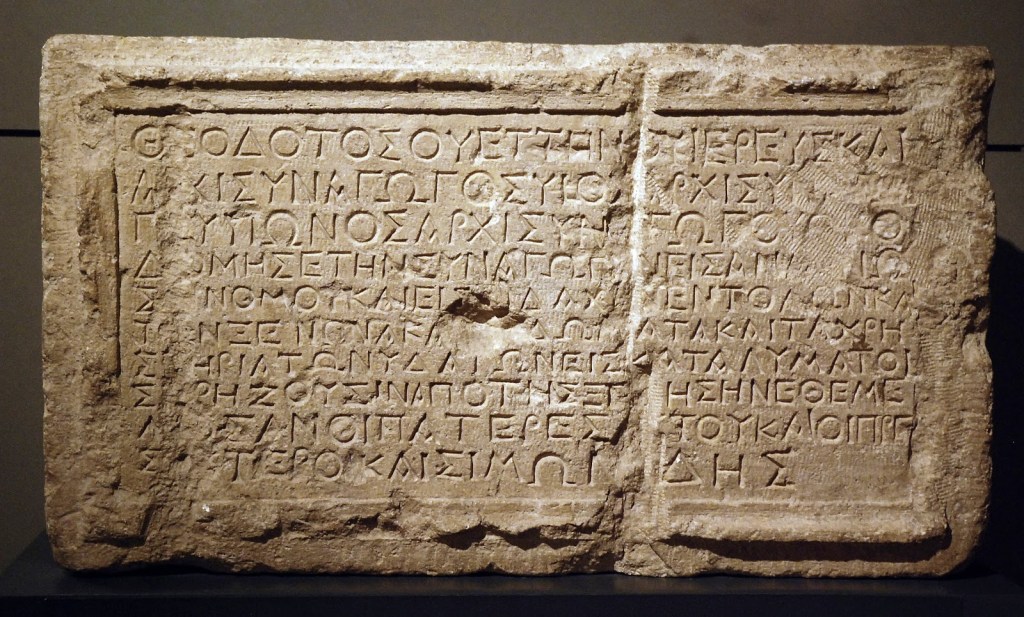
The Theodotus Inscription

Gentile patronage of Jewish synagogues is known from outside the New Testament; an inscription found in Jerusalem, which is dated from before the fall of the Temple in 70CE, indicates that a certain Theodotus “built the synagogue for the reading of the law and the teaching of the commandments, and also the guest chamber and the upper rooms and the ritual pools of water for accommodating those needing them from abroad, which his fathers, the Elders and Simonides founded.” See https://www.worldhistory.biz/ancient-history/52996-the-theodotus-inscription.html

“Only speak the word”, the elders beg Jesus, “do not trouble yourself” to come all the way to the house (7:6–7). In this way, they maintain the protocols, and try to ensure that that Jesus is kept from defiling himself. This is an interesting positive perspective on the Jewish leadership—a positive assessment that Luke often provides. (See, for instance, how positively he depicts the Pharisees in various scenes: 7:36; 11:37; 13:31; 14:1; and also Acts 5:34; 23:9).

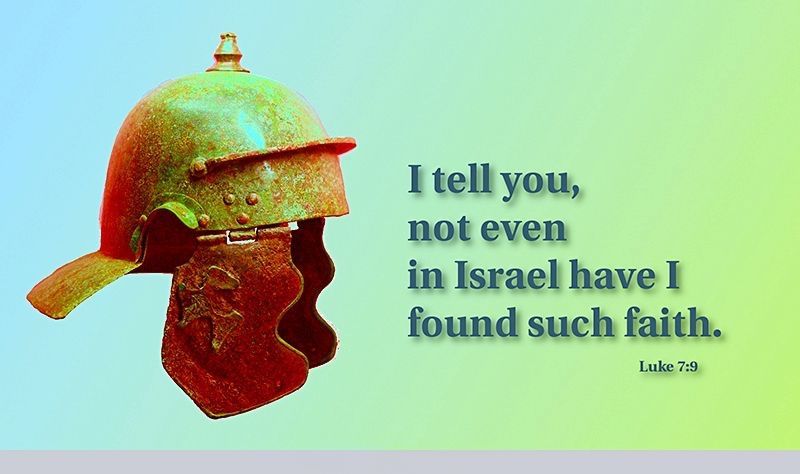
Jesus affirms the man with the words, “not even in Israel have I found such faith” (7:9). This affirmation is given also in the account of this incident in Matthew’s book of origins (Matt 8:10), but not in John’s version of the encounter.

In these words, Jesus sounds a theme which recurs in his subsequent affirmations of the faith of the woman who anointed his feet (Luke 7:50), the woman who had suffered from haemorrhages for twelve years (8:48), the returning Samaritan leper (17:19), and the blind man outside Jericho (18:42), all of whom were characters on the edge, or outside, the central purity group. These affirmations sit uncomfortably alongside Jesus’ recurring lament over the lack of faith of his own followers (8:25; 12:28; 17:5–6; and see also 18:8; 22:31–34).

It’s also noteworthy that the statement of judgement found at Matt 8:11–12, where the characteristic Matthean theme of judgement over the sinful people of Israel is found, is omitted from the Lukan version of the story—although Luke does include this saying in his orderly account at a later point (13:28–30), in the context of his lament over the fate that lies in store for Jerusalem (13:31–35). That different context gives it a narrower focus than the Matthean setting, in which appears to be a (typically Matthean) global condemnation of the people of Israel.

Luke ends this incident with a simple report that the slave was found to be well once again (7:10), as does Matthew (8:13).

The story that follows, recounting how Jesus raises from the dead the son of a widow in the town of Nain (7:11–17), is also a key passage. It narrates the raising of a person from the dead, yet is nowhere near as well-known as the story in John’s book of signs, about Jesus raising Lazarus from the dead (see

Holding out for hope in the midst of turmoil (John 11; Lent 5A)

I consider that the key point of this story is to establish Jesus as a prophet who enacts the visitation of God for the people of Israel (7:16). It is strange that the NRSV renders this statement as “God has looked favourably”, but it is the same verb (episkopeo) which appears at 19:44, where it is more accurately translated as “the time of your visitation from God”. And in that passage, Jesus comes to pronounce judgement up the sinful city.

It is clear that Jesus, by raising this man from the dead, demonstrates his credentials as a prophet, as the people cry that “a great prophet has risen among us!” (7:16)

The cry of the people also signals that the divine is drawing near to the people of Israel. It is curious that this story sits so deeply within the shadow cast by that other story of raising a man (Lazarus): from the dead. This is a striking and dramatic story, as is attested in the response of the people, of whom Luke reports, “fear seized all of them, and they glorified God” (7:16).

Fear (or better, awe) is the regular response in the presence of an angel (Zechariah, 1:12–13; Mary, 1:30; the shepherds, 2:10). It is also evoked by a miracle, as is seen in the responses of the neighbours of Zechariah and Elizabeth (1:65); Peter, James, and John after the huge catch of fish (5:10); the people of the Gerasene countryside (8:37); a messenger from the house of Jairus (8:50); and Peter, James, and John at the Transfiguration (9:34). Fear is also, understandably, manifest before the divine activity in the days of distress when “the powers of the heavens will be shaken” (21:25–26) when the Son of Man appears in power and great glory (21:27). It’s a climactic end of to a striking story, found only in Luke’s work.

Unknown's avatarAuthor John T SquiresPosted on February 3, 2025February 3, 2025Categories An Orderly Account: Gospel of LukeTags discipleship, faith, Luke, resurrection, scripture, theology

The theological construction of “The Twelve” (Narrative Lectionary for Epiphany 4C; Luke 6)

The theological construction of “The Twelve” (Narrative Lectionary for Epiphany 4C; Luke 6)

The Narrative Lectionary proposes a passage for this coming Sunday containing three distinct events. First, Jesus is engaged by some Pharisees while he “was going through the grainfields” (Luke 6:1–5). Next, after he “entered a synagogue and taught”, he healed “a man  whose right hand was withered” (6:6–11). Then, after spending a night on a mountain in prayer, Jesus “called his disciples and chose twelve of them, whom he also named apostles” (6:12–16). 

I have already reflected at length on the first two sections of this passage; see

Plucking grain, healing, and choosing twelve apostles (Narrative Lectionary for Epiphany 4C; Luke 6:1–16)

In this blog I focus on the third section, in which Jesus chose twelve disciples “whom he named as apostles”, presumably in recognition of their role in representing his message to those whom they encounter. 

“The disciples” in Luke’s account is a broad, inclusive group of followers.  It’s a term applied to those who began following Jesus from early on.The Pharisees refer to “your disciples” (Luke 5:33); they are “going through the grainfields” (6:1); and it is from this group that Jesus specifically nominates twelve “who he also named as apostles” (6:13). Jesus evidently attracts “a great crowd of disciples” (6:17) and they follow Jesus where he journeys (7:11; 8:1, 22; 9:18, 43; 11:1; 12:1; 16:1; 17:1), hearing the parables and teachings of Jesus and witnessing the miracles he performs.

Time spent with Jesus involves not just learning from him—although this is the bedrock of the relationship—but also putting his ethic into practice. First, the group of twelve are commissioned by Jesus “to proclaim the kingdom of God and to heal” (9:1–2). Then, a larger group of seventy, having spent time with Jesus learning, are challenged to exercise leadership within the Jesus movement. They are sent out “like lambs into the midst of wolves” (10:3) to proclaim peace and declare that “the kingdom of God has come near” (10:4–11). 

Eventually, the disciples follow Jesus into Jerusalem (19:29). As they enter the city, the noise made by “the whole multitude of the disciples” (19:37) caused the Pharisees to tell Jesus to order them to stop (19:39). There, the disciples share a final meal with Jesus (22:11). As it was a Passover meal, it would have been a larger group, presumably including the women who were with Jesus in Galilee (8:1–3), who shared in this meal; although Luke, surprisingly, says only that “the apostles” were present (22:14). 

The reason for this may be that a few verses later, Jesus tells the disciples, “I confer on you, just as my Father has conferred on me, a kingdom, so that you may eat and drink at my table in my kingdom, and you will sit on thrones judging the twelve tribes of Israel” (Luke 22:29–30; a similar saying can be found at Matt 19:28). On the four occasions when “the twelve apostles” are designated (Mark 3:14; Luke 6:13; Matt 10:2; Rev 21:14) they are intended to mirror and replicate the twelve sons of Jacob, whose names were given to the twelve tribes of Israel. 

In the traditions of the church, “The Twelve Apostles” has come to be a standard phrase. A non-canonical work setting out teachings of Jesus styles itself “The teaching of the Lord to the Gentiles by the twelve apostles” (Didache 1.1). This group appears to have ben known at some stage in the early period of the movement.

But there questions about who, exactly, makes up those twelve. Is Judas in “the twelve”? And if so, what about Matthias also (Acts 1:21–26)? Or is Matthias there in place of Judas? And what of poor Joseph Barsabbas, who like Matthias witnessed everything in the ministry of Jesus but missed out replacing Judas by a whisker? Are they not both apostles?

Paul indicates that Jesus appeared to “the twelve” (v.5) and “all the apostles” (v.8)—apparently alluding to narratives found in the later texts of three Gospels Matt 28:16–20, Luke 24:33–48; John 20:19–23, 24–29; 21:1–14. The appearances narrated in the shorter and longer endings of Mark, added after 16:8, are not relevant; these are later patristic additions based on the other three Gospels, designed to harmonise the ending of Mark with these others. Acts 1:6–11 might, however, be relevant here, for Jesus appears for the last time over the forty days since his resurrection (Acts 1:3) to an unnamed and uncounted group; Luke simply recounts that “they had come together” (1:6). 

An interesting question is, how did Paul distinguish between these two groups—“the twelve” on the one hand, and “all the apostles” on the other. Indeed, these terms appear to be inherited by Paul from earlier traditions. This is the only place in all Pauline letters which refer to “the twelve”; and besides, the Gospel narratives noted above do not have Jesus appearing to “the twelve”, as Judas was absent from all of them, and so was Thomas in John 20:19–23. 

As far as the word “apostle” is concerned, in 16 of the 18 occurrences in the Pauline corpus (including those not authentic to Paul) Paul explicitly apply the term to himself. Paul also acknowledges others as apostles besides himself: James (Gal 1:19), Peter (Gal 2:8), perhaps Barnabas (1 Cor 9:1, 5–6), and an unspecified number of believers who were given gifts to be apostles (1 Cor 12:28–29; see also Eph 4:11). Most strikingly of all , Paul describes Andronicus, a male, and Junia, a female, as “most esteemed amongst the apostles” (Rom 16:7). (And Jesus himself is called “the apostle and high priest of our confession” by the unknown writer to the Hebrews, at Heb 3:1).

Are any of these the people that Paul has in mind when he refers to  “all the apostles” at 1 Cor 15:7? Or is this simply a phrase inherited from the tradition, which Paul has repeated? That seems the likely conclusion, to me. And did Paul have a picture of “the twelve apostles” in his mind? Again, I think that unlikely. He is simply using phrases from the tradition in what he writes to the Corinthians. And the origins of those phrases are now, to us, quite unclear.

So the conclusion that I hold to is that “the twelve apostles” was a theological construction devised at an early stage of the movement, that did not bear any relationship to any historical reality of which we are definitely aware.

The Twelve Apostles, a striking rock formation
off the coast of Victoria, Australia,
seen from The Great Ocean Road
Unknown's avatarAuthor John T SquiresPosted on January 28, 2025Categories An Orderly Account: Gospel of Luke, Scripture and TheologyTags discipleship, Jesus, Luke, scripture, the Twelve, theology

An interview with Luke (an imaginative exercise)

An interview with Luke (an imaginative exercise)

The following “transcript” reports an imagined interview that I conducted with “Luke”, the person claimed to be the author of the third Gospel and its sequel, Acts. (Of course, what the “Luke” of this “interview” articulates is what I have come to think about him and how he saw things.) Wouldn’t it be great if we did have the transcript of an actual interview with the author of this Gospel? Well, for the moment, we will just have to settle for this. Enjoy ………

What motivated you to write about Jesus?

I thought I had something to offer, in short. Lots of stories about Jesus have been passed on by word of mouth for some years now; there have been collections made of his best sayings and parables, as well as sets of well-known miracles. There is also an account of how he met his death (some call it “the passion of Jesus”) which has obviously been put together by someone who knew the psalms, especially the psalms of the righteous sufferer.

But beyond hearing these oral accounts, I have become aware more recently that some others have written about Jesus. I wanted to provide an extended version of the story of Jesus that highlighted both his connection to his Jewish heritage, and also how what he said and did provided the foundation for the development of the church. To achieve this I actually had to write a second volume, which some have called “the acts of the apostles”. But because I am convinced that the whole life of Jesus was guided by the Spirit, and that has continued on into the church, I prefer to think of it as “the acts of the holy spirit”. 

At any rate, I wanted to provide my personal understanding of this important figure and the movement that he instigated. For everything that took place, I believe, is on accord with the predetermined plan of God. This plan involves both the very good things that took place, as Jesus drew people to him and as the movement spread across the world, as well as things that seemed to be quite a setback, such as the crucifixion of Jesus, the stoning of Stephen, and the trials of Paul. They are all part of this overall plan. We know that God confirmed all of this by raising Jesus from the dead—and by blessing the spread of the movement as the number of disciples grew—why, even some priests became followers!

So I think that my account, which is orderly and accurate, will stand well alongside these other works that I know of. Indeed, it is presented as a consistent work with an overarching theme of divine providence, which has been a favoured theme of numerous historians in the past, and much considered by philosophers in every age. So I am quite sure that the corrections and expansions that I offer in my work, as well as the deepened theological understandings that it contains, are all important to put on the public record.

Finally, I must express again my thanks to my patron Theophilus, whom I have acknowledged in the prefaces to each volume of my work. I am indebted to him for his provision of lodging, access to his wonderful library, and material support during the months when I was researching and writing my two volumes. I am most grateful to him for all of this. He has served me well as a fine patron.

Where did you get your information from? How well did you know Paul, for instance?

Well, I stated right at the start of my work that I was drawing from people who were actually with Jesus and were eyewitnesses of what took place, right from the very first. These people subsequently made sure that the words of Jesus and stories about him were remembered and passed on by word of mouth. The remembrances that they provided were very helpful, because I didn’t actually see anything in person of what I wrote about.

As well as stories from these eyewitnesses, I also drew from the recollections and writings of those who were part of the growing movement that developed in the years after the time of Jesus, as word spread around the various provinces of the Roman world—and beyond, down to Ethiopia, even. It has been important for me to receive and assess a whole host of stories from these “servants of the word”, as I call them. Even if some of them were, well, a little rough and unformed. So, I have worked diligently to put them in an order that conveys the truths that Jesus and the apostles each in turn spoke. All inspired by the Holy Spirit, of course.

Paul? Well, I’ve heard of him, of course; who hasn’t? Quite a character he was, it seems. Rather divisive, it is said; people either loved him or hated him. But I have never met him. Never travelled with him. Never heard him speak. Just heard about him, where he went, what he did, who he travelled with, what he said; and what eventually happened to him when the might of the Roman Empire caught up with him, despite his best efforts to defend himself. So I have tried to capture this in my second volume. 

I have heard that Paul was quite a letter writer—although for myself, I haven’t seen many of his letters. What I have read seems to have been quite sharp and polemical. Perhaps that reflects his rabbinic upbringing at the feet of Gamaliel; he learnt how to argue hard! But I am not sure how helpful his polemical stance has been for the development of the movement.

I know that Paul was a faithful follower of Jesus in the years after his conversion, so I have given him the benefit of the doubt, making sure that any of his words that I included were consistent with what the apostles in Jerusalem had preached in earlier years. Harmony and consistency across the movement is important, I believe, despite the conflicts we have experienced over the years. That’s why I provided a careful account of the council held in Jerusalem in my second volume, when a major tension within the movement was resolved by the leaders coming together—and the spirit, of course.

It is said that you are a doctor. Where did you learn your medical skills?

Ah, yes, this old chestnut. So let’s be clear: I have no medical qualifications. I have never provided trained medical assistance to anyone. I do, however, know about medical things—like anyone who takes the time to read and think about these things does. I know technical medical terms. I know how healers operate. Indeed, I had to learn about this in order to give an accurate portrayal of Jesus as he went about healing people. 

However, the medical insights you can see in my work don’t come from my own particular training or experience. No, it’s because I have read widely in literature that includes technical discussions of ailments and illnesses and healings, that I know about these things. As would any well-read person, I assume.

But this whole matter has not been helped, no doubt, by the fact that there are references to a person with the same name as me in letters associated with Paul. Although I haven’t seen these letters, I am told that in one letter written while he was imprisoned in Rome, Paul sends greetings from “Luke the beloved physician” to Nympha and Archippus, and those in their household gatherings. 

That’s all well and good, but I can assure you that this particular person is not me. It’s simply a case of sharing the same name—a common-enough occurrence. I mean, how many people do you know named Paul? Or John? Or Mary? As I said before: I have never travelled anywhere with Paul. So I am not a physician, as this particular companion was. Although I am quite happy to be known as “beloved”. Someone amongst the followers of Jesus surely deserves this appellation!

Your story about Jesus is often called “the Gospel for the Gentiles”. What do you think about this description?

It’s true that I really wanted to offer an explanation to the wider world in which we live—beyond the Judaism of the land of Israel itself—about the relevance and the importance of the movement that Jesus initiated for everyone in that wider world. He fulfils the prophetic word that “all flesh” shall see the salvation that God is bringing through Jesus. 

So I am undertaking the process that some call “apologetics”; writing a work that “speaks out” the meaning of the faith (that’s what “apologetics” means), reaching across the divisions of language and culture to explain a message from one context in a way that makes sense in another context. Like others who have done this before. I try to anticipate the difficulties and objections that might be raised, and try to provide ways that people of the Way can respond to these objections.

Yes, it is true that Jesus was a Jewish man, from Galilee, who taught in parables and debated Torah interpretation with the scribes, and went on pilgrimage to the Temple in Jerusalem—presumably to offer sacrifices to the Lord God. There’s no doubting his Jewishness. Nevertheless, I am certain that his teachings about the reign of God are applicable to people who do not know the God of Israel. So my two volumes show how the words of this Galilean prophet offer hope and salvation to Gentiles across the world.

And, you know, for a long time now, Jews have lived in many places beyond Jerusalem. There are many Jews that live in diaspora (in the Dispersion), and they have done so ever since the time of the Exile, when the people of Judea were taken away into captivity by the Babylonians. Many of them stayed where they were taken, married locals, learnt the language, planted vineyards, and established family businesses. And they emigrated elsewhere around the Mediterranean Sea—not just back to Israel, but to Egypt and to many other provinces which are under Roman rule.

So those of us who follow the Torah while we live in Diaspora have a particular interest in the teachings and the vision of this Galilean prophet.

Wait a minute: you said “those of us who follow the Torah while we live in Diaspora”, did you? But I thought you were a Gentile!

Yes, that’s a common misunderstanding. Just because I speak and write Greek, live outside Israel, in a strongly hellenised city amongst people who continue to worship many gods, and participate in public ceremonies along with other well-to-do citizens, does not mean that I am not one who keeps Torah. I believe in the one God, I follow the high ethical standards set out in Torah, and I take part in gatherings in the synagogue as often as I can, given my other civic duties. 

Some people say that I am a “godfearer”, thinking that I am a Gentile who is attracted to the synagogue because of its high ethical standards. And that makes for a fairly easy transition to follow the way of Jesus, I must admit. I actually included a number of such characters in my second volume, you know: Cornelius, Lydia, some men attached to the synagogue in Antioch, Titius Justus and Crispus in Corinth, some leading women in Thessaloniki, and a group of some significant women and men in Beroea, for instance.

However, I was born, in diaspora, into a Jewish household. I was taught Torah as well as reading the literature of Greece and Rome.  I have read from the scroll in the synagogue, just as I report Jesus doing—although I have never said “today this scripture has been fulfilled”, as he did! And yes, since you undoubtedly want to know, I am circumcised. I can read Hebrew, obviously, and can also speak our local language of Aramaic, just as Jesus did. And I am so pleased that I could report how Jesus, speaking in the synagogue after he read from the scroll, affirmed that God wants “release to the captives, recovery of sight to the blind, [and] to let the oppressed go free”, just as the prophet declared.

But all of this has not stood in the way of my reading and learning from Greek philosophers and historians, enjoying plays and poems by Greeks and Romans, as well as studying Torah and the teachings offered in the synagogue. I am a Jew, but I suppose you would say a very hellenised Jew. In fact, if there’s anyone in the work that I have written that I admire, and who I identify with—apart from Jesus himself—is Apollos of Alexandria. He’s quite cosmopolitan, well educated, and has a way with words. He was raised a Jew but has known about the Way of Jesus since the early days of John. I’d like to think I am rather like him.

If you had your time over again, what would you do differently with the story that you wrote?

There’s a couple of minor glitches that eagle-eyed readers of my work have drawn to my attention. The reference made by the Pharisee, Gamaliel, to the revolutionary Theudas was a slip of the pen: Gamaliel was speaking in the early 30s, but Theudas was active in the 40s. His uprising, which did not last long, was some years after the speech that I placed on the lips of Gamaliel! And I would remove the reference to the census that took place in Syria under Quirinius, as this confuses the matter. Some of my critics have said, wasn’t Jesus born when Herod was still alive? So I regret that error.

I think I should also clarify that the description of the Temple being surrounded and destroyed by the Roman army that I placed on the lips of Jesus was actually informed by my own knowledge of those events, as I have learnt about it from others closer to that event itself. I shouldn’t have had Jesus speak in such detail. I know that he was a prophet, and that he saw the ways that our people had become disobedient, but I don’t think his prophetic insight stretched quite as far as the specific details I provided. 

And in contrast to those who say that I have confused the order of things in the account of the last supper that Jesus had with his disciples, I maintain that I got it right. A blessing over a cup of wine comes before a blessing over the bread—and then other blessings follow, including another blessing over another cup. At least, that’s the practice that I am used to. 

In the same vein, to those who have criticised me for retaining the saying by Jesus about how “this generation will not pass away until all things have taken place”: I simply note that he said it! I think I have made it clear in other speeches of Jesus just how this expectation has already been modified and altered within the movement. Such reinterpretation is going on all the time!

Any final comments?

Thanks for giving me the chance to talk about my work, to explain some key things, and to set a few things right. I appreciate that. I hope everyone who reads it enjoys it and learns from it.

*****

What did “Theophilus” think about the work that “Luke” wrote? I have also written a series of Letters to Luke in which I imagine how his writings might have been received. You can find the links to these six letters at 

Letters to Luke (an imaginative exercise)

*****

The above “interview” and these “letters” draw on the research on Luke and Acts that I have undertaken over the years, which has been published as:

The plan of God in Luke—Acts (CUP 1993) 

“The plan of God in Acts” in The Witness of the Gospel: the Theology of Acts (ed. I.H. Marshall and D. Peterson; Eerdmans, 1998)

At table with Luke (UTC Publications, 2000)

A commentary on “The Acts of the Apostles” in the Eerdmans Commentary on the Bible (ed. J.D.G. Dunn and John Rogerson; Eerdmans, 2003) 

“The Gospel of Luke” in the Cambridge Companion to the Gospels (ed.Stephen C. Barton and Todd Brewer; CUP, 2006)

Many of the blogs on this website also reflect this continuing research.

Unknown's avatarAuthor John T SquiresPosted on January 28, 2025Categories An Orderly Account: Gospel of Luke, Scripture and TheologyTags Acts, Luke, Paul, scripture, theology

Letters to Luke (an imaginative exercise)

Letters to Luke (an imaginative exercise)

I have written series of posts offering imaginary letters from the ancient world, only recently “discovered”. The letters, we might imagine, could reflect what the recipient of the “orderly account of the things that have come to fulfilment ” (what we know as the Gospel of Luke), the man named Theophilus, wrote to the author of that work, as he received sections of the “orderly account” in sequence.

I make prayers on your behalf (Letters to Luke #1; Year C)
I rejoice in the gift of writing (Letters to Luke #2; Year C)
How exciting it was! (Letters to Luke #3; Year C)
I write briefly (Letters to Luke #4; Year C)
I am happy to report that we have held another reading (Letters to Luke #5; Year C)
I was astonished to receive your brief note (Letters to Luke #6; Year C)

These six “letters” formed one session of my presentations at a conference held at St Hilda’s College, University of Melbourne, in November 2000. The conference was entitled “Preaching and Teaching in the Year of Luke: a national conference on preaching, teaching and learning”. It was sponsored by the national Uniting Church agency, Uniting Education, in association with Otira, the Continuing Education agency of the Synod of Victoria. The keynote addresses were subsequently published as AT TABLE WITH LUKE (UTC Publications; UTC Bible Studies 2, 2000) ©John T. Squires 2000

Unknown's avatarAuthor John T SquiresPosted on January 28, 2025Categories An Orderly Account: Gospel of Luke, Scripture and TheologyTags Acts, Luke, scripture, theology

Plucking grain, healing, and choosing twelve apostles (Narrative Lectionary for Epiphany 4C; Luke 6:1–16)

Plucking grain, healing, and choosing twelve apostles (Narrative Lectionary for Epiphany 4C; Luke 6:1–16)

Continuing to offer us selections from Luke’s Gospel, this year, the Narrative Lectionary proposes a passage for this coming Sunday containing three distinct events. First, Jesus is engaged by some Pharisees while he “was going through the grainfields” (Luke 6:1–5). Next, after he “entered a synagogue and taught”, he healed “a man  whose right hand was withered” (6:6–11). Then, after spending a night on a mountain in prayer, Jesus “called his disciples and chose twelve of them, whom he also named apostles” (6:12–16). 

Each section contain words which presage significant elements in the time when Jesus was active. The question of the Pharisees, “why are you doing what is not lawful on the sabbath?” (6:2), is later thrown back on the Pharisees and scribes by Jesus in another healing scene (14:3), asked in a way that strongly suggests that what Jesus was doing was, indeed, in accordance with the provisions of Torah. 

Still later, the assembly of “the elders of the people, both chief priests and scribes” accuse Jesus of three breaches of law, as they tell Pilate that he has been “perverting our nation, forbidding us to pay taxes to the emperor, and saying that he himself is the Messiah, a king” (23:2). Three times, Pilate refuses to accept these charges as proven: “I find no basis for an accusation against this man” (23:4); then “I have examined him in your presence and have not found this man guilty of any of your charges against him [and] neither has Herod … he has done nothing to deserve death” (23:14–15); and finally “I have found in him no ground for the sentence of death” (23:22). 

We know, however, that the Pilate created by the writers of the Gospels eventually succumbs to the cries of the crowd; Luke reports that “Pilate gave his verdict that their demand should be granted … he handed Jesus over as they wished” (23:24–25). It’s almost like a counter-Trumpian scenario: we know he is in innocent, but we will backpedal and condemn him anyway. (With Trump, we know he is guilty, but the courts backpedal and dismiss the charges.)

The accusation of being “lawless”—a serious matter for a Torah-abiding Jew, such as Jesus (see my blog on Luke 4)—rears its head again in the sequel to Luke’s Gospel narrative, when one of the followers of Jesus who have all been faithful in their participation in the Temple rituals (Luke 24:53; Acts 2:46; 3:1; 5:42) is accused directly in words reminiscent of those brought against Jesus: “this man never stops saying things against this holy place and the law; for we have heard him say that this Jesus of Nazareth will destroy this place and will change the customs that Moses handed on to us” (6:13–14). Stephen, of course, goes to his death, just as Jesus did.

Following this pattern, later in Acts a crowd of “Jews from Asia” seized Paul in the Jerusalem Temple, who claim “this is the man who is teaching everyone everywhere against our people, our law, and this place; more than that, he has actually brought Greeks into the temple and has defiled this holy place” (Acts 21:28). Paul is subsequently brought before Roman authorities. The tribune in Caesarea referred him to Governor Felix, noting that “he was accused concerning questions of their law, but was charged with nothing deserving death or imprisonment” (23:29).

In Paul’s defence, he affirms “I worship the God of our ancestors, believing everything laid down according to the law or written in the prophets” (24:14), just as in Jerusalem he had maintained “I am a Jew, born in Tarsus in Cilicia, but brought up in this city at the feet of Gamaliel, educated strictly according to our ancestral law, being zealous for God” (22:3). Left in prison for two years, Paul is later brought before Governor Porcius Festus, who travels to Jerusalem to receive a report against Paul from “the chief priests and the leaders of the Jews” (25:2; see earlier 22:30), the same group (albeit of a later generation) which had charged Stephen (6:12; 7:1) and, before him, Jesus (Luke 22:66; 23:13–18).

Festus involves Agrippa and his consort Berenice; between the three of them they agree, “this man is doing nothing to deserve death or imprisonment” (26:31). Yet in a perverse result (once again seemingly counter-Trumpian), Agrippa notes that “this man could have been set free if he had not appealed to the emperor” (26:32).

So there is a strong thread running through the two-volume narrative which Luke has created: accused of breaking the law, Jesus and the leading figures in the movement initiated by him are steadfastly deemed to have been Torah-observant. So the Gospel reading for this Sunday sounds an important theme which receives extensive apologetic treatment in Luke’s narrative.

The theme is developed in the first two sections of the designated passage, where specific instances of “breaking the law” are narrated. In both stories, Jesus is accused of “working on the sabbath”: something that was prohibited in The Ten Words, in the command relating to the seventh day, when “you shall not do any work” (Exod 20:9–10; Duet 5:13–14; see also Lev 23:3; Jer 17:24). 

However, a blanket prohibition like this needed some nuancing. What about “working” to prepare food and drink on the sabbath? What about “working” to attend to the animals kept on the farm on the sabbath? What about “working” to save a life on the sabbath? Commonsense would indicate that certain exemptions were necessary.

Of course, ongoing rabbinic discussion did canvass precisely that: just what were the acceptable exceptions and what were not. We have access to these originally oral discussions through the written text of the Mishnah, a third century CE collection of rabbinic discussions of Torah. In the second Division, Moed, “festivals” are considered, and the first of these is Shabbat, discussing who is “liable” and who is “exempt” in a whole range of situations. It is this written discussion which best informs the stories told in in Luke 6—even given that Luke wrote in the late C1st, while the Mishnah is an early C3rd document (which lays claim to providing accounts of earlier oral discussions). 

In terms of the first issue—plucking grains of head on the sabbath—the debate is conducted with reference to relevant scripture texts. The primary text, as,we have noted, is “do no work on the sabbath”. However, Hebrew Scripture does contain indications of ways to moderate that commandment: in particular, the plucking of grain to assuage hunger was permitted (Deut 23:25).

When the disciples plucked the grain on the Sabbath, technically they were harvesting food and then processing it (rubbing it in their hands to create a floury substance). Now one part of scripture seems absolute on this matter: “Six days you shall work, but on the seventh day you shall rest; even in plowing time and in harvest time you shall rest” (Exod 34:21). The expectation was that people would prepare for Sabbath meals before the time of rest began on sundown on Friday (see Exod 16:23–26).

However, Jesus—like the Pharisees—does not simply let things rest there. It is not a matter of “this is what the text says; that settles it”. No; Jesus—like the Pharisees—makes use of the time-honoured debating technique of midrash to offer a different way of considering the issue, to propose a different line of interpretation. 

We should note that Jesus does not criticise the law as such, but rather the Pharisees’ interpretation of it. He offers a different interpretation, drawing on another part of scripture—a story involving David from the narrative section of Hebrew Bible (1 Sam 21). In doing this, Jesus demonstrates the midrash technique so often used by Pharisees and, later, rabbis. Jesus uses this story to demonstrate that in some instances, circumstances can override the foundational law. 

David breached the law by requesting, and receiving, from the priest Ahimelech some of the “holy bread” which was reserved for use only in the sanctuary. (In telling this story, Luke eliminates an error made in the early version found in Mark, where the high priest was mis-identified as Abiathar; see Luke 6:4 and cf. Mark 2:26.) The conclusion is an application of analogy (another method used by a Pharisees and rabbis): just as David was permitted to eat what was not lawful because of his great hunger, so Jesus was permitted to heal on the day when this normally was prohibited. That is, the circumstances justified the action. 

We should note that Jesus, here, does not speak against the commandment itself (do not work on the sabbath). Rather, he shows how the application of a fundamental principle can be modified if there are circumstances that justify this. And that justification is provided by drawing from elsewhere in scripture to support the exemption.

We know from the later rabbinic literature that even amongst themselves, the Pharisees rarely agreed on the interpretation of any Law — many alternative interpretations exist in Mishnah, Tosefta, and Talmuds, for each of the commandments being discussed. In particular the Rabbinic schools of Hillel and Shammai were famous for their disagreements; far too often they offered different interpretations of the same law.

It’s a common Christian misconception that Jesus’ interpretations of the law are always new and very different from any Jewish interpretation. This is simply not the case. In this debate with some Pharisees, Jesus draws a conclusion that is often seen to be revolutionary. However, a number of rabbis, using Hebrew bible parallels (cf. Exodus 23:12; Deuteronomy 5:14) also stressed that the sabbath was for people as well as for their refreshment after labouring. One saying found in the Rabbinic writings (Mekilta on Exod, 31:14; b. Yoma 85b) declares that “the sabbath is handed over to you, not you to it”.

The principle can then be applied to the scene that follows, when in an unidentified synagogue on “another sabbath”, Jesus encounters the man with a withered hand. He heals him, again infuriating the scribes and the Pharisees who were watching on, waiting to trap him (Luke 6:6–11). After healing the man, Jesus quotes a principle—the priority of not doing harm, of saving life—demonstrating that human need can override the foundational principle of “no work on the sabbath” (6:9). Torah always needs to be explored and interpreted. Jesus does just that.

Unknown's avatarAuthor John T SquiresPosted on January 27, 2025Categories An Orderly Account: Gospel of Luke, Scripture and TheologyTags Hebrew Scripture, interpretation, Luke, sabbath, scripture, theology, Torah

“Then they started to look for him”: the boy Jesus in the Temple (Luke 2; Christmas 1C)

“Then they started to look for him”: the boy Jesus in the Temple (Luke 2; Christmas 1C)

The Gospel for the first Sunday in the season of Christmas  (Luke 2:41–52) tells a story found only in this Gospel. It is set when Jesus was twelve years old, and he goes missing on what Luke reports was an annual pilgrimage to Jerusalem for the Passover festival (Luke 2:41).

The canonical Gospels included very little at all about the childhood of Jesus: Mark and John have nothing at all, while Matthew leaps from the two-year Jesus to his adult years, and Luke has only a couple of stories about the infant Jesus in the temple—except for this passage, set twelve years later. Because of this absence of material about the childhood of Jesus, from the second century onwards, various works were produced which recounted tales of “the missing years” of the childhood of Jesus. 

Some of these works focussed on expanding the story of the birth of Jesus. The Protoevangelium of James, also known as The Infancy Gospel of James, is a mid-2nd century work, which provides many more details than found in the canonical infancy narratives. It claims that Mary was a temple virgin who remained a virgin for her entire life. I have explored some of the content of this work in

More on Mary (from the Protoevangelium of James)

The Infancy Gospel of Matthew, also known in antiquity as The Book About the Origin of the Blessed Mary and the Childhood of the Saviour, offers an expanded account of the Flight into Egypt (it is not known on what this is based), and an edited reproduction of The Infancy Gospel of Thomas. This work which bears Mary’s name in the alternative title is dated to the 8th century; it has been the basis for developing Catholic traditions about Mary which still hold sway in popular piety.

In The Infancy Gospel of Thomas, a Gnostic work of perhaps the late second century, elaborated stories about the childhood of Jesus are told. One writer has described it as “a flamboyant and entertaining account of Jesus as a little child growing up in his hometown”.

See Michael J. Kruger, “What’s the earliest record of Jesus’s Childhood?” at https://www.thegospelcoalition.org/article/earliest-record-jesus-childhood/

The most famous incident in this work is when Jesus created gives clay birds on the sabbath; when accused of breaking Torah by working on the sabbath, he clapped his hands and the birds came to life and flew away! (The story is retold in the Quran, 5.10.) But Jesus in this Gospel also curses other children and causes some of them to die. 

The last story it tells is of the twelve year old Jesus in the Temple, which we know from Luke 2:41–52. In Luke’s version, the teachers of the Law heard Jesus and “they did not understand what he said to them” (Luke 2:50). In the version told in Thomas, in this place in the story there stands this interchange between Mary and the scribes and Pharisees: “‘Are you the mother of this child?’ She said ‘I am’. And they said to her, ‘Blessed are you among women because God has blessed the fruit of your womb. For such glory and such excellence and wisdom we have neither seen nor heard at any time.’” (Infancy 19:4).

Most manuscripts that we have of this Gospel are medieval, although a fragmented manuscript of this work, dated to the fifth century, is held by a German library. For a translation of the Infancy Gospel of Thomas from the medieval manuscripts , see http://www.gnosis.org/library/inftoma.htm

Other later texts that contain material on the childhood years of Jesus include The Syriac Infancy Gospel (sixth century?) and The History of Joseph the Carpenter (seventh century?). The earliest manuscripts we have for these works are medieval.

So the story that Luke includes, from the end of the childhood years of Jesus, is somewhat related to these non-canonical works, in that it reveals a curiosity about the earlier years of Jesus. Perhaps Luke includes this story to satisfy a little of that curiosity. However, Luke’s story is quite different from these non-canonical accounts, which inevitably are speculative, flamboyantly elaborated, and utterly unreliable as any form of historical evidence. 

The story told by Luke relates to some central themes found throughout his two-volume work. A number of elements in the story point forward to themes that recur later in the Gospel.

First, the setting is the Temple (2:46). In the Lukan version of the story of Jesus, the Jerusalem Temple plays a significant role. His “orderly account of the things that have been fulfilled among us” begins in the temple in Jerusalem, where we meet faithful Jewish people, Zechariah and Elizabeth (Luke 1:8–22) and then Simeon and Anna (2:22–38). This is the only Gospel that refers to these figures.

In Luke’s account of the story of the testing of Jesus (Luke 4:1–14), the order of testings found in Matthew’s account is altered, so that the testing relating to the Jerusalem Temple is placed at the climactic point of the last testing (4:11–13). 

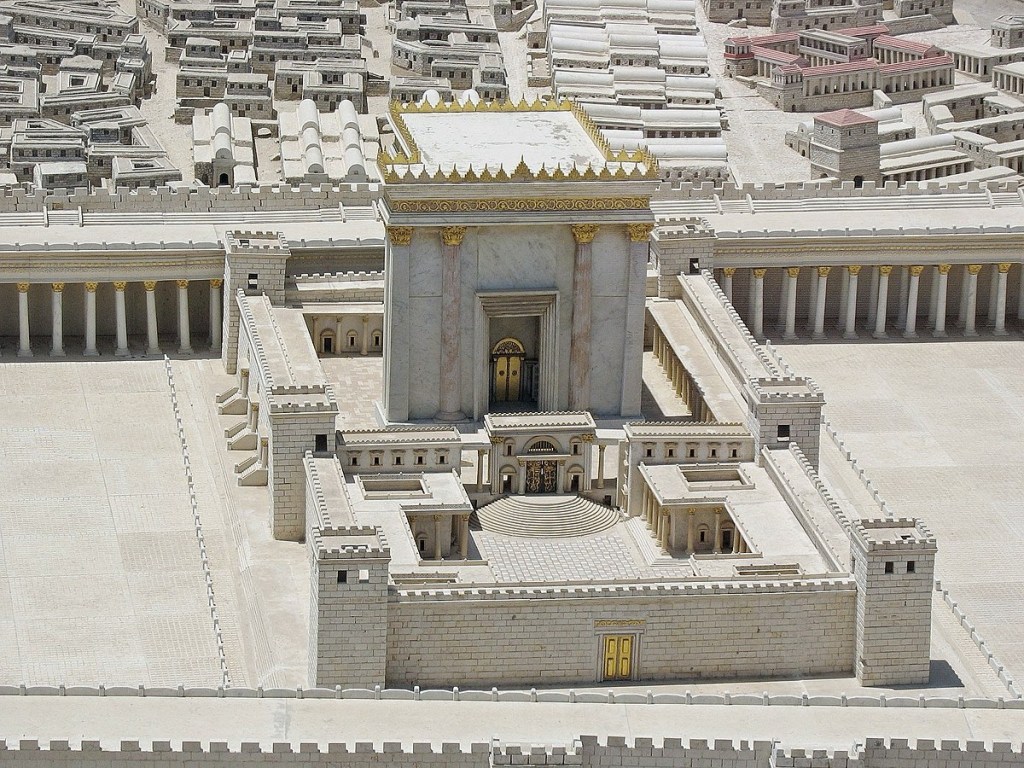
A reconstruction of how the Temple may have looked in the time of Jesus, towards the end of the Second Temple period

At a crucial point during his ministry in Galilee, Jesus “sets his face” to go to Jerusalem (9:51). On the way towards Jerusalem, Jesus laments the fate that is in store for Jerusalem (13:33–35) and when he enters the city, he weeps over the city (19:41–44) and provides more prophetic words about their fate (21:20–24). Each of these passages is found only in this particular Gospel.

Once Jesus has arrived in the city, the narration of his arrest, trial, betrayal, sentencing, death and burial follows the pathways recounted in other canonical Gospels. However, the risen Jesus appears, not in Galilee (as in other versions), but only in the nearby town of Emmaus (24:28–32) and then in Jerusalem itself  (24:33–49). The final sentence of this Gospel indicates a return to the location of the opening scene, as the disciples “were continually in the temple blessing God” (24:53; cf. Acts 1:8–9).

The Lukan focus is singularly on the early movement as it formed in Jerusalem (Acts 1—7, 12) before spreading out from Jerusalem into other regions. Indeed, Acts 1:8 provides a programmatic statement that prioritises Jerusalem amongst all locations. And the disciples are noted as being in the temple a number of times (Acts 2:46; 3:1: 4:1–2; 5:21, 42). Indeed, this is specifically commanded by an angel of the Lord, who said, “Go, stand in the temple and tell the people the whole message about this life” (Acts 5:20). The Temple is a highly significant location in this Gospel.

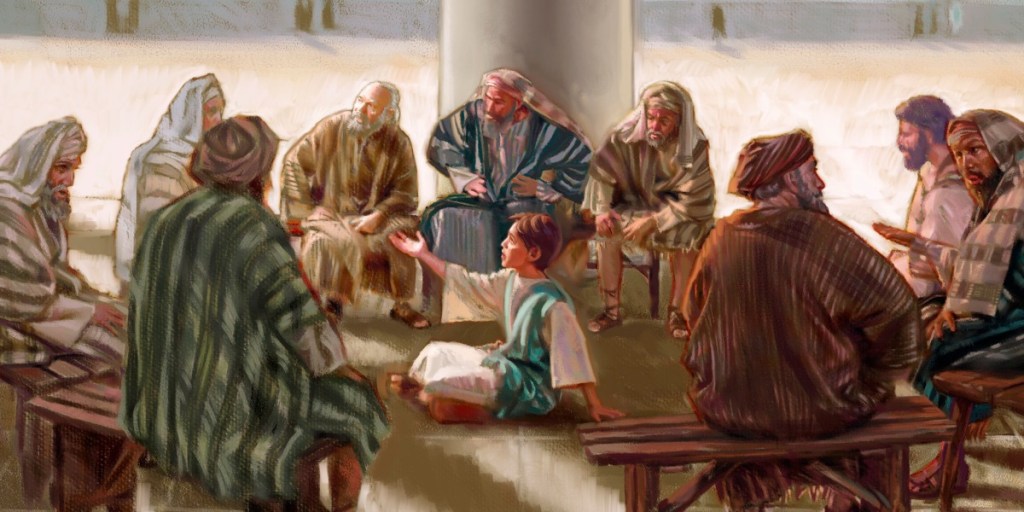
A second important feature that points ahead is the fact that Jesus is engaged in discussion with the teachers of Torah. When he was found, he was “sitting among the teachers, listening to them and asking them questions” (Luke 2:46). Discussion about Torah runs through Luke’s narrative, just as it had done in the Markan source that we presume he used (5:17–26; 6:1–5, 6–11; 10:25–37; 11:37–52; 12:1–3; 13:10–17; 14:1–6; 16:14–18; 18:18–30; 20:1–47). 

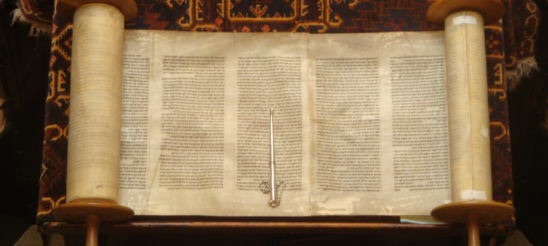
A Torah scroll

Indeed, such is the vigour with which Jesus debates the teachers of Torah that “the scribes and the Pharisees began to be very hostile toward him and to cross-examine him about many things, lying in wait for him, to catch him in something he might say” (11:53–54). And then “the elders of the people” conspire with the Temple authorities to arrest Jesus (22:52) and bring him to trial (22:66), “vehemently accusing him” when he is brought before Herod (23:10) and pressing Pilate to sentence him to death (23:13–18).

However, all of this is far into the future as the twelve year old Jesus sits in the Temple, “sitting among the teachers, listening to them and asking them questions” (Luke 2:46). The response at this stage is positive and encouraging; Luke comments that “all who heard him were amazed at his understanding and his answers” (2:47). The story thus points to the way that amazement will be the response of people later in Luke’s narrative when the adult Jesus teaches and heals (4:22, 36; 5:9, 26; 8:25; 9:43; 11:14).

A third element looking ahead to later in the Gospel occurs in the words spoken by Jesus. During this exchange in the Temple, the young Jesus speaks words of wisdom. “Did you not know that I must be in my Father’s house” (2:49) is the first example of many of the short, pithy sayings which Jesus speaks throughout the Gospel.

We know this kind of saying well: “the Son of Man is lord of the sabbath” (6:5), “do to others as you would have them do to you” (6:31), “wisdom is vindicated by all her children” (7:35), “let anyone with ears to hear listen!” (8:8), “my mother and my brothers are those who hear the word of God and do it” (8:21), “if any want to become my followers, let them deny themselves and take up their cross daily and follow me” (9:23), “whoever is not against you is for you” (9:50) … and so on. The words of Jesus in this story, “I must be in my Father’s house?” (2:49) prefigure this wise saying style of Jesus.

And the one small word “must” plays a key role at the centre of Luke’s theological explanation that all that takes place is integral to “the plan of God” (see esp. Acts 2:23 and Luke 7:30). (This was the topic for my PhD thesis, published as The plan of God in Luke-Acts, CUP, 1993; one whole chapter was devoted to the motif of divine necessity that is conveyed by this word and a cluster of terms used in Luke—Acts.)

What “must” take place is Jesus’s proclamation of the kingdom of God (Luke 4:43), the suffering of the Son of Man (9:22; 17:25), the necessary journey on the road to Jerusalem (13:34), and the inevitable occurrence of wars and insurrections (21:9), the flight from Jerusalem (21:20–21),, and the death of Jesus itself (22:36–37), followed by his being raised from the dead (24:7, 44–46). In Acts, this divine necessity continues to impel the activities of the apostles (Acts 4:19–20; 5:29) and of Paul (9:16; 14:22; 19:21; 23:11). All of this (and more) “must” take place. 

Indeed, an alternative translation of Jesus’ words from the Greek, οὐκ ᾔδειτε ὅτι ἐν τοῖς τοῦ πατρός μου δεῖ εἶναί με; (and the translation that I prefer) is that he says “do you not know that I must be about the business of my Father?”. This rendering highlights how this verse performs a key programmatic function for the Gospel narrative as a whole, which tells of how Jesus carries out the business of his Father. That adds another depth to the significance of this passage.
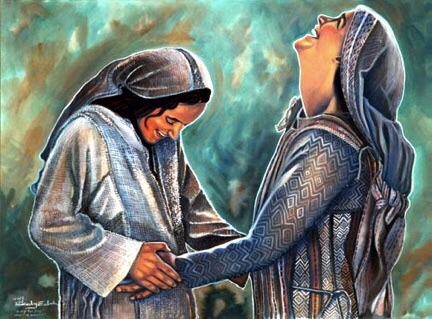
Finally, what might we make of the fact that in this story Jesus was twelve years of age? Modern readers might connect this note with the fact that today, Jewish boys celebrate their bar mitzvah—a coming-of-age ritual—when they turn 13. (Jewish girls have a similar ceremony, a bat mitzvah.) So could this story about the 12 year-old Jesus somehow relate to his own bar mitzvah? 

However, there is no reference to a bar mitzvah ceremony in the Hebrew Scriptures or the New Testament, nor in later rabbinic texts such as the Mishnah (3rd century) and the Talmuds (5th to 7th centuries). There is discussion in various medieval rabbinic texts that begins to develop the idea that such a ceremony was known; but as is always the case with rabbinic discussion, the discussions are subtle, complex, and not crystal clear to those not used to reading these kinds of texts. 

My Jewish Learning places the first reference to a bar mitzvah in a fifth-century rabbinic text which references a blessing to be recited by the father thanking God for freeing him from responsibility for the deeds of his child, who is now accountable for his own actions. However, this is simply a prayer, not a full ritual ceremony. It then notes: “A 14th-century text mentions a father reciting this blessing in a synagogue when his son has his first aliyah [the “going-up” to the front of the synagogue to be blessed]. By the 17th century, boys celebrating this coming of age were also reading from the Torah, chanting the weekly prophetic portion, leading services, and delivering learned talks.” 

See https://www.myjewishlearning.com/article/bar-and-bat-mitzvah-101/

 So we should not read any magical significance into the age of Jesus in the story that Luke tells, other than it seems to mark a moment in the orderly account that Luke writes which reveals something of the character of Jesus at a time well before his public adult activity began. We can’t attribute any historical value to the story (the author of Luke’s Gospel was probably not even born at the time that this story was alleged to have taken place). But it does play an important role in the literary structure of the Gospel—it is a hinge between the infant Jesus and the adult Jesus—as well as offering some key theological elements in the understanding of Jesus that this Gospel develops.

Unknown's avatarAuthor John T SquiresPosted on December 27, 2024December 27, 2024Categories An Orderly Account: Gospel of Luke, Scripture and TheologyTags Jesus, Luke, necessity, plan of God, scripture, temple, theology

No room in the story? Where are the women? (Luke 2; Christmas Day)

No room in the story? Where are the women? (Luke 2; Christmas Day)

Where are the women in the story we tell at Christmas? We know that there was “no room at the inn” for Mary and Joseph, as they prepared for the birth of their son, Jesus. But it seems that there is precious room in the story for women. Where are the women in this story?

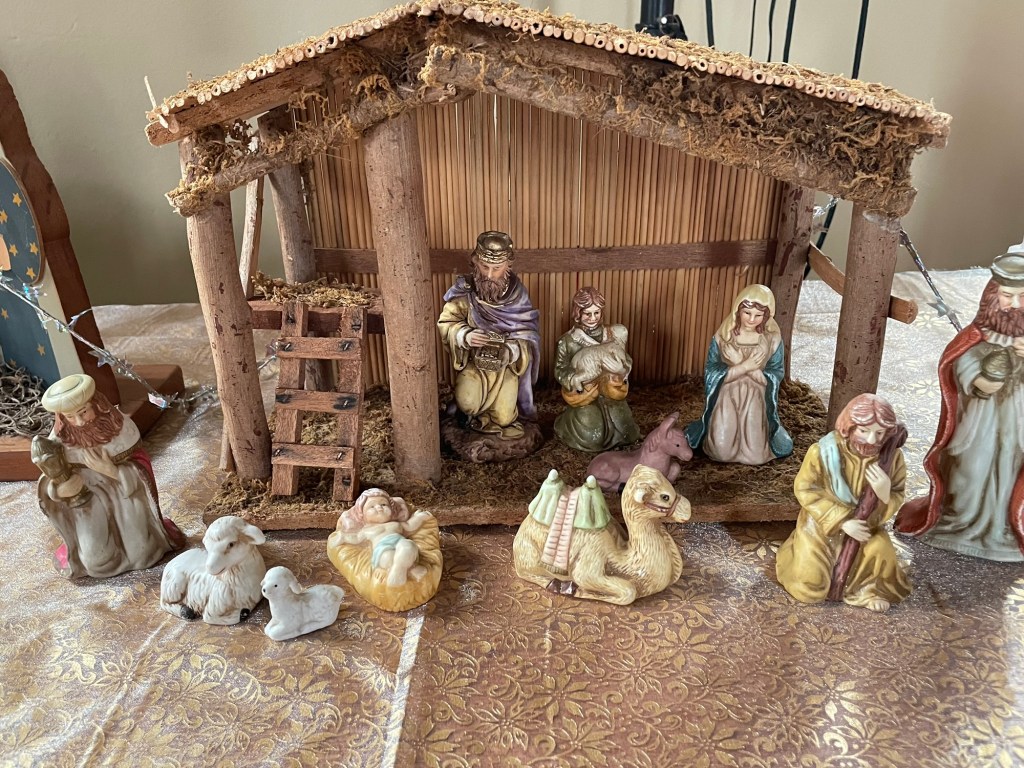
There are lots of men in the “traditional” story that is retold and enacted every year: the faithful father-figure Joseph, the excited shepherds (presumably males?) coming in from the fields, the innkeeper at the place where “there was no room”, and of course the infant baby, a little boy. Then, the angel who makes appearances to announce the imminent births of John and Jesus is identified as Gabriel, another male.
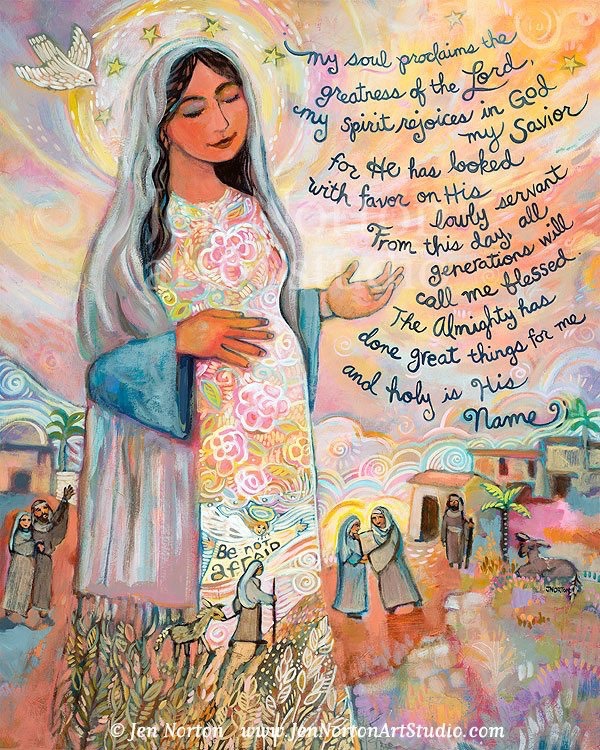
There are the “three wise men”—well, it is usually presumed that they were men—travelling from the east and the evil tyrant Herod conferring with his male advisors (the chief priests and the scribes, more men) before ordering the slaughter of infant boys. There is the census ordered by the male ruler, Emperor Augustus, and implemented by the male Governor, Quirinius, throughout the region of Syria. All men. Where are the women?

Many-a-time the girls and women who take part in the “traditional” nativity scene that we re-enact each year have to don the costume of a male character, and perhaps at times a false beard, so that they “fit the part”. It’s another way that women become invisible in the story that is told—as is so often the case with stories in the Bible.

Of course, we know that the “traditional” nativity scene is a fiction—an invention of Francis, a medieval monk (another man) who collated the two Gospel accounts (both written by men) and then added additional elements on the basis of his own informed (male) imagination. We sing about that scene in carols written, largely, by men: Joseph Mohr (Silent Night), Philip Brooks (O little town of Bethlehem), Edmund Sears (It came upon the midnight clear), Cecil Alexander (Once in Royal David’s city), Nahum Tate (While shepherds watched their flocks), Charles Wesley (Hark! the herald angels sing), John Henry Hopkins (We three kings), John Mason Neale (Good King Wenceslas), and John Francis Wade (O come, all ye faithful). All men. 

See this list with explanations at https://www.countrylife.co.uk/out-and-about/theatre-film-music/who-wrote-christmas-carols-251067

And as far as the tunes we sing are concerned, there are yet more men involved: Felix Mendelssohn (Hark! the herald angels), Henry John Gauntlett (Once in royal David’s city), William J. Kirkpatrick (Away in a manger), John Henry Hopkins (We three kings), and Richard Storrs Willis (It came upon a midnight clear). The origins of the tune for O come, all ye faithful is not known, although at different times it has been attributed to no less than seven different composers—all, of course, being men! (George Frederick Handel is the best-known of the possible, but unproven, composers.)

See this list with explanations at https://www.classical-music.com/features/composers/composers-behind-your-favourite-carols

And at least until fairly recently, most people have sent Christmas cards to each other that have been developed largely by men. These cards were originally popularised by the Hallmark company that began life as the Norfolk Post Card Company, established in 1907 by J.C. Hall and his older brothers, William and Rollie—three more men. 

Lots of men. But where are the women?

Yes, there are some women in the story. Mary, for a start; every birth story needs a mother, and mothers must be female, and so we have Mary. And then there is Elizabeth, a relative of Mary, who is included in the story that Luke tells. And, in a wonderful version of the Christmas tale that my wife uses regularly in Christmas worship services, the cranky innkeeper has a wife who does her best to look after the visitors and keep the peace. So there are some women, explicit, and implicit, in the story.

But there are more women who would have been involved in the events surrounding the birth of Jesus. For a start, Mary would have had assistance—female assistance—as she gave birth. Midwives were present at births in the ancient world; the story of Moses refers to the midwives in Egypt—and they are rare amongst women in biblical narratives in that their names are recorded: Shiphrah and Puah (Exod 1:15–22). Midwives are also noted in the birth narratives about Benjamin, whose mother Rachel sadly died giving birth (Gen 35:16–20) and the twin boys, Perez and Zerah, born to Tamar (Gen 38:27–30). 

Prof. Carol Meyers, writing in the Jewish Women’s Archive, notes that “the presence of such a health care professional, called meyalledet (“one who causes, helps birth”), was probably routine in Israelite and pre-Israelite society”. She further notes that “the belief that god is the creator of life underlies the metaphor of God as a midwife, one of several female metaphors for God in the Hebrew Bible”, citing a line of a psalm addressing God as a clear example: “it was you who took me from the womb; you kept me safe on my mother’s breast” (Ps 22:9). Prof. Meyers astutely observes that “the status of midwives—and their power to transform childbirth from what might be a negative experience to a positive one—did not erode until the advent of modern, male-dominated medicine”. See

https://jwa.org/encyclopedia/article/midwife-bible

J.M. Hochstetler, writing about “Childbirth in Jesus’ Time”, has hypothesised further: “Midwives, skilled practitioners of their profession, were significant figures in ancient society who provided comfort, pain relief, and encouragement to the laboring woman. They performed rituals and prayers to protect her and her baby, used their expertise to deal with any complications that might arise, delivered the baby and the afterbirth, and supervised the mother and baby’s aftercare.” Commenting specifically on the birth of Jesus, she deduces that “Joseph would definitely have been excluded, nor would he have protested. Giving birth was the province of women, and men were happy to absent themselves.” See

https://www.hhhistory.com/2019/12/childbirth-in-jesus-time.html

So it is a reasonable assumption that a midwife would have been present at, and assisted in, the birth of Jesus to his mother Mary. Why is there not at least a midwife (if not also some assistants) present in the “traditional” nativity scene that we re-enact each year?

Another place in the story at which women would most surely have been present would have been in the house where Joseph and Mary were staying at the time of this birth. Despite what the “traditional” story portrays, it was most definitely not a case of Joseph knocking on the doors of all the hotels in town, only to discover that, because of the census, every one of them was filled to overflowing, and so they had to settle for “a room around the back” with the animals.

Luke gives a minimum amount of detail concerning the birth of Jesus, informing us that Mary “laid him in a manger, because there was no place for them in the inn” (Luke 2:7). The word translated as “inn” is the Greek word κατάλυμα (kataluma). This is relatively rare in the New Testament, but appears in many places in ancient Greek literature, where it usually refers to a guest chamber or lodging place in a private home. The same term appears in Luke 22:11 with the meaning “guest room,” and the verb derived from this noun appears in two other places (Luke 9:12; 19:7) where it means something like “find lodging” or “be a guest.” 

Moreover, and by contrast, in the story of the Good Samaritan, when Jesus refers to the place where the injured traveller rests—clearly a commercial inn—a different word is used; it means an inn frequented by travellers is used (pandokian; see Luke 10:34). So Joseph and Mary were not looking for lodging in an inn; they were most likely hoping to find shelter with a  member of their family in Bethlehem. 

That would make sense, given what we know of ancient life; in Jewish society (indeed, in all ancient Mediterranean societies), hospitality was very important. Travel to a town where members of the extended family lived would usually mean staying with them. Unfortunately for the key figures in the “traditional” Christmas story, once they arrived in town they found many other family members had arrived before them. So there was no room in the kataluma, the guest house in the family member’s home.

Luke’s story probably suggests that Joseph and Mary were planning to stay at the home of friends or relatives; but the home where they arrived was so full, even the guest room was overflowing, and so they had to be housed with the animals in a lower in the lower part of the house. It was the custom to house animals in a special section of the house, and that, of course, would be where the manger was to be found. 

But once Mary and Joseph were given that space to stay, they would have been accepted into the family for the duration of their stay. And that meant including them in the family meals. And guess who prepared the meals? That’s right—the women of the family! And we know from familiar biblical stories that it was the women of the household who prepared and served the meals. When three visitors arrive unexpectedly at the tent of Abraham near the oaks of Mamre, the text says that “Abraham hastened into the tent to Sarah, and said, ‘Make ready quickly three measures of choice flour, knead it, and make cakes’” (Gen 18:6). 

The last chapter of Proverbs praises the “woman of valour” who runs her household with such efficiency. Amongst her many and varied responsibilities, this woman “rises while it is still night and provides food for her household” (Prov 31:15). Overseeing the kitchen was integral to the efficient running of the household. The story of Abigail feeding the troops of David while they were in the wilderness, fleeing from Saul’s men and seeking sustenance from her husband, Nabal, a rich Calebite (1 Sam 25), reveals the proficiency of women as they brought provisions for the troops: Abigail took “two hundred loaves, two skins of wine, five sheep ready dressed, five measures of parched grain, one hundred clusters of raisins, and two hundred cakes of figs” and sent them off to feed David and his men (1 Sam 25:18). Abigail was the overseer of quite an impressive domestic operation, if these figures are to be believed!

So in Luke’s Gospel narrative, when Jesus visits the home of Martha and Mary, it is usually understood that “all the work” that Martha is undertaking, without the expected assistance of Mary, involved the preparation and serving of a meal for Jesus and those travelling with him (Luke 10:38–42). The same undertakings would have been the work of the women in the house where Joseph and Mary were staying when she gave birth to Jesus. They would have fed the new parents and ensured that they were well provided for as they cared for the infant Jesus in his first few days. There are more women at this point in this story!

So we ought to remember that there were actually many more women in the story of the birth of Jesus: present at the birth and immediately after it, involved in the food preparation and sharing food at table as the wider family gathered together, ensuring that there was support for the parents of the newly-born child. And we should make space in the story for these important characters to be seen and heard. Let’s remember that, and act on it, next time we prepare to tell or act out the “traditional” Christmas story. 

Unknown's avatarAuthor John T SquiresPosted on December 24, 2024December 24, 2024Categories An Orderly Account: Gospel of Luke, Scripture and TheologyTags Christmas, Luke, scripture, theology, women

The Magnificat (Luke 1:39–45; Narrative Lectionary for Advent 4C)

The Magnificat (Luke 1:39–45; Narrative Lectionary for Advent 4C)

For the Fourth Sunday in Advent this year, the Narrative Lectionary moves from words of the ancient prophets, to words which are similarly prophetic, in a song sung by a young woman who discovers that she is pregnant. The lectionary suggests that we hear about the message delivered to this young woman, Mary, which tells about the child she would bear—the scene often called “the Annunciation”—followed by the song sung by the young, pregnant Mary—the song that is best known as “the Magnificat” (Luke 1:46b—55). On the Annunciation scene, see 

(Magnificat is the first word of the Latin version of this song. It makes sense, does it not, for a song that Mary most likely sang in Aramaic, and which is known to us from a Greek text, to be given a Latin title??? Such is the power of the western Roman Catholic Church, whose liturgy was in Latin for many centuries.)

The writer of the Gospel of Luke places this song in a scene that takes place after the pregnant Mary travels to visit a town in the hill country of Judaea. Mary is in the house of Zechariah and his wife Elizabeth, an elderly relative of Mary, who is also pregnant with child (Luke 1:39–45). This scene is rich with scriptural resonances.

I 

Providing the Magnificat as the Psalm for the week has a certain poetic justice. Although this is part of the New Testament, this hymn is certainly a song in the mode of the psalms, as they are found in the book of that name in Hebrew Scripture. Indeed, such psalms are found not only in the book of Psalms, but in other places in those scriptures. Songs in the manner of psalms are scattered throughout the stories of the lives of the people of Israel—including into the century we identify as “the first century” (CE).

Included in these psalms are some striking songs. The Song of Miriam and the Song of Moses, both sung after the crossing of the Red Sea, are psalms of thanksgiving (Exod 15:21, and 15:1–18), whilst the Song of Moses at the end of his life recounts the story of the people (Deut 32:1–43). The Song of Deborah celebrates the defeat of Sisera of Canaan (Judges 5), whilst there are two Songs of David outside the book of Psalms: a psalm of thanksgiving after a series of battles with the Philistines (2 Sam 22) and another thanksgiving psalm after the ark was set inside the Tabernacle in Jerusalem (1 Chron 16:8–36).

Some prophetic books include psalms, such as a psalm of Hezekiah after he had recovered from illness (Isa 38:9-20), a psalm sung by Jonah from the belly of the fish that had swallowed him (Jon 2:1–10), and a prayer of praise sung by Habakkuk (Hab 3). 

And then, at the beginning of the story of Samuel, his mother, Hannah, offers a long prayer in the manner of psalms of thanksgiving (1 Sam 2:1–10). We heard this song just a few weeks ago, on the penultimate Sunday of Year B (Pentecost 33). This particular psalm is most important when we come to consider the song sung about a later prophet, Jesus, by his mother, Mary (Luke 1:46–55).

II

We know that Jesus is intensely Jewish in the Synoptic Gospels. The story about Jesus begins in the heart of Jewish piety, and continues apace within the life of the people of Israel through his lifetime.

The opening scene of the orderly account of the things fulfilled among us (Luke’s Gospel), set in Jerusalem in the Temple precincts, reveals a pair of righteous Jews who faithfully keep the commandments of God (Luke 1:5–6). The first person we meet, Zechariah the priest, is devoted to the service of God in the Temple (1:8–9). 

His wife, Elizabeth, expresses an attitude of deep faith in God, accepting her surprise pregnancy as “what the Lord has done for me” (1:25). They are both described as “righteous before God” (1:6). Elizabeth’s relative, Mary, demonstrates a similar faith as she submits to a similar fate, bearing a child, with the words, “here am I, the servant of the Lord” (1:38).

In turn, the traditional hopes and expectations of the people are articulated in spirit-inspired hymns sung by Mary (1:46–55, known as the Magnificat), Zechariah (1:67–79, known as the Benedictus), and Simeon the righteous (2:29–32, known as the Nunc dimittis, or the Song of Simeon). These songs set the strongly Jewish tone of the opening chapters.

The key characters operate as people of deep faith. God’s Spirit is active in these scenes; Mary is “overshadowed” by the Spirit (1:35), whilst Zechariah and Elizabeth are both “filled” with the Spirit (1:41, 1:67). Simeon is “righteous and devout” (2:25); the Spirit “rested on him” (2:25), then “revealed to him” the words he then speaks (2:26) before “guiding him … into the temple” (2:27). 

This is the same Spirit that has been active since the moment of creation (Gen 1:2), that was breathed into human beings (Gen 2:7), and that infuses every one of the creatures brought into being in God’s wonderful creation (Ps 104:24–30). It is this Spirit that has endowed individuals with leadership (Exod 31:2–3; Num 11:25–26; Deut 34:9; and a number of judges) and which has inspired prophets to proclaim the word of the Lord (Isa 61:1; Ezek 2:2; Joel 2:28–29). 

See https://johntsquires.com/2020/12/27/a-light-for-revelation-to-the-gentiles-and-for-glory-to-your-people-israel-luke-2/

III

Mary stands in the long Jewish tradition of female singers. The story of the Exodus culminates in the short song sung by Miriam (Exod 15:21). Other females singing songs of salvation at key moments in the story include Deborah (Judges 5:1–31), Hannah (1 Sam 2:1–10), and Judith (Judith 16:1–17). These are the victory songs of the oppressed.

The two scenes involving Hannah and Mary have a number of parallels. The language and the events resonate with each other across the centuries. It seems to me that the author of this orderly account (by tradition, Luke) is well-read and very capable in his writing style. This whole section is shaped to read like a Hebrew Scripture narrative. So, in my understanding of Luke 1–2, the author has been influenced by the story of Hannah as he tells the story of Mary.

Indeed, we note this in the way the two songs begin. Hannah commences by singing out “my heart exults in the Lord; my strength is exalted in my God” (1 Sam 2:1). This is deliberately echoed in Mary’s song, where she begins “my soul magnifies the Lord, and my spirit rejoices in God my Saviour” (Luke 1:46). 

Hannah describes God as the Holy One (2:2) and the Most High (2:10). Holy One is a term applied to God in the Writings (Ps 71:22; 78:41; 89:18; Prov 9:10; Job 6:10; Sir 4:14; 23:9; 53:10; 47:8; 48:20) and by the Prophets (Is 1:4; 5:19, 24; and a further 24 times; Jer 50:29; Ezek 8:13; Hos 11:9, 12; Hab 1:12; 3:3). Of course, Holiness was a central element of piety in ancient Israel, exemplified by the Holiness Code of Leviticus (Lev 11:44–45; 19:2; 20:7–8; see also Deut 7:6; 14:2, 21; 28:9). The followers of Jesus are instructed to consider themselves as God’s holy people (1 Cor 3:17; 6:19; Eph 5:25–27; Col 1:22; 3:12; Heb 3:1; 1 Pet 1:13–16; 2:5, 9) and to live accordingly.

Most High is also a very common way that God is described and addressed—23 times in the Psalms (Ps 7:17; 9:2; 18:13; etc) and a number of times elsewhere (Gen 14:17–24; Num 24:16; Deut 32:8; 1 Sam 2:10; 2 Sam 22:14; Isa 14:14; Lam 3:35, 38; Dan 3:26; 4:2, 17, 24, 25 and more; Hos 11:7; and also Wis Sol 5:15; 6:3; and 45 times in Sirach—4:10; 7:9, 15; 9:15, etc). It appears as a description of God in early Christian writings (Mark 5:7; Luke 1:32, 35, 76; 6:35: 8:28; Acts 7:48: 16:17).

Mary uses a similarly-familiar term, the Mighty One (1:49), which also is a biblical name for God (Gen 49:24; Ps 45:3; 50:1: 52:1; 132:2, 5; Isa 1:24; 49:26; 60:16; Sir 46:5–6, 16; 51:12), and then she goes on to affirm, “holy is his name”, alluding directly to the title of Holy One that Hannah has used.

Hannah’s declaration that “my strength is exalted in my God” (2:1) is echoed in Mary’s affirmation that “he has shown strength with his arm” (1:51). That strength is demonstrated in a series of claims made by Mary, regarding the proud, the powerful, and the rich, in contrast to the lowly and the hungry (1:51–53). 

The clear juxtaposition of these categories, and God’s obvious preference for the latter group, is another way in which Mary’s song echoes and replicates Hannah’s song. Hannah’s “he brings low, he also exalts” (2:7) is expanded by Mary, “he has brought down the powerful, he has lifted up the lowly” (1:52). “He raises up the poor from the dust, lifts the needy from the ash heap, to make them sit with princes and inherit a seat of honour” (2:8) is reworked by Mary into her note that God “has filled the hungry with good things and sent the rich away empty” (1:53).

In these ways, it is clear that the righteous-justice desired by God for the people of God will in fact be evident; “the Lord will judge the ends of the earth” (2:10), sings Hannah; “he has helped his servant Israel in remembrance of his mercy” (1:54) is how Mary sings it. Both justice and mercy are fundamental aspects of the being of God which are worked out in the ways that God engages with the people of Israel. God is envisaged and experienced in the same way in each of these songs. The God of Hannah continues to be the God of Mary. These two songs strongly confirm that reality. 

IV

What Hannah is celebrating is that God will be at work in the events of her time. In particular, despite her barren state (1 Sam 1:2, 5–8), Hannah prayed regularly for a son (1 Sam 2:10–18) and was blessed with just such a child: “in due time Hannah conceived and bore a son” (1 Sam 2:20, 27). Likewise, what Mary anticipates is that God will demonstrate the ongoing fulfilment of the promises made to Israel in the birth of her child given to her, despite her state as a virgin (Luke 1:27, 34). 

Both newborn sons are dedicated to the Lord: Hannah’s son was dedicated as a nazirite (1 Sam 2:11, 22, 24–28), Mary’s son is recognised as the one who will have “the throne of David given to him” and who will “reign over the house of Jacob forever” (Luke 1:32–33). The son of Hannah is dedicated in “the house of the Lord at Shiloh” (1 Sam 2:24); the son of Mary is circumcised (Luke 1:21) and then taken “to Jerusalem to present him to the Lord” (Luke 1:22). The two stories mirror each other in the same way that the two songs run in parallel to each other. 

So Mary affirms that “all generations will call me blessed” (1:48), in the same way that Leah exclaimed, “blessed am I! for the women will call me blessed” (Gen 30:13). Her song ends with the claim that the promise being fulfilled is made “to Abraham and to his descendants forever” (1:55), evoking the prayer of David, that the Lord “shows steadfast love to his anointed, to David and his descendants forever” (2 Sam 22:50). The exalting of the anointed is also noted at the very end of the song sung by Hannah (1 Sam 2:10).

V

Dietrich Bonhoeffer, a German pastor and theologian who was executed by the Nazis, declared that the Magnificat, this song of Mary, “is at once the most passionate, the wildest, one might even say the most revolutionary advent hymn ever sung. This is not the gentle, tender, dreamy Mary whom we sometimes see in paintings … This song has none of the sweet, nostalgic, or even playful tones of some of our Christmas carols. It is instead a hard, strong, inexorable song about the power of God and the powerlessness of humankind.” (From a sermon during Advent on December 17, 1933; see http://cdn.bakerpublishinggroup.com/processed/esource-assets/files/1780/original/8.40.Luke_1.46-55__The_World%27s_First_Advent_Hymn.pdf?1524151427)

Martin Luther echoed Mary’s perspective when he declared, “the mightier you are, the more must you fear; the lowlier you are, the more must you take comfort.” Pope John Paul II noted the scholarly view that this song, as well as the songs by Zechariah and Simeon, are songs of the anawim (the faithful poor), whose songs offer “glorious praise of God … thanksgiving for the great things done by the Mighty One, the battle against the forces of evil, solidarity with the poor and fidelity to the God of the Covenant” (in a general audience on Psalm 149 on Wednesday 23 May 2001; see https://www.vatican.va/content/john-paul-ii/en/audiences/2001/documents/hf_jp-ii_aud_20010523.html)

Sister Elizabeth Johnson sums it up well,

“The Magnificat is a revolutionary song of salvation whose political, economic, and social dimensions cannot be blunted. People in need in every society hear a blessing in this canticle. The battered woman, the single parent without resources, those without food on the table or without even a table, the homeless family, the young abandoned to their own devices, the old who are discarded: all are encompassed in the hope Mary proclaims”.

See https://uscatholic.org/articles/201101/mary-mary-quite-contrary/ and http://compassreview.org/summer14/3.pdf

Unknown's avatarAuthor John T SquiresPosted on December 17, 2024December 15, 2024Categories An Orderly Account: Gospel of Luke, Hebrew Scripture, Scripture and TheologyTags Hebrew Scripture, Jesus, justice, Luke, Magnificat, Mary, scripture, theology

Posts pagination

Previous page Page 1 Page 2 Page 3 … Page 14 Next page

The Book of Origins

  • Leaving Luke . . . Meeting Matthew
  • Matthew: tax collector, disciple, apostle, evangelist—and “scribe trained for the kingdom”? (Matt 9; Pentecost 2A)
  • For our instruction … that we might have hope (Rom 15, Isa 11, Matt 3; Advent 2A)
  • The origins of Jesus in the book of origins: Matthew 1 (Advent Year A)
  • Now the birth of Jesus the Messiah took place in this way (Matthew 1; Advent 4A)
  • Descended from David according to the flesh (Rom 1; Advent 4A)
  • A young woman? A virgin? Pregnant? About to give birth? (Isa 7:14 in Matt 1:23; Advent 4A)
  • More on Mary (from the Protoevangelium of James)
  • Tales from the Magi (the Revelation of the Magi)
  • Herod waiting, Herod watching, Herod grasping, holding power (Matt 2; Christmas 1A)
  • Herod was infuriated, and he sent and killed all the children (Matt 2; Christmas 1A)
  • Repentance for the kingdom (Matt 4; Epiphany 3A)
  • Proclaiming the good news of the kingdom (Matt 4; Epiphany 3A)
  • Teaching in “their synagogues” (Matt 4; Epiphany 3A)
  • Teaching the disciples (Matt 5; Epiphany 4A)
  • Blessed are you: the Beatitudes of Matthew 5 (Epiphany 4A)
  • An excess of righteous-justice (Matt 5; Epiphany 5A)
  • You have heard it said … but I say to you … (Matt 5; Epiphany 6A)
  • The missing parts of the Sermon on the Mount (Matt 6 and 7; Epiphany Year A)
  • Our Father in heaven: a pattern for prayer (Luke 11, Matt 6) part III
  • Our Father in heaven: a pattern for prayer (Luke 11, Matt 6) part II
  • Our Father in heaven: a pattern for prayer (Luke 11, Matt 6) part I
  • “Go nowhere among the Gentiles” (Matt 10:5): the mission of Jesus in the book of origins (Pentecost 3A)
  • “Even the hairs of your head are all counted.” (Matt 10:30; Pentecost 4A)
  • Come to me, take my yoke, I will give you rest (Matt 11; Pentecost 6A)
  • Parables: the craft of storytelling in the book of origins (Matt 13; Pentecost 7A)
  • The righteous-justice of God, a gift to all humanity (Romans; Year A)
  • Let anyone with ears, hear! (Matt 13; Pentecost 8A)
  • Chopping and changing: what the lectionary does to the parables of Matthew (Pentecost 7–9A)
  • Nothing but five loaves and two fish (Matt 14; Pentecost 10A)
  • Liminal experiences and thin places (Matt 14; Pentecost 11A)
  • It’s all in the geography. Jesus, the Canaanite woman, and border restrictions (Matt 15; Pentecost 12A)
  • A rock, some keys, and a binding: clues to the identity of Jesus (Matt 16; Pentecost 13A)
  • An invitation that you just cannot … accept! (Pentecost 19A)
  • Towards Palm Sunday (Matt 21): Passover and politics
  • Towards Palm Sunday (Matt 21): Riding on a donkey (or two) as the crowd shouts ‘Hosanna’
  • Towards Palm Sunday (Matt 21): Waving branches, spreading cloaks
  • Towards Palm Sunday (Matt 21): Acclaiming the king, anticipating the kingdom
  • Producing the fruits of the kingdom (Matt 21; Pentecost 19A)
  • Darkness, weeping, and gnashing of teeth: the scene of judgement (Matt 22; Pentecost 20A)
  • The greatest and first commandment … and a second, like it (Matt 22)
  • On these two commandments hang all the law and the prophets (Matt 22; Pentecost 22A)
  • Sitting on the seat of Moses, teaching the Law—but “they do not practice what they teach” (Matt 23; Pentecost 23A)
  • Discipleship in an apocalyptic framework (Matt 23–25; Pentecost 23–26A)
  • A final parable from the book of origins: on sheep and goats, on judgement and righteous-justice (Matt 25; Pentecost 26A)
  • Scripture debate and disputation in the wilderness (Matt 4; Lent 1A)
  • Testing (not temptation) in the wilderness (Matt 4; Lent 1A)
  • Practising righteous-justice: alms, prayer, and fasting (Ash Wednesday)
  • Forcing scripture to support doctrine: texts for Trinity Sunday (2 Cor 13, Matt 28; Trinity A)

An Orderly Account: Luke and Acts

  • “An orderly account”: a quick guide to Luke and Acts
  • Costly discipleship, according to Luke
  • Did Luke write the first “orderly account” about Jesus?
  • With one eye looking back, the other looking forward: turning to Luke’s Gospel I (Year C)
  • Leaving out key moments, so they can appear later in the story: turning to Luke’s Gospel III (Year C)
  • “A light for the Gentiles, salvation to the ends of the earth”: turning to Luke’s Gospel II (Year C)
  • The scriptural resonances in the Annunciation (Luke 1; Advent 4B)
  • Magnificat: the God of Mary (Luke 1) is the God of Hannah (1 Sam 2) (Advent 4C)
  • “To give knowledge of salvation”: Luke’s portrayal of John the baptiser (Luke 3; Advent 2C)
  • On angels and virgins at Christmastime (Luke 2; Christmas Day B)
  • A light for revelation to the Gentiles and for glory to your people Israel (Luke 2; Christmas 1B)
  • John the baptiser’s call for ethical, faithful living (Luke 3; Advent 3C)
  • A Testing Time: forty days in the wilderness (Luke 4)
  • Sacred place and sacred scripture: forty days in the wilderness (2)
  • Scripture fulfilled in your hearing (Luke 4:16-30; Epiphany 3C, 4C)
  • Jesus and conventional Jewish piety (Luke 4:16; Epiphany 3C)
  • Jesus, scripture and experience (Luke 4:17, 21; Epiphany 3C)
  • The holistic spirit-inspired mission of Jesus (Luke 4:18–19; Epiphany 3C)
  • Jesus, the widow of Sidon and the soldier of Syria: representatives of the community of faith (Luke 4:25–27; Epiphany 4C)
  • Two prophets of Israel, the widow of Sidon and the soldier of Syria: an inclusive community of Jews and Gentiles (Luke 4:25–27; Epiphany 4C)
  • Leave everything, follow Jesus (Luke 5:1-11; Epiphany 5C)
  • On a level place, with a great crowd (Luke 6; Epiphany 6C)
  • Blessed are you … poor, hungry, weeping … (Luke 6; Epiphany
  • The plain, the synagogue, and the village (Luke 6, 4 and 1; Epiphany 6C)
  • Bless—Love—Forgive—and more. The teachings of Jesus (Luke 6; Epiphany 6C, 7C)
  • The beloved physician, the lover of God, and loving our enemies (Luke 6; Epiphany 7C)
  • Perfect, or merciful? The challenge Jesus poses (Matt 5, Epiphany 7A; Luke 6, Epiphany 7C)
  • Jesus and his followers at table in Luke’s “orderly account”
  • Before Transfiguration Sunday, the stories of the dying slave and the grieving widow (Luke 7; Epiphany 9C; Proper 4C)
  • What have you to do with me, Jesus? (Luke 8; Pentecost 2C)
  • Bringing his ‘exodos’ to fulfilment (Luke 9; Transfiguration C)
  • Setting his face to go to Jerusalem (Luke 9:51, 13:33, 17:11, 19:11; Lent 2C)
  • Through Samaria, heading to Jerusalem (Luke 9; Pentecost 3C)
  • Sent out in Samaria, proclaiming the kingdom (Luke 10; Pentecost 4C)
  • Listening and learning at the feet of Jesus (Luke 10; Pentecost 6C)
  • Mary and Martha: models of women following and learning from Jesus (Luke 10; Pentecost 6C)
  • There is need of only one thing. Or, maybe, two. (Luke 10; Pentecost 6C)
  • Where have all the women gone? Women in the movement initiated by Jesus (Luke 10; Pentecost 6C)
  • On earth, as in heaven: the key to The Lord’s Prayer (Luke 11; Pentecost 7C)
  • Sins or trespasses? Trial or temptation? Thine or yours? The prayer that Jesus taught (Luke 11; Pentecost 8C)
  • “Where your treasure is, there your heart will be also” (Luke 12; Pentecost 8C)
  • Coming to grips with the judgement of God (Luke 12 and Isaiah 5; Pentecost 10C)
  • She stood up straight and they were put to shame (Luke 13; Pentecost 11C)
  • Jerusalem, Jerusalem: holy city, holy calling (Luke 13; Lent 2C)
  • Disturbing discipleship: exploring the teachings of Jesus in Luke 14 (Pentecost 12C to 13C)
  • Disreputable outsiders invited inside: parables in Luke 14 (Pentecost 12C, 13C)
  • The discomfort of ambiguity (Luke 15; Lent 4C)
  • Human sinfulness and divine grace (Jeremiah 4; Luke 15; 1 Timothy 1; Pentecost 14C)
  • Shrewd? dishonest? manipulative? or contributing to the common good? (Luke 16; Pentecost 15C)
  • Lazarus and the rich man (Luke 16; Pentecost 16C)
  • Faith the size of a mustard seed (Luke 17; Pentecost 17C)
  • Was none of them found to return and give praise to God except this foreigner? (Luke 17; Pentecost 18C)
  • Unjust judge, shameless widow (Luke 18; Pentecost 19C)
  • In defence of the Pharisees: on humility and righteousness (Luke 18; Pentecost 20C)
  • Zacchæus: patron saint of change and transition (Luke 19; Pentecost 21C)
  • “When these things begin to take place … your redemption is drawing near” (Luke 21; Advent 1C)
  • “Be alert at all times, praying that you may have the strength … to stand before the Son of Man” (Luke 21; Advent 1C)
  • Look up to the sky? Look down to your feet! (Luke 20; Pentecost 22C)
  • Don’t take it at face value: on former things and new things
  • Don’t take it at face value: on what lies behind and what lies ahead (Lent 2C)
  • The death, resurrection and ascension of Jesus in Luke’s “orderly account”
  • What do you see? What do you hear? (Luke 19; Palm Sunday C)
  • Holy Week: the week leading up to Easter
  • Sacrificial death and liberating life: at the heart of Easter
  • Ministry and Mission in the midst of change and transition (Luke 21:13; Pentecost 23C)
  • Easter in Christian tradition and its relation to Jewish tradition
  • A time in-between the times, a space in no-space.
  • The tomb is empty. He is not here. He is risen. (Luke 24; Easter Sunday)
  • He Is Not Here Day
  • Discovering new futures … letting go of the old
  • The moment of recognition: walking … talking … listening … understanding … (Luke 24; Easter evening; Easter 3A)
  • Ten things about Pentecost (Acts 2)
  • The cross-cultural nature of the early Jesus movement
  • From Learners to Leaders: deepening discipleship in Luke’s “orderly account”
  • Constantly devoting themselves to prayer (Acts 1; Easter 7A)
  • You will be my witnesses (Acts 1; Easter 7A)
  • Judas: reconsidering his part in the Easter story (Acts 1; Easter 7B)
  • Pentecost, the Spirit, and the people of God (Acts 2; Pentecost B)
  • What God did through him: Peter’s testimony to Jesus (Acts 2; Easter 2A)
  • What God did through him: proclaiming faith in the public square (Acts 2; Easter 2A)
  • Repent and be baptised: Peter’s Pentecost proclamation (Acts 2; Easter 3A)
  • The church in Acts: Times of refreshing (Acts 3; Easter 3B)
  • Boldly proclaiming “no other name” (Acts 4; Easter 4 B)
  • The church in Acts: Unity, testimony, and grace (Acts 4; Easter 2B)
  • We must obey God rather than human authority (Acts 5; Easter 2C)
  • Edging away from the centre (Acts 8; Easter 5B)
  • What happened after Philip met the Ethiopian? (Acts 8; Easter 5B)
  • The calling of Saul and the turn to the Gentiles: modelling the missional imperative (Acts 8—12; Easter 3C)
  • People of ‘The Way’ (Acts 9; Easter 3C)
  • You will be told what you are to do (Acts 9; Easter 3C)
  • Resurrection life, economic responsibility, and inclusive hospitality: markers of the Gospel (Acts 9)
  • Another resurrection! (Acts 9; Easter 4C)
  • Even to the Gentiles! (Acts 10; Easter 6B)
  • Even to the Gentiles (Acts 11; Easter 5C)
  • On literary devices and narrative development (Acts 16; Easter 7C)
  • The unknown God, your own poets, and the man God chose: Paul on the Areopagus (Acts 17; Easter 6A)
  • Paul, Demetrius and Damaris: an encounter in Athens (Acts 17:16-17,22–34)
  • Lydia, Dorcas, and Phoebe: three significant strategic leaders in the early church
  • An Affirmation for Our Times
  • I make prayers on your behalf (Letters to Luke #1; Year C)
  • I rejoice in the gift of writing (Letters to Luke #2; Year C)
  • How exciting it was! (Letters to Luke #3; Year C)
  • I write briefly (Letters to Luke #4; Year C)
  • I am happy to report that we have held another reading (Letters to Luke #5; Year C)
  • I was astonished to receive your brief note (Letters to Luke #6; Year C)
  • Leaving Luke . . . Meeting Matthew

Scripture and Theology

  • The Word of God, Scripture, and Jesus Christ
  • Marrying same-gender people: a biblical rationale
  • Discernment
  • Interpreting the creeds “in a later age”
  • Affirming the Teachings of Jesus
  • To articulate faith contextually
  • Let your gentleness be known to everyone
  • What can we know about the birth of Jesus?
  • “An orderly account”: a quick guide to Luke and Acts
  • Costly discipleship, according to Luke
  • In the wake of the verdict about Pell …
  • Another Time, Another Place: towards an Australian Church
  • Holy Week: the week leading up to Easter
  • Sacrificial death and liberating life: at the heart of Easter
  • The death, resurrection and ascension of Jesus in Luke’s “orderly account”
  • Easter in Christian tradition and its relation to Jewish tradition
  • The cross-cultural nature of the early Jesus movement
  • Jesus and his followers at table in Luke’s “orderly account”
  • Once again: affirming our diversity, celebrating joyous marriages
  • Ten things about Pentecost (Acts 2)
  • The Paraclete in John’s Gospel: exploring the array of translation options (John 14, 15, 16)
  • “Do you believe in the Triune God?”
  • The DNA of the UCA (part I)
  • The DNA of the UCA (part II)
  • Harness the passion, but restrain the rhetoric. Musing on the role model which Paul offers in Galatians.
  • Providing for the exercise by men and women of the gifts God bestows upon them: lay people presiding at the sacraments in the Uniting Church
  • Freedom and unity: themes in Galatians
  • Australian Religious Leaders support renewable energy
  • Human sexuality and the Bible
  • Dividing the unity, splintering the connections: more ACC agitation
  • Giving Voice, Telling Truth, Talking Treaty: NAIDOC 2019
  • Advocacy and Climate Change, Growth and Formation, Treaty with First Peoples: Synod 2019
  • Climate Change: a central concern in contemporary ministry
  • On earth, as in heaven: the key to The Lord’s Prayer (Luke 11; Pentecost 7C)
  • Ramping up the rhetoric, generating guilt and provoking panic: the failed strategy of conservatives in the UCA (part I)
  • Ramping up the rhetoric, generating guilt and provoking panic: the failed strategy of conservatives in the UCA (part II)
  • Ramping up the rhetoric, generating guilt and provoking panic: the failed strategy of conservatives in the UCA (part III)
  • International Day of the World’s Indigenous Peoples
  • In the wake of the verdict (and appeal decision) relating to Pell …
  • Where will we find hope? When will we see justice?
  • Supporting the Climate Strike
  • Gracious openness and active discipleship as key characteristics of church membership
  • Please Leave ?? No — Please Stay !!
  • Stones singing and rivers vibrating … a liturgy for Holy Communion
  • Faith in Action: a religious response to the Climate Emergency (Part One)
  • Faith in Action: a religious response to the Climate Emergency (Part Two)
  • Faith in Action: a religious response to the Climate Emergency (Part Three)
  • Celebrating Transitions: into a strange and graceful ease … (part one)
  • Celebrating Transitions: into a strange and graceful ease … (part two)
  • We wait, and hope, and grieve, anticipating …
  • On the move. A reflection on Christmas.
  • Reflecting on faith amidst the firestorms
  • This is the world we live in, this is the Gospel we believe in
  • Giving up? Or going deep? The opportunity of Lent
  • Passing the peace, sharing the elements, greeting the minister
  • When you come together … reflections on community in the midst of a pandemic
  • Holy Week: a week set apart, in a time set apart.
  • It was on that night that everything came to a head. Maundy Thursday Reflections.
  • Sacrificial Death: to give his life. Good Friday Reflections
  • Liminal Space: waiting and not knowing. Holy Saturday Reflections
  • Liberating Life: a new way of being. Easter Sunday Reflections
  • It’s been just over a month—but there have been lots of learnings!
  • Not this year. So what about next year?
  • The times, they are are a-changin’.
  • When we come together (2) … values and principles in the midst of a pandemic
  • It’s been two months under restrictions—what will our future look like? (1)
  • It’s been two months under restrictions—what will our future look like? (2)
  • Saying sorry, seeking justice, walking together, working for reconciliation
  • Worship like the first Christians. What will our future look like? (3)
  • Pentecost: the spirit is for anyone, for everyone.
  • Racism and Reconciliation
  • Paul’s vision of “One in Christ Jesus” (Gal 3:28) and the Uniting Church
  • In memory of James Dunn (1939–2020)
  • Black Lives Matter. Now—and Then.
  • Hiroshima and Nagasaki (1945), and the commitment to seek peace (2020)
  • Sexuality and Gender Identity Conversion Practices Bill: A Christian Perspective
  • Always Was, Always Will Be. #NAIDOC2020
  • The Lectionary: ordering the liberty of the preacher
  • Women in the New Testament (1): the positive practices of Jesus and the early church
  • Women in the New Testament (2): six problem passages
  • Reflections on a significant anniversary
  • What do we know about who wrote the New Testament Gospels? (1)
  • What do we know about who wrote the New Testament Gospels? (2)
  • What do we know about who wrote the letters attributed to Paul? (3)
  • What do we know about who wrote the letters in the name of the apostles? (4)
  • Revelation: a complex and intricate world of heavenly beings and exotic creatures
  • Why the Christmas story is not history (1): the “nativity scene” and the Gospels
  • Why “the Christmas story” is not history (2): Luke 1-2 and Matthew 1-2
  • Advent Greetings from Canberra Region Presbytery
  • Honours. Honestly?
  • Celebrations in Canberra (in the Uniting Church Presbytery)
  • Enough is Enough!
  • Earth Day 2021
  • From BC (Before COVID) to AD (After the Disruption)
  • The identity of the Uniting Church
  • #IBelieveHer: hearing the voice of women (Easter Day; John 20)
  • An Affirmation for Our Times
  • The missional opportunity of Trinity Sunday
  • The Murugappans of Biloela
  • World Refugee Day 2021: “when I was a stranger, you welcomed me”
  • The climate is changing; the planet is suffering; humanity is challenged.
  • 20 years on, and the shame continues: the Palapa, the Tampa, and “children overboard”
  • Rosh Hashanah: Jewish New Year
  • Remembering John Shelby Spong (1931–2021)
  • International Day of Indigenous Peoples
  • A Safe Place for Rainbow Christians
  • Working with First Peoples and advocating for them
  • Jesus, growing, learning: a review of ‘What Jesus Learned from Women’
  • “The exercise by men and women of the gifts God bestows upon them”: celebrating women in leadership in the Uniting Church
  • On vaccinations, restrictions, and fundamentalism
  • We are buying more debt, pain, and death: a case against nuclear-powered submarines
  • World Rivers Day (27 September)
  • Affirming and inclusive passages from scripture
  • The challenge of COVID-19 to Social Ethics as we know them
  • Mental Health Day, 10 October
  • The shame continues: SIEV X after 20 years
  • What does it mean to be Protestant in the Contemporary World?
  • Eye of the Heart Enlightened: words for the opening of the Parliamentary Year (2023)
  • Saltiness restored: the need for innovation. An Ordination Celebration.
  • God of all the tribes and nations
  • A Day of Mourning, ahead of Invasion Day (26 January)

Life during COVID 19

  • Passing the peace, sharing the elements, greeting the minister
  • When you come together … reflections on community in the midst of a pandemic
  • Pastoral Letter to Canberra Region Presbytery on COVID-19 pandemic
  • Pastoral Letter to the Canberra Region Presbytery of the Uniting Church in Australia. 31 March 2020
  • Liminal Space: waiting and not knowing. Holy Saturday Reflections
  • It’s been just over a month—but there have been lots of learnings!
  • Not this year. So what about next year?
  • The times, they are are a-changin’.
  • When we come together (2) … values and principles in the midst of a pandemic
  • It’s been two months under restrictions—what will our future look like? (1)
  • It’s been two months under restrictions—what will our future look like? (2)
  • Worship like the first Christians. What will our future look like? (3)
  • Pastoral Letter to Canberra Region Presbytery: June 2020
  • “Greet one another” (2 Cor 13). But no holy kissing. And no joyful singing. (Trinity Sunday A)
  • When you come together (3) … wait for one another (1 Cor 11)
  • Going “back” to church—what will our future look like? (4)
  • Minimising risks in the ongoing reality of COVID-19
  • Pastoral Letter to Canberra Region Presbytery—September 2020
  • Reimagining—the spirit of our times
  • Coping in the aftermath of COVID-19: a global perspective, a local response
  • From BC (Before COVID) to AD (After the Disruption)
  • Values and Principles in the context of a pandemic (revisited)

The First Peoples of Australia

  • The sovereignty of the First Peoples of Australia
  • Affirming the Sovereignty of First Peoples: undoing the Doctrine of Discovery
  • On Covenant, Reconciliation, and Sovereignty
  • Learning of the land (1): Eora, Biripi, Whadjuk Noongar
  • Learning of the land (2): Ngunnawal, Namadgi and Ngarigo
  • The profound effect of invasion and colonisation
  • “Endeavour by every possible means … to conciliate their affections”
  • “We never saw one inch of cultivated land in the whole country”
  • “They stood like Statues, without motion, but grinn’d like so many Monkies.”
  • “Resembling the park lands [of a] gentleman’s residence in England”
  • On Remembering: Cook and Flinders (and Trim), Bungaree and Yemmerrawanne
  • “They are to be hanged up on trees … to strike the survivors with the greater terror.”
  • So, change the date—to what?
  • Learning of the land (3): Tuggeranong, Queanbeyan, and other Canberra place names
  • Learning from the land (4): Naiame’s Nghunnhu—fishtraps at Brewarrina
  • We are sorry, we recognise your rights, we seek to be reconciled
  • Reconciliation on the land of Australia: learning from the past
  • Reconciliation on the land of Australia: Bennelong and Yemmerrawanne
  • Reconciliation on the land of Australia: Bungaree and Mahroot
  • Reconciliation on the land of Australia: Cora Gooseberry and Biddy Giles
  • Reconciliation on the land of Australia: “these are my people … this is my land”.
  • Reconciliation on the land of Australia: living together with respect
  • Dark deeds in a sunny land: the exposé offered by John B. Gribble
  • This is the proper way: no climbing
  • “They appear’d to be of a very dark or black colour”. Cook, HMS Endeavour, and the Yuin people and country.
  • “Three canoes lay upon the beach—the worst I think I ever saw.” James Cook at Botany Bay, 29 April 1770
  • Saying sorry, seeking justice, walking together, working for reconciliation
  • Racism and Reconciliation
  • “We weigh’d and run into the Harbour”. Cook, the Endeavour, and the Guugu Yimithirr
  • Black Lives Matter. Now—and Then.
  • James Cook, the Endeavour, twelve turtles and the Guugu Yimithirr (3)
  • James Cook: Captain? Discoverer? Invader? Coloniser? Cook, the Endeavour, and Possession Island.
  • Always Was, Always Will Be. #NAIDOC2020
  • Invasion and colonisation, Joshua 3 and contemporary Australia (Pentecost 23A)
  • This whispering in our hearts: potent stories from Henry Reynolds
  • A vision, a Congress, and a struggle for justice
  • What’s in a name? Reconciliation ruminations
  • NAIDOC WEEK 2021
  • Heal Country: the heart of the Gospel (for NAIDOC WEEK 2021)
  • The Spirit was already in the land. Looking back on NAIDOC WEEK (2017–2021)
  • Working with First Peoples and advocating for them
  • World Rivers Day (27 September)
  • Eye of the Heart Enlightened: words for the opening of the Parliamentary Year (2023)
  • God of all the tribes and nations
  • A Day of Mourning, ahead of Invasion Day (26 January)

Paul

  • The calling of Saul and the turn to the Gentiles: modelling the missional imperative (Acts 8—12; Easter 3C)
  • The unknown God, your own poets, and the man God chose: Paul on the Areopagus (Acts 17; Easter 6A)
  • Freedom and unity: themes in Galatians
  • Paul’s vision of “One in Christ Jesus” (Gal 3:28) and the Uniting Church
  • Descended from David according to the flesh (Rom 1; Advent 4A)
  • Reckoning what is right (Romans 4; Lent 2A) part one
  • Reckoning what is right (Romans 4; Lent 2A) part two
  • Original Sin? or Innate Goodness? (Genesis 2, Romans 5; Lent 1A)
  • We have obtained access to this grace (Romans 5, Pentecost 3A)
  • Dead to sin and alive to God (Romans 6; Pentecost 4A)
  • The best theology is contextual: learning from Paul’s letter to the Romans (Year A)
  • The righteous-justice of God, a gift to all humanity (Romans; Year A)
  • Paul and the Law, sin and the self (Rom 7; Pentecost 6A)
  • Paul, the law of the Spirit, and life in the Spirit (Rom 8; Pentecost 7A)
  • Paul, the spirit of adoption, and the “Abba, Father” prayer (Rom 8; Pentecost 8A)
  • Sighs too deep for words: Spirit and Scripture in Romans (Rom 8; Pentecost 9A)
  • Praying to be cursed: Paul, the passionate partisan for the cause (Rom 9:3; Pentecost 10A)
  • A deeper understanding of God, through dialogue with “the other” (Romans 10; Pentecost 11A)
  • God has not rejected his people. All Israel will be saved. (Rom 11; Pentecost 12A)
  • The rhetoric of the cross (1 Cor 1; Epiphany 3A)
  • The paradox of “the word of the cross” in Corinth (1 Cor 1; Epiphany 4A)
  • Who has known the mind of the Lord? (1 Cor 2; Epiphany 5A)
  • “We do not lose hope” (2 Corinthians; Pentecost 3B—6B)
  • For our instruction … that we might have hope (Rom 15, Isa 11, Matt 3; Advent 2A)
  • When you come together (3) … wait for one another (1 Cor 11)
  • A new creation: the promise articulated by Paul (2 Cor 5; Pentecost 6B)
  • “Greet one another” (2 Cor 13). But no holy kissing. And no joyful singing. (Trinity Sunday A)
  • Paul the travelling philosopher (1 Thessalonians; Pentecost 21–25A)
  • The sincerest form of flattery? Or a later, imperfect imitation? (2 Thessalonians; Pentecost 21C to 23C)
  • To the saints [not just in Ephesus] who are faithful (Ephesians 1; Pentecost 7B)
  • Declare boldly the gospel of peace, put on the armour of God (Ephesians 6; Pentecost 13B)
  • To the saints [not just in Ephesus] who are faithful (Ephesians 1; Pentecost 7B)
  • Making (some) sense of the death of Jesus (Colossians 2; Pentecost 7C)
  • No longer as a slave: Paul, to Philemon, about Onesimus (Pentecost 13C)
  • An example to those who come to believe (1 Timothy 1; Pentecost 14C)
  • Human sinfulness and divine grace (Jeremiah 4; Luke 15; 1 Timothy 1; Pentecost 14C)
  • A ransom for all: a formulaic claim (1 Tim 2; Pentecost 15C)
  • On godliness, dignity, and purity: the life of faith in 1 Timothy (Epiphany 16C)
  • In the name of the apostle … (2 Timothy, Pentecost 17B to 21B)
  • Rightly explaining the word of truth (2 Tim 2:15; Pentecost 18C)
  • Guard the good treasure entrusted to you (2 Tim 1; Pentecost 17C)
  • What does it mean to say that the Bible is inspired? (2 Tim 3:16; Pentecost 19C)
  • On care for orphans and widows (James 1; Pentecost 14B)
  • Fulfilling the Law (James 2; Pentecost 16B)
  • Wisdom from ages past for the present times (Leviticus, Jesus, James, and Paul) (Pentecost 15B, 23B)
  • The wisdom from above (James 3; Pentecost 18B)
  • The ‘word of exhortation’ that exults Jesus as superior (Hebrews 1; Pentecost 20B)
  • A great high priest who “has passed through the heavens” (Hebrews 4; Pentecost 23B)
  • A priest forever, “after the order of Melchizedek” (Hebrews 5; Pentecost 21B)
  • The perfect high priest who mediates “a better covenant” (Hebrews 9; Pentecost 23B)
  • The superior high priest who provides “the better sacrifices” (Hebrews 9; Pentecost 24B)
  • The assurance of hope in “the word of exhortation” (Hebrews 10: Pentecost 25B)
  • Strangers and foreigners on the earth (Hebrews 11; Pentecost 9C)
  • Jesus, the pioneer and perfecter of faith (Hebrews 11–12; Pentecost 10C)
  • Jesus, justice, and joy (Hebrews 12; Pentecost 11C)
  • I will not be afraid; what can anyone do to me? (Hebrews 13; Pentecost 12C)
  • A new birth into a living hope (1 Peter 1; Easter 2A)
  • The living and enduring word of God (1 Peter 1; Easter 3A)
  • ‘Christ died for us’: reflections on sacrifice and atonement
  • Christ suffered for you, leaving you an example (1 Peter 2; Easter 4A)
  • On suffering as a virtue (1 Peter 3; Easter 6A)
  • The spirit of glory is resting on you (1 Peter 4–5; Easter 7A)

The Beginning of the Good News: Mark

  • The Lectionary: ordering the liberty of the preacher
  • Forty days, led by the Spirit: Jesus in the wilderness (Mark 1; Lent 1B)
  • The kingdom is at hand; so follow me. The Gospel according to Mark (Year B)
  • The more powerful one who is coming (Mark 1; Advent 2B)
  • The whole city? (Mark 1; Year B). Let’s take that with a grain of salt
  • “Let’s get down to business”: beginning the story of Jesus (Mark 1; Epiphany 3B)
  • Textual interplay: stories of Jesus in Mark 1 and the prophets of Israel (Year B)
  • 1: Where has Mark gone ?
  • 2 Mark: collector of stories, author of the passion narrative
  • 3 Mark: placing suffering and death at the heart of the Gospel
  • 4 The structure of the passion narrative in Mark
  • Reading the crucifixion as a scene of public shaming
  • In his house, out of his mind (Mark 3; Pentecost 2B)
  • The kingdom, God’s justice, an invitation to all (Mark 4; Pentecost 3B)
  • Mark: a Gospel full of questions (Mark 4; Pentecost 4B)
  • On ‘twelve’ in the stories of the bleeding woman and the dying child (Mark 5; Pentecost 5B)
  • On not stereotyping Judaism when reading the Gospels (Mark 5; Pentecost 5B)
  • Just sandals and a staff—and only one tunic (Mark 6; Pentecost 6B)
  • Shake off the dust that is on your feet (Mark 6; Pentecost 6B)
  • What’s in, and what’s out (Mark 6; Pentecost 8B)
  • Stretching the boundaries of the people of God (Mark 7; Pentecost 15B, 16B)
  • Wash your hands (Mark 7; Pentecost 14B)
  • On Jesus and Justa, Tyre and Decapolis (Mark 7; Pentecost 16B)
  • Disturbance, disruption, and destabilising words (Mark 8; Lent 2B)
  • Transfigured lives—in the here and now (Mark 9 and 1 Kings 2; Epiphany 6B)
  • The paradoxes of discipleship (Mark 8; Pentecost 17B)
  • Giving priority to “one of these little ones” (Mark 9; Pentecost 19B)
  • Boundary lines and the kingdom of God (Mark 9–10; Pentecost 18B to 20B)
  • Not to be served, but to serve: the model provided by Jesus (Mark 10; Pentecost 21B)
  • A ransom for many: a hint of atonement theology? (Mark 10; Pentecost 21B)
  • Seeing and believing as Jesus passes by (Mark 10; Pentecost 22B)
  • Love God, love neighbour: prioritising the Law (Mark 12; Pentecost 23B)
  • Love with all that you are—heart and soul, completely and entirely (Deut 6 in Mark 12; Pentecost 23B)
  • Jesus, the widow, and the two small coins (Mark 12; Pentecost 24B)
  • The beginnings of the birth pangs (Mark 13; Pentecost 25B)
  • Towards the Coming (Mark 13; Advent 1B)

The Book of Signs

  • In the beginning … the Prologue and the book of signs (John 1; Christmas 2B)
  • Living our faith in the realities of our own times … hearing the message of “the book of signs”
  • John (the baptizer) and Jesus (the anointed) in the book of signs (the Gospel of John; Epiphany 2A)
  • Righteous anger and zealous piety: the incident in the Temple (John 2; Lent 3B)
  • Raise up a (new) temple: Jesus and “the Jews” in the fourth Gospel (John 2; Lent 3B)
  • The serpent in the wilderness (John 3, Num 21; Lent 4B)
  • The complex and rich world of scriptural imagery in ‘the book of signs’ (John 3; Lent 4B)
  • The Pharisee of Jerusalem and the woman of Samaria (John 3 and 4; Lent 2–3A)
  • “How can anyone be born after having grown old?” The questions of Nicodemus (John 3; Lent 2A)
  • On the Pharisees: “to help the people to understand the Law”
  • From the woman at the well to a Byzantine saint: John 4, St Photini, and the path to enlightenment (Lent 3A)
  • A well, two mountains, and five husbands (John 4; Lent 3A)
  • Speaking out for equality: a sermon for Lent 3A
  • Misunderstanding Jesus: “they came to make him a king” (John 6; Pentecost 9B)
  • Claims about the Christ: affirming the centrality of Jesus (John 6; Pentecost 9B—13B)
  • In the most unlikely company: confessing faith in Jesus (John 9; Lent 4A)
  • In the most unlikely way … touching the untouchable (John 9; Lent 4A)
  • We do not know how it is that he now sees (John 9; Lent 4A)
  • Perception is everything: a sermon on John 9 (Lent 4A)
  • I am the gate for the sheep (John 10; Easter 4A)
  • The Father and I are one (John 10; Easter 4C)
  • Reading scripture with attention to its context (John 11, Year A)
  • Flesh and bones, spirit and life (Ezek 37, Psalm 130, Rom 8, John 11, Lent 5A)
  • Holding out for hope in the midst of turmoil (John 11; Lent 5A)
  • Yes, Lord, I believe—even in the midst of all of this! (John 11; Lent 5A)
  • We wish to see Jesus (John 12; Lent 5B)
  • Love one another: by this everyone will know (John 13; Easter 5C)
  • “I am the way” (John 14): from elitist exclusivism to gracious friendship? (Easter 5A)
  • The Paraclete in John’s Gospel: exploring the array of translation options (John 14, 15, 16)
  • Father, Son, and Disciples (I): the *real* trinity in John’s Gospel (John 17; Easter 7A,B,C)
  • Father, Son, and Disciples (II): the *real* trinity in John’s Gospel (John 17; Easter 7A,B,C)
  • #IBelieveHer: hearing the voice of women (Easter Day; John 20)
  • In defence of Thomas: a doubting sceptic? or a passionate firebrand? (Easter Sunday)
  • Hands and fingers: the work of God (John 20; Easter 2A)
  • The third time that Jesus appeared to the disciples (John 21; Easter 3C)
  • Back to the lake, back to fishing: a late resurrection story (John 21; Easter 3C)
  • “See what love the Father has given us”: the nature of 1 John (1 John 3; Easter 3B)
  • “We know love by this, that he laid down his life for us” (1 John 3; Easter 4B)
  • “In this is love: that God sent his son” (1 John 4; Easter 5B)
  • “The one who believes that Jesus is the Son of God” (1 John 5; Easter 6B)
  • Images drawn from the past, looking to the future, as a message for the present (Revelation; Easter, Year C)
  • “Worthy is the lamb that was slaughtered”: a paradoxical vision (Rev 5; Easter 3C)
  • With regard to Revelation … and the “great multitude that no one could count” in Rev 7 (Easter 4C)
  • With regard to Revelation … and the “great multitude that no one could count” in Rev 7 (Easter 4C)
  • A new heaven and a new earth … musing on Revelation 21 (Easter 5C, 6C)
  • I will offer a sacrifice and call on the name of the Lord (Psalm 116; Easter 3A)

The Basis of Union

  • What I really like about the Basis of Union
  • What is missing from the Basis of Union?
  • Alongside the Basis of Union, there was the Statement to the Nation
  • Fresh words and deeds
  • The Word of God, Scripture, and Jesus Christ
  • The sovereignty of the First Peoples of Australia
  • Affirming the Sovereignty of First Peoples: undoing the Doctrine of Discovery
  • On Covenant, Reconciliation, and Sovereignty
  • Forty four years on …

Marriage and the Uniting Church

  • Marrying same-gender people: a biblical rationale
  • A diversity of religious beliefs and ethical understandings
  • Marriage and the matter of being vital to the life of the church
  • Seven Affirmations
  • Recognising Pain, Working for Reconciliation
  • The “additional marriage liturgy” for Uniting Churches
  • An Explainer, in nine easy steps
  • Marriage of same gender people: a gift to the whole Church
  • Let your gentleness be known to everyone
  • The Uniting Church is not a political democracy
  • So, what just happened? (An Explainer, Updated)
  • A Prayer for the Uniting Church in Australia
  • “When you suffer, the whole body of Christ suffers”
  • Affirmations we can make together
  • Once again: affirming our diversity, celebrating joyous marriages

Archives

  • December 2025
  • November 2025
  • October 2025
  • September 2025
  • August 2025
  • July 2025
  • June 2025
  • May 2025
  • April 2025
  • March 2025
  • February 2025
  • January 2025
  • December 2024
  • November 2024
  • October 2024
  • September 2024
  • August 2024
  • July 2024
  • June 2024
  • May 2024
  • April 2024
  • March 2024
  • February 2024
  • January 2024
  • December 2023
  • November 2023
  • October 2023
  • September 2023
  • August 2023
  • July 2023
  • June 2023
  • May 2023
  • April 2023
  • March 2023
  • February 2023
  • January 2023
  • December 2022
  • November 2022
  • October 2022
  • September 2022
  • August 2022
  • July 2022
  • June 2022
  • May 2022
  • April 2022
  • March 2022
  • February 2022
  • January 2022
  • December 2021
  • November 2021
  • October 2021
  • September 2021
  • August 2021
  • July 2021
  • June 2021
  • May 2021
  • April 2021
  • March 2021
  • February 2021
  • January 2021
  • December 2020
  • November 2020
  • October 2020
  • September 2020
  • August 2020
  • July 2020
  • June 2020
  • May 2020
  • April 2020
  • March 2020
  • February 2020
  • January 2020
  • December 2019
  • November 2019
  • October 2019
  • September 2019
  • August 2019
  • July 2019
  • June 2019
  • May 2019
  • April 2019
  • March 2019
  • February 2019
  • January 2019
  • December 2018
  • November 2018
  • October 2018
  • September 2018
  • August 2018
  • July 2018

Archives

Recent Comments

What the Nicene Cree… on Building towards the Creed (6)…
karencj's avatarkarencj on In the squares she raises her…
John T Squires's avatarJohn T Squires on Convicted (5): Nathan Tay…
karencj's avatarkarencj on Convicted (5): Nathan Tay…
John T Squires's avatarJohn T Squires on Unjust judge, shameless widow…

Posts

December 2025
M T W T F S S
1234567
891011121314
15161718192021
22232425262728
293031  
« Nov    

Recent Posts

  • Antisemitism: yes, it’s about legislation—but more, it’s about our culture
  • They are part of the whole of us
  • Truly God and truly human: the reason for the season
  • Expectations: a key theme for Advent
  • Words of terror and despair … hope amidst the turmoil (Luke 21)

Recent Comments

What the Nicene Cree… on Building towards the Creed (6)…
karencj's avatarkarencj on In the squares she raises her…
John T Squires's avatarJohn T Squires on Convicted (5): Nathan Tay…
karencj's avatarkarencj on Convicted (5): Nathan Tay…
John T Squires's avatarJohn T Squires on Unjust judge, shameless widow…

Archives

  • December 2025
  • November 2025
  • October 2025
  • September 2025
  • August 2025
  • July 2025
  • June 2025
  • May 2025
  • April 2025
  • March 2025
  • February 2025
  • January 2025
  • December 2024
  • November 2024
  • October 2024
  • September 2024
  • August 2024
  • July 2024
  • June 2024
  • May 2024
  • April 2024
  • March 2024
  • February 2024
  • January 2024
  • December 2023
  • November 2023
  • October 2023
  • September 2023
  • August 2023
  • July 2023
  • June 2023
  • May 2023
  • April 2023
  • March 2023
  • February 2023
  • January 2023
  • December 2022
  • November 2022
  • October 2022
  • September 2022
  • August 2022
  • July 2022
  • June 2022
  • May 2022
  • April 2022
  • March 2022
  • February 2022
  • January 2022
  • December 2021
  • November 2021
  • October 2021
  • September 2021
  • August 2021
  • July 2021
  • June 2021
  • May 2021
  • April 2021
  • March 2021
  • February 2021
  • January 2021
  • December 2020
  • November 2020
  • October 2020
  • September 2020
  • August 2020
  • July 2020
  • June 2020
  • May 2020
  • April 2020
  • March 2020
  • February 2020
  • January 2020
  • December 2019
  • November 2019
  • October 2019
  • September 2019
  • August 2019
  • July 2019
  • June 2019
  • May 2019
  • April 2019
  • March 2019
  • February 2019
  • January 2019
  • December 2018
  • November 2018
  • October 2018
  • September 2018
  • August 2018
  • July 2018

Categories

  • 15th Assembly
  • A Book of Origins: Gospel of Matthew
  • An Orderly Account: Gospel of Luke
  • Australian society
  • Convicted: Convict Ancestors
  • Environment
  • Family History
  • First Peoples in Australia
  • Hebrew Scripture
  • Hebrews
  • James
  • Living in Canberra
  • Narrative Lectionary
  • Paul
  • Peace with Justice
  • Psalms
  • Scripture and Theology
  • The Beginning of the Good News: Mark
  • The Book of Signs: the Gospel of John
  • The Hebrew Prophets
  • Uncategorized

Meta

  • Create account
  • Log in
  • Entries feed
  • Comments feed
  • WordPress.com
An Informed Faith Start a Blog at WordPress.com.
An Informed Faith
Start a Blog at WordPress.com.
  • Subscribe Subscribed
    • An Informed Faith
    • Join 258 other subscribers
    • Already have a WordPress.com account? Log in now.
    • An Informed Faith
    • Subscribe Subscribed
    • Sign up
    • Log in
    • Report this content
    • View site in Reader
    • Manage subscriptions
    • Collapse this bar
 

Loading Comments...