Skip to content

An Informed Faith

John T Squires

An Informed Faith

Tag: Luke

Edging away from the centre (Acts 8; Easter 5B)

Edging away from the centre (Acts 8; Easter 5B)

“You will be my witnesses in Jerusalem and in all Judea and Samaria, and to the end of the earth.” (Acts 1:8) So Jesus declares at the start of the second volume of the orderly account of the things being fulfilled among us—the work we know as the book of Acts.

After a series of incidents located in Jerusalem (1:4–8:4), the move into Samaria is recounted in two striking stories. The first (8:5-25) tells of the activities of Philip and the subsequent visit from Peter and John. The second, a conversation between Philip and the Ethiopian (8:26-40), serves to moves the narrative still further away from Judaea, where the events of earlier chapters had been located.

The movement into Samaria begins to play out the progression that Jesus set out in his programmatic words at the head of the volume, telling his followers that they would be empowered as “witnesses in Jerusalem and in all Judea and Samaria, and to the end of the earth” (1:8). Could it be, perhaps, that this encounter with a man from Ethiopia prefigured that eventual move to “the end of the earth”?

On the edge

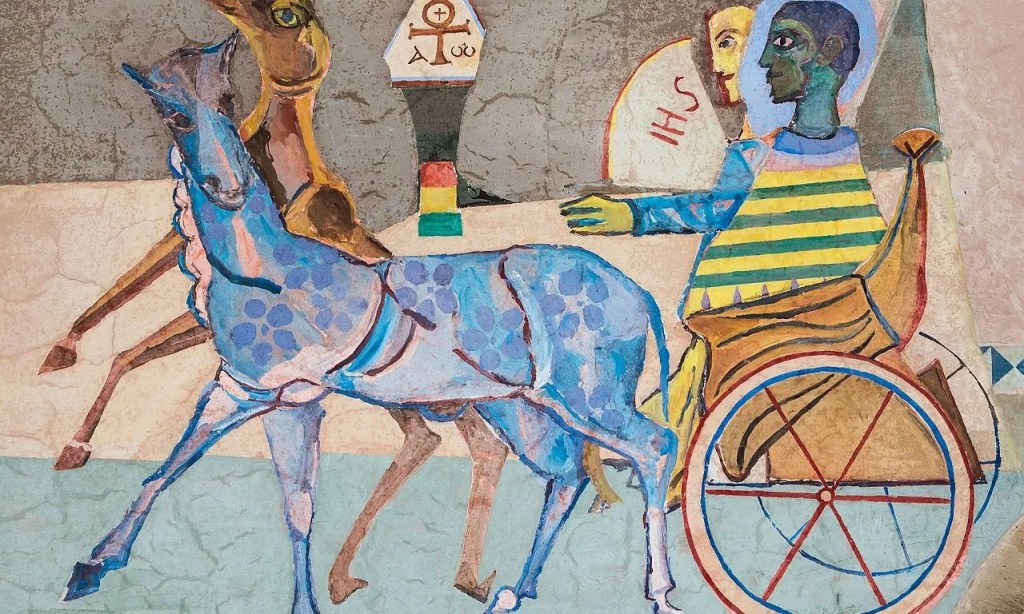
We certainly are moving to the edges. The scene brings Philip into contact with an Ethiopian: an edgy character, who comes from a location on the edge of the world (in ancient Israelite view), with a gender identity on the edge (a eunuch), in a situation not quite the usual, expected manner (in a chariot travelling away from Jerusalem, not in a home or a settled synagogue or a temple forecourt).
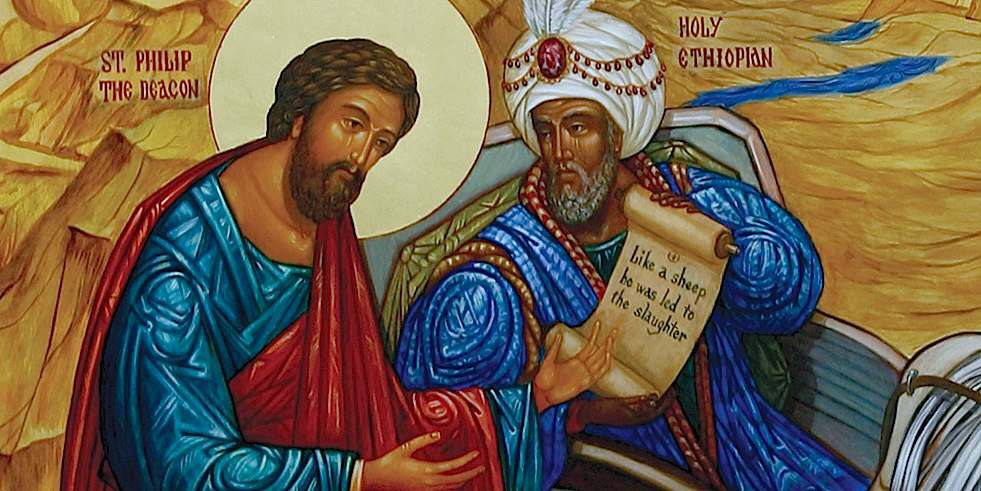
The Israelites regarded Ethiopia as the furthest extent of the earth in the south-westerly direction (Isa 11:11-12). Could this passage, offered as the Acts in Easter reading for this coming Sunday (Easter 5), provide a clear Lukan pointer to “the end of the earth”?

Although the man was a Gentile, he was returning from worship in Jerusalem (8:27); he is probably thus the first of a number of prosecutes who appear in the narrative of Acts (10:2; at 13:50; 16:14; 17:4,17; 18:7). However, he would have been barred from entering the temple precincts because he was a eunuch (Deut 23:1). He was not perfect, and thus not able to present himself directly before the Lord.

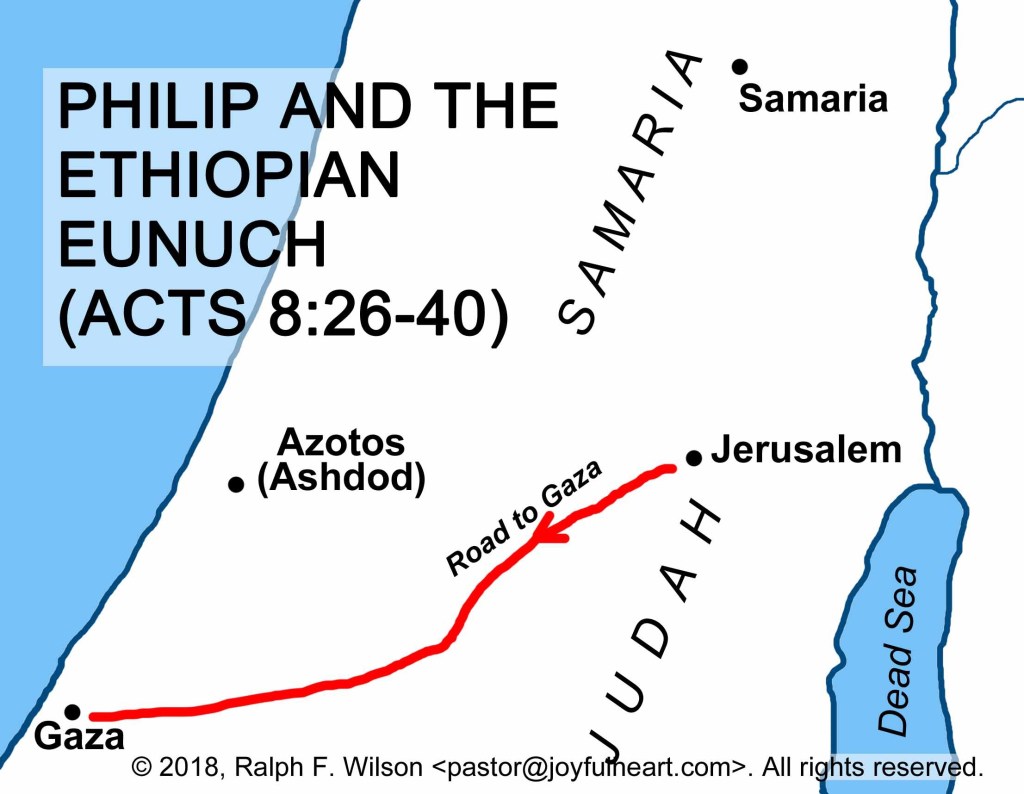
Philip travels south-west towards the coast, on the wilderness road to Gaza, at the urging of “an angel of the Lord” (8:26), a phenomenon already seen in Jerusalem (5:19). His encounter with the Ethiopian is initiated by the spirit (8:29), another phenomenon already abundantly evident in Jerusalem (2:4; 4:8; 4:31; 6:5; 7:55), as also in Samaria (8:17). The encounter is ended by the spirit, when Philip is snatched away immediately after baptising the Ethiopian (8:39). It is a strange and evocative scene.
In the Scriptures

The content of the conversation is given in some detail; of particular interest is the fact that one of the scriptural prophecies which is fulfilled by Jesus is here identified. As the Ethiopian reads of the “lamb led to the slaughter” (Isaiah 53:7-8), Philip explains that this relates to Jesus, whom Philip then preaches to him (8:32-35). Such fulfilment of prophecy has already been introduced in speeches in Jerusalem (2:16-21,25-31,34-35, 3:18, 4:25-26) as another indicator of God’s sovereignty in the events of history.
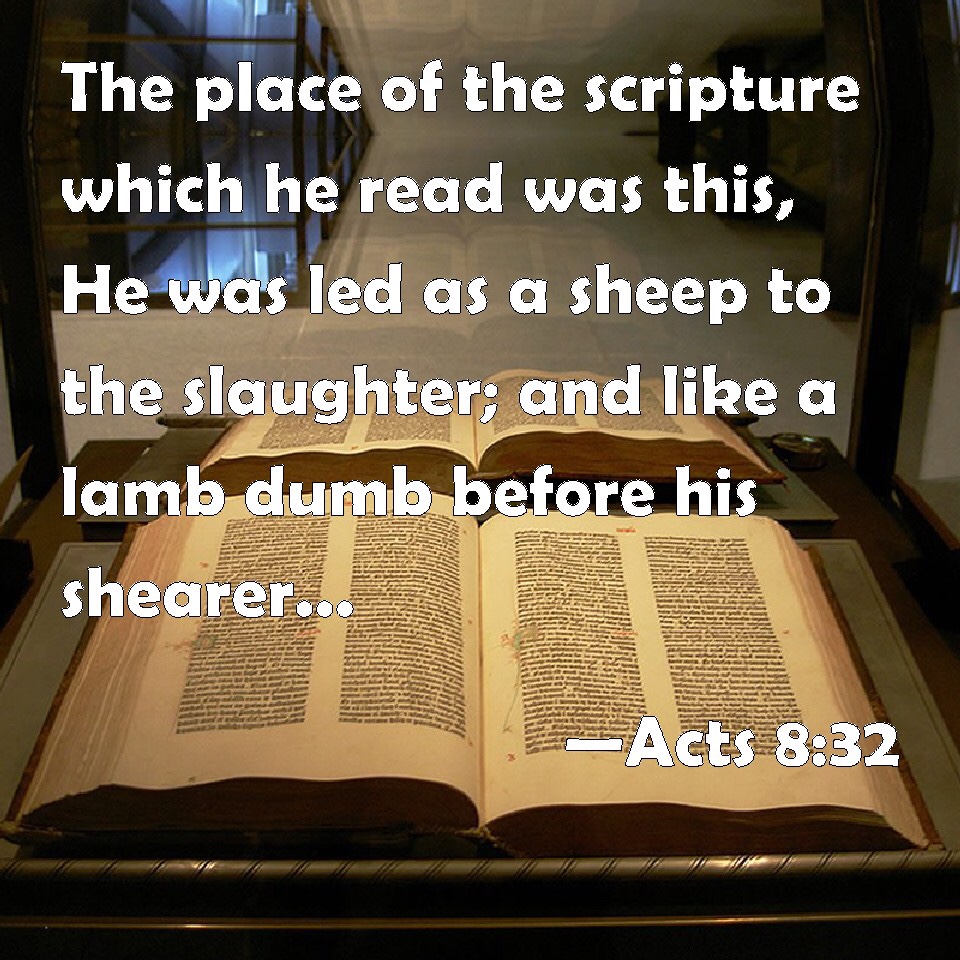
The particular scriptural passage quoted is part of the fourth “servant song” (Isa 52:13-53:12); various excerpts from this song are interpreted as applying to Jesus by a range of New Testament writers (Matt 8:17; Luke 22:37; John 12:38; Rom 4:25; 5:18-19; 10:16; 15:21; Heb 9:28; 1 Pet 2:21-25).

Into the community

The scene ends with the baptism of the Ethiopian (8:38; see 2:38). Baptism became a means for incorporating people into the community of the followers of Jesus. Baptism of this Ethiopian enabled a person of another nationality to enter into the extending community of messianic believers.
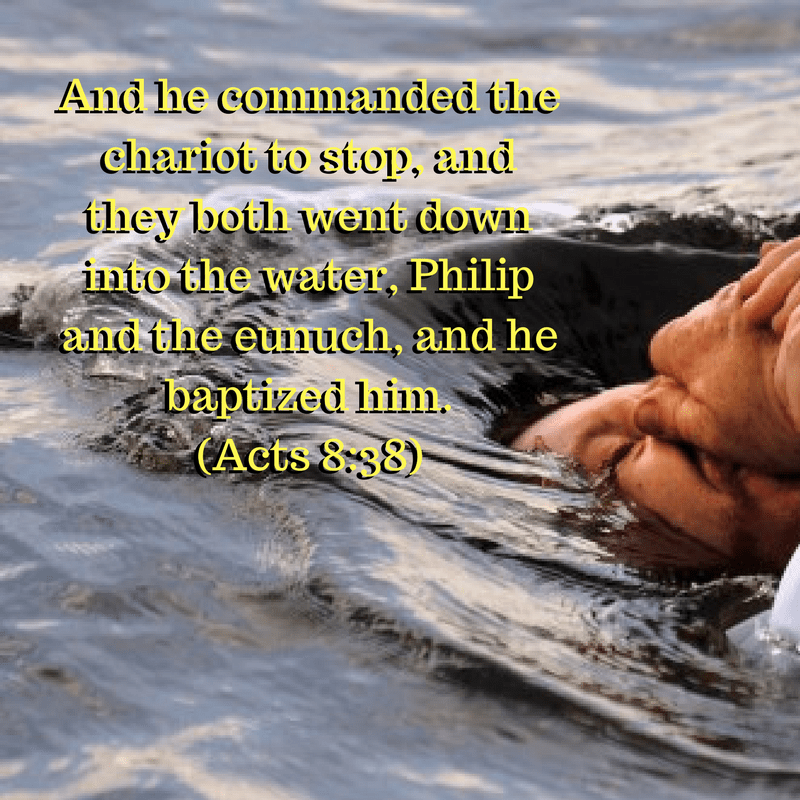
Baptism had been proclaimed as necessary by Peter, on the day of Pentecost (2:38); this appears to link baptism closely with the gift of the Spirit (2;1-4, 17-21). However, there is no reference to the spirit interacting with the Ethiopian in the scene with Philip. The spirit guided Philip in the encounter (8:29, 39)—but appears to have no direct contact with the Ethiopian himself.

Just prior to this incident, the Samaritans who had already “received the word of God” (8:14) were enabled to “receive the holy spirit” through the laying on of hands by the apostles who visited the region (8:15-18). Although the gift of the spirit (8:17) had been separated from baptism (8:12), as also in Ephesus (19:1-7), Luke does not intend this pattern to be read as prescriptive for all situations, as other accounts of baptisms indicate (2:38-41; 8:38; 10:44-48; 19:1-7).

Baptism is accompanied by the laying-on of hands in Ephesus (19:6) and in Samaria (8:15-16), but not with the Ethiopian. The laying-on of hands results in the holy spirit coming upon those in Ephesus (19:6), a link similar to that made in Samaria (8:15-17,19) and Antioch (13:3-4). The gift of the spirit leads to speaking in tongues in Ephesus (19:7), as in Jerusalem (2:4) and Caesarea (10:45-46), but not for the Ethiopian.

In Acts, baptism may come both prior to (2:38-42; 8:14-17) and after (10:44-48; 11:15-17) the gift of the spirit; further, the gift of the spirit is not necessarily linked with baptism (for instance, at 2:1-4 and 4:31). Yet, whilst the time sequence is found in different patterns, the collation of similar elements implies strong continuity with events in Jerusalem, Samaria, Caesarea, and Ephesus. The baptism of the Ethiopian fits, by inference, within that sequence.

Immediately after this baptism, Philip is removed by the spirit of the Lord (8:39). The language of Philip being “snatched away” (8:39) is striking. But unlike those whom Paul describes as being “snatched away” up into heaven (1 Thess 4:17), Philip returns to Caesarea, continuing to preach “good news” (8:40).

His message has already been defined as concerning “the sovereignty of God” (8:12)—a central message in the Lukan works (Luke 7: 29-30; Acts 2:23, 4:28, 5:38, 20,27). The persistent and continuing activity of God in the story that Luke tells, is a strong element throughout the narrative.
This blog is based on a section of my commentary on Acts in the Eerdmans Commentary on the Bible, ed. Dunn and Rogerson (Eerdmans, 2003). I have also explored the theme of the plan of God at greater depth in my doctoral research, which was published in 1993 by Cambridge University Press as The plan of God in Luke-Acts (SNTSM 76).
Unknown's avatarAuthor John T SquiresPosted on April 27, 2021April 29, 2021Categories An Orderly Account: Gospel of LukeTags Acts, baptism, Luke, mission, scripture, theologyLeave a comment on Edging away from the centre (Acts 8; Easter 5B)

The church in Acts: Times of refreshing (Acts 3; Easter 3B)

The church in Acts: Times of refreshing (Acts 3; Easter 3B)

The Acts reading offered in the lectionary for this Sunday comes after an account of a healing, performed by Peter and John at the Beautiful Gate of the temple (Acts 3:1-11). The apostles heal a man who had been lame from birth. The passage we hear on Sunday places the focus on Peter, who provides an interpretation of what has taken place, just as he did on the day of Pentecost. The reading includes a part of Peter’s third speech (3:12-26).

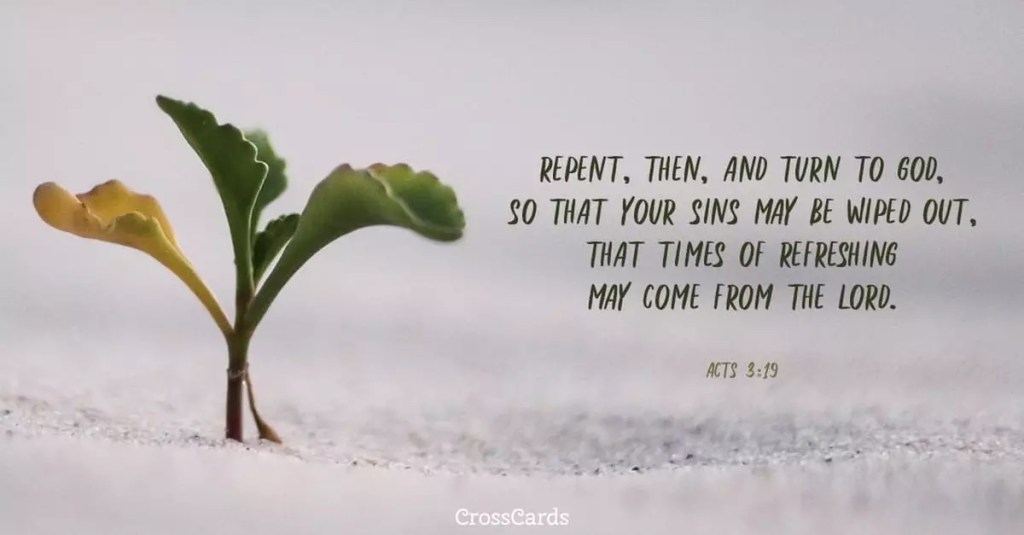
Peter begins his speech by accusing the people of thinking “as if by our own power or piety we have made him walk” (3:12). Not so, he claims. Peter asserts that it is God — “the God of Abraham and Isaac and Jacob, the God of our ancestors” (3:13) — who has enabled the miracle. Like many speeches in Acts, it begins by acknowledging what God has been doing (2:22; 7:2; 10:34; 13:17; 15:7; 17:24; 21:19).

In addition, the speech contains a number of other key elements of speeches, from the template established in Peter’s Pentecost speech. The healing took place in the name of “the Messiah, Jesus of Nazareth” (3:6; see 2:36), who is here represented to the people in ways largely familiar from this earlier speech. Jesus is the one whom God glorified (3:13) and God raised (3:15; see 2:24); he is the one of whom the apostles are witnesses (3:15; see 2:32) for of him they “see and know” (3:16).

Jesus is the suffering Messiah, in fulfilment of “what God announced beforehand through the mouth of all the prophets” (3:18). This extends the fulfilment of prophecy from Jesus’ resurrection (2:25-31) and exaltation (2:34-35) to his crucifixion. Such a claim is important for Luke; he has Paul make the same affirmation, that the suffering of the Messiah fulfils scripture, at 26:23; indeed, he places its initial appearance on the lips of Jesus at Luke 24:26. (However, Peter’s claim that “all the prophets” predicted this is surely one of a number of Lukan exaggerations.)

So the speech both reprises and develops the story of Jesus, using explicit language about how God was at work amongst these happenings, as told in 2:22-36, as well as the prophetic and apostolic witness which characterises the apostolic proclamation.

Luke has Peter once more evoke the response of repentance (3:19) by reference to God, as he did at 2:37-39. Repentance is portrayed as an integral element in the eschatological scenario. The eschatological hope which was often proclaimed by Jesus (Luke 4:43; 9:26-27; 10:1-16; 12:49-56; 13:22-30; 17:20-37; 19:11-27; 21:5-36) continues as an essential element in the apostolic proclamation.

Luke reports Peter as describing the eschatological sequence in some detail (3:19-21). The sovereignty of God is clearly in focus in this eschatological process: God will wipe out sins (3:19b) because people will have already repented and turned to God (3:19a); “times of refreshing” will come “from the presence of the Lord” (3:20a); and God will then send the appointed Messiah (3:20b).

After this, there is an interim period, as the ascended Jesus remains in heaven (cf. 1:11; 2:33), awaiting “the time of universal restoration” which will implement what God has long ago promised (3:21). The delay occasioned by this waiting does not signal a breakdown in God’s providential control of events, for Jesus remains in heaven by divine decree (he “must”, 3:21). This concentrated eschatological proclamation thus underlines the continuing sovereignty of God, which is especially manifested at the end times.

The “times of refreshing” may refer to Jesus’ teaching that “the Lord will cut short the end” (Mark 13:20, but omitted in Luke 21); the sense of “refreshing” is of a breathing space before the next event in sequence takes place (see Exod 8:15).

The “time of universal restoration” transcends the earlier question of the disciples concerning the restoration of the kingdom to Israel (1:6); here, restoration has a universal scope. It may thus correlate with the eschatological events which Peter has already reported at 2:17-21 (citing Joel 2:28-32; see also Mal 4:5-6).

References to the eschaton also appear in Peter’s Caesarea speech (10:42) and in Paul’s Areopagus speech (17:31). On these occasions, however, the description of the eschaton is limited to noting the role that Jesus will perform, as the one “ordained” (10:42) or “appointed” (17:31; cf. 3:20) to execute God’s judgement. Nowhere else in Acts do we find the fulsome eschatological description offered in this speech by Peter at Solomon’s Portico.

The time of universal restoration which Peter declares is that which “God spoke through the mouth of his holy prophets” (3:21; cf. Luke 1:70). In addition to the exaggerated claim that “all the prophets … predicted these days” (3:24), Luke has Peter cite specific scriptural passages in support of his statement about the eschatological role of Jesus.

Peter identifies Jesus in two eschatological roles: as the prophet promised by Moses (3:22-23, quoting Deut 18:15-16,19) and as the one who implements the blessing in the covenantal promise to Abraham (3:25, alluding to Gen 12:3; 18:18; 22:18; 26:4). The way that Peter here expresses the eschatological role of Jesus is evocative of the prophetic words of Mary (Luke 1:54-55) and Zechariah (Luke 1:68-75).

This eschatological act of God is still awaited. It is the decisive action which provides the springboard for Peter’s demand for repentance (3:19). Waiting for the coming kingdom is not simply a passive, do-nothing time. It requires active waiting—so Peter concludes his speech by urging the people to “turn, each one, from your sins because God raised up his son and sent him as a blessing to you” (3:26, as a fulfilment of the promise to Abraham cited in 3:25).

In addressing the issue posed in 3:12, Peter thus uses the affirmation that God has been at work in the healing, as the basis for expounding God’s eschatological actions, which will bring blessing to the people. Looking at what has happened in the immediate situation provides an important clue for understanding the larger scheme of things. That might be a clue for how we operate as the church today: sensing that each small, hopeful happening is a glimpse of what is still to come in the overarching plan of God.

This blog is based on a section of my commentary on Acts in the Eerdmans Commentary on the Bible, ed. Dunn and Rogerson (Eerdmans, 2003). I have also explored the theme of the plan of God at greater depth in my doctoral research, which was published in 1993 by Cambridge University Press as The plan of God in Luke-Acts (SNTSM 76).
Unknown's avatarAuthor John T SquiresPosted on April 13, 2021April 29, 2021Categories An Orderly Account: Gospel of Luke, Scripture and TheologyTags Acts, Easter, Luke, scripture, theologyLeave a comment on The church in Acts: Times of refreshing (Acts 3; Easter 3B)

The church in Acts: Unity, testimony, and grace (Acts 4; Easter 2B)

The church in Acts: Unity, testimony, and grace (Acts 4; Easter 2B)

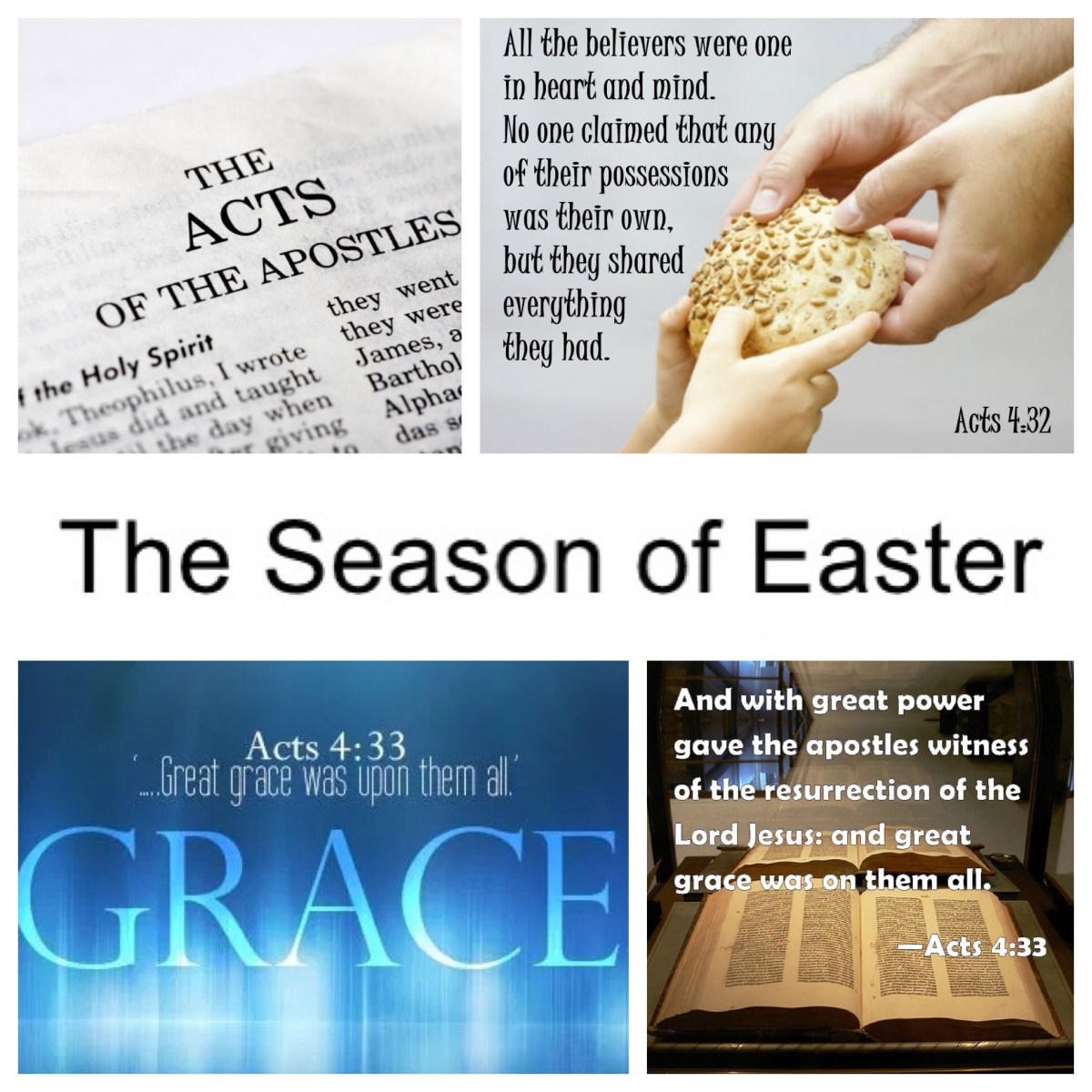
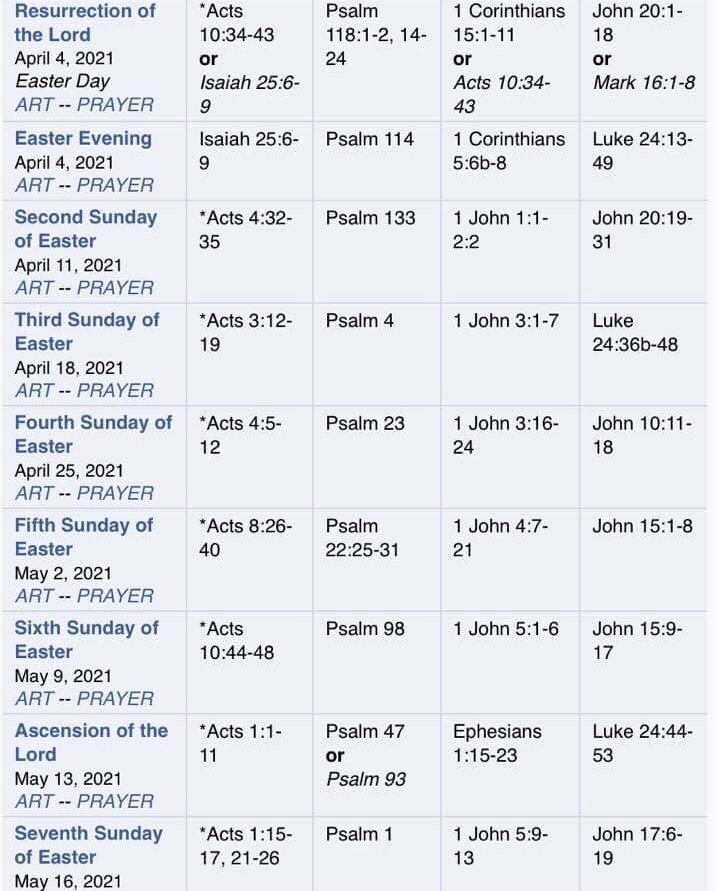
During the weeks that stretch out after Easter Sunday, we are in the season of the year (in the church calendar) that is called, simply, Easter. This coming Sunday will be the second Sunday in Easter (the second of seven, running through to the middle of May). During this season, the lectionary we use replaces the first reading from Hebrew Scripture with sections from the book of Acts—the second of two volumes attributed to Luke.

Acts recounts, from one perspective, the way that the church emerged as the key organisational response to the teachings and example of Jesus. Luke, the presumed author of the two volumes which provide an orderly account of the things fulfilled among us (Luke 1:1, 3), takes pains to indicate multiple lines of connection and continuity between his account of Jesus (the Gospel of Luke) and his subsequent account of the church (the book of Acts).

In this second volume, there are many indications of how Luke understood the emergence of the church to have occurred. It began as a series of loosely-connected Jewish communities, bonded by their common belief that Jesus of Nazareth was the Messiah (Acts 2:31,36,38; 3:6,18; 4:10; 8:5,37; 9:22; 10:36,48; 11:17; 15:26; 16:18; 17:3; 18:5; 20:21; 28:31).

They were messianic communities, followers of ‘The Way’ (9:2; 18:25; 19:9,23; 22:4; 24:14,22) which grew, over time, into groups identified as Christians (11:26)—and from that developed the Christian church. From these descriptive narratives, the church has drawn guidance for ways to shape its life in subsequent eras.

How do we characterise the church? A classic way from the traditions of the church is to cite ‘The Marks of the Church’: one, holy, catholic, and apostolic. Those four descriptions have been derived from various biblical sources (including the narrative shaped in Acts), and have certainly influenced theology, church organisation, and preaching over the centuries.

The Acts passage provided by the lectionary for this coming Sunday, although quite short (4:32-35), nevertheless is very rich. It offers another set of Marks, which the author of Acts used to describe the church. All three have already been offered in an earlier section of the narrative, as the author recounts them formation of the faith community after the preaching by Peter on the Day of Pentecost. (See https://johntsquires.com/2020/04/28/teaching-fellowship-bread-and-prayers-the-marks-of-community-acts-2/)

The first mark is unity of purpose (4:32; see 2:42,46). A second mark refers to the powerful testimony to the resurrection that the church offers (4:33; see 2:24,32; 3:15; 4:2). A third mark is the manifestation of grace (4:33b; see 2:47).

  1. The major focus in this summary description is on the first feature, which is introduced with a striking phrase: the believers were “one in heart and soul”, to which is added a repetition of the earlier comment that “for them all things were common” (4:32; see 2:44).

Fellowship is identified as a key aspect of the community (2:42). The precise term koinonia occurs only here in Acts; however, the notion of sharing or togetherness which is inherent in it is evident in other ways. Members of the community gather with one mind (2:46) in a way that will consistently characterise the community (4:24; 5:12; 15:25).

These phrases used evoke the traditional Greek proverbs, ‘friends have one soul’ and ‘the goods of friends are common property’, which were known since the time of Aristotle (Aristotle, Nicomedian Ethics 9.8.2; Cicero, De officiis 1.16.51; Plutarch, On Brotherly Love 490E, How to Tell a Flatterer 65A and De amic. mult. 96E; Iamblichus, Life of Pythagoras 65A; Dio Chrysostom Oration 34.20; Diogenes Laertius Lives 5.20, 8.10).

The Essenes were described in a similar way by Philo, Every Good Man is Free 85, and Josephus, Jewish War 2 §122. The first phrase is also reminiscent of the common Deuteronomic reference to ‘heart and soul’ (Deut 6:5; 10:12; 11:13; 13:4; 26:16; 30:2,6,10). The early messianic communities shared in this central characteristic. For the author of this book, it was to be a defining mark of the messianic communities in each place they were found.

2. A second mark refers to the powerful testimony to the resurrection that the church offers (4:33; see 2:24,32; 3:15; 4:2). The proclamation the apostles, of course, is a regular element in the story of Acts: there is a comprehensive list of no less than thirty-six speeches in Act at

https://earlychurchstudies.wordpress.com/2011/02/04/on-the-speeches-in-acts-list-of-speeches/

Proclaiming the good news about Jesus was at the centre of these messianic communities, as Acts takes pains to indicate (2:23; 3:7, 15, 26; 4:10; 5:30; 10:40; 13:30-37).

3. A third mark of these communities was the manifestation of grace (4:33b). The community in Jerusalem was earlier described in this way, as “having grace towards the whole of the people”—the NRSV translates this, less accurately, as “having the goodwill of all the people” (2:47). This introduces another term which will have significance in the narrative of Acts: charis. In 2:47, charis is linked with the inner life of the community as they “ate their food with glad and generous hearts, praising God and having grace towards the whole of the people”.

Grace is a characteristic which also marks Stephen, enabling him to perform “great wonders and signs” (6:8); in his speech, he notes that God ascribed grace to Moses (7:10) and to David (7:46). It is this grace of God which is evident in the growing community in Antioch (11:23) and continues to be a characteristic of the community in Iconium, where once again it is evident through the signs and wonders granted by God (14:3).

Such grace is regarded as the means of salvation (15:11) which enables people to believe that Jesus is Messiah (18:27-28). This same grace of God is attested by Paul throughout his ministry (20:24,32). It thus forms another of the characteristics of messianic communities in Jerusalem and beyond.

(See also https://johntsquires.com/2020/05/01/grace-towards-all-the-people-another-mark-of-community-acts-2/)

This blog is based on a section of my commentary on Acts in the Eerdmans Commentary on the Bible, ed. Dunn and Rogerson (Eerdmans, 2003). I have also explored the theme of the plan of God at greater depth in my doctoral research, which was published in 1993 by Cambridge University Press as The plan of God in Luke-Acts (SNTSM 76).

Unknown's avatarAuthor John T SquiresPosted on April 6, 2021April 29, 2021Categories An Orderly Account: Gospel of Luke, Scripture and TheologyTags Acts, community, Easter, Luke, scripture, theologyLeave a comment on The church in Acts: Unity, testimony, and grace (Acts 4; Easter 2B)

#IBelieveHer: hearing the voice of women (Easter Day; John 20)

#IBelieveHer: hearing the voice of women (Easter Day; John 20)

Events in Australian society over recent weeks have seen the emergence of a powerful hashtag: #IBelieveHer.

The announcement of Grace Tame as Australian of the Year for 2021 set in train a dramatic series of events. Grace’s testimony to the abuse she has suffered is powerful. Her appointment to this role validates the stories of countless survivors with similar stories.

Since Australia Day, it has been fascinating, and disturbing, to see how the announcement of this particular Australian of the Year has set in train a powerful and disturbing sequence of events in Australian public life. Sexual abuse, and especially male mistreatment of females, has been in the news each day since then.

The announcement about Grace Tame was soon followed by the testimony of Brittany Higgins, about being raped in Parliament House. This was another key catalyst in the public discussion of sexual abuse and misogyny in our society. In contrast to the shocking and shameful characterisation of her testimony by a Federal minister, her public words invited the clear response: #IBelieveHer.

The turmoil swirling around these revelations soon encompassed a matter that, apparently, had long been a widely-known secret in the corridors of Parliament House and amongst the media in the national capital. That secret started to leak into public awareness; rumour and supposition spread.

When the then Attorney General eventually spoke publicly, identifying himself as the subject of the rumours, we were offered the options: believe him, with his emotionally theatrical presentation of denial; or listen to the testimony of the sadly-deceased woman, as she grappled with her recollection of events in 1988, and attested to friends of her abuse by him at that time. The opportunity arose, once more, to consider our response; and many have responded with heightened intensity: #IBelieveHer.

And in the ensuing weeks, many other females: members of parliaments, parliamentary staffers, public figures, and private individuals, have borne testimony to their experiences of harassment, discrimination, and abuse. Each of them invites us to consider whether #IBelieveHer.

Brittany Higgins, Grace Tame,
and the former Attorney General.

In this context, it is sobering for us to read and reflect on the Gospel texts which provide the underlying narrative for The Easter Story, which we remember and reflect on each year at this time.

*****

The earliest of our Gospels affirms that women were involved with the movement started by Jesus. They were present, they experienced life on the road with him, they heard his words and saw his deeds; and they remained faithful until the very end.

In his beginning of the good news about Jesus, Mark reports:

There were also women looking on from a distance; among them were Mary Magdalene, and Mary the mother of James the younger and of Joses, and Salome. These used to follow him and provided for him when he was in Galilee; and there were many other women who had come up with him to Jerusalem. (Mark 15:40–41)

The passage raises questions: how do we know about what happened to Jesus on the cross? Do we attend to, and give credence to, the testimony of the women? Do we respond, #IBelieveHer ?

Just a few verses later, Mark provides the first account of the scene at the tomb, where a group of female followers of Jesus were the first to discover that the tomb was empty. He ends the scene with the women fleeing, and the abrupt observation that “they said nothing to anyone” (Mark 16:8). Was that because they feared that nobody would believe them?

See also https://johntsquires.com/2019/04/21/the-tomb-is-empty-he-is-not-here-he-is-risen/

However, others who report this scene feels that this ending is quite inadequate—after all, we do have a story about that empty tomb encounter, so surely someone there must have spoken about it?

With that in mind, in his book of origins, Matthew modifies the story, even as he repeats it: “So they left the tomb quickly with fear and great joy, and ran to tell his disciples.” (Matt 28:8) And the silence of the text about how this news was received, invites the unspoken question about their testimony: do #IBelieveHer ?

In narrating his orderly account of things being fulfilled, Luke provides a more nuanced account of the scene, more directly reflecting an awareness of the strong patriarchal context of his day. Why would men believe this report from the women? Would not the typical response be that this was simply women, gossiping, repeating hearsay, even causing trouble??

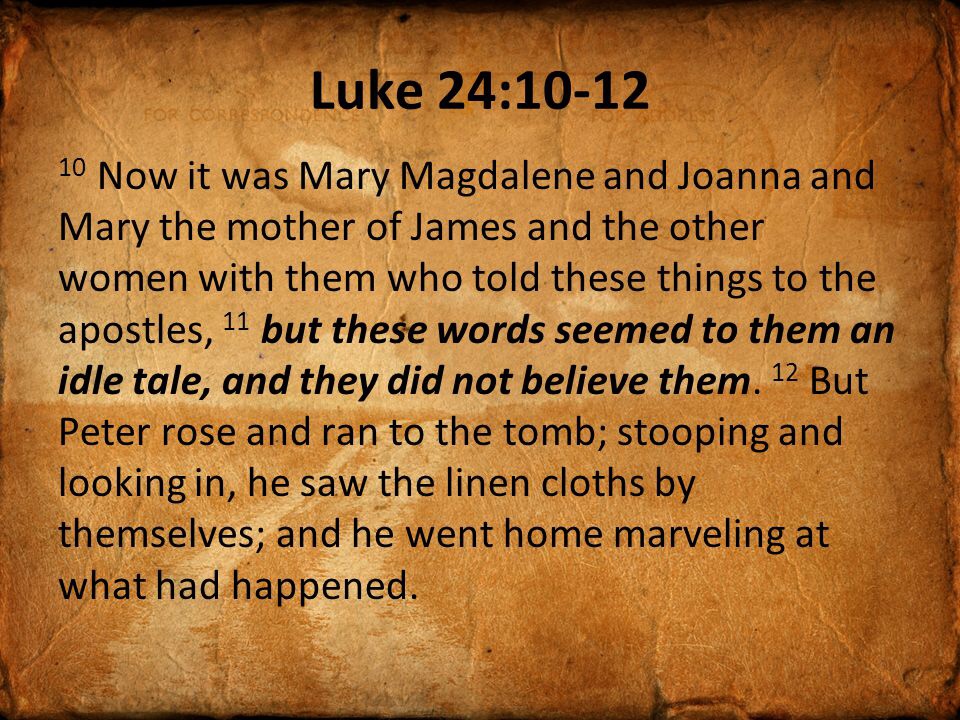
Luke notes: They remembered his words, and returning from the tomb, they told all this to the eleven and to all the rest. Now it was Mary Magdalene, Joanna, Mary the mother of James, and the other women with them who told this to the apostles. But these words seemed to them an idle tale, and they did not believe them. (Luke 24:10-11).

The male apostles (identified so by the same author at Acts 1:13) clearly did not believe the women. #IBelieveHer appears not to apply here.

So Luke continues: Peter got up and ran to the tomb; stooping and looking in, he saw the linen cloths by themselves; then he went home, amazed at what had happened. (Luke 24:12)

Male authorisation of female claims was still needed, even in this Gospel where women appear to have a stronger voice. Those male leaders did not respond with #IBelieveHer, until they were able to see and experience for themselves. In the house where they gathered in Jerusalem, them men at last believe the women—because one of their own had validated their words.

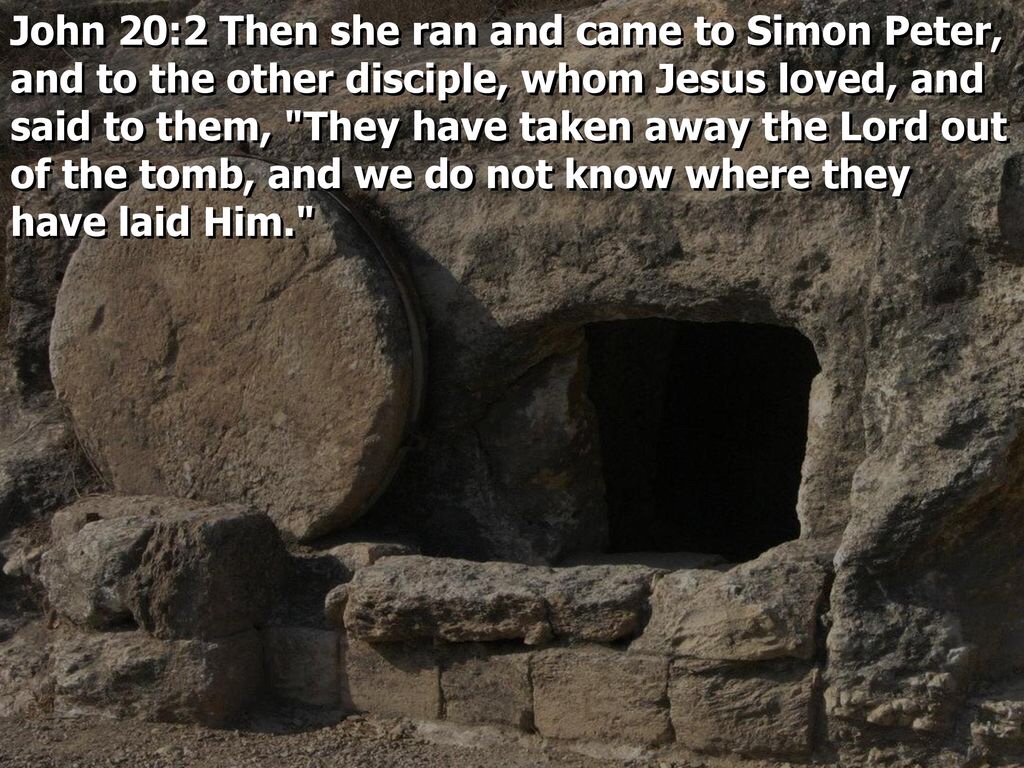
The latest of the four canonical Gospels locates this response of disbelief at the empty tomb, rather than in the house in Jerusalem. In this Gospel, the book of signs, Mary has come by herself to the tomb, found it empty, and returned to tell Simon Peter and the beloved disciple of this news.

As a result, John notes:

Peter and the other disciple set out and went toward the tomb. The two were running together, but the other disciple outran Peter and reached the tomb first. He bent down to look in and saw the linen wrappings lying there, but he did not go in.

Then Simon Peter came, following him, and went into the tomb. He saw the linen wrappings lying there, and the cloth that had been on Jesus’ head, not lying with the linen wrappings but rolled up in a place by itself. Then the other disciple, who reached the tomb first, also went in, and he saw and believed. (John 20:3–8)

Yet again, the males were required to inspect and authorise the claims of the women. In this Gospel, “seeing is believing” (see John 1:39, 46, 50; 4:29; 4:48–53; 6:30: 7:3; 9:15–17, 25; 11:9; 11:34–40; 12:21; 20:25–27). #IBeliveHer was conditional on male affirmation. They saw; we believe. Yet we take the story of Mary, in the garden, seeing Jesus, as part of our “Gospel truth”. It is clear that believers affirm: #IBelieveHer—even when the early male leaders did not!

John recounts another, more personal, more profound story, focussed solely on Mary of Magdala, who later encounters a man in the garden. Uncertain of his identity, she thinks he is the gardener. It takes only one word from the man to persuade her that he is, indeed, Jesus:

Jesus said to her, “Mary!” She turned and said to him in Hebrew, “Rabbouni!” (which means Teacher). (John 20:16)

This story ends, as the earlier accounts do, with a woman testifying to the male (and presumably other female) followers of Jesus:

Mary Magdalene went and announced to the disciples, “I have seen the Lord”; and she told them that he had said these things to her. (John 20:18).

For a fine account of what we can glean from the testimony of women to the Risen One, see Amy Orr-Ewing’s article at https://www.christianitytoday.com/ct/2021/march-web-only/believe-women-rzim-ravi-zacharias-easter-gospel.html

This passage has led Elizabeth Schüssler Fiorenza to famously describe Mary as “the apostle to the apostles”. (See https://projects.iq.harvard.edu/elisabethschusslerfiorenza/publications/“mary-magdalene-apostle-apostles”) And clearly, in this Gospel, and throughout Christian history, the response to this story has been: #IBelieveHer.

#IBelieveHer. This is the logical deduction to draw from each of these narratives—at times, in counterpoint to the males in the story, but eventually, in relation to each account, with assurance that the voice of the females is acceptable, trustworthy, believable. #IBelieveHer.

And other Gospel narratives contain stories in which women are placed alongside men as experiencing the ministry of Jesus (most notably, Luke 8:1–3; John 11:20–27; Mark 1:29–31; and many other scenes), as well as accounts where the word of a woman was heard and believed: for instance, the woman of the Samaritan village (John 4:39–42); the unnamed woman who anoints Jesus in Bethany (Mark 14:3–9 and parallels); and the Syrophoenician woman in the region of Tyre (Mark 7:24–30), whose pushback against Jesus convinces him! In these stories, also, our response is: #IBelieveHer!

****

Of course, the passages noted above with women as the key protagonists raise the question: who told the evangelists about these incidents? Are they based on eye-witness testimony? Are they historical narratives, attested from the very beginning? Or are they stories developed and expanded over time, imaginative recreations of what is assumed to have taken place, shaped as stories for later generations?

In reconstructing “the historical Jesus”, scholars developed a number of criteria for assessing whether sayings and teachings in the Gospels were likely to have been authentic—that is, spoken by the historical Jesus himself. (See a simple listing at https://www.westmont.edu/~fisk/articles/CriteriaOfAuthenticity.htm)

One of these criteria was “dissimilarity”: does the saying sit uneasily, both with Judaism of the time, and in terms of what we know about the early church? The same criteria can be used, by extension, to consider narrative accounts in the Gospels: they are more likely to have been authentic if they reflect “dissimilarity”. Why would an author create something that sat uneasily within the worldview of the day?

On this basis, placing weight on the testimony of women might be seen to be as close as we can get to an authentic account. There is an argument that women were not regarded as valid witnesses—a passage in the Talmud (Shavuot 30a) interprets Deut 19:17 as requiring males only to be witnesses.

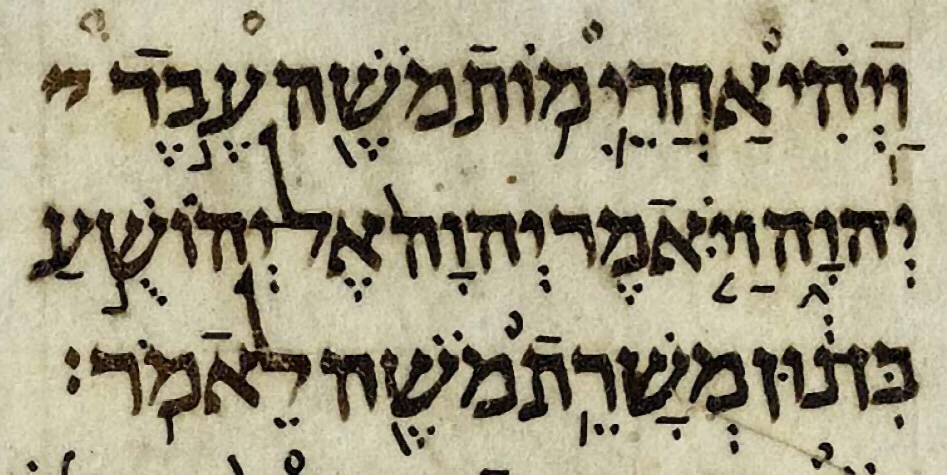
וְעָמְדוּ שְׁנֵי-הָאֲנָשִׁים אֲשֶׁר-לָהֶם הָרִיב לִפְנֵי יְהוָה לִפְנֵי הַכֹּהֲנִים וְהַשֹּׁפְטִים אֲשֶׁר יִהְיוּ בַּיָּמִים הָהֵם.

And they shall stand the two men, who have them the conflict, before God. Before the priests, and the judges, that will be, in those days.

Deliberately casting doubt on the testimony of women (Mark 16:8; Luke 24:11; John 20:3–8) would be a counter-productive move, if that testimony was to serve as the earliest account of what happened to Jesus. More likely than not, this was a tradition received and valued as plausible, perhaps even historical.

Indeed, feminist theological reflection on these and other narratives moves away from the “kyriachal” nature of these male-generated criteria, and into a “hermeneutic of remembrance” in which the voices of women—present, but often diluted, softened, or hidden in the final,form of the biblical text—are valued and accorded primary significance.

(See a useful discussion of the hermeneutics of remembrance, focussed on the writings of Schüssler Fiorenza, at https://www.degruyter.com/document/doi/10.1515/opth-2020-0117/html) In this approach to the texts, we read carefully and listen attentively, to hear the voices of ancient women, and respond affirmatively: #IBelieveHer.

At any rate, however we assess these early narratives, the way they have been handled throughout the ensuing two millennia is clear: #IBelieveHer. That is how we deal with the narratives of cross and resurrection that we receive in the scriptures. #IBelieveHer. And that principle is surely valid and valuable to guide us in life today. #IBelieveHer.

Unknown's avatarAuthor John T SquiresPosted on April 4, 2021April 4, 2021Categories A Book of Origins: Gospel of Matthew, An Orderly Account: Gospel of Luke, Scripture and Theology, The Beginning of the Good News: Mark, The Book of Signs: the Gospel of JohnTags discipleship, Easter, equality, John, Luke, Mark, Matthew, scripture, theologyLeave a comment on #IBelieveHer: hearing the voice of women (Easter Day; John 20)

The deep realities of life (towards the Epiphany)

The deep realities of life (towards the Epiphany)

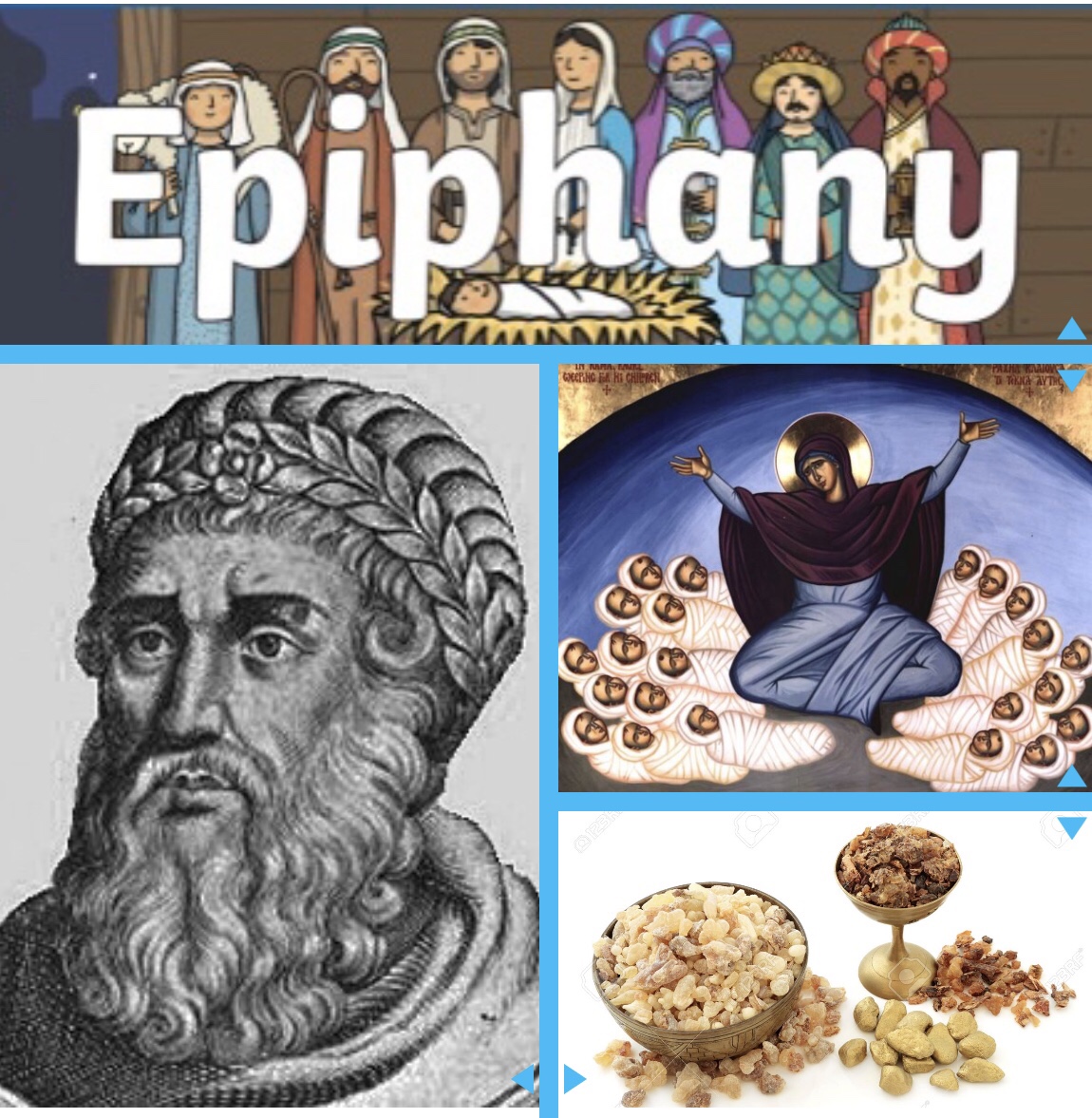
At the end of the twelve days of Christmas — running from 25 December to 5 January — stands the day known as Epiphany. That’s from a Greek word which means “the revealing” or “the shining forth”.

On this day, we focus our thinking on that part of the Christmas story which was told by Matthew, in his Gospel, about the moment of epiphany, or revealing, of the infant Jesus, to the whole world, represented in Matthew’s story by travellers who had journeyed from afar to see him (Matt 2:1-12).

Here, we encounter an infant (not necessarily a newborn) with his mother and father, some travellers from the East (no mention of how many, actually), the gifts which they bring to the infant (specified as three in number), and the bright star in the sky which, it is said, guided them to the child with his parents. And the notion that this was history — real, accurate history — is alive and well as people sing of these characters.

But such is not the case. Neither Matthew, nor Luke, the author of the other account of the birth of Jesus (Luke 2:1-20) was engaged in the task of writing history. Not either of them. (See https://johntsquires.com/2020/12/11/why-the-christmas-story-is-not-history/ and https://johntsquires.com/2020/12/17/why-the-christmas-story-is-not-history-2-luke-1-2-and-matthew-1-2/)

Indeed, what we understand as “history”, today, varies quite significantly from the way that “historia” was understood by Josephus (who did write historical works about the Jews) or by Lucian (who wrote a whole treatise on the nature of “historia”), or even Luke or Matthew, for that matter.

As Luke begins his work, he says quite clearly that he is providing an account (“diegesis”) of “the things that have come to fulfillment amongst us”, written to supplement what Theophilus had already been instructed (“katechesis”). This is history in first century terms, but not quite history as we know it today.

And Matthew offers us a book of the origins (“genesis”) of Jesus, outlining the scope of his teachings and narrating the key moments in his life. But this work is written from faith for faith; not to document events or substantiate historical occurrences. Matthew crafts a story from Jewish midrashic techniques of story-telling that link story with text in all manner of creative ways. His purpose is more to explain the significance of Jesus and his teachings than it is simply to state what Jesus did or said.

In particular, in the opening chapters (where we encounter the pregnant Mary, the newborn infant Jesus, his father Joseph, a bright star in the sky, visitors from the east, the tyrannical rule of Herod, and slaughtered infant boys), Matthew is working hard to place Jesus alongside the great prophet of Israel, Moses. The early years of Jesus unfold in striking parallel to the early years of Moses. The parallel patterns are striking.

Both Matthew and Luke produce works which are a far cry from the craft of the modern day historian. History is far from their minds, at least as we know it in the modern conception of “history”.

As we head into Epiphany, we need to ponder the story for what it is. It is a tale told with creative power, a story that locates plausible characters within an inviting storyline, in order to point to some deep aspects of our human existence. There is the mystery of exploration, a journey to a destination far off, respectful encounter with foreigners, as well as the fear induced by tyrannical rule, and the hurried journey away from repression, seeking the safety of refuge in an unknown, but hopefully welcoming, distant place. All of these elements are realities in our life today. The story from long ago is a story for us, today.

As we sing songs of this story, let us not reify the story (that is, turn the narrative into “a thing”, like history) … let us not collapse the story into a surface “real history”, but let us allow the story to speak in a deep way of who we are as humans, and of the reality of our lives today. That is how the story functions, as myth. (Not in the sense of myth being “not true”, but rather, in the sense of myth plumbing the depths of human existence.)

Myths are the stories we tell that convey deep-seated and fundamental insights about life. Whether they “actually happened” is not the point. More fundamental is that they help us to make sense of our lives. They draw us out of the mundane routines of daily life and offer us glimpses of a greater picture. May that be what happens for us as we hear the story of the magi, this Epiphany.

See also

https://johntsquires.com/2020/01/04/herod-was-infuriated-and-he-sent-and-killed-all-the-children-matt-2/

https://johntsquires.com/2020/01/03/herod-waiting-herod-watching-herod-grasping-holding-power-matt-2/

https://johntsquires.com/2021/01/04/tales-from-the-magi-the-revelation-of-the-magi/

Unknown's avatarAuthor John T SquiresPosted on January 5, 2021January 4, 2021Categories A Book of Origins: Gospel of Matthew, An Orderly Account: Gospel of Luke, Scripture and TheologyTags Epiphany, Luke, Matthew, scripture, theologyLeave a comment on The deep realities of life (towards the Epiphany)

A light for revelation to the Gentiles and for glory to your people Israel (Luke 2; Christmas 1B)

A light for revelation to the Gentiles and for glory to your people Israel (Luke 2; Christmas 1B)

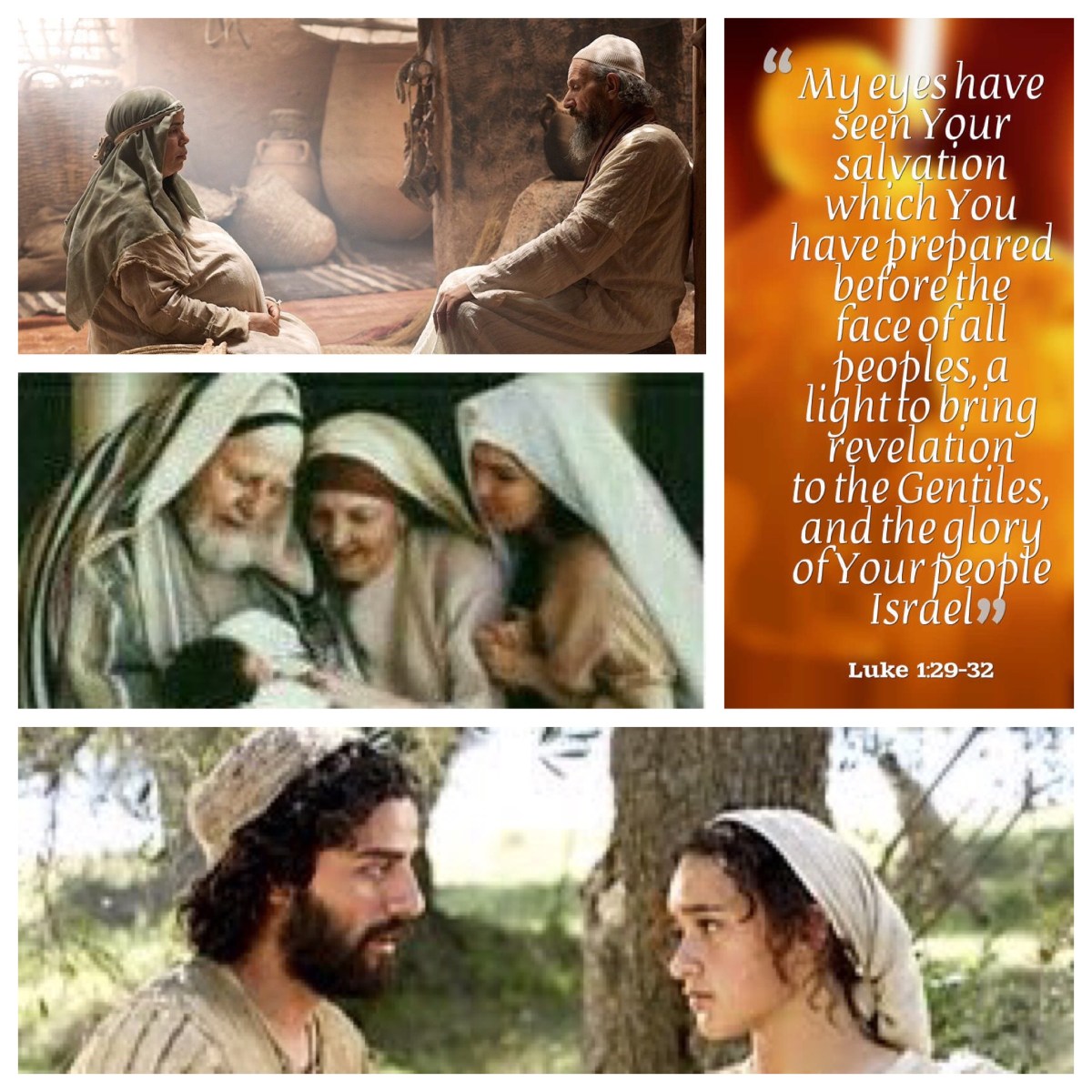
The Gospel for the first Sunday in the season of Christmas (Luke 2:22-40) includes stories relating to two striking Jewish figures: Simeon the righteous, who is guided by the Spirit (2:27), and Anna the prophet (2:36). Anna praises God because of what she sees happening in the birth of the child, Jesus, while Simeon speaks of salvation for all people now being offered by God through this child. Both express clear Lukan themes.
Jesus is intensely Jewish in Luke’s Gospel. The story about Jesus that we find in the orderly account of the things fulfilled among us is set in the heart of Jewish piety. The very opening scene of the Gospel, set in Jerusalem in the Temple precincts, reveals a pair of righteous Jews who faithfully keep the commandments of God (Luke 1:5–6). What follows in the ensuing two chapters reinforces, over and over, that Jewish context.
The man in the opening scene, Zechariah the priest, is devoted to the service of God in the Temple (1:8–9). His wife, Elizabeth, expresses an attitude of deep faith in God, accepting her surprise pregnancy as “what the Lord has done for me” (1:25). They are both described as “righteous before God” (1:6). Elizabeth’s relative, Mary, demonstrates a similar faith as she submits to a similar fate, bearing a child, with the words, “here am I, the servant of the Lord” (1:38).

In turn, the traditional hopes and expectations of the people are articulated in spirit-inspired hymns sung by Mary (1:46–55, known as the Magnificat), Zechariah (1:67–79, known as the Benedictus), and Simeon the righteous (2:29–32, known as the Nunc dimittis, or the Song of Simeon). Mary is “overshadowed” by the Spirit (1:35), Zechariah and Elizabeth are both “filled” with the Spirit (1:41, 1:67). Simeon is “righteous and devout” (2:25); the Spirit “rested on him” (2:25), then “revealed to him” the words he then speaks (2:26) before “guiding him … into the temple” (2:27).

The words of Anna, although unreported in detail by Luke (2:38), are likewise spirit-inspired (as are all prophetic utterances). The children who are born—Jesus and John—bear the weight of these traditional hopes and expectations as they come into being. They, too, are “filled with the Spirit” (John, 1:15; Jesus, 4:1, 14). This is the same Spirit which, according to old traditions in the Hebrew Scriptures, has been active since the time of creation (Gen 1:2) and which is still at work in the creation of every living creature (Ps 104:30).

The sense of deeply devoted and strongly conventional Jewish piety continues in the reports of the early years of Jesus. It is only in Luke’s Gospel that we find the information that Jesus was circumcised after eight days (2:21), that his mother was subsequently purified and brought offerings to the Temple (2:22–24), that the family made Passover pilgrimage to Jerusalem (2:41) and that Jesus showed an early interest in discussing matters of the Law (2:42-51).

These all reflect typical Jewish activities, mandated by the Law: circumcision at Gen 17:9-14; purification and offerings at Lev 12:1-8; the Passover pilgrimage at Exodus 23:17 and 34:23; and learning the matters of the Law at Deut 6:1-7. Luke ensures that we are aware of this, by noting “it was the time for …” (2:21, 22) and “as usual” (2:41), and by twice referring to the requirement of the Law (2:23, 39).

This continues as the narrative of the orderly account continues, recounting the events of the adult years of Jesus. He regularly attended the synagogue (4:16, 44; 6:6), where he was accorded the status of a teacher (4:20–27; 4:31–33; 13:10). Jesus regularly prayed to God (3:21; 5:16; 6:12; etc.). He knew the importance of the daily prayer, the Shema (10:25–28) and the Ten Commandments (18:18–21).

Jesus engaged in halakhic debates with the scribes of Pharisees, touching on various matters of the Law (5:21-24; 6:6-10; 7:36-50; 11:37-54; 14:1-6; 15:1-32; 16:14-18; 17:20-21; 20:1-47). Like other Jewish teachers of the day, Jesus taught in parables (5:36-38; 6:39-42; 8:4–8; 13:6-9; 13:18-21; 19:11-27; 20:9-19; 21:29-30). Luke alone reports a number of the especially well-known parables of Jesus (10:29–37; 12:13–21; 14:7-24; 15:3–32; 16:1-13; 16:19–31; 18:1-8; 18:9-14). Jesus was thoroughly Jewish in his teaching style.

Indeed, as Luke narrates the early sequence of events leading to the birth of Jesus, he indicates that Jesus will seek the renewal of the ancient promises which God made to Israel (1:46–55; 1:67–79; 2:29–35). Thus, the Lukan Jesus insists that the purpose of his mission is to fulfil the hopes once spoken by the prophets (4:18–21; 7:18–23; 24:18–27; 24:44–47).

Jesus begins to fulfil that prophetic vocation in his sermon in the synagogue in Nazareth (4:16-30), where he explicitly reads from the scroll of Isaiah (4:17-19) and clearly affirms that “today this scripture has been fulfilled in your hearing” (4:21).

In his teachings, Jesus is clear that what he has to offer is a grand vision of the kingdom in which all are invited to share in the Messianic Banquet (13:29; 14:15–24). This was a vision which came to expression within Second Temple Judaism, after the return of many of the people,from their Exile in Babylon.

This vision was not shared by all, but it is clear that it was drawn firmly from Jewish traditions, especially as articulated in the latter sections of the book of Isaiah (Isa 42:1–6; 52:7–10; 55:1–5; 60:1–7; 66:18–24). So the Lukan Jesus functions as a prophetic voice in Israel, holding the people to this inclusive vision.

Luke does not play Jesus off, over against ‘the Jews’, in the way that we find happening in the work of his near-contemporary, in the Gospel according to John. Rather, the Lukan Jesus is immersed in the midst of his religion; he is one of the people of Israel at his birth, and he remains so even up to his death and beyond.

Luke’s Gospel—and its sequel, the Acts of the Apostles—provide no basis for a rejection of Judaism as no longer in keeping with God’s will. Not even the occasions when Paul encounters rejection at the hands of his fellow Jews, and he leaves saying “we are turning to the Gentiles” (Acts 13:46) or “from now on I will go to the Gentiles” (18:6) are definitive rejections of the Jews—Paul always returned to them! (Paul is back in the synagogue at 14:1, 17:1, 17:10, 18:19, 19:8, and note also Paul’s farewell speech at 20:21.)

Even the final scenes of Acts offer the possibility of wider Jewish acceptance of the Gospel: the possibility that they might “listen with their ears and understand with their heart and turn—and [God] would heal them” (Acts 28:27, citing Isaiah 6:10).

(For a more detailed argument along these lines, see the discussions in my commentary on Acts in the Eerdmans Commentary on the Bible, 2000.)

So the overall story which Luke tells is that the hopes of Jewish faith are brought to fruition in the life of Jesus, and in those who follow The Way set forth by Jesus—and how this renewed vision spreads across the Mediterranean basin, through many nations. This is already in view as he shapes the beginning of his narrative, with those faithful Jewish characters—Zechariah and Elizabeth, Mary and (very briefly) Joseph, Simeon and Anna.

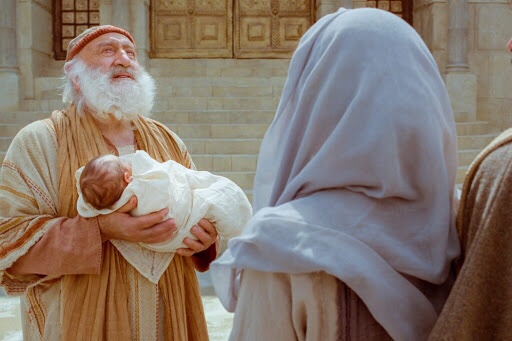
In Luke’s account of Jesus, then, he sets forth a vision of welcoming community, inclusive of both Jews and Gentiles. In reporting the preaching of John the baptiser, the prophetic vision was already in view: “all flesh shall see the salvation of God” (Luke 3:6, citing Isa 40:5). Before this, at the moment when the spirit-inspired Simeon holds the infant Jesus in his arms, he speaks of God’s salvation as being “a light for revelation to the Gentiles and for glory to your people Israel” (2:32).

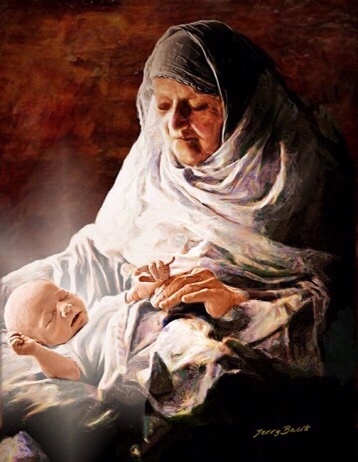
This is surely what Anna perceives to be at work in the infant she sees being dedicated in the temple, and this is why she “praises God” and “speaks about the child to all who were looking for the redemption of Jerusalem” (2:38). Jesus was to fulfil this grand vision.

The universal implications of the Gospel are thus in view from the very earliest stages of Luke’s first volume of his orderly account. They continue through later scenes, as Gentiles come from Tyre and Sidon to listen to Jesus’ teachings (6:17), as Gentile centurions exhibit great faith (7:1–10) and show sympathy for the dying Jesus (23:47).

They come to full flourishing in the second volume of the orderly account, as the faithful followers of Jesus spread out from Jerusalem and Judea, even to “the ends of the earth” (Acts 1:8). The Lukan Jesus has clearly set the course for the ultimate inclusion of Gentiles into the people of God. This is clear early on, right from the words of Simeon (2:29-32).

As we consider this passage in the days immediately after the remembering of the birth of Jesus at Christmas, we are given encouragement to hold to the inclusive vision for the whole world that commenced with the diligence and openness of faithful Jewish people, as they sensed the way that God was working in their world.

See also https://johntsquires.com/2019/12/19/descended-from-david-according-to-the-flesh-rom-1/

The origins of Jesus in the book of origins: Matthew 1 (Advent Year A)

Unknown's avatarAuthor John T SquiresPosted on December 27, 2020April 29, 2021Categories An Orderly Account: Gospel of LukeTags Christmas, diversity, kingdom, Luke, mission, scripture, theologyLeave a comment on A light for revelation to the Gentiles and for glory to your people Israel (Luke 2; Christmas 1B)

The birthing

The birthing

Not wise ones, not foreign, exotic and learned;
but shepherds unnamed, keeping watch in the fields;
impure and unclean, outsiders, at best;
some scorn them, and say
they are robbers.

Not great men, prestigious, important and powerful;
but common folk, forced to be on the move;
back to his home town, seeking their refuge,
a place of safety, where she
gives birth.

No gold for the king, nor frankincense pure,
no myrrh as a sign of suffering to come;
but the stench of the sheep, the dirt of the fields,
the news of the angels—of peace,
goodwill.

No grand cosmic vision of word and eternity,
but stable and manger, the rupture of waters
and shedding of blood; a birthing, a crying
piercing the air: now mother
and child.

Although long expected, so deeply yearned for,
it was not impressive, nor was it grand,
but coming in flesh in a backwater place
to an unknown family at night?
A surprise!

And where would this lead her?
And what fate awaits him?
In ways unforeseen, with a radical cry,
provoking, confronting, disturbing, evoking
the kingdom of God, upturning
the world.

John Squires, December 2020

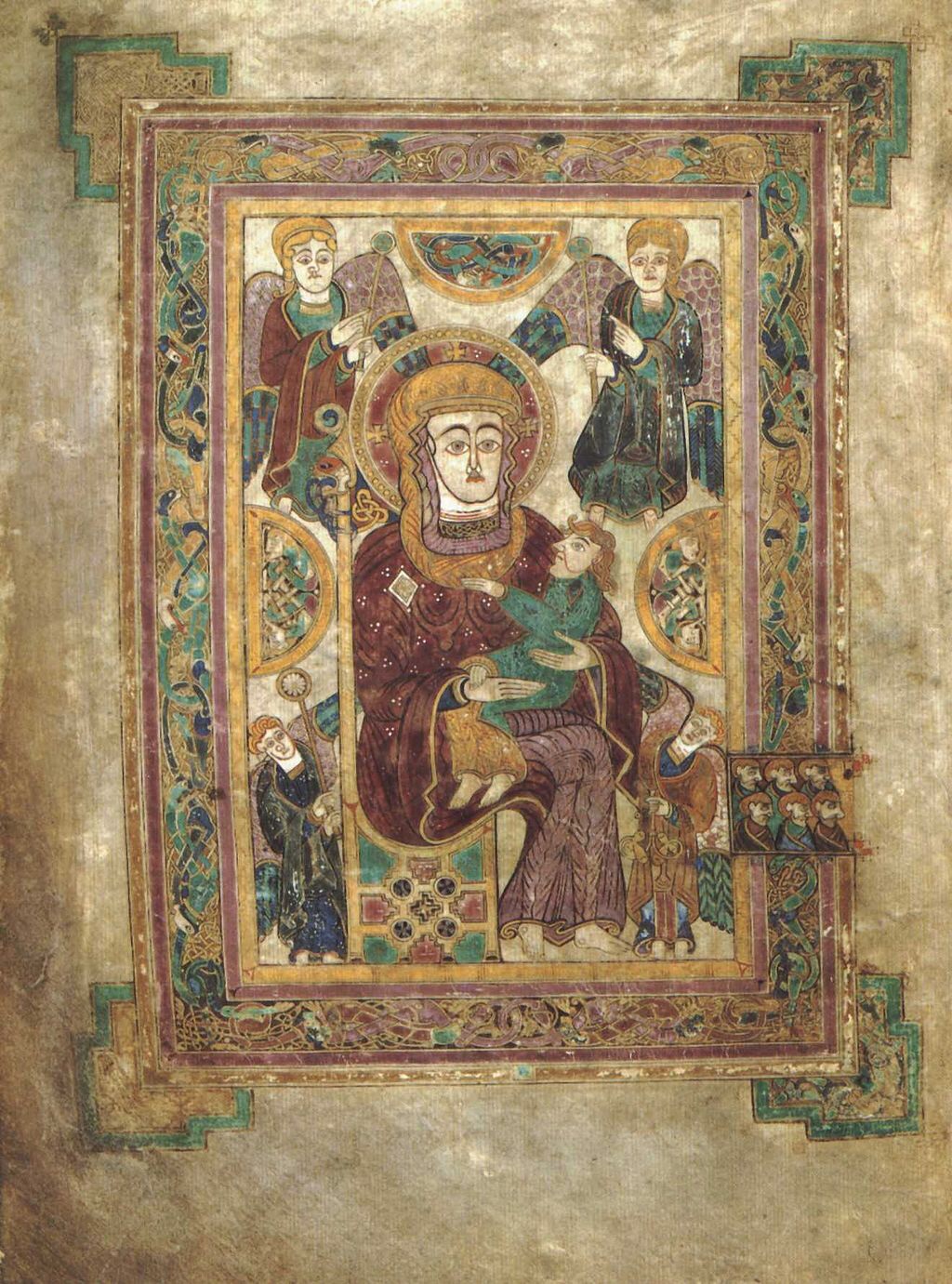
The earliest Western Madonna and Child, from the Book of Kells, at the beginning of the Gospel of Matthew. c. 800

Unknown's avatarAuthor John T SquiresPosted on December 25, 2020Categories An Orderly Account: Gospel of LukeTags Christmas, Luke, scripture4 Comments on The birthing

On angels and virgins at Christmastime (Luke 2; Christmas Day B)

On angels and virgins at Christmastime (Luke 2; Christmas Day B)

Last week, the Gospel passage we heard came from the orderly account of the things that have been fulfilled among us—the work we know as a Luke’s Gospel. We heard the story of the announcement to Mary that she would bear a child (Luke 1:26-38).

This week, we turn to the Gospel story set each year for Christmas (Luke 2:1-14), in which that birth is narrated. This, quite obviously, is the only account of the circumstances surrounding the actual birth of Jesus found in our Gospels. No other equivalent account is to be found amongst the earliest accounts of Jesus.

Certainly, the book of origins tells of the announcement of Mary’s pregnancy, but then it jumps to the visit of the wise ones from the east many months later (Matt 1:18-2:12). The book of signs begins its account of Jesus with a grand cosmic scenario “in the beginning” (John 1:1-18), but provides no specific accounting of his birth as a human being apart from a note that he “became flesh and dwelt among us”.

Two other Gospels which are dated relatively early simply ignore anything to do with his conception, birth, and childhood: the beginning of the good news, the Gospel of Mark, and the hidden words that the living Jesus spoke, the Gospel of Thomas.

From the second century onwards, however, Christians produced a number of Gospels which alleged to recount the birth and early life of Jesus: the Infancy Gospel of James (perhaps mid-2nd century), the Infancy Gospel of Thomas (its dating is disputed), the iLife of John the Baptist (written in 390), and the History of Joseph the Carpenter, as well as a work known as the Gospel,of Pseudo-Matthew (both dating from the 7th century). These accounts are quite obviously “mythological”, including numerous elements that we would consider to be non-historical.

The orderly account that we know as the Gospel of Luke, however, provides us with lots of details: the time, the location, the parents, the specifics of the birthplace, and the first visitors to the family of the newborn. It looks like it comes from a writer who draws on historical data to construct the story. It has the feel of an eyewitness account. But this is not the case.

The author of this Gospel is writing eight decades after the time of the events which he narrates, in the period immediately after the end of Second Temple Judaism (which ended with the destruction of the Jerusalem Temple in 70CE, during the Roman-Jewish War of 66-74CE.)

He acknowledges that others before him have created accounts of Jesus, but he insists that he has scrutinised and assessed those sources (Luke 1:1-4). There is no claim, explicit or implicit, that the account of the newborn child is based on any eyewitness account. That the author himself “worked over” his source material cannot be doubted.

So the scene recounting the birth of Jesus (Luke 2:1-7) forms part of a long introductory section with a series of scenes, each of which are shaped by the influences of Jewish storytelling that existed for centuries prior to the first century (1:5-2:38).

We have seen that the scene of the Annunciation drew heavily on Jewish prototypes and has strong resonances with Hebrew Scriptures (see https://johntsquires.com/2020/12/14/advent-four-the-scriptural-resonances-in-the-annunciation-luke-1/) The same can be seen in the passage which provides the basis for “the Christmas story”.

Luke 2:1-14 has clear scriptural resonances: angels, shepherds, the city of David, the message of peace and goodwill, each reflect scriptural motifs. Yet the story also reflects the wider Hellenistic world, of which Second Temple Judaism was an integral part. This is evident in two specific ways: in the way that angels bring communications from God, and in the claim that Mary fell pregnant whilst a virgin.

The role of angels in the story

Angels are messengers sent from God. The Greek word, angelos, means messenger. The Hebrew word, malakh, also means messenger; it is related to the name of the prophet, Malachi, which literally means “my messenger”. So the Hebrew Scriptures regularly report that angels visit human beings, bearing announcements from the divine realm.

When these angels appear to human beings, they manifest a phenomenon known as an epiphany—from a Greek word meaning “shining forth”. An epiphany is a shining forth, a way of making clear the presence of God, through an angel, a messenger.

Such phenomena ware not unique to Judaism, and to the religions that grew from this source, Christianity and Islam. Angelic appearances, epiphanies of the gods, were also known in ancient times beyond Judaism. Such epiphanies are recounted in a range of literature of the period.

Often the angel appears in a dream; sometimes, it is manifested in a vision. The phenomenon was widely known and easily accepted at a popular level by people who happily believed that divine beings could readily communicate with human beings through such means.

In his treatise On divination, Cicero attests to a more learned, or philosophical, understanding of the basis of such epiphanies, when he defines dreams (somniorum) and prophecy (vaticinationum praedictione) as two forms of natural divination—that is, two means by which human beings might know, or divine, the will of the gods (On divination 1.6.12).

In another work, On the nature of the gods of the gods, Cicero reports the opinion of a Stoic philosopher (Lucilius Balbus), that the power of divination “has clearly been bestowed by the immortal gods on man, and on no other creature, for the ascertainment of future events” (On the nature of the gods 2.65.163). At another place in his discussion of divination, Cicero reports that the Stoic Chrysippus defined dreams as “visions sent by the gods” (On divination 2.63.130).

Such epiphanies, then, were understood to be a plausible and natural means through which communication could take place between the gods and humanity. The Jewish writer Josephus concurs with this assessment; as he recounts epiphanies from the early part of Jewish history, he notes that angels announce the will of God (History of the Jews 4.110) and speak according to divine providence (History of the Jews 5.277).

Luke’s angels, appearing to Zechariah (Luke 1:11), Mary (1:26), and then the shepherds in the fields (2:9-14), and Matthew’s angel who appears to Joseph (Matt 1:20), thus reflect a common understanding, widespread in the ancient world, of how the divine realm communicates with human beings. The information conveyed by angels is of importance, as it comes from God. As the angels appear to people, they call them to pay attention, as they declare what is to happen … and they call us, who hear the stories of Jesus, to look for the presence of God in the message, and in our lives.

The birth of a child to a virgin

Both New Testament accounts of the birth of Jesus refer to Mary being a virgin when she conceived. The book of origins explains this in terms of the fulfilment of a prophetic word (Isaiah 7:14, cited in Matt 1:23). The orderly account of things fulfilled has the angel Gabriel explain this to Mary as being possible because “the Holy Spirit will come upon you, and the power of the Most High will overshadow you” (Luke 1:35). As a result, in both instances the narratives signal that the child to be born will be special: a sign of Immanuel, God-with-us, in Matthew, and a child known as holy, the Son of God, in Luke.

The notion that there are extraordinary circumstances related to the birth of a special person is something that was not unusual to people of the ancient world. Charles Talbert writes that “portents, prophecies and omens are widely used in biographical literature of Mediterranean antiquity for the period of a hero’s life before he enters upon his public career” (“Prophecies of Future Greatness”, p.134, in a 1980 Festschrift for Lou H. Silberman).

In the Life of Augustus, by Roman historian Suetonius, for instance, there are no less than fourteen omens associated with the infant Augustus (a miraculous conception, six portents and their interpretations, three dreams, two prophecies, and then two prodigies during his childhood).

As Plutarch recounts the lives of Romulus and Remus, the legendary founders of Rome, he reports not only that they were rescued by wolves at their birth, and raised by woodpeckers (Romulus 2). In the same account of the birth of Romulus, Plutarch notes that his mother was a virgin when she conceived.

In recounting the life of Alexander the Great, Plutarch has the announcement of the imminent birth of the child take place along with a crash of thunder, a great flash of lightening—and then a thunderbolt strikes the womb of Olympias (Life of Alexander 2). The father, Philip of Macedon, has a dream in which he “seals up the womb of Olympias”.

This is followed by another dream, in which he sees a serpent sleeping with Olympias—perhaps a sign that his wife would conceive, not by union with him, but by divine means. At any rate, it seems that Plutarch is covering his bets by providing a number of options by which Olympias falls pregnant with her baby, Alexander. Finally, on the day of the birth of Alexander, another omen takes place: the temple of Artemis was burnt to the ground.

All of these miraculous events are designed with the one purpose in mind: to indicate that the child to be born is special. The stories are found in lives of great figures (men, inevitably); the portentous happenings noted at their birth are not intended to be taken as historical events, but as symbolic pointers, indicating the grand importance of the tiny child. Which is the same function that is exercised in the Gospel stories by the claim that Mary was a virgin; the miraculous conception of Jesus served to point to his significance and greatness.

We should not consider either element on the story—the announcements of the angel, nor the declaration that Mary conceived when she was a virgin—to be an historical fact. They are both part of the way that stories were told, in the ancient world, about the origins of a person later seen and known to be a great person. And they both reflect typical elements in the piety and belief systems of people of the day. They are symbols which point to the importance of Jesus. They are not intended to be bare historical facts.

See further on the dangers of reading the Christmas story as history, at:

Why the Christmas story is not history (1): the “nativity scene” and the Gospels
Why “the Christmas story” is not history (2): Luke 1-2 and Matthew 1-2
Christmas: not actual history, but powerful myth

And for an account of what we can know about the birth of Jesus, see

What can we know about the birth of Jesus?
Unknown's avatarAuthor John T SquiresPosted on December 22, 2020December 24, 2022Categories An Orderly Account: Gospel of LukeTags Christmas, Luke, scripture, theologyLeave a comment on On angels and virgins at Christmastime (Luke 2; Christmas Day B)

The scriptural resonances in the Annunciation (Luke 1; Advent 4B)

The scriptural resonances in the Annunciation (Luke 1; Advent 4B)

The orderly account of the things coming to fulfilment (which we know as the Gospel of Luke) tells us much more about the beginnings of Jesus (his conception, birth, and early days) than the other Gospels. The passage offered by the lectionary for this Sunday is one such text.

It’s a well-known and familiar passage, from the very beginning of the Christmas story (Luke 1:26-38). It is the scene that is often called The Annunciation. The announcement that is being made in this scene, is to Mary, informing her that she will bear a child.

Mary responds dramatically to this news. She is perplexed, amazed; she is a virgin. “How can this be?”, she asks. A messenger from God informs her, though, that impossibilities are now becoming realities. Indeed, her aged, barren cousin is now pregnant, and Mary will find herself bearing a child—but no ordinary a child; a child “who will be holy, who will he called Son of God”. Now that is really out of the ordinary!

We learn all of this through the “reporting” of a dialogue between the two characters, mother-to-be Mary, and the angel Gabriel. The dialogue isn’t an actual transcript of what took place—indeed, there is no way that the author of this Gospel could have been present to listen and remember.

Instead, the scene is based on the typical dialogue scene that we find at many places in Hebrew Scriptures. And it comes hard on the heels of a similar encounter, another dialogue scene, reported earlier in this chapter (Luke 1:5-22). The earlier dialogue involved an older man, Zechariah (although this dialogue ends up with Zechariah being completely mute); the next scene involves a young woman (who holds her own in the dialogue, as we shall see).

The dialogue proceeds, just as we would expect: he said, then she said; then he said, and so she said. He, of course, is the angel Gabriel. She is Mary, at this time identified simply as “a virgin engaged to a man whose name was Joseph” (1:27).

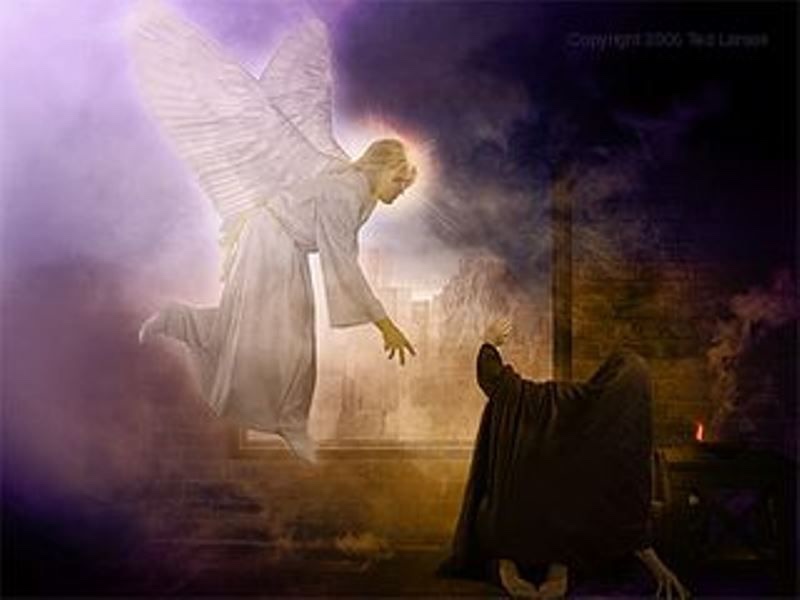
Jews knew about the angel Gabriel from his appearances to Daniel (Dan 8:15-17, 9:21). He appeared to Daniel at the time of prayer (Dan 9:21)—presumably this is the same angel who had earlier appeared to Zechariah, in Jerusalem, at a time of prayer (1:10-11).

If this is indeed the same angelic person who appeared to Daniel (and to Zechariah, and Mary), then he was quite a sight; Daniel describes Gabriel as “a man clothed in linen, with a belt of gold from Uphaz around his waist. His body was like beryl, his face like lightning, his eyes like flaming torches, his arms and legs like the gleam of burnished bronze, and the sound of his words like the roar of a multitude.” (Dan 10:5-6).

Such an appearance would undoubtedly evoke fear. Indeed, before Gabriel even speaks to him, Zechariah is said to have been “terrified, and fear overwhelmed him” (Luke 1:12), as also was Daniel (Dan 8:17), who says that “my strength left me, and my complexion grew deathly pale, and I retained no strength”, before he fell in a trance to the ground (Dan 10:8-9).

So the words of the angel, in both scenes, seek to meet this understandable response. “Do not be afraid”, he says to Zechariah (1:13) and also to Mary (1:30). This is what angels do; this is how they greet people: “do not be afraid” (see Gen 15:1, 26:24; 2 Kings 1:15; Dan 10:9). Zechariah’s fear had gripped him before he spoke a word, but Mary had the presence of mind, before the angel spoke these words, to reflect on what she was experiencing.

The dialogue begins when Gabriel greets Mary (1:28) and informs her that she was favoured (the word comes from the Greek word charis, which means grace or favour, and becomes a key theological term in early Christianity). Mary is described as being “much perplexed by his words and pondered what sort of greeting this might be” (1:29).

He then says, as we have noted, “Do not be afraid, Mary, for you have found favour with God.” That is followed by a declaration of the name of the child: “you will conceive in your womb and bear a son, and you will name him Jesus” (1:31). This is parallel to the declaration made to Zechariah: “your prayer has been heard; your wife Elizabeth will bear you a son, and you will name him John” (1:13).

This follows the same pattern in scriptural stories when divinely-favoured women are told they will give birth, and they name of their child: Hagar, mother of Ishmael (Gen 16:11), Sarah, mother of Isaac (Gen 17:19), Gomer, the wife of Hosea and mother of three children (Hosea 1:4,6,9); and see also the moment of naming for Leah, mother of Asher (Gen 30:13), the unnamed mother of Samson (Judges 13:24), and Hannah, mother of Samuel (1 Sam 1:20).

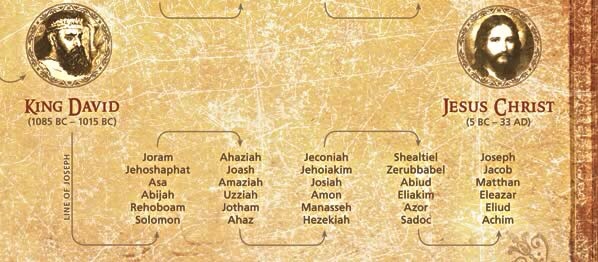
The angel continues: “He will be great, and will be called the Son of the Most High, and the Lord God will give to him the throne of his ancestor David; he will reign over the house of Jacob forever, and of his kingdom there will be no end” (1:32-33). The Davidic ancestry of Jesus was an important claim for the early Christians. It was cited in early literature as a key element (Luke 2:4; John 7:42; Rom 1:3; 2 Tim 2:8; Rev 5:5, 22:16; see more on this at https://johntsquires.com/2019/12/19/descended-from-david-according-to-the-flesh-rom-1/).

Mary still is not fazed. She comes right back at the angel: “How can this be, since I am a virgin?” (1:34). Good point, well made! Only once, here in Luke, and only once in Matthew’s account, is the point made that Mary was a virgin when she conceived (Matt 1:23; see my consideration of this issue at https://johntsquires.com/2019/12/21/a-young-woman-a-virgin-pregnant-about-to-give-birth-isa-714-in-matt-123/)

In response to this good comeback, Gabriel responds with a number of significant points. First, “The Holy Spirit will come upon you, and the power of the Most High will overshadow you; therefore the child to be born will be holy; he will be called Son of God.” This statement references three central scriptural elements.

The Holy Spirit is understood to be active throughout the story of Israel: at the moment of creation (Gen 1:1-2), bringing all creatures into being (Ps 104:30), in equipping specific leaders (Exod 31:2-3; Num 11:25, 26; Deut 34:9; Judges 3:9-10, 6:34, 11:29, 13:25; 1 Sam 10:6, 10, 11:6, 16:13, 2 Sam 23:2; 2 Kings 2:9, 15), by inspiring the prophets (Isa 61:1: Ezekiel 2:2; Joel 2:28-29), and in the servant of the Lord (Isa 42:1). Mary here stands with others early in Luke’s story who experience the Holy Spirit coming upon them (John, 1:15; Elizabeth, 1:41; Zechariah, 1:67; Simeon, 2:25-26); and, of course, Jesus himself is filled with the Spirit (3:22; 4:1).

Holiness was a central element of piety in ancient Israel; the holy God called a holy people to live in covenant with him, and exhibit holiness in every aspect of life (Lev 11:44-45, 19:2, 20:7-8; Exod 19:6; Deut 7:6, 14:2, 21, 28:9). Following from this prophetic word to his pregnant mother, the adult Jesus was indeed known as “the holy one” (Mark 1:24; Luke 4:34; John 6:69; Acts 3:14, 13:35).

“Son of God” was also a phrase derived from older traditions; the king was regarded as God’s son (Ps 2:7; 2 Sam 7:14), commencing with David (Ps 89:26-28), and Israel as a whole was regarded as God’s son (Exod 4:22: Jer 31:9, 20). It is applied to Jesus with regularity in his adult life (Luke 4:3,9,41; 8:28; 22:70; Acts 9:20; John 1:34,49; 11:4,27; 19:7; 20:31) as well as in early confessions of faith (Rom 1:4; 2 Cor 1:19; Gal 2:20; Eph 4:13; Heb 4:14; 6:6; 10:29; 1 John 3:8; 4:15; 5:5; Rev 2:18).

Then, Gabriel tells Mary, “your relative Elizabeth in her old age has also conceived a son; and this is the sixth month for her who was said to be barren” (1:35). The Hebrew Scriptures offer accounts of women thought unable to bear a child, being visited by an angel and gifted a child by God, such as Sarah (Gen 11:30), Rebekah (Gen 25:21), and the woman who bore Samson (Judges 13:3). This blessing from God is celebrated by the psalmist (Ps 113:9) and the prophet (Isa 54:1).

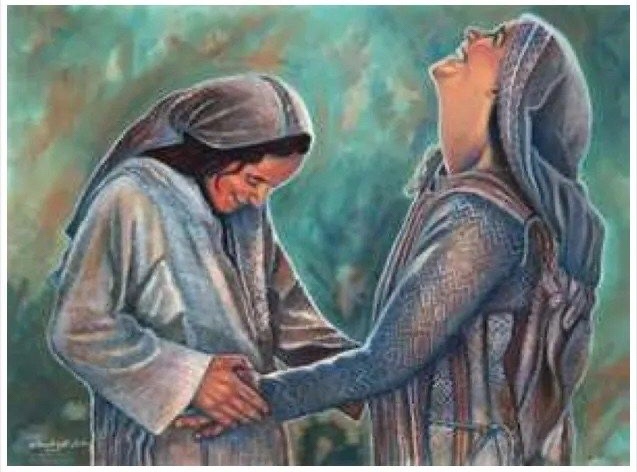
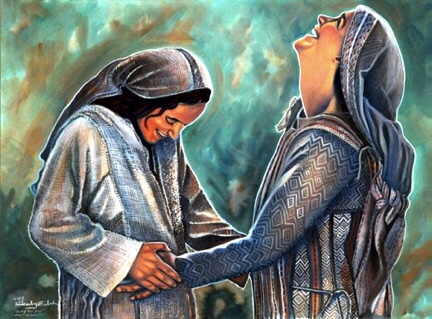
“Jump for joy: Mary and Elizabeth”
Original watercolour painting by Corby Eisbacher

Gabriel’s final words are “nothing will be impossible with God” (1:35-36). This also is a biblical phrase; see Zechariah 8:6, and note also Gen 18:14 and Job 42:2.

Finally, to end the conversation, Mary concludes, “Here am I, the servant of the Lord; let it be with me according to your word” (1:38). She accepts what is in store for her. Traditional Christianity has highlighted this element in the story; Mary becomes the humble, self-effacing, obediently submissive, thoroughly passive figure of traditional Catholic piety.

This overlooks the fact that “here am I” was a standard response to a commission from God, spoken by faithful and fearless prophets, Moses (Exod 3:4), Samuel (1 Sam 3:4), Isaiah (Isa 6:8), Trito-Isaiah (Isa 65:1), and Jeremiah (Jer 26:14), as well as the psalmist (Ps 40:7), and the patriarchs, Abraham (Gen 22:1), Esau (Gen 27:1), Jacob (Gen 31:11 and 46:2). It is also the response of Ananias in Damascus to a vision of the Lord (Acts 9:10). Mary is here accepting a challenging divine commission, and pledging her commitment to the task. It is an activist’s response!

The interpretation of Mary as passive, humble, submissive and obedient also overlooks the feisty nature of Mary’s interchange with Gabriel, as we have traced it. And this feisty nature, with its prophetic focus and clarity, is made clear just a few verses later, as Mary sings in praise of God (1:39-45). In this song, she makes it clear that she is up for the task, that she has the vision of what God is doing in Jesus, that she is fully subscribed to working for the righteous-justice of God in the lives of her people!

The many scriptural resonances, both in that song (known as the Magnificat) and in the scene of the Annunciation, indicate that Mary is to be understand within the stream of prophetic figures in Hebrew Scripture. She was a force to be reckoned with!

The scene of the Annunciation closes with the brief note, “the angel departed from her” (1:38). The angel had left; but the consequences of this announcement would stay with Mary, through the coming months of her pregnancy and the birth of the child; and through the coming years, of his growth through childhood, his adulthood, and the tragic events of betrayal, trial, crucifixion and death.

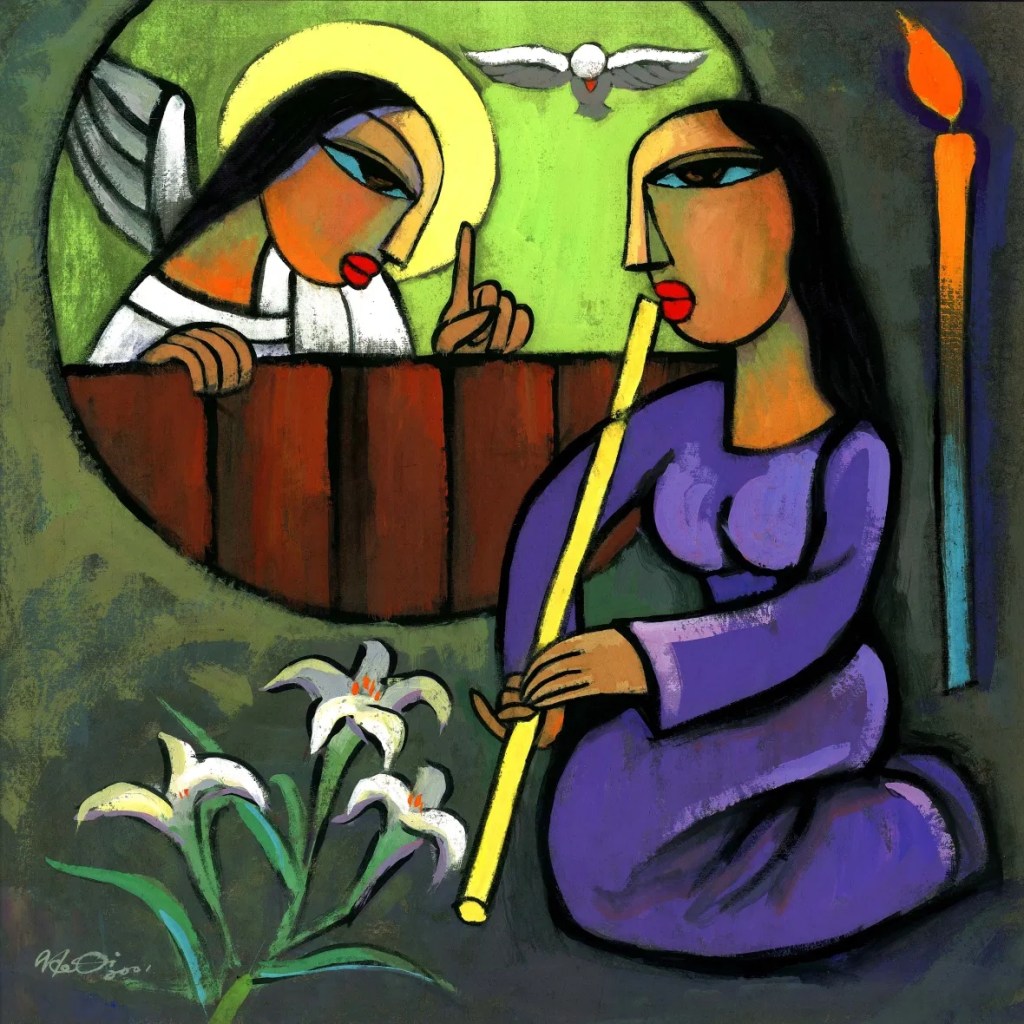
“The Annunciation” by Chinese artist He Qi

Mary knew, from the start, of the significance of this child (at least as Luke tells in his orderly account). And what did Mary know, of the stories that were later told, that he proclaimed the kingdom, healed the sick, cast out demons, and had even been raised from the dead? And how did she speak of him, then?

Unknown's avatarAuthor John T SquiresPosted on December 14, 2020May 11, 2021Categories An Orderly Account: Gospel of LukeTags Advent, Luke, scripture, theology2 Comments on The scriptural resonances in the Annunciation (Luke 1; Advent 4B)

The Samaritans

The Samaritans

The Samaritans. We read about them in the encounters narrated in John 4 and in the apostolic visit in Acts 8. We hear the story that Jesus tells about “the Good Samaritan” (Luke 10) and recall the time when the only healed leper who thanked Jesus was a Samaritan (Luke 17). We read about the antagonism felt towards the Samaritans by the disciples (Luke 9) and remember that in one Gospel Jesus instructed his disciples not to enter the region of Samaria (Matt 10)—even though another Gospel reports that he travelled through the region with his followers (Luke 17).

The Samaritans were a group of people living in the region known as Samaria. They originated amongst the people of Israel, but trace a different history from the people we today know as Jews.

Samaria was a part of the Northern Kingdom of Israel, when the united kingdom of Solomon was divided into north and south around 922 BCE. The Samaritans claimed that they descended from the priestly clan, the Levites, as well as the two clans from the sons of Joseph, Ephraim and Manasseh. In their view, these clans were the faithful ones, and the others strayed from the true faith.

Origins 1. In Samaritan literature, the split from the southern kingdom is traced back to the time of Eli, the priest at the time of Samuel (1 Sam 1—2). In the literature of the southern kingdom, the split is dated later, to the 8th century exile of the northern kingdom (2 Kings 17). The other nine tribes all became considered as apostate by the Samaritans.

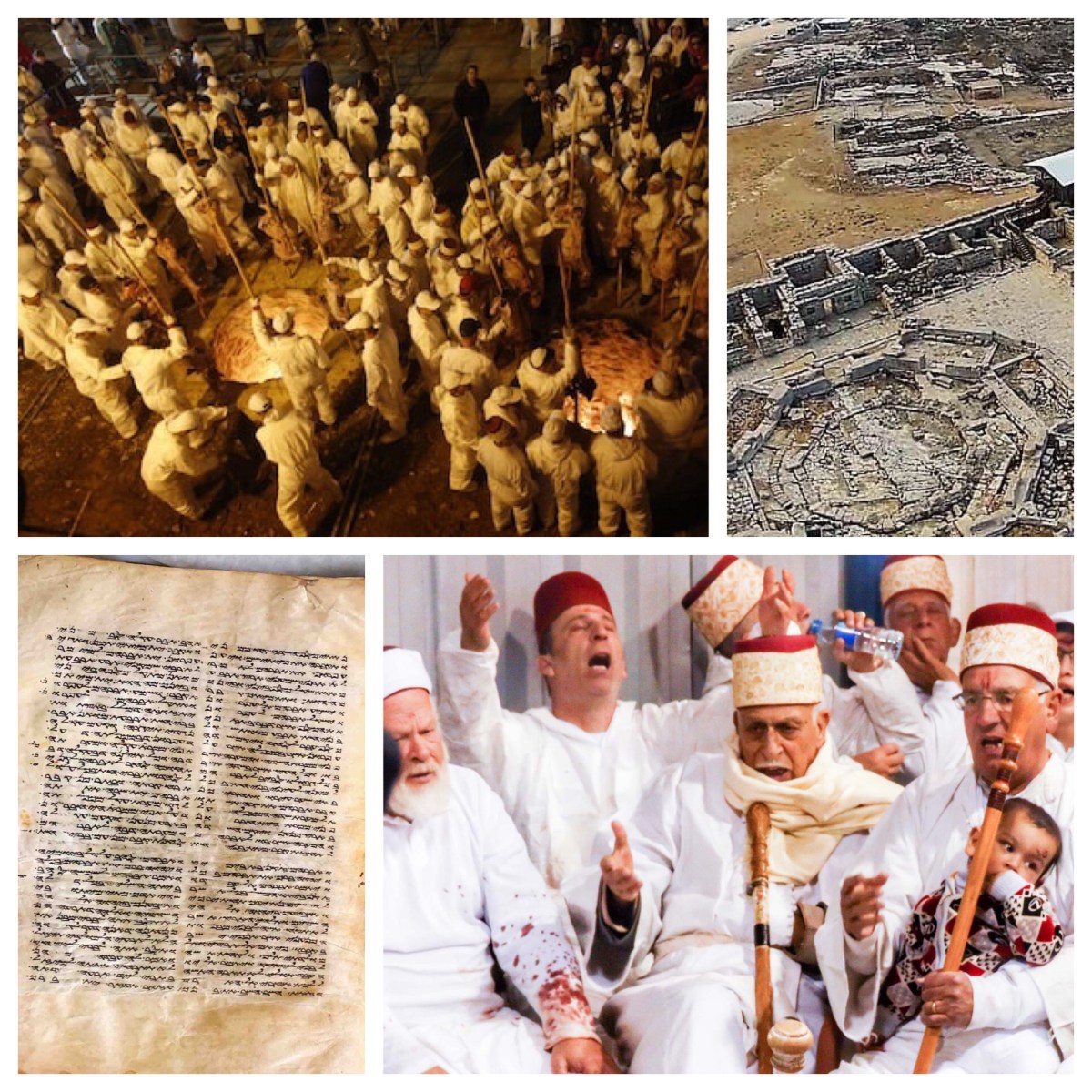
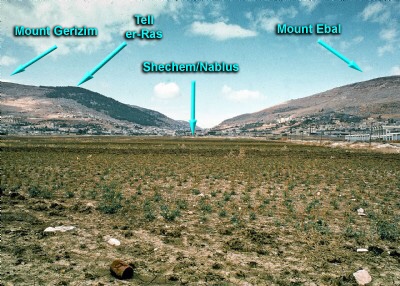
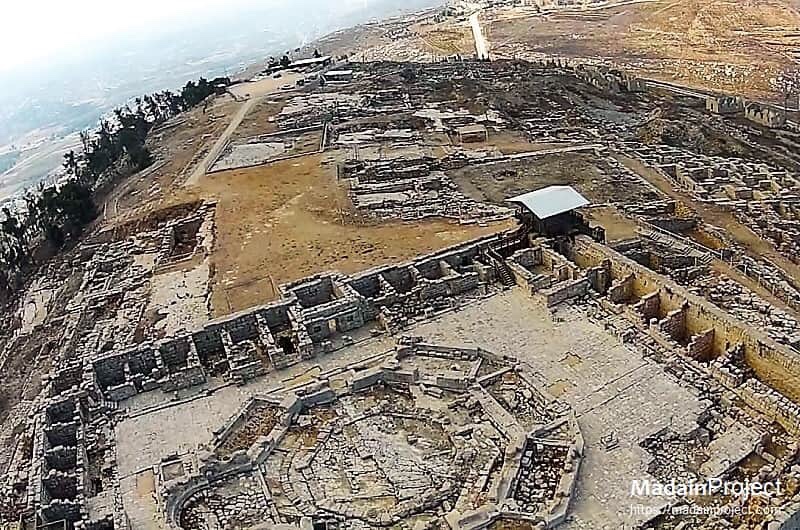
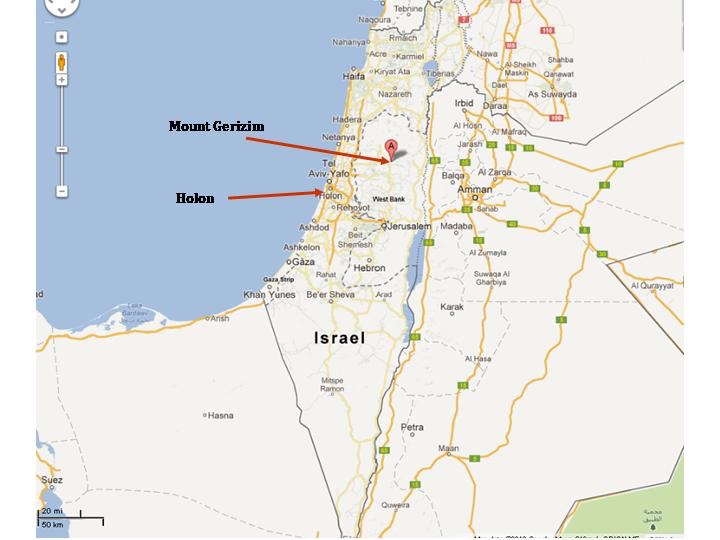
Samaritan worship was based at a Temple on Mount Gerizim, a site which is referred to at Deuteronomy 11:29 and Joshua 8:33. This is a mountain near to modern-day Nablus (previously Shechem), on the West Bank. The Samaritans considered Mt Gerizim to be the highest and oldest mountain of the world (but it is 881m high, less even than the neighbouring mountain of Ebal, at 951m).

The temple was destroyed in 110 BCE during the aggressive expansion of the Hasmonean kingdom (based at Jerusalem). The destruction of the sanctuary and the city on Mount Gerizim deepened the rift between Samaritans and Jews.

Archaeological remains on Mount Gerizim

Origins 2. For Jews during the Second Temple period, 2 Kings 17:24-41 explained the origin of the Samaritans. After the Assyrians sent the inhabitants of the northern kingdom into exile in 722 BCE (2 Ki 17:1-6), they resettled the area with pagans from other nations (2 Ki 17:24). These people, of course, brought their own religions. But the Assyrians recognised the need for these new inhabitants to worship the ancestral god(s) of the land, and so they sent exiled priests back to the land to instruct the people of the ancestral religion (2 Ki 17:25-28).

In the eyes of the southern author of 2 Kings, this was completely unacceptable, for the people “worshipped the Lord … and sacrificed in the shrines of the high places” (2 Ki 17:29-33). This unacceptable behaviour continued: “to this day they continue to practice their former customs. They do not worship the Lord and they do not follow the statutes or the ordinances or the law” (2 Ki 17:34). The southern antagonism towards the northerners is also reflected at Ezra 4:1-5.

We can trace a history of continuing antagonism in the writings of Flavius Josephus, a late 1st century CE historian. He notes disagreement about which site should be the location for the temple (Josephus, Jewish Antiquities 12.9-10); the same issue is reflected at John 4:20-22.

Josephus tells of a time when some Samaritans scattered bones of dead people in the in portico of the Jerusalem Temple, thus rendering it unclean (Antiquities 18.29-30), and he gives a graphic description of the time when Cumanus (governor of Judea 48-52 CE) was bribed by some Samaritans, leading some Judean brigands to mount an uprising. Cumanus ordered the Romans to join with the Samaritans in battling the Judeans; many were killed, many more taken captive (Antiquities 20.118-123).

Jewish disdain for the Samaritans is clear in a number of places in the Mishnah, a third century CE collection of legal opinions handed down by teachers of the law (later, Rabbis). In these texts, Samaritans are equated with Gentiles “who eat the flesh of swine” (Shebith 8.10); along with Gentiles, women, slaves and minors, they are excused from any responsibility to pay the temple tax (Shekalim 1.5); Samaritans are not recognised as authentic witnesses to most writs (Gittin 1.5); and in matters of marriage, Samaritans are placed in the same category as shetuki and asufi, categories of people whom Jews are firmly prohibited to marry (Kiddushin 4.2-3).

These points of view are what lay behind the insult thrown at Jesus, that he was a Samaritan, possessed by a demon (John 8:48). It was a great slander.

The name Samaritan is another pointer to this rivalry and antagonism between north and south. The word Samaritan is claimed to come from the Hebrew word shamerim (ַש ֶמ ִרים ), from the root word SMR (שמר) which means “to watch, to guard, to keep”. Thus, the name indicates that the Samaritans saw themselves as “the true keepers of the Law”. On the other side, we find the same term (shamerim) used at 2 Chronicle 13:11 to refer to the Levitical priests at Jerusalem, who keep the traditions of the Law alive in the worship in Jerusalem. Who was the true keeper of the Law??

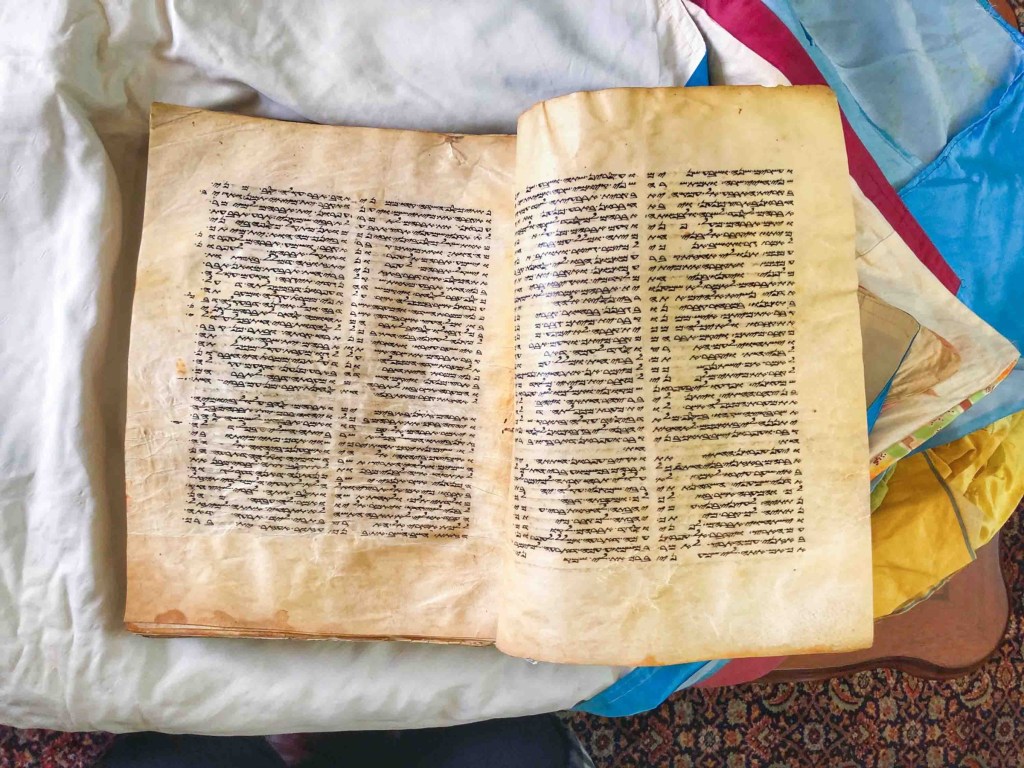
The Samaritan Pentateuch

The Samaritan Bible consists of just the first five books (Genesis to Deuteronomy), in the same way that the Sadducees accepted only the five books of Moses. The Samaritan Bible is written in a different dialect of Hebrew. The Sadducees reject the idea of the resurrection, because it is not mentioned in any of these books of scripture. The Samaritans note that these books do not ever refer to Jerusalem, but they do refer to Mount Gerizim (Deut 11:29, 27:12). That explains their fervent preference for Gerizim as the holy mountain where the temple is to be located.

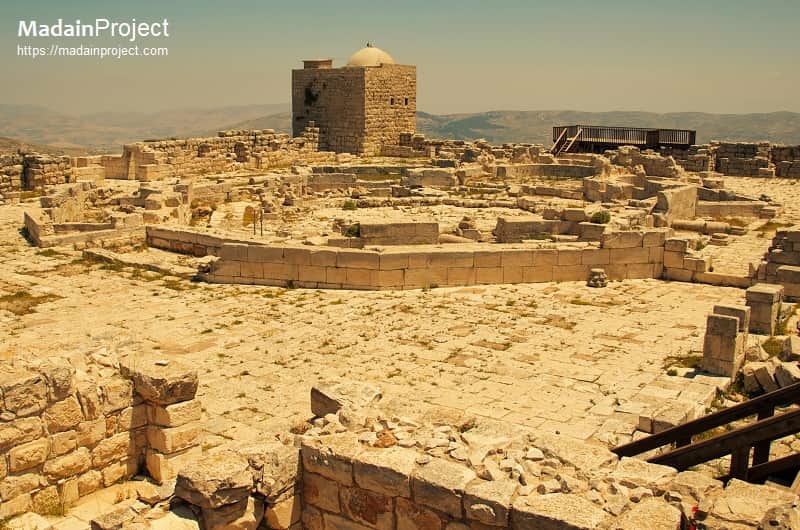
In the 5th century, a Christian invasion of the area led to the building of a Christian church in honour of Mother Mary on Mount Gerizim. Throughout the Byzantine period, there are numerous indications of a widespread, Greek-speaking Samaritan diaspora; evidence has been found in Delos, Egypt, Asia Minor, and Italy. The situation of the Samaritans improved under Islamic rule, but in the course of time, their numbers dwindled. There might have been a million Samaritans at the time of Jesus. There are barely a few hundred today.

Remains of the Christian church on Mount Gerizim

Moses has a prominent role in Samaritan literature. In “The Birth of Moses” (Molad Mosheh), Moses is described in glowing terms very much like the way Jesus is exalted in Christian traditions. “The prophet of the Lord is born in whom is His Favour; the Select of creation is born; the Man of God is born; the Servant of the Lord is born; the One Chosen out of all the prophets is born; the Prophet of the world and of its end is born.” The Samaritans look to the time when Moses will return as the Taheb, the Restorer, who will restore God’s sovereign rule over all the earth and bring universal peace.

Today, only a few hundred Samaritans live on Mount Gerizim and in Holon, near Tel Aviv. They observe the sabbath and continue to offer animal sacrifices each Passover. They maintain customs based on a strict interpretation of the purity laws in Leviticus; they marry only amongst themselves, for instance.

Unknown's avatarAuthor John T SquiresPosted on November 2, 2020November 2, 2020Categories A Book of Origins: Gospel of Matthew, An Orderly Account: Gospel of Luke, The Book of Signs: the Gospel of JohnTags Acts, John, Luke, Matthew, Samaritans, scripture2 Comments on The Samaritans

Posts pagination

Previous page Page 1 … Page 8 Page 9 Page 10 … Page 14 Next page

The Book of Origins

  • Leaving Luke . . . Meeting Matthew
  • Matthew: tax collector, disciple, apostle, evangelist—and “scribe trained for the kingdom”? (Matt 9; Pentecost 2A)
  • For our instruction … that we might have hope (Rom 15, Isa 11, Matt 3; Advent 2A)
  • The origins of Jesus in the book of origins: Matthew 1 (Advent Year A)
  • Now the birth of Jesus the Messiah took place in this way (Matthew 1; Advent 4A)
  • Descended from David according to the flesh (Rom 1; Advent 4A)
  • A young woman? A virgin? Pregnant? About to give birth? (Isa 7:14 in Matt 1:23; Advent 4A)
  • More on Mary (from the Protoevangelium of James)
  • Tales from the Magi (the Revelation of the Magi)
  • Herod waiting, Herod watching, Herod grasping, holding power (Matt 2; Christmas 1A)
  • Herod was infuriated, and he sent and killed all the children (Matt 2; Christmas 1A)
  • Repentance for the kingdom (Matt 4; Epiphany 3A)
  • Proclaiming the good news of the kingdom (Matt 4; Epiphany 3A)
  • Teaching in “their synagogues” (Matt 4; Epiphany 3A)
  • Teaching the disciples (Matt 5; Epiphany 4A)
  • Blessed are you: the Beatitudes of Matthew 5 (Epiphany 4A)
  • An excess of righteous-justice (Matt 5; Epiphany 5A)
  • You have heard it said … but I say to you … (Matt 5; Epiphany 6A)
  • The missing parts of the Sermon on the Mount (Matt 6 and 7; Epiphany Year A)
  • Our Father in heaven: a pattern for prayer (Luke 11, Matt 6) part III
  • Our Father in heaven: a pattern for prayer (Luke 11, Matt 6) part II
  • Our Father in heaven: a pattern for prayer (Luke 11, Matt 6) part I
  • “Go nowhere among the Gentiles” (Matt 10:5): the mission of Jesus in the book of origins (Pentecost 3A)
  • “Even the hairs of your head are all counted.” (Matt 10:30; Pentecost 4A)
  • Come to me, take my yoke, I will give you rest (Matt 11; Pentecost 6A)
  • Parables: the craft of storytelling in the book of origins (Matt 13; Pentecost 7A)
  • The righteous-justice of God, a gift to all humanity (Romans; Year A)
  • Let anyone with ears, hear! (Matt 13; Pentecost 8A)
  • Chopping and changing: what the lectionary does to the parables of Matthew (Pentecost 7–9A)
  • Nothing but five loaves and two fish (Matt 14; Pentecost 10A)
  • Liminal experiences and thin places (Matt 14; Pentecost 11A)
  • It’s all in the geography. Jesus, the Canaanite woman, and border restrictions (Matt 15; Pentecost 12A)
  • A rock, some keys, and a binding: clues to the identity of Jesus (Matt 16; Pentecost 13A)
  • An invitation that you just cannot … accept! (Pentecost 19A)
  • Towards Palm Sunday (Matt 21): Passover and politics
  • Towards Palm Sunday (Matt 21): Riding on a donkey (or two) as the crowd shouts ‘Hosanna’
  • Towards Palm Sunday (Matt 21): Waving branches, spreading cloaks
  • Towards Palm Sunday (Matt 21): Acclaiming the king, anticipating the kingdom
  • Producing the fruits of the kingdom (Matt 21; Pentecost 19A)
  • Darkness, weeping, and gnashing of teeth: the scene of judgement (Matt 22; Pentecost 20A)
  • The greatest and first commandment … and a second, like it (Matt 22)
  • On these two commandments hang all the law and the prophets (Matt 22; Pentecost 22A)
  • Sitting on the seat of Moses, teaching the Law—but “they do not practice what they teach” (Matt 23; Pentecost 23A)
  • Discipleship in an apocalyptic framework (Matt 23–25; Pentecost 23–26A)
  • A final parable from the book of origins: on sheep and goats, on judgement and righteous-justice (Matt 25; Pentecost 26A)
  • Scripture debate and disputation in the wilderness (Matt 4; Lent 1A)
  • Testing (not temptation) in the wilderness (Matt 4; Lent 1A)
  • Practising righteous-justice: alms, prayer, and fasting (Ash Wednesday)
  • Forcing scripture to support doctrine: texts for Trinity Sunday (2 Cor 13, Matt 28; Trinity A)

An Orderly Account: Luke and Acts

  • “An orderly account”: a quick guide to Luke and Acts
  • Costly discipleship, according to Luke
  • Did Luke write the first “orderly account” about Jesus?
  • With one eye looking back, the other looking forward: turning to Luke’s Gospel I (Year C)
  • Leaving out key moments, so they can appear later in the story: turning to Luke’s Gospel III (Year C)
  • “A light for the Gentiles, salvation to the ends of the earth”: turning to Luke’s Gospel II (Year C)
  • The scriptural resonances in the Annunciation (Luke 1; Advent 4B)
  • Magnificat: the God of Mary (Luke 1) is the God of Hannah (1 Sam 2) (Advent 4C)
  • “To give knowledge of salvation”: Luke’s portrayal of John the baptiser (Luke 3; Advent 2C)
  • On angels and virgins at Christmastime (Luke 2; Christmas Day B)
  • A light for revelation to the Gentiles and for glory to your people Israel (Luke 2; Christmas 1B)
  • John the baptiser’s call for ethical, faithful living (Luke 3; Advent 3C)
  • A Testing Time: forty days in the wilderness (Luke 4)
  • Sacred place and sacred scripture: forty days in the wilderness (2)
  • Scripture fulfilled in your hearing (Luke 4:16-30; Epiphany 3C, 4C)
  • Jesus and conventional Jewish piety (Luke 4:16; Epiphany 3C)
  • Jesus, scripture and experience (Luke 4:17, 21; Epiphany 3C)
  • The holistic spirit-inspired mission of Jesus (Luke 4:18–19; Epiphany 3C)
  • Jesus, the widow of Sidon and the soldier of Syria: representatives of the community of faith (Luke 4:25–27; Epiphany 4C)
  • Two prophets of Israel, the widow of Sidon and the soldier of Syria: an inclusive community of Jews and Gentiles (Luke 4:25–27; Epiphany 4C)
  • Leave everything, follow Jesus (Luke 5:1-11; Epiphany 5C)
  • On a level place, with a great crowd (Luke 6; Epiphany 6C)
  • Blessed are you … poor, hungry, weeping … (Luke 6; Epiphany
  • The plain, the synagogue, and the village (Luke 6, 4 and 1; Epiphany 6C)
  • Bless—Love—Forgive—and more. The teachings of Jesus (Luke 6; Epiphany 6C, 7C)
  • The beloved physician, the lover of God, and loving our enemies (Luke 6; Epiphany 7C)
  • Perfect, or merciful? The challenge Jesus poses (Matt 5, Epiphany 7A; Luke 6, Epiphany 7C)
  • Jesus and his followers at table in Luke’s “orderly account”
  • Before Transfiguration Sunday, the stories of the dying slave and the grieving widow (Luke 7; Epiphany 9C; Proper 4C)
  • What have you to do with me, Jesus? (Luke 8; Pentecost 2C)
  • Bringing his ‘exodos’ to fulfilment (Luke 9; Transfiguration C)
  • Setting his face to go to Jerusalem (Luke 9:51, 13:33, 17:11, 19:11; Lent 2C)
  • Through Samaria, heading to Jerusalem (Luke 9; Pentecost 3C)
  • Sent out in Samaria, proclaiming the kingdom (Luke 10; Pentecost 4C)
  • Listening and learning at the feet of Jesus (Luke 10; Pentecost 6C)
  • Mary and Martha: models of women following and learning from Jesus (Luke 10; Pentecost 6C)
  • There is need of only one thing. Or, maybe, two. (Luke 10; Pentecost 6C)
  • Where have all the women gone? Women in the movement initiated by Jesus (Luke 10; Pentecost 6C)
  • On earth, as in heaven: the key to The Lord’s Prayer (Luke 11; Pentecost 7C)
  • Sins or trespasses? Trial or temptation? Thine or yours? The prayer that Jesus taught (Luke 11; Pentecost 8C)
  • “Where your treasure is, there your heart will be also” (Luke 12; Pentecost 8C)
  • Coming to grips with the judgement of God (Luke 12 and Isaiah 5; Pentecost 10C)
  • She stood up straight and they were put to shame (Luke 13; Pentecost 11C)
  • Jerusalem, Jerusalem: holy city, holy calling (Luke 13; Lent 2C)
  • Disturbing discipleship: exploring the teachings of Jesus in Luke 14 (Pentecost 12C to 13C)
  • Disreputable outsiders invited inside: parables in Luke 14 (Pentecost 12C, 13C)
  • The discomfort of ambiguity (Luke 15; Lent 4C)
  • Human sinfulness and divine grace (Jeremiah 4; Luke 15; 1 Timothy 1; Pentecost 14C)
  • Shrewd? dishonest? manipulative? or contributing to the common good? (Luke 16; Pentecost 15C)
  • Lazarus and the rich man (Luke 16; Pentecost 16C)
  • Faith the size of a mustard seed (Luke 17; Pentecost 17C)
  • Was none of them found to return and give praise to God except this foreigner? (Luke 17; Pentecost 18C)
  • Unjust judge, shameless widow (Luke 18; Pentecost 19C)
  • In defence of the Pharisees: on humility and righteousness (Luke 18; Pentecost 20C)
  • Zacchæus: patron saint of change and transition (Luke 19; Pentecost 21C)
  • “When these things begin to take place … your redemption is drawing near” (Luke 21; Advent 1C)
  • “Be alert at all times, praying that you may have the strength … to stand before the Son of Man” (Luke 21; Advent 1C)
  • Look up to the sky? Look down to your feet! (Luke 20; Pentecost 22C)
  • Don’t take it at face value: on former things and new things
  • Don’t take it at face value: on what lies behind and what lies ahead (Lent 2C)
  • The death, resurrection and ascension of Jesus in Luke’s “orderly account”
  • What do you see? What do you hear? (Luke 19; Palm Sunday C)
  • Holy Week: the week leading up to Easter
  • Sacrificial death and liberating life: at the heart of Easter
  • Ministry and Mission in the midst of change and transition (Luke 21:13; Pentecost 23C)
  • Easter in Christian tradition and its relation to Jewish tradition
  • A time in-between the times, a space in no-space.
  • The tomb is empty. He is not here. He is risen. (Luke 24; Easter Sunday)
  • He Is Not Here Day
  • Discovering new futures … letting go of the old
  • The moment of recognition: walking … talking … listening … understanding … (Luke 24; Easter evening; Easter 3A)
  • Ten things about Pentecost (Acts 2)
  • The cross-cultural nature of the early Jesus movement
  • From Learners to Leaders: deepening discipleship in Luke’s “orderly account”
  • Constantly devoting themselves to prayer (Acts 1; Easter 7A)
  • You will be my witnesses (Acts 1; Easter 7A)
  • Judas: reconsidering his part in the Easter story (Acts 1; Easter 7B)
  • Pentecost, the Spirit, and the people of God (Acts 2; Pentecost B)
  • What God did through him: Peter’s testimony to Jesus (Acts 2; Easter 2A)
  • What God did through him: proclaiming faith in the public square (Acts 2; Easter 2A)
  • Repent and be baptised: Peter’s Pentecost proclamation (Acts 2; Easter 3A)
  • The church in Acts: Times of refreshing (Acts 3; Easter 3B)
  • Boldly proclaiming “no other name” (Acts 4; Easter 4 B)
  • The church in Acts: Unity, testimony, and grace (Acts 4; Easter 2B)
  • We must obey God rather than human authority (Acts 5; Easter 2C)
  • Edging away from the centre (Acts 8; Easter 5B)
  • What happened after Philip met the Ethiopian? (Acts 8; Easter 5B)
  • The calling of Saul and the turn to the Gentiles: modelling the missional imperative (Acts 8—12; Easter 3C)
  • People of ‘The Way’ (Acts 9; Easter 3C)
  • You will be told what you are to do (Acts 9; Easter 3C)
  • Resurrection life, economic responsibility, and inclusive hospitality: markers of the Gospel (Acts 9)
  • Another resurrection! (Acts 9; Easter 4C)
  • Even to the Gentiles! (Acts 10; Easter 6B)
  • Even to the Gentiles (Acts 11; Easter 5C)
  • On literary devices and narrative development (Acts 16; Easter 7C)
  • The unknown God, your own poets, and the man God chose: Paul on the Areopagus (Acts 17; Easter 6A)
  • Paul, Demetrius and Damaris: an encounter in Athens (Acts 17:16-17,22–34)
  • Lydia, Dorcas, and Phoebe: three significant strategic leaders in the early church
  • An Affirmation for Our Times
  • I make prayers on your behalf (Letters to Luke #1; Year C)
  • I rejoice in the gift of writing (Letters to Luke #2; Year C)
  • How exciting it was! (Letters to Luke #3; Year C)
  • I write briefly (Letters to Luke #4; Year C)
  • I am happy to report that we have held another reading (Letters to Luke #5; Year C)
  • I was astonished to receive your brief note (Letters to Luke #6; Year C)
  • Leaving Luke . . . Meeting Matthew

Scripture and Theology

  • The Word of God, Scripture, and Jesus Christ
  • Marrying same-gender people: a biblical rationale
  • Discernment
  • Interpreting the creeds “in a later age”
  • Affirming the Teachings of Jesus
  • To articulate faith contextually
  • Let your gentleness be known to everyone
  • What can we know about the birth of Jesus?
  • “An orderly account”: a quick guide to Luke and Acts
  • Costly discipleship, according to Luke
  • In the wake of the verdict about Pell …
  • Another Time, Another Place: towards an Australian Church
  • Holy Week: the week leading up to Easter
  • Sacrificial death and liberating life: at the heart of Easter
  • The death, resurrection and ascension of Jesus in Luke’s “orderly account”
  • Easter in Christian tradition and its relation to Jewish tradition
  • The cross-cultural nature of the early Jesus movement
  • Jesus and his followers at table in Luke’s “orderly account”
  • Once again: affirming our diversity, celebrating joyous marriages
  • Ten things about Pentecost (Acts 2)
  • The Paraclete in John’s Gospel: exploring the array of translation options (John 14, 15, 16)
  • “Do you believe in the Triune God?”
  • The DNA of the UCA (part I)
  • The DNA of the UCA (part II)
  • Harness the passion, but restrain the rhetoric. Musing on the role model which Paul offers in Galatians.
  • Providing for the exercise by men and women of the gifts God bestows upon them: lay people presiding at the sacraments in the Uniting Church
  • Freedom and unity: themes in Galatians
  • Australian Religious Leaders support renewable energy
  • Human sexuality and the Bible
  • Dividing the unity, splintering the connections: more ACC agitation
  • Giving Voice, Telling Truth, Talking Treaty: NAIDOC 2019
  • Advocacy and Climate Change, Growth and Formation, Treaty with First Peoples: Synod 2019
  • Climate Change: a central concern in contemporary ministry
  • On earth, as in heaven: the key to The Lord’s Prayer (Luke 11; Pentecost 7C)
  • Ramping up the rhetoric, generating guilt and provoking panic: the failed strategy of conservatives in the UCA (part I)
  • Ramping up the rhetoric, generating guilt and provoking panic: the failed strategy of conservatives in the UCA (part II)
  • Ramping up the rhetoric, generating guilt and provoking panic: the failed strategy of conservatives in the UCA (part III)
  • International Day of the World’s Indigenous Peoples
  • In the wake of the verdict (and appeal decision) relating to Pell …
  • Where will we find hope? When will we see justice?
  • Supporting the Climate Strike
  • Gracious openness and active discipleship as key characteristics of church membership
  • Please Leave ?? No — Please Stay !!
  • Stones singing and rivers vibrating … a liturgy for Holy Communion
  • Faith in Action: a religious response to the Climate Emergency (Part One)
  • Faith in Action: a religious response to the Climate Emergency (Part Two)
  • Faith in Action: a religious response to the Climate Emergency (Part Three)
  • Celebrating Transitions: into a strange and graceful ease … (part one)
  • Celebrating Transitions: into a strange and graceful ease … (part two)
  • We wait, and hope, and grieve, anticipating …
  • On the move. A reflection on Christmas.
  • Reflecting on faith amidst the firestorms
  • This is the world we live in, this is the Gospel we believe in
  • Giving up? Or going deep? The opportunity of Lent
  • Passing the peace, sharing the elements, greeting the minister
  • When you come together … reflections on community in the midst of a pandemic
  • Holy Week: a week set apart, in a time set apart.
  • It was on that night that everything came to a head. Maundy Thursday Reflections.
  • Sacrificial Death: to give his life. Good Friday Reflections
  • Liminal Space: waiting and not knowing. Holy Saturday Reflections
  • Liberating Life: a new way of being. Easter Sunday Reflections
  • It’s been just over a month—but there have been lots of learnings!
  • Not this year. So what about next year?
  • The times, they are are a-changin’.
  • When we come together (2) … values and principles in the midst of a pandemic
  • It’s been two months under restrictions—what will our future look like? (1)
  • It’s been two months under restrictions—what will our future look like? (2)
  • Saying sorry, seeking justice, walking together, working for reconciliation
  • Worship like the first Christians. What will our future look like? (3)
  • Pentecost: the spirit is for anyone, for everyone.
  • Racism and Reconciliation
  • Paul’s vision of “One in Christ Jesus” (Gal 3:28) and the Uniting Church
  • In memory of James Dunn (1939–2020)
  • Black Lives Matter. Now—and Then.
  • Hiroshima and Nagasaki (1945), and the commitment to seek peace (2020)
  • Sexuality and Gender Identity Conversion Practices Bill: A Christian Perspective
  • Always Was, Always Will Be. #NAIDOC2020
  • The Lectionary: ordering the liberty of the preacher
  • Women in the New Testament (1): the positive practices of Jesus and the early church
  • Women in the New Testament (2): six problem passages
  • Reflections on a significant anniversary
  • What do we know about who wrote the New Testament Gospels? (1)
  • What do we know about who wrote the New Testament Gospels? (2)
  • What do we know about who wrote the letters attributed to Paul? (3)
  • What do we know about who wrote the letters in the name of the apostles? (4)
  • Revelation: a complex and intricate world of heavenly beings and exotic creatures
  • Why the Christmas story is not history (1): the “nativity scene” and the Gospels
  • Why “the Christmas story” is not history (2): Luke 1-2 and Matthew 1-2
  • Advent Greetings from Canberra Region Presbytery
  • Honours. Honestly?
  • Celebrations in Canberra (in the Uniting Church Presbytery)
  • Enough is Enough!
  • Earth Day 2021
  • From BC (Before COVID) to AD (After the Disruption)
  • The identity of the Uniting Church
  • #IBelieveHer: hearing the voice of women (Easter Day; John 20)
  • An Affirmation for Our Times
  • The missional opportunity of Trinity Sunday
  • The Murugappans of Biloela
  • World Refugee Day 2021: “when I was a stranger, you welcomed me”
  • The climate is changing; the planet is suffering; humanity is challenged.
  • 20 years on, and the shame continues: the Palapa, the Tampa, and “children overboard”
  • Rosh Hashanah: Jewish New Year
  • Remembering John Shelby Spong (1931–2021)
  • International Day of Indigenous Peoples
  • A Safe Place for Rainbow Christians
  • Working with First Peoples and advocating for them
  • Jesus, growing, learning: a review of ‘What Jesus Learned from Women’
  • “The exercise by men and women of the gifts God bestows upon them”: celebrating women in leadership in the Uniting Church
  • On vaccinations, restrictions, and fundamentalism
  • We are buying more debt, pain, and death: a case against nuclear-powered submarines
  • World Rivers Day (27 September)
  • Affirming and inclusive passages from scripture
  • The challenge of COVID-19 to Social Ethics as we know them
  • Mental Health Day, 10 October
  • The shame continues: SIEV X after 20 years
  • What does it mean to be Protestant in the Contemporary World?
  • Eye of the Heart Enlightened: words for the opening of the Parliamentary Year (2023)
  • Saltiness restored: the need for innovation. An Ordination Celebration.
  • God of all the tribes and nations
  • A Day of Mourning, ahead of Invasion Day (26 January)

Life during COVID 19

  • Passing the peace, sharing the elements, greeting the minister
  • When you come together … reflections on community in the midst of a pandemic
  • Pastoral Letter to Canberra Region Presbytery on COVID-19 pandemic
  • Pastoral Letter to the Canberra Region Presbytery of the Uniting Church in Australia. 31 March 2020
  • Liminal Space: waiting and not knowing. Holy Saturday Reflections
  • It’s been just over a month—but there have been lots of learnings!
  • Not this year. So what about next year?
  • The times, they are are a-changin’.
  • When we come together (2) … values and principles in the midst of a pandemic
  • It’s been two months under restrictions—what will our future look like? (1)
  • It’s been two months under restrictions—what will our future look like? (2)
  • Worship like the first Christians. What will our future look like? (3)
  • Pastoral Letter to Canberra Region Presbytery: June 2020
  • “Greet one another” (2 Cor 13). But no holy kissing. And no joyful singing. (Trinity Sunday A)
  • When you come together (3) … wait for one another (1 Cor 11)
  • Going “back” to church—what will our future look like? (4)
  • Minimising risks in the ongoing reality of COVID-19
  • Pastoral Letter to Canberra Region Presbytery—September 2020
  • Reimagining—the spirit of our times
  • Coping in the aftermath of COVID-19: a global perspective, a local response
  • From BC (Before COVID) to AD (After the Disruption)
  • Values and Principles in the context of a pandemic (revisited)

The First Peoples of Australia

  • The sovereignty of the First Peoples of Australia
  • Affirming the Sovereignty of First Peoples: undoing the Doctrine of Discovery
  • On Covenant, Reconciliation, and Sovereignty
  • Learning of the land (1): Eora, Biripi, Whadjuk Noongar
  • Learning of the land (2): Ngunnawal, Namadgi and Ngarigo
  • The profound effect of invasion and colonisation
  • “Endeavour by every possible means … to conciliate their affections”
  • “We never saw one inch of cultivated land in the whole country”
  • “They stood like Statues, without motion, but grinn’d like so many Monkies.”
  • “Resembling the park lands [of a] gentleman’s residence in England”
  • On Remembering: Cook and Flinders (and Trim), Bungaree and Yemmerrawanne
  • “They are to be hanged up on trees … to strike the survivors with the greater terror.”
  • So, change the date—to what?
  • Learning of the land (3): Tuggeranong, Queanbeyan, and other Canberra place names
  • Learning from the land (4): Naiame’s Nghunnhu—fishtraps at Brewarrina
  • We are sorry, we recognise your rights, we seek to be reconciled
  • Reconciliation on the land of Australia: learning from the past
  • Reconciliation on the land of Australia: Bennelong and Yemmerrawanne
  • Reconciliation on the land of Australia: Bungaree and Mahroot
  • Reconciliation on the land of Australia: Cora Gooseberry and Biddy Giles
  • Reconciliation on the land of Australia: “these are my people … this is my land”.
  • Reconciliation on the land of Australia: living together with respect
  • Dark deeds in a sunny land: the exposé offered by John B. Gribble
  • This is the proper way: no climbing
  • “They appear’d to be of a very dark or black colour”. Cook, HMS Endeavour, and the Yuin people and country.
  • “Three canoes lay upon the beach—the worst I think I ever saw.” James Cook at Botany Bay, 29 April 1770
  • Saying sorry, seeking justice, walking together, working for reconciliation
  • Racism and Reconciliation
  • “We weigh’d and run into the Harbour”. Cook, the Endeavour, and the Guugu Yimithirr
  • Black Lives Matter. Now—and Then.
  • James Cook, the Endeavour, twelve turtles and the Guugu Yimithirr (3)
  • James Cook: Captain? Discoverer? Invader? Coloniser? Cook, the Endeavour, and Possession Island.
  • Always Was, Always Will Be. #NAIDOC2020
  • Invasion and colonisation, Joshua 3 and contemporary Australia (Pentecost 23A)
  • This whispering in our hearts: potent stories from Henry Reynolds
  • A vision, a Congress, and a struggle for justice
  • What’s in a name? Reconciliation ruminations
  • NAIDOC WEEK 2021
  • Heal Country: the heart of the Gospel (for NAIDOC WEEK 2021)
  • The Spirit was already in the land. Looking back on NAIDOC WEEK (2017–2021)
  • Working with First Peoples and advocating for them
  • World Rivers Day (27 September)
  • Eye of the Heart Enlightened: words for the opening of the Parliamentary Year (2023)
  • God of all the tribes and nations
  • A Day of Mourning, ahead of Invasion Day (26 January)

Paul

  • The calling of Saul and the turn to the Gentiles: modelling the missional imperative (Acts 8—12; Easter 3C)
  • The unknown God, your own poets, and the man God chose: Paul on the Areopagus (Acts 17; Easter 6A)
  • Freedom and unity: themes in Galatians
  • Paul’s vision of “One in Christ Jesus” (Gal 3:28) and the Uniting Church
  • Descended from David according to the flesh (Rom 1; Advent 4A)
  • Reckoning what is right (Romans 4; Lent 2A) part one
  • Reckoning what is right (Romans 4; Lent 2A) part two
  • Original Sin? or Innate Goodness? (Genesis 2, Romans 5; Lent 1A)
  • We have obtained access to this grace (Romans 5, Pentecost 3A)
  • Dead to sin and alive to God (Romans 6; Pentecost 4A)
  • The best theology is contextual: learning from Paul’s letter to the Romans (Year A)
  • The righteous-justice of God, a gift to all humanity (Romans; Year A)
  • Paul and the Law, sin and the self (Rom 7; Pentecost 6A)
  • Paul, the law of the Spirit, and life in the Spirit (Rom 8; Pentecost 7A)
  • Paul, the spirit of adoption, and the “Abba, Father” prayer (Rom 8; Pentecost 8A)
  • Sighs too deep for words: Spirit and Scripture in Romans (Rom 8; Pentecost 9A)
  • Praying to be cursed: Paul, the passionate partisan for the cause (Rom 9:3; Pentecost 10A)
  • A deeper understanding of God, through dialogue with “the other” (Romans 10; Pentecost 11A)
  • God has not rejected his people. All Israel will be saved. (Rom 11; Pentecost 12A)
  • The rhetoric of the cross (1 Cor 1; Epiphany 3A)
  • The paradox of “the word of the cross” in Corinth (1 Cor 1; Epiphany 4A)
  • Who has known the mind of the Lord? (1 Cor 2; Epiphany 5A)
  • “We do not lose hope” (2 Corinthians; Pentecost 3B—6B)
  • For our instruction … that we might have hope (Rom 15, Isa 11, Matt 3; Advent 2A)
  • When you come together (3) … wait for one another (1 Cor 11)
  • A new creation: the promise articulated by Paul (2 Cor 5; Pentecost 6B)
  • “Greet one another” (2 Cor 13). But no holy kissing. And no joyful singing. (Trinity Sunday A)
  • Paul the travelling philosopher (1 Thessalonians; Pentecost 21–25A)
  • The sincerest form of flattery? Or a later, imperfect imitation? (2 Thessalonians; Pentecost 21C to 23C)
  • To the saints [not just in Ephesus] who are faithful (Ephesians 1; Pentecost 7B)
  • Declare boldly the gospel of peace, put on the armour of God (Ephesians 6; Pentecost 13B)
  • To the saints [not just in Ephesus] who are faithful (Ephesians 1; Pentecost 7B)
  • Making (some) sense of the death of Jesus (Colossians 2; Pentecost 7C)
  • No longer as a slave: Paul, to Philemon, about Onesimus (Pentecost 13C)
  • An example to those who come to believe (1 Timothy 1; Pentecost 14C)
  • Human sinfulness and divine grace (Jeremiah 4; Luke 15; 1 Timothy 1; Pentecost 14C)
  • A ransom for all: a formulaic claim (1 Tim 2; Pentecost 15C)
  • On godliness, dignity, and purity: the life of faith in 1 Timothy (Epiphany 16C)
  • In the name of the apostle … (2 Timothy, Pentecost 17B to 21B)
  • Rightly explaining the word of truth (2 Tim 2:15; Pentecost 18C)
  • Guard the good treasure entrusted to you (2 Tim 1; Pentecost 17C)
  • What does it mean to say that the Bible is inspired? (2 Tim 3:16; Pentecost 19C)
  • On care for orphans and widows (James 1; Pentecost 14B)
  • Fulfilling the Law (James 2; Pentecost 16B)
  • Wisdom from ages past for the present times (Leviticus, Jesus, James, and Paul) (Pentecost 15B, 23B)
  • The wisdom from above (James 3; Pentecost 18B)
  • The ‘word of exhortation’ that exults Jesus as superior (Hebrews 1; Pentecost 20B)
  • A great high priest who “has passed through the heavens” (Hebrews 4; Pentecost 23B)
  • A priest forever, “after the order of Melchizedek” (Hebrews 5; Pentecost 21B)
  • The perfect high priest who mediates “a better covenant” (Hebrews 9; Pentecost 23B)
  • The superior high priest who provides “the better sacrifices” (Hebrews 9; Pentecost 24B)
  • The assurance of hope in “the word of exhortation” (Hebrews 10: Pentecost 25B)
  • Strangers and foreigners on the earth (Hebrews 11; Pentecost 9C)
  • Jesus, the pioneer and perfecter of faith (Hebrews 11–12; Pentecost 10C)
  • Jesus, justice, and joy (Hebrews 12; Pentecost 11C)
  • I will not be afraid; what can anyone do to me? (Hebrews 13; Pentecost 12C)
  • A new birth into a living hope (1 Peter 1; Easter 2A)
  • The living and enduring word of God (1 Peter 1; Easter 3A)
  • ‘Christ died for us’: reflections on sacrifice and atonement
  • Christ suffered for you, leaving you an example (1 Peter 2; Easter 4A)
  • On suffering as a virtue (1 Peter 3; Easter 6A)
  • The spirit of glory is resting on you (1 Peter 4–5; Easter 7A)

The Beginning of the Good News: Mark

  • The Lectionary: ordering the liberty of the preacher
  • Forty days, led by the Spirit: Jesus in the wilderness (Mark 1; Lent 1B)
  • The kingdom is at hand; so follow me. The Gospel according to Mark (Year B)
  • The more powerful one who is coming (Mark 1; Advent 2B)
  • The whole city? (Mark 1; Year B). Let’s take that with a grain of salt
  • “Let’s get down to business”: beginning the story of Jesus (Mark 1; Epiphany 3B)
  • Textual interplay: stories of Jesus in Mark 1 and the prophets of Israel (Year B)
  • 1: Where has Mark gone ?
  • 2 Mark: collector of stories, author of the passion narrative
  • 3 Mark: placing suffering and death at the heart of the Gospel
  • 4 The structure of the passion narrative in Mark
  • Reading the crucifixion as a scene of public shaming
  • In his house, out of his mind (Mark 3; Pentecost 2B)
  • The kingdom, God’s justice, an invitation to all (Mark 4; Pentecost 3B)
  • Mark: a Gospel full of questions (Mark 4; Pentecost 4B)
  • On ‘twelve’ in the stories of the bleeding woman and the dying child (Mark 5; Pentecost 5B)
  • On not stereotyping Judaism when reading the Gospels (Mark 5; Pentecost 5B)
  • Just sandals and a staff—and only one tunic (Mark 6; Pentecost 6B)
  • Shake off the dust that is on your feet (Mark 6; Pentecost 6B)
  • What’s in, and what’s out (Mark 6; Pentecost 8B)
  • Stretching the boundaries of the people of God (Mark 7; Pentecost 15B, 16B)
  • Wash your hands (Mark 7; Pentecost 14B)
  • On Jesus and Justa, Tyre and Decapolis (Mark 7; Pentecost 16B)
  • Disturbance, disruption, and destabilising words (Mark 8; Lent 2B)
  • Transfigured lives—in the here and now (Mark 9 and 1 Kings 2; Epiphany 6B)
  • The paradoxes of discipleship (Mark 8; Pentecost 17B)
  • Giving priority to “one of these little ones” (Mark 9; Pentecost 19B)
  • Boundary lines and the kingdom of God (Mark 9–10; Pentecost 18B to 20B)
  • Not to be served, but to serve: the model provided by Jesus (Mark 10; Pentecost 21B)
  • A ransom for many: a hint of atonement theology? (Mark 10; Pentecost 21B)
  • Seeing and believing as Jesus passes by (Mark 10; Pentecost 22B)
  • Love God, love neighbour: prioritising the Law (Mark 12; Pentecost 23B)
  • Love with all that you are—heart and soul, completely and entirely (Deut 6 in Mark 12; Pentecost 23B)
  • Jesus, the widow, and the two small coins (Mark 12; Pentecost 24B)
  • The beginnings of the birth pangs (Mark 13; Pentecost 25B)
  • Towards the Coming (Mark 13; Advent 1B)

The Book of Signs

  • In the beginning … the Prologue and the book of signs (John 1; Christmas 2B)
  • Living our faith in the realities of our own times … hearing the message of “the book of signs”
  • John (the baptizer) and Jesus (the anointed) in the book of signs (the Gospel of John; Epiphany 2A)
  • Righteous anger and zealous piety: the incident in the Temple (John 2; Lent 3B)
  • Raise up a (new) temple: Jesus and “the Jews” in the fourth Gospel (John 2; Lent 3B)
  • The serpent in the wilderness (John 3, Num 21; Lent 4B)
  • The complex and rich world of scriptural imagery in ‘the book of signs’ (John 3; Lent 4B)
  • The Pharisee of Jerusalem and the woman of Samaria (John 3 and 4; Lent 2–3A)
  • “How can anyone be born after having grown old?” The questions of Nicodemus (John 3; Lent 2A)
  • On the Pharisees: “to help the people to understand the Law”
  • From the woman at the well to a Byzantine saint: John 4, St Photini, and the path to enlightenment (Lent 3A)
  • A well, two mountains, and five husbands (John 4; Lent 3A)
  • Speaking out for equality: a sermon for Lent 3A
  • Misunderstanding Jesus: “they came to make him a king” (John 6; Pentecost 9B)
  • Claims about the Christ: affirming the centrality of Jesus (John 6; Pentecost 9B—13B)
  • In the most unlikely company: confessing faith in Jesus (John 9; Lent 4A)
  • In the most unlikely way … touching the untouchable (John 9; Lent 4A)
  • We do not know how it is that he now sees (John 9; Lent 4A)
  • Perception is everything: a sermon on John 9 (Lent 4A)
  • I am the gate for the sheep (John 10; Easter 4A)
  • The Father and I are one (John 10; Easter 4C)
  • Reading scripture with attention to its context (John 11, Year A)
  • Flesh and bones, spirit and life (Ezek 37, Psalm 130, Rom 8, John 11, Lent 5A)
  • Holding out for hope in the midst of turmoil (John 11; Lent 5A)
  • Yes, Lord, I believe—even in the midst of all of this! (John 11; Lent 5A)
  • We wish to see Jesus (John 12; Lent 5B)
  • Love one another: by this everyone will know (John 13; Easter 5C)
  • “I am the way” (John 14): from elitist exclusivism to gracious friendship? (Easter 5A)
  • The Paraclete in John’s Gospel: exploring the array of translation options (John 14, 15, 16)
  • Father, Son, and Disciples (I): the *real* trinity in John’s Gospel (John 17; Easter 7A,B,C)
  • Father, Son, and Disciples (II): the *real* trinity in John’s Gospel (John 17; Easter 7A,B,C)
  • #IBelieveHer: hearing the voice of women (Easter Day; John 20)
  • In defence of Thomas: a doubting sceptic? or a passionate firebrand? (Easter Sunday)
  • Hands and fingers: the work of God (John 20; Easter 2A)
  • The third time that Jesus appeared to the disciples (John 21; Easter 3C)
  • Back to the lake, back to fishing: a late resurrection story (John 21; Easter 3C)
  • “See what love the Father has given us”: the nature of 1 John (1 John 3; Easter 3B)
  • “We know love by this, that he laid down his life for us” (1 John 3; Easter 4B)
  • “In this is love: that God sent his son” (1 John 4; Easter 5B)
  • “The one who believes that Jesus is the Son of God” (1 John 5; Easter 6B)
  • Images drawn from the past, looking to the future, as a message for the present (Revelation; Easter, Year C)
  • “Worthy is the lamb that was slaughtered”: a paradoxical vision (Rev 5; Easter 3C)
  • With regard to Revelation … and the “great multitude that no one could count” in Rev 7 (Easter 4C)
  • With regard to Revelation … and the “great multitude that no one could count” in Rev 7 (Easter 4C)
  • A new heaven and a new earth … musing on Revelation 21 (Easter 5C, 6C)
  • I will offer a sacrifice and call on the name of the Lord (Psalm 116; Easter 3A)

The Basis of Union

  • What I really like about the Basis of Union
  • What is missing from the Basis of Union?
  • Alongside the Basis of Union, there was the Statement to the Nation
  • Fresh words and deeds
  • The Word of God, Scripture, and Jesus Christ
  • The sovereignty of the First Peoples of Australia
  • Affirming the Sovereignty of First Peoples: undoing the Doctrine of Discovery
  • On Covenant, Reconciliation, and Sovereignty
  • Forty four years on …

Marriage and the Uniting Church

  • Marrying same-gender people: a biblical rationale
  • A diversity of religious beliefs and ethical understandings
  • Marriage and the matter of being vital to the life of the church
  • Seven Affirmations
  • Recognising Pain, Working for Reconciliation
  • The “additional marriage liturgy” for Uniting Churches
  • An Explainer, in nine easy steps
  • Marriage of same gender people: a gift to the whole Church
  • Let your gentleness be known to everyone
  • The Uniting Church is not a political democracy
  • So, what just happened? (An Explainer, Updated)
  • A Prayer for the Uniting Church in Australia
  • “When you suffer, the whole body of Christ suffers”
  • Affirmations we can make together
  • Once again: affirming our diversity, celebrating joyous marriages

Archives

  • January 2026
  • December 2025
  • November 2025
  • October 2025
  • September 2025
  • August 2025
  • July 2025
  • June 2025
  • May 2025
  • April 2025
  • March 2025
  • February 2025
  • January 2025
  • December 2024
  • November 2024
  • October 2024
  • September 2024
  • August 2024
  • July 2024
  • June 2024
  • May 2024
  • April 2024
  • March 2024
  • February 2024
  • January 2024
  • December 2023
  • November 2023
  • October 2023
  • September 2023
  • August 2023
  • July 2023
  • June 2023
  • May 2023
  • April 2023
  • March 2023
  • February 2023
  • January 2023
  • December 2022
  • November 2022
  • October 2022
  • September 2022
  • August 2022
  • July 2022
  • June 2022
  • May 2022
  • April 2022
  • March 2022
  • February 2022
  • January 2022
  • December 2021
  • November 2021
  • October 2021
  • September 2021
  • August 2021
  • July 2021
  • June 2021
  • May 2021
  • April 2021
  • March 2021
  • February 2021
  • January 2021
  • December 2020
  • November 2020
  • October 2020
  • September 2020
  • August 2020
  • July 2020
  • June 2020
  • May 2020
  • April 2020
  • March 2020
  • February 2020
  • January 2020
  • December 2019
  • November 2019
  • October 2019
  • September 2019
  • August 2019
  • July 2019
  • June 2019
  • May 2019
  • April 2019
  • March 2019
  • February 2019
  • January 2019
  • December 2018
  • November 2018
  • October 2018
  • September 2018
  • August 2018
  • July 2018

Archives

Recent Comments

Michelle's avatarMichelle on Why Jesus never did, and never…
John T Squires's avatarJohn T Squires on Why Jesus never did, and never…
Michelle's avatarMichelle on Why Jesus never did, and never…
Karen M Brown O.A.M.'s avatarKaren M Brown O.A.M. on Wisdom from ages past for the…
John T Squires's avatarJohn T Squires on Controversy, Context, and Crea…

Posts

February 2026
M T W T F S S
 1
2345678
9101112131415
16171819202122
232425262728  
« Jan    

Recent Posts

  • A Reflection for A Day of Mourning 2025
  • “The young woman will conceive and bear a son”: a sign that is vague, nebulous, and longterm
  • Antisemitism: yes, it’s about legislation—but more, it’s about our culture
  • They are part of the whole of us
  • Truly God and truly human: the reason for the season

Recent Comments

Michelle's avatarMichelle on Why Jesus never did, and never…
John T Squires's avatarJohn T Squires on Why Jesus never did, and never…
Michelle's avatarMichelle on Why Jesus never did, and never…
Karen M Brown O.A.M.'s avatarKaren M Brown O.A.M. on Wisdom from ages past for the…
John T Squires's avatarJohn T Squires on Controversy, Context, and Crea…

Archives

  • January 2026
  • December 2025
  • November 2025
  • October 2025
  • September 2025
  • August 2025
  • July 2025
  • June 2025
  • May 2025
  • April 2025
  • March 2025
  • February 2025
  • January 2025
  • December 2024
  • November 2024
  • October 2024
  • September 2024
  • August 2024
  • July 2024
  • June 2024
  • May 2024
  • April 2024
  • March 2024
  • February 2024
  • January 2024
  • December 2023
  • November 2023
  • October 2023
  • September 2023
  • August 2023
  • July 2023
  • June 2023
  • May 2023
  • April 2023
  • March 2023
  • February 2023
  • January 2023
  • December 2022
  • November 2022
  • October 2022
  • September 2022
  • August 2022
  • July 2022
  • June 2022
  • May 2022
  • April 2022
  • March 2022
  • February 2022
  • January 2022
  • December 2021
  • November 2021
  • October 2021
  • September 2021
  • August 2021
  • July 2021
  • June 2021
  • May 2021
  • April 2021
  • March 2021
  • February 2021
  • January 2021
  • December 2020
  • November 2020
  • October 2020
  • September 2020
  • August 2020
  • July 2020
  • June 2020
  • May 2020
  • April 2020
  • March 2020
  • February 2020
  • January 2020
  • December 2019
  • November 2019
  • October 2019
  • September 2019
  • August 2019
  • July 2019
  • June 2019
  • May 2019
  • April 2019
  • March 2019
  • February 2019
  • January 2019
  • December 2018
  • November 2018
  • October 2018
  • September 2018
  • August 2018
  • July 2018

Categories

  • 15th Assembly
  • A Book of Origins: Gospel of Matthew
  • An Orderly Account: Gospel of Luke
  • Australian society
  • Convicted: Convict Ancestors
  • Environment
  • Family History
  • First Peoples in Australia
  • Hebrew Scripture
  • Hebrews
  • James
  • Living in Canberra
  • Narrative Lectionary
  • Paul
  • Peace with Justice
  • Psalms
  • Scripture and Theology
  • The Beginning of the Good News: Mark
  • The Book of Signs: the Gospel of John
  • The Hebrew Prophets
  • Uncategorized

Meta

  • Create account
  • Log in
  • Entries feed
  • Comments feed
  • WordPress.com
An Informed Faith Start a Blog at WordPress.com.
An Informed Faith
Start a Blog at WordPress.com.
  • Subscribe Subscribed
    • An Informed Faith
    • Join 259 other subscribers
    • Already have a WordPress.com account? Log in now.
    • An Informed Faith
    • Subscribe Subscribed
    • Sign up
    • Log in
    • Report this content
    • View site in Reader
    • Manage subscriptions
    • Collapse this bar
 

Loading Comments...