Israel, the West Bank, and Hamas: a prayer for peace, and a yearning for justice

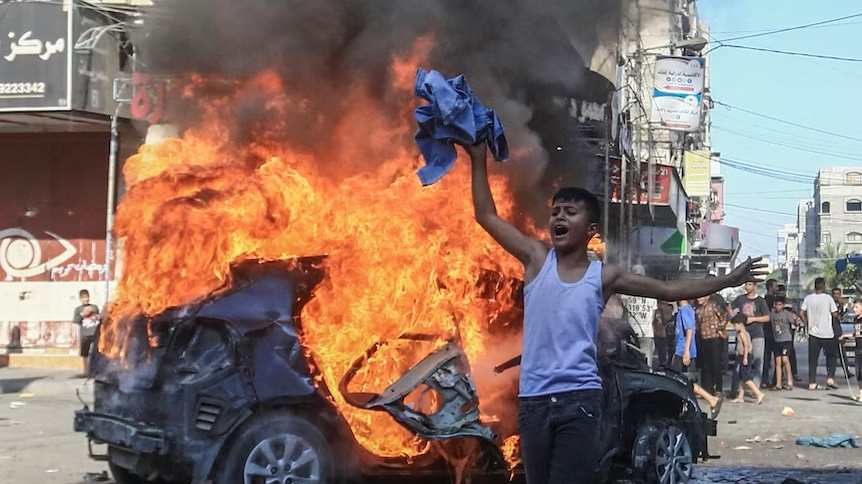
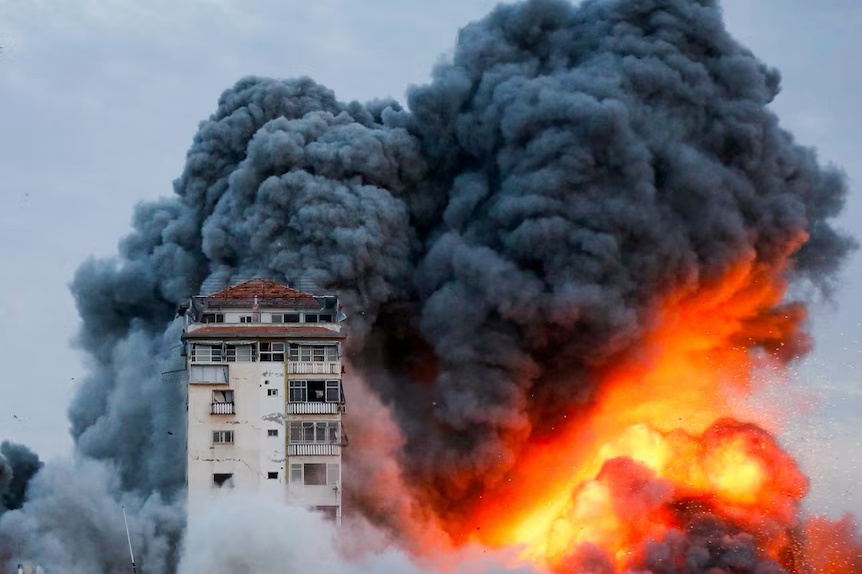
I am watching the events in Israel with deep sadness and high apprehension. The simmering hotspot of the Middle East has erupted, yet again, in a vicious and worrying way.
I am not a political expert, although I have watched the sequence of events in that region for decades, reading a lot at different times about what has been going on. I don’t really have any connection with Palestinians, but have had quite a lot to do with Jews in Australia over the decades of my ministry, from local contacts with rabbis in neighbouring synagogues through to membership of my church’s national dialogue group with the Jewish People.

I have also been a member of working groups that prepared resources for the national Assembly to consider as they reflected on the relationship that the Uniting Church has with Jewish people, including a paper presented to the 1997 Assembly and then further work which resulted in the Statement on Jews and Judaism which the 2009 Assembly adopted.

That 2009 Statement included an affirmation “that the State of Israel and a Palestinian State each have the right to live side by side in peace and security” (#15), and an encouragement to the members and councils of the UC “to pray and work for a just and lasting peace for both Israelis and Palestinians” (#24). Both of these clauses hold good in the current situation.
See https://ucaassembly.recollect.net.au/nodes/view/374?keywords=Jews%20judaism&highlights=eyIwIjoiamV3cyIsIjEiOiJqdWRhaXNtOiIsIjMiOiJqdWRhaXNtOyIsIjUiOiJqdWRhaXNtLCIsIjciOiJqdWRpYWlzbSIsIjkiOiJqdWRhaXNtIiwiMTIiOiJqZXdzLiIsIjEzIjoiamV3LCIsIjE5IjoiKGp1ZGFpc20ifQ==&lsk=ff2123f0fd56a80e39107599b0b2fbb7

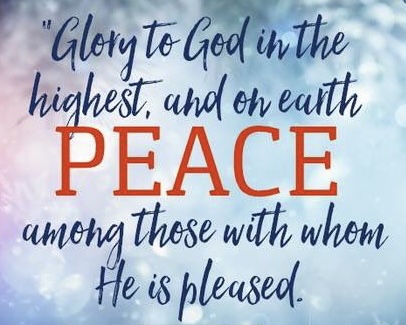
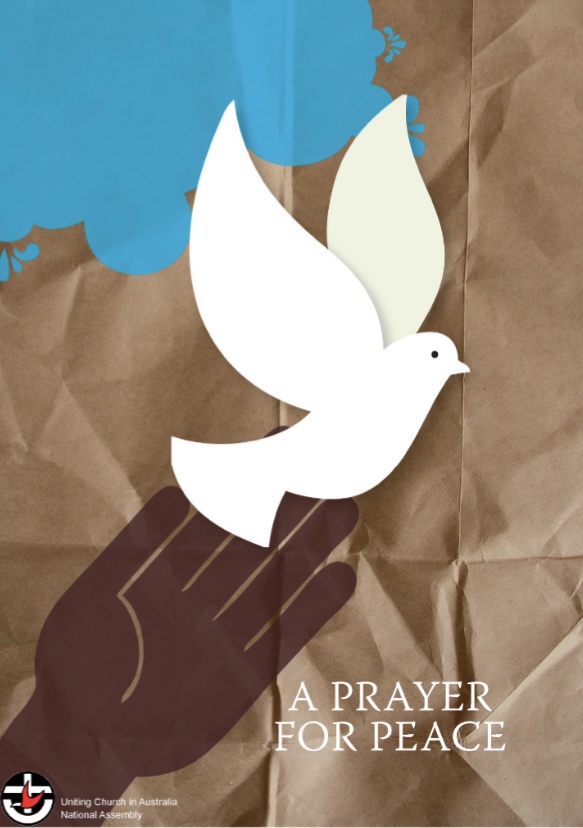
Just over a decade ago, the then Assembly President, the Rev. Alistair Macrae, launched a set of resources, Prayer for Peace, which provided practical and prayerful ways of working for peace in the Middel East. He said, “The pursuit of peace is at the core of what it means to be a disciple of Jesus Christ. We echo his words when we share the greeting ‘peace be with you’ with members of our worshipping congregations each week. Jesus expresses the centrality of peacemaking in the Beatitudes; he preaches that peacemakers will be the children of God (Matt 5:9).”

The President continued, “Our commitment to being peacemakers takes us down many paths to peace. It’s our responsibility and imperative to explore all options that could bring about peace in our hearts, our homes, our communities and in our world.”

See https://ucaassembly.recollect.net.au/nodes/view/216?keywords=Prayer%20for%20peace&type=all&highlights=eyIwIjoicGVhY2UuIiwiMSI6InByYXllci4iLCIyIjoicHJheWVyIiwiMyI6InBlYWNlIiwiNCI6InByYXllcnMiLCIxMyI6InBlYWNlLCIsIjE3IjoicHJheSJ9&lsk=afa2a1ce65cd901b7aa99df5ad6a35ec

I think that many of the suggestions in this resource also hold good today, including the Prayer For Peace In Palestine which was provided by a National Working Group set up at that time:

“God of peace, we pray for peace in Palestine, the land where the Prince of Peace walked long ago; Let there be an end to the cycle of violence and vengeance that has prevailed there for so long; Let there be an end to the frequent killing and maiming of people, victims of hate and prejudice; Let there be an end to all political agendas that justify and prolong the conflict. God of peace, hear our prayer.

“Bring justice for all the people of Palestine regardless of race, culture or religion; Sustain the courage and determination of all those who work for peace and keep them strong in the face of threats and persecution; Establish such mutual respect and harmony between Christians and Muslims that they will live and work together for the sake of all. God of peace, hear our prayer.

“Keep our own hearts and minds free from fear and prejudice; Help us to be instruments of your peace where we are. God of peace, hear our prayer.

That is one thing that we can do, at this time: pray for peace.
There’s another dimension to the current situation that I think bears some consideration. That is the reality of the current political situation, that the lands in the region currently claimed as the modern state of Israel are contested lands, with both Palestinians and Jews laying claim to that area as their ancient ancestral lands.

Whilst there is contention about these claims, there is one matter that I believe merits thoughtful consideration. The claim made by the hard-line right in Israel—reflected in the boundaries of the current state of Israel, including the occupied territories of the West Bank, Gaza, and the Golan Heights—rests on certain biblical texts which, with an ideologically-based orientation, indicate that “God gave this land to the people of Israel”.

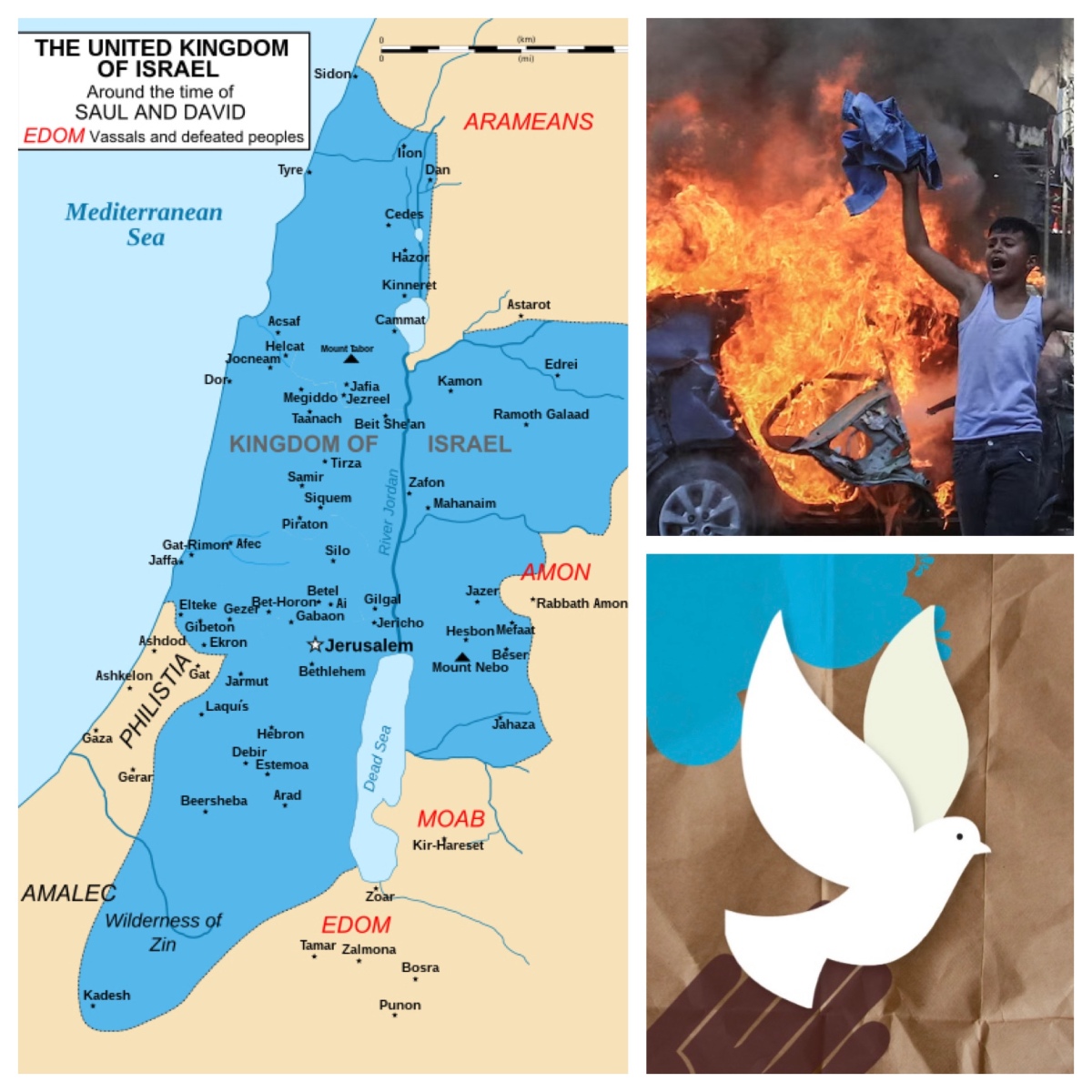
In particular, the large extent of land in view under this claim rests on the biblical description of the territory ruled under Solomon, the much-venerated and highly-valorised king of the United Kingdom of Israel around three millennia ago, in a number of texts in the so-called historical narratives of Hebrew Scripture. Whilst those books might look in many ways like historical narratives, we should take care not to assume that contemporary understandings of history can be easily applied to those passages from antiquity.
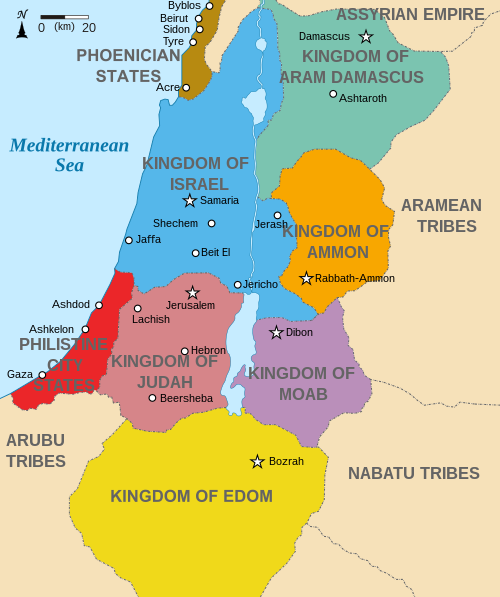
The land that the biblical texts claim was ruled by King Solomon,
from Egypt to the Euphrates

In considering these texts, we should begin by noting that the way that Solomon is presented in the Hebrew Scriptures can only be characterised by the term “hyperbolic exaggeration”. It is not an authentic historical depiction of the man; it is a hagiography. Indeed, the actual existence of Solomon in historical reality (in contrast to being a literary character in the Bible) is highly questionable. Israel Finkelstein and Neil Asher Silberman, writing in The Bible Unearthed: Archaeology’s New Vision of Ancient Israel and the Origin of Its Sacred Texts (Simon and Schuster, 2001), claim that “The glorious epic of the united monarchy was — like the stories of the patriarchs and the sagas of the Exodus and conquest — a brilliant composition that wove together ancient heroic tales and legends into a coherent and persuasive prophecy for the people of Israel in the seventh century BCE.” 

See https://www.thenotsoinnocentsabroad.com/blog/did-king-david-and-king-solomon-really-exist

In the story told in the biblical text, King Solomon was said to have “excelled all the kings of the earth in riches and in wisdom. And all the kings of the earth sought the presence of Solomon to hear his wisdom, which God had put into his mind. Every one of [those kings] brought silver and gold, so much, year by year.” (2 Chron 9:22–24). That’s quite a claim!
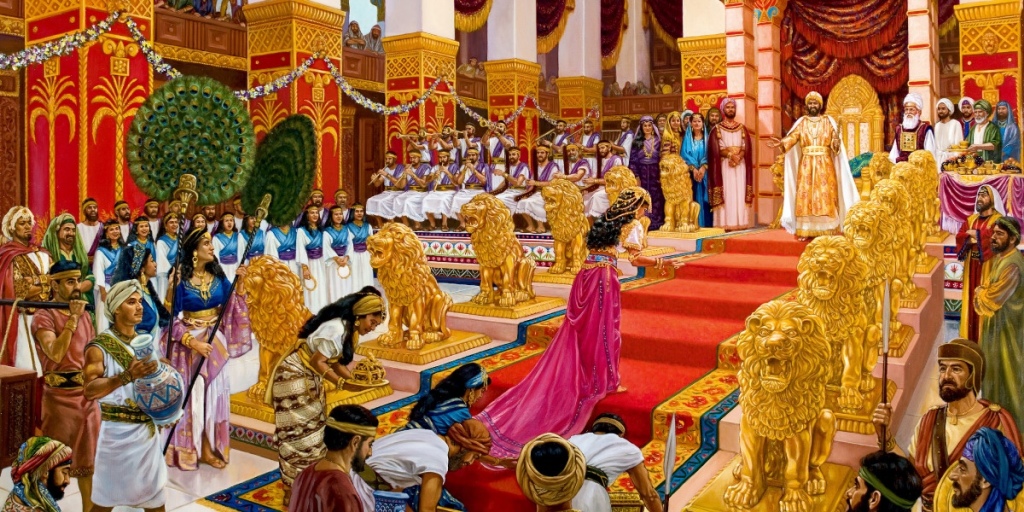
This wonderfully wise, insightful, discerning man, Solomon—bearing a name derived from the Hebrew for peace, “shalom”—became a powerhouse in the ancient world, we are told. But he did not always live as a “man of peace”. Indeed, the narrative indicates that he used his 4,000 horses and chariots and 12,000 horsemen to good effect; we read that “he ruled over all the kings from the Euphrates to the land of the Philistines and to the border of Egypt.” (2 Chron 9:26; also 1 Ki 4:21). This was the extent of land that had been promised to Abraham (Gen 15:18), and it was more than any other ruler of Israel, before or after him.

So Solomon was remembered as king over the greatest expanse of land claimed by Israel in all of history. Solomon was a warrior. And warrior-kings were powerful, tyrannical in their exercise of power, ruthless in the way that they disposed of rivals for the throne and enemies on the battlefield alike. Think Alexander the Great. Think Charlemagne. Think Genghis Khan. Think William the Conqueror. This is an integral part of the heritage that the story of Solomon bequeathed to Israel: the memory of an aggressive, dominating ruler, lording it over the region. Even though the modern state of Israel doesn’t have a king, this is an image that is being acted out today, in the politics of the region.

Solomon reigned for 40 years—a long, wealthy, successful time—although “forty years” in the biblical narrative should not be understood to be a precise time, but more a statement that this was “a long, extended time”. Solomon exemplifies the model of kingship which survives through into the modern era. We expect kings to rule. We expect them to invade and enforce and dominate, for that is the heritage passed on. (And I won’t comment on Solomon’s marital relationships; I will leave 1 Kings 11:3 to speak for itself!)

This exaggerated, idealised view of things is evident in so many ways in the portrayal of Solomon, who was seen to be filled with “wisdom and knowledge”, and granted “riches, possessions, and honour, such as none of the kings had who were before you, and none after you shall have the like” (2 Chron 1:7–12, especially verses 10 and 12).
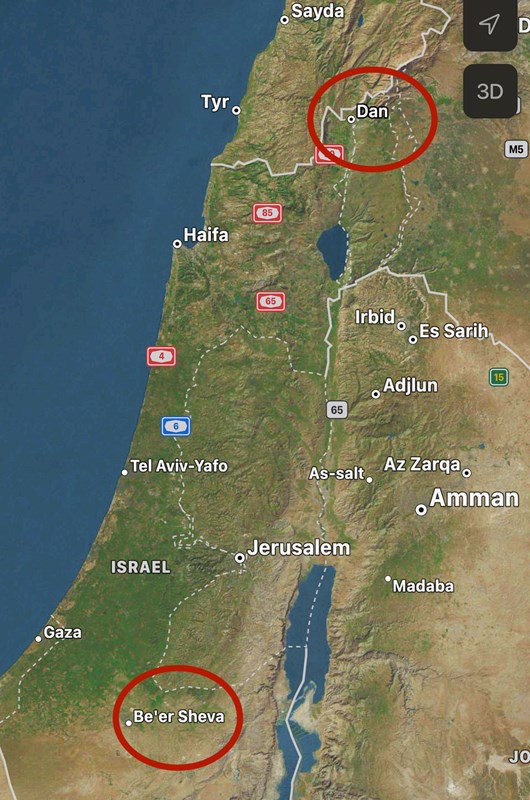
It is also worth noting that the large reach of land that Solomon ruled over, even more extensive than the oft-cited phrase “from Dan to Beersheba” (Judg 20:1; 1 Sam 3:20; 2 Sam 3:10; 17:11; 24:2, 15; 1 Ki 4:25; 1 Chron 21:2; 2 Chron 30:5), did not continue past his death. The hagiographical exaggeration of territory under Solomon is not noted in the period after his death. The narrative books that recount the stories of the kingdoms of Israel, in the north, and Judah, in the south, in the centuries after Solomon, indicate that the scope of those kingdoms was more constrained.

In the light of this, I don’t think it is responsible to lay claim to the whole, extended territory of the land, from the biblical passages noted, as the scope for the modern state of Israel which was created in 1948. I therefore have sympathy for Palestinians who have lived on the land for thousands of years prior to 1948, as they understand this to be their ancestral land.

I also have sympathy for Jews, both those living in the land of Israel today, as well as those living in diaspora, for whom the land of Israel has a powerful symbolic significance—especially since the Shoah of 1933—1945 and the terrible genocide perpetrated by the Nazis against Jews in so many countries during that period. Granting them land in the area where their ancestors long ago had lived, a homeland that gives them security in the modern world, is important and necessary.

That said, I don’t agree that Palestinians should take matters into their own hands to seek vengeance against people in Israel in the way that they have done, once again, in recent days. In the same manner, nor do I think that the Israeli forces should respond in the aggressive and violent manner that they have done, once again, in recent days. Too many people are dying and being injured, making any possible progress towards peace with justice even more difficult each day.

We need to seek once more the peace of these peoples. And we need to find that peace on the basis of justice. Neither terrorist attacks nor military crackdowns will achieve this. They will simply exacerbate a dangerous situation.

“Depart from evil, and do good; seek peace, and pursue it.” (Psalm 34:14). “Blessed are the peacemakers, for they will be called children of God.” (Matt 5:9). “Justice, and only justice, you shall pursue, so that you may live and occupy the land that the Lord your God is giving you.” (Deut 16:20). “… the weightier matters of the law: justice and mercy and faith. It is these you ought to have practiced …” (Mat 23:23).
Hiroshima and Nagasaki, Oppenheimer and Oliphant (for 9 August)

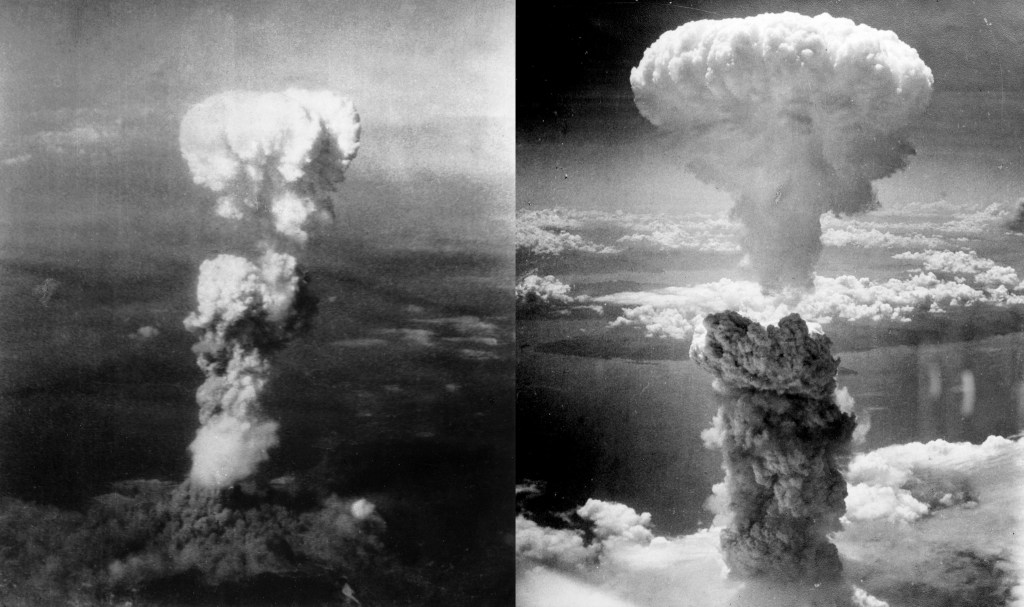
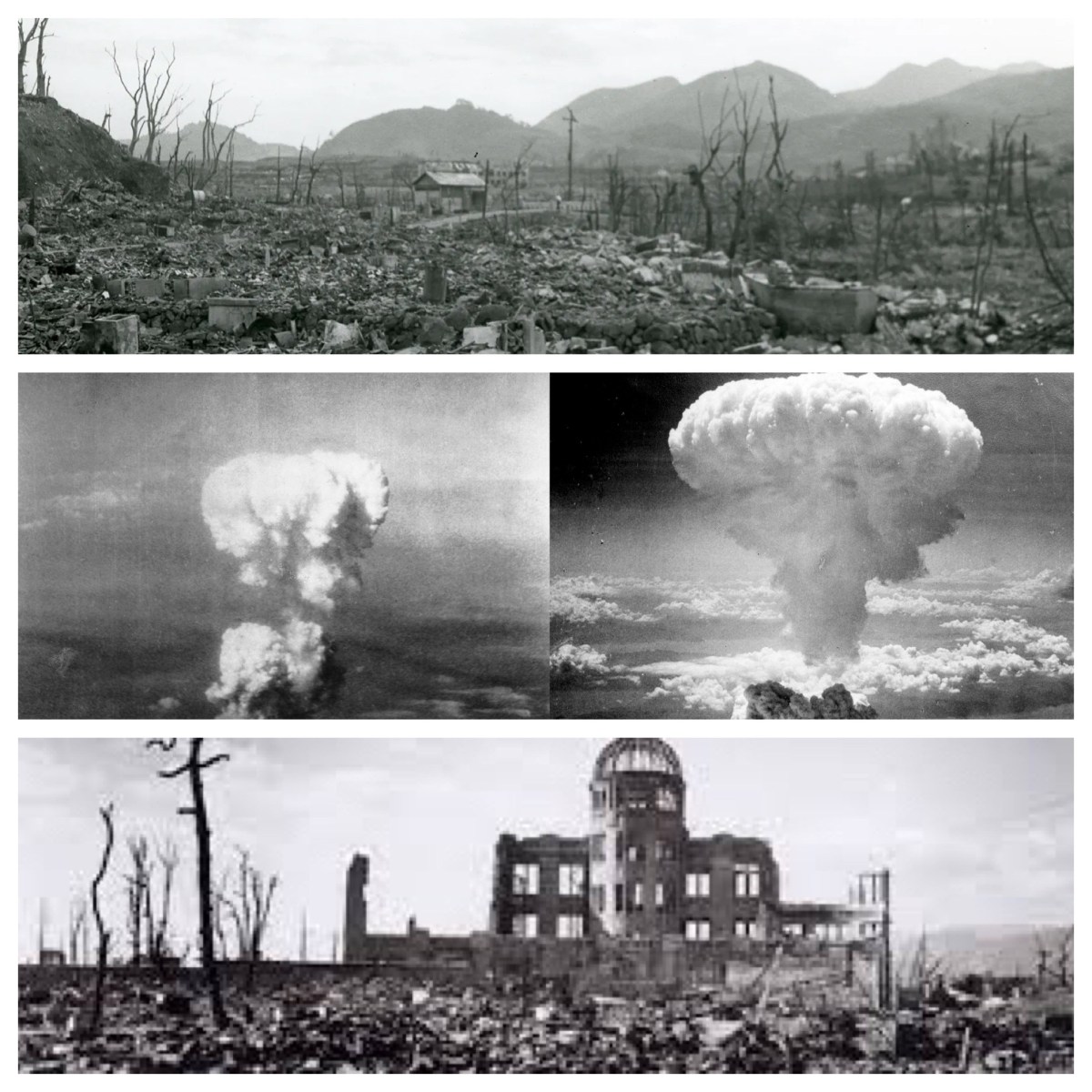
On 6 August 1945, at 8:15 am, a nuclear weapon which had been given the ironic name “Little Boy” was dropped on the Japanese city of Hiroshima. The bomb was dropped from an American B-29 plane, the Enola Gay. A number of military units were located nearby, including the command centre for the defence of all of southern Japan.

Three days later, on 9 August 1945, at 11:01 am, another nuclear weapon was dropped from another American B-29 plane, the Bokscar, onto another Japanese city, Nagasaki.

In the months before August, Tokyo and Yokohama and other cities had been extensively fire-bombed, but no one could have imagined the devastation of the A-bombs. It has been estimated that these two bombings killed between 129,000 and 226,000 people, most of whom were civilians, on the day and in the weeks immediately following the bombings. There are many other deaths that took place in the years afterwards, as well as many, many accounts of diseases, which have been attributed to the fallout from the nuclear bombs.

These two incidents remain the only use of nuclear weapons in an armed conflict. They come to the fore of our attention in August each year, as the anniversary rolls around. This year, however, it may well be more focussed, because,of the recent release of the movie Oppenheimer, which tells the story of Robert Oppenheimer, who was the driving intellectual force behind the development of the technology that enabled nuclear power to be exploded in such a destructive way.

Also involved in that process was Mark Oliphant, an Australian scientist, who some commentators believe was the person that guided Oppenheimer from his theoretical scientific pursuits into this applied field of using physics for human warfare. See

https://www.abc.net.au/news/2023-08-05/j-robert-oppenheimer-mark-oliphant-and-the-atomic-bomb/102577024

(I haven’t seen the movie, so am making no comment on that; I have read some reviews which suggest that it is well made and worth watching.)

I have reflected on the devastating and enduring impacts of these two bombings at

This year, in remembering these two bombings and the subsequent damage caused by them both, I have explored some online resources relating to Hiroshima and Nagasaki, and the ongoing impacts of those two terrible bombings.

On one online page, creative writer Marie Neil writes about the personal impact of warfare: “Increasingly, we realise war is not even about soldiers – the greatest casualties are always civilians – just like the atomic blasts all those decades ago. Returned men and women, damaged beyond recognition suffering the extremities of loss and bereavement. 

“They do not get over it, or move on, or get closure. Survivors with grievous wounds often chose suicide, others clung to another existence, a shadow of their previous life. There were soldiers who had accidents or illness and died without getting near a battlefield.” It is a never-ending roll of casualties, spread across the world.

In commemoration of the 70th anniversary of the dropping of bombs on Hiroshima and Nagasaki almost a decade ago, TIME Magazine curated a selection of testimonies from survivors in both cities, recounting their experiences in 1945. It makes for sober reading.

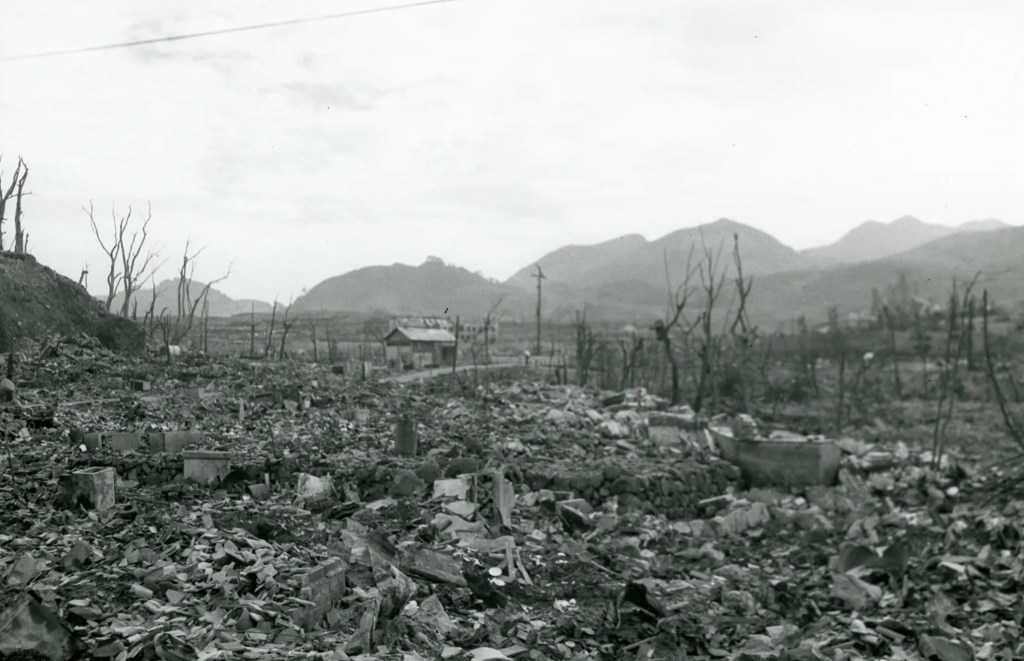
A scene in Nagasaki after the bombing

YASUJIRO TANAKA (in Nagasaki)

“I lost hearing in my left ear, probably due to the air blast. More than a decade after the bombing, my mother began to notice glass shards growing out of her skin – debris from the day of the bombing, presumably. My younger sister suffers from chronic muscle cramps to this day, on top of kidney issues that has her on dialysis three times a week. ‘What did I do to the Americans?’ she would often say, ‘Why did they do this to me?’”

SHIGEKO MATSUMOTO (in Nagasaki)

“At 11:02am, the sky turned bright white. My siblings and I were knocked off our feet and violently slammed back into the bomb shelter. We had no idea what had happened. As we sat there shell-shocked and confused, heavily injured burn victims came stumbling into the bomb shelter en masse.

“Their skin had peeled off their bodies and faces and hung limply down on the ground, in ribbons. Their hair was burnt down to a few measly centimeters from the scalp. Many of the victims collapsed as soon as they reached the bomb shelter entrance, forming a massive pile of contorted bodies. The stench and heat were unbearable. My siblings and I were trapped in there for three days.”

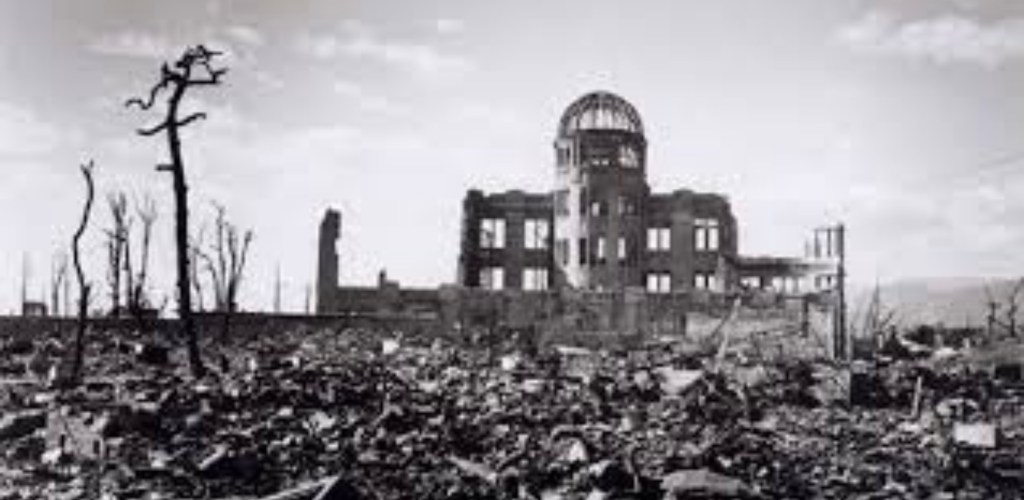
A scene in Hiroshima after the bombing

FUJIO TORIKOSHI (in Hiroshima)

“I heard my mother’s voice in the distance. ‘Fujio! Fujio!’ I clung to her desperately as she scooped me up in her arms. ‘It burns, mama! It burns!’ I drifted in and out of consciousness for the next few days. My face swelled up so badly that I could not open my eyes. I was treated briefly at an air raid shelter and later at a hospital in Hatsukaichi, and was eventually brought home wrapped in bandages all over my body.

“I was unconscious for the next few days, fighting a high fever. I finally woke up to a stream of light filtering in through the bandages over my eyes and my mother sitting beside me, playing a lullaby on her harmonica. I was told that I had until about age 20 to live.

“Yet here I am seven decades later, aged 86. All I want to do is forget, but the prominent keloid scar on my neck is a daily reminder of the atomic bomb. We cannot continue to sacrifice precious lives to warfare. All I can do is pray – earnestly, relentlessly – for world peace.”

INOSUKE HAYASAKI (in Nagasaki)

“The injured were sprawled out over the railroad tracks, scorched and black. When I walked by, they moaned in agony. ‘Water… water…’

I heard a man in passing announce that giving water to the burn victims would kill them. I was torn. I knew that these people had hours, if not minutes, to live. These burn victims – they were no longer of this world.

‘Water… water…’

“I decided to look for a water source. Luckily, I found a futon nearby engulfed in flames. I tore a piece of it off, dipped it in the rice paddy nearby, and wrang it over the burn victims’ mouths. There were about 40 of them. I went back and forth, from the rice paddy to the railroad tracks. They drank the muddy water eagerly. Among them was my dear friend Yamada. ‘Yama- da! Yamada!’ I exclaimed, giddy to see a familiar face. I placed my hand on his chest. His skin slid right off, exposing his flesh. I was mortified. ‘Water…’ he murmured. I wrang the water over his mouth. Five minutes later, he was dead.

“In fact, most of the people I tended to were dead. I cannot help but think that I killed those burn victims. What if I hadn’t given them water? Would many of them have lived? I think about this everyday.”

My colleague Chris Walker has written wisely, in reflection on war and the great damage it causes: ‘Let us then be peacemakers following the way of Jesus. Jesus himself rejected the way of the sword. At his arrest he told his disciples to put away their swords. He followed the way of suffering love and did not resort to violence. Even on the cross he cried out, “Father forgive them; for they do not know what they are doing” (Luke 23:34).’ See

For my earlier blog on these bombings, see

See also

Righteous by faith and at peace with God (Rom 5; Lent 3A)

We are being offered a veritable feast by the lectionary during the season of Lent, through Hebrew Scripture passages which recall key moments in the story of Israel (Abraham, Moses, David, return after exile) as well as in Gospel narratives telling of the transformative encounters which Jesus had with a range of people (a Pharisee and a Samaritan woman, a man born blind and two sisters of a dead man).

Alongside this, the lectionary offers us a set of readings from Paul’s longest and most richly-developed theological letter, that which he wrote to “all God’s beloved in Rome, who are called to be saints” (Rom 1:7). After exploring the rationale for human sinfulness (Rom 5:12–19, Lent 1A), we have read of Paul’s use of Abraham as a model to explain how God “reckons us to be righteous” (Rom 4:1–5, 13–17, Lent 2A).

Today we are offered another passage replete with fundamental theological affirmations (Rom 5:1–11, Lent 3A) and in two more weeks we will hear yet another “purple passage” from Romans (Rom 8:6–11, Lent 5A). In the intervening week we are diverted in Ephesians, most likely because the passage illuminates the Gospel story of Jesus enabling the man born blind to see (John 9).

Whilst Romans 4 exhibits many signs of the diatribe style, as we have noted, Paul seems to set this to one side for a time. He will pick up the pattern of apostrophe (posing questions to a hypothetical listener) and speech-in-character (providing answers to those questions from an imaginary person) in the next chapter: “What then are we to say? Should we continue in sin in order that grace may abound? By no means! How can we who died to sin go on living in it?” (Rom 6:1–3).

He will extend that through the agonising of the following chapter: “What then should we say? That the law is sin? By no means! Yet, if it had not been for the law, I would not have known sin.” (Rom 7:7). He will pick this up again at the end of his lengthy argument begun in 5:1 when he exclaims: “What then are we to say about these things? If God is for us, who is against us? He who did not withhold his own Son, but gave him up for all of us, will he not with him also give us everything else? Who will bring any charge against God’s elect? It is God who justifies.” (Rom 8:31–34).

Paul uses these techniques because he is, in the depths of his being, what we would call a “pastoral practitioner”. He is a good theological thinker, but he is oriented at every point to the pastoral engagement that he has with people in the churches which (mostly) he has founded—the church in Rome being a key exception to this, since he writes to a community that he has not yet visited.

Paul tells the Thessalonians that he seeks to operate “like a father with his children” (1 Thess 2:11), “like a nurse tenderly caring for her own children” (1 Thess 2:7). He tells the Philippians “how I long for all of you with the compassion of Christ Jesus” (Phil 1:8), and the Corinthians that “I wrote you out of much distress and anguish of heart and with many tears, not to cause you pain, but to let you know the abundant love that I have for you” (2 Cor 2:4). And he assures the Romans that he prays that “by God’s will I may come to you with joy and be refreshed in your company” (Rom 15:32).

Amidst all the harsh rhetoric, direct intervention, and controlling instructions that pepper all the letters of Paul, this kind, compassionate, caring heart can be glimpsed. Paul does what he does for the sake of the people whom he serves. Rabbinic midrash and rhetorical diatribe a pre pressed into the service of compassionate care for his people.

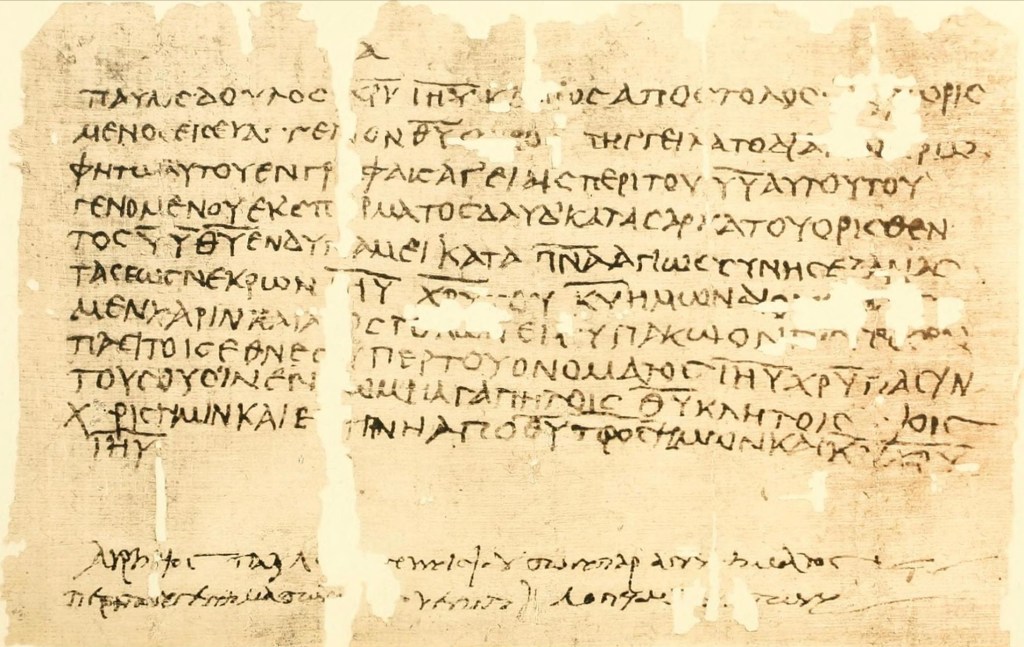
The opening of Paul’s letter to the Romans,
from an early fourth century papyrus (p10)

*****

But for the passage from Romans which we are offered this coming Sunday (Rom 5:1–11), the style changes. Rather than the diatribe style of question—response, shaped by the Pharisaic midrashic pattern of exploring key scripture passages, Paul seems to switch, to become a doctrinal pedagogue much as we find in later patriotic, medieval, and reformed writers.

In just eleven verses, Paul identifies and names a sequence of ten key theological claims—perhaps the closest he ever gets to becoming what we know as a “systematic theologian”. Paul mentions, in turn, justification by faith, peace with God, access to God’s grace, the glory of God, the place of sufferings, endurance, and hope, the gift of the Holy Spirit, the function of the death of Christ and the process of being justified by his blood, salvation from God’s wrath, and finally, reconciliation with God. They are each worth pondering.

Being justified by faith—or, in another English translation, being made righteous by faith—is the first concept which has pride of place in this passage—and, indeed, forms the basis for the theological argument that is developed throughout this Gospel. Paul’s opening statement is that, in the Gospel, “the righteousness of God is revealed through faith for faith”, quoting a scripture passage to provide the basis for his assertion (Rom 1:17); that righteousness is explained at length through the ensuing chapters, canvassing a range of matters in the process.

Righteousness, of course, has its origins deep in the Hebrew Scriptures. Abram had been given promises by God but he expresses doubt that these promises would come to pass (15:2-3). God provides further reassurance; the multitude of stars in the sky is testimony to that (15:5). Abraham’s resulting affirmation of faith leads to the famous phrase, so central to Paul’s later argument about righteousness: “he believed the Lord; and the Lord reckoned it to him as righteousness” (15:6; see Rom 4:3,9,22).

The psalmists regularly thank God for God’s righteousness (Ps 5:8; 7:17; 9:8; 33:5; 35:24, 28; 36:6; 50:6; etc) and note the importance of humans living in that way for righteousness (Ps 18:20, 24; 85:10–13; 106:3, 31; 112:1–3, 9), whilst the book of Proverbs advises that the wisdom it offers is “for gaining instruction in wise dealing, righteousness, justice, and equity” (Prov 1:3) and the prophets consistently advocated for Israel to live in accordance with righteousness (Hos 10:12; Amos 5:24; Isa 1:22; 5:7; 28:17; 32:16–17; 54:14; Jer 22:3; Ezek 18:19–29; Dan 9:24; 12:3; Zeph 2:3; Mal 4:1–3; Hab 2:1–4).

So “being made righteous with God” (Rom 5:1) is both a central element of Paul’s theology, and a strong thread running from Hebrew scriptural texts into the life of the early church.

Peace with God is the second element in this section. Paul regularly commences his letters with the formulaic “grace and peace to you” (Rom 1:7; 1 Cor 1:3; 2 Cor 1:2; Gal 1:3; Phil 1:2; 1 Thess 1:1; Phlm 3), but the peace spoken of at 5:1 goes deeper than this formula. God is “the God of peace” (1 Thess 5:23) who offers peace “which surpasses all understanding” (Phil 4:7). “God is a God not of disorder but of peace” (1 Cor 14:33) so believers are urged to live in peace (2 Cor 13:11). The Galatians are told that of the fruits of the Spirit is peace (Gal 5:22); the Philippians are informed that “the peace of God, which surpasses all understanding, will guard your hearts and your minds in Christ Jesus” (Phil 4:7).

Such peace is grounded in the understanding of God expressed in Hebrew Scriptures. The Psalmist prays, “may the Lord bless his people with peace” (Ps 29:11), celebrates that God “will speak peace to his people, to his faithful, to those who turn to him in their hearts”, such that “steadfast love and faithfulness will meet; righteousness and peace will kiss each other” (Ps 84:8, 10), and gives thanks that God “grants peace within [Jerusalem’s] borders” (Ps 147:4).

The vision of peaceful co-existence amongst all creatures is declared. by various prophets (Isa 2:2–5; Mic 4:1–5; Isa 52:7; 57:19; 60:17; 65:25) and amongst the names of the one whom Isaiah foresees as the hope for Israel’s future is “Prince of Peace” (Isa 9:2). Both Ezekiel (Ezek 13:8–16) and Jeremiah (Jer 14:13–22) decry those who cry out “peace when there is no peace”. Ezekiel states that God promises, “I will make a covenant of peace with them; it shall be an everlasting covenant with them” (Ezek 37:26; also 34:25, and Zech 8:12).

*****

This being-made-righteous and the consequent gift of peace comes, according to Paul’s comments later in this passage, through the death of Jesus on the cross. He uses a number of phrases to describe this death, and its “benefits” for believers. In verse 6, he notes that “Christ died for the ungodly”, and in verse 8, “while we still were sinners, Christ died for us”.

“Christ died for us” is a common phrase in Paul’s letters—so much so that it is regarded as a formulaic statement (an early credal affirmation?) which appears in various forms (Rom 6:10; 8:34; 14:9; 1 Cor 8:11; 2 Cor 5:14–15; 1 Thess 5:9–10; see also Gal 1:4; 2:20; Rom 7:4; 1 Thess 4:14; and the later formula of 1 Tim 2:5–6). Specifically relating the death of Christ to dealing with sin is also addressed by Paul in some detail earlier in this letter (Rom 3:9–26; 5:15–21; 6:5–14) as well more briefly as in other letters (1 Cor 15:56–57; 2 Cor 5:21; Gal 3:22).

To explain how this death deals with our sins, Paul here specifies that “we have been made righteous by his blood” (Rom 5:9). This clearly relates to the practice of faithful Jews, who for centuries brought their sacrifice to the Temple, so that the priests could kill the animals brought as offerings to God. Shedding blood was integral to this process.

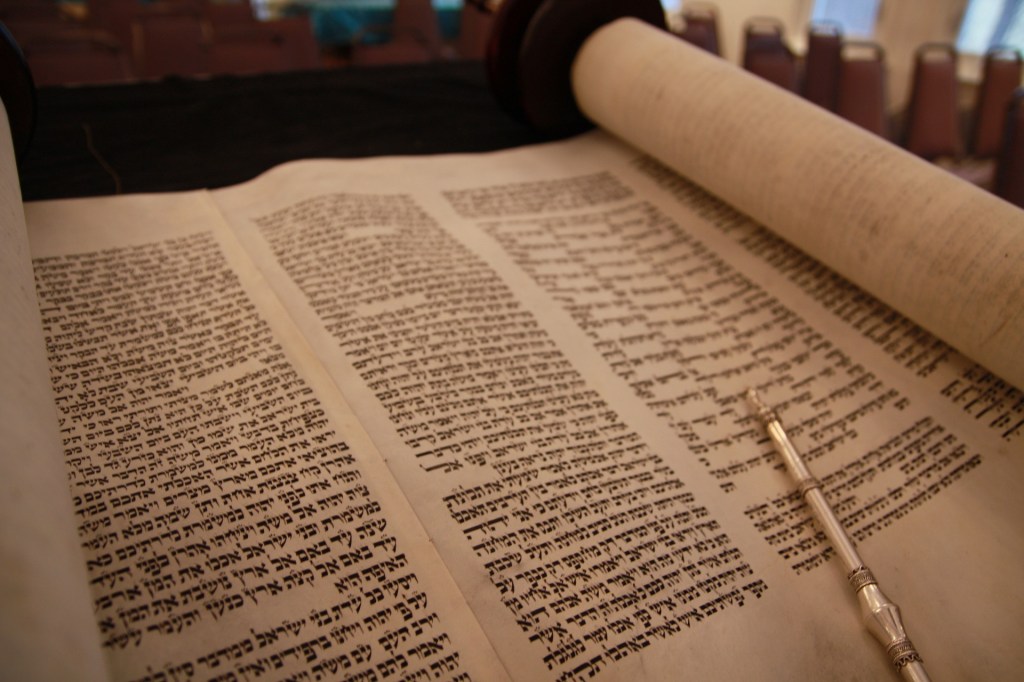
The Torah specifies that the priests should receive “a bull of the herd” as a sin offering, and “the bull shall be slaughtered before the Lord; the anointed priest shall take some of the blood of the bull and bring it into the tent of the meeting … and dip his finger in the blood and sprinkle some of the blood seven times before the Lord” (Lev 4:3–6). Some of the blood is also placed on the horns of the altar and the rest “he shall pour out at the base of the altar of burnt offering” (Lev 4:7).

Likewise, the priest was to “slaughter the guilt offering, and its blood shall be dashed against all sides of the altar” (Lev 7:2); to purify a leper, two lambs are offered, and the priest “shall slaughter the lamb … and take some of the blood of the guilt offering and put it on the lobe of the right ear of the one to be cleansed [the leper] and on the thumb of the right hand and on the big toe of the right foot” (Lev 14:13–14; so also 14:25).

So likewise for the bull on the Day of Atonement: “Aaron … shall slaughter bull as a sin offering for himself … and sprinkle the blood with his finger on the front of the mercy seat … seven times” (Lev 16:11, 14), and then do the same with “the goat of the sin offering” (Lev 16:15–19), before then releasing a live goat (the “scapegoat”) or “bear all their iniquities to a barren region, and the goat shall be set free in the wilderness” (Lev 16:22).

The significance of the shedding of blood is clearly and strikingly articulated in the Torah: “the life of the flesh is in the blood; and I have given it to you for making atonement for your lives on the altar; for, as life, it is the blood that makes atonement” (Lev 7:11). When the blood of the animal is shed, that life is given as an offering to effect atonement. So, too, when the blood of Jesus was shed, his life functioned as an atoning offering for human beings.

The slaughter of animals and the sprinkling of blood thus signifies the sacrificial offering of a gift to God, seeking cleansing or forgiveness. Applying this common practice to Jesus makes sense in the context of the time—but it is an image which is far more difficult for us to accept and appreciate in the modern world, where we might feel that we have moved beyond such “primitive practices”, as some callously call those ancient practices.

What we can take from this language, perhaps, is the observation that sacrifice for sin, seeking to remove the tarnish of that sinfulness and find restoration and wholeness, was a dynamic signalled elsewhere in Hebrew Scripture—most clearly in that famous fourth Servant Song in Second Isaiah, which refers to the servant as the one who “has borne our infirmities and carried our diseases … wounded for our transgressions, crushed for our iniquities; upon him was the punishment that made us whole, and by his bruises we are healed” (Isa 53:4–5). As “the Lord has laid on him the iniquity of us all”, so “it was the will of the Lord to crush him with pain [to] make his life an offering for sin” (Isa 53:6, 10).

That same dynamic is at work every year in Australia, as those military people who have died in battle over the past century are remembered each ANZAC Day for their sacrifice and thanked for what they have bequeathed to our society. It is the same dynamic of sacrifices offered by some to ensure the safety of the many.

So, Paul is able to affirm that when Jesus died, it was to assure us of forgiveness, to deal with our sinfulness, and to restore us to the original state of goodness (Gen 1:26–31) that was God’s gift and intention for humankind.

See more on this at

*****

This passage is so beloved within the church, and was so highly regarded by the creators of the lectionary, that it appears again, slightly reduced in length, in the readings for the Third Sunday after Pentecost, later in this year (5:1–8), as well as in an even shorter form in the readings for Trinity Sunday in Year C (5:1–5). So I am going to reserve my comments on the remainder of the elements I have identified in this passage until it returns, later this year, in the readings for the Third Sunday after Pentecost! I will leave you, simply, with Paul’s clear affirmation that, “since we are made righteous through faith, we have peace with God through our Lord Jesus Christ” (5:1).

See also

On reading scripture during Advent: drawing from the ancient prophecies (Isaiah 2; Advent 1A)

“Many peoples shall come and say, ‘Come, let us go up to the mountain of the Lord, to the house of the God of Jacob; that he may teach us his ways and that we may walk in his paths’” (Isa 2:3). These are words in the section from Hebrew Scripture that are offered by the lectionary for this coming Sunday, the first day of Advent (Isa 2:1–5). How do we deal with the words of a prophet, speaking eight centuries before Jesus, when they are set for the season in which we look forward, with expectation and hope, to the coming (again) of Jesus, at Christmas?

Perhaps these words sit here, at the start of Advent, because they express a vision of the universal relevance and impact of faith in God, grown amongst the people of Israel, and brought to a fuller expression in the person of Jesus? The claim that “many peoples” will come to Jesus points to his universal impact. The notion that these “many people” will seek to learn the ways of the Lord and walk in his paths is a comforting and inspiring statement by the prophet.

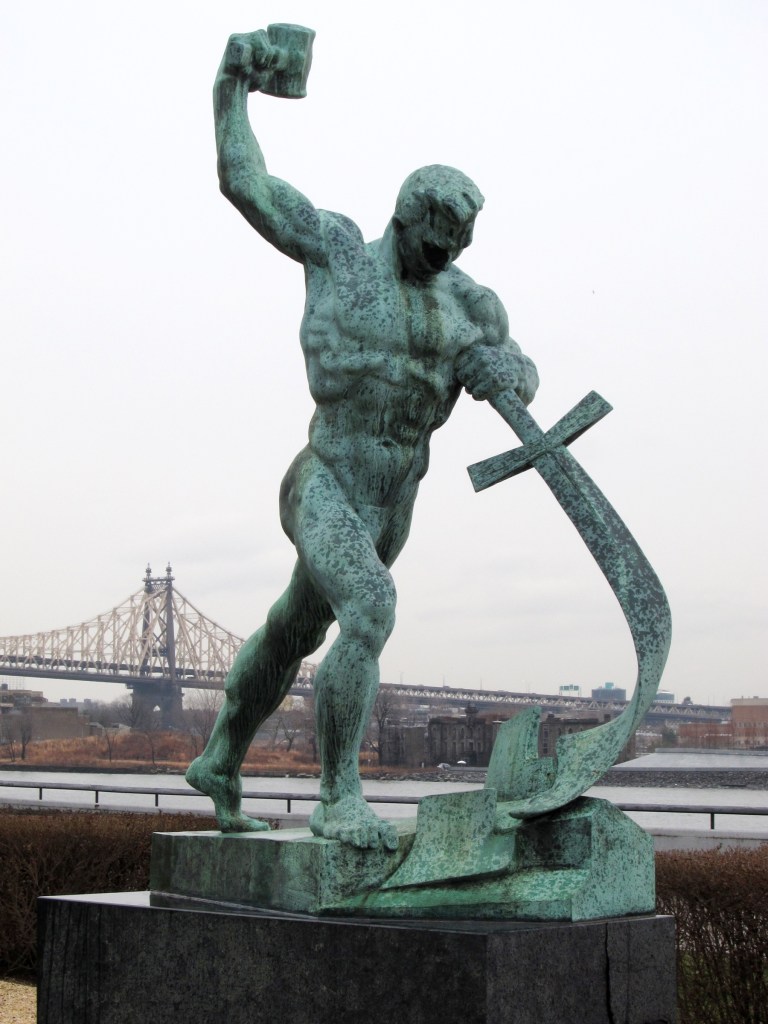
This passage, too, is well-known for the prophet’s vision that divine judgement will take place “between the nations … for many peoples” (2:4a); as a result, those people “shall beat their swords into ploughshares and their spears into pruning hooks” (2:4b). This oracle, shared with the contemporary prophet Micah (Mic 4:1–4), foresees that these nations “shall not learn war any more” (2:4c). It’s a wonderful vision—sadly, one that is still awaiting fulfilment, even 28 centuries later.

Let Us Beat Swords into Plowshares,
a sculpture by Evgeniy Vuchetich
in the United Nations Art Collection

*****

In the coming weeks, we will be hearing and considering other words from this prophet who lived eight hundred years before Jesus; words that the church has heard, and taken, and restated, and declared that they speak about Jesus—predictive prophecy, enabled by the Spirit, spoken well in advance of the time of their fulfilment. After the vision of universal peace this coming Sunday (Isa 2:1–5, Advent 1A), the following Sunday we will hear a similar oracle from Isaiah (Isa 11:1–10, Advent 2A), in which another vision of universal harmony is expressed.

The two passages sit curiously alongside the Gospel passages of the prediction of apocalyptic turmoil by Jesus (Matt 24:36–44, Advent 1A) and the fierce apocalyptic preaching of John (Matt 3:1–12, Advent 2A). Whilst the Gospel passages foresee disastrous events, the Hebrew Scripture passages look to universal peace.

The other two Sundays in Advent contain further oracles spoken eight centuries before Jesus by the prophet Isaiah. One comes from the later part of the long opening section of Isaiah (chapters 1–39), and once again offers a vision of restitution and harmony; a period of time with abundant blossoming (35:1–2), divine salvation (35:3–4), restoration of full health (35:5–6), an a highway, “the Holy Way”, where “no lion shall be there, nor shall any ravenous beast come upon it” (35:9). The whole vision is framed with joy and singing (35:2, 10; see Isa 35:1–10, Advent 3A).

This passage sits, more easily, alongside the Gospel reading for that Sunday, recounting an incident in which Jesus was asked about John the baptiser (Matt 11:2–11; Advent 3C), in which he talks about events taking place even in their midst: “the blind receive their sight, the lame walk, the lepers are cleansed, the deaf hear, the dead are raised, and the poor have good news brought to them” (11:5).

Finally, on the fourth Sunday of Advent, the lectionary takes us to the very familiar prophetic words, “the Lord himself will give you a sign; look, the young woman is with child and shall bear a son, and shall name him Immanuel” (Isa 7:14), a part of a longer prophecy that Isaiah speaks directly to King Ahaz (Isa 7:10–16), Advent 4A).

Alongside this, of course, is the Gospel passage where this famous prophetic utterance is cited (Matt 1:18–28, Advent 4A)—albeit, in a version that clearly mistranslates the Hebrew ‘almah (young woman) as the Greek parthenos (virgin)—a rendering that has become firmly fixed into the Christian traditions about the birth of Jesus.

*****

A brief footnote: two of these passages (Isa 7 and Isa 11) come from the famous three passages early in Isaiah that are regularly connected, in Christian tradition, with the birth of Jesus. The third passage (Isa 9) is designated by the lectionary as the first reading for “the Nativity of the Lord” on Christmas Eve or Christmas Day (Isa 9:2–7). Together, the “young woman shall conceive” (Isa 7), “a child has been born for us, a son is given” (Isa 9), and “a shoot shall come out from the stump of Jesse” (Isa 11) provide a natural collection of ancient words pointing to the good news of the Christmas story.

*****

That said: we need to be very careful in how we speak about these passages. Whilst they seem, to us Christians, to fit naturally within the context of our Advent expectation about the coming of Jesus, we need to remember that we are taking passages from scriptures that are sacred to people of another faith, which existed long before the Christian faith came into being as a system of belief; indeed, long before Jesus himself was born.

We know “in our heads” that Christianity emerged from the Jewish faith—but often we act as if this newly-formed religious system now stands in the place of Judaism, as the body of belief to which the Lord God, the ancient of days, now relates and responds; and that Judaism itself is now obsolete, no longer relevant, superseded. Presenting readings from Hebrew Scripture as if they speak directly and clearly about Jesus, continues such an attitude.

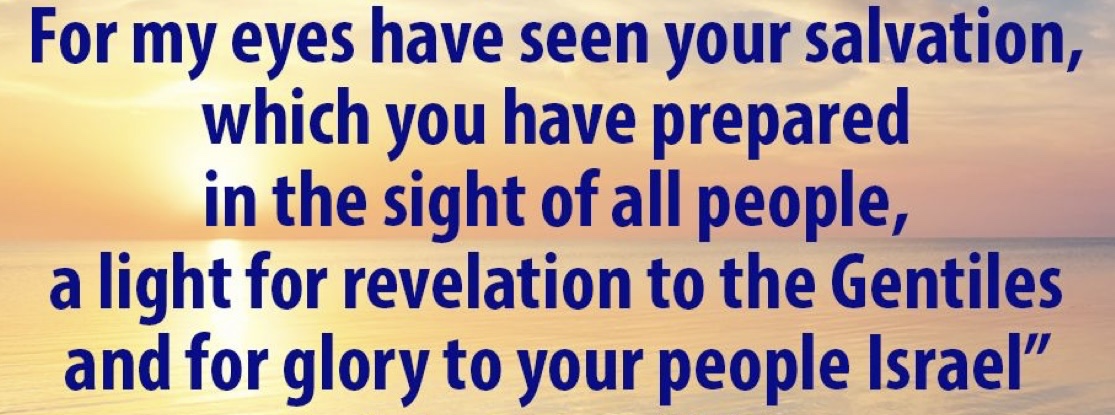
Judaism is not, of course obsolete; there are still millions of people holding the beliefs of Judaism and keeping the practices of Judaism around the world—in Israel, in the United States, in Australia, and in any other countries. The Jewish faith has not ended; Christian believers have not superceded Jews as God’s chosen people. God’s covenant with Jewish people continues; as Paul declared so clearly, “God has not rejected God’s people” (Rom 11:1), “the gifts and the calling of God [to Israel] are irrevocable” (Rom 11:29). “Salvation has come to the Gentiles” (Rom 11:11), but even so, “all Israel will be saved” (Rom 11:26), for “as regards election, they are beloved” (Rom 11:28).

See more at https://johntsquires.com/2020/08/10/god-has-not-rejected-his-people-all-israel-will-be-saved-rom-11/

Indeed, there is much in common amongst these two faith. Jews and Christians each orient our belief towards the same God, the God of Abraham and Sarah, of Isaac and Rebekah, the God of Moses, Aaron, and Miriam. Christians believe that this God is the same as the God of Mary and Jesus, of Peter and Paul, of Priscilla and Phoebe, and the God in whom we believe. We need to give due acknowledgement of that reality in our worship and preaching.

Supersessionism is a term used to describe the way that the Church, through the centuries, has simply taken over Jewish elements (such as scripture, the covenant, the Ten Commandments, Pentecost, the Passover Seder—and these “Advent texts” from Isaiah). We have “baptised” them so that believers have the view that these are Christian elements, without any sense of their Jewish origins—and their continuing place in contemporary Jewish life.

The Assembly of the Uniting Church issued a statement in 2009 regarding our relationship with Jews and Judaism. It affirmed the integrity of Judaism as a living faith, and made a commitment to engage in constructive relationships with Jews. It encouraged members of the Uniting Church to value Judaism as a living faith, and not to engage in acts or demonstrate actions that indicate a belief that Judaism has been superceded. See https://assembly.uca.org.au/rof/resources/learn-more/item/download/1109_09f709cccf49d83607c92e31d650d581

We should not therefore speak, sing, pray, or act in ways that are disrespectful to Jewish practice and beliefs, and in contravention of our strong commitment as a church to work constructively with our Jewish sisters and brothers. That should be an important guideline in the way we approach these “Advent texts”, even as we have our eyes firmly fixed on “the coming of Jesus”, which we celebrate at Christmas.

See also

Voting on 21 May (7): Contributing to a Just and Peaceful World

Australian citizens go to the polls to elect a federal government on 21 May. The 17 million people eligible to vote will be electing both a local member to sit in the House of Representatives for the next three years; and a number of senators, to sit in the Senate for the next six years.

To assist voters in considering how they might vote, the Uniting Church has prepared a resource that identifies a number of issues, in seven key areas, that should inform the way that we vote, if we take seriously how the Gospel. calls us to live.

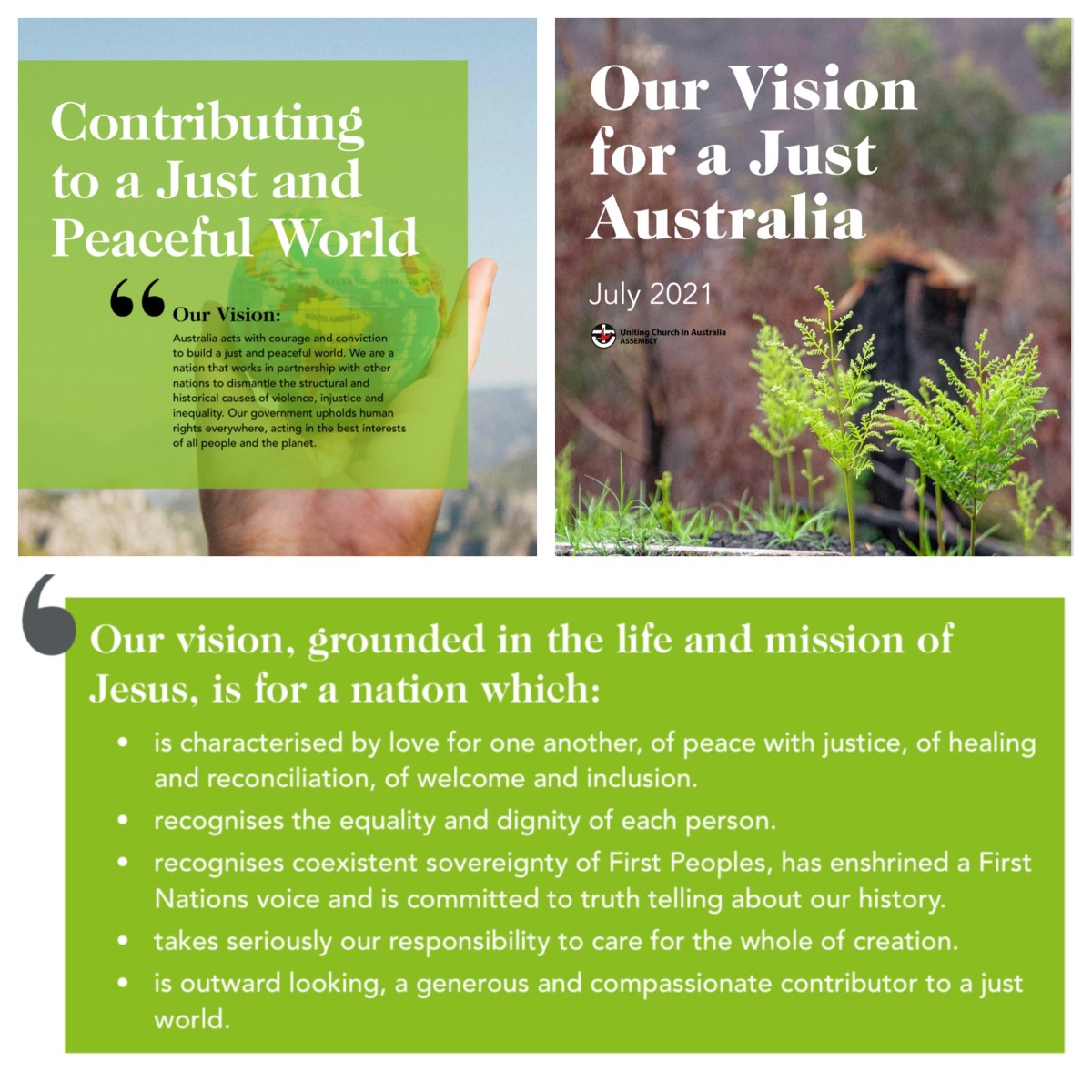
The seven areas are drawn from Our Vision for a Just Australia, a 40-page document expressing the Uniting Church vision for a just Australia and why our Christian faith calls us to work towards its fulfilment. It can be read in full at https://uniting.church/wp-content/uploads/2021/07/Our-Vision-For-a-Just-Australia_July2021.pdf

The Assembly has prepared a shorter 8-page document as a Federal Election Resource, in which key matters in each of the seven areas are identified. That document is found at https://uniting.church/wp-content/uploads/2022/04/Federal-Election-Resources-2022_11-April.pdf

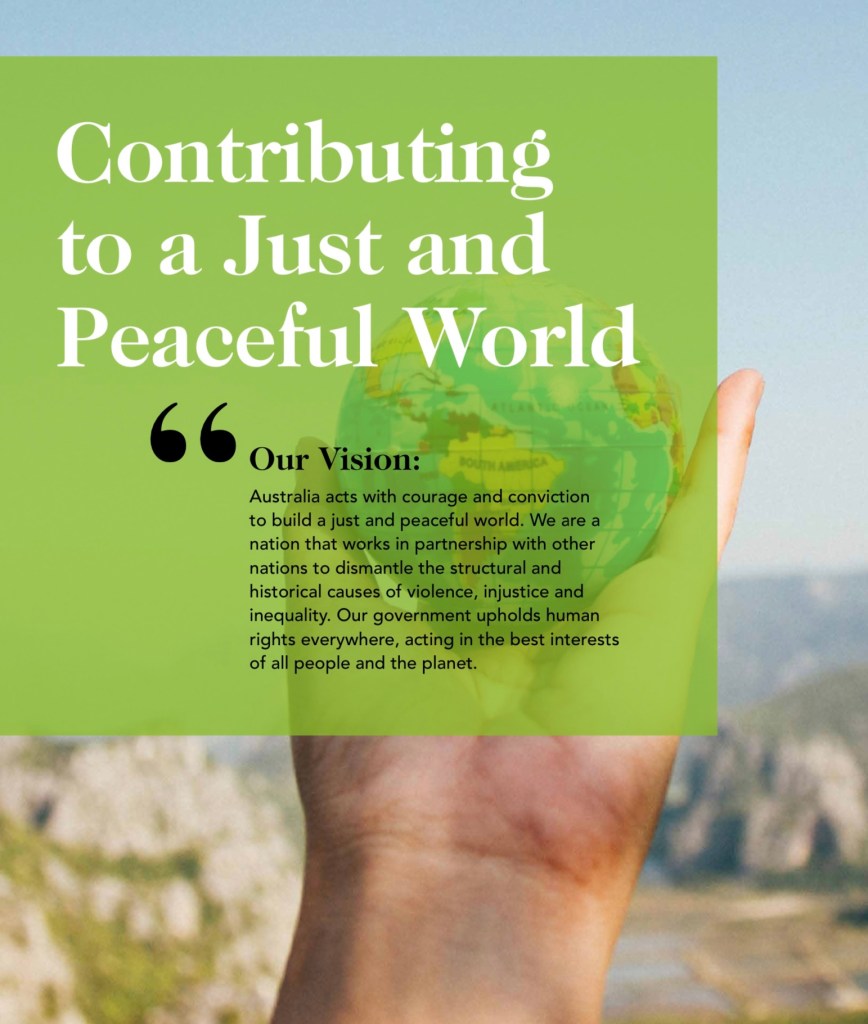
The final area reflects the vision of the Uniting Church for Contributing to a Just and Peaceful World.

The UCA resource notes that “we are a nation that works in partnership with other nations to dismantle the structural and historical causes of violence, injustice and inequality. Our government upholds human rights everywhere, acting in the best interests of all people and the planet.”

It further notes that we remain one of the wealthiest countries in the world, with the highest median wealth per adult, and fourth highest average wealth per adult. “Historically, we played a significant part in reducing world poverty and making significant gains in human flourishing. COVID-19 has made the world poorer, less equal and less secure.”

“Climate change and increased geopolitical competition is destabilising democracies and increasing the number of refugees in the world. In 2020, Australia boosted aid to our local region to support pandemic response, however, the current government has capped ongoing aid to pre-COVID levels, the lowest since 1961.”

“Despite our relative wealth, we are ranked an ungenerous 21st on the global list of overseas development aid as a percentage of gross national income. The recent and ongoing conflict in Ukraine reminds us again of the urgent need to rid the world of weapons capable of catastrophic, widespread destruction.”

The key issues to inform our voting in this regard are what each candidate or their party says about:

• Centering Australia’s foreign policy on a commitment to justice and peace; collaborating internationally to deliver community development and human rights.

• Legislate Australian Aid to reach 0.5% GNI by 2026 and 0.7% GNI by 2030.

• Increase support to fight COVID globally.

• Sign on to the global treaty banning nuclear weapons.

• Increase support to vulnerable nations to help address the impact of climate change.

For the full series of seven posts, see: