I will not be afraid; what can anyone do to me? (Hebrews 13; Pentecost 12C)

The letter to the Hebrews is perhaps best known for its teachings about Jesus as High Priest, and the ending of the system of sacrifices. But it is more in the nature of a long sermon than a letter; indeed, the author characterises it as a “word of exhortation” (13:22).

Preachers, of course, regularly exhort their congregation. This section of the letter exhorts the Hebrews to love (1), offer hospitality (2), remember prisoners (3), honour marriage (4), be content (5), follow good leaders (7), not be carried astray (9), offer praise to God (15), and do good (16). That’s quite a sermon, just in 16 verses!

And, like a good sermon, there is a scripture passage to provide the basis for the sermon (13:6); in this instance, probably Ps 118:6, “with the Lord on my side I do not fear; what can mortals do to me?”. The version quoted in this sermon-letter refers to God as our “helper”, reflecting a common description of God (Ps 10:14; 30:10; 54:4; 72:12; 113:7–9; also Deut 33:7, 26, 29; Judg 6:6, 22; 2 Ki 6:27; 14:26–27; 2 Chron 14:11; 20:4; 25:8; 32:8; Neh 6:16). The fact that God helps us is a model for us to emulate, helping those in need and those in relationships with us.

Each exhortation in these verses draws on scriptural precedent. We shall consider each in turn. They provide a neat list of ten injunctions for the Christian community.

*****

(1) The first, an encouragement to love (13:1) is, of course, a central Hebraic tenet: “you shall love the Lord your God with all your heart, and with all your soul, and with all your might” (Deut 6:5; also 10:2; 11:1; 30:6) and “you shall love your neighbour as yourself” (Lev 19:18; also 19:34; Deut 10:19).

These two exhortations are affirmed by Jesus as “commandments” (Mark 12:28–34) and further refined inwards, in his instruction to “love one another” (John 13:34–35; 15:12) and also outwards, in the charge to “love your enemies” (Matt 5:43–48). Paul continues the motif (Rom 12:9–10; 13:8–10; 1 Cor 13:13; Gal 5:14, 22; Phil 2:2; 1 Thess 4:9–10), as does James (Jas 2:8) and the writer of 1 Peter (1 Pet 1:22; 2:17; 3:8; 4:8) and, of course, the writer(s) of the Johannine letters (1 John 3:11–18; 3:23; 4:7–8, 11–12, 19, 21; 2 John 5; 3 John 6).

(2) Hospitality (13:2) was a fundamental cultural practice in ancient Israel; there are many stories of the hospitality offered by people such as Abraham (Gen 18:1–15), Rahab (Josh 2:1–16), and David (2 Sam 9:7–13), and offered to Moses in Midian (Exod 2:15–25), Elijah in Zarephath (1 Ki 17:10–24), and Elijah in Shunem (2 Ki 4:8–17). Welcoming hospitality is commanded in relation to aliens in Israel (Lev 19:33–34) and is advocated in relation to exiles returning to the land (Isa 58:7).

Punishment for not offering hospitality is meted out to Sodom and Gomorrah (Gen 19:1–29); the prophet Ezekiel observes that “the guilt of your sister Sodom” was that the people “had pride, excess of food, and prosperous ease, but did not aid the poor and needy” (Ezek 16:49). The severe punishment inflicted on the concubine of the Levite in Gibeah (Judg 19:22–30) occurred in a situation where hospitality was offered (19:18–21) but then violated by “the men of the city, a perverse lot” (19:22).

Jesus knew the importance of generous hospitality, as is evidenced by parables relating to meals (Matt 22:1–10; Luke 14:7–14, 15–24); indeed, he advocates offering hospitality to those unable to return the offer, as required by reciprocity customs (Luke 14:12–14). One of his best-known parables explicitly commends those who offer food and drink, welcome and clothing, to those in need (Matt 25:31–46).

Jesus expects that his disciples will receive hospitality when they move from village to village (Mark 6:10–11; Matt 10:11–14; Luke 9:4–5; 10:5–11). Hospitality is often enjoyed by Jesus, at table with Pharisees (Luke 7:36–39; 11:37; 14:1), and by Paul and his companions, in Philippi (Acts 16:14–15, 33–34). Explicit instructions to offer hospitality are found at Rom 12:13, 1 Tim 5:10, and 1 Pet 4:9.

(3) The invocation to “remember those who are in prison” (Heb 13:3) recalls the Psalmist’s pleas with God to hear “the groans of the prisoners” (Ps 79:11; 102:20) and the affirmations that “God gives the desolate a home to live in; he leads out the prisoners to prosperity” (68:6) and “the Lord gives food to the hungry; the Lord sets the prisoners free” (146:7).

Prophets in the school of Isaiah declare that God has chosen his servant “to bring out the prisoners from the dungeon, from the prison those who sit in darkness” (Isa 42:7) and send the spirit onto the prophet “to proclaim liberty to the captives, and release to the prisoners” (Isa 61:1). Later, the prophet Zechariah relays the Lord’s promise, “because of the blood of my covenant with you, I will set your prisoners free from the waterless pit” (Zech 9:11).

(4) Instructions to “honour marriage” (Heb 13:4) reflect the central concern of ancient societies, including Israelite society, to ensure the survival of the family name and the continuation of the people. To this purpose, laws concerning marriage are provided in Exod 24:1–25:10 and Num 36:1–13. The prophet Jeremiah, writing from his exile in Egypt, encourages the exiles in Babylon to “Take wives and have sons and daughters; take wives for your sons, and give your daughters in marriage, that they may bear sons and daughters; multiply there, and do not decrease” (Jer 29:6). Marriage was valued, even (especially) in exile.

(5) Keep your lives free from the love of money” (Heb 13:5) is the next command. We perhaps know this command best from the (often-misquoted) saying in a later Pauline letter, “the love of money is a root of all kinds of evil” (1 Tim 6:10). Luke accuses the Pharisees of being “lovers of money” (Luke 16:14); the right use of resources is a fundamental teaching of Jesus (Mark 10:21) and is developed as a major thrust in Luke’s narrative of the life of Jesus (Luke 4:14; 6:20, 24; 12:15, 33; 14:13, 21, 33).

Hebrew Scripture contains regular injunctions about the just distribution of resources amongst the people, remembering especially those in the most vulnerable position in society—widows and orphans, and foreigners living in the land. See https://johntsquires.com/2021/08/25/on-care-for-orphans-and-widows-james-1-pentecost-14b/

The Year of Jubilee, during which debts are to be remitted (Lev 25:8–17) is placed within the laws outlined in Leviticus as a central feature of Israelite life. During this year, debts are to be cancelled and society is to be “reset” to ensure that those who have much will not accumulate more, and those who have little or nothing will be able to accumulate some resources. Whether this actually ever happened, or was just an ideal, is a matter of debate. Nevertheless, the ideal certainly speaks to the injunction not to be “lovers of money”.

(6) By contrast to the other items in this list of ten, the exhortation to “be content” (Heb 13:5) might well reflect a more hellenised outlook on life; this specific injunction is found in the much later writings of Ben Sirach (Sir 29:23; see also 26:1–4).

(7) The writer encourages the Hebrews to remember their leaders, consider their way of life, and “imitate their faith” (Heb 13:7). This is not specifically and distinctively Israelite, for all cultures have leaders; yet the long story of Israel is shaped by the various leaders who are in place, who lead the people through key moments. Early on, there is Moses, leading the people out of Egyptian bondage and through the long wilderness wandering; then Joshua, leading the people into Canaan to take the land; Deborah, leading the people against the forces of King Jabin of Canaan; and Nathan and David, steering the people towards a unified and prosperous kingdom.

The story continues with Nathan and Solomon, consolidating that prosperity and expanding the reach of the kingdom; Josiah and Huldah, confronting the entrenched idolatry and social inequity of the nation, and effecting a thoroughgoing reformation and renewal; Ezra and Nehemiah, leading the people back into the land, rebuilding structures and renewing the covenant. And throughout all of this story, the leadership of the prophets was significant at key moments. The example of such leadership is central to the sagas retained and retold in the scriptures of the Israelites.

(8) “Do not be carried astray by all kinds of strange teachings” (Heb 13:9) perhaps reflects something in the situation of the people to whom this “word of exhortation” was sent; if so, it reflects a situation which is echoed in other New Testament letters (Gal 1:6–9; 2 Cor 11:3–4; Col 2:20–23; 1 Tim 1:3–7; 6:3–5; 2 Tim 2:23–26; 3:6–9; Titus 1:10–12; 3:3; 1 Pet 2:25; 2 Pet 2:15–16).

Paul specifies that the Corinthians were “led astray to idols” (1 Cor 12:2), and this is the sense in which the word is used regularly in Hebrew Scriptures. Moses, in his Deuteronomic reworking, warns the people of Israel, when they observe the wonders of the heaven, “do not be led astray and bow down to them and serve them” (Deut 4:19; see also 13:13; 30:17).

The psalms lament that people have gone astray and do not do good (Ps 14:3), for they “go astray after false gods” (Ps 40:4) and, says the Lord, “they do not regard my ways” (Ps 95:10); they “go astray from my statutes” (Ps 119:118), they have “gone astray like lost sheep” (Ps 119:176). Indeed “the wicked go astray from the womb, they err from their birth” (Ps 58:3). Thus, as the proverb states, “the way of the wicked leads astray” (Prov 12:26).

Many prophets note the straying of Israel. Hosea declares that “a spirit of whoredom has led them astray” (Hos 4:12), Amos observes that Judah “has been led astray by the same lies after which their ancestors walked” (Amos 2:4), Micah decries “the prophets who lead my people astray” (Mic 3:5), while Ezekiel muses, “will you defile yourselves after the manner of your ancestors and go astray after their detestable things?” (Ezek 20:30)

Deutero-Isaiah exposes the follow of idol worship, in that idols cannot see or understand (Isa 44:18), and so for the one who worships such an idol “a deluded mind has led him astray” (Isa 44:20). Isaiah accuses both Egypt (Isa 19:13) and Assyria (Isa 30:28) of having been led astray; Deutero-Isaiah then accuses Babylon of having been led astray (Isa 47:10), whilst also confessing that in Israel “all we like sheep have gone astray” (Isa 53:6).

Jeremiah reminds the people of when the prophets of Baal led them astray (Jer 23:13, evoking the story of Elijah told at 1 Kings 18) and echoes Deutero-Isaiah in claiming that “my people have been lost sheep; their shepherds have led them astray” (Jer 50:6), while Ezekiel notes that “the consecrated priests, the descendants of Zadok, who kept my charge, who did not go astray when the people of Israel went astray” will be the priests to take charge of the new temple he foresees (Ezek 48:11).

So the command not to be carried astray clearly reflects a regular refrain from Hebrew Scriptures, as do many of the other injections in this chapter of Hebrews, as we have noted.

(9) A later exhortation in this list, to “continually offer a sacrifice of praise to God” (Heb 13:15) is also a fundamental teaching in Hebrew Scripture. The psalms, of course, are replete with indications of the praise given to God: “in the midst of the congregation, I will praise you” (Ps 22:22; see also 9:2; 35:18; 43:4; 119:7; and see Exod 15:2; Isa 25:1; Sir 51:11, 22; and at the close of the Prayer of Manasseh).

The instruction to “praise the Lord with the lyre; make melody to him with the harp of ten strings” (33:2) is echoed in Ps 43:4 and expanded in Ps 150:1–6. Many later psalms beginning with the exclamation, “praise the Lord!” (106:1; 111:1; 112:1; 117:1; 135:1; 146:1; 147:1; 148:1; 149:1; 150:1), whilst some end with the same exclamation (105:45; 106:48; 115:18; 117:2; 135:21; 146:10; 147:20; 148:14; 149:9; 150:6).

(10) Finally, towards the end of the list, the instruction to “not neglect to do good and to share what you have” (Heb 13:16) evokes God’s lament, reported by Jeremiah, that God’s people “are skilled in doing evil, but do not know how to do good” (Jer 4:22; see also 13:23). Isaiah instructs the people, “learn to do good; seek justice, rescue the oppressed, defend the orphan, plead for the widow” (Isa 1:17) and that instruction is repeated in a later period by Ben Sirach (Sir 12:1–2, 5; 14:13) as well as in some of the psalms (Ps 34:14; 37:3, 27; 51:18). The psalmist also reflects that is it in the nature of God both to be good and to “do good” (Ps 119:68).

*****

The many fundamental scriptural exhortations that are collated in this passage thus combine to demonstrate that the church, at its best, can be a community of mutual support, care, and assistance. That is what the author of this “word of exhortation” wishes to convey from the saints in Italy to those unnamed saints who receive this communication.

If these saints remain faithful in all of these ways, they continue in obedience to the Lord who, as scripture attests, is “my helper”. Keeping faithful to the ways of this God will ensure that “I will not be afraid; what can anyone do to me?“ (Ps 118:6, quoted at Heb 13:6).

*****

See also

Jesus, the pioneer and perfecter of faith (Hebrews 11–12; Pentecost 10C)

The excerpt from chapters 11 and 12 of the letter to the Hebrews, offered by the lectionary this coming Sunday, concludes a long chapter of forty verses, providing a long list of the many witnesses who have lived their lives by faith. There was is a reference to Abraham and Sarah in the section we heard last week, but there is also mention of Abel and Enoch, Isaac and Jacob, Moses, Joshua and Rahab, Gideon and Barak, Samson and Jephthah, David and Samuel and the prophets—people who lived through many adventures, women who were faithful throughout their lives, martyrs who met an early death and rulers who bore responsibility for leading a nation.

These people are all drawn from the pages of our shared scriptures, the “heroes of the faith” from the stories of the Hebrew people. The excerpt offered this coming Sunday by the lectionary (Heb 11:29–12:2) canvasses many examples of faith, culminating in the opening verses of chapter 12, where the final example of faith which we are offered is the most familiar figure: “Jesus, the pioneer and perfecter of our faith” (12:2).

Faith, it is stated, is about what we cannot see, and what is not immediately evident in tangible ways when we look around us. We cannot point to an object, and claim: “there it is”. We cannot hold up a particular item, and say: “look at it ..? do you see it?” Because faith, in the end, is about what we value inside ourselves; it is about the qualities we hold dear, the principles by which we live.

And yet, in the stories offered in this reading, we are invited to consider what the writer of the letter to the Hebrews described as something which is “hoped for, but not seen”. This is a real thing, there is no doubt about it; but it cannot be documented or measured in specific, physical, tangible ways. It points us to something different, something other, than the obvious reality in front of our eyes. Faith, in the understanding of the author of this letter, invites us to look at the world in a different way; to perceive reality in a new fashion; to consider the evidence from an unfamiliar angle.

And in the story of Jesus, that faith becomes tangible, visible, knowable—a story filled with many details, a multitude of scenes, encounters, teachings, travels—all providing material that enable us to perceive of Jesus as a real, tangible human being, a fine example of faith.

*****

Three images of Jesus dominate the extended sermon which we know as the epistle to the Hebrews: Jesus as the pioneer of salvation, the great high priest, and the perfecter of faith.

These images are combined at key points (2:8b–11a; 5:7–10; 12:1–2), as they are developed in an interconnected fashion throughout the book. Their common point is the author’s focus on the death of Jesus on the cross (2:9; 5:7–8; 12:2). It is this “suffering of death” which transforms Jesus from his state of being “lower than the angels” to being “crowned with glory and honour” (2:9).

In his death, Jesus is the “pioneer of salvation” (2:10) who “endured the cross, disregarding its shame” (12:2). Through his death, Jesus “brings many children to glory” and is made “perfect through sufferings” (2:10). This image recurs in the claim that Jesus was made perfect after “he learned obedience through what he suffered” (5:8–9; see also 7:28; 12:2). It is this claim which undergirds the call for believers to “go on toward perfection” (6:1; see also 10:14; 11:40; 12:23).

The image of Jesus as the perfecter of faith is also related to the third image, of Jesus as the great high priest (4:14; 7:11). This image is firmly grounded in his humanity. Jesus shares “flesh and blood” with God’s children (2:14) and became like these humans “in every respect” (2:17). He has been “tested as we are” (4:15) and is chosen to be priest from among mortals (5:1, 5).

Yet this image also allows a place for the transcendent nature of Jesus. When he is designated high priest according to “the order of Melchizedek” (5:10; 6:20), Jesus is understood to be the high priest who has “passed through the heavens” (4:14) and is “holy, blameless, undefiled, separated from sinners, and exalted above the heavens” (7:26).

As Jesus is seated at God’s right hand (8:1), he is able to enter into the holy place of “the greater and perfect tent” (9:11–12) to offer the sacrifice which “makes perfect those who approach” (10:1, 14). This sacrifice brings the process of sanctification to a head (13:12; see also 2:11; 9:13–14; 10:10, 14, 29) and enables believers to “approach with a true heart in full assurance of faith” (10:19–22).

Paradoxically, Jesus both stands in the place of the priest slaughtering the sacrificial beast (2:17; 3:1; 5:1–6; 6:20; 7:26–28; 8:3; 10:12) and simultaneously lies on the altar as the one whose blood is being shed (9:11–14; 9:26; 10:19; 12:24; 13:20). Although the details of the imagery are confused, there is a consistently firm assertion developed through this image: Jesus is the assurance of salvation (2:10; 5:9; 10:22).

A sense of hope thus permeates the sermon, with references to “the full assurance of hope” (6:11), the “sure and steadfast anchor of the soul, a hope that enters the inner shrine behind the curtain” (6:19), “the confession of our hope” (10:23) which is undergirded with the assurance that it is offered by God, for “he who has promised is faithful”. (See other references to hope at 3:6; 6:18; 11:1.) It is the work of the high priest which brings believers “a better hope” (7:19) and assures them of their salvation—“without the shedding of blood there is no forgiveness of sins” (9:22).

*****

Throughout the sermon, the author of Hebrews presses his audience to live a moral life in response to this message, beginning with an opening exhortation which warns of penalties if the message is not heeded (2:1– 4). This warning is intensified by references to God’s anger in response to “an evil, unbelieving heart” (3:7–12), leading to the directive to “exhort one another every day” (3:13). In his capacity as high priest, Jesus has “passed through the heavens”, resulting in a further encouragement, “let us approach the throne of grace with boldness” (4:14–16).

More practical guidance regarding the behaviour which is expected of believers is set out in succinct commands: “let us consider how to provoke one another to love and good deeds, not neglecting to meet together, as is the habit of some, but encouraging one another’ (10:24–25); “pursue peace with everyone…see to it…that no root of bitterness springs up and causes trouble” (12:14–17). A more extensive list of instructions appears in the final series of exhortations which close the sermon (13:1–19). These exhortations are delivered in a sharp, staccato style, one after the other, in short, sharp bursts.

By contrast, a distinctive and well-loved feature of Hebrews is the lengthy paean in praise of “so great a cloud of witnesses” (11:1–12:1), in which each attest to a vibrant faith in God. The poem, as we have noted, offers many examples of faith from amongst this cloud of witnesses, culminating in

Jesus, through whom “God provided something better” (11:40).

By his entrance into the heavenly realm, Jesus has been proven “the pioneer and perfecter of our faith” (12:2), an exalted status similar to earlier descriptions of him as “the apostle and high priest of our confession” (3:1), “a great high priest who has passed through the heavens” (4:14), “the mediator of a new covenant” which offers “the promised eternal inheritance” (9:15).

The hope of these witnesses points to the deeds of Jesus, which provide the motivation for the lyrical exhortation which draws this section to a close: “therefore lift your drooping hands and strengthen your weak knees, and make straight paths for your feet, so that what is lame may not be put out of joint, but rather be healed” (12:12–13).

As Sarah and Abraham travelled this journey, as pilgrim people; as Moses and the people escaped slavery and trod the long wilderness path to Canaan; as people conquered kingdoms, administered justice, obtained promises, quenched raging fire, endured so, so many battles; as people were tortured, suffered mocking and flogging, and even chains and imprisonment, were stoned to death and were killed by the sword; as others were persecuted and tormented; and as Jesus “endured the cross, disregarding its shame”, so we also are invited to travel in similar manner – on a journey into the future, a journey infused with hope, a journey grounded in faith, “the assurance of things hoped for, the conviction of things not seen”, which was their fundamental resource for life. And so may it be for us.

*****

See also

And

To pluck up and pull down, to destroy and to build (Jeremiah 1–25)

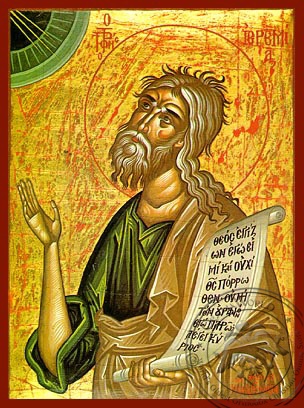
Continuing my series of blogs on the prophets: today, Jeremiah, who was called to be a prophet at an early age (Jer 1:4–10). Some commentators consider him to be in his early 20s, while others note that the distinctive Hebrew word used in this passage indicates he was in his teens. When he heard God declare to him, “I appointed you a prophet to the nations”, the NRSV translation says that the young man replied, “Ah, Lord God! Truly I do not know how to speak, for I am only a boy” (1:6).

Actually, when they say he replied, “Ah”, he was using a Hebrew word that actually means “alas” or “woe is me” (see also 4:10; 14:13: 32:17; and also Joel 1:15). Strong’s Concordance says this is “a primitive word expressing pain”—so, more like “ouch!!!” So perhaps it’s better to think of his response as more like “oh no, oh no, oh nooooo—I couldn’t possibly do that! no way at all!!”. Jeremiah just did not want this gig at all. See my sermon on this passage at

Yet Jeremiah faithfully carried out the task committed to him; it is thought that he was active from the mid-620s in Judah, through into the time of exile in Babylon, from 587 BCE onwards—that is, over four decades—although Jeremiah himself was exiled, not into Babylon, but into Egypt (Jer 43:1–7).

The task he was given when called to be a prophet was to declare the coming judgment of God on the people of Israel, for continuing to ignore their covenant commitments. The Lord tells him, “I will utter my judgments against them, for all their wickedness in forsaking me; they have made offerings to other gods, and worshiped the works of their own hands” (1:16). As encouragement, he urges the young man to “gird up your loins; stand up and tell them everything that I command you” (1:17).

Jeremiah proclaims both God’s judgement and God’s hope for repentance by the people. This dual focus appears in God’s instructions to Jeremiah “to pluck up and to pull down, to destroy and to overthrow” but also “to build and to plant” (1:10). In his later years, in solidarity with the people who have been “plucked up” into exile in Babylon, Jeremiah urges his people to make the best of their time in exile: “build houses and live in them; plant gardens and eat what they produce … seek the welfare of the city” (29:5, 7). Many centuries later, a clear allusion to that same oracle is made by Simeon as he meets the infant Jesus: “this child is destined for the falling and the rising of many in Israel” (Luke 2:34).

*****

The overall progression of the book is chronological, as it be­gins with the call of Jeremiah (ch.1) and ends with an account of the destruction of Jerusalem (ch.52). Nevertheless, the arrangement of the book is more topical overall, rather than chronological, since oracles on the same topic are grouped together even though they may have been delivered at different times. There are various theories as to how the book was put together; most scholars believe that someone after the lifetime of Jeremiah has brought together material from collections that were originally separate.

Indeed, A.R. Pete Diamond concludes that “like it or not, we have no direct access to the historical figure of Jeremiah or his cultural matrix”; we have “interpretative representations rather than raw cultural transcripts”, and thus he argues that the way we read this book should be informed by insights from contemporary literary theory, and especially by reading this book alongside the book of Deuteronomy, as it offers a counterpoint to the Deuteronomic view of “the myth of Israel and its patron deity, Yahweh” (Jeremiah, pp. 544–545 in the Eerdman’s Commentary on the Bible, 2003). Whereas Deuteronomy advocates a nationalistic God, Jeremiah conceives of an international involvement of Israel’s God.

The chronological disjunctures can be seen when we trace the references to various kings of Judah: in order, we have Josiah in 627 BCE (Jer 1:2), jumping later to Zedekiah in 587 BCE (21:1), then back earlier to Shallum (i.e. Jehoahaz) in 609 BCE (22:11), Jehoiakim from 609 to 598 BCE (22:18), and Jeconiah in 597 BCE (22:24), before returning to Zedekiah in 597 BCE (24:8) then back even earlier to Jehoiakim in April 604 BCE, “the first year of King Nebuchadrezzar of Babylon” (25:1)—and then further haphazard leaps between Zedekiah (chs. 27, 32-34, 37–38, and 51:59) and Jehoiakim (chs. 26, 35, 45) as well as the period in 587 after the fall of Jerusalem when Gedaliah was Governor (chs. 40–44). It is certainly an erratic trajectory if we plot the historical landmarks!

*****

The topical arrangement is easier to trace: 25 chapters of prophecies in poetic form about Israel, 20 chapters of narrative prose, and six chapters of prophecies against foreign nations. Early in the opening chapters, as Jeremiah prophesies against Israel, he reports that God muses, “you have played the whore with many lovers; and would you return to me?” (3:1). The idolatry and injustices practised by the people of Israel have caused God concern. Throughout the poetry of the prophetic oracles in chapters 1—25, God cajoles, encourages, warns, and threatens the people.

“I will not look on you in anger, for I am merciful” (3:13), the Lord says; then Jeremiah instructs the people, “put on sackcloth, lament and wail: ‘the fierce anger of the Lord has not turned away from us’” (4:8). Next, God says, “I am now making my words in your mouth a fire, and this people wood, and the fire shall devour them” (5:14), and then, “take warning, O Jerusalem, or I shall turn from you in disgust, and make you a desolation, an uninhabited land” (6:8), and so on, for 25 chapters.

Whilst God laments the “perpetual backsliding” of the people, who “have held fast to deceit, they have refused to return” (8:5), the prophet laments, “my joy is gone, grief is upon me, my heart is sick … is there no balm in Gilead? Is there no physician there? why then has the health of my poor people not been restored?” (8:18–22). As Jeremiah denounces their worship of idols (10:1–16) and breaches of the covenant (11:1–17), his life is placed in danger: “I was like a gentle lamb led to the slaughter, and I did not know it was against me that they devised schemes” (11:18–20).

Others prophesying are condemned by God; “they are prophesying lies in my name; I did not send them, nor did I command them or speak to them; they are prophesying to you a lying vision, worthless divination, and the deceit of their own minds” (14:13–18). The prophet dramatises his message of divine judgement on the people with reference to the familiar image of the potter, shaping and moulding the clay (18:1–11), a broken earthenware jug (19:1–15), two baskets of figs (one bunch good, the other inedible; 24:1–10), and “the cup of the wine of wrath” which, when “all the nations to whom I send you drink it, they shall drink and stagger and go out of their minds because of the sword that I am sending among them” (25:15–38).

*****

The punishment that is coming to Israel is a cause of great grief for Jeremiah, and so he is sometimes known as “the weeping prophet” (see 9:1; 13:17; 22:10). He doesn’t sit easy with the terrors associated with the execution of God’s justice in the nation—perhaps we can resonate with the angst of this ancient figure?

The most common criticism that I hear of Old Testament passages is about the terrible violence of the vengeful God—an element of Israelite religion that seems quite at odds with so much of modern sensibilities. Jeremiah gives a clear and potent expression to this image, when he has Jeremiah report that God says, “I myself will fight against you with outstretched hand and mighty arm, in anger, in fury, and in great wrath. And I will strike down the inhabitants of this city, both human beings and animals; they shall die of a great pestilence” (21:5–6).

A number of passages in the first main section of this book are seen to reflect this angst about a powerful, vengeful God—they are often called “Jeremiah’s confessions”, as he confesses his pain and grief to God, and prays for a release from his condition (see 11:18–23; 12:1–6; 15:10–14; 15:15–21; 17:14–18; 18:18–23; 20:7–12; 20:14–18). These “confessions” share stylistic and thematic similarities with the “psalms of lament”, such as Pss 44, 60, 74, 79, 80, 85, 86, and 90 (psalms of communal lament), and Pss 3, 6, 13, 22, 25, 31, 71, 77, 86, and 142 (psalms of individual lament).

“Woe is me”, or “woe to us”, is a common phrase in Jeremiah’s oracles (4:13; 4:31; 6:4; 10:19; 13:27; 15:10; 22:13; 23:1; 45:3; 48:46). It is the same term that we found in Isaiah’s call (Isa 6:5) and oracles (Isa 24:16), Hosea’s declarations (7:13; 9:12), Micah’s prophecies (Mic 7:1), and Ezekiel’s utterances (Ezek 13:18; 16:23; 24:6, 9). All lament the imposition of divine justice in ways that wreak havoc amongst the people.

*****

Jeremiah conveys the specific timetable of God’s judgement in explicit announcements: first, “the whole land shall become a ruin and a waste, and these nations shall serve the king of Babylon seventy years” (25:11); then, “after seventy years are completed, I will punish the king of Babylon and that nation, the land of the Chaldeans, for their iniquity, making the land an everlasting waste” (25:12).

The result of this is conveyed in another oracle, when God declares, “I myself will gather the remnant of my flock out of all the lands where I have driven them, and I will bring them back to their fold, and they shall be fruitful and multiply” (23:3). The end result, it seems, will be positive; but the process of journeying to that desired end will be difficult, to say the least.

The seventy years noted in these prophecies (25:11–12) has occasioned some debate amongst the scholars: was this a prediction of exact years, an approximation of the length of time of the exile, or a symbolic statement, typical of biblical numbers, which should not be taken literally? (such as, 40 years means “a long time”, 1,000 means “very many”, seven means “complete” or “fulfilled”, and so on).

Many conservative commentators (and especially Seven Day Adventists) who take biblical texts literally, spend much time and ink in wrestling with this issue! One such commentary or, for instance, notes that, if this is an exact period of 70 years, it could be: (a) from the initial attack of Nebuchadnezzar II of Babylon against Jerusalem in 605 BCE, to the return of the Jews under Cyrus of Persia in 536 BCE; or (b) from the destruction of Jerusalem in 586 BCE to the completion of the rebuilding of the temple in Jerusalem in 516 BCE.

He continues by noting that some scholars claim that “these years were in actuality shortened by God’s mercy, since when one works backwards from 539 B.C. (the occasion of the capture of Babylon), it is obvious that none of the traditional starting dates—605 B.C., 597 B.C., or 587/86 B.C.—provides a time period of exactly seventy years”. Some other suggestions include that “these years represent a lifetime, since Ps 90:10 presents seventy years as a normal human lifespan”, or that “the expression [is] simply a term that referred to the period of desolation for a nation”, as it is used in that way in an Esarhaddon inscription concerning Babylon. (Ross E. Winkle, in an article in Andrews University Seminary Studies, 1987, vol. 25 no. 2, pp. 201–202)

Jeremiah invites our consideration in a number of ways. He continues the prophetic tradition of speaking truth to power. He begins a development which sees the role of Israel’s God as stretching beyond the bounds of Israel. He expresses personal emotional angst with regard to the aggressive, power-based actions of God. And, as we shall see next week,

*****

See also

‘Here I am; send me’: the prophet Isaiah (Pentecost 9C, 10C)

In the lectionary, the next two Sundays include passages from the prophet Isaiah—namely, the opening oracle (1:1, 10–20) this Sunday, and the story of the vineyard and its failure to produce good fruit (5:1–7). So, in the course on The Prophets that Elizabeth and I are teaching, we come to Isaiah.

We are considering the book of Isaiah in three parts, as most scholars believe that these three sections originate from three different periods during the history of Israel. The first section (chs. 1–39) is located in Judah in the eighth century BCE, as the final decades of the northern kingdom of Israel play out. Two decades after conquering the north, the Assyrians attempted to gain control of the southern kingdom, but that effort failed. These events provide the context for the activity of Isaiah and the oracles include in chapters 1–39.

The second section of Isaiah (chs. 40–55) dates from the time of exile for the southern kingdom, after the people of Judah had been conquered by the Babylonians in 587 BCE; it offers words of hope as the people look to a return to the land. Then, the third section (chs. 56–66) is dated to a time when the exiles had returned to Judah, sometime after 520 BCE. By convention, the three parts are known as Isaiah, Deutero-Isaiah, and Trito-Isaiah.

The opening verse of the book of Isaiah says that Isaiah son of Amoz saw a vision concerning Judah and Jerusalem “in the days of Uzziah, Jotham, Ahaz, and Hezekiah, kings of Judah” (Isa 1:1). That places his prophetic activity over a period of some decades in the latter part of the 8th century BCE. Amos and Hosea had been active a little before Isaiah, but in the northern kingdom. Isaiah was a contemporary of Micah in the southern kingdom; both prophets would have known about the attacks on towns in Judah by the Assyrian king Sennacherib in 701 (see 2 Kings 18–19; Micah 1:10–16; Isa 7:17; 8:1–4, 5–8).

*****

Isaiah was based in the southern kingdom, and the account of his call (6:1–13) takes place in the temple in Jerusalem, for Isaiah “saw the Lord sitting on a throne, high and lofty; and the hem of his robe filled the temple” (6:1). This location, as well as a number of subsequent passages, suggest that Isaiah served as a “court prophet” to various southern kings; we see Isaiah providing prophetic advice to Ahaz (7:1–17) and Hezekiah (37:1–38; 39:1–8; 39:3–8).

Isaiah, by Jean Louis Ernest Meissonier (1815–1891)

The call narrative is dated quite specifically (“in the year that King Uzziah died”, 6:1), suggesting that Isaiah began his activity right at the end of Uzziah’s reign, around 740 BCE. The prophet, initially reluctant (6:5), eventually accepts the call (“here I am; send me!”, 6:8), and hears the difficult charge given to him: “Go and say to this people: ‘Keep listening, but do not comprehend; keep looking, but do not understand.’ Make the mind of this people dull, and stop their ears, and shut their eyes, so that they may not look with their eyes, and listen with their ears, and comprehend with their minds, and turn and be healed” (6:9–10). It’s a charge that we hear at a number of places in the New Testament: beside the Sea of Galilee (Mark 4:10) and in a house in Rome (Acts 28:26–27).

*****

In the opening oracle (1:1–31), the prophet berates Judah as a “sinful nation, people laden with iniquity, offspring who do evil, children who deal corruptly, who have forsaken the Lord, who have despised the Holy One of Israel, who are utterly estranged!” (1:4). Justice and righteousness have disappeared (1:21–22); the rulers “do not defend the orphan, and the widow’s cause does not come before them” (1:23). The covenant with the Lord has been seriously damaged.

The main substance of this oracle involves a criticism of the worship practices in the Temple (“bringing offerings is futile; incense is an abomination to me; new moon and sabbath and calling of convocation—I cannot endure solemn assemblies with iniquity; your new moons and your appointed festivals my soul hates”, 1:10–15). Instead of these rituals, God demands that the people “wash yourselves; make yourselves clean; remove the evil of your doings from before my eyes; cease to do evil, learn to do good; seek justice, rescue the oppressed, defend the orphan, plead for the widow” (1:16–17).

The prophet indicates that God will countenance repentance and a return to the covenant: “Zion shall be redeemed by justice, and those in her who repent, by righteousness” (1:27); but if there is no repentance, the familiar prophetic indication of divine punishment is heard: “rebels and sinners shall be destroyed together, and those who forsake the Lord shall be consumed” (1:28). Thus, the dual themes of punishment and forgiveness are sounded early; they recur throughout the rest of this section of the book.

*****

There are many well-known oracles in the ensuing chapters. First comes the vision of when “nations shall beat their swords into plowshares, and their spears into pruning hooks; nation shall not lift up sword against nation, neither shall they learn war any more” (2:1–4; the same oracle appears in Micah 4:1–4). Next, the concept of the faithful remnant is introduced (4:2–6; see also 10:19–23; 11:10–11, 16; 28:5).

Isaiah tells the story of the nation in God’s “love-song concerning his vineyard” (5:1–7); after “my beloved” undertakes all the activity required to establish and nurture the vineyard, only wild grapes were produced; and so, “he expected justice (mishpat) but saw bloodshed (mispach); righteousness (tsedakah) but heard a cry (seakah)” (5:7). What follows is a searing denunciation of the ills of society: the excesses of a debaucherous elite, the oppressive state of the lowly (5:8–23). As a result, the Lord threatens invasion of the land (5:24–30); “he will raise a signal for a nation far away, and whistle for a people at the ends of the earth; here they come, swiftly, speedily!” (5:26). The threat from Assyria looms large in this oracle.

There is mention made of a group of disciples of the prophet (8:16–22), as well as the children of the prophet, who serve as “signs and portents in Israel from the Lord of hosts, who dwells on Mount Zion” (8:18). These children are named as Shear-jashub, meaning “a remnant shall return” (7:3), and Maher-shalal-hash-baz, meaning “the spoil speeds, the prey hastens” (8:3).

Both names provide testimony to the fate that lies in store for Judah: the planned attack by Assyria will fail (7:4–9), and “the wealth of Damascus and the spoil of Samaria will be carried away by the king of Assyria” (8:4). The mother of these two sons, unnamed, is simply “the prophetess”, who “conceived and bore a song for Isaiah (8:3)—although married to the prophet Isaiah, might she have been a prophet in her own right?

*****

Chapters 7–11 deal with the Assyrian threat; we know about the Assyrian interest in Israel and Judah from 2 Kings 15—20 and 2 Chronicles 28—33. These chapters of Isaiah include oracles that are well known in the church because of their Advent connection, when the lectionary offers them, inferring that they are “predictions of the coming Messiah”. Isaiah speaks of “the young woman [who] is with child and shall bear a son, and shall name him Immanuel” (7:14); in context, this is a promise to king Ahaz, that God will not desert him and his people, even as they experience “such days as have not come since the day that Ephraim departed from Judah—the king of Assyria” (7:17). What lies in store for Judah (7:18–25) will need this assurance to help them survive it.

Then comes reference to “the “child [who] has been born for us, a son given to us; authority rests upon his shoulders; and he is named Wonderful Counselor, Mighty God, Everlasting Father, Prince of Peace” (9:6), and the “shoot [which] shall come out from the stump of Jesse, and a branch shall grow out of his roots; the spirit of the Lord shall rest on him” (11:1–2). This will lead to the promised time when “the wolf shall live with the lamb, the leopard shall lie down with the kid, the calf and the lion and the fatling together, and a little child shall lead them” (11:6)—a wonderful Messianic prophecy.

However, in reading Isaiah, we need to banish thoughts of a Messiah to come centuries later; in each case, Isaiah was not foretelling a far-distant event, but forthtelling to the king and the people of his time. In the midst of injustice and aggression, the prophet assures Judah that, in their own time,j “the root of Jesse … will raise a signal for the nations, and will assemble the outcasts of Israel, and gather the dispersed of Judah from the four corners of the earth” (11:10–16).

*****

Chapters 14 to 21 contain a string of oracles against other nations (Babylon, Assyria, Philistia, Moab, Damascus, Ethiopia, and Egypt). The destruction of Jerusalem is foreseen (22:1–25) before resuming further oracles, against Tyre (ch.23) and against the whole earth (ch.24). God’s wrath is cosmic in scope: “on that day the Lord will punish the host of heaven in heaven, and on earth the kings of the earth” (24:21). Anticipatory celebrations are reported (chs.25 to 27) before further oracles of judgement erupt, against corrupt judges, priests, and prophets (28:1–29), who have entered into a “covenant with death … [an] agreement with Sheol” (28:18).

The siege of Jerusalem is graphically described by the prophet (29:1–24) and further oracles reinforce his message: both judgement, “they are a rebellious people, faithless children, children who will not hear the instruction of the Lord” (30:9); and compassionate mercy, “the Lord waits to be gracious to you; therefore he will rise up to show mercy to you; for the Lord is a God of justice; blessed are all those who wait for him” (30:18).

Foreign alliances are futile (chs. 30–31), for “a king will reign in righteousness, and princes will rule with justice” (32:1). Under this king, justice will prevail (chs. 33–34) and “the ransomed of the Lord shall return, and come to Zion with singing” (35:1–10).

In the wonderful vision of chapter 35, “the eyes of the blind shall be opened, and the ears of the deaf unstopped; then the lame shall leap like a deer, and the tongue of the speechless sing for joy. For waters shall break forth in the wilderness, and streams in the desert; the burning sand shall become a pool, and the thirsty ground springs of water” (35:5–7). One commentator calls this “a majestic poem on God’s final salvation of his people” which goes “beyond restoration to the land … it speaks of a restoration of all creation” (McConville, Exploring the Old Testament, vol. 4, The Prophets; SPCK, 2002, p.21).

*****

The final scenes of the first section of the book involve Isaiah and Hezekiah, who was king from 716 to 687 BCE. Whilst most of the book comprises oracles in poetic form, chapters 36–39 are prose narratives concerning the events of around 701 BCE, when the Assyrians pressed into Judah. Isaiah provides Hezekiah with a prediction of the failure of the Assyrian assault, saying that the Lord had told him, “I myself will put a spirit in him, so that he shall hear a rumor, and return to his own land; I will cause him to fall by the sword in his own land” (Isa 37:7). And so it comes to pass; Judah is saved, the future looks positive—for the moment.

*****

See

Undoing the stereotype of “the vengeful God of the Old Testament” (Hosea 11; Pentecost 8C)

As we follow the various readings from the Prophets during this season after Pentecost in Year C, we encounter a striking passage this coming Sunday. It contains an impassioned love poem, in the words of God, concerning the people of Israel (Hosea 11:1–11).

The poem depicts God as a human being, loving Israel as a child (11:1), calling to them (11:1–2), taking them up into God’s arms (11:3), kissing them and feeding them (11:4, showing warm and tender compassion (11:8), withholding anger (11:9), welcoming them back as they return from their wandering (11:11). God is the patient, loving, caring parent.

This is a striking passage. It confronts us in two ways: first, by depicting God in human form, and second, as it is a passage in the Old Testament which depicts God in a way that is quite different from many other passages that are often cited, where God’s anger with Israel bubbles over into aggressive punishment. I can’t count the number of times that I have heard this aspect of God used to characterise (or, indeed, caricature) the God of the Old Testament as violent and vengeful.

First, let’s consider the depiction of God in ways that indicate the deity is acting like a human being. Even thought there are clear injunctions against having any images (or idols) representing God (Exod 20:4, 23; Lev 19:4; 26:1; Num 33:50–52; Deut 5:8; 27:15; Isa 42:17), God is nevertheless portrayed in the scriptures as being human-like.

In Deuteronomy, Moses had reminded the the Israelites of what had taken place on Mount Horeb (Sinai of Exodus 19): “the Lord spoke to you out of the fire; you heard the sound of words but saw no form; there was only a voice” (Deut 4:12). He continued, “since you saw no form when the Lord spoke to you at Horeb out of the fire, take care and watch yourselves closely, so that you do not act corruptly by making an idol for yourselves, in the form of any figure—the likeness of male or female, the likeness of any animal that is on the earth, the likeness of any winged bird that flies in the air, the likeness of anything that creeps on the ground, the likeness of any fish that is in the water under the earth” (Deut 4:15–18). That’s a comprehensive list of what is prohibited!

Nevertheless, at many places in Hebrew Scripture, God has eyes and ears (2 Chron 6:40; 7:15; Ps 34:15; Dan 9:18), a mouth (Deut 8:3; 2 Chron 36:12; Isa 1:20; 34:16; 40:5; 58:14; 62:2; Jer 9:12; 23:16; Mic 4:4) and nostrils (Deut 15:8; 2 Sam 22:9, 16; Ps 18:8, 15; Isa 65:5), as well as hands (Exod 9:3; 16:3; Josh 4:24; Job 12:9; Ps 75:8; Isa 5:25; Ezek 3:22) and feet (Gen 3:8; Ps 2:11–12; 18:9; Isa 63:3; Ezek 43:7; Nah 1:3; Zech 14:3–4).

God speaks (Gen 1:3; Exod 33:11; Num 22:8; Ps 50:1; Ezek 10:5; Jer 10:1; listens (Exod 16:12; Ps 4:3; 34:17; 69:33; Prov 15:29), and smells the aroma of sacrifices as smoke rises to the heavens (Gen 8:21; Lev 1:13, 17; 2:2, 9; 3:5, 11, 16; 4:10, 31; 6:15; 8:21; 17:6; cf. Lev 26:31). God even whistles (Isa 7:18) and shaves (Isa 7:20)!

This depiction of God in human form is despite the polemic of Psalm 115, which derides idols as “the work of human hands. They have mouths, but do not speak; eyes, but do not see. They have ears, but do not hear; noses, but do not smell. They have hands, but do not feel; feet, but do not walk; they make no sound in their throats.” (Ps 115:4–7; see also Deut 4:28; Isa 44:18; Hab 2:18).

The God with eyes and ears, then, laughs (Ps 2:4), has regrets (Jer 42:10), feels grief (Ps 78:40) and joy (Isa 62:5; Jer 32:41; Zeph 3:17). God experiences jealousy (Exod 20:5; Deut 4:24; 5:9; 6:15; 32:19–21; Josh 24:19; Job 36:33)—jealousy so intense that his wrath “burns like fire” (Ps. 79:5). “Who can stand before his indignation? Who can endure the heat of his anger? His wrath is poured out like fire, and by him the rocks are broken in pieces”, says Nahum (Nah 1:2).

Which brings us to the stereotype I noted above: that the God of the Old Testament was always violent and vengeful. To be sure, we can see intense flashes of God’s anger in incidents told in the historical narratives (Num 25:1–9; Deut 28:15–68; 29:19–28; Judg 2:11-23; 2 Sam 6:1–11) and in the regular refrain, “the anger of the Lord was kindled against XX” (Exod 4:14; Num 11:33; 12:9; 32:13; Deut 6:15; 7:4; 11:17; 29:27; Josh 23:16; Judg 2:14, 20; 3:8; 10:7; 2 Sam 6:7; 24:1; 1 Ki 16:7, 13, 26, 33; 22:53; 2 Ki 13:3; 17:17; 21:6; 23:19, 26; 1 Chron 13:10; 2 Chron 21:16; 28:25; 33:6; Ps 106:40).

The prophets proclaim that judgement will fall with a vengeance on the people on the Day of the Lord (Isa 2:12–22, 13:6–16; Jer 46:10; Joel 2:1–11; Amos 5:18–24; Zeph 1:7–18; Mal 4:1–5) whilst the psalmists invoke the wrath of the Lord upon their enemies (Ps 2:5, 12; 21:9; 56:7; 59:13; 110:5–6), note that God’s wrath punishes Israel (Ps 78:49, 59, 62; 88:7, 16; 89:38; 90:7–11), and petition God to turn his wrath away from them (Ps 6:1; 38:1; 79:5; 89:46). Such punishment is the consequence of breaking the covenant (Lev 26:14–33; 2 Sam 7:14; Ps 89:31–32; Jer 5:7–9; Ezek 7:1–4).

******

However, this is not the sum total of God’s character in Hebrew Scriptures; there is much more to be said about God. The prophets, for instance, not only proclaim the coming “day of the Lord”, but also look with hope to a time when peace will reign and justice will be done (Isa 2:1–4, 5:1–7, 9:6–7, 28:16–17, 42:1–9, 52:9–10, 66:12; Ezek 34:25; Mic 4:1–7; Hag 2:9; Zech 8:12).

The psalmists praise God for the steadfast love (heșed) that he expresses to Israel (Ps 5:7; 6:4; 13:5; 17:7; 18:50; 21:7; 25:6–10; 26:3; 31:7, 16, 21; 33:5, 18, 22; 36:5–10; 40:11; 42:8; 44:26; 48:9; 51:1; 52:8; 57:3, 10; and so on) and prophets recognise this same quality in God (Isa 54:10; 55:3; 63:7; Jer 9:24; 16:5; 32:18; 33:11; Dan 9:4). As Jeremiah sings, “the steadfast love of the Lord never ceases, his mercies never come to an end; they are new every morning; great is your faithfulness” (Lam 3:22).

Micah asks, “who is a God like you, pardoning iniquity and passing over the transgression of the remnant of your possession?” (Mic 7:18). The answer to that question is sounded again and again in the refrain, “the Lord is a God merciful and gracious, slow to anger, and abounding in steadfast love and faithfulness, keeping steadfast love for the thousandth generation, forgiving iniquity and transgression and sin” (Exod 34:6; Num 14:18; Neh 9:17; Ps 86:5, 15; 103:8; 145:8; Joel 2:13; Jon 4:2).

This steadfast love (heșed)—also translated as loving kindness, or as covenant love—is a consistent characteristic of the God found in the pages of the Old Testament, along with the God who executes judgement and inflicts punishment. Like human beings, the God of Hebrew Scripture is complex, with multiple characteristics, exhibiting a wide range of behaviours.

Hosea 11 not the only passage where the deity is depicted as acting a human being. God is occasionally imaged as a woman, such as in the palmist’s comparison, “as the eyes of servants look to the hand of their master, as the eyes of a maid to the hand of her mistress, so our eyes look to the Lord our God, until [God] has mercy upon us” (Ps 132:2–3).

God is described as being “like a woman in labour; I will gasp and pant” (Isa 49:15); she gives birth (Deut 32:18) and comforts her child “as a mother comforts her child” (Isa 66:13). The psalmist compares themself to “a weaned child with its mother; my soul is like the weaned child that is with me” (Ps 131:2). Such female descriptors for God emerge in the New Testament as Jesus evokes the image of “a hen [who] gathers her brood under her wings” (Matt 23:37; Luke 13:34), as well as in the parable of the woman searching for her lost coin (Luke 15:8–10).

In the love song of Hosea 11, God exudes heșed, loving kindness, or covenant love. In return, God expects that Israel will demonstrate that same covenant love (Hos 4:1), for “I desire steadfast love and not sacrifice” (Hos 6:6). The prophet calls to the people, “return to your God, hold fast to covenant love (heșed) and justice (mishpat), and wait continually for your God” (Hos 12:6).

The chapter offers beautiful insights into how God deals with people; it stands in stark juxtaposition to the many passages that describe the anger of the deity. It reminds us that the mercy of God, expressed in deep covenant love, must always be held alongside the justice of God, expressed in angry punishments meted out when that covenant is broken. Indeed, Hosea describes the covenant relationship between Israel in this manner: “I will take you for my wife in righteousness and in justice, in steadfast love, and in mercy” (Hos 2:19).

Mercy and justice are two sides of same coin, two key aspects of the character of God. Accordingly, God requires of us both mercy and justice, as Jesus notes: “the weightier matters of the law: justice and mercy and faith” (Matt 23:23).

*****

See also
For freedom Christ has set us free (Galatians, Pentecost 2C, 3C, 4C)

As the epistle is the lectionary for this Sunday and the following two Sundays comes from Paul’s letter to the Galatians, here is an Introduction to Galatians.

Paul’s letter to the Galatians begins in a dramatic, striking fashion. Almost all of Paul’s letters begin with a prayer of thanksgiving, designed to strengthen the relationship between Paul and those to whom he writes.

Not so in Galatians: in place of a friendly thanksgiving, Paul launches straight into a devastating criticism of the Galatians (1:6–9). In quick succession, he criticizes their activities, attacks the beliefs they have adopted from their teachers, and invokes a curse on their heads. What do we make of this language used by Paul?

Strong language is not uncommon in Paul’s letters. It was also widespread amongst the educated class of the day, who had been taught how to mount a strong and effective criticism by the careful use of rhetorical techniques. Rhetoric was taught to privileged young (male) members of Graeco-Roman society—which would have included Paul.  

So Paul uses familiar rhetorical techniques to address the situation in Galatia. Other teachers had visited the Galatian community, and had taught the Christians there things that were at odds with what Paul was teaching. Paul uses rhetoric to persuade the Galatians to dissociate themselves from the teachings that apparently had been so effective amongst them.

If we knew precisely who the Galatians were, what group of teachers had been active amongst them, or what specific matters caused Paul to write this letter, we might be better placed to adjudicate on this matter. Unfortunately, we don’t have this kind of information.

The letter is sent to communities of faith in a whole region (Galatians 1:2), not a single city or town. Acts indicates that Paul visited there with Barnabas: he visited Pisidian Antioch (Acts 13:14–14:23) and later with Timothy (18.23). But we learn no further specifics of the Galatian churches from Acts. (There is a similar vagueness about the date of the letter: “late 40s or early 50s” is most often cited.)

The key themes of this letter relate to the Law, freedom, and unity.

The gospel that Paul proclaims makes believers “one in Christ”. This unity overshadows all divisions: as the most famous words in this letter declare, “there is no longer Jew or Greek, there is no longer slave or free, there is no longer male and female” (3:28).

The threat against this unity has arisen through the insistence of other teachers that true faith requires, first, circumcision (2:12; see Acts 15:1, 5). Paul asserts that these other teachers want their followers to be circumcised—although surprisingly, he notes, they themselves “do not obey the law” (6:13).

Paul claims that the “circumcision faction” were preaching “another gospel” (1:6) in which they actually “pervert the gospel” (1:7). He calls them “false believers” (2:4) who have “bewitched” the Galatians (3:1). His vehemence at one point is such that he exclaims, “I wish those who unsettle you would castrate themselves!” (5:12).

Paul’s problem, of course, is that he himself is circumcised, as he mentions at Philippans 3:5 (a fact that he omits when he rehearses his past at Galatians 1:13–14). How can he advocate the opening of the faith to those who are not circumcised, when he himself bears this sign of the covenant?

He insists that the Galatians “become as I am” (4:12), and yet threatens that “if you let yourselves be circumcised, Christ will be of no benefit to you” (5:2). What applies to Gentile converts must be different from what is the case amongst Jewish converts.

Circumcision was the pre-eminent sign of the Law for Jewish believers. Paul wants to move the Galatians away from their understanding of the Law. He re-interprets the scriptural passage that lies behind this Jewish custom. Galatians 3:1–5:1 thus contains a tightly-argued, complex argument concerning the Law.

Paul uses the story of Abraham, the patriarch to whom the requirement of circumcision was first commanded, as a sign of the covenant (Genesis 17). He interprets this story without once mentioning circumcision (3:6–18). It is the faith of Abraham, in believing God’s promise, that secured him righteousness (3:6–7) and opens the promise to Gentiles (3:8–9). It is that promise which is now fulfilled in Christ (3:13–14, 16, 29). This is the pathway to freedom in faith.

This letter demonstrates that freedom is at the heart of the Gospel. Paul offers this freedom anew to the believers in Galatia. The Gospel frees them from the complex web of duties and responsibilities under the Law.

The call to freedom (5:1, 13) becomes a platform for ethical guidance, grounded in love (5:13–14), manifested in living by the spirit (5:22–26), not by the flesh (5:16–21). This ethic requires believers to “bear one another’s burdens” (6:2) and to “work for the good of all” (6:10). In this way, they will become “a new creation” (6:15). The gospel, which brings liberation in community (3:28), will also lead to liberation for the creation (6:15).

Galatians is important because of the central theme of freedom that it articulates. In what ways does your faith provide you with a sense of freedom?

Images drawn from the past, looking to the future, as a message for the present (Revelation; Easter, Year C)

During the season of Easter this year, we are following a short sequence of readings from the book of Revelation. The first such reading (Rev 1:4–8) was last Sunday, setting out the writer and the audience, as well as the key focus of the book: “Jesus Christ, the faithful witness, the firstborn of the dead, and the ruler of the kings of the earth” (1:5).

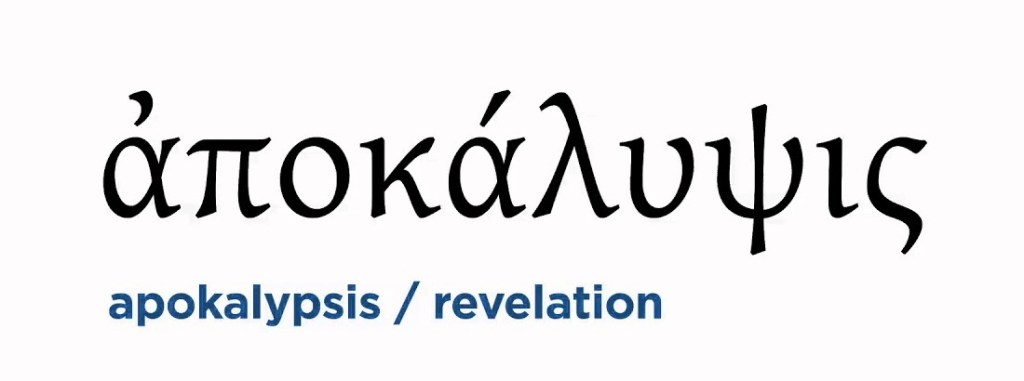
The book begins with a striking opening phrase—in Greek, it reads apokalypsis Iesou Christou (1:1). The first word in this phrase can be translated in two ways, resulting in the two most common titles for the book—“Revelation” or “Apocalypse”.

The word revelation is related to a Latin word which means to disclose or make known; the word apocalypse is the Greek term which means to uncover or expose. This word sums up the distinctive nature of the book right at the start—this is an exposé of the highest degree!

The content of this exposé is declared to be “the word of God and the testimony of Jesus Christ” (1:2, 9). The book ends with a reminder that Jesus sent his angel to John with “this testimony for the churches” (22:16). All of this is being done in a context of some urgency: “the time is near” (1:3), for Jesus is coming soon (1:7; 22:7, 12, 20; see also 2:16; 3:11; 22:6).

The book was written to be read aloud (1:3; 22:18); it seems to invite the people listening to the story to envisage what is being described by using their own imaginations. This is already evident in the way that the dramatic tone builds in the opening sections of the work. First, in the section of the book set for last Sunday, there is a hymn in praise of Jesus, reminiscent of poetic sections in other New Testament books as well as in Hebrew Scripture (1:5–8).

Next comes a description of the author and the process of creating the book (1:9–11). This was apparently initiated by “a loud voice like a trumpet” (1:10) —a voice which belonged to a distinguished figure with an ominous presence (1:12–16), whose appearance caused the writer to “fall at his feet as though dead” (1:17). The scene is thoroughly biblical, in keeping with the pattern of portentous announcements in Hebrew Scripture as well as in the early chapters of some Gospels. This will be the first of a number of visions, in which startling creatures declare unnerving messages in vividly dramatic ways.

The Revelation of John was not the first book of this kind ever written; in fact, Jewish writers had been producing literature like this for some centuries, recounting visions of the heavenly realm and reporting teachings which have been passed on by ancient figures from the heavens. In the Hebrew Scriptures, there are sections of the prophetic works which have the same kind of tone, as prophets report the visions they have seen and the oracles they have heard from the Lord.

Indeed, within other parts of the New Testament, there are indications of similar interests and ways of viewing the world—a view that is often characterized as “apocalyptic”. The figure of John the Baptist can best be appreciated as an apocalyptic figure, declaring that the Messiah has come and the kingdom is at hand (Mark 1:7–8; Matt 3:2).

Jesus continued the apocalyptic message of John by announcing that the kingdom of God was near (Mark 1:15; Matt 4:17) or, indeed, present (Luke 17:20). Many of the parables of Jesus and not a few of his teachings reflect an apocalyptic view of reality (for instance, Mark 13:14–37; Matt 24:45–25:46, Luke 17:20–37).

The letters of Paul contain clear pointers to the way that Paul viewed the world through an apocalyptic lens, in which the return of Jesus would take place soon and the kingdom of God would be ushered in (1 Thess 4:13–5:11; 1 Cor 7:29– 31, 15:20–28; Rom 8:18–25). The view that “the last days” were to come was also held by other writers (Heb 1:2; James 5:3; 2 Tim 2 Pet 3:1–5; Jude 17–19).

The apocalyptic worldview had been developing in Israel for some centuries. From their origins, prophets had delivered oracles in the name of the Lord; over time, they also began to incorporate accounts of visions in their messages (Isa 6; Jer 24; Ezek 1, 2–3, 8–11, 37, 40–44; Dan 2:19; Joel 2:28–32; Amos 7–9; Obad 1; Hab 2; Zech 1–8).

In the later stages of the prophetic movement in Israel, this form of communication becomes dominant. The last half of two prophetic books (Daniel 7–12; Zech 9–14) contain interrelated sequences of visions in which contemporary events, and perhaps also future events, appear to be depicted in symbolic form.

This trend continues on in a number of books written through the second and first centuries BCE, many of which still survive today. In this period we find various works which use heavenly messengers to reveal insights about mysteries and provide predictions about the future.

Most widely-known are 1 Enoch, 4 Ezra, and 2 Baruch; in addition, a number of works in the Dead Sea Scrolls are apocalyptic in nature. All these works contain literary features typical of apocalyptic works, as well as certain theological elements relating to the end of the ages.

As we read the book of Revelation, we can identify certain literary features which are quite characteristic of apocalyptic literature. The authority of the author is a key concern (1:9–10; 22:8–9) and the declaration is made that what is now being revealed is a mysterious secret (1:20; 10:7; 17:5, 7). This revelation comes direct from God through his authorized messenger (1:1–2, 11– 20; 22:8–10).

The warning not to change the text (22:18–19) is characteristic of apocalyptic, as is the regular reminder of the author’s expectation that the present era is coming to an end (2:26; 21:1, 4) and his description of a vision of the beginning of a new era (1:1; 7:9–17; 11:19; 21:1–22:7; 22:12, 20). The role of angels and visions reflects typical apocalyptic features.

Also typical of apocalyptic are the many coded depictions which are conveyed in numbers: four (4:6–8; 5:6, 14; 6:1–8; 7:1–3, 11; 9:14; 14:3; 15:7; 19:4; 21:16); ten (2:10; 12:3, 18; 17:3, 12–16); twelve (12:1; 21:12–14, 21; 22:2); twenty-four (4:4, 10; 11:16; 19:4); 144,000 (7:4–8; 14:1–4); and the intriguing 666 (13:18).

Of course, the number seven, which recurs in numerous places throughout the book, is very significant: there are seven letters, 1:11; seven golden lampstands, 1:12, 20; seven stars, 1:16, 20; 2:1; seven angels, 1:20; 3:1; 15:7; seven spirits, 1:4; 3:1; seven seals, 5:1; seven horns and eyes, 5:6; seven trumpets, 8:2; seven thunders, 10:3–4; seven diadems, 12:3; seven plagues, 15:1, 6; seven golden bowls, 15:7; 16:1; and seven heads, 17:3, 9–10.

Finally, there is the crucial appearance of Babylon as a coded symbol of Rome (17:5, 18). This is a code used also in Jewish apocalyptic works.

The reader (or listener) of this work is invited into a world of unfettered imagination, with evocative imagery, enticing language, and disturbing rhetoric. The book appears to be describing the events that will take place in the immediate future; these chapters set the scene set for what will later be revealed as a colossal, cosmic battle between good and evil.

However, the style of the work is never straightforward and the message is never declared in direct propositional form. Many of the scenes contain words, images, and ideas which are already familiar from the Hebrew Scriptures— although they appear to be arranged in inventive new ways. Making sense of this book requires an act of creative imagination alongside a process of careful exploration, investigation, and interpretation.

The visions that are included in this spectacularly dramatic book evoke biblical language and imagery in various ways, as the author envisages the future by drawing from the scriptures of the past and reworking the images and ideas found within them as a message for the present.

“Worthy is the lamb that was slaughtered”: a paradoxical vision (Rev 5; Easter 3C)

The third time that Jesus appeared to the disciples (John 21; Easter 3C)

The Gospel passage which the lectionary offers for this coming Sunday (John 21:1–19) includes some distinctive features worthy of comment. The scene, like many of the scenes of the resurrection of Jesus, is found in this one place only. This contrasts with the empty tomb account, which is found in all four Gospels (Mark 16:1–8; Matt 28:1–10; Luke 24:1–12; John 20:1–18), albeit with variations and differences in each version.

Other resurrection accounts are one-off reports: to the eleven disciples in Galilee (Matt 28:16–20); to two disciples on the road to Emmaus (Luke 24:13–32); to “the eleven and their companions in Jerusalem” (Luke 24:33–49); to a group (unnamed) of disciples meeting behind locked doors, presumably in Jerusalem (John 20:19–23); and to the disciples, including Thomas, a week later, behind closed doors (John 20:26–29). (This collection of appearances is bundled up into the Longer Ending which was added to Mark’s Gospel in a later century, as Mark 16:9–20.)

There are also claims, made by Paul, about appearances of the risen Jesus, “to Cephas, then to the twelve … then to more than five hundred brothers and sisters at one time … then to James, then to all the apostles; last of all, as to one untimely born, he appeared also to me” (1 Cor 15:5-8). None of these correlate precisely with the appearances noted in the Gospels.

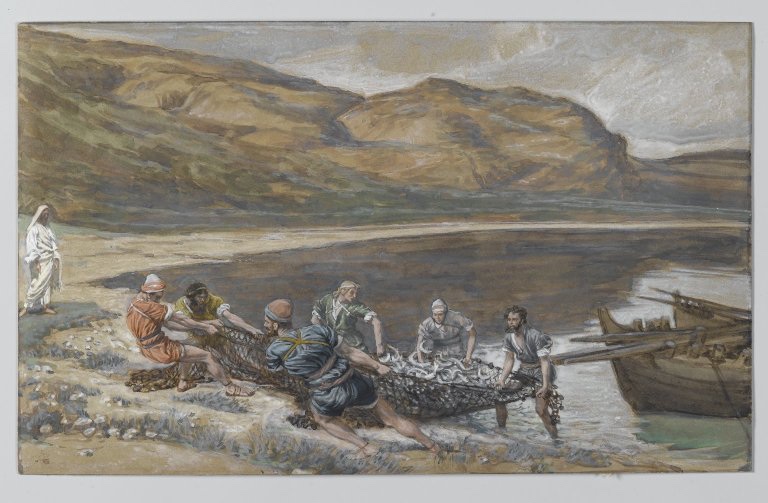
The location for this particular appearance of Jesus is “by the Sea of Tiberias” (John 21:1). It is only the book of signs that identifies Tiberias as a region which Jesus visits, and then only once, when he feeds to 5,000 (6:1–14, 23). In introducing that story, the author explicitly equates the Sea of Galilee with the Sea of Tiberias (6:1). This sea appears often as the location for stories in the Synoptic Gospels (Mark 1:16; 7:31, both paralleled in Matt 4:18; 15:29; see also Luke 5:1, where it is called the “Lake of Gennesaret”). The story told in Luke 5 is important, as we shall explore below, in considering the John 21 narrative.

La seconde pêche miraculeuse
by James Tissot (1836–1902)

Seven Disciples by the Lake

The group of seven disciples present when Jesus makes his appearance are identified as “Simon Peter, Thomas called the Twin, Nathanael of Cana in Galilee, the sons of Zebedee, and two others of his disciples” (21:2). This list of those gathered beside the sea is interesting for who is present, and who is missing.

The author of the book of origins has begun his account with an idiosyncratic list of the earliest followers of Jesus. The first named is Andrew, brother of Simon Peter, who is introduced as one of two disciples of John the baptiser (John 1:35–40). The other one with Andrew is unnamed. Andrew draws his brother, Simon, into the story (1:40–41), providing the first confession of Jesus as Messiah (1:41); although it is Andrew who makes this confession, Jesus bestows a new name upon Simon—to be known henceforth as Cephas, that is, Peter, the “rocky one” (1:42).

Peter figures in many stories in the Synoptic Gospels; Andrew, less often. By Paul’s own admission, “James and Cephas and John” were the “acknowledged pillars” of the Church in Jerusalem (Gal 2:9); James and Peter were key voices amongst “the apostles and the elders” in the gathering often known as the Jerusalem Council (Acts 15:13–19).

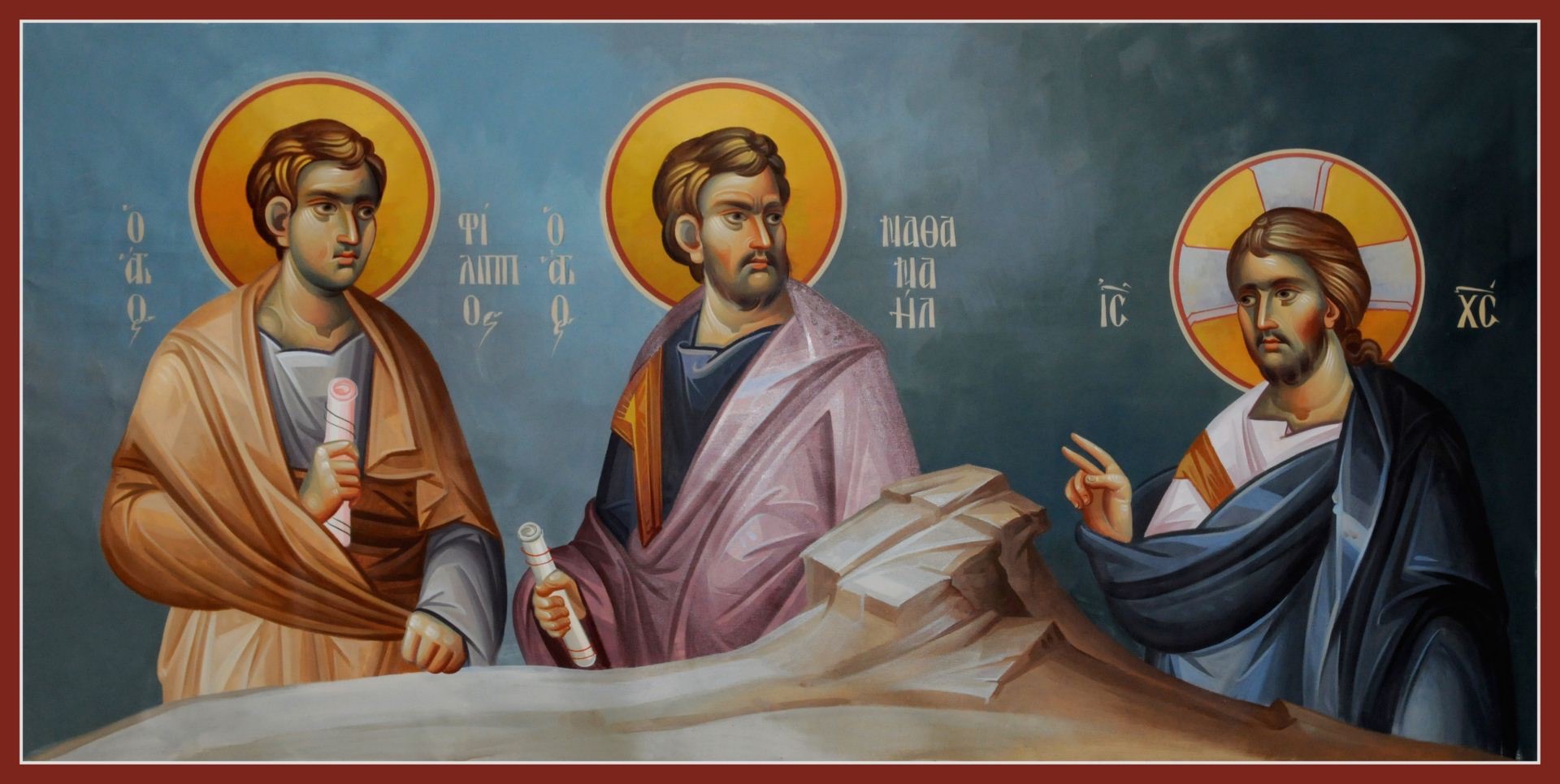
Also amongst the earliest followers of Jesus in the book of origins are Philip, “from Bethsaida, the city of Andrew and Peter” (1:43–44) and Nathanael, whom Jesus declares to be “truly an Israelite in whom there is no deceit!” (1:45–47). Nathanael provides a triple declaration that Jesus is “Rabbi … the Son of God … the King of Israel” (1:49). Curiously, these earliest followers of Jesus have already made the key confessional affirmations about Jesus in their initial encounters with him—more a literary device than an historically-plausible event.

Icon of Philip and Nathanael with Jesus

Peter, of course, figures in the Johannine version of the story about Jesus—only once in the earlier narrative section (John 6:68) but a number of times in the final sections of the story (13:1–11, 21–30, 36–38; 18:10–11, 15–18, 25–27; 20:1–8). The lesser role of Peter, and the way he is contrasted a,onside “the disciple whom Jesus loved”, will be further explored below.

Philip and Andrew are noted as being present both in the story of the feeding of the 5,000 (6:8–14) and when “some Greeks” worshipping in Jerusalem ask Philip, “Sir, we wish to see Jesus” (12: 20–22). This request evokes a significant response from Jesus, speaking about “my hour”, the seed falling into the ground, and the familiar teaching, “whoever serves me must follow me” (12:23–26). Philip also poses one of the requests put to Jesus during his “farewell discourse”, “Lord, show us the Father, and we will be satisfied” (14:8–14). Nathanael, by contrast, is absent from the story until this final post-crucifixion narrative (21:1–3).

So five of the seven who gather by the sea in this post-crucifixion time are clearly identical with individuals named in the Synoptic Gospels. Simon Peter was the earliest disciple called, along with his brother, Andrew (Mark 1:16–18; Matt 4:18–20) and always heads up the list of The Twelve whom Jesus “appointed as apostles” (Mark 3:14; see the list at Mark 3:18 and parallels, and Acts 1:13).

In Synoptic tradition, the sons of Zebedee were the next two disciples called by Jesus (Mark 1:19–20; Matt 4:21–22), where they are named as James and John; they also figure in the list of The Twelve (Mark 3:18 and parallels; Acts 1:13). These two sons are never named in John’s book of signs; nor do they appear anywhere else in the earlier stories of Jesus.

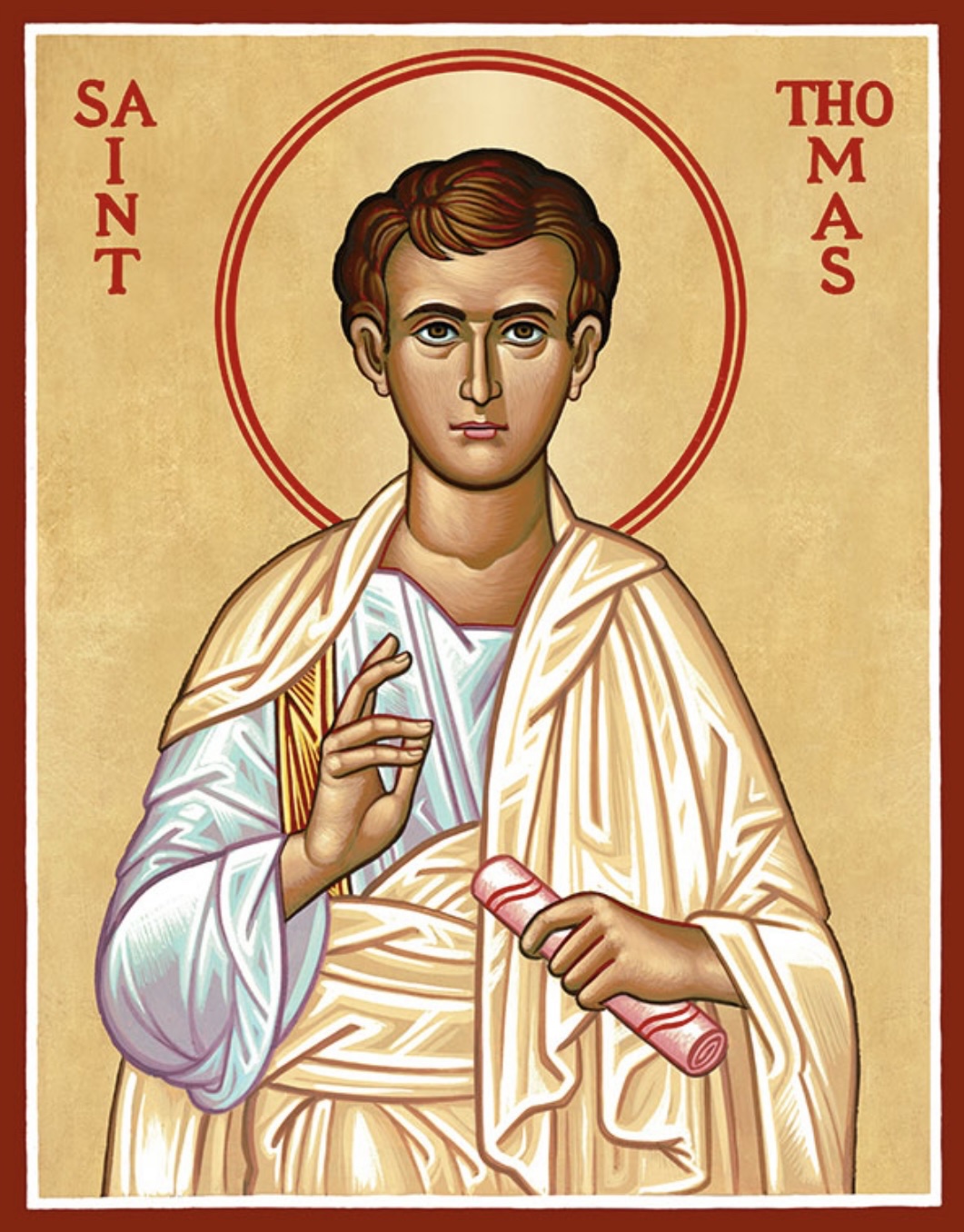
Thomas is named amongst The Twelve in Synoptic traditions (Mark 3:18 and parallels; Acts 1:13). He is noted on three occasions in the book of signs (John 11:16; 14:5; 20:24–29); see https://johntsquires.com/2019/04/23/in-defence-of-thomas-a-doubting-sceptic-or-a-passionate-firebrand/

Philip, introduced by John in company with Nathanael (1:43–51) is linked with Bartholomew in Synoptic traditions (Mark 3:18 and parallels; Acts 1:13). Bartholomew is not mentioned at all in the book of signs; could the Synoptic Bartholomew be the same as the Johannine Nathanael? The identification is often made by interpreters.

The Beloved Disciple and Simon Peter

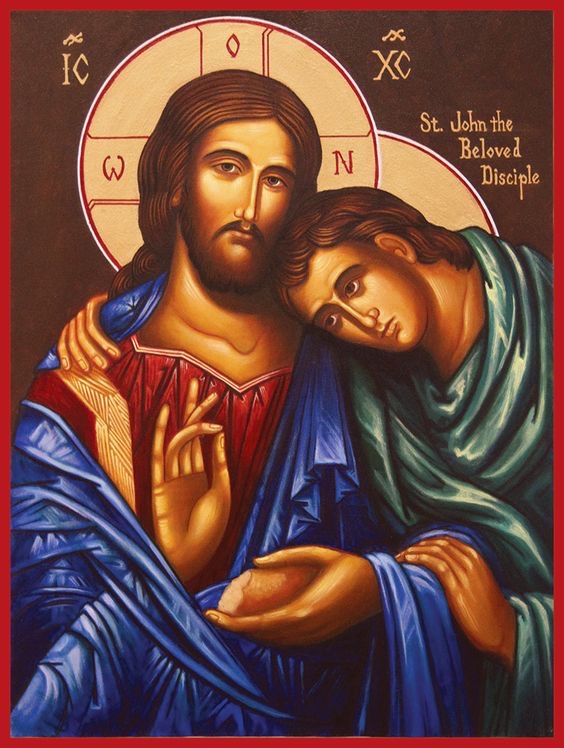
Who were the other two, unnamed, disciples in that group of seven beside the Sea of Tiberias that early morning? The verses immediately after the section offered by the lectionary provide a clue. The narrative continues, “Peter turned and saw the disciple whom Jesus loved following them; he was the one who had reclined next to Jesus at the supper and had said, ‘Lord, who is it that is going to betray you?'” (21:20).

The disciple whom Jesus loved has appeared earlier in the book of signs at two key moments: at the meal with the disciples that included the footwashing (13:23), and beside the cross (19:25–27). There is some question, also, that he may have been “the other disciple” with Simon Peter in the courtyard of the high priest (18:15–16; “the other disciple” is identified as “the one whom Jesus loved” at 20:2).

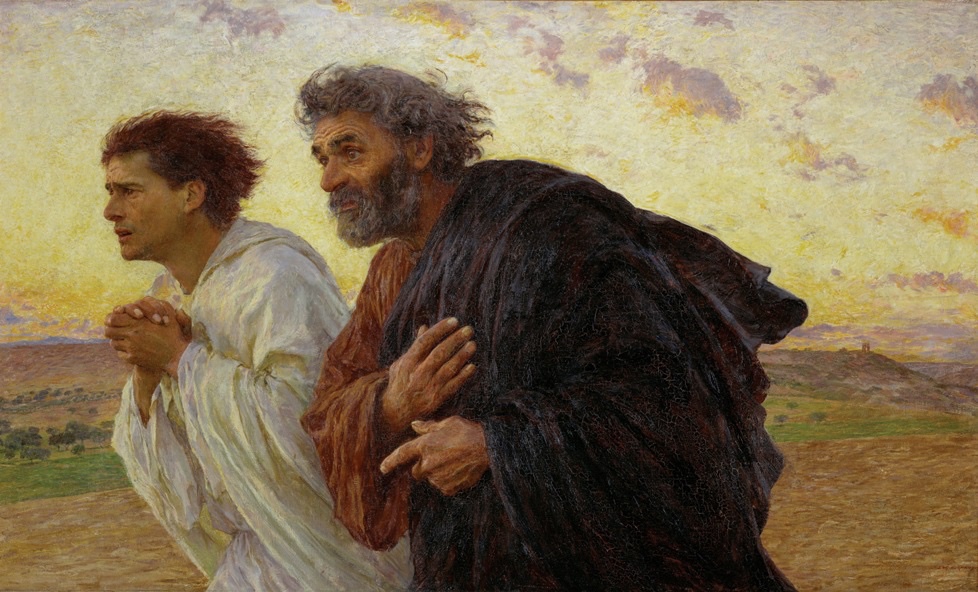
This disciple actually occupies a more prominent place in the book of signs than Simon Peter, who predominates in the Synoptic accounts. The Johannine narrative of the empty tomb places Simon Peter and the Beloved Disciple at the tomb (20:1–10). Whilst the two disciples run to the tomb, the Beloved Disciple arrives first, ahead of Peter, and makes the first confession of faith (20:3–8).

The disciples Peter and John running to the tomb
on the morning of the resurrection
Painting by Eugène Burnand (1898)

There is a similar dynamic at work in the Johannine account of the final supper, as the Beloved Disciple reclines next to Jesus; at the request of Simon Peter, he asks Jesus about his prediction of betrayal (13:21–25). In both scenes, Peter appears to be in a subservient position to the Beloved Disciple: arriving second at the tomb, asking the Beloved Disciple to ask a question of Jesus.

This contrast is heightened in the Passion Narrative, as the Synoptic accounts of the threefold denial of Jesus by Peter (Mark 14:66–72 and parallels) are replicated in John’s book of signs (John 18:15–18, 15–17), whilst the Beloved Disciple stays close by Jesus, standing at the foot of the cross with his mother, in John’s narrative (19:15–17).

The “competition” between these two early disciples is one clue as to the origins of John’s book of signs. Raymond Brown has developed a complex hypothesis about multiple stages of development of this Gospel, with the figure of the Beloved Disciple providing a focal point of leadership and identity (and perhaps also serving as the earliest source for the distinctive Johannine traditions?). This is a counterpoint to the leadership accorded to Peter in Mark’s account (Mark 1:16-18; 8:29; 10:28; 14:29; 16:7) and the subsequent strengthening of his leadership role by Matthew (Matt 16:13-20).

I still find Brown’s proposal to be quite persuasive. There is a detailed summary and valuable critical analysis of Brown’s hypothesis by L. Jared Garcia at https://leejaredgarcia.com/2020/10/29/the-community-of-the-beloved-disciple-by-raymond-brown-a-book-review/

*****

See also https://johntsquires.com/2022/04/29/back-to-the-lake-back-to-fishing-a-late-resurrection-story-john-21-easter-3c/