I give thanks to my God always for you: Paul’s opening address to the Corinthians (1 Cor 1; Epiphany 2A)

We have seen that the letters of Paul each follow a recognisably similar outline, mostly including all the main sections and often adhering to the major conventions of the day. See

There are variations, of course, in each letter, so that no one letter follows this pattern exactly. This is especially so in the largest section, the “body”, in the middle of the letter. The excerpt from 1 Corinthians we hear on Sunday demonstrates this in a very clear way.

In opening his letters, Paul characteristically modified the simple verb “greetings” to read “grace and peace to you”. We find that is the case at 1 Cor 1:3. What usually followed in letters of the day was a prayer of thanks to a particular god or goddess; Paul’s letters followed this convention in most cases, with a prayer specifically to “God, the Father of our Lord Jesus Christ” (Col 1:3).

This prayer often contained clear pointers to some of the key topics in the letter that follows, such as “I am eager to preach the gospel” (Rom 1:15), or “you were enriched in him with all speech and knowledge” (1 Cor 1:5), or “I thank my God…because of your partnership in the gospel” (Phil 1:5); and see also “we always give thanks to God … remembering … your work of faith and labour of love and steadfastness of hope” (1 Thess 1:3) and “God gave us … a spirit of power and of love and of self-discipline” (2 Tim 1:7).

Galatians stands as a noteworthy exception, for Paul substituted a condemnation in place of the traditional thanksgiving: “I am astonished that you are so quickly deserting the one who called you … and are turning to a different gospel” (Gal 1:6).

So as we read through the first nine verses of his letter “to the church of God that is in Corinth”, 1 Corinthians, we hear sounded some key themes in Paul’s theology, which receive attention in subsequent chapters of this letter, as the observations below indicate.

A. “I give thanks to my God always for you because of the grace of God that has been given you in Christ Jesus” (1:4).

This is the same grace that Paul himself has experienced through his calling to proclaim the good news: “according to the grace of God given to me, like a skilled master builder I laid a foundation, and someone else is building on it” (1 Cor 3:10); “by the grace of God I am what I am, and his grace toward me has not been in vain” (15:10).

Paul refers also to “the grace of God” as the motivator for how he has “behaved in the world with frankness and godly sincerity, not by earthly wisdom but by the grace of God” (2 Cor 1:12). This grace undergirds all that Paul says and does, so he returns to it at the close of the letter with a repetition of the opening prayer, “the grace of the Lord Jesus be with you” (16:23; cf. 1:3).

B. “In every way you have been enriched in him, in speech and knowledge of every kind” (1:5).

This statement appears to be a straightforward commendation of the believers in Corinth, but actually conceals a degree of sarcasm in how Paul assesses some, at least, of them. They appear to have been enriched by God; but the depth of Paul’s feeling about this is revealed in a strident passage in chapter 4, after Paul has discussed the earlier work of Apollos and Cephas amongst the Corinthians (3:5–4:7), and the resultant formation of sectarian groups amongst the believers (1:11–12).

Paul regrets this development; earlier, he has lamented, “has Christ been divided? was Paul crucified for you? were you baptized in the name of Paul?” (1:13). A note of sarcasm is already evident in his disappointment. He returns to this sarcastic tone when he berates the Corinthians: “Already you have all you want! Already you have become rich! Quite apart from us you have become kings! Indeed, I wish that you had become kings, so that we might be kings with you!” (4:8). Clearly, the “enriching” that the Corinthians felt they had was not in accord with Paul’s understanding of the Gospel.

That understanding is evident in 2 Corinthians, when Paul writes of “the generous act of our Lord Jesus Christ, that though he was rich, yet for your sakes he became poor, so that by his poverty you might become rich” (2 Cor 8:9), and thus of the life of the believer “as sorrowful, yet always rejoicing; as poor, yet making many rich; as having nothing, and yet possessing everything” (2 Cor 6:10). The Corinthian “enrichment” needs to be corrected.

A much-loved passage in this letter, chapter 13, actually continues this sarcastic commentary on the Corinthians. A careful reading of the whole letter reveals that the various characteristics which Paul extols in “love”—patience and kindness, with no boastfulness or envy, for instance—are actually in short supply in Corinth.

C. “Just as the testimony of Christ has been strengthened among you, so that you are not lacking in any spiritual gift” (1:6–7).

Spiritual gifts come into focus in the later sections of Paul’s letter, in chapters 12 to 14. The terms “speech” and “knowledge” that appear at 1:5 pick up two of the “spiritual gifts” (1:7) that are specifically discussed in more detail in chapter 14 of the letter. The reference to “spiritual gifts” in 1:7 is initially developed in chapter 2, when Paul writes, “we have received not the spirit of the world, but the Spirit that is from God, so that we may understand the gifts bestowed on us by God. And we speak of these things in words not taught by human wisdom but taught by the Spirit, interpreting spiritual things to those who are spiritual.” (2:12–13).

Paul makes a clear differentiation between “those who are unspiritual [who] do not receive the gifts of God’s Spirit” and “those who are spiritual [who] discern all things” (2:14–15). So both Paul and the Corinthians exhibit spiritual gifts which have been given by God. But Paul is not happy with the way that some in Corinth are exercising those gifts, particularly in the community gatherings. So his discussion in chapters 12–14 identifies and corrects these bad practices. Thus, the opening reference to the Corinthians as “not lacking in any spiritual gift” (1:7) has a barbed undertone—perhaps not evident at first hearing, but becoming clear with the benefit of hindsight after the whole letter has been heard.

The gift of “speech” signals the exercise, within the Corinthian community, of the gifts of prophecy (speaking the word of the Lord) and its interpretation, as well as the gift of tongues and their interpretation. The fact that Paul is intending to address the way these gifts are exercised, and to offer corrections to the Corinthians in his critical analysis of chapter 14, is thus signalled explicitly in the opening prayer.

The gift of “knowledge” (1:5) receives consideration in a passage (8:1–11) which begins, “all of us possess knowledge”. This appears to be quoted by Paul as a slogan which had currency in Corinth, but which Paul wishes to critique. He ends his discussion with the punchline, “by your knowledge those weak believers for whom Christ died are destroyed” (8:11). Sadly, the kind of “knowledge” demonstrated by some believers in Corinth served to destroy the faith of others in their community.

D. “As you wait for the revealing of our Lord … he will also strengthen you to the end, so that you may be blameless on the day of our Lord Jesus Christ” (1:7–8).

The concept of being “blameless” derives from ancient Israelite piety, which would have been taught to Paul as he grew up within Judaism. The psalmist sings, “happy are those whose way is blameless,who walk in the law of the Lord” (Ps 119:1), and prays, “may my heart be blameless in your statutes,

so that I may not be put to shame” (Ps 119:80). The sages note that “the righteousness of the blameless keeps their ways straight” (Prov 11:5) and rejoices that “the blameless will have a goodly inheritance” (Prov 28:10). In the historical sagas of Israel, those noted as being blameless include Noah (Gen 6:9), Abram (Gen 17:1), and David (1 Sam 29:9), as are Daniel (Dan 6:22) and Job (Job 1:1, 8; 2:3).

Paul therefore upheld the standard of being blameless in his upbringing (Phil 3:6) and in his behaviour (1 Thess 2:10), and he prays that believers also might be “blameless before our God and Father at the coming of our Lord Jesus with all his saints” (1 Thess 3:13). Paul, like many of his Jewish contemporaries, held to an eschatological view of time; “the present form of this world is passing away” (1 Cor 7:31), “the appointed time has grown short” (1 Cor 7:29), there is an imminent “impending crisis l (1 Cor 7:26).

Paul thus connects his eschatological framework with this goal of being blameless, exhorting the Philippians “to determine what is best, so that in the day of Christ you may be pure and blameless” (Phil 1:10), and advising the Corinthians that “the work of each builder will become visible, for the Day will disclose it, because it will be revealed with fire, and the fire will test what sort of work each has done” (1 Cor 3:13). The judgement that comes on this day is clear; so he advises the Corinthians that a man living with his father’s wife is to be “handed over to Satan for the destruction of the flesh, so that his spirit may be saved in the day of the Lord” (1 Cor 5:5).

This Day expounded in greater detail towards the end of his letter to the Corinthians (1 Cor 15:12–58). The fundamental belief is that “as all die in Adam, so all will be made alive in Christ” (15:22); accordingly that Day

will be the time when those who have sinned, but trusted in Christ, will be found blameless; “just as we have borne the image of the man of dust, we will also bear the image of the man of heaven” (15:49).

Paul’s affirmation of this eschatological viewpoint in the opening prayer (1:7–8) thus foreshadows one of his most extensive discussions of eschatology, Christology, and soteriology—the most theologically-complex section of this letter to the Corinthians.

E. “God is faithful” (1:9).

This is a short credal-like affirmation that Paul makes in his opening prayer, which occurs elsewhere in Paul’s writings. It may thus have been a fundamental element in Paul’s own belief system—God is the one who keeps faith with God’s people—rather than reflecting anything amongst the Corinthians. In this regard, Paul stands with the prophets of Israel, who consistently proclaimed that God do not want to abandon the expel of God, for God held steadfastly to his covenant with them.

Later in 1 Corinthians, Paul reflects this element of belief in God’s fidelity, when discussing “testing”. “God is faithful”, he writes, “and he will not let you be tested beyond your strength, but with the testing he will also provide the way out so that you may be able to endure it” (10:13). The phrase recurs in 2 Corinthians: “as surely as God is faithful, our word to you has not been “Yes and No’l (2 Cor 1:18). Paul had already written similar in his earliest extant letter, 1 Thessalonians, affirming that “the one who calls you is faithful, and he will do this” (5:24).

The phrase also appears at 2 Thess 3:3; 1 Peter 4:19; and perhaps most famously at 1 John 1:9 (“if we confess our sins, he who is faithful and just will forgive us our sins and cleanse us from all unrighteousness”). Finally, the rider of the white horse in a vision seen by the seer on Patmos was called “Faithful and True” (Rev 19:11).

F. “By him [God] you were called into the fellowship of his Son, Jesus Christ our Lord” (1:9).

The term “fellowship” (Greek koinonia) appears later in this letter, when Paul refers to “sharing (koinonia) in the body of Christ … sharing (koinonia) in the blood of Christ” (1 Cor 10:16). Paul uses this word elsewhere to refer to the nature of Christian community (Phil 1:5; 2:1), as well as to the shared relationship that believers have with Jesus (Phil 3:10), fellowship,with the Holy Spirit (2 Cor 13:14), and the offering from Gentile believers for their “ministry for the saints” (2 Cor 9:13). At both Gal 2:9 and Phlm 6 the term refers to fellowship or community amongst believers.

In his longest letter (to the saints in Rome), Paul describes the nature of Christian community without reference to the term koinonia, but using the common hellenistic topos of “the body”: “we, who are many, are one body in Christ, and individually we are members one of another; we have gifts that differ according to the grace given to us” (Rom 12:4–5).

Before writing this letter, Paul had provided a much more extensive discussion of this image in chapter 12 of his letter to “the church of God that is in Corinth”, when he wrote, “just as the body is one and has many members, and all the members of the body, though many, are one body, so it is with Christ; for in the one Spirit we were all baptized into one body—Jews or Greeks, slaves or free—and we were all made to drink of one Spirit” (1 Cor 12:12–13).

Thus, no one part of the body is superior to any other part; “God has so arranged the body, giving the greater honor to the inferior member, that there may be no dissension within the body, but the members may have the same care for one another; if one member suffers, all suffer together with it; if one member is honored, all rejoice together with it” (1 Cor 12:24–26). This is the essential nature of the Christian community, a fellowship of interrelated parts.

Thus, in exploring the matter of how gifts are (mis)used in Corinth, Paul has a clear concern to ensure that all the members “build up the body” (1 Cor 14:4, 12, 26; and see earlier at 3:5–15). This concern has been clearly flagged in the final sentence of his opening prayer: “by God you were called into the fellowship of his Son, Jesus Christ our Lord” (1:9).

*****

As we read through the first nine verses of his letter “to the church of God that is in Corinth”, 1 Corinthians, we hear sounded some key themes in Paul’s theology, which receive attention in subsequent chapters of this letter, as the above observations indicate.
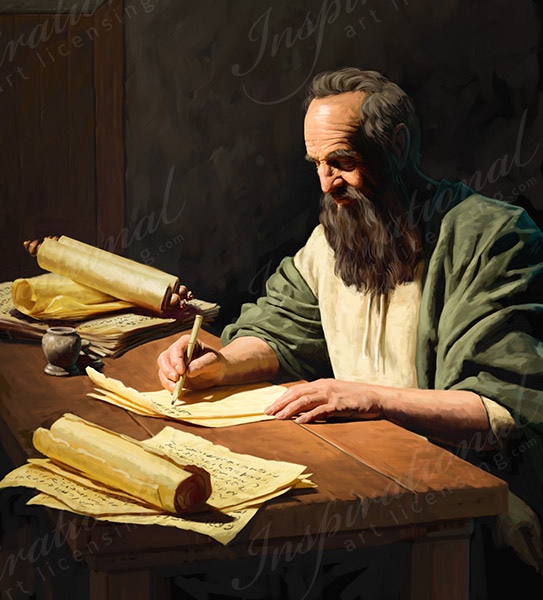
I give thanks to my God always for you: Paul’s relationship with the Corinthians (1 Cor 1; Epiphany 2A)

In the Epistle reading offered by the lectionary for this coming Sunday (1 Cor 1:1–9), we begin a sequence of Sundays when we will read the early chapters of Paul’s first letter to the Corinthians. The first four chapters are offered during the season of Epiphany (although, as it is a shorter season this year, the latter part is not heard in worship).

Paul, of course, is well-known as a writer of letters. In ancient times, as today, the general format of a letter was reasonably standard. Paul, as we shall see, follows this format and includes many conventions familiar from other letters. The way that he contextualises and makes specific each letter, therefore, is quite instructive.

Each ancient letter contained a number of standard sections and there were common conventions to be followed in constructing a letter. Opening and closing sections followed a formulaic pattern (“greetings” and “farewell”); a prayer or wish introduced the main topic(s) for discussion; and practical advice was often included.

Standard Elements in the Structure of Ancient Letters

1 Opening address: Publius to Demetrius, greetings

2 Preliminary prayer or wish: I give thanks to the god… or I wish that…

3 Body (the substance of the letter; news, and topics for discussion)

4 Exhortation (practical and ethical guidance)

5 Greetings to individuals: Greet A and B

6 Greetings from individuals: C and D greet you

7 Closing prayer: Farewell

The letters of Paul each follow a recognisably similar outline, mostly including all the main sections and often adhering to the major conventions of the day. There are variations, of course, in each letter, so that no one letter follows this pattern exactly. This is especially so in the largest section, the “body”, in the middle of the letter. The excerpt from 1 Corinthians we hear on Sunday demonstrates this in a very clear way.

Openings of letters

Ancient letters began by identifying the parties involved in a short opening address; in regular letters, something like “Publius to Demetrius, greetings”. Nine of Paul’s letters began with a greeting from the writer to members of the church at the designated location. In one letter (Philemon), three individuals were named as the recipients (Philemon, Apphia and Archippus) as well as the whole church community. The three “pastoral letters” (1 Tim, 2 Tim, Titus) were addressed to an individual person.

It is often overlooked that seven of the letters specified co-writers along with Paul: Timothy (2 Cor, Phil, 1 Thess and Phlm; Col and 2 Thess), Sosthenes (1 Cor) and Silvanus (1 Thess and 2 Thess). Paul was the sole designated writer in only two “authentic” letters (Rom and Gal) and in four “debated” letters (Eph, 1 Tim, 2 Tim, Titus). So “Paul’s first letter to the Corinthians” was actually “a letter from Paul and Sosthenes to the Corinthians” (see 1 Cor 1:1).

However, later in this letter, Paul refers to his “previous letter” to Corinth (1 Cor 5:9); so it seems that 1 Corinthians was probably the second of his letters to Corinth, and what we know as 2 Corinthians might actually be 3 Corinthians! Yet 2 Corinthians then refers to a second visit which Paul made to Corinth—the “painful visit” (2 Cor 2:1)—followed by another letter from Paul to the Corinthians—the “tearful letter” (2 Cor 2:4; 7:8). So what we know as 2 Corinthians was probably the fourth letter that Paul wrote to the Corinthians, just as what we know as 1 Corinthians was probably the second letter sent by Paul (with someone else—Sosthenes) to the Corinthians.

We are able to reconstruct many elements of the profile and character of the community of believers in Corinth by reading Paul’s letters carefully and considering what it was that he might have been responding to. In addition, we know much about the ancient city of Corinth from archaeology and ancient literature. It was one of the great cities of the ancient world. If we put the letters of Paul together with this information about ancient Corinth, we can create a kind of album of snapshots in the life of an early Christian community. We can also see many elements of the hellenistic society and culture at the time when Paul was active.

Paul in Corinth

We know about Paul’s time in Corinth, not only from his letters to the church in that city, but also from the account in Acts 18:1–18. They tell us that Paul concentrated his mission in Corinth on Gentiles, non-Jews, and it would seem that he had significant success there. Paul stayed in Corinth for some time, earning his own living and working with other people in the early Christian movement, such as Peter, Apollos, and the tentmakers, Aquila and his wife Priscilla, two of the Jews expelled from Rome by Emperor Claudius in a general expulsion a few years earlier.

Paul was successful in establishing a new Christian community in Corinth. This undoubtedly caused tension with the local synagogue, as Paul was preaching that Jesus was the Messiah, whom Jews were expecting to come (Acts 18:4). This success may have led to his being dragged before Gallio, the Roman proconsul, by the local Jews, charged with heresy. Gallio dismissed the charge as a matter of concern to the Jews alone; it was not a matter for the Roman authorities to be involved with (Acts 18:12–17). Gallio was proconsul in Corinth in the years 50–51, so this provides the date for Paul’s visit there.

Soon afterwards, Paul left Corinth, accompanied by Aquila and Pricilla, bound for Antioch, but on the way they stopped over in Ephesus (Acts 18:18–21). After Paul left Corinth, he remained in contact with the community of believers there, as the two extant letters of Paul to the Corinthians attest. He indicates that he wrote the first one whilst in Ephesus (1 Cor 16:8).

Matters addressed in 1 Corinthians

In this letter, Paul spends time addressing the serious divisions emerging within the Corinthian community. Paul declares that this matter “has been reported to me by Chloe’s people” (1:11); it is thought that this must have been a verbal report passed on to Paul when he met with a group from Corinth, perhaps slaves, sent by Chloe (about whom nothing else is revealed).

A second matter is introduced by a similar phrase, “it is actually reported…” (5:1), although the informant is not named. Some scholars think that the similarity of wording suggests that this news may also have been conveyed by “Chloe’s people”. A little later on, another matter is introduced by Paul with the phrase, “now concerning the matters about which you wrote” (7:1). Clearly, there had been written correspondence with Paul as well as the verbal report already indicated.

The reference to “the coming of Stephanas and Fortunatus and Achaichus” (16:17) might suggest that they visited Paul; perhaps they bore a letter from the community (or a section of it), asking for Paul’s opinions about these matters? The fact that their names are Roman names reflecting an educated status, would lend support to this hypothesis.

Regardless of who actually brought this news, Paul is willing to deal with the matters raised, introducing them in turn by the shorthand formula, “now concerning”. Such matters include “food sacrificed to idols” (8:1), “spiritual matters” (12:1), “the collection for the saints” (16:1), and “our brother Apollos” (16:12). A rather stronger formula is used to introduce a major theological issue at 15:1: “now I would remind you, brothers and sisters, of the good news that I proclaimed to you…”.

These formulae suggests that the agenda for 1 Corinthians has largely been set by the news which Paul had received of the happenings in Corinth. How he deals with these matters, however, is entirely up to him; and he brings his theological and ethical insights to bear in forceful ways.

After Paul

In the mass of literature which early Christianity produced in the centuries after the first century, there is a short letter allegedly from Paul to the Corinthians— this is known as 3 Corinthians. However, there is widespread consensus that this was a later creation by Christians wanting to evoke the authority of Paul. There is also a letter to the Corinthians, attributed to Clement, third bishop of Rome, written about four decades after Paul’s first letter to Corinth. Together, these letters show the significance of the Corinthians for the early church.

The voice of the Lord, made manifest in Jesus (Matt 3; Epiphany 1A)

The readings that are collected for this coming Sunday seem to gather around the theme of “the voice of the Lord”. This is one of those Sundays when the selection of four readings clearly focusses on a topic found in each of them (in contrast to the many “ordinary” Sundays where each of the four readings follow their own independent lines).

The theme of “the voice of the Lord” is sounded clearly in the psalm (Psalm 29), with a repeated refrain, “the voice of the Lord” through verses 3 to 9. First, the psalmist announces, “the voice of the Lord is over the waters; the God of glory thunders … the voice of the Lord is powerful; the voice of the Lord is full of majesty” (29:3–4).

Then follows a repeated affirmation, “the voice of the Lord breaks the cedars … the voice of the Lord flashes forth flames of fire … the voice of the Lord shakes the wilderness … the voice of the LORD causes the oaks to whirl, and strips the forest bare; and in his temple all say, ‘Glory!’” (29:5, 7–9). The message declared by the Lord God is conveyed by the natural order of things, in the elements of the creation, made by God (see Gen 1–2; Ps 104; and in this Sunday’s reading, Isaiah 42:5).

The speaking forth of God, made manifest and evident in God’s creation, is a fitting theme for the first Sunday in the season of Epiphany—a season that celebrates the shining forth, the manifestation, of God. However, this Sunday is designated, not only as the first Sunday in the season of Epiphany, but also as the day on which The Baptism of the Lord is recalled.

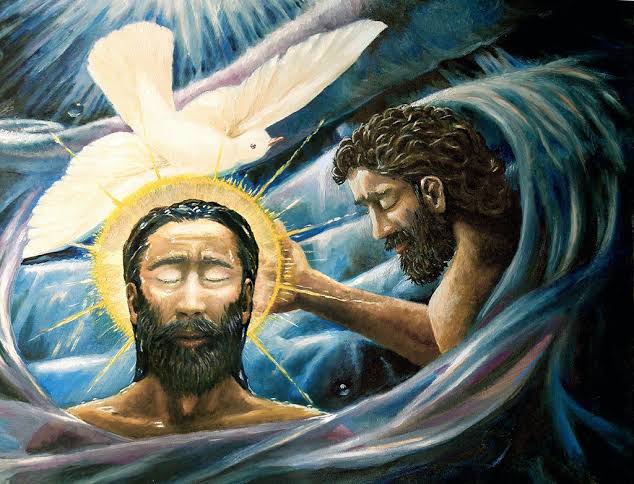
In the Gospel selection (Matt 3:13–17), the first evangelist reports that the Spirit of God “descended on [Jesus] like a dove” (3:16) as Jesus was baptised by John in the River Jordan. At that event, “a voice from heaven said, ‘This is my Son, the Beloved, with whom I am well pleased’” (3:17). The voice of the Lord is clear and prominent in this account of what was likely to have been the commissioning event for Jesus as he started into his public activities in the region of Galilee (Matt 4:12–25, and on until 19:1).

In the reading from Acts, in place of a section of an epistle, we hear Luke’s report of a speech of Peter, given in the house of the centurion Cornelius in Caesarea (Acts 1:34–43). In this speech, Peter announced how “the message spread throughout Judea, beginning in Galilee after the baptism that John announced; how God anointed Jesus of Nazareth with the Holy Spirit and with power” (Acts 10:38).

That message was to be continued by the disciples; Peter says that God “commanded us to preach to the people and to testify that he is the one ordained by God as judge of the living and the dead” (10:42). The voice of the Lord that has been heard in the early testimony (see Acts 2, 3, 7) continues through the later apostolic proclamation (see Acts 13, 17, 20).

Linked with this is the first of the four songs found in Second Isaiah (Isa 40–55) that are linked explicitly with the Servant (42:1–9; 49:1–7; 50:4–11; and 52:13–53:12). Here, the Servant is designated as the one in whom God delights (42:1); the phrase recurs in the message of the voice from the cloud which speaks at the baptism of Jesus, declaring that he is the one “with whom I am well pleased” (Matt 3:17). The Servant has God’s spirit within him (Isa 42:1), something which is directly enacted in the baptism of Jesus when he “saw the Spirit of God descending like a dove and alighting on him” (Matt 3:16).

The work of the Servant is to bring justice to the nations (Isa 42:1, 3, 4); that will be evident in the work of Jesus (Matt 12:18–21, quoting directly these verses from the first Servant Song). Through the Servant, the Lord calls people “in righteousness” (Isa 42:6); that call is echoed by Jesus as he calls his followers to demonstrate righteousness (Matt 5:20) and exhorts them to “strive first for the kingdom of God and his righteousness” (6:33). Indeed, the baptism of Jesus narrated by Matthew is said to have taken place “to fulfil all righteousness” (3:15).

Through the Servant, God establishes God’s people “as a covenant to the people, a light to the nations” (Isa 42:6); that charge is repeated by Jesus, who came as light shining in the darkness (Matt 4:15–16) and who equips his followers to be “the light of the world” (5:14–16), whose whole body will be “full of light” (6:23).

Through the Servant, God announces that “the former things have come to pass, and new things I now declare” (Isa 42:9); this is exemplified, according to Jesus, by “every scribe who has been trained for the kingdom of heaven [who] is like the master of a household who brings out of his treasure what is new and what is old” (Matt 13:52).

The identity of the Servant was debated in Israel; was this an individual, or a symbolic representation of the whole nation? The many resonances of the Servant Song in the story of Jesus indicate why Christian interpreters have identified Jesus as this servant. The story of his baptism provides a most appropriate occasion for underlining this connection. The shapers of the lectionary have thus linked these two passages on this Sunday, and set them into the context of passages declaring how “the word of the Lord” has been made manifest. It is a compelling start to the season of Epiphany.

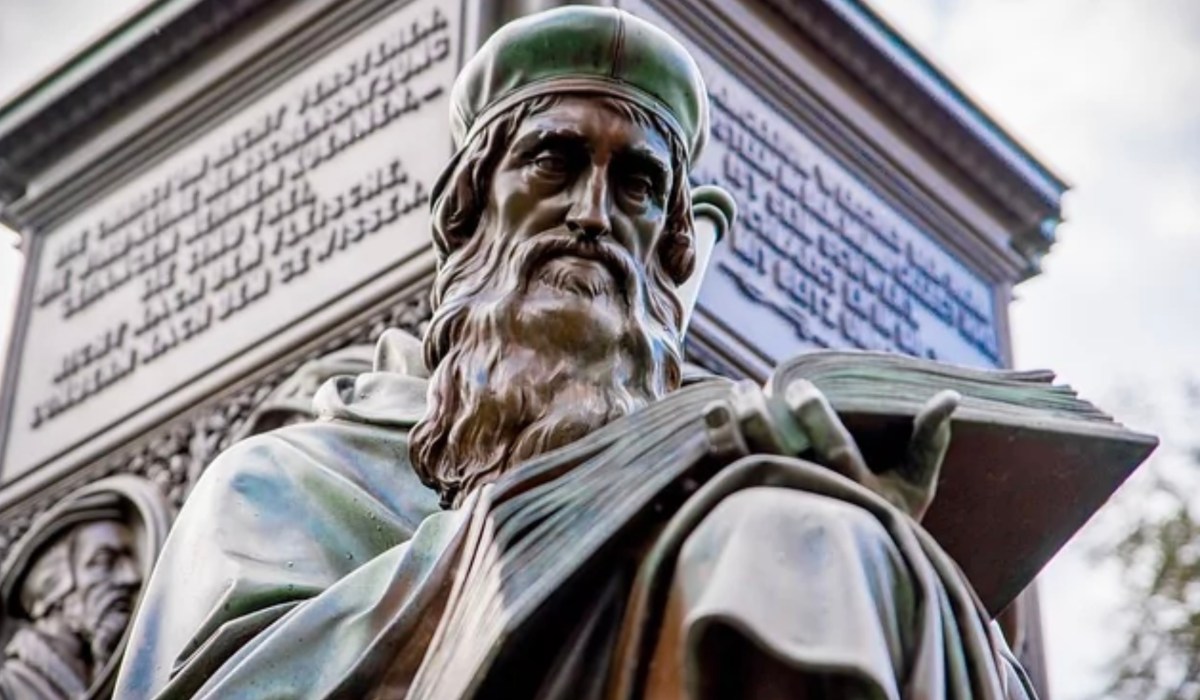
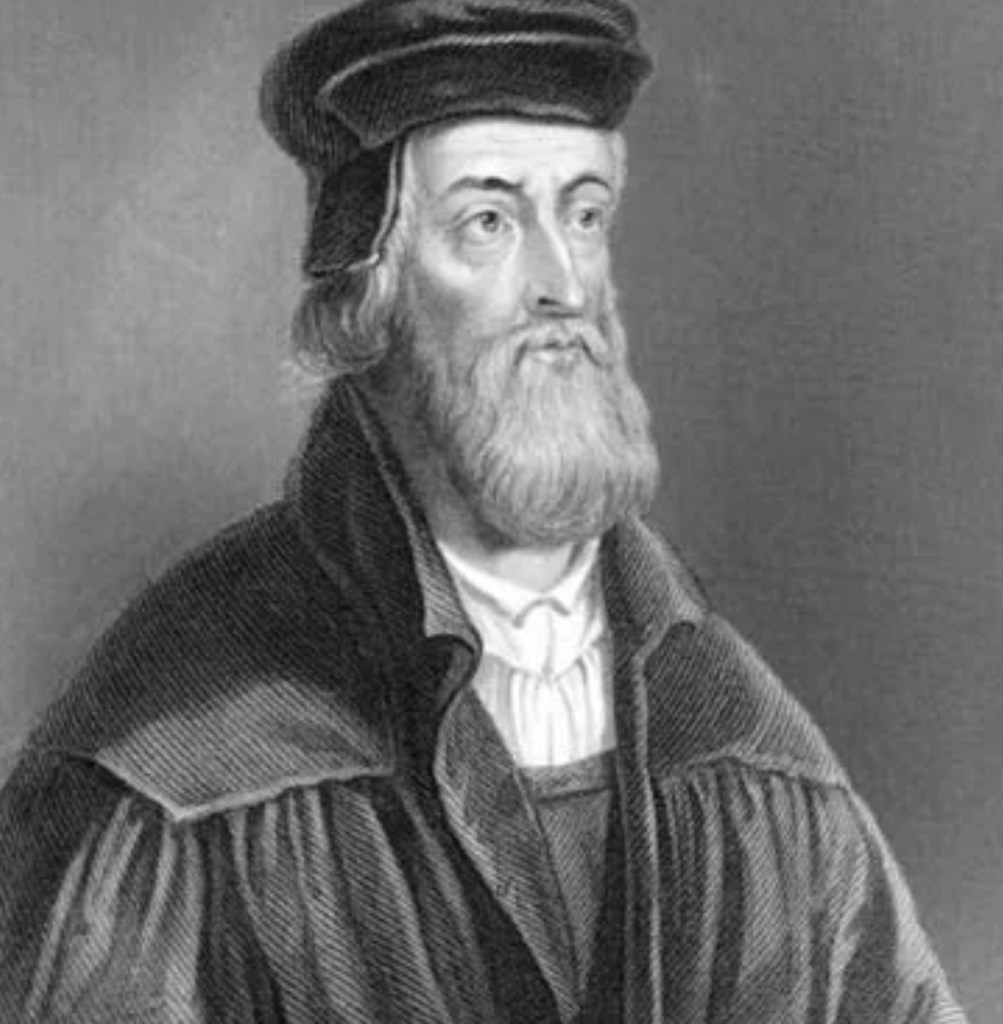
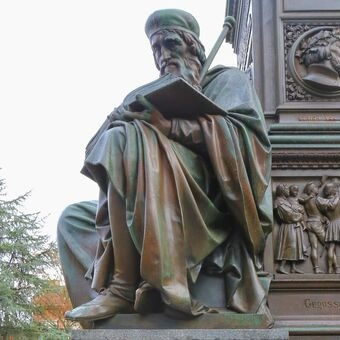
John Wycliffe: heretic? or hero?

One of the gifts that is treasured by many believers around the world is the ability to read the scriptures on their own language. It is something that we take for granted; but it is not something that has always been available to people of faith.

On this day it is good to pause and remember that we have the Greek and Hebrew and Aramaic writings of scripture translated into English and available for us to read. On this day perhaps we English-speaking people might spare a thought for the 14th century theologian and preacher, John Wycliffe (1328–1384), who is remembered as the person who made the first English translation of the Bible.

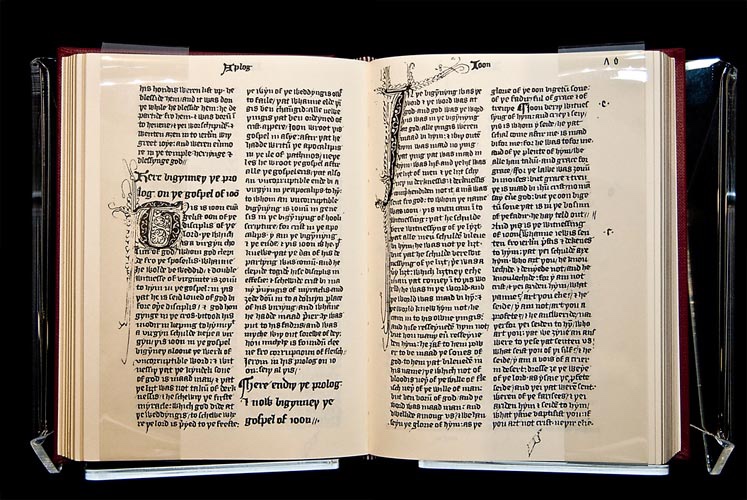
This copy is a facsimile reproduction of the very first translation of the Scriptures into the English language. The Wycliffe translations were hand-written manuscript Bibles, pre-dating printing by 70 years [Gutenberg, 1455].
https://digitalcommons.cedarville.edu/preserved_by_hand/7/

That is the legend; in fact, scholars believe that Wycliffe translated the Gospels, oversaw the translation of the rest of the New Testament, and outsourced the translation of the Old Testament to a team led by Nicholas of Hereford; the whole was later edited and revised by John Purvey. See https://kingscollections.org/exhibitions/specialcollections/bible/first-english-bible/wycliffe-bible

In fact, the Anglican Church designates today, 31 December, as a day to recall John Wycliffe. See https://www.churchofengland.org/prayer-and-worship/worship-texts-and-resources/common-worship/churchs-year/calendar Wycliffe is also often honoured as “the father of English prose”, because the clarity and the popularity of his writings and his sermons in the Middle English dialect did much to shape our language today; see https://www.christianitytoday.com/history/issues/issue-3/john-wycliffe-did-you-know.html

From his theological writings, it has been deduced that Wycliffe believed that “scripture was the only authoritative reliable guide to the truth about God”. That was a view that was later expressed by the key figures in the various Reformations that took place in the 16th century. Wycliffe therefore maintained that all Christians should rely on the Bible rather than on the teachings of popes and clerics—a position that drove Martin Luther two centuries later, in his criticisms of the church.

It follows from this, that all Christians should have direct access to those scriptures to nurture their own faith. “Englishmen learn Christ’s law best in English”, he wrote; “Moses heard God’s law in his own tongue; so did Christ’s apostles.” The many translations of the Bible into English that were made in the ensuing centuries stand on the foundation of Wycliffe’s work.

Blogger MJH writes that, as a translator of the Bible, “John Wycliffe and his successors such as Tyndale and Coverdale stand in line with Christian tradition, with the anonymous Latinisers and Jerome, with the anonymous translators of the Coptic Bible and the Syriac Peshitta, with Cyril and Methodius.” See https://thepocketscroll.wordpress.com/2012/12/30/sixthy-day-of-christmas-commemoration-of-john-wycliffe/

Certainly, the long list of people who translated the scriptures into their own vernacular attest to the importance of contextualising scripture and making it widely available to the people of God—a commitment that has enriched the lives of believers over the centuries. My own denomination continues that commitment with an affirmation that “the Uniting Church lays upon its members the serious duty of reading the Scriptures [and] commits its ministers to preach from these” (Basis of Union, para.5).

As a pre-Reformation protestor, Wycliffe said that there was no scriptural justification for the papacy (as did Luther). He also taught predestination (as did Calvin and Zwingli) and the consubstantiation of the elements in communion (as is sometimes attributed to Luther), in distinction from the Roman Catholic doctrine of transubstantiation. His theology also prefigured the Reformers in his affirmation that “faith in our Lord Jesus Christ is sufficient for salvation” (cf. Luther’s sola fide).

All of this, of course, set Wycliffe up for conflict with the authorities in the Roman Catholic Church. The “Constitutions of Oxford” of 1408 were issued after a synod called by the Archbishop of Canterbury, Thomas of Arundel. This decree aimed to reclaim authority in all ecclesiastical matters, and specifically named John Wycliffe as it banned certain writings, and noted that translation of Scripture into English by unlicensed laity was a crime punishable by charges of heresy.

In May 1377, Pope Gregory XI issued five bulls against John Wycliffe for heresy. In all, the Catholic Church in England tried him three times, and two Popes summoned him to Rome, but Wycliffe was never imprisoned nor ever went to Rome.

Three decades after his death, the Council of Constance declared Wycliffe a heretic on 4 May 1415, and banned his writings, effectively both excommunicating him retroactively and making him an early forerunner of Protestantism. Many Protestants consider Wycliffe to be something of a hero, for he stood against the Roman Church by insisting that the scriptures should not be locked up in Medieval Latin, but rather should be available in the vernacular—in his case, Middle English.

So, John Wycliffe: Bible translator and theologian, preacher and pre-Reformation protestor, a Roman Catholic declared a heretic whose name is remembered and highly valued by Protestants … how do you assess him: heretic? or hero?

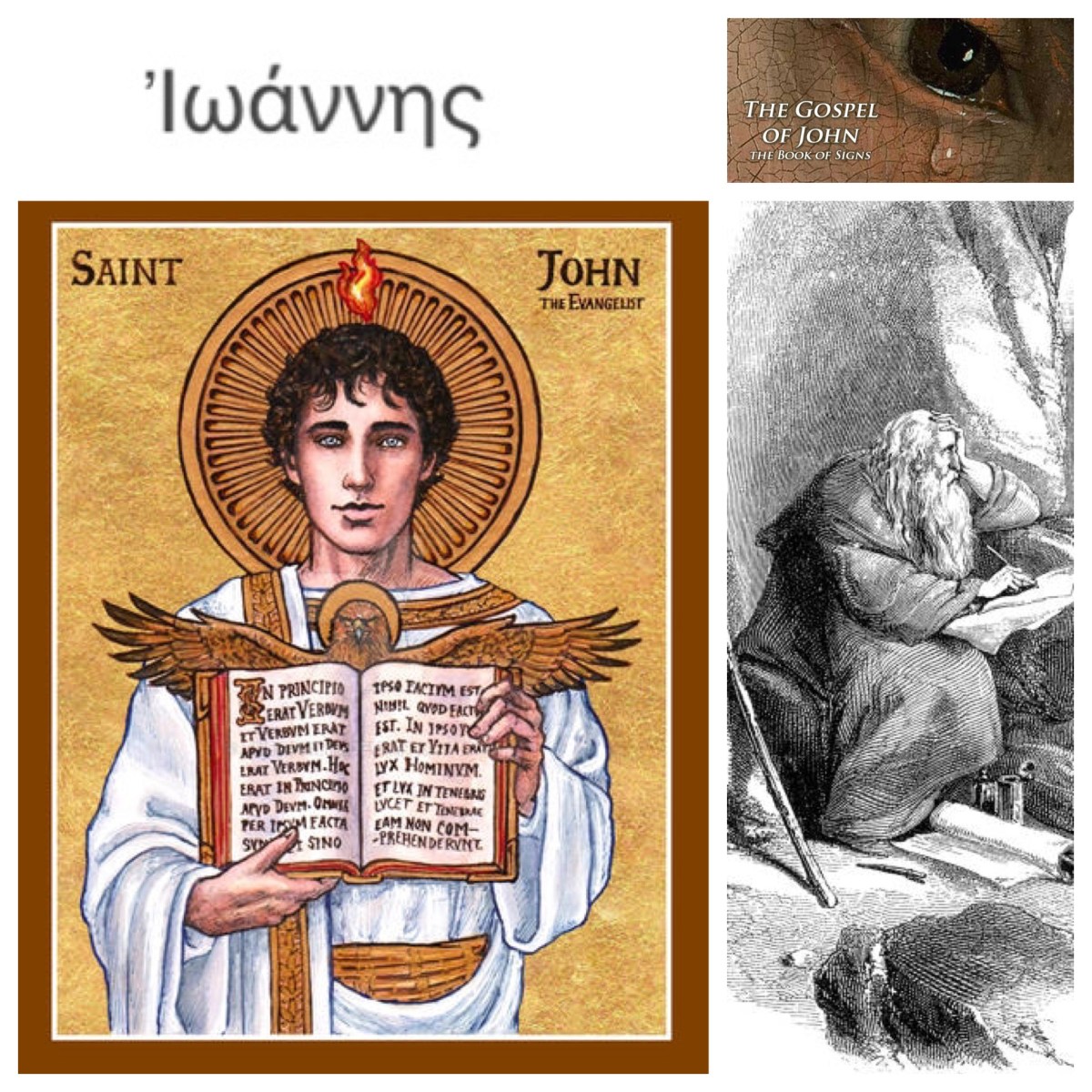
John: fisherman and follower, eyewitness and evangelist, apostle and saint

Today is the feast day of John, remembered in the Catholic tradition as Saint John the Apostle and Evangelist, and included in the Uniting Church’s list of commemorations as John, Witness to Jesus.

The fourth Gospel in the New Testament has long been accredited to the disciple named in the three Synoptic Gospels as the fisherman who was the brother of James and the son of Zebedee, one of the earliest called to follow Jesus (Mark 1:19: 3:17; Matt 4:21; 10:2; Luke 5:10; 6:14). Ironically, however, this disciple is not specifically named in the fourth Gospel. (Apart from John the baptiser, the other John noted in this Gospel is the father of Simon Peter; John 1:52; 21:15–17).

In the early fourth century CE, Eusebius wrote in his Ecclesiastical History (6.14.7) that Clement of Alexandria had described this Gospel as the “spiritual” Gospel, written to complement the “physical” depictions of Jesus found in the other three Gospels. (Clement was Bishop of Alexandria at the end of the second century CE.)

This view has exercised a widespread influence throughout Christian history; in the twenty–first century, John’s Gospel is often cited as the easiest way for new converts to understand the “spiritual truths” of the Christian faith. It is frequently said that it contains the most direct expression of the simple Gospel message: “God so loved the world that he gave his only Son …” (John 3:16).

More recent scholarly study of this Gospel, however, has indicated that it is a complex and intricate piece of literature. The literary style of this Gospel is distinctive amongst the Gospels found in the New Testament. Jesus speaks at far greater length than the succinct sayings and compressed argumentation reported of the Synoptic Jesus. Some of the key images included in these speeches are ripe with symbolic significance.

There are multiple layers of meaning to be explored in the fourth Gospel. A number of key words contain ironic references or wry puns. Some scenes tell of misunderstandings which arise because of the different meanings built into the text. A hint of secrecy runs through the narrative—secrecy regarding the deeper, hidden meaning of Jesus and his story. The work is a complex literary creation.

An anonymous figure among the disciples—“the disciple whom Jesus loved”—lays claim to be the author of this work (John 21:20, 24). Who is this figure? Over time, the evangelist came to be equated with the disciple John, son of Zebedee, brother of James. Nothing in the text itself explicitly supports this, however.

Over the past few decades, a different understanding about the origins of this work have developed from scholars who have explored the authorship of this Gospel and the context in which it was written. There is widespread agreement that this work was not written, in the form that we have it, by this John who was one of the earliest followers of Jesus.

Some scholars developed the notion that this figure of “the beloved disciple” was a symbol embedded within the narrative, representing an earlier authority for the evolving traditions about Jesus. The Gospel itself, they consider, came to be written down many decades after this authority figure had first begun to recount the story of Jesus. The shape of the Gospel was heavily influenced by the nature of the community of faith through which these stories were passed, over a number of decades.

This has led to a detailed hypothesis concerning the origins and development of the community of believers which gave birth to this Gospel in written form. (The North American scholars most often associated with this line of interpretation are Raymond Brown and J. Louis Martyn.) This hypothesis makes two central claims.

The first claim is that, in its earliest stages, the community which produced this Gospel had been essentially Jewish. That community received and retold stories which may well have come from the John who was a follower of Jesus. The second claim is that, by the time the body of the Gospel was written in the form that we know it, this community found itself in an antagonistic relationship to the dominant form of Judaism. This opened the way for Gentile ideas, so that they are found mixed with Jewish ideas in the final form of the Gospel.

So if this Gospel was indeed stimulated by the teachings of one of the first followers of Jesus, a Jewish man in Galilee, known as John, it reflects a remarkable trajectory in the first century of the movement initiated by Jesus, tracing its development from a Jewish renewal movement towards a global religion. The stories from the Apostle have presumably been reworked and reshaped over decades as that trajectory develops.

The “disciple whom Jesus loved” certainly occupies a prominent place in the narrative of the fourth Gospel. He reclines on the breast of Jesus at the final meal in Jerusalem (John 13:23) and stands at the foot of the cross with Mary, the mother of Jesus (19:26–27).

After Mary Magdalene announced that the stone at the entrance of the tomb where the crucified Jesus had been laid had been removed (20:1–2), he runs to the tomb, with Simon Peter (20:3), arrives first, and sees that the tomb is empty (20:4–5)—but leaves it to Peter to see the inside first (20:6–7), before himself entering and attesting to the empty tomb with his own eyes (20:8).

Later, when seven of the disciples are fishing on the Sea of Galilee, this same beloved disciple is the first to recognise Jesus standing on the beach next to their fire; this time, he announces the identity of Jesus to Peter (21:7). A little later, Peter draws from Jesus the words about this disciple remaining with him (21:20–23). Finally, the same beloved disciple has the last word in the later-added Appendix to the Gospel, affirming his role as eyewitness and evangelist (21:24).

This is the figure that, in the tradition, is linked with John, the fisherman brother of James, the son of Zebedee, one of the earliest followers of Jesus, accorded a place as one of The Twelve Apostles.

In the book of Acts, the disciple John visits Samaria with Peter, in order to authorise and sanction what Philip had been teaching and doing in that region (Acts 8:14–17). That episode indicates the respect and authority that John was held to have as the movement developed—although the author of Luke and Acts writes some decades after the events he describes, at the end of the first century, and his material is filtered through various intermediaries (see Luke 1:2).

“Apostles Peter and John Blessing the People of Samaria,”
by Giorgio Vasari, 1511-1574, Italian.

However, in one of his early letters from the 50s, Paul himself acknowledges this important position of John, along with James (brother of Jesus) and Peter, the “acknowledged pillars” of the church. Paul relates how he went, with Barnabas and Titus, to Jerusalem (Gal 2:1), in order to receive the approval from the mother church for his activity amongst the Gentiles. Accordingly, “James and Cephas and John, who were acknowledged pillars, recognized the grace that had been given to me, they gave to Barnabas and me the right hand of fellowship, agreeing that we should go to the Gentiles and they to the circumcised” (Gal 2:9).

This corroborates the view we find in Acts, that John had a position of importance in the early church. It doesn’t demonstrate, however, that this John wrote the book of signs, the work we know as the Gospel of John.

The scholar Jerome, born in Dalmatia (now Albania), lived for some time in Palestine in the late 300s. Jerome recounts an anecdote still being told at that time about John the Evangelist. When John was old and feeble and no longer able to walk or preach, he would be carried among the faithful in church and would repeat only one thing over and over again: “My little children, love one another.”

This, of course, is the central mantra in the first of the three letters that bear the name of John (see 1 John 3:11-17; 3:23; 4:7–12; also 2 John 5; 3 John 6). The legend explains how these anonymous letters were attributed to the apostle John.

Polycarp, through Saint Irenaeus, tells us that the Apostle John lived a long life, which ended peacefully in Ephesus around the year 100 CE. If that was so, then John was the only Apostle not to die a martyr. That may then equate him with the John who claims authorship of the book of Revelation, exiled on the island of Patmos (Rev 1:9). However, the style and language of this last book of the New Testament differs significantly from the style of the Johannine gospel and letters.

The Encyclopedia Britannica reports that two rival sites at Ephesus initially claimed the honour of being the grave of John. One eventually achieved official church recognition, becoming a shrine in the 4th century. By the 6th century the healing power of dust from John’s tomb was famous, and the church of Ephesus claimed to possess the autograph of the Fourth Gospel. We don’t have that manuscript today, however.

John was said to have written the Acts of John, a domestic work that was known in the second century; but it was condemned as heretical at the Second Council of Nicaea in 787 CE. And so the traditions about John continued to grow.

Indeed, in some Medieval and Renaissance works of painting, sculpture and literature, John is often presented in an androgynous or feminized manner, perhaps reflecting the ambiguous identity of “the disciple whom Jesus loved”.

St. John the Apostle by Jacques Bellange, artist
and printmaker from the Duchy of Lorraine, c.1600

All of which demonstrates the maxim that I hold for early Christian writings: the further away from the first century we get, the more information is known about the writers of the Gospels!!