Descended from David according to the flesh (Rom 1; Advent 4A)

In the selection from Paul’s letter to the Romans that is offered by this Sunday’s lectionary, Paul refers explicitly to the gospel concerning [God’s] Son, who was descended from David according to the flesh (Rom 1:3). In the midst of the Christmas carols and Christmas cake, the Christmas cards and the Christmas parties, there stands this stark affirmation: Jesus was a Jew. And, more specifically, that Jesus was a descendant of David.

It is noteworthy that Paul makes very little reference in his letters to the earthly life of Jesus; he is much more focussed on the death and the resurrection of Jesus, rather than his life of teaching, preaching, story-telling and miracle-working. In his letter to the Galatians, however, he makes a similar affirmation about the humanity, and the Jewishness, of Jesus: when the fullness of time had come, God sent his Son, born of a woman, born under the law (Gal 4:4).

Descended from David, born under the law: Jesus was clearly a Jew. That needs to sit at the heart of the story that we recall each year at this time. The Jewishness of Jesus is an essential element of the Christmas story.

Those who recount the story of Jesus, in the documents we know as the Gospels of the New Testament, are clear about this fact. Mark locates Jesus in Galilee, the northern part of the land of Israel, and identifies his home town as Nazareth (Mark 1:9; 10:47; 14:67; 16:6). Matthew and Luke follow the pattern established by Mark, in locating the vast majority of the activity of the adult Jesus in the northern regions of Israel.

Matthew intensifies this picture, however. At the start of his book of origins, he traces the lineage of Jesus back to David, and further back to Abraham (Matt 1:1-17). He traces this lineage of Jesus, not through his mother, Mary, but through Joseph—because it was Joseph who was of the lineage of David. This Davidic heritage of Jesus is central and important for Matthew, for he, most of all the evangelists, has characters in the story address Jesus as “Son of David” (1:1, 20; 9:27; 12:24; 15:22; 20:30–31; 21:9, 15, 42). He wants to advocate, as he tells his story, that it is through Jesus that the ancient promises to David will come to fruition.

At the start of his story, and at various places further on, Matthew notes that the actions and words of Jesus occur as fulfilment of prophetic words (Matt 1:22; 2:5, 15, 17, 23; 3:3; 4:14; 8:17; 12:17; 13:14, 35; 21:4; 26:56; 27:9).

Twice in his account of Jesus, Matthew is insistent that his active ministry and that of his first followers took place only amongst “the lost sheep of the house of Israel” (Matt 10:6; 15:24). For Matthew, Jesus was resolutely, scrupulously, Jewish.

The Gospel of John also reinforces the Jewish identity of Jesus. The Samaritan woman describes Jesus as “a Jew” (John 4:9), Jesus regularly travels to Jerusalem for Jewish festivals (John 2:13, 6:4, 7:1-10, 10:22, 12:12, 13:1), in conformity with Jewish piety. When Pilate questions Jesus, he recognises him as King of the Jews (18:33-35) and refers Jesus to Jewish leaders for their decision (18:31, 19:6-7, 19:14). Pilate then has him crucified under a sign identifying him as “Jesus of Nazareth, the King of the Jews” (as, indeed, the other three Gospels also report).

In the Gospel of Luke, the Jewish identity of Jesus is recounted, repeated, and intensified. Although often touted as the evangelist who most strongly orients the story of Jesus towards Gentiles throughout the hellenistic world of the Roman Empire, Luke actually sets his orderly account in the heart of Jewish piety, from the very opening scene of the Gospel which reveals a pair of righteous Jews who faithfully keep the commandments of God (Luke 1:5–6).

The man, Zechariah, is devoted to the service of God in the Temple (1:8–9). His wife, Elizabeth, expresses an attitude of deep faith in God, accepting her surprise pregnancy as “what the Lord has done for me” (1:25). Her relative, Mary, demonstrates a similar faith as she submits to a similar fate with the words, “here am I, the servant of the Lord” (1:38).

In turn, the traditional hopes and expectations of the people are articulated in spirit-inspired hymns sung by Mary (1:46–55), Zechariah (1:67–79) and Simeon the righteous (2:29–32). These are, by rights, the first Christmas carols—songs which sing of the one to come, which tell of the birth of one promised, which look with hope to the change he will effect. And they are resolutely Jewish.

The children whose births are recounted in these early chapters of Luke—Jesus and his cousin John—bear the weight of traditional Jewish hopes and expectations as they come into being. They are born as faithful Jews. They both lived in fidelity to the Jewish law. The mission of Jesus to fulfil the hopes articulated by Jewish prophets (Luke 4:18-21) and to point to the promise of the kingdom ruled by God (Mark 1:15; Matt 4:17) which, he proclaimed, was already becoming a reality in his own time (Luke 17:20).

The sense of deeply devoted and strongly conventional Jewish piety continues in the reports of the early years of Jesus. Luke’s Gospel reports that Jesus was circumcised (2:21) and dedicated in the Temple (2:22–24) in accordance with Jewish custom, and that he showed an early interest in the Law (2:41–51).

So we would do well not to skirt away from this very particular and specific aspect of the Christmas story.

As we come to the celebration of the child in the manger, let us remember that he spoke with a voice that called people—his people in Israel, and people beyond his people—to the enticing vision (sourced from the Hebrew prophets) of a world renewed and reconciled, where righteousness and justice were realities, where the hopes of Israel could flourish and come to fruition. That is the thoroughly Jewish vision that the story of Jesus offers.

…….

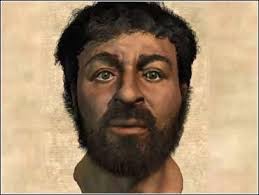
The featured picture portrays a Judean man from Jesus’s time, based on archaeological findings, and is often used as an image for what the historical Jesus may have looked like.

See also https://johntsquires.com/2019/12/11/the-origins-of-jesus-in-the-book-of-origins-matthew-1/

https://johntsquires.com/2019/12/17/now-the-birth-of-jesus-the-messiah-took-place-in-this-way-matthew-1/

https://johntsquires.com/2019/12/04/for-our-instruction-that-we-might-have-hope-rom-15-isa-11-matt-3/

https://johntsquires.com/2019/11/28/leaving-luke-meeting-matthew/

https://johntsquires.com/2018/12/19/what-can-we-know-about-the-birth-of-jesus/
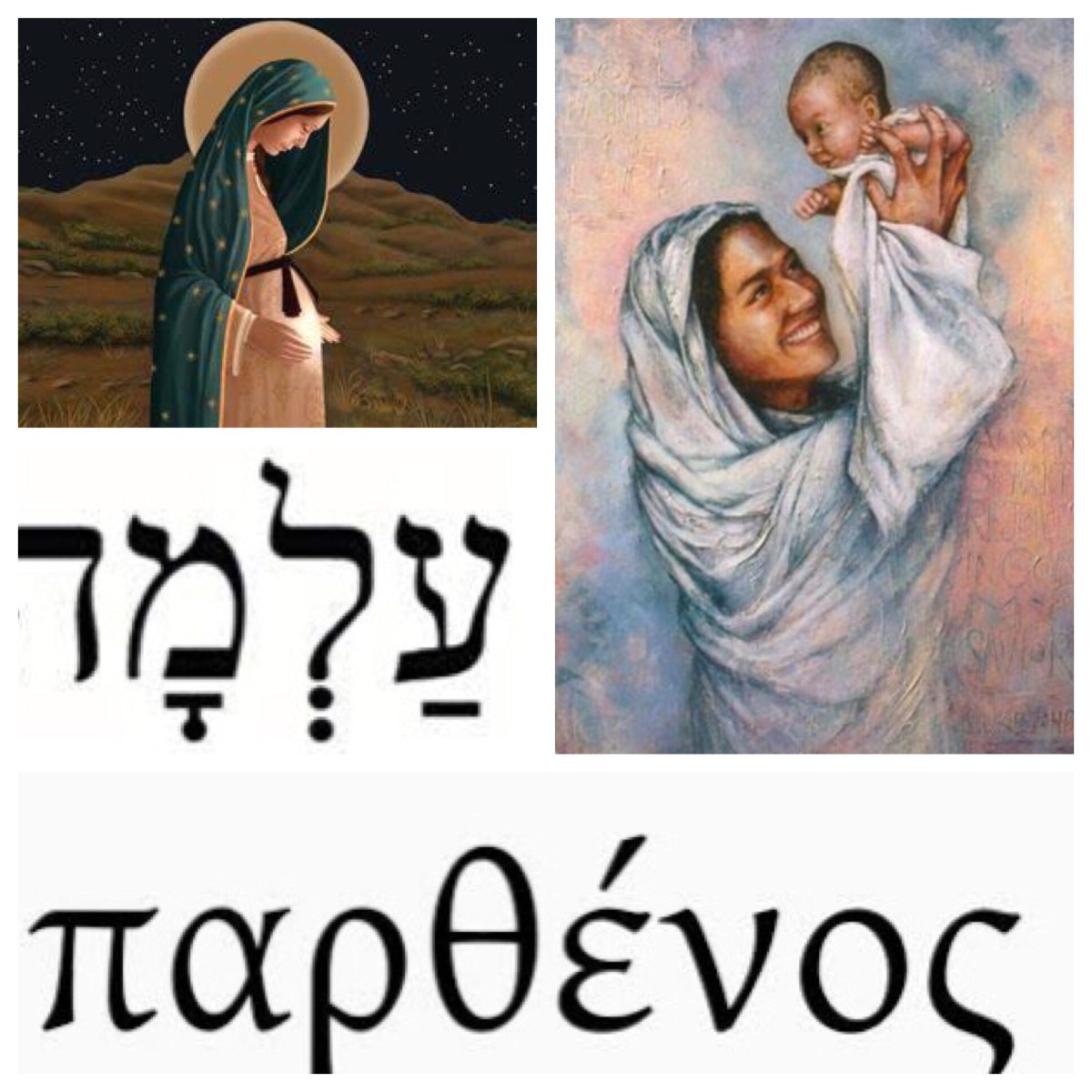
A young woman? A virgin? Pregnant? About to give birth? (Isa 7:14 in Matt 1:23; Advent 4A)

The passages set in the lectionary for this coming Sunday place alongside each other a prophetic oracle spoken by Isaiah, and an angelic announcement delivered to Joseph. The two passages seem to sit side-by-side very comfortably. The Gospel selection from the book of origins recounts how the birth of Jesus the Messiah took place in this way. The prophetic selection from Isaiah declares that the Lord himself will give you a sign and looks to the conception, birth, and naming of a child.

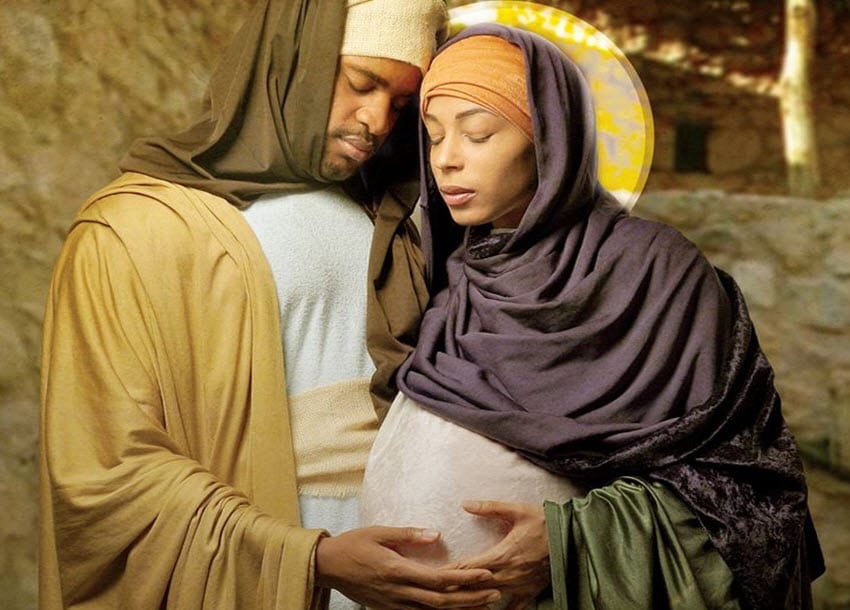
The oracle of the prophet speaks about a child to be born to a young woman. The message of the angel announces a child to be born to a young woman who was a virgin. The author of the book of origins (whom I refer to, following tradition, as Matthew) quotes the prophetic oracle about the birth of a child and claims that it has been fulfilled in the angelic announcement about the birth of a child to Mary and Joseph. The angel follows the prophet in affirming that child to be born would be a sign to the people, that God was still with them, in the midst of their difficulties. But the status of the young mother is a question that has long vexed interpreters.

How do we read the Gospel account when it takes up an ancient word of the prophet and interprets it to relate specifically to the story of Jesus? I have reflected on the issues we need to bear in mind as we do this, especially during this season of Advent, at

On reading scripture during Advent: drawing from the ancient prophecies (Isaiah 2; Advent 1A)

The Hebrew word found in the original oracle of the prophet, almah, refers simply to a young woman of childbearing age; it had no connotation at all relating to virginity. It occurs in eight other places in Hebrew scripture—with reference to Rebekah and Miriam, in three references to female musicians, and in wisdom texts relating simply to young women. In none of those places does it have any reference to the virginity of the young woman.

There is also, in Hebrew, the word bethulah, which refers specifically to a young woman who was a virgin; but it is important to note that this word was not employed by the prophet Isaiah. He clearly was referring to a young woman aged around puberty, who was now able to bear a child. He was not referring to a young woman who had never had sexual intercourse, who was still a virgin.

The Greek translation of these Hebrew texts was made some centuries before Jesus. The translation is known as the Septuagint, attributed to seventy wise scholars. In this translation, the Hebrew word bethulah is usually rendered in Greek as parthenos. This Greek word can refer quite generally to a young woman, but it can have a more specific reference to the virginity of the young woman.

Now, on two occasions in the Septuagint, the word almah is rendered as parthenos: Gen 34:3 and Isa 7:14. The first refers to Dinah. It occurs in the story at the point where the powerful prince Schechem rapes the young woman. The point is being made that her state of virginity has at that point been lost, so the Greek word is appropriate.

But the oracle of Isaiah 7 refers simply to a woman who, at an early stage in her capacity to bear a child, is indeed pregnant. So there appears to be no reference at all to her lack of sexual activity prior to this pregnancy. This much is clear in the Hebrew. But the Septuagint translators chose the Greek word parthenos.

We must wonder: is the choice of parthenos when translating Isa 7:14 from Hebrew a strategic move by the seventy wise scholars? Is it an inspired insight into the meaning of the Hebrew text? Or is it an unguarded moment, a slip of concentration, amongst the translators?

I incline to the latter view. I don’t think the intention of the Septuagint translators was to insist that we know more than what the original prophet knew—that is, the precise sexual status of the young woman in question, not just young, but still a virgin.

Nevertheless, Matthew uses the version of the prophet’s oracle that includes this Greek word. He quotes the Greek version of the Septuagint, since he is writing in Greek. Mind you, Matthew regularly and consistently quotes the Septuagint translation, rather than other options that would have been available to him. So this is not really a surprise.

Whatever identity we accord the author of this book of origins, it is quite clear that he was an educated Jewish male. As such, he would have known and used the scriptures of the people of Israel, in Hebrew. And yet, he is writing his account of Jesus in Greek—so he makes use, on a regular basis, of this version.

And this version places a focus on the virginal status of the young woman, who was to give birth to Jesus of Nazareth. So Matthew has deliberately chosen to include this in his story.

Why? That is a good question! Why?

Rather than seeing Matthew as trying to prove the historical veracity of the virginal status of Mary, however, I incline to the view that the primary purpose, as Matthew tells the origins of Jesus, is for him to prove Jesus’ legal status as the stepson of Joseph, as a legal heir of David. Whilst the infancy narrative in Luke places Mary at the centre of the story—and the angel makes his announcement directly to her—in Matthew’s version it is Joseph who is centre-stage—and the angel speaks to him, and only him, in this version.

This passage in Matthew 1 is the one and only time in the book of origins when the virginal status of the mother of Jesus is noted. By contrast, the Davidic lineage of Jesus, through Joseph, is a concern which is both in view here at the start of the whole story, and which returns at various points through the ensuing story. (See https://johntsquires.com/2019/12/17/now-the-birth-of-jesus-the-messiah-took-place-in-this-way-matthew-1/)

And as if to reinforce this lineage through Joseph, the book of origins takes pains to establish that Joseph, a descendant of David, was “a righteous man”, as befits a Davidic descendant (1:19; David is declared as righteous at 1 Sam 24:17).

Although, it is worth noting one way by which Joseph exemplifies the questionable moral character of his ancestor—initially he was “unwilling to expose her to public disgrace” and wanted to dismiss Mary (1:19). Nevertheless, after hearing the announcement of the angel, he remained faithful and “did as the angel of the Lord commanded him” (1:24).

And whilst he took Mary as his wife, Matthew maintains that, as a righteous man, Joseph “had no marital relations with her until she had borne a son” (1:25). At which point, we may presume, Joseph functions as the de facto father of the newborn child. So this is part of the pro-Davidic apologetic of this book, not the basis for the doctrine of the Virgin Birth.

Joseph, descendant of David, takes on the legal role of father of the child. (Indeed, we are never told that he refrained from relations when they were engaged, before Mary conceived; rather, might we infer that the shame that Joseph expresses incriminates him?)

Certainly, in Christian tradition the fathering of the child is attributed to the Holy Spirit, who overshadows the virgin to produce the child (see Luke 1:35). That developing tradition was presumably already known in early Christian communities of the first century. But how early, we do not know.

In the earliest decades of the movement that Jesus initiated, Paul makes no reference to this claim in any of his letters. He knows the Jewish origins of Jesus, but says nothing even hinting at Mary’s virginal status (see https://johntsquires.com/2019/12/19/descended-from-david-according-to-the-flesh-rom-1/)

The letter of James, if it was authored by the brother of Jesus, is an early witness that shows no concern for this doctrine. Mark, the earliest extant Gospel, makes no reference at all to the virginal status of Mary. Early witnesses make no reference to the doctrine which emerged much later, they provide no hints or clues upon which this dogma can be founded.

What we do know is that this claim was articulated in the later part of the first century in the orderly account attributed to Luke, as well as in this book of origins, attributed to Matthew, who includes the prophetic oracle as a foundation for the angelic announcement and to refer directly to this claim (1:18, 20).

And so the tradition of the virginal conception of Mary arose, eventually leading to the (less accurate) claim about the birth of Jesus having been a Virgin Birth, now strongly cemented in traditional Christian dogma. But I don’t think that this particular book of origins was really concerned, either to establish this claim, or to utilise it as a foundation for a whole developed dogma about Jesus, as would subsequently occur in Christian tradition.

And thus, I don’t think we need to hold to a notion that the mother of Jesus was still a virgin when he was born. She was, quite simply, young, at the beginning of her childbearing years, around 14 or 15 years of age. What sexual activity she engaged in at that time can never be known. But she was, in due course, married to a descendant of David; and that is what mattered for Matthew.

See also

https://johntsquires.com/2019/12/11/the-origins-of-jesus-in-the-book-of-origins-matthew-1/

https://johntsquires.com/2019/12/17/now-the-birth-of-jesus-the-messiah-took-place-in-this-way-matthew-1/

https://johntsquires.com/2019/12/04/for-our-instruction-that-we-might-have-hope-rom-15-isa-11-matt-3/

https://johntsquires.com/2019/11/28/leaving-luke-meeting-matthew/

https://johntsquires.com/2018/12/19/what-can-we-know-about-the-birth-of-jesus/
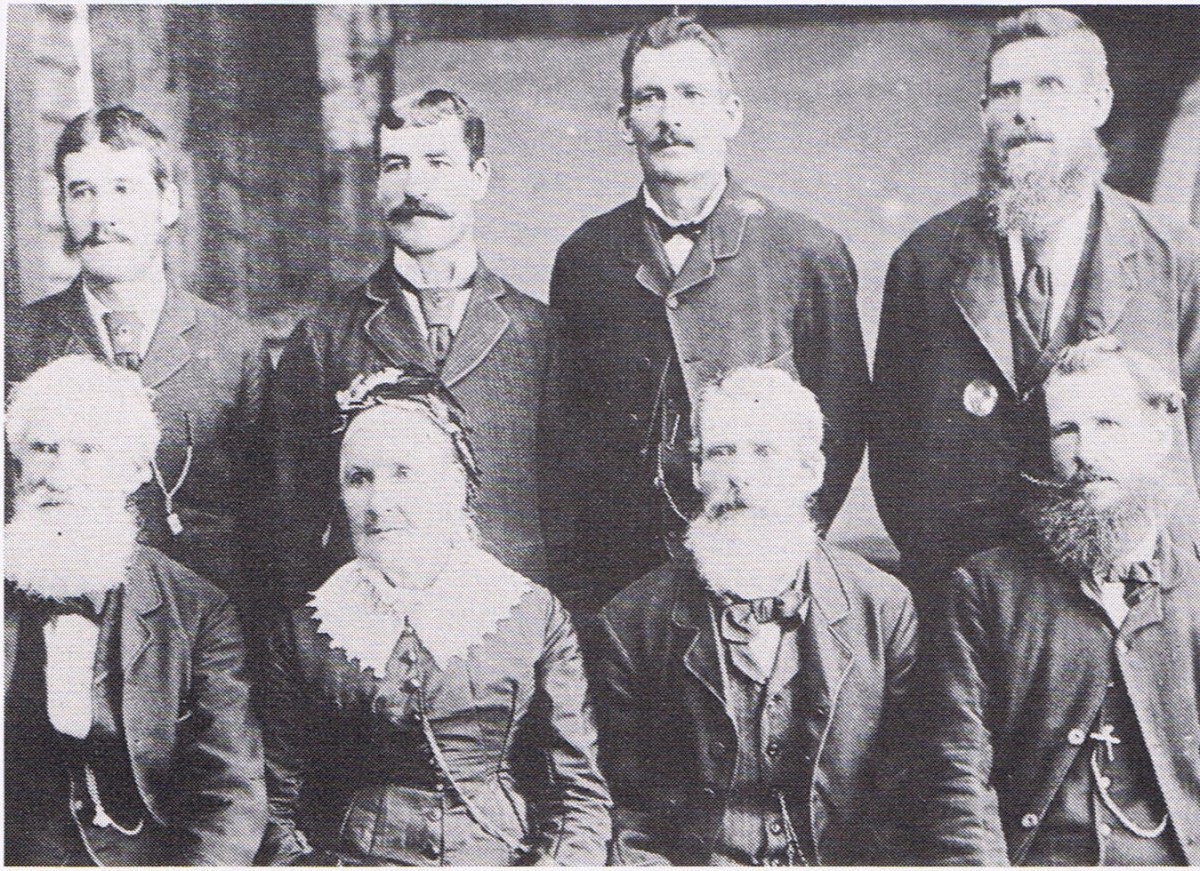
Andrew and Elizabeth Wotherspoon, 11 December 1838

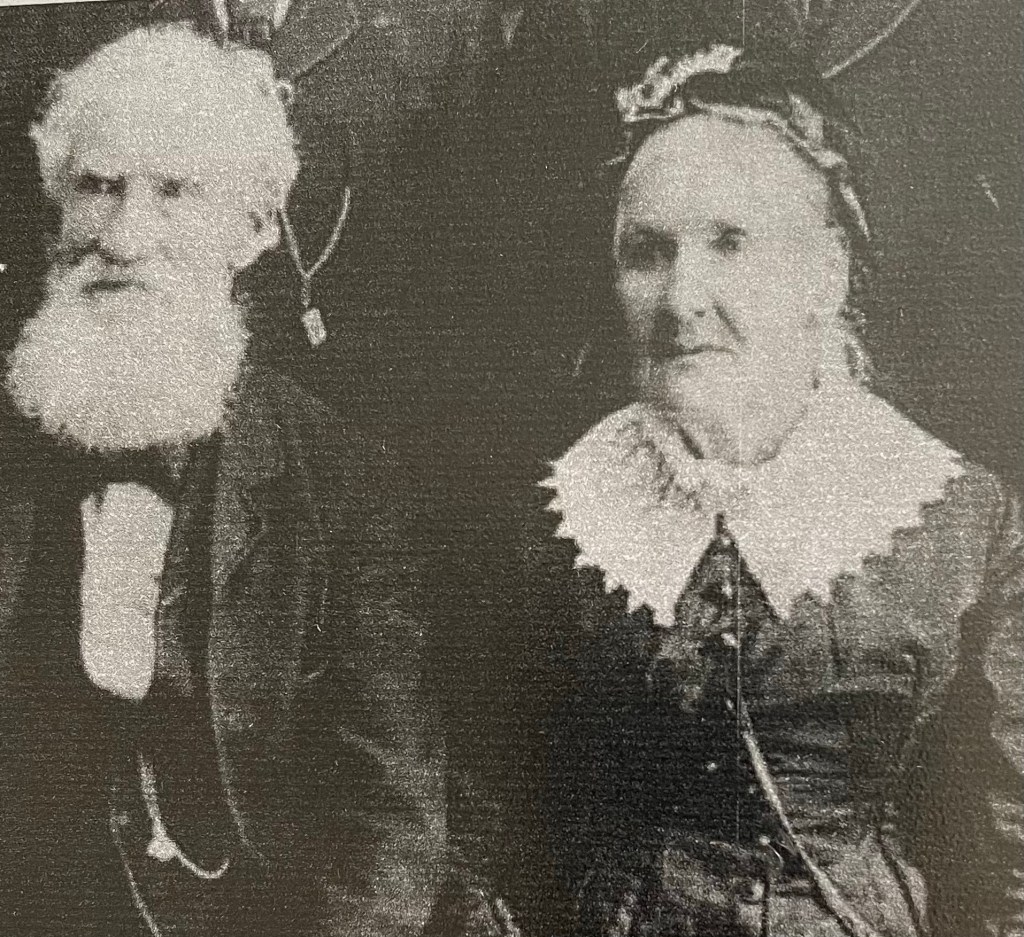
Andrew Wotherspoon was born on 31st July 1811 in Glasgow, Scotland. On 10 July 1836, he married Elizabeth Watson at Greenock, Scotland. Elizabeth Watson was born on 11 March 1817 in Glasgow, Scotland. She lived to the age of 76 years, dying on 13 September 1893. Andrew had predeceased her, dying on 18 April 1887, at the age of 75. Elizabeth is buried with Andrew in the North Lismore Cemetery. They are my great-great-great-grandparents.

Andrew and Elizabeth, later in life

Soon after they married, they boarded the ship James Pattison to sail to the Colonies. The ship, under the charge of James Cromarty, Master, set sail from Plymouth on 1 August 1838; it arrived in Port Jackson from England on 11 December 1838 with 300 emigrants in good health, including Andrew and Elizabeth Wotherspoon. So that arrival is 184 years ago today!

The James Pattison had twice sailed from England to the colonies with convicts (1829–30, and 1837). In between those trips, in 1835–36, the ship transported 238 free women, emigrating from Ireland to New South Wales. The 1838 trip was yet another journey bringing 300 emigrants to a new life in the colony. They were supplemented by the birth of five children during the voyage—although 11 people on board died during this trip to the colony, during which the ship became becalmed; she had to sail around Van Dieman’s Land rather than through the Bass Straight.

Prior to his marriage, Andrew had attended Glasgow University, taking courses in Latin and Greek; he completed his course in 1831, but did not matriculate, because he was a Free Presbyterian who held supreme allegiance to God, rather than any human monarch. Matriculation required swearing allegiance to the King, so he declined to participate.

Relatively few people, at that time, received education to such a level. Andrew, with his above-average educational achievements, spent much of his time in the Colony of New South Wales as a teacher—first, at the School of St John the Baptist’s Church in what is now the suburb of Reid on Canberra (in those days, it was part of the Queanbeyan district); then in Lismore, in the northern rivers region to the far north of NSW. He also worked as Postmaster in Lismore.

Before securing the teacher’s position at St John’s, probably in the mid-1840s, the records show that Andrew worked as a trunk maker in Sydney (1839), an ironmonger in Parramatta (1841), a clerk in Goulburn (1844), and then a teacher at Long Swamp near Bungendore (1846). These are the occupations that are noted in the church records for the baptism of the first four children of Elizabeth and Andrew.

Elizabeth was busy, of course, keeping home, giving birth to children, and being responsible for raising them. There were nine children in all. The firstborn, Janet Bell, bore the name of her maternal grandmother, Elizabeth’s mother, Janet Bell. She was born in Sydney on 24 Jan 1839.

Two years later, James was born in Sydney (born 29 April 1841, died 16 July 1923). Then came Walter, given the name of Elizabeth’s father, Walter Watson (born Goulburn 13.12.1843; died 20.3.1909), Robert Scott (born Goulburn 6. 5.1846; died 9.8.1893), and my great-grandmother, Eliza Jane (born Ginninderra 23.10.1848; died 22.8.1924).

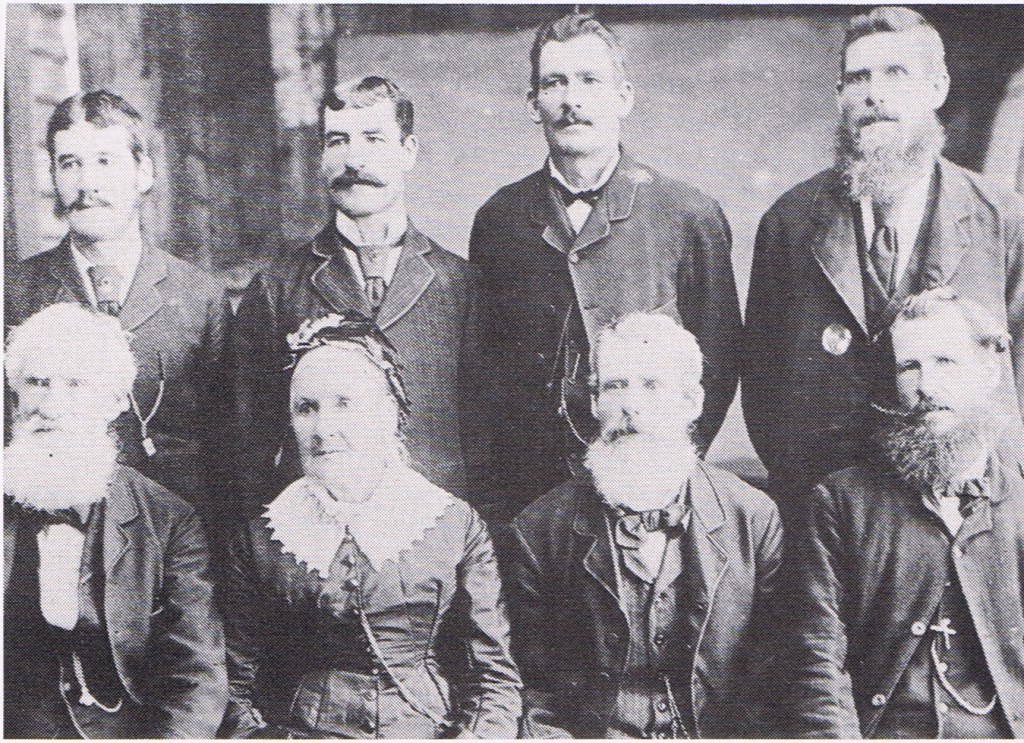
There followed William Watson (born Yass 23.10.1851; died 30.3.1894); Violet (born Ginninderra 17. 2.1854; died 27.3.1934); Andrew Morton (born Ginninderra 22.12.1857; died 10.10.1928) and Kenneth McDonald (born Queanbeyan, 13.3.1860; died 5.5.1943).

Andrew and Elizabeth with their sons
(but not daughters!!)

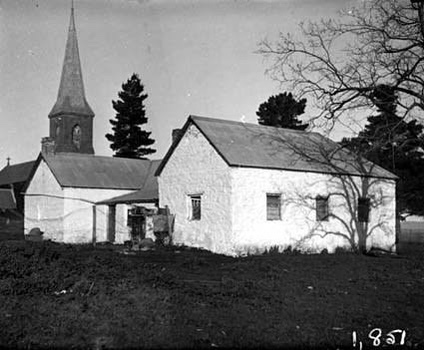
St. John’s Church was established on land owned by the Campbells of Duntroon in 1841 and St. John’s school was set up 4 years later. Andrew is recorded as the school teacher in 1848, but may have been teaching there earlier. He was dismissed by Charles Campbell after a disagreement between them in 1853. Wotherspoon left the school and took up farming at Goat Station, near Coppins Crossing.

Following a tragedy in the family on 3 March 1859, when his 20-year old daughter Janet was drowned, Andrew opened a school at Ginninderra which he conducted for a few years, whilst also running a sheep station there. He was again offered the St John’s school and he taught there in 1861 and 1862.

The schoolhouse beside St John the Baptist Church at Reid is now a Museum

Of course, at this time, there was no Canberra. Copping Crossing, Gininnderra, and the St John the Baptist church, all were outliers to the town of Queanbeyan, which grew from the residence established by an ex-convict and inn keeper, Timothy Beard, who squatted on the banks of the Molonglo River.

By 1838, when there were 50 people resident in the district, Queanbeyan was officially proclaimed a township. By 1860, the town had a regular newspaper, The Golden Age (it subsequently became the Queanbeyan Age). A regular letter-writer to this newspaper was one Andrew Wotherspoon. In my research I have discovered that my ancestor, a staunch Presbyterian, was aggrieved that, whilst he was able to teach at St John the Baptist, the Presbyterians were denied the use of the church for worship.

His letters, initially sent anonymously, were full-on, calling out the bigotry of the so-called Christians of the Anglican church. Mr George Campbell and Rev. P. G. Smith resented the implica­tions in these letters, and when the identity of the author finally became known they tried to have Wotherspoon dismissed. They failed. The letters to the press continued—bitter but truthful.

In the end, Wotherspoon was dismissed from his post, and he took his wife and children to Lismore on the north coast of New South Wales in 1863, where he became the first schoolteacher, and then the local Postmaster, from 1864 to 1871. It seems that his departure from St John’s School was also driven by reports of Andrew Wotherspoon’s involvement with a younger female person in the area.

There is a detailed discussion of events both in Queanbeyan (now Canberra) and then in Lismore, at https://archibaldcurrie.page.tl/Andrew-Wotherspoons-family.htm

Andrew was rarely free of public controversy, which the local newspapers happily reported. In 1867, for instance, six parents of schoolchildren taught by him had petitioned the Council of Education to investigate the incompetency of Mr Wotherspoon, alleging that their children’s education was being “neglected and retarded”. A School Inspector was sent to deal with the matter in 1870, and another in 1872, as a result of which Andrew was to be “severely reprimanded and cautioned”.

There was another petition in 1874, which upheld Andrew’s view of matters; but the opening of a rival school by the disgruntled parents led to a decline in enrolments at Andrew’s school, and he ceased teaching later in 1874. He opened a store in Woodlark St in 1876. He died in 1887 and Elizabeth died in 1893.

One of Andrew’s descendants, Noel Wotherspoon, has compiled a biography of Andrew and Elizabeth with an extensive family tree; he sorties, “Possibly some of Andrew’s (now) distant descendants may consider him to have been narrow minded—by today’s standards. However, no one could deny that he had the public courage of his convictions and does deserve great credit for a meritorious life.”

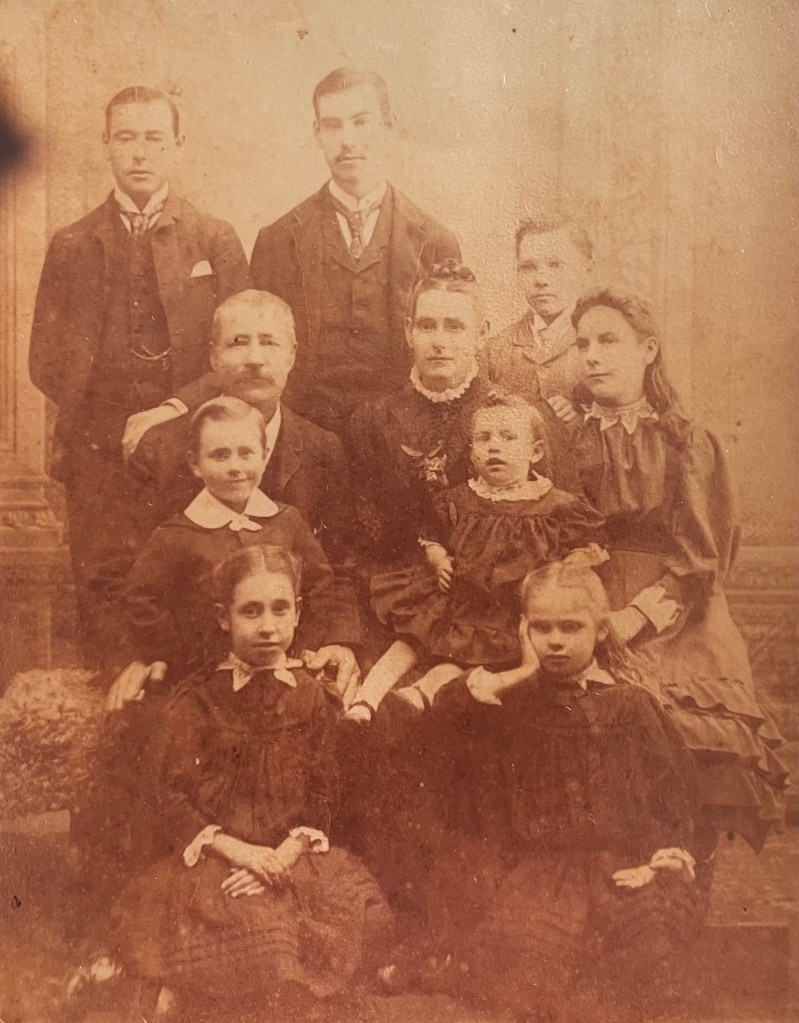
Eliza Jane, my great-great-grandmother,
with her second husband, James Walker,
and her children from both marriages.
Herbert Taylor is at the left rear.

My line of descent from Andrew and Elizabeth is through Eliza Jane (1848–1924), Herbert Taylor (1873–1931), Jack Leslie Taylor (1897–1968), and my mother, Joan Hazel Squires, née Taylor. I am grateful that Elizabeth and Andrew made the decision to travel to the Colony all those years ago!

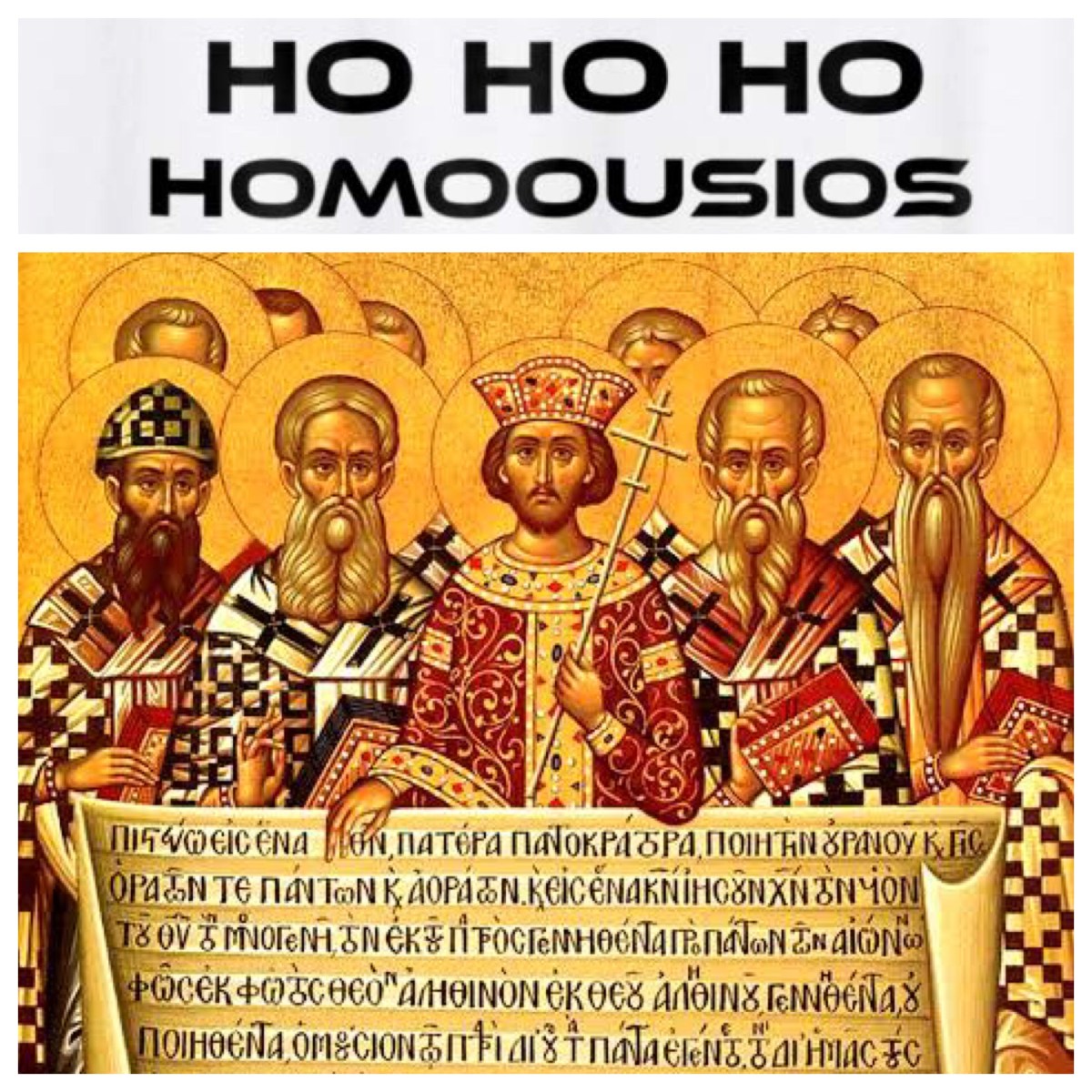
Putting the Homoousion back into Christmas

Four years ago I created my own contribution to the festive cheer, in the words below. I think that our Christmas carols need some rigorous theological input, so I am offering it up this year with my tongue still firmly in my cheek.

…..

As I listened to the mesmerising schloppp of the muzakked carols during my occasional forays into the shopping malls, and pondered the calls to put Christ back into Xmas, I thought that it was about time to finish the job that some of the traditional carols have only just started.

References to “Word of the Father now in flesh appearing”, and “Veiled in flesh the Godhead see”, are just the start. Explanations about the one who “abhors not the Virgin’s womb” really need to be expanded and developed. “Hail the incarnate Deity” needs to ring through all of our carolling. Surely, the carols we sing should joyously and vigorously affirm the fullness of our faith!!

With this in mind, in the spirit of the Wesleys (who took popular tunes and put Christian hymn lyrics to them), I have grabbed Jingle Bells by the short and danglies, and consulted with my resident critic and editor-in-chief, who has made sure that the verses, at least, conform to the scheme of rhyming pairs.

I therefore present the following offering, inspired by all that the Nicene-Chalcedonian tradition provides. And, in the spirit of this tradition, there is a special verse dedicated to the oft-overlooked Appendix to the Creed, which calls down a curse (an anathema, in Greek) on the heretics and their views.

Let the Homoousions rise to the heavens!

Enjoy!

1

Dashing through the mall

With a Christmas list to go,

Shoppers all around

Buzzing to and fro.

Carols sound on high

Repetitiously;

Santa, Rudolph, bells and snow,

But where can Jesus be?

Refrain A

Calchedon, Nicaea,

This is what we need:

Three in one and one in three,

Blessed Trinity, Hey!

God is now Incarnate,

God Emmanuel,

Human being, he became:

Homoousion!

2

Back in three two five,

The Emperor Constantine

Faced a mess of views,

which he needed to redeem.

“Sort this dogma mess,

Sort it once for all!”

And so the bishops did their job,

made a snappy Creed catch-all.

Refrain B

Jesus Christ, Son of God,

Essence of the Father,

Light from Light, and Very God,

Be-gotten not made. Hey!

Jesus Christ, Son of God,

Through whom all was made,

He came down, was incarnate,

Homoousion!

3

Though the bishops came,

met, and made a Creed,

Heretics were there,

Sowing their fake seeds.

So the Creed was stretched

To include some words

That ensured the views they held

Would damn them all with verbs:

Refrain C

Those who say, “he was not”,

Let them be accursed!

If they say “from naught he came”,

Let them be condemned! Hey!

If they claim “he’s changeable,

of quite another substance”,

Let them be condemned, we say,

Cast them out of church!

Refrain B

Jesus Christ, Son of God,

Essence of the Father,

Light from Light, and Very God,

Be-gotten not made. Hey!

Jesus Christ, Son of God,

Through whom all was made,

He came down, was incarnate,

Homoousion!

…..

The sections of the Nicene Creed which have informed this offering are:

We believe in one Lord Jesus Christ,

      the only Son of God,

      begotten from the Father before all ages,

           God from God,

           Light from Light,

           true God from true God,

      begotten, not made;

      of the same essence as the Father.

      Through him all things were made.

      For us and for our salvation

           he came down from heaven;

           he became incarnate by the Holy Spirit and the virgin Mary,

           and was made human.

and

‘There was a time when he was not;’ and ‘He was not before he was made;’ and ‘He was made out of nothing,’ or ‘He is of another substance’ or ‘essence,’ or ‘The Son of God is created,’ or ‘changeable,’ or ‘alterable’— they are condemned by the holy catholic and apostolic Church.

Joyfully hoping and waiting (Isa 35, Ps 146, and Matt 11; Advent 3C)

The readings for this coming Sunday really do go hand-in-hand. It is not always this way; for more than half the year, the First Reading, Epistle, and Gospel each go their own way, following their own independent sequential pathway of readings with little or no explicit acknowledgement of each other. Sometimes, hopefully, the Psalm will resonate with one or more of these readings. Not so, however, this Sunday—as, indeed, on each Sunday in Advent (and in Lent)—for the four readings for today were deliberately yoked together by the creators of the lectionary for this third Sunday in Advent.

The lines of connection are clear. “The wilderness and the dry land shall be glad, the desert shall rejoice and blossom; like the crocus it shall blossom abundantly, and rejoice with joy and singing”, declares the prophet (Isa 35:1–2). “The farmer waits for the precious crop from the earth, being patient with it until it receives the early and the late rains. You also must be patient”, advises the letter-writer (James 5:7–8). And Jesus hears the question of the disciples sent by John, “are you the one who is to come, or are we to wait for another?” (Matt 11:1–2). Waiting, with patience, for the long-desired coming.

The revolutionary impact of what is being waited for is also evident. “The eyes of the blind shall be opened, and the ears of the deaf unstopped; the lame shall leap like a deer, and the tongue of the speechless sing for joy”, the prophet sings exultantly (Isa 35:5–6). The Psalmist sounds, too, this song of sheer joy, praising “the God of Jacob … who executes justice for the oppressed; who gives food to the hungry … [who] sets the prisoners free, [who] opens the eyes of the blind, [who] lifts up those who are bowed down [and] loves the righteous, [who] watches over the strangers [and] upholds the orphan and the widow” (Ps 146:5, 7–9).

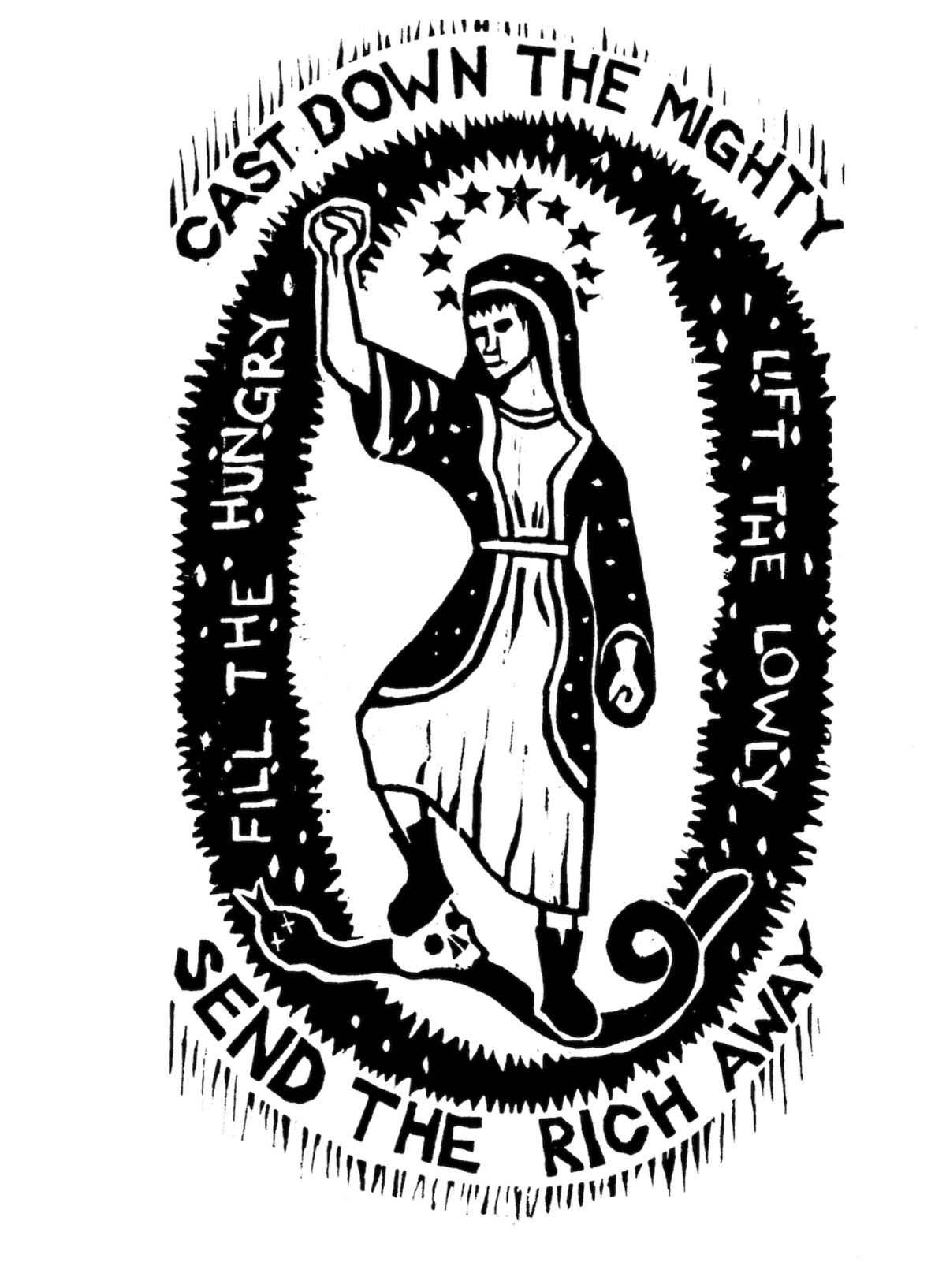
And Jesus himself informs the messengers sent by John that, yes, indeed, in what he is doing “the blind receive their sight, the lame walk, the lepers are cleansed, the deaf hear, the dead are raised, and the poor have good news brought to them” (Matt 11:5). In the alternate psalm offered by the lectionary, the young, pregnant, trusting Mary sings out loud that “the Mighty One … has scattered the proud in the thoughts of their hearts [and] has brought down the powerful from their thrones, and lifted up the lowly; he has filled the hungry with good things, and sent the rich away empty” (Luke 1:49, 51–53).

Indeed, this recitation of how God acts for the good in the lives of God’s people forms the foundational claim and then a recurring leitmotif in the Lukan account of the activities of Jesus throughout Galilee (Luke 4:18–19; 6:20–26; 7:22; 9:1–2; 10:8–9; 13:30; 14:11, 13–14, 21–24; 18:14, 22–25). An exact parallel to the declaration made by Jesus at Luke 7:22 forms the central claim in the passage from Matthew (11:2–11) that the lectionary offers us this coming Sunday. This upside-down kingdom, to be brought about by the righteous-justice of God (Matt 6:33), is at the heart of what we wait for, what we hope for, what we work towards.

So the prophetic word this Sunday looks to a time when “waters shall break forth in the wilderness, and streams in the desert; the burning sand shall become a pool, and the thirsty ground springs of water; the haunt of jackals shall become a swamp, the grass shall become reeds and rushes” (Isa 35:6–7). This is possible because it is the Lord “who made heaven and earth, the sea, and all that is in them; who keeps faith forever” (Ps 146:6).

The prophet envisages a highway, to be called “the Holy Way”, on which God’s people shall travel and not go astray, for all the familiar elements of danger will be absent. Safety is assured, for “no lion shall be there, nor shall any ravenous beast come up on it; they shall not be found there, but the redeemed shall walk there” (Isa 35:8–9). Joy and gladness will replace sorrow and sighing (Isa 35:10). An attitude of confident hope is called for as such a time is awaited, for “as an example of suffering and patience, beloved, take the prophets who spoke in the name of the Lord” (James 5:10).

There is a parallel to this eruption of joy during Lent, when in traditional practice the fourth Sunday in Lent was known as Laetere Sunday—from another Latin word meaning “rejoice”, which forms the opening of the introit for that day in the Latin Mass: Laetare Jerusalem et conventum facite omnes qui diligitis eam (“Rejoice with Jerusalem and be glad for her, all you that delight in her”, Isa 66:10).

These readings are intentionally clustered together for this coming Sunday, since it is, by tradition, known as Gaudate Sunday—from the Latin word meaning “rejoice”, the opening word of the introit to the Latin Mass for this day: Gaudete in Domino semper: iterum dico, gaudete (“rejoice in the Lord always; again I say, rejoice”, Phil 4:4). It is also known as Rose Sunday, and a rose colour can replace the purple of Advent for this day.

The note of rejoicing is clear in the Psalm, as “those whose help is the God of Jacob, whose hope is in the Lord their God” celebrate that “the Lord will reign forever” (Ps 146:5, 10). There is rejoicing envisaged by the prophet, as “the ransomed of the Lord return, and come to Zion with singing; everlasting joy shall be upon their heads” (Isa 35:10).

It is rejoicing which permeates every phrase of the young Mary’s insightful song, as her “soul magnifies the Lord” and her “spirit rejoices in God [her] Saviour” (Luke 1:46–47). And there was joy, surely, amongst the disciples of Jesus, as they heard the powerful words that he speaks in response to the request of John’s disciples, “are you the one who is to come, or are we to wait for another?” (Matt 11:3). They had been privileged to be there, alongside him, as these events transpired.

In Advent, our waiting with patient hope for the coming of Jesus transforms into proleptic joy—that is, joy which is expressed in advance of the actual event, in firm confidence that what is anticipated will, indeed, come to pass. In that sense, then, this coming Sunday is already a celebration-in-advance of the joy that overcame the wise ones (Matt 2:10) and, in another account, the shepherds (Luke 2:10, 20). It is a prefiguring of the joyous celebrations of the season Christmas. Enjoy!

Reimagining ministry in these different times

I have exercised ministries in the position of Presbytery Minister over the past 12 years, more than half of which have included an explicit linkage with a local Congregation as part of that ministry. I have served in my current position for forty-two months (initially in part-time supply, then fulltime from February 2020). On Thursday I became a retired minister, and today I have shared with friends and colleagues in a Closure of Ministry service for my role as Canberra Region Presbytery Minister–Wellbeing.

As I began this role, a huge swathe of the east coast of Australia was in the grip of multiple fires, during the Black Summer of 2019–2020. The air in Canberra was thick with smoke; one night, the fires came within just a few kilometres of our house. With most of the rest of our street, we stood in the dark, watching the flames at a distance, as planes and helicopters flew overhead, dropping water in an attempt to slow the spread of the fire. Many communities within the Canberra Region Presbytery were seriously impacted by these fires. It was a time of great tension, and continued breathing difficulties.

As the fires diminished, our car was caught outside in a hailstorm that raced through Canberra. Then a few weeks later, we began learning of the virus that was infecting many and spreading rapidly; and so much of the next two and a half years would be spent in lockdown, with all worship, Bible study, fellowship, and organisational meetings held online. It has been quite a learning curve!! And then, multiple times in the ensuing months, friends and family members in various locations were forced to leave their houses, as rain far beyond the normal range fell, flooding river systems and causing widespread havoc.

So there have been fires and smoke, a hailstorm, a viral pandemic–the plague, it would once have been called–and floods. All very apocalyptic!!

In the midst of this, I have exercised ministry. At the end of my time in stipended ministry in formal placements, as I step into a period of unstipended, non-placement, but perhaps still somewhat active, ministry, my thoughts have turned to what I have learned, what I have valued, what I would wish for, and what I might say.

Ministry is both a calling and a profession. Ministry is taken up as Jesus invites his faithful followers to live out their faith in adventurous ways. Over the last two years and more, restrictions on gathering in person have led to a suspension of the regular activities of the church–worship, fellowship, prayer groups and bible studies, discipleship activities, training courses.

Then, as restrictions were eased, a return to each of these forms of gathering became possible. But, as we regathered, under the conditions of the COVID Safe Plans that were required, it became obvious that we were not simply entering a “back to normal” phase. Each form of gathering would be different from the earlier, more familiar, form of gathering. Yes, there would be familiar elements; but there would be additional requirements, and some changes in what we do when we gather.

In short, we were moving on into a different form of gathering–be that for worship, for study, for prayer, for meeting, for learning, or for sharing the Gospel with others. In contrast to the pre-COVID period (a time of settled familiarity in our various gatherings), we were now moving into a time of post-COVID realities–or, at least, a time when the realities of COVID needed to co-exist with the hopes about how we might gather, informed by the traditional practices of the pre-COVID period.

All of this has presented a challenge to the church, as we have grappled with what is possible at each stage of the process. All of this has also opened an opportunity to rethink what we do and reimagine how we might go forward. Many Congregations have been doing exactly this.

Alongside this review and reshaping of congregational life, a similar revisioning and reimagining of ministry can be–indeed, should be–taking place. Ministry itself can be reviewed and reshaped in this current time.

*****

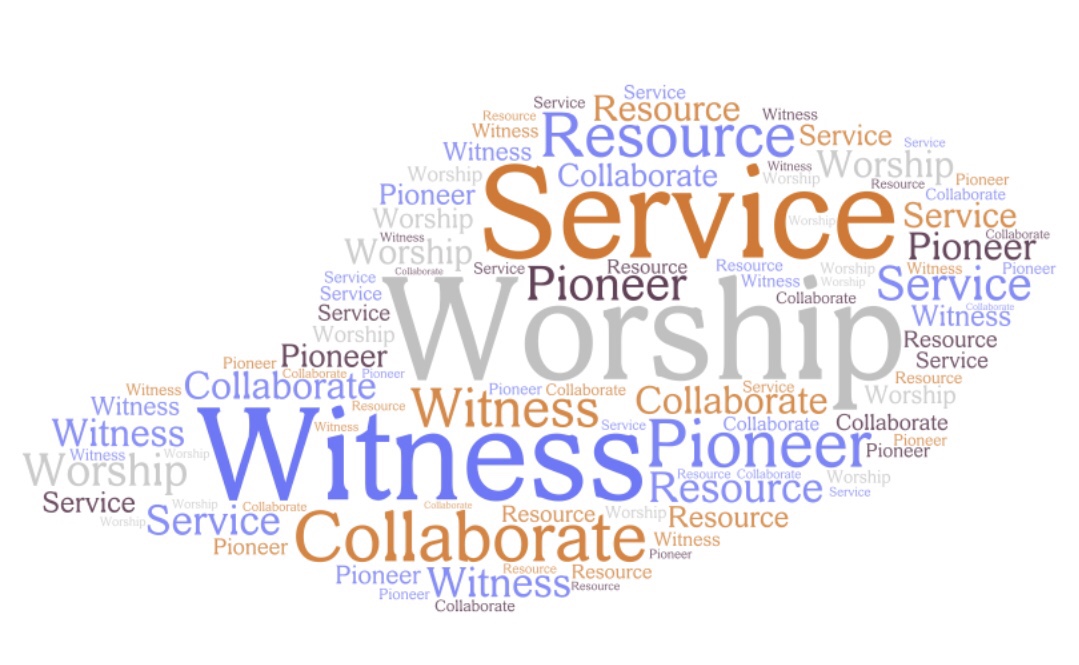
So in what follows, I want to offer a proposal about how we think about ministry in a refreshed way: that we might consider ministry to be a call to be on mission, through worship, witness and service, as we collaborate, resource, and pioneer.

These last three terms–collaborate, resource, and pioneer–invite us to approach ministry in a different way, when compared with the “traditional minister” of years past. These terms might sound like a different approach to ministry–different from the “preach the word, celebrate the sacraments, visit the people” pattern that shaped ministry for so many decades in the past.

Yet all three terms can be found in that section of the Regulations of the Uniting Church in Australia about the duties of a Minister. The Regulations provide a clear and comprehensive statement of the various duties that are expected of a Minister. (The full list is pasted below, from section 2.2.1 of the Regulations.)

Before we turn to this document, however, let me explain that I am using the term “Minister” to refer to a Minister of the Word or a Deacon, the two specified ministries to which people are ordained for life and for whom the normal form of ministry is exercised through placements under the oversight of the Presbytery. This is in accord with the definition that is given in section 3 of the UCA Constitution.

Deacons and Ministers of the Word are exercising their ministries in different, perhaps unprecedented, ways, in this current situation of change. The months where restrictions have been in place, prohibiting gatherings in person, have presented a challenge to many of my colleagues.

Our sense of what it is that we were called to, and how we have come to operate in response to that calling, has come to confront head-on the need to operate in different ways in this circumstance. How prepared are we, collectively, and individually, to meet these challenges and to re-orient our ministries to fit the new situation?

Tradition has seen that the role of Ministers has been to preach the Gospel, preside at the sacraments, and offer pastoral care. That threefold pattern has a long and valued history. I still hear it stated, from time to time, in the present age.

However, learning to do things differently, and re-prioritising what we do in ministry, is the challenge of the moment. I think it is worthwhile highlighting some of the points contained in this Regulation, to show that our ministerial charter actually invites and encourages us to engage in this process.

*****

Let’s start with the final point in that list of ministerial responsibilities, that a Minister will be involved in pioneering new expressions of the gospel. This contains a clear call to move beyond the “traditional” expectations of a Minister–that she or he will preach, undertake pastoral visitation, and organise the business of the congregation (which is perhaps the traditional way of reading a statement contained in the Basis of Union).

The restrictions of the past few months have forced us to develop new ways of ministering: new patterns of online worship, study groups online, distributing worship materials by email or post, and providing practical assistance through doorstop calls. We have developed new patterns of working, whilst new skills have been needed to minister effectively. Creativity has flourished under this stimulus.

The other clause in this final Regulation orients ministry in the same direction, emphasising the collegial or communal nature of the role of the Minister: that of encouraging effective ways of fulfilling the mission of the Church. This means that it is not up to “the Minister alone” to pioneer new expressions and develop the missional impetus of the church. It is to be “encouraged” by sharing the task with others–and presumably equipping those people to be effective in that role.

And that goal, to fulfil the mission of the church, has been to the fore in all that has been undertaken, in new ways, over recent times, as people have worked together in different ways–and as people previously unconnected or rarely engaged with each other, have co-operated and collaborated in many ways.

The same collegial and resourcing role is articulated in clause (iii). This clause follows two earlier clauses which specify that the Minister presides and preaches, but now it goes on to say that the Minister is charged with providing for other persons to undertake these roles.

That means that the Minister does not necessarily occupy the worship leading and preaching role for 48 Sundays a year (allowing for annual leave), but makes provision for sharing this role with others — who presumably are trained and equipped in appropriate ways for this role. I know of a number of Congregations where lay people have provided worship leadership for online gatherings, for instance, in situations where they have been reticent to do so in gatherings in person.

*****

The Basis of Union, at a number of points, identifies worship, witness and service as the lynchpin of the work of the congregation. Interestingly, whilst the “traditional” role of worship is embedded into the duties of the Minister, so too is witness specified at clause (iv) and service is likewise identified at clause (viii).

So what is expected of the congregation as a whole, is to be modelled and implemented by the Minister, personally, in their ministry. Those who argue that the Minister has a primary focus on worship and preaching, supplemented by pastoral care and administration, are not actually reading their Regulations carefully!

The “traditional” role of the Minister (the solo individual who preaches, presides, visits, and chairs) is so, so far removed from what the UCA Regulations actually articulate. We are called to be on mission, through worship, witness and service, collaborating, resourcing, and pioneering. It is a fine calling–and the challenges of the current context both enhance and challenge the way that we seek to carry that out.

*****

Regulation 2.2.1

(a) Within the ministry of the whole Church, Jesus Christ calls men and women to proclamation of the gospel in word and deed through the ministry of the Word and the ministry of Deacon. This calling is exercised by:

(i) preaching of the Word;

(ii) presiding at the celebration of the sacraments;

(iii) providing for other persons to preside at worship and/or preach within the pastoral charge in which the Minister is in placement;

(iv) witnessing in the community to the gospel of Jesus Christ;

(v) guiding and instructing the members of the Church and equipping them for their ministry in the community;

(vi) nurturing candidates for baptism and confirmation;

(vii) pastoral oversight and counsel wherever needed;

(viii) serving in the community, especially among those who are hurt, dis-advantaged, oppressed or marginalized;

(ix) careful attention to administrative responsibilities;

(x) due observance of the discipline of the Church;

(xi) the enhancement of the Minister’s own gifts for the work of ministry;

(xii) pioneering new expressions of the gospel and encouraging effective ways of fulfilling the mission of the Church.

*****

See also a series of posts that I made during 2020 about the challenges being faced and the changes being undertaken:

See also https://johntsquires.com/2019/11/14/ministry-and-mission-in-the-midst-of-change-and-transition-luke-2113/

https://johntsquires.com/2020/05/05/the-times-they-are-are-a-changin/

https://johntsquires.com/2020/05/04/not-this-year-so-what-about-next-year/

https://johntsquires.com/2020/04/22/its-been-just-over-a-month-but-there-have-been-lots-of-learnings/

https://johntsquires.com/2020/03/15/when-you-come-together-reflections-on-community-in-the-midst-of-a-pandemic/

https://johntsquires.com/2020/06/16/going-back-to-church-what-will-our-future-look-like-4/

https://johntsquires.com/2020/06/03/greet-one-another-2-cor-13-but-no-holy-kissing-and-no-joyful-singing/

https://johntsquires.com/2020/05/29/worship-like-the-first-christians-what-will-our-future-look-like-3/

https://johntsquires.com/2020/05/24/its-been-two-months-under-restrictions-what-will-our-future-look-like-2/

https://johntsquires.com/2020/05/22/its-been-two-months-under-restrictions-what-will-our-future-look-like-1/


Priorities in ministry: an ordination anniversary reflection

“Well, you only really work one day a week, don’t you?” After decades in ministry, I am not sure I can count how many times I have heard this comment—sometime flippant, but often rather serious.

Of course, ministers do not work only one day a week! That stereotype is based on the perception that the weekly sermon is the sum total of the work of ministry. Whilst it is true that many of my Protestant colleagues see the sermon as the most important, or critically significant, element of their weekly work, it is definitely the case that the work of ministry stretches far and wide beyond the weekly sermon.

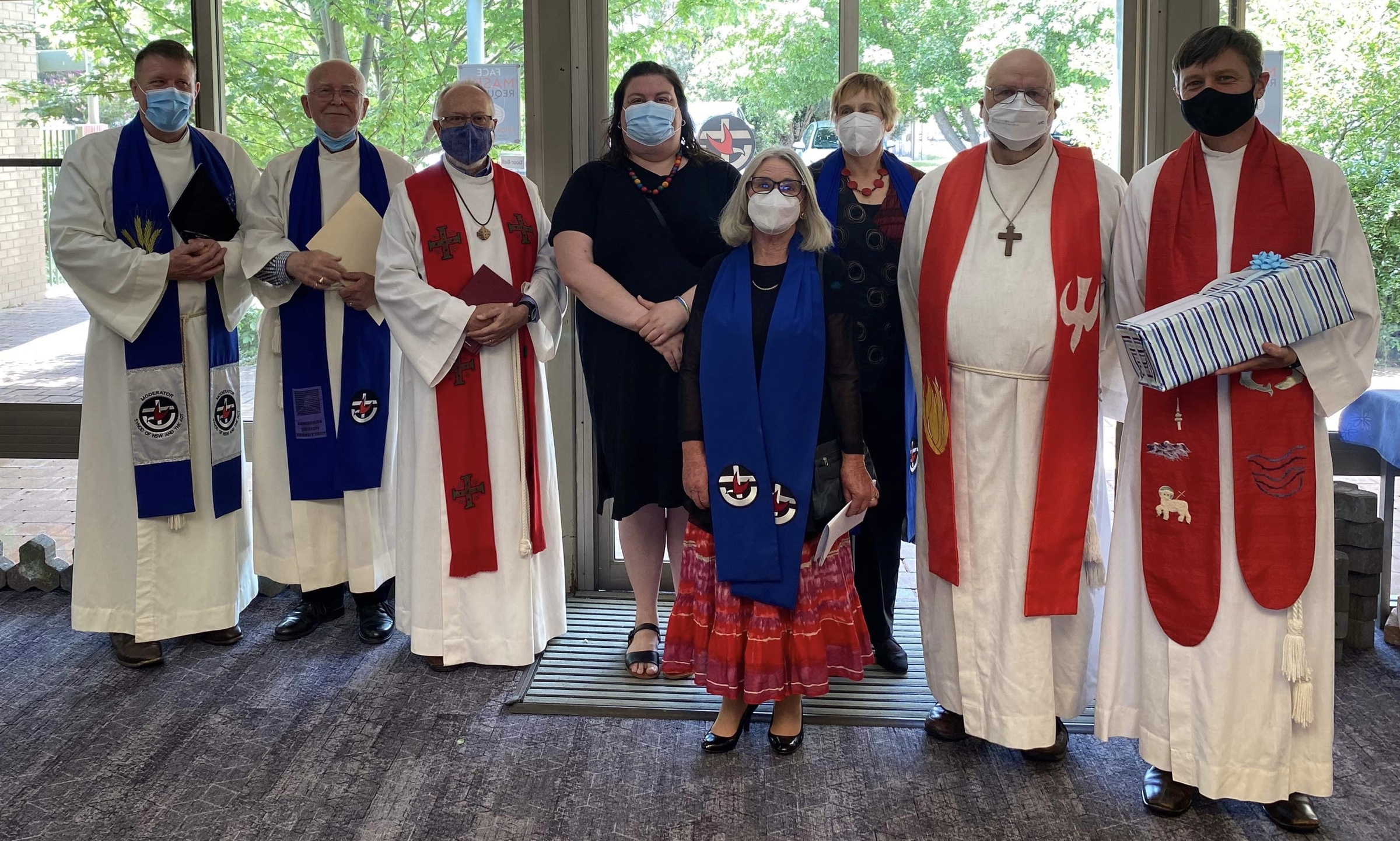
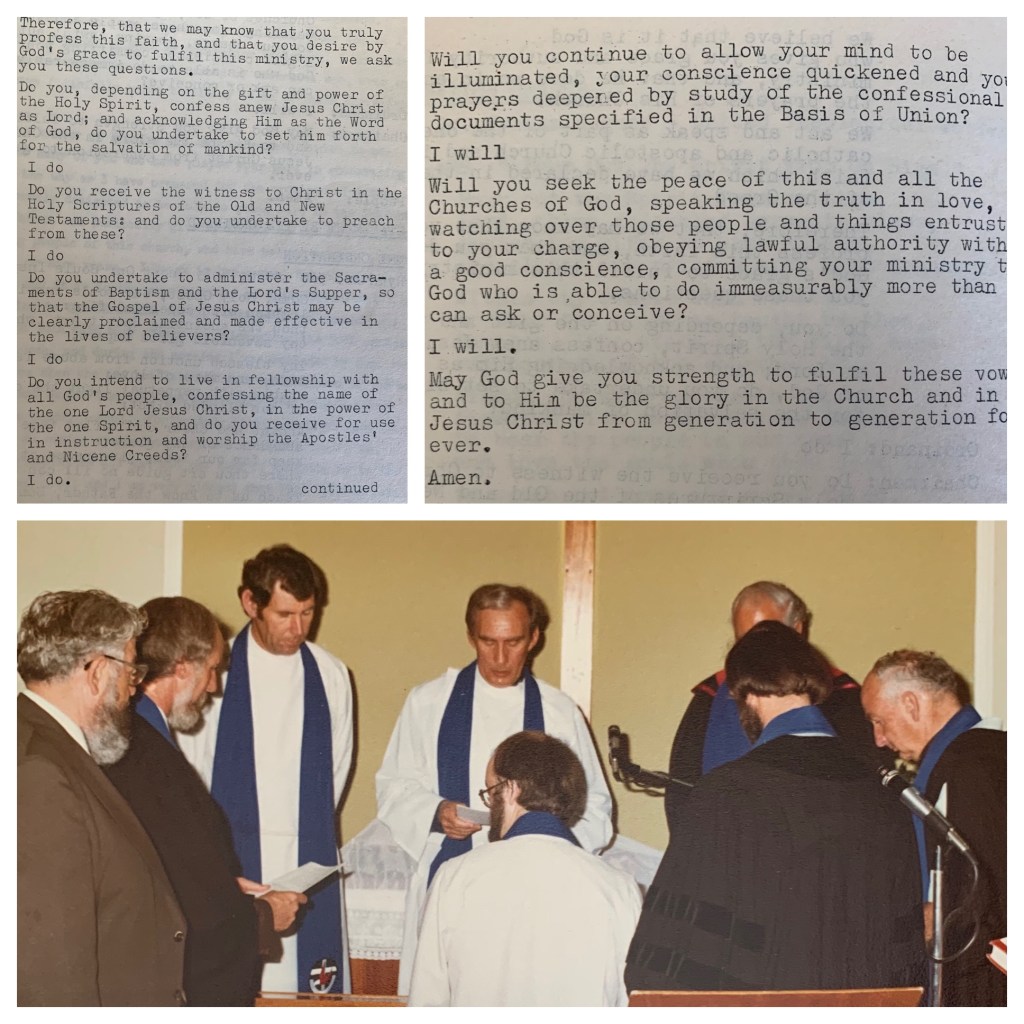
Today is the 42nd anniversary of my ordination; I was set aside to the Ministry of the Word in the Uniting Church in Australia in a service that took place on 3 December 1980 in my home Congregation of Seaforth, amongst the cloud of witnesses that had surrounded me in my early decades.

I have been privileged to have spent time in congregational ministry in two rural areas and one urban location, in regional roles in two presbyteries, in educational roles in two synods, and to have served the Assembly on a number of committees, as well as multiple committees in synod and presbytery roles over the years.

I have worked with some fine colleagues in each of these placements. And in each place, I have sought to live out those vows that I took at ordination, in the exercise of my ministry at Southern Illawarra and Waverley, in years of study at New Haven and two decades of teaching at North Parramatta, in sabbatical periods at Durham and Cambridge, back in ministry at Wauchope and the Mid North Coast Presbytery, in the venture overwest to Perth, and then at Queanbeyan and in this most recent Presbytery role.

In each of these placements, I have been comforted (and challenged) by the way that the Uniting Church articulates the various responsibilities of a minister. They are set out in section 2.2.1 of the national Regulations. The expression of those responsibilities has changed somewhat over time, although the basic shape of these responsibilities remains consistent in its focus. But there have been some interesting refinements over time.

(The current version of the Regulations is cited at the end of this blog.)

To start, we can note that preaching is given the first place in the list. Is this significant? Certainly, in the history of Protestant churches, the priority accorded to preaching is clear. And I know of colleagues today, who insist that, whatever else is happening, preparation of the weekly sermon is their first priority each week. That is central to our tradition.

Of course, preaching is not held exclusively to the ordained ministers. The Methodist Church contributed the ministry of lay people as preachers to the Uniting Church when it was formed, and Lay Preachers are now one of four specified ministries within the UCA, alongside the lay ministry of Pastor and the two ordained ministries of Deacon and Minister of the Word.

Second, presiding is noted. That sits hand in hand with the role of preaching; these are two of the key aspects in leading worship within the gathered community of faithful people. Leading prayers, reading scripture, explaining and expounding the message, baptising new members of the community, and gathering people around the table of the Lord at communion, are key aspects of leading worship on a regular basis.

Once again, presiding at the sacraments, within current Uniting Church understanding, is not limited exclusively to ordained people; in situations where access to an ordained minister is not regularly available, authorised lay people can preside, after having completed a training course and being recommended by their Church Council.

In fact, the third clause places conditions around the way that a minister exercises the roles of presider and preacher. The leading of worship is to be a shared, collaborative, team-based enterprise. All ministers should, in their practice, cultivate a team of people who can not only read scripture and lead prayers, but also preach and, if need be, preside at baptisms and communion within the placement. Certainly, neither the pulpit nor the table is the exclusive preserve of ordained ministers, as we have noted.

Clauses 3, 5 and 6 each indicate that a key function of ministry is to prepare others: prepare people to lead worship, prepare people to be baptised or confirmed within the church, prepare people to be faithful and more effective disciples, and prepare people to engage in the mission to which the church is committed. Each minister within the UCA is to exercise a ministry of education, training, equipping, resourcing. All ministers are educators; all ministers are called to build up the body of Christ by enabling others to exercise their gifts for ministry and carry out their roles in mission.

The classic understanding of ministry, which is even articulated at points in the Basis of Union, is that the minister the threefold role of preacher, presider, and pastor. Clause 7 addresses the matter of pastoring. Is it significant that this function is quite some way down the list? If the order is in any way significant, we should pause at this point and ponder the traditional expectation that the minister provides pastoral care to all members of the congregation. This is not what the Regulations specify.

And is it also significant, that pastoring the people is (like preaching and leading worship) not the preserve of the ordained alone? That is, all people are called to show care and concern for others. The role of pastor is exercised by those in ministry as an oversight role, ensuring that a team of pastoral careers or elders provide regular and personalised pastoral care. The clause is also made conditional by the phrase “wherever needed”, which suggests that what is in view is a responsive form of pastoring, on a needs basis, rather than a regular “visit the flock every three months” prescription simply because “that is what the minister does”.

Are ministers called to be prophets? Some colleagues that I know place a high value on this role. Nothing explicitly identifies this role, however. Yet understanding how the Bible relates to contemporary situations, and articulating the way that the Gospel speaks into our context, has a dynamic that is very similar to the dynamic that the prophets of old knew very well.

What is “the word of the Lord” for this situation? How do we do just that, in our preaching and teaching? What are the words that best identify prejudices and expose injustices, that advocate for the poor and speak for the voiceless or disempowered? That’s functioning as a prophet.

Practising faith, as a committed disciple, is indicated by a number of clauses. Clause 4 prescribes that ministers bear witness to their faith, while clauses 8, on serving, and 11, on being a committed lifelong learner, also relate to this important dimension of ministry. We need to live, and model, exactly what we say to others, in our own lives.

The final clause addresses the mission of the church. It specifies that Ministers will find ways to be effective in fulfilling that mission. Maintenance is not adequate. Missionary impetus is essential. And “pioneering new expressions of the Gospel” is integral to that process.

This final clause envisages that all ministers will be equally pioneers in mission, as much as they are preachers and presiders, or practising their faith and preparing others for leadership roles in their discipleship. Pioneering is closely linked to “fulfilling the mission of the church”. Over the centuries, the church has regularly reinvented itself, finding new forms for worship, for service, for witness, for fellowship. We need to keep doing that in our own times, to continue being effective in mission.

And might the last clause (following a familiar scriptural dictate) be made first? What would our ministry, and our mission, look like, if each minister made the task of “pioneering new expressions of faith” as their first priority—and, by implication, relegated preaching to a lower spot, maybe even the last spot, on the list? It is a challenge—but I think this might be an important clue for the way ahead.

See further at https://johntsquires.com/2022/12/04/reimagining-ministry-in-these-different-times/

*****

UCA Regulations 2.2.1

Within the ministry of the whole Church, Jesus Christ calls men and women to proclamation of the gospel in word and deed through the ministry of the Word and the ministry of Deacon. This calling is exercised by:

(i) preaching of the Word;

(ii) presiding at the celebration of the sacraments;

(iii) providing for other persons to preside at worship and/or preach within the pastoral charge in which the Minister is in placement;

(iv) witnessing in the community to the gospel of Jesus Christ;

(v) guiding and instructing the members of the Church and equipping them for their ministry in the community;

(vi) nurturing candidates for baptism and confirmation;

(vii) pastoral oversight and counsel wherever needed;

(viii) serving in the community, especially among those who are hurt, disadvantaged, oppressed or marginalized;

(ix) careful attention to administrative responsibilities;

(x) due observance of the discipline of the Church;

(xi) the enhancement of the Minister‘s own gifts for the work of ministry;

(xii) pioneering new expressions of the gospel and encouraging effective ways of fulfilling the mission of the Church.

The achievements of the Whitlam Government, 50 years later

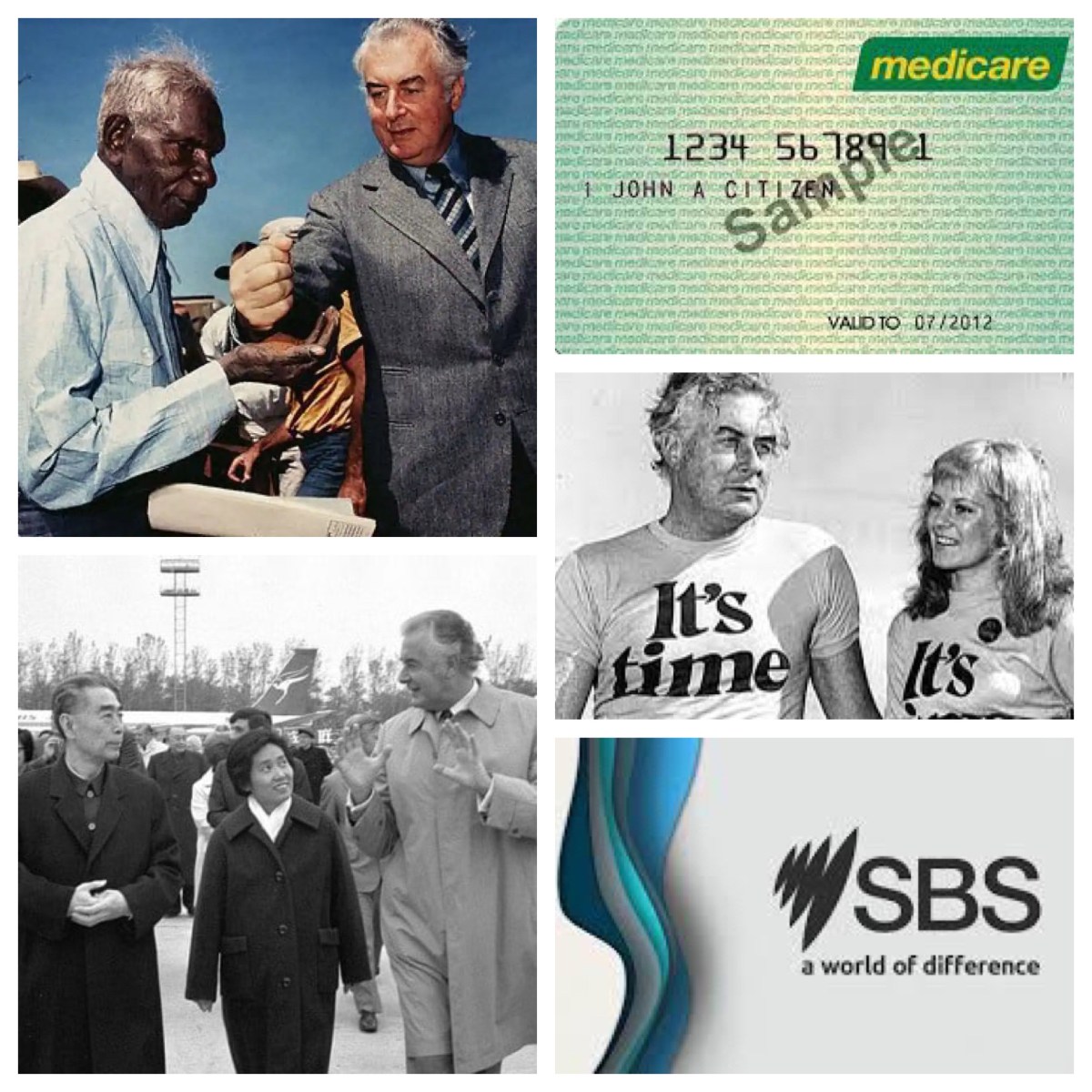
It was fifty years ago today (2 December 1972) that the Australian electorate came to its senses after 23 years of stodgy, backward-looking conservative coalition governments. Gough Whitlam led the Labor Party to a victory over a shrivelled and useless McMahon—Anthony coalition.

In three dynamic years, the Whitlam Government effected many overdue and very welcome changes, in so many areas:

Race relationships: the White Australia Policy was abolished, the Racial Discrimination Act began the move into multiculturalism for Australia

Land rights: returning land to the Gurindiji people in the Northern Territory began the process that led to the Mabo and Wik judgements; free Aboriginal legal services were also established

Education: free higher education was introduced, making hundreds and thousands of Australians the first in their family able to go to university

Civil rights: both conscription into the armed forces and the death penalty were abolished

Healthcare: Medicare brought universal healthcare for all Australians, providing access to GPs and hospitals at minimal cost

Rights for women: no-fault divorce meant that women could chose to leave an unhappy marriage without being financially burdened; removing the tax on contraceptives meant the Pill was made affordable and accessible; the equal pay case meant women would be more fairly compensated in employment

Foreign affairs: Whitlam was the first Western leader to visit China, reorienting our focus to Asia, leading to a flourishing trade with the region

The Arts: funding to the arts was doubled, the National Gallery, the Australian Council for the Arts, and SBS were all established

All of this, and more, to be thankful for!

See more at https://www.whitlam.org/studying-whitlam

and https://johntsquires.com/2022/05/26/fifty-years-of-naidoc-week-1/