Skip to content

An Informed Faith

John T Squires

An Informed Faith

Category: An Orderly Account: Gospel of Luke

Stephen: deacon and prophet, martyr and disciple

Stephen: deacon and prophet, martyr and disciple

26 December is the day when the Western Church especially recognises Stephen, the person who lays claim to being the first Christian martyr. (The Eastern Church allocates 27 December for this purpose). In reflecting on Stephen, we find a richness in what Luke recounts in his second volume, the Acts of the Apostles. Here are seven things to note about Stephen.

  1. Stephen represents the ministry of Deacon. He was one of the seven appointed in the Jerusalem church “to wait on tables” during “the daily distribution of food”. In this account, we find the Greek term diakonia (6:1,4) and its cognate verb (6:2). These terms have a general reference to waiting at table in ordinary hellenistic Greek usage (Luke 4:39; 10:40; 12:37; 17:8), but here take on the distinctive sense which they collect in Luke-Acts, by referring to a leadership role in the community (Luke 8:3; 22:26-27; Acts 1:17,25; 12:25; 19:22; 20:24; 21:19).
  2. Stephen represents those gifted by the Spirit for ministry. As the first named of the seven, he is explicitly identified as being “a man full of faith and the Holy Spirit” (Acts 6:5). The phrase “filled with the Spirit” is applied to Peter (4:8), Stephen (6:3,5; 7:55), Saul (9:17; 13:9) and Barnabas (11:24). Earlier, in Luke’s Gospel, other individuals were identified as spirit-filled: John the baptiser (1:15), Zachariah (1:67), Simeon (2:25-26) and Jesus himself (4:1,14). The phrase “full of faith and the Holy Spirit” reinforces the role of the spirit-filled prophet within the messianic Jewish community. Indeed, all members of this community are typically “filled with the spirit” (4:31). They all had a ministry to exercise.
  3. Stephen exemplifies grace, wisdom and power–qualities to be found amongst those in ministry and leadership. Stephen is described as being “full of grace” (6:8), a defining mark of the community noted at 2:47, 4:33, and of power, a divine gift (2:22) exhibited by the apostles (4:33). He is able to perform wonders and signs (6:8), a divinely-inspired capacity (2:19) exhibited by Jesus (2:22) and the apostles (2:43; 5:12). Luke notes again that Stephen speaks with “wisdom and spirit” (6:10), attributes already noted as divine in origin the spirit is a direct gift of God (2:17), as is faith, or believing (5:14); wisdom is given by God (7:10) and is linked with spirit (6:3,10) and other divine gifts (grace, 7:10; power, 7:22).
  4. Stephen also represents those called to the Ministry of the Word. Acts 7 contains the longest speech of the book (and the only one spoken by Stephen). Stephen is portrayed as one powerful speaker. The speech serves to set the events that took place in Jerusalem (the accusations brought against Stephen, 6:9-15; and the stoning of Stephen, 7:51-60) within the broader framework of divine sovereignty (how God has been at work in Israel, 7:2-50). As is typical of speeches in Acts, Stephen makes God the subject of the speech (7:2); we see the same pattern in speeches by Peter (2:17; 3:13; 5:30) and Paul (13:17, 21; 17). The phrase used here, “the God of glory”, is drawn from scripture (Ps 29:3), and retells the story with this consistent perspective: what took place in the past was God working in and through human history. God is regularly the initiator of the actions reported (see verses 2,4,5,6,9,10,20,25,32,36,38,42,44,45,46).
  5. Stephen represents the continuation of the prophetic tradition in the early church. The speech Luke places on the lips of Stephen rebuts the charges that have been laid against Stephen; it demonstrates that, far from speaking “blasphemous words against God” (6:11), Stephen has a fulsome understanding of God’s place in Israel’s history. At the end of his speech, Stephen takes up the charge that he spoke “against the holy place” (6:13). Luke has Stephen quote scripture (7:49-50, citing Isa 66:1-2) in order to show that his criticism of the temple (God’s “place of rest”, 7:49) arises from within Jewish tradition itself. There are numerous scriptural allusions and quotations in this speech by Stephen. He provides a detailed rehearsal of significant parts of Israel’s history, by focussing in turn on Abraham (7:2-8), Joseph (7:9-16) and Moses (7:17-44). Then, after making brief mention of Joshua (7:45a), David (7:45b-46) and Solomon (7:47), Stephen moves to the climactic claim of the speech (7:48-53). Now, lengthy recitals of key features of Israel’s history are already found in Hebrew Scripture (Deut 26; Josh 24; Neh 9; Pss 78; 105; 106; 135; 136; Ezek 20). The long recital of the earlier part of Israel’s history reinforces Stephen’s Jewish credentials. When he begins to speak critically of the temple, and of the Jerusalem authorities, it is clear that he does so from within the Jewish tradition. Stephen is not an outsider, but an insider, offering a prophetic critique. This is at the heart of the proclamation of the good news.
  6. Stephen represents martyrs—those who bear witness to their faith, to the point of offering up their own lives. The Greek word martys actually derives from the word to bear witness; it is applied to Stephen at Acts 22:20, and this usage has come to define its central quality in later Christian thinking. Stephen stands for what he believes, to the point of death. The task of bearing witness is enabled by the gift of the spirit and given to all followers of Jesus (1:8), but Stephen is the first to reveal the extent to wich bearing witness requires total life commitment. The Greek word stephanos means “crown”, and much has been made of this in later Christian tradition (the crown of martyrdom, etc); but Luke avoids any such wordplay in his account of Stephen. In Luke’s description of the charges brought against Stephen in Jerusalem (Acts 6), there are echoes of the charged laid against Jesus, according to Synoptic traditions. Those in conflict with Stephen are Diaspora Jews who have returned to Jerusalem, where they worship in a synagogue (6:9). They conscript agitators to stir up the crowd (6:11-12). This is reminiscent of a detail in the trial of Jesus (Mark 15:11; Matt 27:20) which Luke omits, transferring it to Stephen’s trial. Similar agitation of the crowd will later be encountered by Paul (13:50; 14:19; 17:5,13); in Luke’s eyes, it is a typical characteristic of what was experienced by the early followers of Jesus. Likewise, the “false witnesses” who accuse Stephen of speaking against the temple (6:13) recall the false witnesses who charge Jesus with the claim that he would destroy the temple (Mark 14:55-58; Matt 26:59-61). This is another detail which Luke omits from his Gospel narrative and transfers to Stephen’s trial. The speech which Stephen delivers thus serves as the “defence speech” in his trial; a true witness to God, over against the charge of the false witnesses.
  7. Stephen shows us what it means to follow Jesus. Luke consciously models Stephen’s death on the death scene of Jesus (7:54-60; cf. Luke 23:34, 44-46). He is once again described as “filled with the spirit” (7:55, evoking 6:3,5), and he experiences an epiphany in which he sees “the glory of God” (7:55). At this liminal moment, Stephen is already transported into the divine presence. The same happens for Jesus in Luke’s account of his crucifixion. In 7:56, when Stephen describes the heavens opening, he evokes the Lukan account of Jesus’ baptism (Luke 3:21), and his vision of the Son of Man is similar to the apocalyptic  vision which Jesus paints at his trial (Luke 22:69). In both scenes, it is as if God intervenes into the events taking place. Stephen’s two cries “in a great voice” (7:57,60) are reminiscent of the death of Jesus (Luke 23:46), and his dying words, “receive my spirit” (7:59), are patterned on the final words of the Lukan Jesus (Luke 23:46, citing Ps 31:6). He is close to God at his  death—as is the Lukan Jesus. Stephen’s last cry, a petition that the Lord overlook this sin (7:60), is similarly evocative of the words of the Lukan Jesus, offering forgiveness to those who crucified him (Luke 23:34). In life, and in death, Stephen faithfully follows Jesus.

(These reflections are adapted from sections of my commentary on Acts, published in 2003 in the Eerdmans Commentary on the Bible.)

See also https://johntsquires.com/2018/12/26/ye-who-now-will-bless-the-poor-shall-yourselves-find-blessing/
Unknown's avatarAuthor John T SquiresPosted on December 26, 2022December 23, 2022Categories An Orderly Account: Gospel of LukeTags deacon, StephenLeave a comment on Stephen: deacon and prophet, martyr and disciple

The birthing

The birthing

Not wise ones, not foreign, exotic and learned;
but shepherds unnamed, keeping watch in the fields;
impure and unclean, outsiders, at best;
some scorn them, and say
they are robbers.

Not great men, prestigious, important and powerful;
but common folk, forced to be on the move;
back to his home town, seeking their refuge,
a place of safety, where she
gives birth.

No gold for the king, nor frankincense pure,
no myrrh as a sign of suffering to come;
but the stench of the sheep, the dirt of the fields,
the news of the angels—of peace,
goodwill.

No grand cosmic vision of word and eternity,
but stable and manger, the rupture of waters
and shedding of blood; a birthing, a crying
piercing the air: now mother
and child.

Although long expected, so deeply yearned for,
it was not impressive, nor was it grand,
but coming in flesh in a backwater place
to an unknown family at night?
A surprise!

And where would this lead her?
And what fate awaits him?
In ways unforeseen, with a radical cry,
provoking, confronting, disturbing, evoking
the kingdom of God, upturning
the world.

John Squires, December 2020

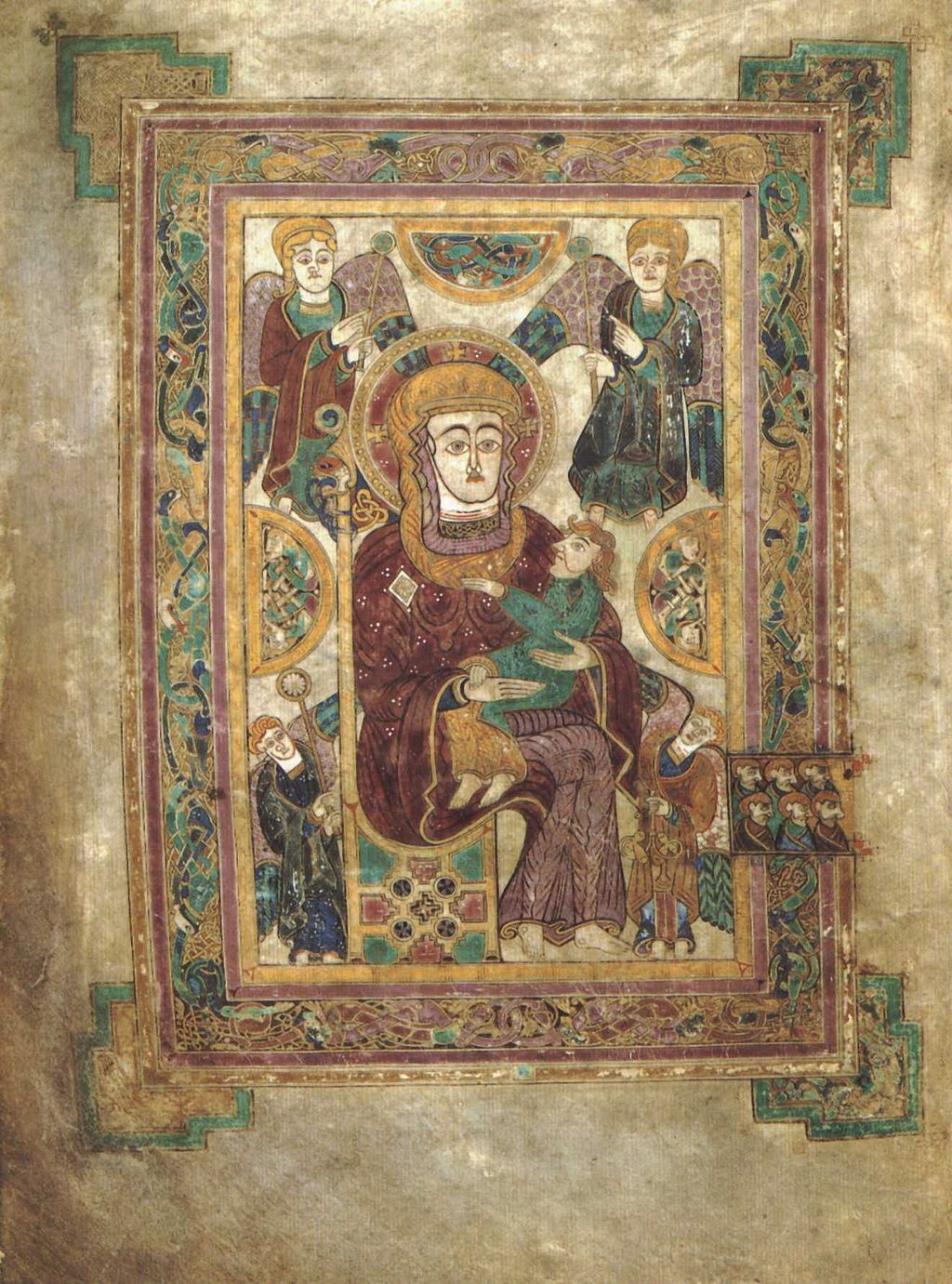
The earliest Western Madonna and Child, from the Book of Kells, at the beginning of the Gospel of Matthew. c. 800

Unknown's avatarAuthor John T SquiresPosted on December 25, 2022December 23, 2022Categories A Book of Origins: Gospel of Matthew, An Orderly Account: Gospel of LukeTags ChristmasLeave a comment on The birthing

Striking storylines, creatively constructed—on the lack of an infancy narrative in Mark’s Gospel (for Christmas)

Striking storylines, creatively constructed—on the lack of an infancy narrative in Mark’s Gospel (for Christmas)

Every year, the “Christmas story” gets swamped by Luke’s story in his orderly account, of the angels, the shepherds, “no room at the inn” and “good news of great joy”. From Matthew’s account in his book of origins, the visit of the sojourning magi from the east, offering their splendid gifts to the newborn, gets a place in the story—but not the tragedy of the terrible massacre perpetrated by the vengeful ruler, Herod.

Every Christmas, the majestic, soaring words from the poetic prologue to John’s book of signs is read in worship, and sometimes preached on; “in the beginning was the Word … and the Word became flesh, and pitched his tent in amongst us”. What never gets a look in, at any point in the Advent or Christmas seasons, is how the other Gospel, that attributed to Mark, portrays the beginnings of Jesus.

“In those days Jesus came from Nazareth of Galilee and was baptized by John in the Jordan” (Mark 1:9) is how Jesus is introduced. This is the adult Jesus, not the newborn infant. There is no mention of Bethlehem, nor the rampage of Herod; no reference to magi travelling from the east, bearing gifts, nor to a census ordered under Quirinius, necessitating short-term accommodation. There is no story of the infant Jesus at all—and most strikingly, no mention of Mary and Joseph.

Rather, in Mark’s narrative which reports the beginning of the good news about Jesus, the chosen one, Jesus distances himself from his family. “Who are my mother and my brothers?”, he asks, when confronted by scribes from Jerusalem and labelled as “out of his mind” by his own family (Mark 3:21, 33). People of his hometown (Nazareth) identify him, not as “son of Joseph”—only in John’s book of signs do his fellow-Jews identify him as “son of Joseph” (John 6:42). And it is up to Luke and Matthew, each in their own way, to link Jesus, as a newborn, to these parents.

In Mark’s account of the scene when the adult Jesus returns to his hometown, he is “the carpenter, the son of Mary” (6:3). This is the only time that the name of his mother appears in this earliest account of Jesus; and there is simply no mention, by name, or by relationship, of his putative father. (Some scribes later modified this verse (Mark 6:3) to refer to him as “son of the carpenter and of Mary”, to align Mark’s account with how Matthew later reports it at Matt 13:55.)

Other than this one reference, Mark makes no reference to Jesus’s parents. He is simply, and consistently identified as “the son of God” (Mark 1:1; 3:11; 5:7; 9:7; 15:39). On one occasion, he is addressed as “son of David” (10:47–48; although this description is the subject of debate at 12:35–37). More often, in this earliest of Gospels, using a term taken from Hebrew Scripture, Jesus refers to himself, or others refer to him, as “the son of humanity” (2:10, 28; 8:31, 38; 9:9, 12, 31; 10:33, 45; 13:26; 14:21, 41, 62; see Ezek 2:1, 8; 3:1, 4, 16; etc; and Dan 7:13). The origins and identity of Jesus, in Mark’s eyes, relate more to the larger picture—of his Jewish heritage, in his relationship to the divine, and with his role for all humanity—than to the immediacy of parental identification.

Mark knows nothing of what transpires in Luke’s orderly account, as “Joseph went from the town of Nazareth in Galilee to Judea, to the city of David called Bethlehem, because he was descended from the house and family of David; he went to be registered with Mary, to whom he was engaged and who was expecting a child” (Luke 2:4–5).

He certainly knows nothing of the way that Luke has spliced the story of Jesus into the story of John the baptiser (related through their mothers, Luke 1:36) such that John is filled with “the spirit and power of Elijah” (Luke 1:17) to function as “the prophet of the Most High [who will] go before the Lord to prepare his ways” (Luke 1:76), whilst Jesus “will be great, and will be called the Son of the Most High, and the Lord God will give to him the throne of his ancestor David” (Luke 1:32), and then himself will be “filled with wisdom” (Luke 2:49) and, indeed, “filled with the Holy Spirit” (Luke 4:1, 14).

Mark also knows nothing of what is narrated in the Matthean book of origins, of the time when, after a visit from magi from the east, “Joseph got up, took the child and his mother by night, and went to Egypt”, and then “Joseph got up, took the child and his mother, and went to the land of Israel” (Matt 2:14, 21).

This author’s concern is both to locate Jesus firmly and schematically in his genealogy as “the chosen one, the son of David, the son of Abraham” (Matt 1:1–17), and to make as many parallels as possible with the story of Moses, the one whose life was imperilled by a powerful ruler (Exod 2:15; cf. Matt 2:13–14), who escaped the murderous rampage that occurred (Exod 1:22; cf. Matt 2:16), who fled into a foreign land (Exod 2:15; cf. Matt 2:14), and who then returned to where he had been born (Exod 4:20; cf. Matt 2:21). The regular reminder that “this took place to fulfil what the Lord has said through the prophets” (Matt 1:22; 2:4, 15, 17, 23) underlines this Mosaic typology.

In this regard, Mark is very much like Paul, the famous apostle who, some decades earlier, was able to refer to Jesus as “born of a woman, born under the law” (Gal 4:4)—that is, his Jewishness was important, but the name of that woman was not. And Paul refers to God’s Son as being “descended from David according to the flesh” (Rom 1:3)—that is, his Davidic ancestry was important, but even the name of his father, a descendant of David, was not. Mark and Paul both place their focus elsewhere, away from the baby, the manger, the magi, the star. The earlier witnesses to Jesus show no concern at all in this later accretions to the story, with which Luke and Matthew each introduce Jesus.

What would Mark (or Paul) think of the way we have appropriated these two later narratives, offered by their creators as myths, stories to convey deep truths through striking storylines which have been creatively constructed? What would he think of the ways that we have read them as historical reports, literally chronicling actual happenings? What would he think of the thoroughly unhistorical blurring together of the two stories, with shepherds and magi coming together at the crib at the same time?

Perhaps next year, when the lectionary focusses on the Gospel of Mark, we might let this Gospel govern the way that we approach the season of Christmas? Perhaps the focus might be, not on angels and magi, not on shepherds and tyrants, not on the trimmings and trappings of the commercialised season, not even on the incarnate presence of the eternal Word, but on the significance in daily, human, life, of this person, Jesus? Now that would be truly counter-cultural, truly alternative, truly faith-focussed amidst the razzamatazz of the times!

Unknown's avatarAuthor John T SquiresPosted on December 24, 2022Categories A Book of Origins: Gospel of Matthew, An Orderly Account: Gospel of Luke, The Beginning of the Good News: MarkTags Christmas, Luke, Mark, Matthew, Paul, scripture, theology2 Comments on Striking storylines, creatively constructed—on the lack of an infancy narrative in Mark’s Gospel (for Christmas)

Christmas: not actual history, but powerful myth

Christmas: not actual history, but powerful myth

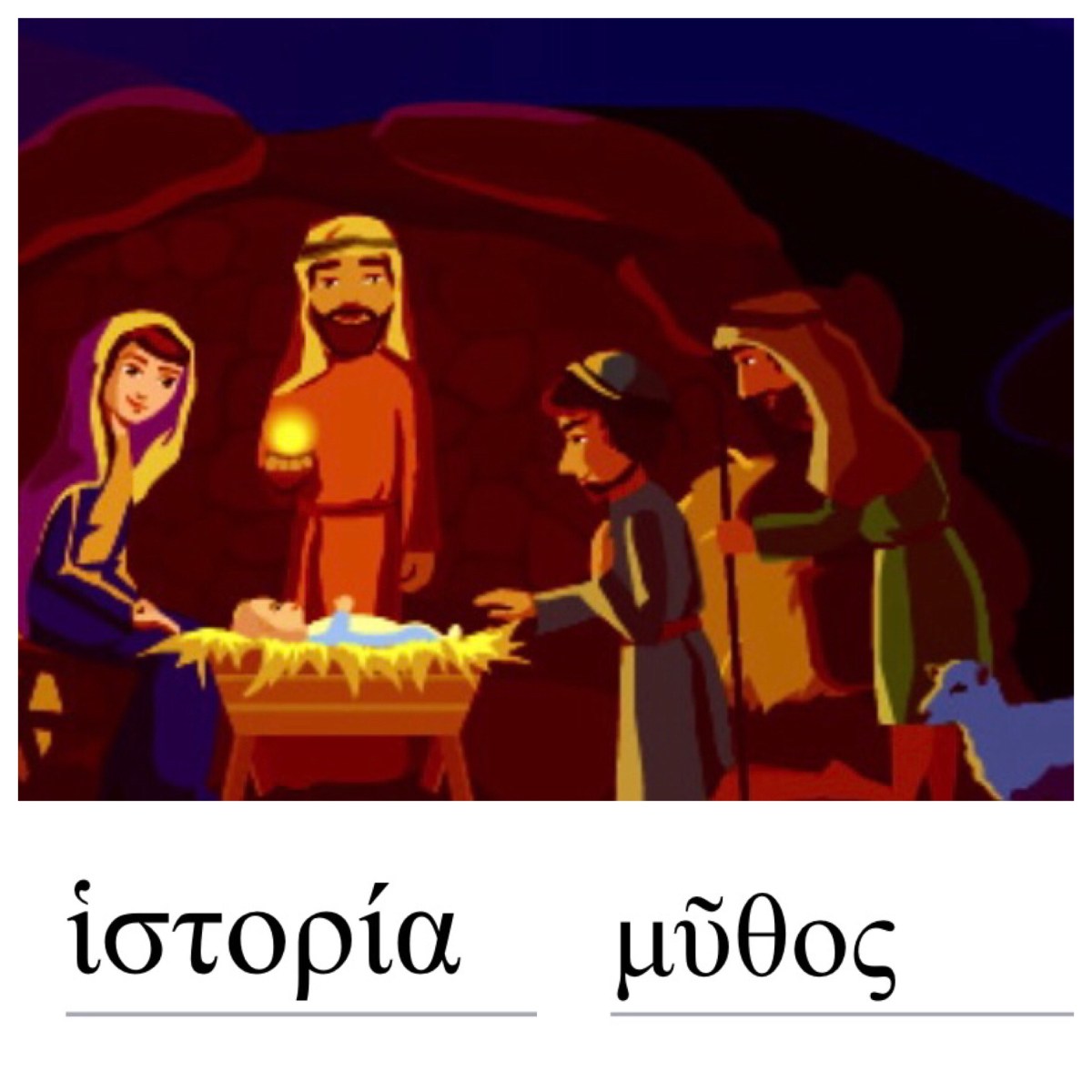
As I have written in two earlier posts, the biblical accounts of the birth of Jesus are not actual history. They are stories told to indicate the special nature of Jesus. Which means, we shouldn’t read them as history (ἱστορία). The Christmas story isn’t history. The Christmas story is myth (μῦθος).

See

https://johntsquires.com/2022/12/21/why-the-christmas-story-is-not-history-1-the-nativity-scene/

and

https://johntsquires.com/2022/12/22/why-the-christmas-story-is-not-history-2-luke-1-2-and-matthew-1-2/

As myth, the story points to important truths. It orients us to the claim that God is involved in human history. It sets the foundations for hearing the narratives about Jesus as accounts which resonate with God’s intentions for humanity.

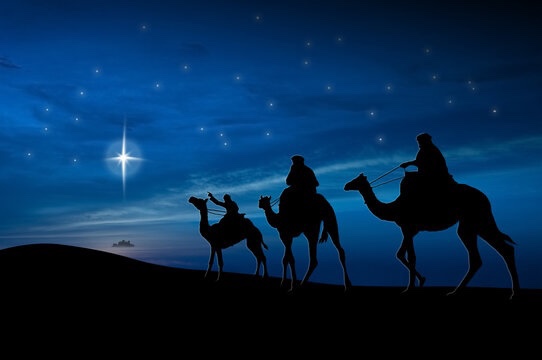
The stories told at Christmas are located in specific human situations, and point to specific human needs. Outsiders and outcasts are included in the story told by Luke. Shepherds, despised for their work and marginalised from society, appear front and centre in his story. Strangers travel from distant foreign lands in Matthew’s narrative, bearing gifts to pay homage to the infant Jesus.

Women, not men, play central roles in the opening chapters of Luke’s story. Elizabeth, cursed as barren, blossoms into pregnancy, and speaks where her husband is struck dumb. Mary, young and virginal, receives startling news from an angel; she holds her own stands up to the angel, commits to the task, and then sings powerful words of justice, signalling in advance the revolutionary message that will be spoken by the child whom she is bearing.

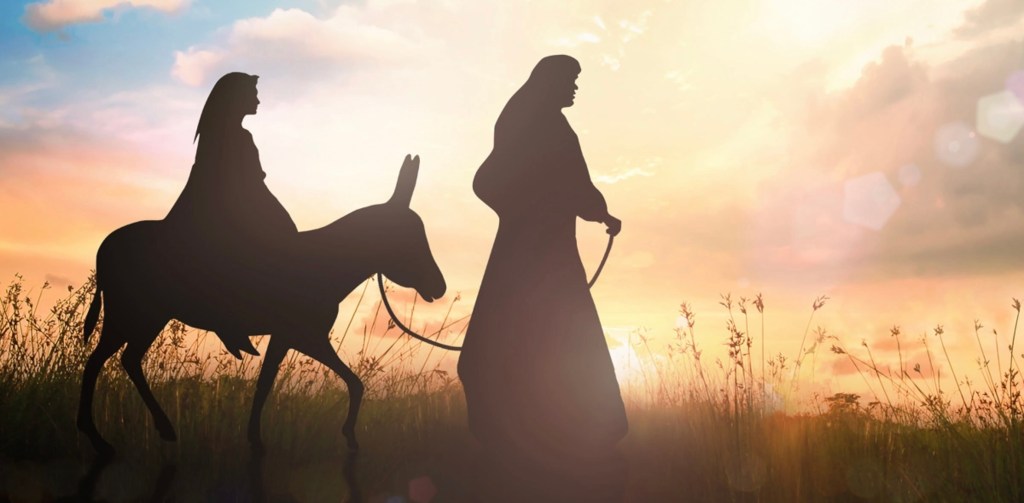
Both Luke and Matthew include the gritty reality of the refugee situation in their accounts. Luke has a pregnant Mary undertake an enforced journey with Joseph, from Nazareth to Bethlehem, the hometown of his family line, only to be forced to give birth in precarious circumstances. There is no historical evidence for the census that occasioned this journey, but the story provides a compelling vision of what refugees faced then, and still face today.

Matthew has Mary and Joseph, with Jesus now a two-year-old toddler, making an even longer forced trek, from Bethlehem into Egypt, because of the excessive reaction of the king of the time. There is also no historical evidence for the slaughter of all boys aged two and under in Bethlehem at that time, but the story in Matthew’s Gospel again highlights the tenuous situations faced by refugees, then as now.

Matthew’s Moses typology leads him to place the slaughter of the Innocents right at the heart of his narrative. He grounds the story of Jesus in the historical, political, and cultural life of the day, when a tyrant could exercise immense power, when the sensibilities we have about human life seem absent. It provides a dreadful realism to a story which, all too often in the developing Christian Tradition, became etherealised, spiritualised, and romanticised.

We need to remember the Christmas story as an important pointer to the counter-cultural, alternative-narrative impact of the person of Jesus. It is not history, but it offers a powerful myth. It grounds our faith in a revolutionary understanding of reality, and in actions that establish an alternative reality. The story is not to be domesticated and coated in syrup; its stark reality and honest grappling with life needs to be grasped and valued.

As we sing songs of this story, let us not reify the story (that is, turn the narrative into “a thing”, like history) … let us not collapse the story into a surface “real history”, but let us allow the story to speak in a deep way of who we are as humans, and of the reality of our lives today. That is how the story functions, as myth (μῦθος) — not in the sense of myth being “not true”, but rather, in the sense of myth plumbing the depths of human existence.

Myths are the stories we tell that convey deep-seated and fundamental insights about life. Whether they “actually happened” is not the point. More fundamental is that they help us to make sense of our lives. They draw us out of our comfort and preoccupations, and challenge us to see a different reality, to live a different life.

Bernard F. Batto (Professor Emeritus of Religious Studies at DePauw University, Indiana), writes: “In everyday usage today, myth carries a meaning of something untrue, a fable, a fiction, or an illusion. Anthropologists and historians of religion, however, use the term ‘myth’ with a quite different meaning. For them myth refers to a traditional story, usually associated with the time of origins, that has paradigmatic significance for the society in which the story is operative.”

So, this Christmas, let’s rejoice that we have this foundational and paradigmatic story which is not history (ἱστορία), but which functions as myth (μῦθος). And as myth, this story stirs our imaginings and challenges our presuppositions, giving us a different perspective on the realities of life in this world, indicating to us how God engages with us and interacts with our world.

See also

https://johntsquires.com/2018/12/28/the-counter-cultural-alternative-narrative-impact-of-the-person-of-jesus/
https://johntsquires.com/2018/12/24/resonating-with-christmas-a-story-of-restless-travel-and-seeking-refuge/#

Unknown's avatarAuthor John T SquiresPosted on December 23, 2022December 23, 2022Categories A Book of Origins: Gospel of Matthew, An Orderly Account: Gospel of LukeTags Christmas, Luke, Matthew, scripture, theologyLeave a comment on Christmas: not actual history, but powerful myth

Why “the Christmas story” is not history (2): Luke 1-2 and Matthew 1-2

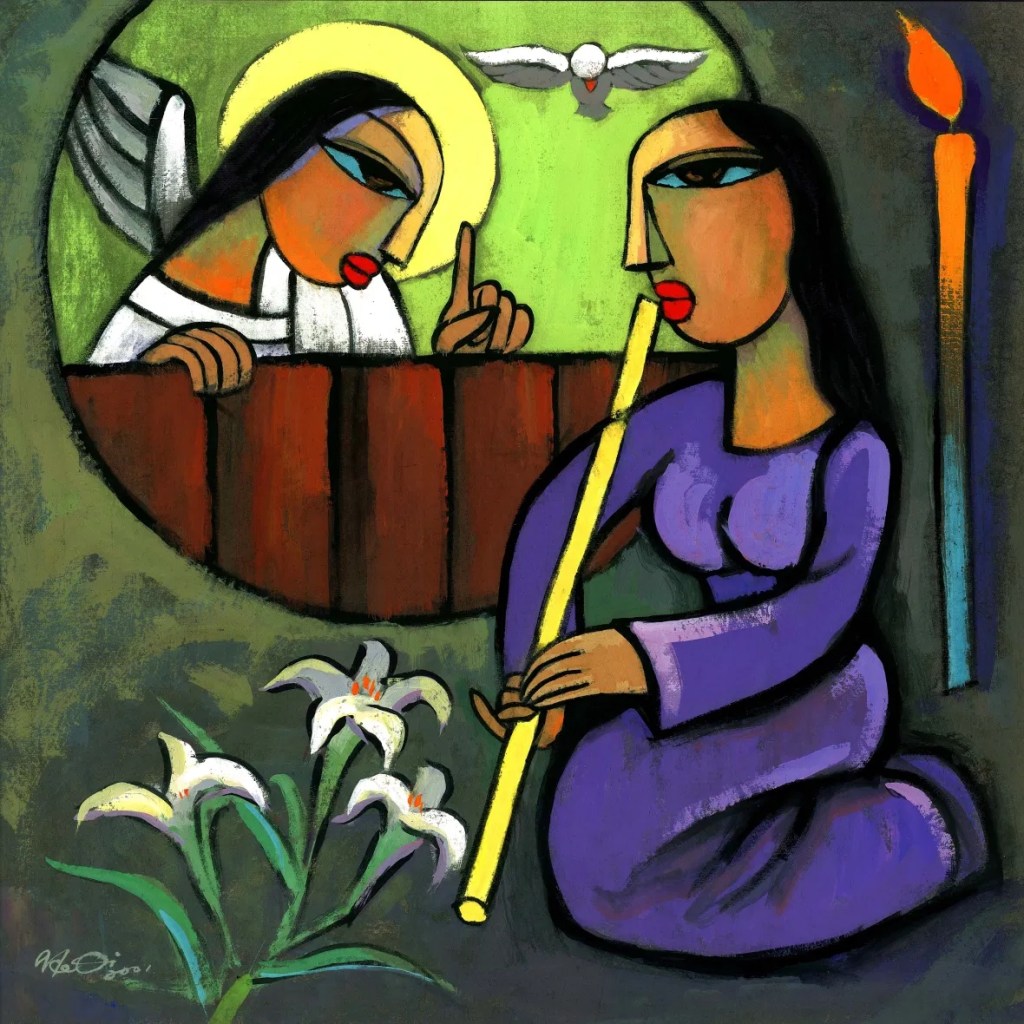
In a scene that is often called The Annunciation (Luke 1:26–38), an announcement that is made to Mary, informing her that she will bear a child. You can read more of my reflections on this scene at https://johntsquires.com/2020/12/14/advent-four-the-scriptural-resonances-in-the-annunciation-luke-1/

The Annunciation, by Chinese artist He Qi

It’s a scene, set in a Jewish context, in the region of Galilee, in a town named Nazareth. We are not sure exactly when this scene took place; the only clue is that it was “in the sixth month” (Luke 1:26) after a previous announcement, about the birth of another child, to her cousin, Elizabeth, and her husband Zechariah (Luke 1:5).

The scene in Nazareth thus most likely occurred “in the days of King Herod of Judea” (Luke 1:5), which places it some years before the year in which we traditionally reckon that Jesus was born—the fictive “year zero”, or more accurately, the time when 1 BCE became 1 CE.

At that time Nazareth was but a tiny village, with no more than 50 residents. It was an insignificant, obscure place. Not the location that might have been presumed for this announcement about the imminent birth of the Messiah.

Now, King Herod died soon after an eclipse of the moon soon before a Passover, according to the Jewish historian Josephus; that was most likely in March/April of 4BCE, by our reckoning. So Mary was pregnant, and gave birth, some years before the mythical “year zero”.

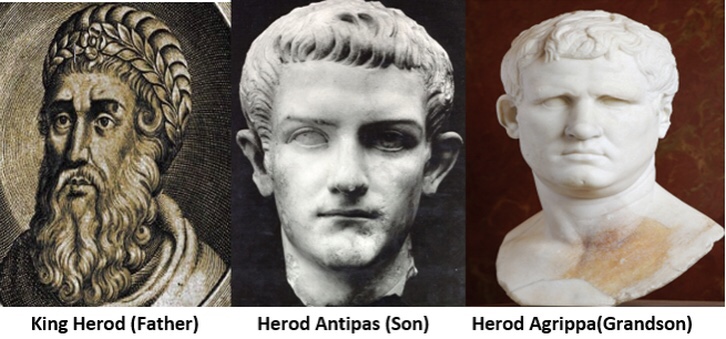
Later, after the death of Herod, the region of Galilee came under the control of Herod Antipas, the son of Herod the Great and one of his wives, Malthace, from Samaria. Herod senior was the king who, according to Matthew, ordered the slaughter of all males born in Israel (Matt 2:16-18). Herod Antipas was, according to Mark, the ruler who, against his better judgement, ordered the beheading of John the baptiser (Mark 6:17-29). Herod Agrippa was another member of the family, a grandson of King Herod by another of his wives, Mariamne, who ruled as King of Judea from 41 to 44 CE.

Herod Antipas ruled as tetrarch of the region of Galilee and Perea from the time his father died (4 BCE by our reckoning—before the alleged birth of Jesus!) until sometime after 39 CE. He held power only by favour of the Romans, who were occupying the whole region. To keep in favour with his Roman overlords, Herod set in motion a number of major building projects.

One of those projects involved the creation of a whole new port city, to serve as the region’s capital. It was named Tiberius, in honour of the Emperor. Another building project was based in Sepphoris, a town about eight kilometres north of Nazareth. That probably meant that Nazareth, previously a tiny village of no more than 50 people, had grown to be a town of perhaps 2,000 people—a dormitory suburb for the grand building project underway in Sepphoris. That is most likely the context in which Jesus grew up.

According to Luke, it was in pre-building-boom Nazareth, in the northern region of Galilee, that an angel named Gabriel appeared to Mary, to inform her that she would bear a child (Luke 1:26). That is different from the story told in Matthew’s Gospel, where an unnamed angel delivers the same message, not to Mary, but to Joseph, to whom she was engaged (Matt 1:18). Who knew first? Joseph (according to Matthew)? Or Mary (according to Luke)?

The location of the announcement in Matthew’s account is not specified, but it is reasonable to assume from the flow of the narrative that this took place in the southern region of Judah, in Bethlehem (Matt 2:1, 6). Matthew, having located the family initially in the southern city from the beginning, has no need of the story of a census and a forced trip from Nazareth to Galilee (Luke 2:1-4). The family is already in Bethlehem, another small village, but in the south, in Judea.

Nor does Matthew feel the need to describe the place into which the new baby was born: in a manger, “because there was no place for them in the inn” (Luke 2:7). Indeed, even though Matthew declares that “the birth of Jesus the Messiah took place in this way” (Matt 1:18), he then goes on to describe the announcement made to Joseph (1:18b-23), and the only detail about the actual birth that he offers is that Joseph “took her [Mary] as his wife, but had no marital relations with her until she had borne a son” (1:24-25). Too much information? Or not enough, maybe?

But Luke has a problem. He has located the announcement of the birth in Nazareth; yet the tradition is that Jesus was born, not in Galilee, but in Bethlehem (see John 7:41-42, and Matt 2:1). Matthew explains this birthplace in his typical style, as being a fulfilment of prophecy: he cites Micah 5:2 at Matt 2:5-6. That is just one of a number of elements in the story of the birth of Jesus that Matthew has crafted, which claim “fulfilment of prophecy” as their rationale (see Matt 1:22-23, 2:5-6, 2:15, 2:17-18, and 2:23).

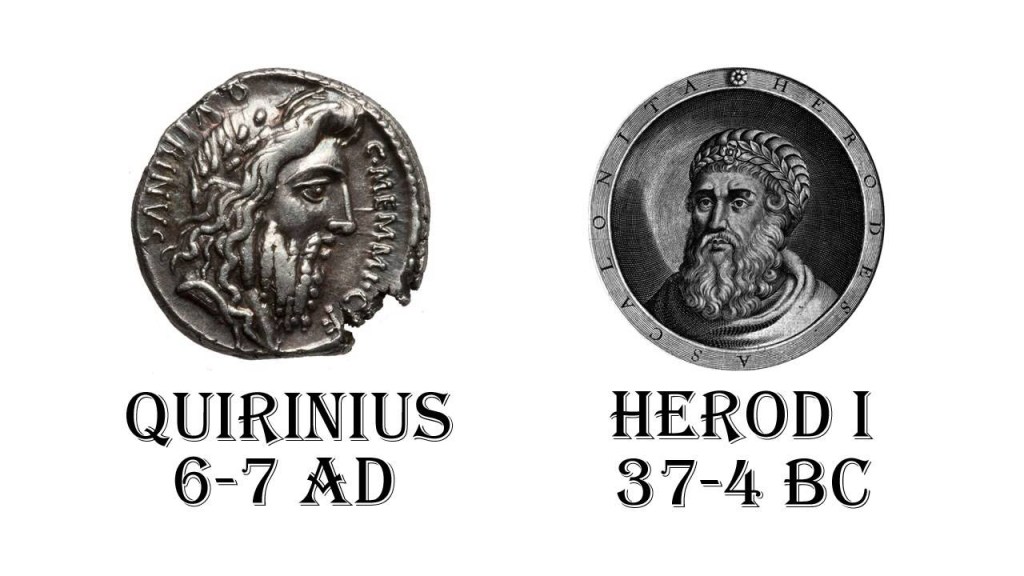
Now, Luke needs to get the family from Nazareth, the place of the annunciation to Mary, to Bethlehem, the place of the birth of Jesus. So he calls on the census (Luke 2:1-2) as the means by which Joseph and Mary, heavily pregnant, had to travel. He even identifies the census as having taken place under Publius Sulpicius Quirinius, who was governor of the province of Roman Syria. Luke operates, not by the fulfilment of prophecies, but by noting the actions of Roman rulers.

Publius Sulpicius Quirinius

Only problem is, Quirinius became governor in 6 CE, almost a decade after the announcement of the birth as Luke tells it (Luke 1:5, 26ff) and as Matthew reports it (Matt 2:1). And, to add insult to injury, other historical problems arise: this was just a local census, we know of no single census of the entire empire under Caesar Augustus, no Roman census ever required people to travel from their own homes to those of distant ancestors, and the census of Judea would not have affected Joseph and his family, as they were living in Galilee. So Luke’s account is problematic in terms of historical accuracy.

Not that Matthew is off the hook. In my view, it is highly unlikely that the events reported in Matthew 2 actually took place. (Other interpreters take a different view.) In particular, the slaughter of all male infants under two years, ordered by Herod, is problematic.

Why? Well, first of all, Matthew provides the only account of such an event in any piece of literature from that time. Surely an event with so many deaths would have been noted by other writers. Yes, it is true that Herod was a tyrannical ruler; but amongst the various accounts of his murderous deeds, there is nothing which correlates to the events reported in Matthew’s Gospel.

Second, the story is embedded in the opening section of the Gospel, which, as we have noticed, uses typical Jewish typology and scripture-fulfilment to present the story of Jesus as a re-enactment of the story of Moses. Just as Exodus tells of the slaughter of infants at the time of the birth of Moses, so Matthew replicates this with an account of the slaughter of infants at the time of the birth of Jesus. The later account simply fits the pattern of the earlier account. (And there is no evidence that the pogrom at the time of Moses took place, either.)

So both accounts of the birth of Jesus have problems if we want to read them as historical narratives. And one very peculiar aspect is that the wise men, supposedly coming to visit the young child, Jesus, during the time of Herod, made their trek from the east to Bethlehem a full decade before Joseph and the pregnant Mary made their trek from Galilee down south to Bethlehem, during the census!!

The biblical accounts of the birth of Jesus are not history. They are stories told to indicate the special nature of Jesus. Which means, we shouldn’t read them as history. The Christmas story isn’t history.

See also

Why the Christmas story is not history (1): the “nativity scene” and the Gospels

and https://johntsquires.com/2018/12/19/what-can-we-know-about-the-birth-of-jesus/

Unknown's avatarAuthor John T SquiresPosted on December 22, 2022December 22, 2022Categories An Orderly Account: Gospel of Luke1 Comment on Why “the Christmas story” is not history (2): Luke 1-2 and Matthew 1-2

Why the Christmas story is not history (1): the “nativity scene” and the Gospels

Why the Christmas story is not history (1): the “nativity scene” and the Gospels

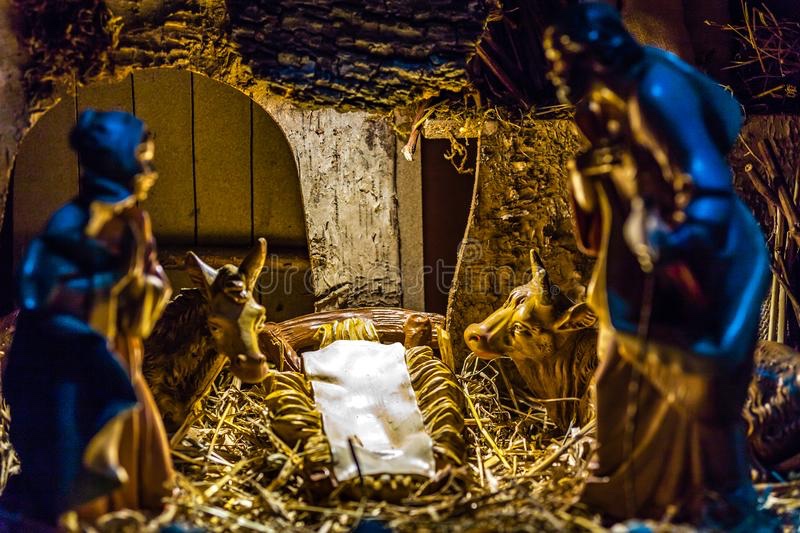
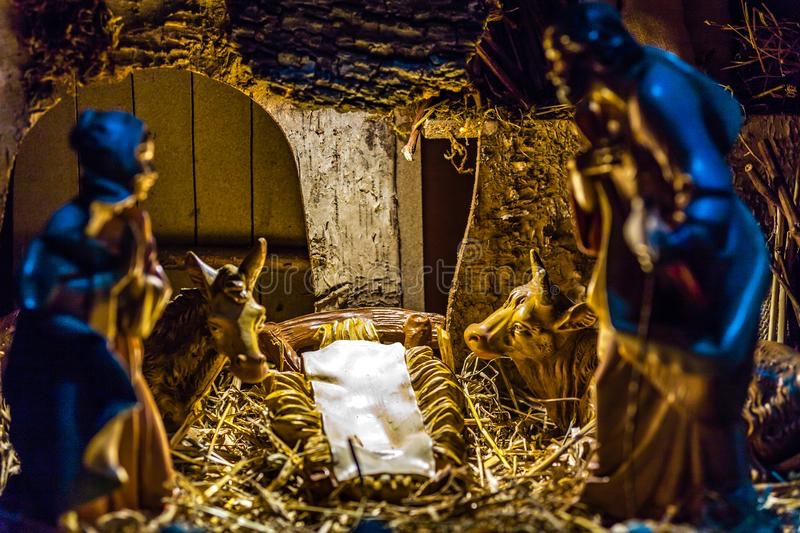
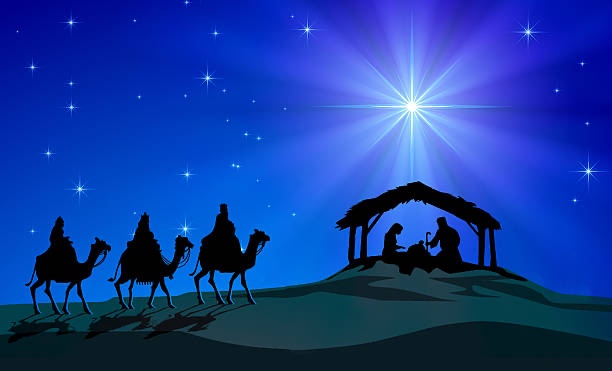
Every Christmas, we are surrounded by images of the much-loved nativity scene: the infant Jesus, in a cradle, with his mother Mary sitting and his father Joseph standing nearby, surrounded by animals (cows, most often), with a group of shepherds (perhaps with their sheep) to one side, whilst on the other side three colourfully-dressed men stand with presents in hand: gold, frankincense, and myrrh.

We see this image everywhere. But it is not an accurate portrayal of what was happening at the time when Jesus was born. For one thing, it is not a photograph of an actual event. Far from it. It is not even based on a written report from the first century, telling that this was what happened.

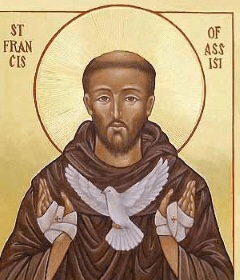
The traditional scene that we see today did not come into being until it was invented by the medieval friar, Francis of Assisi. Before that, it did not exist. And no Gospel account actually tells of cows mooing beside the newborn child, or of the newborn infant making no crying sounds, or of the sheep baaing alongside the cows, that we see in the traditional nativity scene.

Francis is the most popular Catholic saint in the world. He is the one who preached to the birds; blessed fish that had been caught, releasing them back into the water; and communicated with wolves, brokering an agreement between one famous ferocious wolf and the citizens of a town that were terrified of it. There is no surprise, then, that Francis used real animals when he created the very first, live, Christmas nativity scene. As a result of all these stories, Francis is the patron saint of animals and the environment. And he is the inventor of the familiar nativity scene.

Actually, this scene is a compilation of two quite discrete stories, told decades later, offering very different perspectives on the event, providing two somewhat different emphases in the story of the birth of this child. The nativity scene merges and blends the story found in the orderly account constructed by Luke, and the book of origins compiled by Matthew. Wise men and shepherds sit on each side of the family group, at the same time, in the same place, in this traditional scene. But not in our biblical accounts.

In the opening chapters of Matthew, we encounter the pregnant Mary, the newborn infant Jesus, his father Joseph, a bright star in the sky, visitors from the east, the tyrannical rule of Herod, and slaughtered infant boys. In this story, Matthew is working hard to place Jesus alongside the great prophet of Israel, Moses. The early years of Jesus unfold in striking parallel to the early years of Moses. The parallel patterns are striking.

Luke tells a more irenic version of the story than what is found in Matthew’s Gospel. The story told by Luke (usually represented through idyllic pastoral scenes and sweetly-singing angels), actually tells of a widespread movement of the population that meant a pregnant Mary, accompanied by Joseph, had to travel afar and find lodging in a crowded town just as the most inconvenient time.

There are historical problems with this story: identifying the census as an actual historical event, and locating it accurately in time, both present challenges; the fact that Herod, ruling in Matthew’s account, died in 4BCE, but Quirinius, who ordered the census noted in Luke’s account, began as Governor in 6 CE. However, the combined story has entered the popular mindset as a real event and provides a clear and compelling picture of the holy family as refugees, because of decisions made by political authorities, whether Herod or Quirinius.

We overlook, perhaps, that the shepherds who came in from the fields to pay homage to the newborn child would have been despised for carrying out a lowly and unworthy occupation. They were outcasts, considered impure and unclean, placed outside the circle of holiness within which good Jews were expected to live. In the Mishnah, a third century work which collects and discusses traditional Jewish laws, shepherds are classified amongst those who practice “the craft of robbers”. These are not highly valued guests!

Even though this is not an historical story, it is important for theological reasons. It is part of the foundational myth of the Christian faith. The writer of Matthew’s Gospel wants to make strong correlations between Jesus and Moses, not only in the mythological account found in the opening chapters, but also throughout the following chapters of the Gospel. The writer of Luke’s Gospel hints at his key themes in the opening chapter, and the develops a strong political and economic message throughout his Gospel: God reached out to the poor and powerless, and harshly judges the wealthy and powerful.

As myth, the tradition points to important truths. Matthew’s account of “the Slaughter of the Innocents”, for instance, although generated by his Moses typology, still grounds the story of Jesus in the historical, political, and cultural life of the day, when tyrants exercised immense power. Even though we recognise Matthew is not reporting an actual historical event, his narrative provides a dreadful realism to a story which, all too often in the developing Christian Tradition, became etherealised, spiritualised, and romanticised.

By the same token, Luke’s recounting of the visit of the outcast shepherds to the infant child and his family indicates that those on the edge were welcomed by Jesus throughout his ministry. He grounds the message of the Gospel in the heart of the needs of the people of his day.

So even as we recognise that the Christmas story is not history, we can appreciate the insights that it offers us as a mythological narrative. It is worth celebrating: not as an actual historical event, in the way it is traditionally portrayed, but as the foundation of the faith that we hold: in Jesus, God has come to be with us.

See also

https://johntsquires.com/2022/12/22/why-the-christmas-story-is-not-history-2-luke-1-2-and-matthew-1-2/

You can read a more detailed discussion of my views on this story at https://johntsquires.com/2018/12/19/what-can-we-know-about-the-birth-of-jesus/

Unknown's avatarAuthor John T SquiresPosted on December 21, 2022December 22, 2022Categories A Book of Origins: Gospel of Matthew, An Orderly Account: Gospel of Luke, Scripture and TheologyTags Christmas, Luke, Matthew, scripture, theology7 Comments on Why the Christmas story is not history (1): the “nativity scene” and the Gospels

God, who midwifes life, who mothers her children (Luke 2, Matthew 2; Christmas Year A)

God, who midwifes life, who mothers her children (Luke 2, Matthew 2; Christmas Year A)

This week, the daily Bible study resource With Love to the World (which I edit) is currently using readings from the Womens’ Lectionary for the Whole Church, devised by Prof. Wilda Gafney, of the USA, alongside readings from the Revised Common Lectionary. A number of the readings (including the familiar Gospel from Luke 2) refer to childbirth. The cover image, by Australian artist the Rev. Dr Geraldine Wheeler, depicts the newborn child and his young mother, wonderfully contextualised for the Australian location.

Associate Professor Monica Jyotsna Melanchthon, the Academic Dean of Pilgrim Theological College in the University of Divinity, writes about Isaiah 26:16–19, that “The prophet Isaiah, familiar with the pain and the agony of a woman in labor, uses this uniquely female experience as metaphor to describe the suffering and distress of the people, here personified as the pregnant woman, ready to give birth. The labor of pregnant woman Judah is futile (vv.17–18) … But pregnant Judah is assured by God who midwifes life, that this time of pain will cease … the dead will rise and the slain will be restored to life. Relationships between humanity and nature, and between nations, ruptured and shredded by enmity and war, will be healed and transformed.”

On the familiar Gospel,count of the birth of Jesus, Luke 2:1–20, Prof. Melanchthon writes, “Mary was one of the ‘anawim’, a young, lower class working Jewish woman betrothed to Joseph, a local carpenter, living in occupied territory. She becomes an active agent, cooperating with God to become the bearer of God’s child. The invisible God is made present and available in the visible, the finite, the historical, the concrete, the tangible, and the fleshly. The baby is born and laid in a feeding trough. The first people, divinely notified of this birth, are not princes and powers, but another marginal category of people—shepherds, symbols of subalternity (referring to lower social classes and other social groups who are displaced to the margins of a society) … Their initial fear turned into amazement, joy and praise and they spread the good news.”

Later in the week, Prof. Melanchthon reflects on the alternative account of the early years of Jesus, Matt 2:13–23, noting that “Rachel the mother figure, weeping and inconsolable, draws us to the figure of Mother God; Rachel’s tears and lament stirs the inner parts (the womb) of the Divine which trembles (yearns) for the child. The human mother refuses consolation; the Jeremiah text quoted here assures that the divine mother changes grief into consolation.” She notes also that, “In the context of male tyranny and power politics, Joseph paves the way for a different or new understanding of masculinity, which is kenotic (self-emptying). He gives up his own power for a positive and mutually transformative masculinity, reminiscent of fathers who risk their lives for their children.”

This week of readings forms part of a full 13 weeks of commentaries by female writers on scripture passages that are fitting for the season. You can read more about this whole issue at https://johntsquires.com/2022/10/20/womens-voices-speaking-with-love-to-the-world-this-christmas/

With Love to the World can accessed immediately on phones and iPads via an App, for a subscription of $24.49 per year (go to the App Store or Google Play). Printed issues are available (after 9 January) at just $24 for a year’s subscription (see http://www.withlovetotheworld.org.au/wp-content/uploads/2020/07/Ordering-and-paying-for-Website-7.vii_.2020.pdf).

Mother and Child with Australian Native Flowers,
gouache stencil painting on black paper,
by the Revd Dr Geraldine Wheeler

Excerpts from With Love to the World are copyright and are reproduced here with the permission of the publisher.

For more on the Christmas readings in the Revised Common Lectionary, see https://johntsquires.com/2022/12/18/three-options-for-christmas-celebrations-the-nativity-of-the-lord/

Unknown's avatarAuthor John T SquiresPosted on December 20, 2022December 20, 2022Categories A Book of Origins: Gospel of Matthew, An Orderly Account: Gospel of Luke, The Hebrew ProphetsTags birth, Christmas, feminism, indigenous, scripture, theologyLeave a comment on God, who midwifes life, who mothers her children (Luke 2, Matthew 2; Christmas Year A)

Voices of the Exiles (Isa 52; Christmas)

Voices of the Exiles (Isa 52; Christmas)

Voices from the edge, or beyond—exiles from their own community—are important for us to hear, to recall us to the core of what we believe and what we know is right and good for all. Scripture offers consistent testimony about the importance of valuing the voices of exiles. It is a word for the church today, not to dismiss those who think, act, speak, behave differently. It is a word for the church today, not to force out those who do not conform to assumed norms. The value of each and every person underlies the motif of “exile” that appears in scripture.

Every year, at Christmas time, as we remember the story of Jesus, we can feel the moments when he might be classed as being “in exile”, even amongst his own people. Luke reports that he was born to parents who were forced to be on the move, uncomfortably displaced (albeit temporarily) from their home town of Nazareth at the critical moment of his birth (Luke 2:4–6). He was born in a manger, as no room was available in the kataluma, the guest chamber in what we might presume to have been a house of Joseph’s relatives (Luke 2:7).

He was born to parents facing potential disgrace—it is said that they were betrothed, but not yet formally married (Matt 1:18), and the putative father was preparing to “dismiss quietly” the mother of Jesus (Matt 1:19). In Matthew’s account, Jesus was born into a situation of some danger, as King Herod so feared that “the child who has been born king of the Jews” (Matt 2:2) that he arranged for a savage pogrom, having “all the children in and around Bethlehem who were two years old or under” put to death (Matt 2:16).

In the Matthean version of the origins of Jesus, the family became refugees, fleeing Israel for the safety of (ironically) Egypt (Matt 2:13–15). When it was safe, they would return, not to their home town of Bethlehem in Judea (as Matthew has it), but to the less-known village of Nazareth in Galilee (Matt 2:19–23).

The moments of exile in this story—disturbed, displaced, under threat, in fear of life—resonate strongly with the experience of millions of people in the contemporary world. Perhaps these elements in the story also resonate with people of faith, who have found themselves “in exile” from their community of faith, for various reasons?

Deep in the experience of physical and cultural exile that the people of Israel had been immersed some six centuries before Jesus, Joseph, and Mary were themselves thrust into exile, a prophetic voice declared that good news still held firm, despite the unfamiliar surroundings and the uncomfortable, even disturbing, dislocation which that experience brought.

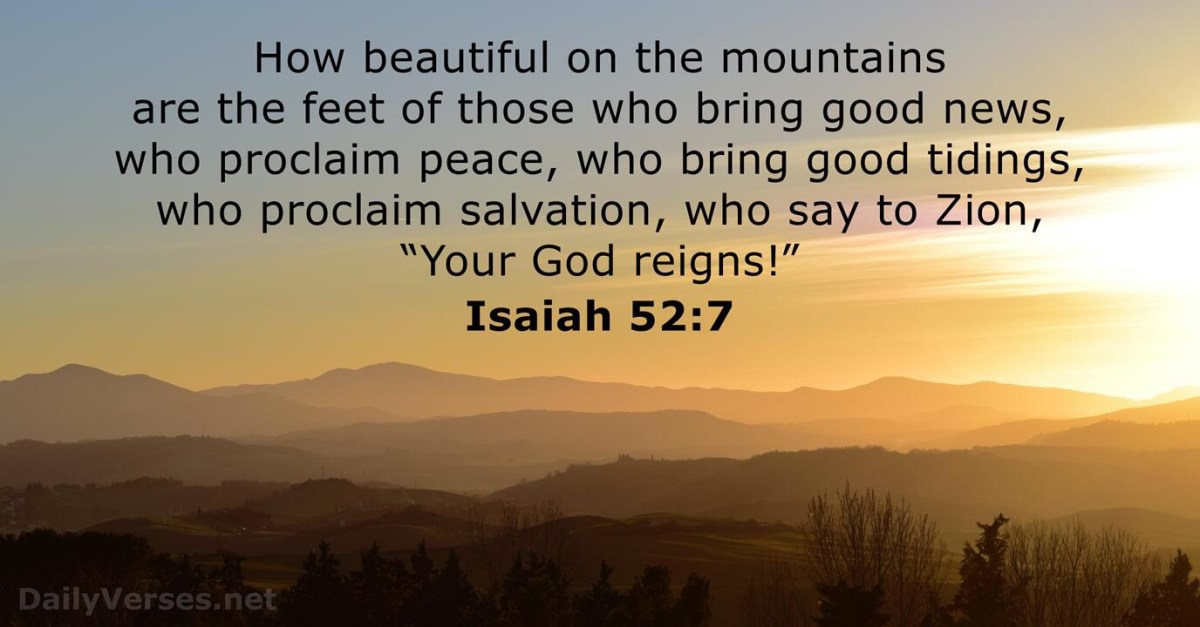
“How beautiful upon the mountains are the feet of the messenger who announces peace”, this prophet-in-exile proclaims, praising the one “who brings good news, who announces salvation, who says to Zion, ‘Your God reigns’” (Isa 52:7). Looking back with longing on his ruined homeland, he exhorts “the ruins of Jerusalem” to “break forth together into singing … for the Lord has comforted his people, he has redeemed Jerusalem” (Isa 52:9).

It’s only a few verses later that the prophet begins a song that expresses the depths of despair in exile, and yet looks beyond that immediate experience to a time of restoration and joyous salvation—a song that we know as the fourth “Servant Song” (Isa 52:13–53:12). That’s the song that Christians interpret as applying to Jesus: “my servant shall prosper; he shall be exalted and lifted up, and shall be very high … he was despised and rejected by others; a man of suffering and acquainted with infirmity … he has borne our infirmities and carried our diseases … out of his anguish he shall see light; he shall find satisfaction through his knowledge … the righteous one, my servant, shall make many righteous, and he shall bear their iniquities”.

Read through the lens of the story of Jesus, this song describes him, the servant, chosen by God for this task. Read in the context of exile, and identifying the servant with Israel (see Isa 41:8, 9; 44:21; 49:3), the song points to a redemption that must mean return to the land and restoration of the city. It is, in the end, a song of hope for the exiles.

The prophet has a strong and clear faith, which may not have sounded so clearly to those holding him captive in exile; he can see that “all the ends of the earth shall see the salvation of our God” (Isa 52:10). This stands as a word of hope that would echo through the later pages of history, in songs sung by the people (Ps 22:27; 65:5–8; 67:7; 98:3), in the advice given by the sage (Prov 30:4), in the prayer offered by Tobit (Tob 13:11), and on into the story of the one born in exile, chosen by God to be “light of the world” (Matt 5:14; John 8:12; 9:5) such that the good news that he brings will be known “to the ends of the earth” (Acts 1:8; 13:47).

The value of holding firmly to this faith, despite the oppositions and sufferings of the time of exile, is what the prophet offers to his people. It is a living-out in advance of what Jesus teaches and models in his own life. In keeping with this motif of “exile” in the Christmas story, here is a poem written by a self-styled exile, my friend and colleague Janet Dawson, which I share with you today (with the permission of Janet).

A Prayer for the Exiles

Holy One, have mercy on your exiles,

those of us who no longer fit

within the traditional teachings of the church.

Those whose voice falters in the songs,

who cannot say “Amen”,

who desperately think of something else during the sermon.

Those who think the greatest heresy of all

is to say that You require suffering and death

in order to forgive.

Those who have given up on going to church at all.

Have mercy on us, Holy God,

those exiles who cling to faith

and yearn for a bigger, wider story,

a bigger, wider community.

A story that embraces the vast expanses of time and space,

and the enormous complexity of the cosmos.

A community in which everything and everyone is connected

and embraced.

Holy God, as we approach the Feast of Incarnation,

be born again in us, your exiles,

Tell your story in words that we can understand.

Create from us a new community.

Amen

Unknown's avatarAuthor John T SquiresPosted on December 19, 2022December 17, 2022Categories A Book of Origins: Gospel of Matthew, An Orderly Account: Gospel of Luke, The Hebrew ProphetsTags Christmas, Luke, Matthew, prophets, scripture, theologyLeave a comment on Voices of the Exiles (Isa 52; Christmas)

Three options for Christmas celebrations (The Nativity of The Lord)

Three options for Christmas celebrations (The Nativity of The Lord)

Earlier this year, I downloaded a new calendar into my online calendar app. It is a calendar that identifies each Sunday in the church’s liturgical year (First Sunday in Advent, Second Sunday in Epiphany, Ninth Sunday after Pentecost, and so on), as well as other significant days (Ash Wednesday, Good Friday, Ascension Day, and others).

It also provides the four readings that the Revised Common Lectionary provides for each Sunday, as well as for those additional liturgical days. It is a useful resource to have on hand! The calendar identifies each Sunday with a light blue band across the name, and sits alongside other calendars (with other colour-codings) that identify Public Holidays, Birthdays, Work commitments, and other specialised matters.

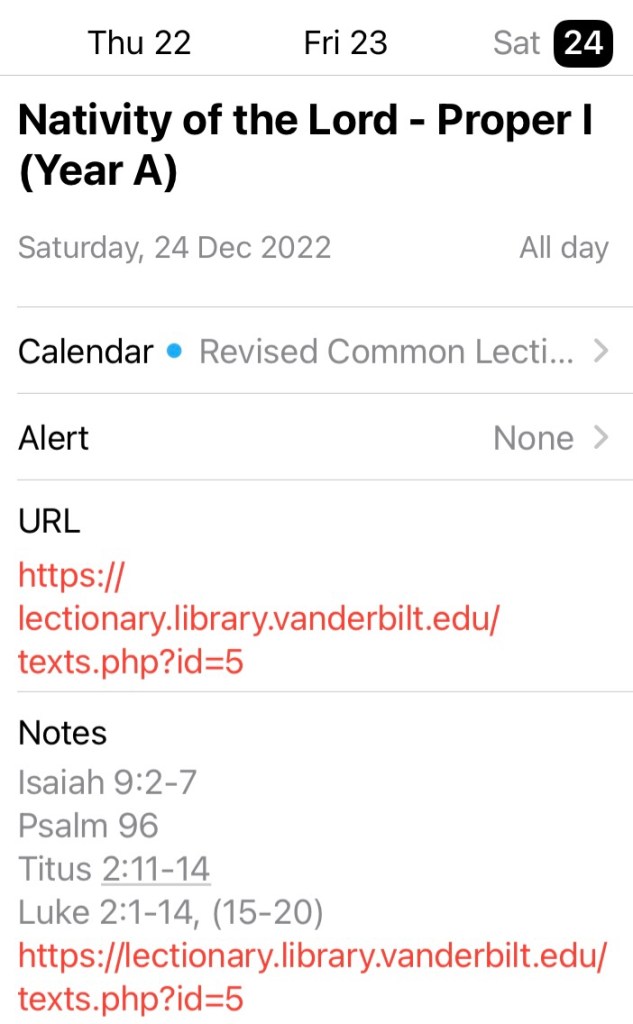
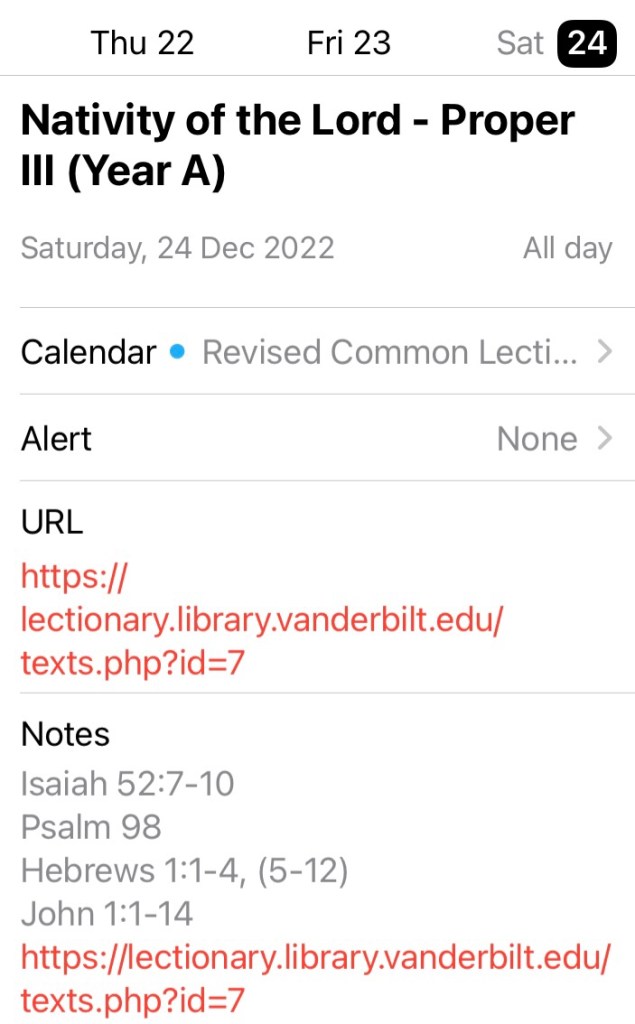
But look what it has done for December 24, which we all know is Christmas Eve: it has provided no less than three entries for the one day!

Why are there three different sets of readings for the “Nativity of the Lord” (aka Christmas)? I hunted through some church web sites, and found that it is because of developments way back before the so-called Middle Ages … back in the days when Christianity was still developing and evolving and finding its place in society.

What follows is asked on what I found at https://www.catholicculture.org/culture/library/view.cfm?recnum=7399 … I am assuming that this is accurate!

The simple explanation is that three different services of worship relating to “the nativity of the Lord” developed over time within Rome, and, rather than one replacing another, each was added, each having its own focus and also being held at a different location.

Catholic Culture says that “the first Mass originally was connected with the vigil service at the chapel of the manger in the church of St. Mary Major in Rome”; it was a small service at midnight which Pope Sixtus III began in 440CE. This has continued as the first service, Proper I in the Revised Common Lectionary.

The second Mass, we are advised, was “the public and official celebration of the feast, held on Christmas Day at the church of St. Peter, where immense crowds attended the pope’s Mass and received Communion”. That continues to this day, when the Pope appears on a balcony overlooking the packed square outside St Peter’s.

Catholic Culture advises, however, that “under Pope Gregory VII (1085) the place of this Mass was changed from St. Peter’s to St. Mary Major, because that church was nearer to the Lateran Palace (where the popes lived). It forms Proper III in the Revised Common Lectionary.

The third service to develop is actually the “middle service”, or Proper II in the Revised Common Lectionary. Catholic Culture explains: “In the fifth century, the popes started the custom of visiting at dawn, between these two services, the palace church of the Byzantine governor. There they conducted a service in honor of Saint Anastasia, a highly venerated martyr whose body had been transferred from Constantinople about 465 and rested in this church which bore her name.”

This was a popular service, because Saint Anastasia was widely venerated in the Roman Empire; in later centuries, as the empire dissolved and Anastasia receded in significance, this middle service was still retained, and another Mass of the Nativity was held. This became the second of the three Masses on Christmas Day.

The Roman Missal has shaped the liturgy for each of these services to highlight different elements of the Christmas story. Thus, “the first Mass honors the eternal generation of the Son from the Father, the second celebrates His incarnation and birth into the world, the third His birth, through love and grace, in the hearts of men [sic.]”.

The Gospel passage set for each Mass—reflected in the Gospel passages proposed by the Revised Common Lectionary—has led to the popular name for each service. Proper I offers Luke 2:1–14, which tells of the birth of Jesus and the angelic announcement to the shepherds in the fields; thus, people came to call the first Mass Angels’ Mass. Proper II proposes Luke 2:8–20, when the shepherds visit the newborn child and his parents; accordingly, it became known as the Shepherds’ Mass.

Proper III takes us to the majestic prologue to John’s Gospel, John 1:1–14, which tells in beautiful poetry of the coming of The Word, who takes on human flesh to live amongst us; this then characterises this service as the Mass of the Divine Word.

The three readings from the Epistles contain excerpts with short credal-like affirmations: “the manifestation of the glory of our great God and Saviour” (Titus 2:11–14), “when the goodness and lovingkindness of God our Saviour appeared” (Titus 3:4–7), and the statement that “in these last days [God] has spoken to us by a Son”, whose nature is explicated by a string of Hebrew Scripture citations (Heb 1:1–12). Each of these fits well for Christmas celebrations.

Likewise, the three Hebrew Scripture passages themselves orient us towards God’s actions within human history. For Proper I, First Isaiah speaks about the child to be born, to be named “Wonderful Counsellor, Mighty God, Everlasting Father, Prince of Peace” (Isaiah 9:2–7). For Proper II, Third Isaiah declares, “the Lord has proclaimed to the ends of the earth, ‘see, your salvation comes’” (Isaiah 62:6–12). And for Proper III, Second Isaiah rejoices in “the messenger who brings good news, who announces salvation”, through whom “all the ends of the earth shall see the salvation of our God” (Isaiah 52:7–10).

Each prophetic passage, seen through the eyes of Christian faith, reflects the divine intention, made clear through Jesus, to offer salvation to every person on earth—prefiguring the good news of Jesus out of the different contexts of pre-exiling Israel (Isa 9), the hard years of Exile (Isa 52), and the time of rebuilding after that exile experience (Isa 62).

Finally, the psalms selected for these three services (Psalms 96, 97, and 98) contribute strongly to the joyful ethos of the Christmas celebrations, with the injunction to “sing to the Lord a new song” (96:1, 98:1) and “worship the Lord in the splendour of holiness” (96:9), singing praises (98:4–6) and rejoicing (96:11–12; 97:8, 12; 98:8), celebrating that “the Lord is king” (97:1) and “exalted overall gods” (97:9) and rejoicing that “the Lord, he is coming, coming to judge the earth … with righteousness, and with truth” (96:13; 97:2; 98:9). These are notes that are entirely appropriate and fitting for the joyful celebrations of Christmas!

Unknown's avatarAuthor John T SquiresPosted on December 18, 2022December 17, 2022Categories An Orderly Account: Gospel of Luke, Hebrew Scripture, PsalmsTags Christmas, scripture, theologyLeave a comment on Three options for Christmas celebrations (The Nativity of The Lord)

Mary and her Magnificat (Luke 1; Advent 3A)

Mary and her Magnificat (Luke 1; Advent 3A)

A sermon preached by the Rev. Elizabeth Raine at Tuggeranong Uniting Church on Sunday 11 December, the third Sunday in the season of Advent.

Which images most readily come to mind, for you, when you think of Mary, the mother of Jesus?

The words most Christians use when asked to describe Mary are words like: humble, obedient, meek, mild, submissive, virgin. Mary is frequently depicted as a most faithful and obedient role model, indeed Mary is set forth as an impossible role model as both virgin and mother.

She has been used by the church over the years to emphasise feminine obedience to male leaders of the church, to fathers, to husbands and indeed, to men generally. Mary was particularly useful in the early church centuries as a way ofinsisting that women should be submissive.

The church tradition of Mary of the pale faced, blue veiled, blue eyed portraits tame her fierceness, and domesticate her passion. Are these the characteristics that really portray someone obedient to the will of God? Or do we see something different emerging from the portrait of Mary and the Magnificat?

Consider the context of this song: Mary’s pregnancy dispenses with theneed for a man. In a patriarchal world, this must have been considered profoundly unsettling news, even if God is named as responsible. From the start of her story, Mary simply isn’t going to be following the acceptedsocial norms. From the beginning, the character of Mary in Luke’s gospelis dangerously full of the Spirit and impregnated with the impossible.

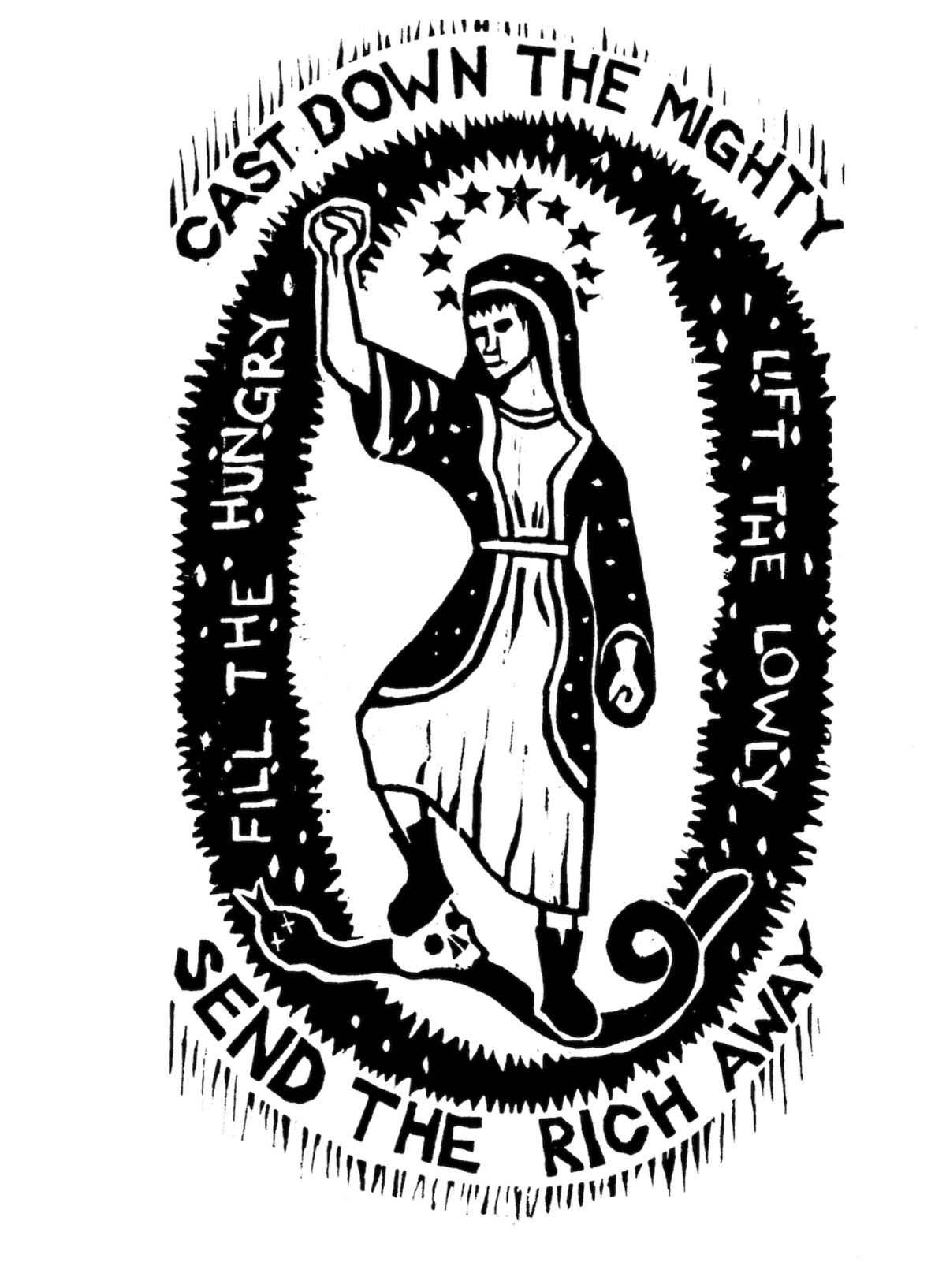
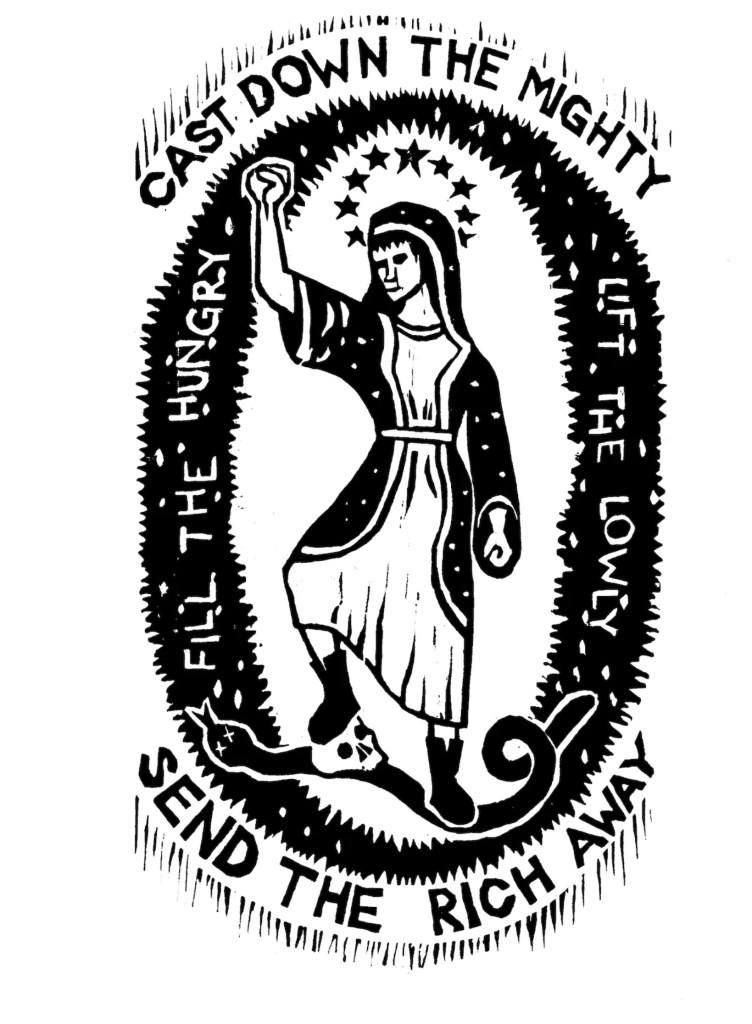
Consider the content of this song: Mary prophesises the overturning of the entire social order, proclaiming that the lowly will be lifted up, the powerfulwill be brought down from their thrones, the rich turned away empty while the hungry are filled. Mary, this teenage mother, has just stepped into an unprecedented and dangerous arena. She has established herself as seditious in her intent, for any talk of a new Davidic line would have been considered treasonable in the then Roman-occupied Palestine.

Consider the tradition of this song:

Firstly, Mary stands in the tradition of the courageous and somewhat unusual women we find in Matthew’s genealogy, all who survived hardship, oppression or violence.

Tamar, when denied a marriage under the Levirate law, tried to make the best of a bad situation by getting herself pregnant by her father in law, who then threatened to burn her.

Rahab, the prostitute, who helped Israel at great risk to ensure their victory and her escape from Jericho.

Naomi, who used Ruth to preserve her own life and security by telling her to, ‘Sleep at Boaz’s feet’, i.e. have sex with him, thereby risking Ruth to exposure and shame and possible violence.

Bathsheba, the unhappy victim of David’s voyeurism, has her husband murdered by David, who she is then forced to marry. She also loses her baby.

Secondly, Mary has just established herself as a radical prophet, and stands firmly in the prophetic tradition of her culture known for its uncompromising fierceness. She echoes the scriptures which speak of God acting to uphold the people of Israel: Moses and Miriam’s song (Exodus 15), Hannah’s song (Samuel 2), and many of the psalms. It would appear that Mary’s early education was not focused on just keeping a proper Jewish home, but rather on radical study of scripture. Mary sings her own anthem of revolution, and in doing so, sings the whole world upside down.

How then does this, and should this, relate to us?

Mary’s words still have great resonance in our time, when dictatorships are again realities, when countries compete in new ways as grapple withthe coronavirus pandemic and the war in Ukraine, when the rich are being given permission by their leaders to tramp, literally and metaphorically, on the poor; when we ignore the safety of others by refusing to wear a maskand when national economic plans are put in place, rather than globalones to combat poverty, disease and climate change. 

How many among us in these difficult times, times where fear and anxiety stalk our streets and our computers, ipads and smart phones, where racism, sexism and various types of assault are increasing in number, are moved to concentrate our attention on the abandoned and oppressed? Are we really become more selfish and mean-spirited and inwardlyfocused? If we are, then the Magnificat is the wake up call. It calls us toaffirm the hidden ones of the earth, propelling us all to emerge from ourfour walls and walk in solidarity and love with those in the shadows. It is an invitation to rediscover the kind of people God favours and who God is constantly inviting to the heavenly banquets.

Unless we do something, the meek will not inherit the world we have created, which clearly belongs to the powerful. In our consumerist society, people can even shop around churches now, and choose their own tailor-made religious beliefs. We rationalize our own sins away. We prefer to be self-made men and women, rather than surrendering ourselves and our will and our lives to God.

Mary’s obedience to God isn’t about individualism or herself, and the blessing that she asks for isn’t the kind of blessing most of us might ask for when we pray. She has said ‘yes’ to God without knowing what God will do. She is potentially submitting to humiliation, physical pain, dislocation, terror, and loss. She is prepared to lose herself to become the bearer of the one who brings salvation and justice.  

Mary’s submission to God isn’t passive, and it is not without doubt. Shehas chosen a perilous path – that of someone who dares, who questions the status quo, who is prepared to step out and take risks. To do the will of God means to live dangerously, to put community before individual, to choose justice rather than what is easy and comfortable.

Furthermore, there is a risk in accepting the blessing of God. Mary just states she will be called blessed, but this blessing presumably is not one she would choose. The blessing Mary receives will be agonizing, as it means seeing her child tortured and killed on the cross. Could we bear such a blessing as this?

Whatever our answers might be to these questions, like Mary, we should not be passive in this process of obedience to God’s will. We need to work and to pray and to dream and to prophesy and to act as bravely and intelligently and faithfully as she did. And we must also be prepared to risk and step into the unknown, and like Mary, say yes to God’s plan withoutnecessarily knowing what will happen next.

Spill the Beans recounts how “this song of Mary has upset and annoyed governments, who have refused to let it be spoken, and people of faith who would rather surrender to the Victorian romance of Christmas, interrupts all of that with the core theme of incarnation.”

It annoys governments because it is a powerful message of liberation, of freedom, of equality. It is a powerful message because it is a message of hope and hope is powerful when it disrupts the ways of the rich and the mighty. It is a different vision of how the world might be organized. It confronts those who have relied on oppression and injustice.

And Mary’s song also points to the very heart of Christianity, the passion of Jesus. It is the closest we get in Advent to the darkest, most frightening, most transcendent moment found in all of the Gospels – the moment on the cross, when Jesus surrenders his will, his hope, his very life, and puts everything in God’s hands. Like his mother Mary, Jesus’ actions did notcome from passive obedience but are a passionate surrender to the will of God.

And so, God interrupts Mary’s life with this promise of a mixed blessing, and in doing so, challenges a nation, the powerful, the politicians and the theologians. Even today, these words should still challenge the church, the Christmas season and the entire world with a reminder of what is possible.

Mary, blessed, revolutionary, and believer in the impossible, wild and liberated, and committed to the cause: Inspire us with your courage and wisdom and faith, that we may also say yes to life in the face of death; that we too may give birth to a miracle.

See also

https://johntsquires.com/2020/12/14/advent-four-the-scriptural-resonances-in-the-annunciation-luke-1/
https://johntsquires.com/2021/12/07/magnificat-the-god-of-mary-luke-1-is-the-god-of-hannah-1-sam-2-advent-4c/
https://johntsquires.com/2022/12/09/more-on-mary-from-the-protoevangelium-of-james/
Unknown's avatarAuthor John T SquiresPosted on December 11, 2022December 11, 2022Categories An Orderly Account: Gospel of LukeTags justice, Magnificat, Mary, scripture, theology2 Comments on Mary and her Magnificat (Luke 1; Advent 3A)

Posts pagination

Previous page Page 1 … Page 5 Page 6 Page 7 … Page 22 Next page

The Book of Origins

  • Leaving Luke . . . Meeting Matthew
  • Matthew: tax collector, disciple, apostle, evangelist—and “scribe trained for the kingdom”? (Matt 9; Pentecost 2A)
  • For our instruction … that we might have hope (Rom 15, Isa 11, Matt 3; Advent 2A)
  • The origins of Jesus in the book of origins: Matthew 1 (Advent Year A)
  • Now the birth of Jesus the Messiah took place in this way (Matthew 1; Advent 4A)
  • Descended from David according to the flesh (Rom 1; Advent 4A)
  • A young woman? A virgin? Pregnant? About to give birth? (Isa 7:14 in Matt 1:23; Advent 4A)
  • More on Mary (from the Protoevangelium of James)
  • Tales from the Magi (the Revelation of the Magi)
  • Herod waiting, Herod watching, Herod grasping, holding power (Matt 2; Christmas 1A)
  • Herod was infuriated, and he sent and killed all the children (Matt 2; Christmas 1A)
  • Repentance for the kingdom (Matt 4; Epiphany 3A)
  • Proclaiming the good news of the kingdom (Matt 4; Epiphany 3A)
  • Teaching in “their synagogues” (Matt 4; Epiphany 3A)
  • Teaching the disciples (Matt 5; Epiphany 4A)
  • Blessed are you: the Beatitudes of Matthew 5 (Epiphany 4A)
  • An excess of righteous-justice (Matt 5; Epiphany 5A)
  • You have heard it said … but I say to you … (Matt 5; Epiphany 6A)
  • The missing parts of the Sermon on the Mount (Matt 6 and 7; Epiphany Year A)
  • Our Father in heaven: a pattern for prayer (Luke 11, Matt 6) part III
  • Our Father in heaven: a pattern for prayer (Luke 11, Matt 6) part II
  • Our Father in heaven: a pattern for prayer (Luke 11, Matt 6) part I
  • “Go nowhere among the Gentiles” (Matt 10:5): the mission of Jesus in the book of origins (Pentecost 3A)
  • “Even the hairs of your head are all counted.” (Matt 10:30; Pentecost 4A)
  • Come to me, take my yoke, I will give you rest (Matt 11; Pentecost 6A)
  • Parables: the craft of storytelling in the book of origins (Matt 13; Pentecost 7A)
  • The righteous-justice of God, a gift to all humanity (Romans; Year A)
  • Let anyone with ears, hear! (Matt 13; Pentecost 8A)
  • Chopping and changing: what the lectionary does to the parables of Matthew (Pentecost 7–9A)
  • Nothing but five loaves and two fish (Matt 14; Pentecost 10A)
  • Liminal experiences and thin places (Matt 14; Pentecost 11A)
  • It’s all in the geography. Jesus, the Canaanite woman, and border restrictions (Matt 15; Pentecost 12A)
  • A rock, some keys, and a binding: clues to the identity of Jesus (Matt 16; Pentecost 13A)
  • An invitation that you just cannot … accept! (Pentecost 19A)
  • Towards Palm Sunday (Matt 21): Passover and politics
  • Towards Palm Sunday (Matt 21): Riding on a donkey (or two) as the crowd shouts ‘Hosanna’
  • Towards Palm Sunday (Matt 21): Waving branches, spreading cloaks
  • Towards Palm Sunday (Matt 21): Acclaiming the king, anticipating the kingdom
  • Producing the fruits of the kingdom (Matt 21; Pentecost 19A)
  • Darkness, weeping, and gnashing of teeth: the scene of judgement (Matt 22; Pentecost 20A)
  • The greatest and first commandment … and a second, like it (Matt 22)
  • On these two commandments hang all the law and the prophets (Matt 22; Pentecost 22A)
  • Sitting on the seat of Moses, teaching the Law—but “they do not practice what they teach” (Matt 23; Pentecost 23A)
  • Discipleship in an apocalyptic framework (Matt 23–25; Pentecost 23–26A)
  • A final parable from the book of origins: on sheep and goats, on judgement and righteous-justice (Matt 25; Pentecost 26A)
  • Scripture debate and disputation in the wilderness (Matt 4; Lent 1A)
  • Testing (not temptation) in the wilderness (Matt 4; Lent 1A)
  • Practising righteous-justice: alms, prayer, and fasting (Ash Wednesday)
  • Forcing scripture to support doctrine: texts for Trinity Sunday (2 Cor 13, Matt 28; Trinity A)

An Orderly Account: Luke and Acts

  • “An orderly account”: a quick guide to Luke and Acts
  • Costly discipleship, according to Luke
  • Did Luke write the first “orderly account” about Jesus?
  • With one eye looking back, the other looking forward: turning to Luke’s Gospel I (Year C)
  • Leaving out key moments, so they can appear later in the story: turning to Luke’s Gospel III (Year C)
  • “A light for the Gentiles, salvation to the ends of the earth”: turning to Luke’s Gospel II (Year C)
  • The scriptural resonances in the Annunciation (Luke 1; Advent 4B)
  • Magnificat: the God of Mary (Luke 1) is the God of Hannah (1 Sam 2) (Advent 4C)
  • “To give knowledge of salvation”: Luke’s portrayal of John the baptiser (Luke 3; Advent 2C)
  • On angels and virgins at Christmastime (Luke 2; Christmas Day B)
  • A light for revelation to the Gentiles and for glory to your people Israel (Luke 2; Christmas 1B)
  • John the baptiser’s call for ethical, faithful living (Luke 3; Advent 3C)
  • A Testing Time: forty days in the wilderness (Luke 4)
  • Sacred place and sacred scripture: forty days in the wilderness (2)
  • Scripture fulfilled in your hearing (Luke 4:16-30; Epiphany 3C, 4C)
  • Jesus and conventional Jewish piety (Luke 4:16; Epiphany 3C)
  • Jesus, scripture and experience (Luke 4:17, 21; Epiphany 3C)
  • The holistic spirit-inspired mission of Jesus (Luke 4:18–19; Epiphany 3C)
  • Jesus, the widow of Sidon and the soldier of Syria: representatives of the community of faith (Luke 4:25–27; Epiphany 4C)
  • Two prophets of Israel, the widow of Sidon and the soldier of Syria: an inclusive community of Jews and Gentiles (Luke 4:25–27; Epiphany 4C)
  • Leave everything, follow Jesus (Luke 5:1-11; Epiphany 5C)
  • On a level place, with a great crowd (Luke 6; Epiphany 6C)
  • Blessed are you … poor, hungry, weeping … (Luke 6; Epiphany
  • The plain, the synagogue, and the village (Luke 6, 4 and 1; Epiphany 6C)
  • Bless—Love—Forgive—and more. The teachings of Jesus (Luke 6; Epiphany 6C, 7C)
  • The beloved physician, the lover of God, and loving our enemies (Luke 6; Epiphany 7C)
  • Perfect, or merciful? The challenge Jesus poses (Matt 5, Epiphany 7A; Luke 6, Epiphany 7C)
  • Jesus and his followers at table in Luke’s “orderly account”
  • Before Transfiguration Sunday, the stories of the dying slave and the grieving widow (Luke 7; Epiphany 9C; Proper 4C)
  • What have you to do with me, Jesus? (Luke 8; Pentecost 2C)
  • Bringing his ‘exodos’ to fulfilment (Luke 9; Transfiguration C)
  • Setting his face to go to Jerusalem (Luke 9:51, 13:33, 17:11, 19:11; Lent 2C)
  • Through Samaria, heading to Jerusalem (Luke 9; Pentecost 3C)
  • Sent out in Samaria, proclaiming the kingdom (Luke 10; Pentecost 4C)
  • Listening and learning at the feet of Jesus (Luke 10; Pentecost 6C)
  • Mary and Martha: models of women following and learning from Jesus (Luke 10; Pentecost 6C)
  • There is need of only one thing. Or, maybe, two. (Luke 10; Pentecost 6C)
  • Where have all the women gone? Women in the movement initiated by Jesus (Luke 10; Pentecost 6C)
  • On earth, as in heaven: the key to The Lord’s Prayer (Luke 11; Pentecost 7C)
  • Sins or trespasses? Trial or temptation? Thine or yours? The prayer that Jesus taught (Luke 11; Pentecost 8C)
  • “Where your treasure is, there your heart will be also” (Luke 12; Pentecost 8C)
  • Coming to grips with the judgement of God (Luke 12 and Isaiah 5; Pentecost 10C)
  • She stood up straight and they were put to shame (Luke 13; Pentecost 11C)
  • Jerusalem, Jerusalem: holy city, holy calling (Luke 13; Lent 2C)
  • Disturbing discipleship: exploring the teachings of Jesus in Luke 14 (Pentecost 12C to 13C)
  • Disreputable outsiders invited inside: parables in Luke 14 (Pentecost 12C, 13C)
  • The discomfort of ambiguity (Luke 15; Lent 4C)
  • Human sinfulness and divine grace (Jeremiah 4; Luke 15; 1 Timothy 1; Pentecost 14C)
  • Shrewd? dishonest? manipulative? or contributing to the common good? (Luke 16; Pentecost 15C)
  • Lazarus and the rich man (Luke 16; Pentecost 16C)
  • Faith the size of a mustard seed (Luke 17; Pentecost 17C)
  • Was none of them found to return and give praise to God except this foreigner? (Luke 17; Pentecost 18C)
  • Unjust judge, shameless widow (Luke 18; Pentecost 19C)
  • In defence of the Pharisees: on humility and righteousness (Luke 18; Pentecost 20C)
  • Zacchæus: patron saint of change and transition (Luke 19; Pentecost 21C)
  • “When these things begin to take place … your redemption is drawing near” (Luke 21; Advent 1C)
  • “Be alert at all times, praying that you may have the strength … to stand before the Son of Man” (Luke 21; Advent 1C)
  • Look up to the sky? Look down to your feet! (Luke 20; Pentecost 22C)
  • Don’t take it at face value: on former things and new things
  • Don’t take it at face value: on what lies behind and what lies ahead (Lent 2C)
  • The death, resurrection and ascension of Jesus in Luke’s “orderly account”
  • What do you see? What do you hear? (Luke 19; Palm Sunday C)
  • Holy Week: the week leading up to Easter
  • Sacrificial death and liberating life: at the heart of Easter
  • Ministry and Mission in the midst of change and transition (Luke 21:13; Pentecost 23C)
  • Easter in Christian tradition and its relation to Jewish tradition
  • A time in-between the times, a space in no-space.
  • The tomb is empty. He is not here. He is risen. (Luke 24; Easter Sunday)
  • He Is Not Here Day
  • Discovering new futures … letting go of the old
  • The moment of recognition: walking … talking … listening … understanding … (Luke 24; Easter evening; Easter 3A)
  • Ten things about Pentecost (Acts 2)
  • The cross-cultural nature of the early Jesus movement
  • From Learners to Leaders: deepening discipleship in Luke’s “orderly account”
  • Constantly devoting themselves to prayer (Acts 1; Easter 7A)
  • You will be my witnesses (Acts 1; Easter 7A)
  • Judas: reconsidering his part in the Easter story (Acts 1; Easter 7B)
  • Pentecost, the Spirit, and the people of God (Acts 2; Pentecost B)
  • What God did through him: Peter’s testimony to Jesus (Acts 2; Easter 2A)
  • What God did through him: proclaiming faith in the public square (Acts 2; Easter 2A)
  • Repent and be baptised: Peter’s Pentecost proclamation (Acts 2; Easter 3A)
  • The church in Acts: Times of refreshing (Acts 3; Easter 3B)
  • Boldly proclaiming “no other name” (Acts 4; Easter 4 B)
  • The church in Acts: Unity, testimony, and grace (Acts 4; Easter 2B)
  • We must obey God rather than human authority (Acts 5; Easter 2C)
  • Edging away from the centre (Acts 8; Easter 5B)
  • What happened after Philip met the Ethiopian? (Acts 8; Easter 5B)
  • The calling of Saul and the turn to the Gentiles: modelling the missional imperative (Acts 8—12; Easter 3C)
  • People of ‘The Way’ (Acts 9; Easter 3C)
  • You will be told what you are to do (Acts 9; Easter 3C)
  • Resurrection life, economic responsibility, and inclusive hospitality: markers of the Gospel (Acts 9)
  • Another resurrection! (Acts 9; Easter 4C)
  • Even to the Gentiles! (Acts 10; Easter 6B)
  • Even to the Gentiles (Acts 11; Easter 5C)
  • On literary devices and narrative development (Acts 16; Easter 7C)
  • The unknown God, your own poets, and the man God chose: Paul on the Areopagus (Acts 17; Easter 6A)
  • Paul, Demetrius and Damaris: an encounter in Athens (Acts 17:16-17,22–34)
  • Lydia, Dorcas, and Phoebe: three significant strategic leaders in the early church
  • An Affirmation for Our Times
  • I make prayers on your behalf (Letters to Luke #1; Year C)
  • I rejoice in the gift of writing (Letters to Luke #2; Year C)
  • How exciting it was! (Letters to Luke #3; Year C)
  • I write briefly (Letters to Luke #4; Year C)
  • I am happy to report that we have held another reading (Letters to Luke #5; Year C)
  • I was astonished to receive your brief note (Letters to Luke #6; Year C)
  • Leaving Luke . . . Meeting Matthew

Scripture and Theology

  • The Word of God, Scripture, and Jesus Christ
  • Marrying same-gender people: a biblical rationale
  • Discernment
  • Interpreting the creeds “in a later age”
  • Affirming the Teachings of Jesus
  • To articulate faith contextually
  • Let your gentleness be known to everyone
  • What can we know about the birth of Jesus?
  • “An orderly account”: a quick guide to Luke and Acts
  • Costly discipleship, according to Luke
  • In the wake of the verdict about Pell …
  • Another Time, Another Place: towards an Australian Church
  • Holy Week: the week leading up to Easter
  • Sacrificial death and liberating life: at the heart of Easter
  • The death, resurrection and ascension of Jesus in Luke’s “orderly account”
  • Easter in Christian tradition and its relation to Jewish tradition
  • The cross-cultural nature of the early Jesus movement
  • Jesus and his followers at table in Luke’s “orderly account”
  • Once again: affirming our diversity, celebrating joyous marriages
  • Ten things about Pentecost (Acts 2)
  • The Paraclete in John’s Gospel: exploring the array of translation options (John 14, 15, 16)
  • “Do you believe in the Triune God?”
  • The DNA of the UCA (part I)
  • The DNA of the UCA (part II)
  • Harness the passion, but restrain the rhetoric. Musing on the role model which Paul offers in Galatians.
  • Providing for the exercise by men and women of the gifts God bestows upon them: lay people presiding at the sacraments in the Uniting Church
  • Freedom and unity: themes in Galatians
  • Australian Religious Leaders support renewable energy
  • Human sexuality and the Bible
  • Dividing the unity, splintering the connections: more ACC agitation
  • Giving Voice, Telling Truth, Talking Treaty: NAIDOC 2019
  • Advocacy and Climate Change, Growth and Formation, Treaty with First Peoples: Synod 2019
  • Climate Change: a central concern in contemporary ministry
  • On earth, as in heaven: the key to The Lord’s Prayer (Luke 11; Pentecost 7C)
  • Ramping up the rhetoric, generating guilt and provoking panic: the failed strategy of conservatives in the UCA (part I)
  • Ramping up the rhetoric, generating guilt and provoking panic: the failed strategy of conservatives in the UCA (part II)
  • Ramping up the rhetoric, generating guilt and provoking panic: the failed strategy of conservatives in the UCA (part III)
  • International Day of the World’s Indigenous Peoples
  • In the wake of the verdict (and appeal decision) relating to Pell …
  • Where will we find hope? When will we see justice?
  • Supporting the Climate Strike
  • Gracious openness and active discipleship as key characteristics of church membership
  • Please Leave ?? No — Please Stay !!
  • Stones singing and rivers vibrating … a liturgy for Holy Communion
  • Faith in Action: a religious response to the Climate Emergency (Part One)
  • Faith in Action: a religious response to the Climate Emergency (Part Two)
  • Faith in Action: a religious response to the Climate Emergency (Part Three)
  • Celebrating Transitions: into a strange and graceful ease … (part one)
  • Celebrating Transitions: into a strange and graceful ease … (part two)
  • We wait, and hope, and grieve, anticipating …
  • On the move. A reflection on Christmas.
  • Reflecting on faith amidst the firestorms
  • This is the world we live in, this is the Gospel we believe in
  • Giving up? Or going deep? The opportunity of Lent
  • Passing the peace, sharing the elements, greeting the minister
  • When you come together … reflections on community in the midst of a pandemic
  • Holy Week: a week set apart, in a time set apart.
  • It was on that night that everything came to a head. Maundy Thursday Reflections.
  • Sacrificial Death: to give his life. Good Friday Reflections
  • Liminal Space: waiting and not knowing. Holy Saturday Reflections
  • Liberating Life: a new way of being. Easter Sunday Reflections
  • It’s been just over a month—but there have been lots of learnings!
  • Not this year. So what about next year?
  • The times, they are are a-changin’.
  • When we come together (2) … values and principles in the midst of a pandemic
  • It’s been two months under restrictions—what will our future look like? (1)
  • It’s been two months under restrictions—what will our future look like? (2)
  • Saying sorry, seeking justice, walking together, working for reconciliation
  • Worship like the first Christians. What will our future look like? (3)
  • Pentecost: the spirit is for anyone, for everyone.
  • Racism and Reconciliation
  • Paul’s vision of “One in Christ Jesus” (Gal 3:28) and the Uniting Church
  • In memory of James Dunn (1939–2020)
  • Black Lives Matter. Now—and Then.
  • Hiroshima and Nagasaki (1945), and the commitment to seek peace (2020)
  • Sexuality and Gender Identity Conversion Practices Bill: A Christian Perspective
  • Always Was, Always Will Be. #NAIDOC2020
  • The Lectionary: ordering the liberty of the preacher
  • Women in the New Testament (1): the positive practices of Jesus and the early church
  • Women in the New Testament (2): six problem passages
  • Reflections on a significant anniversary
  • What do we know about who wrote the New Testament Gospels? (1)
  • What do we know about who wrote the New Testament Gospels? (2)
  • What do we know about who wrote the letters attributed to Paul? (3)
  • What do we know about who wrote the letters in the name of the apostles? (4)
  • Revelation: a complex and intricate world of heavenly beings and exotic creatures
  • Why the Christmas story is not history (1): the “nativity scene” and the Gospels
  • Why “the Christmas story” is not history (2): Luke 1-2 and Matthew 1-2
  • Advent Greetings from Canberra Region Presbytery
  • Honours. Honestly?
  • Celebrations in Canberra (in the Uniting Church Presbytery)
  • Enough is Enough!
  • Earth Day 2021
  • From BC (Before COVID) to AD (After the Disruption)
  • The identity of the Uniting Church
  • #IBelieveHer: hearing the voice of women (Easter Day; John 20)
  • An Affirmation for Our Times
  • The missional opportunity of Trinity Sunday
  • The Murugappans of Biloela
  • World Refugee Day 2021: “when I was a stranger, you welcomed me”
  • The climate is changing; the planet is suffering; humanity is challenged.
  • 20 years on, and the shame continues: the Palapa, the Tampa, and “children overboard”
  • Rosh Hashanah: Jewish New Year
  • Remembering John Shelby Spong (1931–2021)
  • International Day of Indigenous Peoples
  • A Safe Place for Rainbow Christians
  • Working with First Peoples and advocating for them
  • Jesus, growing, learning: a review of ‘What Jesus Learned from Women’
  • “The exercise by men and women of the gifts God bestows upon them”: celebrating women in leadership in the Uniting Church
  • On vaccinations, restrictions, and fundamentalism
  • We are buying more debt, pain, and death: a case against nuclear-powered submarines
  • World Rivers Day (27 September)
  • Affirming and inclusive passages from scripture
  • The challenge of COVID-19 to Social Ethics as we know them
  • Mental Health Day, 10 October
  • The shame continues: SIEV X after 20 years
  • What does it mean to be Protestant in the Contemporary World?
  • Eye of the Heart Enlightened: words for the opening of the Parliamentary Year (2023)
  • Saltiness restored: the need for innovation. An Ordination Celebration.
  • God of all the tribes and nations
  • A Day of Mourning, ahead of Invasion Day (26 January)

Life during COVID 19

  • Passing the peace, sharing the elements, greeting the minister
  • When you come together … reflections on community in the midst of a pandemic
  • Pastoral Letter to Canberra Region Presbytery on COVID-19 pandemic
  • Pastoral Letter to the Canberra Region Presbytery of the Uniting Church in Australia. 31 March 2020
  • Liminal Space: waiting and not knowing. Holy Saturday Reflections
  • It’s been just over a month—but there have been lots of learnings!
  • Not this year. So what about next year?
  • The times, they are are a-changin’.
  • When we come together (2) … values and principles in the midst of a pandemic
  • It’s been two months under restrictions—what will our future look like? (1)
  • It’s been two months under restrictions—what will our future look like? (2)
  • Worship like the first Christians. What will our future look like? (3)
  • Pastoral Letter to Canberra Region Presbytery: June 2020
  • “Greet one another” (2 Cor 13). But no holy kissing. And no joyful singing. (Trinity Sunday A)
  • When you come together (3) … wait for one another (1 Cor 11)
  • Going “back” to church—what will our future look like? (4)
  • Minimising risks in the ongoing reality of COVID-19
  • Pastoral Letter to Canberra Region Presbytery—September 2020
  • Reimagining—the spirit of our times
  • Coping in the aftermath of COVID-19: a global perspective, a local response
  • From BC (Before COVID) to AD (After the Disruption)
  • Values and Principles in the context of a pandemic (revisited)

The First Peoples of Australia

  • The sovereignty of the First Peoples of Australia
  • Affirming the Sovereignty of First Peoples: undoing the Doctrine of Discovery
  • On Covenant, Reconciliation, and Sovereignty
  • Learning of the land (1): Eora, Biripi, Whadjuk Noongar
  • Learning of the land (2): Ngunnawal, Namadgi and Ngarigo
  • The profound effect of invasion and colonisation
  • “Endeavour by every possible means … to conciliate their affections”
  • “We never saw one inch of cultivated land in the whole country”
  • “They stood like Statues, without motion, but grinn’d like so many Monkies.”
  • “Resembling the park lands [of a] gentleman’s residence in England”
  • On Remembering: Cook and Flinders (and Trim), Bungaree and Yemmerrawanne
  • “They are to be hanged up on trees … to strike the survivors with the greater terror.”
  • So, change the date—to what?
  • Learning of the land (3): Tuggeranong, Queanbeyan, and other Canberra place names
  • Learning from the land (4): Naiame’s Nghunnhu—fishtraps at Brewarrina
  • We are sorry, we recognise your rights, we seek to be reconciled
  • Reconciliation on the land of Australia: learning from the past
  • Reconciliation on the land of Australia: Bennelong and Yemmerrawanne
  • Reconciliation on the land of Australia: Bungaree and Mahroot
  • Reconciliation on the land of Australia: Cora Gooseberry and Biddy Giles
  • Reconciliation on the land of Australia: “these are my people … this is my land”.
  • Reconciliation on the land of Australia: living together with respect
  • Dark deeds in a sunny land: the exposé offered by John B. Gribble
  • This is the proper way: no climbing
  • “They appear’d to be of a very dark or black colour”. Cook, HMS Endeavour, and the Yuin people and country.
  • “Three canoes lay upon the beach—the worst I think I ever saw.” James Cook at Botany Bay, 29 April 1770
  • Saying sorry, seeking justice, walking together, working for reconciliation
  • Racism and Reconciliation
  • “We weigh’d and run into the Harbour”. Cook, the Endeavour, and the Guugu Yimithirr
  • Black Lives Matter. Now—and Then.
  • James Cook, the Endeavour, twelve turtles and the Guugu Yimithirr (3)
  • James Cook: Captain? Discoverer? Invader? Coloniser? Cook, the Endeavour, and Possession Island.
  • Always Was, Always Will Be. #NAIDOC2020
  • Invasion and colonisation, Joshua 3 and contemporary Australia (Pentecost 23A)
  • This whispering in our hearts: potent stories from Henry Reynolds
  • A vision, a Congress, and a struggle for justice
  • What’s in a name? Reconciliation ruminations
  • NAIDOC WEEK 2021
  • Heal Country: the heart of the Gospel (for NAIDOC WEEK 2021)
  • The Spirit was already in the land. Looking back on NAIDOC WEEK (2017–2021)
  • Working with First Peoples and advocating for them
  • World Rivers Day (27 September)
  • Eye of the Heart Enlightened: words for the opening of the Parliamentary Year (2023)
  • God of all the tribes and nations
  • A Day of Mourning, ahead of Invasion Day (26 January)

Paul

  • The calling of Saul and the turn to the Gentiles: modelling the missional imperative (Acts 8—12; Easter 3C)
  • The unknown God, your own poets, and the man God chose: Paul on the Areopagus (Acts 17; Easter 6A)
  • Freedom and unity: themes in Galatians
  • Paul’s vision of “One in Christ Jesus” (Gal 3:28) and the Uniting Church
  • Descended from David according to the flesh (Rom 1; Advent 4A)
  • Reckoning what is right (Romans 4; Lent 2A) part one
  • Reckoning what is right (Romans 4; Lent 2A) part two
  • Original Sin? or Innate Goodness? (Genesis 2, Romans 5; Lent 1A)
  • We have obtained access to this grace (Romans 5, Pentecost 3A)
  • Dead to sin and alive to God (Romans 6; Pentecost 4A)
  • The best theology is contextual: learning from Paul’s letter to the Romans (Year A)
  • The righteous-justice of God, a gift to all humanity (Romans; Year A)
  • Paul and the Law, sin and the self (Rom 7; Pentecost 6A)
  • Paul, the law of the Spirit, and life in the Spirit (Rom 8; Pentecost 7A)
  • Paul, the spirit of adoption, and the “Abba, Father” prayer (Rom 8; Pentecost 8A)
  • Sighs too deep for words: Spirit and Scripture in Romans (Rom 8; Pentecost 9A)
  • Praying to be cursed: Paul, the passionate partisan for the cause (Rom 9:3; Pentecost 10A)
  • A deeper understanding of God, through dialogue with “the other” (Romans 10; Pentecost 11A)
  • God has not rejected his people. All Israel will be saved. (Rom 11; Pentecost 12A)
  • The rhetoric of the cross (1 Cor 1; Epiphany 3A)
  • The paradox of “the word of the cross” in Corinth (1 Cor 1; Epiphany 4A)
  • Who has known the mind of the Lord? (1 Cor 2; Epiphany 5A)
  • “We do not lose hope” (2 Corinthians; Pentecost 3B—6B)
  • For our instruction … that we might have hope (Rom 15, Isa 11, Matt 3; Advent 2A)
  • When you come together (3) … wait for one another (1 Cor 11)
  • A new creation: the promise articulated by Paul (2 Cor 5; Pentecost 6B)
  • “Greet one another” (2 Cor 13). But no holy kissing. And no joyful singing. (Trinity Sunday A)
  • Paul the travelling philosopher (1 Thessalonians; Pentecost 21–25A)
  • The sincerest form of flattery? Or a later, imperfect imitation? (2 Thessalonians; Pentecost 21C to 23C)
  • To the saints [not just in Ephesus] who are faithful (Ephesians 1; Pentecost 7B)
  • Declare boldly the gospel of peace, put on the armour of God (Ephesians 6; Pentecost 13B)
  • To the saints [not just in Ephesus] who are faithful (Ephesians 1; Pentecost 7B)
  • Making (some) sense of the death of Jesus (Colossians 2; Pentecost 7C)
  • No longer as a slave: Paul, to Philemon, about Onesimus (Pentecost 13C)
  • An example to those who come to believe (1 Timothy 1; Pentecost 14C)
  • Human sinfulness and divine grace (Jeremiah 4; Luke 15; 1 Timothy 1; Pentecost 14C)
  • A ransom for all: a formulaic claim (1 Tim 2; Pentecost 15C)
  • On godliness, dignity, and purity: the life of faith in 1 Timothy (Epiphany 16C)
  • In the name of the apostle … (2 Timothy, Pentecost 17B to 21B)
  • Rightly explaining the word of truth (2 Tim 2:15; Pentecost 18C)
  • Guard the good treasure entrusted to you (2 Tim 1; Pentecost 17C)
  • What does it mean to say that the Bible is inspired? (2 Tim 3:16; Pentecost 19C)
  • On care for orphans and widows (James 1; Pentecost 14B)
  • Fulfilling the Law (James 2; Pentecost 16B)
  • Wisdom from ages past for the present times (Leviticus, Jesus, James, and Paul) (Pentecost 15B, 23B)
  • The wisdom from above (James 3; Pentecost 18B)
  • The ‘word of exhortation’ that exults Jesus as superior (Hebrews 1; Pentecost 20B)
  • A great high priest who “has passed through the heavens” (Hebrews 4; Pentecost 23B)
  • A priest forever, “after the order of Melchizedek” (Hebrews 5; Pentecost 21B)
  • The perfect high priest who mediates “a better covenant” (Hebrews 9; Pentecost 23B)
  • The superior high priest who provides “the better sacrifices” (Hebrews 9; Pentecost 24B)
  • The assurance of hope in “the word of exhortation” (Hebrews 10: Pentecost 25B)
  • Strangers and foreigners on the earth (Hebrews 11; Pentecost 9C)
  • Jesus, the pioneer and perfecter of faith (Hebrews 11–12; Pentecost 10C)
  • Jesus, justice, and joy (Hebrews 12; Pentecost 11C)
  • I will not be afraid; what can anyone do to me? (Hebrews 13; Pentecost 12C)
  • A new birth into a living hope (1 Peter 1; Easter 2A)
  • The living and enduring word of God (1 Peter 1; Easter 3A)
  • ‘Christ died for us’: reflections on sacrifice and atonement
  • Christ suffered for you, leaving you an example (1 Peter 2; Easter 4A)
  • On suffering as a virtue (1 Peter 3; Easter 6A)
  • The spirit of glory is resting on you (1 Peter 4–5; Easter 7A)

The Beginning of the Good News: Mark

  • The Lectionary: ordering the liberty of the preacher
  • Forty days, led by the Spirit: Jesus in the wilderness (Mark 1; Lent 1B)
  • The kingdom is at hand; so follow me. The Gospel according to Mark (Year B)
  • The more powerful one who is coming (Mark 1; Advent 2B)
  • The whole city? (Mark 1; Year B). Let’s take that with a grain of salt
  • “Let’s get down to business”: beginning the story of Jesus (Mark 1; Epiphany 3B)
  • Textual interplay: stories of Jesus in Mark 1 and the prophets of Israel (Year B)
  • 1: Where has Mark gone ?
  • 2 Mark: collector of stories, author of the passion narrative
  • 3 Mark: placing suffering and death at the heart of the Gospel
  • 4 The structure of the passion narrative in Mark
  • Reading the crucifixion as a scene of public shaming
  • In his house, out of his mind (Mark 3; Pentecost 2B)
  • The kingdom, God’s justice, an invitation to all (Mark 4; Pentecost 3B)
  • Mark: a Gospel full of questions (Mark 4; Pentecost 4B)
  • On ‘twelve’ in the stories of the bleeding woman and the dying child (Mark 5; Pentecost 5B)
  • On not stereotyping Judaism when reading the Gospels (Mark 5; Pentecost 5B)
  • Just sandals and a staff—and only one tunic (Mark 6; Pentecost 6B)
  • Shake off the dust that is on your feet (Mark 6; Pentecost 6B)
  • What’s in, and what’s out (Mark 6; Pentecost 8B)
  • Stretching the boundaries of the people of God (Mark 7; Pentecost 15B, 16B)
  • Wash your hands (Mark 7; Pentecost 14B)
  • On Jesus and Justa, Tyre and Decapolis (Mark 7; Pentecost 16B)
  • Disturbance, disruption, and destabilising words (Mark 8; Lent 2B)
  • Transfigured lives—in the here and now (Mark 9 and 1 Kings 2; Epiphany 6B)
  • The paradoxes of discipleship (Mark 8; Pentecost 17B)
  • Giving priority to “one of these little ones” (Mark 9; Pentecost 19B)
  • Boundary lines and the kingdom of God (Mark 9–10; Pentecost 18B to 20B)
  • Not to be served, but to serve: the model provided by Jesus (Mark 10; Pentecost 21B)
  • A ransom for many: a hint of atonement theology? (Mark 10; Pentecost 21B)
  • Seeing and believing as Jesus passes by (Mark 10; Pentecost 22B)
  • Love God, love neighbour: prioritising the Law (Mark 12; Pentecost 23B)
  • Love with all that you are—heart and soul, completely and entirely (Deut 6 in Mark 12; Pentecost 23B)
  • Jesus, the widow, and the two small coins (Mark 12; Pentecost 24B)
  • The beginnings of the birth pangs (Mark 13; Pentecost 25B)
  • Towards the Coming (Mark 13; Advent 1B)

The Book of Signs

  • In the beginning … the Prologue and the book of signs (John 1; Christmas 2B)
  • Living our faith in the realities of our own times … hearing the message of “the book of signs”
  • John (the baptizer) and Jesus (the anointed) in the book of signs (the Gospel of John; Epiphany 2A)
  • Righteous anger and zealous piety: the incident in the Temple (John 2; Lent 3B)
  • Raise up a (new) temple: Jesus and “the Jews” in the fourth Gospel (John 2; Lent 3B)
  • The serpent in the wilderness (John 3, Num 21; Lent 4B)
  • The complex and rich world of scriptural imagery in ‘the book of signs’ (John 3; Lent 4B)
  • The Pharisee of Jerusalem and the woman of Samaria (John 3 and 4; Lent 2–3A)
  • “How can anyone be born after having grown old?” The questions of Nicodemus (John 3; Lent 2A)
  • On the Pharisees: “to help the people to understand the Law”
  • From the woman at the well to a Byzantine saint: John 4, St Photini, and the path to enlightenment (Lent 3A)
  • A well, two mountains, and five husbands (John 4; Lent 3A)
  • Speaking out for equality: a sermon for Lent 3A
  • Misunderstanding Jesus: “they came to make him a king” (John 6; Pentecost 9B)
  • Claims about the Christ: affirming the centrality of Jesus (John 6; Pentecost 9B—13B)
  • In the most unlikely company: confessing faith in Jesus (John 9; Lent 4A)
  • In the most unlikely way … touching the untouchable (John 9; Lent 4A)
  • We do not know how it is that he now sees (John 9; Lent 4A)
  • Perception is everything: a sermon on John 9 (Lent 4A)
  • I am the gate for the sheep (John 10; Easter 4A)
  • The Father and I are one (John 10; Easter 4C)
  • Reading scripture with attention to its context (John 11, Year A)
  • Flesh and bones, spirit and life (Ezek 37, Psalm 130, Rom 8, John 11, Lent 5A)
  • Holding out for hope in the midst of turmoil (John 11; Lent 5A)
  • Yes, Lord, I believe—even in the midst of all of this! (John 11; Lent 5A)
  • We wish to see Jesus (John 12; Lent 5B)
  • Love one another: by this everyone will know (John 13; Easter 5C)
  • “I am the way” (John 14): from elitist exclusivism to gracious friendship? (Easter 5A)
  • The Paraclete in John’s Gospel: exploring the array of translation options (John 14, 15, 16)
  • Father, Son, and Disciples (I): the *real* trinity in John’s Gospel (John 17; Easter 7A,B,C)
  • Father, Son, and Disciples (II): the *real* trinity in John’s Gospel (John 17; Easter 7A,B,C)
  • #IBelieveHer: hearing the voice of women (Easter Day; John 20)
  • In defence of Thomas: a doubting sceptic? or a passionate firebrand? (Easter Sunday)
  • Hands and fingers: the work of God (John 20; Easter 2A)
  • The third time that Jesus appeared to the disciples (John 21; Easter 3C)
  • Back to the lake, back to fishing: a late resurrection story (John 21; Easter 3C)
  • “See what love the Father has given us”: the nature of 1 John (1 John 3; Easter 3B)
  • “We know love by this, that he laid down his life for us” (1 John 3; Easter 4B)
  • “In this is love: that God sent his son” (1 John 4; Easter 5B)
  • “The one who believes that Jesus is the Son of God” (1 John 5; Easter 6B)
  • Images drawn from the past, looking to the future, as a message for the present (Revelation; Easter, Year C)
  • “Worthy is the lamb that was slaughtered”: a paradoxical vision (Rev 5; Easter 3C)
  • With regard to Revelation … and the “great multitude that no one could count” in Rev 7 (Easter 4C)
  • With regard to Revelation … and the “great multitude that no one could count” in Rev 7 (Easter 4C)
  • A new heaven and a new earth … musing on Revelation 21 (Easter 5C, 6C)
  • I will offer a sacrifice and call on the name of the Lord (Psalm 116; Easter 3A)

The Basis of Union

  • What I really like about the Basis of Union
  • What is missing from the Basis of Union?
  • Alongside the Basis of Union, there was the Statement to the Nation
  • Fresh words and deeds
  • The Word of God, Scripture, and Jesus Christ
  • The sovereignty of the First Peoples of Australia
  • Affirming the Sovereignty of First Peoples: undoing the Doctrine of Discovery
  • On Covenant, Reconciliation, and Sovereignty
  • Forty four years on …

Marriage and the Uniting Church

  • Marrying same-gender people: a biblical rationale
  • A diversity of religious beliefs and ethical understandings
  • Marriage and the matter of being vital to the life of the church
  • Seven Affirmations
  • Recognising Pain, Working for Reconciliation
  • The “additional marriage liturgy” for Uniting Churches
  • An Explainer, in nine easy steps
  • Marriage of same gender people: a gift to the whole Church
  • Let your gentleness be known to everyone
  • The Uniting Church is not a political democracy
  • So, what just happened? (An Explainer, Updated)
  • A Prayer for the Uniting Church in Australia
  • “When you suffer, the whole body of Christ suffers”
  • Affirmations we can make together
  • Once again: affirming our diversity, celebrating joyous marriages

Archives

  • January 2026
  • December 2025
  • November 2025
  • October 2025
  • September 2025
  • August 2025
  • July 2025
  • June 2025
  • May 2025
  • April 2025
  • March 2025
  • February 2025
  • January 2025
  • December 2024
  • November 2024
  • October 2024
  • September 2024
  • August 2024
  • July 2024
  • June 2024
  • May 2024
  • April 2024
  • March 2024
  • February 2024
  • January 2024
  • December 2023
  • November 2023
  • October 2023
  • September 2023
  • August 2023
  • July 2023
  • June 2023
  • May 2023
  • April 2023
  • March 2023
  • February 2023
  • January 2023
  • December 2022
  • November 2022
  • October 2022
  • September 2022
  • August 2022
  • July 2022
  • June 2022
  • May 2022
  • April 2022
  • March 2022
  • February 2022
  • January 2022
  • December 2021
  • November 2021
  • October 2021
  • September 2021
  • August 2021
  • July 2021
  • June 2021
  • May 2021
  • April 2021
  • March 2021
  • February 2021
  • January 2021
  • December 2020
  • November 2020
  • October 2020
  • September 2020
  • August 2020
  • July 2020
  • June 2020
  • May 2020
  • April 2020
  • March 2020
  • February 2020
  • January 2020
  • December 2019
  • November 2019
  • October 2019
  • September 2019
  • August 2019
  • July 2019
  • June 2019
  • May 2019
  • April 2019
  • March 2019
  • February 2019
  • January 2019
  • December 2018
  • November 2018
  • October 2018
  • September 2018
  • August 2018
  • July 2018

Archives

Recent Comments

Michelle's avatarMichelle on Why Jesus never did, and never…
John T Squires's avatarJohn T Squires on Why Jesus never did, and never…
Michelle's avatarMichelle on Why Jesus never did, and never…
Karen M Brown O.A.M.'s avatarKaren M Brown O.A.M. on Wisdom from ages past for the…
John T Squires's avatarJohn T Squires on Controversy, Context, and Crea…

Posts

February 2026
M T W T F S S
 1
2345678
9101112131415
16171819202122
232425262728  
« Jan    

Recent Posts

  • A Reflection for A Day of Mourning 2025
  • “The young woman will conceive and bear a son”: a sign that is vague, nebulous, and longterm
  • Antisemitism: yes, it’s about legislation—but more, it’s about our culture
  • They are part of the whole of us
  • Truly God and truly human: the reason for the season

Recent Comments

Michelle's avatarMichelle on Why Jesus never did, and never…
John T Squires's avatarJohn T Squires on Why Jesus never did, and never…
Michelle's avatarMichelle on Why Jesus never did, and never…
Karen M Brown O.A.M.'s avatarKaren M Brown O.A.M. on Wisdom from ages past for the…
John T Squires's avatarJohn T Squires on Controversy, Context, and Crea…

Archives

  • January 2026
  • December 2025
  • November 2025
  • October 2025
  • September 2025
  • August 2025
  • July 2025
  • June 2025
  • May 2025
  • April 2025
  • March 2025
  • February 2025
  • January 2025
  • December 2024
  • November 2024
  • October 2024
  • September 2024
  • August 2024
  • July 2024
  • June 2024
  • May 2024
  • April 2024
  • March 2024
  • February 2024
  • January 2024
  • December 2023
  • November 2023
  • October 2023
  • September 2023
  • August 2023
  • July 2023
  • June 2023
  • May 2023
  • April 2023
  • March 2023
  • February 2023
  • January 2023
  • December 2022
  • November 2022
  • October 2022
  • September 2022
  • August 2022
  • July 2022
  • June 2022
  • May 2022
  • April 2022
  • March 2022
  • February 2022
  • January 2022
  • December 2021
  • November 2021
  • October 2021
  • September 2021
  • August 2021
  • July 2021
  • June 2021
  • May 2021
  • April 2021
  • March 2021
  • February 2021
  • January 2021
  • December 2020
  • November 2020
  • October 2020
  • September 2020
  • August 2020
  • July 2020
  • June 2020
  • May 2020
  • April 2020
  • March 2020
  • February 2020
  • January 2020
  • December 2019
  • November 2019
  • October 2019
  • September 2019
  • August 2019
  • July 2019
  • June 2019
  • May 2019
  • April 2019
  • March 2019
  • February 2019
  • January 2019
  • December 2018
  • November 2018
  • October 2018
  • September 2018
  • August 2018
  • July 2018

Categories

  • 15th Assembly
  • A Book of Origins: Gospel of Matthew
  • An Orderly Account: Gospel of Luke
  • Australian society
  • Convicted: Convict Ancestors
  • Environment
  • Family History
  • First Peoples in Australia
  • Hebrew Scripture
  • Hebrews
  • James
  • Living in Canberra
  • Narrative Lectionary
  • Paul
  • Peace with Justice
  • Psalms
  • Scripture and Theology
  • The Beginning of the Good News: Mark
  • The Book of Signs: the Gospel of John
  • The Hebrew Prophets
  • Uncategorized

Meta

  • Create account
  • Log in
  • Entries feed
  • Comments feed
  • WordPress.com
An Informed Faith Start a Blog at WordPress.com.
An Informed Faith
Start a Blog at WordPress.com.
  • Subscribe Subscribed
    • An Informed Faith
    • Join 259 other subscribers
    • Already have a WordPress.com account? Log in now.
    • An Informed Faith
    • Subscribe Subscribed
    • Sign up
    • Log in
    • Report this content
    • View site in Reader
    • Manage subscriptions
    • Collapse this bar
 

Loading Comments...