John: fisherman and follower, eyewitness and evangelist, apostle and saint

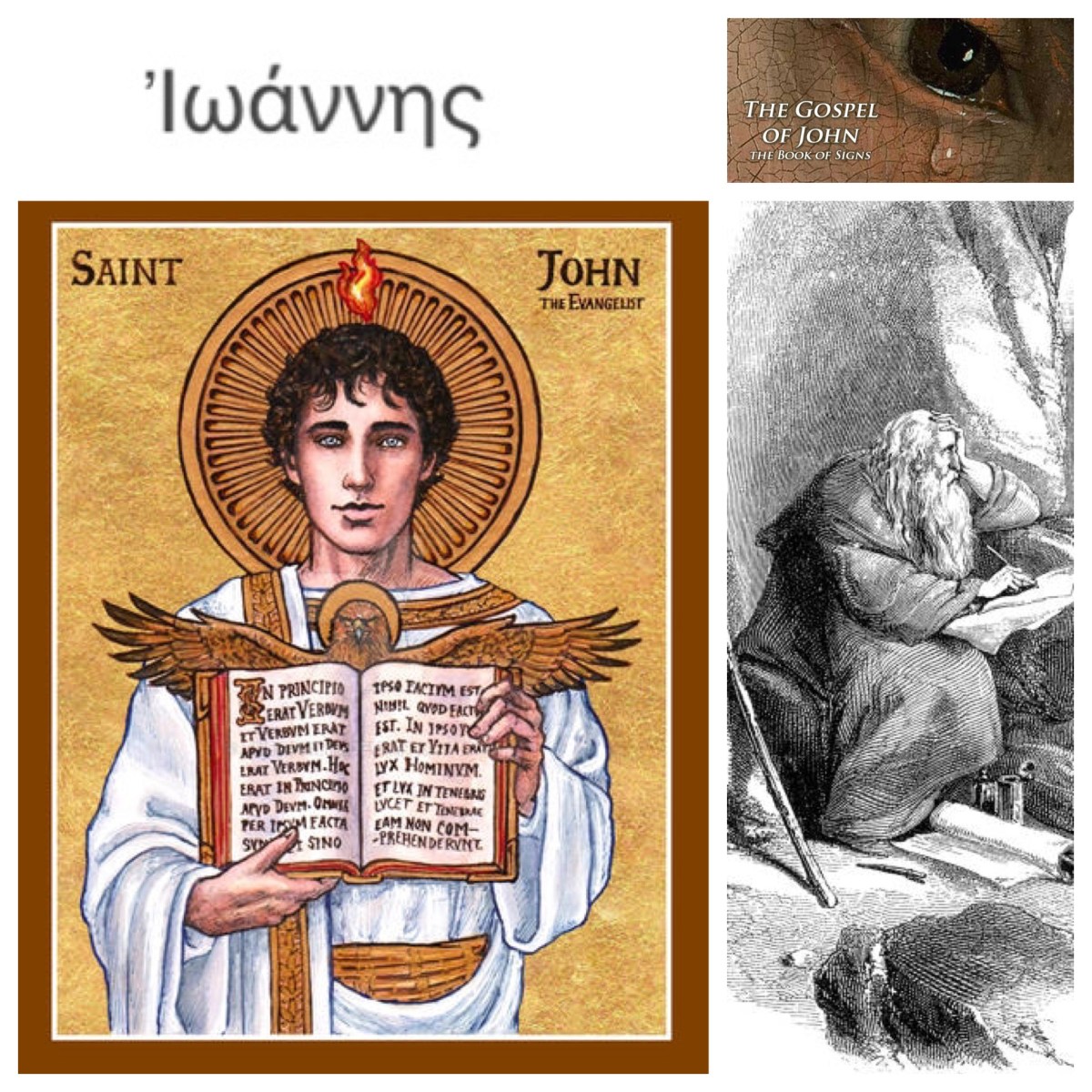
Today is the feast day of John, remembered in the Catholic tradition as Saint John the Apostle and Evangelist, and included in the Uniting Church’s list of commemorations as John, Witness to Jesus.

The fourth Gospel in the New Testament has long been accredited to the disciple named in the three Synoptic Gospels as the fisherman who was the brother of James and the son of Zebedee, one of the earliest called to follow Jesus (Mark 1:19: 3:17; Matt 4:21; 10:2; Luke 5:10; 6:14). Ironically, however, this disciple is not specifically named in the fourth Gospel. (Apart from John the baptiser, the other John noted in this Gospel is the father of Simon Peter; John 1:52; 21:15–17).

In the early fourth century CE, Eusebius wrote in his Ecclesiastical History (6.14.7) that Clement of Alexandria had described this Gospel as the “spiritual” Gospel, written to complement the “physical” depictions of Jesus found in the other three Gospels. (Clement was Bishop of Alexandria at the end of the second century CE.)

This view has exercised a widespread influence throughout Christian history; in the twenty–first century, John’s Gospel is often cited as the easiest way for new converts to understand the “spiritual truths” of the Christian faith. It is frequently said that it contains the most direct expression of the simple Gospel message: “God so loved the world that he gave his only Son …” (John 3:16).

More recent scholarly study of this Gospel, however, has indicated that it is a complex and intricate piece of literature. The literary style of this Gospel is distinctive amongst the Gospels found in the New Testament. Jesus speaks at far greater length than the succinct sayings and compressed argumentation reported of the Synoptic Jesus. Some of the key images included in these speeches are ripe with symbolic significance.

There are multiple layers of meaning to be explored in the fourth Gospel. A number of key words contain ironic references or wry puns. Some scenes tell of misunderstandings which arise because of the different meanings built into the text. A hint of secrecy runs through the narrative—secrecy regarding the deeper, hidden meaning of Jesus and his story. The work is a complex literary creation.

An anonymous figure among the disciples—“the disciple whom Jesus loved”—lays claim to be the author of this work (John 21:20, 24). Who is this figure? Over time, the evangelist came to be equated with the disciple John, son of Zebedee, brother of James. Nothing in the text itself explicitly supports this, however.

Over the past few decades, a different understanding about the origins of this work have developed from scholars who have explored the authorship of this Gospel and the context in which it was written. There is widespread agreement that this work was not written, in the form that we have it, by this John who was one of the earliest followers of Jesus.
Some scholars developed the notion that this figure of “the beloved disciple” was a symbol embedded within the narrative, representing an earlier authority for the evolving traditions about Jesus. The Gospel itself, they consider, came to be written down many decades after this authority figure had first begun to recount the story of Jesus. The shape of the Gospel was heavily influenced by the nature of the community of faith through which these stories were passed, over a number of decades.

This has led to a detailed hypothesis concerning the origins and development of the community of believers which gave birth to this Gospel in written form. (The North American scholars most often associated with this line of interpretation are Raymond Brown and J. Louis Martyn.) This hypothesis makes two central claims.

The first claim is that, in its earliest stages, the community which produced this Gospel had been essentially Jewish. That community received and retold stories which may well have come from the John who was a follower of Jesus. The second claim is that, by the time the body of the Gospel was written in the form that we know it, this community found itself in an antagonistic relationship to the dominant form of Judaism. This opened the way for Gentile ideas, so that they are found mixed with Jewish ideas in the final form of the Gospel.

So if this Gospel was indeed stimulated by the teachings of one of the first followers of Jesus, a Jewish man in Galilee, known as John, it reflects a remarkable trajectory in the first century of the movement initiated by Jesus, tracing its development from a Jewish renewal movement towards a global religion. The stories from the Apostle have presumably been reworked and reshaped over decades as that trajectory develops.

The “disciple whom Jesus loved” certainly occupies a prominent place in the narrative of the fourth Gospel. He reclines on the breast of Jesus at the final meal in Jerusalem (John 13:23) and stands at the foot of the cross with Mary, the mother of Jesus (19:26–27).

After Mary Magdalene announced that the stone at the entrance of the tomb where the crucified Jesus had been laid had been removed (20:1–2), he runs to the tomb, with Simon Peter (20:3), arrives first, and sees that the tomb is empty (20:4–5)—but leaves it to Peter to see the inside first (20:6–7), before himself entering and attesting to the empty tomb with his own eyes (20:8).

Later, when seven of the disciples are fishing on the Sea of Galilee, this same beloved disciple is the first to recognise Jesus standing on the beach next to their fire; this time, he announces the identity of Jesus to Peter (21:7). A little later, Peter draws from Jesus the words about this disciple remaining with him (21:20–23). Finally, the same beloved disciple has the last word in the later-added Appendix to the Gospel, affirming his role as eyewitness and evangelist (21:24).

This is the figure that, in the tradition, is linked with John, the fisherman brother of James, the son of Zebedee, one of the earliest followers of Jesus, accorded a place as one of The Twelve Apostles.

In the book of Acts, the disciple John visits Samaria with Peter, in order to authorise and sanction what Philip had been teaching and doing in that region (Acts 8:14–17). That episode indicates the respect and authority that John was held to have as the movement developed—although the author of Luke and Acts writes some decades after the events he describes, at the end of the first century, and his material is filtered through various intermediaries (see Luke 1:2).

“Apostles Peter and John Blessing the People of Samaria,”
by Giorgio Vasari, 1511-1574, Italian.

However, in one of his early letters from the 50s, Paul himself acknowledges this important position of John, along with James (brother of Jesus) and Peter, the “acknowledged pillars” of the church. Paul relates how he went, with Barnabas and Titus, to Jerusalem (Gal 2:1), in order to receive the approval from the mother church for his activity amongst the Gentiles. Accordingly, “James and Cephas and John, who were acknowledged pillars, recognized the grace that had been given to me, they gave to Barnabas and me the right hand of fellowship, agreeing that we should go to the Gentiles and they to the circumcised” (Gal 2:9).

This corroborates the view we find in Acts, that John had a position of importance in the early church. It doesn’t demonstrate, however, that this John wrote the book of signs, the work we know as the Gospel of John.

The scholar Jerome, born in Dalmatia (now Albania), lived for some time in Palestine in the late 300s. Jerome recounts an anecdote still being told at that time about John the Evangelist. When John was old and feeble and no longer able to walk or preach, he would be carried among the faithful in church and would repeat only one thing over and over again: “My little children, love one another.”

This, of course, is the central mantra in the first of the three letters that bear the name of John (see 1 John 3:11-17; 3:23; 4:7–12; also 2 John 5; 3 John 6). The legend explains how these anonymous letters were attributed to the apostle John.

Polycarp, through Saint Irenaeus, tells us that the Apostle John lived a long life, which ended peacefully in Ephesus around the year 100 CE. If that was so, then John was the only Apostle not to die a martyr. That may then equate him with the John who claims authorship of the book of Revelation, exiled on the island of Patmos (Rev 1:9). However, the style and language of this last book of the New Testament differs significantly from the style of the Johannine gospel and letters.

The Encyclopedia Britannica reports that two rival sites at Ephesus initially claimed the honour of being the grave of John. One eventually achieved official church recognition, becoming a shrine in the 4th century. By the 6th century the healing power of dust from John’s tomb was famous, and the church of Ephesus claimed to possess the autograph of the Fourth Gospel. We don’t have that manuscript today, however.

John was said to have written the Acts of John, a domestic work that was known in the second century; but it was condemned as heretical at the Second Council of Nicaea in 787 CE. And so the traditions about John continued to grow.

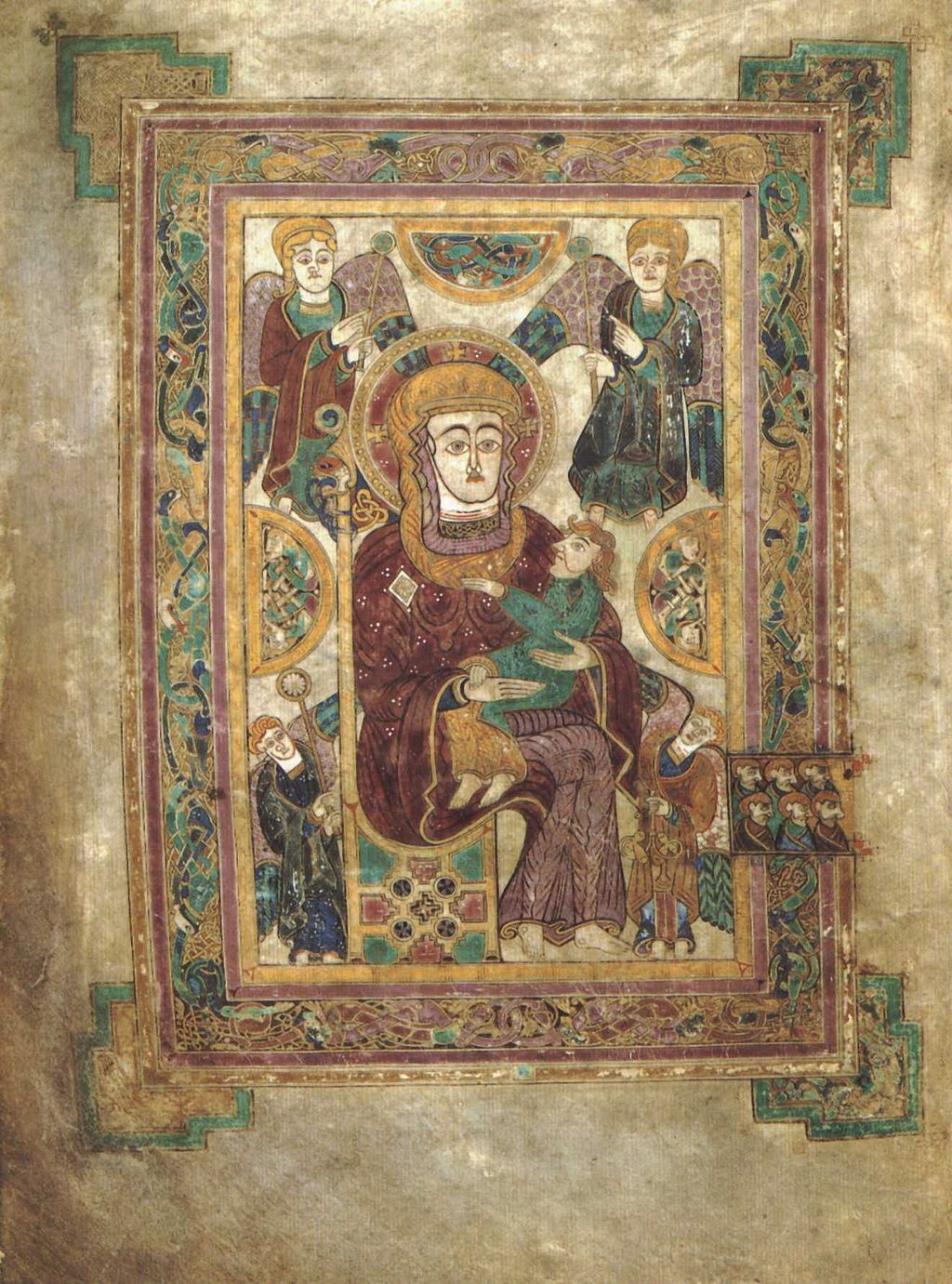
Indeed, in some Medieval and Renaissance works of painting, sculpture and literature, John is often presented in an androgynous or feminized manner, perhaps reflecting the ambiguous identity of “the disciple whom Jesus loved”.

St. John the Apostle by Jacques Bellange, artist
and printmaker from the Duchy of Lorraine, c.1600

All of which demonstrates the maxim that I hold for early Christian writings: the further away from the first century we get, the more information is known about the writers of the Gospels!!
Ye who now will bless the poor shall yourselves find blessing

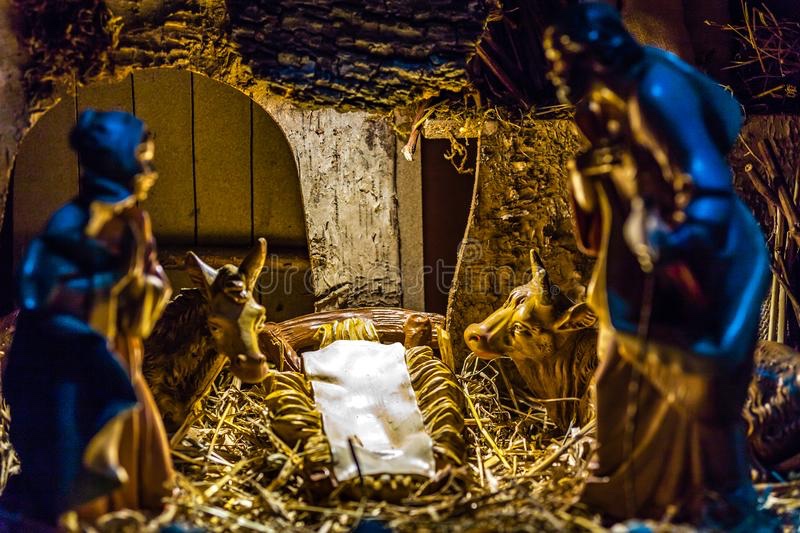
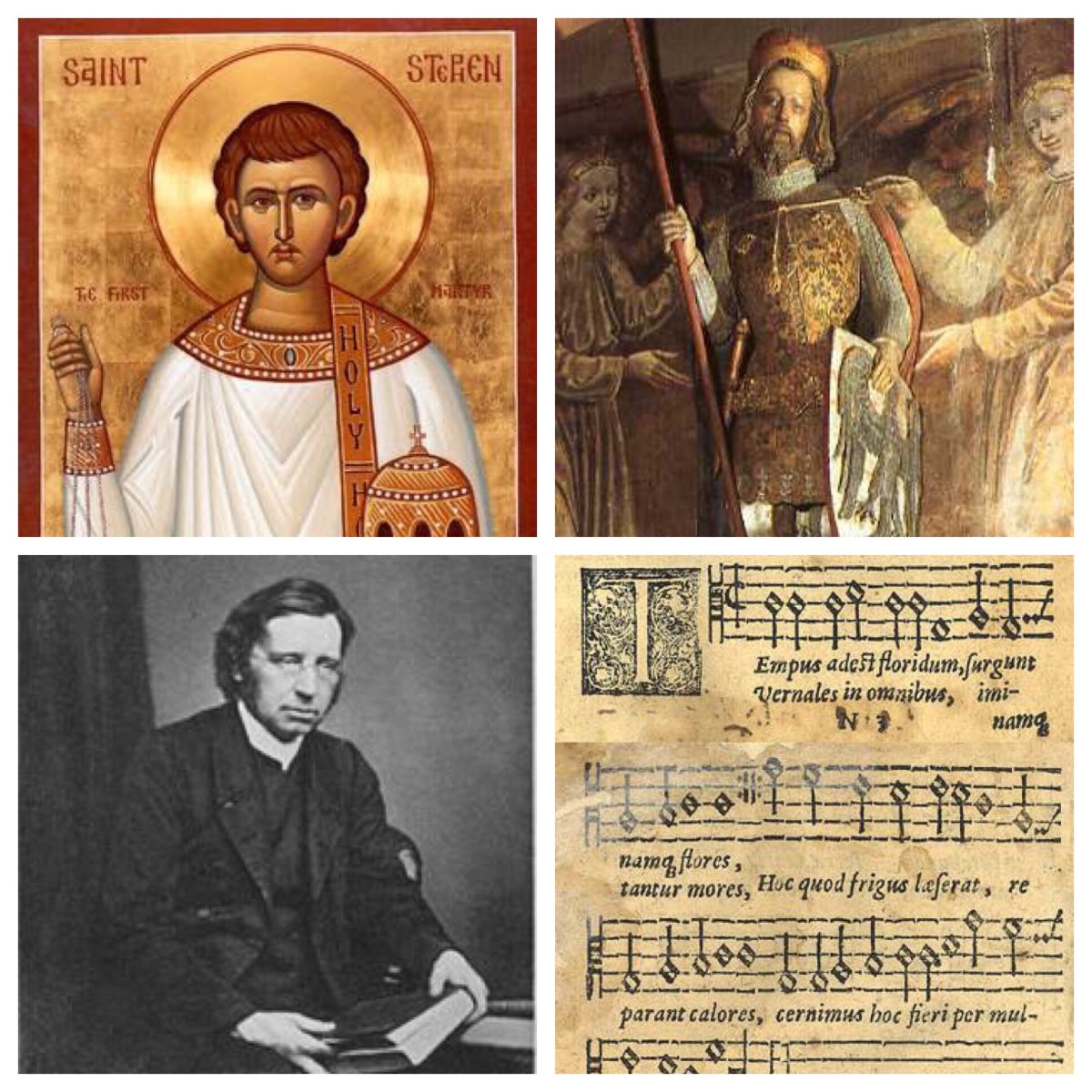
Today is the second day in the season of Christmas, which technically runs from 25 December to 5 January. This day brings together an unlikely combination of characters, worth pondering.

Continue reading “Ye who now will bless the poor shall yourselves find blessing”

The Twelve Days of Christmas: some explanatory explorations

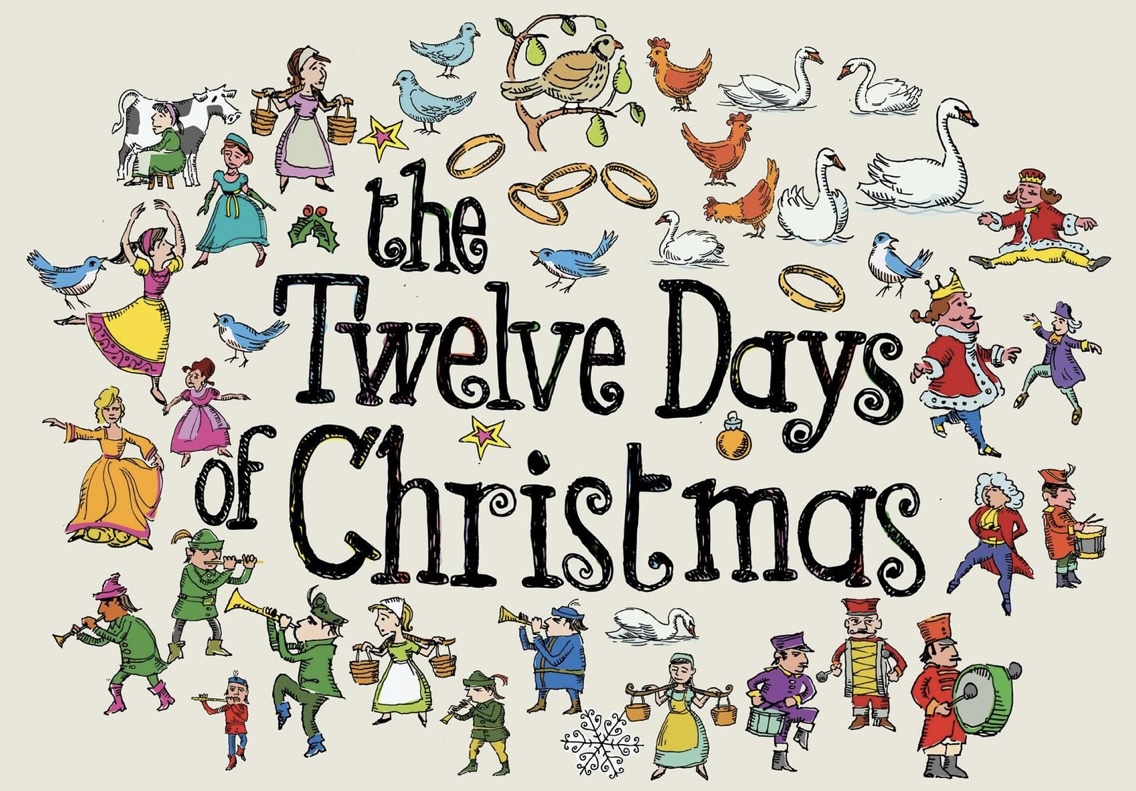
So, it is the night of Christmas Day, and it feels like it is all over—done and dusted, finished, put to bed. Hold it—not so fast!! This is only just the start. Christmas Day is just the first of twelve days of the Christmas season. You might have heard about those twelve days in the song, The Twelve Days of Christmas. This is an English Christmas Carol which is often sung in the lead up to Christmas. It actually belongs to the Christmas season—that is, the days on and after Christmas Day.

Now, some have claimed that this song had a pietistic purpose: a kind of sung catechism about the central features of the Christian Faith, put into code by Roman Catholics in England when their faith was outlawed. (One is Jesus, two symbolises the two testaments, three indicates faith, hope and love, four refers to the Gospels, five to the Books of Moses, ten to the Ten Commandments, twelve to the apostles, and so on …)

Nice theory, but there is no evidence at all that this was the case … and the origins of the theory go back no further than a speculation by a Canadian hymn writer in an article published in 1979. (And snopes.com agrees; you can read the detailed rebuttal at http://www.snopes.com/holidays/christmas/music/12days.asp)

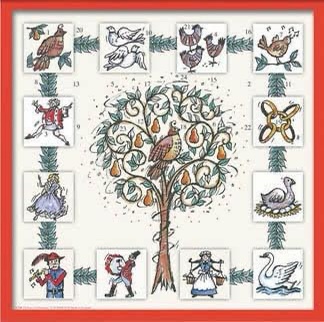
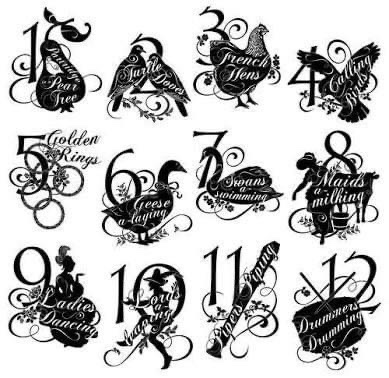
The Twelve Days of the #twelvedaysofchristmas technically refer to the days from Christmas Day, the first day of Christmas, through to Twelfth Night. So the song should be sung from Christmas Day onwards. And the gifts that are given each day accumulate until the twelfth night, the evening before Epiphany, when gifts were given to Jesus by the Magi visiting from the east.

Professor Bruce Forbes writes that “In 567 the Council of Tours proclaimed that the entire period between Christmas and Epiphany should be considered part of the celebration, creating what became known as the twelve days of Christmas, or what the English, called Christmastide. On the last of the twelve days, called Twelfth Night, various cultures developed a wide range of additional special festivities. The variation extends even to the issue of how to count the days.” (Christmas: A Candid History, 2008; see p. 27).

Forbes also notes that there are divergent chronologies at work in different parts of the church: “If Christmas Day is the first of the twelve days, then Twelfth Night would be on January 5, the eve of Epiphany. If December 26, the day after Christmas, is the first day, then Twelfth Night falls on January 6, the evening of Epiphany itself.”

There’s a suggestion that The Twelve Days of Christmas song was originally sung in French . . . or, at least, that the line for the First Day originally included both French and English terms for the bird; thus, “partridge” (in English, and then in French, “perdrix” (pronounced per-dree) . . . which makes no sense, really; but this is a Christmas Carol, and such songs don’t really have to make sense, do they?

On the Second Day, two turtledoves are to be given. But for what purpose? Since this song relates to Christmas, can we assume that there is some religious or spiritual significance with this gift??

Turtle doves could be offered as a sin-offering (Lev 5:7). Is this why they were given? Or perhaps, as the alternate offering for a poor woman, seeking purification after giving birth (Lev 12:8)? This at least links in to the Christmas story (at Luke 2:24), which is what the song is supposed to be about! But it does seem like a long shot …

So, what about as a guilt-offering when cleansing a leper (Lev 14:22)? Or maybe for a Nazirite who has touched a corpse (Num 6:9)? Or as a means of cleansing after sexual discharge (Lev 15:14)? Or maybe the text is multivalent, and we are supposed to bring all of these allusions to mind. Because we know our Bible so well. And we know this is meant to be symbolic. Eh?

Next, on Day Three, the gift to be given is three French hens. Some suggest they are Faith, Hope and Charity, the key Theological Virtues. But only three? There are actually four types of French Hens (Faverolles, La Fleche, Crevecoeurs and Marans). So do we know which one of the four missed out on its moment of glory in this Christmas carol? It’s a worry.

On Day Four, four birds form the gift. Ah, but what type of birds? Calling birds? So you might think. But older versions of the song identify them as Colly Birds. Which are … …??? A colly bird is a black bird. A coal mine is called a colliery, so ‘colly’ or ‘collie’ is a derivation of this and means black like coal. So, no more whitewashing, let’s sing “four black birds”, and be clear about it, eh?

And … while we are at it … Day Five: Five Golden Rings? But they are surrounded by flocks of birds (swans, geese, colly birds, hens de la France, turtle doves, and a partridge). Rings are out of place. So, it is believed that this verse originally referred not to jewellery but to ring-necked birds such as the ring-necked pheasant. So, let’s now sing: “five ring-necked birds”! Context is everything!

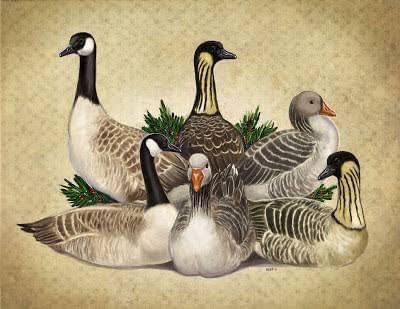
The sixth of the #twelvedaysofchristmas is the midpoint of the 12 days, when we can look back on the story of Christmas (the birth and the shepherds), and forward to the story of Epiphany (the visit of the Magi). The gift for the Sixth Day focusses on new life: six geese a-laying.

It is said that, while chickens lay eggs regularly (usually each day ), geese only lay 30-50 eggs a year. This means they are a less productive bird to keep. It takes longer to increase the size of the flock for meat production. And their eggs are very high in cholesterol. Was this a wise gift? (Of course, you may well score the goose that lays the golden egg.)

On Day Seven, the gift is seven swans a-swimming. Well, yes; that’s what swans do. But who in their right might give this as a gift? Where would they all be put so that they could keep swimming? In a huge bathtub? This is quite unrealistic. Anyway, I guess it proves that the carol was not written by a football-mad fanatic. (They would have had swans kicking goals.)

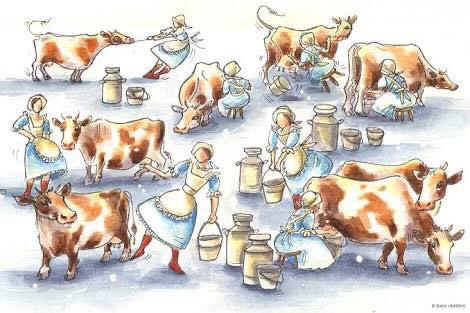
On Day Eight, we are exhorted to give eight maids a-milking. In older English, to “go a-milking” could mean to ask a woman for her hand in marriage; OR to ask a woman to go “for a roll in the hay”, as it were. Is this Christmas carol concealing a reference to illicit sexual encounters? And does that make it more interesting than just getting some milk in order to make some cheese?

Next: Day Nine. Nine ladies dancing. Liturgical dances, I presume? In explore the significance of these ladies, I am somewhat stumped. Any clues, anyone?

Meanwhile, I am starting to compile my list of ‘not relevant in Australia’ secular Christmas carols. Because here, downunder, we are in the midst of summer—not winter, as all the upover northern hemisphere Christmas songs assume. So, not relevant to downunder would include: Anything with snow, for a start. And bells. And holly. And fir trees. And … well, the possibilities are endless.

On Day Ten, the gift is to be ten Lords a-leaping. Alliteration, indeed; but why leaping? Perhaps there is a textual transmission problem here. Maybe it should be: Lords a-leasing? (what to do with their huge old castles and manors)? Or Lords a-sleeping? (in the upper chamber of the British parliament)? Or perhaps Lords a-weeping? (at the decline of their much- loved aristocratic powers). Who knows?

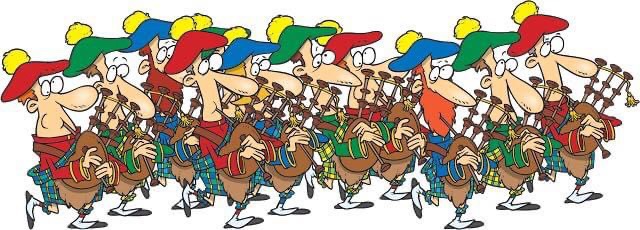
Which brings us to the eleventh day of (the season of) Christmas. On Day Eleven we meet eleven pipers piping. So perhaps this comes from a Scottish variant (like day one comes from the French version). Perhaps the Scots packed their song full of food? In this, the gifts would include twelve alka seltsers, eleven Blue Lagoons, ten creme de menthe, nine vodka and limes, eight nips of whisky, seven rum and cokes, six Carlsberg specials…you get the picture? (Yes, I know, this is becoming quite speculative!!)

Or — does the Scottish reference (bagpipes) mean that I should refer to the crackpot theory that this whole carol was a coded reference to the right of Bonny Prince Charlie to regain the British throne? Yegods … …

But I do note that, in other versions, there are eleven ladies spinning, eleven ladies dancing, eleven lads a-louping, eleven bulls a-beating, and eleven badgers baiting!! Make of them, what you will.

And then, we come to the ultimate (last) of the #twelvedaysofchristmas. Day Twelve. Twelve drummers drumming.

Since the gifts are cumulative, and repeated on each day, on Day Twelve we actually have drummers drumming, along with piping pipers, leaping lords, bleating cows, tapping toes, shuffling shoes, a horde of aviary escapees, and the whole schemozzle. 78 gifts in all (count them) just on this last, twelfth, day. Presumably the others gifts from earlier days are still there. That’s one heck of a menagerie!! It’s all too loud, I think — and the incessant fights amongst all those squawking birds! Oh dear; time for a doze, instead.

The evening of Day Twelve is thus Twelfth Night. The day after is Epiphany, a day to celebrate the coming of the magi to the infant Jesus. Time, indeed, to rest—when you get there. But, for the moment, there’s some geese to be sourced. And some drummers. And milkmaids … and Lords (Lords??) … and ………….

*****

See also https://claudemariottini.com/2022/12/26/the-12-days-of-christmas/