An excess of righteous-justice (Matt 5; Epiphany 5A)

Recent scholarship has recognised the Jewish character of the first Gospel in the New Testament—the work that I refer to as the book of origins (for that is my translation of how the book begins, in Matt 1:1).

A consensus is emerging that the book of origins was most likely written for a community that was still thoroughly immersed within its Jewish tradition. One place we can see that is in what is perhaps the most famous section of the Gospel, the Sermon on the Mount (Matt 5–7). These chapters stand as an excellent example of how Jesus was understood, by Matthew, to be THE authoritative Jewish teacher, interpreting and applying the Torah, the Law of Moses, to all of daily life.

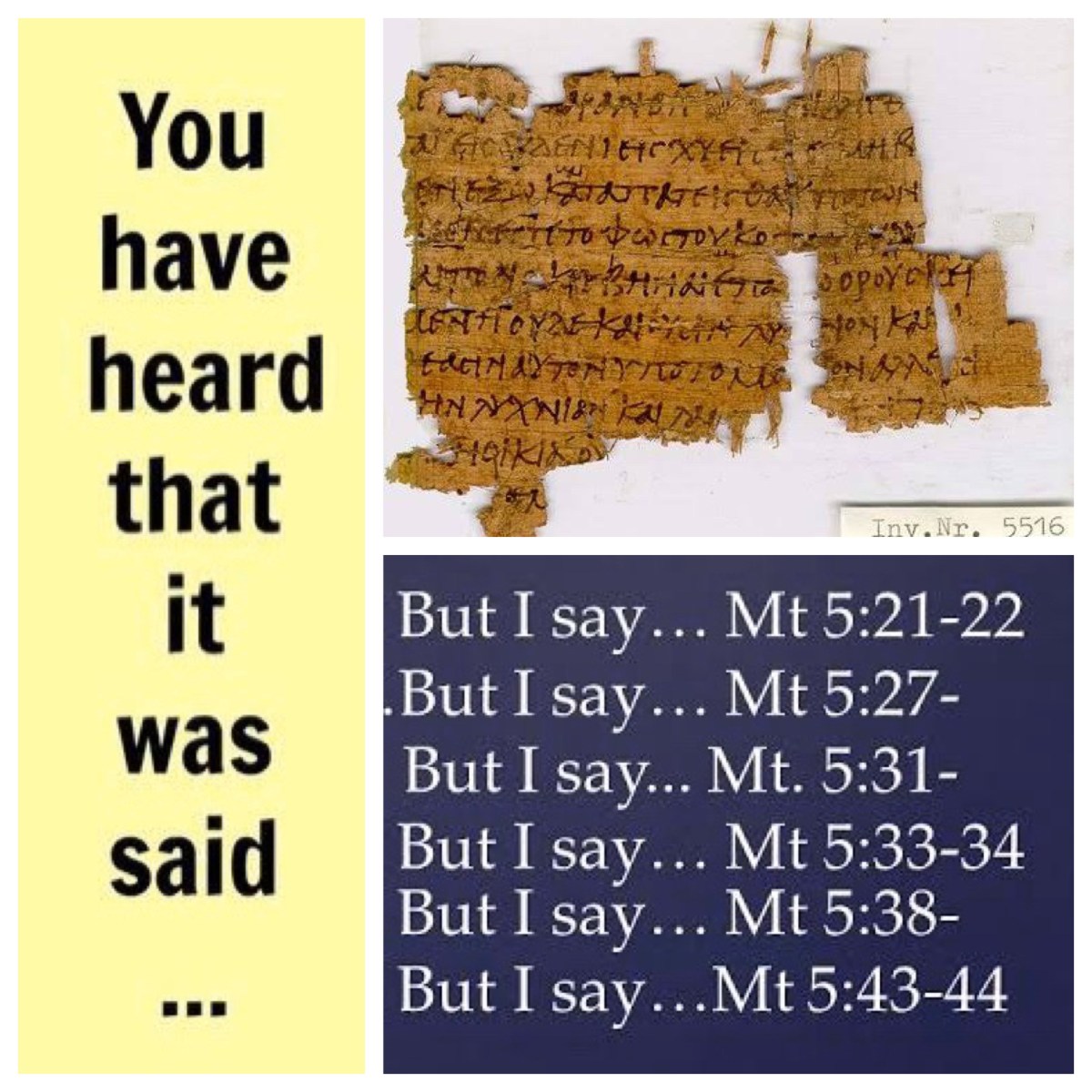
In this sermon, Jesus debates with the Pharisees concerning their interpretation of scripture. His pugnacious words, “you have heard it said … but I say to you …” (occurring six times within 5:21-48) reflect the common dialectical interaction that Pharisees (and, later, Rabbis) used to tease out the meaning of each commandment found within the Law. Torah teaching was inherently dialogical in nature; those teaching the Law would argue, back and forth, over what it meant and how it was to be followed.

As Jesus uses these established Jewish debating techniques, he proposes a way of living that is thoroughly grounded in Jewish ethics and practices, such as prayer, fasting, and almsgiving. The emphasis on righteousness is central to the discourse; four times during this sermon (5:6, 10, 20; 6:33) Jesus particularly emphasises the importance of being righteous.

Indeed, in the verse which culminates the Gospel passage set for this coming Sunday, Jesus is attributed as having taught his disciples that he is looking for an excess of righteousness: “unless your righteousness exceeds that of the scribes and Pharisees, you will never enter the kingdom of heaven” (5:20).

That verse has followed straight after Jesus’ emphatic insistence that the Law, the whole of the Law, must still stand for his followers. “Do not think that I have come to abolish the law or the prophets; I have come not to abolish but to fulfill. For truly I tell you, until heaven and earth pass away, not one letter, not one stroke of a letter, will pass from the law until all is accomplished” (Matt 5:17-18). And then follows strict instructions to those who follow Jesus, to ensure that they keep all the commandments, and ensure they do not break any of them (5:19).

So righteousness means living in accord with the Law, obeying all the requirements that it sets out, keeping all the commandments in fine detail. That is why Jesus instructs his followers to be the “salt of the earth” (5:13), the “light of the world” (5:14), so that others “may see your good works” (5:16). This means, always living in a way that bears “good fruit” (7:17), doing “the will of the Father” (7:21), listening to the words which Jesus speaks and acting on them diligently (7:24). Giving alms, praying faithfully, and fasting regularly, are offered as three key ways by which this righteous way of living will be manifest (6:1-18).

There can be no doubt that, in the book of origins, Jesus is intensely, rigorously, Jewish, scrupulously upholding the Law in every tiny detail in the way that he understands it to apply. And righteousness is at the centre of that way of life.

The concept of righteousness is thoroughly Jewish in origin. It is closely linked with the demand for justice. Patriarchal stories remember Noah as a righteous man (Gen 6:9) and recall that Abraham was accounted as righteous by God (Gen 15:6); Ezekiel adds Daniel and Job to this list (Ezek 14:14). A number of psalms make the claim that God is just and righteous by nature and in action (Ps 7:11; 116:5; 119:137, 144; 129:4; see also Isa 5:16; 11:3–5; 24:16; 45:21) and proverbs were collected to inform people of the ways to live righteously and with justice (for instance, Prov 10:11–13:25).

Various prophetic voices regularly called for justice and righteousness within Israel (Isa 1:24–28; 26:7–9; 32:16–17; 45:8; 61:10–11; Jer 22:3; 23:5–6; Ezek 3:20–21; 18:5–9; Dan 9:24; Hos 10:12; Amos 5:20; Hab 2:4; Zeph 2:3). Malachi envisages a book in which the names of the righteous will be written as the “special possession” of God (Mal 3:16–18).

The central catchcry of Amos, “let justice roll down like waters, and righteousness like an ever-flowing stream” (5:24), exemplifies the desires of faithful Israelites in ages past and is carried over into the hopes of faithful Jews in our own times.

And this word righteousness appears frequently in New Testament books (all four Gospels, Acts, most of the letters of Paul, and the letters to the Hebrews, and from James, Peter and John). And in many of these occurrences, it can equally validly be translated as justice. The two terms become interchangeable: living in a righteous way means living in a manner that prioritises justice.

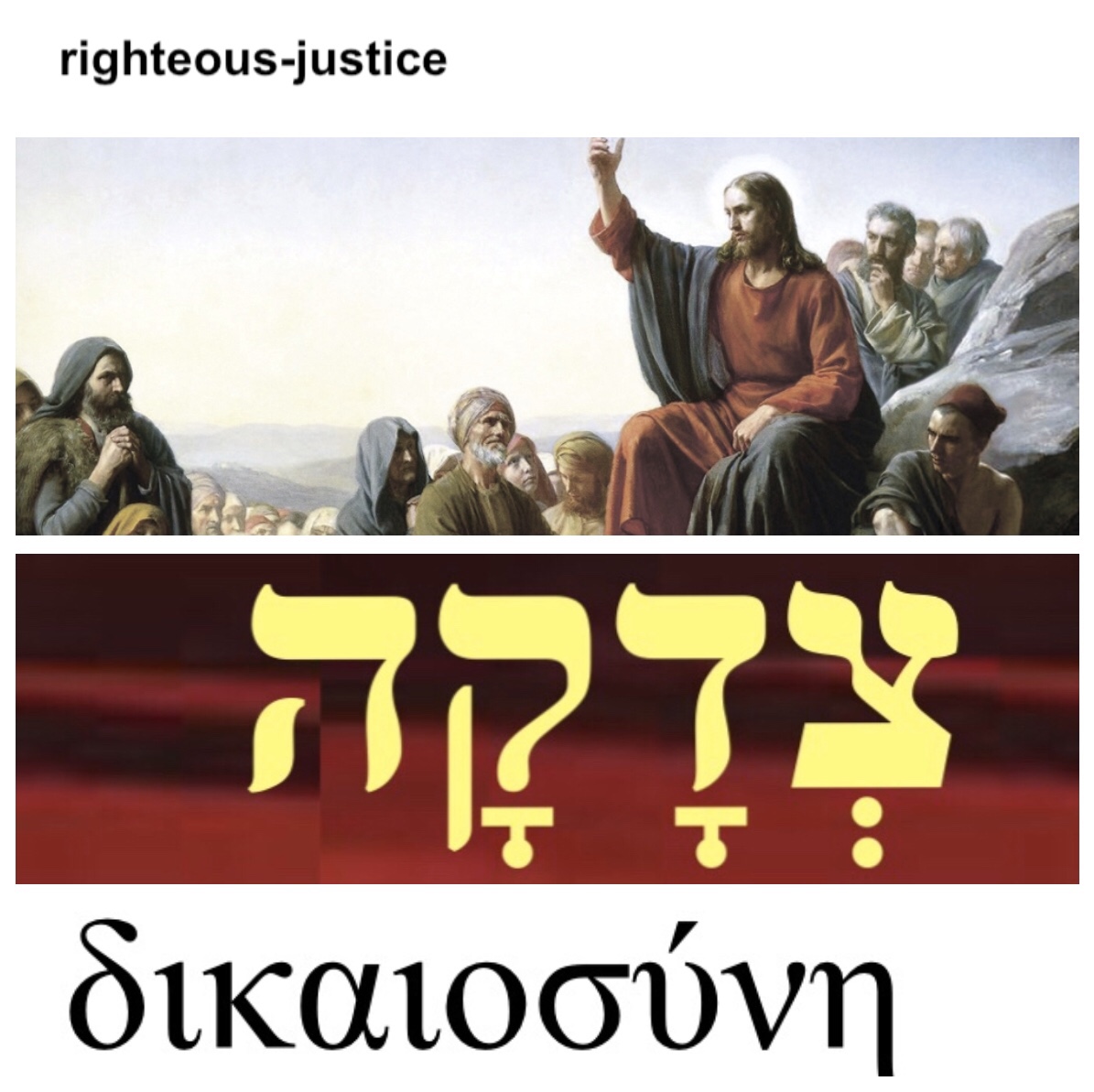
Perhaps we would do better, in English, to render the Hebrew word tsdeqah, and the corresponding Greek word dikaiosune, as something like righteous-justice. The two words, in English, tend to pint us in different directions—righteousness has a personal orientation, justice refers to the way society operates. In Hebrew, and in Greek, the words overlap because those categories of personal and societal were not clearly distinguished and separated.

It was the Torah, the Law of Moses, which was at the heart of this desire for righteous-justice. Living in accordance with the prescriptions of a holy God meant leading a life of righteous-justice. The teachings of Jesus which are recorded in Matthew’s Gospel are both grounded in a commitment to Torah, and developed in accordance with Jewish understandings of a faithful life. Obedience to the Law essentially meant living a just life, a life of righteousness, in every aspect of life.

Indeed, there is a cluster of terms that sat at the heart of traditional Jewish piety at the time of Jesus. The terms righteous-justice and lawlessness, along with the devout and the ungodly, were common in sectarian language of the late Second Temple period. Use of such language was aimed at validating the position of the writer (and the writer’s community) in opposition to other positions.

We find that righteous-justice is a key term for defining the self-identity of the sectarian communities which produced various Jewish documents 4 Ezra (7:17, 49–51; 8:55–58), 2 Baruch (15:7–8; 85:3–5), 1 Enoch (94:1, 4–5; 96:1; 99:1–3; 95:6–7), and the Psalms of Solomon (4:8; 13:6–9; 15:6–9). In each of these writings, usually within the same sentences, the terms “sinners”, “ungodly” and “lawless” are used to define those outside the community.

In similar fashion, the Dead Sea Scrolls define their community as one marked by righteous-justice (Community Rule 3, 9; Commentary on Habbakuk 8), in distinction from outsiders who are “the wicked” (Damascus Rule 4) and “the children of falsehood” (Community Rule 3). The struggle between the various sectarian communities and those in power was couched in very black-and-white terms.

The same cluster of terms is to be found in the book of origins. To live by righteous-justice is a key defining feature of faithful disciples (10:41; 13:17, 43; 25:37, 46), and righteous-justice is the keynote of Jesus’ ministry (3:15; 5:6, 10, 20; 6:33). By contrast, those who are unfaithful are depicted as “lawless” (7:23; 13:41; 23:28; 24:10–12). This Gospel thus draws the same distinction between its members and outsiders, as is found in other Jewish sectarian documents of the time.

To be righteous means to adhere to the Law. To adhere to the Law means to live a just life. This is what Jesus taught, and this is how Jesus lived, as we find reported in the book of origins. And so, the whole Sermon on the Mount is included in this book as a challenging statement of what it means to be a faithful follower of Jesus, keeping the Law in every respect, living with an excess of righteous-justice.

See also

https://johntsquires.com/2020/01/23/repentance-for-the-kingdom-matt-4/

https://johntsquires.com/2019/12/27/reading-matthews-gospel-alongside-the-hebrew-scriptures-exploring-matthew-2/

https://johntsquires.com/2019/12/21/a-young-woman-a-virgin-pregnant-about-to-give-birth-isa-714-in-matt-123/

https://johntsquires.com/2019/12/11/the-origins-of-jesus-in-the-book-of-origins-matthew-1/

https://johntsquires.com/2019/12/19/descended-from-david-according-to-the-flesh-rom-1/

https://johntsquires.com/2019/12/17/now-the-birth-of-jesus-the-messiah-took-place-in-this-way-matthew-1/

https://johntsquires.com/2019/12/04/for-our-instruction-that-we-might-have-hope-rom-15-isa-11-matt-3/

https://johntsquires.com/2019/11/28/leaving-luke-meeting-matthew/

Blessed are you: the Beatitudes of Matthew 5 (Epiphany 4A)

This Sunday the lectionary offers an abundance of gifts: the classic prophetic declaration that God desires us to do justice, and to love kindness, and to walk humbly with your God (Micah 6:8); the ringing apostolic affirmation that we proclaim Christ crucified, a stumbling block to Jews and foolishness to Gentiles, but to those who are the called, both Jews and Greeks, Christ the power of God and the wisdom of God (1 Cor 1:23-24); and the words which Matthew puts on the lips of Jesus himself, Blessed are the poor in spirit, for theirs is the kingdom of heaven (Matt 5:3).

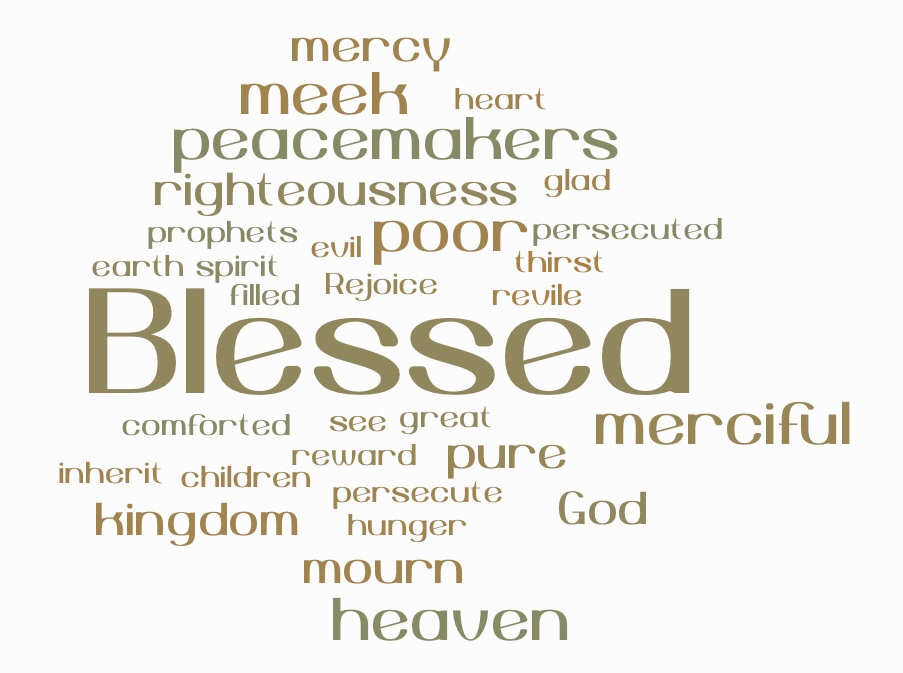
Those words of Jesus are the first words of blessing in a set of eight blessings (usually known by their Latin name, as Beatitudes), which begin the sermon on the mount (5:3–12)—eight short sayings in which Jesus pronounces blessings on specified groups of people. It is a key section of the book of origins, which provides the Gospel passage this Sunday and on each Sunday throughout the current year.

Often in the Christian church, people marvel at the insight revealed in these sayings of Jesus. And, to be sure, the words offer a deep sense of spirituality, a penetrating insight into the way that God wants human beings to live.

But this collection of sayings is not quite unique and original to Jesus. For Jesus was drawing deeply from within his own Jewish tradition. And the resonances with Hebrew Scriptures are strong and consistent throughout these blessings.

The form is clearly Jewish; there are blessings right throughout Hebrew Scriptures. Blessings are offered in the opening creation narrative (Gen 1:22, 28, 2:3) and throughout the narrative books (Exod 18:10, Deut 28:3-6, Judg 5:24, Ruth 2:19-20, 4:14, 1 Sam 25:32-33, 1 Kings 1:48, 8:15, 8:56, 10:9, 1 Chron 16:36, 29:10, 2 Chron 2:12, 6:4, 9:8, Ezra 7:27, Neh 9:5).

Many psalms offer blessings addressed to God (Pss 28:6, 31:21, 41:13, 66:20, 68:19, 72:19, 89:52, 106:48, 113:2, 118:26, 124:6, 135:21, 144:1) and blessings appear also in some prophetic books (Jer 17:7, Dan 2:20, 3:28, Zech 11:5). Blessings continue on in this form in Jewish traditions, right through to the present day.

The influence of the Hebrew Scriptures can also be clearly seen in the content of these blessings, for they relate traditional Jewish piety regarding the poor, the humble, those who hunger, and those persecuted (as noted below).

A persuasive theory is that Matthew has actually expanded a briefer set of Beatitudes, known to him through early Christian tradition (which may be reflected in Luke 6:20–23), by adding in assorted categories of “the pious” which were known to him from Hebrew Scripture.  

Certainly, the effect of placing these sayings, with their traditional Jewish flavour, at the head of the first block of Jesus’ teachings, is to infer that they provide the key to understanding all the subsequent teachings of Jesus in like fashion. Jesus, in Matthew’s opinion, teaches and preaches as one steeped in Hebrew scripture and tradition.

Each one of these beatitudes is based on texts found in the Hebrew Scriptures. In blessing the poor (5:3) and the meek (5:5), Jesus echoes those psalms which speak of those who are poor and meek, who will receive the justice of God and an earth cleansed of evil-doers as their reward (Ps 9:18; 10:1–2, 8–9; 12:5; 14:6; 40:17; 70:5; 72:4, 12; 140:12). Isaiah 61:1 speaks of the good news to the poor; Proverbs 16:19 commends being poor and having a lowly spirit as desirable for those who trust in God.

The blessing offered to the meek, “for they will inherit the earth”, recalls the refrain of one of the psalms (Ps 37:11, 22, 29), whilst the blessing on the merciful evokes the prophetic valuing of mercy (Micah 6:6–8; Hosea 6:5–6).

The blessing of the pure in heart who “will see God” recalls Moses (Exod 3:4; 33:7–11, 12–20; Deut 34:10) as well as words of the psalmist (Ps 17:15; 27:7–9).

Jesus’ blessing of those who hunger and thirst (5:6) similarly evokes earlier biblical blessings on such people (Ps 107:4–9, 33–38; Ezek 34:25–31; Isa 32:1–6; 49:8–12). But in this saying of Jesus, it is specifically those who hunger and thirst for the righteousness, or justice, of God who are blessed. That righteousness, or justice, is a central motif of Hebrew scripture.

Righteousness, or justice, is highlighted in the story of Abraham (Gen 15:1-6, 18:19), is found in many psalms (Pss 5:8, 7:17, 33:5, etc), and recurs regularly in the oracles of various prophets (Amos 5:24, Zeph 2:3, Zech 8:7-8, Mal 4:1-2, Jer 9:24, 33:14-16) as well as many times in Isaiah (Isa 9:7, 11:1-5, 42:6, etc). Jesus draws on this tradition in his blessings, and in other teachings.

The blessings uttered by Jesus upon those who are persecuted (5:10, 11–12) recall the promises of God to such people (Ps 34:15–22), as well as the psalms of the righteous sufferer (Ps 22, 31, 69, 71, etc.). God’s blessing is especially granted in situations of persecution.

The first eight blessings, which all share a tight, succinct form, are framed by the declaration about such people, that theirs is the kingdom of heaven (5:3, 10). The beatitudes thus summarise the criteria for a person to enter the kingdom of heaven—humility, peacemaking, mercy, purity, and a commitment to righteousness or justice in all of life.

******

This blog draws on material in MESSIAH, MOUNTAINS, AND MISSION: an exploration of the Gospel for Year A, by Elizabeth Raine and John Squires (self-published 2012)

See also

https://johntsquires.com/2020/01/23/repentance-for-the-kingdom-matt-4/

https://johntsquires.com/2019/12/27/reading-matthews-gospel-alongside-the-hebrew-scriptures-exploring-matthew-2/

https://johntsquires.com/2019/12/21/a-young-woman-a-virgin-pregnant-about-to-give-birth-isa-714-in-matt-123/

https://johntsquires.com/2019/12/11/the-origins-of-jesus-in-the-book-of-origins-matthew-1/

https://johntsquires.com/2019/12/19/descended-from-david-according-to-the-flesh-rom-1/

https://johntsquires.com/2019/12/17/now-the-birth-of-jesus-the-messiah-took-place-in-this-way-matthew-1/

https://johntsquires.com/2019/12/04/for-our-instruction-that-we-might-have-hope-rom-15-isa-11-matt-3/

https://johntsquires.com/2019/11/28/leaving-luke-meeting-matthew/

Repentance for the kingdom (Matt 4; Epiphany 3A)

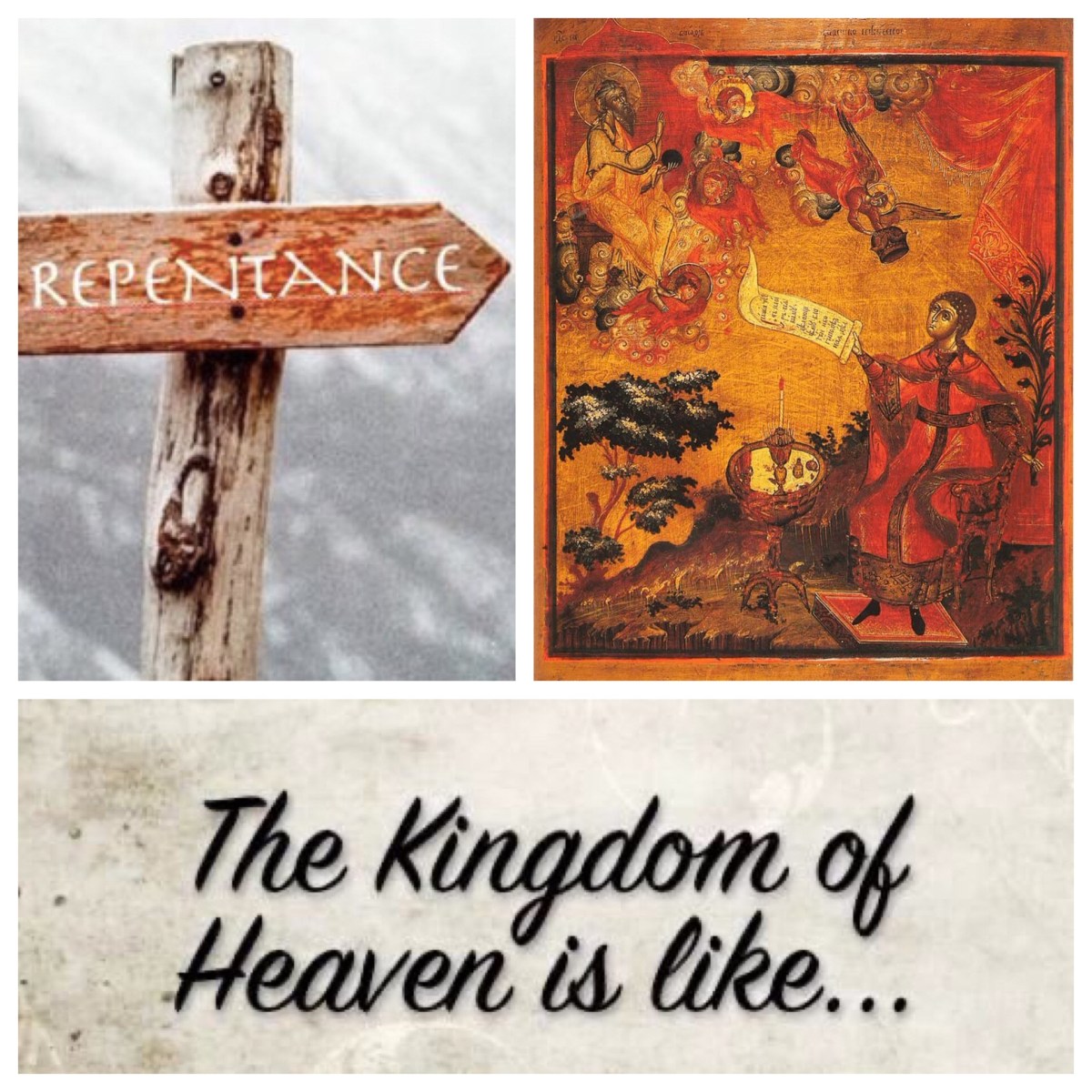
From that time Jesus began to proclaim, “Repent, for the kingdom of heaven has come near” (Matt 4:13). The first public utterance of Jesus, in the book of origins which we know as the Gospel according to Matthew, is a word-for-word repetition of the signal proclamation by John the baptiser: In those days John the Baptist appeared in the wilderness of Judea, proclaiming, “Repent, for the kingdom of heaven has come near” (Matt 3:1-2).

This passage is set as part of the Gospel for this coming Sunday. It is an important passage in the book of origins, for it sets out two key elements in the declaration made by Jesus, which are central to understanding the purpose of of Jesus, as Matthew understands it.

The first element, repentance, is proclaimed by John and repeated by Jesus. The Greek word metanoia, which translated as “repentance”, is a powerful word; it refers to a complete and wholesale “change of mind”, a deeply permeating and thoroughgoing change of how one lives. It is no mere trifle; it is a serious, and challenging, concept.

John first asserts the need for such a thoroughgoing transformation, when he instructs the Pharisees and the Sadducees to bear fruit worthy of repentance (3:8). This theme is repeated by Jesus in various teachings: you will know them by their fruits (7:15-20), the tree is known by its fruit (12:33-37), and the warnings given to the towns of Chorazin, Bethsaida, and Capernaum (11:20-24).

In the teachings of Jesus included in this Gospel, Jesus provides clear and detailed instructions as to what “fruit” is entailed in this way of living, such as: go beyond what the Law says, to seek perfection (5:21-48); do not place stumbling blocks in another’s way (18:6-9); and give your possessions to the poor if you wish to be perfect (19:21-30). Repentance is serious and demanding.

The second element is the kingdom of heaven—also proclaimed by John (3:8) and then regularly included in the teachings and parables of Jesus. In Matthew’s understanding, the kingdom is closely linked with righteousness 5:10, 20; 6:33; 21:31-32; 25:46).

Such righteousness requires deep and abiding repentance—that change of mind, heart, and the whole being, that comes from entering into covenant relationship with God, and following the way of Jesus. (And dikaiosune, the Greek word usually translated as righteousness, can equally be translated as justice, which, of course, gives a different flavour to our understanding when we read that English rendering.)

The kingdom is both God’s gift to those who are righteous, or just, and the realm where God’s righteousness, or justice, will be the norm. There is a marvellous treasury of parables about the kingdom found in Matt 13, some additional parables in Matt 20 and 22, and then three final and powerful parables in Matt 25. They signify that the kingdom includes both a gift (it the place where God’s justice, or righteousness, is freely evident), and a demand (it is the way that God requires righteous lives, or just lifestyles, from human beings).

Often the parable is told with a single focus point: the kingdom of heaven is like … (hidden treasure, or fine pearls, or a mustard seed). Some parables are more developed, involving a series of characters, recounting a developing storyline. Each parable, nevertheless, drives towards a clear central point, explaining the nature of the kingdom that is proclaimed by Jesus, as gift and demand.

Jesus teaches that entry into the kingdom is premised on faithful service (7:21-23); it is those who produce the fruits of the kingdom who will share in this realm (21:43). Alongside Jews who are faithful followers of Jesus, the kingdom will include those from beyond Israel—a Gentile centurion (8:10,13) and a Canaanite woman (15:28) are specifically commended. They are welcomed because of their faith, which has been made evident in the way they respond to Jesus—they place their complete trust in him. (We are not told that they become followers of Jesus; they simply trust him in that moment of encounter.)

The passage set for this Sunday thus serves as an introduction to key themes that are expounded by Jesus throughout his teaching ministry, as well as an overview of key elements that will recur throughout the year, as excerpts from this Gospel appear in the lectionary week by week.

******

The icon shown is a 19th century representation of “the kingdom of heaven”, from Petersburg.

This blog draws on material in MESSIAH, MOUNTAINS, AND MISSION: an exploration of the Gospel for Year A, by Elizabeth Raine and John Squires (self-published 2012)

*******

See also

https://johntsquires.com/2019/12/27/reading-matthews-gospel-alongside-the-hebrew-scriptures-exploring-matthew-2/

https://johntsquires.com/2019/12/21/a-young-woman-a-virgin-pregnant-about-to-give-birth-isa-714-in-matt-123/

https://johntsquires.com/2019/12/11/the-origins-of-jesus-in-the-book-of-origins-matthew-1/

https://johntsquires.com/2019/12/19/descended-from-david-according-to-the-flesh-rom-1/

https://johntsquires.com/2019/12/17/now-the-birth-of-jesus-the-messiah-took-place-in-this-way-matthew-1/

https://johntsquires.com/2019/12/04/for-our-instruction-that-we-might-have-hope-rom-15-isa-11-matt-3/

https://johntsquires.com/2019/11/28/leaving-luke-meeting-matthew/

John (the baptizer) and Jesus (the anointed) in the book of signs (the Gospel of John; Epiphany 2A)

The fourth Gospel in our New Testament describes itself quite explicitly as the book of signs which is intended to foster trust in Jesus the anointed one (see John 20:30). Like the other three Gospels in the New Testament, it begins by placing Jesus (the anointed) in relationship with John (the baptizer). This relationship is declared in the selection from the opening chapter which is found in the lectionary for this coming Sunday.

So scholars wonder if there was originally a link between the Jesus movement and the movement led by John the baptiser. Evidence for this link is also drawn from places such as Acts 19:1–7, and the Q passage in Luke 7 (par Matt 11).

Nevertheless, it is John’s Gospel which provides the clearest evidence, when it recounts that the earliest followers of Jesus were drawn from the followers of John (1:35–42).

John (the baptizer), in this gospel, does not call for repentance; rather, he bears witness to Jesus (1:6–8, 15; 1:29–36; 3:25–30; 10:41), testifying that Jesus is the light (1:7), of greater rank than John himself (1:15, 30), the Lamb of God (1:29, 36), the Son of God (1:34), the bridegroom (3:29), and, by implication, the Messiah (1:20; 3:28).

This emphatic depiction of John as deflecting attention from himself, to Jesus, indicates that there was, at an early stage, some competition between the two figures—or, at least, between their respective followers.

The account we have in the book of signs dates from many decades after the lifetime of John and Jesus. This section seems to have been written as a defence against any idea that John, who came first, might have been regarded as superior to Jesus. The words and actions of John deflect attention from himself, and place Jesus in the spotlight. And some of his followers leave him, and take up following Jesus!

This link is confirmed, for some scholars, by the nexus of ideas that flow from Johannine Christianity into the Mandean literature of the third and fourth centuries CE—including, amongst other things, the prominence accorded to John the baptiser.

My friend James McGrath is an expert in this relationship; he has blogged about this at https://www.patheos.com/blogs/religionprof/2020/01/preview-the-mandaean-book-of-john.html and he has written a blog which has links to all manner of interesting discussions about the relationship between John and Jesus, at https://www.patheos.com/blogs/religionprof/2019/11/the-symbolism-and-meaning-of-johns-baptism.html

Thus, the reform movement within Second Temple Judaism headed by John is seen to have had some influence on the gospel, in its early stages, at least. John stands outside the Pharisaic–rabbinic stream of Judaism which would become dominant after 70 CE. This is the first indication of the influence of a different form of Judaism on this Gospel.

The early prominence accorded to John the baptizer joins other indications in the book of signs—the fact that the first large–scale success enjoyed by Jesus was in Samaria (John 4), and the appearance of Greeks in Jerusalem, seeking Jesus (John 12), for instance—in pointing to this wider canvas. Sometimes this is described as “heterodox Judaism”, in contrast to the dominant Pharisaic stream within formative Judaism.

This Gospel thus includes indications of the development of a faith community which looked beyond the parameters of Judaism as it was being shaped by the Pharisees, towards other forms of Jewish faith and life—and perhaps beyond. The Gospel is being painted on a wider canvas. It is already a sign to what would eventuate after the first century, as the Gospel spread and took hold amongst Gentiles beyond the Jewish homeland.

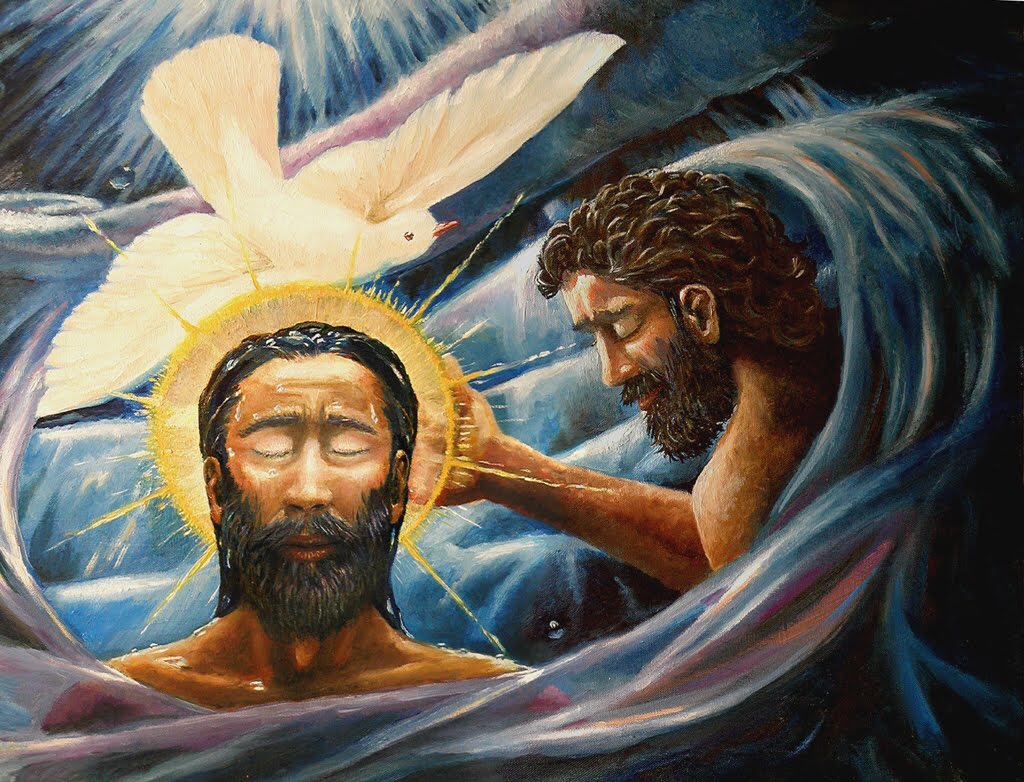
The image is sourced from peacesojourner.blogspot.com

Reflecting on faith amidst the firestorms

We have been surrounded by images of fire, for some weeks now. The last few weeks have been challenging, confronting us with terrible images of devastated landscapes, burnt native animals and birds, destroyed homes, and the bodies of farm stock unable to escape the fire, alongside of pictures and videos of the still-raging flames of fire, leaping high into air, travelling rapidly across the landscape.

We have watched aghast as our screens take us right into the heart of the firestorm, standing with firefighters in the face of unbeatable odds. And we have breathed the air that is saturated with smoke from the fires, smoke that causes us to gasp, cough, and wheeze. It has been a challenging time. And fire has been the constant theme.
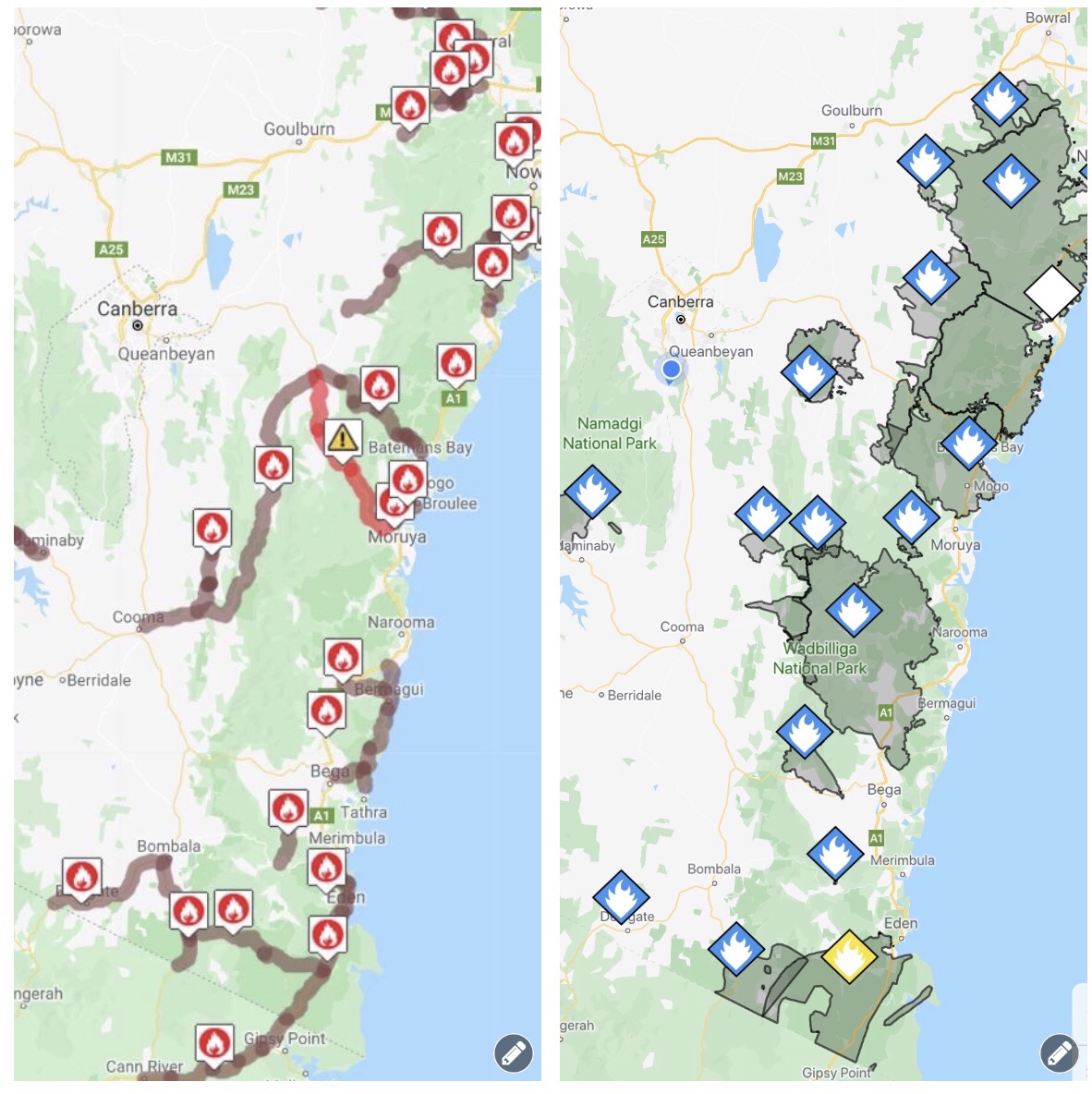
In this context, there is one short verse in the Psalm caught my attention, this week, as I read the lectionary passages and pondered what I would take as a focus for today. I wonder if you noticed the verse that jumped out to me, when we said the psalm together, earlier? “The voice of the LORD flashes forth flames of fire” (Ps 29:7).

These fires that rage, these flames that burn … are they really a message from God, to us, a message of punishment? That is how such events have been seen by some—the bushfires now raging, the floods that swamped North Queensland last year, the five severe cyclones that hit Pacific Islands a few years back, the massive tsunami that ravaged Asian countries over a decade ago—each of these have been explained by some zealous preacher or another, as a sign of God’s punishment.

It was not too long ago that a prominent sports star gained publicity by suggesting that the fires early in the season were sent by God to punish us—punishing us for the many sins committed by people in Australia. Others have made claims that God is punishing us for the decisions made by our church in recent times.

And just a few days ago, a breakaway Baptist pastor in Arizona made the audacious claim that the fires are actually punishment from God because he was denied a visa to visit Australia. He said on Facebook that “maybe if Australia wasn’t banning and deporting preachers of the Gospel, they wouldn’t be under the judgement of God”. And, as you can see, he clearly linked this with the bushfires, using the map of blazes and a picture of one of the fires.
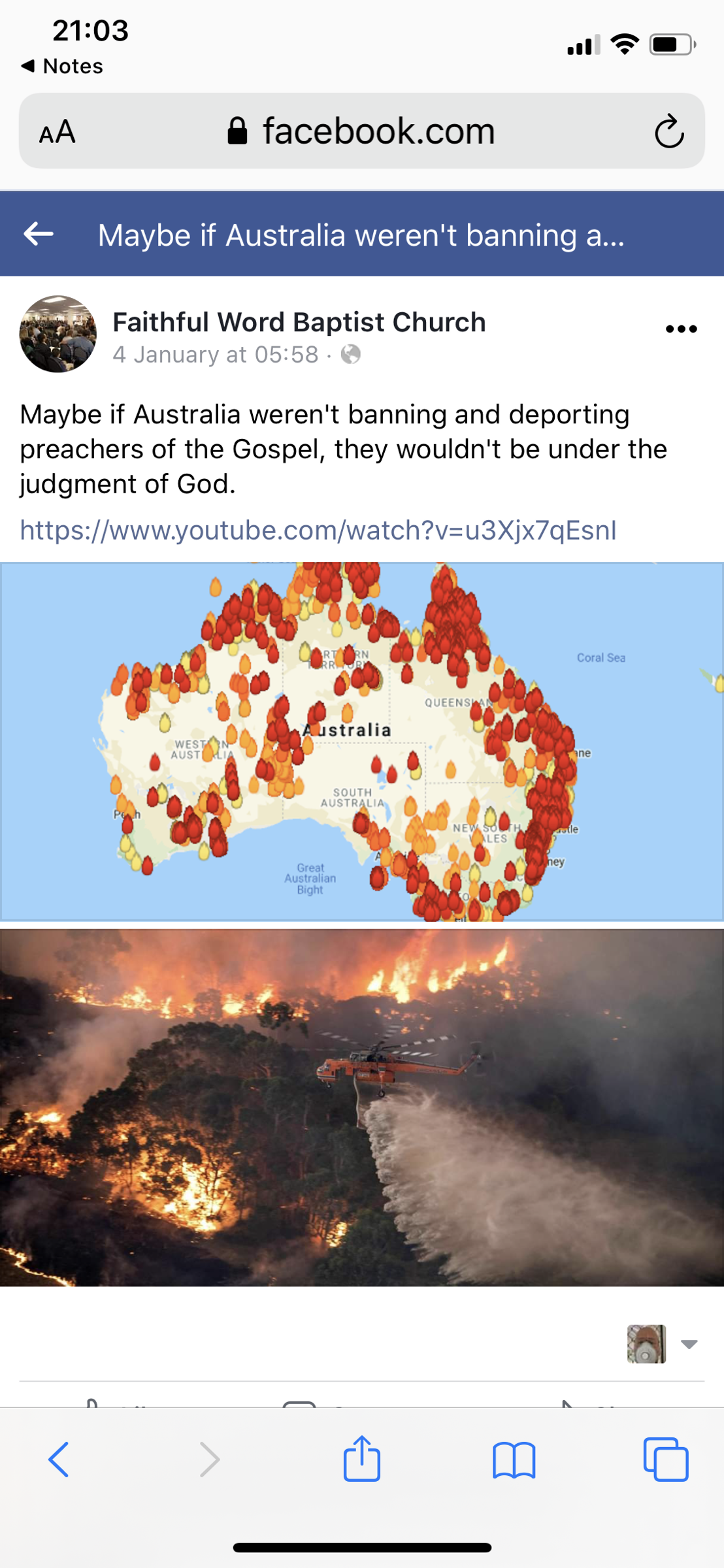
We must, of course, distance ourselves from this kind of simplistic and arrogant claim. Simplistic, because this preacher has been banned from over 20 other countries—and they are not ringed with fire at this time. So a simple cause and effect connection is far too simplistic.

And simplistic, also, because making an interpretation of a naturally-occurring event, and attributing that to the intentions of the deity, is far too easy to do. Our scientific knowledge helps us to have insights as to how events in nature—like fires, storms, cyclones, droughts, and so on—how these actually form and manifest within the natural order of things. Our scientific knowledge also helps us to appreciate how the way that human beings live makes a contribution—however small or significant you believe it may be—to these events of nature.

And such a claim is breathtakingly arrogant in its nature. How can any one of us human beings dare to claim that we know, absolutely and definitively, the intentions of God at any one point in time? And that we can unambiguously declare those intentions?—usually, it must be said, in the voice of an angry prophet, making a negative judgement on the morality of the people.

So I don’t want to go down this track. “The voice of the LORD flashes forth flames of fire” (Ps 29:7) can’t be taken at face value, as a literal, simple explanation of the fires as expressions of divine punishment. Whilst ancient understandings may have made this kind of immediate connection between an event in nature and the intentions of God, we cannot make such a simple link. We need to reflect more deeply.

….

How do we make sense of these fires, when we gather, today, as people of faith? We have seen so many images of the fires. Some of us have been close to the fire front. We have all breathed the smoke generated by those fires. What do they mean?

Some of us have seen this kind of destruction at close quarters. Some have memories of the 2003 Canberra fires brought back to prominent attention. Some have been recently in areas that are now devastated, or have been caught in the early stages of the recent forefront activity.

Some have family members or good friends who have had to evacuate in the face of the fire. Some of us know people whose properties, animals, and houses have been impacted by the intensity of the blazes. We are all caught into a sense of anxiety and grief as the fires continue.
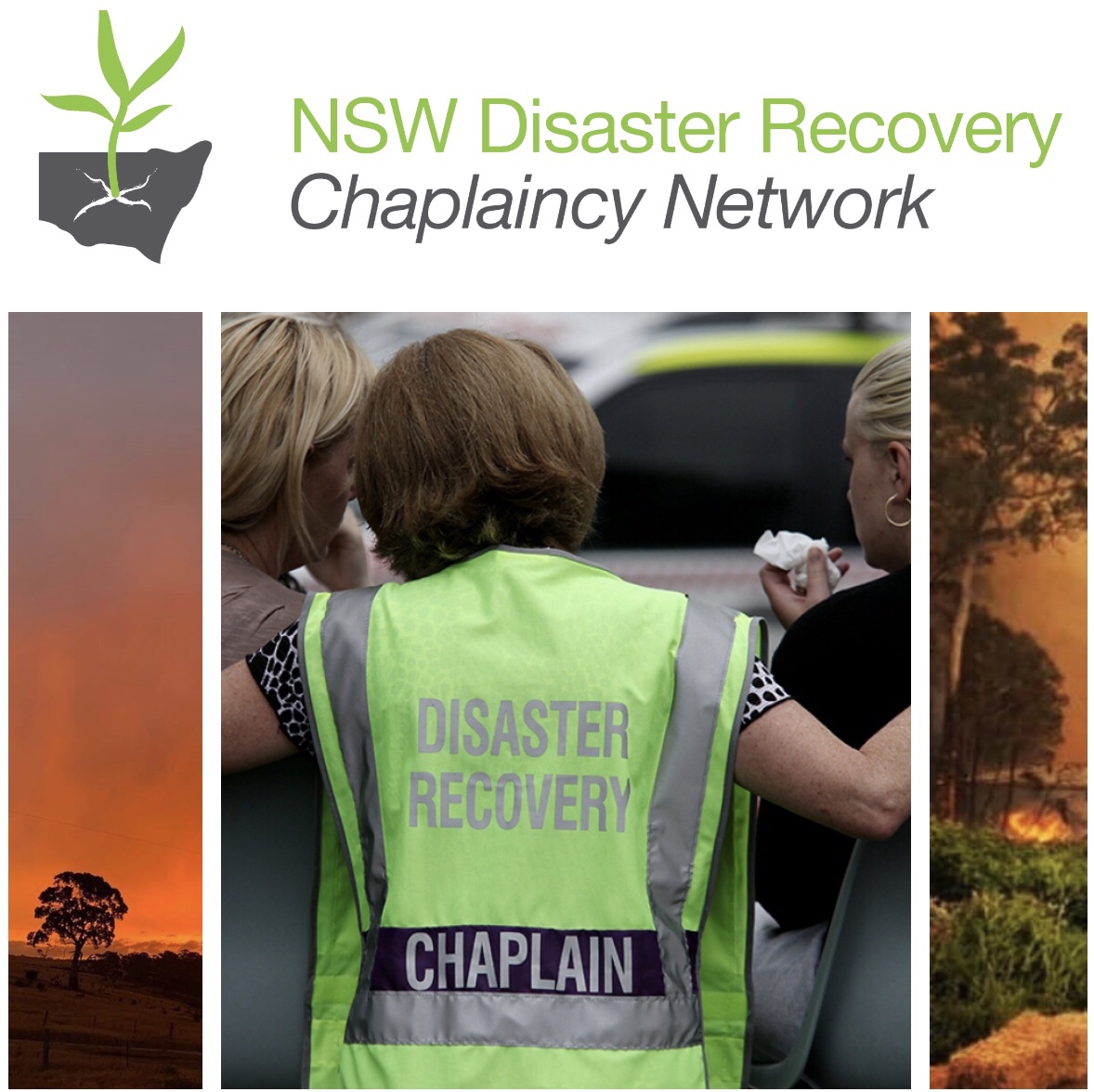
In the evacuation centres, chaplains from a number of different denominations have been present, offering comfort and support to people who have been forced to leave their homes in the face of the fires. A number of my colleagues have been there, for days on end, over recent times, in the midst of people in turmoil, helping them to go gently in the midst of the upheaval and anxiety.

(See https://johntsquires.com/2020/01/09/pastoral-letter-from-canberra-region-presbytery/ and https://johntsquires.com/2020/01/06/what-are-the-churches-doing-during-the-bushfire-crisis/)

For us, at some distance from the fires, we too need to be gentle with each other. We need to hold each other in the comfort of friendship, offer supportive words, provide practical assistance, and sit with each other in the uncomfortable spaces of waiting, wondering, worrying. We need to make sure that we don’t expose ourselves, unnecessarily, to risks to our own health. These fires call us to care, deeply, lovingly.

And yet, there is a question that recurs in situations like I have just described—situations of need, of loss, of intense grief and despair. That is this simple question: where is God? The simple answer—God sent this to you, God is punishing you—does not satisfy. We need another take.

The Adelaide theologian, Dr Norman Habel, wrote a hymn reflecting on just this question, in the context of bushfires that occurred on Black Saturday in 2009. (It goes to the familiar tune of Amazing Grace.) It begins like this:

Amazing flames that scorch the sky, like hurricanes of fire,

Alive with eucalyptus oil are roaring higher and higher.

These swirling balls of oil ablaze that leap o’er trees at will,

Descend on fields and flock and homes, explode and burn and kill.

And then, he asks the question:

Where’s God in all this swirling ash? Where’s God in all this pain?

Awaiting somewhere in the sky to one day send some rain?

The answer comes in striking imagery, in confronting declaration:

The face of God is burnt and black; the hands of God are red!

The God we know in Jesus Christ is bleeding with the dead.

The answer which Norman Habel offers is this: God is here. God is right in the middle of all this mess. God is not remote. God is not the one pulling the strings, away up in heaven, ready to send rain when enough prayers have been sent up to him.

No: God is here, in our midst, incarnate, one with us, suffering alongside us. God is crying as the house burns, weeping as the birds and animals flee, sobbing as the stock die, grieving as the firefighters are overwhelmed and their truck is overturned. God is here, with us. Jesus Christ is bleeding with the dead, grieving with us, mourning with creation.

The last verse of the hymn, then, is this:

Christ, show us now your hands and feet, the burns across your side,

and how you suffer with the Earth, by fires crucified!
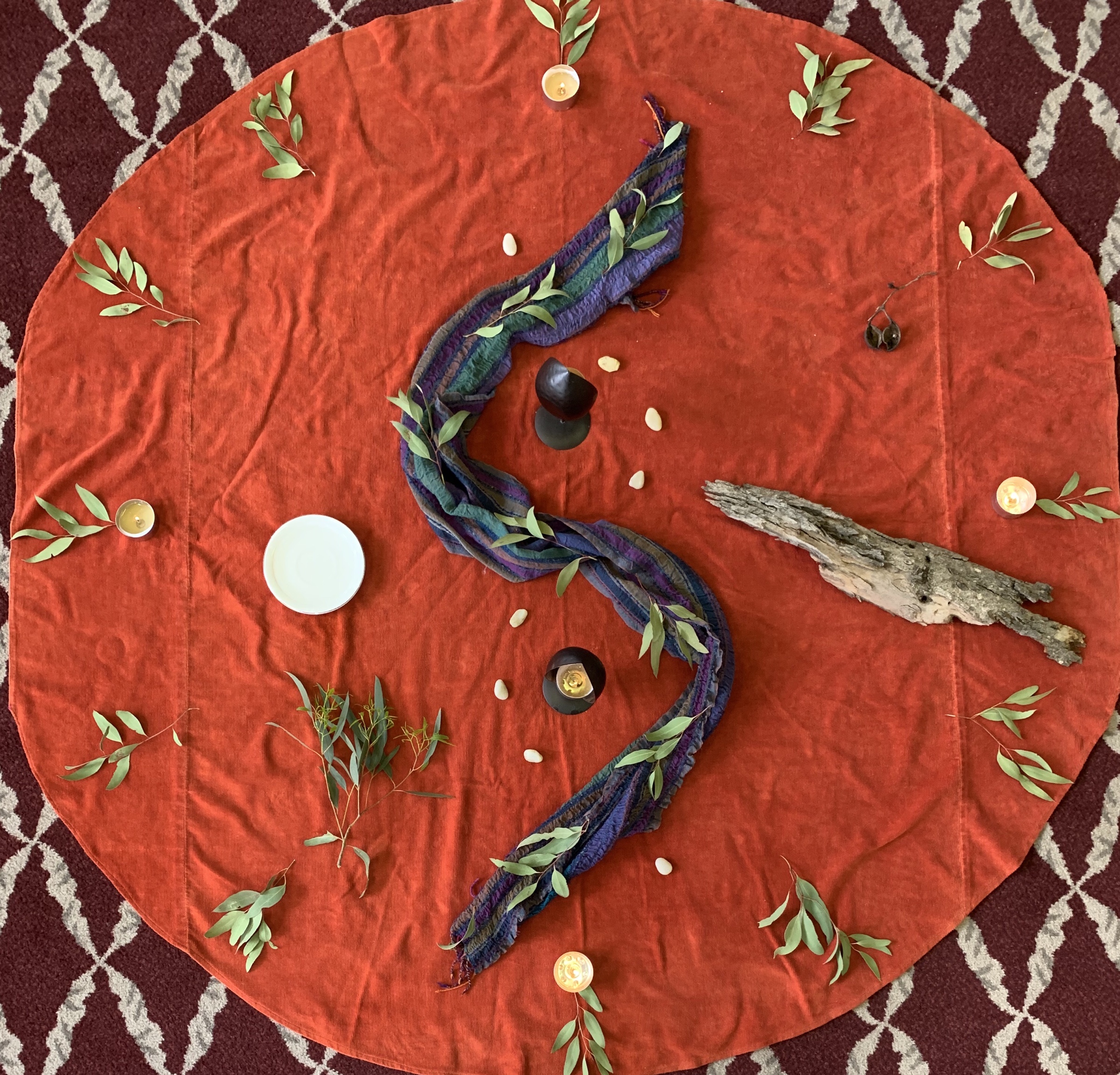
And this reminds me of the poem that I shared with you some months back, about how we encounter God, and where we encounter God. The poem by Lisa Jacobson expresses the clear notion that God is not up there in the heavens, as the priest might claim, but down here in the land, as the black fella would say. To find God, we need to look for God; but not look up, to the heavens; rather, look down, look at your feet, look past your feet, to the stones—hear them singing? and the rivers—feel them vibrating? And sense how the earth is yearning, groaning.

Stones singing and rivers vibrating; that twofold expression of the inner life of the earth is also the key that unlocks a different understanding of God—as a being not remote and removed from humans on earth, but as a being beside us, around us, underneath us, in the earth, in the stones, in the rivers, in our very being.

And this, of course, is rightly acknowledged in this poem, as the insight of black fellas—the centre of spirituality for the First Peoples of this ancient continent, the heart of life and spirit for the Ngunnawal people, the people who have cared for the land in this general region from time beyond what we can measure, and for the Ngambri and Ngarigo people more locally, and for the Wiradjuri to our west, and for the first peoples of every city and region across this continent. God is in the land, God is in amongst us.

This understanding of where we find God, how we enter the depths of spirituality, is set forth very clearly in a clause of the Revised Preamble to the Constitution of the Uniting Church, which clearly affirms:
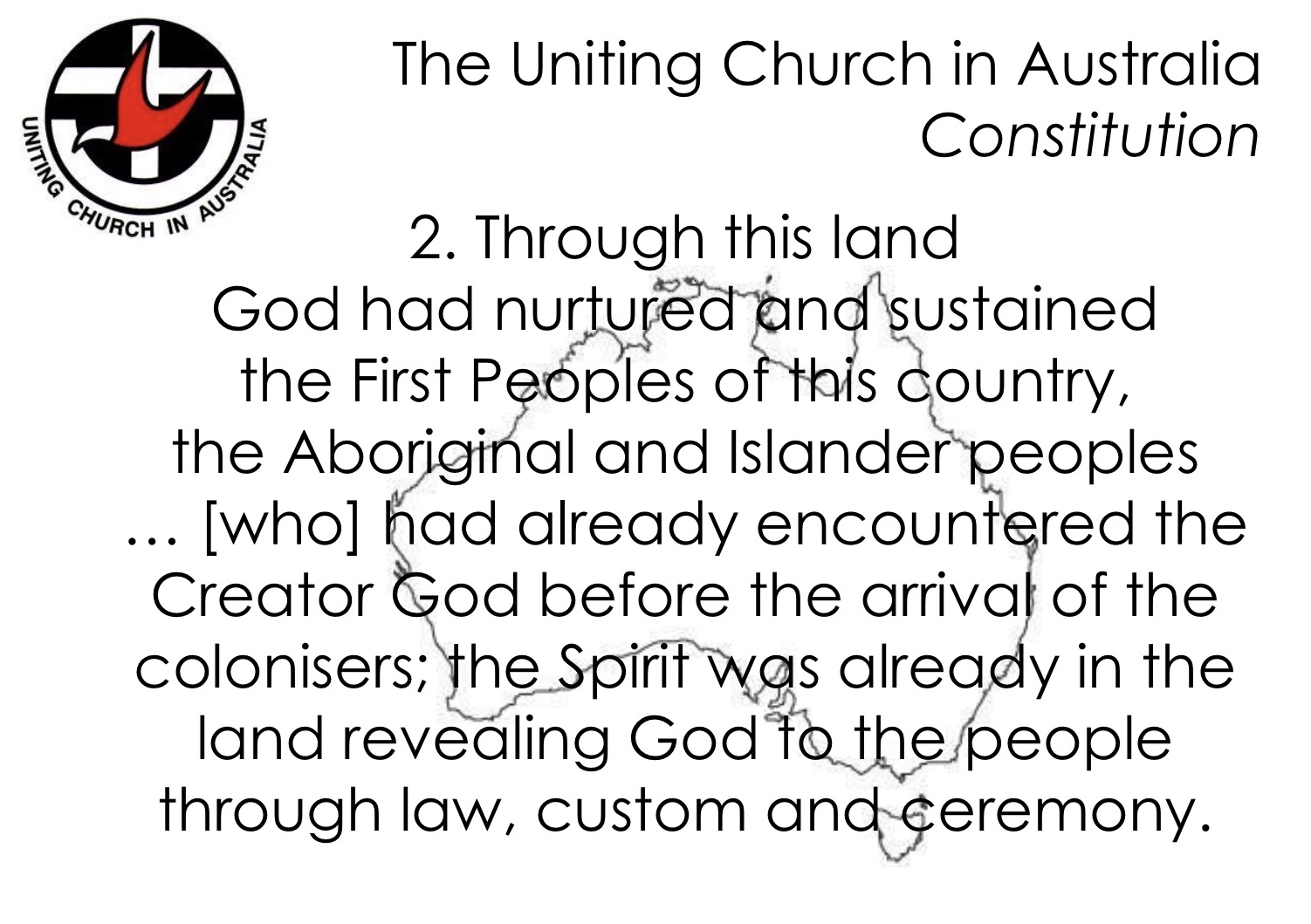
So we have adopted an affirmation that when we hear the stones sing, when we feel the rivers vibrating, we are connecting in a new way, with God, who is here, and has long been here, in this land, the land which God created at the first.

This claim arises from a different way of thinking about God, pondering the claims of scripture and engaging us on a journey of reflection and prayer, exploration and discovery, at the edges of our faith. Both the Australian poem and indigenous Australian spirituality have taken hold of this insight, that God is in our midst, amongst us, within us.

That is the same claim that the Gospel writer makes, when he writes that the angel told Joseph that he was to name his child Emanuel—God with us (Matt 1). That is what that child, grown to be an adult, taught about the reign of God—that it was here, in our midst—the kingdom of God is within us (Luke 17).

That is what the ancient Hebrew psalmist affirmed, about the whole of creation—humans, animals, insects, birds, mountains and valleys, trees and forests—that when God created this whole creation, it was the spirit of God that was breathed into every living creature (Ps 104:30).

And the psalm we have read today affirms that God is active and at work in the creation. He is not an absentee, uninterested, disconnected God. God is active, over the oceans, in the desert, through the forests, in thunder and flames. God is here, with us.

And this, after all, is the story that we tell, and retell, each year, each Sunday: the story of God, come to us in the human being Jesus, friend of sinners and advocate for the outcast, Jesus arrested and condemned as a criminal, Jesus, despised, crucified, hanging on the cross. That is where God was to be found, most profoundly, most assuredly—in the very midst of our life.

And as Jesus suffers and dies, so God suffers, and feels the sharpness of the moment we call death. For that is where God is. Here, in our midst, amongst us.

Just as God is with us, in the midst of our lives, in the midst of this creation, present in the animals and humans, the ecosystems and great forests, so also God suffers with the earth, as part of the earth. So, for me, the psalm does, indeed, speak a truth—a confronting, challenging, disturbing truth.

For the fires we are experiencing now are the result of the way that human beings, collectively, have been living, not just this year, or for a few years, but for many years—for centuries. The clear observations of science are, that as we have industrialised our societies and pumped more CO2 into the atmosphere, we have developed an environment that is drier, and hotter; more vulnerable to firestorms and more liable to flooding; for the creation is groaning, it is out of order.

And in the processes of nature that are at work, that we have intensified and exacerbated, we see tragic results in the multiple fire fronts that have surged in recent weeks—just as the same instability in the earth’s system has generated more intense and more frequent cyclones, warmed the oceans and melted the edges of the polar caps, and other observable events around the world.

And in the midst of those cyclones, and meltings, and bleachings of coral, and eruptions of fire storms, God is communicating with us: the world cannot go on like this, the planet can not sustain our incessant disregard for its natural ways. So, yes, I think that the psalmist does speak truth. The voice of the LORD flashes forth flames of fire.

God has not singled out a nation, or a people, or particular individuals for punishment. God, indeed, is not manipulating what occurs, intervening whenever and however God wills. God is in the systems, in the processes of our natural environment, and as the fires rage, God is indeed speaking to us through those flames of fire. The challenge, for us, is to pause … to listen … to understand … and to act in response.

Thanks to Dr Byron Smith for this prayer in response: https://www.commongrace.org.au/prayer_for_bushfires, to Dr Sarah Agnew for this lament: http://sarahtellsstories.blogspot.com/2020/01/choking.html, and to the Rev. Jennie Gordon for this blessing: https://greaterfarthantongueorpen.wordpress.com/about/

For my other blogs on the environment, see

https://johntsquires.com/2019/06/25/873/

https://johntsquires.com/2019/05/05/to-care-for-honour-and-respect-the-creation-we-need-to-stopadani-k/

https://johntsquires.com/2019/03/09/laudato-si-mi-signore-1/

https://johntsquires.com/2019/03/09/laudato-si-mi-signore-2/

https://johntsquires.com/2019/03/09/laudato-si-mi-signore-3/

https://johntsquires.com/2019/03/09/laudato-si-mi-signore-4/

My wife Elizabeth Raine has written some helpful reflections on environmental theology at

And God saw it was good…

and

http://ruralreverend.blogspot.com/2012/06/musing-on-ecological-economy-why.html

and a series of blogs on living a life with low environmental impact, at

http://ruralreverend.blogspot.com/2013/10/setting-sail-on-ss-low-impact.html

http://ruralreverend.blogspot.com/2013/10/rubbish-to-left-of-me-and-rubbish-to.html

http://ruralreverend.blogspot.com/2014/07/planet-at-risk-sorry-for-inconvenience.html

http://ruralreverend.blogspot.com/2014/10/hygenically-sealed-in-plastic-for-your.html

and a lot more at https://elementcityblog.com (follow the links on the right of the page)

Herod was infuriated, and he sent and killed all the children (Matt 2; Christmas 1A)

In the orderly account in which Luke tells the story of the first Christmas, we become engrossed in a story that is always presented in gentle, romanticised ways. It is a story about a pregnant woman and her partner, an angel appearing at the time of conception to the mother-to-be, announcing good news of great joy.

It is a story that reports how, nine months later, the angel appeared again, to some shepherds in the fields. It is a bucolic pastoral scene, or so we think. (Luke 1–2).

There is also a census and a journey, a choir of angels singing songs, announcing peace, declaring good news, celebrating joyfully. And there is an overfull stable, necessitating the birth of the child in a temporary location, and finally a child who is laid in a manger with his mother and father by his side. But all is calm, all is serene, all is gentle. So we believe. So we sing. So we think.

By contrast, in the book of origins, as Matthew tells that same story, we are invited into a different saga, with a different tone. Whilst there is a baby, with mother and father, in this version, there is no manger, no shepherds, and certainly no choir of angels.

In fact, there is just one angel, and this solitary angel speaks only with the father, not with the mother, not once, but three times in all. And each time, the message is ominous: she is pregnant! you must leave, now! and, hurry back home!

There is no announcement of good news of great joy. There is no census and no journey, at least, at the point of birth. But there is a tyrannical king, a set of visitors from foreign places, a prophecy that enrages the king, and a response which terrifies the visitors, who rapidly leave to return to their homeland.

And the story as Matthew tells it continues with a violent pogrom, the slaughter of innocent babies. “Herod was infuriated, and he sent and killed all the children in and around Bethlehem who were two years old or under, according to the time that he had learned from the wise men” (Matt 2:16).

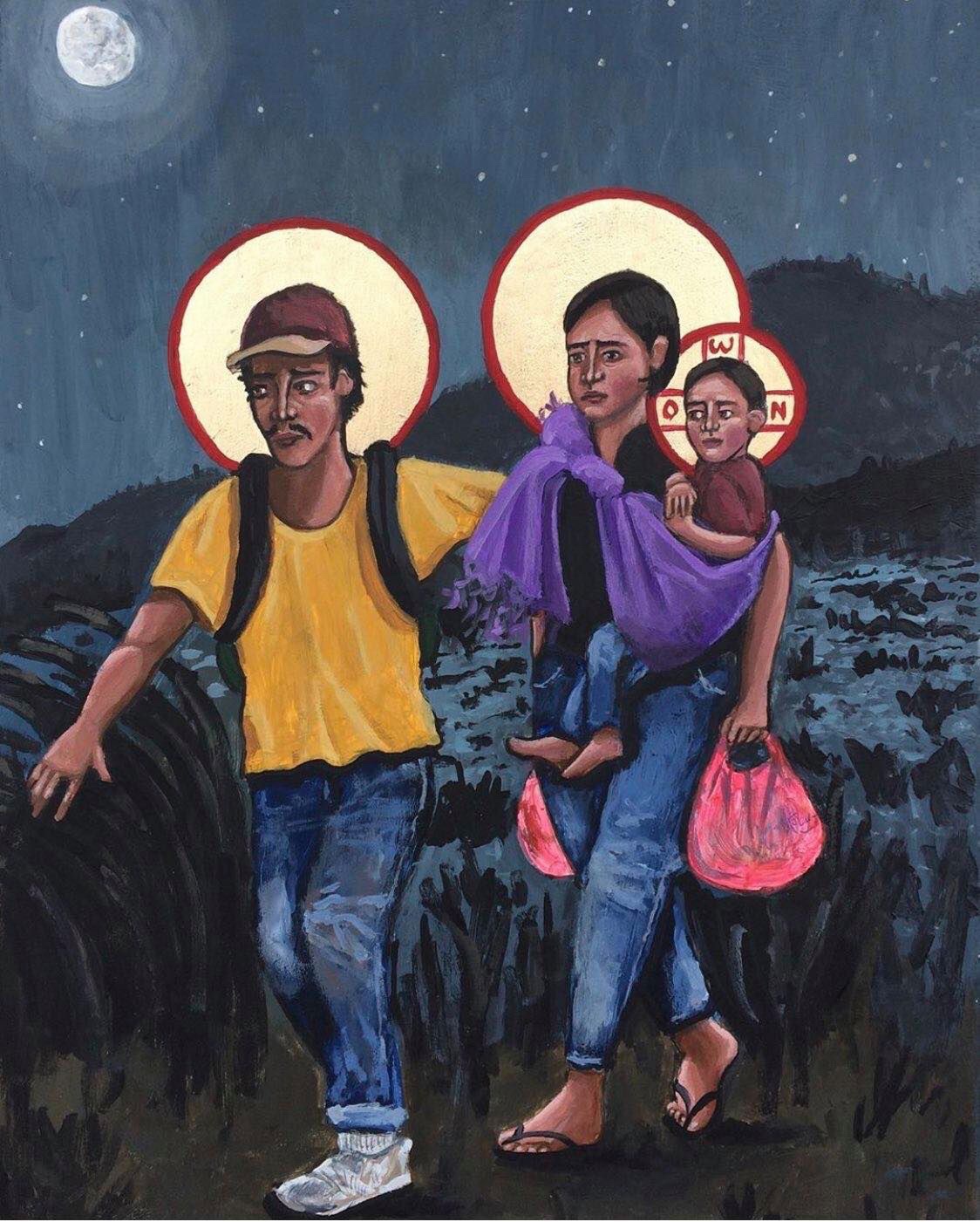
It continue with a rushed journey by the father and mother and their infant child, travelling as refugees seeking safety in a foreign place. They return home some time later, only after the tyrannical despot has died. This later part of the story is featured rarely, if at all, in the classic depictions of the Christmas story.

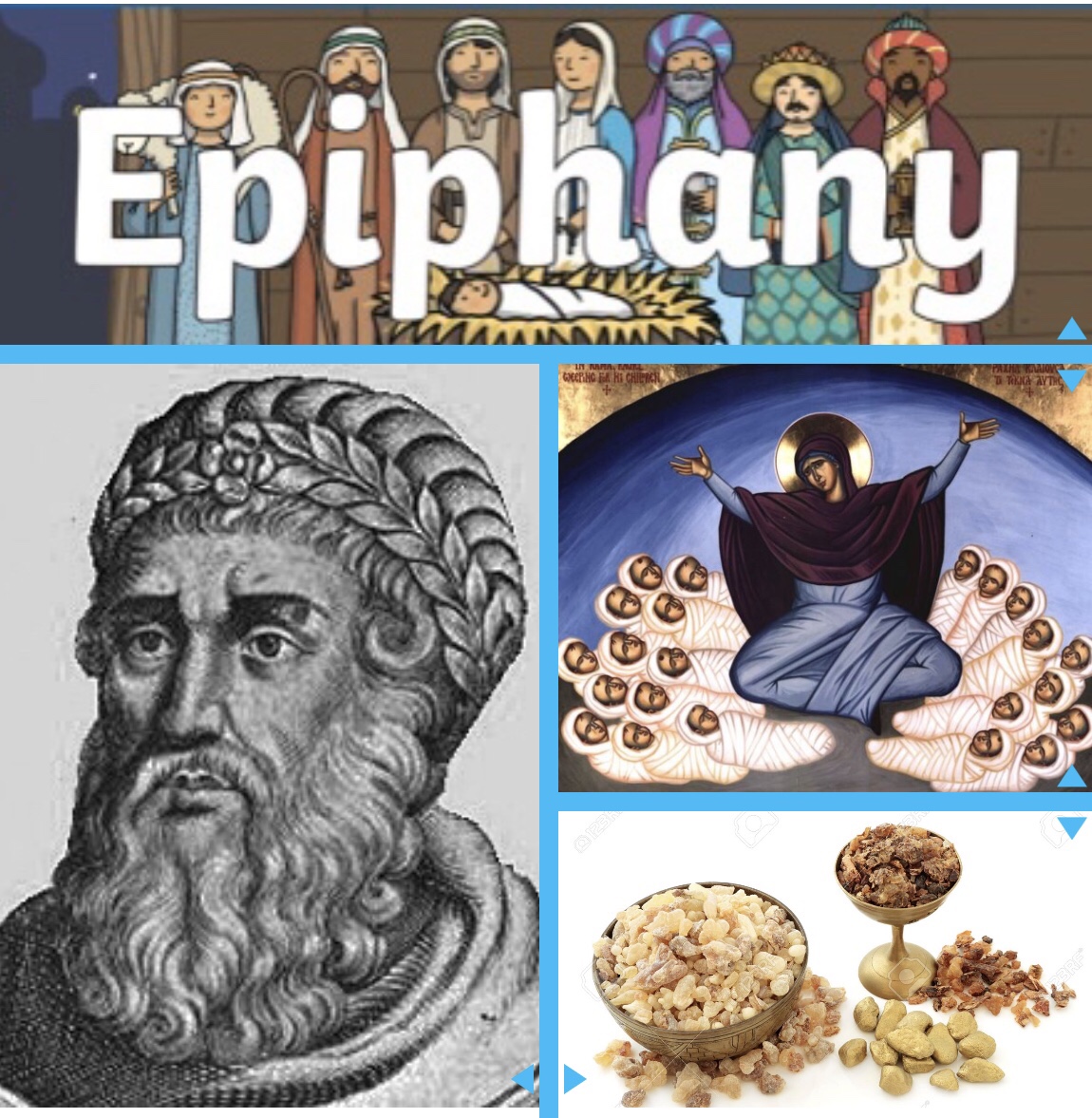
The festival of Epiphany, celebrated after the Twelfth Day of Christmas on 6 January, invites us to think about the journey made by these wise men. The journey is romanticised by the fact that they bring gifts to the infant and his family—gifts of gold, frankincense, and myrrh.

The gifts, it is claimed, are symbolic of what is to come. The gold is considered to symbolise the royal status of the child, as he is of the line of David. The frankincense is connected with the Temple cult, and thus considered a symbol of the priestly role eventually to be played by the child.

Then, there is myrrh, which Christian tradition links with the death that will be experienced by the infant when he has grown to maturity—death at the hands of a Romans, who offered him wine mixed with myrrh as he hung dying on a cross. The story of origins already prefigured the story of ending.

That part of the story—the gifts that the wise men brought—feeds into the romance and wonder that Luke’s version offers (at least, in the way it is usually understood). But the horror, the terror, the violence, the grief, of the events perpetrated under Herod, are not in view. Because Epiphany is about revelation, about light shining forth, about God being known and experienced in the midst of ordinary life.

This year, perhaps we might pause, and wonder: how does the story of Herod’s murderous rampage reveal the presence of God in the story?

I have no answer … just a question. How is God present, evident, shining forth, at such a time?

It is a question that is pressing, given the context in which I, and many Australians, have experienced Advent, Christmas and Epiphany this year.

As the bushfires rage, inflaming and destroying, purpling plumes of smoke into the air and ravaging forests, ecosystems, native animals and stock, as well as human property and human lives—the question seems ever more pertinent: where is God in this catastrophe?

As the early followers of Jesus found hope in the midst of the story of terror and violent destruction, so may we search, explore, and yearn for hope in this current situation.

On hymns that include the story of Herod’s rampage, see https://johntsquires.com/2020/01/03/herod-waiting-herod-watching-herod-grasping-holding-power-matt-2/

For prayers that are appropriate for a time in the midst of bushfires, see https://johntsquires.com/2019/12/22/we-wait-and-hope-and-grieve-anticipating/

and

blessed are you East Gippsland

For a reflective prayer on the wise men, see http://praythestory.blogspot.com/2019/12/make-it-now.html

For an overall comparison of Matthew with Luke, see https://johntsquires.com/2019/11/28/leaving-luke-meeting-matthew/

No crying he makes? Get real, puhhh-leeeease!

The traditional words of the much-sung carol, Away in a Manger, offer a heavily romanticised, sickly-sweet, unrealistic take on the infant Jesus.

Yes, to be sure, newborn babies do look sweet and innocent. But not quite as clean, not quite as picture-perfect, as the many cards and carols present the newborn Jesus. And no crying? Not ever? That does not ring true, surely!

Indeed, one could argue that the way that Jesus is depicted in this carol flies in the face of the very claim that the carol, and the story to which it refers, seeks to make: that, in Jesus, God entered human life, became one of us, was incarnate, enfleshed, fully and completely human. After all, an infant who never cries must surely not be human, we would think?

And yet, still the carol features in Christian worship services as well as shopping mall Muzak and perpetual Christmas movie reruns on tv.

In response to these beloved words, a number of contemporary lyricists have offered rewrites of this classic carol (it is only around 130 years old, if the truth be known).

Each of these versions reworks the carol so that the realism of the day is evident — especially highlighting the plight of the family as refugees, seeking safety in another country. That part of the story resonates so strongly with our contemporary world: the number of refugees across the globe is the largest it has ever been, and it continues to grow as warfare afflicts country after country.

How ancient and lovely. Words by British writer Rebecca Dudley (Shine on Star of Bethlehem, Christian Aid)

How ancient and lovely, this news of a star,

a baby, a mother, the kings from afar.

Come close now, Lord Jesus, we ask you to stay

and show us your face in your people today.

What star shall we follow but one that leads here

to a baby born homeless and a family in fear?

What heaven shall we long for but one that starts there

for all the world’s children in your tender care?

We thank you, Lord Jesus, for coming to earth;

for the light in the darkness that shone at your birth,

for life in its fullness that you promise today,

and the hope of a baby asleep in the hay.

Away and in danger. Words by Shirley Erena Murray from Aeotearoa New Zealand

Away and in danger, no hope of a bed,

the refugee children, no tears left to shed

look up at the night sky for someone to know

that refugee children have no place to go.

The babies are crying, their hunger awakes,

the boat is too loaded, it shudders and breaks;

humanity’s wreckage is thrown out to die,

the refugee children will never know why.

Come close, little children, we hold out our hand

in rescue and welcome to shores of our land –

in *aroha, touching your fear and your pain,

with dreams for your future when peace comes again.

*aroha is Maori for ‘warm embracing love’

alternative line “in touching, in healing’

http://www.hopepublishing.com/html/main.isx?sitesec=40.2.1.0&hymnID=5787

If I saw my toddler. Words by Carolyn Winfrey Gillette of the USA

If I saw my toddler with hands in the air

In fearful surrender to someone, somewhere,

I’d search for a people in some other place

Who practiced their preaching and showed love and grace.

If I had to flee from the madness of war—

From terror and violence and things I abhor,

I’d search for a nation with arms open wide,

With safety and beauty and friendships inside.

Be with me, Lord Jesus, as I seek to be

A friend to the stranger and poor refugee,

And as I remember you once had no bed,

May I give up fear and give welcome instead.

This hymn was inspired by a photo of a small Syrian child,

hands in the air, fearing that a camera lens was a gun:

www.snopes.com/syria-refugee-child-surrender/

Biblical References: Leviticus 19:34; Matthew 25:35; Luke 2:7; Hebrews 13:1; 1 John 4:18

Tune: James Ramsey Murray, 1887 (“Away in a Manger”)  

Text: Copyright © 2015 by Carolyn Winfrey Gillette. All rights reserved.

http://www.carolynshymns.com/if_i_saw_my_toddler.html

Millennium Carol. Words by Jan Chamberlin of Aeotearoa New Zealand

Away in a manger, no crib for a bed,

A long ago baby was born in a shed.

What possible meaning could this have for me,

A child of computers and technology.

The stars in the bright sky look down on me now,

But Christmas in these days lacks something, somehow,

There’s tinsel and turkey and gifts by the score,

Yet I am left feeling that there should be more.

Wise men with research grants can do awesome deeds,

But we are neglectful of our neighbors needs

For love and for caring, a Christ-child reborn:

God’s hand touching our hand on each Christmas morning.

The old manger story, with shepherds and kings:

Amazing how simple the message it brings.

Regardless of science or surfing the net:

God still sends us Jesus, and he loves us yet.

Words by Jan Chamberlin, from With Heart and Voice

http://www.methodist.org.nz/files/docs/alec/with%20heart%20and%20voice/1%20millennium%20carol.pdf

The origins of Jesus in the book of origins: Matthew 1 (Advent Year A)

The book of origins of Jesus the chosen one, descendant of David, descendant of Abraham. So begins the first book in the New Testament (in my own translation from the Greek). We know this book as The Gospel according to Matthew.

This book has long been regarded as a keystone of Christian doctrine and has enjoyed a pre-eminent place within the church. Because early believers considered it to be the earliest gospel, it was placed at the very beginning of the New Testament canon and came to be known as “the first gospel”. It thereby sets out some key aspects of the origins and significance of Jesus.

This book starts with an account of the ancestry of Jesus. (In the days before DNA testing, this information was retained and passed on by word of mouth from one generation to the next.) It mimics the Old Testament passages that are sometimes called “the begats” … so-and-so begat such-and-such, such-and-such begat another one … and so on.

You can find extensive lists of “begats” in Genesis, Numbers, and 1 Chronicles, and more briefly in Ruth and Nehemiah. These multiple “begat” passages indicate that a person’s heritage was an important part of Jewish tradition.

The author of Matthew, being himself a faithful Jew, is anxious to establish the credentials of Jesus’ ancestry, so he begins his work with a genealogy (1:1–17) in which he lays out some important signs as to the true nature of Jesus, following the age-old pattern of the Hebrew people.

First, he indicates that Jesus fulfils the promises of scripture by establishing that Jesus was descended from the Davidic kings (1 Chron 28; Ps 18:50), whose house was to rule over Israel forever, as God’s chosen.

Matthew structures the genealogy in three groups of 14 generations; this is quite different from the structure of the genealogy in Luke. In Hebrew numerology, each letter stands for a number; thus, DVD, the three consonants of David, add up to 14. So, the structure of the genealogy in Matthew underlines the claim that Jesus is a descendant of David (1:1).

Matthew also notes that Jesus is descended from Abraham, the first man to receive the covenant (1:2). Abraham was the one whose descendants would fulfil the blessings that God had promised for all the earth (1:2): David, the founder of the royal line and ancestor of the promised Messiah (1:6); and Zerubbabel, leader of the post-exilic community (1:12).

Even more interestingly, Matthew includes five women in the list: Tamar, who posed as a temple prostitute (1:3; Gen 38); Rahab, a prostitute from Jericho (1:5; Josh 2, 6); Ruth, a Moabite who married Boaz after a dubious meeting with him at night on the threshing floor (1:5; Ruth 1–4); the wife of Uriah (Bathsheba), who married David after an adulterous encounter (1:6; 2 Sam 11–12); and Mary, who became pregnant before her marriage to Joseph (1:16).

While the inclusion of the male ancestors is not surprising, the addition of these women is most unexpected. Different reasons have been put forward as to why they are there. Some scholars see them as foreshadowing the redemption of Gentiles, others as a more general symbol of the redemption of sinners. Others have felt they vindicate the pre-marital pregnancy of Mary.

One thing does stand out about all five, and that is they were independent of the traditional patriarchal system of Israel. Each one flouted convention in some startling way to ensure the fulfilment of God’s divine plan. All had humble beginnings. All were obedient to their faith and willing to submit to what they felt was the will of God. They are striking figures, each one of them!

Thus, Matthew’s genealogy is not just a list of names, but a theological statement about Jesus as the fulfilment of God’s promises to Israel through Abraham and David from its inception and throughout its history of prosperity and exile. Through Jesus, this plan for the salvation of Israel will indeed be fulfilled, and fulfilled in a most unexpected way. We should be reading the opening of this Gospel, not as a historical treatise or a family tree per se, but as a theological exposition signalling key motifs of the work that follows.

Matthew also includes many special events around the birth of Jesus (1:18– 2:23), events which we would expect to find attending the birth of a great prophet or the Messiah. The announcement of the name of Jesus follows a standard pattern as found in the Hebrew Scriptures for prominent figures: “bear a child … name him … what it means” (see 1 Sam 1:19; Gen 16:11; 17:19; Judg 13:3, 5).

The title given to Jesus in 1:23, “Emmanuel” (from Isaiah 7:14–16), is intended to show that in the coming of Jesus, God’s spirit became present among people through the messiahship of Jesus. In its original context, the text foretold the imminent birth of a child from the Davidic line, who would demonstrate that God continued to care for his people and was thus still “with us”. For Matthew, the verse emphasises further the Davidic origin of Jesus, and declares that the purpose of God was to save Israel at the coming of this child, Jesus.

In these ways, then, Matthew sets out the key elements of the origins and significance of Jesus: descendant of David, descendant of Abraham, chosen one of God. We will be following the story that Matthew offers us, throughout the coming year. It is a book of origins rich with resources for us as we seek to follow the way of Jesus today.

See also https://johntsquires.com/2019/11/28/leaving-luke-meeting-matthew/

https://johntsquires.com/2018/12/19/what-can-we-know-about-the-birth-of-jesus/

****

The image is of an early version of the genealogy of Jesus provided in Matthew 1:1-9,12 found on the recto side (the front side) of Papyrus 1, dated to about 250 CE