Reflecting on faith amidst the firestorms

We have been surrounded by images of fire, for some weeks now. The last few weeks have been challenging, confronting us with terrible images of devastated landscapes, burnt native animals and birds, destroyed homes, and the bodies of farm stock unable to escape the fire, alongside of pictures and videos of the still-raging flames of fire, leaping high into air, travelling rapidly across the landscape.

We have watched aghast as our screens take us right into the heart of the firestorm, standing with firefighters in the face of unbeatable odds. And we have breathed the air that is saturated with smoke from the fires, smoke that causes us to gasp, cough, and wheeze. It has been a challenging time. And fire has been the constant theme.
In this context, there is one short verse in the Psalm caught my attention, this week, as I read the lectionary passages and pondered what I would take as a focus for today. I wonder if you noticed the verse that jumped out to me, when we said the psalm together, earlier? “The voice of the LORD flashes forth flames of fire” (Ps 29:7).

These fires that rage, these flames that burn … are they really a message from God, to us, a message of punishment? That is how such events have been seen by some—the bushfires now raging, the floods that swamped North Queensland last year, the five severe cyclones that hit Pacific Islands a few years back, the massive tsunami that ravaged Asian countries over a decade ago—each of these have been explained by some zealous preacher or another, as a sign of God’s punishment.

It was not too long ago that a prominent sports star gained publicity by suggesting that the fires early in the season were sent by God to punish us—punishing us for the many sins committed by people in Australia. Others have made claims that God is punishing us for the decisions made by our church in recent times.

And just a few days ago, a breakaway Baptist pastor in Arizona made the audacious claim that the fires are actually punishment from God because he was denied a visa to visit Australia. He said on Facebook that “maybe if Australia wasn’t banning and deporting preachers of the Gospel, they wouldn’t be under the judgement of God”. And, as you can see, he clearly linked this with the bushfires, using the map of blazes and a picture of one of the fires.
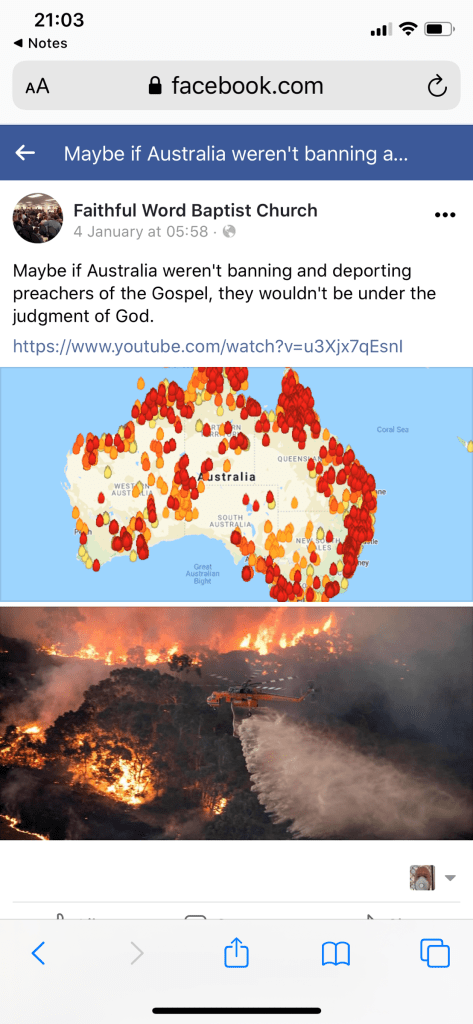
We must, of course, distance ourselves from this kind of simplistic and arrogant claim. Simplistic, because this preacher has been banned from over 20 other countries—and they are not ringed with fire at this time. So a simple cause and effect connection is far too simplistic.

And simplistic, also, because making an interpretation of a naturally-occurring event, and attributing that to the intentions of the deity, is far too easy to do. Our scientific knowledge helps us to have insights as to how events in nature—like fires, storms, cyclones, droughts, and so on—how these actually form and manifest within the natural order of things. Our scientific knowledge also helps us to appreciate how the way that human beings live makes a contribution—however small or significant you believe it may be—to these events of nature.

And such a claim is breathtakingly arrogant in its nature. How can any one of us human beings dare to claim that we know, absolutely and definitively, the intentions of God at any one point in time? And that we can unambiguously declare those intentions?—usually, it must be said, in the voice of an angry prophet, making a negative judgement on the morality of the people.

So I don’t want to go down this track. “The voice of the LORD flashes forth flames of fire” (Ps 29:7) can’t be taken at face value, as a literal, simple explanation of the fires as expressions of divine punishment. Whilst ancient understandings may have made this kind of immediate connection between an event in nature and the intentions of God, we cannot make such a simple link. We need to reflect more deeply.

….

How do we make sense of these fires, when we gather, today, as people of faith? We have seen so many images of the fires. Some of us have been close to the fire front. We have all breathed the smoke generated by those fires. What do they mean?

Some of us have seen this kind of destruction at close quarters. Some have memories of the 2003 Canberra fires brought back to prominent attention. Some have been recently in areas that are now devastated, or have been caught in the early stages of the recent forefront activity.

Some have family members or good friends who have had to evacuate in the face of the fire. Some of us know people whose properties, animals, and houses have been impacted by the intensity of the blazes. We are all caught into a sense of anxiety and grief as the fires continue.
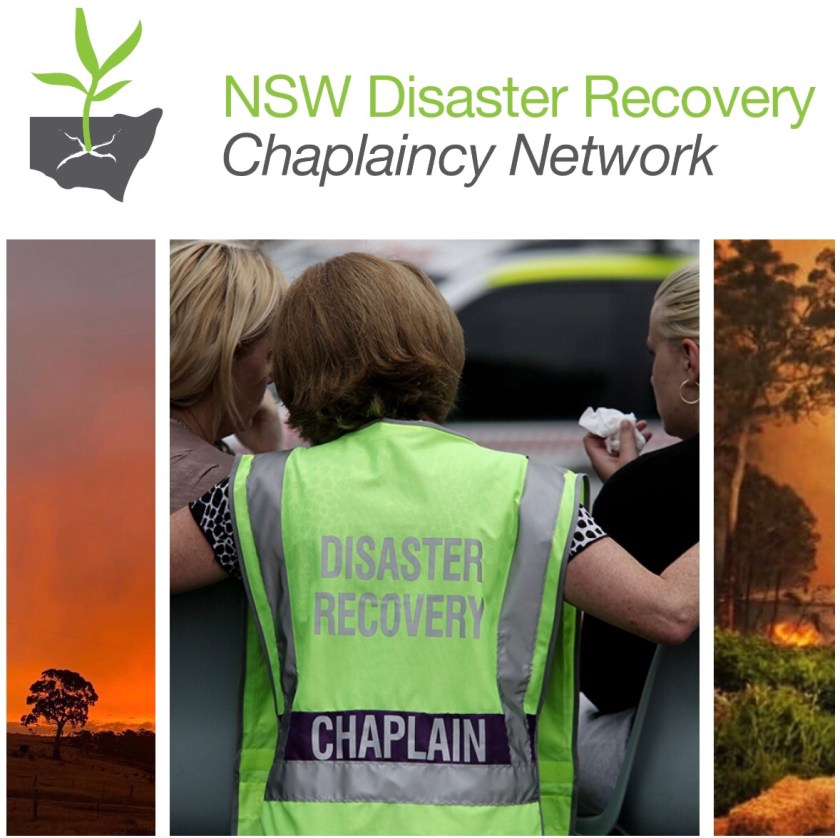
In the evacuation centres, chaplains from a number of different denominations have been present, offering comfort and support to people who have been forced to leave their homes in the face of the fires. A number of my colleagues have been there, for days on end, over recent times, in the midst of people in turmoil, helping them to go gently in the midst of the upheaval and anxiety.

(See https://johntsquires.com/2020/01/09/pastoral-letter-from-canberra-region-presbytery/ and https://johntsquires.com/2020/01/06/what-are-the-churches-doing-during-the-bushfire-crisis/)

For us, at some distance from the fires, we too need to be gentle with each other. We need to hold each other in the comfort of friendship, offer supportive words, provide practical assistance, and sit with each other in the uncomfortable spaces of waiting, wondering, worrying. We need to make sure that we don’t expose ourselves, unnecessarily, to risks to our own health. These fires call us to care, deeply, lovingly.

And yet, there is a question that recurs in situations like I have just described—situations of need, of loss, of intense grief and despair. That is this simple question: where is God? The simple answer—God sent this to you, God is punishing you—does not satisfy. We need another take.

The Adelaide theologian, Dr Norman Habel, wrote a hymn reflecting on just this question, in the context of bushfires that occurred on Black Saturday in 2009. (It goes to the familiar tune of Amazing Grace.) It begins like this:

Amazing flames that scorch the sky, like hurricanes of fire,

Alive with eucalyptus oil are roaring higher and higher.

These swirling balls of oil ablaze that leap o’er trees at will,

Descend on fields and flock and homes, explode and burn and kill.

And then, he asks the question:

Where’s God in all this swirling ash? Where’s God in all this pain?

Awaiting somewhere in the sky to one day send some rain?

The answer comes in striking imagery, in confronting declaration:

The face of God is burnt and black; the hands of God are red!

The God we know in Jesus Christ is bleeding with the dead.

The answer which Norman Habel offers is this: God is here. God is right in the middle of all this mess. God is not remote. God is not the one pulling the strings, away up in heaven, ready to send rain when enough prayers have been sent up to him.

No: God is here, in our midst, incarnate, one with us, suffering alongside us. God is crying as the house burns, weeping as the birds and animals flee, sobbing as the stock die, grieving as the firefighters are overwhelmed and their truck is overturned. God is here, with us. Jesus Christ is bleeding with the dead, grieving with us, mourning with creation.

The last verse of the hymn, then, is this:

Christ, show us now your hands and feet, the burns across your side,

and how you suffer with the Earth, by fires crucified!
And this reminds me of the poem that I shared with you some months back, about how we encounter God, and where we encounter God. The poem by Lisa Jacobson expresses the clear notion that God is not up there in the heavens, as the priest might claim, but down here in the land, as the black fella would say. To find God, we need to look for God; but not look up, to the heavens; rather, look down, look at your feet, look past your feet, to the stones—hear them singing? and the rivers—feel them vibrating? And sense how the earth is yearning, groaning.

Stones singing and rivers vibrating; that twofold expression of the inner life of the earth is also the key that unlocks a different understanding of God—as a being not remote and removed from humans on earth, but as a being beside us, around us, underneath us, in the earth, in the stones, in the rivers, in our very being.

And this, of course, is rightly acknowledged in this poem, as the insight of black fellas—the centre of spirituality for the First Peoples of this ancient continent, the heart of life and spirit for the Ngunnawal people, the people who have cared for the land in this general region from time beyond what we can measure, and for the Ngambri and Ngarigo people more locally, and for the Wiradjuri to our west, and for the first peoples of every city and region across this continent. God is in the land, God is in amongst us.

This understanding of where we find God, how we enter the depths of spirituality, is set forth very clearly in a clause of the Revised Preamble to the Constitution of the Uniting Church, which clearly affirms:
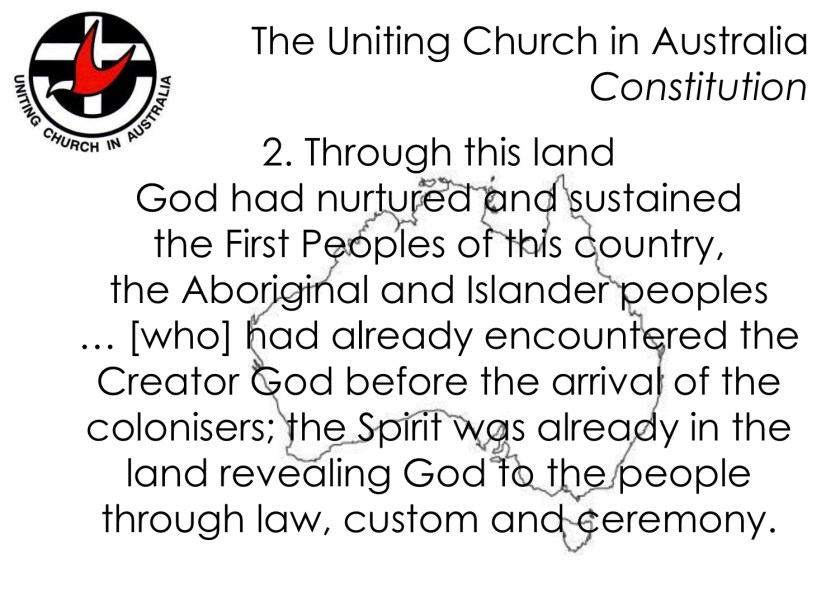
So we have adopted an affirmation that when we hear the stones sing, when we feel the rivers vibrating, we are connecting in a new way, with God, who is here, and has long been here, in this land, the land which God created at the first.

This claim arises from a different way of thinking about God, pondering the claims of scripture and engaging us on a journey of reflection and prayer, exploration and discovery, at the edges of our faith. Both the Australian poem and indigenous Australian spirituality have taken hold of this insight, that God is in our midst, amongst us, within us.

That is the same claim that the Gospel writer makes, when he writes that the angel told Joseph that he was to name his child Emanuel—God with us (Matt 1). That is what that child, grown to be an adult, taught about the reign of God—that it was here, in our midst—the kingdom of God is within us (Luke 17).

That is what the ancient Hebrew psalmist affirmed, about the whole of creation—humans, animals, insects, birds, mountains and valleys, trees and forests—that when God created this whole creation, it was the spirit of God that was breathed into every living creature (Ps 104:30).

And the psalm we have read today affirms that God is active and at work in the creation. He is not an absentee, uninterested, disconnected God. God is active, over the oceans, in the desert, through the forests, in thunder and flames. God is here, with us.

And this, after all, is the story that we tell, and retell, each year, each Sunday: the story of God, come to us in the human being Jesus, friend of sinners and advocate for the outcast, Jesus arrested and condemned as a criminal, Jesus, despised, crucified, hanging on the cross. That is where God was to be found, most profoundly, most assuredly—in the very midst of our life.

And as Jesus suffers and dies, so God suffers, and feels the sharpness of the moment we call death. For that is where God is. Here, in our midst, amongst us.

Just as God is with us, in the midst of our lives, in the midst of this creation, present in the animals and humans, the ecosystems and great forests, so also God suffers with the earth, as part of the earth. So, for me, the psalm does, indeed, speak a truth—a confronting, challenging, disturbing truth.

For the fires we are experiencing now are the result of the way that human beings, collectively, have been living, not just this year, or for a few years, but for many years—for centuries. The clear observations of science are, that as we have industrialised our societies and pumped more CO2 into the atmosphere, we have developed an environment that is drier, and hotter; more vulnerable to firestorms and more liable to flooding; for the creation is groaning, it is out of order.

And in the processes of nature that are at work, that we have intensified and exacerbated, we see tragic results in the multiple fire fronts that have surged in recent weeks—just as the same instability in the earth’s system has generated more intense and more frequent cyclones, warmed the oceans and melted the edges of the polar caps, and other observable events around the world.

And in the midst of those cyclones, and meltings, and bleachings of coral, and eruptions of fire storms, God is communicating with us: the world cannot go on like this, the planet can not sustain our incessant disregard for its natural ways. So, yes, I think that the psalmist does speak truth. The voice of the LORD flashes forth flames of fire.

God has not singled out a nation, or a people, or particular individuals for punishment. God, indeed, is not manipulating what occurs, intervening whenever and however God wills. God is in the systems, in the processes of our natural environment, and as the fires rage, God is indeed speaking to us through those flames of fire. The challenge, for us, is to pause … to listen … to understand … and to act in response.

Thanks to Dr Byron Smith for this prayer in response: https://www.commongrace.org.au/prayer_for_bushfires, to Dr Sarah Agnew for this lament: http://sarahtellsstories.blogspot.com/2020/01/choking.html, and to the Rev. Jennie Gordon for this blessing: https://greaterfarthantongueorpen.wordpress.com/about/

For my other blogs on the environment, see

https://johntsquires.com/2019/06/25/873/

https://johntsquires.com/2019/05/05/to-care-for-honour-and-respect-the-creation-we-need-to-stopadani-k/

https://johntsquires.com/2019/03/09/laudato-si-mi-signore-1/

https://johntsquires.com/2019/03/09/laudato-si-mi-signore-2/

https://johntsquires.com/2019/03/09/laudato-si-mi-signore-3/

https://johntsquires.com/2019/03/09/laudato-si-mi-signore-4/

My wife Elizabeth Raine has written some helpful reflections on environmental theology at

And God saw it was good…

and

http://ruralreverend.blogspot.com/2012/06/musing-on-ecological-economy-why.html

and a series of blogs on living a life with low environmental impact, at

http://ruralreverend.blogspot.com/2013/10/setting-sail-on-ss-low-impact.html

http://ruralreverend.blogspot.com/2013/10/rubbish-to-left-of-me-and-rubbish-to.html

http://ruralreverend.blogspot.com/2014/07/planet-at-risk-sorry-for-inconvenience.html

http://ruralreverend.blogspot.com/2014/10/hygenically-sealed-in-plastic-for-your.html

and a lot more at https://elementcityblog.com (follow the links on the right of the page)
Pastoral Letter from Canberra Region Presbytery

The following letter has been prepared for the people of the Congregations across the Canberra Region Presbytery of the Uniting Church in Australia. I am sharing it here for the interest of those beyond that network, with the intention that that it might inform and encourage people about the work taking place on-the-ground amongst the communities where the fires have hit hard in recent weeks.

******

Dear friends, the last few weeks have been challenging, confronting us with images of devastated landscapes, burnt native animals and birds, destroyed homes, and the bodies of farm stock unable to escape the fire, alongside of pictures and videos of the still-raging flames of fire, leaping high into air, travelling rapidly across the landscape. 

We have watched aghast as our screens take us right into the heart of the firestorm, standing with firefighters in the face of unbeatable odds. And we have breathed the air that is saturated with smoke from the fires, smoke that causes us to gasp, cough, and wheeze. It has been a challenging time.

Some of us have seen this kind of destruction at close quarters. Some have memories of the 2003 Canberra fires brought back to prominent attention. Some have been recently in areas that are now devastated, or have been caught in the early stages of the recent forefront activity. 

Some have family members or good friends who have had to evacuate in the face of the fire. Some of us know people whose properties, animals, and houses have been impacted by the intensity of the blazes. We are all caught into a sense of anxiety and grief as the fires continue.

We need to be gentle with each other. We need to hold each other in the comfort of friendship, offer supportive words, provide practical assistance, and sit with each other in the uncomfortable spaces of waiting, wondering, worrying. We need to make sure that we don’t expose ourselves, unnecessarily, to risks to our own health.

We need to be mindful of those in the midst of all the affected areas, whose homes are gone, whose friends are scattered, whose memories are burnt and whose hopes are scarred. We can pray for them. We can give to the bushfire disaster funds that have been set up to support people on the ground. The Uniting Church has one, as do Red Cross, the Rural Fire Service, and many other charities and agencies. (https://nswact.uca.org.au/about-us/giving/moderators-appeal/)

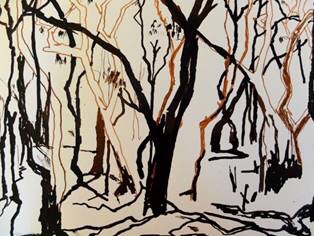
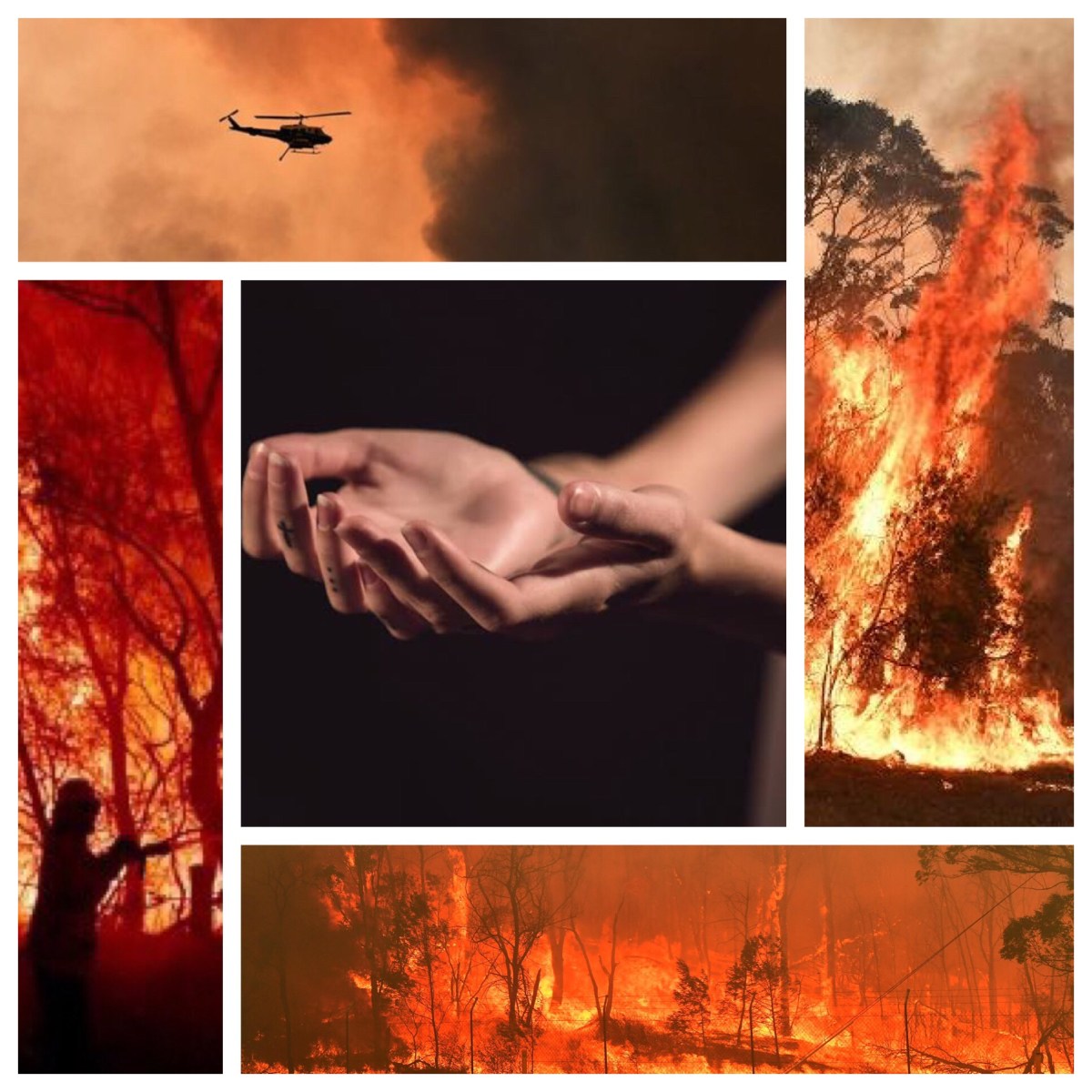
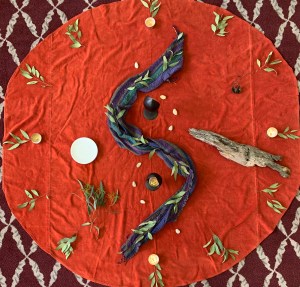
Above: Bushfire, by Gabrielle Jones: an invitation to pause and reflect, in the midst of the fires.

******

We can pray, especially, for the Disaster Response Chaplains who are on the ground amongst these people—listening, comforting, praying; holding people in their time of grief, offering consolation and providing practical support. These chaplains are trained to work closely on the ground with the emergency services and the local councils in each location. 

These chaplains work with the volunteers from local churches and service clubs, who are providing meals, water, and a comforting presence to people in great need. Along with the volunteers they work with, they exemplify the ministry of hospitality, expressed through compassion and practical assistance, that is fundamental to the faith we share. 

To assist us with our prayerful support of these people, here is an overview of the ministers, pastors, chaplains, and key lay leaders who have been contributing so effectively to the local disaster responses in each location. Please uphold them as they go about their ministries in each place.


Julie Fletcher has been ministering in Braidwood and working closely with churches and organisations in the town, since the fires broke out there in November. Julie and husband Neil have formed an ecumenical co-operative with other churches and the Moderator’s Bushfire Appeal has already provided funds to assist as they meet the practical needs of people from the areas surrounding the town where the fires have struck. Roads are still closed between Braidwood and the coast.

David Russell and Susan Cann have been active, first in Bega and then in Merimbula, where David has been in placement for some years. David estimates he has had contact with a thousand people since the Sapphire Club was opened as an evacuation centre. This is the kind of ministry that we can support from distance through our prayers. 

Karyl Davison came to the area after the initial damaging impact of the fires had swept through. She has been based at the Merimbula RSL Club, where she has ministered with about 400 people. Ian Diamond travelled to the coast with her and is based at the Tathra Beach Country Club, where almost 400 people sheltered—along with about 70 pets! Most evacuation centres do not accept pets, so Ian set about ensuring that people with pets had a safe and secure place to shelter.

Michael Palmer is an Anglican minister serving the Uniting Church in Eden, and with the UCA people led Peter and Pam Skelton has been working long days and well into the nights to make properties safe, after most of the people in the town were evacuated. The hinterland of Eden is particularly at risk at this time. Instead of worship on Sunday, 

Michael opened his own home to the people still in town and met with people for conversation and prayer, with a cup of tea as well. He also spent some time visiting people who had stayed, praying with them. Some people have been unable to leave the town because they had no fuel and no funds.

Uniting Church ministers Yvonne Stephenson and Kath Merrifield, along with Ray Lemon, from the Assemblies of God, have served at the Batemans Bay evacuation centre. Yvonne, who lives in the area, has been active as a chaplain from the very start of the emergency and has done stirling work in difficult circumstances.

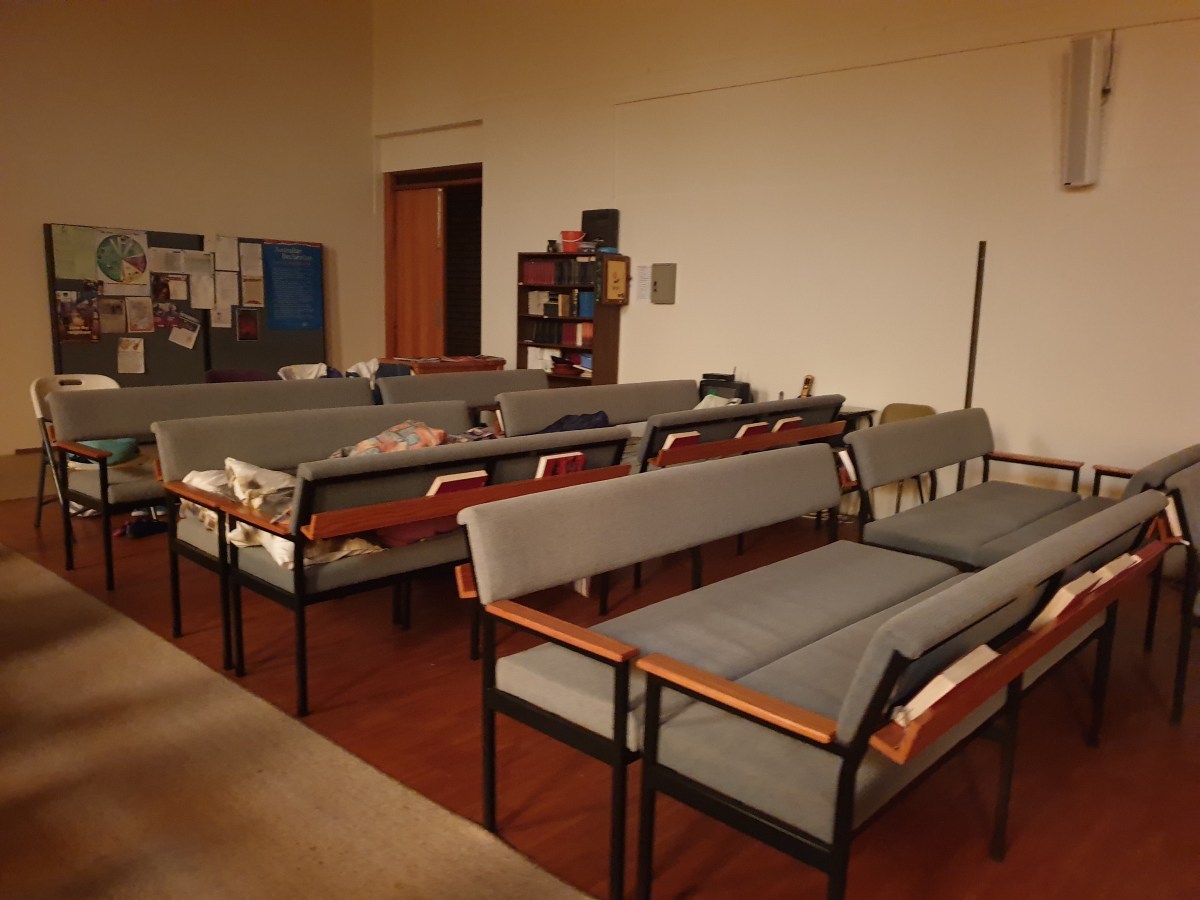
Up to 5,000 people have been fed, sheltered, and comforted in that town. Members of the Batemans Bay congregation cleared the pews so that people could sleep in the church. Some hardy souls were sleeping on the pews, which had been pushed together to form beds! Sunday worship was an informal gathering for prayer and singing over a cup of tea. Power has been cut to Batemans Bay on and off for some days.

Terence Corkin, who lives just out of Moruya, has spent a number of days at the local evacuation centre, helping people to adjust to their frightening situation. Terence and Julie have had to leave their own property for a time during the past week. He reports that the immediate threat of fire has diminished, but there are many people in the town from scattered communities that have been burnt, with little prospect of returning soon. After a period without power, the electricity is running. A fine layer of ash covers everything.

At both Bateman’s Bay and Narooma, a number of homeless men have been sleeping in swags and old vans in Church carparks. They have become the hands, heart and feet that clean the toilets, wash dishes, clear the gutters and are the protectors of church property and drop in centres.

Di White and Kath Crapp, in the town of Narooma, have marshalled and organised a great team that has provided food and water, shelter and support, for the many people evacuated into that town. Monty’s Place operates from the Uniting Church building, so there was already a team and the know-how on hand for the emergency. Kath has expressed their gratitude in the knowledge that people are praying for them each day.

Daniel Mossfield has been at the evacuation centre in Goulburn, where people from Bundanoon and other small towns in the Southern Highlands have gathered after being evacuated over the weekend. The evacuation centre is in the Showground, which is filled to capacity with people. There are many pets at this centre, and this creates various challenges to those organising the evacuations.

At the tail end of the most recent critical period, the township of Jindabyne became a focus point, as fires in the Snowy Mountains intensified and people were evacuated from right across the Monaro and Snowy Mountains region. The Uniting Church there has a small but very fine group off leaders, including Judy McKinlay, recently elected as Co-Chair of the Presbytery, and Peter Beer. Peter is the Mayor of the region, and thus is involved in the centre of all the planning for the region. It would be very good to pray especially for him, as he serves in that position. 

Cooma has also been busy with an official evacuation centre in operation which is now in receipt of DRCN chaplaincy from ADF reserve chaplains. UCA minister in Cooma, Noel Williams, has been at his farm near Adaminaby undertaking the difficult task of fire protecting his farm as it is subjected to ever changing threat levels from two separate fire fronts, whilst also trying to truck in semi-trailer loads of hay to battle the impact from the drought to feed his 1,500 merinos and 50 pigs. Noel’s story will be similar to many within our Presbytery and that of other Presbytery farmers across the NSW and ACT Synod.

**********

People who have been most impacted have expressed gratitude for the prayer and practical support from others not in the immediate danger zones. We do well to keep praying, and giving, and hoping. 

And as we pray, and watch, and wait with hope, be encouraged that there are people of Christian faith, people of other faiths, and people of no faith, all working together to ensure the safety of people, animals, and property, and to support one another in this time of need. And know that people are praying around the world for those in crisis. 

There is a collection of resources, for prayer and reflection, at https://www.unitingearth.org.au/bushfire-prayers/

The Moderators of each Synod, and the national President of the Uniting Church, have all expressed prayerful concern for the people who are being hardest hit, and for those seeking to serve them. The President’s message is on video at https://vimeo.com/382251990

Personal friends in countries all over the world are, through the wonders of our internet age, receiving up to date information and offering prayers for those affected. The General Secretary of the World Council of Church has assured Australians of the prayers of people from churches across the globe (https://www.oikoumene.org/en/press-centre/news/in-letter-to-australian-churches-wcc-prays-for-respite-from-the-heat-and-the-flames). 

The UCA Assembly webpage contains messages of support that have been sent by our partner churches around the world (https://assembly.uca.org.au/resources/disaster/item/424-messages-of-support-from-overseas).

May you go in peace and hope in the days ahead.

Judy McKinlay, John Williams, Delia Quigley, Co-Chairs

John Squires, Presbytery Minister–Wellbeing

The letter is online at https://canberra.uca.org.au/presbytery-news/a-pastoral-message-for-the-bushfire-crisis/

There is a helpful list of resources relating to climate change and the bushfires at https://www.unitingearth.org.au/bushfire-crisis-info/ and some prayers and liturgies for use at this time at https://www.unitingearth.org.au/bushfire-prayers/

The image shows the Batemans Bay Uniting Church, transformed from a place of worship to a safe place for evacuated people to sleep. Photo by Pam Nuessler.

What are the churches doing during the bushfire crisis?

I have been seeing posts asking about how the churches are helping in the current bushfire emergency. Here are some thoughts.

First, I am very aware that there is a lot of energy and time being contributed on the ground by people of local congregations who have provided people affected by the fires with a place to sleep, a place to eat and drink water, and a place to talk with compassionate folk who are willing to listen. This is the ministry of hospitality, which is fundamental to being people of faith.

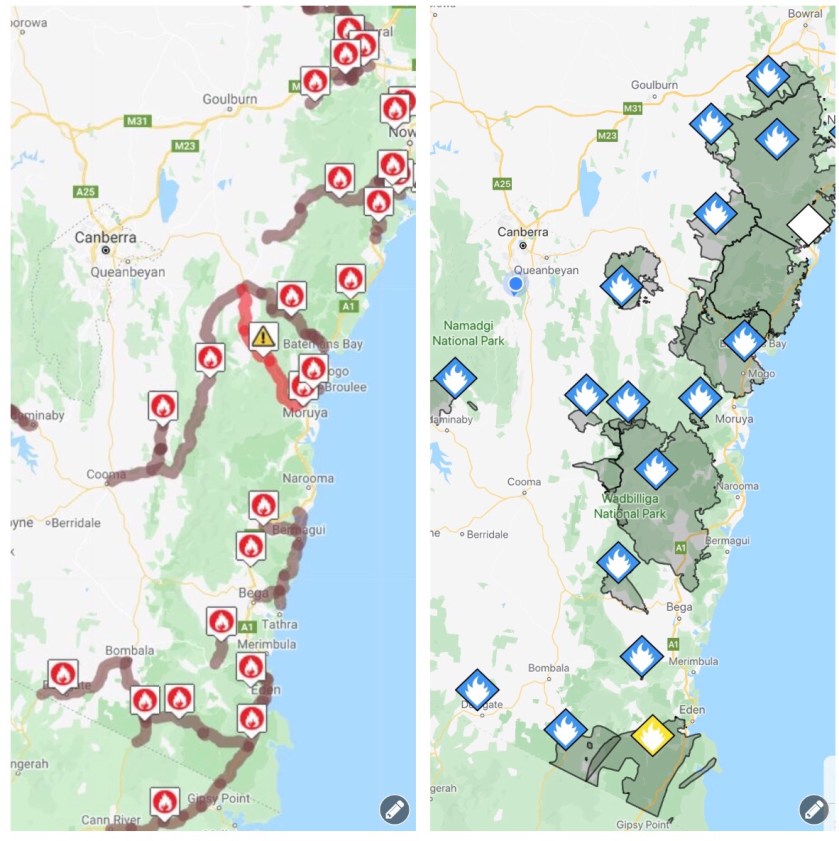
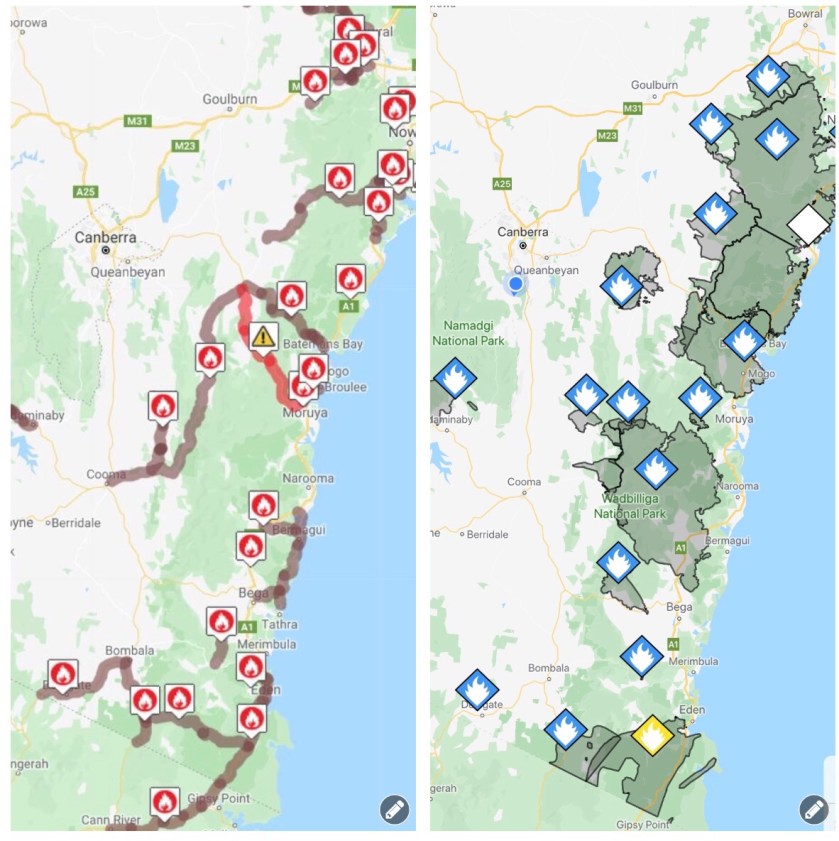
In my own denomination, the Uniting Church in Australia, the Canberra Region Presbytery covers much (but not all) of the areas in the south-east of Australia that are being affected by these savage fires. You can see from the images below just how many fires there are, and how many roads have been closed (as of 6 January 2020).

There are daily updates from situations on the ground, indicating what Uniting Church congregations and chaplains are doing, on the Facebook page of the Canberra Region Presbytery, which is public for anyone to read.

The major denominations each have a fund that receives donations and provides those funds to places where the need is great. Those funds are all being put to good use now, as the bushfires rage. The Uniting Church fund in NSW.ACT is at https://nswact.uca.org.au/about-us/giving/moderators-appeal/

These are excellent, immediate responses. It is great to learn of these actions by people of faith. However, perhaps the most enduring contribution comes through the provision of trained chaplains at the various evacuation centres that are set up. These people make themselves available to listen to affected people with compassion and to assist in the many practicalities that need to be attended to, when large numbers of people are displaced.

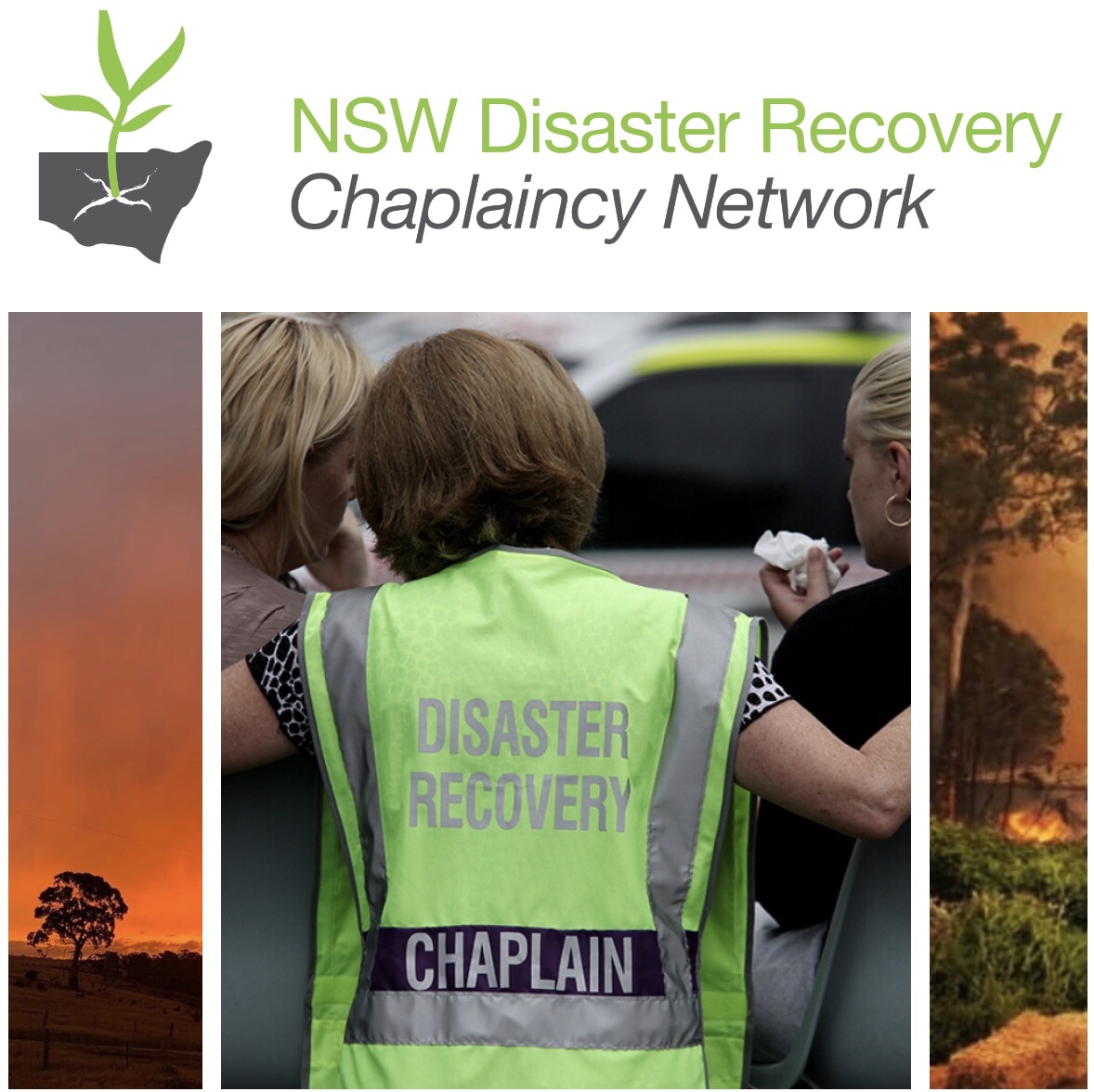
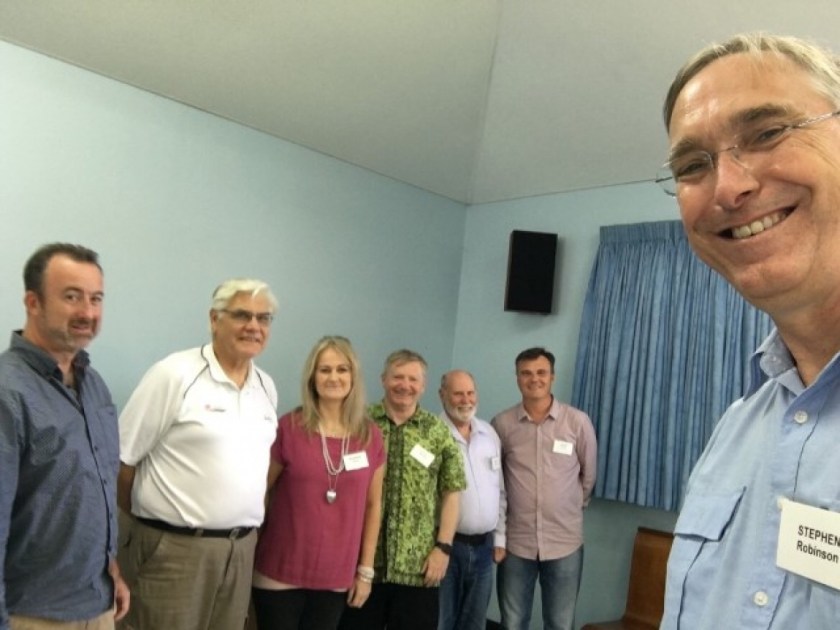
My colleague Stephen Robinson (pictured below, at right) is supported fulltime by the Uniting Church, to co-ordinate the Disaster Chaplaincy Response Network across NSW and the ACT. He has been doing a fine job! There is an article about this ministry at https://assembly.uca.org.au/news/item/2973-disaster-ready-chaplains

The DCRN is an ecumenical network with ministers and pastors from a number of denominations participating. You can read about it at http://www.nswdrcn.org.au/about_us

(The news page is not up to date—I suspect this reflects the limited personnel and the increased rate of disasters requiring attention in recent years . But the main information is clear and accurate.)

I have many excellent colleagues within the Uniting Church who are, right at this moment, sitting with people in evacuation centres, listening to their accounts of fire, loss, and grief, soothing their aggravated fears, and seeking to provide practical assistance.

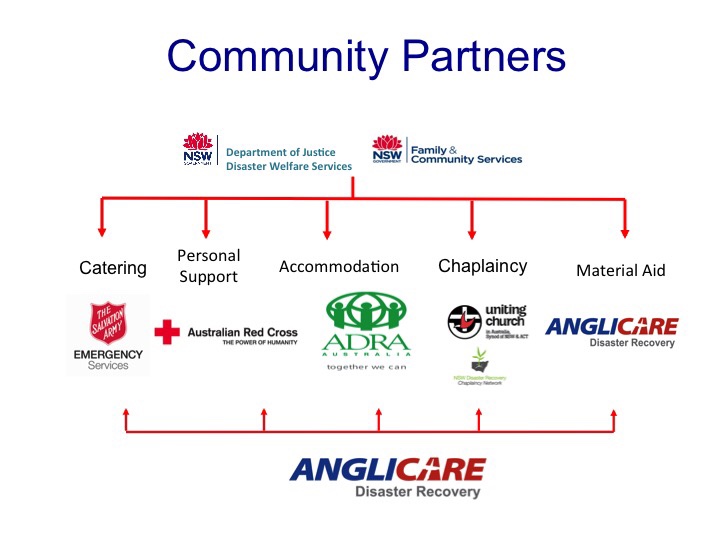
The DCRN works closely with a network of church agencies, co-ordinated by a state government agency, as the image attached shows.

There’s a good overview of the ways that churches are responding to the bushfires at http://religionsforpeaceaustralia.org.au/?p=9473

From afar, one thing that people can certainly do, is pray—pray for the disaster chaplains, that their energies will be replenished, their words will exude compassion, their actions will assist those in need. I am certain that they would appreciate this.

The Moderator of the United Church of Christ in Canada, the Right Rev. Richard Bott, has offered this wonderful prayer in response to the Australia wildfires 

https://www.united-church.ca/prayers/prayer-people-animals-and-land-australia

See also https://assembly.uca.org.au/news/item/3111-a-comforting-presence-in-a-time-of-crisis and https://johntsquires.com/2020/01/09/pastoral-letter-from-canberra-region-presbytery/

Herod was infuriated, and he sent and killed all the children (Matt 2; Christmas 1A)

In the orderly account in which Luke tells the story of the first Christmas, we become engrossed in a story that is always presented in gentle, romanticised ways. It is a story about a pregnant woman and her partner, an angel appearing at the time of conception to the mother-to-be, announcing good news of great joy.

It is a story that reports how, nine months later, the angel appeared again, to some shepherds in the fields. It is a bucolic pastoral scene, or so we think. (Luke 1–2).

There is also a census and a journey, a choir of angels singing songs, announcing peace, declaring good news, celebrating joyfully. And there is an overfull stable, necessitating the birth of the child in a temporary location, and finally a child who is laid in a manger with his mother and father by his side. But all is calm, all is serene, all is gentle. So we believe. So we sing. So we think.

By contrast, in the book of origins, as Matthew tells that same story, we are invited into a different saga, with a different tone. Whilst there is a baby, with mother and father, in this version, there is no manger, no shepherds, and certainly no choir of angels.

In fact, there is just one angel, and this solitary angel speaks only with the father, not with the mother, not once, but three times in all. And each time, the message is ominous: she is pregnant! you must leave, now! and, hurry back home!

There is no announcement of good news of great joy. There is no census and no journey, at least, at the point of birth. But there is a tyrannical king, a set of visitors from foreign places, a prophecy that enrages the king, and a response which terrifies the visitors, who rapidly leave to return to their homeland.

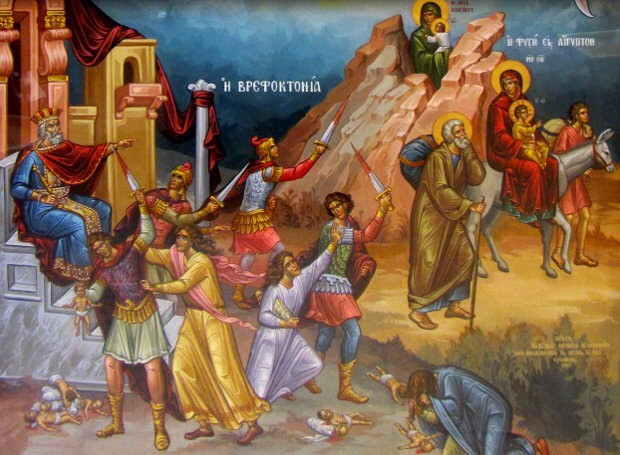
And the story as Matthew tells it continues with a violent pogrom, the slaughter of innocent babies. “Herod was infuriated, and he sent and killed all the children in and around Bethlehem who were two years old or under, according to the time that he had learned from the wise men” (Matt 2:16).

It continue with a rushed journey by the father and mother and their infant child, travelling as refugees seeking safety in a foreign place. They return home some time later, only after the tyrannical despot has died. This later part of the story is featured rarely, if at all, in the classic depictions of the Christmas story.

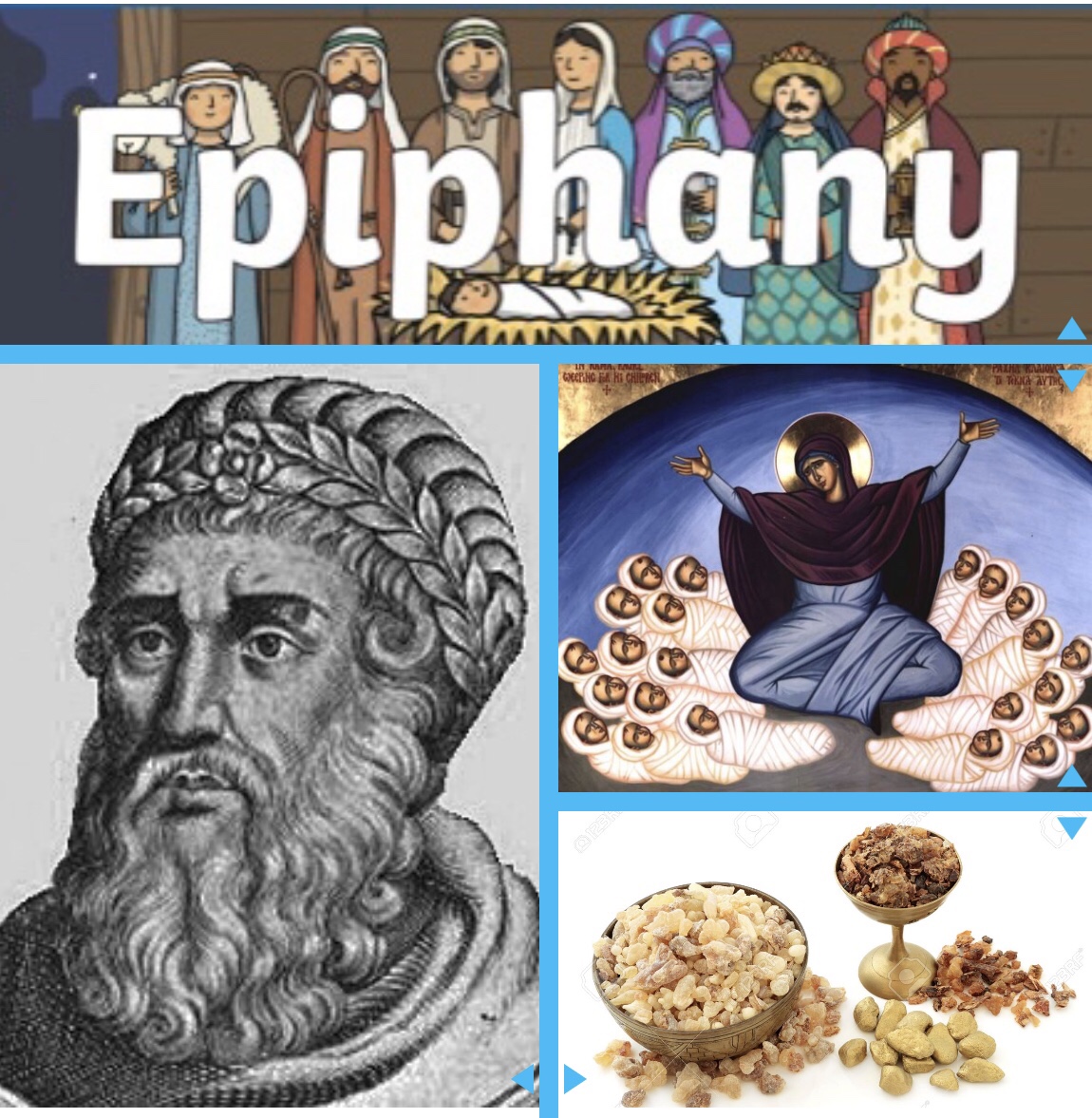
The festival of Epiphany, celebrated after the Twelfth Day of Christmas on 6 January, invites us to think about the journey made by these wise men. The journey is romanticised by the fact that they bring gifts to the infant and his family—gifts of gold, frankincense, and myrrh.

The gifts, it is claimed, are symbolic of what is to come. The gold is considered to symbolise the royal status of the child, as he is of the line of David. The frankincense is connected with the Temple cult, and thus considered a symbol of the priestly role eventually to be played by the child.

Then, there is myrrh, which Christian tradition links with the death that will be experienced by the infant when he has grown to maturity—death at the hands of a Romans, who offered him wine mixed with myrrh as he hung dying on a cross. The story of origins already prefigured the story of ending.

That part of the story—the gifts that the wise men brought—feeds into the romance and wonder that Luke’s version offers (at least, in the way it is usually understood). But the horror, the terror, the violence, the grief, of the events perpetrated under Herod, are not in view. Because Epiphany is about revelation, about light shining forth, about God being known and experienced in the midst of ordinary life.

This year, perhaps we might pause, and wonder: how does the story of Herod’s murderous rampage reveal the presence of God in the story?

I have no answer … just a question. How is God present, evident, shining forth, at such a time?

It is a question that is pressing, given the context in which I, and many Australians, have experienced Advent, Christmas and Epiphany this year.

As the bushfires rage, inflaming and destroying, purpling plumes of smoke into the air and ravaging forests, ecosystems, native animals and stock, as well as human property and human lives—the question seems ever more pertinent: where is God in this catastrophe?

As the early followers of Jesus found hope in the midst of the story of terror and violent destruction, so may we search, explore, and yearn for hope in this current situation.

On hymns that include the story of Herod’s rampage, see https://johntsquires.com/2020/01/03/herod-waiting-herod-watching-herod-grasping-holding-power-matt-2/

For prayers that are appropriate for a time in the midst of bushfires, see https://johntsquires.com/2019/12/22/we-wait-and-hope-and-grieve-anticipating/

and

blessed are you East Gippsland

For a reflective prayer on the wise men, see http://praythestory.blogspot.com/2019/12/make-it-now.html

For an overall comparison of Matthew with Luke, see https://johntsquires.com/2019/11/28/leaving-luke-meeting-matthew/

Herod waiting, Herod watching, Herod grasping, holding power (Matt 2; Christmas 1A)

The book of origins is unique, within the New Testament (and, indeed, within the whole literature of antiquity) in reporting a savage, indiscriminate pogrom, ordered by King Herod, and carried out under his watch—the murder of all infant males under two years of age within Bethlehem (Matt 2:16-18).

The story hardly ever features in any Christmas or Epiphany services or sermons. However, a number of contemporary hymn writers have turned their attention to this story. Shirley Erena Murray, a Presbyterian from Aotearoa New Zealand, is right on the money when she highlights the violence and fear at the heart of the story, claims that the infant in the story has “come to plead war’s counter-case”, and articulates the hope that “goodness will outclass the gun, evil has no tooth that can kill the truth.”

Summer sun or winter skies, Christmas comes —

shepherds, angels, lullabies, words recorded by the wise:

read it in the book — take another look . . . .

Shadows track the hawk in flight, Christmas now —

children born in fire and fight, silent night a violent night,

hawks are in control of a nation’s soul

There where terror plies its trade, Christmas now —

children learn to be afraid, minefields of distrust are laid,

evil is in force on a winning course

Child of peace, God’s human face, Christmas now —

come to plead war’s counter-case, bring the dove a nesting place,

though her wings are torn, though her blood is drawn

Winter skies or summer sun, Christmas comes —

still the threads of hope are spun, goodness will outclass the gun,

evil has no tooth that can kill the truth.

That is why the ancient story resonates so strongly with our situation today. Not because “it really happened, exactly like this”, but because it takes us to the centre of our humanity and reveals the depth of God’s presence in our midst. We ought to sing more about it!

http://www.hopepublishing.com/html/main.isx?sitesec=40.2.1.0&hymnID=430

Another contemporary hymn writer who has turned his attention to the story of Herod’s tyrannical rampage against the male children in Bethlehem, is the British Methodist, the Rev. Dr Andrew Pratt. Here is a powerful hymn which he has written about this story.

Herod waiting, Herod watching,

Herod grasping, holding power,

Herod fearful for the future,

Herod counting every hour.


Now the thing that he was fearing:

love and justice, peace and health,

here embodied in a person,

God incarnate, heaven’s wealth.


This was more than he could stomach,

human wine skins tear and rend.

Herod’s dream had been confounded,

human power had met its end.


Many children now were crying,

temper triumphed, babies dead.

Mary, Joseph made an exit,

every step was filled with dread.


Into exile they were driven,

fear would ripple through each life:

Jesus challenged vested interests.

Gracious love fuelled hate and strife.


And the children still are crying,

forced to war and harmed by hate.

Still our world is deaf to hear them,

still our loving comes too late.

© Andrew Pratt 18/11/2010

First after Christmas, Matthew 2: 13 – 23,

Herod, Holy Innocents, the flight into Egypt.

https://www.umcdiscipleship.org/resources/herod-waiting-herod-watching

What a pity that this potent story, full of pathos, and so resonant with events in the world in which we live today, has all but faded from view in the story that is recounted each Christmas. There are clear words in these carols which show how the story challenges political values and policies and how it connects with the deepest feelings of human existence.

For more on Epiphany, see next post

Acting for Peace—through the Christmas Bowl

My Christmas Morning Reflection in worship on 25 December 2019 at Queanbeyan Uniting Church.


Each week during Advent, as a congregation, we have been preparing for the celebration of this day. On each of the four Sundays in the season of Advent, we have affirmed our faith, and rejoiced in what Christmas means to people of faith. We have been oriented steadfastly towards this day; this day on which we recall and celebrate the birth of Jesus.

So, today, Christmas Day, we pause and ponder:

what does it mean, that Christ has come?

what does Christmas mean, for us, today?


1       At Christmas, we give presents to those we love.

You have no doubt experienced the delightful look of sheer joy on the face of the young child, receiving first one, then another, and then many, presents, one after another. If it is more blessed to give than to receive, it is surely deeply rewarding to look at the sheer joy on the face of the young child, receiving.

And at Christmas, we give in abundance, with generosity, to those we love. 

However, at Christmas we should not forget those who have received nothing, who have nothing, who exist on very little, who survive each day with little or no means of support.

Each year, during Advent, we recall the story of John the Baptist, who came as the messenger, to prepare the way, to announce the coming of the one chosen by God. In announcing the coming of Jesus, John the Baptist told us what God was asking of us. “If you have two coats”, he said, “give one to the person who asks you for it.”

This message, of giving to those in need from the abundance which we enjoy, has been a standard part of Christmas for churches like ours, over the past 70 years. It was that long ago that the idea of the Christmas Bowl originated, in the family celebrations in the Melbourne home of the Rev. Frank Byatt.

Over time, the simple bowl on the middle of the Christmas dinner table has become an organisation that is supported by all the major Christian denominations, as listed on the screen. This is the organisation that provides presents to people living in poverty, in temporary shelter, in areas ravaged by natural disasters, because of the giving of people like us, who have the capacity to give.

This Christmas, we are challenged to think about what we might be able to give away, and who it is that might benefit from our gift. The Christmas Bowl provides a simple and easy way for us to share the abundance that we are enjoying this day, with someone who has not been so blessed.


2       At Christmas, we enjoy feasting with those we love.

The table will no doubt be laden high, this day: overflowing with seafood, with turkey and ham, with vegetables; with Christmas cake, with mince pies, and Christmas pudding; with lollies and sweets in abundance.

When Elizabeth and I lived in England, we came to appreciate the way that the Christmas Dinner, in full northern hemisphere tradition, had developed. On the shortest day of the year, amidst cold, rain, perhaps even snow, with dusk falling at 3.00pm, then it just made perfect sense, after a late morning church service, to enjoy a big roast, with hearty servings, washed down with more-than-adequate glasses of liquid refreshment.

Australian Christmas dinners are different, in the heat and humidity of summer; glasses of wine are more often than not replaced with stubbies of beer—although we often continue some of the other inherited traditions. But whatever hemisphere we are in, we eat, and drink, and enjoy.

Christmas should mean that we do not forget those who have no food to eat. One of the things that the Christmas Bowl does, is provide food rations. It is doing this, right now, for Syrian refugees who have fled to Jordan, and Iraqis who have been displaced and are homeless; for refugees from Myanmar on the border with Thailand, and for the Rohinga families who have fled from violence and persecution into the camps of Bangladesh.

But the Christmas Bowl also provides the means for people to grow and harvest their own food locally. Act for Peace’s partner in Zimbabwe, Christian Care, works with farmers in drought-prone areas in southern Zimbabwe, where about 1,200 farmers are now directly benefiting from the conservation farming program that has been introduced. They have increased crop yields, which has dramatically improved the ability of these 1,200 men and women to meet their households’ food needs, as well as to unite farming communities around a productive development program, while at the same time improving the sustainability of the land.

But we do not need to go to Zimbabwe, or Bangladesh, or Iraq, or Jordan, to find hungry people. Every week, in this town, people from this church and other churches provide food for the hungry, friendship for the lonely, and a place of safety for those whose lives are fraught, just across the road, at St Benedict’s. And this important ministry to the local community ensures that people do not need to go without food, any day, any week.


3       At Christmas, we tell the story of the baby born in a manger, because there was no room in the inn; and then, the story reports that this family hurriedly fled to another country, seeking safety until the threat was over.

Christmas cards, and Christmas carols, have tended to encourage us to romanticise and sentimentalise this part of the story. We sing so easily about the scene that Luke recounts in his Gospel: the baby lying peacefully asleep in the manger, the adoring mother and doting father, the shepherds who come from the fields to worship. It all sounds so peaceful, so relaxed, so comfortable, so ideal.

As we sing all of this, I suspect that we forget that the newborn infant was born in the area that was shared with the animals; there were no homely comforts, but there would have been the sights and sounds and smells of the barnyard, all around. This was not the plan; this was a temporary, unforeseen situation, basic and crude.

The account that we find in the Gospel of Matthew, of the rapid flight that the family took, heading away from Herod, fleeing into the safety of Egypt, sets out very clearly that this was not a plan, worked out methodically in advance. Rather, this was a rapid response to an emergency situation, a hurried seeking of refuge.

Christmas, for us, challenges us to think about those who have no shelter; and especially, to think about those who have nowhere safe to shelter because their homes are beset by warfare, their lives are constrained by oppression, their families have been decimated by murders, their houses have been bombed or shelled.

This is going on in so many places around the globe. There are 70.8 million people around the world who have been forcibly displaced from their homes—that is almost three times the population of Australia.

There are currently 25.9 million people officially classified as refugees, meaning that they have a well-placed fear of persecution if they return to their homes. That is the category that Mary, Joseph and Jesus would have been in, had there been a United Nations High Commissioner for refugees in the first century.

The Christmas Bowl is working with the 100,000 Tamils who have fled Sri Lanka, precisely because of this fear of persecution. There are people today who still experience trials and persecution in far too many countries around the globe. The Christmas Bowl is one practical way that we can show we care, that we want to help such people.

4 Finally, at Christmas, let us remember the most unsavoury part of the story; the part we rarely hear on this day, this morning celebration: the part of the story that tells of a king who used his power to squash out what he saw as a threat to his power.

Herod was a tyrant, fearful of any pretender to his throne. Matthew tells that he decreed that all infant males should be killed, to ensure that the baby Jesus would not vie for his throne, or contest his power. That is the fundamental reason why the family of Jesus fled to another country.

Deep at the heart of the Christmas story, then, is the message that we should not repeat the errors of using violence to enforce power. As followers of Jesus, we seek the way of the one born to bring peace to the world. How can we sing “peace on earth, and mercy mild”, unless we work for peace in our world today?

Jesus was committed to the way of peace; the story of his adult life bears this out, and the end of the story is an account of submission to violence, of turning the other cheek and allowing his own life to be taken, rather than to respond with force, violence, and power.

The organisation which administers the Christmas Bowl is called Act for Peace. It is committed to actions which ensure that, as justice is enacted, so peace might become a reality, for countless thousands of people around the world. One of the projects that the Christmas Bowl supports is a peace-building initiative in the Philippines, where workers are educating Indigenous people on their rights, training local leaders and engaging grassroots organisations to monitor and report on human rights violations.

So, today, as we sing “Hail the heaven-born Prince of Peace!”, let us work for peace in the world.  As we carol, “All glory be to God on high, and to the world be peace; goodwill henceforth from heaven to earth begin and never cease,” let us support organizations which advocate peace with justice and strive to bring that reality from heaven, here, on to earth. And as we join with those herald angels, who “sing glory to the new-born King, peace on earth, and mercy mild”, may we always act for peace in the world. And as we sing, may the Christ child come.

See also https://johntsquires.com/2019/12/24/on-the-move-a-reflection-on-christmas/


We wait, and hope, and grieve, anticipating …

A Prayer for the Fourth Sunday in Advent

as we sit and watch the flames and smoke

Hear our prayers, O God,

in this moment of waiting, anticipating,

waiting, and hoping,

as we prepare for the end of Advent

and the coming Christmas season.

We have seen the photos, Lord.

We have watched from afar,

horrified, terrified.

We have heard the accounts,

listened to the tales of loss and destruction,

and learnt the names of those who have died.

We have felt the heat,

searing heat, scorching heat;

we have watched the smoke,

insidious, permeating everything,

snaking its way into our region;

and we have become weary,

We have inhaled the smoke,

coughed and wheezed,

closed the windows and the doors,

waited for the change in wind direction.

Now it is inside … inside our homes,

inside our lives, inside our beings.

And still the photos, the images, come;

the searing flames, the plumes of smoke,

the walls of fire, the crowning fires;

the valiant citizens, hoses in hand,

the sobbing homeless, utterly devastated;

we have watched them, from afar,

thankfully, from afar.

And we wait, and ponder,

and hope, and grieve,

in this moment of waiting, anticipating,

waiting, and hoping,

as we prepare for the end of Advent

and the coming Christmas season.

For those with the skills and knowledge,

the energy and the capacity,

to stand and fight the fires,

we are grateful, immensely grateful.

Strengthen them, O God,

strengthen them through the food willingly provided,

the leave willingly offered,

through the places of rest and recovery

and the comfort of the chaplains on hand.

For those who have lost property and homes,

whose neighbours and animals have been evacuated,

whose memories and possessions are gone,

we are sorrowing.

Comfort them, O God,

comfort them through the presence of listening ears

as well as through the offers of tangible support.

For those who are mourning the deaths

of fathers, husbands, sons, friends,

we stand silent, in solidarity, in grief;

comfort them, we know not how,

comfort them through the skill of counsellors and chaplains,

comfort them through the support of friends and family.

For them, we grieve,

just as we grieve for the creatures of the bush lands

where fires have spread,

wreaking havoc, causing chaos,

destroying everything in their midst.

And the native animals die in the inferno

and the ashes spread over the sand of beaches

and the dams are emptied, the dust bowls grow larger,

the birds have no trees as their habitat is destroyed,

and we watch as the climate changes, the damage grows,

the omens line up, the signs become clearer.

And we wait, and ponder,

and hope, and grieve,

in this moment of waiting, anticipating,

waiting, and hoping,

as we prepare for the end of Advent

and the coming Christmas season.

We wonder about what will come next,

we worry about how close it will come to us,

we worry about what future we are leaving for others.

Give us a firm resolve, O God,

a resolve to live our lives in ways

that respect and value all of your creation.

Give to our leaders, O God, a clear understanding

of the critical moment of choice that is here:

a crisis point in our life as community,

a crisis where leadership is needed;

clear-headed, engaged and informed,

committed to charting a course

that will turn us away from having heads in the sand,

a course that will enable us

to reduce our carbon outputs,

foster renewable sources of energy,

and live as a country that reduces our impact year by year.

These are our prayers, O God,

in this moment of waiting,

anticipating,

waiting,

and hoping.

Hear our prayers, O God.

Amen.

Carols for the season

Last Sunday, Advent Three, in my congregation, we met to hear lessons, or readings, and to sing carols. Our eyes were firmly fixed on the joy of the child who is coming, who comes to us, each year, in the story of Christmas.

This Sunday, Advent Four, in that same congregation, we will hear more readings, telling the story that we recall, each Christmas, and sing more carols, focussed on the significance of those events long ago and their relevance for our lives today.

This is how I introduced the service:

Christmas Carols evoke a wonderful sense of tradition and memory. It is good to be doing that, at this time of the year. Yet it’s also important that we listen for the ways God is singing new songs, with new themes of hope and promise, with new melodies of inclusion, equality and welcome into our communities.

As you sing, you may notice that some of the carols may appear a little different from what you may be use to. The tunes will be familiar. And the words, in many ways, will also be familiar. But not all of them, not always familiar, not exactly as you know them. Some of the words will be different.

Now, this follows a long tradition, in writing words for hymns and carols, of varying the words, reshaping and reworking them. If you look up the Wikipedia article on Away in a manger, for instance, you will find that almost every line in the carol has recorded variants. The most significant are noted; for instance, “no crib for his bed”, or “No crib for a bed”; “the poor baby wakes”, or “The baby awakes“, and so on.

The last line of verse two appears in multiple published variants:

“And stay by my crib watching my lullaby” (Christian Cynosure, 1882)

“And stay by my crib to watch lullaby” (Seamen’s Magazine, 1883)

“And stay by my cradle to watch lullaby” (Murray, 1887)

“And watch by me always, and ever be nigh” (1890)

“And stay by my cradle till morning is nigh” (Herbert, 1891)

“And watch o’er my bed while in slumber I lie” (1893)

“And stay by my side until morning is nigh (1895)

So the carols that we sing today will follow a long tradition in hymnody, by which words are fluid, lyrics are flexible, and changes are allowable—the words of the carols are being reworked, rewritten, by people who are alive in our own time, today, making the message of the carol applicable to today and expressed in current language.

Our carols will follow the well-loved tunes, and will start out with words that are comfortably familiar. But as they proceed, the words will take some turns; so I invite you to pay attention, listen to the changes, reflect on the reshaping, and be prepared to encounter the familiar story in ways that refresh and renew your faith.

O Come, O Come, Emmanuel

(adapted by Sue Wickham)

O come, O come, Emmanuel,

and fill our lives, all dark and fear dispel,

as once an exiled Israel you found,

redeemed, restored and set on holy ground.

Rejoice! Rejoice! Emmanuel

shall come to us and in our hearts will dwell.

O come, O light of Christ, so bright and clear

and lift our spirits by your advent here.

In all who gather, show us your face,

that we may know the warmth of your embrace.

Rejoice! Rejoice! Emmanuel

shall come to us and in our hearts will dwell.

O come, O Wisdom, mind and heart divine,

help us restore a world we’ve let decline.

Enlighten us; your way we would know
and show us where new seeds of hope to sow.

Rejoice! Rejoice! Emmanuel

shall come to us and in our hearts will dwell.

O Advent God of hope, joy, love and peace,

in you we pray our sad divisions cease.

Bind us as one, a people of grace,

for at your table each one has a place.

Rejoice! Rejoice! Emmanuel

shall come to us and in our hearts will dwell.


Words © Sue Wickham 2010

https://pilgrimwr.unitingchurch.org.au/?p=925

The Angel Gabriel

(Words reworked by Sarah Agnew)

The angel Gabriel from heaven came,

surprising her by calling out her name:

‘Fear not,’ he said, ‘for God has seen and favours you,

You’re chosen for a blessing, Maria.

‘You will become a mother, Mary,

by Holy Spirit, with a child holy;

he is the one earth’s waiting for – the child of God,

O chosen for a blessing, Maria.’

‘But Gabriel how can this be, my friend?’

‘With God no thing’s impossible,’ he said.

‘Then let it be as you have said, I sing God’s praise.’

O, chosen for a blessing: Maria.

And so in Bethlehem she bore her boy

beneath a star as angels sang for joy:

Immanuel, our God with us, through Mary.

O chosen for a blessing, Maria.

words (c) Sarah Agnew 2019

music ‘Gabriel’s song’ Basque tune

http://praythestory.blogspot.com/2019/12/gabriel-and-maria.html

How ancient and lovely

Away in a manger with additional verses

by British writer Rebecca Dudley

(Shine on Star of Bethlehem, Christian Aid)

Away in a manger, no crib for his bed,

the little Lord Jesus lay down his sweet head;

the stars in the bright sky look down where he lay,

the little Lord Jesus asleep on the hay.

How ancient and lovely, this news of a star,

a baby, a mother, the kings from afar.

Come close now, Lord Jesus, we ask you to stay

and show us your face in your people today.

What star shall we follow but one that leads here

to a baby born homeless and a family in fear?

What heaven shall we long for but one that starts there

for all the world’s children in your tender care?

We thank you, Lord Jesus, for coming to earth;

for the light in the darkness that shone at your birth,

for life in its fullness that you promise today,

and the hope of a baby asleep in the hay.

This version is published in Hunger for Justice (Christian Aid UK)

https://www.musicroom.com/product/kmp1400356/hunger-for-justice-organ.aspx

For some other versions of this carol, see https://johntsquires.com/2019/12/18/no-crying-he-makes-get-real-puhhh-leeeease/

Hark! the herald angels, combined with

More than a Dream (David MacGregor)

(Arranged by John Squires)

Hark! the herald angels sing,

glory to the new born king.

Peace on earth and mercy mild,

God and sinners reconciled.

Humankind called: “come together,

live in peace with one another.”

Glory, glory from the heights,

Peace on earth, goodwill has come.

Glory, glory from the heights,

Peace on earth has come to us.

Christ, by highest heaven adored:

Christ, the everlasting Lord;

called to bring your peaceful kingdom,

lion rests besides the lamb.

Justice for the poor and needy

come to us, a child will lead us:

Glory, glory from the heights,

Peace on earth, goodwill has come.

Glory, glory from the heights,

Peace on earth has come to us.

Hail! the heaven-born prince of peace!

Hail! the Son of Righteousness!

Jesus, Saviour, born among us,

bring your peace anew to us.

Hearts of love reach out to all,

for the world, in your great love.

Glory, glory from the heights,

Peace on earth, goodwill has come.

Glory, glory from the heights,

Peace on earth has come to us.

Adapted from a song, More Than Dream (peace be our living), by David MacGregor © 2015 Willow Publishing

https://dmacgreg1.wordpress.com/2015/12/05/peace-on-earth-mercy-mild/

Combined with words from Hark! the herald angels sing, with the permission of David MacGregor (but not Charles Wesley!)